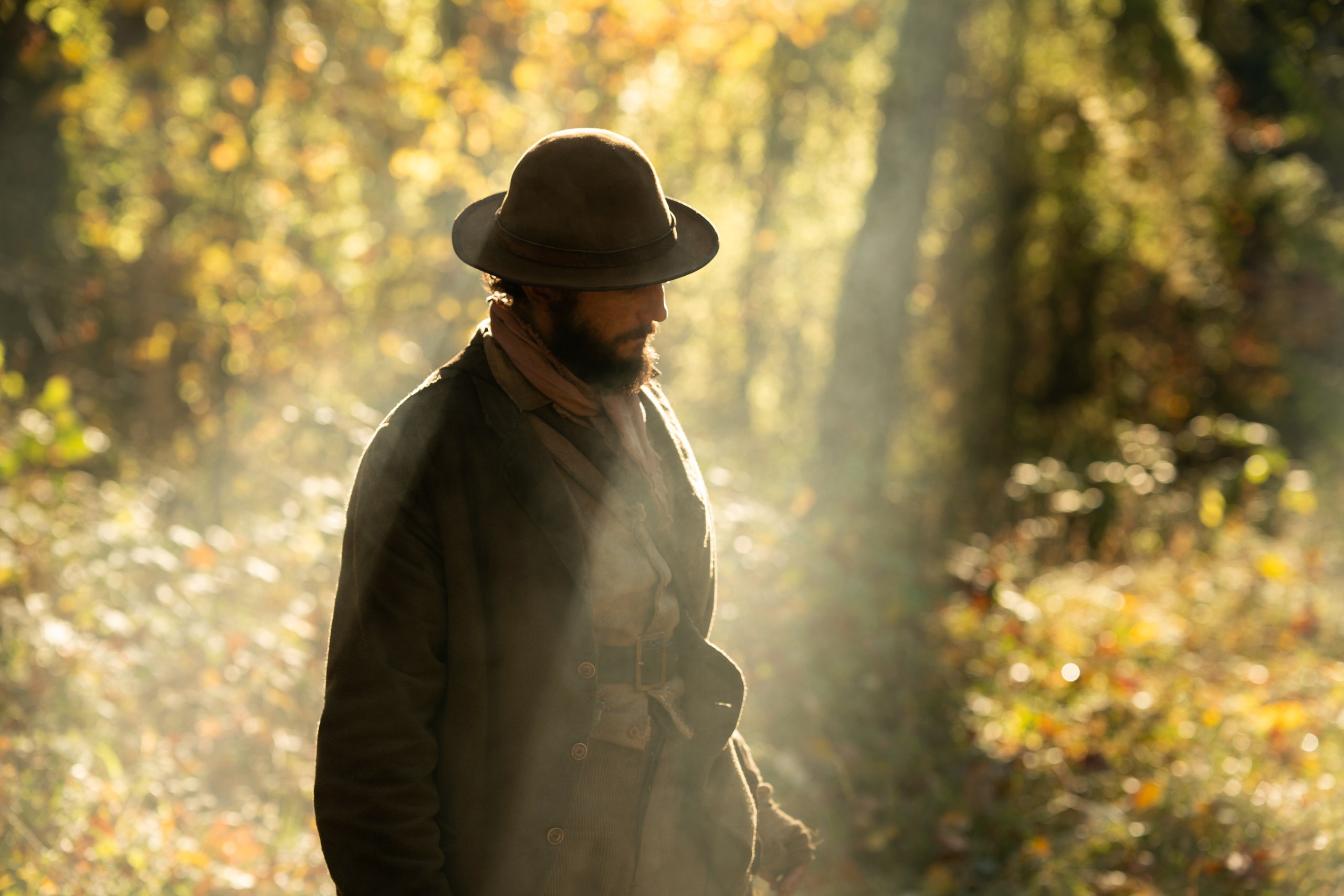
Given theatre closures and festival cancellations, I feel unqualified to present a list of favorite movies of the year so far, although I caught one contender pre-quarantine (First Cow) and have streamed a few others since then (Driveways, Shirley, Straight Up).
Fortunately, albums are a different story. For every release pushed back (Rufus Wainwright, The (Dixie) Chicks), surprise releases make up nearly a third of my top-ten-so-far. Even more surprising is that as much as I like and respect Fiona Apple’s long-gestating fifth album (which may end up her best since When The Pawn…), I find myself returning to Owen Pallett’s gorgeous, acoustic/orchestral song-cycle far more often.
The Perfume Genius album is easily Mike Hadreas’ best effort yet, the Destroyer Dan Bejar’s most complete since Kaputt, and the Nicole Atkins is a worthy follow-up to Goodnight Rhonda Lee that wisely moves beyond its predecessor’s sound. I had not heard of Russian avant-pop artist Kate NV until a few weeks ago, and her just-released third album scratches that Kate Bush/Jane Siberry/early Suzanne Vega itch nicely.
Still, the improbable return of A Girl Called Eddy, sixteen years after her debut with a second album very much its equal, most heavily informs this crazy year-to-date; its closest match is Jessie Ware’s fourth LP, which just came out two days ago but secured its place here after one encouraging play.
Top ten albums of 2020 so far, in alphabetical order by artist:
A Girl Called Eddy, Been Around
Ben Watt, Storm Damage
Destroyer, Have We Met
Fiona Apple, Fetch The Bolt Cutters
Jessie Ware, What’s Your Pleasure?
Kate NV, Room For The Moon
Laura Marling, Song For Our Daughter
Nicole Atkins, Italian Ice
Owen Pallett, Island
Perfume Genius, Set My Heart On Fire Immediately
Normally, I’d be in Provincetown this weekend for their annual film festival; I’ve missed it only twice in the last fifteen years. I’ve gone to P-Town in Winter, Autumn and Spring, but Father’s Day weekend (falling near the Summer Solstice) always means PIFF.
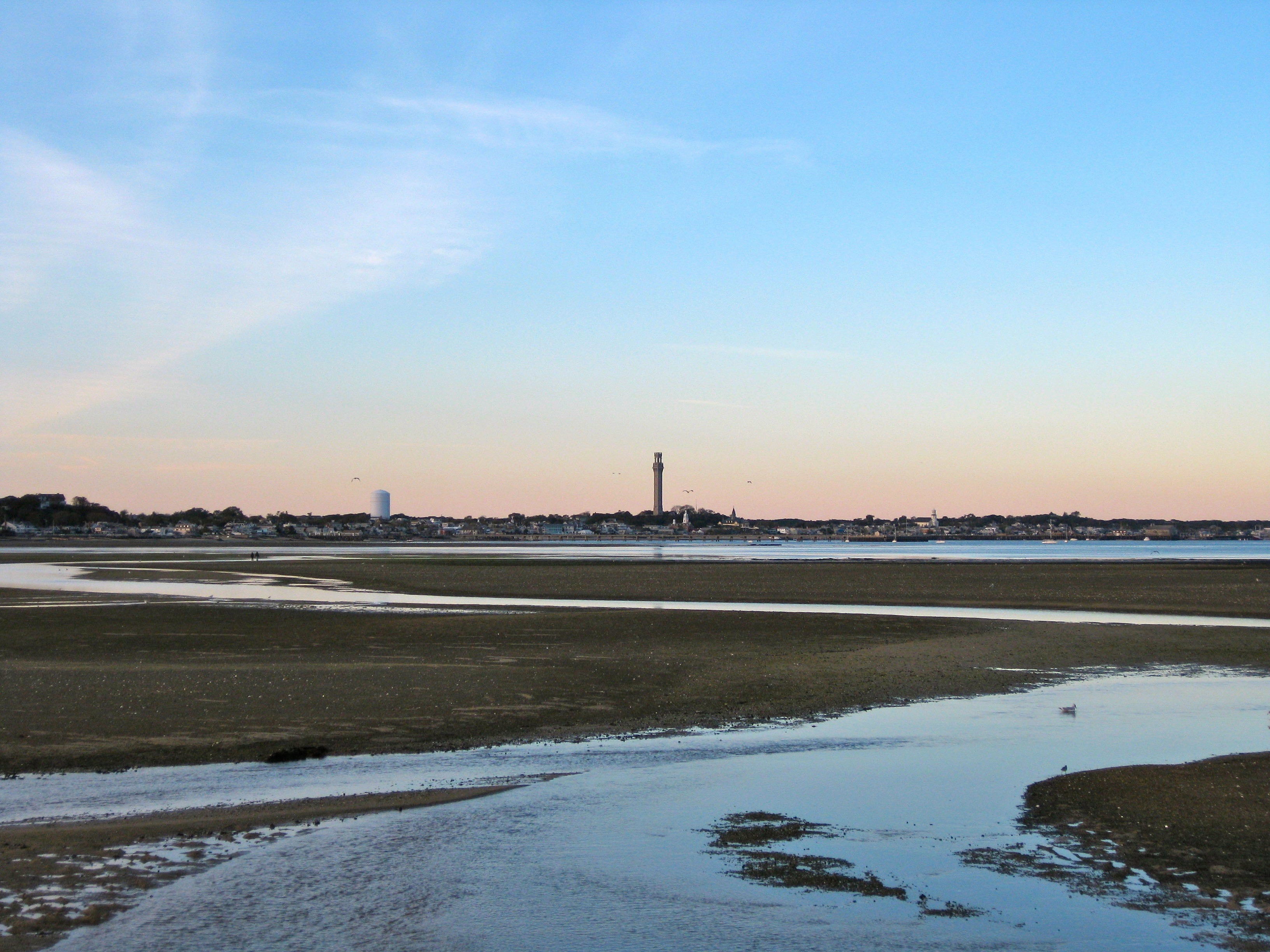
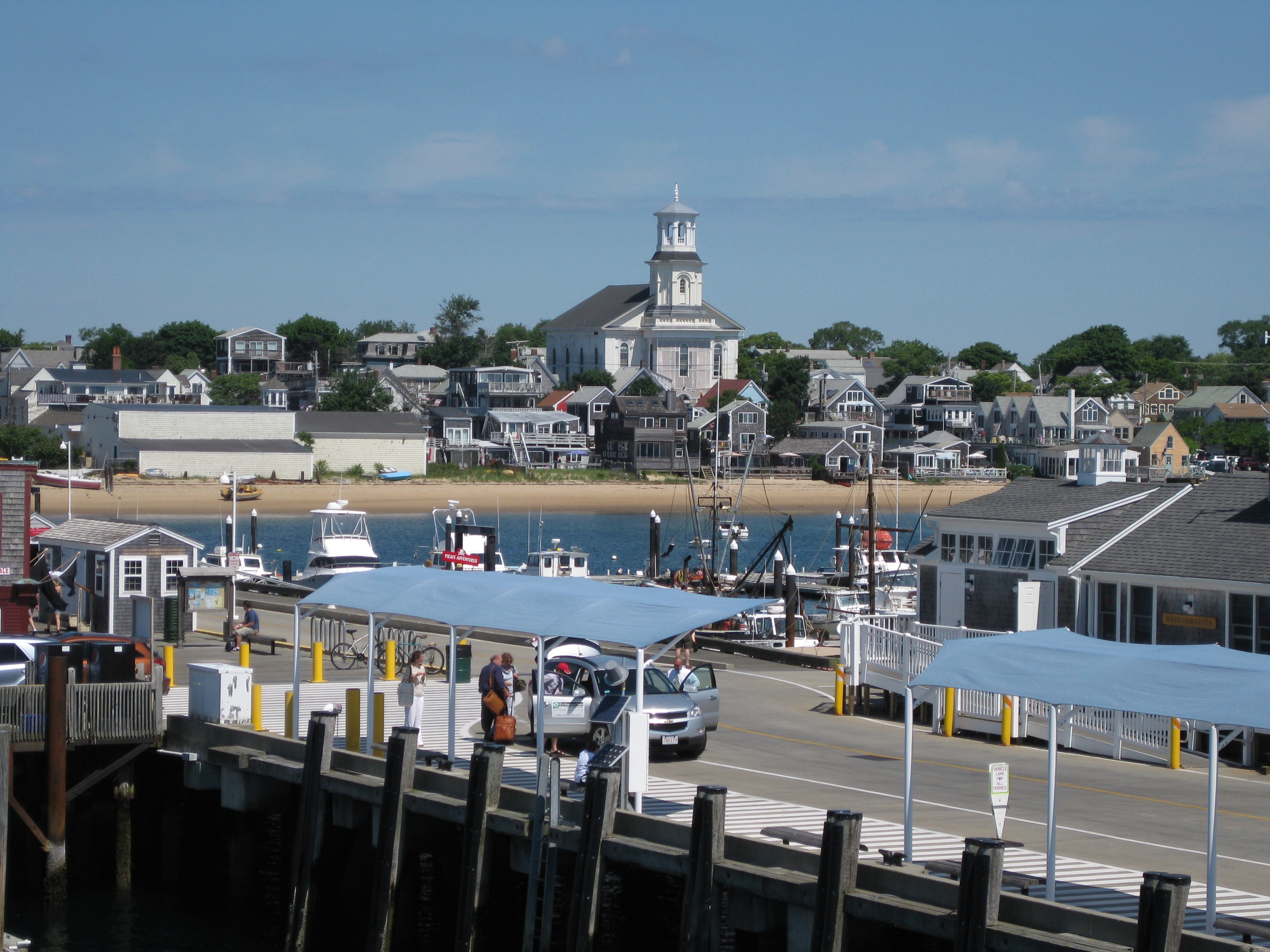
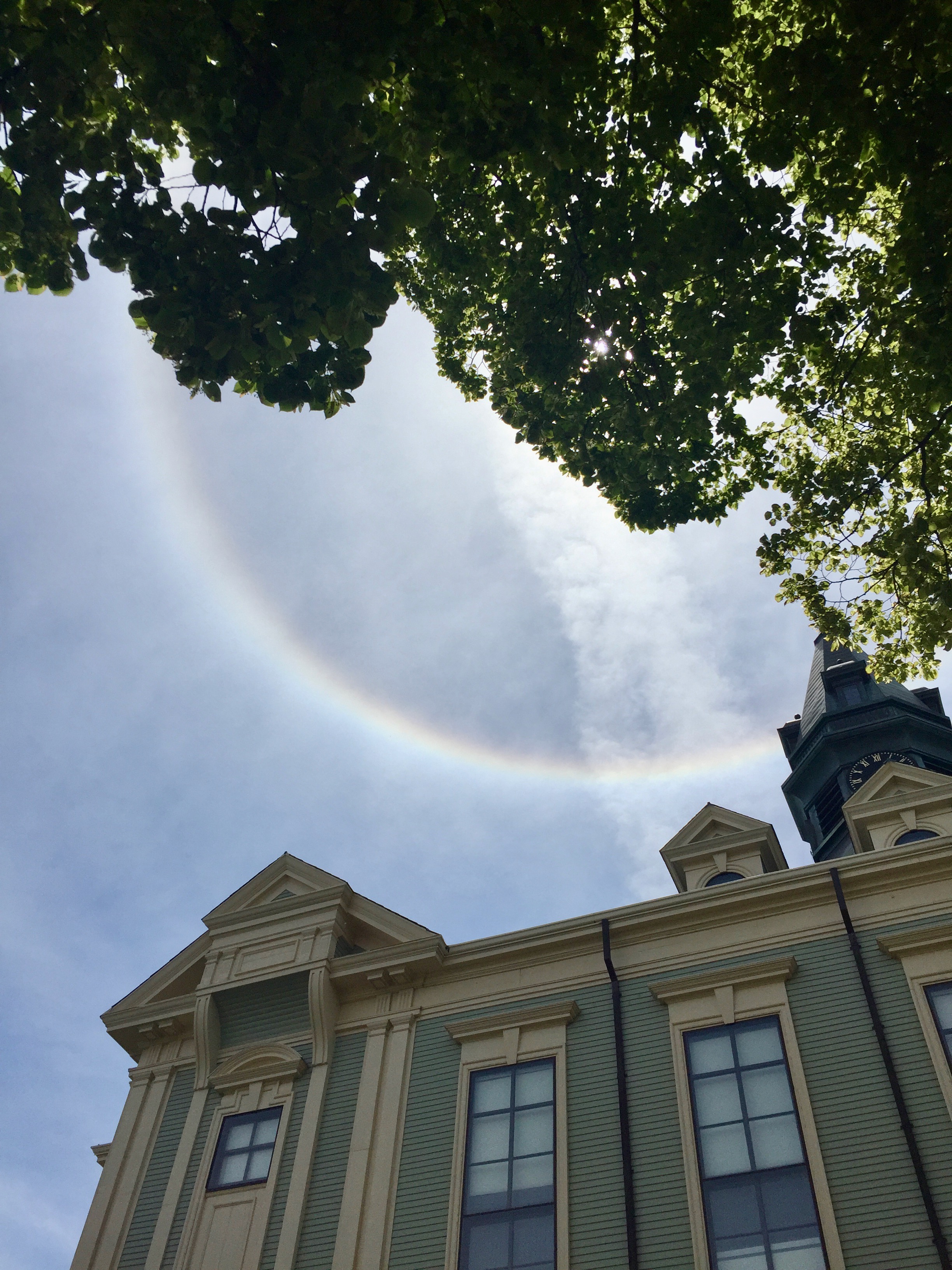
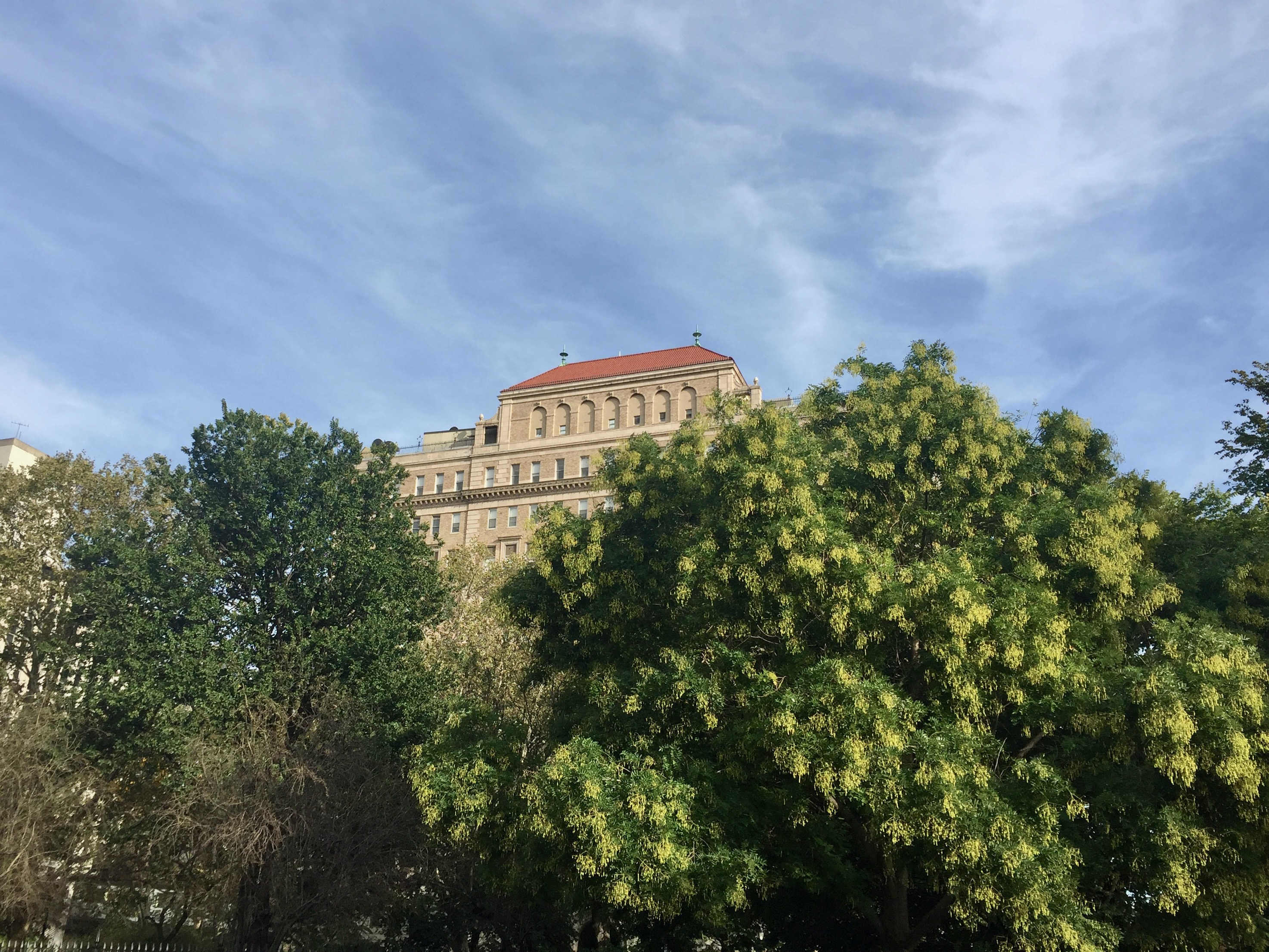
As with my New York essay, I thought in these crazy times it’d be therapeutic to look back at some P-Town pix I’ve taken over the years. Above is a 2010 view of the town (the tall building is the Library) and MacMillan Pier from the ferry dock. Traveling there by sea from Boston is highly preferable to doing so by land (and shorter!)
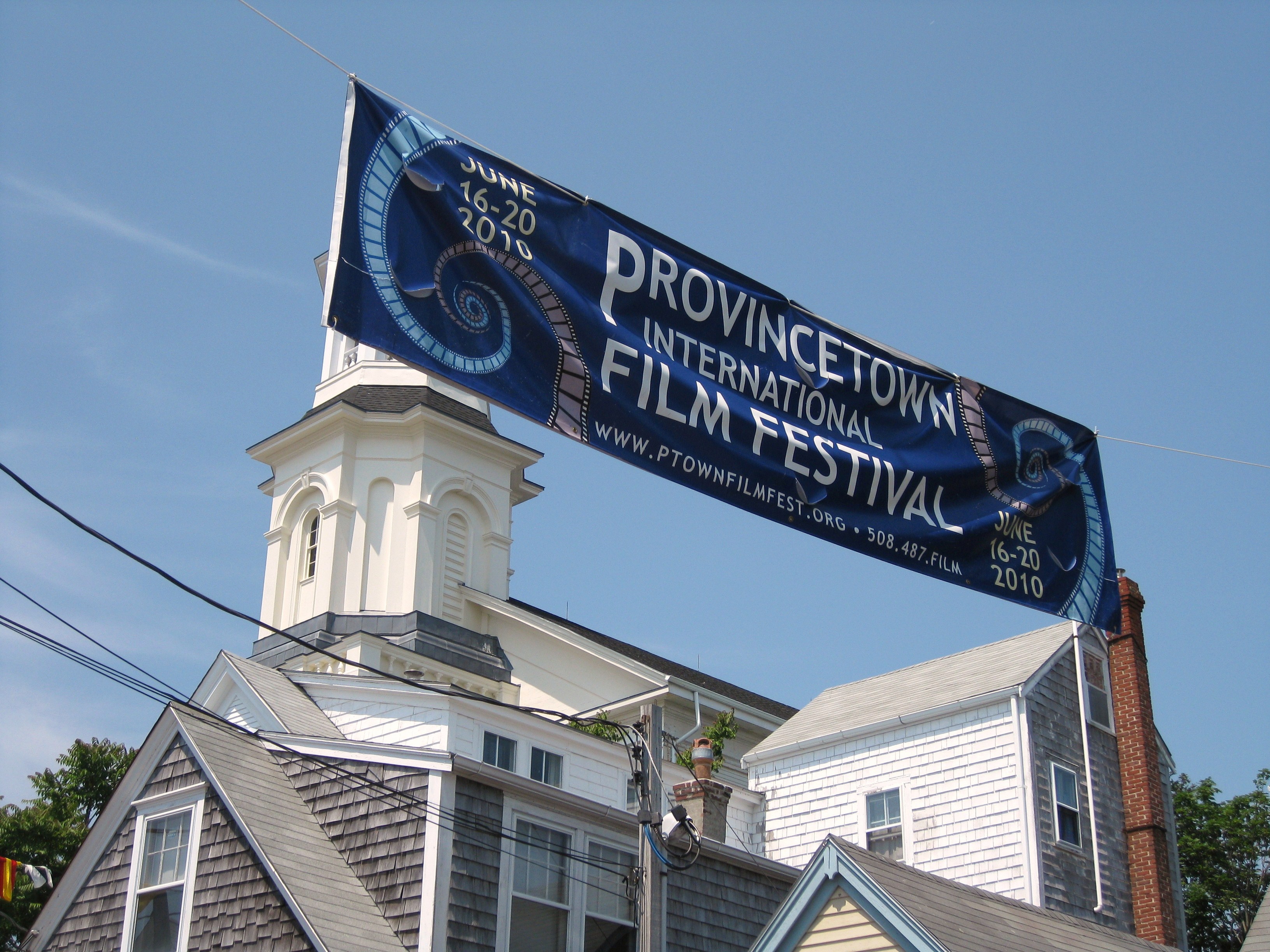
From the same year: a banner for the 12th PIFF (with the Library in the background.)
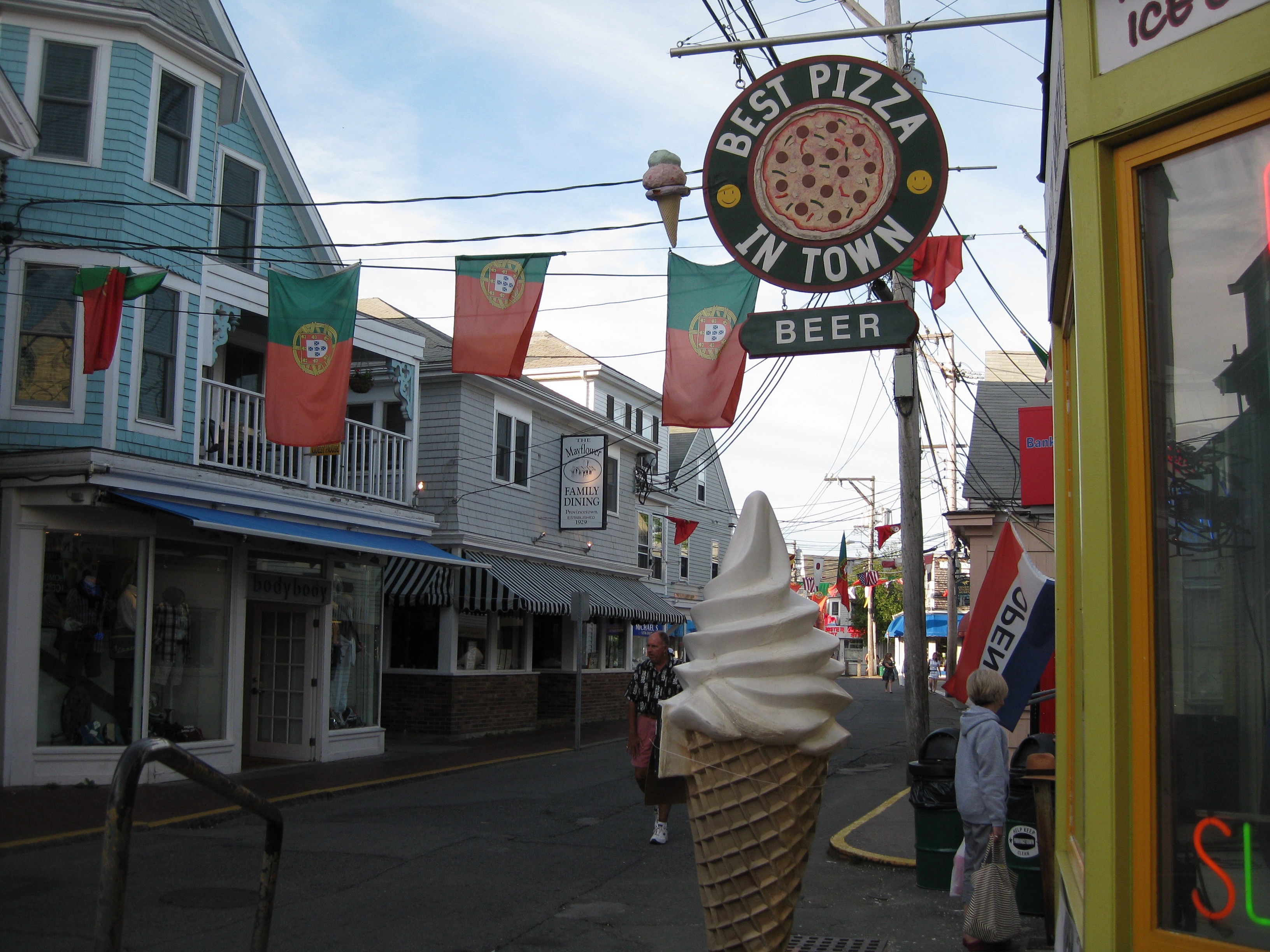
The heart of Commercial Street, P-Town’s main thoroughfare. Lined with restaurants, gift shops, bars and other tourist attractions, you can drive (one-way) along it, but IMO it would be so much better if you couldn’t.
Town Hall, 2018. At the 20th PIFF, nature provided a serendipitous backdrop for the unveiling of an AIDS memorial.
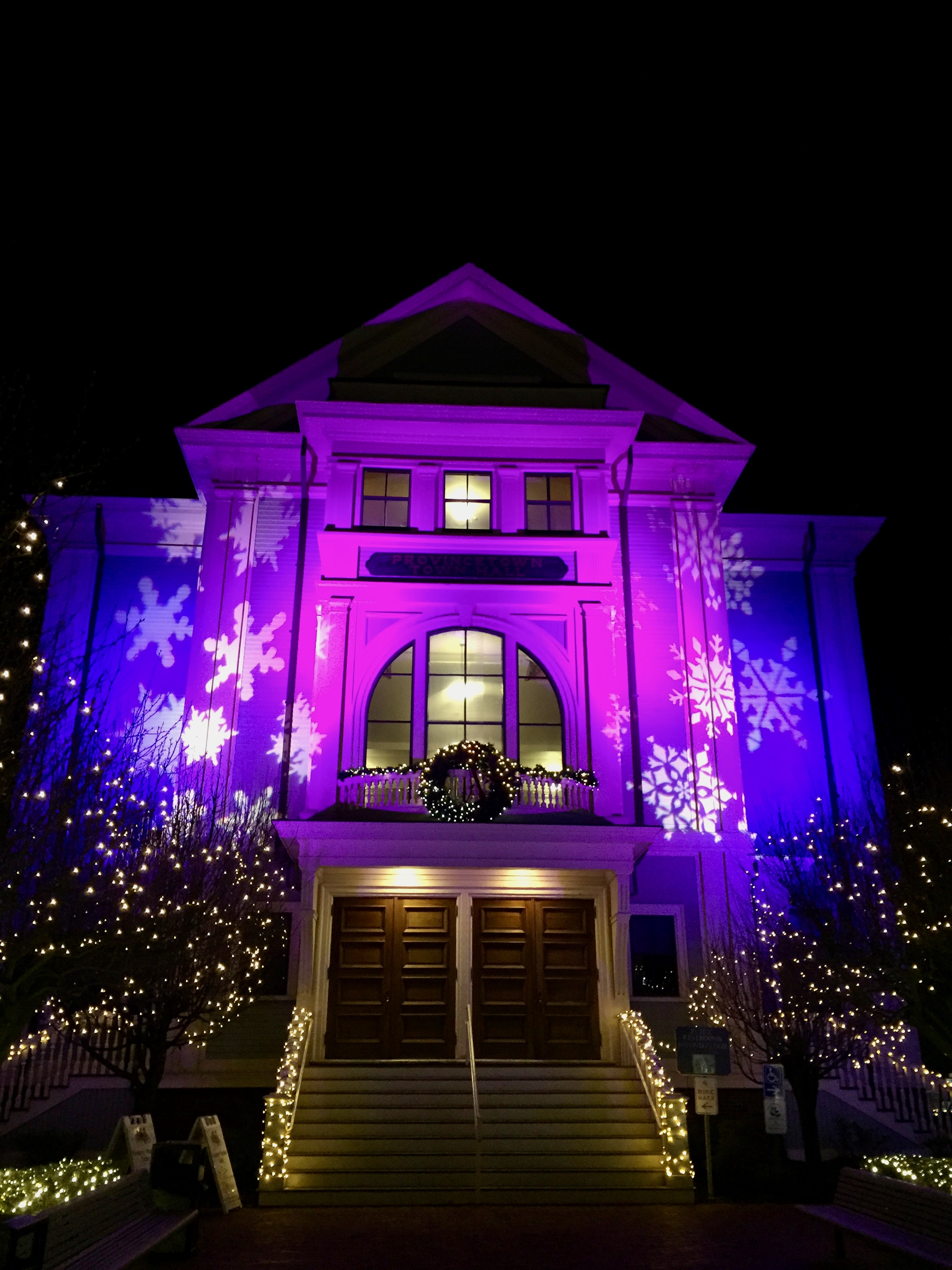
Town Hall at New Year’s Eve, 2016. P-Town does not entirely shut down for the off-season.
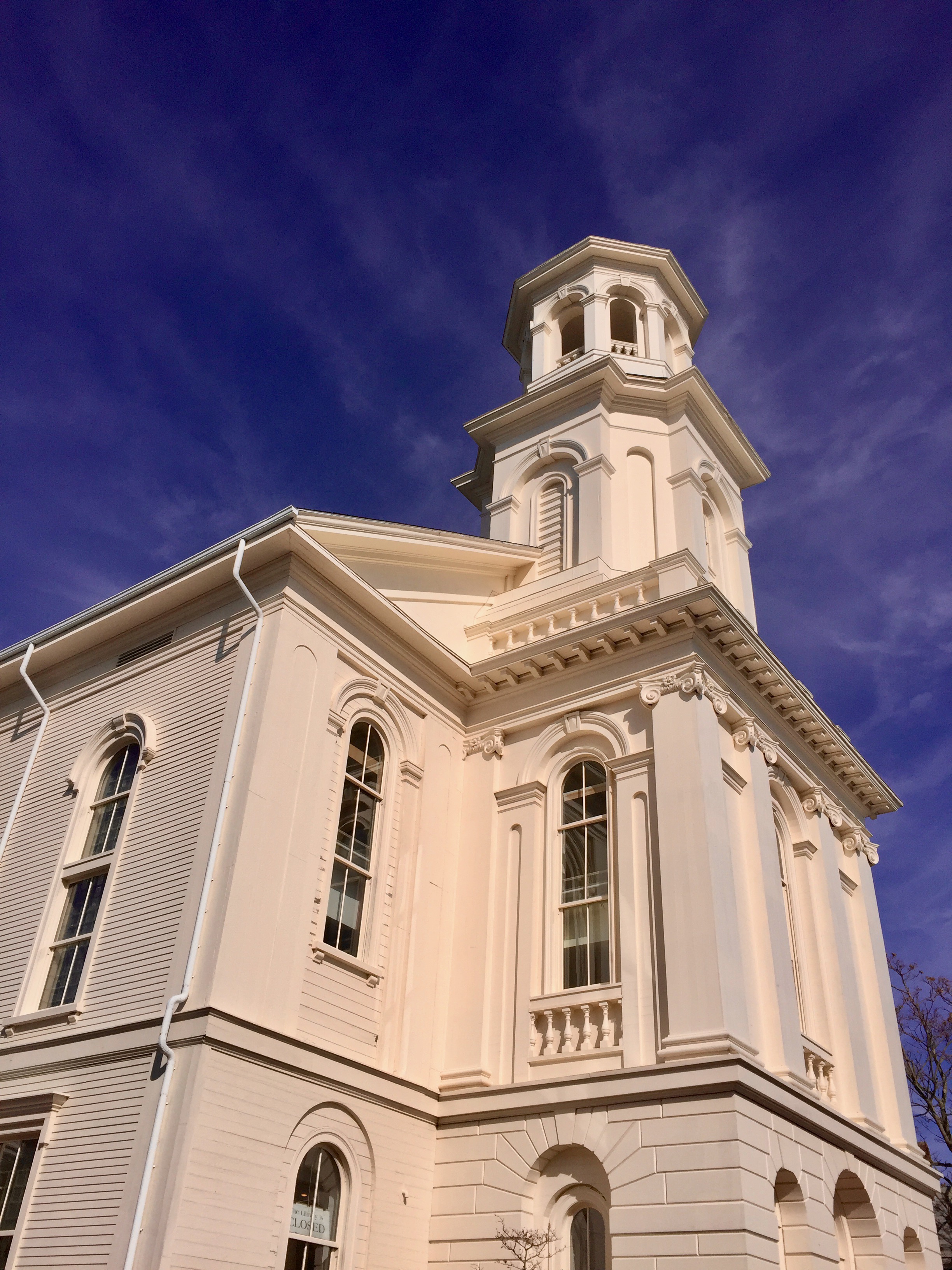
A restored Library, sometime after 2010. I used to joke that the restoration dragged on forever, but I now admit it was worth the wait.
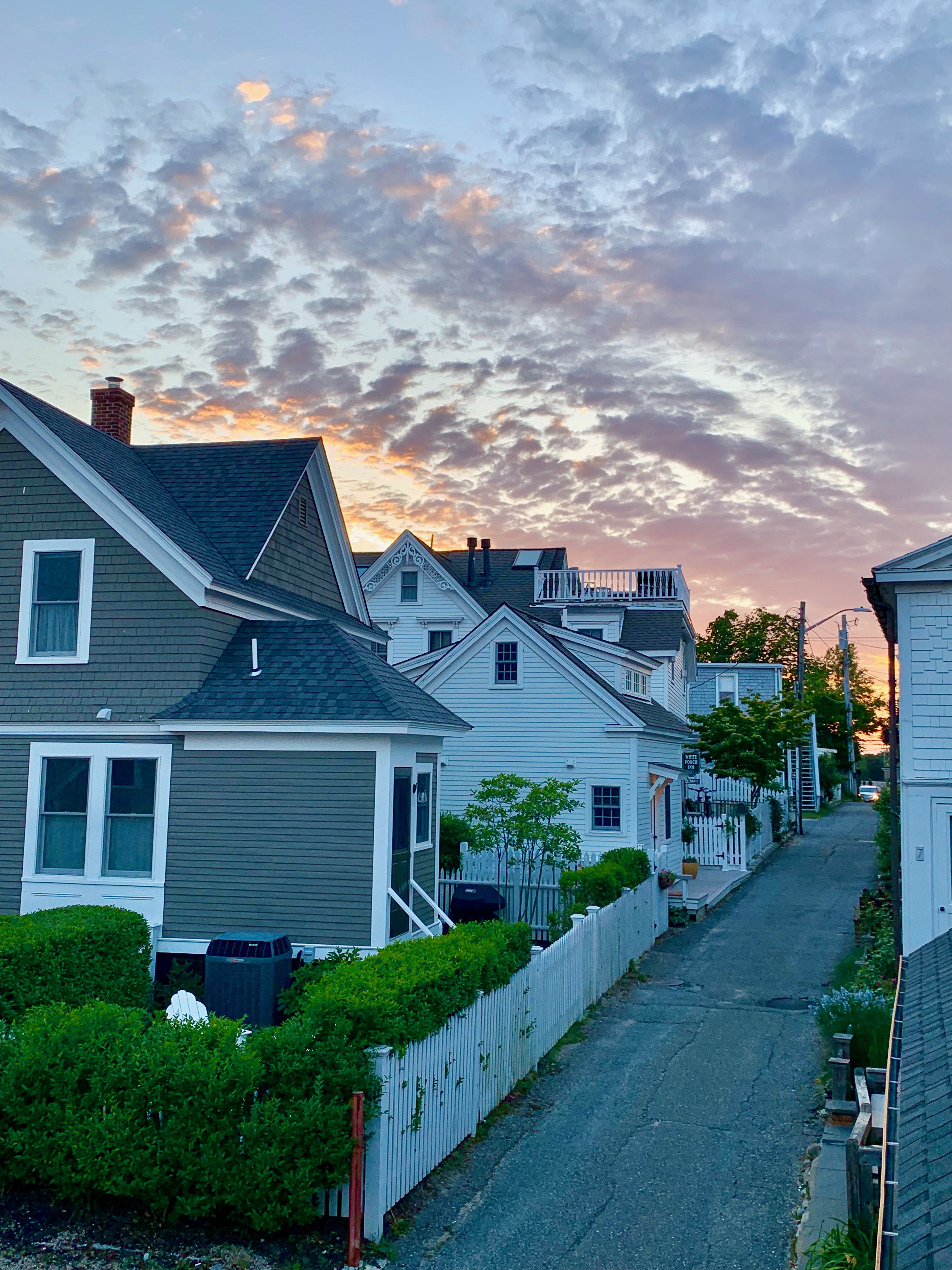
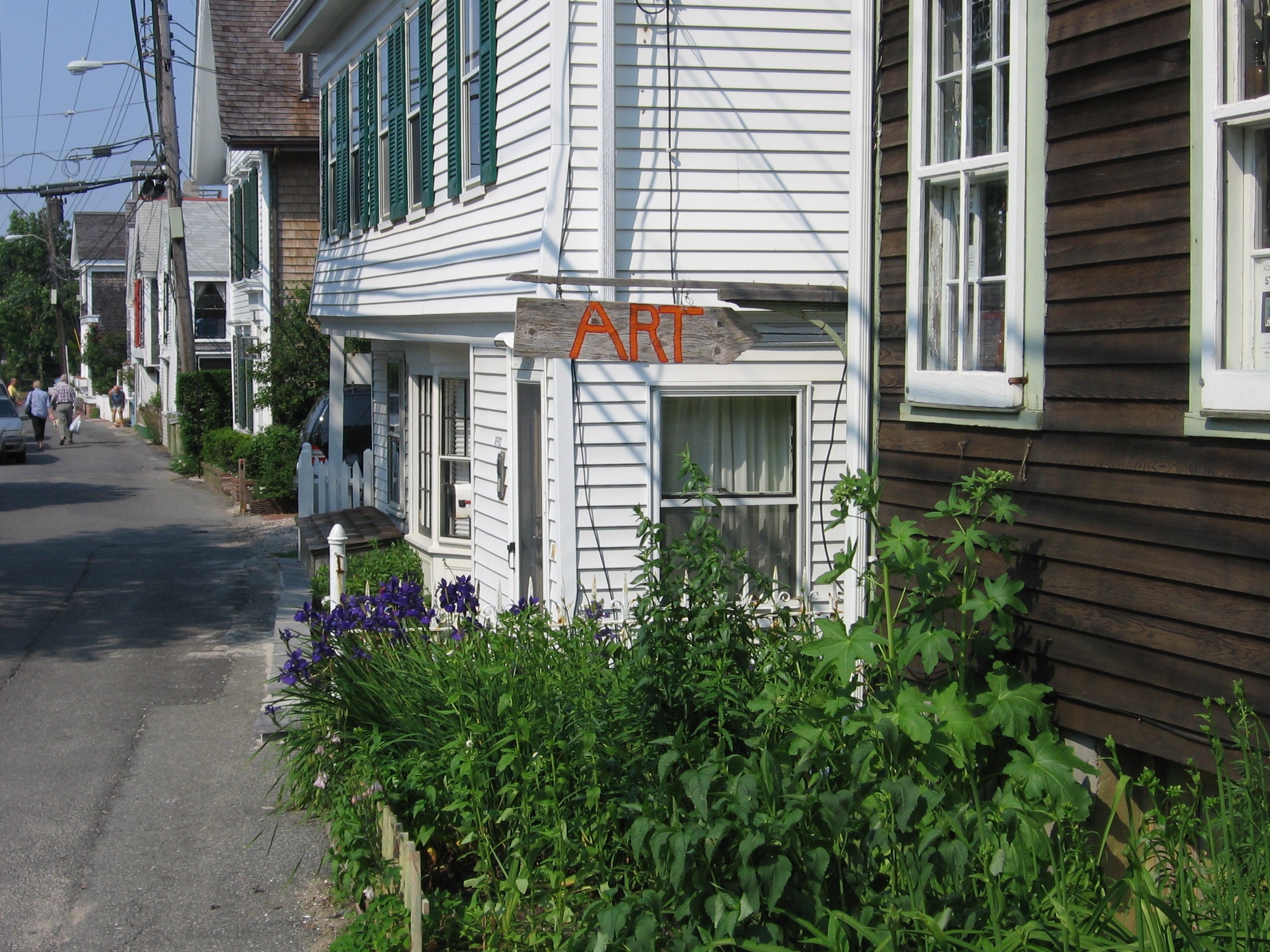
Arch Street, one of dozens of narrow, mostly residential roads that link Commercial Street to its adjacent neighbor, Bradford Street/Route 6A.
P-Town has its share of colorful signage, first and foremost being the vintage red neon of The Lobster Pot.
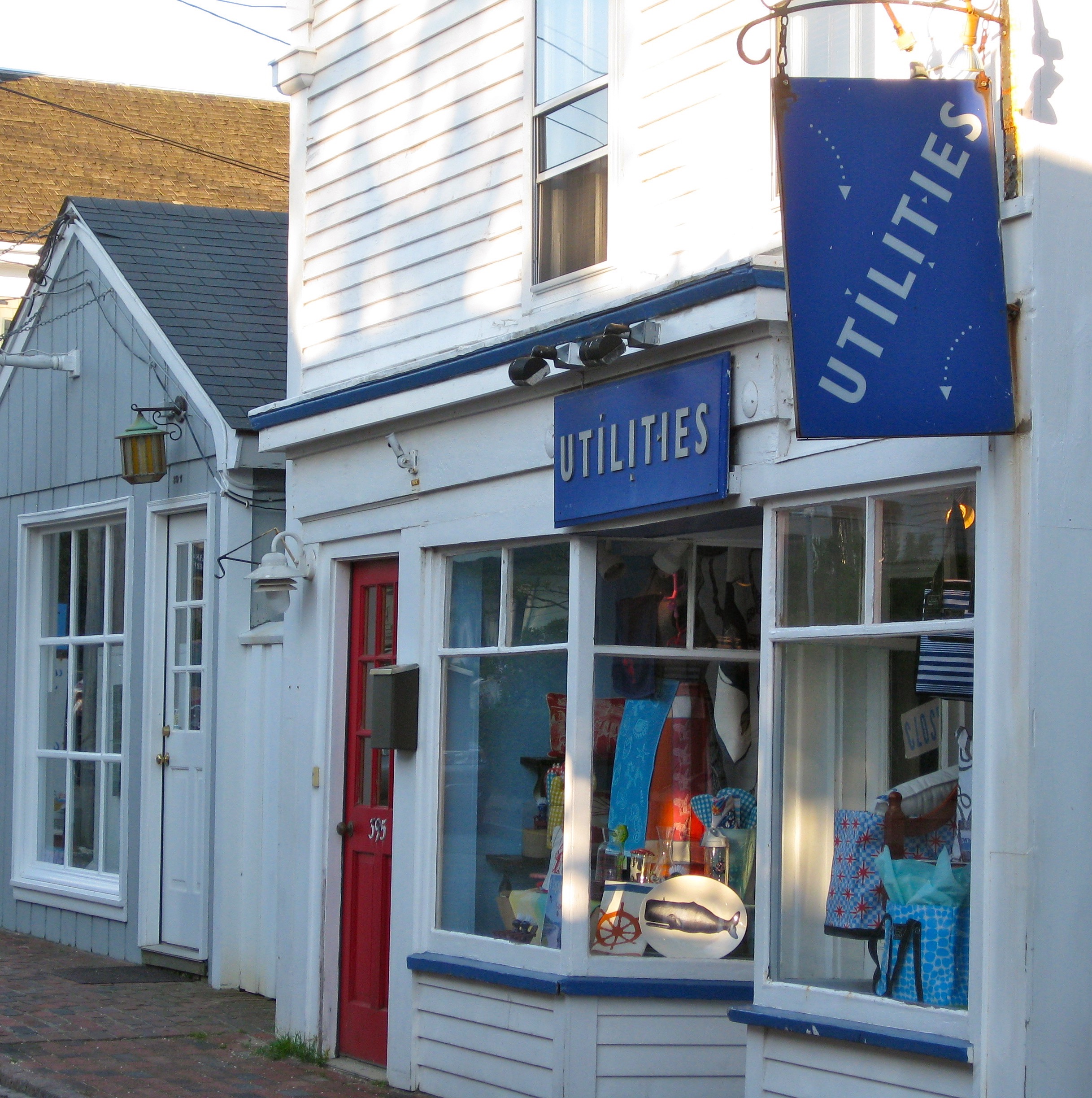
With signage less flashy but still distinct, Utilities is a kitchen/bathroom store where one can find everything from a teakettle to a shot glass. With its densely but neatly packed shelves and show tunes playing overhead, it’s the type of local gem you wish would stay open forever.
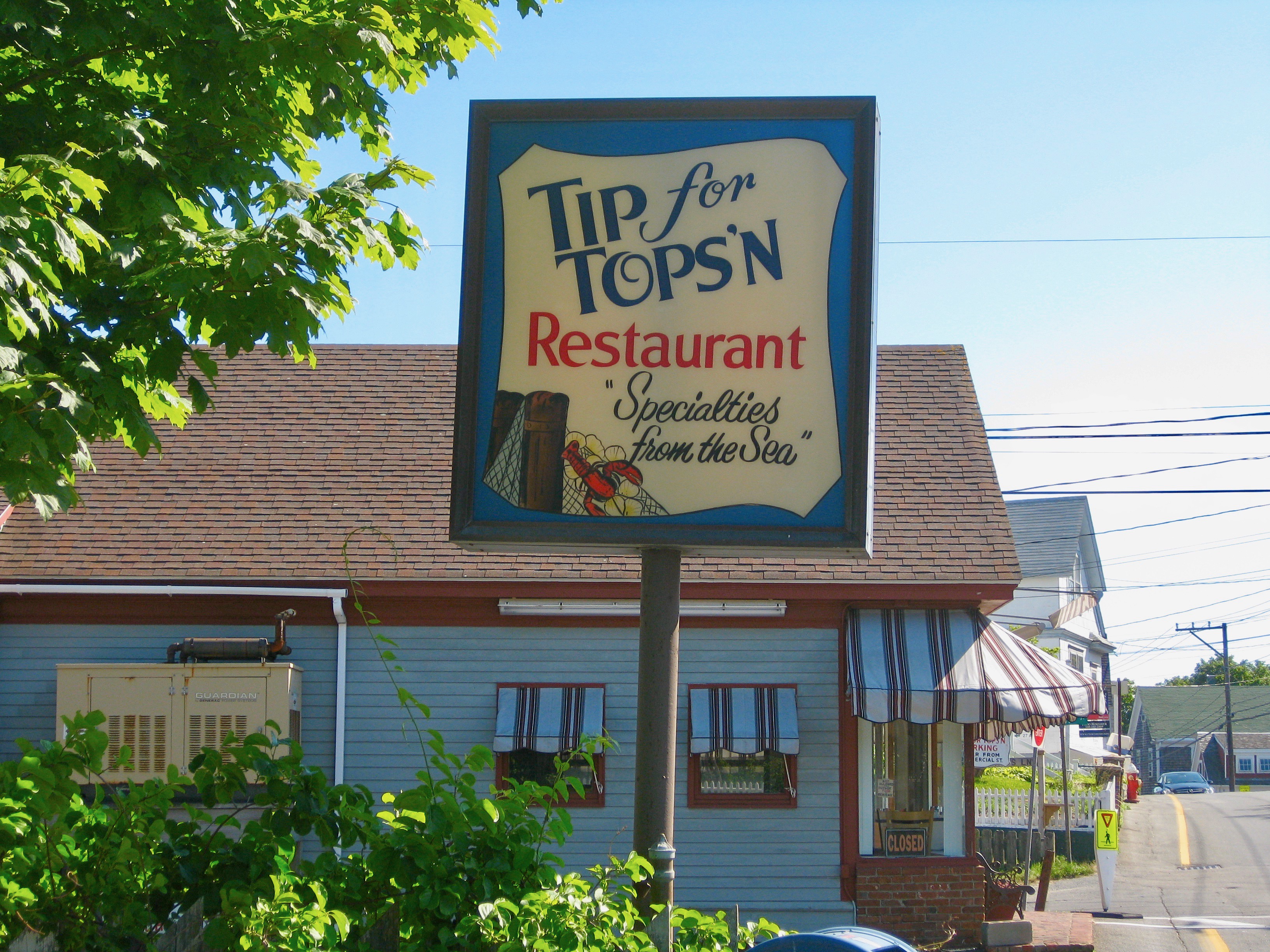
Of course, not everything in P-Town endures. This long-standing, curiously-named restaurant bit the dust sometime in the last decade, although the space lives on as Liz’s Cafe/Anybody’s Bar.
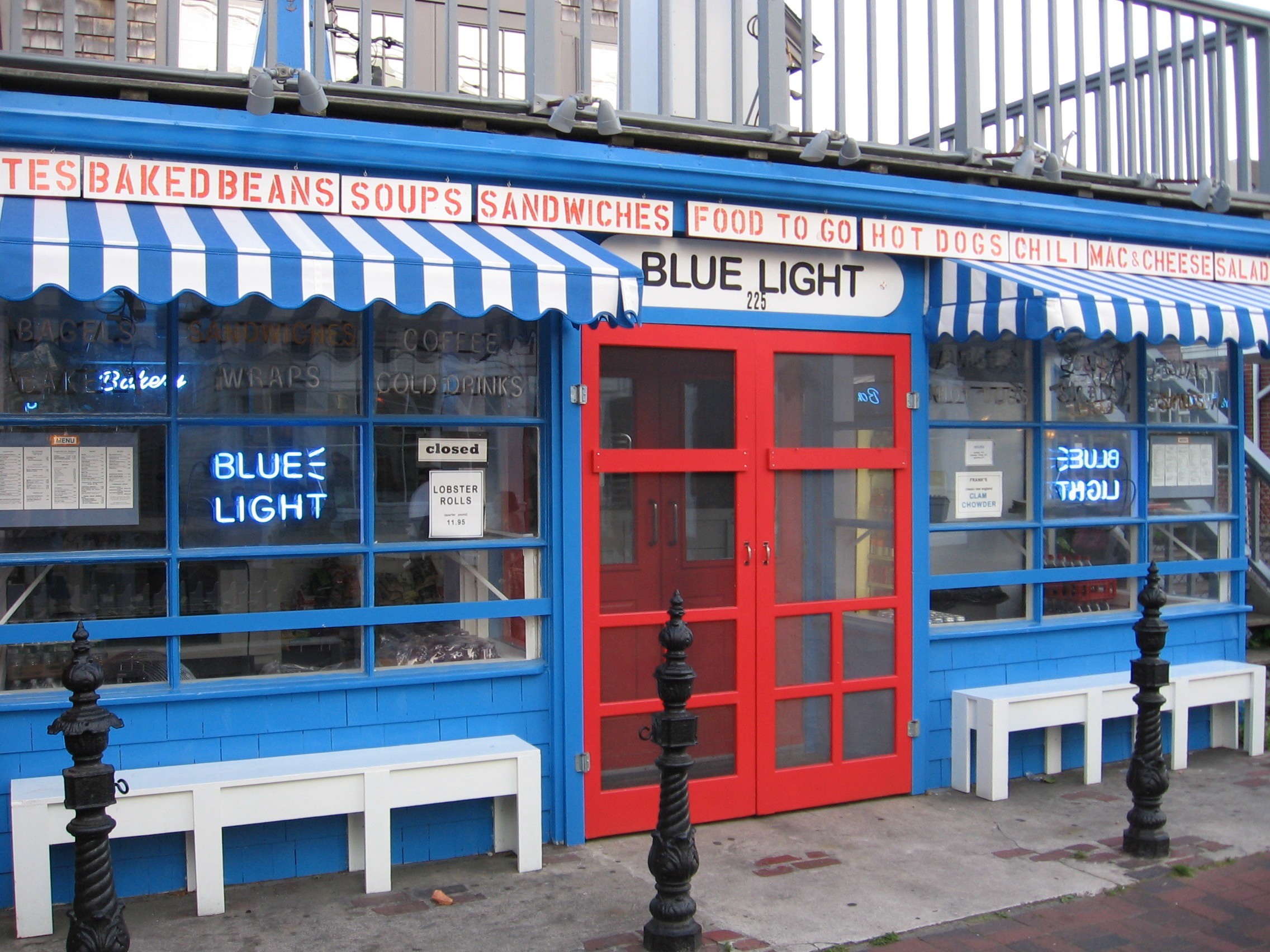
Other businesses pop up for a few summers before quietly disappearing, like Blue Light, which later became Blondie’s Burgers; it has now housed The Canteen for over five years.
Over on the West End: who doesn’t appreciate signage so straight to the point?
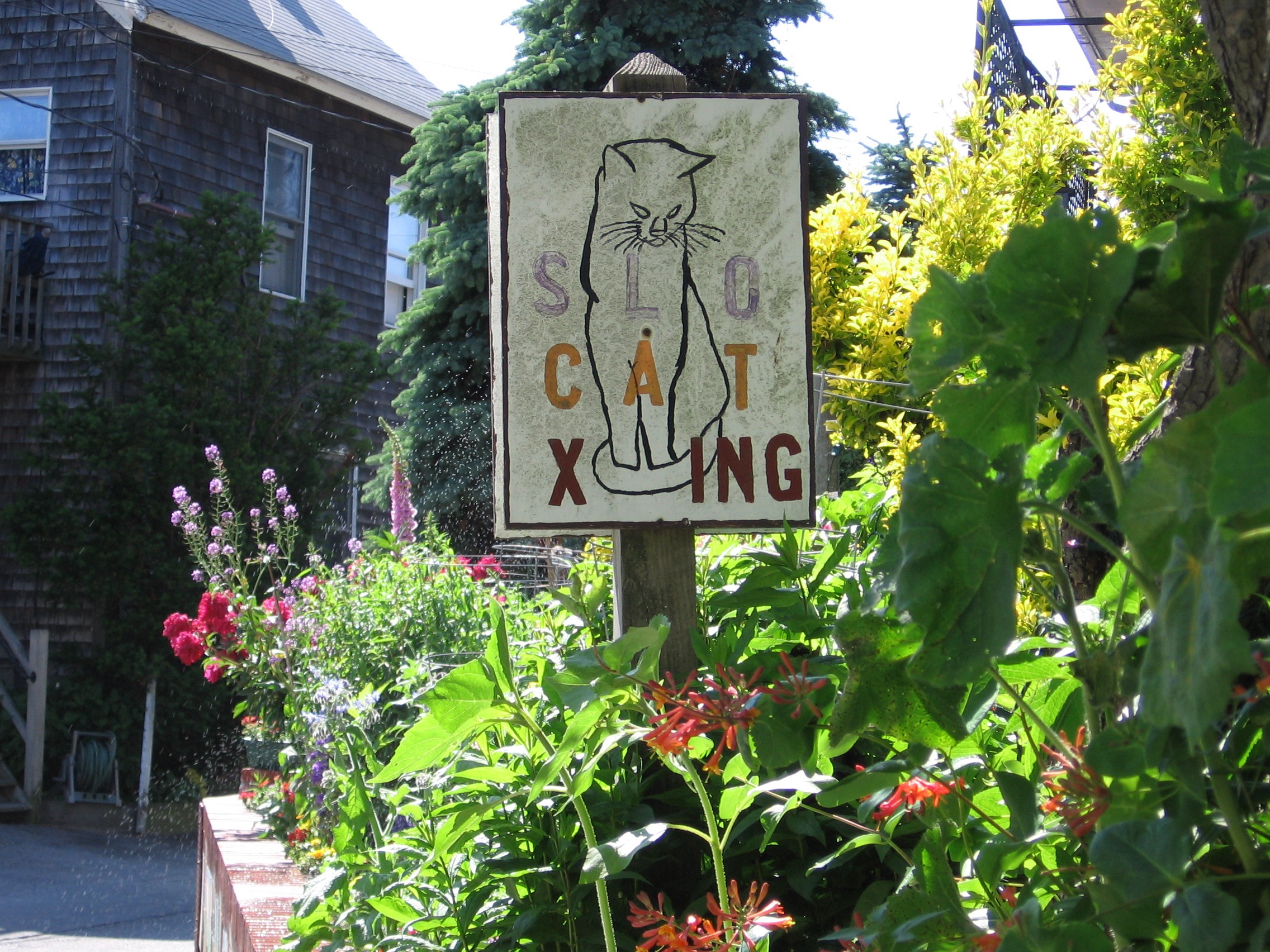
Back near the center of town: this whimsical warning also lets people know they’re just around the corner from Napi’s Restaurant, a year-round P-Town institution.
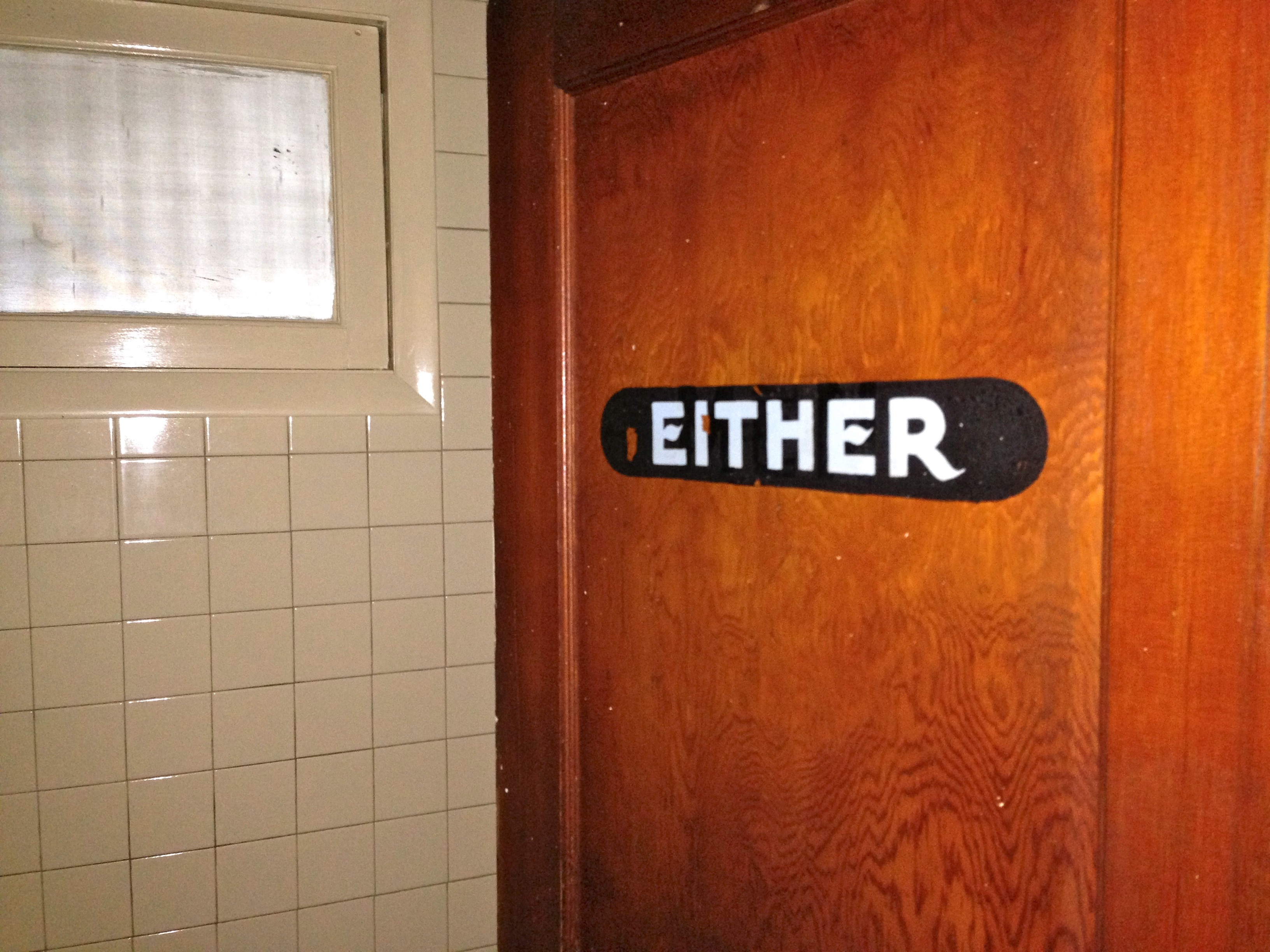
One of Napi’s restrooms; the other one is marked “Or.”
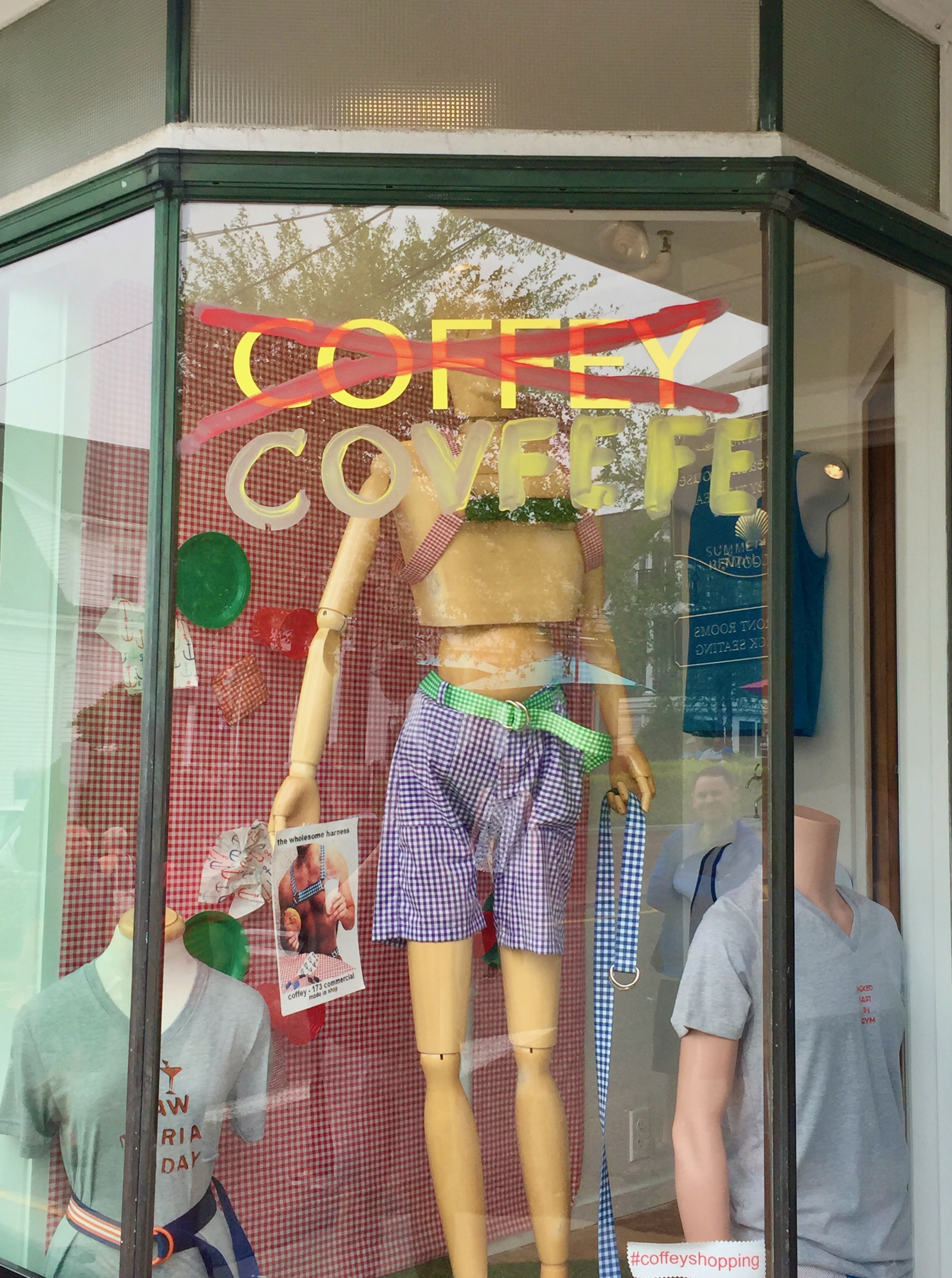
Some signage is fleeting, as seen days after a certain, infamous tweet in June 2017.
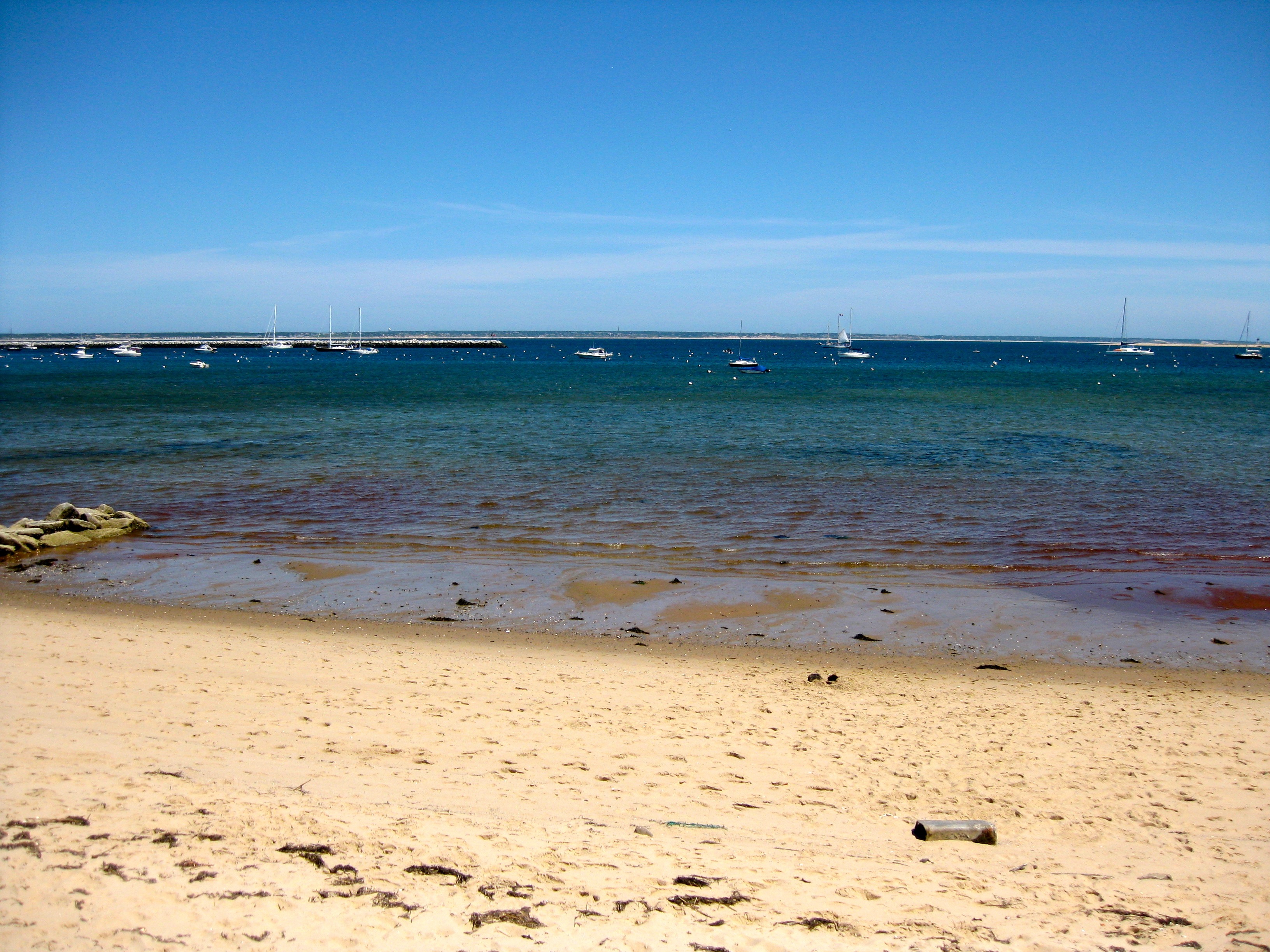
The town part of P-Town provides only half of its allure. Located on the tip of Cape Cod, water surrounds it on three of four sides. Above, a beach right in town (if not an ideal one for swimming.)
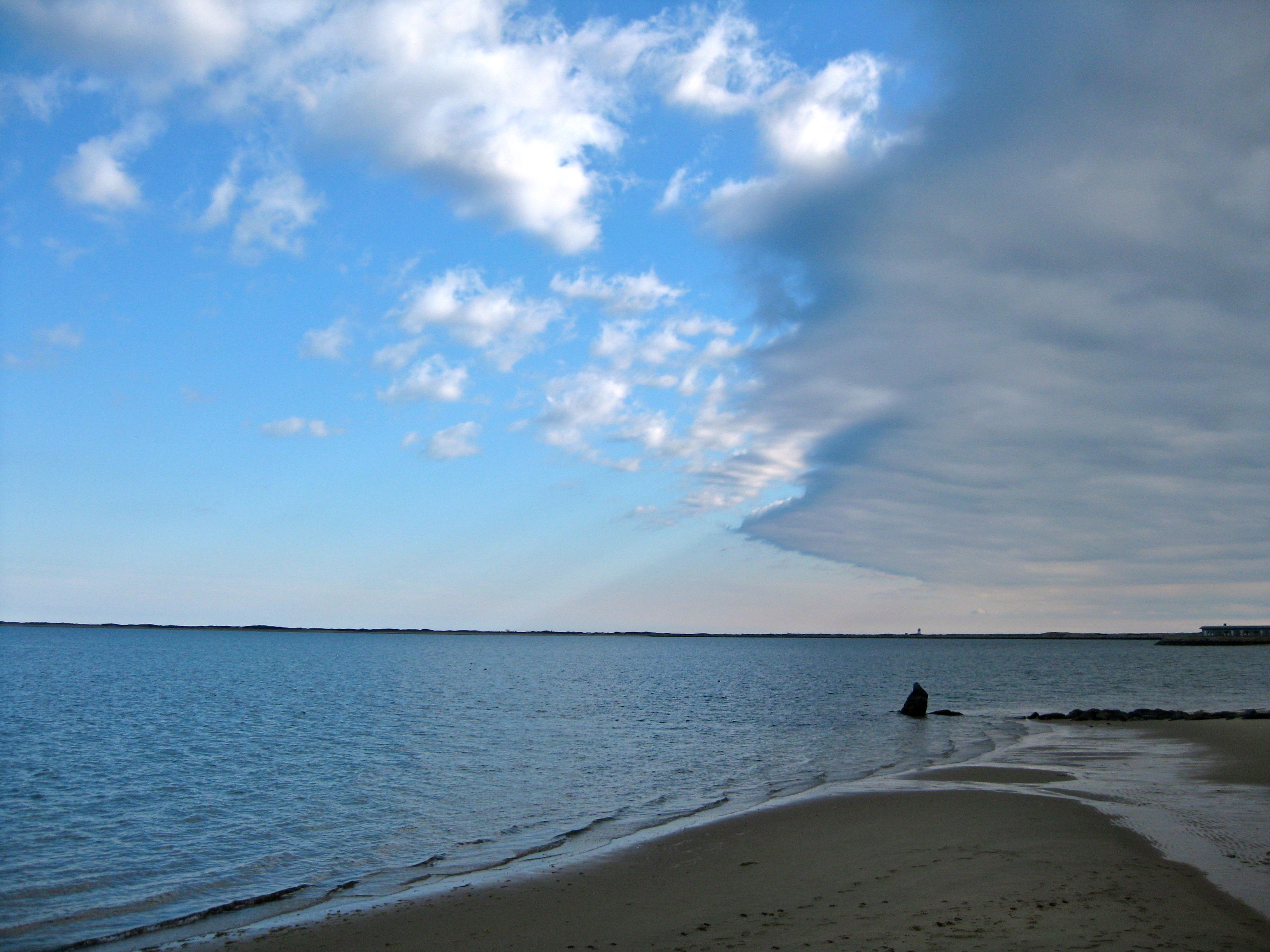
Another beach a little further along the coast: have you ever seen such a schizoid sky?
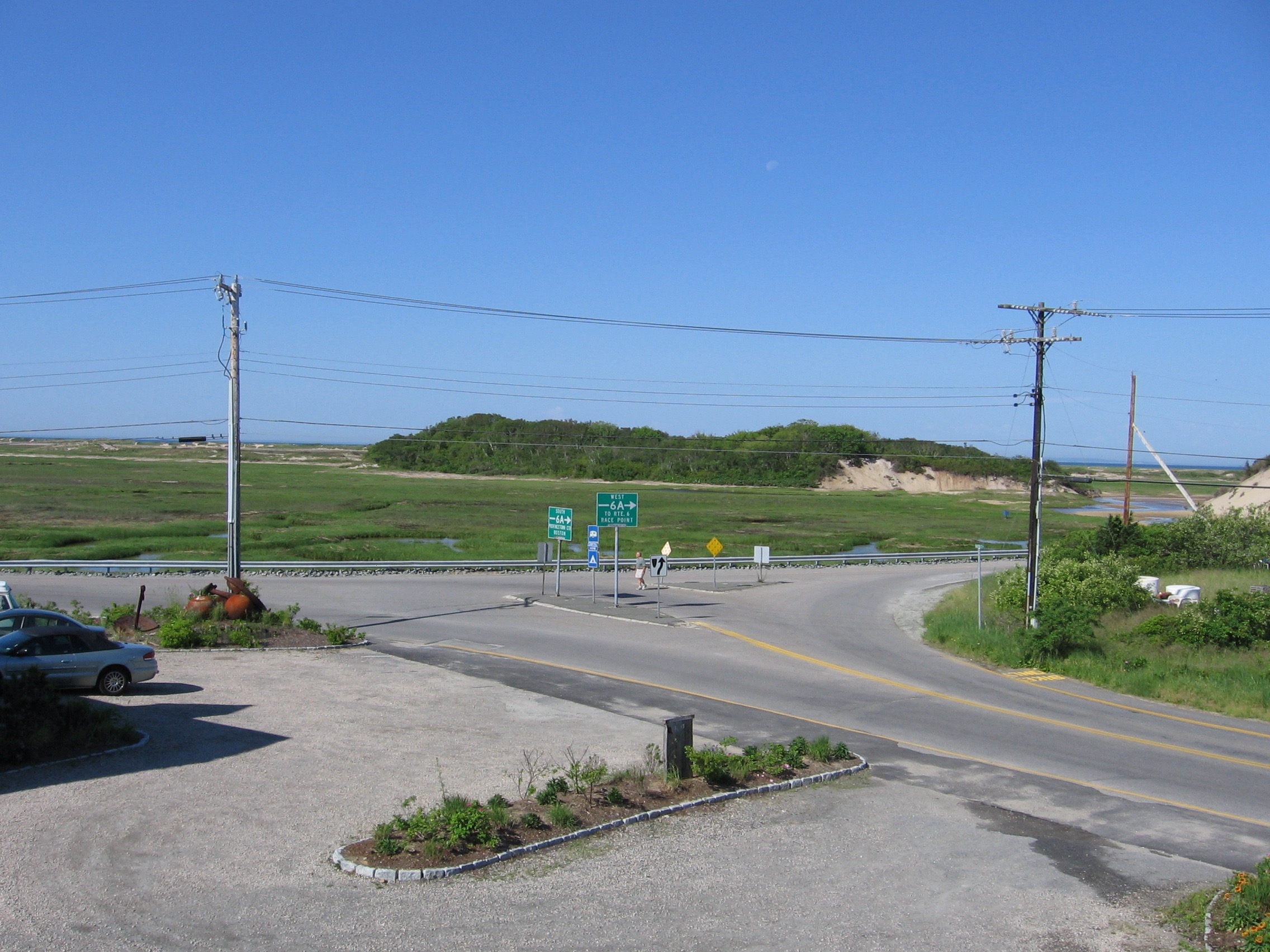
If you walk far West enough, this is what you’ll find: Bradford Street’s end, with the dunes, Herring Cove and the Atlantic Ocean just beyond.
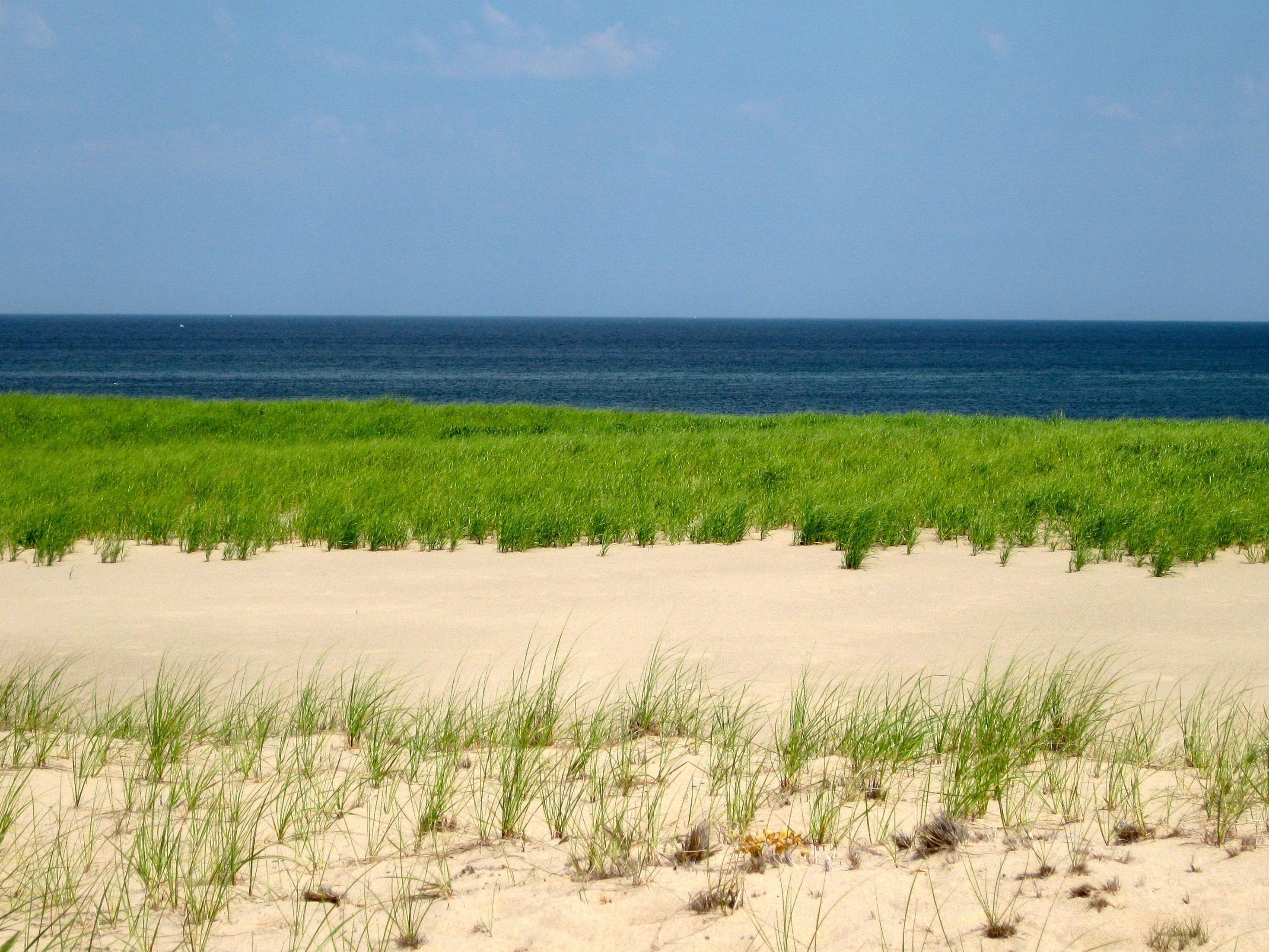
Coastal land far more suitable for beaching and swimming.
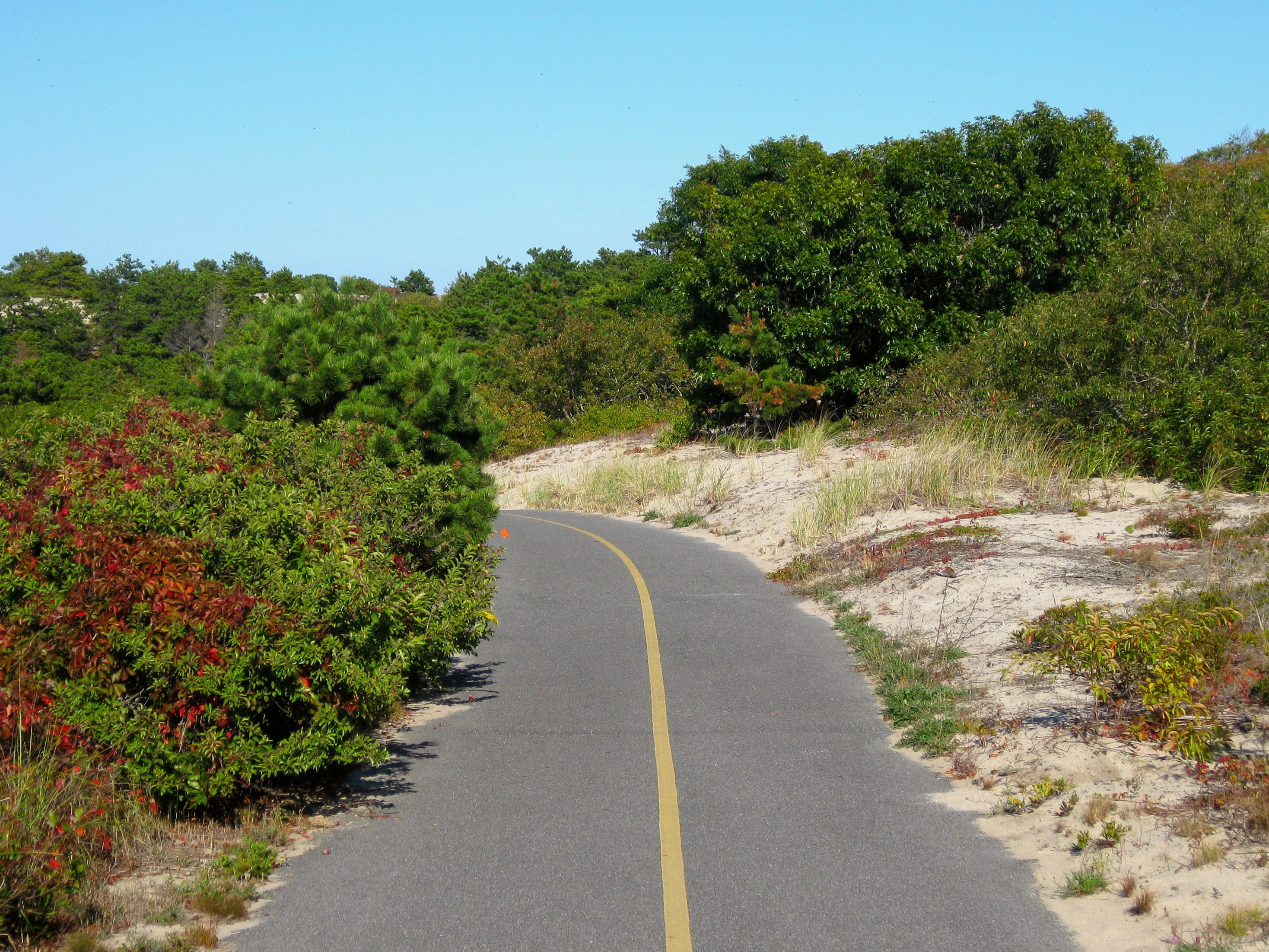
North of town, the Province Lands contain miles of biking trails running around the dunes.
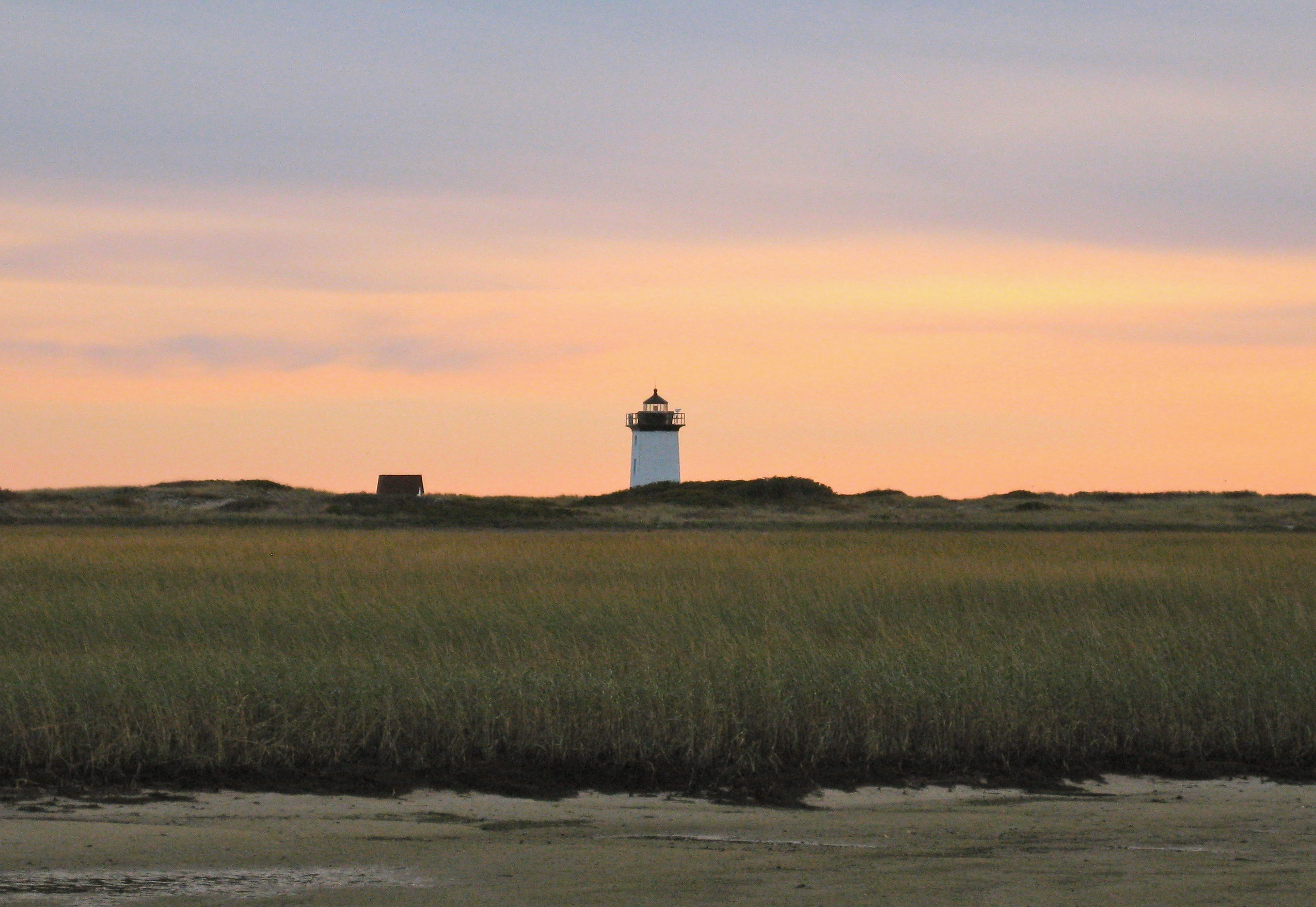
Wood End Lighthouse, often the first sight of P-Town from an incoming ferry.
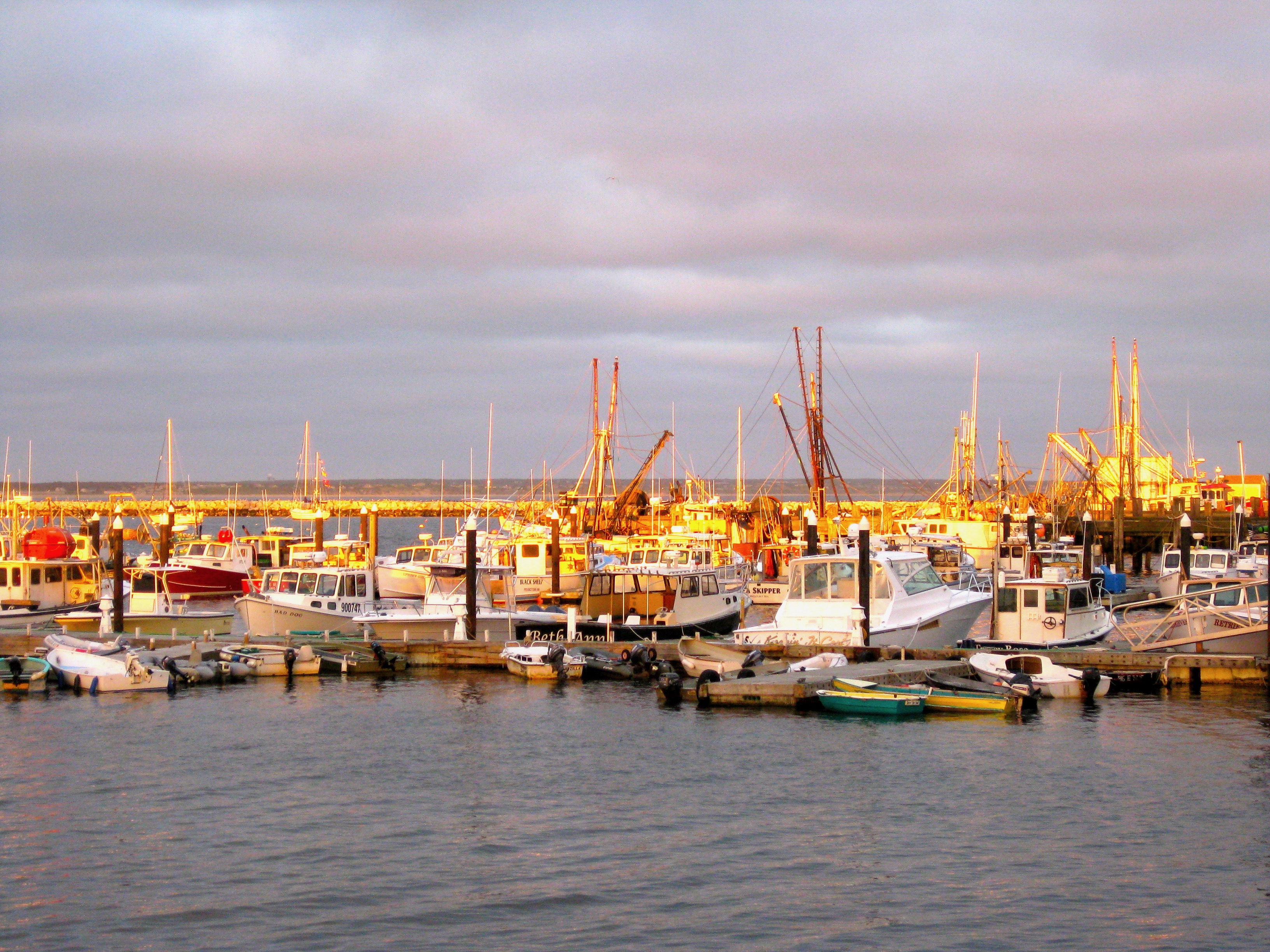
We return to MacMillan Pier at what is undoubtedly the “golden hour” for photography.
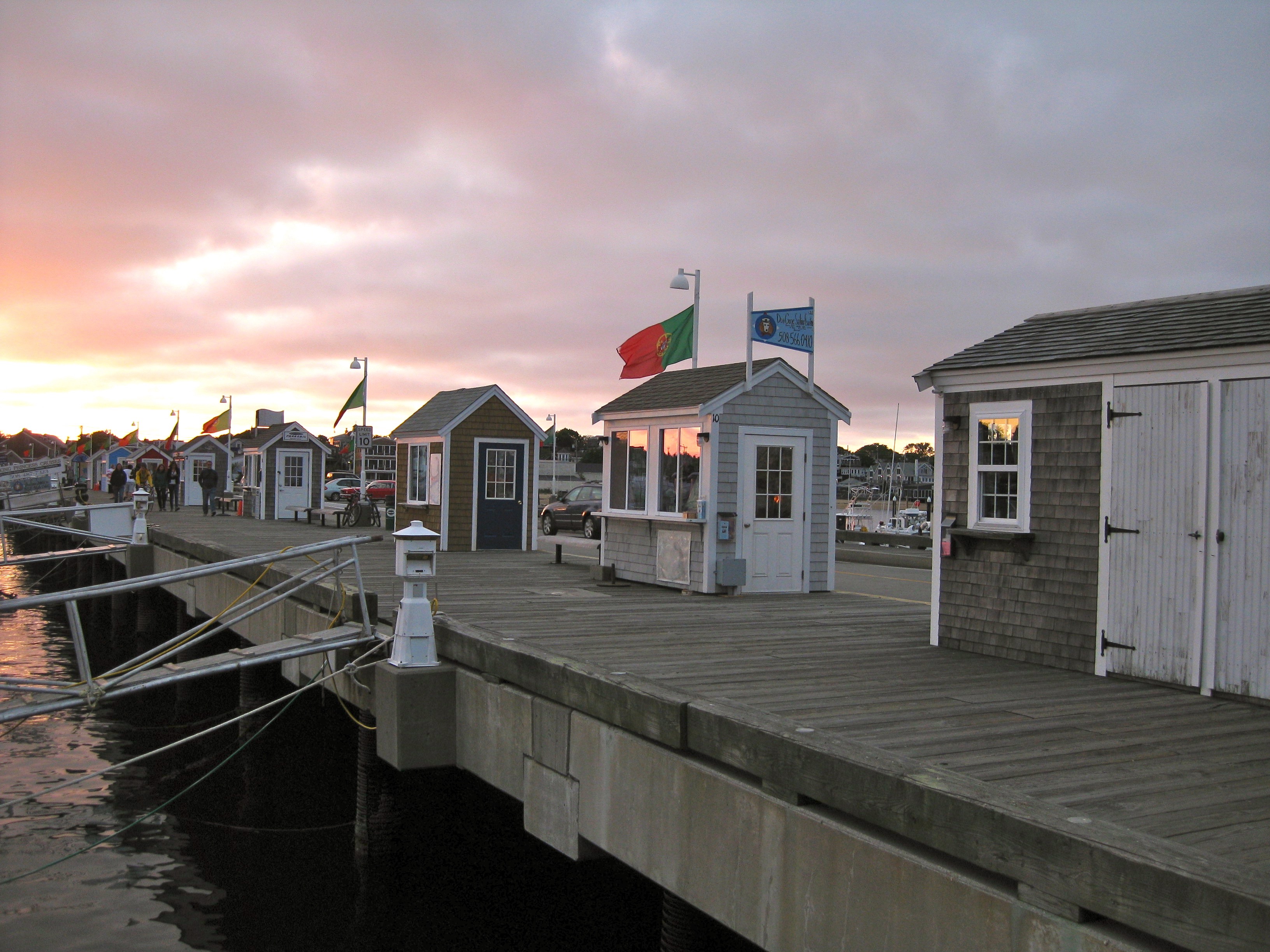
MacMillan Pier is lined with these cute little shacks. Founded centuries ago as a fishing village by Portuguese immigrants, you can spot their flag proudly flown all over town.
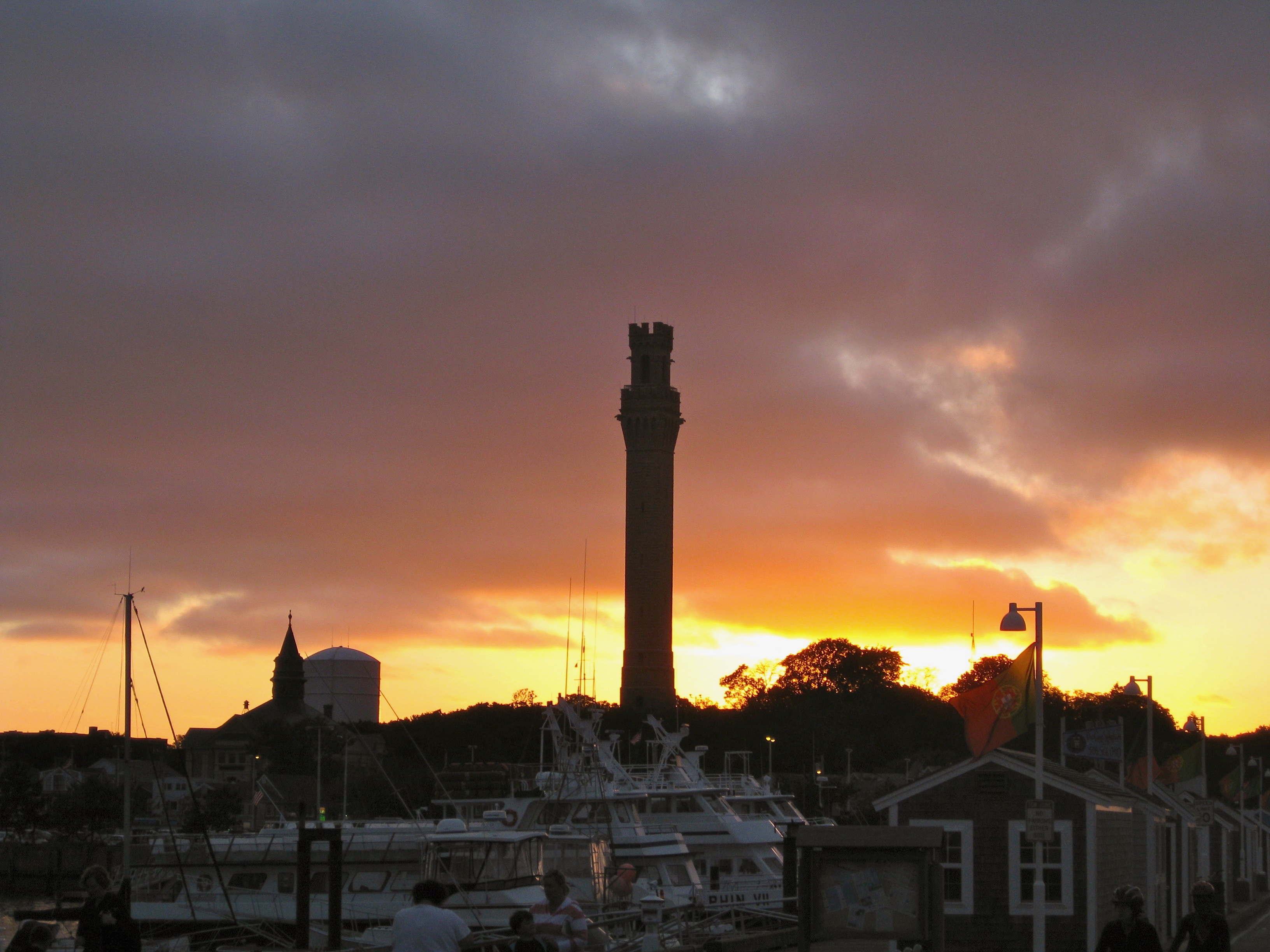
That tall, narrow building is the Pilgrim Monument, the most iconic feature of the town’s skyline.
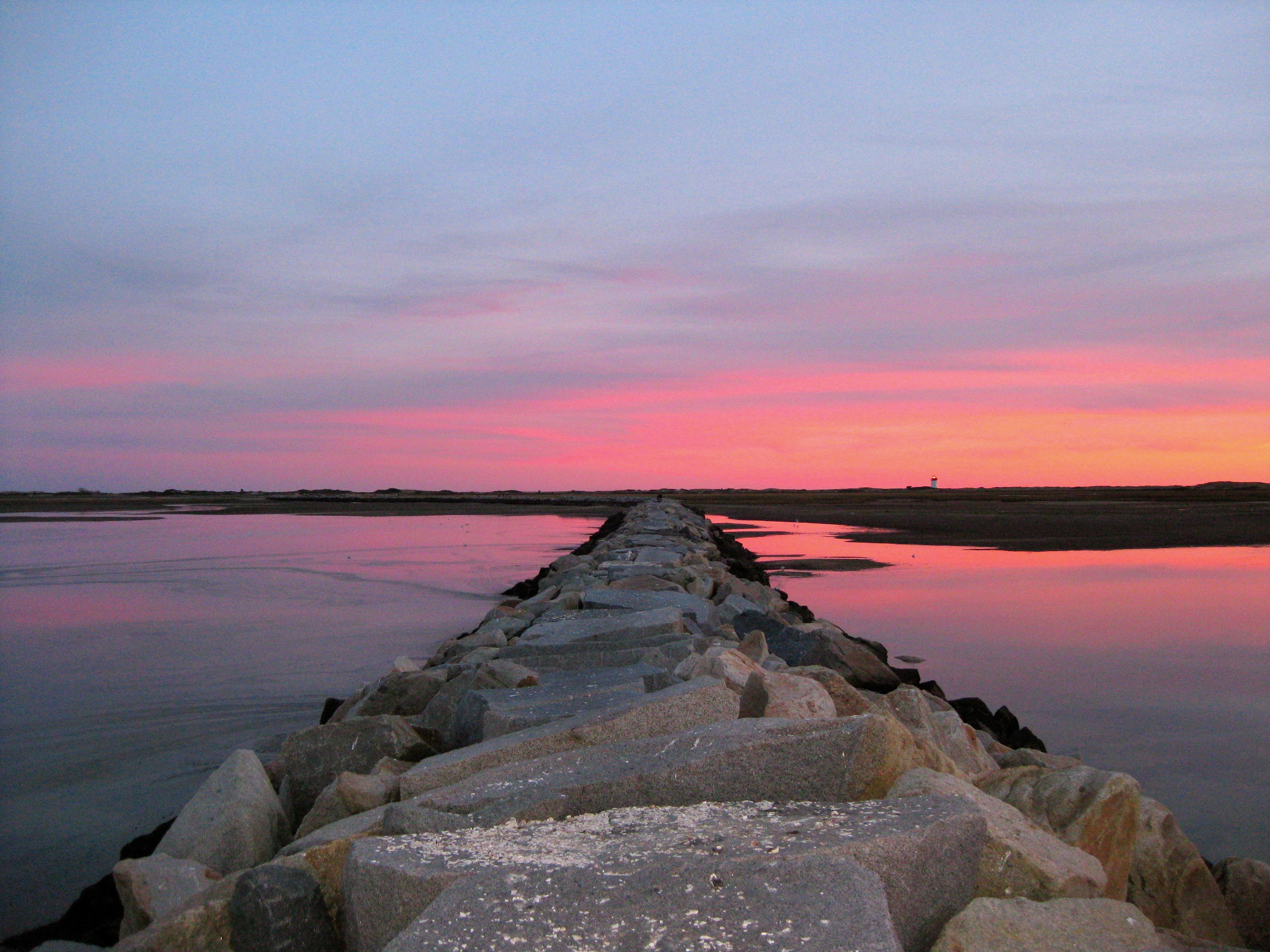
The Provincetown Causeway in the West End, October 2012. Until we meet again, P-Town…
Our family had no cabinets in our kitchen. The room where we ate breakfast and lunch (but usually not dinner; we had a dining room for that) did have a perfectly round wooden table with four chairs, a white upright refrigerator with the freezer on top, a 1970s harvest gold four-burner gas stove (it stuck around well into the ‘90s) and an old-fashioned exposed white sink with a short, rectangular radiator underneath. Eventually, we’d also acquire a wooden cart with wheels upon which our first, relatively massive microwave sat.
Mom decorated the cabinet-less walls with various copper and metal molds; apart from those for making curiously bland Bundt cakes, we rarely if ever used them (one was in the shape of a fat fish.) A row of painted ducks later joined the molds during a stenciling phase Mom went through in the late ‘80s which nearly extended to my bedroom: “Chris, I could draw something more masculine like bicycles on your walls,” she offered before I put my foot down and respectfully declined her services.
We didn’t need cabinets in our kitchen for we had them in our narrow, walk-in pantry off to the right of the sink. They sat along one of the longer walls, down to the floor beneath deep built-in shelves. The opposite wall was bare; between them at the end of the room, a skinny window overlooked the backyard, our garage and the alley. When visiting the homes of friends or relatives or watching TV sitcoms such as Who’s The Boss? or The Golden Girls, I couldn’t help but notice how seemingly everyone else had kitchen cabinets instead of a walk-in pantry.
These days, I often think about that pantry fondly. Despite its window facing east, I remember it as a predominantly dark space chockablock with hidden treasures. Upon entering it was a long, vertical cabinet spanning from the lowest shelf to the ceiling: it housed spices and baking supplies, but also decorations such as a rainbow assortment of sprinkles and sugars used exclusively for Christmas Cookies. On another shelf sat a variety of condiments, some of them ubiquitous like the Open Pit BBQ sauce that accompanied nearly every meat and vegetable my dad cooked on our red circular Weber charcoal grill; others were more obscure like the A-1 Steak Sauce whose ingredients listed in miniscule print forever intrigued me (it had raisins in it!) A higher, barely reachable shelf held items I don’t remember my parents ever touching, like the dusty bottle of Blackberry Brandy that was apparently purchased for (or given to us as a gift from) an elderly relative.
Our pantry, however, was more than a repository for dry goods, flatware, pots and pans and daisy-patterned china; it was a singular space, as much of an individual room to us as any other in the house. As a toddler, it was an ideal place to play Hide and Seek; as a pre-teen, when both my parents were at work and I had the house to myself, I reclaimed the room as one of exploration, browsing deep into the less-used cabinets to see just what I could find (often boring items such as a rusting muffin pan or a forgotten box of Saltines.) The pantry even had its own myths and legends, such as the time (often recounted by my mother) that a portly adult friend of my folks supposedly wedged his bulbous frame on the shelf above the bottom cabinets, scarfing down Hostess Ding Dongs during a party I’d been far too young to remember myself.
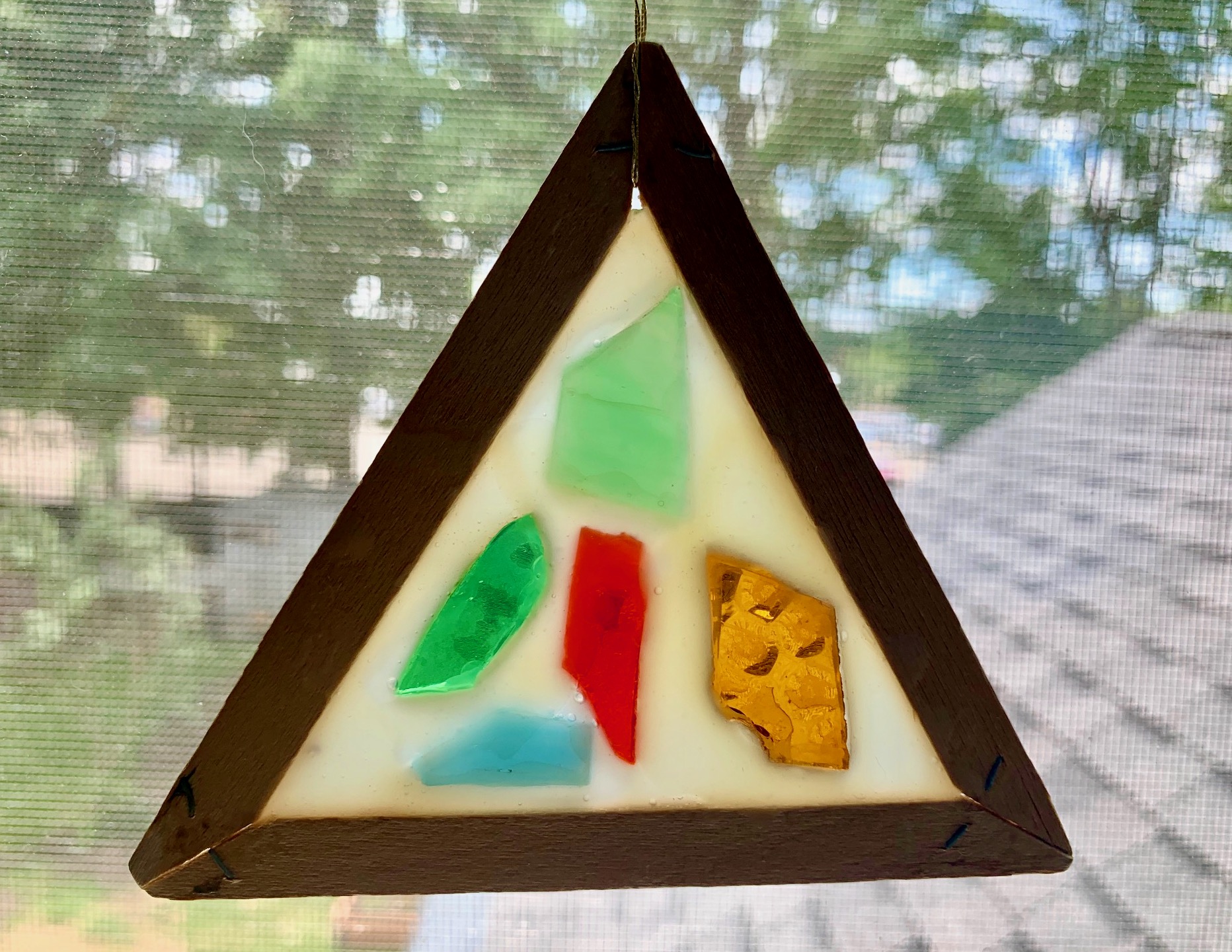
When I was ten, I stood in that pantry one September evening, searching for a metal ice cream scooper in the utensil drawer beneath the window. My fingers brushed over an apple corer, assorted teaspoons, a steak knife with a dulled blade. The distracted clinking of flatware filled the air. Glancing up at the window, adorned with a bejeweled hanging ornament (framed by popsicle sticks!) I’d made in Second Grade, I spotted an unusual, almost inviting glow beyond our garage in the dark of night flanked only by a fluorescent white alley light. Within seconds, I could make out flames. Was that our garage… on FIRE??!!
Before I could even think to call out to my parents, a figure whizzed by so rapidly across the alley, I initially couldn’t discern whether it was human, animal or even of this earth. I then caught a flash of nylon jacket, a skinny frame and thinning hair. It screamed “FIRE! FIRE!” as it ran left to right, not doing anything constructive except making the entire block aware of the developing inferno yards ahead of me. Somewhere between confused and delusional, I plainly thought, “This isn’t real; our garage is NOT on fire.”
I was half-right, for it was the garage directly across from ours in the alley that was ablaze. By that time, my mother noticed it too: “OHMYGOD!,” she shouted, running up to me in the back of the pantry. Putting her hand on my shoulder and gazing out the window, she saw what was actually going on. We were then silent, almost awestruck—we could feel the force of the blaze from there, if not the warmth.
A crowd began to form, mostly in ours and the neighbors’ backyards. Mom walked away from the pantry, calm as I’ve ever seen her, not worried about our proximity to the fire. She returned with my denim jacket and her pink windbreaker, leaving Dad in the living room on his tan corduroy La-Z-Boy recliner, obliviously snoring away as St. Elsewhere blared from our 19-inch Zenith.
We stepped out onto our back porch; not one of the twenty or so assembled onlookers noticed us at first. Not everyone was as intently focused on the blaze as we were in the pantry: an trio of old men held longneck bottles of Miller’s Best in their calloused hands, while a quartet of kids ran through ours and the adjoining yards, deep into a game of tag, their mothers barking at them not to get too close to the fire. The blaze didn’t frighten me, exactly, but its sheer force reminded me of what destruction was possible. Still, its cackling insistence almost had a soothing effect.
There’s nothing like a fire to bring a neighborhood and its inhabitants together (no block parties for us, thank you.) A year or two before, there was a small one at the house on the corner of the next block; my parents and I heard the sirens and walked over, becoming part the considerable mob lined up and down our street. Now, it was our turn to partially “host” the Gathering. People eventually came up to us and said hello. Millie, an older woman who lived two doors down, engaged in a bit of neighborhood gossip with Mom of the kind that didn’t require any special occasion—the fire raged on across the alley almost as if it was an everyday occurrence, although it most definitely was not.
It felt like hours standing there on the back porch, although the fire truck arrived and completely doused the blaze within minutes. The neighbor’s garage was a lost cause, a smoldering hunk of concrete and debris. It belonged to an elderly woman living alone, which seemed to account for at least one-third of the residents on our block. I can’t remember the exact cause of the fire—something to do with leakage of gas or some other chemical, perhaps. Anyway, the only damage to our own garage were black marks across its wooden door, which would be replaced with an off-white and rather ugly (but more durable) aluminum one. Our neighbor across the alley, meanwhile, would have an entirely new garage built within weeks.
I’d often think of that fire whenever I stood in our pantry, looking out that window. Nothing so exciting ever happened in that alley again, apart from the pig roast (!) our upstairs neighbors had next to the garage over a decade later as part of their backyard wedding reception that I refused to have anything to do with. In all the apartments I shared with roommates in my twenties and thirties, two actually had walk-in pantries, but they just weren’t the same—they held no intrigue, no crevices where hidden treasures lurked perhaps because I was an adult and therefore directly responsible for all the items I kept in them. The closest thing to a discovery I ever made in these later pantries was a forgotten banana placed on a high shelf. When I next spotted it after a couple of months, it had not only turned entirely black, but had somehow shrunken to the size of a large jalapeno pepper—a far less profound pantry experience for sure.
Cinemas remain closed, but there’s no shortage of new movies available to stream online, whether through Netflix or Hulu or your local indie theatre’s website (like this one.) I saw a number of titles this way that might’ve had a traditional theatrical release, pre-pandemic. The best included Driveways, an earnest but whip-smart coming-of-age film featuring Brian Dennehy’s last performance (start the posthumous Oscar campaign now—it’s a superb farewell); Straight Up, which puts a novel, modern, undeniably queer spin on the screwball rom-com; and The Painter and The Thief, a documentary about an unlikely friendship, assembled like a gradually completed puzzle.
As for the rest of the new: cult French auteur/techno musician Quentin Dupieux returns with Deerskin, another transgressive weird-o-rama, but it has an ace in the hole with lead Jean Dujardin fully committing to such absurdity; On A Magical Night (a much different French film) is somehow simultaneously enchanting and irritating whenever it’s not boring. Alan Yang’s Tigertail is half a great picture (specifically, the flashbacks) with cinematography I would’ve liked to have seen in a theatre (these days, wouldn’t we all?) but less dull than docs that are well-intended (A Secret Love) or entertaining if wildly misshapen (This One’s For The Ladies.)
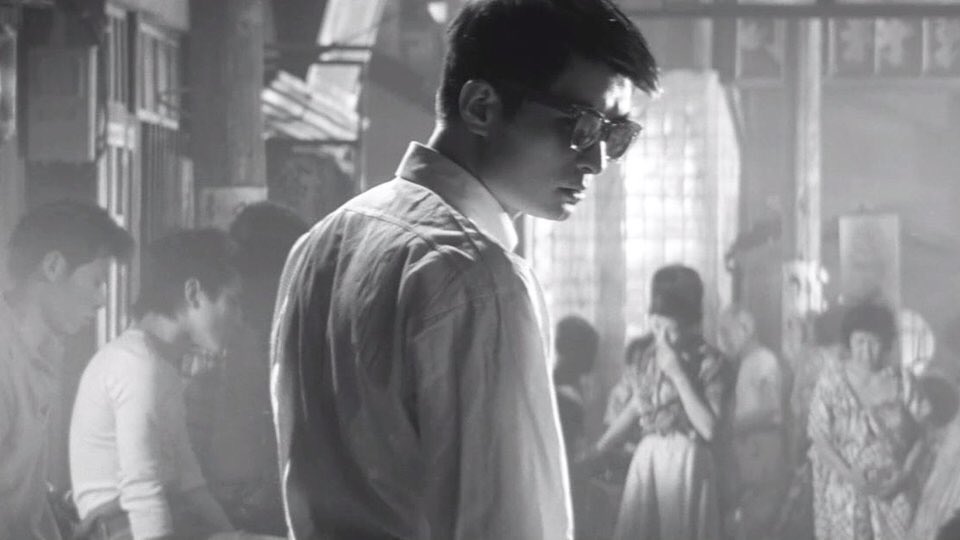
Two masterworks viewed for the first time: High and Low, an Akira Kurosawa kidnapping thriller that cannily spends its first hour in a single setting, then gradually expands both its physical and emotional spheres until it culminates in one of the most exciting extended sequences I’ve ever seen (even more so than the admirable, silent, thirty-minute heist in Rififi); and The Best Years Of Our Lives, as much a film about the year it was made as you’re ever likely to find in classic Hollywood, and made immortal by non-professional actor Harold Russell’s genuine, endearing performance.
Other great discoveries: It’s Always Fair Weather, which deserves to be as well-known as On The Town (if not Singin’ In The Rain); Taipei Story, an earlier film from the director of Yi Yi and a rare acting showcase for fellow Taiwanese auteur Hou Hsiao-hsien; and Targets, Peter Bogdanovich’s first feature and startling in how ahead of its time it was, and also in how perfectly it captured it.
As for re-watches, Images holds up about as well as Mauvais Sang, both of ‘em benefiting from their leads; slightly better than either is Orlando, which might still be the quintessential Tilda Swinton vehicle. As for Moonrise Kingdom, it remains Wes Anderson’s best of the past decade-and-a-half (we’ll see how The French Dispatch measures up, hopefully this October.)
Films viewed in May in chronological order, with director, year of release and my rating (out of 10); starred titles are re-watches.
The Out-of-Towners (Arthur Hiller, 1970)* 7 A Secret Love (Chris Bolan, 2020) 6 Tigertail (Alan Yang, 2020) 7 Targets (Peter Bogdanovich, 1968) 9 This One’s For The Ladies (Gene Graham, 2018) 5 Taipei Story (Edward Yang, 1985) 8 Tomboy (Celine Sciamma, 2011) 9 49th Parallel (Michael Powell, 1941) 8 Johnny Guitar (Nicholas Ray, 1954)* 9 Deerskin (Quentin Dupieux, 2019) 7 It’s Always Fair Weather (Stanley Donen and Gene Kelly, 1955) 9 Private Life (Tamara Jenkins, 2018) 8 Orlando (Sally Potter, 1992)* 8 High and Low (Akira Kurosawa, 1963) 10 Straight Up (James Sweeney, 2019) 8 It Felt Like Love (Eliza Hittman, 2013) 6 Driveways (Andrew Ahn, 2019) 8 Rififi (Jules Dassin, 1955) 7 Stolen Kisses (Francois Truffaut, 1968) 7 Images (Robert Altman, 1972)* 7 On A Magical Night (Christophe Honore, 2019) 6 Losing Ground (Kathleen Collins, 1982) 8 Moonrise Kingdom (Wes Anderson, 2012)* 10 Waiting For Guffman (Christopher Guest, 1996)* 9 Mauvais Sang (Leos Carax, 1986)* 7 The Painter and The Thief (Benjamin Ree, 2020) 8 The Best Years Of Our Lives (William Wyler, 1946) 10 Bombshell: The Hedy Lamarr Story (Alexandra Dean, 2017) 7
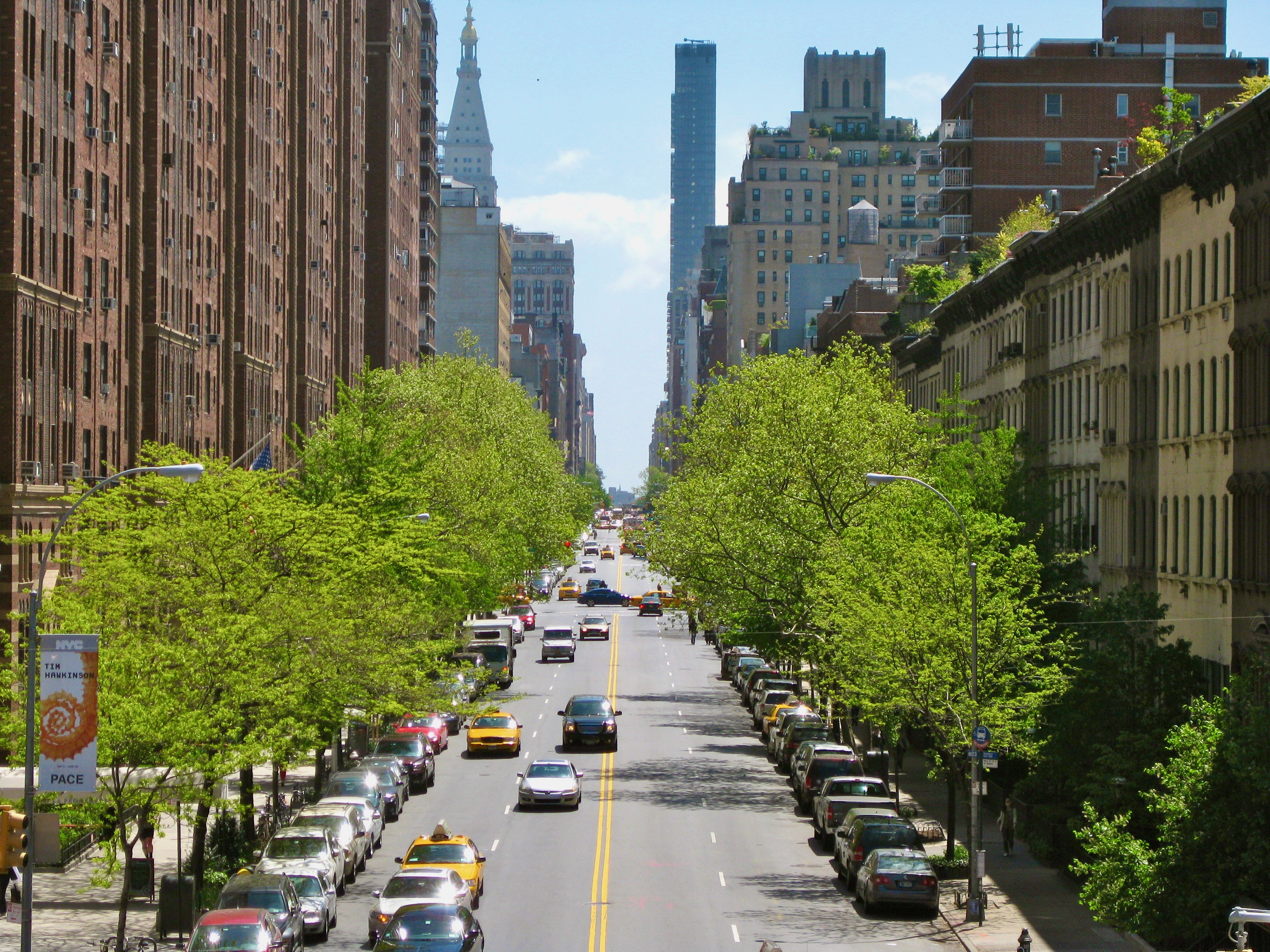
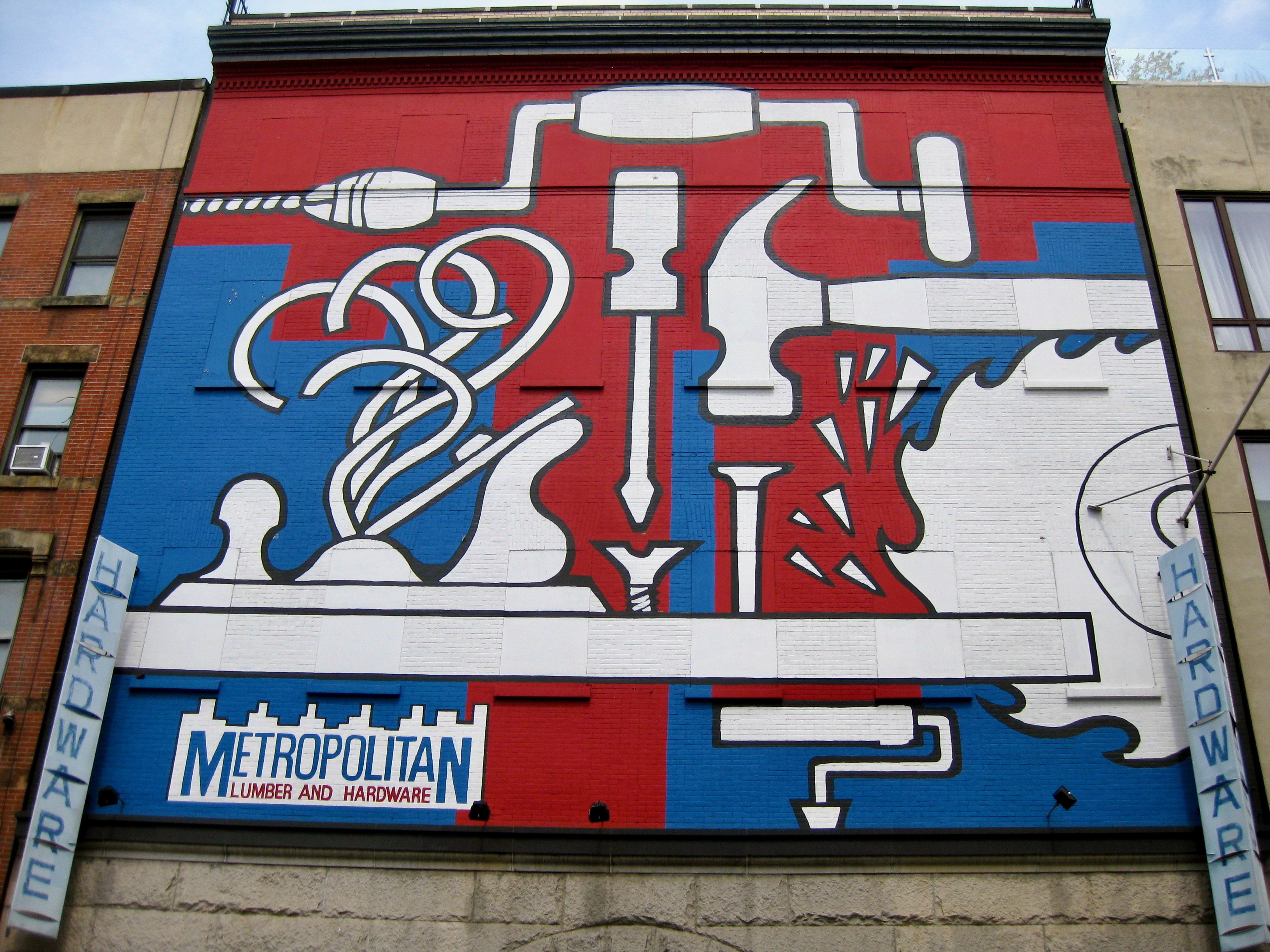
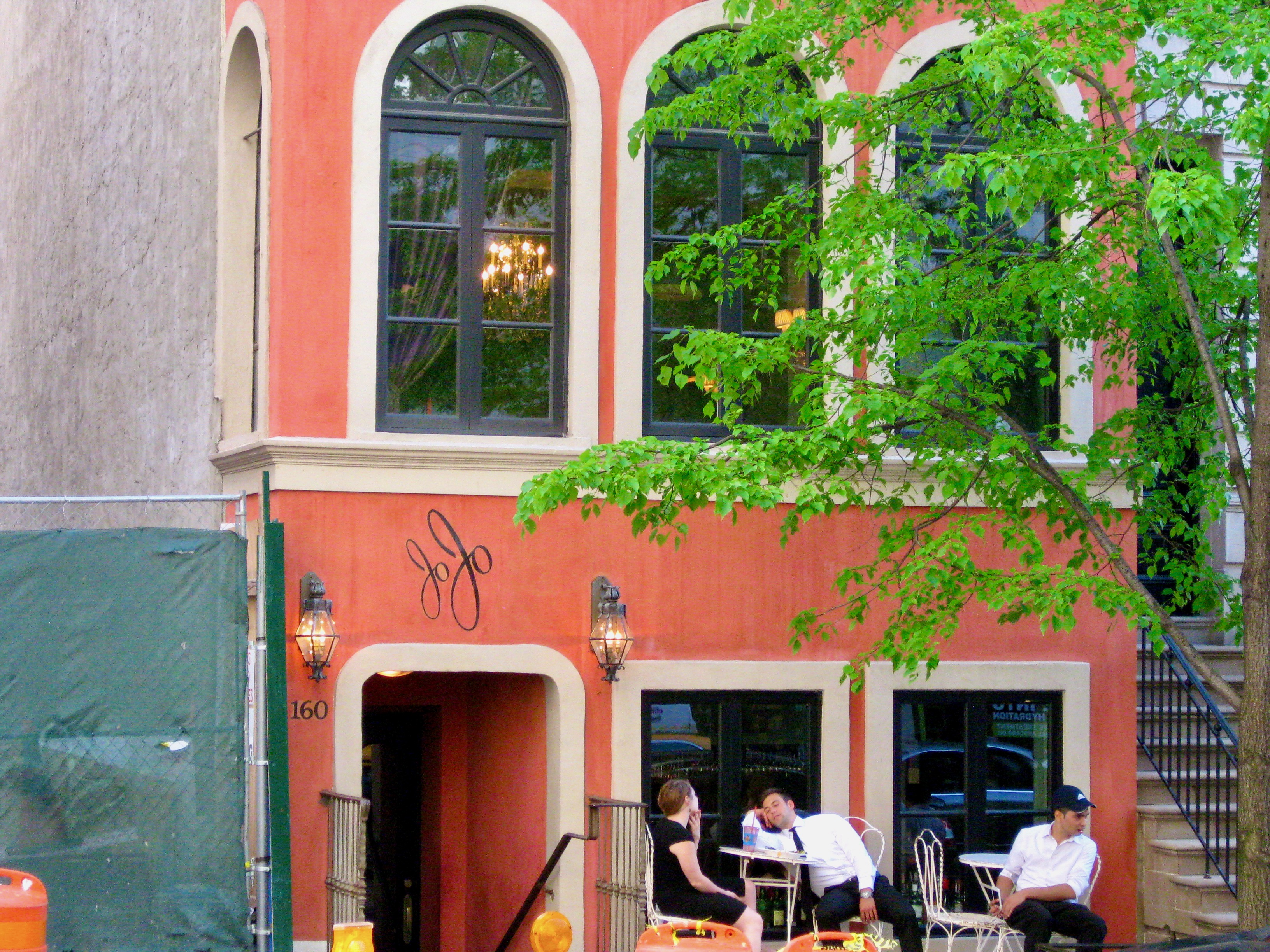
I’ve been to New York City at least a dozen times in the past two decades. Since another visit right now is out of the question, here are a few favorite pics from those trips. Above is a view of West 23rd Street taken from the High Line in 2013.
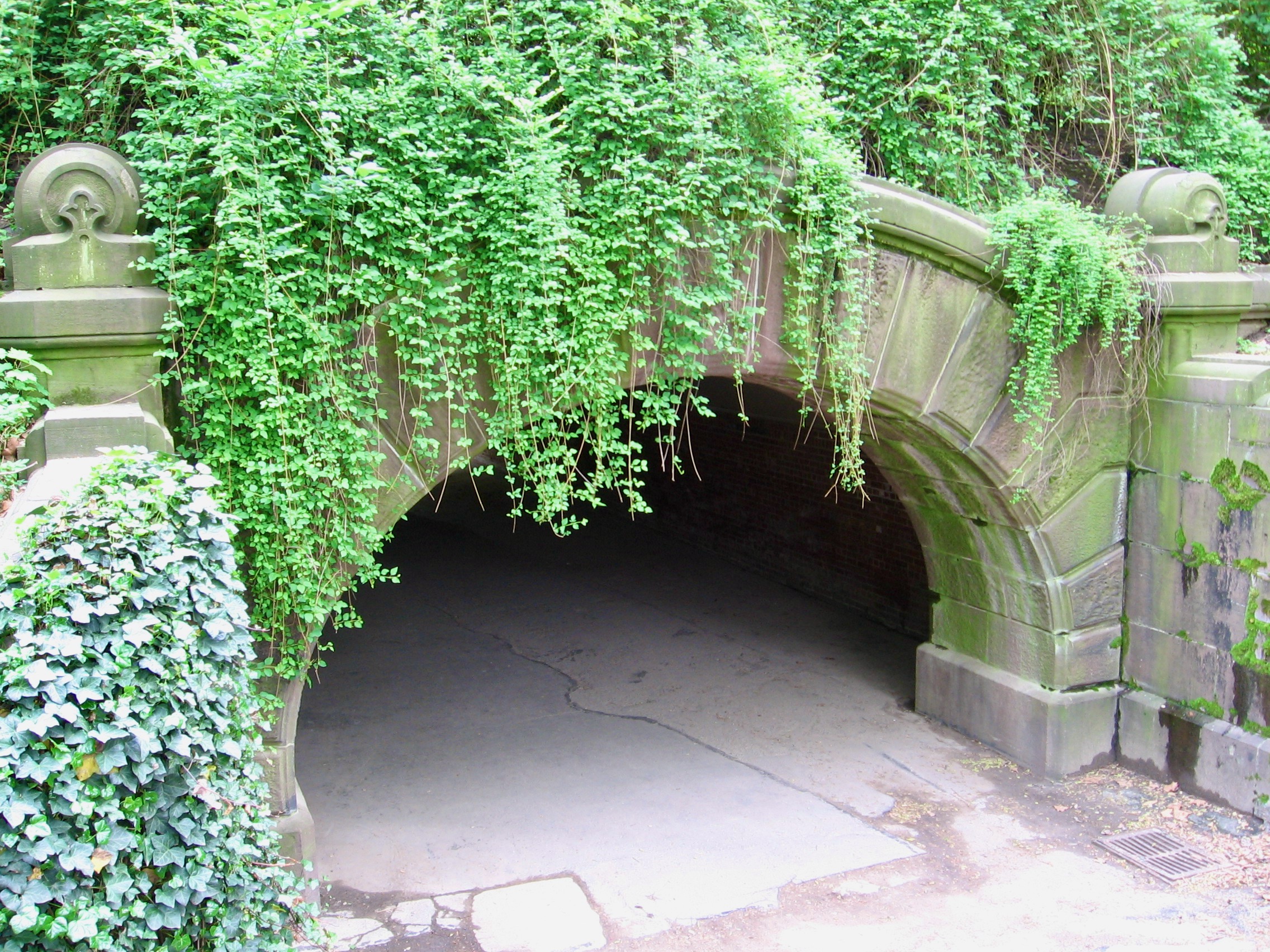
Given how massive (and ubiquitous) NYC is, I’m eschewing landmarks for selected obscurities teeming within this metropolis. This tunnel, one of many in Central Park, may be my most recognizable image from here on out.
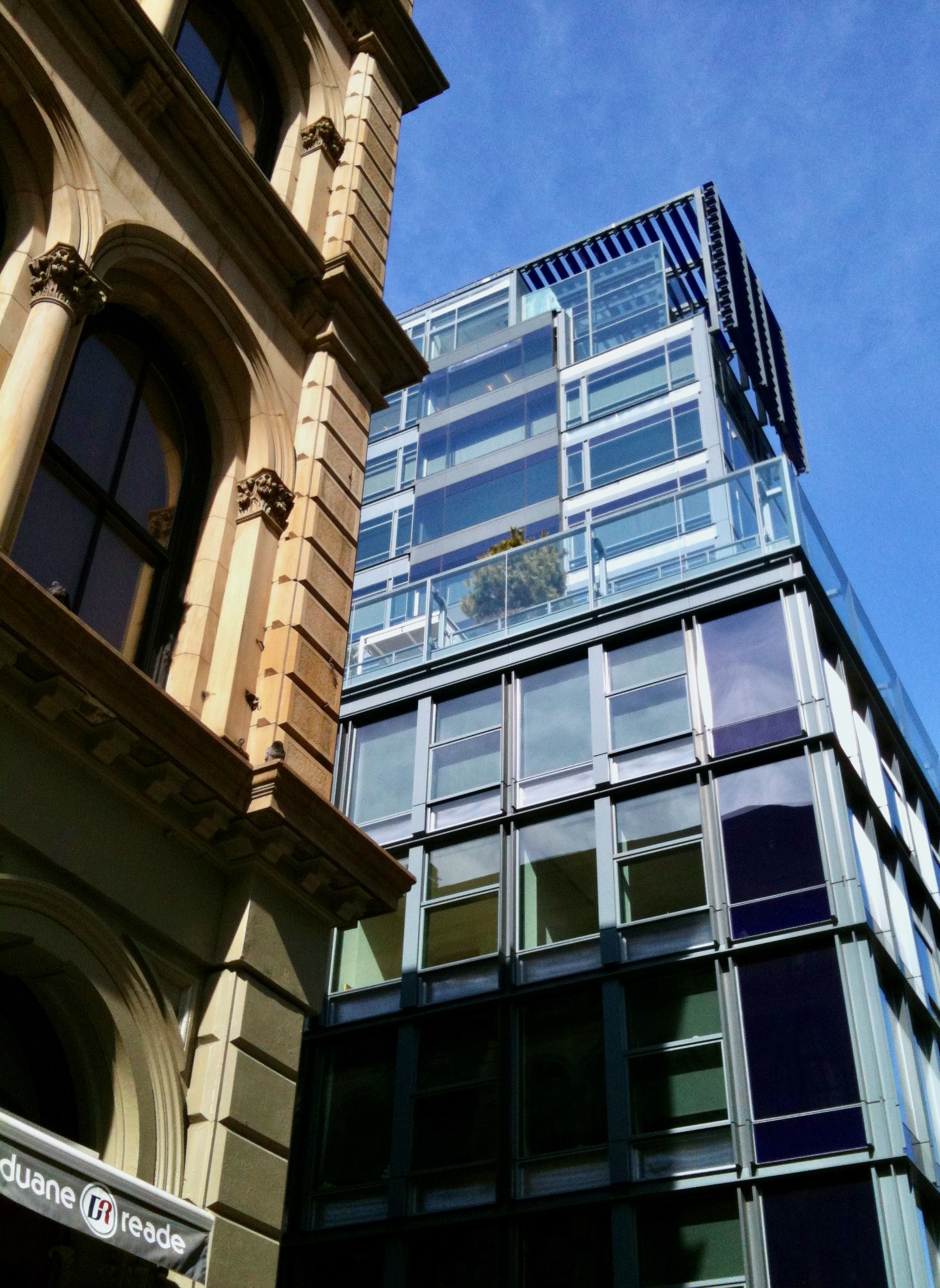
Manhattan architecture is a caustic mixture of old and new (and Duane Reade stores.)
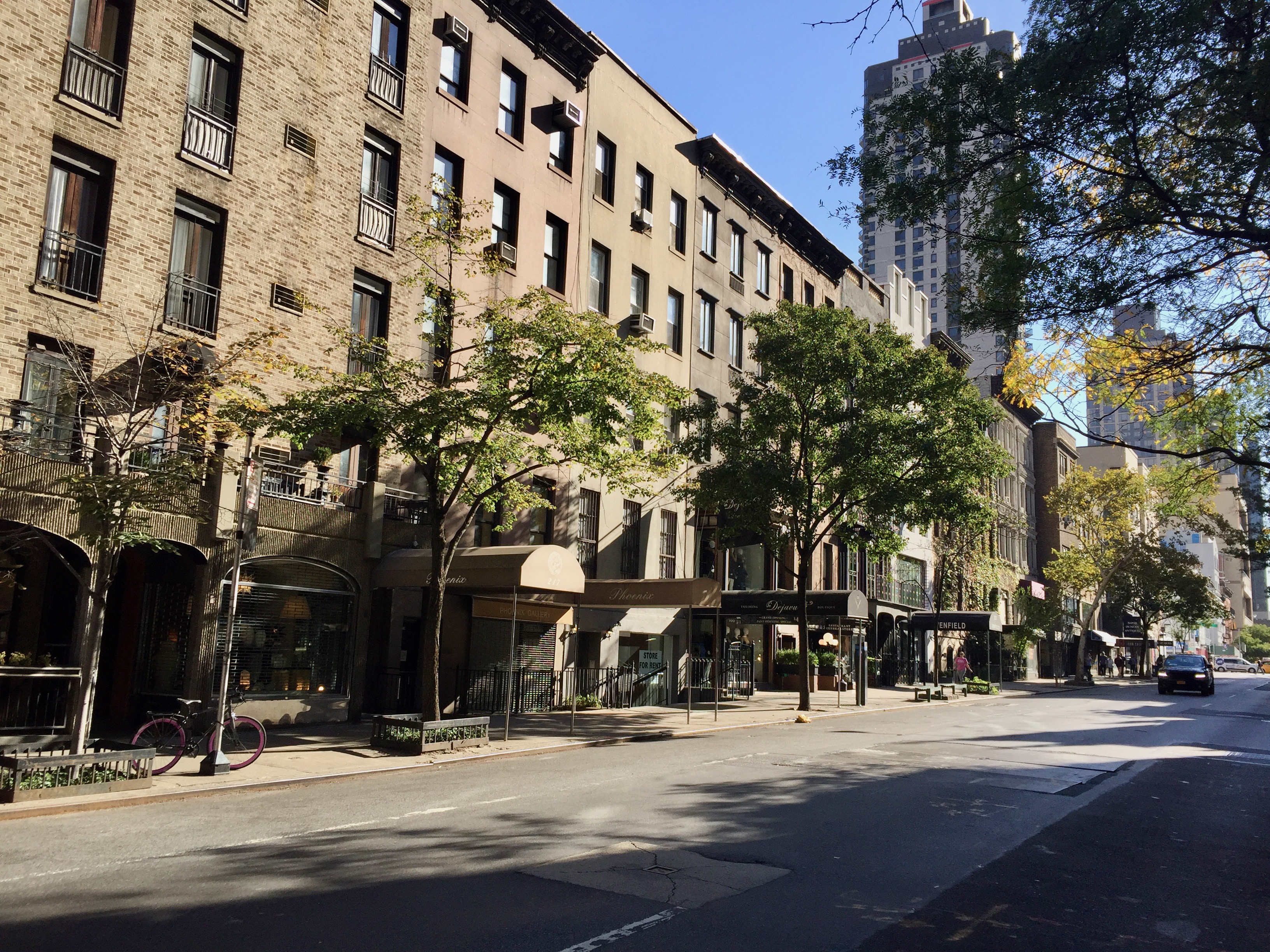
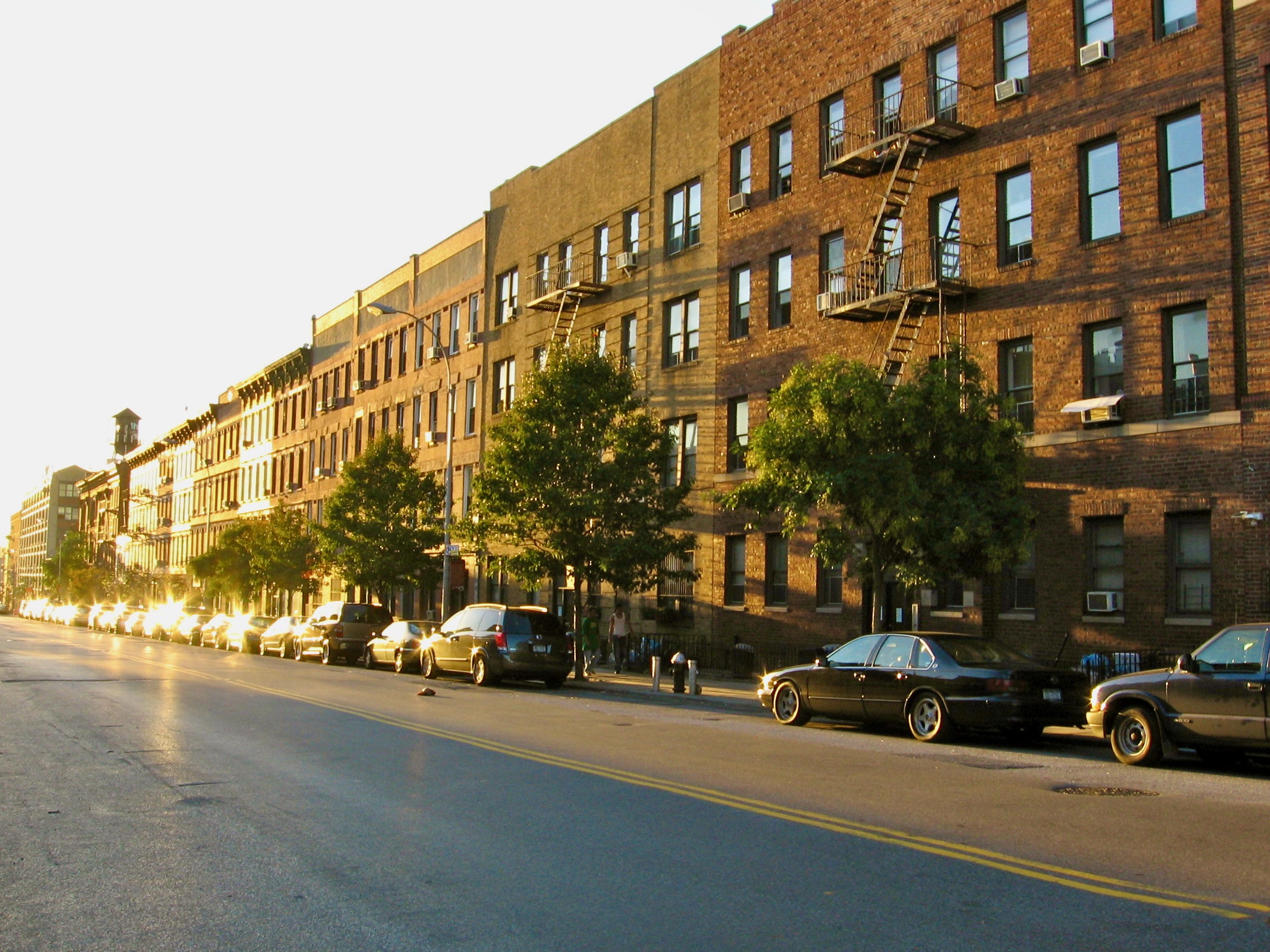
A typical block in the East Fifties that could be just about anywhere in Manhattan.
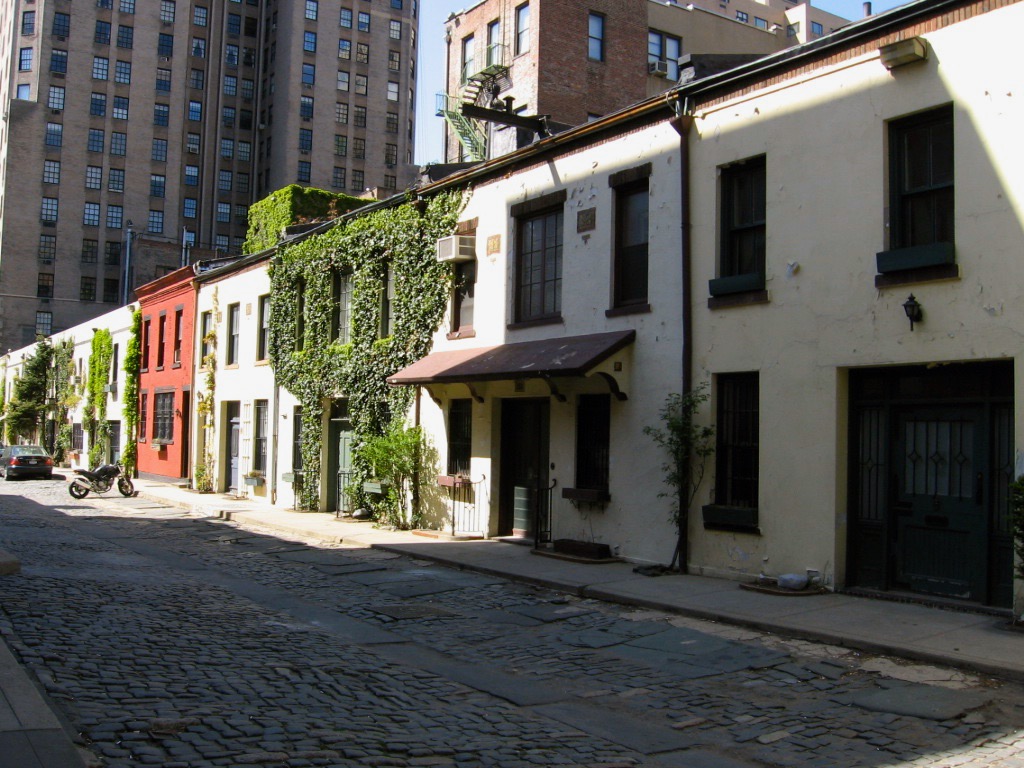
This block’s much more distinct: MacDougal Alley in Greenwich Village, not too far from Washington Square Park.
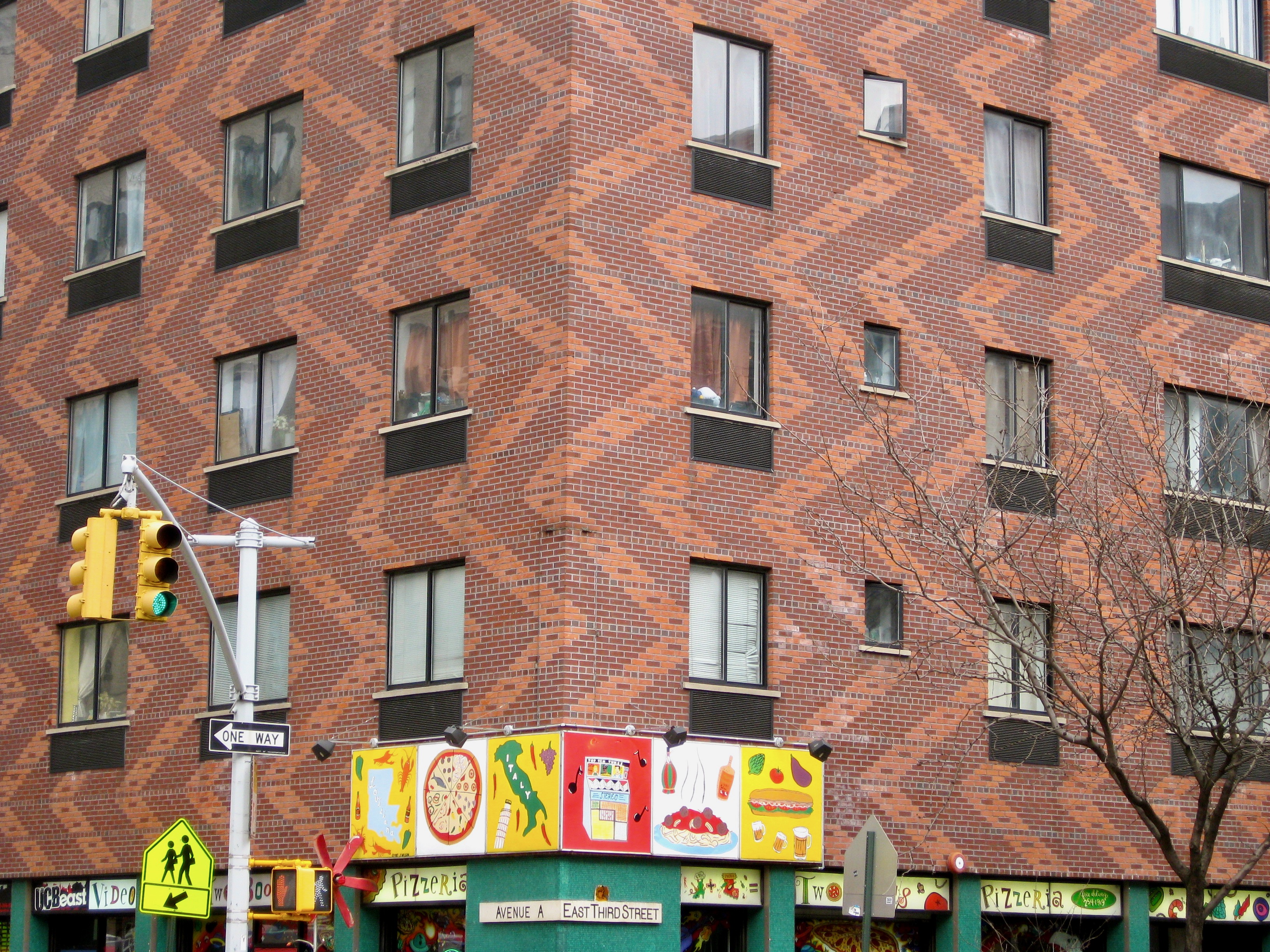
Even less fancy corners, such as Avenue A and East Third Street in the East Village are marked with such oddities as this zigzag-bricked building.
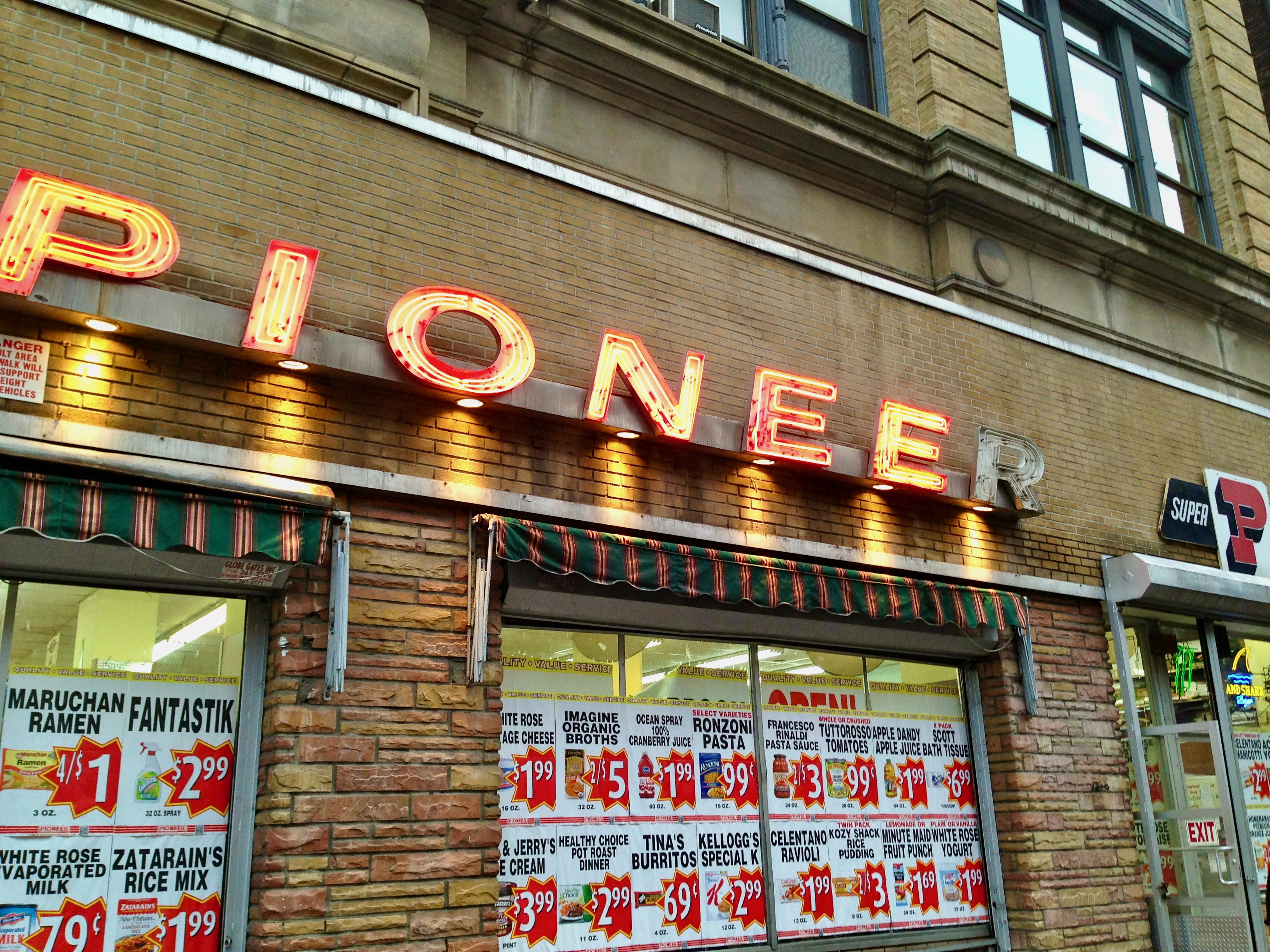
Despite all-encompassing gentrification, remnants of old New York hang on, like this ancient supermarket on the Upper West Side…
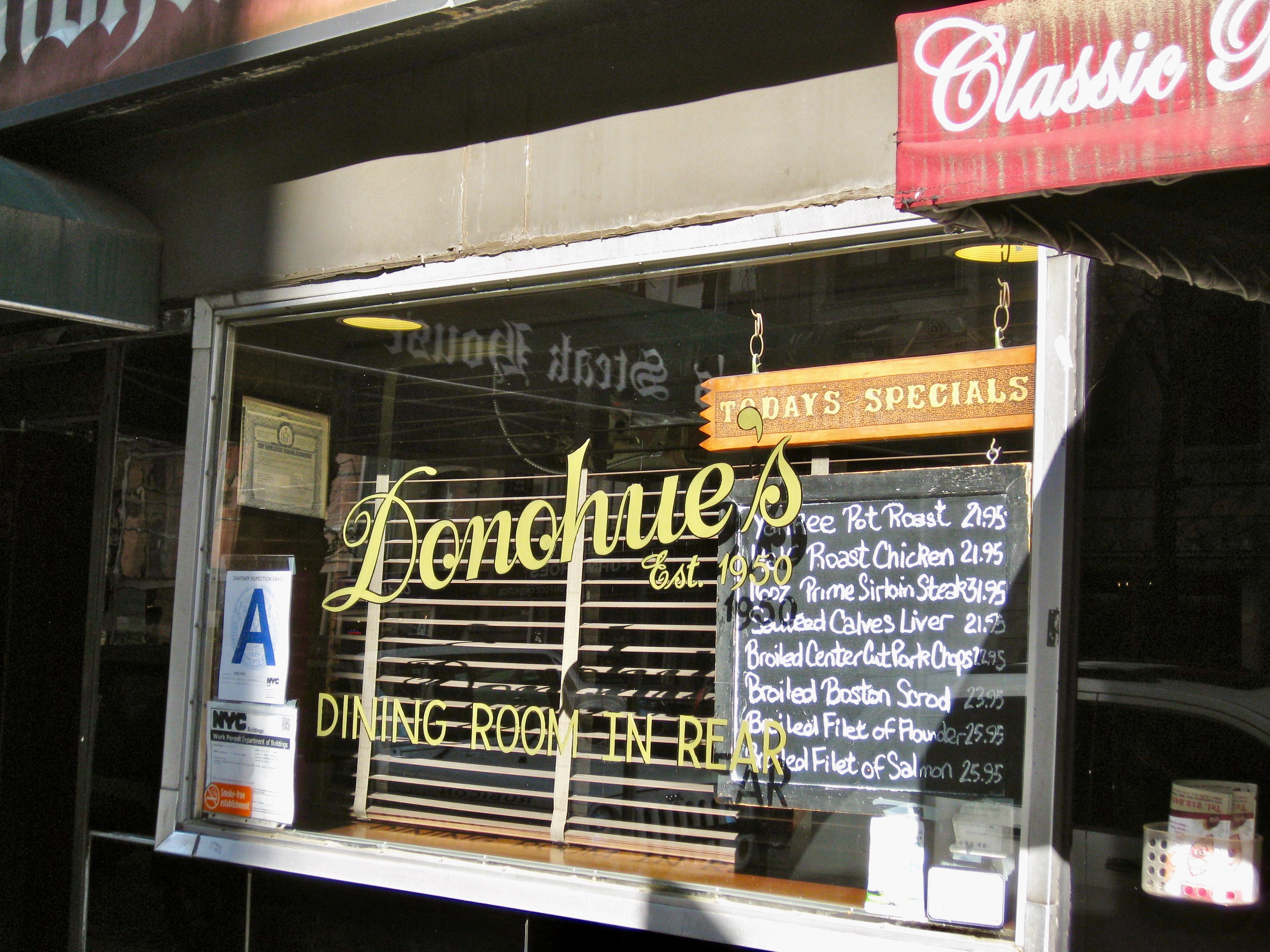
…or this established-in-1950-and-miraculously-still-looks-it steak joint on the Upper East Side.
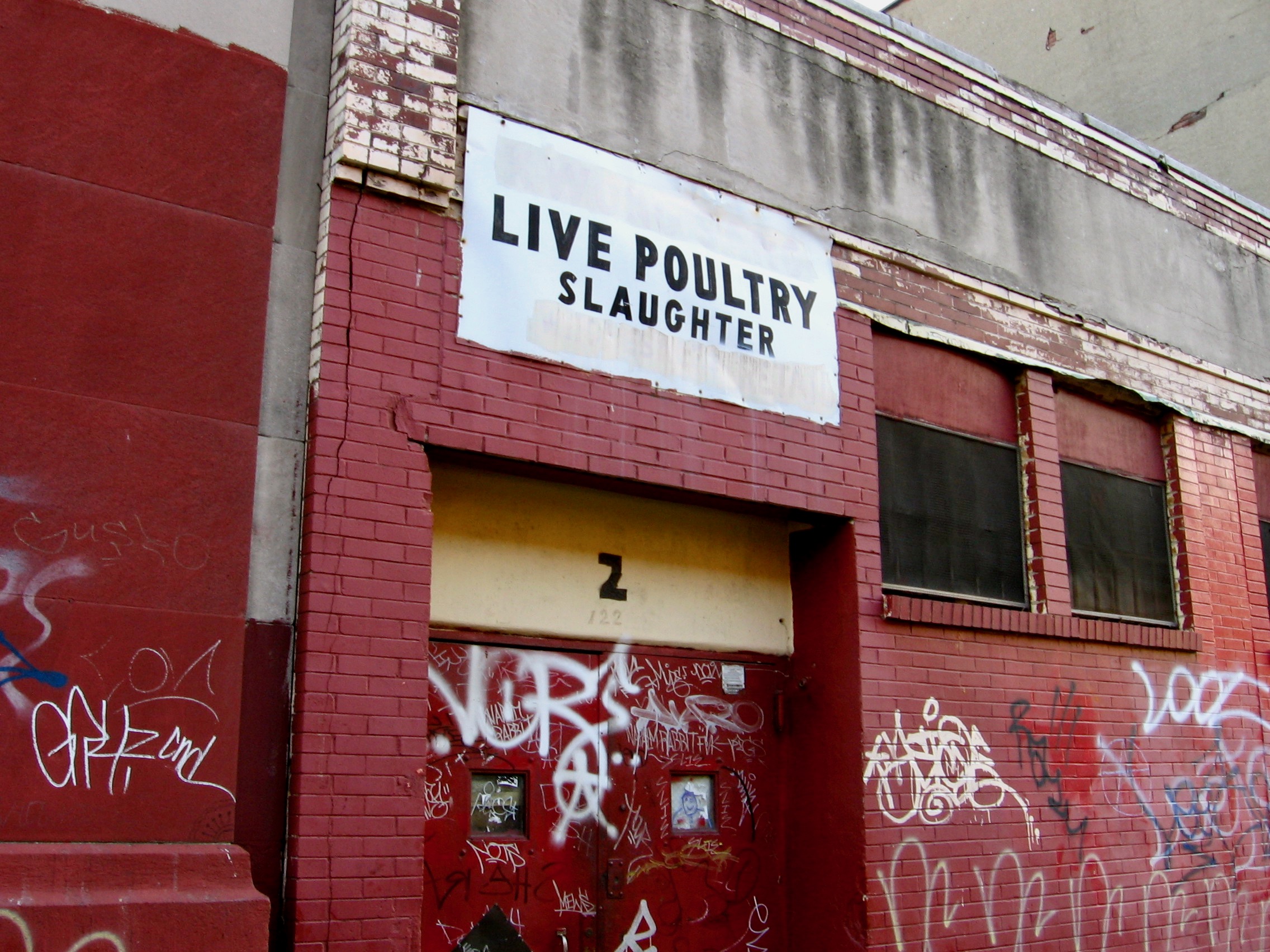
Took this in Greenpoint, Brooklyn in 2006. The business has since closed but the sign remains, sort of.
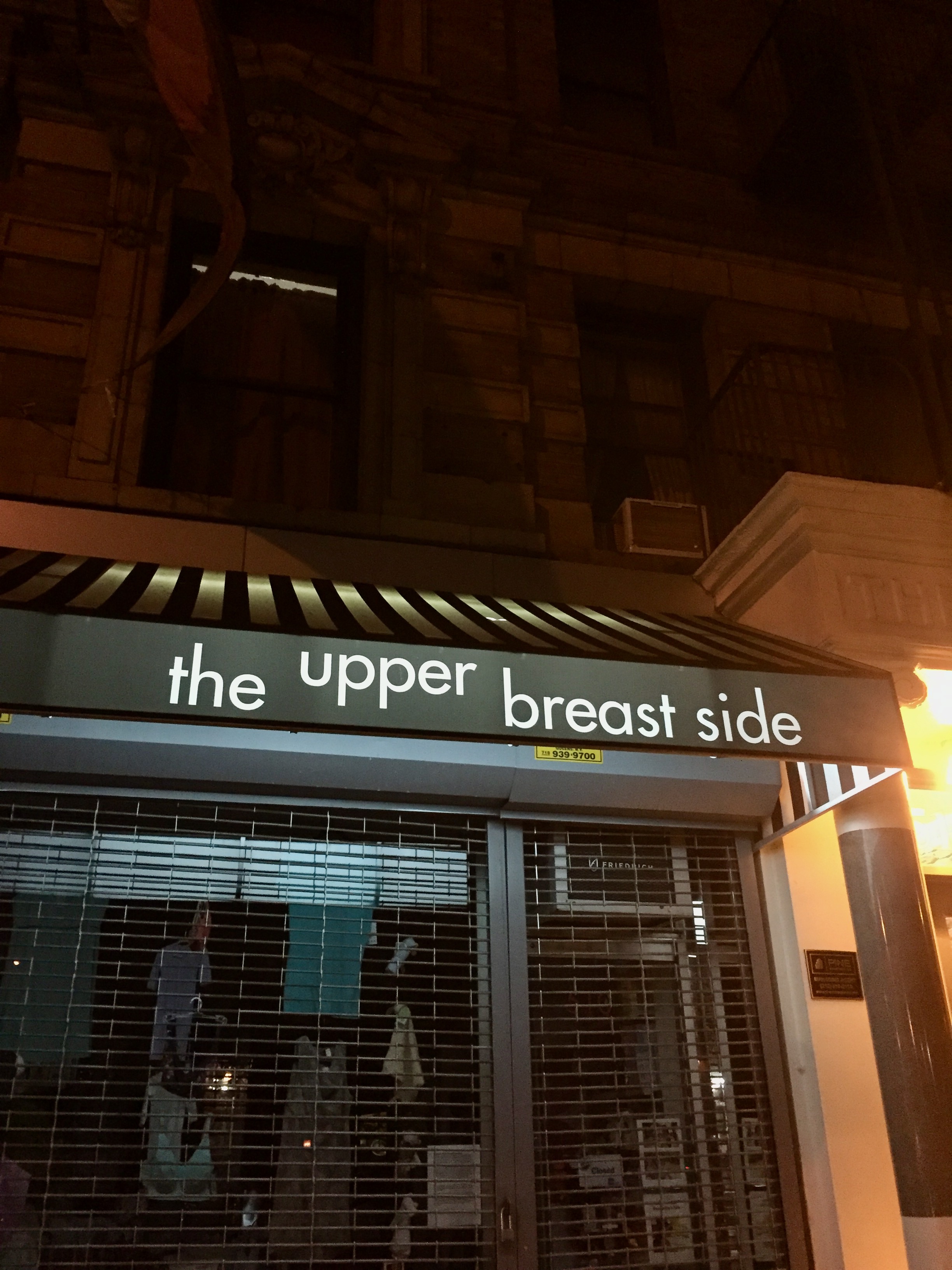
21st Century signage in NYC doesn’t have to be dull or uniform, as seen at the Soho outpost of this five-store chain.
However, clever can only take you so far: my gut reaction at first seeing this in 2015 was, “OH NO THEY DIDN’T.”
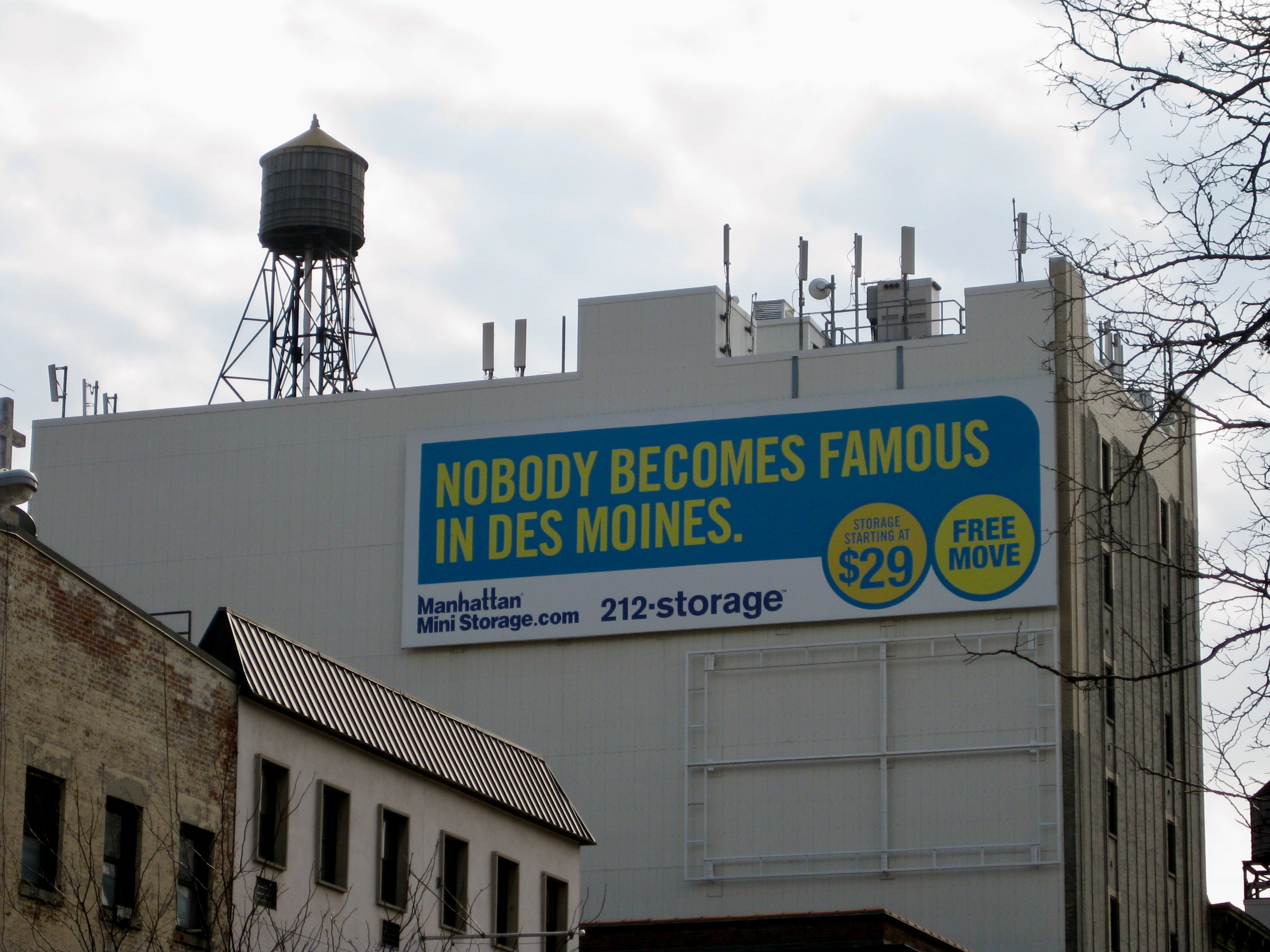
This cleverness I can appreciate, given my folks were Des Moines-ers for twenty years.
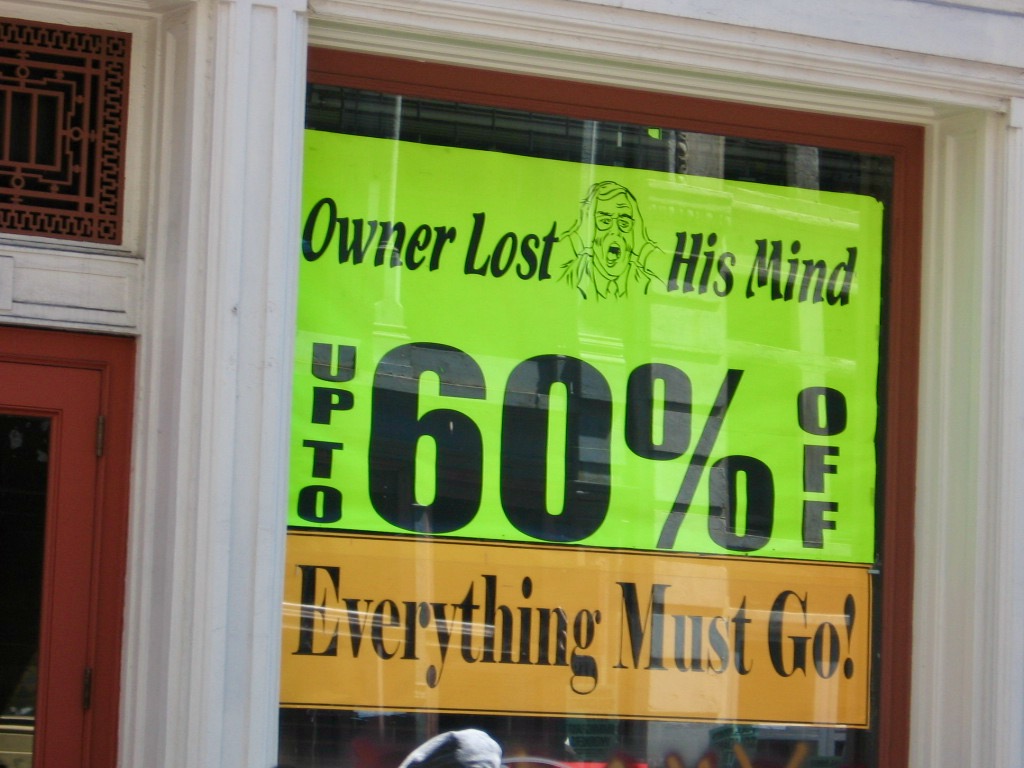
This sign is still my favorite ever spotted in NYC: April 2006, on Broadway in Soho.
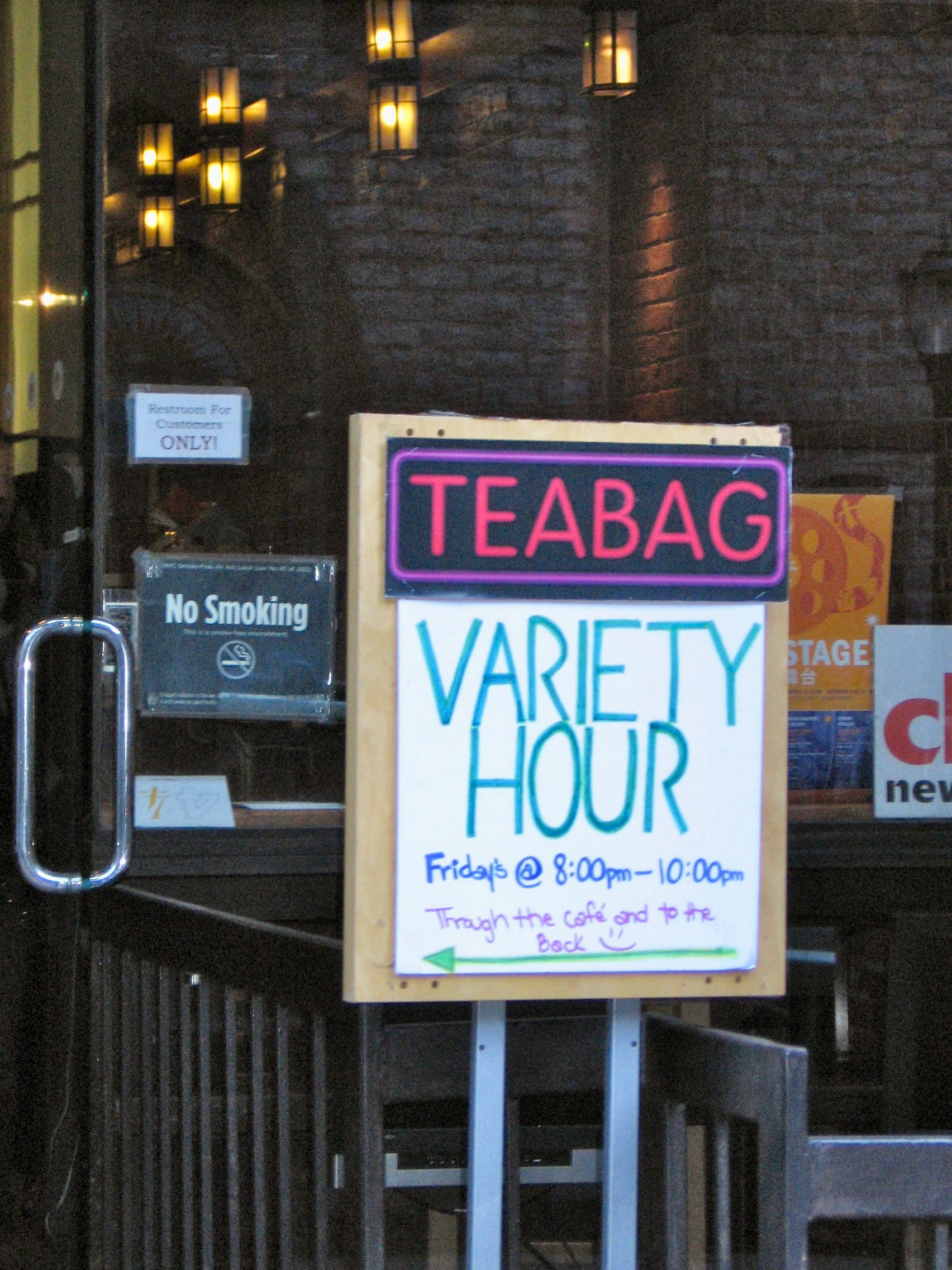
Over to Williamsburg, Brooklyn, six months later. There’s something funny about a “Teabag Variety Hour” that I’m guessing the proprietors of this establishment never intended.
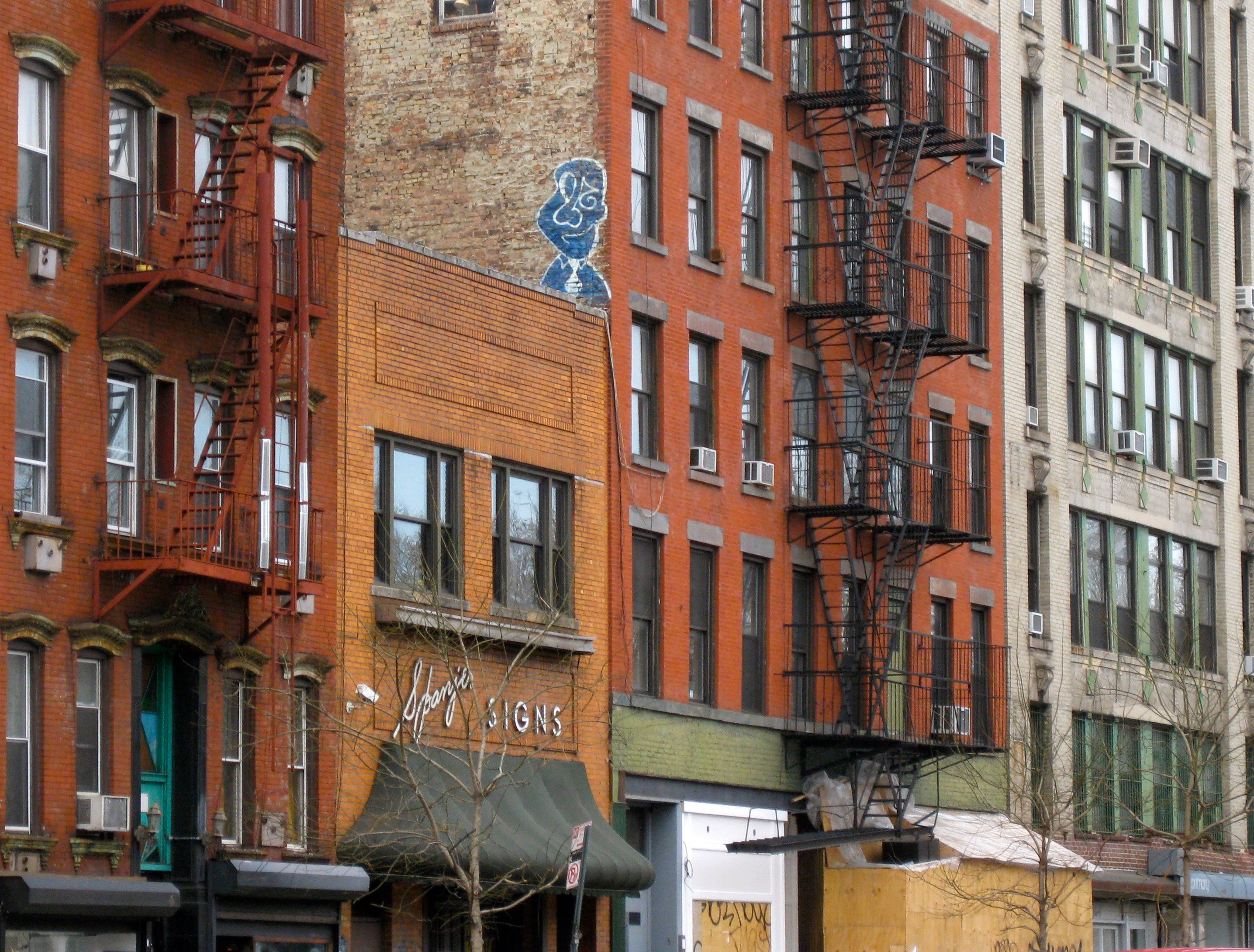
Over to the Bowery and Spanjer Signs on Chrystie Street (enhanced by some whimsical graffiti) in February 2012.
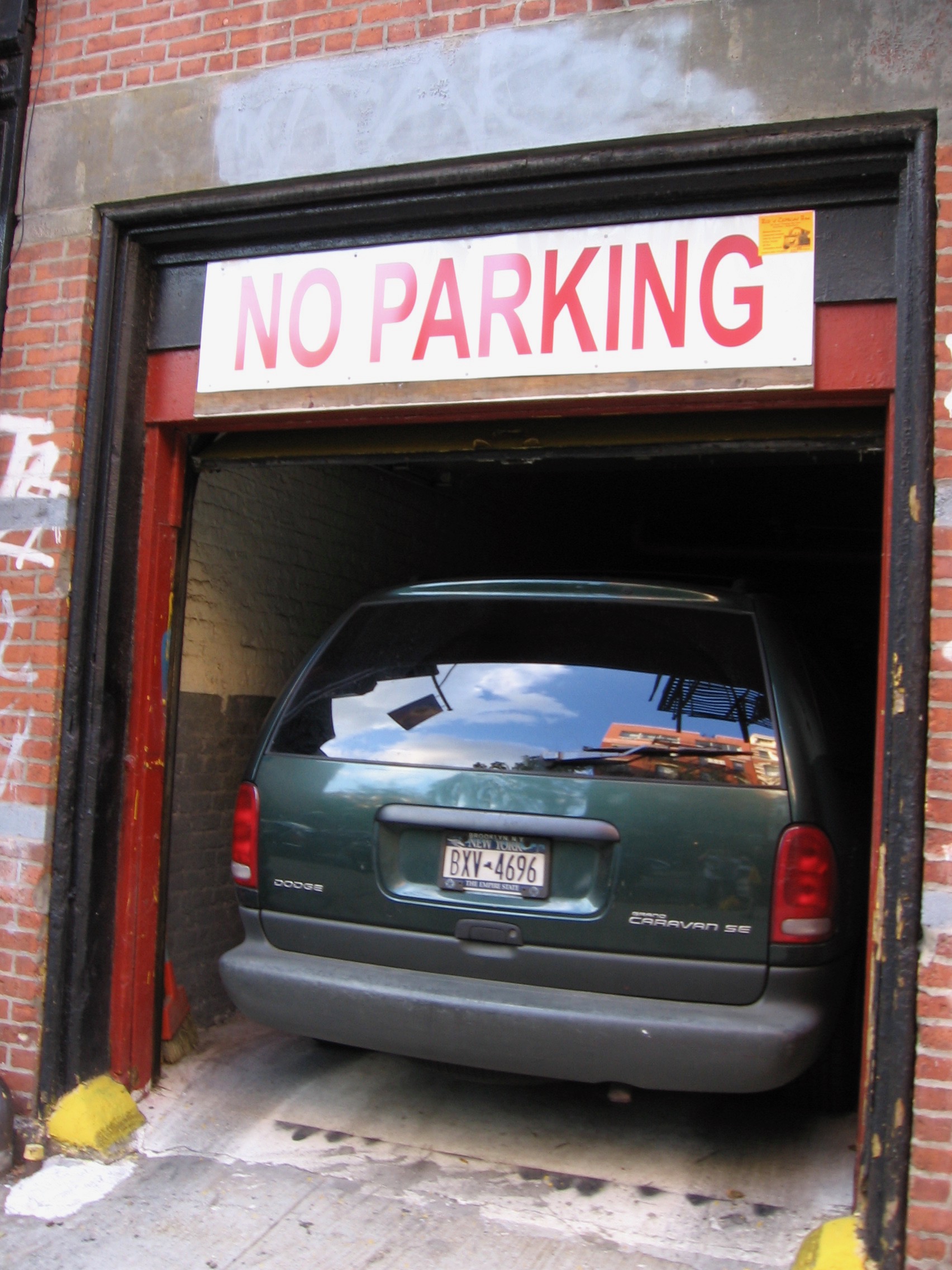
In terms of attitude, this pic from the West Village circa 2007 might be the New York-iest of them all.
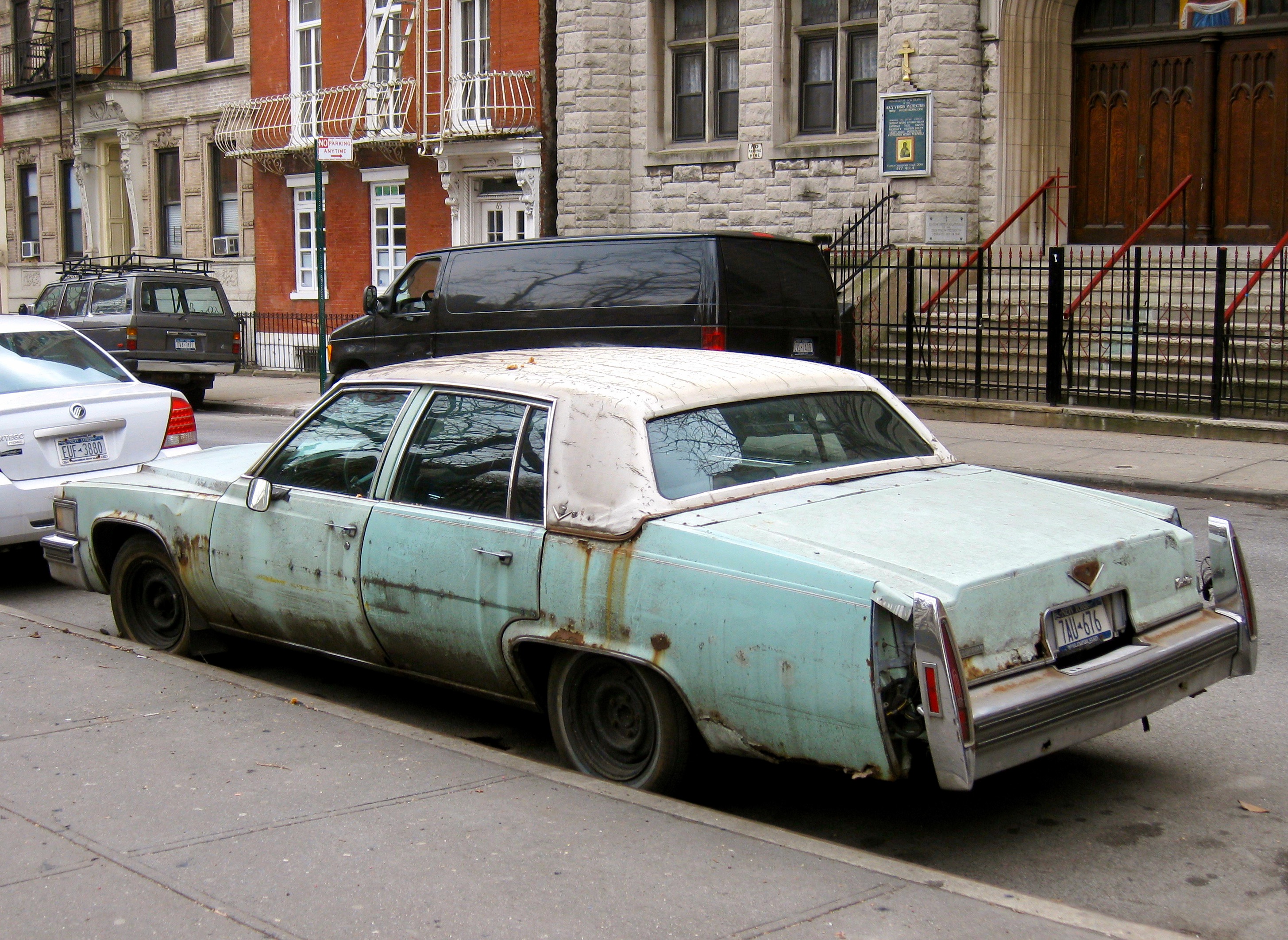
Well, this jalopy found a parking spot; god knows how long it’s been left there.
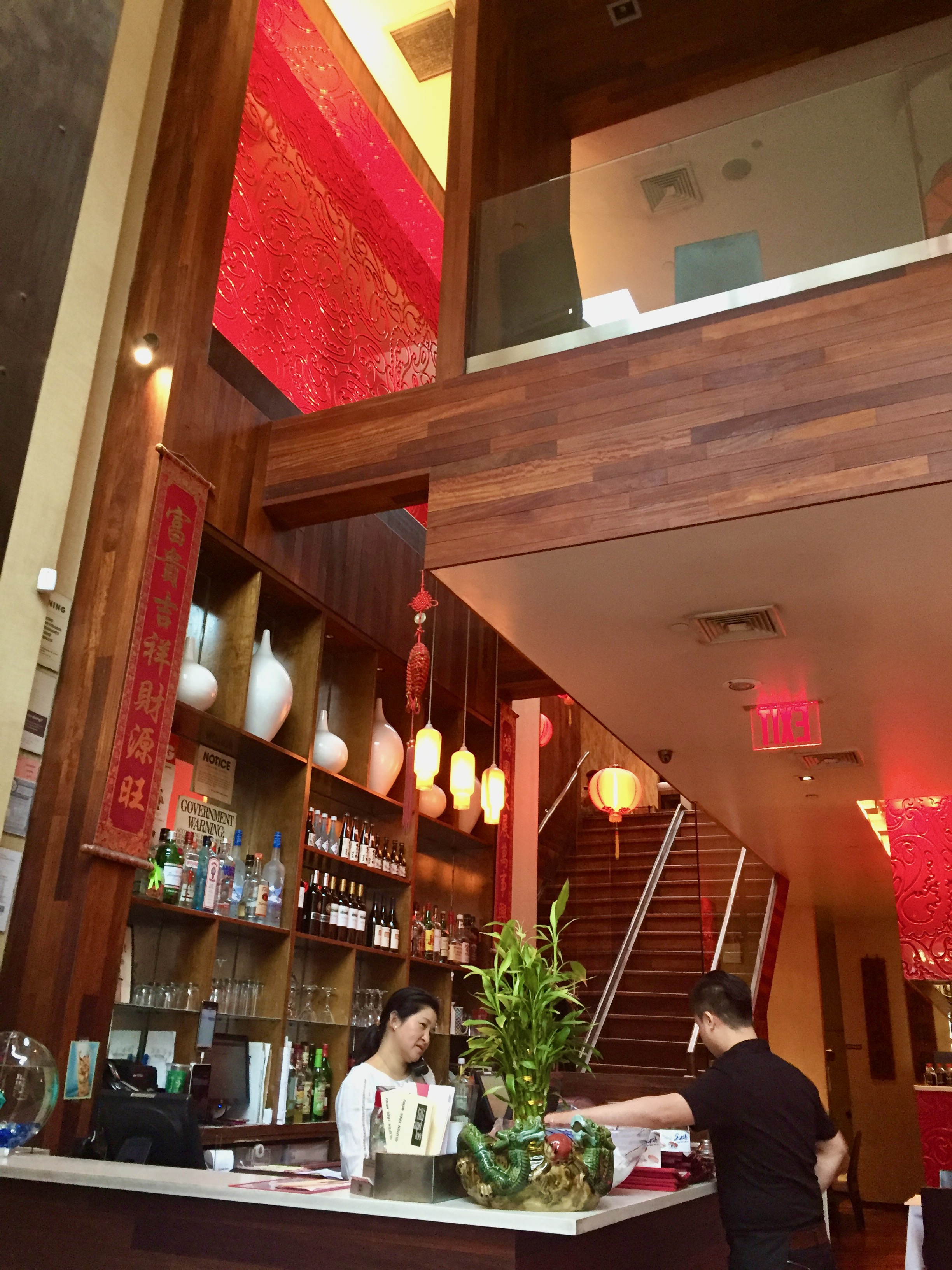
My last couple of trips to NYC have included dinner at Lilli and Loo, a cozy, bi-level pan-Asian restaurant in Lenox Hill.
Around the corner from Lilli and Loo, May 2014. I just love the exaggerated, lackadaisical posture of the guy in the middle: Candid New York, if you will.
In my opinion, one of the city’s most beguiling oddities, spotted at the John Derian Dry Goods store on East Second Street in 2017. Half Carol Channing, half Buster Brown?
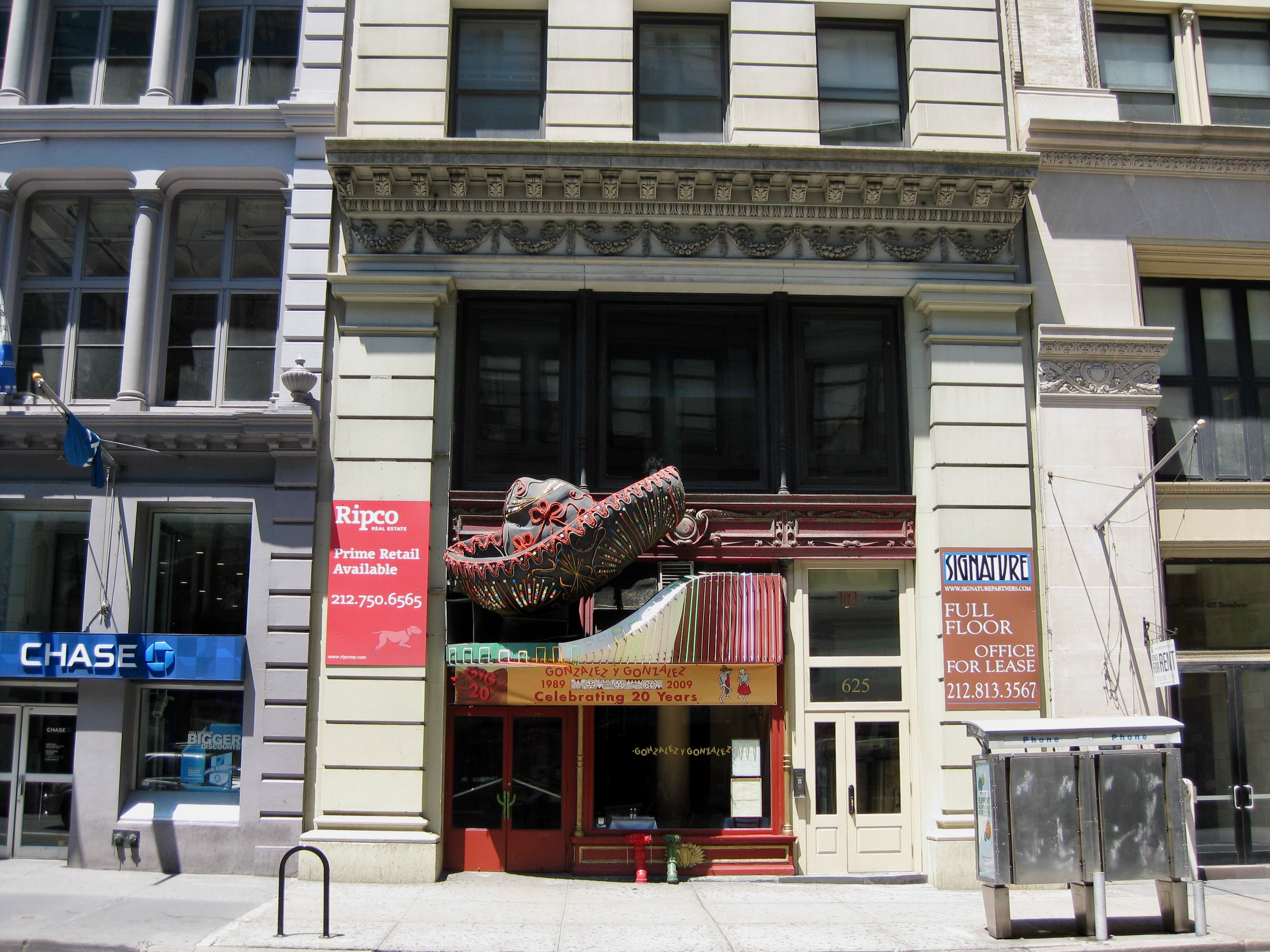
Thankful I thought to take a pic of Gonzalez Y Gonzalez restaurant and its gaudy, giant sombrero back in 2009 because this location is long since gone (though relocated sans hat on the exterior.)
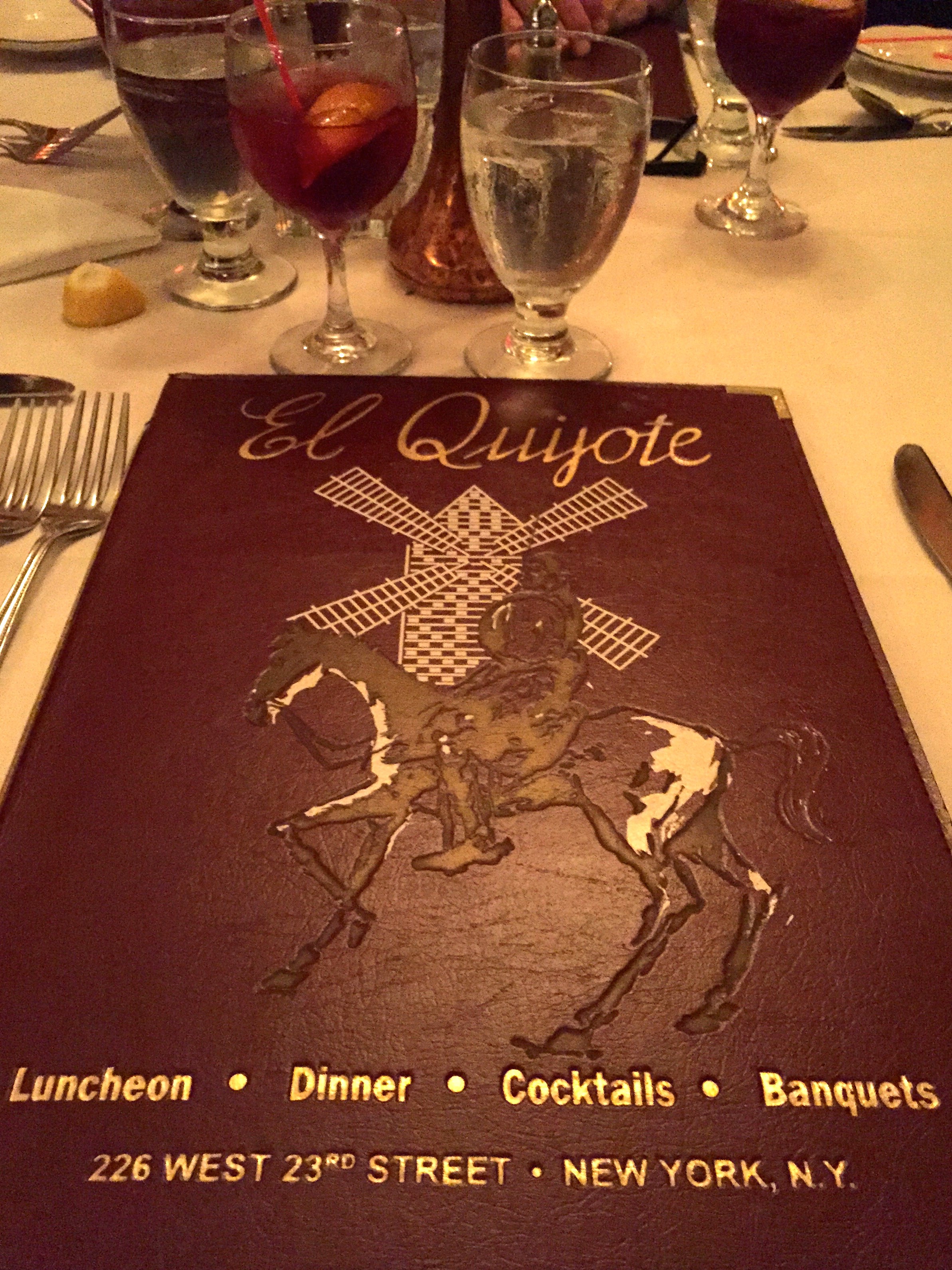
El Quijote, a venerable Spanish restaurant next to the Chelsea Hotel, is also now gone (and sadly has not relocated.) Took this pic of one of their typically ancient menus on my last visit there in 2015.
I was last in New York about three years ago for the funeral of my closest friend who lived there. After the service, my husband and I took a restorative walk around Stuyvesant Square Park where I spotted this tableau: like a mighty stone fortress emerging from the flora, providing hope that through all the inevitable changes in a city like New York, some things remain and appear indestructible.
I leave you this pic from Greenpoint, October 2006: Endless Brooklyn. I hope someday to return to this maddening, magnificent metropolis.
An April Friday, my Sophomore year at Marquette: I had no classes that day and I’d opted to spend a long weekend at home twenty minutes away instead of on campus in my dorm room. My mom had evening plans to attend a going-away party for a co-worker. She was even getting a ride from someone, so I had her car all to myself. She was a bit fanatical over that white four-door Pontiac Grand Am. I never had much of a curfew as a teen unless I borrowed her car.
Coincidentally, I also had a party to attend that evening; it was being thrown by my English Lit professor, a thirtysomething redhead who once began a lecture by saying to us, somewhat sheepishly, “Would you guys feel at all cheated out of your tuition if we didn’t have class today?” She lived across town in the tony suburb of Shorewood, and my original intent was to stop by. I’d know some people there, including a girl I’d recently, rather unsuccessfully tried to date (I was still a few years away from coming out)—not an emboldening reason for me to attend.
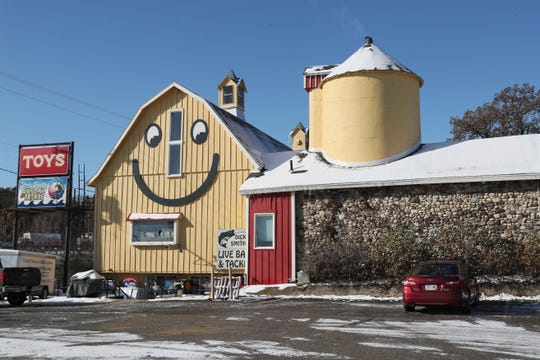
An evening before me with a car in my possession and absolutely nothing better to do, I left our South Side bungalow a little after 6:00 and got on the freeway in the direction of Shorewood. When I reached Downtown, however, I impulsively turned onto the West exit ramp. As I left Milwaukee County, I felt a little rush. When I passed the yellow barn with the giant smiley face painted on it at the Highway 83 exit, it suddenly was possible that I could keep going and going, another sixty or so miles all the way to Madison. I could make it there and back without Mom ever finding out. I often spent afternoons and evenings driving all over Milwaukee, putting mileage on the Grand Am but usually remembering to fill up the tank. I had more than enough cash on me for gas and food.
Crossing over from Waukesha to Jefferson County, I started picking up Madison radio stations (much to my chagrin, Mom would never splurge to install a tape deck or a CD player in her car.) I found a channel that only played hits of the 1970s, something of a novelty in the mid-90s. Passing through the flat terrain typical of Southeastern Wisconsin, all cornfields and the very occasional leafy tree, the sweet disco groove of Tavares’ “Heaven Must Be Missing An Angel (Part 1)” filled the vehicle and I was positively giddy—I was drivin’ all the way to Madison by myself!
I arrived in in less than an hour and a half. After passing through a succession of strip malls, chain restaurants and freeway exits with unfamiliar names (“Fish Hatchery Road” always stood out—did it, in fact, lead to the titular destination?), I left the interstate and headed directly towards the sprawling UW-Madison Campus. I found a parking spot a few blocks away from Sellery Hall, a typical 1960s-built ten story cinder-block accented dorm; this was where two of my high school friends now lived.
I walked up to Sellery’s lobby and rang Ewa’s buzzer, but she wasn’t in. I left a message and tried ringing Sam; he wasn’t in either. Where were my friends? Didn’t they appreciate me driving all the way up there, unannounced, just to see them?
I thought of another high school classmate I knew, Aimee (who happened to be Sam’s ex-girlfriend); she lived in the all-girls dorm Chadbourne (which Sam crudely dubbed “Chastity Chad”.) Luckily, she answered her phone. A petite, blonde Biology major, Aimee was ecstatic to see me although I’m sure she sensed she wasn’t the first person I tried contacting, given how close I was with her ex. We sat and chatted in her cramped room, complete with loft beds and plastic milk crates full of boxes of Cheerios and store-brand pasta. Using Aimee’s land line, I left additional voicemail messages for Ewa and Sam.
After 15 minutes, we had to get outside. It was unseasonably warm for April and not yet dark. With a comfortable breeze in the air, we walked a few blocks to State Street, a mile-long stretch of restaurants, bars, used record and clothing stores, and the occasional apartment complex. It was closed off to vehicular traffic apart from city buses and led towards Madison’s epicenter, the mighty, imposing State Capitol building.
We stopped at Steep and Brew for some herbal tea and caught up on how we were each doing in school. At the time, unhappy at Marquette, I was considering transferring to Madison, but did not disclose this information to Aimee. In retrospect, I probably should have uprooted the comfortable life I was used to in my hometown, though if I did, I might not have had the gumption to move out to Boston for grad school two years later, which was the best choice I ended up making—to leave Wisconsin and escape my comfort zone for something entirely new, to truly be on my own.
As things stood at the time, I was afraid of change, of even moving less than one hundred miles away. An hour-and-a-half joyride was all I could handle.
Aimee and I finished our tea and we walked toward the student union, where the setting sun rippled over Lake Mendota. We stood for a minute on the vast patio dotted by ‘70s-vintage yellow and orange canvased umbrellas and lights. I found a pay phone and tried Ewa again; this time, success! She was purposely waiting for me to call back. “Chris – WHERE ARE YOU???,” she yelled.
Within ten minutes, Ewa joined Aimee and I on the student union patio. As we hugged hello, I noticed her brown hair had grown out a bit since the last time I saw her (at a They Might Be Giants concert in Madison five weeks before), but she still wore her standard outfit of jeans, flannel shirt and dark green Chuck Taylor hi-tops. I’d known her for nearly five years; we’d met in a theology class Sophomore year at our Catholic high school. On the first day, we were required to introduce ourselves by listing some of our hobbies. Before the beginning of the next class, she came up to me and said, “So, you play guitar? That’s cool, I’ve been wanting to learn.” We were pals from then on; our friendship just developed naturally, never requiring any effort—we just had an instant rapport, one that felt like it had always been there.
The three of us strolled down State Street as the sky gradually changed from orange pink to dark blue. We browsed in a used CD store, briefly looked over the previously worn wares at Ragstock, and picked up some takeout at one of the numerous cheap Chinese joints littered up and down the thoroughfare. Aimee, having eaten at the dining hall earlier, said she had to go back to her dorm to study; we hugged goodbye and Ewa and I continued walking towards Sellery carrying bags of takeout cartons brimming with Sweet and Sour Pork, Chicken Lo Mein, Spring Rolls and White Rice. Ewa’s roommate had gone home for the weekend, so we had plenty of room to spread out our cheap, mostly fried bounty.
I tried calling Sam again and got his voicemail. It was a recording of Barry Williams as Greg Brady, excitedly talking about The Brady Kids, the band he and his siblings were part of and how excited they were to record their brand-new album. Sam’s own voice was nowhere to be heard on the message, which is how he preferred it. Even today, he eschews social media—my only contact with him in the past two decades has been through our Spotify accounts, which should tell you how much we’ve actually kept in touch since I moved to Boston.
As was our tradition, Ewa brought out a package of clove cigarettes, and we smoked a few. I then called home and left a voicemail for Mom, notifying her that I was “staying at the party late.” We listened to Rubber Soul three times in a row and chatted about our classes, our jobs, what new music each of us was listening to. She mentioned her upcoming summer trip to Poland (where she and her family emigrated from to the States when she was a young child), while I told her my plan to get a summer job on campus as a residence hall desk receptionist.
I felt more at ease sitting and chatting with Ewa in her room at Sellery than at home or even in my Marquette dorm, where I spent very little time. I had a packed schedule that semester, with most of my days and nights hunkered down in the library or the photography lab, and I went home most weekends to work a part-time retail job in the suburbs. I didn’t have a roommate, and I didn’t make much of an effort to hang out with the other guys on my floor. I’d moved on campus that year because I hated commuting from home, which during my Freshman year had the effect of college feeling like a supersized version of high school.
Living on campus didn’t magically solve all of my problems like I hoped it would. I’d later realize that the problem was me and my unwillingness to reveal much of myself to other people. I was deep in the closet and not yet ready to deal with or admit to myself whom I actually, honestly was. Hanging out with an old friend in Madison didn’t exactly bring me any closer to working through this issue, but it made me feel temporarily good, uplifted by spending time with someone I knew well.
11:00 PM turned into Midnight, and the next time I looked at my dark tan leather-banded Fossil watch, it was almost 1:00 AM. I’d given up on the possibility of Sam calling me back; later, I’d find out he was at his girlfriend Beth’s dorm room the entire evening. When I next glanced at my watch, it was nearly 2:00 AM. I knew what I had to do—get the car back home before sunrise and get some sleep before I had to go to work. Dragging my feet from the floor, I said my goodbyes to Ewa and headed out of Sellery over to where I parked the car. Thankfully, it was still there—no tickets or attempted break-ins. I pulled out of the UW-Madison campus and headed for the highway.
Driving on I-94 in the middle of the night, there were few other cars. Everything seemed much darker than usual, although it was probably no different than if I’d been driving at Midnight like I should have. I was completely sober (I was not a drinker yet) but miserably tired. I had the volume on the radio turned up loud to keep me awake.
Halfway home, I stopped at a Mobil to fill up the tank. Back on the expressway, I could sense my eyelids getting heavier by the minute. I switched from New Rock 102.1 to Classic Rock Station WKLH and cranked up the volume further. “It’s Still Rock and Roll To Me” came on and I began singing along. I wasn’t the world’s biggest Billy Joel fan; at my auto parts store job (yes, really), someone put a copy of the entire Piano Man album into one of the display auto cassette players and we listened to it on an endless loop—it was a perpetual hell of people putting bread in jars and microphones that smelled like beers, but still preferable to the country/western station one manager liked.
I still believe Billy Joel saved my life that night—singing along to his punchy, sarcastic, faux-rockabilly/faux new-wave number one hit from the Glass Houses album kept me awake and sharpened my focus. “HOT FUNK, COOL PUNK, EEE-VEN IF IT’S OLD JUNK!,” I shouted along, keeping my eyes as wide open as I could, never daring to take them off the road. The song ended with its jazzy final chord, and orange sodium lamps began dotting the expressway again. I was nearly in Milwaukee County and almost home.
I pulled into our alley around 3:45 AM, drove up to our garage, put the car in park, got out and turned my key in the garage door, slowly lifting it up and trying not to make too much noise (we didn’t have an automatic opener.) I eased the car inside, got out and pulled down the garage door as gently as I could. I opened the back door to my parent’s house in a similar manner, nearly walking on my tiptoes as I stumbled into my bedroom, took off my shoes and jeans and plopped into my childhood bed. As usual, I could faintly make out my dad’s snoring from the other bedroom. As far as I knew, I’d managed not to awaken either him or Mom.
I never told my parents about my joyride, and they never asked. Given what a goody-two-shoes I was all through high school, I felt a slight thrill at having gotten away with something forbidden, unexpected, a little gutsy. In a way, I was a step closer to being an adult, to making my own decisions and facing the consequences (I sure was tired at work that next day.) I’m not saying a joyride never hurt anybody, but for me, it pointed the way towards a road I desperately needed to take.
Honestly, few films I’ve viewed in this second month of quarantine have provided as much pleasure as the first two seasons of Succession, which I binged after HBO made it and a few other shows temporarily free to non-subscribers. Epic, hilarious, nasty and blatantly (and effectively) Shakespearean, it’s both a balm to and a mirror of these times.
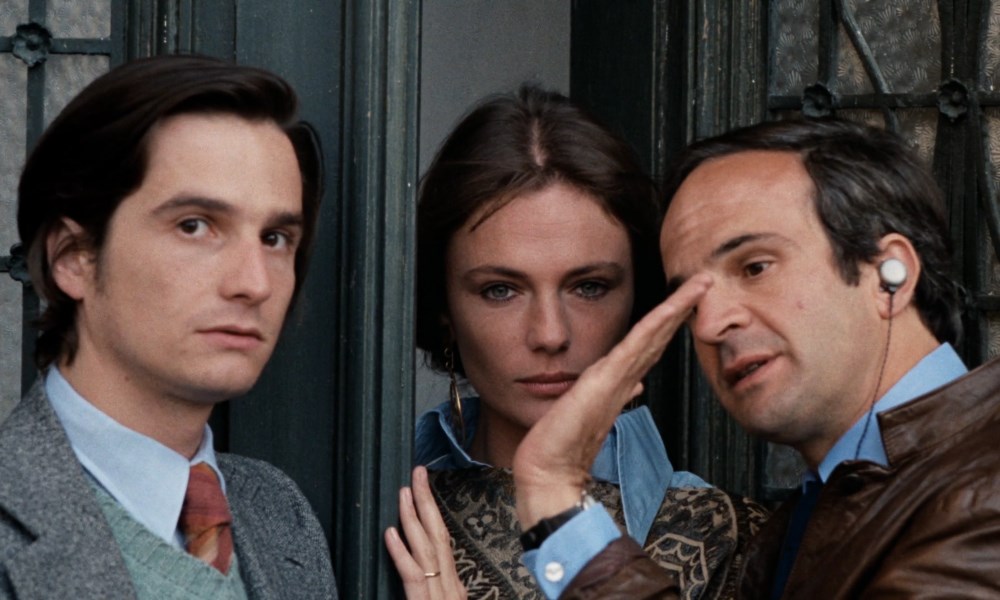
Still, as I work through my various streaming queues, a few close contenders emerge. Day For Night, the first post-Jules and Jim Truffaut I’ve seen is one of the great movies-about-movies in part because it delves so deeply into process without seeming too inside-baseball; it also reactivated my interest in the Antoine Doinel films, so Antoine and Colette, the first one after The 400 Blows is a trifle by design (thirty minutes, part of a multi-director anthology), but Truffaut’s perfectly suited for crafting trifles with heft and weight.
Also pretty good: that long-unreleased Orson Welles film on Netflix, which is a mess at first but eventually stumbles upon the genius you’d expect from the man; a Mike Leigh short that neatly condenses material for a feature-length film into a compact frame; Fleck/Boden’s best effort since Half-Nelson; Beineix’s ultra-stylish-and-just-as-moving early ‘80s thriller (which I tried watching once years before but must’ve dozed off pretty early into it, because I didn’t remember a thing about it); and, a relatively late Powell/Pressburger flick that’s unlike anything else they did and, simultaneously, something that could come from no one else.
I last saw Scenes From A Marriage more than two decades ago in a film class and it remains my favorite Bergman (television origins and all) for its surgical focus, wringing so much thought and emotion out of such bare essentials. Stories We Tell, which I rewatched for a work project, also remains the most innovative documentary from the past decade, while Klute also holds up nicely though this time I was more in thrall to Gordon Willis’ cinematography than Jane Fonda’s admittedly iconic performance.
Biggest letdowns included Hale County This Morning This Evening, especially after all the raves it received at the end of 2018 (“Pretty but aimless” is my three-word review) and Kinetta, an early film from the director of Dogtooth and The Favourite (a case of not-quite-there-yet.) As for most notable What-Did-I-Just-Watch titles, Greener Grass is silly but almost enchantingly weird at times for its commitment to such weirdness, while Bunny Lake Is Missing starts off as Hitchcock before turning into proto-Haneke in the last half hour—if you think of Keir Dullea as something of an automaton based on 2001: A Space Odyssey, well, this will irrevocably change that.
Films viewed in April in chronological order, with director, year of release and my rating (out of 10.)
The Booksellers (D.W. Young, 2019) 6 Hale County This Morning, This Evening (RaMell Ross, 2018) 4 Welcome To L.A. (Alan Rudolph, 1976) 5 The Small Back Room (Michael Powell and Emeric Pressburger, 1949) 8 Trixie Mattel: Moving Parts (Nicholas Zeig-Owens, 2019) 7 The Short & Curlies (Mike Leigh, 1987) 8 The Hunger (Tony Scott, 1983) 7 Day For Night (Francois Truffaut, 1973) 9 The Queen (Frank Simon, 1968) 6 Isn’t It Romantic (Todd Strauss-Schulson, 2019) 5 Mississippi Grind (Ryan Fleck and Anna Boden, 2015) 8 Scenes From A Marriage (Ingmar Bergman, 1974)* 10 Sissy-Boy Slap-Party (Guy Maddin, 2004)* 8 Stories We Tell (Sarah Polley, 2012)* 10 The Wonders (Alice Rohrwacher, 2014) 6 The Last Waltz (Martin Scorsese, 1978) 7 Kinetta (Yorgos Lanthimos, 2005) 5 Klute (Alan J. Pakula, 1971)* 8 The Sapphires (Wayne Blair, 2012) 6 Cinema Verite (Shari Springer Berman and Robert Pulcini, 2011) 5 Bunny Lake Is Missing (Otto Preminger, 1965) 8 Antoine and Colette (Truffaut, 1962) 7 The Other Side Of The Wind (Orson Welles, 2018) 8 Circus of Books (Rachel Mason, 2019) 6 Hector and The Search For Happiness (Peter Chelsom, 2014) 3 Diva (Jean-Jacques Beineix, 1981) 8 Greener Grass (Jocelyn DeBoer and Dawn Luebbe, 2019) 6
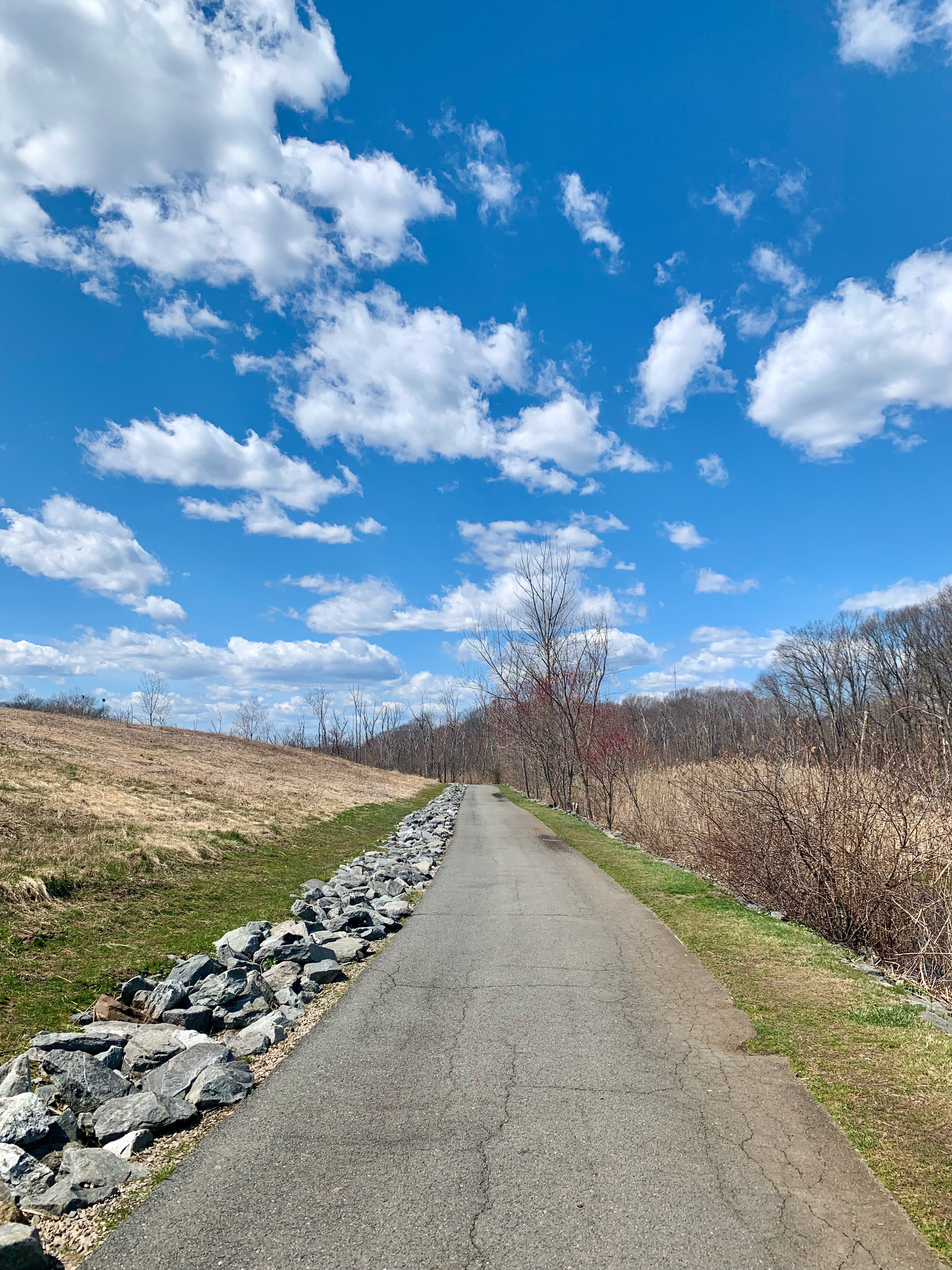
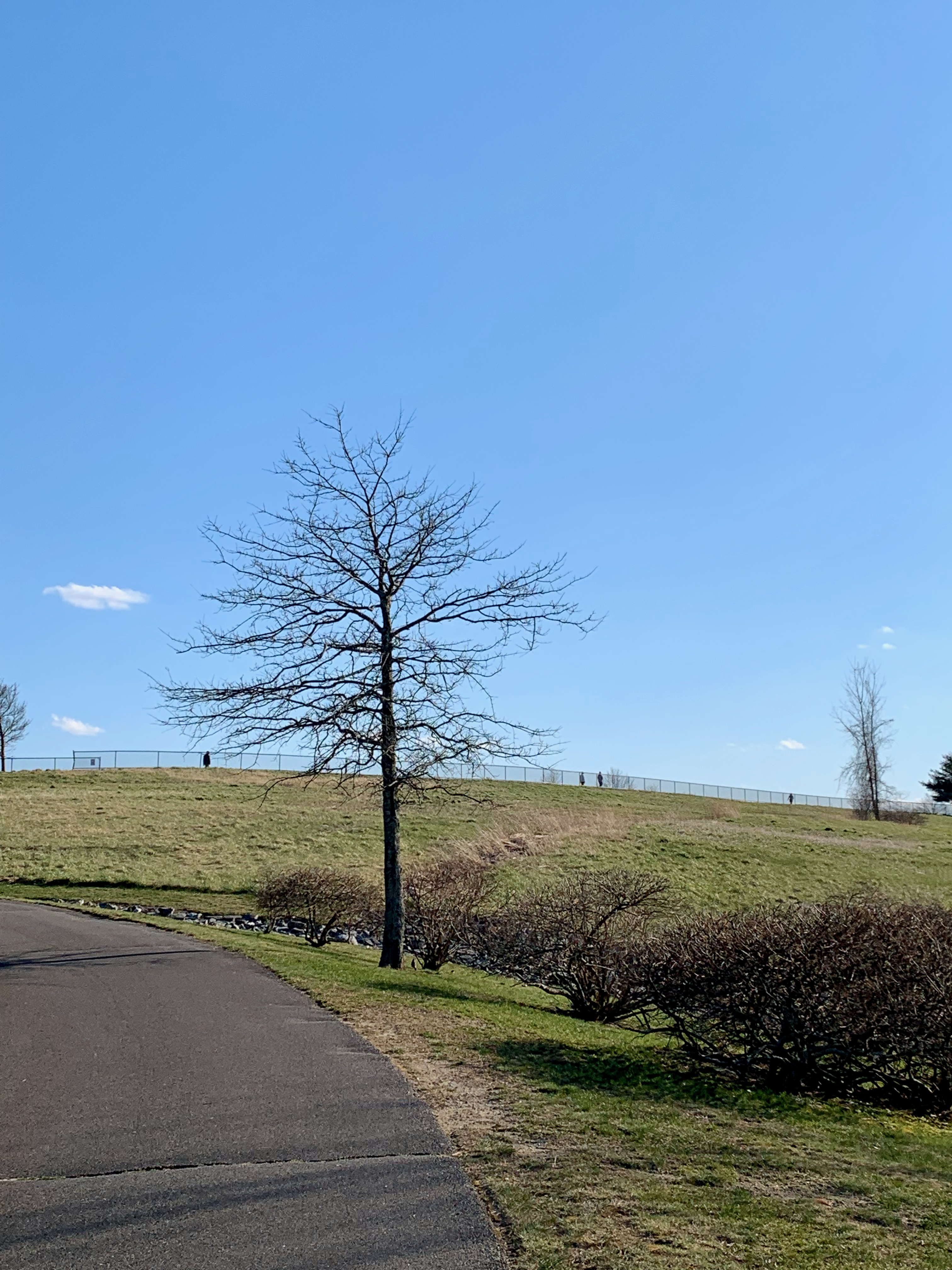
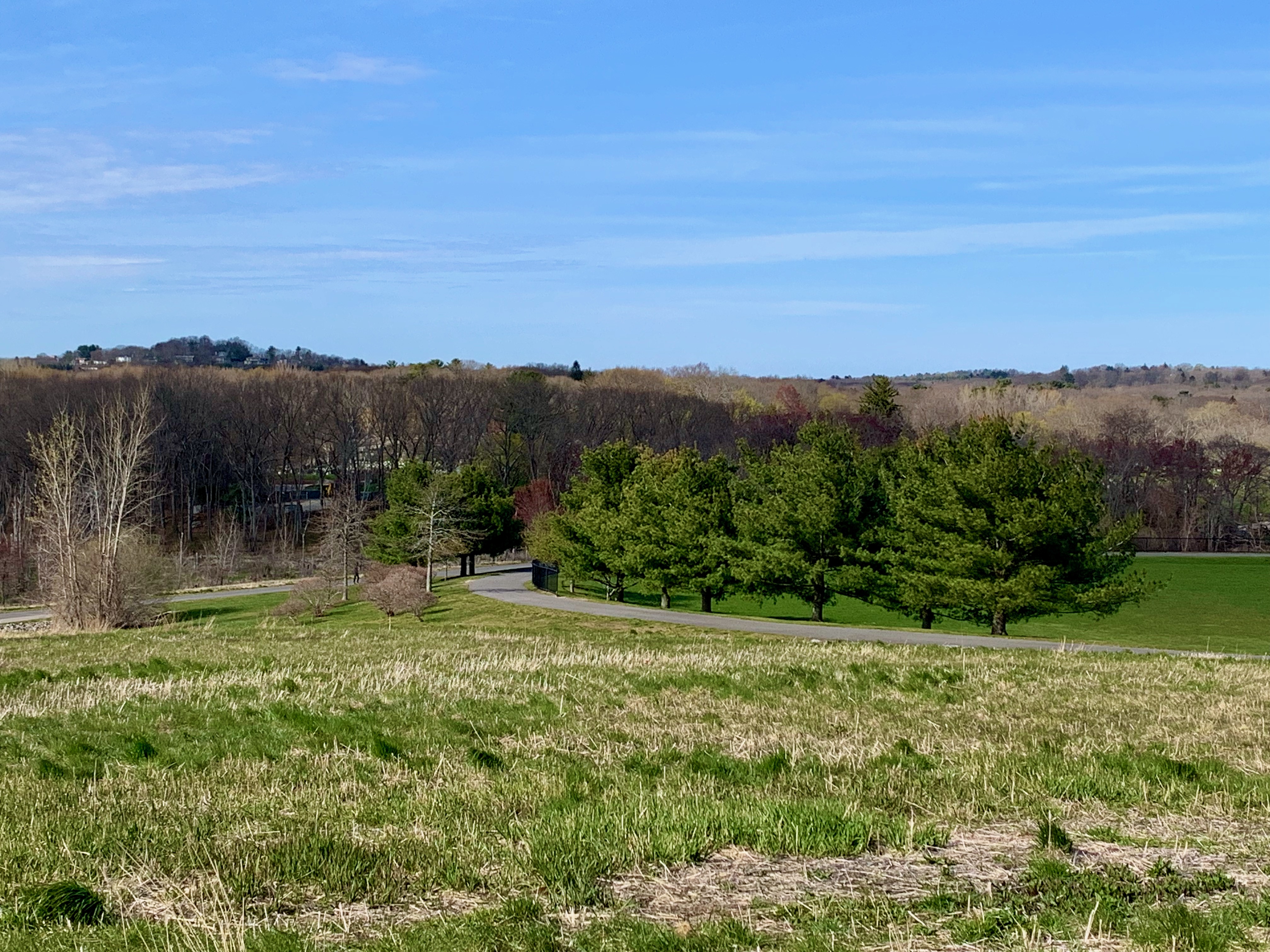
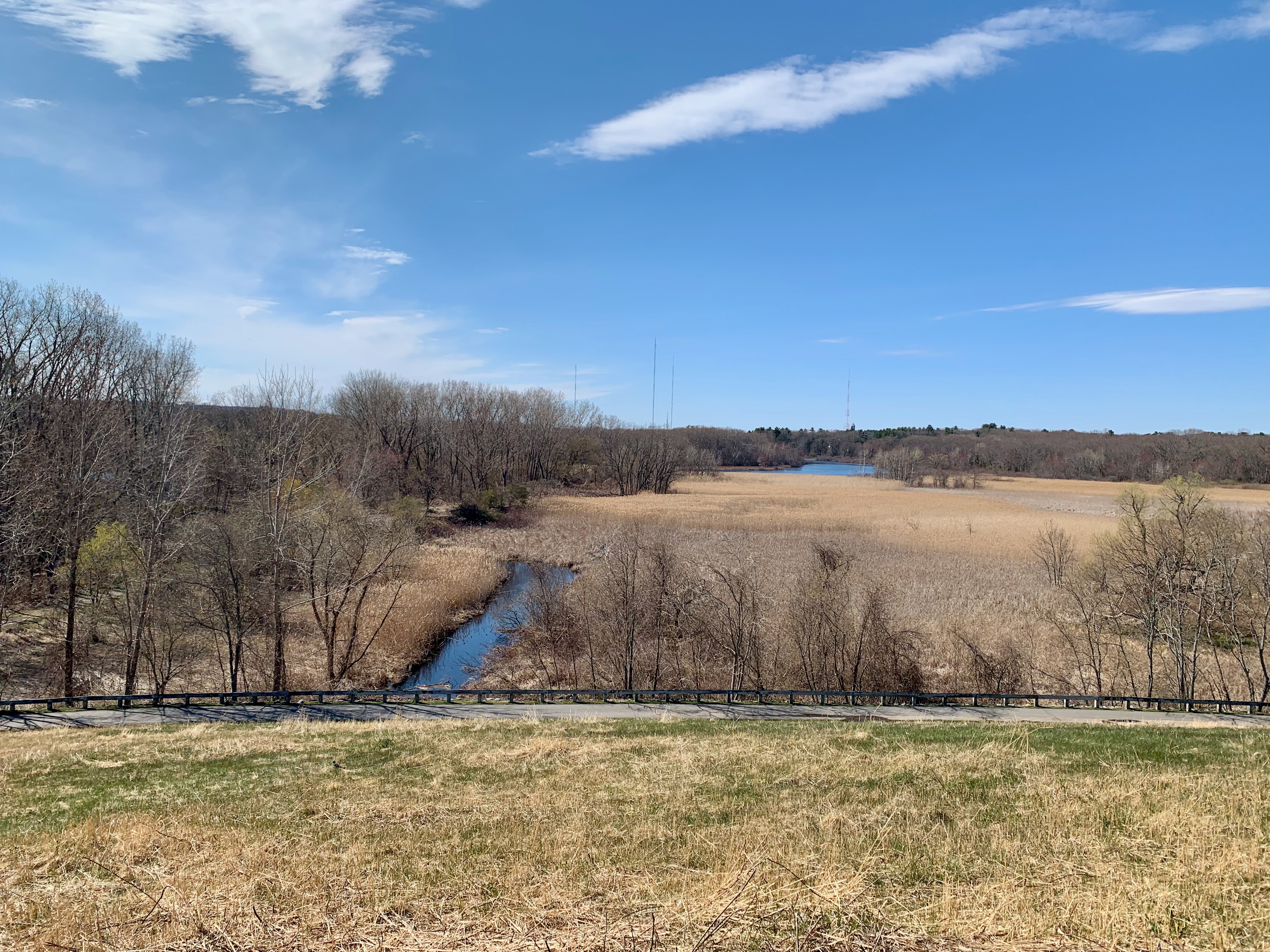
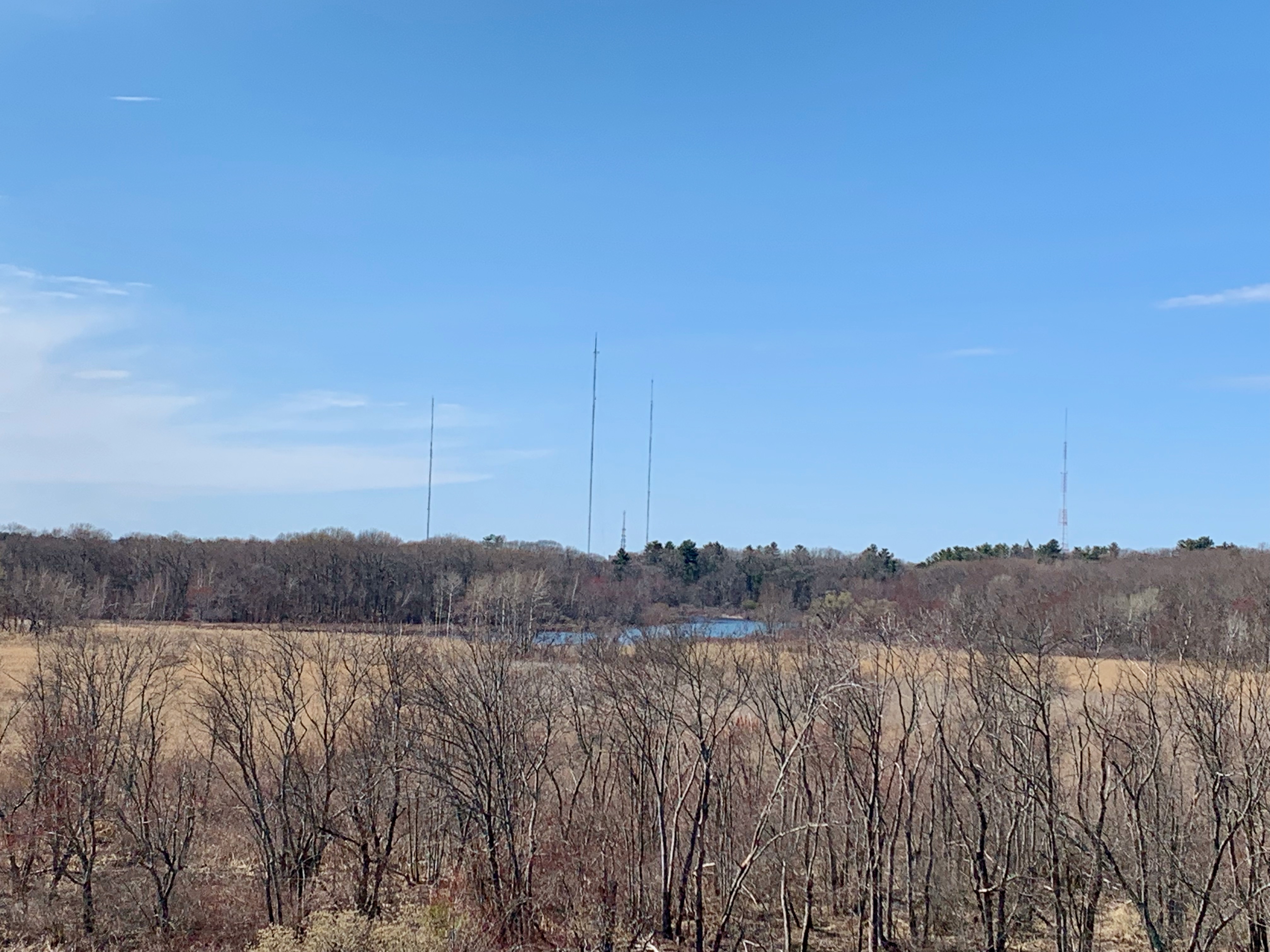
I live a ten-minute walk from an enormous park; it’s in Boston, but up against the city’s Western border. From here on out, I’ll refer to it simply as The Park.
I frequented The Park with my husband and our dog for years before I lived so close to it. To be honest, its proximity was one of the most compelling reasons to buy our current home about four years ago.
Since the COVID-19 quarantine began, as with many green spaces for most people, The Park’s one of the few places I’ve been able to leave home for, apart from the local supermarket and various restaurants offering takeout. I’ll walk over there about once, maybe twice a week depending on the weather.
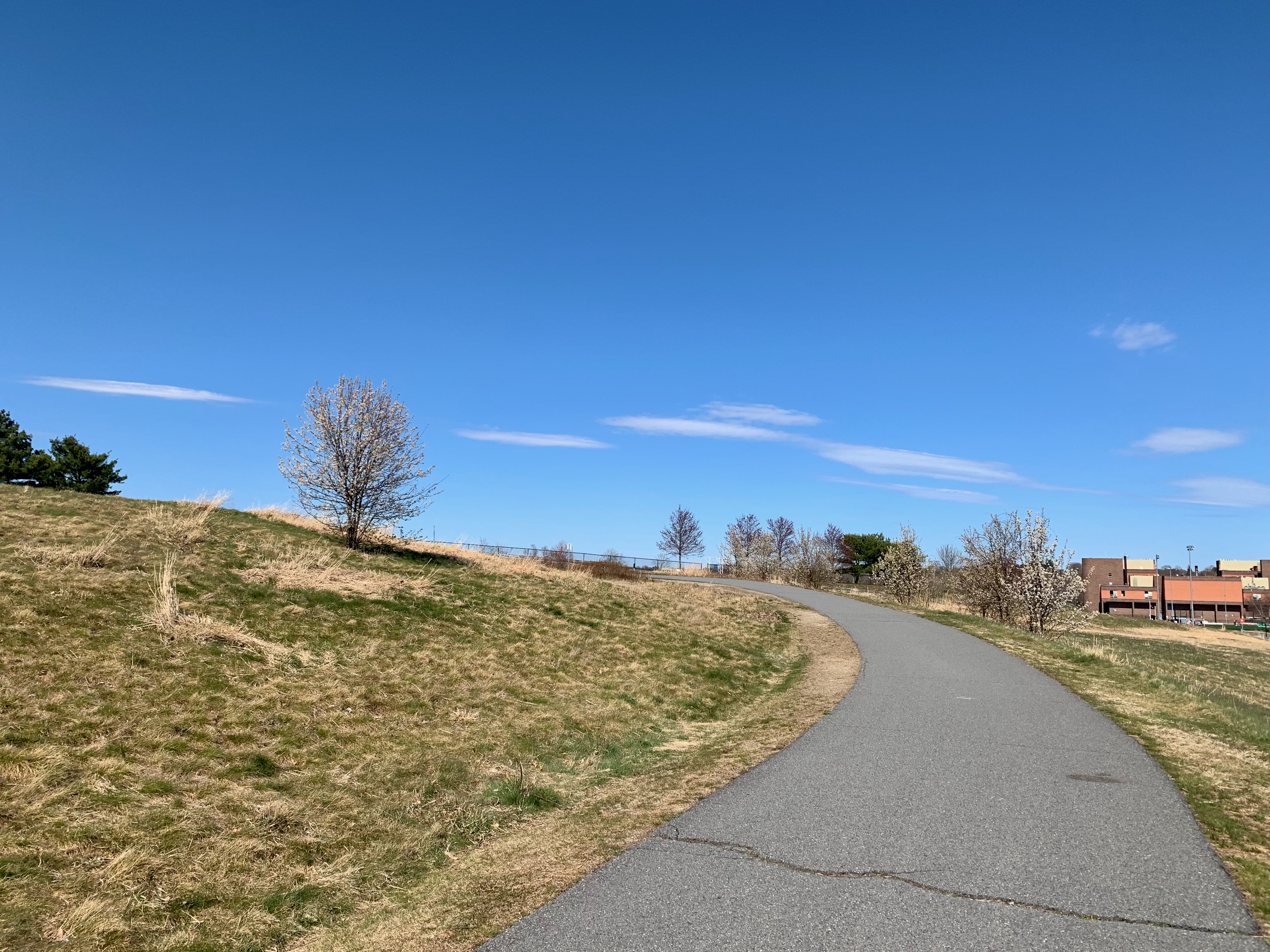
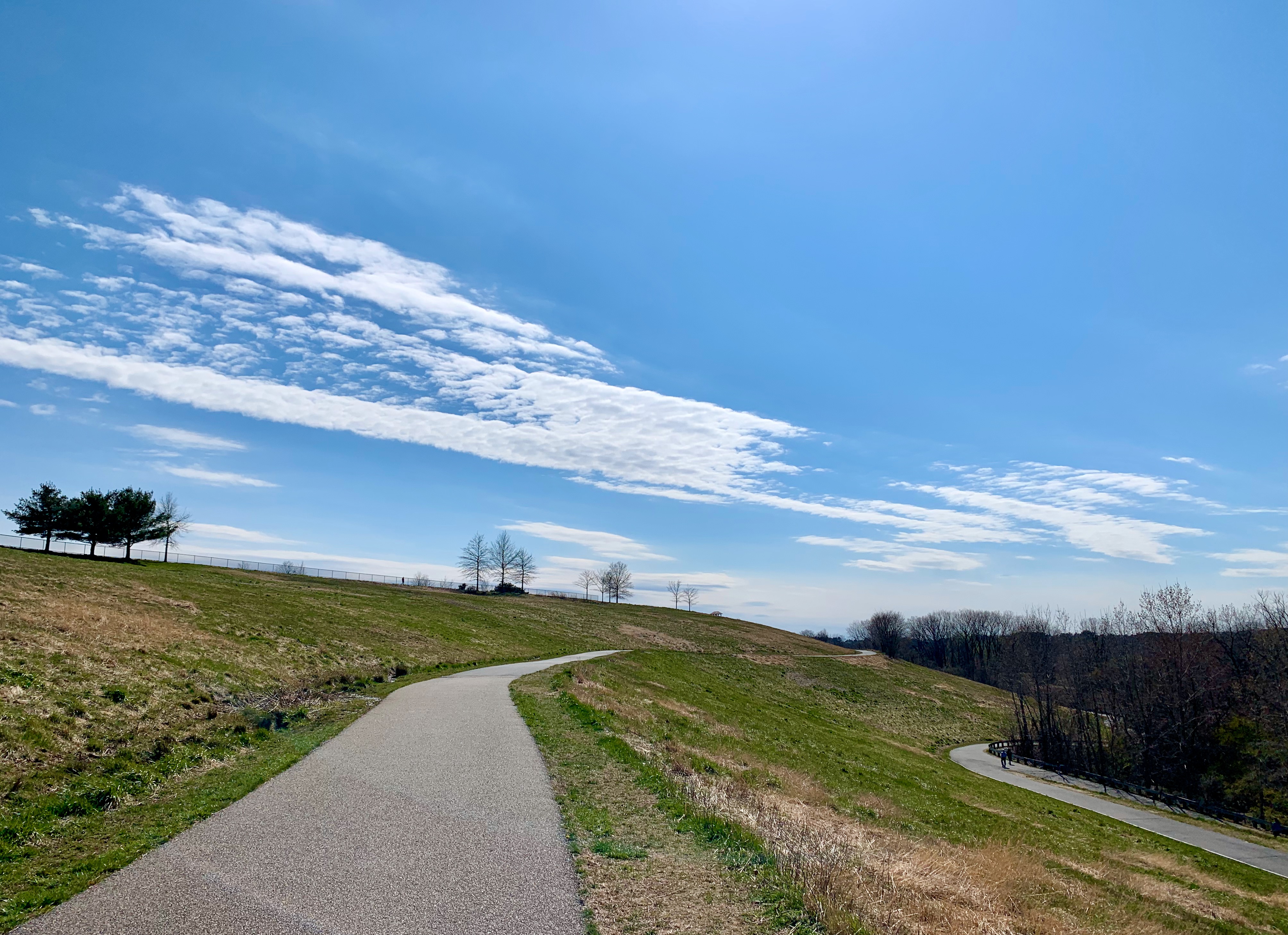
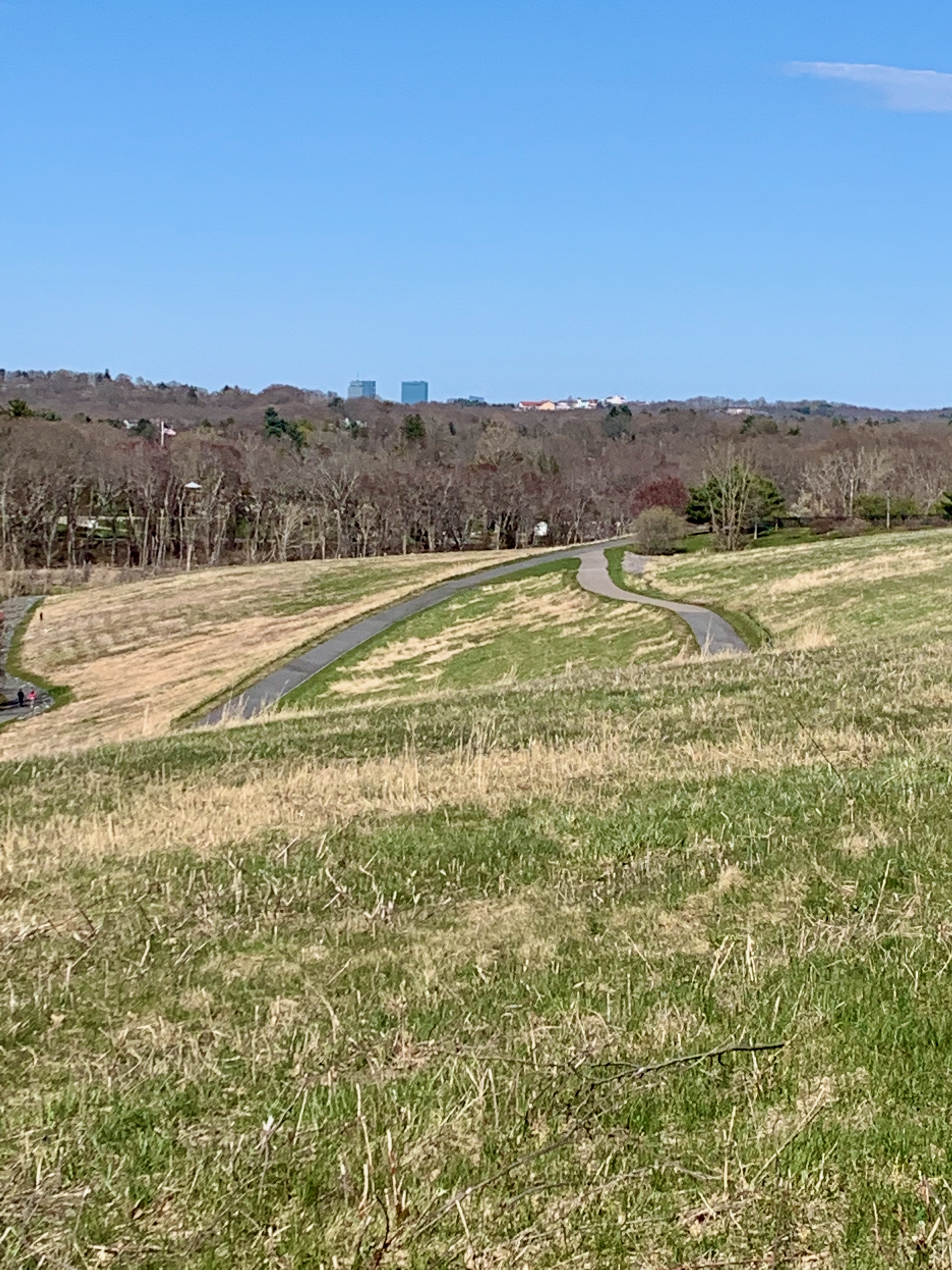
Apparently, The Park was once a landfill, filled up and transformed into its current state about two decades or so ago. It’s laid out with paths in three concentric circles, each one significantly more elevated than the last.
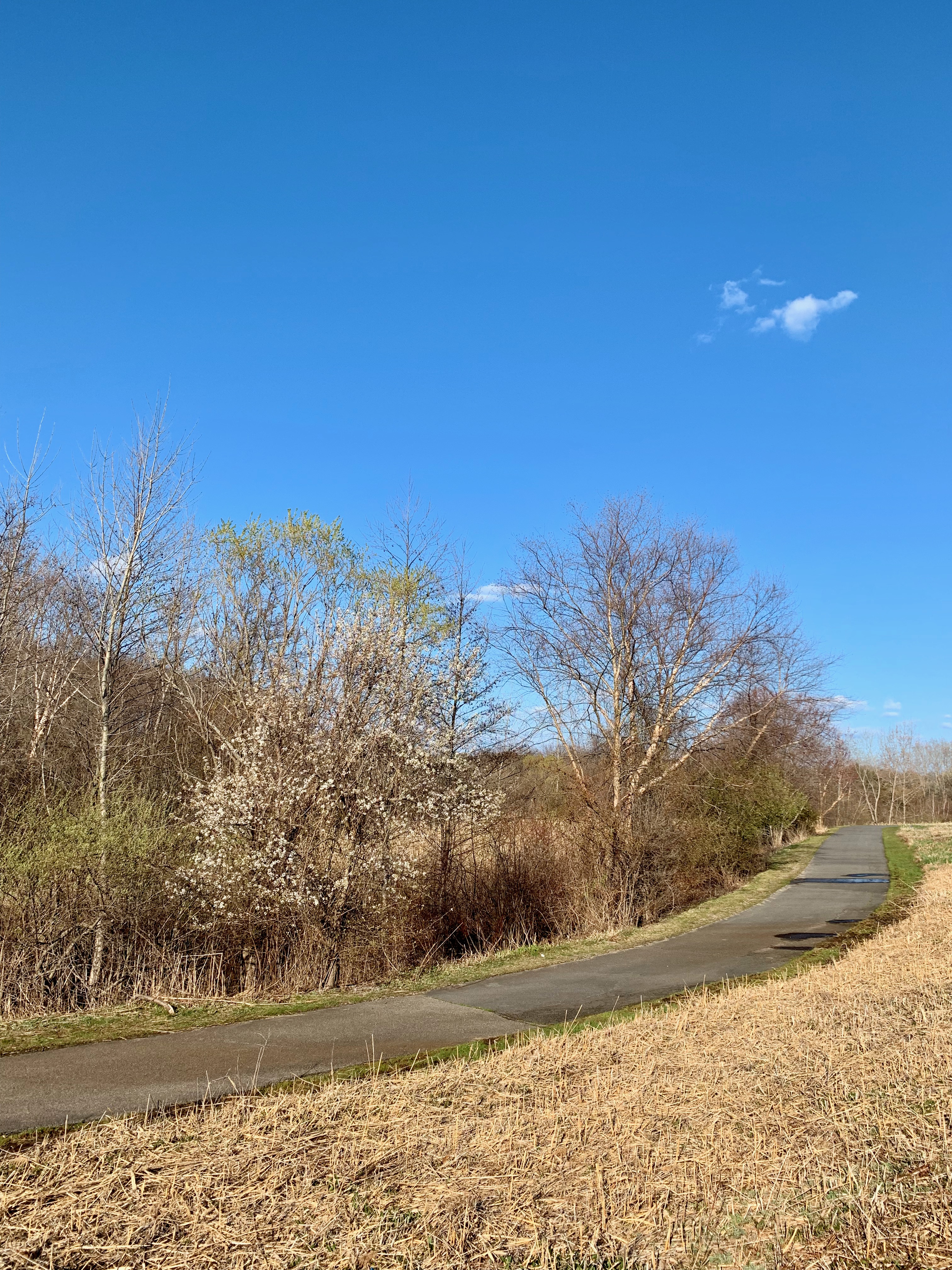
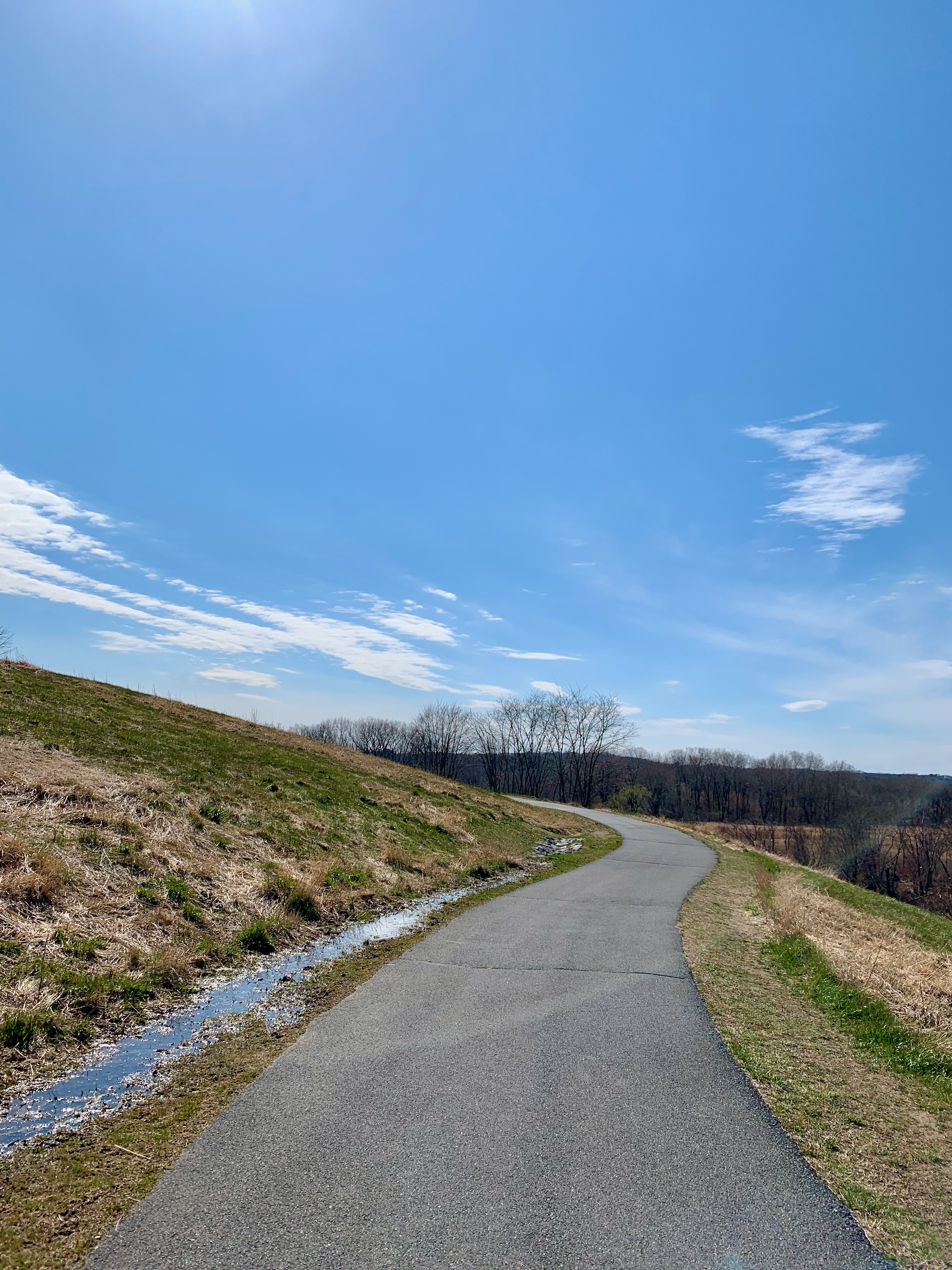
As a result, the walking paths contain many curves.
With each walk I’ve taken this early Spring, the grass has turned a little greener…
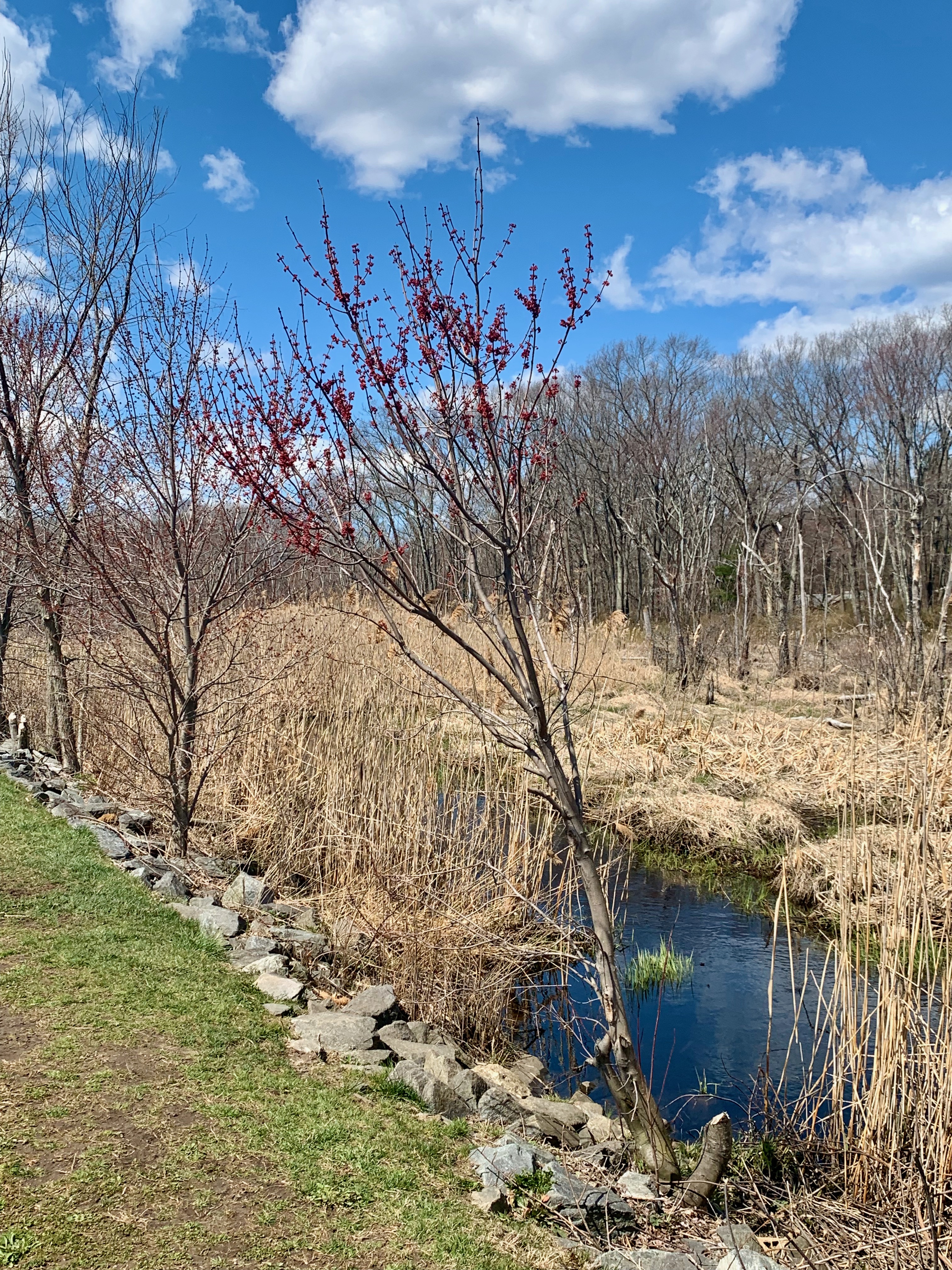
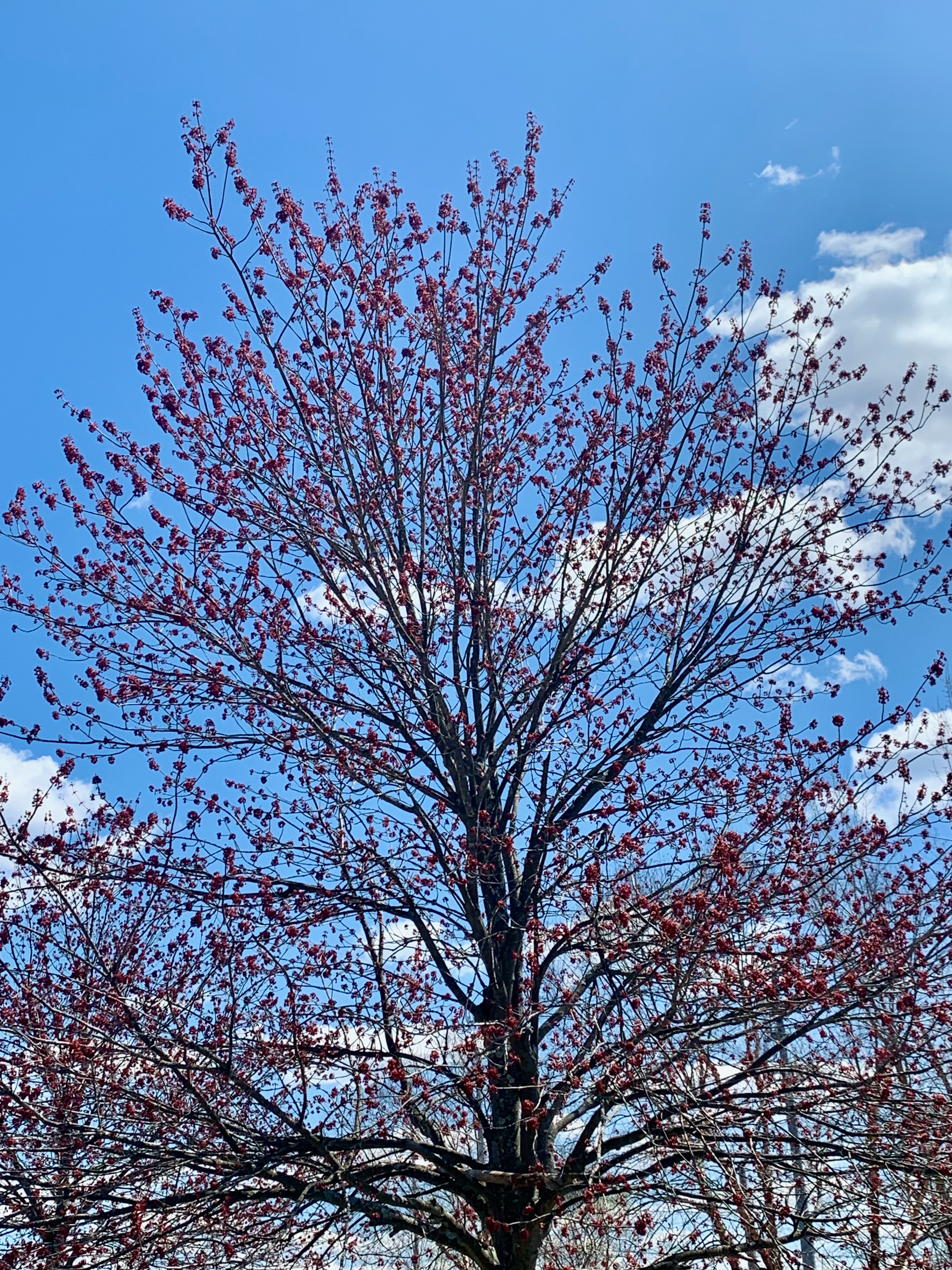
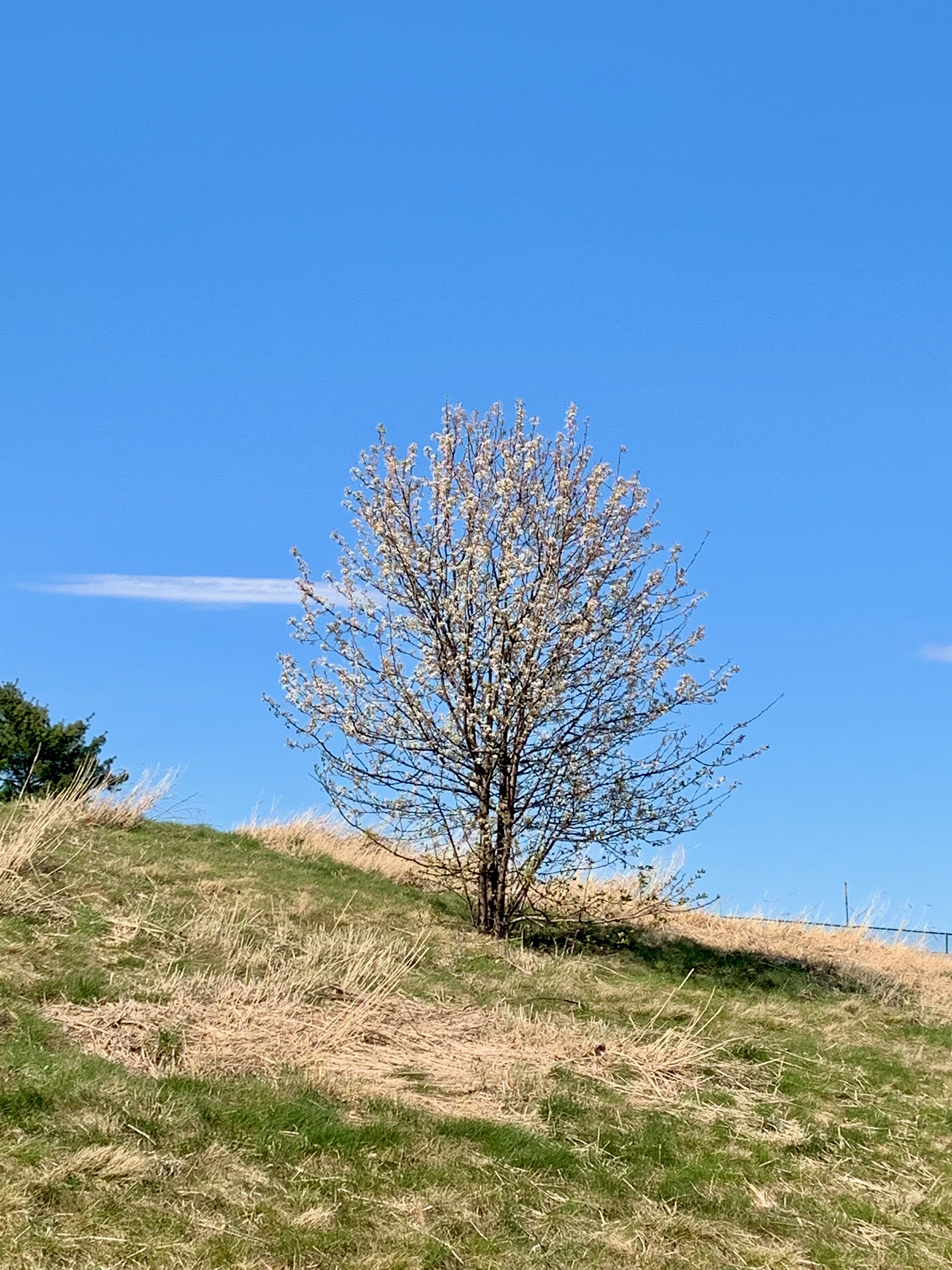
…and trees have begun to blossom more fully.
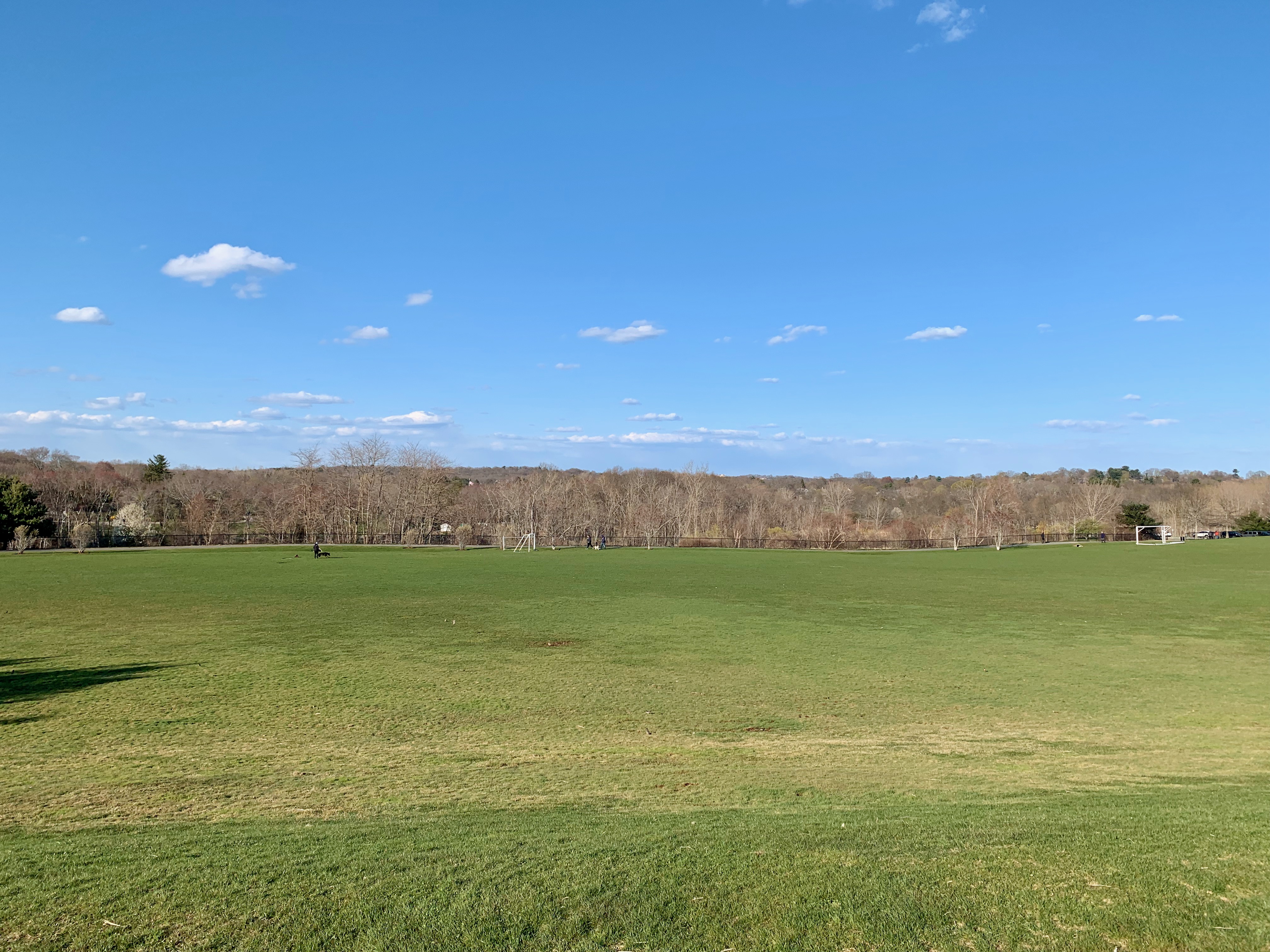
The Park isn’t empty as these pictures make it seem; after all, as previously noted, it’s one of the few places people can go. Still, it’s not unusual to see such spaces as this vast soccer/rugby field nearly uninhabited.
For me, walking is a lifeline. Before, I spent at least an hour a day on my feet, to and from the Commuter Rail station, using my lunch break at work to walk through the leafy streets of Brookline, making the rounds through the Back Bay to kill time before catching a train home.
I have a treadmill in my basement that I use more frequently now, but it’s not the same as being out in the open air, taking in my surroundings as I move forward.
As the weather gets warmer, I hope to visit The Park more frequently.
I anticipate all the pastels of Spring gradually becoming greener until Summer returns and it’s difficult to remember a time when it was too chilly to go outside at all.
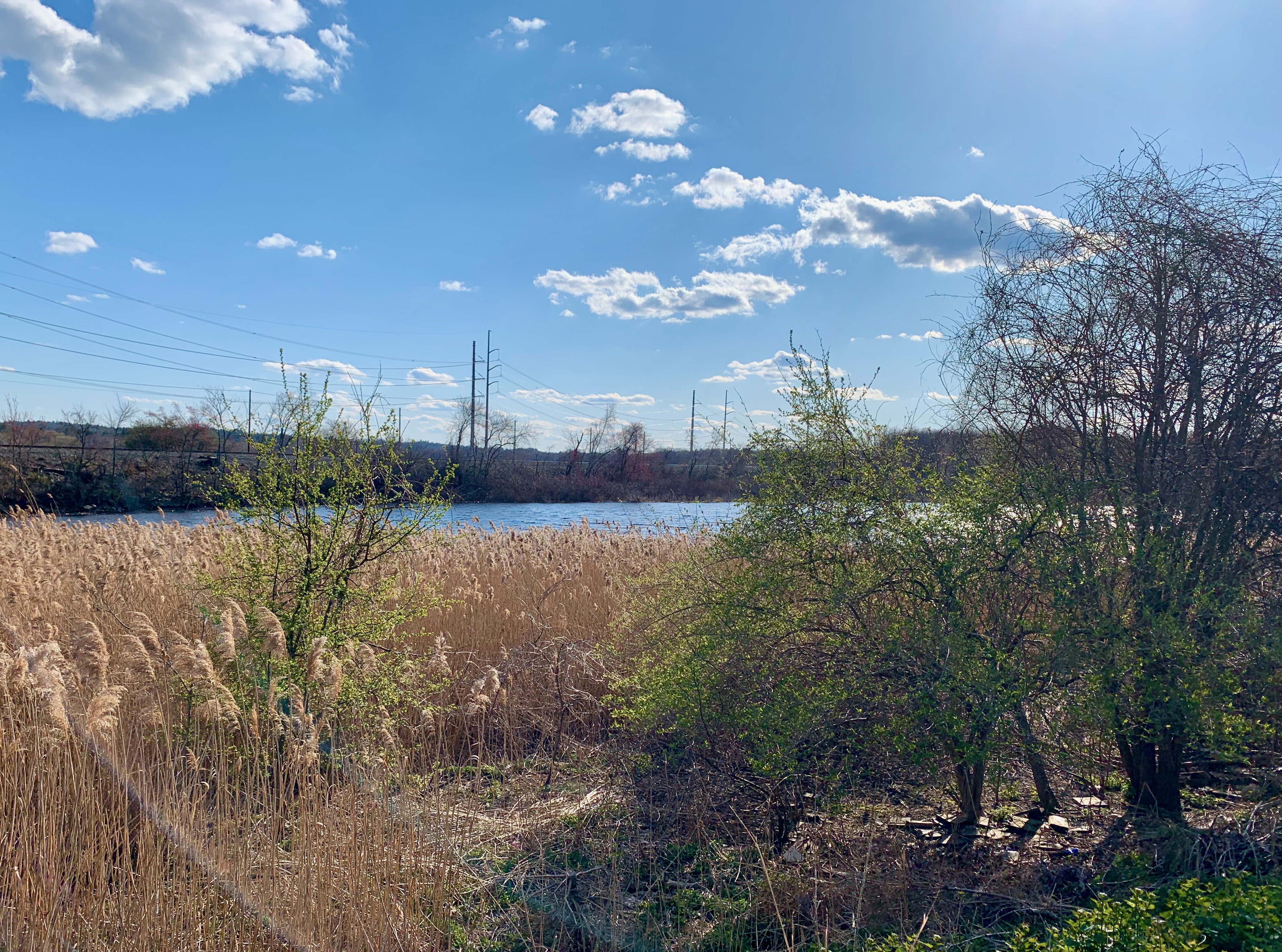
Presently, everything’s in limbo; I wonder, among many other things, when I’ll be able to rent a canoe to paddle along the Charles River (seen in the background above) again.
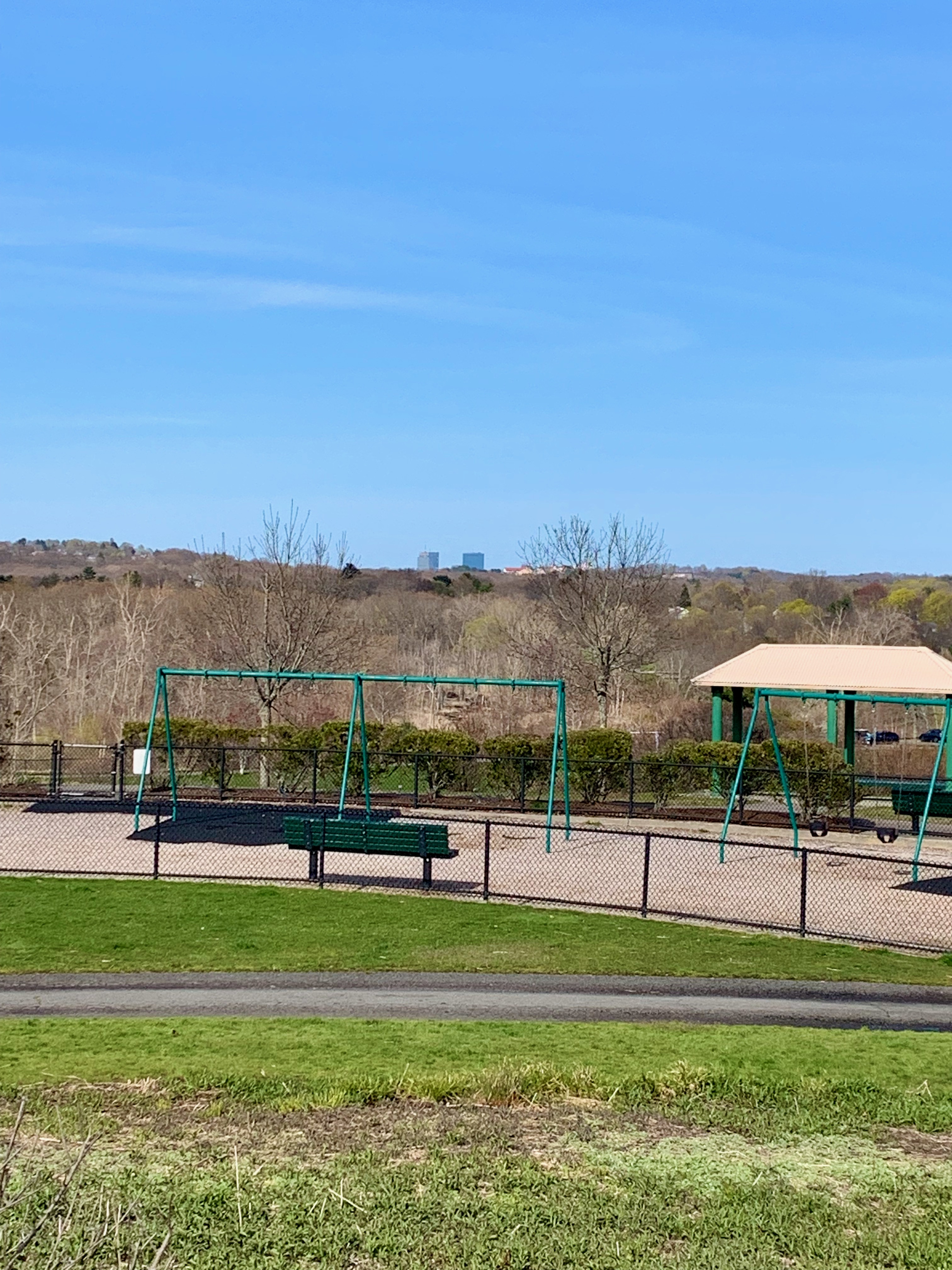
For now, the kiddie playground at The Park remains empty, closed off as the Prudential Center and the John Hancock Tower loom way off in the distance.
I’ll always love The Park, but I long to return to all the other places I love as well.
I used to post monthly reports collecting thoughts (no matter how succinct) about every film I watched. While I still write individual reviews (which can be found on Letterboxd), I thought I’d start doing a monthly summation here as well—at least as long as the COVID-19 pandemic continues and I have time to watch close to twice as much stuff as usual.
Four of the first ten titles here were viewed for Chlotrudis Awards (where I managed to see all but four of the nominated films.) The keeper in this bunch was The Art of Self-Defense, a love-it-or-hate-it indie whose dry, bordering on absurd humor was right up my alley (see also Lemon.) Thankfully, First Cow was one of the last movies I got to see in a theatre before the mass shutdowns (snuck in to the second-to-last screening—full disclosure, I work at an indie cinema); more than a month on, I’m so grateful for this, as Kelly Reichardt’s latest might be her best: applying considerably high narrative/emotional stakes to such richly detailed “slow” filmmaking, it’s also a fine portrait of friendship between two men (a concept still very much a rarity in 2020.)
Most of what follows was viewed on The Criterion Channel, Hulu and Amazon Prime, though not everything—most notably, The Green Fog, which is streaming for free on Vimeo and essential for fans of Guy Maddin and Vertigo (a guaranteed crossover?). Criterion, in particular is an invaluable resource for filling in the cracks in my extensive moviegoing, from Malle’s wistful but never foolish depiction of an anachronism in a changing world to the delightfully anarchic but compulsively watchable Daisies. Also revisited The Swimmer, which I absolutely hated sixteen years ago. Now, in my mid-40s and having consumed seven seasons of Mad Men, I sort of get it, admiring its innate weirdness rather than being repulsed by it.
Also nice to finally see a proper presentation of Teorema (first viewing long ago was a poorly dubbed 16mm print-to-VHS), A Place In The Sun (on my watchlist forever, and maybe my favorite Clift performance, if not the best film he was ever in), first features from the directors of Toni Erdmann and It Follows, and most of all, Glitterbug, a montage of Jarman’s Super 8 work I’ve owned for over a decade (as part of the Glitterbox set) but never got around to seeing until now. Thank you, pandemic?
Films viewed in March in chronological order, with director, year of release and my rating (out of 10.) *Denotes I’ve seen this title before.
Emma. (Autumn de Wilde, 2020) 6 Auggie (Matt Kane, 2019) 3 Wendy (Benh Zeitlin, 2020) 4 The Art of Self-Defense (Riley Stearns, 2019) 8 Horse Girl (Jeff Baena, 2020) 5 A Moment In Love (Shirley Jackson, 1956) 7 The Times of Bill Cunningham (Mark Bozek, 2018) 5 First Cow (Kelly Reichardt, 2019) 9 Little Woods (Nia DaCosta, 2018) 7 Rafiki (Wanuri Kahiu, 2018) 6 Atlantic City (Louis Malle, 1980) 8 Teorema (Pier Paolo Pasolini, 1968)* 8 The Myth of the American Sleepover (David Robert Mitchell, 2010) 7 Le Bonheur (Agnes Varda, 1965) 8 Bullfight (Jackson, 1955) 6 The Green Fog (Evan Johnson, Galen Johnson, Guy Maddin, 2017) 8 The Swimmer (Frank Perry, 1968)* 7 Cold Case Hammerskjold (Mads Brugger, 2019) 7 Ad Astra (James Gray, 2019) 6 The Forest For The Trees (Maren Ade, 2003) 8 The Falling (Carol Morley, 2014) 6 A Place In The Sun (George Stevens, 1951) 8 The Skeleton Twins (Craig Johnson, 2014)* 7 Daisies (Vera Chytilova, 1966) 9 Bisbee ’17 (Robert Greene, 2018) 8 Glitterbug (Derek Jarman, 1994) 9
A sound immediately followed by a sharp pain at tip of my left index finger. I had opened the screen to my tent and placed my hand on my sleeping bag. It was the last night of a week of Boy Scout camp in the middle of the Chequamegon-Nicolet National Forest in Northeastern Wisconsin.
I never actually saw the bee, or fully determined how it invaded my tent; it probably snuck in earlier in the day when Dan or I had opened the screen (which might’ve had a hole in it.) However, the quick procession of buzz-then-sting confirmed it. Thirteen years old, and one of my worst fears had finally come true.
I knelt there for a few seconds, a little dumbstruck. My tentmate was a few yards away, helping to put out the campfire along with Mr. Runkle, father to Bill Runkle, a scrawny eleven-year-old who had joined our Troop last year. His dad was one of four who’d come along on the trip to supervise us dozen Scouts.
I walked over to Dan and Mr. Runkle. “I think I got stung by a bee,” I announced.
Mr. Runkle asked, “Has this ever happened to you before?”
“Nope”, I replied.
“How are you feeling? I don’t see any hives or puffiness.”
“I think I’m fine,” I said. “It just hurts.”
“Well, you need to go to the infirmary. We don’t know if you’re allergic or not.”
An allergy to beestings had never occurred to me; however, given my long-festering hatred of the insect, I wasn’t all that surprised one existed.
Mr. Runkle grabbed his flashlight and ordered me to fetch mine. It was after 10:00 PM, and we were off to the camp’s infirmary. At least half a foot taller than me, broad shouldered and sporting a walrus mustache, Mr. Runkle in his lumberjack red flannel shirt led the way through the woods along a series of paths I barely recognized in the dark. As a city kid, the forest always seemed immense to me—you looked up and all you saw were impossibly tall, towering trees in every direction. If a clearing was anywhere near, you couldn’t sense it.
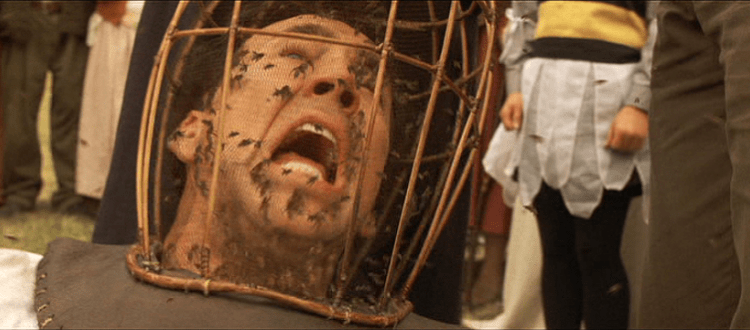
My finger throbbed a bit, the pain still present but contained, not necessarily getting any worse. As we walked for ten, fifteen minutes, I thought about my long-standing fear of getting stung. Ever since a bee flew into our dining room one summer when I was four or five, I’d been deathly afraid of them. Much of that had to do with the buzzing noise—like the roar of the titular weapon in The Texas Chainsaw Massacre, just the sound indicated the possibility of something going horribly wrong. From an early age, I was taught by my mom to stay away from them. For years at my pediatrician’s office, the waiting room, amongst all the wrinkled back issues of Highlights, there was kind of a faux Golden Book with a story where some kids got into trouble for poking a beehive. One illustration portrayed them running away from the swarm, their faces covered in welts and sores as the bees followed, their stingers pointed directly at them. That would never be me, no sir.
Blame Fear of the Unknown: as a kid, you’re told not to mess with bees because they’ll sting you and it’ll hurt. I suppose some kids take that information in stride, not actively seeking out a swarm of bees to mess with but not caring much about encountering the insect either; I did not fall into that category—the possibility of suddenly getting stung was for me a phobia right up there with fire alarms, angry barking dogs and neighborhood bullies.
Thus, when this first bee sting finally arrived, so quick and finite, it almost felt anticlimactic. Sure, it hurt, but not nearly as much as the horsefly bite I’d received on the back of my neck two summers before. As I did my best to keep up with Mr. Runkle in the woods that night, I couldn’t help but think, “That’s it? This is what I was afraid of?”
By the time we reached the infirmary, the pain in my finger had lessened considerably. Mr. Runkle rang the doorbell and the Camp Medic, a wispy, white-haired man let us in. I followed him into an examination room towards the back of the cabin while Mr. Runkle waited in the entryway. From a large metal cabinet lined with rows and rows of pill bottles, the Medic selected one and from it gave me a capsule to swallow, along with a glass of water. “This is for just in case you’re allergic,” he instructed.
I don’t remember exactly what I was given, only that it was *enormous*, much larger than anything I’d ever been told to swallow before. It easily could’ve been a Horse-Sized Pill, although I didn’t yet have the language to describe it as such. Swallowing this behemoth capsule took some effort; it felt as if I were consuming a pinky finger (even though it couldn’t have been that big.)
Having downed the pill and the entire glass of water, Mr. Runkle and I said Goodnight to the Medic and made our way back to our campground. Everyone was in their tents, asleep or feigning sleep by then. I thanked Mr. Runkle for taking me to the infirmary and he responded, “You’re welcome; just let one of the dads know if you feel sick during the night.” The pain in my finger had pretty much disappeared, replaced by a nagging itch that would stay with me all the way home to Milwaukee the next day.
After my first bee sting, I still steadfastly avoided the insect but no longer feared it. I now considered them a mere annoyance more than the Insect Antichrist I’d previously made them out to be(e). I’d get stung again in my early thirties after trying to move a large opened bag of apparently bee-infected potting soil that had been left on the ground for hours. It happened as rapidly and unexpectedly as when I reached for my sleeping bag two decades before. It hurt like a motherfucker, but the pain gradually lessened and once again, I survived.