“Write what you know” has become a cliché but it’s still valuable advice for anyone telling a story no matter how fantastical or accurately reflective of one’s own experience. At IFFBoston this year, I saw at least two features falling under this category: Romeria and Blue Heron. Both begin steeped in realism before unexpectedly shifting into dream sequences. The former imagines a meeting between the main character and her parents from before her birth; the latter, however, presents something more complex, using a sort of psychodrama to reinterpret a defining incident from one’s past.
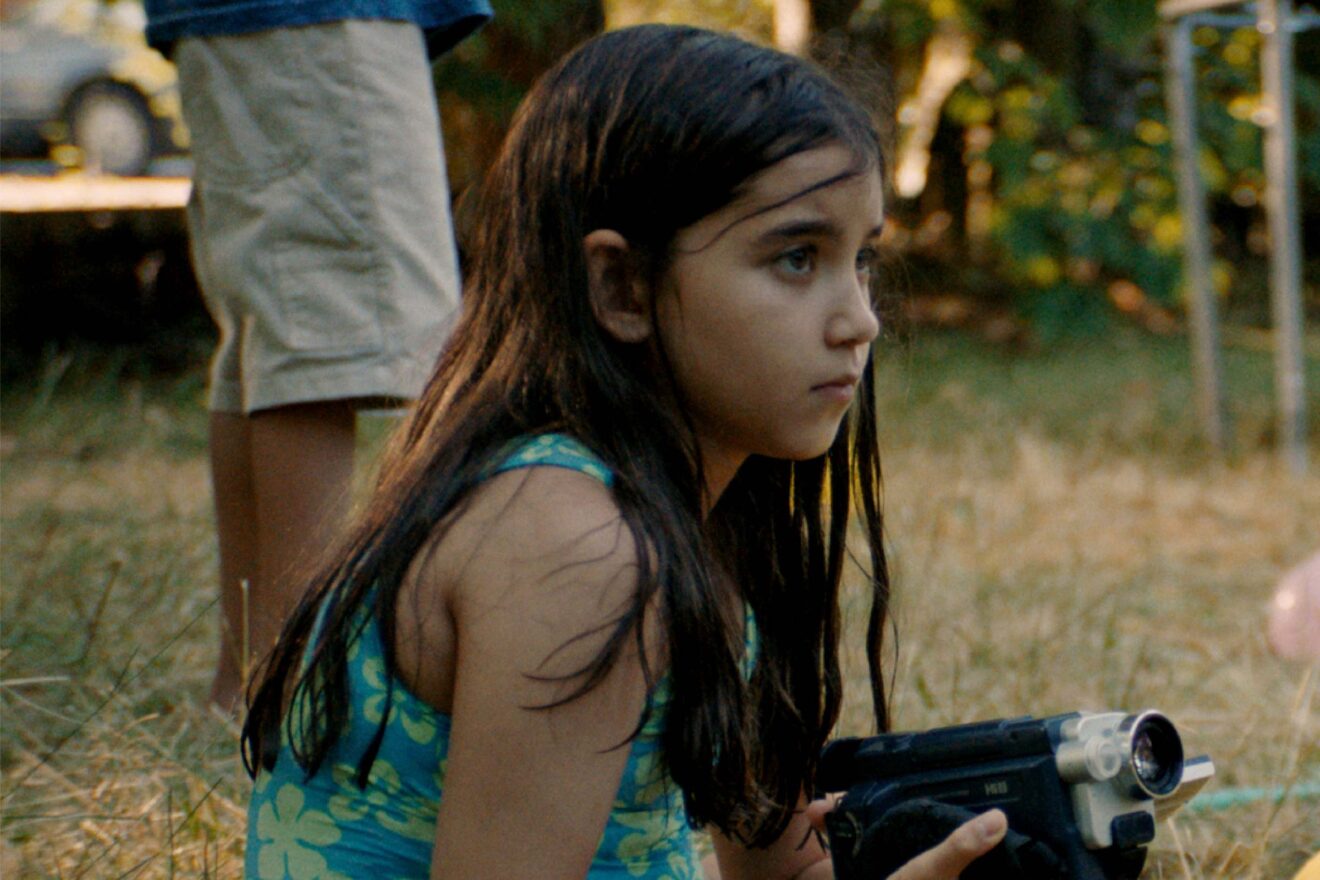
In Blue Heron, filmmaker Sophy Romvari’s 1990s childhood comes to life in the form of a Hungarian family settling into a new home on Vancouver Island. Her surrogate, Sasha (Eylul Guven) is the youngest of four children and the only one to be born in Canada. Her oldest brother, Jeremy (Erik Beddoes) blatantly doesn’t resemble any of his siblings, much less his parents (his actual father was someone whom his mother previously dated; he didn’t have any involvement in raising him.) As the rest of the family studiously works on assimilating into this new environment, Jeremy acts out. At first, his behavior is that of your average frustrated teen (moody, argumentative). Then, it escalates. He gets caught shoplifting. He climbs on his home’s roof, refusing to come down. He smashes his hand through a window. He refuses to communicate, at all. His family becomes worried for his safety, and also their own.
The shift from a near-neorealism to a far more dreamlike scenario occurs when Sasha as an adult (played by Amy Zimmer) appears and attempts piecing together the decisive actions her parents took to deal with Jeremy. I don’t want to spoil exactly what happens, for it unfolds as an act of discovery but also one of analysis, sifting through facts to arrive at some conclusion even if it’s a subjective truth. Romvari paints as an impressionist, dotting her frames with cultural signifiers both shared (pop songs, ambient sounds, suburban talismans such as freshly cut grass) and singular (the elaborate fake maps Jeremy draws which are actual ones from Romvari’s own brother.) As a filmmaker/storyteller, Romvari fully grasps the slipperiness of memory. Following a series of acclaimed shorts, Blue Heron is a remarkable first feature due to such an understanding and her ingenuity in expressing it.
 Haunted Jukebox