IFFBoston 2026: I Love Boosters

I saw eight movies at this year’s Independent Film Festival Boston and will be posting reviews of them all over the next two weeks or so.

Five minutes into director/writer/rapper Boots Riley’s long-awaited second feature, I thought, “This seems almost prosaic compared to the wackiness of its predecessor, Sorry To Bother You.” Then, a giant, rolling object rambunctiously followed the film’s protagonists down San Francisco Bay-area streets as if threatening to flatten them (or adhere them to its ever-growing circumference) and I don’t know why I ever considered such a notion.

In Riley-world, “Boosters” are predominantly young female shoplifters who make a living selling their bounty to customers for a fraction of its worth (the full title comes from one of Riley’s own songs.) Led by the gimlet-eyed Corvette (an always fabulous Keke Palmer) and the far more open (if susceptible) Sade (Naomi Ackie), they encounter a common antagonist, Christie Smith (Demi Moore, applying newfound comedic skills cultivated in The Substance), a prodigious fashion designer, kind of a cross between Anna Wintour and a more charismatic Elizabeth Holmes. Corvette, herself a budding designer, idolizes Smith until she learns the mogul has stolen some of her work. Along with fellow booster Mariah (Taylour Paige), Corvette and Sade procure jobs at a franchise of a chain of stores where Smith’s highly sought-after couture is sold in order to boost the merchandise for revenge.

As I did at the start, you may be asking, “What’s so weird about that?” Well, Riley, for whom Looney Tunes is a self-admitted influence not only coats everything in exuberantly candy-colored palettes. Check out the entire vibe of Grayson (a game Will Poulter), the exquisitely passive-aggressive store manager at boutique the Boosters infiltrate, or a pyramid-scheme cult led by the wacked out Dr. Jack (Don Cheadle), or Poppy Liu as a Chinese Booster whose favored way of lifting warps this all into a sci-fi film. I haven’t even mentioned Sorry To Bother You star Lakeith Stanfield as a French-accented lothario with an outrageously sexual secret of his own.

I adore Riley’s can-you-top-this, live-action cartoon approach while also acknowledging that it is both an acquired taste and a tad exhausting over time. Still, he does excel at holding one’s attention even if you’re flummoxed by what you’re seeing. As his political subtext becomes very much the text in the last act, it ends up profound and affecting rather than sanctimonious or preachy. The real conundrum of this silly, fervent work is that while some polish and restraint could make for more consistent, less divisive entertainment, something crucial would be lost. No one else is currently making movies remotely like this and that’s no small feat.

2026 Movie Capsule Reviews, #1

Pompei: Below The Clouds

Spent much of the weekend at IFFBoston; reviews to come, but for now, here are some recent brief reviews from other new-ish features originally posted on Letterboxd, roughly in descending order of preference.

Sound of Falling

Still piecing together all of its parallels and connections after a second viewing but can also say this is truly like no other movie I’ve seen. Even the camera roaming through rooms in a house creates a spark of anticipating what could possibly happen next and you still feel a resounding thrill whenever it does.

Pillion

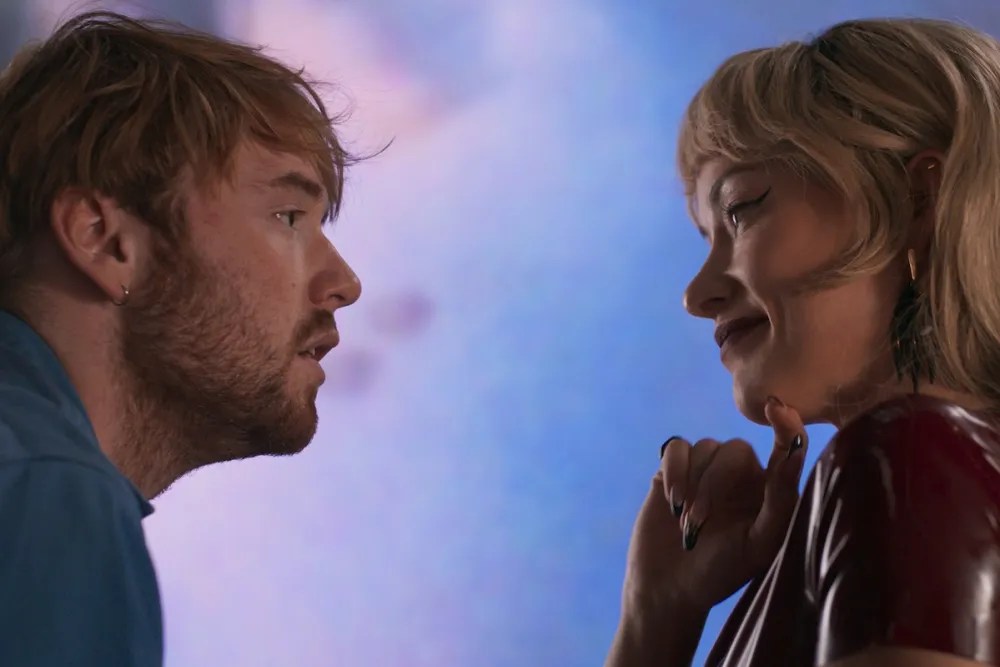
Well, I’d want to push around someone who sings in a barbershop quartet, too. The rare film about going through the process of discovering what you like, both sexually and romantically. Alexander Skarsgaard is well cast as the dom but Henry Melling’s a revelation as the sub.

Sirat

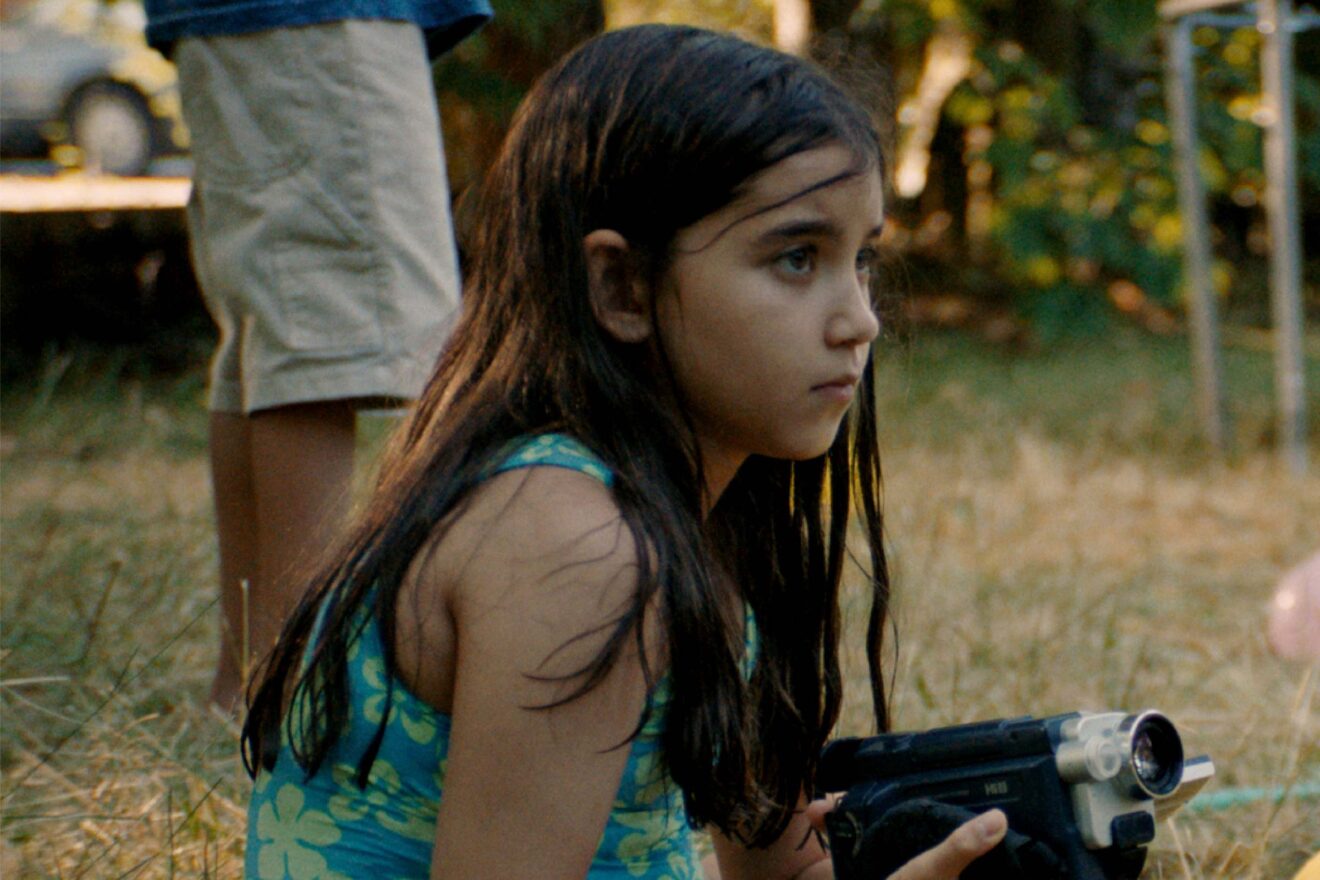
An Arthouse equivalent of a horror or action film “thrill ride” (imagine what William Castle could’ve done with this concept), it gets off on its hallucinatory desert landscapes and nearly relentless EDM score but thankfully, its characters end up more than mere pawns in an apocalyptic scenario.

My Father’s Shadow

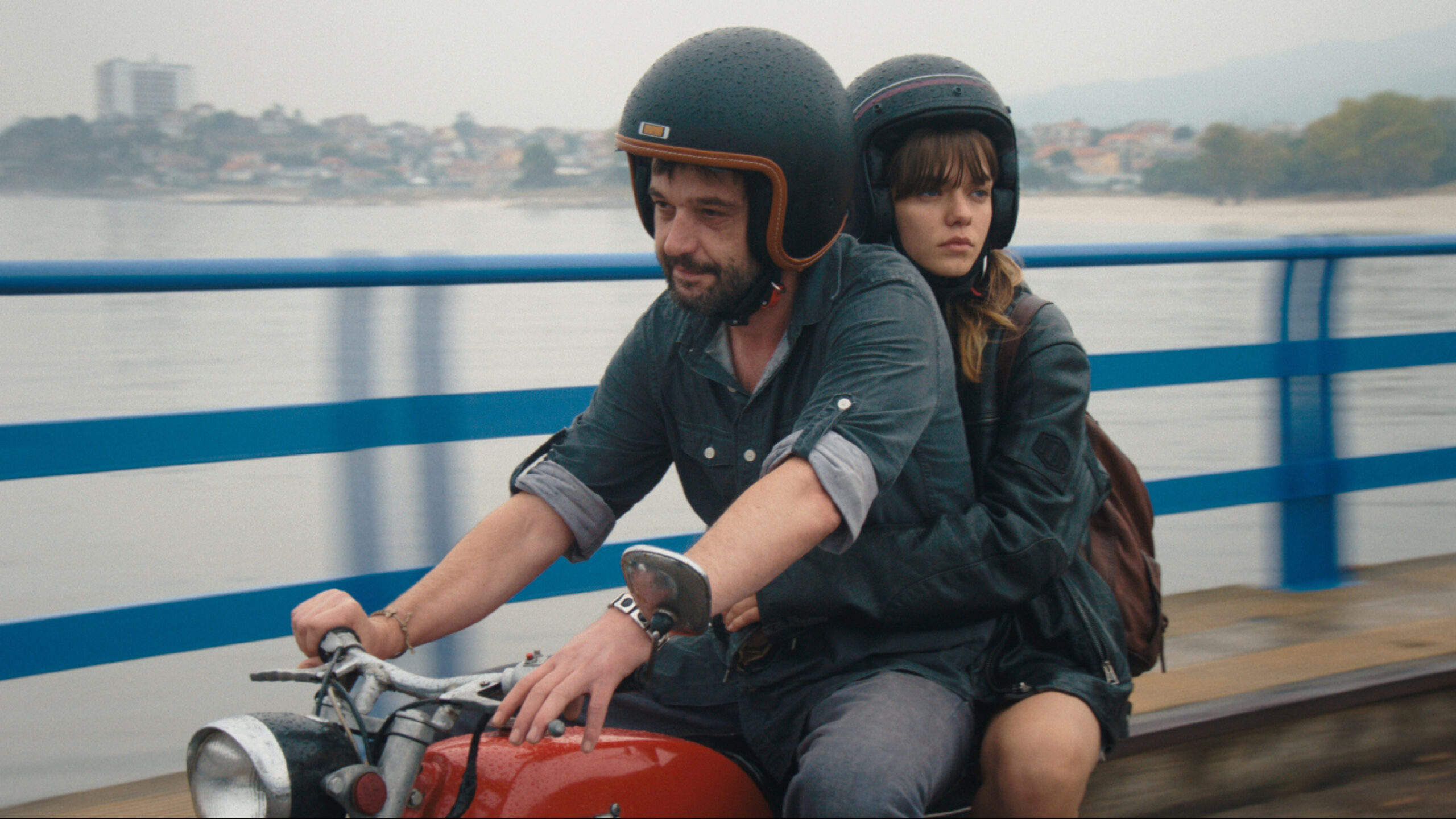
A quietly powerful first feature with a great lead performance from Sope Nisiru. While the pacing can be a little sluggish, so many moments linger long after they’ve dissipated and become rather poignant during the turbulent last fifteen minutes.

Father Mother Sister Brother

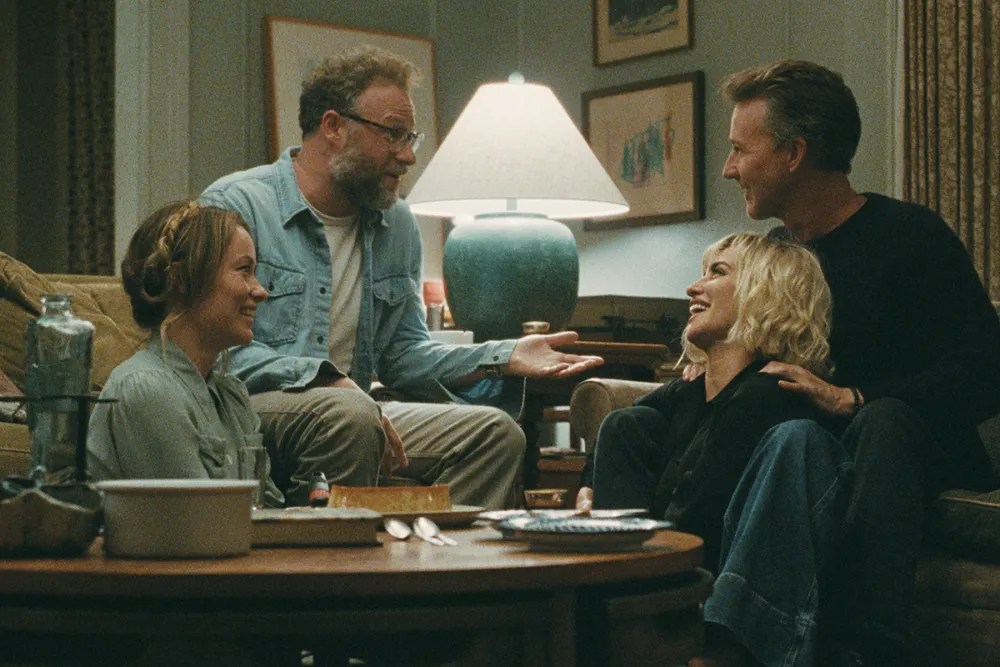
A solid ensemble does a lot of the heavy lifting in Jarmusch’s return to anthology-style filmmaking although the final third could serve as a nice capstone to the director’s career if this were to end up his last feature.

All That’s Left of You

A multigenerational Palestinian melodrama that profits greatly from its deployment of restraint, strong direction and a solid ensemble cast.

Young Mothers

Like the shelter employees in this film, the Dardennes’ approach is empathetic and optimistic but firm; that their narrative comes off more schematic than natural places this in a lower tier of a filmography with a very high bar.

Pompei: Below The Clouds

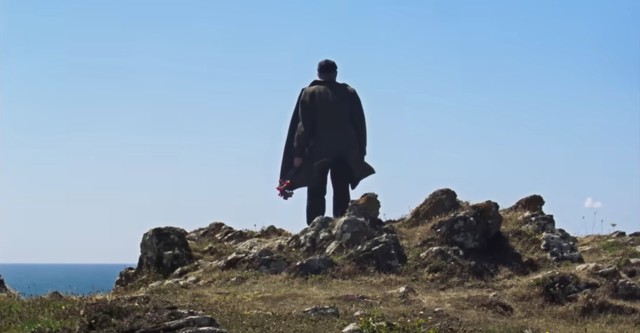
Can’t help but think I missed a considerable portion of the intended impact by not seeing this immersive, sometimes lyrical doc in a cinema even though I appreciated the bold visuals and recognized flashes of genius.

A Useful Ghost

Exceedingly strange and perhaps narratively uneven but I’m grading generously due to its overall chutzpah and meticulous, crazy production design.

Hoppers

Not bad for recent Pixar, I guess, but when peak Pixar was willingly weird like this, it was also far more inspired.

My Undesirable Friends, Part 1 – Last Air in Moscow

Someone, someday may produce a definitive film about Russia’s war on Ukraine, perhaps a historical drama or a painstakingly researched expose of the country’s corrupt government. It likely won’t be as visceral or affecting as this five-and-a-half hour documentary from director Julia Loktev (her first feature since 2011’s The Loneliest Planet). As seen from the perspective of a collective of young Russian journalists (most of them women), it spans the six or so months leading up to the invasion and the first ten days of the conflict.

The women profiled here mostly work for TV Rain, an independent Russian television news program. Led by Loktev’s friend, Editor-in-Chief Anna Nemzer, both the program and its journalists get labeled “foreign agents” by the government which also slaps a lengthy disclaimer stating such at the start of each broadcast. Civilians with this designation are subject to mandatory audits of their personal expenses and fines and criminal prosecution for non-compliance; they’re often also referred to as “undesirables”.

Divided into five digestible chapters, the first one provides a sampler of TV Rain’s programming and a behind-the-scenes overview into what goes into making it while facing limitations from the “foreign agent” label. The next two chapters focus more closely on the women themselves, among them Ksyusha, whose fiancé is imprisoned for his political beliefs; Ira, who is often seen with her adopted one-eye French bulldog mix; and Alesya, who has a female partner but is not out to her family. Loktev dutifully captures their skills as journalists in an environment that’s unfriendly to the profession but really excels at depicting them as persons dealing with and concerned by what is happening to their country.

The final two chapters unfold over the days leading up to and following Russia’s invasion of Ukraine. The trust Loktev has already established with her subjects pays off here as we see in near-real time how a country closes itself off from the rest of the world and what effect that has on its civilians. The framing of Loktev’s shots becomes tighter, more painfully intimate, emphasizing the confusion and fear her subjects are experiencing. Although the circumstances are extraordinary, they all remain fully relatable as their counterparts would in any country, making references to Harry Potter (Voldemort ends up a prescient stand-in for Vladimir Putin), gathering together for communal dinners and pondering over their unknowable futures.

The long running time is intimidating but it develops into an asset given how much it encompasses and how quickly the action accumulates near the end. The project ultimately works because Loktev uses what is essentially a humane character-study of a documentary to also detail how an ostensible “democracy” gradually, chillingly devolves into what is unquestionably a totalitarian regime. As the title indicates, although war has driven all of Loktev’s subjects to flee the country for their safety, the story’s not over—a second part subtitled “Exiles” is currently in post-production. 

MISERICORDIA

Jérémie (Félix Kysyl) clearly belongs to an extended lineage of Alain Guiraudie protagonists: craggily handsome, somewhat sexually ambiguous, a laconic wanderer, an irritant to many who come into contact with him. However, unlike the others, he’s not as passive or seemingly befuddled—rather than letting everything happen to him, he takes a decisive action that carries real consequences for his surrounding community even if the person most deeply affected by it ends up being himself.

Returning from the city of Toulouse to an isolated forest village for the funeral of a baker he once worked with, Jérémie’s invited to stay on by the baker’s wife, Martine (Catherine Frot), much to the consternation of her married son, Vincent (Jean-Baptiste Durand) and something approaching indifference (but not entirely) from neighbor Walter (David Ayala). It takes time to figure out how everyone knows each other with only traces of what their past dynamics were. About a half-hour in, Jérémie takes that decisive action; from there, the film turns into essentially a dark comedy as he repeatedly makes up stories about what happened, only for other characters to do the same including an older priest (Jacques Develay) whose motives to protect Jérémie are, shall we say, less than pure. It all becomes a sort of “Looney Tunes RASHOMON”, to borrow a phrase from Errol Morris’ 2010 documentary TABLOID.

As usual with Guiraudie, the environment influences the tone (in this case, the autumnal hues of a forest that manages to seem both inviting and quietly menacing.) The film’s rhythms also develop organically with a heightened focus that looks like a course-corrective to the everything-and-kitchen-sink approach of his inferior last feature, NOBODY’S HERO (2022). While not as ingenuous as STAYING VERTICAL (2016), this is funny and surprising enough to render any claims of Hitchcockian influence irrelevant (if anything, it’s closest to an atypical film from that director like THE TROUBLE WITH HARRY.) In the end, it’s less important whether Jérémie gets away with what he’s done and more how it shifts our perceptions of those around him. Also, look up the meaning of the film’s Latin title and ponder whether or not it’s meant to be ironic. Rating: 4 (out of 5)