IFFBoston 2026: The Invite

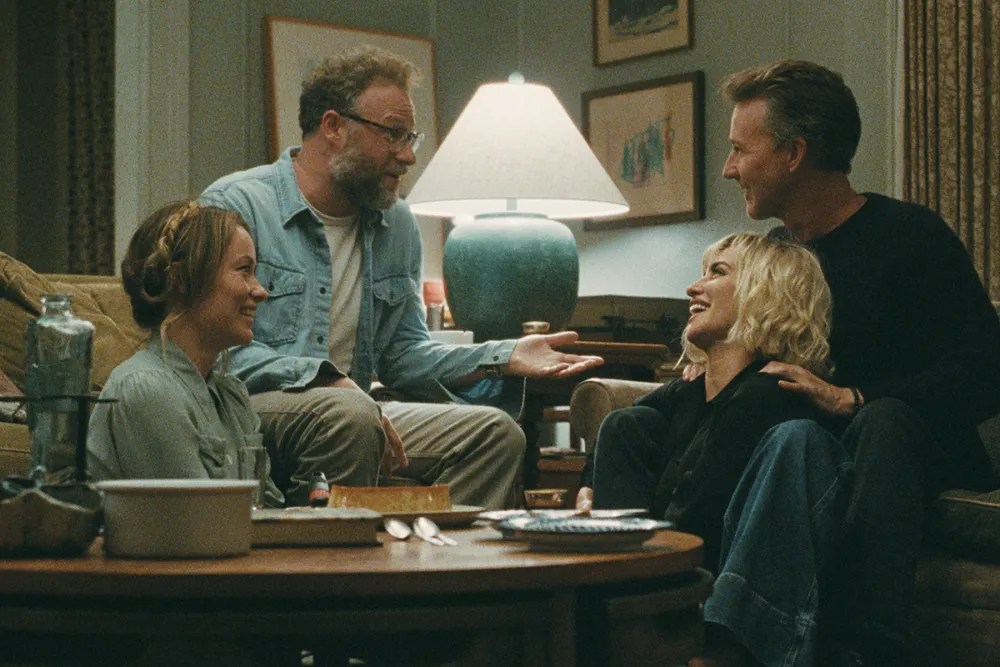
Any resemblance between The Invite and Who’s Afraid of Virginia Woolf is not coincidental. From a screenplay written by Will McCormack and Rashida Jones and directed by and starring Olivia Wilde as Martha surrogate Angela, it is almost entirely set in her and Joe’s (Seth Rogen) San Francisco apartment.  One night, Joe returns from his job as a music teacher to learn that Angela has invited a neighboring couple, Pína (Penelope Cruz) and Hawk (Edward Norton) over to dinner within the next hour. Their bickering-cum-full-out-arguing hits a wild crescendo just as the doorbell rings announcing Pína and Hawk’s arrival.

While it roughly follows the trajectory of Mike Nichols’ classic film of the Edward Albee play, this is not a remake of it (actually, it’s a remake of the Spanish film The People Upstairs.) For one thing, despite the earlier film’s gallows humor, The Invite is unashamedly hilarious (the words “screwball cringe” came to mind early on) with its rat-a-tat-tat dialogue, one-liners and sight gags (Rogen struggling to bike up the city’s infamously hilly streets is a highlight of the latter.) It’s not long before sex-therapist Pína and ex-firefighter Hawk feel like near-kindred spirits to Angela and Joe, especially in their own neuroses. All four actors are a delight to watch with a reminder of still-otherworldly Cruz’s often obscured talent for comedy.

As the night lingers on, events become more outrageous before the film pulls back for pathos and some catharsis. The shifting tone is handled elegantly even as it slows the built-up momentum to a crawl. As for Wilde, this makes the misguided Don’t Worry Darling feel like an aberration in her filmmaking career. While more fun than profound, The Invite is worth sitting through to arrive at an affecting if ambiguous détente of a conclusion between two of its four characters.
IFFBoston 2026: I Want Your Sex

Once renowned for his guerilla-style New Queer Cinema flicks (such as 1992’s The Living End), filmmaker Gregg Araki shifted to something more mature and earnest with Mysterious Skin (2005), still his best in my opinion. Since then, where he’d go next has been more difficult to foresee. Consider Smiley Face (2007), a loveably stoopid stoner comedy starring Anna Faris, or Kaboom! (2010), almost a Millennial update of his 90s work.

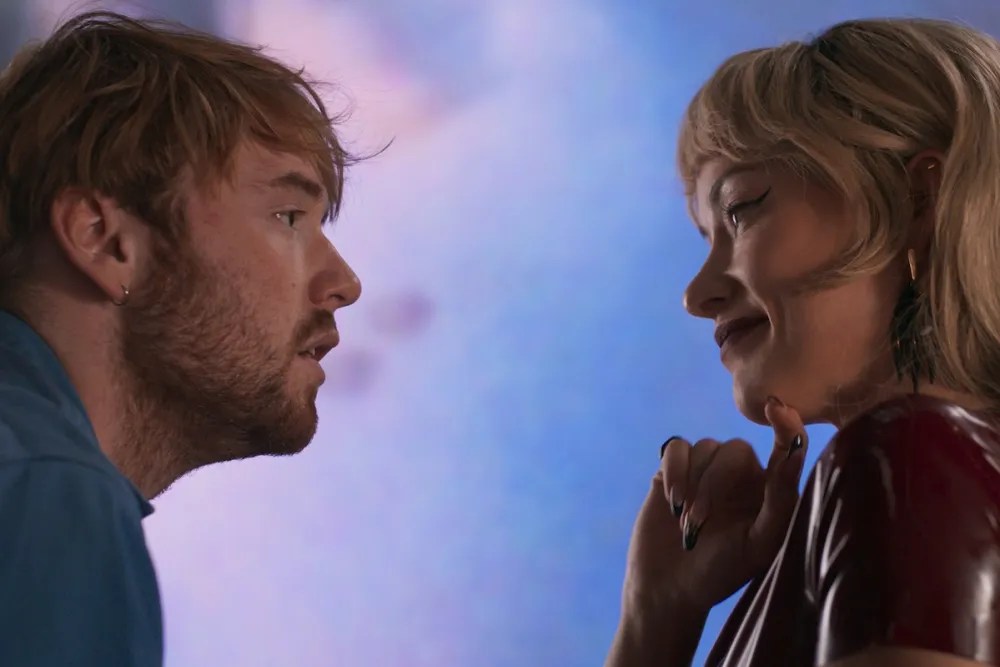
His first feature since the far more serious White Bird In a Blizzard (2014) fully resembles an Araki picture but it really has no logical precedent in his filmography. It is his wackiest comedy since Smiley Face, but it also borrows liberally from the structure of Sunset Boulevard as it begins near the end and flashes back to how just-out-of-college Elliot (Cooper Hoffman) scores a job as an assistant to Erika Tracy (Olivia Wilde), a boundary-pushing visual artist whose risqué outfits, outrageous installations and over-the-top sexual forwardness faintly resemble Truth Or Dare-era Madonna. That she’s grooming Elliot from the start is obvious long before they begin a BDSM relationship (with Erika the Dom, naturally) that’s only clandestine on the surface; Elliot’s flamboyant co-worker, Zap (a funny, feline-esque Mason Gooding) suspects as much right away, given Erika’s torrid history with past assistants.

The film works because of its leads. Wilde is a near-revelation after a few years spent primarily behind the camera, clearly relishing the opportunity to play such a juicy part; her knack for comedic timing and commanding the screen has rarely gone this hard. Hoffman’s also developed as a performer since his debut in Licorice Pizza—of course he resembles his father but one may not necessarily make that connection without knowledge of it. If there’s a problem here (besides not including the classic George Michael tune of the same title on the soundtrack), it’s that Araki and co-screenwriter Karley Sciortino have little new to say about how titillating and ultimately empty modern art can seem. Without the twisted, misguided but palpable spark igniting between Erika and Elliot, I Want Your Sex might have ended up as fatuous as the scene it satirizes.