(My 100 favorite albums in chronological order: #38 – released May 11, 1993)
Track listing: I Should’ve Known / Fifty Years After The Fair / 4th of July / Could’ve Been Anyone / Put Me On Top / Stupid Thing / Say Anything / Jacob Marley’s Chain / Mr. Harris / I Could Hurt You Now / I Know There’s A Word / I’ve Had It / Way Back When
In 1993, Aimee Mann was best known as the lead singer of ‘Til Tuesday, a Boston quartet who scored one big hit eight years previously (“Voices Carry”), recorded three albums with each selling less than the previous one and split up before the 80s were over. The hit’s iconic music video forever etched a particular image of Mann in many people’s minds—the new wave girl with the single braid who, after three minutes of tolerating her bad, verbally abusive beau, finally, defiantly stands up and sings out loud in a theatre, much to his (and the surrounding audience’s) chagrin. Thus, by the time she re-emerged with her first solo album Whatever, it took most people by surprise, for who had expected that girl with the braid to make something so relatively inventive and smart?
Perhaps the album’s quality would’ve come as less of a shock if ‘Til Tuesday had been more than a one-hit wonder. While much of their early output is of a piece with the slick, period-reminiscent, synth-heavy sound of “Voices Carry”, one can sense Mann struggling to break out of that stylistic box as early as “Coming Up Close”, a gorgeous, sweeping pastoral ballad from the band’s second album Welcome Home (1986). The maturation between even that album and Everything’s Different Now (1988) is almost staggering: although still fairly glossy, the arrangements are far more nuanced (possibly the reason why it flopped, even with such melodic gems as “(Believed You Were) Lucky”), and the songs get their charge from Mann’s prickly, probing lyrics, many of them about her failed romance with fellow singer/songwriter Jules Shear.
Appearing five years later, Whatever and its opener and first single, “I Should’ve Known”, swiftly establishes Mann as the new alt-rock queen of the kiss-off. Following an extended, sonically adventurous intro (as if the track’s mechanisms are gradually coming to life), the guitars and drums soon kick in, along with Mann’s incensed but measured vocal. In ‘Til Tuesday, she never rocked so hard or appeared so explicitly angry, but her wry approach here keeps it all from becoming too heavy. She expertly utilizes both wordplay (“The minute that we hit the wall / I’ve should’ve known / the writing was upon the stall”) and onomatopoeia (the sung ellipses (“dot, dot, dot”) that immediately follow the song title, providing one of the biggest hooks). She even tempers her bitterness with sweet, Beatles-esque “ahhhs”. You could not ask for a better introduction or make a stronger case for Mann’s arrival as a solo artist.
The rest of Whatever dutifully showcases all her melodic instincts and songwriting prowess cultivated since ‘Til Tuesday disbanded. “Could’ve Been Anyone” and the nimble, poised “I Could Hurt You Now” are more sprightly kiss-off tunes in the mold of “I Should’ve Known”, while other songs take a few steps back, tartly addressing problematic relationships while being in the thick of them. In “Say Anything”, she acknowledges “the comfort of one more lame excuse” via a bridge with a wonderfully circular, Todd Rundgren-like bassline before telling her lover in the chorus, “Say anything, ‘cause I’ve heard everything.” Lest you think Mann’s cold as ice, she’s far more vulnerable on the reflective “4th of July”, where her clear-as-a-bell tone and the arrangement’s restraint (it could’ve just as easily been a standard power ballad) leave a lasting imprint. Same thing goes for “Stupid Thing”, a simple but melodically effective breakup song whose sorrow fully registers in both Mann’s front-and-center vocal and an exceptionally expressive guitar solo that practically mimics her tone.
While I doubt Mann would ever deny the confessional nature of her songs, as a narrator, she just as often inhabits characters. “Fifty Years After the Fair” makes sustained references to having lived through a time long before Mann was born, while in “Mr. Harris”, she sings, with intensive, specific detail of falling in love via a May-December romance, a scenario to my knowledge she has not personally experienced (at this writing she’s been married to contemporary/fellow musician Michael Penn for almost two decades). Burning with the just the right mix of optimism and longing for an imagined past, the former’s heavenly jangle-pop is a better fit for her than the latter’s impeccably arranged, classy-but-stuffy chamber music. But both work in her favor to suggest she’s not just all about bad breakups. “Put Me On Top” feels more personal, commenting on her languishing in record label limbo (“I should be riding on a float in the hit parade / instead of sitting on the curb behind the barricade”) but her self-deprecation (“Or at least put some hope in the bottom of the box,” she suggests as a last resort) is more relatable and applicable—pop star or not, who doesn’t want at least the promise of some sort of recognition?
Mann obviously merits recognition for Whatever’s success, but so does its producer, Jon Brion. A session musician who performed with ‘Til Tuesday on their last tour, Brion branched into production with Whatever and his touch immediately distinguishes the album from any other of its time (and also from everything Mann’s recorded since she stopped working with him after her third album.) His arrangements are like sonic playgrounds (think back to the opening of “I Should’ve Known”), favoring unconventional instruments such as calliope, Chamberlin, Mellotron and other effluvia mostly nicked from The Beatles’ post-Sgt. Pepper’s whimsy-enhanced side. Sometimes, he lays it on noticeably thick, such as the flute-and-martial drum chorus of “Jacob Marley’s Chain” or the fairground atmosphere (complete with trombone, old-timey piano and kiddie xylophone) enriching the lovely chord changes and psychedelic pastiche of closer “Way Back When”. Elsewhere, he’s a little subtler but still effective, casually dropping an up-to-the-minute drum loop into the opening of “Could’ve Been Anyone” or providing minimalist keyboard shading to “4th of July”.
As with Brian Eno and Talking Heads, or Thomas Dolby and Prefab Sprout, you sense how perfectly Brion and Mann fit together as producer and artist throughout Whatever, and they save their best for the penultimate track. From its first notes, “I’ve Had It” almost proceeds like clockwork, the percussion, acoustic guitar and piano dutifully repeating a hook soulfully, not mechanically. However, the song really comes to life at the chorus as ringing guitars and a bass harmonica make everything shimmer and glisten; the sensation fortifies the plainspoken awe of Mann’s lyrics as she reminisces about being in a band, and reflects on what she took away from it. She sings, “Oh experience is cheap / if that’s the company you keep / and a chance is all that I need / and I’ve had it.” How refreshing that the song title ends up not a declaration of weariness but a basic acknowledgement of an opportunity welcomed, challenged, tested and occurred. Thankfully, her directness is not at odds with the elegiac, intricate beauty of Brion’s production—they actually complete each other well, preventing “I’ve Had It” from seeming too cynical or, on the other hand, too idealistic.
Whatever was an act of redemption for Mann, turning her into a critical favorite (if not a commercial one). We’ll hear from her (and Brion) again on 100 Albums and discover how she confronts this conundrum by developing a persona steeped in it, while also gradually refining her sound.
Up next: Everybody else is doing it, so why can’t she?
(My 100 favorite albums in chronological order: #37 – released March 9, 1993)
Track listing: Mario’s Cafe / Railway Jam / Date With Spelman / Calico / Avenue / You’re In A Bad Way / Memo To Pricey / Hobart Paving / Leafhound / Clock Milk / Conchita Martinez / No Rainbows For Me / Here Come Clown Feet / Junk The Morgue / Chicken Soup
My first year in Boston, the day before Thanksgiving: I’m braving the chilly air, escaping my box-like Allston apartment to explore the city, my true new home. At Boomerang’s, an AIDS Action charity thrift store (the now long-gone, exceptionally spacious location on Canal Street near North Station), I pick up a cut-out-bin cassette of British trio Saint Etienne’s nearly five-year-old second album, along with a few others (including Prefab Sprout’sJordan: The Comeback). Upon leaving the store, I put So Tough into my Sony Walkman, and set off on foot towards the North End.
The first sounds I hear are a lone sigh and a man speaking, “Cigarettes… a cup of tea, a bun,” followed by a rapid crescendo of ambient noise (people in motion, forks clinking against plates) that’s abruptly replaced with house piano chords and a woman’s childlike voice singing a wordless hook. The rhythm track kicks in and the first verse begins. The vocalist, Sarah Cracknell, sounds slightly off-key, but charmingly so: she manages to seem bright-eyed and innocent without being overly cutesy or saccharine. The lyrics are a slice-of-life rendering of goings-on at a café in Kentish Town, London, painting a portrait via descriptions like “Squeezy bottles under Pepsi signs”, identifying regulars such as Jackie (who “wants to meet the Glitter Band”) and Dilworth (who is “a strange and lovely man”) and making references to then-current pop culture figures Prince Be (of hippie-rap duo P.M. Dawn) and professional boxer Chris Eubank.
Buoyed upon a stirring string sample, the chorus of “Mario’s Café” ties it all together: “When we meet for a while, Tuesday morning 10:00 AM”. Repeating that line until it becomes a mantra, the song exudes an infectious, beaming optimism that blooms in the chorus’ other key line: “Everyone’s dreaming of all they have to live for.” A flute solo follows the second chorus, and I begin noticing how much Cracknell’s voice resembles it, acting as another element of the entire arrangement rather than an overpowering lead, complementing the other sounds instead of playing on top of them. This reaches its fullest expression at the song’s end, when the rhythm track drops out, leaving only a variation of the sampled strings and Cracknell’s wordless sighs, washed out and blurred like an impressionist painting, as if we were viewing this café, this scene from above and far away, an ordinary moment forever etched in time.
As “Mario’s Café” concluded, physically, I was still in Boston but mentally, I felt like I was in Kentish Town. I’d never even set foot in London (still haven’t eighteen years later), but such is the transformative, hyper-specific power of Saint Etienne’s music that I believed I could practically see, feel and drink in this tiny little corner of the world previously unknown to me. Making my way through the North End’s narrow, hilly side streets and down main drag Hanover, the rest of So Tough affected me similarly, transporting me to such new, unusual yet sonically distinct and evocative places. By the time I hopped on the T back to Allston, trance epic “Junk the Morgue” even seemed to sync up perfectly with the sleek, kinetic motion one experiences riding a subway car, viewing out the window a blur of negative space as one whooshes on by through dark, endless tunnels.
Before we get to the rest of So Tough, some backstory on Saint Etienne. Most days, I consider them my favorite band (no one else will have more entries in 100 Albums) but they also draw a significant proverbial line in the sand in this project’s chronology. Until now, every artist I’ve written about has at least one exceptional musical talent warranting their inclusion here, whether as a vocalist, lyricist, pianist, producer, etc.; that’s not to say Saint Etienne lacks any of those talents (as a singer, Cracknell is on her own distinct plane) but their approach in cultivating them is radically different. The band’s founders, childhood friends Bob Stanley and Pete Wiggs aren’t technically proficient musicians—neither one can sing or really play a musical instrument. However, both are fervent music fans, the types one imagines having massive record collections encapsulating everything from hit singles to long-forgotten crate digging obscurities (additionally, Stanley is also a music journalist). Craftily making use of the time period’s newfangled, accessible technology (samplers, drum machines, cheap synthesizers) and studio assistance from engineer/unofficial band member Ian Catt, Stanley and Wiggs took punk and rap’s DIY nature (if not its sound) to heart, proving you could make great pop music if you had the vision (if not necessarily the technique).
Originally conceived as a vehicle with a revolving cast of vocalists (Moira Lambert sings on the band’s first single, an unrecognizable dance cover of Neil Young’s “Only Love Can Break Your Heart” which, oddly enough, remains their only charting song in the US), Stanley and Wiggs soon found an ideal permanent front-person in Cracknell. She first appears on Saint Etienne’s glorious third single, “Nothing Can Stop Us” which established the band’s cut-and-paste aesthetic, sounding as if they sampled bits and pieces of a dozen 1960s Dusty Springfield tunes and assembled them into something both familiar and fresh. While UK fans tend to revere the band’s debut album, Fox Base Alpha (1991), to me it’s a little half-baked apart from the aforementioned singles and a few isolated tracks like the lovely “Spring”; perhaps you just had to be there in early ‘90s London to feel and understand what sea change it indicated.
If Fox Base Alpha now scans as the rudimentary effort of music fans trying out ideas and discovering what they could accomplish, So Tough plays like the full actualization of that effort further enhanced by a newfound ambition to see just how far they could take it. The two albums do have a lot in common in terms of structure and content: both include snippets of film dialogue, inside jokes and other sampled sounds placed between the actual tunes, but So Tough is altogether more confident and songful, its transitions more surprising and inspired. With barely a moment of silence throughout its jam-packed duration, it’s less traditional-ten-song-album than grab-bag-mixtape; not everything scales the same heights as “Mario’s Café”, but that’s fine—on a few occasions, So Tough soars even higher than that.
Clocking in at over seven-and-a-half minutes, “Avenue” is the album’s centerpiece and not just for its epic length. It kicks off with a quick thud, as if instantly materializing before us. A faint fog of keyboards and Cracknell cooing, “Ooo-ooo-ooh… your… heart” over and over fades in until the first verse arrives. We hear her sing both the melody (as dictated by the lyrics) and a countermelody of nothing but “bup, bup, ba’s”. The mostly electronic music resembles what would transpire if someone cut up the entirety of Sgt. Pepper’s Lonely Hearts Club Band and spat it back out through a sampler. The chorus reprises the opening melody only to resolve in a thrilling, dramatic chord change where Cracknell urgently wails the line, “And, ooooh… oh, the clown’s no good,” stretching out “good” to four yearning, mysterious, blissful syllables.
As “Avenue” proceeds, it keeps revealing new facets, like the sudden, massive crack of thunder after the bridge, placing the song on hold for ten seconds before Cracknell’s “bup bup ba’s” re-emerge and we can move on to the next verse, or the harpsichord break occurring at 4:32, or the faint “woop woop’s” placed under Cracknell’s repeated wail of “Oh, the clown’s no good” beginning at 5:27. As it rises and falls, “Avenue” feels simultaneously unpredictable, dangerous, expansive and transcendent. It eventually fades out only to suddenly return at full blast, the melody obscured/replaced by a mélange of psychedelic sounds that soon vanishes just as quickly, leaving us with a few quietly chirping birds before some dialogue from Billy Liar (“A man could looooooose himself in London!”) brings us into the polar opposite next track, the undemanding, almost deliberately cheesy retro girl-group pop of “You’re In A Bad Way”.
Following “Memo to Pricey”, a non-sequitur 23-second link (basically a pub conversation backed with music from an ancient Chanel No. 5 advert) and dialogue from obscure 1972 film Made (“Do you think a girl should go to bed with fella…”) comes “Hobart Paving”, the album’s other peak. A simple, sparse ballad, it places Cracknell front-and-center singing an almost impossibly beautiful, fragile melody. Lyrically, the song seems to be about a woman waiting on a train platform, leaving someone or something behind (a lover, a family, a childhood home?), but it’s never as clean-cut as the scenario laid out in, say, The Beatles’ “She’s Leaving Home”. Instead, Cracknell strings phrases such as “Rain falls like Elvis’ tears,” together with song titles (“No Sugar Tonight”, “Dim all the Lights”) and the repeated line in the chorus, “Baby, don’t forget to catch me.” While the original UK album version sticks to this minimalist piano-and-voice template (along with a harmonica solo), the single version (which also appears on the album’s US edition) adds an orchestral arrangement from cult artist/Brian Wilson-collaborator Van Dyke Parks. Combining synthesizers with real instruments, it enhances the song tenfold, adding complexity without obscuring that which made it so affecting in the first place.
“Avenue” through “Hobart Paving” is the album’s most dynamic section, its two bookends illustrating Saint Etienne’s tendency to respectively create entirely new sonic worlds out of artifacts of (and references to) the past and infuse traditional song structures with their own singular outlook. The rest of So Tough pings back and forth between such extremes, as if to say anything is possible where pop music is concerned.
Naturally, tracks falling on that spectrum’s more experimental end are the ones you notice first. After “Mario’s Café” vanishes into the ether, “Railway Jam” begins with dialogue from the Michael Powell classic Peeping Tom (“I’m Helen Stevens…”) before a doo-wop sample (The Flamingos’ “Golden Teardrops”) appears, the clanging of a passing train gradually consuming it until the rhythm finally kicks in at 1:22; the peculiar, catchy instrumental that follows wouldn’t sound out of place on Brian Eno’s Another Green World(as Robert Christgau has noted). “Conchita Martinez” is even further out there, swerving between a techno rave-up about the titular tennis player and a sampled, 16-bar loop of the deliriously fast guitar hook from Rush’s “Spirit of The Radio” (!). “No Rainbows For Me” would be just a pleasantly dreary ballad if not for Cracknell’s submerged, unintelligible vocal, buried in a soupy arrangement that just seems to hang there like a scene in a David Lynch production. Superficially, “Junk the Morgue” resembles dance floor fodder, a Fox Base Alpha throwback until its sharpness slowly registers in waves—the pulsating beat, the Moroder-like synth washes, Cracknell’s intonation of such enigmatic, impenetrable phrases as “Close your eyes / kiss the future / junk the morgue.”
Still, Saint Etienne’s love of pop comes through just as often as their impulse to experiment. “Calico” isolates Cracknell to repeatedly, effervescently sighing the title world in the chorus, allowing 16-year-old female rapper Q Tee to take the verses. The latter’s distinct tone (perhaps a Brit equivalent to Digable Planets’ Ladybug Mecca) unlocks another door in the band’s universe, while the loping, Middle-Eastern accented melody creates a big enough hook for even the casual listener to hang on to. “Leafhound” is a playful whirlwind of Balearic guitar, orchestral synths and Cracknell’s sweet, conversational tone as she revisits a strangely familiar locale. She reminisces in the chorus, “Something about this place makes me lose a grip on time and space,” phonetically spelling out each syllable as if in awe. The tonal polar opposite of “Hobart Paving”, “Leafhound” cultivates a sense of return and renewal, with Cracknell concluding, “Yes, I know it’s strange / that you could be here with me now,” that last word neatly spiked with exuberance as if sung by the young girl on the album cover (who is actually Cracknell herself).
The original version of So Tough ends with a brief dialogue, presumably back at Mario’s Café (“Chicken Soup”), but the American release adds on “Join Our Club”, which was a UK single the previous year. An ideal album closer, it sums up everything great about Saint Etienne as a pop group, from the descending “ba, ba, ba’s” of its sighing, immediate chorus to its Stevie Wonder and The Lovin’ Spoonful quotes and groovy sitar solo; even if the song title was meant to be a little tongue-in-cheek (hence the lyric, “Teen Spirit is the ‘90s scene!,” six months after Nirvana’s Nevermind), it all scans like an invitation to be part of something new, exciting, different and grand. After hearing So Tough for the first time on that frigid yet sunny Wednesday afternoon, I counted myself a Saint Etienne fan for life.
(My 100 favorite albums in chronological order: #36 – released November 24, 1992)
Track listing: Who Needs Love (Like That) / Heavenly Action / Oh l’Amour / Sometimes / It Doesn’t Have To Be / Victim of Love / The Circus / Ship of Fools / Chains of Love / A Little Respect / Stop! / Drama! / You Surround Me / Blue Savannah / Star / Chorus / Love To Hate You / Am I Right? / Breath of Life / Take A Chance On Me
Erasure is the quintessential synth-pop duo of its era, if not the wittiest one (Pet Shop Boys) or the funniest (Sparks) or the sleaziest (Soft Cell) or the most accepted by the mainstream (Eurythmics) or the most innovative (OMD circa Dazzle Ships) or the most political (The Communards). Still, they exemplify an “opposites attract” component that is so elemental to the genre, pairing an outlandish, flamboyant singer (Andy Bell) with a bookish, stone-faced synth wizard (Vince Clarke). In their late ‘80s/early ‘90s heyday, they were a force of nature in their homeland of the UK, scoring five consecutive number one albums and a dozen top ten hits; their US sales were far more modest, limited to two top twenty singles (“Chains of Love”, “A Little Respect”) from 1988’s The Innocents (probably their best studio LP) and a fluke third hit (“Always”) six years later.
Pop! The First 20 Hits is exactly what the title claims it to be, collecting the band’s UK singles-to-date in chronological order, a format obviously modeled on Pet Shop Boys’ Discography from twelve months earlier. And while Erasure has interesting album tracks scattered throughout their discography (especially by the time you reach Chorus (1991)), Pop! is an ideal showcase for them. Like ABBA (whose songs gave Erasure their sole number one UK single via the ABBA-esque covers EP in summer ’92), Bell/Clarke are a consummate singles act. Naturally, not everything on Pop! scales the heights of “Chains of Love” or “A Little Respect” or even “Love To Hate You” but it has absolutely no all-out duds—not even a sappy aberration like “I Have A Dream”, which I always skip over on ABBA Gold.
Here’s the conundrum to grasping Erasure’s appeal: a lot of their music may sound dated due to Clarke’s fondness for cheesy synths, and Bell’s often simplistic lyrics and heightened campiness are inevitably off-putting for some. However, the band’s sheer, unadulterated exuberance is so complete and sincerely felt that it has the power to nearly cancel out such deterrents. The best Erasure tunes practically explode with the notion that a three-minute pop song can sweep away your troubles with a killer chorus, an excess of perky, fizzy undeniable hooks or just a sense of gleeful abandon. While the idea of pop music as redemption is as old as the hills, Erasure take it to new extremes, as if life itself depends on whether or not they can compel the listener to hum along and feel similarly transformed.
The band’s early singles are pleasant enough but pale in comparison to Clarke’s prior work as one half of the short-lived Yazoo (known as Yaz in the US), partially because Bell is nowhere near as agile as that band’s singer, Alison Moyet; also, Clarke seems to have altered very little of Yazoo’s sound palette. “Oh l’Amour” is the first Erasure single to really register, mostly due to Bell’s tremulous vocal, which perfectly fits the song’s key lyric, “What’s a boy in love supposed to do?” “Sometimes” is the great leap forward: opening with an attention-grabbing, sinus-clearing wail from Bell, all the key elements are in place, from a lighter-than-air tone offset by Bell’s urgent demeanor to a catchy, immense chorus. It’s all buffed and polished to a fine shine (dig the trumpet solo after the second chorus) yet feels effortless, exuding both ecstasy and goodwill. Unsurprisingly, it was the band’s first big European hit, kicking off a string of likeminded follow-ups full of little inventive touches to distinguish each one: the odd but acceptable African chant in the middle of “It Doesn’t Have To Be”, the obvious but lovable oompah-pah arrangement of “The Circus”, the winning yet deliciously tart defiance of “Victim of Love”.
With The Innocents and its gorgeously overwrought first single “Ship of Fools”, Bell and Clarke let their ambitions show without sacrificing the simple pleasures established by their previous hits. Follow-up “Chains of Love” finally broke them in the US: hinging upon an almost remedial synth hook, the song nevertheless soars on soulful chord changes, gospel-like female backing vocals and the affirmative joy that comes from working through pain, with Bell singing, “Don’t give up, don’t give up, now,” as the promise of liberation blossoms and resounds behind him. “A Little Respect” goes even further: a forlorn yet danceable ballad, it puts Bell’s ever-elastic performance (alternately furiously stringing phrases together and stretching out other words like “soul” to umpteen syllables) against a universally appealing melody and a rich, warm wall of sound eons away from the skeletal backing of “Oh l’Amour”. And “Stop!” is a massive adrenaline rush that fully warrants the exclamation point in its title, electro Ramones-simple but instantly thrilling, all synapses firing as Bell insists, “We’ll be together again,” and Clarke does all he can to ensure that that happens.
Although the band’s next album, Wild! (1989) is often an overreaching mess, its singles are excellent. “Drama!” begins all serene and subdued but soon ramps up to “Stop!”-level energy, only with a chewier lyric regarding “the infinite complexities of love” and a kitchen-sink arrangement full of orchestral stabs, record scratches and thunderous, damning exclamations of “Guilty!”. “Blue Savannah” sets its sights on classicist nostalgia, the mechanical beat gently loping along with ease while Bell’s lush, multi-tracked vocals and Clarke’s acoustic piano runs lend a human touch. The bouncy, slightly twangy “Star” takes a cue from Latin-derived rhythms and Eastern European melodies but sounds so much like its own unique thing that the word “pastiche” hardly comes to mind. Slow-burner “You Surround Me” is this period’s hidden treasure: delving into his lower register, Bell’s croon is a long way from his excitable waver on Pop!’s earliest tracks, and when he suddenly swoops up to a falsetto at the chorus’ “to my sen-sessss” part, he nearly matches Moyet (and Annie Lennox) for intensity and dexterity.
As Pop! winds down, it alternates between attempts at social commentary (the ecology-minded “Chorus”, the contemplative “Am I Right?”, where Bell broods like a new-wave Auden) and decidedly less-serious stuff like “Love To Hate You”. A deliriously campy kiss-off teeming with horror-film keyboards, a pounding beat and fake crowd noise, it deliberately swipes the recognizable string melody from “I Will Survive” while Bell spouts off knowingly catty lyrics such as, “And the lovers that you sent for me / didn’t come with any satisfaction guarantee.” A worthy companion piece to Abba’s “Money, Money, Money”, it paved the way for ABBA-esque the following year; “Take a Chance on Me” from that EP closes out Pop! with a wink and a nod (and, just to keep you on your toes, an incongruous but fun female reggae toast before the last chorus). In between those two songs sits another underrated gem: “Breath of Life” is the band’s lost hi-NRG disco anthem, careening on by with Clarke’s ping-ponging synths and Bell’s declarations of self-worth, his voice soaring off into the night.
Here’s another secret facet to Erasure’s appeal: not only are they a profoundly uncool band, they seem to know, accept and even embrace it. For all their pretensions (their excessively theatrical Phantasmagorical Entertainment Tour from around this time fully lived up to its name), Bell and Clarke have always come off as down-to-earth and utterly sincere pop stars refreshingly unapologetic about who they are. Bell, for instance, has been openly gay from the start of his career—I can’t begin to explain how significant this was for gay teens like myself who had next to no representation in pop music at the time. The heterosexual Clarke as well has mostly stayed true to his dinky synth-pop muse, forgoing stylistic trends or obvious, audience-broadening moves. That they’ve stayed together for three decades speaks to their rare chemistry and friendship. Although long past their commercial and artistic peaks, they still occasionally eke out great singles such as “Breathe” (from 2005’s above-average Nightbird) or “Reason” (from last year’s The Violet Flame). Pop! adeptly documents a golden era for Bell and Clarke, making the case that sometimes, a strong, consistent greatest hits album is all a band needs to secure a legacy.
(My 100 favorite albums in chronological order: #35 – released October 6, 1992)
Track listing: One Thing Leads To Another / Sure Thing / Off My Mind / Gently Fall / Please Yourself / Angels Fallen / Isolation / Long Day In The Universe / Wave / If
I came of age just a few years before the Internet suddenly, gloriously materialized and radically changed the way we receive and send information. These days, I’ll almost mechanically go to Spotify or YouTube or iTunes or any other platform for streaming (and sometimes purchasing) music—I’ve done it this way for so long that a part of me forgets the old, seemingly limited ways of discovering it: listening to the radio, going to concerts, trading mix tapes with friends, hearing something in a record store and reading reviews. Of course, all these things still exist, some more so than others (sadly, physical records stores have all but vanished) but with the exception of live music (I’ve never been a big concertgoer), none carry as much weight as they did before DSL became as common as compact discs once were.
In the early-mid ‘90s, I heard about new music most via magazines. I picked up every new issue I could of Request, the unexpectedly great free rag one used to procure at Musicland or Sam Goody along with a purchase of a cassette or CD. I also subscribed to Entertainment Weekly and Rolling Stone primarily for the reviews. In late 1992, this book, an offshoot of the latter, became my new bible:
The recently published third edition of the Rolling Stone Album Guide was not flawless: it employed but four writers and too neatly condensed an array of artists warranting more than the requisite 250-500 words given them. Still, like Automatic for the People, it arrived at just the right time; I read it nearly cover-to-cover. Over the next few years, it generously filled in gaps regarding my knowledge of pop music not covered by the local classic rock radio station or the sixth edition of The Billboard Book of Top 40 Hits. And without its gushing essay by J.D. Considine on the band’s first two albums, I might’ve never heard of Welsh quartet The Darling Buds.
Originally lumped in with the “blonde pop” movement in the UK (i.e.—guitar bands with blonde (and Blondie-influenced) female vocalists, like The Primitives or Transvision Vamp), The Darling Buds started off as rather sugary retro-pop (their 1988 debut was even called Pop Said…) but quickly transcended that label with Crawdaddy (1990), which Considine dubbed a “masterpiece of ‘60s revivalism.” With its soaring melodies and fuller, more ambitious arrangements, Crawdaddy (a used cassette of which I soon picked up in a bargain bin) should have been massive. Alas, female-fronted alternative rock (with the exception of Concrete Blonde, perhaps) mostly remained near the margins in 1990; the single “Tiny Machine” was a college radio hit but it did not cross over to pop, while in the UK, the album sold less than the debut—the band’s moment already having passed.
Still, reuniting with Crawdaddy producer Stephen Street, The Darling Buds made a third album, Erotica. It had the misfortunate to come out a mere two weeks before Madonna’s astronomically higher-profile album of the same name, though that gaffe did ensure a deluge of mistaken purchases of the wrong Erotica would frequent used bins around the world (that’s where I secured my copy). On first listen, I could discern another reason why Erotica flopped—less immediate than Crawdaddy, it found the band diving head-first into dream-pop territory, upping the guitar distortion and general wooziness, relying a little more on texture and atmosphere. I quickly retreated to Crawdaddy’s relatively simpler, more direct pleasures.
However, I didn’t entirely forget about Erotica. In retrospect, I’m glad I didn’t give up on it, for it proved one of those records that reveals its worth gradually over time—after numerous listens, I acclimated myself to the album’s amped-up sound and occasionally drifting demeanor and it all began to make sense. The best place to begin with Erotica is right in the middle, on track six, “Angels Fallen”: it kicks off with an onslaught of impressionist noise (like a furious Cocteau Twins) only to switch to the sort of crisp, clean sound Street perfected when producing The Smiths a few years back. The remainder goes back and forth between these two disparate poles. It’s as if the band couldn’t settle on being My Bloody Valentine or The Sundays and decided to strive for the best of both of those worlds; that they pull this off seamlessly while taking full advantage of the delirious tension resulting from this dynamic it what gives Erotica its unique allure.
Other songs dutifully follow this pattern, but it never becomes blatantly formulaic. For instance, “Gently Fall” has an extended intro that starts off all glowing and pastoral until the crunching guitars come in after twenty seconds. When vocalist Andrea Lewis finally arrives nearly a minute later, she’s practically submerged beneath driving, stabbing barre chords, which enables her abrupt, cascading “ohhh” at the chorus to pack quite the punch, especially as it’s suddenly backed by briskly strummed acoustics. The song concludes as it begins, with an extended outro throwing in some cellos and a pounding piano reminiscent of The Velvet Underground’s “I’m Waiting for the Man”; it’s the only time Erotica enhances its guitar-bass-drums-vocal instrumental palette.
And yet, it’s often stunning what Street and the band eke out of such a traditional lineup: the layers-upon-layers of interlocking riffs in “One Thing Leads To Another”, the distorted guitar shading that makes the bass-up-front “Isolation” sound like so much more than just a distaff Cure or New Order, the way potentially remedial, two-chord “Off My Mind” transforms into forceful wonder by sheer determination and a host of tricks ranging from a case full of guitar pedals to its thrilling false ending. Granted, everyone from The Pixies to Sonic Youth was doing this sort of stuff at the time, but not with a singer like Lewis. Although her voice is on thin end of the spectrum, it’s a vital part of Erotica’s sound. She’s often utilized as if she were an additional bass or rhythm guitar, delicately wrapped around the other instruments instead of merely playing over or on top of them. By the way, Lewis’ unorthodox approach here anticipates another UK-based female vocalist a few entries away from making her 100 Albums debut.
For all of its sonic experimentation, Erotica retains the strong melodic instincts of the band’s first two albums. “Sure Thing” and “Long Day in the Universe” are bursts of (sometimes blistering) sunshine, ringing with great chord changes and Lewis’ lighthearted, inviting tone. On the single “Please Yourself” (itself powered by an Eastern-sounding lead guitar riff worthy of Echo and the Bunnymen), she’s playful and a little flirtatious—a perfect fit for the lyric, which turns the Divinyls’ recent hit “I Touch Myself” on its head with Lewis singing “I don’t mind, I don’t mind” as her lover bashfully pleasures himself. Her tartness prevents “Wave”, the closest thing Erotica has to a ballad from becoming too treacly. On closer “If”, her high-pitched wordless sighs provide an ethereal swoon over the music’s momentous, dancefloor-ready rush.
Predictably, the band split up shortly after Erotica failed to expand their audience any further. Perhaps that was wise, since for all their skillfulness and innovation, The Darling Buds sound strongly of their time, that post C-86, pre Britpop limbo that was the UK in the late ‘80s/early ‘90s. As much as I would’ve liked to have heard more from Lewis and her bandmates, I know from experience that often, a band only really has two or three good (or even listenable) albums in them—at least with Erotica, artistically, they went out on top.
(My 100 favorite albums in chronological order: #34 – released October 5, 1992)
Track listing: Drive / Try Not To Breathe / The Sidewinder Sleeps Tonite / Everybody Hurts / New Orleans Instrumental No. 1 / Sweetness Follows / Monty Got A Raw Deal / Ignoreland / Star Me Kitten / Man On The Moon / Nightswimming / Find The River
A Dozen Tributaries:
1. Forget everything you know about R.E.M., or at least anything after Automatic for the People was released in autumn 1992. Forget the “return-to-rock” follow up album, Monster (1994) which led to a stadium tour besieged by illness, including an aneurysm suffered by drummer Bill Berry, who’d leave the band a few years later. Forget the multi-million dollar contract that ensured R.E.M. would continue as a trio after Berry’s departure, and how deeply felt his absence was through five additional albums, most of them interminable, all of them inferior to what came before.
I know, it’s near-impossible a task, especially if you were of a certain age in autumn ’92 and lived through everything that came after. I had just entered my senior year of high school and knew R.E.M. from their second phase as former college rockers who had fully crossed over to the mainstream with a string of hit singles and iconic music videos—all of them undeniably commercial but also undiluted of the regional idiosyncrasies that had turned on a slightly older generation to them in their first, early-mid ‘80s phase as indie trailblazers who combined tuneful melodicism with Michael Stipe’s often unintelligible vocals.
From the Chronic Town EP (1982) to Out of Time (1991), R.E.M. continually built their audience and enhanced their sound to the point where the latter (itself almost an 100 Albums entry) became their first number one album. It showcased a band at its peak, incorporating everything from hip-hop (“Radio Song”) to The B-52s’ Kate Pierson (“Shiny Happy People”) while scoring a massive hit with mandolin as its unlikely lead instrument (“Losing My Religion”). Less than eighteen months after this triumph, it’s no exaggeration to suggest we all fervently anticipated what could come next.
Following a barely audible count off, “Drive” begins R.E.M.’s eighth album with a repeated, almost classical-sounding acoustic guitar arpeggio and Stipe singing, “Hey, kid, rock and roll / nobody tells you where to go / baby.” He’s borrowed a phrase from David Essex’s spooky/cool 1973 hit “Rock On” but there’s no cool or even any hint of swagger in his voice. He’s impassioned but direct, addressing his (ever-growing) audience in big-picture terms, but also conversationally: “What if I drive / what if you walk / what if you try to get off” goes the chorus, with Stipe alternating pronouns to propose multiple scenarios. Meanwhile, the arrangement gradually builds, first with accordion coloring, then with Led Zeppelin bassist John Paul Jones’ spacious, articulate strings. Like XTC’s “Dear God”, it develops tension via dynamics: it goes soft-loud-soft-loud then really loud when Peter Buck’s electric guitar charges in after the second chorus, only to get soft again (and then loud again). It vacillates between extremes, but the changes in volume never feel forced or unearned.
“Drive” was Automatic for the People’s first single. Despite being only a casual fan of Out of Time at that point, when I heard it on the radio days before the album’s release, I was transfixed—it seemed tender, imposing and eerie all at once. I couldn’t get its acoustic guitar riff out of my head. I bought the album that first week of release. A month later, I’d hear Abbey Roadfor the first time; its opening song, “Come Together”, reminded me more than a little of “Drive”. Perhaps this was just a happy coincidence, for together, Abbey Road and Automatic For The People forever changed how I listen to music.
2. From its sweet tick-tick-ticking percussive intro, you’d expect “Try Not to Breathe” to be a lighter confection than “Drive”, and you’d be correct regarding its sound. Nearly lilting, mid-tempo, in 12/8 time and suffused with organ and an electric guitar that gently oozes a little distortion for added texture, the song could’ve easily fit on Out Of Time. Though perhaps a likelier lead single than “Drive”, I think they picked the right song to introduce Automatic to the world. This is less profound, less enigmatic, less likely to catch you unawares like “Drive” does.
Lyrically, however, “Try Not to Breathe” introduces themes that will reverberate throughout Automatic: aging, mortality, death and the general passage of time (despite its title, Out Of Time is less heavily concerned with these things.) It appears to be sung from the perspective of someone nearing the end of his life. In the first person, he addresses a friend or perhaps a family member (“I will try not to worry you”), imparting wisdom and assessment (“I have seen things that you will never see.”) Avoiding being fatalistic or maudlin, the song continues the conversational tone of “Drive”, but with more compassion and warmth. Always R.E.M.’s secret weapon, bassist Mike Mills’ occasional counterpoint backing vocal in the later choruses only further pushes this feeling, as does the soulfulness Stipe repeatedly adds to the word “remember”. One not need wallow in sorrow and misery, for death, like breathing, is a constant—essential to a life.
3.Automatic was touted by the press as generally a downbeat, quiet album. A notable departure from the likes of “Stand” and “Shiny Happy People”, it had only two up-tempo songs on it (possibly three, depending on how far you stretch what “up-tempo” entails). The first of them, “The Sidewinder Sleeps Tonite” is Automatic’s most joyous, lighthearted track by a wide margin. With its title a take-off on doo-wop oldie “The Lion Sleeps Tonight” (months before Disney would re-popularize the tune for a new generation via The Lion King), it’s also one of R.E.M.’s most playful songs ever, thanks primarily to Stipe’s fizzy performance. He kicks it off with a few dee-dee-dee-dee’s straight from the older song, then launches into an excitable narrative steeped in Southern regionalism (“A can of beans or black-eyed peas / some Nescafe and ice”) and irreverent humor (“Tell her she can kiss my ass / then laugh and say that you were only kidding”). Throughout, Stipe employs a number of vocal tricks, deliberately stuttering for effect (“Today I need something more sub-sub-sub-substantial”), speeding up his cadence (the breathless chorus repeating the phrase, “Call me when you try to wake her up”), instinctually substituting nonsense words (final line, “We’ve got to moogie, moogie, move on this one”) and even occasionally shifting into a daringly higher register, reaching it with ease.
Though it may not represent Automatic as a whole, “The Sidewinder Sleeps Tonite” fits in well enough, thanks to Jones’ stirring orchestral arrangement. Although he only worked on four Automatic songs, his strings not only lent a new wrinkle to the band’s sound, they also beautifully, eloquently complimented the album’s overall tone. In “Drive”, they accent the drama that might’ve come off as too subdued by Stipe’s lyrics and vocals; here, they cast an ever-so-slight melancholic afterglow to the song’s good cheer and celebratory air. Issued as the album’s third single, it certainly sounded like a hit, but it never connected like “Drive” (or two other songs to come) did, receiving scant radio and MTV play in the US. Perhaps, it flopped because many of us were waiting for the song directly following it on Automatic to get a single release and win over the masses.
4. In his Entertainment Weekly review, Greg Sandow deemed “Everybody Hurts” the album’s “one surefire pop hit”, even likening it to Simon and Garfunkel’s “Bridge Over Troubled Water”; it’s a spot-on assessment, one I also thought of when hearing it for the first time. It’s almost absurd that the band waited until the following summer to release it as the album’s fourth single—that is, until you consider its uncomfortable place within R.E.M.’s folk/rock-heavy catalog, the backlash it provoked among many longtime fans and, despite only reaching #29 on the Billboard Hot 100, the feeling of overfamiliarity that eventually engulfed it.
Some years after the song reached a certain level of ubiquity, I had trouble listening to “Everybody Hurts” and only partially because I had grown sick of it. In the six months or so before everyone knew the song, it was my most beloved and played track off of Automatic. The clear, highly vulnerable, almost naked tone of Stipe’s vocal and the lyrics’ explict directness (the song is an emphatic plea to a friend against committing suicide) right away resonated with my 17-year-old self. I immediately took to the song’s gentleness, the timeless ‘50s rock ballad feel, the lullabye-ready guitar triplets and the tick-tock beat, the effective counterpart “hold on” vocals in the second verse. Most of all, I swooned at the chord change leading the second chorus into the middle-eight, were the orchestra and the band come in, full blast, the entire song blossoming after a slow build, hitting its most crucial emotional high with Stipe singing, “No, no, no, you’re not alone.”
Even though I’ve never seriously considered suicide (nor have ever been close to anyone who has), I identified with the song’s idealistic notion that, no matter how bad things seem, no one is really alone. As we age, we tend to encounter periods where we dismiss things that were significant to us as teenagers; in my 20s and early 30s, I lived through turbulence and disappointments I could not even imagine experiencing at 17. Thus, by that time, “Everybody Hurts”, with its simplistic optimism, seemed much further away than it once did—a view of the world that I felt no longer matched up with my own decidedly more nuanced and complicated experience. I can imagine this is how a lot of people older than me perceived the song when its famous, speculatively subtitled, freeway traffic jam-set music video was all over MTV in summer ’93—it aspired to be for everybody (well, it is right there in the title), downplaying any of the band’s past quirks for a big pop move, one practically calculated for universal appeal.
Then again, R.E.M. arguably already made that big pop move back with “Stand” or “The One I Love”; “Everybody Hurts” is more an effort to lend an olive branch to its audience, saying that it’s okay to will yourself to go out on a limb and open yourself up to the world. Phrases that sound banal on paper (“It’s time to sing along”, “Take comfort in your friends”) resonate beautifully within this context and also in the plainspoken but passionate way Stipe sings them. In preparation for this essay, when I first listened to “Everybody Hurts” after years of not listening to it so closely, I was nearly moved to tears—the same reaction I had at 17 and a sign, perhaps, that at 40, I’m now in a stable place or at least one where I’m more open and receptive to what “Everybody Hurts” proposes.
5. I never appreciated instrumentals (or at least those outside of jazz) until I began listening to Brian Eno about a decade ago. I used to think of them as filler, mostly skippable tracks that somehow carried less value because they had no words, no singing. It took Eno’s generally instinctual approach to creating sounds with “the studio as an instrument” for me to really get how these wordless compositions could provide texture, atmosphere and insight. They held the potential to add to or alter the flow of an album, to act as a link between other songs or occasionally, as a palette cleanser.
“New Orleans Instrumental No. 1” was the second time in a row R.E.M. sequenced a wordless song as an album’s fifth track (following Out of Time’s “Endgame”). Just over two minutes long, it’s Automatic’s least essential song almost by default. For years, I wondered why they didn’t include the terrific “It’s A Free World Baby” (B-side of the “Drive” single, later appearing on the Coneheads soundtrack, of all things) in its place. Built around an electric piano, e-bow guitar and possibly stand-up bass, it relays a ridiculously simple, two-chord melody; even its title is blatantly generic (was there ever a “New Orleans Instrumental No. 2”?). However, coming after the grand, emotional drama of “Everybody Hurts”, it allows one to catch one’s breath, to reset and reflect; it also lovingly evokes the calm, delicate stillness of sitting in a darkened room at three in the morning. Automatic doesn’t need the song in the way it absolutely requires “Drive” or “Everybody Hurts”, but its presence reassures that R.E.M. are still weirdos who will place their least commerical song right next to their most accessible one on an album if they want to.
6. My grandmother passed away nine months before Automatic came out; no one close to me had ever died before. Strangely enough, looking back on 1992 as a whole, I remember being uncommonly happy, notwithstanding the obvious grief I experienced right after my grandmother’s death. For as I turned 17, I began to come out of my shell and open myself up to world, if just a little. Entering my senior year of high school, I felt triumphant getting my driver’s license and reveling in the newfound independence that entailed. Despite my loss (or perhaps because of it), I was learning more about how to live.
Although it proceeds at an almost dirgelike tempo, “Sweetness Follows” somewhat mirrors such sentiments. As the cellos chug along and an organ drones behind him, Stipe, once again in that clean, clear tone he uses on much of Automatic, relays the album’s most explicitly death-centered lyrics. The opening couplet, “Readying to bury your mother and your father / what did you think if you lost another,” immediately presents the subject as universal. From there, he confronts the messiness in coming to terms with death, the resolve sitting aside undiminished pain, its presence constant as we remain “lost in our little lives”.
And yet, following a dramatic chord change and two lovingly drawn out “oh’s”, he sings the song’s title, which makes up the entire chorus and it’s all he needs to make his point. Grief after the death of a loved one never entirely vanishes, but we learn how to process and live with it. “Sweetness Follows” is ultimately about finding solace in our acceptance of death. We grieve, but we console, we remember, we heal. The song, which ends with a mewling of guitar feedback (a slight preview of Monster) brings Automatic’s first half to a resolute, somber close.
7. “Monty Got a Raw Deal” is, of course, about Montgomery Clift. A handsome leading man and respected method actor in the decade following World War II, he survived but was left shaken by a serious car crash in 1956; ten years later, he was dead at age 45 from a heart attack brought on by drug addiction. The “raw deal” in the title obliquely refers to his bisexuality, most likely a primary reason for his career’s gradual derailment. I didn’t know any of this in 1992, although I’d fully comprehend Clift’s otherness five years later when I first watched his breakthrough film, 1948’s Red River. In direct contrast to co-star John Wayne’s heroic, masculine persona, Clift came off as far more tender and vulnerable but not soft, which was the key to his singular appeal.
In its lyrical, solo acoustic guitar extended intro, R.E.M.’s tribute to Clift seems full of sorrow, until after Stipe finishes singing the first verse. Then, the rest of the band comes in, powered by Berry’s forceful drums, and it transforms into an inquiry rather than a lament. Although not overtly angry, “Monty Got a Raw Deal” practically seethes at times—with defiance, regret, maybe even a little scorn both for how Clift was wronged by society and for the destructiveness with which he confronted his demons. However, by addressing Clift in the first-person, Stipe ends up making the song as much about himself, noting straightaway that “Mischief knocked me in the knees / (and) said ‘Just let go. Just let go.’” Stipe would acknowledge his own bisexuality in the years immediately following Automatic, but one could easily argue that his first notable attempt to come out was via this song. I didn’t pick up on any of this at the time, which is fitting since I was also in deep denial about my own sexuality; still, I could sense the significance buried deep within, even if I didn’t yet have the acuity to pinpoint exactly where it was or what it meant.
8. An emphatically angry screed against the Reagan/Bush years, “Ignoreland” may come off as a little quaint to some given Bush/Cheney, 9/11 and everything that followed; you could just as well argue that it lost none of its relevance in the early ‘00s and still retains much of it to this day. Automatic’s sole rocker, it seems to have been included only because of its release date, one month before the ’92 presidential election. Louder than anything else on the album, the kitchen-sink arrangement features ringing electric guitars, blasts of harmonica, an unlikely clavinet, backing cowbell and manly vocal punctuations of “HUAH!” in each bridge leading to the chorus. Meanwhile, Stipe sounds as garbled as he did on any of R.E.M.’s first four albums, almost deliberately muffled to appear as if he’s shouting from a distance into the void. “Ignoreland” is Automatic’s true outlier, but also hooky enough to warrant inclusion, injecting a bit of life into an altogether moody and reserved album. Plus, it contains the classic Stipe statement, “But I feel better having screamed, don’t you?”
9. Let’s talk about the album title and cover. The former refers to Weaver D’s, a venerable soul food restaurant in the band’s home base of Athens, Georgia. “Automatic for the People” is literally the establishment’s slogan, a greeting bestowed upon customers by the titular proprietor. The cover, meanwhile, is an extreme-to-the-point-of-being-abstract close-up of a star-shaped Miami motel sign (and not of Weaver D’s sign, which I once thought was the case). It’s mysterious, something of a non-sequitur and not at all a stretch to call it weird.
When Automatic was first released, Mills described its songs as “weird”, and while they’re not necessarily strange compared to some of Murmur or Fables of the Reconstruction, you know what he’s getting at, especially on a track like “Star Me Kitten”. In great contrast to the in-your-face brashness of “Ignoreland”, it perpetually shimmers, practically just hanging there for over three minutes on a bed of unceasing “ahhh’s” and brushed percussion that’s still too rock ‘n’ roll to be mistaken for jazz. The guitar melody seems to lazily slip up and down the fretboard, an organ softly bleeds throughout and finger snaps are audible but threaten to disappear into the ether, not really enticing you to snap along with them.
Even the title’s weird, although explicable: the lyrics actually read “Fuck Me, Kitten”, the word “Star” substituting it on the album sleeve presumably to avoid Automatic from getting slapped with a then-omnipresent Parental Advisory sticker. Obviously one of R.E.M.’s lustier songs-to-date, though both the title change and Stipe’s vocal, submerged under that wall of sound again create a distancing effect. Yes, it’s a peculiar little experiment but rather disarming in how its graphic nature is contradicted by a certain bashfulness. If you’re curious, check out the somewhat less bashful version of the song the band later recorded with William Burroughs.
10. A few weeks after Automatic’s release, a Friday in late October, just after dinner: I’m sprawled out on my bed, listening to the album on headphones, likely on shuffle as I got my first CD player earlier that year and was still entranced by the novelty of hearing something in random order. I remember listening to Automatic often in this ill-advised way up until then (you can imagine how further disorienting “Star Me Kitten” appeared when played out of sequence). However, that particular evening, “Man on the Moon” came up and just like that, all of the album’s disparate pieces seemed to fall in place. I lay there in awe of the song’s cavernous yet cozy vibe as if I were gently cascading along an intimate yet sweeping vista, ever-expansive in its “yeah, yeah, yeah, yeah” call-and-responses, inviting harmonies and Buck’s magisterial-for-being-so-rare slide guitar solo.
An almost effortless wonder permeates “Man on the Moon”, Automatic’s second single and possibly its most-beloved standard. Like “Monty Got a Raw Deal”, it’s a tribute to a deceased, cultish performer, in this case Andy Kaufman—another person I knew little about at the time, apart from his role as Latka Gravas on the sitcom Taxi. At first, the lyrics seem purely stream-of-consciousness (“Mott the Hoople and the game of life”; “Let’s play Twister, let’s play Risk”), each phrase followed by those four yeahs. Kaufman is mentioned by name (along with his wrestling friend (Fred) Blassie), but the song does not turn conversational until the bridge, with Stipe shifting tone to address Kaufman in the afterlife, asking, “Andy did you hear about this one? Tell me are you locked in the punch?” The chorus finds Stipe readying a mixed metaphor about the chasm between what we’re told and what we actually choose to believe. I don’t seriously think the song vindicates all those naysayers who deem Apollo 11 to be a sham, but it does ponder how fantastically unreal such a thing as a man walking on the moon is in theory. If we can buy that, then why not believe in the absurd and the near-impossible, both critical components of Kaufman’s comedy and worldview?
Once again, an openness to the world reveals itself as one of Automatic’s ongoing themes. “Man on the Moon” may be concerned with one specific man and the unparalleled mark he left in his short lifetime. However, as I listen to it now, more than two decades after that October evening when it first affected me so deeply, I still feel greatly moved by the song’s spirit and also its sense of camaraderie, the idea previously proposed in “Everybody Hurts” that we’re all in this together, and isn’t that wild and absolutely profound? The song’s music video further supports this notion, with the final chorus straightforwardly lip-synched by a variety of people at a bar, male and female, young and old, all given their own brief moment on camera, powerful not for individual performances but for the communal whole—for the people, natch.
11. Although “Nightswimming” was the album’s fifth single in some countries, it retained a “deep cut” status in the US. I remember how thrilled I was to hear it played at my post-prom in May ’93—certainly not the most obvious choice for a slow dance (or a single, for that matter). The arrangement is among Automatic’s sparest, consisting only of piano (played by Mills), Stipe’s vocal and Jones’ orchestra. The cute opening snippet of the latter tuning up soon entirely gives way to Mills and Stipe, repeating a circular melody nearly as basic as the one in “New Orleans Instrumental No. 1”. Although minimalist, “Nightswimming” is rich with detail. The orchestral flourishes lithely accent the melody, occasionally dropping out and reappearing for dramatic effect. There’s also an oboe solo before the last verse that returns for the song’s final measures, its bittersweet tone a moment of grace.
Lyrically, “Nightswimming” highlights Automatic’s other major themes apart from death: memory and the passage of time. On the surface, it appears to be about after-hours, deep woods skinny dipping and presumably autobiographical, although Stipe later claimed that most of it was made up. Regardless, the yearning with which he sings these lyrics suggests a deep connection to them, even as he favors poetic abstraction over specificities. Brief, Zen-like phrases also take precedence over wordy, sentimental generalizations. When he sings, “The photograph reflects / Every street light a reminder / Nightswimming / Deserves a quiet night,” rather than paint a picture, he more conjures up a mental, almost dreamlike state where past memories coalesce with the present. The music’s elegance gives the listener something to grasp on to, while also enhancing Stipe’s wistful yet sincere, approachable tone.
12. Long ago, I read of review of Automatic (I couldn’t find it online) that began with a sentence along the likes of “A river has a beginning, many tributaries and an end.” Although a little pretentious, it neatly sums up the album’s effect as a whole, directly referencing its final track, “Find the River”. Like much of the rest of the album, it’s a pastoral ballad, acoustic guitars gently buoyed by piano, organ, melodica and backing vocals. As with “Nightswimming” it’s steeped in imagery regarding memory and the past, but also shows the narrator assessing his place in the world and pondering his future. The river of the title obviously represents life: always flowing, leading towards a goal (the ocean), hoping not to sink (or in this case, get swept away by the tides or the undertow) but keep swimming, keep moving.
Like a river, Automatic is a journey. It begins by mapping out different scenarios (“Drive”), celebrating good times (“The Sidewinder Sleeps Tonite”), dealing with the bad ones (“Everybody Hurts”), along the way making inquiries (“Monty Got a Raw Deal”), declarations of lust (“Star Me Kitten”) and wisdom (“Man On The Moon”), remembering (and perhaps visiting) past haunts (“Nightswimming”), eventually arriving at a crossroads in “Find The River” where Stipe shifts from singing “Nothing is going my way,” to “All of this is coming your way,” at the very end. The music then slowly fades out, its guitar riff practically undulating like a current in a stream stretching beyond the horizon.
I’ve called Automatic my all-time favorite album on numerousoccasions. I no longer know if that’s true; I find it increasingly difficult to rank the music, books, films, etc.; that I love. A year at a time is somewhat manageable, but of everything I’ve ever heard, consumed, absorbed? Given how one can easily listen to a piece of music over and over again without devoting anywhere near the time a book or a film requires, a perception of how much it informs your life naturally varies over time. I’ve gone through years where I’m lucky if I listen to Automatic once in full; so many great albums I’ve heard since then have become just as central to my life, similarly informing the way I listen to music and perceive the world. If anything sets Automatic apart from these records (many of which will appear in this series), it’s simply because it was the first album to have such an impact on me, at an age when I was most vulnerable and willing to unequivocally accept it. Perhaps I wouldn’t even be writing about it (or at least at such length) if I had first heard it a few years earlier or later; more than any other album, Automatic was the soundtrack for my coming of age. As I return to it decades on and continue to find a lot to love in it, it feels serendipitous that it came out at the exact moment it did.
(My 100 favorite albums in chronological order: #33 – released September 21, 1992)
Track listing: Dancing Queen / Knowing Me, Knowing You / Take A Chance On Me / Mamma Mia / Lay All Your Love On Me / Super Trouper / I Have A Dream / The Winner Takes It All / Money, Money, Money / S.O.S. / Chiquitita / Fernando / Voulez-Vous / Gimme! Gimme! Gimme! (A Man After Midnight) / Does Your Mother Know / One Of Us / The Name Of The Game / Thank You For The Music / Waterloo
In the decade following their 1982 breakup, Abba was perhaps as verboten a four-letter-word as any you couldn’t say on television. Not that the Swedish quartet was exactly perceived as hip or cool in its heyday, but they arguably defined the 1970s as much as the Bee Gees or Elton John, selling as many records (and in some places, more) throughout the world—except in the US, of course, where they were a little too European and unselfconscious to reach such a level of mass saturation. Thus, over here, Agnetha, Bjorn, Benny, and Anni-Frid (Frida) were confined to a single number one hit (“Dancing Queen”) and three other top-tens (compared to nine number one singles in the UK). Still, their domestic sales were respectable to the point where I faintly remember seeing a TV commercial for a K-Tel like Abba greatest hits album at an early age.
Apart from an occasional spin of “The Winner Takes It All” on the adult contemporary radio station my parents favored, I can barely remember hearing any Abba growing up, not until after graduating from high school in 1993. I do recall one incident during my freshman year—a girl on the bus belittled by her friends for listening to Abba on her Walkman, none of us familiar with the band, one person even remarking with disdain that it sounded like “church music”. What none of us knew at the time was that the girl who liked Abba was ahead of the curve. Over the next few years, as the 1980s melted away and the preceding decade slowly started coming back in fashion, people began talking about Abba again. As usual, the UK led the charge, with U2 covering “Dancing Queen” on their Achtung Baby tour and a certain duo (a few entries away from appearing on 100 Albums) scoring their sole number one on the UK Singles chart with an EP of four Abba covers. There was even a popular Australian tribute act calling itself (ahem) Bjorn Again.
Building on this resurgence in visibility, in autumn 1992, Polygram issued this 19-track compilation, Abba’s first greatest hits album of the CD era. It entered the UK album charts at number one; twenty years later, it was the third highest-selling album there of all time. Released in the US in 1993, it never charted higher than #36, but it achieved the unlikely feat of dramatically rehabilitating the band’s image in this country, allowing them back into public consciousness at a greater degree than ever before. It has since sold six million copies in the US, which accounts for over one-fifth of its worldwide sales total of just under 30 million. Aiding this was a gradual, growing prevalence of Abba across various pop culture channels: for instance, Muriel’s Wedding and The Adventures of Priscilla, Queen of the Desert, two mid-90s indie films from Australia (where Abba was particularly huge) both heavily featured the band on their soundtracks; both also became crossover hits. Later in the decade, Mamma Mia!, a jukebox musical centered on Abba songs broke attendance records in London’s West End and later on Broadway (and later still, as a hit film starring Meryl Streep).
Although Gold: Greatest Hits was not singlehandedly responsible for the great Abba revival, it undeniably provided the spark inspiring everything that followed. As an introduction to the band’s catalogue, it’s near impossible to top. By collecting all of their most popular and iconic worldwide hits, it effortlessly makes the case for Abba by highlighting their genius as a mostly consistent and dexterous singles act. Unlike the other twocompilations I’ve written about so far, Gold is not chronologically ordered. The earliest selection (and album closer), “Waterloo” would’ve made a superb opener, but truthfully you could put the album on shuffle and your listening experience would not be any lesser than if you had played it in sequence. However, Gold goes for maximum impact (and easily clinches it) by putting Abba’s most quintessential hit in the pole position.
I’ve already mentioned that “Dancing Queen” was the band’s only American chart-topper, but if I asked you to identify which song in their catalog held that status without naming it, you’d likely pick the correct answer. I’ve also written over 700 words and not yet one about what Abba really sounds like—admittedly, not an easy task, for it’s like asking what as ubiquitous and iconic a band such as The Beatles sounds like. Fortunately, “Dancing Queen” sums up everything distinctive and compelling and effective about Abba: the recognizable but supple appropriation of a current musical style (in this case, soft disco), its irresistible orchestral sweep, Benny’s dramatic piano filigrees (almost like Liberace gone pop), Agnetha and Frida’s impassioned, Nordic-accented vocals, minimalist-but-not-dumb lyrics a five-year-old could fully comprehend and overall, a sustained sense of unadulterated glee.
Gold is frontloaded with a few of the band’s best (and biggest) hits. On the surface, all of them seem nearly as elated as “Dancing Queen” because the band simply can’t help but exude cheerfulness—it’s as essential to Abba’s nature as brooding and gloom are to The Cure’s—but it’s deceptive. Beneath all that pleasant chirpiness is utter desperation often increased to operatic levels when placed next to the music’s relentless, jaunty merry-go-round pull. Both “Take A Chance On Me” and “Mamma Mia” try to mask this with an excess of sugarcoated but maddeningly catchy hooks (the men’s incessant “Take-a-take-a-chance-chance” in the former, the boisterous, repeated two-note opening in the latter), but the utter pleading in each song still comes through loud and clear. “Knowing Me, Knowing You” attempts an even trickier balancing act, making fully palatable the conflicting emotions that arise at a relationship’s destruction yet also not shying away from such a situation’s very real, heartfelt consequences.
From there, Gold skips all over Abba’s discography, placing universally beloved sing-alongs (“Fernando”, “Money, Money, Money”) next to slightly less-remembered diversions (“Chiquitita”, with its insane percussive rolls; the Bjorn-sung “Does Your Mother Know”), jumping from 1977 (“Take A Chance On Me”) to 1975 (“Mamma Mia”) to 1980 (“Lay All Your Love On Me”) without smoothness of transition even being an issue. The compilation also finds places for all the genre outfits the band tried on over the decade, including glam by way of ‘50s rock n’ roll (“Waterloo”), Studio 54-ready disco (“Voulez-Vous”), campy Eurodisco (“Gimme! Gimme! Gimme! (A Man After Midnight)”), grandiose aspirations to the musical stage (“Thank You For The Music”) and even straight-up schmaltz (“I Have A Dream”, perhaps the only Abba hit I absolutely detest).
Despite Gold’s stylistic diversions, Abba always remains identifiably and recognizably Abba—their aesthetic is completely singular, despite their musical love of all things pop and their eager willingness to try and court as large of an audience as possible. Both the band’s most ardent fans and detractors could site Abba’s utter simplicity and accessibility as an overarching reason for loving/hating them. The repetitive song titles, the occasional English-as-a-second-language lyrics (“You’re so hot, teasing me / So you’re blue but I can’t take a chance on a chick like you” from “Does Your Mother Know” is my favorite example of this), the emphasis placed on blatant hooks running the gamut from easy-to-pronounce phrases (“Ma-ma Mi-a”) to bellowing, grin-inducing oompah-pah beats (“Chiquitita”)—all of them ploys Benny and Bjorn craftily utilized to get a song stuck in your head. Haters probably still gasp at the shamelessness inherent in them, but all these things helped make Abba one of the world’s biggest-selling bands.
However, listen closely and you’ll detect hidden but significant complexities present in some of the band’s best songs. “S.O.S.” is an early example of Abba’s growing ambition: note how the minor-key verses suddenly but naturally transform into a major-key chorus without depleting any of the song’s urgency—in fact, it ramps it up even more at the “when you’re gone / how can I / even try / to go on?” part. “The Name of the Game” initially comes off as an attempt at mid-tempo, quasi-soulful Southern California rock a la Fleetwood Mac. Midway through, the music’s languorous strut almost entirely drops out, apart from a minimal beat and Frida’s vocal, accompanied by backing doo-doo’s from the rest of the band. Then, the full arrangement returns and suddenly, there’s far more tension arising from less certainty as to what one can expect going forward.
Gold’s selections from the band’s later years are even more elaborate. “The Winner Takes It All” is “Knowing Me, Knowing You” made flesh and blood as the circular piano lines and propulsive beat support Agnetha lamenting a relationship in its aftermath, her doing so a mere year after divorcing Bjorn. “One of Us” roughly covers similar themes set to a more genteel, light reggae beat, but the intricate, overlapping harmonies add grace and heft of the sort you wouldn’t find in a UB40 tune. “Super Trouper”, the band’s last number one hit in the UK is Gold’s secret highlight. From its simple and sweet a capella opening to more of those heavenly overlapping vocals to the fun “Sup-pa-pa, Troop-pa-pa” choral chants, musically, it’s bubblegum of the highest vintage given a serious tint by a lyrical ambivalence regarding fame and performance. Still, as Frida and Agnetha sing about “Feeling like a number one,” you can’t help but both cheer them along and stand in awe of their poise and self-awareness. It wipes away any argument that Abba trafficked in nothing but mindless pop.
An ideal gateway, Gold does not render the rest of Abba’s catalog irrelevant. While they only made one truly consistent studio album (their last, The Visitors (1981)), there are enough minor singles and album cuts to make up a compilation as solid as Gold. In fact, the inevitable sequel, More Abba Gold is a pretty good effort, although it excludes such gems as “Hey Hey Helen”, “Tiger” and “I’m A Marionette”. No matter—thanks mostly to Gold, Abba’s presence in pop culture will never, ever fade again. They are now as vital a chapter in 20th Century music as Gershwin, Sinatra, The Beatles and Michael Jackson, albeit with slightly worse sartorial sense.
Next: Maybe the most important album on this list.
My ten favorite albums of 2015, so far, in alphabetical order. A few weeks ago, I suggested that some of these could easily place on my best-of-decade list; in any case, the last six months have been flush with excellent new releases, most of them expected, a few not–who knew Sufjan Stevens would come back from the ridiculous The Age of Adz with the return-to-his-folk-roots I’ve waited a decade for? Or that Saint Etienne’s vocalist would put out another solo album (18 years after the last one)? Or that, after an eight-year break, Róisín Murphy would record her best work yet–a shimmering, gorgeous yet strange song cycle whose themes I’m still in the process of deciphering? As you can see above in the video for “Evil Eyes”, she’s as delightfully bonkers as ever.
Belle and Sebastian, Girls In Peacetime Just Want To Dance
Calexico, Edge of the Sun
Father John Misty, I Love You Honeybear
Florence + The Machine, How Big, How Blue, How Beautiful
Hot Chip, Why Make Sense?
Laura Marling, Short Movie
Róisín Murphy, Hairless Toys
Sarah Cracknell, Red Kite
Sleater-Kinney, No Cities To Love
Sufjan Stevens, Carrie and Lowell
(My 100 favorite albums in chronological order: #32 – released April 1992)
Track listing: The Ballad of Peter Pumpkinhead / My Bird Performs / Dear Madam Barnum / Humble Daisy / The Smartest Monkeys / The Disappointed / Holly Up On Poppy / Crocodile / Rook / Omnibus / That Wave / Then She Appeared / War Dance / Wrapped In Grey / The Ugly Underneath / Bungalow / Books Are Burning
Three years after Skylarking resuscitated XTC’s career in America, this venerable British trio released Oranges and Lemons, a double album packed with big, bold psychedelic pop. Amiable lead single “The Mayor of Simpleton” topped Billboard’s Modern Rock chart (and also became the band’s sole song to make the magazine’s Hot 100 singles chart); it was also the first XTC album I ever heard. For that reason, I still retain a soft spot for it, despite its numerous flaws (the production’s a little dated and it could’ve greatly benefited from being ten or twelve tracks long instead of fifteen). Still, I nearly wrote about it here instead of the band’s next album, Nonsuch, debating between the two for some time.
On first listen, Nonsuch seemingly has the same exact flaws as its more-celebrated predecessor: it’s even two tracks longer and the production also occasionally betrays its age (particularly when synthesizers stand in for real woodwinds, like the faux-clarinet providing the main hook in “War Dance”, which bandleader Andy Partridge likened to a “singing penis”.) Not wanting to employ Skylarking’s Todd Rundgren or Paul Fox (the novice/XTC superfan who helmed Oranges and Lemons) again, the band ended up with Gus Dudgeon, best known for producing Elton John’s classic album run in the early-mid ‘70s. As vividly detailed in the book Song Stories, the flamboyant, older Dudgeon instantly clashed with the band and Partridge in particular, whom Dudgeon barred from attending the original mix sessions (which turned out disastrously, ending up with Gus getting the sack and a replacement engineer hired to finish the album).
Despite all this behind-the-scenes drama, Nonsuch turned out a coherent, consistent record. Somehow, all of these disparate-sounding songs seem to fit together to the degree that the band can get away with barely including a pause between some of the tracks; the transitions, too, are often stunning, the sweetness of “Then She Appeared” magically emerging from the cacophony that closes out “That Wave”, or the ambiguous ending of “Rook” nearly resolved by the abrupt but welcoming upbeat, declarative intro of “Omnibus”. On the whole, it has arguably aged better than any other late-period XTC release except for Skylarking. As usual, the band were slightly out of step with the times—released at the height of grunge, Nonsuch may have found a wider audience had it come out two years before (building on the momentum of Oranges and Lemons) or perhaps two years later (just in time for Britpop, which would not have existed without the band’s massive influence).
Nonsuch’s first three tracks comprise one of the strongest opening sequences in the band’s oeuvre: a grand, epic-length story song brimming with allegory and blaring harmonica, “The Ballad of Peter Pumpkinhead” became XTC’s second (and final) number one US Modern Rock hit; if the band had never quit touring, one can imagine it as the likeliest song fans would sing along with in concert (next to “Senses Working Overtime”) given its simple yet immediate melody. “My Bird Performs”, the buoyant Colin Moulding song that follows is one of his best, all ringing guitars and romantic (but relatable) proclamations, sweetened by Guy Barker’s trumpet and Partridge’s effortless swoon of a backing vocal. And “Dear Madam Barnum” exhibits Partridge’s prowess in wrapping both the political (alternate title: “Dear Margaret Thatcher”) and the personal (nearly anticipating his forthcoming divorce from wife Marianne) in a catchy, confident jangle-pop package.
The rest of Nonsuch has no shortage of potential singles. An actual one, “The Disappointed”, was the band’s first UK top 40 hit in ten years, an anthem for broken hearts that’s both full of longing and defiantly upbeat, thanks to the charge of the guitars and the propelling beat under all that stirring orchestration. “Crocodile” covers the same ground lyrically but is far more playful, its loping, nagging rhythm an ideal foundation for the band to rock out with wicked exuberance. “Then She Appeared” is almost retro-goofy enough for the Dukes of Stratosphear, and while Partridge didn’t rate it too highly, Dudgeon was correct to think this gleaming slice of sunshine pop should have been a single. “Books Are Burning” shows that even this late in the game, XTC always ended their albums with a stunner, in this case a stately, bluesy hymn to the sanctity of the written word, played off by dueling guitar solos and a nice, if brief “Hey Jude”-like coda.
As with most XTC LPs, scattered in between all the perfect three (and four, and five) minute pop songs are peculiar, challenging and often just plain weird experiments that distinguish Nonsuch from anything else of its time. The latest in a string of Brian Wilson pastiches stretching back to Skylarking’s “Season Cycle”, “Humble Daisy” conjures a floating dreamland out of Mellotron, impish, electric harpsichord and a melody that repeatedly emerges and vanishes like the tides. A few shades darker, “That Wave” almost threatens to totally freak out, albeit in slow motion with Partridge’s elastic vocal rising and descending like a blustery wind, the song ending in a reverberating wash of noise. “The Ugly Underneath” goes to further extremes: a sinus-clearing stomp where Partridge sounds as youthful and incensed as he did thirteen years before on Drums and Wires (dig the way he lends the word “underneath” two extra syllables), it’s the loudest track here—that is, until the coda, an extended moment of grace where a regal, beatific organ calmly reprises the chorus’ melody.
Even Moulding stretches a bit on two of his four compositions. From its first isolated, echoing guitar chords, you can detect the stillness, the wonderment and yes, the pretentiousness in “The Smartest Monkeys” and you would not be laughed out of the room if you mistook it for a Yes or Genesis album cut. And yet, it’s as melodically sound and everyman-focused as any of Moulding’s songs that you can almost forgive him for including that exceptionally wonky synth solo. Just as arty but far more dissonant, “Bungalow” evokes the remote, foggy, grey British seaside with as much detail as Morrissey’s “Everyday Is Like Sunday”. However, Moulding is more an observer than a critic—although this curious little reverie doesn’t lack melancholia, it ultimately feels wistful, lovingly detailing a crumbling paradise that has lost more than a bit of luster but retains its special, almost enviable otherness.
Still, it’s Partridge who provides Nonsuch with two songs that are among the furthest reaching and most affecting in his career. Both convey a newfound maturity suggesting a willingness to age gracefully rather than try to foolishly recapture past triumphs. “Rook” opens with a contemplative sequence of isolated, elongated piano chords, each one occurring before the previous one entirely disappears. The simple yet inquisitive melody lands somewhere between pop and modern classical while the nimble orchestration subtly weaves in and out of the background. What’s played carries as much weight as what isn’t played, while the enigmatic lyrics (“is that my name on the bell?”) conjure up themes of mortality and the meaning of existence.
“Wrapped In Grey” also opens with piano, the chords this time straight out of the Bacharach/David songbook. Accompanying orchestration soon follows, while Partridge tenderly sings of how “Some folks see the world as a stone / concrete daubed in dull monotone.” He likens one’s heart to a “big box of paints” and references “the canvas we’re dealt.” After the first verse, the instrumentation takes over, only briefly, until the music suddenly rises, the chords changing from minor to major and the whole song soaring on a magisterial chorus that concludes with Partridge urging, “Don’t let the loveless ones sell you a world wrapped in grey.” This most moving and wise song is where Partridge ceases paying tribute to Brian Wilson and turns out something as powerful and unique as anything the latter ever did, especially when the song ends on an unexpectedly playful ascending coda.
Portions of Nonsuch displayed such intriguing artistic growth that most fans could hardly wait to see what XTC would do next. Unfortunately, that wait extended to seven years because of a stalemate between the band and its record label. Apple Venus (1999) encouragingly built on Nonsuch’s most innovative advances, utilizing palettes both orchestral (“Easter Theatre”) and acoustic (“Knights In Shining Karma”). If the electric guitar-heavy Wasp Star (2000) was less consistent, it still carried a handful of gems (“Stupidly Happy”, “The Wheel and The Maypole”) that would be career highlights for scores of lesser bands. Regrettably, XTC disintegrated as multi-instrumentalist Dave Gregory quit in the middle of recording Apple Venus and Moulding stopped returning Partridge’s calls in the early 00’s. And as much as I wish Partridge would get it together and record a proper solo pop record, I am content with the dozen or so albums XTC left behind. They are a band ripe for rediscovery, a bedroom Beatles, a post-punk Kinks, cult artists who often lived up to their popular influences and occasionally transcended them.
(My 100 favorite albums in chronological order: #31 – released February 25, 1992. Originally posted on Kriofske Mix, 5/27/15.)
Track listing: Crucify / Girl / Silent All These Years / Precious Things / Winter / Happy Phantom / China / Leather / Mother / Tear In Your Hand / Me And A Gun / Little Earthquakes
I’ve mentioned before that 1992, the year I turned 17, is when everything changed in regards to how music shaped my life. Likely, the same thing happened to you, if not at 17, then probably somewhere near there: as we come of age, we’re at our most impressionable, feeling like we’re experiencing everything for the first time because more often than not, we genuinely are. It follows that the next thirty-odd albums I’ll be covering here all came out between 1992 and 1997 (and I heard a majority of them for the first time during that era). While a good writer is aware of nostalgia’s pitfalls and studiously tries to avoid them (no matter how tempting), any assessment made about some of these albums would seem incomplete and false if I did not divulge in personal details or anecdotes directly related to their impact on me.
There’s one night from this period I still hold particularly deep in my heart, so much that I remember the exact date: July 5, 1996, a Friday evening in Milwaukee. After playing multiple rounds of Connect Four at an East Side coffeehouse, a few friends (all female) and I drove down to Lake Michigan and set off for the rocks lining the shore north of Bradford Beach. Climbing those rocks was forbidden, but we didn’t care—the worst that could happen would be a cop spotting us and telling us to leave (no one did). Sitting there after midnight under a clear, starry sky, listening to the waves and the occasional vehicle zooming by along Lincoln Memorial Drive, one of us began to sing a song from Little Earthquakes. I don’t remember which song, exactly—it might have been “Silent All These Years” or “Winter”—but we all joined in, and then sang a few others, probably “Precious Things” and “Crucify”, maybe even “Leather”. Nearly two decades removed, it admittedly seems a little corny, but let me tell you at the time it was absolutely profound, to bond over sharing this secret, special place with each other, singing songs from an album we spontaneously discovered we all adored.
If it’s now difficult to fathom how beloved Tori Amos was at her career peak in the early-mid 1990s, note that at the time, just as many people reviled the very idea of her. She was often called twee, pretentious, precious and other derogatory terms. Every other music writer seemed to accuse her of sounding too much like early Kate Bush—a fair observation musically, I suppose, although vocally I still don’t get how anyone could possibly mistake Amos’ unique timbre for Bush’s equally distinct tone. At 17, even I curtly dismissed the videos MTV aired from Little Earthquakes as “girl-with-a-piano” stuff, only coming around when I heard “God”, the first single from her follow-up album, Under the Pink (1994). Sinuous, playful and a little audacious (“Do you need a woman to look after you?” she asks the titular deity), it got my attention. Under the Pink proved an intriguing, if demanding listen; when I finally checked out the earlier album some time later, its relative accessibility clicked right away for me, the melodies and textures deepening and revealing new facets with each spin like any great album should.
So immediately and extensively does Amos establish her persona across Little Earthquakes’ first three tracks that, upon listening to them again nearly a quarter-century on, any skepticism towards her relevance or ability to connect with an audience quickly evaporates. Her opening salvo, “Every finger in the room / is pointing at me / I wanna spit in their faces / then I get afraid of what that could bring” conveys her candor and a confessional nature whose lineage one can uncover all the way back to Blue. Then, she takes a few steps further, linking religion to sex (“looking for a savior beneath these dirty sheets”) to guilt (she has enough “to start her own religion”) and self-immolation (“I’ve been raising up my hands / drive another nail in”). She steps back, hinting at a little self-deprecation (“Just what God needs / one more victim”) before declaring her defiance in the chorus (“Why do we crucify ourselves?”). As with every song on the album (save for one), the piano is the dominant instrument, although the airy, booming percussion is just as prominent here.
Both return for “Girl” along with some sampled synth-strings (and in the bridge, a few unexpected, intricate overlapping melodies). Switching to the third-person lyrically, it feels less intimate than “Crucify” but the chorus’ feminist observation that “She’s been everybody else’s girl / maybe one day she’ll be her own,” resonates instantly. With “Silent All These Years”, she returns to the first-person, singing from the vantage point of someone in a relationship stifled by her partner, summoning the desire and courage to be heard. Although she teases him about “a girl who thinks really deep thoughts”, this is more a declaration than just mere comment. The force with which she sings, “Sometimes I hear my voice and it’s been here” is massive, placing glorious emphasis on that last word, showing a proficiency for the soft/loud/soft dynamic favored by contemporary alt-rock bands like the Pixies and Nirvana only in a far more delicate orchestral pop setting. Such a confluence of personal, deeply felt affirmation and an indelible melody has made “Silent All These Years” the album’s true standard and biggest “hit” (even if it never made the top 40).
From there, Little Earthquakes goes off on tangents that occasionally return to, but more often complicate and alter our expectations of Amos set up by the previous songs. “Precious Things” opens with a low hum of noise followed by a skittering piano and an accompanying sound perhaps resembling a person running, trying to catch her breath. Amos’ voice enters calm and slow over the unusual, anxiety-ridden time signature. She remains in control as the arrangement goes practically mental (not to mention metal), drums pummeling all over the chorus until we hear a guitar and a thunder crack, followed by her magnificent, intense wail as if all hell has broken loose and she physically cannot remain silent anymore. If you’re listening to the album for the first time in sequence, you might as well wonder, “What happened to that nice young woman with the piano from the first three tracks?” Here she’s far closer to the fury of someone like Trent Reznor (note how she references him via “those demigods with their nine-inch nails”) than Joni Mitchell, and all the more admirable for it.
Much of the rest of the album alternates between serious, reflective orchestral ballads and playful, whimsical diversions. With its lone piano and crystalline melody, the opening of “Winter” stands in great, gripping contrast to “Precious Things”. Amos almost effortlessly aces this sort of thing, the orchestration stirringly weaving in and out of her piano and vocals, lending depth to what could’ve too easily ended up another monochromatic ballad. “Happy Phantom”, on the other hand, is a palette cleanser, deliberately jaunty and upbeat, the piano even breaking into a boogie-woogie on the pre-chorus while making room for joyous “woo-hoo’s”, some dulcimer during the bridge, imagery like “chasing nuns out in the yard” and an abrupt, dissonant outro. “China”, in contrast, is another slow one; this time, the orchestration is smooth and richly textured, enveloping Amos with elegance and grace—it’s not too far off from one of Madonna’s classier ballads like “Oh Father”. “Leather” follows, baring its lack of guile from the very start (opening lines are, “Look I’m standing naked before you / don’t you want more than my sex”), its arch, staccato notes fitting in nicely with a suddenly revealed sense of humor (the affected, exaggerated tone Amos lends to the words “nice big fat cigar”), all coming off like a teasing-but-knowing cabaret number of the sort one upcoming 100 Albums artist practically built her career on.
In theory, such vacillation should make for a jagged listen. I can’t fully determine how “Mother”, a nearly seven minute piano-and-voice number that takes its sweet time in getting to where it wants to go sits comfortably next to “Tear In Your Hand”, a more conventional, lush, radio-friendly breakup song. Likewise, I can’t explain how flawlessly the hushed, demure “China” seems to follow the exceedingly giddy “Happy Phantom”. Still, for all her changes in tone and demeanor, Amos is obviously the glue holding it all together. What remains constant throughout all of Little Earthquakes is both her fearlessness (Madonna’s the only other person in ’92 who would even attempt a lyric like “so you can make me cum / that doesn’t make you Jesus”) and her vulnerability. They play a vital part in the album’s final two songs, both of which find Amos going even beyond those parameters she has so far set.
“Me and a Gun” has no orchestra, no guitar, no drums, not even a piano—just Amos singing a melody simple enough for a nursery rhyme, although it’s far more suited to a murder ballad. She bluntly recounts being raped, just “Me and a gun / and a man on my back.” She remembers the harrowing, traumatic experience as if reliving it, talking herself through it (“You can laugh, it’s kinda funny / the things you think at times like these / like I haven’t seen Barbados / so I must get outta this”). Naturally, recording the song a capella suitably renders it almost unbearably intimate, heightening its emotional impact. I can imagine how startled first-time listeners would be, completely unaware that it’s coming. To place it any earlier on Little Earthquakes would be too soon, with no chance to process everything Amos has divulged in those first ten tracks; to end the album with it would be far too brutal—an ending without any hope.
Thus, after Amos sings her last note in “Me and a Gun”, the title track/album closer promptly begins. Its first measures are soft yet cavernous, one dominant droning chord over which Amos lets out seemingly stream-of-consciousness lyrics until the chord changes and she sings, “and I hate / and I hate / and I hate… elevator music,” but also less trivial things like “the way we fight”. On the chorus, she laments, “Oh these little earthquakes / doesn’t take much to rip us into pieces,” easily a summation of everything else she’s sung about here. From that point, the song builds like a volcano ready to erupt: a brief, deceptively lighthearted piano lick at 3:17 soon gives way to loud, impassioned cries of “Hey, can I reach you?” until everything drops out at 3:57, with Amos and assorted voices repeating this, the album’s key mantra: “Give me life, give me pain, / give me myself again.” It’s sung six times, gaining in volume and power until the key changes again and Amos repeatedly wails with the force of one thousand earthquakes (I can’t do justice to exactly how her 26-syllable wail sounds by writing it down). A grand act of catharsis and an attempt at redemption, this part is the song’s emotional climax; all that’s left is for Amos to do is quietly return to the chorus once more and bring this whirlwind down to a resolved close.
Amos set the bar for herself so high with Little Earthquakes that if she never recorded another record, or one at least half as good, her place in the singer/songwriter firmament would still be secure. I agree with those who maintain she never topped it, but her subsequent career proved so rewarding and wide-ranging that I have trouble defining her solely by it. As I continually revise this list of 100 Albums in my mind, Amos has two other records I periodically consider including—don’t be surprised if at least one of them makes the final cut.
(My 100 favorite albums in chronological order: #30 – released November 4, 1991. Originally posted on Kriofske Mix, 5/15/2015.)
Track listing: West End Girls / Love Comes Quickly / Opportunities (Let’s Make Lots of Money) / Suburbia / It’s A Sin / What Have I Done To Deserve This? / Rent / Always On My Mind / Heart / Domino Dancing / Left To My Own Devices / It’s Alright / So Hard / Being Boring / Where The Streets Have No Name (Can’t Take My Eyes Off Of You) / Jealousy / DJ Culture / Was It Worth It?
“West End Girls” is maybe the unlikeliest number one hit of the 1980s and, at the same time, the most emblematic. It quietly fades in, ambient street noise almost immediately consumed by a ticking drum machine and a wash of synthesizers. Then, the bass gives away the song’s primary melodic hook, to be sung later when the chorus comes around. However, the verses are rapped, only this hip-hop approximation has more in common with Blondie’s “Rapture” than Run DMC or even the Sugar Hill Gang. What’s more, the rap is delivered in a slightly posh, unapologetically fey, white, British male voice, so lacking in swagger or braggadocio anyone hearing it for the first time today might struggle to even discern that it’s a rap. The sung chorus, however, is catchy enough to pull all of it—the rap, the synths, the soulful female backing vocals into focus, creating a vivid portrait of a modern, diverse London rustling with class boundaries (the “East End Boys” versus the titular figures), everything suffused with a mid-1980s urban ennui.
That this most British song not only topped the charts in the UK but also in the US was an unexpected coup for this cheekily-named duo (comprised of vocalist Neil Tennant and instrumentalist Chris Lowe), but it also must’ve been daunting to reach such great heights so early on. “West End Girls” remains Pet Shop Boys’ best-known, career-defining song, but even in the US, they weren’t exactly one hit wonders, scoring four more top ten hits within the next two years. All of them are on Discography, which plainly, dutifully collects the band’s British singles in chronological order, from 1986 to 1991. Album purists would probably find the very concept an abomination, especially as the four albums this compilation draws upon (Please, Actually, Introspective and Behaviour—the Pets love their one-word titles) are all worth hearing, and diverse enough to carry the same weight in the band’s overall, um, discography. Regardless, in this case I prefer the greatest hits simply because, taken altogether, this is a brilliant run of singles, both consistent and far-reaching enough to stand with any other of the decade.*
In their singles immediately following “West End Girls”, PSB almost resemble a synth-duo equivalent of Steely Dan in how they wed hummable melodies and arena-sized pop hooks with knowing (if not quite as pitch-black) satire. “Opportunities” spells out what a calculated, lucrative game pop music is with bell-like clarity (and insider knowledge—Tennant, after all, was formerly a journalist for Smash Hits magazine), exemplified by that killer chorus, “I’ve got the brains / you’ve got the looks / let’s make lots of money.” Meanwhile, “Suburbia” appears period-iconic to the degree where it could easily soundtrack any John Hughes film, although Tennant’s pleading to “blame the color TV” (among other things) forgoes any sweetness about the suburbs, staying coolly observant while retaining a point of view that could only come from lived-in familiarity with the milieu. Still, it’s telling that “Love Comes Quickly”, the UK follow-up to “West End Girls” was a flop. This had nothing to do with the song’s quality—it’s actually aged better than the singles surrounding it and is one of the band’s own favorite songs to boot—but its utter sincerity and unabashed awe at the Power of Love may have thrown listeners for a loop at the time (especially those used to hearing such advice from the likes of Huey Lewis and the News).
With the singles from Actually (1987), PSB elevate their status from exceptional to era-defining. They accomplish this primarily by subverting the very notion of what a pop song can contain and express, often concealing its true meaning under layers of irony, allowing for multiple, conflicting readings. Musically, “It’s A Sin” is “West End Girls” on crack, ramping up the urgency to disco-era “I Will Survive” levels, wringing grandiose drama out of something as elemental and omnipresent as Catholic guilt. In the first verse, Tennant reaches across the entire spectrum of sinful admissions: “When I look back upon my life / it’s always with a sense of shame / I’ve always been the one to blame.” However, in the second verse, he sings, “At school they taught me how to be / So pure in thought and word and deed / They didn’t quite succeed.” Again, the lyrics are just broad enough to be open to interpretation, but consider the phrase “pure in thought and deed”, along with Tennant’s foppish demeanor. Watch the video, directed by Derek Jarman, for god’s sake. Even without knowledge of Tennant’s homosexuality (he’d publicly come out around the time of Discography’s release), it’s not difficult to discern what one of the sins, or perhaps even the biggest one Neil’s singing about is—that is, if you’re attuned to it. In 1987, “It’s A Sin” might not have become the band’s second UK chart topper had these lyrics been more explicit and less coded.
For the next two years, Tennant and Lowe could seemingly do no wrong with the record-buying public while sneaking in a depth of heady content not commonly found at the top of the pops. “What Have I Done To Deserve This?” revivifies ‘60s blue-eyed soul icon Dusty Springfield, giving her an up-to-date glossy ‘80s sheen while expertly complementing her perennial strengths as a vocalist and mere presence. The resulting girl/boy duet between her and Tennant, sung in the guise of ex-lovers, startles for how smashingly their two disparate voices go together (today, it’s also drily amusing for the fact that Springfield was also closeted at the time). “Domino Dancing” delves into Latin freestyle, going so far to employ Lewis Martinee, producer of chart-topping girl group Expose. Gleefully piling on live horns and flamenco guitars over a tart electro backdrop, the track exploits a then-hot trend, but it’s far more sophisticated and complex than the stuff it draws from, and its video’s slight homoerotic bent further muddies just who the song is about and whom for.
Even on relatively simpler compositions such as “Heart” (written for and rejected by Madonna!) and a radical, electrodance cover of the Elvis Presley/Willie Nelson chestnut “Always On My Mind”, PSB continue to push boundaries and make great pop music by appealing as much to the mind as, well, the heart. This apotheosis reaches an early peak on “Rent”. A gently percolating ode to transactional love and affection (“I love you / you pay my rent,” the indelible chorus goes), it seems like nothing more than that on first listen, a personal equivalent of the professional relationship proposed in “Opportunities”. The decidedly heterosexual video supports this reading, but come on: the title alone conjures up thoughts of the term “rent-boy” for a specific swath of listeners. It’s just as likely Neil is singing about a gay relationship as a straight one, or a prostitute/john one, or even a dominant/submissive combo. As its gleaming synth pop helps to wash everything down easily, the song’s carefully-chosen lyrics suggest that even the most genuinely loving and equal relationship is not entirely devoid of transaction, whether it’s monetary, nurturing or taking shape in the form of, say, compromise.
As PSB slipped off the US charts for good (“Domino Dancing” was their last top 40 hit), their ambition skyrocketed. Introspective (1988), a club-centric LP with an average track length of six-minutes-plus conveys this, especially on “Left To My Own Devices”. Helmed by uber-producer Trevor Horn (ABC, Yes, The Art of Noise), it’s purposely baroque, overstuffed with strings (both fake and real), dramatic harp glissandos and enough drama for an entire opera. Even with the single edit slashed down to just under five minutes from the eight minute LP version, you sense PSB applying this kitchen-sink approach to a pop song simply because they can. Behaviour (1990) leaves behind the club for the cinema. Among its three selections, “So Hard” might be as hummable as “Heart” and constructed from the same string-synth stabs found in “Always On My Mind” but it also substitutes lovesick plentitudes for musings one might find in an existentialist noir or maybe even an Antonioni picture (“We’ve both given up smoking / cause it’s fatal / so whose matches are those?”); alas, even a silver screen might prove too small for “Jealousy”, a slow building lament forever threatening to transform into a lachrymose Broadway showstopper, which it kind of does with its sudden, massive orchestral fanfare outro.
These are all terrific songs, but none of them are as touching, eloquent or simply perfect as the remaining Behaviour single, “Being Boring”. Another lengthy, lushly orchestrated mid-tempo ballad, it announces a far more mature and refined PSB. The song’s narrator reflects on being young and “find(ing) inspiration in anyone who’s gone and opened up a closing door.” From there, he’s off to find himself, having “bolted” past that closing door; change is inevitable as the decades fly by, but as he notes in the chorus, at least “we were never being boring / we had too much time to find for ourselves.” Not until the third verse, however, does he reveal the song’s true agenda: “All the people I was kissing / some were dead and some are missing / in the nineteen-nineties.” It’s no stretch to read this as an AIDS elegy, one made all the more haunting and resonant by the following lines:
“I never dreamt that I would get to be The creature that I always meant to be But I thought in spite of dreams You’d be sitting somewhere here with me.”
For a band often accused of being too clever or arch, this is powerful stuff—sentimental, yes, but deeply felt. The masks PSB tend to cloak their songs in aren’t fully lifted—AIDS is never mentioned by name—but “Being Boring” is a key turning point in their discography, although Discography itself tapers off somewhat after it. Following another wacky cover only notable for setting a magisterial U2 standard to a sequencer rhythm and mashing it together with a Frankie Valli oldie, we get two new, previously unreleased songs, both promoted as singles around the compilation’s release. You may not remember them because neither is in the same class as “West End Girls” or even “Domino Dancing”.
Still, they’re each significant for another reason. “DJ Culture” extends Behaviour’s fixation on dancefloor decadence and after-hours melancholia and once again returns to the spoken verse/sung chorus well. Dreaming of “living in a satellite fantasy” but struggling to articulate what that actually means, it’s cerebral to a fault, almost: in the final verse, Tennant raps, “Bury the past, empty the shelf / decide it’s time to reinvent yourself.” On “Was It Worth It?”, he elaborates further, claiming, “I reserve the right to live / my life this way and I don’t give / a damn when I hear people say / I’ll pay the price that others pay.” He sings this defiantly, triumphantly over an euphoric disco-house beat—it’s a grand moment of release, of coming clean, feeling miles away from the conflicted narrator of “It’s A Sin”. Concluding Discography with these two particular tracks is no arbitrary decision (even relegating “Miserablism”, one of their sharpest songs from this era, to a B-side): thematically, it neatly closes one door for PSB and bolts open another. As we will see some entries on, this action will prove tremendously liberating for Tennant and Lowe, arguably encouraging/allowing them to create their very best work.
Up next: Really Deep Thoughts.
*Madonna, the era’s greatest singles artist, bar none, doesn’t appear on 100 Albums because even her best compilation, The Immaculate Collection is flawed, excluding great songs and substituting inferior remixes and edits of others.
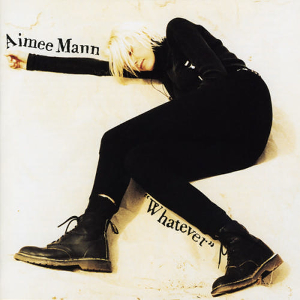
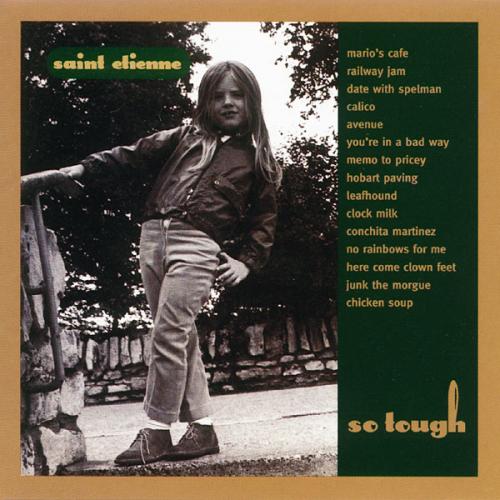
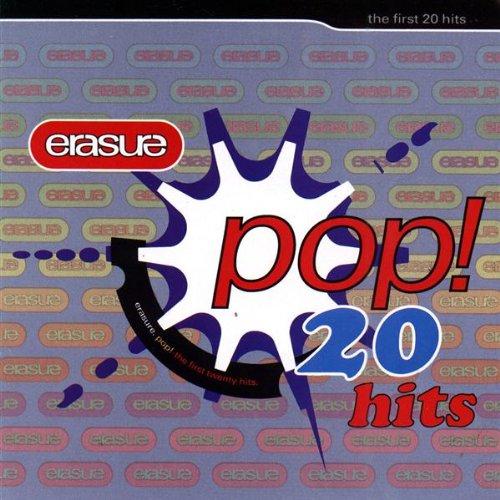
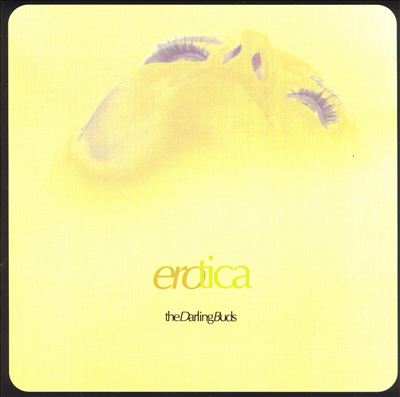

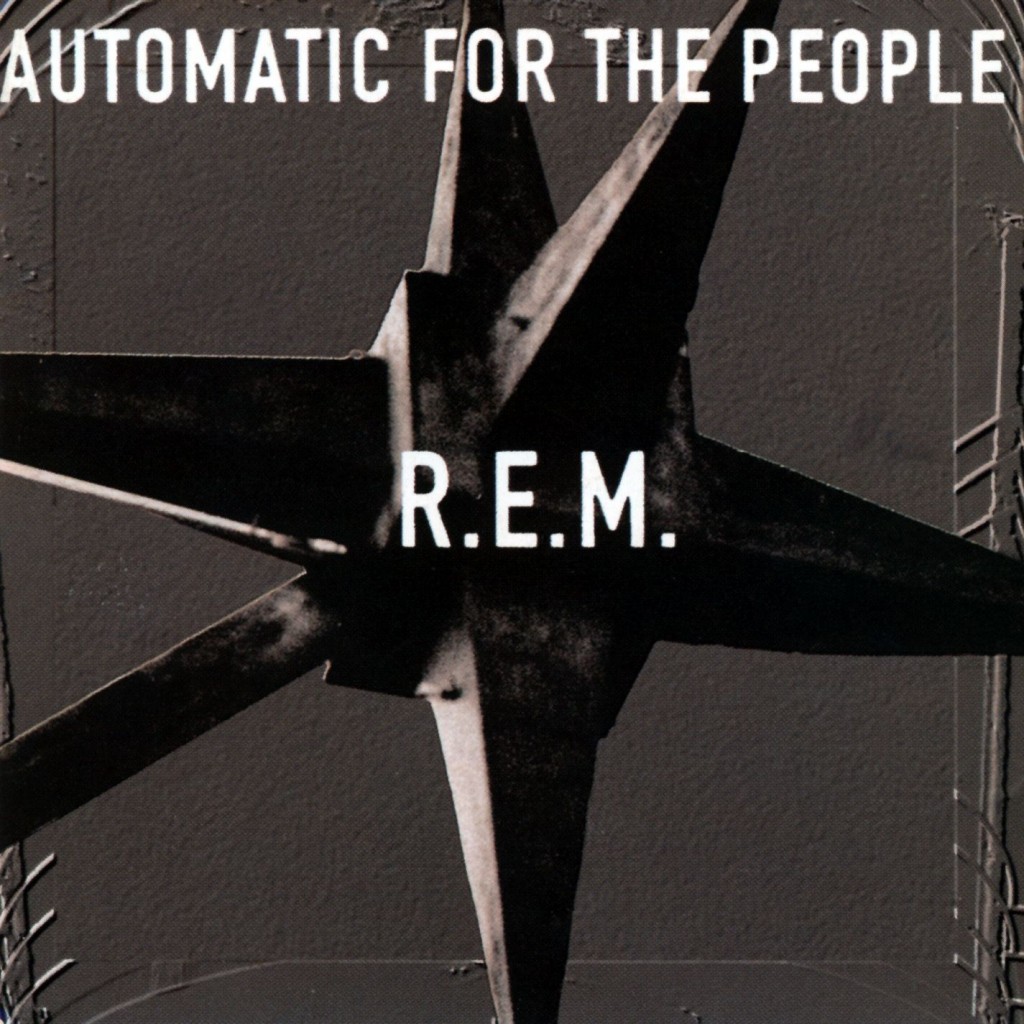
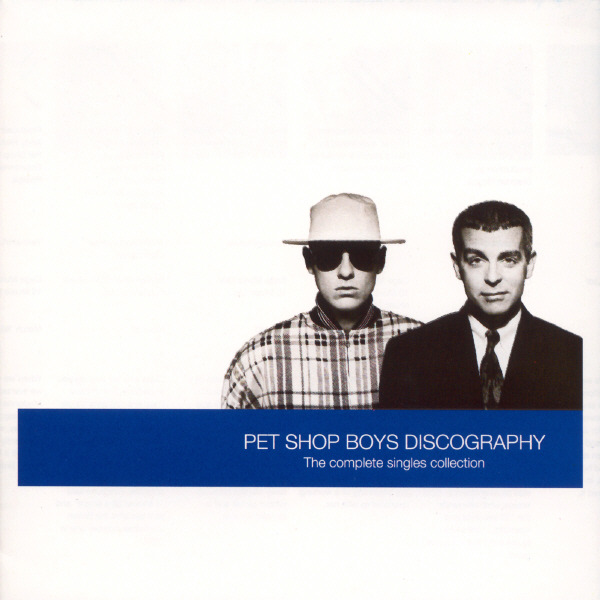
 Haunted Jukebox