Film Journal: June 2018

Movies seen in June; starred titles are re-watches.

MULTIPLE MANIACS
Easier to admire than unabashedly love—Waters would greatly refine and perfect his trash cinema aesthetic with his next two features (right now, it plays more like wacko Warhol.) Thanks to finally being available to watch in the privacy of your own home, it’s more effective in bite-sized pieces, esp. the rape-by-crustacean and most gleefully profane use of a rosary I can imagine. B

DUCK SOUP*
The multiple Grouchos gag is peak onscreen physical comedy only matched by Gene Wilder and Peter Boyle performing “Puttin’ On The Ritz.”

“Don’t look now, but there’s one man too many in this room, and I think it’s you.” A

WON’T YOU BE MY NEIGHBOR?
It’s impossible for me to be too objective about Fred Rogers—like much of my generation, his was not only my favorite TV show as a toddler, but my first favorite show, period. Still, Rogers’ considerable genius came from the vast, previously unrealized potential he saw in educational TV (a far different path than SESAME STREET took)—and how *not* to talk down to his susceptible audience. While director Morgan Neville doesn’t utilize especially innovative techniques (the tiger animation seems a way of filling out time), he does probe deep into Rogers’ successes, but also his failures, anxieties, disappointments, etc., assembling a well-rounded portrait of a legendary figure whom most would be quick to call a saint and leave it at that. A-

MILDRED PIERCE (1945)
I’ve never wanted to slap a movie character more than Veda Pierce. Ida Corwin, on the other hand, I’d love to go bar-hopping with. A-

HOW TO TALK TO GIRLS AT PARTIES
Whoa nelly, a *lot* going on here, much of it agreeable in theory: young punks in Croydon during the Queen’s 1977 Silver Jubilee, an alien cult into groovy vinyl costumes and freaky sexual positions, a near-glowing Elle Fanning as a girl-next-door variation on Scarlett Johansson’s extraterrestrial in UNDER THE SKIN, even a severely made-up Nicole Kidman as a beguiling cross between Debbie Harry and Patsy Stone. Unfortunately, it’s often an incoherent mess, which is not something you’d say about director John Cameron Mitchell’s other three features (as for Neil Gaiman, whose short story this is adapted from, I’m not familiar enough with his oeuvre to judge.) One can catch glimpses of what could have been in some of the punk stuff, and you can’t fault Mitchell for a lack of ambition; maybe Sci-Fi’s just not his forte. C

GENERATION WEALTH
What made photographer/filmmaker Lauren Greenfield’s THE QUEEN OF VERSAILLES portrait of obscene wealth pre and post-recession so thrilling was its surgical focus on one couple’s hubris; here, as one piece of a multimedia project a decade in the making, she widens her canvas to explore how status symbol greed is far from an isolated phenomenon—more like an epidemic, really. While making ample points through a variety of subjects, it often feels like she’s hitting the same note repeatedly, which becomes problematic at a somewhat bloated-even-at-106-minutes duration. Unexpectedly, she’s most insightful when she turns the camera on herself, dissecting her own work-driven lifestyle and how it parallels the film’s other obsessives. B-

MAPPLETHORPE
Slightly above average biopic—Matt Smith is solid (and at times, transformative), although John Benjamin Hickey’s more soulful as his older lover/benefactor Sam Wagstaff. Director of one of the best music docs ever (DiG!), Ondi Timoner’s well-suited to this material and her use of Super 16 film feels just right. Could’ve delved deeper into why Mapplethorpe found such inspiration in sexual taboo and transgression, but it ably celebrates the innovation and compositional beauty of his best work. Can only hope the eventual adaptation of Patti Smith’s JUST KIDS fleshes out the encouraging sketch begun here. B

SCOTTY AND THE SECRET HISTORY OF HOLLYWOOD
Never a movie star but definitely a character, Scotty Bowers’ life was inadvertently custom-built for a documentary. He ran a brothel inside a Hollywood Blvd. gas station in the years following World War II, one that infamously catered to same-sex shtuppings for closeted stars, as detailed in his scandalous 2012 memoir FULL SERVICE. Matt Tyrnauer’s film finds him still feisty at 94 and decidedly unapologetic about what many would perceive as a sordid past, but that’s exactly what’s refreshing and fascinating about the guy. His tenacity seemingly knows no bounds, from his obsessiveness (he’s a hoarder, with at least five or six homes/garages overflowing with memorabilia and assorted random junk) to an almost crippling need to do everything himself, much to the chagrin of Lois, his long-suffering second wife. Essential viewing for Hollywood Golden Age devotees and, in the end, kind of a weird but celebratory companion piece to THE CELLULOID CLOSET. A-

REAR WINDOW*
First viewing in over 15 years, this time at an outdoor screening (Coolidge At The Greenway.) The meant-to-resemble-ambient sound design proved both a blessing and a curse here: neat happy accidents came about from interactions with the urban environment but it was also difficult at times to pick up on the film’s subtleties, which are crucial to getting caught up in its suspense mechanisms. Still a top ten Hitchcock for me—might’ve been top five if it had more Thelma, less Grace.  A-

2001: A SPACE ODYSSEY*
The score, the light show, that jump cut—all of it arguably unmatched fifty years on. However, what really struck me this time (my fourth viewing at the Coolidge, and first in 70MM since 2002) was the use of silence and isolated sound (think heavy breathing) and how chilling that repeated, stationary close-up of HAL 9000’s orange “nipple” is—talk about effective contrasts in composing such an immersive experience only cinema allows. A+

THE GOSPEL ACCORDING TO ANDRE
Fairly pedestrian for a profile documentary—more worthy of CNN than a theatrical release, really. But Andre Leon Talley’s personality is welcome in almost any setting. Just as he nearly stole the show from no less than Anna Wintour in THE SEPTEMBER ISSUE, his (increasingly) larger-than life presence always entertains and intrigues—the capes and caftans are a sight to behold, but so is his trajectory from rather humble origins to renowned cultural critic. B-

WILD AT HEART
I think I skipped this one back in the day because I heard it was excessively violent; apart from that whopper of an opening scene, it’s not like a Nicolas Winding Refn film by any means. Certainly Lynch’s loopiest and possibly broadest feature (haven’t seen DUNE and LOST HIGHWAY) but neither as convincing nor as whole as BLUE VELVET or MULHOLLAND DR. Cage and Dern, however, are for the ages—archetypes as seen through that ever-idiosyncratic Lynch filter. It blows my mind to compare Ladd and Dern here to ENLIGHTENED, where they were a decidedly different mother/daughter combo. B+

HEARTS BEAT LOUD
I’m always a sucker for films about creating your own art—even this film’s “dad rock”. Not as affecting as Brett Haley’s last film THE HERO, in part because Nick Offerman as actor and character is no Sam Elliott, but at least his affable, shyly goofy presence is put to good use; his onscreen daughter Kiersey Clemons also has a terrific voice. Did not recognize Sasha Lane from AMERICAN HONEY as her girlfriend, and was simply delighted that she had one. B

PARIS IS BURNING*
Rewatched due to POSE, which already rivals THE AMERICANS as my favorite TV show this year (yes, really.) Essential, of course and also invaluable—although still very much a cult documentary, can you imagine how different drag culture and its impact would be without it? A
Halfway Through 2018

At the year’s mid-point, here are my favorites seen and heard so far.

MOVIES:

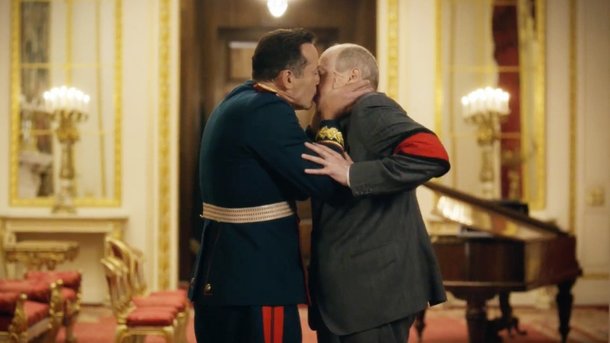
The Death of Stalin
Eighth Grade
First Reformed
Grace Jones: Bloodlight and Bami
Isle of Dogs
Let The Sunshine In
Loveless
The Rider
Scotty and the Secret History of Hollywood
Won’t You Be My Neighbor?

ALBUMS:

Amen Dunes, Freedom
Amy Rigby, The Old Guys
Calexico, The Thread That Keeps Us
Field Music, Open Here
Gruff Rhys, Babelsberg
Janelle Monae, Dirty Computer
Natalie Prass, The Future and The Past
Neko Case, Hell-On
Tracey Thorn, Record
Twin Shadow, Caer

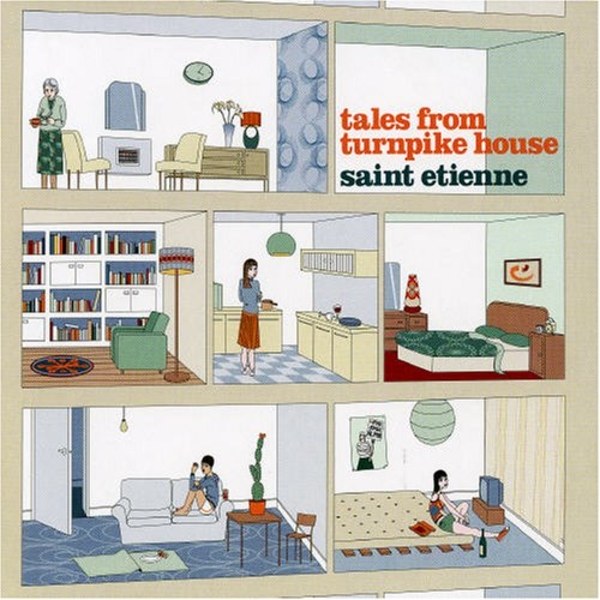
Saint Etienne, “Tales From Turnpike House”

(My 100 favorite albums in chronological order: #83 – released June 13, 2005)

Track listing: Sun In My Morning / Milk Bottle Symphony / Lightning Strikes Twice / Slow Down At The Castle / A Good Thing / Side Streets / Last Orders For Gary Stead / Stars Above Us / Relocate / The Birdman of EC1 / Teenage Winter / Goodnight

To paraphrase a classic title of one by Rod Stewart, every album tells a story: it could revolve around hastily assembled contractual obligation or inspired artistic reinvention, announce a new talent to the world or remind a long-uninterested audience what that talent is still capable of. Occasionally, it can even tell a literal story—a concept album, if you will. I’ve written about a few on this blog, from a concise suite about sexual infatuation to a conflation of the cycle of life with the four seasons. Some are predominantly defined by structure or sequencing; there’s also a number that forgo linear narratives for sustained themes such as childhood and parenting, impending mortality or a failed love affair (perhaps the most popular album concept of all.)

None of the three discs I’ve previously covered by British pop trio Saint Etienne were strict concept albums, but they each told at the very least figurative stories. So Tough (1993) served as a collage of early ’90s London sights and sounds, Tiger Bay (1994) combined electronic dance and acoustic folk into a shimmering whole and Good Humor (1998) recreated the 1970s AM radio gold its members Bob Stanley, Pete Wiggs and Sarah Cracknell grew up with. Their subsequent albums would also hinge upon a common aesthetic or theme: Sound of Water (2000) mostly eschewed the band’s typical pop hooks for atmosphere and texture, while Finisterre (2002) set out to capture London at the crossroads of a new century, linking together a dozen aurally disparate tracks with Michael Jayston’s authoritative spoken word narration. Neither album was necessarily subpar, but something about them felt less immediate and a little tentative, as if in a quest to continually explore new avenues, the band lost some of the luster that those three prior albums emanated effortlessly.

Fortunately, their next record, Tales From Turnpike House pushes their sound to new heights, but with none of that hesitation—it’s assured and complete as anything they’ve ever done. Not coincidentally, it’s their first album to sport an overarching narrative: a day in the life of various residents of a London tower block (for non-Brits, roughly, a high-rise apartment building.) It’s such an ideal concept for this particular band, whose back catalog’s not only undeniably London-centric but also steeped in humanism with a rare ability to find exceptional beauty in day-to-day life. Building upon such a strong, likeminded focal point brings out the best in them as lyricists.

However, Tales is even more special for the distinct backing vocals and harmonies on nearly all of the album’s songs, which were arranged and performed by Tony Rivers and his son, Anthony. It’s typical Saint Etienne for their members to reach out to a relatively obscure and forgotten-by-the-public-at-large figure like Rivers, a former member of late ’60s sunshine pop group Harmony Grass and a ’70s and ’80s session background vocalist. And yet, the familial, choirboy harmonies by him and his son are arguably the album’s secret weapon. On first listen, they seem more than a little retro and heavily reminiscent of The Beach Boys (a fitting touchstone, since St. Et. swiped the titles So Tough and Good Humor from them.) Over the course of an album, they become a wordless Greek chorus, musically binding everything together, their omnipresence gradually more resonant and profound.

“Sun In My Morning” opens Tales with a quiet but insistent ting-ting-ting percussive sound—possibly a triangle or a chime. Here, it acts as sort of an alarm clock, only softer and kinder (this is a decidedly slow, sweet wake-up call.) Over an acoustic guitar, Cracknell’s inimitable vocal follows, elongating words and phrases to their breaking point: “Made… a list of things to do… today / what a shame… the morning breeze just blew… it all away.” Then, just over thirty seconds in, the song’s title announces the chorus. On that chord change, everything brilliantly comes alive: some soulful organ, a skittering flute, and most prominently, the Rivers’ intricate, overlapping harmonies.

Having had ample time to wipe the sleep from our eyes, “Milk Bottle Symphony” vaults forward, upping the tempo and introducing us to various Turnpike House residents—among them, “Number twelve, there’s Amy Chan / Writing down a line for the candy man,” and “Emily Roe’s at Thirty-One / Twenty minutes left to get her homework done.” Gifted as the band is at pinpointing such minute details (Emily “leaves her cornflakes on the sofa / says goodbye to mum”), they also excel at painting a bigger picture: note the dramatic pause at mid-song, silence ceased by a sweet clang-clang-clang that could be a literal interpretation of the song’s title, or how effective the staccato string section sounds over the track’s driving electronic beat on the instrumental coda.

“Lightning Strikes Twice” is the first of many Tales tracks where Saint Etienne reclaim their status as purveyors of alternate-world number-one hits. Resembling a more earnest, if no less slinky version of synth-pop duo Goldfrapp, the song kicks off with Cracknell in her lowest register, modulating her vocal up a few notches with each line until it reaches the euphoric chorus of “Everyone should have a reason to believe / so I still believe that / lightning will strike twice for me,” dramatically stretching out that first word to “Evvv – ryyyy – one.” An irresistible paean to sustained optimism as a life-force, “Lightning Strikes Twice” goes out on a limitless high, reprising the song’s key-changing middle-eight with the Rivers’ harmonies guiding all into the stratosphere.

The contrast between it and “Slow Down At The Castle” could not be more striking: after a mournful folk guitar intro, it shifts into a minor-key suburban gothic that’s almost a warmer, kinder cousin to So Tough’s similarly-toned epic “Avenue”. Its childlike melody gels splendidly with Cracknell’s phrasing but its complexity comes from a few rather baroque but well-employed touches: a harpsichord break, impossibly lovely backing “bong-bong-bong” Rivers harmonies, even a surprise Theremin solo! The piano melody on the outro mirrors the guitar intro almost identically, adding an exquisite grace note at the end.

“A Good Thing” brings Saint Etienne back to masterful dance pop mode with a vengeance. This album’s second single and a close cousin to their biggest UK hit “He’s On The Phone”, it dutifully sounds ultra-contemporary, downplaying the idiosyncrasies of Tales’ preceding songs (almost nary a Rivers to be heard here.) Happily, even at their most accessible, Bob, Pete and Sarah rarely settle for anonymity. As in many a St. Et. composition, Cracknell remains pragmatic but urgent, droll but serious in advising and furthermore reminding a former lover just what’s he lost. Still, what sounds gloomy on the page is transformed by the music’s continual uplift, so much that Pedro Almodovar, a fan, placed the song in his film Volver and it fit beautifully without receding into the background.

An endearingly fragile bossa-nova practically gliding by on vibes, bongos, spare electro-beats and a whole lot of “ba, ba, ba’s” from Cracknell and the Rivers, “Side Streets” was an unconventional choice for the album’s first single, if only for all the surefire big pop productions surrounding it. The lyrics, about a single woman on her daily commute are also far more complex than your average top 40 fluff. Cracknell sings of taking the long way home, acknowledging but not altogether fearful about dangers lurking within an urban center’s corners. She’s at once defiant (“I’ve got features I quite like and don’t mind keeping”) and matter-of-fact (“I’ll probably get it tomorrow”) but the warmth of the arrangement and her vocal (try not to melt at the way she pronounces the word “bubble”) tempers what in less nuanced hands could come off as merely chilling.

After a somewhat deceptive, slow piano intro, “Last Orders For Gary Stead” suddenly locks into a two-chord glam rock groove, complete with electric guitar, pounding piano and Cracknell sounding like the love child of David Bowie and Dusty Springfield. The first St. Et. Tune that absolutely swaggers, it should be an anomalous fit but it works, especially when it reaches its heavenly, Rivers-assisted multi-tracked chorus. Having briefly met the title figure back in “Milk Bottle Symphony”, Gary serves as a through line for the album’s overarching narrative. Here, he’s at his preferred environment of the local pub, and a figure of amusement to some (listen to how tartly Cracknell sings, “He just cools it down / they should knight him for it.”) Still, he’s potentially a tragic figure as well. “She’s in two minds, maybe she’ll board up her door,” the chorus explains, before resolving itself in a neat bit of wordplay: “He sinks two pints / and that’s how it goes.”

As the band’s dance anthems go, “Stars Above Us” not only bests “A Good Thing” but on some days might even top “He’s On The Phone”. “Stars above us, cars below us / Out on the rooftop, baby,” is its glorious chorus, riding high on a shamelessly disco groove (nearly nicked from Kylie Minogue’s “Love At First Sight”) and Niles Rodgers-like rhythm guitar. Musically, it’s far from their most forward-looking song, but none of that matters when the beat kicks in after that dreamy intro and the chorus comes on full force. “Stars Above Us” is positively transformative, taking one to the best place imaginable; in a nod to their greatest early single, Cracknell sings, “Nothing can touch us, baby,” and it’s awfully hard to disagree with her.

Amazingly, “Stars Above Us” was not a UK single, but Savoy Jazz, Saint Etienne’s then-US record label had the foresight to promote the song and a series of remixes—it became the band’s first top ten club play hit in over a decade. Unfortunately, the label ended up seriously botching Tales’ US release seven months after the original edition came out: not only did they rearrange the track listing, placing the two UK singles at the beginning and thus doing away with the day-in-the-life-of-a-tower-block chronology, they cut out the two tracks following “Stars Above Us” and inserted two new replacements (“Dream Lover”, “Oh My”) randomly into the album’s sequence.

Granted, the two nixed tracks are arguably Tales’ least essential. “Relocate”, a duet between Cracknell and David Essex (sounding far more weathered here than on his ‘70s hits like “Rock On”) reads like a distaff Brit take on the old Green Acres theme (wife wants to move to the country, husband wants to stay put in the city.) It’s charming (love the pointed, irritated way she asks him, “You call this life?”) and fits in with the overall concept, but it’s also slight, its merry-go-round melody a touch too music hall for these sophisticates. Meanwhile, “The Birdman of EC1”, the album’s sole instrumental, is a melancholy organ, mandolin and Mellotron-accented breath of fresh air and little else. However, Tales needs both songs for they provide necessary texture; without them (as on the US edition), the transition from “Stars Above Us” to the album’s two final crucial songs feels jarring and rushed.

Tales enters its most powerful stretch with the startling fanfare of harmonies and chiming notes that announces “Teenage Winter”, one of the most unabashedly heartbreaking songs in a catalog with no shortage of them. In its verses, Cracknell delivers a spoken word monologue, reuniting us with such figures as Gary Stead and other various building residents. If “Milk Bottle Symphony” depicted them with an air of promise and hope, now they’re more wistful, almost melancholic, really. Their world is continually in flux: a chain tanning salon replaces a mom-and-pop bakery, and the internet’s daunting presence lessens the nifty stock for record collectors scouring the local thrift shop. Each person is inevitably getting older, “holding on to something / without knowing / exactly what you’re looking for.” Over melodic triplet notes resembling softly falling snow, Cracknell sings in the chorus:

Teenage Winter’s coming down
Teenage Winter floats a gown
Over every place I’ve been
And every little dream
Forever.

That last word just hangs there, gorgeously resounding through the song’s lush guitar, organ and woodwind arrangement (which also includes a sneakily affecting melodic bassline.) “Teenage Winter” is an incredibly poignant lament, made even more so by the fact that Bob and Pete had just entered their 40s when they recorded it (with Sarah not too far off)—for the first time, one can detect a real sense of mortality in Saint Etienne’s world. Rather than rally at time’s arrow with nostalgia and self-pity, they confront it the kindness, wisdom and acceptance that only comes with age.

It seems inconceivable that anything could top “Teenage Winter”, but closing track “Goodnight” comes perilously close. A simple lullaby, it brings Tales full circle from “Sun In My Morning”. Stripping away all instrumentation, we’re left with Sarah, Tony and Anthony. Hearing just these voices at this point in the album’s sequence and the extraordinarily haunting sound they make together (like a delicate tapestry of onomatopoeia) is almost too much to bear. So is Sarah pleading, “Please sing me to sleep and stroke my hair / I’ll close my eyes and pretend that you’re there.” That little couplet really gets at what Tales as a whole is all about: one can always uncover specks of brilliance in everyday, ordinary things, but real transcendence often comes in dreams, in imagining possibilities and processing pain, and using this learned experience to move forward. These threads run deep through Saint Etienne’s entire oeuvre, but on Tales they push furthest, expressed so eloquently they’re impossible to miss or shake.

In a cruel twist of fate, Tales ended up the band’s worst selling album to date in the UK (as with what happened to Tiger Bay, the botched US version didn’t help matters much.) Perhaps “Stars Above Us” or even “Lightning Strikes Twice” should’ve been the lead single, or maybe, just maybe, Tales was so ambitiously out-of-time with what constituted a hit in 2005. One could argue that’s always been the case with this cult-adored trio; for me, Tales had a larger impact than anything else I heard that year (possibly that entire decade.) It was like I’d been wishing, hoping, waiting for one of my favorite bands to create their masterpiece (despite them already having put out at least three great albums.) And then, they did. What’s more, while Tales was originally to be their final appearance in 100 Albums, as of this writing, I’m confident that’s no longer the case.

Up next: We become Panoramic.

“Teenage Winter”:

“Stars Above Us”:


Film Journal: May 2018

Movies seen in May; starred titles are re-watches.

RBG
Extraordinary subject, average execution but at least in this case average doesn’t mean boring or even fawning, exactly. The only real misstep is that opening voice-over litany of dissent against Justice Bader-Ginsburg, rattled off as if to get it out of the way. Once you get past the expected stuff about her being a meme and pop culture icon, there’s considerable substance about what she actually accomplished and the lengthy, painstaking process she went through to get there. And let’s face it, political sympathies aside, a film called SCALIA! would never have been as much fun as this. Grade: B

God’s Own Country
An impressive feature debut for writer/director Francis Lee, who has a real feel for depicting physical intimacy, both sexually and in terms of relation to one’s own environment. The shame-free gay love story he constructs almost feels revolutionary in a film that’s otherwise about the ins and outs of carrying on a traditional way of life that’s increasingly challenging in the modern world. A-

Women On The Verge Of A Nervous Breakdown*
One of Almodovar’s best, and easily his most realized screwball comedy. There’s nothing gazpacho can’t fix (if you mix it right.) A

The Meyerwitz Stories (New and Selected)
A great ensemble cast (yes, even Adam Sandler) with the lesser-known Elizabeth Marvel the MVP, however sparingly she’s used. As Noah Baumbach films go, not quite up there with FRANCES HA (which was just as much Greta Gerwig’s, particularly in light of LADY BIRD), but I’d much rather sit through it again than anything else he’s put out since. B+

Let The Sunshine In
Leave it to Claire Denis to open her latest by saddling Juliette Binoche with one heck of a blowhard beau and close it on an extended conversation between Binoche and Gerard Depardieu, decidedly *not* her beau (his actual role’s too good to disclose here.) In between, Denis’ seemingly ageless lead, playing a divorced, middle-aged artist continually pivots from one man to another in search of The One, only for it to slowly dawn on her maybe, (to paraphrase Rachel Bloom) the situation’s a lot more nuanced than that? Simultaneously confusing and enthralling like any good Denis, but also not quite like any of her other films (also typical for Denis.) B+

Strike A Pose
A profile of the male backup dancers on Madonna’s 1990 Blonde Ambition tour, notable not only for the where-are-they-now contrasts but also for the exposure afforded them via the infamous tour doc TRUTH OR DARE, which proved a double-edged sword. There’s an excess of great footage here, but it lacks focus scene-to-scene (all the disparate modern-day stuff doesn’t help) which is crucial in order for the overarching chronology to work. Still, the participants’ reunion near the end is lovelier than most of that trope. B-

The Misfits
The objectification of Monroe here hasn’t aged well (especially when you consider her husband wrote it!); otherwise, fascinating for what it represents about a dimming Hollywood, as it was the last film for two of its stars, and two of the other three principals would also be dead within a decade. If you have any qualms about Monroe’s acting, just watch her transformation from coquettish, adoring girlfriend to a raw maelstrom of devastation in the horse-wrangling sequence. B

First Reformed
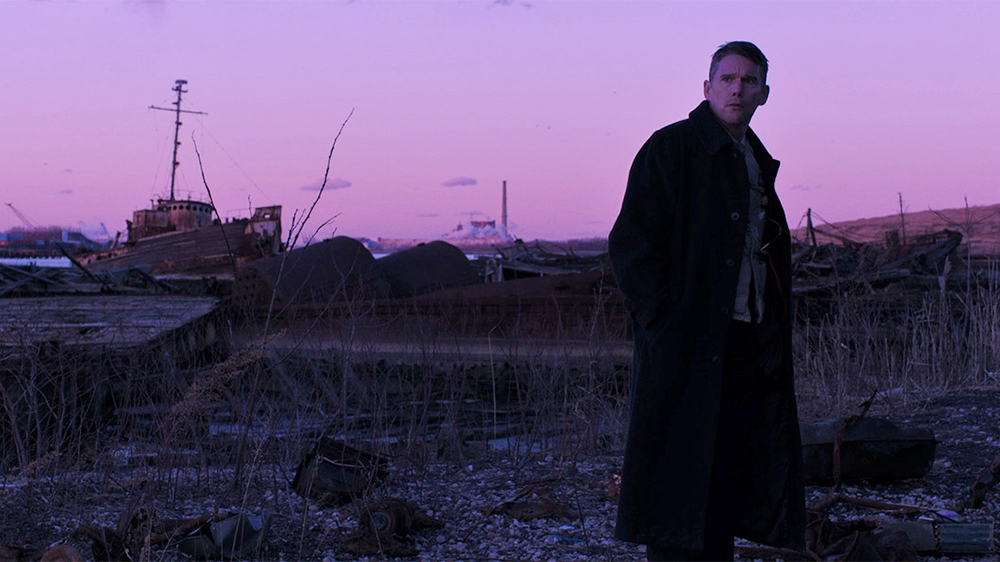
I believe any work of art has the potential to be both ridiculous and sublime, however rarely one achieves such a tricky balance. To its credit, FIRST REFORMED is often firmly the latter—the austere opening credits sequence with its extended zoom-in; the simple, profound economy of the editing; tonally, how the dread keeps building, almost becoming constrictive but not altogether suffocating; and of course, Ethan Hawke, perennially underrated as he ages but arguably never better in a role he nearly disappears into.

The ridiculous stuff comes at the hysterical finale, but it’s to be taken seriously because it’s not silly and not played for camp or irony (just as the last fifteen minutes of TAXI DRIVER were outrageous and totally plausible.) The score gets to be a little much in the last third, but the straight-faced hymn accompanying those final minutes is perfect. Themes of climate control and corporate influence place the film firmly in the here and now, but otherwise, it feels as timeless as the work of director Paul Schrader’s old hero Carl Dreyer. A-

Flirting With Disaster*
Maybe not the best screwball comedy of its era as I once thought, but pretty damn close.
“We love you very much. If you were Jeffrey Dahmer, we would still love you.” A-

Back To The Future*
What I wrote upon my previous viewing on October 21, 2015: Influence of childhood nostalgia aside, it’s still the best blockbuster of its era, and now looks like one of the more audacious ones, too—would the oedipal stuff between Marty and his mother even be thinkable in a studio film today? A

Liquid Sky
Loved the striking visuals, time-capsule fashions and Anne Carlisle (more so as Jimmy than Margaret); didn’t much care for the rampant misogyny and numbingly awful score. Not nearly as essential a cult film of its time as REPO MAN or EATING RAOUL, but I’d happily watch Paula E. Sheppard spitting out “Me and My Rhythm Box” on a ninety-minute loop. B

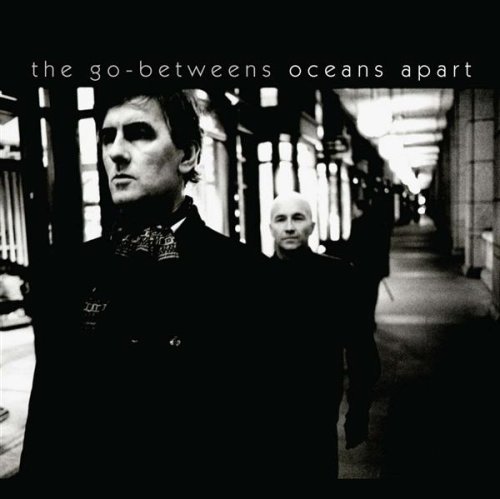
The Go-Betweens, “Oceans Apart”

(My 100 favorite albums in chronological order: #82 – released May 3, 2005)

Track listing: Here Comes A City / Finding You / Born To A Family / No Reason To Cry / Boundary Rider / Darlinghurst Nights / Lavender / The Statue / This Night’s For You / The Mountains Near Dellray

Band reunions are tricky, for they come with staggering expectations: Is the old chemistry present? Can they still hit all the right notes? And, what of new material—how does it stack up against the old stuff? From Van Halen to the Violent Femmes, you see previously defunct or on-hiatus bands getting back together all the time with all-over-the-map results. But, for every five or ten shadows-of-their-former-selves or devolutions into nostalgia acts, there’s the occasional reunited band that, against all odds, manages to not embarrass itself and even add something artistically vital to its discography. Sleater-Kinney, My Bloody Valentine and The Dream Syndicate are among those who have accomplished the latter in recent years.

One of the least likely and most satisfying reunions of this young century was the return of The Go-Betweens. When this Australian band, with their core singer-songwriter duo of Robert Forster and Grant McLennan last appeared in this tale, they were coming off an enviable decade-long, six-album run culminating in their 1988 pop masterwork, 16 Lovers Lane. Like all their previous records, it received glowing reviews but failed to score radio hits or break beyond their miniscule audience. As noted in Forster’s superb 2016 memoir Grant and I, a series of misunderstandings led to an acrimonious split in 1990. Forster and McLennan would each spend the next decade cultivating solo careers, but little either of them did separately approached the majesty of their past work together (McLennan’s 1994 double-album Horsebreaker Star, which I briefly considered for this project, came closest.)

As the 90’s wore on, the two men reconciled and started playing live together again. Recorded with a new rhythm section (including Sleater-Kinney’s Janet Weiss on percussion), The Friends of Rachel Worth was the first new Go-Betweens album in a dozen years. Far more stripped-down than the elaborately produced 16 Lovers Lane, it was defiantly a new chapter for the band, although on opener “Magic In Here” one could immediately sense some of Forster and McLennan’s rare, sparkling chemistry again. Another album, Bright Yellow Bright Orange followed three years later, and while it added nothing exceptionally new to the band’s catalogue, it was another solid set of predominantly acoustic jangle-pop.

If anything, these two albums sometimes felt as if Forster and McLennan were gently easing themselves back into being a band again with tentative, if encouraging results. For their third album of this second phase, they brought 16 Lovers Lane producer Mark Wallis back into the fold. Once again fortifying their guitar pop with a layered, Technicolor assortment of keyboards and a few horns, Oceans Apart miraculously ended up more a step forward than a look back, even if a couple of its songs lyrically, at times elegiacally reflected upon past lives and places. Moreover, it just gelled like anything from the band’s first phase and its ten songs were among Forster and McLennan’s strongest and sharpest.

From the count-off that announces Forster’s “Here Comes A City”, you can tell this is a fully-energized Go-Betweens firing on all cylinders. Spitting out clipped phrases over just two chords (but what glorious two chords!), lyrically, Forster is at his most observational: “Just pulled out of / a train station / we’re moving sideways,” he sings, “Passing churches / passing stations / a bustling complex.” Meanwhile, the music fervently chugs along, the guitar solo melodic enough but also hinting at an ever-so-slightly out of control bedlam that seems increasingly present all the way to the boiling teakettle noise accompanying repeated chants of the song’s title near the end. But it feels lithe and wry rather than heavy or foreboding, with such typically literate (and quirky) Forster asides as, “Why do people / who read Dostoevsky / look like… Dostoevsky?”

McLennan’s “Finding You” is just as striking and assured, but entirely different. Beginning with a chiming guitar fanfare worthy of all his best ones on 16 Lovers Lane, it opens with lyrics so romantic and incisive you feel Grant has been building towards them his whole career: “What would you do if you turned around / And saw me beside you / Not in a dream but in a song?” It’s pure heart-on-sleeve declaration, along with the chorus of, “Don’t know where I’m going / Don’t know where it’s flowing / But I know it’s finding you.” Because it’s expressed from such a heartfelt place and wedded to such a perfectly formed melody (and lush arrangement), “Finding You” is not easily dismissed as a silly love song. Its extended instrumental coda even provides time for contemplation of what it means to build and sustain a growing love.

“Born To A Family” finds Forster not for the first time on Oceans Apart dissecting his past. With an even lusher guitar palette than “Finding You” (including a 12-string and mandolins), it moves along on an irresistible folkish bounce as he sings about being “the square into the hole” of a working-class family. Even as a young boy, he recalls longing for art, literature and music. “What could I do / but follow the calling,” he repeats, slightly melancholy but mostly confident that he chose the right path; his breathy, “Uh huh’s” and “yeah, yeah’s” casually further confirm it on the fadeout.

By fiat of its initial resplendent waves of synths, McLennan’s “No Reason To Cry” is another step away from the more austere settings of the band’s previous two albums. Dreamily strummed major-seventh chords solidify into the title chorus (where Forster lovingly echoes his bandmate’s vocals), nearly orchestral in its numerous layers of sound. When he sings, “Been fifteen years since we last spoke,” you wonder whom the song is about—former band member and romantic partner Amanda Brown, or perhaps Forster himself.

McLennan follows the song with another of his compositions, “Boundary Rider”. As much of a confirmation of self as “Born To A Family”, it’s similarly crisp and concise, with guitar arpeggios so immediate and absorbing they seem like they’ve been there since the beginning of time. Still, there’s considerably more conflict and resignation in his voice. “So you reach for things / you’ve never satisfied / you’re running down the years” he sings, amiably but decidedly unsentimental, “And to know yourself / is to be yourself / keeps you walking through these tears.” It sounds like hard-earned wisdom, and it will be important to remember those words later.

Forster’s second song about his past, “Darlinghurst Nights”, kicks off the album’s second half. Epic like nothing else on Oceans Apart (it’s over six minutes long), it’s a vast but focused canvas for Forster to reminisce on a specific place and time via a talisman in the form of an old, unearthed notebook: “I didn’t have to read it / it all came back,” he remarks, soon reeling off long-forgotten names (“Frank Brunetti”, “Susie, who we never saw again”) and wishes (“I’m going write a movie / and then I’m going to star in a play”—he and McLennan did try their hand at screenwriting, although they never got a film made.) Although the same four chords repeat (except in the brief, heavenly middle-eight), the momentum never flags thanks to abundant instrumental and vocal hooks imbedded within. The phrase, “Always the traffic, always the lights” is the song’s North Star, appearing throughout and repeating over the extended coda, later accompanied by a chorus of rousing horns.

“Lavender” is the closest thing to love song for Forster here. Over a slinky reggae groove (rest assured, it sounds nothing like UB40), he describes a woman in a series of near-enigmatic phrases like, “She’s got a pair or black boots that kick stones / She’s got black moods she calls her own,” and also rhymes “good in bed” with “well-read.” The title is not her name, but her favorite scent and the song is not really as arch as it sounds, but rather sweet, with clarinet and flugelhorn providing elegance and an unexpected grace notes near the close.

McLennan’s “The Statue” shimmers into focus, its reverberating electronics like a sun rising over the water, its electric guitar hook practically euphoric, leading the way towards a sea of swaying romantic gestures. The lyrics build a metaphor around the titular figure with multiple uses of the word “touch” in different contexts, but it’s the melody that pushes everything forward, perhaps right towards McLennan’s next song, “This Night’s For You”. The previous track’s brightness lingers here but at a breezier, poppy tempo (dig those “ba, ba, ba’s!”.) A genuinely silly but blissful and transformative love song, it cleverly pairs descending verses with an ascendant chorus whose best moment is a call-and-response slash of guitar chords that bespeaks its author’s proficiency in stacking hooks upon hooks while allowing all of them to shine profusely.

“The Mountains Near Dellray” closes Oceans Apart with slow, dramatic grandeur: gradually fading in with guitars, keyboards and a massive sense of space, it’s half majestic ballad, half meditative tone poem. As Forster sings the song’s simple melody and plainspoken lyrics (“And when you make a wish / and you get the wish”), he exudes calm and acceptance that’s in extraordinary contrast to the hubbub and encroaching chaos of “Here Comes A City”. “Never let it go, it’s no struggle,” he concludes, and those words could apply to a myriad of things—what they actually are is less significant than the notion itself. A design for life, if you will, enigmatically inserted within a pop song.

A perfect ending to the album, “The Mountains Near Dellray” would unintentionally serve as a wistful finale to The Go-Betweens themselves when, almost exactly one year after the album’s release, McLennan died suddenly from a heart attack at age 48. While I’ll always long for all the music he and Forster might’ve put out on the momentum and goodwill Oceans Apart generated (a few songs they had begun working on would surface on Forster’s 2008 solo release The Evangelist), I’m grateful they ended up going out on such a high. “And to know yourself / is to be yourself,” is as modest and profound an epitaph as McLennan could ever have written for himself; a decade-plus later, as I edge closer to 48, they are words I increasingly take to heart as well.

Up next: Everyday People.

“Finding You”:

“Here Comes A City”:

Film Journal: April 2018

Grace_Jones_Bloodlight_Bami_720_432

Movies seen in April; starred titles are re-watches.

Mean Girls
Damn right Lindsay Lohan could’ve had Emma Stone’s career, if not for, well, you know. Fitfully funny in a John-Hughes-for-millennials-way, but despite the great cast (Tim Meadows, where have you gone?), it should be noted that screenwriter Tina Fey is celebrated for reinventing the sitcom rather than the teen rom-com. B-

Big Night*
Twenty years ago, this felt like an ideal of American indie cinema, in a much higher echelon than all the Tarantino knockoffs and sub-Jarmusch navel-gazing. On my first viewing in well over a decade, it seems a little quaint—pokey, even, in spots (anything having to do with Minnie Driver’s undeveloped would-be love interest) and unnecessarily flashier in others (the chef-literally-on-fire is a good sight gag that holds no meaning.) And yet, much of this gets by on charm, and charm usually holds up. Tony Shaloub adds depth and shading to what could’ve been a stock eccentric and Ian Holm, Campbell Scott and a young-ish Alison Janney are all wonderful (Stanley Tucci, who co-directed with Scott is adequate as a lead—he’s more effective in supporting parts.) And yes, the final scene remains one of the simplest, most affecting and perfect of all time. A-

Love, Simon
Greg Berlanti’s aesthetic (or lack thereof) is perfect for his CW teen shows, so it follows this feels like a competently made, supersized TV episode (albeit a far less interesting one than NATHAN FOR YOU: FINDING FRANCES.) Still, as someone who would have appreciated/longed for this film when I was in high school, I’m happy it exists. B-

Tokyo Story*
This was my first Ozu, watched in a film studies class with through-the-roof expectations from its Sight-and-Sound-poll-placing reputation. I didn’t know what to make of its style, simultaneously old fashioned and radical; it got lost in the shuffle of all the other ten-to-fifteen films per week I had to absorb. I’d go on to see at least a dozen more of his films over the next two years (including an entire class on him), and I responded more strongly to many of them (in particular, OHAYO, LATE SPRING and EQUINOX FLOWER.)

Nearly two decades on and I haven’t viewed any Ozu since the early 2000s. Seeing this again was less a revisit than looking at it with new, older, (hopefully) wizened eyes. After adjusting to the still-undiminished ingenuity of his pacing and composition, the narrative slowly but surely drew me in, all the way to the last half hour which left me devastated but hopeful. Many would say nothing happens in an Ozu film, but they’re wrong—everything happens, or at least everything that’s truly important in view of life itself. His uncommon humaneness and honesty are both summed up in its famous, unwavering exchange near the end:

Kyoko: “Isn’t life disappointing?”

Noriko: “Yes, it is.” A

You Were Never Really Here
As a resolute devotee of Ramsey’s first two features, I’ll allow that her guidance renders this watchable (as does Phoenix, astonishing yet again) and her willingness to turn a crime thriller into a kaleidoscopic puzzle box is often fascinating (especially visually). That doesn’t mean I don’t feel a little churlish complaining that the difficult-to-parse story prevented me from unabashedly giving myself over to it. And though I appreciate a good campy sound cue or two, here, they come off as slight miscalculations, distracting from Greenwood’s tactile, enveloping score. B-

The Killing of a Sacred Deer
Probably the weakest of the director’s last four features but still worth a look. I winced at the make-or-break opening shot but I also kind of admired it, especially once I fully understood its context. Surely a more ridiculous premise than even THE LOBSTER, but you can’t argue Lanthimos and his cast (Barry Keoghan, you have arrived) aren’t fully committed to it. What it lacks is an element of surprise, those inspired, my-god-what-did-I-just-see narrative leaps which elevated his previous films into more than academic misanthropic exercises. B

The Trial
Talk about batshit insane production design—at times, it outdoes even CITIZEN KANE. Maddening in (mostly) the best ways. B+

Isle of Dogs
First viewing: I already prefer it to FANTASTIC MR. FOX, but I’m a dog person, so there you go.

Second viewing: I’ve concluded this is second-tier Wes Anderson—technically more dazzling than his previous foray into animation, but not as emotionally resonant as his best (the growing bond between Chief and Atari comes closest.) But its not without complexity: for all the appropriation fracas, this is lovingly crafted (both in depictions of Japanese and canine culture) and thematically rich, with political implications more of the moment than you’d expect from this filmmaker. B+

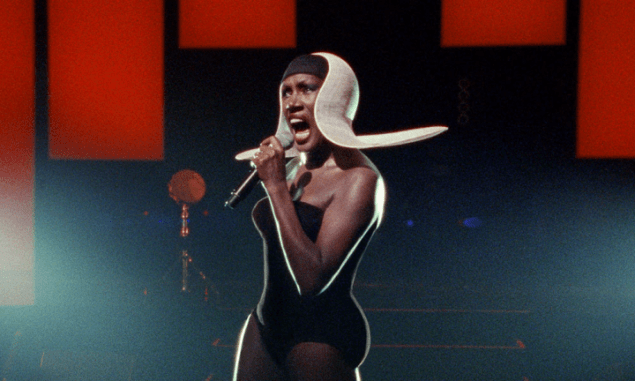
Grace Jones: Bloodlight and Bami
Director Sophie Fiennes’ vacillating back and forth between concert and cinema verite footage is initially somewhat jarring, particularly for those who know little about Jones’ life offstage (i.e.-most viewers). Fortunately, the latter’s contrast with the former grows more compelling as they further complement each other via hotel rooms, recording studios and behind the scenes of a must-be-seen-to-be-believed television appearance. She has the kind of dynamic personality and uncommon force conveying she was absolutely made for a project like this and Fiennes is correct in letting Jones speak for herself. As one woman shouted out loud at the very end of the screening I attended, “We’re not worthy of her!” A-

Eighth Grade
I can’t understate how terrific Elsie Fisher is as Kayla, an awkward, average fourteen-year-old who’s quirky enough to stand apart from any other similarly-aged protagonist you’ve seen before and also recognizable to an almost painfully universal degree. Delectably cringe-funny, this would be as discomforting as WELCOME TO THE DOLLHOUSE if not for writer/director Bo Burnham’s humanism—his affection for the minutiae of this ultra-specific world (like the boy-athlete crush who nonetheless loves to make fart noises with his arm) is omnipresent, thankfully without nostalgia’s rose-colored lenses. B+

The Rider
At a time when filmmaking is more accessible than ever, it’s heartening to still see real talent emerge. Chloe Zhao has such a firm handle on what she’s trying to depict and express in this film about Native American rodeo cowboys in South Dakota that I was immediately attuned to both its poetry and authenticity. Had I not already known that most of the cast were playing versions of themselves, I might not have ever guessed it—that’s how strong Zhao’s direction is. The story itself one can surmise wholly from the trailer, but that barely diminishes its power. A-

That Summer
The unearthed pre-GREY GARDENS footage of the Beales (shot by Joans Mekas and Andy Warhol for a shelved project) is worth seeing for anyone who finds the gals adoring instead of annoying (I’m in the former camp), complete with musical performances, tales behind beloved old furniture and more raccoons. The rest, narrated by Peter Beard with some voiceover from Lee Radziwill gives ample context, but in the end, this is still more a collection of B-sides than anything revelatory. B-

The Third Murder
A legal thriller from a director best known for his Ozu-worthy family dramas? It slots more neatly into his oeuvre than you’d expect, primarily because the mystery per se is steeped in familial relationships, only this time with heavier implications and consequences. Although Kore-eda has delved into darker material before (the abandoned family of NOBODY KNOWS), he’s a little too intellectual here—extended musings on judgement and guilt are examined to the point of exhaustion. But the world he depicts is as rich as ever, full of scene-stealing (but not in an obvious way) characters and lovely, uncomplicated but effective imagery (most memorably, an overhead shot of three figures making snow angels.) B

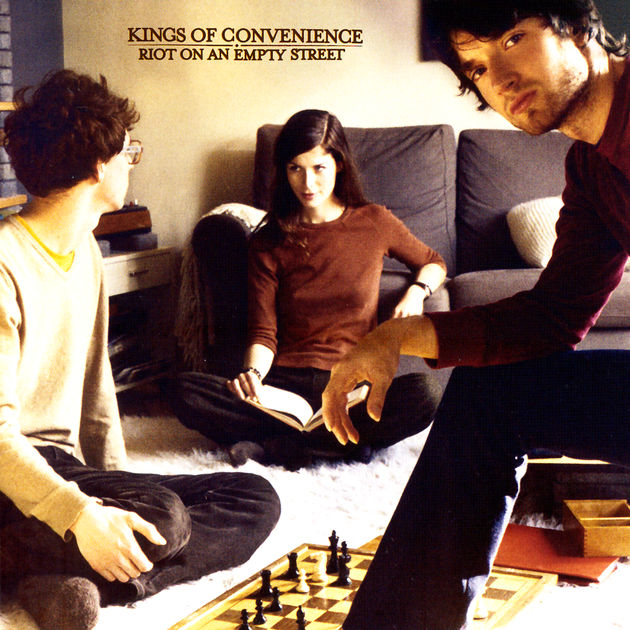
Kings Of Convenience, “Riot On An Empty Street”

(My 100 favorite albums in chronological order: #81 – released July 27, 2004)

Track listing: Homesick / Misread / Cayman Islands / Stay Out Of Trouble / Know-How / Sorry Or Please / Love Is No Big Truth / I’d Rather Dance With You / Live Long / Surprise Ice / Gold In The Air Of Summer / The Build-Up

Read enough criticism and you’ll inevitably come across the phrase, “Writing about music is like dancing about architecture” (or some variation thereof.) It has been credited to everyone from Elvis Costello to Frank Zappa, though multiple threads point towards actor-comedian Martin Mull, of all people, as its originator. Regardless, this simile uncovers a truth about music most critics would rather ignore or better yet, transcend: sometimes, it’s a challenge to fully articulate why we like (or hate) a particular piece of music. Obviously, it’s not impossible—at this writing, I’ve spent four years of this blog going on and on about eighty-plus albums. Still, I fear that what I want to express about my love for all this music might occasionally get lost in translation: how can mere words recreate exactly what I felt the first time I heard side two of Abbey Road or the moment when Since I Left You clicked as a whole for me?

I’m reminded of this phrase whenever I try to explain why the music of Kings of Convenience hits me where I live. A Norwegian duo made up of former classmates Erlend Øye and Eirik Glambek Bøe, they’ve put out three albums of hushed acoustic folk-pop full of close-knit harmonies (somewhat accented but always sung in English) and delicate, nylon-stringed guitar work. Simon and Garfunkel are their most obvious antecedents—their best songs exude the same intimacy of something like “Scarborough Fair/Canticle”—but they also neatly slot in with such liked-minded contemporaries as Elliot Smith or early Belle and Sebastian. Released in the same year as The Strokes’ Is This It and The White Stripes’ White Blood Cells, their debut’s title, Quiet Is The New Loud (2001) read like both an introduction and a provocation: here were two guys playing indie music not especially in sync with the garage rock revival times, which fit in well with their just plain unfashionable appearances on the cover.

What is it about KOC’s terminally untrendy, relatively simple folk-pop that I so strongly respond to? Øye and Bøe are far from the only duo to ever forge a career together out of songwriting, harmonies and acoustic guitars; arguably, they’ve done nothing as innovative as what The Everly Brothers (or, if you wish to be less charitable, Chad and Jeremy) accomplished decades before. And yet, when “Homesick” opens their second album with its clarion melody and rare, crystalline electric guitar lead, whatever irritations or distractions I’m feeling instantaneously dissolve. It’s calming but also instilled with wonderment approaching awe in the presence of seemingly endless beauty.

All of KOC’s limited oeuvre is worth hearing, but Riot On An Empty Street is the one to get because it builds upon what they established with Quiet Is The New Loud, honing their songwriting craft to a very fine point. As pretty as this music initially appears, it has considerable substance if you look beyond the placid surfaces—not that KOC is in any way dark or depressive, but once you consider the album title’s irony and apparent contradiction, it’s apparent how there’s so much more at play here than unassuming (if not silly) love songs. “Homesick” itself features a narrator whom describes home not by family or friends he’s left behind, but as fleeting memories made flesh by music: “I can’t stop listening to the sound / of two soft voices blended in perfection,” (hmm, whom does that remind you of?) they sing, “From the reels of this record that I’ve found.”

That’s not to say KOC aren’t all-out romantics, but they approach themes of love and infatuation with a pragmatism that bespeaks their Scandinavian background, not to mention the resignation of residing in a place with short-to-nonexistent winter days. “Love Is No Big Truth”, they conclude via one song’s title, while at least allowing for the possibility that “Love comes like surprise ice at dawn,” in another. On “I’d Rather Dance With You”, they lay out the law with ample charm, proposing to sidestep all small talk: “I haven’t read a single book all year / and the only film I saw, I didn’t like it at all,” they confess, so why waste time yelling over the din of the dancefloor and instead use the space as nature intended?

“I’d Rather Dance With You” is rather danceable itself in an indie-disco way, featuring a propulsive beat, banging piano and a lead viola riff. In the album’s midsection, it arrives after two songs that also manage a brighter, fuller, leaning-towards-contemporary sound without feeling at all out of place. On the aforementioned “Love Is No Big Truth”, Øye and Bøe somehow manage to resemble a rootsy New Order, entirely swapping that band’s synths and drum machines for guitars, pianos and live drums rhythmically manipulated to have a similar effect. Likewise, with its chorus eloquently turning on the guys’ harmonies, “Sorry Or Please” crisply shuffles along as if it were trip-hop played on real instruments, accented by strings, a trumpet solo and even a banjo.

Also widening the band’s scope are two guest appearances from Canadian singer-songwriter Leslie Feist (more commonly known by just her surname), shortly before her own breakthrough album Let It Die (and three years prior to her scoring a surprise top ten hit.) On both “Know-How” and “The Build-Up” (which she co-wrote with the boys), she’s deployed as a secret weapon, nonexistent until each song’s second half when her bell-like vocal suddenly takes over. She’s especially effective on the latter track, a pensive dirge that begins with Øye emitting plaintive phrases one by one. Then, the melody changes, perking up ever so slightly as Feist warbles her verses. Still, her album-closing lyrics, where she sings of a sound, “Written on your ticket / to remind you where to stop / and when to get off,” just seem to mournfully hang there, leaving a haunting afterimage.

There are hidden complexities throughout Riot On An Empty Street that can easily catch one off-guard. “Cayman Islands”, with its tranquil, wistful air, sounds like it should be a gentle account of time spent in a tropical paradise, but it’s more a metaphor for pondering the unexpected, labyrinthine path to love and closeness (“How someone could have chosen / to go the length I’ve gone.”) “Misread” wraps its scrutiny of intent and cross-wired communication up in such an alluring bossa-nova package you can get away with playing it at brunch, even with lyrics like, “The loneliest people / were the ones who always spoke the truth.” Meanwhile, “Stay Out of Trouble” affably re-writes Cat Stevens’ “Wild World” for a kinder generation (its narrator simply notes, “Try not to think about me too much,”) but doesn’t ignore a breakup’s pain (“I was alone and freezing / still trying hard to understand you.”)

However, for everything gestating within this music, I get the most pleasure from how it sounds and the tone it settles upon. As the album’s penultimate track, “Gold In The Air Of The Summer” also serves as the apotheosis of these qualities: the warmth of the guitars and piano and how the latter positively shimmers and sparkles in the brief instrumental break; the slow build up and back down again; the air of mystery withheld (opening line is, “Without giving anything away…”), followed by the promise of something found (“And now you and me are on our way,”); and most of all, the silence underscoring Øye and Bøe singing “You’ll shine like gold in the air of summer,” over and over before the piano and guitars resume and the song delicately comes to a close.

KOC returned five years later with a third album, Declaration of Dependence—initially, a minor let-down for simply being more of the same. Fortunately, its impact has deepened over repeated listens to the point where I now consider it nearly equal to its two predecessors. I’m not sure how much more they can eke out of this template, which may be why (at this writing) a fourth album has yet to appear (though they’re apparently working on it.) Still, if there’s one thing I can fully articulate about why I adore this duo, it’s the timelessness of their music—as fresh now as it was fifteen years ago. Much as I also love Simon and Garfunkel, could they even make that same claim fifteen years after their heyday?

Up next: A Reunion.

“I’d Rather Dance With You”:

“Gold In The Air Of Summer”:

Film Journal: March 2018

The Passion of Joan of Arc

Movies seen in March, now with letter grades because I feel like it. Starred titles are re-watches.

The Unknown Girl
This would be Dardennes-by-numbers if not for the new wrinkle of embedding a murder mystery within their usual neorealism; the problem is they don’t have the knack for the former, as its continual presence threatens to drag down the rest of the film (reportedly seven minutes shorter than the 2016 Cannes cut; perhaps they could’ve cut it down further.) Thankfully, Adele Haenel (whom I didn’t recognize from either Water Lilies or Nocturama) gives the film something of a center—her youthful doctor, fixated on responsibility and guilt, contains enough layers and flaws to make her more than a narrative construct. Grade: B-

Patti Cake$
It has all the clichés you’d expect from the Rocky of overweight, working-class, female New Jersey rappers, but I liked it anyway. Credit Danielle Macdonald in what should have been a star-making turn (a cliché, I know, but it really applies here) but also Bridget Everett, who is immense and devastating as the alcoholic, failed rocker mother who refreshingly turns out not to be the film’s villain. Hardly anyone saw this Sundance hit, but if they had, Everett might’ve given Allison Janney some stiff competition at awards season. B+

Thoroughbreds
Starts off a little boring and leaden, with two rich girls (Olivia Cooke and Anya Taylor-Joy, both very good) in a passive-aggressive pas de deux. It achieves some focus once the what-to-do-about-the-creepy-stepfather problem is established—a narrative we’ve seen too many times before. Despite all that, first-time director Cory Finley proves a talent to watch. The camerawork, the immaculate suburban, Old Money mansion setting and the almost avant-garde sound design all cohere to bring about an almost thrilling sense of dread which builds to an unforgettable, extended long shot that’s like nothing else I’ve seen. B

The Passion of Joan of Arc*
Utterly shocked and transfixed when I first saw this on a 19” TV screen circa 2001; viewing it again on a giant movie screen in 2018 was no less powerful, even as I knew exactly what to expect. Understandably radical when it was made, it still feels as such today—I can’t name another film (at least one I’ve recently seen) that utilizes faces and close-ups like this. Uncertain whether an alternate universe where the invention of sync sound was decades away would’ve been a good thing, but this late-silent film’s rare achievement makes me wonder. A+

Frantz
Genre magpie that he is, I don’t believe Francois Ozon has shown this much restraint in any of his previous work, from Swimming Pool to Potiche; I debate whether this is a positive, for the story, a loose remake of Lubitsch’s Broken Lullaby cries out for some melodrama. Still, this is sweet but unsentimental, with gorgeous-not-glossy cinematography (including selective, interesting shifts between black-and-white and color) and period design, but also uncommon kindness and introspection over how people process the aftermath of something as traumatic and life-disruptive as war. B

Loveless
Not as sharp a political allegory as Leviathan, nor does it possess that film’s necessary gallows humor (which might’ve been out of place here, anyway.) However, Zvyagintsev remains a necessary critical voice for his country and the petty squabbles between the two never-should-have-married leads are relatable to an almost uncomfortable degree. It’s bleak, but not unrelentingly so—brief, lyrical touches, like Alexey’s swirling red-and-white ribbon or the unremitting duty of volunteering citizens point towards a humaneness lurking within the director’s rigorous worldview. B+

Aguirre, The Wrath of God*
Third viewing and I’m still a little more baffled than seduced (although this time the guitar portions of the score made me swoon.) Here’s the thing: it could use even *more* Aguirre—apart from that immense, justly celebrated opening shot, the film only comes alive whenever Kinski’s glowering mug is onscreen, as if to say, “Well, of course the cameras should be on me! Why would you *dare* look away?” B

The Death of Stalin
Excessively funny and appropriately dark, from the “musical emergency” opening to the slapstick moving-of-the-body to a deliriously profane argument playing out in front of a small child. I may need a second viewing to determine whether this is really of a piece with In The Loop and the best of Veep. Still, Steve Buscemi hasn’t fit so snugly into a role since Ghost World, and that I never even considered him for the Iannucci-verse is just one of many things that keeps this from feeling like a retread. A-

Viva
Notable for actually being shot in Old Havana (a peek into a one-of-a-kind setting) and for its RuPaul’s Drag Race-worthy cabaret performances, which alone are essential viewing. The estranged father/son relationship is fine but takes too long to develop into something involving. Apart from the setting/culture, it has nothing on any Almodovar melodrama. C+

Snow White and The Hunstman
Sillier than the Disney version while also taking itself way too seriously. Kristin Stewart looks so uncomfortable that I’m relieved she and Olivier Assayas found each other. D+

Uncle Howard
Howard Brookner was a promising filmmaker who completed three features before succumbing to AIDS in 1989 (days before he would’ve turned 35). Directed by his nephew, Aaron, (whom he strikingly resembles), this is about average for a dead relative documentary, but the breadth of Howard’s unearthed, archival footage is a treasure trove—not just the numerous outtakes from his William Burroughs doc but also his own artful, affecting video diaries. B-

Nathan For You: Finding Frances
Feels less like a supersized television episode (even though technically it is) and more like a made-for-TV movie due to its uncommon seriousness. Nathan Fielder has always attempted a tricky balancing act between sincerity and satire, and he’s never threaded that line so carefully—at least for the first hour, before you’re almost certain he’s picked the former over the latter. Almost. A-

Talk To Her*
First viewing in a decade with almost unreal expectations—always considered this my favorite Almodovar, his mature masterwork. It’s still one of his best, but more challenging than I remember: the first half feels so slow and subdued, even compared to All About My Mother. But its themes of longing and companionship solidify after the scene whose dialogue provides the title, and rarely since has the director constructed such a tender (if twisted) scenario between two men. Also, Geraldine Chaplin is a hoot here. A

Foxtrot
Despite the title-referencing dance step, where one always ends up in the same place where one started, this is continually unpredictable to a degree most other films are not. The extended mid-section swaps the bookending domestic melodrama for David Lynch/Jim Jarmusch light surrealism, but it’s jarring, as if it was dropped in from another movie. This irritated me as I watched, but I admit the imagery (in particular, the sinking cabin, the outsized spotlight and that darn camel) and unusual pacing has stuck with me. B

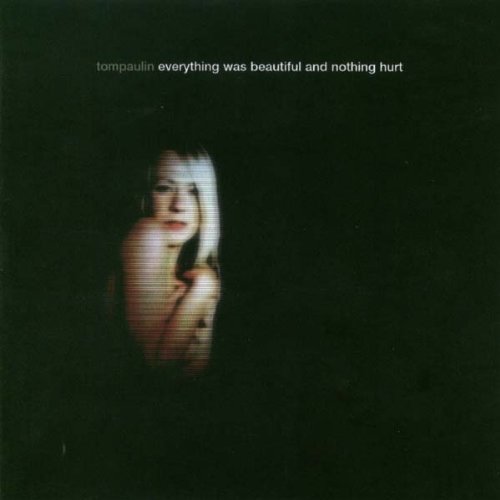
Tompaulin, “Everything Was Beautiful And Nothing Hurt”

(My 100 favorite albums in chronological order: #80 – released March 22, 2004)

Track listing: Slender / It’s A Girl’s World / North / Second Rate Republic (Demo) / Wedding Song / Swing Low Stuart / Ballad Of The Bootboys / Them Vs. Us / The Sadness Of Things / My Perfect Girlfriend (Demo) / My Life As A Car Crash / Give Me A Riot In The Summertime

In Spring 2003, I became a staff writer for indie music website Splendid!, which differentiated itself from Pitchfork, PopMatters, etc. by vowing to review anything submitted to it. I was required to write three reviews every week: one in the 300-500 word range of an album I liked, and two 150-200 word capsules about albums I didn’t necessarily have to like. Every couple weeks, I’d receive a box of fifteen or so CDs, some with press releases, others with handwritten requests from the editor to review them right away. And, I had to write about every last one.

Occasionally, I’d encounter a disc from an artist I’d actually heard of (Arab Strap, Sufjan Stevens, Beth Orton) but a majority of what I got was previously unknown to me. Over the next eighteen months, I was exposed to everything from Native American folk music to masturbatory prog rock, much of it relentlessly mediocre or just plain awful (such as a band named “Shugaazer” that had fuck all to do with My Bloody Valentine.) Most weeks, I’d strain to find a disc that I “liked” enough for the required lengthier review. However, once in a great while, something exceptional surfaced. For instance, I heard TV On The Radio before practically any other non-critic via their debut EP Young Liars. It remains in my regular listening rotation to this day, along with albums from other Splendid! discoveries like Swedish pop star Marit Bergman, winsome Aussie folk-rocker Tamas Wells, and American singer-songwriter turned film scorer Paul Brill.

Apart from Seven Swans, my all-time favorite Splendid! find was UK-based band Tompaulin. Arriving in my mailbox in March 2004, Everything Was Beautiful And Nothing Hurt compiled tracks from all of their singles to date. Named after a Northern Irish poet and having borrowed their album title from Kurt Vonnegut, I anticipated a strong literary bent to their sound (their first studio album, 2001’s The Town and The City (itself named after Jack Kerouac’s first novel) has tracks called “Richard Brautigan” and “All The Great Writers and Me”) but I had no other expectations. Nearly a year into my Splendid! tenure, I’d learned to be open to hearing anything on one of these discs submitted for review in terms of genre, sound, tone and quality (especially quality.)

EWBANH’s opener, “Slender”, commences with a soft hum of atmospheric sound, soon joined by a trembling, almost tentative guitar strum. Vocalist/lyricist Jamie Holman then sings, “All that I remember / is your wrists / and they were slender,” his delivery slightly-but-not-overbearingly-fey with a noticeable Lancashire accent. An electric guitar plays a countermelody, and a softly thumping drumbeat enters at the second verse. The song’s title cleverly shifts as Holman sings, “By Monday morning, I won’t even remember / your chances are slender.” All the while, the song has only two chords, which repeat measure by measure.

At the third verse, female vocalist Stacey McKenna takes over from Holman. The sudden switch to her voice, pitched somewhere between Belle and Sebastian’s Sarah Martin and Neko Case, is striking. She answers Holman’s words, eventually concluding, “My chances are slender.” The music, continually building momentum from the start, keeps growing fuller and louder until, at 2:35, crunching, majestic electric guitar chords enter the right channel like a beacon of blinding light. McKenna returns, a few bars later, with the climactic lyrics, “And now you won’t hear me / won’t speak and won’t come near me,” sung over and over. It’s thrilling, it’s heartbreaking, it’s everything I could ever want from a pop song, up until it concludes on a final, tranquil grace note.

“Slender” is an ideal introduction to Tompaulin’s tiny, contained oeuvre—for sure, their greatest moment, but far from their only great one. The next two songs reinforce that this is a band worth your time and attention. “It’s A Girl’s World” weds confectionary pop full of strummed acoustics and twinkling keyboards with incisive, wry lyrics, rhyming “Walkman beat” with Exile On Main Street and dropping observations like, “She’s a fat girl / but she’d give you the world / in her ginger curls.” Similarly inclined phrases at the very opening of “North” cascade by in such a breathless, near-euphoric rush that they provide neat contrast to the chorus: a series of descending, clipped phrases (“Oh / when you go down / to the center of town / stay down”), followed by a steady string of trumpet-enhanced ba-da-da-da’s.

But remember, EWBANH is a singles comp rather than a greatest hits album, which means B-sides make up roughly half the selections here. True to form, some are demos, like a pretty but far-from-essential first take on The Town and The City’s closer, “Second Rate Republic”, or “My Perfect Girlfriend”, a deliberate goof which sounds like it was recorded in a cigar box and consists solely of McKenna singing “Debbie, Debbie Harry, Debbie Harry” repeatedly over rudimentary if punchy new wave guitar-bass-drums. There’s also pleasantly wispy stuff like “Wedding Song”, which dutifully emulates “Cemetery Gates”-era Smiths, and “Them vs. Us”, which does the same for late ‘80s Sarah Records twee pop.

Still, just because it’s a B-side doesn’t necessarily make it a castoff or a throwaway, as Pet Shop Boys and Saint Etienne have proven with numerous, above-average B-side compilations of their own. “The Sadness of Things”, for instance, could’ve comfortably fit on The Town and The City with its quotable lines (“She says she likes The Rolling Stones / but she’s only got the Greatest Hits”) and cozy, if melancholy allure. Conversely, “Swing Low Stuart” is a B-side for another reason. Over a sing-song melody, McKenna tartly notes, “Stuart’s the epitome / of white boy, middle class monogamy; / He’d like to know some deviants / he invested in some leather pants,” (one could only hope she’s singing about Belle and Sebastian’s Stuart Murdoch.) Sounding as agreeable as early Black Box Recorder, it takes a left turn halfway through as guitar feedback slowly creeps in, wave by wave until it consumes all else and you’re left with a cacophony of nearly Metal Machine Music-like proportions.

However, such experimentation is a diversion rather than the norm with this group. Given their unaffected vocals, slice-of-life lyrics and propensity for using two or three chords at most, they most often resemble a punk band, albeit one curiously beholden to pastoral and chamber-pop arrangements. One discerns such tension in this comp’s final two tracks, both of them highlights. “My Life As A Car Crash” is almost ridiculously simple: it expertly shifts back and forth between wordy, subdued verses and wordless, caffeinated five-alarm choruses while keeping both parts urgent-sounding and razor sharp. Holman, meanwhile, expands on the title metaphor’s subtleties without ever mentioning it by name. Closing track “Give Me A Riot In the Summertime” neatly bookends “Slender”, gradually barreling across the volume spectrum from soft to loud; its minor key but ultimately rousing protest pop made immortal by a McKenna verse as impassioned, triumphant and fun as the best of Sleater-Kinney or one of The B-52s’ classic Kate-and-Cindy showcases.

Tompaulin would release one more studio album, 2005’s downbeat but pretty Into The Black before breaking up two years later. Given their perpetual obscurity, you can’t blame them for not carrying forward, but as I wrote about The Go-Betweens many entries ago, you also can’t blame the world for not knowing about them. Had it not been for Splendid!, I doubt I would’ve ever crossed paths with this music, and therein lies a predicament of the internet age. In the past few decades, music production and dissemination has skyrocketed to point where so much more is destined to fall through the cracks or remain obscure than previous.

My time at Splendid! encouraged me to keep one eye on those infinitesimal few musicians who manage to break through all the clutter and the other eye always open for those unknown quantities like Tompaulin, forever patiently awaiting discovery. The challenge is mustering up time and effort to sift through it all to get to those ultra-hidden gems, and I admit that it’s easier said than done—after less than eighteen months, I quit Splendid!, altogether burned out on finding new things to say about albums that were mostly mediocre-to-bad, week after week. The website itself folded a little over a year later, suggesting that its inclusive approach to music criticism sadly wasn’t a sustainable pursuit. Thankfully, with YouTube and a bevy of streaming services, we now have seemingly boundless means to get lost in rabbit holes, forever making our very own discoveries.

Up next: Singing Softly To Me.

“Slender”:

“My Life As A Car Crash”:

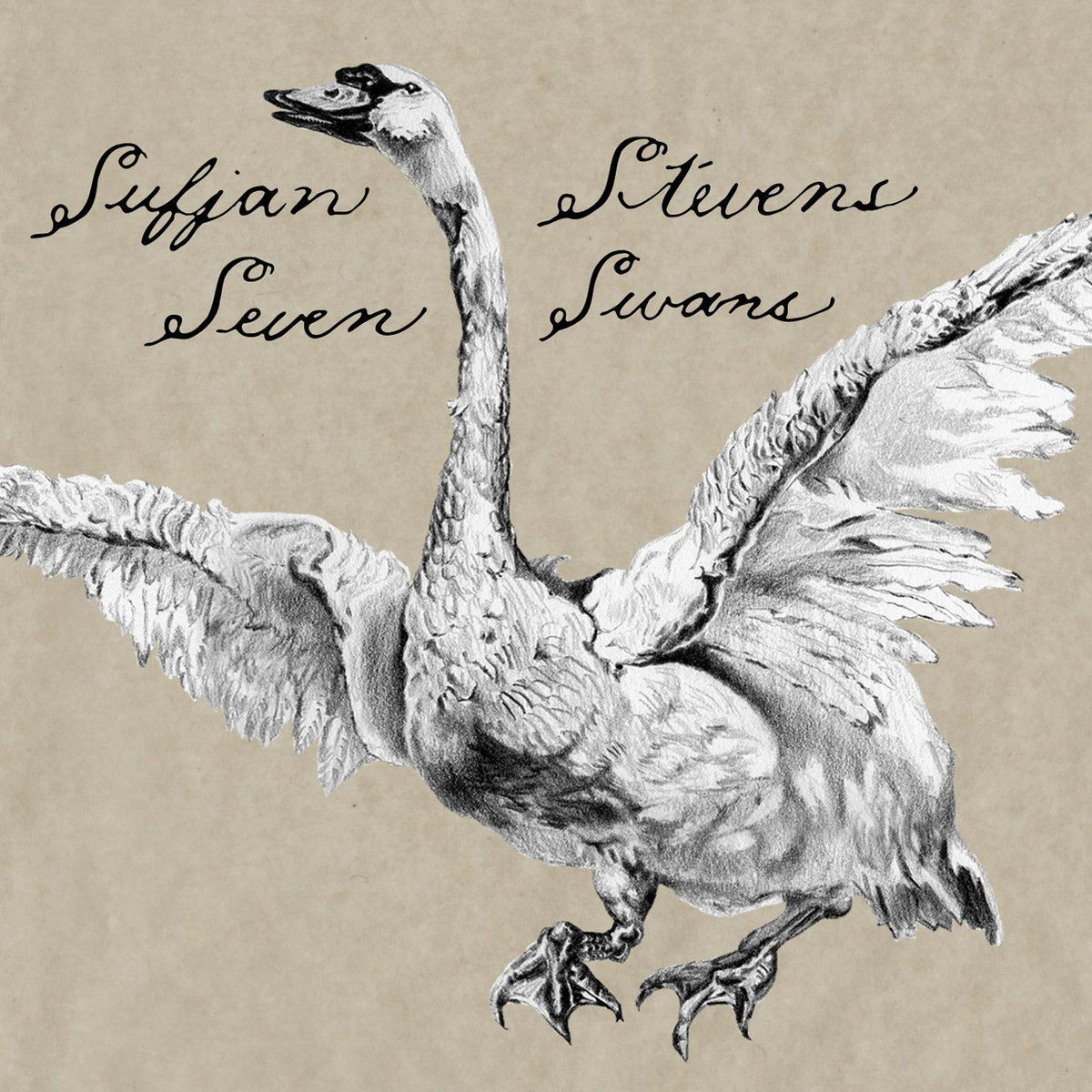
Sufjan Stevens, “Seven Swans”

(My 100 favorite albums in chronological order: #79 – released March 16, 2004)

Track listing: All The Trees Of The Field Will Clap Their Hands / The Dress Looks Nice On You / In The Devil’s Territory / To Be Alone With You / Abraham / Sister / Size Too Small / We Won’t Need Legs To Stand / A Good Man Is Hard To Find / He Woke Me Up Again / Seven Swans / The Transfiguration

When he took the stage at the Academy Awards last week, Sufjan Stevens was likely unknown to a good chunk of the worldwide viewing audience. I can only imagine what kind of impression he made on them with his gentle, fragile voice and equally delicate/intricate music (not to mention his outré pink-and-white vertical striped jacket.) Joined by a typically eccentric band of indie-leaning musicians including St. Vincent and Chris Thile, Stevens performed his nominated song “Mystery of Love”, one of two compositions he wrote for the film Call Me By Your Name. A shimmering tapestry of acoustic guitar, mandolin and other pizzicato, bell-like sounds topped off by his yearning vocals, it’s quintessential Sufjan in that it’s accessible, almost impossibly lovely and sounds like little else.

This notion of discovering Stevens on as immense and unlikely a platform as the Oscars takes me back to the first time I heard him, fourteen years ago when I was assigned to review Seven Swans for a music website (more about that in the next entry.) I recall lying on my bed as (take a breath) “All The Trees of The Field Will Clap Their Hands” began with a lone banjo playing a four-chord arpeggio, soon joined by a hushed, choirboy vocal falling somewhere between Elliot Smith and Badly Drawn Boy’s Damon Gough. One by one, other layers (acoustic piano, female “da, da, da’s”) appeared over those same chords, the entire thing building and gradually solidifying into a gorgeous whole. It immediately left me beguiled—I hadn’t heard anything quite like it before. Yes, it was folkish, singer-songwriter stuff, but it emanated awe at a level both intense and slightly unsettling (more so than comforting.)

His fourth album in as many years, Seven Swans arrived just eight months after his previous release (and the first to receive any college radio airplay), Greetings From Michigan: The Great Lakes State, a song cycle exactly about what it says it is. The latter was the first in a planned series of LPs, one for each of the fifty states. This absurdly ambitious undertaking (which to date has not gone beyond two albums) was my first inkling that Stevens was not only a major talent, but perhaps also a little nuts. The press release I received for Seven Swans positioned it as a break from that project, made up of recent songs falling outside those parameters. Recorded in producer Daniel Smith’s rec room, it stood in direct contrast to most of Michigan’s more extroverted menagerie of horns, polyrhythms, weird keyboards and epic-length narratives. As I would later find out, it was also absolutely nothing like the all-over-the-map indie rock of his debut, A Sun Came! (2000) or the instrumental, impenetrable electronic experimentation of Enjoy Your Rabbit (2001).

Multiple Seven Swans songs follow the lead of “All The Trees…”, building an arrangement one piece at a time, repeating the melody with minor variations until the whole takes on a hypnotic, zen-like quality. “The Dress Looks Like On You” does so gently, mostly limiting its scope to banjo and acoustic guitar, only thinking to throw in something unexpected like a brief, cereal-box organ solo when the melody shifts in the bridge; conversely, “In The Devil’s Territory” swells to a mighty, Steve Reich-ian roar, its Theremin solo ably mimicking a boiling tea kettle ready to explode. Stevens isn’t shy about pushing this trope to its breaking point—witness “Sister”, which spends four minutes repeating the same instrumental melody, with “da, da, da’s” eventually accompanying it, growing louder and louder until it almost feels satirical, like a backing track from another Stevens, Cat, turned into a game show theme song. Then, abruptly, everything drops out, the song shifting to just acoustic guitar-and-voice for its last two minutes, retaining the same melody, only with proper lyrics.

Striking as Stevens’ approach to sound and song structure is throughout Seven Swans, his lyrical content more radically sets the record apart from scores of likeminded acoustic folkies. Stevens is a devout Christian, and while he shies away from labeling himself as a Christian artist, maintaining in multiple interviews that his intent is to separate his beliefs from his music, themes of faith in a higher power liberally flow throughout his work—rarely more explicitly than on this particular album. The title itself refers to a passage in the Bible’s Book of Revelations, while there are also songs about “Abraham” and “The Transfiguration”. And yet, while his faith and devotion feels pure, he never moralizes and rarely proselytizes—the closest he comes to doing so is his refrain of “He is the Lord!” in the title track, and even there he sounds a bit fearful and overwhelmed about what he’s exclaiming.

At times, his exploration of faith falls much closer to Sam Phillips‘ (although she’s far more skeptical than he’ll ever be), in that he acknowledges the complexity of such mysteries. “To Be Alone With You”, with its captivating melody and spare, acoustic guitar-and-voice setting, initially comes off like a straightforward love song, with Stevens offering, “I’d swim across Lake Michigan” in order to fulfill the titular goal. However, by the second verse, the subject shifts from first to second person: “You gave up a wife and a family / You gave your ghost / To be alone with me.” When this song was new to me, I puzzled over exactly whom Stevens was directing these words to. A lover? A friend or relative? Most likely, it’s a higher power, especially after he sings, “To be alone with me / You went up on a tree,” possibly referencing the Crucifixion. But then, the final line is, “I’ve never met a man who loved me.” Is Stevens singing about Jesus or God or a literal man of the flesh? My inclination leans towards the former, yet his careful, specific use of language here is fascinatingly steeped in ambiguity.

Similarly, “Size Too Small” ostensibly concerns being the best man at a best friend’s wedding, the title referring to an ill-fitting suit. At face value, that’s exactly what it’s about, the quiet, reverent-sounding organ coming in on the second verse serving the nuptials theme nicely. But in that second verse, Stevens sings, “Everything rises, going at it all / All the surprises in a size too small,” before asking, “Would you surprise us / in a size for all of me?” No longer merely tangible, “size” becomes a concept that could encompass any number of things, from persona to friendship to even faith. “I still know you, the best man,” he notes, before concluding, “I still owe you,” and you’re left uncertain as to whom exactly “you” is, only that it’s someone or something close to his heart. The same goes for the “He” in “He Woke Me Up Again” or the subject of “The Dress Looks Nice On You”, which seems to be a celebration of spiritual rather than physical beauty with repeated admonitions of “I can see a lot of life in you.”

Even when Stevens largely forgoes abstractions, his music still retains an aura of wonderment. “A Good Man Is Hard To Find” rewrites the Flannery O’ Connor short story of that title from the point of view of its villain, known only as “The Misfit”. It’s a clever, followable conceit further made flesh by a hummable melody and the awesome way it opens up at the wordless, carousel twirl of a chorus, complete with a guitar riff that could’ve come from a Simon and Garfunkel chestnut. And yet, when his narrator switches from second to first person in the last verse, singing of Hell and his own grief, you can’t help but draw parallels to themes running through the bulk of the album. Stevens’ ability to incorporate both character and self until the line separating them blurs is a rare talent, one that further distinguishes him from your average singer-songwriter.

On subsequent albums, he’d continue honing that skill while hardly ever repeating himself. 2005’s Illinois picked up where Michigan left off but further expanded his aesthetic, often crossing Vince Guaraldi’s Charlie Brown music with homespun theatrical drama. It ended up a breakthrough beyond college radio confines, thanks to its typically moving, catchy-but-still-singular anthem “Chicago”. Five years later, he returned with The Age of Adz, a flummoxing, everything-but-the-kitchen-sink attempt at almost a pop version of Enjoy Your Rabbit, getting lost in excess electronic effluvia and songs that pushed pass the six-minute-mark (or in one case, twenty-five!) Five years after that, Carrie and Lowell seemed like a full-circle, course-corrective return to an airier, more reverb-drenched take on Seven Swans’ acoustic folk, but with a new wrinkle: centering on his estranged mother’s death, Stevens dove feet-first into purely confessional songwriting, teeming with grief and inconsolable pain as deeply felt and nuanced as his earlier admissions of faith.

“Mystery of Love” didn’t win an Oscar, which is neither here nor there (losing to Phil Collins in this category back in 1999 didn’t have an adverse effect on Aimee Mann’s career.) Still, along with the stark “Visions of Gideon” (and its devastating placement at the end of Call Me By Your Name), it suggests that no matter which path Stevens takes next, he remains a wholly original and essential voice.

Up next: Obscurity Knocks.

“To Be Alone With You”:

“A Good Man Is Hard To Find”: