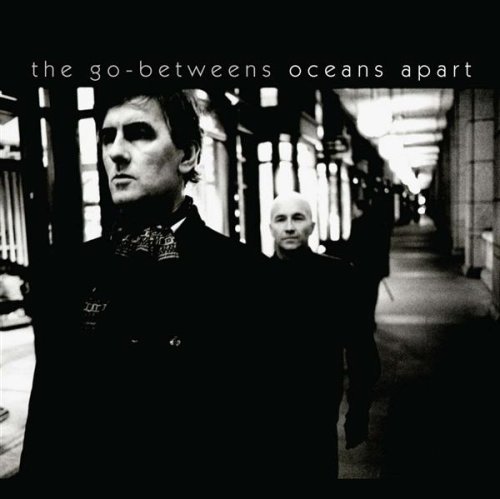
(My 100 favorite albums in chronological order: #82 – released May 3, 2005)
Track listing: Here Comes A City / Finding You / Born To A Family / No Reason To Cry / Boundary Rider / Darlinghurst Nights / Lavender / The Statue / This Night’s For You / The Mountains Near Dellray
Band reunions are tricky, for they come with staggering expectations: Is the old chemistry present? Can they still hit all the right notes? And, what of new material—how does it stack up against the old stuff? From Van Halen to the Violent Femmes, you see previously defunct or on-hiatus bands getting back together all the time with all-over-the-map results. But, for every five or ten shadows-of-their-former-selves or devolutions into nostalgia acts, there’s the occasional reunited band that, against all odds, manages to not embarrass itself and even add something artistically vital to its discography. Sleater-Kinney, My Bloody Valentine and The Dream Syndicate are among those who have accomplished the latter in recent years.
One of the least likely and most satisfying reunions of this young century was the return of The Go-Betweens. When this Australian band, with their core singer-songwriter duo of Robert Forster and Grant McLennan last appeared in this tale, they were coming off an enviable decade-long, six-album run culminating in their 1988 pop masterwork, 16 Lovers Lane. Like all their previous records, it received glowing reviews but failed to score radio hits or break beyond their miniscule audience. As noted in Forster’s superb 2016 memoir Grant and I, a series of misunderstandings led to an acrimonious split in 1990. Forster and McLennan would each spend the next decade cultivating solo careers, but little either of them did separately approached the majesty of their past work together (McLennan’s 1994 double-album Horsebreaker Star, which I briefly considered for this project, came closest.)
As the 90’s wore on, the two men reconciled and started playing live together again. Recorded with a new rhythm section (including Sleater-Kinney’s Janet Weiss on percussion), The Friends of Rachel Worth was the first new Go-Betweens album in a dozen years. Far more stripped-down than the elaborately produced 16 Lovers Lane, it was defiantly a new chapter for the band, although on opener “Magic In Here” one could immediately sense some of Forster and McLennan’s rare, sparkling chemistry again. Another album, Bright Yellow Bright Orange followed three years later, and while it added nothing exceptionally new to the band’s catalogue, it was another solid set of predominantly acoustic jangle-pop.
If anything, these two albums sometimes felt as if Forster and McLennan were gently easing themselves back into being a band again with tentative, if encouraging results. For their third album of this second phase, they brought 16 Lovers Lane producer Mark Wallis back into the fold. Once again fortifying their guitar pop with a layered, Technicolor assortment of keyboards and a few horns, Oceans Apart miraculously ended up more a step forward than a look back, even if a couple of its songs lyrically, at times elegiacally reflected upon past lives and places. Moreover, it just gelled like anything from the band’s first phase and its ten songs were among Forster and McLennan’s strongest and sharpest.
From the count-off that announces Forster’s “Here Comes A City”, you can tell this is a fully-energized Go-Betweens firing on all cylinders. Spitting out clipped phrases over just two chords (but what glorious two chords!), lyrically, Forster is at his most observational: “Just pulled out of / a train station / we’re moving sideways,” he sings, “Passing churches / passing stations / a bustling complex.” Meanwhile, the music fervently chugs along, the guitar solo melodic enough but also hinting at an ever-so-slightly out of control bedlam that seems increasingly present all the way to the boiling teakettle noise accompanying repeated chants of the song’s title near the end. But it feels lithe and wry rather than heavy or foreboding, with such typically literate (and quirky) Forster asides as, “Why do people / who read Dostoevsky / look like… Dostoevsky?”
McLennan’s “Finding You” is just as striking and assured, but entirely different. Beginning with a chiming guitar fanfare worthy of all his best ones on 16 Lovers Lane, it opens with lyrics so romantic and incisive you feel Grant has been building towards them his whole career: “What would you do if you turned around / And saw me beside you / Not in a dream but in a song?” It’s pure heart-on-sleeve declaration, along with the chorus of, “Don’t know where I’m going / Don’t know where it’s flowing / But I know it’s finding you.” Because it’s expressed from such a heartfelt place and wedded to such a perfectly formed melody (and lush arrangement), “Finding You” is not easily dismissed as a silly love song. Its extended instrumental coda even provides time for contemplation of what it means to build and sustain a growing love.
“Born To A Family” finds Forster not for the first time on Oceans Apart dissecting his past. With an even lusher guitar palette than “Finding You” (including a 12-string and mandolins), it moves along on an irresistible folkish bounce as he sings about being “the square into the hole” of a working-class family. Even as a young boy, he recalls longing for art, literature and music. “What could I do / but follow the calling,” he repeats, slightly melancholy but mostly confident that he chose the right path; his breathy, “Uh huh’s” and “yeah, yeah’s” casually further confirm it on the fadeout.
By fiat of its initial resplendent waves of synths, McLennan’s “No Reason To Cry” is another step away from the more austere settings of the band’s previous two albums. Dreamily strummed major-seventh chords solidify into the title chorus (where Forster lovingly echoes his bandmate’s vocals), nearly orchestral in its numerous layers of sound. When he sings, “Been fifteen years since we last spoke,” you wonder whom the song is about—former band member and romantic partner Amanda Brown, or perhaps Forster himself.
McLennan follows the song with another of his compositions, “Boundary Rider”. As much of a confirmation of self as “Born To A Family”, it’s similarly crisp and concise, with guitar arpeggios so immediate and absorbing they seem like they’ve been there since the beginning of time. Still, there’s considerably more conflict and resignation in his voice. “So you reach for things / you’ve never satisfied / you’re running down the years” he sings, amiably but decidedly unsentimental, “And to know yourself / is to be yourself / keeps you walking through these tears.” It sounds like hard-earned wisdom, and it will be important to remember those words later.
Forster’s second song about his past, “Darlinghurst Nights”, kicks off the album’s second half. Epic like nothing else on Oceans Apart (it’s over six minutes long), it’s a vast but focused canvas for Forster to reminisce on a specific place and time via a talisman in the form of an old, unearthed notebook: “I didn’t have to read it / it all came back,” he remarks, soon reeling off long-forgotten names (“Frank Brunetti”, “Susie, who we never saw again”) and wishes (“I’m going write a movie / and then I’m going to star in a play”—he and McLennan did try their hand at screenwriting, although they never got a film made.) Although the same four chords repeat (except in the brief, heavenly middle-eight), the momentum never flags thanks to abundant instrumental and vocal hooks imbedded within. The phrase, “Always the traffic, always the lights” is the song’s North Star, appearing throughout and repeating over the extended coda, later accompanied by a chorus of rousing horns.
“Lavender” is the closest thing to love song for Forster here. Over a slinky reggae groove (rest assured, it sounds nothing like UB40), he describes a woman in a series of near-enigmatic phrases like, “She’s got a pair or black boots that kick stones / She’s got black moods she calls her own,” and also rhymes “good in bed” with “well-read.” The title is not her name, but her favorite scent and the song is not really as arch as it sounds, but rather sweet, with clarinet and flugelhorn providing elegance and an unexpected grace notes near the close.
McLennan’s “The Statue” shimmers into focus, its reverberating electronics like a sun rising over the water, its electric guitar hook practically euphoric, leading the way towards a sea of swaying romantic gestures. The lyrics build a metaphor around the titular figure with multiple uses of the word “touch” in different contexts, but it’s the melody that pushes everything forward, perhaps right towards McLennan’s next song, “This Night’s For You”. The previous track’s brightness lingers here but at a breezier, poppy tempo (dig those “ba, ba, ba’s!”.) A genuinely silly but blissful and transformative love song, it cleverly pairs descending verses with an ascendant chorus whose best moment is a call-and-response slash of guitar chords that bespeaks its author’s proficiency in stacking hooks upon hooks while allowing all of them to shine profusely.
“The Mountains Near Dellray” closes Oceans Apart with slow, dramatic grandeur: gradually fading in with guitars, keyboards and a massive sense of space, it’s half majestic ballad, half meditative tone poem. As Forster sings the song’s simple melody and plainspoken lyrics (“And when you make a wish / and you get the wish”), he exudes calm and acceptance that’s in extraordinary contrast to the hubbub and encroaching chaos of “Here Comes A City”. “Never let it go, it’s no struggle,” he concludes, and those words could apply to a myriad of things—what they actually are is less significant than the notion itself. A design for life, if you will, enigmatically inserted within a pop song.
A perfect ending to the album, “The Mountains Near Dellray” would unintentionally serve as a wistful finale to The Go-Betweens themselves when, almost exactly one year after the album’s release, McLennan died suddenly from a heart attack at age 48. While I’ll always long for all the music he and Forster might’ve put out on the momentum and goodwill Oceans Apart generated (a few songs they had begun working on would surface on Forster’s 2008 solo release The Evangelist), I’m grateful they ended up going out on such a high. “And to know yourself / is to be yourself,” is as modest and profound an epitaph as McLennan could ever have written for himself; a decade-plus later, as I edge closer to 48, they are words I increasingly take to heart as well.
Up next: Everyday People.
“Finding You”:
“Here Comes A City”:


