A few of my 100 favorite albums are currently in this crate.
Why did I write one hundred essays on my favorite albums, in chronological order from Revolver to Record? When I began this project five years and one month ago, I saw it as a constructive way to write more extensively about music, and also as an opportunity to get used to working on longer pieces in general. I figured I could complete a thousand-word essay a week and get to the finish line within a little over two years.
And I more or less kept up the pace until I got to album number 6, Abbey Road—a record I had far more than a thousand words to write about. Once I reached the ‘90s in my timeline, I encountered many albums that, due to when I first heard them or what presence they’ve continually maintained in my life, required far more time and attention to assess than I initially expected, to the point that at the two-year mark, I was only halfway through the entire project.
Now that I’ve finally completed it, I feel a sense of having accomplished something, but what, beyond finishing what I set out to do? I’ve left a record of my taste in music as it stands over this half-decade (go back to my 2004 list to see how it has shifted); I’ve also continually drawn connections between albums from nearly every notch on this half-century-plus timeline up to the final entry (thank you, Tracey Thorn, for injecting into your own Record a song title from Songs of Leonard Cohen!)
Throughout, I kept revising the initial list I came up with in 2014. My original end point was Random Access Memories, an ideal choice given its fixation on channeling past sounds into contemporary and possible future ones. However, it ended up at #94, which allowed me to include six more titles released after it. What happened to the six older albums I left off? Apart from the Mekons’ OOOH! (Out Of Our Heads) (I still wonder why I nixed that one; was it too similar to Sleater-Kinney’s contemporaneous One Beat?), I honestly can’t recall what they were (my original list is sadly lost to time.) I occasionally replaced one album with another from the same artist: Dig Me Out and All Hands On The Bad One were candidates instead of One Beat at various points, and I kept going back and forth between Scarlet’s Walk and Boys For Pele for Tori Amos before deciding I had more to say about the latter (mostly because it’s nuts.)
Still, as I made my way through 100 Albums, it gradually dawned on me that this project had a certain flaw: By writing only about records that I loved, I was in danger of lapsing into hagiography. Truthfully, I’ve always felt more comfortable dissecting art I was drawn to than stuff I found repulsive or that simply left me cold—I’m a fan/geek more than a critic where music’s concerned (film criticism, on the other hand, I have a graduate degree in.) While it was often fun reviewing records on a weekly basis for a website back in 2003-04, a majority of them were so awful, when I left that gig, I was elated to go back to focusing on albums I genuinely liked.
The other difficult aspect of writing essays about your 100 favorite albums is that before long, you are inevitably prone to repeating yourself: How many different ways can you say something is good and make a sound critical argument as to why others should listen to it? I’ve tried my best to confront this challenge and write criticism that comes from an honest point-of-view. I haven’t gone back and re-read every last entry in this project, but I can single out ten that I think are, at the very least (to quote Tim Curry as Dr. Frank-n-Furter in Rocky Horror Picture Show), pretty groovaay:
It helps that every one of these ten would probably make a top 25 if I had to rank the entire list*, but another common thread runs through them: they are among my most personal essays here. I repeatedly found myself enjoying the writing process more when I was able to lead off or build a piece around a reminiscence or an anecdote directly related to an album, one that could help flesh out or even unlock what meaning this particular piece of art had for me.
I can firmly say there will never be a likeminded follow-up to 100 Albums: No 100 Films, 100 Books, 100 TV shows, etc. Putting aside the danger and difficulty that comes with only writing about beloved art, I’ve gradually discovered throughout this project that I have other, more important things to write about (even if I now regret not including Cosmic Thing by The B-52’s or anything by Steely Dan, among other artists.) Haunted Jukebox will continue, but its primary focus will no longer be music. Oh, there will be mixes (annual and otherwise), year-end lists and likely a decade-end album list in early 2020, but I’m ready to move on from criticism into more personal terrain. Thanks to anyone following and/or invested in this project.
* In 100 Albums: An Introduction, I said I’d do this upon the project’s completion, but since rankings of all-time lists are so prone to fluctuation, I’m leaving it up to each reader’s perception as to what my favorite, favorite albums are.
(My 100 favorite albums in chronological order: #100 – released March 2, 2018)
Track listing: Queen / Air / Guitar / Smoke / Sister / Go / Babies / Face / Dancefloor
After Amplified Heart gave Everything But The Girl a crossover hit with Todd Terry’s remix of “Missing”, this duo of Tracey Thorn and Ben Watt, then more than a decade into their career, soldiered on for two more albums of electronic dance music inspired by this late-breaking success before essentially disbanding in 2000—I purposely use that term, for the longtime couple stopped being a band but remained together in every other sense. Thorn, who had given birth to twins two years before, later revealed in her memoir Bedsit Disco Queen that she was simply ready to stop recording and performing to raise a family. She and Watt would have another child in 2001 and eventually, officially marry in 2008, over a quarter century after they met at Hull University.
Fortunately for her fans, Thorn didn’t stay retired from music (though she never returned to live performance.) Surfacing in 2007 with a solo effort, Out Of The Woods, she retained the sound of those later EBTG albums but on a more intimate scale. Directly addressing her time away from the spotlight on such tunes as “Nowhere Near” and “Raise The Roof”, Thorn crafted a modern, electro-update of singer-songwriter chestnuts like Tapestry and Blue. Her next album, 2010’s Love And Its Opposite, displayed a wider array of textures with a far more somber tone. She later called it her “mid-life album”—a keen assessment given songs like the uncharacteristically peppy “Hormones” (“Yours are just kicking in / Mine are just checking out,” she tells her daughters) and the stirring, chamber-pop ballad “Oh! The Divorces.”
In the past decade, she’s continued building an unconventional solo career: writing multiple books and a newspaper column, appearing on duets with such indie-centric artists as Jens Lekman and John Grant, recording a Christmas album here and a movie soundtrack there and just being a generally delightful presence on Twitter. When commencing work on Record, her first studio album of new songs in eight years, she tweeted something along the lines of, “Well, it’s time for me to make another album,” her casual frankness disarming as ever. And while I thought very highly of Love And Its Opposite when it came out and came around to thinking Out Of The Woods was even better than that some five or six years after its release, at present, I’m confident that Record is really Thorn’s most essential album since Amplified Heart.
“NINE FEMINIST BANGERS” reads the sticker on Record’s cover and one could not sum up its appeal more succinctly. Once again working with producer Ewan Pearson (having helmed the majority of her output since Out of The Woods), Thorn keeps to a limited but effective palette: synths, drum machines, some guitar and on one track (“Smoke”), a string arrangement. The blunt, one-word song titles perfectly fit their tunes’ musical and lyrical directness. Like Home Counties, Record was mostly conceived in a post-Brexit, Trump-ridden world and it subtly (and occasionally not-so-subtly) reflects such times from a distinct perspective—ever approachable and candid, Record is Thorn’s ongoing monologue of who and where she is now.
In that sense, opener “Queen” is an ideal statement of purpose. A sonic analogue to Saint Etienne’s 2012 single “Tonight”, it finds a woman considering herself in midlife over ringing, swooshing synths and a clarion, yearning chorus: “Am I queen / a magisterial has-been?,” she ponders, or perhaps “A star / Propping up the backstage bar?” They are questions specific to her life as a singer and public figure, but she shifts from the potentially autobiographical to the firmly universal by concluding, “And will I ever find love / or am I still waiting?”
From there, Record finds Thorn looking back and taking stock of her past. “Air” gently bubbles with traces of an awkward adolescence and the gender politics that drove and very nearly defined it: “Didn’t understand the rules or how to play,” she notes, before rattling off a series of self-critiques: “Too tall / All wrong / Deep voice / Headstrong.” Meanwhile, the music’s mid-tempo R&B-inflected pop (the closest Thorn has emulated the sound of Idlewild in some time) and breezy backing vocals from Shura reinforce the chorus’ simple but persuasive main hook, “I need some air,” with the word “I” delicately stretched out to five syllables.
“Guitar”, propelled by pulsating synths with the titular instrument only first appearing in the second verse offers transcendence from this dilemma. Although Thorn credits a boyfriend with “arm(ing) her with three chords,” teaching her how to play, it turns out he “was only just a catalyst.” She looks back on the affair with self-deprecation and a little bemusement, name-dropping Leonard Cohen, then slyly quoting his song “Hey, That’s No Way To Say Goodbye” a few lines on (“Oh god, you couldn’t make it up,” she adds.) Still, she emphasizes her eventual self-triumph: “I couldn’t begin until I fell apart,” she admits before declaring, “Thank God I could sing and I had my guitar.”
“Smoke” goes back ever further, detailing her ancestral origin story in the guise of a modern folk ballad complete with a narrative structure and repeated phrases. Beginning with her Great-Grandparents, Thorn tells of how they moved into London (“to the rolling smoke”) and “had a son called James, who had a son called James” (“were there no other names?” she asks.) Two World Wars follow, and her mother “survived the Blitz / though she knew a girl, who knew a girl / who was blown to bits.” Thorn was born after her parents “fled the smoke,” escaping to the post-war suburbs where she herself would escape from come adulthood. Still, on the scintillating chorus, she sings, “London, you’re in my blood but I feel you going wrong.” As the song builds and sighs and marvelously changes keys at the bridge, Thorn’s history unfolds and blossoms, stretching on and outward like time itself.
“Sister” brings us back to the present with Corinne Bailey Rae’s brief, a capella vocal: it’s a beguiling intro to a minor-key anthem in the guise of an extended, eight-minute vamp sparkling with taut rhythm guitar licks, a mid-tempo beat groovy enough to dance to and an array of various synth filigrees (brought to the foreground in the mostly instrumental second half.) But don’t let the running time fool you—this is Thorn’s razor-sharp feminist manifesto and Record’s literal and thematic centerpiece. “Don’t mess with me, don’t hug my babies / I’ll come for you, you’ve bitten off more than you can chew” it starts before the singalong chorus where she states, “I am my mother / I am my mother now / I am my sister / and I fight like a girl.” Nothing cute, pensive or repentant here and that goes double on the bridge where she pointedly, cathartically asks, ‘Oh, what year is it? Still arguing the same shit. / What year is it? Same, same, same old shit.”
“Babies” is another anthem, far less angry but just as firm, offering no apologies for waiting to become a mother: “I didn’t want my babies until I wanted babies,” goes the chorus, following an opening verse that’s one of the most clever ever written about birth control, rhyming “you push a little tablet through the foil” with “better than a condom or a coil.” But the song is also an ode to what happens when you decide to have babies and when they grow up to be teenagers. “Go to sleep, it’s 3 AM / Where are you, it’s 3 AM / in a cab at 3 AM / Don’t wait up it’s 3 AM,” she rattles off as the music percolates with a joyous, assembly line sheen.
On either side of “Babies” sits Record’s two ballads. “Go” is addressed from a parent to a child leaving home for the first time. Over slow, lingering chords reminiscent of a George Michael lament (most notably “One More Try”), the generally low-voiced Thorn starts off singing in her highest register: “I resign myself to time and what’s no longer mine,” before her own grief gives way to tenderness and support as she tells her child, “Pack your bags and smile, it will only be a little while.” “Face”, in which Thorn scrolls through an ex’s social media page seems less immediate by default, although her self-effacing humor (“If I just keep refreshing, maybe you’ll disappear”) buoys what is a perceptive take on having perhaps too much access to too many people at your fingertips.
Record roars back to life on its exhilarating closer, “Dancefloor”. Like much of the album, it’s Thorn making sense of who and where she is now as a mother, sister, wife, singer, songwriter, musician, author, etc. She asks questions both philosophical (”Where did we begin?”) and searching (“Who’s just desperate for anything at all / anything at all like love?”) before proclaiming, “Oh but where I’d like to be / is on a dancefloor with some drinks inside of me,” hanging out with friends, turning it out together to such perennial bangers as Chic’s “Good Times” and Shannon’s “Let The Music Play”. The vibrant, fizzy, electro backdrop, complete with robotic voices repeatedly announcing, “ON A DANCEFLOOR!” reinforces all of this. When Thorn suddenly reveals, “Someone’s singing and I realize it’s me,” it’s a simple but immense, resounding epiphany—the kind one forever seeks but rarely finds in a pop song. How fitting that the last album in this project is not only called Record, but also recognizes how awesome it is that music has the power to shape and sustain a life.
Up next: 100 Albums concludes with an epilogue, or, my own looking back and taking stock.
(My 100 favorite albums in chronological order: #99 – released June 2, 2017)
Track listing: The Reunion / Something New / Magpie Eyes / Whyteleafe / Dive / Church Pew Furniture Restorer / Take It All In / Popmaster / Underneath The Apple Tree / Out Of My Mind / After Hebden / Breakneck Hill / Heather / Sports Report / Train Drivers In Eyeliner / Unopened Fan Mail / What Kind Of World / Sweet Arcadia / Angel Of Woodhatch
After the superlative song cycle Tales From Turnpike House, I couldn’t imagine what Saint Etienne would do next—apparently, neither could the band, at least not right away. Seven years passed before the release of their next album, Words and Music By Saint Etienne. Concerning the rituals and pleasures of pop music itself, the concept seemed ideal for a trio of self-avowed fans-turned-aspiring-popstars; in practice, it worked well enough, widely viewed as a comeback on both sides of the pond. It featured some of their very best singles (“Tonight”, “I’ve Got Your Music”) and, as usual with this group, exceptional album tracks that could’ve easily been singles as well (“Heading For The Fair”, “Last Days Of Disco”, “DJ” and the song this blog takes its name from.)
And yet… as a big fan myself, I found Words and Music not completely up to snuff with the four previous Saint Etienne albums I’ve covered here. For one thing, it has a substantial amount of, well, not filler, exactly, but lesser songs I rarely listen to in isolation (“Answer Song”, “Twenty Five Years”, actual throwaway “Record Doctor”); also, celebrating pop through the prism of London is more or less what this trio has always done, but by making it so explicit and upfront, they almost lessen what’s so singular and special about it. Again, for any band, Words and Music is a good album and for them a shrewd one to make after such a long absence, but it doesn’t add anything new to their catalog in the way, say, Tiger Bay or even Good Humor did.
Fast forward a few more years: there’s another band sabbatical during which Sarah Cracknell puts out a second solo album, Red Kite (solid singer-songwriter folk, and worlds away from the dance-pop of her earlier effort Lipslide) while Bob Stanley and Pete Wiggs continue curating compilations of subterranean gems from the 50’s, 60’s and 70’s. When the trio commence work on new material in mid-2016, the world in is flux. Brexit has passed and Trumpism clouds the air. Their new songs aren’t especially angry (how inconceivable to think of an incensed Saint Etienne!) but these developments (especially the hitting-closer-to-home Brexit) have no small impact on the direction their ninth album begins to take.
For most Americans and non-anglophiles, the title Home Counties requires some explanation. The two-word term refers to the seven counties surrounding London—in other words, the suburbs. All three members of Saint Etienne grew up there before moving to London as adults; it follows that one can view the record as reminiscent and hyper-specific of a time and place as Fox Base Alpha and So Tough were of early ’90s London, only observed from a great distance instead of documenting it in real time. However, the album transcends childhood nostalgia because of the band’s obvious love/hate relationship with the region, elevated in no small part by that recent specter of Brexit hanging in the air—throughout the actual Home Counties, more people voted to leave the EU than remain, whereas London voted heavily in favor of the latter option.
The result is an intriguing push-and-pull for Saint Etienne: emphatic and celebratory as always, but now guided by hindsight and filtered through a sharper, critical eye. Initially, it resembles Good Humor more than anything else in the band’s catalog thanks to its live-band feel (the winsome yet enigmatic “Unopened Fan Mail” could easily slot into it) and the fact that Cracknell’s, Stanley’s and Wiggs’ coming-of-age years coincide with the AM radio gold the earlier album successfully emulated. However, Home Counties is no Good Humor II: a mosaic of instrumentals, spoken word interludes and tone poems along with the expected three-minute pop songs, it’s the band’s longest (19 tracks in 56 minutes, but they do fly by) and most varied album since Finisterre (maybe even So Tough)—it plays like a thoughtfully, lovingly compiled mix tape that coheres into a shimmering whole after multiple spins.
As you’d expect from a band known for their meticulous, often hand-crafted attention to detail, Home Counties has ultra-specific talismans woven throughout its fabric. It makes ample room for birdsong and a pastoral children’s choir (“Church Pew Furniture Restorer”), a spot-on Northern Soul simulation (“Underneath The Apple Tree”), a little harp and plenty of harpsichord (most prominently on “Whyteleafe” and “Take It All In”), and not one or two but three recreations of vintage radio transmissions, with quiz show “Popmaster” rather tongue-in-cheek in offering such decidedly modern prizes as “a digital radio or a blue-tooth speaker.” For a band whose early albums were liberally sprinkled with sound bites from classic films, this reprises a tradition of dropping references that will go over a majority of listeners’ heads but also lend much distinction and texture to the world depicted within.
Throughout, Saint Etienne can’t help but retain a certain fondness for where they’re from. In one song, Cracknell eagerly encourages us to “Take It All In” over a baroque retro-pop arrangement with a vaguely trip-hop beat, resembling a rather unlikely cross between The Association and Portishead. “Dive” is a memory of the kind of sensual, horn-driven funk workout one could get down to at the local disco or at a backyard, tiki torch-lit house party. With its clarion chorus and propulsive beat, “Magpie Eyes” encapsulates the bittersweet feeling of being young in a small town after summer’s gone with nothing to do but seek hidden treasure among what remains. Along those lines, “Out Of My Mind” further evokes both the euphoria and turmoil of adolescent infatuation, its ebullience and urgency rendering it a proud successor to such past triumphs as “Nothing Can Stop Us” and “Lightning Strikes Twice”.
Still, they just as often firmly (if considerately) resist suburbia as the utopian ideal. “Whyteleafe” may imagine an alternate universe where David Bowie never left home for London, settling into an ordinary life as a local businessman (Cracknell singing, “His sweet mu-ni-ci-pal dream” over a surging synth is one of the album’s most indelible hooks), but it’s merely a clever “what-if” scenario (and, a year after his death, a refreshingly unconventional Bowie tribute.) Meanwhile, the protagonist of “Something New” is desperately searching for “a sound that she knows could be fun”, and the song’s electric 12-string guitar and Mellotron-aping synth lends her support, especially as it gives way to the resolve and warmth of a brass coda. “Train Drivers In Eyeliner” sweetly advocates for more flamboyantly attired, Whitesnake-listening conductors in an attempt to gently shake up the status quo: “All over this land, that’s our plan,” Cracknell coos, as if stumping for the idea at a Town Hall meeting.
As Home Counties proceeds, it further scrutinizes suburbia, putting aside any notion of rose-colored lenses. Its primary hues purposely turn darker beginning with “Breakneck Hill”, a gorgeously drowsy instrumental that sounds straight out of Twin Peaks. Its spooky female sighs and Eno-esque ambient drone set the scene for “Heather”: a Hitchcock film in miniature, it recalls a neighbor or a childhood friend. Maybe she’s a ghost now, for “She comes and she goes like the warmth in the daylight.” Near the end, Cracknell repeats, “This house is haunted” as the sputtering but insistent rhythm and minor key synths swirl around her, almost fortifying her claim. Perhaps, this tale’s ghost is the narrator herself, wrestling with her past and present selves.
A few tracks later, laden with sweeping, urgent strings, “What Kind of World” fully acknowledges this identity crisis in relation to its milieu. “This is my home but I don’t feel at home tonight,” Cracknell declares before suggesting, “Let’s find another country / a better one,” and it has a thunderbolt’s impact—for many, the suburbs are a place to escape from due to their isolationism, conservatism and provincialism; Brexit enables the suburbs to uphold these tenets, legally cordoning off the outside world. It’s an easy explanation as to main reason why the members of Saint Etienne left the Home Counties, but it doesn’t necessarily shed light on why some people stay.
“Sweet Arcadia” makes an effort to elucidate on this. Opening with another talisman, a watery electric piano of the kind heard on such ‘70s hits as “I’m Not In Love” and “Just The Way You Are”, it’s another Cracknell spoken word piece in the tradition of “Teenage Winter” and “Over The Border”: “The trains took us away from the smoke,” she begins, narrating a travelogue through obscure, self-contained locales with names like Benfleet and South-End-On-Sea. A fetching, suitably locomotive rhythm moves us along as she recounts how the modern suburbs came to be. Over aching chord changes, she recites, “We built our own cinemas, we named our own houses,” charting the ever-forward march of progress until she concludes, “We took your land, and made it our land. Sweet Arcadia.” Her narration disappears halfway through this nearly eight-minute-long epic, consumed by extended flute and soulful organ solos as the beat slows to a wavering ebb-and-flow as if hovering on water.
After Cracknell mournfully sighs the song’s title repeatedly at the close, we’re left not with a resolution but unease. Saint Etienne have offered us plenty of reasons to both love and loathe suburbia; such a mass of contradictory feelings is more true to life than art that would either merely bask in the glow of its idyllic landscapes or only reveal them to be nothing but a cultural wasteland. And as much as this trio has forged a career on songs about transcendence and escape, Home Counties is a step in another direction, observing the world not just as it could be, but also as it is.
And why can’t we consider both simultaneously? If the penultimate “Sweet Arcadia” is to Home Counties what “Hello Earth” was to Kate Bush’s Hounds of Love, closing track “Angel of Woodhatch” is this album’s equivalent to “The Morning Fog”. Its gentle woodwinds and sparkling wind chimes potentially suggest promise and renewal; here, with no lyrics to guide us toward a particular opinion, they could simply infer calm and stillness—a sweet surrender to a complex world with so many moving parts. Home Counties is Saint Etienne’s “mature” album for sure, but its richness and teeming ambiguities gives that off-derided term a good name.
(My 100 favorite albums in chronological order: #98 – released October 21, 2016)
Track listing: Sloboda Narodu / Swedish Guns / We Got Game / Thieves of State / Occupied / This Thing Was Bound To Happen / Can’t Be Guilty / Committed To The Cause / Running Out Of Love / Teach Me To Forget
I’ll never forget waking up painfully early on November 9, 2016, reaching for my phone and confirming what I and many others had dreaded—the most inconceivable, worst possible outcome of a presidential election in my lifetime (to date, I fear.) Opening Facebook, I scrolled past one confused, incensed, disgusted reaction after another from assorted friends and celebrities until coming across a link to a YouTube clip from The Radio Dept. for their song, “This Thing Was Bound To Happen.” In that moment, as much as I was in a state of shock, I mentally responded, “Well, of course.” Months of anticipation and assuredness, gradually worn down and defeated by time, determination and dumb luck—all of it led not to the outcome we expected or thought we deserved. It all simply felt inevitable now, like the punchline to a bad joke.
That’s not to say The Radio Dept. necessarily predicted this outcome, but the song and its parent album, released less than three weeks before the election, undeniably tapped into themes and feelings analogous to that of the current American political climate. In fact, said album, Running Out Of Love is essentially an extended protest/warning against the rise of fascism in the band’s home country of Sweden. It was decidedly not an overnight development: one of its most pointed and savage tracks, “Occupied”, was initially released as a single back in the summer of 2015.
Before that, the band, which primarily consists of vocalist Johan Duncanson and multi-instrumentalist Martin Larsson was dormant for a number of years due to a legal battle with its record label. I had come on board with Passive Aggressive: Singles 2002-2010; as comps go, it’s nearly up there with Pet Shop Boys’ Discography and The Go-Betweens’Bellavista Terrace (it even has a lovely cover of the latter band’s “Bachelor Kisses”.) However, like most people, I had first heard them in 2006 on the soundtrack to Sofia Coppola’s Marie Antoinette. Prominently placed in the film, their song “Pulling Our Weight” fit right in with a king’s ransom of new wave/post-punk classics from the likes of Adam Ant, Bow Wow Wow and New Order. Upon hearing it, I guessed Coppola had unearthed a long-lost gem and was surprised to discover it was then only three years old.
On Lesser Matters (2003), Pet Grief (2006), Clinging To A Scheme (2010) and all the singles in-between, The Radio Dept. conceived of and came close to perfecting their own take on a drowsy but hook-laden, 1980s-inspired dream-pop, their distinct instrumental palette falling somewhere between The Cure’s reverb-drenched guitar attack and New Order’s bass-and-synth driven cerebral dance music. Sonically, Running Out Of Love edges towards the latter of those two poles, with the seven-minute “Occupied” a straight-up “Blue Monday” tribute in its insistent thump, thump, thump beat and klaxon-like pings that eventually build to an anxious, relentless fury.
The song’s lyrical content matches and often exceeds the sound in its vehemence. Duncanson’s an even milder-sounding vocalist than New Order’s Bernard Sumner, so when he sings, “It’s a shame how some people claim to be one thing or another / when in fact, it’s nothing but an act,” such brutal honesty is all the more unexpected and effective. This “speak softly and carry a big stick” approach is all over the album. On “We Got Game”, he complains, “So sick of hearing about that middle ground”, for it doesn’t exist with “racist loons / the kind of guys you wouldn’t like to spoon.” Later, “Teach Me To Forget” rhymes its title with the phrase, “’Because baby you’re so good at it,” as the song’s minor key melody and trance beat heighten an anger and disappointment the singer’s melodic croon can barely mask.
A steady rage courses through the bulk of Running Out Of Love. The single “Swedish Guns” proceeds as a call-and-response between the song’s titular objects and the things one can accomplish with them. “You need a helping hand? Get Swedish guns / Secure a piece of land / with Swedish guns,” Duncanson sings, and on and on over a martial/reggae beat. “This Thing Was Bound To Happen” happily buzzes along like vintage Human League, but it’s deceptive, for the resignation of the song title proves to be just a coping mechanism for utter despair (“Now I just want to get out of here / suffocate this fear.”) The Eno-esque instrumental title track consists of delicate synth and guitar licks and an brittle, singular note repeated, morse code-style for over three minutes. It certainly evokes loss—of love, time, perhaps life itself.
Fortunately, while The Radio Dept. never shy away from the horrors of totalitarianism, nor do they wallow in their misery. Their social commentary is steeped in empathy for the afflicted and a call for resistance. “Sloboda Narodu” (the title is a Yugoslav slogan that translates to “Death to fascism, freedom to the people”) is an energetic, percussion-bolstered anthem that kicks off the album on an upbeat note; “We Got Game” is nearly ebullient in its simulation of circa-1990 house music (Inner City, Technotronic) while “Can’t Be Guilty” gently floats along like a cross between ABC and The Blue Nile, its pretty melodic layers perfect for a melancholy scene in a John Hughes film, only one where a character says, “Wake me when the world has settled / then, just give it to me straight.”
This protest/pop hybrid reaches its apotheosis on “Committed To The Cause”. It begins with a melodic bassline overlapping with a second one, the twin hooks soon buoyed by a very early ’90s beat of the sort you’d find on a Happy Mondays or Primal Scream album (only darker.) Minor key verses shift into a major key chorus where Duncanson sings, “And they’re never gonna give it up,” repeatedly until getting to the title. The sublime melody and chord progression evokes potent feelings: defiance, resignation, a sense of the inevitable. Even during its extended instrumental coda, heavy with irresistible house-music piano and a synth filigree that could’ve been lifted off a Toto (!) record, the song’s momentum is sustained and deepened—you almost don’t want it to end, but it abruptly does, and the spooky title track carries these feelings further, all the way through the closing, quietly seething “Teach Me To Forget”.
I listened to Running Out Of Love incessantly before and after the election; admittedly, it didn’t seem especially more prescient or relevant after November 8 than it previously did—I’m even cautious to say it captured a specific moment, given that, at this writing, we’re decidedly still living in such a moment. Regardless, I seek pleasure in pop music as much as stimulation and provocation. Like most “political albums”, this one has plenty of the latter elements but crucially, just as much of the former. For good and for ill, the concepts The Radio Dept. confront and dissect here will always be relevant.
Up next: “We took your land, and made it our land.”
(My 100 favorite albums in chronological order: #97 – released October 16, 2015)
Track listing: iT / Saint Claude / Tilted / No Harm Is Done / Science Fiction / Paradis Perdus / Half Ladies / Jonathan / Narcissus Is Back / Safe and Holy / Night52 / Here
Readers following this project for any amount of time will likely detect my fondness for unconventional, quirky and sometimes just plain eccentric female artists. Kate Bush, naturally, is this category’s prototype and arguably still unmatched master, and one can easily draw a straight line from her to Tori Amos to Fiona Apple to Nellie McKay. Along the way, I’ve connected others whom, while not necessarily as original or perhaps weird nonetheless created spaces for themselves in the music industry while not fully conforming to its norms: Joni Mitchell possibly did this first and best, but don’t discount Aimee Mann, Liz Phair, Sam Phillips, Róisín Murphy or Florence Welch, to name but a few who forged their own paths.
As for artists emerging in the past five years, Héloïse Letissier, who records under the pseudonym Christine and The Queens, is the most promising addition to this list. Based in Paris, Letissier released her predominantly French-language debut album Chaleur Humaine (“Human Warmth”) at age 26 in 2014 and reissued it in America under the title Christine and The Queens a year later, rerecording many (but not all) of its vocals in English, and swapping out two of the original’s songs for three new ones. Complicating things further, this English version came out in Europe the following year with Chaleur Humaine as its title and was a massive hit, charting at number two in the UK.
As an American, it’s the self-titled version I know and love. Upon my first listen in late 2016, it wasn’t Letissier’s voice (better-than-average, if occasionally reedy) or sound (laptop enhanced, 80s-tinged electro-pop) or even playfully peculiar sensibility that caught my ear, although all these things would fortify my interest over time; no, what really struck me was Letissier’s way with a melody. Like Stuart Murdoch or Andy Sturmer or Emm Gryner, she just has a knack for catchy choruses and often equally captivating verses that are approachable and indelible without sounding derivative.
Christine and The Queens’ best known song, “Tilted” (called “Christine” on Chaleur Humaine), is a perfect example. Right at the start, that clipped synth hook (like a snippet of a warped vinyl record) commands attention, along with the “heh, heh” percussive vocal sample woven into the beat. Its bright, brief verses are melodically simple but effective in how their chords carry over to the sing-along chorus: “I am actually good / can’t help it if we’re tilted.” She switches to an irresistibly rapid French rap on the bridge before slightly altering the melody on the final verse: “I’m doing my face / with magic marker / I’m in my right place / don’t be a downer,” she repeats (along with soulful “yeahs” underneath) before it neatly reveals itself as a faultless countermelody to the chorus reappearing on top. “Tilted” is modern nonsense pop of the highest order—in addition to being superbly catchy, it’s also a bold and convincing declaration of self.
Occasionally, Letissier’s melodies absolutely define and drive her songs. I couldn’t begin to tell you what “Science Fiction” is about, even in its English version (its lyrical hook goes, “We’re spinning like Mike and Freddy”), but the agility it wrings out of two chords and her kinetic, razor-sharp vocals (particularly the wordless ones, like “na, na-na, na-na-na-na”) are so infectious it doesn’t matter. Similarly, dramatic closer “Here” sidesteps any pretense of delivering wisdom or revelation for pure, visceral emotion in how urgently Letissier repeatedly sings the song’s title in its fiery choruses.
Letissier’s melodic instinct and mastery of emotional shaping is most deeply felt on “Saint Claude”. The verses are sung in French—translated, it’s yet another song of love and devotion, interesting less for what’s being said than how it’s said, with certain words swiftly repeated in triplicate. However, it’s the ascendant chorus that whole-heartedly soars: “Here’s my station,” she repeats, as if both making a defense and offering an olive branch, but her poignancy develops each time before she reveals, “But if you say just one word I’ll stay with you.” At the minute-long coda, she mournfully concludes, “We are so lonely in this part of town”; although you feel she’s deliberately left out part of the narrative, it’s also difficult not to acknowledge that it’s all you need to hear to understand or feel its effect.
Still, it would be a disservice to overlook Letissier’s lyrical content, for it illustrates her breakthrough as a new kind of pop star. Identifying as pansexual, Letissier writes about gender fluidity to the extent an artist of an earlier generation might’ve done so regarding merely being a woman in a predominantly male profession. Leading off with “iT”, she confronts matters of gender identity head-on: “I’m a man now,” she brashly, almost matter-of-factly declares, “and there’s nothing you can do to make me change my mind.” Later, on “Half Ladies”, she adds, “Cause just when you thought I’d be still a little girl, I’m one of the guys,” sounding more vulnerable but still determined, backed up by gentle Fender Rhodes and finger snaps as the song shifts into its celebratory French chorus (“Laissez passer toutes Half-Ladies!”, which essentially means, “Let them all through!”)
Not surprisingly, the three new songs here are all in English (and the two left off from Chaleur Humaine are in French); more interestingly, two of them are duets. Featuring teenaged Nigerian-American rapper Tunji Ige, “No Harm Is Done” noticeably leans heavier towards contemporary R&B than anything on the album—it’s perfectly fine, but not particularly innovative given what surrounds it. “Jonathan” is far more arresting: queer male singer Mike Hadreas, an inspired choice of a partner (who also performs under a pseudonym, Perfume Genius), takes the entire first verse of this lovely, if straightforward ballad, with Letissier not appearing until the second verse. The other new song, “Safe and Holy”, is, after “Tilted”, her most explicit move for the dancefloor, combining gospel chords with a rock-disco rhythm not dissimilar to Stevie Nicks’ “Edge of Seventeen”.
Letissier projects plenty of confidence at such a relatively unseasoned age: she interpolates Kanye West’s “Heartless” on the chorus of “Paradis Perdus”, titles one of her compositions “Narcissus Is Back” without lapsing into esoterica, and crafts music videos that are less promotional pieces than fodder for an art installation (see below.) Fortunately, her saving grace is an approachability one doesn’t always easily detect in art-pop. More than just “one of the guys”, she’s as relatable as a Tracey Thorn or a Jen Trynin. Inviting and inclusive, but also fiercely original, it’s not an easy balance to pull off, or to make appear as effortless as Letissier occasionally does here.
If anything, her second album, 2018’s released-simultaneously-in-English-and-in-French Chris, walks a trickier tightrope, with Letissier both visually and conceptually inhabiting the titular male persona throughout its entirety. Time may even prove Chris to be the superior album, with songs like “The Walker”, “Doesn’t Matter” and “What’s-Her-Name” sporting ever-sharper melodies and lyrics. At present, she carries the promise of Kate in 1982, Florence in 2009, maybe even Joni in 1970. Whether she makes good on it or not, I suspect she’ll be forever foraging her own path, and I eagerly await as to where she’ll go next.
After Overpowered failed to connect with a wider audience, Róisín Murphy seemed to be in no hurry to put out another album, even as Lady Gaga took its look and sound to the bank a year later. Instead, Murphy went on an extended hiatus: she became a mother (twice), occasionally surfaced as a guest vocalist (most notably on “Don’t You Agree” from the David Byrne/Fatboy Slim life-of-Imelda Marcos concept album Here Lies Love) and released a few alluringly titled one-off singles of her own (“Orally Fixated”, “Simulation”.) Mi Senti, an EP of Italian-language songs, appeared in 2014; the stylistic range across its six tracks spoke to her inclination to experiment and defy expectations, but it was only a mere inkling of what was to come when her next album finally arrived a year later.
Hairless Toys decidedly does not pick up where Overpowered left off; nothing on it is as radio-friendly as “You Know Me Better” or as danceable as “Movie Star”. Its eight tracks sprawl across fifty minutes with most of them hovering around six. When first single and opener “Gone Fishing” dropped a few months before the album’s release, I did not know exactly what to make of it. Murphy’s submerged yet steady vocals fluttered in, out and all around a collage of mechanical beats and synths, all of it layered as to feel peculiar but not entirely off-putting. With lyrics inspired by Paris Is Burning, a documentary about New York City drag culture in the late ’80s (she refers to “The children of LaBeija”, meaning the “house” of performer Pepper LaBeija), Murphy fashions a paean “to building another kind of family nest” for all those stigmatized by their own blood relatives (though the song title remains either a mystery or a pretty obscure reference.) Verse after verse, it percolates on, its hooks not reaching out to hug the listener but creeping along the sidelines, only to occasionally, suddenly, ever-so-briefly emerge before retreating back into the ether.
While certainly more cerebral than anything before it in Murphy’s discography, Hairless Toys is still, at its core, comprised of pop songs—leisurely-paced, heady, at times quixotic pop songs, but ones still sporting hummable melodies and verse/chorus/verse structures. Following “Gone Fishing”, “Evil Eyes” is a slightly sharper entry point for unassuming listeners. An introductory electronic bassline/heartbeat remains a constant throughout, its irresistible strut a solid foundation for Murphy’s dreamily gliding vocals on top (“ho…cus…. / ho-cus, po…..cus….”). It plays like slow-motion disco-funk, graceful but also tense enough that it’s genuinely thrilling when it hits that key change at the bridge at 4:27 and Murphy snaps to attention: “Gonna put those demons in their place!,” she exclaims, as a call-and-response with the phrase, “Get to know them!” (See the song’s bonkers music video below, and in particular, how she chose to visualize this part.)
“Exploitation” clocks in at nearly nine-and-a-half minutes and was still chosen as the album’s second single (albeit in a four-minute edit.) Kicking off with a boisterous, galloping, thirty-second-long synth-and-percussion fanfare, it deftly settles into a subdued thump-a-thon driven by a repeated three-note hook. “Never… underestimate / creative people / and the depths that they will go,” Murphy sings, again forever wafting through a scurrying beat, pausing to ponder the question, “I just don’t know who’s / who’s exploiting who?” in the chorus. The album version’s back half is entirely instrumental, shifting from house music to straight-up trance, the melody gradually dissolving into abstraction over a series of seemingly endless piano chords and electronic noise. Weird as it may be to some (most?), it’s less a line drawn in the sand than Murphy asking her listeners, “Why separate art from pop? Why can’t they co-exist?”
It’s a question Hairless Toys returns to often without making excuses or really any concessions for either side. Combining fat, heavy synth bass with flowery do-do-do’s over what roughly amounts to supper-club funk, “Uninvited Guest” is one of the album’s most playful tracks, particularly in its baritone “whoah, whoah, whoah’s” in the chorus’ background and its cheerful whistling hook; it also transforms into one of the most gorgeous songs here when, at the three-minute-mark, the backbeat suddenly vanishes and an extended bridge unfolds with luxuriant chord changes and lush layers of guitars and multi-tracked vocals, growing more impossibly lovely until the beat resumes a minute-and-a-half later.
“Exile” is arguably even more unexpected a left turn than the back half of “Exploitation”. An honest-to-god, morning-after torch song heavy with twangy guitar, reverb, a little pedal steel and briefly, an eerie, gurgling, horror-film synth noise, it resembles a country death song for a David Lynch film with Murphy speak-singing most of the lyrics rather than sounding off like a siren. And yet, it’s also the most traditional, straightforward tune here (also the shortest at four minutes.) Like much of Hairless Toys, it greatly benefits from extra space to breathe and further ponder one’s surroundings while also both paying homage to and completely subverting an entire musical genre.
While shorter than “Exploitation” by over two minutes, “House of Glass” is almost its mirror image: disclosing its most blatant hook right away, it still sounds tentative at first, a somewhat wispy tone poem. Thankfully, it builds up rather than drifts further apart, becoming danceable midway through. Murphy’s vocals alternately peacefully float through the air (“People / who live / in / glassssss / hou-sesssss”) and cut it like a fine blade (rapidly singing, “Little pieces of a broken dream / Scattered in a million different places.”) Layers accumulate as everything proceeds, from guitar riffs and electro-xylophone runs to drunken, elongated “loo / loo / loo” vocals. The pressure builds, but deliberately, it never really climaxes.
On another album, “Hairless Toys (Gotta Hurt)” could be a delicate, heartrending ballad, its two chords gracefully buoyed by an acoustic piano or string quartet; here, its simplistic melody merely serves as a skeleton for an atmospheric wash of ebbing-and-flowing synths and various electronic textures, as Murphy’s vocals become less of a focal point and more just another element in the cavernous mix. As for that inscrutable title (what the hell is a “Hairless Toy”?), producer Eddie Stevens supposedly mistakenly heard those words instead of the song’s original title, “Careless Talk”. In a typically quirky Murphy move, it just stuck for both the song and the entire album.
Leave it to Murphy to also place her best song here at the very end. In great contrast to the preceding track, “Unputdownable” is, at the onset, pretty spare—just tambourine, Murphy’s vocal and a repeated, ascending eight-note piano hook. “You are my favorite book,” she sings, and proceeds with a series of clever reading-as-love metaphors: “You’re unputdownable / a story so confounding / the pages turn so easily,” and “I’m fully occupied / reading between the lines.” Sparse synth blips and bleeps materialize throughout, but there’s also an effective silent pause before a dramatic Spanish guitar strum transforms the entire song at its bridge and Murphy thrillingly wails, “Well, I’m left in confusion / by your epilogue.” This occurs again at the song’s climax and if anything, the out-of-nowhere guitar’s even further heightened by the introduction of a backbeat, some cowbell and a tart synth that together transform this into a glorious anthem: “If you’d allow me / to read your mind,” she sings, repeating those last four words over and over as “Unputdownable” simmers to a satisfying yet lingering close.
Rather than coasting on her past successes (and failures) as a member of Moloko and as a solo artist, Murphy chose to emerge from her hiatus with a leap into the unknown. Sure, one can detect isolated bits and pieces of Hairless Toys across her prior discography (parts of “Uninvited Guest” could easily slot into 2005’s Ruby Blue); strung together, however, they’re revelatory, collectively pushing the boundaries of what one could expect from her and, for that matter, of dance-pop in general. If 2016’s Take Her Up To Monto (culled from the same sessions as Hairless Toys) pushed them even further (occasionally to its detriment), her subsequent work with producer Maurice Fulton found a way to render her music as both fresh and familiar—particularly his radical remix of “House of Glass”, which turned it into a lucid slap-bass odyssey Alexander O’Neal could’ve sung in 1987. Releasing four 12-inch singles with Fulton in lieu of another LP in 2018, Murphy remains an iconoclast and, more than two decades into her career, still an artist to watch.
Up next: Post-modern, post-genre, post-gender, post-?
(My 100 favorite albums in chronological order: #95 – released March 13, 2015)
Track listing: Happy / Froot / I’m A Ruin / Blue / Forget / Gold / Can’t Pin Me Down / Solitaire / Better Than That / Weeds / Savages / Immortal
If you’ve ever mixed up Marina And The Diamonds with Florence + The Machine, rest assured, you’re not alone: both of these similarly named acts hail from the UK, adhere to a prodigious tradition of alternative-friendly female eccentrics and put out debut albums less than a year apart from each other. At first glance, the most notable difference between the two is that London-based Florence Welch has an actual band she regularly performs and co-writes her material with, whereas Marina Diamandis, who is Welsh and of Greek descent, is more a solo artist, “The Diamonds” a cheeky pseudonym for whatever musicians she happens to be working with at the time—so much so that, in December 2018, she shortened her professional name to just Marina.
On those first albums, one can pinpoint another major distinction: if Welch arrived fully-formed as an artist with a clear sound and vision, Marina, while making a striking first impression, seemed somewhat scattered in comparison. Both her debut The Family Jewels (2010) and its follow-up, Electra Heart (2012) are all over the place tonally and sonically, trying out many styles to varying degrees of success. With her distinct vocals, lower and less agile than Welch’s, she alternately emulates Regina Spektor’s twee quirk-pop (“Are You Satisfied?”), occasionally comes off as Katy Perry’s weird cousin (“Bubblegum Bitch”), and takes a crack at both Fiona Apple-style musical theatre confessional (“Obsessions”) and Michelle Branch-like power pop (“Hypocrates”). Song titles such as “Hermit The Frog”, “Shampain” and “How To Be A Heartbreaker” only further muddy her putative persona; thus, it’s no surprise Lungs broke Welch in the US (albeit more than a year after its release) while these two records left Marina in the margins here.
Fortunately, her third album Froot proved a commercial breakthrough (debuting at number 8 on the Billboard 200) and an artistic one, too (with Marina writing all the songs by herself.) Taking a step back from Electra Heart’s up-to-the-minute big-beat production, it still utilizes a modern, heavily electronic tableau but it sounds more nuanced–timeless, even. Opener “Happy” right away introduces a more mature Marina: the first minute’s just her singing a slow, simple melody over a lone piano. As the song continues, the arrangement gradually blossoms, adding on a layer of backing vocals and percussion. “I’ve found what I was looking for in myself,” she sings in the chorus, and it feels as if any initial tentativeness is melting away bit by bit. Her confidence shines ever brighter with each line to the point where “Happy” feels like a statement of purpose, a declaration of self.
But it is just an introduction. While Froot feels more uniform than its predecessors, it’s far from unvaried or stodgy. Following “Happy”, the title track is an effortlessly bubbly confection (with that whimsically misspelled title, how could it not be?) It cascades along a descendant melody spiced with “la, la, la’s” and a bevy of nature/food/sex metaphors (“Baby I am plump and ripe / I’m pinker than shepherd’s delight”), all sung playfully (stretching out the title to at least four syllables) like a PJ Harvey gone Top 40. “Froot” is divine nonsense pop at the level of up-tempo ABBA, only earthier and more knowing.
From there, Froot unspools one gem after another, beginning with one of its highlights, “I’m A Ruin”. An airy mid-tempo number with guitars and synths stretched across a wide canvas, it starts off softly but dramatically: both wonder and despair permeate the verses before the call-and-answer bridge leads into the triumphant chorus, where everything clicks into place as Marina sings the title repeatedly. However, the best part is series of swooping wordless vocals that follow and the effective pauses in between: “Yea-e-a-e-ah / uh-uh-huh / woo-hoo / yeah-aah!” she sings, not necessarily mimicking Kate Bush but undoubtedly recalling and nearly matching her great progenitor’s transcendent ebullience.
While careful listeners can still easily play spot-the-influence throughout Froot (“Savages” is not far off from “Sweet Dreams (Are Made of This)”-era Eurythmics; “Better Than That” nails the coolly observed cattiness of early 90s duo Shakespeare’s Sister), it’s unique enough to feel less like a series of pastiches than an artist discovering her own true sound and genre. “Blue” is far more caffeinated than its title would suggest: weaving synths and Marina’s vocals into a shimmering whole (along with a bit of harp, further blurring distinctions between herself and Florence), it turns positively anthemic in its chorus while still carrying a slight, melancholic aftertaste. “Forget” slyly defies expectations with its power-pop flourishes, while “Gold” sounds simultaneously old (handclaps, Farfisa organ) and new (that weird, watery synth hook) as Marina dreamily trills self-referential lyrics like, “You can’t take away the Midas’ touch / So you better make way for a Greek gold rush.”
She blatantly acknowledges/promotes this individuality in “Can’t Pin Me Down”, honing it to a fine, barbed point: “You might think I am one thing, but I am another / You can’t call my bluff, time to back off, motherfucker,” she proclaims; luckily, she has a defiant wit (rhyming “feminist anthem” with “cooking dinner in the kitchen for my husband”), not to mention a catchy-as-fuck chorus to back her up. Both attributes carry over to “Savages”, whose nervy, driving synth-pop perfectly buttresses such observations as “I’m not afraid of God / I am afraid of Man,” and “Are you killing for yourself, or killing for your savior?” Also note how she incorporates and rhymes the title (“Underneath it all, we’re just savages / Hidden behind shirts, ties and marriages”) or the irresistible robotic staccato she deploys for such lyrics as, “You can see it on the NEWWWS / you can watch it on tee-VEEE.”
Froot’s second half has its share of gorgeous, contemplative ballads like “Solitaire”, which allows for some much needed space (usually, the vocals and melodies carry the entire song) and “Weeds”, which blends a sense of momentum in its robust, major-key choruses with instances of breathtaking etherealness (the “bay-be-eee” that follows them.) Closer “Immortal” serves as a near-matching bookend to opener “Happy”: much fuller in sound, but just as delicate and searching, concluding, “I’m forever chasing after time, but everybody dies.” Like all good albums, it completes a thematic and emotional journey of sorts, considering ideas and notions expressed and left behind while looking towards what’s to come.
Although none of Froot’s singles were hits in any traditional sense, it achieved the seemingly impossible task of solidifying a path for an artist often prone to wandering and experimentation. At this writing, we are a little over a month away from its long-awaited follow-up, a sixteen track double LP called Love + Fear. First singles “Superstar” and especially “Handmade Heaven” could easily slot into Froot, but Marina herself has noted listeners might be surprised when they hear the album in full; given her track record, I don’t doubt her.
(My 100 favorite albums in chronological order: #94 – released May 17, 2013)
Track listing: Give Life Back To Music / The Game Of Love / Giorgio By Moroder / Within / Instant Crush / Lose Yourself To Dance / Touch / Get Lucky / Beyond / Motherboard / Fragments of Time / Doin’ It Right / Contact
Music saturates our collective unconscious more than and unlike any other art form. Even as film and television references become more ubiquitous and quotes from literature and allusions to all the finer arts persist, none of them carry the weight or omnipresence of sound and song. Just think of every place one can physically inhabit, from inside of a car to aisles of a chain pharmacy—it’s simply in the air, providing a soundtrack to your life, whether you desire it or not. The imprint music leaves behind inevitably spills over to spaces one mentally inhabits as well.
Random Access Memories celebrates music’s presence in both our exterior and interior lives and, in particular, the role it played in shaping the lives of its two primary creators, Thomas Bangalter and Guy-Manuel de Homem-Christo, better known as Daft Punk. Formed as teenagers in early ‘90s France, the duo eventually stumbled upon a shtick that immediately set them apart from the crowd on their 1997 debut LP Homework: always publicly clad in face-obscuring helmets and dark gloves, Bangalter and de Homem-Christo rather resembled robots and often sounded like them too, layering vocoder-enhanced vocals on top of sample-heavy electronic dance music. Subsequent albums only further played up this shtick: Discovery (2001) scored crossover hits like “One More Time” and “Digital Love” on the strength of their soulful samples and catchy melodies, but Human After All (2005) was widely accused of being too mechanical and brittle, suggesting that robot-pop, like any other novelty had its limitations.
Arriving eight years later (with only the Tron: Legacy soundtrack in between), RAM initially sounds like classic Daft Punk (roughly half the tracks still have robot vocals) and a completely different band, in part because it almost entirely eschews samples for live instruments. Yes, there’s still plenty of synths and drum machines, but just as much guitar, bass, live drums and piano. Furthermore, it’s the style of live instrumentation that’s key—almost overwhelmingly, RAM studiously recreates late ‘70s/early ‘80s disco and funk, heavy on such period touches as upfront, chicken-scratch rhythm guitar (most of it played by the master of that style, Chic’s Nile Rodgers) and Fender Rhodes electric piano.
When you consider how old Bangalter and de Homem-Christo are, it’s obvious that RAM is an extended homage to the music they grew up with, made even more explicit by the presence of Rodgers and other period figures such as producer Giorgio Moroder and musician/actor Paul Williams (the latter co-starred and wrote the music for Brian de Palma’s 1974 satirical musical Phantom of the Paradise, whose titular character heavily inspired Daft Punk’s look.) But RAM’s impact not only comes from how meticulously it conjures up the past while also drawing on the scientific phenomena outlined in the album title, but also in how it reinterprets it for and places it firmly within the present—not only with those 21st century vocoder vocals but also a renewed energy and the hindsight that, however much of a time capsule it may occasionally resemble, some music actually endures through its omnipresence, continually resurfacing and reintroducing itself to new generations and audiences.
“Give Life Back To Music” opens RAM on an irresistible, all-systems-go high with a vigorous, thrilling instrumental fanfare made up of melodic triplets. One can easily detect an overarching philosophy, not only in the music which switches back and forth between the fanfare and an instantly catchy funk groove, but also the robot-sung lyrics, which consist of the song title and variations thereof: “Let the music in tonight / just turn on the music” reads almost remedially simplistic (like Lipps Inc.’s post-disco smash “Funkytown”), but it’s effective. The following track, “The Game of Love” reprises the robot-vox, but at a slower, more hypnotic tempo falling somewhere between early Sade and Michael McDonald—perhaps the least cool reference I’ve come up with so far, and certainly far from the last.
RAM returns to this formula often with enough modification to keep the whole from seeming monotonous. “Beyond” begins with an orchestral fanfare performed by an actual orchestra complete with the pomp of a big brass section and a flurry of swirling strings before switching to a backing analogous of the groove and vocals of “The Game of Love”. “Within”, meanwhile, is a quiet-storm ballad kicked off by a lengthy solo from Canadian pianist Chilly Gonzales before the song proper emerges, featuring the deepest and perhaps saddest robot vocals you might ever hear.
Still, Daft Punk are savvy enough to know when to subvert the formula. Musically, “Instant Crush” sidesteps funk altogether for a new wave homage, bringing to mind The Cars in particular with its analog synths and precise rhythm guitar. This time, the robot vox come from a special guest: Julian Casablancas of post-punk revivalists The Strokes. Filtered through a vocoder, he sounds absolutely nothing like his usual Lou Reed-ish self (even if RAM’s cover is an explicit homage to one of Reed’s albums)—actually, he sounds better: more androgynous for sure, but also more expressive and maybe even more… human? It helps that “Instant Crush” sports one of RAM’s most affecting melodies, especially in the rapidly-sung chorus and again towards the end when Casablancas suddenly shifts into a higher register (“I / don’t wanna start / don’t get upset / I’m not with you.”)
Other times, the robot vocals are deployed in tandem with additional, effects-free vocals. Both the monster hit “Get Lucky” and its less popular follow-up single “Lose Yourself To Dance” are showcases for Rodgers and singer Pharrell Williams—respectively, the songs are blissful, ascendant disco and tight, handclap-enhanced funk, stretched out to around six minutes each to allow listeners and dancers alike to work up a sweat. Each one shrewdly, effectively adds on the robot vocals to sustain interest. In “Get Lucky”, it’s the echo of the chorus (“We’re up all night to get lucky”) that comes after the second one, building and repeating until the bridge returns with Williams’ vocal now serving as the melodic counterpoint to the chorus it was always meant to be. In “Lose Yourself to Dance”, it’s the forever modulating, “Come on, come on, come on, come on,” that locks into the song’s existing groove perfectly while also suddenly opening up its melodic potential and possibilities of where it might go from there.
However, looking beyond the singles, RAM’s most stunning moments are its deep cuts: wild (the less charitable might say self-indulgent) experiments that seem to have been sprung deep from the guys’ psyches. The third track, “Giorgio By Moroder” clocks in at over nine minutes, and not one of them is superfluous. As Moroder himself talks in his distinct Italo-German accent, reminiscing about his early career and how he became an electronic music pioneer in the late ’70s, the background evolves from crowd noise to a simple disco beat to a very Moroder-esque synth hook that overtakes the track until the man himself returns. He says, “You want to free your mind about a concept of harmony and of music being correct,” and after noting, “There was no preconception of what to do,” the music briefly drops out and dramatic strings take over, kicking off an extended instrumental coda full of live polyrhythmic drumming, furious turntable scratching and guitar-hero leads on top. It’s arty, proggy, and deeply idiosyncratic, but also welcoming like a hand held out from its creators trying to describe something rather inexplicable—why does one listen to and make music and, through it, how does one inspire in the same way they themselves found inspiration?
Although a minute shorter than “Giorgio By Moroder”, “Touch” beams in ever further from an hidden, psychological space. Co-written by and featuring vocals from Paul Williams, it casts him as a robot yearning to be a human again (a la Phantom of the Paradise.) If I’ve lost you with that ridiculous, almost mawkish concept, indeed, “Touch” is a preposterous concoction, from its extended intro where what resembles the famous five-note theme from Close Encounters of the Third Kind is sliced and diced up as if thrown in a blender, to the “Hey Jude”-like “Hold on, if love is the answer” repeated chorus that takes up most of the song’s back half. But “Touch” is chock full of neat little left turns, like how it magically shifts from soft-rock ballad to juiced-up banger in the second verse, or the mid-section boogie-woogie disco playfully harkening back to Williams’ performance of “An Old Fashioned Love Song” on The Muppet Show. However, it’s Williams’ aged, wobbly voice that holds these disparate parts together, suffusing the song with a very human fragility and warmth.
Such tenderness is also felt in “Fragments of Time”; its lyrics not only reveal the source of the album’s title (“Keep building these random memories / Turning our days into melodies,”) but also provide the most cogent distillation of RAM’s reason for being. Vocalist Todd Edwards sings over a wistful, rock/r&b hybrid that seems plucked straight from late 1980, specifically in how it recalls both Steely Dan’s Gaucho and Stevie Wonder’s Hotter Than July. It’s a warm, nostalgic sound, highly discernible from most anything else recorded in 2013 but also modified just slightly enough to appear as if coming from the present more so than the past (particularly in the squelchy synths and talk-box solo before the final verse.) In the chorus, Edwards sings, “If I just keep playing back / these fragments of time / Everywhere I go / these moments will shine.” It’s Daft Punk at their most direct, arguing for music as a conduit for nostalgia, sustenance and transcendence.
RAM initially appealed to me in how well it stitched all of its seemingly disparate parts together. For example, the piano intro of “Within” is an ideal palette cleanser after the explosive climax of “Giorgio By Moroder”, the final piano note of “Touch” is beautifully replicated in the first chord of following track “Get Lucky”, and “Doin’ It Right” which simply weaves together staccato, robot-sung iterations of its title with Panda Bear’s clean, legato counterpoint vocals gives one space to breathe before techno instrumental closer “Contact” pushes all levels into the red, relentlessly building towards an apocalyptic finale.
With some time and repeated listens, RAM in my mind became a kindred spirit of and perhaps even a worthy successor to one of my favorite albums of this young century, The Avalanches’ Since I Left You. Almost entirely made up of existing, sampled sounds, it is nearly RAM’s opposite solely in terms of creation; otherwise, it’s similarly obsessed with music and how easily and rewardingly one can utilize it to bring the past into the present while also looking towards the future. As with Since I Left You, RAM is a tough act to follow; at this writing, Daft Punk have yet to release anything else apart from collaborating with The Weeknd on his Starboy album in 2016. Meanwhile, RAM endures and remains another fragment of time having entered the collective unconscious—primarily through spins of “Get Lucky”, but also for those music fans curious enough to delve deeper into it, discovering its secret, strange treasures.
(My 100 favorite albums in chronological order: #93 – released September 4, 2012)
Track listing: Every Little Hair Knows Your Name / Erica America / Become Someone Else’s / Some Dandruff On Your Shoulder / She Just Don’t Want To Be With You Anymore / I Want A Pair Of Cowboy Boots / The World Moves On / The End Of The World Is Bigger Than Love / I Know What Love Isn’t / Every Little Hair Knows Your Name
In 2007, I named Jen Lekman’s third album, Night Falls Over Kortedala my favorite of that year, writing, “His droopy baritone and lovably dorky demeanor always positioned this young Swede as the prospective heir apparent to Jonathan Richman, Morrissey and Stephin Merritt; the crucial advance he makes on his third album confirms it.” With such oddball, ultra-specific scenarios like posing as a lesbian friend’s beau to appease her conservative father (“A Postcard To Nina”) or accidentally cutting off his finger when his girlfriend snuck up behind him for a hug (and calling it “You Arms Around Me”, no less), Lekman was, at age 26, one of the better lyricists of his generation.
Today, Kortedala is no longer my favorite album of 2007 (though it would easily crack the top five), in part because his next one not only bested it, but also subverted the very idea of what to expect from Lekman. With only the An Argument With Myself EP coming in between, I Know What Love Isn’t arrived a full five years after its predecessor. During this extended hiatus, Lekman apparently suffered a bout of swine flu (remember when that was a thing?) and, if a good chunk of the new album’s themes were any indication, considerable heartbreak. At the time, he referred to it as his “debut album” even though it was actually his fourth; one can partially rationalize this distinction, as the record largely (but not entirely) eschewed Kortedala’s sample-heavy aesthetic for a more organic, predominantly acoustic palette.
Regardless, I Know What Love Isn’t wasn’t just another great leap forward for Lekman but one made possible by the foundation his earlier records established. None of its songs were as lugubriously (or knowingly) lush as Kortedala’s “Sipping On The Sweet Nectar” or as sonically layered as the 7” version of “Maple Leaves” (from early singles comp Oh You’re So Silent Jens), but these relatively stripped-down tunes confirmed his hangdog persona and sardonic humor were still fully intact. His sad songs ever-more-melancholic, he also continued to fine tune his acerbic wit and kept it from curdling into bitterness or misanthropy.
One of the album’s simplest tunes, the mournful “Every Little Hair Knows Your Name”, appears twice: It kicks off I Know What Love Isn’t as a spare, barely-over-a-minute-long piano instrumental, and returns at the end as an acoustic guitar-and-voice lament that would slip into mawkish territory if not for its quirky asides (the lyric, “An F-minor-11th / or an E-flat-major-7th” features plucked demonstrations of both chords.) Between that pair of almost-matching bookends sit eight near-perfect miniatures, together comprising a ten-track album on the order of Northern Gospel (and all the others listed in that essay.)
Lekman undermines expectations of that first, piano lullaby version of “Every Little Hair…” by immediately following it with one of the album’s most lushly (or perhaps lusciously) arranged songs: “Erica America” is Yacht Rock in comparison with its shimmering chimes and cymbals, atmospheric synth washes, sweet female backing vocals and tasty sax solos. Still, Lekman’s devoid-of-reverb acoustic guitar is front and center, more Bossa-nova than Christopher Cross. Also, Cross would never think to come up with a lyric as funny as, “Sinatra had his shit figured out, I presume,” or wordplay as shrewd as “Summer is exhausting me / with its exhaust fumes and empty promises.”
Such piquancy carries over to “Become Someone Else’s”, only musically rather than lyrically. Crisp guitar pop led by a twinkling piano hook and occasionally fortified by elegant string quartet interjections, it’s an ode to friendship, or more specifically, maintaining one without a steady romantic partner’s distraction. Instead of “a sinking rock tied…” to another person, Lekman would rather be “a flat stone skipping across the ocean.” However, the song’s most notable for a reference to ex-Everything But The Girl singer Tracey Thorn in its bridge. In her solo song “Oh, The Divorces!” from two years before, she sang, “Oh Jens, your songs look at life through a different lens.” Here, he responds, “It all depends what lens you’re looking through, maybe / but all I know ’bout love I learned from you, Tracey.” It’s an “awww” moment for any fan of both artists, but that doesn’t make it feel any less earned.
If anything, “Some Dandruff On Your Shoulder” is of a piece with Thorn’s best compositions. “It’s a young Friday night / and I’m filled up to the brink,” is the first lyric; surrounded by major-7th chords and an equally bright and melancholic arrangement (like a slightly sped-up “Erica America”), Lekman instantly evokes a vivid state of mind: a myriad of possibilities tempered by reality, the desire of taking action kept in check by one’s own tentativeness. The descending chorus of “She asks you what’s wrong / you say nothing, it’s nothing” is one of the loveliest, saddest things I’ve ever heard. It takes a talent as genuine and complicated as Lekman to wring tears over jaunty Caribbean-accented piano triplets and perky sax filigrees.
At its midpoint, the album finally delivers two of those ballads “Every Little Hair…” falsely hinted it would be teeming with. “She Just Don’t Want to Be With You Anymore” has more than a bit of ’80s sophisti-pop flair (just like early Everything But The Girl) but built on tape loops and samples instead of acoustic jazz (though he adds on a few harp arpeggios near the end.) “I Want A Pair of Cowboy Boots”, however, is entirely acoustic: just a guitar, Lekman’s multi-tracked vocal and a few simple xylophone plonks on the chorus. It might’ve made a great country song for someone else, but in his hands, it’s a doleful but not humorless folksong: although his desired boots are certainly made for walkin’, it’s towards “Anywhere but back to you.”
Rather than further wallow in misery, I Know What Love Isn’t picks up the pace from that point. “The World Moves On” opens with an African Highlife-sounding guitar, soon accompanied by piano, finger snaps and a flute melody extrapolating that of Wings’ “Silly Love Songs” (!) as, over six-plus minutes, Lekman relays an epic monologue about being jilted and slowly working through his pain. “You don’t get over a broken heart / you just learn to carry it gracefully,” goes its chorus, so wise and direct that it enables him to get away bon mots like “No one’s born an asshole, takes a lot of hard work / But God knows I worked my ass off to be a jerk,” like a Stuart Murdoch with no filter.
Kortedala’s big-sky production almost returns full-force on “The End of The World Is Bigger Than Love”. Opening with an extended, ABBA-worthy orchestral fanfare, it’s a soundscape as immense and joyous as early ’80s new romantic pop (complete with soaring “Wooo-ooh-oooh’s”), if a little more pastoral and less synthetic. The chorus posits that “A broken heart is not the end of the world” because, well, the title, making this simultaneously one of his most optimistic and caustic songs. The best bit comes three minutes in, when he sprouts off a list of other things dwarfed by said end of the world: “And it’s bigger than the stock market / and the lose change in your pocket / and the Flatbush Avenue Target / and their Pharmacy Department!”, momentum building with each line until the chorus returns for a final time.
Nine songs in and we’ve finally arrived at the title track, which sports a melody even Murdoch would be jealous of. Gentle and sad yet also buoyant and brisk (Those chiming notes! Those handclaps!), it finds Lekman reminiscing on more dating mishaps, like an awkward come-on to the friend sitting next to him in the driver’s seat or proposing to marry someone “just for the citizenship” (he goes on, “I’ve always like the idea of it / a relationship that doesn’t lie about its intentions and shit.”) But he always comes back to the disarming, direct chorus of, “I don’t know what love is, but I know what it isn’t,” and I’ll willing to bet such a simple, warts-and-all declaration resonates on at least some level with most listeners.
As I Know What Love Isn’t circles back to “Every Little Hair…” in its second version, it concludes on a sweet, sad tone Lekman’s sustained across the entire album. What remains so wonderfully affecting about Lekman, even putting aside his lyrical and melodic prowess is that he never suggests he’s entirely given up on love—you always sense his yearning to participate in the madness of it all, even if he doesn’t explicitly say so. Almost another five years would pass before his next album, Life Will See You Now, arrived. Considerably more upbeat but matching the same level of introspection as its predecessor, at first listen I felt moved to called it his best yet: listen to “Evening Prayer”, where he utilizes the least likely subject matter (a man and his plastic 3D replica of a removed tumor) as a catalyst for a repeated lyric (“It’s been a long, hard year”) as urgent and poignant as anything he’s ever written. Life’s a good-to-great album and encouraging for Lekman’s continued growth as an artist, but I Know What Love Isn’t remains the one to hear—so concise and complete, it won’t be a shame if he never fully tops it.
(My 100 favorite albums in chronological order: #92 – released September 10, 2011)
Track listing: Ciao Monday / Last Day On Earth / North / Home / Heartsleeves / Ageless / A Little War / Fast Exit / Survive / Transatlantic
I took on this project not only as an excuse to write about my favorite albums, but also to examine the format itself—what, as a work of art, it can accomplish and contain. I’ve covered albums constructed as musical or thematic suites, albums that are hard-to-categorize hybrids of disparate genres or categories, even an album crafted almost entirely out of other recordings. And yet, any music enthusiast knows that there exists those platonic ideals of the format: the ten (or twelve) track set (initially driven by how many pop songs could fit on two sides of a 33rpm vinyl record) where every piece sounds like it belongs as one equal part of a unified whole. Blue, The Dreaming, 16 Lovers Lane, Automatic For The People, If You’re Feeling Sinister and Seven Swans are but a half-dozen of these types of albums I’ve written about here (among others).
Northern Gospel, the 2011 album by Canadian singer-songwriter Emm Gryner, is a worthy addition to that list. After a pair of independently released albums, she signed to a major label and released Public in 1998 at the age of 23. During a boom time for the music industry, Public didn’t sell well enough for the label to keep Gryner on its roster; since then, she’s released all her music on her own label, which is why you probably haven’t heard of her. I first read about Gryner in Glenn McDonald’s blog The War Against Silence in early 2001; later that year, she released Girl Versions, a covers album featuring songs written by male artists ranging from Ozzy Osbourne to Stone Temple Pilots, stripped down into mostly piano-and-vocal arrangements. At that time, her neat take on Def Leppard’s “Pour Some Sugar On Me” received ample airplay on a local college radio station; I soon acquired Girl Versions and most of her back catalog.
Gryner’s talent and longevity is enough to make any reasonable listener seriously question why she isn’t far better known (her highest profile gig was playing keyboards in David Bowie’s touring band not long after Public.) Naturally, her inclination to remain fiercely independent following her brief major-label stint has limited her reach to a potential audience by default. Still, as more artists like Gryner continue to emerge in an era where the music distribution has changed dramatically, audience size and household-name celebrity seem less relevant than ever—in fact, what has always mattered more is the work itself and how it endures.
Sift through Gryner’s extensive discography and you’ll find a remarkable consistency, from the glossy pleasures of Asianblue (2002) to the stark melancholy of 21st Century Ballads (2015). Even the relatively overproduced Public conveys an instinctual knack for melodies and hooks, not to mention Gryner’s strong, effervescent, clear-as-a-bell voice and her lovely piano (and bass) playing. She also tends to include at least one or two perfect pop gems per album: “Summerlong”, “Disco Lights”, “Symphonic” and “Young As The Night” are but a few, as is 2006’s “Almighty Love” which a figure no less famous than Bono listed in an article as one of ten songs he wish he’d written.
What makes Northern Gospel stand apart from Gryner’s previous work is that it is entirely made up of perfect pop gems—you can easily imagine each of them (with perhaps one exception) as an alternate-world hit single. It has no instrumentals, no genre experiments, no brief tracks that serve as intros or outros or links, no medleys or song suites, no mood pieces or tone poems—only ten tight, catchy songs all between two-and-a-half and four-and-a-half minutes long. While this has the potential for monotony or too-much-of-a-good-thing syndrome, each song is memorable enough in its own way to register upon impact and resonate with repeated listenings.
“Ciao Monday” opens Northern Gospel on a sprightly blend of whimsy and defiance. “I came alive in 1985 / made a pretty good plan out by the lakeside,” she sings over three resounding piano chords and a brisk acoustic guitar, taking on that well-covered subject of the most hated day of the week. The chorus is playground chant-simple (“Open the door, you can walk right through / Oh, Monday, Monday, I’m done with you”) but it’s infectious rather than cloying, enhanced by handclaps and a heaven-sent, chord-changing bridge (another Gryner specialty.) “Last Day on Earth” may up the tempo a notch and emphasize electric piano and various synths, but it plays as a natural follow-up. Transferring her gleeful kiss-off from the abstract day-of-week to an actual person, she practically beams as she unreservedly admits, “It’s a good day with you out of my life.”
After those two upbeat tunes comes a pair of ballads. “North” feels wistful and spacious, full of echoing piano chords and a rich declarative chorus. “Home” is somewhat slower and a bit mournful, underlining its Beatles-esque piano with soft surges of brass and organ. However, the songs are really two sides of the same coin. After recording albums in locales ranging from Ireland to California, Gryner made this one in her native Ontario. “North” is explicit in its homage to her place of origin (“In my heart you’re North of the border / shining down like the Aurora”) as it pleads for someone to join her there, whereas “Home” turns the tables—the singer is now the one far away from where she grew up, her regret palpable and devastating.
“Heartsleeves”, which follows, is one of ten songs most anyone would want to wish they had written. “Take all of your tears and make / a Great Lake that’ll freeze in winter,” she sings right at the intro, going on to describe an undervalued, perhaps long-distance relationship. With each line, the music builds until it reaches the ebullient chorus which seems to absolutely sparkle and sigh, especially when it hits the repeated lyric, “Don’t / stop / wearing your heart on your sleeve / Don’t / stop / ’cause of me,” those first two words delivered in a charming staccato. There’s no instrumental break at all—Gryner’s poignant melody and vocal carry the entire song, all the way until it circles back to the opening lyric at the close.
The album’s second half includes “Ageless”, an ode to a fellow musician that’s celebratory (“You’re rock n’roll and I’m the queen / when I’m around you”) but not too reverent to be relatable, and “Fast Exit”, whose piano-pounding bop resembles a cross between Carole King and The Pointer Sisters, its breathless, elated rush actually masking another lament to a lost love (“A fast exit / I was wrong / I’ve frozen you in a weekend song.”) In between those two energetic rockers sits “A Little War”, which Gryner originally recorded in a far more spare version on 2000’s Dead Relatives. Here, it’s a majestic, lighter-waving power ballad, flowing with warmth and grandeur, almost her very own “Purple Rain”.
“Fast Exit” ends on an abrupt final note with a sigh from Gryner; the next song almost seamlessly begins with her taking another breath. “Survive” is the most explicit the album comes to embodying its title. Musically, it’s a ballad full of soulful piano chords, Hammond organ and surging electric guitar; lyrically, it feels like the most personal/possibly autobiographical of Northern Gospel’s songs, or at least it hits the hardest. Working through themes of self-doubt, perseverance and day-to-day malaise, Gryner offers the following advice: “The trick is to survive, yes survive / You gotta want to keep yourself alive,” before changing perspective, asking, “Do I, do I?” It’s an intensely intimate detail wrapped in a timeless melody and arrangement.
The album signs off with “Transatlantic”, that least likely alternate-world hit single I referenced above. It’s more ethereal and less direct than anything preceding it, but still an effective closer, its melodious, overlapping vocals resulting in a gorgeous wash of sound, allowing for tension with the electronics underneath. It continues the album’s themes of the literal and figurative spaces between Gryner’s past and present and people she’s known—subject matter that would also work for an introspective, moodier album (and Gryner’s made a few of those.) Northern Gospel opts for the immediacy of classic pop, and such a pairing of sound and content proves irresistible.
Up next: Another near-perfect ten-track album, albeit on the more introspective side.
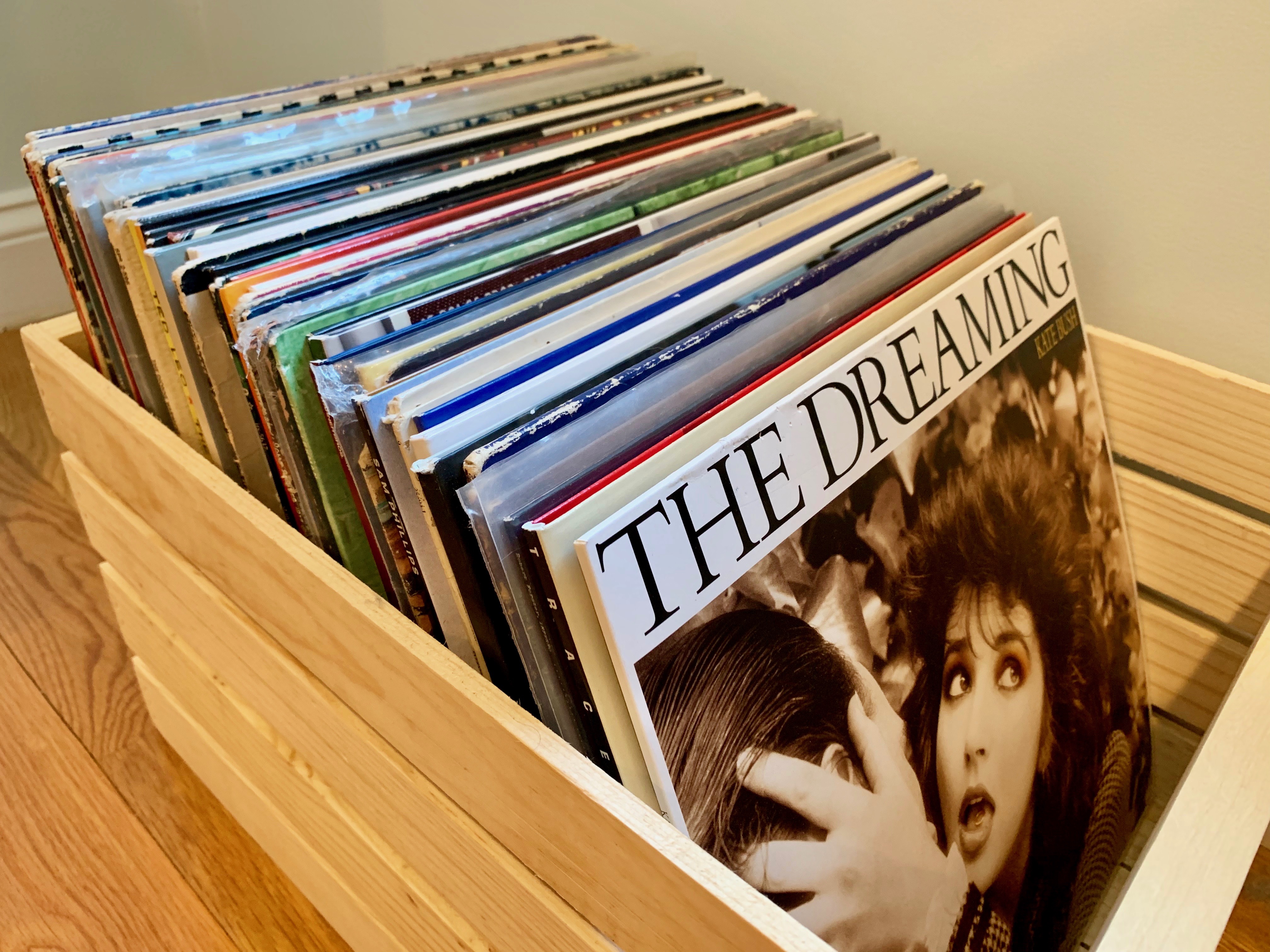

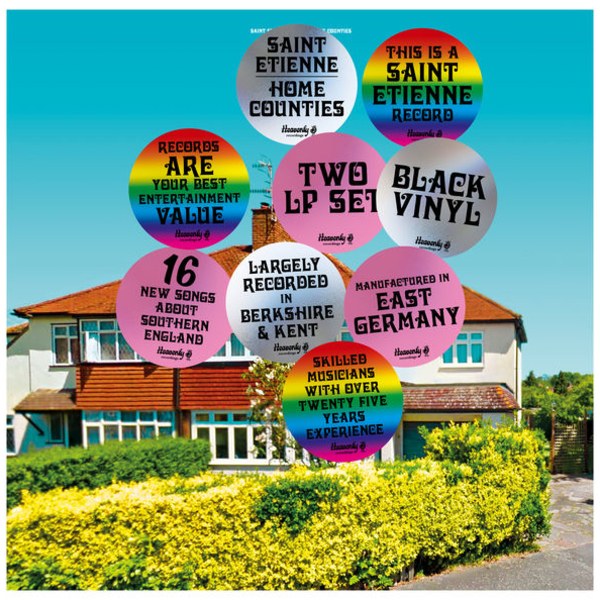
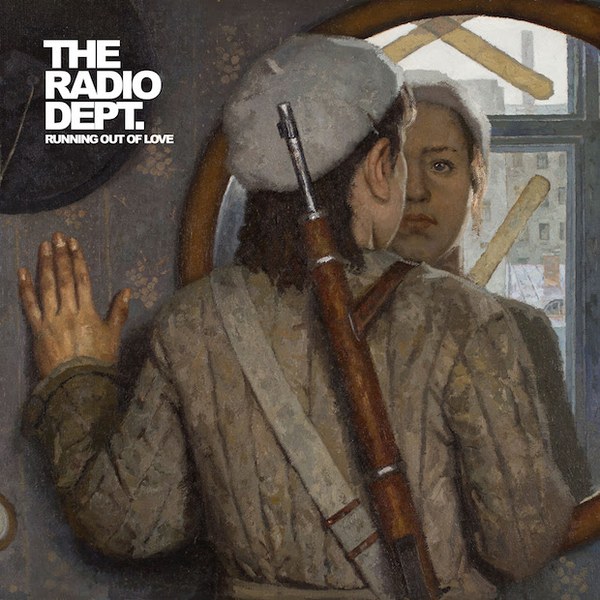

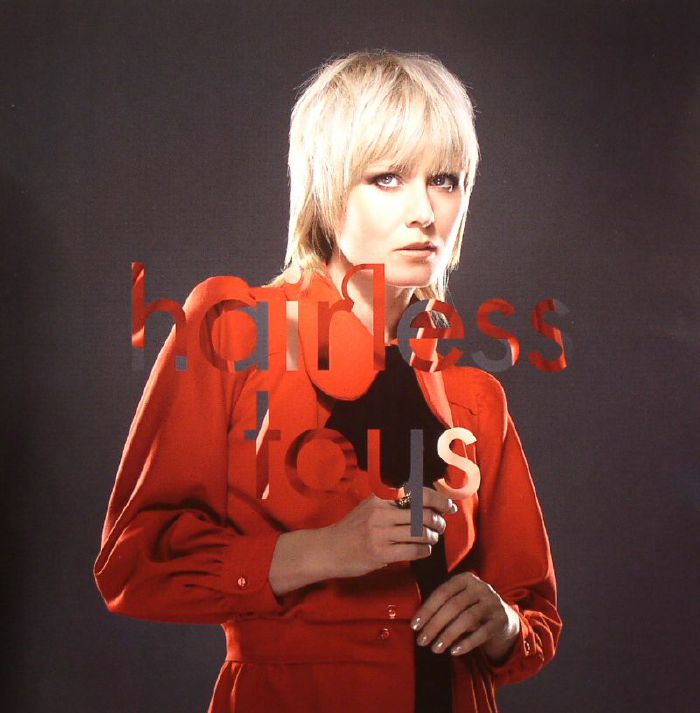
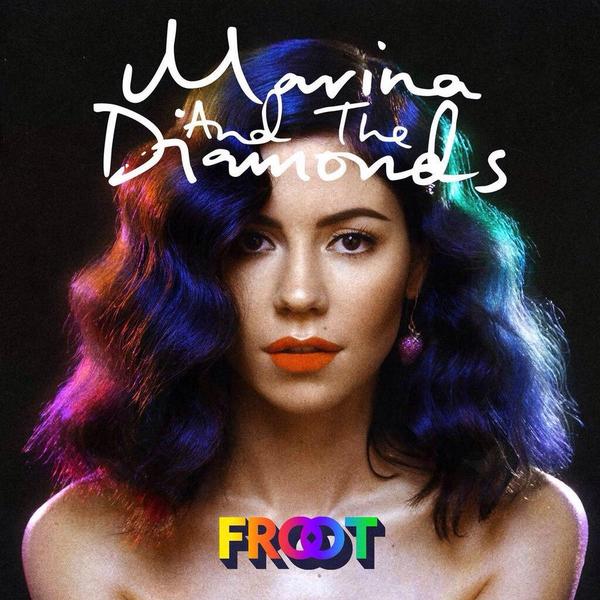
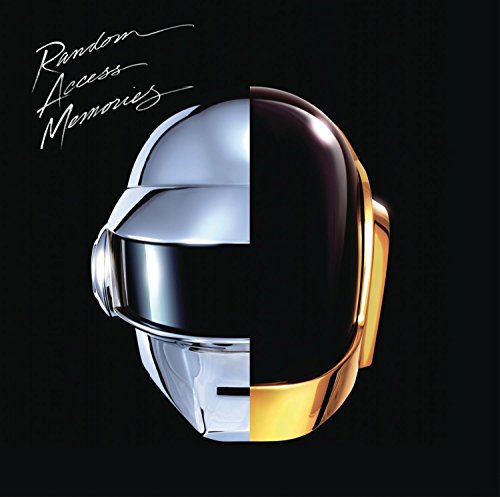
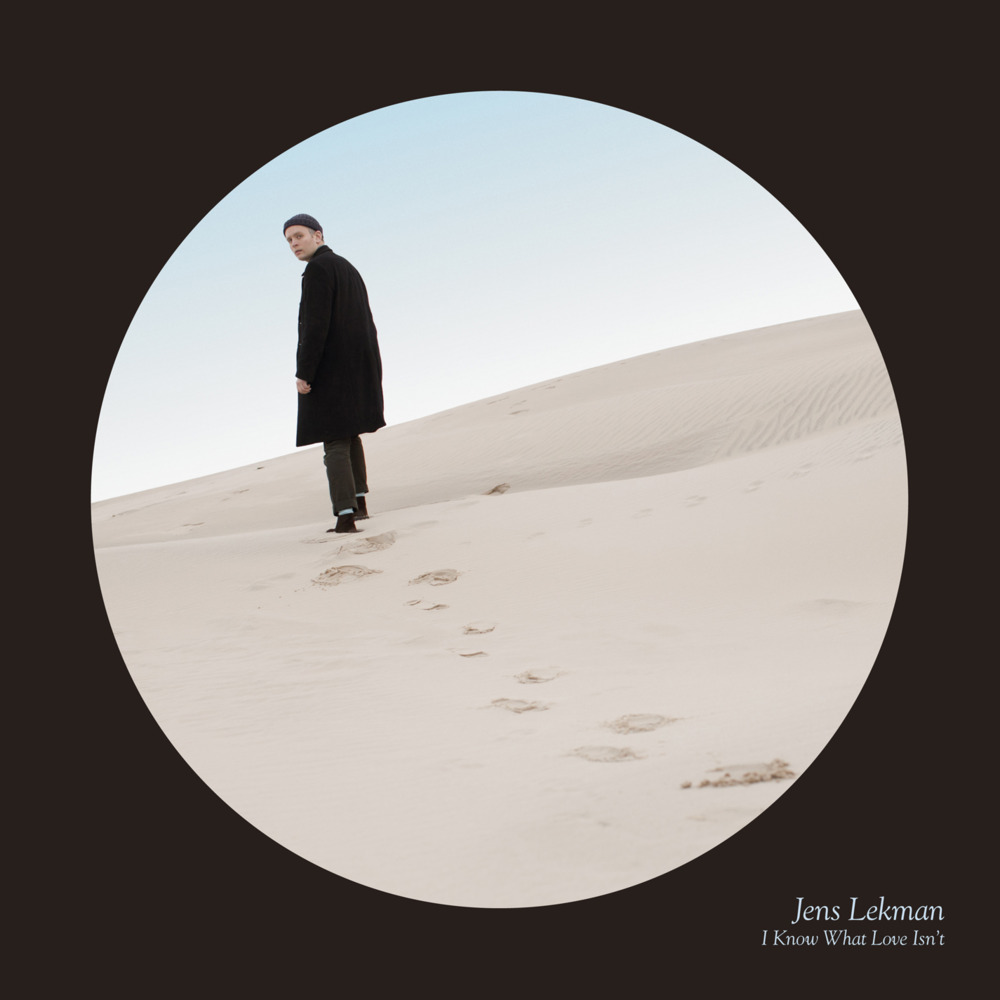

 Haunted Jukebox