TIFF 2026: Day 5

My final full day at TIFF extended into the next one with my first ever Midnight Madness screening which ended up my second favorite title of the festival.

LADIES AND GENTLEMEN, BRIAN MULRONEY

Winnipeg native Matthew Rankin’s second feature Universal Language was my favorite film of 2025. Imagining a Canada colonized by Iran, it was inventive, absurd, sidesplitting and in the end, oddly affecting. One could apply those descriptors in varying degrees to this follow up, but it does not do either film justice to compare them to each other. One depicts a topsy-turvy parallel universe with human nature still propelling it forward; the other posits that a former prime minister’s pickled brain is being kept alive in a glass jar, grandly exhibited as if it was The Wizard of Oz.

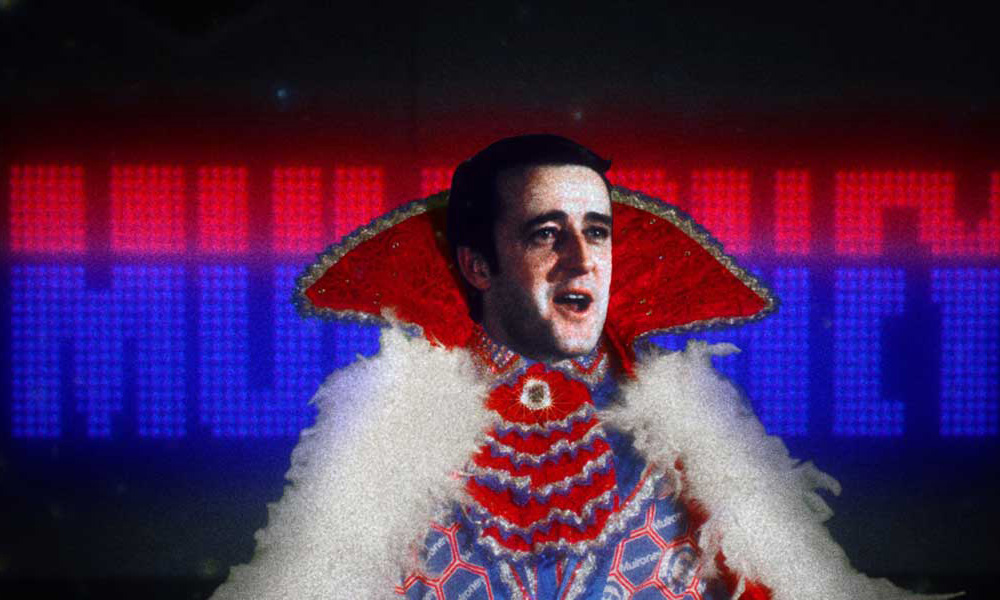
Where to begin with Ladies And Gentlemen, Brian Mulroney? A kaleidoscopic collage film feverishly packed with found footage and matching re-creations, it tracks the rise of our Quebec-born titular star from him first running for office and placing second on the ballot of the 1976 Progressive Conservative Convention leadership election to becoming Canada’s 18th Prime Minister in 1984. A congenial if unremarkable populist who today scans as sort of a right-wing Bill Clinton, Mulroney’s persona is perfect clay for Rankin to shape him into an unlikely rock star. What unspools often feels as if Ken Russell circa Tommy made a documentary about Gerald Ford.

The delirious use of period-inspired graphics and era-specific television tropes (the structure resembles a multi-episode, for-broadcast docu-series with cheeky nods to pop culture recognizable to anyone alive at that time) are so much fun to watch but they’re also a trojan horse, easing the viewer into the esoteric inner workings of Canadian politics. Footage of dowdy former PM John Diefenbacker is gleefully manipulated for him to appear as more of an evil foil to our hero than even the omniscient floating head of opposition party deity Pierre Trudeau. Rankin isn’t praising Mulroney, exactly, just demonstrating how the cult of personality towards national leaders was alive and kicking long before it all but defined some contemporary culprits.

His first feature Twentieth Century did similar service to Canadian PM William Lyon King roughly 70-80 years before. If that film often felt a little too heavily indebted to fellow Winnipeg auteur Guy Maddin’s silent-cinema shtick, this one revels in an entirely different aesthetic that, especially after the leftfield Universal Language, further establishes Rankin as no mere Maddin imitator but his rightful successor.

BITTER CHRISTMAS

Not a stretch to claim Almodovar’s long past his prime (Volver being his last great film for me) but his late-period work occasionally sparkles. Whether he’s essaying a wacky farce (I’m So Excited) or a tried-and-true melodrama (Parallel Mothers), no matter the quality, the result could not have come from anyone else. After a bumpy attempt at an English language picture (The Room Next Door), he returns to Spain with his most meta (and best) feature since Pain And Glory.

Revealed early on, there’s no great spoiler in disclosing that of the film’s two storylines, the earlier one is entirely the invention of the latter one’s central character. While Pain And Glory was his most blatantly autobiographical film with longtime collaborator Antonio Banderas as the director’s stand-in, Bitter Christmas has a sort of parallel figure in Raul (Leonardo Sbaraglia), who in the present-day narrative meticulously constructs a 2004-set screenplay involving Elsa (Barbara Lennie), herself a director of commercials. His focus on Raul, though, is less one of memoir than depicting an act of creation, exploring how real life can inspire fiction. As Raul’s screenplay develops and evolves, so does his approach to the point where he realizes what, and more importantly who the story’s about.

Although the constant shifts between narratives require an active viewing, the film’s tone is what may prove challenging for some audiences. Unsentimental, cynical and at times, a little pricky, it’s definitely not one the director’s more lighthearted romps, with the exception of Elsa’s nearly too-good-to-be-true boyfriend Bonifacio (Patrick Criado), a firefighter who moonlights as a male exotic dancer (his epic striptease scene is Almodovar at his campiest, sexiest best.) And yet, there’s a lucid energy that’s been missing from the director’s work for a little while. The furious cuts between storylines helps but there’s also the act of getting caught up in the creative process so thoroughly that when it all ends on an epiphany, it’s deeply gratifying.

LOW LIES THE LAND

This documentary follows three vineyard-owning families in the Piemonte region of Northern Italy. It is an idyllic setting to participate in such a time-honored trade as these subjects have done for generations. However, it only looks perfect on the surface. Global warming and all of its aftereffects (most notably droughts), along with other economic factors increasingly challenge the solvency of running such a business—enter an unnamed foreign investor only known as “The Broker” who is looking to buy up vineyard properties in this region, pushing each family to ponder whether it’s worth carrying on this tradition or time to pack it up.

Beautifully shot and somnambulantly paced, director Emanuele Gerosa’s film excels when he focuses on a real character such as an elderly matron who painstakingly moves herself around the kitchen in her chair to complete her domestic and professional tasks (someone really needs to buy her one with wheels.) While obviously an enticing place to visit, the film mostly lacks the spark and especially the quirk that materializes in similar portraits like The Truffle Hunters or Gates Of Heaven. Turns out winemaking is somewhat monotonous, boring work and via this depiction of it, lacking enough juice to sustain a feature.


TIFF 2026: Day 4

My first three-film day! (I’m past the point of reasonably doing 4 or 5.) The following are in descending order of preference, with my favorite of them proof that occasionally, those chosen on a whim turn out to be hidden gems.

NOSOTROS

Married to an indigenous woman in a small Guatemalan village, Romero (Jozef Coxaj) temporarily leaves her and their young child behind to make some money in the city. He finds a job as a security guard; to his coworkers, he refers to having a sister back home, but not a wife. One day, he meets Nubia (Lola Vasquez), who is transgender and owns a shop in the mall where he works. While he doesn’t find much in common with his macho colleagues, he immediately falls for her.

Director Joaquin Ruano’s debut feature is remarkable for how naturally this all comes together. No dramatic revelation of Nubia’s gender identity or any crossed wires between her and Romero (apart from the secret he keeps about his wife)—they simply meet cute, acknowledge their connection and go for it, enjoying each other’s company at a bar, then renting a hotel room, consummating their relationship without fuss. Coxaj and Vasquez have palpable chemistry and the latter shows a real ease on screen while also cutting a striking figure and presence.

I’ve made Nosotros sound like a straightforward picture, but Ruano’s narrative follows its own path, upending expectations about two-thirds of the way through with a shocking turn that almost entirely reroutes the film’s trajectory. It then comes to a full stop at another abrupt but correct moment where one comes to see that it’s about more than one relationship, that life itself is about continuously moving forward, all of us together. 

THE BELOVED

The first 15-20 minutes are solely a conversation in a Madrid restaurant between Esteban (Javier Bardem), a middle-aged filmmaker with a bad boy reputation and Emilia (Victoria Luengo), a young actress to whom he’s offered a part in his next picture. Shot almost entirely in uncomfortable closeups back and forth between the two of them, one soon learns that they already know each other although the exact nature of their relationship doesn’t reveal itself until near the conversation’s end when it unexpectedly turns heated and volatile.

Although the rest of the film breathes within wider vistas, this bravura sequence is typical of director Rodrigo Sorogoyen’s approach. He often favors big gestures such as fly-on-the-wall camera movements, sudden shifts into black-and-white or another film stock, lengthy, unbroken shots, etc. Is it him simply showing off or forging a meta-critique of the prototypical tyrannical director (for the film rarely excuses Esteban’s behavior)? It’s a bit of both, actually as much of the film post-opening unfolds on shooting sets, the professional and personal connections between Esteban and Emilia forever blurring.

Bardem delivers some of his best work ever here and Luengo (who has appeared in a few Almodovar films) successfully tackles a challenging role that could be her breakthrough if enough people see her performance. Engaging and rarely boring, the film’s only problem is its occasional misshapenness, especially towards the conclusion as Sorogoyen cycles through four or five fake endings. With some more judicious editing, The Beloved could’ve been up to the sterling level of its two leads.

ANCESTORS 

Watching the opening sequence I thought, “This should have been called Shoegaze: The Movie” and not just because of the gauzy, dense Cocteau Twins-esque music in the opening sequence. Set in late 1980s UK (roughly around the passage of Section 28 banning local officials from “promoting homosexuality”), Ancestors is a flashback to another era, re-created by director David Turpin and his crew and then run through a  heavy dream reverie filter. It centers on Beau (Éanna Hardwicke), a gay Irishman who has left his provincial origins for London, and Tiny (Jack Wolfe), a younger, scrappier drifter with whom he gradually bonds with. An aged Rupert Everett’s also in this; he seems to be turning into Stephen Fry–a good thing, I guess?

It’s feasible to adore a film’s aesthetic, the pointillist world it conjures not so much as a mirror of one’s own but its rare essence while also acknowledging that it’s just that, a construct. I felt deeply receptive to what Turpin was attempting to express here, the queer-forward worlds of My Beautiful Laundrette and Derek Jarman films a generation or two removed. However, my guard also went up. I could say Turpin really goes for it with the symbolic imagery but it might’ve worked better if Tiny was an actual character rather than a rough construct. Today, when the AIDS epidemic increasingly feels like a memory threatening to fade into the ether, the film’s effort to remind one why it shouldn’t be forgotten or glossed over is admirable. Unlike a contemporary, galvanizing portrait of the era such as 2014’s Pride, this seems content to lovingly conjure the surfaces but not necessarily that crucial why.

TIFF 2026: Day 3

Day 3 of TIFF included a film for kids of all ages and one strictly for the adults.

WHAT LIES BETWEEN US

If you’re longing to see Sidse Babett Knudsen commanding the screen as a morally conflicted matriarch, have I got the movie for you. One of my favorite actresses, Knudsen is known for work both in her homeland of Denmark (Susanne Bier’s After The Wedding, as lead of the long-running television series Borgen) and abroad (the reluctant dominatrix of Peter Strickland’s The Duke Of Burgundy, the forever-smiling instructor in Ben Sharrock’s Limbo.) 

This incisive thriller provides her with an especially juicy leading part. As realtor Anne Sofie, she seems to juggle a demanding job and raising two teens almost effortlessly. She’s good friends with two other mothers whose kids attend her son’s school: longtime friend Sarah (Sofie Gråbøl) and single mother/newcomer to the neighborhood Ulrikke (Asta Kamma August). Anne Sofie and Ulrikke’s sons are both 14; Sarah’s is two years younger. One evening, the mothers convince the two older boys to allow the younger one to hang out with them. The following day, Sarah’s son accuses the other boys of sexually assaulting him. They deny it and the viewer suspects one of the three boys is lying. This ordeal tears the mothers apart as speculation runs rampant among each of them, leading to further accusations, rumors and, after some crucial information is revealed to one of them, outright lies to protect their own child.

A good companion piece to the recent German film The Teachers Lounge, this benefits from an even more intimate scope. While we’ve seen a lot of dramas centered around parenting and school, director Amalie Næsby Fick excels at creating a lived-in world that’s instantly recognizable but also intricately detailed enough to give one a real sense of both place and the various dynamics between these characters. However, Knudsen has the most prominent role and she is at turns admirable, relatable, exasperating and chilling. One’s sympathy towards her is bound to fluctuate wildly. While the narrative shifts into some unexpected and potentially outlandish phases, Knudsen’s performance is assured and seamless (even if Anne Sofie is anything but.)

JULIÁN

From The Secret Of Kells to Wolfwalkers, I’m convinced Irish animation studio Cartoon Saloon will never let me down. Their latest, the feature debut of director Louise Bagnall is an adaptation of Julián Is A Mermaid, a 2014 children’s book by Jessica Love. That title essentially gives away the plot but to elaborate, Julián is a young suburban boy dropped off to spend the summer with his Dominican grandmother in Brooklyn. He’s also a dreamer with an active imagination and a tendency to get into trouble, but his Abuela is less permissive and understanding of him than his father. Obsessed with the sea and marine creatures, he meets a trio of local girls preparing for the annual Coney Island parade. In them, he finds kindred spirits as the four of them plan to march in the event dressed up as mermaids. Julian’s challenging of gender roles doesn’t sit too well with Abuela and other kids and adults; fortunately, he finds solace in a magical water bubble come to life that exemplifies the production design’s whimsy and invention.

While not nearly as deep as the fantasy/folklore of Wolfwalkers, Bagnall’s adaptation is a simple, joyous fable about what it means to be different and how meaningful bonds are established when people take the time and thought to the understand one another. The bold, bright colors and Latin music soundtrack are delights and at just under ninety minutes, Julián doesn’t wear out its welcome. For kids (and adults) of all ages with even some moments near the end as affecting as the Roadrunner’s appearance in Coyote Vs. Acme.

TIFF 2026: Day 2

My second day at TIFF consisted of my favorite and least favorite films of the festival!

I AM MARIO

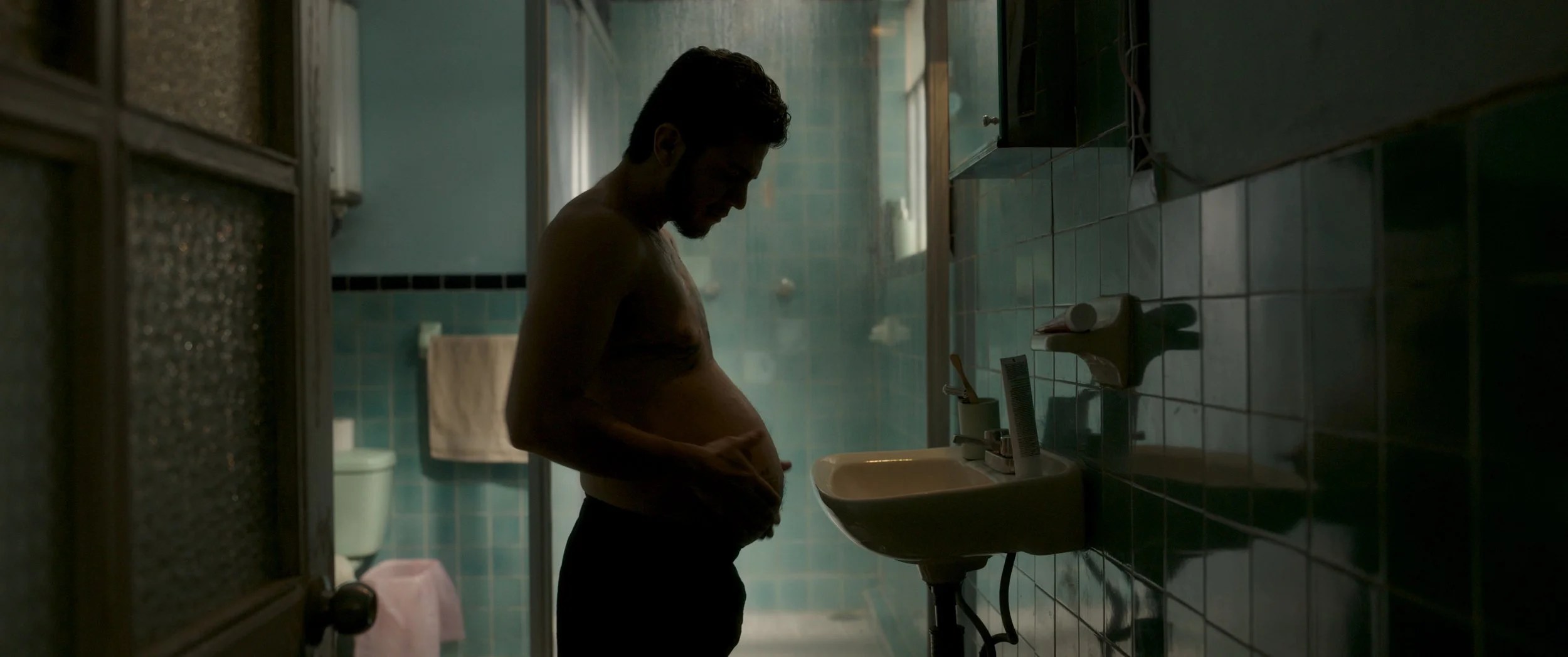
“Trans man becomes pregnant” sounds like a tabloid headline on the page but for a film high-concept enough for this corker of a one-line premise, the potentially risky I Am Mario turns out to be an unexpectedly tender and nuanced character study. It was easily my biggest surprise at this year’s TIFF.

To understand such a premise, one has to establish that Mario (Oustin León) is in the middle of his transition when this occurs. A Mexico City cabdriver already masculine enough to pass, he’s been going through hormonal treatments but had to temporarily pause them (and put off gender-reassignment surgery) due to medical complications. Following a tryst with a male co-worker shot ambiguously enough to question whether the act was entirely consensual, Mario discovers he’s pregnant; his reaction is suitably conflicted as he does want to have children, just not in this way. Further complicating matters is Jessica (Ruth Ramos), a spirited taxi customer-turned-lover who accepts him being trans but has no interest in becoming a mother (this early in his pregnancy, she has no idea.)

Director/writer Sharon Kleinberg isn’t trans but her sensitive, non-sensationalist approach to the material is partially what makes the film work. Much time is spent exploring the complex dynamic between Mario and his family (whom he’s out to) and his coworkers (whom he’s not.) Still, for a premise like this to excel, one needs a strong lead performance. Leon, who appears in nearly every frame delivers just that; astonishingly, this is his first professional acting role. His contributed input to the screenplay based on his own experiences is also deeply felt. 

Just a decade or two ago, someone might have misguidedly attempted to make a wacky comedy out of such a premise. I Am Mario meets the current moment beautifully. One hopes enough people will see it so that it becomes a talisman for future generations of trans stories yet to be told. 

EVERYBODY WANTS TO F*CK ME

It’s the sort of title that makes one want to reply, “Cool story, bro.” Admittedly, I had some expectations for this to be good since it stars the normally likable Taron Egerton (who was sublime as Elton John in Rocketman) and it has a potentially amusing premise (soft and sensitive but secretly persistent lothario wakes up one day to find himself irresistible to all women.) The first fifteen minutes suggest the type of witty, battle-of-the-sexes rom-com/satire that’s been in short supply lately. Then, it gradually goes off the rails and not even in an entertaining way. As it veers towards (and then completely into) horror, whatever goodwill has been established quickly sours, leaving one wondering whether writer/director Jonathan Schey has ever had anything resembling a functional relationship. Along with fellow cast members Jessica Henwick (Glass Onion) and Charley Clive (TV’s Rooster), Egerton is completely wasted here; all three of them are far deserving of a better vehicle. I suppose I should’ve known better after seeing that lame asterisk in the title.

TIFF 2026: Day 1

Returned to the Toronto International Film Festival for the first time since 2023 and saw a dozen flicks over five days. The first included two literary adaptations.

CLARISSA

I kicked off my TIFF with Nigerian filmmakers/twin brothers Arie and Chuko Esiri’s follow-up to their feature debut Eyifome (This is My Desire) which I had coincidentally seen five years ago to the date (it was also my first cinema screening since the Covid shutdowns eighteen months before.) Eyimofe was eye-catching and unique, a diptych regarding a man and a woman in Lagos each confronting a hardship related to another family member.

For their second feature, they’ve chosen to adapt Virginia Woolf’s Mrs. Dalloway of all things. Given a closer look, the text’s domestic drama and interpersonal relationships have some precedent in the earlier film. Working with a larger budget and international actors portends a sellout move but no fear—for a Woolf adaptation, Clarissa retains the vivid sense of place and attention present in the minute gestures of their previous film but on a vaster scale.

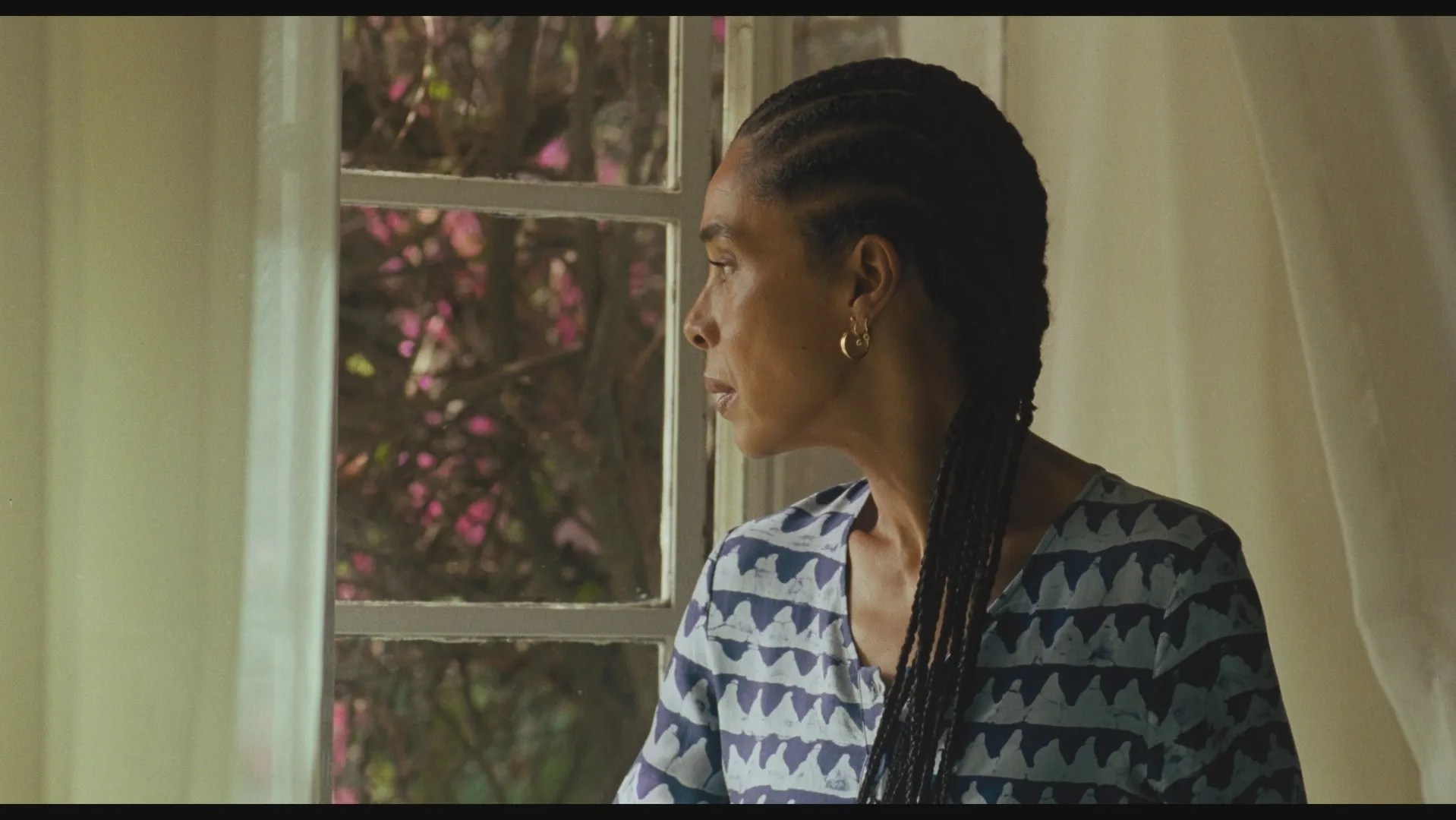
Not too familiar with Woolf’s novel apart from its interpolation in The Hours, the film’s first half was a bit hard to follow, shifting between two time periods and devoting ample time a seemingly ancillary character. Fortunately, these strands come together in the second half with said character not so much galvanizing the narrative as he does enable us to more closely understand Clarissa (played by a dazzling Sophie Okonedo as older and by promising newcomer India Ria Amarteifo as younger.) Transporting this story to Lagos also opens it up substantially while still targeting the universality of Woolf’s construct of a middle-aged woman throwing a big party for herself, reflecting on a live lived and pondering what it all means.

While David Oyelowo and Ted Lasso actor Toheeb Jimoh are both good as respectively older and younger versions of Clarissa’s ex-lover Peter, the arguably highest profile cast member steals the show. As Clarissa’s tart young friend Sally, Ayo Edebiri is relatable and charismatic as ever, reminding one of her defining work in The Bear and Bottoms rather than her subsequent string of film flops. Whenever Clarissa occasionally drifts or risks pathos from its tragedies, she fully lights up the screen—a stirring contrast to Okonedo, whose gimlet-eyed gaze is more of a chiaroscuro effect.

GLAXO

The second literary adaptation of the day was of Hernán Ronsino’s 2009 novel about four young men in a backwater Argentine town not long after the Juan Peron-disposing military coup. Beginning and ending in 1984 (with a few sly nods to then-contemporary film The Terminator), the bulk is centered in the late 1950s where Miguelito (Joaquin Bonadeo) suddenly finds a mentor in Ramon, a retired policeman (Marco Subiotto) new to town (whose chief industry is the pharmaceutical company of the title). His glamorous young wife, La Negra Miranda (Lali Espósito) is the envy of Miguelito and his friends as she often shows up their youth dances looking for a partner to share the floor with (and occasionally much more.) Miguelito is blissfully unaware of Ramon’s past involvement in the coup, so it does not bode well for the former when he forges a friendship with Miranda (and soon, much more.)

Director Benjamín Naishtat transfers the narrative well from page to screen, holding one’s attention as the story gradually clicks into place across time periods (visually delineated by their own aspect ratios) and gets good-to-nearly-great work from his ensemble (especially Bonadeo, who hadn’t acted before and Esteban Bigliardi as the older version of Miguelito’s friend Flaco. Still, given Esposito’s flair of a presence, I was anticipating something wilder and more florid like Almodovar who would’ve really had fun with (and queered up) this material. As is, however, Glaxo resonates as a period piece, a betrayal fable and possibly a Mormon revenge fantasy.