2026 Movie Review Capsules, #5

In addition to TIFF and the first weekend of Fall Focus, I’ve managed to catch ten more new movies since the start of September (more than that, actually! Expect another set of these before year’s end). Here they are in descending order of preference as usual.

Fjord

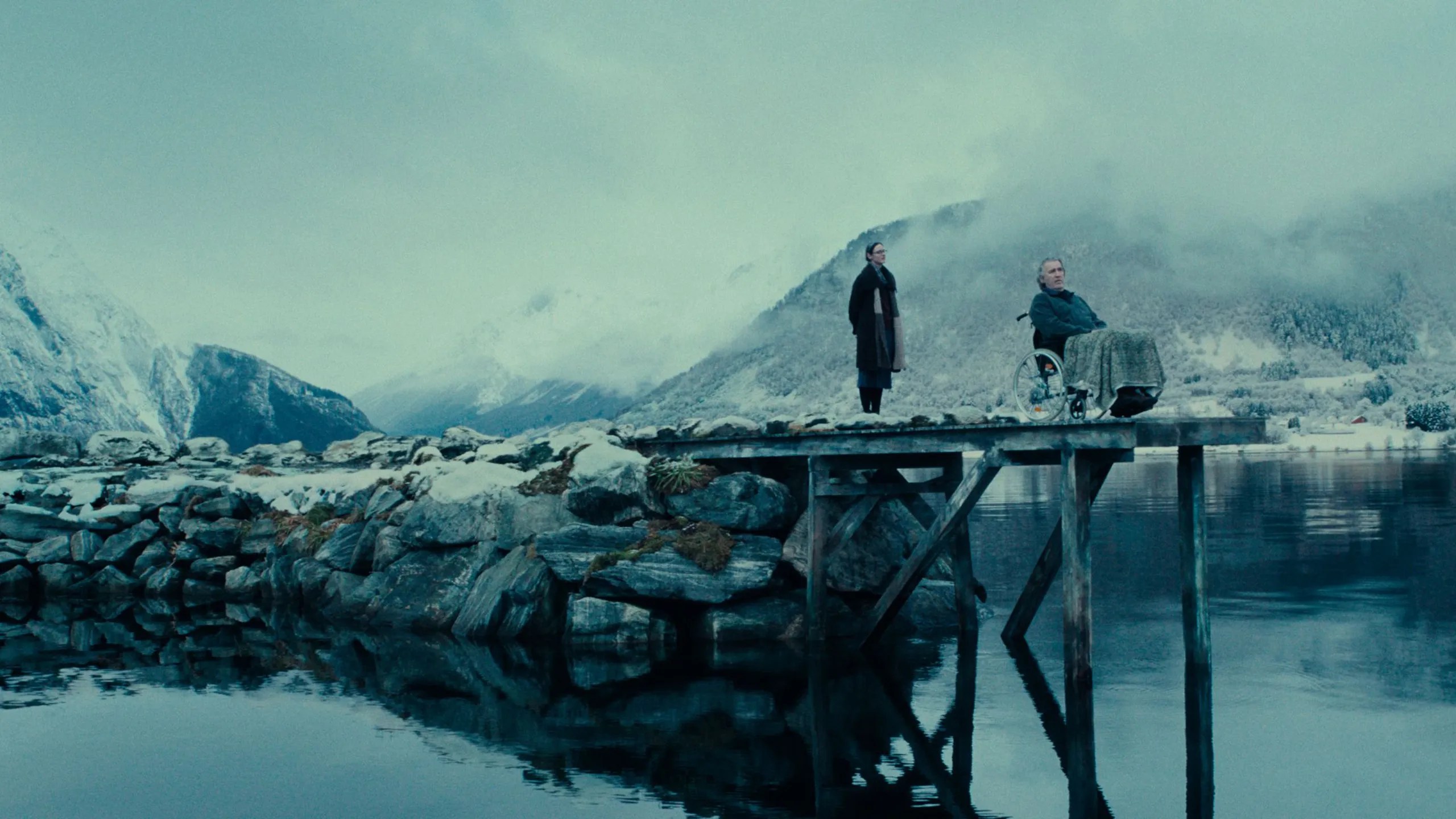
In the hands of a lesser director than Cristian Mungiu, this Palme d’Or winner could’ve ended up didactic or one-sided (and some viewers find it so.) To my relief, his aim is actually to spark communication, conversation, and the notion that the world is larger than our backdoor. Disappearing into their characters, Sebastian Stan and Renate Reinsve both deliver some of their best work-to-date.

The History of Concrete

As you’d expect from the forever inquisitive John Wilson, it’s about so much more than concrete, but also, it’s about concrete. This aptly passes the test where it doesn’t simply feel like three episodes of his old show stitched together but another even-more-sustained essay on the absurdity of humanity. Long Live Termite Art!

Teenage Sex and Death at Camp Miasma

Both intrigued and perplexed by Jane Shoenbrun’s first two features, this third one takes the Rocky Horror adage, “Don’t dream it, be it” to heart in the best possible ways. It feels more like an opening than the previous films’ sealed-off worlds. I still balk at some of their choices (Counting Crows?) but the idea of becoming the best version of yourself is suffused with more joy than pain—an encouraging development.

Miroirs No. 3

Christian Petzold’s latest is far more fascinating on this rewatch: one knowing what the family knows but what Laura (Paula Beers) does not changes the film from a puzzle to a disturbing and at times darkly humorous psychological study of concealment and working through one’s grief via ethically dubious (if somewhat therapeutic) means.

Who Is Martin Mull?

Post-Gene Parmesan, I felt comedian/musician/painter/actor/weirdo Mull and his unique talent was in danger of being forgotten but this lovingly assembled portrait passionately argues that this was never an issue. His relationship with Wendy Haas was what the kids call Couples Goals.

Coyote vs. Acme

It’s no Who Framed Roger Rabbit but it makes the most of its live action/cartoon hybrid, the human casting is divine (droopy Martha Kelly a no-brainer in this universe) and it exhumes the spirit of classic Looney Tunes far better than any other post-1970 product (should probably see Back In Action though to confirm.)

The Christophers

Steven Soderbergh continues to do fine if inessential work (post-retirement, ha!) but this art-forgery tale remains a star vehicle for Ian McKellan (don’t take him for granted, he’s getting pretty old!) and Michaela Coel (perhaps her best film work so far although her performance doesn’t fully come alive until the second half.)

Paying For It

Often plays like an indie film from the time period it’s set in (low-budget, late 90s/early 00s shot-in-Toronto) and that’s a compliment. Someone given filmmaker Sook-Yin Lee some of that Shoenbrun money.

Jimpa

One can’t ask for better anchors than Olivia Colman and John Lithgow (enjoy him now before he gets swept up in the unnecessary Harry Potter extension) and Aud Mason-Hyde is a find, nepo-baby or not. Heart’s in the right place, but it’s a bit overstuffed, which was not a problem for the enviably concise Good Luck to You, Leo Grande.

La Bola Negra

Impressed by its visceral sweep, much less so by its sentimental pull. Good old-fashioned awards bait any way you slice or redress it but I’ve seen so many new movies more deserving of such attention. Penelope Cruz’s all too brief appearance suggests a lustier, more encouragingly vulgar film.
TIFF 2026: Day 1

Returned to the Toronto International Film Festival for the first time since 2023 and saw a dozen flicks over five days. The first included two literary adaptations.

CLARISSA

I kicked off my TIFF with Nigerian filmmakers/twin brothers Arie and Chuko Esiri’s follow-up to their feature debut Eyifome (This is My Desire) which I had coincidentally seen five years ago to the date (it was also my first cinema screening since the Covid shutdowns eighteen months before.) Eyimofe was eye-catching and unique, a diptych regarding a man and a woman in Lagos each confronting a hardship related to another family member.

For their second feature, they’ve chosen to adapt Virginia Woolf’s Mrs. Dalloway of all things. Given a closer look, the text’s domestic drama and interpersonal relationships have some precedent in the earlier film. Working with a larger budget and international actors portends a sellout move but no fear—for a Woolf adaptation, Clarissa retains the vivid sense of place and attention present in the minute gestures of their previous film but on a vaster scale.

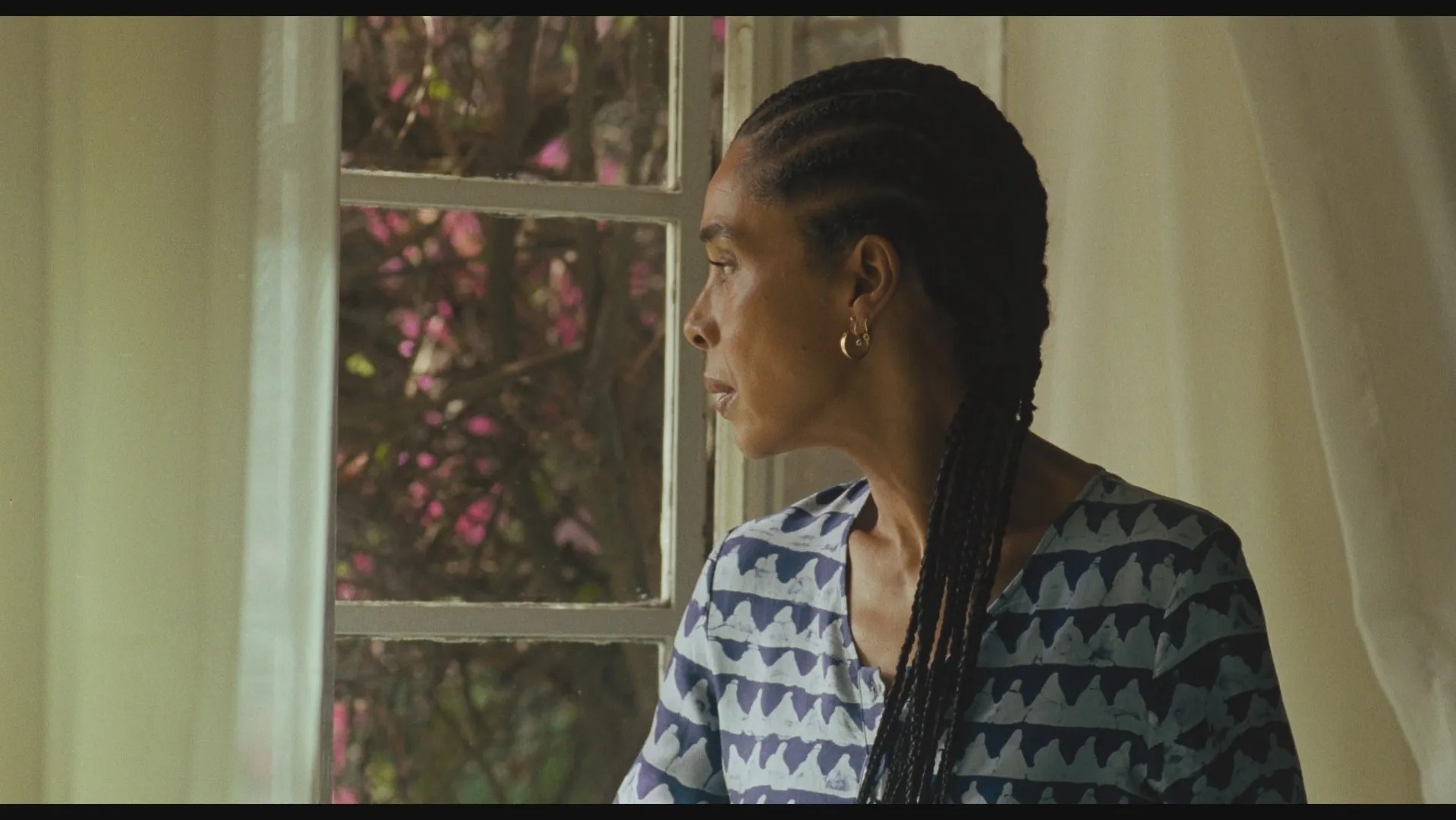
Not too familiar with Woolf’s novel apart from its interpolation in The Hours, the film’s first half was a bit hard to follow, shifting between two time periods and devoting ample time a seemingly ancillary character. Fortunately, these strands come together in the second half with said character not so much galvanizing the narrative as he does enable us to more closely understand Clarissa (played by a dazzling Sophie Okonedo as older and by promising newcomer India Ria Amarteifo as younger.) Transporting this story to Lagos also opens it up substantially while still targeting the universality of Woolf’s construct of a middle-aged woman throwing a big party for herself, reflecting on a live lived and pondering what it all means.

While David Oyelowo and Ted Lasso actor Toheeb Jimoh are both good as respectively older and younger versions of Clarissa’s ex-lover Peter, the arguably highest profile cast member steals the show. As Clarissa’s tart young friend Sally, Ayo Edebiri is relatable and charismatic as ever, reminding one of her defining work in The Bear and Bottoms rather than her subsequent string of film flops. Whenever Clarissa occasionally drifts or risks pathos from its tragedies, she fully lights up the screen—a stirring contrast to Okonedo, whose gimlet-eyed gaze is more of a chiaroscuro effect.

GLAXO

The second literary adaptation of the day was of Hernán Ronsino’s 2009 novel about four young men in a backwater Argentine town not long after the Juan Peron-disposing military coup. Beginning and ending in 1984 (with a few sly nods to then-contemporary film The Terminator), the bulk is centered in the late 1950s where Miguelito (Joaquin Bonadeo) suddenly finds a mentor in Ramon, a retired policeman (Marco Subiotto) new to town (whose chief industry is the pharmaceutical company of the title). His glamorous young wife, La Negra Miranda (Lali Espósito) is the envy of Miguelito and his friends as she often shows up their youth dances looking for a partner to share the floor with (and occasionally much more.) Miguelito is blissfully unaware of Ramon’s past involvement in the coup, so it does not bode well for the former when he forges a friendship with Miranda (and soon, much more.)

Director Benjamín Naishtat transfers the narrative well from page to screen, holding one’s attention as the story gradually clicks into place across time periods (visually delineated by their own aspect ratios) and gets good-to-nearly-great work from his ensemble (especially Bonadeo, who hadn’t acted before and Esteban Bigliardi as the older version of Miguelito’s friend Flaco. Still, given Esposito’s flair of a presence, I was anticipating something wilder and more florid like Almodovar who would’ve really had fun with (and queered up) this material. As is, however, Glaxo resonates as a period piece, a betrayal fable and possibly a Mormon revenge fantasy.