Favorite Debut Albums

Debut albums come in all flavors. Some barely hint at the artistry to come; others are solid first salvos only to be eclipsed by stronger and/or further refined efforts. Below, I’ve chosen perhaps that rarest breed: the fully-formed release that kicked off careers both fleeting and venerable and were also arguably never topped by anything else the artist would make. To be eligible, they must have recorded at least more than one follow-up. Here are ten favorites in chronological order:

Leonard Cohen, Songs of Leonard Cohen (1968)

Probably this list’s most contentious choice given I’m Your Man (1988), the first Cohen I ever heard (and loved) is its equal and fully holds up despite radically different and deliberately dinky period production. Alas, this debut plays more like a greatest hits compilation than the one he’d release seven years later: credit the three songs later brilliantly used in McCabe & Ms. Miller, but there’s also “Suzanne”, “Master Song”, “So Long Marianne”, “Hey, That’s No Way To Say Goodbye”—even Lenny’s off-key bleating at the end of “One of Us Cannot Be Wrong” still charms me.

Violent Femmes, Violent Femmes (1983)

Maybe the most obvious choice here but this is a textbook example of a debut so definitive, so iconic that Gordon Gano and co. arguably haven’t tried to top it. I don’t know how many officially released singles there were from this, but at least five of its ten tracks are undeniable standards (“Blister In the Sun”, “Kiss Off”, “Add It Up”, “Prove My Love”, “Gone Daddy Gone”) and most nonfans would likely struggle to name more than two or three songs from the rest of their catalog.

Deee-Lite, World Clique (1990)

“Groove Is In The Heart” remains one of a handful of songs I wholly fell in love with on first listen and it’s aged beautifully compared to most hits of its era. To a lesser extent, one could say the same of its parent album. Whether skewed towards Italo-house (“Good Beat”, “Power of Love”) retro-funk (“Who Was That?”, “Try Me On, I’m Very You”) or electro-pop (“What Is Love”, “E.S.P.”), World Clique is exuberant party music with substance that also doesn’t take itself too seriously (unlike their next two albums.) 

Liz Phair, Exile In Guyville (1993)

An eighteen-track manifesto seemingly untouched by the outside world, it’s a pure distillation of Phair’s raw talent. Few first albums have expressed such palpable perspective, much less a feminine one so unapologetically, frankly sexual and forthcoming. It either came out at exactly the right time or it ended up shaping the times even if it didn’t trouble the monoculture much. When Phair did exactly that on Whip-Smart (1994) and the much-maligned Liz Phair (2003), the effect wasn’t as novel or powerful.

Soul Coughing, Ruby Vroom (1994)

A truly strange band that could’ve only ended up on a major label at the height of alt-rock, Soul Coughing’s mélange of beat poetry-derived vocals, jazz rhythm section and sample-heavy soundscapes was both instantly recognizable and really like nothing else. So inspired was their debut that it gave off the impression they could be the 90s answer to Talking Heads. Instead, they ran out of gas after three increasingly conventional albums, suggesting such a notion was too good to be true even if for a brief shining moment it might have been.

Eric Matthews, It’s Heavy In Here (1995)

Whereas most 90s singer-songwriters took inspiration from John Lennon or Neil Young, breathy-voiced Matthews learned his stuff from Burt Bacharach and The Zombies’ Colin Blunstone, crafting intricate, opaque chamber-pop miniatures with guitars as prominent as the trumpet solos, cathedral organ, string quartets, etc. Call it an anachronism, but perhaps Matthews was (however unwittingly) playing the long game as, nearly thirty years on, this debut sounds as out-of-time as it ever did and also as fresh, brimming with little details and nuances ripe for discovery.

Morcheeba, Who Can You Trust? (1996)

The breaking point where “trip-hop” was not yet a genre to emulate but more of a happy accident, a sound stumbled upon when a DJ, a blues guitarist and a one-of-a-kind vocalist with a sweet but alluringly hazy tone all came together and their seemingly disparate contributions somehow gelled like smoothed-out alchemy. From the catchy, loping “Trigger Hippie” to the somber, hypnotic title track, it’s overall more of a sustained groove than a collection of discernible songs—a potency that they only intermittently recaptured when they later mostly eschewed grooves for songs.

The Avalanches, Since I Left You (2000)

Speaking of DJs and sampling, it took nearly sixteen years for this Australian collective to record a second album and a relatively scant four more years to release a third; whenever I listen to the first one, I can fathom why—a triumph of plunderphonics and fin de siècle attitude of “here’s where we’ve been, and here’s what’s next”, Since I Left You remains a singular point continually reverberating and a miracle of reappropriation so far-reaching it feels impossible to improve on—I don’t listen to it as much, but it’s still my favorite album of the 00’s.

Nellie McKay, Get Away From Me (2004)

This “delightful nutcase” (as a friend once correctly described her) released a debut so audacious, precocious, declarative and altogether stunning that I suspected it would be her Bottle Rocket or Reservoir Dogs (a great first effort in a career full of ‘em); unfortunately it ended up more of a Donnie Darko—one great glimpse of promise, followed by weird left turns and outright disappointments to the point where she’s settled for interpreting other people’s work, which she’s often gifted at doing. But I remember how much potential she once had.

Florence + The Machine, Lungs (2009)

Talk about the voice of a generation—Florence Welch, then in her early twenties made that very rare accomplishment of coming off as a *star* from the get-go with excellent tunes (“Dog Days Are Over”, “Rabbit Heart (Raise It Up)”) and an arresting, bold sound entirely worthy of and complimentary to that voice. Welch remains the most promising heir apparent to succeeding Kate Bush at the High Alter of Eccentric Female Divas,  even if none of her subsequent work startles or transcends like Lungs (although 2015’s How Big, How Blue, How Beautiful comes close.)
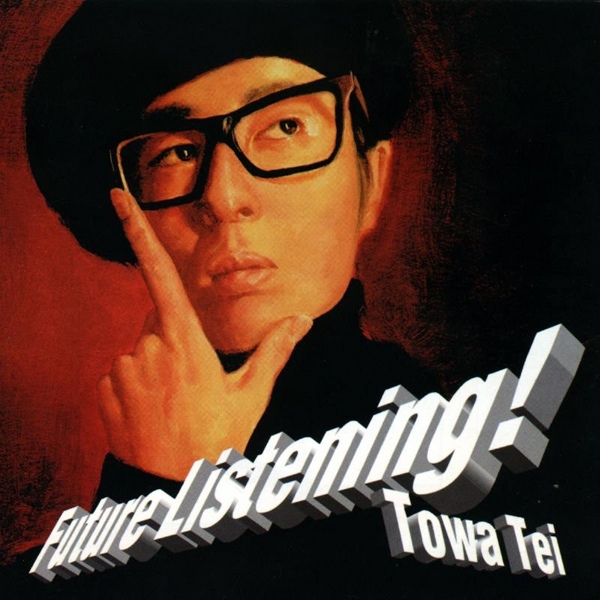
Towa Tei, “Future Listening!”

Future Listening!

(My 100 favorite albums in chronological order: #48 – released April 25, 1995)

Track listing: I Want To Relax, Please! / Technova (La em Copacabana) / Batucada / Luv Connection / Meditation! / Raga Musgo / Son of Bambi (Walk Tuff) / La Douce Vie (Amai Seikatu) / Obrigado / Dubnova (Part 1 & 2)

Borrowing heavily from the past was not a new thing in 1990s music. Even The Beatles covered Chuck Berry (“Rock and Roll Music”) at the height of their fame and created “old-timey” music hall pastiches (“Honey Pie”, “When I’m 64”) later still. Since then, we’ve seen nostalgia repeat itself in roughly a twenty-year cycle: the ‘70s gave us Sha Na Na and Happy Days, while the ‘80s brought back the ‘60s in everything from Dirty Dancing and The Monkees revival to the light psychedelia co-opted by bands both mainstream and cultish from R.E.M. to XTC.

At the dawn of the ‘90s, it was the 1970s’ turn to re-emerge; preceding such me-decade rock revivalists as the Black Crowes and Lenny Kravitz, you had house/dance trio Deee-Lite’s “Groove Is In The Heart”, an unabashed funk/disco track whose deliriously campy video (bursting with period fashions and Day-Glo colors) drove home the song’s overtly retro vibe. Still, those visuals can’t entirely take credit for the song’s massive success—built on that irresistible bassline and Lady Miss Kier’s fabulous, sonorous voice, it was an instant party/dancefloor anthem that didn’t take long in crossing over to pop. It simultaneously seemed retro and fresh thanks to an ultra-catchy melody, but also a beaming optimism that all but shouted, “We are here now, we are having fun, and the future has no limits.”

Although a one-hit wonder that flamed out after three albums, Deee-Lite deserves more credit. Their 1990 debut, World Clique (which includes “Groove Is In The Heart”) is nearly as much fun as anything by the B-52’s. I came close to giving it its own 100 Albums entry but instead opted to write about the first album from one of its members. Towa Tei, fondly remembered as the Japanese guy in the group, left in the middle of recording their final album. Solo, he never scored even a fraction of Deee-Lite’s fleeting success, but Future Listening! remains a fully realized advancement of his ex-band’s sound that warrants a cult following. I first heard it at a used-CD store and was intrigued—this is what I wanted Deee-Lite’s unfocused World Clique follow-ups to sound more like, to take the free spirit behind “Groove Is In The Heart” and develop it further and deeper into an accessible but adventurous collage of retro cool and, as the title implies, up-to-date technology.

“I Want to Relax, Please!” opens with a sample of a buttoned-up man uttering those very words, followed by a decidedly more playful sounding, “Okay!”. From there, Tei mixes electrobeats with what resembles a horn chart from an ancient swing number, which would seem a little hokey if those two disparate strands didn’t end up fitting so snugly together. It’s not necessarily anything new: British outfit US3 did almost exactly the same thing two years before, mixing samples from jazz label Blue Note’s back catalog with hip-hop beats and even scoring a mainstream hit (“Cantaloop (Flip Fantasia)”). Although Tei takes a similar approach, sifting through found sounds and applying them to new rhythms, his creativity is such that you sense an overriding vision at work rather than just a crafty attempt at resuscitating something old.

The second track’s title, “Technova (La em Copacabana)”, could not be more explicit, melding techno sounds with 1960s bossa nova rhythms. It’s like a updated version of Getz/Gilberto, the classic 1964 album from jazz saxophonist Stan Getz and Brazilian guitarist João Gilberto that created a bossa-nova craze in America, scoring a big pop hit with Antonio Carlos Jobim’s “The Girl From Ipanema”, sung by Gilberto’s wife, Astrud. Not only does Tei get a Getz-like sax solo from Yasuaki Shimizu on “Technova”, João’s daughter Bebel (whom he later had with the singer Miúcha) provides the vocals, adding credibility and authenticity.

The “Technova” sound is all over Future Listening!, from a juiced-up, synth-heavy cover of the old genre standard “Batucada” (also sung by Bebel Gilberto) to the eleven-minute closer “Dubnova (Part 1 and 2)” which begins like a straightforward, extended remix of “Technova” but becomes increasingly impressionistic, ebbing the melody until it nearly resembles ambient music in its final section. However, Tei also displays an obvious love for the original genre he’s co-opted. “La Douce Vie (Amai Seikatsu)” is a full-on collaboration with Pizzicato Five, a ‘90s Japanese pop band with a similar sensibility that both looked back and ahead. While the song’s still laced with subtle electronics, they’re secondary to more organic elements like accordion, electric sitar and Maki Nomiya’s lounge-ish (but lovely) vocals. “Obrigado” sounds even closer to the real thing, as Bebel and former skronk-rocker-turned-demure-crooner Arto Lindsay duet over a romantic, sweeping but still understated jazz arrangement with exotica overtones (like the pleasantly stoned electric sitar solo).

Still, bossa nova is only one (albeit significant) part of the album’s sound palette. Future Listening! really lives up to its name in a handful of more experimental tracks. After the brief, gauzy, Middle-Eastern tinged instrumental “Raga Musgo” comes “Son of Bambi (Walk Tuff)”, an extended, nearly unclassifiable number with vocals from female British reggae/Dancehall toaster MC Kinky, an electric sitar hook that’s an interpolation of the Richie Havens song “Something Else Again” and a big beat that seems to prefigure the one used in the Chemical Brothers’ “Let Forever Be” five years later. It’s heady stuff, but as with most of Tei’s work, it’s disarmingly playful, too. Even better is “Meditation!”, a psychedelic free fall into spoken-word jazz (coolly, delicately performed by Natasha Latasha Diggs). It conjures an aural wonderland full of acoustic guitar, upright bass, skittering flutes, cascading beats and samples of Raymond Scott’s proto-electronica jingle “Lightworks”. The familiarity of these disparate elements makes palatable and enticing the futurism that comes from how Tei impishly rearranges them into the song’s framework.

For all his attempts to innovate, Tei also understands the value of good, old-fashioned pop song (he would cover Hall and Oates’ “Private Eyes” a few years later). “Luv Connection” is simple enough to fit on any of Deee-Lite’s albums and, in a perfect world, might have received radio airplay alongside “Groove Is In The Heart”. Club diva vocalist/lyricist Joi Cardwell sings over a mid-tempo house dance beat, while another electric sitar provides the song’s most engaging hook. It stretches on for over seven minutes but never wears out its welcome, thanks mostly to the smooth, soulful Cardwell, who serves the song’s melody well enough but also interjects effervescence via her delicate improvisations. Although decidedly less unique than much of what surrounds it, “Luv Connection” is such a perfect sigh of a song that its approachability doesn’t diminish it.

Tei’s still around, although I haven’t heard much of his under-the-radar work beyond this album’s similar, somewhat inferior follow-up, Sound Museum (1998). Unlike a few other recordings I’ve written about from this period, even though I still enjoy Future Listening!, I don’t particularly hear anything new in it with each spin. That doesn’t necessarily mean it’s now seriously dated; instead, it’s an album that simply accomplished what it set out to do (which can’t be said of every album), combining old and new into something that was both but also entirely its own thing. As artists today continue mining the past for inspiration, they should look to Tei as an example of how to do it right.

Up next: Curiously out of time.

“Meditation!”:

https://www.youtube.com/watch?v=CjTVnYZh9k4

“Luv Connection”:

https://www.youtube.com/watch?v=ypTIkl5SEOU