(My 100 favorite albums in chronological order: #28 – released August 7, 1990. Originally posted on Kriofske Mix, 4/1/2015.)
Track listing: The Man I Used To Be / That Is Why / The King is Half Undressed / I Wanna Stay Home / She Still Loves Him / All I Want Is Everything / Now She Knows She’s Wrong / Bedspring Kiss / Baby’s Coming Back / Calling Sarah
Some albums I’ll write about here were genuinely popular when they came out, while others sold poorly but later proved massively influential to a generation of listeners and artists alike. Bellybutton, the debut from early ‘90s power pop band Jellyfish falls into neither of these categories—it received some college radio and MTV airplay at the time but now it’s mostly forgotten. Three years after its release, the band put out a second album, Spilt Milk and then split up shortly afterwards. Spilt Milk was my gateway into Jellyfish and the impetus for my belatedly inquiring Bellybutton, which I liked even more. A perennial in my music collection, I had no trouble finding a place for it on my first favorite 100 albums list in 2004, and there was never any question as to whether it would appear here.
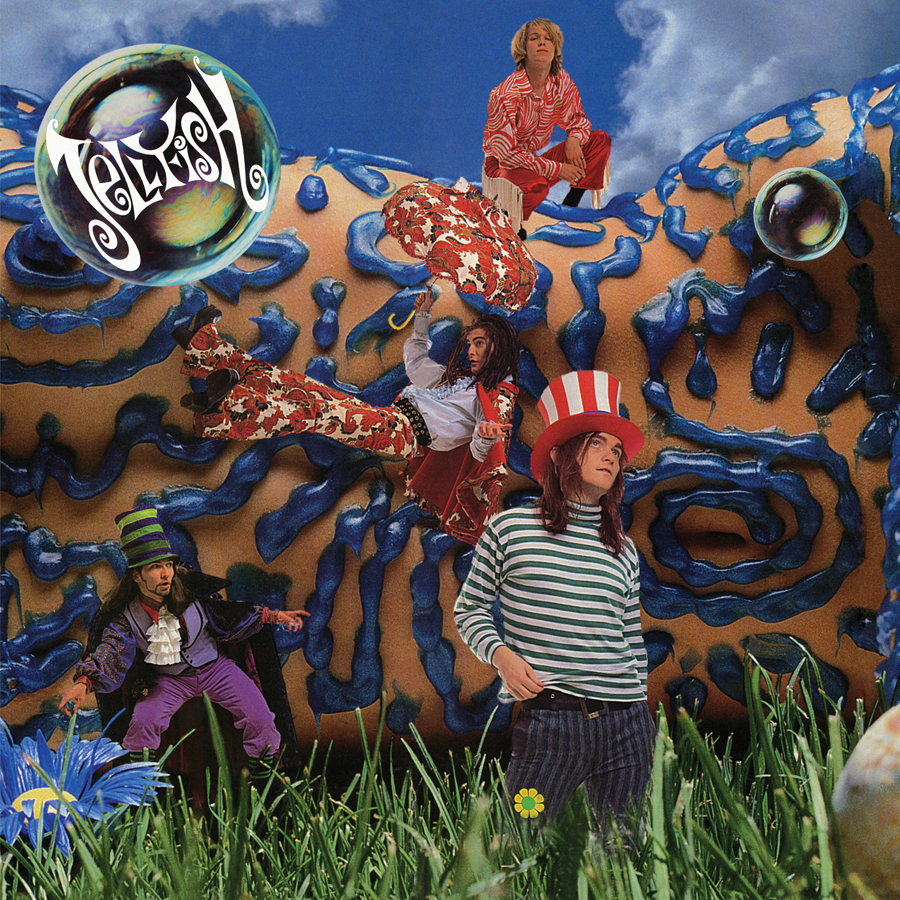
I’m inclined to chalk up Bellybutton’s lasting appeal to its timelessness–none of it particularly sounds like 1990 (in contrast, portions of Flood seem explicitly of its era), but that’s not entirely accurate. Actually, just about all of it could’ve been recorded before 1990 (and most of it prior to 1980), which is a longwinded way of calling it retro. If the playful, psychedelic cover art and band logo (and outfits!) did not already tip you off, Jellyfish was an unapologetically retro outfit, riding the late ‘80s wave of ‘60s revivalism and anticipating the ‘90s mass appropriation of ‘70s pop culture (see everything from “Groove Is In The Heart” to The Brady Bunch Movie). You don’t have to be a music geek to hear not-so-faint echoes of The Beatles, Big Star, Queen, etc.; throughout the record’s ten immaculately crafted tracks.
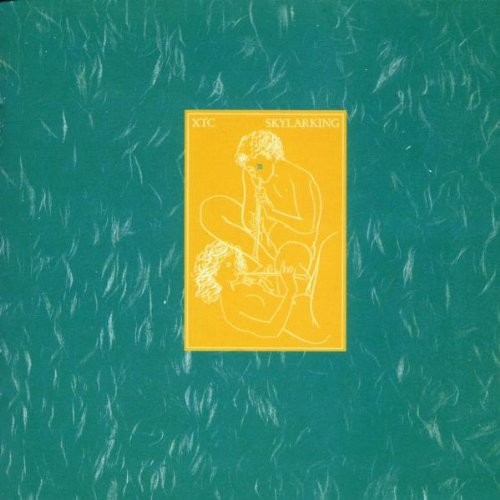
What elevates Bellybutton from just-a-pastiche status (even though “All I Want Is Everything” is a glorious Cheap Trick simulation) is the songwriting. Most Jellyfish compositions are co-written by the band’s two constant members, singer/drummer Andy Sturmer and keyboardist Roger Manning (guitarist/future solo artist Jason Falkner and Manning’s brother Chris on bass round out the lineup here). On opener “The Man I Used To Be”, you immediately sense their ambition and talent: after a reverent church organ intro gives way to a trembling piano rhythm punctuated by guitar stabs, Sturmer comes in with his sweet choirboy tone, growing huskier and louder as the song builds but never overwhelms. Subtle orchestration colors the background, a Stevie Wonder-ish harmonica takes the place of a guitar solo, and the outro repeats the intro organ melody, only this time with somber, more reserved violins. It’s as if the band is laying all its cards on the table at the outset, emphasizing those influences I mentioned earlier (to a greater degree than the Beatles-influenced XTC, for instance) but also making them their own, expertly, cunningly inserting them into a structure ultimately defined by their own melodies, lyrics and arrangements.
Thus, Bellybutton proceeds solidly, one potential single after another. “That Is Why” unabashedly recalls Supertramp in its electric piano and the Beatles by stretching out the word “Why” to eight syllables (it also throws in some knowing “doot-doot-doot” backing vocals), but neither its unique stop-and-start rhythm nor such evocative yet knotty phrases as “it’s partly cloudy with trouser stains” have any obvious precedents. “The King Is Half Undressed” combines a “Tomorrow Never Knows”-style drum roll with electric harpsichord and Pete Townshend power chords and then transcends all of it with a classic, ringing power pop chorus complete with backing “ba-bup-ba-bah’s!” (followed by ensuing breakdown of swooning Beach Boys harmonies). “I Wanna Stay Home” is semi-acoustic mid-tempo pure pop of your dreams, driven by a tight, classic-sounding melody that’s simultaneously cheerful and tinged with melancholy, an aesthetic alt-rock followers like The Gin Blossoms would flatten out (and hit big with) as the decade wore on.
The rest of Bellybutton is just as insanely tuneful and bright-eyed but also clever and knowing enough to explain why it never moved anywhere near the units The Gin Blossoms did. “All I Want Is Everything” is the closest thing the album has to an alt-rock rave-up and is perhaps the best showcase for Sturmer’s vocal prowess: he’s alternately urgent, defiant, bratty and even sincere. However, his first line is “Ever since I was a twinkle in my father’s pants.” An opening declaration for the ages, but not necessarily something that’ll get you on top 40 radio. “Baby’s Coming Back” actually did get some radio airplay (it was the band’s sole Billboard Hot 100 entry, peaking at #62)—catchy, concise and handclap-heavy (the album’s best liner note, by the way: “We all clapped our hands.”), it might’ve gone even further if it didn’t so blatantly wink at bubblegum music (or wasn’t quite so reminiscent of “C’mon Get Happy” by the Partridge Family). The cheeky, even-more-harpsichord-heavy “Now She Knows She’s Wrong” could be a track by XTC retro-pop alter-egos The Dukes of Stratosphear (now we’re talking a pastiche of a pastiche!). By the time closer “Calling Sarah” arrives, you can practically hear Falkner thinking “oh, fuck it” as he lays into a shameless rip of a multi-tracked Brian May solo while the whole song plays more as inspired homage to than lazy copy of “You’re My Best Friend” (and Spilt Milk even has a song on it called “He’s My Best Friend”).
I know, for most, Bellybutton is just too clever, too arch, too in love with its own braininess to really contribute something meaningful and original and lasting for the world at large. And then, I look back to the messy, affecting emotion coursing through “The Man I Used To Be” or the elegant, bluesy extended piano intro that sets the scene for all the lovely intricate harmonies and similarly sharp observations of “She Still Loves Him” (such as, “All they wanted to be was as happy as couple number three on their favorite game show.”) I also think of “Bedspring Kiss”, a slinky, soothing, exotica-flavored five-minute bossa-nova complete with stand-up bass and sitar. It’s the album’s least representative track by a considerable margin, but its otherness stands out in a positive way; it’s also as catchy and accomplished as anything else here. I once called Bellybutton a ‘90s power pop primer, which seems a little strange having argued how un-‘90s it now seems. So, let’s just call it a great album from the early 1990s that actually looks forward in how ingenuously it cultivates the past. Cliché that it may be, the idea that everything old is new again is something we’ll keep coming back to throughout the decade.
Up next: another 1990 album with a one-word title beginning with the letter “B”!
“The Man I Used To Be”:
“The King Is Half Undressed”: