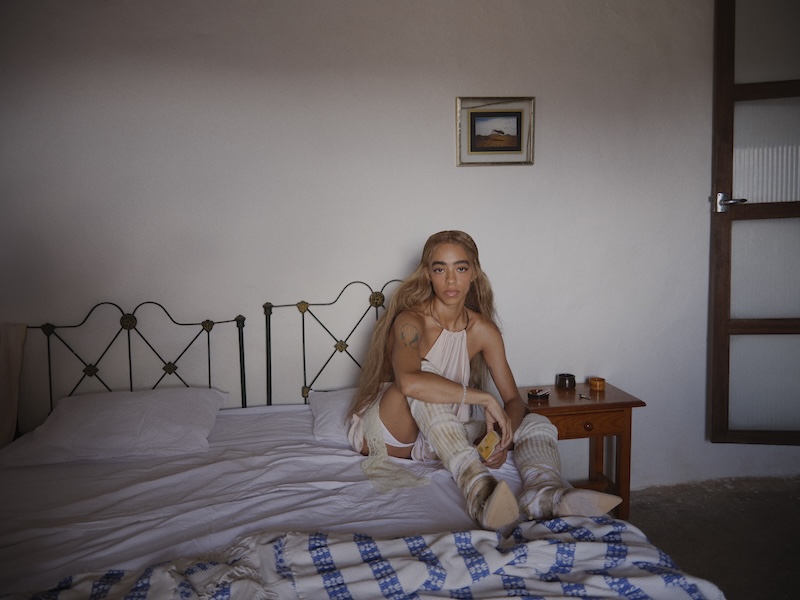
Playlist: Out of Phase

Kelsey Lu

Back from a posting hiatus, I spent a lot of that time thinking about what this blog should or could be. I considered switching to a Substack-like newsletter format but concluded that I’d rather not leave behind everything I’ve posted here over the past dozen years (when I began my 100 Albums project on my old blog, then transferred the first thirty or so entries to this one.)

I have no grand design for Haunted Jukebox. Instead of creating another new years-long project akin to 24 Frames, I’m just going to post something, anything weekly (and maybe skip a week once in a while) and see what evolves. There will be movie reviews like last week’s post (and more on the way with IFFBoston kicking off in two days) and the occasional mix/playlist, now with song-by-song commentary.

First up: Out of Phase, which collects some of my favorite new tunes of 2026 so far. Here’s the tracklist:

1. Arctic Monkeys, “Opening Night”: Myself dismissive of them until 2022’s presumptive swan song The Car, they return with the leadoff track from charity album Help2. Is it a coda, or maybe a potential return with those guitars prominent in the mix once again? Either way, Donald Fagen should cover it.

2. Kelsey Lu, “Running To Pain”: Mostly missing-in-action since her 2019 debut album Blood (featuring the airy, soulful, dancefloor-friendly “Poor Fake”), I feared she’d be a one-and-done. Happily, her first single from forthcoming second LP So Help Me God is exactly what I’ve been waiting for these seven years. Between this and its other pre-release track “Portrait of a Lady on Fire”, such a wait could be fully worth it.

3. Lana Del Rey, “White Feather Hawk Tail Deer Hunter”: Still a weirdo and I prefer when she leans into this quality. Hopefully, tempering her Twin Peaks vibes with just a twinge of Kate Bush (or is it Bjork?) will prove as fruitful going forward.

4. Robyn, “Talk To Me”: Also still a weirdo and if it takes her eight years between albums, so be it as the recently released Sexistential is another good one; any artist can employ Max Martin to bring the hooks but it’s Robyn’s personality that allows them to soar.

5. Tori Amos, “Shush”: I have perhaps unrealistic hopes that the upcoming In Times of Dragons will end up one of Amos’ more eccentric later-day efforts based on tracks like this faintly sinister six-minute slow-burn of an opener.

6. Mitski, “Where’s My Phone?”: Having listened to it only twice, I can’t yet tell where Nothing’s About to Happen To Me will end up in the Mitski canon but at least she’s no longer trying to be an alt-pop idol as the music on this resembles Social Distortion (of all things) with a much sweeter vocal (also love the jaunty “uh, uh, ohh’s”.) 

7. Beth Orton, “The Ground Above”:  A few minutes into this eight-minute title track jam (from a just-announced new album), she unexpectedly shifts into a jazz-incensed vamp over a 90s-style breakbeat, an assurance that nearly thirty years after Trailer Park, she’s still developing and experimenting with her sound.

8. Beabadoobee feat. The Marias, “All I Did Was Dream of You”: I found this merely pleasant the first three or five times I heard it but sometime after that, it suddenly clicked: the chiming guitars, the deliberate tempo no faster than it needs to be, those swooning chord changes; I nearly gave up on her after This Is How Tomorrow Moves and now I’m all in again.

9. Jose Gonzalez, “A Perfect Storm”: Speaking of absorption over time, it was at least a year of repeated spins before his Local Valley became of my favorites of, no shit, this entire decade. So I’m being extra patient with his new Against The Dying of the Light; presently, this spare, hushed opener is the only track sticking but get back to me in a few months (or years.) 

10. Kacey Musgraves, “Dry Spell”: Neither as profound as some listeners think nor as banal as she occasionally risks, she might’ve turned into a singles artist following 2018’s Grammy-winning Golden Hour; this exceptionally Calexico-esque track from May’s Middle of Nowhere sounds great on the radio but we’ll see if she’s still capable of more when the album drops. 

11. Alexis Taylor & Lola Kirke, “Out of Phase”: Four years since the last Hot Chip album and because vocalist Alexis Taylor couldn’t sound like anyone else if he tried, this duet with Sinners actress Kirke is far more than adequate in that it could’ve easily been a single from the next Hot Chip album, whenever that may occur.

12. GUM, “Celluloid”: More drawn to Pond than Tame Impala where western Australian psych-rock is concerned, this side project from Jay Watson of the former band offers up unpredictable soundscapes that resemble pop songs if you squint hard enough but his vocal resemblance to Mike Hadreas of Perfume Genius is what holds my attention.

13. RAYE, “I Know You’re Hurting”: This Music May Contain Hope. is an extravaganza of Janelle Monae’s The ArchAndroid-sized proportions and may take longer to absorb than the Gonzalez record. Always drawn to artists of insane ambition, I’m psyched to get to know this record well, but the immediate standout (after the glorious hit “Where Is My Husband!”) is this epic ballad where the singer accumulates power that flows rather than drags.

14. The New Pornographers, “Votive”: A.C. Newman and company (if not Dan Bejar) are still cranking’ em out a quarter century after Mass Romantic and while they haven’t produced anything essential since 2014’s Brill Bruisers, at least this gently building raver nearly justifies their continued effort.

15. Emm Gryner, “Touch The Sky”: Written in tribute to Artemis II astronaut (and fellow Canadian) Jeremy Hansen, this standalone single goes Big Power Ballad in a way Gryner has never previously dared but its piano-and-orchestra arrangement, quiet-to-loud dynamics and her ever nuanced vocals keep it firmly on the right side of Celine Dion.

16. Iron & Wine, “Roses”: Later day Sam Beam has been erring on the side of perfectly fine but somewhat forgettable, so as the Beatles-esque chord change late in this song’s chorus snapped me awake, it suggested that Beam is still crafting tunes full of little interesting details few other modern folk rockers often consider.

17. They Might Be Giants, “Wu-Tang”: Their catchiest single in years from what may end up their best album in decades. Given that John and John are now in their seventies, this is no small feat. Modern rock radio might have played the heck out of this thirty-odd years ago, at least more than it did their singles of that time.

18. Rolling Blackouts Coastal Fever, “Sunburned In London”: Speaking of Western Australians, this sextet has always leaned heavily towards The Go-Betweens in their sparkling jangle-pop. Their hero’s return after an extended break is this breezy, hypnotic six-minute travelogue that could’ve fit on any of their previous albums but my god, it sounds so good to have them back doing what they do best.
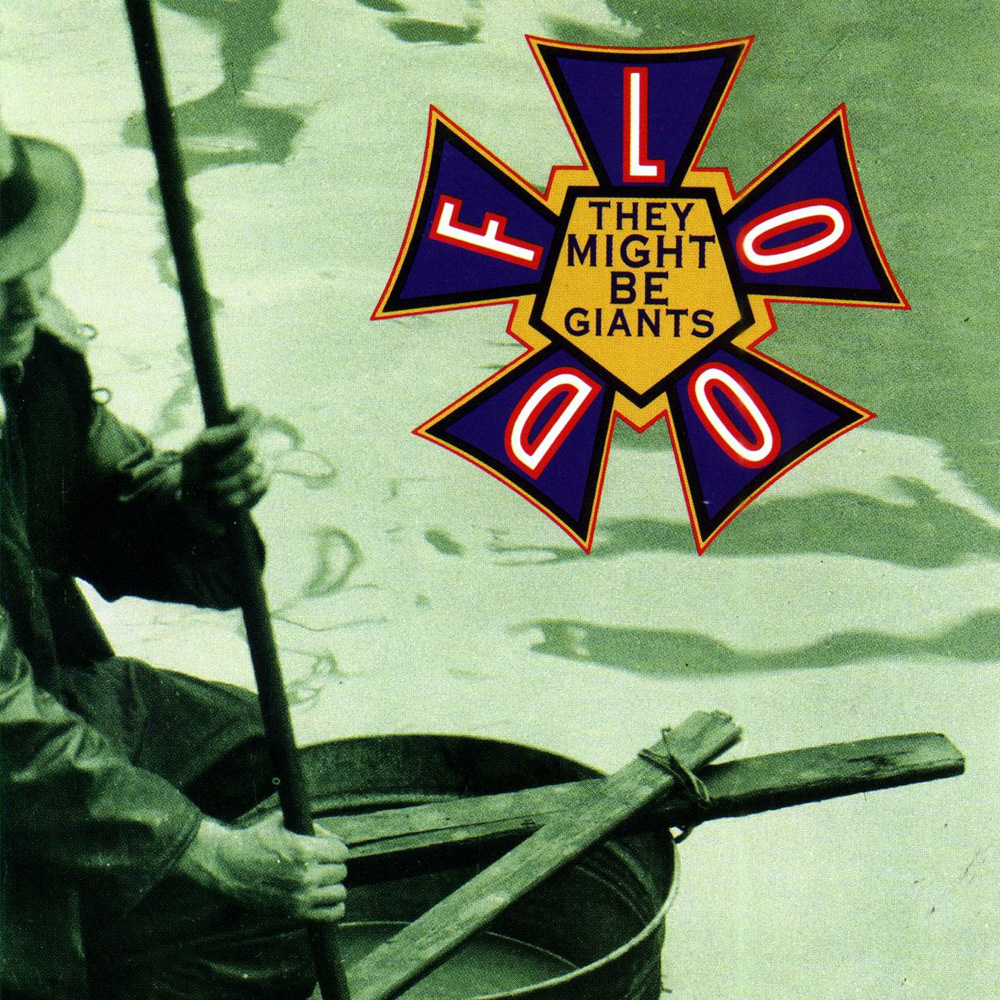
THEY MIGHT BE GIANTS, “FLOOD”

flood

(My 100 favorite albums in chronological order: #27 – released January 15, 1990. Originally posted on Kriofske Mix, 3/24/2015.)

Track listing: Theme From Flood / Birdhouse In Your Soul / Lucky Ball and Chain / Istanbul (Not Constantinople) / Dead / Your Racist Friend / Particle Man / Twisting / We Want A Rock / Someone Keeps Moving My Chair / Hearing Aid / Minimum Wage / Letterbox / Whistling In The Dark / Hot Cha / Women and Men / Sapphire Bullets of Love / They Might Be Giants / Road Movie To Berlin

Two pleasantly anonymous guest vocalists announce, “It’s a brand new record for 1990!” on the brief, somewhat mocking opening “Theme From Flood”, although I didn’t even make an effort to listen to the album until 1993. A month away from turning fifteen upon its release, I wasn’t yet ready for it. All I knew of They Might Be Giants was an appearance on a now-forgotten cable-TV music video show aimed preteens a year or two before. As guest VJs, this duo of Johns (Flansburgh and Linnell) were just plain odd, speaking in purposely stilted tones like a local affiliate’s Saturday night horror film hosts; the clip for their then-single, “Ana Ng” was even stranger, music and visuals and song title alike. “What is this weird geek-rock?”, I must have thought. Over the next few years, I stood by my perception of TMBG as music for nerds, a designation my status-obsessed teenage self had little use for. Still, I firmly remember “Istanbul (Not Constantinople)” lodging itself in my brain for a few days after stumbling across its video on MTV and feeling perplexed, then annoyed, then amused while perusing the lyrics of “Particle Man” after spotting them randomly written down on a classroom blackboard.

By the summer after high school graduation, my musical tastes were evolving. I had widened my scope beyond the top 40 and those days of only buying a new-to-me artist’s album after hearing and liking more than two songs from it on the radio (yes, I admit it!). Abbey Road and other records were openings to brave new worlds, encouraging me to absorb an obsessive amount of music. I devoured classic-rock radio playlists, made periodic trips to all libraries within a ten-mile radius to check out CDs, and borrowed stuff from friends’ personal music collections. It was via the latter ritual where I found a dubbed cassette copy of Flood. I still remember the hand-written track listing, full of speculative song titles obviously not copied from the source material (“Bag of Groceries” instead of “Dead”, “Never Never Know” in place of “Letterbox”, etc.;). Predictably, what I had once dismissed as uncool and off-putting now instantly hit me where I lived. I listened to Flood over and over ‘til I knew it by heart, rapidly acquired TMBG’s other three studio albums (plus the aptly-named rarities comp Miscellaneous T) and for at least the next two years, they were one of my favorite bands.

As for this delayed response, was I simply “Through Being Cool” (to borrow a song title from fellow geeky rockers/heavy influence Devo)? Or did I now recognize TMBG as more than a mere novelty act? Beyond the occasionally silly voices, groaning puns and copious accordion usage, Flood is often as lovingly crafted and melodiously accessible as most pop music of its day. One need look no further than “Birdhouse In Your Soul” for proof—arguably the band’s signature tune (“Ana Ng” which I grew to love, is a close second) and an unexpected top ten UK hit as well, it boasts an immediately memorable chorus and a surplus of hooks that, as J. D. Considine once wrote about the band, “leave you feeling like a freshly landed trout.” As three-minute pop songs go, though, it’s also defiantly quirky. The playful, nonsensical opening (“I’m your only friend / I’m not your only friend”) is all quiet and subdued until the volume suddenly revs up to “Pow!” levels at the first chorus. They drop in relatively obscure smarty-pants references such as the Longines Symphonette and Jason and the Argonauts without batting an eye. And even though the chorus unmasks the song as a paean to a night-lite (“Blue canary in the outlet by the light switch / who watches over you”), it’s unorthodox enough for pop that it may fly over a casual listener’s head, especially if one fixates solely on the enigmatic song title.

“Birdhouse In Your Soul” is one of four Flood tracks helmed by Clive Langer and Alan Winstanley, a British production duo best known for their work with Madness and Elvis Costello. Presumably made possible by TMBG’s jump to major label Elektra, this was the band’s first time recording in an “actual, real, multitrack studio” (according to Flansburgh). Indeed, “Birdhouse” seems positively lush compared to anything on They Might Be Giants (1987) or Lincoln (1988), as does “Your Racist Friend”, whose big, bold sound is more of-its-time than anything else on the record. However, that doesn’t translate as “anonymous” or “lacking distinction” either, as the accordion remains prominent and the arrangement’s imaginative enough to find room for such unexpected touches as a burst of incensed guitar fury or a mariachi breakdown made ironic by lyrics illustrating a dismissal of the titular bastard and also the mutual acquaintance standing idly by.

The other two Langer/Winstanley tracks are not departures so much as seasoned refinements of the band’s low-fi, handmade aesthetic. Musically, “We Want A Rock” is textbook TMBG with perhaps all the rough edges sanded off, wrapping another revolving melody that won’t quit around another inscrutable lyric that somehow leaps from everybody wanting “a rock to tie a string around” to a desire for wearing “prosthetic foreheads on their real heads.” “Istanbul (Not Constantinople)” is more of a curveball, cheekily remaking a long-forgotten early 1950s novelty hit at a quicker tempo and with instrumentation (violin, trumpet, and (naturally) accordion) that might’ve informed Alexandre Desplat’s score for The Grand Budapest Hotel nearly a quarter-century later. As Flood’s second single, the song became such a fan favorite that by 1994 when I first saw them on tour, they played it at an unrecognizable, super-exaggeratedly slo-mo tempo—a sign that they had tired of performing it as is, show after show.

With those four songs reportedly eating up two-thirds of the album’s budget, the rest of Flood is self-produced, thankfully. While all four are highlights, the Johns repeatedly prove that (apart from maybe “Your Racist Friend”), what Langer/Winstanley brought to the table wasn’t anything they weren’t capable of themselves. I even had to double check that the synthy power pop (with barely a hint of accordion) of “Someone Keeps Moving My Chair” wasn’t a Langer/Winstanley track. Also, I can’t imagine how the Brits could’ve possibly enhanced the deceptively upbeat rockabilly of “Lucky Ball and Chain” (which masterfully weaves in a Bob Dylan lyric and interpolates “Here Comes The Bride” in an outro conflicted between resolve and regret) any further. Same thing goes for “Twisting”, a farfisa organ-accented rave up containing not one wasted note and intriguing for how its beatific chorus lyric (“Twisting, slowly twisting in the wind”) seems forever at odds with the happy surf pop buttressing it.

Elsewhere, the Johns gleefully seize any growth potential in their major label move while remaining delightfully weird/themselves. “Dead” strips all down to vocal harmonies and a wobbly piano; it would make a nifty family-friendly sing-along if not for the title or the line where the narrator apologizes for forcing a sibling to become his personal slave when he was eight. “Whistling In The Dark” aspires to be a manifesto/fight song of self-purpose, albeit one backed by stately faux-harpsichord and sung in a deliberately wooden, average schmo cadence as if coming from an assumed character far less loquacious than Linnell or Flansburgh. “Hot Cha” softens its rhythmic gewgaws and abrasive underneath with a jazzy bop and cool (fake) vibes (all it’s missing are finger snaps, which the Johns already put to good use on Lincoln’s “Lie Still, Little Bottle”). “Hearing Aid” goes furthest out there (dribbling to a close with skronk guitar from No Wave legend turned Bossa Nova revivalist Arto Lindsay) while still retaining a recognizable structure (reggae rhythms and a disarming cheapo synth trumpet hook).

As with all TMBG albums, Flood is not devoid of filler. It’s occasionally glorious filler, like “Minimum Wage”, a ludicrous, laugh-out-loud conjoining of TV western theme song (complete with dramatic whip crack!) and anonymous industrial film score, or “Letterbox” whose rollicking melody, furious wordplay and backwards tape-loop effects don’t have time to wear out their welcome, clocking in at an economical 1:25. I’ll leave it to others to defend surface-plenty, otherwise-empty “Sapphire Bullets of Love” or lament (in all senses of the word) of a closer “Road Movie To Berlin”, forgettable except for that brief freak-out which could be an audition for the Twin Peaks soundtrack. But then, there’s also filler so painstakingly crafted and persistently unique that it transcends the very label. Lyrically, “Particle Man” does not make any goddamn sense and I doubt it’s even supposed to, but it’s endearing for its simplicity, commitment and effortlessly nagging melody, even if it’s just utter nonsense. The penultimate “They Might Be Giants” deconstructs the very idea of a band recording its own theme song, giddily offering an olive branch stacked with hooks (most effective is the singsong intonation of the title, followed by a low-throated, bouncy “Boy!”) only to keep repeatedly, teasingly pulling it away. By the song’s Muppet-like vocals on fade out, we now know TMBG *might* be “Dr. Spock’s backup band” or even “big, big, fake, fake lies.” In other words, we know no more about the Johns than we did three minutes ago, even if we can’t shake this earworm of a song (presumably) about them.

TMBG never recorded another album as solid as Flood, although Apollo 18 (1992) is a likable follow-up, especially “Fingertips”, a suite of song snippets only a pair of ambitious slackers could devise. From there, following varied attempts at more traditional full-band recordings, the Johns gradually became a cottage industry, releasing albums with content deliberately aimed at kids (admittedly not too far off from their “adult” stuff), composing sitcom theme songs and commercial jingles, proving themselves once and again as songwriters of a certain mettle. Their entire catalogue is strewn with tunes as good as any on Flood (“How Can I Sing Like A Girl?”“Another First Kiss” and “(We’re The) Mesopotamians” to single out three personal faves) and recent albums like Nanobots are far from embarrassing. But even though Flood didn’t exactly make TMBG a household name, it’s still their most significant cultural moment, not to mention an artifact from a halcyon time when such a band could dip their toes into the commercial mainstream, their coolness (or lack thereof) simply, blissfully irrelevant.

Flood is also an ideal pick for the first record of a decade containing more of my 100 favorite albums than any other (even if this particular LP was all technically conceived and recorded in the 1980s). As we will see, this was an era when music production snowballed, with major labels courting so-called niche artists such as TMBG, exposing them to wider audiences and in turn, influencing a cross-pollination of genres, creating an ideal environment for many of the decade’s best (and most idiosyncratic) records to thrive.

Up next: if ‘60s (and ‘70s and even ‘80s) were ‘90s.

“Birdhouse In Your Soul”:


“They Might Be Giants”: