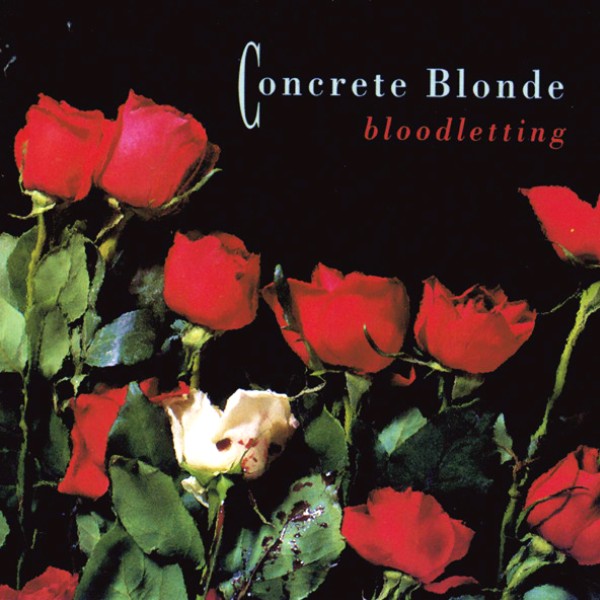
CONCRETE BLONDE, “BLOODLETTING”

Bloodletting

(My 100 favorite albums in chronological order: #29 – released September 19, 1990. Originally posted on Kriofske Mix, 4/15/2015.)

Track listing: Bloodletting (The Vampire Song) / The Sky Is A Poisonous Garden / Caroline / Darkening Of The Light / I Don’t Need A Hero / Days And Days / The Beast / Lullabye / Joey / Tomorrow, Wendy

Autumn, 1990. I’m not yet listening to any of the artists I’ve written about here so far. I have the taste of an average 15-year-old (albeit without much love for rap or any for metal), formed almost exclusively by top 40 radio and MTV. Thus, like 99% of the rest of the world, “Joey” is the first Concrete Blonde song I hear, although it comes from their third album. A few songs from the first two (“Still in Hollywood”, “God Is A Bullet”) were marginal “hits” on college radio, MTV’s 120 Minutes and other outlets I had little exposure to at the time.

Preceding the album’s release, “Joey” was a summer college radio smash that crossed over to pop, reaching #19 on the Billboard Hot 100 in November. A classic, direct ballad, it even kicks off with an instantly recognizable “Be My Baby” style drum roll, just like The Jesus and Mary Chain’s “Just Like Honey”. However, any hint of retread vanishes when Johnette Napolitano’s darkly expressive voice appears on the first verse. She’s not as trailblazing or charismatic as Chrissie Hynde or Patti Smith (or even Ann Wilson of Heart), but she’s a firm progenitor of all the female alterna-rock vocalists that followed her in the ‘90s, from PJ Harvey to Liz Phair. She adeptly shifts from quiet tenderness (“Joey, honey / I’ve got the money”) to forceful maelstrom (“I know you’ve heard it all be-fo-oh-ore”), wringing so much passion and nuance from the lyric that you’re convinced the song is a letter or diary entry directed at an actual person, not a character or a construct; Napolitano would later reveal the song’s subject to be ex-Wall of Voodoo guitarist Marc Moreland, whom she later recorded with under the moniker Pretty and Twisted.

For a few weeks, “Joey” was seemingly everywhere; afterwards, as it fell down the charts, it assumed the status of all former hits: occasional play on various radio formats and a place in the collective memory of once-popular songs, fondly recalled by fans and surprising those hearing it for the first time in many years who had forgotten it. Historians and music nerds forever remember Concrete Blonde as a “one-hit wonder”, for they never had such crossover success again. For some time, to me they were simply the band who did “Joey” and nothing more.

Spring, 1994. WARP, Milwaukee’s first alt-rock radio station is pretty lame, playing canned, automated playlists (occasionally identical week-to-week!) on a fuzzy AM frequency, but it’s where I first hear The Smiths and XTC so it’s revelatory at the time. They also incessantly play two tracks (“Heal It Up” and “One of My Kind”) from Concrete Blonde’s recent fifth album, Mexican Moon and the band re-enters my consciousness. With encouragement from A., a friend who adores them, I purchase Mexican Moon and Bloodletting. Both are fine, but I’m concurrently acquiring so much new music that neither rises to the top of the pile of stuff making the most profound impact on me.

As a college freshman, I begin frequenting Mad Planet, a club in the city’s Riverwest neighborhood (a few years before it underwent considerable gentrification) that hosts 18+ Saturday nights. Not explicitly a venue for goths, it clearly attracted what then passed for an alternative crowd: young men and women decked out in black clothing, Manic-Panic’d hair, multiple piercings and Doc Martens, most of them big Depeche Mode fans in high school, at least some of them questioning their sexuality. Needless to say, my friends (mostly female high school classmates) and I had little difficulty fitting in, even though I didn’t really look the part—for one thing, I was just starting to grow out my hair.

Not a fan of the harder stuff they played (Ministry, Front 242), I still heard a lot that I loved, from The Cure to, well, Concrete Blonde. Without fail, the DJ would spin Bloodletting’s title track every week. Subtitled “The Vampire Song”, it doesn’t cloak itself in any ambiguity—it is emphatically a brooding anthem about being a vampire and doing what vampires do: “going down to” New Orleans (was Charlaine Harris a big fan?) to feast on human blood. Even Robert Smith could not devise a more perfect goth anthem if he tried. Curiously, Concrete Blonde’s earlier records barely hinted towards such subject matter, instead fixating on Mexican/Catholic imagery and the seedier side of L.A. Rather than hopping on any bandwagon, it simply sounds like Napolitano thought it would be fun to write a vampire song. Just as it set a rich, defining tone for the album with its descending bassline and evocative air of sensual menace, “Bloodletting (The Vampire Song)” also sounded fantastic at Mad Planet, a dependable staple we all danced to, some of us even miming the decadently silly sucking noise Napolitano makes in the instrumental breakdown after the guitar solo.

Autumn, 1994. A. gives me a cassette including the band’s 1987 self-titled debut on one side and Walking In London, their fourth album from 1992 on the other. Both it and a dubbed tape of Bloodletting are always in my Sony Walkman throughout my sophomore year of college. I’ve moved out of my parent’s house and into a dorm, where I continually play these three albums nearly as much as the compatible Rocky Horror Picture Show soundtrack. Whenever I think of afternoons spent perusing used record stores up and down Brady Street on Milwaukee’s East Side or hanging out on Madison’s State Street while visiting friends attending the University of Wisconsin, I recall those four albums more than anything else I was listening to.

Much of Concrete Blonde’s appeal stemmed from Napolitano. In an ideal world, a rock trio fronted by a bass-playing woman with a powerful voice would not be a novelty, but back then for me it most certainly was. I’ve already praised her expertise as a front person, but it bears repeating, for throughout Bloodletting, her vocals bring out emotional shadings and layers arguably undetectable from the backing tracks alone. For instance, “The Sky Is A Poisonous Garden” would be very much the routine, up-tempo thrash rocker if not for the personality she almost effortlessly injects into the lyrics, like her sudden exclamation of “young naked PREY!” or her insistent reading of the song’s title, especially at the very end. Likewise, “Days and Days”, whose main hook is arguably Napolitano’s killer bassline, feels less generic and more personable as she rattles off the verses in a near-inimitable spoken-word rush, setting up a nice contrast to the fiercely sung chorus.

That’s not to take anything away from the rest of the band, for guitarist Jim Mankey is nearly as crucial to Concrete Blonde’s sound as Napolitano. While his solos tend to be a little samey, he contributes significantly to each song’s atmospheric pull—try to imagine “Lullabye” without his melodic riffs supporting Napolitano’s wail or his more somber contributions to “I Don’t Need A Hero”. Completing the band on Bloodletting is former Roxy Music member Paul Thompson, the latest in a series of revolving drummers. As with his work on such classic Roxy albums as Country Life, Thompson provides unflashy but solid support. Together, Napolitano-Mankey-Thompson make an inspired trio, one fully attuned to some of Napolitano’s most wrenching and emotionally open lyrics to date, baring her soul about the alcoholic “Joey”, the estranged “Caroline” and the specter of a friend that haunts “Darkening of the Light”.

July 4, 1995. A. and I and two other people are driving home from visiting a friend at a mental health facility in Waukesha County. It’s evening, Independence Day, but no one feels much like watching fireworks or partying; we’re all pretty speechless for obvious reasons. We silently listen to Concrete Blonde’s Still In Hollywood, a rarities compilation that also serves as a postmortem, the band having split up the year before. Among all the B-sides and cover versions, there are acoustic takes on two Bloodletting tracks: “Joey” (performed on a show called ‘”Hangin’ With MTV”), and “Tomorrow, Wendy” (from a concert at the Malibu Nightclub on Long Island, New York).

The latter was Bloodletting’s sole cover, written by another ex-Wall of Voodoo member, Andy Prieboy for his great, long-out-of-print solo album also released in 1990, Upon My Wicked Son. “Tomorrow, Wendy” is about a woman dying of AIDS, rare subject matter for a pop song at a moment when that health crisis was near its peak. Prieboy’s lyrics alternate between poetic reverie (“We can make believe that Kennedy is still alive / We’re shooting for the moon and smiling Jackie’s driving by”) and angry candor (“I told the priest, ‘Don’t count on any second coming / God got his ass kicked the first time he can down here slumming’”), preparing us for the chorus’ plainspoken, affecting bluntness: “Tomorrow, Wendy is going to die.” Himself a friend of Napolitano’s, Prieboy contributes keyboards to the luxuriant, wall-of-sound rendition that closes Bloodletting; naturally, her dramatic reading fully devastates, illustrating the ridicule, despair and loss Wendy endures.

Still In Hollywood’s version is radically different from the Bloodletting one, stripping the arrangement down to the bone: one guitar, nimble percussion and Napolitano’s voice. In this intimate setting, Prieboy’s song turns almost unbearably poignant and urgent, reminding us that death is not simply unjust, inevitable and unavoidable—death is the end, and yet, as Napolitano says in the spoken intro, “We all go through it.” As much as death is certain, it’s still absolutely harrowing for both the victim and those close to them. Napolitano startlingly emits both sympathy and terror, particularly when she suddenly shifts into a daringly higher register than what she attempts on the studio version; so chilling and starkly powerful, this version is what first resonated with me on that long drive home. Regarding the friend we visited, her illness had nothing to do with AIDS (and thankfully, she did get better), but the song nonetheless seemed complimentary—it reminded me how helpless I felt sitting with her at that facility, trying to offer my support and comfort, feeling perplexed as to what she was going through, not understanding how she could go through it at all. Rarely had I identified with any song so closely before.

Autumn, 1999. I’m walking down Massachusetts Avenue in Cambridge towards Porter Square, Concrete Blonde playing on my Discman. Suddenly, I feel five years younger, once again walking down Brady Street, hair much longer, clothes a bit more ragged, altogether blissfully unaware of the life changes ahead. This sensation lasts only for a few seconds, but it leaves behind a nostalgic glow as I re-engage with the present and the different place and state of mind I am in now (though truthfully, not all that different regarding the latter). It’s not as if I haven’t listened to this band in the two years since I’ve moved to Boston, but other bands and songs have obscured and overtaken that heightened place I once automatically reserved for Concrete Blonde in my affections. I associate them with the past—one of the more formative periods of my life, but still the past.

As I age, Bloodletting’s appeal inevitably diminishes, but I doubt it will ever entirely fade for me. I even bought the 20th Anniversary edition released in 2010 (among its bonus tracks are the languorous “I Want You” (from the movie Point Break!) and that live version of “Tomorrow, Wendy”). Every Halloween, I’ll put on the title track and often listen to the entire album. In recent years, I’ve come to love a three-song sequence on the first half. It begins with “Caroline”, the flop follow-up single to “Joey”: a brisk, minor-key lament teeming with echoing guitar chords, it’d be witchy enough for Stevie Nicks to cover, although Napolitano attains just the right mix of menace and longing. Next comes “Darkening of the Light”: featuring R.E.M.’s Peter Buck on mandolin (a year before “Losing My Religion”!), it reveals a more vulnerable side to the band, almost coming off like a beguiling electric folk murder ballad. That leads into the even more fragile and mysterious “I Don’t Need A Hero”: with guitar softly coloring in the background, Thompson’s fills silently twitch in the verses and forcefully tumble through the choruses while Napolitano forever keeps her cool, her every word imbued with wisdom but not overthought, perhaps best embodied by her wonderful, casually defiant “I don’t wanna be your mother” towards the end.

So I try to have it both ways, loving Bloodletting in context of those times when it was the soundtrack of my life, while also returning to it, hoping for that same profundity or, perhaps, something new in it to adore and dissect—after all, “I Don’t Need A Hero” was never one of my favorite tracks until I hit my 30s. Last year, I began my essay on Blue with a Geoff Dyer quote about how the meaning of art changes as it ages although literally, the work of art stays the same. I think of that now as I wrestle with Bloodletting, a remnant of my past that still holds meaning for me, just not the exact same meaning it once did.

Up next: Subverting the System.

“Joey”:


“I Don’t Need A Hero”:
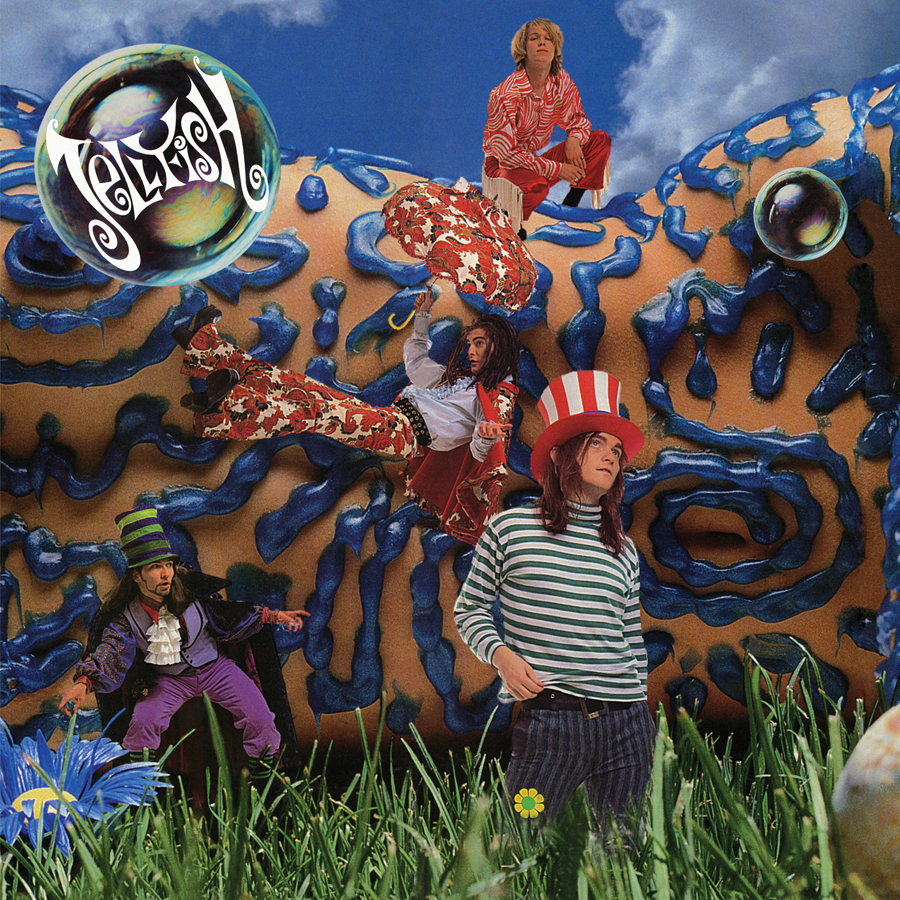
JELLYFISH, “BELLYBUTTON”

Jellyfish-Bellybutton

(My 100 favorite albums in chronological order: #28 – released August 7, 1990. Originally posted on Kriofske Mix, 4/1/2015.)

Track listing: The Man I Used To Be / That Is Why / The King is Half Undressed / I Wanna Stay Home / She Still Loves Him / All I Want Is Everything / Now She Knows She’s Wrong / Bedspring Kiss / Baby’s Coming Back / Calling Sarah

Some albums I’ll write about here were genuinely popular when they came out, while others sold poorly but later proved massively influential to a generation of listeners and artists alike. Bellybutton, the debut from early ‘90s power pop band Jellyfish falls into neither of these categories—it received some college radio and MTV airplay at the time but now it’s mostly forgotten. Three years after its release, the band put out a second album, Spilt Milk and then split up shortly afterwards. Spilt Milk was my gateway into Jellyfish and the impetus for my belatedly inquiring Bellybutton, which I liked even more. A perennial in my music collection, I had no trouble finding a place for it on my first favorite 100 albums list in 2004, and there was never any question as to whether it would appear here.

I’m inclined to chalk up Bellybutton’s lasting appeal to its timelessness–none of it particularly sounds like 1990 (in contrast, portions of Flood seem explicitly of its era), but that’s not entirely accurate. Actually, just about all of it could’ve been recorded before 1990 (and most of it prior to 1980), which is a longwinded way of calling it retro. If the playful, psychedelic cover art and band logo (and outfits!) did not already tip you off, Jellyfish was an unapologetically retro outfit, riding the late ‘80s wave of ‘60s revivalism and anticipating the ‘90s mass appropriation of ‘70s pop culture (see everything from “Groove Is In The Heart” to The Brady Bunch Movie). You don’t have to be a music geek to hear not-so-faint echoes of The Beatles, Big Star, Queen, etc.; throughout the record’s ten immaculately crafted tracks.

What elevates Bellybutton from just-a-pastiche status (even though “All I Want Is Everything” is a glorious Cheap Trick simulation) is the songwriting. Most Jellyfish compositions are co-written by the band’s two constant members, singer/drummer Andy Sturmer and keyboardist Roger Manning (guitarist/future solo artist Jason Falkner and Manning’s brother Chris on bass round out the lineup here). On opener “The Man I Used To Be”, you immediately sense their ambition and talent: after a reverent church organ intro gives way to a trembling piano rhythm punctuated by guitar stabs, Sturmer comes in with his sweet choirboy tone, growing huskier and louder as the song builds but never overwhelms. Subtle orchestration colors the background, a Stevie Wonder-ish harmonica takes the place of a guitar solo, and the outro repeats the intro organ melody, only this time with somber, more reserved violins. It’s as if the band is laying all its cards on the table at the outset, emphasizing those influences I mentioned earlier (to a greater degree than the Beatles-influenced XTC, for instance) but also making them their own, expertly, cunningly inserting them into a structure ultimately defined by their own melodies, lyrics and arrangements.

Thus, Bellybutton proceeds solidly, one potential single after another. “That Is Why” unabashedly recalls Supertramp in its electric piano and the Beatles by stretching out the word “Why” to eight syllables (it also throws in some knowing “doot-doot-doot” backing vocals), but neither its unique stop-and-start rhythm nor such evocative yet knotty phrases as “it’s partly cloudy with trouser stains” have any obvious precedents. “The King Is Half Undressed” combines a “Tomorrow Never Knows”-style drum roll with electric harpsichord and Pete Townshend power chords and then transcends all of it with a classic, ringing power pop chorus complete with backing “ba-bup-ba-bah’s!” (followed by ensuing breakdown of swooning Beach Boys harmonies). “I Wanna Stay Home” is semi-acoustic mid-tempo pure pop of your dreams, driven by a tight, classic-sounding melody that’s simultaneously cheerful and tinged with melancholy, an aesthetic alt-rock followers like The Gin Blossoms would flatten out (and hit big with) as the decade wore on.

The rest of Bellybutton is just as insanely tuneful and bright-eyed but also clever and knowing enough to explain why it never moved anywhere near the units The Gin Blossoms did. “All I Want Is Everything” is the closest thing the album has to an alt-rock rave-up and is perhaps the best showcase for Sturmer’s vocal prowess: he’s alternately urgent, defiant, bratty and even sincere. However, his first line is “Ever since I was a twinkle in my father’s pants.” An opening declaration for the ages, but not necessarily something that’ll get you on top 40 radio. “Baby’s Coming Back” actually did get some radio airplay (it was the band’s sole Billboard Hot 100 entry, peaking at #62)—catchy, concise and handclap-heavy (the album’s best liner note, by the way: “We all clapped our hands.”), it might’ve gone even further if it didn’t so blatantly wink at bubblegum music (or wasn’t quite so reminiscent of “C’mon Get Happy” by the Partridge Family). The cheeky, even-more-harpsichord-heavy “Now She Knows She’s Wrong” could be a track by XTC retro-pop alter-egos The Dukes of Stratosphear (now we’re talking a pastiche of a pastiche!). By the time closer “Calling Sarah” arrives, you can practically hear Falkner thinking “oh, fuck it” as he lays into a shameless rip of a multi-tracked Brian May solo while the whole song plays more as inspired homage to than lazy copy of “You’re My Best Friend” (and Spilt Milk even has a song on it called “He’s My Best Friend”).

I know, for most, Bellybutton is just too clever, too arch, too in love with its own braininess to really contribute something meaningful and original and lasting for the world at large. And then, I look back to the messy, affecting emotion coursing through “The Man I Used To Be” or the elegant, bluesy extended piano intro that sets the scene for all the lovely intricate harmonies and similarly sharp observations of “She Still Loves Him” (such as, “All they wanted to be was as happy as couple number three on their favorite game show.”) I also think of “Bedspring Kiss”, a slinky, soothing, exotica-flavored five-minute bossa-nova complete with stand-up bass and sitar. It’s the album’s least representative track by a considerable margin, but its otherness stands out in a positive way; it’s also as catchy and accomplished as anything else here. I once called Bellybutton a ‘90s power pop primer, which seems a little strange having argued how un-‘90s it now seems. So, let’s just call it a great album from the early 1990s that actually looks forward in how ingenuously it cultivates the past. Cliché that it may be, the idea that everything old is new again is something we’ll keep coming back to throughout the decade.

Up next: another 1990 album with a one-word title beginning with the letter “B”!

“The Man I Used To Be”:


“The King Is Half Undressed”:

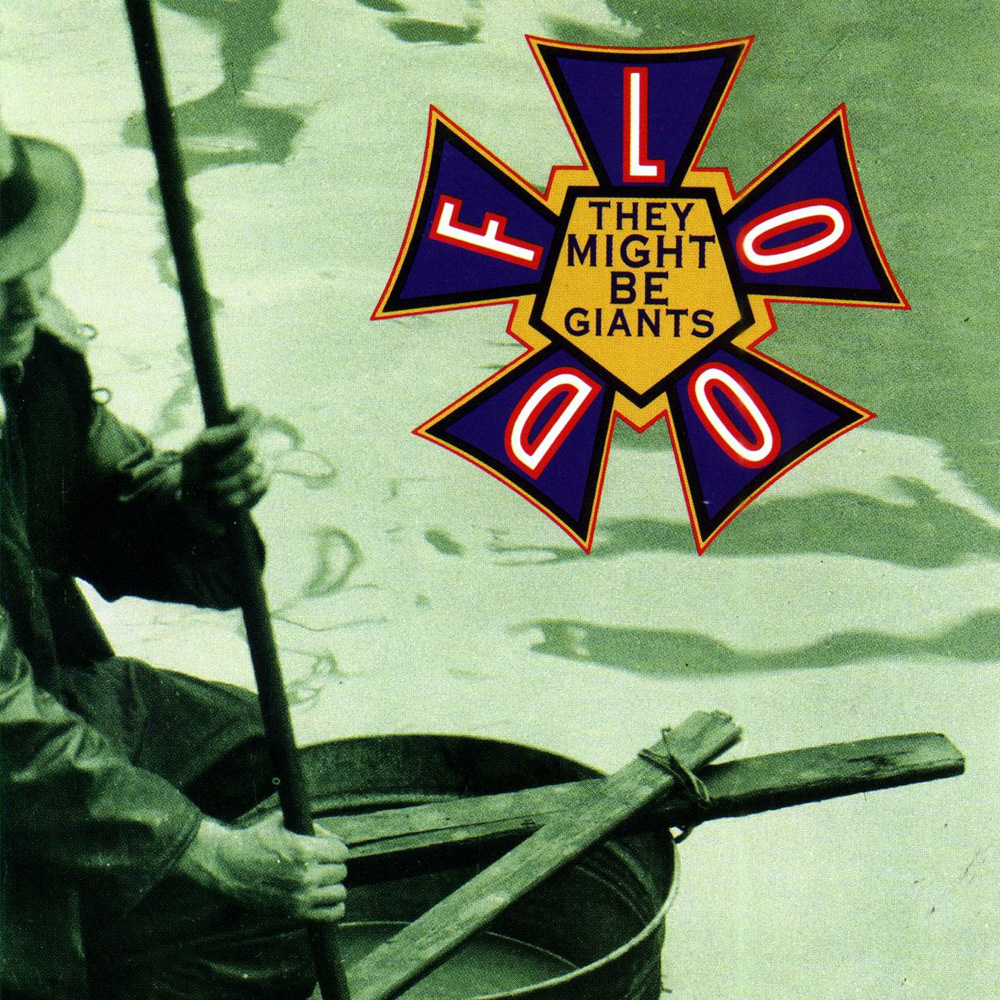
THEY MIGHT BE GIANTS, “FLOOD”

flood

(My 100 favorite albums in chronological order: #27 – released January 15, 1990. Originally posted on Kriofske Mix, 3/24/2015.)

Track listing: Theme From Flood / Birdhouse In Your Soul / Lucky Ball and Chain / Istanbul (Not Constantinople) / Dead / Your Racist Friend / Particle Man / Twisting / We Want A Rock / Someone Keeps Moving My Chair / Hearing Aid / Minimum Wage / Letterbox / Whistling In The Dark / Hot Cha / Women and Men / Sapphire Bullets of Love / They Might Be Giants / Road Movie To Berlin

Two pleasantly anonymous guest vocalists announce, “It’s a brand new record for 1990!” on the brief, somewhat mocking opening “Theme From Flood”, although I didn’t even make an effort to listen to the album until 1993. A month away from turning fifteen upon its release, I wasn’t yet ready for it. All I knew of They Might Be Giants was an appearance on a now-forgotten cable-TV music video show aimed preteens a year or two before. As guest VJs, this duo of Johns (Flansburgh and Linnell) were just plain odd, speaking in purposely stilted tones like a local affiliate’s Saturday night horror film hosts; the clip for their then-single, “Ana Ng” was even stranger, music and visuals and song title alike. “What is this weird geek-rock?”, I must have thought. Over the next few years, I stood by my perception of TMBG as music for nerds, a designation my status-obsessed teenage self had little use for. Still, I firmly remember “Istanbul (Not Constantinople)” lodging itself in my brain for a few days after stumbling across its video on MTV and feeling perplexed, then annoyed, then amused while perusing the lyrics of “Particle Man” after spotting them randomly written down on a classroom blackboard.

By the summer after high school graduation, my musical tastes were evolving. I had widened my scope beyond the top 40 and those days of only buying a new-to-me artist’s album after hearing and liking more than two songs from it on the radio (yes, I admit it!). Abbey Road and other records were openings to brave new worlds, encouraging me to absorb an obsessive amount of music. I devoured classic-rock radio playlists, made periodic trips to all libraries within a ten-mile radius to check out CDs, and borrowed stuff from friends’ personal music collections. It was via the latter ritual where I found a dubbed cassette copy of Flood. I still remember the hand-written track listing, full of speculative song titles obviously not copied from the source material (“Bag of Groceries” instead of “Dead”, “Never Never Know” in place of “Letterbox”, etc.;). Predictably, what I had once dismissed as uncool and off-putting now instantly hit me where I lived. I listened to Flood over and over ‘til I knew it by heart, rapidly acquired TMBG’s other three studio albums (plus the aptly-named rarities comp Miscellaneous T) and for at least the next two years, they were one of my favorite bands.

As for this delayed response, was I simply “Through Being Cool” (to borrow a song title from fellow geeky rockers/heavy influence Devo)? Or did I now recognize TMBG as more than a mere novelty act? Beyond the occasionally silly voices, groaning puns and copious accordion usage, Flood is often as lovingly crafted and melodiously accessible as most pop music of its day. One need look no further than “Birdhouse In Your Soul” for proof—arguably the band’s signature tune (“Ana Ng” which I grew to love, is a close second) and an unexpected top ten UK hit as well, it boasts an immediately memorable chorus and a surplus of hooks that, as J. D. Considine once wrote about the band, “leave you feeling like a freshly landed trout.” As three-minute pop songs go, though, it’s also defiantly quirky. The playful, nonsensical opening (“I’m your only friend / I’m not your only friend”) is all quiet and subdued until the volume suddenly revs up to “Pow!” levels at the first chorus. They drop in relatively obscure smarty-pants references such as the Longines Symphonette and Jason and the Argonauts without batting an eye. And even though the chorus unmasks the song as a paean to a night-lite (“Blue canary in the outlet by the light switch / who watches over you”), it’s unorthodox enough for pop that it may fly over a casual listener’s head, especially if one fixates solely on the enigmatic song title.

“Birdhouse In Your Soul” is one of four Flood tracks helmed by Clive Langer and Alan Winstanley, a British production duo best known for their work with Madness and Elvis Costello. Presumably made possible by TMBG’s jump to major label Elektra, this was the band’s first time recording in an “actual, real, multitrack studio” (according to Flansburgh). Indeed, “Birdhouse” seems positively lush compared to anything on They Might Be Giants (1987) or Lincoln (1988), as does “Your Racist Friend”, whose big, bold sound is more of-its-time than anything else on the record. However, that doesn’t translate as “anonymous” or “lacking distinction” either, as the accordion remains prominent and the arrangement’s imaginative enough to find room for such unexpected touches as a burst of incensed guitar fury or a mariachi breakdown made ironic by lyrics illustrating a dismissal of the titular bastard and also the mutual acquaintance standing idly by.

The other two Langer/Winstanley tracks are not departures so much as seasoned refinements of the band’s low-fi, handmade aesthetic. Musically, “We Want A Rock” is textbook TMBG with perhaps all the rough edges sanded off, wrapping another revolving melody that won’t quit around another inscrutable lyric that somehow leaps from everybody wanting “a rock to tie a string around” to a desire for wearing “prosthetic foreheads on their real heads.” “Istanbul (Not Constantinople)” is more of a curveball, cheekily remaking a long-forgotten early 1950s novelty hit at a quicker tempo and with instrumentation (violin, trumpet, and (naturally) accordion) that might’ve informed Alexandre Desplat’s score for The Grand Budapest Hotel nearly a quarter-century later. As Flood’s second single, the song became such a fan favorite that by 1994 when I first saw them on tour, they played it at an unrecognizable, super-exaggeratedly slo-mo tempo—a sign that they had tired of performing it as is, show after show.

With those four songs reportedly eating up two-thirds of the album’s budget, the rest of Flood is self-produced, thankfully. While all four are highlights, the Johns repeatedly prove that (apart from maybe “Your Racist Friend”), what Langer/Winstanley brought to the table wasn’t anything they weren’t capable of themselves. I even had to double check that the synthy power pop (with barely a hint of accordion) of “Someone Keeps Moving My Chair” wasn’t a Langer/Winstanley track. Also, I can’t imagine how the Brits could’ve possibly enhanced the deceptively upbeat rockabilly of “Lucky Ball and Chain” (which masterfully weaves in a Bob Dylan lyric and interpolates “Here Comes The Bride” in an outro conflicted between resolve and regret) any further. Same thing goes for “Twisting”, a farfisa organ-accented rave up containing not one wasted note and intriguing for how its beatific chorus lyric (“Twisting, slowly twisting in the wind”) seems forever at odds with the happy surf pop buttressing it.

Elsewhere, the Johns gleefully seize any growth potential in their major label move while remaining delightfully weird/themselves. “Dead” strips all down to vocal harmonies and a wobbly piano; it would make a nifty family-friendly sing-along if not for the title or the line where the narrator apologizes for forcing a sibling to become his personal slave when he was eight. “Whistling In The Dark” aspires to be a manifesto/fight song of self-purpose, albeit one backed by stately faux-harpsichord and sung in a deliberately wooden, average schmo cadence as if coming from an assumed character far less loquacious than Linnell or Flansburgh. “Hot Cha” softens its rhythmic gewgaws and abrasive underneath with a jazzy bop and cool (fake) vibes (all it’s missing are finger snaps, which the Johns already put to good use on Lincoln’s “Lie Still, Little Bottle”). “Hearing Aid” goes furthest out there (dribbling to a close with skronk guitar from No Wave legend turned Bossa Nova revivalist Arto Lindsay) while still retaining a recognizable structure (reggae rhythms and a disarming cheapo synth trumpet hook).

As with all TMBG albums, Flood is not devoid of filler. It’s occasionally glorious filler, like “Minimum Wage”, a ludicrous, laugh-out-loud conjoining of TV western theme song (complete with dramatic whip crack!) and anonymous industrial film score, or “Letterbox” whose rollicking melody, furious wordplay and backwards tape-loop effects don’t have time to wear out their welcome, clocking in at an economical 1:25. I’ll leave it to others to defend surface-plenty, otherwise-empty “Sapphire Bullets of Love” or lament (in all senses of the word) of a closer “Road Movie To Berlin”, forgettable except for that brief freak-out which could be an audition for the Twin Peaks soundtrack. But then, there’s also filler so painstakingly crafted and persistently unique that it transcends the very label. Lyrically, “Particle Man” does not make any goddamn sense and I doubt it’s even supposed to, but it’s endearing for its simplicity, commitment and effortlessly nagging melody, even if it’s just utter nonsense. The penultimate “They Might Be Giants” deconstructs the very idea of a band recording its own theme song, giddily offering an olive branch stacked with hooks (most effective is the singsong intonation of the title, followed by a low-throated, bouncy “Boy!”) only to keep repeatedly, teasingly pulling it away. By the song’s Muppet-like vocals on fade out, we now know TMBG *might* be “Dr. Spock’s backup band” or even “big, big, fake, fake lies.” In other words, we know no more about the Johns than we did three minutes ago, even if we can’t shake this earworm of a song (presumably) about them.

TMBG never recorded another album as solid as Flood, although Apollo 18 (1992) is a likable follow-up, especially “Fingertips”, a suite of song snippets only a pair of ambitious slackers could devise. From there, following varied attempts at more traditional full-band recordings, the Johns gradually became a cottage industry, releasing albums with content deliberately aimed at kids (admittedly not too far off from their “adult” stuff), composing sitcom theme songs and commercial jingles, proving themselves once and again as songwriters of a certain mettle. Their entire catalogue is strewn with tunes as good as any on Flood (“How Can I Sing Like A Girl?”“Another First Kiss” and “(We’re The) Mesopotamians” to single out three personal faves) and recent albums like Nanobots are far from embarrassing. But even though Flood didn’t exactly make TMBG a household name, it’s still their most significant cultural moment, not to mention an artifact from a halcyon time when such a band could dip their toes into the commercial mainstream, their coolness (or lack thereof) simply, blissfully irrelevant.

Flood is also an ideal pick for the first record of a decade containing more of my 100 favorite albums than any other (even if this particular LP was all technically conceived and recorded in the 1980s). As we will see, this was an era when music production snowballed, with major labels courting so-called niche artists such as TMBG, exposing them to wider audiences and in turn, influencing a cross-pollination of genres, creating an ideal environment for many of the decade’s best (and most idiosyncratic) records to thrive.

Up next: if ‘60s (and ‘70s and even ‘80s) were ‘90s.

“Birdhouse In Your Soul”:


“They Might Be Giants”:

The Go-Betweens, “16 Lovers Lane”

16-lovers-lane

(My 100 favorite albums in chronological order: #26 – released August 29, 1988. Originally posted on Kriofske Mix, 3/11/2015.)

Track listing: Love Goes On! / Quiet Heart / Love Is A Sign / You Can’t Say No Forever / The Devil’s Eye / Streets Of Your Town / Clouds / Was There Anything I Could Do? / I’m Allright / Dive For Your Memory

We view the past through a slightly titled lens. Mention of a decade, an era, even a specific year elicits a set of cultural signifiers—not identical for everyone, but most can name a few defining characteristics as some things endure and others fade away. Limiting our scope to popular music, if I asked you to describe what it sounded like in the 1980s, genres such as new wave, synth-pop, hair metal or old school rap might come to mind (or you could just name artists like The Police, The Human League, Poison or Run DMC). Three decades on, there is a canon of ‘80s music that most recognize as such and accept; many albums from that period I’ve written about here have a firm place in it—Remain In Light and Avalon regularly appear on other “Best Albums of All Time” lists, while you often hear singles from Hounds of Love and Skylarking on Sirius XM radio’s First Wave, a channel with a “classic alternative” format.

I’m in favor of such a canon existing, but after having heard so much of it so many times, I often find myself looking elsewhere—a canon can’t contain everything, obviously, so what of all the good stuff that never made it in? You could argue that it wasn’t popular enough, but practically everybody now identifies songs like “Just Can’t Get Enough”, “Blister In The Sun” or “How Soon Is Now” as ‘80s classics, despite not being top 40 hits at the time (in the US, anyway). Still, there’s just so much music out there, past and present, that you’ve never heard (and likely will never hear) because for whatever reason, it just never permeated the culture. This brings us to The Go-Betweens, a band from Brisbane, Australia who recorded six albums in the 1980s, barely made a dent anywhere commercially, and is only well-known by fellow musicians and music obsessives like myself. However, a few critics adored them (most notably Robert Christgau), and reading about them moved me back in 2002 to pick up a used copy of Bellvista Terrace, a single disc compilation of their greatest non-hits (which I rarely listen to anymore because I now have all five albums it draws from).

16 Lovers Lane was the last of their ‘80s albums, and the only one to come out on a major label (Capitol Records) in the US. Like every other Go-Between’s record, it sold poorly, although, perhaps thanks to Capitol, it at least got some radio airplay: “Was There Anything I Could Do?” actually made its way onto Billboard’s then-brand new Modern Rock Tracks chart, and “Streets Of Your Town” is probably the best-known song in the band’s entire catalog. Over twenty-five years after it came out, my first thought when listening to it still is, “Good lord, WHY wasn’t this record a hit?” Easily the poppiest set of songs the band ever recorded, 16 Lovers Lane is by no means difficult or challenging. The Go-Betweens were always a jangly guitar band, albeit one that initially came out of a post-punk, DIY aesthetic. By 1988, The Cure-like angular chords and sudden tempo shifts of earlier albums such as Before Hollywood (1983) had gradually given way to a more direct, emphatically melodic style. It’s fitting that a major-label move should be so accessible, but the album’s triumph is that it not only retains all of the band’s intelligence and warmth but also bolsters those qualities to new heights.

As with The BeatlesThe KinksXTC and many other Anglo-centric artists, The Go-Betweens are, at their core, two talented singer-songwriter-guitarists (augmented by a rhythm section). As with nearly all their albums, the ten tracks here are evenly split between them. First-time listeners may struggle in telling Grant McLennan and Robert Forster apart, but after a few spins one can easily discern a McLennan song (heavily melodic, more pastoral, voice like a rougher Neil Finn of Crowded House) from a Forster one (looser, gives off a devil-may-care vibe while maintaining tight song structures, sounds a little like Echo and the Bunnymen’s Ian McCullough’s younger brother). Two other things set 16 Lovers Lane apart in the group’s discography: Mark Wallis’ lush but lucid production, which pulls off the trick of seeming simultaneously crisp and clear but also immense, as if it was recorded in in a cathedral; and fifth member Amanda Brown (who joined them on their previous album Tallulah (1987)), a multi-instrumentalist (how many other rock bands have an oboe player?) whose string arrangements and backing vocals anticipate later indie chamber-pop stalwarts such as Belle and Sebastian and Camera Obscura.

Recorded shortly after the band returned home to Australia following nearly a decade based in London, 16 Lovers Lane exudes a sustained feeling of renewal and spring-like joy, present in everything from the deliberately simple, two-chord progressions of “Quiet Heart” and “Streets of Your Town” to those moments in “Love Is A Sign” and “Clouds” where the acoustic intros suddenly bloom into full-bodied exultations of strings and ringing electric guitars. Beyond all these pleasant hooks and sounds, however, there’s some tension. Someone (I can’t figure out exactly who) once dubbed this album the “indie Rumours”; like Fleetwood Mac’s masterpiece, some of the band were romantically involved with each other during its making (McLennan and Brown were just falling in love, while Forster and longtime drummer Lindy Morrison had recently broken up).

It follows that McLennan’s songs are among his most euphoric ever: feisty opener “Love Goes On!” says all it needs to with that exclamation point in the title and a chorus of “ba-da-da-da, ba-da-da-DOW!/ Love goes on anyway,” and “Quiet Heart” simmers like U2 in all their majestic splendor (Wallis helped mix The Joshua Tree) but thankfully without any of Bono’s pomposity. Naturally, Forster’s songs come off more darkly and conflicted in comparison: “You Can’t Say No Forever” has a cathartic outro drenched with wah-wah guitar and Forster’s faint cries in the background while “Dive For Your Memory” is a beautifully sad, eloquent closer, a relationship post-mortem affecting and graceful in its simplicity. But neither man is a one-trick pony, for McLennan tempers the breeziness of “Streets of Your Town” with lyrics referencing butcher knives and battered wives; Forster also breaks from his misery in the cheerfully defiant “I’m Allright” and supplements his yearning and damage with wisdom and perhaps, even a hint of optimism on the sparkling “Love Is A Sign”.

Although I could have easily written about at least three of the band’s other ‘80s albums here, I chose 16 Lovers Lane because I felt its impact most immediately when I first heard it six years ago. Despite changes in tempo and temperament throughout, it all registers as one unified piece in my mind. Those robustly strummed guitars kicking off “Love Goes On!” instantly place me in the aura of an unseasonably warm spring afternoon, nature all coming back to life as I walk head held high alternately through a blue sky metropolis or endless fields of green; I remain entrenched in this mindset all the way to the oboe melody that concludes “Dive For Your Memory”. I could offer many practical, cognizant reasons as to why this album never found a wide audience or became part of the ‘80s music canon (or even the more compartmentalized sub-canon of late ‘80s modern rock), but it would amount to little more than conjecture. Truthfully, there is no single or good reason for The Go-Betweens’ relative obscurity in the pop firmament, and it’s futile to bemoan this fact or ponder any more at length a past we cannot change. All I can do is ask you to listen to this record, and if you like it, encourage you to ask others to listen to it. In this process, we end up building our own personal, individual canons, influenced by the culture at large, but altogether more potent for how they enrich our inner selves and reflect them back to the outside world.

The Go-Betweens split up a year after 16 Lovers Lane, but, as with the changing of the seasons, McLennan and Forster will eventually appear in this story again.

Up next: Through being cool.

“Streets of Your Town”:


“Quiet Heart”:

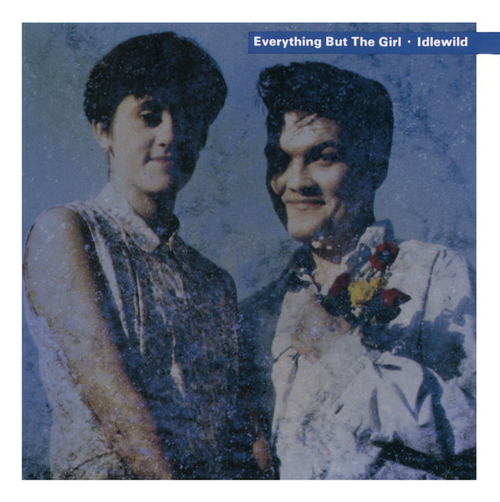
EVERYTHING BUT THE GIRL, “IDLEWILD”

Idlewild

(My 100 favorite albums in chronological order: #25 – released February 1988. Originally posted on Kriofske Mix, 3/1/2015)

Track listing*: Love Is Here Where I Live / These Early Days / I Always Was Your Girl / Oxford Street / The Night I Heard Caruso Sing / Goodbye Sunday / Shadow On A Harvest Moon / Blue Moon Rose / Tears All Over Town / Lonesome For A Place I Know / Apron Strings

(*Many copies begin with a cover of Danny Whitten’s “I Don’t Want To Talk About It”, which was tacked on after it became a big UK hit four months after the album’s release. Since the band reverted to the original track listing on the 2012 Edsel reissue, I’ve done the same here.)

The band name of longtime musical and life partners Tracey Thorn and Ben Watt, Everything But The Girl defies simple categorization if you scan through its discography. Jazzy and primarily acoustic, Eden (1984) neatly fits into the UK sophisti-pop movement of that period, but the jangly, guitar-heavy Love Not Money (1985) is far more driven by love for The Smiths than Stan Getz. Baby, The Stars Shine Bright (1986) mostly eschews six-strings for a full orchestra in an attempt to replicate classic Dionne Warwick as produced by Burt Bacharach. The only constant among these first three albums is Thorn’s low, somewhat reticent tone (along with Watt’s pleasant, if less distinctive occasional vocals)—and she came from a DIY/punk-influenced background as a member of The Marine Girls (he was the one who loved jazz).

Album number four, Idlewild deliberately backs away from the previous record’s opulence—it’s as stripped-down as Eden, but definitely more contemporary pop than jazz, and decidedly more mature (unusually so given that its creators were only in their mid-20’s). Thorn and Watt claimed they set out to make a “folk-soul” album, but were also influenced by contemporary R&B, particularly Janet Jackson producers Jimmy Jam and Terry Lewis. Not that anyone would ever mistake Idlewild for Control, but one can easily detect a hybrid of textures in the former: crisply strummed acoustics and tasty guitar licks are as vital to the album’s soundscape as keyboards and drum machines (which account for all percussion). Still, the arrangements are generally understated, exercising more restraint than you’d expect from the late ‘80s, a period when up-to-the-minute recording techniques left a heavy imprint on most pop.

That’s not to say parts of Idlewild aren’t exceedingly dated. With its electro-hum opening and gently clanging hi-hat drum pattern, “Goodbye Sunday” is nearly Jam/Lewis—admittedly catchy in its mid-tempo strut, but overwhelmingly one of EBTG’s more blatant stabs at radio airplay. “Tears All Over Town” also lays on the synthetics a bit too thick and ends up resembling an exceptionally lush bedroom demo more than a band-in-studio recording. Fortunately, other tracks make inspired use of such modern touches. “Love Is Here Where I Live” may open the album with an isolated mechanical drum track, but from there the song feels more organic, agreeably resembling musicians playing together in a room. “These Early Days” and “Blue Moon Rose” achieve a similar balance: keyboards and programmed rhythms provide up-tempo brightness and oomph, while such timeless elements as soulful organ and chiming guitars retain a human touch imperative in enabling these songs to fully connect and resonate. That’s certainly the case with “I Always Was Your Girl”, a delicate, melancholy tune made even lovelier (and more layered) by its unorthodox, insistently tapping drum pattern and cowbell that subtly appears on the later choruses, adding tension to both Thorn’s yearning vocal and all the dreamy, elongated guitar and keyboard lines on top.

Still, Idlewild is never better than when it distills things to the barest essentials (arguably, the same goes for EBTG’s output in general). “Shadow On A Harvest Moon” is primarily acoustic guitar-electric bass-drum machine, plus a few muted trumpet filigrees, but it’s as robust as any great Simon and Garfunkel song (it also most closely anticipates a rewarding direction EBTG will take a few albums later). “Apron Strings” leaves the drum machine behind, opting for a simple acoustic guitar and lone keyboard duet that effectively supports Thorn’s almost unbearably intimate vocal without ever distracting from it. The album’s most striking arrangement, however, is on “The Night I Heard Caruso Sing”, where Watt sings over nothing but an acoustic piano and possibly the least cheesy sax solo of the ‘80s. Such starkness draws extra attention to the lyric, where Watt assumes a character, a man in some undisclosed, war-torn country who is hesitant to bring a child into such a world. Then, the event relayed by the song’s title occurs; it thrills him like only the discovery of art can, offering him solace. Still, he concludes ominously, “But even as we speak / they’re loading bombs onto a white train / how can we afford to ever sleep / so sound again?” When wedded to such simplicity in the music, the pensive yet frank lyric gains in power.

And yet, I’ve spent nearly seven hundred words on Idlewild’s sound while only barely touching on its themes. It’s not uncommon for me to approach an album this way—I tend to respond to melodies, rhythms and arrangements over lyrics for their universal appeal. It follows that when I do notice and respond to the lyrics, their impact on me is naturally far greater, and they often recontextualize the music itself. If you were to isolate this album’s instrumental tracks, you’d end up with something that wouldn’t be too out of place on smooth jazz radio. You could say the same of later Steely Dan, although Thorn/Watt’s words are rarely as acidic or ironic as Fagen/Becker’s. Still, Idlewild’s lyrics contain more depth and vulnerability than its “everything’s fine” demeanor would suggest; it’s full of deceptively tranquil surfaces that act as conduits to far more complicated, occasionally darker places.

Most of the songs reference themes of domesticity: of childhood from one’s own perspective (“Oxford Street”) or that of a parent’s (“These Early Days”) or someone who longs to be a parent (“Apron Strings”) or is not sure he even wants to be one (“The Night I Heard Caruso Sing”). Each scenario is careful not to solely slip into nostalgia or mere contentment; “These Early Days” may begin with the gentle observation, “You’re only two / the whole wide world revolves around you,” but follows it with the line, “And nothing’s happened yet that you may wish to ever forget.” Then comes the harsh truth: “It doesn’t stay that way / if I could, I’d make it stay that way.” Suddenly, what initially seems like a cheery song sung to a toddler takes on the weight of a mother wanting to always protect her child but very well knowing how impossible such a promise is.

Thorn also sings of relationships in various states: the faint but discernible malaise following a honeymoon (“Shadow On A Harvest Moon”), the fear of hitting a rough patch or retaining the stamina to make it through one (“Love Is Here Where I Live”) or a bittersweet assessment of a long-term union and how the outside world perceives it (“I Always Was Your Girl”). That last song tempers a potential (if heartfelt) cliché like “It will always be you and me against the world” with richer, more specific phrases such as “You put your friends through hell and that’s why we get along so well.” Elsewhere, among songs with a palpable longing for homes both past (“Oxford Street”) and present (“Lonesome For A Place I Know”), there’s “Blue Moon Rose”, an ode to friendship and platonic affection between two women. It’s a subject you’d expect to find more in pop songs and generally don’t, but any novelty is diminished by such applicable, thoughtful observations as, “I have a friend and she taught me daring / threw back the windows and let the air in.”

As much as Thorn and Watt sing of specifics, Idlewild’s greatest strength is in how relatable they appear. We’ve covered confessional songwriters all the way back to Joni Mitchell in this project, but with EBTG, there’s a directness that’s quite powerful when the music and the lyrics are as symbiotically effective as they are here. We’ll return to them a few years later on an album that nearly pushes that symbiosis to its breaking point, although as we will see, Tracey and Ben had to endure both musical and personal hells in order to get there.

Up next: an alternate-universe 1980s.

“I Always Was Your Girl”:


“The Night I Heard Caruso Sing”:

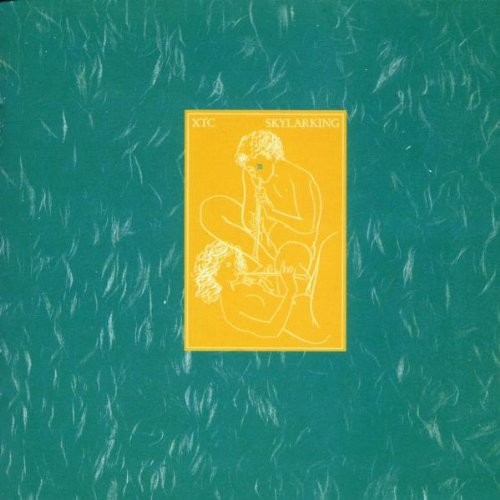
XTC, “SKYLARKING”

Skylarking

(My 100 favorite albums in chronological order: #24 – released October 27, 1986. Originally posted on Kriofske Mix, 2/15/2015.)

Track listing: Summer’s Cauldron / Grass / The Meeting Place / That’s Really Super, Supergirl / Ballet For A Rainy Day / 1,000 Umbrellas / Season Cycle / Earn Enough For Us / Big Day / Another Satellite / Mermaid Smiled / The Man Who Sailed Around His Soul / Dear God / Dying / Sacrificial Bonfire

In the four years between English Settlement and this record, XTC lost a bit of their mojo. Some blamed Andy Partridge’s refusal to tour anymore, rendering the band entirely studio-bound; others cited drummer Terry Chambers’ sudden departure (not unrelated to no longer touring). Mummer (1983) and The Big Express (1984) have their moments but neither album is as consistent or convincing as the three preceding them. Partridge’s settling for the studio cuts both ways, suitably buffing his newfound pastoral nature into a fine folk-pop sheen (“Love On A Farmboy’s Wages”) while using this retreat as an excuse to spew bitter venom about the music business (“Funk Pop A Roll”, “I Bought Myself A Liarbird”). In either case, the public didn’t buy it—25 O’Clock, an EP of late ’60s pastiches the band released in 1985 under pseudonym The Dukes of Stratosphear sold more than The Big Express in the UK!

Thus, their label Virgin insisted the band hire an outside producer for their next record and gave them a list of names; they picked Todd Rundgren, a pop polymath best known for his ‘70s singer/songwriter hits “Hello It’s Me” and “I Saw The Light” but also a seasoned studio wiz, having produced the likes of the New York Dolls, Patti Smith, Meat Loaf, etc.; Not that XTC hadn’t employed producers on their previous albums, but Rundgren took charge to a far greater degree than any of them—supposedly, after the band sent him their demos, he shaped and sequenced the whole album before any of them set foot in his recording studio in Woodstock, New York. Naturally, Rundgren and Partridge (who was used to having more control) clashed throughout the making of Skylarking and never worked together again, but even Partridge now admits the final result is one of their better albums.

I’d go as far to say that most days I think Skylarking is the band’s best album, partially thanks to Rundgren’s overseeing. What immediately sets it apart (and above) the previous two records is a unified structure, its songs passing through two recognizable, interrelated cycles: The Seasons (Spring, Summer, Fall and Winter) and Life itself (birth, death, rebirth). Granted, not every single moment fully adheres to these trajectories (for complex reasons we’ll address later), but the songs more or less superficially fit together in this way, making for arguably the first XTC album as obsessed with the whole enchilada as each individual trinket. In addition to following a tighter structure, Partridge and Colin Moulding also each contribute a strong set of tunes, as if they’ve crossed that threshold from touring to studio band, at last mastering the type of composition best suited to the latter arena.

Skylarking’s unification is further heightened by how some songs are deliberately crafted to either thematically complement each other or literally flow into one another. “Summer’s Cauldron” opens the album in a gauzy, blissful haze of humid but sparkling light psychedelia. As its chorus builds for the final time, gaining momentum, instead of a pause, a new chord and melody immediately announces the next track, “Grass”. With an almost East Asian-like fanfare, the song sustains the previous track’s tone, only wedding it to a lyric about making love out in the open. Concluding “Grass” with a musical callback to the beginning of “Summer’s Cauldron” nourishes the connection between the two tracks even further. Similarly, a few songs later, when the relatively laid-back “Ballet For A Rainy Day” reaches the last word of its final chorus, it ends on a slightly different chord than the previous choruses, instantly going right in to the swirling, string-laden “1,000 Umbrellas”, which sounds not too far off from the quirky psych-orchestral pop Prince was dabbling in on Parade at the time.

“The Meeting Place”, with its playful, faux-mechanical arrangement and crystalline chorus continues the cheerfully idyllic mood of the first two tracks. Some might argue “That’s Really Super, Supergirl” pushes it further, maybe even too far into self-parody. Fortunately, Partridge is a master of imbuing precious and coy subject matter with enough care and ingenuity that it becomes digestible through the sheer force of its melodicism and musicality—just listen to those intricate backing vocal overdubs or how easily and unexpectedly the band arrives at that chord change before the chorus. “Season Cycle” does a similar thing only with the chorus feeling more like a natural extension of each verse. Coming just about right in the middle of Skylarking, it blatantly reiterates the album’s overarching themes; it’s also significant for being the first XTC song with a heavy Pet Sounds-era Beach Boys influence, which will surface repeatedly throughout much of the band’s subsequent work.

The general air of optimism and breeziness gives way to weightier themes and somewhat darker (and more varied) moods on Skylarking’s second half. However, the song that kicks it off is one of XTC’s most triumphant: “Earn Enough For Us” is a socio-economical sketch both musically and lyrically worthy of the Kinks, driven by a classic guitar riff and an impassioned sense of both defiance and pride (“Just because we’re on the bottom of the ladder / we shouldn’t be sadder / than others like us / who have goals for the betterment of life”). It’s certainly one of the catchiest, most urgent working class anthems of the ‘80s (why in the world wasn’t it picked as a single outside Canada and Australia?). Moulding’s “Big Day” takes a few steps back from the previous song’s family-struggling-to-make-a-living to where it all began, pondering getting hitched with equal anticipation and dread as autumnal, chiming 12-string guitars signal colder weather ahead.

At this point, the album’s concept wavers a bit. In contrast to everything preceding it, “Another Satellite” feels like an outlier, a remnant from the band’s prog-rock recent past, although the sweet harmonies rub up nicely against the flanged synth-guitar hook and the song’s spacious, echo-y arrangement. Then, things get a little complicated. Initial pressings of Skylarking included “Mermaid Smiled” a brief, nautical-themed, showtune-ready sigh of a song, followed by “The Man Who Sailed Around His Soul”, a jazzy spy music pastiche that, like “Season Cycle”, introduced another new path the band would develop further on later albums. However, after “Dear God” (the B-side of the “Grass” single) actually started to get radio and MTV airplay, it was added to the album (placed after “The Man Who Sailed Around His Soul”) and “Mermaid Smiled” was deleted—“something had to go and so I took off the shortest song,” said Partridge. While not especially profound, “Mermaid Smiled” is charming, buoyant and a good lead-in to “The Man Who Sailed Around His Soul”. It really should’ve remained on Skylarking (with it, the album still clocks in at under 50 minutes), which is why I’ve kept it in the tracking listing here. (If your copy doesn’t have it, you can find it on the band’s 1990 rarities comp Rag and Bone Buffet.)

Although “Dear God” was the album’s biggest hit, it doesn’t fit too comfortably on Skylarking. Despite encouragement from his bandmates and Rundgren to include it, Partridge was never at ease trying to write about his atheism: “such a big subject… in three-and-a-half-minutes,” he lamented. Still, what three-and-a-half minutes! With an eight-year-old girl (played by a boy in the iconic music video) singing the entire first verse, “Dear God” grabs hold of the listener right at the start; then the drums kick in and the minor-key acoustic arrangement turns electric as Partridge sings the second verse. A string quartet slowly creeps in, at times sinister enough to peel paint off the walls (think of the strings in Bobbie Gentry’s “Ode To Billie Joe”). The whole track builds to a ferocious final minute where Partridge lays out his blasphemy with eloquent but intense, blunt force. Arguably the catchiest and most original single in the band’s catalogue since “Senses Working Overtime”, the song repositioned them as both modern rock stars and controversial figures in America, even inspiring a firebomb threat to a Florida radio station and moving one college student to hold his principal hostage at knifepoint, demanding that the song be played over the school’s PA system. To this day, it’s still one of XTC’s best-known songs in the US; although aesthetically Skylarking doesn’t need it, without it, the album might’ve fallen into obscurity.

Thankfully, the band chose to keep the closing sequence intact and not tack “Dear God” on at the end, even if the overlapping transition between it and the penultimate track “Dying” jars a little. But these two final songs, both written by Moulding are essential to Skylarking’s allure. “Dying”, like nearly every other XTC song of this period contains a healthy dose of Beatles-isms: it could be a track off The “White” Album or side two of Abbey Road. However, it’s more of a link to “Sacrificial Bonfire”, one of Moulding’s very best songs and the latest in a long line of spectacular XTC album closers. Over tumbling percussion, an almost classical-sounding guitar riff provides the hook, while deftly employed orchestration carefully draws us further in, the strings eventually mirroring that initial riff. Moulding sings, “Burnt up the old / ring in the new,” and later, “Reign over good / burnish the bad.” Rebirth may be an obvious theme to end on here, but it’s an effective, compelling one for the sense of majesty and sincere awe the melody and arrangement together conjure up. Skylarking is nearly a perfect circle of an album—as “Sacrificial Bonfire” fades out, I recommend utilizing the “repeat all” function on whatever listening format you prefer, for that opening instrumental haze of “Summer’s Cauldron” becomes more enticing and resonant with each passing cycle.

Up next: Lonesome for a place I know.

“Summer’s Cauldron/Grass”:


“Earn Enough For Us”:

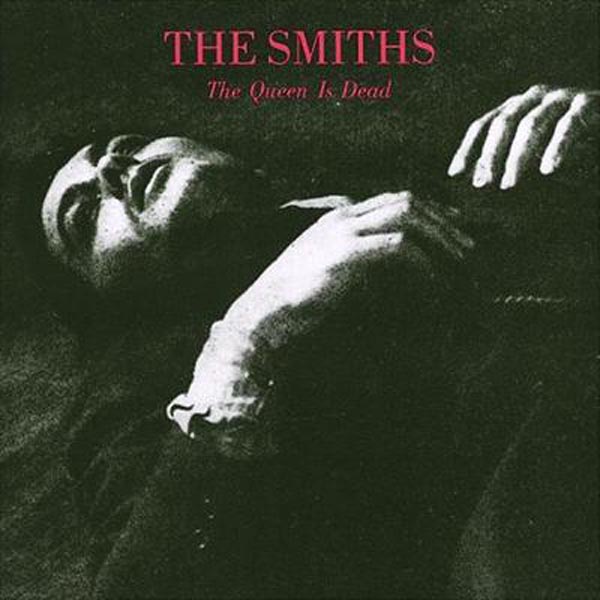
THE SMITHS, “THE QUEEN IS DEAD”

the-smiths-queen-is-dead

(My 100 favorite albums in chronological order: #23 – released June 16, 1986. Originally posted on Kriofske Mix, 1/23/2015.)

Track listing: The Queen Is Dead (Take Me Back To Dear Old Blighty) / Frankly Mr. Shankly / I Know It’s Over / Never Had No One Ever / Cemetry Gates / Bigmouth Strikes Again / The Boy With The Thorn In His Side / Vicar In A Tutu / There Is A Light That Never Goes Out / Some Girls Are Bigger Than Others

In Tony Fletcher’s exhaustive, entertaining biography of The Smiths, singer Steven Patrick Morrissey and guitarist Johnny Marr don’t even meet each other for the first time until page 191, or roughly one-third of the way through the chronologically ordered book. This would seem to go against a common perception that the band (which also included Andy Rourke on bass and Mike Joyce on drums) arrived fully formed, seemingly from out of nowhere in 1983. Although they never hit the Billboard Hot 100 (or reached higher than #8 on the UK singles chart), their cultural influence was massive, arguably defining British guitar pop for an entire generation. That they achieved this in so little time (breaking up in 1987) still astonishes.

Describing The Smiths to the uninitiated is potentially dicey, for they were both accessible and unique—one’s gut reaction to them may swing wildly in either direction. Chalk up their familiarity to guitar prodigy/hero Marr, who distilled his love of rockabilly, glam and girl group pop into a clean, melodic sound that felt timeless rather than overtly retro or of-the-moment. Morrissey provided their otherworldliness—mopey and shy, unrepentantly fey and with a theatrical voice wavering in and out of tune like a foghorn, he certainly had few precedents as a rock and roll frontman. You could call them a textbook yin/yang combination, but then you’d be overlooking Marr’s occasional experiments with form and texture (one of the band’s most beloved songs is the seven-minute tremolo-heavy epic ‘How Soon Is Now”) and Morrissey’s unconventional charisma and selective appeal—rarely has any other artist inspired one to either instantly retch at the sound of his voice or want to mimic his every word and cadence (and Morrissey songs are nothing if not fun to sing along with.)

Despite their brief lifespan, it’s tough to pinpoint a definitive Smiths album—their relatively small discography carries a high concentration of great songs, but rarely do they all appear on the same record together. A decade ago, I would’ve stumped for Best… 1, a 14-track compilation released five years after they broke up simply because it was my introduction to the band and everything on it was aces. However, it leaves off at least a half-dozen of their very best tunes (a few appear on the sequel, …Best 2). You could opt for Singles, which came out a couple of years later, but many Smiths album tracks are as good as their singles (some are actually better)—heck, there’s even a few classic B-sides scattered throughout. One of them, “Half A Person”, features a crystalline melody that could break hearts as effectively as it could sell coffee, with Morrissey checking himself into the YWCA, dutifully asking if they “have a vacancy for a back-scrubber.” It’s easily in my top five Smiths songs.

That leaves four studio albums: 1983’s self-titled debut suffers from blah production, much of Meat is Murder (1984) is Morrissey at his most offputtingly didactic (if the title didn’t already tip you off) and Strangeways Here We Come (1987) is tentative and time-biding with Marr already halfway checked out (he left the band right before its release, sealing their demise). All three records have a few great songs, but not as many as the band’s third album. An about-face coming off the heels of Meat Is MurderThe Queen is Dead crucially turns a corner: while Morrissey hasn’t entirely cheered up, his anger here is newly, refreshingly tart, and even the faint suggestion that he’s now comfortable making fun of himself casts these songs in a far different light. The music’s also much more crisp, not only showcasing the rhythm section’s growing proficiency (Rourke’s bass dominates nearly as much as Marr’s guitar) but how tightly the band were functioning as a unit at this time.

Perhaps taking a cue from the underground success of “How Soon Is Now” (originally a B-side that was eventually re-released as an A-side, albeit too late for it to become a real hit), the album opens with its title track, a six-minute jam that arrives guns ablaze (but not before beginning with a Morrissey-chosen snippet of the World War I-era “Take Me Back To Dear Old Blighty” from the 1962 film The L-Shaped Room). Of course, this is a daring, loaded title for an album and a song, so one would hope for nothing less than this total rave-up careening with pounding drums, furious wah-wah guitar and one of Morrissey’s acidic, first-person narratives where he rhymes “apron” with “castration”, among other clever turns-of-phrase. “Frankly Mr. Shankly” is just as much a manifesto, but with a tighter structure and lighter spirit. The song’s very English music-hall beat is a perfect match for Morrissey’s ironic (or not?) yearning to “go down in musical history” and his rather affecting disaffected sneer about “making Christmas cards for the mentally ILLLL.” Oh, and it’s actually a swipe at their indie record label, somewhat explaining the certainly ironic “give us yer money” ad-libbed at the end.

“I Know It’s Over” is the album’s requisite big melodramatic ballad. With a heavier hand, it could’ve ended up a warped take on your average 1950s/60s heartbroken lament, but the understated, gently layered arrangement avoids any hint of dirge or detachment, the music continually building, retaining all urgency even with Morrissey excessively moaning at the outro. “Never Had No One Ever” suffers a little from sounding like the previous song’s coda—whether it works in sequence or would’ve benefited from isolation depends on how much misery one can withstand in a single listen. Fortunately, “Cemetry Gates” follows with its pleasant, pastoral strum, practically inventing The Sundays. “A dreaded sunny day,” Morrissey sings as if he were a character in a Hitchcock film full of deceptive blue skies, cheerfully name-dropping literary heroes (Keats, Yeats and of course Wilde) in a potentially sullen setting, gently satirizing and celebrating goths and literary geeks alike.

Most of The Queen Is Dead’s best-known songs are on its second half. Along with its mocking title and sped-up backing chipmunk vocals on the chorus, “Bigmouth Strikes Again” has Morrissey’s boldest, funniest and most self-deprecating lyrics to date, referencing Joan of Arc, a Walkman and a hearing aid (the latter a typically daft onstage Morrissey prop). It’s all over a relentlessly-paced minor key strum teeming with rapid bursts of guitar and an exhilarating drum break—if they were so inclined, the band could’ve easily remixed it into a New Order-like dance hit. Released as a stand-alone single the previous year, “The Boy With The Thorn In His Side” fits in effortlessly here. Despite the song’s brilliant title, innate lushness and Marr’s beguiling highlife-style guitar lines, the best thing about it may be Morrissey’s wordless vocals throughout the final minute or so, proof of his actual range and improvisational prowess. “Vicar In A Tutu” is not quite as sublime. More or less a rockabilly retread of “Frankly Mr. Shankly”, it feels like a case of “the title begat the song”, but what a title, and what fun that Morrissey actually defends the fancily frocked man of God rather than fully mock or belittle him.

But then, after “Vicar In A Tutu” abruptly ends, that sudden, thrilling chord comes crashing in, announcing the most beautiful and affecting song in the band’s catalog. I once said that I could write a whole book about “There Is A Light That Never Goes Out” and I’m only exaggerating slightly. Each time I listen to it, I hear more in it, although it’s not so much due to a dense arrangement (it’s actually pretty straightforward) or any hidden subtext. Apart from setting exceptionally morbid lyrics (“If a double-decker bus crashes into us / to die by your side, such a heavenly way to die”) against a wistful yet ebullient melody, the song doesn’t do anything radically different from any other beloved pop standard. And yet, each time I can discern a little more sweetness, serenity and profundity in it. Consider the way Morrissey sings the key line, “Take me out… tonight,” and all the possible intentions his tone and that significant pause suggest: he’s pleading and yearning, but also resolute and almost melancholy, as if he knows both how ridiculous and vital it is to hope for something, perhaps to be loved or adored or even considered. Near the song’s end, he repeats a variation on its title (“There is a light / and it never goes out”) in almost a singsong cadence to the point where it becomes a mantra, gradually fading away into the sumptuous accompaniment of purposely florid fake strings that are nonetheless tinged with sadness and wonder.

It’s an impossible song to top, so rather than even try, The Smiths conclude the album with a joke, albeit a droll one. Musically, “Some Girls Are Bigger Than Others” is nearly as striking as the preceding track with its robust swirl of Rickenbacker guitars circling over a danceable rhythm that all unexpectedly fades out, then back in again. The lyrics are another matter, consisting of not much more than the title, which Morrissey intones as if the thought just came into his head, albeit with a slight roll of the eye more than a Zen koan’s gravitas. Leave it to these guys to leave us on such a sublime, catchy yet purposely silly note. Like the rest of the best of The Smiths, The Queen Is Dead endures due to this alchemy, spinning gold out of so many disparate parts no one previously thought to assemble this way.

Up next: more mid-80s British guitar pop.

“The Queen Is Dead” (a short film by Derek Jarman, including “The Queen Is Dead”, “There Is A Light That Never Goes Out” and non-album single “Panic”):


“Bigmouth Strikes Again”:

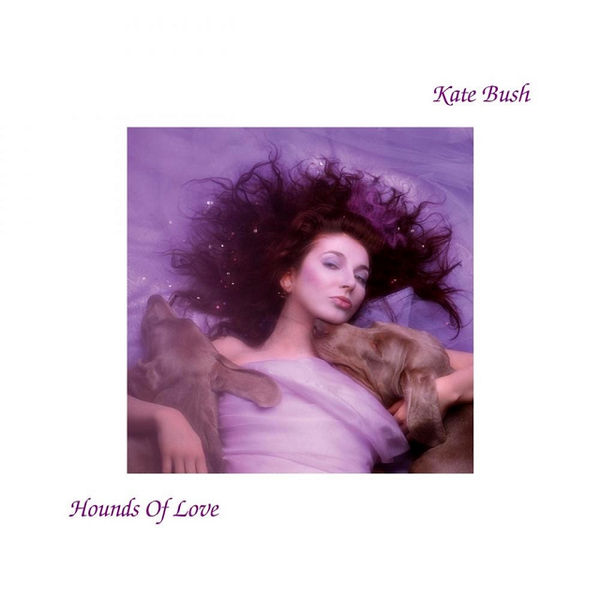
KATE BUSH, “HOUNDS OF LOVE”

Hounds_of_love

(My 100 favorite albums in chronological order: #22 – released September 16, 1985. Originally posted on Kriofske Mix, 1/16/2015.)

Track listing: Running Up That Hill (A Deal With God) / Hounds of Love / The Big Sky / Mother Stands For Comfort / Cloudbusting / And Dream of Sheep / Under Ice / Waking The Witch / Watching You Without Me / Jig Of Life / Hello Earth / The Morning Fog

If The Dreaming established Kate Bush as a major visionary in pop music, Hounds of Love managed the neat trick of expanding her reach both artistically and commercially. It outsold the earlier album, topped the UK album charts and even scored her a top 40 single in the States (her only one to date). Simultaneously, while to the casual observer less angry and bonkers than the earlier album, sections of it are still out there and, on the whole, it’s a considerable undertaking for anyone diving into her catalog for the first time. Although I’ve often cited The Dreaming as my favorite Kate Bush album, I’ve come to cherish this follow-up just as much, even though there is far from an expected progression between the two records.

For all of its complexities, Hounds of Love is neatly divided into two halves (or “sides” in the pre-digital days). Side One contains five songs that frequently showcase Bush at her most approachable (all but one were singles), although none of them would move anyone to accuse her of selling out or calculatingly courting a mainstream audience. Opener “Running Up That Hill (A Deal With God)” was that sole US Top 40 single; that it even peaked at #30 (and #3 in the U.K.) is still a little mind-blowing. It begins with an almost ambient wash of noise before drums and the song’s signature wonky synth riff emerge. The lyrics are at once easily comprehensible and stubbornly enigmatic: what exactly is this “deal with God” she’s making and what does she hope to accomplish by getting “Him to swap our places”? We can ponder this over and over while automatically singing along to the catchy (if also strangely dissonant) melody. You can give it a dozen spins and still not entirely wrap your head around its meaning and purpose, or even pick up on all the bizarre processed backing vocals in the margins. And yet, enough people listened, and listened again to make this Bush’s signature hit—a remixed version even cracked the top ten again in 2012 when the song was included in the ceremonies for the London Summer Olympics.

The title track follows with a bang (“It’s in the trees! It’s coming!!”), announcing a brisk uptempo number capturing that elusive, exhilarating rush of falling madly, head-over-heels in love, losing control and giving yourself over completely to it, not even caring how daft it sounds to replace your “do, do, do’s” with canine-mimicking “arf, arf, arf’s”. The regal, glorious chorus (“Take your shoes off / and throooooww them in the lake”) plays over fervent synth violins that only enhance the song’s overriding ecstasy. Bush retains that gleeful rush on the next song, “The Big Sky”. Sounding unexpectedly dainty on the opening triplets, she lets go of any demureness by the time she hits the first chorus, at which the song becomes an extended two-chord vamp that builds, and builds, and builds. All furiously strummed guitars, “diddley-da, diddley-da” nonsense backing vox, and an army of percussive handclaps, it goes out on a two minute plus, sped-up “Hey Jude”-like coda that is one of the most blissful, jubilant things you’ll ever hear—if you listen closely enough, you might even detect Madonna’s similarly elated “Ray of Light” thirteen years off in the future.

After all this joy, Bush takes a breather with the downcast “Mother Stands For Comfort” (the one non-single on Side One). It’s the track here that could most easily fit on The Dreaming, particularly on that album’s ballad-heavy second half. Like “Night of the Swallow” and “Houdini”, it’s essentially piano-and-voice, but that’s only one layer. Sudden crashing noises make up the percussion, another wonky synth riff mirrors the melodic vocal hook, and again, the margins are stuffed with all these odd little sounds, like Bush caterwauling along with an “Ah-oooo!”. Perhaps, not one her best-loved songs, but in the album’s sequence, it gives us time to cool down before Side One’s final track, “Cloudbusting”. A staccato string arrangement kicks it off, with Bush delivering lyrics about philosopher William Reich and his young son as the two attempt the rainmaking process that lends the song its title. A martial beat joins the strings on the first chorus and much like “The Big Sky”, the song just builds from there, adding on countermelodies, wordless chorales and subtle loud/soft dynamics—complex for pop song, but it’s all in service of a hook so indelible (“Ooooh, I just know that something good is going to happen!”) that it was sampled to great effect by Utah Saints seven years later for their rave hit “Something Good”.

If Hounds of Love’s first half is the closest Bush ever came to pop perfection, Side Two reveals how vast her ambitions were at this point. The album’s final seven tracks form a twenty-six minute suite called “The Ninth Wave”, the title of an 1850 work by Russian Armenian painter Ivan Aivazovsky which depicts people hanging on to a shipwreck at sea. Bush herself has described the suite as being “About a person who is alone in the water for the night. It’s about their past, present and future coming to keep them awake, to stop them drowning, to stop them going to sleep until the morning comes.” While the drowning aspect of the narrative is easily discernible, the whole thing nearly plays like a mini-opera, one oblique enough that most might require a lyric sheet to follow along.

A more effective way of approaching “The Ninth Wave” may be to consider its trajectory of emotions and sudden, significant tonal shifts. The suite begins rather sweetly with “And Dream Of Sheep”, a gentle lullaby harkening back to the relative simplicity of Bush’s earlier girl-and-a-piano tunes. It doesn’t last, for “Under Ice” is turn-on-a-dime sinister, snaking and accelerating just like the Jaws theme as its heroine descends into sleep/underwater. The next song, “Waking The Witch”, starts with an extensive, disorienting collage of pensive, echoing piano chords and various sampled voices speaking variations of the phrase, “Wake up!” (similar to the “Goodbyes” in the outro of The Dreaming’s “All The Love”). Then, everything goes haywire all at once: layers of Bush’s vocal seemingly cut up into a thousand million pieces as she sings nonsensical childlike verse underneath (“red, red roses / pinks and posies”), samples of cathedral bells and a courtroom of men crying “GUILTY!”, and what sounds like the Satanic Demon Creature of Your Worst Nightmares, among many other noises. Possibly the single most challenging track in Bush’s catalog, it defies categorization, unnerving and overwhelming the listener with its full-on attack and total dismissal of traditional pop song structure.

After a whirring helicopter and a male voice shouting, “Get out of the water!”, the song fades out and a markedly calmer soundscape surfaces. Gently bobbing like a buoy on the waves, “Watching You Without Me” comes as a sigh of relief with its seesawing beat, playful synths and basic, two chord progression—then, you notice the unintelligible backing vocals, and also the backward vocals. Just when the last track’s insanity has all but faded, Bush throws in a dash of that weird-as-fuck sliced-and-diced vocal from it, perhaps as a little reminder that this song is simply a segue. The fiddle that introduces and drives the next track is an unexpected shock to the senses (unlike the title track’s proclamation, you don’t at all see it coming). In a possible nod to her Irish mum’s heritage, “Jig of Life” reprises the traditional instruments last heard on The Dreaming’s “Night of the Swallow” at an equally joyous and menacing tempo. Midway through, there’s an actual minute-plus long jig breakdown as intense as anything the Pogues ever came up with, followed by a poetic reverie spoken by her older brother, John Carder Bush.

After “Jig of Life” hits its final resounding chord, Bush announces the expansive yet intimate “Hello Earth”, belting out its title and immediately sobering us up. This is the type of grand, epic orchestral ballad Bush had been writing since “Wuthering Heights”; as much as I adore that singular debut single, “Hello Earth” shows how far she had come in just seven years. If you listen closely enough, a few of the suite’s various threads reappear, such as the Irish instruments and the phrase “Get out of the water”. Still, the song resonates on an emotional level above all—as Bush sings of drowning and/or dying (“Go to sleep, little earth” is the song’s last spoken line), the arrangement both suitably haunts (that low, slow, moaning chorale taking over when the music suddenly drops out twice) and chills (those icy, lingering orchestral crescendos straight out of a horror film).

And then, just as “Hello Earth” dribbles to a close, “The Morning Fog” materializes at full volume via a loudly plucked harp. Blissful and uplifting, it is a song of rebirth with a fresh, vibrant pastoral arrangement. The preceding drama having ceased, Bush sounds wonderfully happy—she’s made it through a rough night and has emerged unscathed and renewed, reveling in the pleasure of just being alive. While “The Ninth Wave” bears the influence of side two of Abbey Road and any number of prog-rock suites that followed throughout the 1970s, it stands apart in one significant way: instead of placing great emphasis on recurring musical motifs and reprisals to tie all the disparate sections together, Bush seems to have crafted this as a journey of the mind, heart and soul. It may take ten or twenty listens (perhaps even more) to comprehend every last bit of her dense text, but the array of feelings it evokes is immediately apparent—you may not literally be there with her in the water, but if you give yourself over completely to her serenity, her madness, her melancholy and her jubilance, well, it’s enough to make you wish you could take your own shoes off and dive right in beside her.

Up next: A heavenly way to die.

“Running Up That Hill (A Deal With God)”:


“Hello Earth”:

PREFAB SPROUT, “STEVE MCQUEEN”

prefab

(My 100 favorite albums in chronological order: #21 – released June 1985. Originally posted on Kriofske Mix, 1/9/2015)

Title originally changed in the U.S. to Two Wheels Good due to objections from McQueen’s estate.

Track listing: Faron Young / Bonny / Appetite / When Love Breaks Down / Goodbye Lucille #1 / Hallelujah / Moving The River / Horsin’ Around / Desire As / Blueberry Pies / When The Angels

Like any art form, pop music is full of artists whom never became household names, yet have retained a cult of enough fervent admirers to be remembered decades after they left their mark, no matter how small. A vehicle for English songwriter Paddy McAloon, Prefab Sprout are best known for a series of albums released between 1984 and 1990. They’ve recorded sporadically since then (most recently 2013’s Crimson/Red), but my guess is that most think of them as an ‘80s band for two reasons: they were semi-popular at that time (in the U.K., anyway) and those albums sound overwhelmingly of that time. Nearly every synth and drum machine on their second full-length, Steve McQueen practically screams 1985, instantly dating it. However, much like the rest of McAloon’s oeuvre, it’s also oddly out of time—other music from the mid-80s might sound similar, but little else from that era or beyond feels much like it.

Despite the band’s cover motorcycle poses and the album title-referencing actor (the epitome of anti-hero cool), no one would ever accuse McAloon of being a rocker. An ‘80s equivalent of Steely Dan’s irony-drenched jazz-pop is a good jumping-off point for describing Prefab Sprout’s sound—what, if anything, are the album cover and title meant to be if not ironic—but McAloon also liberally incorporates Tin Pan Alley-derived craft and Brian Wilson-like experimental song suites into his overall aesthetic. On one level, Steve McQueen is ostensibly pure pop music, driven by traditional melodic hooks, verse-chorus-verse structures and McAloon’s boyish, clear-as-a-bell croon. Still, look beyond those obvious, accessible surface pleasures and stranger, more idiosyncratic qualities emerge, such as extended instrumental intros and outros, shifting time signatures (“Horsin’ Around”, for instance, carefully vacillates between bossa nova and swing tempos) and, in a most explicit nod to Steely Dan, no shortage of delectably acidic lyrics.

McAloon chose Thomas Dolby (of “She Blinded Me With Science!” fame) to produce Steve McQueen, which accounts for its overtly synthetic sound; he also asked Dolby to pick the track listing from a vast catalog of tunes he’d composed on his Spanish guitar and had been storing up for years. Interestingly, all of Dolby’s selections were written in 1979 or earlier. Had these songs been professionally recorded then, they would not have sounded like anything on Steve McQueen. It’s tempting to claim that the finished album is as much Dolby’s as McAloon’s, for Dolby’s preference for a deliberate artifice in his production—in other words, making music that could only come from a studio and is near-impossible to reproduce live—effectively heightens the irony in McAloon’s songs while also highlighting the subtleties apparent in them. One can listen to the album wondering what in the heck McAloon’s singing about, then not caring because it all sounds so great only to have some sort of epiphany on the tenth or twelfth listen (or perhaps minutes, hours, or days after the song is over).

Steve McQueen’s first track may be its most atypical one: “Faron Young” begins with a twangy four-note guitar riff, followed by a purposely stiff, quick, almost new wave-paced beat and a sample of a gunshot. McAloon sings of listening to the titular country star on the radio, his lyrics rife with wordplay, alternating “You give me Faron Young” with “Forgive me, Faron Young”; meanwhile, harmonica and banjo weave in and out of Dolby’s production and a jarring electronic noise appears in the extended, deconstructive outro. It’s a catchy opener, but the next song is more representative: The first thing heard on “Bonny” is a mysterious blowing wind, which remains as a ticking hi-hat and a jazzy guitar riff kick off the song proper, a lush palette of diminished chords and multi-tracked textures gradually building until it reaches full force in an exultant, impassioned chorus.

The next three songs follow nearly the same template: “Appetite” and “When Love Breaks Down” both have now-cheesy seeming synth intros that nonetheless soon blossom into glorious, sparkling walls of sound equal parts fellow ‘80s sophisti-pop group The Style Council and 10cc’s classic gauzy ‘70s hit “I’m Not In Love”. “Goodbye Lucille #1” more of less achieves the same thing, only with an intricate, impossibly beautiful web of acoustic and electric guitars that surges into what may be McAloon’s most urgent chorus, his gentle “Johnny, Johnny, Johnny’s” giving way to this about-face: “Life’s not complete till your heart’s missed a beat / and you’ll never make it up or turn back the clock.” It’s followed by a startling, sinus-clearing repeated howl of “No you won’t!” as everything behind him clicks into place. All three songs, along with “Faron Young” were released as singles (only “When Love Breaks Down” hit the UK top 40); together with “Bonny”, they make a compelling argument for McAloon as a misunderstood, unjustly obscure pop genius.

The album’s second half is not so much obscure or inaccessible as it is varied. “Hallelujah” is jazzier than anything preceding it, with upbeat wordless melodies sugarcoating more pointed sentiments such as, “I believe that sweet talk, like candy, rots teeth,” or, even more bluntly, “No Hallelujahs,” which at this date seems like a rebuke to anyone who has ever covered the Leonard Cohen standard of the same name. Not even the wide-eyed grin “Moving The River” musically beams forth can obscure a wicked barb like, “I hear you’ve got a new girlfriend / how’s the wife taking it?” or erase the weirdness of a WTF hook that goes, “I’m turkey hungry / I’m chicken free!” “Horsin’ Around” and “Blueberry Pies” must have been meant as throwaways (or, in a more positive light, palette cleansers)—the apostrophe in the former’s title even gives it away. “When The Angels” closes Steven McQueen with reverence tempered by a healthy dose of cynicism (a church organ intro, obviously fake horns, a proto autotune hook enhancing the words “Heart-faced little bastards”).

But then there’s “Desire As”, the album’s real centerpiece, right in the middle of side two. As a series of lone synth chords hesitantly hang in the air, McAloon tenderly sighs, “I’ve got six things on my mind / you’re no longer one of them,” (kind of prefiguring Jay-Z’s “99 Problems” by nearly two decades). Eventually accompanied by a barely-there rhythm section and a sax player (regulation for ‘80s pop), he returns to this line again and again along with another providing the countermelody (“Desire as a sylph figured creature who changes her mind?”). For over five minutes, this Mobius strip of a song really does play as if on an endless loop, albeit one containing variations that smooth out any notion of repetition, replaced by an irresistible seductive ennui. I could listen to “Desire As” on an actual endless loop and probably not tire of it—one of those songs that reaches some sort of perfect stasis for me, but damn if I can fully explain how or why. That might be one reason for Steve McQueen’s perseverance through the decades: it entertains and even soothes like a good piece of popular art should, yet it remains singular and at times, a little mysterious.

Up next: Drowning, not waving.

“Goodbye Lucille #1”:


“Desire As”:

VINCE GUARALDI TRIO, “A CHARLIE BROWN CHRISTMAS”

charliebrownx-mas

(My 100 favorite albums, mostly in chronological order (but not this one): #20 – released December 1965. Originally posted on Kriofske Mix, 12/24/2014.)

Track listing: O Tannenbaum / What Child Is This / My Little Drum / Linus and Lucy / Christmas Time Is Here (Instrumental) / Christmas Time Is Here (Vocal) / Skating / Hark, The Herald Angels Sing / Christmas Is Coming / Für Elise / The Christmas Song / Greensleeves

I cannot emphasize enough the profound impact Peanuts has had on my life. Charles Schulz’s comic strip is as important to me as any of the albums or films I’ve written about on this blog. His sense of humor and highly singular yet relatable way of observing the world has resonated with me for as long as I can remember. In childhood, instead of playing with Star Wars figurines or watching Transformers after school, I dutifully collected Peanuts reprint books and watched every half-hour animated television special whenever it aired. Those shows, always preceded by that CBS Special Presentation logo with the startling percussive roll and orchestral fanfare, must have been my introduction to Schulz’s work. From an early age, I can recall sitting with my mom right in front of our TV set, watching the charmingly low-budget animation, hearing the identifiable soundtrack of children’s voices (a rarity at a time when adults providing cartoon character voices was the norm), the muted trumpet standing in for all parents/teachers, and of course, Vince Guaraldi’s jazz score.

In recent years, “Charlie Brown Music” has become one of my favorite phrases to utilize in music criticism because it is so obviously made-up and hyper-specific: if you’ve seen one of the fifteen or so Peanuts specials that Guaraldi scored or have even heard “Linus and Lucy” in isolation, you know exactly what that three-word term implies—mid-century instrumental piano jazz exuding equal amounts childlike whimsy and grown-up melancholy, performed with gentleness but also agility. Although Guaraldi had been recording for nearly a decade and had an actual crossover top 40 hit with “Cast Your Fate to the Wind” three years before, his soundtrack for A Charlie Brown Christmas in 1965 exposed him to a considerably larger audience. From then on, until his death from a heart attack at age 47 in 1976, he was known less for his status as one of his era’s most idiosyncratic and talented West coast jazz pianists and more as the man who created “Charlie Brown Music”—a role he obviously relished, as he spent those final ten years working primarily with Peanuts.

A Charlie Brown Christmas received instant critical and public acclaim on its first airing and quickly became a perennial, rerunning on prime time network TV at least once every year since. Nearly a half-century on, the soundtrack album is just as iconic, although this wasn’t always the case. Released a week before the special first aired, it initially missed the Billboard Album chart (not uncommon for a jazz record). Over the next twenty-five years, it’s hard to say how well it sold as it was not certified Platinum or Gold during that time. However, after a CD reissue in 1988, it began popping up in more store displays every December. Since 1991, when Billboard started using Soundscan (which relies on computer data to track record sales), the album has sold over three million copies—the tenth best-selling Christmas/holiday album in the U.S. during that time period. In 1992, I bought the album on CD and it immediately became a seasonal listening staple in both my parents’ home and practically everywhere I’ve lived since.

As a soundtrack album, A Charlie Brown Christmas is somewhat peculiar. Whereas the special begins with that beautiful, evocative scene of the kids ice skating to the vocal take of “Christmas Time Is Here”, the album kicks off with “O Tannenbaum”, which doesn’t appear until the special’s second half. Not only does the entire album fail to follow the special’s chronology (“Hark, the Herald Angels Sing” which concludes the special, seems randomly dropped in as track # 8), it includes a few selections not heard in the special at all (“My Little Drum”, “The Christmas Song”) and misses some of the stuff actually in it—most notably the lounge-y, upbeat incidental music playing when Charlie Brown frets over Snoopy’s participation in a “lights and display contest” for the latter’s doghouse. Of course, only obsessives and completists worry about such things, but after having heard this album about one hundred times in the last 22 years, I can’t help but notice its imperfections.

Fortunately, very little else about A Charlie Brown Christmas is less than perfect. I’d like to think one major reason why it has endured for so long and arguably grown in popularity is that it doesn’t sound like much holiday music that preceded it. Guaraldi was far from the first artist to make a Christmas jazz record—everybody from Louis Prima (the swinging “Shake Hands With Santa Claus”) to Duke Ellington (“Sugar Rum Cherry”, a sly takeoff of a song from The Nutcracker) beat him to it—but his melodic, accessible version of cool jazz proved ideal for capturing a very specific hue of the holiday season. These mostly instrumental songs, with their simple, piano-bass-drums arrangements emanate as much comfort and joy as they do wistfulness and poignancy. Depending on your own present state of mind, they have the tendency to shift heavily towards either end of this emotional spectrum. However, Guaraldi has no use for grandiose melodrama: nearly every song here bespeaks understatement and intimacy and collectively, the album provides a balm of sorts to what is for many the most stressful time of year.

A Charlie Brown Christmas has its share of covers of holiday standards, roughly split between swing-trio versions of “O Tannenbaum” and “What Child Is This” and more liberal readings like “My Little Drum”, which modifies the melody of “The Little Drummer Boy”, sets it to a shuffling bossa-nova, and adds in some kiddie onomatopoeic vocals. Guaraldi’s original songs, however, have become the album’s real standards over time. Presented in both instrumental and vocal versions, “Christmas Time Is Here” is nearly as well-known as any carol you can name and possibly the epitome of the album’s equation of the season with a kind of sweet sadness. “Skating” is a lovely little tune where Guaraldi’s descending piano trills mimic gently falling snowflakes, only to follow them with ascending chords before they return and the natural cycle repeats itself. “Christmas Is Coming” has an irresistible, up-tempo momentum to it, right from Guaraldi’s opening rhythmic piano licks to its swing interlude mid-way through.

And then, there’s “Linus and Lucy”, as recognizable from its era as “(I Can’t Get No) Satisfaction” or “Strangers in the Night” and the closest thing Peanuts ever had to a theme song. It’s not a Christmas tune, and it wasn’t even written for this special, but for a documentary about Schulz made two years before that never aired. It appears in the special during the rehearsal scenes where most of the cast would rather get down to Guaraldi’s catchy number than prepare for the Charlie Brown-directed Christmas pageant. The song’s instrumental primary melody is an instant earworm while the rumble of the bass melody adds complexity without distracting from the main hook. It alternately rocks, swings and sighs (those elongated chords Guaraldi occasionally throws in) and has no precedent as strictly jazz or pop—it’s a true hybrid, much like the rest of Guaraldi’s “Charlie Brown Music”.

Those interested in exploring more of his work should head directly to The Definitive Vince Guaraldi, a comprehensive two-disc career overview, and Vince Guaraldi and the Lost Cues, two volumes of music mostly from the early-mid ‘70s specials, revelatory for being unexpectedly funky, and proof that Guaraldi kept pushing himself creatively to the end. Still, A Charlie Brown Christmas remains his most culturally significant achievement—as each Christmas passes, it feels more timeless, ensuring that it will be heard for many Decembers to come.

Up next: back to the 1980s (with a vengeance).

“Skating”:


“Linus and Lucy”: