Reposting this piece originally written in 2014 in honor of this special’s/soundtrack’s 60th anniversary.
I cannot emphasize enough the impact Peanuts has had on my life. Charles Schulz’s comic strip is as important to me as any of the albums or films I’ve ever written about here. His sense of humor and highly singular yet relatable way of observing the world has resonated with me for as long as I can remember. In childhood, instead of playing with Star Wars figurines or watching Transformers after school, I dutifully collected Peanuts reprint books and watched every half-hour animated television special whenever it aired. Those shows, always preceded by that CBS Special Presentation logo with the thrilling percussive roll and orchestral fanfare, must have been my introduction to Schulz’s work. From an early age, I can recall sitting on the floor with my mom right in front of our TV set, watching the charmingly low-budget animation, hearing the identifiable soundtrack of children’s voices (a rarity at a time when adults providing cartoon character voices was the norm), the muted trumpet standing in for all parents/teachers, and of course, Vince Guaraldi’s jazz score.
In recent years, “Charlie Brown Music” has become one of my favorite phrases to utilize in music criticism because it is so obviously made-up and hyper-specific: if you’ve seen one of the fifteen or so Peanuts specials that Guaraldi scored or have even heard “Linus and Lucy” in isolation, you know exactly what that three-word term implies—mid-century instrumental piano jazz exuding equal amounts childlike whimsy and grown-up melancholy, performed with gentleness but also agility. Although Guaraldi had been recording for nearly a decade and had an actual crossover top 40 hit with “Cast Your Fate to the Wind” three years before, his soundtrack for the first Peanuts special, 1965’s A Charlie Brown Christmas exposed him to a considerably larger audience. From then on, until his death from a heart attack at age 47 in 1976, he was known less for his status as one of his era’s most idiosyncratic and talented West coast jazz pianists and more as the man who created “Charlie Brown Music”—a role he obviously relished, as he spent his final decade working primarily with Peanuts.
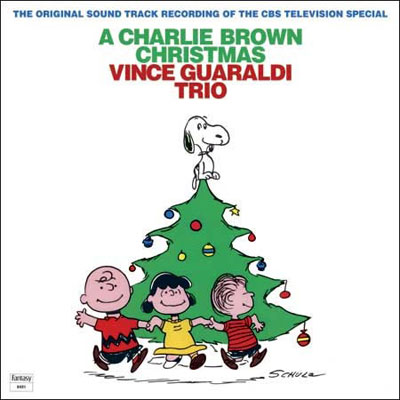
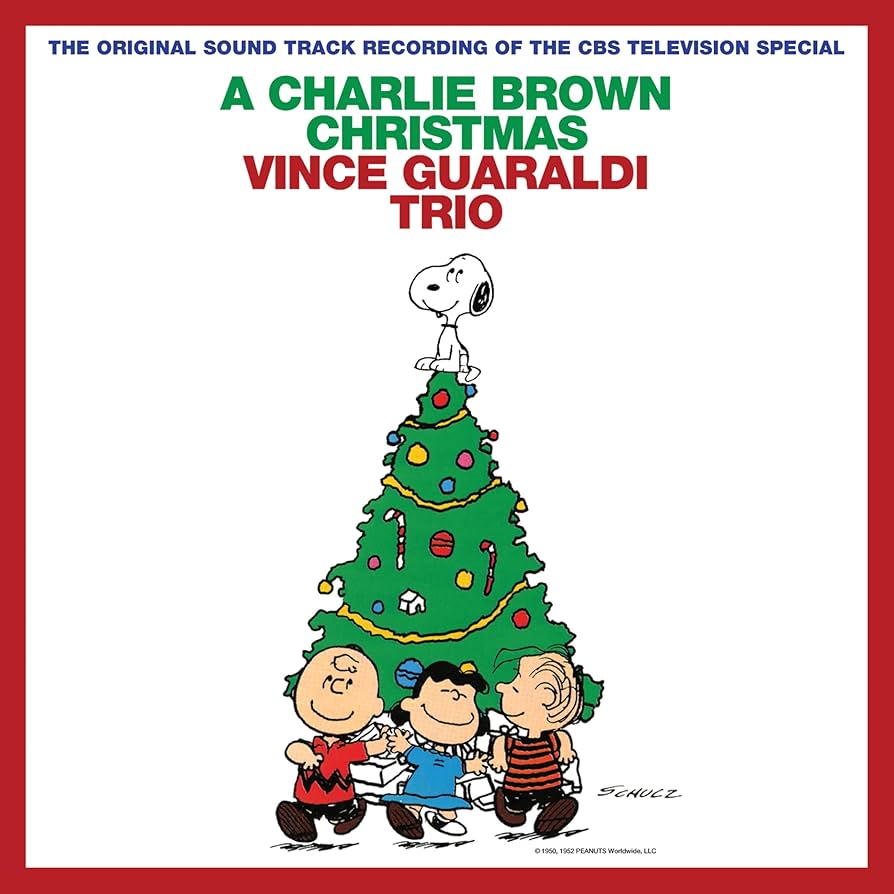
A Charlie Brown Christmas received instant critical and public acclaim on its first airing and quickly became a perennial, rerunning on prime-time network TV at least once every year since. Nearly a half-century on, the soundtrack album is just as iconic, although this wasn’t always the case. Released a week before the special first aired, it initially missed the Billboard Album chart (not uncommon for a jazz record.) Over the next twenty-five years, it’s hard to say how well it sold as it was not certified Platinum or Gold during that time. However, after a CD reissue in 1988, it began popping up in more store displays every December. Since 1991, when Billboard started using Soundscan (which relies on computer data to track record sales), the album has sold over five million copies—the tenth best-selling Christmas/holiday album in the U.S. during that time period. In 1992, I bought the album on CD and it immediately became a seasonal listening staple in both my parents’ home and practically everywhere I’ve lived since.
As a soundtrack album, A Charlie Brown Christmas is somewhat peculiar. Whereas the special begins with that beautiful, evocative scene of the kids ice skating to the vocal take of “Christmas Time Is Here”, the album kicks off with “O Tannenbaum”, which doesn’t appear until the special’s second half. Not only does the entire album fail to follow the special’s chronology (“Hark, the Herald Angels Sing” which concludes the special, seems randomly dropped in as track eight), it includes a few selections not heard in the special at all (“My Little Drum”, “The Christmas Song”) and misses some of the stuff actually in it—most notably the lounge-y, upbeat incidental music playing when Charlie Brown frets over Snoopy’s participation in a “lights and display contest” for the latter’s doghouse. Of course, only obsessives and completists worry about such things, but after having heard this album about one hundred times in the last 30-odd years, I can’t help but notice its imperfections.
Fortunately, very little else about A Charlie Brown Christmas is less than perfect. I’d like to think one major reason why it has endured for so long and arguably grown in popularity is that it doesn’t sound like much holiday music that preceded it. Guaraldi was far from the first artist to make a Christmas jazz record—everybody from Louis Prima (the swinging “Shake Hands With Santa Claus”) to Duke Ellington (“Sugar Rum Cherry”, a sly takeoff of a song from The Nutcracker) beat him to it—but his melodic, accessible version of cool jazz proved ideal for capturing a very specific hue of the holiday season. These mostly instrumental songs, with their simple piano-bass-drums arrangements emanate as much comfort and joy as they do wistfulness and poignancy. Depending on your own present state of mind, they have the tendency to shift heavily towards either end of this emotional spectrum. However, Guaraldi has no use for grandiose melodrama: nearly every song here bespeaks understatement and intimacy and collectively, the album provides a balm of sorts to what is for many the most stressful time of year.
A Charlie Brown Christmas has its share of covers of holiday standards, roughly split between swing-trio versions of “O Tannenbaum” and “What Child Is This” and more liberal readings like “My Little Drum”, which modifies the melody of “The Little Drummer Boy”, sets it to a shuffling bossa-nova, and adds in some kiddie onomatopoeic vocals. Guaraldi’s original songs, however, have become the album’s real standards over time. Presented in both instrumental and vocal versions, “Christmas Time Is Here” is nearly as well-known as any carol you can name and possibly the epitome of the album’s equation of the season with a kind of sweet sadness. “Skating” is a lovely little tune where Guaraldi’s descending piano trills mimic gently falling snowflakes, only to follow them with ascending chords before they return and the natural cycle repeats itself. “Christmas Is Coming” has an irresistible, up-tempo momentum to it, right from Guaraldi’s opening rhythmic piano licks to its swing interlude mid-way through.
And then, there’s “Linus and Lucy”, as recognizable from its era as “(I Can’t Get No) Satisfaction” or “Strangers in the Night” and the closest thing Peanuts ever had to a theme song. It’s not a Christmas tune, and it wasn’t even written for this special but for a documentary about Schulz made two years before that never aired. It appears in the special during the rehearsal scenes where most of the cast would rather get down to Guaraldi’s catchy number than prepare for the Charlie Brown-directed Christmas pageant. The song’s instrumental primary melody is an instant earworm while the rumble of the bass melody adds complexity without distracting from the main hook. It alternately rocks, swings and sighs (those elongated chords Guaraldi occasionally throws in) and has no precedent as strictly jazz or pop—it’s a true hybrid, much like the rest of Guaraldi’s “Charlie Brown Music”.
Those interested in exploring more of his work should head directly to The Definitive Vince Guaraldi, a comprehensive two-disc career overview, and Vince Guaraldi and the Lost Cues, two volumes of music mostly from the early-mid ‘70s specials, revelatory for being unexpectedly funky, and proof that Guaraldi kept pushing himself creatively to the end. Since originally posting this essay, we’ve seen the release of multiple soundtracks from later Guaraldi-scored specials; most essential are It’s The Great Pumpkin, Charlie Brown (1966), A Charlie Brown Thanksgiving (1973) and It’s The Easter Beagle, Charlie Brown (1974). Still, A Charlie Brown Christmas remains Guaraldi’s most culturally significant achievement: as each holiday season passes, it feels more timeless, ensuring that it will be heard for many Decembers to come.