Would this have been as beloved if Bowie hadn’t died days after its release? Does it matter? Far more focused, innovative and affecting than The Next Day, it both encapsulates everything we loved about the man, and also blows it all up. The title track mirrors the structure of “Station to Station” without sounding anything like it; “Girl Love Me” shrugs off Major Tom-style mythmaking with a sobering directness; “Lazarus” looks death straight in the eye, shattering any claims of shielding himself from the world with another persona. What a way to go out, to sum up a life like only Bowie could, while still leaving people wanting more: not for naught is the final track called “I Can’t Give Everything Away”.
Favorite tracks: “Blackstar”, “Lazarus”, “I Can’t Give Everything Away”
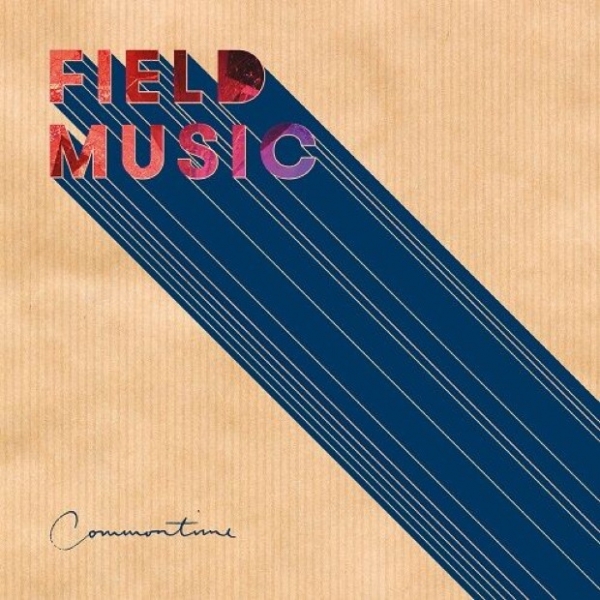
3. Field Music, “Commontime”
I had high hopes for this record after its six-minute-plus first single/opener “The Noisy Days Are Over” dropped late last year—it reiterated everything good about this English art-pop combo while also opening up their sound to contain beefy horns and a funk-rock rhythm not far off from vintage Talking Heads (even the now-departed Prince (of all people) linked to it on his Twitter feed). Although it’s the undeniable highlight here, the rest doesn’t disappoint, as they temper their always-appreciated XTC fixation with welcome nods towards Squeeze, Split Enz and Paul McCartney circa “Take it Away”. Equally welcome: the newfound maturity and insight of tracks like “The Morning is Waiting” and poignant closer “Stay Awake”.
Favorite tracks: “The Noisy Days are Over”, “Disappointed”, “Stay Awake”
2. Michael Kiwanuka, “Love & Hate”
If Kiwanuka’s 2012 debut confirmed a talent for Bill Withers-like folk-soul, his follow-up reveals this Londoner’s ambition and vision. Opening with “Cold Little Heart”, a ten-minute, two-part extravaganza that crosses Pink Floyd with Donny Hathaway, Love & Hate rarely lets up from there. It graciously finds space for jazz-inflected, classy but incensed protest songs (“Black Man in a White World”, “Rule the World”), extended, expansive soundscapes (the title track, “Father’s Child”) and good old, radio-friendly pop (“One More Night”). For once, Danger Mouse’s baroque production compliments rather than overwhelms the artist’s intentions as the swooning strings, Stax-ish horn charts and both acoustic and electric guitars all seem to fit perfectly together with Kiwanuka’s warmhearted croon.
Favorite tracks: “Cold Little Heart”, “One More Night”, “Father’s Child”
A solid sequel to the album that brought them back from the dead, Super is business-as-usual Pet Shop Boys: catchy, cheeky and ever-dancefloor ready. If it doesn’t add anything new to their catalog, the best songs show that Tennant and Lowe still know their way around a killer hook (the glorious, relentless chorus of “Burn”) or how to evoke deep feelings for a past era without delving into cheap nostalgia (“The Pop Kids”). And “Happiness”, “Groovy” and “Pazzo!” all provide heady escapism at time when it’s most needed.
Favorite tracks: “The Pop Kids”, “Say It to Me”, “Burn”
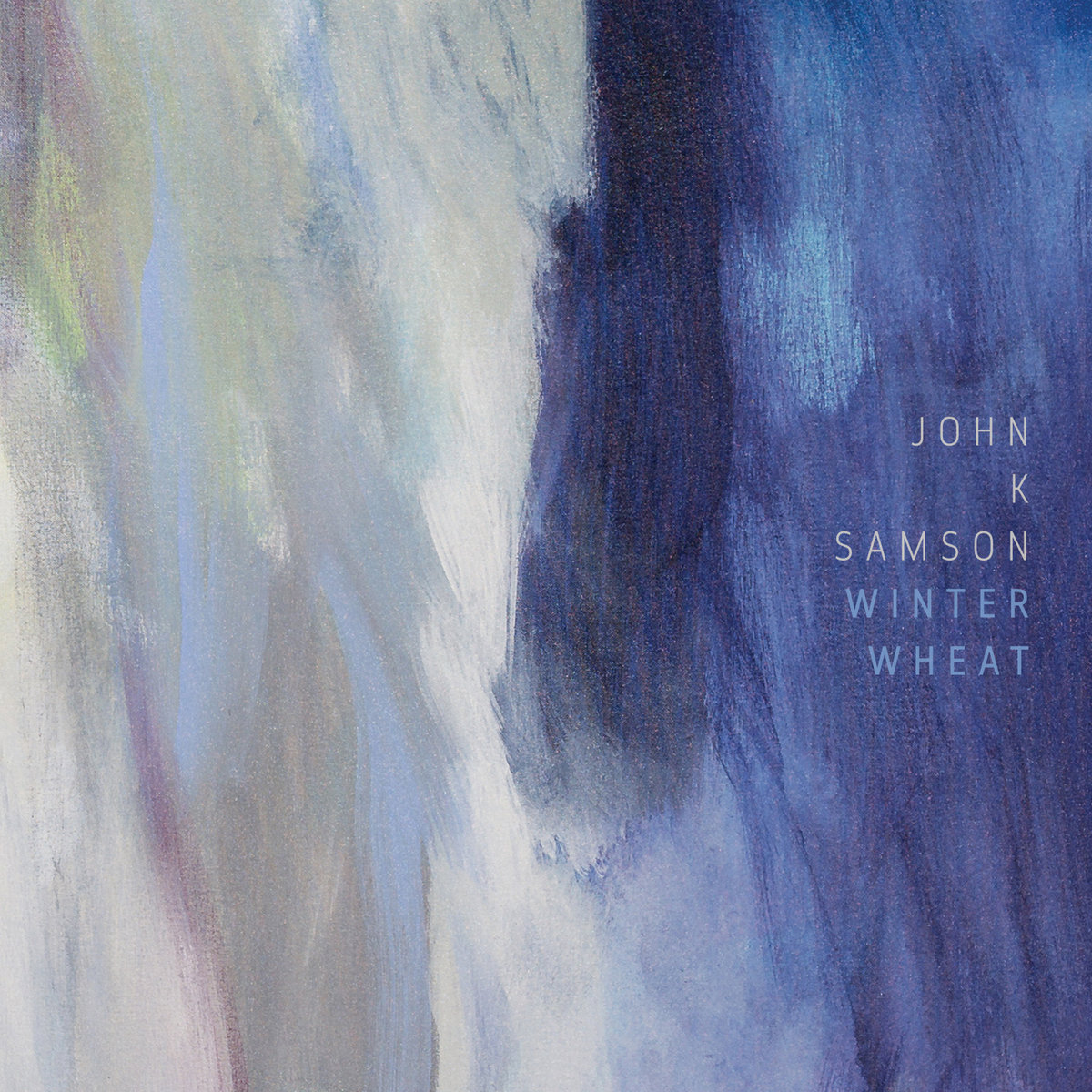
6. John K. Samson, “Winter Wheat”
With The Weakerthans now officially kaput, leader Samson’s second solo album (I somehow missed the first) isn’t radically different from that outfit’s literate, lived-in folk rock—after all, it does feature two of his three former bandmates. It’s a tad gentler and more acoustic than Reconstruction Site, but no less world weary or endearingly scrappy. Imagine if Michael Stipe made a solo album in 1985 or if Billy Bragg was from Winnipeg instead of London. But arguably only Samson could pull off leftfield experiments such as the spoken word “Quiz Night at Looky Lou’s” or a lyric like, “I believe in you and your PowerPoints.”
Favorite tracks: “PostDoc Blues”, “17th Street Treatment Centre”, “Prayer For Ruby Elm”
5. The Avalanches, “Wildflower”
This was never going to exceed or even equal Since I Left You—it just can’t match that album’s limitless sonic design or its seamlessness, and it also gradually peters out in its final third. However, Wildflower is still far better than a second Avalanches LP has any right or purpose to be, especially in that sublime, vintage-disco-to-psych-pop run from “Subways” to “Zap!”, capped off by the kinda stoopid/near-brilliant Biz Markie/Beatles mash-up “The Noisy Eater”. That five months on, I’m still discovering new things to savor within a majority of these songs is a good sign this LP will endure.
Favorite tracks: “If I Was a Folkstar”, “The Noisy Eater”, “Harmony”
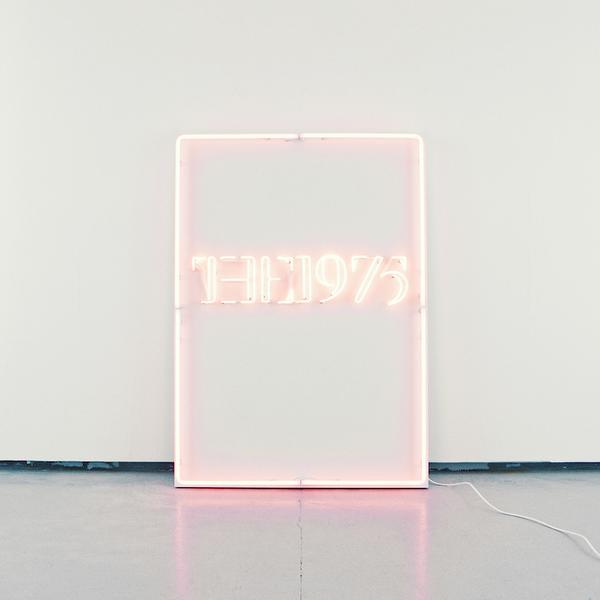
10. The 1975, “I like it when you sleep, for you are so beautiful yet so unaware of it”
While not as shocking as the deaths of some major musicians this year, I was thrown for a loop at just how good this British quintet’s second album turned out (since I swiftly dismissed the first one). Get past the somewhat cringe-inducing “Love Me” and you’re left with a continually unfolding double album-length collection veering between texture-heavy, Prefab Sprout-level tone poems, Wham!-worthy ballads and such wry conceits as, “If she says I’ve got to fix my teeth, then she’s so American.”
Favorite tracks: “She’s American”, “Somebody Else”, “The Sound”
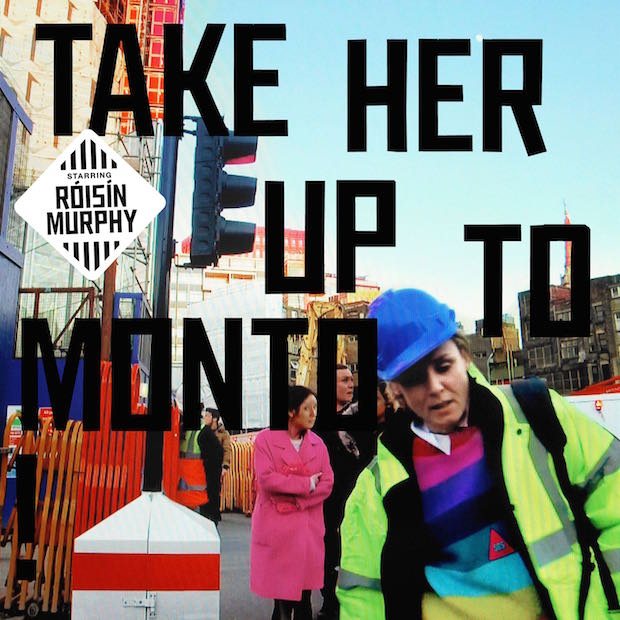
9. Roisin Murphy, “Take Her Up to Monto”
Culled from the same sessions that made up my #1 album of last year, this could be its slightly evil twin. Even more insular and adventurous its predecessor, Monto is surely not an ideal place to dip into Murphy’s catalog, even though it has her most direct uptempo track since Overpowered (“Ten Miles High”) and a bossa-nova even your parents could enjoy (“Lip Service”). The final two songs go off the deep end, but she’s the kind of artist you want to attempt such death-defying leaps. From the warm bath of “Mastermind” onward, she rarely disappoints in that regard.
Favorites: “Mastermind”, “Thoughts Wasted”, “Ten Miles High”
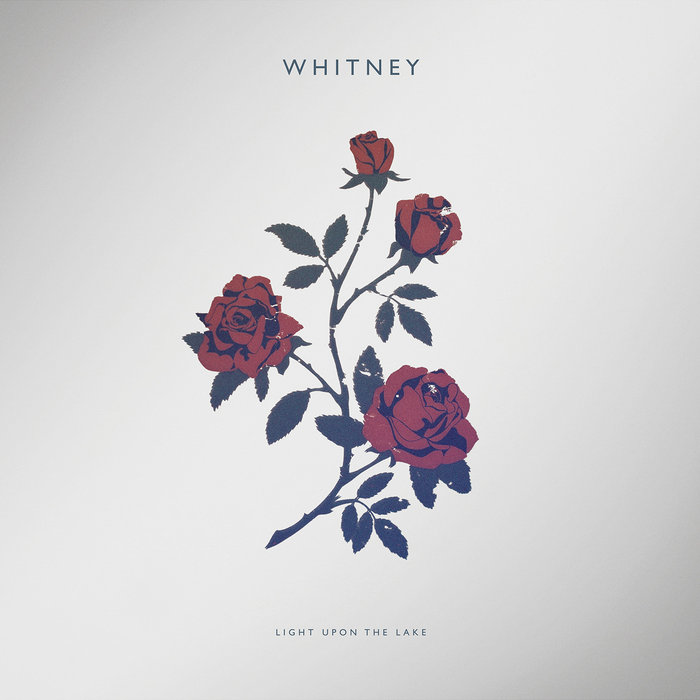
8. Whitney, “Light Upon the Lake”
On a record that could’ve come out in 1973, this Chicago band (featuring former members of the Smith Westerns) lovingly graces that Beatles/Badfinger axis (Elton John is also a fan) without sounding as if covered in mothballs. Sometimes, all you need are ten songs in a mere half-hour to make an impact, although the hooks aplenty certainly don’t hurt. With falsetto vocals that slowly grow on you, occasional, unexpected horns and passages of sheer beauty (cue the title track), this is an unpretentious little gem of a debut album.
Favorite tracks: “The Falls”, “Light Upon The Lake”, “No Matter Where We Go”
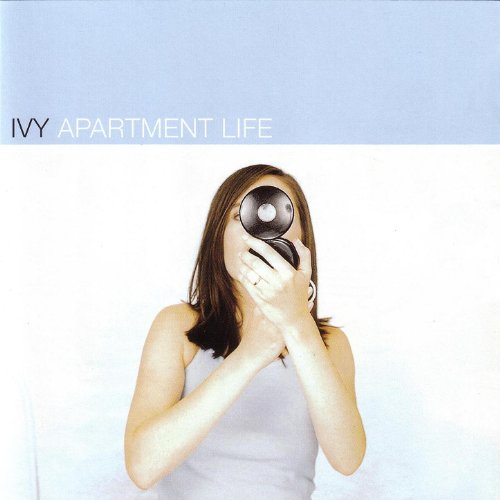
(My 100 favorite albums in chronological order: #59 – released October 6, 1997)
Track listing: The Best Thing / I’ve Got a Feeling / This is the Day / Never Do That Again / I Get the Message / Baker / You Don’t Know Anything / Ba Ba Ba / Get Out of The City / These Are the Things About You / Quick Painless & Easy / Back In Our Town
Chronologically, this project has reached the point when I moved from Milwaukee to Boston; however, in order to write about Apartment Life, I must flash forward four years to the moment I first heard it. At that time, my favorite place to buy music was Record Hog, a corner storefront a few blocks away from Porter Square in Cambridge. I could effortlessly spend an hour (or two) browsing through the long, rectangular table covered from end to end with used CDs (and often a black-and-white cat sprawled across some of them). Until it closed in early 2003, I made a pilgrimage there at least every other week, finding such gems as Bellvista Terrace: The Best of The Go-Betweens (my introduction to them) and Our Own Little Corner of the World: Music From Gilmore Girls.
One Friday after work, I spotted a copy of Apartment Life. I recalled reading positive reviews of it when it came out and I knew one of its members, Adam Schlesinger, was also in Fountains of Wayne, a band I liked. I had a vague notion of it being lounge-y indie pop, but I hadn’t knowingly heard anything on it. Regardless, I purchased it, picked up some Chinese food, went home and put it on my stereo as I dribbled soy sauce over my Sweet and Sour Chicken. The album’s first sounds were a briskly strummed acoustic guitar, an equally lithe rhythm section and a keyboard playing triplet notes. Then, French-born vocalist Dominique Durand appeared, stretching out each syllable in an accent nearly as thick as that of German chanteuse/Velvet Underground cohort Nico. “She’s driving fast / she took the family car / she’s getting high / she’s never slipped so far,” Durand sang until the chorus exploded in an endorphin rush of fuzz-tone guitars accompanying the lyric, “It’s the best thing she’s ever had,” over and over. Looking back, I’d like to think my jaw dropped to the floor (probably along with bits of my takeout) when I first heard “The Best Thing”, an unexpected, revved-up, dream-pop wonder ten times as fabulous as even anything by The Darling Buds. That’s all it took for me to fall for Apartment Life, although to my good fortune, the rest of the album was nearly as exciting to me on this first listen.
It also happened to be my first record store purchase after 9/11, which was not insignificant. Although more than two weeks had passed since then, I still felt… not normal, some shellshock, perhaps. Whenever I think back to that time, I remember feelings of uncertainty and alarm casting a pall over everything. For me, a natural impulse to deal with it all was to seek solace in art. That afternoon of the attacks, I sat cocooned in my living room, aurally encased in Bjork’s recent release, the softer, inward, delicate Vespertine. Just as I remember the first film I saw in a theater post 9/11 (Under The Sand, its focus on loss and grieving more relevant than ever), I recall the unique impact Apartment Life had coming into my life at that exact moment. It felt like an oasis from a world gone mad and shelter from sudden, snowballing visibility of terror and impending threat of war.
Before delving deeper into this album, first, a little background on Ivy. They are a trio consisting of Durand and multi-instrumentalists Schlesinger and Andy Chase. Their first album, Realistic (1995) was full of somewhat gauzy, guitar-based indie pop along the likes of Luna, only defined by Durand’s distinct vocal. I picked it up a year after discovering Apartment Life. Although it grew on me considerably over time, very little of it or Lately (1994) the EP that preceded it, anticipated the second album’s dexterity or overall confidence. From “The Best Thing” onward, you sense Ivy shooting for the fences and achieving whatever goals they set out for with little sign of exertion. It’s a front-to-back exhilarating pop album, as immediate and instantly retainable as If You’re Feeling Sinister with a warm, full-bodied production that manages to fall on the exact right side of slick (a slippery slope they couldn’t avoid on future albums, although In The Clear (2005) is pretty great).
So many of the album’s songs could have been singles. “I’ve Got a Feeling” (not a Beatles cover) is perfectly concise, no part of it extraneous or wasted, its chiming guitars mirroring the sensation of waking up on a sunny morning with limitless possibilities. “This is the Day” (which, along with “I’ve Got a Feeling” later appeared in There’s Something About Mary) swings and sighs with the assistance of a groovy horn section, ‘60s harmonies and that lovely moment when Durand playfully sings in the bridge to the chorus, “She’s never com-ing back.” “I Get the Message” glistens with hooks galore, like a more organic Stereolab gone pop (with English vocals) while Durand’s ever-so-slightly off-kilter croon prevents it all from sounding too sterile. “Get Out of the City” blissfully opens with a throng of Smiths-like guitar jangle and never slackens its promise and yearning of liberation and escape, with Durand at one point gleefully, irresistibly noting, “Everything is melting in the sun / nothing’s getting done.”
The moodier, darker stuff on Apartment Life is even better, occasionally juxtaposing sounds and textures almost as strikingly as Saint Etienne’s first three albums did. For instance, take the two songs smack dab in the album’s middle. “Baker” emits a sense of place unlike the songs preceding it: airy and open with cinematic strings, Durand conjures up the ennui of Francoise Hardy or Jane Birkin (there’s also a wordless chorus punctuated by a Burt Bacharach-flavored solo from jazz trumpeter Chris Botti). Such serenity and gentle melancholy sits in stark contrast to the following song, “You Don’t Know Anything”: the fuzzed-up guitars from “The Best Thing” return with a vengeance as they relay a monster riff over a four-chord progression. The treated, distorted vocals gives the whole thing a slight psychedelic feel—it’s alt-rock tinged with a little Brit-pop, with Durand turning beguilingly wicked as she sings, “I know you’re only human but / I expect something better.”
“Ba Ba Ba” manages to sound both full of melancholy and insouciantly damning. Durand’s narrator admits a preference for the nonsense lyrics of the title to her partner’s actual words (“You can talk all night / why not let it die?”) but later reflects, “You say you are there and I just smile / I just sit in silence – let you wonder for a while.” Meanwhile, the song’s interlocking hooks repeat at a crisp, steady pace until everything (not least the “Ba, ba, ba-ba’s) becomes drenched in VU-like feedback near the end. “Never Do That Again” is similarly two things at once, the lovely acoustic strum, electric guitar solo (from no less than Luna’s Dean Wareham) and Durand’s wistful, lamenting tone (“The cat’s on the carpet / the phone doesn’t work / I hate when it’s quiet / it means that you’re hurt”) all casually at odds with the dit-dit-dit-dit-dit electronic rhythm track underneath.
I still connect with Apartment Life so completely because to me, it often resembles the soundtrack for an imaginary film. Think back to the scenario laid out in “The Best Thing” of a girl breaking away and coming of age. The propulsive music is ideal for an opening credits reel; from there, subsequent songs feel just as evocative of falling in love (“I’ve Got a Feeling”), facing an epiphany or moment of clarity (“This is the Day”), feeling dismay (“I Get the Message”), despair (“I Get the Message”) or disgust (“You Don’t Know Anything”), and longing for escape, once again (“Get Out of the City”).
Following the winsome, meditative “These Are The Things About You” (which more closely resembles Realistic’s nonchalance), the album winds down with two songs suggesting that escape is usually temporary. “Quick Painless & Easy” depicts an untenable situation heading towards collapse: “Straight, straight, straight to the ledge,” Durand tells her intended, before noting in the chorus, “It will be quick and painless and easy / I don’t want you to leave me / but you’ll go anyway,” that last word just hanging there until the song resumes its ominous but catchy descending chord sequence.
It sets the tone for the album’s final track, “Back In Our Town”. After a tentative start where the band seems to be warming up, the song proper finally kicks in with its indelible, repeated four-note hook. Coming full circle from “The Best Thing”, it’s about resolve and returning, acceptance and wisdom gleaned from experience (or perhaps, an adventure). “You were the one who really knew me,” Durand sings early on; later, she explains, “You were the one / the only one I would let near me.” As the song continues, the repeated lyric, “Everything is all right,” becomes sort of a mantra. In the back half, James Iha (of Smashing Pumpkins) appears, singing a countermelody (“And here I go / nobody knows”) and everything slowly fades out with all these layers beautifully melding together. It’s not a stretch to say this would be ideal to play over a film’s final scene into its closing credits—something I often imagine when listening to it.
Apartment Life had a substantial presence in my life for some time directly after I discovered it. I remember listening to it everywhere, from evening walks through my then-neighborhood to an afternoon exploring San Diego’s sunset cliffs. I even wrote a thousand-word essay on it for a now-defunct music website I regularly contributed to. It’s an album I irrevocably associate with a specific time, like Blue or Bloodletting or Dilate; however, it also remains a disc I’d bring with me to a desert island if I could only take a handful, and an album I love nearly as much as Abbey Road or Automatic For the People. The means through which I discovered it also serves as a reminder that there are still so many records out there unknown to me that could very well be some of my favorites. It’s what sustains my desire to seek out new or unfamiliar sounds at record shops, libraries, the internet, etc. I would welcome nothing less than to find another record or two being worthy of this project before I eventually finish it.
(My 100 favorite albums in chronological order: #58 – released August 12, 1997)
Track listing: Go Ahead / Getaway (February) / If I / Writing Notes / Everything / Bore Me / Love Letter / Washington Hotel / I Resign / I Don’t Need You / Around It / Under the Knife / Rang You & Ran
We value longevity in musicians—aren’t careers simply meant to span decades and contain extensive bodies of work? For example, between studio albums, live recordings, compilations and bootlegs (official or otherwise), a Bob Dylan fan has literally hundreds of discs to choose from, not to mention the option to anticipate more to come a half-century on from the man’s self-titled debut. Even living artists who have more-or-less retired (say, Joni Mitchell or Andy Partridge) still have left behind considerable oeuvres, allowing new listeners multiple points-of-entry.
And then, there are the exceptions to this rule, those relatively few artists who left the business after having briefly achieved fame or at least some level of recognition. Boston-based Jen Trynin is perhaps the best singer/songwriter/guitarist you never heard of simply because she released two albums two decades ago, and nothing else since then (as a solo artist – she was briefly in a local band in the early ‘00s.) She put out her first album, the wonderfully-titled Cockamamie, on her own indie label, Squint in 1994 (under the name Jennifer Trynin); her hooky, electric guitar-centric rock garnered enough buzz to make her the recipient of a major label bidding war. She eventually signed with Warner Brothers, which re-released the album the following year. Trynin would very nearly live up to the industry’s great expectations for her when Cockamamie’s infectious second single “Better Than Nothing” became a national Modern Rock radio hit, even briefly crossing over to pop.
Unfortunately, it rose no higher than #74 on the Billboard Hot 100 and a follow-up single flopped. By then, industry and label attention had entirely shifted away from her over to another female alt-rocker, Alanis Morrissette (signed to WB subsidiary label Maverick) after the latter had scored a genuinely massive, zeitgeist-capturing hit with “You Oughta Know”. Trynin shortened her professional first name to Jen and began work on a second album. Released to widespread critical acclaim in 1997, Gun Shy Trigger Happy sold bupkis; sensing increasing indifference from WB, Trynin concluded that she wanted both out of her contract and the industry itself. Some years later, she published a memoir, Everything I’m Cracked Up To Be, which recounted her whirlwind of a career as a temporary rock star with substantial insight and no lack of self-deprecation; the book also served as a mea culpa, detailing and making a convincing case for why she walked away.
Gun Shy Trigger Happy remains one of the great “what-if” records—had Trynin not been in the right place at wrong time or had not discovered she didn’t feel cut out for the exposure and utter ridiculousness that comes with being a rock star, it might now be perceived as either the key record of a venerable career or potentially one of many highlights of a flush oeuvre. Instead, since Trynin disappeared after it flopped commercially, only those few who knew and loved it at the time even remember it. A great leap forward from Cockamamie’s punchy power-trio alt-rock, it’s far more dynamic in sound, mood and texture; it also makes a case for Trynin as one of the sharper songwriters of her time.
“Go Away” opens the record with a blast of multi-tracked “yeah’s” owing as much to the early Beatles as to Joan Jett and the Blackhearts. It rocks as steadily as anything on Cockamamie but sounds a little tighter and cleaner, like a well-oiled machine enabling Trynin to effortlessly glide through the melody and rapid, thrilling pace without wasting a breath, tidily wrapping up in a concise 2:30. Many tracks more or less follow the same up-tempo template, piling on the hooks (the irresistible “I know, I know I know” in “If I”), fortifying them with more cowbell (“Love Letter”), metallic but melodic guitar clang and plenty of “do-do, do-do-do’s” (“Around It”).
What keeps all this from sounding too derivative or merely a distaff version of The Ramones or fellow Bostonians The Cars is Trynin’s conversational tone and singular perspective (established back when she opened “Better Than Nothing” with the lyric, “Maybe we could talk in the shower.”) Deceptively gleeful like a playground sing-along, “Around It” is actually credible advice to a woman in an abusive relationship, while “Love Letter” lays out a compelling argument against writing one, as she pleads, “Why can’t you get it through your head / That I would just want to leave it left unsaid.” On “Bore Me”, when she asks, “You think that all I want from you / is to be friends, friends?”, she sings each “friends” in a whine so faint you may check twice to see if it’s there; the following lyric (“Oh baby, bore me just a little more”) confirms it with brute force.
Coming right after “Go Ahead”, the album’s lead single, “Getaway (February)” is the first of many tracks that refine and deepen Trynin’s sound without dulling her persona. Fading in on a soft, pulsating electronic hum until the rhythm section kicks in at the first verse, it proceeds at a steady but slower-than-usual-pace, with acoustic guitar as prevalent as her beloved electric. At the chord-changing chorus, her voice shifts into an affecting upper register (“Don’t lie / Don’t tell me that we’re leaving”) and everything begins to glisten. The lyrics equate a need to break off a romance with a desire to escape a cold, gray, gloomy environment, and the lush, tender, sad yet buoyant music is like melting snow, gradually revealing previously hidden warmth.
“Writing Notes” is a step further in this direction, with any hint of guitar barely audible. Backed by a shuffling drum machine loop and atmospheric keyboards, Trynin herself sounds equally stark, almost naked. On the chorus, she sings, “I miss the time / when life was so brand new to me / I could barely keep / anything inside,” with an almost Joni-like candor and vulnerability. Referencing a misguided affair (as detailed in her memoir), she holds nothing back: “And I miss the time when / I could never lie to you / I would never have anything to hide,” she sings, before concluding, “Do you have anything to hide?”, her directness and incisiveness much closer to Everything But The Girl’s Tracey Thorn than Alanis or Liz Phair.
On other tracks, Trynin seems to anticipate her retreat from the music industry. On the slow, sobering “Everything”, she contemplates how she arrived at her current frame of mind, admitting, “All I ever wanted to be was free,” before realizing that “trying has cost me everything.” She attempts to rectify her uncertainty with a catchy guitar riff, but it’s just not enough: “It’s not easy now to say no to everything / you ever wanted,” she concludes. The inverted blues of “I Don’t Need You” also seems like the musical embodiment of walking away from something; the mere title of another drum machine-centered ballad, “I Resign” practically gives the game away, with Trynin at one point noting, “It was fun while it lasted.”
Had it lasted, one can only imagine where her career would’ve gone, given the album’s more ambitious sonic experiments. “Washington Hotel” courses with left vs. right channel textures and treated vocals, everything managing to gel but without obscuring Trynin’s tough but blissed out scenario of wanting to commit suicide at the titular spot. “Under the Knife”, which contemplates body image and plastic surgery, is as slow as sludge at first, her vocals deeply submerged under waves of feedback. However, at the three-minute mark, the tempo gradually quickens, a guitar riff appears and the song goes out on a “Hey Jude”-like coda. It’s as if a fog has lifted, and it feels positively liberating. Closer “Rang You & Ran”, on the other hand, is a funereal, almost bashfully quiet lullaby. Her words just seem to hang there in the air: “I’m the one who ran / yes, that was me,” she sings mournfully, as if she’s apologizing for not just running away from a rung doorbell but from a rare opportunity.
Still, it’s no use either bemoaning what could have been or yearning for more. To be left with two albums, one pretty good, the other arguably great, is obviously, um, better than nothing at all. Although tiny, Trynin’s catalog is still in print at this writing and her music endures—not as something so lofty as the voice of a generation, mind you. But whenever I meet anyone who remembers Trynin, they tend to think of her as fondly as I do. In the end, good art is always measured in quality, not quantity.
Next: An oasis.*
“Getaway (February)”:
“Writing Notes”:
*(that has nothing to do with the Gallagher brothers.)
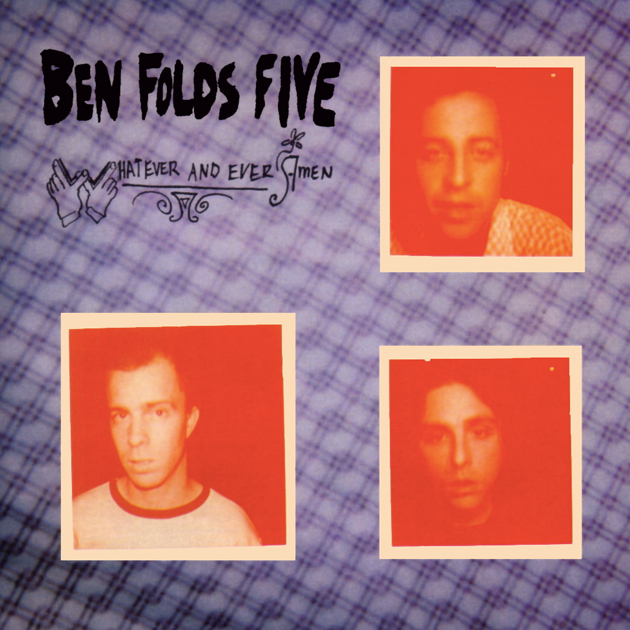
(My 100 favorite albums in chronological order: #57 – released March 18, 1997)
Track listing: One Angry Dwarf and 200 Solemn Faces / Fair / Brick / Song For The Dumped / Selfless, Cold and Composed / Kate / Smoke / Cigarette / Steven’s Last Night in Town / Battle of Who Could Care Less / Missing The War / Evaporated
How to explain a quirky, of-its-time band like Ben Folds Five to today’s youth? Hailing from college town Chapel Hill, North Carolina, they were a piano-bass-drums trio (no fourth or fifth members) at the height of ‘90s alt-rock. Their leader/namesake sang and frantically pounded his Steinway with gleeful abandon, like a cross between those two iconic 1970s piano men, Billy Joel (but without the smarm) and Elton John (minus the camp). The other members, percussionist Darren Jessee and bassist Robert Sledge (aptly named since he often turned his amp’s distortion all the way up) provided enthusiastic backing harmonies that rather resembled a low-budget Queen.
As with Soul Coughing’s Ruby Vroomthe previous year, BFF’s 1995 self-titled debut album was a true alternative to the guitar-centric grunge dominating modern rock radio. “Underground”, “Video” and “Julianne” (with its immortal opening salvo, “I met a girl, she looked like Axl Rose / Got drunk and took her home and we slept in our clothes”) all savagely mocked both portentous indie hipster circles and MTV clichés while also maintaining a healthy dose of self-deprecation and ramshackle, “revenge of the nerds”-like bravado. Although single “Underground” never broke through beyond college radio or 120 Minutes, it made enough of an impact for them to sign to a major label for their second album.
From its title alone, Whatever & Ever Amen suggests BFF made this move without compromising their sound or outlook. Opener “One Angry Dwarf and 200 Solemn Faces” reprises all of the debut’s aforementioned qualities while also sharpening its approach. The song’s breakneck pace is both remarkably assured and forever threatening to spin madly out of control (instead, it just comes to resounding crash and a raucous scream at the end). Folds’ presumably autobiographical account of being “47 inches high” in “September ‘75” satisfyingly has it both ways: you revel along with him, as anyone can relate to triumphing over petty (but at the time, Very Important) childhood woes like getting bullied or not getting a desired birthday gift by achieving a modicum of revenge as a successful adult. But Folds questions that very notion as he repeatedly sings, “Kiss my ass… goodbye,” that ironic pause adding depth to what is a cleansing but still wildly fun manifesto.
A good chunk of the album exudes this snarky liberation, distinguishing BFF from other piano-heavy rockers (I know, not much of a genre apart from Elton, Billy or Suddenly, Tammy!). Positioned as a scorned lover’s ultimate kiss-off, “Song For The Dumped” conjures its strange power from an unsubtle, punky chorus (“Give me my money back, YOU BITCH!”) before turning disarmingly geeky: “And don’t forget,” Fold sweetly sings, “to give me back my black t-shirt.” “Steven’s Last Night in Town” tells of a “fair foreign friend” who gathers everyone together to celebrate his imminent departure, only to stay on and do it all over again, ad nauseam. It’s a mildly amusing scenario made uproarious by featuring a honest-to-god klezmer band (named The Klezmatics, naturally) that tarts up Jessee’s swing-band beat with over-the-top curdling clarinet, trumpet and violin, not to mention lyrics like “Won us over with stories about Linda McCartney / Lost points with the ladies for saying he couldn’t love a woman with cellulite.” Lead single “Battle of Who Could Care Less” could even be Gen-X Steely Dan, wrapping an anodyne melody and innocuous do-do-do’s around a fair but harsh takedown of an apathetic, weed smoking, Rockford Files-watching slacker; Folds ends the song with a twist, purposely mocking (or is that mirroring?) him by admitting with a wink, “You’re my hero, I confess.”
One could argue Whatever is where Folds most successfully embodies his role as archetypal smartass. What made the album so intriguing upon release, however, was that beyond those attention-grabbers, he put considerable effort into partially rehabilitating this persona. If you go back to the debut, you’ll occasionally find an inkling of the band’s more somber side, such as highlight “Alice Childress”, a gorgeous, autumnal ballad or “Boxing”, a waltz-timed lament that could have easily fit into a stage musical. On the follow-up, it first appears in “Brick”, a downcast story song about a man accompanying his girlfriend to get an abortion “the day after Christmas.” It features perhaps the album’s tightest, most crystalline melody and conveys how well the band can actually play. An obvious standout when I first heard it, I wasn’t at all surprised when it crossed over to the top 40 ten months after the album’s release, becoming the band’s breakthrough (and, alas, only) hit.
“Brick” is the one BFF song you still hear on the radio from time to time, but lyrically, it hasn’t aged well. Its chorus (“She’s a brick and I’m drowning slowly”) feels increasingly regressive and reeks of entitled male privilege. Fortunately, the bulk of Whatever holds up far better. Although as rambunctious as his most sarcastic songs, “Kate” is buoyed by an infectious sincerity, singing praises of what could be a proto-Manic Pixie Dream Girl (“Her mixtape’s a masterpiece!,” Folds gushes) while exuberantly concluding, “I wanna, wanna, wanna be KATE!” Even something like “Fair”, heavily indebted to early ‘70s Todd Rundgren/Carol King-style mid-tempo power pop and beset with a decidedly uncool, pea-soup pea-soup beat on the chorus (plus too-cheery-for-even-the-Partridge-Family ba-ba-ba’s!) still resonates due to the sheer craft Folds and his cohorts put into it—not to mention such unexpected lyrical admittances as, “Oh, but I send my best / cause God knows you’ve seen my worst.”
The album’s mid-section (which also includes “Kate”) makes the strongest case for Folds’ blossoming maturity. “Selfless, Cold and Composed” immediately follows “Song For the Dumped” and acts as a course-corrective to it. Another breakup song, only this time addressed to non-emotive lover, it retains Folds’ cleverness (“You just smile like a bank teller / Telling me blankly, ‘Have a nice life’”) while suffusing his anger with tenderness (“You’ve done no wrong / get out of my sight.”) The six-plus minute running time allows for some much needed space, while the arrangement, enhanced by stand-up bass, pizzicato strings and a few sleigh bells towards the end, is stirring but not overly pretty. “Smoke” manages a similar feel in a far more compact frame, with harmonies straight out of peak-period R.E.M. and a squeezebox providing warmth as it wraps itself around the song’s waltz tempo. Even more condensed, the 98-second-long “Cigarette” opts for piano, voice and ambient cricket noise, with Folds relaying a sad tale with poignancy that could be almost unbearable if the song was any longer.
Whatever closes with two tracks hinting at just how significant a journey it has made from “One Angry Dwarf…” to here. “Missing the War” splits the difference between a mournful ‘70s piano ballad (with Jellyfish-like harmonies) and a musical showstopper from the same era. The album’s most straightforward, richly melodic tune (next to “Brick”), lyrically, it’s the most abstract, with Folds describing a domestic drama that he is a witness to but not a direct part of. “Evaporated” retains this tone but is far more confessional (and less bombastic). “I poured my heart out,” Folds sings, and it’s not for effect or sympathy but a declaration you can almost sense him struggling to make. The plaintive chorus crests on another admission: “My God, what have I done?,” he notes, far removed from how David Byrne uttered the same line seemingly a lifetime before.
Rather than try to maintain Whatever’s seamless balance of snark and sincerity, BFF opted for a tonally all-over-the-place prog-rock opera of sorts with their next album, The Unauthorized Biography of Reinhold Messner and split up shorty thereafter. Folds’ solo career has been equally scattered, bouncing from ABBA-worthy pop (“Annie Waits”) to BFF-worthy ballads (“Landed”), strained attempts at satire (“Rockin’ the Suburbs”), collaborations with Nick Hornby, a capella outfits, orchestral ensembles, William Shatner, etc. And for all that, my favorite thing he’s done since1997 is The Sound of the Life of the Mind, a BFF reunion album from 2012 that, while not in the same league as Whatever felt more like a logical follow-up to it than anything else Folds has attempted, which goes to show just how much Sledge and Jessee contributed to those early releases. I’d gladly anticipate another record from this trio if such a proposition were ever likely.
(My 100 favorite albums in chronological order: #56 – released November 18, 1996)
Track listing: The Stars of Track and Field / Seeing Other People / Me and the Major / Like Dylan In The Movies / The Fox In The Snow / Get Me Away From Here, I’m Dying / If You’re Feeling Sinister / Mayfly / The Boy Done Wrong Again / Judy and the Dream of Horses
Like so many other recordings, “The Stars of Track and Field” opens with just a vocal and an acoustic guitar. “Make a new cult everyday to suit your affairs,” sings Stuart Murdoch in a scarcely audible whisper, his Scottish accent nearly rendering “cult” as “coat”. The next line (“Kissing girls in English at the back of the stairs”) is a little louder and within seconds, the song’s melody clicks into place. Gradually, other instruments enter one by one: bass, electric guitar, drums (accompanying Murdoch when he intones the song’s title at the first chorus), then piano, violin and eventually organ.
This build-up is important, for when it reaches full flower, the melody shifts up a few notes with Murdoch exclaiming, “She never needed anything to get her round the track / but when she’s on her back / she had the knowledge / to get her into college,” with such conviction you feel every grain of how organically but effectively the song has blossomed into something profound and awe-inspiring. All this before you even get to the unexpected but strangely pitch-perfect trumpet solo that could’ve come from a Dionne Warwick record (of all things) or the song’s near-thunderous final chorus: “The stars of track and field, you are / beautiful people,” he sings repeatedly, not mockingly but tenderly, with the same veneration the song itself exudes.
Begun by Murdoch and bassist Stuart David as a university project in Glasgow in 1996, Belle and Sebastian (named after a 1970s French children’s TV series) had swelled to eight members strong by the release of If You’re Feeling Sinister near that year’s end. Though technically the band’s second album, it was the first most people heard as their debut, Tigermilk, was limited to a release of a mere 1,000 copies a few months before (it would be finally reissued to the masses in 1999).
That at the time, one had to actively seek out Belle and Sebastian’s music only added to their escalating mystique. With the internet in its infancy, there was nothing like YouTube or MySpace or even Napster to help people discover them; furthermore, Murdoch seemed to deliberately shroud the band in secrecy, doing very little publicity, not granting interviews and rarely performing live. If you were lucky, you might catch one of their songs on a college radio station or in an indie record shop. Thus, over two years passed before I first heard Sinister on headphones at a used CD store’s listening station; it only took one spin of “The Stars of Track and Field” to sell me on it. A week later, a friend and I listened to the entire album while snowed in at her parents’ suburban Chicago home. Confined to an enclosed space with few distractions, I think we both unabashedly fell in love with it by the moment that first trumpet solo rang out.
At this writing, Sinister remains among my most beloved albums. Of the 100 I’ve chosen for this project, it’s possibly the one that comes closest to perfection: ten tracks, 41 minutes and not one wrong or wasted note among them. But that’s not to say the music’s overly pristine or sterile—to the contrary, it pulses with life and the promise of release. Murdoch himself spent much of his twenties suffering from Chronic Fatigue Syndrome and credits this time of isolation as what inspired him to start writing songs. Both Sinister and Tigermilk (the latter a great record in its own right, but primarily a template Sinister richly builds upon) are comprised of tunes from this period and they view the world through a most distinct, often wistful lens—one looking back to a time when Murdoch could actively participate in it rather than be confined from it. And yet, his character sketches are too sharp and perceptive to come off as nostalgic. The music of these early albums, while steeped in ‘60s folk-rock (I once described the band as if The Beatles and The Kinks had a baby together, with Simon and Garfunkel presiding over the birth), manages to sound timeless, as if it could’ve been recorded anytime over the preceding thirty years.
After “The Stars of Track and Field” sets a noticeably high bar for Sinister, “Seeing Other People” just about tops it. With its Vince Guaraldi-like piano and revved-up, Bossa-Nova rhythm, it superficially sounds nothing like the preceding song and yet strikes a similar, compatible tone once Murdoch begins to sing. The lyrics revolve around two teenage boys, “kissing just for practice” in private. One of them is the song’s narrator, whose confesses his conflicted feelings in the chorus: “Well, if I remain passive and you just want to cuddle / then we should be ok, and we won’t get in a muddle / cause we’re seeing other people / at least that’s what we say we are doing.” Those words tumble out of Murdoch’s mouth almost effortlessly in an instantly retainable melody. Although he later confirmed the song was not autobiographical (once identifying his sexuality as “straight to the point of boring myself”), the incisiveness with which he assesses the situation is slyly, masterfully observant—fed up with the situation, he tells the other boy, “You’re going to have to change / or you’re going to have to go with girls / you might be better off / at least they know what they’re doing.”
“Me and the Major” preserves the accelerated pace, chug-chug-chugging along like a high-speed train, complete with occasional “whoo-hoo!” harmonica blasts. That Murdoch himself can barely keep up with the tempo at times only adds to song’s charm. It’s the first instance here where he sings about something other than schoolkids, exploring the generational divide between his own and his elders. Naturally, he places blame on the latter, claiming “We’re the younger generation / we grew up fast / all the others did drugs / they’re taking it out on us,” eventually shifting into a most effective higher register on that last phrase as he did back in “The Stars of Track and Field”. And yet, like most Murdoch characters, the Major is not a totally unredeemable figure, for “He remembers all the punks and the hippies, too / and he remembers Roxy Music in ’72.”
Despite antagonizing him, Murdoch’s not above heavily mining the Major’s generation’s music and cultural signifiers for inspiration (although one wouldn’t detect a whiff of Roxy Music in Belle and Sebastian until a few albums later). “Like Dylan in the Movies” precedes its title with the line, “On your own, if they follow you / don’t look back”, those three last words referencing the title of D.A. Pennebaker’s zeitgeist-capturing ‘60s documentary. Musically, however, the song has nothing to do with Dylan; instead, it’s just more of the same literate indie guitar-and-piano pop with orchestral leanings (a sawing violin here, a tingling percussive touch there), adding heft but not necessarily heaviness. Murdoch may suffuse his songs with crafty peculiarities (in addition to the titular phrase, after he sings, “When the music stops,” it actually does stop for a beat), but they rarely distract from how sincere he comes across with regard to his characters: “It’s not your money that they’re after, boy, it’s you,” he advises the song’s purportedly famous but ambiguous central figure.
“The Fox in the Snow” could be Sinister’s strongest case for Murdoch’s sincerity. Fully conforming to the “sad bastard music” tag later flung upon the band by Jack Black in the film version of High Fidelity, it’s also the likeliest song on the album to be labeled as “twee”, a derogatory British slang meaning “affectedly quaint, pretty or sentimental.” Actually, “The Fox in the Snow” is unapologetically twee—a melancholy but achingly beautiful piano ballad with Murdoch’s pleading vocal front and center. It first references the titular figure (“Don’t let yourself grow hungry now / don’t let yourself grow cold”) before shifting to other variations: “girl in the snow” who’s looking for a lover or a friend, “to tell someone all the truth before it kills you”, or the “boy on the bike” who is forever spinning his wheels without getting anywhere. “It’s not as if it’s fun / at least not anymore,” sings Murdoch, and while such lyrics run the risk of being too enigmatic, his delivery, along with some effective chord changes and delicate instrumental touches (shimmering vibes, acoustic guitar arpeggios) channels enough feeling for the song’s urgency and poignancy to shine through.
The album’s second half kicks off with the cautiously jaunty “Get Me Away From Here, I’m Dying”. Murdoch’s most explicit reference to his extended illness, it has just as classic a chord progression as “The Fox in the Snow” but a far more conversational tone; it’s also the closest he comes to a personal statement of purpose: “Play me a song to set me free / Nobody writes them like they used to / so it may as well be me.” While Murdoch’s far from the first soul to ever find salvation in music, it’s an obviously significant part of Belle and Sebastian’s ethos and a theme he’ll fixate on throughout the band’s twenty-plus year career. During its outro, he repeats the song’s title until it becomes a mantra, his conviction vindicated by his bandmates’ deeply felt support. And for all I’ve written about Murdoch being his band’s mastermind, the key word here is band. “Get Me Away…” may be Murdoch’s composition, but everyone here contributes to its sparkling, full-bodied arrangement, the solid, traditional guitar-bass-drum foundation lovingly enhanced by piano, strings, horns and vibes. One’s left not with a singer + backing band, but a true collective. Indeed, on subsequent recordings, Murdoch will split singer/songwriter duties between himself and a few others (most notably guitarist Stevie Jackson and violinist Sarah Martin).
Sinister’s title track is its most expansive: stretched out over five minutes, its extended intro slowly fades in with isolated electric guitar chords and ambient noise of kids at a playground. Briskly strummed acoustic guitar and nimble percussion eventually take over as Murdoch relays a near-epic tale mostly concerned with a girl who “was into S&M and bible studies / not everyone’s cup of tea she would admit to me.” Looking for meaning or at least direction, she turns to the Catholic Church but fails to find any easy answers. Over the years, Murdoch has spoken of finding salvation not only through music but also via a higher power; exploration of and occasional struggles with his faith increasingly permeate his lyrics as time goes on. At this point, however, there’s mostly skepticism. “If you’re feeling sinister / go off and see a minister / he’ll try in vain to take away the pain of being a hopeless unbeliever,” goes the chorus, which is at least less cynical than the song’s final couplet, where he derisively concludes, “Chances are you’ll probably feel better / if you stayed and played with yourself.”
The following “Mayfly” offers some respite by simply being a straightforward pop song. Effortlessly cheery and autumnal, it comes complete with a numerical count-off, a chiming guitar riff and hooks straight out of the classic folk-pop songbook. It’s familiar, but neither derivative nor dull, thanks to such personal touches as the intermittent slight wobble in Murdoch’s vocal, a brief, buzzing synth solo that comes from out of nowhere (but fits in anyway) and a deft false ending. “The Boy Done Wrong Again” is just as comfortingly recognizable. A pastoral acoustic ballad, it builds slowly like “The Stars of Track of Field” but less intensely, opting for sort of a miserablism tinged by warmth. Closing couplet “All I wanted was to sing the saddest songs / If somebody sings along I will be happy now,” is yet another Murdoch manifesto that succinctly sums up his musical raison d’être.
Still, packed as it is with bedsitter images and bittersweet childhood memories, Sinister does not end awash in desolation. For Murdoch, music is still his salvation, and “Judy and the Dream of Horses” is a loving depiction of such. Like Murdoch, Judy once “wrote the saddest song” but then “gave herself to books and learning.” After falling asleep reading one night, she has a wonderful, transcendent dream about “the girl who stole a horse.” “Judy never felt so good except when she was sleeping,” he sings, and encourages Judy to make her dream of horses a reality by writing a song about it. The song itself unfolds like a dream come to life: after two verses of just vocals, acoustic guitar and a recorder barely holding it together, the full band led by another stirring, crisp trumpet solo enters and everything magically gels. Like Judy, it’s a not a stretch to suspect Murdoch went about making his own dreams a reality by writing songs about them.
This is the key to understanding Belle and Sebastian’s rare, jewel-like appeal. On their early albums, notions of fame and fortune and pop stardom are entirely secondary to the purity of the music itself, which transcends all else. Still, Sinister achieves this without coming off as pretentious or self-absorbed. It sounds more like eight people playing music together in a room, distilling everything of life’s essence from exultant joy to crushing despair into ten impeccably formed pop miniatures. Murdoch and his bandmates have never quite topped it (how could anyone?), but they are far from one-album wonders. Their subsequent discography displays real growth and contains an enviable assortment of gems—some of which we’ll encounter later in this project.
(My 100 favorite albums in chronological order: #55 – released July 9, 1996)
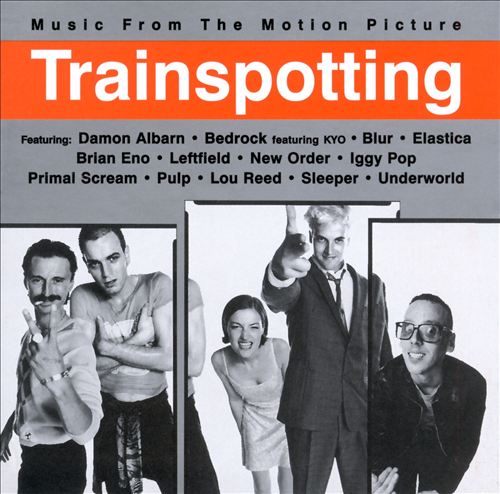
Track listing: Lust For Life (Iggy Pop) / Deep Blue Day (Brian Eno) / Trainspotting (Primal Scream) / Atomic (Sleeper) / Temptation (New Order) / Nightclubbing (Iggy Pop) / Sing (Blur) / Perfect Day (Lou Reed) / Mile End (Pulp) / For What You Dream of (full on Renaissance Mix) (Bedrock featuring KYO) / 2:1 (Elastica) / A Final Hit (Leftfield) / Born Slippy (NUXX) (Underworld) / Closet Romantic (Damon Albarn)
Trainspotting might be the only soundtrack I made a trip to the record store to buy the day after first seeing the film. Twenty years on, director Danny Boyle’s and writer John Hodge’s adaptation of Irvine Welsh’s novel about Scottish drug addicts remains one of my favorite movies of that decade (maybe my absolute favorite). It had a now-unrecognizable, emaciated Ewan McGregor in a star-making lead role and also introduced Robert Carlyle, Jonny Lee Miller and (in her first film) Kelly Macdonald to the rest of the world. It deployed a barrage of stylistic flourishes that drew heavily from French New Wave cinema yet felt thrillingly up-to-the-minute, arguably capturing its cultural moment more vividly than any other film of the era; it also depicted addiction frankly and honestly, acknowledging its on-and-off cycles and how rehab and redemption can contain fluid definitions.
Most of all, it innovatively utilized pop music to push its narrative forward in often fresh, genuinely exciting ways. Trainspotting was far from the first flick to feel like a music video in parts, but it is perhaps one of the most superb examples of scoring a film in such a way. So many “Original Motion Picture Soundtracks” from the ‘90s on felt like mere receptacles for record label showcases, made up of songs seemingly randomly thrown together, often having little to do with the film itself (Batman Forever (1995) is a key example—it resembles a far-better-than average mixtape, but a majority of its (best) songs are either barely audible in the film or not included at all). In contrast, you heard every one of the Trainspotting soundtrack’s fourteen songs onscreen and likely remembered the images accompanying each one as well. (Although the soundtrack stands on its own, it’s a significantly more rewarding, resonant listen if you’ve seen the film first).
Both film and soundtrack (which mirror each other chronologically) kick off with Iggy Pop’s “Lust For Life”, certainly Trainspotting’s signature song and sequence: a furiously-edited, literally hit-the-ground running montage of Renton (McGregor) and his mates hightailing it on foot through the grubby streets of Edinburgh, introducing us to each one (plus his two drug-free friends, who comment on their actions like a mini Greek chorus) by means of rapid freeze-frame cuts. Although Pop recorded the song almost twenty years prior, it fits in perfectly—its irresistible “dun-dun-dun, dun-dun, da-dun-dun” rhythm exudes urgency and momentum, while the lyrics (“Well I am just a modern guy / you know I’ve had it in the ear before”) could be anecdotes about the young men we see onscreen, on the run from something unseen but likely not good. Presumably, Boyle and Hodge were drawn towards Pop for his own reputation as a notorious former drug addict, but the song (and the film) neatly have it both ways—reveling in the junkie grotesque while grasping an euphoric high with the equally heartfelt/ironic chorus of “I’ve got a lust for life! Lust for life!” (also mirroring Renton’s opening soliloquy of vowing to “Choose Life”.)
Only a few cuts here were recorded specifically for the film, and most of them are instrumentals (Primal Scream’s title track, a ten-minute plus excursion into dub; Leftfield’s far briefer, progressive house piece “A Final Hit”) or near instrumentals (delightful closing credits nonsense from Blur vocalist Damon Albarn). Sleeper’s cover of “Atomic” is so close to Blondie’s original, you have to wonder whether it was recorded only because the filmmakers couldn’t get the rights to the latter. The rest is mostly previously released songs and plays like a rich, evocative blend of Britpop’s glorious present, proto-highlights from its past two decades and a brief inkling of where it might be heading.
Trainspotting came out right when Britpop was at its peak, and it duly serves as a primer for it. All of the genre’s big names are here except for Oasis, whom I can only imagine did not want to contribute because of the presence of archrivals Blur (whose then five-year-old, impressionistic, dirgelike single, “Sing” sounds like nothing on Parklife or The Great Escape). In addition to aforementioned tracks from Primal Scream and Sleeper, there’s also female-fronted, post-punk revivalists-ten-years-before-it-was-cool Elastica (“2:1”) and a new song from Pulp, whose career and genre-defining “Common People” had come out the year before. “Mile End” may be the most British song on a compilation teeming with British artists, full of references to such London locales as Burditt Road and the Isle of Dogs (not to mention noting how “the lift is always full of piss.”) Still, it’s clever accompaniment for a montage where Renton, having moved to London, is forced to take in a familiar old mate in his shabby flat. Pulp leader Jarvis Cocker’s splendidly suited for such material, laying out a shrewdly observed character sketch over a delightfully jaunty, slightly skeezy trot.
Rather than limit itself to the sounds of 1996, Trainspotting complements them with choice cuts from the previous two-and-a-half decades; given how much Britpop drew from music of that period and the decade before, the time traveling doesn’t at all jar. Considering his influence on the characters and their adoration of him, it’s no surprise a second Iggy Pop song shows up: “Nightclubbing”, from the same year as “Lust For Life”, arguably more appropriately conjures up the junkie’s milieu, trudging along like a walking hangover. Although Pop is the compilation’s most notable non-Brit, David Bowie did produce both songs, as well as Lou Reed’s “Perfect Day”, perhaps the only track here whose usage is a bit on-the-nose (scoring Renton’s literal sunken overdose). Brian Eno’s ambient “Deep Blue Day” serenely (and somewhat ironically) accompanies the film’s infamous “Worst Toilet in Scotland” underwater scene; New Order’s 1987 version of “Temptation” may be the only barely heard soundtrack cut on the film, coming out of someone’s radio (and briefly referenced scenes later in a more sinister hue), but given that it’s the Best Single of the 1980s, it’s welcome between “Atomic” and “Nightclubbing” here.
When the film moves from Edinburgh to London, the soundtrack partially shifts from guitar-based rock and roll to what was then being called Electronica—the future of music, as far as Americans were concerned, although it had already made a considerable impact on the European charts. Renton’s first nightclubbing excursion in his newly adopted city is set to “For What You Dream Of”, an epic techno-dance track from production duo Bedrock, itself buoyed by KYO’s mighty diva house vocals. It’s noticeably different from everything preceding it on the soundtrack, a relentlessly pulsating strobe light and tab of ecstasy in the face of Britpop’s pint of lager. Two tracks later, Leftfield’s relatively chill “A Final Hit” appears but registers as a mere appetizer to the main course, Underworld’s “Born Slippy (NUXX)”. Scored to the film’s final sequence (at least as iconic as its opening), it is the future. An epic, unusual mélange of techno, drum-and-bass, house and other dance subgenres, it may open with those recognizable, echoing synths, but when its breakneck paced, run-on sentence vocals come in (“Drive boy dog boy dirty numb angel boy”), often as indecipherable as some of the characters’ brogues, all bets are off. However, in terms of pure feeling and kinetic motion, its placement in Trainspotting is nothing short of brilliant, as crucial as what occurs onscreen in driving the film to a twisty, exhilarating close.
Both film and soundtrack proved so popular that a second volume of the latter came out the next year*, compiling other songs heard in the film (such as Heaven 17’s glorious, 1983 synth-soul hit “Temptation”) and additional tunes providing inspiration to Boyle and Hodge during its creation. By then, of course, Britpop’s moment had all but passed. Oasis had self-imploded with the overwrought Be Here Now, Blur had moved on to aping American indie rockers Pavement for their self-titled album, and the biggest band in the country was now the Spice Girls (whom really wouldn’t fit in well with the likes of Pulp and Iggy Pop). Even that year’s film A Life Less Ordinary, which reunited Boyle, Hodge and McGregor was a big flop. Trainspotting had the foresight, or perhaps just the luck to arrive at Britpop’s apex and the rare opportunity to compile its soundtrack by deferring to the head and the heart, rather than the wallet. Other, isolated attempts to replicate its stature would follow (most notably Velvet Goldmine two years later), but we won’t be encountering another film soundtrack in this project.
Next: Bedsitter Images.
*As I write, we’re months away from an actual film sequel to Trainspotting, which I’m more than a little weary of (despite it procuring Boyle, McGregor and the rest of the original cast.)
(My 100 favorite albums in chronological order: #54 – released May 21, 1996)
Track listing: Untouchable Face / Outta Me, Onto You / Superhero / Dilate / Amazing Grace / Napoleon / Shameless / Done Wrong / Going Down / Adam and Eve / Joyful Girl
When I was 22, I moved nearly halfway across the country. Getting accepted into a Master’s program was a good excuse to relocate from my hometown of Milwaukee, although it had been a long time coming. Four years earlier, I wasn’t ready to leave, opting to attend college locally. I regretted this decision days before my first year at Marquette University even began, but I stuck it out. Resisting the growing urge to transfer to a school in another city, I eventually moved on campus and in four years, in those oft-quoted words of the Indigo Girls, “I got my paper and I was free.”
Not ready to actually do something with my degree, I applied to graduate programs and got into Boston University. I had never visited Boston; nor did I know any of its residents. A good friend from high school had raved about visiting family there, so I decided to take a chance and go live somewhere new for a while. I’m generally not much of a risk taker; nearly two decades on, I marvel at the nonchalance with which I made this decision. I certainly didn’t ponder the ramifications of picking up and putting down roots in a faraway place by myself—all I cared about was living someplace new, something different from the only place I knew.
I arrived in Boston on an oppressively hot end-of-August Saturday afternoon with all I could take with me by plane: a suitcase, duffel bag, garment bag and backpack—certainly no room for my 500+ CD collection or anything to play them on (all that would arrive via movers three weeks later). For now, I had my Sony Walkman and a shopping bag full of thirty or so cassettes, a majority of them dubbed off my own CDs or borrowed from the library or friends. I’ve previously written about how much I listened to my tape of Joni Mitchell’s Blue throughout those first few weeks in my new city; the other cassette I played the hell out during this time was Dilate, Ani DiFranco’s seventh album and the first one I ever heard.
Released the previous year, Dilate was also the first time I’d heard of DiFranco herself, taking notice when it cracked the top half of the Billboard 200 album chart upon release (then a far less common occurrence for a heretofore obscure female singer/songwriter, kids). I must’ve borrowed it from the library some time later, hastily copying it onto a used cassette (god knows what I taped over), not even writing down the track listing, though at the very least I put a sticker on it listing the artist and title (in this limited-access-to-the-internet era, months would pass before I looked up the actual titles of these songs—for a long time identifying “Superhero” as “Used to Be” or “Shameless” as “Skeleton”). I doubt I even listened to it once in the months leading up to my move; I was acquiring so much music then that I couldn’t possibly keep up with it all, let alone absorb most of it.
Still, of the hundreds (yes, I know) of cassettes I could pick from to take with me on the plane, Dilate somehow made the cut. Perhaps I had read an article about DiFranco, or scanned the title while sifting through my tapes and thought, “Hmm, I should really listen to this.” Whatever the reason for bringing it along, within days of settling into my Allston apartment, I popped it into my Walkman as I set out on foot to explore my unfamiliar surroundings (I would devote an excessive amount of my free time to doing this, primarily to escape said shitty apartment.)
As I ambled towards Packard’s Corner and pressed play, “Untouchable Face” began Dilate tentatively, with DiFranco’s reverbed guitar relaying the song’s simple, almost wistful six-note, two-chord riff. Her vocal was just as elementary—plainspoken, relatable, conversational. Coincidentally, the first lyric was “Think I’m going for a walk outside now,” but that’s not what I noticed. As percussion and soft keyboard shading completed the arrangement, it became clear she was addressing the song to an ex-lover who was now with another woman. Then came the monumentally blunt chorus: “So, fuck you / and your untouchable face / fuck you / for existing in the first place.” She neither screamed, shouted nor even blared out those words, retaining the verses’ measured tone, but adding a slightly gruff edge to the f-bombs, as if she spat them out while above all maintaining her composure. As with the opening line of Aimee Mann’s I’m With Stupid, its shock value called out for attention, but even then, I sensed DiFranco’s aim was less to be bold than to just let out and try making sense of some strong, pent-up emotions.
“Untouchable Face”, in fact, was something of a departure for DiFranco. Not that she hadn’t written failed relationship songs before—great ones, actually, such as “You Had Time” from Out of Range (1994) or “Sorry I Am” from Not a Pretty Girl (1995)—but “Untouchable Face” was, in comparison, uncommonly laser-focused and raw, with little ambiguity as to her hurt, anger, contempt, jealousy, etc. Instead of cloaking such emotions in a loud, rage-fueled rant, she used a genuinely catchy melody that probably would’ve gotten her on the radio if not for those multiple but absolutely necessary f-bombs. You’re almost tempted to surmise she’s killing her ex with kindness, until that first “fuck you” arrives, sparingly but strategically deployed, making that much more of an impact.
As it proceeds, Dilate reveals itself predominantly as a song cycle about a love affair’s brutal aftermath. It has less of the explicitly political subject matter that at times dominated her previous work, which likely threw longtime fans for a loop—much of DiFranco’s appeal initially stemmed from whom she ideologically was: a feminist, bisexual, guitar-strumming folksinger recording independently on her own label. While her back catalog (six albums recorded in as many years!) shows her more often than not fusing the personal with the political, Dilate markedly shifts her lyrical focus—it is her most vulnerable, confessional and emotionally naked record to date. Not that she’s become apolitical—witness “Napoleon”, a sharp dressing-down of an unnamed colleague tainted by selling his/her soul for fame. Still, for the first time, DiFranco seems less able to entirely shrug off her wounds; on Dilate, she bleeds profusely and achieves a catharsis that’s rare in pop music.
Those missing DiFranco’s angrier side on “Untouchable Face” should be vindicated by “Outta Me, Onto You”. Musically, it’s more in line with her signature, amped-up, hard-to-classify guitar style, blending flamenco, jazz, funk and jam-band strumming and picking. The primary hook is her shouting, “NO, NO, NO, NO!” over and over again until it becomes as essential a component of the song as the guitars and drums. This rage resurfaces throughout Dilate: it’s apparent in the mighty, resounding thum-thum propelling the epic title track and also in the would-be-exaggerated-if-she-wasn’t-so-convincing contempt with which she spits out the words, “But, don’t be so offended / you know, you should be flattered.” You also hear it in the rudimental, plucked, ugly-sounding electric guitar on “Napoleon”, particularly when paired with lyrics like “yeah I wonder / when you’re a big star / will you miss the earth?” (Not to mention the song’s chorus, which is simply, “Everyone is a fucking Napoleon.”)
However, during that first autumn in Boston, what struck me more than DiFranco’s anger on Dilate was her candor—in particular, how it informed her sense of loss and despair. I was a few years away from ever going through the sort of immense, all-consuming heartbreak this album details so vividly, so I couldn’t fully understand it, but was nonetheless deeply affected by it. I related to that compatible feeling of being alone, completely on my own for the first time, and took comfort in album’s more intense, purgative moments.
Appearing about two-thirds of the way through Dilate, “Done Wrong” is where the cracks in DiFranco’s vengeful façade start showing. With a steady, almost lithe beat, two chords and a wiry slide guitar that doesn’t overpower the arrangement but adds drama when needed, it’s a minor key lament that somehow never turns into a dirge. Its repetitious melody grabs your attention and DiFranco’s salient lyrical imagery sustains it. In describing her wrecked emotional state, she sings “I’ve been like one of those zombies / in Vegas / pouring quarters into a slot,” before turning more direct: “And now I’m tired / and I’m broke / and I feel stupid and I feel used.” The song begins and ends on the same stanza concluding with the lines, “I guess that makes me the jerk with the heartache / here to sing you about how I’ve been done wrong.” She’s knows how inherently ridiculous her plea, her flailing about is from the outset, only to return to it, unchanged, eloquently making known every inch of her hurt, grief and utter despair.
Two tracks later, “Adam and Eve” arrives, even further stripped down to just guitar and percussion. DiFranco’s first few records used this arrangement, often nixing the drums entirely as it was a true DIY production. After gradually adding on more instruments to her songs (pianos, fiddles, an occasional woodwind), she radically dialed it all back for Dilate’s immediate predecessor, Not a Pretty Girl, recording much of the album with just percussionist Andy Stochansky. A remarkably intuitive drummer, Stochansky is masterful at lending subtle depth to DiFranco’s idiosyncratic vocal melodies and guitar strumming; “Adam and Eve” shows what kindred spirits they are together. After an extended intro of reverbed guitar noodling, as if DiFranco is trying to find the right chords, the melody proper kicks in as she and Stochansky lock into a slow, deliberate groove, his drums filling the spaces in between and lending dimension to her guitar. At the 2:30 mark, they erupt into the closest thing the track has to a chorus, with DiFranco powerfully wailing, “I am, I am, I am truly sorry about all this,” magisterially stretching out the “I am’s” over a few bars. It’s just two people playing here, but it carries an orchestra’s gravitas.
Stochanksy’s also effective when simply providing a steady foundation, as he does with the basic, four-on-the-floor beat of “Shameless”. He allows DiFranco’s irresistibly circular guitar riff (rather resembling something off a Dave Matthews Band song!) to take the lead, then complements the chord-changing bridge by playing softer, nimbler, but still in step with DiFranco as she takes the song to a sweeter, jazzier place. Still, he’s on just seven of the album’s eleven songs. After stripping down to basics, DiFranco was again looking to expand her sound, this time dabbling in some electronica. “Going Down” could almost be her take on trip-hop (like a juiced-up Morcheeba), opening with a prominent, shuffling drum loop, then layering in bits and pieces of sampled vocals both sung and spoken. It’s an outlier, but serves as a moody, hypnotic tonic when placed between “Done Wrong” and “Adam and Eve”.
There’s also a seven-minute version of “Amazing Grace” placed near the album’s middle, similarly constructed out of drum loops, sampled guitars, church bells and an elderly woman reciting the famous hymn’s more obscure verses a beat or two behind DiFranco singing them. Rather than stop Dilate dead in its tracks, it adds texture and distinction—another way she stood out from your average folksinger. She’d expand that template even further on subsequent albums, often to positive means (even if increasingly in need of an editor), but never with such potency; her only other record that, in my mind, matches its achievement is the following year’s Living in Clip, a double live album I nearly wrote about for this project. Culled from the tour promoting Dilate, it makes a solid case for her talent with mostly only the support of Stochansky and ex-Gang of Four/B-52’s bassist Sara Lee.
Still, looking back on that time, of discovering DiFranco and Dilate and getting to know my new home, I strongly recall those long walks accompanied by that endless, hypnotic version of “Amazing Grace”. I remember making my way home at night from a bar or a movie through the neighboring suburb of Brookline’s leafy streets lined with elaborate, ornamental century-old homes. Dilate’s beautifully slow finale, “Joyful Girl” would come on my headphones. I could hear and practically feel every plucked note, letting the song’s resolute sorrow and sense of being at peace with the world wash over me, especially during DiFranco’s uncommonly lush, multi-tracked sighs near the end. It had a centering effect in a most disorienting time, one equally frightening and exhilarating, filled with both unprecedented uncertainty and wonder. It made for an ideal, modern day counterpart to that other record I listened to on repeat, Joni Mitchell’s Blue—even though the two sounded practically nothing like each other, they embodied similar states of mind and got to me when I was undoubtedly at my most susceptible.
The BBC recently published this poll in which 177 critics submitted their ten favorite films since 2000. Here’s my own list:
Mulholland Dr. (David Lynch, 2001)
The Royal Tenenbaums (Wes Anderson, 2001)
In The Mood For Love (Wong Kar-wai, 2000)
Before Sunset (Richard Linklater, 2004)
Yi Yi: A One and A Two (Edward Yang, 2000)
Y Tu Mama Tambien (Alfonso Cuaron, 2001)
There Will Be Blood (Paul Thomas Anderson, 2007)
The Act of Killing (Joshua Oppenheimer, 2012)
Duck Season (Fernando Eimbcke, 2004)
My Winnipeg (Guy Maddin, 2007)
If I had been able to submit this ballot, it would not have changed the poll’s results much – its top three titles are on my ballot (including the same number one – yes, Lynch’s Los Angeles dreamscape has finally taken over Wes Anderson’s New York family saga for me) and four of my other selections made the poll’s top 100. I chose Before Sunset over Boyhood because I prefer the former’s deliberately limited scale and tightness, although we’ll see if that holds once I get around to watching the latter again.
As for my three outliers, I’m not surprised at Maddin’s singular “docu-fantasia” or Eimbcke’s ultra-charming micro-indie not making the list, but I am shocked at the decreasing visibility of Cuaron’s breakthrough film. Granted, I haven’t seen it in about a decade now, but at the time, it had a considerable impact on nothing less than how I watch movies. Perhaps, it’s simply been supplanted by Children of Men as the Cuaron film to watch (which I loved, but need to see again).
The problem with any top ten list, of course, is that it’s way too short and constricting. Other movies I considered (in addition to Boyhood): C.R.A.Z.Y., Far From Heaven, Frances Ha, Gosford Park, Holy Motors, Spirited Away, Stories We Tell, Synecdoche, New York.






 Haunted Jukebox