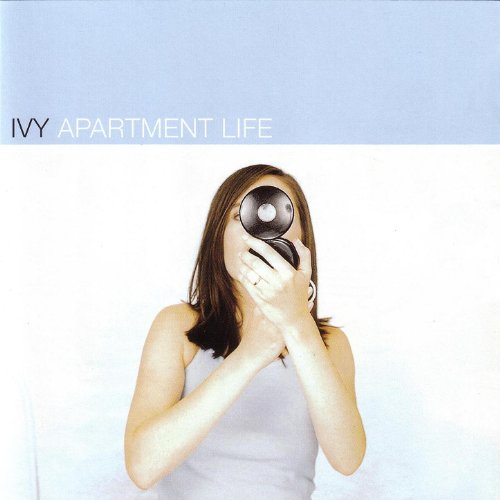
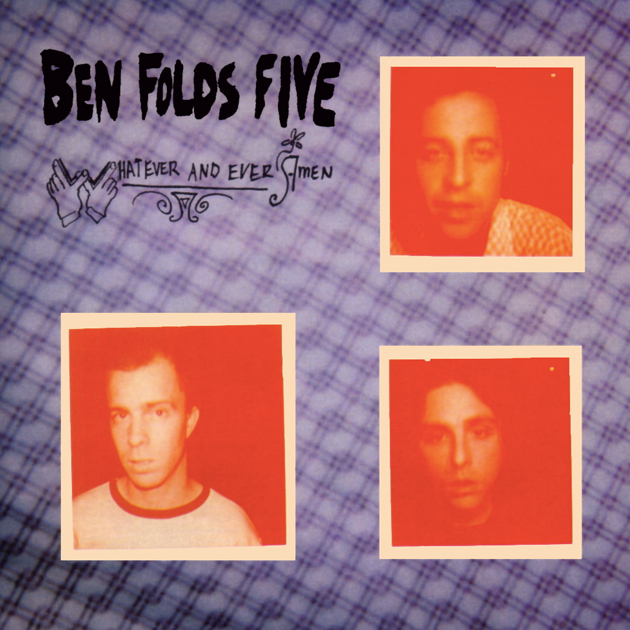
Snarky American alt-rock and Britpop were my mainstays in the 1990s, so it scans that my top two albums of 1997 were from Ben Folds Five and Blur. As with 1996’sI’m With Stupid, Whatever & Ever Amen hit instantly upon its release early in the year, the soundtrack to a life in transition as I graduated from Marquette University in my hometown and moved across country to Boston to pursue a master’s in film studies at BU. Weeks before this sojourn, I saw Morphine at the H.O.R.D.E. Festival’s stop at Alpine Valley and bought their latest CD Like Swimming the next week. Incidentally, Ben Folds Five also played that festival, focusing heavily on some odd new songs that would surface on their divisive next record in 1999.
As an Anglophile deep into the Beatles, XTC and (to a lesser extent) the Kinks, Blur were ostensibly crafted in a lab specifically for me. Compared to Parklife three years before, their self-titled fifth album was a departure, throwing aside past homegrown influences for American indie bands like Pavement and Guided By Voices. Riding high on a surprise US hit (“Song 2”), I saw them with a friend live at The Rave in Milwaukee early that summer which might’ve elevated my initial, somewhat confused impression of Blur.
Weeks after arriving in Boston that September, my first purchases from Newbury Comics were the just-released Happy End of The World and Sweetness and Light. I played Sarah McLachlan’s “Angel” on repeat long before it became a hit or forever associated with sad animal shelter ads. Jill Sobule’s Happy Town was a continual background presence, revealing her as a strong voice in it for the long haul even if it wasn’t as immediate as her 1995 self-titled breakthrough, home to the immortal “I Kissed A Girl”.
As with 1996, another 1997 album eventually surpassed my original number one although I didn’t hear it until years later. It’s a testament to the solidity of Whatever & Ever Amen (and I’m With Stupid) that both remain in second place of their respective years to this day but picking up a used copy of Apartment Life weeks after 9/11 was a revelation; it’s also one of the few records I’ve ever purchased the demos of (on vinyl, no less), a 2023 Record Store Day release.
Although one of their better records, Blur wasn’t as enduring. Lead track “Beetlebum” remains their greatest Beatles rip, but I don’t ever have to hear “Song 2” again (save for Emm Gryner’s version) and the rest is uneven compared to Parklife. I’d also now rather play many Jill Sobule and Depeche Mode LPs other than Happy Town or Ultra. Surfacing proved the beginning of the end for McLachlan, a real drop after the genuine mystery of Fumbling Towards Ecstasy and its predecessors.
Throughout 1998, as Ani DiFranco’s Dilate and Little Plastic Castle became the soundtrack to my new life, double LP Living in Clip completed the triumvirate and served as a neat primer of highlights from her first five records, rendered in definitive live power-trio versions. Early that year, I also picked up a used copy of Jen Trynin’s second (and final) record, now a lost gem from the start of an era far less welcoming to female singer-songwriters from the electro-folk genius Beth Orton to the riot-grrl adjacent Sleater-Kinney who weren’t popping on commercial alt-rock radio anytime soon.
(My 100 favorite albums in chronological order: #57 – released March 18, 1997)
Track listing: One Angry Dwarf and 200 Solemn Faces / Fair / Brick / Song For The Dumped / Selfless, Cold and Composed / Kate / Smoke / Cigarette / Steven’s Last Night in Town / Battle of Who Could Care Less / Missing The War / Evaporated
How to explain a quirky, of-its-time band like Ben Folds Five to today’s youth? Hailing from college town Chapel Hill, North Carolina, they were a piano-bass-drums trio (no fourth or fifth members) at the height of ‘90s alt-rock. Their leader/namesake sang and frantically pounded his Steinway with gleeful abandon, like a cross between those two iconic 1970s piano men, Billy Joel (but without the smarm) and Elton John (minus the camp). The other members, percussionist Darren Jessee and bassist Robert Sledge (aptly named since he often turned his amp’s distortion all the way up) provided enthusiastic backing harmonies that rather resembled a low-budget Queen.
As with Soul Coughing’s Ruby Vroomthe previous year, BFF’s 1995 self-titled debut album was a true alternative to the guitar-centric grunge dominating modern rock radio. “Underground”, “Video” and “Julianne” (with its immortal opening salvo, “I met a girl, she looked like Axl Rose / Got drunk and took her home and we slept in our clothes”) all savagely mocked both portentous indie hipster circles and MTV clichés while also maintaining a healthy dose of self-deprecation and ramshackle, “revenge of the nerds”-like bravado. Although single “Underground” never broke through beyond college radio or 120 Minutes, it made enough of an impact for them to sign to a major label for their second album.
From its title alone, Whatever & Ever Amen suggests BFF made this move without compromising their sound or outlook. Opener “One Angry Dwarf and 200 Solemn Faces” reprises all of the debut’s aforementioned qualities while also sharpening its approach. The song’s breakneck pace is both remarkably assured and forever threatening to spin madly out of control (instead, it just comes to resounding crash and a raucous scream at the end). Folds’ presumably autobiographical account of being “47 inches high” in “September ‘75” satisfyingly has it both ways: you revel along with him, as anyone can relate to triumphing over petty (but at the time, Very Important) childhood woes like getting bullied or not getting a desired birthday gift by achieving a modicum of revenge as a successful adult. But Folds questions that very notion as he repeatedly sings, “Kiss my ass… goodbye,” that ironic pause adding depth to what is a cleansing but still wildly fun manifesto.
A good chunk of the album exudes this snarky liberation, distinguishing BFF from other piano-heavy rockers (I know, not much of a genre apart from Elton, Billy or Suddenly, Tammy!). Positioned as a scorned lover’s ultimate kiss-off, “Song For The Dumped” conjures its strange power from an unsubtle, punky chorus (“Give me my money back, YOU BITCH!”) before turning disarmingly geeky: “And don’t forget,” Fold sweetly sings, “to give me back my black t-shirt.” “Steven’s Last Night in Town” tells of a “fair foreign friend” who gathers everyone together to celebrate his imminent departure, only to stay on and do it all over again, ad nauseam. It’s a mildly amusing scenario made uproarious by featuring a honest-to-god klezmer band (named The Klezmatics, naturally) that tarts up Jessee’s swing-band beat with over-the-top curdling clarinet, trumpet and violin, not to mention lyrics like “Won us over with stories about Linda McCartney / Lost points with the ladies for saying he couldn’t love a woman with cellulite.” Lead single “Battle of Who Could Care Less” could even be Gen-X Steely Dan, wrapping an anodyne melody and innocuous do-do-do’s around a fair but harsh takedown of an apathetic, weed smoking, Rockford Files-watching slacker; Folds ends the song with a twist, purposely mocking (or is that mirroring?) him by admitting with a wink, “You’re my hero, I confess.”
One could argue Whatever is where Folds most successfully embodies his role as archetypal smartass. What made the album so intriguing upon release, however, was that beyond those attention-grabbers, he put considerable effort into partially rehabilitating this persona. If you go back to the debut, you’ll occasionally find an inkling of the band’s more somber side, such as highlight “Alice Childress”, a gorgeous, autumnal ballad or “Boxing”, a waltz-timed lament that could have easily fit into a stage musical. On the follow-up, it first appears in “Brick”, a downcast story song about a man accompanying his girlfriend to get an abortion “the day after Christmas.” It features perhaps the album’s tightest, most crystalline melody and conveys how well the band can actually play. An obvious standout when I first heard it, I wasn’t at all surprised when it crossed over to the top 40 ten months after the album’s release, becoming the band’s breakthrough (and, alas, only) hit.
“Brick” is the one BFF song you still hear on the radio from time to time, but lyrically, it hasn’t aged well. Its chorus (“She’s a brick and I’m drowning slowly”) feels increasingly regressive and reeks of entitled male privilege. Fortunately, the bulk of Whatever holds up far better. Although as rambunctious as his most sarcastic songs, “Kate” is buoyed by an infectious sincerity, singing praises of what could be a proto-Manic Pixie Dream Girl (“Her mixtape’s a masterpiece!,” Folds gushes) while exuberantly concluding, “I wanna, wanna, wanna be KATE!” Even something like “Fair”, heavily indebted to early ‘70s Todd Rundgren/Carol King-style mid-tempo power pop and beset with a decidedly uncool, pea-soup pea-soup beat on the chorus (plus too-cheery-for-even-the-Partridge-Family ba-ba-ba’s!) still resonates due to the sheer craft Folds and his cohorts put into it—not to mention such unexpected lyrical admittances as, “Oh, but I send my best / cause God knows you’ve seen my worst.”
The album’s mid-section (which also includes “Kate”) makes the strongest case for Folds’ blossoming maturity. “Selfless, Cold and Composed” immediately follows “Song For the Dumped” and acts as a course-corrective to it. Another breakup song, only this time addressed to non-emotive lover, it retains Folds’ cleverness (“You just smile like a bank teller / Telling me blankly, ‘Have a nice life’”) while suffusing his anger with tenderness (“You’ve done no wrong / get out of my sight.”) The six-plus minute running time allows for some much needed space, while the arrangement, enhanced by stand-up bass, pizzicato strings and a few sleigh bells towards the end, is stirring but not overly pretty. “Smoke” manages a similar feel in a far more compact frame, with harmonies straight out of peak-period R.E.M. and a squeezebox providing warmth as it wraps itself around the song’s waltz tempo. Even more condensed, the 98-second-long “Cigarette” opts for piano, voice and ambient cricket noise, with Folds relaying a sad tale with poignancy that could be almost unbearable if the song was any longer.
Whatever closes with two tracks hinting at just how significant a journey it has made from “One Angry Dwarf…” to here. “Missing the War” splits the difference between a mournful ‘70s piano ballad (with Jellyfish-like harmonies) and a musical showstopper from the same era. The album’s most straightforward, richly melodic tune (next to “Brick”), lyrically, it’s the most abstract, with Folds describing a domestic drama that he is a witness to but not a direct part of. “Evaporated” retains this tone but is far more confessional (and less bombastic). “I poured my heart out,” Folds sings, and it’s not for effect or sympathy but a declaration you can almost sense him struggling to make. The plaintive chorus crests on another admission: “My God, what have I done?,” he notes, far removed from how David Byrne uttered the same line seemingly a lifetime before.
Rather than try to maintain Whatever’s seamless balance of snark and sincerity, BFF opted for a tonally all-over-the-place prog-rock opera of sorts with their next album, The Unauthorized Biography of Reinhold Messner and split up shorty thereafter. Folds’ solo career has been equally scattered, bouncing from ABBA-worthy pop (“Annie Waits”) to BFF-worthy ballads (“Landed”), strained attempts at satire (“Rockin’ the Suburbs”), collaborations with Nick Hornby, a capella outfits, orchestral ensembles, William Shatner, etc. And for all that, my favorite thing he’s done since1997 is The Sound of the Life of the Mind, a BFF reunion album from 2012 that, while not in the same league as Whatever felt more like a logical follow-up to it than anything else Folds has attempted, which goes to show just how much Sledge and Jessee contributed to those early releases. I’d gladly anticipate another record from this trio if such a proposition were ever likely.