(My 100 favorite albums in chronological order: #90 – released March 22, 2010)
Track listing: Devil’s Spoke / Made By Maid / Rambling Man / Blackberry Stone / Alpha Shallows / Goodbye England (Covered In Snow) / Hope In The Air / What He Wrote / Darkness Descends / I Speak Because I Can
It’s not an exaggeration labeling British folk singer/songwriter Laura Marling a prodigy: before turning twenty, she recorded two albums (the first at age 17, beating Fiona Apple by one year) and both were nominated for the UK’s prestigious Mercury Prize (she lost out to Elbow and the xx.) Furthermore, like Apple, her lyrics and relatively low-pitched vocals had the presence of someone at least twice her age. Impressive from a technical standpoint, for sure, but even on her debut, Alas, I Cannot Swim, one could easily comprehend her widescreen talent and distinct persona, even if the latter was understandably a bit putative.
In that regard, her second album, I Speak Because I Can, is a substantial advance. Of course, Marling’s still a world-weary teen baring an acoustic guitar (exemplified by track two, “Made By Maid” which is just that and nothing more), but from the outset, she seems more willing to take risks, both with her sound and subject matter. Opener “Devil’s Spoke” begins with neither with her voice nor guitar but a needle drop on a vinyl record, followed by a wash of electronically-enhanced ambient sound that grows in volume until, near the forty-second mark, Marling’s brisk, acoustic strumming enters, starting the song proper. A rhythm section, keys and, in the second verse, banjo flesh out the arrangement. “Hold your devil by his spoke and spin him to the ground,” she commands in the chorus, not exactly possessed but still fiercely determined.
Whereas Charlie Fink, vocalist for Noah and the Whale (a band Marling also briefly sung with) helmed her first album, producer Ethan Johns lends a tad more polish to I Speak Because I Can. Johns had previously worked with a plethora of rock-leaning artists, including Ray LaMontange, Kings of Leon, Ryan Adams and Crowded House; three-quarters of Mumford and Sons also play on a majority of these songs, which might’ve quietly overshadowed the scope of Marling’s accomplishment since the band had scored their breakthrough hit “Little Lion Man” between the album’s recording and its release (not to mention Marling was also dating leader Marcus Mumford at the time.)
In retrospect, quibbling over what impact Marling had in spite of her more famous collaborators is irrelevant (she and Mumford would split by the end of 2010), mostly because Marling is so clearly the main attraction here. Any doubts should be extinguished by “Rambling Man”, a statement of purpose as assured and mesmeric as, say, Apple’s “Shadowboxer” or even Sam Phillips’ “I Need Love”. Like many a Marling song, it starts off simply, just acoustic guitar and voice, but oh how lovingly and effortlessly it builds, wrapping a crystalline melody within an arrangement it snugly fits into while also allowing enough room to breathe. Its chorus, “Oh give me to a rambling man / let it always be known that I was who I am,” is one heck of a manifesto for a teenager; she’s convincing enough to get it across.
In another time, “Rambling Man” could’ve become a standard along the likes of Joni Mitchell’s “Big Yellow Taxi”–a major-key anthem any aspiring folksinger with a guitar in hand would want to cover on stage or while busking. For Marling, however, it’s only one side of her persona, a mere fraction of her capabilities. Here, it also flickers through on “Goodbye England (Covered In Snow)”, a perfectly accessible, comforting ballad graced with glistening strings and a melody simple enough to sing the lyrics of “On Top of Old Smokey” to; add a little more piano and it could almost be Tori Amos (albeit with a genuine Brit accent that renders words like “she” and “stay” as “schee” and “schtay”.)
Happily, much of the album traverses off into darker, Boys For Pelefriendly territories. On one end of that spectrum, you have “What He Wrote”, a haunted, hymn-like lament inspired by letters written between a World War II soldier and his beloved. Reminiscent of 1960s folk-pop like “Scarborough Fair/Canticle” and Fairport Convention’s “Fotheringay”, it’s as delicate as it is engrossing, not least because of tiny motifs such as Marling’s clipped pronunciation of the words “grip” and “ship”. On the other end lies “Alpha Shallows”, a minor-key waltz with guitar arpeggios straight out of Songs of Leonard Cohen and tautly plucked strings. Marling’s also tightly wound, her mounting despair heightened by scores of ringing piano and mandolin. “The grey in this city is too much to bear,” she pleads, her immense but measured passion soon coming out one word at a time: “I / want / to / be / held / by / those / arms,” over and over, so much longing and grief you dearly hope she isn’t just singing into the void.
If that’s not bleak enough for you, the ironically-titled “Hope In The Air” might suffice. A kiss-off to a friend or lover in the guise of a caustic folk murder ballad, it proceeds at a deliberate, dread-accumulating pace: “No hope in the air / no hope in the water / not even for me / your last serving daughter,” goes its oddly catchy chorus. Which each verse, Marling manages to seem more incensed without ever losing composure, nearly speak-singing lyrics like, “My life is a candle and a wick / You can put it out but you can’t break it down / In the end, we are waiting to be lit,” with an urgency and authority you dare not argue with. When she suddenly admits, “Why fear death, be scared of living,” it’s an intriguing counterpart to “Let it always be known that I was who I am,” no matter how much she may now be inhabiting a character; come to think of it, how autobiographical is “Rambling Man”, anyway?
She further muddies those waters whenever she flashes a sense of humor and more than a hint of self-deprecation. Both come through most strongly on “Darkness Descends”: while the lyrics read like an introverted young Goth’s confessional (“Can I just say I don’t feel the light / But darkness descends once more into my life”), the music and melody are as breezy and cheerful as a quick-footed romp at a local pub’s dance night. The tempo also repeatedly comes to a pause, only to start up again as if mocking her for finding an additional thing to fixate on. She keeps all but telling us to leave her alone, only to be silently saying (or perhaps not, via her congenial, multi-syllabic “aaaahhhhs”), “But I’d really wish you’d stay.”
I Speak Because I Can concludes with its title track, a thrilling declaration of resilience in a world crumbling around one’s self. The narrator shouts out to the husband who’s left her, “When you look back to where you started / I’ll be there waving you on.” In the years since, Marling herself has rarely looked back—her subsequent discography is one of this decade’s richest. A Creature I Don’t Know, Once I Was An Eagle and Short Movie all made my year-end top ten albums lists, and in retrospect, 2017’s Semper Femina probably should have as well. With each release, she further expands her musical palette, exploring and occasionally creating new sounds and subgenres. LUMP, her recent collaborative EP with Tunng’s Mike Lindsay, takes a deep dive into atmospheric EDM folk; it’s an unlikely detour and as solid as anything she’s done. And to think—at this writing, she’s not even thirty. Marling remains a former prodigy worth paying close attention to.
Movies watched in September; starred titles are re-watches.
Battle of the Sexes
Not particularly innovative for a 2017 film—it plays like a good old fashioned crowd pleaser more than anything else. Granted, it likely would not have been made on such a scale twenty years ago (much less in the 70s). Stone’s not a natural choice for King, but she pulls it off (while King’s sexuality is explored with sufficient nuance); Carell, on the other hand, is perfection as Bobby Riggs—I’d rather see him in roles this well-suited to his comedic talents than stuff like FOXCATCHER. B
The Wife
Close is terrific, acting without quite ACTING! and if this is what finally gets her an Academy Award, so be it. As for the rest of the film, the scene where her younger self describes a manuscript as possessing wooden characters and unrealistic dialogue gives the game away (and that’s not even mentioning an eye-rolling deus ex machina the likes of which I haven’t seen since THE DEBT.) C+
Key Largo
Not really the florid love story a certain 1980s soft-rock standard would have you believe, but a claustrophobic nail-biter, 90% of which unfolds in a hotel lobby overrun with gangsters (from Milwaukee, hah!) led by the film’s true star, a magnetic Edward G. Robinson (who just won’t let poor moll/lush Claire Trevor have another drink, for Christ sakes!) Bogie and Bacall each do that thing no one else does so well together, but this is pretty minor compared to THE BIG SLEEP and TO HAVE AND HAVE NOT. B
Lean On Pete
Expanding his palette beyond the more contained worlds of 45 YEARS and WEEKEND, English director Andrew Haigh adapts a Willy Vlautin novel for his first American feature. The protagonist, transient 16-year-old Charlie (Charlie Plummer) unexpectedly finds solace when he stumbles into assisting a curmudgeonly horse racer, Del (Steve Buscemi, ideally cast) and in particular, caring for the young horse whose name is the film’s title.
Best to go into this one knowing little else, as the unsentimental journey Charlie takes is surprising, unsettling and increasingly bleak. At times difficult to watch and occasionally unshapely, there are three constants that sustain the film’s momentum: Haigh’s perceptive direction, Magnus Joenck’s gorgeous cinematography (esp. in the second half) and Plummer’s heartbreakingly naturalistic performance. It’s an effective (if tonally dissimilar) analogue to Andrea Arnold’s AMERICAN HONEY and it reiterates Haigh’s status as a filmmaker to watch. A-
Through A Glass Darkly
Here’s my issue with Bergman: PERSONA and everything after it intrigues me, but I’m left cold by the revered 1950s films. This is the first one I’ve seen from the period between those two eras and I’m confused. At times, I wanted to yell out, “Oh, just lighten up, you miserable Swedes!” However, as it went on, I found myself more and more pulled into Karin’s peculiar struggle and palpable pain, so much that by the end I was left speechless and near-shattered. Bergman proves a master of silence and what’s (very occasionally) left unsaid, so perhaps I should watch THE SILENCE next. B
Madeline’s Madeline
An admittedly frustrating but always fascinating puzzle box of a film. On the surface, it appears to be about teenager Madeline (Helena Howard), her antagonistic relationship with her single mother (Miranda July) and her after-school participation in an experimental theater troupe led by Evangeline (Molly Parker). But there’s so much more going on here—actually, I’m not entirely sure what’s all going on here: A meditation on the creative process? The danger of making art out of one’s own personal experiences? Or is it all just the unfiltered, interior state of a troubled, possibly mentally ill teenaged girl? Whatever it is, I was fully on board for all its madness. Whether you love or hate what director Josephine Decker has concocted here, it’s essential viewing for Howard’s blistering performance—she’s almost terrifyingly great. A
The Thomas Crown Affair
Sure, it’s a triumph of style over substance, but my god, what style… Boston never looked as cozy as it did in the Beacon Hill scenes here, or that chess match. Split screens, imaginative editing, Michel Legrand scores—all catnip to me. B+
Blow-Up*
Appreciated this a lot more now than on my last viewing about twenty years ago. Whereas the final iconic scene once left me utterly baffled, it’s now my favorite moment in the film, perhaps because of the weight of everything preceding it. Still not even the third or fourth best Antonioni, but, at the very least, an invaluable artifact of 1966 London as viewed through a singular lens. B+
Blaze
An unconventional biopic with a trio of notable performances, one expected (Alia Shawkat, more impressive with each role she appears in) and one unexpected (musician Charlie Sexton is pretty great as Townes Van Zandt.) Then, there’s first-time actor Ben Dickey as the title figure, a 1980s larger-than-life Texan “outlaw country” singer/songwriter who never found fame and was murdered before he turned 40. He’s genuine and engaging in a way that’s hard to fake: a better-known, more seasoned actor might’ve been technically better, but not as interesting to watch. I still prefer Ethan Hawke’s acting to his directing (this could’ve easily been a half-hour shorter), but his enthusiasm and sincerity proves a decent fit for this kind of shaggy, elegiac story. B
Ace In The Hole*
A damning, wholly effective precursor to NETWORK in many ways, only Billy Wilder’s much more fun than Paddy Chayefsky (and far less blunt.) I’d take a walk over to Kirk Douglas’s house just to hear him sneer at floozy Jan Sterling, “WHY DON’T YOU WASH THAT PLATINUM OUTTA YER HAIR?” A+
Colette
Colette was such a fascinating figure for her time it would take a concerted effort to make a boring film about her. Typically, Keira Knightley is neither miscast nor an exceptional lead; she does what’s required of her, and that’s fine. Fortunately, Dominic West practically bubbles with joie de vivre as her hubby Willy–you’d almost root for him if he wasn’t ultimately such a deplorable cad. This automatically loses points merely for being in English rather than French, but director Wash Westmoreland’s (in his first film without now-deceased husband Richard Glatzer) sympathetic in crafting more than just a pretty picture, even if this is a long way off from something like A QUIET PASSION as films about female literary pioneers go. B-
A Fantastic Woman
An Important Film regarding trans lead characters, which alone doesn’t make it compelling, especially given the realistic but constant brutality depicted towards her. But Daniela Vega is a compelling enough presence to make it work—in a perfect world, she would’ve received the film’s second Academy Award (after Best Foreign Language Film.) Bonus points for brilliant use of Alan Parson Project’s dramatic, soft-rock chestnut “Time”. B+
(My 100 favorite albums in chronological order: #89 – released July 3, 2009)
Track listing: Dog Days Are Over / Rabbit Heart (Raise It Up) / I’m Not Calling You A Liar / Howl / Kiss With A Fist / Girl With One Eye / Drumming Song / Between Two Lungs / Cosmic Love / My Boy Builds Coffins / Hurricane Drunk / Blinding / You’ve Got The Love
Apologies to instrumentalists everywhere, but a striking, singular voice is usually what I first respond to when hearing new music. I suspect many listeners feel this way; otherwise, The Voice might not have become this decade’s most popular musical competition reality TV show. And there’s so many different types of voices worth hearing, running the gamut from those with perfect, bell-like clarity and precision (Ella Fitzgerald, Harry Nilsson) to those few so weird and otherworldly you can barely believe it’s coming from a human being (early Kate Bush, later Tom Waits.)
In this project, I’ve written about voices that have instantly startled (Portishead’s Beth Gibbons), comforted (Belle and Sebastian’s Stuart Murdoch), disarmed (Saint Etienne’s Sarah Cracknell) and beguiled (Sam Phillips) me; I’ve also left a lot of amazing vocalists out that, for all their merit, never made an album I loved as much as what I’ve chosen to write about here. Annie Lennox, Chris Isaak, k.d. lang, Laura Nyro, even Steely Dan’s Donald Fagen—all pretty much up there with the singers mentioned earlier in this paragraph, but none of them made the cut (though lang’s Ingenue came awfully close.)
When Florence + The Machine emerged at the tail end of the oughts, leader Florence Welch’s voice was likely what you noticed before anything else. Even if you didn’t, their debut album’s title, Lungs, emphasized its most outwardly dazzling feature—the powerful, resounding vocals of a twenty-two-year-old Brit with long, flowing ginger locks decked out in enough scarves and Renaissance Faire-ready garb to make Stevie Nicks blush. And while the band contributes much to her dramatic sound (in particular keyboardist Isabella Summers, who co-wrote much of the material), in the tradition of Natalie Merchant and 10,000 Maniacs or Shirley Manson and Garbage, they’re mostly in the background—it’s all about Florence and she alone is enough to capture anyone’s attention.
Still, a great voice alone only gets one so far artistically, as you could ask a majority of The Voice and American Idol contestants (and a few winners.) Lungs is not only an ideal introduction to Welch’s pipes, it’s also mightily impressive for a debut album—perhaps one of the decade’s best (though I’d place it right behind Nellie McKay’s.) Rarely does an artist arrive so fully formed in both sound and songs with perspectives and influences one can immediately identify (easily the aforementioned Kate Bush, definitely Siouxsie and the Banshees, maybe some Echo and the Bunnymen) and yet come off as refreshing and new.
Although not its first single, Lungs’ opener “Dog Days Are Over” was most Americans’ introduction to the band. More than a year after the album’s release, it became a surprise hit, thanks predominantly to a performance on the 2010 MTV Video Music Awards. Fully laying out the essentials of the band’s sound, it opens (and closes) with a harp (for the most part Lungs’ unlikely lead instrument), almost furiously strummed like a ukulele before Welch sings the first line, “Happiness hit her / like a train on a track,” stretching out both “train” and “track” to umpteen syllables, simultaneously coming off as lucid and a little woozy. Percussion heavy with handclaps enters next, followed by booming drums at the chorus. Welch makes the cliche of a song title register throughout the building start-and-stop, loud/quiet/loud tension of the arrangement. The moment at 3:05 when everything drops out for a brief false ending, only to return full force a second later, is an euphoric moment conveying her pop savvy, even if the song’s still quirky enough to remain one of its era’s least likely hits.
I first heard Lungs some ten months before when it nearly topped the UK Album Charts and transmitted the kind of buzz suggesting it’d be right up my alley. For me, it was the second track (and the band’s first top 20 UK hit), “Rabbit Heart (Raise It Up)” where I fell for Florence + The Machine. Beginning with a swirling maelstrom of harps and flittering flutes, it ascends from the first verse on, urgent and effervescent with Welch’s multi-tracked cries of “RAISE IT UP!”; even that’s before the wondrous chorus which blossoms from electronic anticipation to full-flowered delirious frenzy: “This is the gift! / It comes with a price! / Who is the lamb / and who is the knife!” As she goes on about King Midas and makes allusions to Alice In Wonderland, you’d be tempted to dismiss her as precious or pretentious and yet it’s near-impossible to not fully surrender yourself to her flights of fancy (the song’s seemingly endless melodic permutations help a lot.)
Other Lungs tracks can just as easily render listeners fans for life. When I took my husband to see them in concert on Halloween, 2010 (of course the entire band was in costume), he had never heard their music. They opened with another album highlight, “Howl”: its sparse intro with dramatic piano chords giving way to a calvary-coming beat, the verses practically cascading towards the chorus where Welch both sings and personifies the song’s title, later spitting out phrases like Nicks or Robert Smith of The Cure at warp speed—it definitely captured the husband’s attention, to the point where, at his insistence, we repeatedly listened to the song in the car the following day.
Along with the mid-tempo but no less harp-centric “I’m Not Calling You A Liar”, Lungs’ first four tracks establish Welch’s core aesthetic so entirely it comes off more like the work of seasoned artists than a debut. Thus, it’s a little surprising/thrilling for Welch to come out of the closet as a rock goddess on the next song. “You hit me once / I hit you back / You gave a kick / I gave a slap,” she begins, a capella, on “Kiss With A Fist”, continuing, “So I smashed a plate / over your head / and set fire to our bed.” Then the music enters: no harp, no strings, just a lotta fast electric guitar (as if she’s turned into Joan Jett or The Ramones) and it’s all over in a very punk two minutes. Given that “Kiss With A Fist” was her very first single, you can explain it as an early experiment, an artist developing her sound by trying on various genres.
Still, on Lungs she follows it with a cabaret-style blues (“The Girl With One Eye”) that scans queerer than Dusty Springfield (“Get your filthy fingers out of my pie”, she warns) and spookier than Lee Hazelwood-produced Nancy Sinatra. Then, there’s “Drumming Song”, which rocks harder than Concrete Blonde or even Evanescence, harnessing a driving power by keeping the arrangement tight while still allowing for a sense of space—it positions music as nothing less than convocation and salvation; these last two tunes have no harp, either, but emit enough drama to fit in seamlessly with what precedes them.
The remainder of Lungs returns to the sound of those earlier tracks. “Between Two Lungs” starts off tentatively, its unconventional time signature and vocals-weaving-in between-the-beats purposely disorienting, but everything eventually falls into place as it transforms from tone poem into anthem, not necessarily catchy but somehow stuffed with hooks. “My Boy Builds Coffins” applies Welch’s Sturm und Drang to a near-jangle-pop (the harp does jangle a bit), Kirsty MacColl-esque character study that’s both a little silly and oddly charming, notifying listeners regarding the titular beau, “He’s made one for himself / One for me too / One of these days, he’ll make one for you.” “Hurricane Drunk” is alternately heavy (“I’m gonna drink myself to death,” goes the chorus) and lighter than air (that soulful, toe-tapping beat), while “Blinding” is an extremely slow burn of a mood piece, minor-key but not sluggish, mysterious but not impenetrable.
All good tunes, but “Cosmic Love” is the second half’s obvious centerpiece. It’s mostly just three chords repeated, but you sense there’s an entire world within them. It reprises the loud/quiet/loud structure of “Rabbit Heart” and the thunderous percussion of “Drumming Song” and piles on the harp glissandos more excessively than any other track (which is saying a lot.) Any reasonable person reading this description would expect the song to implode on the weight of all these ingredients (like a burst souffle), and yet, not only does it stay afloat, it soars, higher and higher until it reaches a tremendous, sustained peak. Like love itself, I can’t explain the why or the how of what it does; for me, it just emits a kind of pure, unadulterated bliss.
Lungs goes out on a cover of “You’ve Got The Love”, a Candi Staton song few Americans know that hit the UK top ten in various remixed versions three times between 1991 and 2007; this version also became Flo’s first UK top tenner. It plays like a victory lap, basically Florence-izing Staton’s gospel/dance original into a harp-and-strings-heavy, joyous pop finale. While they haven’t had a more popular American single than “Dog Days Are Over”, Welch and her band are no one-hit wonders, either—they’ve even scored a number one album here with the best of their three subsequent records, 2015’s How Big, How Blue, How Beautiful. I used to say Welch had a potential Hounds of Love somewhere within her; this year’s dour High As Hope was decidedly not it, but I’m mostly optimistic she’ll retain rather than rein in her idiosyncrasies as she moves into her mid-thirties and beyond.
Up next: The ninetieth entry, and our first artist to be born in the ’90s (!)
(My 100 favorite albums in chronological order: #88 – released June 3, 2008)
Track listing: No Explanations / Can’t Come Down / Another Song / Don’t Do Anything / Little Plastic Life / My Career In Chemistry / Flowers Up / Sister Rosetta Goes Before Us / Shake It Down / Under The Night / Signal / Watching Out Of This World
Dedicated to Howard Semones (1967-2017), who loved Sam Phillips and provided encouraging feedback on my first essay about her.
Admire consistency and certainty all you want in a musician’s collected output—it just can’t match the sudden thrill that materializes whenever an artist takes a sharp left turn and miraculously manages to land on his/her own feet. While one can easily distill what Sam Phillips sounds like into a simple sentence or even less (such as her iconic “la, la, la’s” peppered throughout the score of long-running TV series Gilmore Girls), her career as a whole is far more noteworthy for all of its unexpected twists and ongoing refinements as they comprise an ever-shifting, continuously maturing body of work.
As previously detailed here, in 1988, she left behind a successful five-year run as contemporary Christian singer Leslie Phillips (her birth name) for the secular pop world, adopting a family nickname, expanding her audience exponentially and locating her artistic voice as a Beatles-inspired, alternative-pop singer/songwriter. Following four critically adored, if low-selling major label albums, she took a five-year sabbatical, reemerging with 2001’s moodier, far more enigmatic Fan Dance. A radical break, she stripped her often-heavily produced sound down to a few carefully chosen essentials, in the process sharpening everything that remained—she was still fully recognizable as Sam Phillips, but as if viewed from a different, heretofore unconsidered angle.
Her next record, A Boot and A Shoe (2004), did not reinvent the wheel so freely. Predominantly acoustic and sparsely arranged, it played like a logical sequel to Fan Dance, only a little more outgoing, pastoral, even sunny–sounding on occasion. At the time of its release, however, Phillips dropped the bombshell that she had very recently split with her longtime producer and husband T-Bone Burnett. They had worked together for seven straight albums, from 1987’s The Turning (her final effort as Leslie) all the way up through A Boot and A Shoe.
Four years later, she returned with her first self-produced effort, Don’t Do Anything. While not as extensive an overhaul of her sound as Fan Dance, it marked as bold and definite a line in the sand in Phillips’s discography as her change from Christian to secular music did two decades before. Its indelible cover image of her, fully clothed, sitting in a bathtub in a confrontational pose, head cocked as if to appear unapologetic about how much a spectacle she’s just made of herself serves as a harbinger of what’s inside—particularly when one compares it to the relatively anodyne imagery on her last two album covers.
“I thought if he understood / he wouldn’t treat me this way,” Phillips sings on opener “No Explanations”; her voice is noticeably isolated and raw (even with its signature elongated syllables) and soon joined by a strummed, distorted electric guitar and, barely audible in the background, a rudimentary stomp of a beat. The latter grows ominously louder and more forceful after the first verse, becoming primal and urgent as Phillips, not mincing any words, declares, “This is bigger than you / and a part of the truth you trust / This is the breaking of you.” A delightfully nagging guitar riff comes in near the end, matching both her quiet fury and about-face demeanor. She’s leaving the past behind from the get-go, determined to locate a way out of this mess.
With someone as beholden to wordplay and metaphor as Phillips, it’s risky to assume that Don’t Do Anything is her Breakup Album and leave it at that. Still, it’s tempting to speculate whom many of these songs are directed to—especially whenever she opts for such simple language as, “Did you ever love me?”, a lyric pleadingly sung and repeated throughout “Another Song”, or the whole of “Signal”, a downtrodden waltz where she confesses, “I gave you who I am in secret” while the Section Quartet’s strings mournfully descend with each measure. Then again, there’s the title track where she straightforwardly proclaims, “I love you when you don’t do anything / When you’re useless, I love you more.” She could be directing this towards any kind of love in her life, but the fuzzed-out guitar that finely coats the song, along with the melody’s simple poignancy and the strings that creep into the second half all leave an aftertaste—not bitter, exactly, but resigned and a tad melancholy. As she did all over Fan Dance, she continuously hints at what the song may be about, disclosing and withholding in near-equal measure.
On the album’s peppier, more rambunctious numbers, she’s less ambiguous. “Little Plastic Life” has a discernible bounce in its step with its brisk, 4/4 swing beat over which Phillips makes observations such as, “Perfect was a nice disguise / it never fit / but I still have my little plastic life to remind me.” She’s slinky, poised, almost whimsical in the verses, but when the volume turns up in the chorus, so does her temperament. “I detected a fire in myself before the flame / that BURNED IT ALL TO THE GROUND,” she exclaims in accompaniment with loud, gleeful electric guitar chords, and at once, you sense that the acidic, mischievous Sam of Martinis and Bikinis is back in full force.
“My Career In Chemistry” sustains the raucous tone in its awesome call-and-response interplay between Phillips and drummer Jay Bellerose (who is in many ways the album’s MVP.) His fills between her vocals are instinctual and intricate, a high wire act that’s fun to listen to as it tightly keeps the song’s melody and structure in check. “We had the concoction no one knows / Never found the formula, tricks exposed,” sings Phillips, constructing an extended metaphor for a failed relationship but with good humor and a hint of self-deprecation. “You’re the chemical that never did wear off,” she notes, before wryly concluding, “I still wear you / ba-ba-ba, ba, ba-ba.”
“Sister Rosetta Goes Before Us” is likely the best known song here because of Robert Plant’s and Alison Krauss’ cover, which came out the year before on their hit collaborative album Raising Sand (produced by T-Bone Burnett!) Whereas that version comes off as reverent and stately, Phillips’s take on her own song (about Sister Rosetta Thorpe, a pioneering mid-20th Century guitarist whose music prefigured rock n’ roll) feels more celebratory: it raises the tempo to a folk/gypsy groove complete with electric mandolin, pump organ and a violin solo from Eric Gorfain (a key collaborator with Phillips from this album on—they’d eventually get married.)
“Shake It Down” even finds her wandering head-on into Tom Waits territory (at least musically, if not vocally): the start-and-stop rhythm sounds less like it’s coming out of a drum kit than from farm tools and household objects (when performed live around this time, Phillips brought out on stage a ridiculously giant pitchfork on which she “played” the coda’s extended solo), while Gorfain’s banjo and Phillips’s old-timey, wind-up piano noises place the song in this strange netherworld, neither fully pop nor folk nor Americana.
Don’t Do Anything as a whole falls more in line with her two previous records’ stripped-down approach than her lushly-produced ’90s work, but there are perceptible differences. “Can’t Come Down” counts only Phillips and Bellerose among its performers and wraps itself up in a concise 1:59, but it’s more persuasive and direct than anything on Fan Dance even if its lyrics remain oblique (“I tried to pull the rope down from the sky / It wouldn’t come down, so I started to climb.”) “Under The Night” plays like an above-ground equivalent to Fan Dance’s “Below Surface”, its guitar fuzz gently soothing but also menacing, adding a layer of distance to a straightforward melody. “Flowers Up” recasts the title track’s overcast resignation as clean, intimate chamber pop with its Beatles-esque piano and exquisite strings—it’s almost impossibly beautiful without feeling cutesy or precious.
The same goes for album closer “Watching Out of This World”. Although it reverts to the low-hum, fundamental electric guitar sound that’s all over Don’t Do Anything, its melody has a simple, resonant beauty that makes it one of the most affecting songs in Phillips’s catalog. With only electric violin and piano fleshing out the arrangement, it’s almost a hymn: “The splendor / The holiness of life / that reveals itself / Converting blind faith / into destiny,” she sings, before the chorus which is just the song title, the first word stretched to eight syllables, her overdubbed backing vocals inducing chills as only she can. World-weary like many of the album’s songs, it also feels like a turning point, of welcoming acceptance and finally finding peace or enlightenment. I love the guitar triplet that comes in before the final chorus and repeats itself until the song’s end—a grace note, a show of strength, a ringing confirmation to look ahead and leave the past in the past.
However, it’s not only Burnett than Phillips left behind here, as Don’t Do Anything was her last recording for the label Nonesuch. From there, she sidestepped traditional means of distribution entirely, self-releasing a series of EPs (and one LP, Cameras In The Sky) as The Long Play, a subscription service available only digitally over roughly a two-year period. It was an intriguing experiment reflecting her fiercely independent status but also conveying her savvy at navigating an industry that had profoundly changed since her 1988 debut as Sam. She’d return to releasing physical albums (2013’s Push Any Button and the forthcoming World On Sticks), but she’d remain her own boss, making music on her own terms. Even if she continues quietly putting out another collection of songs every five years or so, it’s a safe bet they will not only be worth hearing but will also continue revealing new shifts in an ever-evolving, one-of-a-kind discography.
Movies seen in August: a few less than in past months, but still a mostly solid ten. As always, re-watched titles are starred.
Con Air
Graded generously for Nic Cage at his Genius Dumb best, even if it’s Jerry Bruckheimer at his over-the-top worst (best?).
“I’m going to show you God does exist.” B
BlacKkKlansman
Nice to know Spike Lee can pull it together to make a great movie again after years of ehh. Almost deserves to be 2018’s GET OUT, and not only because Peele is a co-producer. Consistently entertaining and focused, with excellent period production design. As noted in my recent review of DO THE RIGHT THING, when Lee’s good he can be tremendous, and the Charlottesville footage at the end is brutally effective but essential. A-
The Godfather*
Better than I remembered (and I had forgotten a lot in the eight years since my last viewing.) I guess you could call it critic-proof at this point, but that shouldn’t detract from its many attributes (Pacino showing restraint! Gordon Willis’ lithe but unshowy camerawork!) or its compulsive watchability. A
The Miseducation of Cameron Post
APPROPRIATE BEHAVIOR is one of the better directorial feature debuts of this decade; for her follow-up, Desiree Akhavan eschews the earlier film’s explicit biographical feel (she also starred in it) for an adaptation of Emily Danforth’s novel about a gay-conversion therapy camp for teens in 1993. As the title character, Chloe Grace Moretz superbly carries the film, but with the help of a solid ensemble, particularly Sasha Lane and Forrest Goodluck as the likeminded fellow attendees she bonds most closely with, and also Emily Skeggs (best known from WHEN WE RISE) as her sympathetically deluded roommate.
Akhavan handles the sensitive material well and not without nuance, but some stretches are almost a slog to sit through—you feel as if you’re in this purgatorial state along with teens, which I know is the intent, but it somewhat quells momentum. Fortunately, when Moretz finally articulates, out loud, what you’ve been waiting the whole film for her to say, it has the desired effect even if it comes out more somberly than you’d expect. I’d like to see the engaging Akhavan back in front the camera again, as well as behind it, but this is still a thoughtful, quietly unnerving film. B+
Girls Trip
Uneven and overlong, but man, Tiffany Haddish is to this film what Melissa McCarthy was to BRIDESMAIDS; thanks to her, in a few years time, I bet it will be as ubiquitously quoted/referenced too. B-
Written On The Wind*
What do I love more about this most Sirkian of Sirk films: The child on the hobby horse, rocking with glee as if *laughing* at Robert Stack after he’s found out he’s shooting blanks, or Dorothy Malone’s egregiously wide hat in the courtroom scene? A
The Guernsey Literary and Potato Peel Pie Society
More-than-adequate Period Brit Comfort Food, even if it nearly turns into a Hallmark Channel movie by the end. Lily James is almost as charming as Emily Blunt, but not Emily Mortimer. B-
Crazy Rich Asians
Enjoyable, well-crafted fluff whose derivative rom-com tropes barely matter when they support such stunning locales and likable performances. Do I need to see OCEAN’S EIGHT now, because the heretofore-unknown-to-me Awkwafina is Everything? B
BPM (Beats Per Minute)
The documentary HOW TO SURVIVE A PLAGUE is still the essential AIDS film, but this could be a close second. What’s most effective and ultimately devastating about it is how gradually and expertly it narrows its scope: beginning with a wide overview of the Paris chapter of ACT UP at the early ’90s height of the epidemic, it throws well over a dozen characters at us (much like THE CLASS (co-written by this film’s director, Robin Campillo), only without an obvious lead), giving us a thousand-foot view of the proceedings. Naturally and almost casually, a central couple slowly comes together and emerges as the film’s heart. If their trajectory is predictable, it’s no less affecting, perhaps because their growing intimacy in the face of inevitable destruction is raw and painfully real. A-
Juliet, Naked
This was my favorite Hornby novel since HIGH FIDELITY (he’s at his best writing about music), but as film adaptations go, it’s no HIGH FIDELITY. It doesn’t fall flat, exactly—how it could it with such ideal casting as Ethan Hawke (as a washed-up musician) and Chris O’Dowd (as his biggest, possibly most annoying fanboy)? Perhaps it could’ve had Melanie Lynskey or Rebecca Hall in the lead instead of Rose Byrne, who’s a bit too beautiful/likable for the part. This is affable and thoughtful enough, but maybe a little too restrained. Still, between this and his radically different performance in FIRST REFORMED, Hawke is on quite the roll. B-
(My 100 favorite albums in chronological order: #87 – released October 11, 2007)
Track listing: Overpowered / You Know Me Better / Checkin’ On Me / Let Me Know / Movie Star / Primitive / Footprints / Dear Miami / Cry Baby / Tell Everybody / Scarlet Ribbons / Body Language / Parallel Lives
Although she’s crafted an enviable discography over the past few decades, to most, Róisín Murphy remains buried treasure crying out for excavation. Born in Ireland and having spent her teenage years in Manchester, England, she first found fame as the vocalist of Moloko, a dance duo she formed with romantic partner Mark Brydon in 1995. Early songs like “Fun For Me” (whose video actually got a few spins on MTV’s 120 Minutes) had them initially lumped in with other UK female-fronted trip-hop acts such as Morcheeba, Portishead and Sneaker Pimps; in time, they were scoring huge fin de siècle Euro-hits like “Sing It Back” and “The Time is Now” while barely making an imprint in the US (hard to do when your albums (apart from your debut) don’t even get released there.)
Brydon and Murphy split both personally and professionally after their fourth album, 2003’s Statutes—its ambitious sweep yet fine-honed pop-sense revealed how much their music had blossomed in just under a decade. Rather than logically craft a dance floor-ready follow-up, Murphy worked with experimental producer Matthew Herbert on her solo debut, Ruby Blue (2005). Herbert’s sample-heavy technique, where found sounds such as a whirring blender or a clinking bottle are as much a part of the mix as traditional instruments, was pushed to the fore; Murphy welcomed it with open arms, devising songs both relatively user-friendly (“Through Time”) and Kate Bush-level bonkers (“Ramalama Bang Bang”, which ended up becoming Murphy’s most heard song in the States when it accompanied a performance on the reality-TV competition show So You Think You Can Dance?)
For solo album # 2, Murphy moved from indie label Echo Records to major conglomerate EMI and made what is still to-date her most accessible, pop-friendly record, Overpowered. Of course, even at her most straightforward, Murphy can’t help but exude otherness (if you have any doubts, take another look at that album cover.) After a brief preview of its chorus hook (“When I think that I am over you, I’m overpowered”), the title track opens with the words, “Your data my data / the chromosomes match” robotically sung over a bed of squishy synths (I always thought it was “You’re dating my daughter,” which I kinda prefer.) Cerebral lyrical content (“These amaranth feelings / a cognitive state”) mash together with the overtly sensual music (harp glissandos dancing on top of the more grounded electronics; a five-note Yaz-worthy hook repeated throughout.) It’s catchy and confined, yet also teeming with negative space provided by its airy melody and minute-plus instrumental coda.
From there, Murphy reels out one relatively concise, disco-flavored dance-pop gem after another. “You Know Me Better” is as effervescent as early Madonna but with stronger vocals, an excess of hooks (like that recurring tinkling piano) and unstoppable momentum. “Checkin’ On Me” jumps forward a few years to circa-1990 mid-tempo, Lisa Stansfield-esque, blue-eyed Philly soul: her precise syncopation with the song’s jazz-funk rhythm lends it shape and verve while never, um, overpowering the arrangement’s irresistible horn-and-string interjections. “Let Me Know” tricks you into believing it’s a languorous piano ballad before the synth-beat kicks in at the thirty-second mark, transforming it into something worthy of Donna Summer circa Bad Girls.
Having established her pop-star credentials in just four songs (all of which were singles except for “Checkin’ On Me”), Murphy spends the rest of Overpowered slyly expanding what her definition of pop can contain and acknowledge. “Movie Star” goes for wall-of-sound-banger-grandeur, building almost an entire song out of a simple, incessant, some-might-say-relentless two-note analog synth hook over which, Alison Goldfrapp-like, she coos lyrics such as, “You’ll be director / and I’ll be your movie star.” “Footprints” pays loving homage to ’80s Latin freestyle and R&B but not in an obvious, cut-and-paste way; rather, she puts her own spin on it, especially whenever she recites the line, “It drives me crazy when you play these games,” in a near-bratty tone. “Dear Miami” sustains the electro-Latin influence, her reverb-enhanced vocals floating all over the mix, which one could almost call hazy or fuzzed-out if not for the itchy pulse of the keyboards or distorted guitars forever lurking in the background. “Tell Everybody” gets its oomph from a rhythm track heavy with onomatopoeic vocal effects (a hallmark of its producer, Jimmy Douglass), which is enough to hold interest until Murphy gets to the brash, triumphant chorus, where the melody opens up and the song’s working parts gel into a massive whole.
Although Overpowered features multiple producers and collaborators, Douglass’ work arguably bears the sweetest fruit. In addition to “Tell Everybody” and “Checkin’ On Me”, he also produced album highlight “Primitive”. Coming directly after the all-encompassing “Movie Star”, it allows the listener some breathing space with its minimal synth, drum machine and sampled, single-vocal-syllable foundation. “From the primordial soup / out of the dim and the gloom we came,” Murphy begins, before declaring, “We are animals” in a decidedly more forceful way than Olivia Newton-John did at the climax of “Physical”. However, it’s merely build-up for the glorious chorus where Murphy pleads, “I just want to get you out of your cave, man!” On the page, the lyric reads as a silly pun, but when she sings it, loudly, almost scarily, even, you immediately comprehend that any dismissal would be futile. You could call Murphy a vamp, a seductress, a confidant, a co-conspirator, but no matter what each song requires her to get across, she’s always frighteningly convincing.
Apart from “Cry Baby”, a monochromatic, nearly six-minute riff on what she already perfected on “Movie Star”, Overpowered is Murphy’s best album by fiat of being filler-free, and that includes its most atypical track. “Scarlet Ribbons”, the album’s original finale, is a bass-heavy, Sade-like slow dance ballad. Although Murphy nearly overplays her hand with potentially sappy father-daughter lyrics (e.g., “I’ll always be your little girl”), her ease and apparent vulnerability keep things in check. Most editions of Overpowered also contain two bonus tracks; they’re inessential but are not are exactly filler, either. “Body Language” gets considerable mileage out of its motor-disco beat, while “Parallel Lives” has a conveyor-belt rhythm track that complements its tart, soulful melody quite nicely.
Despite its major-label push, inventivemusicvideos and hooks aplenty, Overpowered still sold less than 75,000 copies in the UK and never even received a formal US release (I remember having to buy it as an import on Amazon.) Its failure to connect is somewhat astonishing when within two years, Lady Gaga would become the biggest pop star in the world with an awfully similar visual aesthetic and songs that could’ve been carbon copies of “Movie Star”. Not to completely disparage Gaga’s 2009-11 run of iconic singles, but I can easily imagine an alternate universe where “Let Me Know” and “You Know Me Better” were as ubiquitous as “Poker Face” or “Bad Romance”.
I think the reason for Gaga’s and Murphy’s commercially divergent paths comes down to this: whereas Gaga painted and explicitly marketed herself as an “eccentric”, Murphy, crazy costumes aside, was more the real deal—a perpetual weirdo who didn’t need to call one of her albums Artpop to fully inhabit and commit to both halves of that compound description. While Gaga would conquer the pop charts over the next few years, Murphy almost entirely disappeared from the industry. We’ll return to her when she returns: on her own terms, and with something completely different.
(My 100 favorite albums in chronological order: #86 – released August 21, 2007)
Track listing: Everything / Do It Better / Shim Sham / Baby and The Band / One Two / Room With A View / It’s Now / Fallen Idol / Sweet Potato / Everyone Wants To Know / 21st Century / What You Do
Although better known than Eric Matthews or Tompaulin, Imperial Teen are easily one of the more obscure artists appearing in this project. Most famous for sharing a member of platinum-selling metal/rap weirdos Faith No More (keyboardist Roddy Bottum, who primarily plays guitar and sings here) and finding one of their songs, “The First” unexpectedly pop up in a Pizzeria Uno commercial (of all places) a few years back, this boy-girl-boy-girl quartet made five albums between 1996 and 2012; all of ‘em were admired by critics and all sold diddly squat (the first two even coming out on a Major Label.)
Initially a scrappy post-grunge, pop-punk outfit (with greater emphasis on the pop part), the band was arguably more recognized at first for its openly gay members (Bottum had memorably come out on MTV a few years earlier) than its music, even if “You’re One”, a song about Kurt Cobain from their debut Seasick briefly snuck on to some alt-rock radio playlists. By their third album On (2002), they’d evolve into a tight power-pop combo, flush with miniature masterpieces like “Ivanka” where their melodic prowess, rhythmic attack and interlocking vocals all coalesce into a whole that thrillingly builds like the band is careening forever closer to the edge of a cliff without falling off.
I got to know Imperial Teen through their fourth album, The Hair, The TV, The Baby & The Band; its title cheekily refers to what each member had been up to in the five years since On. Respectively, bassist Jone Stebbins found side work as a hair stylist, Bottum scored the short-lived ABC series Help Me Help You, drummer Lynn Truell was currently an expectant mother and guitarist/vocalist Will Schwartz had his own musical side project, hey willpower. One suspects Schwartz might’ve also been the driving force for getting Imperial Teen back together, as he sings lead on all but three of the record’s dozen tracks.
It’s likely I would’ve become a fan had I heard any of the band’s previous albums first, but I consider myself lucky that I came on board here—The Hair… could be one of the all-time hookiest albums I’ve heard, packed front to back with nothing but clever, concise and supremely catchy tunes. Call them a queer, co-ed, semi-acoustic Ramones, but even that description would obscure the complexities in their countermelodies and overlapping vocal harmonies.
Opener “Everything”, a thrillingly sped-up take on “Be My Baby” grandeur carefully crafts a mini-wall-of-sound without a hint of Spector-ish pretentiousness—it gleefully employs cymbal crashes, a one-two-three-four! count-off, a heart-stopping chord change at its middle-eight and rhymes such as “democracy” with “hypocrisy”. It sets the stage for a slew of likeminded ravers: “Shim Sham” (with lead vocals from Truell), which emulates the trash-culture party aesthetic of early B-52’s (albeit with very different vocalists); “One Two”, a call-and-response shout-out that chugs along rapidly without seeming to ever break a sweat; “21st Century”, teeming with ecstatic cries of “Count! Down!” and angular guitar stabs that wouldn’t be out of place on a Sleater-Kinney song.
My favorite of these scrappier garage-rock numbers is “Sweet Potato”, where a lovably stoopid, nay, remedial guitar riff and matching beat backs up one killer lyric after another: “They put her in the bottom three for singing ‘Tea For Two’,”; “Got a backstage pass but she doesn’t want to meet the band,”; “The carpool lane is open but she’s takin’ the bus.” Each one is followed by the song’s title, but the chorus is arguably even better: “Anyone, anywhere, anyway, LET’S GO!,” repeated over and over, not holding any hidden meaning but immensely enjoyable just for the sheer fun of it.
Fortunately, Imperial Teen are as effective when they cut their pop-punk with more varied, dynamic sounds and tones. “Do It Better” retains the brisk pace and fervent passion of their rowdier stuff, but deepens and agreeably softens things a little with its omnipresent flute-like keyboard and excessively melodic guitar riffs. “It’s Now” utilizes that tried-and-true soft-verse-then-loud-chorus construction but does so expertly whether you prefer their primal exclamations of “It’s NOWWW! It’s NOWWW!” or that moment where they rhyme “ceiling” with “Darjeeling”. “Everyone Wants To Know” goes the mid-tempo-with-power-chords route but keeps it lively with no lack of melody or lovely harmonies. “Fallen Idol” even takes a stab at loungey piano pop reminiscent of early ’70s Todd Rundgren with its major-7th chords, oompah rhythm and da-da-da’s (while still managing to sneak in a cheeky “Unabomber/Dahmer” rhyme.)
As proficient they are at creating great characters like “Sweet Potato”, Imperial Teen’s best songs often concern nothing so lofty as themselves, and, in particular, the plight of indie-rockers approaching middle age. The album’s title track (shortened to just “Baby and the Band”) could double as a band theme song as if they were to star in their own sitcom or Saturday morning cartoon; indeed, Bottum’s lead vocal, far more gentle than Schwartz’s, could almost be peak-period Donovan. A stop-and-start rhythm adds a little spice to the track’s affably bubblegum melody, while its lyrics are full of irresistible wordplay (“The wheels will turn / The top will spin / for me / for she / for her/ for him,”) and disarmingly clever rhymes with the song’s title, such as “Eight hands pound on the Concert Grand,” or “Fresh fruit’s best when it’s ripe and canned.”
“Room With A View” is just as catchy but cuts a little deeper. “We are working so hard / and we’re betting the farm / Charge it all to the card / Seventh time is the charm,” Schwartz trills in the first verse and, whether strictly autobiographical or not, you can’t help but want to believe he’s singing about his band. In the second verse, he almost wistfully adds, “Do our best to pretend / we’ll be twenty for life,” and the phrase hits like a dagger. Meanwhile, the Vince Guaraldi-esque piano lead is as charming as the one Belle and Sebastian built “Seeing Other People” around, while the rest of the band’s backing vocals (especially in the extended breakdown before the final chorus) serve as a reminder that they’re all in this together with Schwartz. “Room With A View” sounds like a lament that’s also a manifesto of sorts, acknowledging the passage of time (“We no longer smash guitars”) but also accepting it gracefully, particularly in the chorus: “And now / all we got left is a room / I didn’t mean to assume / we got the room with a view.”
As is their wont, Imperial Teen returned another five years later with their fifth album, Feel The Sound (whose title comes from The Hair’s… delicate Bottum-sung, closing ballad “What You Do”.) With production much fuller and airier than any of their previous work, it was thoughtful and mature, but not nearly as much fun (apart from “Out From Inside”, which could’ve been lifted off an old Scooby-Doo, Where Are You? episode.) At this writing, their website hasn’t been updated in four years, so they haven’t officially broken up. Still, given their track record, it would not surprise me to hear about a new Imperial Teen record tomorrow. Even if they have long since ceased smashing their guitars, I’d still be curious to hear how middle age is treating them.
Films seen in July, including two of the best new(ish) ones right at month’s end. As usual, starred titles are re-watches.
The Little Hours
Can’t go wrong with Aubrey Plaza as a profane nun, or even Dave Franco as a fake deaf-mute sex slave. I wish it was all a little more than it was; perhaps the cast should reunite for another Pasolini remake? (Not SALO.) B-
Damsel
The Zellner Brothers’ previous film, KUMIKO, THE TREASURE HUNTER, may end up on my top ten list for the decade, so this is a slight comedown. The less one knows going into it, the better, so I’ll just complement Mia Wasikowska for continuing to make smart choices and Robert Pattinson for being open to exceedingly weird ones. Not so much an anti-Western as an anti-Rom-Com. Stunning to look at, leaves one with much to ponder, but it also induces whiplash and it could’ve been a bit shorter. B
Leave No Trace
Although far less prolific, I’d like to think of Debra Granik as the American Mike Leigh for her depiction (consideration, even) of the rural working-class without condescending to them. Not as seminal or all-out engrossing as WINTER’S BONE, but teenager Thomasin McKenzie’s every bit the find Jennifer Lawrence was, even if her contained performance is entirely different. Ben Foster exhibits the right amount of restraint in what could’ve been a showy role and Dale Dickey as always is a welcoming presence in a smaller, not to mention kinder part than her WINTER’S BONE matriarch. I’m somewhat torn on the gutsy ending—at the very least, Granik doesn’t opt for an easy way out of the conundrum she’s set in motion. A-
Apocalypse Now*
Not a fan of war films, but I could return to this one again and again more than any other of its genre (except maybe ARMY OF SHADOWS.) A
Zama
Apart from her debut feature LA CIENAGA, all of Lucrecia Martel’s films have left me cold and damned if I can pinpoint why. As a big fan of stuff like Tarkovsky’s STALKER, it’s not like I abhor slow cinema; I just feel a disconnect, something in her narrative approach that prevents me from giving myself over to whatever she’s putting across. This one, centered on the titular Spanish magistrate in an 18th century South American colony is beautifully shot and laced with mordant humor but it seems to just circle and circle without going anywhere—that is, at first, for something genuinely shocking happens in the last fifteen minutes. In retrospect, the film had been building to that moment, if obliquely, and I’d bet a second viewing would make this clearer. I can’t say ZAMA suddenly clicked with me at that point, but I admit it jolted me into attentiveness and raised my grade a notch. B-
Three Identical Strangers
A stranger-than-fiction doc even *more* fun than but nearly as disturbing as CAPTURING THE FRIEDMANS? No wonder it’s the feel-good-then-feel-bad indie hit of the summer. The first half hour or so is immensely entertaining; the increasingly wacko plot twists that follow sustain that excitement, heightening the impact as things turn tragic. However, a lack of resolution keeps the film from transcending its novel hook—it attempts a definitive argument at the age-old question of nature vs. nurture, but its conclusions aren’t entirely convincing or nuanced enough. B
Don’t Worry, He Won’t Get Far On Foot
Wildly uneven like a lot of Van Sant: at worst, the stuff about John Callahan’s pre-accident drinking and post-accident love life threatens to slide into a mawkishness of near GOOD WILL HUNTING proportions. On the other hand, nearly all of the AA scenes are golden—I haven’t seen another contemporary film go so deeply or thoughtfully into the minutiae and philosophy of 12-step recovery. So many terrific performances here: Phoenix, of course, but also Jonah Hill wonderfully exhibiting restraint while portraying a flamboyant character and decent smaller turns from Kim Gordon, Jack Black (esp. in his scene late in the film) and musician/model Beth Ditto, whom as an actress turns out to be a delight. B
Winter Kills
First heard about this in Charles Taylor’s indispensable book on ‘70s genre cinema, OPENING WEDNESDAY AT A THEATER OR DRIVE-IN NEAR YOU. Not convinced it’s an underseen masterpiece like BRING ME THE HEAD OF ALFREDO GARCIA (the book’s centerpiece), but definitely worth a look, if not just for a physically-in-his-prime Jeff Bridges and wacko cameos from the likes of Dorothy Malone, Toshiro Mifune and (briefly) Liz Taylor. An almost chillingly prescient satire, you’d only need to update the dates and change the answering machine motif to a smartphone to remake it verbatim for the present day. B+
Do The Right Thing*
First viewing in 20+ years. I’ll just note that when Spike Lee is bad, he’s atrocious, but when he’s good, like in PASSING STRANGE, MALCOLM X, 25TH HOUR and especially this film, he can be fucking tremendous. Resonates more today than any other film from 1989, I’d bet. A
Yellow Submarine*
The trippiest movie you could ever take the whole family to. Also probably the Beatles’ second best (certainly better than HELP!)—telling that it flags whenever they’re absent from the screen. The music in this latest digital restoration sounds absolutely sublime. B+
Blindspotting
As regional/provincial cinema goes, this is valuable enough—it depicts Oakland lovingly without sentimentalizing it. Diggs and Casal are also good together (and apart) and should each be in more films, please. However, the direction’s ham-fisted, the hipster house party is too satirically glib to mesh with the film’s stabs at “realism” and the climax hinges upon a coincidence I just didn’t buy. Grading generously, though, because it has something vital to say, even if it somewhat fumbles the execution. B-
The Women (1939)*
“Get me a bromide – and put some gin in it.” B+
Professor Marston and the Wonder Women
Guessing this wasn’t a box-office failure because of the kinky threesome/bondage stuff as inspiration for the most popular female superhero of all time; rather, it didn’t connect because it’s possibly the first comic book-related film with brains, taking a deep dive into the psychological implications behind the character, which, if you’re open to it, is arguably more stimulating than the sex stuff. Also, I’d forgotten how good Rebecca Hall can be: she’s so abrasive, tart yet likable—sign her up to play a Mike Leigh heroine. A-
Sorry To Bother You
Unapologetically silly and more than a bit slapdash, but also weirdly convincing in what it wants to do and howlingly funny while doing it. I haven’t seen anything that felt so alive since THE DEATH OF STALIN; time will tell whether Riley’s bold, often-ridiculous, wildly entertaining debut ends up feeling strictly of-the-moment or like a premonition. A-
(My 100 favorite albums in chronological order: #85 – released August 28, 2006)
Track listing: 5:55 / Af607105 / The Operation / Tel Que Tu Es / The Songs That We Sing / Beauty Mark / Little Monsters / Jamais / Night-Time Intermission / Everything I Cannot See / Morning Song / Set Yourself On Fire* / Somewhere Between Waking and Sleeping*
*Bonus tracks included on later editions.
Technically, 5:55 is not Charlotte Gainsbourg’s first appearance on 100 Albums—she’s on the cover of her father Serge’s 1971 LP Histoire de Melody Nelson, albeit in the form of her mother Jane Birkin’s four-month-old baby bump (strategically concealed by a stuffed animal.) Also, 5:55 is not even her debut album, for that was actually 1986’s Charlotte For Ever, featuring the single “Lemon Incest”, which Serge wrote and produced as a duet with her two years before when she was thirteen. We also partially have dad to thank for her subsequent acting career, as he created a feature-length vehicle for the two of them, also called Charlotte For Ever. After his 1991 death, she’d gradually establish herself as a world-class actress with major roles in films like Felix and Lola, My Wife Is An Actress, 21 Grams and The Science of Sleep.
As the offspring of a French singer/songwriter and a British singer/actress, it was inevitable that Gainsbourg would return to making music as an adult; fortunately, the results far exceeded your average actress-wants-to-sing-too kind of effort, even if the methodology wasn’t all that far off from when she worked with her father. Deftly noting that she didn’t possess substantial credentials as a songwriter or a musician, she found superlative artists in each field to assist her. Thus, 5:55 plays like a three-way collaboration between vocalist Gainsbourg, lyricist Jarvis Cocker of the then recently-defunct Britpop group Pulp and French electronica-lounge male duo Air, who wrote and arranged the music.
Pulp fans, no matter how casual, can immediately pinpoint Cocker’s transgressive point of view in 5:55’s lyrics (previously most eloquently expressed in that band’s classic anthem “Common People”.) Likewise, Air fans will easily recognize the gentle, ethereal, piano-and-strings heavy, near-easy-listening vibe as not at all dissimilar from their own albums Moon Safari and Talkie Walkie. Thus, the wild card here is Gainsbourg, whom, two decades removed from Charlotte For Ever, has no great precedent as a singer. Some may argue she’s (still) not a singer, with her thin, reedy voice and tendency to more often breathily speak the lyrics, restricting the actual singing to occasional songs and passages. Still, you can’t deny she has presence—much like her father, who was hardly technically a “great” vocalist, her delivery just oozes personality without seeming artificial or insincere (credit her acting skills.) It’s also fitting that, as she sings/speaks Cocker’s English lyrics, her British accent renders her his distaff equivalent, even if she displays enough flair and finesse to render her more than just a female Cocker clone.
5:55’s title track opener immediately sets a tone the rest of the album sustains. Piano arpeggios lay the foundation for Gainsbourg’s drowsy, near-whispered vocals. “Too late to end it now / too early to start again,” she winsomely sings, followed by a plaintive chorus that’s entirely the song’s title. One minute in, sumptuous strings first appear, occasionally swelling in the instrumental sections (along with a classy acoustic guitar solo) and at the end, as she sighs, “I sacrifice myself again, and again, and again…” repeating those last two words ad infinitum.
“Af607105” retains the same tempo, only to a trip-hop groove laden with electro sound effects. Clipped, spoken verses alternate with a serene, reassuringly sung chorus—the former a stream-of-consciousness collection of words and phrases (“Cigarettes / frequent flyer / stow away / dislocation”), the latter a confirmation as to what the cryptic title refers to (“We wish you all a very happy pleasant flight / this is a journey to the center of the night.”) It’s simultaneously a story-song, a confessional (“My heart is breaking somewhere over Saskatchewan”) and a mood piece.
The rest of 5:55 similarly vacillates between gorgeous, downbeat ballads and more lucid, hookier songs that nonetheless carry a hint of menace. “The Operation”, a scathing look at plastic surgery (“Our love goes under the knife,” she sings in the catchy, caustic chorus) set to a multi-layered mechanical rhythm is followed by “Tel Que Tu Es” (roughly, “Just As You Are”), a floating, circular waltz that exudes sparkly opulence thanks to its triangles and chimes. Interestingly, it’s the sole song here with mostly French lyrics (written by Air instead of Cocker); her decision to sing in English throughout the album might’ve been a way to distance herself from her (in)famous father, who predominantly sang in French.
Similarly, ‘The Songs That We Sing”, which could be an instant standard with its stirring opening fanfare and clarion chorus of, “And these songs that you sing / do they mean anything / To the people you’re singing them to / People like you,” precedes “Beauty Mark”, a deliberately slow, delicate tone poem. Little details, such a Fender Rhodes electric piano or a lone, spaced-out tambourine bubble to the surface as Gainsbourg eerily croons in her higher register, “I’ll keep it for yoo-ouuu,” while vaguely sinister strings threaten to take it all away from her.
On 5:55’s second half, you can sense Gainsbourg’s increasing confidence and a more pronounced tendency to experiment. The glass-eyed “Little Monsters” is the Air-iest song on the record; likewise, the self-deprecating lyrics are among its most Cocker-ish (“Dirty creatures, tiny animals that crawl towards the light / Don’t you ever change”), but the singer more than holds her own—you believe the sentiment is hers and not second-hand, particularly when she concludes, “Deep inside I’m still the same / Just one more little monster / Making out that she knows the rules / A sincere impostor.”
On “Jamais” (i.e.—“Never”), the music almost unapologetically resembles her father’s, opening with a lazy shuffle-beat, a high melodic bassline and luxuriant piano chords that could’ve all been swiped from Histoire de Melody Nelson. But, there’s also so much more going on here: her vocals modulating up a notch with each line in the verses, the almost-mocking harp glissandos on the middle-eight, the monochromatic buzzing synth that just takes over for where the final verse should be, and of course, a plethora of prickly Cocker bon mots (most memorably, “I stick to the script and I go with the plan / And frankly my dear I never gave a damn / Jamais.”)
Both “Night-Time Intermission”, with its brisk, funky drummer groove and “Morning Song”, a spare, shimmering, inconclusive lament add texture but primarily serve as bookends to 5:55’s true centerpiece. “Everything I Cannot See” begins with a carefully strummed acoustic guitar, soon joined by almost rococo piano trills up and down the keyboard. While no Francoise Hardy or even a Joni Mitchell, Gainsbourg’s voice sounds better than ever here, especially at the chorus. Over repeated, cascading piano triplets, she lets loose: “You’re the rain / you’re the stars / you’re so near / you’re so far / you’re my friend / you’re my foe / you’re the miles left to go,” she gutturally but tunefully (not to mention loudly) spits out before concluding, “You are everything I ever wanted / and you are my lover.” It’s such a great chorus it appears four times in just under six minutes, and a fifth or sixth iteration would not be unreasonable.
Like Black Box Recorder’s The Facts of Life (which aurally, at least, it’s not all that far off from), 5:55 did not come out in America until six months after its initial overseas release, but with two bonus tracks, one of which is essential. “Set Yourself On Fire” plays like a slightly juiced-up sequel to “The Operation”, its motorized beat further enhanced by a treated piano lick; it also allows Gainsbourg to rhyme “ashes” with “asses” and spool off such phrases as “he burned his britches, she burned her bra,” in an irresistible Morse code cadence. The other bonus track, “Somewhere Between Waking and Sleeping” is at the very least a more satisfying closer than “Morning Song”, evoking loneliness and ennui without heavy despair, ending most of its verses with the couplet, “Human kindness is overflowing / and I think it’s going to rain today.”
Gainsbourg spent much of the next decade dedicated to her acting career, becoming Lars von Trier’s unlikely muse by starring in his films Antichrist, Melancholia and Nymphomaniac. Her follow-up to 5:55, 2010’s Beck-produced IRM, sported a title inspired by her head injury from a few years prior (it’s the French equivalent of a MRI) and offered a slew of divergent musical paths, all of them interesting enough but none as indelible as its predecessor’s. She would not return with new music until 2017’s Rest, where, for the first time, she wrote all the lyrics (with the exception of “Songbird in a Cage”, composed by one Sir Paul McCartney!) Influenced by her father’s passing and also the more recent death of her sister Kate, it was arguably where she truly came into her own, now quite regularly switching from French to English and back again, turning out confections like the sinister disco epic “Deadly Valentine” that surely would’ve made Serge proud. Time will tell whether Rest replaces 5:55 as her best album (at this writing, it’s still too new); although the latter’s not a debut, it remains an excellent introduction.
Up next: “They put her in the bottom three for singing ‘Tea For Two’.”
(My 100 favorite albums in chronological order: #84 – released November 8, 2005)
Track listing: A SEA OF HONEY: King of the Mountain / Pi / Bertie / Mrs. Bartolozzi / How To Be Invisible / Joanni / A Coral Room // A SKY OF HONEY: Prelude / Prologue / An Architect’s Dream / The Painter’s Link / Sunset / Aerial Tal / Somewhere In Between / Nocturn / Aerial
A dozen years is an eternity in pop music—you could stuff the Beatles’ entire recorded output (save those two Anthology zombie tracks) within that frame and still have a few years left over. Look at Kate Bush’s trajectory over her first five albums, from The Kick Inside to Hounds of Love in just seven years. Even considering the particular twelve-year period between her seventh and eighth albums, you can detect sea changes: for instance, compare Radiohead’s 1993 debut Pablo Honey to their most recent album as of 2005 (Hail To The Thief) and everything in between (including OK Computer and Kid A.)
After Hounds of Love, Bush returned four years later with The Sensual World (1989): a departure, it largely eschewed the amped-up phantasmagoria of her back catalogue for more mature, subdued tones, such as the world music-accented title track or the orchestrated piano balladry of “This Woman’s Work”. Her next album, The Red Shoes, arrived another four years after that, mixing state-of-the-art, neo-new wave pop (“The Rubberband Girl”) with typically more thematically adventurous conceits (“Song of Solomon”, the Powell/Pressburger film-quoting title track) and an excess of high profile cameos, from Eric Clapton to Prince. Both albums were good enough at the time, but neither felt anywhere near as innovative or game-changing as The Dreaming or Hounds of Love.
And then, not a peep from Bush for over a decade. She partially attributed this extended hiatus to her mother’s passing prior to The Red Shoes and also to the birth of her son Albert in 1998—right after those of us were hoping for a new album after another four-year interval. A February 2003 MOJO cover story celebrating her career and legacy ensured readers that Bush was working on new material (as when to expect it, she responded via her business manager, “How long is a piece of string?”) After Aerial was finally announced over two-and-a-half years later, I understandably anticipated it like few other albums before. Actually, I honestly couldn’t imagine what new Kate Bush music in 2005 could possibly be: a rehash of or a logical follow-up to The Red Shoes? A record incorporating new, potentially up-to-the-minute sounds and trends? Or perhaps something entirely different from all that came before?
Further goading expectations, Aerial turned out to be a double album, with each disc sporting a subtitle. The first, “A Sea of Honey” contained seven songs, including the lead-off single “King Of The Mountain”, while the second, “A Sky of Honey”, was a nine-track, album-length suite. The sequencing resembled no less than a supersized equivalent to Hounds of Love, whose first five unrelated tracks were followed by “The Ninth Wave”, a seven-track suite about drowning. One had to question if Bush, after such a long absence was actually making an attempt to top her most acclaimed and best-selling album.
The internet was such that by November 2005, I was easily able to listen to “King of the Mountain” online before Aerial’s release. I remember initially feeling tentative towards it. Rather than an obvious-sounding first single like “The Rubberband Girl”, it was mysterious and open-ended, slowly taking its time to get where it wanted to go. It’s built on a three-note synth hook, just like Hounds of Love opener (and her lone US top 40 hit) “Running Up That Hill (A Deal With God)”, but gentler, airier. The lyrics seem to reference Elvis, the King of Rock and Roll himself; while her deepened-with-time vocals on the verses halfway pay tribute to him, the music sounds not a whit like his, even more so after a reggae guitar hook surfaces from the second verse on. Wind is a constant presence here, both lyrically (“The wind is whistling through the house”) and sonically, with simulated wind noise eventually accompanied by Bush herself emulating it: she emits, “Whoa, Whooahh, WHOAAAAHHHHHH,” at 3:45, reassuring longtime fans just when they might’ve begun to fear she was no longer the glorious kook they knew and love.
“King Of The Mountain” takes a few spins to fully resonate, but it’s a good choice for first track and single, for it establishes a tone the remaining songs on “A Sea of Honey” mostly sustain. Apart from “Joanni” with its trip-hop indebted electrobeats and Bush’s inimitable gravelly humming at the end (still a weirdo, god bless her), these are subdued, curious little song-puzzles. This might disappoint those looking for another “Sat In Your Lap” from her, but she’s already been there, done that—at 24, no less. Now nearly twice that age, it’s only fitting that her obsessions have shifted. Naturally, motherhood is a glaring one, reflected in a gushing but sincere tribute to her son, the chamber-pop fugue “Bertie”, but an entire disc of musings upon her decade-plus domestic sabbatical this is not.
Throughout Aerial’s first half, Bush maintains her reputation as an eccentric often via subject matter alone. “Pi” is a six-minute-long, casually unfolding paean to “a man with an obsessive nature and deep fascination for numbers”—in particular, “a complete infatuation with the calculation” of the mathematical constant that is the song’s title. Over a primarily acoustic arrangement accentuated by an oscillating synth, she delicately trills the calculation’s digits, “Threee… point one four one / five nine two…” one by one up to the thirtieth digit, and that’s the chorus. “Oh, he love, he love, he love, he does love his numbers,” she adds, rendering this the most playful tune about such a subject since Tom Lehrer’s ode to “New Math” four decades before—and possibly the most lustful one, ever.
“How To Be Invisible” scans like a wiser, weathered update on Bush’s old fixations with magic and witchcraft: she lays out peculiar instructions (“You take a pinch of keyhole / and fold yourself up / You cut along the dotted lines / and think inside out”) on how to literally (or is that figuratively?) disappear. That she further combines a slightly sinister, minor-key melody to a lush bed of warm, electric guitars, Fender Rhodes piano and occasional electronic curlicues makes it feel less foreign than oddly familiar. “Joanni” is even more recognizable, almost a direct callback to such earlier real-life tributes as “Houdini”. In this case, it’s about Joan of Arc. “Who’s that girl?,” Bush repeatedly asks, sidestepping most of her subject’s religious and political implications to celebrate her mere presence, noting “how beautiful she looks in her armor.” Meanwhile, the music continually swells and sighs, a perfect complement to Bush’s ever-present romanticism.
“A Sea of Honey’s” two most remarkable tracks have skeletal, piano-and-voice arrangements like little else she’s done since The Kick Inside, only with the added heft of her aged, deepened tone. The first, “Mrs. Bartolozzi”, has an intro providing dramatic contrast to the closing, orchestral notes of preceding song “Bertie” (it also faintly resembles the opening of Phil Collins’ “Against All Odds”, of all things.) Then, she sings about doing the laundry for nearly six minutes. The title suggests it’s a character sketch rather than a peek into Bush’s own retreat into domestic life (I assume she’s flush enough to hire a maid—perhaps this is about her?); as always, she appears so invested in her creation you can still picture Bush sorting whites from darks, measuring the detergent and so on. Over a vaguely ominous but captivating melody, she sings the words “washing machine” over and over, hitting a chilling high note on the last “ma-chiiiiine” before equating something so mundane as washing clothes with an act of transcendence like wading in the ocean. “Oh and the waves are coming in / Oh and the waves are going out,” she mesmerizingly repeats—it’s Pure, Unfiltered Kate, as is a latter interlude where she whimsically sings in a wraith-like voice, “Slooshy, sloshy, slooshy, sloshy / get that dirtee shirtee cleeaan.”
The second piano-and-voice number, “A Coral Room”, starts off like a tone poem, all jazzy diminished chords separated by long pauses as she constructs an extended metaphor of “a city, draped in net… covered in webs, moving and glistening and rocking,” those last three modifiers stretched out to umpteen syllables, their liquidity suffused with delicate sorrow. “The spider of time is climbing / over the ruins,” she notes, before a chorus that mentions crashing planes and drowned pilots. The latter ends with a question: “Put your hand over the side of the boat / What do you feel?”
Not until the second verse does she reveals what the song is really about: “My mother / and her little brown jug,” she sings, “It held her milk / and now it holds our memories.” Although Bush included her mother among all the deceased friends and relatives that populated “Moments of Pleasure”, The Red Shoes’ vivid, elegiac tribute to them, “A Coral Room” penetrates deeper and more directly into Bush’s profound loss and grief. “I can hear her singing, ‘Little brown jug don’t I love thee,” Bush recalls, with male vocalist Michael Wood somberly repeating those words.
She goes on, “I can her hear laughing / she is standing in the kitchen / as we come in the back door,” before softly concluding, “See it fall.” After those three words come a series of descending piano notes that are just devastating in their simplicity. “See it fall,” she mournfully repeats over those sinking notes, before singing of “a spider climbing out of a broken jug” and “a room filled with coral”, eventually ending the song and “A Sea of Honey” on that same question: “Put your hand over the side of the boat / What do you feel?” It’s a composition bathed in poetic language and more than a trace of mystery, but Bush ensures that you can’t possibly miss its emotional intent.
***
On some later editions of Aerial (including the one currently on Spotify), the second disc is formatted as a single, nearly 42-minute-long track called “An Endless Sky of Honey”. It makes sense to view it this way, as it’s arguably more seamless and complete a song suite than even “The Ninth Wave”. Still, I’ll refer to it as just “A Sky of Honey”, for that was its original title and it’s obviously easier to write about it as a series of tracks, no matter how connected they may be.
Chronologically spanning the course of a mid-summer’s day and night at an Italian artist’s colony, “A Sky of Honey” increasingly looks more and more like Bush’s masterwork. A subtle, ambitious, carefully unfolding extended piece, it fulfills any hope I had for Aerial as a triumphant return while also recalibrating my perception of what she could accomplish. I wouldn’t recommend it as a starting point for those new to her—Hounds of Love or even The Whole Story provide a fuller, more direct sense of her as pop music provocateur. What’s most intriguing and somewhat challenging about “A Sky of Honey” is how expertly it builds momentum, little by little, slowly accumulating details until it reaches a sublime, almost euphoric release.
“Prelude” features her son Bertie saying, “Mummy, Daddy, the day is full of birds; sounds like they’re saying words,” over an atmospheric wash of synth, piano chords and avian noises, some of them sampled, others curiously sounding like Bush herself. From there, “Prologue” leisurely unfurls like a late-period Talk Talk song. “It’s gonna be so good, now,” Bush sings, unmistakably in a cadence you could not attribute to anyone else, her voice rich and sweet like honey. About three minutes in, Michael Kamen-arranged strings appear like a rising sun. There’s a verse in Italian, followed by a repeated chorus of, “What a lovely afternoon!” It’s as if we’ve oh-so-slowly awakened, taking nearly six minutes to arrive at this destination.
“An Architect’s Dream” proceeds at the same unhurried tempo but feels more voluminous with its bongo-like percussion and bright electric guitar filigrees. It’s specifically an ode to a painter (voiced by longtime Bush collaborator Rolf Harris) used as a means to comment on the creative process. When an “accident” occurs in crafting a painting, it’s no detriment: “It’s the best mistake / he could make / And it’s my favourite piece / it’s just great,” she sings, lending a palpable emphasis to those last three words that just melts my heart every time I hear them. She describes the act of creation as, “Curving and sweeping, / rising and reaching,” languorously stretching out the syllables of each word; as if in tandem, the song itself also emulates these motions while maintaining a steady pace.
“The Painter’s Link”, a brief orchestral fanfare, follows with Harris lamenting, “It’s raining / what has become of my painting,” a reminder that art is fleeting and often temporary. The music then swells and a multi-tracked chorus of Bushes respond, “So all the colors run! / See what they have become / A wonderful sunset.” The next song begins immediately after that last word, which provides its title. “A sea of honey, / a sky of honey,” she coos, stretching out “sea” and “sky” to well past fifteen syllables, over a melody that briefly appeared in the opening notes of “A Coral Room”. This is not the first callback to the first disc, as “Prologue” also featured vocal cadences and an omnipresent tremolo synth similar if not identical to those heard back on “Pi”—easter eggs, if you will, hinting that the two discs are more connected than they initially appear.
At this point, casual listeners might find “A Sky of Honey” a touch monochrome, its understated serenity offering little variation or conflict. “Sunset” seems to continue down this path, relying heavily on a predominantly acoustic palette. Still, you can’t deny how effortlessly it glides along on its soft, latin-jazz rhythms, or its ample, melodic sturdiness, most evident in the verses ending with the lyrics, “Then climb into bed and turn to dust.” When, near the four-minute mark Bush sings this line a final time, the beat briefly drops out, consumed by a much faster, Balearic-style rhythm. At this crucial moment, both “Sunset” and “A Sky of Honey” utterly transform, as if everything has joyously shifted. Briskly strummed flamenco guitar, castanets and a call-and-response chorus seem to add drama and tension into the mix, but really, those elements have been gradually building up to these final two minutes of the song, and they crucially serve as the suite’s first hint toward some sort of oncoming release.
“Sunset” closes by briefly returning to the more relaxed pace of its first half, followed by another recurrence—the birdsong originally heard on “Prelude”. “Aerial Tal” is a short link consisting of Bush singing along to the sound-waves of birdsong alluded to on the album cover while an electronic four-note loop plays underneath. By the time we reach “Somewhere In Between”, the sun has set and the world sounds darker (certainly bass-heavier) and fuller. Orchestral strings wash over an arrangement lush with drum machines, acoustic guitars, synths and some soulful organ. Whereas “Sunset” glided, this one shimmers, as does Bush when she sings, “It was just / so / beau-ti-full,” her vocal wrapped around the instrumentation like Sarah Cracknell’s. Both slightly foreboding and catchy like “How To Be Invisible”, it concludes with Bush’s choral declarations of “Good / night / sun”, followed by Bertie placidly saying, “Goodnight, Mum.”
As night falls, “Nocturn” slowly rises. After an extended, almost ambient intro that could’ve come from Brian Eno or maybe even Pink Floyd, a mildly funky beat appears and the song proper begins. Over a dreamy, enthralling chord sequence, Bush sings, “We stand in the Atlantic / We become panoramic,” and it’s a premonition of where this eight-plus-minute song will eventually go. These same chords repeat over multiple verses—like the suite as a whole, the song’s impact heightens as it takes its time. You may be increasingly aware that it’s building towards something, even if its groove never wavers, almost coming off like an extended vamp.
There’s a “ting” noise (either a triangle or a simulation of one) during an instrumental break after the six-minute mark. I don’t remember noticing it the first few times I listened to “Nocturn”; once I did, it felt like a rare discovery, a hidden gem of a detail surfacing from the collective din. It sets the stage for the song’s mesmerizing final third, where Bush’s vocals gradually appear louder, more forceful and passionate. So wrapped up in the deliberate procession of it all, you might find yourself caught unaware of intense it now sounds. “It came up / on the horizon… / rising / and rising,” she sings, elongating each “rising” as far as she can while still holding our attention.
Loving declarations of “a sea of honey” and “a sky of honey” return until, at 7:53, she and her now-massed choir startlingly exclaim, “LOOK AT THE LIGHT! CLIMBING UP THE AER-I-AL!!!” Something’s happening: the sun is about to rise. “BRIGHT / WHITE / COMING ALIVE / JUMPING UP OFF THE AERIAL!” they fervently shout, the music hitting a crescendo as they conclude “ALL THE TIME IT’S A-CHANGING! AND ALL THE DREAMERS ARE WAKING!”
And yet, just when you expect that moment of release, she holds back a little further. Aerial’s title track begins with a sole, fluttering instrumental hook—it’s the song’s foundation, but it just repeats itself in ¾ time in perpetual motion as Bush quietly sings the first verse (“The dawn has come…”). Then, 48 seconds in, a loud guitar slash and a stomping techno beat: “I FEEL I WANT TO BE UP ON THE ROOF!,” she sings, over and over, letting go of all tension and inhibition.
The rest of the song vacillates between the tentative verses, the barnstorming choruses and plenty of birdsong (and Bush’s infectious, unrestrained laughter.) “All the birds are laughing / come on let’s all join in,” she implores before a return to glorious exhalations of “UP, UP ON THE ROOF! IN THE SUNNNNNNNN!!! On that last word begins an extended, furious guitar solo, followed by electronic manipulations of those last lyrics where Bush’s words seem all jumbled together, pointing towards the absolute, transcendent bliss of release. A chorus of laughter (AH-HA-HA-HA-HA-HA-HA!”) repeats, and repeats until it hits a final, massive “HAH!!!” The music stops, the new day begins, and birdsong just hangs loosely in the air during the minute-long fadeout.
Apart from spanning the entire cycle of one day, “A Sky of Honey” doesn’t necessarily relay a cohesive narrative; then again, for the most part, neither did “The Ninth Wave”, really. The emotional trajectory is what matters, both here and, to a lesser extent, on the seven unrelated but complementary tracks of “A Sea of Honey”. Bush would resurface with two(!) albums in 2011: 50 Words For Snow and Director’s Cut, the latter consisting of re-recording of songs from The Sensual World and The Red Shoes; neither is essential like Aerial, but Before The Dawn, a triple album recorded at her limited run of live concerts in London in 2014 is a must-hear. It includes both “The Ninth Wave” and “A Sky of Honey” in full, with extended arrangements and even a brand new song for the latter: “Tawny Moon”, inserted between “Somewhere In Between” and “Nocturn” and featuring vocals by a then-teenaged Albert Bush. Given her sporadic recording history, Bush may or may not make another record as great as Aerial (or another record, period.) However, given that she came up with Aerial after being away for so long, I’d like to think she could do it again.
Up next: Emerging from a(n) (in)famous father’s shadow.
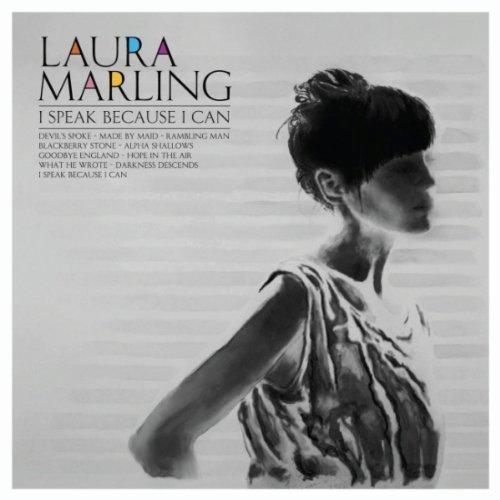


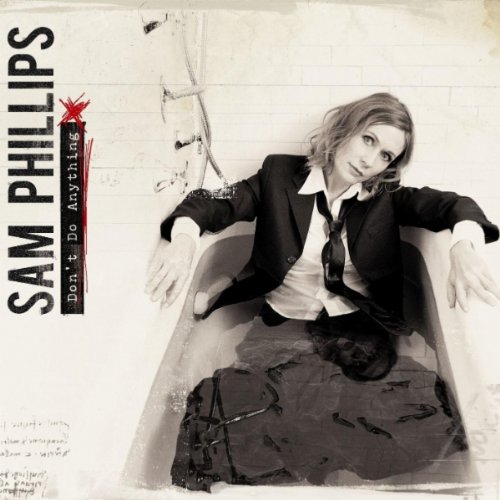

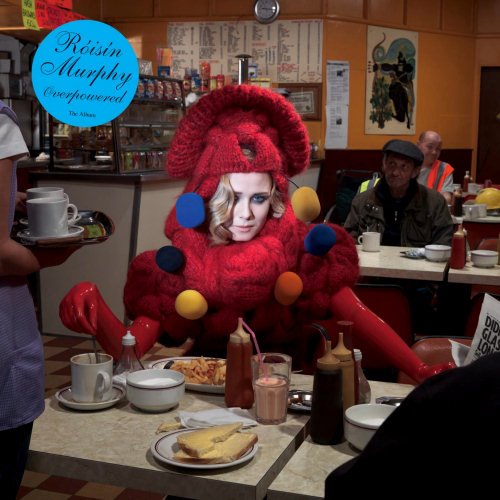
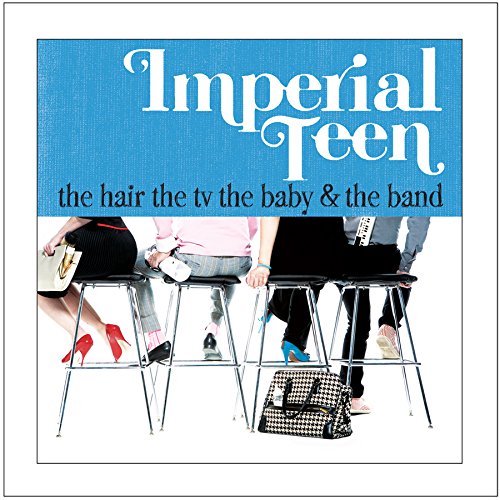
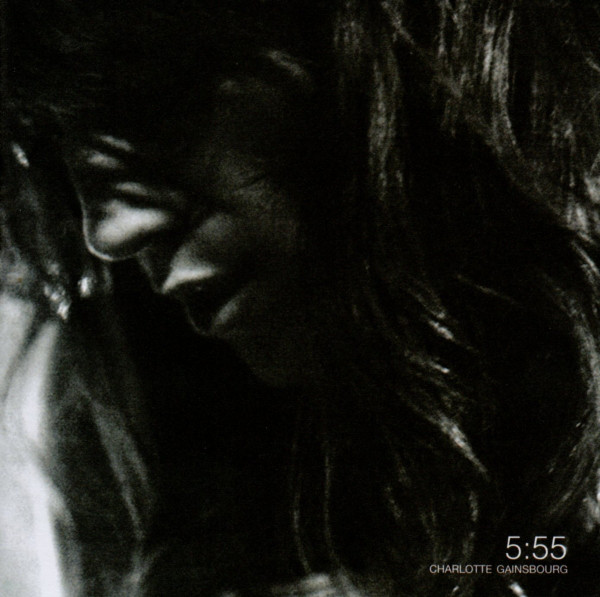

 Haunted Jukebox