The Brewis Brothers hit their stride with a record even better than 2016’s terrific Commontime. It’s their shortest, tightest collection in years, bookended by two epics: one ecstatic (“Time In Joy”), the other, gorgeous and dramatic (“Find A Way To Keep Me”, which aims for the fences and gracefully surpasses them.) In between are a bevy of compact prog-pop gems, some of them booming and insistent (“Share A Pillow”, “No King No Princess” ), others wistful and a bit warmer (the title track, “Daylight Saving”.) They’ll never be more than semi-semi-popular (not even as relatively big as obvious forebears XTC) but they’ve mastered their craft while retaining their tendency to view the world with an open mind and heart.
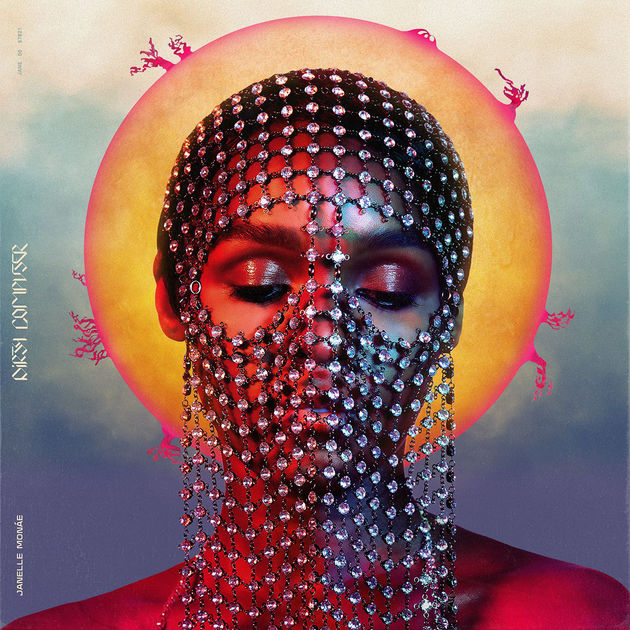
As calculated and expected as anything she’s ever done, Monae’s return to music is easy to take for granted. However, listen closer, for she no longer sounds like she’s recklessly throwing darts and seeing what hits the target. As opposed to her previous LPs, this plays like a seamless, complete work (its compact frame helps a lot)–a considerable achievement when you parse all the genre (and of course gender) fluidity and big name cameos (Brian Wilson and Stevie Wonder) it makes room for. “Make Me Feel” is a great, great Prince rip, but a song like “Screwed” goes beyond tribute/pastiche, to the degree that one can imagine it as the basis for a good Monae rip someday.
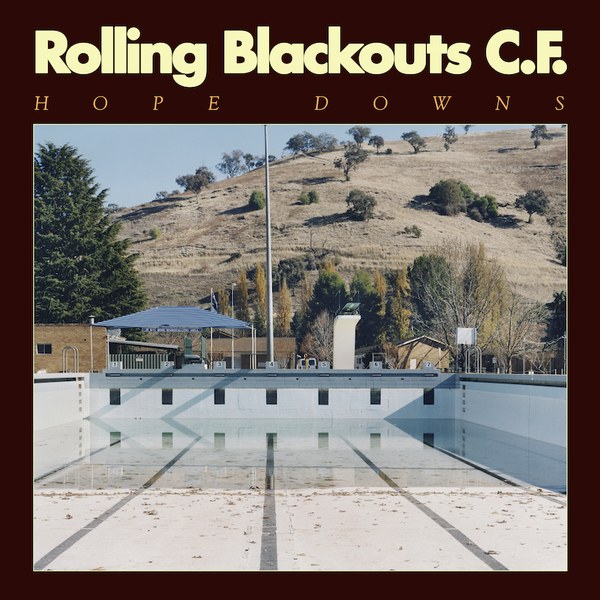
“Talking Straight” is one of those sit-up-and-pay-attention radio hits (well, College radio, anyway) that are increasingly rare, and I’m happy to say this Melbourne-based band’s entire debut LP is generally of the same quality. Of course, I’d find anyone who loves fellow Aussies The Go-Betweens as much as them difficult to hate (those vocal cadences in “Exclusive Graves” are so very Robert Forster); I’d even go as far to say this has the star power (but thankfully not the pomp or distance) of the first two Oasis albums. Here’s hoping they continue to build on their sound rather than quietly fade away.
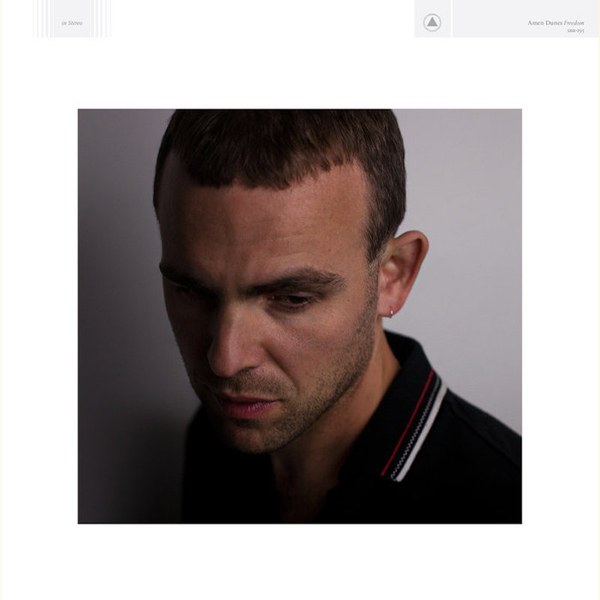
Like many, I hadn’t heard of Damon McMahon’s long-running project until this year; I point to his peculiar vocals (resembling David Gray after a few too many pints) as the reason why, and suspect this fifth album was his breakthrough because of the sheer strength of its melodies and hooks. Musically, it’s another guitar-centered indie rock record, but rarely is it obvious or overly familiar. At once, songs like “Time”, “Miki Dora”, “Believe” (with its stirring key change midway through) and the title track carry the gravitas of classic rock chestnuts and yet feel intensely personal, convincingly wavering between intimacy and expansiveness.
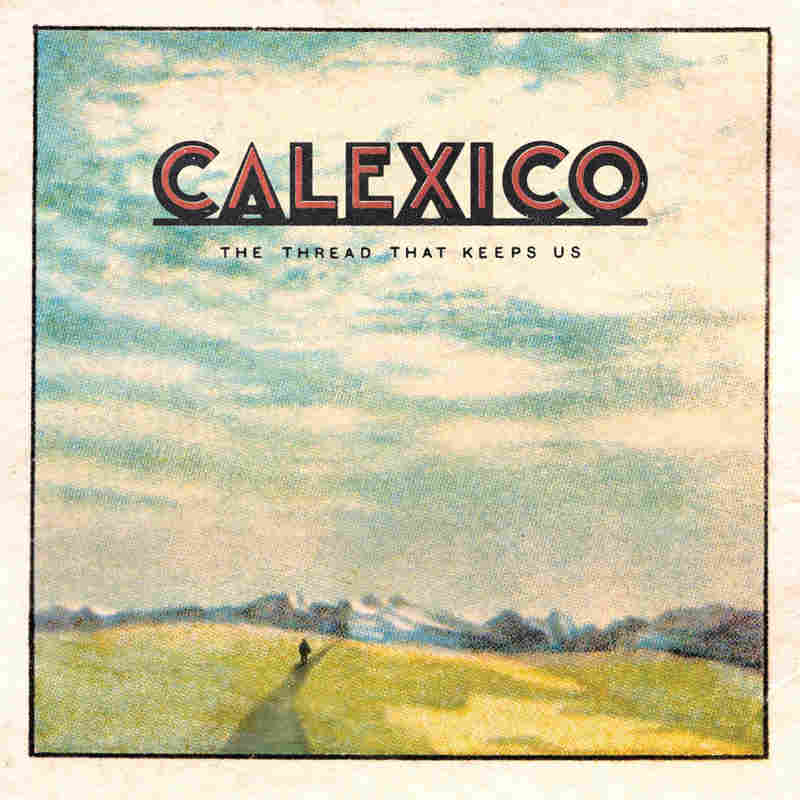
Though this is not as solid as 2015’s Edge of The Sun, Joey Burns and John Convertino still have yet to make a subpar album. Their ninth continues to explore new vistas beyond their tried-and-true mariachi-flavored roots rock: “Under The Wheels” skanks along quite nicely and “Another Space” could be a Southwestern Talking Heads. More significant is a renewed urgency in their lyrics, no doubt heightened by the current, caustic climate (both literally and socio-politically.) The ballads, from the traditional-sounding “The Town and Miss Lorraine” to instrumental “Unconditional Waltz” and gentle closer “Music Box” rank among their all-time best.
A dozen favorite songs from 2018, in alphabetical order by artist; none of them are from my top ten albums of the year (which I will roll out, one by one, starting tomorrow.)
Chaka Khan, “Like Sugar”
With the loss the Aretha and the whole year an extended shitshow in general, Chaka Khan’s regally funky return is the most soothing of balms. I await kickass lip-syncs to this on RuPaul’s Drag Race.
The Decemberists, “Once In My Life”
The Decemberists going synth-pop on I’ll Be Your Girl isn’t as uneasy a fit as it sounds, but only on the opener does it fully come to, well, life. Colin Meloy is nothing if not an anthem-writer and this has an effective build, from an extended intro to swirling guitars and synths and one heck of a chorus (placed upfront, as it should be.)
Ezra Furman, “I Lost My Innocence”
A jaunty queer ode to losing one’s virginity, its chorus rhyming “Box of Girl Scout Thin Mints” with “A pack of Winstons”–what’s not to love?
Gruff Rhys, “Frontier Man”
The Super Furry Animals frontman continues to confound expectations as a solo artist, this time emulating a classic Countrypolitan sound recalling the likes Lee Hazelwood and Bobbie Gentry (love those female backing vocals, too.)
Kacey Musgraves, “High Horse”
Disco/Country is a hybrid Musgraves seems so suited for you wonder why it took her three albums to try it out. A highlight of Golden Hour (which just missed my top ten albums), sadly it wasn’t the crossover hit it so richly deserved to be, despite its charming, 9 To 5-inspired video above.
Lana Del Rey, “Mariners Apartment Complex”
She’s more a singles than albums artist but I have to admit, this September-released peak into next year’s insanely-titled Norman Fucking Rockwell has me stoked. It’s earthier and far more pastoral than she’s ever before dared to sound, and yet, still 100% pure, unfiltered Lana. What’s better: the harpsichord (!) on the intro or the no-nonsense way she sings, “I’m your man” on the chorus?
LUMP, “Curse of the Contemporary”
Instead of another Laura Marling album for 2018, we got this, a curious seven-track collaboration with Mike Lindsay from electro-folk outfit Tunng. It’s a bold stylistic leap that I’d love to see her take further; for now, this strange, beguilingly catchy song plays like a future lost gem.
Neko Case, “Bad Luck”
Her first album in five years features New Pornographers-worthy melodies while retaining the sense of space that defines her solo work. This one’s sort of a smart course-corrective to Alanis Morrissette’s “Ironic” (in that it actually makes sense), with a lyrical hook (“So I died and went to work”) commercial enough to sell furniture polish.
Roisin Murphy, “Jacuzzi Rollercoaster”
Murphy’s as much of an iconoclast as ever, releasing four 12-inch singles this year instead of a proper album. Producer Maurice Fulton (who did an excellent remix of her song “House of Glass” a few years back) might be her most innovative collaborator since Matthew Herbert. The third of those singles is a delirious rush of ’80s funk beats and ’90s ‘tude, with Murphy’s staccato-singing on the verses as irresistible as the lovably simple chorus
St. Vincent, “Fast Slow Disco”
Transforming “Slow Disco” (from last year’s MASSeduction) into the actual disco song it was always meant to be, Annie Clark reaffirms her divahood and cements her indie-dancepop stardom.
Troye Sivan, “Bloom”
An euphoric queer ode to losing one’s virginity, its chorus as catchy as a Wham! song and as blissfully serene as Steve McQueen-era Prefab Sprout–what’s not to love?
Twin Shadow, “Too Many Colors” Caer would’ve made a top twenty albums list–it’s a little patchy but the highs are oh so high: “18 Years”, “Saturdays” (with Haim and better than anything from their last album) and this, probably my favorite single track of the year. It all comes down to the poignant melody and a sparkling clean arrangement–hallmarks of the best ’80s synth-pop in a timeless package.
Films seen in November, with at least one candidate for my 2018 top ten. Rewatched titles are starred.
Can You Ever Forgive Me?
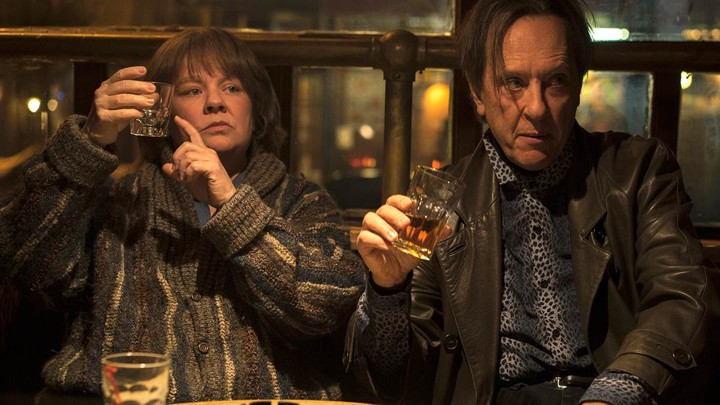
It’s not so much that Melissa McCarthy is a revelation here as that she finally has a role that allows her to be more than just silly or weird (although she’s occasionally those things too.) The real-life story of Lee Israel, a struggling, middle-aged, alcoholic writer who fell into a brief stint as a literary forger, should be something that works better on page than screen, but director Marielle Heller (THE DIARY OF A TEENAGE GIRL) translates Israel’s own memoir as if it were a living, breathing, sincere re-creation of Manhattan in the early ’90s (credit the astute adaptation, co-written by Nicole Holofcener and Jeff Whitty). Israel and her cohort-in-crime, aging hustler Jack Hock (a perfectly cast Richard E. Grant) are despicable, unapologetic misanthropists, yet they feel so well-drawn that you’re almost compelled to root for them anyway. Grade: A-
Atomic Blonde
Visuals aside, this is just ok, but Charlize Theron is an exquisite badass. C+
Boy Erased
I liked and admired this film, but I didn’t quite love it. It seems to check off all the right boxes: terrific lead performance from Lucas Hedges (and good work from Nicole Kidman), firm handling of sensitive, timely subject matter, a rewarding, effective narrative arc… but it comes across as a little numb at times–much like THE MISEDUCATION OF CAMERON POST, which I rated higher because it had a stronger, more deeply felt point of view. I don’t want to begrudge straight actor Joel Edgerton for his decision to adapt this particular real-life story, but it feels like the stakes aren’t as crucial as they should be. Everything plays out exactly as you’d expect and almost hope for it to, so it’s a crowd pleaser but alas, nothing revelatory. B-
Meet The Parents*
Still love Greg’s takedown of the flight attendant, which would’ve been unimaginable post 9/11; would probably like the rest of the movie more if not for the shitty sequels. B
Simon of the Desert
Making an effort to become more familiar with Bunuel, as I’ve only seen a handful of his films (and none in the last 15+ years.) This one is rich enough to suggest perhaps more directors should try making 45-minute-long features. The ending’s completely absurd, but it’s kind of the best part, too. B+
The Royal Tenenbaums*
I want to live in this film’s sad, absurd, elegiac world more than any other one. A+
From Here To Eternity
Probably one of the more… interesting casts of its era and holy shit, Sinatra could act. I’m not too big on war films, but until the last ten minutes, this is more a conflicted-about-the-military film with gobs of sex (or the limit of what they could get away with at the time) thrown in. B+
The Battle of Algiers*
Impressive as a large-scale recreation of actual events; even more affecting for its laser-sharp focus on faces and close-ups, as if Pontecorvo was trying to make a Carl Dreyer action film. A-
At Eternity’s Gate
In theory, Willem Dafoe seems a misguided choice to play Van Gogh, given the age difference, lack of resemblance, etc. Happily, he makes a stunning transformation without resorting to extravagant physical enhancements like Gary Oldman as Churchill–he becomes the man, mind and soul more than body; it’s as sharp a left turn as Dafoe could take from last year’s THE FLORIDA PROJECT. At times, Julian Schnabel’s film is a tad more pretentious than provocative, but his imagery is inspired, visually recalling the artist’s renown landscapes and portraits without coming off as mere copies–an impressionist take on a post-impressionist. B
Green Book
Cheesy for sure, but I admit I teared up at the end. What can I say, Viggo is both way too much and yet perfect. B-
The Edge of the World
Starting a deep dive into Michael Powell’s filmography as I make my way through his terrific memoir, A LIFE IN MOVIES. Made a few years before he teamed up with Emeric Pressburger and often cited as his breakthrough work (Powell himself agrees), it’s pretty sophisticated for its era. Filmed on the remote isle of Foula, north of Scotland, the cinematography is predictably stunning, veering between abstract landscapes and more intimate shots. It’s elegiac and soulful for a vanishing way of life, but it also avoids easy sentimentality. You can see why Scorsese is such a fan. B+
Border
From the writer of LET THE RIGHT ONE IN, a contemporary fable about Tina (Eva Melander), a somewhat dumpy middle-aged guard for the Swedish border patrol who is excellent in her job, mostly due to her intense, visceral, almost superhuman sense of smell. One day, Vore (Eero Milonoff), a man whose unusual physical features closely resemble her own, walks through her checkpoint, and she immediately smells a rat…or at least, something that’s a tad off. From there, BORDER just gets stranger and more otherworldly, all the way to its utterly creepy but still kinda sweet final scene. While the film as a whole doesn’t quite scale the heights of its vampire predecessor, its blend of docu-realism and dark fantasy keeps it afloat. Melander is also a real find, giving one of the best, most original performances I’ve seen in recent memory. B+
Wonder Boys*
Apart from the instrumental score, this has aged beautifully; I suspect its cult will continue to grow. “Sometimes, people just need to be rescued.”A
The Favourite
The three leads are all great and it has delectably bitchy dialogue (only THE DEATH OF STALIN bests it in that category this year), but on the whole, it feels a bit… empty, I guess. As with THE LOBSTER, I need a second viewing to be sure. B
(My 100 favorite albums in chronological order: #92 – released September 10, 2011)
Track listing: Ciao Monday / Last Day On Earth / North / Home / Heartsleeves / Ageless / A Little War / Fast Exit / Survive / Transatlantic
I took on this project not only as an excuse to write about my favorite albums, but also to examine the format itself—what, as a work of art, it can accomplish and contain. I’ve covered albums constructed as musical or thematic suites, albums that are hard-to-categorize hybrids of disparate genres or categories, even an album crafted almost entirely out of other recordings. And yet, any music enthusiast knows that there exists those platonic ideals of the format: the ten (or twelve) track set (initially driven by how many pop songs could fit on two sides of a 33rpm vinyl record) where every piece sounds like it belongs as one equal part of a unified whole. Blue, The Dreaming, 16 Lovers Lane, Automatic For The People, If You’re Feeling Sinister and Seven Swans are but a half-dozen of these types of albums I’ve written about here (among others).
Northern Gospel, the 2011 album by Canadian singer-songwriter Emm Gryner, is a worthy addition to that list. After a pair of independently released albums, she signed to a major label and released Public in 1998 at the age of 23. During a boom time for the music industry, Public didn’t sell well enough for the label to keep Gryner on its roster; since then, she’s released all her music on her own label, which is why you probably haven’t heard of her. I first read about Gryner in Glenn McDonald’s blog The War Against Silence in early 2001; later that year, she released Girl Versions, a covers album featuring songs written by male artists ranging from Ozzy Osbourne to Stone Temple Pilots, stripped down into mostly piano-and-vocal arrangements. At that time, her neat take on Def Leppard’s “Pour Some Sugar On Me” received ample airplay on a local college radio station; I soon acquired Girl Versions and most of her back catalog.
Gryner’s talent and longevity is enough to make any reasonable listener seriously question why she isn’t far better known (her highest profile gig was playing keyboards in David Bowie’s touring band not long after Public.) Naturally, her inclination to remain fiercely independent following her brief major-label stint has limited her reach to a potential audience by default. Still, as more artists like Gryner continue to emerge in an era where the music distribution has changed dramatically, audience size and household-name celebrity seem less relevant than ever—in fact, what has always mattered more is the work itself and how it endures.
Sift through Gryner’s extensive discography and you’ll find a remarkable consistency, from the glossy pleasures of Asianblue (2002) to the stark melancholy of 21st Century Ballads (2015). Even the relatively overproduced Public conveys an instinctual knack for melodies and hooks, not to mention Gryner’s strong, effervescent, clear-as-a-bell voice and her lovely piano (and bass) playing. She also tends to include at least one or two perfect pop gems per album: “Summerlong”, “Disco Lights”, “Symphonic” and “Young As The Night” are but a few, as is 2006’s “Almighty Love” which a figure no less famous than Bono listed in an article as one of ten songs he wish he’d written.
What makes Northern Gospel stand apart from Gryner’s previous work is that it is entirely made up of perfect pop gems—you can easily imagine each of them (with perhaps one exception) as an alternate-world hit single. It has no instrumentals, no genre experiments, no brief tracks that serve as intros or outros or links, no medleys or song suites, no mood pieces or tone poems—only ten tight, catchy songs all between two-and-a-half and four-and-a-half minutes long. While this has the potential for monotony or too-much-of-a-good-thing syndrome, each song is memorable enough in its own way to register upon impact and resonate with repeated listenings.
“Ciao Monday” opens Northern Gospel on a sprightly blend of whimsy and defiance. “I came alive in 1985 / made a pretty good plan out by the lakeside,” she sings over three resounding piano chords and a brisk acoustic guitar, taking on that well-covered subject of the most hated day of the week. The chorus is playground chant-simple (“Open the door, you can walk right through / Oh, Monday, Monday, I’m done with you”) but it’s infectious rather than cloying, enhanced by handclaps and a heaven-sent, chord-changing bridge (another Gryner specialty.) “Last Day on Earth” may up the tempo a notch and emphasize electric piano and various synths, but it plays as a natural follow-up. Transferring her gleeful kiss-off from the abstract day-of-week to an actual person, she practically beams as she unreservedly admits, “It’s a good day with you out of my life.”
After those two upbeat tunes comes a pair of ballads. “North” feels wistful and spacious, full of echoing piano chords and a rich declarative chorus. “Home” is somewhat slower and a bit mournful, underlining its Beatles-esque piano with soft surges of brass and organ. However, the songs are really two sides of the same coin. After recording albums in locales ranging from Ireland to California, Gryner made this one in her native Ontario. “North” is explicit in its homage to her place of origin (“In my heart you’re North of the border / shining down like the Aurora”) as it pleads for someone to join her there, whereas “Home” turns the tables—the singer is now the one far away from where she grew up, her regret palpable and devastating.
“Heartsleeves”, which follows, is one of ten songs most anyone would want to wish they had written. “Take all of your tears and make / a Great Lake that’ll freeze in winter,” she sings right at the intro, going on to describe an undervalued, perhaps long-distance relationship. With each line, the music builds until it reaches the ebullient chorus which seems to absolutely sparkle and sigh, especially when it hits the repeated lyric, “Don’t / stop / wearing your heart on your sleeve / Don’t / stop / ’cause of me,” those first two words delivered in a charming staccato. There’s no instrumental break at all—Gryner’s poignant melody and vocal carry the entire song, all the way until it circles back to the opening lyric at the close.
The album’s second half includes “Ageless”, an ode to a fellow musician that’s celebratory (“You’re rock n’roll and I’m the queen / when I’m around you”) but not too reverent to be relatable, and “Fast Exit”, whose piano-pounding bop resembles a cross between Carole King and The Pointer Sisters, its breathless, elated rush actually masking another lament to a lost love (“A fast exit / I was wrong / I’ve frozen you in a weekend song.”) In between those two energetic rockers sits “A Little War”, which Gryner originally recorded in a far more spare version on 2000’s Dead Relatives. Here, it’s a majestic, lighter-waving power ballad, flowing with warmth and grandeur, almost her very own “Purple Rain”.
“Fast Exit” ends on an abrupt final note with a sigh from Gryner; the next song almost seamlessly begins with her taking another breath. “Survive” is the most explicit the album comes to embodying its title. Musically, it’s a ballad full of soulful piano chords, Hammond organ and surging electric guitar; lyrically, it feels like the most personal/possibly autobiographical of Northern Gospel’s songs, or at least it hits the hardest. Working through themes of self-doubt, perseverance and day-to-day malaise, Gryner offers the following advice: “The trick is to survive, yes survive / You gotta want to keep yourself alive,” before changing perspective, asking, “Do I, do I?” It’s an intensely intimate detail wrapped in a timeless melody and arrangement.
The album signs off with “Transatlantic”, that least likely alternate-world hit single I referenced above. It’s more ethereal and less direct than anything preceding it, but still an effective closer, its melodious, overlapping vocals resulting in a gorgeous wash of sound, allowing for tension with the electronics underneath. It continues the album’s themes of the literal and figurative spaces between Gryner’s past and present and people she’s known—subject matter that would also work for an introspective, moodier album (and Gryner’s made a few of those.) Northern Gospel opts for the immediacy of classic pop, and such a pairing of sound and content proves irresistible.
Up next: Another near-perfect ten-track album, albeit on the more introspective side.
(My 100 favorite albums in chronological order: #91 – released January 25, 2011)
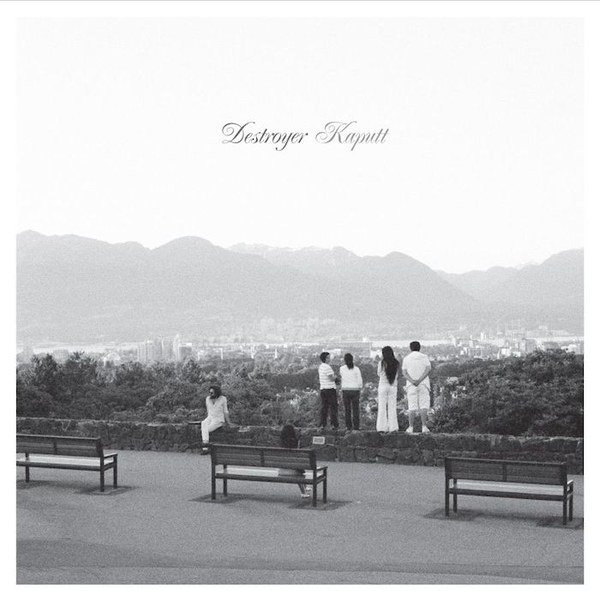
Track listing: Chinatown / Blue Eyes / Savage Night At The Opera / Suicide Demo For Kara Walker / Poor In Love / Kaputt / Downtown / Song For America / Bay Of Pigs (Detail)
One of Robert Altman’s best, most perplexing (and thus, underseen) films is 1977’s 3 Women, a drily-amusing-until-it-becomes-incredibly-unnerving psychodrama regarding female friendship and shifting identities. Infamously, he claimed the plot (such as it was) came to him in a dream—not so far-fetched, given its eerie allure and air of inconclusiveness. I’d like to think that Kaputt, the ninth album by Destroyer, the nom de plume of Vancouver-based singer/songwriter Dan Bejar, similarly came to its maker in a dream—on the title track, he even admits as much, rattling off a list of UK music mags (“Sounds, Smash Hits, Melody Maker, NME”) before enigmatically concluding, “All sounds like a dream to me.”
For many listeners, Kaputt will feel strangely familiar as it contains a panoply of identifiable musical touchstones. New Order homages (especially the upfront, Peter Hook-aping bass of “Savage Night At The Opera”) sit besides traces of Steely Dan’s later yacht-rock period insouciance, a measure of Roxy Music-circa-Avalon splendor, the lush, laid-back sweep of mid-80s Brit sophisti-pop groups like Prefab Sprout and The Style Council, and even a little Cocteau Twins-derived ambience, all of it transmitted via Bejar’s outwardly fey warble (somewhat reminiscent of Al “Year of The Cat” Stewart) and a bevy of creamy, cooing female backing vocals.
Upon its arrival, Kaputt seemed a bit out of left field for Bejar. Admittedly, I’d only heard one of Destroyer’s eight previous albums, 2006’s Destroyer’s Rubies; primarily, I knew Bejar as one of the three singer/songwriters (along with A.C. Newman and Neko Case) in the Canadian supergroup The New Pornographers, who had put out five albums in the decade leading up to Kaputt. With few exceptions (“Myriad Harbour”, “Testament To Youth In Verse”) Bejar’s three or four tunes per TNP record were rarely my favorites due in large part to his voice. Meandering and often mealy-mouthed, it wasn’t as seamless a fit for the band’s razor-sharp power pop as Newman’s melodic tone or Case’s siren call.
Thus, Kaputt’s departure from that template was revelatory: finally, Bejar had constructed (or perhaps stumbled upon) a sound that seemed more forgiving and complimentary to his particular voice. Technically, I can’t exactly pinpoint why they meshed so well together; all these discernible influences should have resulted in an album of record collection rock where listeners could spot the pastiche or facsimile. Instead, it came off as an idiosyncratic odyssey, driven by a sensibility you wouldn’t mistake for anyone else than Bejar’s.
Although it arrives just past Kaputt’s midpoint, the title track is the album’s centerpiece; it may also be the key unlocking a good chunk of its secretive pleasures. Its lead instrument, an electronic sequencer (“doot-deet-doot-dit-doot-deet-doot-dit…”) also acts as its heartbeat, a constant that only disappears near the last of the song’s six-plus minutes. Trumpet and sax filigrees bloom throughout, while warm guitar chords, a disco bass line and atmospheric synths color the spaces in between. As usual with Bejar, the lyrics are more tone poem than cogent narrative, such as the opening lines, “Wasting your days / Chasing some girls, alright / Chasing cocaine / Through the backrooms of the world / all night.” He’s simultaneously hedonistic and almost brutally wistful, particularly whenever a chord change results in an emotional crescendo (notably on the aforementioned rundown of UK music mags, of all things.) More than one person I’ve played this song for assumed it was by Pet Shop Boys, which hints at the grandeur Bejar aims for, but he’s far less arch or purposely clever than Neil Tennant. Like the rest of Kaputt, “Kaputt” is very much its own thing, stretched-out with extra texture but still an immediate, arresting pop song.
From there, the album’s other tracks serve as branches, extending in various directions but all connected to one tree. No less than three of nine tracks here each contain the lyric, “I wrote a song for America,” but it’s simply another reoccurring motif, not leaving the impression that Bejar’s run out of things to say. Similarly, Kaputt’s songs are packed with repeated lyrics woven into the arrangement’s fabrics as much as its horns or synths. “I can’t walk away” (from “Chinatown”), “I won’t and I never will” (from “Blue Eyes”) and “Winter, Spring / Summer and Fall / Animals crawl / towards death’s embrace” (from “Song For America”) are but three examples. In keeping with the idea of dream logic, they don’t hold any hidden meaning; they only convey Bejar’s knack for vocal hooks.
However, to dismiss Kaputt as a triumph of sound over content isn’t entirely fair. “Savage Night At The Opera” contains ample savage wit along the lines of, “Let’s face it, old souls like us are being born to die / It’s not a war until someone loses an eye!” Or take the opening lines of “Blue Eyes”: “You terrify the land / You are pestle and mortar / Your first love’s new order (does he mean the band?) / Mother Nature’s Son (Beatles reference?)” His imagery is often puzzling, but rarely is it blank. Case in point: “Suicide Demo For Kara Walker” consists of lyrics Bejar reassembled from text-filled cue cards provided to him from contemporary artist Walker, whose own work deals in appropriation (according to music critic Ann Powers.) It suitably sounds stream-of-consciousness (“Harmless little negress / You’ve got to say yes to another excess / let’s go for a ride today”) but still scans as a pop song, with Bejar crafting sterling hooks out of a few repeated phrases (“Enter through the exit / and exit through the entrance / when you can.”)
Still, both the arrangement and structure of “Suicide Demo For Kara Walker” are its most striking features. The extended opening almost tricks you into thinking you’ve put on a Brian Eno ambient album by mistake—all electro-pastoral new age beauty until, just after the two-minute mark, a perky flute hook appears, soon joined by a gently thumping beat and at 2:36, finally, Bejar’s vocal. It goes on for nearly another six minutes, Bejar rattling off verse after verse until the flute hook returns for an equally lengthy instrumental outro, the beat intact while a flurry of overdubbed sax and trumpet solos play us out. The momentum remains slow-building and steady, as it also does on “Poor In Love”, whose breadth seems to expand exponentially with each verse. “Downtown”, on the other hand, shoots out in the opposite direction, vacillating between bouts of crisp funk and lush rumination heavy with echo and negative space.
Kaputt threatens to floats off into the ether with its eleven-minute closer, “Bay of Pigs (Detail)” which, like “Suicide Demo…” also proceeds from a low-hum ambience to disco epic, allowing room for the pace to gently ebb and flow in between (while also dropping in a brief lyrical interpolation of “It Don’t Mean A Thing (If It Ain’t Got That Swing)”.) It doesn’t achieve quite the same cumulative build as that earlier track, sort of just abruptly stopping on a cryptic closing phrase (“Nancy in a state of crisis on a cloud”), but that doesn’t distract from or lessen the rest of the album’s achievement (nor does “The Laziest River”, a twenty-minute, mostly instrumental suite that proceeds “Bay of Pigs (Detail)” on vinyl and European CD editions of the album.)
Since Kaputt, Bejar has released two more full-length Destroyer albums: Poison Season (2015) and ken (2017). The former further expands Bejar’s musical scope, containing everything from sumptuous strings to anthemic, Bruce Springsteen-esque (!) rock, while the latter sticks to a mostly electronic sound and closes on his biggest, boldest pop song to date (“Le Regle du Jeu”). But it’s Kaputt that transformed how I view and appreciate Bejar as a lyricist and yes, as a vocalist as well—I even dearly missed him when he didn’t participate on The New Pornographers’ most recent album, Whiteout Conditions.
Up next: (Not just) another Canadian singer/songwriter.
Movies seen in October, including three from Japan and two of the year’s best–both of the latter seen at IFFBoston’s Fall Focus mini-festival and slated for release before year’s end. Starred titles are re-watches.
Shoplifters
Naming a favorite film by Japanese director Hirokazu Kore-eda is like doing the same for his closest progenitor, Yasujiro Ozu–nearly impossible, given their tendencies to revisit and refine themes of domesticity and humanism while maintaining a higher-than-average consistency. SHOPLIFTERS may have finally won Kore-eda the Palme d’Or at Cannes this year, but I could name at least three earlier titles of his equally deserving of the prize.
This film hues most closely to one of those three, NOBODY KNOWS in its focus on an impoverished family; only here, it includes adults and children and stretches the notion of what a “family” is. With that in mind, SHOPLIFTERS explores the concept of give and take and how illegal activities such as the titular past time are weighed against both their moral implications and whether or not they serve the greater good. You sense Kore-eda sincerely pushing for the latter but also keeping in mind the former’s importance, which is what makes the film so heartbreaking once its increasingly precarious house of cards begins to topple.
A graceful overview of the human condition via fully recognizable, relatable characters and situations is one of the film’s most admirable qualities. The cast is typically solid for a Kore-eda picture; the standout, as usual, is Kirin Kiki as the family matriarch–her character arc here is especially poignant, given the actress’s recent passing. But there’s so much to love about SHOPLIFTERS, not least of which its kindhearted but fair depiction of how ordinary is, flawed people attempt to survive. On occasion, they may even seek solace in each other; often, the real tragedy occurs whenever one is unable or unwilling to reciprocate. Grade: A
Freaks and Geeks: The Documentary
A total lovefest, but few TV shows deserve one more. B
Heaven Knows What
I no longer feel bad I took so long to see this, as it now plays like a mere warm-up to GOOD TIME, albeit an interesting one. Admittedly, Arielle Holmes annoyed the hell out of me at first, but I grew to appreciate and eventually love her performance–thank the Safdies? B
The Happiness of the Katakuris*
“Like a cross between a slasher film and an all-singing, all-dancing episode of THE LOVE BOAT” is how I described this back in the day; it’s much weirder than that. A tad longer and misshapen than I remember. Perhaps HOUSE (which hadn’t yet been rediscovered in 2002; see below) has supplanted it somewhat in terms of batshit crazy Japanese horror comedies, but it’s still a hoot if you just go with its demented glee. The karaoke homage remains my favorite of the musical numbers; the typhoon climax’s still as giggle-inducing as the best of slapstick Keaton or Allen. A-
A Star Is Born (2018)
As modern Hollywood musicals go, *slightly* better than LA LA LAND, and much better than any umpteenth remake of this hoary old tale has a right to be. If Cooper finally wins his acting Oscar for this, I won’t be disappointed. Questionable camp value aside, I can imagine choosing to watch this again long before BURLESQUE or MAMMA MIA! B
Shaun Of The Dead*
A romp in every sense of the word. Bonus points for sneaking “They’re coming to get you, Barbara!” in there. B+
Beautiful Boy
Another great performance from Timothée Chalamet (CALL BE BY YOUR NAME was definitely no fluke) and a good one from Steve Carell (despite him generally being better suited to comedic roles such as BATTLE OF THE SEXES). Along with the perpetually underrated Maura Tierney, they elevate the material in a way Glenn Close’s impressive work couldn’t quite save THE WIFE. In this case, the problem’s less the material than some heavy-handed direction from Felix van Groeningen (THE BROKEN CIRCLE BREAKDOWN). As any movie-of-the-week will show you, melodrama’s not an ideal fit for depicting drug addiction (nor is an overwrought musical score.) While this will undoubtedly comfort those with a loved one going through it, for the rest of us, it’s just an endurance test in watching other people’s misery. B-
Cold War
Pawel Pawlikowski’s follow-up to IDA is cut from the same fine-polished glass: set in post-war Poland and shot in 1:33 black-and-white by cinematographer Łukasz Żal, it spans a fifteen-year period (leading up to roughly the time of the previous film) over which jazz musician Wiktor (Tomasz Kot) and younger singer Zula (Joanna Kulig) have an on-again, off-again love affair. They first meet in a sanctioned troupe meant to spotlight traditional Polish song and dance. Wiktor, disillusioned as the Communist government transforms it into a propaganda vehicle, finds himself wanting to defect from his homeland, while the strong-willed, gregarious Zula has other designs.
Using his own parents as inspiration for the leads, Pawlikowski recreates a culture in the throes of a severe political takeover, drawing implications from the minute to fully societal as he limns his focus onto two very different people who nonetheless are drawn to each other. Each frame is a lovingly crafted tableau, strikingly rendered in high-contrast black-and-white and deep focus photography. The mostly diegetic soundtrack, ranging from hard bop jazz to hymn-like folk songs is a character in itself. I’m not sure if this is ultimately as deep or clever as IDA was, but in the end, it resonated with me a little more. A-
The Silence of The Lambs
Last tried watching this in a dorm room 20+ years ago at 3:00 AM, falling asleep ten minutes in (duh), so it’s great to finally see this on a big screen ALL THE WAY THROUGH (turns out I remember the last twenty minutes, but little before it.) Foster and Hopkins are both career-best, but credit Demme for rendering this more profound than your average horror procedural; even better, it still totally works as an entertaining and smart horror procedural. A-
Mid90s
I’ll go to bat for Jonah Hill as an actor, but Rick Linklater he’s not. He’s assembled a pretty good cast and the skateboarding montages are nice but the clumsy pacing reveals someone with more enthusiasm than talent for this sort of thing. C+
House*
Nothing compares to this glorious, insane mashup of THE HAUNTING, POLTERGEIST and Hello, Kitty! sensibilities. Also, I had to laugh when one of the girls says, “This is like a horror film!” and another (probably “Prof”) dismissively responds, “That’s out of date.” A



 Haunted Jukebox