Another month, another online film festival. While I’m yearning to go back to such things in person and could’ve feasibly done so for the 23rd Annual Provincetown International Film Festival, other travel plans and some lingering trepidation (I haven’t yet set foot in a theater) left me opting for the virtual edition, itself actually pretty fulfilling: a ten-day window to watch most of the fest’s titles (save for things like Opening Night selection In The Heights) anytime, anyplace. My favorites included Sundance winner CODA (coming to theatres and Apple+ later this summer), charming dating app doc Searchers, filmed-in-lockdown two-hander Language Lessons and profiles on Aussie diver/marine life activist Valerie Taylor and the aftereffects of a fifty-year-old stunt pulled by wealthy hippie weirdo Michael Brody Jr.
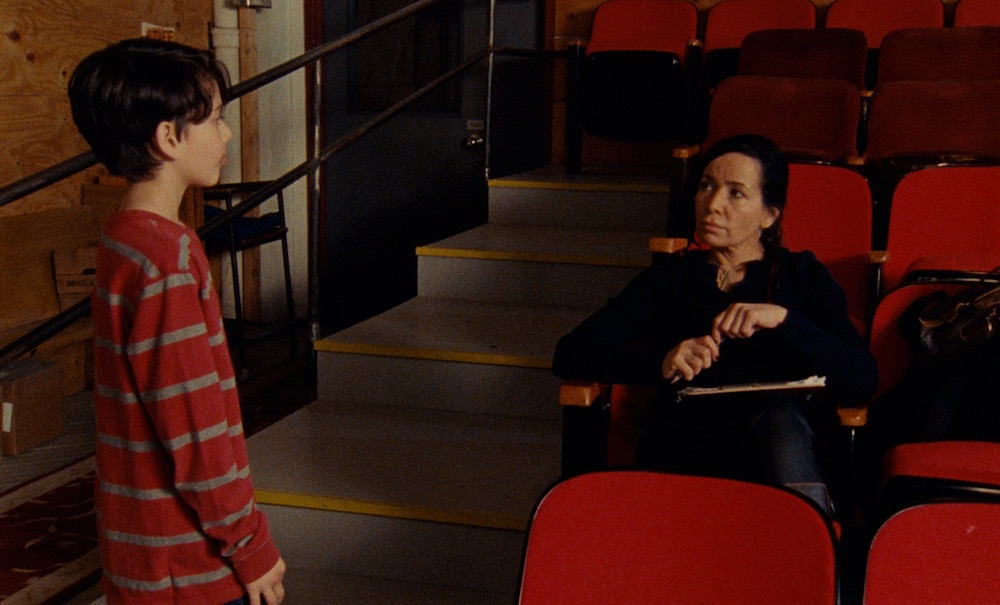
However, June’s best first-time viewing was A Bread Factory, Patrick Wang’s two-part, four-hour dramedy about a struggling arts organization in small town upstate New York, with an ensemble led by Tyne Daly and mostly unknowns plus a few ringers (Glynnis O’Connor, Janeane Garofalo, James Marsters). It received a miniscule release in October 2018 (I don’t think it played Boston) but came to my attention via rave reviews from critics Matt Zoller Seitz and Jonathan Rosenbaum. Wang’s humaneness may initially seem at odds with his occasional absurdist slant, but he’s crafted a universe that, as finite as it physically appears, just continues to expand without ever obscuring the constants that embody and define it. Available to view on Kanopy and a must watch for any devotee of American indie cinema.
Solid new titles included the economical fractured marriage story of The Killing of Two Lovers, the thoroughly entertaining Some Kind of Heaven, which examines a fascinating example of artifice made “real” via a ginormous Florida retirement community and Slow Machine, a baffling but never boring pretzel-twist indie full of shifting identities and people playing versions of themselves. Paper Spiders, on the other hand, is fully skippable despite the ever-great Lily Taylor in a rare leading role.
Gypsy 83 was nearly worth a twenty-year wait (kept waiting for a theatrical release back in 2001!) and about as good as director/writer Todd Stephens’ latest, Swan Song, noteworthy for its tour de force work from the inimitable Udo Kier. House of Games was worth watching for Joe Mantegna’s barked-out reading of that old phrase, “Thank you sir, may I have another?” in its climax. Burn! was worth seeing for Marlon Brando donning an English accent and having it come out sounding like Michael Caine.
Perhaps Cruising was the worthiest screening of them all—not really a “great” film as it was neutered by its studio to get an R rating, but intriguing as a record of pre-AIDS Manhattan gay fetish bars. Also, it has undercover cop Al Pacino being asked by his boss Paul Sorvino if he’s ever been “porked”.
Films viewed in June in chronological order, with director, year of release and my rating (out of 10); starred titles are re-watches.)
A Sunday in the Country (Bertrand Tavernier, 1984) 8
Iris (Albert Maysles, 2014)* 8
Sordid Lives (Del Shores, 2000)* 6
Jerichow (Christian Petzold, 2008) 6
Cruising (William Friedkin, 1980) 6
The Killing of Two Lovers (Robert Machoian, 2020) 8
The Lost Boys (Joel Schumacher, 1987) 6
Frantz Fanon: Black Skin, White Mask Isaac Julien, 1995) 6
Four Roads (Alice Rohrwacher, 2021) 5
Gypsy 83 (Todd Stephens, 2001) 7
A Bread Factory Part One: For The Sake Of Gold (Patrick Wang, 2018) 10
A Bread Factory Part Two: Walk With Me A While (Wang, 2018) 9
The Deep Blue Sea (Terence Davies, 2011)* 8
Paper Spiders (Inon Shampanier, 2020) 4
Halston (Frederic Tcheng, 2019) 6
Some Kind of Heaven (Lance Oppenheim, 2020) 9
House Of Games (David Mamet, 1987) 7
Beyond The Valley Of The Dolls (Russ Meyer, 1970)* 9
Slow Machine (Paul Felton, Joe Denardo, 2020) 6
Shall We Dance (Mark Sandrich, 1937) 8
Mystery Science Theater 3000: The Movie (Jim Mallon, 1996)* 6
It’s been a weird six months—for us all, no doubt. What has made them particularly odd for me is that, since January 1, I’ve been unemployed for the first time in over 15 years. I’ve had to make greater adjustments processing and navigating this than I did with the early days of the pandemic last year.
I’ve spent this additional down time ticking off project after project (Emptying out old files! Digitizing old photographs!) and trying to adhere to a daily routine that, in addition to job hunting makes ample time for reading, exercise, neighborhood walks when the weather permits and, as always, watching movies. I’ve also had to acclimate myself to this strange limbo; not entirely sure what my professional future might resemble yet, though I feel like I’m getting closer (check back with me in another three or six months.)
As for the music and movies I’ve been consuming, I’ve compiled two lists of 2021 favorites-to-date. Some of the albums (below in alphabetical order) come from long-beloved artists including three who’ve released their first full-lengths in over a decade (Liz Phair, Kings of Convenience, Arab Strap). Others are fresh discoveries: Wolf Alice’s reclamation of female-fronted alternative pop, Another Sky’s chewy but hooky soundscapes made distinct by androgynous vocalist Catrin Vincent and Cassandra Jenkins, whose singular, seven-track second album has remained in heavy rotation since I first heard it in March:
Another Sky, Music For Winter, Vol. 1
Arab Strap, As Days Get Dark
Cassandra Jenkins, An Overview On Phenomenal Nature
Field Music, Flat White Moon
Gruff Rhys, Seeking New Gods
Julien Baker, Little Oblivions
Kings of Convenience, Peace or Love
Liz Phair, Soberish
Lord Huron, Long Lost
Morcheeba, Blackest Blue
Quivers, Golden Doubt
Wolf Alice, Blue Weekend
The Dog Who Wouldn’t Be Quiet
I’ve also seen nearly thirty new films from twofestivals plus a smattering of other new releases, mostly via Chlotrudis’ weekly discussion group. Within the next six months, I hope to even return to the cinema as well! Below is everything I rated at least four stars out of five in alphabetical order by title:
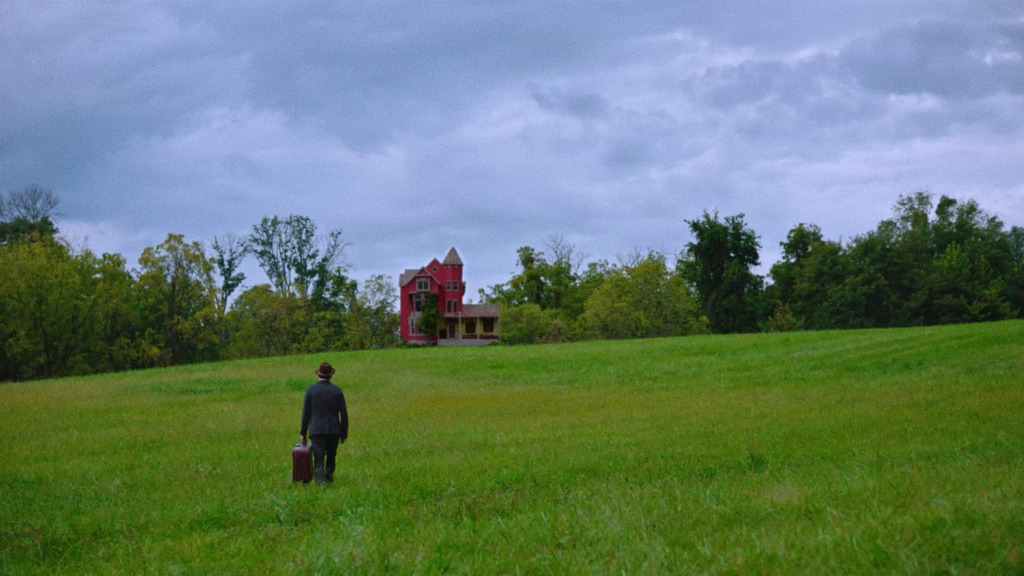
I planned on seeing 4-6 movies at this year’s virtual edition of IFF Boston; I ended up watching 13, enough for a separate post about the festival, I guess. Regardless, even with slim pickings due to the crazy year we’ve just had, I saw some gems. My favorite was Strawberry Mansion, a deeply surreal but charmingly handmade film where dreams and reality overlap and coalesce but with a sustained gentleness that sets it apart from the work of Charlie Kaufman and Michel Gondry. It led me to co-directors Kentucker Audley and Albert Birney’s previous film, Sylvio, a similarly unique study of viral fame and audience perceptions.
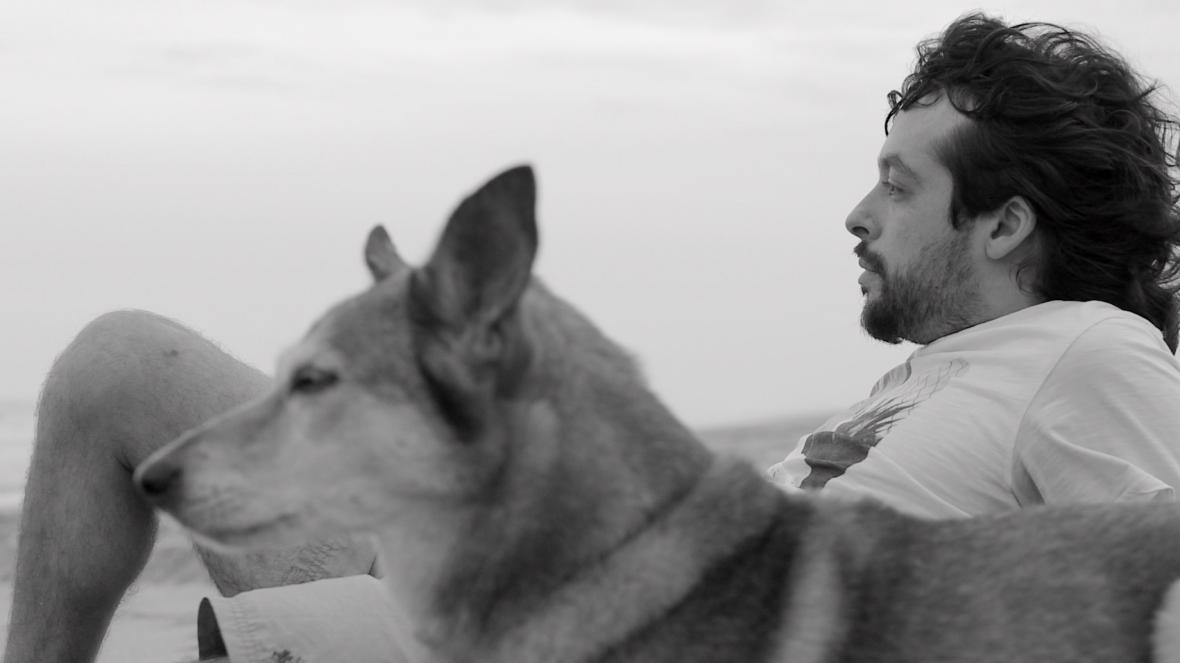
Other festival picks: The Dog Who Wouldn’t Be Quiet, an Argentinian tale which rivals Strawberry Mansion in its unique approach to narrative; I Was A Simple Man, a Hawaiian film about mortality that’s soothing and unsettling in equal measure; Luzzu, Maltese neorealism about adapting to and reconciling a changing world; and Holler, which attempts to do for industrial small town Ohio what Winter’s Bone did for the Ozarks and has fine performances from Jessica Barden and Becky Ann Baker (more ferocious than you’d ever expect from her work on Freaks and Geeks and Girls.)
I had to ramp up my Preston Sturges re-watch because all his films left Criterion Channel at the end of the month. While The Lady Eve (see my April 2021 entry) is still his peak, The Palm Beach Story, with its madcap travails and characters nicknamed “Captain McGlue” and “The Weinie King” is not too far behind. Sullivan’s Travels remains an interesting experiment more than a realized apotheosis; the later Eddie Bracken films aren’t perfect, but their wartime reverie connects more than the internal fantasies of Unfaithfully Yours (still better than I was expecting, thanks to a perfectly-cast Rex Harrison.)
The rest is typically all over the place: a new Roy Andersson film that, while pleasant, continues the diminishing returns of his last few features; The In-Laws, whose late scenes with Richard Libertini as a deranged dictator made me laugh harder than anything else I’ve seen during this goddamned pandemic; and Francis Ford Coppola’s cult passion project, which feels quaint in a “Let’s look back at the 40s in the 80s” way but gets by on Vittorio Storaro’s streamlined, transcendent camerawork.
It was a treat to see both Tom Noonan’s Sundance-winning, one-of-a-kind first date film What Happened Was… and Robert Altman’s M*A*S*H again after twenty-odd years. The former resonates far more deeply with me now (my own dating experience back then was pretty scant); the latter, while not on the level of McCabe & Ms. Miller or The Long Goodbye nonetheless feels almost casually miraculous a half-century on, not so much tapping into the zeitgeist as corralling it and formulating a new way to see and partake in it.
Films viewed in May in chronological order, with director, year of release and my rating (out of 10); starred titles are re-watches. Titles with a ^ are selections from IFF Boston 2021.)
Dolemite Is My Name (Craig Brewer, 2019) 7
The In-Laws (Arthur Hiller, 1979) 8
The Heart of The World (Guy Maddin, 2000)* 10
About Endlessness (Roy Andersson, 2019) 7
Sullivan’s Travels (Preston Sturges, 1941)* 8
High Society (Charles Walters, 1956) 5
What Happened Was… (Tom Noonan, 1994)* 9
Trainspotting (Danny Boyle, 1996)* 10
The Dog Who Wouldn’t Be Quiet (Ana Katz, 2021)^ 8
A Reckoning In Boston (James Rutenbeck, 2021)^ 6
Holler (Nicole Riegel, 2020)^ 7
Thunder Force (Ben Falcone, 2021) 3
I Was a Simple Man (Christopher Makoto Yogi, 2021)^ 8
We’re All Going To The World’s Fair (Jane Schoenbrun, 2021)^ 5
The Palm Beach Story (Sturges, 1942)* 9
Dream Horse (Euros Lyn, 2020)^ 6
M*A*S*H (Robert Altman, 1970)* 8
Strawberry Mansion (Kentucker Audley, Albert Birney, 2021)^ 9
Poly Styrene: I Am A Cliche (Paul Sng, Celeste Bell, 2021)^ 6
Luzzu (Alex Camilleri, 2021)^ 8
Marvelous and The Black Hole (Kate Tsang, 2021)^ 6
Last Night in Rozzie (Sean Gannet, 2021)^ 6
The Woman In The Window (Joe Wright, 2021) 5
Weed & Wine (Rebecca Richman Cohen, 2020)^ 7
The Miracle of Morgan’s Creek (Sturges, 1943)* 7
How It Ends (Zoe Lister-Jones, Daryl Wein, 2021)^ 4
Chinese Portrait (Wang Xiaoshuai, 2018) 7
Love Is Colder Than Death (Rainer Werner Fassbinder, 1969) 6
Friday night, late August 1996: my friend Rachel and I settle into our seats in a packed cinema in one of Milwaukee’s hipper enclaves. Following some ads and previews, the lights dim and the din of the crowd suddenly dissipates. A beat or two of darkness. Then, with the force of a gunshot, Iggy Pop’s “Lust For Life” permeates the air as an image of two young men running furiously down a sidewalk, being chased by authority figures fills the screen. In a thick Scottish brogue, one of them kicks off a voiceover with the following, methodically recited litany:
Choose Life. Choose a job. Choose a career. Choose a family. Choose a fucking big television, choose washing machines, cars, compact disc players and electrical tin openers.
Instantaneously, the theatre’s energy has been corralled and transformed as if we were all watching A Hard Day’s Night or heck, even Star Wars for the first time.
***
While earning a Film Studies minor at Marquette University, I continued frequenting the suburban multiplexes of my youth like Budget Cinemas South (even though I no longer had a friend on the inside), various first-run Marcus Theatres (the predominant local chain) and occasional screenings at other isolated second-run movie houses—most notably, the then run-down Avalon Theater in Bay View, its ceiling dotted with peeling paint and twinkling neon stars (which my mother once confessed to me she thought were real as a child.)
I spent most of the summer preceding my undergraduate senior year viewing mainstream stuff like Mission: Impossible, The Craft, The Rock—essentially, anything my friends or roommates wanted to see. I still primarily thought of moviegoing as an opportunity to socialize, which is not to say I wasn’t affected by all the other stuff my film courses exposed me to. Earlier that year, I’d taken a Documentary class where I saw everything from Nanook of the North and Racetrack (a Frederick Wiseman cinema verité most notable for its uncensored, lengthy account of “stud service”) to charmingly quaint mid-60s surf doc The Endless Summer and 32 Short Films About Glenn Gould, a recent, experimental, piecemeal portrait of the quirky Canadian classical pianist that stretched the boundaries of what a non-fiction film could contain.
Thus, a split emerged: movies I could see leisurely with other people vs. those I could watch in class or on my 19-inch TV at home (I wasn’t yet ready to venture off to the cinema on my own.) While mid-90s Milwaukee was certainly no beacon of film culture, there were a few outliers in the local exhibition landscape, i.e., places to see arthouse and foreign language cinema. Two of them were older theatres, both of which happened to be on the city’s East Side (my preferred hangout neighborhood) and about a ten-minute walk from each other; they were also part of the national Landmark Theaters chain, which happened to specialize in this stuff.
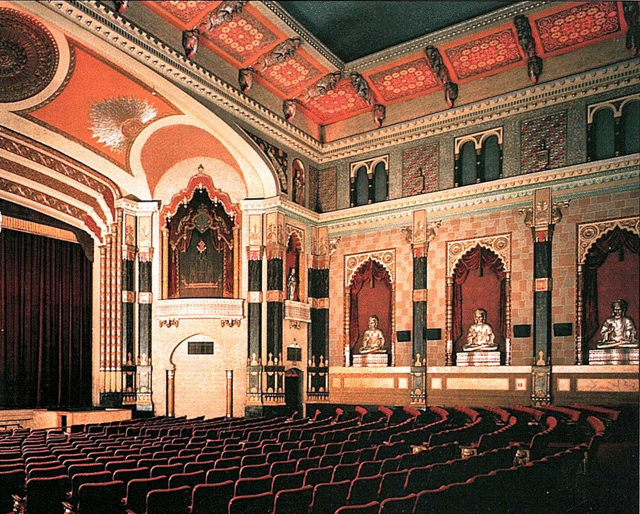
The more prestigious one was the Oriental, an enormous Art Deco movie palace dating back to 1927. About seventy years on, it had three screens, two of them smaller rooms carved out of the back of the original one. That main auditorium, however, was still glorious with over one thousand seats (and a balcony!), its interior done up in opulent East Indian décor. A sense of long-forgotten luxury encrusted the space, extending out into the equally grand lobby, all the way to the vintage ticket booth at the front door looking out at the sidewalk on Farwell Avenue (where, back in the early 80s, one night before a concert there, a member of The Pretenders spotted a gangly acoustic trio called The Violent Femmes busking on the sidewalk.)
The Oriental Theater
Over the next twelve months, at the Oriental I’d see such Academy Award winning hits of the day as Shine and The English Patient, plus smaller, less celebrated fare like Cedric Klapisch’s Parisian drama When The Cat’s Away and Finn Taylor’s voyeurism-centered, American indie flick Dream With The Fishes (not to mention a few midnight screenings of that already old standby, The Rocky Horror Picture Show.) I gradually learned to get over my fear of going to the movies alone. It’s imbedded in us at an early age, this idea of watching movies (and dining in restaurants and going to concerts and plays) as something you simply do with other people. And yet, movies in particular are ideal as a solitary activity: like going to church, they allow for but don’t technically require a companion.
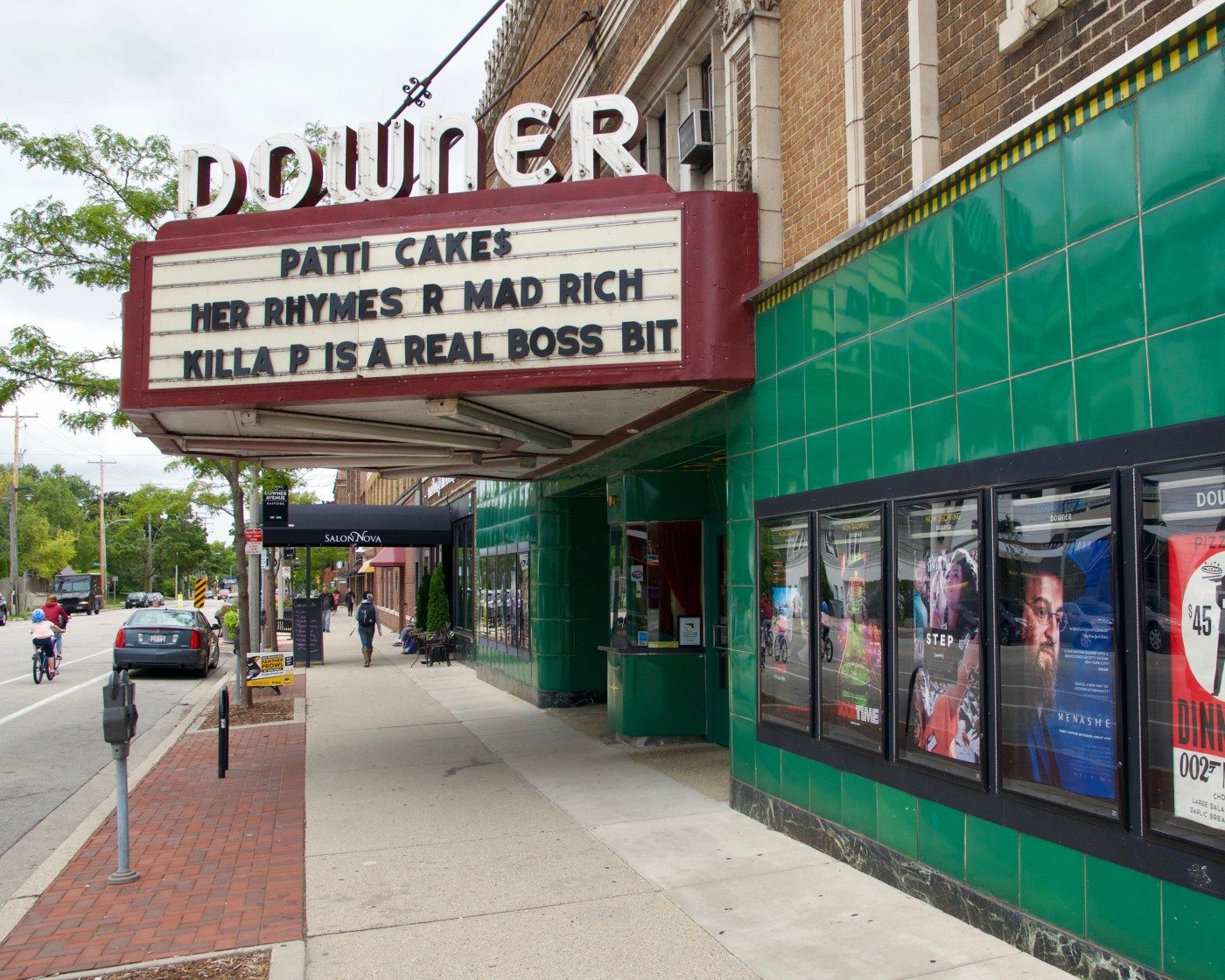
Just a few blocks away, although somehow far enough to feel like it was on an entirely different planet, the Downer Theater predated the Oriental, having first opened in 1915. Coming from an era prior to that of the ridiculously opulent movie palaces, it was more of a utilitarian neighborhood place. Twinned in the early 90s, each of its theaters were narrow and rectangular, two sets of seats separated by a center aisle. And yet, cooler stuff often played the Downer, titles that were perhaps too small to open in the Oriental’s main auditorium and yet too big to be instantly relegated to its two carved-out rooms. I had gone to see Bullets Over Broadway at the Downer with my mom two years before and also Dead Man Walking earlier that year, but Trainspotting wasn’t something I’d ever drag her to.
The Downer Theater
Although we saw Trainspotting on a Friday, it wasn’t the film’s opening night. Rachel and I had talked about going for a few weeks and finally found a date when both of us were free. Still, the near-standing-room-only capacity of the audience felt like it could’ve been opening night. I easily picked up on the anticipation in the room, an electricity that I’ve felt perhaps a dozen times in a quarter-century of regular moviegoing since then. The crowd was mostly young, 20s and 30s if I had to guess. Being 21 myself, the film’s characters were mostly just a few years older even if Rachel and I (and most of the audience, I assume) had precious little in common with a bunch of heroin addicts in Edinburgh, Scotland.
Beyond those fragments I can still recall of that first screening of Trainspotting, what an emotional roller coaster ride it must have been. If some films are more interior experiences where one has to put in the work to make sense of and ultimately connect with what transpires onscreen, this was nearly the opposite: a rapid-fire sensory overload of pop songs, jump cuts, humorous graphics (i.e., “The Filthiest Toilet in Scotland”), fantasy sequences, cheeky wordplay, situations both outrageous and painfully relatable, the greatest ecstasy you’ve ever known immediately followed by the direst pain you’ve ever felt, all related by a narrator who’s not always entirely, shall we say, reliable.
Despite what I said earlier about the cinema being a perfectly fine solitary activity, this was the sort of film practically made to be seen in a packed theater as a collective experience for the first time. Just over 90 minutes later (I used to think it was much longer than that for all the plot it jams into that average-sized frame), I left the Downer with Rachel positive about two things:
This was the greatest movie I had ever seen, and
I had to go out and buy the film’s soundtrack the next day. (Which I did! At The Exclusive Company (a local record store chain) on Farwell, six blocks away from the Oriental.)
I spent the following months thoroughly absorbing that soundtrack (I’ve already written about it in greater detail here.) The film likely played at the Downer long enough for me to go back and view it again, but I waited until mid-November, when I had the opportunity to see it on the cheap. Every Friday night, Marquette would screen popular films at its Varsity Theatre that had played in first-run houses usually within the preceding six months. Admission for students was a buck, maybe two. It was where I saw such hits of the day as Toy Story, the original Jumanji, Apollo 13 and Casino. When Trainspotting appeared on the schedule, I knew what I had to do. This time, I brought along another friend, Laura, with me.
Closer in size to the Oriental (but without the 1920s splendor), the Varsity was as jam-packed as the screening at the Downer, the audience (this time exclusively students) just as receptive and vocal to the film’s breakneck momentum. Laura became an instant convert, borrowing my copy of the soundtrack the next day. Over the rest of the school year, we rented it on VHS from Blockbuster multiple times; after I moved to Boston the following September, we more often than not watched my own VHS copy (purchased from one of those Columbia House-like “10 Movies for a Penny” deals) whenever I returned to the Midwest for a visit.
I must’ve seen Trainspotting more than a dozen times those three or four years after it was first released; I would not be surprised if I’ve seen it more often than any other movie, period (it’s at least up there with Monty Python and The Holy Grail and Young Frankenstein.) I finally got to see it in a cinema again in 2016 with a decidedly older crowd, a good portion of whom I’m guessing hadn’t seen it before (there were a few walkouts.) Viewing it again at home for this essay, I put the subtitles on to make sure I didn’t miss anything, which turned out a most redundant exercise as I found myself still able to recite all the dialogue save for a few words and phrases due to all those thick accents.
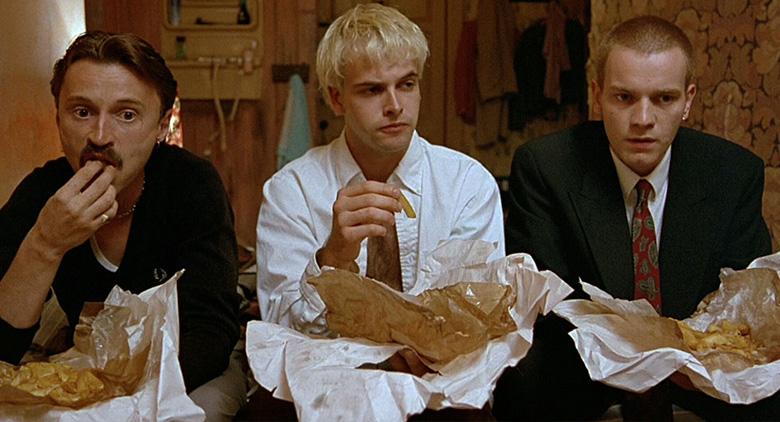
The film is simultaneously a tale seen through the lens of its main character, Mark Renton (a breakthrough role for an impossibly young and emaciated Ewan McGregor) and a now-definitive pop-art rendering of mid-90s UK youth culture. As Renton proceeds from careless junkie to half-hearted attempts at becoming clean to sudden relapse, withdrawal, aspirational reinvention and, well, not quite redemption (some old habits die hard), Trainspotting vividly depicts his world and the ultra-specific talismans he and his friends value: the classic cool of James Bond movies, the pre-punk swagger of addict icon Iggy Pop, the camaraderie (or not) of the local pub, the ecstatic promise of release (and casual sex) at a dance club and most of all, the “better than sex” high of hard drugs, chiefly heroin.
It’s not incorrect claiming that the film’s early scenes tend to glamorize the characters’ drug intake. The one-of-a-kind pleasure whenever someone shoots up is palpably seen and felt. Renton’s attempts at rationalizing it are acceptable at face value, particularly when he says that his mother, from whom he steals a bottle of Valium, “is, in her own domestic and socially acceptable way also a drug addict.” The film’s attitude towards drug use shifts only when it delves head-first into relaying its consequences, often in graphic, brutal detail— most horrifically, the discovery of flat mate Allison’s baby lying dead in its crib from the neglect of a group of junkies too far gone to properly take care of it. There’s also the sad case of Tommy, who turns to drugs after a romantic breakup and rapidly deteriorates into AIDS-related illness and death.
What remains relatively unique about the film’s rendering of addiction is in how it admits it’s often an endless cycle. Renton’s cold turkey attempt at withdrawal (aka “The Bedroom Scene”) is arguably just as horrifying as anything before it (particularly when the dead baby reappears crawling on the ceiling in his hallucinatory state.) Getting clean enables him to begin again as a real estate agent in London, but he can’t fully escape his past, as hometown mates Begbie, a violent drunk and then Sick Boy, a sketchy dealer/pimp show up at his door, expecting him to take them in (“He’s a psycho, but a mate, so what can you do?,” Renton says of Begbie as a means to rationalize this.) Along with the sweet but easily coerced Spud, the four stumble their way into a “scag deal”, reselling two kilograms of heroin they’ve managed to acquire for peanuts to big-time dealers at a higher price. Renton is called upon to try the heroin and test its legitimacy when he notes in voiceover, “This was to be my final hit, but let’s be clear about this. There’s final hits and final hits. What kind was this to be?”
Trainspotting doesn’t provide an easy answer to that question. In the end, realizing “So what can you do?” will only get one so far re: toxic mates, following the success of the deal, Renton absconds with all the money (though he leaves some behind for Spud in a security deposit box.) As he walks away from the scene of the crime, perfectly, exhilaratingly in time with Underworld’s “Born Slippy” on the soundtrack, he says, in voiceover:
The truth is that I’m a bad person. But that’s gonna change … Now I’m cleaning up and I’m moving on, going straight and Choosing Life. I’m looking forward to it already. I’m gonna be just like you.
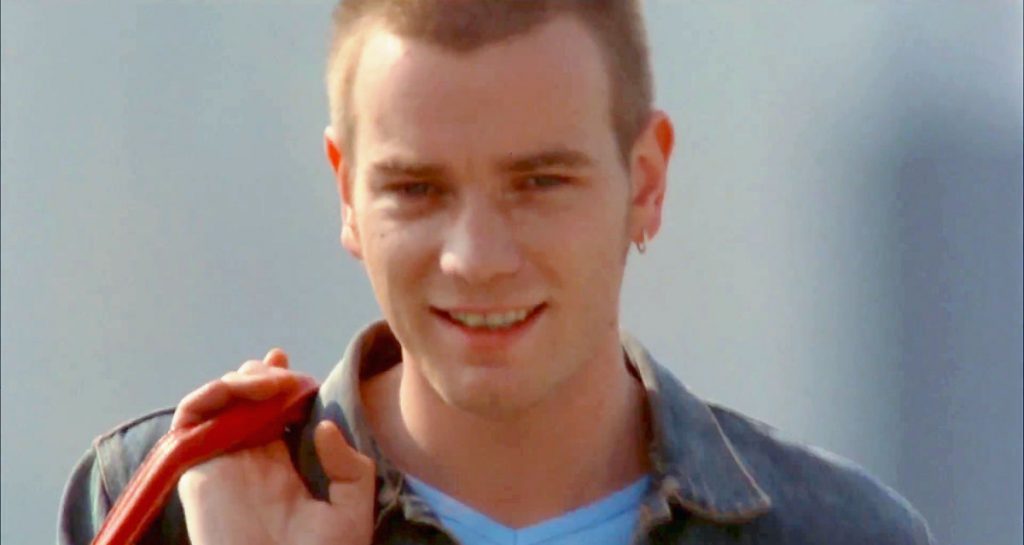
He then reprises the litany of acceptable consumer goods from his voiceover at the film’s start (“The job, the family, the fucking big television…”), but something’s off. If you’re no longer taking him at face value (and you really shouldn’t be), you can detect the ever-so-slight smirk in his tone. For Trainspotting, a “final hit” isn’t a promise, not really; more like an aspiration, something we tell ourselves, almost automatically and out of obligation. Who in their right mind wouldn’t want to “Choose Life”? The final shot, zooming into MacGregor’s smiling face until it blurs unto abstraction suggests this whole thing is not as easy as it looks.
I can’t help but feel I saw Trainspotting at exactly the right time. Had it come out five years earlier, it wouldn’t have been on my radar (I truly did not see an R-rated film until I was 18!) Had it appeared five years later when I was in my mid-late 20s, I might’ve dismissed its flash and cynicism or, at the very least, respected and admired it for its performances and skillfulness while feeling a little weary of its relentless, over-the-top artifice (which was exactly my reaction to Moulin Rouge! (also starring McGregor) when it came out in 2001.) However, as an adult recently of legal drinking age falling in love with film for the first time, Trainspotting had a seismic impact on my taste and perception of what the world had to offer to someone my age. Along with the Downer and the Oriental, it confirmed a growing sense of discord: I was getting ever closer to leaving those suburban multiplexes and my heretofore provincial worldview (mostly) behind.
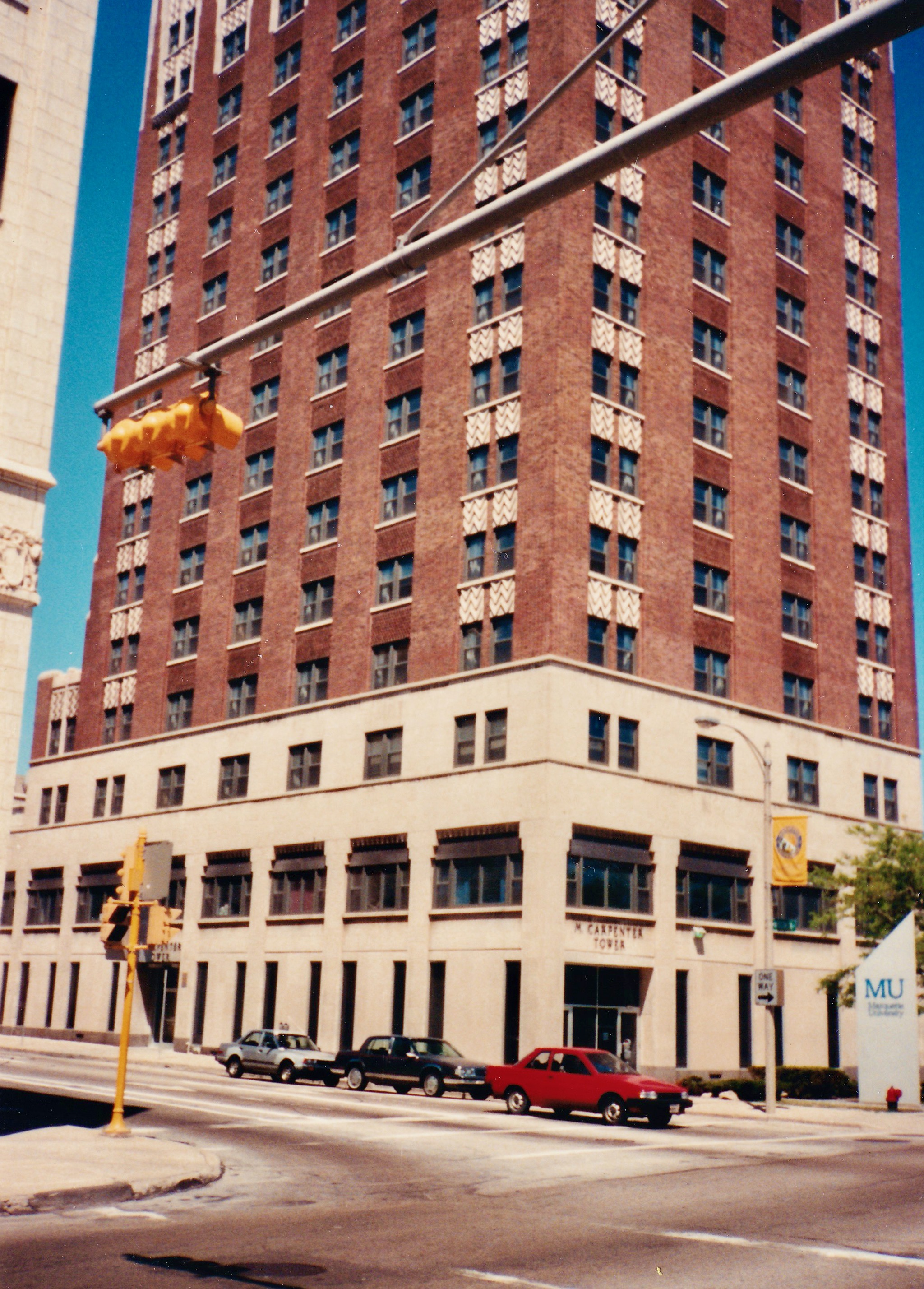
During a marathon digitization of my old photos, I came across a set taken in the Spring of 1995 when I was a Sophomore at Marquette University and living on the top floor at Tower Hall, a building so tall you can’t even see the top of it here.
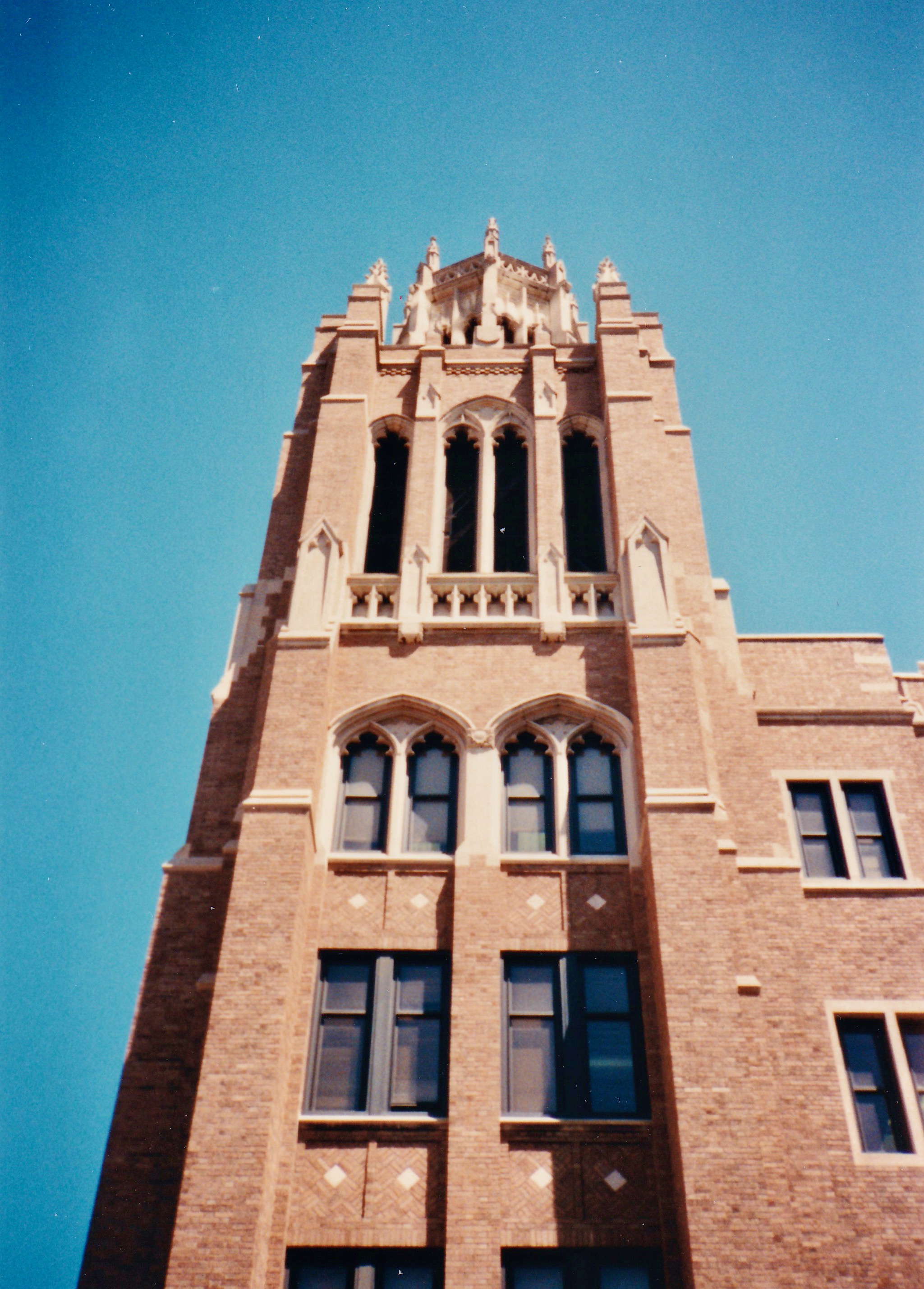
These were likely shot with a Nikon camera on loan for the Photography course I took that semester, though not for the course per se (we shot only in black-and-white); I thought I’d take advantage of using something other than my own cheapo Kodak while I had the chance. Above is Marquette Hall, noteworthy for its Gothic bell tower.
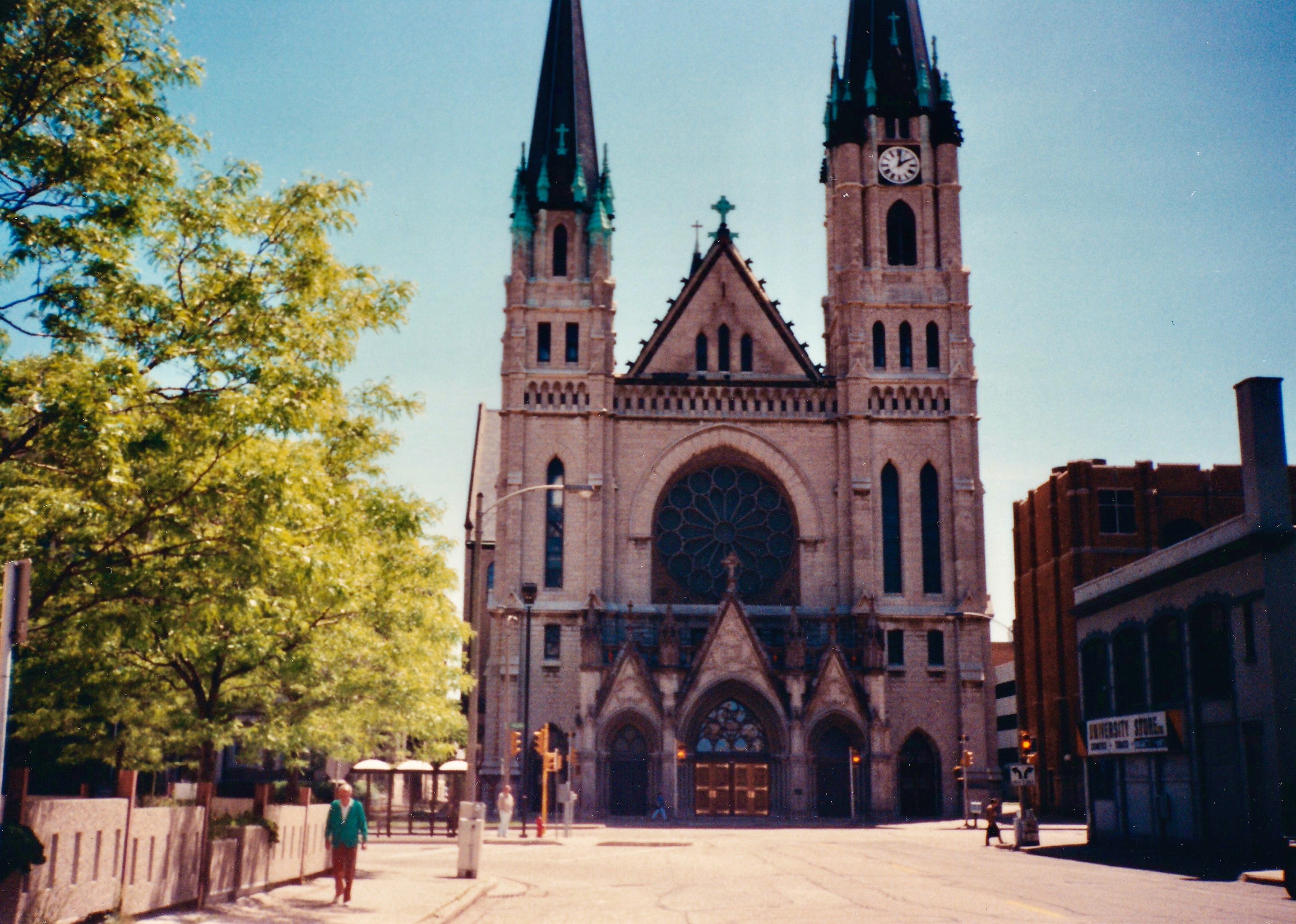
Next to it is Gesu Church, perhaps the campus’ most striking classic landmark. More notable to me now, however, is the dank-colored building in the right foreground which housed the University Store (where I often got a Snapple or a Cleary Canadian between classes) and, around the corner, Grebe’s Bakery, fine purveyors of danishes, crullers and other sweet doughy treats. Within a year of this photo, the entire building would be razed for “green space”; Zilber Hall (built in 2009) currently sits there.
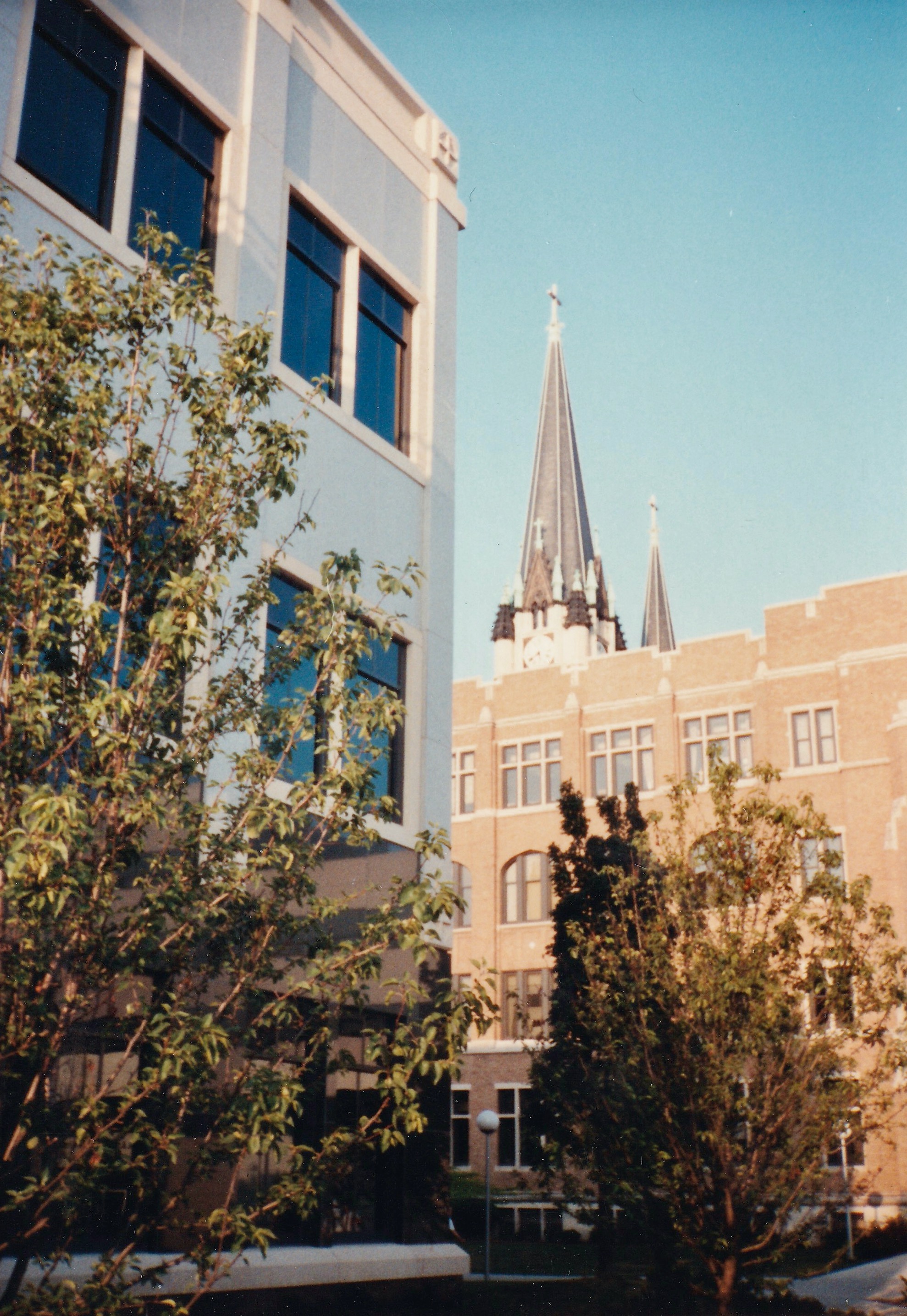
Here, the old-school architecture of Gesu and Marquette Hall are flanked by what was then a shiny, brand new complex.
Cudahy Hall, completed in 1994, was most notable for housing MU’s computer labs. It was the first place I ever sent an email or surfed the internet; I will never forget the countless hours I spent there sitting at a monitor, scrolling through green type on a relatively tiny black screen.
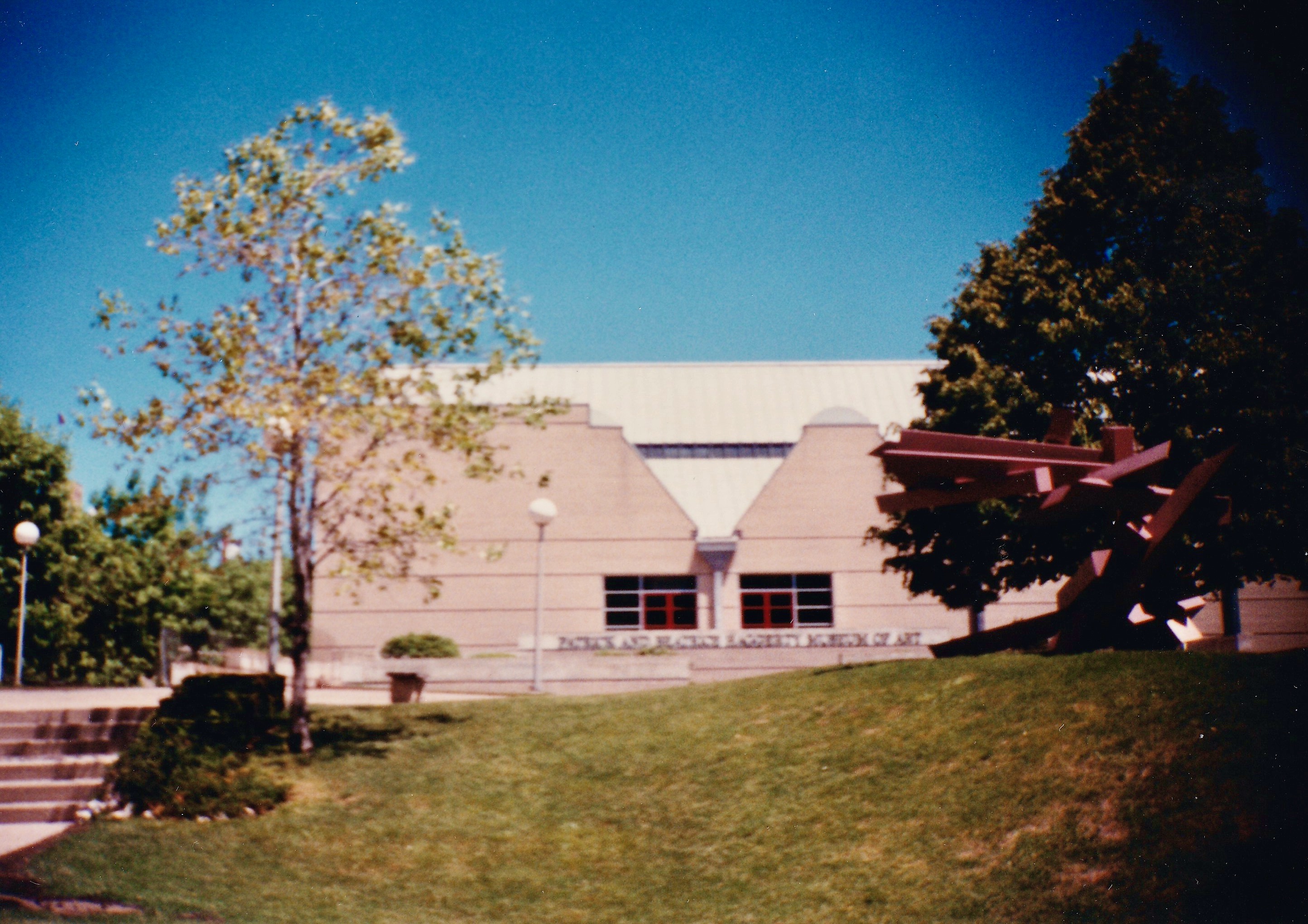
When exploring the information superhighway got to be a bit much, I’d take refuge at the Haggerty Museum of Art.
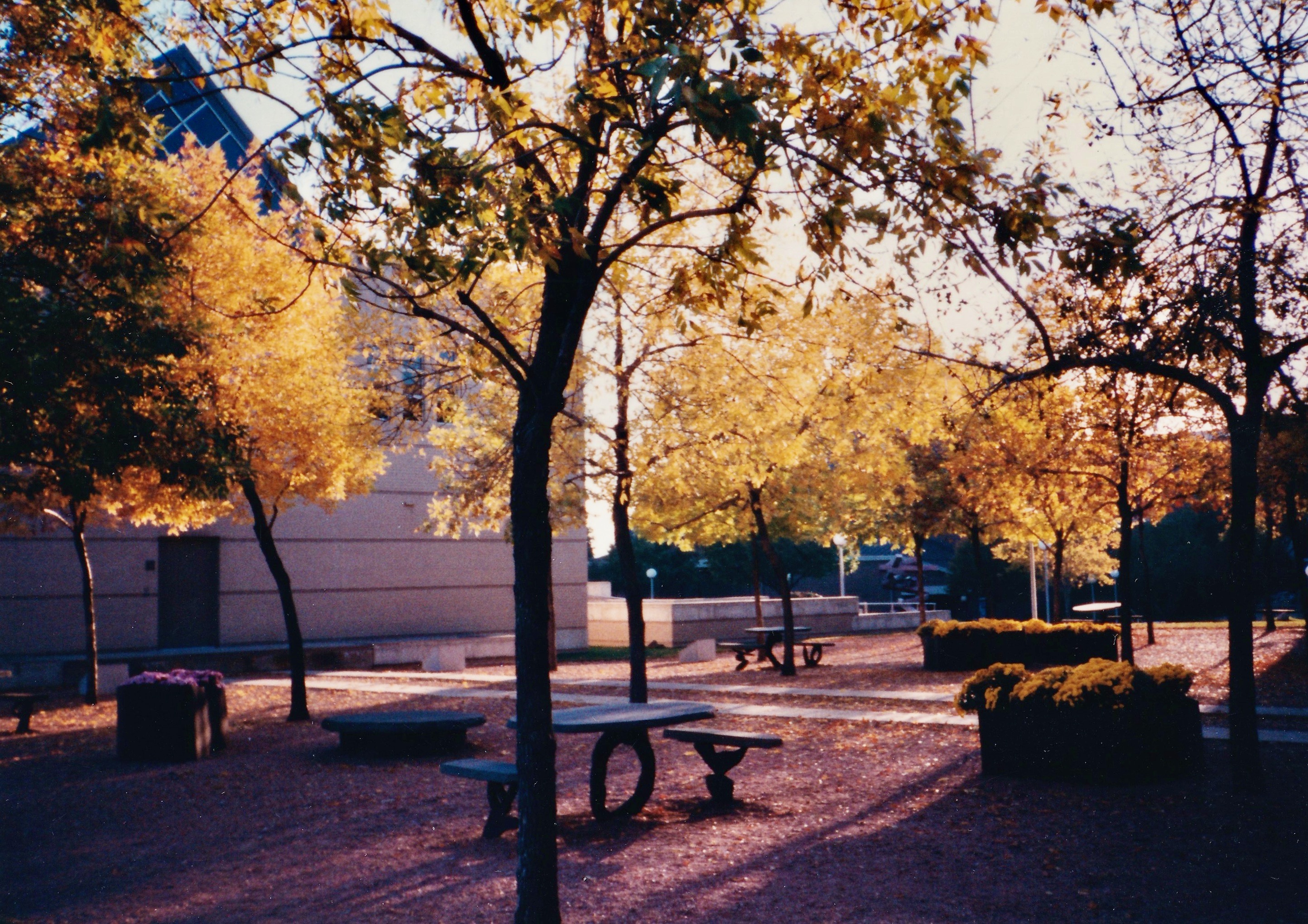
I frequented the Haggerty often; my Freshman year, I couldn’t believe how cool it was that there was an art museum right on campus! I’d also often have lunch or study at one of the picnic tables next to the building.
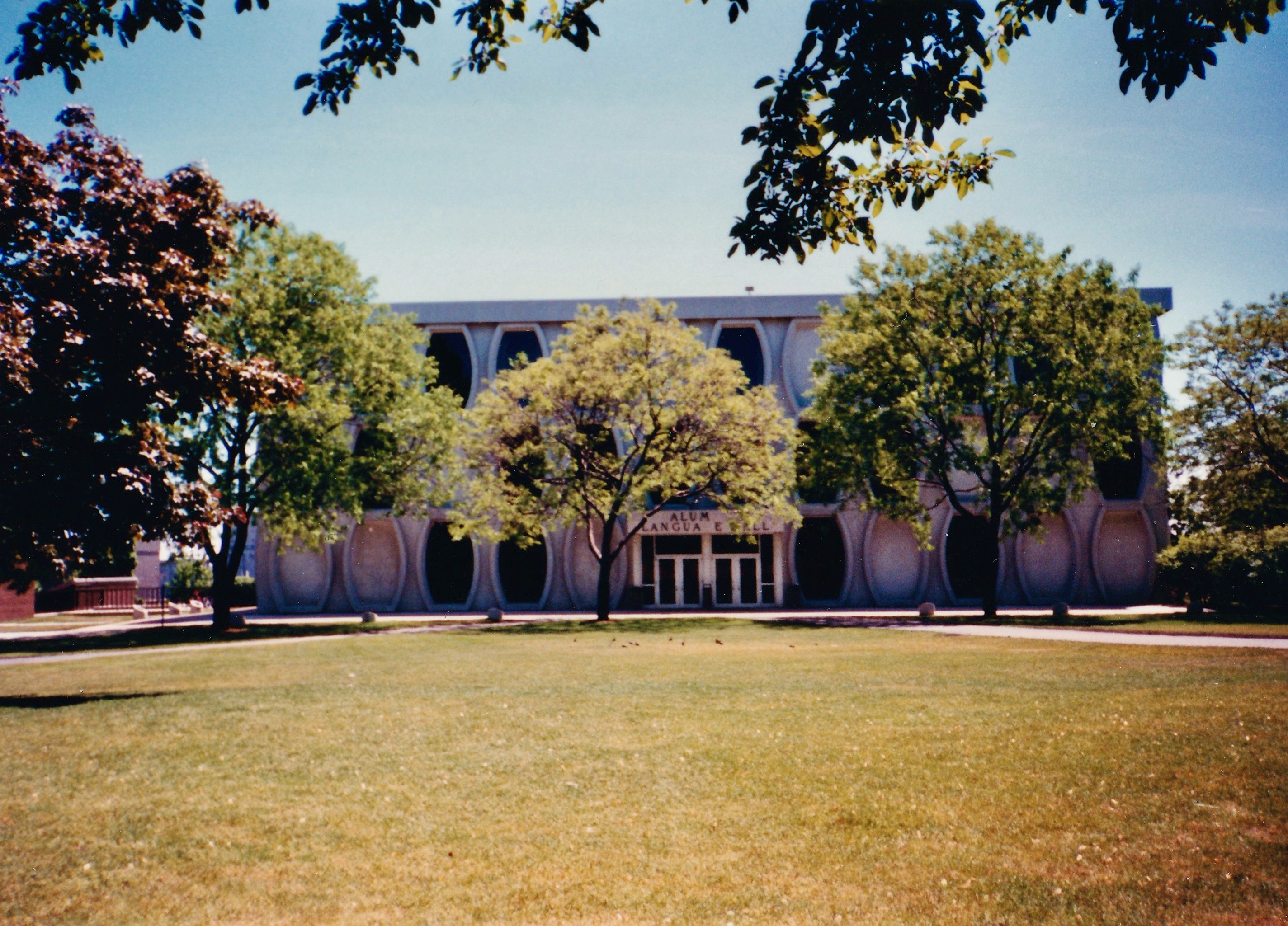
Not far from the Haggerty, Lalumiere Language Hall is easily MU’s most unique-looking structure, one whose modern, brutalist design (those windows!) I’d spot all the way from I-94 as a child. Opened in 1970, it seemed a little rundown by its 25th anniversary (note the missing letters), but it still stands today.
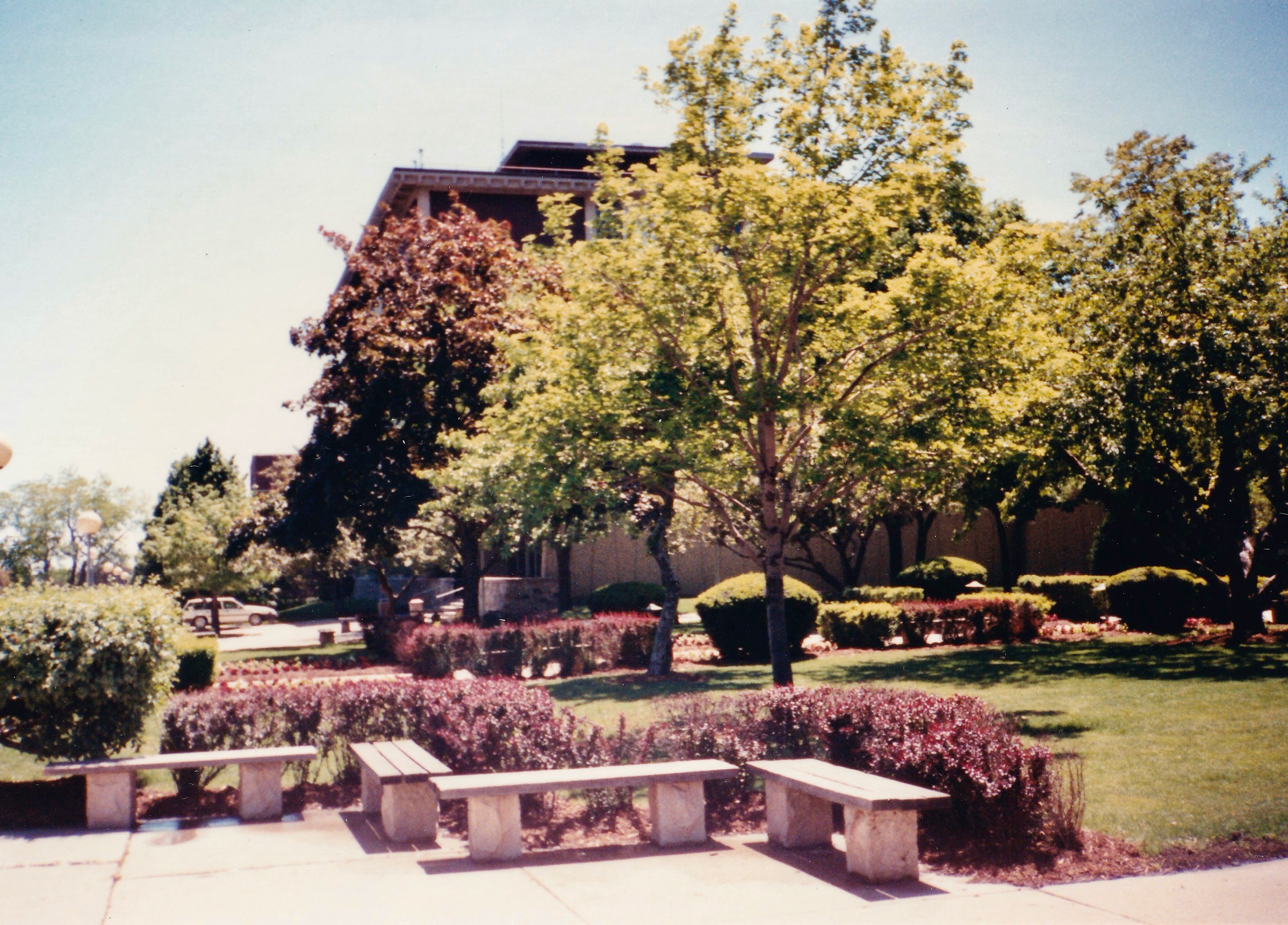
The most beautiful part of the campus might’ve been the West Mall: green space with benches and paths that were particularly inviting in the spring and summer months.
The West Mall was also adjacent to Memorial Library, where I’d spend hours studying, reading, browsing and relaxing—probably more time there than any other place on campus, apart from my dorm and Johnson Hall, where I had all my Journalism classes.
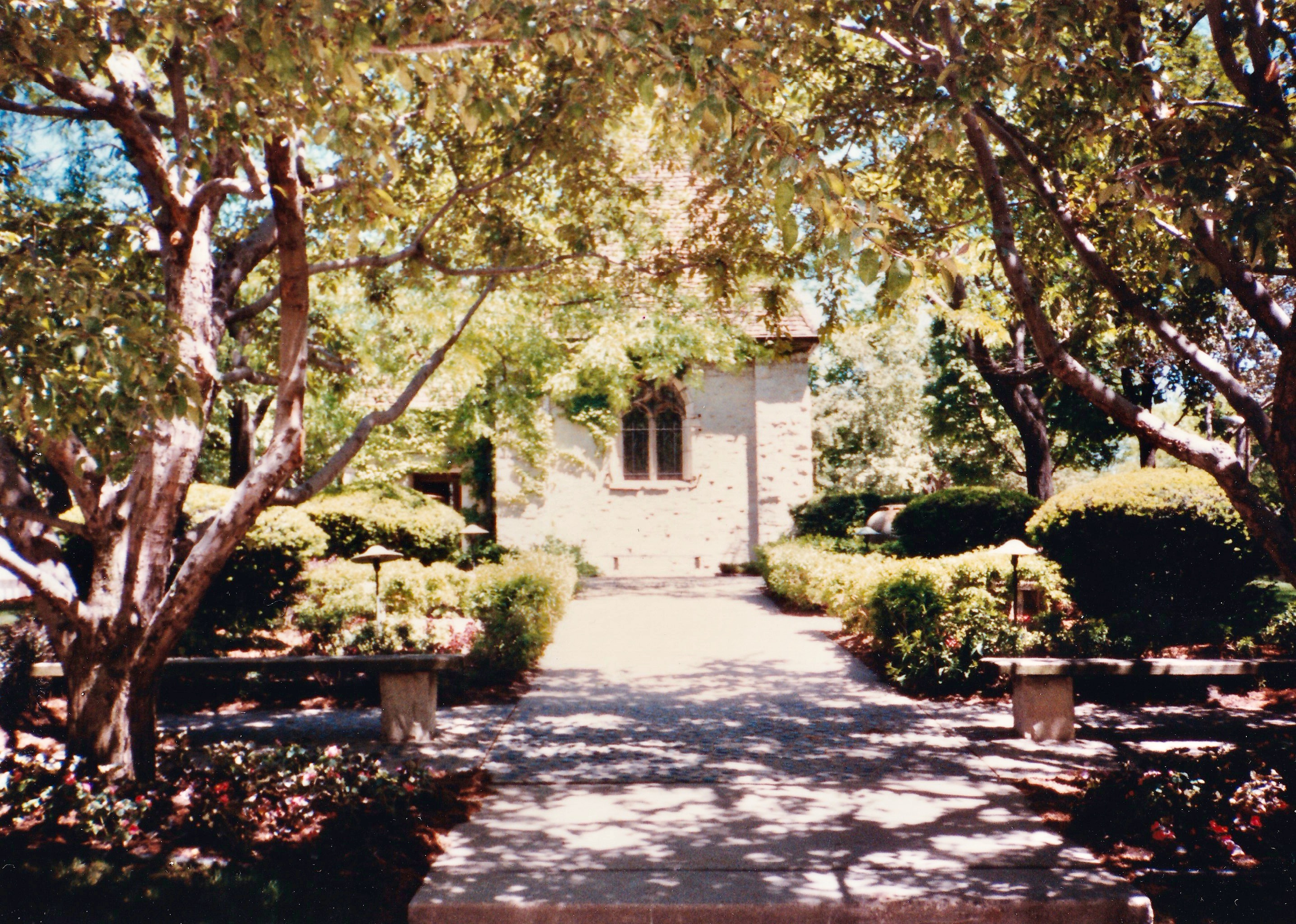
However, my favorite spot in the West Mall was the St. Joan of Arc Chapel. Built in 1420 France, it passed through a few hands before it was gifted to Marquette in the 1960s. Shipped to Milwaukee and re-assembled stone by stone, it’s a lovely, intimate structure. Pictured here is the back of it; a view from the front and a more detailed history can be found here.
While spending many hours near the Chapel, I saw my share of squirrels—at the time, I noticed they were among the fattest I’d ever witnessed due to all the scraps they received from students and faculty. When I think back to this time and place, these little critters are as essential a part of it as getting a between-class donut at Grebe’s or free Friday night films at the Varsity Theatre or the time we all silently watched Madonna’s banned “Justify My Love” video in my Media Law class. Renovations abound, new buildings sprout up and technology moves forward, but I bet those fat squirrels are still there in abundance.
With respect to howlin’ wolf Frances McDormand in Nomadland (itself a deserving Best Picture winner) and all the other Oscar acting honorees this year, none of them gave as fierce and harrowing a performance as Jasna Đuričić in Quo Vadis, Aida? I would’ve also picked it for Best International Film over the affable if gimmicky Another Round—as a depiction of an interpreter desperately navigating the 1995 Bosnian genocide, it’s a nail biting, feel-bad movie that’s really good.
A few other significant discoveries this month: Sean Baker’s Starlet, which preceded Tangerine and affirmed his finesse with unknown actresses (including Ernest Hemingway’s great-granddaughter!) to be already fully intact; En El Septimo Día, a return-to-form (and feature-making) from Jim McKay, another director who excels with non and semi-professionals; The Treasure of The Sierra Madre, a classic I’d been meaning to see for years and well worth the wait (not least for Bogart at his most depraved); and The Watchmaker of St. Paul, my first Bertrand Tavernier (RIP) film and certainly not the last.
Re-watches offered few surprises except renewed confirmation that The Lady Eve might be my favorite Preston Sturges film (and the best screwball comedy ever next to Bringing Up Baby) and that Drugstore Cowboy (which I barely remembered from my last viewing decades ago) has Matt Dillon’s best, most sympathetic performance. Thrilled to see Shiva Baby receiving such a robust reception in its theatrical/VOD release—it was one of my faves at virtual TIFF last September, and I look forward to people discovering fellow newly released festival alums Limbo and The Disciple as well.
Somewhat let down by Sunset Song (the closest Davies has ever come to seeming banal) and a trio of inessential shorts that brought Maddin Mondays dribbling to a close (save for one Criterion is finally adding in May.) Really let down by The Staggering Girl, a high-pedigree pseudo-art-commercial with so much talent and so little substance. On the other hand, Barb and Star Go To Vista Del Mar delightfully turned out more acid trip-y than expected and underground queer classic Pink Narcissus, while dutifully rough around the edges, answered a question that had previously never occurred to me: “What if Kenneth Anger had an ass fetish?”
Films viewed in April in chronological order, with director, year of release and my rating (out of 10); starred titles are re-watches:
The Treasure of The Sierra Madre (John Huston, 1948) 9
En El Septimo Día (Jim McKay, 2017) 8
Cowboys (Anna Kerrigan, 2020) 6
The Hall Runner (Guy Maddin, 2014) 6
Sunset Song (Terence Davies, 2015) 6
Pink Narcissus (James Bidgood, 1971) 8
Marina Abramovic: The Artist Is Present (Matthew Akers, 2012) 7
To Live (Zhang Yimou, 1994)* 10
The Fever (Maya Da-Rin, 2019) 7
Barb and Star Go To Vista Del Mar (Josh Greenbaum, 2021) 7
Starlet (Sean Baker, 2012) 9
Lines of the Hand (Maddin, Evan Johnson, Galen Johnson, 2015) 5
Family Romance LLC (Werner Herzog, 2019) 6
Ashes (Apichatpong Weerasethakul, 2012) 7
Always Shine (Sophia Takal, 2016) 6
No Fear, No Die (Claire Denis, 1990) 7
Come Back To The 5 & Dime, Jimmy Dean, Jimmy Dean (Robert Altman, 1982)* 8
Quo Vadis, Aida? (Jasmila Zbanic, 2020) 10
Pepi, Luci, Bom (Pedro Almodovar, 1980) 6
Spanky: To The Pier and Back (Maddin, 2008) 6
In The Soup (Alexandre Rockwell, 1992)* 7
Shanghai Express (Josef von Sternberg, 1932) 6
Days of Being Wild (Wong Kar-wai, 1990)* 8
The Watchmaker of St. Paul (Bertrand Tavernier, 1974) 8
Shiva Baby (Emma Seligman, 2020)* 9
The More You Ignore Me (Keith English, 2018) 5
Nenette and Boni (Claire Denis, 1996) 7
Drugstore Cowboy (Gus Van Sant, 1989)* 8
Blonde Venus (von Sternberg, 1932) 7
The Staggering Girl (Luca Guadagnino, 2019) 4
The Lady Eve (Preston Sturges, 1941)* 10
The Man Who Sold His Skin (Kaouther Ben Hania, 2020) 6
I spent years trying to convince myself that I wanted to be a journalist. I liked to write, but the idea of making a living as, say, a novelist felt too lofty and unlikely; here was a viable alternative, a profession within my reach. I took a Journalism course my Sophomore year of high school, which led to my becoming a staff writer on the student newspaper the next semester. By Senior year, I was the Features Editor; it seemed a no-brainer to apply at colleges that offered a major in the field.
Studying Journalism at Marquette University, I took courses in Newswriting and Reporting, Media Law and Copy Editing, Layout and Design and multiple ones with the word “communications” wedged in their titles (e.g., “Ethical Problems In Mass Communications”.) That I only made half-assed attempts at contributing to MU’s student newspaper alone should’ve been a red flag that perhaps I’d picked the wrong field of study. As much as I loved writing, it had slowly dawned on me what little use I had for other activities like interviewing, for one. Lacking the forwardness or drive of an investigate reporter, I was an introvert who’d rather write music reviews or personal essays. Still, I stuck with Journalism because I could think of no better alternative.
By Junior year, I also had to settle on a minor, which MU’s College of Communications required of all its students. Since we already had to take multiple courses in subjects like English, Philosophy and Sociology, most Journalism majors chose to minor in one of them (a few even navigated a double-major!) Others opted for fields within our college such as Advertising or Public Relations. As I browsed through a list of available minors, one for Film caught my eye. MU didn’t have a major in it, but it had another reason to offer film courses at all. Each undergraduate student had to take at least one Performing Arts class during their tenure—for instance, to reach the number of credits required for a degree, I selected one called “The History of Jazz” my final semester. However, MU usually offered at least two film courses per semester; if you completed six courses in one specific field, voila, you had yourself a minor.
Something about a minor in Film instinctually appealed to me more than any other option. At age 20, I didn’t consider myself a film buff at all. I liked watching movies in the same way that I enjoyed listening to music or reading books or viewing TV shows or visiting art museums. While still discovering who I was, I did know I valued popular culture and the fine arts more fervently than anything else. I wasn’t gifted at making things with my hands. I didn’t care about sports, politics or cars; I flailed in most of my science classes and studying something like law seemed completely foreign to me. I spent much of my free time browsing at used CD and record stores, taking out books and assorted media from libraries all over Milwaukee County, making occasional visits to area museums (including MU’s own Haggerty Museum of Art) and watching movies with friends. As far as I knew, this was all I wanted out of life.
To commence work on my Film minor, I signed up for two courses offered that fall. The first, “Film and Popular Culture” was in retrospect an anomaly as far as film courses go, for we only watched and studied three movies the entire semester: Four Weddings and a Funeral,Rocky and Chaplin*. Fortunately, the other course, “Film as Art” (nearly all MU film courses sported such generic titles) was the prize. Taught by a Theatre Arts faculty member, it was meant to be a more-or-less chronological overview of movies throughout the 20th century that one could, for whatever reason deem worthy of being “art”. However, before going all the way back to the 1920 silent expressionist horror-nightmare The Cabinet of Dr. Caligari, we kicked off that first class with a fairly recent example of arty film: Zhang Yimou’s To Live, which had tied with Russian film Burnt By The Sun for the Grand Jury Prize at the Cannes Film Festival the year before.
As the classroom lights dimmed, I immediately felt a twinge of panic for I had never watched a film with subtitles before. I must’ve anticipated that this could be an option in earning a Film minor, but it startled me that I was expected to tackle one this quickly. As the movie’s austere opening credits unfurled on the room’s retractable screen, I thought, “Dummy up, Chris,” (to use of one my Dad’s go-to expressions of whose origin remains a mystery to this day); “Surely you can keep up with the words on the screen and enjoy the movie, too.” After acclimating myself to the process of paying attention to both words and images, I quickly forgot about the extra effort I had to make and was soon wrapped up in the film’s narrative.
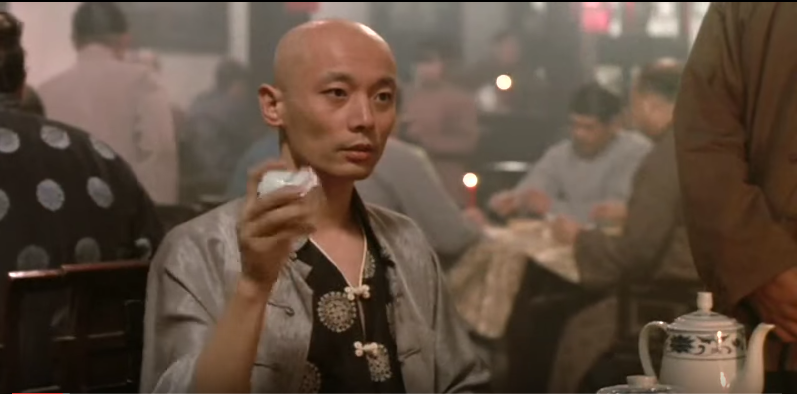
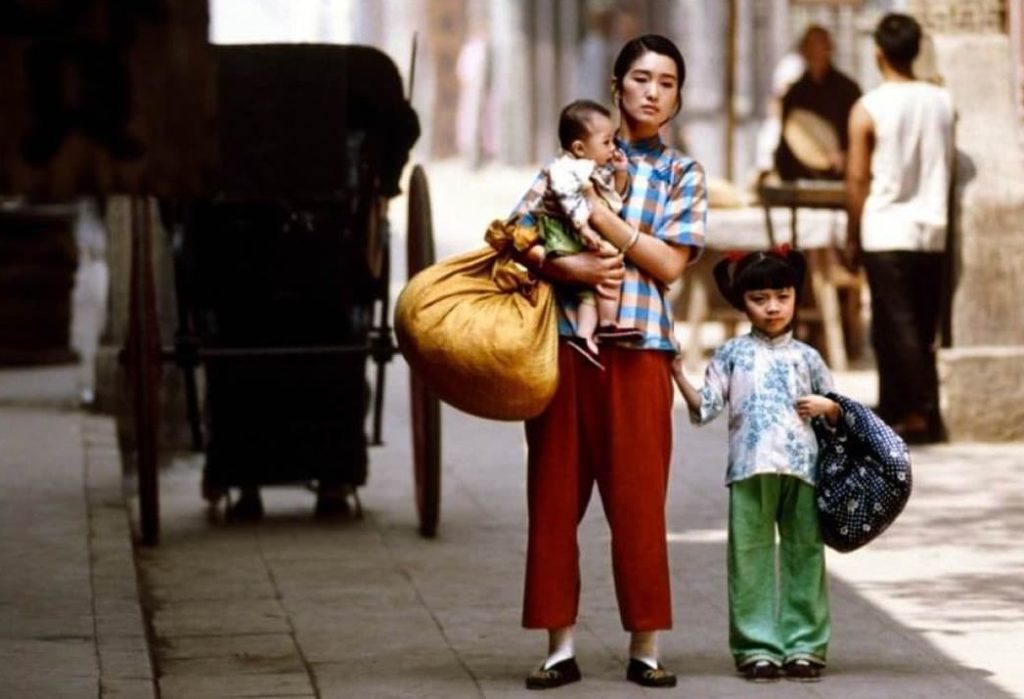
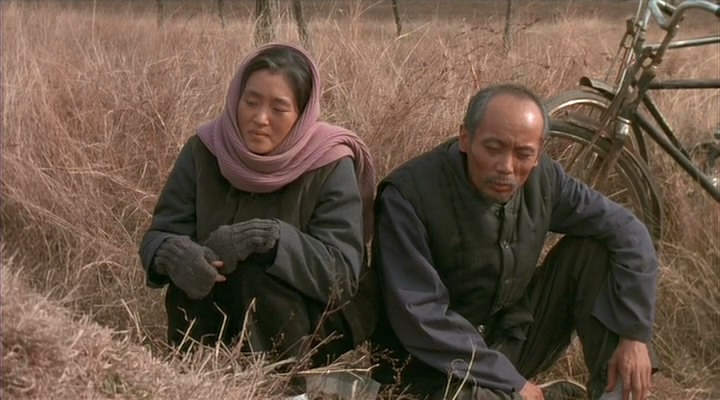
To Live could be classified as an epic in that it spans three decades comprising a tumultuous period in 20th century China, from the 1940s through the Maoist and Cultural Revolutions, concluding sometime in the early-mid 1970s. However, it feels more intimate and focused than the average epic by zeroing in on one family. Through them, it tracks how political and cultural upheaval affects the average citizen. When it begins, the main character, Fugui (Gou Ye) is a conceited rich man’s son whose gambling addiction results in the loss of his family’s palatial home, causing his pregnant wife Jiazhen (the director’s longtime muse, Gong Li) to leave him. By the film’s conclusion, Jiazhen and especially Fugui barely resemble their younger counterparts both in appearance and in temperament; long reunited, they now reside in a very modest home and have suffered immeasurable personal loss in tandem with what their country has endured.
It would be a stretch to say the film has anything approaching an experimental narrative: it proceeds chronologically, divided into four sections, each one beginning with a shot of the same street, allowing the viewer to track how it evolves with each leap in time. Fugui’s character arc is a recognizable one: that of someone who loses his wealth and place in life by his own fault but is then thrown further into disarray by massive circumstances beyond his control. He continually adapts to the new normal because he has no other choice.
To Live provides a sweeping overview of a country in transition. When it begins in the late 1940s, remnants of imperialism are strongly felt, particularly in the way young Fugui swaggeringly carries himself, supporting his gambling habit by dipping into a financial well he believes will never run out, until it does. After he loses everything, his former rival gifts him a set of shadow puppets which allows Fugui to reinvent himself as a street performer. In the middle of a show, he and his partner, Chunsheng are drafted into the Republic of China Armed Forces to fight the communist People’s Liberation Army. In time, the latter captures them, although they survive by performing politicized versions of their craft for the troops.
After the war, Fugui and Jiazhen reunite and adjust to China as a Communist Republic, raising a daughter, Fengxia (who is mute and hard of hearing) and a younger son, Youqing. The film then jumps ahead a few years to the Great Leap Forward in 1958, where we see just how different their lives now are. In comparison to their pre-war digs, their home is simple, austere, even. They work delivering water to their neighbors and are encouraged to donate all their pots and pans in order to produce steel for the military to fight China’s enemy, Taiwan. The children are even drafted to help smelt the steel, which leads to an overworked Youqing’s death when the District Chief (who is revealed to be Fugui’s ex-partner Chunsheng) accidentally runs his car into a wall, crushing Youqing who has fallen asleep on the other side.
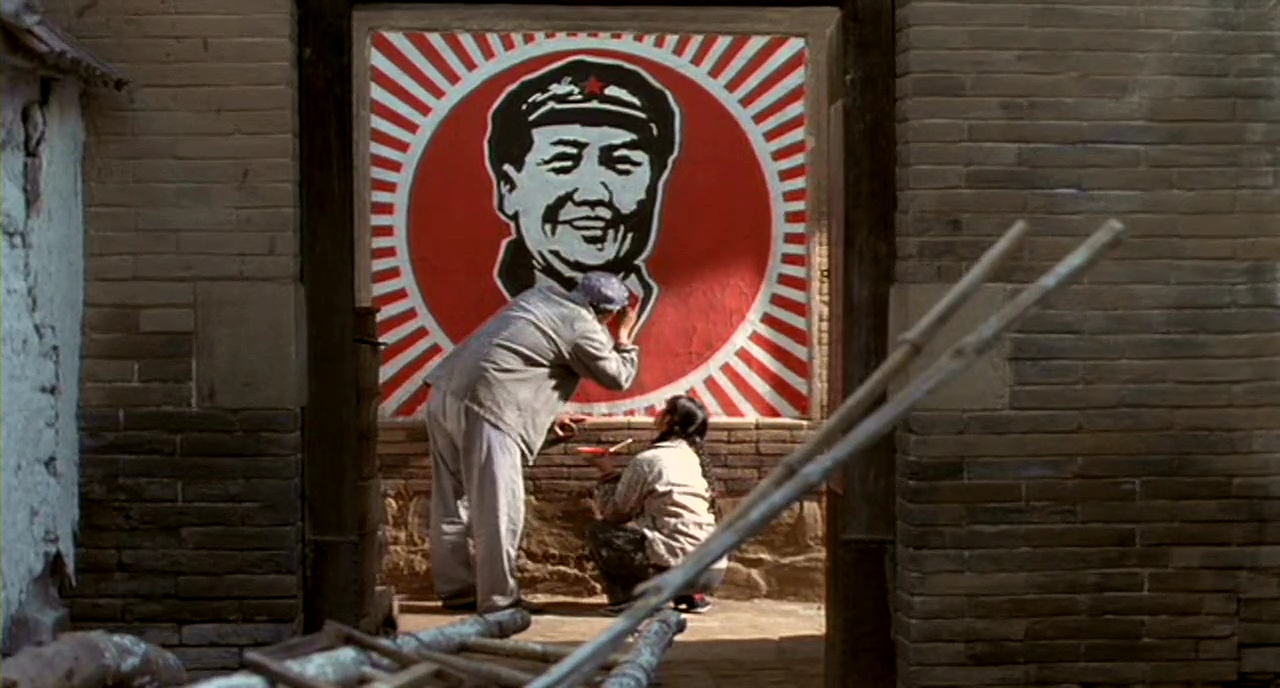
Following Youqing’s burial, the film jumps further ahead to the Cultural Revolution in 1966. The characters’ clothing is now grey and utilitarian and their home is decked out in images of Mao and littered with copies of The Little Red Book. Propaganda is dominant everywhere, even in the choice of a suitor for Fengxia: Wan Erxi, a local leader of the Red Guards who walks with a limp. He turns out to be a kind soul, however, and Fengxia agrees to marry him. However, when the time comes for her to give birth to a son, the local hospital is staffed with inexperienced young medical students and loyal party members; the actual doctors have all been sent away for hard labor due to being “overeducated”. The staff does not know how to deal with complications following Fengxia’s birth and although her baby boy (named “Little Bun”) survives, she dies of a postpartum hemorrhage. The film concludes six years later as Fugui and Jiazhen (accompanied by Erxi and Little Bun) visit their children’s graves.
That first screening of To Live, I left the classroom afterwards feeling blown away by the story, thinking I had never seen anything like it before; now I understand that it was the depiction of a foreign culture that was new to me. I’d seen other movies set in different lands and time periods, but they were predominantly secondhand, coming from the point of view of someone outside of them. My first encounter with seeing Japan onscreen, for example, came from The Karate Kid, Part II, but at that point I hadn’t watched anything written and directed by an actual Japanese filmmaker like Kurosawa, Mizoguchi or Ozu. I’m certain my exposure to anything authentically Chinese was even more limited if not Americanized (watching episodes of Yan Can Cook on PBS, while entertaining, hardly provided a searing look into Chinese society.)
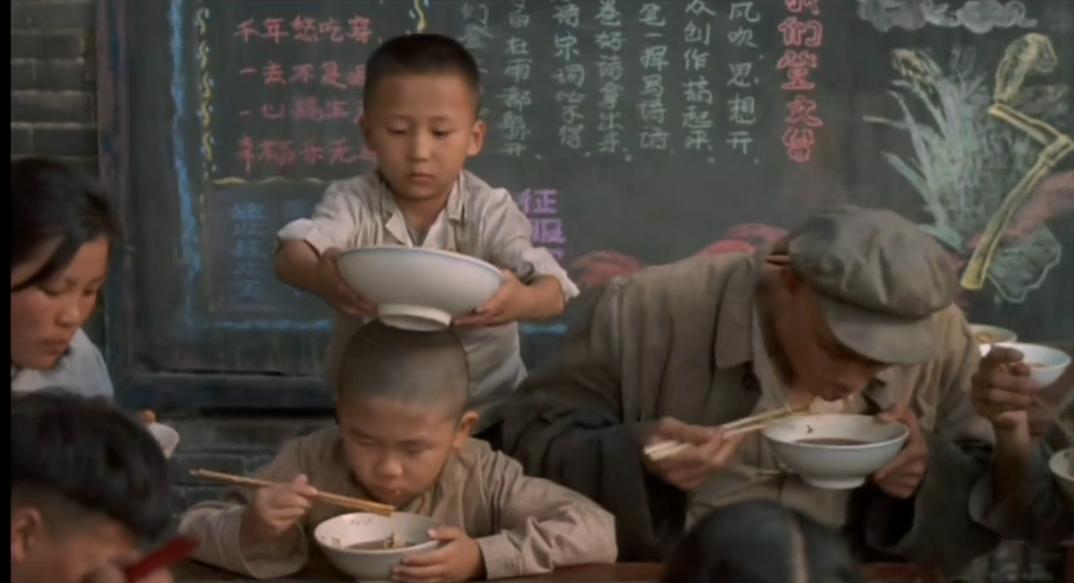
To Live enabled me to learn about a place and a time far different from my own. Yet, it remained something I could relate to. I watched with trepidation as Fugui foolishly gambled his family home away. I was moved when, having survived being a pawn for both sides of the Chinese Civil War, a reformed Fugui returned to his village and reunited with a welcoming Jiazhen. I laughed a great deal later when Youqing got his revenge on the boy tormenting Fengxia by pouring a big bowl of noodles doused in hot chili sauce over his head at a communal kitchen. I felt devastated when Youqing, and then later Fengxia both met accidental deaths at the hands of a mismanaged society.
Those tragedies the film depicts reinforce the notion that it is not a celebration of modern Chinese history but rather a searing critique. Despite the acclaim it garnered on an international level, it was banned in its home country and it’s not difficult to understand why. As the film hurtles forward in time, the consequences of a society drastically transformed by ideology are omnipresent and deeply felt. Often, Zhang is able to poke gentle fun at the absurdity of this nationalist pageantry witnessed even at a local level, like the smelted steel proudly paraded through the neighborhood, carried on a throne wrapped in a big red ribbon (“It’s enough for three cannonballs!”, the town leader exclaims) or even Fengxia and Erxi’s wedding, where their pledge to remain faithful to Chairman Mao takes precedence over any to each other.
Zhang implores the viewer to be amused at these displays, but he doesn’t shy away from how the new regime ultimately values ideas over its people. The fields full of dead soldiers Fugui and Chunsheng navigate their way through during the war foreshadows that radical change does not come without casualties. Post-war, Fugui repeatedly attempts to find acceptance, to keep up appearances and do what is required of him and his family in this new society. The fate of the man he gambled his home away to (death by execution for burning it to the ground rather than giving it to the government) startles him into submission. Fugui tells Youqing, “We can’t be politically backward,” but for all his effort, this new society fails him. While he and his wife survive into old age, both of their children perish in accidents that are nonetheless partially due to negligence of the state.
For all its criticism, To Live concludes with a moment of grace. After visiting Fengxia’s and Youqing’s graves, Fugui and Jiazhen return home with Erxi and Little Bun, the latter carrying a box of chicks he acquired on the trip. Fugui suggests they move the chicks over to a larger wooden box—the one that once held his puppets which he was forced to burn during the Cultural Revolution. Fugui then repeats to Little Bun a proverb that he once told to Youqing about how the chicks will grow up into geese, then sheep, then oxen. When Youqing asked him what came after oxen, Fugui replied, “Communism.” Now, he tells his grandson that after they have oxen, he’ll grow up, “ride on trains and planes… and life will get better and better.” In this, he implies that communist China is no longer the whole world, but merely one part of it.
Adapted from a novel by Hua Yu, To Live is a lovingly crafted, effectively moving film with great work from its leads (Gou Ye became the first Chinese man to win an acting award at Cannes.) Still, I think it had such a resounding impact on me primarily because it happened to be the first foreign language film I ever watched. I might’ve had a similar experience if the instructor had shown us another contemporary Asian film like Chungking Express, A Brighter Summer Day or Eat Drink Man Woman; he could’ve even screened another of Zhang’s films such as Raise The Red Lantern or Ju Dou. He just happened to pick To Live and I was in the right place at the right time to encounter and respond to it.**
That semester, we’d watch movies as disparate as Battleship Potemkin and North By Northwest, 42nd Street and Double Indemnity, Babette’s Feast and Bonnie and Clyde. Most of them (maybe not Potemkin, which I haven’t revisited since) served as illuminating windows onto other worlds—not only various cultures and time periods, but also different approaches to filmmaking and telling stories. By the semester’s end, I knew in my heart that film meant so much more to me than journalism ever would. In a sense, “Film as Art” and To Live in particular were instrumental in pushing me towards what course I’d take in life.
*Has any other film course screened Chaplin for its students since then (apart from maybe a course on Chaplin himself)? It was relatively new at the time, but as an example of how film reflects popular culture, surely there were better, more relevant choices.
**At this writing, To Live is not on any streaming services (I rewatched it in not an entirely legal way); its 2003 DVD is also long out of print, as is its immediate predecessor in Zhang’s filmography, The Story of Qiu Ju (which I’d rate as highly.) Fortunately, other acclaimed films of his from this period such as Ju Dou, Raise The Red Lantern and Shanghai Triad are available to stream.)
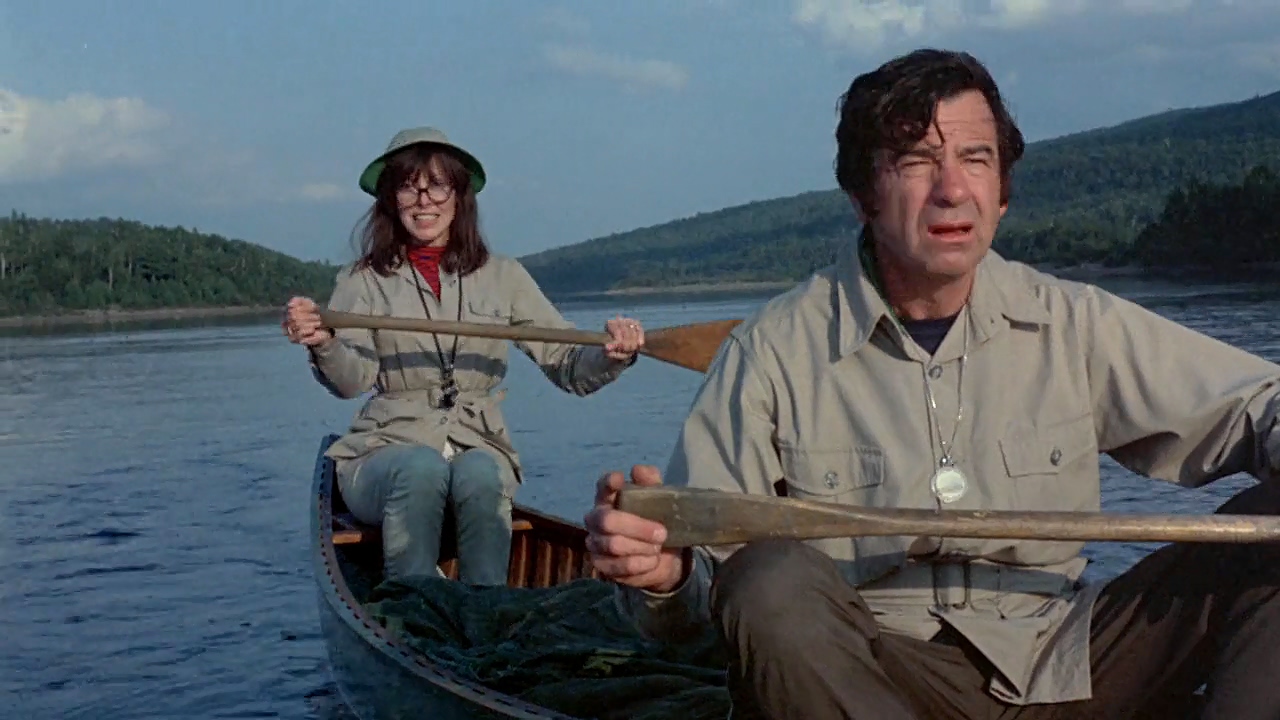
A few 10s this month, including one first-time watch, A New Leaf. Elaine May’s 1971 directorial debut, it has the ideal casting of Walter Matthau as a middle-aged trust fund playboy who has spent all his money and must find a wealthy wife in order to continue his accustomed lifestyle. Enter May’s daffy heiress, a klutzy botanist who genuinely (and literally!) falls for Matthau’s scoundrel. I’d heard for years how great this acerbic neo-screwball comedy was; now streaming on Criterion Channel, it did not disappoint, from opening car gag to deliriously wet finale. It also coincided with my reading of Mark Harris’ great new Mike Nichols bio, which naturally delves into his professional relationship with May, who is also deserving of such an extensive overview.
With five of them falling in March, Maddin Mondays continued strong, split between four re-watches and three new-to-me shorts. Regarding the former, the two early-aughts features impress slightly less now, if only because they precede what would prove Maddin’s most fertile period (which My Dad is 100 Years Old definitely belongs to); The Forbidden Room, on the other hand, proves enriching to revisit, almost as if by design. As for those shorts, Only Dream Things is the prize and easily the closest the filmmaker has ever come to David Lynch-ian dreamscape fantasia.
Many terrific re-watches beyond Maddin this month, from the still-startling movie that killed Michael Powell’s career to Los Angeles Plays Itself, a three-hour-long film history lecture that hasn’t lost any of its power since I last viewed it sixteen years ago. More revelatory, however, was my first viewing of The Grand Budapest Hotel since its theatrical run in 2014. As with The Royal Tenenbaums, Wes Anderson’s jewel box perfection resonated more at home for me than it did on a very large screen; it’s now ahead of The Life Aquatic and Fantastic Mr. Fox (but still not Moonrise Kingdom) in my ranking of the director’s features.
Elsewhere, with his classic run of eight films in the ‘40s now streaming on Criterion, my Preston Sturges watch has begun with The Great McGinty and Christmas In July; a month-long subscription to Disney+ for WandaVision allowed me to catch up on some Pixar features, including a rewatch of The Incredibles in preparation for the slightly inferior but still very good sequel; the absolutely deranged The Legend of the Stardust Brothers, which I may watch again in April before my MUBI subscription runs out; and The Movie Orgy, a pioneering found footage collage curated by a young Joe Dante, four-plus hours of it currently available to stream on Archive.org and essential for connoisseurs of trashy 50s/60s movies and TV.
Films viewed in March in chronological order, with director, year of release and my rating (out of 10); starred titles are re-watches:
Only Dream Things (Guy Maddin, 2012) 8
A New Leaf (Elaine May, 1971) 10
The Mouse That Roared (Jack Arnold, 1959) 7
Sylvie’s Love (Eugene Ashe, 2020) 6
Los Angeles Plays Itself (Thom Andersen, 2003)* 10
The Great McGinty (Preston Sturges, 1940) 7
Black Bear (Lawrence Michael Levine, 2020)* 8
Soul (Pete Docter, Kemp Powers, 2020) 8
Keep An Eye Out (Quentin Dupieux, 2018) 7
Glorious (Maddin, 2008) 6
Dracula: Pages From a Virgin’s Diary (Maddin, 2002)* 7
The Rabbi Goes West (Gerald Peary, Amy Geller, 2019)**
The Wicker Man (Robin Hardy, 1973)* 9
Gutterbug (Andrew Gibson, 2019) 5
Stray (Elizabeth Lo, 2020) 6
The Last of Sheila (Herbert Ross, 1973) 8
Farewell Amor (Ekwa Msangi, 2020) 7
Coming 2 America (Craig Brewer, 2021) 5
Inside Out (Docter, 2015) 8
The Movie Orgy (Joe Dante, 1968) 9
The Piano (Jane Campion, 1993)* 9
Sinclair (Maddin, 2010) 6
The Incredibles (Brad Bird, 2004)* 9
Boy Meets Girl (Leos Carax, 1984) 7
The Quiet Man (John Ford, 1952) 7
Christmas In July (Sturges, 1940)* 8
Incredibles 2 (Bird, 2018) 8
The Grand Budapest Hotel (Wes Anderson, 2014)* 10
My Dad Is 100 Years Old (Maddin, 2005)* 8
Cowards Bend The Knee (Maddin, 2003)* 7
The Legend of The Stardust Brothers (Makoto Tezuka, 1985) 8
Peeping Tom (Michael Powell, 1960)* 10
The Inheritance (Ephraim Asili 2020) 6
Slim Aarons: The High Life (Fritz Mitchell, 2016) 4
As Tears Go By (Wong Kar-wai, 1988) 7
The Forbidden Room (Maddin, Evan Johnson, 2015)* 9
Bugsy Malone (Alan Parker, 1976) 7
The Color Wheel (Alex Ross Perry, 2011) 5
(**not rated, because I know the filmmakers personally!)
I didn’t work at a movie theater until I was nearly 30, though not for lack of trying. Throughout my late teens and early twenties, I dutifully submitted job applications at numerous cineplexes but was unable to convince any of them to hire me. Apart from a six-week stint as seasonal help at the Suncoast Video in Southridge Mall, I couldn’t find work at a video store, either. I applied to every Blockbuster location I could easily reach by bus and even scored an interview at a local chain, Video Planet, where I flailed to answer questions from an intimidating, burly manager with a thick Eastern-European accent. At the time, I chalked it up to this industry’s competitive nature—what young person wouldn’t want to work at a cinema or video store? Someone more aggressive and persistent than me might’ve scored such a job instead of settling for less desirable, more attainable work—in my case, cashier at an auto parts store and (briefly) busboy at a chain buffet restaurant.
The summer after high school graduation, my good friend Agnes got hired as part-time help at Budget South Cinemas, a second-run, six-screen theater in the suburbs. Since tickets were only two bucks at a time when most places charged at least six or seven, it was immensely popular. My parents and I often drove out there to see stuff that had bounced around other theatres months before, from family-friendly hits (The Princess Bride, Star Trek IV: The Voyage Home) to absolute dreck (Superman IV: The Quest For Peace.) Even if the movies weren’t technically brand new, they were new enough. More importantly, you couldn’t beat the price.
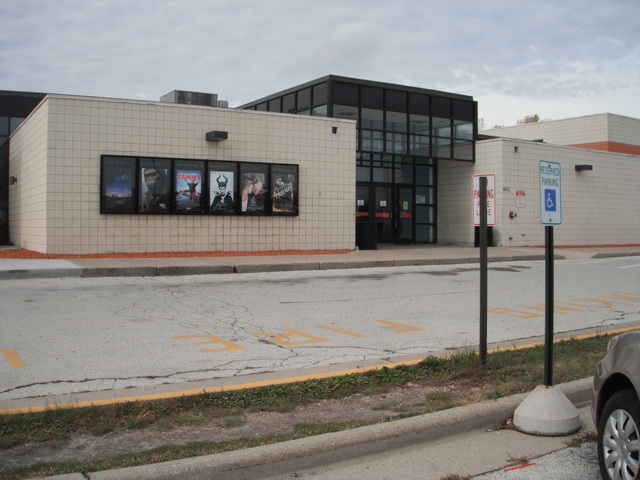
Budget South Cinemas, 2014. It closed for good a year later.
Agnes worked at the concessions stand, making popcorn, fetching soda and candy for customers and cleaning up the theaters after every screening. She continued picking up shifts after starting school at UW-Madison in the fall, coming home to Milwaukee every weekend to earn some extra cash well into the next summer. As I came to know intimately as an adult working for a cinema, the job’s greatest (and usually only) perk was free movies. In Agnes’ case, she could also bring along multiple guests for a reduced admission of one dollar each. Any cash-strapped 18-year-old in 1993 would confirm that a buck a movie was even cheaper than spending a few hours at Denny’s nursing bottomless pots of coffee, so of course we saw a lot of movies during her tenure there.
So right was the price that we barely discriminated as to what we saw. Cool Runnings, Robin Hood: Men In Tights, Threesome, With Honors, Airheads—nothing, not even the latest Pauly Shore vehicle was too bad for a dollar. Having missed it in the first-run theaters, we ended up watching Jurassic Park there at least six times, partially because it played for months and months but mostly because it was awesome entertainment, a big budget spectacle that truly represented the best Hollywood currently had to offer. I almost considered making it the focus of this essay (I’ll bet I can still recall every single scene despite not having seen it since the 90’s), but then I thought of something else I first watched at Budget back then.
Since discovering Monty Python and the Holy Grail three years earlier, my interest in alternative and cultish types of comedy had flourished but that didn’t fully translate to the kinds of films I viewed. Entertainment Weekly’s “The 100 Funniest Movies On Video” issue, which dropped in October 1992 had a considerable impact, even if I’d just begun to seek out prime Mel Brooks and early Woody Allen flicks. I did stumble upon Midnight Cowboy on TV late one night, long after my parents had gone to bed. I hadn’t seen subject matter so explicitly sexual before, not to mention techniques as arty as the film’s quick cuts and zooms and comparatively rambling narrative.
I was faintly aware of a world of film beyond the likes of Jurassic Park and Sister Act 2: Back In The Habit: movies made for adults that were nominated for awards such as Howard’s End, The Player and The Crying Game. Driven as I was to comedies, I didn’t think to search for these more serious pictures; even dark satire The Player was difficult to find because it didn’t play the multiplexes I frequented. It follows that I might not have watched The Piano with Agnes one evening if she hadn’t recommended it to me after first seeing it on her own at Budget. I’m certain I’d heard good things about the film but had little idea of what it was actually about. Still, I knew Sam Neill from Jurassic Park was in it (and again, the price was right.)
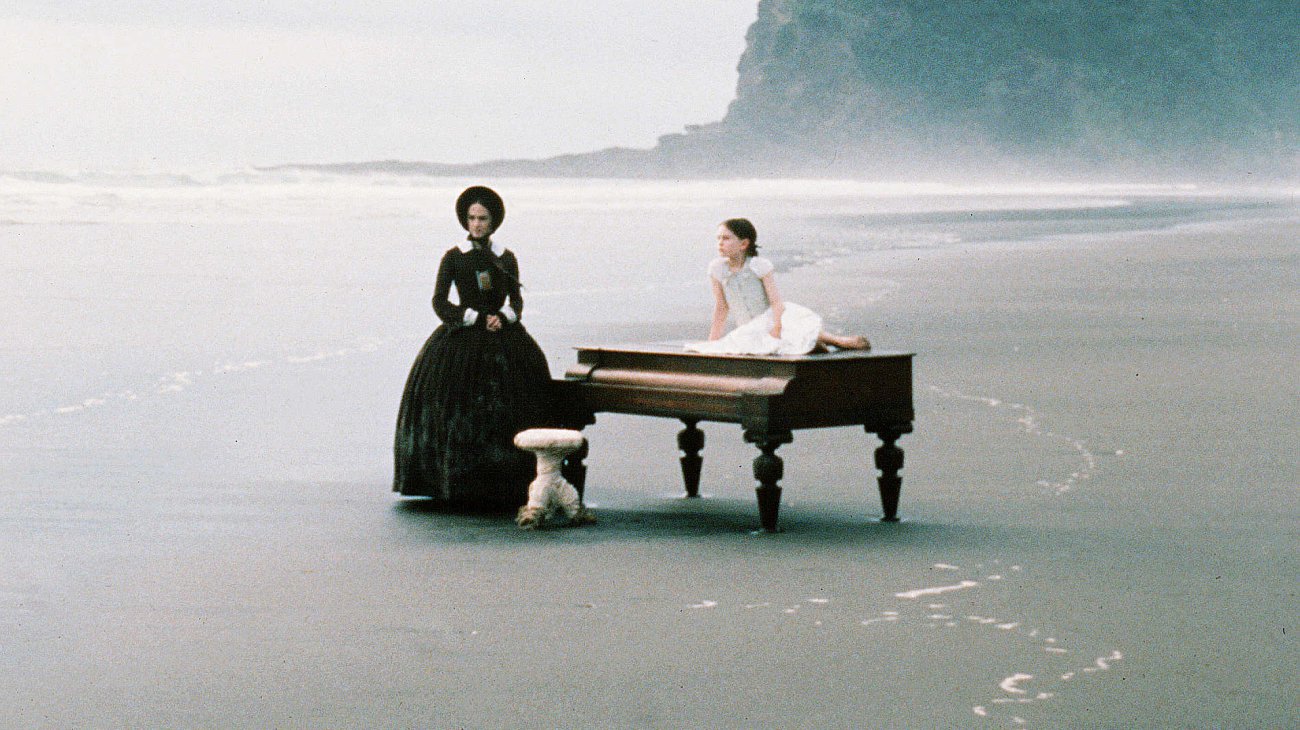
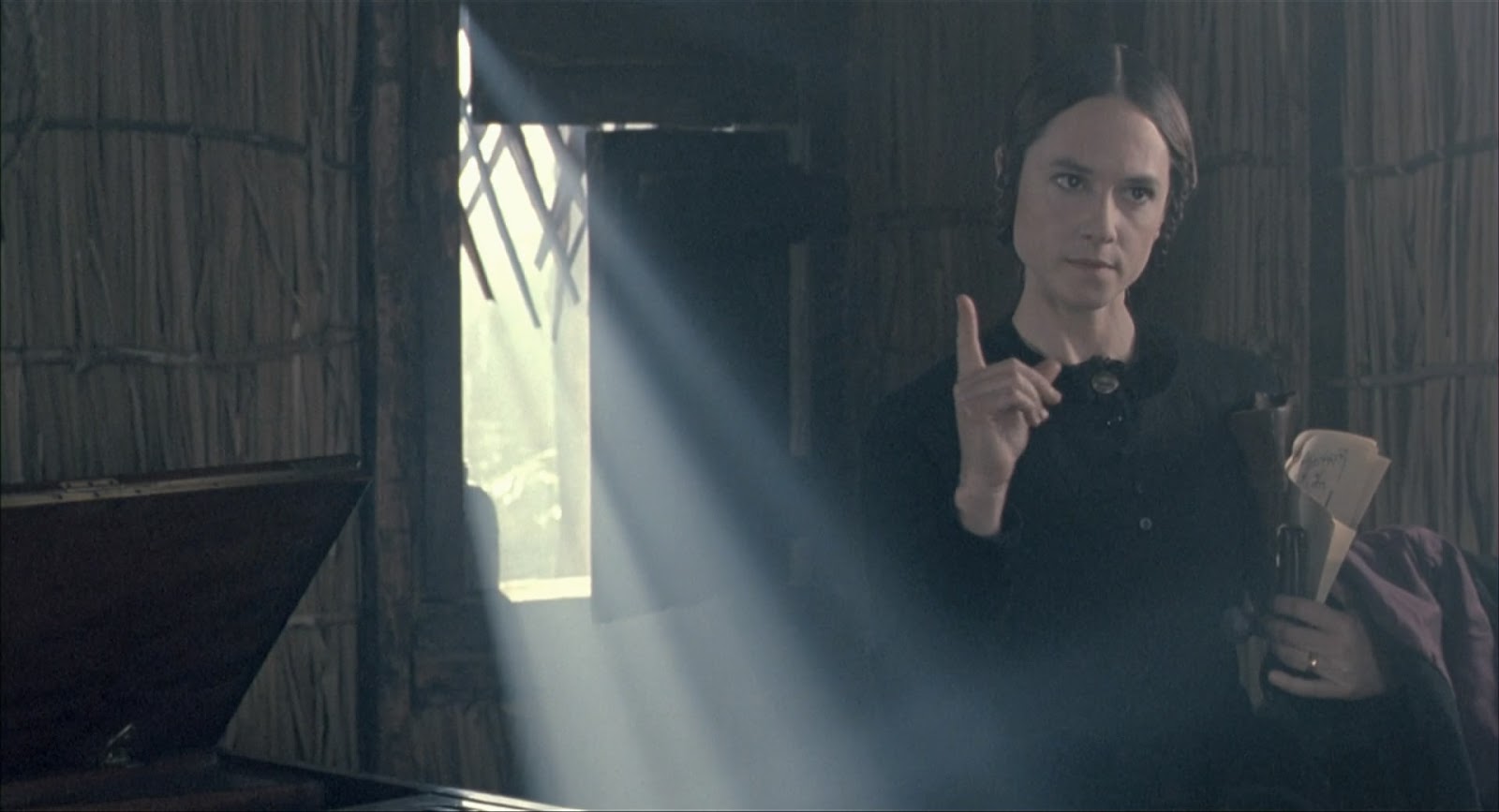
Viewing The Piano that first time, I recall leaving the theater feeling a little confused but on the whole, transformed. Entirely unfamiliar with the setting (a remote, heavily forested island in 19th century New Zealand) or culture (colonialists living among the indigenous Maori population), I’d also never witnessed a protagonist like Ada (Holly Hunter), a mute, unmarried Scottish woman with a young daughter, Flora (Anna Paquin). The two are shlepped to the other side of the world to partake in a 90 Day Fiancé-type marriage with frontiersman Alisdair (Neill). No explanations for Ada’s muteness—she hasn’t spoken a word since age six, only communicating with Flora via sign language (who in turn is her interpreter.) She also has this deep near-mystical relationship with her handcrafted piano, which she has lugged along with her from Scotland. She plays it lovingly on the shore, devastated to leave it there when it’s deemed too heavy to carry through the deep woods back to Alisdair’s place by his crew.
Then there’s Alisdair’s friend and fellow frontiersman, Baines (Harvey Keitel) who offers to trade some of his land in exchange for the piano, which he has moved to his cabin. When Ada confronts Baines, he makes another offer, to let her “earn back” the piano key by key in return for lessons where he can observe her and “do things he likes” as she plays (which involves him wearing increasingly less articles of clothing.) While Ada remains cold and standoffish to Alisdair (who is truly clueless in his attempts to connect with her), she negotiates with Baines, setting ground rules and upping the number of keys earned back as his actions towards her get more physical and then tenderer. It’s that last attribute, diametrically opposed to her husband’s awkwardness that moves her to fall for Baines. Naturally, Alisdair’s pissed and it all escalates to a climax where Ada’s spurned hubby ruthlessly cuts off one of her fingers. After some heavy emoting from both of the men in Ada’s life, Alisdair sends her and Flora away to live with Baines and dissolves their marriage.
Quite a triangle, eh? Actually, the relationship between Ada and Flora proves more compelling than her hots for Baines. Eerily resembling each other as if they were the largest and smallest components of a nesting doll, Hunter and Paquin seem to share a telepathic connection, as if their souls are linked. Director/writer Jane Campion often shifts the attention to these two actresses for extended moments that have little to do with the central narrative, as if to emphasize their bond and how it serves as a lifeline between the two. As Ada spends more time with Baines, it arguably has a greater impact on Flora than Alisdair, as her acting out against Ada (she gleefully spills the beans to her stepfather) directly leads to her mother’s shocking mutilation.
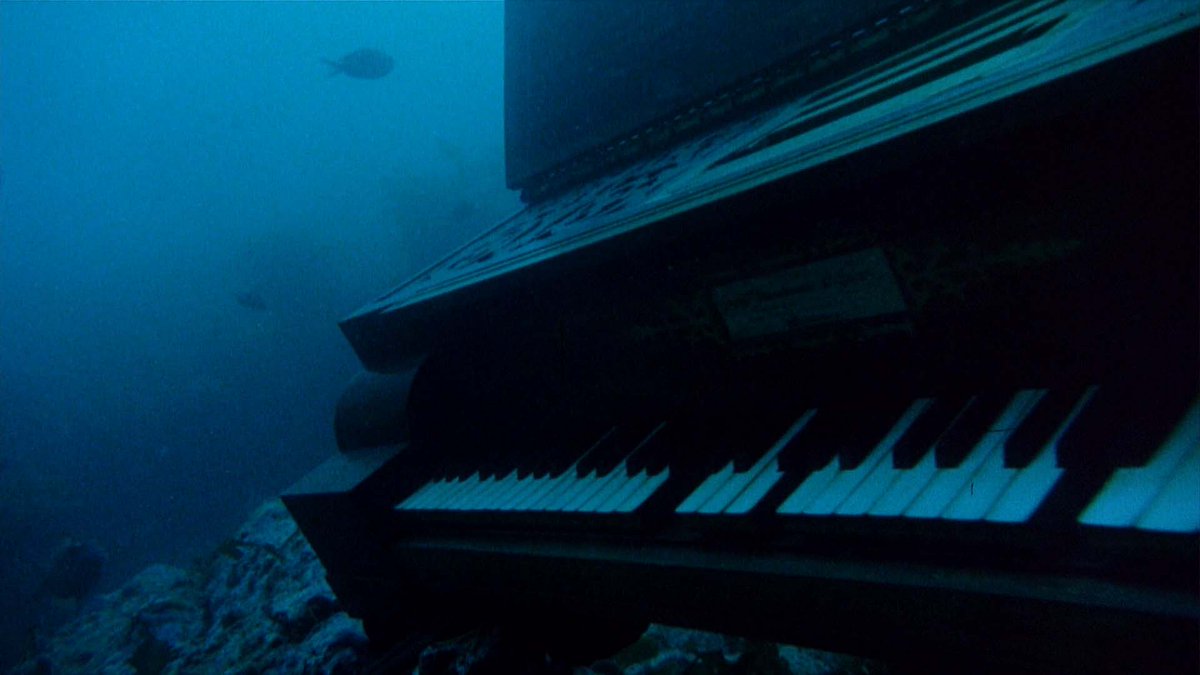
On top of all that, consider the film’s gutsy, startling ending. As Ada, Baines and Flora leave the island by boat with all their belongings and a crew, Ada impulsively decides to throw the piano overboard (“She says she doesn’t need it anymore,” wails Flora.) Whether through guilt over betraying Alisdair or, more likely, grief over losing her appendage (and by default her ability to play music), at the last minute she deliberately sticks her foot in a tangled rope attached the piano so that it pulls her overboard as well. However, a survival instinct in her suddenly kicks in. She removes her foot from the rope, swims to the surface and is pulled up back on the boat. In a brief epilogue, we see her happily settled on the mainland with Baines and Flora, able to play and teach piano courtesy of a metal finger Baines has crafted for her. The final shot is the specter of Ada drowned with her piano, a haunting reminder of what could have been.
Not only more adult than Jurassic Park, The Piano was also far more unconventional, from featuring a main character who didn’t speak a word (apart from some brief voiceover in the beginning and at the end) to its otherworldly settling and surprising conclusion (which would’ve been even more daring had Ada remained drowned for good.) While I didn’t go back to watch it another five times (I doubt it played at Budget for more than two weeks), I eventually acquired my own VHS copy of it and a published copy of the screenplay. I also saw all of Campion’s earlier films, from the bizarre, purposely disorienting Sweetie (which makes The Piano look like A River Runs Through It) to her earlier shorts.
I felt a little cautious revisiting the film for the first time in two decades: how would the relationship between Ada and Baines hold up? I feared it would feel exploitative, having recalled most vividly the “trading keys for sexual favors” storyline with multiple shots of Keitel’s bare ass (The Piano is from a brief, strange period when way too many filmmakers mysteriously craved some nudity from middle-aged Harvey.) Fortunately, this was not at all the case, thanks to Keitel’s sensitive, nuanced performance and his ability to express how Baines’ lust genuinely transforms into love the more time he spends with Ada. I suspect Campion, who clearly fashioned the screenplay to make Ada not a victim but someone with enough control to negotiate with Baines when possible was instrumental in guiding Keitel as well.
What hasn’t aged entirely well is the film’s portrayal of the Māori indigenous population. Credit Campion with hiring actual members of that community, even if they’re still treated like second-class citizens, savages quick with saucy retorts who engage in such undistinguished activities as humping trees. The pageant scene, where a few are gullible enough to think the fake severed heads dangling from a hanging bedsheet are real provided a lot of laughs at the time; while it’s still amusing in an early-cinema-audiences-fear-that-the-train-on-screen-is-heading-straight-for-them way, it comes across as condescending, not to mention unnecessary. As for Keitel adopting the Māori’s tribal tattoos, I’m just thankful that it’s only his character’s appropriation and not the film trying to pass him off as an actual tribal member.
Also, a faint whiff of what I’ll call “Miramax-ness” infests the film. Consider the bodice-ripping between Ada and Baines (with Alisdair secretly watching!), the bland, verging on “Piano By Candlelight” Michael Nyman score (most bearable when Ada’s simply playing the instrument) or the slo-mo shots of Ada triumphantly emerging from nearly having drowned at the end. You wouldn’t find this stuff in a lower budget or truly independent film from the era like Go Fish, Metropolitan or anything directed by Hal Hartley. It’s not bad, exactly, but it comes off as overtly middlebrow now, a tony alternative rather than something radical or even transgressive.
However, I’m still in awe of much about The Piano. Hunter, for one, disappears so wholly into Ada I can barely name anyone else that compares (maybe Charlize Theron in Monster?) At the time, I wasn’t familiar with the actress apart from Raising Arizona; it didn’t register that this was the same person. Having grown to know Hunter well through a variety of roles, from Miss Firecracker through The Big Sick and encounter her again as Ada was eye-opening. Naturally, it helps that arguably the actress’s most distinguishing feature, her southern drawl is entirely absent, and yet—after watching her here, withdrawn, bonneted and much younger and catching her diminutive, scraggly, redheaded, aged self in an episode of Mr. Mayor later that day, I was beside myself trying to reconcile these two opposites.
The look of the film also remains startling. Even with a location automatically otherworldly due to its remoteness, Campion emphasizes certain textures that renders The Piano as if it’s been taken from a dream. Greens and blues, both colors often bleeding into the other seem to invade nearly every frame. The empty, languorous beach shots seem a precursor to those in Portrait of a Lady On Fire. The endless forest is an ideal place to explore interior motives and thoughts, for keeping secrets and indulging in the most private fantasies. The muddy terrain is such that one can nearly feel or smell it whenever a shoe gets stuck in the muck or during that terrifying aftermath of Ada’s mutilation, where, dazed and traumatized, she dutifully, naturally sinks into the ground, her hoop skirt acting as a natural if ephemeral shell.
What initially struck me about The Piano and still impresses is a remarkable lack of stuffiness for a period piece drama. Ada, for instance, is unsentimental towards everything except her piano, and even at the end she knows when it’s time to get rid of it. In addition to the pageant and tree-humping scenes, flashes of humor materialize throughout, from the doddering ladies young and old that keep up the colony where Alisdair and Ada reside to the indelible moment when, in Ada’s attempts to try something physical with her husband, we learn that he doesn’t care for butt stuff. Also, you have to admire the exchange where Alisdair asks Flora, “Where’s your mother? Where’s she gone?” and incensed because she knows her mother’s exactly where she shouldn’t be, Paquin explodes at him, “TO HELL!” with crack timing and force for a ten-year-old (and yes, Paquin’s Best Supporting Actress Academy Award was as much deserved as Hunter’s for Best Actress and Campion’s for Best Original Screenplay, not to mention the latter’s nod for Best Director—the second woman to ever be nominated in that category.)
Before I re-watched it, I felt like The Piano was somewhat forgotten, in a way that a mid-60’s Best Picture Nominee such as The Sand Pebbles was barely talked about in 1993. Today, you rarely see it play at colleges or revival houses although as of this writing, you can rent it on Amazon to stream. I was pleasantly surprised to see it had more views on IMDb and Letterboxd than that year’s fellow Best Picture nominee The Remains Of The Day. For me, it was an introduction to independent cinema, at least of the Miramax-distributed, Oscar-feted variety, but it didn’t lead to me renting other likeminded films, not yet. The Piano was more like a glimpse into another world: a bridge between what I liked in my youth and what I would love as a grownup when I eventually worked at a cinema myself.
The Milwaukee neighborhood I’m originally from is roughly three miles from Lake Michigan.
Growing up, it was easy to take the Lake for granted–it was just always there, providing the city’s Easternmost boundary. Like any ocean, it was impenetrable, for you couldn’t possibly see across it to the other side.
Alternately a backdrop for picnics, walks, beach days, fireworks displays, arts festivals, afternoon cruises, fishing and swimming, the Lake stretched on for miles–even within Milwaukee County, there were parts I never visited until my early 20s in the mid-90s, like Atwater Park in Shorewood.
As a Marquette University undergrad, I often walked down from campus to the Lake, usually reaching it via this long-gone pedestrian bridge that crossed over Lincoln Memorial Drive pre-Calatrava addition to the Milwaukee Art Museum.
Once at the Lake, I’d walk North along the footpath, occasionally stopping to sit on a bench and take in the birdsong, the often cool breeze and the not-unpleasant smells of the shore.
The footpath stretched on to Veterans Park, a large swath of green space that was usually empty except for special occasions and festivals like Maritime Days every Labor Day weekend.
My last night in town before moving to Boston in 1997, a friend and I went for an evening stroll through South Shore Park in Bay View, providing one more time to take in the Downtown skyline as seen across the Lake and industrial Jones Island.
Although my parents moved to Iowa the following year, we’d all meet up in our hometown from time to time. Here’s a snapshot taken from roughly the same vantage point at South Shore Park nearly six years later.
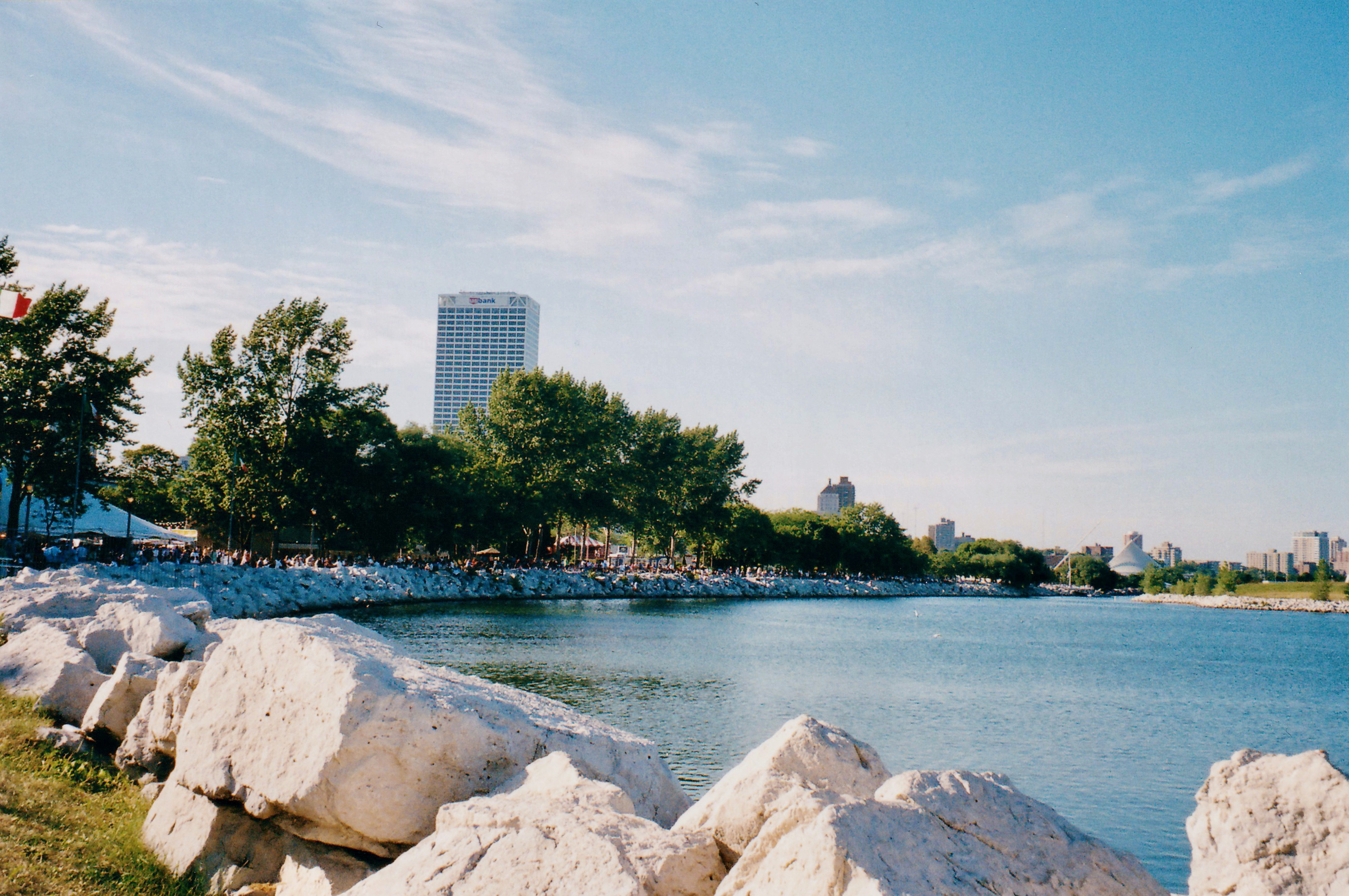
On this particular visit (July 2003), we attended Festa Italiana at Maier Festival Park; above are the white jagged rocks along Lakeshore State Park Inlet.
For more unadorned views of the Lake, travel North past Downtown over to Bradford Beach, which above appears suspiciously empty for a mid-Summer afternoon (perhaps it was unseasonably chilly, or “cooler by the Lake” as the expression goes.)
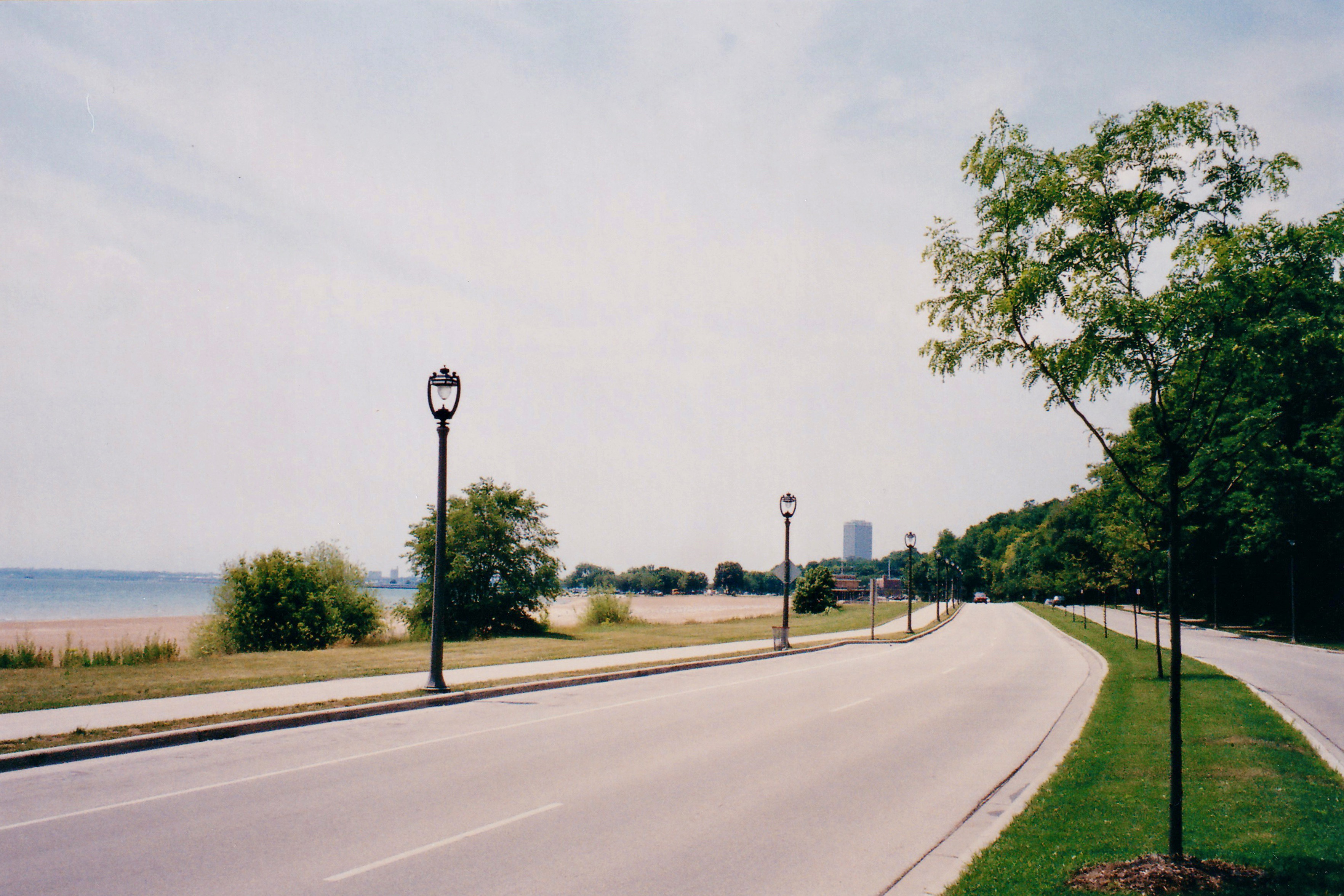
The most convenient way to experience the Lake (if only by sight and maybe smell) is to cruise along Lincoln Memorial Drive–my favorite Milwaukee road (and probably most others as well.)
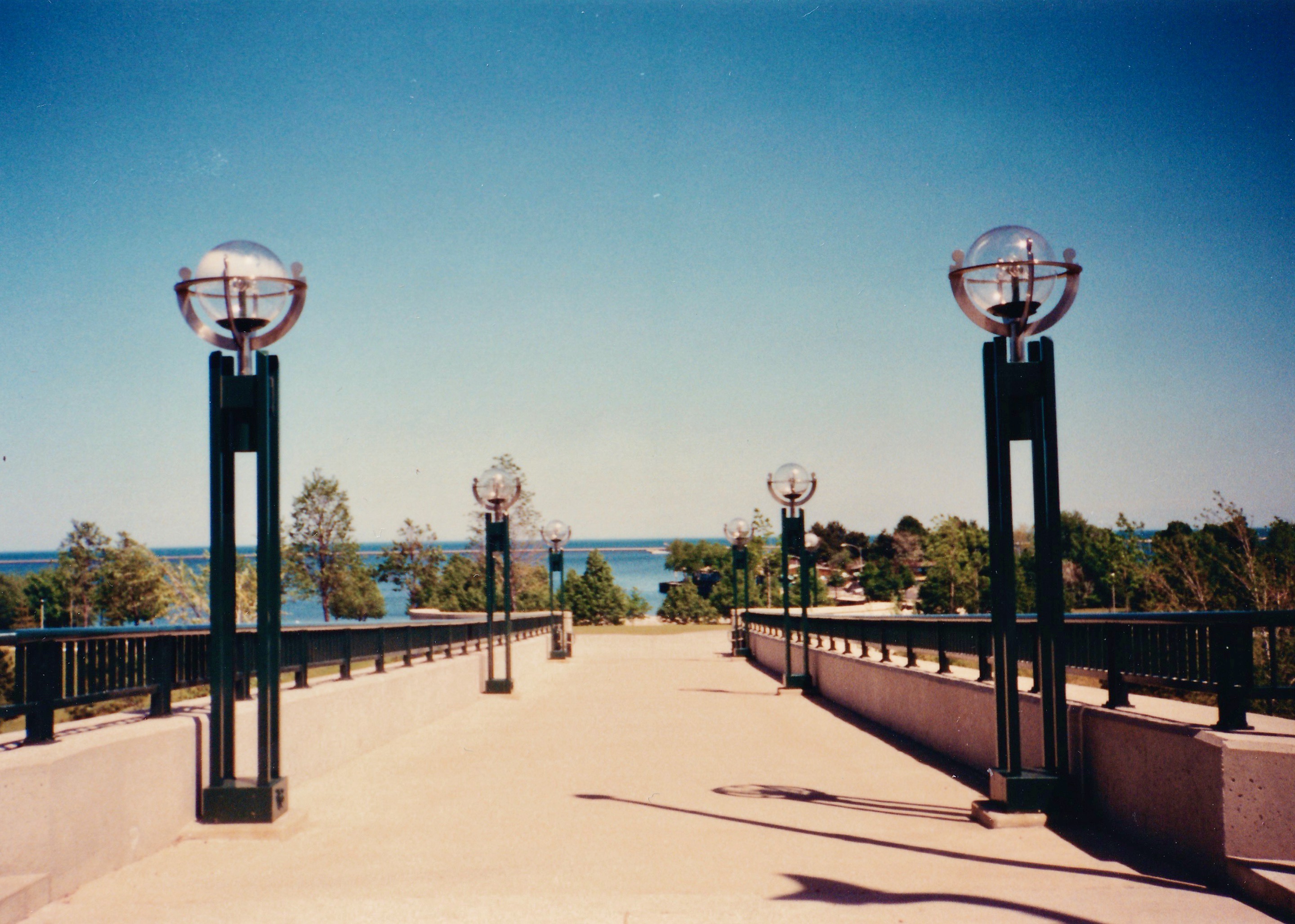
Returning for a visit in August 2006, I was excited to see a new and improved Oak Leaf Trail Footbridge connecting the end of Brady Street to McKinley Park over Lincoln Memorial Drive.
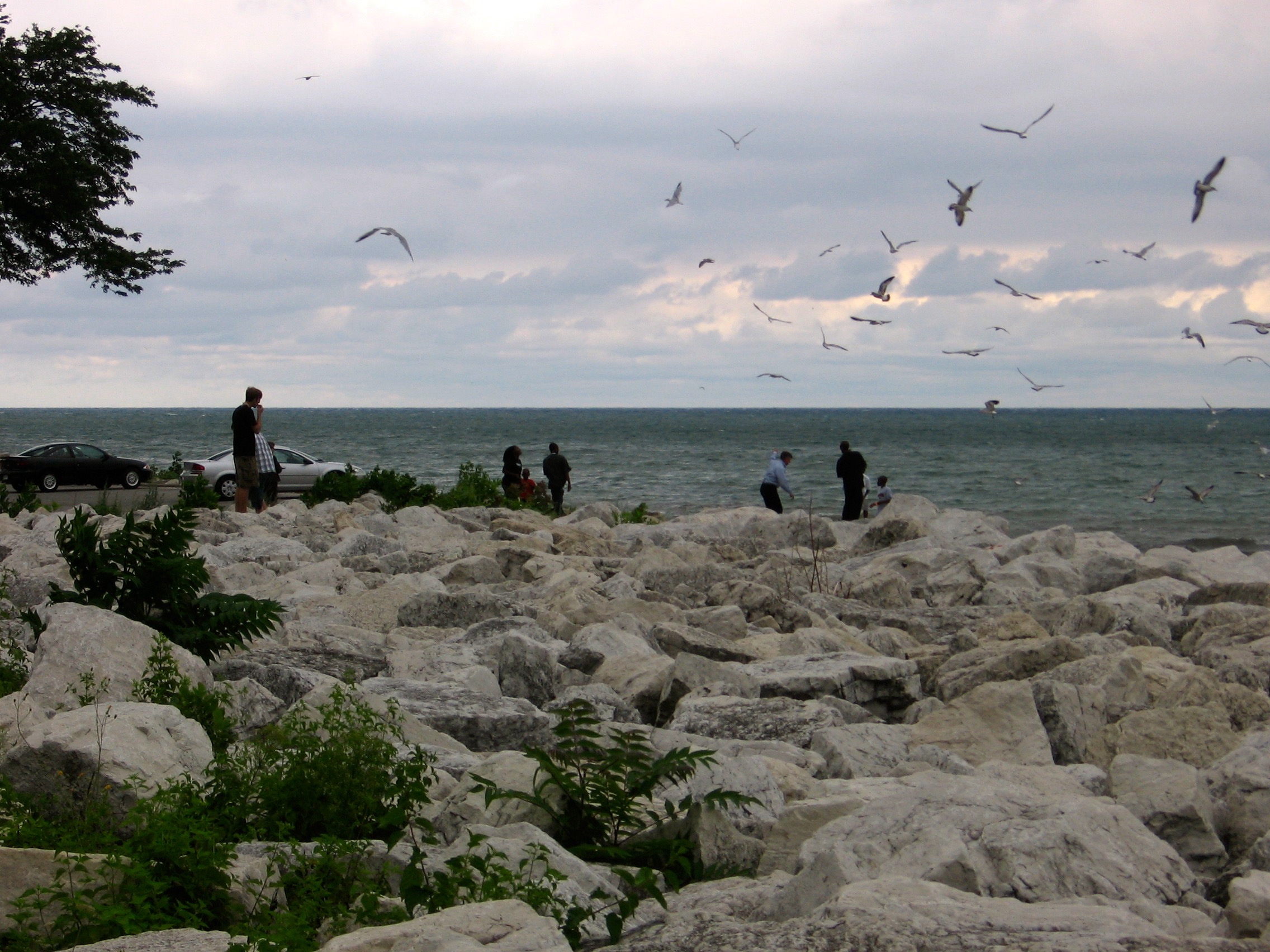
The rocks along this part of the shore brought back so many memories, including that time a decade before I had snuck down there with a few friends one late Summer night.
The rocky shore seems less mysterious in daylight, although one can still feel like they’re standing at an edge of the world as they feed or just watch the mass of gulls circling around.
I concluded that same trip with a walk along the shore of Grant Park in South Milwaukee.
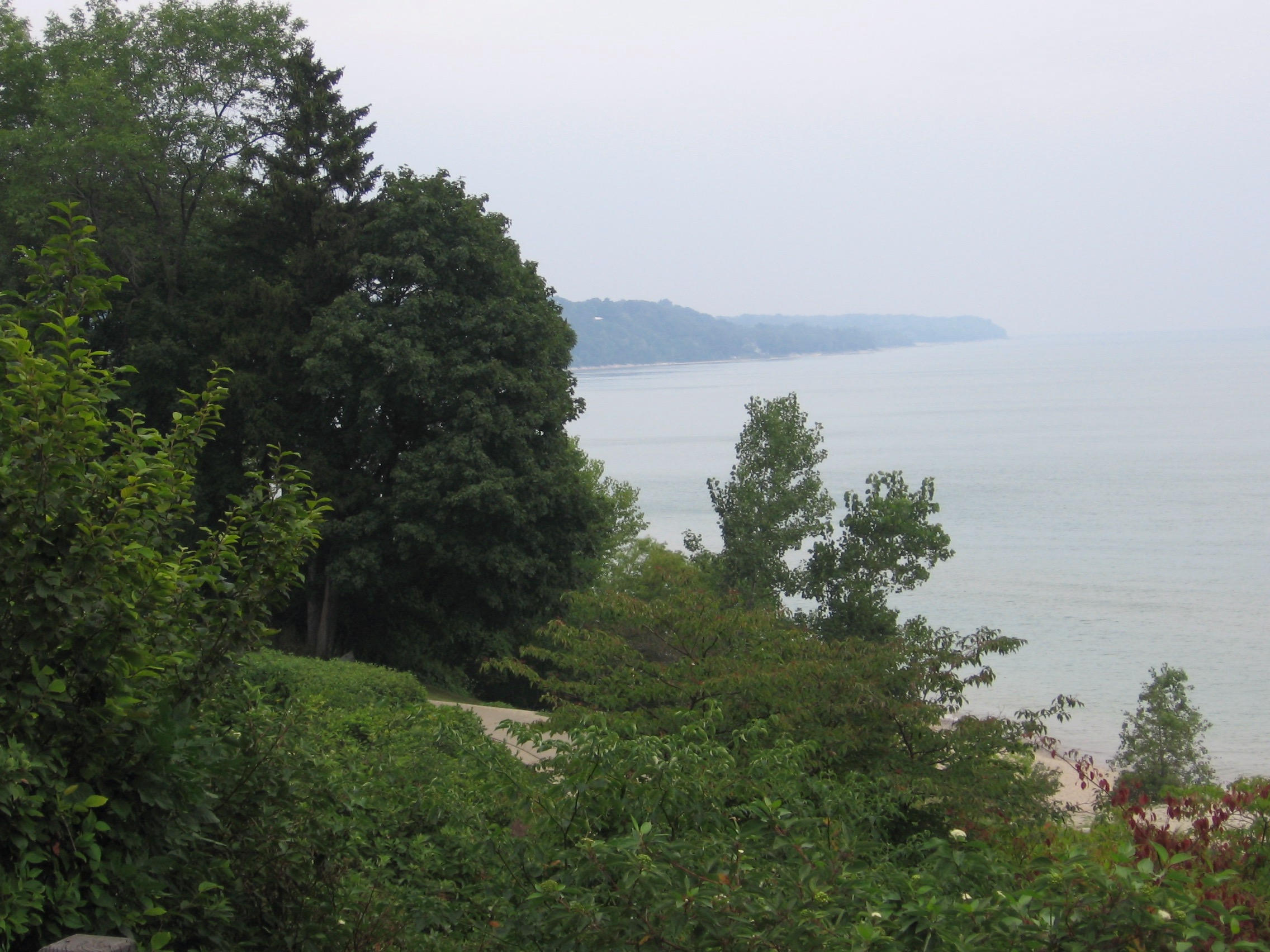
Because it’s further away from Downtown, the Lake along Grant Park tends to be less patronized than other coastal parks and beaches–it’s often an ideal spot for serenity, meditation and quiet.
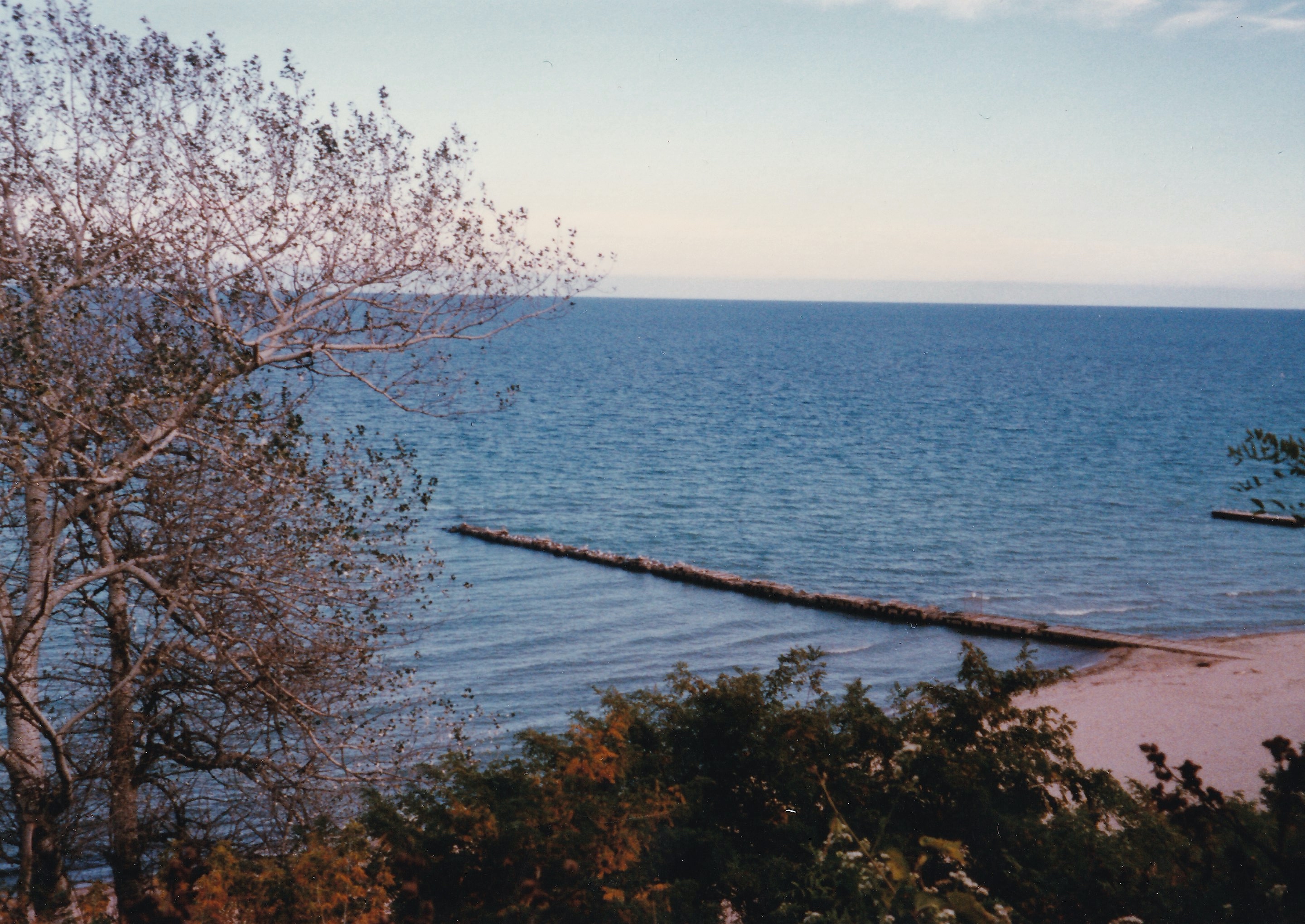
Again, the Lake just seems to go on forever. No tides coming in or out like you’d see at an ocean, just waves lapping against the shore, usually gently depending on which way the wind blows.
For over two decades, I’ve lived close enough to the Atlantic Ocean to be able to visit it whenever I wish; I’d like to think growing up so close to Lake Michigan conditioned me for that–the need for proximity to a large, seemingly endless body of water. I only make it back to Milwaukee every few years or so; no visit is complete without spending some time close to the Lake.