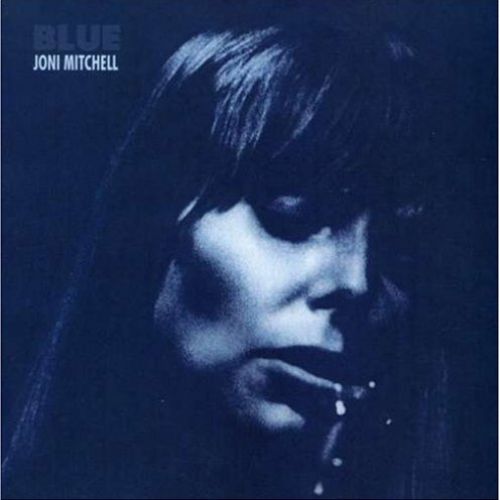
JONI MITCHELL, “BLUE”

Blue

(My 100 favorite albums in chronological order: #10 – released June 22, 1971. Originally posted on Kriofske Mix, 8/7/2014)

Track listing: All I Want / My Old Man / Little Green / Carey / Blue / California / This Flight Tonight / River / A Case Of You / The Last Time I Saw Richard

“The work of art stays the same but by staying the same it ages—and changes.” – Geoff Dyer, Zona.

In my early twenties, I moved from Milwaukee (where I was born and raised) over a thousand miles east to Boston. I arrived in my new city on a sweltering, late August Saturday afternoon. Physically ill (a bad cold) and profoundly disoriented (waking up to news of Princess Diana’s death the following morning would disorient me even more), I had what I could check or carry with me on the plane: one large suitcase, a backpack, and a garment bag. My stereo and 500+ CD collection (plus furniture and other assorted possessions) would not arrive for another three weeks; in the meantime, I had to make do with a dozen or so dubbed cassette tapes I brought along to play on my Sony Walkman.

As I slowly acclimated myself over those first few weeks, I listened to two of my cassettes repeatedly. One of them was Joni Mitchell’s BLUE (the other one we’ll get to much later in this series). I had checked it out of the library the previous year, but struggled to fully connect with it; not helping matters was that I first played it while working as a desk receptionist, as the environment didn’t allow for much close listening, which the album requires. Hearing it on headphones, however, was an entirely different experience, although that wasn’t  the only factor—my age and particular situation (moving across the country, alone, to a place where I knew no one) also account for why I took to BLUE so strongly during that period. Feeling exhilarated and somewhat terrified at what I had gotten myself into, I easily identified with Mitchell’s sparse confessionals; it rapidly became a significant part of my soundtrack as I explored Boston’s unfamiliar, seemingly devil-may-care web of streets.

What first struck me about BLUE and still startles me to this day is Mitchell’s candidness. Even without all the rumors or hearsay about whom these songs are about (exacerbated by Mitchell’s high-profile dalliances with the likes of Graham Nash, James Taylor (who plays on two tracks) and others), you immediately sense they’re personal anecdotes more than invented tales. Her tendency to write in first-person lays the foundation for this, and the attentive, sharp details she sprinkles throughout her lyrics further supports it. For all I know, she didn’t live out any of these scenarios—nice as it would be to believe, how likely is it that she actually drew a map of Canada on the back of a coaster with a guy’s face sketched on it twice, as she sings in “A Case of You”? While the reality of this and other moments relayed in BLUE more likely fall somewhere between autobiography and fiction, what matters is how well Mitchell sells such details and situations. It’s hard to imagine Dionne Warwick or even Dusty Springfield convincingly sing a lyric as open and raw and honest and self-immolating as “I’m so hard to handle, I’m selfish and I’m sad / Now I’ve gone and lost the best baby that I ever had” (from “River”). With Mitchell, however, you believe and accept every word of it.

Her conviction in part comes from her emotional connection to these songs. With her voice always front and center in the mix, she’s a storyteller but also a protagonist, a tour guide and a confidant, lending each song personality and intimacy. She’s alternately optimistic and yearning (“All I Want”), wistful and regretful (“Little Green”), lamenting and exploratory (“Blue”), editorial and celebratory (“California”), lustful and devotional (“A Case of You”)—and often subtly shifts back and forth between multiple emotional shadings. Think of the redneck she met on a Grecian isle in “California”: “he gave me back my smile,” she happily notes, before revealing, “but he kept my camera to sell,” with just a hint of sarcasm and self-deprecation, as if to say, “oh yes, I was duped, but wasn’t it fun?” On the title track, surveying her generation’s malaise, she notes, “Everybody’s saying that Hell’s the hippest way to go, well I don’t think so,” before slyly adding, “But I’m gonna take a look around it though.” With Mitchell, you start to think not everything in a three-minute pop song has to be in black-and-white. Her upfront presence and kind but cunning persona gives us something to hold onto, allowing for nuances in her lyrics to surface at both opportune and unexpected moments.

BLUE was Mitchell’s fourth album. Musically, it’s not radically different from the first three (although the albums following it would be)—on most tracks, Mitchell is only accompanied by a guitar or a piano, occasionally adding a second guitar (“California”), a brief snatch of backing vocals (“This Flight Tonight”) or percussion for rhythmic support (“All I Want”). The song with the lushest arrangement was naturally the album’s single: “Carey” frames its ebullient character sketch with a basic acoustic guitar/bass/drums palette but much of its charm comes from the sweet counterpoint backing vocals that appear in the chorus and later verses. Still, for all its simplicity, Mitchell’s early work is often challenging to get into due to the complexity of her melodies. If anything, those melodies are even more intricate here, but beginning with her previous album LADIES OF THE CANYON, Mitchell became more adept at shaping her songs. On BLUE, she’s confident in doing so to the point of remarkable fearlessness. “River” provides an entry point by quoting the melody of “Jingle Bells” but inserts it so seamlessly that it registers but doesn’t obscure the song’s primary melody. The title track seems utterly shapeless in theory, eschewing any sort of verse-chorus-verse structure, but you don’t even question how it proceeds because every piece just seems to fit together. “The Last Time I Saw Richard” has an instrumental intro that may be unconventionally lengthy, but it sets an indelible mood that resounds throughout the song’s remainder as Mitchell recalls a former lover with fondness, cynicism, and resolve.

“Former lover” is a good way to sum up how I presently feel about BLUE. I can’t help but identify it with a part of my life that now feels of another era, albeit one that lasted long after my first year in Boston. A decade ago, when I first compiled and ranked my one hundred favorite albums, I placed it at number 2; if I ranked them today, I doubt it would make the top 50. That’s not to say I no longer love it—apart from “My Old Man” (which has aged as poorly as you’d expect with that title), BLUE mostly holds up due to its timeless sound and Mitchell’s arresting, unique perspective. It arguably set a template for generations of female singer/songwriters and you can easily imagine it having as powerful an effect on a teenager or young adult hearing it for the first time today. However, I think being young and open enough is key—I discovered BLUE at a time when I was most susceptible to it. Nearly two decades on, my life has changed considerably (as most lives do). While I still appreciate BLUE, it now feels almost anticlimactic—I’ve heard to it so often, I know it by heart, and thus, it contains little left for me to unearth. It’s also somewhat disembodying—as it plays, I can’t help but remember the person I was back then and strain to reconcile him with who I am now. As did Mitchell, who promptly left this template behind, her subsequent albums a series of bold stylistic leaps that eventually led to the record of hers I now value more deeply than BLUE. But that’s a few entries away.

Up next: Popular and Genius need not be mutually exclusive terms.

“Carey”:

“The Last Time I Saw Richard”:
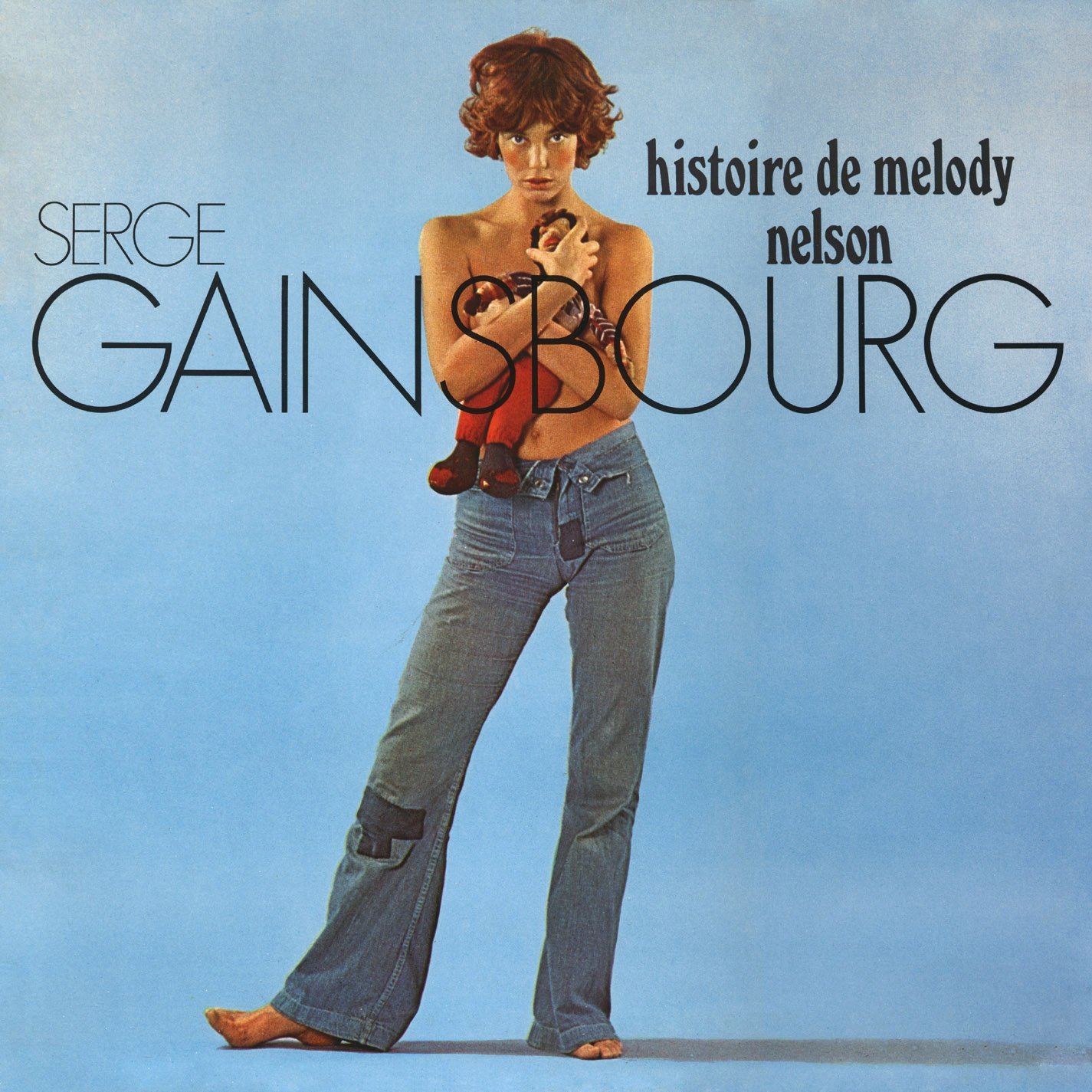
SERGE GAINSBOURG, “HISTOIRE DE MELODY NELSON”

serge

(My 100 favorite albums in chronological order: #9 – released March 24, 1971. Originally posted on Kriofske Mix, 7/30/2014)

Track listing: Melody / Ballade De Melody Nelson / Valse De Melody / Ah! Melody / L’hotel Particulier / En Melody / Cargo Culte

I do not speak any French. At this point in my life, I doubt I’ll ever learn the language. Some might argue that an album with lyrics almost entirely in French (save for a few isolated phrases) would not contain much meaning for me unless I spoke the language and understood its nuances; my teenage self would have agreed with that. However, as a young adult falling further down the rabbit hole in seeking out unfamiliar music, I gradually realized that it was mostly irrelevant if I couldn’t comprehend the words, as long as something else in the music resonated with me—a vocalist, a melody, a sensibility, an aural palette, whatever. Certainly I might get more out of what the singer’s saying if I could literally follow along, but I learned it need not deter me from altogether enjoying what feelings the music was trying to express.

I first heard of Serge Gainsbourg via COMIC STRIP, an indispensible compilation of songs from the late 1960s, the commercial peak of his career. I instantly took to this totally groovy, nudge-nudge, wink-wink, irony-laden music, from the heavy-breathing worldwide hit “Je T’aime… Moi Non Plus” to nonsense jive such as “Ford Mustang” and the Brigitte Bardot-assisted, onomatopoeic title track. Reviewing it a decade ago, I rather foolishly suggested that this single disc provided “all the Serge you’ll ever need.” Then, I read A Fistful of Gitanes, Sylvie Simmons’ slim but entertaining Gainsbourg biography and found out about this 1971 album, considered by Simmons and seemingly everyone else to be his masterpiece. I had to buy it as an import, as it was out of print in the US at the time. As I first listened to it (at home during a torrential downpour, I remember), it didn’t immediately replace COMIC STRIP as my go-to Gainsbourg. Moodier and far less frivolous than the stuff that preceded it, HISTOIRE DE MELODY NELSON didn’t provide as easy an “in” to Gainsbourg’s peculiar mystique.

As an album, however, it’s one of the most cohesive and conceptually meticulous that we’ll be discussing here. Unless one counts the medley on side two of ABBEY ROAD, this is our first concept album, and the premise is a doozy: middle-aged Frenchman (obv. a Gainsbourg stand-in) accidentally runs into (but does not hurt) a fourteen-year-old British girl on a bike with his Rolls Royce. Immediately infatuated with her, he seduces her, they fuck, and on her solo return to England her plane crashes, leaving her dead and him in mourning. Gainsbourg relates the tale in seven tracks that last a mere 28 minutes; to modern ears, this may seem too brief for a full-length album (it’s still longer than NILSSON SINGS NEWMAN) but another minute (or five or ten) would only dilute what is a rigidly structured, sustained, poetic work that feels neither slim nor bloated. Given the controversial subject matter (lusting after and having sex with a minor!), it’s doubtful Gainsbourg would’ve gotten away with much more.

Even before I recently looked up the lyrics’ English translation online, I had little difficulty getting the gist of what this album was about—while sporting a trim narrative (and sound, as we will soon see), HISTOIRE DE MELODY NELSON is strikingly expressive enough for most listeners to figure it out. “Melody” kicks off the album with a rubbery bass, percussion unfurling at a near-strut and a slightly strung-out, distorted electric guitar over a four chord vamp that goes on for over seven minutes. Gainsbourg soon appears, his lyrics spoken rather than sung in an audible whisper that’s nonetheless still on top of everything else. It all feels somewhat sleazy and also a little too sober. Then, at the three minute mark, Jean-Claude Vannier’s lush strings first appear, but they do not swallow the rest of the song up. Instead, they thrillingly surface in a series of staccato punctures, reemerging and vanishing repeatedly as the song goes loud-soft-loud-soft before finally reaching a crescendo, followed by a dramatic pause of just strings as we (and the narrator) are introduced to “Melody. Melody Nelson,” spoken in a girlish trill by Gainsbourg’s then paramour, 24-year-old British actress/singer Jane Birkin. Although a decade older, Birkin is Melody, or at least her inspiration—that’s her on the cover, topless, wearing jeans and a red wig, clutching a favorite childhood toy to obscure her breasts and the fourth-month-old baby bump who will become her and Gainsbourg’s daughter, Charlotte.

After seven minutes of detailing this meet-cute, Gainsbourg then sings Melody’s praises over a mini-suite of three short songs, each one two minutes or less. Like “Melody”, “Ballade De Melody Nelson” also begins with a prominent bassline, but then shifts into a more traditional love song, with Birkin providing the vocal hook, again intoning her alter-ego’s name. “Valse de Melody” is indeed a waltz and the album’s only instance where the strings remain a constant presence, carrying the, um, melody. “Ah! Melody” is another ballad and an all-out declaration of lust/love accented by a classy trumpet in its second verse; it also displays some trademark Gainsbourg wit and wordplay by alternating the word “Melody” to “malady” at one point. This mini-suite is the album at its brightest, gentlest and most approachable.

It doesn’t last. “L’hotel Particulier” (roughly, “The Private Mansion”) resumes the smutty funk strut of “Melody” with a vengeance: with a brooding, one-note hook repeated on bass and guitar, Gainsbourg again speaks rather than sings the lyrics, except on the final line of each verse, where he’s accompanied by strings. The song is a processional through “stairs, hallways with no end, one after another” to a room that contains a bed with rococo-carved columns. As before, the strings pierce the rhythm-section foundation, opening up the song rather than smothering it. Lone touches such as a brief, startling piano here or some organ coloring there add even more texture and tension until the song’s final thirty seconds, where the strings seem to wrap themselves around the rhythm section as Gainsbourg sighs “Mel-o-deeeee”, preparing to consummate the relationship.

The instrumental “En Melody” immediately follows at a much quicker tempo than anything before (it’s a rave-up in comparison). The track’s title and its placement on the album all but spells out that this is when the sex happens—made even more explicit midway through by snatches of Birkin screeching and giggling over the two-chord funk-rock arrangement (though rest assured, they’re not actually orgasmic cries of passion but Birkin’s visceral reactions to Gainsbourg tickling her). The song soon stops abruptly after a three-note string filigree, followed by one last iteration of its main guitar riff, then only an ominous, blowing wind. Gainsbourg’s voice returns, and he reveals Melody’s tragic plane crash.

The final song, “Cargo Culte”, is a negative-image bookend to “Melody” (and also seven minutes long). It begins with the earlier song’s exact same instruments and four chord progression, but something seems off. What was once brisk and lively is now lethargic and reeking of desperation (even though the tempo remains the same). Gainsbourg goes on and on about the so-called “Cargo Cults” of the Melanesian Islands during World War II, fantasizing that they will find the his lost love’s wreckage. Fulfilling the role the strings played in “Melody”, a chorale of ghostly voices appears about half-way through, then repeatedly vanishes and reappears, building in intensity, eventually doing what the strings could not—consume Gainsbourg’s voice and the rhythm section, finally rising and falling over death-knell drums.

Lust and love and sex and death—in less than a half-hour, we’ve covered considerable ground even if the album’s musical bookend structure makes it seem like we’ve barely walked around the block. An even more stunning achievement, however, is in how ahead-of-its-time HISTOIRE DE MELODY NELSON sounds. A flop upon initial release (even in France, it sold a mere 15,000 copies), it proved strangely influential to many artists who surfaced only after Gainsbourg’s death in 1991. You can hear it in Air’s MOON SAFARI, Beck’s “Paper Tiger”, the entirely of mid-90s trip-hop, even in Belle and Sebastian’s “Don’t Leave the Light on Baby” (those strings!). Although those discovering it for the first time might not be surprised that it dates from 1971, it’s equally plausible to think it could come from 1991, or even 2011. It stands in stark contrast to most of COMIC STRIP, which is emphatically of its time. Call it an obscure masterpiece only the cool kids (or the French) are familiar with if you want, but don’t let that deter you from diving into this compact, captivating song cycle.

Up next: The fine line between person and performer, further blurred.

“Melody”:


“L’hotel Particulier”:

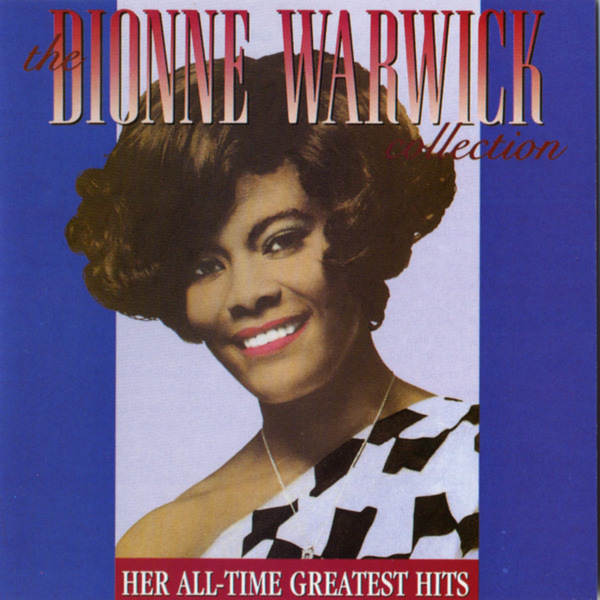
DIONNE WARWICK, “THE DIONNE WARWICK COLLECTION: HER ALL TIME GREATEST HITS”

Dionne-Warwick-The-Dionne-Warwick-Collection-Her-All-Time-Greatest-Hits

(My 100 favorite albums in chronological order: #8 – recorded 1962-70, compilation released 1989. Originally posted on Kriofske Mix, 7/22/2014.)

Track listing: Don’t Make Me Over / This Empty Place / Anyone Who Had A Heart / Walk On By / You’ll Never Get To Heaven (If You Break My Heart) / A House Is Not A Home / Reach Out For Me / Who Can I Turn To / Looking With My Eyes / Are You There (With Another Girl) / Message To Michael / Trains and Boats and Planes / I Just Don’t Know What To Do With Myself / Another Night / Alfie / The Windows Of The World / I Say A Little Prayer / Theme From Valley of the Dolls / Do You Know The Way To San Jose? / (There’s) Always Something There To Remind Me / Promises, Promises / The April Fools / I’ll Never Fall In Love Again / The Green Grass Starts To Grow

The difference between how we perceive or even venerate one popular vocalist over another from a past era often comes down to whether or not they ever made what we’d currently consider a “classic” album. Although it initially sold poorly, DUSTY IN MEMPHIS now regularly appears on “Best Albums of All Time” lists (including this one); it’s also an entry point into an artist’s catalog for modern audiences, a talisman that practically screams, “See, this is why Dusty Springfield was great—she recorded a complete, unified work that endures decades later.”

Unlike Springfield, her contemporary Dionne Warwick never released a critical establishment approved, “classic” album. The very few studio albums of hers I’ve heard tend to follow this not-uncommon-for-the-time formula: hits + covers of other people’s hits + filler. She is, in other words, a consummate singles artist, albeit one who became a star when most pop singers focused on singles rather than albums. Take a peek at her discography and you’ll find literally scores of compilations from various career phases (at age 73, she’s still recording). However, the best one on the market remains this collection, released by the awesome archival label Rhino Records twenty-five years ago. It’s twenty-four tracks in chronological order that cover her earliest, most hit-filled and creatively fertile period (1962-70), with all but two of them written by composer Burt Bacharach and lyricist Hal David.

Although I was born a few years after 1970, this music was everywhere in my childhood. We had no Warwick records at home (oddly enough, my parents owned multiple Bacharach solo albums), so I must have heard these songs mostly in the car (on the adult contemporary radio stations my parents tuned into) but also in restaurants, at the barber’s, perhaps even in Muzak versions at shops and other public places. Some of the music we absorb as children inevitably fades from consciousness as we mature and take a more proactive role in what we listen to, in how we define and develop our taste. At age 21, something moved me to check this CD out of the library—I no longer remember what, exactly. For a few years, I had been making weekly pilgrimages to at least a half-dozen libraries (and just as many used record stores) in short because I wanted to hear nearly everything available in hopes of finding a new favorite that would lead to another and another, Ad infinitum. Maybe I saw the artist’s name and recalled her presence in my youth, or perhaps I recognized her influence on another compilation I was obsessed with at the time (to be written about here much later). Whatever the motivation, that summer I nearly wore out my dubbed cassette of this album. As with ABBEY ROAD a few years previously, it sounded like little else on my CD shelves and falling for it felt like walking through another door, one leading into a room that broke down my own perception of what’s hip or culturally acceptable (for a 21-year-old in the mid-90s, anyway).

Often dismissed as “easy listening” (“pop vocal” is a more accurate, less negative catch-all term), Warwick’s songs are remnants of a past time. With exception of deliberate homages, no one makes music that sounds like this anymore; it wouldn’t surprise me to see any of these tracks pop up on an episode of MAD MEN, which covers roughly the same period. To me, they are the 1960s, or at least a very specific version of them—say, classier and more adult than Woodstock, as romantic as The Summer of Love but tinged by sadness. By the time I first heard this compilation, these sounds were undergoing an ironic revival in the guise of lounge music, although that doesn’t quite get at the core of what these songs represent. In any case, Warwick is a difficult artist to categorize: she’s not strictly soul or r&b, and she never was funk, jazz or rock and roll. She grew up singing gospel and although her delivery bears that influence at times, very rarely does she approach the genre’s intensity. She’s occasionally impassioned when the material calls for it, but as a rule, she underplays, almost effortlessly making sure you hear every single note (and subtle variation) of the melody. More than anything, she emanates sophistication and eventually, a maturity you heard from no other female pop singer at the time—not Diana Ross and The Supremes, not even Aretha Franklin.

Warwick’s clarion tone naturally lent itself to the Great American Songbook a la Ella Fitzgerald (and this guy), but she took an alternate route by hooking up with Bacharach and David. The songwriting duo had met five years before, scoring hits for artists like Perry Como, Gene Pitney and The Shirelles. As with most Brill Building denizens, David’s lyrics applied the craft and erudition of a Broadway musical number to a three-minute pop song, while Bacharach’s arrangements and melodies were often more ambitious and intricate than that of the average top 40 hit. I could spend paragraphs technically examining how and why Warwick was the ideal vocalist for Bacharach and David’s compositions; a more constructive use of your time would be to simply listen to “Don’t Make Me Over”, their first song together. The opening orchestration, waltz tempo and choral background could be from any other 1962 hit single, but once Warwick enters the picture, singing the song’s title, everything clicks: her vibrant yet nuanced vocal, Bacharach’s suitably dramatic but tight, balanced arrangement and David’s direct, poised, proto-feminist lyrics (“respect me for what I am / respect me for the things that I do”, predating even Lesley Gore’s “You Don’t Own Me”).

However, compared to everything else here, “Don’t Make Me Over” feels like the pop-song equivalent to a television series’ pilot episode. The single’s less popular follow-up, “This Empty Place” is sleeker by a considerable margin, with Warwick coming into her own by way of her nimble, seductive phrasing on the chorus. From there, the songs quickly grow in complexity and imagination. Decidedly non-rock instruments such as a staccato trumpet (the early masterpiece “Walk On By”) or a breezy accordion (“You’ll Never Get To Heaven (If You Break My Heart”)) respectively provide hooks and texture, while Latin-derived rhythms (especially Brazilian bossa nova) gain in prominence. By the time the comp reaches 1966, it’s as if Warwick, Bacharach and David have forged a new pop subgenre—call it international jet-set cool where only the most luxurious musical backdrops rule. “Are You There (With Another Girl)” illustrates how far they had progressed in four years. Over a crisp opening that solely utilizes electric guitar, piano and drums in lieu of the usual full orchestra, Warwick sings the song’s elaborate melody loud and clear. The full orchestra then appears, quietly in the second verse, shifting to a full-blast fanfare after the second chorus. By the final chorus, both Warwick’s tone and the music have intertwined, reaching a joint crescendo, only to gracefully back down for the coda, where the orchestra drops out and we’re left with swinging percussion, spry piano licks and a female chorus taking us home, the latter repeating gorgeous nonsense lyrics (‘bum-ba-da-de-ba-da-girrrlll”).

As the decade wears on, what keeps Bacharach from sliding into Mantovani territory is his tendency to experiment and challenge himself. His arrangements become more complex, the time signatures get even trickier and the mood overall far more melancholy and wistful. Occasionally this connects with an audience (top ten hit “Do You Know The Way To San Jose”, tartly buoyed by its every last “whoa, whoa, whoa”) but more often results in something skirting the singles chart’s lower reaches. “The Windows of The World” wraps a variety of carefully employed foreign instruments around a melodically strange but soothing chord progression (it peaked at # 32 on Billboard’s Hot 100), while the peppier but still-hard-to-dance-to “Another Night” missed the top 40 altogether. In 1969, Bacharach and David went so far as to compose songs for a new Broadway musical, PROMISES, PROMISES, an indication of both their ambition and stature. Warwick scored hits covering two of its songs: the title track and “I’ll Never Fall In Love Again”; the latter contained the sort of sly lyrical twist (the “So for at least, until tomorrow” that precedes the song’s title in its last verse) only David would think of and arguably only Warwick could sell.

While this collection more than effectively summarizes Warwick’s career to this point and illustrates her artistic growth, like most compilations, it’s not perfect. Of its two non-Bacharach/David songs, one can comprehend the inclusion of Andre and Dory Previn’s “Theme From Valley of the Dolls” because it’s a classic and her highest charting single of the period. Anthony Newley’s and Leslie Bricusse’s “Who Can I Turn To”, on the other hand, pales in comparison with everything else; it should have been replaced with “This Girl’s In Love With You”, a curiously absent top-ten hit. In fact, this anthology could’ve easily been a double CD as it misses out on a few great minor hits such as the oddly rollicking “You Can Have Him”, the deliciously satirical “Paper Mache”, and even bona fide standard “The Look of Love”. In 1992, Rhino released HIDDEN GEMS, a follow-up disc collecting many of these odds and ends (though not the glorious single “Odds and Ends”, alas). Since compilations are prone to artifices and imperfections that studio albums simply aren’t, we’ll see less of the former on this list. Sometimes, however, a compilation will just have to do, and for all its (relatively minor) flaws, this one contains an abundance of riches.

Next: A Dirty Old Man (at age 42!)

“Are You There (With Another Girl)”:


“Do You Know The Way To San Jose”:

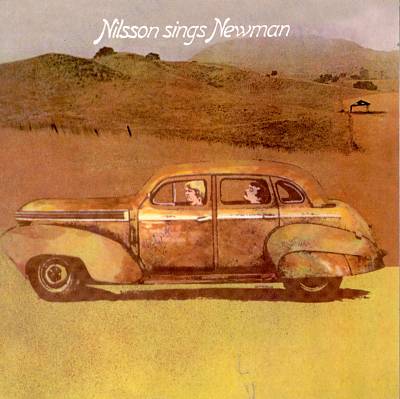
HARRY NILSSON, “NILSSON SINGS NEWMAN”

nilsson sings newman

(My 100 favorite albums in chronological order: #7 – released February 1970. Originally posted on Kriofske Mix, 7/7/2014)

Track listing: Vine Street / Love Story (You and Me) / Yellow Man / Caroline / Cowboy / The Beehive State / I’ll Be Home / Living Without You / Dayton Ohio 1903 / So Long Dad

Harry Nilsson, cult artist? How can you say that about a guy whose music was practically omnipresent for a few years? He had huge hits with “Everybody’s Talkin’” and “Without You” (the latter a #1 single in the US and the UK), conceived the story and soundtrack to a well-received animated TV special (THE POINT!) and even recorded a sitcom theme song (“Best Friend”, from THE COURTSHIP OF EDDIE’S FATHER). Yet today, the culture at large tends to forget him. Blame his sharp decline in record sales from 1974-on, or his self-imposed exile from the music industry after 1980, or even his death by heart attack in 1994 at age 52.

However, Nilsson’s beloved reputation as a musician among his peers never diminished. Just one year after his death, an impressive array of artists (from Aimee Mann to Ringo Starr) recorded a tribute album of his songs (which was my personal introduction to them). Recently, both a documentary and a biography of the man have further buoyed his status and visibility, but the music itself is all one needs to understand why he was great. Each of his first eight albums, from PANDEMONIUM SHADOW SHOW (1967) to SON OF SCHMILSSON (1972) is worth hearing; even after alcoholism ravaged his voice and fame dulled his quality-control button, his later albums had the occasional hidden gem, all the way up to the music he wrote for Robert Altman’s POPEYE in 1980.

Still, the record of his I return to most often is this one, and it’s an anomaly in his catalog. Although Nilsson was as much of a songwriter as a singer (his career began further slanted towards the former, providing material for pop groups like The Monkees and The Turtles), he’s also observed by many primarily as an interpreter of other people’s work—a label heightened by the fact that “Everybody’s Talkin’” was written by Fred Neil and “Without You” was a cover of a Badfinger song. NILSSON SINGS NEWMAN furthers this perception in that it’s simply what the title says it is: Nilsson singing ten songs penned by Randy Newman, who also accompanies him on piano.

The record’s sound is a far more significant departure than its content. Nilsson’s first effort without producer Rick Jarrard, it has none of his previous work’s baroque, chamber pop arrangements. Instead, Nilsson and Newman eke out the most they can from a basic piano-and-voice template, occasionally adding in another lone element like a shimmering vibraphone (“Caroline”), a soulful church organ (“I’ll Be Home”) or even an eerie, continuously howling wind (“Cowboy”). Nilsson’s vocals, however, are the album’s defining element. He supposedly spent weeks overdubbing his voice, recording as many as over 100 tracks for a single song. Fortunately, the results sound neither belabored nor arch but rather seamless. Nilsson’s vocal pyrotechnics rarely call as much attention to themselves as, say, Freddie Mercury’s or Mariah Carey’s (who had her own hit cover of “Without You”); rather, they appear organically, working with the arrangement. For instance, the first dozen times I heard “I’ll Be Home”, I automatically took Nilsson’s thunderous growl of “Oh, yes he will!”, sung once in response to the song’s title, to be an interjection from a Mahalia Jackson-type gospel singer and not Nilsson himself.

At that time, Randy Newman was also a recording artist—half the selections here appeared in Newman-sung versions on his eponymous debut album two years before (Nilsson previously covered Newman’s “Simon Smith and The Amazing Dancing Bear” on his own 1969 effort, HARRY). Newman’s homely croak of a voice made up in personality and self-awareness what it lacked in proficiency and range; given their similarities (an affection for musical theatre and tin pan alley standards balanced by a proclivity towards satirical humor), it’s not unexpected that Newman would eagerly encourage someone with a voice as agile and accomplished as Nilsson’s to interpret his songs. Compare each of their versions of “Yellow Man” (Newman’s appeared on his second album, 12 SONGS, later that year), and you’ll find merit in both. Newman’s emphasizes the song’s irony via a New Orleans trad-jazz backing, his own nearly sardonic vocal and the forcefulness with which the tune’s stereotypically oriental melody appears at the beginning and end (the latter even accompanied by a resounding gong!). Nilsson’s, on the other hand, plays it much, much straighter, sticking just with piano and voice. While Nilsson doesn’t obscure the irony, he doesn’t highlight it either, instead lending to it a wistfulness that brings out ambiguities not discernible in Newman’s version. Both versions of “Yellow Man” are essential, but to divergent ends.

As a whole, NILSSON SINGS NEWMAN is a sweeter, more mellifluous reading of Newman’s sometimes spiky songcraft, but it is also a unique, occasionally eccentric work in its own right. Opener “Vine Street” begins with forty-five seconds of another, unaccredited Newman song called “Anita” that stands in stark contrast to the rest of the album. A full-throttle rocker with electric guitar and pounding piano, it misdirects listeners into thinking what kind of album they’re going to get. Then, without explanation, it suddenly ceases and piano-and-voice ballad “Vine Street” takes over, with Nilsson’s elastic overdubs on the chorus covering a multi-octave range not even a full barbershop quartet could hope to attain. After a few tracks with relatively straightforward arrangements, “Cowboy” breaks the flow by requiring Nilsson to solely provide the song’s melody as he sings over a blowing wind that could have come from the end of THE LAST PICTURE SHOW (even if it predates the film by a year). Newman’s piano eventually makes its entrance, isolated chord by chord as Nilsson nearly wails the chorus. The song concludes with an in-joke: an overdubbed electric harpsichord playing the closing theme from MIDNIGHT COWBOY, the film that opened with his version of “Everybody’s Talkin’”. Likewise, stray snippets of studio chatter pop up in the final two tracks, seemingly for no reason other to reinforce that this is a recording—warts, mistakes and all.

So, why NILSSON SINGS NEWMAN instead of 12 SONGS, itself a pretty solid album? Nilsson obviously has a “better” voice than Newman, but that’s not his only advantage. What really made Nilsson so great was that, when he sang, he exuded a personality as emphatic and approachable as his voice was strong. Much like Ella Fitzgerald, his vocal jazz equivalent, he’s both an ideal storyteller and medium, able to make any material his own while still remaining true to the song and its author’s intentions. With Newman’s character sketches, he effortlessly makes us laugh (the gentle wordplay in “Love Story (You and Me)”), cry (the convincingly pleading “Living Without You”) and everything in between. For me, the album hits an emotional peak two-thirds of the way through with the simple, gloriously reverential “I’ll Be Home”, and concludes on a lovely grace note with the understatedly jaunty “So Long Dad”, but even other tracks, like the enigmatic “The Beehive State” or the plainspoken “Dayton Ohio 1903” could conceivably be another person’s favorites. Everything here really is of a piece. And even though the whole album’s over in less than 26 minutes, you don’t feel cheated; you leave feeling satiated from its concentrated, burnished glow.

Next: our first greatest hits compilation.

I’ll Be Home:


Cowboy:

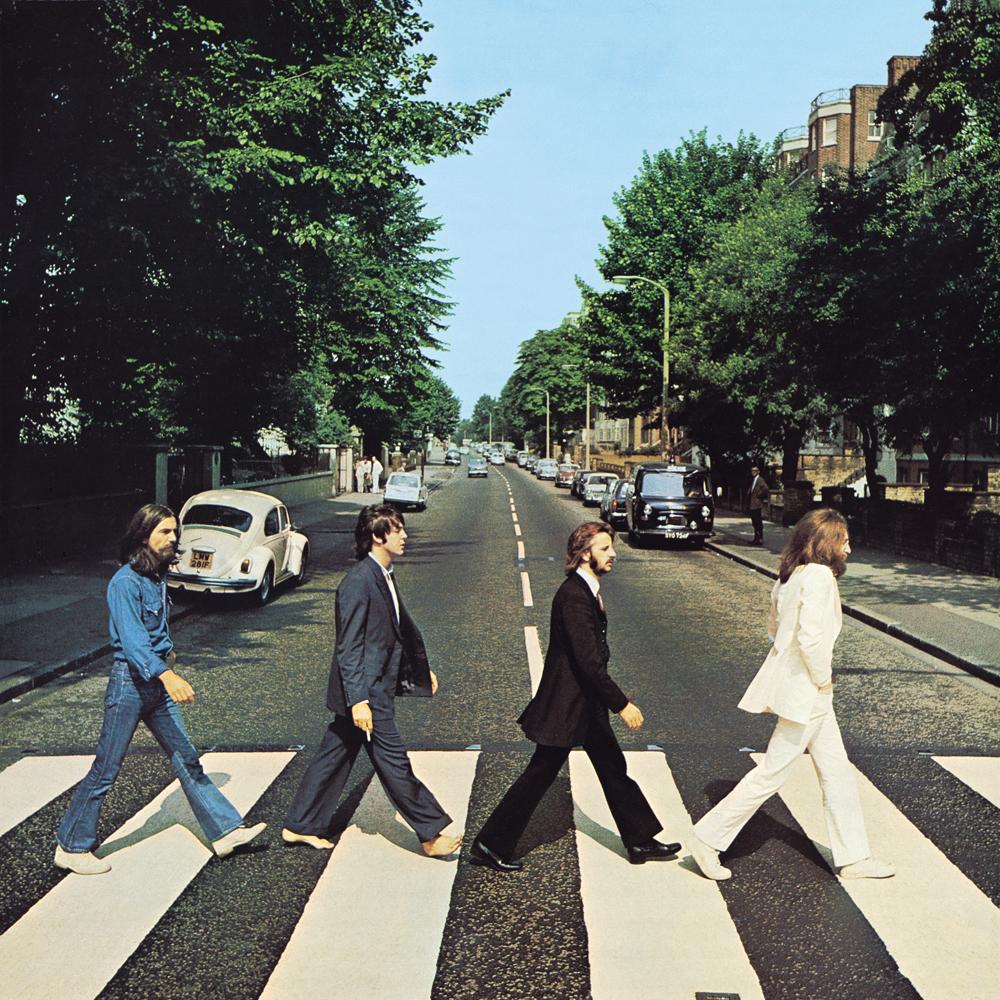
THE BEATLES, “ABBEY ROAD”

abbey

(My 100 favorite albums in chronological order: #6 – released September 26, 1969. Originally posted on Kriofske Mix, 6/30/2014)

Track listing: Come Together / Something / Maxwell’s Silver Hammer / Oh! Darling / Octopus’s Garden / I Want You (She’s So Heavy) / Here Comes The Sun / Because / You Never Give Me Your Money / Sun King / Mean Mr. Mustard / Polythene Pam / She Came In Through The Bathroom Window / Golden Slumbers / Carry That Weight / The End / Her Majesty

I often think about an August afternoon when I was 17, sitting in the back of a friend’s parked car. “Come Together” comes on the classic rock station—I haven’t heard it in many years. Anyway, I discover I’ve never really heard it before, or at least never thought of it as much more than an oldie from before my time. At that moment, as the hazy, late summer sun beams through the car’s windows, I’m utterly transfixed by this beguilingly swampy music: the percussive shuffle played in conjunction with its six-note bass riff, John Lennon’s nonsensical lyrics about “toejam football” and “walrus gumbo”, the song’s overall push and pull between mystery and lack of guile. It immediately feels richer and far more complex than any contemporary music I was into at the time.

Three months later, while browsing through the CD racks at one of many neighborhood libraries I began frequenting after obtaining my driver’s license earlier that year, I spot a copy of ABBEY ROAD. Perusing the track listing on the back, I see “Come Together” on it, along with “Here Comes The Sun”, a Beatles song I heard far more often in my youth. Not familiar with any of the other tracks (“Maxwell’s Silver Hammer”?, “Mean Mr. Mustard”?), I nonetheless check it out and listen to it in my bedroom at home, looking forward to hearing “Come Together” again, not really expecting much else from the album.

I could try relating what it must have been like to encounter ABBEY ROAD for the first time, but that was over twenty years ago and I don’t even remember if I loved it or entirely understood it on that first go around. But it must have left some sort of impression, because I returned to it again and again until I knew it by heart. Gradually, it influenced my musical taste with intensity unmatched by anything else I had previously heard. Without ABBEY ROAD, I would not have devoured the entire Beatles catalogue over the course of my senior year of high school; nor would I have begun listening to classic rock radio, in turn discovering (and, via many artists, rediscovering) a compact but rich history of popular music I had previously ignored, simply because it was from the past.

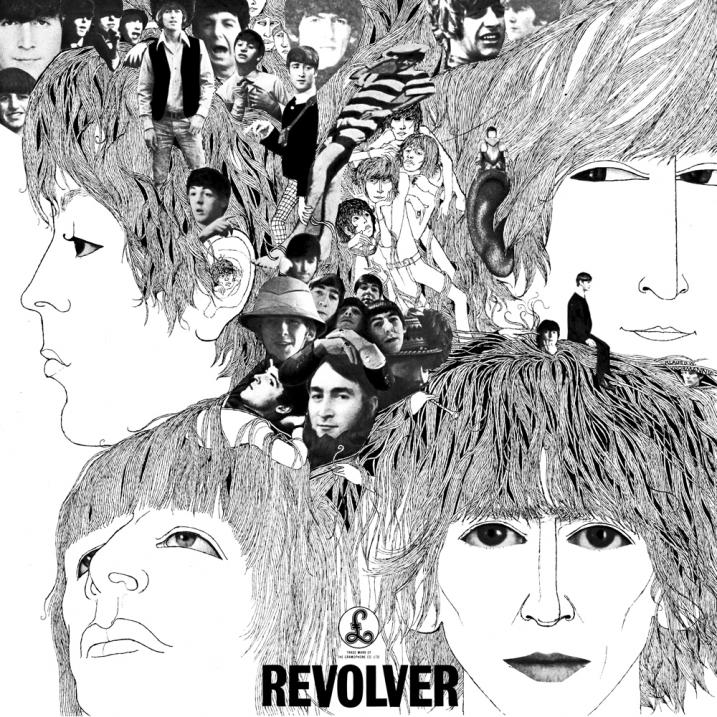
For all of its personal significance, and general accomplishments and innovation, what seems most astonishing about ABBEY ROAD now is that it even exists. In the three years since REVOLVER, the Beatles cemented their status as the decade’s most iconic musicians (SGT. PEPPER’S LONELY HEARTS CLUB BAND), and then slowly began to unravel (THE BEATLES, aka The “White” Album” often comes across more as the work of four separate artists than a real band). Following aborted sessions in early 1969 that eventually became the basis for the album and documentary film LET IT BE, one had no reason to expect anything close to a masterpiece from them. Fortunately, we have the persistent Paul McCartney to thank. The legend is that he approached the band’s longtime producer George Martin (who was not part of the LET IT BE sessions), suggesting that the group make an album “the way we use to do it”, i.e. with Martin in control.

Certainly, ABBEY ROAD is the band’s most lush and elaborate production since SGT. PEPPER’S and it arguably even exceeds that studio marvel in concept and sophistication. However, as much as McCartney and Martin tried to recreate past methods, The Beatles simply weren’t the same band they were on REVOLVER, or more accurately, its four members weren’t the same men who conquered the world five years before. When they broke up months after ABBEY ROAD was released, you sensed it was because they had outgrown each other (Robert Christgau was more blunt on the subject: “they couldn’t stand each other anymore.”). Thus, the album’s first half plays like a more focused side off The White Album, almost resembling a nesting doll in that it begins and ends with a John Lennon song, sticks two Paul songs in the middle, and places one song each by George Harrison and Ringo Starr on either side between the John and Paul songs.

John’s “Come Together” is the first track, as powerful and iconic as any of the band’s album openers. It also preceded the album as its single, albeit as part of a double A-side with the song that follows it on the album, George’s “Something”. In the US, where double singles charted in separate positions in Billboard at the time, “Come Together” reached number one, while “Something” peaked at number three. In the UK, where double singles charted as one entity, “Something” was listed ahead of “Come Together”, the first (and last time) a George song achieved this status. Indeed, “Something” is one of his greatest compositions, a swaying ballad whose melody and yearning guitar effortlessly float over one of Paul’s most expressive basslines. Soft and sensual without feeling sappy or sugary, “Something” has become more of a standard than “Come Together”, covered by everyone from Frank Sinatra to Joe Cocker (of course, I had heard it before, but without any idea of who sung it or what it was called).

Paul’s two subsequent songs seem as dissimilar as two tracks could be, until they don’t. Initially, “Maxwell’s Silver Hammer” feels like the most stubbornly silly, flimsiest thing he ever wrote as a Beatle, while “Oh! Darling” is in contention for his hardest rocking, most over the top vocal performance outside of “Helter Skelter”. But then, over time, you notice the former’s perverse, unnerving subject matter, its cheery, upbeat surface repeatedly undermined by disquieting synthesizer flourishes (the instrument then-new and entirely foreign-sounding). On the latter song, Paul is at once so soulfully passionate and at an emotional extreme that verges on self-parody that you don’t know whether he’s being heartfelt, satirical, or both.

“Octopus’s Garden”, the token Ringo songs that follows, is often dismissed as an inferior sequel to “Yellow Submarine”; perhaps I’m just sick of the latter’s ubiquity, but I actually prefer the former to it—I always thought it was an ideal showcase for Ringo’s slightly flat, homely charm, exuding sincerity and wonder that could not have come from John (too cynical) or Paul (too whimsical) at that point. George’s guitar work also lends the song an irresistible brightness—a direct contrast to John’s gloomy sinister epic, “I Want You (She’s So Heavy)” which closes side one. The song literally vacillates between two sections delineated by the title: “I Want You”, a near-lithe, mid-tempo rock number that’s a palette cleanser after Paul and Ringo’s lighter pursuits, and “She’s So Heavy”, a slower, droning dirge in ¾ time with no lyrics apart from the title. It concludes with this latter section as an extended instrumental coda, repeated at least a dozen times, a white noise machine slowly becoming more prominent (yes, with this and “Helter Skelter” the Beatles kind of invented heavy metal), until, seconds away from the eight-minute mark, everything abruptly stops.

If side two of ABBEY ROAD was exactly like the first, I wouldn’t be writing about it here. Not to diminish those six songs in any way, but they simply make up a solid album side. Comparatively, the album’s second half, in my opinion is the most impressive sequence of songs the band ever devised and sequence is the key word here. As we’ve seen on all of the preceding five albums I’ve written about in this project, a big part of their appeal is in how they’re structured—not just the consistency and quality of the songs, but how one song fits next to another and how they often resonate both individually and collectively when heard in a particular order. Attention paid to sequencing is obviously a fundamental part of what makes an album great. On ABBEY ROAD’S second side, compositions that alternately feel complete and half-finished are strung together to form a medley of sorts. As the last side of the Beatle’s last recorded album, it now registers as a farewell, a summation of all of their individual strengths that also collectively pushes them to a place perhaps not as sonically reaching as “ A Day In The Life”, but certainly one exceeding it in emotion and spirit.

It begins with George’s “Here Comes The Sun”, as excellent a song and as much of a standard as “Something”. Hearing it immediately follow “I Want You (She’s So Heavy)” on the CD, the contrast between the two tracks could not be more pronounced: whereas John’s feels like an inexorable trudge towards death, George’s evokes a sense of rebirth. He sings, “I feel that ice is slowly melting” over an ebullient, up-tempo backdrop where the synths emit as much warmth as the acoustic guitars. If it’s an ideal side-opener, then John’s “Because” makes for a perfect, minor key segue. Over a melody that’s purportedly inspired by Beethoven’s “Moonlight Sonata” played backwards, the tripled-tracked, three-part harmonies by John, Paul and George are among the most complex and gorgeous vocals the band ever recorded.

The mournful, opening piano chords of Paul’s “You Never Give Me Your Money” follow and side two’s ambition begins to reveal itself. Much like “Band On The Run”, that later solo hit of Paul’s, this song has three distinct sections: the first resembles a chorus, featuring the song’s title sung over those piano chords, the second increases the tempo and comes off more like a verse, and the third elevates the momentum to the point of rocking out, concluding with a guitar riff entirely different from the opening melody. Examined closely, you can spot the vestiges of three separate unfinished songs, but when you hear it as a whole, it doesn’t matter because everything seems to fit together: a testament to Paul’s songwriting prowess, George Martin’s expertise as an arranger, or simply luck?

The next few songs suggest a combination of all three possibilities. As that final riff of “You Never Give Me Your Money” repeats and fades into the ether, a beautifully slow, quiet, meditative instrumental emerges. Carried along by a twangy guitar riff, “Sun King” allows listeners to catch their breath after the previous song’s multiple changes. Following a sudden, wordless, heavenly wash of harmonies at 0:52, the lyrics finally appear: “Here comes the sun king,” an obvious callback to side two’s first song. After the lyrics blissfully dissolve into gibberish and the guitar riff plays a final time, the drums pick up and “Mean Mr. Mustard” begins. One of John’s playfully grotesque character sketches, its second verse introduces the title character’s sister Pam. Not long after that, a booming, Pete Townshend-like power chord provides an intro into the next song, “Polythene Pam”, which amps up the tempo (and John’s clever wordplay) even further. It also has another callback—not to another song on ABBEY ROAD, but to an earlier one in the band’s career with its knowing “yeah, yeah, yeah” chorus. An instrumental coda then barrels towards a sonic crash (preceded by Paul warning us, “oh, look out!”), seamlessly leading into “She Came In Through The Bathroom”, a shuffling, mid-tempo rocker featuring one of Paul’s most agile and indelible melodies.

At this point, you can’t help but step back and marvel at all the ground ABBEY ROAD has covered over the past five songs. Then, a moment of silence appears–remarkably dramatic because it’s the first one in ten minutes and 45 seconds, since the end of “Because”. “Golden Slumbers” breaks that silence with plaintive piano and one of Paul’s loveliest melodies and vocal performances—more passionate than that of “Oh! Darling”, certainly more profound than that of “Maxwell’s Silver Hammer” and emotionally nearly overwhelming as the orchestration adds majesty and purpose. Just before you expect the chorus to return after the second verse, it seamlessly segues into the next song’s chorus, “Carry That Weight”. And then, in perhaps the album’s most resonant callback, the opening melody from “You Never Give Me Your Money” returns as an orchestral fanfare. Paul incorporates another verse of that song into this one, only the lyrics have changed (“You never give me your pillow…”). Then, the “Carry That Weight” chorus returns, before the song concludes with the melodic riff from the ending of “You Never Give Me Your Money” as another orchestral fanfare. I’m certain the first time I recognized this connection, my head was spinning—it’s also likely the moment when I truly fell in love with the album.

The only way the Beatles could possibly top or extend all of this would be to go out with a bang. After that second callback to “You Never Give Me Your Money”, the tempo shifts again, and “The End” kicks off with Paul singing, “Oh yeah! All right! Are you gonna be in my dreams tonight?,” before giving way to a simple but effective drum solo—significant in itself because Ringo rarely did drum solos. With a few final propulsive beats, it leads into an extended vamp recalling the joyous, primal rock and roll of the band’s first few albums. John, Paul and George all participate in a three-way guitar solo, taking turns every two measures, each of their styles immediately recognizable and distinct. Then, the drums cease, a lone piano appears, and over a few guitar filigrees and a return of the orchestra, Paul sings the simplest yet most profound lyric he ever wrote: “And, in the end / the love you take / is equal to the love / you make.” One couldn’t ask for a better finale to a song, an album or a career—particularly from the most popular band of its time.

The Beatles being The Beatles (or perhaps Paul just being silly), ABBEY ROAD actually doesn’t end with “The End”. Eighteen seconds after that final, resounding orchestral flourish, another song literally crashes in. “Her Majesty” lasts less than a half-minute and sounds like something Paul came up with on the spot. After that first chord (actually the real ending to “Mean Mr. Mustard”), over a lone acoustic guitar, Paul sings the type of ephemeral little ditty you’d expect from a street busker or music hall comedian. The album equivalent of a brief bonus scene appearing after the long credits roll of a feature film, it doesn’t diminish its grandeur, but it does bring The Beatles down to earth a little. Although nearly a half-century later we continue to perceive them as pop music gods, the band’s brilliance and lasting imprint on pop culture was due as much to our ability to relate to them as it was to their vast musical innovation. From “Love Me Do” to “Her Majesty”, they rewrote the script as to how pop stars could behave and create. The most tragic thing about their breakup is that none of them individually could accomplish anything on the scale of what they were capable of collectively. No John, Paul, George or Ringo solo albums will appear in this project, because none are half as great as ABBEY ROAD (or REVOLVER… or SGT. PEPPER’S… or A HARD DAY’S NIGHT etc;). Perhaps tragic is too strong a word—every time I hear ABBEY ROAD, I still wonder how anyone could possibly top it, or why anyone would want to.

Next: two men—one singer, one songwriter.

The ABBEY ROAD medley:


“Come Together”:

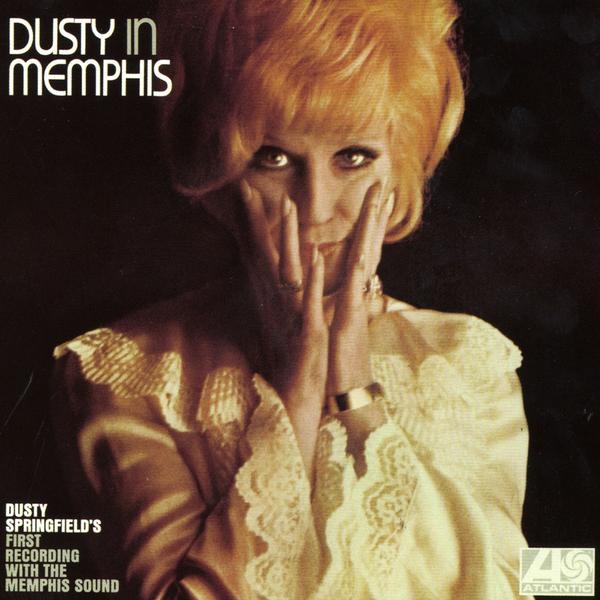
DUSTY SPRINGFIELD, “DUSTY IN MEMPHIS”

dusty in memphis

(My 100 favorite albums in chronological order: #5 – released March 31, 1969. Originally posted on Kriofske Mix, 6/22/2014)

Track listing: Just A Little Lovin’ / So Much Love / Son Of A Preacher Man / I Don’t Want To Hear It Anymore / Don’t Forget About Me / Breakfast In Bed / Just One Smile / The Windmills of Your Mind / In The Land of Make Believe / No Easy Way Down / I Can’t Make It Alone / What Do You Do When Love Dies* / Willie & Laura Mae Jones* / That Old Sweet Roll (Hi-De-Ho)*

*The last three tracks weren’t on the original album, but they appear on every CD reissue I’ve seen. Since I first heard the album on CD, I’ve included them here.

Imagine a chilly, dreary Monday morning. You might be lounging on your living room couch, waiting for the coffee to brew, or stuck in traffic in your car or on a packed-to-the-gills bus, or even sitting at your desk, faced with an inbox full of unread mail. Wherever you are, no matter how you listen to your music (CD player, ear buds, iTunes or Spotify on your computer), you dial up DUSTY IN MEMPHIS and its opening song, “Just A Little Lovin’”. Its first ten seconds of lush, orchestral fanfare gives away to Dusty Springfield’s husky, delicate vocal—she sounds, as always, impossibly beautiful yet fully approachable, beaming with strength and reassurance (but not the kind that’s easily earned). All the grey and dourness surrounding you just fades away as she sings, “In this world / it wouldn’t be half as bad / it wouldn’t be half as sad / if each and everybody in it ha-aad / (dramatic pause) Just a little lovin’.” The song, like its parent album, is pop music at its most transformative, born out of a serendipitous confluence of vocalist, musicians and material.

At the time, Springfield was a 29-year-old London-born singer who had first achieved success six years before with a string of hit singles spanning the perky pop of “I Only Want to Be With You” to her English-language rendition of an Italian torch song, “You Don’t Have To Say You Love Me”. Although often categorized as the era’s premier practitioner of “blue-eyed soul” (to be blunt, white people performing black music), you sensed she could sing anything, putting her own stamp on whatever she attempted. For that, American audiences embraced her more wholeheartedly than initial English contemporaries like Cilla Black and Sandie Shaw. Springfield’s love of and ability to more-than-credibly perform such American music as Phil Spector, Stax/Volt and Motown led her in 1968 to sign with Atlantic Records and work on an album at the American Sound Studios in Memphis, Tennessee. The sessions were produced by Jerry Wexler and Tom Dowd (who had both recently worked with Aretha Franklin) and were backed instrumentally by the Memphis Cats, session musicians who had also played on recordings by Wilson Pickett and Memphis’ favorite son, Elvis Presley.

So, Dusty went to Memphis and made her most famous, enduring album, right? What actually happened is a little more complicated. An all-out perfectionist, Springfield was reportedly unhappy with a majority of her vocal takes in Memphis, to the point where what’s heard of her on the final album was actually recorded later in New York, where she sang along to the Memphis-produced rhythm tracks. For an album called DUSTY IN MEMPHIS, this revelation’s nearly up there with finding out Santa Claus doesn’t exist, yet one mustn’t let this color one’s own perception of the final product. Springfield’s aesthetic, after all, was as committed to authenticity as it was to artifice: she could sing rings around any other pop star (‘cept for Aretha, arguably) and would often do so while wearing a dyed-blonde bouffant hairdo and over-the-top makeup and dress that would inspire many a drag performer. Once “Just A Little Lovin’” fills the air you simply don’t care where it was recorded because it sounds so sweet, so right, so complete—you wouldn’t change a single thing about it.

As with most other singers of her era, Springfield was not a songwriter but an interpreter. On DUSTY IN MEMPHIS, she and her producers cherry-picked selections from an elite assortment of tunesmiths: Barry Mann and Cynthia Weil (the aforementioned “Just A Little Lovin’”), Randy Newman (the uplifting “Just One Smile” and the melancholy “I Don’t Want to Hear It Anymore”, the latter evocative enough to make one long for never-ending rain), Burt Bacharach and Hal David (a faintly psychedelic, sitar-accentuated take on “In The Land of Make Believe”) and no less than four selections from Gerry Goffin (RIP) and Carole King—the best of which, “Don’t Forget About Me” nimbly alternates between yearningly genteel verses and a pleading, belting, triumphant chorus. While Springfield is clearly the song’s star attraction, she’s also gifted enough to know not to overpower the arrangement: without those horn parts working in tandem with her vocals, the song wouldn’t soar so high.

Likewise, the album’s highest highs are a result of how Springfield supplements the arrangement and also allows herself to be enriched by it. “Son of a Preacher Man”, the album’s biggest hit works not only because of Springfield’s phenomenally nuanced reading of it but also by the way her slinky tone and the horn blasts appear as sort of a call-and-response, each one slyly commenting on the other. “Breakfast in Bed” boasts a pillow-soft opening that makes you never want to get out from under the covers. Seductive and deeply emphatic, Springfield coos over soulful guitar and electric piano licks, but as the ballad effortlessly ramps up to its horn-filled chorus, her temperament shifts naturally as well, retaining warmth and charm while displaying more assertion and urgency. Michel Legrand’s elegant “The Windmills of Your Mind” may seem like an odd duck on DUSTY IN MEMPHIS, due to its lack of seemingly having anything to do with soul or the American South, but its sumptuous orchestration and Springfield’s performance (she plays as well with string sections as she does with horn charts) makes it fit right in with the album’s earthier moments (listen to how convincing she is on the nearly funky bonus track “Willie & Laura Mae Jones”, and how much fun she’s having as well).

Alas, DUSTY IN MEMPHIS is only a drop in the bucket when it comes to Springfield. I could go on about her definitive covers of songs as disparate as “Spooky” and “Make It With You”, her transcendent part on Pet Shop Boys’ “What Have I Done To Deserve This” (briefly reviving her career in the late ‘80s), how Quentin Tarantino’s usage of “Son of a Preacher Man” in PULP FICTION made both the film scene and the song iconic, how she was a closeted lesbian, how breast cancer ended her life just before she was to turn 60. Still, for all of these facets of her life and career, would we be talking about Springfield if she hadn’t recorded an album as alive and accomplished and letter-perfect as this one? Perhaps, but then we’d only remember her via a series of overlapping compilations, as is the case with another female singer we’ll hear from a few entries on.

Up next: one of two albums I first heard when I was 17 that had a massive impact on my taste in music.

“Just A Little Lovin'”:


“Breakfast In Bed”:

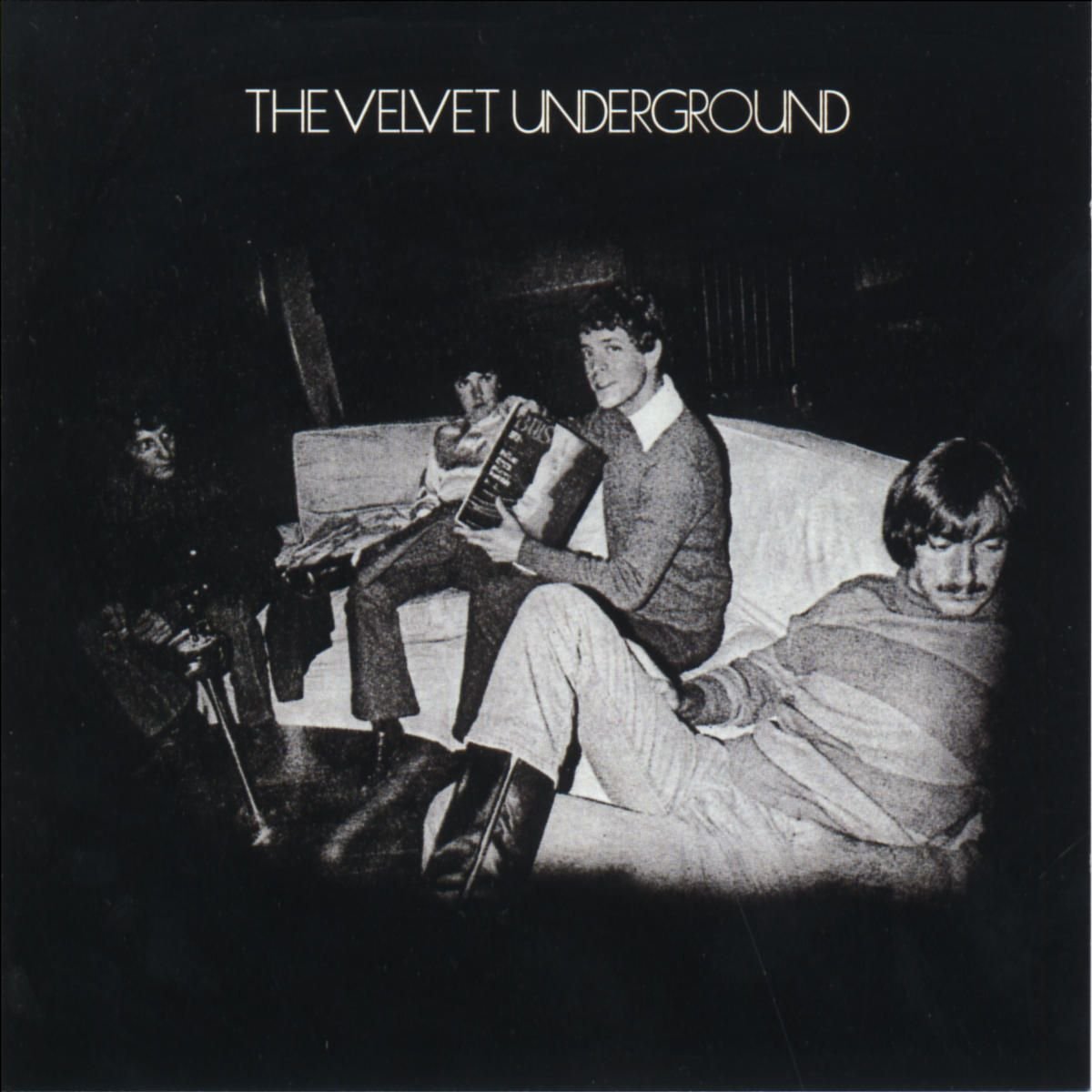
THE VELVET UNDERGROUND, “THE VELVET UNDERGROUND”

VU

(My 100 favorite albums in chronological order: #4 – released March 1969. Originally posted on Kriofske Mix, 6/9/2014)

Track listing: Candy Says / What Goes On / Some Kinda Love / Pale Blue Eyes / Jesus / Beginning To See The Light / I’m Set Free / That’s The Story Of My Life / The Murder Mystery / After Hours

Just as everyone has a favorite Beatle, every music obsessive has a favorite Velvet Underground album. The debut, THE VELVET UNDERGROUND AND NICO appeals to devotees of the titular Teutonic chanteuse, a band member for only that record (she sings on just three tracks, although each one is iconic). The second album, WHITE LIGHT/WHITE HEAT is for those who prefer them at their loudest, most relentless and experimental. The fourth album, LOADED, is for those who first heard “Sweet Jane” or “Rock and Roll” on classic rock radio and thus favor the band at their most accessible. That leaves the self-titled third album (nobody likes the Lou Reed-less fifth album, SQUEEZE), the band’s quietest, most introspective and spiritual work. (Hereafter, I refer to it as VU, not to be confused with a “lost” album released under that name in the 1980s).

John Cale, the group’s founding bassist/cellist/co-songwriter left after WHITE LIGHT/WHITE HEAT, so it would’ve been unlikely to expect another album in that vein. Besides, how could anyone top the extremities of “Sister Ray”, the seventeen-minute drone/groove/feedback epic that closed WL/WH? Thus, VU begins with a ballad, one softer and more fragile than anything they attempted before. As if to further emphasize this is a radically different band than the one who made WL/WH, “Candy Says” is not sung by primary vocalist Lou Reed, but (at Reed’s insistence) by Cale’s replacement, multi-instrumentalist Doug Yule, who delivers it in a softer croon than Reed could ever manage. Lyrically, however, it’s still recognizably a Reed song, a character sketch about Warhol superstar Candy Darling and incidentally the first in a number of similarly titled songs Reed would record both with the band and as a solo artist (“Stephanie Says”, “Lisa Says”).

Rest assured, Reed’s vocals return on “What Goes On” (one of VU’s two up-tempo rock songs), and not a moment too soon. While never one of the genre’s best singers on a technical level, Reed possesses one of rock’s most distinctive voices. On VU, he arguably never sounded better—still able to hit a relatively agile range of notes, but not yet lapsing into the knowing shtick that would color much of his solo career. Here, he sounds impassioned and engaged, a bandleader in every sense but not one who obscures the other members. “What Goes On” builds into a fine groove, the basic guitar-bass-drums lineup augmented by a soulful organ—it’s far more uplifting and optimistic than anything the band previously recorded. One could say the same, perhaps tenfold, for the other rocker, “Beginning To See The Light”. Reed’s vocal here is even more animated, reaching for (if not quite hitting) impossibly high notes but it doesn’t matter because his enthusiasm is so damn infectious. He sounds like a man redeemed, someone who has experienced the very worst but has yet come out the other side reborn and revitalized, ready to take on anything. The song ends with the repeated mantra, “How does it feel to be loved?”, simultaneously bursting with joy and wisdom; I could listen to it on repeat until the end of time.

Still, those two tracks are hardly indicative of what VU is about. As a whole, one could almost describe the album as folk rock, only it doesn’t sound anything like contemporaries Simon and Garfunkel or The Byrds—no chiming 12-string guitars, pretty harmonies or string arrangements. The majority of VU is strikingly minimalist. “Some Kinda Love” consists of a guitar in the right channel, a bass and a cowbell in the left channel, and Reed’s half sung, half spoken interjections in the middle, alternating the silly (“Put some jelly on your shoulder”) with the sublime (“Between thought and expression lies a lifetime”). “Jesus” accumulates intensity not just from its hymn-like allure and sudden crescendos, but also from the quiet spaces in-between—that old adage of what’s not played having as much value as what is (the song’s final, echo-laden rendition of its title is a suitably haunting conclusion to VU’s first half–it’s served as a great transition on multiple mixes for me). “Pale Blue Eyes”, nearly the Reed-sung twin of “Candy Says”, might be VU’s best-known song, not to mention the band’s most influential (followers from Yo La Tengo to R.E.M. (who later covered it) and countless other indie rock bands would not exist without it). I have nothing more to say about it except that Reed’s reading of the potentially rote lyric, “It’s truly, truly a sin” only works because he absolutely sells it.

I’d much rather talk at length about “I’m Set Free”, in which Reed tempers the optimism of previous track “Beginning To See The Light” with a resolution that approaches enlightenment. Majestic and nearly inspirational-sounding, it avoids seeming pretentious or overblown by sticking to simple-yet-profound language. Reed sings that he’s been free and he’s been bound, that he’s seen “his head laughing, rolling on the ground” and the chorus plainly but effectively repeats the song’s title, only to conclude it with the phrase, “to find a new illusion”, taking the wind out of a potentially fatuous statement while remaining in awe of the power of renewal. In full disclosure, it was a key song in helping me through a bad breakup years ago, and it still transports me back to that particular time in my life—it sort of underscores how much the Kübler-Ross five stages of grief not only apply to death, but also to a relationship’s demise.

If “I’m Set Free” is VU’s emotional peak, the three tracks that follow are strictly diversions, paths stumbled upon but not explored too extensively. “That’s The Story Of My Life” is in tune with the album’s overall gentler tone but is positively wistful in comparison, its two-minute duration ensuring that it comes and goes in the blink of an eye. One could make no further contrast than by placing it next to the nine-minute “The Murder Mystery”, VU’s sole callback to the band’s avant-garde roots (Robert Christgau amusingly called it “another bummer experiment.”) It mechanically alternates between overlapping spoken word poetry nonsense from Reed and guitarist Sterling Morrison (“Relent and obverse and inverse and perverse and reverse the inverse of perverse…”) in the verses with similarly overlapping disparate melodies sung by Yule and drummer Maureen “Mo” Tucker in the choruses. On first listen, it sticks out like a sore thumb on VU. However, if you’re open to it, it’s endlessly listenable, densely packed with content and almost hypnotic in its repetition-without-redundancy (and also highly influential, anticipating bands from Can and Television to Stereolab and Radiohead).

If it was VU’s closer, “The Murder Mystery” might be an ideal time for less adventurous listeners to tune out. As the penultimate track, it’s worth muddling through for the actual closer, “After Hours”, which you could not imagine placed anywhere else on the album. Presented as a simplistic, guitar strummed goof, it’s one of two songs in the band’s entire oeuvre sung by Tucker. To put it bluntly, she doesn’t have the vocal ability of even someone like Nico. You could call her voice thin, amateurish, even homely, and you wouldn’t be wrong, but you’d be missing the point. Despite such perceived deficiencies, Tucker sounds incredibly human, a lot like you or I would singing this song. This is why VU, which missed the charts entirely upon release has aged far better than most of the more popular records of 1969: it doesn’t overtly feel like the work of rock stars but instead of real people, inspired amateurs, if you will. Not to diminish the band’s talent or accomplishments (or overshadow that fact that they sung about such things as drag queens and kinky sex) but today, VU’s fragility and rawness are refreshingly humane—the full-blooded efforts of flawed individuals, playing to their collective strengths simply via how well they played together.

Up next: we (finally) arrive at our first solo female singer.

Video for “Beginning To See The Light”:


Video for “I’m Set Free”:

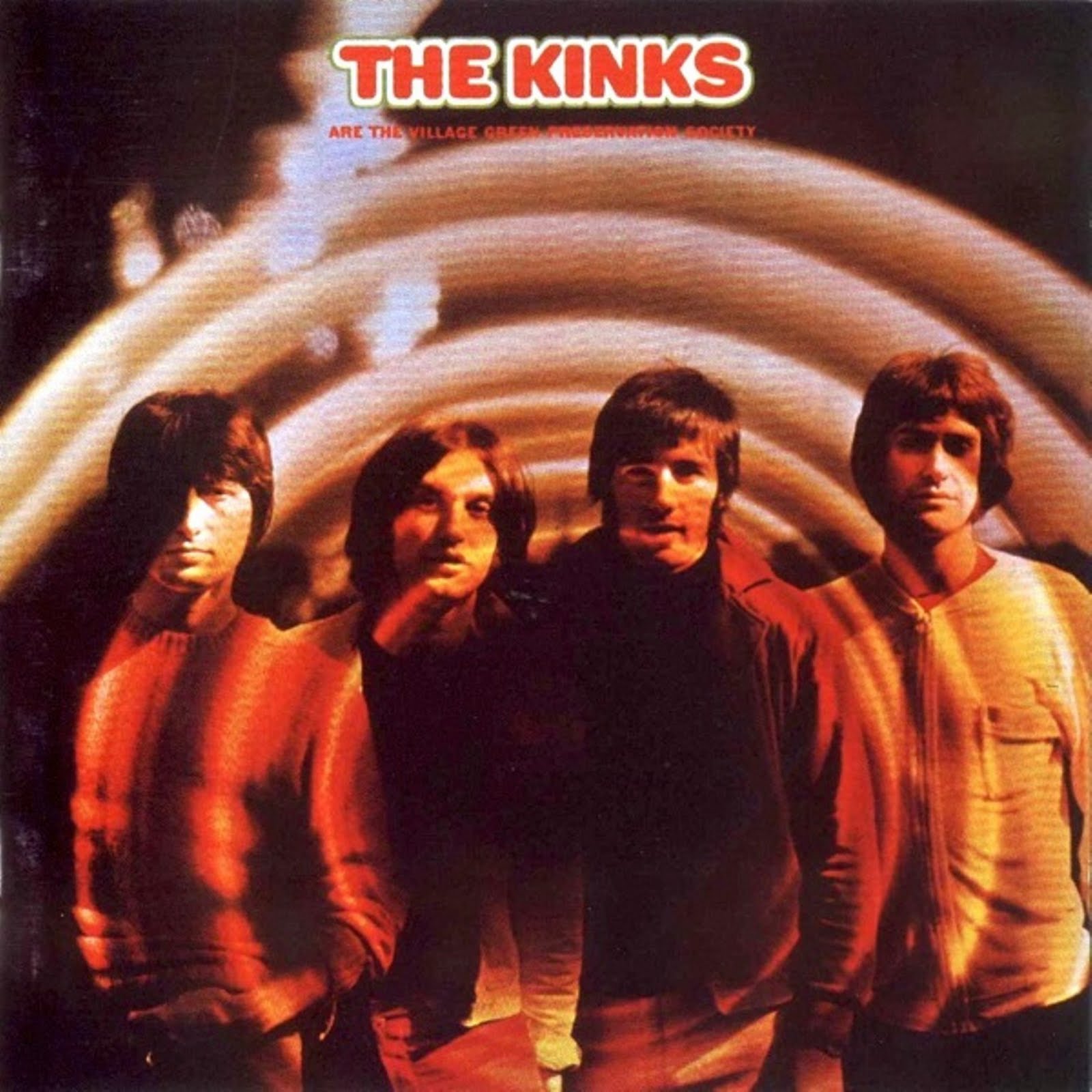
THE KINKS, “THE KINKS ARE THE VILLAGE GREEN PRESERVATION SOCIETY”

kinks village green

(My 100 favorite albums in chronological order: #3 – released November 22, 1968. Originally posted on Kriofske Mix, 6/2/2014)

Track listing: The Village Green Preservation Society / Do You Remember Walter / Picture Book / Johnny Thunder / Last of the Steam Powered Trains / Big Sky / Sitting By The Riverside  / Animal Farm / Village Green / Starstruck / Phenomenal Cat / All of My Friends Were There / Wicked Annabella / Monica / People Take Pictures of Each Other

Nostalgia inevitably permeates any facet of popular culture. Think of all the books, plays, films, TV shows and music that either deliberately recreate or pay homage to something from the past or simply admire and ruminate on a way of life that no longer exists. As a rule, critics tend to berate nostalgia—what is the value of looking back when a blank canvas carries the potential for anything? What is art, after all, but an opportunity to advance the culture, to devise new ways of seeing and hearing, nothing short of altering one’s perception of the entire world?

The catch is, for art to resonate it must also provide enjoyment and, at some primal level a sense of familiarity. Nostalgia is just another word for familiarity, and we respond to what we recognize. If the mere term gets a bad rap, that’s because most of it is lazy and pandering, at worst utilizing period-specific wardrobe or songs in order to prey on the audience’s sentimental receptors. At best, however, nostalgia simultaneously celebrates and critiques, longing for the past while trying to understand it and place it within a relevant context.

The Kinks are arguably one of the four great British Invasion bands (along with The Beatles, The Rolling Stones and The Who) and easily the most cult-ish one today. They peaked in popularity early on with a series of riff-driven rockers you can still hear on oldies/classic hits radio (“You Really Got Me”, “All Day and All of the Night”). As with their contemporaries, the band’s sound evolved as the decade wore on—only, instead of maintaining their appeal with the masses, they increasingly appeared more British, more fey, more off on their own unusual path. They still scored the occasional fluke hit (“Sunny Afternoon”), but replaced the youthful brashness of their earlier recordings with a more wistful, intricate sensibility. Robert Christgau has called their 1967 British hit “Waterloo Sunset” ‘the most beautiful song in the English language’ and he’s not exaggerating. This maturation in tone resulted in a string of classic albums, from FACE TO FACE (1966) to LOLA VERSUS POWERMAN AND THE MONEYGOROUND, PART ONE (1970), the latter itself scoring its own fluke hit with “Lola”.

THE KINKS ARE THE VILLAGE GREEN PRESERVATION SOCIETY, their sixth album overall, arrived in the middle of this run. Released on the same day as THE BEATLES (aka The White Album), it was an unmitigated commercial flop, failing to chart in the US and the UK (whereas The White Album became one of the Beatle’s all-time best-sellers). Why VILLAGE GREEN failed to find an audience in 1968 is a good question, indeed. Some blame the band’s inability to promote the album in the US due to a temporary touring ban in that country, although this wouldn’t explain its nonperformance in the UK, where they had had three hit singles the previous year. Although presently one could easily date VILLAGE GREEN, in 1968 it might’ve seemed a little out of time—not so much in sound (The Kinks are still a guitar band, albeit one now enhanced with acoustic instruments, a few baroque orchestral arrangements and the occasional Mellotron) but in temperament. Although by this time, the Beatles and the Stones had expanded their repertoire to include such stylistic diversions as “When I’m 64” or “Ruby Tuesday”, neither group had released an album dominated by them. VILLAGE GREEN is the first album by a major rock band to look inward and back rather than expand its scope (and by default, the whole genre’s). It has little in common with the trendy, flashy rocker of its time (Janis Joplin, Jimi Hendrix, The Doors)—today, it plays like an alternate-world 1968, one where an act like folk-rock collective Fairport Convention might’ve had more sway over the musical conversation.

The title track kicks off the album with nothing less than a manifesto: under the proud guise of a grassroots community organization, the band is “Preserving the old ways from being abused / Protecting the new ways for me and for you,” and asking that God save all sorts of effluvia, from strawberry jam and custard pie to Tudor houses and coffee cups. Subsequent songs reminisce over long-lost childhood mates (“Do You Remember Walter”), social rites of passage (“All Of My Friends Were There”), vanishing technology (“Last of the Steam Powered Trains”) and former residences (“Animal Farm”). Both “Picture Book” and “People Take Pictures of Each Other” are paeans to the most nostalgic act imaginable: paging through old photo albums. Throughout, lead singer/songwriter Ray Davies displays appreciation and affection for his subjects, especially in “Village Green”, which reprises the title track’s declaration of purpose on a more personal scale. The song’s narrator longs to return home, or at least to a home he once knew. He says a lot with a repeated phrase as simple and straightforward as “I miss the Village Green.”

Although VILLAGE GREEN as a whole wallows in nostalgia, it also subtly (and sometimes none-too-subtly) transcends it. Even as a straight-faced manifesto, the title track leaves one wondering if there isn’t a dollop of satire hidden within, particularly when “virginity” suddenly but quietly appears as a thing to be saved. Both “People Take Pictures of Each Other” and “All of My Friends Were There” skip along on jaunty, music hall rhythms that emanate sarcasm rather than reverence. And both “Starstruck” and “Johnny Thunder” have sections where the lyrics drop out, replaced by lusty, possibly mocking “ba, ba, ba’s”. By title alone, “Big Sky” could be praising wide open, unspoiled spaces, but examine the lyrics more closely, and you’ll see it’s really about skepticism towards spiritual belief and man’s miniscule place in the universe (“People lift up their hands and they look up to the big sky / but big sky is too big to sympathize”).

This is playful album above all. “Starstruck” and “Picture Book” now sound like peppy, great lost singles, while the moodier stuff—the gentle and utterly daft “Phenomenal Cat” with its delightfully drugged-out, sped-up vocals, or “Wicked Annabella”, a vaguely sinister vocal showcase for guitarist (and brother of Ray) Dave Davies—still retains a lightness of touch that The Beatles could no longer manage at that point without seeming strained. Placed midway through the album, “Sitting By The Riverside” neatly sums up the Kinks’ ambition at this stage in their career: it’s a breezy lament about a memory of a cherished, ideal afternoon, albeit one in danger of fading into oblivion as the song’s revolving three-note motif ebbs and flows in volume and distortion, like a unstable merry-go-round forever threatening to go off the rails completely. Fortunately, it’s a near-miss emergency, any danger obscured by a pleasant surface that concludes on a calm, reassuring note.

Despite its commercial failure, VILLAGE GREEN and The Kinks in general will heavily influence at least two bands we’ll hear from much later in this project. Up next, though, comes another massively influential group that similarly abandoned raucousness for reflection, although few would ever accuse them of being nostalgic.

Video for “Starstruck”:

Video for “Sitting By The Riverside”:

LEONARD COHEN, “SONGS OF LEONARD COHEN”

leonardcohen

(My 100 favorite albums in chronological order: #2 – released February 1968. Originally posted on Kriofske Mix, 5/26/2014)

Track listing: Suzanne / Master Song / Winter Lady / Stranger Song / Sisters of Mercy / So Long, Marianne / Hey, That’s No Way To Say Goodbye / Stories of the Street / Teachers / One of Us Cannot Be Wrong

I once read somewhere that Robert Altman heard SONGS OF LEONARD COHEN at a party and had an “eureka!” moment, thinking it the perfect soundtrack for the film he was working on, 1971’s McCABE & MS. MILLER; never mind that McCABE was set in 1902 and the album was recorded 65 years later. Both the film, an idiosyncratic, revisionist western from a New Hollywood auteur and the album, itself an idiosyncratic, revisionist collection of folk songs written and sung by a poet from Montreal convey timelessness and reflection, favoring poetry over prose while maintaining a narrative structure.

Although McCABE uses only three of Cohen’s songs (“Winter Lady”, “Stranger Song” and “Sisters of Mercy”), both film and album are forever linked together in my mind. I had heard the latter first via a dollar-bin vinyl copy purchased as a college undergrad, not long after discovering Cohen’s 1988 album I’M YOUR MAN. By then, he had altered his sound radically, favoring a deliberately chintzy aesthetic full of cheapo keyboards, cooing female background vocals and his own low, ravaged voice a more-often-spoken-than-sung growl. SONGS, Cohen’s debut album from twenty years before sounds like the work of another man: it’s primarily acoustic guitar-based, often accentuated by strings and occasional horn and organ flourishes. Most alarmingly different is Cohen’s higher vocal timbre–I was initially unable to reconcile it with the lower tone I knew and loved, playing SONGS once or twice and filing it away.

A few years on, I’d moved to Boston to study film. As I made my way through Altman’s filmography (particularly his peak early-70s period), I finally got to McCABE, having put it aside simply because it was a western, never one of my favorite genres. However, as “Stranger Song” played over the opening credits, where the lead (Warren Beatty), concealed in a hat and period gear, rides a horse into a rain-drenched, Pacific Northwest milieu, it’s no exaggeration to say it took my breath away. Rarely had I seen such an unconventional yet ideal match between song and image—Cohen’s plaintive but effective vocals, a musical backdrop consisting entirely of plucked guitars and a repetitive but engaging minor-key melody all carrying within them a quietly awestruck wonder. It felt more immediate and intimate than a more traditional, orchestral score would have; it also successfully set a precedent that this would be unlike any movie western I’d ever seen and that I’d never forget this first impression.

As “Stranger Song” becomes associated with McCabe himself, Altman utilizes the film’s two other Cohen songs as themes for specific characters. Ms. Miller (Julie Christie), the earthy, sharp whorehouse madam whom prospector McCabe goes into business with, is paired with “Winter Lady”, a gentler, more wistful but no less melancholic tune than “Stranger Song”, fleshing out the guitars with a lone flute and a soft, celeste-like chime. Meanwhile, the roughhewn, inexperienced women who become Ms. Miller’s initial employees are detailed a sequence that makes ongoing use of “Sisters of Mercy”, which has the most traditional and richest arrangement of the three Cohen songs. Some of cinematographer Vilmos Zsigmond’s most striking images accompany the song, in particular a church steeple set against a painterly, glistening sunset.

So powerful is Cohen’s music in McCABE that one wishes Altman would’ve used more of it. Hearing those three songs in the film naturally moved me to return to SONGS and in the process, discover its odd, highly distinctive allure. At least three out of its seven other tracks are now unqualified standards. Likely Cohen’s most recognized song after “Hallelujah”, opener “Suzanne” contains lyrics iconic for their specificity and vividness (“she brings you tea and oranges that come all the way from China”); Nancy Priddy’s background vocals also add texture and a welcome sweetness that Cohen’s disarming but homely croak simply isn’t capable of. “So Long, Marianne” ever-so-slightly rouses up the tempo and features one of Cohen’s catchiest choruses without sacrificing his inimitably sung cadences (“to laugh / and / cry / and / laugh / and / cry a-bout it / all a-gain”). “Hey, That’s No Way To Say Goodbye” almost subliminally reprises the melody from “Suzanne” but makes a more pointed, whimsical use of Priddy’s vocals as they pop in and out between Cohen’s lead; the arrangement’s also quirkier, the song’s title providing the main hook as it ends on a curious, nagging riff somewhere between a twanged guitar and a jew’s harp.

Two of the album’s remaining four songs are as great as the three McCABE selections. “Master Song” consists of many stanzas set to the same melody repeated for nearly six minutes, but each verse has a new musical wrinkle, gaining momentum from such additions as a muted trumpet, or a blast of strings, or a curlicue organ filigree. Throughout, it conjures a feeling of majesty, not overblown or calling attention to itself, but forever lurking within, omnipresent and exuding wisdom and gravitas. “Stories of the Street” nearly accomplishes the same feat, but with more sustained orchestration, a higher-pitched melody (in which Cohen, though not the most dexterous of singers, acquits himself well enough) and evocative lyrics such as “And if by chance I wake at night and ask you who I am / O take me to the slaughterhouse, I will wait there with the lamb.” As for the other two, less memorable tracks (“Teachers”, “One of us Cannot Be Wrong”), they’re wisely placed at the end. Neither one is a failure, although when Cohen concludes “One of Us Cannot Be Wrong” with some woefully off-key wailing (almost as if he’s piss-poor drunk or going insane), you could either find it repulsive and inexplicable and want to say, “Oh, Lenny…” or simply laugh at its audacity—a rare glimpse of Cohen not taking himself too seriously.

Cohen apparently was not pleased with producer John Simon’s orchestral additions here. He would go on to record eleven more albums and few of them sound like this one. Alternately, he’d strip down the arrangements to the barest essentials (SONGS OF LOVE AND HATE), take the complete opposite direction with Phil Spector (DEATH OF A LADIES MAN), entirely revamp his sound and voice again in the 1980s with VARIOUS POSITIONS and the aforementioned I’M YOUR MAN and continue to alter, reduce and refine with age all the way through 2012’s OLD IDEAS. His discography is as rich as the life he’s lived (Sylvie Simmons’ recent biography is essential), but I return most often to this, his first album. The McCABE association is a major reason, but by far not the only one: with SONGS, Cohen arrived fully formed, a talent with few precedents and to be honest, relatively few followers. His lyrics, vocal tones and melodies all made for a sensibility that was entirely his own. We will also find this quality in our next entry which comes from a band born out of a movement it eventually broke away from, stubbornly foraging along its own divergent, less commercial path.

“Stranger Song” / opening credits of McCABE & MS. MILLER:

THE BEATLES, “REVOLVER”

revolver

(My 100 favorite albums in chronological order: #1 – released August 5, 1966. Originally posted on Kriofske Mix, 5/19/2014)

Track listing: Taxman / Eleanor Rigby / I’m Only Sleeping / Love You To / Here There and Everywhere / Yellow Submarine / She Said She Said / Good Day Sunshine / And Your Bird Can Sing / For No One / Doctor Robert / I Want To Tell You / Got To Get You Into My Life / Tomorrow Never Knows

At its 20th anniversary in 1987, Rolling Stone magazine listed their top 100 albums of the past 20 years, and The Beatles’ 1967 opus SGT. PEPPER’S LONELY HEARTS CLUB BAND was at number one. How could it have been anything else? “It was twenty years ago today” was the first line of the first song, after all, and it made for impeccable marketing synergy (it had also recently come out on CD for the first time); it also didn’t hurt that SGT. PEPPER’S was the band’s best selling album and inarguably their most important from a cultural standpoint. If any single effort by a rock band turned the album into an art form, this was it.

As for REVOLVER, the band’s previous album, it didn’t even make the list. However, when the magazine compiled its 500 Greatest Albums of All Time in 2003, REVOLVER came in at number three (SGT. PEPPER’S was still at the top). Just last year, Entertainment Weekly deemed it the number one album of all time. This apparently sudden surge in critical acclaim might’ve been a result of the album as we now know it not appearing in the US until its CD debut in 1987. Prior to SGT. PEPPER’S, Capitol Records released its own versions of The Beatles’ British albums with alternate track listings and, occasionally, different album titles (much to the band’s chagrin). This was presumably done to create more product for the American market. For instance, the original Capitol version of REVOLVER cut out three tracks (“I’m Only Sleeping”, “And Your Bird Can Sing”, “Doctor Robert”) because they had already appeared two months earlier on YESTERDAY AND TODAY, a particularly egregious hodgepodge also containing recent non-album singles and a smattering of tracks from the original British editions of HELP! and RUBBER SOUL.

Still, those three songs are not among the album’s most essential (though one who only knows the British track listing can’t imagine it without them). Perhaps REVOLVER (and, to a lesser extent, RUBBER SOUL) just paled in the shadow of SGT. PEPPER’S for twenty-odd years. I doubt many listeners ever dismissed its merit; I even remember first hearing it when I was 18 (possibly my fourth or fifth Beatles album) and instantly being impressed by its consistency—sure, not everything was as attention-grabbing as “Eleanor Rigby” or “Tomorrow Never Knows”, but it had no filler, either. I admit a few years passed before I warmed up to “Love You To”, George’s first full-on attempt at incorporating Indian instruments and rhythms into pop music (following the sitar in “Norwegian Wood” the previous year), while “Doctor Robert” struck me as a little nondescript until those blissed-out harmonies in the “well, well, well” section eventually got to me. Otherwise, at 18, I knew REVOLVER was a gem, but it wasn’t as outwardly flashy or seemingly ambitious or what the critical establishment deemed to be as “great” or “important” an album as SGT. PEPPER’S.

Funny, then, how some albums and their reputations age over time. SGT. PEPPER’S is still a genuinely great collection of songs—only a contrarian like Jim DeRogatis could deny the likes of “She’s Leaving Home”, “Lucy In The Sky With Diamonds” and “A Day In The Life”. Increasingly, though, it sounds very much of its time, epitomizing the Summer of Love and serving as an etching of a historical moment. REVOLVER, on the other hand, now seems more prescient and further reaching. Granted, some tracks betray their age explicitly: “Taxman” builds on the mod-ish momentum of The Who’s early singles and “Got To Get You Into My Life” is a letter-perfect mid-60’s Motown facsimile, right down to its propulsive beat and horn blasts. But most of REVOLVER is timeless due to two factors: it showcases one of the most beloved bands of all time at their musical peak and in retrospect, it has proved massively influential (hard to imagine The Jam existing without “Taxman” or power pop in general before “And Your Bird Can Sing”).

It’s also the Beatles’ most sonically diverse album (until perhaps THE BEATLES (aka The White Album)). Take the range expressed within the first four tracks: the relatively straightforward groove of “Taxman”, the dramatic, anything-but-genteel string quartet lament of “Eleanor Rigby”, the melancholy, hesitantly psychedelic (dig the backwards guitar solo) stoned shuffle of “I’m Only Sleeping”, and the uncompromising Eastern drone of “Love You To”. Similarly, look at the last three songs: Harrison’s contemporary, jaunty, piano-driven “I Want To Tell You” followed by “Got To Get You Into My Life” (a throwback in comparison) and then “Tomorrow Never Knows”, the band’s most radical, experimental composition to date. In theory, none of these songs belong on the same album, but such is the band’s proficiency, chemistry and willingness to be open to the unknown that REVOLVER as a whole is both diverse and unified. In lesser hands, its bold stylistic transitions would simply jar, like placing Paul’s impassioned, firing-on-all-cylinders vocal at the end of “Got To Get You Into My Life” next to the mélange of tape loops setting up the moment Ringo’s seminal drum pattern kicks in on “Tomorrow Never Knows”. But the band displays such a level of confidence and skill here that the shift feels almost inexplicably effortless.

The album’s mid-section is where you’ll find its biggest hit (Ringo-sung kiddie standard “Yellow Submarine”), a pair of lovely Paul ballads (the hushed, modern-yet-classical “Here There and Everywhere” and chamber-pop primer “For No One”) and two perennially overlooked highlights. Side One closer “She Said She Said” is the accessible, melodic flipside to “Tomorrow Never Knows”, placing its psychedelia and dream logic within a more rigid song structure than nonetheless has elasticity (and one of John’s best vocals ever). Side Two opener “Good Day Sunshine” is both deliriously ecstatic and carefully meticulous, deconstructing how one writes a pop song along the way (hey, let’s cut out the expected vocals in this section of the second verse for an impromptu barrelhouse piano solo!) while continually sounding at ease and without any strain.

Perhaps that’s REVOLVER’S brilliance distilled to a singular essence—pop music simultaneously at its most innovative and approachable. However, this is not The Beatles’ only appearance on this list; they will return a few entries in with another record that accomplishes this same feat, only with time and a change in perspective among the band’s four magnetic personalities altering its sound and scope considerably.

Video for “She Said She Said”:


What Don Draper thinks of “Tomorrow Never Knows”: