15. Sparks, “Hippopotamus”
On their first non-collaborative studio effort in nearly a decade, Ron and Russell Mael offer no head-swerving stylistic shifts like they’ve done throughout their career. Still, it’s awfully hard to dismiss an album with song titles like “So Tell Me Mrs. Lincoln Aside From That How Was The Play” as merely more of the same. As always with Sparks, their 23rd (!) full-length forever vacillates between inspired snark (“What The Hell Is It This Time?”) and unexpected sincerity (the wistful “I Wish You Were Fun”), with lovingly arch odes to sexual positions, IKEA and French filmmakers, not to mention the title star of “Edith Piaf (Said It Better Than Me)”, to which they lend their most immediate hook in ages.
“Edith Piaf (Said It Better Than Me)”:
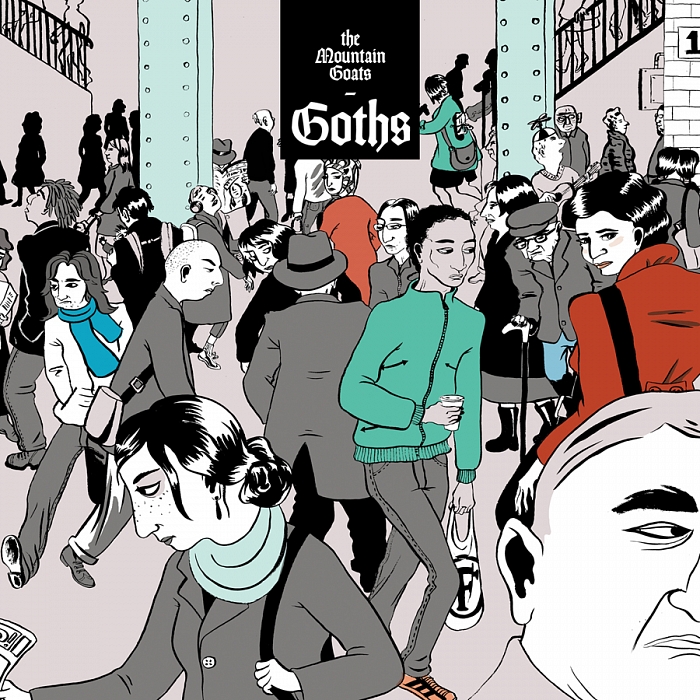
14. The Mountain Goats, “Goths”
Glorious, knowingly overwrought opener “Rain In Soho” is everything you’d ever want in a tribute to the black-clad, clove-smoking boys and girls who worship at the altar of Bauhaus and Siouxsie and the Banshees; what makes the rest of Goths so startling is that it falls closer to the likes of Steely Dan on the aural/tonal spectrum, albeit with “no guitars!” (as indicated in the liner notes.) John Darnielle may not be above name dropping the lead singer of Sisters of Mercy (“Andrew Eldritch is Moving Back to Leeds”), but he’s not aiming for straight homage or all-out satire. He’s been in the trenches but is now far removed from them, and the distance allows for uncommon perspective.
“Rain In Soho”:
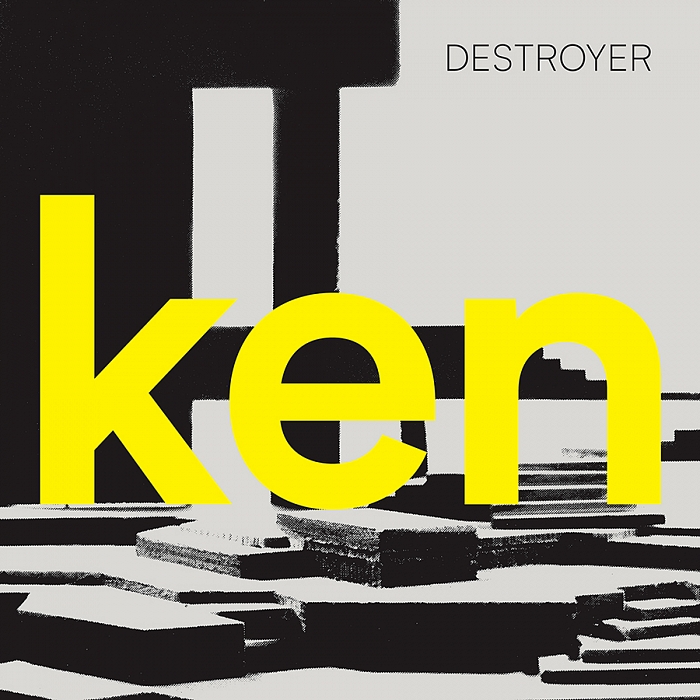
13. Destroyer, “ken”
In which Dan Bejar throws us another curveball in a career shaped by a batting cage full of them. On first listen, this resembles the Pet Shop Boys meet yacht rock ennui of his best album, Kaputt—especially on New Order-riffic single “Tinseltown Swimming in Blood”. Ah, but you can’t reduce ken to just that as a good chunk of it is much darker and also just plain bizarre, if enchantingly so (marvel at how he repeats the lyric “I’ve been working on the new Oliver Twist” seven times in a row, as if the record’s skipping on “Sky’s Grey”.) On top of all that, he goes out on the most massive-sounding pop song he may ever write—naturally, its title is in French.
5. Tori Amos, “Reindeer King”
I keep meaning to fully give Amos’ umpteenth LP Native Invader its due, but this seven-minute-long opener has everything I need from her in 2017. Epic yet intimate, typically inscrutable but also vividly drawn, it’s as beautiful and awestruck as anything she’s ever done. “Gotta get you back to you,” she repeatedly sings with urgency and reassurance, even as it feels like she is teetering on the precipice of the great unknown.
4. Lorde, “Perfect Places”
Having had a massive hit (“Royals”) at the tender age of 16, she aims for the fences on her return four years later. While Melodrama isn’t quite up there with, say, Never For Ever, tracks like this sublime closer suggest she might get there yet. “Perfect Places” emits universal appeal while sounding very much like it could only possibly come from the young woman singing it—a potential future standard, even if it missed the Hot 100 entirely.
3. Joe Goddard feat. SLO, “Music Is The Answer”
This solo recording from Hot Chip member Goddard is of a piece with any of that band’s great singles. Following a simple yet genius four-chord progression, like the best disco, it expertly builds momentum/anticipation until it reaches an almost euphoric high in the chorus. Vocalist Jess Mills (aka SLO) complements rather than overpowers the arrangement; together, they soar, carrying a promise of redemption and release on the dancefloor.
2. The War On Drugs, “Pain”
First of all, I adore that shimmering opening, all drumless and airy, those reverb-heavy guitars just falling into place. Then, the groove locks in and if anything, the song grows in power and reach. Adam Granduciel’s Bryan Adams-heavy croon has never fit in more comfortably than it does here. As the song keeps circling back to its yearning statement of purpose (“I resist what I cannot change”), it feels increasingly richer, layer upon melodic layer crystalizing into a breathtaking whole.
1. Iron & Wine, “Call It Dreaming”
I’ll never forget the first time I heard this song, walking home from the train station, listening to the new tracks I had downloaded from Spotify that week. Having had no expectations for a band I’ve casually admired and occasionally kinda liked over the past dozen years, I was almost knocked sideways by this rather straightforward tune. It gradually, expertly builds from lone acoustic guitar-and-vocal to a full-bodied arrangement in an organic way so that, once you get to the final thirty seconds, it resounds like few other songs I’ve heard. I liken its effect to that of a beating heart that keeps on expanding until it’s all you can hear, and it’s everything, and it’s enough.
10. Mavis Staples, “Try Harder”
On her third collaboration with Wilco’s Jeff Tweedy, she’s now making music as relevant as the protest gospel-soul she pioneered nearly 50 years ago with The Staples Singers. Built on an insistent, guttural guitar riff, it’s no exaggeration to say that “Try Harder” is right up there with “Respect Yourself”, especially when she sings, “Don’t do me no good to pretend,” again and again, laying bare the wisdom of acknowledging evil in order to combat it.
9. Lana Del Rey, “Love”
Despite having put out four albums in six years, Rey is still more of a singles artist—I can imagine her eventual hits comp will be all-time, with this arresting ballad as just one of its crown jewels. Taking aural inspiration from Phil Spector, crossed with her usual Angelo Badalamenti-isms (would it have been too on-the-nose for her to have appeared on Twin Peaks: The Return?), her declaration here “to be young, and in love” is deeply felt and understood.
8. Waxahatchee, “Never Been Wrong”
Right off the bat this has an agreeable Pixies/Breeders vibe that never quits; I also hear a little vintage Matthew Sweet and maybe some Jill Sobule, too. Fortunately, Katie Crutchfield transcends any hint of ’90s pastiche, as moving beyond her previously low-fi aesthetic for full bells-and-whistles production only further fortifies the strength of her words and melodies.
7. Stars, “We Called It Love”
This highlight from Fluorescent Light is almost Stars-by-numbers at first—another catchy mid-tempo gem to surely take its place on a killer compilation one day. However, after a few plays, all its little nuances begin to surface, and then crystalize to the point where the song, with its observation, “I don’t believe people ever change,” freshly resonates.
6. Sufjan Stevens, “Mystery of Love”
From the Call Me By Your Name soundtrack (which I have yet to see—it opens in Boston on the 22nd), musically this could’ve easily fit on Carrie and Lowell, but not tonally. After absorbing that album’s raw grieving and immense loss, it’s almost cathartic to hear Stevens sing a gentle, spiritual, and altogether happy love song again. It emits a rare sense of wonder that I always seek (but not often find) in the art I consume.
15. Alvvays, “Plimsoll Punks”
It certainly never occurred to me on their 2015 hit “Archie, Marry Me” but this Canadian indie combo really could be the second coming of beloved ’90s band The Sundays (or perhaps a much gentler Belly.) I dare you to try and get the “Getting me down, getting me down, getting me down” chorus out of your head; same thing with that lead guitar arpeggio/riff, or how irresistibly Molly Rankin squeals the song’s title.
14. Erasure, “Still It’s Not Over”
Vince and Andy are still capable of at least one great song per album—from their uncommonly topical World Be Gone, it’s this gospel-infused lament. Both a celebration (“We made a miracle,” goes the bridge to the chorus) and an impassioned call for continued resistance against social injustice, it’s protest pop of the moment, firmly for the ages.
13. Carly Rae Jepsen, “Cut To The Feeling”
And to think she left this one off of 2015’s Emotion—from its “Lucky Star”-inspired intro to its infectious bounce and massive, bright-and-fizzy chorus, this holds its own with anything from that solid release. It exudes pure, unadulterated joy at a time when it’s most needed—as effective a balm as any protest pop.
12. Aimee Mann, “Patient Zero” Mental Illness is still her best since Bachelor #2, but it just missed the cut for my album list—it’s a tad samey for my taste, even as it’s stuffed with neat little miniatures like this taut, tart single. Everything you’ve loved about this woman since her 1993 solo debut Whatever is present, from gorgeous, intricate harmonies to Mann’s sharp-as-a-tack wit.
11. Dan Croll, “Bad Boy”
Proof that one can still find great new music on the radio (in this case, WERS), this young Brit singer/songwriter comes off like Stuart Murdoch fronting Fountains of Wayne on this near-perfect piece of power-pop. The subject matter’s older than Fountain of Waynes’ own “Leave the Biker” from twenty-plus years ago, but it still scans all-too-well; Croll imbedding at least a half-dozen hooks throughout doesn’t hurt, either.
20. The xx, “I Dare You”
For a band that worships at the altar of Everything But The Girl, I’ve always admired them from a distance since they overtly favor mood and texture over hooks. Third album I See You suggests maybe they’re not so afraid of hooks—their best is this song’s almost laughably simple, but simultaneously transcendent chorus; it also doesn’t hurt that it has a steady but not overwhelming pulse.
19. Jessie Ware, “Your Domino”
No longer the neo-Sade, she’s reached that perilous Adult Contemporary Tipping Point on her third LP, Glasshouse. Fortunately, she made room for this breezy banger. Breathlessly skipping through staccato electro-beats, it has a refreshingly cool melody that’s also thrilling and urgent. Ware pulls it all off with her usual effortless aplomb.
18. Perfume Genius, “Wreath”
In which Mike Hadreas discovers his inner Peter Gabriel and liberally quotes Kate Bush’s “Running Up That Hill”. If that sounds like a bit much, well, “a bit much” is what Hadreas does so well. As powerful as his earlier songs “Queen” and “Fool” and far more accessible (while not at all diluted) to boot.
17. Sylvan Esso, “Die Young”
“I was gonna die young / now I gotta wait for you, hon,” is one of the year’s most enticing lyrical couplets, deflating the “live fast, etc.” sentiment of thousands of pop songs while also lending a new slant to it. Along with last year’s “Radio”, it helped put this deliberately mismatched synth pop duo on a much higher plane than previous.
16. Tennis, “My Emotions Are Blinding”
I’ve always meant to give this pleasant husband-and-wife duo more than a casual listen, but none of their songs have remotely stuck with me like this one: imagine if The Bird and The Bee were more of a guitar band, or if Carole King was still writing Tapestry-level hooks, or if Sheryl Crow wanted to recreate the sound and vibe of The Globe Sessions.
This year, I’ll be counting down my 25 favorite tracks (this week) and 15 favorite albums (next week), with no overlap between the two, allowing for a little variety. I’ll always remember 2017 as the year I became a Spotify convert, thus having more access to new (and old) music than ever before.
I’ll also remember 2017 for the loss of two close friends: Bruce, whom I’ve written about here, and Howard, who passed away in August at age 50 after a long battle with cancer. Howard and I mostly knew each other through our blogs and, in particular, our annual year-end best album lists. All my posts on my favorite music of 2017 are dedicated to his memory.
25. Laura Marling, “Soothing”
Marling’s sixth album Semper Femina is the first since her 2008 debut to miss my albums list, mostly because it adds nothing new to her repertoire with the exception of its lead-off track and first single. “Soothing” sounds as if Portishead ditched the electronics for acoustic guitars, strings and real drums (and as if Beth Gibbons lightened up a little); next time, I wouldn’t mind if Marling made a whole album of this sort of thing.
24. Future Islands, “North Star”
On their much anticipated album The Far Field, this formerly weird synth-pop trio has boiled their fluke 2014 hit “Seasons (Waiting on You)” down to a formula—a successful one, mind you, but it’s still a formula. This up-tempo gem stands out mostly because, well, it’s an up-tempo gem with verses as catchy as its chorus, all vaguely reminiscent of “Heart of Glass”—fitting, since Debbie Harry herself duets with Samuel Herring four tracks later.
23. Dua Lipa, “New Rules”
A former UK number one that’s currently a surprise top 20 US hit, it has an even more indelible counting hook than Brian McKnight’s “Back At One” or Craig David’s “7 Days”. Still, it’s this Albanian-by-way-of-Britain dance diva who sells it, striking the exact right balance between swagger and a little subtlety.
22. Lindsey Buckingham and Christine McVie, “Sleeping Around the Corner”
Not bad for what’s essentially a Fleetwood Mac reunion minus Stevie Nicks, but what it really reminds me of is Buckingham’s recent ace solo work. Nothing revolutionary here: quiet verses, loud, anthemic chorus and Bucky’s inimitable wordless vocals at the end of the latter. Slot it into Tusk and no one would blink.
21. Grizzly Bear, “Mourning Sound”
What a deceptive title. One used to automatically expect a song by this band called “Mourning Sound” to be a dirge, but this is almost a better New Order pastiche than anything on Music Complete. As always, Grizzly Bear sculpt an enticing aural world to get lost in, but this time they include a much-appreciated road map.
(My 100 favorite albums in chronological order: #75 – released July 21, 2003)
Track listing: Hello Sunshine / Liberty Belle / Golden Retriever / Sex, War & Robots / The Piccolo Snare / Venus & Serena / Father Father #1 / Bleed Forever / Out of Control / Cityscape Skybaby / Father Father #2 / Valet Parking / The Undefeated / Slow Life
Welsh quintet Super Furry Animals were automatically lumped in with Britpop on their 1996 debut Fuzzy Logic andit’s not difficult to see why given the era; one could almost too easily imagine Blur’s Damon Albarn singing over a few of album’s backing tracks. Still, even then, SFA was clearly its own kind of beast thanks to leader Gruff Rhys’ laid back (some would almost say lackadaisical) vocals and an eclecticism that far outpaced most of their contemporaries.
On subsequent records Radiator (1997) and Guerrilla (1999), SFA reveal themselves to be musical magpies as well-versed as Japan’s Pizzicato Five: the two bands sound absolutely nothing alike, but rarely in this project have we come across another outfit with an idea of pop music as far-reaching and inclusive, borrowing from and re-appropriating past touchstones so that they scan as both familiar and newfangled. Had SFA been a DJ collective rather than a guitar band, they might’ve turned out like The Avalanches. Instead, they expanded the notion of what Britpop could contain and then soon transcended it.
The five years following Fuzzy Logic encompass everything from an estimable stab at Tropicalia (“Northern Lites”) to the multi-part “Receptacle For The Respectable”, transforming itself from Beatles-esque sing-along to ear-shattering freakout in less than five minutes. This period also features catchy tunes with titles like “The International Language of Screaming” and “Shoot Doris Day”, epic one-off singles such as the awesome, anthemic “Ice Hockey Hair” and “The Man Don’t Give a Fuck” (the latter built on Steely Dan (!) sample), and an entire album recorded in the band’s regional tongue (2000’s Mwng.)
SFA put out nine studio albums in a 13-year period; although the ninth was my favorite album of 2009 at the time, the one I return to most is their sixth, Phantom Power. Admittedly, I have a soft spot for it since it was my introduction to the band, but it holds up beautifully thanks to its rare cohesiveness. Whereas previous SFA long-players carry something like an electrical charge from their extreme sonic and thematic diversity, here the band simply sequences a collection of songs that sound like they belong together. What elevates Phantom Power from good to great is that rather than limit themselves for consistency’s sake, SFA still manage to pack in a relatively wide array of sounds and ideas in a deliberately tighter frame.
Opener “Hello Sunshine” wastes no time showing how the band gracefully achieves such balance. Its gently psychedelic intro of acoustic guitar with a female voice singing, “So hard to say goodbye…” could’ve come off the original Wicker Man soundtrack, conjuring atmosphere to spare. Then, suddenly, at 0:47, it shimmers into what turns out to be the song proper, an easy going, Beatles-simple hippie ballad full of rich, overdubbed harmonies with subtle electronic filigrees bubbling at its outer edges. From there, Phantom Power gradually revs itself up. “Liberty Belle” slightly quickens the tempo, conjoining an affable melody (complete with “Sympathy for The Devil” worthy “Who-hoo’s!”) with unexpectedly damning lyrics. “You know you’re diggin’ to hell!,” goes the deceptively cheerful chorus, introducing one of the album’s most prevalent running themes, a skepticism of post-9/11, War on Terror-era America that feels far more potent than Blur’s from a decade before.
After concise bluesy gallop/obvious single “Golden Retriever” is out of the way, the album’s first major stylistic swerve comes with “Sex, War & Robots” (with that title, how could it not?) Its abundance of pedal steel and sumptuous strings sounds almost exactly like k.d. lang circa Ingenue, but Rhys’ vocals, recorded through a trippy filter are another thing entirely; also, eclectic as she could be, it’s hard to picture lang ever singing a lyric like “I programmed robots to make them lie.” The shift in tone is build-up for the album’s first epic/highlight, “The Piccolo Snare”. Resembling the psych-pop opening of “Hello Sunshine” but with a far lusher palette, it piles on irresistible, explicitly retro harmonies in mold of The Mamas and The Papas and The Association (in a way, anticipating Fleet Foxes by roughly five years); chiming, echoing synths, backwards guitars and a most effective key change at the bridge all contribute to the throbbing wall of melody and sound, nimbly sustaining this specific momentum for over six minutes.
“Venus & Serena” brings it all back down to Earth via a glam-pop ode to the titular tennis pro twins, winning points on both a hummable ascendant chorus and by inserting a girl-group breakdown (“Father, father, father, father, can’t you see / I’m a walking tragedy”) smack dab in the middle. Immediately following, “Father Father #1” is a two-minute orchestral interlude, a quietly majestic palette cleanser bringing Phantom Power’s first half to a comforting close.
As “Hello Sunshine” began the album with a hint of the Beatles, “Bleed Forever” does pretty much the same for the second half. Its drum intro could’ve been lifted off of Abbey Road or Let It Be, but SFA include enough crafty details to avoid pastiche, as heard in the maracas and Moog synthesizer lurking in the background (and also in the Barry Gibb-like slant Rhys lends the word “Fa-ev-ahhhh”.) Referencing “holy wars” and “ninja jihads,” “Out of Control” instantly snaps into “Liberty Belle” mode but with more intensity—a tightly wound maelstrom of one-note banging piano, “Jumping Jack Flash” guitar riffs, wailing backing vocals and Motown/Tamla beats.
“Cityscape Skybaby” initially provides a much-needed breather from all that action, its first minute weightless and fluttering like prime Pink Floyd. Then, the vocals come in, the melody gradually surges into focus and the full band arrives at the two-minute mark achieving post-apocalyptic trance-rock bliss; the overlapping vocal parts near the end are as heavenly as anything in “The Piccolo Snare”. “Father Father #2” provides another brief orchestral interlude similar to what we heard four tracks previously, although now the strings seem slightly off-kilter, only turning reassuring at the end.
A car’s ignition signals the start of “Valet Parking”; it’s another attempt at Tropicalia, only this time with Latin guitars, slinky beats and incessant “ba, ba, ba’s” instead of any horns (although as it proceeds, snippets of car horns subtly dart into and out of the mix.) The whole thing seems to glide along with breezy joie de vivre as Rhys sings, “Fly away / in my silver Bluebird”—that is, until he almost casually mentions how “It’s Solvent Abuse Awareness Week / at the clinic in a Berlin backyard.” “The Undefeated” further juxtaposes a sunny disposition with decidedly darker content. A driving beat and snatches of steel drums seem pleasant enough, but if you really listen to the lyrics—the main hooks are, “Yes, so shallow, the Undefeated” and cries of “Lies! Pollution! Solution!”—it should come as little of a shock when the song ends in an abrupt hail of gunfire.
Just as the gunshots peter out, however, Phantom Power’s finale begins. Many fans regard “Slow Life” as SFA’s magnum opus (as epic pop songs go, it’s up there with Saint Etienne’s “Avenue” and XTC’s “Jason and the Argonauts”.) The first forty seconds play out in a swirl of carefully, strikingly placed synth and orchestral samples, instantly drawing the listener in. A peppy drum machine lays the foundation for everything to spin towards a blistering crescendo; then, electrobeats introduce a melody that the song’s remainder sustains. Strings come in, as does an electric-guitar-and-harmonica breakdown so that when Rhys’ vocals finally appear at 2:19, one can easily sing along with the lyric sheet. Momentum keeps building until, with the familiar four-note signal of a clock chime, we arrive at the chorus which is simply the phrase “Rocks are slow life” repeated over and over into a “Hey Jude”-like coda. Who knows/cares if there’s any meaning beneath the surface, for “Slow Life” endures for seven minutes without a hint of strain, finally signing off with suspended strings that suddenly, almost breathlessly fade into the ether.
After three more albums, SFA went on an indefinite hiatus. Rhys and other members recorded solo records (his 2014 release American Interior is solid) and left dangling the possibility of a tenth album; as of late 2017, it still hasn’t arrived, although the band has toured extensively over the past three years and even included a new song on 2016’s career-spanning anthology Zoom! I doubt they’ll ever go beyond their long-running cult status (particularly outside the UK); still, like Pizzicato Five, they remain ripe for discovery, and their songs are in English (except when they’re occasionally in Welsh)—more significantly, unlike P5, their back catalog is still in print.
Up next: Their Winnipeg.
(Also of note: this project, now 3/4 completed (!) will return in early 2018.)
So much to say about this montage of local and national advertising that ran on then-independent Milwaukee TV station WVTV (despite what the heading says, it was never an ABC affiliate, although it’s presently the CW) on May 5, 1979. I was too young (age 4) to remember seeing this firsthand, although a couple of these lingered long into the ’80s.
0:56 – TACOTACOTACO BELL! (also, “The Fresh Food Place”, eh?)
1:06 – It’s like every single key pressed on this primitive calculator emits a stab of agonizing pain.
2:27 – Whoa, lady! Bar soap scintillating enough to induce cartwheels.
2:47 – TAKEALOOKAT THOSE GINORMOUS CANS. Sorry, but Jolly Good just wasn’t as great a local generic soda as Graf’s.
3:43 – It’s not so much the claymation Jimmy Durante (who wasn’t even dead yet – did he approve this abomination?) but the demented grin Larry Balistreri makes as he picks up the little figurine that translates into Nightmare Fuel.
5:29 – First Wisconsin Bank presents: A Cornucopia of Authentic Wisconsin (sorry, “Wes-cahn-sin”) Accents!
7:38 – I swear True Value commercials looked and sounded exactly like this well into the ’90s.
8:55 – “Laz-o-curve Thrusters” (Thank you, Star Wars.)
9:38 – Woolworths (celebrating its centennial) and Mickey Mantle! Both will be dead in less than 20 years!
10:49 – Nice to know Don Ameche (he’s from Kenosha, don’t ya know) would go on to win an Oscar for Cocoon years after appearing in these sorts of ads.
13:12 – The Ernie von Schledorn jingle! I’ve been scouring YouTube for this for years. Loses points for not including Ernie’s spoken coda, “Who do you know vants to buy a car?”
16:31 – It’s Bon Iver’s dad! (“Ah… milk!”)
18:02 (and 21:08) – I’m old enough to faintly remember when Marc’s Big Boys looked like this (heck, I’m old enough to remember Marc’s Big Boy.) Also, there’s something positively Christopher Guest-like about these interviews.
19:03 – Let’s go back when commercials could reasonably look like they cost twenty bucks to produce (“Brother John’s, next to Gene’s…”)
20:38 – Mel Frickin’ Schlesinger (and his annoying little bird)! In my mind, I auto-associated the word “Schlesinger” with cars well into my twenties.
(My 100 favorite albums in chronological order: #74 – released February 18, 2003)
Track listing: Sunken Waltz / Quattro (World Drifts In) / Stucco / Black Heart / Pepita / Not Even Stevie Nicks… / Close Behind / Woven Birds / The Book and The Canal / Attack El Robot! Attack! / Across The Wire / Dub Latina / Guero Canelo / Whipping The Horse’s Eyes / Crumble / No Doze
One can’t help but forever link some musicians with where they come from: Kate Bush is the quintessential British eccentric, early R.E.M. exemplifies the Athens, Georgia college town scene (as do The B-52’s), Soul Coughing’s alt-rock/jazz hybrid is 1990s downtown NYC incarnate, etc. And while some prove so trailblazing and iconic that they eventually define their region’s sound—think what mid-70s Fleetwood Mac did for California, or New Order and The Smiths for ’80s Manchester—others glean influences from existing regionalisms and make them their own.
Named after a town straddling the border between California and Mexico, Calexico is an ideal moniker for a band actually based in another close-to-the-border city: Tucson, Arizona. Its primary two members, Joey Burns and John Convertino met while performing as the rhythm section in Howe Gelb’s long-running collective Giant Sand in the early ’90s. After Gelb moved the band from Los Angeles to Tucson, Burns and Convertino split off and began recording together, first under the name Spoke (releasing a self-titled album in 1995) before becoming Calexico, reissuing the album (originally limited to 2,000 copies) two years later under the new name.
While Spoke already has many elements of the band’s core sound in place, it’s not particularly songful, rather resembling a series of fragments without much in the way connective tissue or memorable hooks. Fortunately, this changes on their second album The Black Light (1998) as Burns and Convertino prevent their atmospheric, Latin noir from floating into the ether with a surfeit of hummable melodies and rich, evocative soundscapes. It sets a template they’ve more or less followed for nearly twenty years—their next album, Hot Rail (2000), is simply more-of-the-same, spiked with the occasional diversion like the seven-minute-long “Fade” (which holds its own with any Neil Young epic you’d care to name.)
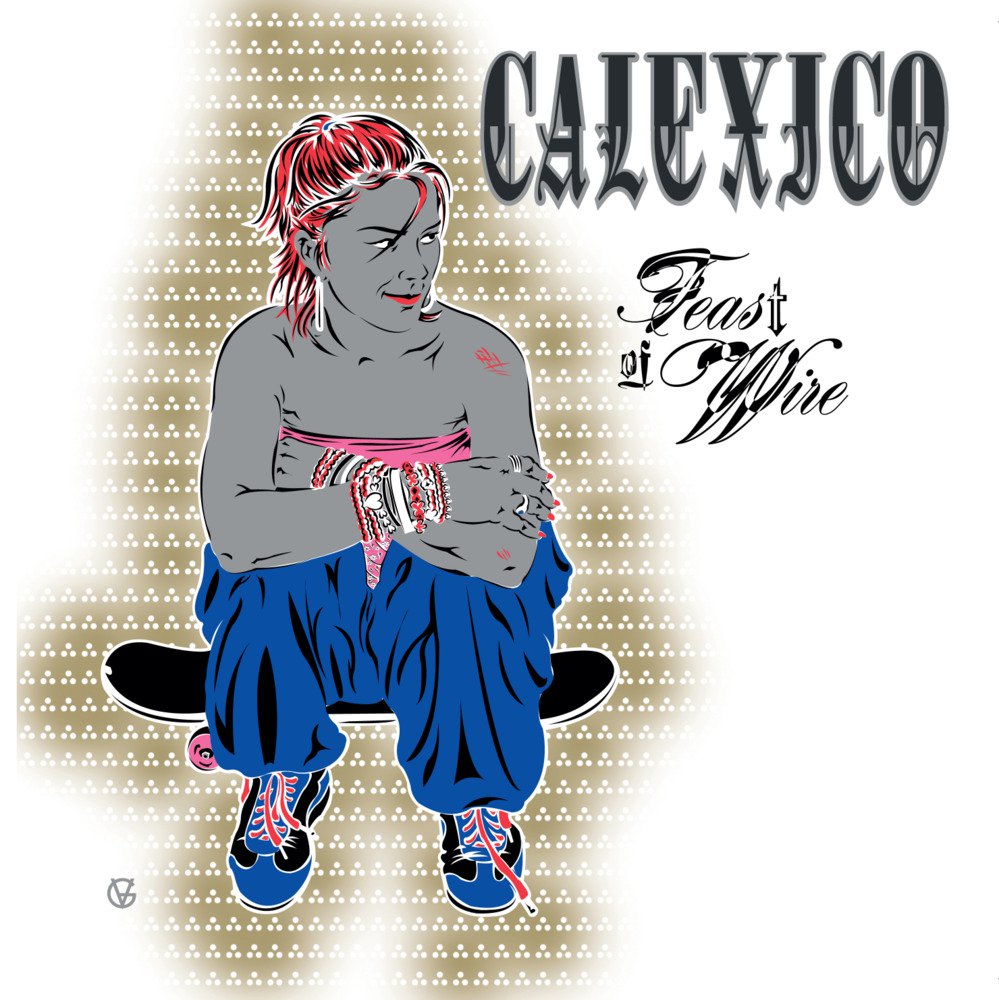
Still, I’m willing to guess that most people outside Tucson (including myself) hadn’t heard of Calexico until their fourth album, Feast of Wire. On first listen, it plays like a logical follow-up to The Black Light and Hot Rail; over time, however, it reveals itself as the grand apotheosis of what those records attempted. While the overall feel remains within the same conceivable world of its predecessors, the songs themselves are noticeably sharper and riskier. Feast of Wire unravels like a sonic crazy quilt bringing together a far-reaching but simpatico scope of musical touchstones. It will shift on a dime from a brief piano-and-cello sonata (“The Book and The Canal”) to a kitschy sci-fi instrumental (“Attack El Robot! Attack!”) to a Tex-Mex story-song that could’ve easily been recorded by Marty Robbins in 1961 (“Across The Wire”) to an unexpectedly sensual, seductive bossa-nova (“Dub Latina”). Even more impressive, absolutely none of it jars or sounds out of place.
Feast of Wire makes liberal use of regional touches such as mariachi horns, Morricone-inspired strings, occasional accordion and some good old pedal steel. But at its heart, Calexico is really an indie-pop group, with songwriters Burns and Convertino making like sort of a Southwestern Steely Dan (albeit far less snarky and cynical), the two of them continually driving and shaping the band’s overall sound and ethos. Burns plays everything from guitar to pump organ, but his yearning, slippery tenor vocals render him a de-facto leader (even though, like most Calexico records up to this point, this one’s split straight down the middle between vocal tracks and instrumentals.) Convertino’s musical contributions are far more centered—he may be one of his era’s greatest drummer-percussionists in part because he favors finesse over flash, from his hip-shaking polyrhythms that introduce and sustain “Quattro (World Drifts In)” to his delicate tapestry of shuffling beats and strategically placed booming tom-toms in “Dub Latina”.
“Sunken Waltz” opens the album with an acoustic guitar riff then accompanied by accordion, percussion and Burns’ vocals—it’s simple and palatable, an entryway into the band’s world. “Quattro (World Drifts In) builds on this established familiarity, but spreads it over a far wider canvas—a vast enclosure of space, carefully layered with a plethora of instrumental hooks. Between them and Burns’ breathy vocals, the end result resembles Lindsey Buckingham far more than Buck Owens, but the real kicker is how it all leads to a chorus where everything seems to solidify on a call-and-response between a repeated four-note horn riff and Burns signing the line, “Hit the ground… running.” This was the first Calexico tune I ever heard (off a Mojo magazine Best of 2003 compilation); its immediacy naturally led me directly to this album.
As if to instantly upend expectations, the next song, “Stucco”, is merely twenty seconds of a distorted, noodling guitar riff processed through some kind of filter. Just as it makes an impression (or dares to wear out its welcome), “Black Heart” takes over. Burns quietly counts it off until he’s consumed by loud, clanging percussion and descendant, stretched out minor-key strings. The latter come to dominate the arrangement, nearly smothering everything in their path (including Burns’ most mournful, emotional vocal.) And yet, this is not only the longest, heaviest track on the album but also one of the more traditionally songful ones, crossing a Lee Hazelwood lament with R.E.M.’s “Country Feedback”, spicing its catchy chorus with stately, almost Liberace(!)-like piano filigrees.
Another instrumental, “Pepita” follows—nearly eight times as long as “Stucco”, it builds from a lone electronic signal noise to a two-note Morse code guitar riff which shifts into a full band arrangement after the one-minute mark. It’s haunting while remaining mostly inscrutable, but unlike, say, many of Spoke’s instrumentals, it holds your attention, engaging as it runs the gamut from the minuscule to the expansive. After it simmers to a close, the next song provides great contrast by opening with just acoustic guitar. “Not Even Stevie Nicks…” (notice the sustained Fleetwood Mac references) plays almost like the Eagles at their folkiest, at least in the verses. When Burns arrives at the chorus with the lyric, “Drives off the cliff… into the blue,” Convertino’s drums enter and utterly transform the song, lending the minimal arrangement some much-needed heft; in turn, when Burns responds, “Not even she… can save him,” hitting a gentle but sustained high note on the word “she”, he’s seemingly responding to and reinforcing this newfound tension.
The rest of Feast of Wire spools out in a similar fashion. However, any disparity of genre or song structure between tracks doesn’t result in a disjointed listen due to the band’s masterful command of mood and tone. In theory, another stirring mariachi instrumental in 12/8 time (“Close Behind”) shouldn’t necessarily transition well into a relatively straightforward, tender vocal ballad (“Woven Birds”), but both feel like they belong in the same universe: not only do they share a few instrumental touches (acoustic guitar, accordion), they also could be two sides of the same coin—a clear, expansive blue sky overtaken by clouds and a gentle mist (or perhaps an oncoming storm.) Likewise, after the supple interlude of “Dub Latina”, “Guero Canelo” gets the blood flowing with distorted, unintelligible vocals and a backbeat propelled with insistent cowbell, only for the mood to cool down again with “Whipping the Horse’s Eyes”, a brief, eerie intermezzo of just shaker, cello and pedal steel. Apart, the tracks seem woefully unrelated, but together, they coalesce as a series of textures, of emotional highs and lows, of scattered puzzle pieces that, when put into place, paint a whole picture.
On the album’s final two tracks, Calexico pushes their sound as far as it can reasonably go without eradicating that picture’s borders. “Crumble” takes a stab at straight-up jazz, complete with stand-up bass, lithe, swinging polyrhythms, tinkling piano and vibes, muted trumpets, a Wes Montgomery-esque guitar solo and Mingus-like horn charts. At first, it resembles nothing else on Feast of Wire—heck, it might even fool unsuspecting listeners into thinking it’s a recording of a mid-century cool bop combo. And yet, if you listen a little closer and consider all the stylistic diversions preceding it on the album, it’s no stretch to say it simply belongs as another facet of this genre-inclusive cosmos Burns and Convertino have assembled.
“No Doze” closes the album by further defying expectations. Like “The Overload”, the final song on Talking Heads’ Remain in Light, it eschews a backbeat and any hint of melody for an ominous soundscape dominated by percussive sounds that just seem to drip-drop into the mix (and definitely not into place.) The vocals arriving at 1:30 are barely audible over a growing, electro-distorted din. Snatches of instruments we’ve heard throughout the album (pedal steel, Spanish guitar) seem foreign, almost atonal in this setting. It all feels post-apocalyptic, as if we’ve come upon the most sinister aftermath of “Black Heart” imaginable. Everything just crawls to a slow fade, not tying up Feast of Wire into a neat, digestible little bow, but fully laying bare its frayed edges, revealing a dark, foreboding conclusion to an epic journey.
At this writing, Calexico has put out four more studio albums since Feast of Wire(with a fifth one on the way), not to mention a cornucopia of compilations, soundtracks, live albums and extended-play singles; all of them further the narrative Burns and Convertino have been judiciously crafting since Spoke. My favorite of these later efforts is 2015’s Edge Of The Sun, which was generally criticized for being too pop, the notion of which I balk at. Despite cultivating a seemingly boundless catalog of influences, what is Calexico if not a band continually, sometimes profoundly expanding upon the idea of what pop music can mean and contain?
(My 100 favorite albums in chronological order: #73 – released November 26, 2002)
Track listing: The Rhythm Thief / How Do I Get To Carnegie Hall? / What Are All These Bands So Angry About? / I Married Myself / Ride ‘Em Cowboy / My Baby’s Taking Me Home / Your Call’s Very Important To Us, Please Hold / Ugly Guys With Beautiful Girls / Suburban Homeboy
It’s just a little ironic that a good chunk of pop music is… not very popular. So many artists make significant contributions to the form but never become household names. Some burn out quickly, their achievements forever etched in amber via studio output and whatever videos or scraps of live footage surface on YouTube; others retain a cult following that sustains them either monetarily or creatively (or, if they’re really lucky, both.)
Sparks is for sure a cult band (they’ve never had a top 40 US hit), but also something of an anomaly. Although originally formed as a California-based quintet, Sparks is, at its core and for nearly five decades at this writing, a duo consisting of brothers Russell and Ron Mael. A visually striking study in opposites, curly-haired, baby-faced Russell sings in a theatrical, near-operatic trill, while Ron, who writes most of the lyrics, usually sits solemnly behind his keyboard, looking somewhat peeved (his tiny, Hitler-esque mustache not helping matters.)
Since their 1971 debut album, they’ve dabbled in expatriate British glam-pop, near straight-faced AOR, Giorgio Moroder-produced electronic disco, jittery new wave and good old fashioned synth-pop. Arguably, such genre hopping kept them from ever courting a Queen, Donna Summer or Erasure-size following, and yet, on multiple occasions, their version of pop briefly aligned with some part of the world’s—their mid-70s run on the top of the charts (led off by “This Town Isn’t Big Enough For The Both Of Us”, surely the strangest song to ever hit #2 in the UK outside of Laurie Anderson’s “O Superman”), that time they spent weeks at number one in France (1980’s “When I’m With You”), their early-MTV minor hits (“I Predict”, “Cool Places” with Jane Wiedlin (of The Go-Go’s)—likely the only two Sparks songs most Americans have heard.)
Despite so many stylistic shifts, they’ve developed and maintained a clear sensibility, thanks to two constants: Russell’s inimitable, fey vocals and a singular, somewhat snarky wit. They’ve written memorable tunes about sexually inexperienced young men (“Amateur Hour”) and freshly minted media moguls (“Now That I Own The BBC”), not to mention a fist-pumping dance anthem sung from the point of view of, um, sperm (“Tryouts For The Human Race”). Their back catalog is also packed to the gills with song titles like “Angst in My Pants”, “Academy Award Performance”, “Barbecutie”, “Dick Around” and “Lighten Up, Morrissey”.
After fleeting success all over Europe in 1994 with “When Do I Get To Sing ‘My Way’” (from the album Gratuitous Sax and Senseless Violins), the Maels fell into one of their periodic career slumps, resorting to recording new versions of their greatest hits (1997’s Plagiarism) and releasing an album only notable for its title (2000’s Balls). Essentially little more than mischievous, hetero Pet Shop Boys at this point, expectations for their next album were nonexistent. Although it didn’t really revive their career commercially, it ended up marking another major stylistic shift for Sparks and it was also something of a game-changer.
For this, their 19th (!) album, Sparks took the operatic, theatrical bent always lurking in their sound and shamelessly brought it to the fore. As the title somewhat implies, the bulk of Lil’ Beethoven sounds nothing at all like rock n’ roll, almost entirely eschewing guitars/bass/drums for mostly synthesized orchestration and overdubbed vocal chorales—a light (and occasionally, not-so-light) classical take on pop music that’s agreeably catchy and melodic but doesn’t have much of a precedent. It’s as if the Maels, tired of trying to replicate their past, fleeting pop successes finally said, “Fuck it” and made exactly the album they wanted to, not giving a damn regarding radio airplay or genre categorization. Of course, one could argue they’ve done this throughout their oeuvre, but here is where they draw that definitive line in the sand, and sound all the more freer for doing so.
Lil’ Beethoven, however, is not a challenging listen due to its aural break from contemporary pop music—the biggest hurdle most listeners may encounter is its extensive use of repetition. All nine tracks are built around phrases that reoccur until they turn into hooks, which of course is something most pop music does, from “Barbara Ann” to “Get Lucky”. And yet, the Maels take this practice to an extreme—most notably on “My Baby’s Taking Me Home”, which, apart from a brief spoken word section, repeats its title like a skipping record over one hundred times. It sounds boring on paper, but Sparks fully comprehend the golden rule of repetition: say something once and it’s funny or at least notable; say it a second or third time, and it’s somewhat redundant, but if you keep saying it over and over, it has the potential to become funny again—maybe even profound. Thus, as Russell belts out the title, near the tenth or fifteenth time, you start to notice various countermelodies in the instrumental backing, particularly in the piano. Even as the title and melody repeats itself ad infinitum, shifts in volume and density allow the song’s momentum to build, then decrease, then settle, then build again until it reaches a commanding peak in the final minute as an actual backbeat kicks in and the whole thing swells with the force of a Hallelujah Chorus.
Similarly, opener “The Rhythm Thief” is assembled out of various phrases (“Oh, no, where did the groove go?”, “You’ll never get it back”) and melodies that echo and alternate to create enough tension to go along with the staccato strings driving the arrangement. “How Do I Get To Carnegie Hall?” is an incessant call-and-response between the titular question and its joke answer (“Practice, man, practice!”) as rapid, repeated piano triplets conjure up images of a poor dope fervently attempting to perfect an arpeggio over and over until his fingers are left bloody and blistered. “Ride ‘Em Cowboy” may opt for a more traditional verse-and-chorus structure, but the former’s four-syllable phrases serve exactly the same purpose as the latter’s back-and-forth between the dramatically sung title and a rather twangy “Get back on a-gainnn.” “Your Call Is Very Important To Us, Please Hold” plays like a Dadaist collage, cutting up Russell’s recitation of the title’s seven words with a proto-Siri voice mechanically intoning the last two (along with other layered phrases such as “Red, red light / green / light.”)
Occasionally, Sparks ekes genuine pathos out of this approach. “I Married Myself” paints an absurd picture by following its title with the words, “I’m very happy together,” but does so to a swooning melody sweet enough for a Hollywood movie theme. Little “dit-dit-dit” vocals and strings of deliberate clichés (“Long, long walks / on the beach / lovely times”) sit side by side with erudite electric piano and classy muted trumpet flashes. Meanwhile, Russell sings, “This time it’s gonna last / forever, forever, forever,” with a wistfulness that feels utterly sincere, even as you’re trying to reconcile it with all the surrounding, surreal imagery.
Rest assured the Maels haven’t entirely gone soft. “What Are All These Bands So Angry About?” succinctly takes down the then-ubiquitous likes of Limp Bizkit (and possibly Eminem.) Russell talks/sings the title in an affected sneer as Ron toughens up the mix with some electronic clutter. Naturally, the song’s cereal commercial-ready piano hook immediately deflates any hint of menace. Arguably, they save it all for the penultimate track, “Ugly Guys With Beautiful Girls”. After a genteel intro of a piece with everything preceding it on the album, Sparks gleefully upend expectations at the 0:43 mark when Russell suddenly yells, “WHAT? WHAT? WHAT? WHAT?” and screams the song’s title over a raucous guitar riff. Then, we get a lengthy soliloquy detailing the strange but time-honored phenomenon of how money often trumps looks, smarts, talent, etc. “It ain’t done with smoke and mirrors,” he seethes, cathartically laying bare the tension and frustration that had been burbling under the album’s light classical sheen all along. Or, in other words, revealing exactly what he and Ron are angry about.
Still, Sparks have always sheathed their anger in an impeccable wit, and that very device informs and uplifts Lil’ Beethoven’s closing number. “Suburban Homeboy” is an alternate-world Gilbert and Sullivan showstopper about, simply put, white men who act like they’re black. By far the most songful tune on the album, it’s rich with wordplay (“I’ll pop a cap up some fool at The Gap,” “She ‘yo yo’s’ me and I ‘yo yo’ her back”) and clever rhymes (“My caddy and me / he looks just like Jay-Z” and also “I / bought my cornrows on Amazon / I / started listening to Farrakhan”.) However, the Maels really sell it by effortlessly bending such a satirical character sketch to an ultra-specific spine of a type of song. Notice what impact a chorus of one hundred Russells has in the final verse delivering a lyric as absurd as, “We are suburban homeboys and we say ‘Yo, dog!’ and we mean it, by God!” Like the rest of Lil’ Beethoven, it’s equally ridiculous and sublime, only more so.
In the decade-plus since this record, the Maels have put out five more albums (don’t be surprised if the latest, Hippopotamus ends up on my best-of list this year), including a collaboration with Scots new wave-revivalists Franz Ferdinand (as FFS) and a ballet soundtrack about Ingmar Bergman; they’ve also recently worked with such kindred spirit filmmakers as Guy Maddin (“The Final Derriere” for his film The Forbidden Room) and Leos Carax (whom they are currently writing a screenplay with.) One suspects they’ll keep at it until either of them croaks, which is perfectly fine—most bands, cult or otherwise should remain so creatively solvent twenty-plus albums in.


 Haunted Jukebox