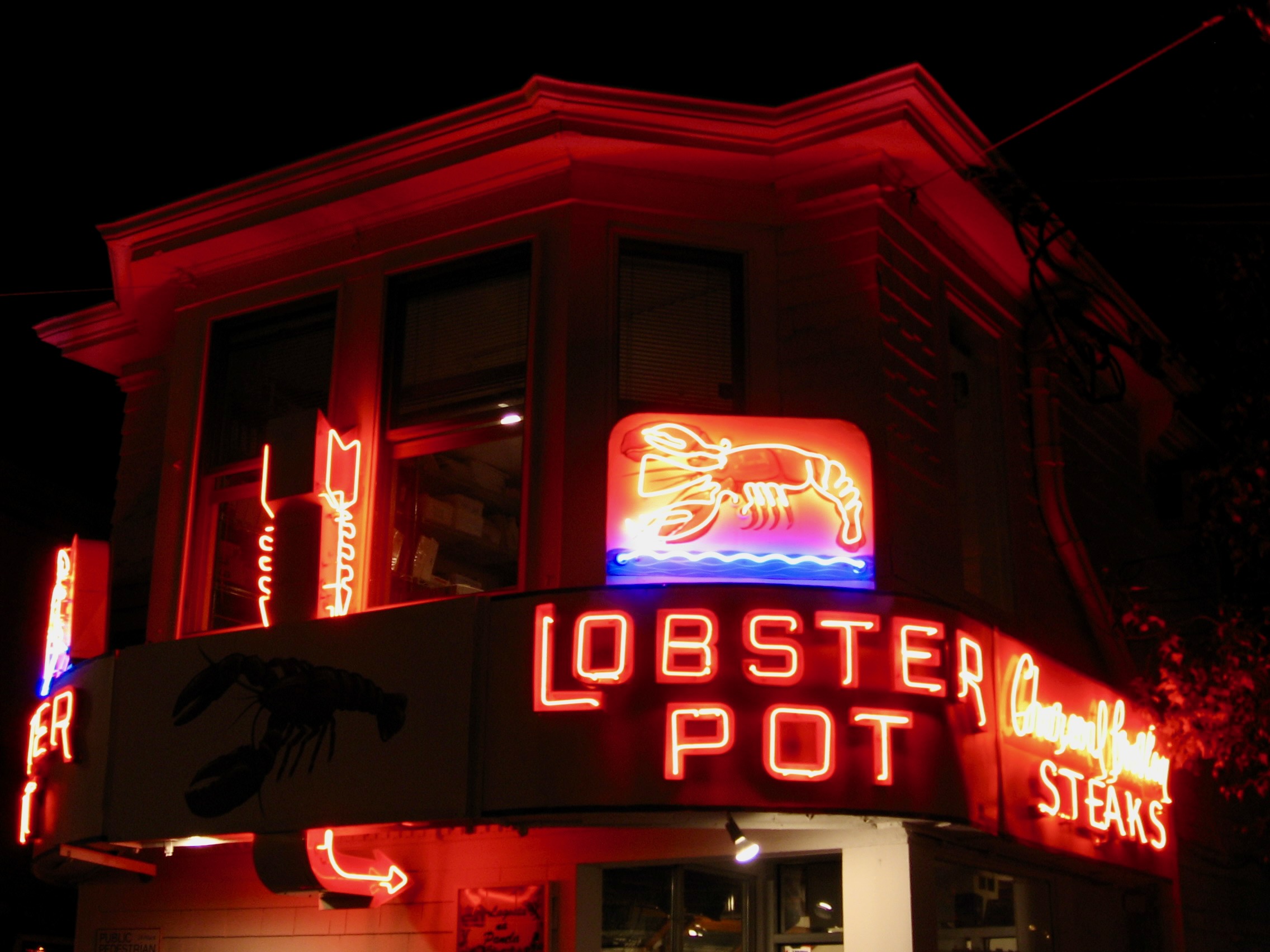
1. The Lobster Pot in Provincetown, Mass. Commercial Street is unimaginable without its piercing red glow.
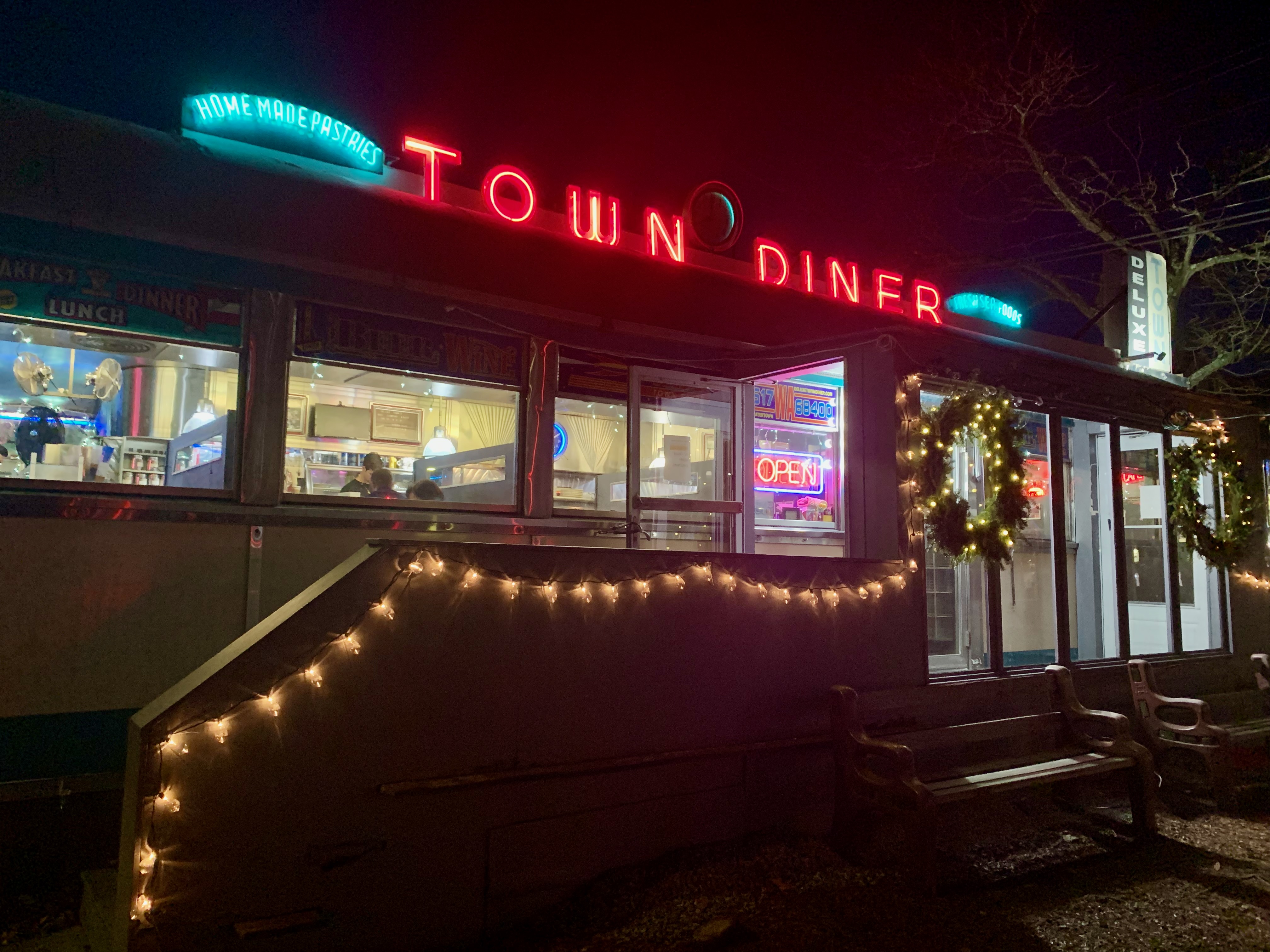
2. Deluxe Town Diner, Watertown, Mass. I lived a ten minute walk away in the early 2000’s and can still sense the delicate taste of their sweet potato pancakes.
3. Rosebud Bar & Kitchen, Davis Square, Somerville, Mass. Now the fancy front of a restaurant attached in the back, I ate this a few times back in the day when it was merely a diner (and the food was never as good as the Deluxe Town Diner’s.)
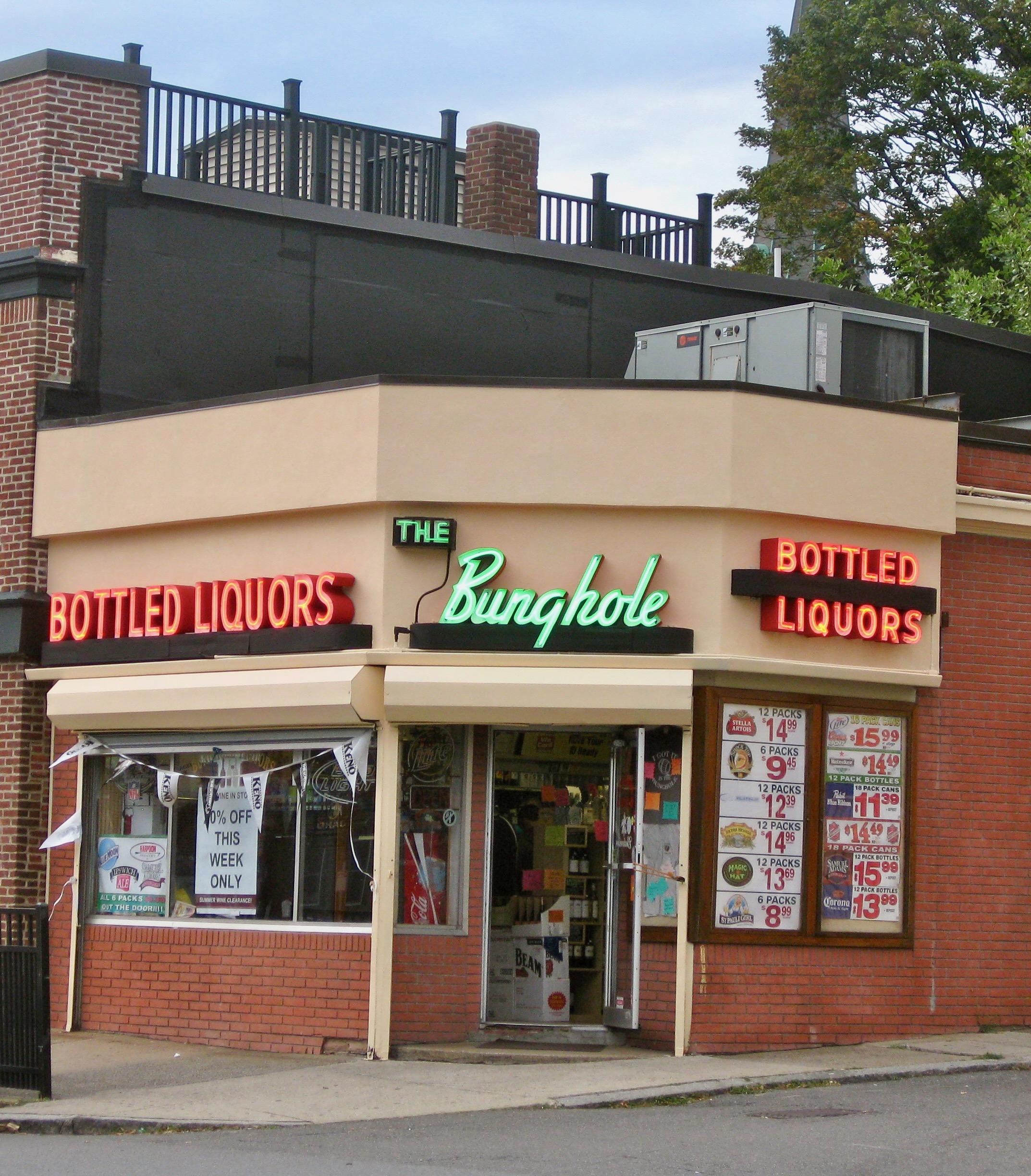
4. Bunghole Liquors, Salem, Mass. A favorite of weird-and-naughty-signs-aficionados far and wide.
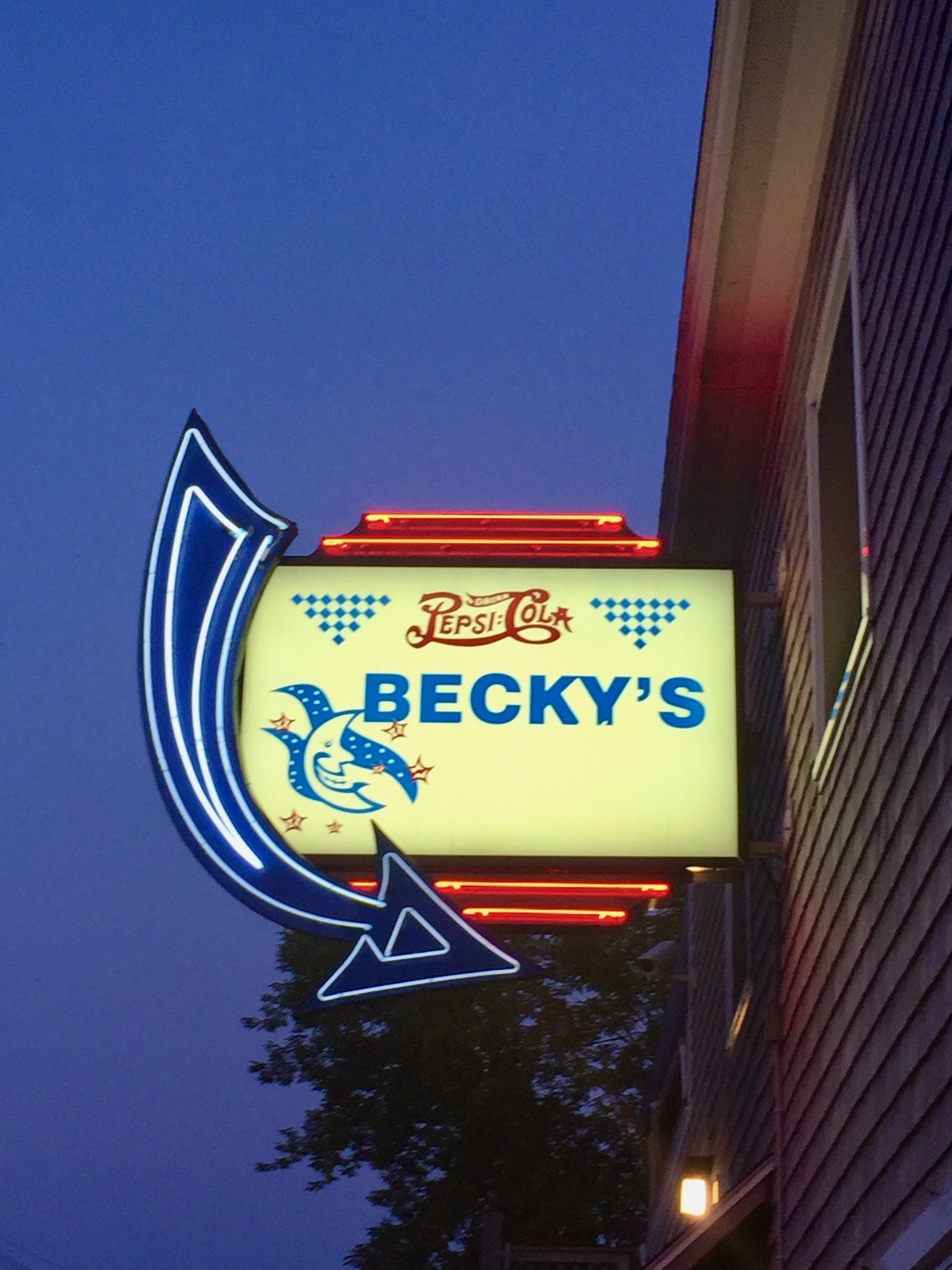
5. Becky’s Diner, Portland, Maine. Not sure how vintage the arrow is, but it is undeniably beautiful.
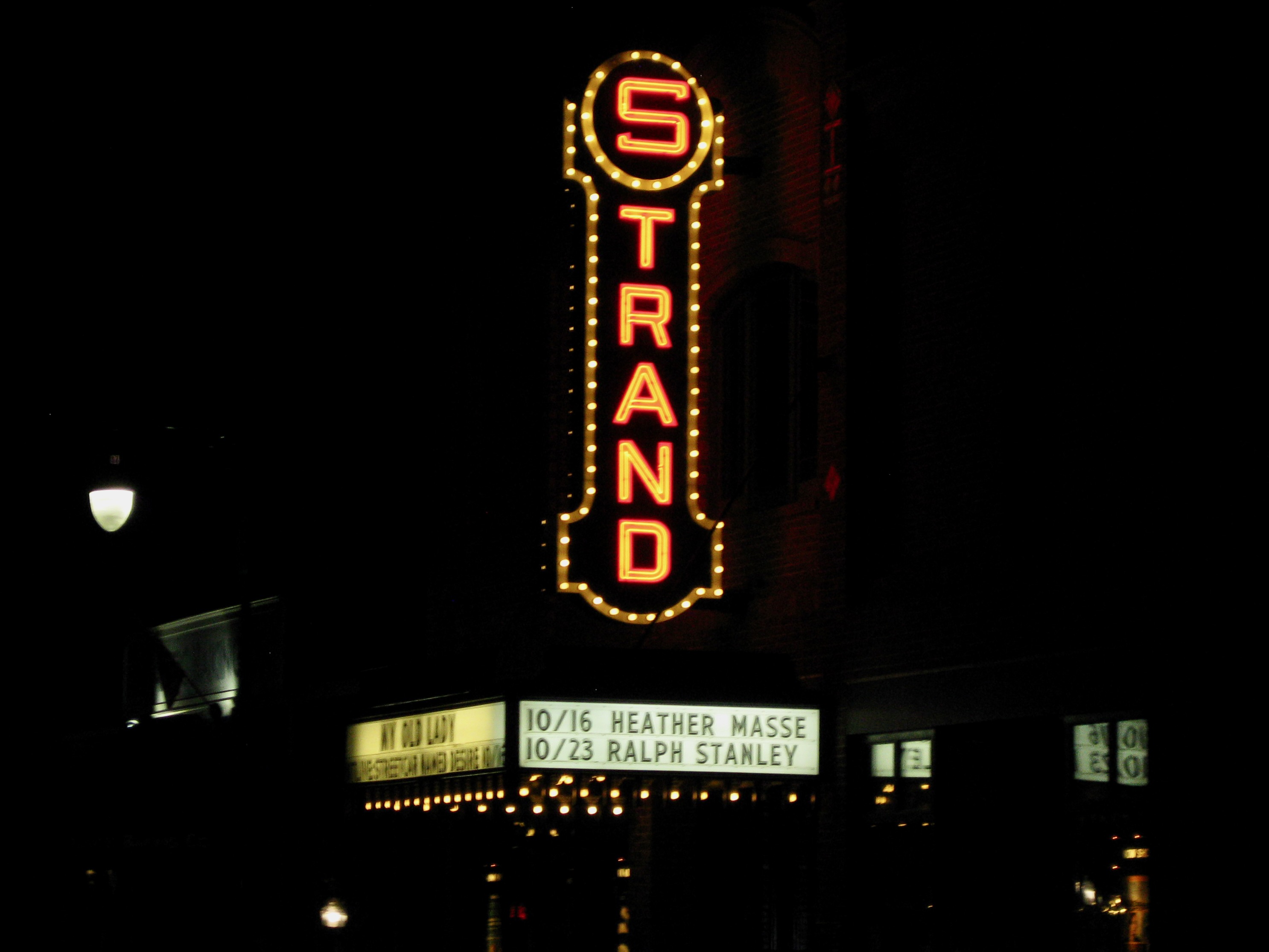
6. Strand Theater, Rockland, Maine. I’ve never been inside but this sign is an exclamation point on this coastal city’s downtown strip.
7. Leon’s Frozen Custard, Milwaukee. I could write a whole essay on the frozen custard stands of my hometown. It’s probably the third-best in terms of taste but certainly number one in design.
8. Miller High Life, some random bar on Kinnickinnic Avenue in Bay View, Milwaukee. Of course it’s Milwaukee!
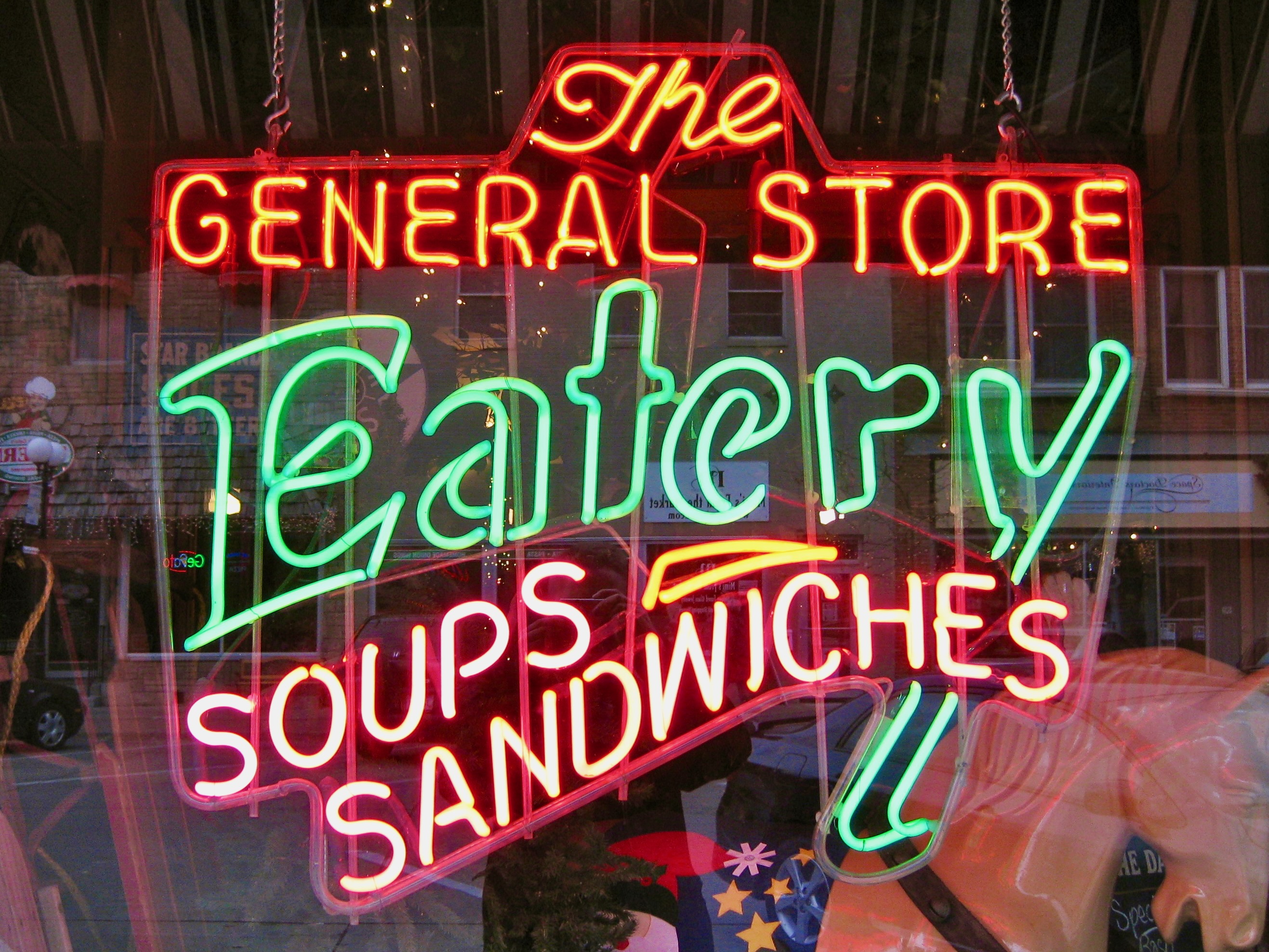
9. The General Store, Valley Junction, West Des Moines, Iowa. Spotted on one of my last visits when my parents lived there.
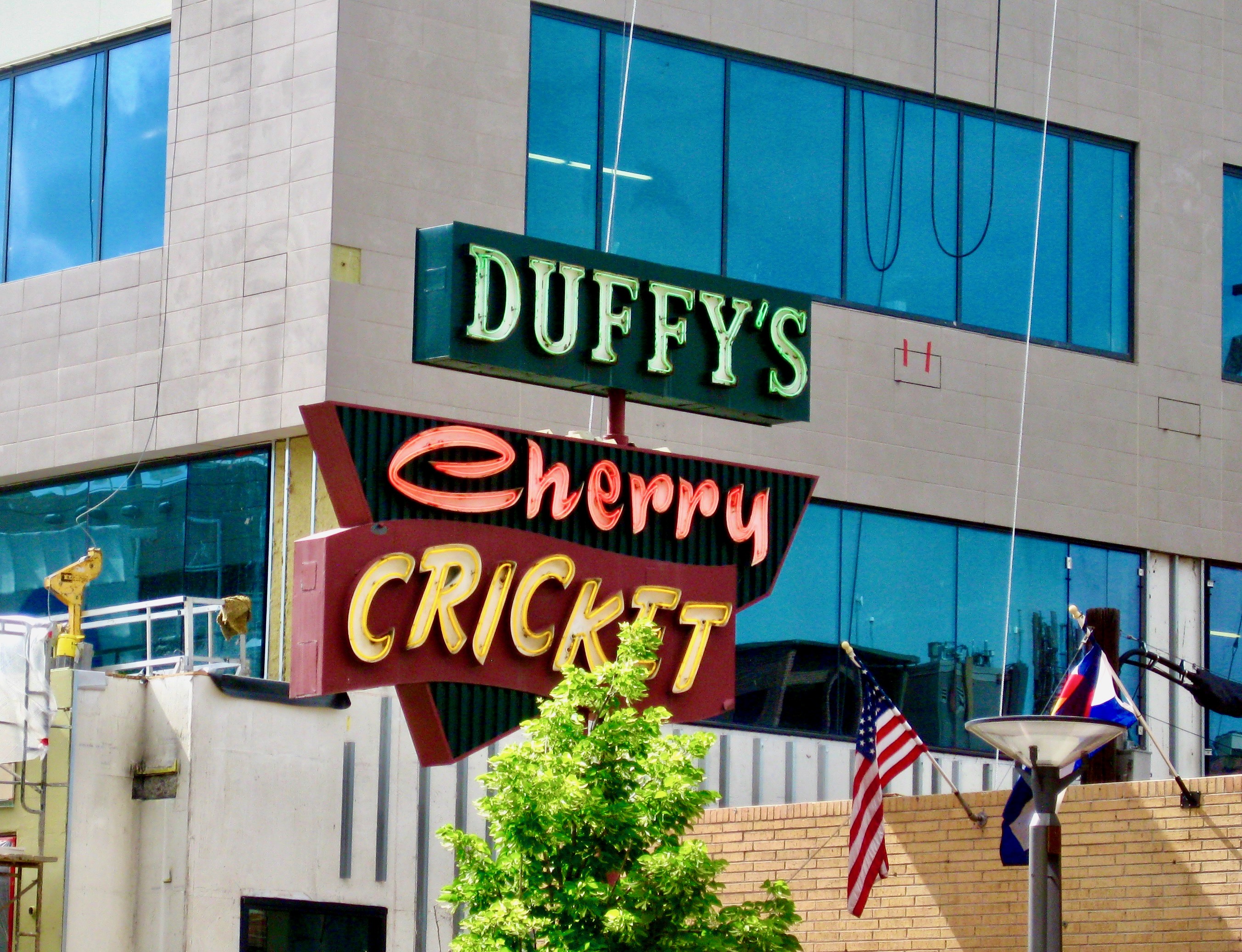
10. Duffy’s Cherry Cricket, Denver. Ate at a restaurant nearby on a visit a decade ago. Maybe I’ll check it out when I’m back there a few weeks from now.
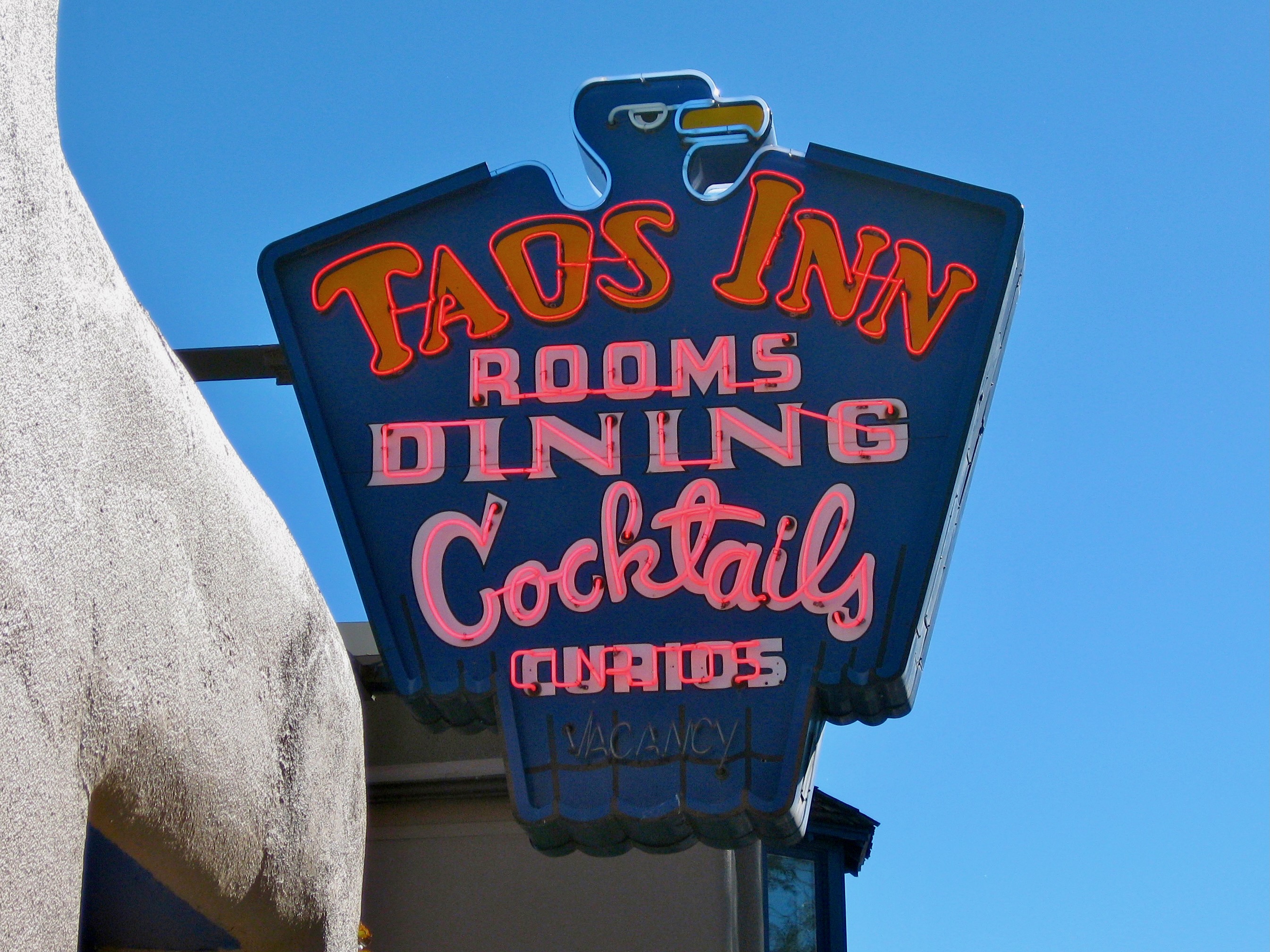
11. Taos Inn, Taos, New Mexico. Probably my favorite neon sign of this group. Respect the eagle!
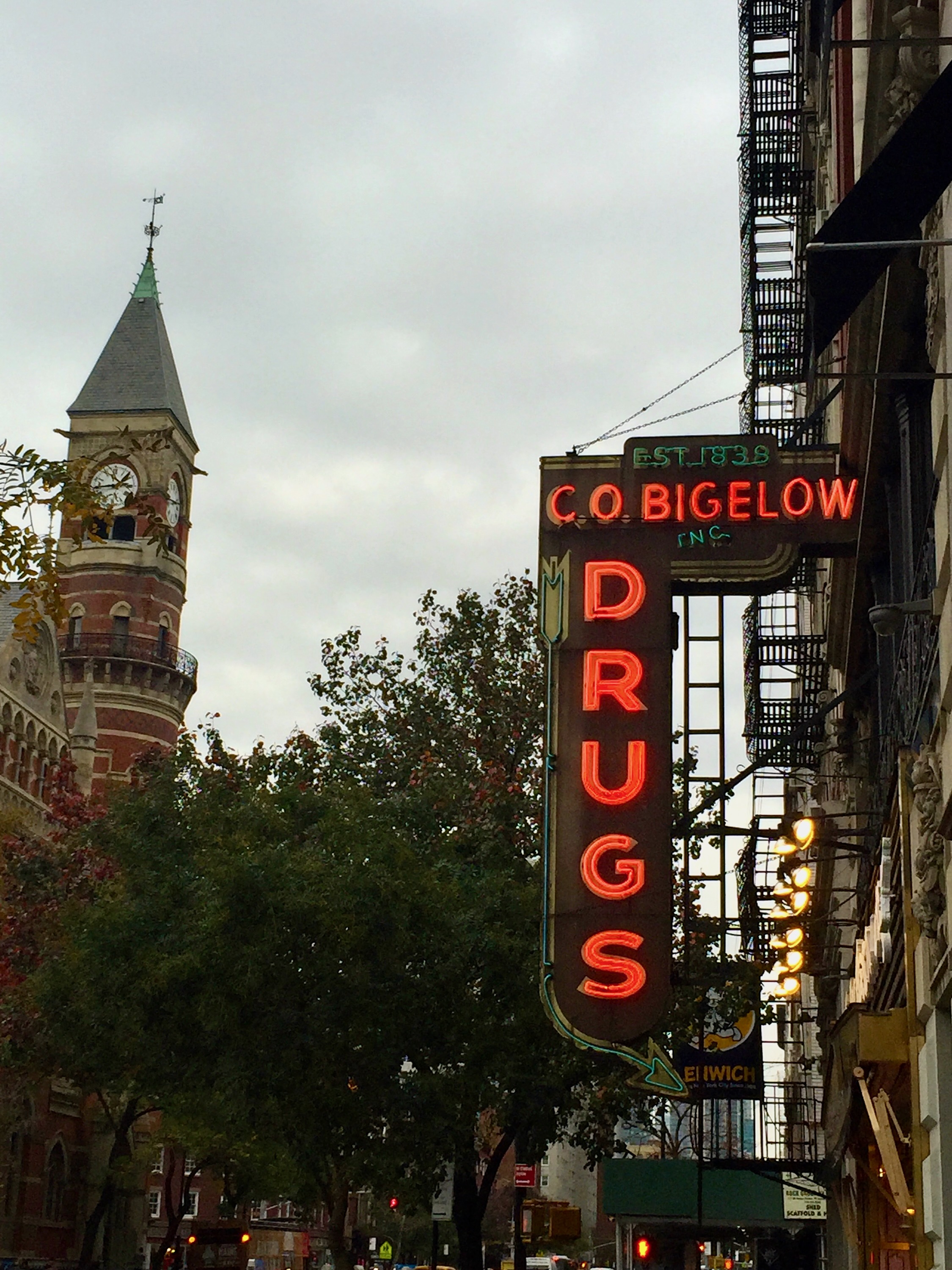
12. C.O. Bigelow Drugs, Manhattan. No trip to NYC for me is complete without a stop here.
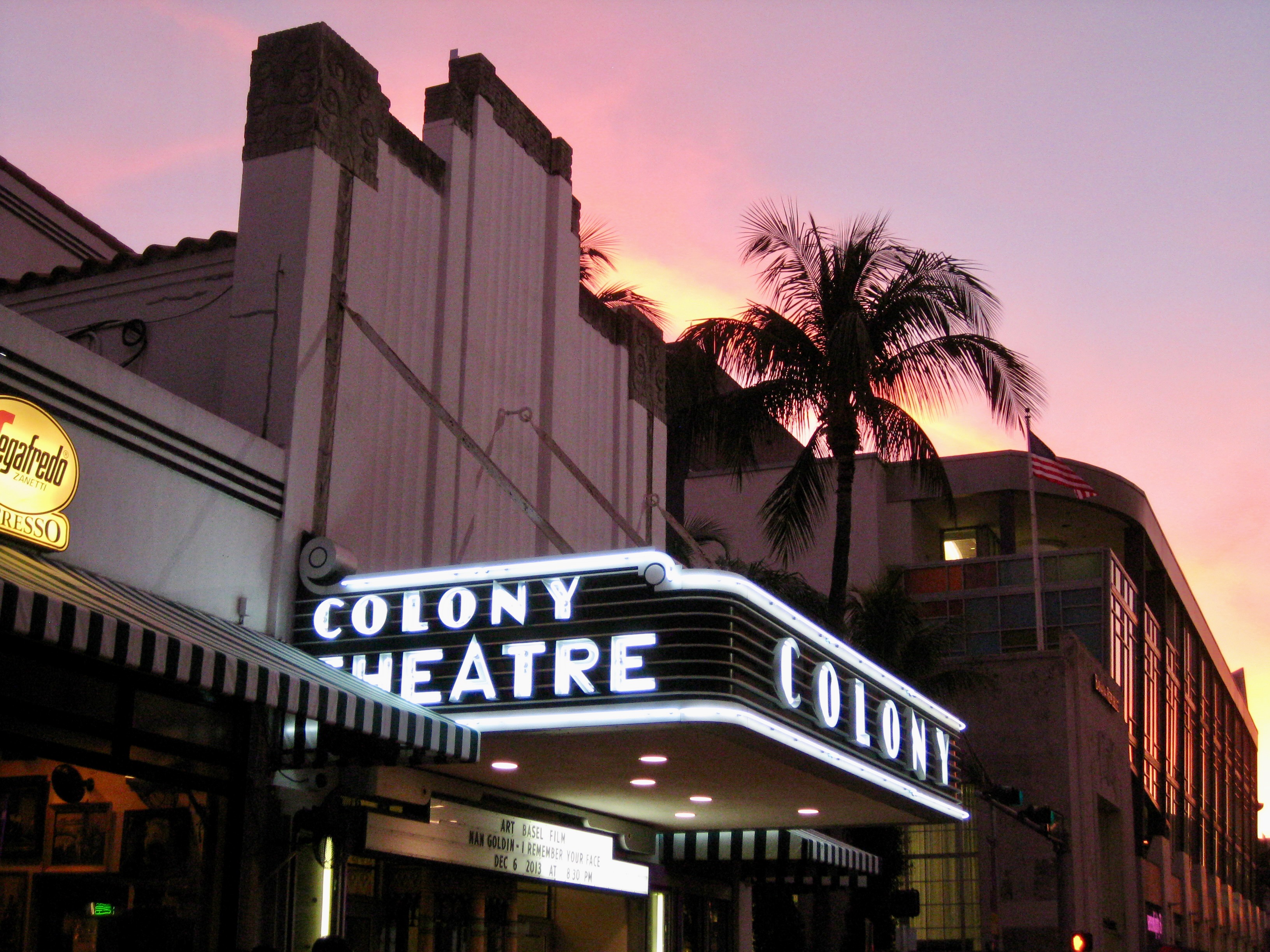
13. Colony Theatre, Miami Beach. Have not seen inside and I fear it would not fully live up to this exterior, taken on a December Thursday evening.
14. Southern Cross Hotel, Key West. One doesn’t see so much yellow-greenish neon; it’s stunning.
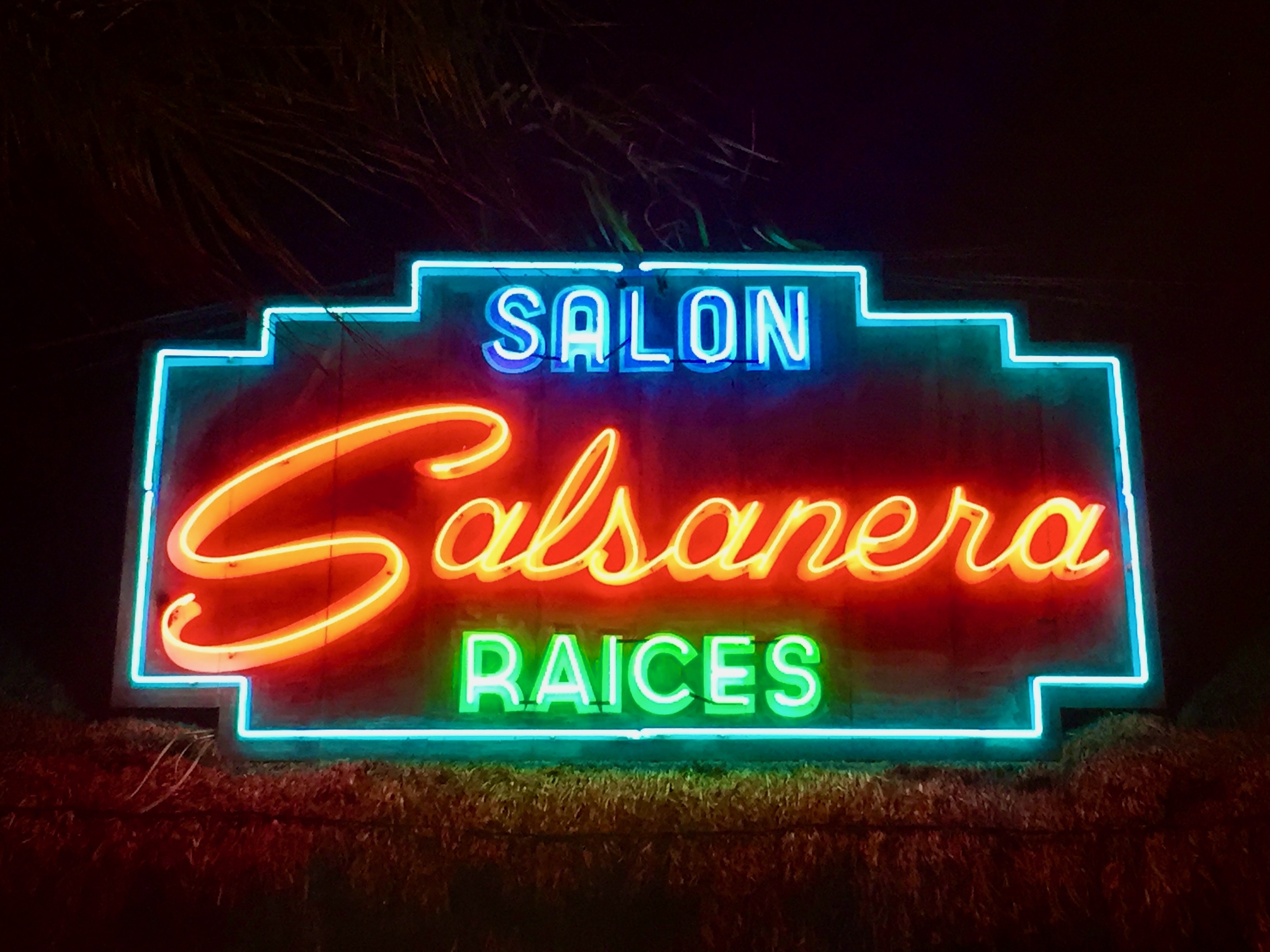
15. Salsanera, Playa Del Carmen, Mexico. This stopped me in my tracks on a visit nearly ten years ago; no way was I going to walk by without a snapshot of it.
Since coming up with my own list of 100 favorite films of this century to date, it’s inevitable I’d want to do the same for albums. During my 100 Albums project some years back, I said I’d never rank them, but those were all-time favorites to date; I can handle ranking a quarter century. Either way, I’ve included links to the 37 titles that were part of that project.
As for these rankings, like the film list, the top 30 or so is based on how I feel about each album right now—how much I return to it, how much I want to return to it. My number one in 2025 would have been the same in 2020, 2015 or 2010; the rest of the top ten is aligned with those periods as well, obviously apart from the entry that came out in 2023 and maybe Hometime, which I’ve always loved but whose presence in my life has grown exponentially in recent years (as did Riot On An Empty Street roughly a decade ago.) Rankings below #30 or so are even more intuitive although I was surprised to see Local Valley so high as it came in at a mere #7 on my top albums list of 2021.
As for metrics, four artists appear with three albums each (Sam Phillips, Saint Etienne, Kings of Convenience, Tracey Thorn—four for her if you count Fuse) and an additional thirteen have more than one slot. The most common years to appear are 2003 and 2004 when I was in my late 20s, writing for a music website and absorbing so much stuff. That more than half of these entries are from the 2000’s I can only chalk up to my age or perhaps having had more time to live with and retain them. Ideally, if I did this exercise in another 25 years for a half-century of music, the 2010’s and 2020’s would have just as much representation. Also, ask me to formulate another list like this in a year or two and don’t be surprised if it shifts all over the place.
Round two includes prog-rock, a contemporary cast recording, a porto-broadway hybrid, Tropicalia, and more.
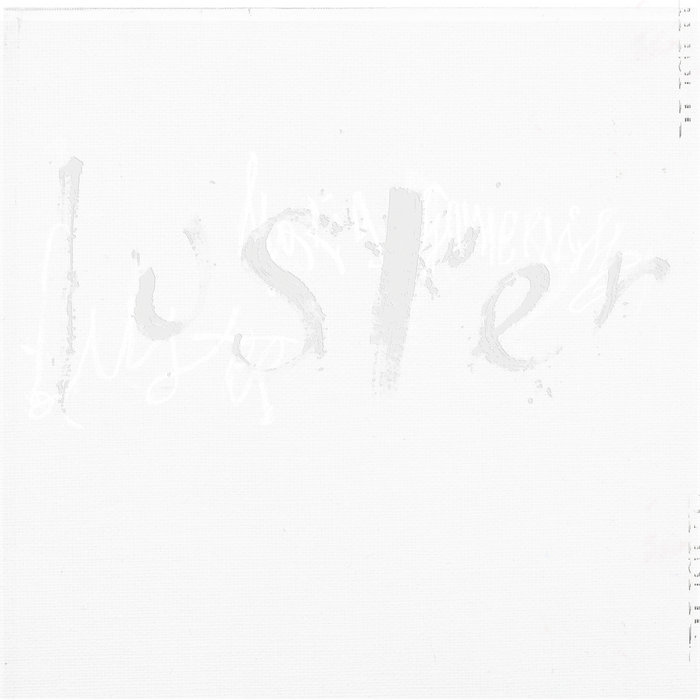
21. Maria Somerville, “Luster” (2025): Gossamer, 1000-thread count dreampop is exactly what I need right now. Like a soothing rush, it comforts but occasionally startles, gracefully delving into realms one wouldn’t expect from a song’s first note, maintaining that thrill of discovery.
22. Stew, “A Midsummer Night’s Dream” (2009): Not extensively Shakespeare-skilled so I can’t say how well this suits the material but these generally lovely miniatures (both instrumental and not) are refreshing in light of his more labored post-“Passing Strange” theatrical efforts.
23. Neil Young, “Sleeps With Angels” (1994): “Safeway Cart” well utilized in Claire Denis’ “Beau Travail” & the rest is as good, sometimes better (“Piece of Crap” isn’t one.) Solid for a CD-length era LP which is impressive considering the man’s, well, lack of consistency post-1979.
24. Aztec Camera, “High Land, Hard Rain” (1983): Frame’s fresh-facedness is his greatest asset but also a potential curse if he ever threatens to turn dour (unlike, say, Jens Lekman who can pull this off.) Crisp tunefulness abounds; at worst, it’s samey over the course of a full LP.
25. Al Stewart, “Modern Times” (1975): The closing title track anticipates his two big hits (title tracks of his next two albums) but the whole LP reminds one he has so many gems beyond those hits. Whether quoting Vonnegut or Marvin Gaye, his heart’s always in it which counts a lot.
26. King Crimson, “In The Court Of The Crimson King” (1969): Neither put off nor enchanted by much prog-rock, I appreciate the skill and creativity of this admittedly seminal work although it doesn’t move me much. “Moonchild” gets a bit lost but the rest exudes dynamism; vision, even.
27. Original Broadway Cast Recording, “Hadestown” (2019): Much to digest in this musical adaptation of the Orpheus myth but the momentum rarely flags and it doesn’t lose the plot. Perhaps some cringey musical theatre tropes but Anais Mitchell’s melodic dexterity often overcomes them.
28. Rob Dickinson, “Fresh Wine For The Horses” (2008): Wouldn’t swap any Catherine Wheel LP out for this (except maybe the last one). Still in great voice even if the tempo’s too mid (among other things.) Predictably, he sounds most comfortable when the guitars are loud (“Handsome”).
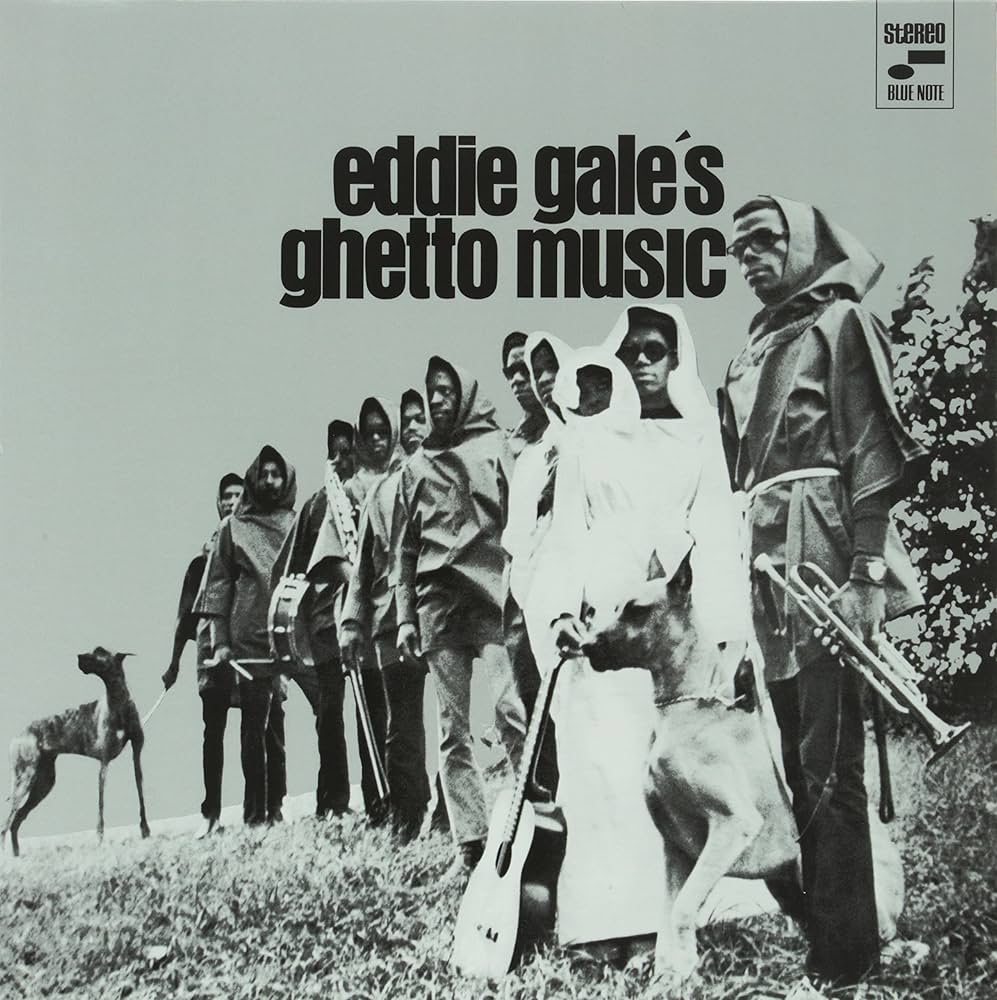
29. Eddie Gale, “Ghetto Music” (1968): Hypnotic “The Rain” should be a standard if it isn’t considered one already; the rest is a cohesion of rumbling & clanking percussion, horns and soulful vocals. Creates a singular, haunted vibe, as if Coltrane had eschewed cacophony and also lived.
30. Eddie Chacon, “Pleasure, Joy and Happiness” (2020): Low-fi, low-key soul, perhaps recorded in (as opposed to for) someone’s bedroom. Concise & a bit slippery, a single listen plants a seed for another five or ten, not to pick up on something missed but to detect all of its nuance.
31. Hiss Golden Messenger, “Quietly Blowing It” (2021): MC Taylor can’t help it if his voice heavily resembles 1970s Dylan but I wouldn’t call this cosplay, exactly when the arrangements are more Van Morrison-ish. Happily, the melodies are strong enough to serve as the focal points.
32. Ennio Morricone, “Ad Ogni Costo” (1967): The *bonkers* main theme moved me to check out the rest of this score, which isn’t nearly as wild (particularly once it moves into “Black Orpheus” territory); still want to see the film to reconcile it with star Janet Leigh’s (!) presence.
33. Bon Iver, “SABLE, fABLE” (2025): I gave up on him when he could no longer string together comprehensible song titles but the first “disc” is a deliberate reminder of why his debut endures; the rest is a less pretentious Coldplay which is preferable to a less douchey John Mayer.
34. MF DOOM, “Operation: Doomsday” (1999): Wouldn’t it be grand if 100 years from now this is what hip-hop scholars studied rather than Drake? Although I wonder if Gen-Z and beyond will get all the junky old cartoon references: “Hey!” is infinitely funnier if you know what it samples.
35. Gordon Jenkins, “Manhattan Tower/California (The Golden State)” (1946): Broadway-style vignettes strung together in suites resembling proto-LP “sides”. Obviously ancient to modern ears but not without ingenuity or even a little satire which leavens the cornier stylistic touches.
36. Caetano Veloso, “Transa” (1972): Talk about a voice that just commands attention, rendering all else near superfluous. Not devaluing the music, though: lithe and intuitive, it’s somehow intimate *and* expansive. This makes me want to delve much deeper into Tropicalia for sure.
37. They Might Be Giants, “Cast Your Pod To The Wind” (2007): Bonus disc with 12th LP “The Else”. Clever title, cleverer tunes (as usual). More of a throwback to the earlier stuff which is always welcome. Uneven, but whenever it lands a hook, you marvel at how simple they make it look.
38. A.R. Kane, “69” (1988): Starts as proto trip-hop, then the titles get weird (“Baby Milk Snatcher”) & the music gets weirder: it’s nearly psychedelia but not exactly how you’d usually describe that genre. Not easy on the ears, but not unpleasant; like unearthing a lost corridor.
39. Marvin Gaye, “Here, My Dear” (1978): D-I-V-O-R-C-E rarely sounds this F-U-N-K-Y. The divine “Is That Enough” at almost 8 minutes could even go on longer. Maybe this didn’t need to be a double LP but my attention rarely drifted and “A Funky Space Reincarnation” is all that & more.
40. Mercury Rev, “Deserter’s Songs” (1998): You don’t often hear this much whimsy in rock (if you can even call it that.) Mewling vocals, tricky time signatures, instrumental passages, occasional misdirection—it’s an acquired taste although I feel like applauding the effort anyway.
In 2008, I participated in a meme asking one to reveal a dozen unseen films a true film buff should have seen by then; I came up with the twelve below in chronological order (all of them pre-2000).
Happily, 17 years later, I’ve seen all but two! What follows is my original text, plus updates in italics.
1. GONE WITH THE WIND (1939, director: Victor Fleming) Arguably the most popular film of all time, I feel like I’ve seen it without ever having actually seen it–think of all the quotable lines and parodies throughout history unto infinity–and besides, who has four hours to kill? I missed it during its last theatrical release ten years ago; perhaps I’ll soon get another chance to see it on the big screen during its 70th (or 75th) anniversary.
Not Seen! I obviously haven’t found the four hours to kill, although I will soon in my effort to see every Best Picture Oscar winner before the 100th edition in 2028. The recent backlash against this film’s celebration of slavery hasn’t exactly encouraged me to make time for it, either.
2. WILD STRAWBERRIES (1957, dir: Ingmar Bergman) I’ve always admired rather than adored Bergman; I see the greatness in PERSONA and SCENES FROM A MARRIAGE and respect at least a half-dozen other Bergman classics, but I find so much of his work too cold and austere. However, many people I know consider this film about a teacher looking back at his life in existential dread as essential, so it sits waiting patiently for me to move it out of Netflix queue limbo.
Seen at the Brattle Theater in 2015. I’ve since concluded I love nearly all of Bergman’s work starting with PERSONA and everything after but I’m unmoved by most of what came before, this film included.
3. IMITATION OF LIFE (1959, dir: Douglas Sirk) I went on a mini-Sirk kick two years ago, watching WRITTEN ON THE WIND and ALL THAT HEAVEN ALLOWS in quick succession after a viewing of Todd Haynes’ loving, bold homage FAR FROM HEAVEN. I think Rock Hudson’s absence has kept me from making the time to check this one out–after seeing the other two films, Sirk w/out Hudson is in my mind unthinkable.
Seen on DVD in 2009. Hudson’s not missed! Would love to revisit after having viewed the pleasant but inferior 1934 version earlier this year.
4. HIGH AND LOW (1963, dir: Akira Kurosawa) I almost saw this as part of the Friday Night Screening/Speaker series I worked on at BU a decade ago, but it was replaced at the very last minute by a work-in-progress-screening of Errol Morris’ MR. DEATH: THE RISE AND FALL OF FRED A. LEUTCHER, JR. with the director in person. Kurosawa is another auteur I never really “got” until I saw his somewhat atypical IKIRU a few years ago, and I’m ready to sit down and take in this kidnapping thriller.
Seen on Criterion Channel in 2020. One of my most illuminating pandemic watches. Gave it 5 stars on Letterboxd, noting how that late bravura sequence in the nightclub/flophouse was one of the most meticulous and thrilling I’d ever witnessed..
5. THE GODFATHER, PART II (1974, dir: Francis Ford Coppola) During my first year in Boston, I rented on average four movies a week from the now-shuttered Allston Videosmith. “Film Club” members were entitled to two-for-one rentals on Tuesdays, provided you rented from a specific genre chosen every month. That October, it was “widescreen” film (funny to think that was a genre in the pre-DVD age), so that’s how I ended up watching THE GODFATHER for the first (and to date only) time. I liked it well enough, so I don’t know why I never got around to its highly regarded sequel.
Seen on Paramount Plus in 2022. I still like the original more (and have now seen it on the big screen as well), but as sequels go, not too shabby. Still have no desire to see Part III, however.
6. FINGERS (1978, dir: James Toback) The premise intrigues: A young man (Harvey Keitel) is torn between loyalties to the mob and dreams of becoming a famous concert pianist. I probably would have made more of an effort to see Toback’s film by now if not for the very good 2005 French remake, THE BEAT MY HEART SKIPPED with Romain Duris in the Keitel role.
Seen at home in 2011. An underseen classic and surely Keitel’s best performance.
7. THE RIGHT STUFF (1983, dir: Philip Kaufman) I read Tom Wolfe’s account of the U.S. space program’s early years back in 2002. This film adaptation, underrated and a flop at the time of release, has a great cast (Ed Harris, Dennis Quaid, Barbara Hershey) and a three hour running time. Oh, how I used to have a higher tolerance for lengthy flicks–ten years I ago, I remember seeing LA DOLCE VITA, ULYSSES’ GAZE and Tarkovsky’s SOLARIS (all 3 hour flicks) over the course of one Columbus Day weekend!
Seen on TCM in 2023. Gave it 4.5 stars on Letterboxd and wrote, “Maybe the best film about space travel after 2001: A SPACE ODYSSEY? Apart from sections of the score, it might’ve been made yesterday.”
8. LOCAL HERO (1983, dir: Bill Forsyth) I never heard of Forsyth’s comedy before I moved to Boston to study film, but since then, I’ve heard nothing but great things about it. And given that I loved his neat 1987 adaptation of Marilynne Robinson’s novel HOUSEKEEPING (why isn’t that one on DVD?), I have to make time for it soon.
Seen at the Brattle Theater in 2013; rewatched on my own Criterion Collection Blu-Ray in 2019. Now one of my favorite movies, it nearly became an entry in 24 Frames. Every subsequent movie with a similar fish-out-of-water, city-to-rural scenario owes something to it, and none of them have bested it.
9. SCHINDLER’S LIST (1993, dir: Steven Spielberg) I don’t care if it’s his mature masterpiece–I’d rather sit through the horror of CRASH again (Haggis, not Cronenberg even!) than have to watch another film about the holocaust.
Not Seen! As with #1, this will soon be part of my Best Picture Oscar winner watch; the best I can offer is that I’m looking forward to seeing it more than, say, BRAVEHEART, but honestly not by much.Happy I never have to rewatch Haggis’ CRASH, by the way.
10. WHITE (1994, dir: Krzysztof Kieslowski) On the list because I saw BLUE and RED a decade ago but for some reason, I never got around to this one–and it even has the lovely Julie Delpy in it! At this point, I might as well watch all three in order.
Seen on HBO Max in 2021 when I watched the entire THREE COLOURS Trilogy. Easy my least favorite of that trio (Delpy’s barely in it!), but it grew on me, particularly once the narrative mutated into something unexpected.
11. PRINCESS MONONOKE (1997, dir: Hayao Miyazaki) Out of all these unseen films, there’s absolutely no excuse for this one, given how much I love SPIRITED AWAY. Maybe the film’s action/adventure slant has kept me at bay, or maybe I don’t have too strong of a jones for anime and Miyazaki’s an anomaly.
Seen on HBO Max in 2021 a month before the previous entry (I was unemployed and had so much time for movies); a dark, beautiful epic that was pretty much what I expected; maybe it would’ve hit a little harder had I seen it before SPIRITED AWAY.
12. BUENA VISTA SOCIAL CLUB (1999, dir: Wim Wenders) As I repeatedly discovered throughout grad school, Wenders is wildly uneven. For every WINGS OF DESIRE or little-seen masterwork like the epic, demented KINGS OF THE ROAD (another three hour film!), there’s crap like TOKYO-GA or THE END OF VIOLENCE. But this doc about Cuban musicians frequently pops up on best-docs-of-all-time lists.
Seen at home in 2013, weeks after my own trip to Cuba. Good movie, great music but at the time of this watch, Wenders was still a decade away from rehabilitating his career with his out-of-nowhere masterpiece PERFECT DAYS.
The Decline of Western Civilization Part II: The Metal Years
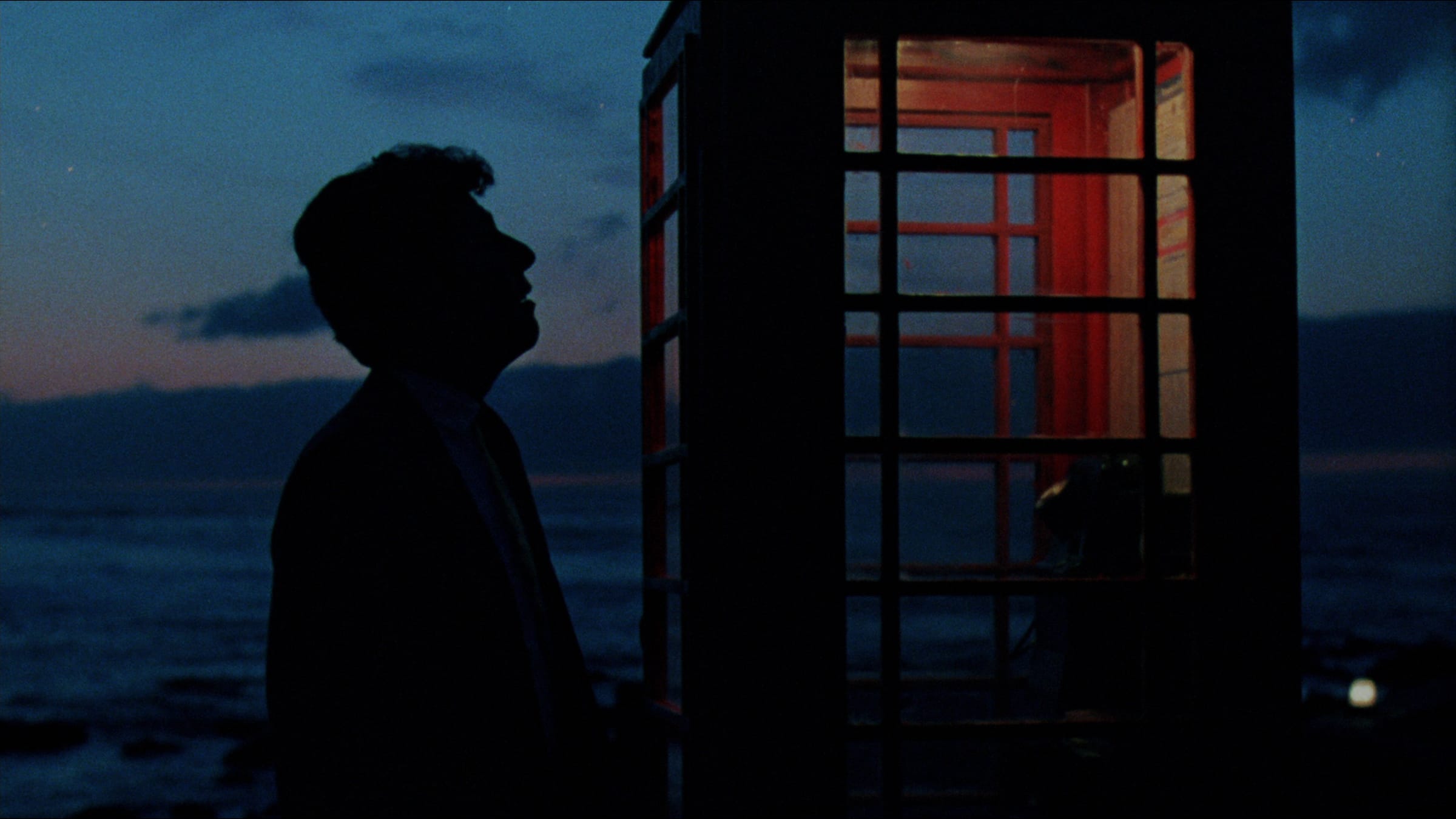
Landscape In The Mist
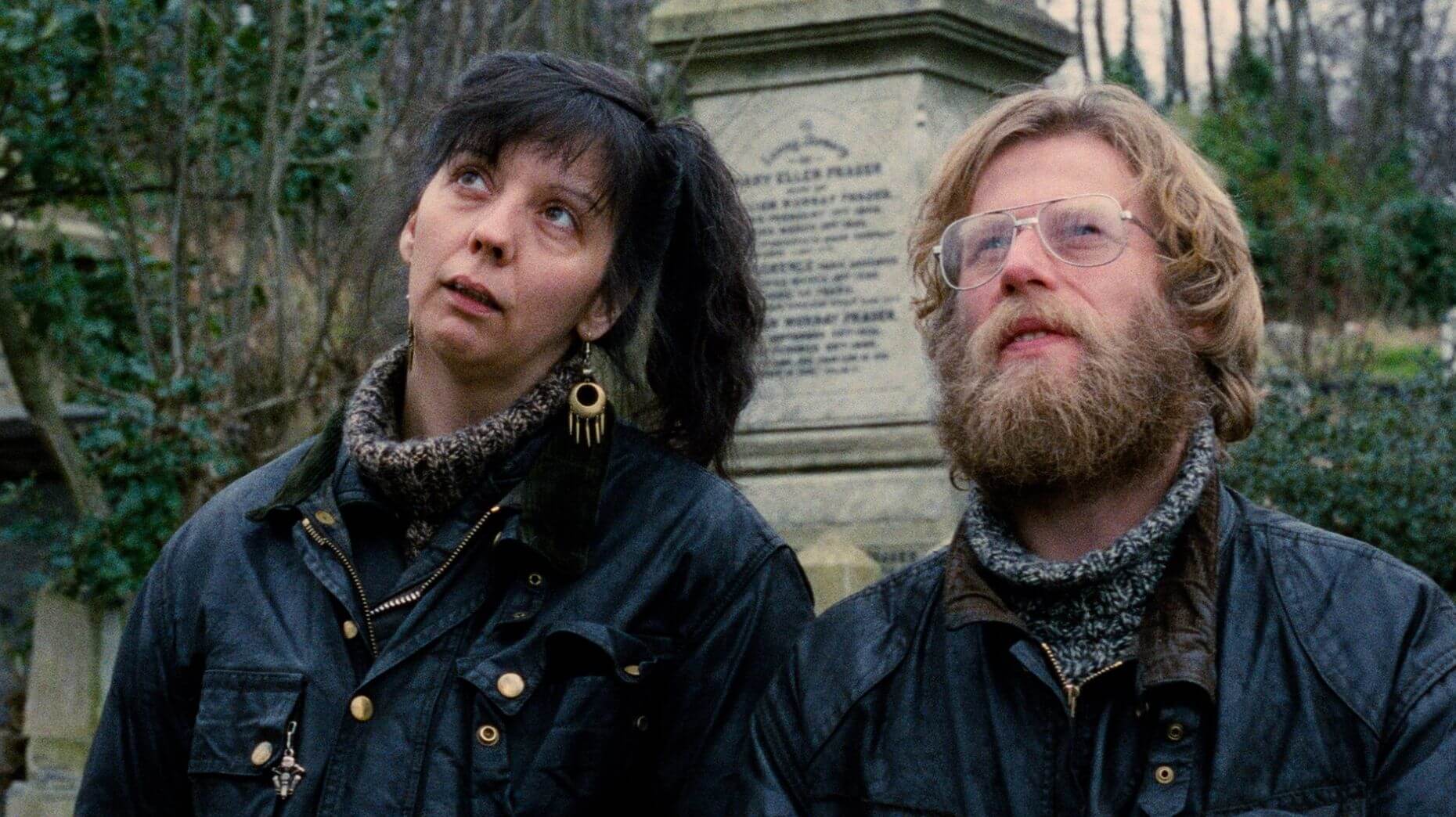
Honorable Mentions: Chocolat, Crossing Delancey, Distant Voices Still Lives, The Unbearable Lightness of Being, Who Framed Roger Rabbit
For My Watchlist: Dangerous Liaisons, Drowning By Numbers, The Last Temptation of Christ, Married To The Mob, Rain Man
*
I often rag on the 1980s as an underwhelming decade for cinema, and most of its Best Picture Oscar winners have proven me right (with a few exceptions, and yes, I still need to see Rain Man.) This explains why I was particularly drawn to 1988, which seems an anomaly in this period.
Look at this top ten! We have big budget studio pictures that are uncommonly witty (A Fish Called Wanda, Midnight Run), emotionally complex (Running On Empty) and exceptionally weird (Beetlejuice, my second favorite Tim Burton after the one that will likely be #1 for its respective year.) There’s also international auteur-centric filmmaking of the highest order (Almodovar’s most iconic effort, one of Cronenberg’s wildest body horror/character studies) and what remains my top John Waters film, partially because it’s the first one I saw but also for how nimbly it threads the needle between his earlier transgressiveness and his later subversive shadowing of mainstream pop culture. Theo Angelopoulos’ lyrical art film Landscape In The Mist is an outlier here, but not much more than Penelope Spheeris’ frank and entertaining LA hair metal doc (RIP Ozzy Osbourne, whose sequence in it feels like an inspired audition for his later reality show.)
At the top, however, sits the essential Mike Leigh film. Made for the cinema after a decade-and-a-half of mostly productions for British television, it’s where he perfects his long-gestating obsessions on class, family and politics (especially the scourge of Thatcherism) by focusing on three urban couples, one of which, lovingly played by Leigh regulars Ruth Sheen and Phil Davis might be his most detailed and humanist depiction of the proletariat. High Hopes doesn’t shy away from broad humor or the absurd situations often bubbling through his work, but how ever hyper-specific it comes across as a view of its time and place, it’s altogether the defining dramatic record of it.
Perhaps Roger Rabbit or The Unbearable Lightness of Being might’ve cracked the top ten had I seen either of them since the 1990s. Chocolat and Crossing Delancey, both more recent first-time watches are highlights in each of its director’s filmographies (Claire Denis and Joan Micklin Silver, respectively.) The Terence Davies film is an important one but I prefer its 1992 follow-up for how it approaches similar subject matter with more nuance and visual ingenuity. It’s more surprising to me that I’ve never made the time to see Jonathan Demme’s mafia comedy or Dangerous Liaisons than Scorsese’s controversial biblical epic although all three (along with the Peter Greenaway film) are titles I intend to watch someday. Stay tuned to see if any other year from the 1980s proves as robust as this one.
Last month, I looked over my Spotify library and found hundreds of albums I’ve saved but haven’t listened to. Thus, in an attempt to post more on Bluesky, I’ve begun a version of the Music Writers’ Exercise (#mwe) that I used to participate in on the Social Media Site That Shall Not Be Named, listening to 100 albums and posting a small paragraph about each of them. Here are the first twenty which hopefully give a sense of all kinds of music I’m drawn to. Best discoveries include two albums released this year, one from over 30 years ago and another I’ve been meaning to check out since reading about it in Tim Blanchard’s book Like Magic In The Streets.
1. Malcolm Middleton, “Into The Woods” (2005): From this title & cover, was expecting something more pastoral (suppose “Monday Night Nothing” nearly fits the bill). Has a “better” (if less distinct) voice than his Arab Strap bandmate Aidan Moffat although his brogue’s nearly as robust.
2. Tony Bennett, “Hometown, My Town” (1956): Just as silent cinema’s artistry peaked near the advent of sound, the Great American Songbook was never more expansive than at Rock’s dawn. Tapers off near the end but begins strongly with the melancholy, searching “The Skyscraper Blues”.
3. Michael Hurley, et al. “Have Moicy!” (1976): Once acclimated to Stampfel’s vocal style (did he sing the 70s Armour Hot Dog jingle?), I much enjoyed this goofy, sincere, more-than-a-jam session amongst some folk revivalists (and it’s where Yo La Tengo got “Griselda” from to boot.)
4. Lou Christie, “I’m Gonna Make You Mine” (1969): Title track’s ebullient bubblegum is almost as snappy as the same year’s “Sugar Sugar”; most of the rest is better than filler with “It’ll Take Time” and “She Sold Me Magic” lost gems. RIP to a great American weirdo pop singer.
5. SPRINTS, “Letter to Self” (2024): Karla Chubb’s vocal resemblance to Pylon’s Vanessa Briscoe Hay got my attention but this Irish band’s more-melodic-than-abrasive punk (rather than Pylon’s post-punk) is winning in drive and dynamic even if they could ease up on the minor-key tunes.
6. The Pale Fountains, “Pacific Street” (1983): The Clientele of their time? More obscure than The Go-Betweens at any rate. Swelling strings and trumpet fanfares enliven brisk strums and yearning vocals with all of these components arrestingly coalescing in closer “Thank You”.
7. Nina Simone, “Emergency Ward!” (1972): Eighteen minutes of “My Sweet Lord”, eleven of “Isn’t It A Pity” both are as different as could be from Harrison’s originals and Simone’s genius is to make them effortlessly transcendent with aid of gospel choir and her own piano, respectively.
8. Si Zentner, “The Swingin’ Eye” (1960): Nothing could possibly live up to that LP cover but it swings harder than Glenn Miller (if not Louis Prima). With muted trumpets, nimble piano solos and occasional brass blasts, it’s pleasant but Esquivel’s more my speed for this kind of thing.
9. Rachel Chinouriri, “What A Devastating Turn of Events” (2024): Her Gen-Z indie pop’s not dissimilar from beabadoobee’s (or early Corinne Bailey Rae), but indelible hooks (the whistling on “It Is What It Is”) and caustic humor (“Dumb Bitch Juice”) both separate her from the pack.
10. Luther Vandross, “Never Too Much” (1981): More familiar with his later crossover era, this is an impressive debut even beyond the title track & celebrated Bacharach cover. In one word, effervescent: a major talent with infectious ease to spare like a dream come true (his and ours).
11. Patrick Wolf, “Crying The Neck” (2025): Another triumphant return in an abundant year for them: sumptuous, intricate but never fussy or labored, a layered, dense canvas inviting one to expend time and effort exploring it, promising discovery and even some instant gratification.
12. The Beach Boys, “Surf’s Up” (1971): I appreciate their ambitious, eccentric stuff (esp. the title track) for how it slyly anticipates even weirder homages to come (hi, The High Llamas!) Still relatively accessible & presumably not a bad place to dip a toe in for this period.
13. Dennis Parker, “Like An Eagle” (1979): The suitably soaring, impeccably strung out title song comes from the dudes responsible for the Village People, & it’s far less camp than “YMCA” or even ABBA’s own “Eagle”; sadly, the rest is Broadway-ready disco cheese for diehards only.
14. Nellie McKay, “Bagatelles” (2019): Finally reconciling her transition from subversive songwriter to expert interpreter, this is an ideal way for her to practice the latter: 17 minutes, 8 standards, stripped down to voice & ukelele, coasting on skill and charm; it’s enough.
15. The KLF, “Come Down Dawn” (2021): Reissue/revision of 1990’s “Chill Out”, an aural travelogue of found sounds, overheard conversations, stray beats, etc. Removed from its initial cultural impact, it’s pleasant rather than stimulating though repeated plays might reveal otherwise.
16. Faust, “Faust IV” (1973): No wonder the 11-minute “Krautrock” named a genre: hypnotic without ever becoming inert, with a droning simplicity easy to emulate but more difficult to replicate. The rest I probably could not do justice to after a single listen; it’s all over the place.
17. Giorgio Moroder, “From Here To Eternity” (1977): I suspect this got tons of airplay in sleazy gay discos, particularly side one’s suite. Benefits from its brevity & deadpan humor though the production often feels like a working draft for Sparks’ “No. 1 In Heaven” two years later.
18. The High Llamas, “Gideon Gaye” (1994): LP #2 an ideal place to start, at least compared to other, denser efforts of theirs. Actual pop (or “pop”) songs sit aside wistful instrumentals and diversions (14-minute “Track Goes By”), O’Hagan exuding confidence in forging his own world.
19. Stereolab, “Transient Random-Noise Bursts With Announcements” (1993): After this year’s stunning return, going back to the early albums I missed. Almost shocking hearing so much guitar here, though their bossa-nova diversion agreeably sits aside all of the drone/groove set pieces.
20. Barbra Streisand, “Guilty” (1980): My folks had the vinyl (all of Babs’ LPs from that era, actually) but I didn’t know anything beyond the hits. 4th single “Promises” might’ve been massive had it come out earlier; ballads are meh but Barry’s guidance & ambition are a good fit.
I could not resist submitting my own unranked top ten ballot to New York Times’Top 100 Films of the 21st Century poll last month. Below is that top ten ranked, along with ninety other titles I would place in my own canon for the past 25 years. Below #30 or so, the ranking’s less important and subject to change (as anything ranked is, really.) I will say the order of the top three is also always in flux; given the widespread love for #2 and #3, I went with something more obscure but dear to my heart for #1.
Paul Thomas Anderson has three titles in the top 40; the only other filmmakers with as many in the top 100 are Hirokazu Kore-eda and Richard Linklater, though Wes Anderson came close (The Grand Budapest Hotel perhaps tied for #101 with a few other titles I couldn’t fit on.) I wish I had more female directors on this list (at least four made the top 20) although it speaks volumes about my current taste and interest that half of the top ten comes from Asian directors (with a few more not far behind.)
It might be risky to put the film at #4 so high since it’s so recent, but a second viewing earlier this year confirmed my initial thought that nothing else I’ve seen captures the time we live in so vividly and completely, except arguably the film at #12 which topped the NY Times poll.
I’ve included links for the movies that were part of my 24 Frames project.
Honorable Mentions: Bad Day At Black Rock, The Desperate Hours, Marty, Ordet, Rififi
For My Watchlist: Floating Clouds, Mr. Arkadin, Picnic, The Seven Year Itch, To Catch A Thief
*
Going back to the year of Back To The Future and it feels as transitional a time as it was for music, with cinema from all corners of the globe increasingly giving Hollywood product a run for its money. I’ve previously written about recent discoveries of the former (a revelatory 35mm screening of Pather Panchalilate last year) and the latter (a viewing ofIt’s Always Fair Weather at home during peak lockdown when a scheduled screening was supposed to have occurred in normal times.)
Still, masterpiece that Satyajit Ray’s film is, the pole position goes to actor Charles Laughton’s sole directorial effort, a gothic thriller that flopped upon release but is now rightfully revered. Robert Mitchum’s “Preacher” (note quotation marks) is a delectably sinister and chilling character and performance. One could easily imagine a version of this made by Alfred Hitchcock, but Laughton imbues a tenderness that often seems beyond the former’s grasp (though his mordant comedy from the same year, The Trouble With Harry has faint traces of it); the film’s expressionistic style (particularly the high contrast black-and-white cinematography) also sets it apart from Hitch’s contemporaneous efforts (though I can’t say why To Catch A Thief is one of the few peak-period Hitchcocks I have yet to see.)
All That Heaven Allows is my second-favorite Sirk (my number one will likely top its year’s list) and perhaps his most quintessential Rock Hudson melodrama. The Phenix City Story is a startling obscurity that feels all too relevant seventy years on. It’s been too long since I revisited Rebel Without a Cause or Kiss Me Deadly but I firmly recall how iconic they are as, respectively, a teen angst character study and the hardest boiled of film noirs. LesDiaboliques could also use a revisit given my renewed appreciation of Henri-Georges Clouzot since seeing The Wages of Fear for the first time in 2023.
Given what it was competing with, I’m not mad at Marty winning the Best Picture Oscar, though it feels decidedly minor now. Not sure how high my hopes are for Picnic, though it has the enticing prospect of Kim Novak and William Holden as anchors. The Seven Year Itch is one of the few major Marilyn Monroe films I have yet to see, Mr. Arkadin one of the few minor Orson Welles ones. As for Floating Clouds, the only Naruse I’ve watched is Ugetsu which I should rewatch as well—unlike Ozu or Kurosawa, I don’t have a strong impression of him yet.
On the last full day of our Palm Springs trip in April, we visited Sunnylands.
Located in nearby Rancho Mirage, the property houses the former Annenberg Estate. While we didn’t buy tickets to tour the entire estate (including a historic house), we did spend an hour or so walking around the gardens which are free to the public.
As a longtime fan and supporter of botanical gardens, I hadn’t seen one quite like this.
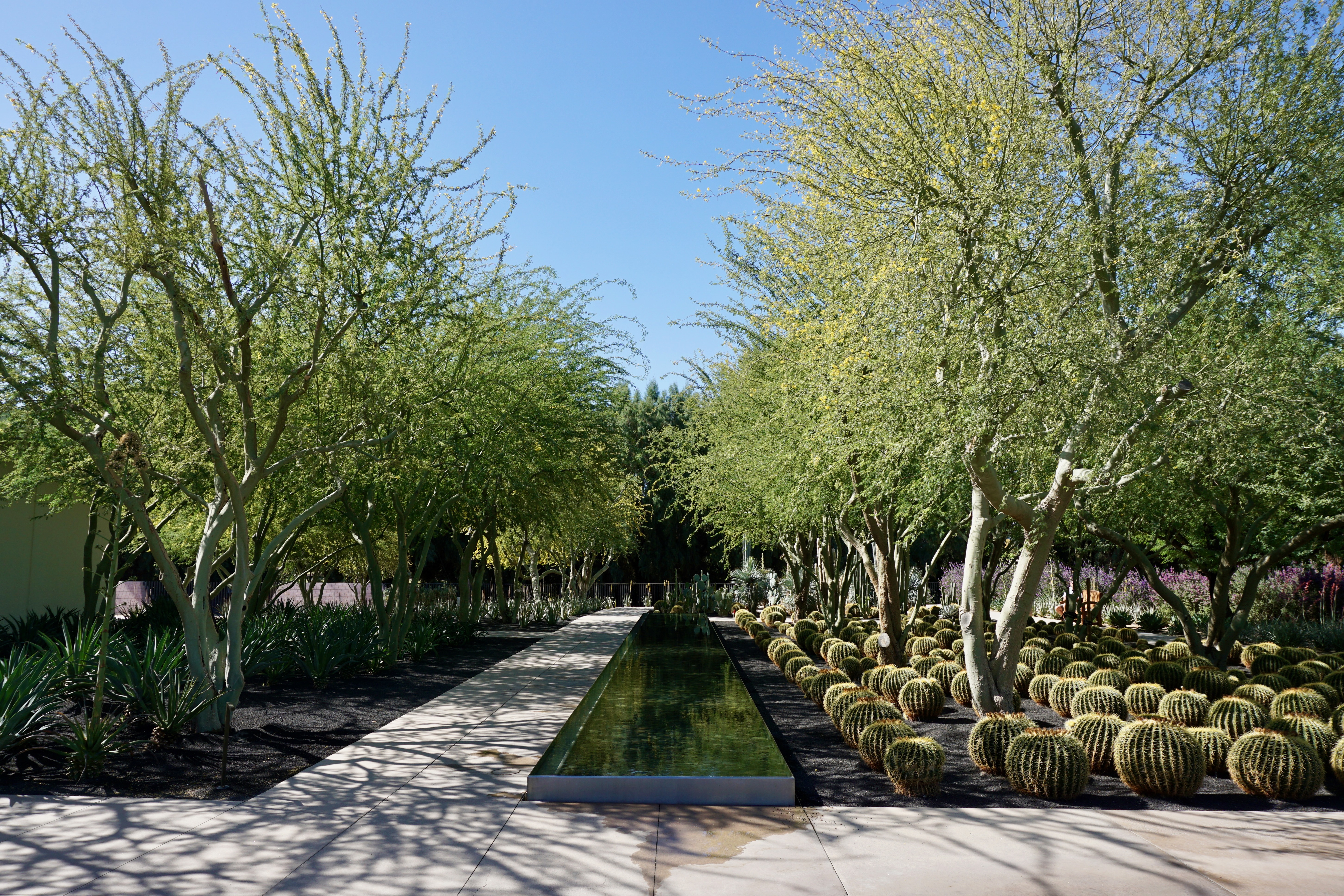
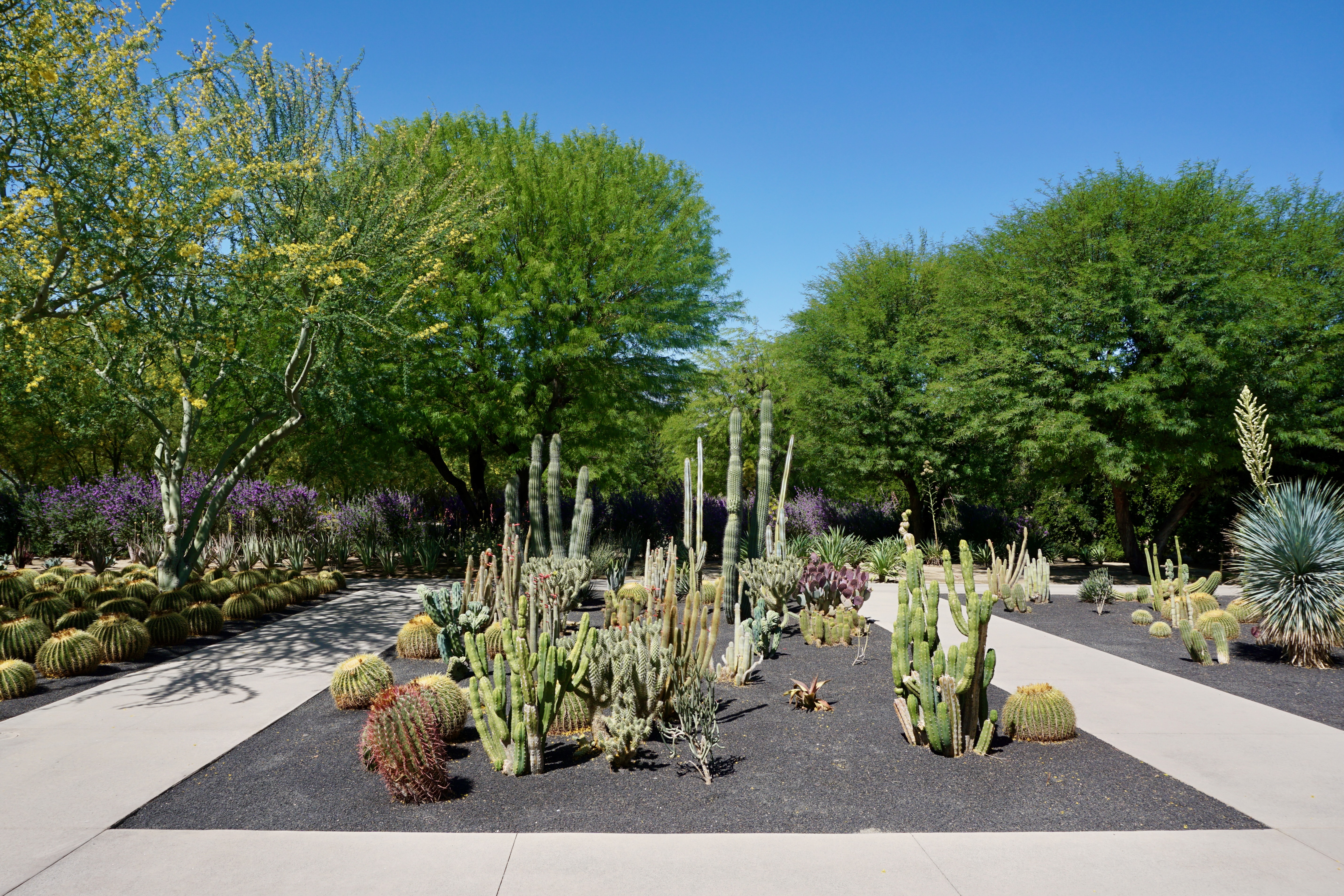
Given the Southern California desert climate, these gardens are heavily succulent-oriented. Here are an array of cacti:
Good Morning!
Watch where you sit.
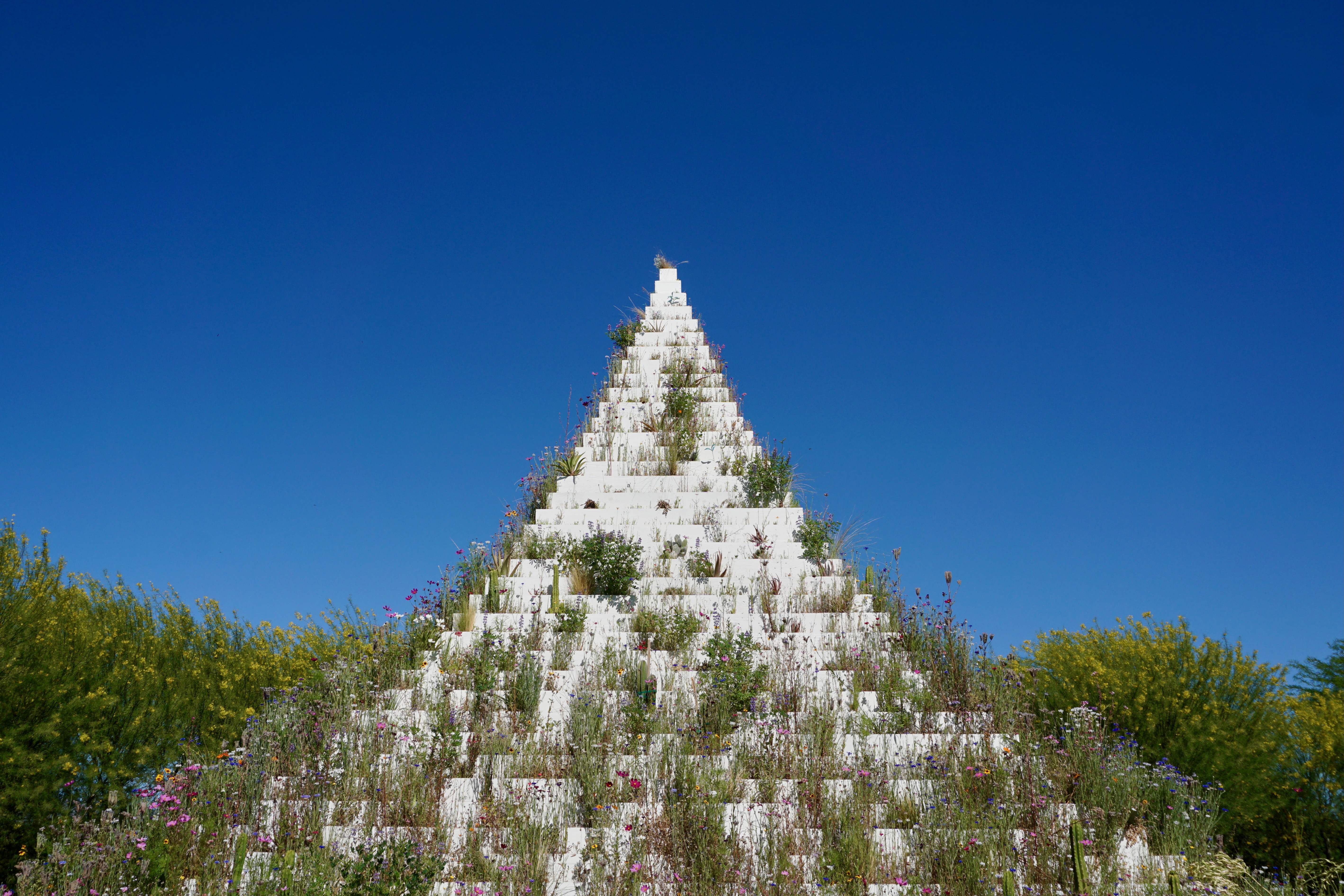
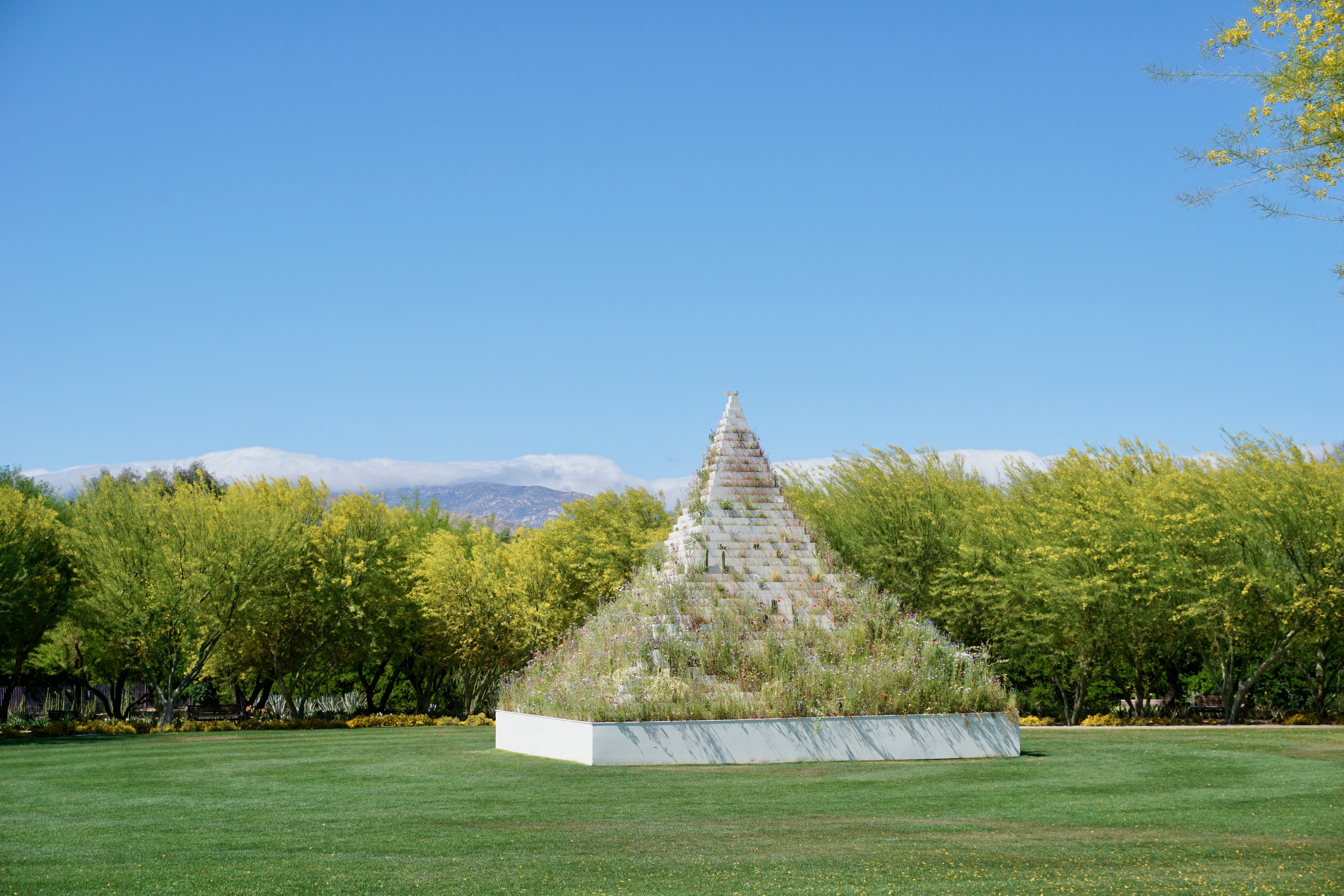
At the time of our visit, as part of Desert X, the gardens housed an outdoor art commission, Agnes Denes’ The Living Pyramid.
“A monumental step pyramid planted with rows of vegetation native to the region,” it cut a striking figure against the mountains to the east.
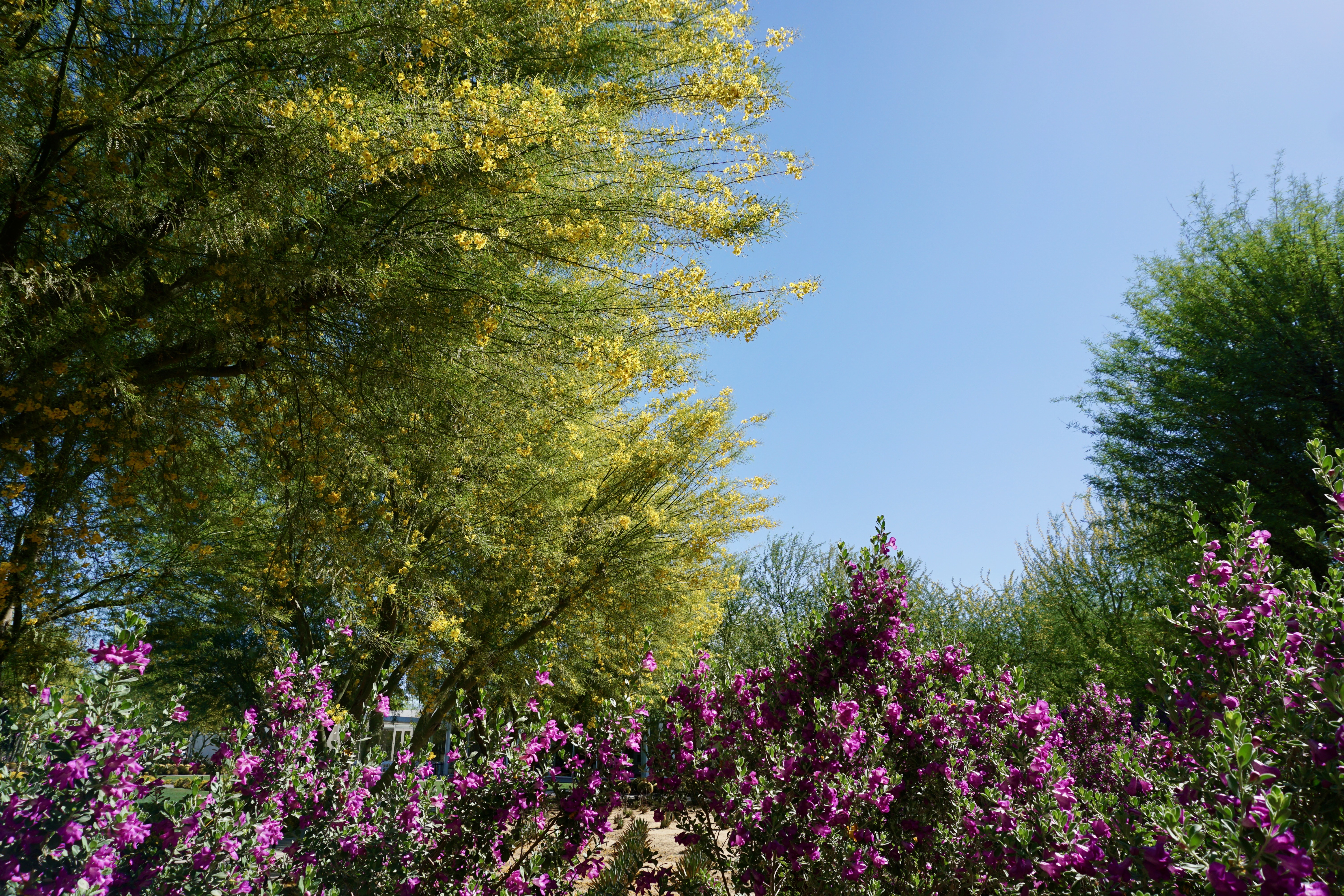
In this arid environment, purple flowers practically glow against all of the surrounding earth tones.
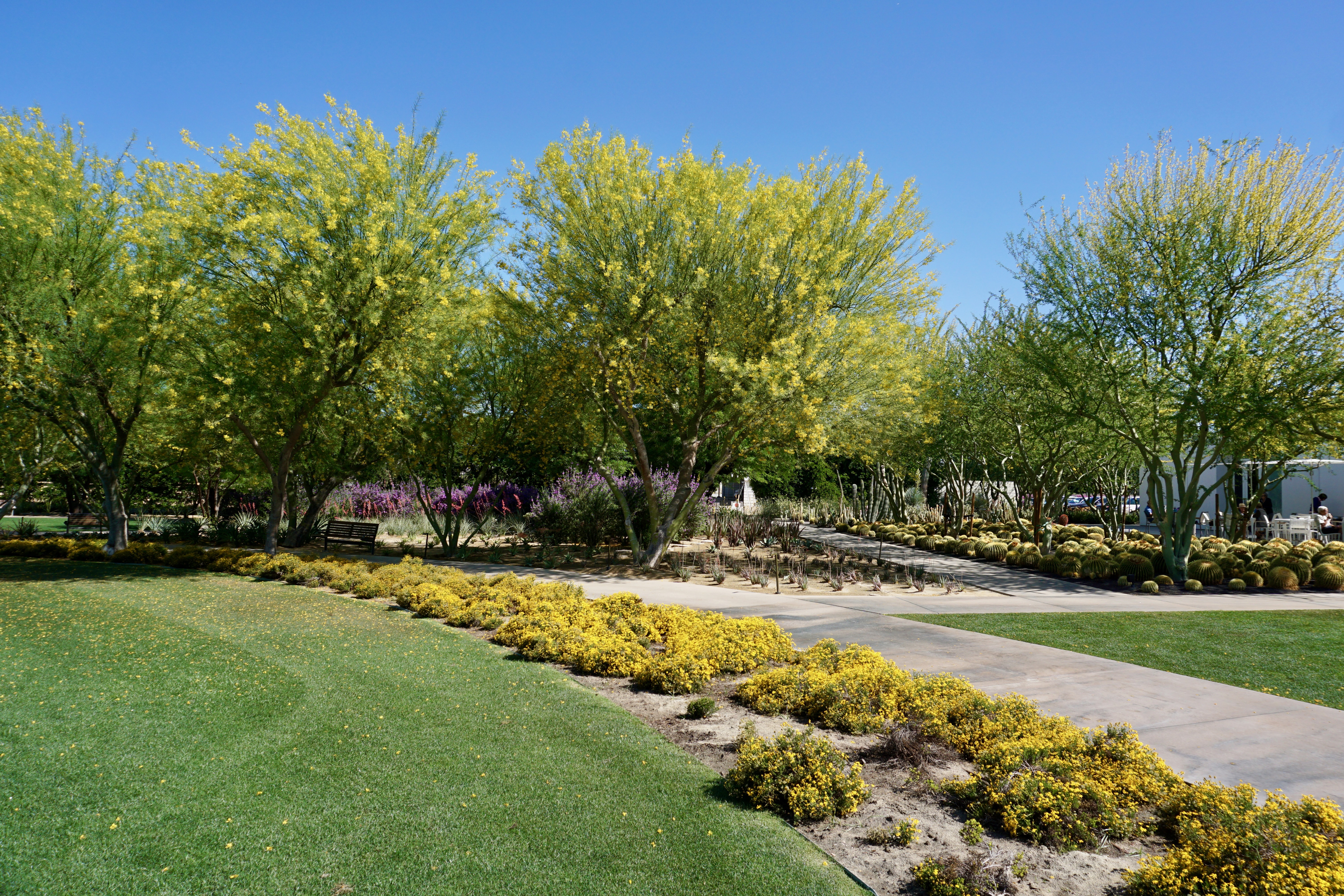
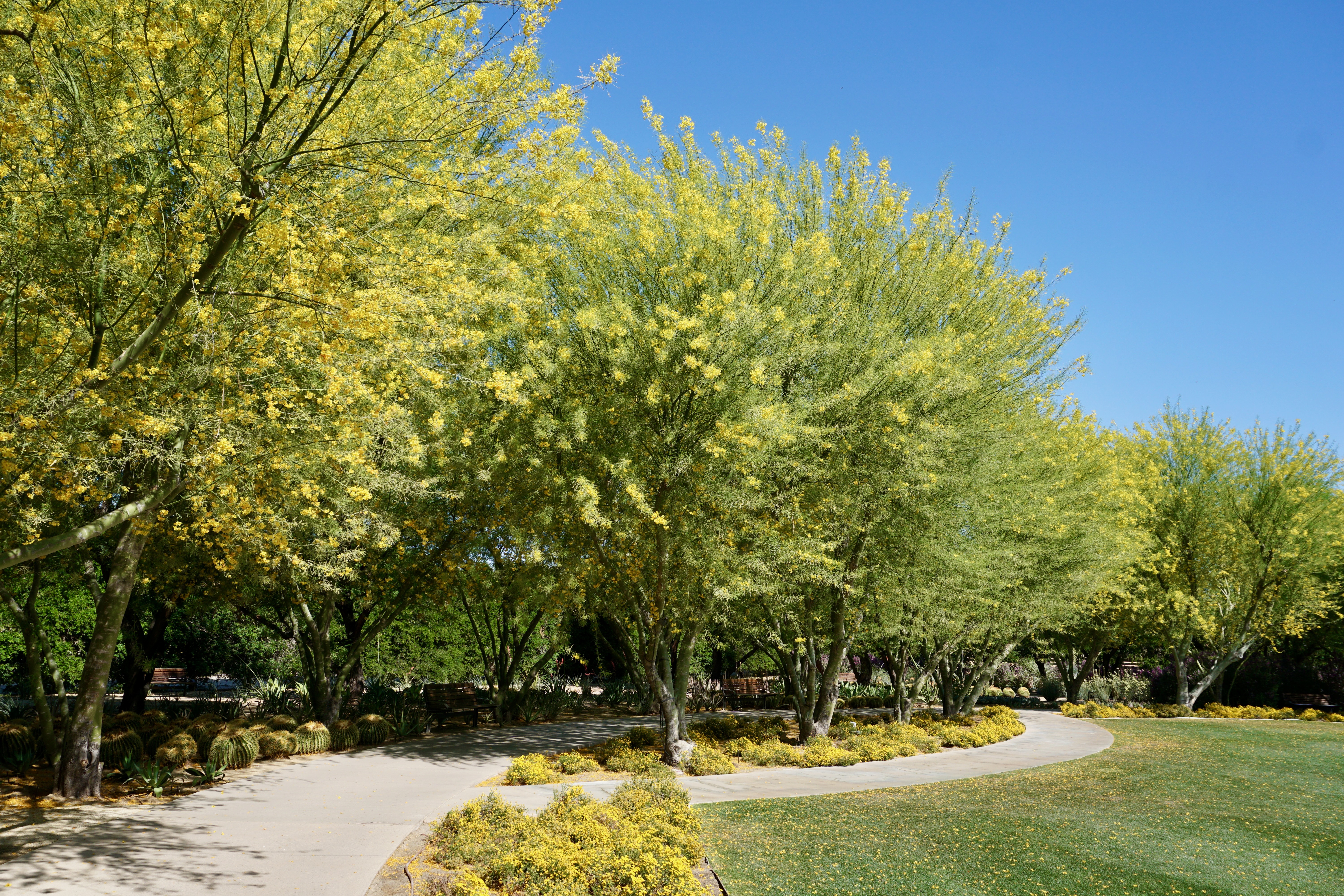
After a week of copious palms, it was almost a palette cleanser to see these trees, the yellows popping next to the greens and the clear blue skies. As much as I loved Palm Springs for its architecture, it was sublime to see some of the area’s natural beauty as well.
Taking assessment of my favorite films and albums so far at a year’s midpoint might seem like an irrelevant if not entirely futile exercise, although I’ve done so annually for as long as I can remember. While often interesting and occasionally amusing to look back and see what did or did not eventually make the cut at year’s end six months later, this is above all an opportunity to take stock (and an excuse for another blog post.)
I usually see a few films at local (and sometimes international) festivals that make this cut: I’ve already written on three from this spring’s IFF Boston (see links below); On Becoming A Guinea Fowl I viewed at IFF’s Fall Focus last November and I appreciated it more after a second viewing earlier this month. Thank You Very Much is an underrated Andy Kaufman documentary that could have benefited from a wider release; Grand Tour and Universal Language are both admirably unique concoctions that I won’t forget about come year-end.
As for albums, it shouldn’t come as a surprise that at 50, many of my current faves are from artists my age or older (British jangle-pop quartet The Tubs are the youngest here by a considerable margin.) I would argue that most of these “legacy” acts are churning out some of their best work, a few of which I alluded to in the mix I posted last week. I’ll add that Doves’ Constellations For The Lonely mightend up my favorite single new album since my number one of 2023. Even though following their debut Haim has made a stronger case as a singles than albums act, after two full spins, I Quit is cohering better than I anticipated it to.
Favorite Films of 2025 so far (alphabetical by title):














 Haunted Jukebox