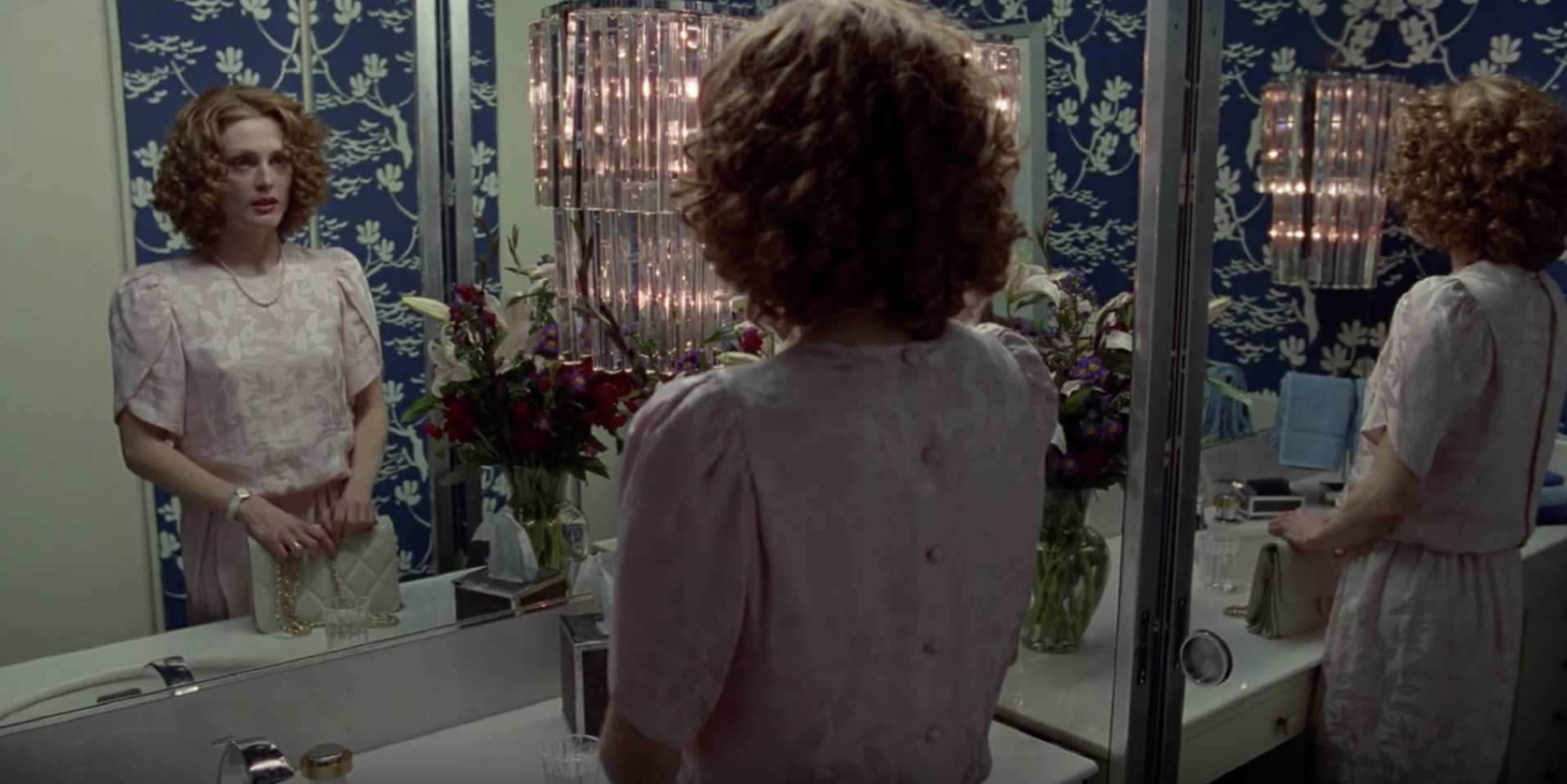
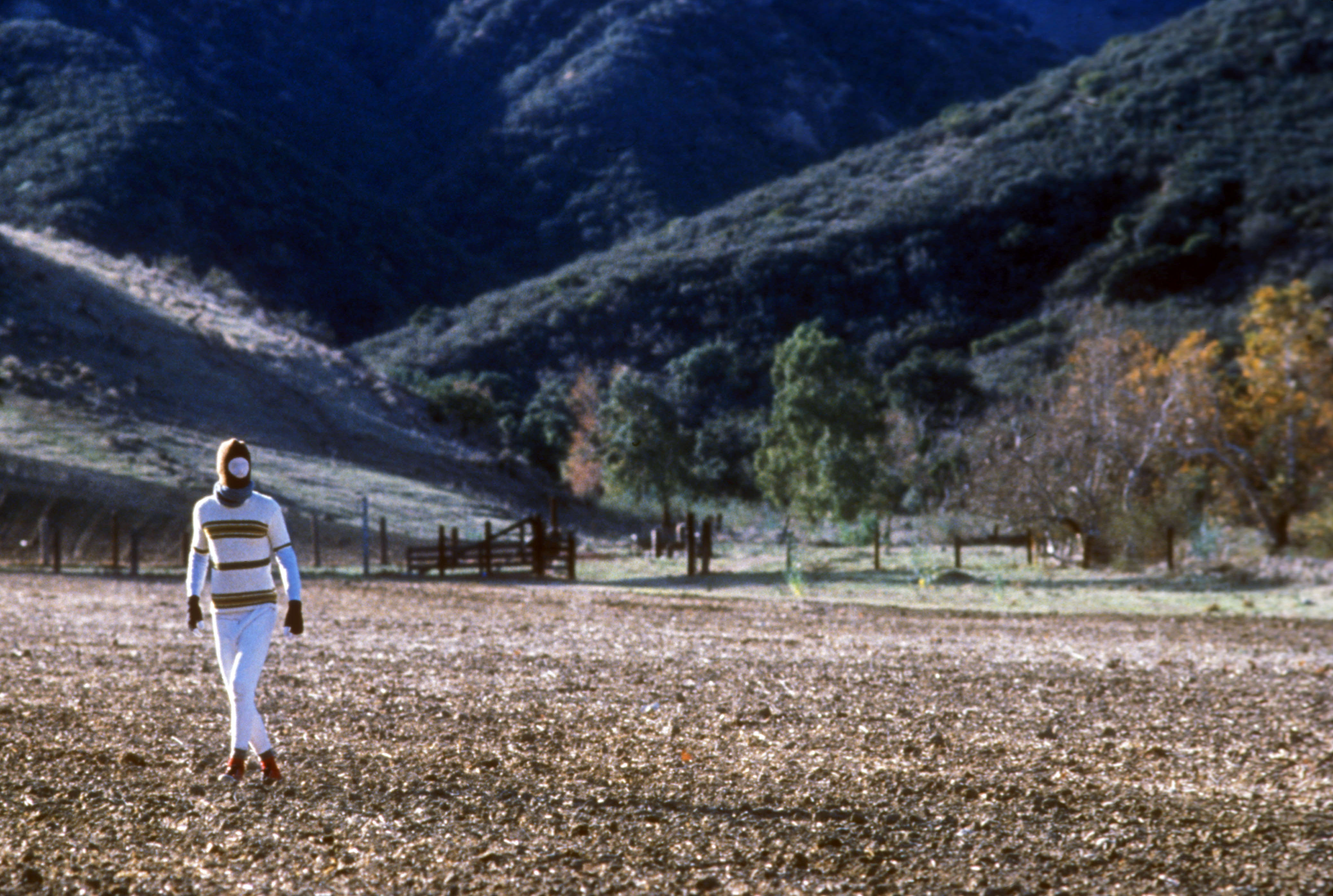
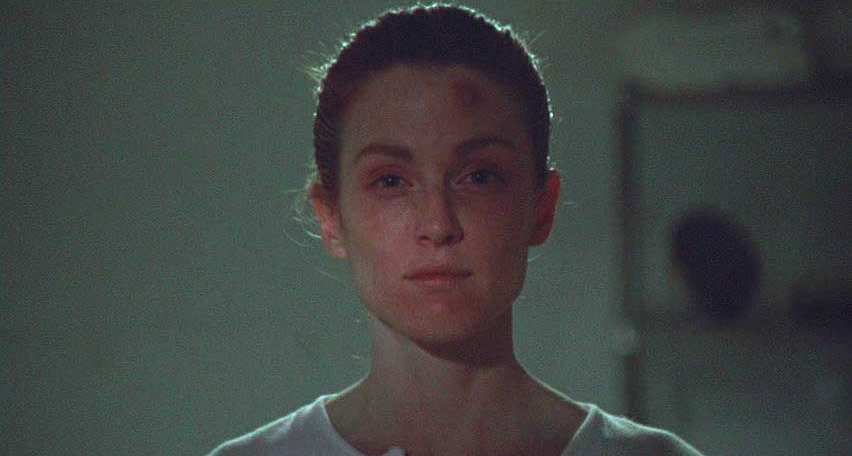
24 Frames: Before Sunset

Despite their ubiquity, movies sequels rarely match their predecessors and almost never better them. Critics and fans alike may go to bat for The Godfather, Part II as the superior entry in that trilogy (I finally saw it last year—surely the gold standard for what a sequel should be, but I still prefer The Godfather) and The Empire Strikes Back arguably refines and deepens the universe introduced in Star Wars, as does Sam Raimi’s Spider-Man 2 for its previous entry. Still, most sequels fall short if just by a hair (Austin Powers: The Spy That Shagged Me) or more often, a country mile (City Slickers 2: The Legend of Curly’s Gold, anyone?)

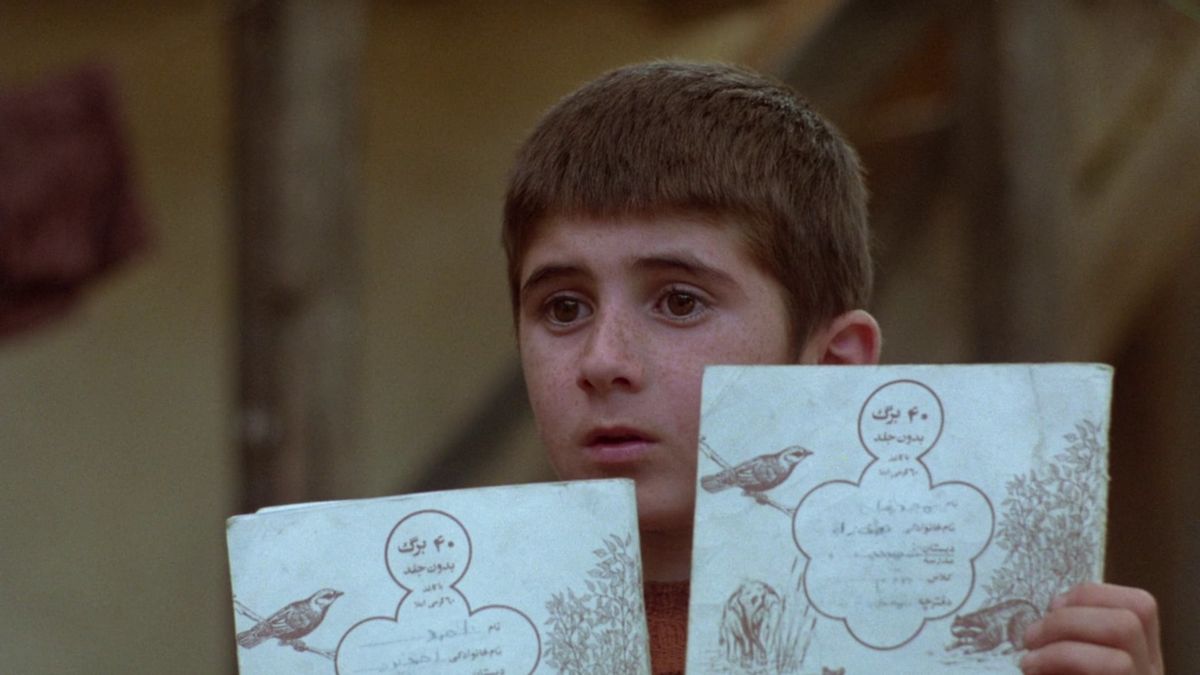
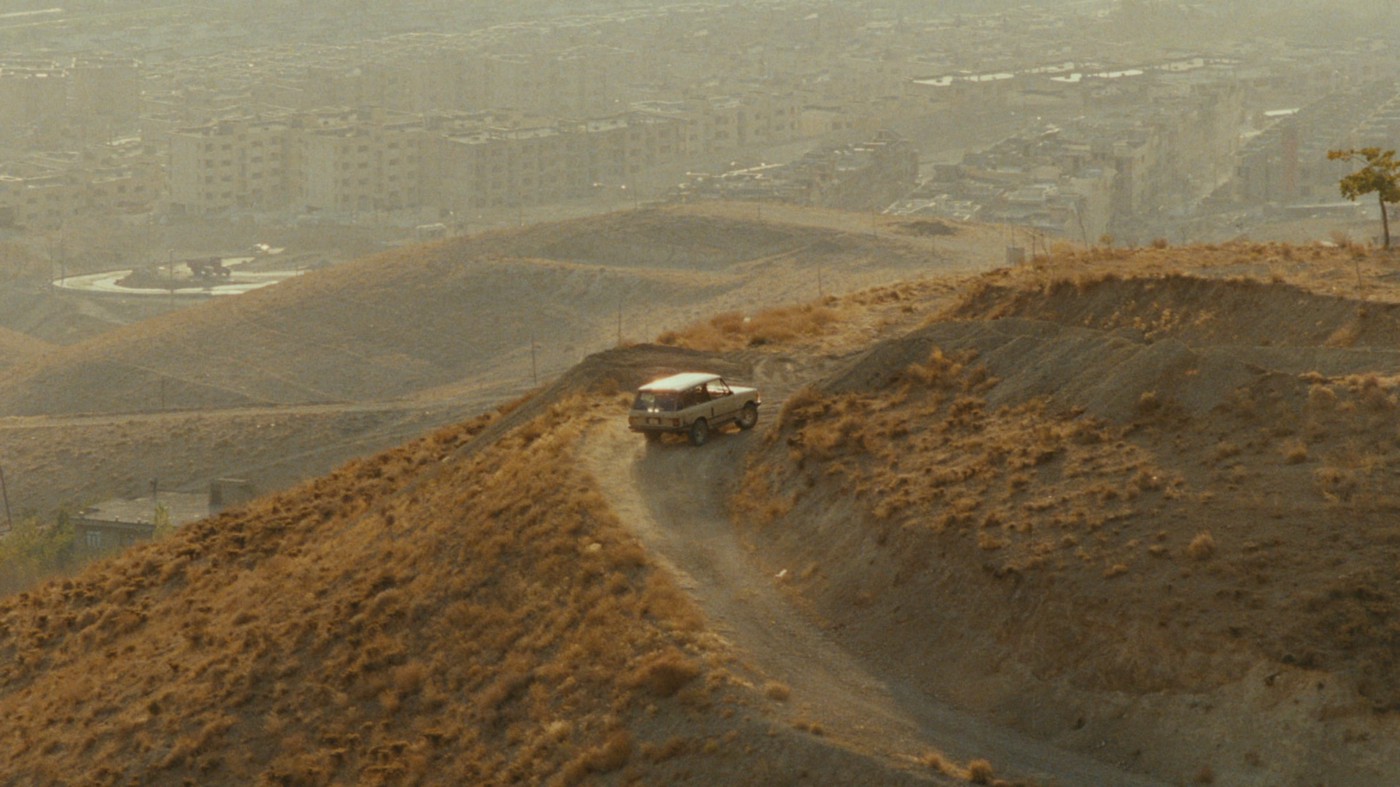
Even arthouse cinema is not immune, though its filmmakers may try dressing up their sequels in other guises. Francois Truffaut’s Antoine Doinel series revisits the same character (played by Jean-Pierre Leaud) five times over two decades though The 400 Blows, which introduces him is so widely revered (deservedly so, since it’s more or less ground zero for the French New Wave) one can imagine only the most contrarian critic wasting the effort to extol Stolen Kisses or Love On The Run in favor of it. The most successful sequels are often stumbled upon for artistic rather than commercial reasons, like Abbas Kiarostami’s Life, and Nothing More… where he dramatizes seeking out the child actors from his earlier film Where Is My Friend’s Home following an earthquake ravaging the remote village where it was shot. Rather than feeling forced, it’s a meta-commentary on how life and art intersect more than a continuation of its story.

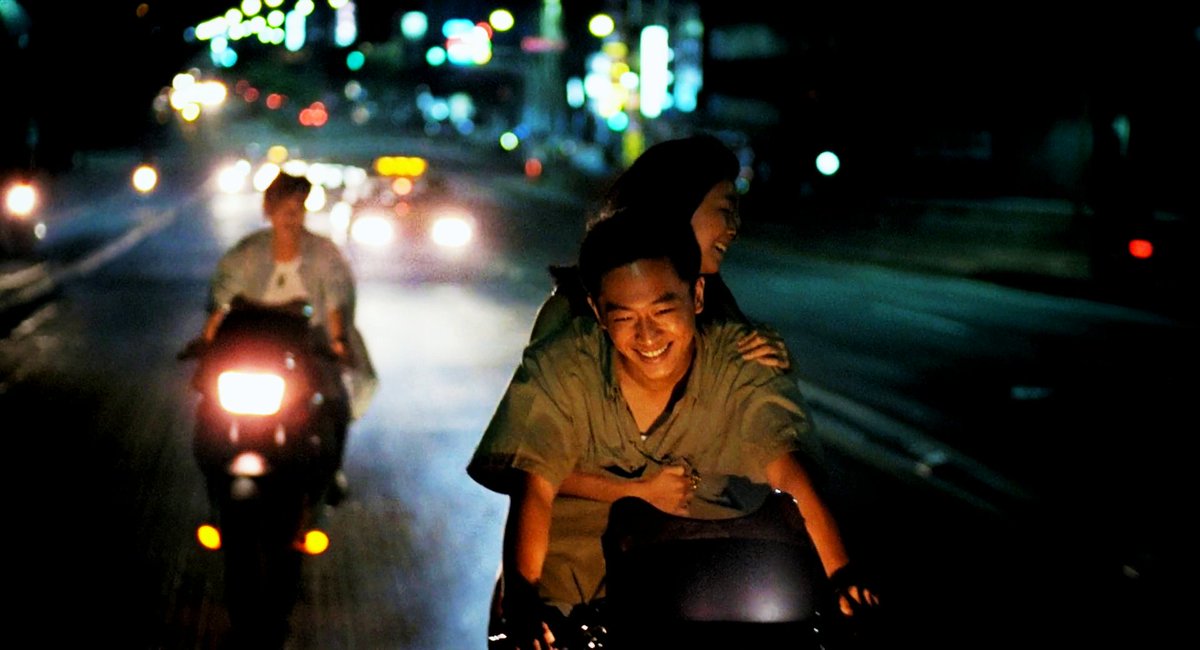
After The Godfather Part II won six Academy Awards (three more than The Godfather) and Airport 1975 became the seventh highest grossing film of its year, the floodgates opened: now, multiple sequels to such blockbusters as Jaws and Rocky were not only inevitable but also practically expected. If anything, sequel-itis has spread exponentially in the 21stcentury (see the Marvel Cinematic Universe among other mega-franchises) to the point where it’s hardly worth getting worked up at a multiplex sign where a majority of the films screening have a “2”, “3” or an “X” after their titles. Artful or not, they’re here to stay which is why in 2004, that year of Spider-Man 2Shrek 2 and the more creatively titled Meet The Fockers (the only creative thing about it, really), I was skeptical when I first heard of Before Sunset, a sequel to Before Sunrise from nine years before reuniting director Richard Linklater with actors Ethan Hawke and Julie Delpy. In the earlier film, American Jesse (Hawke) and French Celine (Delpy) meet on a train travelling across Austria and impulsively spend 24 hours together walking around Vienna before each of them must return to their native countries. A wistful, short-term romance with the loquaciousness of an Eric Rohmer film (perhaps crossed with one of Billy Wilder’s less satirical efforts), it did what it set out to do fully and enchantingly thanks to its stars’ innate chemistry and Linklater’s characteristic humaneness and nimble, attentive camerawork. With such a perfectly executed film, why try to recapture that seemingly once-in-a-lifetime magic again?

Before Sunrise

What immediately sets Before Sunset apart from other sequels is that it never resembles a cash-grab or a product its creators felt obligated to make, even if Before Sunrise was widely beloved and a modest hit. Linklater, Delpy and Hawke (all of them contributing to the screenplay) began working on a larger-budgeted sequel (with locations in four countries!) shortly after the first film came out but failed to secure funding. They only resumed work on it in 2003 albeit at a much smaller scale. One can easily comprehend the desire to revisit Jesse and Celine a decade (or even a year or two) after their passing meet-cute but to actually make good on that challenge and create something that recaptures the essence and insight of the original is a tall order. Happily, if nearly improbably, Before Sunset not only accomplishes this but ends up one of the rare sequels that arguably improves upon its predecessor, retaining its spirit while also extending its narrative in ways that feel less like a rehash than a reunion gradually revealing itself as a reassessment: what would it be like for Jesse and Celine to meet again and more importantly, what would that mean for them?

As previously noted, Before Sunset picks up nine years after that chance meeting on a train in Austria. The new setting is Paris and Jesse is on the last stop of a European tour for his first novel, This Time, a roman à clef inspired by his whirlwind romance with Celine. During the Q&A portion after his reading at famed English language bookstore Shakespeare and Company, he spots Celine herself standing near the back of the audience. Unlike the earlier film, her presence here is not random; she’s there (in the city where she resides) to purposely see Jesse read from his book about their fling. The moment he and the audience become aware of her presence carries a jolt of recognition which Hawke, often a more subtle actor than he’s given credit for conveys beautifully. As they say hello and embrace, one can detect an instant spark but also the hesitancy one would expect from a situation orchestrated by one participant and unexpected by the other.
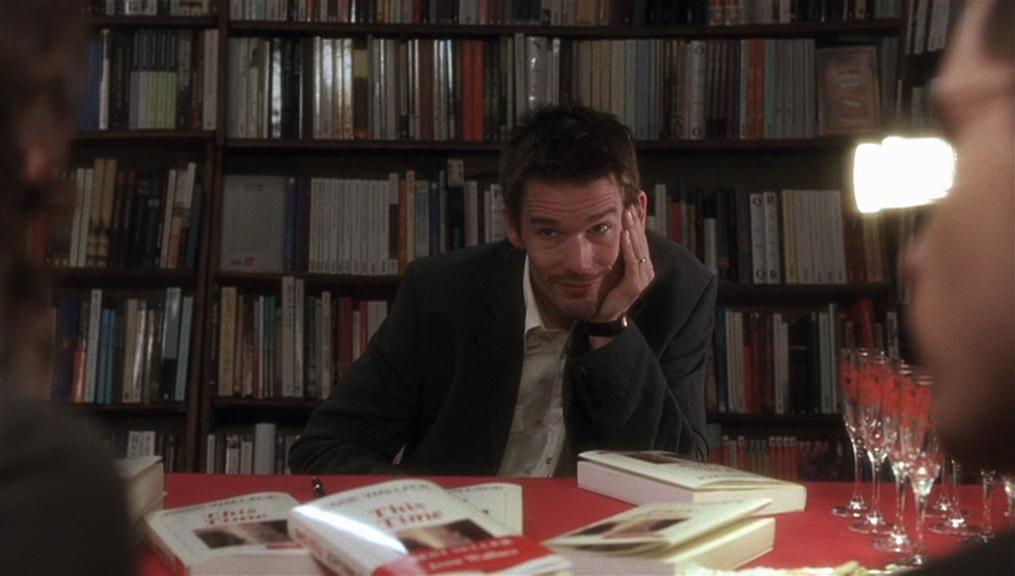
Jesse has a plane to catch, leaving him and Celine with barely an hour to spend together. As they did in Before Sunrise’s Vienna, they walk through the streets of Paris, stopping in a café here, a park there, getting caught up and getting to know each other (again) as their dynamic and particular rhythms gradually fall back into place. Celine, however, now has a hometown advantage, directing where the two them will go. As they catch up, they each reveal more about themselves than they might initially mean to. They answer whether either of them made good on their parting pact of showing up at the Vienna train platform six months after their first meeting (Jesse did, Celine didn’t—she was at her grandmother’s funeral.) They also debate on whether they had sex (off camera) in the Vienna park (Jesse argues that they did twice; Celine doesn’t recall it, positing, “Memory is a wonderful thing if you don’t have to deal with the past.”)

All the while, the question “Does anyone change?” lingers in their pauses between conservation; as much as either one would like to deny it, their body language often says otherwise: at different times, one of them tentatively reaches out to touch or comfort the other, only to pull away, sensing the recuperations of such a gesture. They may be recognizable as the Jesse and Celine of the first film, but they’re also noticeably older (especially early on when Linklater silently cuts back to brief shots from the first film) and also perhaps… wiser? Now an environmental activist, Celine’s as impassioned as her younger self, but more caustic, a little angrier and maybe a bit jaded. Jesse, who is married and has a young child is still something of a wanderer/dreamer but he carries with him a newfound pragmatism and stronger sense of maturity compared to his younger self.

Eventually, catching up and small talk gives way to abrupt, messy emotional disclosures. Midway through, Jesse can’t help but moan in resentment and regret at Celine not showing up again in Vienna while she later snaps at him, “I was fine until I read your fucking book!” They each muse on what might have been, realizing that for a small period they both lived in New York City at the same time but never ran into each other (or even sought each other out.) Jesse confesses that his marriage is falling apart (perhaps inspired by Hawke’s then-recent divorce from Uma Thurman) while Celine considers their past, referring to it as “That moment in time that is forever gone.” All the while, tension mounts for the clock is running out—Jesse still has that plane to catch, a fact both of them repeatedly acknowledge, recalculating what diminishing amount of time they have left while also figuring out ways to prolong it. After they hug each other for a presumably final time, Jesse asks his car service to the airport to instead drive him and Celine to her apartment. He then walks her through the building’s vast courtyard to her front door. She invites him inside for a cup of tea; he accepts.
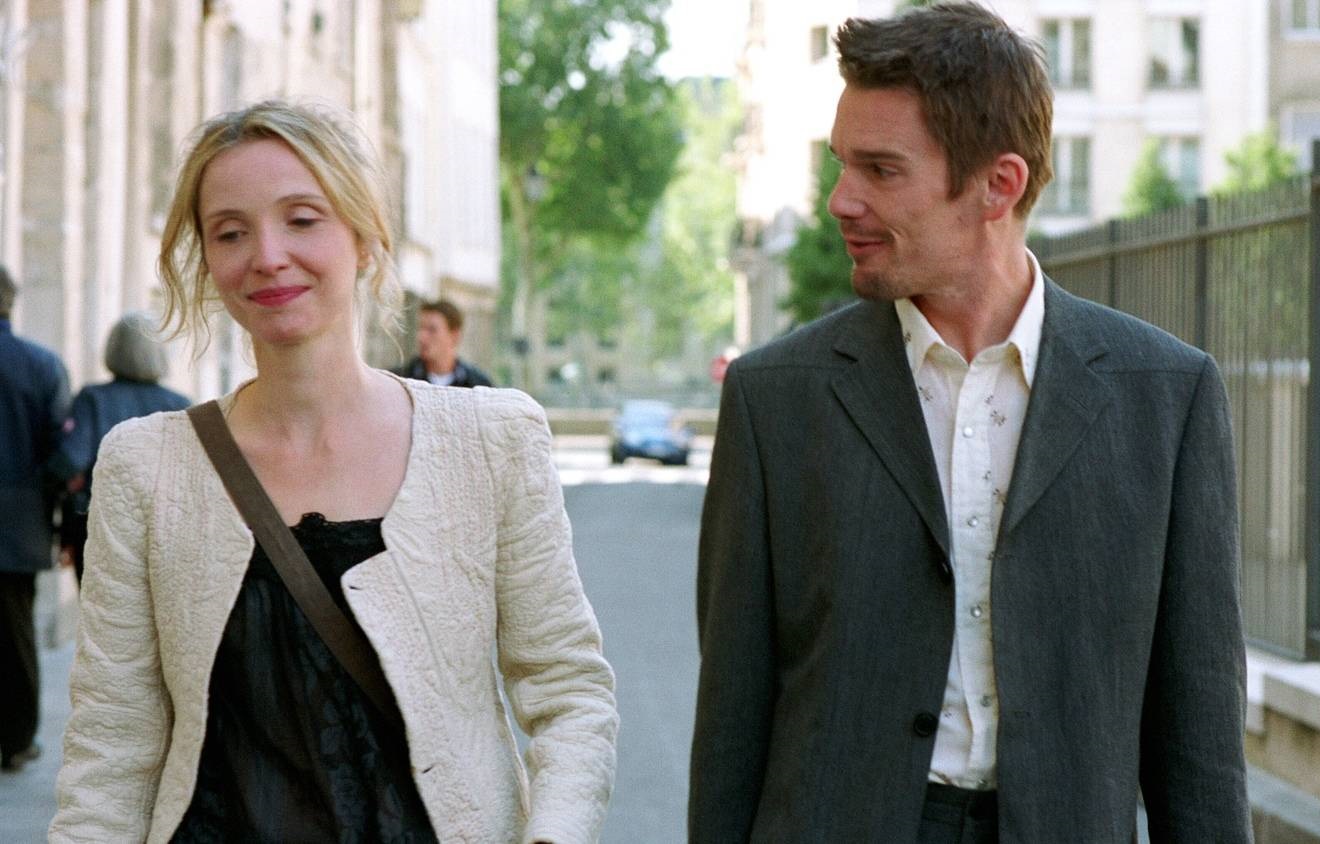
Before Sunset might be one of the most suspenseful romances ever made because it plays out in real time: its eighty minutes covers that exact, unbroken period in the lives of these characters. As much a narrative-driver as the single day was in Before Sunrise, this duration almost feels as if time itself has collapsed since we’re not used to seeing it play out so meticulously. Even more so than the earlier film, this one is composed of long takes as the camera follows and tracks Jesse and Celine’s journey (the late-in-the-day sun-kissed cityscapes add to the overall allure.) Their temporal space, by being fully synced up with our own creates an intense, almost unbearable sense of intimacy, like we’re right there with them accompanying their every move. By the time Jesse and Celine are slowly walking up the stairs to her apartment, the tension is off the charts—it’s exhilarating to watch them take each step wondering how much further they will go together. Actually, how much further can they take this? Jesse still has a plane to catch! (Not to mention a family waiting for him back in America.)

Once inside Celine’s exquisitely bohemian apartment, he asks her to play one tune for him on acoustic guitar (she earlier mentioned that she had been writing songs as a hobby.) She chooses “A Waltz For A Night” which is her side of their story, a three-minute folk/pop song equivalent to Jesse’s novel. Breathily, lovingly, she sings, “I just want another try, I just want another night” before almost coyly adding, “One single night with you, little Jesse / is worth a thousand with anybody,” (the cut to Hawke’s face when she sings “Jesse” is as startled and ebullient as his first view of her at the bookstore.) She makes tea, he puts on a Nina Simone CD. She tells him of when she saw Simone in concert before her death, swaying like her to the music. She says to him, “Baby, you’re going to miss that plane.” He responds, “I know.” No reasonable viewer can wait to see what happens next but wait they must, for the screen fades to black and the end credits roll. When I first saw the film in a theater, the audience let out a reaction that was equal parts relief, bemusement and slight frustration at this ending, but it’s perfection in how it exhibits grace and restraint after all that wish fulfillment tempered by built-up and sustained stimulation and uncertainty. Sure, it could’ve been satisfying to see Jesse and Celine kiss or embrace but here, just the process of their reconnection and how witnessing it playing out in real time makes it feel earned provides what’s needed for their arc to resonate.

I rewatched Before Sunset a year later in a theater as part of a double feature with Before Sunrise but didn’t view it again for another nine years (coincidentally, the same period of time separating the two films.) Now past the age of Celine and Jesse in Before Sunset, the film hit me even harder: that slooow walk up the stairs proved more effective, even when knowing what would happen next. The intimacy established between the two leads was rare in that it seemed to come from a real place rather than a storybook construction. I wanted Jesse and Celine to be together, I saw that they wanted it too but I didn’t know if it would be just for a night or longer than that or even at all. This notion remained true to the spirit of Before Sunrise while enticingly pushing it further—I was offered another mere glimpse into the lives of these two people but this time, the possibilities seemed limitless as the spark was reignited.

Nearly two decades on, as sequels go, Before Sunset remains an anomaly more than a precedent. Some recent film sequels are perfectly respectable: The Incredibles 2, Paddington 2, the John Wick films (haven’t seen any but I suspect many would argue for them.) Once in a blue moon, one will emerge that’s arguably stronger as its predecessor (Cedric Klapisch’s Russian Dolls, which I remember liking more than L’Auberge Espagnole.) However, most sequels still suck or are at the very least an inferior product.

Thus, Linklater, Delpy and Hawke faced a unique challenge when they decided to revisit Jesse and Celine another nine years on in Before Midnight. Without spoiling too much, the film drops in on another specific and brief period of time in the characters’ lives, gradually revealing all that has happened since the ambiguous ending of Before Sunset. It is a thornier film by design, going deep into how time influences perception of self and others and what consequences such familiarity portends. The tone is much different from the first two films without losing sight of who the characters are or obscuring their spirit—there are still lengthy conversations and an exotic setting but also an acknowledgement of early middle-age as a period fully distinct from one’s early thirties or twenties. It also ends on an ambiguous note that could easily serve as an invitation for another sequel or a conclusion.

Although Delpy nixed the idea of a fourth film in 2021 (nine years after the production of Before Midnight), a year later Hawke suggested the potential is still there for the three principals to come together and continue the story. I liked Before Midnight but wouldn’t rate it as highly as Before Sunset—something about the latter’s unexpectedness added so much to its appeal. For a fourth film (maybe After Sunrise?) to work, Linklater, Delpy and Hawke would need to be in sync with an inspired idea that builds on the previous entries, favoring a deepening of the story and not serving as mere fan service. Before Sunset did that brilliantly and as long as sequels aren’t going away, more filmmakers should study it.

Essay #15 of 24 Frames.

Go back to #14: What Time Is It There?

Go ahead to #16: Me And You And Everyone We Know.

24 Frames: What Time Is It There?

Once streaming video overtook physical media as the primary way to watch movies at home (or (god forbid) on your smartphone), it was no longer unreasonable to think that everything could be available at the touch of a button whether via paid subscription services like Netflix and The Criterion Channel, free-with-ads platforms such as Tubi or FreeVee or not-entirely-legal uploads to YouTube, Vimeo and a horde of other websites. While finally sounding the death knell for movie rental and retail stores, streaming didn’t entirely solve that availability problem. Sure, one no longer had to rely on whether your local Blockbuster had a DVD (or if you’re of a certain age, a VHS tape) of a particular title in stock but easy access is not the same as having access to everything. Twenty-odd years ago, I kept a mental running list of movies to see that either weren’t ever released on home video, out of print, unavailable in the US (i.e. on a format other than NTSC such as PAL) or extremely difficult to find, hoping they would become available to rent and/or buy one day. Off the top of my head, it included John Cassavetes’ final feature Love Streams, Abbas Kiarostami’s Where Is My Friend’s House (and the rest of the Koker Trilogy) and most of Theo Angelopoulos’ work prior to 1989’s Landscapes In The Mist; I still recall the glee and satisfaction with which I purchased my newly-released Criterion Blu-ray of Love Streams in 2014.

A little accessibility breeds expectations for its continuation and advancement. We’ve progressed from an age where you couldn’t own any movies to one where you could rent and/or buy some of them to another teeming with available content. This ability to watch an increasing number of titles whenever you wanted threw into relief the relatively minor amount that you couldn’t. If I could see movie A for free, why not movie B? If I had to pay to see movie B, why wasn’t movie C available at all, even for a price? No matter how far we’ve come in the rough half-century since the invention of the VCR, we are nowhere near this idea of utopian unlimited access even if what we do have presents enough content and choices that most viewers could never possibly run out of stuff to watch.

The casual viewer, on the other hand, may take for granted the current streaming unavailability of titles from Academy Award Best Picture winners (Rebecca) to cult films (Gummo, the original Dawn of the Dead) and even beloved box office hits (Cocoon, for christ’s sake!) In this project, I’ve already tackled titles that I had to access via my own DVD copy (All That Jazz) or on YouTube (To Live). As for What Time Is It There? (2001) by Taiwanese director Tsai Ming-liang, I’m thankful I held on to the DVD I purchased at a video store’s going-out-of-business sale fifteen years ago since, in addition to currently being unstreamable, the DVD is also long out of print (a better-than-acceptable used copy sells for at least $50 on Amazon), never released on Blu-ray and not uploaded to YouTube (unlike Head or the original version of The Heartbreak Kid, both of which I’ve recently watched on the platform.)

Tsai’s feature debut Rebels Of The Neon God arrived in 1992 but I’d not heard of him (not even in film school) until a decade later. In anticipation of What Time Is It There?, Boston’s Museum of Fine Arts, then under the expertise of programmer Bo Smith, ran a retrospective of his work. Not knowing too much about Tsai apart from rave reviews of the new film, I chose to start at the beginning. Rebels Of The Neon God concerns a young Taipei man (Lee Kang-sheng, who serves as the protagonist/muse in nearly all the director’s work) who falls in with two juvenile delinquents—a setup straight out of early Godard or a contemporary like Gregg Araki. Unlike those two auteurs, Tsai is far less interested in narrative than texture and atmosphere. Actually, this first feature has relatively more plot than most of his subsequent efforts, although specific themes and motifs one would see throughout his oeuvre are already in place: urban life, loneliness, food, sex and, perhaps more so than any other auteur, water in all of its forms (and sounds.)

Rebels Of The Neon God

I detected similarity but also a great advance between Rebels Of The Neon God and What Time Is It There? and viewed his other three features to date within the next few months: Vive L’Amour (1994), an advance over its predecessor while further eschewing such elements as “plot” or having a score, even; The River (1997) of which What Time Is It There? might be loosely interpreted as a sequel; and The Hole (1998), something of an outlier in that it interrupts Tsai’s usual urban ennui with the occasional colorful and deliberately campy (and overtly lip-synched) musical number. I’ve revisited most of these in the past few years (save The River, also unstreamable/out of print) and can detect a developmental through line of Tsai becoming progressively more minimal and sparser (save the occasional musical, like 2005’s The Wayward Cloud) with each film.

As a caveat, Tsai’s movies are not for everyone. I once likened his unique and deliberate approach to that of silent-era slapstick only slooooowed all the way down as much as possible before turning into complete stasis or a freeze-frame. While one of the chief devotees of what could be called “slow” cinema (along with Andrei Tarkovsky and Bela Tarr), things do happen in his films, often recognizable activities that we partake of offscreen: eating, sleeping, fucking, selling wares, watching movies, sitting in a public space, etc. And yet, most other filmmakers do not give these ordinary actions such raptly held attention or focus. Stray Dogs (2013), for instance contains an infamous shot of one of its characters in close-up meticulously eating a chicken dinner for what seems like infinity—an extreme example in Tsai’s filmography for sure, but not an atypical one (especially in his later work.)

Revisiting What Time Is It There? for the first time in nearly two decades, even I took some time to fully adjust to its unusual rhythms. It begins with a seemingly endless single shot of Lee’s aged father (Miao Tien) in his apartment. He slowly sits down at a kitchen table, lights a cigarette, stands up, calls out “Kang!”, sits back down, gets up again and walks down a hallway to a laundry room at the far rear of the frame. As usual with Tsai, the camera remains entirely static. It feels almost as unassuming as a Warhol screen test or a piece of stock footage nearly resembling Ed Wood’s silent B-reel of Bela Lugosi leaving his house that was inserted into Plan 9 From Outer Space to make good on the notion that the now-deceased actor “starred” in the film.

In the next scene, Lee rides in the backseat of a car with a veiled object sitting upright in his lap. He says, “Dad, we’re going through the tunnel; you have to follow us, okay?”, although we see no other passengers. Those familiar with Buddhist customs will recognize the object as his father’s urn and the other things he’s holding onto as traditional implements of bereavement. For those who are not (like me), the following scene at a mausoleum clarifies his dad’s death. From that moment, What Time Is It There? establishes itself as a film partially about grief and the different ways its characters process it. Lee’s mother expresses it forthright: per her faith, she fervently believes her husband will return in another form such as one of her pet fish housed in aquarium that Tsai often places towards the front of the frame. She’s increasingly superstitious about his return, laying out food at the dinner table for him to consume and later obsessively covering up all the windows and cutting the electricity because “he prefers the dark” (even though, as her son argues with her, the fish will die in their tank without power.)

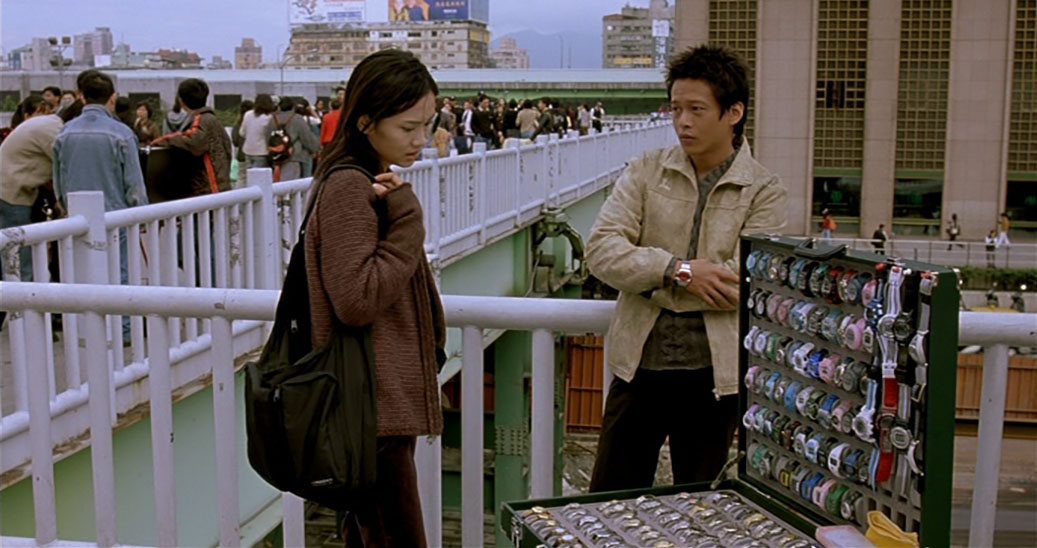
Lee’s approach to mourning is more difficult to parse. The persona Tsai crafts for him throughout the director’s oeuvre is that of a stone-faced onlooker, like a more passive Buster Keaton (perhaps without the acrobatic comic timing.) Initially, his grief doesn’t seem outwardly apparent at all except through quirky acts of behavior such as repeatedly urinating into a plastic bag or a water bottle in his bedroom rather than using the bathroom (no concrete reason is given for this as far as I can determine.) He makes his living selling wristwatches, often standing on the street with a giant open suitcase of his merchandise, repeatedly and almost robotically banging a single watch against the metal railing behind him to draw attention. After much haggling with a young woman (Chen Shiang-chyi) over his personal wristwatch (which belonged to his father), he agrees to sell her it after she discloses she’s about to take a trip to Paris.

From there, the film alternates scenes of Lee in Taipei with those of Chen in Paris with the watch serving as a psychic connection between the two. Lee seems to believe his father’s spirit partially remains within the watch and obsesses over it and the country Chen has taken it to. He calls Information to ask the film’s titular question (re: Paris) and buys and repeatedly views a bootleg copy of The 400 Blows, Francois Truffaut’s landmark 1959 French New Wave film. Meanwhile, Chen wanders around Paris alone, an outsider in a land where she doesn’t speak the language. At one point, Tsai frames her on a busy moving walkway as the only figure standing still. Later, at a cemetery, she sits down a bench next to a middle-aged man who happens to be Jean Pierre-Leaud (the child star of The 400 Blows), though this fact is lost on her.

Jean-Pierre Leaud and Chen Shiang-chyi

Time itself becomes a motif. In addition to Lee’s profession as a street watch salesperson and the brick-and-mortar clock store that employs him, various timepieces appear throughout the film. In one sequence, he steals a clock right off the wall of a cinema’s hallway, placing it on the seat next to him inside a theater (what the stocky, bespectacled young man silently pursuing Lee does with that clock after he steals it from him leads to one of the film’s funniest sight gags.) In another scene, he sits in what appears to be a mall at a fountain which contains a giant water wheel forever unhurriedly revolving like a clock. Later, he ends up in some sort of room (maybe a security booth?) with a menagerie of clocks both analog and digital and later still, on the balcony of a tall building manually trying to adjust (with long tongs) the hands of the clock below him on its façade.

Tsai often sidesteps Taipei’s more traditional, tourism-friendly urban landscapes for liminal spaces such as that security booth packed with clocks or the backseat of a parked, possibly abandoned car. Chen’s Parisian vacation is full of these as well: endless subway corridors and platforms, a phonebooth where with futility she attempts a conversation as a man in the adjacent booth keeps yelling obscenities into his receiver, a miniscule, red-tiled bathroom where she vomits up her dinner. Tsai renders worlds as they are (unglamorous, run-down, often grime-encased) but does so within artful, meticulously composed frames. His lengthy, static shots begin to feel like living paintings—for those receptive to such stillness, it can be like sitting on a bench or standing next to a wall, simply observing life play out before one’s own eyes no matter how little (or how much) action occurs.

Combined with a heightened sound design which doesn’t have a musical score but emphasizes such ambience as traffic noise and trickling water, What Time Is It There? invites one to extensively take in an environment rather than lose oneself in a story—which is not to say it’s all just visual and aural wallpaper. The film slowly reaches its climax as all three of its principal characters engage in some sort of sexual activity. Chen attempts a one-night stand with a female traveler from Hong Kong who walked in on her vomiting in the red-tiled bathroom; Lee fucks a female prostitute who stumbles by him as he’s camped out in the abandoned car drinking wine and eating some sort of meat on a stick; Lee’s mother, meanwhile, puts on a fancy dress at home and, for lack of a better term, “gets intimate” with the urn full of her husband’s ashes.

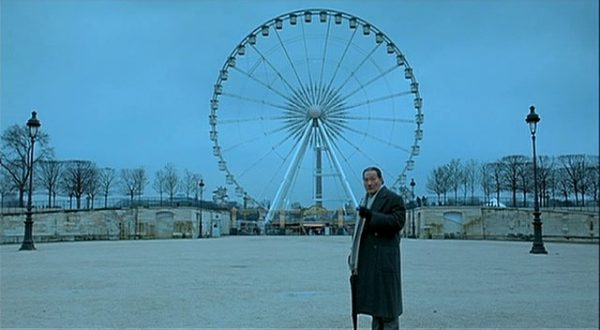
None of these encounters have a particularly happy ending (so to speak.) Chen fails to find much of a connection with the Hong Kong woman and leaves the hotel disappointed. The prostitute absconds with Lee’s suitcase of wristwatches, sneaking away before he awakens. When he arrives home, Lee finds his mother in bed holding the urn, unresponsive. She’s obscured by camera to a degree where it’s indeterminable whether she’s dead or just sleeping—Lee just silently climbs into the bed, embraces her and that’s the last we see of either of them. However, the film concludes in Paris. As Chen falls asleep on a lounge chair in a park next to a lagoon, a familiar suitcase last seen escaping an abandoned vehicle floats by her only to be retrieved from the water with an umbrella handle held by a man whom the camera gradually pans up to reveal as Lee’s father. He walks away from the lagoon with the suitcase in hand; standing and facing the camera, Tsai reveals a giant Ferris wheel behind him: it’s another clock-like figure, perhaps the grandest one so far. Lee’s dad turns around and walks beatifically in its direction. The screen turns to black with the director’s dedication, “To my father and Lee Kang-sheng’s father.”

This is a film not just concerned with time as a concept but also as an experience and how it is fleeting and, for us as individuals, finite. Tidy as its recurring, symmetrical imagery is, its rigor, combined with its minimalist, understated, almost meditative demeanor renders What Time Is It There? one of Tsai’s most accomplished, satisfying and original works. So, twenty years on, why is it difficult to see? One can currently stream his follow-up (and arguably far more challenging) feature Goodbye Dragon Inn (2003), along with later efforts such as Stray Dogs and Days (2020). Quality and critical acclaim, however, are rarely decisive factors in regard to availability. Both the theatrical and home video distributors for What Time Is It There? are long defunct and have been acquired by other corporations. It’s unclear who currently holds the rights to the film which is most likely the reason why one can’t stream, rent or even buy it for a reasonable price. Perhaps in another year or five, a reputable distributor such as Criterion will acquire them (as they did with Love Streams) and audiences will rediscover the film. It happened to What Happened Was… (1994), a long-lost indie hit of its time that received a theatrical re-release a few years ago and eventually made its way to streaming platforms despite never having been released on DVD. For now, What Time Is It There? remains but one of many currently “lost” titles that we can only hope will find a new audience when it can be easily seen again.

Essay #14 of 24 Frames.

Go back to #13: The Royal Tenenbaums.

Go ahead to #15: Before Sunset.

24 Frames: The Royal Tenenbaums

Pauline Kael rarely saw a movie more than once. Even near the end of her life, long after her tenure as film critic at The New Yorker, she remarked, “I still don’t look at movies twice. It’s funny, I just feel I got it the first time.” While Kael’s quirk is a notorious one, it’s to some extent explicable given that she spent most of her career pre-home video. Apart from theatrical releases or even private screenings, she had limited access to rewatching a title, at least compared to today’s wealth of viewing options. Yet even with them, of the thousands of films I’ve seen over the past three decades, there’s at least half, maybe even two-thirds that I’ll likely never rewatch or want to revisit. After all, if I limited myself to first-time watches, I’d never run out of new things to see.

Still, a world where I never again returned to Mulholland DriveBeau Travail or Young Frankenstein holds little appeal. I acknowledge that films (and, for that matter, books and episodic television series) require a heftier time commitment than a favorite piece of music. I can prepare for an essay on an album by listening to it four or five times over the course of a day; for one on a film like 2001: A Space Odyssey, however, I’d need to put at least 10-15 hours for an equivalent experience. As a visual medium, movies require closer concentration. Unless you literally know one by heart, you arguably can’t put it on in the background and absorb it while attending to other tasks as you could with any piece of music from Abbey Road to ABBA Gold.

I’ll often rewatch a movie for one of three reasons: it’s playing theatrically, available for streaming or just simply one of my favorite films. Accessibility plays a key role here but so do other factors. Is it something I’d love to see on a cinema’s big screen given the opportunity? Do I revisit it because I haven’t watched it in decades and want to see how well it holds up (or not)? Has the film been in my thoughts for whatever reason (for instance, having read a web article or a social media post about it), or is it something I love to rewatch because it gives me joy, no matter how many times I view it? 

Particularly in the pre-streaming age, this last reason was my most common for wanting to see a film again (and in some cases, again and again.) When my family acquired our first VCR in 1985, we soon accumulated a cabinet overflowing with recorded VHS tapes of favorite movies and TV shows I’d watch repeatedly, from childhood favorites like Race For Your Life, Charlie Brown to movies such as Monty Python and The Holy Grail and dozens of episodes of Mystery Science Theater 3000. I replayed some more than others but the novelty and attraction of having a permanent record of something I loved to watch whenever I wanted (often for the price of a blank tape) was considerable. Even later on, when VHS tapes largely became priced-to-own (instead of priced-to-rent), for comparatively little money one could proudly curate a collection of favorite titles akin to having shelves of CDs or stacks of vinyl.

1999, Left to Right: Cassettes, books, videotapes (and a few records…)

Beyond accessibility or convenience, that “it” factor which draws us repeatedly to a particular work of art is harder to pinpoint. I may as well have watched Trainspotting over a dozen times because I owned it on VHS (and later, DVD) but I didn’t just watch it because it was there. Something in it beckoned me to want to see it again and again because I got something out of it (and in most cases, something different) each time. I’ve revisited films that don’t hold up to subsequent viewings—La La Land is a good recent example. While I appreciated its invention  and audacity the first time through, after rewatching it ten days later with my family, my first thought leaving the cinema was, “Well, I never need to see that again.” In this case, the novelty had worn off, enabling me to see the film’s flaws more clearly. Luckily, most rewatches are worth the time and effort, even if they all can’t be as continuously rewarding as Trainspotting which took me a few run-throughs to fully comprehend the deeper, often ironic implications beneath all the flash and fury of its editing, music and performances.

There’s also comfort in returning to favorite works of art. While as a well-rounded film critic I strive to seek out titles I haven’t seen before (both new and old), I return to specific ones because their familiarity provides solace, often for various reasons. I’ll rewatch some films as a tradition in celebrating a particular season like Christmas or Halloween (for years, the latter wasn’t complete without a viewing of Dario Argento’s Suspiria or the Bela Lugosi Dracula.) Others I’ll put on when I’m in a particular mood: Bringing Up Baby for screwball comedy, Back To The Future for 1980s escapism, Beyond The Valley Of The Dolls for psychedelic, counterculture exploitation. What pleasure I find in these films is, like any work of art, entirely subjective; for instance, Katherine Hepburn and Cary Grant together never fail to make me laugh (which is why I also adore Holiday), the Robert Zemeckis film came out when I was 10 and had a formative impact on me at the time and the Russ Meyers-directed, Roger Ebert-scripted film is so gloriously bonkers that watching it is never less than a blast.

Rarer than isolated titles lending themselves to multiple viewings are those entire oeuvres of a particular filmmaker that do so. Naturally, I’ve revisited many works by some of my favorite directors from Robert Altman to Claire Denis. Over time, Wes Anderson has proven something of an ideal in this regard. Most of his films hold up to additional viewings because, so densely are they packed with insane attention-to-detail production design and such complex, shifting tones that I get more out of them each time. I’ve grown accustomed to giving Wes the benefit of the doubt if I’m initially underwhelmed by one of his pictures—The Grand Budapest Hotel, for example, struck me as nothing more than a solid addition to his canon when it came out in 2014 and became his highest-grossing film to date. Revisiting it seven years later, I found it exceptionally moving to a degree I hadn’t previously, marveling at its tenderness for a lost, presumed world rather than just admiring the intricate fantasy world it had presented.

Like most people my age or older, Anderson’s second feature Rushmore was the first one I saw during its early 1999 theatrical run (his first, 1996’s Bottle Rocket got such a limited release that I hadn’t even heard of it.) The first film of his I revisited, however, was his third. Stoked by my love of Rushmore, I prioritized seeing The Royal Tenenbaums like no other new release in December 2001. After that first screening at the AMC Fenway in Boston, I thought it was… fine. I placed it at #7 on my annual top ten list; in my journal, I praised its set design, soundtrack and some of its cast but also thought that “it made little advance” on the “visionary”(!) Rushmore. So, not a failure or outright disappointment but apparently not as impactful as Waking Life (my #1 film of that year at the time), Memento (#2) or In The Mood For Love(#3).

The Young Tenenbaums

Flash forward seven months to a particularly taxing summer. Just about shellshocked by the rough (if necessary) end of a long-term relationship, I sought comfort wherever I could find it. During a week-long “staycation” from work, on a whim, I rented the newly-released Criterion Collection DVD of The Royal Tenenbaums. After this rewatch, I wrote, “I found it more affecting the second time: once you know to expect the sensory overload and stylistic quirks that threaten to turn too brittle or clever, you’re left with a literary jewel of a film that makes the most of Rushmore’s best qualities.” It wasn’t long before I purchased my own copy—while the Criterion Collection was mostly beyond my price-range at that point, Anderson had made a deal with the distributor to issue the film at a lower price point for consumers.

As autumn beckoned, I kept returning to my The Royal Tenenbaums DVD. My 19”, late 1980s-model TV probably didn’t provide as robust a viewing experience as a big cinema screen would have, but in this case, Anderson’s carefully packed mise-en-scène felt reassuring rather than overwhelming. For instance, take the bravura opening sequence. Accompanied by a swelling, then soaring instrumental version of The Beatles’ “Hey Jude” and wistful voiceover narration (from a rarely better Alec Baldwin), it provided succinct but revealing mini-portraits of each member of the Tenenbaum family as it toured 111 Archer Avenue, their enormous, meticulously designed New York brownstone (as much of a character as its inhabitants), informing us of their rise, decline and subsequent fracture, all in the space of a few minutes.

From there, the story picks up twenty-two years later. Banished and broke patriarch Royal Tenenbaum (Gene Hackman) longs to “make up for lost time” with the family he neglected, only to discover how much everyone has changed. His estranged wife, archaeologist Etheline (Anjelica Huston) is now engaged to Henry Sherman (Danny Glover), a respectable accountant—he’s “everything Royal is not,” (as Royal himself notes late in the film.) Uptight, eldest son Chas (Ben Stiller) is an entrepreneur traumatized over the recent death of his wife. Overprotective of his two pint-sized-versions-of-himself sons, Ari and Uzi, he moves them back into the Tenenbaum home. Adopted, eternally disaffected middle child Margot (Gwyneth Paltrow), a failed playwright, and shattered youngest son Richie (Luke Wilson), a former tennis pro, also return. Margot is stuck in a loveless marriage to psychologist Raleigh St. Clair (a somewhat dour Bill Murray) and is cheating on him with Richie’s childhood friend, novelist Eli Cash (Owen Wilson), while Richie is secretly in love with her. With the aid of butler/sidekick Pagoda (Kumar Pallana), Royal schemes to return to 111 Archer Avenue and win back everyone he’s alienated.

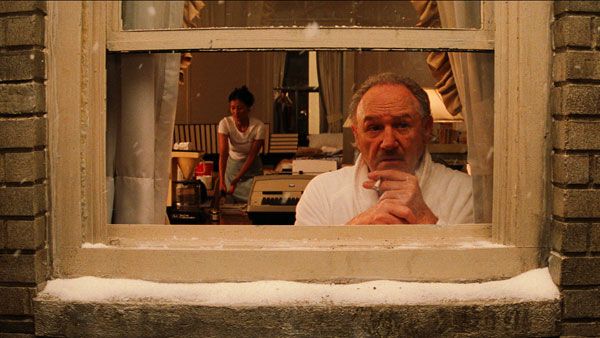
The film weaves together a tapestry exploring familial relations made relatable by Anderson’s quirky but ultimately compassionate sensibility. Structured like a novel (the opening shot imagines the film as a well-worn book being checked out of the library) and divided into chapters, it’s also bursting at the seams with literary references and allusions. For instance, most of the characters have either written books (from Margot’s plays to Henry’s Accounting For Everything) or, in Richie’s case, have appeared on a magazine cover. The film’s design also suggests a comic strip come to life (it’s no coincidence that the Peanuts standard “Christmas Time Is Here” plays in a scene having nothing to do with that holiday.) Virtually every character is cloaked a requisite costume of sorts that rarely changes throughout: Richie’s tennis shirt and headband, Henry’s blue blazer and bow tie, Chas’ red Adidas track suit and the identical, miniature versions his sons wear. The immaculately storyboarded interior sets with their deep pink walls and insane attention to detail (the childhood drawings on Richie’s bedroom walls (created by Anderson’s brother Eric), the walk-in closet overflowing with board games) are also obviously exaggerated. Many shots even feature someone tightly framed through a window, peering at the outside world.

Royal ponders his future.

Although it had a relatively large budget (twice that of Rushmore), a high-profile ensemble cast (supposedly, Hackman’s and Huston’s parts were written with them in mind) and a far wider, more ambitious scope, it was, at that time, still instantly recognizable as a Wes Anderson film.  Like the previous two, it featured credits entirely done in Futura Bold typeface, a whimsical musical score from former Devo member Mark Mothersbaugh, Anderson stock players such as Pallana, Seymour Cassel (as Dusty, the elevator operator-cum-doctor) and Andrew Wilson (Luke and Owen’s older brother), a cameo from the director himself (as the tennis announcer) and a final, reflective shot that’s filmed in slow-motion. Viewers could also look out for various motifs and in-jokes: the number of Tenenbaums wearing a piece of pale pink clothing at any given moment, the particular instrument on the soundtrack most prominent during Margot’s scenes, the cameo appearance (as a paramedic) by one Brian Tenenbaum, a real-life college friend of Anderson’s.

For all its self-aware cleverness, off-the-wall sight gags, and excessive stylization, The Royal Tenenbaums is really a sweet, rather poignant film that resonates more profoundly with each viewing. Once you’ve absorbed such showy (but dazzling) moments as a detective’s clipped rundown to Raleigh and Richie of Margot’s past loves (furiously edited to The Ramones’ “Judy is a Punk”), you’re left with essentially a kindhearted (if occasionally side-splitting) tale of redemption. Marvel at the brilliant long take where Royal tells Etheline he’s dying and note how Huston’s reaction continually shifts from disgust and surprise to concern, grief and rage without missing a beat. Observe how Anderson often tempers melancholy with hilarity without obscuring either tone (e.g., the Gypsy Cab that appears just in time as Margot walks out on Raleigh.) Pay attention to subtle details like how Royal finally refers to Margot not as “my adopted daughter”, but simply, “my daughter” in the ice cream parlor. Take in the “Sparkplug Minuet” scene late in the film, where the camera tracks from one group of characters to another along the street outside 111 Archer Avenue and notice the obvious affection and care Anderson has for each of them. At one point, poor, yearning, forever-the-outsider Eli gently says, “I always wanted to be a Tenenbaum.” Royal replies (mostly to himself), “Me, too,” and you just want to join him in unison.

I pause to think what life would be like had I emulated Kael and never bothered to give The Royal Tenenbaums (or anything else) a second viewing. I might remember it fondly the way I do, say, In The Bedroom or The Man Who Wasn’t There (to name two other films from that time I’ve never rewatched.) If I hadn’t seen it again, perhaps I wouldn’t have given subsequent Anderson films like the aforementioned The Grand Budapest Hotel or Tenenbaums’ even more ambitious and widely misunderstood follow-up The Life Aquatic With Steve Zissou (2004) a second chance. With the exception of his most recent work (2020’s The French Dispatch), I’ve seen all of Anderson’s movies more than once and each rewatch has yielded similar results. Tenenbaums remains my favorite, perhaps due to when I saw it and that process of being able to see deeper into it on additional viewings, but he has other works that come close, like Grand Budapest, 2012’s Moonrise Kingdom and of course Rushmore, forever his breakthrough film.

We revisit works for the pleasure they provide. Occasionally, we also have a sixth sense, an inclination that there’s more to glean from them than we can discern from a single viewing. The best films (and books, and albums etc.) are ones that gradually insert themselves into our lives and by extension, our subconsciousness. Their dialogue, visual design, narratives and richly-drawn characters become part of us whether, in this case, we identify more strongly with well-meaning asshole Royal or guilt-ridden, tortured Richie. Revisit them enough and they become touchstones raising the bar for what we expect and hope from every new (and in some cases, old) movie we watch.

Essay #13 of 24 Frames.

Go back to #12: Mulholland Drive.

Go ahead to #14: What Time Is It There?

24 Frames: Mulholland Drive

Why film? As I watch one movie after another, I seldom pause to consider such a question. I suppose this project is an attempt to track my own relationship with film, how it grew from a pastime of simply viewing them for entertainment to a full flower of talking, thinking about and obsessing over them. Rarely does a week pass where I haven’t watched a single film (or more likely four or five.)

What initially drew me to studying film was its invitation to view and partake in cultures and perspectives outside my own. It’s unlikely I’ll ever spend much time in or even visit Russia, but I can glean various perspectives of what Russia is like through the films of Sergei Eisenstein, Andrei Tarkovsky and Andrey Zvyagintsev (to name three great directors from three wholly different eras.) Granted, I’ll never know it as well as the places I’ve lived and spent ample time in, but even just familiarizing myself with Russian movies (and those of other countries from Finland to Burkina Faso), I feel my mindset expanded.

Culture aside, film can be limitless in its approach—just think of all the disparate (and in some cases, intersecting) worlds a film can contain according to genre, tone, style and structure. Over ten days at the height of the COVID-19 pandemic two years ago, I watched a trashy camp classic (Valley Of The Dolls), a pioneering experimental/fake documentary made around the same time (David Holzman’s Diary), a Reagan-era, female-directed French musical (Golden Eighties), the low-budget indie debut from Canadian auteur Atom Egoyan (Next of Kin), a popular “ripped from the tabloids” doc from a decade ago (The Queen of Versailles), peak early 90s New Queer Cinema (The Living End) and, from two years before that, Bertolucci’s adaptation of the Paul Bowles novel The Sheltering Sky—there you have it, seven distinct ways of seeing out of hundreds of thousands available to rent or stream.

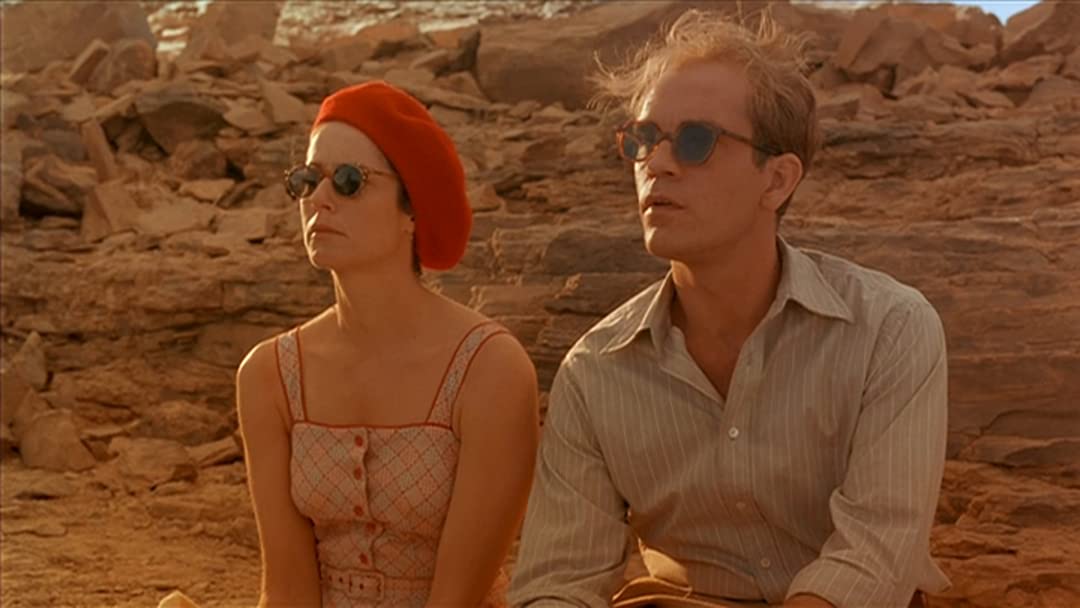
The Sheltering Sky

Even the pre-streaming age afforded such possibilities if less access and convenience than we’re now accustomed to. As the 1990s gave way to a new century, I kept at it, practically organizing my own life around what I could see in theatres, and then what I could rent or borrow to watch at home. I continued perceiving film as a virtual global passport of sorts, but something else shifted. The idea that cinema not only offered many things to see around the world but also new ways of seeing the world regardless of location registered back in grad school when I first watched bold, wholly original takes on contemporary life such as Safe. I kept this in mind when picking out new movies to see. Those making the most instant and lasting impressions adhered to this notion of cinema as a lens offering viewpoints that were recognizable (to a degree) but also fresh and illuminating in ways that I’d never devise on my own.

Writing about Beau Travail, I championed 1999 as a consensus-supported banner year for film; in my personal view, 2001 nearly surpasses it, especially in the realms of indie and world cinema. Ghost World, Hedwig and the Angry Inch, In The Bedroom, Memento, Waking Life, Amelie, Gosford Park, Donnie Darko—not too shabby a selection (and I’ve left out some titles I might devote to future entries here.) Adding delayed domestic releases from the previous year like In The Mood For Love and Our Song only enhances this notion of 2001 as another all-timer for cinema.

Naturally, the year carries a weightier association in the collective memory. Even though my spreadsheet of watched films by date only goes back to 2004, I still recall the last film I saw in a theatre before 9/11: a restored print of Godard’s Band of Outsiders at the Brattle in Harvard Square with a solid Saturday night crowd. Francois Ozon’s slow-burn psychological thriller Under The Sand at the Arlington Capitol was what I first saw in a cinema afterwards, three Saturdays later. It’s no stretch in noting how much the world changed between those two screenings and how coincidentally those two titles represent the collective mood before and after (particularly the Ozon film with its gloomy undertones and quiet, numbing sense of dread.)

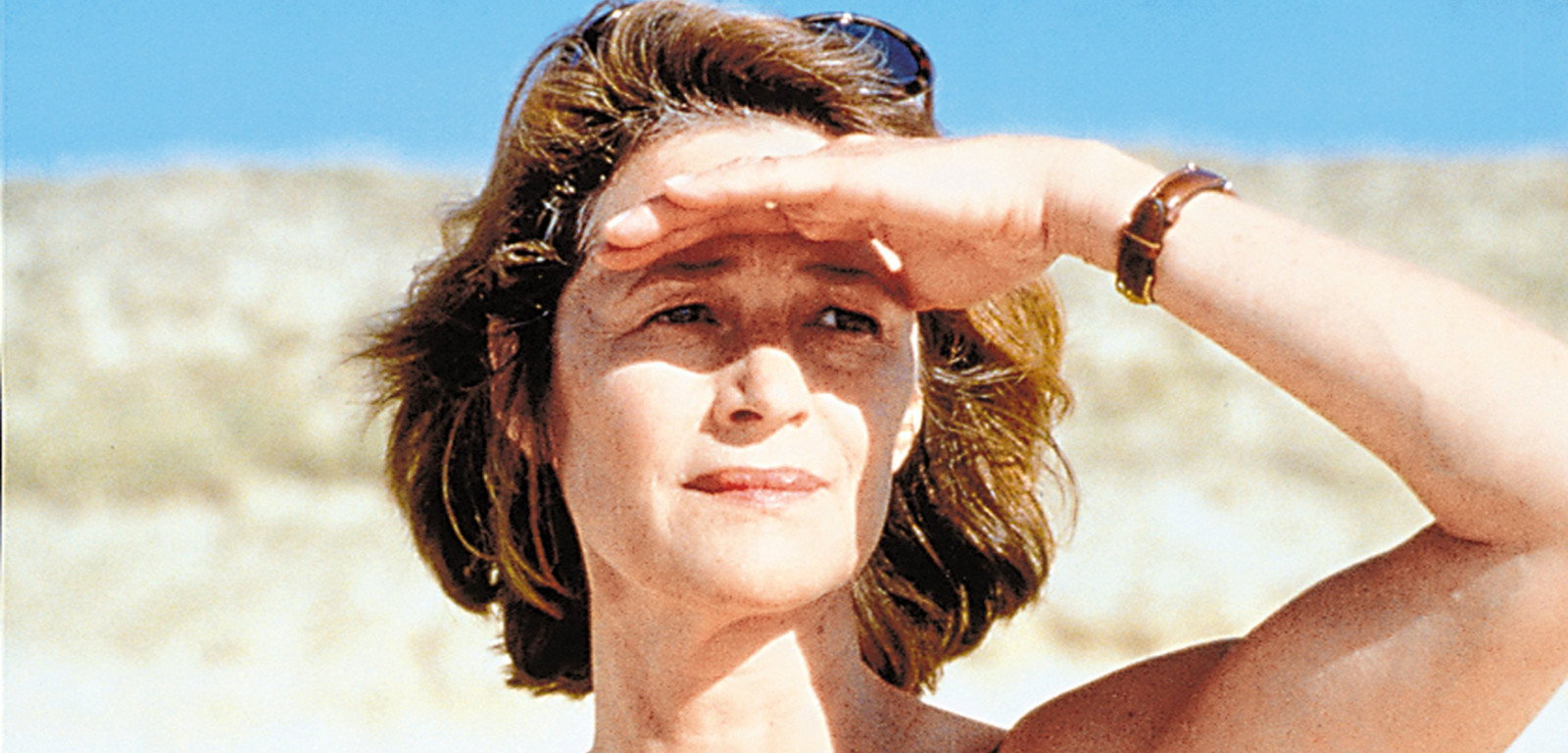
Under The Sand

Exactly two weeks after Under The Sand, I saw Mulholland Drive on its opening weekend at the Coolidge Corner Theatre in Brookline. At this point, I appreciated director David Lynch but felt no strong passion for his work. I’d viewed The Elephant Man in a high school class (way over my head at the time); as an adult, I’d watched Blue Velvet and Twin Peaks: Fire Walk With Me; the former had unnerved me without necessarily transcending that feeling, while the latter left me cold (granted, I hadn’t seen a single episode of the series at that point! Why I watched this prequel at all is best saved for another essay.) And yet, I’d also seen The Straight Story, which did move me with its deceptively simple narrative and in how it captured the unlikely beauty of a region (rural Iowa and Wisconsin) I’m familiar with—never mind that it’s Lynch’s most atypical work (rated G and produced and distributed by Disney!)

Mulholland Drive arrived in theaters with no shortage of hype. Originally conceived as a 90-minute television pilot for ABC (home of Twin Peaks) in 1999, it was rejected by the network. Rather than leave it behind, Lynch refashioned it into a film, securing funding from Canal+ and shooting additional footage. The 146-minute feature version premiered at Cannes in May 2001 to critical acclaim and Lynch tied with the Coen Brothers’ The Man Who Wasn’t There for Best Director (Nanni Moretti’s comparatively forgotten The Son’s Room won top prize, the Palme d’Or.) By its theatrical release, growing buzz around the film positioned it as one of the year’s most anticipated arthouse attractions.

A film lives up to such lofty expectations (such as the swaggering, singular Hedwig and the Angry Inch) just as often as it does not (to pick an extreme example, all I wanted to do was take a dozen Silkwood showers after feeling thoroughly pummeled by Requiem For A Dream.) My first viewing of Mulholland Drive was closer to that of Hedwig, but with some reservations. I wrote in my journal (this was still pre-blog) of walking away from it feeling “entranced” (a word I surely overused in my twenties) and given my overall impression of Lynch’s back catalog, a little surprised. I described it as “a world of dreams” populated by characters that were less Twin Peaks caricatures (remember, I hadn’t seen the series yet) but more “grounded and fragile.” However, I couldn’t love it due to its unusual structure and inexplicable twists. I suspect I was far from alone in this, as I’ve discussed the film with numerous people over the years who similarly find Lynch’s tendency to leave crucial things open and unexplained a stumbling block if not a reason for outright disliking it.

Still, that initial watch of Mulholland Drive, perhaps enhanced by a continual string of accolades (like Beau Travail the year before, it topped the Village Voice Film Critics poll) stayed with me. I made room for it on my own year-end top ten film list at #9, right between Our Song and The Man Who Wasn’t There. When it hit the then-second run Somerville Theatre in early January, I saw it again. In that journal entry, I wrote, “It’s a film that begs to be seen more than once” before noting how much funnier it was the second time, the half-filled theater often reacting with belly laughs (only to be subsumed by some rather nervous laughter in the brain-melting last half hour.) Whereas I kept trying to figure out what the hell was going on after that first viewing, now I could come up with a few ambitious (if probably insufficient) theories, having noticed reoccurring objects and parallels drawn between characters and situations.

No matter how much I worked on cracking the film’s narrative code, its mystery (as well as its mastery) left me captivated (to use a slightly better word than “entranced”.) I bought the DVD when it came out months later and re-watched it a handful of times before seeing it again on the big screen at the Coolidge in 2006. When I redid my best of 2001 list a few years later, it wound up at #2. In 2012, it secured a place on my list of ten favorite all-time films inspired by the once-every-decade Sound and Sight poll (as did Beau Travail and McCabe & Ms. Miller.) Just last year in a job interview when referencing my professional and academic background in cinema, I was asked (for a non-film related position, I might add) what my favorite movie was: Mulholland Drive popped in my head before anything else.

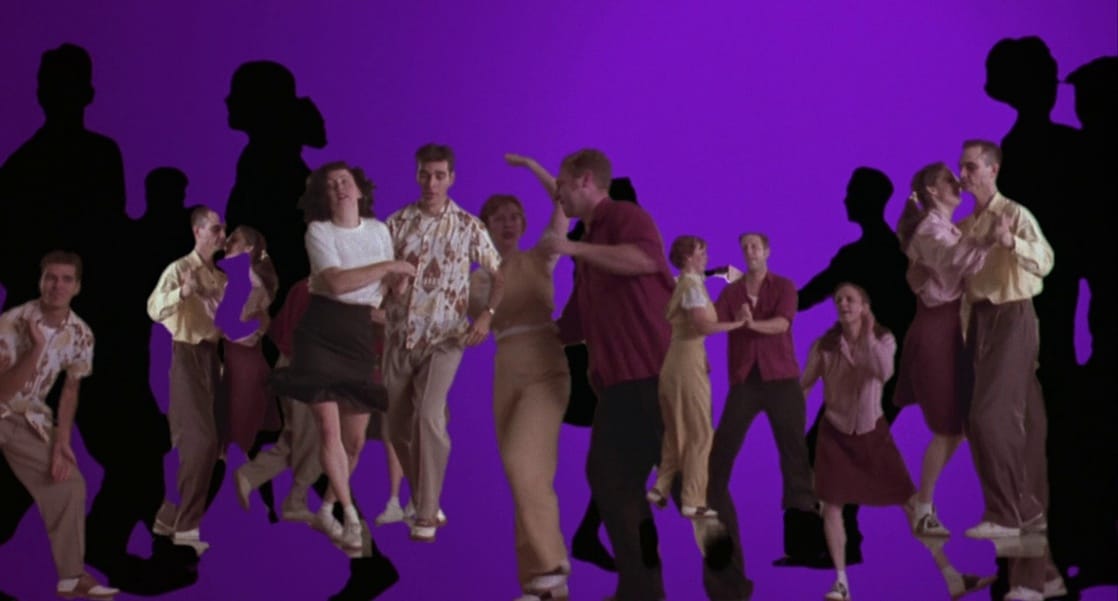
I’m not going to make that particular case for it here; to name a single favorite film out of the thousands I’ve seen is increasingly an impossible task. Neither will I fully go through it scene by scene given limitations of time and space and my readers’ patience. However, I have to address the narrative and will do so starting at the very beginning. To this day, I struggle explaining why I feel a sensation akin to goose bumps upon just hearing the opening swing-band music as images blur and skitter across the screen. Soon enough, they settle on a tableau resembling those Louis Prima-scored Gap commercials from the late ‘90s but with slightly older and decidedly amateurish dancers, not to mention all those overlapping silhouettes. As jarring and exciting as any beginning, it barely has anything to do with the rest of the film; only over two hours later does one character (whose visage flashes over the action at the scene’s conclusion) mention once having won a dance competition. Is that what the opening scene depicts, or is it a dream?

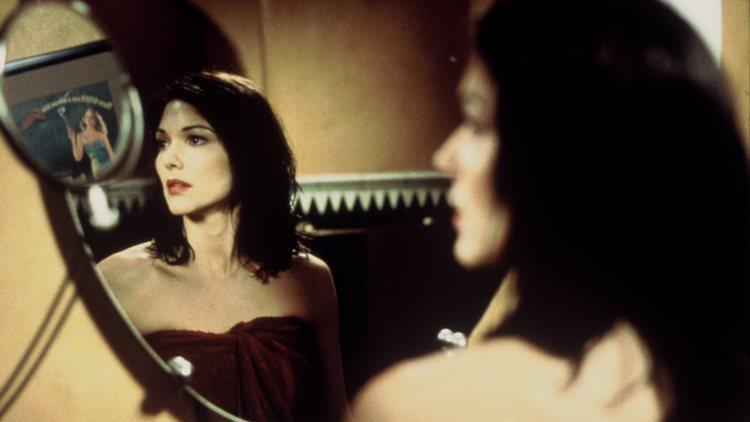
In the film’s grander scope, such a question is irrelevant. Mulholland Drive might be the ultimate movie gathering power predominantly from feels rather than plot. Still, one must consider that latter. The narrative throughline of Betty (Naomi Watts), a blonde, fresh-faced aspiring actress from Podunk, Canada apartment-sitting for her Aunt Ruth in Hollywood and her relationship with Rita (Laura Harring), the mysterious brunette car accident survivor/amnesiac she finds squatting there easily draws one in. As compelling a mystery as anything featuring Nancy Drew or Jessica Fletcher, it’s Lynch as his most outwardly engaging and tender.

Alas, as much as it, well, drives Mulholland Drive, it serves as only a part of its universe. The film’s first half often plays like the TV pilot it was conceived as, given to multiple storylines that in a feature context resemble planted seeds meant to develop into full-grown branches in subsequent episodes: the man (Patrick Fishler) recounting his nightmare to another man at Winkie’s, a Denny’s-esque diner where the dream took place; a ropey hit man (Mark Pellegrino) whose attempted mark goes horribly and absurdly awry; Adam, a hotshot filmmaker (Justin Theroux) whom, in a closed-door boardroom is forced by mafioso (one of ’em played by longtime Lynch collaborator/scorer Angelo Badalamenti!) to cast a particular actress as the lead in his next picture, declaring upon her sight, “This is the girl.” That last thread actually develops further as Adam endures and suffers various foibles, only for his story to briefly merge with Betty’s as she visits his film shoot directly after an audition where, performing an intense scene with an older actor (played by Chad Everett!), both she and Watts reveal what skilled actresses they are.

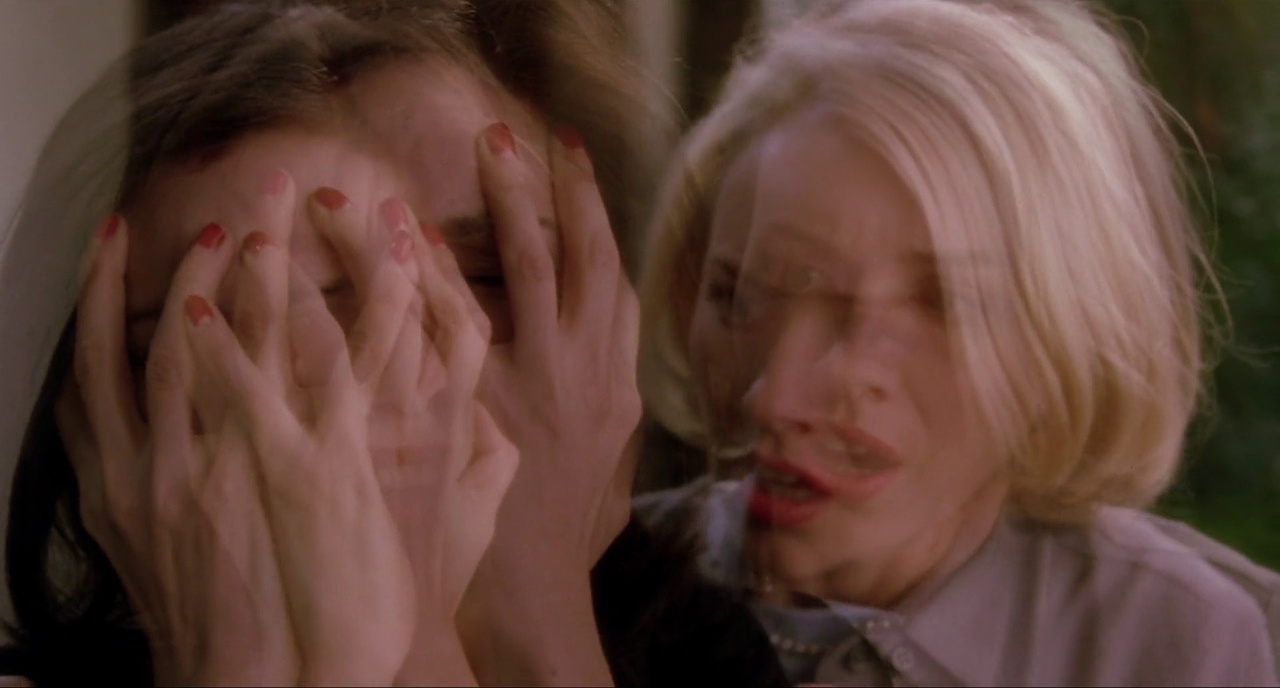
The Betty-and-Rita story increasingly takes up more screen time as the film lingers past the 90-minute mark until they find a key to open the blue box in Rita’s purse. As Rita unlocks and opens it, the camera seems to dive into its darkness; on the other side, everything has abruptly shifted. Watts is now Diane, whose name earlier bred a spark of familiarity in Rita, leading her and Betty to scope out Diane’s drab apartment only to find her decaying corpse lying in bed. Watts-as-Diane, disheveled, glumly shuffling around her shitty bungalow is nearly the polar opposite of Watts-as-Betty, so cheerful even her pink sweater literally sparkled with sequins. Harring also reappears, only now called Camilla, a successful actress who has been helping Diane get bit parts. Camilla (also name of the “This is the girl” actress) is in a relationship with Adam, who is still a filmmaker; at a house party they invite Diane to (out of pity, it seems), they introduce her to Coco (Ann Miller—yes, that Ann Miller), whom we previously knew as the manager of Aunt Ruth’s apartment complex; she is now Adam’s mother. It’s all purposely disorienting and as Diane’s mental and emotional instability surges into the red zone and the film ends with her suicide by gunshot, it’s not difficult relating to her madness.

Eat your heart out, Ann Miller.

For years, my most basic interpretation was that everything up until Rita opening the box was Diane’s dream with Betty an idealized version of herself. It’s probably no coincidence that when Betty becomes Diane, the first words heard are “Hey, pretty girl, time to wake up” from The Cowboy, the flat-voiced, Uber-Lynchian figure who ultimately convinced Adam to obey the mafia’s wishes (do we even have time to get into who or what else The Cowboy is?) Going back to my notes after that first watch in 2001, I described the entire film as a dream or a series of dreams dissolving into one another, rather than the opening of the box as a demarcation line between dreams and reality. Those words now startle me, for on my most recent rewatch, they sum up how I currently interpret Mulholland Drive. Given Lynch’s notoriety for refusing to explain anything in his films (no commentary tracks from this guy!), it’s fitting that his greatest work is one of his most enigmatic. He purposely leaves a trail of clues, some of which even match up, but there’s no grand denouement, no rationalization for why Betty becomes Diane—although earlier dialogue such as Betty’s “It’ll be just like the movies—we’ll pretend to be someone else,” or Rita’s anguished cry of “I don’t know who I am” resemble premonitions in retrospect.

Still, when thinking about the film, I always go back to that bizarre swing-dance opening. Whether or not it has anything to do with what follows, it undeniably sets a tone: nebulous and perplexing for sure, but also expectant and positively giddy. Where (and possibly when) in the world are we? The simplest answer (to the former at least) is Los Angeles. Lynch seems to view the city as his medium here, a canvas with space for him to manipulate, paint over and reassemble what’s already there. For instance, he inserts numerous establishing shots panning over the cityscape—in particular, the steel-and-glass-heavy Downtown skyline mostly at night. He just hovers over it all with Badalamenti’s near-ambient, white noise score playing a crucial part. He avoids most recognizable landmarks, instead opting for an anonymity heightening an encroaching dread.

Instead of Grauman’s Chinese Theater or the Hollywood Sign, he renders ordinary, everyday locales as places to remember. Think of those already vaguely recognizable to a viewer of a certain age, like Winkie’s coffee shop or an abandoned drive-in movie theater. In this film’s universe, they’re presented as significant a part of the overall design as Aunt Ruth’s cozy, incredibly well-preserved art deco apartment or Adam’s swanky mansion in the Hollywood Hills. This extends to reoccurring objects such as mirrors, an ashtray and a rotary phone (!) as well as settings that aren’t what they initially appear to be—most notably, the abrupt cut to a tableau of singers decked out in 1950s outfits performing the Connie Stevens song “Sixteen Reasons” in a recording studio. Again, where (and when) are we? As the camera pulls back, we see it’s actually Adam’s film set, an audition for a scene in a Stevens biopic he’s directing—the one he’s being forced to cast a particular lead actress in.

After Betty and Rita’s discovery of Diane’s corpse (which climaxes in a chilling superimposed image of the two of them reacting in horror), most of these locales and objects seem to just melt away, restricting the action to Aunt Ruth’s apartment where Rita begins cutting off her hair to disguise herself until Betty lends her a wig. The two women now look nearly identical, and their relationship soon turns sexual. Then, in the middle of the night (with no explanation), Rita asks Betty to take her to a place revealed as Club Silencio. They sit down in the sparsely attended, dilapidated old theater. A goateed magician takes the mic and delivers a spiel about how “It’s all recorded… it’s an illusion.” He introduces Rebekah Del Rio, who sings Roy Orbison’s “Crying” in Spanish, her tremulous, haunting voice filling the cavernous space like a siren, powerful enough to raise every last hair on your body. She makes it through half the song, her intensity forever rising until she suddenly *drops* to the floor… and the song continues. After all, “It’s all recorded… it’s an illusion.”

Arriving just before Rita opens the box, the Club Silencio scene could be the key to unlocking the film’s allure, if not entirely its logic or purpose. It’s as if everything has been building towards this gorgeous, striking, transcendent, shocking moment where we witness a great performance that’s not entirely truthful. Similarly, the engaging, intriguing stories of Betty and Rita, Adam and Camilla, Diane, Coco and all the rest of these Los Angelenos aren’t entirely truthful or are at least altered to allow for simultaneous truths, none of which are absolute. Mulholland Drive is indeed a panorama for Lynch to fearlessly explore connections between dreams, reality and also the movies (“Why film?”, indeed), not to mention all of the wicked, sublime and terrifying possibilities that surface as they overlap.

Essay #12 of 24 Frames.

Go back to #11: Beau Travail.

Go ahead to #13: The Royal Tenenbaums.

24 Frames: Beau Travail

Finishing graduate school felt like surfacing from a lingering fog. With equal parts liberation and sheer terror, I had gotten my paper and I was free all right, but to do what? I didn’t invest a small fortune in earning a Master’s in Film Studies with any specific career goal in mind. Six months later, I’d learn to adapt and figure something out once I could no longer defer my student loan payments; in the meantime, I fully took advantage of not tying myself down to any structure. Bidding adieu to my formal education meant I could now watch all the films and read all the books I wanted to. No more assignments or syllabi—I had the autonomy (and acquired tools) to forge my own path.

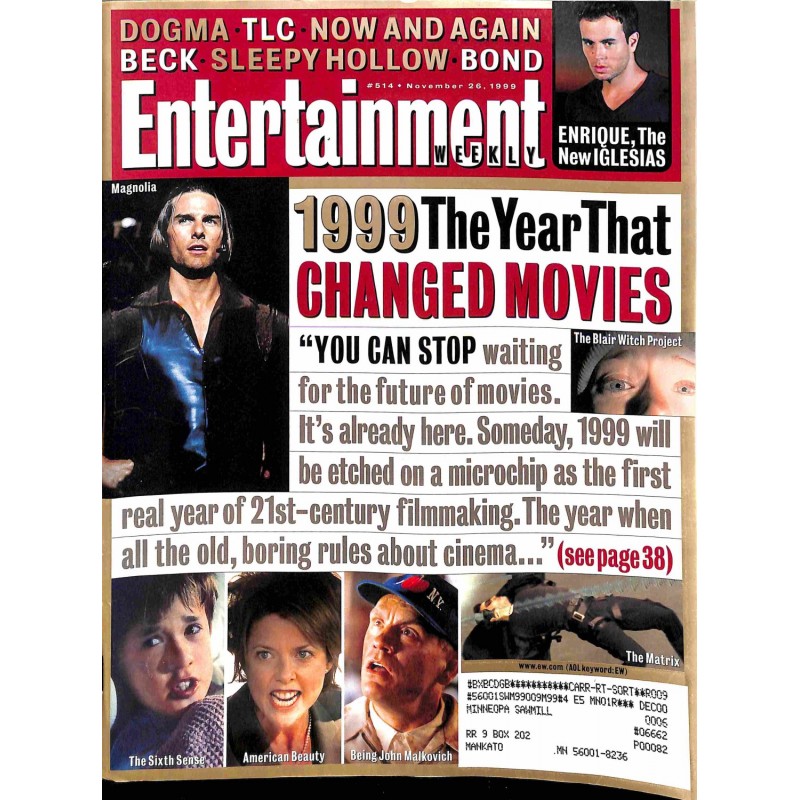
Serendipitously, I completed film school at an extraordinary time for new movies. While 1999 produced its share of high-profile critical stinkers (due to its May release date, Star Wars Episode 1: The Phantom Menace ended up my first new movie in a cinema, post-commencement), it’s now considered an above-average year for film akin to 1939 (The Wizard of OzGone With The WindStagecoach), 1967 (The GraduateBonnie and ClydeIn The Heat of The Night) or 1974 (ChinatownThe Godfather Part IIYoung Frankenstein.) Brian Rafferty’s 2019 book Best. Movie. Year. Ever. made an extensive case for enshrining it; even before the year itself ended, Entertainment Weekly ran a somewhat hyperbolic but enthusiastic cover story titled “1999: The Year That Changed Movies”.

For proof, look no further than to ElectionThe Straight StoryBeing John MalkovichThe Sixth SenseMagnoliaThe Talented Mr. RipleyThree Kings and All About My Mother. Consider lesser-seen cult pictures such as The LimeyRatcatcherThe Iron GiantAmerican MovieJudy BerlinDickTopsy-Turvy and Jesus’ Son. Don’t forget expert popcorn entertainment like Galaxy QuestOffice Space and South Park: Bigger, Longer and Uncut. I could even make an argument for films I personally don’t care for (Fight ClubEyes Wide Shut) that nonetheless were positively received and part of the zeitgeist. Heck, one could even stump for The Blair Witch Project, which I never need see again but can’t ignore the seismic impact it had at the time. (As for that year’s Best Picture Oscar winner, American Beauty, I suspect it’s aged as poorly as most would claim in the Me Too, post-Spacey scandal era, but I might be into revisiting it in maybe another decade.)

It’s difficult to explain why so many important films came out that year. One could look to pre-millennium tension/anticipation, arguing that directors and studios were simply inspired to get this product out before century’s end, but I don’t think that’s all of it. Call it coincidental or a reflection of rapid technological and social change brought on by that newish invention, the Internet or maybe just the optimism of an upwardly mobile era; in any case, 1999 was (by COVID-era standards) a great time to be alive and a bountiful year for cinema. I took advantage of it, seeing as many new films as an impoverished 24-year-old could afford. Whether checking out new stuff at Kendall Square Cinema, Coolidge Corner Theatre and the now long-gone Nickelodeon near BU or older gems at the Brattle, Harvard Film Archive and Museum of Fine Arts, I kept up with most notable mainstream and arthouse titles, even if I had to wait until a few reached the then-second run Somerville Theatre or video stores (I’ve only seen The Matrix once, stoned at a friend’s apartment.)

No longer subject to required viewing, I paid more attention to new films than I had as a student, even making my first year-end top ten list in 2000 (although I could’ve easily done one for 1999.) Actually, it included a few titles technically from 1999 that didn’t receive a local theatrical release until well into the new year: Abbas Kiarostami’s The Wind Will Carry Us (#2), Eric Mendelsohn’s now-long-unavailable and mostly forgotten Judy Berlin (#3, and also the iconic Madeline Kahn’s final film) and Zhang Yimou’s Not One Less (#7) are all copyrighted 1999 but were first accessible to most American audiences the next year. This is a perennial issue for the local or amateur critic: Is Wong Kar Wai’s In The Mood For Love the best picture of 2000 or should I still consider it for my 2001 list, for I couldn’t possibly see it in Boston until March of that year?

The number one film on my 2000 list falls under the same conundrum: it first played Boston in June of said year although it premiered at the Venice Film Festival the previous September; its first domestic screening was at Sundance in January. This sort of delayed release cycle is particularly vexing when making a best-of decade list: does it belong in the 1990s or, due to such circumstances, qualify as a 2000s-eligible film? These are the kinds of questions that spark debate and keep film geeks like myself up at night, but no matter: Beau Travail, the fifth feature from French director Claire Denis, is, depending on what criteria I use, my top film of 2000 or 1999 or one of my favorites from the 90s or the 00s.

Born in Paris, 1946, Denis grew up in colonial French Africa due to her father’s work as a civil servant. Her first feature, Chocolat (1988) is purportedly influenced by her childhood as it centers on a French woman looking back to her childhood in French Cameroon and the bond she developed as a ten-year-old with Protée (Isaac de Bankolé), her family’s African servant. Denis’ next three narrative features all either focus on Africans living in France or include at least one significant character of that persuasion. None of these films found as much of an American audience as Chocolat but they marked an artistic progression as Denis subverted other genres (the thriller in 1994’s I Can’t Sleep) and took on such unlikely subjects as amateur cockfighting (1990’s No Fear, No Die.)

Good word of mouth from critics I read such as Jonathan Rosenbaum and J. Hoberman gradually accumulated in the months between Beau Travail’s Sundance premiere and domestic theatrical release. They raved about the performances, the conceptual savvy of interpolating Herman Melville’s Billy Budd and its brilliant cinematography among other facets. Most significant, though, was how Denis assembled it all into a complete work of art that was referential and recognizable but also something original and bold. You can bet I bought a ticket to see it on the Coolidge’s main screen opening weekend. In my estimation, it lived up to all the hype even if I didn’t fully understand everything it was trying to do—the narrative flashback structure likely went over my head during that first viewing. Really, it was how nearly overstimulated yet blissfully satiated I felt while piecing together the images and sounds onscreen, the ways they informed and occasionally contrasted against each other and how tension accumulated throughout, reaching a breaking point only to find its unlikely release at the end.

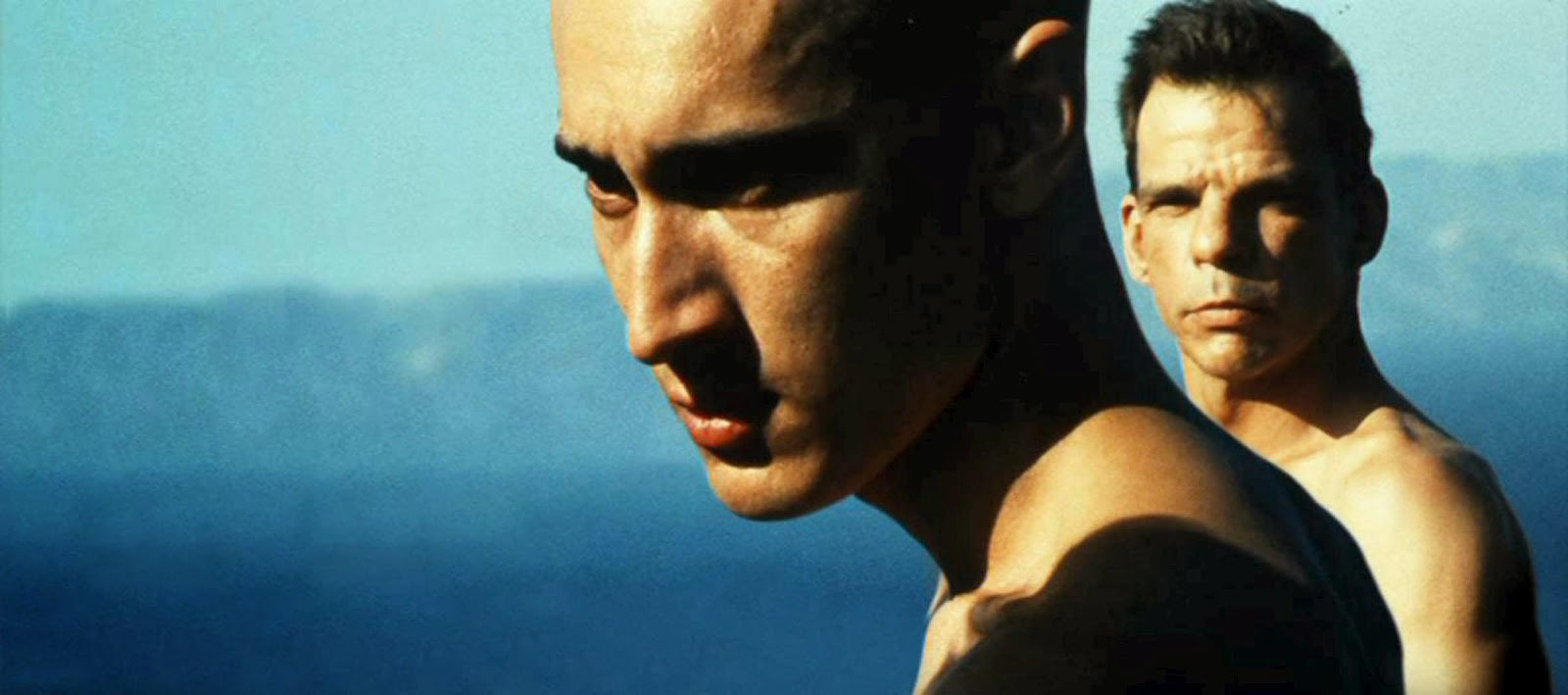
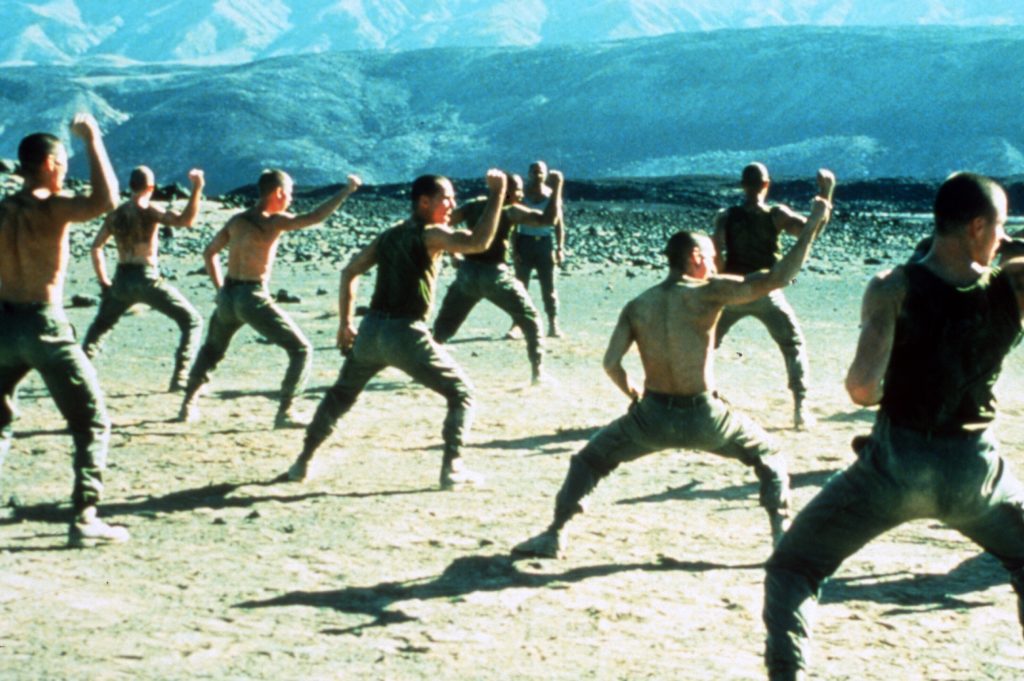
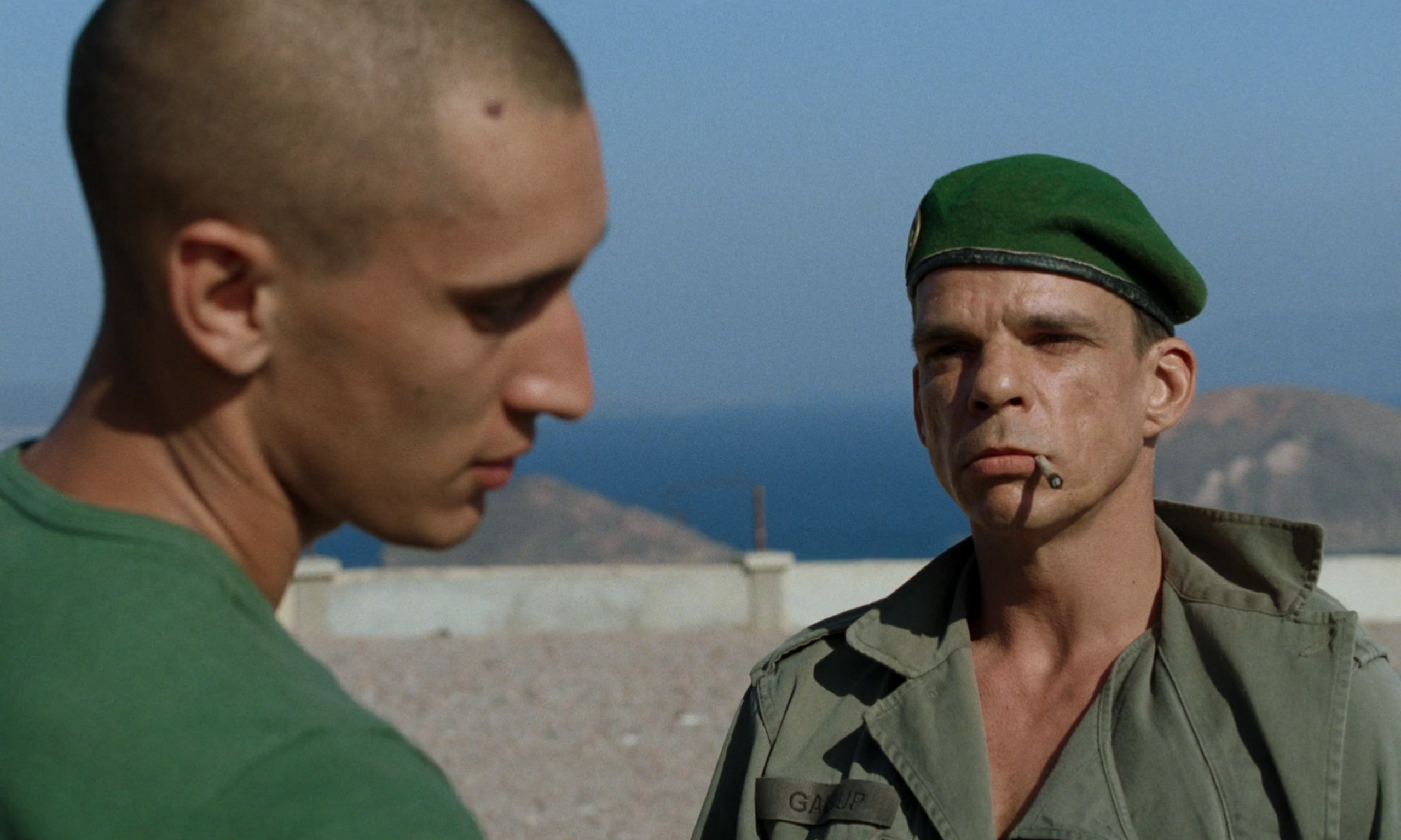
Beau Travail (which roughly translates in English as “Good Work”) finds Denis returning to the continent of her youth, following an ethnically diverse troop of the French Foreign Legion in Djibouti, a country in the Horn of Africa bordering the Red Sea. Mostly told in flashback, the film’s POV is of Galoup (Denis Lavant) in the present day from his tiny, sparse apartment in Marseille. Pushing 40, Galoup is a Legion lifer; in Djibouti, he was in charge of a section of a dozen legionnaires while also serving under his mentor, Commandant Bruno Forestier (Michel Subor, who played an identically named character (minus the title) in Jean-Luc Godard’s Le Petit Soldat decades before.) Galoup spends his days in the desert leading his section in training exercises such as aggressive calisthenics and challenging obstacle courses (like jumping over hurdles and fences and in and out of deep pits.) At night, he and his men visit the closest village’s chintzy but well-attended disco, dancing with and romancing the local women. 

This would seem a conflict-free existence, stationed on a remote edge of the world during peacetime. However, the arrival of a young recruit Gilles Sentain (Grégoire Colin) upsets the fine balance Galoup has indefinitely maintained. At once, he’s suspicious of the tall, charming, handsome-verging-on-gawky Sentain and the attention everyone pays him. Galoup also admits to some jealousy: “Sentain seduced everyone; he attracted stares,” he reminisces from Marseille without entirely clarifying why this bothered him so much. Did Sentain’s being the center of attention simply shift focus and authority away from him? Perhaps something deeper was festering, his envy a manifestation of a contained desire. Within this troop, it wouldn’t be without precedent. When Sentain later informs Forestier, “I was found in a stairwell” regarding his provenance, the Commandant responds, “Well, at least it was a nice find.”

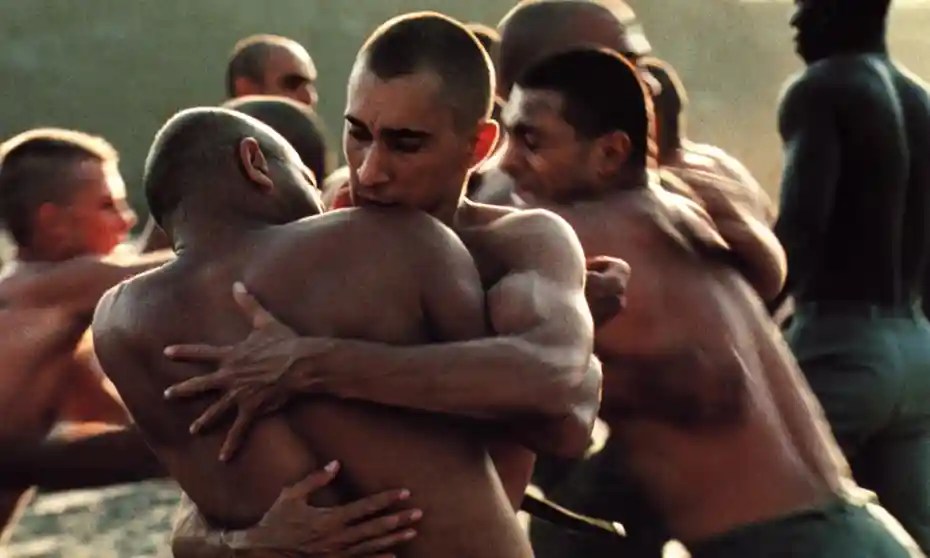
It’s tempting to paint Galoup and Forestier as repressed homosexuals and leave it at that, but I don’t believe that’s entirely what Denis was going for here. Sure, she physically depicts the often-shirtless young male legionnaires as god-like specimens—one training exercise even consists of them in groups of two, violently “hugging” each other repeatedly as a means of attack (or maybe saving the other from harm?) On first viewing, I thought it was one of the gayest things I’d ever seen onscreen. Perhaps if a gay man such as Kenneth Anger or Derek Jarman had made the film, then such homoeroticism would be undeniable. As a woman, however, Denis suggests other interpretations. The body positivity of an all-male principal cast may be homoerotic by default, but with Denis at the helm, one also can consider the female gaze—a radical concept in itself because we simply don’t see it anywhere nearly as often as its male equivalent.

Whether Galoup really wants to fuck Sentain is also less relevant than the disruption of power the film explores as an adaptation of Billy Budd. In Melville’s novella, the young, titular character, a sailor, strikes and kills an officer who has falsely accused him of mutiny. In Beau Travail, the Budd figure (Sentain) hits the officer (Galoup) after the latter severely punishes another soldier for a petty offense and yet, he does not kill him. Instead, Galoup reverses the table when he reprimands Sentain by dropping him off in the middle of the desert with a faulty compass, essentially leaving him to die. When found out, Galoup is discharged from the Legion and shipped back to Marseille, thoroughly stripped from the purpose sustaining his identity and life.

It’s a story ripe for Greek tragedy, tracking Galoup’s hubris, his inability to adapt or see beyond the prescribed duties and goals he’s set for himself and how one poor decision bites him in the ass and essentially ruins life as he sees it. Yet little about Beau Travail feels heavy-handed or excessively downbeat, not even with the ostentatious strains of Benjamin Britten’s Billy Budd opera woven throughout the soundtrack. In fact, that grandiosity becomes absurd in this context as it plays over men training to fight in a nonexistent war—men often rendered as insignificant specks in an extreme, beautiful, cruel landscape on an edge of the world, teeming with wide swatches of deep blue skies, sparkling, cerulean seas and a whole lot of nothing. This sort of irony runs rampant through the film but at an elevated, artful level. We’re both encouraged to register the utter pointlessness of a military in peacetime but also understand what it means, what palpable value it holds for souls like Galoup who don’t care to know anything else.

If Denis’ longtime cinematographer Agnes Godard is responsible for the film’s spectacular look (nearly each frame stuns in its use of mise en scene and/or negative space), then Lavant gives Beau Travail its soul—not an easy proposition since Galoup is such an internal, closed-off figure. Best known for a trio of films made with director Leos Carax (The Lovers On The Bridge), Levant, with his short, wiry frame and pockmarked face already cut a distinctive figure only enhanced by his acrobatic approach and kinetic fury. Since Galoup is nearly the opposite of all that, Levant’s performance exhibits a fascinating duality. Even as he’s all decorum and procedure on the outside, his interior monologue (the decision for him to narrate in voiceover is an effective one) has more the demeanor of a boiling yet closed-off teakettle. Upon first seeing Sentain, he says, “I felt something vague and menacing take hold of me.” Later, rather menacingly backlit against a bonfire, he notes to himself, “We all have a trashcan deep within.” One senses that Galoup’s own can is fairly cavernous, full of so many things he can’t dare openly express or act upon.

When he does act, it goes all wrong. Upon his banishment to Marseille, he retells the story of how he got there in his mind while doing what he can to adhere to the sort of highly structured regiment the Legion provided and required. He meticulously makes his bed with hospital/military corners and painstakingly irons his dress shirt as if preparing a Papal garment. He lies down on that flawlessly made bed, a gun in hand across his stomach. One can easily guess his intent, to end a life that has no longer carries any purpose. Another filmmaker might’ve concluded with him pulling the trigger, or a quick cut to black just before. Instead, as the camera captures the small pulse of his bicep, music fades in from the background—Corona’s Eurodance diva house hit “The Rhythm of The Night” from a few years before, its big beat thumping along with Galoup’s pulse.

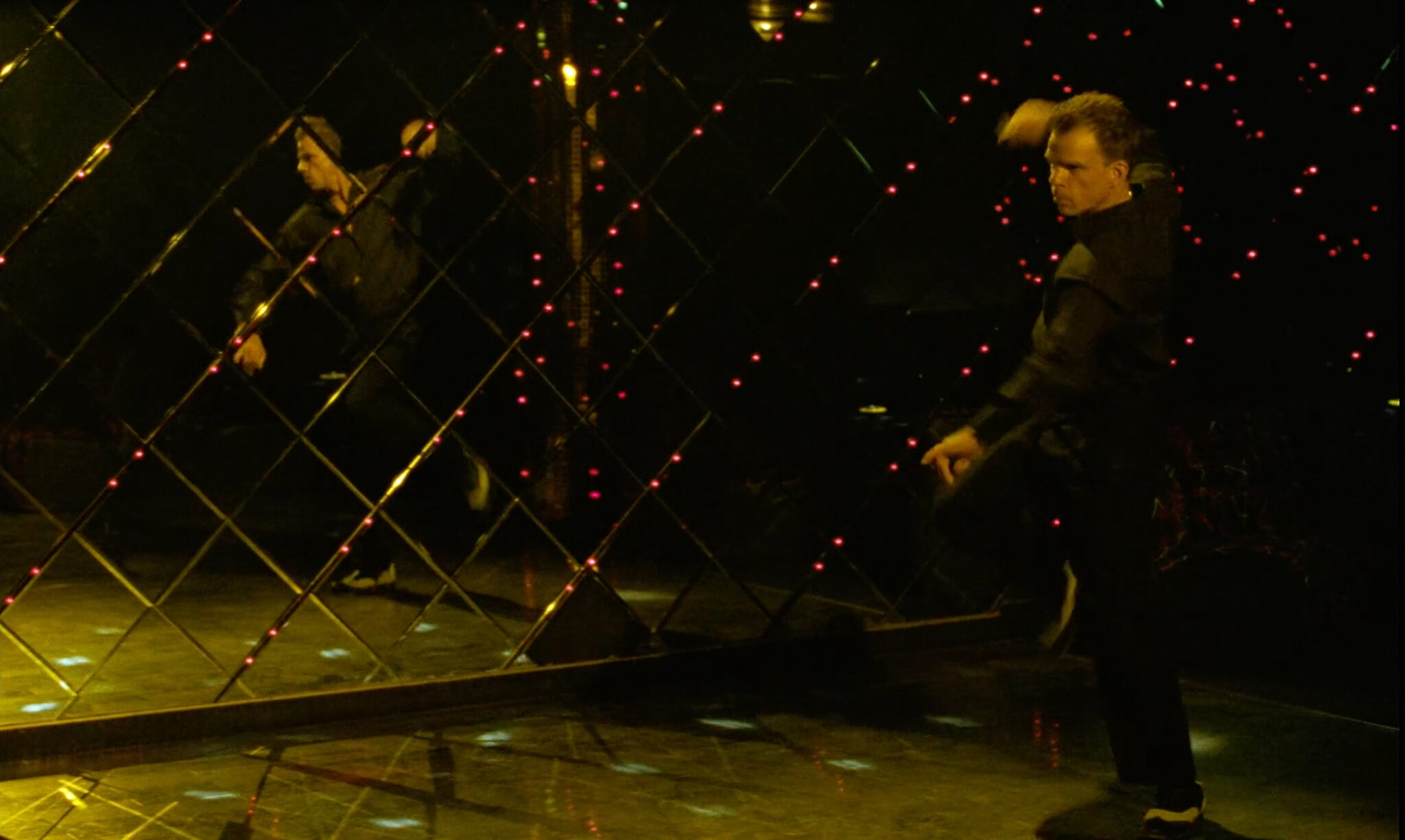
Then, a cut—not to black, but to Galoup standing alone in a familiar location, the chintzy Djibouti village nightclub. He’s cladded in a black dress shirt, a cigarette dangling from his fingers. He stands still, almost nonchalant against a diagonally mirrored wall adorned with colored blinking lights. The Corona song plays loudly as Galoup takes a few steps, walking around the dancefloor as if scoping out the scene. The camera occasionally moves with him but does not cut. In time, he does a little twirl, reacting to the energetic beat and the music’s joie de vivre. Each movement he makes is deliberate yet feels effortless. Eventually, he almost organically transforms into a whirling dervish, dancing as fast as he can, like a man on fire embracing the flames as they consume him. After a cut to black, with the film’s ensemble cast names appearing one by one on a black screen, we return to Galoup, standing still again before immediately diving back into his frenzy, rolling around on the floor, in and out of the frame.

It’s one of the most astonishing endings in cinema—as entirely unexpected and abstract as anything by Tarkovsky or Kiarostami but a whole lot more fun. Is dancing on his own in an empty nightclub Galoup’s final vision before his death, or might it be his ideal afterlife? We’ll never know for sure; what matters is how it serves as a means for him to release all the tension, repression, guilt, desire, irritation, madness, etc. that he had built up over a lifetime. Suddenly, it makes perfect sense to cast Levant as such a constipated soul if he’s given this climax, this chance to burn it all off onscreen not through self-harm or acting out against another body but in a mad tango with himself on the dancefloor. It may be a fantasy, but it also transcends the idea of a fantasy sequence for how it flips the switch on Galoup—look who was hiding in plain sight all this time. His life is still tragic, for he can only achieve such transcendence alone. For Denis to share it with and in doing so completely take us by surprise, however, is where Beau Travail, like many other films from that era on the cusp of two centuries attains its singularity.

Essay #11 of 24 Frames.

Go back to #10: Close-Up.

Go ahead to #12: Mulholland Drive.

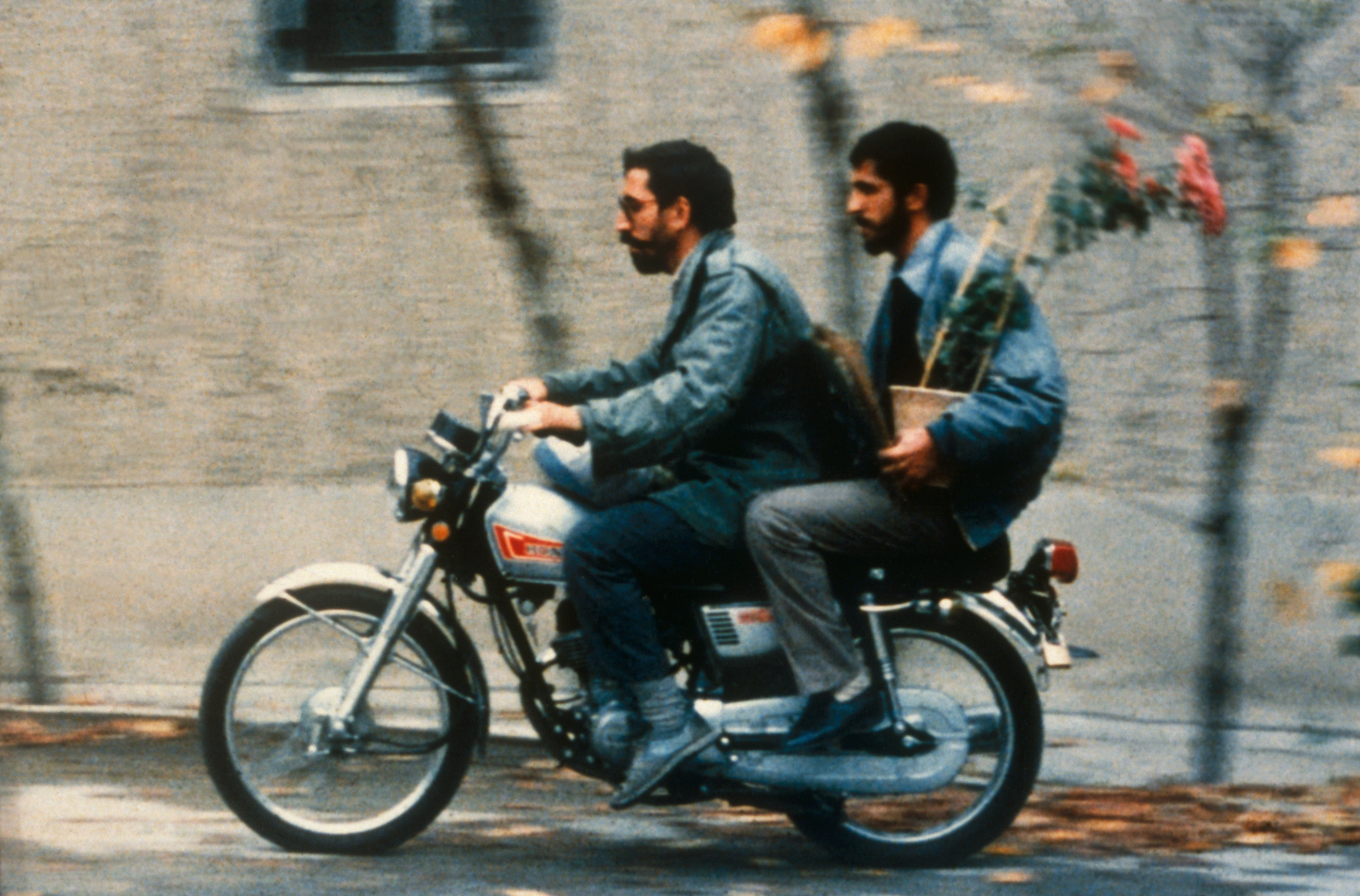
24 Frames: Close-Up


In the late 1990s, even as I learned how to view films more critically, I retained preconceived notions of which titles and directors I should pay attention to. In retrospect, I didn’t need to work on a graduate degree in the subject to understand that Welles, Bergman, Fellini, Kubrick, Hitchcock, Altman, Herzog, Lynch etc. were all important directors, along with contemporary and up-and-coming figures like Spike Lee, Mike Leigh, Jane Campion, Todd Haynes and (as if he would ever allow himself to be ignored) Quentin Tarantino.
 
Obviously, this is a miniscule selection of essential filmmakers—as if one could hope to comprehend the scope and breadth of 20th Century American literature only reading, say, Fitzgerald, Hemingway, Faulkner, Roth and Vonnegut. The thing about canons is that they should always leave some room (if not ample space) for more entries. Look at that preceding list of directors: apart from Spike and Jane, they’re all white American or European men. So, as a budding cineaste, you start looking beyond the usual suspects to the work of other women and African Americans, or films actually made in Africa, Asia and Eastern Europe. You could do worse than begin with universally adored legends such as Sembène, Kurosawa, or Tarkovsky, and then move on to lesser known but equally important figures from the same regions (Mambéty, Ozu, Parajanov), then onto other lands and cultures.
 
Not two weeks into grad school, I overheard two of my classmates gush in reverence over an upcoming Theo Angelopoulos retrospective at the Harvard Film Archive, to which I thought, “Who?” This same blank response came up again when, over a cheap dinner between classes, some other students casually discussed the works of Hal Hartley, an American indie filmmaker whom I had never heard of; did films of his like Simple Men and Trust ever make it to my hometown of Milwaukee? Naturally, most people didn’t know Hartley even at his mid-90s career peak. Regardless, I felt annoyed (and a little embarrassed) that I could still be grouped with “most people” concerning movies.
 
Once I realized/conceded that at 22, I still had a lot to learn about cinema (and that in itself was okay!), I set off trying to expose myself to everything I had access to. Whether browsing through the cult section at the neighborhood Videosmith or taking in Greek auteur Angelopoulos’ latest feature, the three-hour-long Ulysses’ Gaze (1995, starring then-ubiquitous Harvey Keitel!) at the Museum of Fine Arts on a Sunday afternoon, I spent most of my free time familiarizing myself with movies from practically hundreds of countries and subgenres. Officially over were the days when I’d go along with whatever a friend wanted to see in a theater or rent from a Blockbuster simply to socialize and fill up my time; I was now cultivating a discerning eye, training myself to separate the wheat from the chaff by seeing things critics, professors and classmates recommended and applying them to my own developing tastes and interests.
 
Around this time, Iranian cinema suddenly permeated American arthouses as films from Germany had in the 1970s and France and Italy before that. Seemingly overnight, it became common to see internationally distributed Iranian titles like Jafar Panahi’s The White Balloon, Majid Majidi’s The Color of Paradise and Mohsem Makhmalbaf’s Gabbeh alongside such big indie hits of the era as Run Lola RunThe Full Monty and Buena Vista Social Club. Coming from a country that had undergone a fundamentalist revolution just two decades before, it was remarkable that these films would have such a reach in the western world. Chalk it up to widespread acclaim within the global film community and how it tapped into a desire to see other ways of life depicted onscreen. To ignore films from Iran at this time (and ever since) would be like not trying to see anything other than a big studio picture, or only something in English.
 
By no means a scholar of Iranian cinema or culture, my introduction to it was through a screening of Where Is The Friend’s House (1987) in a class on Neorealism film. If any single director could be said to personify post-revolution, pre-millennium cinema in Iran, it’s probably this feature’s director, Abbas Kiarostami. Having completed a number of shorts and documentaries since 1970, this was his first movie to receive any major recognition outside of Iran. It’s a relatively simple film about a boy going to great lengths to return a classmate’s notebook in a neighboring village. However, within this skeletal narrative, Kiarostami delves deep into ruminations on trying to do the right thing and both the physical and moral roadblocks that often prevent us from it. Ending in a moment of unexpected yet earned grace, it’s as miniaturist as a masterwork as Olmi’s Il Posto or Jarmusch’s Stranger Than Paradise.
Where Is The Friend’s House

A few weeks later, Kiarostami’s latest feature, the Cannes Palme d’Or winner Taste of Cherry (1997) opened theatrically in Boston. In some ways, the film is an adult analogue to Where Is The Friend’s House as it involves Badii, a man attempting to complete a task and running into numerous barriers in his efforts to complete it—the big difference being that his goal is finding someone to help him commit suicide. Driving around, he picks up three different men, asking each if, after he spends a night in his own grave, they’d check on him the next morning and help him up if he has chosen life, or bury him if he has not. The third man agrees to the job (but not without trying to sway Badii away from ending his life.)

What’s baffling and/or brilliant about Taste of Cherry is that we never find out Badii’s decision. Instead, after a lengthy shot of him patiently sitting in his grave and a blackout, there’s a cut to video footage of Kiarostami and his crew filming the movie we’ve been watching, followed by the credits roll. I recall sitting in my theatre seat slack jawed, wondering what, exactly, I had missed. How could Kiarostami dangle this narrative carrot with potentially grave consequences only to end not on any conclusion except for the notion that this is only a movie you’re watching; therefore, it doesn’t matter whether Badii kills himself or not because he’s a fictional character. I needed time to process and be okay with such a notion, having been conditioned to look for and only accept concrete resolution where narrative was concerned—e.g., the family who had partially endured a half-century of radial cultural change in To Live or the shifty protagonist who gleefully got away with double-crossing his so-called mates at the conclusion of Trainspotting. But then, I think about how even a zany comedy like Monty Python and The Holy Grail simply ends on the pretense that it’s all just a film.

Taste of Cherry

I don’t know if Kiarostami was at all a Python fan, but in much of his work, he plays with this near-invisible line separating reality from fiction. A few years after Where Is The Friend’s House, an earthquake devastated the remote village of Koker where it was filmed. Kiarostami returned there to look for the two boys who starred in it and then made a semi-fictional feature about it, shot documentary style (with an actor playing Kiarostami) called Life, and Nothing More…(1992). He followed that with Through the Olive Trees (1994), itself another semi-fictional feature: it recreates the filming of a scene in Life, and Nothing More… and the conflict between its two actors, one of whom struggles to differentiate between her acting role and her real-life relationship with her screen partner. Together, the three films are referred to as the Koker Trilogy, even if Kiarostami had not intentionally set out to make one.

Between the first and second Koker films, he completed another feature that had nothing to do with them yet was crucial in his growth as an artist that, much like Maya Deren or Derek Jarman, fuses fact and fiction until the two almost appear inseparable. Close-Up (1990) could be his most resonant film for how smoothly it attains this duality. Some might see it as a magic trick, a balancing act or an admittedly good stunt that is the genesis of his “It’s only a film” ethos. Either way, it’s essential viewing for anyone all at interested in the meta, self-referential aspect of filmmaking and how it can transcend pretensions of cleverness to reveal deep facets of human nature—particularly when one holds up a mirror to a screen but doesn’t necessarily see the exact same thing reflected back.

Prior to the film’s production, Kiarostami came across a news story in Tehran about a man, Hossain Sabzian who had been accused of impersonating fellow Iranian auteur Mohsem Makhmalbaf. Apparently, he led The Ahankhahs, an upper-middle-class family, to believe they’d be starring in his new film. Rather than serving as a straight documentary, Close-Up recreates not only this scenario but also the ensuing courtroom trial where Sabzian admits to being an imposter. Oh, and everyone plays themselves, from Sabzian and the Ahankhahs to the reporter of the news story (Hossain Farazmand), the judge, a taxi driver and even Kiarostami himself. The director shoots the film in a straightforward, cinema verité style, so both it looks and feels like a documentary. Heck, most unsuspecting viewers would likely believe it to be a nonfiction, even if it’s all a recreation and therefore technically a fiction.

Much of Close-Up focuses on Sabzian’s trial which is interspersed with preceding scenes of his arrest, Farazmand meeting with and interviewing him, and a few flashbacks depicting how Sabzian infiltrated himself into the family and those fateful moments when it finally dawned on them that something wasn’t right about the man who would be Makhmalbaf. One could’ve imagined a flashy, dramatic retelling of this story, playing up the hubris of the schmo posing as a famous artist, the mounting suspense of whether or not he can pull it off, the betrayal felt by the family when they learn he’s an imposter, his pleading in court for forgiveness and understanding. While each of these things are present to varying degrees in Close-Up, they play without any gloss or blatant embellishment. It feels more like Kiarostami just pointed his camera at the participants and captured what happened (even if “what happened” is, in fact, a simulation of such.)

Adhering so closely to a realistic presentation, watching Close-Up is at times like stepping through the looking glass. We can’t know whether these things all actually happened; we can only rely on the filmmaker and choose to believe he’s telling the truth. Naturally, that didn’t work out so well for Sabzian, a liar who got caught. However, Kiarostami sees Sabzian, and not the Ahankhahs or even Farazmand as the film’s protagonist. When the two first meet, the imposter tells the director, “You could make a film about my suffering,” words that we’re led to believe were spoken because the legitimate director posits that this was the case by including them in the screenplay. As Close-Up continues, the more meta it seems, particularly in the trial scenes. Sabzian straight off confesses to the crime, admitting, “I really got into the part; it’s even as if I was a director.” Later, the judge asks him, “Have you ever worked in film?” to which he dutifully responds, “No, but I’ve read screenplays and books on the subject.” A member of the Ahankhahs isn’t having any of it; he dismisses any notion of Sabzian’s sincerity in court, arguing, “He’s still playing a role: ‘The sensitive soul.’”

It all comes to a head when the judge asks Sabzian, “Aren’t you acting for the camera right now?” Of course, Sabzian is acting to a degree as he’s playing a version of himself, no matter how identical to reality. But, for the pretense that this is a film, and perhaps a recreation of what he actually said at the real trial, he responds, “I’m not acting; I’m speaking from the heart.” It’s the one moment in Close-Up that almost seems a little too perfect, as if it were straight out of a movie and yet, as viewers, who are we to say whether he didn’t actually say this at the real trial? And does it matter, since this is, after all, just a film?

Naturally, films are more than just self-referential exercises. The medium wouldn’t have gotten very far if it was just about itself and not an endeavor to make art out of recognizable, relatable scenarios and emotions. Following the trial (where Sabzian is hand-slapped but not jailed), Kiarostami orchestrates an in-person meeting between Sabzian and Makhmalbaf himself. They ride together on the latter’s motorbike to visit the Ahankhahs as an olive branch of sorts for Sabzian to personally ask for forgiveness with the encouragement of the famous man he posed as by his side. One could not ask for a more bow-wrapped denouement where the imposter and his subject come together—just imagine the conversation they’d have in all of its awkwardness and grace.

They chat each other up all right, but there’s a catch—the sound keeps cutting out. Kiarostami’s crew can’t figure out the issue, but due to “technical difficulties”, very little of Sabzian’s and Makhmalbaf’s conversation is heard as they motor through the Tehran suburbs, picking up a flower bouquet on the way as a peace offering to the Ahankhahs. They arrive at the family’s front gate, the ex-imposter introducing himself over the speaker by saying, “It’s Sabzian,” a beat or two before he adds, “Makhmalbaf”, either indicating the director’s co-arrival or perhaps reverting to old habits, using the assumed name the family would’ve been most familiar with as his own (even if they now know it isn’t.)

Does the sound cut out at such a climactic moment on purpose or not? One might as well be inquiring whether Badii chose life or death in Taste of Cherry. Kiarostami leaves the question unanswered because it doesn’t matter. The version of events presented here is what matters: if the sound appears to have cut out, then we are called to accept that as the case. No matter how profound, the words exchanged between Sabzian and the man he once impersonated aren’t important. What matters is that they met, that Sabzian met the Ahankhahs, that Kiarostami met Sabzian and that in telling his story, he did so in a way that lets each viewer decide whether it’s all real or not or what in this case (or any case) constitutes “reality”. It’s a question most filmmakers provide as a given—yes, this is a documentary; no, this is purely fiction. What if, like real life with all of its nuances and contradictions, a work of art subsisted somewhere in between those poles? What about the filmmakers whose work tends to fall into such margins? Just a few of the many questions studying films at the graduate level persuaded me to ask about them.

Essay #10 of 24 Frames.

Go back to #9: McCabe & Mrs. Miller.

Go ahead to #11: Beau Travail.

24 Frames: McCabe & Mrs. Miller

Remember video stores? As a Marquette University undergrad, I had no strong affinity for them. I’d occasionally rent something from the Blockbuster just off campus but mostly borrowed VHS tapes from the nearby Milwaukee Public Library Central branch. Even after I began taking classes for my Film minor, I didn’t have much time (or cash) to seek out stuff to rent on a regular basis, apart from watching popular and/or silly movies with friends. In that pre-internet era, I mostly stuck to TV (and movies I recorded off the TV.)

This all changed once I moved to Boston. Without much of a life apart from my coursework, I not only had ample time to watch movies, but it was also pretty much expected of me (I was pursuing a graduate degree in Film Studies.) In addition to everything I saw in classes, I began frequenting my neighborhood Videosmith, an “indie” chain alternative to behemoths like Blockbuster and West Coast Video (it was pretty much the movie rental equivalent of still-in-business New England record store chain Newbury Comics.) That first time I stepped inside the Allston location (since consumed by the adjacent CVS) and signed up for a membership, I meticulously browsed through the store’s packed shelves, seeking out the ideal first title to rent. I ended up choosing Celestial Clockwork, a somewhat frothy, now mostly forgotten 1995 Venezuelan/Parisian trifle that a recent ex had recommended.

Before long, I settled into a groove: still cash-starved, I’d stop by every Tuesday after my last class to take advantage of that day’s 2-for-1 special, usually walking back to my shitbox apartment with four tapes for the price of two. One could rent new releases for two nights; older titles could be kept for up to five. Sunday would roll around and I’d be back at the Videosmith, picking out another tape to rent if I had the money to spend. This biweekly video store ritual was an ideal way to fill out the gaps in my film viewing which were becoming ever more apparent with the amount of stuff I was exposed to in classes and at revival houses like the Brattle Theatre and the Harvard Film Archive. That first semester alone, I can recall the first-time watches I rented, including but not limited to The GodfatherMalcolm XRepo Man8 ½Heavenly Creatures, Stranger Than ParadiseEating Raoul and Kenneth Branagh’s let’s-film-the-entire-play Hamlet. In the process of coming out, I also rented every gay-themed movie I could find, from mainstream crossovers (The Adventures of Priscilla Queen of the DesertLongtime Companion) to stuff on the margins (The Living EndSwoonGo Fish.)

One late afternoon the following August, I walked down to the Coolidge Corner Videosmith—a little further from my apartment, I had started making the trek there more frequently, for it had a wider selection than the Allston store (including a long out-of-print VHS copy of John Cassavetes’ final feature Love Streams (1984), then otherwise nearly impossible to see outside of a film print.) I was three days away from moving across town to a larger place, but still had time to watch movies amidst all my packing. That day, I picked out McCabe & Ms. Miller, Robert Altman’s 1971 revisionist western starring Warren Beatty and Julie Christie in the titular roles. Halfway home from Coolidge Corner, isolated raindrops quickly escalated into a downpour. I ran the rest of the way, sticking the VHS tape under my t-shirt so that it wouldn’t succumb to water damage.

Back in my apartment, after drying off with a towel still somewhat damp from an earlier shower, I moved a few half-packed boxes blocking my TV screen and stuck the tape into my Panasonic VCR. It opened with credits in a lower-case font slowly moving left over a right-tracking shot of a man on a horse as he made his way through a rustic, partially wooded landscape beset by clouds, rain and wind. That last thing was the first sound heard, immediately followed by Leonard Cohen’s “Stranger Song”, an acoustic folk tune recorded in 1967. Given McCabe & Mrs. Miller’s setting of roughly 65 years before, this choice should have come off as incongruous or jarring; instead, somehow, it just fit the imagery beautifully. The lyrics seemed to relate to the lone figure riding through the terrain even though they were conceived four years earlier; the melancholy and longing in the song’s minor chords and Cohen’s plaintive, untrained voice also set an ultra-distinct tone that a more traditional score or even music from the film’s period might not have grasped.

It’s rare, but I have fallen in love with a film over its opening credits sequence a few times: Monty Python and The Holy Grail for its sheer hilarity and absurdity; Nicolas Wending Refn’s 2011 neo-noir Drive, its throwback synthpop meshing brilliantly with its nighttime shots of LA and the credits’ hot pink font; the gradual surveillance zoom-in and super-intricate sound design of Francis Ford Coppola’s The Conversation (1974). Still, the fusion of sound and image in McCabe & Mrs. Miller’s very first scene stands apart in how such an odd pairing on paper proves so effective onscreen. Altman would later explain that in looking for the right score, he’d heard Cohen’s debut album Songs of Leonard Cohen playing one day and thought, “That’s my movie!” He added, “We put those songs on the picture, and they fitted like a glove. I think the reason they worked was because those lyrics were etched in my subconscious, so when I shot the scenes I fitted them to the songs, as if they were written for them.”

Even though I had admired Altman’s output probably all the way back to watching Popeye (1980) in a second-run cinema when I’d just turned six years old, I’d put off renting McCabe & Mrs. Miller simply because I wasn’t a big fan of Westerns. I’d seen and appreciated classic genre titles such as StagecoachRed River and The Man Who Shot Liberty Valance in my classes but wasn’t moved to check out more. As a genre, the Western peaked in the mid-20th Century and felt like a remnant from a long-past era. Its focus on masculinity also served as a deterrent as it did in some of my other less-preferred genres such as action and war films. Still, I’d scanned over Pauline Kael’s rapturous New Yorker review and, as a fan of such Altman touchstones as M*A*S*H and The Player, I dutifully decided to give his Western a shot.

McCabe & Mrs. Miller’s frontier setting, populated by horses, saloons, guns and a brothel is certainly the stuff of traditional Westerns; same goes for its story of John McCabe, a tall, dark stranger arriving in town and making a name for himself as a self-made businessman only to face the pressure and wrath of someone more powerful than him (in this case, a corporation that wants to buy out what he’s built.) However, Altman deftly subverts this trope by the introduction of Mrs. Miller, a cockney transplant and seasoned madam who arrives in town, partners with McCabe and immediately towers over him in her intelligence, business acumen and general brashness (Beatty’s look at Christie (his real-life girlfriend at the time) as she authoritatively orders and wolfs down an overflowing plate of food during their first meeting in the saloon is priceless.) Altman also instills within McCabe a certain level of hubris while not allowing him to overcome it and triumph; instead, he easily conveys his pride and stubbornness, telegraphing his downfall.

Still, even with that particular narrative core, one can imagine a more conventional Western (perhaps slightly updated for post-Hays Code times) depicting the goings-on of a brothel with an openness unthinkable just a decade before. Instead, in fully rendering this a revisionist Western, Altman takes a more impressionistic approach. Following the opening credits, McCabe mounts his horse and enters a saloon occupied by at least a dozen men. Rather than deploying an establishing shot or cleanly introducing all the characters one by one, it’s like we’re abruptly thrust into the middle of a scene without context—in other words, from McCabe’s perspective as a stranger. Altman’s camera slowly moves around the set, occasionally zooming in or out, capturing seemingly random bits of conversation. As usual with this director, the dialogue overlaps extensively—in Altman’s own words, “You don’t need to hear everything people are saying to know the world they’re living in.” You can barely see anything as well—most of the lighting comes from gas lamps (as it would in that time and place.) About ten minutes in, when a group of men gather around a card table and one of them lights the lamp hanging directly above, you can suddenly, distinctly make out every person’s face for the first time; it might be the Altman equivalent of the initial view of the dinosaurs in Jurassic Park.

Speaking of self-constructed worlds, in addition to being filmed near Vancouver (as a stand-in for neighboring Washington state), McCabe & Mrs. Miller’s setting, the fictional town of Presbyterian Church (named after its tallest structure) was built from scratch for the production (something Altman would do again in Malta for Popeye nearly a decade later.) Actually, the film was shot in sequence as it was built; thus, one gets a keen sense of how the town develops as the film proceeds, from a ramshackle backwater where the prostitutes live (and work) in makeshift tents to (after Mrs. Miller and her girls arrive) something resembling a civilized village complete with brick-and-mortar dwellings, lushly furnished rooms and such newfangled contraptions as an enormous primitive jukebox of sorts where citizens stand in awe, watching it intently as one outsized disc containing recorded sound changes over to the next.

As the narrative gradually comes into focus, Altman continues to pepper both the edges of the frame and the soundtrack with brief asides that have nothing to do with McCabe or Mrs. Miller; however, they add character and texture, transforming the film into more expansive yet lived-in community. In the first saloon scene, there’s a brief exchange between two men. One asks if he should cut his beard and the other responds, “What d’ya wanna do that for?” A few scenes later, without warning, these minor characters reappear. The first, now clean-shaven asks the other, “Do you like it?” to which he gruffly responds, “No.” The exchanges aren’t integral to the film, but they add something special that most directors wouldn’t think to include—the second one sports the recognition of a callback to the first (for those viewers paying attention), and the comedic timing of the other man’s responses adds some welcome levity.

While the novel setting, unusual sound design and striking cinematography (shot by Vilmos Zsigmond, who used various filters and the practice of “flashing” the negative to achieve the film’s burnished, muted glow) are all key stylistic choices that set McCabe & Mrs. Miller apart from films of its era (or any era, really), I still go back to Altman’s use of Cohen’s music to explain why it seems so singular, so visionary. In addition to “Stranger Song”, two other tracks from his debut album Songs of Leonard Cohen are featured extensively. The first, “Sisters of Mercy”, plays over an early montage before Mrs. Miller comes to town. Cohen’s near-androgynous croon relays an enigmatic tale of women (maybe nuns?) who bring some unspecified comfort to him, but Altman’s placement of the song is a touch less sacred. Its presence almost ironically comments on the action, the soothing folk tune and idyllic imagery (watch the light when a man affixes a crucifix to the top of the church, probably one of most gorgeous shots of all time) appear at odds with how ill-equipped McCabe is to run a brothel on his own, unable to prevent one of his ladies from attacking an unruly john, befuddled when another one needs something as common and yet urgent as a place to use the bathroom.

If “Stranger Song” serves as McCabe’s theme and “Sisters of Mercy” the sex workers’, then the third Cohen song, “Winter Lady” is Mrs. Miller’s music. It surfaces multiple times throughout the film’s second half after she has established herself in the community and also following McCabe’s initial mishandling of the company men sent to make him an offer he shouldn’t refuse but foolishly does. Like “Sisters of Mercy”, the tune is a waltz-ballad, plucked acoustic guitars seasoned by a yearning flute and a gently chiming celesta not too far off from the music of that primitive jukebox in Mrs. Miller’s parlor. “Traveling lady, stay awhile, until the night is over,” Cohen trills, adding, “I’m just a station on your way, I know I’m not your lover.” Though again not written for the film, the lyrics fit the character almost seamlessly, seemingly alluding to her transient nature and her strictly businesslike relationship with McCabe—even though their chemistry and growing closeness is apparent, when he sleeps with her, he still has to pay her for her time.

“Winter Lady” closes out the film after a bravura, music-free, twenty-minute shootout sequence between McCabe and the hired guns the company has sent to assassinate him. Far from a heroic High Noon-like standoff, the action unfolds as a blizzard slowly moves in. By the end of it, everything is covered in a heavy blanket of snow, the town’s titular church has caught on fire (its citizens haphazardly come together to put it out) and the hired guns are all dead, as is McCabe (one can’t imagine Beatty was too pleased to see his character unceremoniously die alone, heaped over a snowbank after getting shot.) The song kicks in as Altman cuts between shots of dead, freezing McCabe and Mrs. Miller taking refuge in the town’s opium den; she is suspecting his fate without even witnessing it,  lying down on her side, pipe in hand, smoking herself into oblivion. The tenderness and yearning in Cohen’s lyrics and vocal are especially poignant in accompanying Miller’s drug-induced state as she drifts off and away from a world with no room for magnetic, idealist souls like McCabe.

M*A*S*H was a surprise, zeitgeist-capturing hit for Altman, but his follow-up films throughout the early 1970s flopped at the box office. In McCabe & Ms. Miller’s case, it’s not difficult to comprehend why—apart from a rave like Kael’s, it was mostly met with indifference given its unusual narrative approach and radical sound design. It wasn’t so much a film ahead of its time as one strangely outside of any particular time, fusing period dress with contemporary music and perhaps an outlook that defiantly bucked its genre conventions. I’ve barely scratched the surface of its political implications: how McCabe, the self-made man, could never possibly win against the corporation. When a friend of mine watched it with me for the first time five years ago, she drew comparisons to contemporary government encroachment of small businesses that I hadn’t ever considered.

Granted, I tend to react to films emotionally rather than intellectually. Both are valid ways of comprehending art but all it took to attenuate myself to McCabe & Mrs. Miller’s wavelength was hearing “Stranger Song” over those opening credits, its mournfulness and the slight catch of awe in Cohen’s voice instantly drawing me in and not letting go. It’s one of many ways a film can have a positive welcoming effect on us. Similarly, I had to learn how to regard video stores as but one way to find a film. As subscription services and then digital streaming made the brick-and-mortar rental store obsolete, I had no choice but to adapt. Besides, we still find new films through a variety of methods: we can no longer go to Blockbuster (or better yet, a Mom-and-Pop video store, with few exceptions), but we can still visit cinemas, read reviews, check out items from the library and scroll through endless online streaming platform menus to find something new to watch. I still fondly recall how I got to see McCabe & Mrs. Miller for the first time, but what remains is not how I saw it, but that I saw it and can still watch it again and again, no matter where I can find it.

Essay #9 of 24 Frames.

Go back to #8: Edward II.

Go ahead to #10: Close-Up.

24 Frames: Edward II

Moving to Boston for graduate school coincided with my coming out as gay. I didn’t plan it that way, or perhaps I did so subconsciously, seizing on a physical move to make another big change. It wasn’t an easy or swift process. Until then, I’d been deep in the closet to the point where, just a year before, I seriously considered asking out a young woman who, like me, was also pursuing a Film minor at Marquette. I never worked up the courage, although I did fall into a misguided straight relationship with someone else for a few months before facing up to my true self, breaking it off weeks before I left my hometown behind.

I expected I’d easily attain a new identity as an out gay man freshly arrived in Boston, but it didn’t happen like that. Not necessarily wanting to be defined by my sexuality, I didn’t tell anyone about it. At least I no longer tried presenting as straight or thinking it a viable option. Those first few weeks in a new city, I’d often play a private game where I’d consider all the strangers I saw in a restaurant or on the T and ask myself of each one, “Honestly, do I find this person attractive?” Every single time I spotted someone I liked, it was a guy. I could no longer deny who I was.

My classes and work-study employment provided decent excuses for not actively pursuing much of an exterior social life. I was so preoccupied with film and writing about it that I simply did not have the time to go to gay bars and clubs or check out the campus’ LGBT organization (the primary letters then considered for that since-expanding acronym), or at least that’s what I told myself. Looking back, I admit I just wasn’t ready to pursue such activities, even though I wanted to partake in them. Being over 1,000 miles away from home was enough of a tremendous adjustment to navigate.

I eventually began dating and socializing with other gay men to the point where I couldn’t imagine it not being elemental to my identity. However, that would mostly happen after completing my degree. As a Film Studies student, I explored my freshly acknowledged sexuality through films. I cannot undervalue seeing other queer people depicted onscreen in an era where Ellen DeGeneres had just come out but with few other celebs quick to follow. Even though Boston University did not offer a course specifically on queer cinema, I was exposed to the work of such directors as Rainer Werner Fassbinder, Chantal Akerman, Andy Warhol and Todd Haynes. Even more significant was Raymond Murray’s Images In The Dark: An Encyclopedia of Gay and Lesbian Film On Video. Its second edition published the previous year, it proved a vital resource, cataloging the work of the filmmakers above in addition to many others. Accessing Murray’s tome was like entering another door, one leading me to artists as dissimilar as Pedro Almodovar and Terence Davies, Jean Cocteau and Piers Paolo Pasolini, Barbara Hammer and Ulrike Ottinger.

Given my age and the period, New Queer Cinema had the strongest impact on my worldview. A term coined by critic B. Ruby Rich in 1992, it encompassed recent work from gay and lesbian independent filmmakers, most of which dealt with transgressive themes and situations that offered alternatives to heterosexual culture. In other words, New Queer Cinema was proudly, unapologetically gay, fixated on such subjects as hustlers (My Own Private Idaho), AIDS (The Living End) and ballroom drag culture (Paris Is Burning). It could propose unconventional depictions of historical figures (Swoon, a take on the Leopold and Loeb murders) and serve as a medium for autobiography (essayists like Marlon Riggs and Su Friedrich.)

Murray’s book also introduced me to Derek Jarman, a British painter-turned-filmmaker whose cinema alternated between revisionist histories and experimental memoir. On a June Saturday afternoon, instead of checking out my first Pride Parade in the South End (which ended up postponed due to flooding rains), I watched Jarman’s 1987 feature The Last of England, rented from the Hollywood Express in Cambridge’s Central Square where one could get five films for five nights for ten bucks. After the closing credits rolled following a young Tilda Swinton cutting herself free from a wedding dress against the maelstrom of Diamanda Galas’ otherworldly siren song, I suspected I’d found a subject for my master’s thesis. I was just astonished by this perplexing, sensory-overload barrage of cross-cutting, dystopian landscapes, queer imagery (an early scene where a male hustler humps a Renaissance painting certainly imprinted itself on me) and the director’s own childhood home movies, all of it cohering into a savage indictment of Thatcherism, nationalism and a decaying empire.

Jarman had died from AIDS a few years before at the age of 52; The Last of England was the first film he completed after receiving his diagnosis and it’s a turning point in his oeuvre. Up until then, he oscillated between arty home movies and larger-scale features like Caravaggio and a gloss on Shakespeare’s The Tempest that ended with veteran chanteuse Elisabeth Welch serenading a chorus of sailors with the 1933 torch song “Stormy Weather”. The Last of England synthesized these motifs into something bolder, angrier, more political yet intensely personal. From there, knowing he was living on borrowed time, Jarman worked at a furious pace, completing five features in as many years comprising some of his most urgent and innovative work.

I thought of making The Last of England this essay’s focal point, but I already covered it in exhaustive detail for my master’s thesis, which considered it, along with The Garden (1990) and his final film Blue (1993) as an informal trilogy where fiction and memoir intersect, blurring the notions of one’s art and life until they appear inseparable. Rather than go back to that well, I’ll consider Edward II (1991), fittingly the second Jarman film I watched and one I have not previously written about in any great detail. If The Last of England was an introduction to an entire filmography I immediately wanted to devour, Edward II vindicated this desire with its unusual, inventive approach to literary adaptation.

One of 16th century English playwright Christopher Marlowe’s major and final works, Edward II focuses on the relationship between the titular King and his favorite nobleman, Piers Gaveston and how it led to both of their murders at the arrangement of military head Roger Mortimer. It had endured as a stage production up through the present, but Jarman was the first (and to date, only person) to attempt a feature film of it. While Marlowe’s prose subtly acknowledged the intimacy between Edward and Gaveston, Jarman’s adaptation places it at the forefront—gleefully, defiantly homoerotic, his Edward II is a story of a King (Steven Waddington) and his male lover, Gaveston (Andrew Tiernan), the threat it poses to the straight establishment headed by Mortimer (Nigel Terry) and Queen Isabella (Swinton) and the ensuing seizure of the throne by said establishment, whose murders of Edward and Gaveston are equated to hate crimes.

The notion of lending an explicitly queer slant to Marlowe’s prose is expected coming from an openly gay filmmaker/activist in 1991. From his casting of hunky actors to play his two queer leads to the inclusion of such imagery as two naked men engaged in sexual intercourse in the background of one scene for no reason germane to the plot, Jarman holds nothing back in this regard; in an era where the sight of two men lying in bed together on the TV series Thirtysomething provoked mass indignation, being so out, loud and proud felt more daring and radical than it might now.
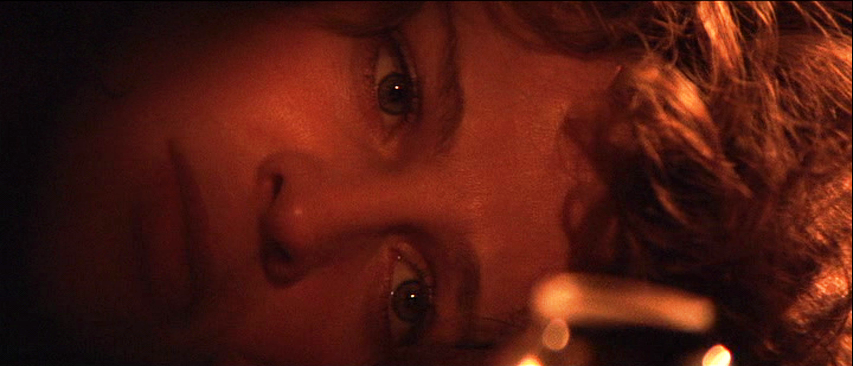
Where Jarman goes beyond the shock of queerness is in his fearless deployment of anachronism. Present in his work all the way back to “Stormy Weather” and the contemporary dress in Caravaggio (to mirror that artist’s use of anachronism in depicting biblical figures), Jarman is not a slave to period or text. Purists and traditionists likely decried Edward II for sheathing its characters in white muscle T’s, pajamas, leather jackets and World War II-era fatigues. In one scene, Edward and Gaveston appear to be dressed for the set of Reservoir Dogs (sans sunglasses) one year early; in another, Edward and his brother Kent (Jerome Flynn) return from a game of tennis, rackets in hand, decked out in white polo shirts with matching towels around their necks.

Edward II’s production design (from longtime Jarman associate Christopher Hobbs) favors a minimalist approach: spare sets consisting of stone walls and dirt floors, its characters bathed in light and shadow. These spaces are strewn with such unexpected contemporaneous objects as a Christmas tree surrounded by presents, an electric hanging lamp, a board meeting table complete with water pitcher and drinking glasses and a battery-powered robot and portable Walkman for young Edward III (Jody Graber) to play with (not to mention a Coke can, its placement intentional unlike the Starbucks cup in Game of Thrones.) Isabella sits in bed with a cold cream mask over her face while Mortimer lies next to her, reading Unholy Babylon: The Secret History of Saddam’s War. The latter is telling, along with the proclamation Edward is coerced into signing to send Gaveston into exile: a quick shot reveals the date on it as 1991 rather than 1311.

Why would Jarman retain Marlowe’s prose and historical figures but essentially set it in the present? Granted, the uproar over Edward and Gaveston’s relationship is all too applicable for 1991. Despite some recently acquired cultural inroads, relatively little had changed since then in terms of public perception of homosexual attraction and companionship. When adapting a historical work, often the most illuminating route one can take is to explore and accentuate its relevance for modern audiences and what they can learn from it. In Edward II, Jarman spotted themes, situations and behaviors with a clear analogue to his own life and his treatment by the press as a homosexual and person with AIDS. Much of his later work is a rebuke to Thatcher and policies born out of that period like Section 28, a legislative designation prohibiting “the promotion of homosexuality by local authorities” that was in effect in the UK from 1988-2000.

Jarman’s reaction to such oppression and censorship becomes Edward II’s most memorable anachronism. After Mortimer arranges Gaveston’s murder, Edward and his cohorts clash against the nobility in the guise of a gay rights demonstration. The protestors are portrayed by actual members of OutRage!, a UK gay rights group “committed to radical, non-violent direct action and civil disobedience”, fighting for “sexual freedom, choice and self-determination” for all queer people. They are depicted standing up to a riot-gear wearing police force, chanting in solidarity and carrying a big white banner reading “Stop Violence Against Lesbians and Gay Men.” It’s a relatively brief scene but a pivotal one: it bluntly but effectively drives home the close parallels drawn between the present and the past.

Such a big swing could come off as pretentious or dour. Fortunately, Jarman’s predilection towards camp leavens the film’s weightier stuff—see Gaveston and Edward celebrating their reunion by dancing a ramshackle tango or Edward III reclaiming the throne near the film’s end, tromping around to Tchaikovsky’s “Dance of the Sugar Plum Fairies” on top of a giant cage holding a decomposing Mortimer and Isabella. Even darker moments, such as Isabella murdering Kent by literally biting into his neck and sucking his blood, vampire-style (Swinton’s decades-early audition for Only Lovers Left Alive?), while shocking, retain a gallows humor in their absurdity.

Occasionally, they also prove rather moving. Before Gaveston’s exile, he and Edward meet up. We hear the opening minor piano chords of Annie Lennox’s version of “Ev’ry Time We Say Goodbye”, recorded the year before for the great Cole Porter tribute/AIDS charity album Red Hot + Blue. In time, Lennox herself appears in person, off to the side, serenading the lovers. Hair close-cropped in a pixie cut almost as pale as her skin, she resembles a wraith as the couple embrace and bid each other bittersweet farewells. It’s a scene of pure fantasy but gender-bending icon Lennox’s plaintive appearance complements the song’s spare, piano-and-accordion arrangement, while the occasional tremor in her tone, along the melody and lyrics of Cole’s composition render the proceedings exceedingly poignant.

Jarman’s Edward II concludes by rewriting Marlowe’s ending: instead of death by hot poker from the executioner Lightborn (Keith Collins), whose time guarding Edward is a framing device throughout, he tosses the poker into a pool and gives Edward a tender kiss. We see both scenarios, in that order, with the second a revisionist history akin to Quentin Tarantino’s later work (albeit on a much smaller scale.) However, Edward II’s final shot is a pan across the OutRage! protestors, now silent, frozen in time as Edward’s voiceover reads Marlowe’s prose: “Come, death / and with thy fingers close my eyes / or if I live / let me forget myself.” During the film’s production, Jarman’s health was deteriorating to the point where it was uncertain whether this would be his last feature (he lived to complete two more.) As a potential goodbye to his art and his audience, it drives home the notion that Edward’s fight against homophobia and fear is as relevant and urgent as Jarman’s own and that of his friends and fellow queer people.

No matter who or what we are, we tend to look for representation in popular art, to see people onscreen who are recognizable, even similar to us, finding someone we can relate to and that the rest of the culture can also see. In this phase of my coming out (and coming of age in general), I looked to the work of queer filmmakers as a text and a guide, a way to feel less isolated or alone. Jarman, in particular, was fearless in putting and revealing himself onscreen; he also made a continual effort to show how queer people had been around for centuries, telling stories about their presence and importance, using his “cinema of small gestures” to bring these figures out of the shadows and into the light. While I took a film course the previous year called Ways of Seeing, watching Edward II (and the rest of Jarman’s filmography) for the first time felt to me like being seen.

Essay #8 of 24 Frames.

Go back to #7: Meshes of the Afternoon.

Go ahead to #9: McCabe & Mrs. Miller.

24 Frames: Meshes Of The Afternoon

I didn’t need to go to grad school for Film Studies; while I hoped such an undertaking would lead to a palpable career in the same way earning a degree in Nursing or Library Sciences could, I suspected all along this was not a practical, much less lucrative path to take. Even in the video store era, I could have avoided so much student loan debt by renting five or ten tapes a week and reading all the significant film theory tomes in my spare time; I might’ve emerged with a similar comprehension of, to reference the title of one of those books by Bruce Kawin, How Movies Work.

Still, I have no regrets putting in the time and money to earn what many would deem a most frivolous degree. It not only pushed me out of my hometown and forced me to learn how to live as an independent adult, it also significantly altered my worldview. The primary advantage to any arts/humanities graduate study is curation: when inspired, professors and instructors serve as guides to which art one should consume, how one should absorb it and what one can understand from it.
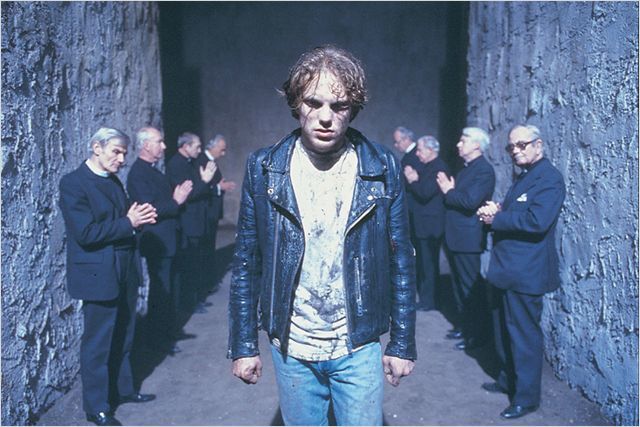
My second semester at Boston University played out similarly to the first. Excluding Introduction to Video Production, an elective required of anyone not in the Film Production tier of the program, the courses I took were genre-defined: one a broad survey on world cinema called International Masterworks (a loose sequel to last semester’s American Masterworks), another on Neorealism in Film (a concept that proved to be rather openly defined by its instructor) and finally, an overview of Avant-Garde Cinema. As with Neorealism, this was also broadly demarcated, though simpler to identify by default of often being short, experimental and what 99% of the public might categorize as weird.

It should come as no surprise that Avant-Garde Cinema ended up one of the more illuminating film courses I ever took. Unlike Ways of Seeing from the previous semester, this had barely anything to do with the instructor, regrettably. An experimental filmmaker herself originally from Quebec, I never questioned her knowledge of the subject; she just had no business teaching a class. Her lectures were erratic to the point of coming off as scatterbrained which proved a death knell in providing much sense of engagement (though the undergraduate male students who regularly sat in the front rows were certainly engaged by her busty figure. Not that I myself could’ve delivered a better lecture at that point, but still.)

Happily, the films she screened for us were enough. Given that experimental film in general and shorts in particular were difficult to find in that pre-streaming, pre-YouTube era (and to a lesser extent, remain so today), the cornucopia of cinema we consumed over the semester was in retrospect astonishing—a treasure trove of rarities, obscurities and stuff you couldn’t rent from local indie-friendly chains like Videosmith and Hollywood Express, much less Blockbuster. Most of it was even projected on 16mm (and occasionally 35mm) film. We’d usually watch an average of four titles per two-hour class, two times a week.

We saw so much stuff: for starters, abstract animation from Oskar Fischinger and Norman McLaren (the latter’s Begone Dull Care visualizing an Oscar Peterson Trio recording with colors and kinesis), the surrealism of Luis Buñuel’s and Salvador Dali’s Un Chien Andalou, the rapid montage cutting of Dziga Vertov’s Man With A Movie Camera and the queer pop art of Andy Warhol, Jack Smith and Kenneth Anger (the latter’s Scorpio Rising practically inventing the music video.) We took in both the challenging formalism of structuralist cinema (Stan Brakhage, Hollis Frampton, Michael Snow) and the more accessible, if still out-there pleasures of such one-of-a-kind auteurs as Chris Marker (best known for the short La Jetee, which inspired Terry Gilliam’s 12 Monkeys), Bruce Baillie, George Kuchar and Guy Maddin (who attended class in-person for a screening of his film Careful!)

Wavelength

For every work I found impenetrable (Snow’s Wavelength, which slooowly zooms in on a window for 45 minutes was particularly torturous), I watched another that enjoyably blew up my preconceived notions of what cinema could be. Baillie’s All My Life, for instance, was nothing but a three-minute single shot of a fence flanked by red flowers and eventually a clear blue sky, all of it accompanied by Ella Fitzgerald’s ebullient rendition of the title song. That’s it—no cuts, narration or dialogue, just a beautiful tableau presented for what it is. Like Wavelength, it roughly fell under the banner of structuralist film but in a more contained, condensed package.

While McLaren, Anger, Marker and Maddin would become some of my favorite filmmakers, the one with the most direct impact on me at the time was Maya Deren. She only made a handful of short films between her 1943 debut, Meshes of the Afternoon and her death from a cerebral hemorrhage in 1961; she remains obscure outside academic and experimental cineaste circles, although Martina Kudlacek’s 2002 documentary feature In the Mirror of Maya Deren surely expanded her reach, providing an eloquent summation of her life and career. One can now see most of her work on YouTube, although Criterion and Kanopy offer legal options to view some of it as well.

Born as Eleonora Derenkowska in Russia, 1917, she and her family emigrated to the United States at age five. After studying literature at New York University and Smith College, she spent a few years amongst the bohemian elite in Greenwich Village before moving to California where she met Czech-born photographer Alexander Hammid. They married in 1942 and moved to Laurel Canyon where, the following year, they’d co-direct and star in a silent, 14-minute, black-and-white experimental film.

Meshes of the Afternoon wasn’t anything like the massive, big budget productions incessantly churned out at various studios in adjacent Hollywood. It had no stars or dialogue. The locations used were primarily inside and around the filmmakers’ own home along with some footage at a Pacific Ocean beach. The plot, such as it was, resembled not so much a straight line with a discernible beginning and end as it did a loose thread forever unraveling and occasionally turning back in on itself. In fact, the whole thing eschewed the kind of logic one would find in a traditional narrative; instead, it played out like a dream, a visualization of themes and ideas made all the more personal by the notion that the primary figure and closest thing to an audience surrogate was Deren herself.

Although she appears in nearly every shot, for the first four minutes or so, she’s an elusive figure, offering only glimpses of parts of herself. It opens with her arm reaching down from the top center of the frame, gently laying a poppy-like flower on the ground. Subsequently, while alternating with point-of-view shots, she reveals a leg, her feet, her hand dropping a key. Her silhouette, betraying her short stature and wild mop of curly hair practically glides along other surfaces. It’s nearly as edifying as an extreme close-up of her eye but even that pales next to the moment we finally see her entire face, exposing her inquisitiveness and somewhat exotic, undeniable beauty—not a pin-up or a glamour girl one would see in a studio film but a figure that can’t help but exude charisma even though she’s not actively courting the camera’s attention. She’s the protagonist here, but this is her dream, her perception of the world, not yours.

As with multiple objects, the aforementioned key reappears throughout: Deren uses it to open a locked door, as one does with a key, but in another scene, she pulls it out of her mouth—how it ended up there is never explained. Later, the key returns but with the help of simple optical effects (the sort dating back to Georges Méliès’ groundbreaking silent cinema from four decades before), it turns into a knife before our very eyes—the same knife stuck in a loaf of bread that Deren discovered much earlier in the film.

Speaking of optical effects, there are multiple shots with multiple Derens, including one with her witnessing herself sitting in a chair and another where she steps into her home to find two more of her at a kitchen table; the clones regard her as if to say, “What are you doing here?” There’s also a sequence where Deren attempts walking up the home’s oft-seen staircase, but either she’s swerving back-and-forth like she’s drunk (or forcibly pulled against her will), the camera’s imitating someone doing the same, or both are happening simultaneously. Additionally, there’s a static shot where she quickly rematerializes in different positions along the staircase as if instantly teleporting among them.

Often in Meshes and experimental film in general, the emotion elicited by what images are placed next to each other is more important than whether they make any sense or result in some sort of resolution. The film’s most daring and perhaps startling sequence occurs about ten minutes in when Deren, suddenly wearing these funky globular goggles, knife in hand, takes a series of steps. After the first shot, we only see her foot, but in each of the following shots, it’s a jump cut to different terrain: a sandy beach, then soil, grass, pavement, and finally, a wooden floor inside the house. In five quick shots, is as if she’s traversing the world, or at least the one she has access to.

Meanwhile, another figure wearing a black cloak with a mirror-for-a-face surfaces throughout. At one point, Deren wakes up to see this figure standing over her, only for the latter to suddenly change into Hammid, her husband and co-director, who offers her the poppy from the opening shot. Eventually, Deren hits Hamid’s face with the knife, only for it to instantly turn into a mirror, now in shards scattered all over the previously seen beach. Is Hammid interchangeable with the cloaked figure, or is Deren in such an altered state that she is unable to discern between them? The ending further muddies this notion, as Hammid (face intact) comes across Deren sitting in the same chair as before, only she’s now dead, covered in shards of broken grass, seaweed (from the beach) and blood.

Meshes leaves the viewer with much to unpack and I could write a whole book about everything it contains and suggests. Instead, as with that first viewing in Avant-Garde Cinema, I’m more interested in what feelings it provokes: the mysteriousness of the house where persons and objects keep transforming or multiplying, the disquiet of having no soundtrack* to guide one’s perception, the lyricism achieved by near-constant movement (whether it’s Deren, the camera or even just the wind), the shock and terror of an act of violence.

Like Deren herself, Meshes now both seems ahead of its time (given her strong physical resemblance, it feels like a silent Kate Bush music video) and entirely out of it. There are few indicators of its era, whether purposely or not: it contains no city streets, no interiors apart from the filmmakers’ simple, mostly minimalist-designed home. It exists in a space that, while identifiable, is meant primarily to reflect the mind state of its creator. In this way, it helped to invent the psychodrama as a film genre where the creator’s psyche and/or collective unconsciousness is the key (so to speak) to understanding its themes and resolution (or lack thereof.)

It’s no wonder that the Criterion edition of Meshes begins with titles that, among other things, call Deren the “Mother of Underground Film”. One can spot Meshes’ influence on so much personal, handmade, experimental film that followed, from Anger’s focus on such obsessions as bike boys and the dark arts to Maddin’s later proclivity to name his primary characters after himself which hits a feverish peak with 2007’s “docu-fantasia” feature My Winnipeg. And while Meshes has its own antecedents such as Jean Cocteau’s Blood Of A Poet which similarly utilized its creator’s subjective point of view, it’s groundbreaking for placing the female gaze front and center—a lineage that arguably stretches through the decades to other filmmakers like Carole Schneemann and Su Friedrich or even those who took a more commercial path like Jane Campion, Lynne Ramsay or David Lynch (Laura Dern’s character in Inland Empire would likely relate to Meshes.)

All of Deren’s shorts have something to offer, even if only her second one, At Land, feels particularly close to its predecessor’s spirit. While Meshes established her as a film artist, the following years up to her early death were tumultuous. She’d soon split with Hammid, later marrying Teiji Itō (a Japanese musician 18 years her junior) and spend a fair amount of time filming Vodou rituals in Haiti for a project she never completed. Kudlacek’s documentary fleshes out such travails with great anecdotes (such as Brakhage recounting that one time she hurled a refrigerator across a room, possibly under a Vodou spell) and, in lieu of any surviving filmed footage of her with sound, plenty of archival audio recordings where her speaking voice resembles Lucille Ball’s, of all people.

Meshes and the Avant-Garde Cinema course were talismans I’d never think to seek out on my own at that age. For a while, whenever asked if I’d use my graduate degree to actually make my own films, I’d respond that if I were to do that, they’d be experimental shorts like the work of Anger or Deren. I never actually made my own films, feeling content enough just to watch and write about thousands of titles from every genre, era and country I’d encounter over the next few decades. In time, I even secured employment tangentially related to my field of study. Still, it was the thrill of discovery, of opening those new doors that encouraged me to pursue Film Studies in the first place. Meshes and other strange, obscure shorts like it vindicated that leap of faith I took in making film central in my life.

*That first screening of Meshes in class actually had a soundtrack composed by Itō more than 15 years after its initial release. Additionally, one can see (illegal) uploads of the film on YouTube with different soundtracks composed over the years. However, it is productive if not entirely decisive to see Meshes silent (as it is of this writing on The Criterion Channel) as Deren and Hammid originally intended it to be. In this case, the lack of accompaniment forces one to focus entirely on imagery and it’s enough to leave one feeling satiated.

Essay #7 of 24 Frames.

Go back to #6: Safe.

Go ahead to #8: Edward II.

24 Frames: Safe

At 21, I knew I had to get out of Milwaukee. Mind you, I didn’t exactly hate my hometown. During Marquette University’s Freshman Orientation, I was practically a cheerleader for it, extolling the city’s many parks and local cuisines to any other student newly arrived from outside the metro area willing to listen. Three years later, however, I deeply regretted that I hadn’t gone away for school. Although I received an above-average education at the college of my choice, it gradually dawned on me that I was missing out on something. Nothing wrong or inferior about pursuing higher education as a commuter student, but I did so mostly out of fear. I had held back when I could’ve easily set my ambitions much higher. I realized I’d personally never become legitimately independent if I continued to stay put.

For me, the easiest way out was to attend graduate school in another city. Having discovered a passion for my minor (Film Studies) far more fervent than anything I had for my major (Journalism), I looked into master’s programs for the former. In those embryonic internet days, I had to consult a thick reference catalog at the campus library to determine which schools I could apply to. UW-Madison was the obvious choice—at 90 minutes away, it was a baby step of a move but far enough for me to adequately feel like I was on my own. Besides, over the past few years I’d visited friends there often enough to the point where it already felt familiar.

I was superciliously certain I could get into Madison but just to be safe, I also applied to two other schools. The first was Boston University—my roommate’s girlfriend had recently talked up the city, deeming it the ultimate college town and more “European” than other US metropolises. The other was New York University, as they had a program at the Tisch School For The Arts and I thought, “Eh, why not? I’m going to Madison anyway.”

Alas, Madison might’ve accepted me had I submitted my application on time. In the rush of taking my GRE, drafting the required essays, procuring recommendation letters and getting all the forms out in the mail, I miscalculated that school’s relatively early cutoff date. I also never seriously expected to get into NYU (nor can I imagine green 22-year-old me flailing about New York City); fortunately, I received a welcome packet from BU in mid-March. I could stick around Milwaukee for another year, maybe reapply to Madison for the spring semester; instead, I chose to see this little exercise’s outcome as a sign. I was moving to Boston.

*

I’ve previously written about my first 48 hours in my new city. On the third day, having partially acclimated myself to my neighborhood of Allston and the BU campus, I showed up for orientation at the College of Communication building (hereafter shortened to COM), an unassuming, three story, mid-20th century structure that paled in the shadow of the gleaming, luxurious new School of Business Administration down the block. At the time, COM’s only distinguishing feature was a moderately short radio tower on its roof, which I soon learned no longer carried any broadcasting function whatsoever.

COM in all of its boxy, utilitarian glory.

I met my fellow classmates in the Film Studies program (seven of us in all) and received syllabi and reading lists for my courses. They included one on horror films, another on the work of British director Mike Leigh (who’d won the Cannes Palme d’Or for his film Secrets & Lies the year before) and a self-explanatory through-the-decades survey called “American Masterworks”. As with most of my BU courses, these were all open to both graduates and undergraduates, allowing the latter’s non-arts majors to fulfill their fine arts requirement. In subsequent semesters, I’d even serve as a teaching assistant for a few of these hybrid courses which basically meant I got to grade the undergraduates’ writing assignments and work the VCR and Laserdisc player whenever we watched movies in class.

That first semester, I also took a fourth course—one limited to graduate students included my fellow Film Studies majors along with all the new students in the Film Production and Screenwriting programs. Called “Ways of Seeing” (a simple but perceptive summation), we learned not only how to watch and assess a film but also how some films beg us to watch them differently from others. The semester kicked off with an intensive examination of Psycho. After one complete run-through the entire film, we returned to various scenes, watching and dissecting them again and again. So thoroughly did we pick it apart frame by frame that I haven’t watched it since—while our professor dutifully showed us why Hitchcock’s film was an example of major Hollywood studio cinema at its best, he also singled out in painstaking detail what he saw to be its many, many flaws, to the point where I simply couldn’t watch it again because all I could see were those imperfections.

From there, we studied films suggesting various “Ways of Seeing” that diverged from Psycho. Jean Renoir’s La Règle du Jeu presented a cinematic canvas composed less of shot-reaction shot editing than figures constantly, freely moving in and out and around the frame, engaging in moral complexities far more advanced than Psycho’s Freudian constructs. John Cassavetes’ A Woman Under The Influence further blurred such distinctions, its characters (and director) making unexpected, irrational, just plain messy choices with a raw impulsivity that felt less written than captured by a documentary film crew. Caveh Zahedi’s A Little Stiff was low-budget and contained to the point of seeming handmade, its filmmaker starring as a fictionalized version of himself and anticipating by a decade a genre critics would dub “mumblecore”. Andrei Tarkovsky’s Stalker, on the other hand, came off as immense and enigmatic, a personal sci-fi allegory that was the anti-Psycho for how it raised all sorts of questions and just left them there hanging and unanswered.

*

Late in the semester, we watched Todd Haynes’ Safe, a study of a woman suffering from environmental illness who seeks solace at a new age rehabilitation facility. I’d heard of the film when it came out two years before and recalled it briefly playing at Milwaukee’s Downer Theater. From what little I read regarding it, I imagined it to be a satire about suburban living, allergies caused by household products and the lengths people will go to find alternative solutions to combating such ailments. I pictured something not far off from, say, Alexander Payne’s screwball abortion rights fable Citizen Ruth (released the year after Safe.)

From the ominous, mournful, droning synths accompanying its opening credits, which appeared over a point-of-view shot of a car slowly driving at night through an upscale Los Angeles subdivision, I promptly understood that Safe would be absolutely nothing like Citizen Ruth. The next scene confirmed this: an uncomfortably drawn-out shot of the film’s heroine, Carol White (Julianne Moore), lying in bed, her face to the camera as she’s engaging in man-on-top sex with her husband. Her expression’s not completely indifferent but she doesn’t appear to be gleaning much pleasure from it.

Does anything give Carol pleasure or even joy? She’s a Sherman Oaks housewife living in a gigantic McMansion in 1987 (set eight years before the film’s release.) She spends her days running errands, attending aerobics class, gardening, and going out to lunch. With a maid at her disposal and no job or profession to speak of, she seems to have a charmed life; she also seems barely there, often physically engulfed by her environment, sometimes appearing as small as a speck within the symmetrical, immaculately arranged wide shots inside her home.

About fifteen minutes into the film, she drives on a congested expressway behind a truck belching out exhaust fumes and suffers a coughing fit that’s alarmingly more severe by the second. She pulls off the road and into an underground parking garage where she stops, gets out of the car and continues to violently hack away, worryingly short of breath; as with the interior home shots, she appears tiny in the garage’s expanse, its darkness nearly encompassing her.

Similar attacks occur at a friend’s baby shower, the dry cleaners and the hair salon when she’s getting a perm. During these moments, Haynes often utilizes horror film tropes like dramatic bursts of sinister music or sudden jump cuts or close-ups—when the other ladies at the shower attempt to comfort Carol, it’s a sideways nod to the shower scene in Rosemary’s Baby (however, not Psycho.) Meanwhile, her doctor casually dismisses Carol’s claims, concluding that, despite the incessant coughing, headaches and general fatigue, there’s nothing physically wrong with her. He recommends she consult a therapist.

Perhaps the problem is psychological: after she attends a seminar on environmental illnesses (the first shot of an audience member donning a surgical mask is enough to elicit a visceral reaction in 2021), her husband, stumbling upon a pamphlet she’s brought home from it asks her, “Who told you to go to this?” His exact words and accusatory tone say more about how he and the other people perceive Carol than anything she says herself. Haynes further corroborates this by deliberately withholding what another film would regard as key information about her, like the fact she has a ten-year-old child (revealed 25 minutes in) and that it’s actually her husband’s son from a previous marriage (38 minutes in.) And Moore completes the picture of Carol as a blank by nearly disappearing into the role—a perfectly nice individual with barely a trace of discernible personality.

She winds up in the hospital following her attack at the dry cleaners. From her bed, she sees a TV commercial for Wrenwood, a new age-y rehab clinic in New Mexico specializing in treatment of people like her. In the very next scene, she’s in a cab, sans husband or stepson, riding through the desert on her way there. However, something seems off about the place when Carol’s cab first pulls in and she’s accosted by Nell, an older masked woman furiously screaming at her to turn back (the car fumes upset her because her husband is immune compromised), then creepily taunting her from a distance, “I see you,” after she exits the vehicle.

Wrenwood would seem a target overripe for satire given its remote location and inclination towards spoken and sung affirmations (a woman sings a Judy Collins-esque anthem to the assembled patients with such pithy lyrics as, “Give yourself to love / if love is what you’re after.”) Then, there’s Peter (Peter Friedman), the facility’s middle-aged owner who presides over the organization with an aw-shucks folksiness crossed with the understated but palpable fervor of your average cult leader. He concludes his talks by leading the group in the following inspirational credo: “We are one with the power that created us, we are safe, and all is well in the world.”

Despite all that, Wrenwood doesn’t particularly seem like a heightened or ridiculous proposition, at least not on the surface. The group therapy sessions feel straightforward and potentially constructive, especially when Peter advises Nell, “The only person who can make you sick is you, right?” Conversely, he doesn’t acknowledge Nell’s husband’s then-recent death, which for all we know might’ve been suicidal. He also never mentions to the congregation his own status a person living with AIDS (one of the other patients reveals this to Carol.) In 1987 (and, to a lesser extent, 1995), this was almost a certain death sentence; its revelation amplifies the notion that Peter is attempting to heal himself and his patients with the power of positive thinking in lieu of a (nonexistent) medical cure or treatment.

Carol doesn’t seem to be getting any better at Wrenwood; the film’s tone does not brighten once it shifts to New Mexico. She soon requests to change cabins because of “the fumes” she perceives (perhaps by way of Nell?) coming from outside the compound. Mask and oxygen tank in tow, she makes her way around the facilities in stilted movements, increasingly resembling Lester, a fellow patient only shown from a distance. When she first spots him, Peter remarks to Carol, “Poor Lester… he’s just very, very afraid.” Rather than improving in health or even disposition, Carol further withdraws into herself.

Poor Lester…

She does take tentative steps towards making a new friend in Chris (James LeGros), a fellow resident with whom she signs up to cook something for a communal potluck. The event itself seems a joyous one, with the dinner followed by its participants dancing to Kenny Loggins’ “Whenever I Call You ‘Friend’”. Then, Chris and the group surprise her with a cake (her birthday’s the next day), a genuinely sweet and selfless gesture. They ask her to give a speech, and she does, confessing to the group, “It’s just that, I really hated myself before I came here,” rambling on about such things as “education” and “AIDS” before gradually trailing off. She’s smiling but is also seriously emaciated, her face and skin disconcertingly blotchy.

Chris walks Carol back to her cabin, which is now the “safe house”, a metal igloo-like structure once inhabited by Nell’s husband. Alone inside, Carol’s white, colorless clothing and skin blend into her stark, sterile, prison cell-like surroundings. She breathes from her oxygen tank and looks directly into a little mirror on the wall: the film’s final shot is of her staring into it, at us, her face partially in shadow. Blankly, she says to her reflection, “I love – I love you. I really love you. I love you.” Fade to black and credits roll.

*

I recall sitting in the classroom at that moment, figuratively chilled to the bone. Thoughts escaped me as how to process this deeply unnerving ending to an altogether unsettling film. Normally, a story about illness and rehabilitation would conclude triumphantly, the subject overcoming an affliction and having learned more about themselves in the process—perhaps even learning how to love themselves. Carol’s final words to us are as such, but they don’t at all reassure or convince. She struggles to get them out and indeed, they’re something a facility therapist instructed her earlier to say. As much as we’d (and, for that matter, she’d) like to believe they’re true, they come off as just words—a recitation.

It’s easy to view Safe through a cynical lens: most likely, Carol’s illness is psychosomatic, a physical manifestation of her psychological damage, self-punishment for the fact that she doesn’t love herself. A few critics at the time, most notably Jay Carr in The Boston Globe dismissed it as just that. However, I didn’t see it that way, not entirely. Safe’s austere conclusion genuinely shocked me—I was willing to believe something was physically wrong with her, that there must be an exterior reason for her symptoms, that she’d learn how to live with if not entirely combat them during her time at Wrenwood.

Then again, that’s only one of two parallel readings that Haynes thoroughly maps out in Carol’s trajectory; the other, where it is all in her head is just as present in the film’s overall design. For a character who appears in every single scene, she’s often deliberately spectral and insignificant, a non-entity. Moore’s subdued but internally complex performance only further serves this notion, that we’re looking both at and through the eyes of someone with so little self-esteem and sense of purpose that, instead of “getting better”, all she can do is further recoil into herself where she thinks she feels “safe” but in truth can’t feel anything at all.

Before Safe, I hadn’t seen a film attempt such a bait-and-switch (or at least wasn’t aware of one attempting it) and do it so seamlessly and effectively. And yet, I don’t believe what it does is a cheat or a clever way of saying, “Okay, here’s what this film’s really about.” Instead, Safe is about exterior and interior lives and how one’s physical and the psychological selves can be out of balance or even at opposition to each other. As for that title, it throws into relief its definition as an ability, an affirmation, a state of mind. Does the concept of safety ultimately imply a sense of feeling protected or does it come entirely from self-worth? Upending my life and moving to Boston at 22, I took a risk and deliberately tried to be unsafe, although one might argue that by opting for grad school instead of a job in the real world, I had deployed a safety net of sorts for myself. I’m willing to bet this conundrum lingered somewhere in my subconscious as I watched Safe, a film that asks its viewers to consider whether the desire to be “safe” is to simply crave comfort or inevitably give oneself over to fear.

Essay #6 of 24 Frames.

Go back to #5: All That Jazz.

Go ahead to #7: Meshes Of The Afternoon.