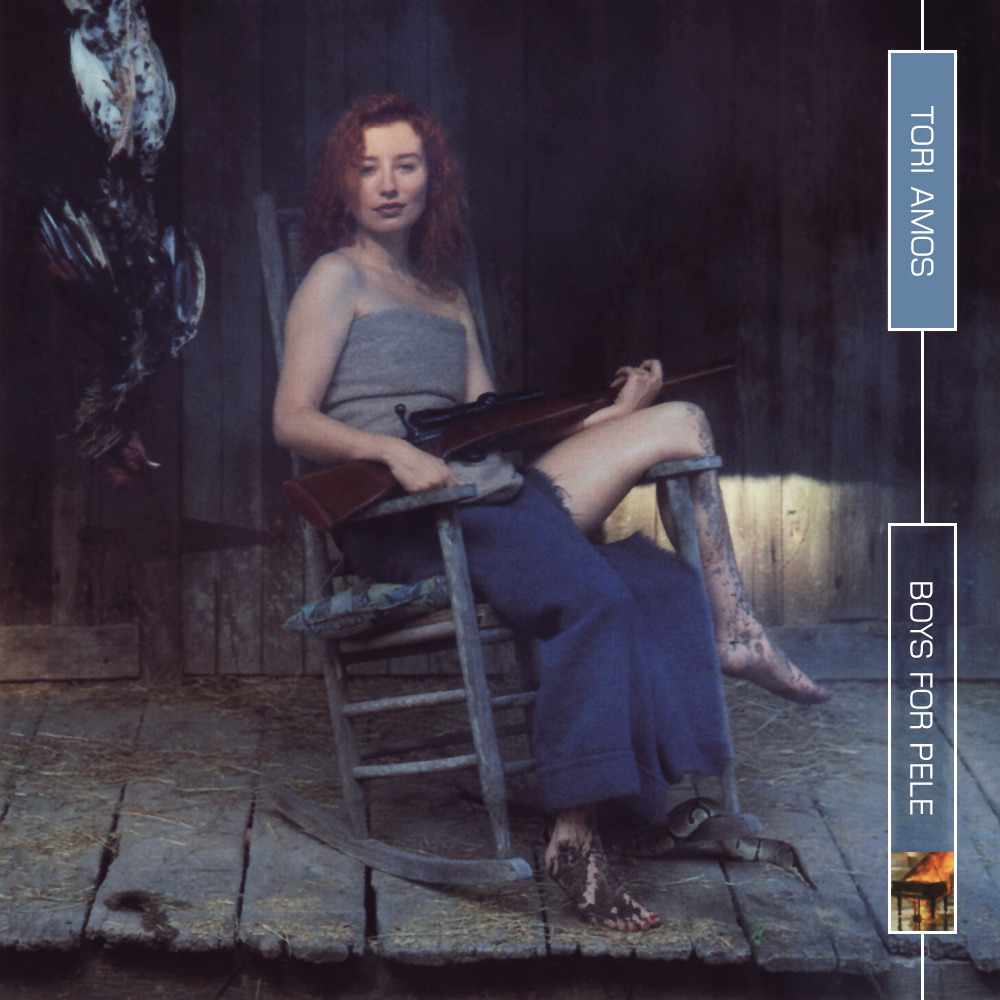
Tori Amos, “Boys For Pele”

Boys For Pele

(My 100 favorite albums in chronological order: #51 – released January 23, 1996)

Track listing: Beauty Queen / Horses / Blood Roses / Father Lucifer / Professional Widow / Mr. Zebra / Marianne / Caught a Lite Sneeze / Muhammad My Friend / Hey Jupiter / Way Down / Little Amsterdam / Talula / Not The Red Baron / Agent Orange / Doughnut Song / In The Springtime of His Voodoo / Putting The Damage On / Twinkle

When approaching new work by artists we love, we inevitably weigh it against expectations put in place by what came before. These comparisons allow for first impressions that can span a wide spectrum, from immense pleasure to utter disgust and every gradation in between. Over the years, brand new albums from my favorite musicians have alternately left me pleased, soothed, vindicated, disillusioned, delightfully surprised and downright baffled.

Boys for Pele mostly fell into that last category on my first listen days after its release. While not altogether foreign from Little Earthquakes and Under the Pink, Tori Amos’ third album was certainly different; I referred to it as “Tori Goes Off The Deep End” in my journal at the time. Consider the facts: eighteen tracks long instead of the usual twelve… fewer orchestral arrangements and more newfangled sounds like harpsichord, brass band, programmed drums and a gospel choir… knotty, oblique lyrics (“Tuna, rubber, a little blubber in my igloo”) that made Amos’ previously most obscure references, such as those on the Alice Walker-inspired “Cornflake Girl” seem positively lucid. And of course, the cover: instead of crouching in a box with a toy piano or demurely standing still, draped in white, she’s sprawled across a rocking chair on a porch in some rural backwater, legs strewn with dirt, a shotgun on her lap and a dead rooster hanging upside down next to her. This double album-length collection was clearly making some kind a statement, possibly Amos telling her fans (and all curious onlookers), “It’s time for me to take a bold leap forward, whether you’re ready to join me or not.”

The crucial thing to know about this record is that it’s the first one Amos produced herself. Much of her prior work was helmed by Eric Rosse, with whom she was romantically involved. They split up during the making of Under the Pink, so Pele is not only Amos taking control of the way her music sounds (she would self-produce all of her subsequent recordings), it’s also nominally a breakup album, occasionally seething with rage and a swagger that at times exceeds even the most incendiary passages of Little Earthquakes. I’m tempted to call it a textbook Difficult Third Album—less accessible and considerably denser than its predecessors for sure—but it’s so much more than that. Although parts of Pele still flummox me now, through time and many listens, it has become my most favorite Amos album after Little Earthquakes.

For such a call-to-attention, Pele opens rather quietly and tentatively with “Beauty Queen”, all lingering piano notes and minimalist, haiku-like lyrics. It’s a prelude, appearing in the track listing but actually sharing the first CD track with “Horses”, whose more concrete melody materializes about two minutes in. It’s still all just piano and voice, but noticeably fuller and hookier, gaining momentum through multiple, layered arpeggios. Partially amplified through a Leslie cabinet, Amos’ signature Bösendorfer piano carries a slightly otherworldly tint, but otherwise the song could’ve easily fit on her previous albums.

Not so for “Blood Roses”, Amos’ first-ever song to utilize a harpsichord (also amplified) in place of piano. Its lower, baroque tone is a new texture in the Tori-verse—an earthier energy that also comes through in her vocal as she works the pedals of this archaic instrument. She’s ever in tune and in control, but also freer, as if dangling on a precipice when she abruptly shifts to a higher register on the “You think I’m a queer / I think you’re a queer” part, nearly out of breath on each “queer”. She later breaks into a mighty wail on the “God knows I’ve thrown away those graces” bridge, and rattles off a series of seemingly improvised “C’mon’s” as if she were a possessed jazz singer. Sparingly employed church bells and a low organ hum complete the unorthodox arrangement.

She’s back to the Bösendorfer on “Father Lucifer”, where guitar and bass make their first appearances on Pele. Far less intimidating than “Blood Roses”, it has one of the album’s catchiest melodies (and hooks—the clipped “ha” preceding each verse), but that’s not to downplay its complexity, especially at the bridge, which expands on a bed of countermelodies and overlapping vocals, dotted by startling but graceful trumpet flourishes. Much of the album was recorded in a church in rural Ireland, and you can hear the uncommon effect this has all over Pele. In place of a traditional studio’s unavoidable sterility, the recordings feel more intimate and alive. It’s as if Amos has set out to recapture the precarious, uncomfortable vibe of her earlier a Capella track “Me and a Gun”, only with instruments.

Still, nothing you’ve heard so far anticipates what comes next. “Professional Widow” is where Amos really does go off the deep end and it’s an astonishing plunge. The harpsichord returns with a vengeance, this time buttressed by an onslaught of programmed beats rolling along with her enraged, profane vocal (opening line is “Slag pit / stag shit / honey, bring it close to my lips, yes,” soon followed by “Starfucker / just like my daddy”).  It’s a raucous, alarming, sometimes hilarious song (“gonna strike a deal / make him feel like a congressman”); it’s also exceedingly weird, particularly when everything drops out at 1:30 for a piano-and-voice interlude with a completely different melody and unnervingly light tone. “We’ve got every rerun / of Muhammad Ali,” Amos sweetly, nonsensically trills before the song swerves back to the beginning, angrier than ever, eventually reaching another tempo changing, sinus clearing coda. I know I dismissed Kate Bush comparisons in my essay on Little Earthquakes, but Amos placing “Professional Widow” on her third album is as if Bush had gone straight from her relatively accessible second album Lionheart to her “I’ve gone mad” fourth album The Dreaming, passing over the transitional Never For Ever.

Having established Pele’s adventurous scope in just four tracks, Amos continues pushing forward. The second of four brief interludes (if you count “Beauty Queen”), “Mr. Zebra”, a whimsical, cabaret-like number recorded with the Black Dyke Mills Brass Band, reminds one of Little Earthquakes’ “Leather” a bit; more interestingly, it anticipates something like Fiona Apple’s “Extraordinary Machine” by nearly a decade. Piano ballad “Marianne” features Pele’s only string arrangement (performed by The Sinfonia of London). As those strings rapidly cut in and out of the melody, Amos punctuates her vocals along the spaces in between, recalling not so much Kate Bush as prime Joni Mitchell. “Caught a Lite Sneeze” brings back the programmed drums, almost nodding towards trip-hop in how Amos’ piano and voice hypnotically wraps around them. It’s a more approachable breakup lament than “Professional Widow” and clever in how it occasionally imbues the personal with the political (“Make my own Pretty Hate Machine,” she sings in a nod to friend Trent Reznor.) “Muhammad My Friend” reprises Amos’ use of religious imagery (as heard in “Father Lucifer”, “God”, “Crucify”, etc.) but only after a lengthy, gorgeous piano intro that shifts into a different but equally beautiful melody. It’s soon illuminated by a sweet soprano sax and disarmingly absurd lyrics about finding “a place in the Pope’s rubber robe,” and inviting us to “do drop in at the Dew Drop Inn,” negating claims of Amos’ supposed humorlessness.

Though aurally and thematically diverse, you can sense Pele building towards something, and it arrives just before the halfway mark. “Hey Jupiter” is more straightforward than what precedes it, but that does not diminish any of its power. Constructed like a classic, mournful, piano-and-voice ballad (the intro recalling nothing so much as Bette Midler’s “The Rose”), it initially seems to follow the tried and true path of a thousand other ballads. However, there are no added-on strings and the delicate melody develops and strengthens without Amos exactly erupting into full-on, Celine Dion-esque over-emoting. Instead, when the chorus arrives, she simply, wordlessly sings over her piano and electric guitar chords in a clever but completely affecting “Purple Rain” rip. Her subtle use of loud-soft dynamics lends the song its plaintive but awesome magic, along with lyrics that alternate between her usual quirkiness (“Your apocalypse was fab”) and those that hit directly to the gut (“Guess I never thought I could feel / the things I feel.”)

If Pele’s second half lacks the first’s consistency, at least it never runs out of steam. The third interlude, “Way Down” is most notable for the gospel choir (recorded in New Orleans) at its very end, introducing a new kind of warmth to Amos’ oeuvre. It’s an evocative prelude to “Little Amsterdam”, a Flannery O’Connor-esque Southern gothic built on a swampy piano riff and touched with kudzu-like background electronic effects. The loping, undulating, dark groove is another new wrinkle for Amos, as is the jazzy, almost feral cadence she breaks into late in the song. “Talula” retains the past two tracks’ regionalism and is perhaps the only one on Pele to go for a relatively maximalist arrangement—the harpsichord returns along with the full band, plus drum programming and (barely discernible) horns. The song’s giddy brightness earmarked it for a single, and it’s surely the only one to ever feature such lyrics as “I’ve got Big Bird on the fishing line,” and “I’ve got my rape hat on.” Opening with another lengthy piano intro, “Not the Red Baron” is a much-needed palette cleanser, melancholy and march-like, with a few Peanuts references (“Not Charlie’s wonderful dog”) to boot.

Fourth and final interlude “Agent Orange” is even wispier a composition than the preceding three, but the following “Doughnut Song” makes up for it. A deceptively simple track whose title hook has a fortune cookie-like specificity (“You’ll never gain weight from a doughnut hole”), it gains in intensity as its repeated piano hook begins to shimmer and the counterpoint vocals on the second verse add heft. Just as effectively, Amos defuses this intensity near the end as the song circles back to its opening. “In the Springtime of His Voodoo” conjures more Joni Mitchell comparisons, only this time circa her challenging, late ‘70s jazz period. Pounding piano, nonsensical scat singing, sly observations like “Honey, we’re recovering Christians”, repeated requests to “Mr. Sulu” to go “Warp speed”, supposed bagpipes (they’re in the credits)—it’s a lot to unpack (admittedly, I used to often skip over it). And yet, whenever you arrive at that blissful chorus or upon a brief but heavenly key-changing bridge, it’s enough for all but the most aggravated listener to forgive having to sit through Amos’ pretensions and peculiarities to reach it.

Just as Pele is threatening an irreversible slide towards obscurity, the penultimate “Putting the Damage On” surfaces like a beacon through the fog. The brass band returns for an opening fanfare that rapidly builds in volume before going silent and letting just Amos and her piano take the first verse. Like “Hey Jupiter”, it’s another classic-sounding breakup ballad with such clever yet vulnerable lyrics as “Now I’ve got to put on my best impression / of my best Angie Dickinson.” The brass, however, transforms it into something more. When Amos sings, “Take it high, high, high,” and hits that third “high”, the horns rise up to life and would nearly drown her out if they weren’t so in sync with her (and Amos and the band likely recorded their parts separately). Because of their ultra-specific tone, the effect of them coming together with her is mesmerizing rather than chilling. They open up the song in all the right ways, but it’s Amos who provides the lone, effective closing note.  For many, this would be an ideal spot to close the album, but Amos ends Pele the way it began, with only her voice and piano. “Twinkle” just seems to hang there in an abstract space similar to “Beauty Queen”, although there’s a little more resolve, a sense of having lived through something—perhaps wisdom gleaned from experience. “She twinkles / and that means / I sure can,” she sings, but adds that it’s also “so hard”, repeats those last two words, and the album ends.

The demanding Pele had the somewhat ironic fortune to come out right at Amos’ commercial peak, debuting at number two on both the US and UK album charts*; since then, she’s gradually fallen back to cult/legacy artist status, although her albums still regularly make the top ten. On occasion, she even puts out a pretty decent one such as Pele’s follow-up, From the Choirgirl Hotel, or her epic post 9/11 travelogue/concept LP Scarlet’s Walk. Still, nothing else she’s done has had quite the same impact as Pele. It doesn’t offer much conclusiveness or catharsis; its flamboyance courts attention, yet it never showboats nor merely exists for Amos to show the world what she’s capable of. However, it’s more unfiltered than those first two albums and cuts nearer to the bone. It’s the type of record that requires close, headphones listening; you have to take the time to absorb and live with its eccentricities, detours and tonal/structural shifts. It’s Amos working (perhaps for the first time) without a net, fully trusting her instincts and in the process creating something that stands apart from her previous triumphs, but is equally built to last.

Next: Rebuking the star-maker machinery behind the popular song.

*Speaking of unlikely chart successes, “Professional Widow” was a number one UK single, albeit in a near-unrecognizable techno version remixed by Armand Van Helden and subtitled “It’s Got to Be Big” (one of the two lyrics it samples from the original recording).

“Hey Jupiter”:

“Professional Widow”:

50 Down, 50 To Go

Almost exactly two years ago, I began 100 Albums simply to give myself both a reason to write and a goal to accomplish. Summing up an album in 1,000 words each week initially seemed doable; however, I soon discovered I could easily write closer to twice that length (sometimes more) about particular records, but needed more time to do so. Two years on, and I’ve reached not my original goal, but rather serendipitously the halfway mark.

I chose to write about my favorite albums chronologically, hoping it would allow me to develop an ongoing narrative about how both music and my personal taste has evolved. While there’s not much linking such disparate records as Future Listening! and It’s Heavy In Here together apart from coming out in the same year, if you go to any random entry (particularly past the first ten), you’ll see plenty of links referring to earlier entries. When I write criticism, I usually fall back on that (admittedly useful) trope of comparing and contrasting. Here, it’s especially useful in tracking how one piece of music informs another; I can only see it continuing throughout the remaining 50 entries.

Speaking of which, I suspect it will take longer than two more years to get through them. For starters, I’m off on a brief hiatus to focus on other endeavors, but in general, I find myself increasingly challenged to make each new entry fresh and not a rehash of ideas already explored. As I look over the list (that I’m continuously revising, by the way), I see great opportunities to expand and deepen this partial narrative, so I’m going to take time to put in the effort and keep the bar for myself set high. 100 Albums will continue, but don’t be surprised if the pace slackens intermittently.

When this project (eventually) returns, it will enter 1996 with one of the great Difficult Third Albums. Until then, click here for a playlist of songs from the last 50 albums (with a few substitutions for those records not on Spotify). Also embedded above: a brief history of how we got from there to here as summed up by XTC’s Andy Partridge.

Pizzicato Five, “The Sound of Music By Pizzicato Five”

pizzicato

(My 100 favorite albums in chronological order: #50 – released October 31, 1995)

Track listing: We Love Pizzicato Five / Rock N’ Roll / The Night Is Still Young / Happy Sad / Groovy Is My Name / Sophisticated Catchy / Strawberry Sleighride / If I Were A Groupie / Sweet Thursday / CDJ / Fortune Cookie / Good / Number 5 / Peace Music (St. Etienne Remix) / Airplane / Rock N’ Roll 2

Before the Internet, the sheer amount of music available for one to discover seemed much smaller. For instance, you probably would have never heard of a band like Pizzicato Five outside of Japan had not hip American indie label Matador surreptitiously signed them in 1994. Then-home to the scruffier, low-fi likes of Liz Phair and Pavement, it was an unlikely fit until you consider the eclecticism of the age—a brief boom period following Nirvana’s massive Nevermind where labels both major and minor looked past previously established parameters as to whom they could sign and presumably make a commercial or at the very least critical success.

P5 was not exactly a new band in 1994—formed nearly a decade before by university friends Yasuhara Konishi and Keitaro Takanami, they went through multiple lineups (early on as a quintet, hence the band name) and musical styles before finding considerable success in their homeland as a Shubiya-kei trio with vocalist Maki Nomiya in the early ‘90s. Named for the Tokyo district from where it emerged, Shibuya-kei was, as Wikipedia notes, “a mixture of jazz, pop and synth-pop” but with an unambiguously retro tint. Think bossa nova, Burt Bacharach, Brian Wilson-like chamber pop and the groovier side of ‘60s Serge Gainsbourg, but also a cornucopia of kitsch ranging from vintage TV game show themes to hyperkinetic modern dance pop. Additionally, one can spot everything from Motown, funk and soul to disco, new wave and glam coursing throughout the band’s vast catalogue.

Come to think of it, there’s nothing overwhelmingly Japanese about P5 apart from nearly all of their lyrics being of that tongue. Given their love of American music and occasional predilection for pastiche (early hit “Sweet Soul Revue” liberally borrows from certain Staples Singers and Sly and the Family Stone hits), it’s no wonder Matador saw potential in introducing them to an American audience, especially as the band was willing to re-record a handful of tracks in English. Still, P5 were never going to break through to a Western audience in the way their closest American counterparts Deee-Lite did because the level of ironic detachment in their music was through the roof. That’s not to accuse P5 of being insincere, exactly, but this was first and foremost a band fixated on sound over content (it’s right there in the album title); what makes them great is how, despite their poker-faced intensity they can wring considerable emotion out of melody, mood, and all the nonsense words (“do, do do’s”, “la, la, la’s”, etc.) that often provide their most immediate and resonant hooks.

One scan through P5’s discography will leave any newcomer a little overwhelmed. In addition to a dozen or so studio albums and nearly twice as many EPs, you have multiple compilations, a majority of them with alternate, often radically different versions of previously released songs. Luckily, Matador made things easy for Americans by limiting the band’s output here to five albums (going so far as to title the final one as The Fifth Release From Matador), a remixed version of the third album, and a manageable scattering of EPs (although as of this writing, all of it is out of print!). Following Made In USA (1994), an introductory collection of Nomiya-era songs that actually got P5 on MTV with the campy “Twiggy Twiggy” (via a memorable Beavis and Butthead segment where the boys liken a band member to bespectacled Ernie from My Three Sons), Matador put out a second, similar compilation, The Sound of Music By Pizzicato Five the following year (Takanami had left in the interim, reducing P5 to their most iconic lineup as a duo). Made In USA has a half-dozen good singles surrounded by filler, but The Sound of Music By is a fuller representation of what P5 is about, playing like a thoughtfully compiled mixtape, swerving through a variety of content but mostly cohering in spite of itself

After a brief kiddie chorus intro appropriating the Bye Bye Birdie staple “We Love You, Conrad”, “Rock N’ Roll” kicks off the album proper by not sounding anything at all like the song title. Featuring acoustic percussion and a skittering organ, it more resembles ‘60s cocktail music. Nomiya’s perky vocals are flanked by the occasional “ding!” of a correct-answer quiz show buzzer and she concludes the samba with a delightful “ti, ti, tikka-tikka, ti, ti, tikka-tikka, tiiiii.” The exclaimed title of “The Night Is Still Young” (sung in Japanese) immediately follows, swiftly bringing us back to the ‘90s. Easily the closest to Deee-Lite they ever sounded, it whooshes by on a bed of house piano chords, dinky synth hooks, a carefree mechanical beat and exultations of “Yeah! Yeah! Yeah! Ooh!”

It all builds up to perhaps P5’s single greatest song: “Happy Sad” opens with an American woman teaching Konishi to say, “A New Stereophonic Sound Spectacular”, a phrase that reappears throughout The Sound of Music By. He stumbles on the word “Stereophonic” and the woman breaks out in infectious laughter. They try a second time and succeed with flying colors; then comes a wallop of a breakbeat and the song’s endless, transcendent two-chord funk guitar riff. Originally entirely in Japanese apart from the title and backing vocals, Nomiya switches back and forth between English and her native language for this version and surprisingly sounds just as natural on the former. As both crisp and lush as ‘70s Philly soul and as tightly constructed as the best ABBA, “Happy Sad” is on my shortlist for Most Ebullient Pop Song Ever Recorded; true to its title, its winsome melody carries an ever-so-slight melancholy afterglow, even alongside all the huskier, diva-tastic backing vocals that fortify its back half.

Having established their pop group prowess in three tracks, The Sound of Music By proceeds to paint a widescreen view of what musical polymaths P5 actually are. After “Happy Sad”, there’s barely a second to catch one’s breath before “Groovy Is My Name” crescendos in with its relentless rhythm guitar, lounge piano filigrees, muted trumpets and Motown chord changes. The word “groovy” figures so heavily into the lyrics that it doesn’t even matter to non-Japanese listeners what else Nomiya is singing (apart from all the “ba, ba, ba’s”, of course). Holding the tempo but altering the melody, “Sophisticated Catchy” forms a medley with it, similarly getting a lot of mileage out of Nomiya simply repeating the word “catchy” (the track’s sole lyric, in fact).

“Strawberry Sleighride” promises a sugar overdose from its title and of course it delivers, gliding on by with an even creamier array of “ba, ba, ba’s”; “If I Were A Groupie” then suddenly shifts gears, creating a playful, loping collage of samples and beats, occasionally making room for an actual chorus but clearly having more fun with Nomiya delivering a groupie’s soliloquy on the left channel (replicated in English by a Parker Posey-sound-alike on the right). “Sweet Thursday” is a Michel Legrand-esque waltz, elegant, tender and suffused with harmonica, while gospel/house banger “CDJ” abruptly jumps back onto the dance floor—it’s convincingly the most ultra-contemporary track here, even if Nomiya can’t quite hold her own with the big-voiced belters providing additional English vocals.

Fortunately, just as The Sound of Music By begins to drift, you get an unexpected gem like “Fortune Cookie”: a former B-side that also happens to be a classy, sublime Dionne Warwick pastiche, it emits enough feeling and warmth to come off as far more than mere imitation. And only an outfit as cheeky and confident as P5 would follow it with a cover of “Good” by the Japanese new wavers The Plastics. Very much like a lost track off The B-52s’ 1983 LP Whammy!, P5’s version is arch, spazzy fun, pivoting between a sparkly, circular synth hook, perky, English-as-a-second language spoken-word vocals and guitar rumbling disrupted by the occasional sonic “Pow!”

You’ll remember I said the album mostly coheres, because it does get a little random towards the end. “Number 5” brings back the cocktail lounge vibe only this time in an entirely live setting (complete with acoustic piano, bongos and vibes). The track’s more notable for its hummable melody and “do-do-do” wordless chorus than anything else, although at the very least it shows P5 had some validity as a live act and was not solely a studio creation. However, placing “Peace Music (Saint Etienne remix)” next to it induces whiplash. The British trio samples one line from the song’s original version (included on Made In USA) and extends it into an impressionist dub for over eight minutes. A baffling inclusion, for sure (Saint Etienne weren’t that well known to American audiences), it certainly displays a different side of P5, although I admit I usually skip over it.

Happily, if you must listen to an album in sequence, then it’s worth sitting through the track for the exquisite “Airplane”. Hyperactive and naggingly catchy, the song is warp-speed bubblegum encapsulating just about everything people either love or hate about P5. Its tinkling harpsichord is undercut by swooping horns and guitar scuz; the melody is a merry-go-round forever threatening to go off the rails, veering back and forth between the same two chords. It builds, and builds, and then practically explodes on a sample of Donovan’s “Epistle to Dippy”, and it just keeps going, only fading out as an actual airplane sound smothers everything else at the end. Then The Sound of Music By circles back through itself, concluding by pilfering a spoken line from “CDJ” (“So, that’s all, DJ—the time has come”) and briefly reprising an instrumental version of “Rock N’ Roll”. It doesn’t exactly tie all the loose ends together, but it satisfies, giving off an illusion of completeness.

P5’s next three Matador releases were all mostly intact equivalents of original Japanese studio albums. When they broke up in 2001, I was saddened but also a little relieved—just how long could they have kept up this pace, anyway? Predictably, after a few years I ate those words, now aching for new P5 music in my life. Only recently have I begun exploring beyond the Matador albums, and really, The Sound of Music By is only a tiny fingernail on a vast body of notable work. For instance, take the Japan-only comp Big Hits and Jet Lags: 1994-1997, which is every bit as worthy, containing alternate versions of “Happy Sad” and “The Night is Still Young” but also a handful of superlative singles never released in the US (such as “Triste”, an inspired cross between Stevie Wonder’s “If You Really Love Me” and Chicago’s “Saturday In The Park”). Today, any listener has enough resources to slip down an online rabbit hole and compile their favorite bits and pieces of a band’s oeuvre. Once upon a time, only the artist or their record label could do this. Fortunately for P5, The Sound of Music By did this sort of thing exceptionally well.

Next: Assessing this project’s Halfway Point.

“Happy Sad”*:

(*sadly, there’s no version of this song YouTube with both the intro and the English language first verse, so I picked a charming one that at least has the former.)

“Airplane”:

Eric Matthews, “It’s Heavy In Here”

it's heavy in here

(My 100 favorite albums in chronological order: #49 – released September 26, 1995)

Track listing: Fanfare / Forging Plastic Pain / Soul Nation Select Them / Faith To Clay / Angels For Crime / Fried Out Broken Girl / Lust Takes Time / Hop and Tickle / Three-Cornered Moon / Distant Mother Reality / Flight and Lion / Poisons Will Pass Me / Sincere Sensation / Fanfare (reprise)

Some albums you fall for so immediately that you feel forever transformed, as if you could divide your life into two neat periods of before and after first hearing it. Other albums (in fact, most albums) do not have such a direct impact—they may require multiple spins to resonate or even make sense. In general, if nothing’s sticking after two or three plays, I’ll move on because there’s no shortage of new music out there for anyone to sift through and discover.

Still, once in a great while, an album I’ve listened to sporadically over time will suddenly, surreptitiously click into place for me. It’s happened with such disparate releases such as Nilsson Sings Newman, Erotica and Tiger Bay—all albums I enjoyed but didn’t truly love until something in them shifted for me and they no longer felt merely agreeable but absolutely essential (in Tiger Bay’s case, it was when hearing its original UK version). That this sort of thing rarely occurs is why it can seem so profound, especially when you consider the utter simplicity of just hearing something differently.

I first heard Eric Matthews via the video for “Fanfare”, his debut album’s lead track and single on MTV’s 120 Minutes, a Sunday night indie music roundup I watched religiously in the mid-90s. Jubilant, faintly retro guitar pop tinged with a McCartney-esque bassline and a trumpet solo (played by Matthews himself) providing the hook (and clearly influencing the title), “Fanfare” was a heck of an introduction. Matthews’ multi-tracked, breathy choirboy vocals, reminiscent of Colin Blunstone (of The Zombies) were novel at a time dominated by rawer, louder, grittier singers. The Beatles and XTC fan in me responded positively to “Fanfare”; although it never crossed over from college to commercial alternative radio, I still remember it as a definitive single from its time, even if it sounds completely out of step from it.

Within days of seeing the video, I picked up a copy of It’s Heavy In Here and was… well, not disappointed, exactly, but there clearly wasn’t another “Fanfare” on it (apart from its brief, acoustic guitar-and-voice reprise at the end). In between, you had a dozen pretty songs—mostly stripped-down guitar pop, occasionally augmented with strings, woodwinds, an organ here, a horn there, and of course, Matthews’ distinct voice, as if he were trying to channel not just Blunstone but such winsome, psychedelia-era groups as The Association and The Left Banke. It all sounded pleasant enough, but where “Fanfare” was a striking, welcoming call to arms, the other songs tended to turn inward, obscuring potential hooks with trickier chord changes and thorny if not altogether clunky lyrics (have you ever spoken the words “Forget the gold of growing old” aloud?).

And yet, I appreciated Matthews’ attempt at a classier, classical music-enhanced modern rock. Isolated moments, such as the gliding, wordless trumpet and piano sections of “Fried Out Broken Girl” or the continually building strings on “Poisons Will Pass Me” were just too gorgeous to ignore (as if slyly gleaned from one’s subconscious). As previously stated, the entire record also sounded like none of its peers (coming out on edgy, grunge-centric Seattle label Sub Pop, no less). With alt-rock radio wearily grinding into formulaic malaise, dominated by a handful of overplayed artists (Alanis, Live, No Doubt, etc.) just like any top 40 station, It’s Heavy In Here served as a balm, a real alternative—obviously influenced by the past, but also curiously out of time. In fact, it could’ve been recorded anytime in the preceding 25-30 years.

From then on, I returned to the album occasionally, even liking Matthews’ slightly more lyrically (and also musically) straightforward follow-up, The Lateness of The Hour (1997). Still, it didn’t occur to me to reserve a place for It’s Heavy In Here on my first list of 100 favorite albums in 2004. Matthews himself disappeared for a while, re-emerging in the mid-00s with a trio of records (I’ve heard just one, 2006’s Foundation Sounds, which I dismissed as overly long and hook-deficient), then promptly vanishing again. In the meantime, I cultivated interest in the sort of chamber pop that inspired Matthews, absorbing records both old (The Kinks Are The Village Green Preservation Society, The Zombies’ Odyssey and Oracle) and new (a few artists still to come in this project).

Sometime in the past decade, It’s Heavy In Here turned a corner for me. I don’t remember when, exactly, but with each spin (usually while at my office job), I felt a little more drawn to its sonic puzzle pieces. Qualities that once seemed obscure and tough to get a handle on, such as the unexpected way “Angels For Crime” just slows down and stops, unresolved or the uncharacteristically alien, high-pitched noise that weaves in and out of “Distant Mother Reality” (actually a “tenor recorder”) now felt like subjects for further research, rather than deterrents to be brushed away. I also began noticing nice little transitions in the album’s sequence, like the dramatic, effective pause between the Simon and Garfunkel-like, guitar-and-harpsichord etude “Faith to Clay” and crisp-sounding-but-also-softly-glowing “Angels For Crime”.

However, I only really “got” this album when I paid less attention to its lyrics. I don’t want to disavow what lyrics lend to a song, but if you have no trouble enjoying and finding meaning in music whose lyrics are in a language you don’t understand, then words decidedly aren’t always essential. That’s not to say Matthews isn’t capable of the occasional good couplet (like “this heaven it needs fixing / looks so much like hell”) but his overall sound is compelling yet grounded enough that he almost doesn’t even need lyrics for these songs to register; this wouldn’t work if his melodies weren’t so nimble and complex or the arrangements so intricate and luxuriant.

Naturally, the orchestral parts of It’s Heavy In Here command the most attention. Some tracks, like “Soul Nation Select Them” and “Angels For Crime” start off in the usual guitar-bass-drums mode (often played by Matthews and ex-Jellyfish member Jason Falkner) but are eventually seasoned with flute and clarinet interjections or the sudden appearance of a string quintet for a few bars. Other songs, like “Fried Out Broken Girl” and “Poisons Will Pass Me” do away with the rock trio instrumentation entirely; in the context of a rock album, they would normally seem like outliers, but tonally they fit almost seamlessly into the entire melancholy fabric. Even “Three-Cornered Moon”, a mostly instrumental waltz heavy with harpsichord, muted trumpet and strings feels like it belongs, in part because it’s so exquisitely beautiful but also in how it just seems to linger there in the air, repeating the same delicate melody to the point where it almost achieves a Zen-like bliss.

For all his arty pretensions, Matthews can be just as appealing when he leaves the orchestral stuff out. “Forging Plastic Pain” slowly fades in on a knotty, repeated guitar figure that’s not worlds away from one off a Pavement song; it also has a multi-tracked electric solo that could’ve come from a much mellower Brian May. “Lust Takes Time” gains momentum from a two-chord angular riff that’s equal parts Talking Heads and The Smiths. “Flight and Lion” contains jazz chords and a sparkling piano solo, yet it’s not really jazz but subdued, ever-so-slightly sinister balladry. “Hop and Tickle” almost makes me want to recant my earlier claim that the album doesn’t have another “Fanfare”, for its bright, catchy jangle pop now feels awfully close to it.

In considering what makes it so special, I keep returning to the idea that It’s Heavy In Here doesn’t belong to any singular moment in time. Sure, arguably only in the mid-90s could Matthews have put out a record like this on such a major indie label and get MTV play. It endures precisely because it doesn’t sound anything at all like 1995, or 1975, or 2015, for that matter. What Matthews did, and it’s something I believe not many artists are capable of, was to make a debut album that was a genuine expression of his aesthetic and considerable talent, forgoing trends while remaining true to his influences. You sense this is exactly the album he wanted to make and I can’t help but admire him for that, plus the likeliness that it will sound just as fresh and untethered in another ten or twenty years.

Next: A New Stereophonic Sound Spectacular.

“Fanfare”:

“Three-Cornered Moon”:

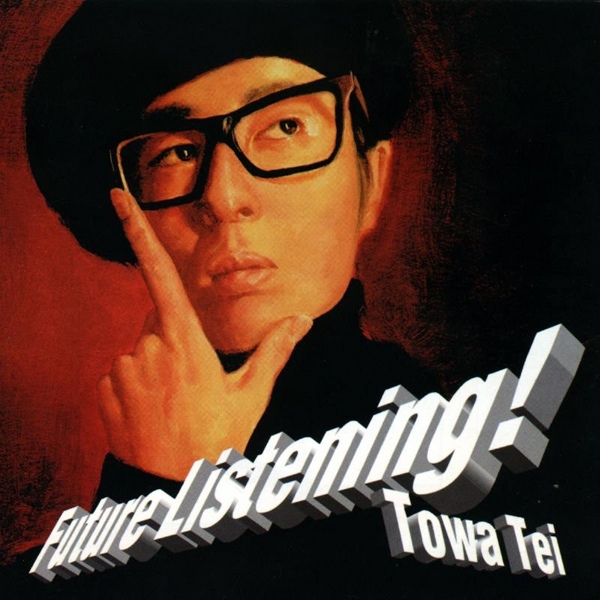
Towa Tei, “Future Listening!”

Future Listening!

(My 100 favorite albums in chronological order: #48 – released April 25, 1995)

Track listing: I Want To Relax, Please! / Technova (La em Copacabana) / Batucada / Luv Connection / Meditation! / Raga Musgo / Son of Bambi (Walk Tuff) / La Douce Vie (Amai Seikatu) / Obrigado / Dubnova (Part 1 & 2)

Borrowing heavily from the past was not a new thing in 1990s music. Even The Beatles covered Chuck Berry (“Rock and Roll Music”) at the height of their fame and created “old-timey” music hall pastiches (“Honey Pie”, “When I’m 64”) later still. Since then, we’ve seen nostalgia repeat itself in roughly a twenty-year cycle: the ‘70s gave us Sha Na Na and Happy Days, while the ‘80s brought back the ‘60s in everything from Dirty Dancing and The Monkees revival to the light psychedelia co-opted by bands both mainstream and cultish from R.E.M. to XTC.

At the dawn of the ‘90s, it was the 1970s’ turn to re-emerge; preceding such me-decade rock revivalists as the Black Crowes and Lenny Kravitz, you had house/dance trio Deee-Lite’s “Groove Is In The Heart”, an unabashed funk/disco track whose deliriously campy video (bursting with period fashions and Day-Glo colors) drove home the song’s overtly retro vibe. Still, those visuals can’t entirely take credit for the song’s massive success—built on that irresistible bassline and Lady Miss Kier’s fabulous, sonorous voice, it was an instant party/dancefloor anthem that didn’t take long in crossing over to pop. It simultaneously seemed retro and fresh thanks to an ultra-catchy melody, but also a beaming optimism that all but shouted, “We are here now, we are having fun, and the future has no limits.”

Although a one-hit wonder that flamed out after three albums, Deee-Lite deserves more credit. Their 1990 debut, World Clique (which includes “Groove Is In The Heart”) is nearly as much fun as anything by the B-52’s. I came close to giving it its own 100 Albums entry but instead opted to write about the first album from one of its members. Towa Tei, fondly remembered as the Japanese guy in the group, left in the middle of recording their final album. Solo, he never scored even a fraction of Deee-Lite’s fleeting success, but Future Listening! remains a fully realized advancement of his ex-band’s sound that warrants a cult following. I first heard it at a used-CD store and was intrigued—this is what I wanted Deee-Lite’s unfocused World Clique follow-ups to sound more like, to take the free spirit behind “Groove Is In The Heart” and develop it further and deeper into an accessible but adventurous collage of retro cool and, as the title implies, up-to-date technology.

“I Want to Relax, Please!” opens with a sample of a buttoned-up man uttering those very words, followed by a decidedly more playful sounding, “Okay!”. From there, Tei mixes electrobeats with what resembles a horn chart from an ancient swing number, which would seem a little hokey if those two disparate strands didn’t end up fitting so snugly together. It’s not necessarily anything new: British outfit US3 did almost exactly the same thing two years before, mixing samples from jazz label Blue Note’s back catalog with hip-hop beats and even scoring a mainstream hit (“Cantaloop (Flip Fantasia)”). Although Tei takes a similar approach, sifting through found sounds and applying them to new rhythms, his creativity is such that you sense an overriding vision at work rather than just a crafty attempt at resuscitating something old.

The second track’s title, “Technova (La em Copacabana)”, could not be more explicit, melding techno sounds with 1960s bossa nova rhythms. It’s like a updated version of Getz/Gilberto, the classic 1964 album from jazz saxophonist Stan Getz and Brazilian guitarist João Gilberto that created a bossa-nova craze in America, scoring a big pop hit with Antonio Carlos Jobim’s “The Girl From Ipanema”, sung by Gilberto’s wife, Astrud. Not only does Tei get a Getz-like sax solo from Yasuaki Shimizu on “Technova”, João’s daughter Bebel (whom he later had with the singer Miúcha) provides the vocals, adding credibility and authenticity.

The “Technova” sound is all over Future Listening!, from a juiced-up, synth-heavy cover of the old genre standard “Batucada” (also sung by Bebel Gilberto) to the eleven-minute closer “Dubnova (Part 1 and 2)” which begins like a straightforward, extended remix of “Technova” but becomes increasingly impressionistic, ebbing the melody until it nearly resembles ambient music in its final section. However, Tei also displays an obvious love for the original genre he’s co-opted. “La Douce Vie (Amai Seikatsu)” is a full-on collaboration with Pizzicato Five, a ‘90s Japanese pop band with a similar sensibility that both looked back and ahead. While the song’s still laced with subtle electronics, they’re secondary to more organic elements like accordion, electric sitar and Maki Nomiya’s lounge-ish (but lovely) vocals. “Obrigado” sounds even closer to the real thing, as Bebel and former skronk-rocker-turned-demure-crooner Arto Lindsay duet over a romantic, sweeping but still understated jazz arrangement with exotica overtones (like the pleasantly stoned electric sitar solo).

Still, bossa nova is only one (albeit significant) part of the album’s sound palette. Future Listening! really lives up to its name in a handful of more experimental tracks. After the brief, gauzy, Middle-Eastern tinged instrumental “Raga Musgo” comes “Son of Bambi (Walk Tuff)”, an extended, nearly unclassifiable number with vocals from female British reggae/Dancehall toaster MC Kinky, an electric sitar hook that’s an interpolation of the Richie Havens song “Something Else Again” and a big beat that seems to prefigure the one used in the Chemical Brothers’ “Let Forever Be” five years later. It’s heady stuff, but as with most of Tei’s work, it’s disarmingly playful, too. Even better is “Meditation!”, a psychedelic free fall into spoken-word jazz (coolly, delicately performed by Natasha Latasha Diggs). It conjures an aural wonderland full of acoustic guitar, upright bass, skittering flutes, cascading beats and samples of Raymond Scott’s proto-electronica jingle “Lightworks”. The familiarity of these disparate elements makes palatable and enticing the futurism that comes from how Tei impishly rearranges them into the song’s framework.

For all his attempts to innovate, Tei also understands the value of good, old-fashioned pop song (he would cover Hall and Oates’ “Private Eyes” a few years later). “Luv Connection” is simple enough to fit on any of Deee-Lite’s albums and, in a perfect world, might have received radio airplay alongside “Groove Is In The Heart”. Club diva vocalist/lyricist Joi Cardwell sings over a mid-tempo house dance beat, while another electric sitar provides the song’s most engaging hook. It stretches on for over seven minutes but never wears out its welcome, thanks mostly to the smooth, soulful Cardwell, who serves the song’s melody well enough but also interjects effervescence via her delicate improvisations. Although decidedly less unique than much of what surrounds it, “Luv Connection” is such a perfect sigh of a song that its approachability doesn’t diminish it.

Tei’s still around, although I haven’t heard much of his under-the-radar work beyond this album’s similar, somewhat inferior follow-up, Sound Museum (1998). Unlike a few other recordings I’ve written about from this period, even though I still enjoy Future Listening!, I don’t particularly hear anything new in it with each spin. That doesn’t necessarily mean it’s now seriously dated; instead, it’s an album that simply accomplished what it set out to do (which can’t be said of every album), combining old and new into something that was both but also entirely its own thing. As artists today continue mining the past for inspiration, they should look to Tei as an example of how to do it right.

Up next: Curiously out of time.

“Meditation!”:

“Luv Connection”:

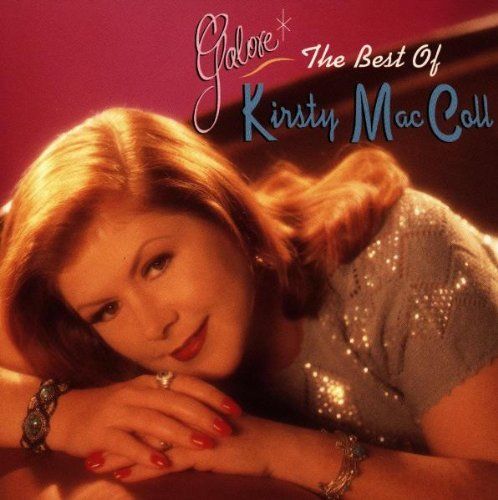
Kirsty MacColl, “Galore”

s-l1000

(My 100 favorite albums in chronological order: #47 – released March 6, 1995)

Track listing: They Don’t Know / A New England / There’s A Guy Works Down The Chip Shop Swears He’s Elvis / He’s On The Beach / Fairytale of New York / Miss Otis Regrets / Free World / Innocence / You Just Haven’t Earned It Yet Baby / Days / Don’t Come The Cowboy With Me, Sonny Jim! / Walking Down Madison / My Affair / Angel / Titanic Days / Can’t Stop Killing You / Caroline / Perfect Day

At least two of the several testimonials (from the likes of Bono, David Byrne and Morrissey!) included within Galore’s liner notes describe Kirsty MacColl as having “the voice of an angel.” It’s also tempting to say she was simply too good for this world, given her relative obscurity outside the UK and her early, tragic accidental death five years after this compilation’s release. Still, I’d rather remember her as one of the most approachable pop stars of her time—qualities that always shine through in her music. Equally gifted as a songwriter and as an interpreter of other people’s songs, she always came off as immensely likable, no matter the temperament she inhabited via a song’s character. She was the classic girl-next-door, but with a saucy sense of humor and a spiky wit. And, of course, an impossibly lovely, clarion, dexterous voice—at times, she was almost the Ella Fitzgerald of 80s/90s pop.

Although currently out of print and superseded by other numerous single disc comps, Galore was my own introduction to MacColl and it remains a terrific overview spanning nearly all of her career (only one LP followed, 2000’s Cuban-influenced Tropical Brainstorm). Sequenced mostly chronologically, it tracks her evolution from barely-out-of-her-teens New Waver on Stiff Records to her later lauded genre experiments. Her biggest UK hits were often cover versions ranging from faithful (a pleasant reading of The Kinks’ “Days”) to revisionist (a distaff, juiced-up take on Billy Bragg’s originally stripped-down “A New England”). She all but proves she’s the female Morrissey on a sublime, 12-string guitar-kissed version of The Smith’s “You Just Haven’t Earned It Yet, Baby”, and adds both muscle and poise to Cole Porter’s “Miss Otis Regrets” (originally recorded for the great AIDS charity LP/Porter tribute Red Hot + Blue) with the backing support of martial drums, banjo and accordion from trad Irish rockers The Pogues.

However, she first hit big with one of her own compositions (and one of my all-time favorite debut singles). On “They Don’t Know”, she pens a rousing manifesto to forbidden love. The lyrics are clear enough for the subject matter to register, but they also allow for multiple readings—it could be about a boy and girl from different classes or age groups or races (squint a little and you could even apply it to a same-sex couple). She enhances the warm, wall-of-sound production with girl group-isms like “do-do-do” backing vocals and that wonderful, descending “Ba-ay-be-ee!” she lets out at the end of the bridge after everything else drops out. While the song received considerable radio airplay in the UK, it never charted due to a record production strike that kept the single off the shelves; four years later, Tracey Ullman would have a top ten hit on both sides of the Atlantic with her near-identical cover (complete with MacColl’s backing vocals and her original “Ba-ay-be-ee!” inserted within); it’s a fine version, but Ullman, while a gifted mimic, can’t quite replicate the authenticity MacColl lends to the original.

Two years later, MacColl would score an actual top 20 UK hit with the memorably titled “There’s A Guy Works Down The Chip Shop Swear’s He’s Elvis”, a nu-rockabilly romp nearly as charming as “They Don’t Know”, only at a breakneck pace. Swapping out the earlier song’s prideful naivety for a droll, conversational tone, MacColl runs through an anecdote that could’ve been sprouted off by one of Mike Leigh’s more garrulous characters with reckless abandon while also fully remaining in control of the rhythm. The cheeky, backing, Elvis-esque “uh-huh-huh’s” near the end are almost as much fun as the wild scream she lets out before the guitar solo.

Although the song’s parent album Desperate Character flopped, that cover of “A New England” would crack the top ten three years later. Musically a departure from her previous genre pastiches, it solidified what would become her signature style: energetic contemporary pop brimming with chiming guitars, subtle synths, big drums and MacColl’s blissful, multi-tracked vocals. “He’s On The Beach” followed the next year. One of the decade’s great lost singles, it wraps up tender longing and regret over a lover who has left for greener pastures in an irresistibly summery, breathtaking package. Puzzlingly, it failed to chart anywhere—perhaps people didn’t want such a lyrically melancholy anthem, no matter how misleadingly upbeat it sounded—but it remains a timeless gem awaiting rediscovery.

MacColl’s 1980s recordings made little impact in America, with the exception of her other song with The Pogues, “Fairytale of New York”. A 1987 number two hit in the UK, it refuses to die, regularly re-entering the charts there every holiday season nearly three decades on; it has become a seasonal standard here as well, although the interplay between her pretty and tart sounding vocals and those of Pogues leader Shane McGowan (whose slurring makes Tom Waits sound like Neil Diamond) ensures it won’t likely ever appear on those 24-hour holiday radio stations that pop up annually. Still, the song’s success revived her career, resulting in a trio of well-regarded albums from which over half of Galore is gleaned.

Five tracks are off Kite (1989), arguably her best long-player. In addition to the previously mentioned covers of The Smiths and The Kinks, three originals showcase MacColl at her shimmering, Alternate Universe Pop Goddess peak. “Free World” whizzes on by in just a little over two-and-a-half minutes, somehow containing a complex but hummable melody that she effortlessly pulls off: when she hits that final high note at the end, you can barely believe the song’s already over, yet you still feel satiated. “Innocence” is sly, slightly quirky jangle pop up there with XTC, overflowing with quotable couplets such as, “Your pornographic priestess left you for another guy / you frighten little children and you always wonder why,” all of it sung knowingly but with good humor. “Don’t Come The Cowboy With Me, Sonny Jim!” at first seems a retreat to pastiche (this time Country & Western), but turns out more like a folk waltz with such novel enhancements as mariachi horns and Irish tin whistles. As ever, MacColl sounds so perfect, so confident yet so genuine that at this point, you start to believe she can sing anything.

The two selections from Electric Landlady (1991) vindicate such ambition. “Walking Down Madison”, her first song to grace Billboard’s Modern Rock singles chart finds her collaborating with Smiths guitarist Johnny Marr, although it seems worlds removed from anything either artist had done before. Fully embracing hip-hop, of all things, it mixes electrobeats, orchestral stabs and record scratches with Marr’s treated guitar eruptions while MacColl muses on the titular Manhattan thoroughfare. She makes observations on class (“From the sharks in the penthouse / to the rats in the basement / it’s not that far,” goes the chorus) and relays all the sights and sounds, taking everything in, turning it all into undeniably catchy, subtly protest pop, complete with a rap interlude from Aniff Cousins.

The album’s other single, “My Affair” dives headfirst into Latin music, where MacColl pulls no punches: she instantly sounds at ease with the lively, sweeping arrangement, an enticing, lithe samba flowing with strings, pianos and sumptuous horns. As always, her winning persona pushes everything to the next level. The song itself is steeped in empowerment and self-worth, but affably so—not just anyone could render an audacious lyric like “It’s no concern of yours if I sleep with the president” with such good-natured aplomb (even if its implications have shifted post Monica Lewinsky). That she’s equally credible switching between Spanish and English near the end clinches it: this is the sort of record you wish Gloria Estefan had been interested in making around this time rather than soppy power ballads.

Speaking of which, MacColl herself moved towards a more adult (if not altogether adult-contemporary) sound with Titanic Days (1993), arriving right after her breakup with husband/producer Steve Lillywhite. Of its three cuts on Galore, “Can’t Stop Killing You”, another co-write with Marr (who contributes a Smiths-worthy guitar hook) adheres most closely to her previous work: it’s agreeable, mid-tempo pop, but relatively boring compared to what came before. “Angel” is more noteworthy for its placid, sparkling trip-hop beat and ethereal melody; it successfully cultivates an older, wiser persona for MacColl—the wiseacre turned sage. She convincingly inhabits this role further on the album’s title track, a full-blown epic about the doomed title ship complete with dramatic strings, ringing guitars and naturally, MacColl’s heavenly overdubbed harmony vocals. I happened to first hear Galore during the Titanic mania of 1998 and immediately preferred this as an anthem to Celine Dion’s then-ubiquitous “My Heart Will Go On”.

As with most greatest hits albums, Galore winds down with two songs recorded specifically for it. MacColl’s predictably fine on a faithful cover of Lou Reed’s “Perfect Day”, but her disinterested, mismatched duet partner Evan Dando (of The Lemonheads) casts an unfortunate pall over the whole thing. Happily, spry original “Caroline” easily earns its place on the compilation: a perfect, upbeat pop song sung as a warning to a new lover’s ex, it makes a great bookend with “They Don’t Know”, documenting how far she’s developed as an artist since then without diluting any of those qualities that first endeared her to world.

It’s that rare combination of great talent and likability that made her senseless death at age 41 in December 2000 particularly hard to take (she was hit by a speedboat while diving in a boat-restricted area off of Cozumel, Mexico.) I’ve haven’t exactly found it tough to listen to MacColl since then; instead, it simply angers me to think what she could have done had she lived. Tropical Brainstorm, for instance, encouragingly expanded on what she tested out with “My Affair” and it has about a half-dozen Galore worthy tunes, most notably the classic, tantalizing, sassy “In These Shoes?”. Still, although MacColl could have given us so much more, in her relatively brief lifetime, she gave us a lot. At the very least, Galore serves as a compact, compelling testament.

Up next: Looking back and simultaneously ahead.

“He’s On The Beach”:

“My Affair”:

Soul Coughing, “Ruby Vroom”

ruby-vroom

(My 100 favorite albums in chronological order: #46 – released September 27, 1994)

Track listing: Is Chicago, Is Not Chicago / Sugar Free Jazz / Casiotone Nation / Blue-Eyed Devil / Bus To Beelzebub / True Dreams of Wichita / Screenwriter’s Blues / Moon Sammy / Supra Genius / City of Motors / Uh, Zoom Zip / Down To This / Mr. Bitterness / Janine

I first heard Soul Coughing when they opened for They Might Be Giants at the Barrymore Theatre in Madison about six months after their debut album Ruby Vroom came out. Going in without any expectations, it ended up the best live performance I’d seen to date (granted, my first concert was only two years before). I was so entranced that I thought I was seeing nothing less than my generation’s equivalent of the Talking Heads in terms of originality and impact as a live outfit. Naturally, I purchased a copy of Ruby Vroom not long after; nearly a decade later, I noted that it didn’t sound dated at all, that it was still unclassifiable and daringly weird: “Forget Green Day, Stone Temple Pilots, or Smashing Pumpkins–this was alternative rock,” I enthusiastically wrote.

While it’s aged far better than those more popular mid-90s artists, Ruby Vroom doesn’t exactly sound timeless today. You certainly couldn’t get away with the album’s opening lyric (“A man flew a plane into the Chrysler building”) post 9/11 and the “ironic” cover art screams 1994 more than any other album from that year I’ve covered here. Furthermore, Soul Coughing’s ultra-specific sound and aesthetic is just something you don’t hear anymore, anywhere: it feels completely relegated to that brief period of time in the early-mid ‘90s when Modern Rock was newly trendy as a commercial option, allowing for quirkier-than-usual bands to get a foot in the door. After all, Soul Coughing were on a major record label—an unthinkable prospect now.

One can neatly summarize that ultra-specific sound by breaking down its core components. First, you have the rhythm section, which consists of the usual drummer (Yuval Gabay) but also an upright bassist (Sebastian Steinberg); together, they provide an overtly jazzy foundation. Then, there’s vocalist/lyricist M. (Mike) Doughty, whom alternately sings, raps, sputters and recites spoken-word poetry in a personality-rich but musically untrained voice, somewhere between a more adroit, nasally Tom Waits and a slacker Fred Schneider. Doughty also plays rhythm guitar—the band’s most formidable connection to it even being considered alternative rock. Still, although Soul Coughing would be immeasurably different without Doughty’s contributions, its fourth member, Mark de Gli Antoni, is their true wild card. Credited with playing “keyboard sampler”, which amounted to about 10% keyboard, and 90% manipulating samples, his input is a major part of what renders so much of Soul Coughing’s output as unclassifiable.

It’s arguably the samples one notices most when first hearing Ruby Vroom because they’re so playful, creative and deftly woven into each song. “Bus to Beelzebub” is built upon an extended section of Raymond Scott’s “Powerhouse”, a tune most will recognize by sound if not by name (think of theme music for a cartoon assembly line). The sample’s repetitive, humorously anxious melody is all one hears for the song’s first few seconds; then, the rest of the band kicks in, and the melding of the two is both giddy and strangely grounded, as Doughty raps nonsense lyrics more valuable for their cadence than content (“Yellow number five, yellow number five, five, five.”) “Sugar Free Jazz”, which could almost be an unintended facsimile of trip-hop, finds Antoni’s undeniably jazzy horn interjections negating Doughty’s gutturally delivered accusations of this being a watered-down version of the real thing. Later, on “Down To This”, Doughty’s repeated chorus (“You get the ankles and I’ll get the wrists”) is juxtaposed with the album’s most familiar sample, from The Andrew Sisters’ 1940s chestnut “Don’t Sit Under The Apple Tree”: “Anybody else but me, no, no, no!” they warble. Coming right after the chorus, their cautionary pleas take on a wary, almost frightened tint, but the music’s so catchy and upbeat that it’s more fun than sinister.

In fact, “fun” is an ideal word to describe the bulk of Ruby Vroom, especially on the massive “Casiotone Nation”, an out-and-out manifesto to sampling where Antoni practically seems to exhaust every last snippet and found sound from his arsenal. However, the song’s underlying structure is rock solid: Steinberg and Gabay lay down a twisty, swinging rhythm track while Doughty ad-libs/rattles off a series of descriptive phrases that contain no deeper meaning than the randomness of their pop culture references. They all begin with the words “The Five-Percent Nation of,” which are followed by such effluvia as “corduroy”, “Milton Bradley” and “nipple clamps” before arriving at the beloved, “The five percent nation of Casiotone” (the last word emphasized and exaggerated) at the chorus. In the second verse, the repeated phrase switches to “The People’s Republic of” stuff like “Lake Edna”, “chocolaty delicious” and, exclaimed in a mocking, singsong tone, “lumps in my oat-meal!” The whole thing roars to a spazzy, furious finale, hitting upon some sort of frenzied bliss as Antoni repeatedly loops the first three words of the old Mighty Mouse theme song lyric, “Here I Come! (to save the day).”

Nothing else on the album is quite so clever, experimental and in-your-face as those aforementioned songs, but that’s a bit of a relief and a credit to the band that they’re not a one-trick pony. What Doughty ultimately brings to Soul Coughing is an unanticipated singer/songwriter vibe. It’s first heard on “True Dreams of Wichita”, a gentle, loping, nearly elegiac lament with an engaging, straightforward melody and minimalist accompaniment. Both lend heft to such hazy imagery as “Brooklyn like a sea in the asphalt stalks / push out dead air from a parking garage”, which he alternates with more lucid, emotionally effective phrases like, “I’ve seen the rains of the real world come forward on the plain / I’ve seen the Kansas of your sweet little myth.” “City of Motors” reprises a similar amount of feeling only in a more noir setting where he seems to be telling someone else’s story until switching to first-person on the plaintive chorus. On closer “Janine”, he even goes full-ballad mode: it’s a sincere, acoustic strummer easy enough for any busker to fully replicate, except for the sample of a woman singing a different song into an answering machine that simply exists throughout the track’s background—the quirky addition that fully renders “Janine” a Soul Coughing song.

These two seemingly disparate strands of edgy art outfit and story-song band join together most formidably on “Screenwriter’s Blues” at the album’s near-exact midpoint. As with “Bus To Beelzebub”, a sole, looped sample kicks things off, but it’s more for texture and momentum than any overriding recognition. After Doughty begins sprouting off spoken-word prose (“Exits to freeways / twisted like knots / on the fingers”), the rhythm section soon comes in, building up a groove in tandem with the two-note sample. Doughty then moves into a colorful yet content-rich, Bukowski-like exploration of the song’s titular profession, gleefully yet measuredly extolling both the gleaming attraction and seedy underbelly of L.A. Like an on-the-air DJ/preacher, he announces, “It is 5 A.M. / and you are listening / to / LOS ANGELES.” He goes on to tell imagined tales both commonplace and sordid (“You are going to Reseda / to make love to a model / from Ohio whose name you don’t even know”) and offer learned observations (the city has “Gone savage for teenagers who are aesthetically pleasing / in other words FLY”, that last word stretched out almost beyond the limits of sarcasm). Meanwhile, the groove just keeps on building; along with Doughty’s prose leading the charge, the song forever reaches toward that sweet spot combining total mental and physical stimulation, until, like all songs, it must eventually end—in this case, like a radio transmission fading, abruptly petering out.

Ruby Vroom itself didn’t receive any significant radio airplay (apart from independent college stations), but the band’s two subsequent records (Irresistible Bliss (1996) and El Oso (1998)) did, actually taking advantage of the opportunity bubble alt-rock briefly afforded, even scoring minor hits with “Super Bon Bon” and “Circles”. Of course, while still distinctive and notably consistent, each album sounded increasingly more conventional and predictable than the last, to the point where it wasn’t much of a surprise when Soul Coughing ran out of gas and split in 2000. Doughty eventually settled into a pleasant, if unremarkable solo career best summed up by his being on Dave Matthews’ label for a sizable chunk of it. He later revealed he didn’t get along with the rest of the band; in hindsight, that very tension between Doughty’s outsize personality and songwriter pretensions and the other band members’ “serious” jazz backgrounds (they all met when Doughty worked the front door at The Blue Note) is what made Soul Coughing interesting—a confluence of disparate influences clashing against each other, creating something entirely new. Aging cynics might claim it could’ve only happened in the mid-90s, but the optimist in me still continuously seeks out its modern day equivalent.

Up next: Borrowing from the best of all worlds and making it your own.

“Screenwriter’s Blues”:

“Casiotone Nation”:

Portishead, “Dummy”

dummy

(My 100 favorite albums in chronological order: #45 – released August 22, 1994)

Track listing: Mysterons / Sour Times / Strangers / It Could Be Sweet / Wandering Star / It’s A Fire / Numb / Roads / Pedestal / Biscuit / Glory Box

Late 1994, a dreary Saturday afternoon, driving up Packard Avenue in Cudahy, the radio in my parents’ borrowed Grand Am tuned to New Rock 102.1 FM, Milwaukee’s first commercial “Alternative”, or Modern Rock station (having switched over from Top 40 that September). Upon hearing the opening to Portishead’s “Sour Times” for the first time, I nearly pulled the car over—of course, I didn’t actually do so (although it’d make for a greater story if I had). Still, rarely before or since has hearing something new on the radio instantly startled me. The cinematic strings, the shuffling beat, the sly, spy-music guitar riff, the impossibly mournful female singer and most of all, that odd, unidentifiable, repeated, trembling, almost clanging noise utilized as a hook—all of it so unexpected, intriguing and eerie.

“Sour Times”, with its indelible chorus of “Nobody loves me, it’s true (pause) / not like you do,” would become a top five Modern Rock hit in the new year. Although Portishead would remain a one-hit wonder where that format was concerned, once something that strange and innovative received the amount of radio airplay it did, it felt like there was no going back to a time when the radio couldn’t be this interesting. Of course, it did just that, repeatedly, as Modern Rock as a format devolved first into a rather corporate version of “edgy” music that ended up little more than a playground for trend-jumpers and what I like to call “one-hit grungsters” (we won’t speak further of its second, later, downward slide into testosterone-heavy nu-metal). However, for one brief period, the possibilities of Modern Rock felt limitless. While Dummy was born out of circumstances and a scene that had precious little to do with this format, for me it exemplified a few optimistic months of my radio-listening youth before things turned, well, sour.

Two decades on, Dummy is more regularly remembered as one of the quintessential trip-hop albums rather than for anything it contributed to Modern Rock. Trip-hop was a moniker assigned to mostly British music inspired by the drum-machine, bass and sample-heavy rhythm tracks of rap songs. The difference was that it had virtually no rapping and none of the cultural signifiers rap as a genre contained. The first real trip-hop record, Massive Attack’s Blue Lines, did feature rap on a few tracks, but it was entirely shorn of braggadocio or hardness, instead adhering closer to soft-spoken word and beat-derived jazz. The title track and lead single on Massive Attack’s second album, Protection, went to so far to feature Everything But The Girl’s vocalist Tracey Thorn, thus cementing an easy-to-follow template for the subgenre: a woman singing, often sorrowfully, occasionally playfully over a hip-hop beat, with samples coloring the spaces in between.

Although Dummy is undeniably trip-hop and a genre-defining record at that, it almost feels reductive to say so, in the same way that it became go-to “sexy bedroom” music for many listeners in subsequent years. In actuality, Dummy is often cold, dark, challenging and abrasive; intermittently, it’s also beguiling, melodic, and seductive and even radiates a little warmth and solace. Although noticeably influenced by the orchestral sweep of John Barry and the langour of Isaac Hayes (whom it samples), the album had few other precedents; also, much (but not all) of the trip-hop that followed palely imitated it without carrying a fraction of its depth, ingenuity and weirdness. It’s an easily comprehendable record on first listen that seems to reveal previously hidden facets and complexities as one becomes more familiar with and pays closer attention to all its darkened, emerging corridors.

For those not enclined to spend too much time on Dummy, “Mysterons” could tell you all you needed to know about the entire album on a superficial level: the opening, echoey Fender Rhodes electric piano repeating four notes and two chords, the record-scratching sample and loping, drum machine beat that both could’ve come off any Dr. Dre production, reverb-heavy guitar lurking in the background, the spooky, horror-flick vibe of the Theremin (in this case, a simulation of such and not the actual instrument) and most of all, Beth Gibbons’ deliberately artificial-sounding femme-fatale vocal, suffused with stressed syllables in an assortment of affectations (“all / or NOTH-innng”, “did you REAL-LY WAA-aaannt”). The basic elements of Dummy’s palette, they each appear in nearly all of its songs, but repeat in permutations varied and creative to a degree that little tends to run together or bleed into another. Each track seems to sustain a similar mood or sound until, often quite subtly, a new wrinkle or nuance emerges and alters it.

“Strangers”, for instance, seamlessly vacillates between jazzy, almost gentle-sounding samples (the brief, opening saxophone fanfare; the isolated, far-away, lone guitar lick in the first verse; the mysterious, almost Middle Eastern bell-like chime filigree later in the song) and the track’s heavy, thick, loud beat (when it first drops out, then suddenly returns at 1:15, it’s like breaking through the surface after brief submersion under ice-cold water.) “It Could Be Sweet” could almost be Everything But The Girl, with Gibbons emphasizing the title’s last word over a velvety-soft bed of Rhodes and syndrums; however, those rapid, angular orchestral stab samples keep entering the milieu, keeping us on edge. Both “Wandering Star” and “Numb” wed hummable melodies to deliberately alien backdrops while the band’s chief architect/producer Geoff Barrows manipulates various samples, playfully scratching them into the songs’ rhythms to break up the tension and dread, if just a bit.

Between those last two songs, “It’s A Fire” neatly divides the album into two halves (as RJ Wheaton suggests in his 33 1/3 series book on Dummy). It wasn’t originally included here, first issued as the B-side to “Sour Times” and then only added to the album’s US release and understandably so—it’s an obvious outlier, arguably more welcoming, soulful, and optimistic than anything else Portishead ever did (also far more accessible). Fear not, for the band’s patented misery returns with the aptly-titled “Numb” and sustains itself all the way through Dummy’s final note. While “Numb” and the slinkly, vaguely sinister “Pedestal” merely repeat motifs abundant in the album’s first half, the three remaining songs mark where Dummy shifts from a good record into a great one.

It’s still hard to believe “Roads” was never a single—even more than “It’s A Fire”, it’s the album’s beating, wounded heart. It slowly builds, piece by piece: first, another lone, reverb-heavy Rhodes (but of course!); then, the beat and Gibbons’ clearest, most emphatic vocal on the record, each verse ending with the searching, enigmatic lyric, “How can it feel this wrong?”. A wah-wah guitar echo and subtle but swooning strings straight out of Histoire de Melody Nelson come in on the second verse, the latter gradually growing in power and volume until everything else drops out at 3:19 and they take over the song in full force for a few seconds. This orchestration transforms “Roads” dramatically, like something you’d hold your lighter out in the air and sway along to if only that didn’t sound like a cliché and, in this setting, feel so gauche. And just as magically as the strings swell up, they drop out for the song’s final verse, as does all else until we’re left with just Rhodes and vocal. “Roads” musically ends as it begins, but emotionally it travels a great distance.

“Biscuit”, on the other hand, doesn’t move too far in any direction—it begins and ends on an all-encompassing sense of dread. The massive beat trudges along like a Mack truck that does not dare travel faster than ten miles an hour, and yet, somehow, there co-exists a teeny, tiny spring in its step, particularly in those three vaguely funky notes at the end of every revolution of the repeated hook, like it’s moving one step forward, two steps back. The song’s real coup de grace, however, is the vocal sample of Johnnie Ray’s 1959 recording, “I’ll Never Fall In Love Again”. Rather perversely, Portishead takes Ray’s originally peppy tune and deliriously sloooows down his vocal (like The Chipmunks in reverse!) to the point where it resembles a corpse wailing from beyond the grave—a somewhat macabre intent since Ray had died just four years before. Equally unnerving and morbidly funny, it only further ramps up the desperation and terror in Gibbons’ voice.

However, to say she just plays the victim in Dummy’s often bleak, miserable universe is inaccurate. Had the album ended on “Biscuit” that might’ve applied; instead, actual finale “Glory Box” is where all of its themes and moods alchemize and then take a left turn. The song ever-so-slowly fades in, but is fully formed from the barely-audible first seconds of a four-chord progression blessed with a string sample from an old Isaac Hayes tune. At first, Gibbon’s vocals are her most cartoonish on record: “I’m so tired / of playin’ / playin’ with a broken arrow / gonna give my heart away / leave it to the other girls to / play,” all of it sung like Betty Boop slowed down from 45 to 33 RPM. But then, the next line (“A thousand flowers bloom”) suddenly pierces and aches in its much higher, more emphatic register. “Move over / and give us some room, yeah,” she then practically coos. Still, it’s all just a warmup for the massive chorus, where, backed by a heavily distorted but melodic guitar riff, she sings, “Give me a reason to love you / Give me a reason to be / a woman.” Suddenly, she’s anticipating the Spice Girls (in sentiment, not in sound) by two years, with any fragility in her voice overruled by empowerment and determination.

After the third chorus, at 4:08, she abruptly wails, “THIS is the BEGINNING / of FOREVER / and EVER!” as if boldly facing and staring down death itself. She triumphs over the steamroller beat, explaining, “It’s time to move on, / so long for me” but you realize she doesn’t mean death as in mortality but the conclusion of something more temporary, fluid, undefined: A relationship? An attitude? A thing to overcome that, if one fails to do so will bring loss but not entire physical destruction? It’s unclear, but such ambiguity and power are potent enough to leave one both reeling and utterly changed long after the first verse of “Glory Box” begins again and the track slowly fades out. On subsequent listens, one might view all of Dummy through a slightly altered lens, knowing that no matter how much sorrow it emits, it will ultimately end in, well, not exactly joy, but in startled discovery—the rare album with a somewhat limited musical palette that still manages to feel limitless.

Up next: Another alternative from Modern Rock’s commercial and creative peak.

“Glory Box”:

“Roads”:

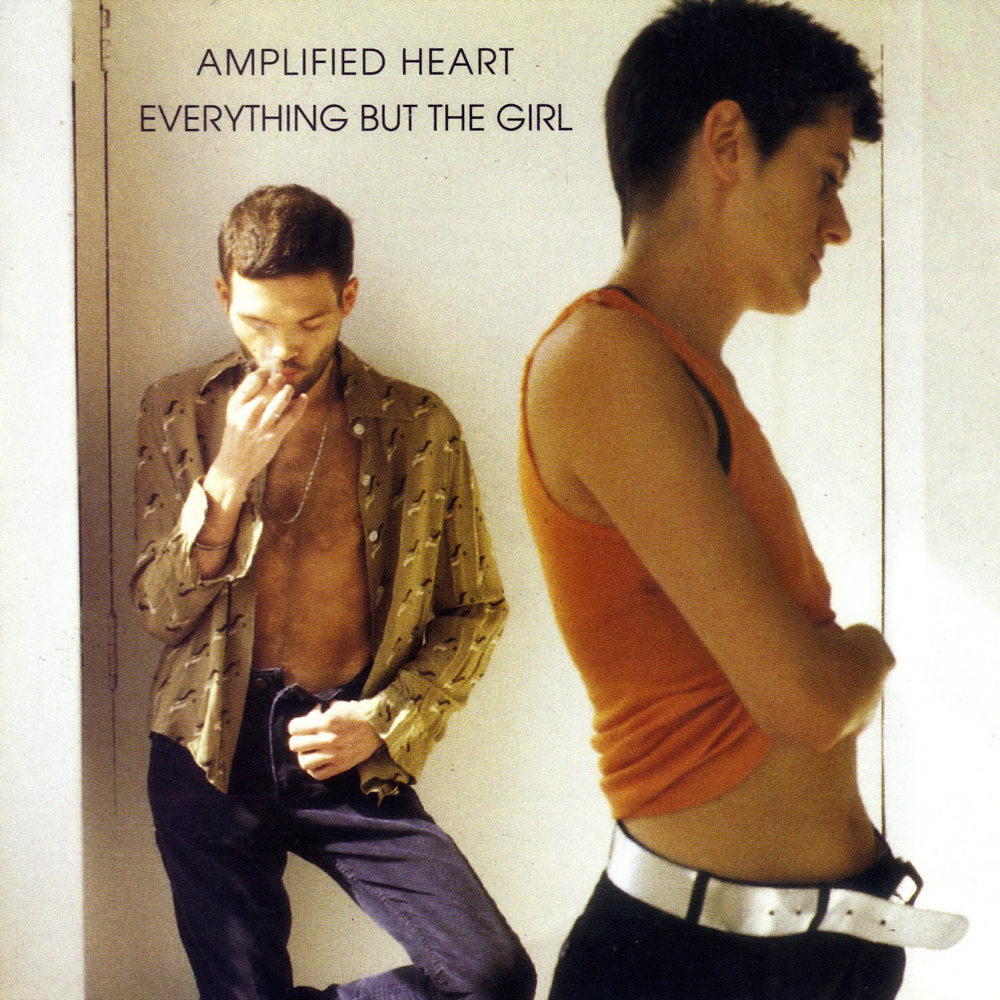
Everything But The Girl, “Amplified Heart”

amplified heart

(My 100 favorite albums in chronological order: #44 – released June 13, 1994)

Track listing: Rollercoaster / Troubled Mind / I Don’t Understand Anything / Walking To You / Get Me / Missing / Two Star / We Walk The Same Line / 25th December / Disenchanted

Following Idlewild, Everything But The Girl went to America to record their next album with Tommy LiPuma after he had expressed an interest in working with them. Producer of such eminent artists as Miles Davis, George Benson and Randy Newman, LiPuma seemed an unlikely choice for this understated British duo. While The Language of Life actually broke the band in the U.S. at last thanks to the VH-1 hit “Driving”, LiPuma’s slick, contemporary lite-jazz production left band and life partners Tracey Thorn and Ben Watt sounding a bit too middle-of-the-road for their own good. The next year, they returned to England and made the uninspired Worldwide, an album even smoother and blander than its predecessor.

A year later, Watt was diagnosed with an extremely rare autoimmune illness, spent nine weeks in a hospital, and nearly died. I mention this upfront because it is the key to understanding the album he and Thorn recorded after he recovered. Amplified Heart is, on the surface, full of songs about relationships in various states of disrepair and, in the case of its best-known track, obsession over a lost love. One doesn’t necessarily need to know the personal history behind these laments in order for them to resonate—Thorn and Watt remain exceptionally relatable pop stars, and the mostly acoustic, stripped-down arrangements allow for far more intimacy than those last two records were capable of. Still, once you know about the near-death experience its creators endured prior to making it, it’s impossible not to see how deeply it courses through it.

“Rollercoaster” right away establishes that Amplified Heart is a break from its recent predecessors. A lithe, somber bossa-nova, it’s mostly folkish/acoustic (the rhythm section consists of Fairport Convention drummer Dave Mattacks and legendary double-bassist Danny Thompson) with the exception of a synth that plays the part a sax or a flute would normally take—it’s surprisingly effective, blending right in with the bass, not subtracting any of the song’s warmth but instilling a sense of otherness. Even more striking are the lyrics—the opening lines, “I still haven’t got over it even now / I want to spend huge amounts of time on my own,” could refer to a faltering love when coming out of Thorn’s mouth, but it’s Watt who wrote them. The song later references “the road to my redemption” (read: recovery) and its hook goes, “I’m not really in your head,” a phrase that can cut both ways, perhaps alluding to how this illness altered each partner’s perception of the other as it occurred.

While Amplified Heart is predominantly (and somewhat ironically, given the title) acoustic and thus sounds timeless, like Idlewild, it contains a few modern elements. Both “Troubled Mind” and “Get Me” have electronic flourishes (looped drum-and-guitar samples, some subtle keyboard shading on top) that are far less stiff and integrated more organically into the arrangements than Idlewild’s drum machines. However, they seem to support rather than dominate the overall pastoral and bright flavor of the songs, which are still guitar heavy. Lyrically, the tunes also seem to mirror each other. Thorn’s “Troubled Mind” addresses a partner whom she increasingly finds hard to communicate with (“I’m trying to keep up with you / It’s hard enough when you speak clearly”), while Watt’s “Get Me” (which Thorn sings) offers a response of sorts: “I’ll tell you things ten thousand times / but do you ever get me?”

This symbiosis becomes further pronounced on the two songs enhanced by Harry Robinson’s sumptuous (but not overbearing) string arrangements. Thorn’s “I Don’t Understand Anything” may appear to be about a fractured affair (“Do you want what I want?,” she pleads in the first verse), but it also succinctly expresses that feeling of helplessness one gets from observing and being unable to fully get through to their partner. “You reach for me from miles away,” Thorn concludes, and the distance implied is not entirely physical. Four tracks later, Watt’s “Two Star” almost bluntly answers, “Stop listening to me / and don’t ask me how I feel,” but there’s more going on than just an argument or infidelity. For one thing, Thorn also sings “Two Star” (she’s really the primary vocalist of the duo). Although Watt hints at his own recent experiences (the remarkably descriptive lyric, “And I watch Saturday kids TV / yeah, with the sound turned down,” appears nearly verbatim in his illness memoir Patient, published a few years later), phrases such as “To judge a life this way / when my own’s in disarray” are universal enough that they could easily apply to either partner/band member.

If much of the album fixates on distances (physical, emotional, psychological) between two lovers, Thorn’s “We Walk The Same Line” reaffirms the strength such a long-term bond can hold (“If you lose your faith babe, you can have mine,” she sings in the chorus). The song’s cheery demeanor is a welcome respite from the subdued gloom surrounding it, not sounding too far off from “Driving”. However, as with Idlewild’s “These Early Days”, the sentiment reaches deeper than you’d expect, for Thorn also acknowledges how easily this bond can be tested. “When we meet what we’re afraid of / we find out what we’re made of” is one of the most honest, insightful lyrics ever about what it’s like for a love to be threatened by something beyond one’s control; sitting right there in the middle of a seemingly anodyne pop song only sharpens its impact.

Watt himself sings two songs on Amplified Heart. While his merely pleasant voice will never match Thorn’s distinct, deep, elegant low tone, he does sound like a changed man (and looks it, too—compare the cherubic, floppy-haired figure on Idlewild’s cover with the far more gaunt, emaciated man not facing the camera here); in Patient, he writes, post-illness, “I find my voice has a new-found strength to it, a greater projection, more meaning.” When you hear him sing on the album for the first time, on “Walking To You”, you can comprehend such strength, especially as he’s placed upfront in the mix with only a bed of strummed, ringing guitars behind him. It’s a seemingly simple tune about former lovers who have stayed in touch as friends, but continue to question what could have been. Thorn takes over on the second verse, making it a duet, but when both their voices blend together so beautifully on the song’s remainder, it reinforces the value of this bond they’ve built together, both professionally and personally.

However, Watt’s other vocal song, the penultimate “25th December” is the album’s true centerpiece. Again, the music’s sparse—mostly gently chiming guitars (including an guest solo from Richard Thompson, another Fairport Convention member) backing Watt’s introspective, vulnerable, undeniably personal lyrics. The first verse reflects on how “my old man plays the piano for Christmas,” being surrounded once again by family for this most celebrated and often melancholy of holidays. “And I never, no I never, ever realized,” is the plaintive chorus; it acquires more weight after the second verse, where he muses on being thirty years old (which places this as the first Christmas after his illness). He asks, “Have I enough time, have I just some time / to revisit, to go back, to return, to open my mouth again?” For someone who has just gone through an extraordinary trauma, it’s a profound question. How exactly does one go on after courting, then cheating death? In the final verse, Watt’s lyrics turn metaphorical, as he tries to “unlock a door / with a key that’s too big for my hands.” He drops the key at (presumably) his partner’s feet, and the final lyric, “Come on, come on, it’s there at your feet” almost magically joins up with and complements the chorus, the two lines repeating as the song fades out.

Then, the album ends on the brief, devastating “Disenchanted”, where Thorn (with some help from alto saxophonist Peter King) mournfully concludes, “I wonder, can you try again? Are you that strong?” Its placement shrewdly calls back to that notion, “When we meet what we’re afraid of, we find out what were made of.” However, it’s not quite the final word. On later versions of the album, it’s followed by the Todd Terry remix of “Missing”, whose original version kicks off the album’s second side. I’ve ignored it thus far because it is sort of the big elephant in Amplified Heart’s candlelit room.

The album version of “Missing” actually fits in pretty well among its peers. Although built around a drum loop inspired by Raze’s 1988 club hit “Break 4 Love”, it doesn’t sound much like something you’d hear in a club. Still, it’s tough denying how transparently it stands out as the catchiest thing on the album. “And I miss you / like the deserts miss the rain,” goes its indelible chorus, as acoustic guitar triplets and atmospheric synths score a melody that gently glides along like a locomotive, with Thorn effectively guiding all in the right direction even as her narrator flails about in despair, seeking remnants of a life once shared with another, admitting, “You’re long gone, but I can’t move on.”

Initially one of Amplified Heart’s failed singles, “Missing” had a belated, rare second life thanks to Terry’s remix, which radically strips down the song to Thorn’s isolated vocal and places a minimalist but prominent rhythm track behind it. This new version slowly became a big dance hit that unexpectedly crossed over to the pop charts, even going all the way to #2 in the US more than eighteen months after it was first released. At the time, I lazily dismissed it as a sellout move because I had first heard the album and fallen for it after borrowing it from the library the summer before. Fortunately, within a few years, I grew to appreciate how Terry’s remix utterly transformed the song, keeping the melody intact while letting the beat heighten the palpable fear and longing in Thorn’s words and vocals.

The song’s massive success broadened the band’s audience considerably, but it also somewhat obscured the album’s accomplishment by sounding like nothing else on it. Thorn and Watt ended up reinforcing this by delving full-on into electronic dance music on their next two albums, Walking Wounded and Temperamental. It’s difficult to begrudge them for doing so—they were obviously ready to move on from such a rough period of their lives. Still, Amplified Heart aligns with the notion that the best art is often born out of immense pain. The crown jewel in EBTG’s catalog, it is an about-face where Thorn and Watt reaffirmed and utilized all of their musical strengths—it’s conceivable they could have made just as good of a record had they not gone through such hell, but it surely would not have been the same record.

Up next: Music startling enough to make you want to stop driving and pull the car over.

“Rollercoaster”:

“25th December”:

Blur, “Parklife”

parklife-cover

(My 100 favorite albums in chronological order: #43 – released April 25, 1994)

Track listing: Girls & Boys / Tracy Jacks / End Of A Century / Parklife / Bank Holiday / Badhead / The Debt Collector / Far Out / To The End / London Loves / Trouble In The Message Centre / Clover Over Dover / Magic America / Jubilee / This Is A Low / Lot 105

Labeling by genre is a helpful but potentially misleading way to write about music. Naturally, describing an artist as rock or jazz or classical or Scandinavian black metal (if you want to get really specific) gives most readers a common signifier to latch on to regardless of their personal familiarity with said genre. For example, take Britpop—even if you’ve never heard “Wonderwall” or “Common People”, you know from the word alone that it describes a type of popular music that’s inherently and emphatically British in sound and subject matter. Still, just because a band makes British pop, does that automatically make them Britpop?

For many, London quartet Blur are Britpop personified, partially due to them being one of the best-selling acts in the UK at the genre’s peak, but also because their music was emphatically and, probably to most American ears, excessively British in nature. They peppered their songs with such specific cultural references as “colour supplements” and the Westway and had titles like “Advert” and “Mr. Robinson’s Quango”; lead singer Damon Albarn also did absolutely nothing to mask or smooth out any hint of Limey tang in his voice. Parklife, their third album, often plays like a time machine buzzing through snapshots of the last thirty years of British rock and roll, enthusiastically bouncing between Beatles-esque splendor (“End of a Century”), XTC-like social commentary (“London Loves”), Kinks-ian chamber pop (“Clover Over Dover”), new wave (“Trouble In The Message Centre”), glam (“Jubilee”), psychedelia (“Far Out”), exotica (“To The End”), etc., etc.

Parklife is undeniably, quintessentially Britpop, but what’s tricky about Blur is that they were always so much more than that. Look back to their 1991 debut, Leisure and you’ll find a decidedly less poppy (and frankly, less inspired) outfit riding the then-trendy shoegaze/Madchester bandwagon; look ahead to their self-titled fifth album in 1997 and you’ll hear them trying to shake off their more overly British aspects in favor of scrappier, less polished sounds gleaned from American indie rock (and it worked, giving them their sole American hit). Even shifting the focus back to Parklife, you see a group crafty enough to borrow from genres past and present but also inspired enough to fully transcend pastiche—you can label “Bank Holiday” as their “punk” song and “Girls & Boys” as their “synth-pop” song, but Albarn’s songwriting and the band’s musicianship is such that, in the end, you simply remember them as Blur songs.

Speaking of which, “Girls & Boys” opens Parklife on a deliriously cheeky note with its repetitive two-note synth hook, blatant disco rhythms and provocative and daft wordplay in the chorus (all together now: “Girls who are boys / who like boys to be girls / who do boys like they’re girls / who do girls like they’re boys”). Without Graham Coxon’s abrasive (yet still melodic) guitar riffs, this critique of “love in the ‘90s” could nearly be peak Pet Shop Boys at their satirical best (PSB even later remixed it), except, despite Albarn’s slightly mocking tone, it seems just a little more heartfelt than that—after all, the chorus quoted above ends with the line, “Always should be someone you really love.”

Similarly, “Tracy Jacks” details a middle-aged, middle-class everyman whom gradually cracks under the pressure of the societal expectations his age and class implies, going so far as to impulsively shed his clothes in public and eventually “bulldoze down the house he lived in.” His rationale in one generalized but irresistibly succinct couplet? “I’d love to stay here and be normal / but it’s just so overrated.” And yet, while Albarn acknowledges the situation’s absurdity and extremity, he never condescends to or fails to sympathize with his subject, his tone in the chorus turning uncommonly tender, plaintively noting of our doomed Mr. Jacks, “He knew in his heart it was over.”

Such is the humaneness that emanates throughout Parklife. While Albarn is certainly capable of a scathing critique (showing absolutely no mercy to Bill Barrett, the opportunistic dreamer of “Magic America”; even the wonky synth solo seems to be mocking the dope), far more often, he adopts the voice of the people, forging a persona that very well knows he could’ve ended up like Tracy Jacks had his own career as a pop star not panned out. On “End of a Century”, in addition to immediately deflating its significance by following the title with the phrase, “It’s nothing special.”), he muses, “The mind gets dirty / as you get closer to Thirty,” a clever lyric that’s also evocative for its candor and disclosure.

Later, on “This is a Low”, the album’s miserablist masterpiece, he again misdirects us, this time following the title with the phrase, “But it won’t hurt you,” which crucially transforms the song from a lament to a reassurance. Even when he lets Quadrophenia actor Phil Daniels serve as his overtly cockney-accented mouthpiece on the title track’s verses, you can discern an overriding affection for middle-class London—after grousing about “getting rudely awakened by the dustmen” and “all the joggers who go round and round (and round),” Albarn via Daniels concludes he’s happy, “safe in the knowledge that there will always be a bit of my heart devoted to it.”

If that sounds a tad sentimental, rest assured that the song’s enthusiastic verve undercuts any hint of sap. Much of Parklife simply would not work (nor have had as significant an impact or nearly the staying power) if not for its confident, clever, fully realized music. The breadth of different styles alluded to above makes even the band’s previous record, Modern Life is Rubbish (which encouragingly plants the seeds for Parklife’s breakthrough) seem relatively monochromatic; that the band pulls off nearly every one with aplomb is a criteria they have in common with their storied predecessors-cum-influences. And even then, you start to wonder if XTC or The Kinks could turn out something as soothing and eerie as “To The End”, a cavernous soundscape of vibes, tom-toms and Stereolab’s Laetitia Sadier intoning sweet nothings in French, and follow it two tracks later with “Trouble In The Message Centre”, a dark, drivingly catchy electro-rocker overflowing with hooks, made indelible by Albarn’s dramatic, deadpan, slightly tart spoken vocals.

I suppose one could dismiss this sort of agility as a means of showing off; others could even go so far as to deem Parklife an imperfect album, pointing to a handful of throwaway tracks that it really doesn’t need (“Far Out” screams “B-side that somehow made it onto the LP”, while the skippable “Lot 105” does little else but lighten the mood after “This is a Low” mightily growls to a close). For many Brits, I assume Parklife may even seem dated now given its immense popularity over there. However, as an American college student at the time, for me it was a lifeline, vindication that the numerous British bands I adored since falling for Abbey Road were viable alternatives to all of the then-massive domestic grunge rockers that did nothing for me. I won’t claim that Parklife necessarily sounds timeless, but it endures due to its sustained quality and musicianship. Blur itself built a long-term career on those exact tenets, but also by forever confounding expectations. Nothing else they did ever reached Parklife’s heights, but with the exception of the Coxon-less Think Tank (2003), none of it was ever less than interesting, and that includes last year’s not-bad reunion effort, The Magic Whip.

Up next: “When we meet what we’re afraid of, we find out what we’re made of.”

“This is a Low”:


“Trouble In The Message Centre”: