Sleater-Kinney, “One Beat”

(My 100 favorite albums in chronological order: #71 – released August 20, 2002)

Track listing: One Beat / Far Away / Oh! / The Remainder / Light Rail Coyote / Step Aside / Combat Rock / O2 / Funeral Song / Prisstina / Hollywood Ending / Sympathy

Most bands would kill for as consistent a discography as Sleater-Kinney’s. A female punk trio formed in Olympia, Washington, they followed a tentative but intense 1995 self-titled debut with five solid albums in a row and at least three of them are back-to-front superb (the other two ain’t far behind.) Still, the conundrum with such consistency is that I’m uncertain I could write distinct, illuminating essays on more than one S-K album (let alone three.) Early on, I had picked for this project Dig Me Out (1997), the group’s third album. A considerable leap from their previous records, you can practically hear everything literally clicking into place, thanks partially to new powerhouse drummer Janet Weiss but also to the more confident and dynamic songs of vocalists/guitarists Corin Tucker and Carrie Brownstein.

I then shifted my sights over to All Hands on the Bad One (2000), at times still my favorite S-K album primarily because it was the first one I heard (roughly a year after its release). Obviously, it was also the one I fell in love with, driving me to seek out their previous four albums (including 1999’s denser, thornier, dreamier The Hot Rock.) Although it encompassed influences ranging from the Ramones and riot grrl to post-punk like The Cure and other (slightly less caffeinated) indie rock such as Yo La Tengo, it felt brand-new to me at the time: no other trio, male or female, matched them in spiky guitar riffs, thunderous but lithe percussion and ingenuously intersecting, overlapping vocals (mixing Tucker’s singular, commanding caterwaul with Brownstein’s sweeter, brisker undercurrents.) From the irresistible pogo-pop of “You’re No Rock and Roll Fun” to the shimmering acoustic balladry of “Leave You Behind”, it also amply showcased S-K’s ever-growing capabilities.

However, when the time came to write about All Hands… for this project, I again balked, deciding to address its follow-up instead. I’m not going to argue that One Beat is, full-stop, the essential S-K album, the one you most need to hear; Dig Me Out and All Hands… are honestly just as accomplished. Still, apart from its sonic diverseness and songwriters Corin and Carrie arguably at their melodic peaks, One Beat has other implications that render it the S-K album I most want to write about. Released in late summer of 2002, it’s as pure an afterimage of that strange, post-9/11, pre-Iraq War period in America that you’re gonna get outside Bruce Springsteen’s The Rising—in other words, it’s as explicitly political as S-K ever got, and you can’t help but notice how this enhances the urgency in their concise, energetic, cathartic and, best of all, LOUD rock and roll.

You sense it straightaway in the repetitive, start-and-stop martial drumbeat that kicks off the title track. It’s followed by a similarly-inclined guitar riff (probably from Carrie) before the arrival of Corin’s clipped, angry vocal, which “leads” the song but also perfectly melds with everything else. She sings of striving for unity in a world of chaos, looking to science for an explanation (“If you think like Thomas Edison / could you invent a world for me,”) only to admit, “You can’t predict everything with Newton-like certainty.” The song’ subtext of an altered, post-9/11 existence becomes the text of the next track, “Far Away”: it’s as taut and relentless, with Carrie delivering her best Jimmy Page impression as Corin recounts nursing her “baby on the couch” as she watches “the world explode in flames” on the other side of the country. “Don’t breathe / the air / today,” she wails in two-syllable increments as Carrie sings, at a lower register and a far more rapid pace, “Standing here on a one way road and I fall down,” the two eventually merging on the furious and pleading, “WHY CAN’T I GET ALONG WITH YOU?” (All caps indicated on the album’s lyric sheet.)

They reference the attacks again on “Combat Rock”, which not only alludes to The Clash album of that name but also the rock-reggae leanings of their sound circa then. A treatise on blind patriotism, you could call it one of the more strident songs in their catalog, taking on an easy target (“Hey look it’s time to pledge allegiance! / Oh god I love my dirty Uncle Sam.”) Still, you must remember how unpopular this opinion was at that exact time (think about what happened to The Dixie Chicks a year later)—the song hits hardest when at its most direct (“Since when is skepticism un-American?” is a still most relevant question at this writing.)

“Combat Rock” ends up a necessary protest song, but its immediate predecessor on One Beat is a transcendent one. Lyrically, “Step Aside” serves as a manifesto of what it’s like to be in a female punk trio as the world threatens to fall apart. More than that, it’s a call to solidarity just like the title track only with a clearer agenda that doesn’t pussyfoot around with metaphor or philosophical inquiry. “These times are troubled, these times are rough / there’s more to come but you can’t give up,” Corin sings before asking—nay, commanding listeners, “Why don’t you shake a tail for peace and love?”, stressing the words “peace” and “love” with impassioned force. If that wasn’t irresistible enough, she proceeds to rouse her fellow band members (“JANET!  / CARRIE! / CAN YOU HEAR IT?”) before concluding, “It’s not the time to just keep quiet!” Oh, and musically the song’s an unlikely, powerful punk/Motown hybrid, made flesh and blood when the surprise horn section appears at 0:48.

While the rest of One Beat is rarely so overtly political, for this band, the personal and the political are often indistinguishable. It’s most apparent on a song like “Light Rail Coyote”, a paean to all small town girls (and boys) seeking solace in the big city, together ultimately making the city what it is—the concluding cries of “Oh dirty river / come let me in,” are just as forceful and effective as the exhortations in “Step Aside”. One can also hear it in “02”, particularly the key phrase, “I want to run away,” that last syllable stretched over a few measures of the tune’s anthemic power-pop.

Lest one think that One Beat contains nothing but high-energy bangers (see “Hollywood Ending” whose wonderful descending guitar riff gathers momentum until everything tyrannically explodes at the end), the album’s midsection is a bit more varied. “The Remainder” keeps the band’s no-fat-or-flab instrumentation in check, subtly adding synths and strings while slowing down the tempo a notch. The Carrie-sung, nursery-rhyme simple “Funeral Song” alternates between plucky, stripped down verses and a bang-bang-bang full-throttle chorus (plus a Theremin solo!) that would play well at any club’s Goth night. These post-punk-isms reach full flower in “Prisstina”: co-written by Hedwig and The Angry Inch lyricist Stephen Trask (who also provides synth and backing vocals), it brushes against that Siouxsie Sioux/Robert Smith axis nicely without sounding too much like either artist (thanks mostly to Corin’s near-unrecognizable, low-pitched tone.)

And yet, S-K do what they do best in a more typical number like “Oh!” Kicking off with a massive Carrie guitar riff worthy of The B-52’s’ Ricky Wilson, it’s a glorious lust song, packed with surf rhythms, handclaps, call-and-response lyrics, “Be My Baby”-style drumrolls and best of all, Corin’s animated, elastic, ecstatic vocal (worthy of The B-52’s’ Cindy Wilson; as with Carrie’s guitar, it goes beyond pastiche.) Listen to how she sings, “Nobody lingers like / YOUR hands on MY heart!” on the chorus or, “It’s ALL in / my POCK-et! / I CALL it / my ROCK-et!” on the bridge and try not to fall in love with her no-holds-barred jubilation.

S-K have a penchant for tremendous album closers, and “Sympathy” doesn’t disappoint. A blues where Corin relates her child’s perilous, premature birth, it begins with just guitar, vocal and after the first twelve bars, some cowbell. She pleads as fervently as she did on “Step Aside” only the stakes are much higher, more immediate and potentially devastating as she sings, “I’d beg you on bended knees for him.” Then, Janet’s full drum-kit crunch accompanies Carrie’s countermelody (“I’ve got this curse on my tongue…”) as Corin lets loose with “Woo-hoo’s!” deliberately swiped from The Rolling Stones’ “Sympathy For The Devil”. Everything reaches an expulsive boil at the bridge as Corin, line by line, bares the depths of her soul (along with exclamations of “HEY!” from her band.) “We’re all equal / in the face of what we’re most afraid of / and I’m so sorry / for those who didn’t make it,” she affirms—again, the personal is the political, and we’re all in this together, whether the threat to life and well-being is singular or widespread.

One Beat and “Sympathy” could’ve been perfect cappers to S-K’s career. Their next album, The Woods (2005) had its fans, but I found it awfully disappointing—a sludgefest that almost entirely replaced their tightly wound precision with blurred walls of sounds and meandering jams. Perhaps they realized it was a dead end, for they broke up a year later. After almost a decade of solo and side projects like Wild Flag and The Corin Tucker Band, not to mention Carrie’s unlikely emergence as a sketch comedy queen with Portlandia, they re-united with No Cities To Love (2015), another solid S-K album that sounded like but neither added to or detracted from that original five-record run. S-K will always come in at the top of any short list of great all-female bands, but when you consider their peak output, it’s clear they’re more accurately one the era’s best bands regardless of gender or genre.

Up next: Catharsis at a more personal level.

“Step Aside”:

“Oh!”:
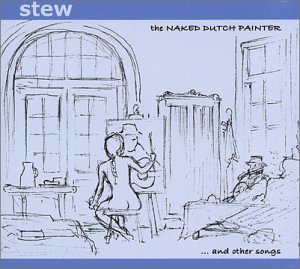
Stew, “The Naked Dutch Painter… and Other Songs”

(My 100 favorite albums in chronological order: #70 – released April 2, 2002)

Track listing: Single Woman Sitting / Giselle / Reeling / The Drug Suite / Love is Coming Through the Door / The Cold Parade / North Bronx French Marie / The Smile / The Naked Dutch Painter

In an era of digital file sharing and streaming, there’s a popular misconception that the album’s days are numbered. Granted, sales have dwindled to an extent where, just a few years ago (before they amended their rules to include streaming counts), a title could top the Billboard 200 on sales of only 40,000 physical units. Fortunately, the album is far from dead; it’s not really even on life support. Just look at how Beyonce’s Lemonade dominated cultural conversations in 2016 (or Adele’s 25 the year before.) At this writing, print and web media is agog with think pieces on the 20th anniversary of Radiohead’s OK Computer spurred on partially by a new, expanded edition released to commemorate it. Although an album is no longer the be-all, end-all way of consuming music (as it was in the immediate pre-iTunes age when labels deliberately withheld releasing popular songs as singles, giving you no other choice but to buy the whole album to own the song), people still listen to, write about and occasionally buy them, while most artists (save the occasional outlier like Robyn) still release their music in this format.

An album usually consists of an average of ten songs spanning 30-45 minutes in deference to what could fit on its original physical format, the long-playing vinyl record (or LP). Naturally, one can place more than ten songs on an album if they’re shorter (They Might Be Giants averaged 20 on each of their first five LPs) and less if they’re longer (Afro-beat legend Fela Kuti often crafted songs long enough to fill one entire LP side.) An overwhelming majority of these songs are new studio recordings, although in addition to that type of album, there are also live albums, remix albums, cover albums (consisting of nothing but new versions of songs recorded and made famous by other artists) and for those who just want the hits or a career-spanning overview, the compilation album—arguably the primary format that has suffered considerably in the download era, as iTunes and streaming services allow (and encourage) anyone to compile a playlist of their own choosing.

Going back to studio albums, they tend to feature anything from an assortment of hits plus filler to overarching concepts unified by themes or stringing along a number of tunes to form a medley. By the early part of this century, every possible permutation as to what a studio album could contain seemingly had been attempted, from allowing an aural motif to run through all of its songs to beginning every song title with the same letter to even compiling a dozen different cover versions of the same song. Around this time, singer/songwriter/The Negro Problem leader Stew followed up his solo debut, Guest Host with an album that, while not as audaciously conceptual as those examples mentioned above, defied easy categorization. Much of it was recorded live onstage, complete with spoken introductions and snippets of between-song patter. Still, it’s not exclusively a live album, for a few tracks feature noticeable studio overdubs and at least three were likely entirely recorded in a studio.

With this deliberate blend of settings, The Naked Dutch Painter… and Other Songs comes off as a true hybrid. I don’t know why Stew and his bassist/co-songwriter Heidi Rodewald decided to construct an album this way—they could’ve simply made the whole thing strictly a live record full of new, previously unreleased songs. However, once you get past the novelty of hearing what’s essentially a live album with a few studio diversions, you’re left with a collection that features a singer/songwriter at his creative peak. The live bits highlight his strengths as a bandleader/performer/personality, while the studio bits manage not to detract from any of this (in some cases, they even enhance it.)

Single Woman Sitting” begins not with an onstage introduction, but a studio trick: its circular piano melody gradually fading in for nearly thirty seconds. Then, Stew begins singing about the titular figure who lives in “a very nice one room flat,” which has “paintings, photos, some mementos, a bookshelf and a cat.” As the song proceeds, his descriptiveness and wordplay turns droll and playful (“coffee cups in the sink, letterbox, litter box”) but it’s just (admittedly) clever window dressing to his fervent declarations of “I’m in love, now I’m in love, love, love,” in the chorus, alongside his heavenly “ahhh’s.” He sounds so intimate, so close-you-can-almost-literally-touch-it that it’s practically no surprise to hear the audience’s applause at the end, confirming that this is indeed a live recording.

The applause recedes and he delivers a spoken introduction to “Giselle” which he describes as “a song about girls who carry switchblades and are very well-read.” It retains the cabaret vibe of the previous track but with a full band and a jauntier, Kurt Weill-like two-step beat (not entirely dissimilar to the vibe of our last entry.) If anything, “Giselle” outdoes “Single Woman Sitting” in the clever wordplay sweepstakes, rattling off such tongue-tied feats of fancy as, “Whether spying for the Russians / or rushing to a plane” and “A transgender rendering of Helen Keller (!)” or pun-laced observations on the order of “Her rabbit won’t pose for Hef,” delivered with an exaggerated aplomb. Throughout, his one-of-a-kind wit is gleaned through strings of phrases no one else could likely come up with, the most immortal of them being, “Terribly rude to waiters, / Overtips like Sinatra, / Quite fond of Stiv Bators, / She drops acid and goes to the opera.”

And yet, one not need look further than the next track to see Stew as more than just a jokey raconteur. “Reeling”, with its mid-tempo, soul-funk strut stands in direct contrast to the previous songs—it’s like a mash-up of early ’70s Al Green or Marvin Gaye with The Beatles’ “Something”. Driven by an eight-note piano hook that ascends then descends (the only piano on the LP played by Stew himself), it’s an utterly awed, genuine declaration of love and lust. When he sings, “I’m dumbstruck ’cause it’s real / really, really real,” you believe he could nearly hold his own with Green and Gaye. His empathy, wonder and ease are all infectious.

It also clears the slate for “The Drug Suite”, a nine-and-a-half minute, three-part mini-medley that now sort of reads as a dry run for his eventual Broadway musical Passing Strange—indeed, two-thirds of it would end up in that production. The dreamy, blissful remembrance of “I Must’ve Been High”, gently sweetened by Rodewald’s backing vocals gives way to the more sprightly-paced, violin-accented, Noel Coward-esque “I’m Not on a Drug” (about being the only sober one at a party because you’re the host) which in turn leads into the blissfully stoned “Arlington Hill”. Fun, if somewhat arch, the Suite’s saving grace is the (assumedly) personal details Stew layers in throughout, like the fact that “Arlington Hill” is about getting high for the first time in a VW bug parked at the titular place or the “coked up debutantes” and the “nine foot, two inch bong” the narrator host of “I’m Not on a Drug” must reckon with.

The Drug Suite” concludes not with audience applause, but Stew counting off the album’s first full-bore studio recording, “Love is Coming Through The Door”. Positively gleaming with keyboards and propulsive drums (the latter courtesy of Blondie’s Clem Burke), it’s retro-anthemic sunshine pop with Rodewald’s “Look out, looook, look out” on the chorus the album’s most indelible earworm. Again, it’s conceivable that a live version of this song would’ve passed muster here, but the rich, expansive production is well-suited for a song so impassioned and life-affirming; the sonic disparity between it and the other songs ends up seeming irrelevant.

The Cold Parade” returns Stew and co. to the live stage. Following an extended spoken intro delivered over a slow, somewhat pensive instrumental backing, the song’s almost childlike melody uneasily co-exists with the lyrics where, in the first person, Stew constructs a character sketch about “a harmless fellow” who “has been known to scare the hell out of a dame.” Drawing on themes of loneliness, anonymity, social awkwardness and existential dread, it’s far from a typical pop song, but Stew sells it, the pleading in his vocal leading the listener to believe he easily could be this man he’s describing, even if he isn’t.

Both “North Bronx French Marie” and “The Smile” opt for a sunnier palette and the more amused persona that is Stew’s forte. The former is another lustful ode to a particular gal that pushes all his buttons (or, in this case, “Shakes my tree / sticks to me / French Marie”), laden with soulful piano, melodica and such psychedelic imagery as “You’re a punk rock t-shirt melting in the sun.” The latter could be a love song specifically for Rodewald (the two were romantic partners at this time) with its plaintive but loving chorus that merely repeats the phrase, “I see the smile on your face.” However, there’s more to each song than what initially meets the ear. After laughing at him and stealing his cigarettes, “North Bronx French Marie” suddenly, pointedly asks Stew if “all the negroes are like” him, somewhat altering his idyllic illusion of her, while in the verses of “The Smile” he attempts to “crawl into the window of your mind” and admits, “I just lost my mind today / it was starting to drive me crazy anyway.”

After a too-good-not-to-include snippet of stage patter where Stew ruminates on the multiple meanings of the word “garnish” (he approves it in the culinary sense, but not when it concerns his wages), the album returns to the studio for its title track and very best track. Over a delicate acoustic guitar riff and spiced with gentle “la, la, la’s”, Stew delivers an epic story song possibly gleaned from his younger days as an ex-pat in Europe, beginning with the attention-grabbing lyric, “The naked Dutch painter in the kitchen does not want to fuck you.” As usual, he depicts a desirable but unattainable figure with more than a trace of self-deprecation (“She says, ‘Gandhi used to sleep between two naked women,’ / but you’re not the Mahatma / that’s a whole ‘nother religion.”) As with any great songwriter, the details arrive fast and are deeply felt, rhyming “coffee amaretto” with “groovy black ghetto”, mentioning such talismans as a “Mingus tape” and a “freezing pay phone”, making astute observations about the painter’s professor who “can stretch her canvas tight.” Not only is the whole thing ridiculously catchy, it actually takes a poignant turn at the end when the titular figure is finally ready to admit her love for the narrator, only to discover “another naked dutch painter sitting in the kitchen” at his side.

If anything dates The Naked Dutch Painter… and Other Songs, it has nothing to do with the music. Of the six albums he put out under either The Negro Problem or his own name between 1997 and 2003, four have unlisted bonus tracks—a product of the CD era where artists occasionally did this simply because they could. Here, five minutes of silence separates the end of the title track from something iTunes identifies as, ahem, “The Proverbial Hidden Track”, which amounts to less than a minute of a carnival-esque instrumental (at least apart from Stew noting, “Now, here’s the part I like.”) Fortunately, the other hidden track, a studio recording called “Very Happy”, has much more sustenance in that it’s an actual song, and a good one at that. Kind of a sequel to “The Smile”, only with a fun, Rockford Files-like synth hook, it’s the type of pop gem Stew could rattle off in his sleep at this part of his career. The chorus goes, “Now, I know that / I didn’t know that / this could make you very happy,” and it’s both as specific and universal as any classic Beatles song.

After putting out another Negro Problem album later that year (the awesomely-titled Welcome Black), Stew and Rodewald spent the next six developing and expanding Passing Strange, from a tiny stage at Joe’s Pub to the Belasco Theatre on Broadway. I would never begrudge him this success, but it has come at a cost of putting out more albums as good as The Naked Dutch Painter. In the near decade since Passing Strange, he’s only released a soundtrack to a Shakespeare on the Sound production of A Midsummer’s Night Dream (2009) and one real album, Making It (2012), which disappointingly didn’t live up to its title. Although no longer a couple, he and Rodewald still regularly collaborate, most recently on a stage show about James Baldwin and a one-off single about Trump (as bitingly catchy as anything they’ve ever done.) I suppose when you have such a rich (if obscure) back catalog and a Tony Award, you have nothing left to prove. But I hold out hope that he still has another great, genre-defying album in him.

Up next: “Why don’t you shake a tail for peace and love?”

“The Naked Dutch Painter”:

“Reeling”:

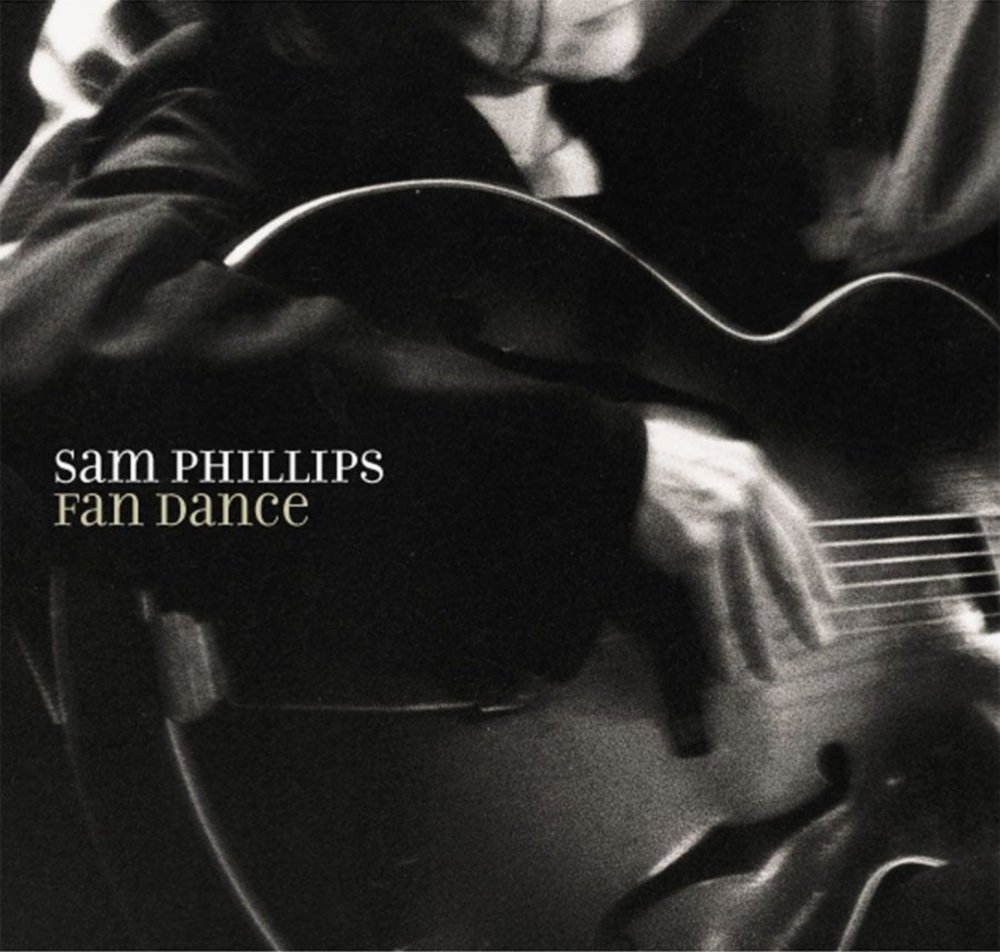
Sam Phillips, “Fan Dance”

(My 100 favorite albums in chronological order: #69 – released July 31, 2001)

Track listing: Fan Dance / Edge of the World / Five Colors / Wasting My Time / Taking Pictures / How To Dream / Soul Eclipse / Incinerator / Love Is Everywhere I Go / Below Surface / Is That Your Zebra? / Say What You Mean

Favorite albums often act as portals—aural spaces you want to return to again and again until you know them by heart, or at least you think you do until hearing, discovering, registering something you hadn’t before. You give them yet another spin and find no difficulty, no weariness, no effort getting lost in these hyper-specific worlds only made possible through sounds and songs, instruments and vocals, lyrics and melodies. As they seep into your consciousness, it can almost feel like two worlds merging together: the one the album creates and carries, and your own interior state of mind.

Sometimes, you have to spend some time immersing yourself in albums, gradually getting to know their structures, their secret passages and slight crevices in order for them to register and feel known. For every favorite record that I instantly connected with, like If You’re Feeling Sinister or Apartment Life, I can identify another that took weeks, months, occasionally years to reveal its merit, such as It’s Heavy In Here or Hejira. Fan Dance falls into the latter category for sure. I still recall my first time hearing it on its day of release, picking up the CD at the Newbury Comics in Harvard Square after work and playing it on my living room stereo while I cooked dinner.

On that first spin, Fan Dance struck me as lacking… something. It had a dozen songs (nearly as many as Martinis and Bikinis), but perhaps only three or four discernible hooks among them. Nearly half the tracks clocked in around the two-minute mark (or less), the whole thing barely over thirty-three minutes in length. More significantly, even though her then-husband T-Bone Burnett was still on board as the album’s producer, this sounded absolutely nothing like their previous records together: instead of her usual Beatles-esque chamber pop teeming with ringing guitars and lush, girl-group harmonies, this was almost gaunt and malnourished in comparison, stripped down to the bone, forgoing bass on nearly half the selections, sticking mostly to a strict diet of vocals, acoustic guitars and unconventional percussion (for pop music, anyway) like traps and hand drums.

In retrospect, I should not have been surprised at this total revamp. After Martinis’ glowing reception (and her sly, silent turn acting in Die Hard With a Vengeance), a commercial breakthrough felt eminent with whatever she’d release next, but that turned out to be Omnipop (It’s Only A Flesh Wound, Lambchop). The title alone suggests Phillips wasn’t about to play it safe, but the album’s deliberately quirky (over)production baffled and put off rather than seduced critics and consumers, not to mention Phillips herself, who has since publicly disavowed the record and only retains one of its tracks (a “performance art” take on “Animals on Wheels”, which she also performed onscreen in Wim Wenders’ 1997 arthouse monstrosity The End of Violence) in her post-2000 concert setlists. Omnipop was no Martinis, but it’s not a bad record, necessarily—its first seven (out of a dozen) tracks are fine, with “Power World” something of a lost gem. Still, when compared to its sharper, more soulful predecessor, you can see how it was sort of a dead end for Phillips, especially as the sound of crickets greeted its arrival in the summer of ’96.

Apart from a pair of previously unreleased tunes on Zero Zero Zero, a 1999 compilation (which also curiously promised “newly remixed” versions of several songs that seemed rather identical to the ones I already knew and loved), Phillips hadn’t released any music after Omnipop. Given this silence, plus the fact that said compilation had more than a whiff of contractual obligation to it, I was beginning to suspect/fear that she wouldn’t release any more new music, period. Thus, it almost goes without saying that my expectations for a new album were through-the-roof (and somewhat unreasonable.)

If any clue existed as to what direction she’d take on Fan Dance, one could’ve spotted it in her highest profile activity of that period, her mostly instrumental background music for the TV series Gilmore Girls, which had premiered to low ratings but rapturous acclaim the year before. Just hearing that Phillips provided the soundtrack was enough to make me check out the pilot episode (and was a significant factor in my instantly becoming a fan of the show.) Primarily acoustic and laced with “la, la, la’s” sung in her inimitable voice, her Gilmore Girls music draws extensively from the same limited but carefully designated palette she uses on much of Fan Dance.

After a brief snippet of equipment being quietly turned on, the first sounds heard on the album are a lone, strummed guitar chord followed by Phillips singing, “The violinist puts his violin away,” then another chord, with her resuming, “Forbidden city broken into tonight.” She continues, “I use my blindfold to dry my tears / the stage is empty and tired of light,” and her emphasis on those last three words emanates a warmth and comfort that draws you in. Then, the album’s title track comes into focus on its gentle, celebratory but reverent chorus, “But when I do the fan dance / I’m all the red in China / I’m dialing life up on my telescope.” Like most of the album’s songs, it’s simple at first—a close-knit quintet playing acoustic instruments (and some exotic ones, like a Quattro banjo guitar), performing a folk song with delicate but discernible Eastern-flavored accents. With time, though, little things in the mix stand out, like a slight shiver of cymbals, or a higher-pitched *ting*, possibly from a triangle (or something similar, since no triangle appears in the credits.) They casually emerge, unexpectedly (or magically?) but with utmost precision.

One of its few songs built around piano chords, “The Edge of the World” also introduces a vital component of Fan Dance (and, subsequently, most of Phillips’ post-Omnipop career): more than a soupcon of Kurt Weill-derived cabaret, with Phillips embodying the role of the sly, knowing chanteuse. It sports a melody as both twisty and solid as anything on Martinis, but with an entirely disparate musical approach, forgoing any Beatles-isms or guitar tropes for a nimbler, two-step pace more suited for theatrical stage than the concert hall. “At the edge of the world, looking up,” she sings, rather than down, as one would expect such a lyric to end. The song itself also ends unconventionally, with pounding piano ceasing on one lone, dramatic note taking nearly thirty seconds to fade out.

At the exact millisecond that piano disappears, an acoustic guitar strum supersedes it, playing a minor chord as Phillips’ vocal comes in, followed by a repeated four chord progression. From there, she rarely takes a breath throughout “Five Colors” as the song is primarily driven by her lyric and the melody, which both spool out almost effortlessly, circling around those four chords. It’s by far the catchiest song on Fan Dance, but hardly the most direct. The chorus, “Five colors blind the eyes / See the world inside / Amazed alone” is lifted from a Tibetan quote (Tao Teh Ching by Lao Tsu) and it gels with Phillips’ persona as a seeker, a questioner rather than a believer or follower (something she firmly established in 1988 after giving up her career as a contemporary Christian artist under her birth name, Leslie, going secular and professionally adopting her childhood nickname.) “Five Colors” pulls off the neat trick of maintain a healthy skepticism/pragmatism (“I don’t mind if I am getting nowhere / circling the seed of truth”) while also permeating itself with a sense of wonder, heard in the way those last two lines of the chorus slightly, gorgeously overlap, or at that moment in the second verse where the percussion enters, subtly but effectively adding heft, maybe even enlightenment.

Fan Dance was one of seven albums Phillips made with Burnett between 1987 and 2004. His dexterity in allowing an artist’s personality to shine through but also feel embedded within the arrangements had not undiminished, even as Phillips’ sound had shifted radically from her previous works. On “Wasting My Time”, she also employed another longtime collaborator, Van Dyke Parks, to arrange the song, which consists entirely of her vocals and an overdubbed cello. Despite such sparse elements, so rich and inventive is Parks’ contribution that as a whole, the song feels practically lush. Phillips repeats the title phrase somewhere between 25 and 30 times throughout, turning it into a mantra, enabling it to make the journey from novel to repetitive and back to novel again. Due to this omnipresence, when she forgoes those words in the middle-eights, their impact is heightened. “But the rain remembers your face / and the streets know your name,” she concludes—a nod to U2, of all people, or just the Cheers theme song, perhaps?

“Taking Pictures” is one of those many Fan Dance tracks that clock in around two minutes. Tentative at first, it would seem but a fragment, if not for the sense of turning or epiphany that Phillips exhibits on the twice-repeated lyric, “Places I go are never there,” stretching out that second “there” to an ascendant four syllables. Immediately following that, “Nostalgia isn’t what it used to be / I can only picture the disappearing world when you touch me” is as perfect, provocative and succinct a chorus one could ever hope for. Ironically enough, it’s also arguably the most nostalgic-sounding, Beatles-reminiscent track on the album, albeit sparse and strange enough (dig Parks’ distorted, nearly guttural-sounding harpsichord) to resemble a White Album demo (or outtake.)

Fan Dance’s first half comes to a close with its most generous and lovable song, “How To Dream” (which, at least in an instrumental version, appeared on Gilmore Girls multiple times.) It’s as simply constructed as “Five Colors” but suffused with far more wistfulness and awe, thanks to her wordless, glorious “aah’s” that introduce each chorus. Out of all her lyrics about searching for meaning and illumination, the most definitive may be this one: “When we open our eyes and dream / we open our eyes” is her philosophy at its core essence. A sentiment that could easily scan as too New Age-y, it instead feels earned and wise, like a perfectly formed thought that nonetheless did not come from thin air. With Phillips, you always sense the worth and purpose behind each phrase she uses, like this song’s repeated, “All to reveal a secret we can’t hide.” And yet, you don’t feel a strain or any calculation. There’s an ingenuity to her lyrics that these sparse arrangements only accentuate.

“Soul Eclipse” kicks off Fan Dance’s more experimental second half with an eccentric interplay between her upfront vocal and a few acoustic and electric guitars skittering around the mix. It’s one of three tracks on the record featuring only Phillips and avant-jazz guitarist Marc Ribot (another longtime collaborator), and it resembles a handful of puzzle pieces the listener is encouraged to piece together. Though the melody is one of Phillips’ most approachable, it’s grounded not by a rhythm section, but random emissions of electronic feedback and a peculiar Optigan lurking in the background. Occasionally, a lyric such as, “You think I’m interesting like the Apocalypse” surfaces and warrants your attention, before Phillips retreats to fuzzier imagery like, “I wear colors to bed / and dream I’m writing the skies with joy.”

The song’s barely over before “Incinerator” begins: it’s another Phillips/Ribot performance that’s a weary, tentative, back-alley blues, again without a rhythm section but spiced with some Chris Isaak-style surf chords. She addresses the titular object like a lover making an unwanted advance, warning it, “This is not about sex / it’s about a personal slant,” and pleading for it to “go on and on right through me”. She’s not quite playing the femme fatale—she’s smarter and more detached than that, yet defiant (“I’m made of fire and you’ll never get to me”), if still steeped in ambiguity (“I don’t have your number cause I can’t count to eternity.”)

In the middle of these weird little songs comes a fairly straightforward ballad, “Love is Everywhere I Go.” More amplified at the start, it reprises the simplicity of “How To Dream”, delving back into that sense of wonder without verging on being too precious. As with “Five Colors”, folk-pop singer/songwriter Gillian Welch provides bass and backing vocals, though the latter are nearly inaudible (particularly for someone with as distinctive a voice as Welch’s)—perhaps that’s not to distract from Phillips, whose elongated reading of every other syllable on the chorus gives the song its meatiest hook, along with another overlapping of phrases (right at the word “go” comes the answer lyric, “looking through you”) on the chorus.

After that song’s relative lucidity, Fan Dance immediately plunges back into opacity with “Below Surface”. Fittingly, it feels subterranean and submerged, as if recorded underground or better yet, under water. Phillips’ already deep voice has rarely seemed as voluminous as it does here, or ominous, for that matter, especially when she sings, “I’ve been waiting for Noah’s God to destroy my world, so I can find life,” or “Drain our blood with information screens, obsolete, obscene.” It’s as if she’s distilled the essence of Kate Bush’s The Ninth Wave into 102 seconds of dark, dreamy effluvia; such compact duration leaves one a little unnerved, as if briefly peeking into another world or, more likely, another interior state.

Does the next track “Is That Your Zebra?” feel downright disorienting or like sweet, sweet relief following that sinister chasm? Instrumental except for six singularly uttered words (“What When Who How Where When”) and occasional “la, la, la’s”, it’s of a piece with her Gilmore Girls music—pleasant, tender, graciously fading into the background if you let it. The title, however, doesn’t entirely let you off the hook. What does it mean? Is Phillips withholding vital information, or is that all there is? As with “Below Surface”, “Incinerator”, or even “Soul Eclipse”, did she choose the song title for a cognitive reason, or just because it scans well as a song title? You can listen to it twenty times and come no closer to a definitive answer.

Rather than close Fan Dance on a question, however, Phillips concludes with a request. “Say What You Mean” is cut from the same bluesy cloth as “Incinerator”, only slowed all the way down, slower than even “Below Surface”. As Ribot and Burnett accompany her with spooky, resounding guitars, she sings as if detained in a sort of slow-motion David Lynch-ian horror-scape, a cocktail in hand or perhaps the remnants of one, for it feels like the bar’s long since shuttered for the night. Steeped with questions (“How hungry are you? How much can you lose?”) and revelations (“The secrets that you want to know are yours not mine”), each languid verse ends on the title phrase, which just sort of hangs there in the air whenever Phillips utters it. Is it meant to be an order? It almost sounds like a punchline—a rather macabre one at that, given how everything gradually fades to black after the song’s final, lonely chord.

I returned to Fan Dance often after that first listen, initially content with my impression of it being an interesting album, a good album, even, if not a great one. Weeks later, I wrote about it extensively in my journal over two entries, at one point noting “with this album, she gives as much weight to the songs as she does the sound,” which she had done, granted, on previous records (although maybe not Omnipop.) By the end of 2001, it was my second favorite album of the year after Here Come the Miracles. In early 2010 when I compiled my best-of-decade list for albums, it ended up at #26—lower than her next two albums, actually. At the time, I wrote that on Fan Dance, “she opened up a new world of hidden gestures and small pleasures—nine years later, it continues to grow on me.”

It’s one of those conundrums in writing about something as abstract and fluid as music that I’m at a loss for words as to exactly why Fan Dance has stayed with me for so long. I now return to it even more frequently than Martinis to the point where for the past couple years, it’s unequivocally my favorite album of hers. If I were to re-do that Best of the ‘00s list, it would surely make the top ten—maybe the top five. Going through it track-by-track (as I did here), I can easily parse out what I admire about each one, from specific phrases, chords and instrumental touches to how the songs often seem to conform to recognizable pop structures only to usually, unexpectedly, almost thrillingly defy them.

As a whole, Fan Dance appears to me as this ongoing, beguiling entity: the result of Phillips discarding much of what was familiar about her music while retaining those constants she couldn’t help but retain because they are an essential and true part of her as a vocalist, songwriter, musician, and person. Throughout, she continuously reveals and withholds, reveals and withholds so that you remain invested and intrigued, seeking to understand what’s all being expressed and what’s merely implied. One could argue she’s always done that, but sometimes it was obscured by everything else going on in her music. By stripping her sound down to such carefully chosen essentials, she sharpens everything that remains. This world, her world, has seemingly bottomless potential in how it conjures ever-shifting states of being, continuously asking questions without necessarily expecting absolute answers.

Up next: What is an album (and what can it contain?)

“Five Colors”:

“How To Dream”:

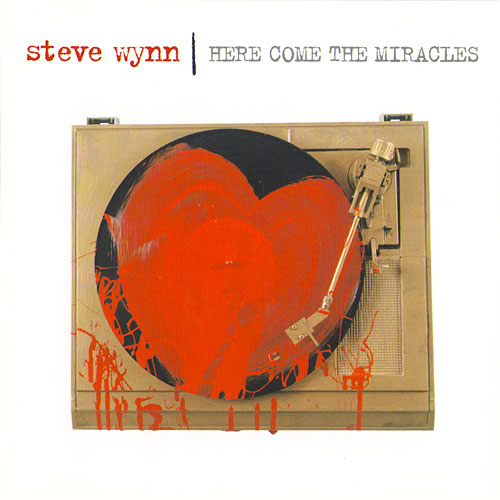
Steve Wynn, “Here Come The Miracles”

(My 100 favorite albums in chronological order: #68 – released April 24, 2001)

Track listing: Here Come the Miracles / Shades of Blue / Sustain / Blackout / Butterscotch / Southern California Line / Morningside Heights / Let’s Leave It Like That / Crawling Misanthropic Blues / Drought / Death Valley Rain / Strange New World / Sunset To The Sea / Good and Bad / Topanga Canyon Freaks / Watch Your Step / Charity / Smash Myself To Bits / There Will Come a Day

Beginning with The Beatles (aka, “The White Album”) and enduring through the likes of Quadrophenia, English Settlement and Sign O The Times, the Rock Double Album long served as an ideal format for musicians to make a grand, artistic statement. However, by the 1990s, it had fallen out of favor, apart from the occasional outlier such as Mellon Collie and the Infinite Sadness or triple-LP 69 Love Songs. For this, you could blame compact discs triumphing over 33 1/3 vinyl records as the dominant physical format since the former could easily fit up to 79 minutes of music on one disc (as opposed to on average 45 minutes over two sides of a vinyl record.) With some classic double LPs even coming in short enough to comfortably fit on one CD (Goodbye Yellow Brick Road, Bad Girls), the etymology changed, the mere idea of an album being a single or a double now mostly irrelevant. If you really wanted to make such a distinction between the two, you’d say something like Boys For Pele clocks in at double album-length (and then perhaps grouse about how it could’ve benefited from some pruning.)

Still, the double album (not to mention the spirit behind wanting to make one) never entirely went away. As we enter the final third of this project, we’ll encounter a number of single CDs with enough music on them to spread over four LP sides (and indeed, some of the later ones will be available for purchase as actual double LPs thanks to the vinyl resurgence), plus at least three honest-to-god double albums of the “released on two CDs” variety. The first of them ticks off the prerequisite boxes: a grand artistic statement made by an artist several albums into a venerable career, containing too much music to fit on a single CD (just barely—both discs together clock in at 82 minutes.)

Steve Wynn (obv. the musician, not the casino mogul) had spent the 1980s leading The Dream Syndicate, an L.A. post-punk quartet so ardently reminiscent of The Velvet Underground (with Wynn’s vocals initially coming off as if he were Lou Reed’s kid brother) that they and other likeminded bands were dubbed members of a new “Paisley Underground.” After four albums and numerous personnel changes, they split up just in time for Wynn to go solo in 1990. Over the following decade, he put out six albums comprising one of the richest and sorely overlooked discographies of the era. Most impressively, each one is its own distinct animal, ranging from chiming power pop (Kerosene Man) and pastoral folk rock (Fluorescent) to back-to-basics guitar grunge (Melting in the Dark) and a magisterial blend of all three with some Stax-like soul added in for good measure (My Midnight). There’s not a weak title in the bunch; such consistency renders Wynn possibly my favorite relatively obscure singer/songwriter of all time (next to Sam Phillips, of course).

His seventh solo album Here Come the Miracles utilized the double album format almost as a means to vindicate that undiminished consistency; the copy on cover insert also made blatant what Wynn was reaching for, calling it “his Zen Arcade, his Exile on Main Street.” I remember around the time of its release, in an interview Wynn said that the only reason it ended up a double album was because he felt all of its 19 songs deserved to be there. While conceivably he could have released each disc as its own single album, when examining Miracles as a whole, you can’t help but feel he made the right call. In my mind, the best thing a double album does is firmly hold a listener’s interest over its extended duration. With the exception of a concept album we’ll get to down the road, Miracles more successfully fulfills this criteria than any other double album on this list.

Each of Wynn’s albums has a particular feeling or flavor that’s often a result of where and with whom he recorded it—for instance, 2008’s made-in-Slovenia Crossing Dragon Bridge is like absolutely nothing else in his catalog due to its exotic locale, factoring in heavily to its sound and subject matter. Likewise, Miracles was recorded in the Tuscon desert and its songs often feel agreeably dusty and dry, their compact hooks given space to breathe via lengthy instrumental intros and codas. Wynn also made the album with a core group: Chris Brokaw (lead guitar), Dave DeCastro (bass), Chris Cavacas (keys) and Linda Pitmon (drums). Arguably the most simpatico unit he had played with since the lineup on The Dream Syndicate’s debut album The Days of Wine and Roses, he’d record a few albums after Miracles under the moniker Steve Wynn & the Miracle 3, which included DeCastro, Pitmon and guitarist Jason Victor.

Part of the reason as to why Wynn has forever remained a cult artist, never achieving the commercial success of contemporaries such as R.E.M. and Talking Heads or the critical cachet of someone like Bob Mould or Robyn Hitchcock is that he’s never strived to innovate or reinvent the wheel. That’s not to classify him as overly derivative, a la Lenny Kravitz; Wynn’s more of a traditionalist, really. He’s the guy in high school who wore out the grooves on his Velvets albums, yes, but also the Nuggets compilations of ’60s psychedelic garage rockers. His sound also exudes heavy traces of Big Star-like power pop, along with the guitar-end of the new wave spectrum and a healthy dose of Dylan-esque troubadour. He doesn’t necessarily synthesize all those influences into something new, but neither does it at all smack of anonymity. Crucially, his personality always shines through, whether he’s being witty, wistful, introspective or just an asshole (albeit a well-meaning one, usually.)

Miracles kicks off with its title track, a concise rocker that neatly distills the album’s overarching garage aesthetic by way of a fuzz-tone guitar riff, a stop-and-start rhythm, cheapo organ, sneering, spoken vocals on the verses followed by a sweetly sung chorus and just to make things interesting, an unexpected sitar on the coda. Managing to come across both ragged and off-the-cuff, but also tight and undeniably catchy, it’s a two-prong approach Wynn returns to often, with minor variations: the juiced-up, psycho-billy stomp on the even briefer, delectably-titled “Crawling Misanthropic Blues”, the relentless, monolithic, ultra-compressed Nu-Ramones of “Southern California Line” (which features the slyest “Hey, hey” heard outside of a late-period Beatles record), the two-note, Bo Diddley riff monster “Strange New World” (which just as appropriately kicks off the second disc and finds Wynn spooling out such clever rhymes as “New Orleans/gasoline”), and the titanium-plated glam-rock of “Watch Your Step”, which soars to heaven-on-earth on its final chorus by cutting out the vocals for a surplus of irresistibly melodic, instrumental hooks.

While Wynn could’ve easily churned out 19 tracks of this kind of stuff, the bulk of Miracles branches off into various stylistic turns that provide the versatility required to sustain one’s interest for over an hour and a quarter while all sounding like they belong on the same album. Immediately following the title track, “Shades of Blue” showcases Wynn’s poppier, janglier side to great effect. Its primary four-note riff harkens back to The Dream Syndicate’s arguably best-known song, “Tell Me When It’s Over” and the lyric, “lost in wine and roses,” is a blatant callback to that band’s aforementioned first album. However, he’s not trying to recreate his old band’s sound; if anything, “Shades of Blue” shows how far he’s progressed in two decades as a songwriter—just check out the stirring chord changes of the middle-eight or how serendipitously the song’s melody compliments the occasional roughness of the guitars.

Those occasions where Wynn turns down the volume a notch and fully gives in to his singer/songwriter side are when you really notice his melodic strengths. Perhaps the highlight of the first disc, “Morningside Heights” practically shimmers into focus on a bed of piano, vibes, cymbals and blissful, gentle “wooohs”. It could easily fit on The Velvet Underground, of course, but also on an early Laura Nyro record or even Revolver, particularly when the “ba, ba, ba’s” buoy the middle-eight. The next track, “Let’s Leave it Like That” carries over that song’s essence but at a decidedly more jaunty pace, the percussion practically tap-dancing as Wynn in a conspiring whisper spins an almost whimsical tale of a gal named “Champagne Sally” who “kinda likes it rough,” as a bleeding, Yo La Tengo-ish organ makes nice in the background with a bass harmonica on the chorus. And even when he lessens the tempo but not the volume, he can still churn out a memorable trifle like “Butterscotch” which carefully ekes out every last drop of its melodic potential with surgical focus, from its sublime “ooohs” and “aaahs” to its hypnotic, deliberate, plodding rhythms.

Atmosphere also plays a significant part in Miracles’ appeal. One constant in Wynn’s oeuvre is that no matter where an album is conceived or recorded, more than a hint of California noir runs through it (at least up until that album he made in Slovenia.) On mid-tempo tracks like “Drought”, “Blackout” and “Sunset to the Sea”, he instantly conjures a world of despair and regret, loose morals and actions mourned, placing the rhythm section in the foreground with piano and guitar providing character and shading but never obscuring the songs’ tightly wound melodies. Faster tunes such as “Death Valley Rain” or “Sustain” (which sports the album’s best intro—a stretched-out-towards-infinity lone chord that finally resolves itself when the rhythm section comes in with a killer bass riff) retain a likeminded vibe but with a noticeable edge, careening on by at a precarious pace, almost as if you the listener are in the passenger seat of a vehicle haphazardly navigating a steep, winding mountain road.

His knack for atmosphere and expansive song structures becomes even more apparent on Miracles’ second disc, beginning with its third track, “Good and Bad”. Clocking in at just over eight minutes, it’s his definitive Neil Young-style epic, minimalist in every way apart from length. Piano-led and mostly acoustic, it’s a song about healing that achieves a sort of catharsis in Wynn’s extended, blistering, more-instinctual-than-technical guitar solo. “Topanga Canyon Freaks” follows with a swampy, gleefully sinister, Gris-Gris-era Dr. John-inspired palette of tape loops, tinkling piano, half-spoken vocals and scattered references to taco stands and “tequila-soaked bedsheets”. After the relative concision of “Watch Your Step”, “Charity” again stretches things out to nearly six minutes, drifting off into a barren, endless Southwestern landscape, Wynn’s barely-there muffled vocal moving the whole thing along while all remains slow, beautiful and immense. It dribbles to a close, and “Smash Myself to Bits” makes an abrupt entrance at full throttle, repeating a two-bar riff ad infinitum while harmonica and mewling guitar noise build towards a glorious bedlam. This goes on for two-and-a-half minutes until the vocals finally come in, replacing the riff until they swap places again for a ninety-second outro.

Smash Myself to Bits” stops as suddenly as it started, making way for “There Will Come a Day”, Miracles’ final song—rightly sequenced, for its placement anywhere else on the album is inconceivable. Beginning with lone electric guitar chords on the left channel before the rest of the band kicks in, it’s a big, warm, gospel-y confessional number of the sort Bob Dylan and The Band might’ve included on The Basement Tapes. With soulful organ and piano as prominent in the mix as the guitars, Wynn, in possibly his most outgoing vocal on Miracles, sings of “Everyone who had done me wrong / and those who would wrong me still.” While he goes on to wish on his enemies such maladies as “loss of limb and lingering disease,” by the time he reaches the chorus, he’s come around, revealing this as a lament about redemption for all people, not least himself: “There will come a day / There will come a day / When all of the evil / will be washed away / The patient will be rewarded / and their tormentors will pay / There will come a day, lord / There will come a day.” Everything in this song exudes pure joy, not least the “Hey Jude”-like ending where a ramshackle choir repeats the title for nearly two minutes before concluding with applause and the clinking of glasses. It’s admittedly a little corny, but damn effective—never more so than when I first heard it, about six months after the album came out but only six weeks after 9/11. It served almost as a balm, a corrective at a time when everything was uncertain and irrevocably altered. Even hearing it now, I find uncommon comfort in its utter sanity and grace.

Wynn has made a few good records since Miracles (mostly notably its follow-up, 2003’s Static Transmission), but perhaps its status as a definitive double album has kept him from even trying to top it. And yet, at this writing, he’s assembled a new version of The Dream Syndicate (with the original drummer), which in a few months will release their first album in nearly thirty years, How Did I Find Myself Here. If the expansive lead single/11-minute title track is any indication, he’s not exactly resting on his laurels, which I suppose is the most one could hope for from a veteran artist.

Up next: Rip it up and start again.

“Morningside Heights”:

“There Will Come a Day”:

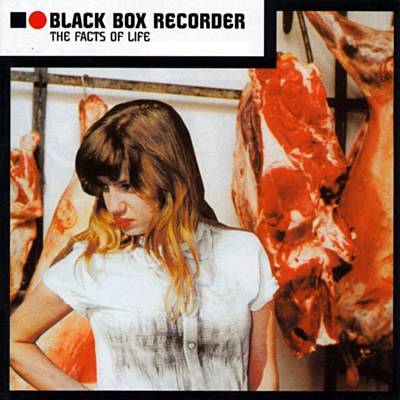
Black Box Recorder, “The Facts of Life”

(My 100 favorite albums in chronological order: #67 – released March 21, 2001 (U.S. edition))

Track listing: The Art of Driving / Weekend / The English Motorway System / May Queen / Sex Life / French Rock ‘N’ Roll / The Facts of Life / Straight Life /  Gift Horse / The Deverell Twins / Goodnight Kiss / Start As You Mean To Go On / Brutality

A British trio consisting of a breathy, slightly posh-sounding female vocalist backed by two nondescript male musicians, you can’t help but liken Black Box Recorder to Saint Etienne. Ah, but it’s only a superficial resemblance: in nearly every other way, the former were emphatically the latter’s negative mirror image, their evil twins. If Saint Etienne were (and still are) the cuddliest band in postmodern electro-pop, BBR were decidedly more sardonic and cutting—“Child Psychology”, the catchiest track from their 1998 debut England Made Me has a chorus that goes, “Life is unfair; kill yourself or get over it.”

BBR was the brainchild of Luke Haines, who had led mid-90s band The Auteurs and John Moore, a former drummer with The Jesus and Mary Chain. Their idea, in a nutshell, was to, a la Steely Dan and The Beautiful South wed smooth, polished, nearly antiseptic pop with cynical, pointed and often mordantly funny lyrics. Haines had the latter element down pat in his songs for The Auteurs, but his vocals and the band’s guitar-heavy palette smacked of a less sneering, intellectually-inclined Oasis (a combo that made for a more consistent oeuvre than post-“Wonderwall” Oasis, anyway.) However, in finding chanteuse Sarah Nixey, Haines and Moore hit pay dirt. Although pretty, proper and pitch-perfect, her utter disaffectedness served as an ideal vessel for BBR’s caustic, vaguely sinister pop. Like Saint Etienne’s own Sarah (Cracknell), her voice never manipulated or overpowered—it simply, impeccably emitted the words written for it to sing (or in many cases, speak) with sparkling, if artless precision.

Although England Made Me lays out all the cards in this musical approach, follow-up The Facts of Life most fully realizes it, adding layers of icy synths and gently haunting strings and placing Nixey front and center. It sounds a lot like French electro-lounge male duo Air (the stately, loping “French Rock ‘N’ Roll” pays explicit tribute to them) crossed with the socio-conscious commentary of Britpop stalwarts like Pulp. Occasionally, Haines will nod to The Auteurs by bringing in a loud guitar riff (like the perfectly mocking one on the bridge of “Straight Life”); otherwise, the album basks in an ultra-pristine glow, Nixey trilling exactly like Olivia Newton-John circa “Have You Never Been Mellow”, dutifully singing curt la la la’s and trading spoken word sections with Haines, imbuing her words with sort of a dispassionate directness that manages to both cut to the bone and just evocatively hang there in the air.

The Facts of Life opens with a triptych that seems to concern travel in modern England, but of course, that’s not all it’s about. In “The Art of Driving”, Haines says, “We can get a hood down / Throw away those learner plates,” while Nixey coolly responds, “You got the hang of steering / Now try stepping on the brakes.” Using such innuendo has consequences, however, as she detachedly sings on the chorus, “You’ve been driving way too fast / You’ve been pushing way too hard / You’ve been taking things too far / Who do you think you are?” This “journey” of sorts continues with “Weekend” as Nixey and her “best friend” escape boredom with a “drive out of the city.” The ultra-catchy chorus of “Friday night / Saturday morning,” seems innocent enough, yet her isolated asides (“Take your bank account / was it worth it?” and “Keep you guessing where we’re going”) have an ever-so-slight ominous undercurrent to them. Not as much, however, as “The English Motorway System” has: While the titular network of roads is “beautiful and strange,” it also “eliminates all diversions… and emotions,” and later, “it’s an accident waiting to happen.” And as easy as it is to zone out while zooming along it, something else is needling Nixey. Eventually, she comes out with it, revealing the road as synonymous with a relationship, at one point speaking plainly but incisively, “Do you really want to break up?”

“Sex Life” leaves metaphor behind for a laundry list of sexual configurations. In a singsong-y cadence, Nixey recites, “Boy on boy / boys on top / boys together / boys don’t stop / being boys / in your dreams” (and she also devotes a stanza to “Girl on girl.”) Her titillating suggestions, however, are a mere prelude to a chorus where she turns the inquiry back on herself, revealing, “Can’t stop thinking about you, in your dreams,” languidly extending that last word across multiple syllables. A few tracks later, “Straight Life” presents a similar bait-and-switch. With lush opening harmonies (“It’s a beautiful morning / in our dream home”) giving way to mechanical intonation of the song’s title, it all feels deliciously ironic. Still, as guitars howl over the synth-pop beats and Nixey goes on about such things as “home improvements”, she also notes, “We’re never moving” with just a hint of defiance, perhaps even advocating for this lifestyle instead of lazily mocking it.

The title track even makes the case that BBR mean it, man. The tightest and most inviting (wouldn’t necessarily call it warm) song in their catalog (and not coincidentally their only UK Top 40 hit), it opens with a simple, gradually, very nearly chill but refreshingly crisp hip-hop beat that could almost be Soul II Soul. It’s tempting to say Nixey “raps” the verses, but her deliberate monotone is neither quite that nor spoken-word poetry. “When boys are just eleven / they begin to grow in height / at a faster rate / than they have done before,” she starts off, going on to offer advice on how to call a girl on the telephone or where to socialize (and have sex) in a small town. Her professorial tone brings to mind someone who’s been there, done that and is not prone to romanticism (locales suggested for S-E-X include a disused coal mine and a bicycle shed), yet she also offers deeper asides like, “No one gets through life without being hurt,” and “Experimentation, familiarization—it’s all a nature walk.” Then, there’s the sincere, almost cuddly sung chorus: “You’re getting ideas / when you sleep at night / they develop into sweet dreams / it’s just the facts of life.” No irony, no snark, just good, heartfelt guidance and observation.

Such is the fine balancing act this band expertly walks that they can get away with it all: indulging in the Wicker Man-like freak folk fantasies of “The Deverell Twins” and the delectably wispy “May Queen”, injecting uncommon pathos into the la, la, la chorus of “French Rock ‘N’ Roll”, even Nixey concluding “Gift Horse” by repeating the lyric, “I just want to be loved,” sixteen times and holding your attention through to the very last one. On “Goodnight Kiss”, she expertly vacillates between being caring (“I’ll cradle your head in my hands”) and creepy (“check that you’re still alive”) while also managing to eke out a credibly moving love song. “Goodbye, good-niiiight,” she sweetly sings, “It’s just a goodnight kiss,” and yet her composure and near-blankness keeps it all from becoming too sweet or overtly sentimental. It’s the perfect end to a lovely night and an exceptional album.

Or at least, it was on the original UK release in May 2000. When The Facts of Life finally arrived stateside ten months later, it did so with two former B-sides added as bonus tracks. “Brutality” is a brief, laundry list of “What ever happened to…” inquiries (among them, “the fear of God” and “the South of France”) before practically praising “Good old fashioned brutality / everything in its place” with something resembling a yearning for it. “Start As You Mean To Go On”, however, is the real prize: A glam-tastic trot that kicks off with a pert, “Be My Baby” drumroll, it positions Nixey as a young woman who “learnt to be a secretary” and desires to get married with kids and then “split up when we’re twenty-two.” Of course, it’s all buildup to the glorious chorus: “If I can’t have it, NOBODY CAN! / You follow the instructions, it’s all part of the plan / when you start / as you mean / to go on.” Nixey declares these daggers over charging guitars and icy synths, supplemented by unerringly sung doo-doo-doo’s. An irresistible anti-anthem for the young go-getter who really can’t be bothered, it’s the absolute essence of BBR’s serious flippancy (or, if you will, flippant seriousness); for me, The Facts of Life is unimaginable without it.

If there’s a drawback to this band’s tightrope trick, it’s that it’s awfully hard to sustain over time. After this album, Nixey and Moore married and BBR put out two more records—2001’s odds-and-sods comp The Worst of Black Box Recorder and 2003’s Passionoia—the latter’s not bad, but it altogether plays like a lesser, if lusher retread of the first two LPs (at the very least it has amusing track titles like “Andrew Ridgeley” and “The New Diana”.) Then, Nixey and Moore divorced not long after. Despite playing some shows with sarcastic punk pop outfit Art Brut following a multi-year hiatus, BBR was officially kaput by 2010. By then, their moment had long since passed, but The Facts of Life remains one of those half-forgotten about, perfectly-formed gems awaiting rediscovery.

Up next: Return of the (career-defining) Double Album.

“The Facts of Life”:

“Start As You Mean To Go On”:

The Avalanches, “Since I Left You”

(My 100 favorite albums in chronological order: #66 – released November 27, 2000)

Track listing: Since I Left You / Stay Another Season / Radio / Two Hearts In 3/4 Time / Avalanche Rock / Flight Tonight / Close To You / Diners Only / A Different Feeling / Electricity / Tonight / Pablo’s Cruise / Frontier Psychiatrist / Etoh / Summer Crane /  Little Journey / Live at Dominoes / Extra Kings

It begins with the words, “Since I left you / I never felt so blue,” on a loop; an hour later, it all ends on another repeated couplet: “Girl, I just can’t get you / since the day I left you.” Both vocals are actually sampled from other records—respectively, The Main Attraction’s “Everyday” and The Osmonds’ “Let Me In”. Between those bookends lies a universe of sound, including but not limited to a horse whinnying, thick grooves pilfered off ‘70s and ‘80s soul and R&B deep tracks, various string-section fanfares, the all-encompassing blare of a big boat’s horn, flamenco guitar riffs, the Cabaret soundtrack, dialogue from John Waters’ Polyester (!), fluttering female la-de-da’s and ba-bap-ba’s and more.

A whole lot more, in fact: Since I Left You is almost entirely crafted from literally hundreds of samples off existing records; it would not surprise me if there were actually thousands imbedded within, given the album’s vast density and near complete lack of silence or open space. An Australian DJ collective whom at the time boasted six members, The Avalanches were hardly the first artists to make a record this way. Plunderphonics, or any music constructed from altering existing audio recordings into new compositions, was a term coined by experimental composer John Oswald in the mid-80s, but its practice goes further back than that, from Saint Etienne chopping up and reassembling ‘60s pop in the early ‘90s to the hip-hop sample collages of Grandmaster Flash and Steinski (not to mention hip-hop as an entire sampling culture, really) to even Dickie Goodman’s novelty “break-in” records of the ‘50s.

However, to go beyond novelty and collage and merely using samples for backing tracks, you’d have to consider DJ Shadow’s Endtroducing… (1996), the first widely recognized attempt to create an entire, unified pop album chiefly made up of found sounds. It’s a rightly acknowledged classic of tone and mood and humor and grace, but SILY is something else: although it has eighteen discernible tracks, it’s far better played, understood and absorbed as a shimmering, complete whole from beginning to end. To start listening to it in the middle or (gasp) play it on shuffle would diminish its impact and power. Only one track arguably stands on its own, although it’s less an outlier than a fully realized song (of sorts) that manages to somehow fit into the album’s entire framework (more on it later). Still, the beauty and brilliance of SILY is that it’s less an entertaining collection of deftly deployed samples and more an orchestrated, sustained work, taking the listener on an aural journey through decades of recorded sounds and cultural signifiers, expertly building momentum by altering tempos, conjuring emotions and forever emitting a sense of exploration and adventure.

And I do mean adventure—on first listen, you have absolutely no idea where SILY will go next. The sheer amount of sounds—vocals, hooks, motifs, basslines, riffs—can easily overwhelm. It doesn’t work at all as background noise unless you’re willing to let it subliminally sink it over ten or twenty spins; the best way to approach it is to immerse yourself completely in its world by listening to it on headphones, bestowing it your full attention. Even better, listen to it at least two or three times this way—it not only begins taking on recognizable shapes, but on each spin, you can hear new things in it; I’ve heard it over one hundred times and details still occasionally surface that I hadn’t detected before. More so than any other album I’ve written about here, SILY requires ample time and patience, but as it gains familiarity and resonates, it emits the unadorned thrill of continual, satisfying discovery. I can’t remember exactly how many spins it took, but within a year of first hearing it, SILY firmly entrenched itself in my ongoing mental list of Favorite Albums of All Time.

It’s a work that easily lends itself to a myriad of interpretations, but I want to avoid taking an overtly technical, music composition-heavy approach, in part because my acumen in that area is limited, but primarily because it would not be much fun for me to reduce this record to an academic exercise. While SILY is exceptional from a purely technical angle, as with the very best pop music, it’s more remarkable for how it makes you feel: the mere breadth of the samples utilized not only creates an aural sensory overload, but the manner in which they’re employed and sequenced turns the whole listening experience into an emotional journey as well. Often, it resembles a series of symphonic movements more than a collection of pop songs through its use of recurring motifs (both vocal and instrumental), cross-fading between adjacent tracks and the sense that an ongoing story is unfolding: it’s a Frankenstein’s monster of samples that more often glides gracefully than it lumbers about due to how seamlessly its disparate parts are expertly, inventively sewn together.

The title track/opener practically invites you into this narrative, as nimble guitar filigrees, sweet flutes, onomatopoeic backing vocals and a friendly guide announcing “Get a drink, have a good time now, welcome to paradise!” all coalesce into a blissful Philly soul groove that buttresses the looped sample mentioned at the top of this essay. It continues this way for a few minutes, until the beat (but not the tempo) shifts into a slightly funkier bassline that appears to be submerged in shallow water. As it surfaces and guitar chords and percussion become audible, it reveals itself as one of SILY’s most recognizable and iconic samples, Madonna’s “Holiday”, only pitched down a few beats per minute. The “Holiday” sample officially kicks off track two, “Stay Another Season”, but you wouldn’t necessarily notice that unless you were watching the track’s running time on your CD or mp3 player. Also, the main vocal melody of “Since I Left You” soon reappears and repeats itself, only over a minor key. Additional samples keep popping up, most prominently a looped horse whinny, but so far it feels more like a medley than two individual songs.

This changes as “Stay Another Season” diminishes and “Radio” fades in, suitably like a transmission from distant airwaves. It sports a similar tempo to what proceeded it but also a much tougher groove, which provides the foundation for a series of looped vocal samples all over the tonal spectrum, from the fluttering “Sometimes you don’t / understand” to the slinkier, telegraphic “Sending Out Signals” to the abrupt interjections of people shouting ‘WAH!” The samples are interwoven together to create hooks, but at a level of proficiency and activity that elevates it all far beyond the remedial nature of, say, Sugar Hill Gang building a rap around the rhythm track from Chic’s “Good Times”.

Near the end of “Radio”, the groove comes to an abrupt stop, replaced by a bleary-eyed voice repeatedly asking, “Can’t you hear it? Oh, can’t you hear it?” Other vocal samples immediately enter the mix, most notably two from Cabaret (Joel Grey’s iconic Master of Ceremonies purring “Money” and what can best be described as a coarse trombone fart) before “Two Hearts in ¾ Time” materializes via a series of clipped, sinus-clearing sampled exclamations (OOH! / YEAH! / OH! / YEAH!”). It careens on and on like a faltering merry-go-round, ending with a “WHEE!,” then mutates into a placid, soulful waltz that spools out almost effortlessly, a woman blissfully trilling la-de-da’s over electric piano comp (as if slipping off an early ‘70s Stevie Wonder record.) The track languorously twirls on and on until the beat is subsumed by a purely electronic rhythm, setting up the transition into “Avalanche Rock”.

In just those first four tracks, that’s a lot to unpack and absorb. This relentless pace continues throughout the rest of SILY’s first half; in fact, with “Avalanche Rock” serving as a brief link utterly transforming the mood from light to dark, “Flight Tonight” then pushes it to extreme, in-the-red levels. The electro-rap backing is positively fierce compared to what came before, the vocal samples (“Wicked, she wicked, she wicked” and “I booked a flight tonight”) repetitively ping all over the song like ricochet gun shots and it all climaxes in a frenzied, unintelligible rap (which could be in English, French or just nonsense words). It manages to be intimidating, exhilarating and just plain weird all at once, but importantly, it doesn’t stop the album in its tracks. The momentum, greatly aided by the beat forever surges ahead.

Such force perhaps reaches its most sublime expression and release over the next three tracks. “Close To You” deftly shifts from electro to disco, while a looped flute sample builds like a Steve Reich or Philip Glass piece. After it drops out, samples ranging from the familiar (Kid Creole and the Coconuts’ early 80s hit “Stool Pigeon”) to the painfully obscure (‘70s whistle-heavy electronic British TV show theme “Quiller”) get layered on top of one another—the sensation of hearing them blend into a wall of sound provides a heady rush. However, before it begins to overwhelm, “Diners Only” uses the well-worn DJ tactic of inserting a breakdown in its opening seconds: the beat retreats to the background, and a snippet of women laughing (one of them saying, “Susie, he’s looking at you!”) sits in the foreground. A male lothario briefly raps about champagne and then the beat starts building itself back up. That flute arpeggio from “Close To You” returns with a vengeance, incessantly repeating itself, forcibly growing louder and louder and deeper and stronger until your brain feels like it could just EXPLODE.

And it very nearly seems like it does with the stop-on-a-dime shift into “A Different Feeling” via a massive, four-on-the-floor beat, big rhythm guitar funk chords and siren noises. The volume rapidly lowers, only to BLAM! hit you at full force again. If this wasn’t already delirious enough, as the song grows quiet again, The Avalanches play their trump card with the unlikeliest of famous vocal samples: Debbie Reynolds’ anodyne ’50s hit “Tammy”. It’s damn near unrecognizable in this setting, but sure enough, that’s her dreamily warbling, “Tammy, Tammy, Tammy’s in love” over the disco beat. It works in and of itself as catchy, hook-laden, danceable music, but the real pleasure comes out of identifying that it is, in fact, “Tammy” you’re hearing. The joy emanating from that kind of discovery is where plunderphonics approaches the sublime.

“Electricity” opens SILY’s second half with an exquisite, almost baroque female chorale and soon settles into a wickedly comfortable mid-tempo strut, utilizing as its chief hook the shouted exclamation “Rap Dirty!” (sampled from an X-rated comedy album, of all things). After maintaining such a relentless energy level throughout, the album only really calms down at the next track, “Tonight”. Its slower tempo and relatively sparse use of samples (a wonky, treated piano riff and Nancy Wilson silkily singing, “Tonight / may have to last me / all my life”) provides much needed space to catch one’s breath, as does “Pablo’s Cruise”, the brief, nautical themed interlude that follows (fans of late ’70s soft rock will recognize the titular pun.)

It clears the air for “Frontier Psychiatrist”, one of the album’s three singles (along with the title track and “Electricity”) and arguably the only track on SILY that can easily stand alone. An ideal gateway into the band, it also fits comfortably into the album’s framework, for it does best what SILY as a whole sets out to do: cleverly, expertly stringing together a disparate, symphonic array of vocal and instrumental samples, shrewdly manipulating them to sound like they all belong in the same room. It opens with a callback (the return of the horse whinny from “Stay Another Season”) and a conversation lifted directly from Polyester, where straight-laced high school principal Mr. Kirk breaks the news to flustered Mrs. Fishpaw (drag diva Divine, of course) that her teenaged son Dexter is “Criminally Insane!”, setting the scene for a madcap narrative underscored by an overtly dramatic Enoch Light orchestral sample.

Like much of SILY, the track re-appropriates unironic sounds as camp, and vice-versa. Some of the vocal samples are looped until they become big, fat hooks (“That boy needs therapy”) while others are strung together to push the story forward (a woman exclaims, “He was as white as a sheet!” followed by a man who matter-of-factly notes, “And, he also made false teeth.”) At one point, they pilfer a child’s educational record about animal sounds and convert both a hacking crow and a verbose parrot into freestyle rappers via a flurry of turntable scratching. Still, even though it’s the most accessible track here (in part because it’s also the funniest), “Frontier Psychiatrist” draws to an abrupt end on an extended snippet of the Italian pop standard “El Negro Zumbon (Anna)” in order to once again reset the decks for the album’s fourth quarter.

Speeding up and modulating the dit-dit-dit’s from The Five Americans’ 1967 hit “Western Union” is the first but hardly the last sample “Etoh” loops unto oblivion; there’s also an underlying flute melody, vocal gibberish that lends the track its title (“eet-oh-eet-eet-eet”), falsetto do-do-do’s, a funky robotic scat and what resembles a ringing phone. It builds momentum like the incongruent layers of “Close To You” did, and some of its samples stick around for “Summer Crane”, which sustains the tempo but adds even more samples: a cooing Francoise Hardy, the positively glowing backing of a War song (not “Low Rider”), da-da-da’s from the Fifth Dimension, the instantly recognizable, swirling orchestral fanfare from “Love’s Theme” by Love Unlimited Orchestra, an ascending Theremin, etc.

The nautical theme implied by SILY’s lifeboat-infested album cover (and in tracks like “Pablo’s Cruise”) reaches its fullest expression in this sequence. Both “Etoh” and “Summer Crane” seem to practically float or undulate, echoing like dub reggae as opposed to swaying like a sea shanty. Although “Little Journey” is another brief interlude, it’s a crucial one, beginning with a literal SPLASH! (signaled by a Gabor-like starlet announcing, “Well, I would say, “Bon Voyage!”). Its title comes from a Mamas and The Papas sample which soon gives way to another callback—Madonna’s “Holiday” from “Stay Another Season”, only this time thrillingly sped up. It leads into another orchestral fanfare, only this one’s accented by a stirring, rumbling beat straight out of South Pacific (or perhaps a mid-century documentary on Hawaii.)

A swift crescendo of horns then leads into a looped, decades-old recording of peppy voices announcing, “FLIGHT 22 IS OFF TO HONOLULU!” and “Live At Dominoes” takes SILY into its home stretch. More so than even “A Different Feeling”, it’s the album’s climactic banger, swiping its floor-filling groove from Boney M’s 1977 Eurodisco hit “Ma Baker”, with a Daft-Punk style vocoder spouting nonsense syllables on top along with strings launching the song towards the stratosphere. It releases some of the tension that has been stored up since “Etoh” while also continuing to build momentum, gradually attaining a euphoric high as the beat turns all techno, totally drops out and the strings gracefully sigh into the ether.

“Live at Dominoes” conceivably sounds like a natural ending to SILY, but “Extra Kings” is a more effective one.  It presumably wraps a neat bow on the album with its numerous callbacks—the Francoise Hardy and War samples return (at the opening and closing, respectively), plus there’s a lyrical callback I noted at the top of this essay. But this only tells part of the story, for it also collects all that forward-surging momentum and tension and pushes it to the absolute breaking point. The track’s midsection loops a flute-led melody while first piling on orchestral filigrees, then a growing, sinus-clearing electronic noise—the harshest sound on the entire album. That noise eventually subsumes nearly everything, resembling the aural equivalent of an atomic meltdown. It dissipates all that tension on contact, carrying the sensation that your brain is dissolving, rather than about to explode. And yet, although barely audible, that melodic flute-loop is still there—it’s buried under a tonnage of ugly noise, but it persists, “do-de-do-do, do, do-de-do-do” ad infinitum, just as that final lyrical callback repeats, gradually fading to black.

Arriving in Australia in November 2000 and approximately a year later in the US (the delay mostly due to required sample clearances), SILY was born out of what increasingly seems like a crucial time in pop music’s development. A new century, millennium, even, encouraged many to take stock of what had come before, while also looking ahead to new configurations and technologies. After all, digital formats and file sharing had just begun significantly altering the ways we were obtaining and consuming music. Even at the time, SILY felt like it bridged both the end of an era and the beginning of a new one. By cherry-picking through the past and reshaping it for the present, The Avalanches couldn’t help but point towards the future, reminding us that art does not exist in a vacuum or always appear out of thin air; instead, it bespeaks multitudes of references and influences—in this case, modifying and re-contextualizing the sources, rather than merely emulating or entirely re-creating them.

Although SILY would go on to influence a large swath of DJ culture and mash-up artists like Girl Talk (or whoever’s trending on YouTube this week), it didn’t exactly breed longevity for the men who created it. The Avalanches all but disappeared in the following years, apart from a few commissioned remixes and occasional updates that they were working on new material. As time passed and the album’s cult following swelled to the point of becoming legend, it seemed less likely a follow-up would ever surface, for how could anything possibly top, let alone live up to the first one? In an age increasingly beholden to remakes and reboots, The Avalanches finally did return in 2016 with Wildflower. Reduced to a core duo, they opted for a far less unified structure and employed guest rappers (Biz Markie, Danny Brown) and vocalists (Mercury Rev’s David Baker, Father John Misty) alike. It doesn’t even try to equal its predecessor, which ends up working in its favor. Although it falls apart somewhat in its last stretch, it does feature a great eight or ten track sequence of perfectly pleasant psychedelic pop.

But it’s not SILY, and that’s fine. More than 15 years on, The Avalanches’ first album remains a singular endeavor, a high water mark in re-appropriation, its encyclopedic summation of late 20th Century Pop a cultural crossroads forever etched in vinyl. SILY stands as a reminder of where we came from and how we arrived at that pivotal moment in time, but also what it felt like to look ahead towards an undefined, potentially limitless future.

Up next: “Experimentation, familiarization—it’s all a nature walk.”

“Frontier Psychiatrist”:

“Diners Only / A Different Feeling”:

Stew, “Guest Host”

(My 100 favorite albums in chronological order: #65 – released September 12, 2000)

Track listing: Cavity / She’s Really Daddy Feelgood / Essence / Re-Hab / Into Me / Ordinary Love / Man In a Dress / The Stepford Lives / Bijou / Sister/Mother / C’mon Everybody

Best known for his 2008 Tony Award-winning musical Passing Strange, Stew doesn’t neatly fit into one particular genre or category. Born Mark Stewart in Los Angeles in 1961, he spent his 20s in Amsterdam and Berlin (as the autobiographical Passing Strange documents). By the mid-90s, he had returned to his hometown and formed a band called The Negro Problem—the mere name tips you off to his irreverence and quirkiness and also forever requires one to immediately mention to others that it’s inoffensive because Stew is black. He doesn’t especially sound black, in part because his music gravitates more towards rock and roll and musical theatre than R&B. His gruff baritone can be suitably soulful when needed, but it usually falls somewhere between Van Morrison and Burl Ives. Psych-pop, folk rock, new wave, krautrock, chanson, lounge, bubblegum, prog—all of these (and various permutations of such) are fair game for a Stew song.

Before work on Passing Strange altered his career course, he put out six albums between 1997 and 2003: three under The Negro Problem, the other three as “solo” Stew records (although the distinction between the two monikers is ephemeral at best). TNP’s debut, Post Minstrel Syndrome (another pun!) was rather messy but totally by design, in its more rambunctious moments resembling XTC if they had actually taken Ecstasy. Its follow-up, Joys and Concerns made a far better case for his talent, reeling off a dozen hummable, near-perfect pop miniatures about everything from Monday mornings to a sexually-confused Ken doll. Its sharpened musical focus was the result of him reigning in the band from a sprawling collective to a core trio including bassist Heidi Rodewald, who became his chief songwriting collaborator (and for a time, romantic partner) through Passing Strange and beyond.

Like all but the most obsessive record buyers, I never heard of Stew or TNP until his first solo album, Guest Host (perhaps simply named for how pleasing the words sound out loud?) ended up at number one on Entertainment Weekly music critic Tom Sinclair’s year-end list of favorite albums. At the exact moment the likes of U2, Eminem and Outkast all dominated such lists (okay, PJ Harvey too), it was intriguing to see one headlined by someone so relatively obscure, recording on tiny indie label Smile Records, no less. The following year, I found a cheap used copy of it; as second-hand record store finds go, it’s nearly up there with Apartment Life, which came into my life at roughly the same time.

Given Rodewald’s extensive involvement on Guest Host, the real difference between it and a TNP record obviously has less to do with personnel and more with approach. Whereas those two TNP albums (particularly the debut) often feel like the work of a full band, Guest Host comfortably slips into singer/songwriter territory, favoring stripped-down acoustic arrangements over Big Pop Spectacle set-pieces. Although quieter TNP songs like “Bleed”, “Ken” and “Doubting Uncle Tom” could’ve easily fit on it, none of its tracks would’ve fully worked on those preceding records. Even the most traditionally soulful (“She’s Really Daddy Feelgood”) or poppiest (“C’mon Everybody”) selections exhibit a newfound maturity and intimacy.

Cavity” opens Guest Host on a bed of lovely Bacharach-esque piano and languorous, breezy major-7th chords. “Sister, there’s a cavity in me / Your sugar causes me such endless pain,” Stew announces in his inimitable bellow; he develops the song’s central metaphor through multiple verses, switching from the song’s title to, in the second verse, “Brother, there’s a comedy in thee.” He introduces various wordplay (“Sugar goes to Cain” instead of “cane”), then finally arrives at a chorus where he repeats the lyric, “I was blind till I ate your sweet thing.” At that moment, we first hear Rodewald’s sweet, wordless backing vocals—the secret weapon in this album’s arsenal. As subsequent verses make use of imagery both religious (name-dropping John the Baptist and Lazarus) and psychedelic (“Nobody even noticed when I floated down Main”), the song builds in complexity while remaining gently, agreeably hazy, its unfussy pop hooks wrapped in understated mystique.

Guest Host retains this vibe throughout its more acoustic, pastoral tunes. “Essence” is nimble folk-pop, ringing with an acoustic 12-string guitar and Stew’s hypnotic reading of the repeated phrase, “And I found her / everywhere,” elongating the “where” until it becomes completely embedded in all the prettiness surrounding it. “Sister/Mother” similarly ekes out considerable beauty in its gentility, with Rodewald adding lush, multi-tracked harmonies all over the song, most effectively in the final thirty seconds when a jumble of repeated phrases take on a mantra-like presence. Coming at the album’s exact mid-point, the swooning “Ordinary Love” reprises all of these qualities, enhancing them with gorgeous strings, but also with such unorthodox touches as Stew’s soulful melodic vamp on the second verse, or that effective pause when the piano drops out and the strings remain lurking in the background.

As lovely and accomplished as these songs are, if the album contained nothing else, then I might not be writing about it here. If Stew’s only ambition was to be the next Bill Withers (or Gordon Lightfoot, perhaps), he could’ve made a perfectly fine career doing so, but he’s far too original to limit himself to that. Thus, when he writes a folk-pop tune, it occasionally comes out like “Re-Hab”. After a Joan Baez-ish classical guitar slowly fades in, he begins relaying a tale of a woman who was “very, very, very optimistic” after she left re-hab for the first, then second, then “third or fourth” time. The verses teem with a bounty of lyrical puns and witty observations (“She traded mainline for online / and she took up web design”) but each one ends on the “very optimistic” lyric, with Stew repeating the word “very” up to eleven times, followed by a chorus of slightly off-key children immediately echoing that lyric—both a gesture of inspired lunacy and something of a sick joke. Still, it dissects the potential futility of rehabilitation with cutting precision, as does Stew’s revelation in the final verse (“When she got out of re-hab for the 22nd time”), wryly noting, “Funny how the maniacs who took the time to sob / seem to not mind a junkie with a well-paying job.”

This slightly warped, or if you’re so inclined, unconventional but utterly sane worldview is a vital part of Stew’s persona. At his most inspired, he takes a recognizable song form and makes it his own. He’s not a parodist or satirist, but much of his work conveys a rather wicked sense of humor filtered through an encyclopedic knowledge of popular music. “Man in a Dress” (as in, “Baby what you need is a…”) plays like a 1930s pop song complete with 4/4 swing rhythm but it’s also put through a scratchy filter that makes it actually sound like a song recorded in the 1930s (and does so not for just the first verse and chorus, but for the whole damn thing.) “Into Me” is musically such anodyne bubblegum pop (dig that fake perky flute!), you’d never expect it to be about consensual, heterosexual sodomy with a manly, unapologetic Stew on the receiving end (the chorus hook: “She got into me!”), but that’s exactly what it is. “The Stepford Lives” aims for full-on baroque psych-pop on the order of The Zombies or The Association, piling on oboes, harmonica and chime-like keyboards while remaining melodic and approachable. Still, it’s not above getting a little weird in the middle-eight, where Rodewald’s heavily filtered, echo-y, unintelligible spoken word interjections vie for space with a few unexpected sci-fi synths.

Still, just as Stew could’ve easily forged an alternate path devoted to Syd Barrett and Frank Zappa-esque freakouts, it’s his obvious love of pop that renders the bulk of his output accessible and inviting. Even when he’s playing the smartypants (dropping lyrical puns like “LaGuardian Angel”) or being deliberately ornate (the quietly beguiling “Bijou”, which could be a Fairport Convention folk hymn narrated by Shel Silverstein), he still stacks his songs with ample hooks. He saves a few of the juiciest ones for Guest Host’s final track, “C’mon Everybody”: exuberant doo-doo-doo’s, a bright-eyed, call-and-response chorus between himself and Rodewald and Technicolor strings that gloriously flare up at just the right moment—they all make for cheery, sunshine-y power pop of the highest order.

We will return to Stew in another few entries—not with Passing Strange, but another record he made prior to it that did nothing less than redefine what an album can all contain.

Up next: Goodbye, 20th Century.

“Cavity”:

“Rehab”:

Aimee Mann, “Bachelor No. 2, or The Last Remains of the Dodo”

(My 100 favorite albums in chronological order: #64 – released March 7, 2000)

Track listing: How Am I Different / Nothing Is Good Enough / Red Vines / The Fall of the World’s Own Optimist / Satellite / Deathly / Ghost World / Calling it Quits / Driving Sideways / Just Like Anyone / Susan / It Takes All Kinds / You Do

How many artists or bands (beyond The Beatles) can you name whose first three albums are all great? One could reasonably make a case for anyone from Talking Heads to Tori Amos (not counting Y Kant Tori Read, of course), but in this canon of 100 favorite albums, only Aimee Mann makes the grade. And yes, she did record three earlier albums as leader of the band ‘Til Tuesday, but the break between them and her solo debut, Whatever is definite—you would never confuse the latter as the product of the former. That 1993 album wholly re-established Mann’s career, knocking everyone who heard it sideways with its mature sound and scope; its follow-up, I’m With Stupid (1996) further expanded and fine-tuned her persona as a literate, occasionally acerbic singer/songwriter rightfully staking her claim as the alt-rock queen of the kiss-off, not to mention an endearing underdog when it came to navigating her way through major record label politics.

Speaking of which, after Interscope rejected her third album in 1999 for not having sufficient “commercial appeal”, Mann bought back the rights and released it herself the following year on her own label, SuperEgo. In hindsight, Bachelor No. 2 (or, The Last Remains of the Dodo) feels no less commercial than either of the two preceding albums, but the very late ’90s wasn’t a stellar time to be a female artist unless your first name was Britney or Christina. Just a few years before, alt-rock-friendly women from Sheryl Crow to Paula Cole regularly crossed over to the pop charts, but closer to decade’s end, they couldn’t even get widespread radio airplay on alt-rock radio, which had devolved into a more male-dominated format heavy with rap-rock and nu metal. Then pushing 40, Mann was less likely than ever to get a radio or MTV hit even as fleeting as “That’s Just What You Are”.

Bachelor No. 2’s opening salvo addresses this conundrum straight away. As “How Am I Different” proceeds at a slow, deliberate swagger, Mann repeats the song’s titular question at its chorus, stretching out the word “How” to nine+ syllables, the guitars swelling like a steady pressure cooker almost ready to blow—and it does, at the subsequent bridge when she sings, with controlled but deeply felt vitriol, “Just one question before I pack / When you fuck it up later, do I get my money back?” As many a Mann song before it, one could interpret it as relating to either a personal or professional relationship; however, her recent history and the mere mention of a monetary transaction firmly nudges the song into the latter category. Although it reprises sentiments voiced on earlier tunes such as “Long Shot”, “I Should’ve Known” and “Sugarcoated”, it feels as if something really vital here’s at stake, perhaps because after all this time, it keeps on happening.

Such subject matter resurfaces throughout Bachelor No. 2—she’s simultaneously sharpening her attack and refining her late-Beatles derived sound. “Red Vines” picks up right where “That’s Just What You Are” left off, laying a shuffling drum loop under a warm bed of guitars (including slide played by her husband, Michael “No Myth” Penn) and a gorgeous melody; it also has some of her most enigmatic lyrics to date, alluding to catching lightning bugs, “punching some pinholes / in the lid of a jar / while we wait in the car,” all the while “sitting on the sidelines / with my hands tied / watching the show.” Similar accusations of being held back or deemed inferior return in the catchy “Ghost World”. Inspired by, but never directly referencing Daniel Clowes’ comic except for its shared title (about a year before Terry Zwigoff’s film adaptation), it’s self-deprecating (“I’m bailing this town / or tearing it down / or probably more like hanging around,”) yet also proudly defiant, concluding with her asking, “So tell me what I want, anyhow.”

Jon Brion, who produced Mann’s last two albums, only helms two tracks here. “The Fall of the World’s Own Optimist” heavily bears his stamp with layers of guitars, antique keyboards and Lennon-esque backing vocals (Mann also co-wrote it with Elvis Costello, whom one can easily imagine mastering its chewy lyrics and melody); the other, “Deathly”,  is a big, bold-strokes, nearly anthem-like ballad that harkens back to other Brion productions (most notably “Stupid Thing” via its guitar solo and “Amateur”, which also had backing vocals from Juliana Hatfield). It’s also one of four songs that, months prior to this album’s release, appeared on the soundtrack to Paul Thomas Anderson’s Magnolia—a film almost entirely made up of Mann’s songs and very much inspired by them as well. One character onscreen even quotes the first line of “Deathly” verbatim: “Now that I’ve met you / would you object to / never seeing each other again?”

Another Magnolia cut is one of Bachelor No. 2’s highlights: “Driving Sideways” follows a four-chord progression that’s comfortably familiar but not derivative. Mann’s vocal carries nearly the entire piano-heavy song, never pausing for a significant instrumental break until the brief, guitar solo-besotted coda. Although the lyrics are as barbed as ever (“At least you know / you were taken by a pro”), Brendan O’Brien’s clear-eyed production casts a warm glow over it that suits Mann’s somewhat retro, power-pop aesthetic while also feeling not entirely like anything else she’s previously done, emitting a ’70s (rather than a late ’60s) Los Angeles rock vibe.

On the two remaining Magnolia holdovers, Mann dips into other uncharted territories. Uncommonly gentle and quiet, “You Do” musically nearly resembles ’70s MOR a la The Carpenters (!), complete with creamy guitars and such outdated instrumental touches as a chiming celeste and, as the liner notes describe it, “cheesy keyboards”; fortunately, her knowingly delicate vocal and cut-to-the-bone lyrics (“and I’m the one who tells you / he’s another jerk,”) are just a tad acerbic to be mistaken for Karen and Richard. “Nothing is Good Enough” (which appeared on Magnolia as an instrumental), on the other hand, is much closer to Bacharach/David, especially in its tap-tap-tapping piano lines and agile melodic cadences; it also fully retains Mann’s proficiency for let’s-get-to-the-point dressing-down, as witnessed in lyrics such as, “No, there’s no one else, I find / to undermine or dash a hope / quite like you.”

The wistful, laid-back “It Takes All Kinds” travels further down this path, even making an explicit reference to its primary inspiration with the couplet, “I would like to keep this vision of you intact / When we sat around and listened to Bacharach,” not to mention the very Dionne Warwick-esque “do-do-do-do-do-wee-ooo” that immediately follows. Fortunately, it’s a lovingly crafted pastiche; “Satellite” is an even better one. From an exquisite piano intro to graceful melodic vocal swoops on the chorus, it has an intricate arrangement where each part individually shines (timpani, bell-like keyboards, shimmering cymbals) but together makes a splendidly orchestrated whole. It exudes class and, more crucially, awe and wonderment, especially at the silent pause after she finishes each chorus of, “Baby, it’s clear, from here / you’re losing your atmosphere / from here, you’re losing it.”

As her third great album in a row, it’s tempting to view Bachelor No. 2 as the final part of a trilogy, but it feels more transitional than anything. Brion’s limited role here is telling, along with the way it vacillates from track to track between Beatles and Bacharach-derived ends of the ’60s musical spectrum. Throughout, it takes other detours as well, such as “Calling It Quits”, a gauzy, spacious attempt at trip-hop with plenty of drum programming, compressed trumpet blasts on the chorus and loads of reverb. It sounds more of-its-time than anything else here but it retains Mann’s cleverness and bite (“With Monopoly money / we’ll be buying the funny farm”) and anticipates her later experiments with (even) moodier tempos and electronic textures. In direct contrast, “Just Like Anyone”, her requiem for recently departed singer/songwriter Jeff Buckley is a simple acoustic guitar, accordion and violin ballad that clocks in at a concise 83 seconds. Yet, to her credit, like the Bacharach pastiches, neither song feels at all out of place.

While one can now view Bachelor No. 2 as an album Mann wrote and recorded when her career was in flux (the Magnolia soundtrack, which resulted in an Academy Award nomination for “Save Me” for Best Original Song, exposed her to a wider audience), it worked for the exact same reason its two predecessors did—as a songwriter, Mann was at the top of her game, and as an album, it’s remarkably consistent. It plays like any great collection of songs should; one can sense the craft that went into and easily hum along with each one. Heck, even the pleasant, radio-friendly “Susan” (the most comparably rote song here) would be an absolute highlight on a Crow or Cole LP.

Neither Magnolia nor this album exactly made Mann a household name, but she’s forged a more venerable career than many of her ‘80s new wave or ‘90s alt-rock peers. Her subsequent discography contains plenty of gems, from “Video” to “Labrador” to “Milwaukee” (that last one from The Both, a collaborative LP with Ted Leo); none of her later albums, however, are in quite the same league as those first three. Lost In Space lacks their sonic lucidity and tonal sharpness, The Forgotten Arm treads over well-worn musical tropes with diminishing results, @#%&! Smilers has too many distracting squelchy keyboards, etc. But those are all quibbles—when she’s on, she’s in the running for one of the best songwriters of her generation. Although it’s still too soon to tell (having come out a week ago at this writing), her latest album, the somber, acoustic, impeccably titled Mental Illness is mighty promising—maybe even her best since Bachelor No. 2.

Up next: maybe the best obscure singer/songwriter of his generation.

“How Am I Different”:

“Satellite”:

Fiona Apple, “When The Pawn…”

(My 100 favorite albums in chronological order: #63 – released November 9, 1999)

Track listing: On The Bound / To Your Love / Limp / Love Ridden / Paper Bag / A Mistake / Fast As You Can / The Way Things Are / Get Gone / I Know

The full album title: “When the Pawn Hits the Conflicts He Thinks like a King What He Knows Throws the Blows When He Goes to the Fight and He’ll Win the Whole Thing ‘fore He Enters the Ring There’s No Body to Batter When Your Mind Is Your Might so When You Go Solo, You Hold Your Own Hand and Remember That Depth Is the Greatest of Heights and If You Know Where You Stand, Then You Know Where to Land and If You Fall It Won’t Matter, Cuz You’ll Know That You’re Right.”

***

Readers may recall how I nearly pulled my car over in astonishment the first time I heard Portishead’s “Sour Times”; Fiona Apple’s “Shadowboxer” incited a similar reaction on first listen, only in this case I was not driving (perhaps thankfully so for other motorists), but at home when the video came on MTV. In late ’96, the channel wasn’t playing anything remotely like it: a bluesy, spacious piano ballad (although to reduce it to just that would significantly lessen its toughness, its grit), sung by a frickin’ teenager in a low, agile, commanding growl/wail far, far beyond her 18 years. Despite this disparity between her age and presence, nothing about her screamed novelty or even precocious—it’s one of the few times I’ve ever immediately thought, “My god, what an original, genuine talent.”

Her debut album Tidal proved that “Shadowboxer” was no fluke: many other songs on it nearly matched that single in hooks, lyrics and beguiling atmosphere, and a few, like “Sleep To Dream” and “Criminal” arguably exceeded it. Months later, the latter became a top 40 hit, aided by a suitably creepy and controversial video that led to a Best New Artist win at the 1997 MTV Video Music Awards. Apple, then just shy of 20, delivered a shockingly candid acceptance speech for the ages (at one point infamously saying, “This world is bullshit!”) Some claimed it destroyed her career, limiting her commercial prospects (indeed, she never graced the pop singles charts again); others, however, recognized in her both a ballsy iconoclast and a weird genius at an exact moment when there were no likely candidates to fill those voids (you were expecting Alanis? Third-Eye Blind?)

Tidal was nearly strong enough to make the cut for this project, but Apple’s second album was such a big leap forward that it almost dwarfed its predecessor. First and foremost, consider the 90-word album title (commonly shortened to When The Pawn… for sanity’s sake), an attention-grabbing ploy of a sort not even a musician as utterly stubborn as Joni Mitchell or Stephin Merritt has ever attempted. Next, cue the first single, “Fast As You Can”: note how it sounds absolutely nothing like “Criminal” or “Shadowboxer”, skittering by at a rapid, disjointed pace, the piano more indebted to then-trendy UK-based Drum and Bass electronica than singer/songwriter stuff. Then, it radically changes to a more classic, rock ballad tempo midway through, only to return to the previous clatter a minute later. As with “Shadowboxer”, I first heard the song through its video, although this one baffled rather than seduced.

Still, when I finally heard WTP… in full three months later, it resonated beautifully, despite on the whole feeling nearly as intricate and ambitious as that lead single. “On The Bound” opens with the mechanical whirr of a drum machine and other unusual, antiquated, Mellotron-like electronics falling into place, a signature of its producer, Jon Brion (who also helmed Tidal and Aimee Mann’s first two albums.)  It soon resolves these disparate parts into a two-chord, piano-pounding vamp, with Apple’s jazzy phrasing on the verses solidifying into a manifesto on the chorus: the words “You’re all I need,” repeated over and over, followed by the punchline, “and maybe some faith would do me good.” It then concludes with an instrumental outro nearly two minutes long, as if Apple and Brion have absolutely no interest in getting this damn thing on the radio, instead opting to explore expansive, shifting tones and song structures.

The remainder of WTP…’s first half, however, is far more concise. After the minor-key “To Your Love” (which resembles PJ Harvey attempting to write a Beatles tune but having it turn out like a femme-fatale cabaret number instead), the album’s first great song arrives. So much happens so quickly in “Limp” that you can barely believe it’s only three-and-a-half minutes long. Beginning with an ascending, five-note piano-and-vibes hook and a weird, squishy percussive noise burbling quietly underneath, Apple softly launches into the first verse (“You wanna make me sick / you wanna lick my wounds / Don’t you, baby?”) Then, Matt Chamberlin’s propulsive drums kick in at 0:35 and a mere twelve seconds later, the chorus arrives at full volume, Apple rapidly spitting out a lyrical kiss-off with such fierce, head-spinning precision (and brevity) you barely have a second to catch your breath. After the second verse and chorus, there’s a nearly minute-long drum solo, entirely eschewing the song’s melody but not any of its intensity or momentum. When it’s over, the quiet intro of the song returns, only to directly surge into one last, brief, sinus-clearing chorus before abruptly ending, not wasting a single note.

“Love Ridden”, which follows, is all the more shocking for sporting a far more traditional arrangement of just piano, voice and strings, a throwback to Tidal’s more austere moments. Still, Apple does so much with those simple elements—the piano and strings complement each other but also expertly weave in and out of the song’s frame, while her elastic vocals give the oft-dreaded term “melisma” (think Whitney or Mariah) a good name. “Paper Bag”, which follows, could have almost come from Paul McCartney’s pen (the one he used for “Martha, My Dear”, in particular) but sports a decidedly wickeder edge. “I thought / he was / a man / but he / was just / a lit- / tle boy,” Apple jauntily vamps right before the second chorus, and the whole song swings and sighs like the most perfect pop; it also comes off as a little too eccentric and miniaturist to ever imagine anyone covering it on American Idol or The Voice.

That last observation also applies to “A Mistake”, which is just as defiant (“Why can’t I make a mistake, / I wanna make a mistake,”) but also venomous with a hint of self-deprecation (“Cuz I’m FULL as a TICK / and I’m scratching at the surface.”) It’s also more contemporary-sounding than anything preceding it, squirming with fuzztone guitars and backed by a slinky beat that’s almost P-Funk. Nearly five minutes in length, the song has plenty of room for Apple and Brion to stretch out and breathe again, her wordlessly sighing along with the guitars and him deploying his usual wall-of-sound production without feeling overstuffed.

At this point, “Fast As You Can” appears, playing just a little more smoothly in this context. After it dribbles to a chaotic, tambourine-shaken close, “The Way Things Are” then gradually fades in, restoring equilibrium via a deep, bluesy yet ridiculously catchy melody (almost Todd Rundgren-like!) and a glorious, key-changing chorus (“So keep on calling me names, / keep on, keep on.”) As usual, Apple’s vocal acrobatics serve the song and melody (and not the other way around); I can’t help but think had it come out a few years earlier or perhaps five years later (and not at the height of teen pop and nu-metal), it could have been a radio hit.

Same thing goes for “Get Gone”, whose elegance in the piano-led, triangle-tinged intro could be Bacharach/David before it shifts into something closer to musical theater. However, as Apple glides towards the incensed, wordy but fully registerable chorus, rhyming “benefiting” with “sitting” and furiously concluding, “It’s time the truth was out / that he don’t give a / shit about me,” delivering each word gutturally but intelligibly, she doesn’t resemble anyone else but herself: a woman containing multitudes that’s just as often the protagonist of her songs as she is her own worst enemy (as she noted so directly back in “Paper Bag”, “Oh, he knows I’m a mess that he don’t wanna clean up.”)

WTP… concludes with “I Know”, another piano-and-strings ballad of the sort that Nina Simone could’ve performed in an earlier era (just picture her singing the quirky first line, “So be it, I’m your crowbar.”) As with most Apple songs, it alternately heaves and sighs, transforming a raw bundle of neuroses into a lament brimming with metaphor (“And you can use my skin / to bury your secrets in,”) and frank vulnerability, singing the song’s title as both a matter-of-fact and as a hard truth that’s a struggle to get out.

Since then, Apple has only put out two more albums. Extraordinary Machine (2005) exists in both a Brion-produced demo version that was first leaked online and a revised, completed version with Dr. Dre/Eminem-producer Mike Elizondo that favors a more modern-sounding approach. Neither take is entirely satisfying, although the title track (preserved in its Brion version for the final album) is a delightfully demented score for an alternate-world vintage Disney cartoon short. Fortunately, The Idler Wheel… (2012) (another long title, but only 23 words this time!) was a real advance—as idiosyncratic and cathartic as WTP… but radically stripped-down (at the time, I deemed it “confessional swing music for people desperately trying to escape their dance partners.”)  Even if Apple only releases two more records in the next fifteen years, you can bet at the very least, they’ll be worth hearing and dissecting.

Up next: And behind this door…

“Limp”:

“Paper Bag”:

The Magnetic Fields, “69 Love Songs”

69

(My 100 favorite albums in chronological order: #62 – released September 7, 1999)

Track listing: Absolutely Cuckoo / I Don’t Believe In The Sun / All My Little Words / A Chicken With its Head Cut Off / Reno Dakota / I Don’t Want to Get Over You / Come Back From San Francisco / The Luckiest Guy on The Lower East Side / Let’s Pretend We’re Bunny Rabbits / The Cactus Where Your Heart Should Be / I Think I Need A New Heart / The Book of Love / Fido, Your Leash is Too Long / How Fucking Romantic / The One You Really Love / Punk Love / Parades Go By / Boa Constrictor / A Pretty Girl is Like… / My Sentimental Melody / Nothing Matters When We’re Dancing / Sweet-Lovin’ Man / The Things We Did and Didn’t Do / Roses / Love is Like Jazz / When My Boy Walks Down the Street / Time Enough For Rocking When We’re Old / Very Funny / Grand Canyon / No One Will Ever Love You / If You Don’t Cry / You’re My Only Home / (Crazy For You But) Not That Crazy / My Only Friend / Promises of Eternity / World Love / Washington, D.C. / Long-Forgotten Fairytale / Kiss Me Like You Mean It / Papa Was a Rodeo / Epitaph For My Heart / Asleep and Dreaming / The Sun Goes Down and The World Goes Dancing / The Way You Say Good-Night / Abigail, Belle of Kilronan / I Shatter / Underwear / It’s a Crime / Busby Berkeley Dreams / I’m Sorry I Love You / Acoustic Guitar / The Death of Ferdinand De Saussure / Love In the Shadows / Bitter Tears / Wi’ Nae Wee Bairn Ye’ll Me Beget / Yeah! Oh, Yeah! / Experiment Music Love / Meaningless / Love is Like a Bottle of Gin / Queen of the Savages / Blue You / I Can’t Touch You Anymore / Two Kinds of People / How To Say Goodbye / The Night You Can’t Remember / For We Are the King of The Boudoir / Strange Eyes / Xylophone / Zebra

69 Love Songs is exactly what its title promises—an honest-to-god triple album, with said number of tracks spread evenly across three CDs, clocking in at just under three hours. And yes, all of them feature lyrics related periodically to the literal and/or figurative meanings of the word “love”. Such a concept all but dares you to love or loathe it, depending on whether you see it as an encyclopedic stab at creating a personal song canon or just an astonishing, annoying act of chutzpah. Its mere breadth requires far more time and dedication than your average LP; its do-it-yourself aesthetic and occasional outsider art vibe will test many listeners’ patience.

For me, 69LS has special significance as the first album that I pretty much discovered through the internet, about 18 months after its release. I had read a few think-pieces that circulated when it placed high on many year-end critic’s lists in late ‘99, but as a cash-deprived recent college graduate, I was hesitant to blind-purchase what was essentially a box set. You didn’t hear these songs on the radio (maybe on a college station if you were really lucky) and, as for trying to hear them online, neither YouTube nor iTunes yet existed. Still, I was increasingly curious about it. After finally locating a few thirty-second samples (probably on Amazon with now-prehistoric-seeming sound quality), I took the plunge and acquired it. Over the next month or two, it rarely left my three-disc tabletop stereo system.

Wildly ambitious, stubbornly insular and frequently breathtaking, there’s really nothing else like 69LS. That includes the five previous full-length LPs released by The Magnetic Fields between 1991 and 1995. Essentially the ongoing project of singer/songwriter Stephin Merritt, it started out as an ultra-low budget, American indie version of The Eurythmics, with vocalist Susan Anway trilling over Merritt’s cheapo, cereal-box synthesizers. On album number three, Anway left and Merritt fully assumed vocal duties, his morose baritone falling somewhere between a more disaffected Morrissey and Jonathan Richman on ‘ludes. With The Charm of the Highway Strip (1994) and Get Lost (1995), Merritt attempted concept albums centering on, respectively, country music/road songs and travel/escape while slowly beginning to beef up his sound with a core group of musicians, including Sam Davol (cello, flute), John Woo (guitar, banjo) and Claudia Gonson (drums, backing vocals).

Although some selections on the years-in-the-making 69LS could have comfortably fit on those earlier recordings, it altogether feels more expansive. Much of it features people playing “real” instruments such as those listed above (and also ukulele, accordion, autoharp, piano, violin, etc.) Such an array of sounds naturally keeps such a long album from seeming monochromatic; it also successfully reframes Merritt as something other than a one-trick-pony, while retaining a fully discernible, singular sensibility throughout.

Such cohesiveness is all the more impressive when you consider that Merritt employs four other lead vocalists throughout 69LS. Naturally, he does so schematically: two men (LD Beghtol, Dudley Klute) and two women (Gonson, Shirley Simms), all of them assigned two lead vocals a piece on each of the album’s three discs. The multiple singers add variety and texture and of course prevent listeners from having to endure Merritt’s voice for up to three hours straight; that none of them are exactly “traditional”-sounding vocalists also expands the central idea behind The Magnetic Fields’ aesthetic—these are people making music with Merritt in his one-bedroom New York apartment, as opposed to a slickly professional, in-the-studio supersession. One of the album’s most endearing qualities is in how undeniably handmade it comes across.

Of the four vocalists, Beghtol arguably has the most striking presence. Lyrically and melodically, “All My Little Words” is one of 69LS’ most immediate tracks (it’s very nearly Simon and Garfunkel!), but Beghtol’s tender, almost androgynous croon obviously takes it to a level Merritt could never reach himself. Gonson’s simple backing harmonies on the chorus add even more to the song’s plainspoken grandeur—the sort of little subtle touch heard throughout the album, continually revealing new dimensions in its overall deliberate, stripped-down approach.

Having contributed extensively to past releases from the band, Gonson, with her untrained, unflashy voice comes off as Merritt’s female equivalent while also serving as both his confidant and foil—the latter particularly shines through in their duet “Yeah! Oh Yeah!” (which Merritt describes in the liner notes as “a lethal version of ‘I’ve Got You Babe’”.) One could almost go as far to say that, along with Merritt, she’s the glue binding 69LS together: her steady presence is a constant, whether she’s deadpanning her way through Merritt’s more acidic (“If You Don’t Cry”) or sillier (“Reno Dakota”) lyrics or dutifully bringing to life one of the album’s most stirring melodies (the epic-at-nearly-five-minutes “Sweet Lovin’ Man”.)

As with Beghtol, the other two guest vocalists are ringers brought in to accomplish things Merritt vocally cannot. Klute initially sounds like a raspier, slightly more fey, higher octave version of Merritt, but proves capable of such unexpected moments as his charismatic phrasing throughout the New Order-esque “Long Forgotten Fairytale” or that spectacular high note he holds for fifteen-plus seconds at the end of “The Luckiest Guy on the Lower East Side”. Simms, on the other hand, is by far the most expressive and versatile of the five vocalists, equally adept at small-scale folk balladry (“Come Back from San Francisco”), Carter Family-friendly gospel (“Kiss Me Like You Mean It”) and percussion-driven protest-pop (lending an irresistible energy to “I’m Sorry I Love You”.)

Together, this project’s immense scope, along with the wealth of voices beyond Merritt’s gives him seemingly limitless opportunity to experiment with genre. 69LS perpetually, stylistically swerves, from pastiches of Tusk-era Fleetwood Mac (“No One Will Ever Love You”) and Graceland-era Paul Simon (“World Love”) to emulating The Jesus and Mary Chain (“When My Boy Walks Down the Street”), OMD (“Let’s Pretend We’re Bunny Rabbits”) and even Gilbert and Sullivan (“For We Are the King of the Boudoir”). He takes on recognizable genres by directly referencing them in the song titles while keeping in line with the album’s overarching theme (“Love Is Like Jazz”, “Experimental Music Love”, “Punk Love”); he also makes ample room for such frightfully specific subgenres as country punk lament (the delectably droll “A Chicken With Its Head Cut Off”), sleazy smut-rock (“Underwear”), self-described “Swedish reggae” (“It’s a Crime”), lachrymose piano balladry (“Very Funny”) and even a peppy cheerleader chant (“Washington, DC”).

Just as often, 69LS also liberally experiments with gender. It’s tempting and not inaccurate to call The Magnetic Fields a queer band—after all, Merritt publishes his songs under the imprint “Gay and Loud Music” and a majority of the album’s vocalists identify as gay or at least gay-leaning. It’s clearly an inextricable component of his aesthetic, but Merritt’s too clever to leave it at that. The most explicit “gay” lyric on 69LS is when he sings, “And he’s going to be my wife,” on “When My Boy Walks Down the Street”, which itself presents a more complex blurring of genders than one would expect. Often, Merritt will have a woman sing lyrics apparently written for a man (and vice-versa), such as the hook, “Bring me back my girl” in the Gonson-sung “Acoustic Guitar”, yet the fun comes in questioning whether or not he actually meant it to be a lesbian love song in the first place.

Still, just as sexual fluidity in Merritt’s lyrics is worth pondering over at length, so is the album’s variability in relation to song structure. 69LS might have worked just as well if it contained 69 three-minute pop tunes, but such a vast canvas practically cries out for the cornucopia of forms Merritt dabbles in here. Opener “Absolutely Cuckoo” is the first of many tracks (“World Love”, “Punk Love”, “I Shatter”) that are actually built on a loop, with the melody, lyrics and rhythm deliberately repeating themselves until Merritt decides to bring them to a full stop. On the opposite end of the spectrum, “Love is Like Jazz” is totally free-form (almost painfully so), while “Epitaph for My Heart” unsympathetically smashes two noticeably separate short songs together. “Roses” is simply Beghtol a Capella for less than thirty seconds (whereas “How Fucking Romantic” is entirely Klute + finger snaps for twice that amount of time); eight other tracks all clock in at less than 90 seconds (the longest, by the way, is a still relatively short 5:02.)

Perhaps what’s most unique and enduring about 69LS is its unusual malleability. When I first heard it back in 2001, this didn’t factor in as much. Without an MP3 player or even a home computer at my disposal, I always listened to the album on CD players in chronological order, usually one disc at a time (and occasionally all three together when I had hours to kill). To its credit, it all plays wonderfully in sequence—“Absolutely Cuckoo” is an ideal opener/intro, the dinky little synths at the opening of “Parades Go By” are a perfectly funny palette cleanser after the all-out sonic assault of “Punk Love” and the oompah-pah “Zebra” succinctly, unpretentiously brings it all to a close (while also literally taking us from A to Z, song title-wise.)

Thus, it may surprise you to hear Merritt’s claim that at least the first disc was sequenced randomly (in the liner notes, he’s coy about any additional information regarding how he determined the running order). And the thing is, if you listen to  69LS entirely on shuffle, it works nearly as well as a complete, listenable, whole-seeming album. In preparation for this piece, I did just that, randomly beginning with “Xylophone” and concluding, about three hours later, with “The Night You Can’t Remember”. Yes, there was the occasional odd, whiplash-inducing transition (the delicate “My Sentimental Melody” into the in-your-face “Washington, DC”), but then, is that so much rougher than parts of the actual sequence, such as placing the classical-sounding showtune “For We Are the King of the Boudoir” right next to the spazzy synth-pop of “Strange Eyes”?

More so than all the gender-bending and genre-bending and playing with song forms, the idea of 69LS as both structured and yet potentially fluid within that structure renders it the most postmodern album I’ll probably be writing about in this project. If the running order is as fungible as Merritt claims, then one can presumably construct their own favorite version of 69LS without losing much in the process. Given the rise of the iPod in the years immediately following the album’s release, it’s as if Merritt anticipated these new approaches of listening to music on shuffle or creating your own curated, able-to-reorder-at-will playlist of favorite tracks (and you can even conveniently weed out any that you don’t personally care for!)

On that note, if 69LS has its share of songs that, in isolation, range from forgettable to subpar to unlistenable, then why deem it worthy of Favorite Album status? Well, for starters, consider that most great albums are on average 10-12 tracks long, and that 69LS has at least up to twice as many truly great songs scattered throughout it. Although I could write a 10,000+ word behemoth of a piece detailing every last track, for brevity’s (and my sanity’s) sake, here’s a dozen or so favorite moments:

  • The droll asides (“Woah, nelly!”, “It ain’t pretty”) woven into “A Chicken With His Head Cut Off”.
  • Gonson’s final high note (“It makes me drink MOOORE!”) on “Reno Dakota”.
  • The fairly ridiculous “Let’s Pretend We’re Bunny Rabbits” ending with the impossibly poignant and sad final line “…until we pass away.”
  • The innate stillness and sense of purpose Merritt gives “The Book of Love” (probably the closest to a standard here, given Peter Gabriel’s cover).
  • Merritt’s deliberately hoary delivery on “A Pretty Girl is Like…”.
  • I pretended you were Jesus, you were just dying to save me; I stood beneath your window with my ukulele,” from “(Crazy For You But) Not That Crazy”.
  • How “Papa Was a Rodeo” opens with the lyric, “I like your twisted point of view, Mike,” and masterfully extends a metaphor until it achieves the gravitas of a classic poem.
  • The awesome combination of Beghtol’s higher-pitched than usual tone and Davol’s staccato cello on “The Way You Say Good-Night”.
  • “Busby Berkeley Dreams” evoking watching one of Berkeley’s famed opulent musical numbers but in slow-motion with the sound off.
  • “Acoustic Guitar” not only namedropping Charo and GWAR but also Steve Earle.
  • The unsentimental coziness of “Love is Like a Bottle of Gin”.
  • The groaning puns repeatedly preventing “Fido, Your Leash Is Too Long” from lapsing into obscenities.
  • The crystalline hooks and handclaps of “The Death of Ferdinand de Saussure”, where Merritt gets away with rhyming “composure”, “closure” and “Dozier” (as in Motown tunesmiths Holland-Dozier-Holland).

I could go on and name dozens more, but they wouldn’t add much to my argument for 69LS’ greatness. You can catalog a complete, itemized list of all the album’s triumphs (and clunkers), but in the end, the proverbial whole matters so much more than the sum of its parts. Look, Merritt set out to write and record 69 love songs, and he did exactly that. Not every one of them is of the same sterling quality as “All My Little Words”, but I’d argue that none at all sound tossed off—you can detect on even the basest level the craft that went into making each one. And while it would be a stretch to say all of his lyrics are sincere (as Robert Christgau wrote in his review about Merritt, “If he’d lived all 69 songs himself, he’d be dead already”), you never doubt the sincerity he put into recording all these songs. Over time, 69LS feels like less than just a supersized album and more an expansive, comprehensive compendium of a singer/songwriter’s sensibility at one moment in time, captured for posterity.

Post 69LS, Merritt has kept The Magnetic Fields an ongoing concern, releasing multiple single-length albums driven by overarching concepts ranging from feedback noise (Distortion) and acoustic psych-folk (Realism) to songs beginning with the letter I (i). Additionally, there’s a slew of equally concept-driven side projects such as the self-described The Gothic Archies and The 6ths, where Merritt invites everyone from Sarah Cracknell to Odetta to act as guest vocalists. Perhaps none of these are in quite the same league as 69LS, but it’s hard not to remain intrigued as to what Merritt will try next.* His catalog could very well end up the Great (if Obscure and Secret) American Songbook of its era, with 69LS as its centerpiece.

Next: “’Cause I know I’m a mess he don’t wanna clean up.”

*As I write this, he’s days away from releasing 50 Song Memoir, a five-disc, supposedly autobiographical Magnetic Fields album containing one song for each of Merritt’s first fifty years on Earth.

“All My Little Words”:

“Papa Was a Rodeo”:

“The Death of Ferdinand de Saussure”: