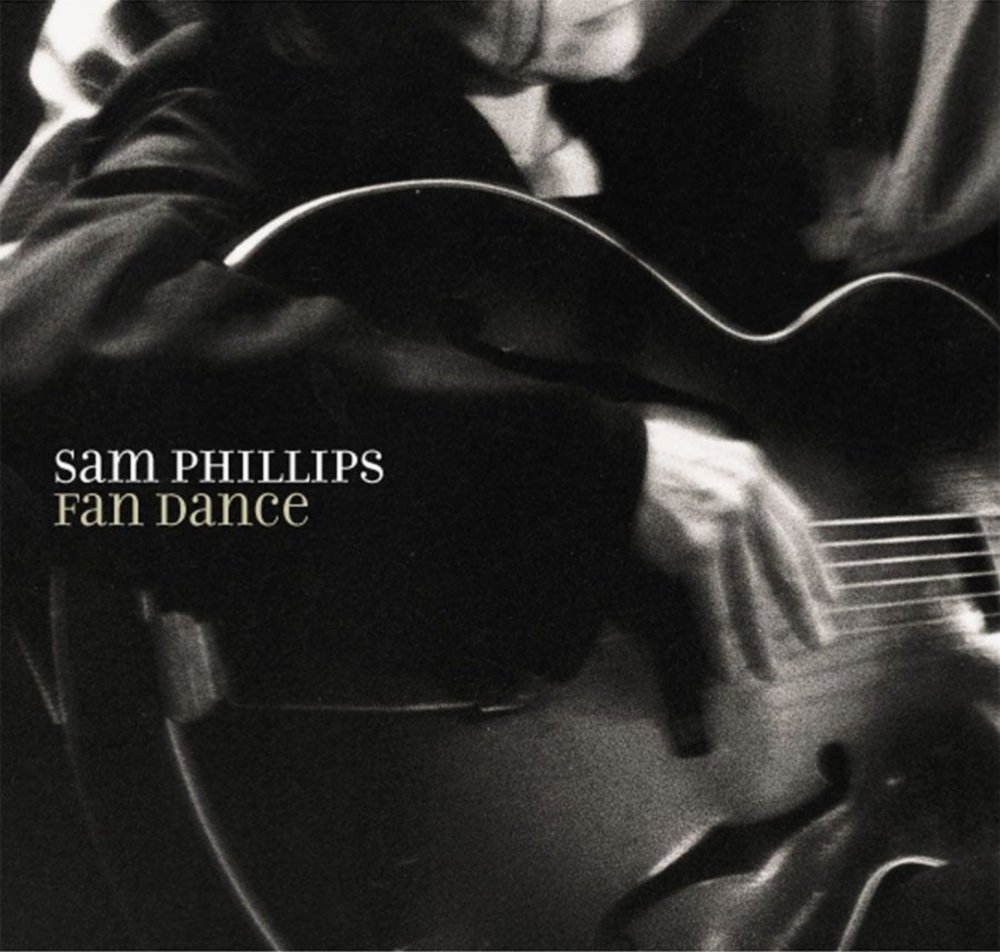
(My 100 favorite albums in chronological order: #69 – released July 31, 2001)
Track listing: Fan Dance / Edge of the World / Five Colors / Wasting My Time / Taking Pictures / How To Dream / Soul Eclipse / Incinerator / Love Is Everywhere I Go / Below Surface / Is That Your Zebra? / Say What You Mean
Favorite albums often act as portals—aural spaces you want to return to again and again until you know them by heart, or at least you think you do until hearing, discovering, registering something you hadn’t before. You give them yet another spin and find no difficulty, no weariness, no effort getting lost in these hyper-specific worlds only made possible through sounds and songs, instruments and vocals, lyrics and melodies. As they seep into your consciousness, it can almost feel like two worlds merging together: the one the album creates and carries, and your own interior state of mind.
Sometimes, you have to spend some time immersing yourself in albums, gradually getting to know their structures, their secret passages and slight crevices in order for them to register and feel known. For every favorite record that I instantly connected with, like If You’re Feeling Sinister or Apartment Life, I can identify another that took weeks, months, occasionally years to reveal its merit, such as It’s Heavy In Here or Hejira. Fan Dance falls into the latter category for sure. I still recall my first time hearing it on its day of release, picking up the CD at the Newbury Comics in Harvard Square after work and playing it on my living room stereo while I cooked dinner.
On that first spin, Fan Dance struck me as lacking… something. It had a dozen songs (nearly as many as Martinis and Bikinis), but perhaps only three or four discernible hooks among them. Nearly half the tracks clocked in around the two-minute mark (or less), the whole thing barely over thirty-three minutes in length. More significantly, even though her then-husband T-Bone Burnett was still on board as the album’s producer, this sounded absolutely nothing like their previous records together: instead of her usual Beatles-esque chamber pop teeming with ringing guitars and lush, girl-group harmonies, this was almost gaunt and malnourished in comparison, stripped down to the bone, forgoing bass on nearly half the selections, sticking mostly to a strict diet of vocals, acoustic guitars and unconventional percussion (for pop music, anyway) like traps and hand drums.
In retrospect, I should not have been surprised at this total revamp. After Martinis’ glowing reception (and her sly, silent turn acting in Die Hard With a Vengeance), a commercial breakthrough felt eminent with whatever she’d release next, but that turned out to be Omnipop (It’s Only A Flesh Wound, Lambchop). The title alone suggests Phillips wasn’t about to play it safe, but the album’s deliberately quirky (over)production baffled and put off rather than seduced critics and consumers, not to mention Phillips herself, who has since publicly disavowed the record and only retains one of its tracks (a “performance art” take on “Animals on Wheels”, which she also performed onscreen in Wim Wenders’ 1997 arthouse monstrosity The End of Violence) in her post-2000 concert setlists. Omnipop was no Martinis, but it’s not a bad record, necessarily—its first seven (out of a dozen) tracks are fine, with “Power World” something of a lost gem. Still, when compared to its sharper, more soulful predecessor, you can see how it was sort of a dead end for Phillips, especially as the sound of crickets greeted its arrival in the summer of ’96.
Apart from a pair of previously unreleased tunes on Zero Zero Zero, a 1999 compilation (which also curiously promised “newly remixed” versions of several songs that seemed rather identical to the ones I already knew and loved), Phillips hadn’t released any music after Omnipop. Given this silence, plus the fact that said compilation had more than a whiff of contractual obligation to it, I was beginning to suspect/fear that she wouldn’t release any more new music, period. Thus, it almost goes without saying that my expectations for a new album were through-the-roof (and somewhat unreasonable.)
If any clue existed as to what direction she’d take on Fan Dance, one could’ve spotted it in her highest profile activity of that period, her mostly instrumental background music for the TV series Gilmore Girls, which had premiered to low ratings but rapturous acclaim the year before. Just hearing that Phillips provided the soundtrack was enough to make me check out the pilot episode (and was a significant factor in my instantly becoming a fan of the show.) Primarily acoustic and laced with “la, la, la’s” sung in her inimitable voice, her Gilmore Girls music draws extensively from the same limited but carefully designated palette she uses on much of Fan Dance.
After a brief snippet of equipment being quietly turned on, the first sounds heard on the album are a lone, strummed guitar chord followed by Phillips singing, “The violinist puts his violin away,” then another chord, with her resuming, “Forbidden city broken into tonight.” She continues, “I use my blindfold to dry my tears / the stage is empty and tired of light,” and her emphasis on those last three words emanates a warmth and comfort that draws you in. Then, the album’s title track comes into focus on its gentle, celebratory but reverent chorus, “But when I do the fan dance / I’m all the red in China / I’m dialing life up on my telescope.” Like most of the album’s songs, it’s simple at first—a close-knit quintet playing acoustic instruments (and some exotic ones, like a Quattro banjo guitar), performing a folk song with delicate but discernible Eastern-flavored accents. With time, though, little things in the mix stand out, like a slight shiver of cymbals, or a higher-pitched *ting*, possibly from a triangle (or something similar, since no triangle appears in the credits.) They casually emerge, unexpectedly (or magically?) but with utmost precision.
One of its few songs built around piano chords, “The Edge of the World” also introduces a vital component of Fan Dance (and, subsequently, most of Phillips’ post-Omnipop career): more than a soupcon of Kurt Weill-derived cabaret, with Phillips embodying the role of the sly, knowing chanteuse. It sports a melody as both twisty and solid as anything on Martinis, but with an entirely disparate musical approach, forgoing any Beatles-isms or guitar tropes for a nimbler, two-step pace more suited for theatrical stage than the concert hall. “At the edge of the world, looking up,” she sings, rather than down, as one would expect such a lyric to end. The song itself also ends unconventionally, with pounding piano ceasing on one lone, dramatic note taking nearly thirty seconds to fade out.
At the exact millisecond that piano disappears, an acoustic guitar strum supersedes it, playing a minor chord as Phillips’ vocal comes in, followed by a repeated four chord progression. From there, she rarely takes a breath throughout “Five Colors” as the song is primarily driven by her lyric and the melody, which both spool out almost effortlessly, circling around those four chords. It’s by far the catchiest song on Fan Dance, but hardly the most direct. The chorus, “Five colors blind the eyes / See the world inside / Amazed alone” is lifted from a Tibetan quote (Tao Teh Ching by Lao Tsu) and it gels with Phillips’ persona as a seeker, a questioner rather than a believer or follower (something she firmly established in 1988 after giving up her career as a contemporary Christian artist under her birth name, Leslie, going secular and professionally adopting her childhood nickname.) “Five Colors” pulls off the neat trick of maintain a healthy skepticism/pragmatism (“I don’t mind if I am getting nowhere / circling the seed of truth”) while also permeating itself with a sense of wonder, heard in the way those last two lines of the chorus slightly, gorgeously overlap, or at that moment in the second verse where the percussion enters, subtly but effectively adding heft, maybe even enlightenment.
Fan Dance was one of seven albums Phillips made with Burnett between 1987 and 2004. His dexterity in allowing an artist’s personality to shine through but also feel embedded within the arrangements had not undiminished, even as Phillips’ sound had shifted radically from her previous works. On “Wasting My Time”, she also employed another longtime collaborator, Van Dyke Parks, to arrange the song, which consists entirely of her vocals and an overdubbed cello. Despite such sparse elements, so rich and inventive is Parks’ contribution that as a whole, the song feels practically lush. Phillips repeats the title phrase somewhere between 25 and 30 times throughout, turning it into a mantra, enabling it to make the journey from novel to repetitive and back to novel again. Due to this omnipresence, when she forgoes those words in the middle-eights, their impact is heightened. “But the rain remembers your face / and the streets know your name,” she concludes—a nod to U2, of all people, or just the Cheers theme song, perhaps?
“Taking Pictures” is one of those many Fan Dance tracks that clock in around two minutes. Tentative at first, it would seem but a fragment, if not for the sense of turning or epiphany that Phillips exhibits on the twice-repeated lyric, “Places I go are never there,” stretching out that second “there” to an ascendant four syllables. Immediately following that, “Nostalgia isn’t what it used to be / I can only picture the disappearing world when you touch me” is as perfect, provocative and succinct a chorus one could ever hope for. Ironically enough, it’s also arguably the most nostalgic-sounding, Beatles-reminiscent track on the album, albeit sparse and strange enough (dig Parks’ distorted, nearly guttural-sounding harpsichord) to resemble a White Album demo (or outtake.)
Fan Dance’s first half comes to a close with its most generous and lovable song, “How To Dream” (which, at least in an instrumental version, appeared on Gilmore Girls multiple times.) It’s as simply constructed as “Five Colors” but suffused with far more wistfulness and awe, thanks to her wordless, glorious “aah’s” that introduce each chorus. Out of all her lyrics about searching for meaning and illumination, the most definitive may be this one: “When we open our eyes and dream / we open our eyes” is her philosophy at its core essence. A sentiment that could easily scan as too New Age-y, it instead feels earned and wise, like a perfectly formed thought that nonetheless did not come from thin air. With Phillips, you always sense the worth and purpose behind each phrase she uses, like this song’s repeated, “All to reveal a secret we can’t hide.” And yet, you don’t feel a strain or any calculation. There’s an ingenuity to her lyrics that these sparse arrangements only accentuate.
“Soul Eclipse” kicks off Fan Dance’s more experimental second half with an eccentric interplay between her upfront vocal and a few acoustic and electric guitars skittering around the mix. It’s one of three tracks on the record featuring only Phillips and avant-jazz guitarist Marc Ribot (another longtime collaborator), and it resembles a handful of puzzle pieces the listener is encouraged to piece together. Though the melody is one of Phillips’ most approachable, it’s grounded not by a rhythm section, but random emissions of electronic feedback and a peculiar Optigan lurking in the background. Occasionally, a lyric such as, “You think I’m interesting like the Apocalypse” surfaces and warrants your attention, before Phillips retreats to fuzzier imagery like, “I wear colors to bed / and dream I’m writing the skies with joy.”
The song’s barely over before “Incinerator” begins: it’s another Phillips/Ribot performance that’s a weary, tentative, back-alley blues, again without a rhythm section but spiced with some Chris Isaak-style surf chords. She addresses the titular object like a lover making an unwanted advance, warning it, “This is not about sex / it’s about a personal slant,” and pleading for it to “go on and on right through me”. She’s not quite playing the femme fatale—she’s smarter and more detached than that, yet defiant (“I’m made of fire and you’ll never get to me”), if still steeped in ambiguity (“I don’t have your number cause I can’t count to eternity.”)
In the middle of these weird little songs comes a fairly straightforward ballad, “Love is Everywhere I Go.” More amplified at the start, it reprises the simplicity of “How To Dream”, delving back into that sense of wonder without verging on being too precious. As with “Five Colors”, folk-pop singer/songwriter Gillian Welch provides bass and backing vocals, though the latter are nearly inaudible (particularly for someone with as distinctive a voice as Welch’s)—perhaps that’s not to distract from Phillips, whose elongated reading of every other syllable on the chorus gives the song its meatiest hook, along with another overlapping of phrases (right at the word “go” comes the answer lyric, “looking through you”) on the chorus.
After that song’s relative lucidity, Fan Dance immediately plunges back into opacity with “Below Surface”. Fittingly, it feels subterranean and submerged, as if recorded underground or better yet, under water. Phillips’ already deep voice has rarely seemed as voluminous as it does here, or ominous, for that matter, especially when she sings, “I’ve been waiting for Noah’s God to destroy my world, so I can find life,” or “Drain our blood with information screens, obsolete, obscene.” It’s as if she’s distilled the essence of Kate Bush’s The Ninth Wave into 102 seconds of dark, dreamy effluvia; such compact duration leaves one a little unnerved, as if briefly peeking into another world or, more likely, another interior state.
Does the next track “Is That Your Zebra?” feel downright disorienting or like sweet, sweet relief following that sinister chasm? Instrumental except for six singularly uttered words (“What When Who How Where When”) and occasional “la, la, la’s”, it’s of a piece with her Gilmore Girls music—pleasant, tender, graciously fading into the background if you let it. The title, however, doesn’t entirely let you off the hook. What does it mean? Is Phillips withholding vital information, or is that all there is? As with “Below Surface”, “Incinerator”, or even “Soul Eclipse”, did she choose the song title for a cognitive reason, or just because it scans well as a song title? You can listen to it twenty times and come no closer to a definitive answer.
Rather than close Fan Dance on a question, however, Phillips concludes with a request. “Say What You Mean” is cut from the same bluesy cloth as “Incinerator”, only slowed all the way down, slower than even “Below Surface”. As Ribot and Burnett accompany her with spooky, resounding guitars, she sings as if detained in a sort of slow-motion David Lynch-ian horror-scape, a cocktail in hand or perhaps the remnants of one, for it feels like the bar’s long since shuttered for the night. Steeped with questions (“How hungry are you? How much can you lose?”) and revelations (“The secrets that you want to know are yours not mine”), each languid verse ends on the title phrase, which just sort of hangs there in the air whenever Phillips utters it. Is it meant to be an order? It almost sounds like a punchline—a rather macabre one at that, given how everything gradually fades to black after the song’s final, lonely chord.
I returned to Fan Dance often after that first listen, initially content with my impression of it being an interesting album, a good album, even, if not a great one. Weeks later, I wrote about it extensively in my journal over two entries, at one point noting “with this album, she gives as much weight to the songs as she does the sound,” which she had done, granted, on previous records (although maybe not Omnipop.) By the end of 2001, it was my second favorite album of the year after Here Come the Miracles. In early 2010 when I compiled my best-of-decade list for albums, it ended up at #26—lower than her next two albums, actually. At the time, I wrote that on Fan Dance, “she opened up a new world of hidden gestures and small pleasures—nine years later, it continues to grow on me.”
It’s one of those conundrums in writing about something as abstract and fluid as music that I’m at a loss for words as to exactly why Fan Dance has stayed with me for so long. I now return to it even more frequently than Martinis to the point where for the past couple years, it’s unequivocally my favorite album of hers. If I were to re-do that Best of the ‘00s list, it would surely make the top ten—maybe the top five. Going through it track-by-track (as I did here), I can easily parse out what I admire about each one, from specific phrases, chords and instrumental touches to how the songs often seem to conform to recognizable pop structures only to usually, unexpectedly, almost thrillingly defy them.
As a whole, Fan Dance appears to me as this ongoing, beguiling entity: the result of Phillips discarding much of what was familiar about her music while retaining those constants she couldn’t help but retain because they are an essential and true part of her as a vocalist, songwriter, musician, and person. Throughout, she continuously reveals and withholds, reveals and withholds so that you remain invested and intrigued, seeking to understand what’s all being expressed and what’s merely implied. One could argue she’s always done that, but sometimes it was obscured by everything else going on in her music. By stripping her sound down to such carefully chosen essentials, she sharpens everything that remains. This world, her world, has seemingly bottomless potential in how it conjures ever-shifting states of being, continuously asking questions without necessarily expecting absolute answers.
Up next: What is an album (and what can it contain?)
“Five Colors”:
“How To Dream”:

