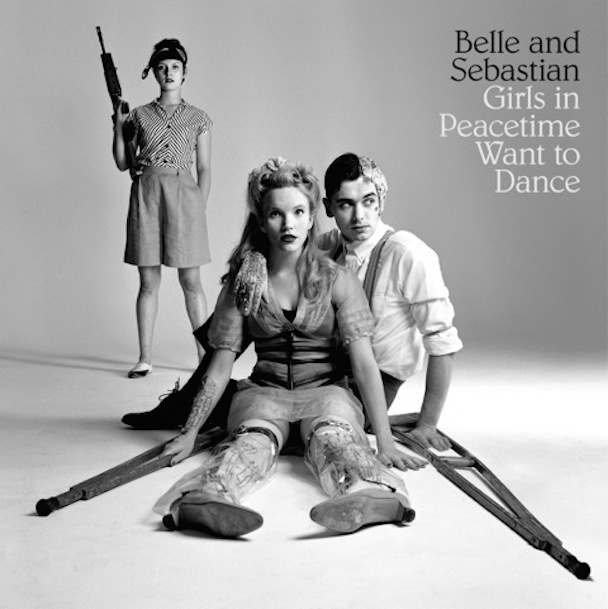
Having gotten God Help The Girlout of his system, Stuart Murdoch returns to what he does best, and he’s rarely done it better than on opener “Nobody’s Empire”. Neatly melding the band’s early twee pop with all the groovier, more modern touches that subsumed it on later recordings, it’s an anthem as stirring and powerful as anything Abba or New Order ever did, and it’s the only the beginning. The rest easily constitutes their most consistent set since Dear Catastrophe Waitress—all the more remarkable for packing in everything from earnest stabs at retro disco (“The Party Line”) and flickering Eurodisco (“Enter Sylvia Plath”) to an extended samba (“Play For Today”), a dreamy closer (“Today (This Army’s For Peace”) and of course, the “sad bastard” music they more or less perfected from the start (“The Cat With The Cream”). It’s been almost twenty years since If You’re Feeling Sinister, and amazingly, they sound as vital as ever.
Favorite tracks: “Nobody’s Empire”, “The Party Line”, “Enter Sylvia Plath”, “Play For Today”
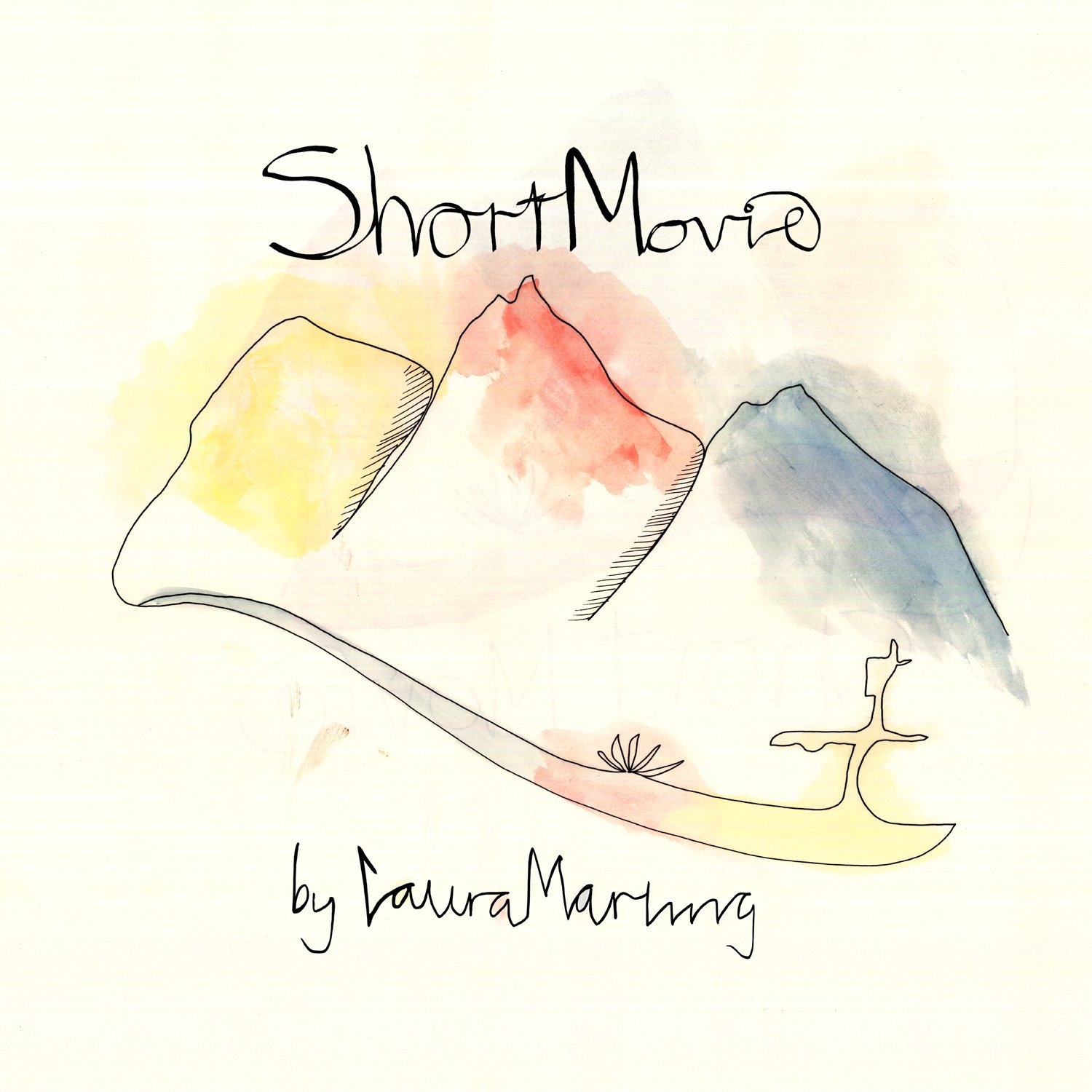
Twelve months ago, I speculated if Laura Marling’s fifth album would be her fourth in a row to make my year-end top ten; upon first hearing it last March, I knew the answer right away. Short Movie is not quite her bestalbum, but it might be her most immediate to date. As distinct as each of her other records but also just as identifiable, it’s full of transitions—from the UK to America, from acoustic to electric guitars, from swooning over lost love to gleaning perspective after all the wounds have healed (cue the delectably acidic “Strange”). Her increasingly seamless shifts between hooky pop (“False Hope”, “Gurdjieff’s Daughter”) and spooky folk (“Warrior”, “Howl”) hint that she has a truly great album in her yet to come; so does the multilayered, masterfully building, summation-of-life title track, where she repeatedly concludes, “It’s a short fucking movie, man.” Indeed.
Favorite tracks: “False Hope”, “Strange”, “Don’t Let Me Bring You Down”, “Short Movie”
If his last album (2008’s The Evangelist) saw Robert Forster (the Aussie singer-songwriter, not the American actor) processing the sudden death of his Go-Betweens partner Grant McLennan from two years before, this return to the fold finds him more at peace with his status as a fifty-something cult artist. When he sings, “I Love Myself and I Always Have”, he’s neither arrogant nor boastful, just refreshingly direct and disarming, qualities inherent in each of these ten beautifully crafted but unfussy miniatures. And, at this late stage in his career, he still finds inspiration in seeking out new sounds for his musical palette, such as the spry bossa nova of “Love Is Where It Is” or the Latin accents adding verve to “Songwriters On The Run” and “A Poet Walks”—the latter a charming character sketch-cum-memoir that no one else could have written.
Favorite tracks: “Learn To Burn”, “Let Me Imagine You”, “A Poet Walks”, “I Love Myself and I Always Have”
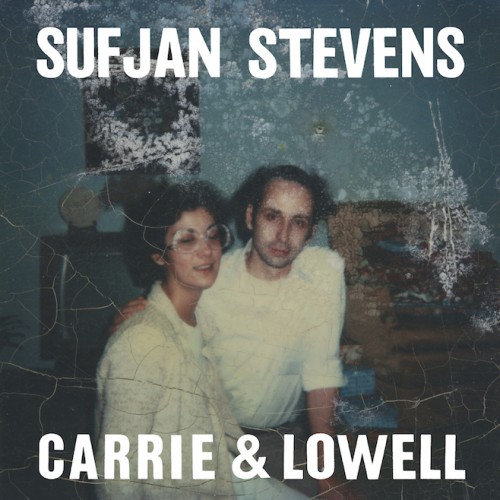
After The Age of Adz, I lost all hope that Stevens would ever return to the hushed folk he perfected on his best album, 2004’s Seven Swans. Although this record is more like that anything else he’s done, it’s also entirely its own thing by nature of its concept. Crafted in response to his mother’s death, Carrie and Lowell is exactly the about-face you’d expect from the grieving and inconsolable emotional pain that’s a response to the loss of a loved one. The music is purposely stark: lone acoustic guitar and piano (and, this being Stevens, also banjo), occasionally recorded on an iPhone. Of course it’s depressing, bleak and cathartic, but also gorgeous, redemptive and at times, even catchy. It’s a bit of a coup to have as one of your biggest hooks the lyric, “We’re all gonna die”; Stevens reminds us he’s a big enough talent to get away with it.
Favorite tracks: “Should Have Known Better”, “Fourth of July”, “The Only Thing”, “John My Beloved”
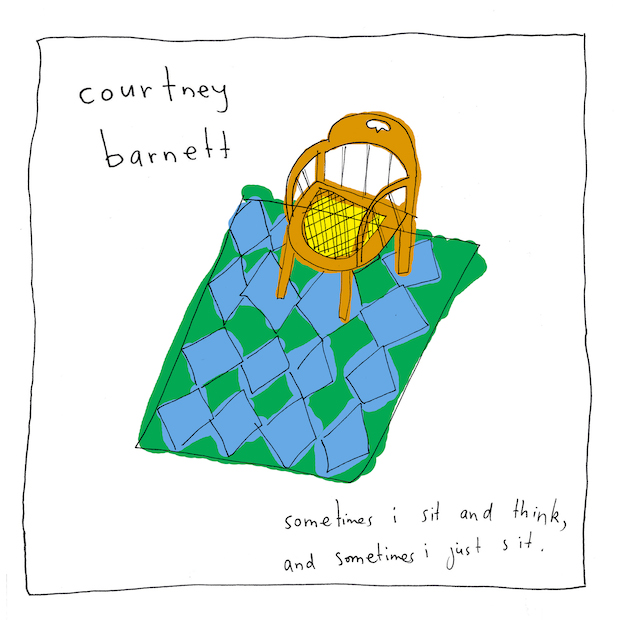
No doubt this Aussie’s first impression is that of a throwback to a beloved era when the likes of Liz Phair, PJ Harvey and even Sheryl Crow got alt-rock airplay, but her singular, wizened perspective (think Fiona Apple-as-slacker but with a more pronounced sense of humor) and underdog persona (think Amy Rigby, but a decade younger) set her apart from the crowd. Her more exuberant-than-proficient vocals work because her lyrics are sharp and the music’s snappy. I was immediately won over by the New Pornographers-like stomp of “Elevator Operator” and breakneck pace of “Pedestrian at Best”, but the enchanting, laid-back vibe of “Depreston” and guttural blues of “Small Poppies” suggest a real range I suspect she’ll continue to develop and strengthen.
Favorite tracks: “Elevator Operator”, “Depreston”, “Nobody Really Cares If You Don’t Go To The Party”, “Debbie Downer”
I’m limiting myself to a top ten list for best albums this year. Tomorrow, the countdown begins, one per day for the next ten days. As a prelude, here are a few other albums I really liked that didn’t make the cut, in alphabetical order by artist:
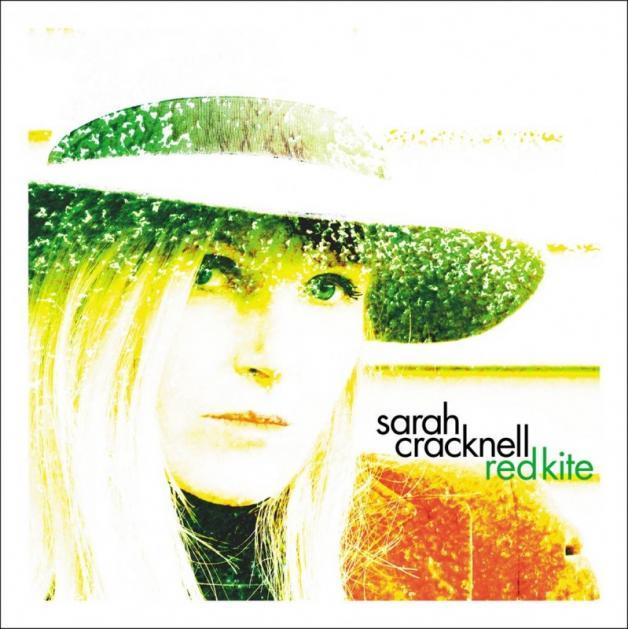
Sarah Cracknell, “Red Kite”
Bypassing the dance-pop of both her last solo album (1997’s Lipslide) and Words and Music by Saint Etienne, Cracknell returns with pastoral folk rock—not a likely fit for the queen of effortless cool, but it mostly works, especially when she leans towards that spectrum’s poppier side (“Nothing Left To Talk About”, “Hearts Are For Breaking”).
Destroyer, “Poison Season”
Dan Bejar was never going to top Kaputt, and although this opts for a noticeably different, more organic, orchestral feel, it generally plays like a logical progression from its predecessor. Still, who would have expected to spot such influences as Bruce Springsteen (“Dream Lover”), Tin Pan Alley (the second half of “Bangkok”) or, um, the old theme to The People’s Court (“Midnight Meets The Rain”)?
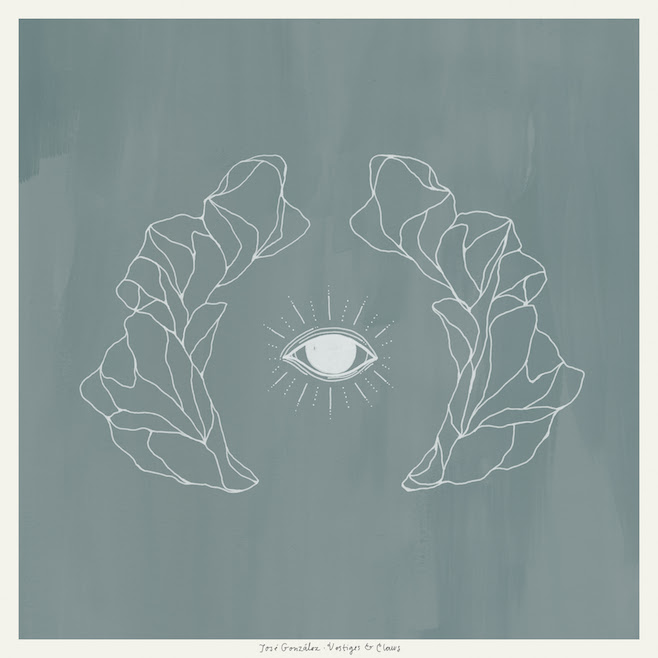
Jose Gonzalez, “Vestiges and Claws”
This Swedish folksinger’s first effort in eight years initially sounds a little monochromatic; however, as with the last Kings of Convenience record (now six years ago!), it’s an intentional part of the overall, intricate design. The irresistibly rhythmic “Let It Carry You” remains the highlight; however, with each spin, additional bits and pieces have begun leaving imprints.
Emm Gryner, “21st Century Ballads”
Exactly what the title claims, and admittedly a challenging listen from someone who always balanced out her more introspective moments with gloriously catchy, radio-friendly anthems. Fortunately, opener “The Race” is as good as anything she’s ever done, and much of the rest is interesting enough that she remains a mostly unknown artist still worth seeking out.
Joanna Newsom, “Divers”
The title track (whose Paul Thomas Anderson-directed video I’ve posted above) may be the loveliest thing she’s done thus far, and while the rest is more approachable than some of her earlier, impenetrable stuff (think Ys), I’m still trying to decipher much of it. As with Gonzalez, I’m willing to work to find those hidden pearls—especially after witnessing how delightful she was in Anderson’s last feature.
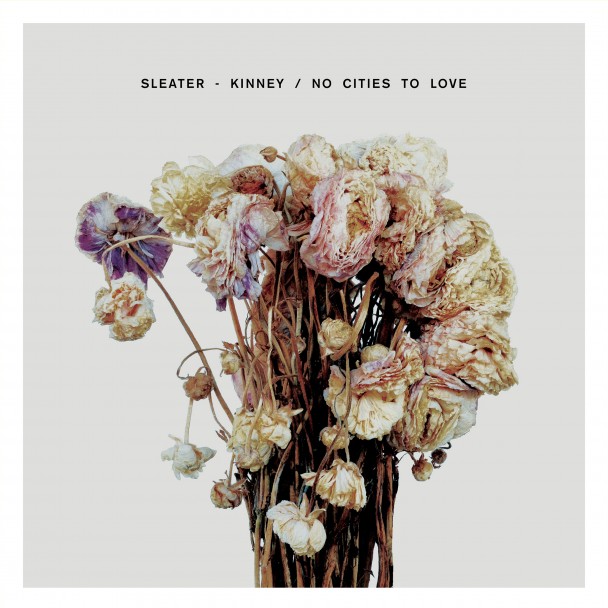
Sleater-Kinney, “No Cities To Love”
Finally, vindication that their last record, 2005’s overrated sludgefest The Woods was not entirely the direction they meant to take. Although this reunion album doesn’t hold a candle to anything spanning Dig Me Out to One Beat, the world of indie rock was a little lacking without Corin and Carrie’s overlapping words and guitars (and Janet’s fierce drumming), so call it a welcome, unexpected return.
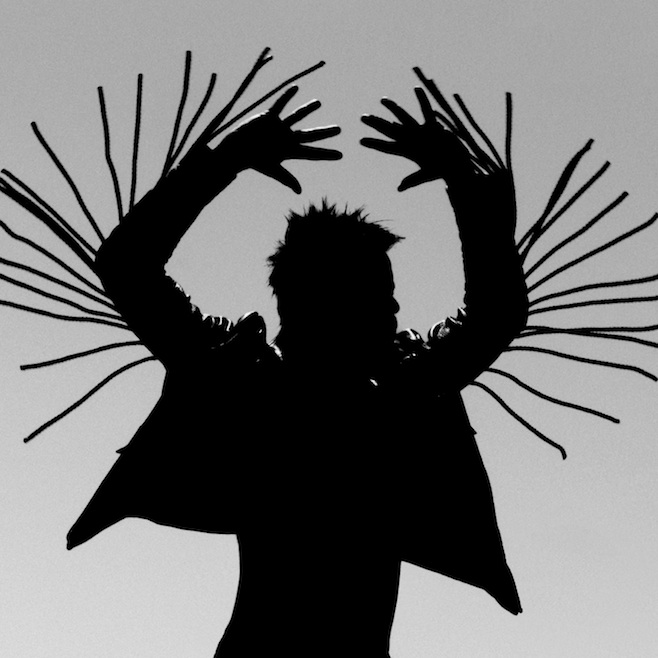
Twin Shadow, “Eclipse”
Half of this LP plays like a singles collection, and I can’t fathom why the top 40 has turned a deaf ear to euphoric, 80s-inspired gems such as “When The Lights Turn Out”, “Old Love/New Love” and “I’m Ready”, especially in a year when something inferior like Walk The Moon’s “Shut Up and Dance” gets played to death. Granted, Eclipse’s other half is moodier and far less consistent, but in the iTunes era, half a great album is nothing to scoff at.
(My 100 favorite albums in chronological order: #42 – released March 8, 1994)
Track listing: Love & Kisses / Signposts / Same Rain / Baby I Can’t Please You / Circle Of Fire / Strawberry Road / When I Fall / Same Changes / Black Sky / Fighting With Fire / I Need Love / Wheel Of The Broken Voice / Gimme Some Truth
This entire project began with The Beatles; forty-odd entries on, we’ve reached possibly the most Beatles-esque album in my music library. It opens with trilling harpsichord on the left stereo channel and a treated vocal on the right, and ends with an ominous cover of a John Lennon solo song heavily submerged in reverb. In between, there are tunes with Fab Four-ish titles like “Strawberry Road” and “Same Rain”, lots of melodic, ringing electric guitar riffs, and a general excess of pure pop hooks. Colin Moulding, a member of the most Beatles-esque band I’ve written about thus far even plays bass and co-produced one song. And, although Martinis & Bikinis simply wouldn’t exist without the likes of Revolver and Abbey Road, what prevents it from seeming derivative or mere pastiche (in other words, the collected works of Lenny Kravitz) is the woman on the cover.
Sam Phillips (not to be confused with the Sun Records impresario) is many things: a gifted singer-songwriter, an underrated alt-rock goddess, a composer of incidental television music (all those “la, la la’s” on Gilmore Girls) and a performer with a stage presence that’s both warmly confident and magnificently eerie. In recent years, she has also become a fiercely independent artist, almost an iconoclast of sorts—a quality one can trace back near the start of her career, when she recorded Contemporary Christian music under her birth name, Leslie Phillips. After four well-received albums in that genre, she concluded she no longer wanted to be “a cheerleader for God” (as she bluntly put it in one interview) and switched over to secular pop music (and professionally adopted a childhood family nickname). Whether brought on by an actual crisis of faith, feeling discomfort from that boxed-in community, or by meeting musician T-Bone Burnett (who became both her longtime producer and romantic partner after helming her final Leslie album), her decision to leave one world behind for another continually enhances the cultural, philosophical, and yes, spiritual nature of much of her subsequent catalog.
Transitioning from religious to secular music, her artistry immediately flourished. The Indescribable Wow (1988), her debut as Sam, is a near-perfect ten-track album of sly, sighing retro pop. A little more tart and perhaps a few shades darker, Cruel Inventions (1991) kicks off with the clever confession, “If I told myself I believed in love, and that’s enough / I’d be lying,” and concludes with a gorgeous manifesto against uniformity (“Where The Colors Don’t Go”). Both records are very good, though the former’s production sometimes feels a little dated and the latter is occasionally a touch too internal (it could use a little more sweetening). By contrast, Martinis & Bikinis is an important step forward, not only for Phillips’ growing confidence and agility as both a lyricist and a tunesmith, but also in how effortlessly it balances her affable persona with an ever-cunning acidity (just look at that album cover).
Following “Love and Kisses”, a minute-long apéritif whose lyrics contain the album’s purposely frivolous title, Phillips doles out one catchy, tightly constructed pop song after another. Practically every instrumental and vocal part provides some sort of hook, from the clipped barre chords of “Signposts” and the elastic bass line of “Same Rain” to the declarative opening riffs of both “When I Fall” and “Same Changes” (the latter almost as effective as the one in The Beatles’ “Day Tripper”). And yet, only roughly half of Martinis & Bikinis is strictly guitar pop. As with the Fab Four, Phillips doesn’t shy away from adornments inspired by a spectrum of musical genres. “Baby I Can’t Please You”, for instance, has a Middle Eastern flavored, Van Dyke Parks string arrangement (along with plenty of sitars and tablas), while ecological lament “Black Sky” aims for Tom Waits-style, post-apocalyptic minimalism, with Phillips’ vocal almost entirely carrying the melody over a stark, clanging percussion-heavy backdrop. Both are pop songs that also expand the idea of what such a thing can contain.
Martinis & Bikinis’ most striking departure, “Strawberry Road”, is on one hand not much of a departure at all, given that its Beatles-isms fit so seamlessly alongside all of the album’s other Beatles-isms. But this track borrows a bit more extensively: in addition to the title, an obvious gloss on “Strawberry Fields Forever”, the sparse, staccato strings recall those in both “Eleanor Rigby” and “For No One” and the swooping, backing “aaahhh’s” could be from any number of Lennon/McCartney compositions. And yet, while even the most casual listener could detect those influences, you’d never mistake it for a Beatles song. Whether it’s her highly distinctive voice (somewhere between a twang and a lilt), or her particular way with a melody (a trait much easier to intuit than adequately describe), the song is almost like alchemy, with Phillips spinning something new and unique out of various existing, recognizable parts.
Still, while I’m willing to bet that her command of music, melody and vocal tone are often what draw new listeners towards Phillips, her lyrics are what really prolong that initial sense of discovery and intrigue. Although certainly comfortable with making simple, accessible declarations like “Baby I Can’t Please You” and “I Need Love”, more often than not, she’s cultivating an inquisitive persona—she’s ultimately a seeker. Of course, once you know about her past life as the “Christian Cyndi Lauper”, it’s hard not to equate this whole nature as a result of leaving that past behind. However, she’s crafty to a degree that her specific references to such are few and far between. Here, they surface on “I Need Love”, the album’s catchiest, most direct pop song. On the chorus, she admits, “I need love / not some sentimental prison,” then follows it with, “I need God / not the political church.” She tempers that statement’s boldness with the next line: “I need fire / to melt the frozen sea inside me,” shifting back from a cultural to an intimate and fully personal context. It’s not hard to fathom why this remains Phillips’ best known song, though you have to wonder if all those who first heard it in the Liv Tyler vehicle Stealing Beauty or later via a perfume ad had any idea what it was really about.
What’s explicitly stated in “I Need Love” is actually embedded throughout Martinis & Bikinis, but in more poetic and often thornier (and ambiguous) language: “I got myself so tightly wound I couldn’t breathe” (the opening line of “Signposts”); “You try to tell the world how it should spin / but you live in terror with the hollow men” (from “Baby I Can’t Please You”); “You circle the city from the sky / watching children swallowing your lies” (from “Circle Of Fire”); “You can’t get there with your morals or without love” (from “Strawberry Road”). All these songs are deliberately left open to interpretation; the person she hopes to encounter in “When I Fall” could very well be a human being or God, while the subject of “Fighting With Fire” is either a crooked businessman or the Devil himself. As Leslie, she proselytized as the genre required of her; as Sam, she questions. Not only did secular pop music enable her to reach a wider audience by default, it also allowed Phillips to come into her own, opening up worlds of thought and expression that, by her third album as Sam, she was fully taking advantage of.
It so happens that Phillips will return to this project each time she makes another significant career change, but the first one is still years away. Meanwhile, 100 Albums itself will return in January with an entry that both sums up and redefines three decades of British pop.
(My 100 favorite albums in chronological order: #41 – released February 28, 1994)
Track listing: Urban Clearway / Former Lover / Hug My Soul / Like A Motorway / On The Shore / Marble Lions / Pale Movie / Cool Kids of Death / Western Wind – Tankerville / The Boy Scouts of America
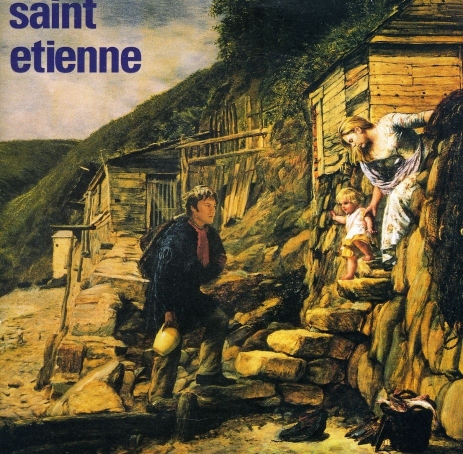
“Urban Clearway”, the opening salvo of London trio Saint Etienne’s third album suggests that it will be a very different beast from the first two. Granted, Fox Base Alpha and So Tough had their share of atmospheric, pulsating electronic instrumentals, but they were hidden behind simpler pleasures like a dance cover of a Neil Young song or a neighborhood café narrative that unambiguously invited listeners into its world. Tiger Bay, on the other hand, introduces itself via a barrage of mechanical rhythms straight out of the Kraftwerk songbook (or Donna Summer’s “I Feel Love”).
Then, at 1:16, it curves left as a cornucopia of real strings, woodwinds and harp glissandos all make nice on top of the synthesizers—the song’s heretofore monochrome world has just opened up considerably, now resembling a exuberant version of an imagined late ‘70s action/adventure TV theme (Charlie’s Angels? Hart To Hart?). Perhaps “Urban Clearway” is, at its core, opening credits music for this, the most cinematic of all Saint Etienne albums—it even shares its title with a 1959 Hayley Mills film. But then, the song curves left again, from major to minor key in the final minute. What kind of movie is this? Certainly not a fluffy comedy. Perhaps a kitchen sink drama? Maybe even an epic?
After the adrenaline rush of “Urban Clearway” comes its almost polar opposite: a hushed folk song. “Former Lover” begins with four strummed Spanish guitar chords, each of them slowly plucked so one can hear every single note they contain. Then, the guitar plays a rapid succession of five-note arpeggios over which we hear a sighing harmonica and pining vocalist Sarah Cracknell, who provides the melody via lyrics doled out in simple, Zen-like phrases (“Milan, when I was a kitten”, “Close all of the doors, Maisie”). The transition from the first track to the next nearly induces whiplash, but “Former Lover” is secretly the yang to the previous song’s yin.
Throughout their first three albums, Saint Etienne seemingly pride themselves on what startling juxtaposes they can come up with between (and often within) songs; a majority of Tiger Bay plays like proto folk-tronica, like an imagined collaboration between such disparate souls as Fairport Convention and Gary Numan. However, it’s still pop music and by itself, “Former Lover” is striking in both its somberness and melodicism and for the cozy melancholy it instantly conjures: curling up in a comfy chair, staring out a window, rain gently falling, its narrator delicately, arrestingly lost in thought and reverie.
Tiger Bay’s next two songs were also among its three singles. “Hug My Soul” sports even lusher orchestration than “Urban Clearway”, especially in its opening string fanfare. But Saint Etienne are still primarily an indie dance band (Wikipedia’s catch-all phrase for them) at this point in their career, and the song’s disco beat defines it. Faintly reminiscent of the old Andrea True Connection hit “More, More, More”, it pursues the same end (sex, natch) but via a kinder, gentler, but no less lustful means. By stretching out each world in the chorus almost to its breaking point (“I’ll… be… there…”) before getting to the song’s title, she makes her move but seems almost nonchalant about doing so, and thus all the more irresistible. It’s one of the album’s catchiest, classiest songs, but also atypical top 40 fare—for instance, what other ’94 pop hits featured a luxurious vibraphone solo?
“Like A Motorway” is somehow even catchier and further out there. Switching back from live strings to full-on electronica, its lengthy, instrumental intro positions it as a companion piece to “Urban Clearway”—that is, until Cracknell appears, sighing the song’s main hook (“He’s gone”) into an analog synth cavern. What follows is one of the more sublime and enigmatic songs in the band’s catalog. On the surface, it’s simply another vaguely Latin-accented tale of a former lover, a man who has just left a woman, but she’s not the singer. While Cracknell empathizes with her, she’s also observing from a distance. It all feels like an Antonioni film, with lengthy instrumental passages occasionally broken up by such musings as, “She said her life was like a motorway / dull gray and long, until he came along.” Whereas “Hug My Soul” looked ahead in anticipation, “Like A Motorway” stares in the opposite direction, pondering what has occurred, trying to cull meaning from the past.
A departure from previous Saint Etienne releases in that it less resembles a sample-heavy mix tape with bits and pieces of pop culture effluvia serving as the glue holding all of it together, Tiger Bay is more of an actual ten-track song album. Although it eschews samples (mostly for string arrangements), it has three instrumentals (possibly four, depending on whether you isolate “Tankerville” from the medley it forms with “Western Wind”), the second of which, “On The Shore” returns to the band’s original concept of using a series of guest vocalists. Shara Nelson (best known for Massive Attack’s “Unfinished Sympathy”) lends her soulful wail to a cod-reggae backing track that’s gently buoyed along by an insistent, two-note staccato filigree and occasional string and oboe interjections. Pretty and pleasant and not at all profound, it works well enough as a breath of fresh air between two far more serious tracks.
“Marble Lions” patiently lies in waiting on the other side. At first a return to the whispered elegance of “Former Lover”, it builds slowly, but from the onset is far more direct. Cracknell sings, “Everybody wants something and I want it all,” but not in a bratty way—more like in awe of the world and all its possibilities. “Stars are calling, goodnight, darling; don’t say goodbye” goes the gentle chorus; with it, Cracknell (who co-wrote the song with Michael Bund) appears to be praying for this special moment to endure for as long as it can. When the full orchestra appears after two minimally arranged verses of isolated electric guitar, flute and oboe, the effect is the same as in “Urban Clearway”, everything coming to life at once. Both antidotes to the existential despair of “Like A Motorway”, “On the Shore” and “Marble Lions” take comfort in the here and now: they are calm oases no matter how brief, as essential to life (or any narrative) as breathing.
The third of the album’s singles (but the first one to be released), “Pale Movie” is Tiger Bay’s most Euro-sounding track (band member Bob Stanley described as “a pastiche of a Spanish folk song”), and, with its florid orchestration, on-the-nose flamenco guitar and insistent disco beat, also its most dated song (although it actually pre-dated the whole Ricky Martin/Jennifer Lopez-led Latin pop craze by five years). However, Saint Etienne is one of those rare outfits that excel at being both frothy and cerebral. It’s not difficult to get swept away by the song’s many effusive charms, from the swirling, effervescent “la, la, la” chorus to purposely silly lyrics that name-drop American actress Demi Moore and Nepalese mountaineer Sherpa Tenzing.
If any single theme emerges from Tiger Bay’s diverse collection of sounds and tones, it’s the persistence of movement. Although the album title references a singular place (a Welsh port), its ten tracks form a travelogue of sorts, only more of the mind than any specific locale. It doesn’t matter exactly where the “Urban Clearway” runs or where the “Marble Lions” sit or even if “Tankerville” can be pinpointed on a map; there is even the nagging feeling that not all the album (or possibly any of it) is set in Tiger Bay itself. Instead, each song simply provides an outline for the listener to project his or her own ideas as to what the inhabited landscape is. For example, take “Cool Kids of Death”, a nearly six-minute long electro-dance instrumental. Its chief hooks are house piano chords, Cracknell’s occasional wordless backing vocals and a six-note melodica riff that’s almost a variation of the theme song to The Saint. As with any instrumental, there’s purposely no context apart from the title (and even that was originally meant to be “Cool Kiss of Death”). Still, the track’s relentless pace suggests more than just a placeholder—at best, one can imagine some sort of sustained action occurring; whether it involves the titular figures or not is left up to one’s own imagination.
At least three different versions of Tiger Bay exist. The one surveyed here is the original UK release; a few months later, an American edition (with the band photo on the cover) came out, but with an altered track listing: “Hug My Soul” and “Former Lover” swapped places (I actually prefer this sequencing, only because it works and, as an American, it was the first way I heard it) and “Western Wind/Tankerville” was completely obliterated and replaced with “I Was Born On Christmas Day”, an even frothier track than “Pale Movie” that was a stand-alone UK single the previous December. Rather inexplicably, the album was re-released in the UK in 1996 with an “amplified” track listing that added on four more songs, including “He’s On The Phone”, their highest charting UK hit (#11), first released in late ’95 to accompany the singles collection Too Young To Die.
I didn’t hear the original UK version until it was part of the band’s “deluxe edition” two-disc reissue series of their back catalog in 2009-2010. Previously, I considered Tiger Bay as one of Saint Etienne’s lesser albums; hearing it with “Western Wind/Tankerville” intact, the album suddenly, beautifully, fully resonated. A seven-minute, three-part suite, the track opens with “Former Lover”-like austerity, Cracknell singing what could be a trad-folk melody (“Western wind / when will thou blow?”) over mournful acoustic guitar—all nearly resembling something from The Wicker Man soundtrack. Around the one-minute mark, strings begin slowly fading in, along with a burbling electronic undercurrent. Thirty seconds later, you sense a heavy Serge Gainsbourg influence with the arrival of a full orchestra (complete with harp glissando) and a beat that anticipates trip-hop (a genre that will start deeply permeating 100 Albums in a few entries). This is the instrumental “Tankerville” portion of the song. Unhurriedly flowing like a glass-eyed stream but punctuated by dramatic orchestral flourishes, it continues until the last minute when “Western Wind” reappears, only in a slightly more foreboding key. What wasn’t exactly lighthearted at the beginning ends rather ominously with Cracknell and guest vocalist Stephen Duffy reprising the opening melody and lyrics as the trip-hop beat and orchestration quietly continue, only joined by a faint, siren-like noise.
When preceded by “I Was Born on Christmas Day”, “The Boy Scouts of America” makes precious little sense. However, with “Western Wind/Tankerville” as its lead in, it registers more clearly as part of Tiger Bay’s overall design. A lingering wisp of a song, it depicts a narrative about a boy who “has to keep guard” over a girl who “lies in bed” in a house in Paraguay. We never learn what he’s protecting her from, only that “God has derailed the Lonestar train / that could take her away from sadness and pain.” Cracknell relays the simplistic melody in her beguiling, childlike voice as the opulent, John Barry-esque orchestration seems less pop song than almost folk murder-ballad designed specifically for the stage or screen. At the final verse, she enigmatically concludes, “The Boy Scouts of America taught him all that he knows.” The strings linger a bit, and then fade out into the ether. The album closes as effectively and dramatically as it began.
Tiger Bay was such a departure for Saint Etienne that it likely baffled a lot of the band’s UK fans (the botched American release had nary an impact on their standing in the States.) Like So Tough, it entered the top ten, but plummeted rapidly down the charts. Perhaps in response to this public indifference (and also exhaustion from having recorded three albums in as many years), the band took a four-year sabbatical; we’ll catch up with them when they return with their fourth album—yet another departure, albeit a radically different one from So Tough to Tiger Bay.
Up next: A singular voice seeking no sentimental prisons, no political churches.
(My 100 favorite albums in chronological order: #40 – released September 27, 1993)
Track listing: Can You Forgive Her / I Wouldn’t Normally Do This Kind of Thing/ Liberation / A Different Point Of View / Dreaming Of The Queen / Yesterday, When I Was Mad / The Theatre / One And One Make Five / To Speak Is A Sin / Young Offender / One In A Million / Go West
A band’s best work typically does not come after its first greatest hits album, particularly if that compilation sells well or provides a successful career-to-date overview. More often than not, subsequent efforts will pale in comparison: how can the average band compete with its own best work, or at least the perception such a package suggests? For every rare mid-or-late-career triumph, you’ll find ten or twenty albums made by artists who are past their prime, their artistry steadily in decline—an unfortunate but unavoidable fate in as fickle and fluid a cultural landscape as pop music.
Leave it to the Neil Tennant and Chris Lowe to defy this trend. Arriving two years after Pet Shop Boys Discography (a dutiful but illuminating compilation of the band’s UK singles through 1991), Very is the emphatic opposite of marking time or clinging to the coattails of past successes. While no major musical departure from the band’s beloved, foppishly witty, equally cerebral and celebratory synth-pop (a template they would, in fact, later significantly alter on occasion) Very is a crucial turning point in the band’s oeuvre: it altogether sounds louder, more audacious and vivacious and freer than any of their previous work (especially their last studio album, the elegantly muted Behaviour).
You can partially track this change in approach to Tennant’s publicly coming out as gay, which he more or less first did on record via Discography’s two new songs (“DJ Culture” and “Was It Worth It”). Very both acknowledges and revels in this admission, lending context to songs that previously would’ve been all subtext. While this newfound openness can’t help but diminish PSB’s enigmatic allure just a little, it also pushes them into bold, unprecedented lyrical and emotional territory—the album unquestionably lives up to its title. Although their next record, Bilingual (1996) would more closely dovetail with my own coming out, in retrospect Very was just as significant a talisman for me in that process. As much as I wish not to reduce Very to a “coming out” album, it is an inextricable component of it, with more than half of the songs addressing the very notion that freedom comes from openness and candor.
Whereas Behaviour’s first track was the slow burning, contemplative “Being Boring”, Very’s is more a shock to the system. “Can You Forgive Her” practically explodes on contact, its sonic playground of orchestral synth-stabs careening on by at an almost militant, march-like tempo. The song’s narrator addresses a young man whose girlfriend accuses him of retaining romantic feelings for a childhood friend. Although Tennant does not identify the latter as male, he provides enough clues (“You drift into the strangest dreams / of youthful follies and changing teams”) for intuitive listeners to easily make the inference. While Tennant almost pities the young man (damning his appetite for revenge as, “Childish, so childish!”), he’s also on his side, egging him on, reminding him, “She’s made you some kind of laughing stock / because you dance to disco and you don’t like rock.” Much of Very seethes with anger and contempt for being boxed in and held back from whom you really are. Also the album’s lead single (I’ve embedded its totally bonkers video below), “Can You Forgive Her” had a manifesto’s impact—in it, you could practically hear Tennant and Lowe saying, upfront, “This is who we are, and you’re either with us or you’re not.”
This idea of coming clean resurfaces throughout Very. Second track “I Wouldn’t Normally Do This Kind of Thing” replaces the first song’s coming-to-light paranoia with an almost euphoric sense of acceptance. The very song title is all about freeing yourself via thoughts and actions others wouldn’t expect of you; when Tennant tosses off comments like, “I feel like taking all my clothes off / and dancing to the Rite of Spring”, he does so with the glee of someone fully throwing caution to the wind. The sweet, mid-tempo “Liberation” further articulates these feelings, only placing them in a hyper specific context: “Your love is liberation,” he sings in the chorus, and while it’s a common, simplistic statement, coming from Tennant it feels staggering to be this emotionally open and sincere (certainly a long way from “I love you / you pay my rent”). That he does this without getting sappy about it is even more admirable—note the simple yearning and understatement with which he sings the phrase, “You were sleeping on my shoulder”.
Still, a PSB album of nothing but happy love songs would find them truly being boring, and Very has plenty of drama. Some of it is the usual relationship stuff: “A Different Point of View”, where a couple butts heads at seemingly all possible angles of thought and speech; “One and One Make Five”, possibly one of the catchiest songs ever about infidelity that, as a bonus, also incorporates arithmetic; “Young Offender”, where Tennant considers a much younger lover over a plethora of video game noises and dance club beats, playing the self-deprecating elder to the hilt (“I’ve been a teenager since before you were born,” he drily muses); and “One In A Million”, where Tennant pleads with his lover not to leave him but cleverly turns the tables on himself, realizing that he, not his lover, is the anomaly the song’s title suggests.
However, Very’s highlights often cast internal struggles within a wider context. The lush, loping “Dreaming of the Queen” is about the particularly British obsession the title phrase references. Tennant reminisces of having tea with her Royal Highness, along with Princess Diana and an undisclosed “you” addressed in the second person. The song has plenty of that droll PSB humor (listen to how Tennant sings the second half of this couplet: “For I was in the nude / the old Queen disapproved”) but it’s more melancholy than anything, especially at the chorus: “There were no more lovers left alive / no one has survived.” He concludes, “And that’s why love has died / yes it’s true / look it’s happened to me and you.” As much of an AIDS song as “Being Boring”, in the years since Diana’s death, “Dreaming of the Queen” only feels more wistfully sad.
“Yesterday, When I Was Mad” sits at the other end of the tonal spectrum. Like “It’s A Sin”, it has an extended, calm-before-the-storm intro that gives way to a maelstrom of driving techno/rave, Tennant coming off like a deranged professor with his filtered, spoken word vocal in the verses while goofy synth noises wildly bounce all over him. Deliriously over-the-top and completely unapologetic about it, the song would simply be another glorious PSB trifle if not for how Tennant uses it to explore his own newfound openness. Between all of his gloriously bitchy asides, he admits, “I don’t believe / in anyone’s sincerity / and that’s what’s really got to me.” He’s wise enough to understand the consequences of being forthcoming, but also admits, “Then, when I was lonely / I thought again and changed my mind.”
As Very progresses, it becomes clear that personal liberation is only the first step. With “The Theatre”, Tennant and Lowe present a fiery, cathartic “us vs. them” critique of class and gentrification; that it’s purposely done in the style of an Andrew Lloyd Webber showstopper—the very thing its protagonists finds contemptuous, is something few other artists could pull off. “We’re the bums you step over as you leave the theatre,” Tennant and a massed chorus sing as the music’s orchestral swell (complete with sweeping harp glissandos) empowers them like a vast supporting army. The feeling carries over to “To Speak Is A Sin”, which could very well accompany that scene in Far From Heaven where Dennis Quaid’s closeted character enters a gay bar for the first time, finding himself in a strange new space where every man presumably keeps to himself but yearns to make contact with another. Painting a lingering portrait of men “ordering drinks at the bar” as a mournful sax adds a new flavor to the band’s usual electronic palette, it has none of the previous song’s fury, but it recognizes that there’s safety in numbers and at least some hope of redemption in the camaraderie of like-minded souls.
Very concludes by reinforcing this solidarity with a stirring cover of song originally by (of all people) The Village People. When that campy costumed quintet recorded “Go West” in 1979, it was yet another one of their disco-flavored paeans to San Francisco, that liberal gay mecca which welcomed thousands of young small town misfits with open arms. Keeping in line with and neatly summarizing Very’s overall aesthetic, PSB transform the song into an sumptuous orchestral dance floor banger with a loud, manly, operatic chorale complementing Tennant’s lead vocal. As cover choices go, it’s a perfect fit for Very because it is about liberation, about openness, about community. It may be filtered through an idealistic haze, but that doesn’t diminish one whit lyrics as affectingly straightforward as, “There where the air is free / we’ll be (we’ll be) who we want to be.” In tradition of the best PSB songs, it also lends itself to alternate interpretations. After all, it did come out at the height of the AIDS epidemic, which one could easily see as the impetus for its call to arms. The song’s music video even suggests another reading, the title command now directed towards the then-recently dissolved Soviet Union.
Since Very, we’ve had seven more albums from Tennant and Lowe (not to mention soundtracks, original cast recordings, remix and B-sidecompilations, etc.) that run the gamut from returns-to-form (Electric, Fundamental) to lethargic miscalculations (Elysium) to boilerplate pleasant PSB (Yes). For me (and I suspect most of their fans), nothing tops Very—it not only set the bar incredibly high, it also redefined what kind of bar the band hoped to set. It is essential listening for those struggling with their sexuality, and also for anyone seeking release through coming to terms with who they are for whatever reason.
(My 100 favorite albums in chronological order: #39 – released June 22, 1993)
Track listing: 6’1″ / Help Me Mary / Glory / Dance of the Seven Veils / Never Said / Soap Star Joe / Explain It To Me / Canary / Mesmerizing / Fuck and Run / Girls! Girls! Girls! / Divorce Song / Shatter / Flower / Johnny Sunshine / Gunshy / Stratford-On-Guy / Strange Loop
Like Brian Eno, Gordon Gano (of the Violent Femmes) or maybe even Steely Dan’s Donald Fagen, Liz Phair’s voice is all wrong. At times, she can just barely hold a tune, and she avoids vibrato as if it was a skunk crossing her path. Rob Sheffield once wrote she sounds like “Peppermint Patty on a bad caffeine jag”, still the best assessment of her tone I’ve ever read. But like the other artists mentioned above, Phair succeeded despite her vocal limitations, getting by on her wits, her moxie and most of all, her singular perspective.
When this 26-year-old Chicagoan made Exile In Guyville, the world recognized it as low-fi, guitar-based indie rock, but it didn’t sound exactly like anything else at the time; arguably, two-plus decades on, no one has ever fully replicated its particular, driving, disarming allure (not even Phair herself). As debut albums go, it’s one of the all-time best, up there with Songs of Leonard Cohen, Little Earthquakes, The Modern Lovers, etc. (plus a handful of records I’ll cover later in this project); however, it’s also one of the most misunderstood albums in some circles, both then and now. Phair and Exile were loathed as much as they were loved, for many reasons—some fully plausible, others regrettably inevitable.
What first caught most people’s attention about Exile was its explicit sexual content. After all, the record’s catchiest song is called “Fuck and Run”, where, over crisply strummed chords, Phair reminisces about a decade-plus of casual hook-ups, plainly lamenting, “Whatever happened to a boyfriend, the kind of guy who makes love ‘cause he’s in it?” The repeated line, “I didn’t think this would happen again,” provides the song’s hook and if the word “fuck” weren’t in the title and lyrics, it might’ve been a radio hit. Elsewhere, it was hard to ignore such tracks as “Glory” (a folkish ode to oral sex) or the infamous “Flower”, where Phair recites both a singsong melody and countermelody of smut talk (“I want to be your blow job queen” being a typical example). I’m guessing Phair wasn’t the first woman to ever sing such graphic lyrics, but she was undoubtedly the first that most people ever heard doing so, and she achieved instant notoriety for it.
But here’s the thing about Exile’s sexual content—the real, raw, explicit stuff only comprises a teeny tiny fraction of the album. Most Exile tracks are clean enough to get unedited radio airplay, and the hoopla over Phair’s occasionally dirty mouth overshadowed other capabilities—namely that she was a gifted singer/songwriter. MTV even aired videos (albeit almost exclusively on 120 Minutes) for two of Exile’s singles: “Never Said”, where in the chorus, Phair repeats a simple phrase (“I never said nothing”) over a remedial riff but does so with enough gusto and variation (often stretching the word “I” out to six or eight syllables) that she justifies sustaining it past three minutes, and “Stratford-On-Guy”, a tune about “flying into Chicago at night” which weds her most poetic lyrics (“As we moved out of the farmlands into the grid / The plan of a city was all that you saw”) to her most effective, sparkling, propulsive chorus.
In actuality, Phair pissed a lot of people off for reasons other than content. Some questioned her genuineness as an artist due to her roots (she grew up in Winnetka, a tony Chicago suburb), her good looks (she’s topless on Exile’s cover, which was taken in a photo booth) and her connections within Chicago’s Wicker Park neighborhood scene, unofficially dubbed “Guyville” by its insiders (which most notably also included the band Urge Overkill). Add to that Phair’s rudimentary vocals and shakiness as a live performer, and you can see why some dismissed her as overrated once Exile received increased media attention. Blame jealousy, classism or, as Gina Arnold eloquently does in her 33 1/3 series book on the album, sexism; also consider the mere notion that Phair would have the balls to suggest the whole LP was a song-by-song answer to the Rolling Stones’ revered 1972 opus Exile On Main Street. You could practically see hundreds of (mostly male) rock critics rolling their eyes at such a claim (some have suggested Phair simply made that shit up and I’m not interested enough in the Stones’ album to try to link it up with Exile On Guyville, although in her book Arnold makes a decent effort.)
The point missed by all these naysayers was that Phair, while an unconventional, shit-stirring talent, was nonetheless a real talent: that Exile in Guyville holds together so well and mostly sounds timeless is vindication of such. On opening rave-up “6’1””, she instantly wins you over with her underdog persona, her declaration of empowerment not necessarily dynamic, but certainly relatable and affecting. From there, she maintains that camaraderie through tales of roommate troubles (“Help Me Mary”), succinct denouncements of hero worship (“Soap Star Joe”), earned assertions of self-worth (the softly churning “Mesmerizing”, which musically could be bedsit bubblegum) and affably candid self-awareness (“Girls! Girls! Girls!”, where she comments on her confession that she gets away with “what the girls call murder” via her own sarcastic backing vocal). She’s so effortlessly good at appearing conversational that every phrase of the exquisite “Divorce Song” not only registers but resonates long enough to have a life of its own—what other 26-year-old you know could come up with something as damning and wise as, “And the license said you had to stick around until I was dead / but if you’re tired of looking at my face, I guess I already am”?
At eighteen tracks, Exile In Guyville is technically a double album (at least on vinyl), but at 55 minutes, it easily fits on one CD so superficially it doesn’t have the scope or breadth (not to mention length) of, for instance, English Settlement. Still, the album’s not all precise pop like “Fuck and Run” or “Never Said”. Its intimate swagger often cannily gives off the impression of being recorded in Phair’s bedroom (although it wasn’t); further underlining this aesthetic are tracks where she deviates from the indie pop ideal and aims for something darker, moodier, stranger—sides of Phair’s persona not as outwardly apparent or sensational as the aspiring Blow Job Queen. There are multiple stripped-down, guitar-and-voice numbers (“Glory”, “Dance of the Seven Veils”, “Gunshy”), a reverb-drenched piano-and-voice mood piece (“Canary”), a song made to seem comparatively lush by a backing, omniscient electronic hum (“Explain It To Me”) and another song (“Johnny Sunshine”) broken into two disparate parts, shifting from bluesy grit to dreamy psychedelia.
“Shatter” opens with a guitar strumming at waltz-tempo, the same four bars repeated until they take on a certain majesty. Feedback and other muted layers of noise come in one by one; then, Phair’s vocal finally appears at 2:30, her words cutting right to the bone (“And somethin’ about just being with you / slapped me right in the face, nearly broke me in two”). It’s the longest song on Exile, lasting over five minutes, with Phair pensively concluding, “Honey, I’m thinking maybe, you know just maybe, maybe,” off into a growing feedback ether. It’s all as frank as “Flower” (which happens to be the next track), but with a vulnerability that’s somewhat unexpected and almost revelatory.
Exile won that year’s Village Voice “Pazz and Jop” critics poll, and Phair was wise enough not to even try to replicate its sound (if not further its success). Her subsequent albums were much more polished and professional sounding, to the point where she worked with mainstream producers The Matrix on her fourth album, 2003’s Liz Phair and got an actual top 40 hit out of it (“Why Can’t I”); while I like some of Whip-Smart (1994) and a lot of Whitechocolatespaceegg (1998), neither are as special as Exile. Perhaps Exile’s essence was simply impossible for Phair to replicate once it brought her her success. Now middle-aged, she has stayed out of the limelight for most of the past decade. I’d like to think Phair has another Exile lurking within her, but even if she doesn’t, she remains that rare artist whose legacy will always be firmly secured by one heck of a debut album.







 Haunted Jukebox