24 Frames: Cemetery of Splendour

Have you ever left a movie in a daze, almost as if your entire world has shifted? Skyway Cinemas, one of many 1970s-built multiplexes I frequented in my childhood was unremarkable apart from its spacious lobby framed by large glass windows directly across from its three (and later, six) auditoriums. My parents and I often saw matinees there: Who Framed Roger Rabbit, Arachnophobia and the Back To The Future movies, among others. Often, stumbling out of the darkened rooms meant emerging into a phalanx of blinding sunlight, as if to say, “Welcome back to the real world.” We’d pass through the lobby and out the front entrance, blinking our eyes, left to reconcile such an abrupt change in our surroundings.

I rarely experience this exact sensation anymore as neither the classic art-deco cinemas and funky non-profit arthouses nor the multistory, contemporary multiplexes offer this walking transition between subterranean dark and invasive light. However, that’s not to say I don’t ever feel utterly transformed after watching a film. We all see movies we like to varying degrees, but once in a great while, this feeling goes so far beyond a matter of simply enjoying it. Whenever recounting my decision to study film, I used to claim that this pursuit did nothing less than change the way I perceive the world; as I’ve aged, I’ve also added that watching films critically has at times also fundamentally altered the way I see myself. Naturally, there’s no substitute for real life experience, but at its best, cinema (like all arts) can serve as a way of learning, an act of discovery and a tool for both empathy and self-growth.

In one sense or another, each entry in this project zeroes in on a film that achieved at least one and often all three of those ideals, albeit to varying degrees. I’ve written about how the radical, stark ending of Safe shook me to the core and the epiphany of ongoing connections and circularity concluding What Time Is It There?, but other titles had subtler impacts: the blink-and-you’ll-miss-it reveal of what’s really going on in Stories We Tell, the matter-of-fact imagery All That Jazz dutifully, almost brutally goes out on, the haunting, frozen-in-time tableaux providing Edward II with its final grace note. All of these are resolutions I had to take time to absorb and ponder, not so much jump cuts from black to white as sifting through thousands of shades of gray, acknowledging and gradually feeling something incisive and lingering about what I had seen.

Somewhere between those two reactions is one of what I can best describe as a sort of transfiguration. Deeper and less defined than a purely emotional or intellectual response, it veers towards the spiritual, as if witnessing something has placed one in an altered, previously inconceivable state of mind. It’s awfully tricky to describe, for signifiers such as “hypnotic”, “trancelike” and “otherworldly” come off as too subjective or abstract to adequately communicate what it’s actually like to another person. A particular film may affect me so strongly while leaving another viewer cold and unmoved. The critic’s role is to make a case (or not) for how and why a film has this power; naturally, it’s a hell of a thing to fully articulate. Take Andrei Tarkovsky’s metaphysical sci-fi feature Stalker, which I first saw at age 22 in film school. It left me baffled, not comprehending what story it was trying to tell or why it even attempted it in the first place. I soon watched the Russian director’s other works (there’s only seven features in all) and responded to them all differently (some gut-quick assessments: liked Andrei Rublev, hated Nostalghia, kept dozing off during Mirror.)

Stalker

Twenty years later, I revisited Stalker, this time at the Brattle Theatre in Harvard Square on a hot summer’s afternoon. Sometime before that I had read Zona, Geoff Dyer’s unconventional book about the film (written from an average viewer’s perspective rather than a film critic’s), encouraging me to give it another shot. Perhaps because I was watching it for pleasure instead of coursework or simply two decades older and more receptive to its idiosyncrasies, Stalker confounded less and intrigued more on this viewing. Although I surely moved around in my seat often during the last half-hour of its 163-minute running time, as I arose and made my way to exit, I felt woozy but satiated as if emerging from a deep sleep. I thought this is possibly what the concept of enlightenment is supposed to be like, even if Stalker asks far more questions than it even pretends to answer. The brightness of late afternoon brought me back into the real world, but only partially—I walked around the neighborhood in a slight trance, retaining what I had just experienced in ways that only this particular film’s moods and ideas could influence and shape.

This particular reaction I had with my rewatch of Stalker is not limited to that film alone but it is uncommon (imagine if every movie one watched left one so off-kilter!) In this category, I’d place 21st century titles as disparate as Jim Jarmusch’s Paterson and Celine Sciamma’s Portrait Of A Lady On Fire, Wong Kar-wai’s In The Mood For Love and Charlie Kaufman’s Synecdoche, New York, Jonathan Glazer’s Under The Skin and many of Paul Thomas Anderson’s later works (There Will Be BloodThe MasterPhantom Thread.) The common signifier among all of them? I exited each film indisputably changed as if allowed a peek into how another person views the world and makes it their own whether through its ultra-specific rhythms and visual or narrative choices or via something recognizable that nonetheless contains other facets rendering it both somewhat familiar and fresh.

I often experience this sensation with the films of Thai New Wave director Apichatpong Weerasethakul, who often goes by the simple nickname “Joe” (which, no matter how silly or reductive it sounds, I will use going forward for brevity’s sake.) As with Tarkovsky, I admire his features to varying degrees. His 2000 debut, Mysterious Object at Noon has a fascinating premise—unscripted, it travels across Thailand, interviewing people and imploring them to add their own words to an ongoing story, “exquisite corpse” style in which each new person is only allowed to see the ending of what the previous one had written. However, it’s less effective in practice as the momentum lags rather than builds, more or less petering out midway through. Thankfully, this doesn’t occur on subsequent efforts Blissfully Yours (2003), Tropical Malady (2004) and Syndromes and a Century (2006) even as each one utilizes a nontraditional diptych structure to different ends. The best of them, Tropical Malady radically transforms at its exact midpoint from a slice-of-life, near-romantic comedy into an experimental, spiritual folk tale. I first saw it with a friend (at the same place I rewatched Stalker) and the ending left us somewhat like that of Cache, fumbling for words to describe and elaborate upon what we had just seen.

I feel similarly about most of Joe’s endings but it’s a credit to his growth as a filmmaker that with each subsequent work, it’s more of an attribute than a negative. While Syndromes and a Century, a near-essay on his parents’ profession as doctors has one of the more incongruous endings I’ve encountered, his breakthrough, 2010 Cannes Palme d’Or winner Uncle Boonmee Who Can Recall His Past Lives signs off with a deftly deployed twist that begs one to reconsider everything they’ve just seen. It’s in line with the film’s entire tone, a playful, poetic rumination on death and how life itself isn’t necessarily so linear, mixing fantasy and reality together so fluidly that one comes to view both as interchangeable while still recognizing the former’s otherworldliness. It’s not so much more accessible than it is a masterful culmination of a singular aesthetic developed and fine-honed—the perfect place to start with Joe’s filmography, perhaps.

Uncle Boonmee Who Can Recall His Past Lives

His next major work, 2015’s Cemetery of Splendour is more suited to advanced Joe scholars/admirers (as is 2012’s Mekong Hotel, a 61-minute piece that played festivals and was mostly seen as a bonus feature on the Uncle Boonmee DVD release.) First watching it in its 2016 American theatrical release at Boston’s Museum of Fine Arts, it affected me in a way similar to how Stalker would a year later, only this feeling emerged about three-quarters of the way through the film. It was on extended shot of sun piercing through fluffy white clouds in the sky—or so I thought, until what resembled a leaf (or maybe some sort of organism?) floated into the frame, revealing that this image might actually reflect the sky on a body of water. Out of context, such imagery is unremarkable but appearing as it does within the meditative, meandering rhythms established within the preceding 90 minutes, it connected with me in a profound, if inexplicable way. Again, I don’t know if this was Joe’s intention, or whether it had a similar effect on most other viewers but I felt a rush of emotions—excitement at the reveal, peace from the soothing tone, an epiphany that life may be more than it initially appears. As the film continued, I applied these feelings both to what I was witnessing unfold and also to all that had come before.

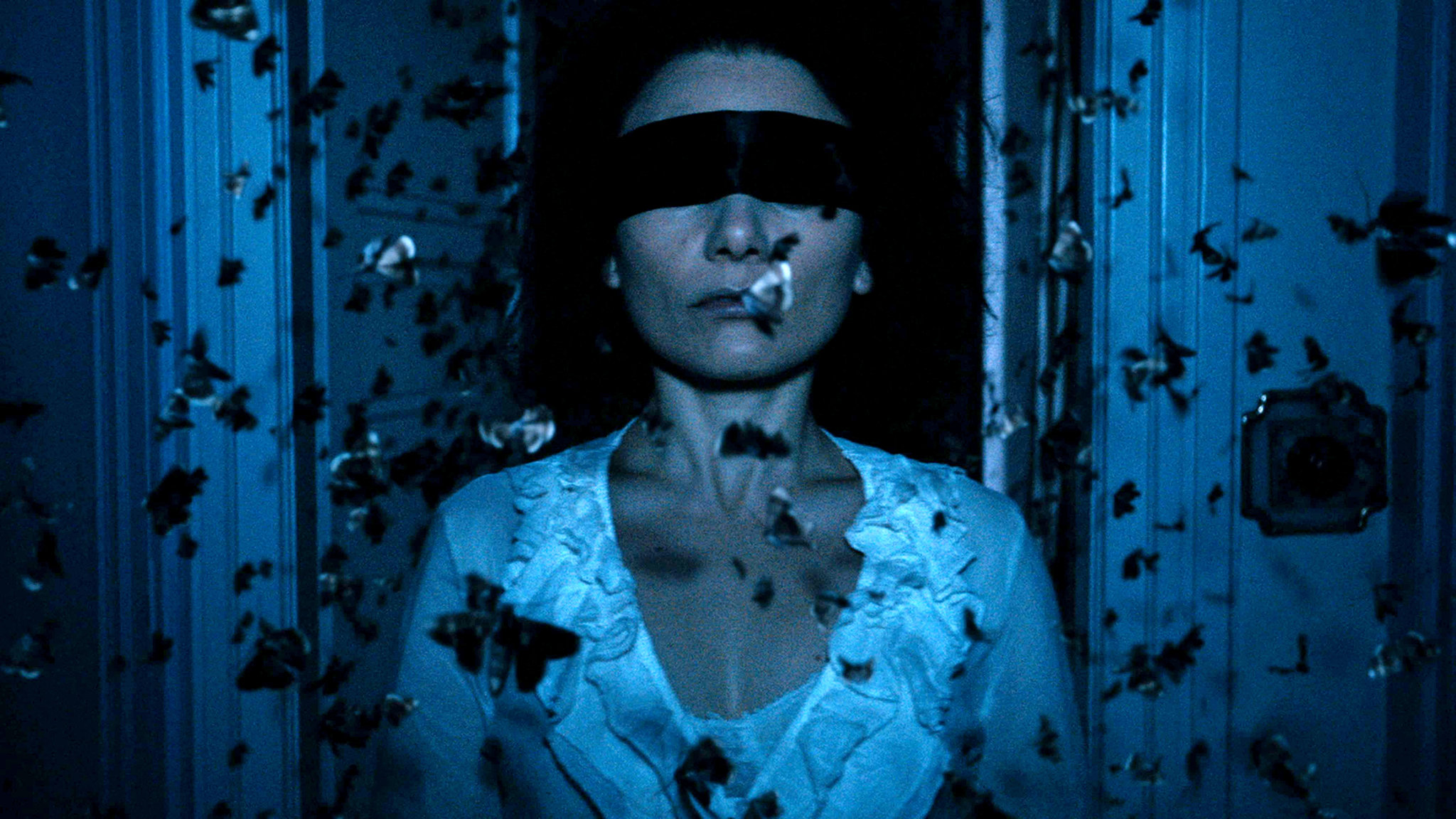
Filmed in Khon Kaen, Joe’s hometown in the northeast Thai region of Isan, Cemetery of Splendour is mostly set at a defunct elementary school turned makeshift hospital for convalescing soldiers. Middle-aged Jen (Joe regular Jenjira Pongpas) is visiting a friend who works there as a nurse. Jen now lives in Bangkok with her American husband Richard but grew up in this rural enclave and even attended this very school. Jen herself is disabled, one of her legs significantly shorter than the other (she walks with a cane.) The patients, however, are all afflicted by what is only referred to as a “sleeping sickness”. Much of the film occurs in a former classroom with a dozen of them laid out in beds, two rows of six on each side, all the windows open wide to let in the tropical air and nature sounds. The men are not exactly comatose, but not all that far off—they sleep day and night and on the rare occasion when awake, we see more than one of them overcome by narcolepsy, abruptly dozing off in mid-sentence or mid-bite in the dining hall. No explanation is given for this malady, only that it’s happening exclusively to the country’s servicemen.

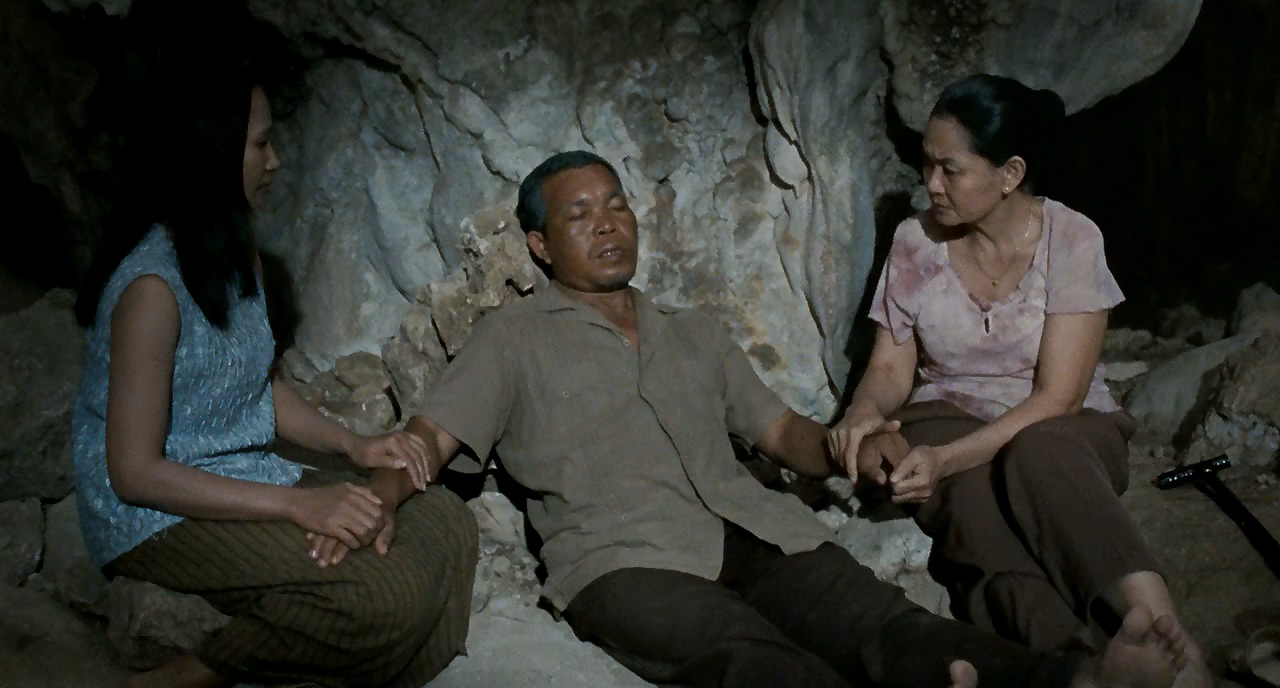
Enter Keng (Jarinpattra Rueangram), a young medium who works for the FBI. Known for her ability to contact the spirits of murder victims and missing persons, she’s at the hospital to sit with the sleeping soldiers (and occasionally, their wives) and perform psychic readings in order to understand their thoughts and dreams while in their unconscious states. Jen befriends both Keng as well as Itt (Banlop Lomnoi, another Joe regular), one of the younger, handsomer patients. Her burgeoning connection with the latter is motherly rather than sensual, but soon transcends such parameters: “It’s as if I’m synchronizing with that soldier, or he’s sleeping through me,” she says aloud at one point. As Jen spends more time bonding with both the psychic and this soldier, she herself enters altered, supernatural states of mind, rendered by Joe matter-of-factly, stressing both halves of the term “magical realism” as he tends to do in his work. One such example: not long after visiting a Buddhist shrine with Richard, Jen herself is visited in the nearby park by two women who casually reveal themselves as living embodiments of the princesses the shrine saluted in statue form. “Both of us are dead as well,” they tell Jen before leaving her with this wisdom: “Those soldiers will never recover.”

Jen watches over Itt, overcome by sleep.

Cemetery of Splendour gently tempers such fantasy elements with a naturalism informed by an immersive sense of place. The elaborate sound design favors environmental ambience over anything that’s produced although music occasionally surfaces—most notably during two sequences of people performing aerobics (an odd but insistent motif in Joe’s work along with hospital settings, for that matter.) Images such as a water wheel irrigation apparatus in the neighboring lake or the hospital room’s ceiling fans reappear throughout, adding texture rather than concrete meaning. Dialogue, however, is just as central an element in stressing the film’s realism. It often sounds unrehearsed, conversational, banal, even, but it grounds one in the moment, and the moment is key for it prevents Joe’s fascination with ghost stories and all that is unknowable from drifting out of focus—in other words, the fantastical becomes relatable.

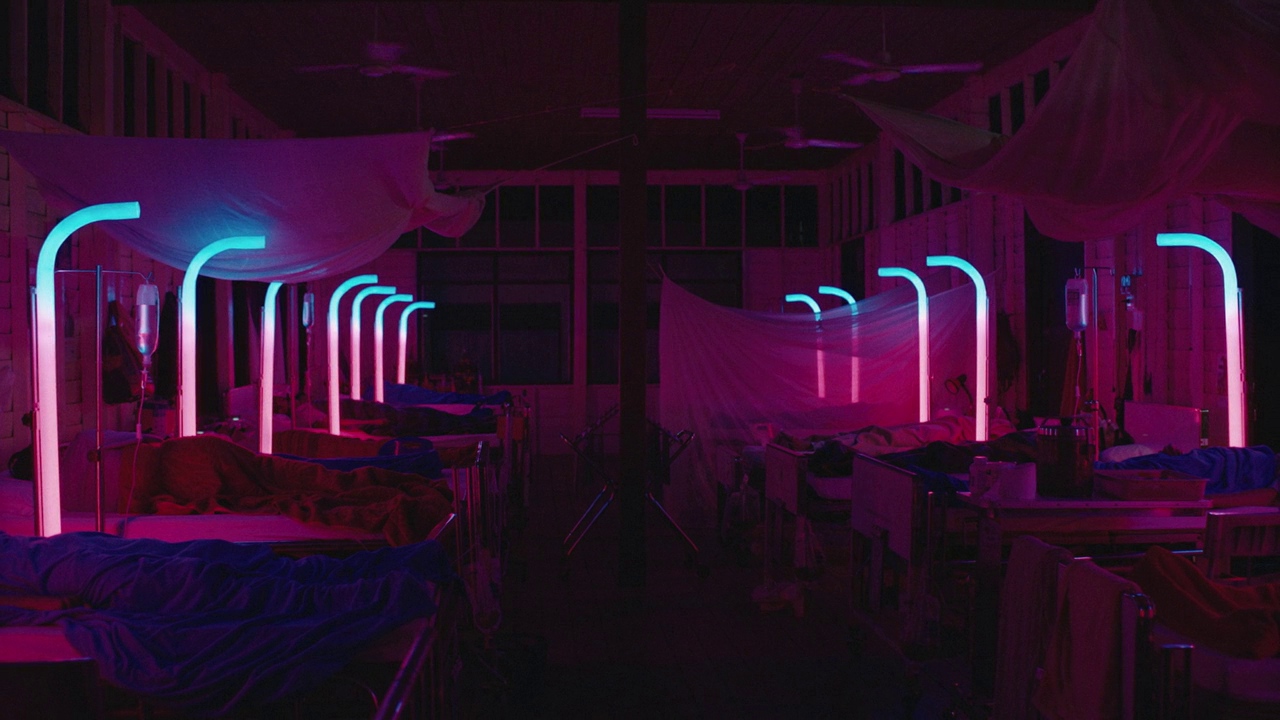
Still, an unknowable awe retains presence. Arguably the film’s most striking visual construct appears about a half-hour in with the installation a series of tall, narrow, curving neon light tubes at the head of each patient’s bed. Connected to each man by a face breathing mask, they’re meant to serve as a form of therapy, aiding with nightmares and snoring (“Americans used them in Afghanistan”, a doctor notes.) Occasionally, the light in these tubes is a pure, neutral hue; other times, it changes colors, from red to blue to green to white, the light gradually, almost lethargically surging vertically from bottom to top. No further scientific explanation is offered for these tubes, but it’s an image Joe returns to throughout the film, often after dark when the alternately cool and warm colors are exclusively illuminating the room. It’s hypnotic, presumably for the patients but also the viewer—beautifully meditative and a respite from all the conversation transpiring during the day.

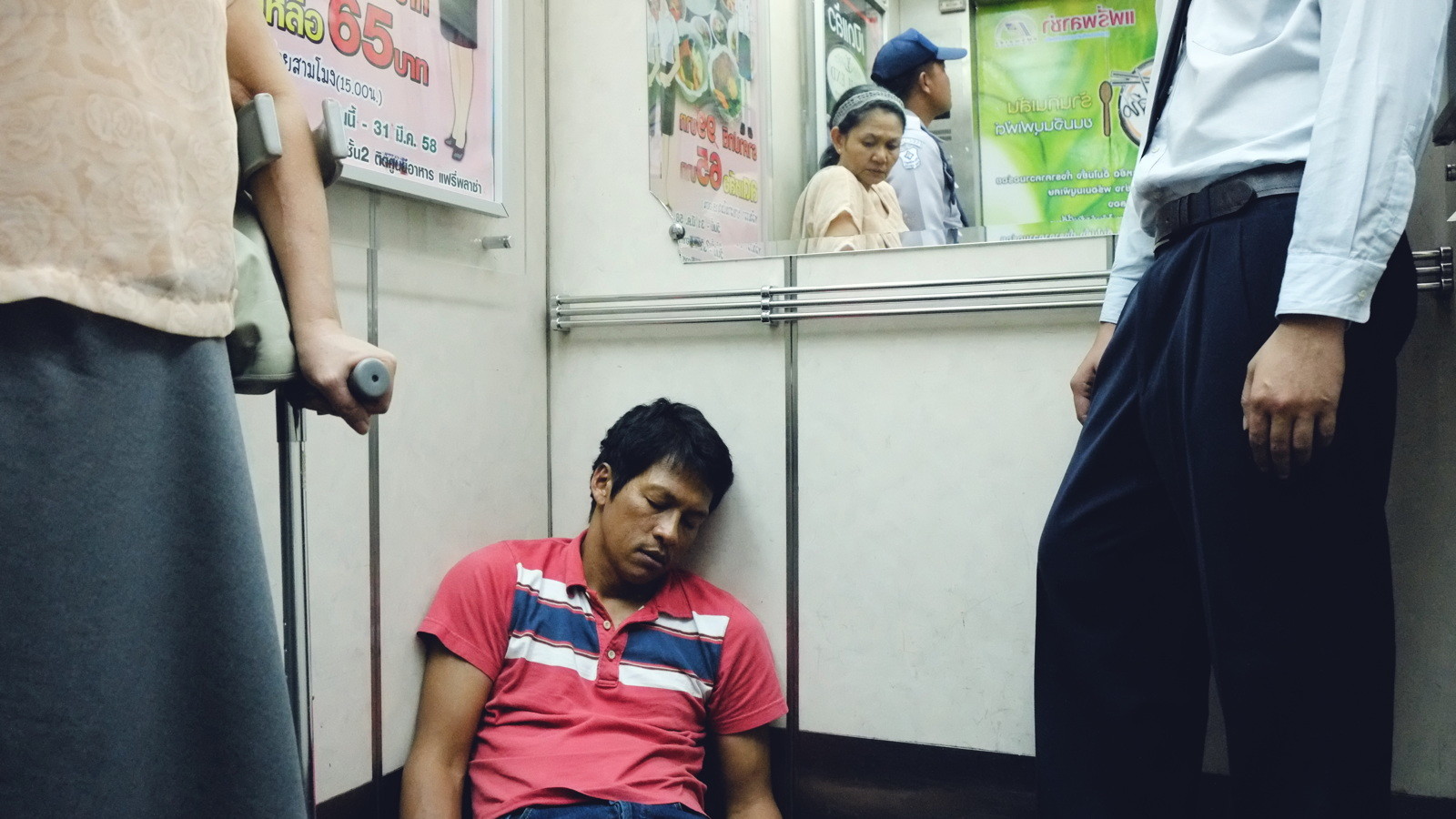
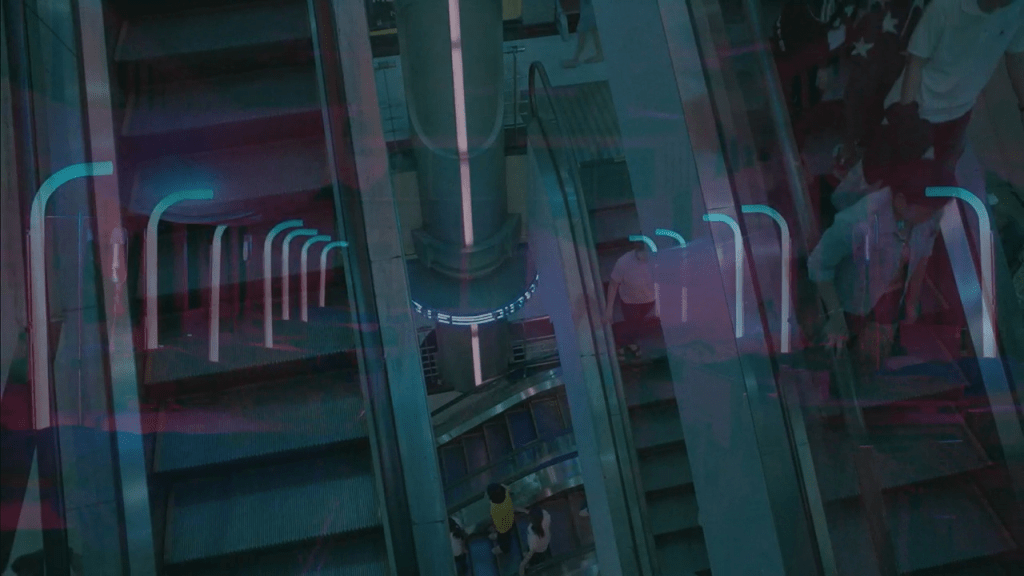
The tubes also play a role in one of the film’s key sequences. In a rare instance where Itt is fully awake, he and Jen leave the hospital for an evening trip into the city: dinner at a street market and a movie (we only see them watching a trailer for an over-the-top, CGI-heavy action/horror epic—the antithesis of Joe’s style.) After the trailer ends, as seen in silhouette, Jen, Itt and the rest of the audience stand up in the dark, silent, still staring at the screen as if in a trance (much like the viewer of one of Joe’s films, perhaps.) Everyone then leaves the theater in what appears to be a modern multiplex, walking towards a sea of escalators that will take them back to the outside world. There’s no score, only diegetic sound but as patrons get on the escalators, some familiar, slowly changing colors appear. They’re from neon lights in the building’s interior design. Soon, we also see a recognizable ceiling fan as part of an exceedingly slow crossfade. The escalator riders are still visible, but the hospital room with the glowing neon tubes also comes into focus.

The crossfade.

This crossfade endures for at least a minute; it’s like nothing else I’ve ever seen in a film. In trying to determine why Joe included it here, I have no definite answers apart from him suggesting this idea of worlds coalescing: the awake cinema patrons and the sleeping soldiers co-exist, after all, with the former arguably in just as much of a fugue state as the latter. Like many sequences in Stalker, it goes on longer than it needs to (personally, I never wanted it to end), but long enough for it resonate by inviting the viewer into this combined fugue state—the mundaneness of everyday life (leaving a movie theater) with the world of the subconscious. Jen herself latter experiences her own fugue state as a sleeping Itt communicates with her through the medium Keng. Jen tells him, “I think I’m dreaming, Itt; I just want to wake up.” This occurs right before the reflection-of-sky-on-water-reveal, itself perhaps encouraging viewers to arrive at the same conclusion.

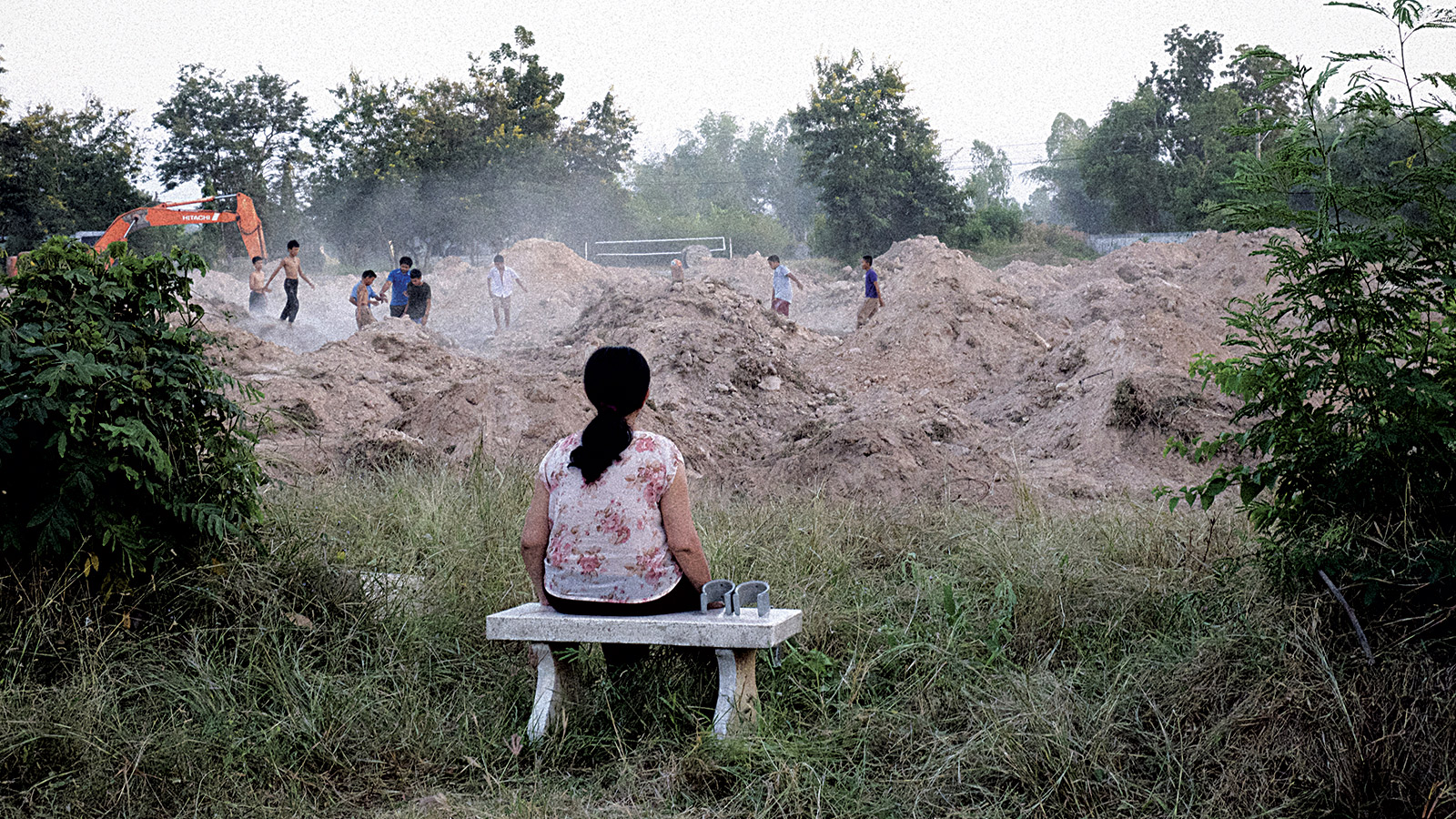
Later, Jen is back in the makeshift hospital room besides Itt as he lies in bed. She says to him, “Suddenly, I can read your mind. I have seen your dream.” “And I can see yours,” Itt responds. Some kind of transfiguration has occurred between them. Cemetery of Splendour doesn’t offer any logical explanation for this act because none exists (something similar occurs in his next feature, 2021’s Memoria, filmed in Colombia (!) and starring Tilda Swinton (!!)). The closest cinema can do is put the viewer in a mind state attempting to express what the experience of transfiguration might be like. The final scene is of Jen sitting on a park bench outside the hospital, watching a large dump truck digging a massive hole in the ground (the image of which opened the film.) We’re never told exactly why the truck is there (it’s speculated they’re digging to install fiber optic cables) but its presence and purpose is related to talk of the makeshift hospital’s imminent closure and tearing down. In the distance, an outdoor aerobics class performs to a jaunty instrumental slightly tinged with melancholy. In the last shot, we see only Jen, eyes wide open, still watching the truck but now framed as if she was staring directly at us. She’s been through something over the course of the film, and so have we.

Essay #22 of 24 Frames

Go back to #21: The Duke of Burgundy.

Go ahead to #23: Ham On Rye
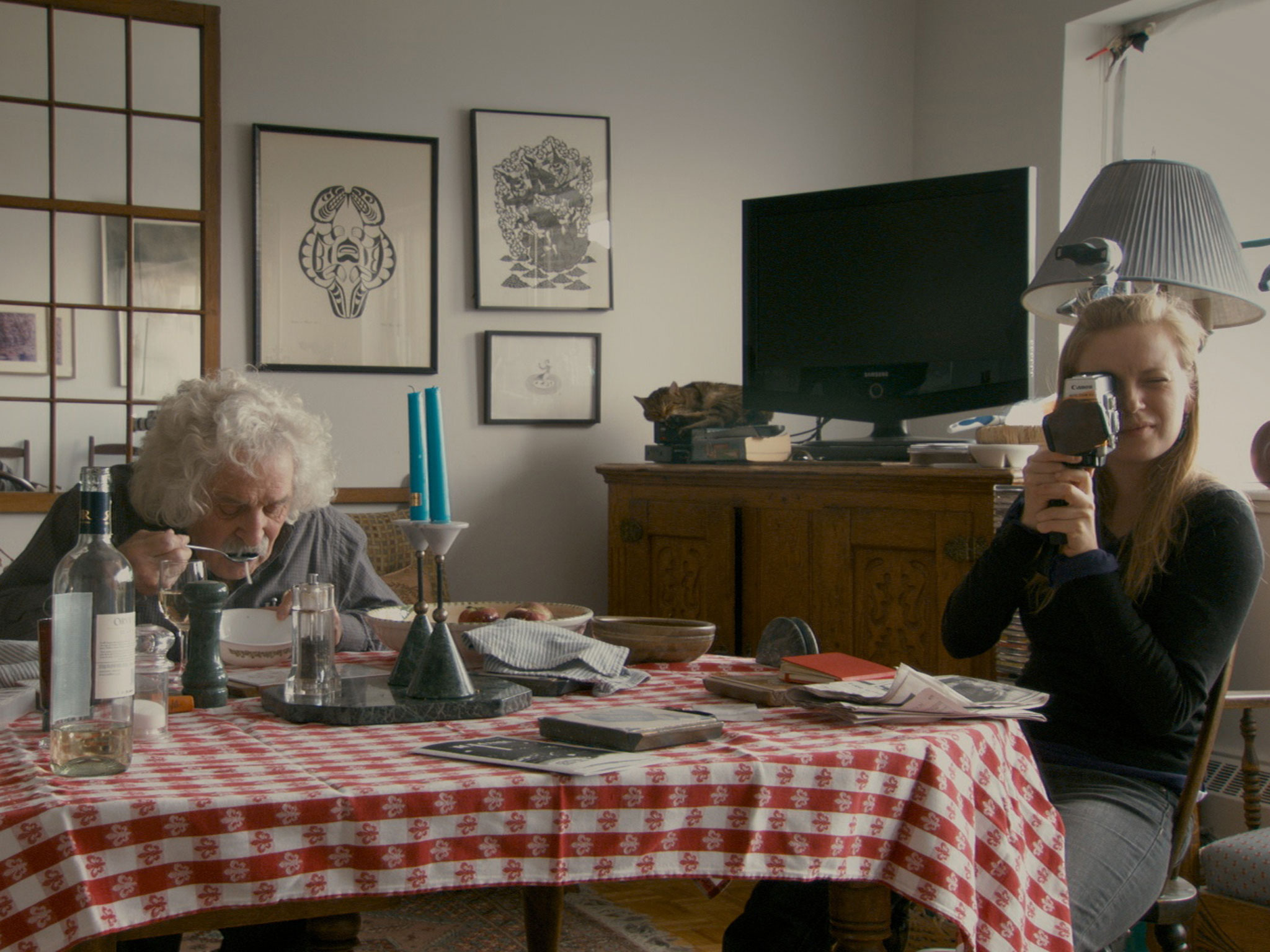
Halfway Through 2024: Movies

Do Not Expect Too Much From The End Of The World

According to Letterboxd, I’ve seen nearly forty movies that have had a 2024 release so far (a Boston-area theatrical release or, if there wasn’t one, a streaming debut.) Below are fifteen (in alphabetical order by title) to keep in mind six+ months from now when I’m compiling my year-end list. I viewed four at TIFF last September, two at IFFBoston in May, plus two more at IFFBoston’s Fall Focus last October. As for the rest, all were streamed at home apart from Challengers and Robot Dreams, the latter perhaps my favorite animated feature in years. Do Not Expect Too Much From the End of the World (which I could not get tickets for at TIFF) is currently on MUBI and worth the price of a subscription; I plan on revisiting it soon, more than willing to take in its 163-minute running time again. As I wrote in my brief review, “(It uses) humor as a balm in expressing outrage at a world gone absurd” and may prove as essential to its own time as Parasite was five years ago.

  • Challengers
  • Do Not Expect Too Much From The End Of The World
  • Egoist
  • Evil Does Not Exist
  • The Feeling That The Time For Doing Something Has Passed
  • How To Have Sex
  • Hundreds of Beavers
  • Inside The Yellow Cocoon Shell
  • Janet Planet
  • Perfect Days
  • Pictures of Ghosts
  • Robot Dreams
  • Seagrass
  • The Teachers’ Lounge
  • Tuesday

24 Frames: The Duke of Burgundy

In the last entry, I stressed how content and form can both complement and enhance each other in a film. One of my more important takeaways from studying the art in grad school was the importance of good writing (content) and acting (form)—the absence of either one often an automatic blemish on the final product. Obviously, not only performances determine form, even if they’re the most crucial component of it. However, one should not value a film’s style any less in establishing its overall worth. In particular, a sense of place via its production and sound design can be just as crucial in making a great film as its screenplay or actors (as long as they don’t overshadow either one.)

Roughly a decade after grad school, entering my mid-late 30s, I had by then seen literally thousands of movies (probably closer to around 2,000, but that qualifies.) As with any medium, the more one absorbs, the better one can critically assess. I reached a point where I began responding more strongly to qualities I hadn’t seen before, as opposed to those which had become tropes or rendered stale through repetition. Woody Allen, for instance, grew less interesting to me (controversy/cancellation aside): his 21st Century work offered little variation on what had come before (give or take a Match Point), rendering him irrelevant and mechanical (I took to dubbing him the “Wood-bot”.) Why waste time on someone obviously past their prime with so much new (and unseen old) stuff attempting something different or at least advancing a fresh perspective?

Naturally, I praised unique, innovative performances: Daniel Day-Lewis’ ultra-specific persona and accent in Paul Thomas Anderson’s There Will Be Blood, Lesley Manville burrowing deep as an unglamorous but sympathetic lush in Mike Leigh’s Another Year; Nicolas Cage going for broke and director Werner Herzog expertly guiding him in Bad Lieutenant: Port of Call New Orleans. I also valued screenplays that either told stories I hadn’t heard before (Charlie Kaufman’s Synecdoche, New York pushing his trademark meta-ness to an extreme in exploring mortality vs. the permanence of art) or told in a way I hadn’t seen before (Leos Carax’s Holy Motors orchestrating an extended metaphor for what it entails to partake in a performance and inhabit many roles.)

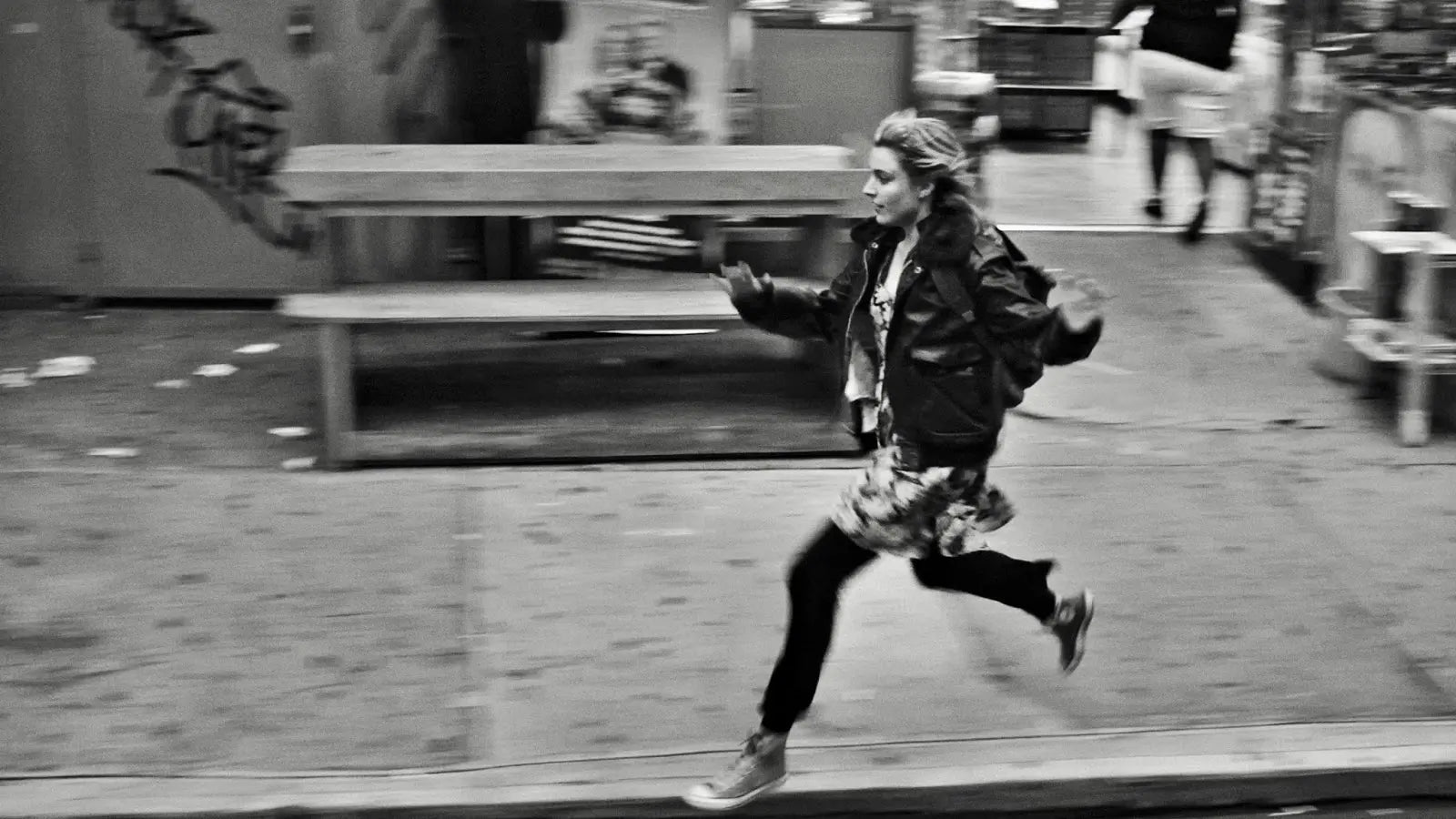
Just as often, the look and/or sound of a film got my attention. I fell head over heels for Nicolas Winding Refn’s Driveand its deep dive into a Los Angeles milieu by way of its opening, splashy pink-font credits scored to Kavinsky and Lovefoxx’s seductive, retro-electropop “Nightcall”; I also found the throwback, low-budget, black-and-white New York of Noah Baumbach’s Frances Ha incessantly charming. I instantly loved the near-magical conjuring of 1965 coastal Rhode Island Wes Anderson crafted for Moonrise Kingdom and the melancholy, concrete greys of Greenwich Village set just a few years before in Joel and Ethan Coens’ Inside Llewyn Davis. Of course, each of these titles also had exceptional screenplays and performances (Frances Ha is unimaginable with anyone other than Greta Gerwig as the titular character) but their visual tableaux and soundtracks were beautifully in sync with them, creating multi-dimensional experiences one couldn’t replicate solely on the page.

Frances Ha

Of the new filmmakers to emerge in the 2010s, Peter Strickland was one of the most driven by an uber-particular sense of style. Born in Britain in 1973, he broke through with his second feature, Berberian Sound Studio (2012). Toby Jones (then best known for starring in the Truman Capote film that was not Capote) plays a meek sound engineer working on a 1970s Italian horror film (the subgenre, giallo, is best exemplified by Dario Argento’s 1977 masterpiece Suspiria.) Strickland’s work is more of a psychological horror film, with Jones’ character’s sanity gradually ebbing as his personality fractures and real life becomes indistinguishable from the movie he’s working on. Rather than keeping tabs on an ever-more-convoluted plot, the film is most striking for its style, heavily drawing on giallo tropes (bold colors, intrusive music, graphic violence, an enveloping feeling of dread and the macabre) and also painstakingly recreating the look and feel of a period long since passed.

Berberian Sound Studio makes a formidable impression but its obtuseness doesn’t fully satisfy—by the end, while dazzled by its style and impressed by Jones (a gifted and consistently great character actor), I didn’t feel much of an emotional connection to what had transpired. Thankfully, Strickland avoids this trap with his next feature, The Duke of Burgundy (2014). Ostensibly set in what appears to be a small European village (it was shot on location in Hungary but its location is never explicitly identified onscreen), it has a style and sense of place as richly textured, realized and dominant as its predecessor; it’s also a big step forward in how he expertly utilizes these facets in service of his narrative, which is nearly as complex but far more resonant in how it invites the viewer to respond to its characters within this environment.

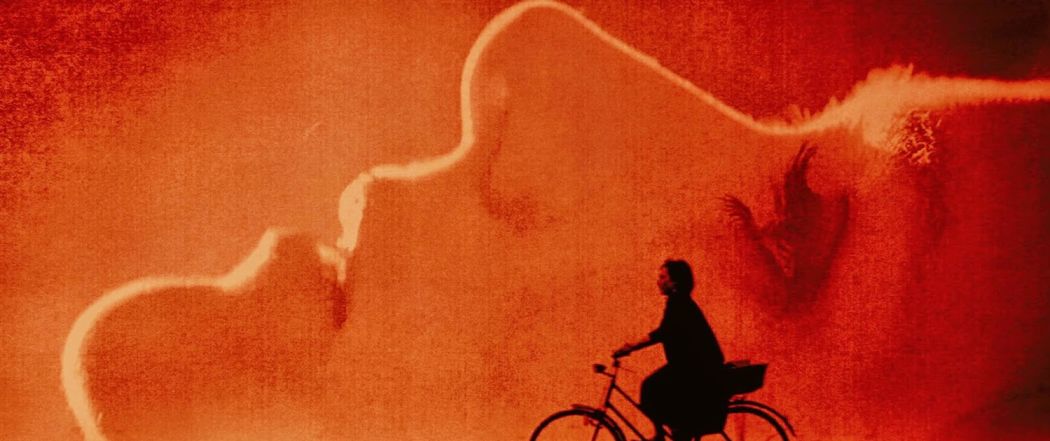
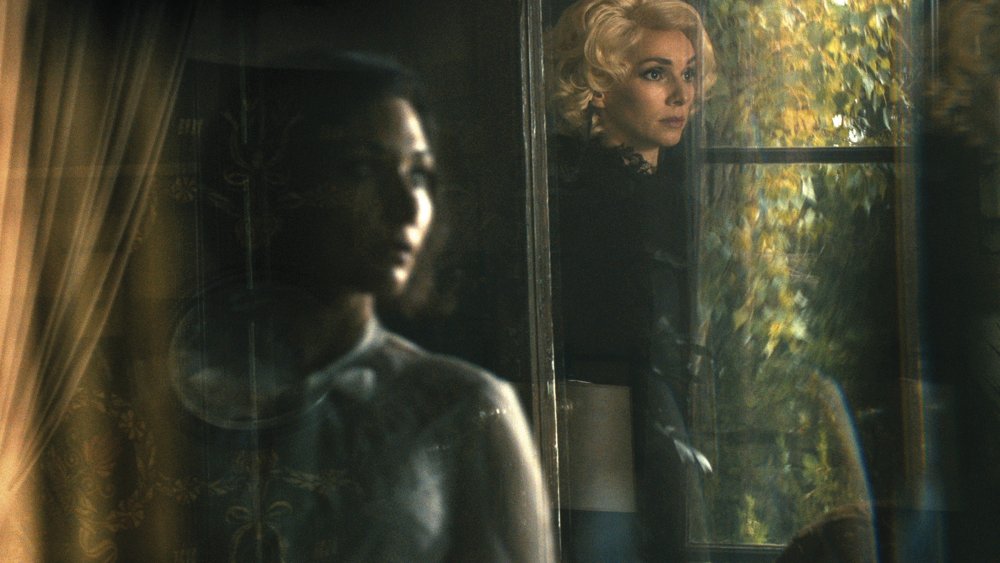
The film opens with Evelyn (Chiara D’Anna), a younger, pixie-like woman kneeling at a bucolic stream in what resembles an enchanted forest out of a fairy tale. She looks up longingly at the sky and then takes to her bicycle, riding through the woods as the opening credits commence. Scored, like the rest of the film to the baroque chamber pop of duo Cat’s Eyes (with breathy, Francoise Hardy-esque vocalist Rachel Zeffira), the credits resemble a picture book or perhaps a procession of twee, self-knowing The Smiths or Belle and Sebastian album covers, employing freeze frames, matte effects and various animation techniques (including fluttering butterflies—remember them.) It concludes once Evelyn reaches her destination: the posh home of Cynthia (Sidse Babett Knudsen). 

A single, middle-aged lepidopterist (one who studies butterflies and moths), Cynthia greets Evelyn with a curt, “You’re late” before letting her into the house. One immediately detects how curated the place is, as eloquently considered and conceived as anything out of Architectural Digest. Between the furnishings and the characters’ hairstyles and clothing, it also easily looks like it could be the 1970s, yet there’s something not-quite-restricted to that period suggesting this could be reasonably set during any time since that decade (it’s also devoid of devices such as cell phones or computers that would render the palette a deliberate anachronism.) Certainly, such an environment feels like a deliberate provocation, meant to invoke something retro without placing it in a concrete context. It fascinates not because it necessarily begs us to ask when is this actually taking place but more like why does it look like the past frozen in amber?

It’s a question that surfaces in nearly all of Strickland’s work, especially his next feature In Fabric (2018), which delves deep into home furnishings, fashions and department store interiors straight out of the 1970s and 1980s while not necessarily tied to either of those decades beyond their looks (really, the tale of a dress that murders people can be set anytime, anyplace!) In The Duke of Burgundy, however, it’s a tad more subtle. One could simply chalk it up to the director’s preference for era-specific stylistic choices—a love for visual motifs from the years constituting his own childhood. It surely distinguishes itself from an alternate universe version of the film explicitly set in the present where Cynthia and Evelyn post on social media and include slick PowerPoint presentations in the former’s lepidoptery lectures.

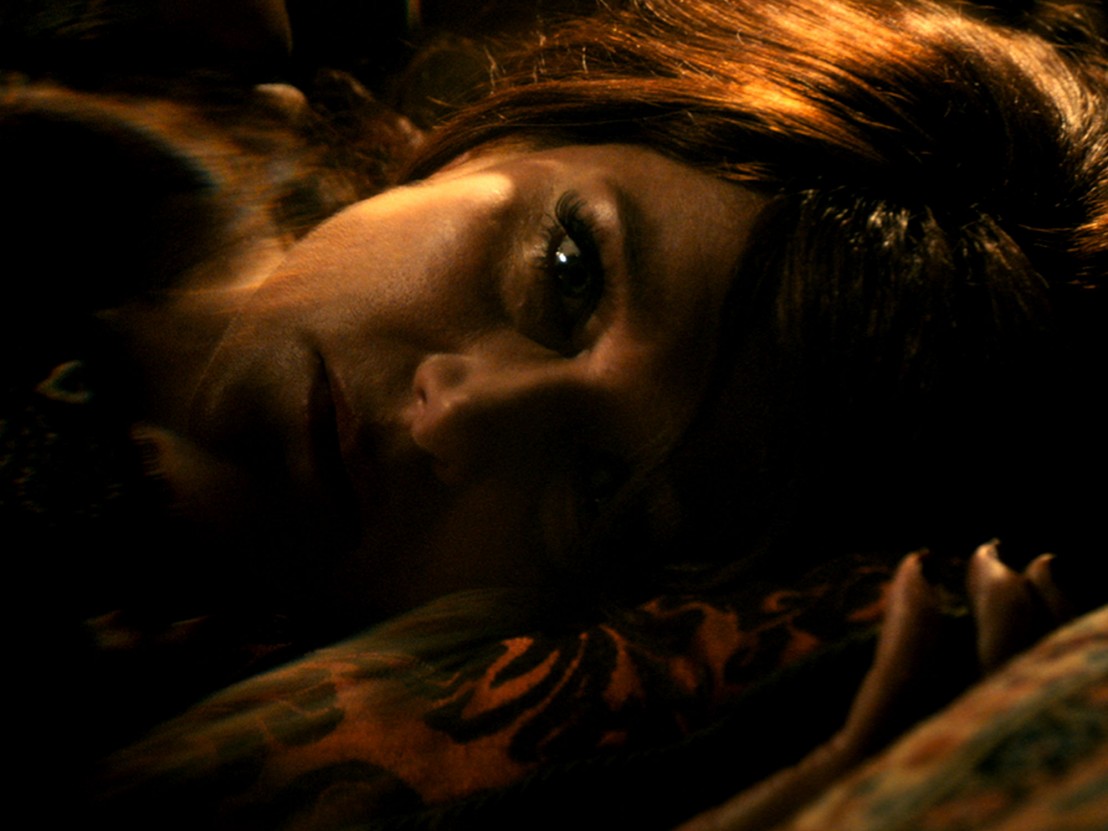
While unignorable, however, Strickland’s stylistic choices primarily help to set an overall tone—an off-kilter one, for sure, as The Duke of Burgundy occasionally shifts into experimental, dreamlike sequences that do not so much move the narrative forward as offer peeks into Evelyn’s and especially Cynthia’s subconsciouses. In direct contrast to heightening this overall sense that something’s just a tad awry, these visuals also end up exuding a sense of coziness, maybe even some warmth. Cynthia has obviously put a lot of thought and care into designing her home and every consideration from its mood lighting to the textures of its furniture and knickknacks feels welcoming: a real, lived-in home rather than a sterile museum. The idyllic, heavily forested and sun-kissed (even when perpetually rainy, somehow) village settings are similarly pastoral and inviting.

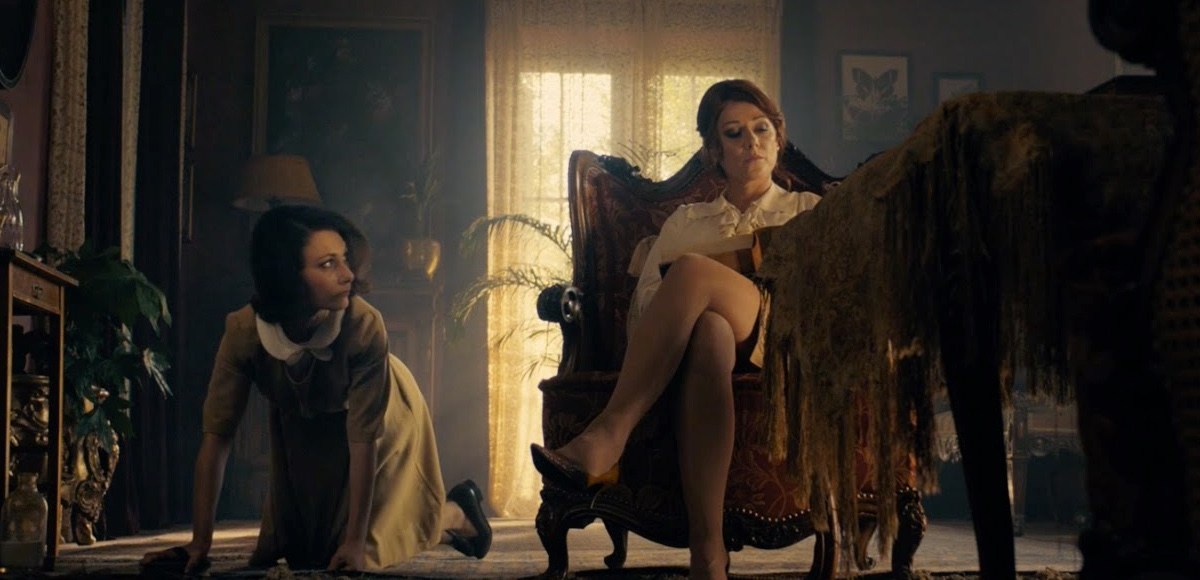
This blend of peculiarity and familiarity is also palpable after Evelyn enters Cynthia’s home and the later commands of her, “You can start by cleaning the study.” It initially appears that Evelyn is Cynthia’s cleaning lady, and not a sterling one at that. Cynthia comes off as a stuffy taskmaster, sitting in her chair and reading while ignoring Evelyn as she scrubs the floor beneath on her hands and knees. Cynthia remains unsatisfied, ordering Evelyn to rub her feet and then wash her underwear by hand in the bathroom sink. Still disappointed by Evelyn’s work, Cynthia announces that it’s time for “A little punishment.” She takes her by the hand, dragging her into the bedroom where, behind a closed door, we hear what sounds like Evelyn being repeatedly spanked, or perhaps whipped.

Evelyn scrubs, Cynthia ignores.

However, the next shot reveals what’s really going on: as the two women lie in bed together, lovingly caressing each other, we see that Evelyn is more than just Cynthia’s maid (or perhaps not one at all.) The whole thing is a charade, an act, a BDSM relationship between the two women with defined dom and sub roles. Suddenly, Cynthia’s brusque demeanor makes perfect sense, as does much of her odd behavior—for instance, exactly why she drinks copious amounts of water before one of Evelyn’s subsequent visits is never shown but discreetly implied that it has something to do with urination as a sexual act. That it’s all a performance is a clever twist; had this been a short rather than a feature, it would’ve been a neat place to end on.

Fortunately, Strickland takes this further by gradually revealing another turn: while Cynthia plays the part of the dom, it’s clearly Evelyn calling the shots in their relationship, making suggestions and writing down what Cynthia should be doing and saying when playacting with her. Increasingly, Cynthia can’t help but relay her discomfort with her role, which as an actress Knudsen expresses beautifully to the point where it’s heartbreaking to view her growing distress. At one point, a platinum blonde and potential femme-fatale only known as The Carpenter (Strickland regular Fatma Mohamed) visits them to provide measurements for a coffin-like container which Evelyn could sleep in under Cynthia’s bed. Once determined this object could not possibly be completed in time for Evelyn’s birthday (it’s a gift!), the carpenter suggests an alternative present called a ”human toilet”: note the childlike glee on Evelyn’s face at this mention and, in contrast, the utter bewilderment on Cynthia’s, who abruptly leaves the room, citing another appointment as an excuse for her brash departure.

Real, unignorable emotions increasingly invade the performative aspects of Cynthia and Evelyn’s relationship. Cynthia finds herself unable to recite her lines with conviction while Evelyn, tempted by The Carpenter, becomes impatient, telling her love, “It would be nice if you did it without having to be asked.” If it sounds like pure soap opera, rest assured stylistically it is far removed from that genre. As the relationship becomes strained, the score is less melodic with electronic droning noises threatening to completely smother the strings, harpsichord and cor anglais from before. Similarly, the lighting gets darker and opaquer while the camera moves ever-more-deliberately with copious slow-as-molasses vertical pans nearly rendering both interiors and bodies as abstractions.

Evelyn and The Carpenter

The film’s title refers not to European royalty but the English term for a species of butterfly, Hamearis Lucina. Why Strickland chose this particular species is best left to lepidopterists, but his use of butterflies as a motif is more relevant. When considering this insect, one can’t help but think of the notion of transformation—how a caterpillar passes through multiple stages to become something radically different (from a ground dweller to a flier with colorful wings.) In that sense, both Cynthia and Evelyn struggle (to varying degrees) in transforming themselves and each other. A stark reminder of this is omnipresent in Cynthia’s home: cases and cabinets teeming with pinned butterflies, all of them transformations that eventually hit a dead end, preserved as memories but not ongoing entities like our heroines. The two women reach a cathartic moment, Evelyn consoling Cynthia about their playacting, “If this is what it does to you, I can change.” Rather than evolving like a successful transformation, however, this relationship more resembles a Mobius strip—following this confrontation, the film ends as it begins with Cynthia once again drinking her water and reviewing her notecards as Evelyn shows up at her front door.

Still, the butterfly motif is not just there for the benefit of the film’s central relationship. In the lecture scenes, one learns that Evelyn herself is a budding lepidopterist, her desire to dominate made flesh as she asks a lecturer pointed questions seemingly to bring attention to herself while a vaguely embarrassed Cynthia looks on. As the camera slowly pans across the lecture’s audience, not one man is present, only women. Further heightening the film’s off-kilter sensibility, some of the women are so extensively made-up they resemble men in drag (much like a Roxy Music album cover); the gleeful presence of the occasional mannequin in the background of said audience pushes this off-ness even further. Gradually, one realizes there are no actual men in the entire film! The Duke of Burgundy is itself a transformative realm, a society of women playing all parts. The butterflies themselves are remnants of a completed evolution; its central love story conveys that whatever our aspirations may be, humans as individuals are subject to a continual evolution without end; as couples, an end only arrives when one participant or in some cases, both are no longer willing to evolve.

We leave Cynthia and Evelyn at an impasse—their relationship is intact, for now, but who is to say what potential it has when it appears to be stuck in a cocoon? Similarly, one can appreciate new films for their familiarity, but when do they start seeming stale? Like The Duke of Burgundy, the remaining titles in this project will emphasize new ways of seeing and storytelling as recent examples of the medium’s continued evolution.

Essay #21 of 24 Frames

Go back to #20: Stories We Tell.

Go ahead to #22: Cemetery of Splendour

IFFBoston 2024, Part 2

Tuesday

The other four films I saw at the 21st annual Independent Film Festival Boston. Go here for the first four.

TUESDAY

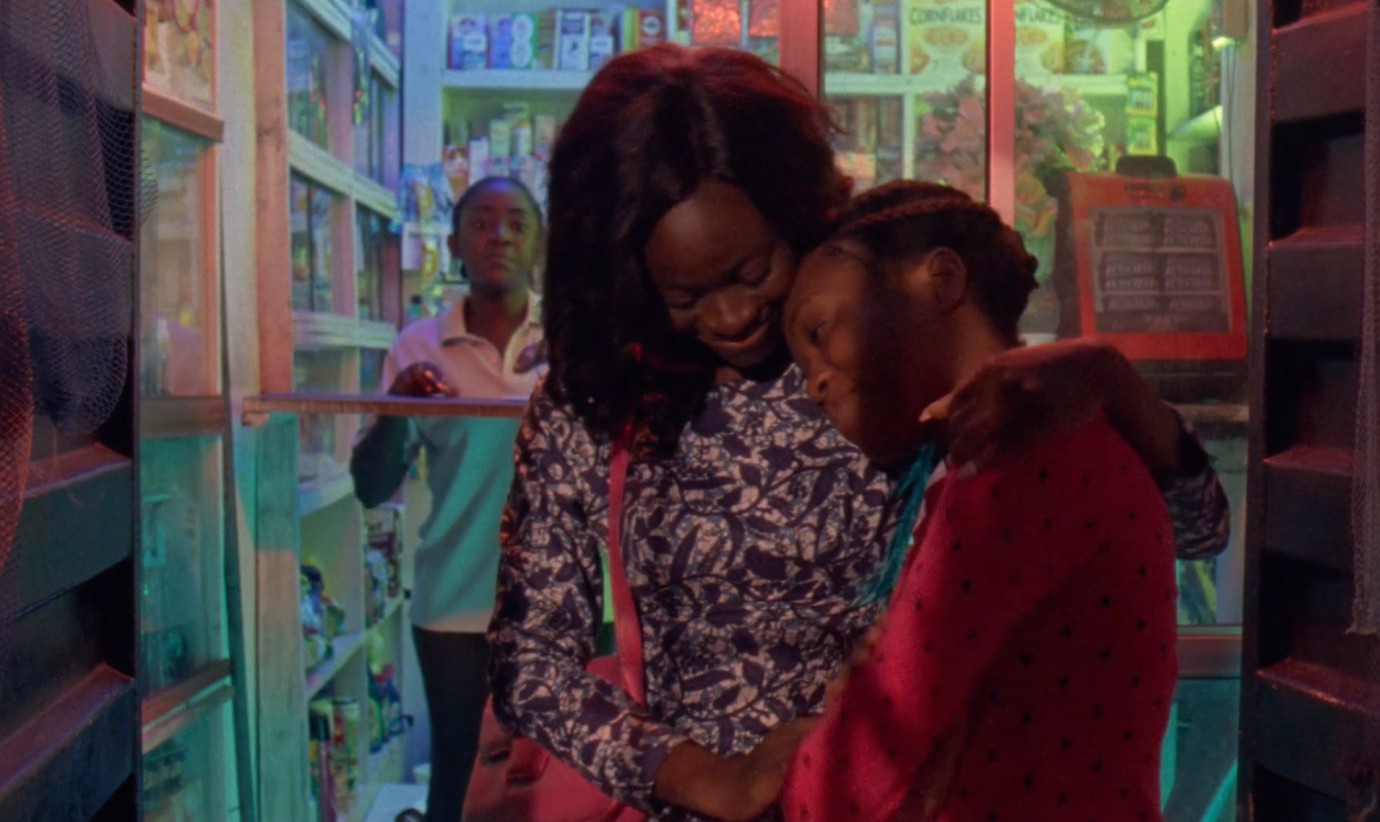
Named after a terminally ill 16-year-old girl (played by Lola Petticrew), she is but one of three main characters in writer-director Daina O. Pusić’s feature debut. The other two are Tuesday’s mother, Zora (Julia Louis-Dreyfus) and a feral, multi-hued parrot who can change size at will and speaks in a sinister, garbled, near-stoned voice (by Nigerian born British actor Arinzé Kene.) 

It’s really all one needs to know as it’s best to go into this cold. Before the film’s screening, a collective buzz between members of my film group and I speculated that it was to be an unusual one, possibly a slow, oblique art film along the lines of Jonathan Glazer’s Under The Skin; from the first scene, however, it was more readily apparent that this was simply batshit insane and fortunately, refreshing and unique. Even once one gets the gist of what’s really going on, the weirdness doesn’t cease; nor does an ability to surprise (one moment in particular is like nothing else I’ve seen outside of a Warner Bros cartoon.) Tuesday has the feel of a future cult classic and it’s certainly not for everyone but it is assured, intriguing and unpredictable. Iconic for multiple comedic performances, Louis-Dreyfus has rarely played such a dramatic, heartbreaking role, although as in the most effective dramas, there is so much humor laced throughout that it’s almost inseparable from the serious stuff. I’m not sure if this is as great of a film as it is an original one, but I look forward to revisiting it. Grade: A-

THELMA

June Squibb found success late in life, well into her 70s and beyond when she appeared in small but acclaimed scene-stealing roles Alexander Payne’s About Schmidt and Nebraska; in both of these and many other film and TV roles, her tart irascibleness emitted the presence of an esteemed character actress. Until now, no one has built an entire film around her; enter director Josh Margolin, whose feature debut is based on his own grandmother (played here by Squibb), a victim of a phone scam bilking her out of $10,000.

The thing about good character actors is that, given the opportunity to shine in a lead role, they usually knock it out of the park. 93 when it was filmed, Squibb’s timing and verve is undiminished, but with a naturalness and gravitas that transcends the “wacky old lady” trope. She also leads an above-average ensemble populated with other great character actors (Parker Posey, Clark Gregg) and in his final role, an affecting Richard Roundtree. The film itself is as light as air (almost verging-on-silly), but Margolin’s awareness of this and the script’s gentle satire of suspenseful Mission: Impossible like theatrics turn Thelma into the summer blockbuster alternative you probably never knew you wanted. B+

PURPLE HAZE: A CONSERVATION FILM

Alternate title: Everything You Ever Wanted to Know About Purple Martins (and Should Thought To Have Asked.) The largest species of swallows in North America, the Purple Martin resides exclusively in nesting structures in order to ensure their survival. Filmmaker Zach Steinhauser noticed how these birds tended to thrive in man-made bird houses constructed from holed-out gourds around his home in central South Carolina, sparking an interest in the species, following them as they migrated to warmer climates (most notably the Amazon rainforest) and back to their domestic homes which are increasingly threatened by environmental deterioration and lack of awareness. This is the type of documentary you’ll only see at a film festival: a little rough around the edges but impassioned and heartfelt in its agenda. Steinhauser is obviously working with a limited budget, but you rarely question his interest or dedication to the subject matter, which goes a long way in rendering this a better-than-average film about birds. B

HAPPY CAMPERS

Amy Nicholson’s documentary tries to be the low-rent trailer park equivalent of Errol Morris’ Gates of Heaven, offering a deadpan look at the last summer of one said establishment off the Virginia coast before it closes for redevelopment. Forgoing context and narration for a verite-like, interview-heavy approach, it’s a pleasant, gently rambling view into working class Americana, a community of tchotchke-filled mobile homes that might seem downtrodden if not for flashes of recognition all but the most elite vacationers will pick up on or the sincerity in how its inhabitants are portrayed. Unfortunately, it stretches out a nifty idea for a short film into something that’s a bit repetitive even at 78 minutes. B-

IFFBoston 2024, Part 1

Janet Planet

I saw eight movies at IFFBoston 2024; here are reviews of the first four.

JANET PLANET

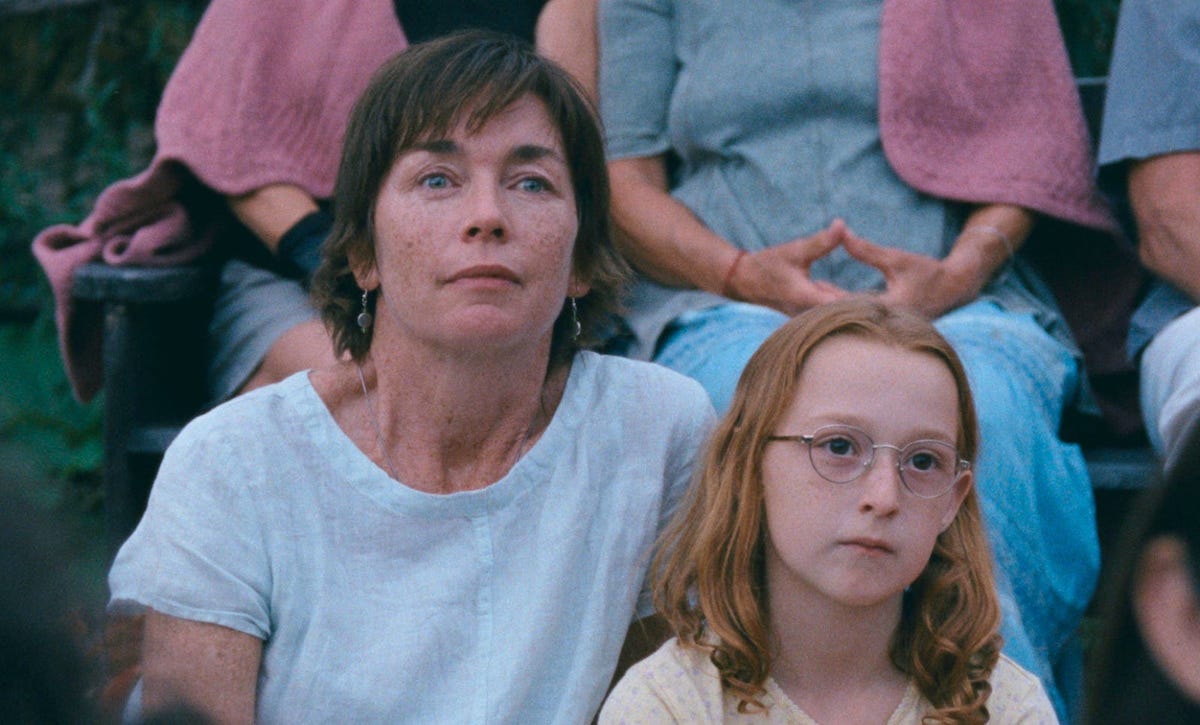
As seen in a cold open too wickedly good to spoil here, pre-teen angst has served bespectacled 11-year-old Lacy (Zoe Zeigler) well, or at least to the point where she has her single mother (Julianne Nicholson) delicately wrapped around her finger. Moody but forthright, she spends the summer in their Western Massachusetts home in the woods carefully tending after a menagerie of little figurines, camped out in the front of the TV set and mostly taking her piano lessons seriously. Meanwhile, her mother becomes involved with three people to varying degrees, including a haunted divorcee (Will Patton), an old friend (Sophie Okenedo) and a pretentious cult guru (Elias Koteas!)

Nicholson is terrific as usual but Ziegler is a real find along the lines of Elsie Fisher in Eighth Grade. Somehow both mousy and poised, Lacy is a unique but wholly believable character. Credit should also go to writer/director Annie Baker, an esteemed playwright making her film debut. Set in 1991, this inevitably feels like it could be autobiographical (Park also hails from where it’s set) but what’s striking is how it uncovers so much nuance in its internal, seeking, near-deadpan approach. Little about the film feels forced or false and yet it doesn’t feel like many other films, allowing for hints of magical realism deployed with an unusually subtle touch. While not necessarily a “lessons learned” type of coming of age story, Janet Planet nonetheless tracks a pivotal summer in its protagonist’s life, leaving her at a crossroads as to whether her angst is at all worth retaining. Grade: A-

GHOSTLIGHT

It feels like a sitcom-friendly setup at first: gruff, middle-aged construction worker Dan (Keith Kupferer) stumbles his way into participating in a community theater production of “Romeo and Juliet” and discovers a talent for acting he never knew he had. That he’s also grieving over the recent death of a family member whose demise eerily ties into the play’s narrative is what elevates Ghostlight into something richer and darker; it would also seem ridiculously coincidental if not for Kupferer’s convincing presence (he’s mostly known as a Chicago-based stage actor) or a screenplay that withholds and reveals at the most appropriate moments.

Co-directed by couple Kelly O’Sullivan and Alex Thompson (who respectively starred in and directed Saint Frances a few years back), the film also benefits from casting Kupferer’s actual wife (Tara Mallen) and daughter (Katherine Mallen Kupferer) as his onscreen family–all three are more than up to the challenge of effortlessly recreating their real-life chemistry together. Dolly de Leon (Triangle of Sadness) is also a hoot as the irascible community theater player who encourages Dan to come into the fold. Truthfully, the film takes its time to get to a place where it finally makes a desired impact, even if it ends up somewhat mirroring that lengthy process all actors and theater troupes go through in preparing for opening night. B+

GASOLINE RAINBOW

Five teenagers set out from Nowheresville, Oregon in a worn-down van to make the 500+ mile trek to the Pacific Ocean. Along the way, they chill out, toke up, run into obstacles (including a fairly major one) and meet a variety of similar transients and loners along the way. It almost sounds like a group Gen Z equivalent of the road trip Lily Gladstone took in The Unknown Country except that it feels more casual and like a documentary. Given that this is directed by the Ross Brothers, it’s probably not the latter, liberally bending the real/fake line as they did in some of their past films, most notably 2020’s last-night-of-a-dive-bar reverie Bloody Nose, Empty Pockets. Unfortunately, this doesn’t retain the momentum or the interesting “characters” of that triumph and goes on for a little too long. There are great moments scattered throughout–the hopping of a freight train, a massive bonfire on a beach–but as a coming of age portrait of friends on the cusp of adulthood, it has nothing on something fully scripted/fictionalized like Dazed and Confused. B

MY OLD ASS

18-year-old Elliot (Maisy Stella) celebrates her birthday with her two best friends by taking magic mushrooms on a camping trip in the woods; while all three experience hallucinations, only Elliot’s manifests in the form of her future 39-year-old self, played by Aubrey Plaza. A promising premise for sure, but if you’re expecting a Charlie Kaufman or Michel Gondry-esque mind warp, note that this is simply an earnest Canadian film not without a few plot holes that gets most of its mileage out of a game Plaza. In my opinion, one can never have too much Plaza but as the focus shifts back to Stella, there’s simply not enough Plaza to go around even if what’s there is golden. Still, Megan Park’s film gets points for its relaxed approach to Elliot’s fluid sexuality as she questions her attraction to Chad (Percy Hynes White), an affable doofus whom her older self warns her to stay away from. B-

24 Frames: Stories We Tell

Like songs, poems, books and the live stage, films are another medium for storytelling. Even the most simplistic (Arrival of a Train at La Ciotat, The Lumiere Brothers, 1896) or experimental (Wavelength, Michael Snow, 1967) cinema communicates something to its audience, no matter how straightforward (the former a 50-second shot of exactly what its title promises) or abstract (the latter a 45-minute zoom shot directed towards a window in a room.) Arguably the best films either relay a story like none other or do so in ways few (if any) other films have tried. One might regard this as a challenge given the sheer amount of work this relatively young medium has already produced; even accounting for the small fraction of it that’s truly great (on Letterboxd, for example, I’ve given only about 250 out of 4500 movies (6%) a five-star rating), it’s easy to be critical/skeptical of finding new films that surpass or at least measure up to one’s favorites.

Still, I’d argue the notion that “it’s all been done” actually sustains an interest in filmgoing: one rarely knows when you will find something new to enter into your own canon of great movies. To develop a critical eye is to recognize when something is a rare gem, a work presenting a world clearly distinguishing itself from others while also meaningful in how it accomplishes this. Consider the titles I’ve included in this project so far: An irreverent, satirical take on the Arthurian legend that resolves itself via anarchy? A transgressive, phantasmagorical autobiographical sketch that contains as much razzle-dazzle as it does sober self-actualization? A revisionist Western, an idiosyncratic, kinetic extrapolation of a Herman Melville novel, a near tone-poem sculpted from the textures of an urban environment, even a war-tinged romance turned fantasy pondering the afterlife—all of these have singular narratives presented in equally original ways, even if they occasionally allow one to spot allusions to other works. All That Jazz, for instance, might not have existed without the influence of Fellini’s 8 ½, though most viewers would likely find more differences than similarities between the two; casual ones might not even pick up on them at all.
Through the years, I’ve shifted stances between whether form or content carries more weight in determining a film’s greatness. In film school, after taking a class on Avant Garde cinema and another called “Ways of Seeing”, I edged towards valuing the shape of a film rather than its story (no matter how conventional or nonlinear.) I’d chalk that up to my exposure to many different ways of making a film over a short period of time. When asked by family or friends if I ever thought I’d direct any films of my own, my stock response was usually, “If I do, they’ll be experimental ones”; obviously, I perceived myself as somehow beneath becoming a more conventional filmmaker, not realizing how difficult it is to craft anything on either side of the commercial spectrum (at least in this time before anyone could make a movie with their smartphone.) 

Of course, while studying film, I was exposed to just as wide a variety of narratives as I were stylistic approaches. It’s easy to focus on the plot but also let it dictate how you feel about the imagery, sound, editing, production design, etc. For instance, I was so sickened by some of the content in Darren Aronofsky’s bold, numbing Hubert Selby Jr. adaptation Requiem For A Dream that I couldn’t appreciate its style one whit. In turn, the deliberately unpleasant way it often presented said content (my god, the unflattering lighting!) altered my perception of the material and may have influenced why I had such a negative reaction to it. For better and worse, form and content are equally crucial for a film to register and connect with me—as one should expect of all great art, it constitutes a delicate balance, a confluence of all of its parts coming together to somehow form a satisfying whole.

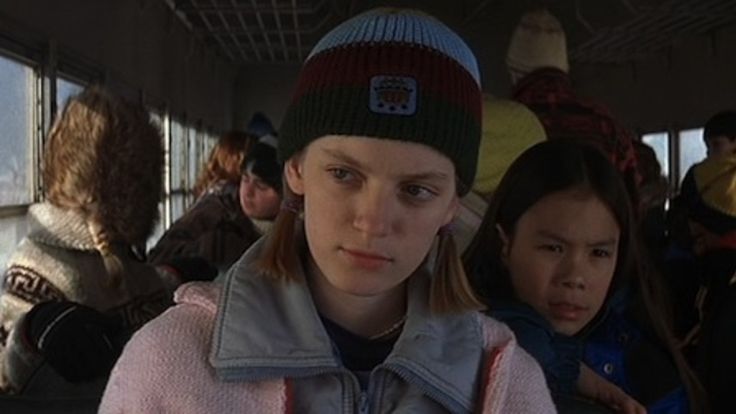
At one point in this project, I was going to include an entry on The Sweet Hereafter, Atom Egoyan’s 1997 adaptation of a Russell Banks novel about a remote community ravaged by the aftermath of a fatal school bus accident. Seen when it was first released during the holiday break between my first two semesters of film school, it had a substantial impact in how it played with time and perspective, its narrative generally nonlinear, certain information intentionally missing until strategically revealed as if sifting through puzzle pieces and attempting to piece them all together. It was the Toronto-based Egoyan’s seventh feature; I’d end up renting the previous six from various video stores over the next six months.

Sarah Polley in The Sweet Hereafter

Perhaps I’ll will write more about The Sweet Hereafter one day (it’s far from the only title I considered for this project but ultimately passed over); I mention it here because of its central performance from then 18-year-old Sarah Polley, a Canadian child actress who had appeared in such projects as The Adventures of Baron Munchausen, TV series Ramona (based on Beverly Cleary’s beloved children’s novels) and Road to Avonlea and Egoyan’s sixth feature Exotica. Nicole, her character in The Sweet Hereafter, however, was a turning point. With a naturalness and steel-eyed reserve, Polley had undeniable presence—magnetic without coming off as showy, thoughtful but not opaque. As the lone survivor of the crash, she’s thrust into a situation where she holds a rare power. As her backstory comes to light, she mesmerizes in how she wields such power while not letting us forget, heroine or anti-heroine, she’s still just a teenager, flaws and all.

The film raised Polley’s profile considerably outside her home country. Over the next few years she starred in a number of pictures from big Hollywood productions (GoThe Weight of Water, Zack Snyder’s Dawn of The Dead remake) to indieplex staples (Guinevere, David Cronenberg’s eXistenZ) and smaller, more intimate pictures like My Life Without Me and Hal Hartley’s No Such Thing. During this period, Polley began writing and directing her own short films, which led to an impressive feature debut with 2006’s Away From Her, an Alice Munro adaptation that earned its star, Julie Christie an Academy Award nomination. Along with its follow-up Take This Waltz (2011), Polley suggested that her skills as a filmmaker were up there with her acting, approaching material with a tangible point of view and a nuanced understanding of human behavior.

One can apply the same attributes to her third feature and first documentary, 2012’s Stories We Tell. It’s a personal essay film about her family and although accurate, such a simplistic description doesn’t do it justice. At least on the surface, it’s a template for Polley to interview her father, Michael, her older siblings and stepsiblings and an extended network of people who all knew her mother, Diane, who died of cancer in 1990 when Sarah was eleven. She accompanies these interviews with silent home movie footage and Michael (himself an actor) reading his account of the family’s story; in doing so, she explores in-depth the various ways of telling a story, considering multiple points of view, the abundance or absence of found documentation, and how all that information is shaped into a narrative, bearing in mind what’s emphasized and also what’s left out.

Polley commences by asking her subjects variations of the following directive: “Tell me the whole story (of our family) as if I don’t know the whole story.” To pose this instruction is a neutral way of building a story drawing from various perspectives, to see what details reoccur in each person’s version of the story and, more significantly, which ones conflict and contrast with each other. From there, the viewer can piece together a throughline narrative: Diane (also a Toronto-based actor) met Michael in 1965. They married, had kids and both mostly left their chosen professions behind to raise their family. In 1978, craving a return to acting, Diane relocated to Montreal for a few weeks to be in a stage play (called Toronto (!)); not long after her return, she found out she was pregnant with Sarah. After Diane’s early death, child actress Sarah, significantly younger than her siblings would become even closer to her father.

It seems a fairly straightforward trajectory until one hears numerous people talk about how, leading up to her time in Montreal, Diane and Michael had grown apart—she was frustrated with having given up her career to become a housewife and not fully getting the love and attention she needed from him. However, it’s not the whole story. 45 minutes in, the viewer learns that before meeting Michael, Diane was previously married to another man. Two of Sarah’s four siblings are actually step-siblings from that marriage; one of them describes their birth father as “controlling”. Deeply unhappy, Diane leaves him for Michael and as a result, loses custody of her two children.

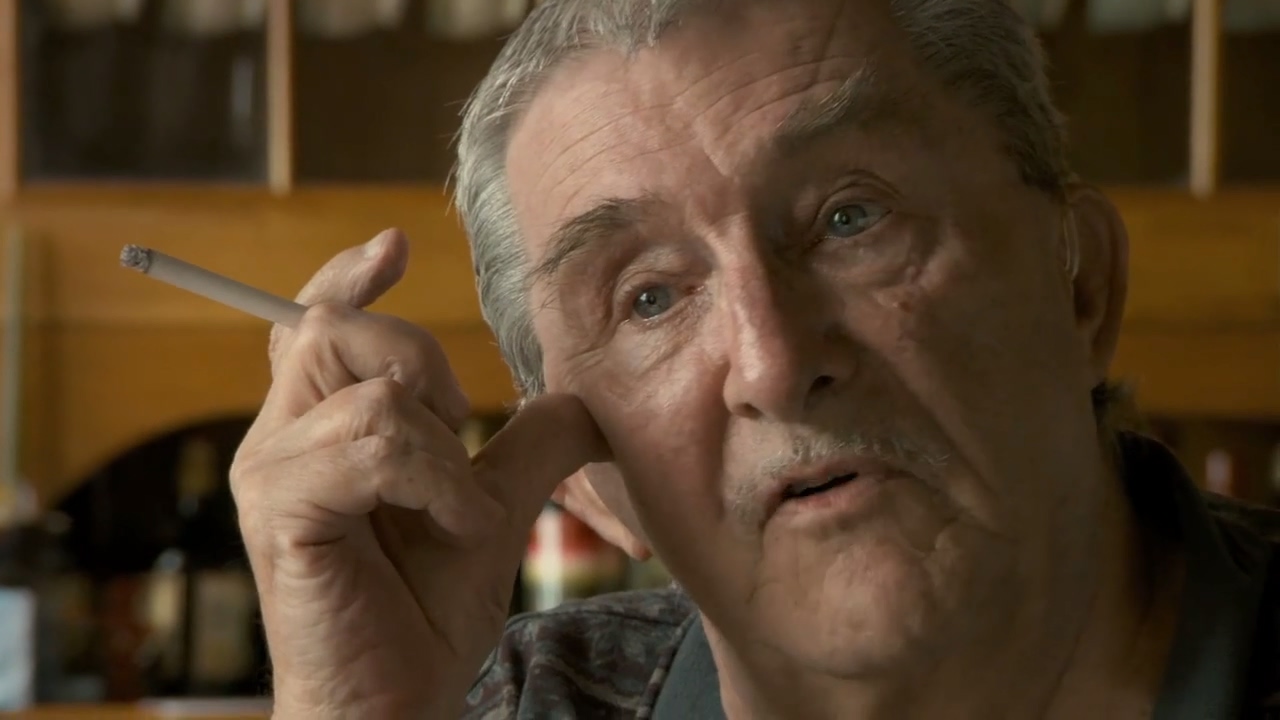
Michael Polley

In the course of their interviews, multiple siblings and friends of the family remind Sarah that they used to tease her as a child because she didn’t much resemble her father, physically, stoking speculation that Diane might have slept with another man during her time in Montreal. After some detective work as an adult, Sarah discovers her biological father is actually Harry, a filmmaker Diane met while acting in Montreal. A DNA test proves it, enabling Sarah to forge a relationship with Harry while also figuring out how to break the news to the rest of the family, and in particular, Michael. Us knowing that Diane lost custody of her two eldest children also illuminates why she didn’t leave Michael and her two kids with him after meeting, falling for and becoming pregnant by Harry.

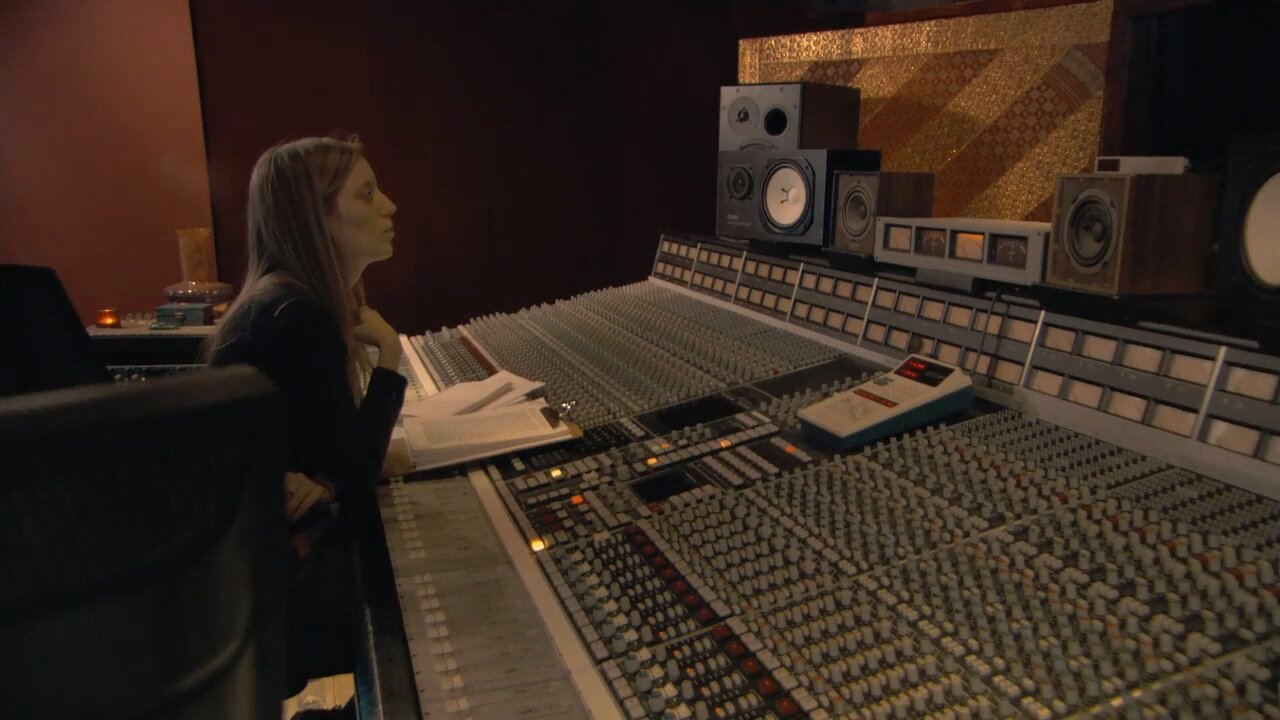
In unspooling this ever-more complex trajectory and keeping it afloat, Stories We Tell is a marvel of editing. Often, the film stitches together phrases from numerous interviewees with a swift fluidity where one could almost believe they came about as a mass conversation, like all the subjects were sitting together in the same room. Even if this were the case, however, it would sound more disjointed, like a Robert Altman film where words overlap due to the natural messiness of most conversations. Again, deciding what to include and where to put it is a conscious decision made by Sarah and her editor, Mike Munn. That it doesn’t come off as stilted but remains engrossing is the key to effective storytelling.

Regarding home movie footage of Diane and Michael, much of it is concentrated from their first few years together and the time immediately before and after Sarah’s birth; we also see scenes from Diane’s funeral and the years following it when young Sarah most closely bonded with Michael. They’re meant to accompany the story told by all the narrators and they often correspond neatly with what’s being said. It’s a seemingly excessive amount of footage and all reasonably convincing until, more than three-quarters of the way through, there’s some vintage footage of Diane and Michael where the camera tracks to the left to reveal a modern-day Sarah filming and directing them (as played by actors Rebecca Jenkins and Peter Evans.) At that moment, her voiceover notes, “I’m interested in the way we tell stories about our lives; the past is often ephemeral and hard to pin down.”

This late-in-the game reveal to exactly how Sarah’s been telling the story audaciously transforms the film. Suddenly, we’re encouraged to question whether any of the non-interview footage is real or a reenactment. Sarah’s initial correspondence and meetings with Harry, shot in the same fuzzy, silent, super-8 grain are surely the latter as are the Montreal rehearsal scenes of Toronto or the footage Diane’s funeral (who shoots home movies of those?), about which one sibling reminisces, “It was some kind of production; I felt like I was at a big play.”  The stuff of Michael as a young child or time he spent with Sarah after Diane’s death, however, are more likely the genuine articles. Then again, we now no longer know for sure, and here’s the thing—it doesn’t entirely matter. Even beyond the “home movies”, Sarah infuses the film with deliberate artifice, whether it’s still shots and scenes of her acting (in caveperson garb!) in the film Mr. Nobody at the time of her first contact with Harry, or footage from the 1964 Sophia Loren film Marriage, Italian Style whose plot about questionable paternity provides an analogue to this film’s narrative or, most notably, all the scenes of Sarah directing her father in a studio as he records his own written narration/side of the story (multiple times we see her ask him, “Dad, could you go back over that one line?”, looking for the best “take” of his performance.) As Michael notes earlier in the film, “It’s all done with mirrors, mate,” a seemingly tossed-off comment suddenly more resonant after the reveal.

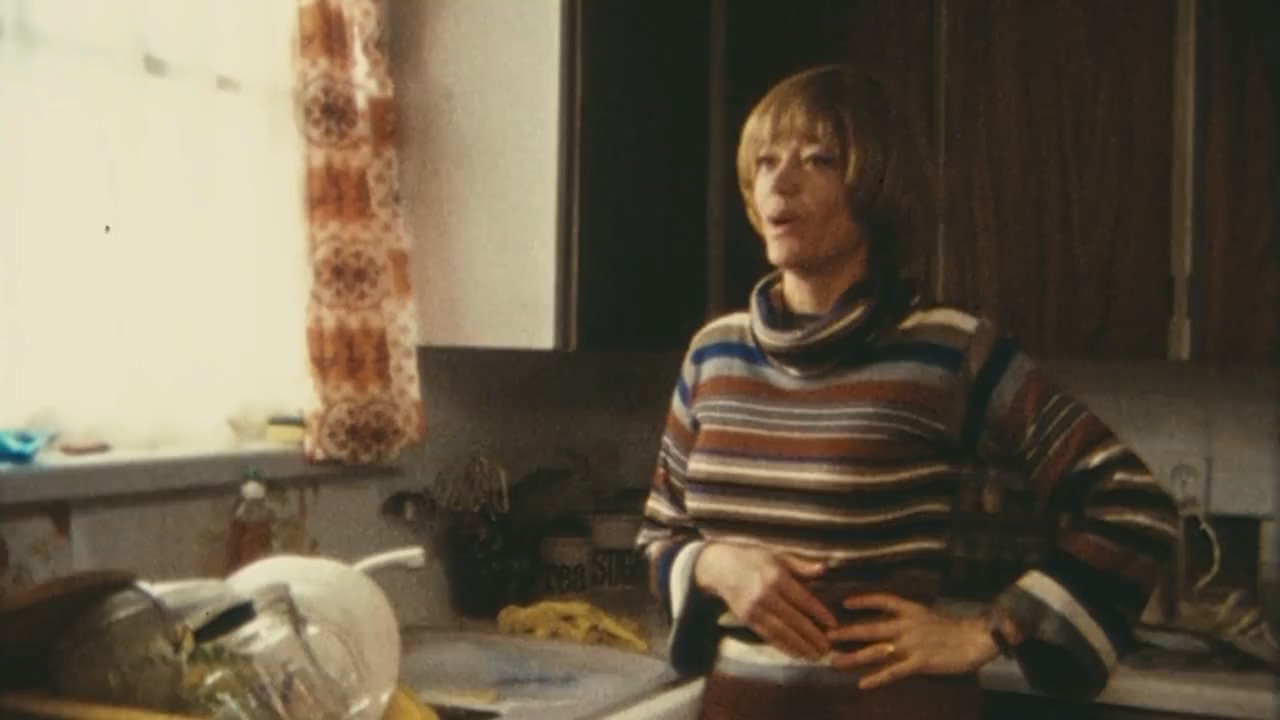
Rebecca Jenkins as “Diane” (or is it?)

Stories We Tell is the third film in this project that blurs fiction and non-fiction to a fine point. The other two, Close-Up and My Winnipeg arguably do so as narrative films exceedingly resembling documentaries to different ends: the former is a feature-length recreation of real-life events, while the latter is ostensibly a documentary suffused with fantastical elements to the point where the “My” in its title is crucial to understanding its idiosyncratic approach. Polley’s film is more explicitly a documentary in that it relays events that all purportedly happened, even if its subjects have varying accounts of such (for instance, Harry remembers attending Diane’s funeral, but Michael is nearly adamant that his wife’s lover was not there.) It’s no docu-fantasia such as My Winnipeg, but it does feature a slew of recreations that, like the events of Close-Up are presented as apparently factual (if in the end, unprovable.)

Films muddling this real/fake line fascinate me. After all, how can art connect if it doesn’t draw from some semblance of real-life experience? In my master’s thesis on Derek Jarman, I concluded that his art’s greatness depended on its inseparableness from his own life; such ambiguity has provided fodder for many films, from the deliberate, recontexualized performances in The Act of Killing and the more subtle, intentionally convincing ones of Bloody Nose, Empty Pockets to a prankster delving deep into the meta-ness of constructing what may (or may not) be one resounding prank in the guise of an entire documentary in Banksy’s Exit Through The Gift Shop. Reenactments often get a bad rap for their failure to convince or the level of artifice their mere presence suggests. Still, are they less pure than any other decisions Polley makes in telling this story? What’s left out or kept in or de-emphasized or brought to the fore can be just as calculating and indicative, documentary or not.

Midway through the film, Sarah recalls an argument with Harry where he wanted to write his own version of this story but she did not want him to publish it, hoping to give “equal weight to everyone’s version” (a lodestar for many documentarians.) Harry counters this by saying, “The crucial function of art is… to find out the truth of a situation.” Despite the facetiousness inherently unavoidable in any documentary (no matter how intentionally applied, like the “home movies”), to Sarah’s credit, Stories We Tell arrives at an unerring truth about the situation—one of its main participants, the long-deceased Diane, is unable to tell her version of this story. After Harry notes this, a montage follows of nearly all of the film’s interviewees one by one, each person silent, their faces consumed with grief, presumably thinking of Diane as a wistful, melancholic folk-pop song plays on the soundtrack. It’s deeply affecting for it reminds us not what the story is or necessarily how it was relayed, but why it was told.

Stories We Tell would end up Sarah’s last film for a decade as she struggled with a brain injury, eloquently outlined in her 2022 memoir Run Towards The Danger. She’d recuperate and make a triumphant return that year with Women Talking, an adaptation of a Miriam Toews novel that won her an Academy Award for Best Adapted Screenplay. It retains some of the thoughtfulness and innovation of her past work; hopefully, its success will enable Sarah to continuing making exactly the projects she wants to; preferably, they will look back to her third feature for a sense of inspiration and purpose.

Essay #20 of 24 Frames

Go back to #19: A Matter of Life and Death.

Go ahead to #21: The Duke of Burgundy

24 Frames: A Matter of Life and Death

Since finishing my Film Studies graduate degree, I’ve tried to keep up with current cinema, averaging about 100 brand new movies seen each year. I’ve cultivated spreadsheets of upcoming release dates, attended film festivals both local and international and in the past decade, habituated myself to what’s available for streaming on various platforms from The Criterion Channel to Kanopy. When I prepare annual lists of my favorite films of each year, I feel I’ve seen enough to do so with a particular authority and thorough knowledge (even if it’s impossible to see everything that comes out.)

Keeping current, however, does not mean I shy away from seeking out older titles I haven’t seen before. When I began studying film in my early 20s, what struck me most about the medium was that for being a relatively young one, the sheer volume of great, important movies to see was remarkably vast. Books, reviews, articles and recommendations from friends frequently revealed another title to add to my watchlist; when I discovered a new old film that I loved, I often wanted to see other work from its director or actors or even in some cases its screenwriter or cinematographer. Upon its 1996 release, Fargo made an immediate impact— over the next few years, I felt moved to consume everything else Joel and Ethan Coen made including past titles I’d missed (Blood SimpleBarton Fink) while keeping up with their subsequent work. I recall seeing the trailer for The Big Lebowski a few months ahead of that film’s release and thinking, a bit dumbfounded, “Well, it appears to be about bowling.”

Settling into a lengthy tenure working for a movie theater, I’d stay and watch the occasional repertory screening of something I hadn’t seen before. For instance, Billy Wilder’s The Apartment, the VHS of which I turned off after twenty minutes at home years earlier. Now, it either proved revelatory on a big screen, or perhaps I was just at a better age to grasp its unique blend of melodrama and dark humor. Likewise, I loved revisiting titles previously seen at home on the big screen, from A Thousand Clowns (with Click and Clack, the Car Talk guys introducing one of their favorite films in person!) to a front-row nosebleed seat to take in Persona at a much larger and more frightening scale than ever before (star Liv Ullman was present for that one, too.) With such an awesome resource (alongside a few other Boston-area cinemas with dazzling repertory offerings), I was watching less films at home (which would change radically during the pandemic, but that’s for a later entry.)

Reviewing a record of my movie viewing for 2009, my trusty spreadsheet reveals I watched 146 films that year including three titles seen twice (500 Days of SummerPrecious and Still Walking.) 84 were cinema screenings (all but seven of them brand new films); 32 of the remaining 62 watched at home were also relatively new titles (from XXY to Scott Walker: 30th Century Man) with twelve rewatches and eighteen older films seen for the first time. (Incidentally, I also saw Michael Clayton around this time but recently determined that I failed to record exactly when, so maybe these numbers aren’t entirely exact.) This list of older titles is unquestionably eclectic: Samuel Fuller’s art/exploitation hybrid White Dog; Chris Marker’s three-hour dissection of Marxism, A Grin Without a Cat; two unconventional comedies from the late 80s (Whitnail and IBagdad Café). There are efforts to fill in gaps by some of my favorite directors (Robert Altman’s Buffalo Bill and The Indians, Michelangelo Antonioni’s Zabriskie Point), a documentary about another beloved auteur (Waiting For Twilight: Guy Maddin), a pair of Douglas Sirk melodramas (Magnificent ObsessionImitation of Life) and random stuff like, um, Troll 2 (more entertaining than The Room, also seen for the first time that year.)

Also on this list are another pair of films from the British team of Michael Powell and Emeric Pressburger. Powell generally directed while Pressburger mostly wrote the screenplays but they always insisted on a dual directorial credit (similar to Joel and Ethan Coen, come to think of it.) Also referred to as “The Archers” (their production company), Powell and Pressburger and their nineteen features together were generally forgotten by the public at large decades after their 1940s heyday. Not by Martin Scorsese, however, who cited them as a major influence and fervently worked to rehabilitate their reputations and restore their work once he himself became a renowned filmmaker in the 1970s. Thelma Schoonmaker, Scorsese’s longtime editor, even married Powell in 1984; they stayed together until his death in 1990 at age 84.

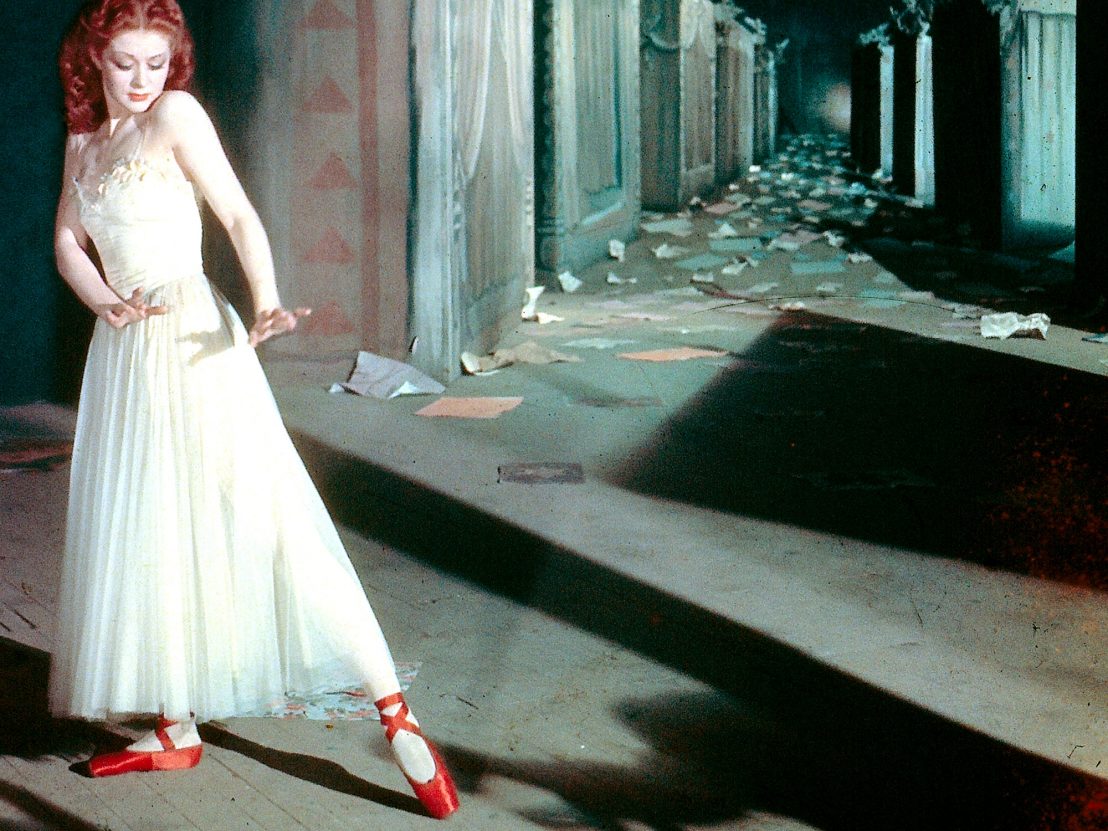
I don’t believe I saw anything by the Archers in film school; I was likely first aware of them when, gathering research for my master’s thesis on Derek Jarman, I saw that the writer Michael O’Pray cited Powell and Pressburger as primary influences on Jarman’s work (along with more obvious antecedents such as Kenneth Anger and Ken Russell.) I may have first watched The Red Shoes around this time, probably the most seen and discussed of their works among cineastes and classic film lovers. A Technicolor take on the Hans Christian Andersen fairy tale of the same name, it’s both the Archers’ biggest hit and innovative for how it incorporates a lengthy, impressionistic ballet sequence in the middle of its 134-minute running time, a clear influence on what Best Picture Academy Award Winner An American In Paris would attempt (albeit at that film’s end) three years later.

The Red Shoes

I appreciated The Red Shoes but did not rush out to consume the rest of the Archers’ oeuvre. A few years on, I caught Black Narcissus, a gloriously deranged picture about repressed nuns in the Himalayas that culminates in a shocking-for-its-era depiction of raw female desire when a troubled sister defrocks and removes her makeup. Later came I Know Where I’m Going!, set on a remote, otherworldly Scottish isle, its black-and-white cinematography and heavily-layered fog rather hallucinatory for what was essentially a screwball comedy rather than any sort of dreamlike fantasy. Thanks to Criterion Collection reissues, these films became much easier to see. In early 2009, I watched A Canterbury Tale, a work from the Archers’ peak period but also one of their odder efforts. Set in contemporary (i.e. World War II-era) Britain, it’s structured around an American soldier (played somewhat awkwardly by actual American solider, Sgt. John Sweet.) Less romantic and starker than the other Archers films I’d seen, it seemed an anomaly in their catalogue (albeit one I mean to revisit.)

Much later that same year, I saw A Matter of Life and Death. Arriving between I Know Where I’m Going! and Black Narcissus, it would initially seem to have more in common with A Canterbury Tale given its setting: on May 2, 1945, less than a week before Germany’s surrender of World War II (filming took place a mere six months later), Peter Carter (David Niven), a Royal Air Force pilot, is shot down over the English channel while on a bombing raid. He jumps from the burning aircraft, but his parachute malfunctions; he should be dead and when he wakes up near the shore, he assumes this is the afterlife. However, he is very much still alive, for Conductor 71 (Marius Goring), a guide in guise of an 18thCentury French dandy sent to escort him to what the film refers to as the “Other World”, misses him in the fog. In no time, Peter runs into June (Kim Hunter), a US Air Force radio operator whom he initially communicated with from his plane after it was hit. They immediately fall in love (this is the movies, after all), which creates a problem for Conductor 71 who is tasked to rectify his mistake and bring Peter to his rightful place for “it was his time”. Peter refuses to abide, matter-of-factly telling the guide, “I’ve fallen in love because of your mistake.”

David Niven as Peter

It’s not that simple, of course. Through the observation of June’s friend Dr. Frank Reeves (Roger Livesey, an Archers regular), we learn that Peter is likely experiencing hallucinations and that his fall may have caused some brain damage. Whenever Conductor 71 visits him, time and space seem to suddenly stop. For instance, while convalescing at Dr Reeves’ home, Peter calls out for help when this occurs, but June and Dr. Reeves, playing ping pong in an adjacent room, can’t hear him—they’re perfectly still, the ball in mid-bounce over the table between them. As the hallucinations become more frequent, is it determined only brain surgery can help Peter live fully in the Real World; for him, however, this plays out as a court trial in the Other World where he must make a sound case to a jury to go on living because he’s found true love. His defense lawyer ends up being good old Dr. Reeves, who is suddenly killed in the motorcycle accident and finds himself in the Other World (or at least Peter’s hallucination.)

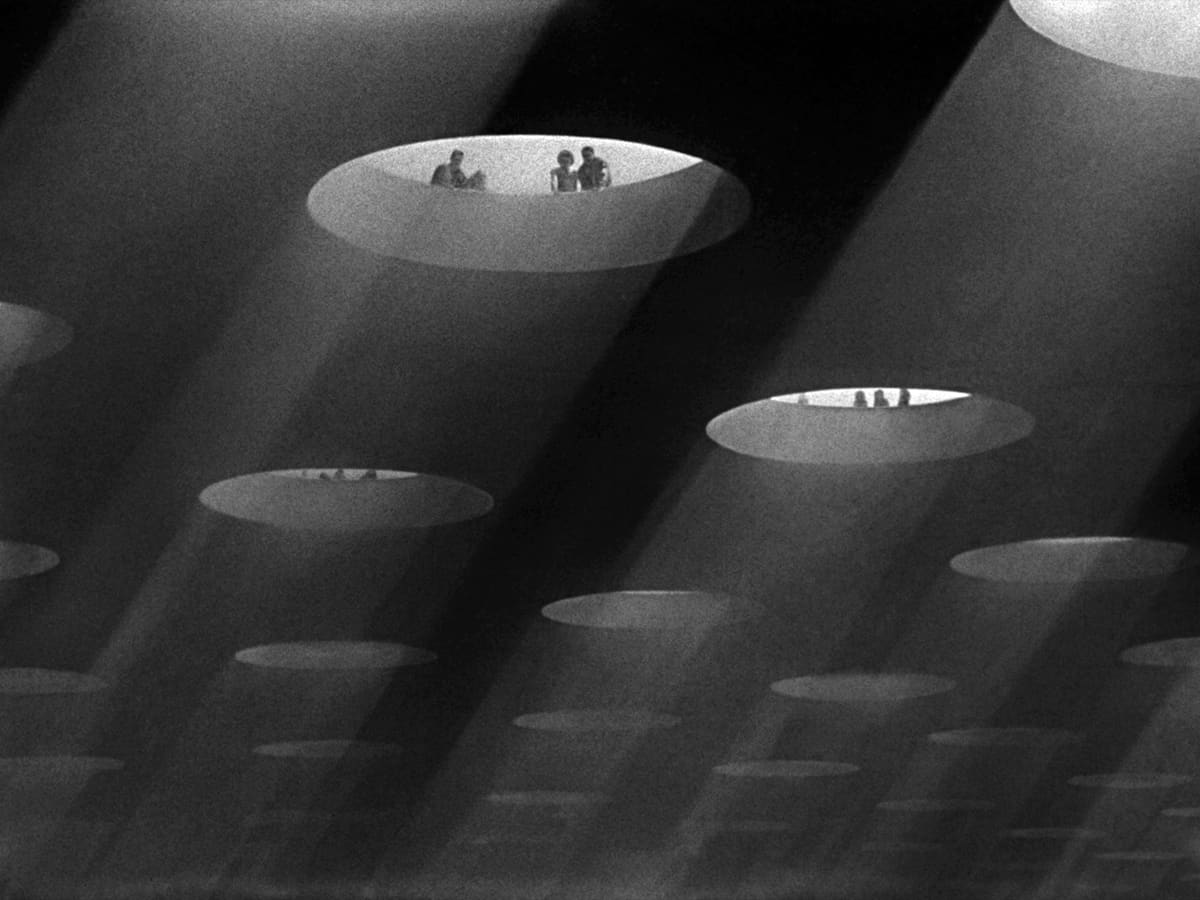
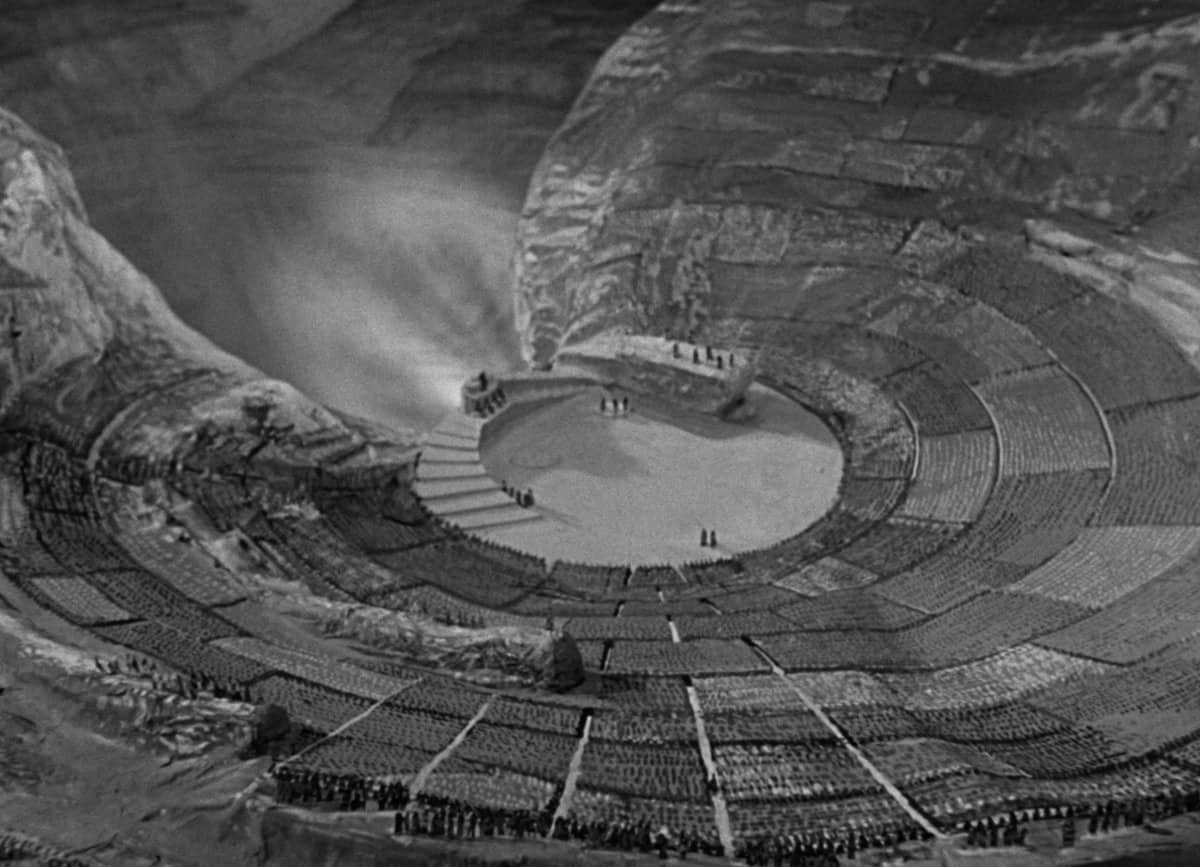
The contrast between the two worlds is the film’s most striking construct. Set up as sort of a reverse The Wizard of Oz, the Real World scenes are in eye-popping Technicolor while the Other World is shot in black-and-white. It was the first of three consecutive Archers films to be helmed by cinematographer Jack Cardiff; he’d win an Oscar for Black Narcissus the following year and go on to film The African Queen and The Barefoot Contessa, among others. The Real World is as scintillating and rich-hued as any film of the period, often highlighting fiery reds, feather-soft pinks and infinite blues along with dramatic close-up shots and ornately-detailed frames (Dr. Reeves’ home gives off a convincing illusion of an actual, lived-in space rather than a set.) The Other World draws more heavily on abstraction and German Expressionism: cathedral-sized sets (the court sort of resembles the Roman Coliseum), severely tilted angles and fantasy set pieces such as the ginormous escalator serving as a conduit between the two realms (in America, the film was originally released with the title Stairway to Heaven.) Although each world is clearly delineated from the other, they still give off the impression of existing simultaneously (hallucination or not)—one motif occurring in both realms is the appearance of oval-like shapes: giant, ceiling spheres peering into a seemingly endless Department of Records in the Other World are later recalled by Dr. Reeves’ unusual, mirrored telescope, its oval-shaped lens gifting him a view of his entire village in the Real World (along with the near-oval of the mirror above an operating table later in the film.)

The Real World

Although occasionally rendered via a simple cut, transitions between the two realms are often slow dissolves. They effectively personify the off-kilter, damaged mind state Peter experiences—at one point, while moving from the Other World back into the real one, the color literally returns to his face via a gradual dissolve. While succumbing to anesthesia for his surgery not long after, his eyes slowly close and the camera pans down (rather than up!) to the Other World. From there, the surrealness of his situation is made more explicit. During surgery, he has a literal out-of-body experience, his persona splitting in two as one version of him sits up awake in his own body, the other version of which lies still in freeze-frame courtesy of a visit from Conductor 71 and the now-deceased Dr. Reeves, rendered with a playfulness Bob Fosse would later reference in All That Jazz.

For all of its technical spectacle and far-seeking invention, however, A Matter Of Life and Death is, like most of the Archers films, a fable full of substance and heart. As much a good old-fashioned romance as it is a fantasy, its ambitions never obscure the humanism continually evident at the picture’s core. Sure, Peter and June meet over a mayday call (one of the more dramatic of circumstances) but it still comes off as a meet-cute (“I’ll be a ghost and come and see you,” he drolly tells her amidst the flaming wreckage), further confirmed upon their unexpected, near-magical reunion on the ground. When Conductor 71 first materializes in the Real World, he notes, referring to where he has come from, “One is starved for Technicolor up there”; he also picks a pink rose which later becomes an item meant to prove Peter’s love for June (via his tears of joy for her collected on the flower) in his trial. Speaking of which, that whole sequence dominates the film’s third act. It may be a huge set piece with a cast of seemingly thousands of the deceased (from presumably every nation and culture in the Real World) and shot as if it were a heightened version of the political rally from Citizen Kane but it’s also laced with an approachable, knowing humor—when the prosecutor, Abraham Farlan (Raymond Massey), an American alive during the Revolutionary War biased against all Brits argues that his culture is more worth preserving and celebrating than Peter’s, Reeves plays a recording that approximates a then-contemporary American swing tune with mostly nonsense lyrics (to which Farlan scoffs, “I don’t understand a word!”)

The Other World – Peter’s trial

The film concludes with the two worlds finally, briefly converging (if only in Peter’s head.) Key members of the trial have literally descended into the Real World via the giant staircase, arriving at Peter on the operating table (who again wakes up as time and space stops.) The tears on the flower are not enough concrete proof for the judge and prosecution. They ask Peter if he would die for June. He says he would, though he’d rather live a life with her. They then call June to the witness stand, awakening her from a Conductor 71-assisted slumber. Dr Reeves asks June if she would take Peter’s place in the Other World to prove her love for him. She would, and as she steps onto the stairway as it begins to move away from the Real World, that clinches it—proof not only that Peter is in love but also loved in return. He’s allowed to live on in the Real World with June; the film ends with him awakening from surgery in his hospital bed to the sight of June’s smiling face. “We won,” he says; “I know, darling,” she responds. It’s a sentimental ending, for sure, but as usual for the Archers, it’s an earned one, with Peter’s words particularly affecting coming just one year after the end of a Real World War.

Although products of a time long past, the Archers’ work endures because their narratives, while often highly fantastical were always built on solid emotional foundations. Powell and Pressburger may have viewed the world a little differently than their homegrown colleagues or Hollywood counterparts, but they usually sought to say something concrete and resonant about the human condition. So much of today’s studio filmmaking values technical innovation over anything relatable from our own Real World. Whenever I watch a film for the first time, I keep in mind how it makes me feel, which can come from its cinematography, special effects, musical score, the brilliance of a performance, etc. In the best films, however, there’s also a deeper connection, one that not only changes our literal view of the world but also our perception of it. A Matter of Life and Death accomplishes this by recognizing the act of love as the driving force its title refers to; what better reason does one need to live?

Essay #19 of 24 Frames

Go back to #18: My Winnipeg

Go ahead to #20: Stories We Tell.

Favorite Films of 2023

1. MAY DECEMBER

I suppose Todd Haynes’ latest does for Lifetime TV movies what his 2002 film Far From Heaven did for Douglas Sirk, recreating an aesthetic and carefully tweaking it for postmodern consumption; it’s also a study of what it means to perform or play a role, the self-awareness (or lack thereof) in doing so convincingly and the long-term implications of surrendering to one’s own delusions. Arguably only Todd Haynes (with help from Julianne Moore, Natalie Portman and Charles Melton) could pull off such a tricky balancing act, effortlessly blending camp and melodrama until they seem indistinguishable from one another. His most psychologically complex film since Carol (if not Safe).

2. ALL OF US STRANGERS

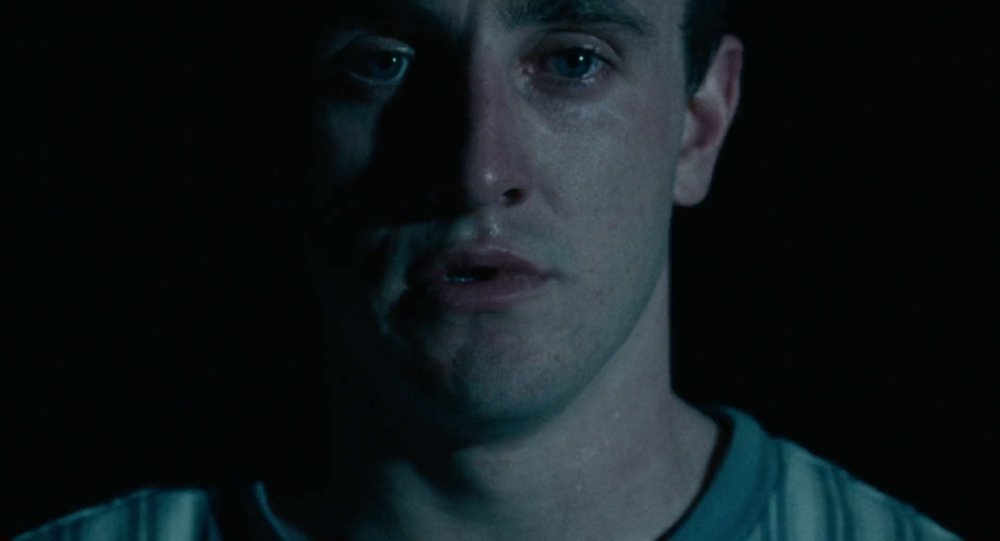
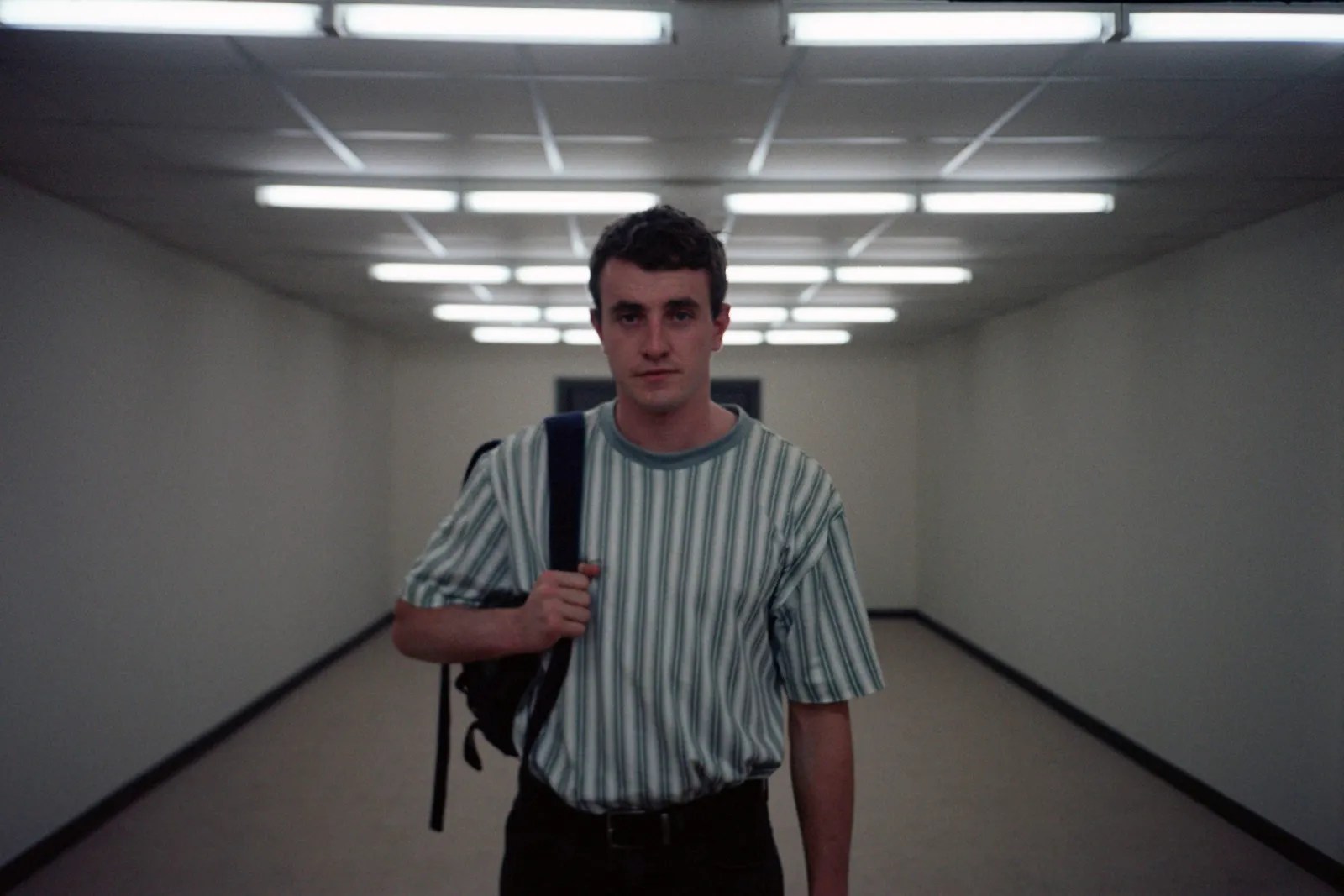
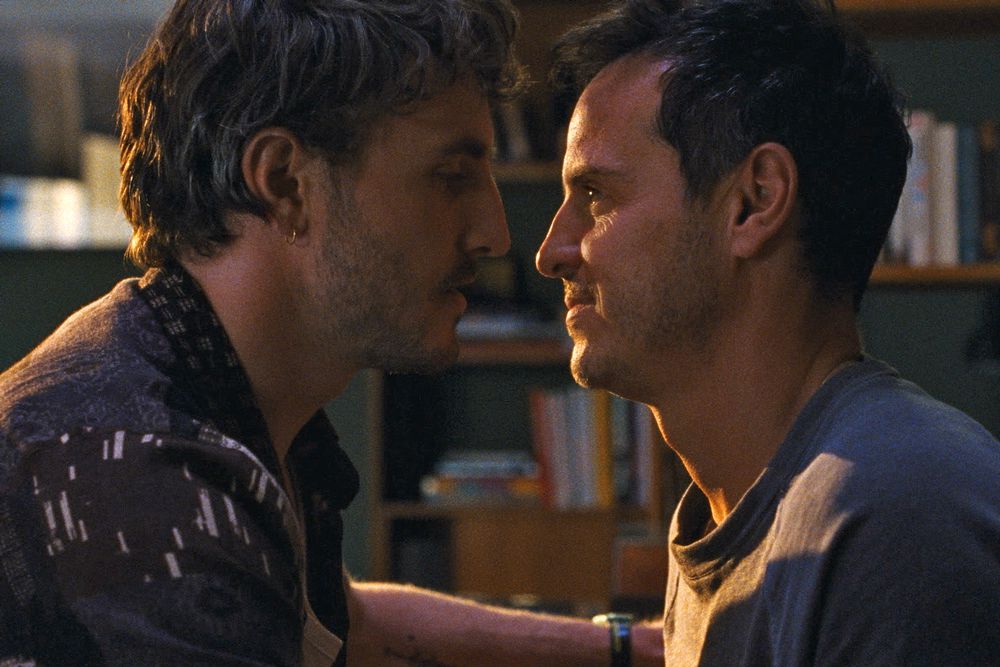
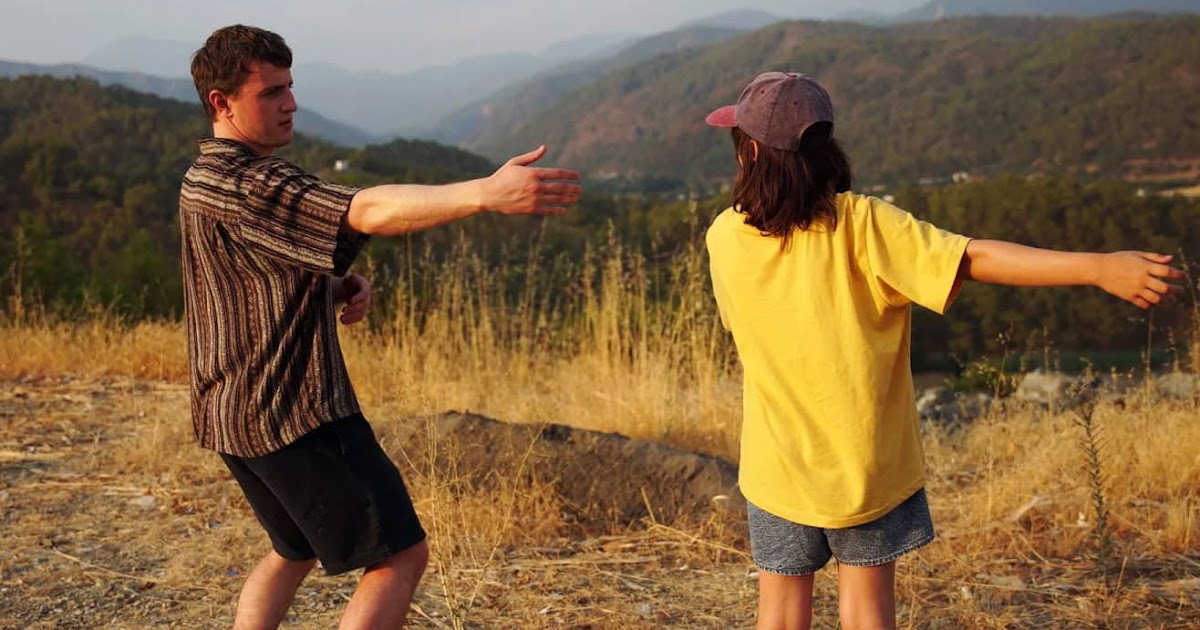
Andrew Haigh’s (Weekend) most ambitious, personal effort, a loose adaptation of a Japanese novel about a man (Andrew Scott) confronting his past in an unusual way (to say the very least in avoiding spoilers here.) With great work from Scott, Paul Mescal, Jamie Bell and Claire Foy, Haigh utilizes a visual and sonic language that feels singular in its focus and drive. Call it a sci-fi tinged, queer mid-life crisis film or a less solipsistic companion to, say, Call Me By Your Name but note the key lyric from a Frankie Goes To Hollywood song (one piece of a brilliant soundtrack) emphasized here: “Make love your goal.”

3. THE HOLDOVERS

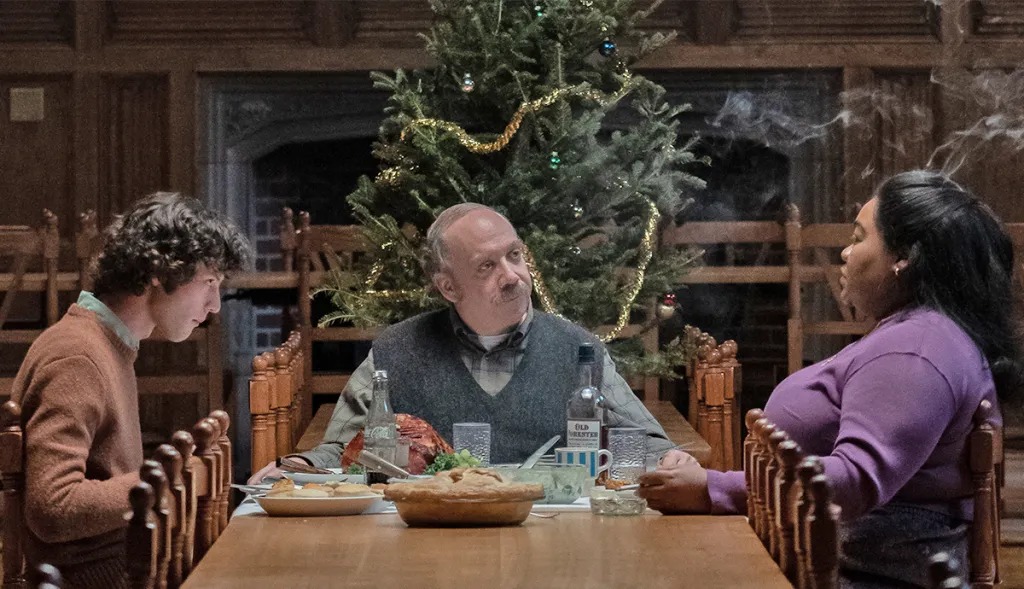
This return to smart, dyspeptic comedy reunites director Alexander Payne with another master of the form, Paul Giamatti. Not only set in 1970, it also looks and feels like something from that period with its painstakingly correct stylistic touches (opening credits font, slow dissolves, winsome folk-rock soundtrack), fully capturing the feeling and substance of a good Hal Ashby film. Still, Giamatti (an ornery all-boys schoolteacher), Da’Vine Joy Randolph (a cafeteria manager whose son was recently killed in Vietnam) and newcomer Dominic Sessa (the belligerent pupil Giamatti’s tasked to look after during holiday break) together give the film its soul. 

4. MONSTER

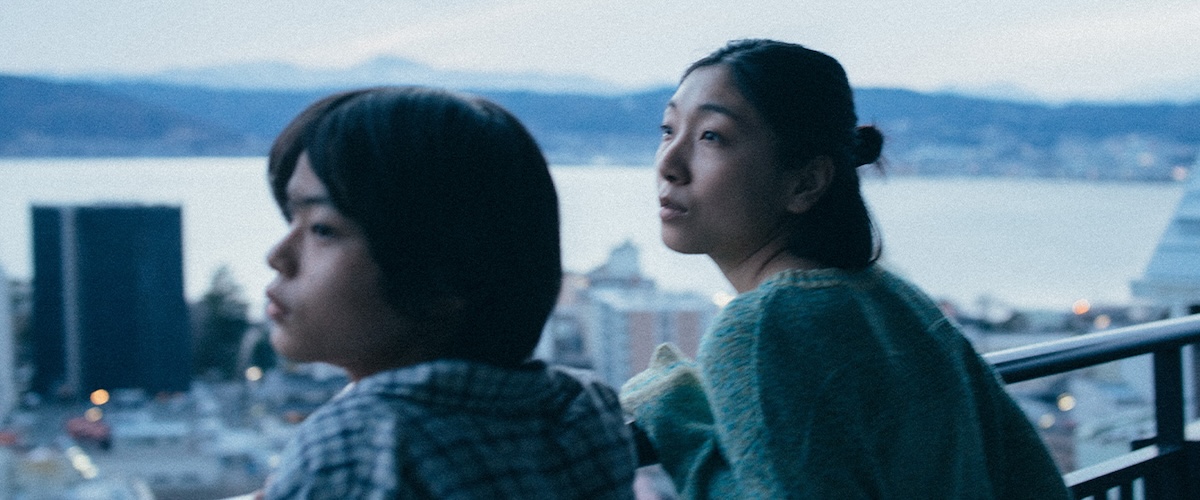
The first third of Hirokazu Kore-eda’s first effort set in his native Japan since Shoplifters comes off as a darkly comic fable about a fifth-grader being bullied by his teacher; what happens next sets the momentum for a narrative only fully revealed one all of its pieces gradually fall into place. One of the director’s most accessible works due in part to its swift pace, the unique structure enhances its rhythms—it also clinches one’s attention with humor and a tricky premise but then extends an invitation to learn the full story and witness how we can instill change in one another.

5. SHOWING UP

Kelly Reichardt’s (First Cow) latest is a reminder as to why I admire films where, while viewing them, my perception slowly, organically shifts from “Why am I watching this?” to “I never want it to end”. I’m also drawn to those that delve into the notion that it’s always best to go with the flow. Naturally, Reichardt’s longtime collaborator Michelle Williams is perfectly cast (as a somewhat cranky but undeniably talented starving artist), but don’t forget Hong Chau once again killing it in a supporting role or the evocative sound design.

6. AFIRE

This might be Christian Petzold’s (Undine) most explicitly comedic film to date. It starts off unassumingly, slowly building its relationships and character arcs as wildfires remain a background threat heard about but only seen via glowing, burnished, distant skies. Like those fires, it’s a slow burn until, all at once, it encompasses everything in its path with dire consequences for some and narrow escapes for others. It’s reminiscent of a Gary Shteyngart novel in that it’s expertly constructed, caustically funny and in the end, tinged with tragedy and the possibility of transformation.

7. GIVE ME PITY!

Cheerfully billed as “A Saturday Night Television Special” starring Sissy St. Claire (Sophie von Haselberg), writer/director Amanda Kramer’s art piece may feel as if it’s beaming in from another planet to those unfamiliar with 1970s/80s variety shows. But she understands that if you’re going to make a feature-length pastiche, pinpoint accuracy is required (smeary video in the 4:3 standard definition format, elaborate wigs, neon colors, the requisite hanging mirrorball, vintage-looking graphics, etc.) It also gradually transcends its premise, peeling off layer after layer of everything that goes into a performance and the toll it can take on the performer’s psyche.

8. PAST LIVES

One can easily detect why Celine Song’s debut feature was so celebrated this year. In addition to strong performances from Greta Lee, Teo Yoo and John Magaro, it presents a love triangle setup with rare subtlety: it conveys its dramatic intricacies with grace and an understanding of what it means to be here now, always and forever one of the most relevant personal conflicts that narrative films tend to gloss over or simply ignore. It’s also invaluable as a record of how the present and past began to converge in the age of social media.

9. RYE LANE

British writer-director Raine Allen-Miller’s widely praised debut feature has all the elements a good rom-com should (sharp screenplay, appealing leads w/chemistry, plenty of laughs) but also an actual perspective that’s deeply felt in everything from the visual design and location shooting (South London comes off as vibrant here as it did dystopian in All Of Us Strangers) to the way in which it coaxes and earns its laughs. Acquired by Hulu in the US, it should have had as robust and expansive a theatrical release as Past Lives.

10. ANATOMY OF A FALL

A thriller about a woman (Sandra Hüller) accused of her husband’s murder that could just as easily have been a suicide, Justine Triet’s Cannes Palme d’Or winner is nearly as suspenseful as the best Hitchcock while also considerably more humanist in its depictions of the main character and her son. The trial scenes can be a bit much (e.g. the smug prosecutor) but overall this plays like a riveting page-turner of a novel. As the hearing-impaired son, Milo Machado Graner gives the best child performance in eons next to Lola Campbell (Scrapper).

11. KILLERS OF THE FLOWER MOON

Between the lead performances (Lily Gladstone, we love you) and how masterfully it builds without coming off as awards-bait, this already feels like Scorsese’s best of this century.

12. CLOSE

So much here is communicated through facial expressions and pauses in conversations. Explores the intensity of burgeoning adolescence in a way I haven’t seen done before.

13. ALL THE BEAUTY AND THE BLOODSHED

Maybe my favorite new documentary since the one on David Wojnarowicz, and his presence here doesn’t even distract from Nan Goldin, whose work and life personifies that blur between the two.

14. ROTTING IN THE SUN

The movie that dares to ask, “What is the biggest dick onscreen?” in all senses of the word; pretty ingenious in its use of a meta-narrative (plus Catalina Saaverda, as great here as she was in director Sebastian Silva’s The Maid.)

15. THE NOVELIST’S FILM

My fifth Hong Sang-soo film and easily my favorite for what it withholds and also for what it provides in return.

16. TORI AND LOKITA

Reassuring (if depressing) that cine-activists like the Dardennes will never run out of subjects stoking their outrage at an unjust society; one of their starkest and most effective critiques.

17. FALLEN LEAVES

A strange but charming middle-aged romance between a supermarket worker (Alma Pöysti) and an alcoholic laborer (Jussi Vatanen) that could only come from veteran Finnish purveyor of deadpan humor Aki Kaurismaki.

18. THE UNKNOWN COUNTRY

While it takes a little time to gather momentum, Morrisa Maltz’s narrative-docu-roadtrip hybrid ends up a fresh approach to telling a story of not just one person (Lily Gladstone, great again) but of the worlds she inhabits and intersects with. 

19. NO BEARS

Of all the meta-films Jafar Panahi’s made in the past decade-plus since his government began enforcing restrictions preventing him from making another more traditional (so to speak) narrative like Offside, this feels like a summation, a crescendo and hopefully not the final word.

20. THE ZONE OF INTEREST

No atrocities are shown in Jonathan Glazer’s holocaust film but their background presence seems to permeate every scene with the horror of being adjacent to genocide and living with it. What’s tangentially acknowledged and left up to the imagination becomes just as disturbing as if one were to face it head on.

Linoleum

ALSO RECOMMENDED:

  • A Thousand and One
  • All That Breathes
  • Asteroid City
  • Barbie
  • BlackBerry
  • Bottoms
  • Full Time
  • Godland
  • Linoleum
  • Of An Age
  • Orlando, My Political Biography
  • Pacifiction
  • Passages
  • Reality
  • R.M.N.
  • Scrapper
  • The Blue Caftan
  • The Boy and The Heron
  • The Pigeon Tunnel
  • The Quiet Girl
  • You Hurt My Feelings

Favorite First Viewings of Older Films in 2023

Courtesy of The Criterion Channel, I kicked off 2023 re-watching everything Mike Leigh directed up through Four Days In July (except for the presently unstreamable Bleak Moments) and concluded the year viewing every feature and short directed by Hal Hartley up through Henry Fool. In between, I saw lots of good stuff for the first time; here are my ten favorites.

1. STARTING OVER

As late-70s divorce films go, there are Kramer Vs. Kramer people and Starting Over people; count me as one of the latter. As a Boston-shot-and-set movie from this era, it’s even better than Between The Lines. Also, you have Burt Reynolds at his best (imagine if he chose to make more intelligent rom-coms like this!), the always engaging Jill Clayburgh and of course a hilarious Candice Bergen, truly “Better Than Ever” (at least until Murphy Brown.)

2. THERE’S ALWAYS TOMORROW

Even “minor” Douglas Sirk is pretty great because he just can’t resist a shot of three creepy clown dolls seconds after the opening credits or dialogue like “It’s just so incredibly atomic!” or weird framing such as placing that unsettling little robot (“Rex”) in the left foreground while relegating star Fred MacMurray to the back. If this were in Technicolor instead of black-and-white it might be as celebrated as All That Heaven Allows.

3. UNFORGIVEN

My attempt to see every single Academy Award Best Picture winner continued this year, with this one from 1992 by far the most revelatory of those I watched. As someone who has often admired but rarely loved Clint Eastwood as a filmmaker, “We all got it coming, kid” is a more vulnerable and profound conclusion than I would have ever expected from him. A revisionist Western nearly up there with McCabe & Ms. Miller, no less.

4. THE WAGES OF FEAR

Obviously no one ever told Mario (Yves Montand) (or his pal Luigi (Folco Lulli), LOL) about that old adage, “You Can’t Win.” A thriller barely surpassed in thrills and mounting intensity. Also, perhaps the best movie without a score until The Birds. William Friedkin’s (RIP) 1977 pseudo-remake Sorcerer is near the top of my watchlist, though I’m holding out for a theatrical screening.

5. THE SPIRIT OF THE BEEHIVE

Victor Erice’s memory piece should resonate for those who recall childhood as something approaching a fever dream—it may appear ordinary on the surface, but it teems with mystery and engages in the act of discovery. The kids attending a screening of the 1931 Frankenstein is up there with all-time great scenes of characters in movies watching other movies.

6. THE RIGHT STUFF

Maybe the best film about space travel after 2001: A Space Odyssey? Apart from sections of the score, it might’ve been made yesterday. Of the impressive ensemble and appearances by everyone from Lance Henriksen to Jeff Goldblum, it was most surprising to see how charismatic a young Dennis Quaid was—he lights up every scene he’s in and I can’t help but think his career subsequently did not live up to this potential.

7. MABOROSI

The title translates as “a trick of the light”, which Hirokazu Kore-eda already depicts masterfully in his first narrative feature. The subject matter’s not dissimilar to his subsequent films even if it’s comparatively opaque. Still, the visual language he uses to propel it forward is so inventive and intuitive I hope I can see it in a cinema one day.

8. VIRIDIANA

Often entertained but rarely moved by many of his films, Luis Buñuel hits the bullseye on this one—even if the moral now seems quaint, the audacity with how sinuously he blends the comic with the horrific to arrive at it still startles. As a lapsed Catholic myself, I felt both reverence at his depiction of religious iconicity and the wicked glee with which he masterfully dismantles it.

9. HEAT

In Michael Mann’s more-revered-with-each-passing-year crime epic, Robert De Niro’s rare stoicism beautifully balances out Al Pacino’s fervent (if inspired) outbursts while Val Kilmer’s groundwork eventually reveals itself as a life-force when he finally flashes that million-dollar smile near the end. A world I would never want to physically exist in but am happy to witness from the other side of the screen.

10. IVANS XTC.

Barely released at the time and long since unavailable, this early digitally-shot feature now plays like an immediate precursor to Mulholland Drive without much of the Lynchian weirdness but all of the gimlet-eyed perception of modern Hollywood. An Academy Award for a tremendous Danny Huston would’ve been much, much more satisfying than the two given to Russell Crowe around this time.

HONORABLE MENTIONS:

  • All The King’s Men (1949)
  • Black Girl
  • The Bridge on the River Kwai
  • Catch Me If You Can
  • Deep End
  • Hour of the Wolf
  • Kiss Kiss Bang Bang
  • Lady Macbeth
  • Rachel, Rachel
  • The Third Generation
  • Tricia’s Wedding
  • Unbreakable

Trust

BEST REWATCHES (not including anything for 24 Frames):

  • After The Thin Man
  • Cache
  • Dog Day Afternoon
  • Jackie Brown
  • The Long Day Closes
  • Meantime
  • Raising Arizona
  • A Serious Man
  • The Trial
  • Trust
  • Velvet Goldmine
  • World On A Wire
  • Y Tu Mama Tambien

On Christmas Movies

Growing up, my parents and I revisited a canon of classic Christmas movies every year: The Bishop’s Wife featuring Cary Grant at the peak of his ineffable charm; Miracle on 34th Street with Edmund Gwenn’s archetypical Santa Claus and nine-year-old Natalie Wood giving her contemporary child actors a run for their money; Going My Way and The Bells of St. Mary’s, both starring Bing Crosby as a cool priest and in the latter sequel, Ingrid Bergman as his nun counterpart; It’s A Wonderful Life, its first three-quarters seemingly interminable to a child until George Bailey wishes he’d never been born and the rest is pure magic that director Frank Capra, James Stewart and Henry Travers (as Clarence the Angel) all sell the heck out of.

The three of us found a new holiday classic via A Christmas Story during its original 1983 theatrical run. In witnessing little Ralphie’s exhaustive efforts to ask for a Red Ryder BB Gun in 1940s Indiana (including the frozen pole licking, copious Bumpus hounds, an alarming department store Santa and his cranky helper elves, etc.), I don’t think my parents or I had ever laughed so much at the movies. An adaptation of humorist Jean Shepherd’s book In God We Trust, All Others Pay Cash, the film was only a minor box office hit (although I recall many commercials for it airing at the time.) The following year, we saw it again at the second-run Times Cinema on Vliet St. It was as riotously funny to us as the first time. A year later, after cable TV finally came to Milwaukee, seemingly everyone had seen the film. At a holiday party that year, numerous kids remarked to bespectacled me, “You look just like that kid from A Christmas Story!”

I can credit Ralphie and company for a newfound desire to find more holiday films to love. When I was 9, my mom and I attempted to watch every version of Charles Dickens’ A Christmas Carol we could see, from the 1938 edition with Reginald Owen to the then-new, made-for-TV one starring George C. Scott (I wonder if I could watch it today without thinking of his performances in Dr. Strangelove or Hardcore.) At the time, I enjoyed the novelty of 1970’s Scrooge, a musical adaptation with Albert Finney; revisiting it last year, it’s still a fizzy take on the oft-told legend with a terrific score, even if the Christmas Future sequence where Scrooge essentially goes to Hell is trippy, cheesy and very much of its time. The 1951 version still has the best Ebenezer, Alistair Sim even if his partial resemblance to Klaus Kinski makes me long for the Werner Herzog version of this story that never was.

Of all of my parents’ beloved holiday perennials, their favorite, 1942’s Holiday Inn, pairs Crosby with Fred Astaire. The former plays a New York City entertainer who retreats to the Connecticut countryside, opening a hotel/nightclub that only operates on holidays; it primarily exists as a vehicle for a selection of seasonally themed Irving Berlin compositions including the debut of what is often cited as the best-selling single of all time, “White Christmas”. My folks usually waited to watch it on Christmas Eve after I had gone to bed. By my teenage years, I began accompanying them, first viewing it on a VHS tape recorded from an airing on local independent WVTV Channel 18, then on a store-bought cassette and eventually on DVD. It soon became one of my favorites, seen so many times that I could probably recite all of its dialogue today. It hasn’t aged entirely well (gratuitous blackface number alert!) and some of the holidays celebrated are a stretch (George Washington’s Birthday?) but those Christmas (and New Year’s Eve) scenes are evergreens. The 1954 sequel titled White Christmas (duh) substitutes an absent Astaire with Danny Kaye; it’s fine but not nearly as affecting as its predecessor.

Apart from National Lampoon’s Christmas Vacation (one of my husband’s favorites), Tim Burton’s and Henry Selick’s The Nightmare Before Christmas (not a Halloween film!) and It Happened On Fifth Avenue (a hidden gem from 1947 about a benevolent bum and the kindness of strangers), as an adult I didn’t much seek out other holiday classics (despite no shortage of new ones via The Hallmark Channel) until the pandemic hit three years ago. With time on our hands and the world of streaming at our fingertips, we found a few worthy new candidates for the canon: Remember The Night, written by Preston Sturges and teaming up Fred MacMurray and Barbara Stanwyck (a few years before Double Indemnity) and Holiday Affair, a sort-of-comic noir with Robert Mitchum and a young Janet Leigh. However, the Christmas film I’ve grown to love most in the past decade is Ernst Lubitsch’s The Shop Around The Corner from 1940 with Stewart and Margaret Sullavan as two employees in a Budapest gift shop. Sharp and tender in equal measures, its stellar last twenty minutes is what all romances, comedies and romantic comedies should aspire to be.

In putting together the list below, I considered some excellent Christmas-adjacent titles like The ApartmentCarolHolidayTangerine and Catch Me If You Can. In the end, I selected only films that I felt compelled to actually watch at Christmas and not any other time of year. I did make room for this year’s The Holdovers, which doesn’t entirely comply to these rules (I first saw it in September at TIFF and the time of year did not alter my enjoyment of it); still, it already exudes enough of that elemental seasonal spirit to earn its place here.

15 Favorite Christmas Films:

  1. The Shop Around The Corner
  2. A Christmas Story
  3. The Bishop’s Wife
  4. Holiday Inn
  5. It Happened On Fifth Avenue
  6. It’s A Wonderful Life
  7. Remember The Night
  8. Miracle On 34th Street
  9. National Lampoon’s Christmas Vacation
  10. A Christmas Carol (1951 version)
  11. The Bells of St. Mary’s
  12. The Holdovers
  13. White Christmas
  14. The Nightmare Before Christmas
  15. Holiday Affair