Best Albums of 2024

Limiting this to a top ten, although I’ve included eighteen more recommended albums at the end (in alphabetical order by artist); as these things tend to shift over time, a few may end up on a future iteration of this list.
10. Gillian Welch and David Rawlings, Woodland

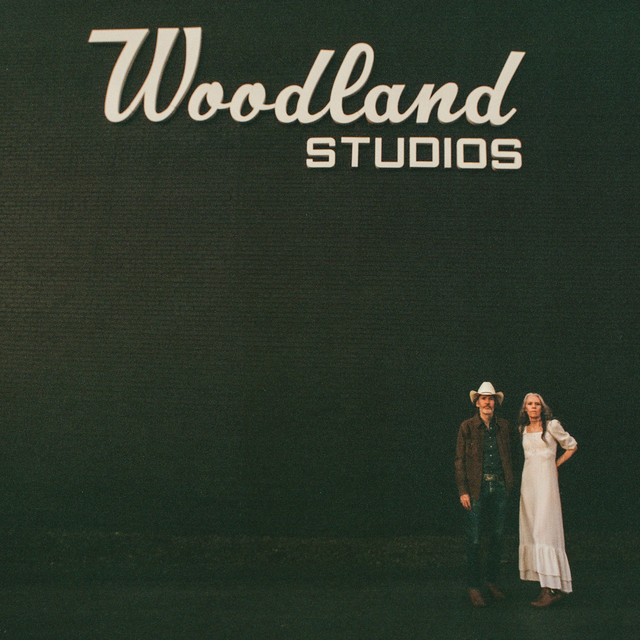
One advantage of creating timeless-sounding music is that as long as the songwriting remains sharp and inspired, a venerable career is nearly guaranteed. Granted, this is Welch’s first new album under her own name in well over a decade (and also the first to co-credit longtime partner/collaborator Rawlings) but it’s also the most vital she’s come across since 2001’s Time (The Revelator). It doesn’t reinvent the wheel but it doesn’t necessarily have to as Welch and Rawling’s acoustic folk feels both as out-of-time and relevant as ever.

9. Jessica Pratt, Here In The Pitch

Similarly out-of-time, Pratt’s fourth album (and the first of hers I’ve heard) sonically resembles a world securely preserved in amber (in this case, one from the mid-1960s) but here’s the catch—I wouldn’t go so far to call it retro. Rather than trying to fully recreate a past aesthetic (such as a Bacharach/David pastiche), she crafts songs that resemble transmissions from an interior plane or at least something only known to her. Never musty nor obscure, her miniatures, like the disarming, haunting “Life Is” are occasionally striking enough to stop one in one’s tracks.

8. Julia Holter, Something In The Room She Moves

More than five years on from her ambitious, often intimidating double-LP Aviary, Holter re-emerges with something seemingly crafted for these uncertain times, a gentle fever dream serving as a balm but also as a stimulant. “Celestial” feels like an apt description of the vibe it often goes for (the less charitable might say “spacy” or just plain “strange”.) If one gravitates towards music that’s by nature obscure or unknown, Holter’s your god and while I have trouble retaining her melodies (“These Morning” a notable exception), there’s enough going on in her sonic palette to hold my interest.

7. Hurray For The Riff Raff, The Past Is Still Alive

Having spent years confused and intrigued by the moniker of Alynda Segarra’s long-running project, they first captured my attention with the propulsive, anthemic “Pierced Arrows” from 2022’s Life On Earth; this follow-up is a different proposition, a concept/road trip album centered on Segarra’s recently deceased father that delves into an Americana as vivid as it is divergent from what Welch and Rawlings offered this year. Despite the immediacy of opener “Alibis”, it’s a slow-grower of a record, kind of like the last Big Thief album only arguably more focused. 

6. Beth Gibbons, Lives Outgrown

Sixteen years after Portishead’s third (and apparently last) record, vocalist Gibbons’ first solo album is a totally unexpected gift: apart from her ever-distinct vocals, it’s like little her band ever did, opting for acoustic and/or orchestral arrangements that sometimes recall Out of Season (her 2002 collaboration with Rustin Man), but only slightly. As one would hope for from such an iconoclast, this feels nearly as fresh as Dummy did in 1994 in how it often surprises the listener: the not-cloying child’s choir in “Floating On A Moment” for instance, or the percussive momentum driving the thunderous “Reaching Out”. 
5. Gruff Rhys, Sadness Sets Me Free

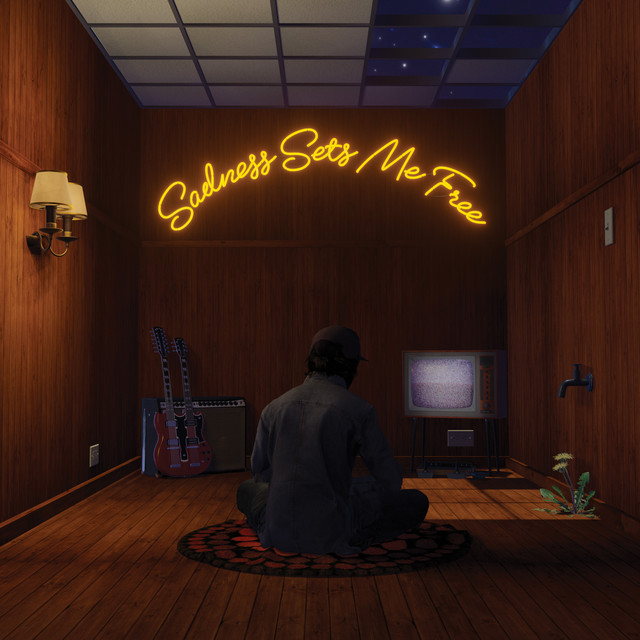
Fifteen years after their last album, I no longer pine for a Super Furry Animals reunion as vocalist Gruff Rhys has produced a back catalog as nourishing as his old band’s. Sonically, this is not wildly different from 2021’s Seeking New Gods, carrying on that record’s orchestral sweep and pastoral climate. What’s new is a melancholia that Rhys communicates eloquently and defends convincingly, from the opener title track to closer “I’ll Keep Singing” (which cunningly reprises the former.) Also, delicately soaring non-single and hidden gem “Peace Signs” is (for what it’s worth) one of my most-played songs on Spotify this year.

4. Laura Marling, Patterns In Repeat

Arriving four years after Songs For Our Daughter which was crafted in anticipation of having a child, Marling’s latest is about actually becoming a mother. While such a concept risks preciousness, her gimlet-eyed view has only softened slightly. With her arrangements stripped down to percussion-less, near Fan Dance-levels, the resultant song cycle is her most complete-sounding album since 2015’s Short Movie or maybe even 2010’s landmark I Speak Because I Can. “Child of Mine” could be a future standard, while the extraordinary “The Shadows” relays Marling’s rare talent as beautifully as anything she’s done since her first recordings as a teenager.

3. Arooj Aftab, Night Reign

As with Jessica Pratt above, this Pakistani-American vocalist’s fourth album snuck up on me and offered considerable solace during an exhausting year. With a deep tone occasionally reminiscent of Sade, one could categorize her music (much of it sung in her native tongue) as a jazz/world music fusion, maybe a cross between Natacha Atlas and Cassandra Wilson. Still, Aftab’s unique blend of genres and cultures is arguably her own. “Raat Ki Rani” even has something approaching a hook but much of Night Reign scans like a velvet-smooth burrowing into a subterranean, way-after hours dreamscape—an enchanting place to let go and get lost in.
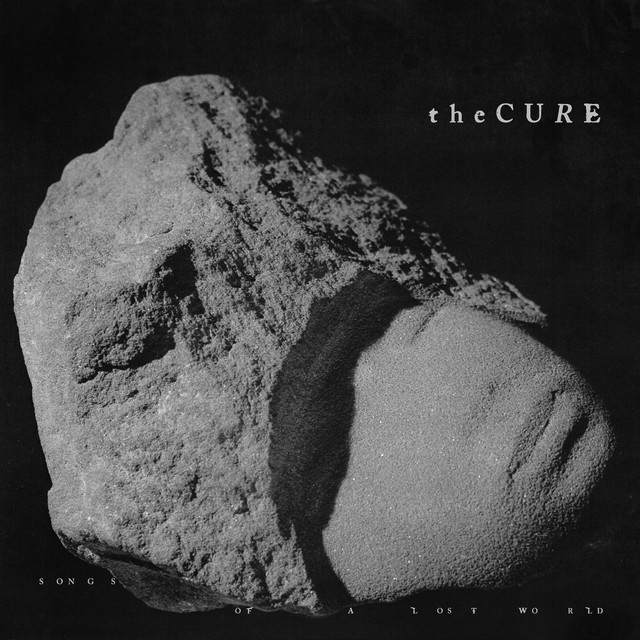
2. The Cure, Songs Of A Lost World

Long-anticipated, The Cure’s first release in sixteen years fully lives up to the promise suggested by hearing at least half of these songs in concert eighteen months ago. Remembering most of his strengths and qualities that no one else could ever hope to replicate, Robert Smith makes it sound so easy (even though the last four Cure albums would suggest otherwise.) Perhaps adhering to a rather narrow aesthetic this time (there’s nothing like “Friday I’m In Love” here) helped center him to make such a commonly focused, solid work. It won’t replace Disintegration or even Wish as anyone’s favorite Cure LP, but like the shockingly strong Tears For Fears reunion album two years ago, this is, against all odds or good reason, a “legacy artist” at the top of their game.
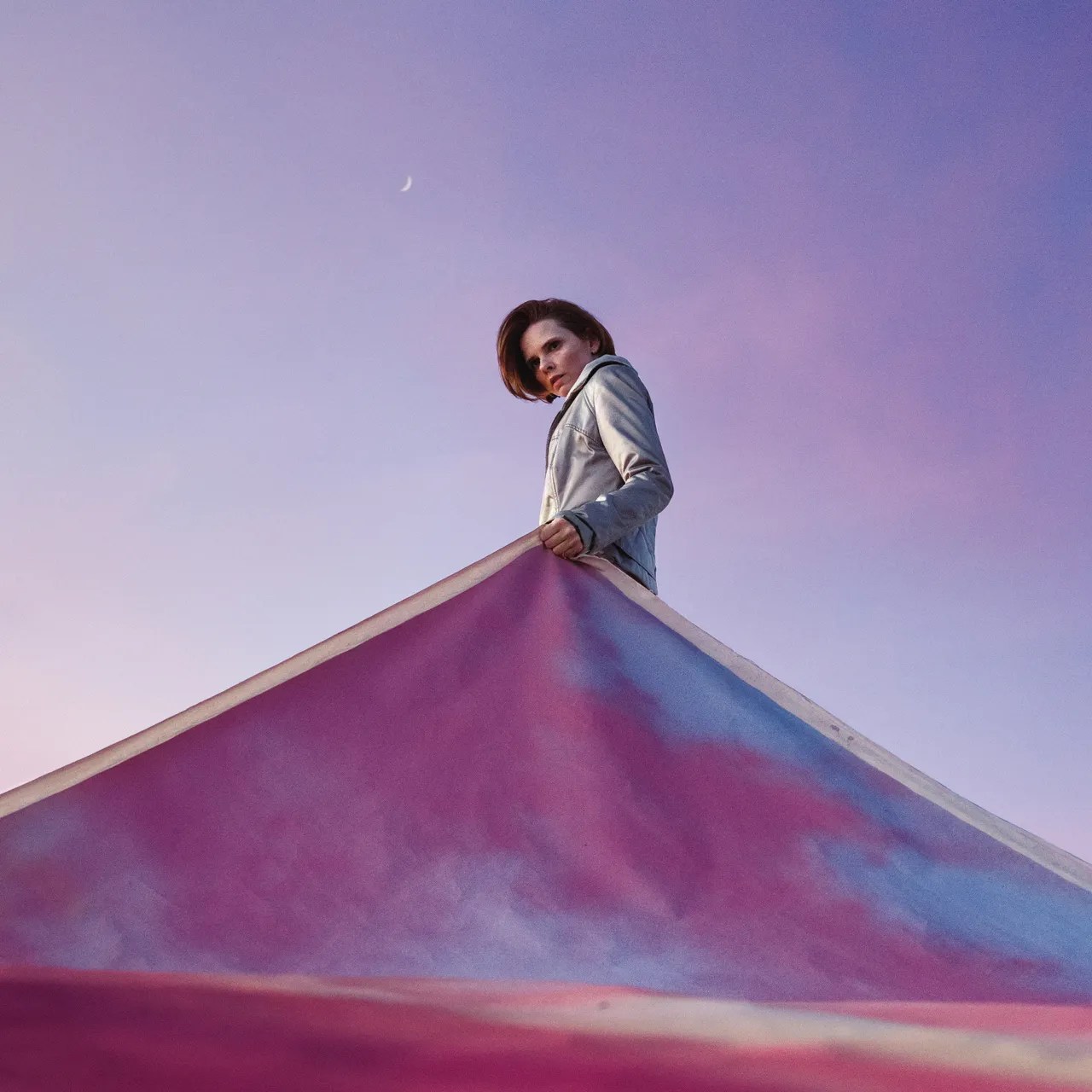
1. Cassandra Jenkins, My Light, My Destroyer

In large part because of her brilliant single “Hard Drive”, Jenkin’s previous album nearly ended up my favorite of 2021 before Aimee Mann unexpectedly dropped her own return-to-form. It was for the best as Jenkins’ follow-up is a real advance. Not that she could ever top “Hard Drive”, a singular creation that first appeared at a crucial moment, but My Light, My Destroyer makes an altogether more persuasive case for her as an artist. On paper, it appears to be a jumble, mixing catchy rockers (“Clams Casino”, “Petco”) with introspective ballads (“Only One”, “Omakase”), short instrumentals and conversational snippets (“Shatner’s Theme”, “Betelgeuse”) and unclassifiable combinations of some or all of the above (the gorgeous, mysterious “Delphinium Blue”.) And yet, I’m enchanted every time I put it on, compelled to consume all 37 minutes of it at once—not an easy feat in an age where there’s just so much music to pick from and pay close attention to. Happily, spending ample time with Jenkins reaps considerable rewards.

ALSO RECOMMENDED:

  • Alison Moyet, Key
  • Andrew Bird & Madison Cunningham, Cunningham Bird
  • Another Sky, Beach Day
  • Brittany Howard, What Now
  • Father John Misty, Mahashmashana
  • High Llamas, Hey Panda
  • Katie Pruitt, Mantras
  • Maggie Rogers, Don’t Forget Me
  • Michael Kiwanuka, Small Changes
  • Nilufer Yanya, My Method Actor
  • Pet Shop Boys, Nonetheless
  • Quivers, Oyster Cuts
  • Real Estate, Daniel
  • SUSS, Birds & Beasts
  • The The, Ensoulment
  • Tindersticks, Soft Tissue
  • Wand, Vertigo
  • Waxahatchee, Tigers Blood

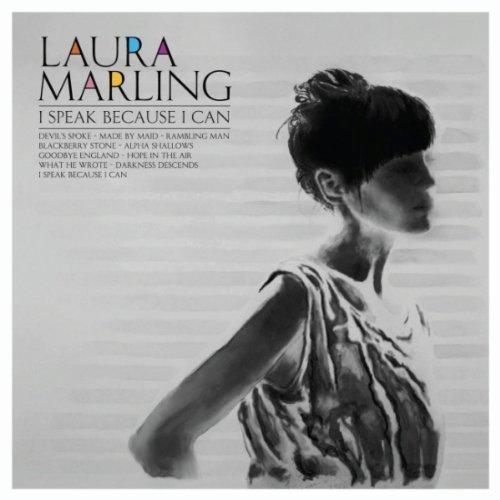
Laura Marling, “I Speak Because I Can”

(My 100 favorite albums in chronological order: #90 – released March 22, 2010)

Track listing: Devil’s Spoke / Made By Maid / Rambling Man / Blackberry Stone / Alpha Shallows / Goodbye England (Covered In Snow) / Hope In The Air / What He Wrote / Darkness Descends / I Speak Because I Can

It’s not an exaggeration labeling British folk singer/songwriter Laura Marling a prodigy: before turning twenty, she recorded two albums (the first at age 17, beating Fiona Apple by one year) and both were nominated for the UK’s prestigious Mercury Prize (she lost out to Elbow and the xx.) Furthermore, like Apple, her lyrics and relatively low-pitched vocals had the presence of someone at least twice her age. Impressive from a technical standpoint, for sure, but even on her debut, Alas, I Cannot Swim, one could easily comprehend her widescreen talent and distinct persona, even if the latter was understandably a bit putative.

In that regard, her second album, I Speak Because I Can, is a substantial advance. Of course, Marling’s still a world-weary teen baring an acoustic guitar (exemplified by track two, “Made By Maid” which is just that and nothing more), but from the outset, she seems more willing to take risks, both with her sound and subject matter. Opener “Devil’s Spoke” begins with neither with her voice nor guitar but a needle drop on a vinyl record, followed by a wash of electronically-enhanced ambient sound that grows in volume until, near the forty-second mark, Marling’s brisk, acoustic strumming enters, starting the song proper. A rhythm section, keys and, in the second verse, banjo flesh out the arrangement. “Hold your devil by his spoke and spin him to the ground,” she commands in the chorus, not exactly possessed but still fiercely determined.

Whereas Charlie Fink, vocalist for Noah and the Whale (a band Marling also briefly sung with) helmed her first album, producer Ethan Johns lends a tad more polish to I Speak Because I Can. Johns had previously worked with a plethora of rock-leaning artists, including Ray LaMontange, Kings of Leon, Ryan Adams and Crowded House; three-quarters of Mumford and Sons also play on a majority of these songs, which might’ve quietly overshadowed the scope of Marling’s accomplishment since the band had scored their breakthrough hit “Little Lion Man” between the album’s recording and its release (not to mention Marling was also dating leader Marcus Mumford at the time.)

In retrospect, quibbling over what impact Marling had in spite of her more famous collaborators is irrelevant (she and Mumford would split by the end of 2010), mostly because Marling is so clearly the main attraction here. Any doubts should be extinguished by “Rambling Man”, a statement of purpose as assured and mesmeric as, say, Apple’s “Shadowboxer” or even Sam Phillips’ “I Need Love”. Like many a Marling song, it starts off simply, just acoustic guitar and voice, but oh how lovingly and effortlessly it builds, wrapping a crystalline melody within an arrangement it snugly fits into while also allowing enough room to breathe. Its chorus, “Oh give me to a rambling man / let it always be known that I was who I am,” is one heck of a manifesto for a teenager; she’s convincing enough to get it across.

In another time, “Rambling Man” could’ve become a standard along the likes of Joni Mitchell’s “Big Yellow Taxi”–a major-key anthem any aspiring folksinger with a guitar in hand would want to cover on stage or while busking. For Marling, however, it’s only one side of her persona, a mere fraction of her capabilities. Here, it also flickers through on “Goodbye England (Covered In Snow)”, a perfectly accessible, comforting ballad graced with glistening strings and a melody simple enough to sing the lyrics of “On Top of Old Smokey” to; add a little more piano and it could almost be Tori Amos (albeit with a genuine Brit accent that renders words like “she” and “stay” as “schee” and “schtay”.)

Happily, much of the album traverses off into darker, Boys For Pele friendly territories. On one end of that spectrum, you have “What He Wrote”, a haunted, hymn-like lament inspired by letters written between a World War II soldier and his beloved. Reminiscent of 1960s folk-pop like “Scarborough Fair/Canticle” and Fairport Convention’s “Fotheringay”, it’s as delicate as it is engrossing, not least because of tiny motifs such as Marling’s clipped pronunciation of the words “grip” and “ship”. On the other end lies “Alpha Shallows”, a minor-key waltz with guitar arpeggios straight out of Songs of Leonard Cohen and tautly plucked strings. Marling’s also tightly wound, her mounting despair heightened by scores of ringing piano and mandolin. “The grey in this city is too much to bear,” she pleads, her immense but measured passion soon coming out one word at a time: “I / want / to / be / held / by / those / arms,” over and over, so much longing and grief you dearly hope she isn’t just singing into the void.

If that’s not bleak enough for you, the ironically-titled “Hope In The Air” might suffice. A kiss-off to a friend or lover in the guise of a caustic folk murder ballad, it proceeds at a deliberate, dread-accumulating pace: “No hope in the air / no hope in the water / not even for me / your last serving daughter,” goes its oddly catchy chorus. Which each verse, Marling manages to seem more incensed without ever losing composure, nearly speak-singing lyrics like, “My life is a candle and a wick / You can put it out but you can’t break it down / In the end, we are waiting to be lit,” with an urgency and authority you dare not argue with. When she suddenly admits, “Why fear death, be scared of living,” it’s an intriguing counterpart to “Let it always be known that I was who I am,” no matter how much she may now be inhabiting a character; come to think of it, how autobiographical is “Rambling Man”, anyway?

She further muddies those waters whenever she flashes a sense of humor and more than a hint of self-deprecation. Both come through most strongly on “Darkness Descends”: while the lyrics read like an introverted young Goth’s confessional (“Can I just say I don’t feel the light / But darkness descends once more into my life”), the music and melody are as breezy and cheerful as a quick-footed romp at a local pub’s dance night. The tempo also repeatedly comes to a pause, only to start up again as if mocking her for finding an additional thing to fixate on. She keeps all but telling us to leave her alone, only to be silently saying (or perhaps not, via her congenial, multi-syllabic “aaaahhhhs”), “But I’d really wish you’d stay.”

I Speak Because I Can concludes with its title track, a thrilling declaration of resilience in a world crumbling around one’s self. The narrator shouts out to the husband who’s left her, “When you look back to where you started / I’ll be there waving you on.” In the years since, Marling herself has rarely looked back—her subsequent discography is one of this decade’s richest. A Creature I Don’t Know, Once I Was An Eagle and Short Movie all made my year-end top ten albums lists, and in retrospect, 2017’s Semper Femina probably should have as well. With each release, she further expands her musical palette, exploring and occasionally creating new sounds and subgenres. LUMP, her recent collaborative EP with Tunng’s Mike Lindsay, takes a deep dive into atmospheric EDM folk; it’s an unlikely detour and as solid as anything she’s done. And to think—at this writing, she’s not even thirty. Marling remains a former prodigy worth paying close attention to.

Up next: “All sounds like a dream to me.”

“Rambling Man”:

“Hope In The Air”:

7. Laura Marling, “Short Movie”

short movie

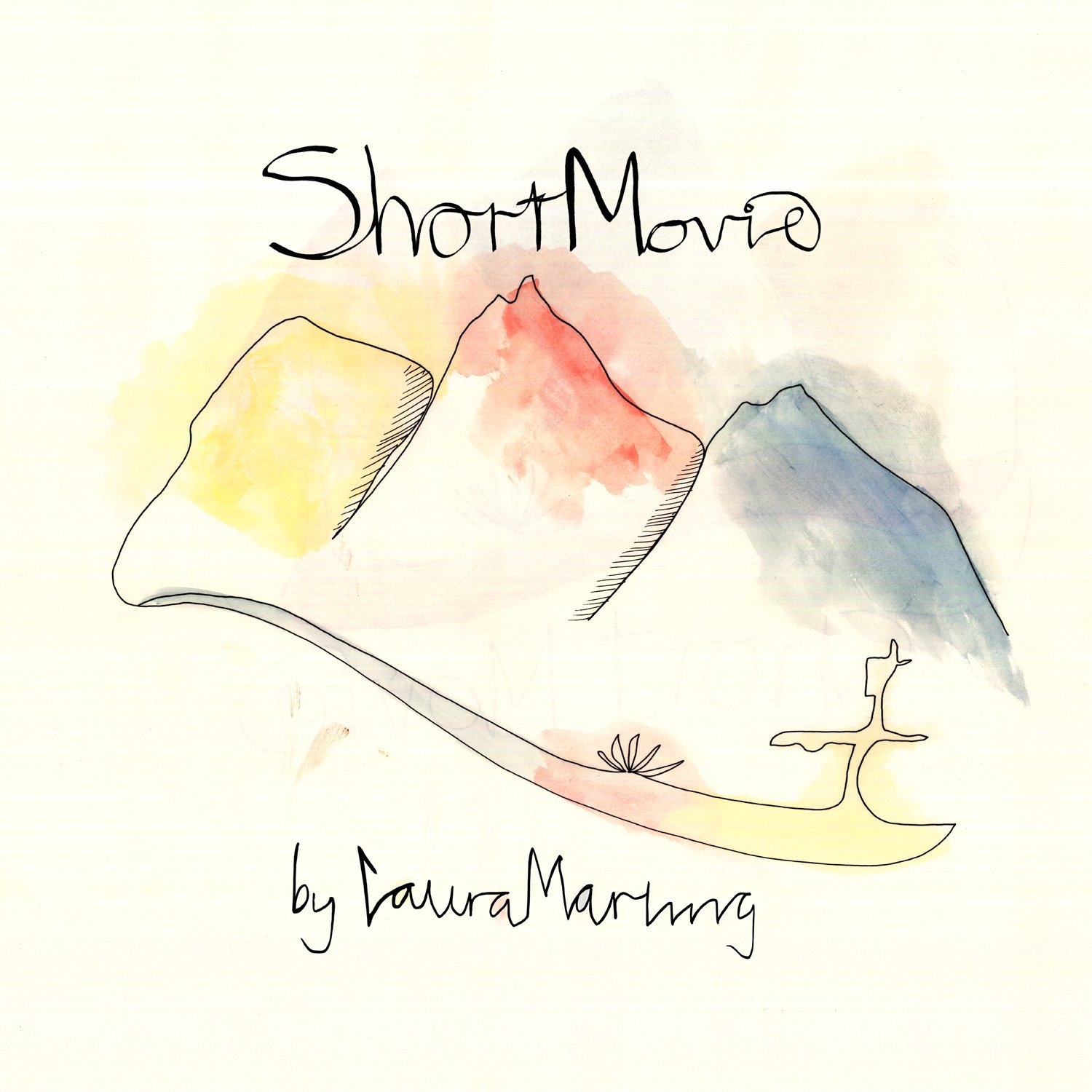
Twelve months ago, I speculated if Laura Marling’s fifth album would be her fourth in a row to make my year-end top ten; upon first hearing it last March, I knew the answer right away. Short Movie is not quite her best album, but it might be her most immediate to date. As distinct as each of her other records but also just as identifiable, it’s full of transitions—from the UK to America, from acoustic to electric guitars, from swooning over lost love to gleaning perspective after all the wounds have healed (cue the delectably acidic “Strange”). Her increasingly seamless shifts between hooky pop (“False Hope”, “Gurdjieff’s Daughter”) and spooky folk (“Warrior”, “Howl”) hint that she has a truly great album in her yet to come; so does the multilayered, masterfully building, summation-of-life title track, where she repeatedly concludes, “It’s a short fucking movie, man.” Indeed.

Favorite tracks: “False Hope”, “Strange”, “Don’t Let Me Bring You Down”, “Short Movie”

“Short Movie”: