Best Albums of 2024

Limiting this to a top ten, although I’ve included eighteen more recommended albums at the end (in alphabetical order by artist); as these things tend to shift over time, a few may end up on a future iteration of this list.
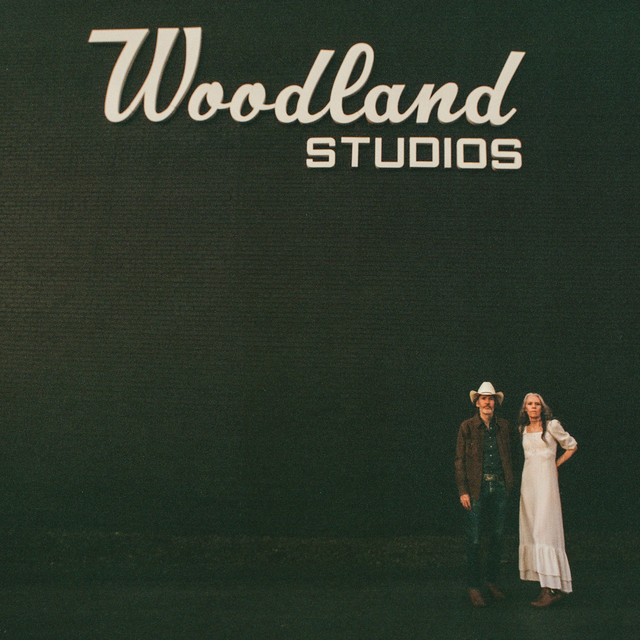
10. Gillian Welch and David Rawlings, Woodland

One advantage of creating timeless-sounding music is that as long as the songwriting remains sharp and inspired, a venerable career is nearly guaranteed. Granted, this is Welch’s first new album under her own name in well over a decade (and also the first to co-credit longtime partner/collaborator Rawlings) but it’s also the most vital she’s come across since 2001’s Time (The Revelator). It doesn’t reinvent the wheel but it doesn’t necessarily have to as Welch and Rawling’s acoustic folk feels both as out-of-time and relevant as ever.

9. Jessica Pratt, Here In The Pitch

Similarly out-of-time, Pratt’s fourth album (and the first of hers I’ve heard) sonically resembles a world securely preserved in amber (in this case, one from the mid-1960s) but here’s the catch—I wouldn’t go so far to call it retro. Rather than trying to fully recreate a past aesthetic (such as a Bacharach/David pastiche), she crafts songs that resemble transmissions from an interior plane or at least something only known to her. Never musty nor obscure, her miniatures, like the disarming, haunting “Life Is” are occasionally striking enough to stop one in one’s tracks.

8. Julia Holter, Something In The Room She Moves

More than five years on from her ambitious, often intimidating double-LP Aviary, Holter re-emerges with something seemingly crafted for these uncertain times, a gentle fever dream serving as a balm but also as a stimulant. “Celestial” feels like an apt description of the vibe it often goes for (the less charitable might say “spacy” or just plain “strange”.) If one gravitates towards music that’s by nature obscure or unknown, Holter’s your god and while I have trouble retaining her melodies (“These Morning” a notable exception), there’s enough going on in her sonic palette to hold my interest.

7. Hurray For The Riff Raff, The Past Is Still Alive

Having spent years confused and intrigued by the moniker of Alynda Segarra’s long-running project, they first captured my attention with the propulsive, anthemic “Pierced Arrows” from 2022’s Life On Earth; this follow-up is a different proposition, a concept/road trip album centered on Segarra’s recently deceased father that delves into an Americana as vivid as it is divergent from what Welch and Rawlings offered this year. Despite the immediacy of opener “Alibis”, it’s a slow-grower of a record, kind of like the last Big Thief album only arguably more focused. 

6. Beth Gibbons, Lives Outgrown

Sixteen years after Portishead’s third (and apparently last) record, vocalist Gibbons’ first solo album is a totally unexpected gift: apart from her ever-distinct vocals, it’s like little her band ever did, opting for acoustic and/or orchestral arrangements that sometimes recall Out of Season (her 2002 collaboration with Rustin Man), but only slightly. As one would hope for from such an iconoclast, this feels nearly as fresh as Dummy did in 1994 in how it often surprises the listener: the not-cloying child’s choir in “Floating On A Moment” for instance, or the percussive momentum driving the thunderous “Reaching Out”. 
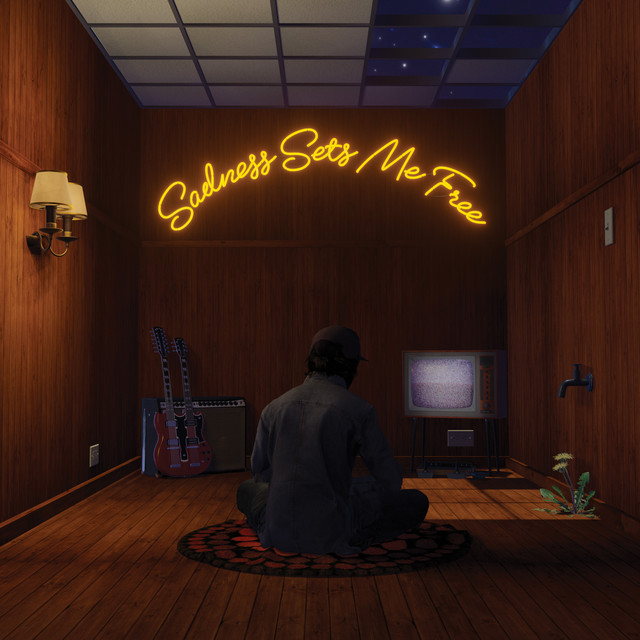
5. Gruff Rhys, Sadness Sets Me Free

Fifteen years after their last album, I no longer pine for a Super Furry Animals reunion as vocalist Gruff Rhys has produced a back catalog as nourishing as his old band’s. Sonically, this is not wildly different from 2021’s Seeking New Gods, carrying on that record’s orchestral sweep and pastoral climate. What’s new is a melancholia that Rhys communicates eloquently and defends convincingly, from the opener title track to closer “I’ll Keep Singing” (which cunningly reprises the former.) Also, delicately soaring non-single and hidden gem “Peace Signs” is (for what it’s worth) one of my most-played songs on Spotify this year.

4. Laura Marling, Patterns In Repeat

Arriving four years after Songs For Our Daughter which was crafted in anticipation of having a child, Marling’s latest is about actually becoming a mother. While such a concept risks preciousness, her gimlet-eyed view has only softened slightly. With her arrangements stripped down to percussion-less, near Fan Dance-levels, the resultant song cycle is her most complete-sounding album since 2015’s Short Movie or maybe even 2010’s landmark I Speak Because I Can. “Child of Mine” could be a future standard, while the extraordinary “The Shadows” relays Marling’s rare talent as beautifully as anything she’s done since her first recordings as a teenager.

3. Arooj Aftab, Night Reign

As with Jessica Pratt above, this Pakistani-American vocalist’s fourth album snuck up on me and offered considerable solace during an exhausting year. With a deep tone occasionally reminiscent of Sade, one could categorize her music (much of it sung in her native tongue) as a jazz/world music fusion, maybe a cross between Natacha Atlas and Cassandra Wilson. Still, Aftab’s unique blend of genres and cultures is arguably her own. “Raat Ki Rani” even has something approaching a hook but much of Night Reign scans like a velvet-smooth burrowing into a subterranean, way-after hours dreamscape—an enchanting place to let go and get lost in.
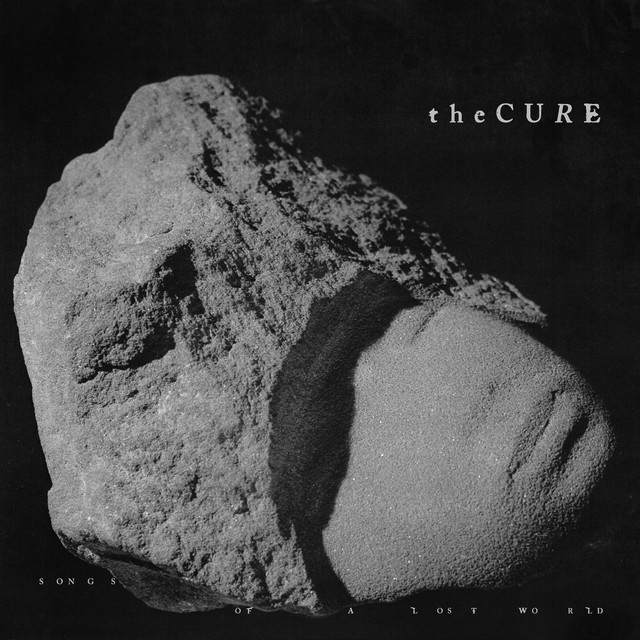
2. The Cure, Songs Of A Lost World

Long-anticipated, The Cure’s first release in sixteen years fully lives up to the promise suggested by hearing at least half of these songs in concert eighteen months ago. Remembering most of his strengths and qualities that no one else could ever hope to replicate, Robert Smith makes it sound so easy (even though the last four Cure albums would suggest otherwise.) Perhaps adhering to a rather narrow aesthetic this time (there’s nothing like “Friday I’m In Love” here) helped center him to make such a commonly focused, solid work. It won’t replace Disintegration or even Wish as anyone’s favorite Cure LP, but like the shockingly strong Tears For Fears reunion album two years ago, this is, against all odds or good reason, a “legacy artist” at the top of their game.
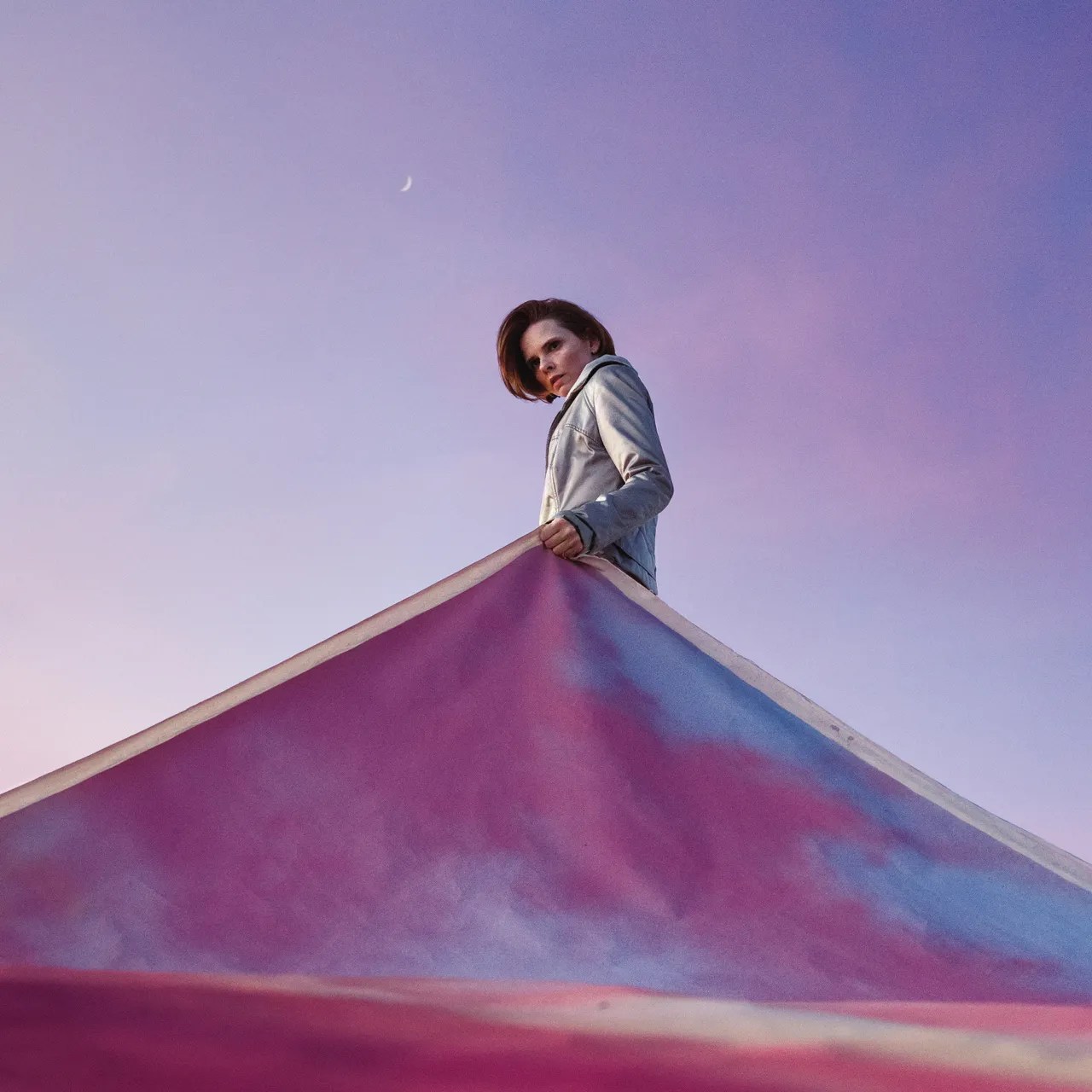
1. Cassandra Jenkins, My Light, My Destroyer

In large part because of her brilliant single “Hard Drive”, Jenkin’s previous album nearly ended up my favorite of 2021 before Aimee Mann unexpectedly dropped her own return-to-form. It was for the best as Jenkins’ follow-up is a real advance. Not that she could ever top “Hard Drive”, a singular creation that first appeared at a crucial moment, but My Light, My Destroyer makes an altogether more persuasive case for her as an artist. On paper, it appears to be a jumble, mixing catchy rockers (“Clams Casino”, “Petco”) with introspective ballads (“Only One”, “Omakase”), short instrumentals and conversational snippets (“Shatner’s Theme”, “Betelgeuse”) and unclassifiable combinations of some or all of the above (the gorgeous, mysterious “Delphinium Blue”.) And yet, I’m enchanted every time I put it on, compelled to consume all 37 minutes of it at once—not an easy feat in an age where there’s just so much music to pick from and pay close attention to. Happily, spending ample time with Jenkins reaps considerable rewards.

ALSO RECOMMENDED:

  • Alison Moyet, Key
  • Andrew Bird & Madison Cunningham, Cunningham Bird
  • Another Sky, Beach Day
  • Brittany Howard, What Now
  • Father John Misty, Mahashmashana
  • High Llamas, Hey Panda
  • Katie Pruitt, Mantras
  • Maggie Rogers, Don’t Forget Me
  • Michael Kiwanuka, Small Changes
  • Nilufer Yanya, My Method Actor
  • Pet Shop Boys, Nonetheless
  • Quivers, Oyster Cuts
  • Real Estate, Daniel
  • SUSS, Birds & Beasts
  • The The, Ensoulment
  • Tindersticks, Soft Tissue
  • Wand, Vertigo
  • Waxahatchee, Tigers Blood

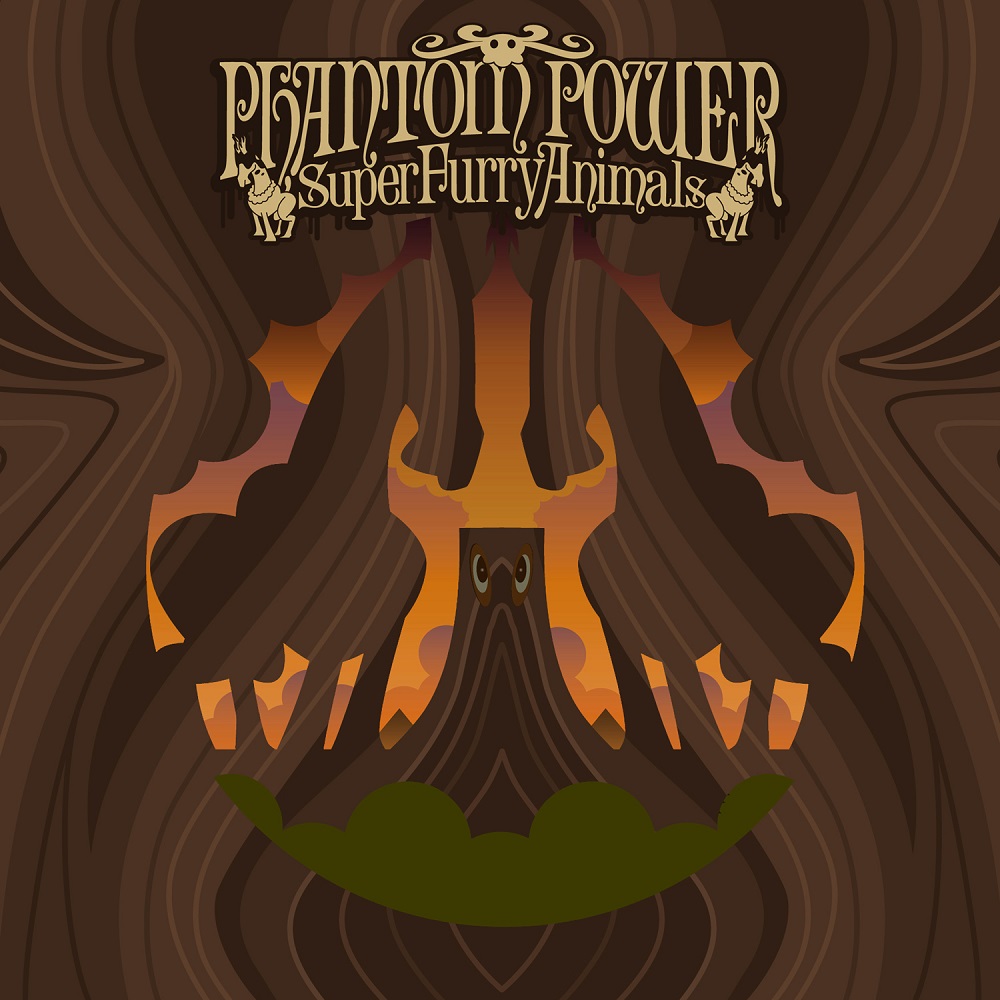
Super Furry Animals, “Phantom Power”

(My 100 favorite albums in chronological order: #75 – released July 21, 2003)

Track listing: Hello Sunshine / Liberty Belle / Golden Retriever / Sex, War & Robots / The Piccolo Snare / Venus & Serena / Father Father #1 / Bleed Forever / Out of Control / Cityscape Skybaby / Father Father #2 / Valet Parking / The Undefeated / Slow Life 

Welsh quintet Super Furry Animals were automatically lumped in with Britpop on their 1996 debut Fuzzy Logic and it’s not difficult to see why given the era; one could almost too easily imagine Blur’s Damon Albarn singing over a few of album’s backing tracks. Still, even then, SFA was clearly its own kind of beast thanks to leader Gruff Rhys’ laid back (some would almost say lackadaisical) vocals and an eclecticism that far outpaced most of their contemporaries.

On subsequent records Radiator (1997) and Guerrilla (1999), SFA reveal themselves to be musical magpies as well-versed as Japan’s Pizzicato Five: the two bands sound absolutely nothing alike, but rarely in this project have we come across another outfit with an idea of pop music as far-reaching and inclusive, borrowing from and re-appropriating past touchstones so that they scan as both familiar and newfangled. Had SFA been a DJ collective rather than a guitar band, they might’ve turned out like The Avalanches. Instead, they expanded the notion of what Britpop could contain and then soon transcended it.

The five years following Fuzzy Logic encompass everything from an estimable stab at Tropicalia (“Northern Lites”) to the multi-part “Receptacle For The Respectable”, transforming itself from Beatles-esque sing-along to ear-shattering freakout in less than five minutes. This period also features catchy tunes with titles like “The International Language of Screaming” and “Shoot Doris Day”, epic one-off singles such as the awesome, anthemic “Ice Hockey Hair” and “The Man Don’t Give a Fuck” (the latter built on Steely Dan (!) sample), and an entire album recorded in the band’s regional tongue (2000’s Mwng.)

SFA put out nine studio albums in a 13-year period; although the ninth was my favorite album of 2009 at the time, the one I return to most is their sixth, Phantom Power. Admittedly, I have a soft spot for it since it was my introduction to the band, but it holds up beautifully thanks to its rare cohesiveness. Whereas previous SFA long-players carry something like an electrical charge from their extreme sonic and thematic diversity, here the band simply sequences a collection of songs that sound like they belong together. What elevates Phantom Power from good to great is that rather than limit themselves for consistency’s sake, SFA still manage to pack in a relatively wide array of sounds and ideas in a deliberately tighter frame.

Opener “Hello Sunshine” wastes no time showing how the band gracefully achieves such balance. Its gently psychedelic intro of acoustic guitar with a female voice singing, “So hard to say goodbye…” could’ve come off the original Wicker Man soundtrack, conjuring atmosphere to spare. Then, suddenly, at 0:47, it shimmers into what turns out to be the song proper, an easy going, Beatles-simple hippie ballad full of rich, overdubbed harmonies with subtle electronic filigrees bubbling at its outer edges. From there, Phantom Power gradually revs itself up. “Liberty Belle” slightly quickens the tempo, conjoining an affable melody (complete with “Sympathy for The Devil” worthy “Who-hoo’s!”) with unexpectedly damning lyrics. “You know you’re diggin’ to hell!,” goes the deceptively cheerful chorus, introducing one of the album’s most prevalent running themes, a skepticism of post-9/11, War on Terror-era America that feels far more potent than Blur’s from a decade before.

After concise bluesy gallop/obvious single “Golden Retriever” is out of the way, the album’s first major stylistic swerve comes with “Sex, War & Robots” (with that title, how could it not?) Its abundance of pedal steel and sumptuous strings sounds almost exactly like k.d. lang circa Ingenue, but Rhys’ vocals, recorded through a trippy filter are another thing entirely; also, eclectic as she could be, it’s hard to picture lang ever singing a lyric like “I programmed robots to make them lie.” The shift in tone is build-up for the album’s first epic/highlight, “The Piccolo Snare”. Resembling the psych-pop opening of “Hello Sunshine” but with a far lusher palette, it piles on irresistible, explicitly retro harmonies in mold of The Mamas and The Papas and The Association (in a way, anticipating Fleet Foxes by roughly five years); chiming, echoing synths, backwards guitars and a most effective key change at the bridge all contribute to the throbbing wall of melody and sound, nimbly sustaining this specific momentum for over six minutes.

Venus & Serena” brings it all back down to Earth via a glam-pop ode to the titular tennis pro twins, winning points on both a hummable ascendant chorus and by inserting a girl-group breakdown (“Father, father, father, father, can’t you see / I’m a walking tragedy”) smack dab in the middle. Immediately following, “Father Father #1” is a two-minute orchestral interlude, a quietly majestic palette cleanser bringing Phantom Power’s first half to a comforting close.

As “Hello Sunshine” began the album with a hint of the Beatles, “Bleed Forever” does pretty much the same for the second half. Its drum intro could’ve been lifted off of Abbey Road or Let It Be, but SFA include enough crafty details to avoid pastiche, as heard in the maracas and Moog synthesizer lurking in the background (and also in the Barry Gibb-like slant Rhys lends the word “Fa-ev-ahhhh”.) Referencing “holy wars” and “ninja jihads,” “Out of Control” instantly snaps into “Liberty Belle” mode but with more intensity—a tightly wound maelstrom of one-note banging piano, “Jumping Jack Flash” guitar riffs, wailing backing vocals and Motown/Tamla beats.

Cityscape Skybaby” initially provides a much-needed breather from all that action, its first minute weightless and fluttering like prime Pink Floyd. Then, the vocals come in, the melody gradually surges into focus and the full band arrives at the two-minute mark achieving post-apocalyptic trance-rock bliss; the overlapping vocal parts near the end are as heavenly as anything in “The Piccolo Snare”. “Father Father #2” provides another brief orchestral interlude similar to what we heard four tracks previously, although now the strings seem slightly off-kilter, only turning reassuring at the end.

A car’s ignition signals the start of “Valet Parking”; it’s another attempt at Tropicalia, only this time with Latin guitars, slinky beats and incessant “ba, ba, ba’s” instead of any horns (although as it proceeds, snippets of car horns subtly dart into and out of the mix.) The whole thing seems to glide along with breezy joie de vivre as Rhys sings, “Fly away / in my silver Bluebird”—that is, until he almost casually mentions how “It’s Solvent Abuse Awareness Week / at the clinic in a Berlin backyard.” “The Undefeated” further juxtaposes a sunny disposition with decidedly darker content. A driving beat and snatches of steel drums seem pleasant enough, but if you really listen to the lyrics—the main hooks are, “Yes, so shallow, the Undefeated” and cries of “Lies! Pollution! Solution!”—it should come as little of a shock when the song ends in an abrupt hail of gunfire.

Just as the gunshots peter out, however, Phantom Power’s finale begins. Many fans regard “Slow Life” as SFA’s magnum opus (as epic pop songs go, it’s up there with Saint Etienne’s “Avenue” and XTC’s “Jason and the Argonauts”.) The first forty seconds play out in a swirl of carefully, strikingly placed synth and orchestral samples, instantly drawing the listener in. A peppy drum machine lays the foundation for everything to spin towards a blistering crescendo; then, electrobeats introduce a melody that the song’s remainder sustains. Strings come in, as does an electric-guitar-and-harmonica breakdown so that when Rhys’ vocals finally appear at 2:19, one can easily sing along with the lyric sheet. Momentum keeps building until, with the familiar four-note signal of a clock chime, we arrive at the chorus which is simply the phrase “Rocks are slow life” repeated over and over into a “Hey Jude”-like coda. Who knows/cares if there’s any meaning beneath the surface, for “Slow Life” endures for seven minutes without a hint of strain, finally signing off with suspended strings that suddenly, almost breathlessly fade into the ether.

After three more albums, SFA went on an indefinite hiatus. Rhys and other members recorded solo records (his 2014 release American Interior is solid) and left dangling the possibility of a tenth album; as of late 2017, it still hasn’t arrived, although the band has toured extensively over the past three years and even included a new song on 2016’s career-spanning anthology Zoom! I doubt they’ll ever go beyond their long-running cult status (particularly outside the UK); still, like Pizzicato Five, they remain ripe for discovery, and their songs are in English (except when they’re occasionally in Welsh)—more significantly, unlike P5, their back catalog is still in print.

Up next: Their Winnipeg.

(Also of note: this project, now 3/4 completed (!) will return in early 2018.)

“Slow Life”:

“The Piccolo Snare”: