Having recently posted my top 25 movies of the first half of the 2010’s, here’s the same for favorite albums of that period.
I came up with the top three right away, although I debated the order. Gryner ends up at # 1 because it’s the flawless ten-song pop album I always hoped she’d deliver (you likely haven’t heard of it—despite a nearly 20-year career, this Canadian singer/songwriter has remained obscure due to releasing all of her music (save one early major-label album) independently.) Kaputt is still a singular listen (yacht rock equal parts Steely Dan and Pet Shop Boys), taking me to an unlikely happy place every time, while Random Access Memories is the rare zeitgeist release that aptly sums up the past, defines the present and looks ahead to the future.
Based on year-end best-of lists, I’m not surprised I Know What Love Isn’t, Dottie’s Charms and Heartthrob all ended up in the top ten, since each originally placed at # 1 or 2 in their respective years (and, despite being only my fifth-favorite Saint Etienne album, Words and Music… is admittedly pretty good). With hindsight, 2010 had a few shifts: One Life Stand (#3 in 2010) and I Speak Because I Can (#4) now rate higher than Love and Its Opposite (#1) and IRM (#2)—let’s just say that the Thorn and Gainsbourg albums were fervently anticipated at the time, while I initially had no expectations for the others. The one record that has grown on me the most is Pickin’ Up The Pieces: #5 in 2011, it’s nearly as perfect a ten-song pop album as Northern Gospel.
As with the 2000’s (and as I get older), it’s a challenge trying to recognize any trends here. I find myself increasingly relying on new releases by artists familiar to me, so when a Haim or Janelle Monae emerges, it’s a big deal—especially as some longtime favorites take increasingly longer breaks between releases (I’m looking at you, Apple, Lekman, Saadiq, Thorn and Robyn). Fortunately, 2015 is shaping up to be an exceptional year for new music; I’ve already heard at least four albums that would easily place on this list.
1. Emm Gryner, Northern Gospel
2. Destroyer, Kaputt
3. Daft Punk, Random Access Memories
4. Jens Lekman, I Know What Love Isn’t
5. Fitz and the Tantrums, Pickin’ Up The Pieces
6. Laura Marling, I Speak Because I Can
7. Hot Chip, One Life Stand
8. Tegan and Sara, Heartthrob
9. Saint Etienne, Words and Music By Saint Etienne
10. Jill Sobule, Dottie’s Charms
11. Tracey Thorn, Love and Its Opposite
12. Fiona Apple, The Idler Wheel…
13. Future Islands, Singles
14. Raphael Saadiq, Stone Rollin’
15. Janelle Monae, The ArchAndroid
16. The New Pornographers, Brill Bruisers
17. Haim, Days Are Gone
18. Hot Chip, In Our Heads
19. Sam Phillips, Push Any Button
20. Laura Marling, Once I Was An Eagle
21. Robyn, Body Talk
22. Charlotte Gainsbourg, IRM
23. Alison Moyet, The Minutes
24. Rufus Wainwright, Out Of The Game
25. Fleet Foxes, Helplessness Blues
(My 100 favorite albums in chronological order: #19 – released September 13, 1982. Originally posted on Kriofske Mix, 12/7/2014)
Track listing: Sat In Your Lap / There Goes A Tenner / Pull Out The Pin / Suspended In Gaffa / Leave It Open / The Dreaming / Night Of The Swallow / All The Love / Houdini / Get Out Of My House
A year after I fell in love with Abbey Road, Kate Bush released “The Rubberband Girl”, the playful lead single from her seventh album, The Red Shoes. One of her few songs to get any radio airplay at home, it moved me to check out of the library The Whole Story, her greatest hits album which documented her career through 1986. Like Abbey Road, it was another leading portal into an aesthetic I never knew existed: here was this eccentric, high-voiced British woman with cool, strange, imaginatively arranged songs about everything from an Emily Brontë novel (“Wuthering Heights”) to nuclear apocalypse (“Breathing”). Furthermore, most of these were huge hits in the UK (with “Running Up That Hill” her only top 40 in the US) and she recorded all of them before turning thirty.
The Whole Story thoroughly intrigued me by suggesting what brave new worlds pop music could contain: An account of a father and daughter dabbling in rainmaking (“Cloudbusting”)? A wife who cunningly plays with gender roles by seducing her husband incognito (“Babooshka”)? Well, why not? Bush was a true original, not to mention a true weirdo. Perhaps the song that I found most fascinating was “Sat In Your Lap”: After a barrage of pounding, possibly synthetic drums leading the charge, Bush chirps brief, herky-jerky observational lyrics before shifting to full-on cray-cray mode for the operatic, nearly shrieked chorus: “Some say that KNOWLEDGE IS something sat in your lap! / Some say that KNOWLEDGE IS something that you never have!” She goes on to declare, “I must admit, juuuust when I think I’m king,” in a voice so immense and overly theatrical you begin to wonder whether she’s serious; what sets Bush apart from any of her peers is that you never doubt her sincerity, even when she makes WTF statements such as, “I want to be a lawyer / I want to be a scholar / but I really can’t be bothered.” In alternate contexts, “Sat In Your Lap” is either a palette-cleanser or a room-clearer. It reached #11 on the UK singles chart in 1981 and its music video (below) has to be seen to be believed.
I did not check out its parent album, The Dreaming, until five years later, mostly because I was a bit intimidated at the prospect of an entire record of this stuff. Its title track also appears on The Whole Story, and it makes “Sat In Your Lap” seem like “Girls Just Want To Have Fun” in comparison: over a droning, clanging, sound-collage backdrop liberally laced with didgeridoo and sinister animal noises, Bush sings in a heavy Aussie accent about the plight of the Aborigines. So effective is the world she conjures up in “The Dreaming” that it would give even Midnight Oil’s Peter Garrett nightmares (by the way, this was also a single, and it flopped). The Dreaming was Bush’s fourth album (at age 24!), and the first she produced herself. Later, she referred to it as her “I’ve gone mad album” and indeed, it seems noticeably more unhinged and excitable than her previous work, which was often fairly eccentric to begin with. However, by taking hold of the reins, Bush makes that Great Leap Forward with The Dreaming: confident, fearless, inventive and often insane, it negates any perceptions that Bush is a novelty or a precocious prodigy, correctly establishing her as an artist, an innovator and a force to be reckoned with.
“Sat In Your Lap” effectively opens The Dreaming but still barely hints at what is to come. “There Goes A Tenner” (another single that flopped) is somewhat more accessible, slightly mischievous fun. Inspired by classic film noirs (mentioning Humphrey Bogart and George Raft by name), it alternates Bush singing in a cockney accent over a daft, distinctly British oom-pah beat with dreamy interludes of her cooing in a lower voice, “Re-al-lit-eeee.” Dinky but catchy, odd but ending on a wistful note, it is, like practically everything else on The Dreaming, unclassifiable. That’s certainly an apt description for “Pull Out The Pin”, where Bush assumes the part of a Vietnam soldier. As with a majority of her compositions, her piano lays the foundation but up top and at the margins are a menagerie of sampled sounds: crickets, a whirring helicopter, even a guitar solo near the end that’s chewed up and spat out like a cubist painting. It a retains a pop song structure but gives Bush carte blanche to freak the fuck out, her repeated, exhaustive screams of “I LOVE LIFE!!!” providing the most immediate hook.
“Suspended In Gaffa” might be a novice’s best entry point into The Dreaming: over a bright and cheery waltz tempo that comes this close to resembling a merry-go-round on the verge of spinning out of control, Bush reiterates one of the album’s primary themes: she shouts a boisterous “I want it all!” in the bridge to the chorus, only to immediately, more softly concur, “We can’t have it all.” Shrouded in mystery (is “Gaffa” even a place or state of mind or is it a kind of constricting, tactile substance?) but disarmingly catchy, “Suspended In Gaffa” is the album’s best case for Bush as a Delightful Nutjob (to borrow a friend’s term). “Leave It Open”, however, is where things start to get really weird: it kicks off with a boom-clap stomp that could be an alternate universe version of Queen’s “We Will Rock You” before Bush’s heavily-treated vocal comes in and all bets are off. Featuring a call-and-response duet between high-pitched, possibly sped-up Kate and low, wobbly Kate, she also lets out a sinus-clearing wail before the full band kicks in and her subsequent warrior cries suggest she’s leading an army into battle. It’s as unclassifiable as “There Goes A Tenner” and it could not be more tonally different.
Here, the aforementioned title track is slightly longer than the single edit on The Whole Story, concluding with a fanfare of traditional Irish instruments (bagpipes, penny whistle and the like) that serves as a bridge to the remarkable “Night Of The Swallow”. A slow, stripped down piano ballad in its verses (certainly the album’s most introspective moments so far), it revs up the tempo in the choruses, which reprise the Irish fanfare, with Bush almost magically building up momentum and intensity until she exclaims, “Let me go!” as only she can. “All The Love”, the piano ballad that follows, is far more somber and possibly the album’s most normal and accessible song, although “normal” is a relative term when referencing a track with a minute-long outro full of sampled snippets of folks saying “goodbye”, “cheerio”, “take care”,etc; Still, it’s a direct but dreamy lament suffused with longing and resolve, anticipating Bush’s more mature later work. “Houdini” is a quintessential Bush composition about a famous figure and his tragic death; like the preceding two songs, it is also a slow piano ballad, but it keeps listeners on their toes as Bush’s vocal suddenly shifts to a thunderous, all-encompassing roar on the chorus, followed by a string quartet interlude and, at the end, an operatic chorale.
The Dreaming concludes with its angriest, most audacious track. On “Get Out of My House”, Bush distills the album’s various themes into a loud, swirling manifesto where she passionately defends herself against all threats to her well-being (they could be physical, mental or emotional, she’s not entirely specific). She exclaims, “This house is full of madness!”, which, given all that came before, is an understatement. But she triumphs, screaming the song’s title repeatedly until it becomes a mantra; Bush being Bush, she also inexplicably sings the bridge to the chorus in a funny voice that rather resembles a Frenchman catering to the Borscht Belt circuit and brays “HEE-HAW!” a few times towards the end as if she suddenly turned into a donkey. Like The Dreaming as a whole, “Get Out Of My House” is at once both gloriously empowering and an extreme, bat-shit-insane declaration of independence. It likely lost Bush some fans at the time, but I’m guessing it ended up endearing her to many more new and existing ones. I admired Bush before I ever heard The Dreaming, but once I did in full, she became (and unquestionably remains) one of my all-time favorite musical artists. We’ll be hearing from her again and soon.
Up next: we temporarily break with chronology to feature the oldest album I’ll be writing about in this project.
(My 100 favorite albums in chronological order: #18 – released May 1982. Originally posted on Kriofske Mix, 12/1/2014.)
Track listing: More Than This / The Space Between / Avalon / India / While My Heart Is Still Beating / The Main Thing / Take A Chance With Me / To Turn You On / True To Life / Tara
Ah, Avalon: music for Friday afternoons where the promise of a weekend’s clean slate beckons; for flawless first dates with all chemical synapses of both participants firing away; for driving the streets your hometown, everything cast in an absurdly nostalgic, comforting glow; for walking through thickly-settled woods only to suddenly arrive at a scenic, dramatic coast; for high rise balconies with a view of millions of twinkling lights below and beyond; for middle-of-the-night epiphanies; for Saturday nights that you never want to end; for languorous, cozy Sunday mornings at home; for moments stuck halfway between despair and desire; for all that is beautiful, majestic, romantic, exquisite.
We last encountered Roxy Music on their fourth album, Country Life, where vocalist/songwriter Bryan Ferry balanced transcending the ordinary and the mundane with a sense of longing for an unattainable ideal. Eight years later, he arguably came closest to obtaining the latter on this, the band’s eighth album. However, the road from Country Life to Avalon was hardly straightforward. After the band’s fifth album, Siren (1975) gave them their only top 40 hit in the US (“Love Is The Drug”), they took a four-year hiatus. The records that followed, Manifesto (1979) and Flesh + Blood (1980) downplayed Roxy’s experimental side for an evidently more smoothed-out sound, which might’ve angered some fans at the time but seems logical and inevitable now—for all their greatness, the first five Roxy Music albums are all of their time, and to continue that exact approach at the dawn of the 1980s would’ve turned the band into an anachronism. While not as excitable as, say, “The Thrill of It All” or “Prairie Rose”, songs such as “Dance Away” and “Same Old Scene” were no less passionate; they also bespoke a newfound maturity that suited Ferry’s ennui very well.
What makes Avalon endure and cohere more than the previous two albums is Ferry’s willingness to push that suaveness and warmth as far as he can (before it would peter out into mood music) and sustain it. The edgy, hyperactive nature of earlier Roxy has entirely vanished; the guitars and saxes remain vital to the band’s soundscapes, but here they’re buoyed by such contemporary instruments as period synths and the occasional drum machine. The arrangements are at once simple, but distinctly layered—on headphones, one gets a keener sense of such flourishes as the sleigh bells on “India” or the juicy synthesized bass on “The Main Thing”. Avalon is lush but not busy, sumptuous but not opulent, delicate but not fragile, tranquil but not boring.
You could say the band lays all its cards on the table with the album’s opener and biggest hit, “More Than This”: a two-note clarion call memorably kicks off this anthem of sorts, which succinctly sums up Ferry’s philosophy. In response to the song’s title, he concludes, “There is nothing.” He doesn’t let on as to what “this” is, only that it’s unsurpassable. Whatever it is, it allows him to be “as free as the wind” and he concludes, “who can say where we’re going?” After years of searching and scrutinizing, Ferry’s found something profound. Is it love, peace, wisdom, happiness? Well, who can say? The lengthy instrumental outro suggests there are no more words, only feelings—a key to understanding Avalon as a whole, for it gets by on sensations and abstractions rather than specifics. Ferry will never tell us exactly what “The Main Thing” is, but that’s okay, because all one needs to hear is how important it is to him.
The album’s other best known song is its title track, a slow, enigmatic meditation on making contact with that ideal, the sublime, or whatever you want to call it. A prime example of Ferry communicating meaning through sound more than the actual words, “Avalon” gets by mostly on Ferry singing the song’s title, his croon sweetened by some prominent female backing vocals. It’s a pleasant tune and an undeniable standard for sure, but it lacks an urgency present in much of the rest of the album. “Avalon” was an easy hit—you can imagine thousands of listeners appreciatively utilizing it as a seduction tool. “While My Heart Is Still Beating”, on the other hand, doesn’t lend itself so neatly to such a task, and for that is infinitely more interesting. Paced at a slow crawl and enhanced by sax triplets, piano trills and a suitably pulsating bass, the song finds Ferry deliriously heartbroken, pleading, “Where’s it all leading?” like a man who knows the clock is ticking. In other words, Ferry at his best.
Elsewhere on Avalon, both “The Space Between” and “The Main Thing” are spacious, immaculate and somewhat funky, repeating their melodies on endless loops, featuring call-and-response choruses between Ferry’s vocals and Andy Mackay’s sax riffs (providing a template INXS would take to the bank as the decade wore on). “Take A Chance With Me” is more musically adventurous, beginning with over a minute of seemingly free form improvisation before locking into its accessible groove, complete with crystalline, ringing guitar hook. “To Turn You On” tempers a well-sculpted wall of sound with Ferry’s most direct and euphoric chorus. However, in the album’s context, it’s merely buildup to “True To Life”: singing of an undisclosed “Diamond Lady”, Ferry muses on, well, everything, I suppose. He distills any number of thoughts or queries to a few phrases that scan poorly when isolated (“Dancing city / now you’re talking / but where’s your soul?”) but sound terrific as verses that all lead to the same conclusion: Ferry sighing the song’s title and evoking so much with those three little words.
Closing track “Tara” is more of a grace note than an actual song: a brief, lovely instrumental with Mackay’s soprano sax playing over a mélange of orchestral synths and the sound of crashing waves. Like Avalon as a whole, it feels like a conclusion and for Roxy Music, it was. Although the band reunited to tour in 2001 with rumors of working on new material, they never released another album. Ferry focused on his solo career, although nothing he did ever matched Avalon’s popularity or achievement. And yet, as much as Avalon plays like the culmination of a decade-long quest, there’s enough optimism and renewal in it to suggest that it’s also an album about beginnings. Just because Ferry has presumably found what he’s looking for doesn’t mean the quest itself is over—life goes on and Avalon is really a forward-looking album, which may explain why, despite having reached only #53 on the charts, it remains Roxy Music’s sole Platinum-certified album in the US and arguably its most iconic one.
(My 100 favorite albums in chronological order: #17 – released February 12, 1982. Originally posted on Kriofske Mix, 11/24/2014.)
Track listing: Runaways / Ball and Chain / Senses Working Overtime / Jason and the Argonauts / No Thugs In Our House / Yacht Dance / All Of A Sudden (It’s Too Late) / Melt The Guns / Leisure / It’s Nearly Africa / Knuckle Down / Fly On the Wall / Down In the Cockpit / English Roundabout / Snowman
“This is one more double album that would make a nifty single” is what Robert Christgau wrote about Elton John’s Goodbye Yellow Brick Road (a record I briefly considered including in this project); I don’t fully agree, but I understand his reasoning. Depending on who you ask, the double album is either one of popular music’s greatest innovations, allowing for extended output from an artist at his or her peak, or the worst thing to ever happen to the format itself, encouraging excess and self indulgence from bands who could barely produce enough solid material for two sides of vinyl, let alone four. Of course, a double album’s effectiveness all comes down to the individual artist, their talent, and whether they’re in a place where they can pull it off—after all, just three years on from Goodbye Yellow Brick Road, John released another, decidedly less successful double album, Blue Moves, of which Christgau said in his review, “As my wife commented in all innocence of who was on, ‘What is this tripe?’”
Like all terrific single albums, the best double albums are often a snapshot of an artist at a creative high (Bob Dylan’s Blonde On Blonde, The Clash’s London Calling) or a commercial one (Pink Floyd’s The Wall, Stevie Wonder’s Songs In The Key Of Life). Such factors aside, it really depends on their ability to hold a listener’s interest for well over an hour instead of the usual 30-45 minute duration. This is easier said than done, as we’ll only encounter a handful of double albums in this project. The first is the fifth album from XTC, a British post-punk group who formed in 1977 and remained active up until 2000. Too revered and well-known to be considered a cult band, but not enough to ever become a household name or score a US top 40 hit, they’re an act whom, at their most accessible moments engages one to question why the heck they were never half as big as The Police, U2 or any of their more recognized contemporaries. Listen to any of their albums and the answer’s immediately apparent: stubbornly foraging their own path through the music industry, XTC rarely shielded their quirks and singularities. They arguably made great pop music, but didn’t particularly worry about making it appeal to everyone. The few “hits” scattered throughout their catalog are those rare, serendipitous instances when their notion of pop nearly aligned with the rest of the world’s.
By 1982, XTC barely resembled the band they were five years before, despite having had only one personnel change in the interim. On their early recordings, which the band’s primarily vocalist/songwriter Andy Partridge has all but disavowed, they spat out herky-jerky, jagged-edged pop punk, their sound deeply colored by Barry Andrews’ cheapo keyboards. Andrews left the band after second album Go2 (1978); his replacement, Dave Gregory, was more of a lead guitarist although he also could play keyboards as well. As a result, six-strings more heavily dominated the band’s sound on Drums and Wires (1979); with Black Sea (1980), Partridge and bassist Colin Moulding (the McCartney to his Lennon) began to loosen up a little, letting such previously downplayed influences as The Kinks, The Beach Boys and yes, The Beatles overtly surface in their songs. “Towers of London”, for instance, is as catchy, solid and affecting as nearly anything by those ‘60s stalwarts, getting a lot out of a clanging hook, a heavy (but not derivative) period flavor, a heart-stopping, key-changing bridge, and, to keep it distinctively XTC, Partridge’s love-it-or-hate-it wail (it should go without saying that I love it.)
Although it was the band’s highest charting album in the UK, English Settlement is less the definitive XTC release and more a transitional one. The first two tracks, both written and sung by Moulding, are departures in sound and subject matter that each reoccur during the album’s remainder and indeed, throughout the rest of the band’s career. “Runaways” slowly fades into focus like a Monet landscape, a mass of shimmering guitars and impressionistic synths, eventually propelled by booming, insistent drums. Partridge aptly described it as “like walking through a forest, getting bigger and bigger until suddenly you’re in it and fighting your way through.” It emanates a sense of awe and wonder unlike anything else the band previously recorded, setting the stage for a more pastoral and mature XTC. Subsequent tracks like “Yacht Dance” and “All of a Sudden (It’s Too Late)” are similarly drenched in acoustic guitars and Gregory’s newly purchased electric 12-string Rickenbacker (the guitar The Byrd’s Roger McGuinn often used). Other songs, such as “Jason And The Argonauts” and “Snowman” favor walls of sound formed by circular, droning arpeggios instead of the alternately angular and melodic riffs the band was previously known for.
As “Runaways” fades out, “Ball and Chain” takes over with its instantly identifiable clipped guitar chords and bouncing martial beat, a sound that, like much of Black Sea, would provide the template for 1990s Britpop. Moulding’s lyrics, however, now hit much closer to home. A screed against devastation and demolition in the band’s industrial hometown of Swindon, “Ball and Chain” is far from XTC’s first political song (see “Generals and Majors” or “Complicated Game”), but it places new emphasis on protecting and holding on to past values much like The Kinks once did on Village Green Preservation Society, but with far less nostalgia. For Moulding and Partridge, holding on to their heritage is as much of a concern as ensuring there will still be a future to do so in. Such themes resurface throughout English Settlement: the purposely abrasive “Melt The Guns” is as insistently blunt as the title suggests, while “Knuckle Down” advocates for nonviolence on an individual level in hope for a collective world peace. If XTC once cloaked any commentary with a healthy dose of satire (“Respectable Street”, “Making Plans For Nigel”), they’re now more sincere in their approach.
What elevates English Settlement and arguably keeps it from falling off a cliff is that Partridge and Moulding aren’t willing to um, settle for being merely pastoral and/or political. This album covers considerable ground or at least as much as one could hope for in a 72-minute opus. With its triumphant count-to-five chorus, “Senses Working Overtime” is at once among the most accessible songs Partridge ever wrote (indeed, XTC’s only top ten UK hit), but also one of his more idiosyncratic tunes as well: the unconventional, barely-there opening measures give no hint that it will build to such majestic heights, and each twist and turn it takes carries a thrill that is effective as but far more complex than the average pop song hook. “No Thugs In Our House” also manages to feel both familiar (the stomping Motown beat, the indelible bridge to the chorus that’s as catchy as a chewing gum commercial) and wildly distinctive (the massive roar Partridge lets out right after the intro, the hyper-specific lyrics about a teen engaging in criminal activity, “dreaming of a world where he can do just what he wanted to” (lucky for him his father’s a judge)). “It’s Nearly Africa” filters world beat motifs through a Partridge-shaped lens, nailing down the expected polyrhythms and vocal cadences while stirring the pot with an out-of-nowhere, multi-tracked and cut-up saxophone solo (nearly making up for the (deliberately?) terrible one in previous track “Leisure”.) “Fly On The Wall” has all the ingredients for a radio hit, then obscures and smothers them in Moulding’s distorted vocals and a buzzing synth that skitters and suitably flies all over the song.
If this diversity gives English Settlement an intriguing shape, the band’s tightness and level of proficiency here make for XTC’s best-sounding album to date. “Down In The Cockpit” is both structurally giddy and light-as-air, combining a ska beat with a lounge-like melodic aura, each one perpetually keeping the other in check. “English Roundabout” retains that beat but quickens the tempo (with a tricky time signature, no less), its five or six hooks circling each other, threatening to collapse into bedlam but thankfully never doing so. “Jason and the Argonauts” is a prog-rock epic you’ll have no trouble staying awake for, as it always seems to keep moving forward and does not suffer from any lack of detail. And closing song “Snowman” cleverly makes a neglected lover metaphor out of the title figure’s wintry disposition and tendency to melt away; it also serves as a bookend to “Runaways” by reimagining that song’s dense, twinkly impressionist glow as a force to be reckoned with and walloped at, as personified by Partridge’s repeated exclamations of “AH!” (not too radically different from that of David Byrne’s.)
Following English Settlement, Partridge retreated, refusing to tour anymore, turning XTC into solely a studio band. Commercially this did little for them in the UK but eventually, they cultivated a new audience in the US and built up an unlikely but rewarding catalog. They will return throughout this tale, both via more of their albums and as influences on other artists.
(My 100 favorite albums in chronological order: #16 – released October 8, 1980. Originally posted on Kriofske Mix, 11/16/2014.)
Track listing: Born Under Punches (The Heat Goes On) / Crosseyed and Painless / The Great Curve / Once In A Lifetime / Houses In Motion / Seen And Not Seen / Listening Wind / The Overload
It begins with David Byrne letting out a sudden, exclamatory “AH!” after three beats, but that percussive intro is irrelevant. The “AH!” is what’s important: a shock to the system, a call of arms, or perhaps Byrne, sensing the thrilling, unconventional music that will follow is simply incapable of containing himself. Immediately after the “AH!”, the band locks into the song’s relentless groove, where the melody plays over and over and its one chord never changes. This groove is repetitive almost to the point of seeming mechanical, although it is mostly played on guitars, bass, drums and keyboards. Over them, Byrne, in his inimitable, anxiety-ridden preacher’s bark (like a white-and-nerdy James Brown) interjects such phrases as “Take a look at these hands!” and “I’m a tumbler! I’m a government man.” These nonsensical but attention-grabbing words are just one layer of the song, soon joined by others such as Byrne slowly singing “All I want is to breathe / won’t you breathe with me,” and an exultant chorus belting out “Goes on! / And the heat goes on!” As in jazz, each layer gets its moment in the spotlight; however, in a manner akin to African music, all the layers build and splendidly come together at the song’s climax. With all this complexity and the underlying groove as an incredible foundation, it’s music that affects the head as much as the feet.
This song, “Born Under Punches (The Heat Goes On)”, is one of the all-time great album openers, and much of the rest of Remain In Light follows the template it sets. But first, before stepping back and examining how Talking Heads reached this synthesis on their fourth album, I need to address something else. In writing about these 100 favorite albums in chronological order, there’s nearly a three-year time jump between this record and the last one. It’s not as if nothing good was released in that period: The B-52s’ self-titled debut, Blondie’s Parallel Lines, Marianne Faithfull’s Broken English, The Clash’s London Calling, and Donna Summers’ Bad Girls have all meant a lot to me at various times of my life (not to mention Talking Heads’ third album, Fear In Music), but presently, none of them make my top 100. Honestly, I think this specific period altogether is more notable for exciting singles than albums, but that’s fodder for another project.
And so, we arrive at a new decade with an album produced by Brian Eno, whose last rock album of his own was our last entry. While Eno focused on making ambient music for himself, he developed an extensive side career producing post-punk acts heavily influenced by his ahead-of-its-time mid-70s work. His collaboration with Talking Heads was the most fruitful, as he also produced the band’s second and third albums. Immediately before Remain In Light, he also recorded a collaborative album with Byrne, My Life In The Bush Of Ghosts, which was not released until 1981 and whose cut-and-paste aesthetic casts a heavy shadow here. Given this extended relationship, some began referring to Eno as a fifth member of the band around this time. However, with Byrne’s peculiar singularity front-and-center, no one would ever mistake these three Talking Heads albums for Eno’s solo work.
Still, on each of those albums, Eno guided the band towards an evolving sound and outlook, with Remain In Light revealing the most growth yet—it might be the first explicitly postmodern pop album I’ve written about here. Even the cover, a brilliant piss-take on band member portrait clichés like The Beatles’ Let It Be, implies skepticism towards genre and stylistic conventions. Of course, this is a band that titled their second album More Songs About Buildings And Food, but on Remain In Light, they’ve also radically altered the recording process. It all goes back to Eno’s idea of “the studio as a musical instrument”, only taking it a step further: instead of letting the band’s various improvisations directly shape the final product, those improvisations are merely ingredients or building blocks that can be later added and subtracted at will in creating the compositions. This album’s recording sessions began in the Bahamas, where the band recorded instrumental “sections” as long loops born out of improvisations. This communal means of recording was favored by African musician Fela Kuti, whose 1973 album Afrodisiac was purportedly a major influence. Following these sessions, Byrne and the band returned to the US, where they built songs out of these loops. Byrne’s vocals and various overdubbed parts (solos from avant-garde guitarist Adrian Belew, backing vocals from Byrne, Eno and Nona Hendryx, horns from Jon Hassell) were added next.
Despite these piecemeal production techniques, Remain In Light doesn’t feel insular or as if its participants are trapped in the studio; one only needs to hear (on the album The Name Of This Band Is Talking Heads) or see (in the concert film Stop Making Sense) these songs in a live context to understand how well they translate as performances. The first side of the record, in particular, nearly plays as one continuous intoxicating groove over three distinct tracks. After “Born Under Punches” fades out, “Crosseyed and Painless” picks right up where the first song left off, only at a quicker tempo and with a slightly more straightforward melody. Brutally direct verses (Byrne’s first lyrics are a clipped, “Lost / my / shape!”) alternate with a dreamily sung chorus, while Byrne’s nervous, buttoned-up rap solo drives the song nearly as much as its cowbell, which is fierce enough for Christopher Walken producing Blue Oyster Cult. Even faster, “The Great Curve” careens on by but not too rapidly for you to take in all of the interlocking vocal parts, Belew’s two demented solos and Byrne’s enthusiastic proclamation that “The world moves on a woman’s hips,” as if this is something he just figured out and can’t wait to share with anyone who’ll listen. Fortunately, the mood the band has built up at this point is so charged and practically utopian, we’ll listen to anything he says.
As with Eno’s Before and After Science, this album has an upbeat first side, followed by a slower second side—the only difference being that Remain In Light comes down far more gradually. Side two begins with “Once In A Lifetime” which retains the danceable tempo and one-chord repetition of the preceding tracks. Byrne offers platitudes that begin with variations of the words “You may find/ask/tell yourself,” while a mélange of rhythms and electronic noise pulsates behind him. As usual, he speaks/sings in a cadence that resembles no one else in pop, but here he’s at his most relatable: who wouldn’t identify with such considerations as “Same as it ever was…” or even “My God, what have I done?!” Simultaneously, how many people have heard them in a pop song before? Even though it missed the Billboard Hot 100, it’s arguably the band’s most popular, iconic hit—thanks to its innovative, Byrne-centric music video, which would play incessantly on MTV throughout the 1980s.
“Houses In Motion” carries on the shuffling, mid-tempo groove of “Once In A Lifetime”, only with a noticeably rubbery-funk bottom, spoken verses and a staccato yet easily singable chorus. It’s the album’s simplest song, yet there’s still a lot going on within it. Every instrument, from the rhythm guitar to Hassell’s horns gets its own catchy, fully audible riff and yet not one thing really dominates (like Belew’s earlier solos): everything ultimately enhances the whole gestalt rather than calling specific attention to itself. Musically, “Seen And Not Seen” could be its sequel, only the balance has shifted dramatically. The handclap-heavy percussion is now way up front in the mix, while Byrne’s entirely spoken vocal is barely present in the background. Even with headphones and the volume turned high, I can barely make out all of his words, which consist of a hazy narrative about a man who wishes to change his appearance based on what he sees “in movies, on TV, in magazines and in books.” It’s an odd but significant song in the album’s sequence, the moment where Byrne moves from jubilance and wide-eyed wonder to looking inward and increasingly regarding the outside world with suspicion.
The tempo slackens noticeably on “Listening Wind”, an echo-laden, dub-reggae lament. Byrne returns to singing, but his vocal is still somewhat buried in the mix. The chorus has an actual chord change (!) but you barely notice it over the overarching melancholic din. Still, the track is positively giddy when compared to album-closer “The Overload”. An attempt to ape gloomy British outfit Joy Division (without the band ever having heard their music), it ominously drones on at a snail’s pace for over six minutes. Totally smoothing out the rhythmic intensity of the preceding songs, it would seem like a disruptive outlier on Remain In Light if it didn’t come at the very end. Even taking into account the album’s ongoing tonal progression from joy to despair, its presence still feels unexpected—as if Byrne, grasping at enlightenment, nearly reaching it on “Once In A Lifetime”, lost hold of it and ended up here. The song’s title, then, could refer to the embarrassment of riches laden throughout the album’s earlier songs. Remain In Light may eerily dribble to a close, but that’s because Talking Heads always took their idealism seriously, knowing full well realism was as essential a component to it as day is to night. This album is where they discovered a sound that allowed both their idealism and realism to flower most fully and almost seamlessly intertwine.
(My 100 favorite albums in chronological order: #15 – released December 1977. Originally posted on Kriofske Mix, 11/6/2014.)
Track listing: No One Receiving / Backwater / Kurt’s Rejoinder / Energy Fools The Magician / King’s Lead Hat / Here He Comes / Julie With… / By This River / Through Hollow Lands (for Harold Budd) / Spider And I
To this day, Before And After Science has a reputation as Brian Eno’s last rock album, or at least his final one as a performer before he began primarily making ambient music. That he would go on to produce now-classic popular albums for the likes of Talking Heads, U2, Coldplay and many others, plus release collaborative pop albums under his own name with both David Byrne and John Cale somewhat refutes this claim. On occasion, he’s even composed a vocal track or two of his own (“This” and “How Many Words”, both on 2005’s Another Day On Earth), subtly calling back to his earlier persona as a quirk-pop pioneer. Still, although the record was cobbled together from two years of various recording sessions, it is very nearly Eno’s most accomplished and complete album. It even anticipates the path his solo career would take by way of its sequencing, which deliberately, gradually shifts from giddy, proto-New Wave towards becalmed, meditative tone poems.
At this album’s release in late 1977 (it arrived in the U.S. the following spring), Eno was undergoing a critical resurgence, particularly for those who dismissed him as a prog-rock dinosaur or an experimental egghead. He had just produced Low and “Heroes”, the first two albums of David Bowie’s well-received “Berlin” trilogy, which rehabilitated Bowie’s hip quotient, and by association, his own as well. Not that this translated into any commercial success for Before And After Science—it sold as poorly as his previous solo work—but it underlined the notion that Eno, like the most innovative and enduring musicians of his era (Bowie among them) welcomed growth and change. Even the album’s stark cover photo presents a figure far different from the flamboyant alien presence that graced Here Come The Warm Jets four years before. The music, while recognizably Eno, has also changed/evolved: following the mostly instrumental Another Green World (and his entirely instrumental first ambient album, Discreet Music), all but two tracks have vocals, and any hint of the glam-rock he made his name on has evaporated.
What’s replaced it, at least on the album’s first half, is a little harder to pinpoint, exactly. The opener, “No One Receiving” is possibly the funkiest number Eno ever put his name on. It fuses a mechanical-sounding rhythm (mostly played on real instruments, most notably Phil Collins (!) on drums) with almost a James Brown-like sensibility, minus the horns but with relentless rhythm guitar and bass riffs intact. As with “Sky Saw”, the first track on Another Green World (which Collins also played on), weird synth noises dart in and out of the mix, but they inhabit this song more organically and never threaten to overwhelm the sturdy foundation underneath. It’s a beguiling, cold but kinetic song that sounds like it shouldn’t work, but it does.
Effortlessly tuneful and overtly gleeful, “Backwater”, with its handclaps and Elton-like banging piano is childlike and catchy enough for an episode of The Muppets (fitting since Eno often sings like one) but also eccentric to a degree that you’d still have a tough time picturing an alternate-universe, household-name Eno appearing on the show (sample lyric: “But if you study the logistics and heuristics of the mystics / You will find that their minds rarely move in a line.”). “Kurt’s Rejoinder” ups the tempo even further, skittering along with Morse code-like piano noises, percussion that resembles Fred Flintstone furiously driving his stone-age car with his feet, and words flying by at breakneck speed until they resemble the ramblings of a demented square dance caller (“Do the do-si-do, do the mirror man / Do the Boston crab, do the allemande,”) at the outro.
“Energy Fools The Magician” is one of Eno’s most mysterious and evocative song titles, rendered even more so by being the album’s first instrumental. Also the first track that hints back to Another Green World—it could be the more grounded twin of that record’s “Over Fire Island”, only with a dominant synth melody. It’s darkly beautiful, but really less of a song than a link to “King’s Lead Hat”, which concludes the album’s first half. A cheeky, herky-jerky Talking Heads pastiche that Eno had written for the band (notice the title’s anagram), it now plays like a clairvoyant compendium of quirky New Wave pop–you can hear in it seeds for still-to-come recordings from XTC, The B-52’s and Devo (Eno would produce the latter’s debut the following year), not to mention stuff a half-decade away (hello, Thomas Dolby’s “She Blinded Me With Science”!) In hindsight, it still puzzles that this ridiculously catchy single never became a hit (or that contemporary outlets like Sirius XM’s “First Wave” channel ignore it).
These first five songs are as sharp an album side as anything Eno had previously done; on Before And After Science’s second half, he nearly outdoes himself. After the inspired madness of “King’s Lead Hat”, “Here He Comes” is an about-face transition, albeit a remarkably smooth one. A dreamy midtempo number full of lullabye-like guitar and synth arpeggios and sections of wordless vocals that wash over you like a warm bath, it’s one of Eno’s loveliest and most poignantly sung tunes. Tonally, however, it’s a mere bridge to the rest of the album. Like many of his songs, the six-minute-plus “Julie With…” ever-so-slowly fades in, grasping for consciousness or just trying to stay awake while fending off a gentle, blissful drowsiness. Eventually, the track’s electric piano hook comes into focus and the vocals appear at 1:32. Generally still but gently swaying like a tree branch in the wind, spacious but teeming with careful detail, it places ambient music’s stillness and serenity within a pop song framework (cue the extended, building guitar-and-synth hook that each verse turns on)—it’s a true hybrid, both approachable and coolly enigmatic.
Those last two songs are as lush as the record gets. Thereafter, Eno just subtracts more and more. The quietly mesmerizing “By This River” is mostly piano and voice, repeating the same oriental-like melody over chord changes that color each repetition differently. The lyrics are Zen-like in their simplicity and sung in a matching, plainspoken tone that could be proto-Stephin Merritt. If you listen closely enough, you can hear little bells playing along with the piano melody in the background. “Through Hollow Lands (For Harold Budd)”, the album’s other instrumental, is further minimalist, with a piano, bass and guitar softly eking out a series of notes that tentatively form a melody, while encroaching synths add texture as the song goes on. It’s the track here most blatantly pointing the way towards stuff like Music For Airports, although it feels positively opulent in comparison.
The album closes with “Spider and I”, which fades in to a volume as loud as anything on the first half, but an at even slower tempo than anything else on the second half. Over big, fat, majestic, elongated synth chords, the lyrics, once again, abound with maritime imagery (this could be a cousin of Another Green World’s “The Big Ship”.) You can sense his thorough consideration of each and every word as he sings, “We…sleep in the mornings / we…dream of a ship…that sails…away.” I couldn’t tell you what this song is about; I don’t think that even matters. Many often dismiss the whole ambient genre as “mood music”, but that’s what Eno excels at throughout this album, particularly in its second half. By the final notes, he sounds like a man at peace with himself and with partially leaving pop music behind for bolder, uncharted terrain. If Before And After Science is the culmination of Eno’s dalliance as a solo rock artist, it’s also closest he ever came to finding enlightenment in that guise.
(My 100 favorite albums in chronological order: #14 – released November 1976. Originally posted on Kriofske Mix, 10/26/2014.)
Track listing: Coyote / Amelia / Furry Sings The Blues / A Strange Boy / Hejira / Song For Sharon / Black Crow / Blue Motel Room / Refuge Of The Roads
Although only four albums removed from Blue (1971), Hejira almost could have come from a different artist or one who recorded at least a dozen albums during the interim. With each post-Blue recording, Joni Mitchell executed a series of bold stylistic leaps, challenging herself and more often than not, her audience: For The Roses (1972) built on the previous record’s raw candidness by alternating ambitious arrangements and song structures with more outgoing, accessible moments (including her first top 40 hit, “You Turn Me On, I’m A Radio”). Court and Spark (1974) pushed that forwardness even further, favoring good old rock and roll over folk (while not entirely obscuring the latter), peppering it with pop-jazz inflections that wouldn’t seem out of place on a Steely Dan record. It ended up her best-selling album, while The Hissing Of Summer Lawns (1975) shifted the emphasis away from folk and rock over to jazz, forgoing this newfound approachability for music that was chewier, more inward and intricate.
All of these recordings (along with 1970’s Ladies of the Canyon) are peak-period Joni and I’ve already written about how much Blue once meant to me. While it’s still a good entry point into Mitchell’s estimable discography, these days I gravitate more towards Hejira, which followed The Hissing of Summer Lawns and, like that album, sounds almost nothing like its predecessor. Actually, Hejira doesn’t sound like much else, period. That’s not to say it’s alien or inaccessible—more like stubborn, really. Stylistically controlled and contained, it plays like an extended interior monologue Mitchell’s having with herself. What prevents it from being too hermetic is that it’s also primarily a travelogue: the title is an Arabic word for “journey”, and much of the album was supposedly written on a road trip Mitchell took from Maine to California. Within this very specific palette she uses, there’s always a sense of movement, of travel, of seeking—either for truth or for the next hotel to retire for the night.
The opener, “Coyote”, straightaway plunges into the album’s dominant sound: repetitive guitar riffs full of ringing, harmonic chords that shade the melody rather than shape it, hand drums in place of a full kit, and rubbery fretless bass whose singularity stands out in the mix, courtesy of Jaco Pastorius, a member of jazz group The Weather Report (so much is Pastorius linked to Hejira that I assumed he played on all of it, but he’s actually only on four tracks). The melody itself rolls like a lazy river, with Mitchell’s ever-crystalline vocals (she’s rarely been in finer voice) relaying a rambling tale of the titular wild animal as alternately a lover, travel companion, alter-ego and simply, just a wild animal. It’s superficially catchy, but certainly not as direct as “River” or even “Free Man In Paris”. Each lengthy verse ends with the key line and manifesto-of-sorts, “You just picked up a hitcher / A prisoner of the white lines on the freeway.”
The percussion drops out altogether for “Amelia”, replaced by both an occasional lead electric guitar and a subtle vibraphone that I originally mistook for an electric piano. After some inspiration from seeing “six jet planes” while “driving across the burning desert”, Mitchell sings as if she were addressing vanished aviator Amelia Earhart, ending each verse contemplatively with the lyric, “Amelia, it was just a false alarm.” While probably not the first artist to sing about Earhart, Mitchell might be the rare one to shift perspective as fluidly as she does here, alternating between first and third person. When she follows the verse most explicitly about Earhart (“a ghost of aviation / she was swallowed by the sky”) with the most upfront one about herself (“Maybe I’ve never loved / I guess that is the truth”), you feel her strong, intimate connection to what she’s singing about—sounds like the most natural thing in the world, but it’s not so easy to pull off.
The subsequent character sketches “Furry Sings The Blues” and “A Strange Boy” feel slightly less personal by nature. The first profiles an old bluesman in Memphis, while the second dissects a former lover who was “foolish and childish” but needed “love and understanding”. Both tracks are brighter-sounding than the two preceding ones (the former employs a full drum kit and a harmonica, the latter could just about fit in on a moodier Court and Spark) and also more playful, particularly when Mitchell’s impression of the crotchety Furry surfaces once or twice (her reading of him saying “I don’t like you” is a love-it-or-hate-it moment). Still, by the time “A Strange Boy” appears, the general sameness of each track threatens to weigh a bit heavily, as if you’re listening to one continuous song-as-travelogue.
Arriving smack dab in the middle of Hejira, the title track snaps everything back into focus. The song’s main hook is a guitar arpeggio that modulates with each chord change; it provides an exemplary foundation for a lyric that reads like an older-and-wiser equivalent of “Both Sides Now” or “All I Want”. Now in her thirties, Mitchell presents herself as “a defector from the petty wars / that shellshock love away,” singing of “returning” to herself, pondering her solitude and mortality. The song concludes by nearly repeating its first four lines: she’s still “a defector from the petty wars”, only this time, “until love sucks me back that way.” With Pastorius back on board and a clarinet solo adding a little sweetening, it’s the album’s most immediate track; although Hejira had no hits, it’s likely the album’s best-known song, at least since Mitchell selected it for her Misses compilation in 1996.
If it weren’t nearly nine minutes long, perhaps “Song For Sharon” might’ve been a hit. Hejira’s lushest, most directly melodic track has Mitchell delivering a monologue over ten verses. The structure never wavers, but neither does it become repetitive—more like hypnotic, especially as Mitchell’s high-pitched, wordless backing vocals appear and vanish throughout. The “Sharon” of the title is an old friend from Maidstone, Saskatchewan. Although the song primarily reminisces about growing up with her in that small prairie town, Mitchell also folds in everything from a trip to a mandolin shop in Staten Island to “a gypsy down on Bleecker Street” she saw as “kind of a joke” (for those who find Mitchell a pretentious sourpuss, her reading of the lyric “and eighteen bucks went up in smoke” is as wondrously self-deprecating as the tale of the redneck who absconded with her camera in Blue’s “California”). However, the song concludes with Mitchell musing over the divergent paths hers and Sharon’s lives took: her friend now has a husband and a farm while Mitchell is anything but settled, prone to the “apple of temptation”, keeping her “eyes on the land and the sky.”
“Black Crow” musically plays like a parallel version of “Coyote”: it’s animal-themed, has similar ringing harmonic chords, and each verse also ends with the same lyric (“I’m like a black crow flying / in the blue, blue sky”), but on the whole it’s darker and more sinuous, charged with feedback and an implication that this sojourn could go off the rails at any second. “Blue Motel Room” offers some solace and resolve; for all those accusing Mitchell of being too much a jazzbo at this career phase, the song is Hejira’s only overtly jazzy track. Over brushed drums, Mitchell makes like a bar chanteuse, delivering a bluesy lament directed towards a lover far away from her titular accommodation in Savannah, Georgia. It could almost be proto-Norah Jones, but weirder—in the second half, she switches to a political metaphor, slyly likening herself and her lover to “America and Russia” in a “cold, cold war” (nearly a decade before it was commonplace for pop singers to make such allusions). She also layers in a multitracked wordless vocal solo where an instrumental one would normally appear in your average jazz ballad.
Hejira concludes with “Refuge of the Roads” as complete a summation of the album’s themes as one could hope for. Upbeat but still tinged with melancholy, Mitchell relays a series of vignettes inspired by her travels, some incredibly specific (the barfly who advises her, “Heart and humor and humility…will lighten up your heavy load”), others more abstract—in the third verse, she experiences “radiant happiness” only to let self-analysis and “a thunderhead of judgment” point towards some sort of epiphany she withholds from us, hinting that “it made most people nervous / they just didn’t want to know.” This act of concealment is precisely what kept Hejira from reaching a larger audience on its initial release: it’s as if Blue’s directness (both musically and thematically) no longer sustained Mitchell. Some people reach a point in life where instead of finding satisfaction in easy answers, they only see additional questions, uncovering layer after layer. With Hejira, Mitchell’s continual search for enrichment and enlightenment resonated as much as it provoked. Subsequent albums, like the uneven Don Juan’s Reckless Daughter (1977) tipped the scales in the latter direction. Despite the occasional gem in her later catalogue (“Come In From The Cold”, from 1991’s Night Ride Home is a song every Mitchell admirer should know), she rarely achieved such balance again.
Up next: Anticipating post-punk, and sidestepping it as well.
(My 100 favorite albums in chronological order: #13 – released November 1975. Originally posted on Kriofske Mix, 9/4/2014)
Track listing: Sky Saw / Over Fire Island / St. Elmo’s Fire / In Dark Trees / The Big Ship / I’ll Come Running / Another Green World / Sombre Reptiles / Little Fishes / Golden Hours / Becalmed / Zawinul/Lava / Everything Merges With The Night / Spirits Drifting
As I write about my favorite albums, one question keeps gnawing at me in the back of my mind: what is pop music? It’s a term I think I use at least once in every essay, but I’m no longer precisely certain what it actually means. Pop, obviously, is short for popular, but scan through the popular music charts of any particular era or region and you’ll find they encompass a wide variety of genres and styles. Distilled to its basic essence, pop music is often thought to be catchy, conservative, accessible, and have mass appeal. But one could just as easily bend and expand that definition, for some pop music is challenging, groundbreaking, and unusual. I’ve employed the term in referring to music that fits either set of criteria and occasionally, both—for instance, ABBEY ROAD is one of the best selling records of all-time from perhaps the greatest pop band of the 20th century, but it’s also a record partially defined by its complexities and overall innovation.
Which brings us to Brian Eno, who was briefly a member of Roxy Music, the last band we covered here. He played synthesizer, although the word “played” seems inaccurate for he used the instrument not as a conventional keyboard, but as a means to emit the most bizarre noises he could find by twiddling various knobs. He contributed as much to the Roxy’s flamboyant look and overall sound as singer/songwriter Bryan Ferry and, after two albums, simply outgrew the band and went solo. Of his first five albums, four are commonly categorized as “pop”, if only to delineate them from nearly everything else he’s recorded as a solo and collaborative artist since, which falls under the realm of ambient music. He helped pioneer that genre with DISCREET MUSIC, his fourth album and the non-pop outlier of those first five.
Although critically acclaimed, none of the four pop albums sold much at the time. The first, HERE COME THE WARM JETS (1973) on a surface level diverges only slightly from Roxy Music’s arty glam rock (multiple songs from it appear in Todd Haynes’ phantasmagorical genre epic VELVET GOLDMINE), but it’s distinct enough: Eno alternately projects a quirkier and gentler sensibility than Ferry (he’s more of a seeker than an observer) and no one would ever mistake Ferry’s affected croon for Eno’s Muppet-like mewl. Its follow-up, TAKING TIGER MOUNTAIN (BY STRATEGY) (1974) is even further out there—full of delectably hummable melodies, Eno deliberately cloaks them within such eccentricities as an out-of-tune string section or repeating a guitar riff to the point where it achieves pure cacophony. Both albums now sound a few years ahead of their time, like post-punk not entirely free of prog-rock trappings.
ANOTHER GREEN WORLD appears the following year. Although it contains a few Eno-sung, verse-chorus-verse selections, the majority of it consists of brief instrumentals, all under four minutes long (most of them less than three). Opener “Sky Saw” sets course that AGW is a different beast from its predecessors. Actually, the bass-drum-electric piano backing would seem fairly anodyne if not for the song’s main hook, a four-note modulating electronic noise that Eno “plays” in lieu of a vocal. Obnoxious and harsh on first listen (likely inspiring the song’s imagistic title), as it repeats and gains familiarity, it begins to seem, well, not pleasant exactly, but it does what a hook does—it defines the song and draws us in. A few vocals do appear in the song’s back half, but they’re nearly an afterthought (Eno on the subject of words: “Everyone just ignores them.”). The real tension comes from former Velvet Underground-er (and future full-length album Eno collaborator) John Cale, whose viola wheeze late in the song adds an extra note onto that primary hook, providing a melodic variation and making things a little… funky, actually.
AGW’s instrumentals seem a tad ephemeral on first listen (perhaps even after five listens). Many slowly fade in and then gradually fade out, as if you’re focusing in on a telescope but have a limited stretch of time to see through the lens with total clarity. Some of them evoke a sense of awakening and discovery (the beatific title track) while others have outwardly sinister textures, like the descending, echoing guitar riff of “In Dark Trees” (possibly the granddaddy of the similar riff in The Smiths’ “How Soon Is Now”) or the foreboding wall-of-sound synths in closer “Spirits Drifting”. They alternate between structural rigidity (“Sombre Reptiles” where drowsy, distorted guitars tunefully curl over a purposely snaking rhythm) and shapelessness: “Little Fishes” would carry all the simplicity of a Satie piece if not for its wiggy, wiggly noises, while in “Over Fire Island” (which I described in my notes as “Not pop—or is it?”), a bassline, a toe-tapping beat and a noodling synth all seem to have wandered over from other random compositions.
Although Eno was quite fond of utilizing his Oblique Strategies cards during this album’s recording, you don’t need to know anything about them to discern that he was experimenting with the creative process and striving to make music that was both more intuitive and hermetic. Around this time, he said, ”If you had a sign above every studio door saying ‘This Studio is a Musical Instrument’ it would make such a different approach to recording.” AGW’s seemingly pithy instrumentals are born out of this very approach, but Eno’s melodic gift is still dominant enough to produce something like “The Big Ship”. Primarily another repetitive four-note synth motif over a shuffling, mechanical beat, it fades in like a massive sea craft emerging through dense layers of fog in slow motion. By the time it reaches peak volume, the whole thing radiates majesty, feeling at once both elated and calm. All Eno employs here is a minimal melody and the modulation of sound—in theory, it seems like small potatoes, but in practice, it’s absolutely immense.
If AGW were entirely instrumental, we might consider it Eno’s first solo ambient music effort (NO PUSSYFOOTING, his 1973 collaboration with Robert Fripp is technically Eno’s first dabble in the genre). However, those four songs with vocals (not counting the brief vocals in “Sky Saw”) suggest he wasn’t entirely ready to leave pop music behind. “St. Elmo’s Fire” and “I’ll Come Running” both could’ve easily fit on Eno’s previous two albums, especially the latter with its old-school piano triplets and playful “whoa-oh-oaahh” vocals. Both songs even have guitar solos (played by Fripp) and now scan like great lost singles that could’ve been standards had they come out five years later. The intimate, gorgeous “Everything Merges With The Night” even has a prominent acoustic guitar on it, while the more somber “Golden Hours” tempers its squirrely textures (such a tapping typewriter providing a Morse code-like rhythm) with blissful aaahs and Eno’s playfully elongated syllables (“per-haps / my / braiinnnns / have / turrrrned / to / sand”).
As one works at deciphering AGW, contrasts and patterns emerge: the prevalence of nature in the song titles versus a sonic tableau that could only come from a recording studio… how the trembling beat of the cheery “St. Elmo’s Fire” takes on a tonally distinct cast when a variation of it appears in the following track, “In Dark Trees”… the simple melody of “Becalmed” echoing the similarly austere melody of “The Big Ship”… how the mood continually swerves between contentment and trepidation, with “Spirits Drifting” concluding the album on ambiguous note, one that could either be of peace or fear, depending on how one perceives it. With such intricacies woven into its fabric, AGW is not an album most listeners would necessarily define as pop; without the vocal tracks, it may very well not be pop at all. And yet, as my taste in music has broadened with each passing year, I’ve come to think of it as pop, with the caveat that it’s not the same kind of pop music as Maroon 5, just as Mumford and Sons is not the same kind of pop as Eminem. With AGW, Eno simply stretched the definition of what pop music could contain, and it’s irrelevant whether it was actually popular or not—that it has endured to the point where I and many others are writing about it nearly 40 years later shows that, like all pop, it doesn’t exist in a vacuum. Whether through word-of-mouth or independent discovery, more listeners collectively join the conversation, and it lives on.
Eno will soon resurface in this project, alternately as performer and producer. Up next: The Journey Continues…
(My 100 favorite albums in chronological order: #12 – released November 15, 1974. Originally posted on Kriofske Mix, 8/28/2014)
Track listing: The Thrill of It All / Three and Nine / All I Want Is You / Out of The Blue / If It Takes All Night / Bitter-Sweet / Triptych / Casanova / A Really Good Time / Prairie Rose
As previously noted here, the best pop music is transformative—it can alter moods, color one’s surroundings and sometimes, even change minds. Naturally, the effects vary from artist to artist and from one listener to the next. I can single out music that makes me alternately feel contemplative or nostalgic or beatific and peaceful or cathartic, among other emotional states. As for music that rarely fails to fill me up with giddy, euphoric joy, well, Roxy Music is the first of many artists we’ll be encountering here who do just that .
Not everything the band recorded is necessarily joyous (and you wouldn’t want it to be—too much of any one thing will prove detrimental in the long run), but much of their best music reverberates with a swagger and a joie de vivre that hits one with an ecstatic, adrenalin-like rush. Just listen to the first measures of “The Thrill of It All’, where a riff repeated on both piano and keyboard becomes more urgent and relentless as the bass and guitar appear. You sense something bold and game changing will soon reveal itself, and you can’t help but get caught up in the anticipation and excitement of it. Then, the drums kick in and you hear singer Bryan Ferry’s drawn out, descending wordless moan over the full-bodied arrangement, and you can no longer sit still. Once he gets to the actual lyrics, strings come in, echoing the piano riff. Both the beat and tempo never waver, keeping up their steady, relentless drive. In his inimitable, enthusiastic, exaggerated, debonair croon, Ferry as usual offers abstractions more than specifics, feelings rather than ideas that he spits out in clipped phrases: “Every time I hear / the latest sound / it’s pure whiskey / reeling round and round.” You give yourself over to Ferry without a fight—you even forgive him the moment where he sighs, “Oy veh!”, for the pleasure he sings of is so expressive and tangible you can feel all of it simultaneously with him.
If “The Thrill of It All” does this for you, Roxy Music’s first five albums (recorded in less than four years!) are essential. Even with a major personnel change after the second album and a continual evolution in the band’s sound throughout all five, they are of a piece and perhaps the era’s most consistent album run next to Led Zeppelin or Steely Dan. And yet, whenever I’m in the mood to listen to Roxy, I gravitate towards their fourth album, COUNTRY LIFE, simply because it’s packed front to back with great songs. “The Thrill of It All” would be extremely high on a playlist for pumping myself up to get ready to leave the house and take over the world. “All I Want Is You” is not far behind, propelled by a similarly glam-tastic beat, only with Ferry in yearning heartbreak mode, pleading with his lover not to leave him and making a hell of an urgent case for it. Guitarist Phil Manzanera’s cathedral-like wall of chiming feedback and piercing interjections thoroughly support him without drowning him out. “Out of the Blue” immediately follows, dreamily fading in as if entering our orbit from another star, Andy Mackay’s winding saxophone gracefully softening/preparing us for the inevitable sharp impact when the primary melody emerges at full force and volume. The song then alternates back and forth between these swaying and crashing states until the coda, where Manzanera erupts into a furious, multi-tracked solo, buoyed into the stratosphere by the intense rhythmic foundation underneath.
Ah, but as I mentioned earlier, not everything about Roxy Music is euphoric. Ferry often balances this idea of transcending the ordinary and mundane with a whiff of longing for an ideal that cannot possibly be attained. In his lighter, less tortured moments, he’s an observer and a critic of the very thing he often celebrates. He’s mysterious and abstract when musing on nostalgia (“Three and Nine”) or spirituality (at least I think that’s what “Triptych” is about), saving his most astute observations for matters of romance and desire. On “A Really Good Time”, he lends a sympathetic but shrewd glance at a figure who is more of a taker than a giver. The strutting “Casanova” finds him dressing down a lothario (“Now you’re nothing but second hand / in glove with second rate now”) who could either be a scheming rival or perhaps a mirror image. This self-awareness also plays into the epic, lovesick ballad “Bitter-Sweet”, where he ruefully dismisses a soon-to-be ex (“Lovers, you consume, my friend / as others, their wine”) while he himself seems “quite amused” to see love “twist and turn” and taste “both sweet and dry.”
If the album’s more upbeat tracks are in line with categorizing the band as glam rock, the moodier stuff suggests that Roxy, like their closest contemporary David Bowie, isn’t easily pigeonholed. The haunting, forlorn “Bitter-Sweet” proceeds as one would expect, until the middle-eight, where the rhythm shifts to an oompah march and Ferry reels off a whole chorus in German. “A Really Good Time” oozes tension from how the relatively genteel arrangement gets repeatedly punctuated by intense blasts of a deliberately Eastern six-note motif which both complements and opens up the song’s melody. The baroque instrumentation of “Triptych” (seething with harpsichord and oboe) serves as a reminder of Roxy’s art-rock origins, coming off more as hymn or a tone poem than a pop song. Conversely, “If It Takes All Night” is unapologetically pop, a 1950s rock and roll homage that avoids mothball nostalgia partially because Ferry sounds so modern, but mostly because it just sounds like the band is having a really good time.
And, for all of Roxy’s pretentions and ambitions, they often temper their arty side with camp, good humor and fun (as if the scantily-clad-models-made-up-like-male-drag-queens album covers didn’t already tip you off.) “Prairie Rose” is one of my favorite album closers ever—returning to the sheer joy of “The Thrill of It All”, it finds Ferry at last abstaining from analysis and any hint of cool reserve. A lustful paean to his then-new girlfriend, model Jerry Hall (she’d eventually leave him for Mick Jagger) and her home state of Texas, it’s purely celebratory—the rare Roxy love song with a happy ending in part because it’s all about the beginning. It’s nearly disarming to hear Ferry falling unabashedly in love (his “you’re tan-TAH-lizing me!” is for the ages) and to also hear the band eagerly reciprocate: the song’s wicked slide riff, the extended guitar and sax solos, the massive yet lithe percussion all complement and enhance Ferry’s delirious happiness. It’s a stunning example of pop music’s transformative power; it’ll resurface in many different shades from other artists throughout this project (including, eventually, Roxy Music themselves again.)
(My 100 favorite albums in chronological order: #11 – released August 3, 1973. Originally posted on Kriofske Mix, 8/14/2014)
Track listing: Too High / Visions / Living For The City / Golden Lady / Higher Ground / Jesus Children Of America / All In Love Is Fair / Don’t You Worry ‘Bout A Thing / He’s Misstra Know It All
As a child in the 1980s, to me, Stevie Wonder was a pop music icon of the highest order. He had a hit duet with an ex-Beatle, sang on “We Are the World” and “That’s What Friends Are For”, appeared as himself on The Cosby Show and made good fun of himself while hosting Eddie Murphy-era Saturday Night Live. Even his singular physical appearance was widely recognized and mocked. No other black musician apart from Michael Jackson held such crossover appeal at that time; some might say he milked that appeal for all it was worth, still riding the charts, only with sentimental pap like “I Just Called To Say I Love You”. He was a superstar, albeit one you could too easily take for granted.
Thus, first hearing STEVIE WONDER’S ORIGINAL MUSIQUARIUM 1 in 1993 nearly blew my mind as much as ABBEY ROAD had the previous year. Covering his most creatively fertile and commercially successful decade (roughly 1972-82), it’s one of the best double-album hits compilations ever. Not alive or old enough to recognize most of these songs when they were new, absorbing them all together was a revelation. During this period, Wonder established his independence from the Motown factory formula that served him well as a teenager in the 1960s by recording a string of albums that mixed genres, defied conventions and ended up defining the times. He proved his versatility by scoring number one hits with tunes as disparate as the sharply paranoid but extremely catchy and funky “Superstition” and the much softer (if still unconventional) love song “You Are The Sunshine of My Life”. Both are from TALKING BOOK (1972), his first great album and one I’d unreservedly recommended to any pop music obsessive or Wonder neophyte, along with the monumental SONGS IN THE KEY OF LIFE (1976) and the underrated HOTTER THAN JULY (1980). However, if you really want to understand why ‘70s Stevie transcends any of his ‘80s hackwork or celebrity coasting, the place to begin is INNERVISIONS, his follow-up to TALKING BOOK and simultaneously his tightest and arguably furthest-reaching album.
“Too High” opens INNERVISIONS on a deceptively carefree note, its beat jazzily bouncing along, complimented up top with do-do-do vocals and shaded underneath with warm Fender Rhodes chords. It sounds nothing like Wonder’s Motown past, resembling more of a psych-pop/jazz fusion, particularly when he adds a filter over himself singing the song’s main hook, “I’m too high, I hope I never ever come down,” or inserts a furious, multi-tracked harmonica solo in the middle. Eventually, Wonder’s insouciance gives way to calm but cutting criticism (“She wasn’t very nice,” is how succinctly he sums up the woman in the song). Meditative missive “Visions” immediately follows, and I do mean immediately—each track on INNERVISIONS flows right into the next one with no silence separating them. This doesn’t turn the album into a song suite, but it does emphasize Wonder’s ambition at this stage in his career: he was obviously no longer content to release collections of singles + filler as he did in his youth. That he could take these nine stylistically varied songs and make them sound like they belonged together, effortlessly, is but one facet of Wonder’s achievement here.
“Visions” eschews beats for a tapestry of acoustic and electric guitars held together by the Rhodes and Wonder’s front-and-center passionate tone—it’s one of his loveliest songs and would make for ideal listening while lazing on the ground in the woods or a meadow, staring up at the sky and contemplating all of life’s mysteries. In contrast, “Living For The City” abruptly brings us back to earth. The lyrics detail a harsh reality (specifically for urban African Americans), supported by a steady, propulsive R&B groove—more of what you’d expect from Wonder instead of this psych-pop stuff. The synthesizers he began experimenting with a few albums previously also return—as always, Wonder utilizes them as melodic augmentations rather than exploiting them for their weird, foreign sounds. Unlike the hit radio edit, this version goes on for over seven minutes. Although the playlet inserted in the center hasn’t aged well, the part after it, where the song returns, only with Wonder’s vocal dramatically transformed into a mighty growl has lost none of its bite (and should still shock anyone who perceives him as a drip).
“Living For The City” builds to a cathartic end, with overdubbed Wonder vocals giving way to the extended piano intro kicking off “Golden Lady”. A gorgeous mid-tempo ballad, it concludes side one on a pleasant grace note, the previous song’s vitriol melting away to reveal that good still exists in the modern world. The album’s biggest hit, “Higher Ground” follows, returning to the political activism and relentless groove of “Living For The City”, but with a shift towards the personal and the spiritual. It’s a state-of-the-world address, but in the chorus, Wonder always arrives the same conclusion: “Gonna keep on tryin’ / till I reach my highest ground.” But, near the end, he suggests, “God is gonna show you higher ground.” It’s enough to make skeptics like me ask, “So, which one is it?” The next song only further muddies the waters. “Jesus Children of America” is devout enough for Sufjan Stevens to cover it, but it also casts a critical eye on “holy rollers” (“Are you standing for everything you talk about?,” Wonder straight-out asks); the groove he cooks up here outdoes even the Sly Stone-worthy rhythms of “Higher Ground”, so much that they nearly overpower the lyrics unless you zero in on them (while trying not to shake your booty).
Then, in a shift just as abrupt as that from “Visions” into “Living For The City”, the groove ceases and a full-on lachrymose ballad takes over. “All In Love Is Fair” is the album’s most traditional song, but in many ways, also the riskiest—melodramatic and nearly over-the-top, it’s where Wonder goes for broke. That he does so fearlessly and with full conviction is what saves and enriches the song. His command of the melody and utter sincerity in what he’s singing is best felt in the subtle soft-loud dynamics of both his vocal and the lead piano. It’s an absolutely heartbreaking performance, one only a performer as confident and openhearted as Wonder could pull off. Naturally, it leads into the album’s funniest, most joyous track: “Don’t You Worry ‘Bout A Thing” instantly replaces the previous song’s melancholy chords with a peppy, descending Latin piano hook, followed by Stevie erupting in a flurry of Ricky Ricardo-like Spanglish as he tries to woo a girl by (unsuccessfully) convincing her of his “very fluent Spanish”. As an intro, it’s a silly skit, but it effectively deflates the last track’s sadness; it also serves as a disarming reminder of just how goofy, relatable and human Wonder could be. As comforting and warm as a visit from a beloved friend, “Don’t You Worry ‘Bout A Thing” sinuously wraps Wonder’s musings about positivity and wisdom around a groove that rivals anything from the album’s midsection.
INNERVISIONS concludes with “He’s Misstra Know It All”, a cautionary character sketch as kind and cutting as “Too High”, but with a stronger sense of resolve and a firmer, call-and-response structure. One could argue that it pulls together the album’s many stylistic strands into a neat whole: a socio-political paean to moral decency without being too preachy, a piano-led mid-tempo shuffle colored with brief swaths of synths, a lyric both about one specific scoundrel and humanity-at-large, etc.; But mostly, musically and tonally, it just fits as an album closer—it even has a nice little coda where Wonder repeats the song title, “Hey Jude” style, as it gradually fades out. INNERVISIONS is not an easy album to examine big-picture-like, as it contains many terrific little moments, all of them of the same, tremendously high quality. There’s not one dud or lesser track on it (a rarity, even on many of the albums I’ll write about for this project). While few expected Wonder to maintain such consistency, no one would’ve ever imagined his output to peter out as much as it eventually did (he’s only released three albums in the last quarter-century, although his Wikipedia page lists three current works-in-progress). In a way, this benefits his legacy—he’s not even trying to compete with his best work. Still, four decades on, INNERVISIONS serves as a potent reminder of the man’s greatness—and it fosters belief in the faint possibility that, any day now, he conceivably could come roaring back with a late-in-life masterpiece.

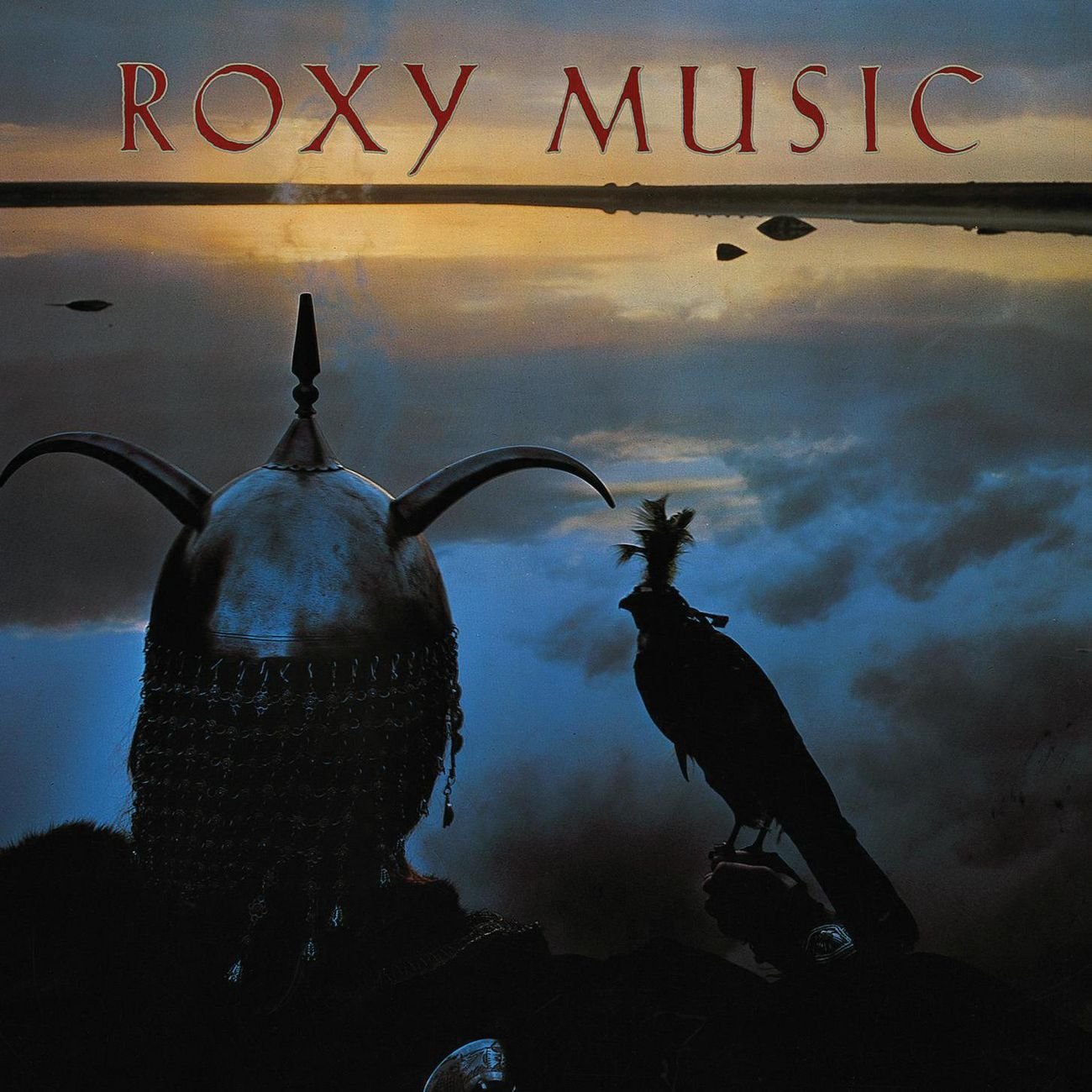
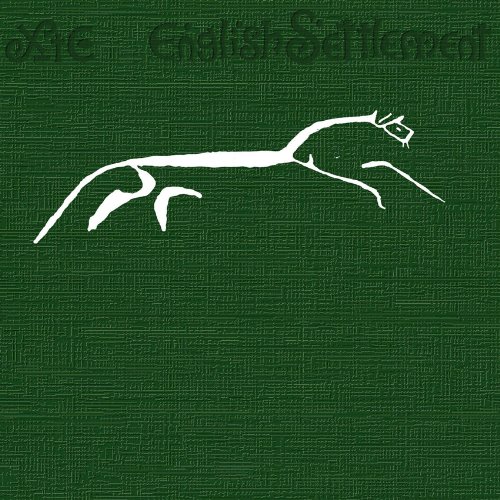
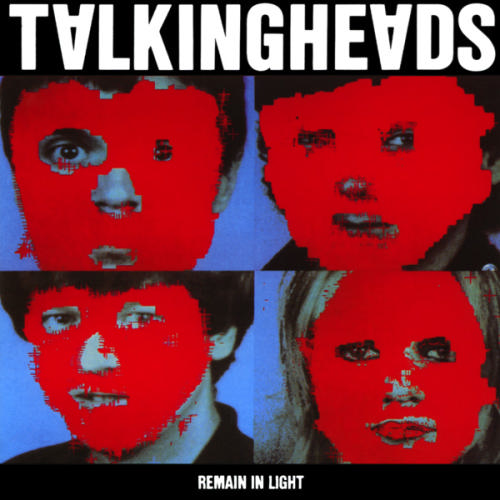
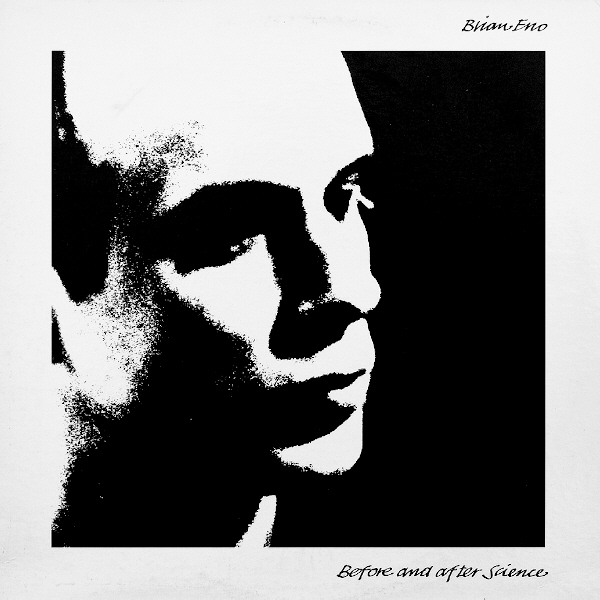
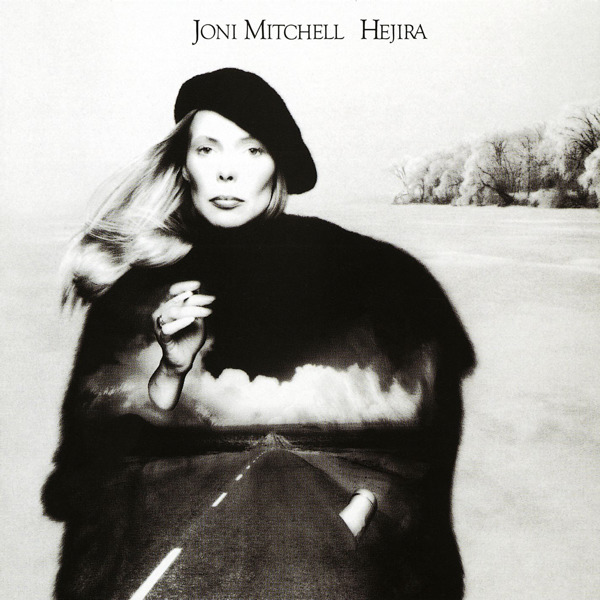
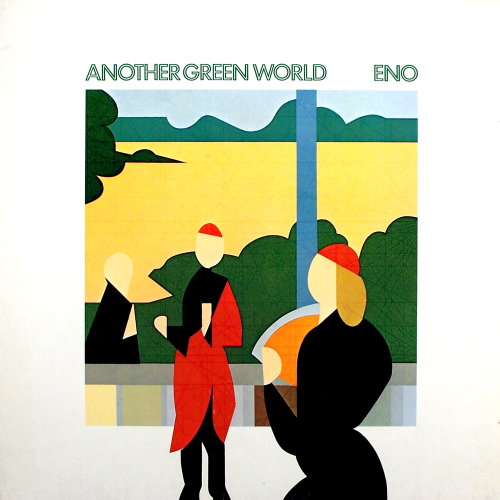
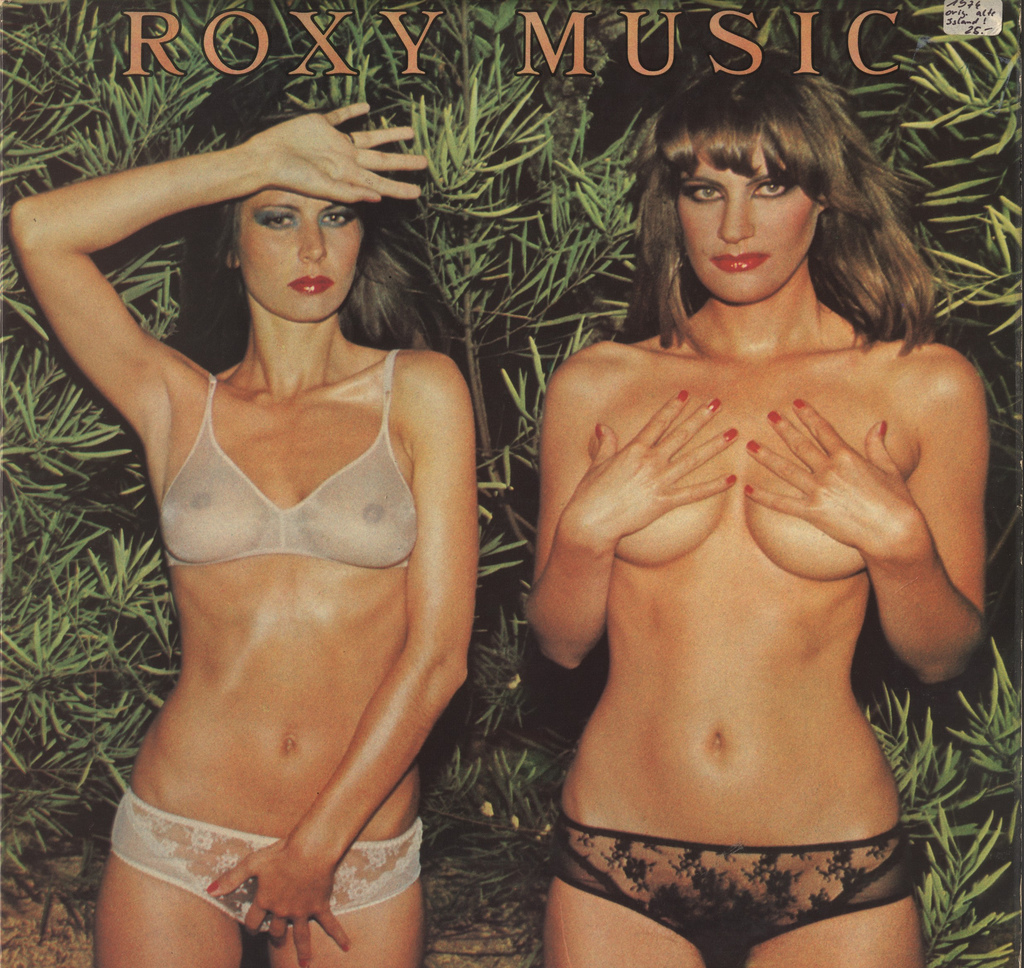
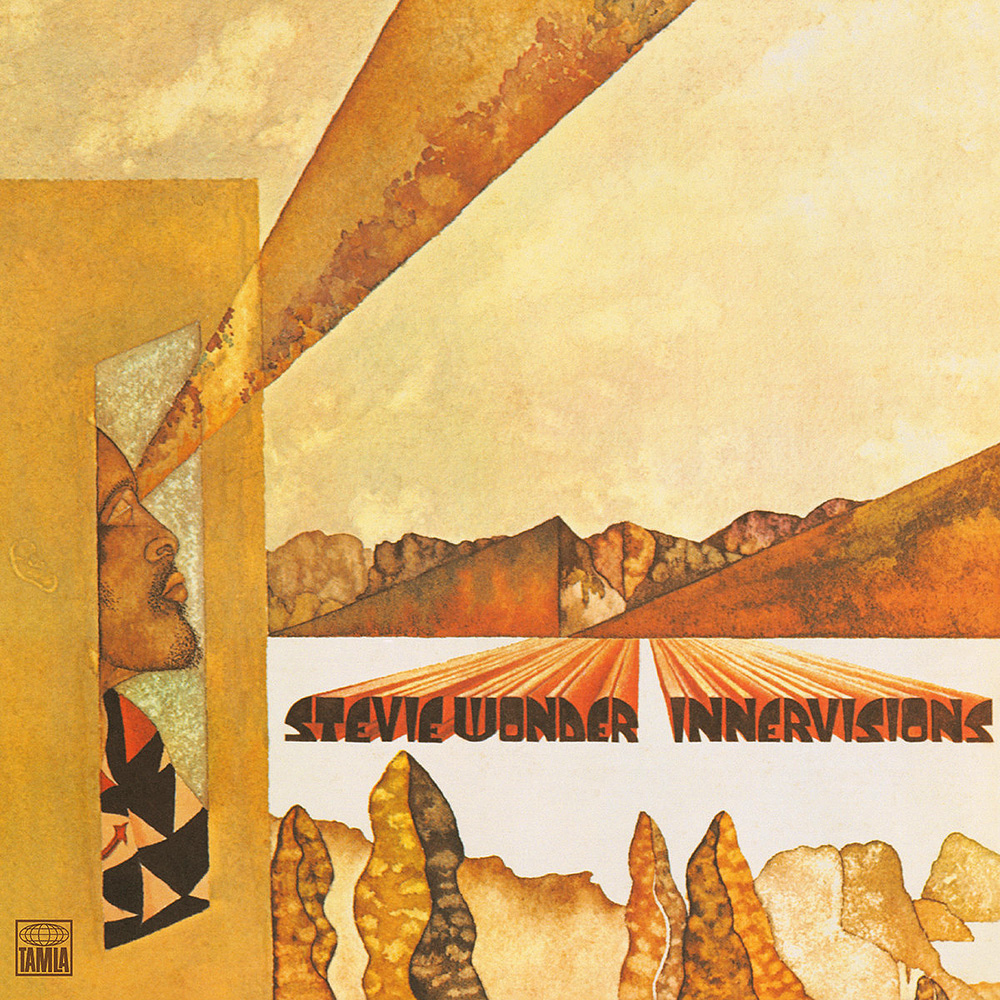
 Haunted Jukebox