In midlife, I find myself more receptive to aesthetics I would have deemed inconceivable in my youth: adventurous cuisines and libations (the twenty-year-old me would’ve shuddered at a sushi dinner or a glass of rye whiskey), facial hair as an attractive feature (though not necessarily on myself) and most of all, music deemed seriously unhip by my peers. I mean, at 21, I listened to Dionne Warwick as often as I did Blur or XTC but in the past few years, I’ve had a newfound craving for mid-20th century instrumental Lounge and Exotica, not to mention that terminal scourge of a genre, Easy Listening.
I wonder if it’s an attempt to return to early childhood. At that impressionable age, I’d often find solace in WEZW (“E-Z 104 FM” (actually 103.7)), Milwaukee’s own easy listening station. A few years back, I came across a recording from it circa June 1980 on YouTube and with it, a flood of long-dormant memories. My parents would play it in the car (not as often as their beloved “Mix” station WMYX, which unlike WEZW is still on the air) and I’d occasionally hear it out in the wild (mostly at barber shops, doctors’ waiting rooms, even in the principal’s office once when I was sick in fourth grade.) It was practically a staple all through December when it would (mostly) switch over to a holiday music format.
Last year, I began compiling a Spotify playlist called “Elevator to Bliss”, generally adding tracks via the app’s “Let’s Find Something For Your Playlist” algorithm. Whittled down from 50-odd tracks and retitled to fit its space-age vibes (in many senses of the term), some of the thirty selections below might’ve appeared on WEZW back in the day, but not all. As one digs deeper into the notion of “Elevator Music” (Joseph Lanza’s book of the same name is an enlightening resource), one excavates genres upon subgenres. Often, what separates the (mildly) stimulating from the merely soothing comes down to a matter of personal taste; this is the sort of playlist that is also effective when left on shuffle. However, I’ve attempted a trajectory of sorts, beginning and ending with different versions of the same tune, exhibiting how easily an instrumental shlock hit can be gently repurposed as sci-fi camp (by Mr. Spock, no less!)
In between those alternate-world bookends sits a cornucopia of film music from renown masters (John Barry, Henry Mancini, Lalo Schifrin) and more cultish figures (Riz Ortolani, Sven Liabek, Carlos Rustichelli) along with a few selections from the early 70s (themes from Airport and Klute) that anticipate primetime soap opera scores from later in that decade. Cool Jazz is also represented with vibraphonist Cal Tjader rubbing shoulders against Bossa Nova king Antonio Carlos Jobin and flautist Herbie Mann. If we’re including the 70s, we have to make room for some instrumental funk (Charles Stepney) and such genre-bending oddities as Michel Polnareff’s “Voyages” and Alain Tew’s spare but sex-x-y “The Fence”.
I turn to this playlist when I want to zone out to instrumental music, whether while writing, working, walking or drifting off to sleep. Still, it’s not exactly the same as background or ambient noise. I no longer believe in “guilty pleasures”—all that matters to me these days is how pleasing I find the music; this playlist does the job.
IFF Boston’s annual Fall Focus is always a good bet: this year, I got to see four movies I couldn’t get tickets to at TIFF, and all of them were good-to-great (and three were filmed in Japan, coincidentally.)
FALLEN LEAVES
From its opening shot, there’s no mistaking this for the work of anyone other than veteran Finnish auteur Aki Kaurismaki. A purveyor of humor so deadpan, less attentive viewers might not even detect it on occasion, he’s influenced many kindred spirits and followers from Roy Andersson to Jim Jarmusch (whom he pays a somewhat twisted yet hilarious tribute to here.) His first film in six years is one of his most deceptively straightforward: a burgeoning middle-aged romance between supermarket worker Ansa (Alma Pöysti) and alcoholic laborer Holappa (Jussi Vatanen). The Helsinki settings look like they’ve been etched in time over the past fifty years, although occasional radio broadcasts reporting the current Russia/Ukraine war are scattered throughout. Happily, this fully plays to Kaurismaki’s strengths: of the handful of his films I’ve viewed, this is easily the funniest, especially the karaoke bar scenes featuring Holappa’s self-assured (if only to a point) co-worker/pal Huotari (Janne Hyytiäinen). As usual with this director, what would often come off as affectations for most filmmakers are in his hands fully realized and seamlessly essential to the entire fabric. (Grade: 8/10)
EVIL DOES NOT EXIST
So, Ryusuke Hamaguchi, what are you doing now after all that acclaim (including the Cannes Palme d’Or and an Oscar) for DRIVE MY CAR? A study of an environmental threat towards a remote community where a corporation wants to open a glamping (ie-glamourous camping) site, you say? Far more Tarkovsky than Ozu, EVIL DOES NOT EXIST is leisurely paced, visually stunning and and in the end, near-impenetrable–not entirely a deficit depending on one’s expectations. Arguably no other filmmaker would so totally depict the utter futility of “information meetings” where the concerns of said community are both heard and blithely dismissed, or take two characters who initially seem buffoonish and unexpectedly flesh them out until they’re nearly as sympathetic as the two protagonists. Those looking for another cathartic wonder like DRIVE MY CAR won’t find it here, but it offers a lot to unpack and ponder; at a mere 106 minutes, it also more conveniently lends itself to a rewatch or two. (8/10)
MONSTER
This is Hirokazu Kore-eda’s first film set in his native Japan since SHOPLIFTERS and also his first that he hasn’t written himself since MABOROSI, his 1995 feature debut. Rest assured, MONSTER is completely in the director’s wheelhouse of domestic dramas, although screenwriter Yuji Sakamoto’s ambitious, RASHOMON-esque structure is something new for the director. The first third or so comes off as a darkly comic fable about a fifth-grader being bullied by his teacher; what happens next sets the momentum for a narrative only fully revealed one all of its pieces gradually fall into place–one that also makes it tough to write about without any spoilers. I’ll just note that the end result is one of Kore-eda’s most accessible works in part due to its swift pace where the rhythms are enhanced by its unique structure, but also one of his warmest and most resonant. You can sense his humanist approach towards nearly every character as the story unfolds. In some ways, it’s a good companion to Alexander Payne’s THE HOLDOVERS as it similarly clinches one’s attention with humor and a tricky premise but then extends an invitation to learn the full story and witness how we can instill change in one another. (10/10)
PERFECT DAYS
Well, this was an unexpected late-career triumph from Wim Wenders, who arguably hasn’t made a good narrative film in over three decades; that it’s simply a character study about Hirayama, an aging man who cleans Tokyo public toilets for a living only adds to its allure. Featuring a powerful lead turn from SHALL WE DANCE star Kōji Yakusho (appearing in nearly every scene), this might be the closest Wenders has come to successfully making “slow cinema”. Scene after scene unfolds of Hirayama methodically cleaning a wide array of the city’s public toilets (many of them built for the delayed 2020 Summer Olympics) with pauses for how he spends his leisure time by bicycling, picking up paperbacks from his favorite book store, reading them as he has lunch in a leafy, secluded spot and listening to music on cassette tapes (!) while driving through greater Tokyo. It’s this last activity that’s most significant–not only does it give an outsider a vivid sense of what the city is really like, the music (mostly English-language rock from the 1960s and 70s) and its curation almost tells a parallel story. I’ve rarely seen such an extensive depiction of a character’s relationship to music and how it informs and fortifies his well being. While overall this could’ve been perhaps 20-30 minutes shorter, it almost feels hypnotic if you stick with it. The last shot, which returns to Hirayama and his music is a great one and also confirmation that this gentle, beatific but wonderfully human and flawed man embodied by Yakusho is a career-best performance. (9/10)
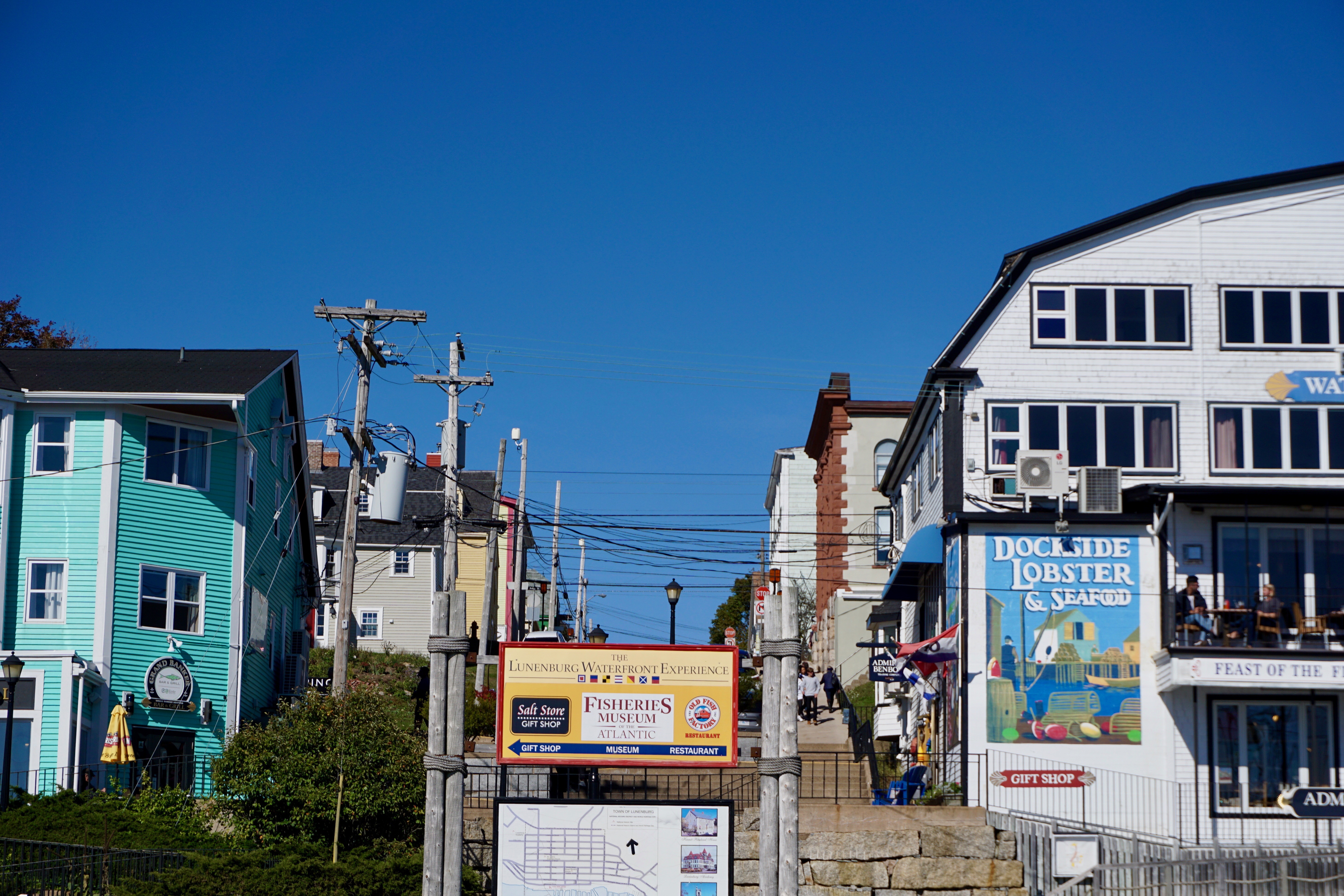
After a morning in Peggy’s Cove, we drove 100 km along Nova Scotia’s Atlantic coast to the town of Lunenburg.
With a population of 2,200, it’s an idyllic Maritime province village. In 1995, it was designated a UNESCO World Heritage Site; more recently, it was a prominent filming locating for the (ostensibly Massachusetts-set) Netflix series Locke and Key.
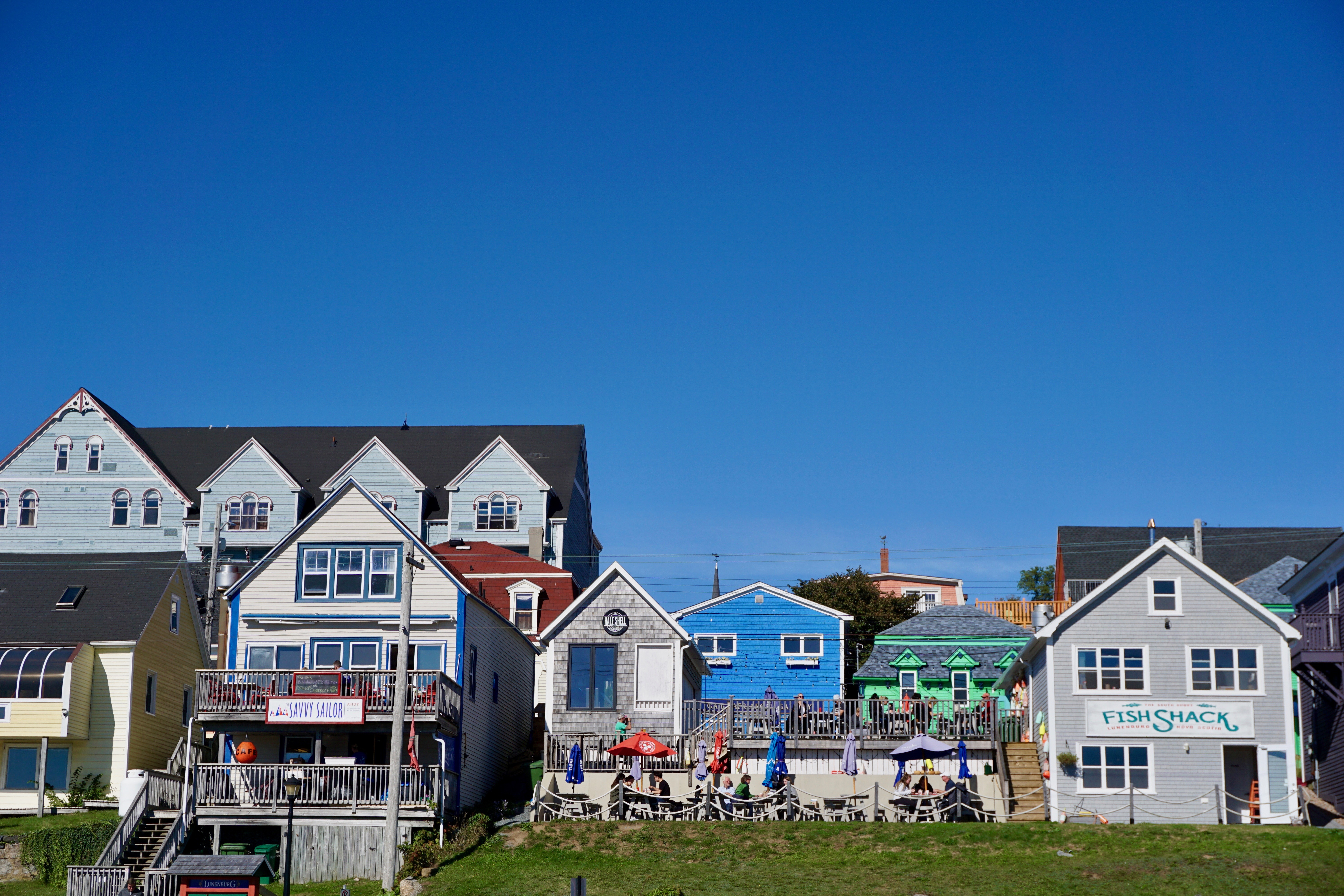
From Lunenburg Harbour, a picture-postcard view of the backs of buildings along main drag Montague Street.
Bright, bold colors distinguish Lunenburg’s historic buildings, like the red one in this essay’s first photo and the aquamarine one directly above.
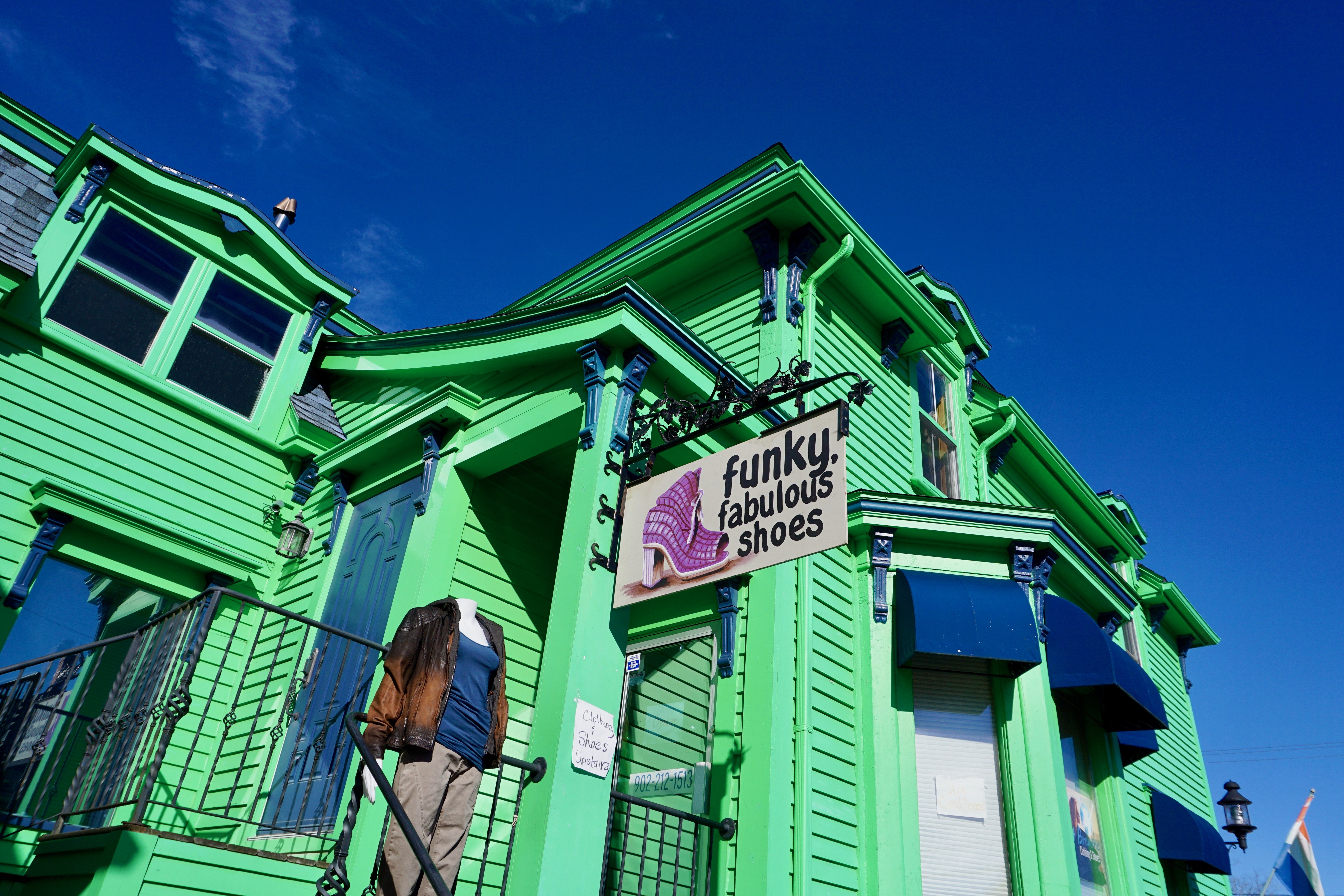
Occasionally, perhaps a little too bright and bold…
…but not everywhere. This hulking stone fortress of a bank is unlike anything I’ve spotted in all my years as a New England resident.
Walk a little further away from the harbour and you’ll reach the Lunenburg Heritage Bandstand and War Memorial.
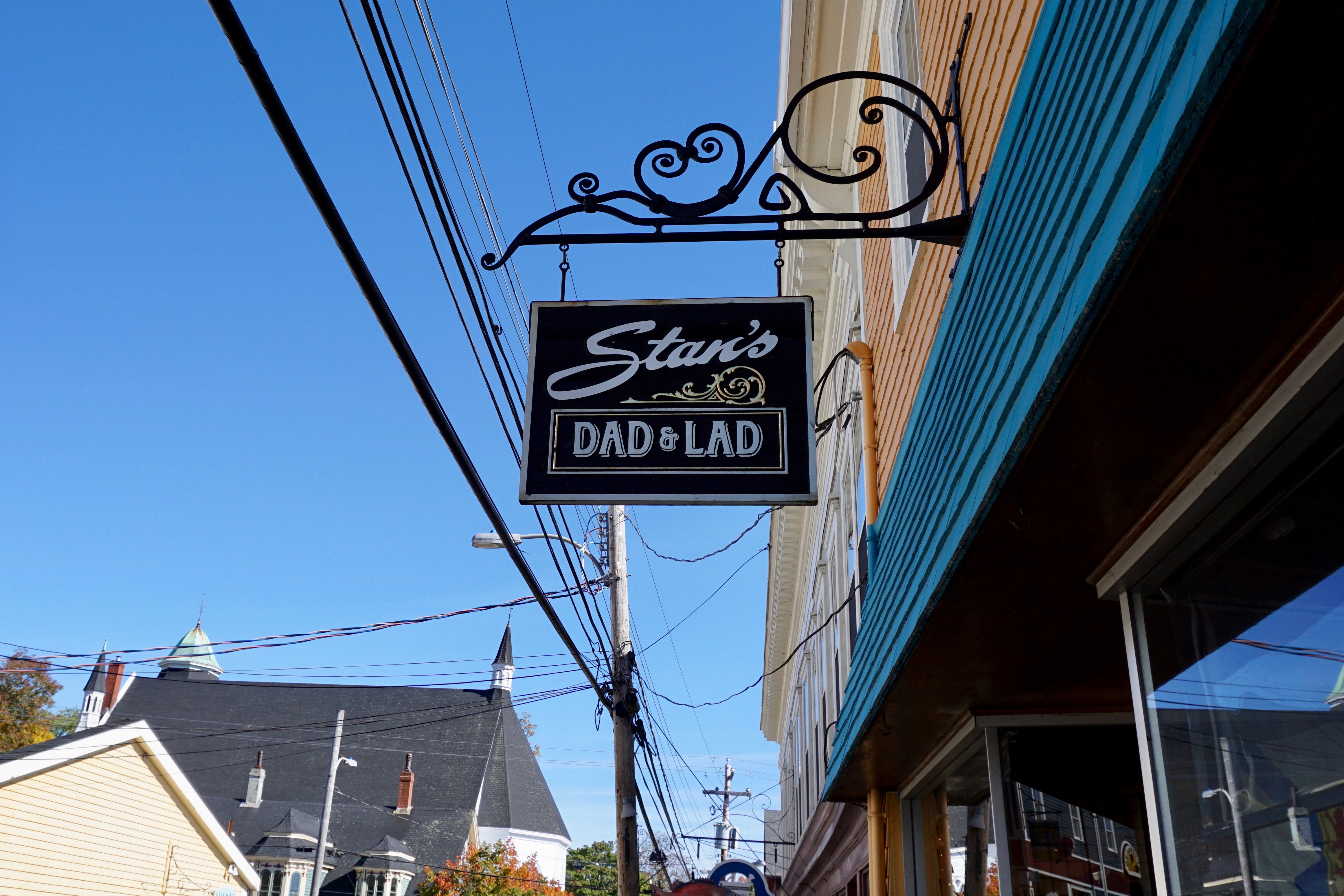
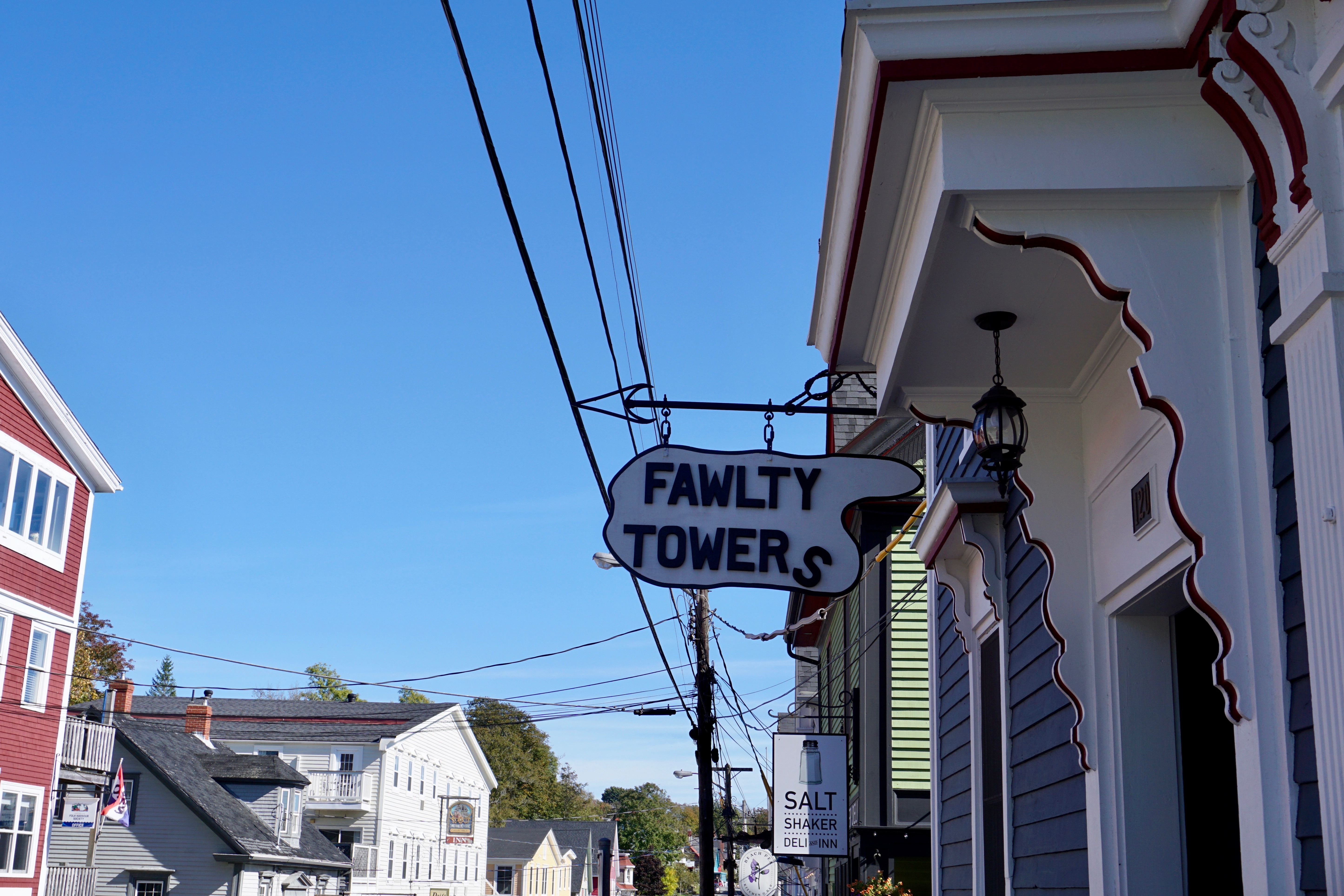
As usual, the town’s cool signage caught my eye.
Five years on, gift shop Dots & Loops is still in business, albeit online only.
Fortunately, Stan’s Dad & Lad (est. 1955) is still physically open for business.
Alas, this homage to a certain British sitcom (whether an actual hotel or not) is permanently closed according to Google. Upon seeing this sign, my first thought was, “Basil! What are you doing in Canada?”
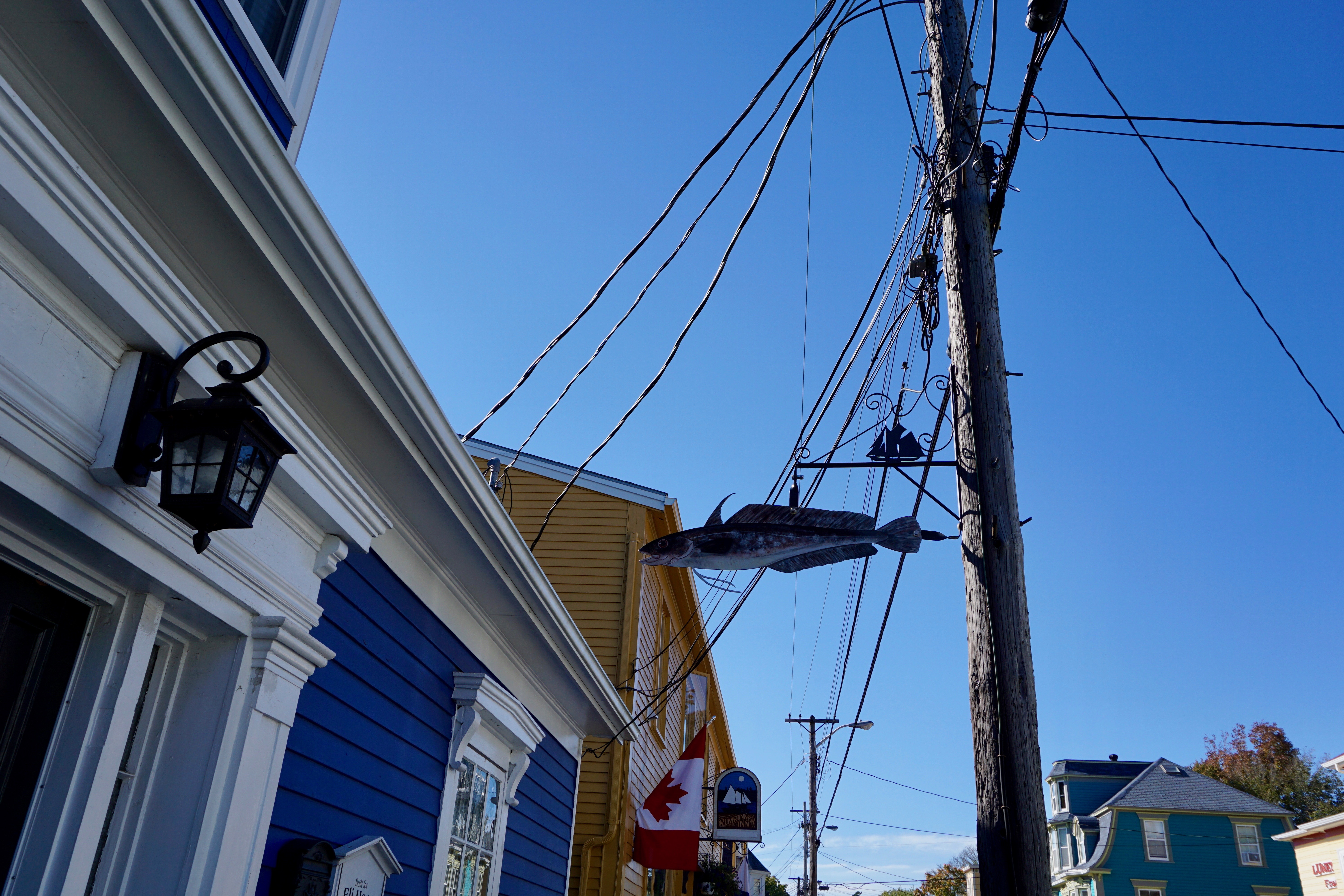
Your requisite Canadian flag and fish hanging from a utility pole.
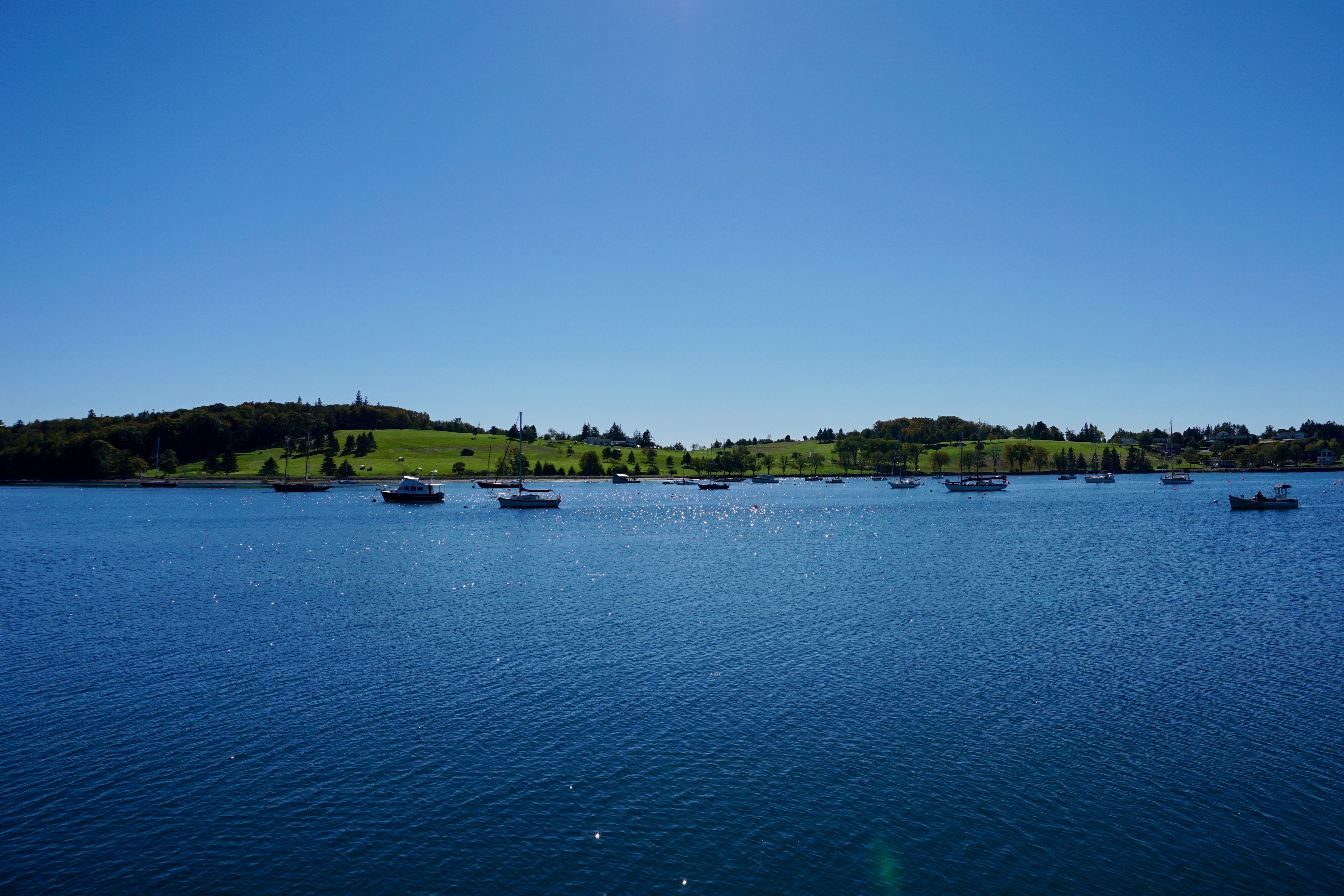
Naturally, Lunenburg Harbour is as beautiful as the town that borders it.
I believe this is the Bluenose II Ship, more information about which can be found here.
Across the harbour, the green expanse of the Bluenose Golf Club. In retrospect, we could’ve used more time to explore Lunenburg, but we had another coastal town to see on that day’s itinerary…
Day 6 began with a favorite that was expected, another that wasn’t and a third film that wasn’t in the same league but still deserves to find an audience. I squeezed in one more title on Day 7 before leaving Film Fest Land once again, returning to normal life.
THE HOLDOVERS
If Alexander Payne’s last film, 2017’s sci-fi allegory DOWNSIZING was a big swing and a miss, his latest plays it much safer for the benefit of everyone involved. A return to smart, dyspeptic comedy, THE HOLDOVERS also reunites Payne with another master of the form, Paul Giamatti, the star of his 2004 hit SIDEWAYS. Together, they’re a director/actor pair in sync with one another as much as Scorsese and De Niro or Holofcener and Keener.
The setting is an elite all-boys boarding school in Massachusetts 1970 (it was shot throughout the state, including a side trip to Boston.) Giamatti plays Paul Hunham, an ornery, pompous teacher who, like his Miles in SIDEWAYS is really just another masochistic, insecure underachiever. He gets stuck staying on campus for Christmas break to supervise the few students unable to go home. One of them, Angus (Dominic Sessa) is as intelligent as he is belligerent with a history of antagonizing Paul (and vice-versa.) Also staying on campus for the break is Mary (Da’Vine Joy Randolph), a cafeteria manager whose own son was recently killed in Vietnam. Angus and Paul evolve from being enemies to gradually understanding one another but David Hemingson’s screenplay presents this organically, further made convincing by the three central performances. In addition to Giamatti just doing what he does best, Sessa in his film debut is a great find on the order of, say, Lucas Hedges in MANCHESTER BY THE SEA while Randolph (MY NAME IS DOLEMITE) beautifully inhabits a complex character working through her grief.
Not only set in 1970, THE HOLDOVERS also looks and feels like a film from that period with its painstakingly correct stylistic touches such as its opening credits font, slow dissolves and winsome, period folk-rock soundtrack. At the TIFF Q&A, Payne mentioned that he always thought of himself as a 1970s New Hollywood-influenced director, so why not make a movie set in that decade. The highest praise I can give him is that he fully captures the feeling and substance of a good Hal Ashby film or one of Robert Altman’s smaller ensemble pictures. Though not exactly groundbreaking, it’s a solid, satisfying throwback and also a comeback for Payne as I haven’t liked anything from him this much since, well, SIDEWAYS. (Score: 9/10)
THE TEACHERS’ LOUNGE
A junior high school is as ideal a setting as any for a taut thriller and this German film gets all the little details right as to why—in particular, a mounting, no-going-back pressure of the sort easily egged on by early adolescents, although it comes just as swiftly from their parents and teachers. One of the latter, Carol (Leonie Benesch) has just taken her first job out of teaching school. She’s initially a natural—her control of and engagement with her students is readily apparent and impressive for such a novice. The trouble begins when a thief starts stealing money from various faculty. Carol is vehemently against the interrogation techniques the principal and her colleagues use on suspected (targeted, really) students. As more money goes missing, she decides to take matters into her own hands, making a shocking discovery in the school’s titular space. She’s also left immediately blindsided (and also targeted in a different way) by her action’s consequences.
I didn’t know what to expect coming into THE TEACHER’S LOUNGE, only mildly intrigued by its title and premise. I left it nearly buzzing with excitement from its cunning trajectory: in solving a mystery, good intentions end up backfiring magnificently for all parties involved. Meanwhile, due to opposing, unwavering stances exacerbated by public shaming conducted both in person and over social media, the tension ramps up until it reaches a near-breaking point. Suspicion, paranoia, desperation and hysteria all factor into how a seemingly straightforward conflict gets blown way out of proportion and the film rarely wavers in holding one’s attention. It may even go a little too far for some in the last act, though the final scene satisfyingly offers a modicum of closure for a seemingly unresolvable situation. (8/10)
WE GROWN NOW
Set in a re-creation of the now-demolished high rise towers of the notorious Chicago housing project Cabrini-Green in 1992, Minhal Baig’s film focuses on two 12-year-old boys living there: Malik (Blake Cameron James) and Eric (Gian Knight Ramirez). When not partaking in such activities as pushing a mattress down a dozen flights of stairs to use as a playground implement or playing hooky from school to explore the Loop, they’re faced with the harsher realities of this world: drug-ridden crime, drive-by shootings, reactionary police raids. As Malik’s mother Delores (Jurnee Smollet) looks for a safer environment for her family, what was once an inseparable friendship between the two boys begins to fray. While it doesn’t come close to achieving the rare poetry of obvious influences such as KILLER OF SHEEP or the fourth season of THE WIRE, this evokes a time and place in vivid enough detail (especially in the dimly lit, sparsely furnished apartments); James and Ramirez, both in their film debuts are also well cast. Still, it’s a type of story that’s been told many times before and far less predictably. (6/10)
THE BEAST
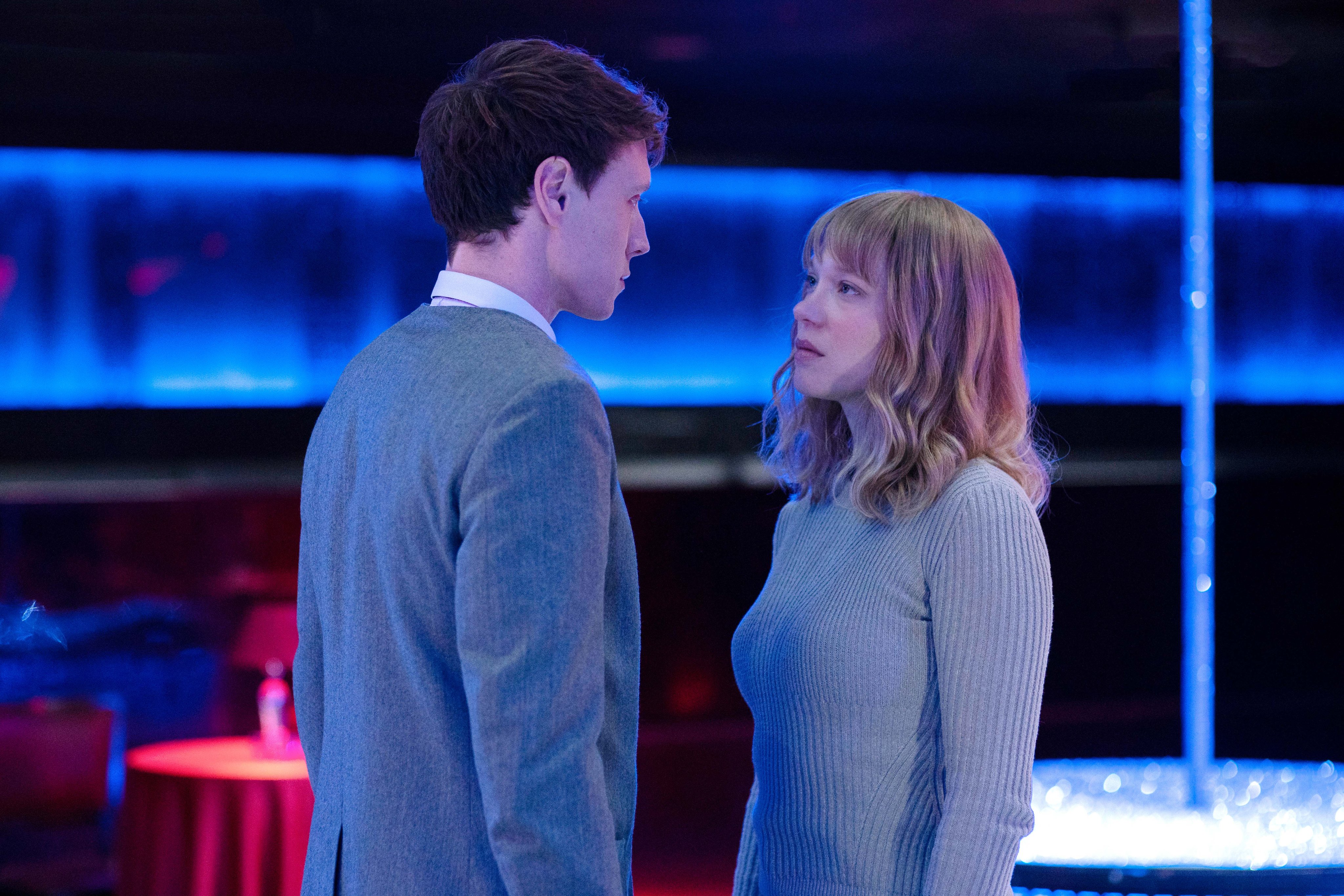
In past films like SAINT LAURENT and NOCTURAMA, I’ve admired director Bertrand Bonello’s approach and elements of his heightened style without finding them complete or entirely convincing. His latest gets closer than ever to feeling whole but that’s primarily due to star Lea Seydoux appearing in nearly every scene. Her Gabrielle is paired with Louis (George MacKay) principally across three time periods: 1904 France, 2014 Los Angeles and a near-future heavily shaped by artificial intelligence. Bonello will also occasionally and briefly shift to 1980 or the mid-1960s for scenes that seem present mostly to indulge in era-appropriate music or fashion. The constant throughout this is how Gabrielle and Louis spin in orbit but can never fully connect with each other for reasons not fully apparent until late in the film.
Very loosely adapted from the Henry James novella THE BEAST IN THE JUNGLE, the film is perhaps overlong but rarely boring. It’s mostly a showcase for Seydoux and MacKay as they inhabit different personas in alternate time periods (the latter especially effective when shifting from a European aristocrat to a 21st Century incel) and, as usual, also one for Bonello’s depiction of worlds only possible through a camera lens. I’m not sure what it all adds up to although its fixation on AI seems especially timely and considered; let’s just hope it doesn’t start an accidental trend by way of its high-concept end credits “roll”. (7/10)
Day 5 was my one four-film day at TIFF 2023; it’s also when I saw both my favorite and least favorite films of the festival.
PICTURES OF GHOSTS
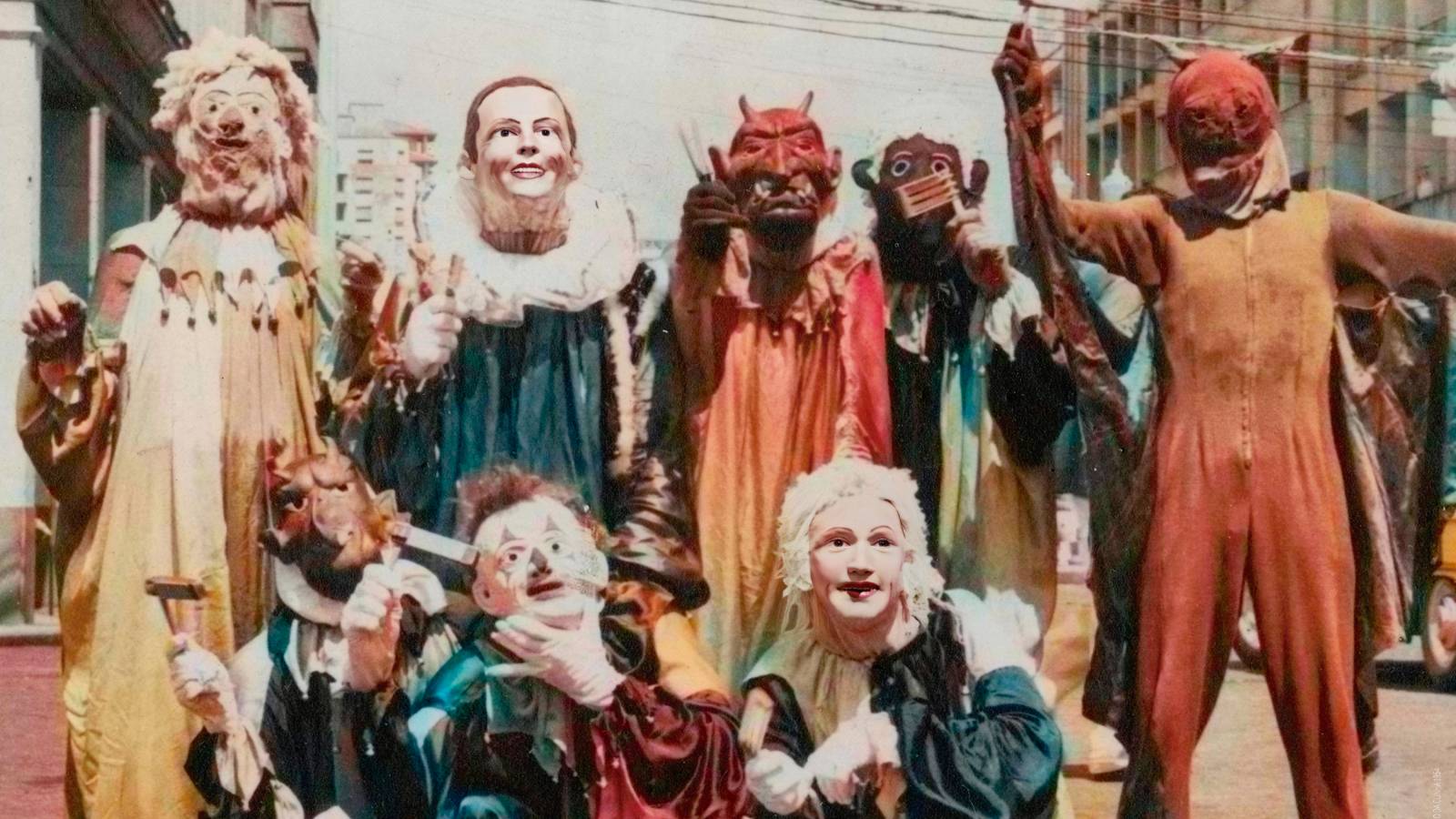
Sifting through and reminiscing about one’s own past is easy; contextualizing these memories and enabling them to resonate with an audience is trickier, as one has likely experienced in many an autobiographical narrative or essay film (Chris Marker and Agnes Varda were the gold standards for pulling the latter format off.) In his follow-up to the phantasmagorical horror epic BACURAU, Kleber Mendonça Filho utilizes the essay film to both celebrate and scrutinize his coastal hometown of Recife, Brazil, the setting for his breakthrough feature AQUARIUS starring Sonia Braga.
Structured as a triptych, the film first considers Mendonça Filho’s childhood family home before shifting to the cinemas (some still standing, others long gone) that were formative in cultivating his love of film (he was a critic before becoming a filmmaker.) The third section builds on the previous two, considering cinema as a church and the symbiotic relationship between the two in a predominantly Catholic country such as Brazil. Abetted by his own narration, the film is a marvel of editing as the present day often mirrors and occasionally contrasts with archival footage he and his family shot of his home, the cinemas he once worked in as a projectionist and other imagery of Recife throughout the past five decades from a cornucopia of sources.
It’s difficult to pinpoint exactly what makes PICTURES OF GHOSTS so effective in inviting the viewer to partake in and comprehend one artist’s own past. In his last two features, Mendonça Filho exhibited an enthusiasm about cinema and proved how bold stylistic choices could enhance a story without distracting from it. In relaying his own story, he’s made his most complete and compelling work yet—all the way to a playful, metaphysical finale that not only re-emphasizes the meaning of the film’s title but also comes to life with an unlikely but evocative needle drop for the ages. (Score: 10/10)
CLOSE TO YOU
When Elliot Page announced his transition, I was curious as to how this might change his acting career; his first major film role since then does suggest a new phase, returning to the small-scale, nuanced indie dramas that showcased his talent before JUNO made him a household name. This Canadian production from British director Dominic Savage gives Page an opportunity to play an out trans character and one immediately senses how at ease he is in the role, more so than anything he’s done since he was a teenager. While his character, Sam, who returns to his small hometown to visit family for the first time since his recent transition is obviously a role written with him in mind, at a post-screening Q&A, Page was quick to point out that while he obviously related to his character, his own coming out and post-transition experiences were entirely different.
In that Q&A, I was also surprised to find out that much of the film was improvised in a Mike Leigh-like fashion, consisting of the best bits of long, unscripted takes. It makes the final product’s apparent seamlessness all the more impressive as the ensemble emits a lived-in familial dynamic. It’s slightly more convincing than the parallel narrative where Sam runs into and deeply reconnects with Katherine (Hilary Baack), a hearing-impaired friend from high school. This could’ve been a separate film, although Savage just gets away with incorporating it beside the main plot. While multiple conflicts and their resolutions are a bit on the nose (to the point where decades from now, I can imagine how simplistic or dated they may come across), this is most significant and effective as a reintroduction to Page and a reminder to why he became such a major onscreen presence to begin with. (8/10)
FRYBREAD FACE AND ME
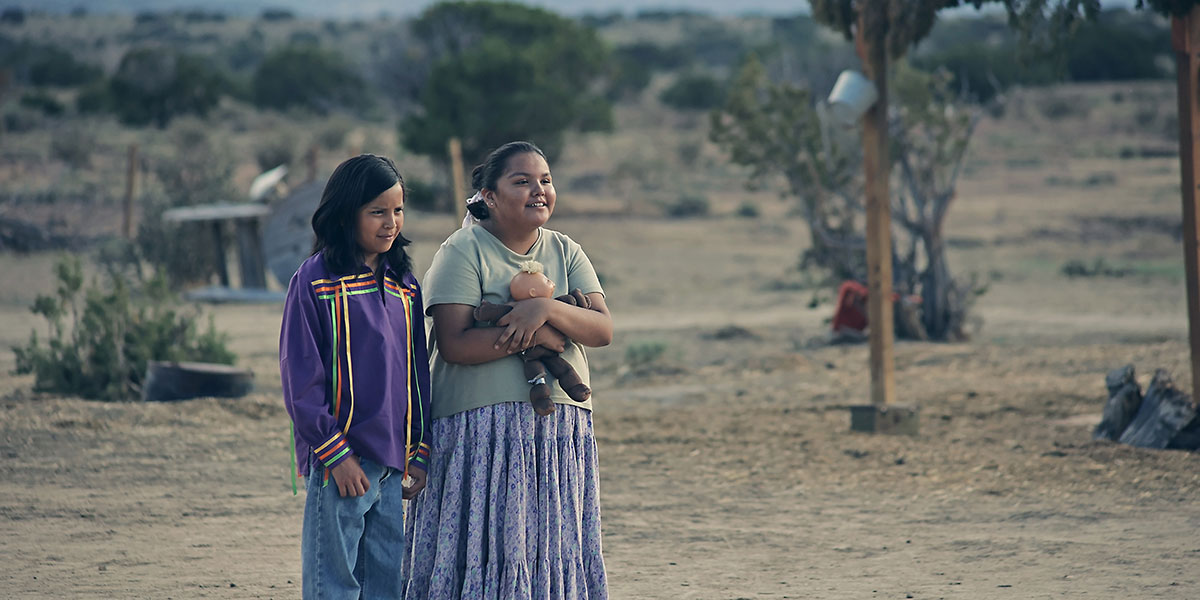
Billy Luther, a Navajo, Hopi, and Laguna Pueblo filmmaker best known for documentaries (MISS NAVAJO) makes his fiction feature debut with this gentle coming-of-age tale. 11-year-old city kid Benny (Keir Tallman) is sent to spend the summer with his relatives living on a ranch in isolated Northern Arizona. A bit of a naïve misfit often cloaked in a Stevie Nicks t-shirt, he gradually befriends his worldlier cousin Dawn (Charley Hogan) the “Frybread Face” of the title who has also been dropped off for the summer. Set in 1990, the film often comes off as something that could’ve been made back then, complete with lessons learned and somewhat overdone narration. If that sounds like faint praise, note that Luther has also crafted an affable, family friendly story with the occasional conflict/melodramatic detour that nonetheless remains pleasantly low-stakes. Tallman and Hogan are both fine, but Sarah H. Natani leaves the most lasting impression as Lorraine, Benny’s beatific, Navajo-speaking grandmother. (6/10)
SOLO
Simon (Théodore Pellerin), a talented young performer in Montreal’s close-knit drag community is immediately smitten by Oliver (Félix Maritaud), a fellow drag queen freshly transplanted from France. They pursue a whirlwind romance while also collaborating together onstage, although their vast differences in temperament cause more conflict and drama than anything resembling a healthy personal or professional relationship. Meanwhile, Simon still courts the attention of his mother Claire (Anne-Marie Cadieux) who long ago left his family behind to become a renowned opera singer. This premise has some potential, but not with such one-dimensional characters (Simon is a doormat, Oliver is a prick.) The more glaring problem, however, is that writer-director Sophie Dupuis brings little new to this type of narrative. It’s set in the present, but SOLO could’ve easily come out twenty or thirty years ago; sure, the costumes and drag performances (Pellerin deserves a better vehicle) are lively and entertaining, but it’s a shame to waste them all on a story so wafer-thin and by now overly familiar—I’ve already seen RUPAUL’S DRAG RACE UNTUCKED, thank you very much. (4/10)
I was a little concerned that everything I saw at this year’s TIFF would fall somewhere between good and meh, until I saw the first film reviewed below–the last thing I watched on Day 4.
THE FEELING THAT THE TIME FOR DOING SOMETHING HAS PASSED
It’s not wrong detecting allusions to other directors in Joanna Arnow’s feature debut: Roy Andersson’s static camera and deadpan humor, Miranda July’s gentle, slightly off-kilter whimsy, even Woody Allen’s simple white serif-font title on a black background. One can acknowledge such influences as it’s near-impossible to create something entirely new, even in an art form that’s relatively not so old. Still, it’s tempting to deem Arnow an original talent because she brings something highly distinct to the medium both as a writer-director and as a performer.
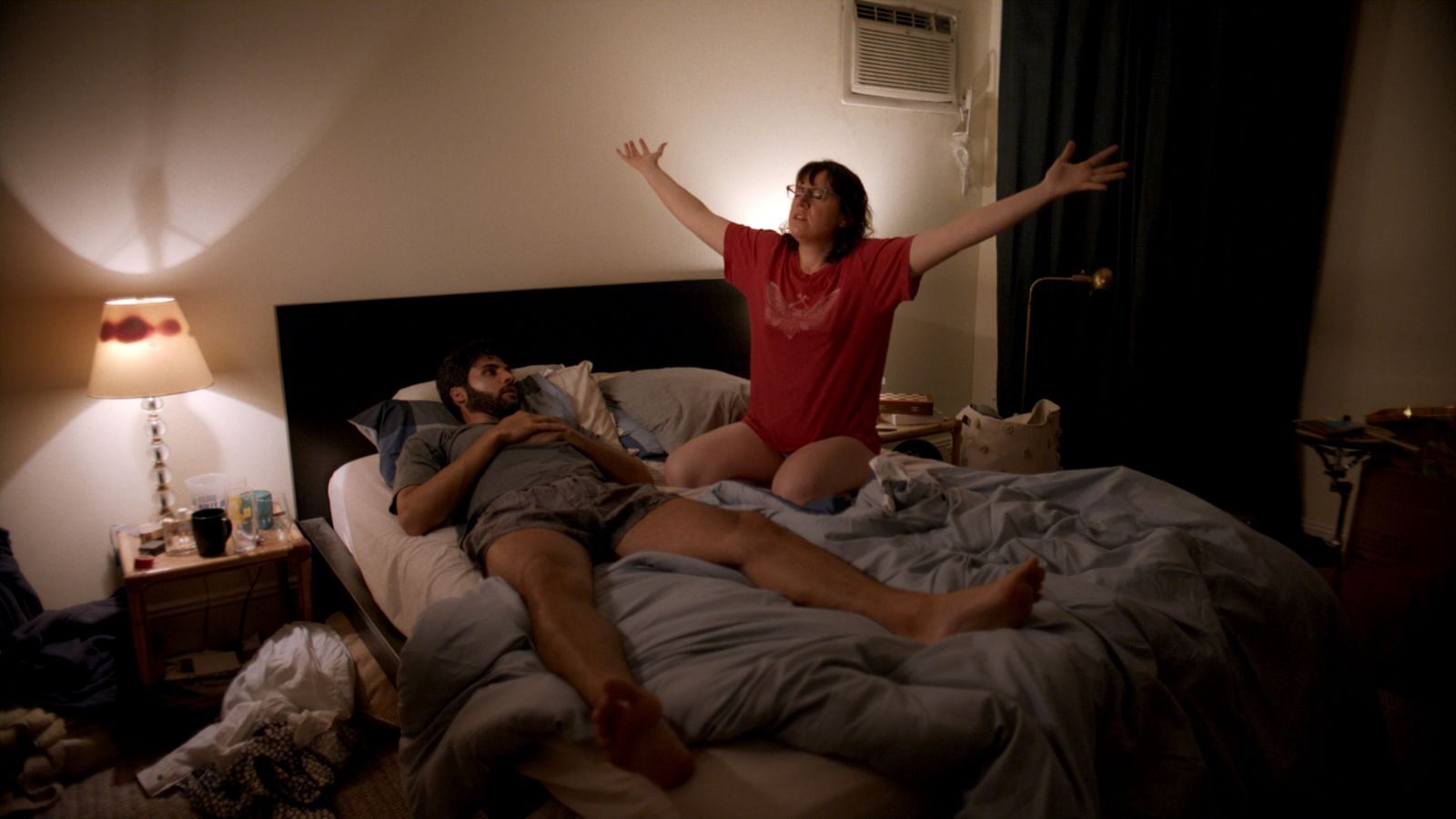
Arnow stars as Ann, an office worker in her early 30s whose sex life consists of a series of BDSM relationships where she is the submissive participant. In the very first scene, she’s naked in bed with a fully clothed Allen (Scott Cohen), an older divorcee who is her most prominent dominant. With her very average body type and vulnerable, direct (if near-bored) demeanor, Ann immediately reads as an unconventional protagonist—plain yet with a specific point of view, a little mousy but determined, choosing her words carefully though never in a hurry to stop talking. Absurd humor is laced throughout the film’s brief vignettes which occasionally expand beyond the bedroom to Ann’s corporate workplace (a supervisor chides her for not making good on her promise not to outlast her there as an employee) and her elderly parents. Seamlessly played by Arnow’s own parents, she has arguments and other interactions with them that are simultaneously mundane, nagging and hilarious primarily for being so true-to-life: Who can’t relate to the mounting pressure of being asked to bring an unwanted piece of fruit home with them?
Divided into five chapters, the film tracks Ann as she moves from Allen to a variety of other doms, eventually meeting a guy who might be a candidate for her first “normal” relationship. What Arnow never forgets is that no matter how funny or relatable a situation may come across, “normal” is itself an abstract, almost meaningless concept. The peculiar way she views the world will inevitably seem off-putting to some (that lengthy title!) but enchanting to others for how she finds the humor in these absurdities and indignities without taking herself too seriously or losing focus of what makes them seem so real. (Score: 9/10)
FLIPSIDE
Chris Wilcha, who worked on the TV-version of THIS AMERICAN LIFE has many unfinished projects scattered throughout his career. This documentary, ostensibly about the still-hanging-on small town New Jersey record store he worked in as a teen thirty-odd years ago, nearly ended up as another one, until he noticed a thread running through many of these partially-completed works: the passage of time and what it means to hold on to sentimental talismans from one’s past. Thus, FLIPSIDE resembles a tapestry of sorts, jumping from the record store’s proudly old-fashioned owner to Wilcha’s old boss Ira Glass, jazz-great photographer Herman Leonard, DEADWOOD creator David Milch and even cult kiddie-show host Uncle Floyd.
As a fellow white, middle-aged, NPR listening music obsessive, I am clearly the target audience for this personal essay film and I can imagine some critics older and younger resisting the urge to yell at Wilcha, “Get over it!” And yet, I have to applaud Wilcha for this film’s continually expanding narrative—once you get past the self-indulgence of him examining his own life, you see the interwoven connections between all these subjects and also how each one suggests an alternate but equally viable path to growing older and staying both motivated and stimulated. To retain a fondness for the past but not let it determine (nor hinder) the future is a philosophy he puts in the work to arrive at, and the effort often proves as edifying as the destination. (8/10)
SEAGRASS
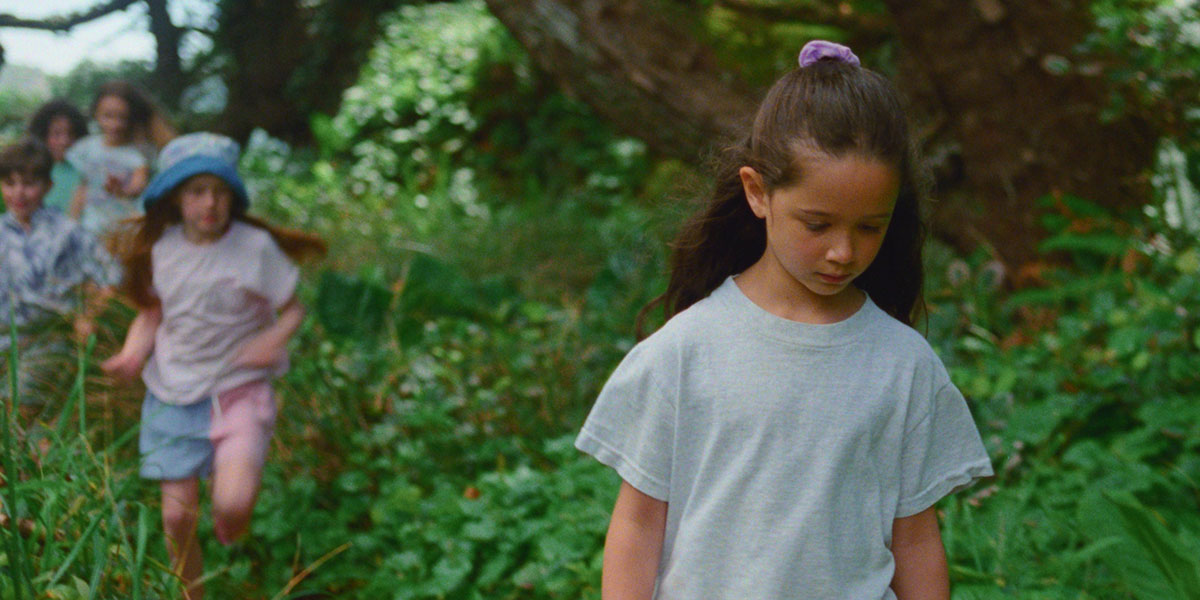
A touchy-feely couples retreat with activities that allow you to bring the kids along? What could possibly go wrong? In Meredith Hama-Brown’s mid-90s-set indie drama, husband and wife Judith (Ally Maki) and Steve (Luke Roberts) and their two young girls travel to the British Columbia coast for this vacation of sorts and no one seems very happy about it. As the parents confront their drifting, gradually fractured relationship with opposing tactics that do not prove especially helpful for either of them, 11-year-old Stephanie ((Nyha Breitkreuz) and 6-year-old Emmy (Remy Marthaller) both deal with their own issues: perhaps due to Judith’s mom having passed away six months before, Stephanie exhibits antisocial behavior while Emmy believes her grandmother’s ghost is omnipresent, observing and also haunting them at their resort and the nearby jagged, voluminous ocean caves.
While often a fount of amusing material, new age-y couples therapy is a rather easy and familiar target for satire and this hits all the expected notes: props, trustfall-like exercises, screaming and the like. It’s fortunate, then, that not only is the cast game for it, they all function together as a deeply believable dysfunctional unit, one with a shared, extensive history that’s palpable even before specifics are revealed. What pushes the film even further away from its simple premise is its expansive sound design and sense and manipulation of space. The sequences where Emmy is left to her own devices, letting her imagination and superstition take precedence are gorgeous and eerie, opening up the film to consider the ambience of a world that can seem mysterious and unfamiliar to any six-year-old. Building to a maelstrom of a final act, SEAGRASS evolves from predictable to nearly extraordinary. (8/10)
GREAT ABSENCE
Shot by Yutaka Yamazaki, who has worked on Hirokazu Kore-eda films from AFTER LIFE to AFTER THE SUN, this second feature from Kei Chika-ura is often Kore-eda Lite, although what’s missing is the supple touch the veteran filmmaker usually suffuses his work with. It doesn’t lack for ambition, though—this is a puzzle film of sorts, utilizing flashbacks and abrupt temporal shifts in piecing together the dramatic, present-day action occurring in the film’s first scene. The structure requires active viewing and ample patience from the viewer, but the reveals often end up not resonating in relation to the amount of effort built into them. Fortunately, the acting just about saves it: Tatsuya Fuji, whom some might remember from IN THE REALM OF THE SENSES gives a tremendous and sincere portrait of someone afflicted by Alzheimer’s Disease without ever showing off while Mirai Moriyama (primarily known as a dancer rather than an actor) and Hideko Hara (SHALL WE DANCE) both hold their own as his son and wife, respectively. Although dense and overlong, Chika-ura exhibits enough skill and inspiration that I wouldn’t mind revisiting this to see if I missed anything. (6/10)
VALENTINA OR THE SERENITY
A big draw of TIFF for me is an opportunity to see films from remote corners of the world that might not otherwise be available or on my radar. Sometimes they’re excellent and occasionally they’re atrocious, but this one, from an Indigenous Mixtec village in Oaxaca, Mexico, is neither—just a pleasant little film about a young girl who refuses to believe her father has died in a freak drowning accident, going so far to claim that he has spoken to her from the river where he met his maker. As Valentina, Danae Ahuja Aparicio is the best thing about it—she has a naturalness that can’t be faked or learned. Her optimism is as deeply felt as her stubbornness and through her, the film is a window onto a culture’s distinct rituals and sensibilities. Having said that, Ángeles Cruz’s directionis rarely more than capable and even at a slim 86 minutes, the premise would have been better suited to a short. At the very least, you’ll come away from it knowing the Mixtec body language to summon thunder and lightning at will. (5/10)
I returned to the Toronto International Film Festival (TIFF) for the first time in nine years (in person, anyway; attended the virtual 2020 edition from my laptop.) I saw 17 films and will be posting reviews in groups of four (and in one case, five.)
ORLANDO, MY POLITICAL BIOGRAPHY
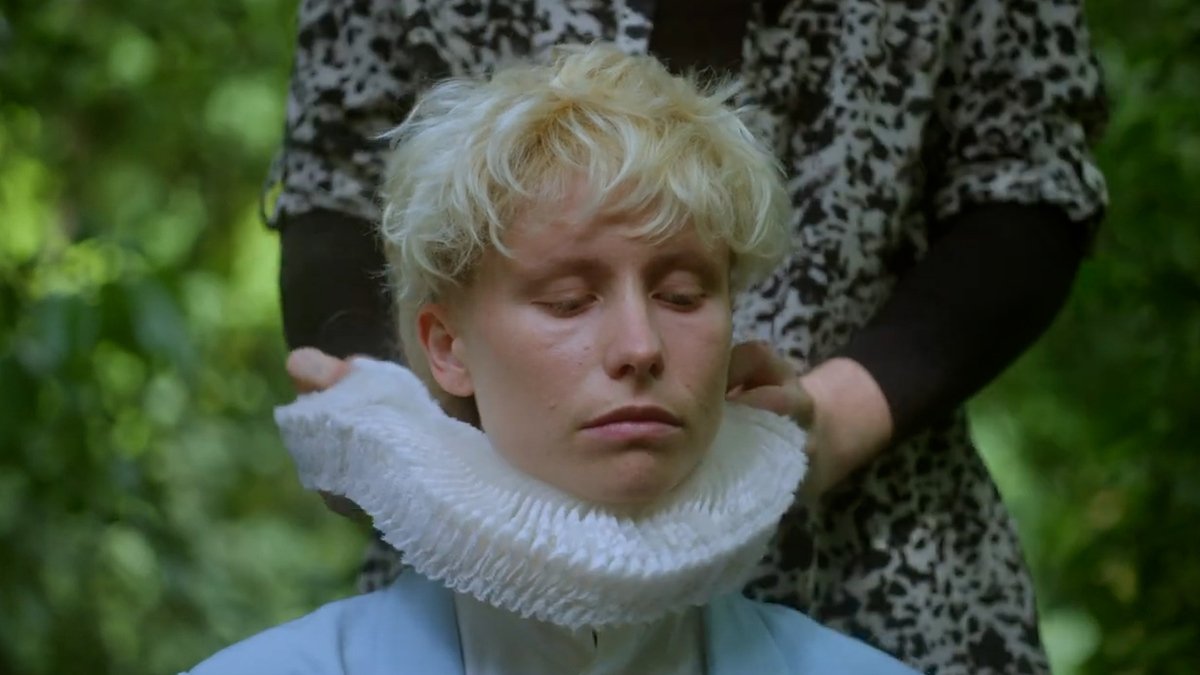
With this unconventional documentary, transgender writer/philosopher/feminist Paul B. Preciado doesn’t so much take Virginia Woolf’s ORLANDO back from the 1992 Sally Potter film starring Tilda Swinton in the title role as he comprehensively shows how her story about a figure living both male and female lives is one decidedly a century ahead of its time. Utilizing the sort of playfulness and defiance once favored by director Derek Jarman (for whom Swinton was a muse), Preciado interviews a score of trans and non-binary persons of all ages and races, each of them wearing the signature ruffled collar favored by Woolf’s character and introducing themselves by proclaiming, “I am (name) and I will be playing the part of Virginia Woolf’s ORLANDO.”
For a first-time director, it’s arguably uneven: Preciado doesn’t hesitate to confound expectations or startle an audience into submission with a soundtrack swerving between thumping diva house and annihilating thrash metal or phantasmagorical scenarios straight from a particularly wacky Kate Bush music video. No matter how quirky or slapdash he comes across, there’s a sincerity and root-for-the-underdog momentum. His disparate voices coalesce into a Greek chorus where the power of and goodwill executed by individual stories gains focus rather than fixating on the dryness of gender theory or intellectual polemics. ORLANDO becomes a prescient text that’s not necessarily a bible but more of a jumping-off point. What also seemed like sensory overload on first view has had staying power: with time to fully digest all of its thoughts and quirks, this is one of the more innovative and entertaining documentaries I saw at the festival. (Rating: 8/10)
UNICORNS
Luke (Ben Hardy), a working-class straight bloke from Essex, unwittingly wanders into a London gay club and falls hard for Aysha (Jason Patel), a drag queen, making out with him before he realizes he’s not kissing a woman. At first, Luke recoils violently but over time he and Aysha forge a professional relationship that bleeds over into friendship and eventual love.
Co-directed by Sally El-Hosaini (THE SWIMMERS) and screenwriter James Krishna Floyd, UNICORNS is a conventional, slick and unapologetic crowd pleaser. Floyd noted that it takes a “non-binary approach” to a love story for which it’s more commendable than original and yet, despite its calculation and unlikeliness, I found it considerably moving by the end. Much of the credit goes to its two leads, especially Hardy who gives a nuanced, expressive performance that often overrides his inarticulateness and convincingly conveys his internal struggles and growth. Newcomer Patel also excels at delivering the contrast between his flamboyant onstage persona and the far staider version of himself he displays for his conservative parents.
The depiction of an Asian drag culture in the UK is fascinating for how it goes beyond portraying it as a loving but dysfunctional family, ending up in some dark corners that create drama and near-tragic consequences for Aysha. It ultimately brings the two leads closer together but its implications speak of a world where it’s not enough to be who you are, it’s how willing you can be to let others in. Along with Hardy and Patel’s performances, this is what resonated strongly with me at the conclusion. Manipulative? Yes, but also heartfelt. (7/10)
THEY SHOT THE PIANO PLAYER
Bossa Nova music and Jeff Goldblum, together at last. Your mileage may vary depending on either of those things (particularly the latter) but this docu-animation hybrid is a mostly worthy successor to co-directors Fernando Trueba’s and Javier Mariscal’s 2010 Havana-centered feature CHICO AND RITA. Goldblum plays an author (named Jeff, natch) who in a framing device recounts his efforts via a reading at New York City’s famous Strand Bookstore. His goal? To find out what happened to Francisco Tenório Jr., a Brazilian jazz pianist active in the 1950s/60s Bossa Nova scene whom after a few recordings seems to have disappeared. Interviewing an impressive array of living legends from the movement (JoãoGilberto, Caetano Veloso, Gilberto Gil), Jeff gradually pieces together a trajectory of a country that underwent a culture renaissance while also suddenly finding itself subject to totalitarian rule.
As with CHICO AND RITA, the film’s whimsical visual design, Wes Anderson-level attention to detail and vintage music are both delightful and often sublime; Goldblum, himself a musician also feels an apt choice for a narrator. What’s missing here, however, is not only an extensive dive into why Tenório was a great musician but a compelling enough reason to care about his specific disappearance. He comes off as a stand-in for the many so-called dissidents silenced by Brazil’s regime—a collection of fragments rather than a complete portrait. Worth seeing for aficionados of Brazilian jazz and unique animation, but not much of a reach beyond those interests. (6/10)
GONZO GIRL
One of the better-received directed-by-an-actor films populating TIFF this year, this behind-the-camera debut from Patricia Arquette is most notable for another terrific late-career performance from Willem Dafoe. His Walker Reade, a Hunter S. Thompson stand-in works in part because Dafoe doesn’t attempt to emulate the infamous late writer/personality (save for a few sartorial choices). Instead, he embodies his spirit while also coming off as a heightened, drugged up version of, well, himself and does so with such totality and finesse that he almost seems like the protagonist when he isn’t one. That would be Alley (Camila Morrone), the straightlaced college student working as his intern in the summer of 1992.
An adaptation of Cheryl Della Pietra’s memoir of the same name, one can sense what attracted Arquette to making it and also why she’s well-suited for both this material and a smaller role as Reade’s caretaker/drug-runner. It’s best when she doesn’t take the text too seriously and has fun with the more outrageous aspects of Pietra’s shenanigans with Thompson (Alley’s first acid trip is rendered as an endearingly handmade magical mystery tour) and his unconventional writing process. Not as inspirationally zany as, say, FLIRTING WITH DISASTER, the 1996 screwball romp Arquette co-starred in, but for an enticingly screwy first film, more than competent and not at all embarrassing. (7/10)
Film festivals are worlds unto themselves. Whether a weekend’s worth of programming at a local cinema or a multi-venue, week(s)-long event in another state or country, they vary substantially in size and commitment. Given time and proximity, anyone can attend a single screening at, say, the New York Film Festival but it takes a particularly devoted cineaste to spend a week-plus at Sundance or Cannes. In addition to transportation and lodging, one’s left with a spectrum of choices: If a festival’s offering 100+ titles to peruse, which ones do you see, and how many each day? Are you there entirely to watch movies or do you make time for other activities? When (and what) do you eat if you’re attending films from morning until Midnight? How will you adjust to this curious, particular mode of being often dubbed “film festival brain”?
I didn’t have a good reason or the funds to attend an out-of-town film festival until, for a few unseasonably wintry days in early November 2003, I ended up at one in Rochester, New York with a few friends from my film group Chlotrudis. The High Falls Film Festival honored and mostly focused on female directors and screenwriters. We made the six-hour trek west of Boston because one of our members lived there. This was in the days before I kept meticulous records of my viewing activity, but I probably saw seven or eight films at High Falls including the Isabel Coixet-directed, Sarah Polley-starring My Life Without Me, a limpid adaptation of the novel Balzac and the Little Chinese Seamstress, the Pilobolus/Maurice Sendak documentary Last Dance and, on closing night, a preview screening of Robert Altman’s penultimate film The Company (at the time, a letdown following Gosford Park though in retrospect, weird and gutsy enough that I keep meaning to revisit it.)
Apart from adhering to a schedule and standing in waitlist lines, High Falls felt a somewhat atypical film festival in retrospect, with lots of downtime to do all the other things a metropolis as grand as Rochester had to offer (well, at least we toured the George Eastman Museum and its film archive.) I’d come closer to experiencing “film festival brain” the following year by attending the Provincetown International Film Festival and volunteering for the Independent Film Festival of Boston. The former, concentrated in the titular coastal resort town provided the desirable closeness between hotel and cinema venues that enhances a festival while the latter lent insight regarding how much of a multi-plate-spinning, three-ring circus such an operation can be.
By 2005, I was ready to tackle the Toronto International Film Festival (TIFF for short.) One of the largest and buzziest film fests in the world, TIFF usually runs for eleven days starting on the Thursday after Labor Day. It hosts many North American premieres (at least those not earmarked for Telluride or New York) as well as some world premieres. After bowing at TIFF, the likes of Silver Linings Playbook, If Beale Street Could Talk and The Fabelmans have all instantly become serious awards contenders. Though often feted for its big-ticket gala premieres, TIFF has such a breadth of programming that there’s always something for everyone, whether it’s world cinema by directors as renowned as Werner Herzog or as obscure as Pen-Ek Ratanarung, four-hour-long Frederick Wiseman documentaries and experimental, far-under-the-radar shorts, midnight movies and independent Canadian cinema that rarely makes its way south of the border.
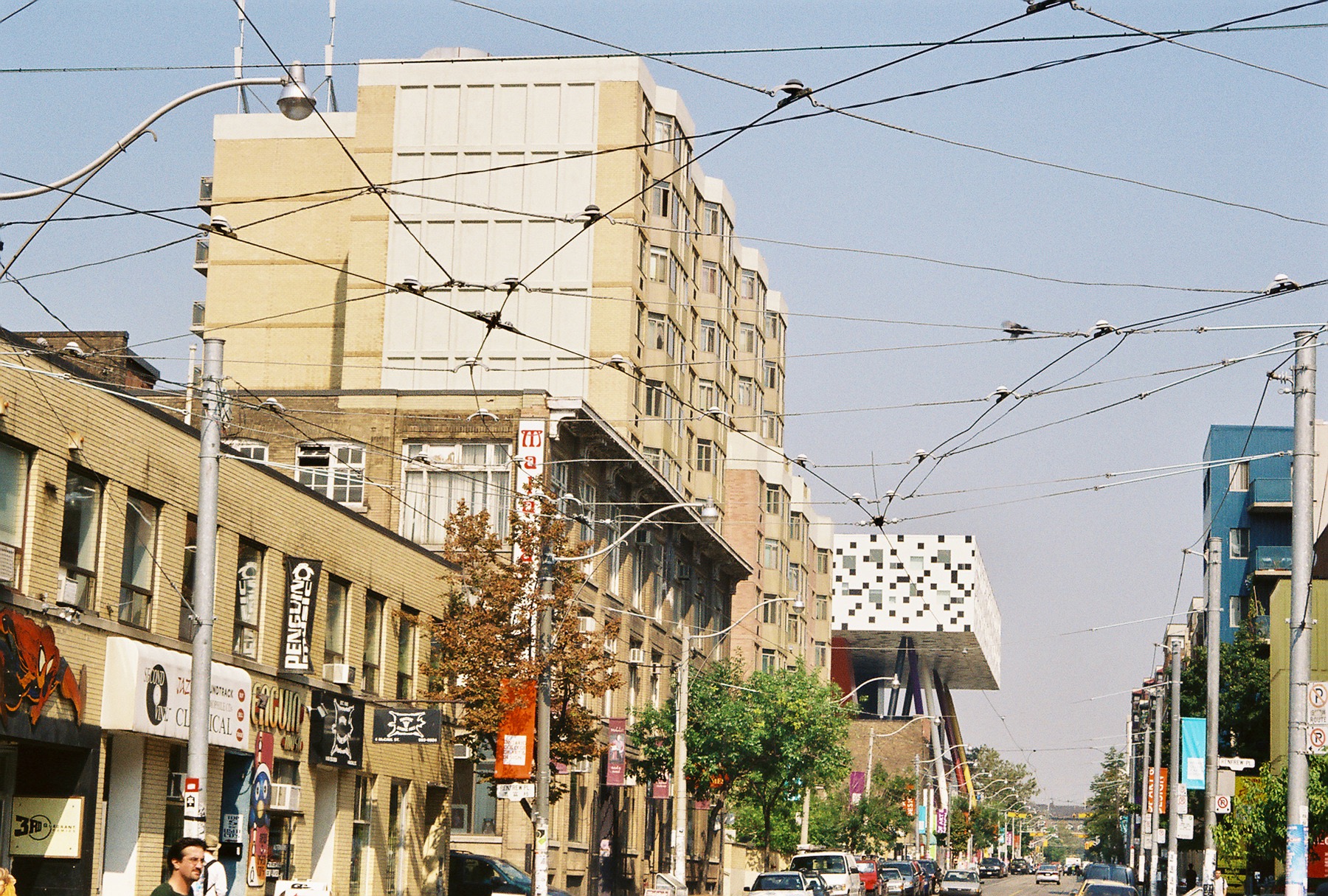
McCaul Street, Toronto, 2005.
My first TIFF (also my first visit to Canada) was a whirlwind of sixteen films over five days and nights. Once again, I was lucky to attend with my Chlotrudis friends, some of whom were TIFF veterans by that point. Without them, navigating the fest, which then sprawled from the prestigious venues along King Street West all the way up to Bloor and over to the University of Toronto might’ve overwhelmed a newbie like me (presently, the festival is concentrated in a six-block radius near the Bell Lightbox cinema.) Actually, my own experience was still perilously close to a sensory overload, particularly concerning ticket buying. With many screenings sold out well in advance, we’d awaken near the crack of dawn every day to wait in line at the Manulife Centre lobby to see what tickets had been released for that day’s showtimes. I often didn’t know what I’d be seeing in advance and had to make snap decisions based on this same-day availability.
For me, TIFF 2005 began uncommonly strong with Wang Xiaoshuai’s coming-of-age Cannes Jury Prize winner Shanghai Dreams (which would never receive North American distribution) and ended with Terry Gilliam’s woefully bizarre Tideland. In between, some of my most-anticipated titles were disappointments: AIDS triptych 3 Needles from The Hanging Garden director Thom Fitzgerald and The Quiet, Jamie Babbit’s leaden follow-up to But I’m A Cheerleader. Other buzzed-about films such as The Squid and The Whale, Hou Hsiao-hsien’s Three Times and the documentary The Devil and Daniel Johnston fared better. Still, the act of seeing something in a full theater for the first time often enhanced the whole experience more than viewing it at a local cinema (or worse, at home) ever could. I’ll never forget watching Michael Haneke’s Cache at a sold-out 2000+ seat Elgin Theatre and loudly gasping along with everyone else at one particularly shocking moment; I walked down Yonge Street with the two friends I’d seen it with afterwards, all three of us baffled and left near-speechless by its cryptic ending.
Earlier, I mentioned that TIFF is an ideal place to discover Canadian indie films since a good portion of them never get a theatrical release (or more likely these days, streaming distribution) in the US. In 2005, at least one-third of what I watched was Canadian content (i.e. “CanCon”.) Unless you’re a Canadaphile, it’s likely you haven’t seen the delightful Eve and The Fire Horse (a Sundance Special Jury Prize winner!), the aforementioned 3 Needles or the tedious thriller Lucid, not to mention Whole New Thing (a quirky queer Rushmore), These Girls (a trifle starring David Boreanaz and Caroline Dhavernas (Wonderfalls forever!)) or the Douglas Coupland doc Souvenir of Canada (probably as CanCon as it gets.)
You likely haven’t seen C.R.A.Z.Y. either, even though its director, Jean-Marc Vallée, would go on to make Dallas Buyer’s Club, Wild and the HBO miniseries Big Little Lies and Sharp Objects. When I arrived at the festival, the curiously-titled film wasn’t on my radar at all as I was neither familiar with the Quebecois director nor the cast; collective buzz (one of my friends might’ve attended an earlier screening) and intriguing subject matter (gay coming-of-age in 1970s suburban Montreal) eventually netted my attention. On the morning of my second-last day in Toronto, I purchased a ticket for it at the now long-gone Cumberland 4. I walked out of the screening thoroughly entertained and also transformed—I declared it my favorite film of the fest (with Cache in second place and, to be seen later that day, The Squid and The Whale in third.)
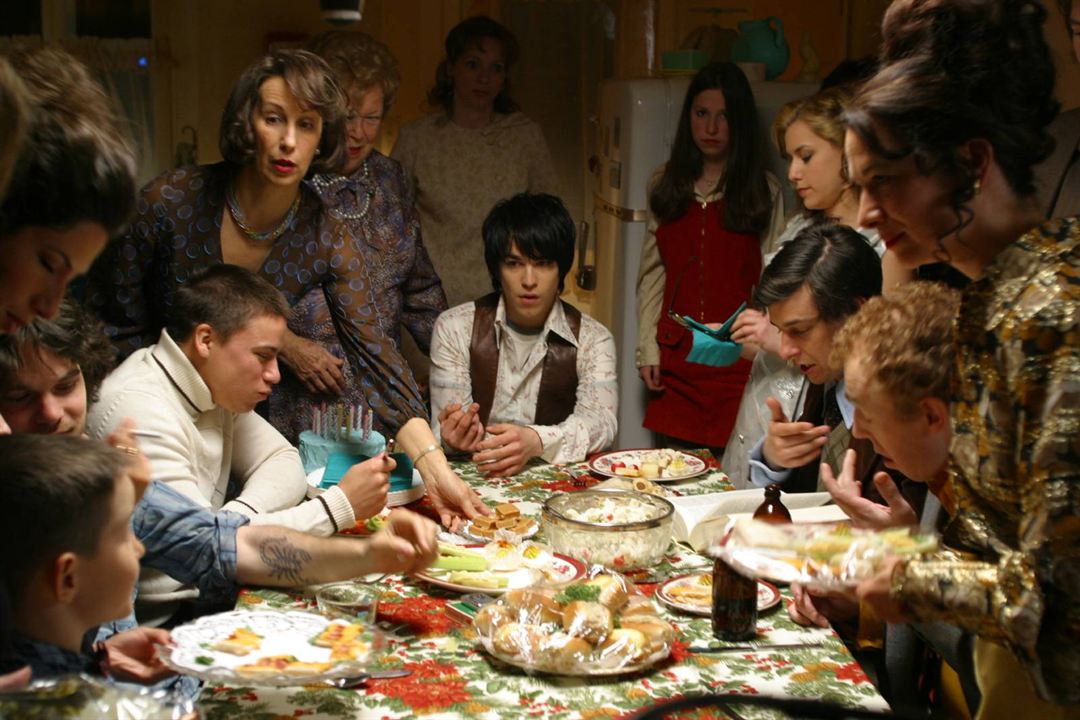
The Beaulieu Family, 1967
C.R.A.Z.Y. is about Zac Beaulieu, the fourth child of a middle-class family of five boys. Opening with his birth on Christmas, 1960, the film spans the first twenty-odd years of his life, often jumping ahead in time to arrive at another birthday (and by default, Christmas.) Accidentally dropped on his head as a newborn, Zac is believed by his devout Catholic mother Laurianne (Danielle Proulx) to not be only “special” but also “gifted” an ability to heal the sick and afflicted with his mind. This is dubiously confirmed by the middle-aged psychic she takes him to at age six who is only referred to as “Mrs. What’s-Her-Name” (“The good Lord gave it to him!,” she declares.) At that age, Zac idolizes his dad, Gervais (Michel Côté), a masculine, blue collar semi-hipster who takes him out for french fries, blows smoke rings, listens to Patsy Cline (whose signature tune “Crazy” appears throughout) and sings karaoke along with Charles Azvanour’s “Emmenez-moi” at every family gathering. Cool Dad Gervais also obviously sees Zac as his favorite compared to his older brothers Antoine (a jock), Christian (an egghead) and Raymond (a hoodlum.)
The only problem? Zac is perceived as “different” by all the men in his family. His father gives him a table-top hockey game for his birthday/Christmas but what he really desires is a baby stroller he can use to push dolls around in. After Zac’s caught attending to baby brother Yvan in his mom’s housecoat and pearls, Gervais shouts at Laurianne, “What in heaven’s name did you do to him?” When the film jumps ahead to Christmas 1975, teenaged Zac’s (played by Marc-André Grondin from here on) bedroom is now decked out in Pink Floyd and David Bowie insignia. He intensely, loudly sings along to “Space Oddity” in his room, only to attract a crowd of snickering onlookers outside his window. At the annual extended family Christmas gathering, his cousin Brigitte brings along her handsome boyfriend Paul who catches Zac’s eye as the couple tears up the dancefloor to a Pérez Prado mambo. After the three toke up together in Paul’s car, at Paul’s insistence, the two boys share a “shotgun”—Paul puts the lit joint his mouth backwards and blow’s smoke into Zac’s. The next time we see Zac, his formerly longish hair is restyled and glammed up exactly like Paul’s.
Like many teens of his era (and beyond), Zac’s emerging awareness of his homosexuality is a gradual, gestating process rather than a sudden epiphany. In bed at night, he prays to himself, “Please, anything but that,” not even able to name what “that” is. He tries dating his friend Michelle while rejecting the advances of and then beating up Toto, a male classmate somewhat further along in decoding his own sexuality whom is bullied and regarded by Zac’s peers as a “weirdo”. Later, after Gervais witnesses him and Toto suspiciously exiting a car together, he gets sent to see a therapist. Whenever Zac takes a step forward, he ends up two steps back, telling the therapist, “I’m not a faggot” or abruptly leaving a record store when he sees Paul nonchalantly browsing the bins a few feet away. Even when the film jumps ahead to Zac’s 20th birthday, he’s still half-heartedly dating Michelle while shot-gunning another joint in the car with cousin Brigitte’s latest flame at Christian’s wedding reception.
Christmas, 1975.
Given his conservative, suburban and religious environment, it’s no wonder Zac struggles with this; as a gay man raised Catholic, I found it all too relatable despite being some 15 years younger and from the Upper Midwest instead of Montreal. In popular culture and general perception, Catholicism is synonymous with the concept of guilt, with all the atoning for one’s own sins, impure thoughts and so on. As an adult long since lapsed, however, it’s the preponderance of mystery and superstition that has left a lasting impact on my psyche. One of the things C.R.A.Z.Y. gets exactly right about growing up Catholic and queer is this continual push and pull between fulfilling desire and facing consequences. Just as Zac continually reinvents himself through his clothing, his hair, the music he likes and how he decorates his bedroom, there remain little reminders everywhere that God Is Watching via the excess of prominently-placed crucifixes in the Beaulieu home (not to mention the one often hanging around Zac’s neck) or other religious iconography that suffuses the film (a disapproving Gervais appearing in frame next to a painting of Christ on the wall; the mesmerizing male chorale music sung in Latin that often surfaces on the soundtrack whenever Zac is at his most conflicted.)
And if all of that wasn’t enough, he’s being asked repeatedly from a young age to pray for a sick family member or friend, placing an even heavier burden on him. Multiple times, he’s shown to even have a sort of psychic connection to his mother that’s somehow related to this “gift”: as a young boy, he furiously prays at sleepaway camp that no one discovers he wet his bed while Vallée cuts between this and Laurianne, in bed at home, violently awakening and responding to his cry for help—perhaps the one time C.R.A.Z.Y. oversteps a bit unless his mother’s actions are all in Zac’s mind (a real possibility since he daydreams more than any other movie kid since A Christmas Story’s Ralphie.) When shit gets too real (i.e. seeing Paul at the record store), Zac not only goes into panic mode but relies on the superstition informed by his religious upbringing: attempting to walk all the way home in a blizzard, he rationalizes, “I would be cured if I could simply make it through the storm.” He does arrive at home intact (if close to hypothermic), but still hasn’t entirely accepted the notion that one can’t pray the gay away.
Zac eventually gets to a place of self-acceptance, albeit one that’s not without consequences. In possibly the film’s most brutal and honest exchange, his father point-blank states that his sexuality is not something he’ll ever accept. It’s consistent with his attitude throughout: “This shouldn’t be happening to us; it’s all in his head,” Gervais tells Laurianne earlier and it’s revealing, and in a religious background all too common that what prevents Zac from fully coming out is an importance placed on how it affects others in his life rather than himself. Into my early twenties, I denied my own sexuality, being overly concerned with what my family and friends would think of me if they knew the truth. Like Zac, I conformed to a version of myself that was what I perceived the world expected of me, while also often subconsciously making decisions that brought me closer to my true self without giving the game away (in my case, growing out my hair, getting my ears pierced, covertly flirting with other men I secretly found attractive.)
Christmas, 1980.
Interestingly, Vallée himself identified as straight. He co-wrote the screenplay with François Boulay, who based it in part on his own experience growing up gay. I remember reading at the time that what attracted Vallée and informed his own contributions to the story was its focus on a teenage misfit, a boy whom for any number of reasons simply doesn’t fit into his narrowly defined world. While applying homosexuality to this premise sharpens the conflict and heightens the urgency of Zac’s plight, what’s remarkable about C.R.A.Z.Y. is that, in spite of this, it still eloquently brings to life an ultra-specific world one can identify and comprehend. Look past the music, the clothes and the interior design and revel in such rituals as a full-capacity church at Christmas Midnight Mass or family parties brimming with finger foods and the chaotic overlapping interactions between all the relatives. Marvel at such specifically mid-century Quebecois slices-of-life like the Beaulieu boys’ delight for their mother’s ironed toast. For all of Zac’s struggling, this world as remembered from adulthood is so colorful, vibrant and real one could almost step into the frame and feel what’s it like to be an active part of it.
Regardless, C.R.A.Z.Y. indicates that no matter what fondness or nostalgia one retains for their childhood, the most effective way into adulthood is to strike out on one’s own. After Christian’s wedding, Zac has to escape Montreal and travel all the way to Jerusalem, the Holy Land (a trip that would be at the top of Laurianne’s bucket list) to fully confront and accept his sexuality (he ends up finally sleeping with another man who naturally looks a lot like Jesus!) When he returns home, it’s clear he has changed but Montreal hasn’t. Laurianne asks him to pray for Raymond, now a junkie and near death, in order to “heal” him, but of course it doesn’t work. And while Gervais makes his nonacceptance of Zac clear after he returns, he still tears up and hugs him at Raymond’s funeral. In the final scene, we see a present-day Zac and Gervais getting fries together like they did back in the day; Zac’s voiceover mentions that they still don’t discuss his sexuality but in a decade’s time after the funeral, Gervais became more tolerant of it, even allowing one of Zac’s boyfriends into his home.
I haven’t even gone into entire subplots about Zac’s temperamental relationship with Raymond, or the saga of the broken Patsy Cline record, or his Midnight Mass daydreams (the entire congregation woohoo-ing along to “Sympathy For The Devil”) or how little Yvan’s most identifiable trait is his incessant eating. At just over two hours, the film packs in ample plot and character development but rather than feeling overstuffed, it resembles an invitation full of goodwill, all the way to its clever reveal at the end of what the title’s initials mean (think about it.) Winner of Best Canadian Film at TIFF 2005, it became a massive hit in Quebec, earning $6.2 million there (the equivalent of a film grossing over $300 million in the United States today) and won 10 Genie awards (the Canadian Oscars.) I ended my initial review by noting, “It would be crazy if it never received US distribution,” but that’s exactly what happened, mostly due to music rights (in such a large market, Pink Floyd wasn’t going to give away “Shine On You Crazy Diamond”, one of the film’s most essential needle drops, for a pittance.) It did receive a domestic DVD release in 2007 and is streaming on Max at this writing. I screened it for the first time in nearly 15 years after Vallée suddenly died of heart failure in late 2021; for all his subsequent work and acclaim, it remains his best film perhaps because it’s his most personal. As much of it is a feast for the eyes and ears, one simple exchange between Zac at 15 and Mrs. What’s-Her-Name (of all people) gets at the heart of how beautifully C.R.A.Z.Y. acts as (what Roger Ebert once said of film in general) an “empathy machine”:
Zac: “I want to be like everybody else.”
Mrs. What’s-Her-Name: “Thank God, you never will.”
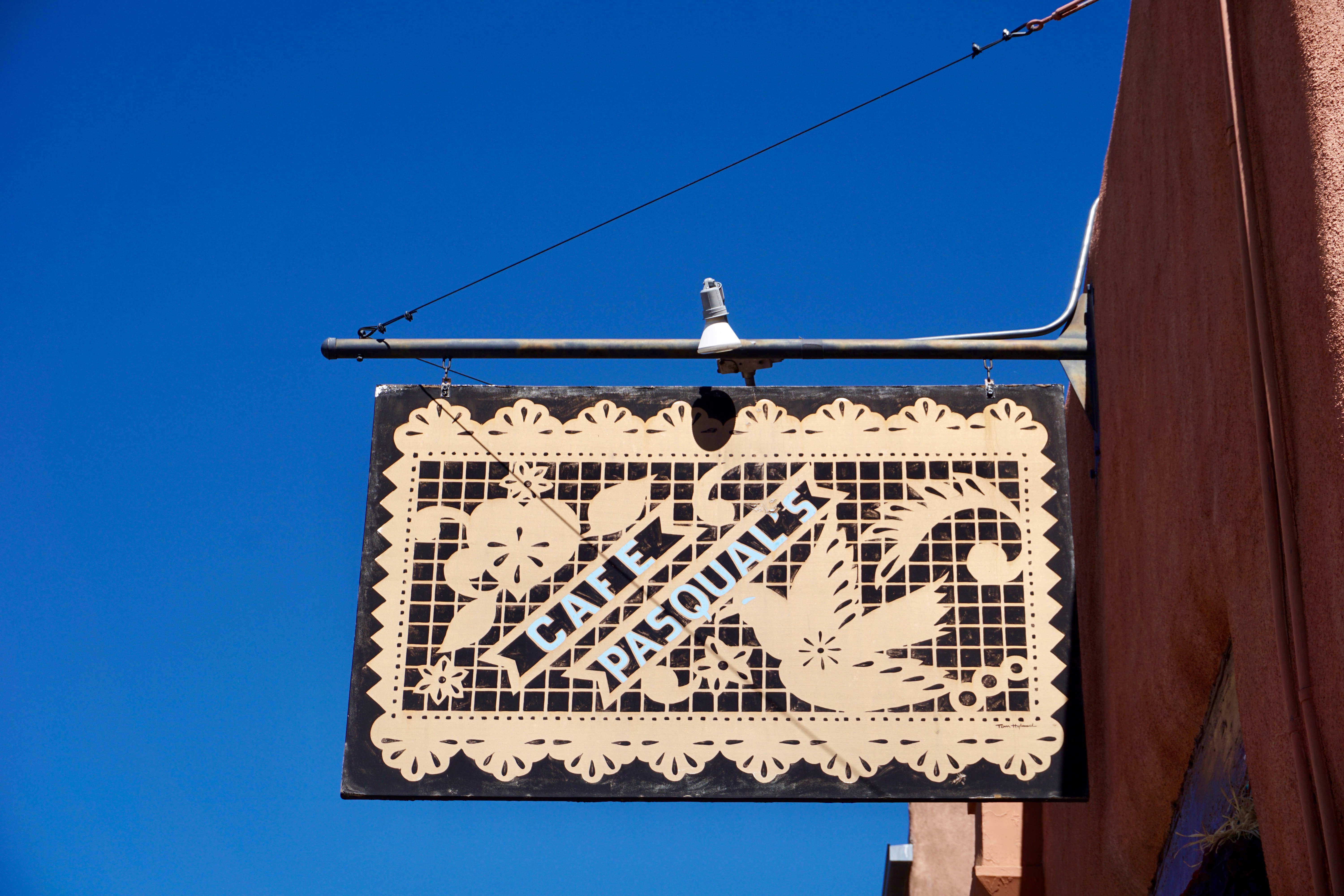
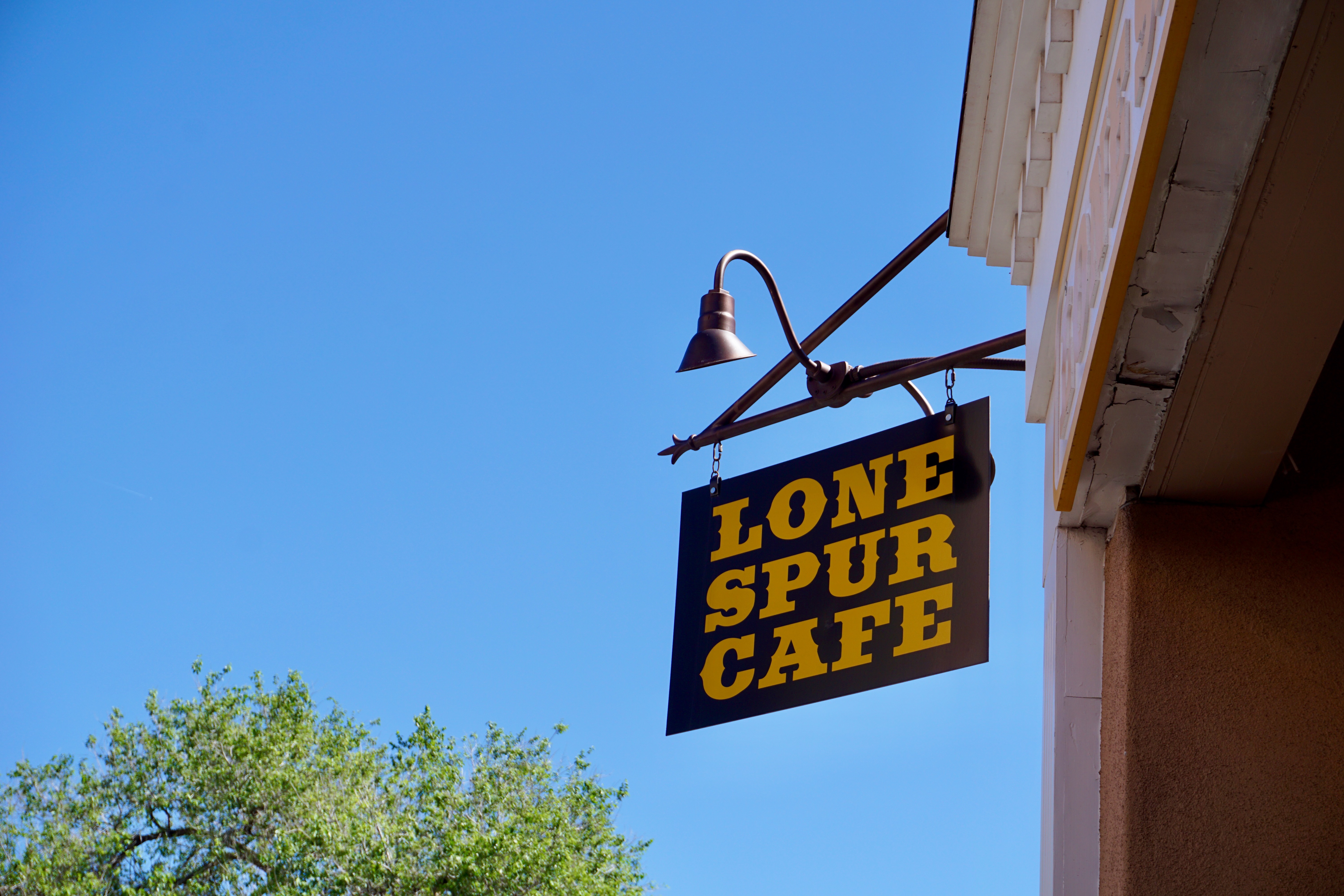
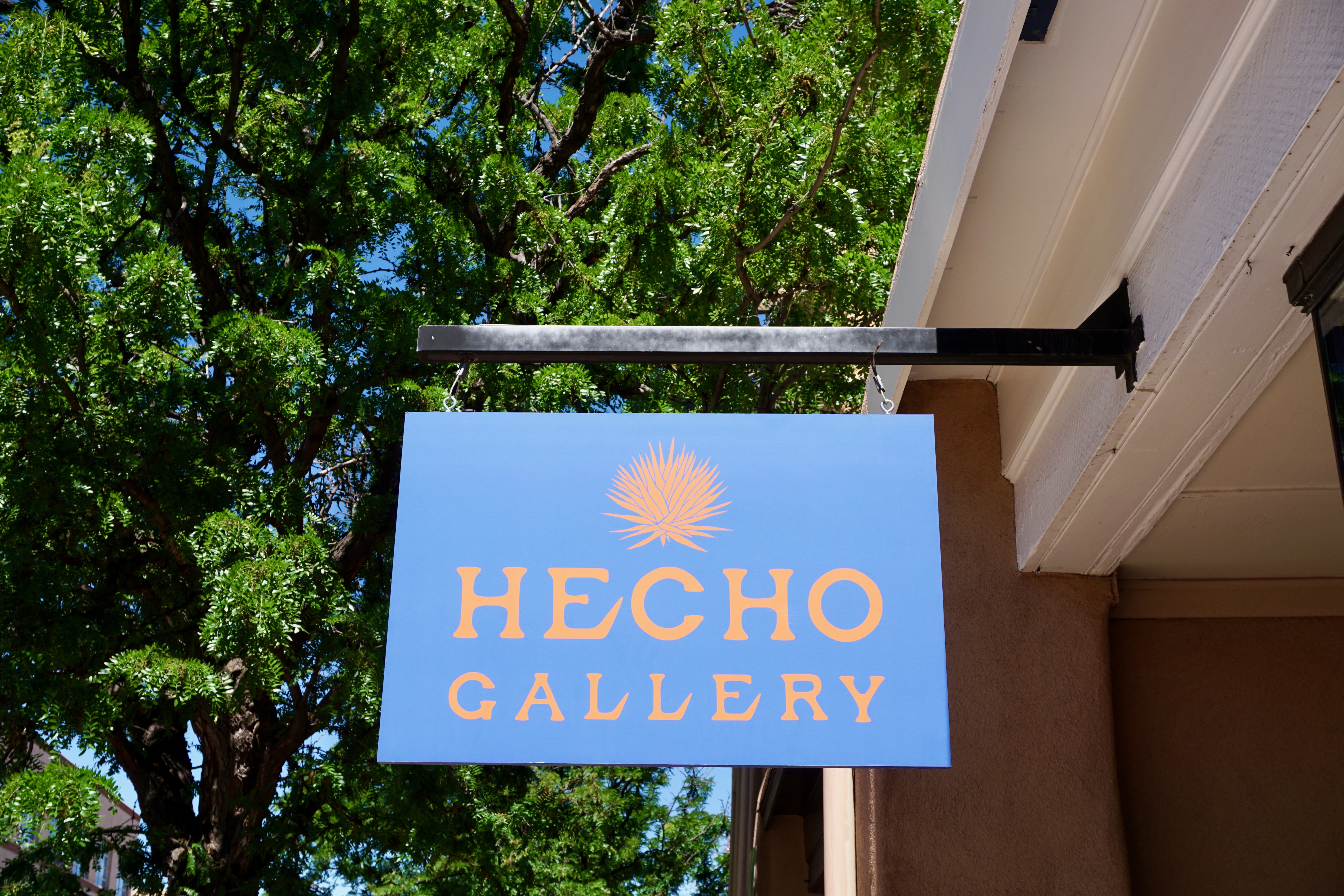
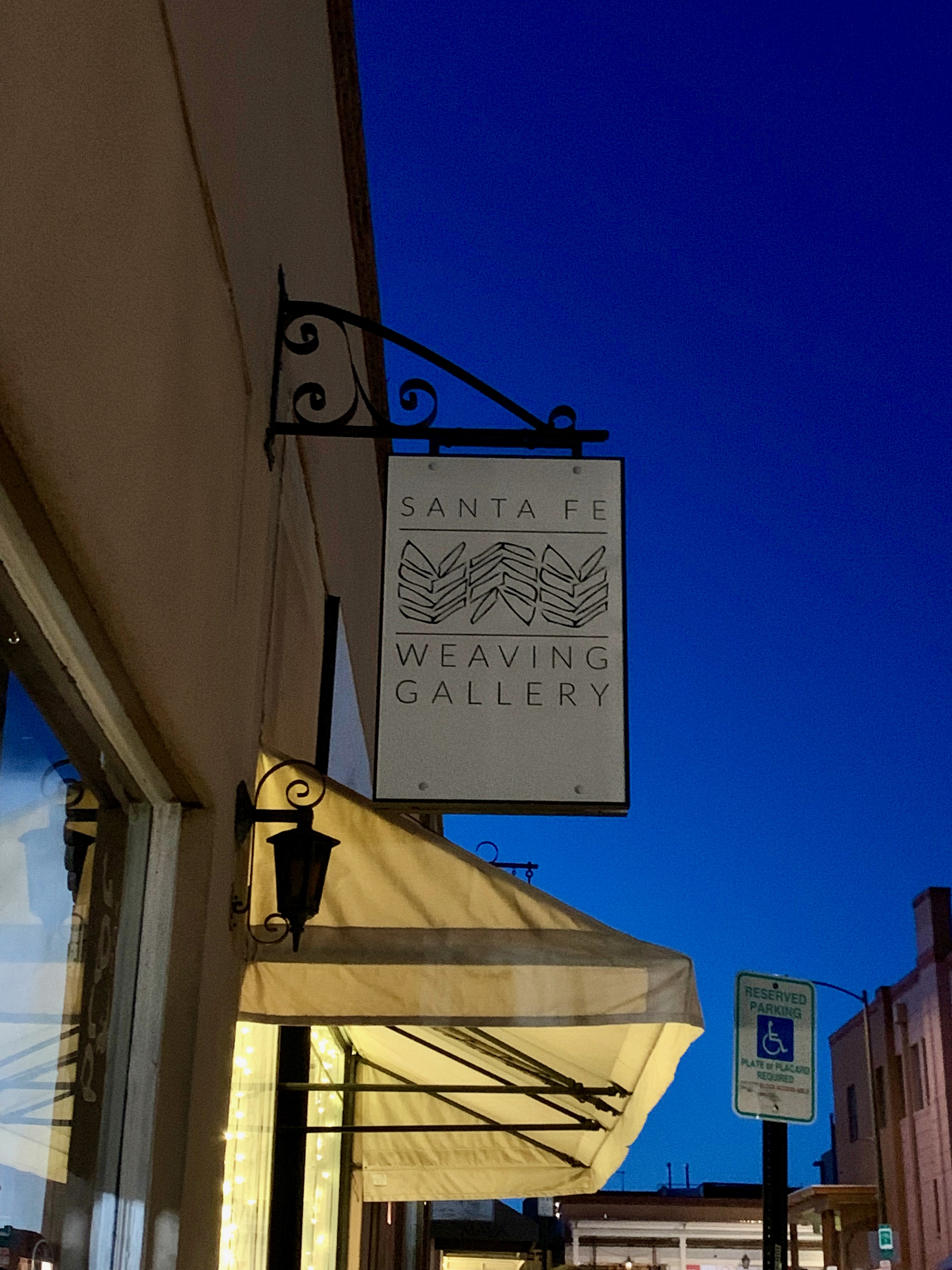
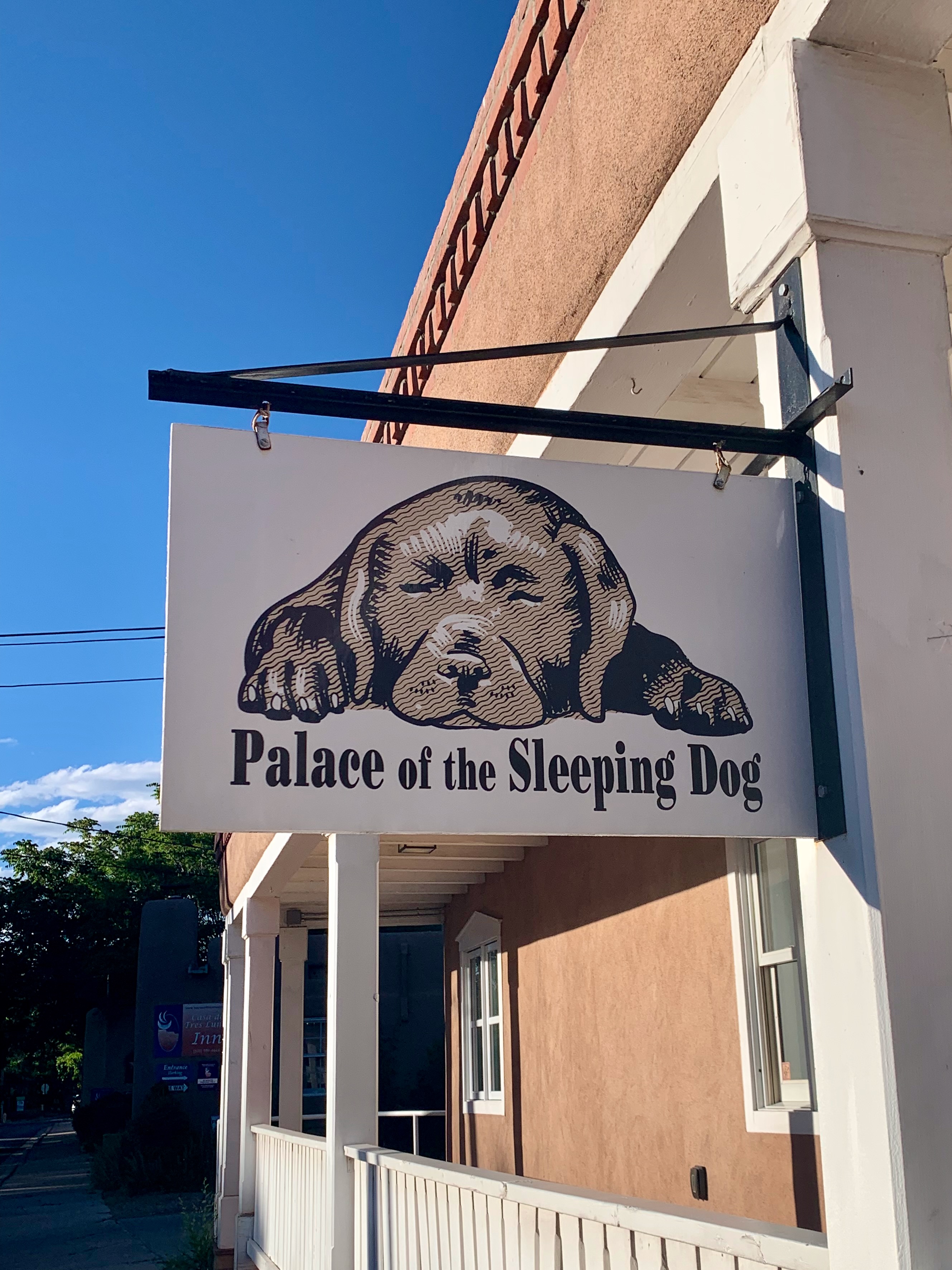
Wrapping up my 2023 Santa Fe photo dump with a cavalcade of signage.
We had drinks at sunset on La Fonda’s rooftop cantina one evening, including some of the most delicious–and dangerous margaritas I’ve ever sipped.
Again, the blue New Mexico skies make everything appear brighter.
I suppose this could just as easily be Texas, but it works.
Not the estate of Charles Foster Kane nor a roller disco. Alas, it’s a home goods store.
Why name your gallery when bright red against adobe easily draws one in?
So many galleries in Santa Fe.
Some of them take on an otherworldly glow at night.
Dog-friendly vacation rentals just outside the Plaza.
Cafe Sonder did not survive the pandemic but at least its retro-cool sign remains (for now.)
Kudos to this curious but compelling signage.
“Ladies and Gentlemen, we have a really big shoe for you today…”
Rather than use boring old letter grades, restaurant cleanliness in New Mexico is simply APPROVED (or not.)
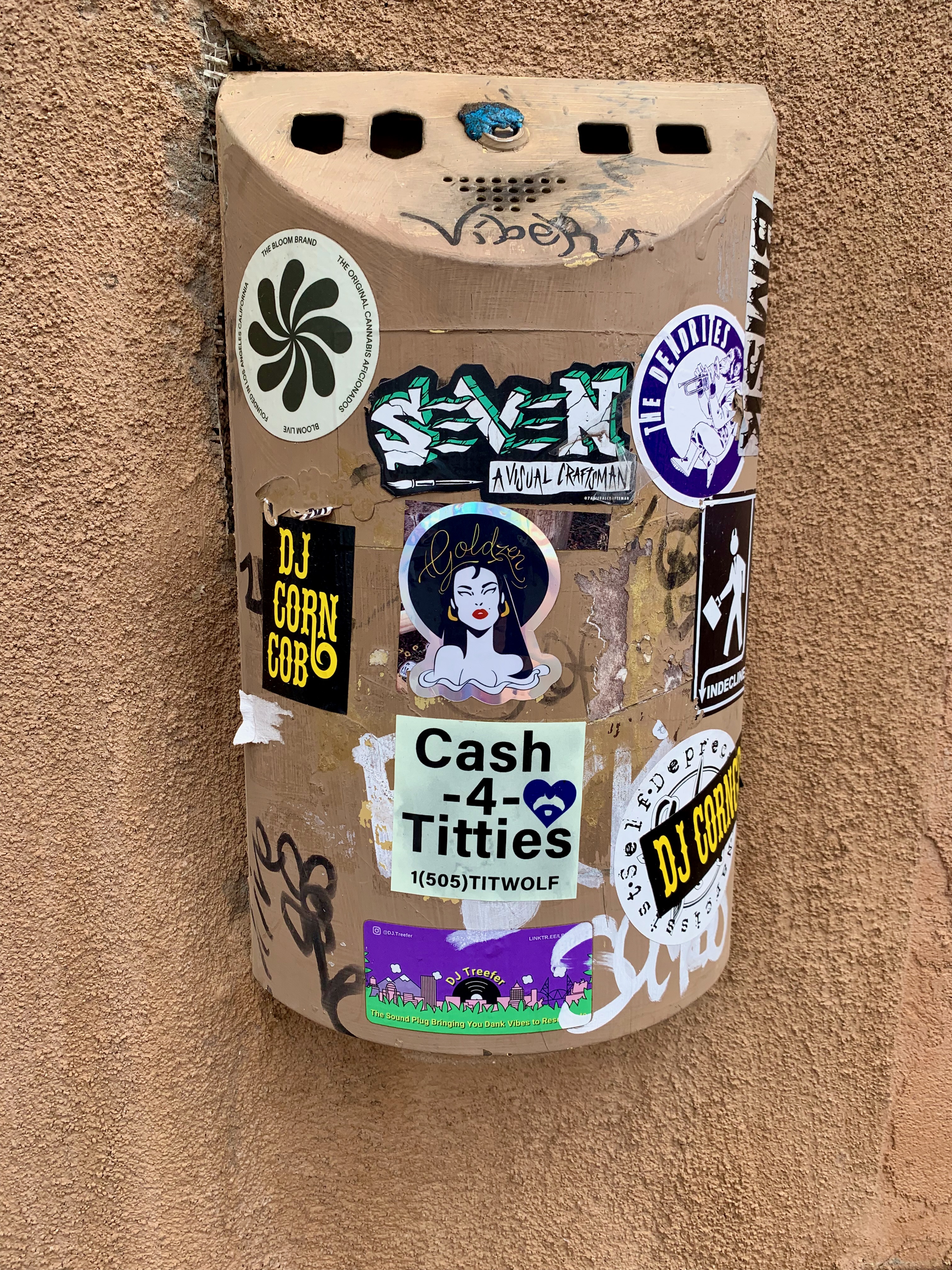
I’ve saved the worst (best?) for last: DJ Corncob sounds like an alias Jason Mendoza might’ve used if he was from the Midwest instead of Jacksonville, but one can’t deny how, ahem, Cash-4-Titties really draws one in.
Twenty summers ago, I made my last ever mixtape—that is, a music mix on a C-90 cassette as opposed to a blank compact disc. A few months earlier, I had acquired my very first laptop computer (dude, I got a Dell) which allowed me to make the move from analog to digital.
By late July 2003, I had a few mix CDs under my belt but circumstance gave me an excuse to make one more mixtape. In my hometown of Milwaukee, I met up with my parents (who then lived in Iowa) for three nights; then, I spent another six nights with my friend Laura, a Chicago native whom I met as a student at Marquette University some years before. I’d moved to Boston shortly after graduation but she stayed on. Between her job at a nursery and other family commitments, I was left alone roughly half of that time to apartment-sit, see other old friends and explore the city I’d left behind. Laura lived on the East Side just off Oakland Ave and I had a blast visiting all the old haunts, from the Oriental and Downer Theatres to Bradford Beach, Atomic Records and even Klode Park out in Whitefish Bay.
With ample time on my hands, I curated a mixtape for Laura as a thankful gesture for putting me up. I had brought an entire Case Logic 128-capacity CD wallet with me stuffed with all-time faves, recent purchases and a few discs I had to review for Splendid!, a music website I wrote for at the time; I may have also schlepped a blank tape with me purposely for this task. Laura was (and continues to be) a friend I make mixes for on an annual basis, going all the way back to our senior year at MU when we first bonded as friends and I crafted her a tape she dubbed the “Kriofske Mix” (a moniker I lent to two of my (now former) blogs.)
Revisiting this mix two decades on, I feel transported back to my late 20’s, an primordial era where I apparently thought nothing of including two songs by Ani DiFranco, two tracks from the Punch-Drunk Love soundtrack, an album cut from The White Stripes’ then-new Elephant (my #2 album of that year, I haven’t listened to it in at least 15) and the gauzy opener from Blur’s then-new Think Thank (also not heard in full in a long, long time.) I had also recently gotten into The Go-Betweens, The New Pornographers and Mary Lou Lord—hearing what I selected from each again reminds me what it was like to discover an artist one connected with so instantly you’d rush out and devour their back catalog piece by piece depending on what you could find in (for me, mostly used) record stores.
Among these twenty tracks, six are from albums I reviewed for Splendid! Required to write about everything from obnoxious prog-rock to near-ambient mood music, they’re scattered across that range: Paul Brill’s genre-expanding take on Americana, Natacha Atlas doing the same for world music (and sounding entirely different), Northern State (a clever and disarmingly low-fi distaff Beastie Boys), two cuts from a compilation for a record label helmed by a member of the Cocteau Twins (including the title track above) and an a capella cover of a Pixies song on TV On The Radio’s debut EP, so new-sounding and exceptional I wasn’t surprised by the mass-acclaim their second LP Return To Cookie Mountain received three years later.
True to titular form, there’s a loose and fairly obvious summer theme going on here. My favorite section is the last five songs—“You Had Time” sets the pensive, reflective mood (much better than the other DiFranco selection, anyway) and Jeff Buckley’s dreamy, ethereal cover of Leonard Cohen’s “Hallelujah” (which I listened to about 100 times that summer) runs with it, sustained by another old-school Stuart Murdoch reverie. Somehow, the contrasting tones of Shelley Duvall and Tunde Adebimpe just fit right in. I often cringe at mixes I made decades ago, but at least the last quarter of this one hit nicely when I revisited it a few weeks back, walking under the overgrow trees of the Commonwealth Mall on an idyllic mid-summer late afternoon.


















 Haunted Jukebox