12 Films… Revisited

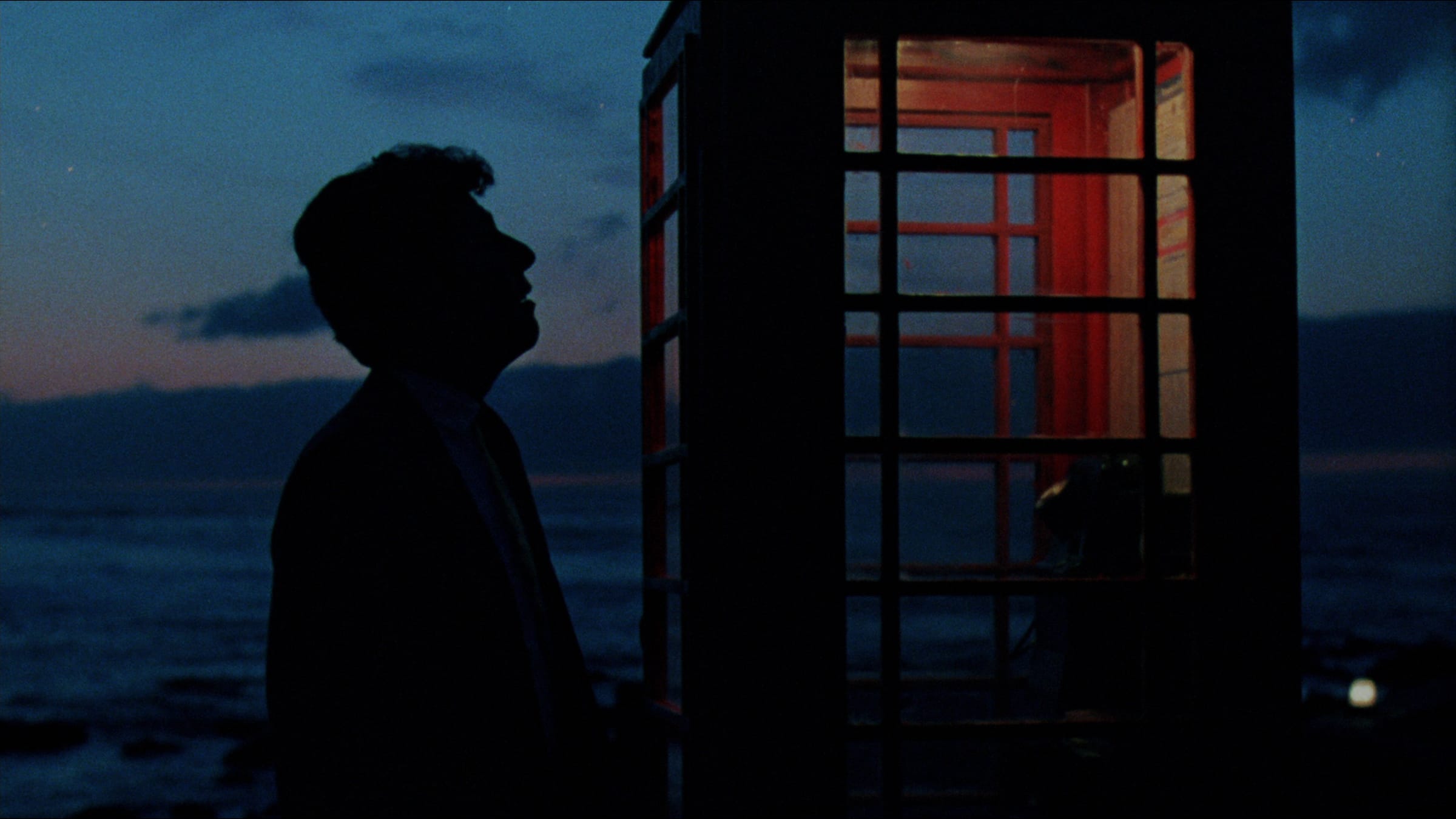
Local Hero

In 2008, I participated in a meme asking one to reveal a dozen unseen films a true film buff should have seen by then; I came up with the twelve below in chronological order (all of them pre-2000).

Happily, 17 years later, I’ve seen all but two! What follows is my original text, plus updates in italics.

1. GONE WITH THE WIND (1939, director: Victor Fleming)
Arguably the most popular film of all time, I feel like I’ve seen it without ever having actually seen it–think of all the quotable lines and parodies throughout history unto infinity–and besides, who has four hours to kill? I missed it during its last theatrical release ten years ago; perhaps I’ll soon get another chance to see it on the big screen during its 70th (or 75th) anniversary.

Not Seen! I obviously haven’t found the four hours to kill, although I will soon in my effort to see every Best Picture Oscar winner before the 100th edition in 2028. The recent backlash against this film’s celebration of slavery hasn’t exactly encouraged me to make time for it, either.

2. WILD STRAWBERRIES (1957, dir: Ingmar Bergman)
I’ve always admired rather than adored Bergman; I see the greatness in PERSONA and SCENES FROM A MARRIAGE and respect at least a half-dozen other Bergman classics, but I find so much of his work too cold and austere. However, many people I know consider this film about a teacher looking back at his life in existential dread as essential, so it sits waiting patiently for me to move it out of Netflix queue limbo.

Seen at the Brattle Theater in 2015. I’ve since concluded I love nearly all of Bergman’s work starting with PERSONA and everything after but I’m unmoved by most of what came before, this film included.

3. IMITATION OF LIFE (1959, dir: Douglas Sirk) 
I went on a mini-Sirk kick two years ago, watching WRITTEN ON THE WIND and ALL THAT HEAVEN ALLOWS in quick succession after a viewing of Todd Haynes’ loving, bold homage FAR FROM HEAVEN. I think Rock Hudson’s absence has kept me from making the time to check this one out–after seeing the other two films, Sirk w/out Hudson is in my mind unthinkable.

Seen on DVD in 2009. Hudson’s not missed! Would love to revisit after having viewed the pleasant but inferior 1934 version earlier this year.

4. HIGH AND LOW (1963, dir: Akira Kurosawa)
I almost saw this as part of the Friday Night Screening/Speaker series I worked on at BU a decade ago, but it was replaced at the very last minute by a work-in-progress-screening of Errol Morris’ MR. DEATH: THE RISE AND FALL OF FRED A. LEUTCHER, JR. with the director in person. Kurosawa is another auteur I never really “got” until I saw his somewhat atypical IKIRU a few years ago, and I’m ready to sit down and take in this kidnapping thriller.

Seen on Criterion Channel in 2020. One of my most illuminating pandemic watches. Gave it 5 stars on Letterboxd, noting how that late bravura sequence in the nightclub/flophouse was one of the most meticulous and thrilling I’d ever witnessed..

5. THE GODFATHER, PART II (1974, dir: Francis Ford Coppola)
During my first year in Boston, I rented on average four movies a week from the now-shuttered Allston Videosmith. “Film Club” members were entitled to two-for-one rentals on Tuesdays, provided you rented from a specific genre chosen every month. That October, it was “widescreen” film (funny to think that was a genre in the pre-DVD age), so that’s how I ended up watching THE GODFATHER for the first (and to date only) time. I liked it well enough, so I don’t know why I never got around to its highly regarded sequel.

Seen on Paramount Plus in 2022. I still like the original more (and have now seen it on the big screen as well), but as sequels go, not too shabby. Still have no desire to see Part III, however.

6. FINGERS (1978, dir: James Toback) 
The premise intrigues: A young man (Harvey Keitel) is torn between loyalties to the mob and dreams of becoming a famous concert pianist. I probably would have made more of an effort to see Toback’s film by now if not for the very good 2005 French remake, THE BEAT MY HEART SKIPPED with Romain Duris in the Keitel role.

Seen at home in 2011. An underseen classic and surely Keitel’s best performance. 

7. THE RIGHT STUFF (1983, dir: Philip Kaufman)
I read Tom Wolfe’s account of the U.S. space program’s early years back in 2002. This film adaptation, underrated and a flop at the time of release, has a great cast (Ed Harris, Dennis Quaid, Barbara Hershey) and a three hour running time. Oh, how I used to have a higher tolerance for lengthy flicks–ten years I ago, I remember seeing LA DOLCE VITA, ULYSSES’ GAZE and Tarkovsky’s SOLARIS (all 3 hour flicks) over the course of one Columbus Day weekend!

Seen on TCM in 2023. Gave it 4.5 stars on Letterboxd and wrote, “Maybe the best film about space travel after 2001: A SPACE ODYSSEY? Apart from sections of the score, it might’ve been made yesterday.”

8. LOCAL HERO (1983, dir: Bill Forsyth) 
I never heard of Forsyth’s comedy before I moved to Boston to study film, but since then, I’ve heard nothing but great things about it. And given that I loved his neat 1987 adaptation of Marilynne Robinson’s novel HOUSEKEEPING (why isn’t that one on DVD?), I have to make time for it soon.

Seen at the Brattle Theater in 2013; rewatched on my own Criterion Collection Blu-Ray in 2019. Now one of my favorite movies, it nearly became an entry in 24 Frames. Every subsequent movie with a similar fish-out-of-water, city-to-rural scenario owes something to it, and none of them have bested it.

9. SCHINDLER’S LIST (1993, dir: Steven Spielberg)
I don’t care if it’s his mature masterpiece–I’d rather sit through the horror of CRASH again (Haggis, not Cronenberg even!) than have to watch another film about the holocaust.

Not Seen! As with #1, this will soon be part of my Best Picture Oscar winner watch; the best I can offer is that I’m looking forward to seeing it more than, say, BRAVEHEART, but honestly not by much. Happy I never have to rewatch Haggis’ CRASH, by the way.

10. WHITE (1994, dir: Krzysztof Kieslowski)
On the list because I saw BLUE and RED a decade ago but for some reason, I never got around to this one–and it even has the lovely Julie Delpy in it! At this point, I might as well watch all three in order.

Seen on HBO Max in 2021 when I watched the entire THREE COLOURS Trilogy. Easy my least favorite of that trio (Delpy’s barely in it!), but it grew on me, particularly once the narrative mutated into something unexpected.

11. PRINCESS MONONOKE (1997, dir: Hayao Miyazaki)
Out of all these unseen films, there’s absolutely no excuse for this one, given how much I love SPIRITED AWAY. Maybe the film’s action/adventure slant has kept me at bay, or maybe I don’t have too strong of a jones for anime and Miyazaki’s an anomaly.

Seen on HBO Max in 2021 a month before the previous entry (I was unemployed and had so much time for movies); a dark, beautiful epic that was pretty much what I expected; maybe it would’ve hit a little harder had I seen it before SPIRITED AWAY.

12. BUENA VISTA SOCIAL CLUB (1999, dir: Wim Wenders)
As I repeatedly discovered throughout grad school, Wenders is wildly uneven. For every WINGS OF DESIRE or little-seen masterwork like the epic, demented KINGS OF THE ROAD (another three hour film!), there’s crap like TOKYO-GA or THE END OF VIOLENCE. But this doc about Cuban musicians frequently pops up on best-docs-of-all-time lists.

Seen at home in 2013, weeks after my own trip to Cuba. Good movie, great music but at the time of this watch, Wenders was still a decade away from rehabilitating his career with his out-of-nowhere masterpiece PERFECT DAYS.

Five Turkeys of 1980

I could write an entire book about why 1980 stands out as a fascinatingly strange year for pop culture—below is something I first posted on Thanksgiving 2013, along with some 2025 footnotes.

1980 was a weird year for pop culture: it desperately tried leaving the 1970s behind though was still not entirely transformed into what we now recall as “Eighties”. It did produce as much great, timeless art as any year: Talking Heads’ Remain In LightAirplane!, Nine To Five, this playlist, etc., Still, one generally senses a temporary lapse in good taste. If you disagree, well, take a look at the following five clips:

1. XANADU

I won’t argue that Xanadu is as “great” a film as, say, The Shining, but compared to the other stuff on this list, it’s fairly benign unless you HATE Olivia Newton-John and roller disco and ELO and Gene Kelly (and would you really want to spend time with someone who hates two or more of those things?) It’s rife with contradictions: a futuristic extravaganza somewhat beholden to ’70s aesthetics and a commercial flop that produced a hit soundtrack. I think what sinks it for some is that it takes itself just a little too seriously while still reveling in its own bad taste.*

2. THE JAZZ SINGER

This “very special happening” (quoted from another trailer I can no longer find) is the one thing on this list that I haven’t seen.** Apparently, film studios of that time were desperate to turn pop singers into movie stars, via Bette Midler in The Rose (if you need another example of a flop, there’s Paul Simon in One Trick Pony.) In theory, the gloriously hambone Neil Diamond should have made the transition as easily as Midler. Unfortunately, he chose what looks like a real stinker, a preposterous, anachronistic remake no one was asking for with a wooden female lead, gratuitous blackface (!) and a rube of a main character who doesn’t know what palm trees are. Oh well, as with Xanadu, at least the soundtrack was a hit.

3. PINK LADY AND JEFF

Long an easy punch line for the inquiry, “What’s the worst television show ever made?”, Pink Lady and Jeff*** has an egregiously bad premise: a variety show starring a female Japanese disco duo (each of whom speak precious little English) and an unctuous American comedian sidekick (who sadly talks too much.) Brought to you by those crazy czars of bad 70s TV, Sid and Marty Krofft, whose Brady Bunch Variety Hour from three years before is officially the Worst Variety Show of All Time. In comparison, this one was almost The Carol Burnett Show, but instead of an ear tug and “I’m So Glad We Had This Time Together”, each episode ended with a hot tub party–this clip features a pre-senility Hugh Hefner; I’ve seen another with Larry Hagman and Teddy Pendergrass in the tub, whom with Jeff unintentionally resemble the “stars” of our next selection…

4. CAN’T STOP THE MUSIC

Grease producer Allan Carr’s^ “musical extravaganza that launched the ’80s” (Carr biography Party Animals  is a must-read, BTW) takes the rock-star-into-movie-star approach of The Jazz Singer and lets it run rampant like a bratty child on a sugar high (or an indulgent auteur with unlimited access to cocaine.) The Village People were obviously past their prime by 1980, and you can practically taste the flop sweat dripping off this trailer. The whole project’s  inexplicable, really–watch Steve Guttenberg as the band’s Svengali, a pre-Kardashian, pre-trans Caitlyn Jenner decked out in a teeny tiny t-shirt and daisy dukes and special guest stars Tammy Grimes, June Havoc and The Ritchie Family, all of it directed by Rosie the Bounty Paper Towel Lady. That Can’t Stop The Music got made when disco was already “dead” is a testament to Carr’s chutzpah. Still, it’s almost Cabaret compared to…

5. THE APPLE

The Apple defies any notion of good taste and all logic, for that matter. Like Brian De Palma’s infinitely superior Phantom of the Paradise, it’s a rock-and-roll take on the legend of Faust, only this one’s set in the oh-so-futuristic-dystopia of 1994 and contains more sparkly sequins than even the opening credits of Can’t Stop The Music can manage. There are few words for how awful and bizarre this film is. You won’t know whether to laugh, cringe or hurl stuff at the screen (like audiences supposedly did at a preview screening with copies of the soundtrack album) when viewing any of the musical numbers (thankfully, most of ’em are on YouTube.) Instead of the trailer, I’ve singled out perhaps the film’s most demented (and that’s saying a lot) sequence. “Speed” (or rather, “SPEEEEEEED!”) pushes 1980’s questionable aura to an everything-but-the-kitchen-sink extreme and comes off like an unholy combination of Billy Idol video directed by Rainer Werner Fassbinder and Richard Simmons workout. It could be a lost musical number from another infamous motion picture of 1980, Cruising.^^ In the decades since my first viewing, nothing else I’ve seen has topped it in sheer WTF-ness.

*****

*And yet, my personal rating of Xanadu rises just a bit on every rewatch—a time capsule for sure, but an intriguing one.

** Still haven’t!

***For more on Pink Lady, check out this Decoder Ring episode.

^ Also infamous for the 1989 Snow White/Rob Lowe Academy Awards fiasco, Carr’s delirious if dubious legacy is further preserved by the 2017 documentary The Fabulous Allan Carr.)

^^ I’ve since seen Cruising, and it is definitely worth seeing if only for Paul Sorvino asking Al Pacino if he’s ever been “porked”.

Mix: Mysteries

Some mixes are tossed off in a week or two (or one particularly obsessive evening); others take much longer to finish. I started this one on a Greyhound bus bound for Manhattan in late April 2006 and completed it nearly six months later for a friend’s birthday. Since then, I’ve played it often, mostly on road trips and before bedtime.

I wanted to craft something that would be ideal for listening to after dark, preferably in the wee, deep hours of the night. I thought back to the 11:00 PM to 3:00 AM shift I worked as a residence hall desk receptionist in the summer of ’95; I also remembered when I used to drive all over Milwaukee at night just to listen to music in the car. My working title for this mix was “Subterranean”, which I thought aptly described the groove I was going for: moody, subdued, hypnotic, chill.

“Lullaby” is a suitably mystifying minute-long snippet from The Wicker Man soundtrack (the original, not the negligible Neil LaBute remake); here it’s a prelude, an opening theme song. “Dress Up In You” gently fades in from some seemingly secret, special place, and so it goes, its indie pop bleeding into The Zombies’ chamber psychedelia, Luscious Jackson’s stretched-out jam barely separate from Brian Eno’s momentous crawl, the quietly dramatic, a Capella finale of VU’s “Jesus” giving way to Stereolab’s blips and bleeps. While some mixes are aptly just that—a true blend, all over the map—here I aimed for something coherent, a simmering whole with more flow.

I was in no rush to finish it, knowing I had the time. I’m glad I let it gestate; otherwise, I never would’ve included the title song, which I owned but barely noticed until it appeared, quite strikingly, in the French film Russian Dolls; nor would I have ever heard the Space Needle song, which popped up at the last minute in an episode of Veronica Mars. The final track, “Spoon” also re-entered my consciousness via a movie soundtrack. It carries a little jolt that’s somewhat out-of-character for the mix, but I get excited every time it comes on—it’s a respite, a diversion, a space to suddenly awaken after nearly dozing off.

Mysteries (October 2006, CD-R):

  1. Magnet, “Lullaby”
  2. Belle and Sebastian, “Dress Up In You”
  3. The Zombies, “A Rose for Emily”
  4. Calexico, “Crumble”
  5. Sun Ra, “Space Loneliness”
  6. TV On The Radio, “A Method”
  7. Luscious Jackson, “Take a Ride”
  8. Brian Eno, “The Big Ship”
  9. Kings of Convenience, “Summer on the Westhill”
  10. Nancy Sinatra, “Bang Bang (My Baby Shot Me Down)”
  11. The Velvet Underground, “Jesus (Closet Mix)”
  12. Stereolab, “Metronomic Underground”
  13. PJ Harvey, “The Life and Death of Mr. Badmouth”
  14. Space Needle, “Never Lonely Alone”
  15. Laura Nyro, “Billy’s Blues”
  16. John and Beverly Martyn, “Auntie Aviator”
  17. Animal Collective, “Loch Raven”
  18. Beth Gibbons and Rustin’ Man, “Mysteries”
  19. CAN, “Spoon”

Requiem For A Used Record Store (Revisited)

Will be posting some old essays from former blogs of mine over the next few weeks as I take a hiatus from new writing; this piece was fun to revisit two decades on.

On January 1, 2005, another used-record store bit the dust: Disc Diggers in Davis Square, Somerville, Mass. While never my favorite recycled music shop, I’d pop in once every couple of months (grudgingly handing over my backpack to someone behind the counter) and occasionally find just what I was looking for.

I made my last Disc Diggers purchase on the last Saturday of the previous September. I had taken my bike across town on the T to ride the Minuteman Trail from Alewife Station to Bedford Depot and back. Exhausted and sweaty, I entered the store thinking, “OK, I’ll only buy something if they have Sally Timms’ In the World of Him or Tegan and Sara’s So Jealous.” When I spotted the former after running my fingers through racks and racks of new releases, dust-covered castaways and pitiable also-rans, I felt a rush of adrenalin–maybe not enough to take another ride on the Minuteman, but a sufficient reminder as to why I obsessively rummaged through one used-record store after another. It’s not just the goal of finding that particular CD I didn’t want to pay full price for or potentially unearth a buried treasure that could change my life. The challenge, the chase, the pursuit was just as essential.

The prototypical used-record store straight out of Nick Hornby’s novel High Fidelity endured for decades. I wasn’t aware of them until I turned eighteen. That year, CD Exchange, a three-store chain opened in the Milwaukee suburbs. As the name suggested, they didn’t traffic in vinyl or cassettes. The whole concept was foreign and questionable to me–selling CDs you no longer wanted… and buying other CDs someone no longer wanted… and hearing them right there in the store, at one of eight personal listening stations! It seemed too good to be true, and I approached the establishment with timid adolescent caution. However, the burgeoning bargain hunter in me (spurred on by working at a detestable, low-wage food service job) soon conceded, and I eventually made the rounds at the CD Exchange near Southridge Mall more often than Best Buy or local indie chain The Exclusive Company.

Alas, CD Exchange was an anomaly, a young upstart, a business perfectly suited for a mini-mall; nothing at all like Second Hand Tunes, my first real used-record store. Nestled on the corner of Murray and Thomas in Milwaukee’s East Side (and technically part of a chain that included a few Chicago locations), it was exactly like the store in High Fidelity only smaller, more condensed. At both windows sat wooden bins jammed with rows of plastic slipcases holding hundreds (thousands?) of CD booklets–all discs were kept behind the counter to discourage/prevent shoplifting. Tall, vertical see-through cases of cassette tapes made up the elevated employee counter at the other two ends of the square-shaped room, and in the store’s center, a giant, double-decker, C-shaped bin held most of the vinyl. Naturally, the windows and walls were plastered with cultish film and music posters of the Jimi Hendrix/A Clockwork Orange variety.

I spent many a Saturday afternoon in the mid-90s at that place, often flipping through every last slipcase, picking up used copies of stuff like They Might Be Giants’ Apollo 18, The Clash’s London Calling, and the Dukes of Stratosphear’s Chips From the Chocolate Fireball. Given their immense selection and my tenacity and dedication, I always found at least one thing to buy, if not two or five. I regularly saw guys (customers at these places were predominantly male) with teetering stacks of fifteen or twenty discs in their hands, and I couldn’t imagine getting together the funds to make such a weighty purchase.

Before long, I began thumbing through the neglected dollar vinyl that sat in a wooden crate on the floor beneath the CDs. At that point, it had been four or five years since you could find any vinyl in most new record stores. At the height of my wannabe urban hipster phase, vinyl was uncool in most mainstream circles, thus cool to me. I loved the comparatively life-sized cover art and the cheap thrill of picking up something I’d been secretly itching to hear (like Missing Persons’ Spring Session M) for only a buck.

I acquired a cheap-ass table-top stereo with turntable and amassed a collection of about 50 or so vinyl records with a year. I drove all over the city and the outlying ‘burbs, habitually visiting likeminded businesses such as Rush-Mor, Prospect Music and national chain Half-Price Books (they sold music, too.) Between that and continuing to buy new CDs at the big stores and through at least three of those “Buy 12 CDs for the price of one!” deals you used to always find inserted in Rolling Stone, for the first time in my life, I had more stuff to listen to than I knew what to do with.

Whenever people ask me (sometimes contemptuously) how in the world I’ve ever heard of band X or know of singer Y, I guess this partially explains how I became such a music geek. Kinda like a chain reaction, really: you discover something you like, and then it encourages you to check out something else (or, if you’re as fervent as I am, five or ten other things) and so on.

I had nearly as much difficulty leaving Second Hand Tunes behind as I did my family and friends when I moved to Boston in 1997. You’d expect to find an adequate replacement in every other neighborhood in the most college-friendly metropolis on the East Coast, but I’m not sure I fully did. The closest I came was Record Hog, a triangular corner shop steps away from the Cambridge/Somerville town line near Porter Square. They didn’t carry cassette tapes (by 1999, precious few places did) but everything else was perfectly, warmly familiar. More often than not, two cats sprawled their lazy selves across the centerpiece CD case and you’d have to gently lift them off the row of the discs you wanted to look through. This was where I made my greatest on-a-whim purchase ever (Ivy’s Apartment Life), in addition to fabulous buys like a promo copy of Stew’s The Naked Dutch Painter… and Other Songs (stumbled upon a week before you could buy it at Newbury Comics!), Gordon Gano’s Hitting the Ground and Bellavista Terrace: The Best of the Go-Betweens, among many others.

Alas, Record Hog closed in early 2003 and supposedly moved to a small town in Western Mass (I can’t remember which town and a Google search for “Record Hog” brings up little but costly pork prices). I continued acquiring a lot of used CDs every year, most of them from the local chain CD Spins, a true successor to CD Exchange. In each location, discs literally lined the walls from ceiling to floor. A CD Spins visit more or less satisfied my used-music jones, but it was like trying to get high off a pack of Marlboro Lights. I couldn’t possibly ever take in each store’s massive stock at once (at least half of it obscure $1.99 crap), so I skimmed through a mental list of stuff I’d like to get, which made it shopping with a goal in mind instead of a free-form stress-relieving act of discovery. A few used-music establishments with potential still lurked within various corners of Boston and Cambridge (and a handful even carried vinyl), but most of them were either too expensive or limited in their selection.

My last visit to Second Hand Tunes was in October 2000. In town briefly for a friend’s wedding, I had an extra day to visit a few hangouts that were once so dear to me: Kopp’s Frozen Custard, Klode Park in Whitefish Bay, and Second Hand Tunes. I hadn’t set foot in the store in more than two years and was surprised to find it haphazardly rearranged. The discs sat where the vinyl used to be, and they now even carried DVDs. Two employees I didn’t know talked loudly to each other behind the counter, watching clips of a training video for the Bronx police department. I made a customary run through the slipcases, briefly considered purchasing Bebel Gilberto’s Tanto Tempo, and then left without doing so. On my next trip two years later, the windows were papered up and a pitiful “Office Space for Lease” sign sat in one of them. Around the time I moved out East, one of the store’s old managers opened up his own used-vinyl/CD haven two blocks away. I made an effort to visit it every time I was back in town.

I missed Second Hand Tunes, Record Hog and all the rest. I no longer bought vinyl but still had enough disposable income to justify the hours I spent feeding my used CD fix. I wasn’t against buying music on Amazon or iTunes, although I knew that to an extent, both were doing their part to put the oldfangled High Fidelity stores out of business. I’d just about given up on finding a replacement that captured the personable, homey feel of those places. Thankfully, none of that distracted from the pleasure I still received from a newly acquired album, particularly one that resonated on the first spin.

2025 POSTSCRIPT:

Most remaining used CD stores went kaputt in the five-to-ten years after I wrote the above essay. I’ll never forget a depressing visit to an on-its-last-legs CD Spins which seemed packed to the gills with dozens of copies of the same, unloved used product, a far cry from when I spotted a rare copy of the import-only The Misadventures of Saint Etienne for thirteen bucks there a few months after posting this piece. Overall, I dealt with the demise of used CDs miserably, reduced to downloading entire albums from iTunes, patiently awaiting the convenience (if not the same sort of thrill) that streaming music would provide.

I certainly did not see the vinyl revival coming. By late 2016, I said fuck it and purchased an affordable but not cheap-sounding Audio-Technica turntable, hooked it up to my Bose stereo (with CD player!) and learned to love vinyl again—not always an affordable pastime in its own right (especially given the hike in pricing since Covid). Fortunately, it does scratch that music-purchasing itch, especially at such fine stores as Sonic Boom in Toronto, Irving Place Records in Milwaukee (owned by a former associate of the guy who managed Second Hand Tunes) and Lost Padre Records in Santa Fe, where on a visit in 2023 I picked up used, reasonably-priced vinyl copies of both the Starstruck soundtrack and Stevie Wonder’s Journey Through The Secret Life of Plants.