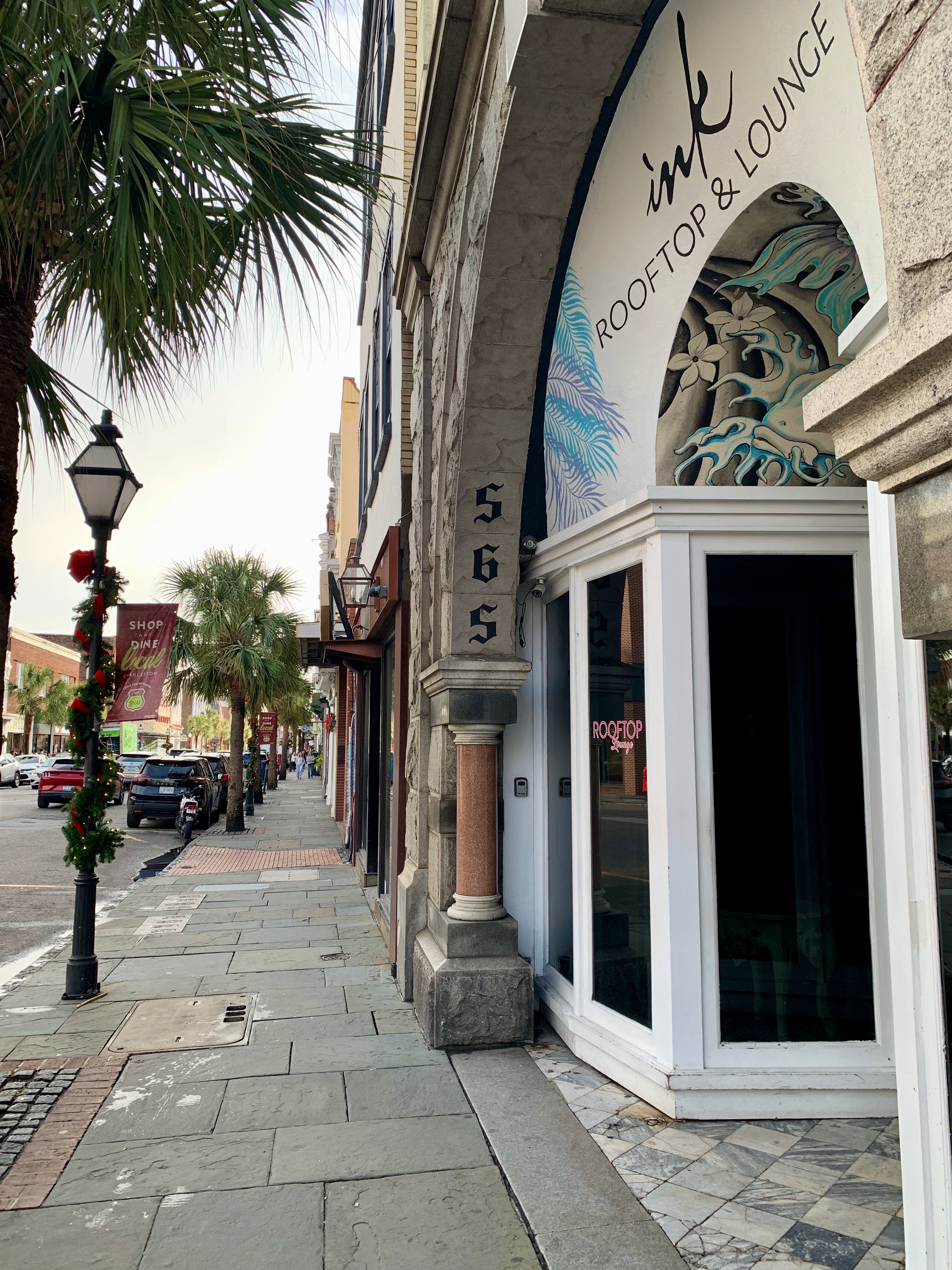
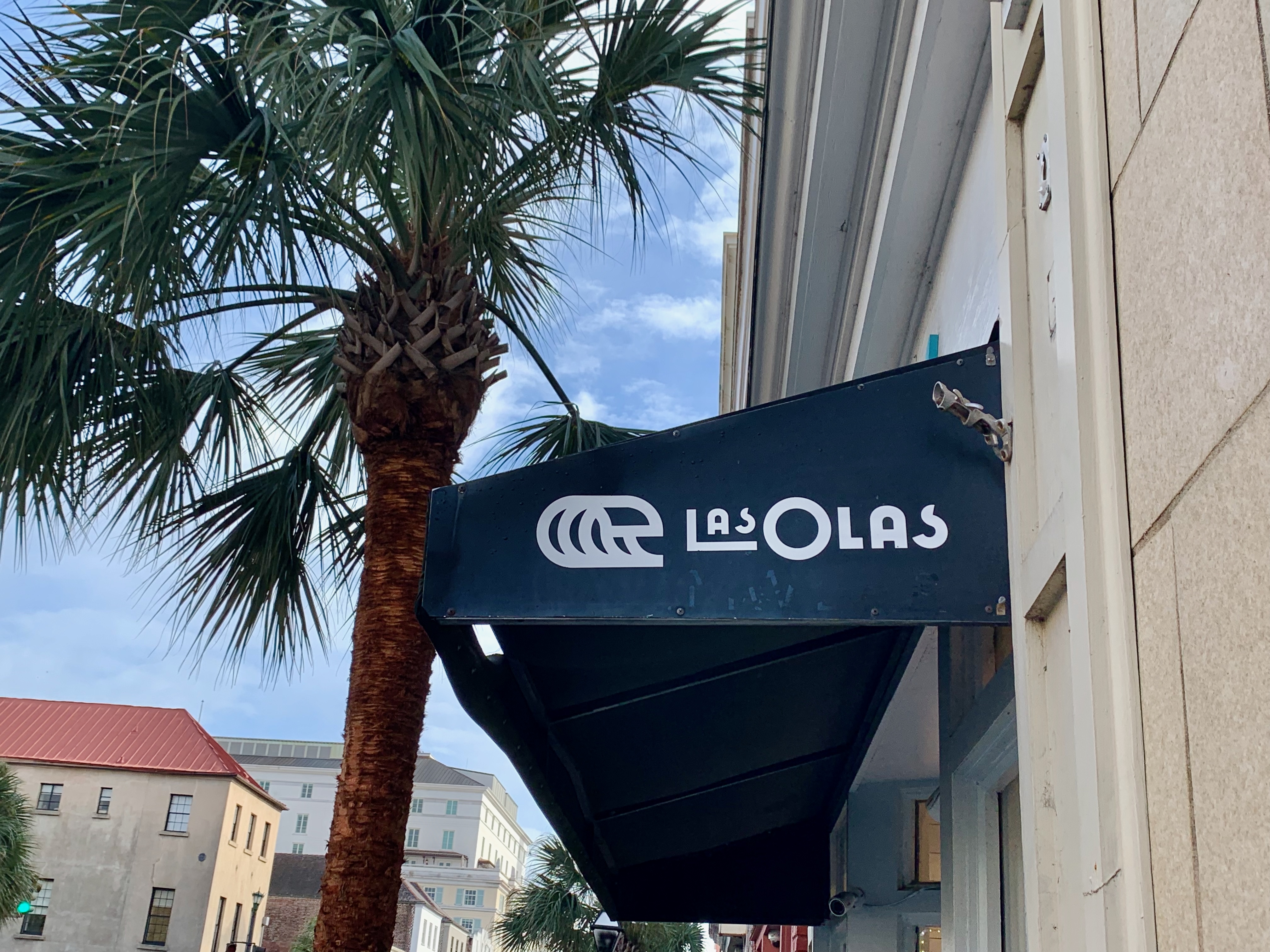
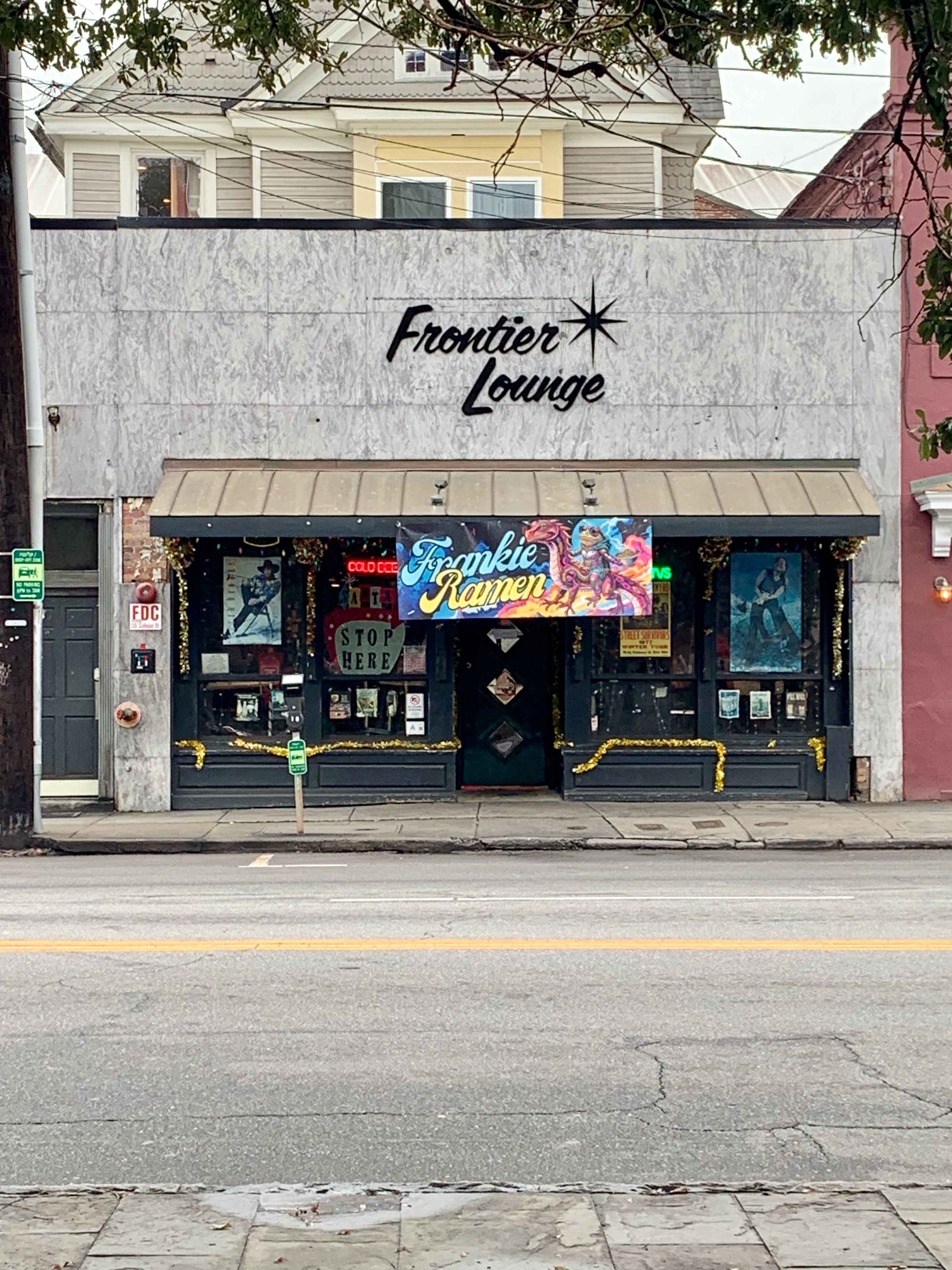
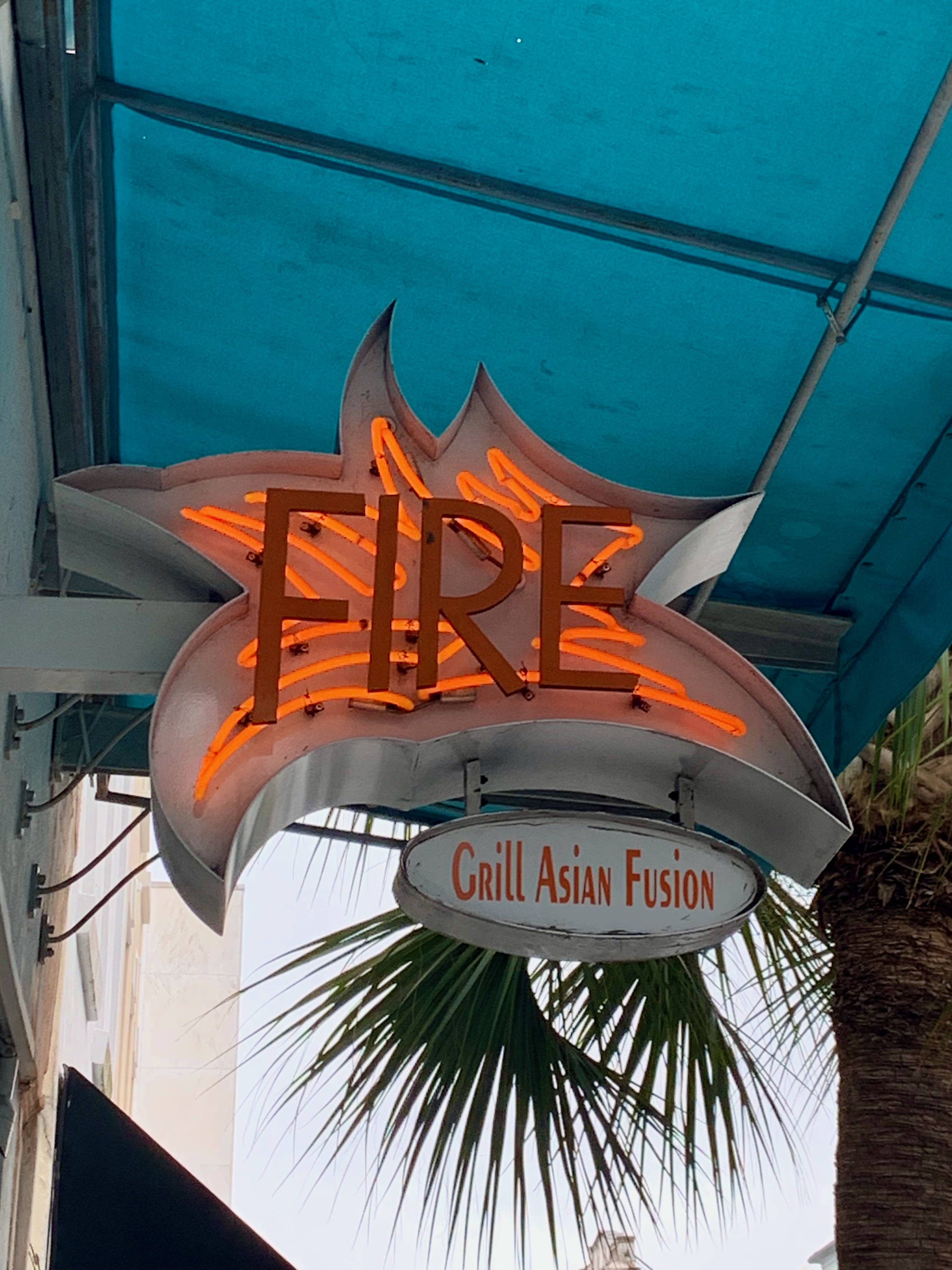
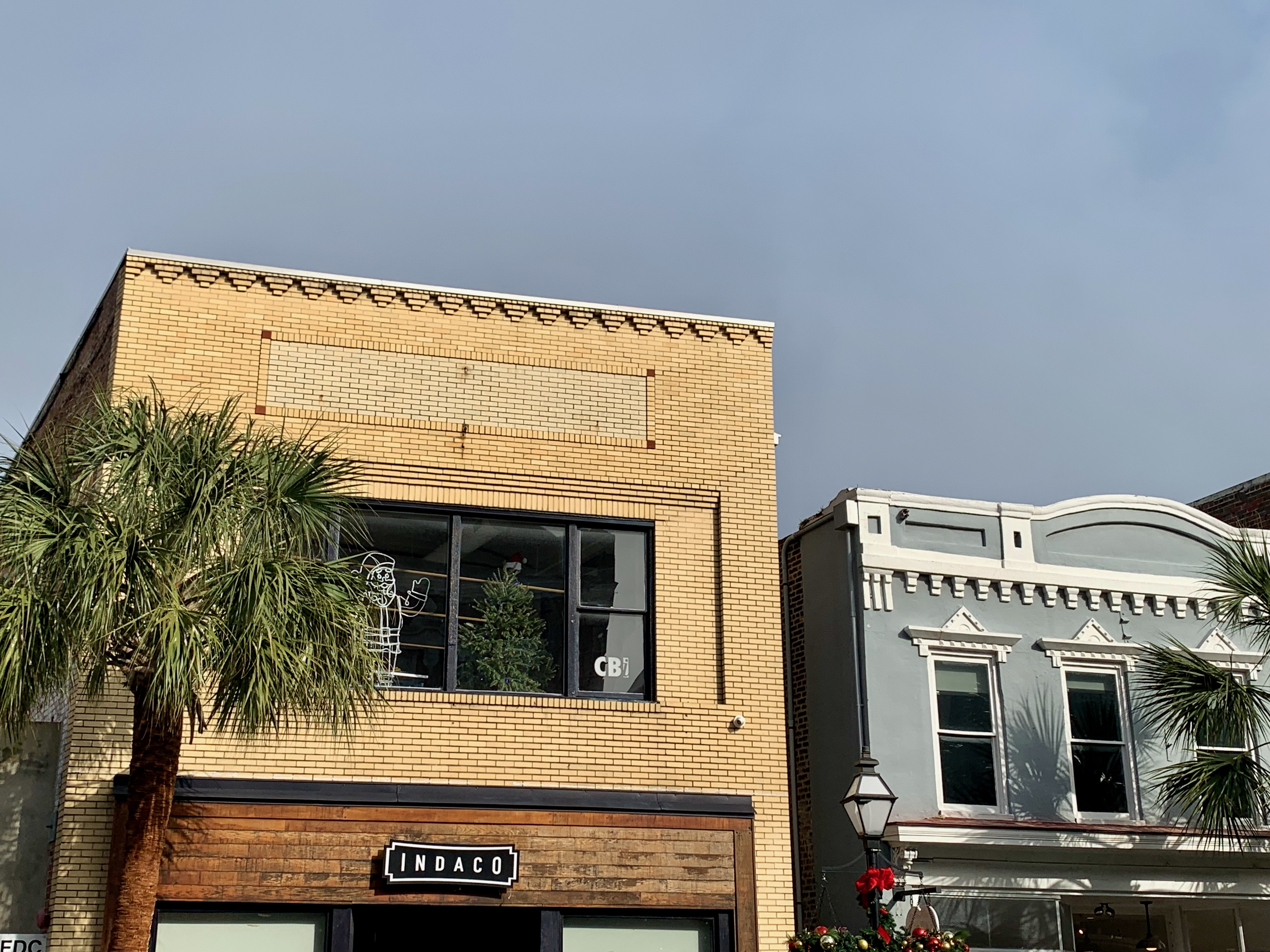
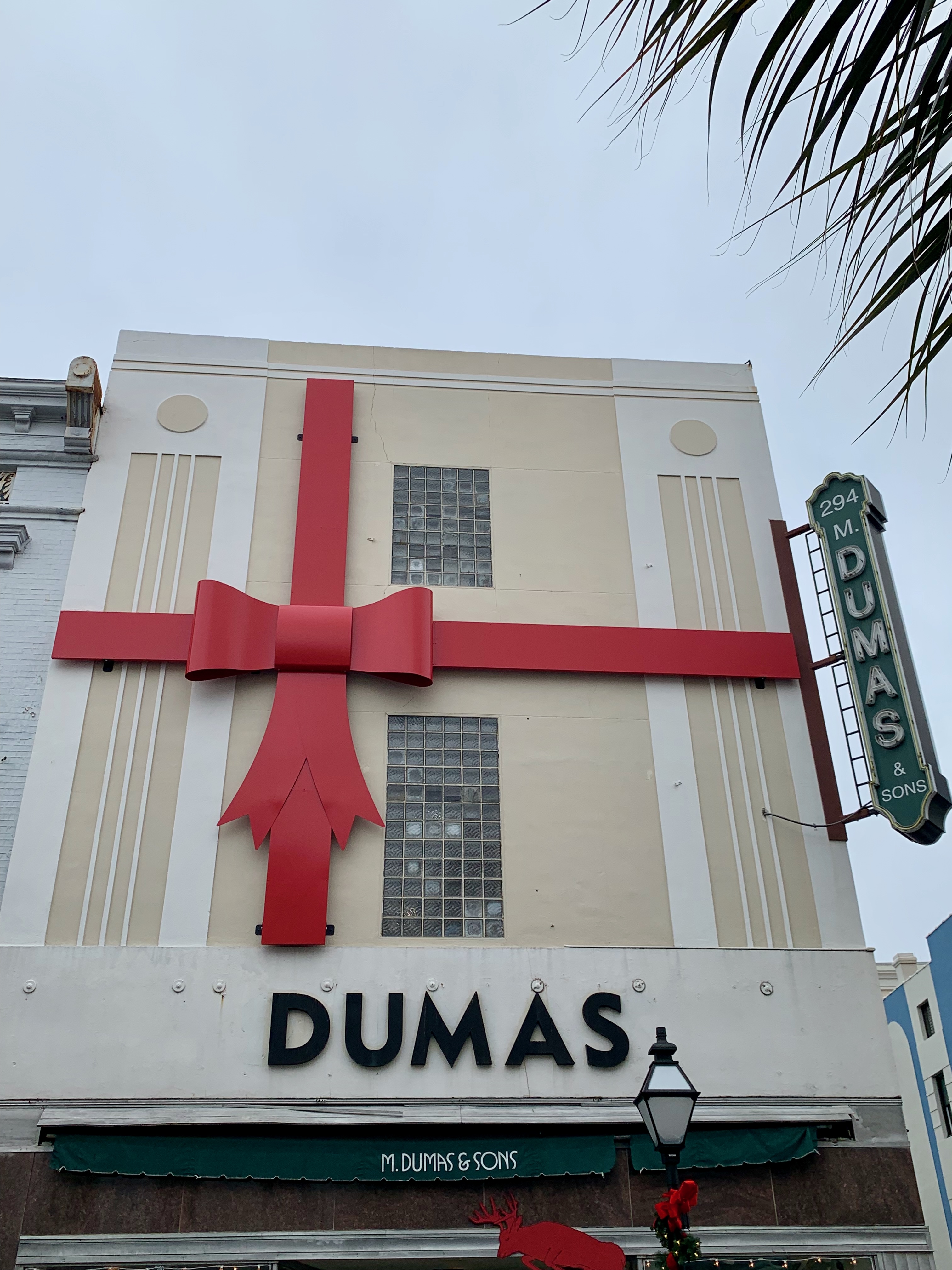
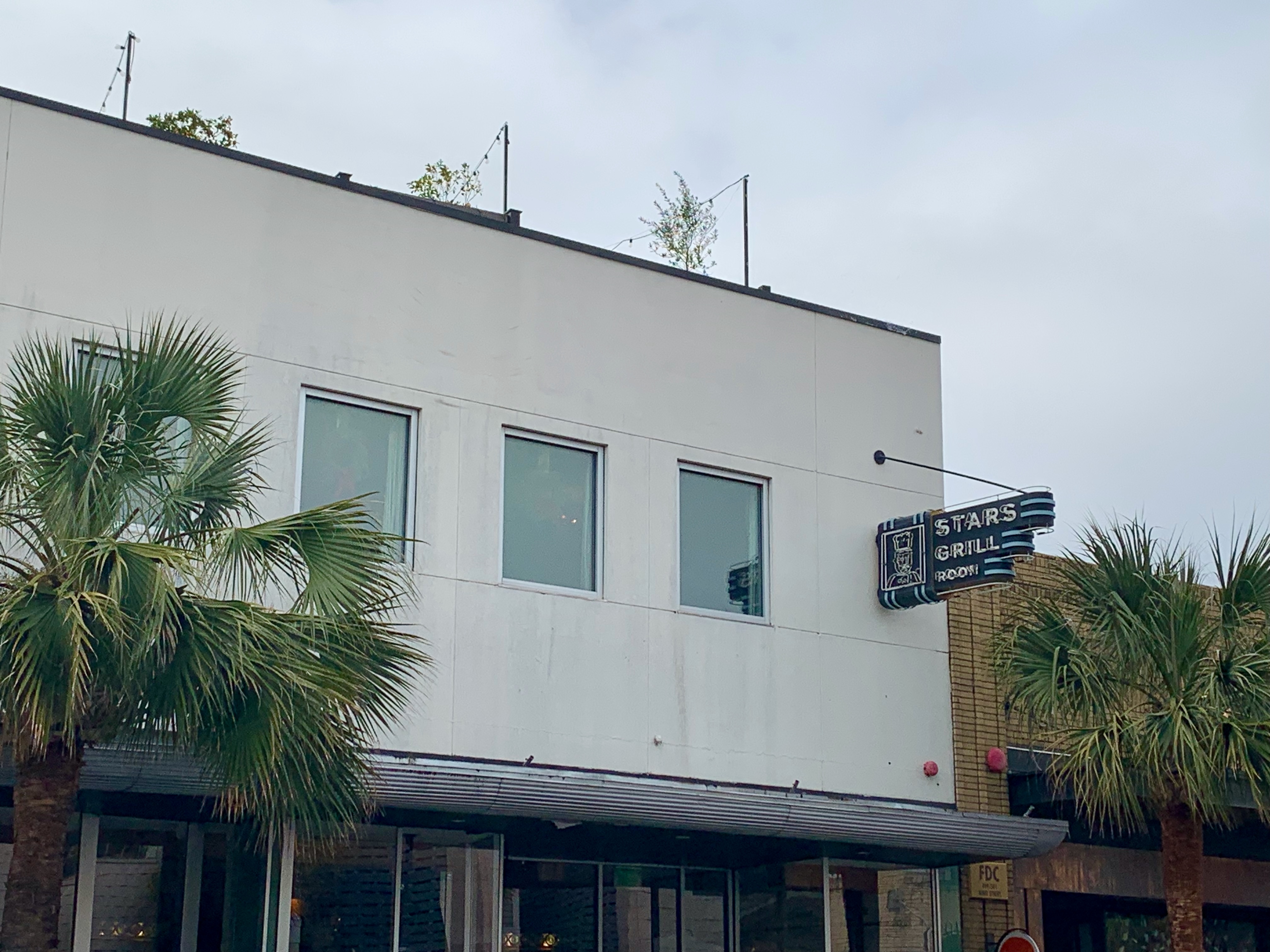
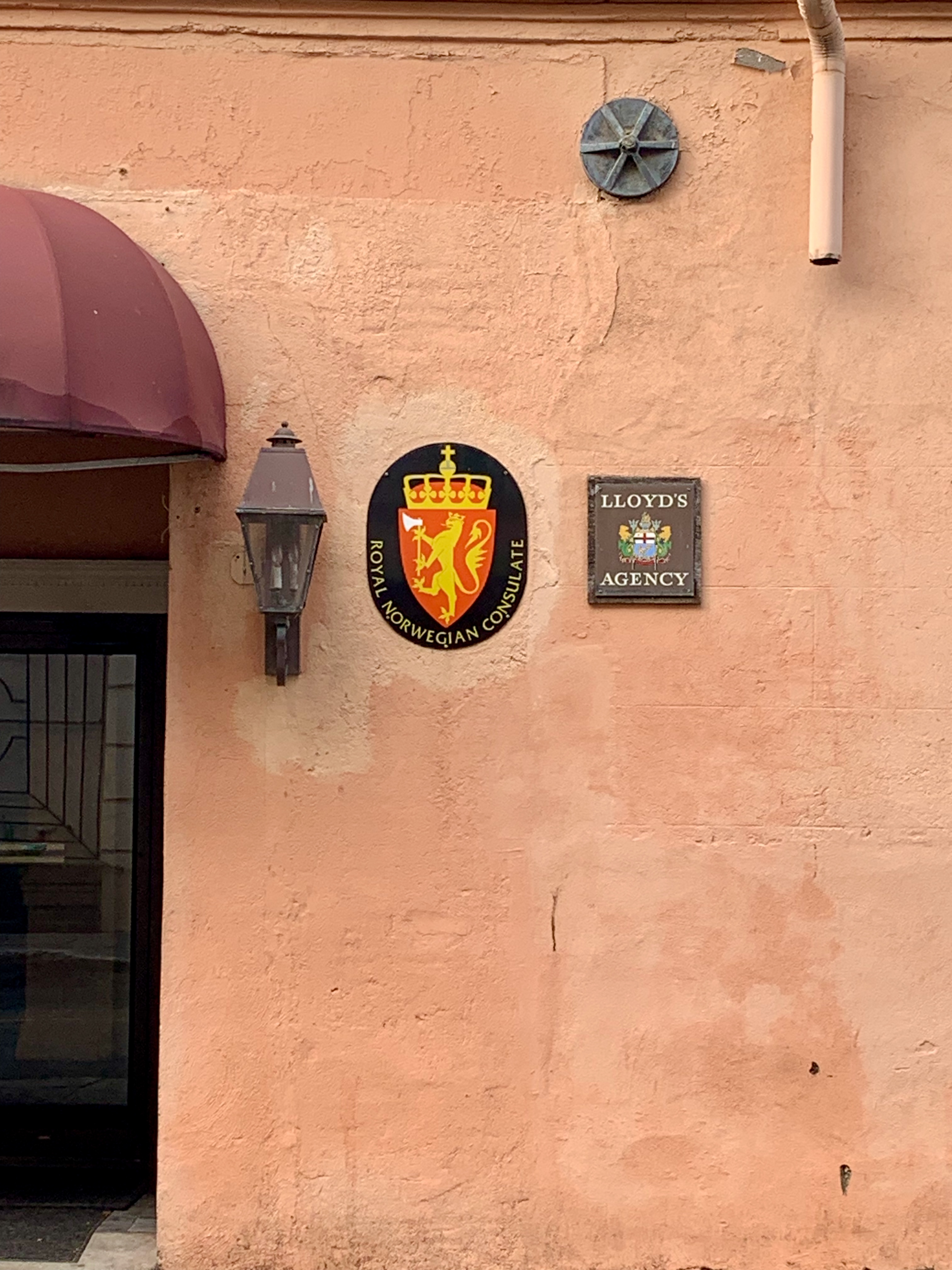
Visiting family for the holidays, I spent an hour walking up and down King Street in Charleston; I could’ve easily spent four more hours taking photos of everything, especially the signage.
Much of this signage was quirky and unique.
Some of it was lovingly faux-retro.
Occasionally, it was genuinely old.
Other times, it was difficult to tell exactly how old it was.
Sometimes, it was tiny with other items discernible in the frame if you looked closely enough.
Given the time of year, occasionally it was adorned by seasonal touches.
This being South Carolina, it was often flanked by palms.
And, moving a little further away from King Street, it even served a purpose one just doesn’t see in, say, Des Moines.
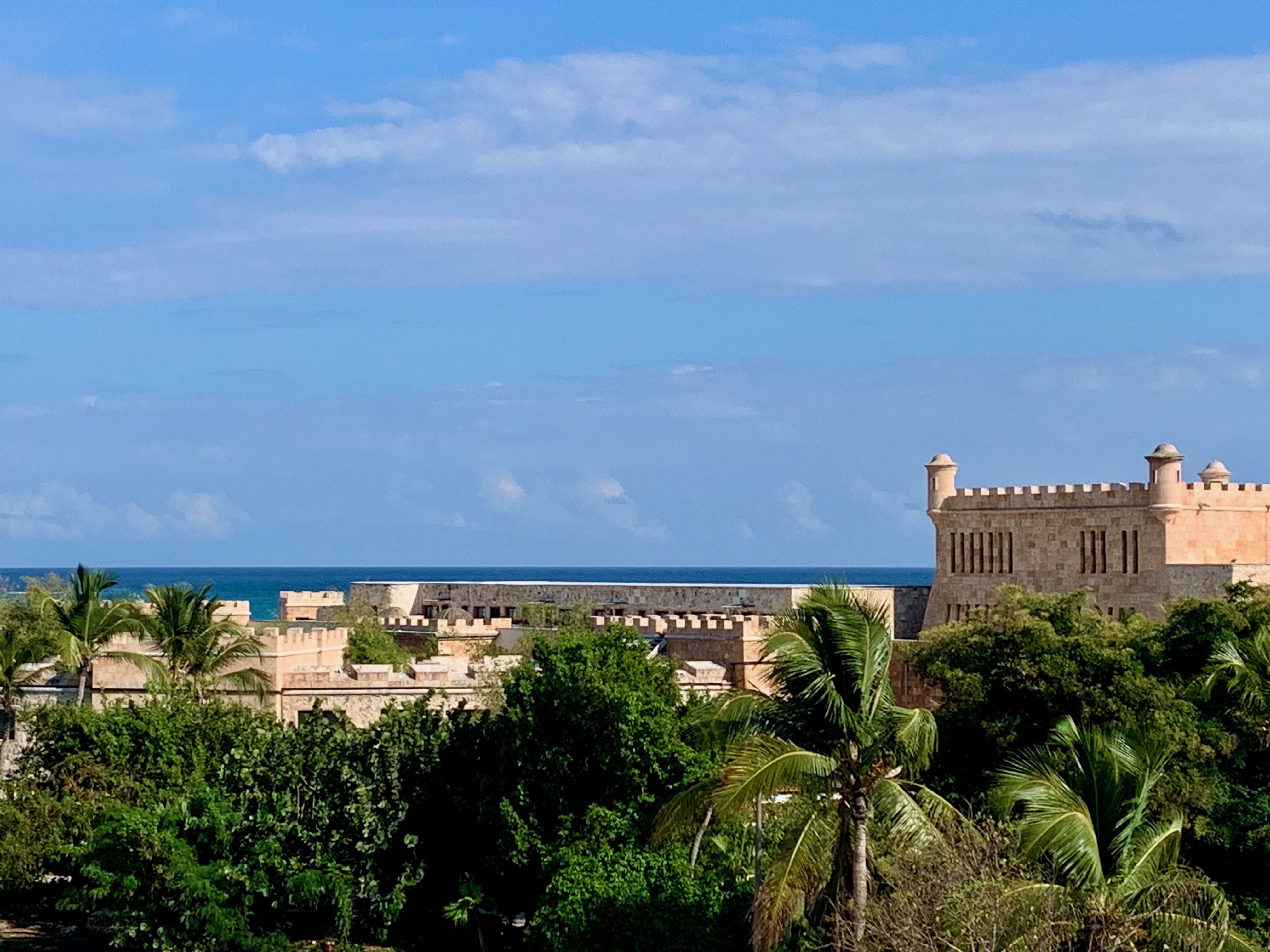
Kicked off the year with a real vacation to Punta Cana, Dominican Republic. From the balcony of our resort, I spotted this odd, castle-like structure next door.
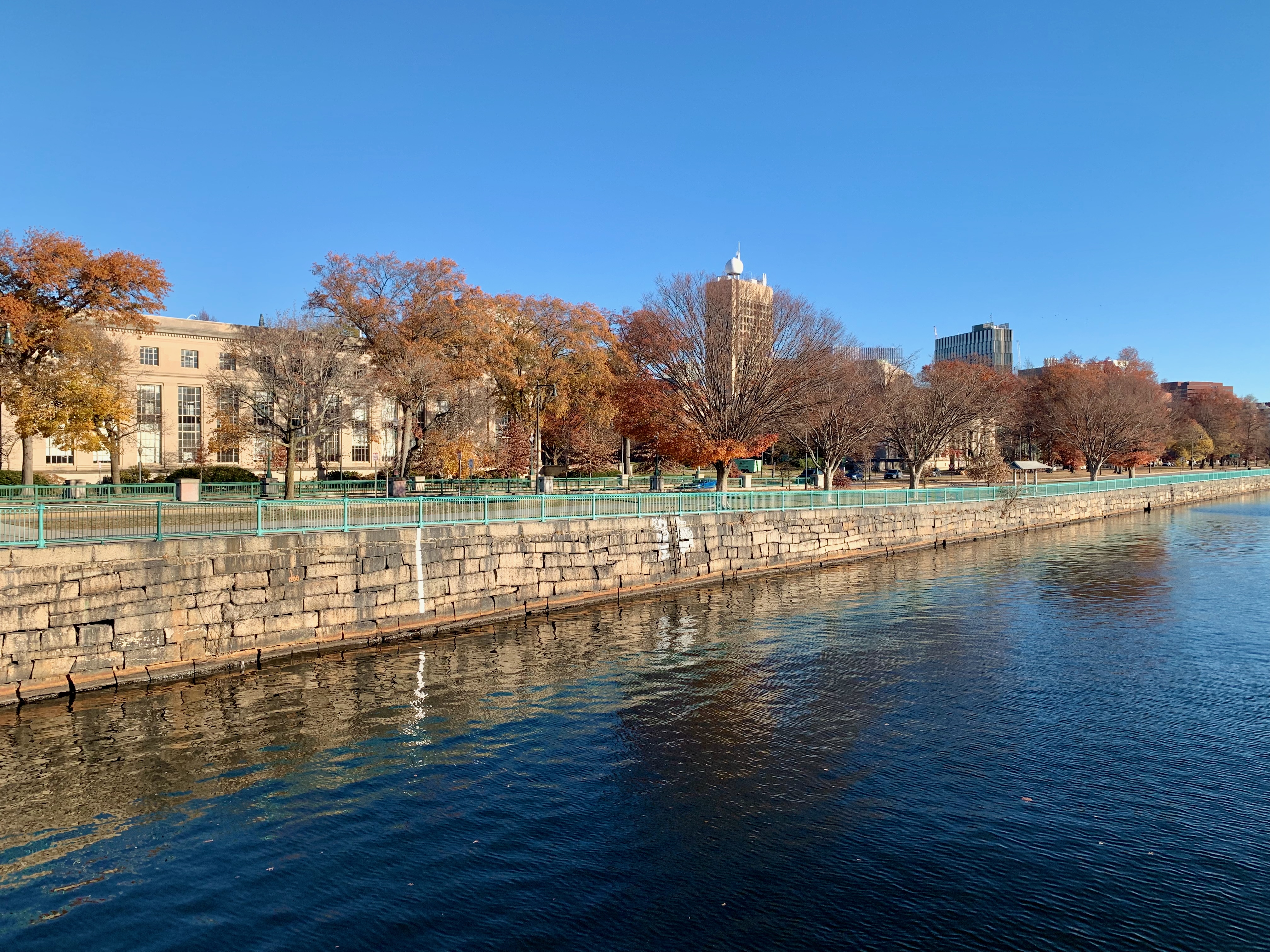
Late Winter, late in the day: A walk along Fort Point Channel in Boston, the imposing Post Office a monolith against a waning, if still piercing sun.
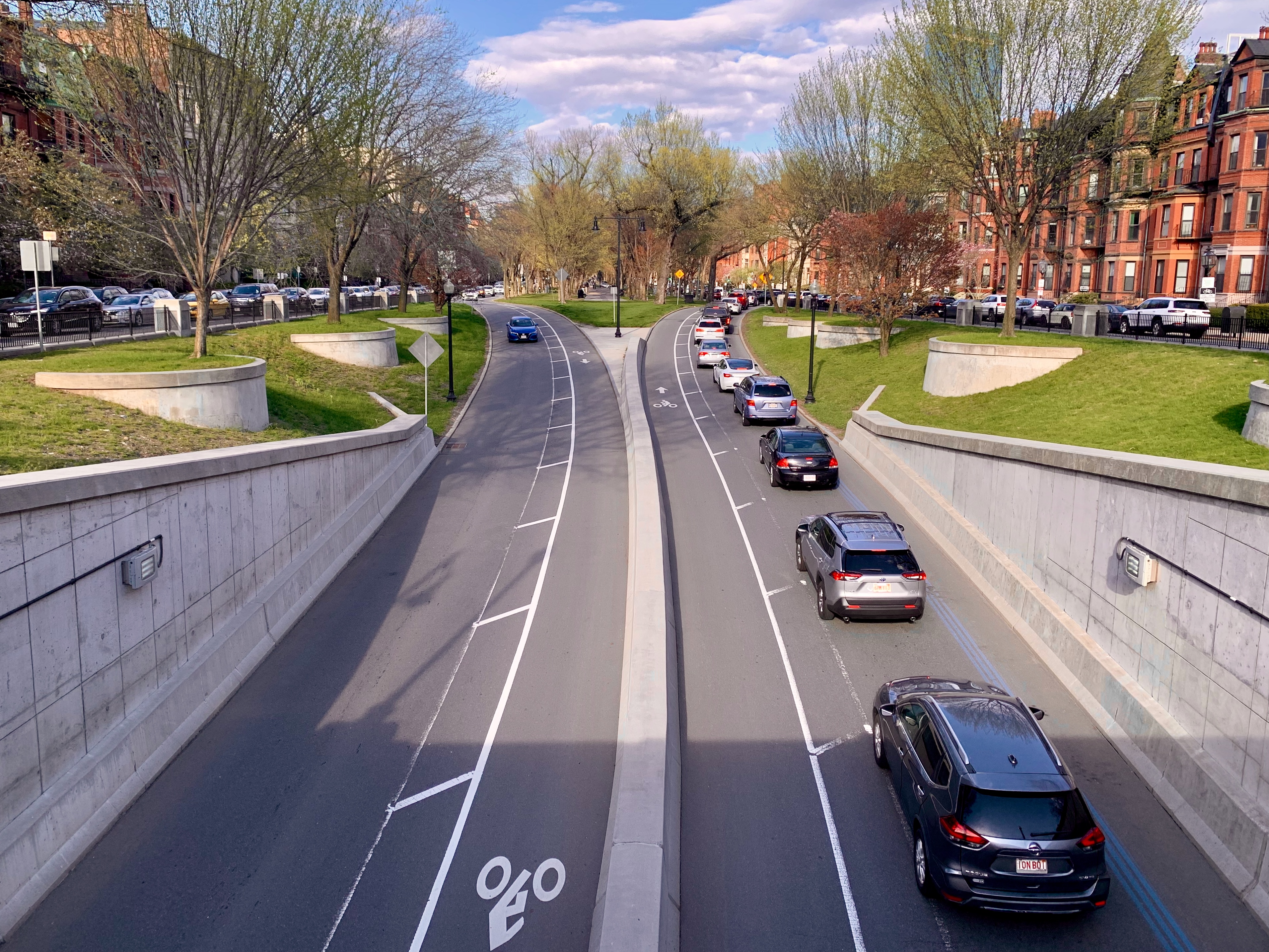
Spring: A familiar sight to anyone who has ever walked across the Commonwealth Ave. overpass on Mass Ave. (we love our “Aves” in Boston, no “Avenues” for us!)
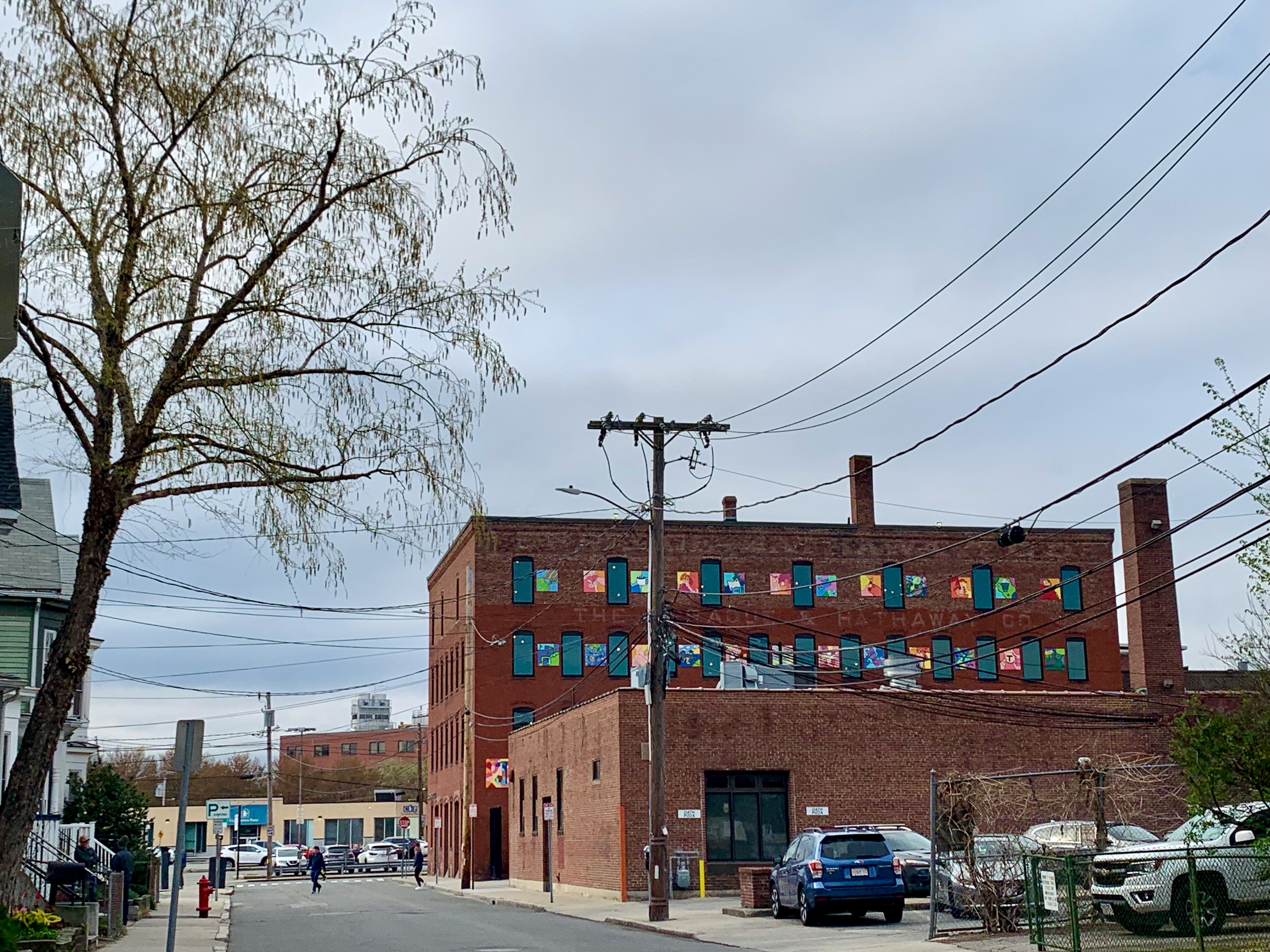
A stroll near Davis Square in Somerville before attending Independent Film Festival Boston; somewhat gentrified since I lived walking distance from here a quarter-century ago but still quirky in a few corners.
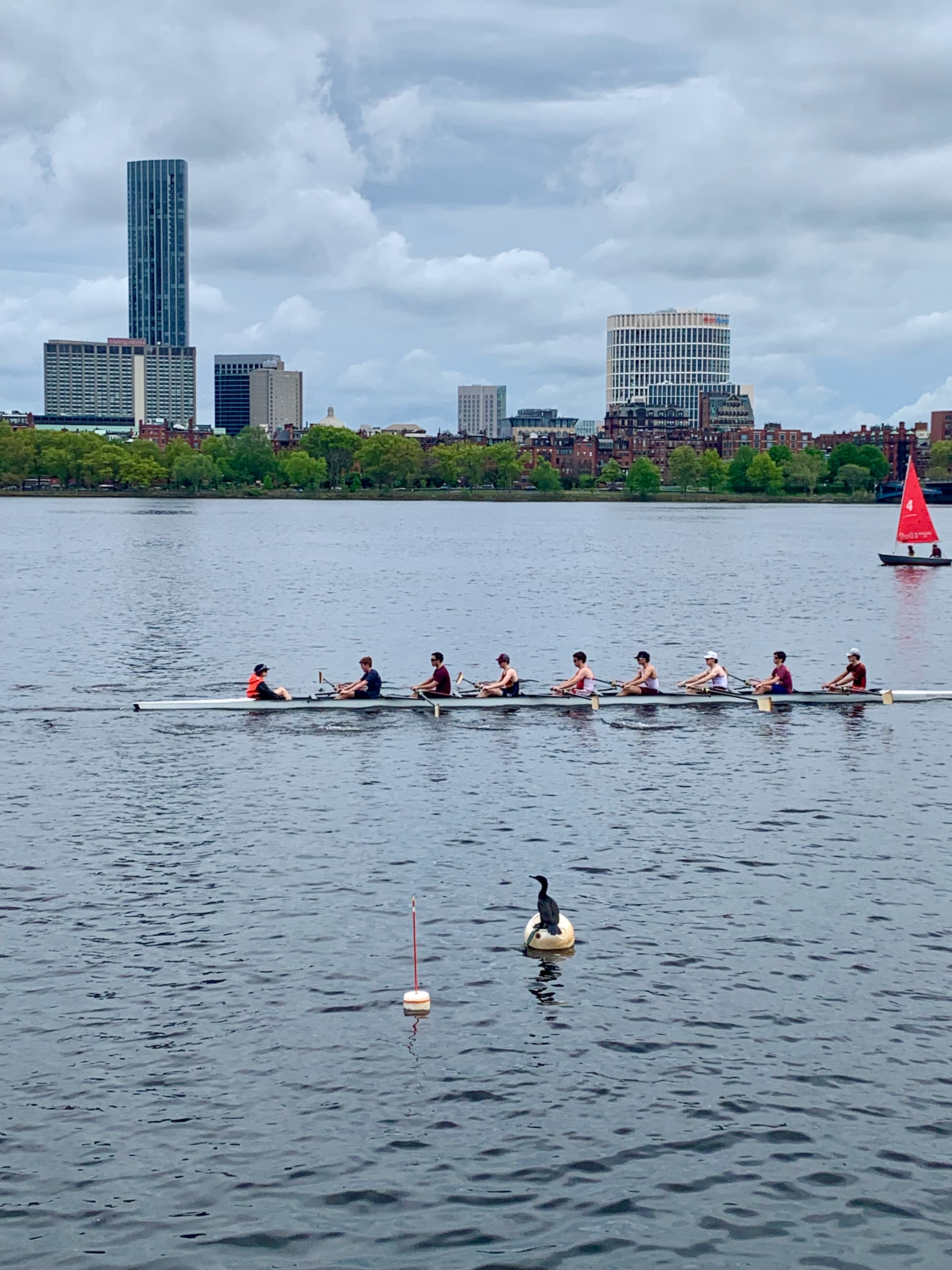
I work right near the Charles River; one afternoon, I caught a glimpse of one of many rowing crews that train there in warmer months, along with a waterfowl companion (and a view of the new Parcel 12 over-the-Mass-Pike-high-rise development on the right.)
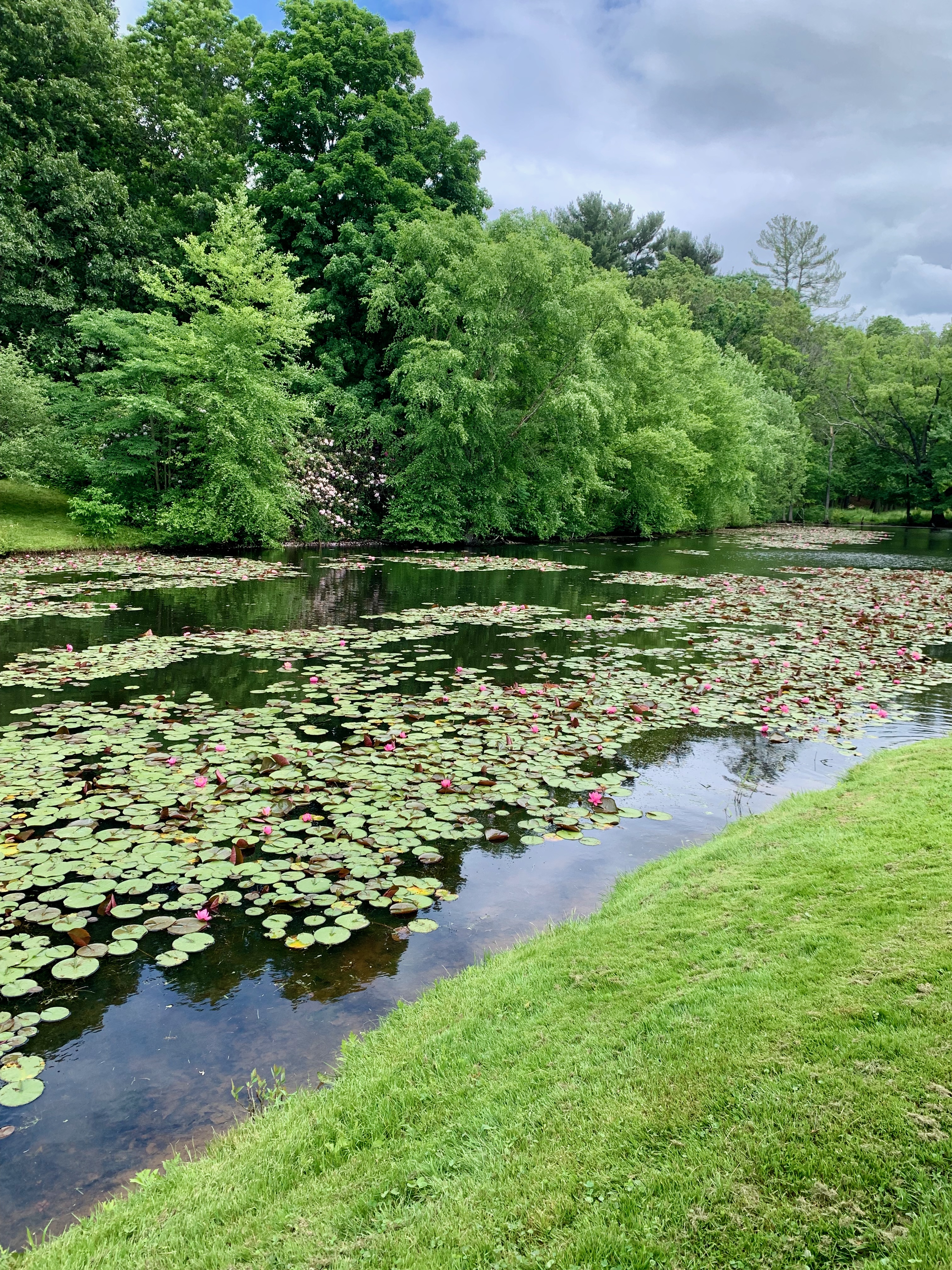
Stopped at Allandale Farm in Jamaica Plain near the Summer solstice to pick up some plants and was not expecting to see this lilypad-heavy pond in the back.
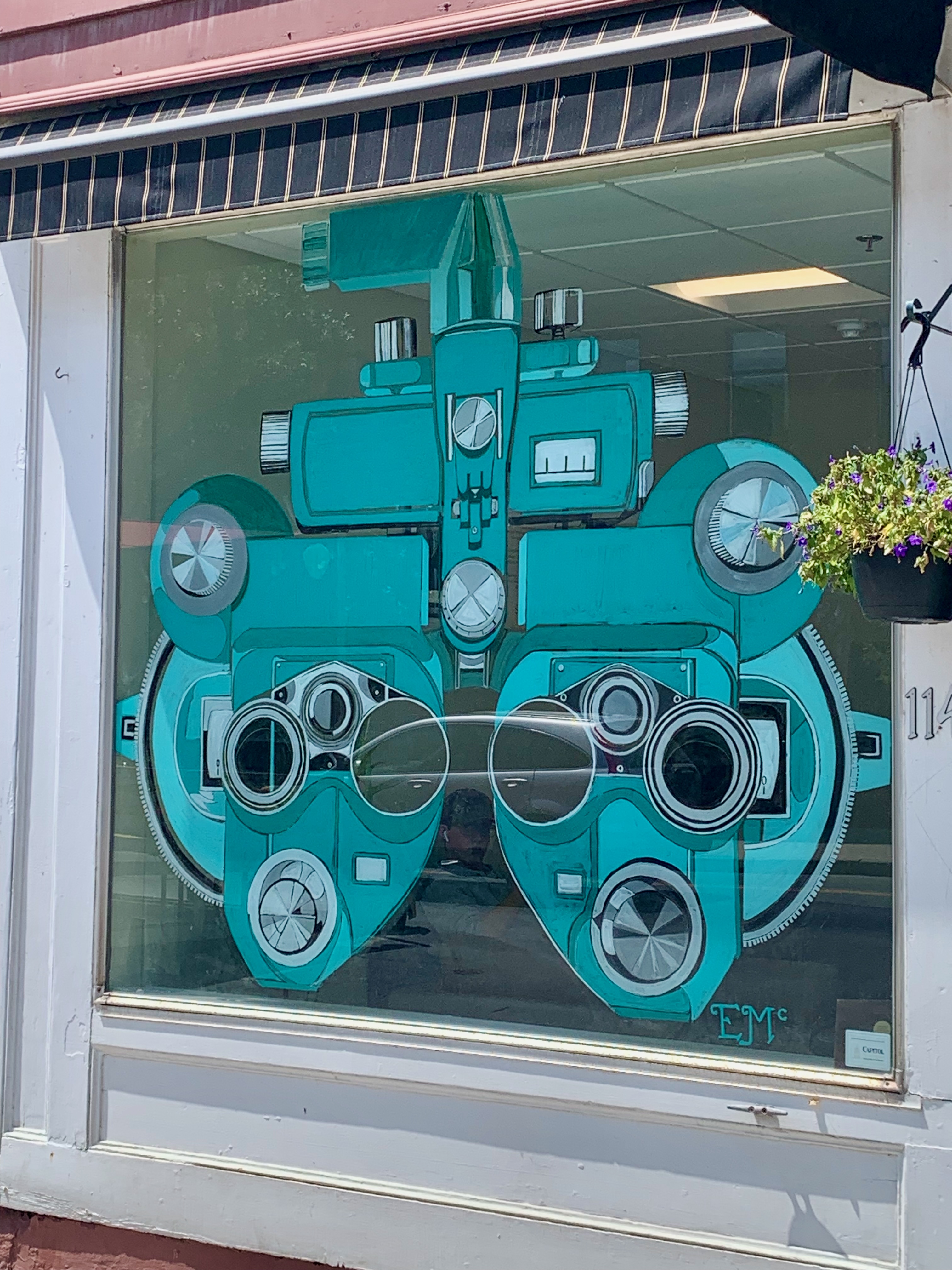
An outtake from my Northern Vermont photo essay, this rather imposing Optometrist graphic was one of many unique signs adding color to downtown Montpelier (and yes, I just noticed the guy sitting inside looking towards my camera.)
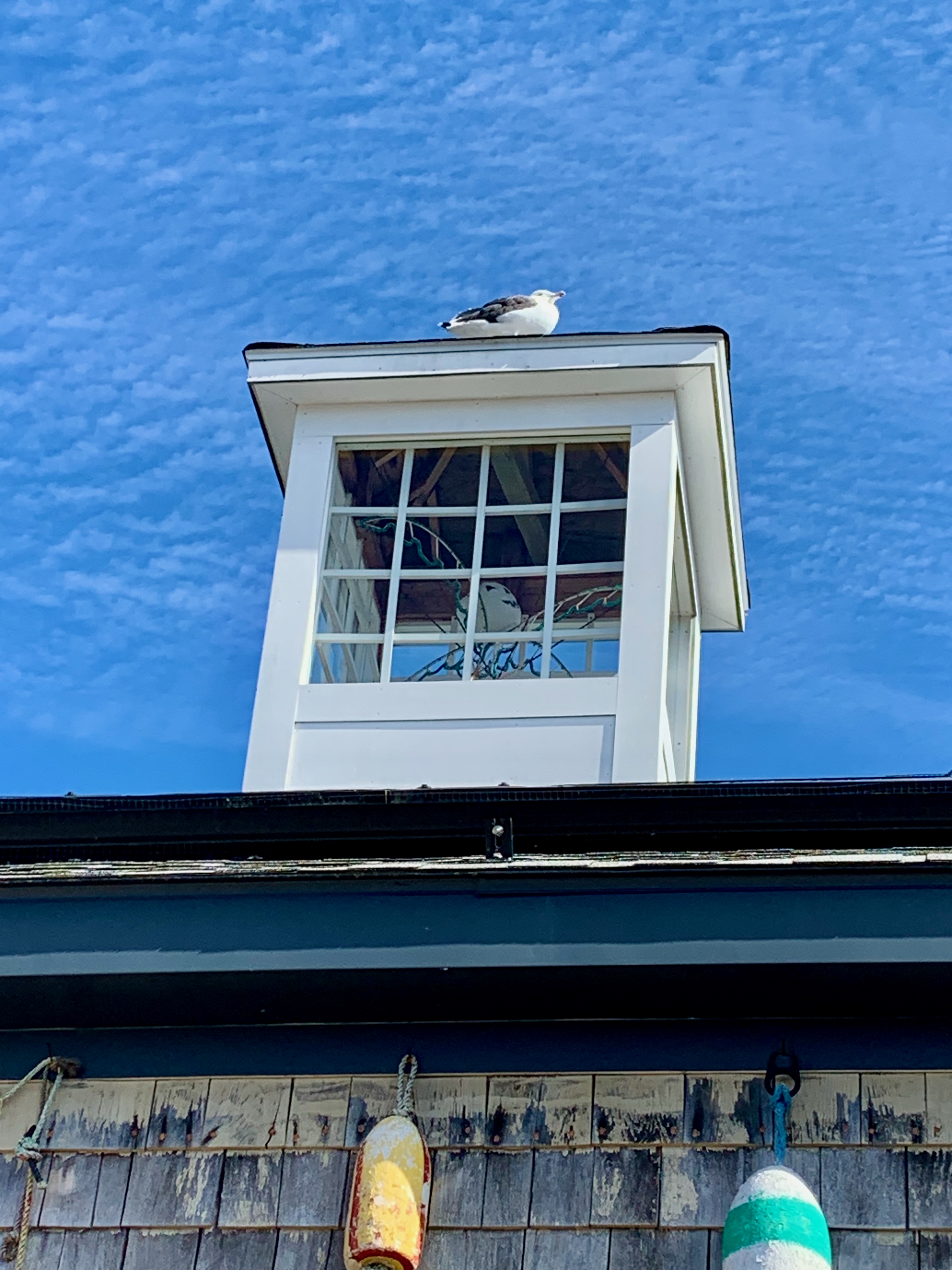
In Portland, Maine for an early Autumn visit: one couldn’t ask for a better Old Port tableaux, seabird and all.
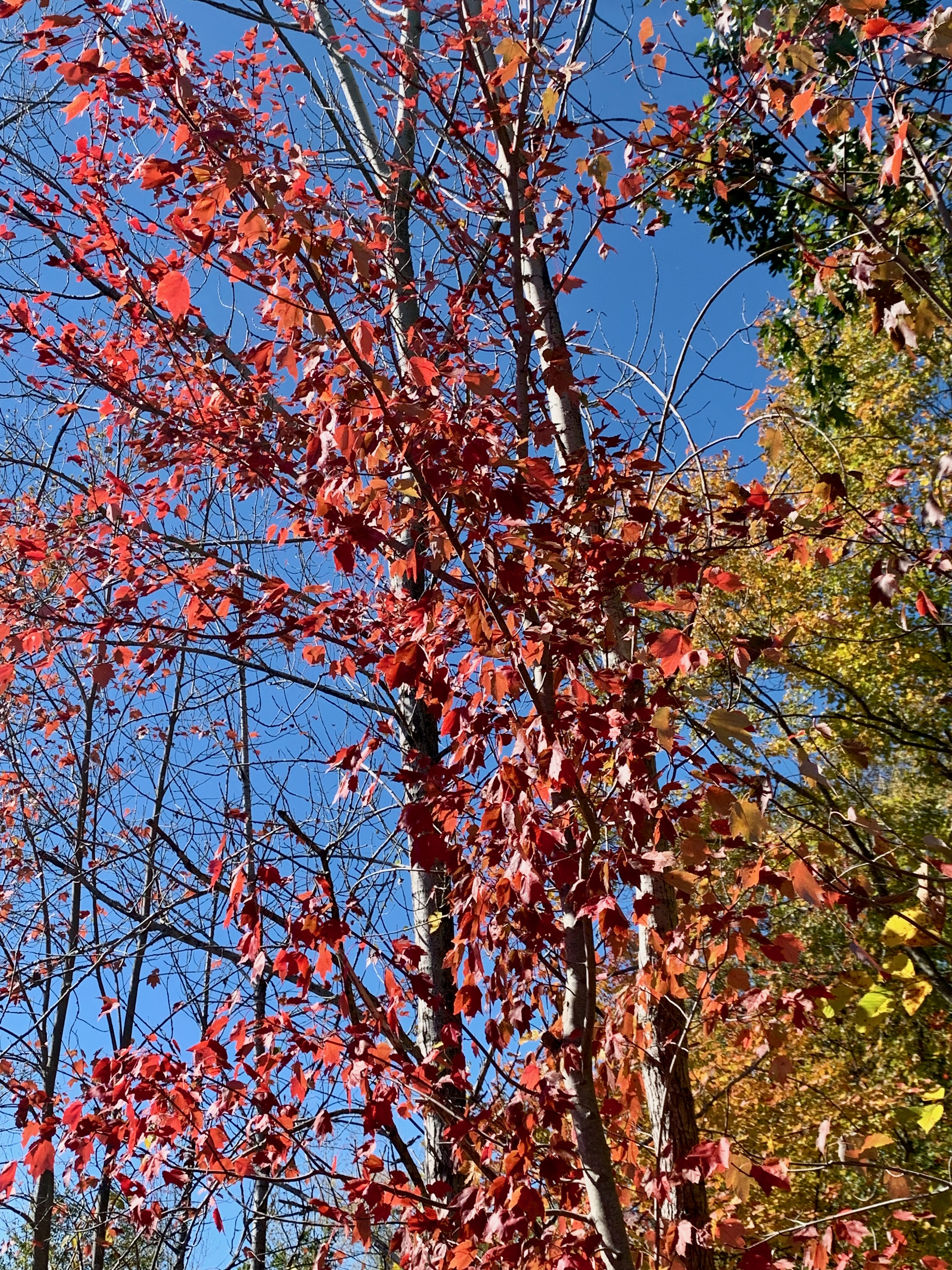
Initially, lack of rain made for earlier-than-usual, somewhat diminished foliage but by late October, it seemed more vibrant than any other Autumn in recent memory.
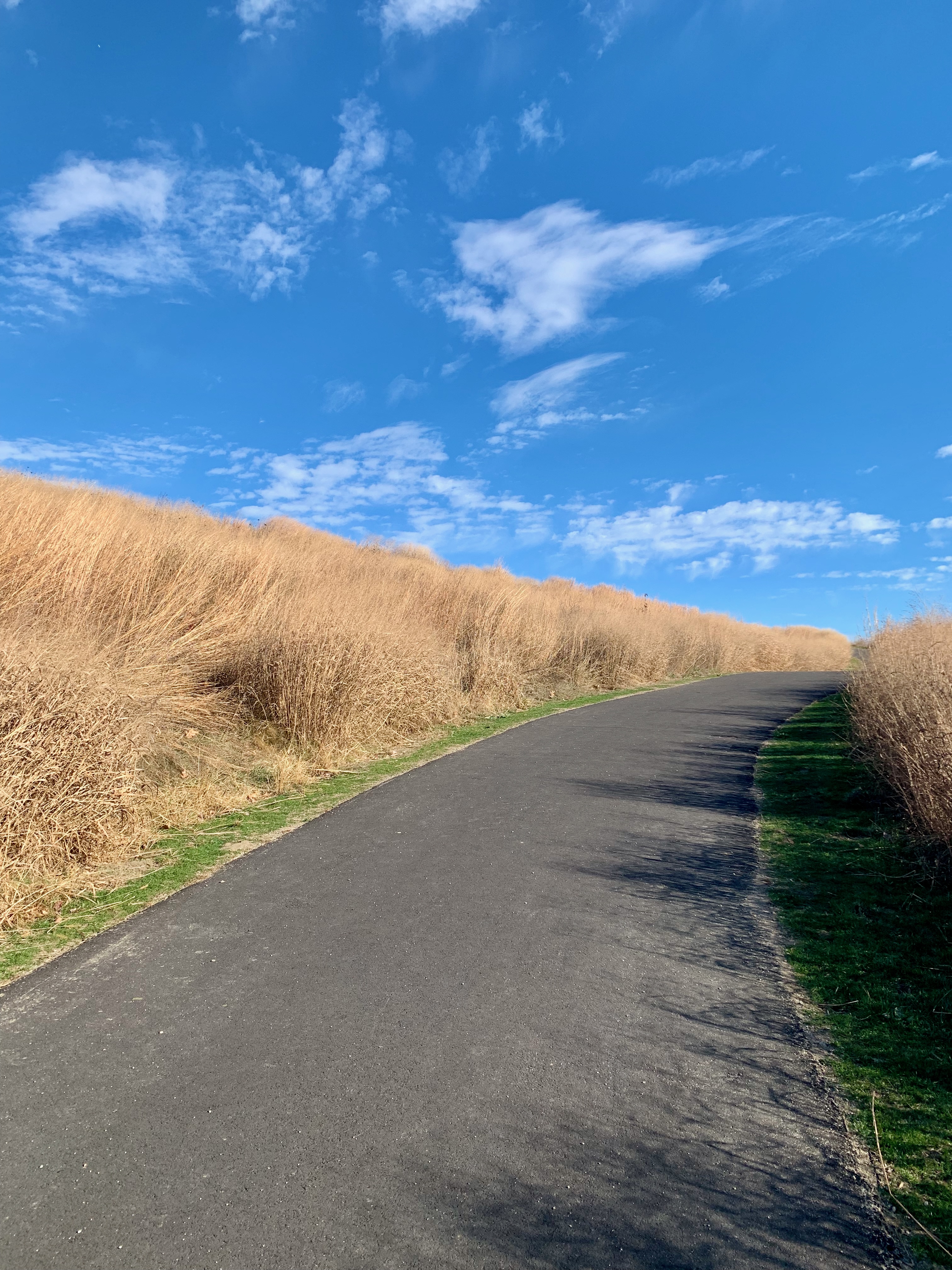
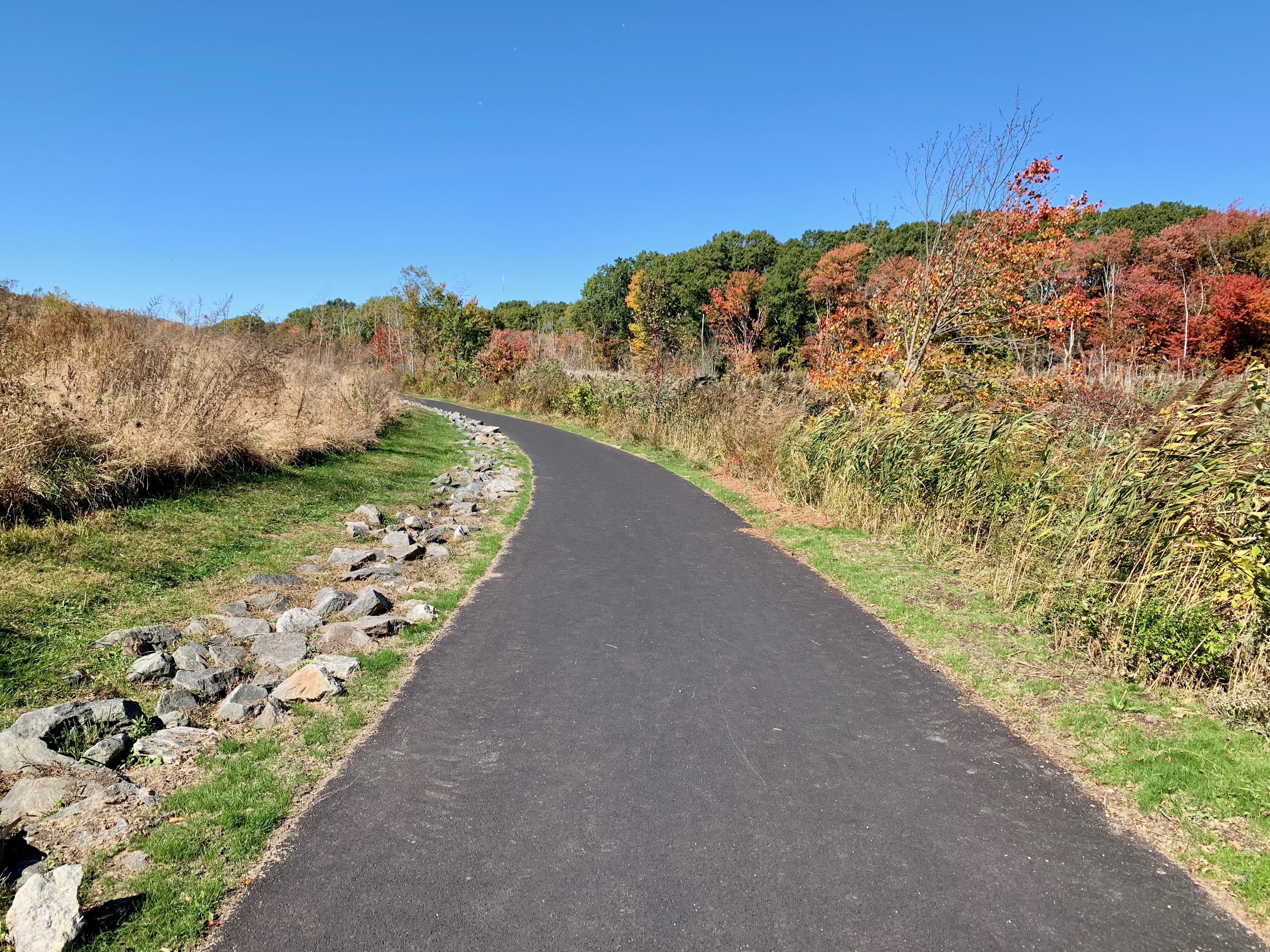
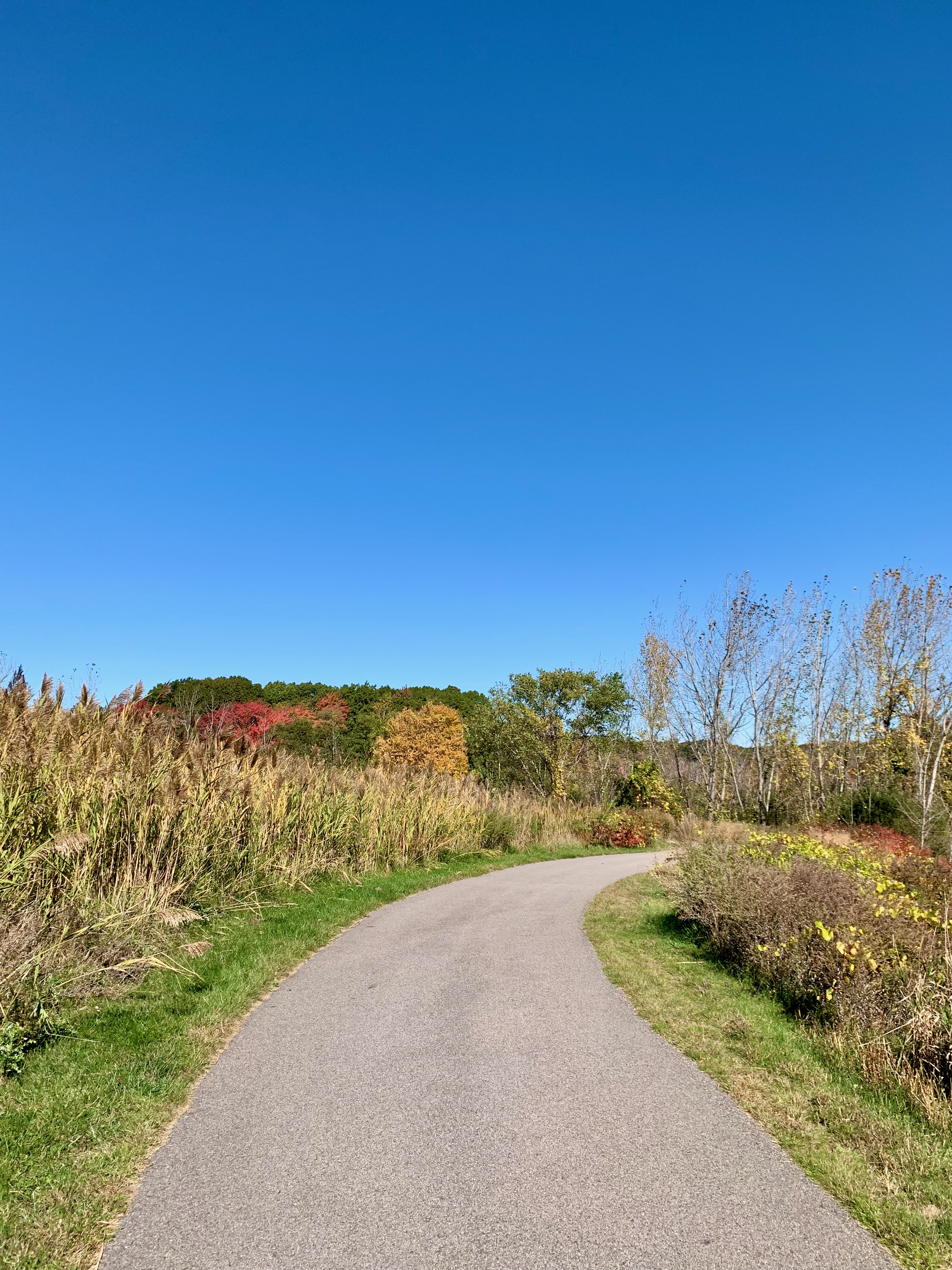
Millennium Park, mid-November: taking solace in nature as I tend to do, this path providing encouragement to keep moving forward.
Back to the Charles, taken one morning days after the previous photo near the corner of Memorial Drive and Massachusetts Avenue from the Harvard Bridge on my way into work.
Closed out the year visiting family in South Carolina. We took a walk on Christmas Day near Fort Moultrie on Sullivan’s Island; here’s another path leading somewhere potentially treacherous (no wheelchair access, indeed) but also possibly sublime.
1. I had to go beyond the local multiplexes or, in fact, any theater to stumble across a movie that, for the first time, expanded my idea of what one could be and also feel like it was somehow made just for me.
2. A glimpse into another world: a bridge between what I liked in my youth and what I would love as a grownup when I eventually worked at a cinema myself.
3. I left the movie feeling blown away by the story, thinking I had never seen anything like it before; now I understand that it was the depiction of a foreign culture that was new to me.
4. Itmade a seismic impact on my taste and notion of what the world had to offer to someone my age. I was getting closer to leaving those suburban multiplexes and my heretofore provincial worldview (mostly) behind.
5. This notion of a fine line separating life and art was on my mind as I prepared for a major change in my own life and the role art would play in it.
6. It was a film asking its viewers to consider whether the desire to be “safe” was to simply crave comfort or inevitably give oneself over to fear.
7. The thrill of discovery, of opening those new doors encouraging me to pursue Film Studies, vindicating that leap of faith I took in making film central in my life.
8. No matter who or what we are, we look for representation in popular art, to see people onscreen who are recognizable, even similar to us, finding someone we can relate to and that the rest of the culture can also see.
9. I still fondly recall how I got to see itfor the first time, but what’s important is not how I saw it, but that I saw it and can still watch it again and again, no matter where I can find it.
10. What if, like real life with all of its nuances and contradictions, a work of art subsisted somewhere in between fiction and nonfiction? What about those filmmakers whose work tends to fall into such margins?
11. How nearly overstimulated yet satiated I felt while piecing together images and sounds, the ways they informed and occasionally contrasted against each other and how tension accumulated throughout, reaching a breaking point only to find an unlikely release at the end.
12. A panorama to fearlessly explore connections between dreams, reality and the movies, not to mention all of the wicked, sublime and terrifying possibilities that surface as they overlap.
13. We revisit films for the pleasure they provide. Occasionally, we also have a sixth sense, an inclination that there’s more to glean from them than what we can discern after a single viewing.
14. For those receptive to such stillness, it can be like sitting on a bench or standing next to a wall, simply observing life play out before one’s own eyes no matter how little action occurs.
15. The question “Does anyone change?” lingers in their pauses between conservation; as much as either one would like to deny it, their body language often says otherwise.
16. That sense of camaraderie and support is really what the film is all about; it’s also what I craved and then experienced once I found my people at the movies—on both sides of the screen.
17. This past as remembered from adulthood is so colorful, vibrant and real one could almost step into the frame and feel what’s it like to be an active part of it.
18. “What is a city without its ghosts?” the director’s narration asks and it’s the film’s central thesis, lending weight to what simply could have been a kooky look at a quirky childhood.
19. Whenever I watch a film for the first time, I keep in mind how it makes me feel; the best films, however, also form a deeper connection, one that not only changes our literal view of the world but also challenges it.
20. It’s deeply affecting for it reminds us not what the story is or necessarily how it was relayed, but why it was told.
21. Whatever our aspirations may be, humans as individuals are subject to a continual evolution without end; as couples, an end only arrives when one participant or in some cases, both are no longer willing to evolve.
22. Have you ever left a movie in a daze, almost as if your entire world has shifted? Often, when the lead character has been through something over the course of the film, so have we.
23. Through all of this previously unfathomable change, films remained my refuge, my constant, my church. None of us had any idea when or even if theatres would ever reopen; streaming and physical media would have to suffice until they did.
24. Some of the best films tend to recognize this sense of a world in flux no matter how contained the narrative; the very best of them also offer new ways of viewing and comprehending it.
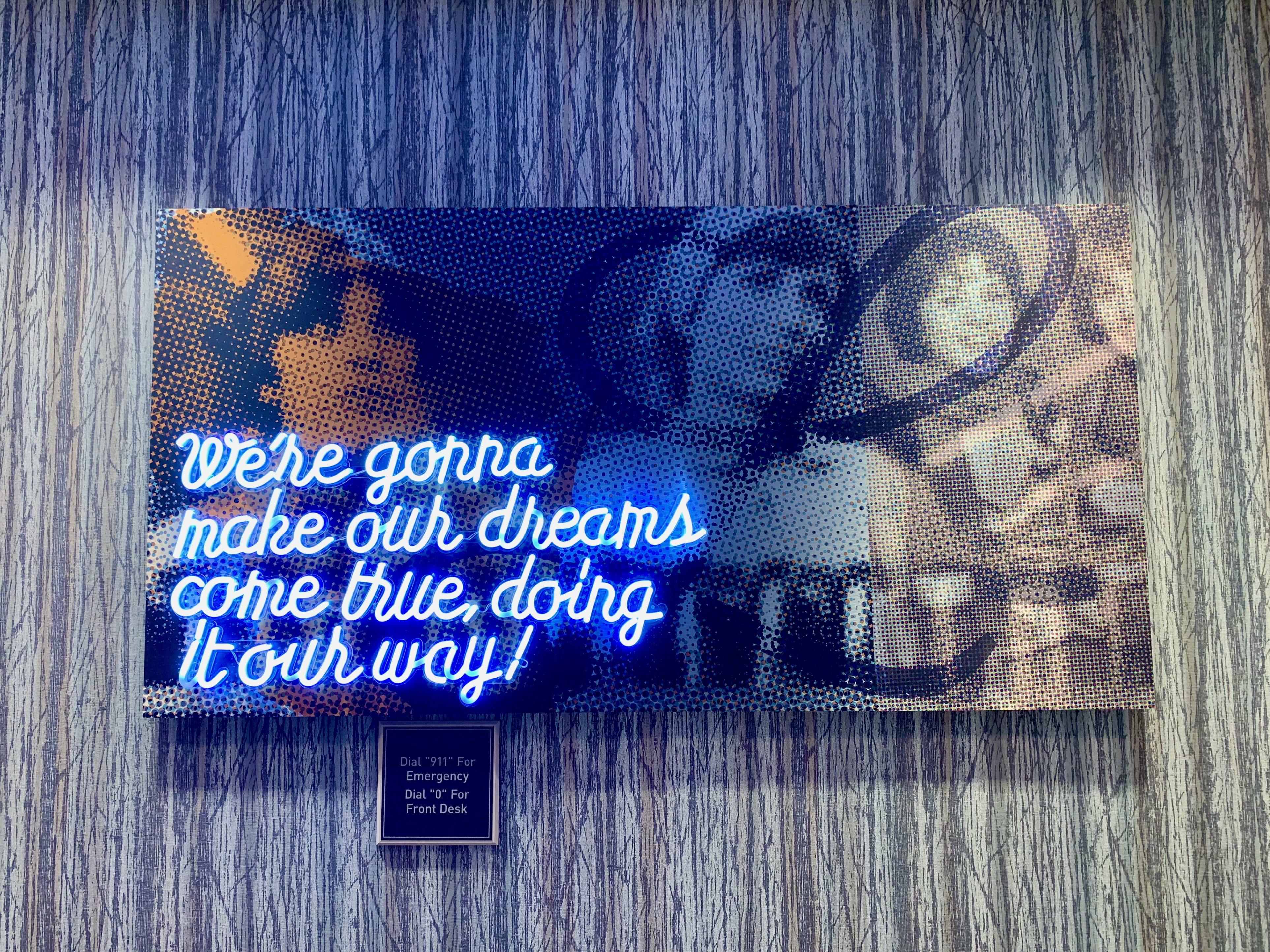
Earlier this month, I returned to Milwaukee (my hometown) for the first time in six years to meet up with my parents (who also now live in another part of the country) and a few old friends. Predictably, Laverne and Shirley (and The Bronze Fonz) remain the city’s most recognized cultural touchstones, as seen in this tableau across from the elevators in my hotel.
The weather was gorgeous for this time of year, so I skipped some of the more touristy indoor places I was considering visiting (including the soon-to-be-moved Milwaukee Public Museum). However, I couldn’t resist the Milwaukee Public Market.
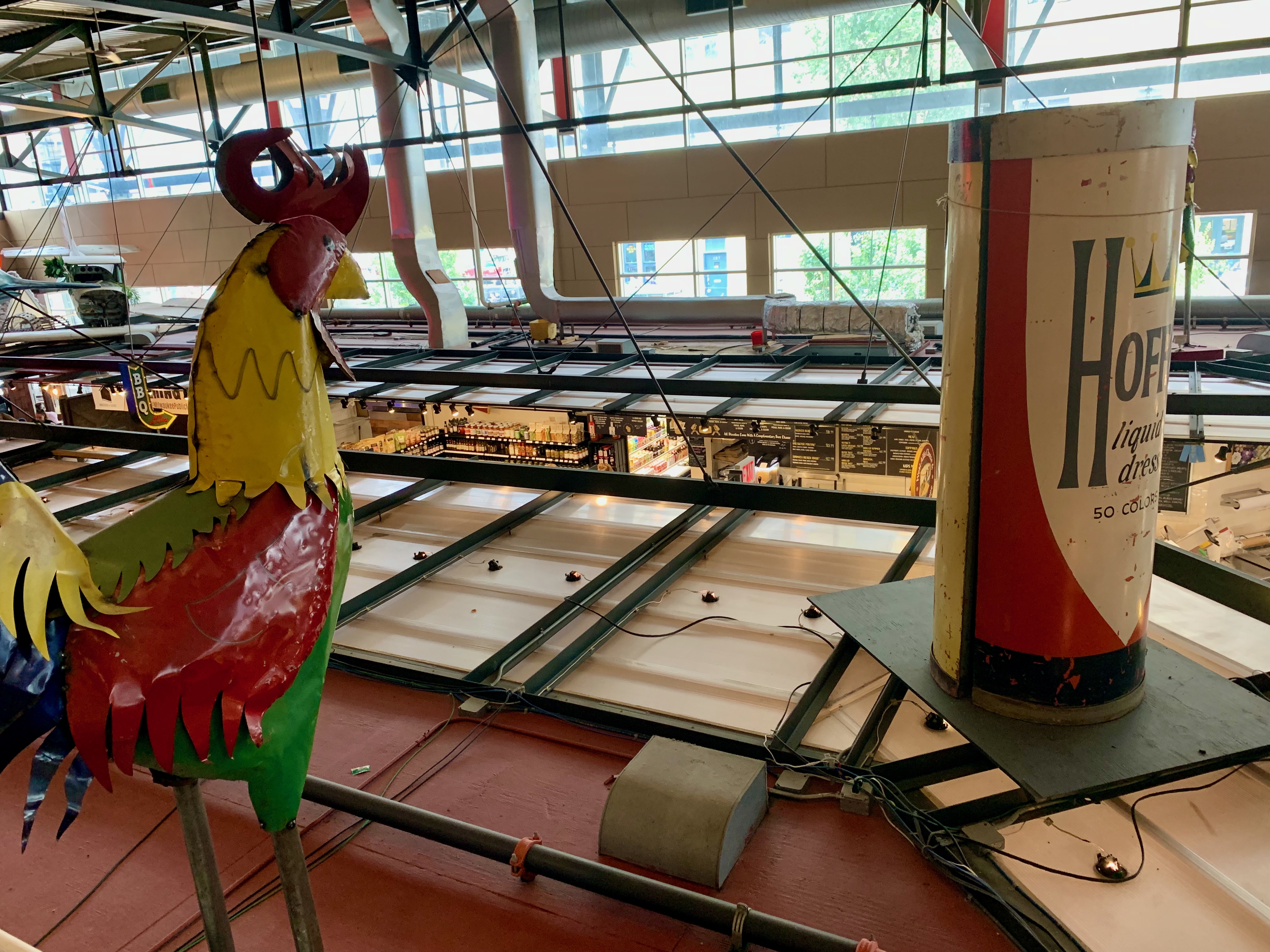
This Third Ward perennial actually didn’t open until about a decade after I left town. I’m afraid don’t know the story behind the giant rooster watching over all the stalls.
An anchor of the market, St. Paul Fish Company also has a location in suburban Mequon (which we had lunch at the following day, in search of decent seafood in the area.)
Seen on the staircase at the market. The big Allen-Bradley clock in Walker’s Point (often nicknamed “The Polish Moon”) is as much of a Milwaukee landmark as the Citgo sign is one for Boston.
After the market, we headed over to the East Side and Brady Street, picking up pasta and focaccia at Glorioso’s and Italian cookies from Sciortino’s. Decades on, Art Smart’s Dart Mart (and Juggling Emporium) endures (as does the city’s distinct, classic “harp” streetlights and those black bus shelters.)
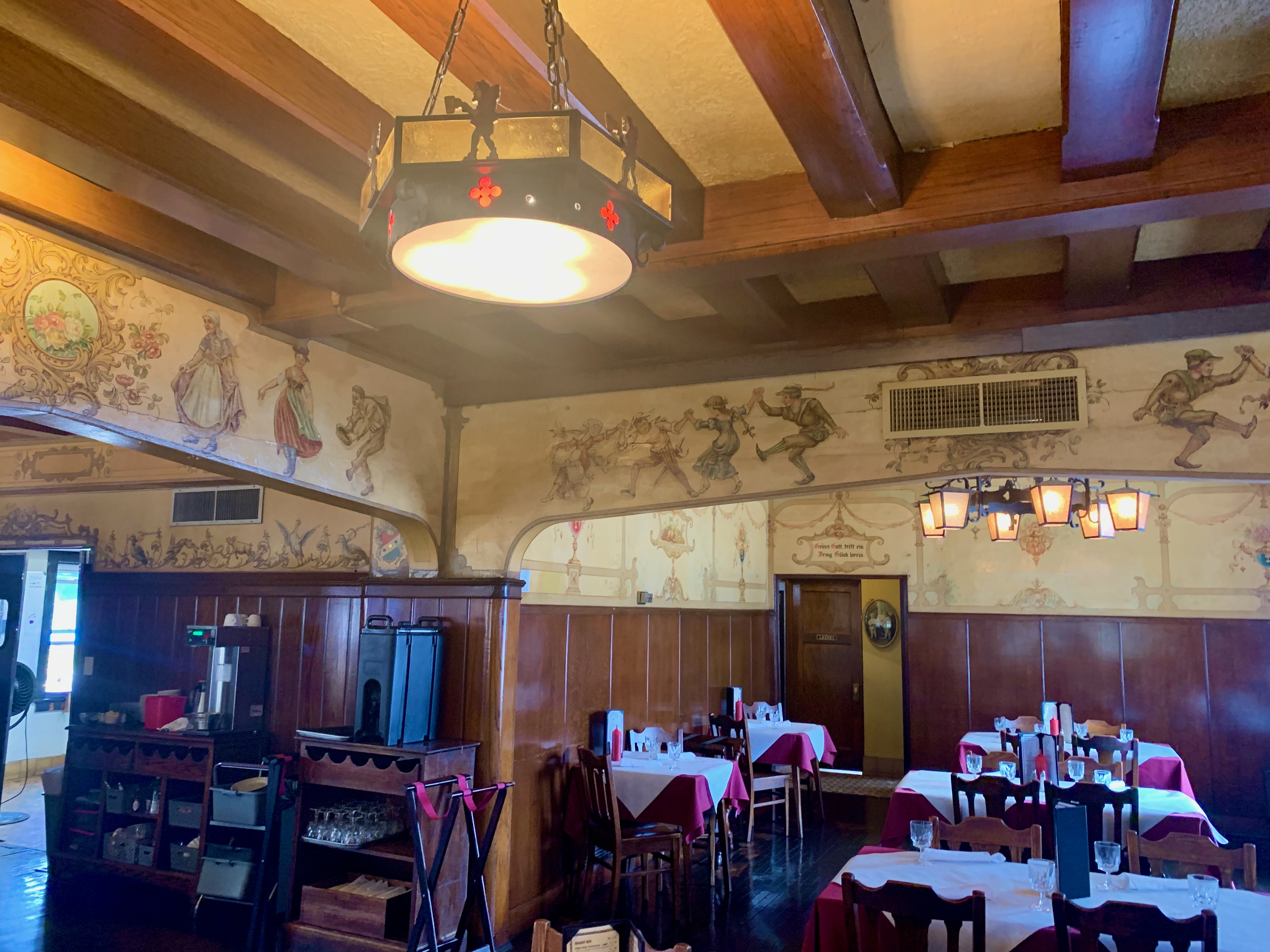
On to West Allis for a Friday Fish Fry at Kegel’s Inn, a meal no trip to Milwaukee is complete without. I can’t find great German cuisine in Boston, so it’s always a treat to get my fill of potato pancakes and Hacker-Pschorr here.
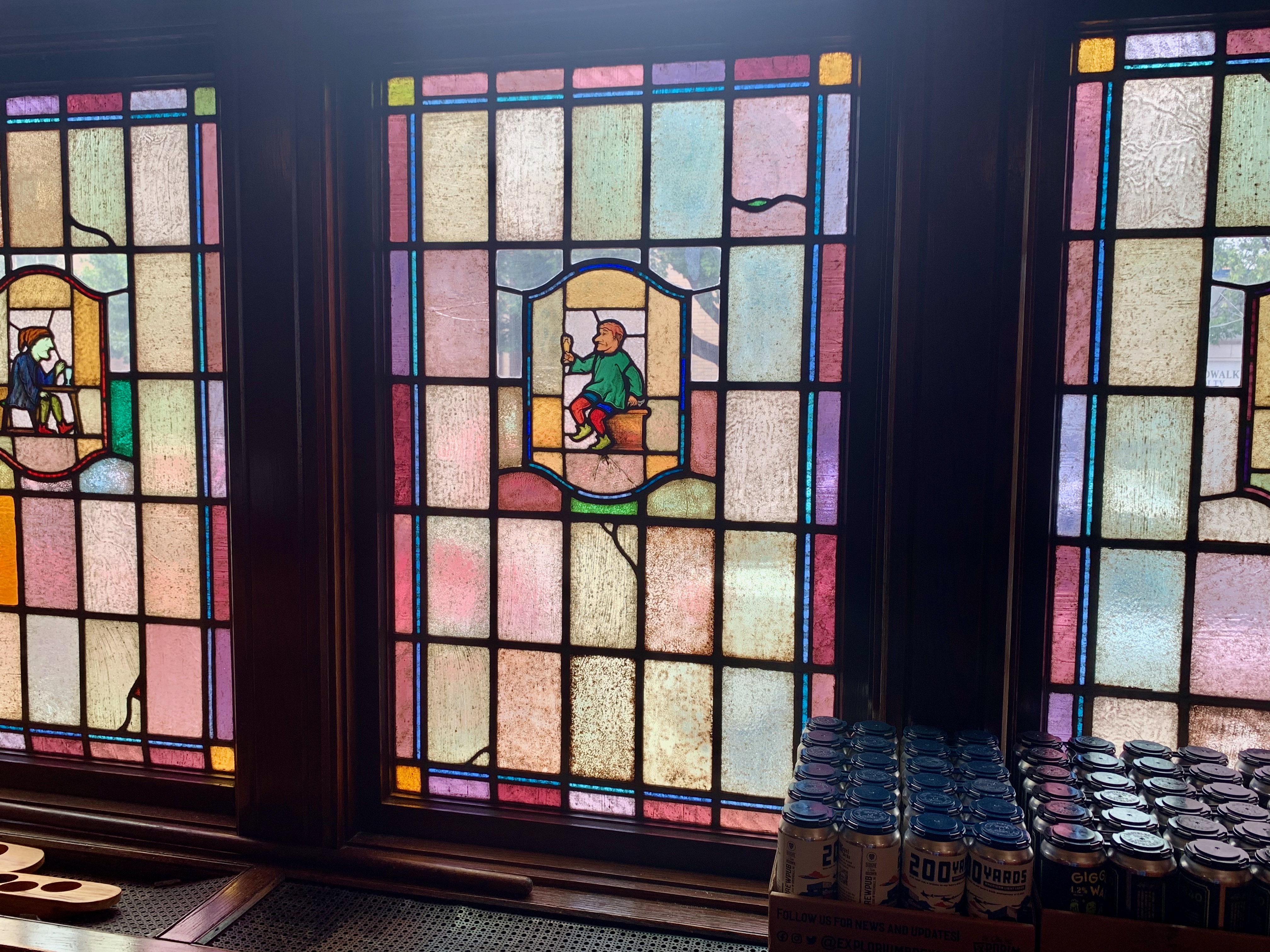
Each time I go to Kegel’s, I notice something I haven’t before, such as the detail in these stained-glass windows.
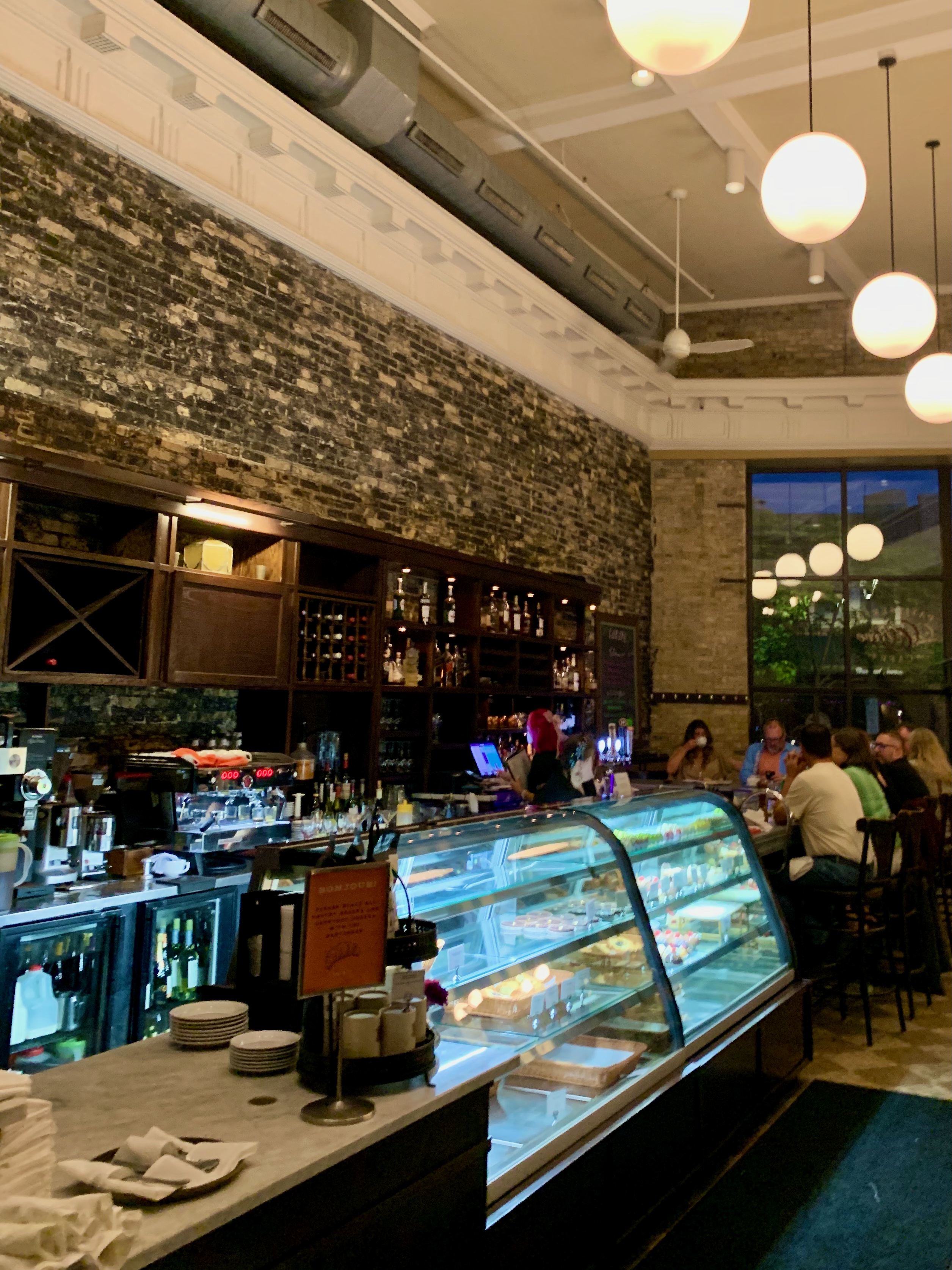
That evening, we met up with a dear friend at Le Reve in Wauwatosa Village, which had excellent cocktails, good mussels and a display case full of tasty French desserts.
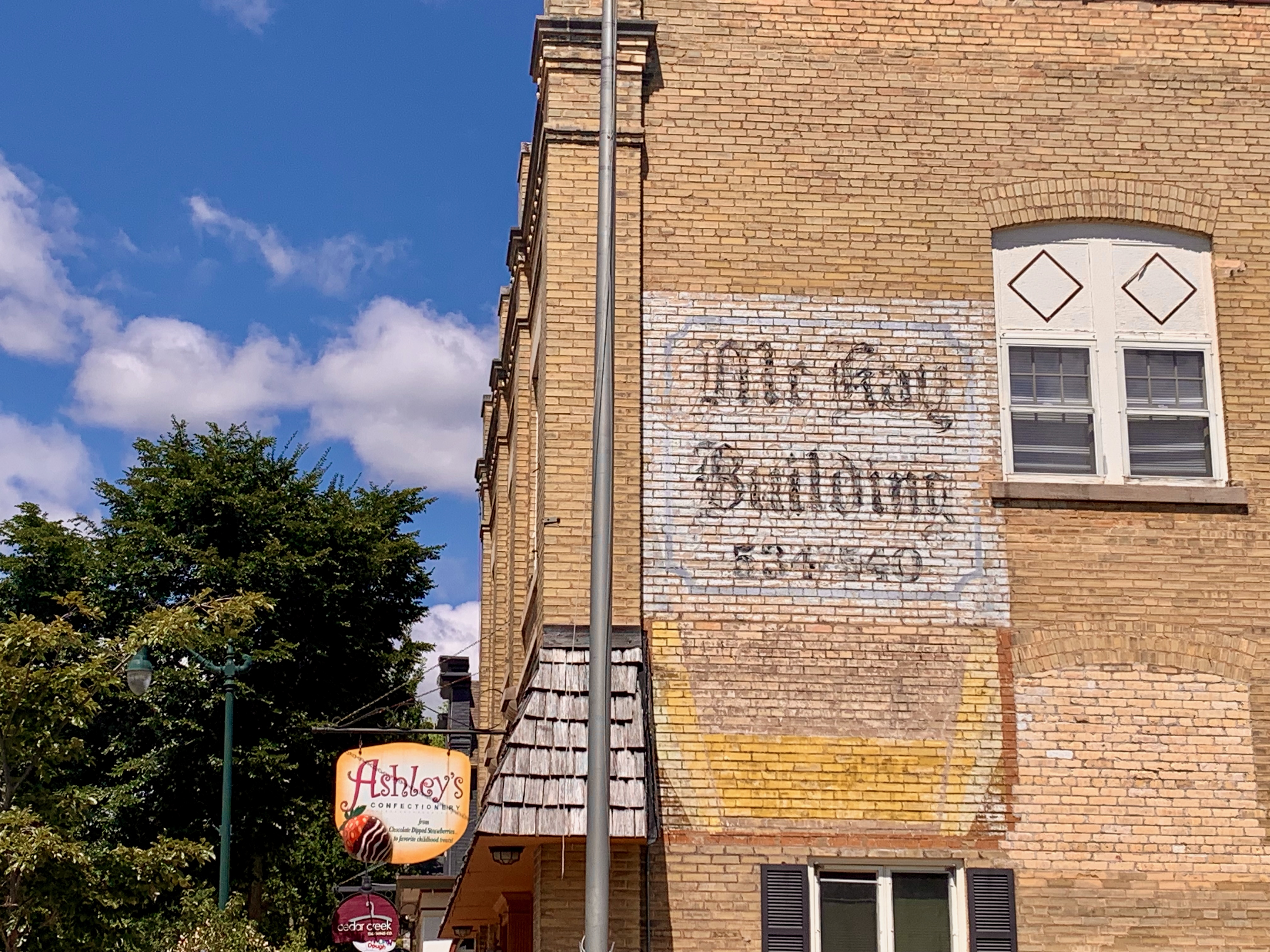
Following our lunch in Mequon the next day, we drove north to Cedarburg where I had not been in over a decade. We took a walk down the Washington Avenue Historic District and all the cream-colored brick buildings stood out to me in ways they hadn’t previously.
The vivid blue skies provided a striking contrast to these 100+ year old structures.
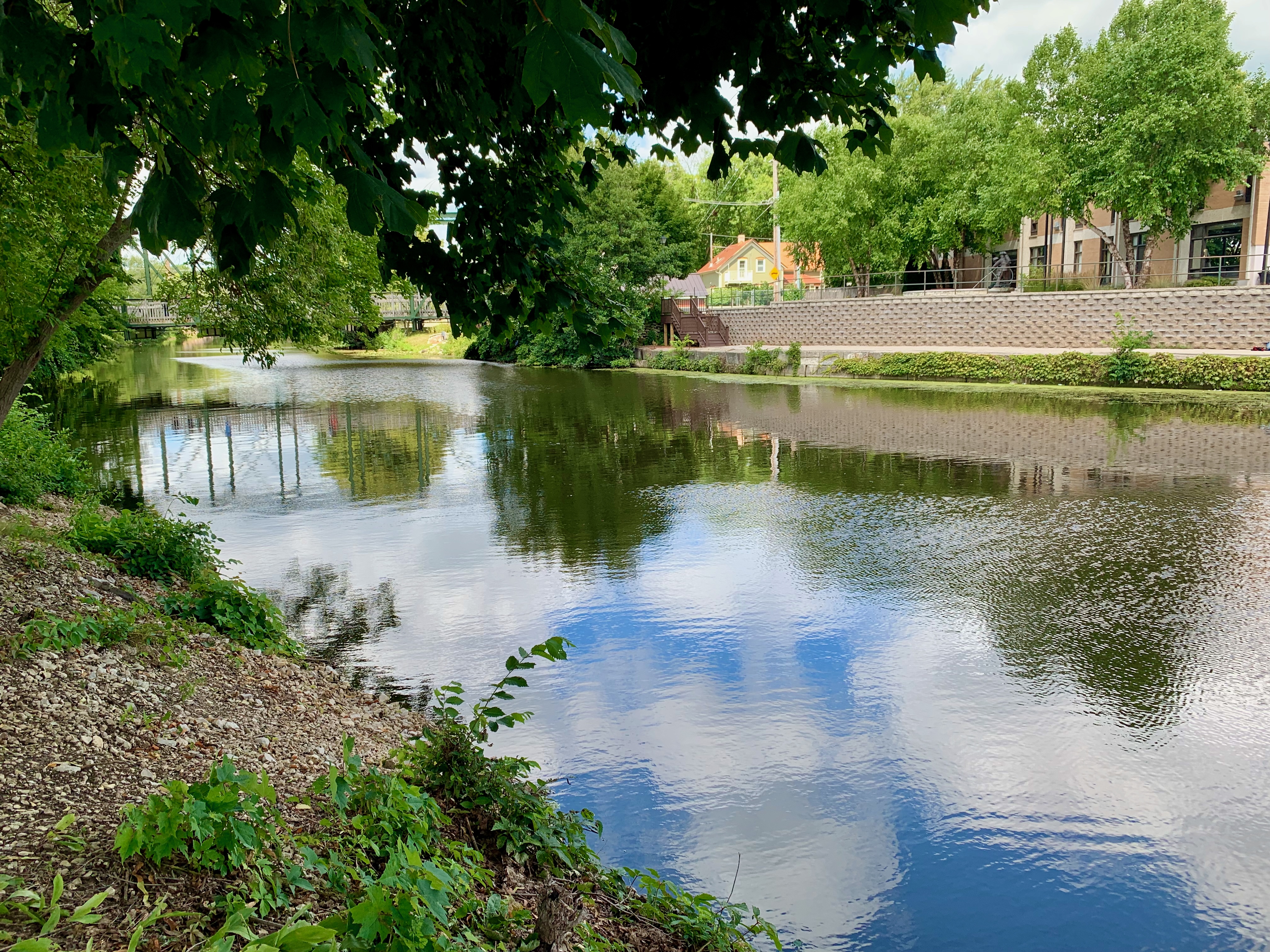
Naturally, we ended up at the Cedar Creek Settlement Shops, which I did not take any pix of this time. Here’s the Milwaukee River, which runs behind it, although this was taken a few blocks further south.
For dinner on Saturday night, we tried Jack Pandl’s Whitefish Bay Inn, a historic restaurant that my parents and I somehow had never previously visited (I do remember going to the now-defunct George Pandl’s in Bayside.)
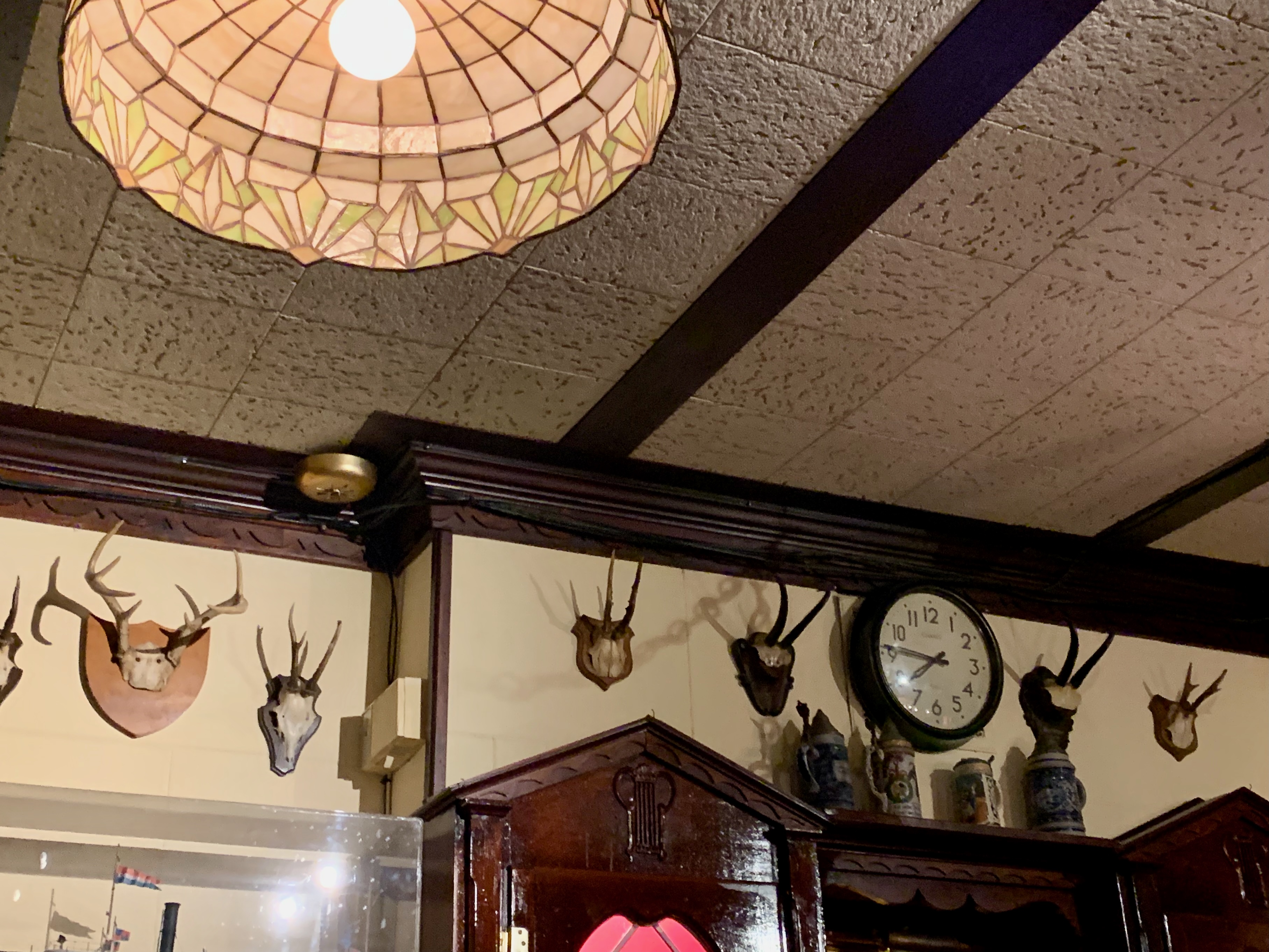
Our party of five was seated at a large round table near the bar, decked out in knickknacks one would likely only expect to find in Wisconsin.
Whitefish Bay is a rather affluent suburb, so it’s a hoot to see one of its most venerable establishments decked out in dinky taxidermy plaques.
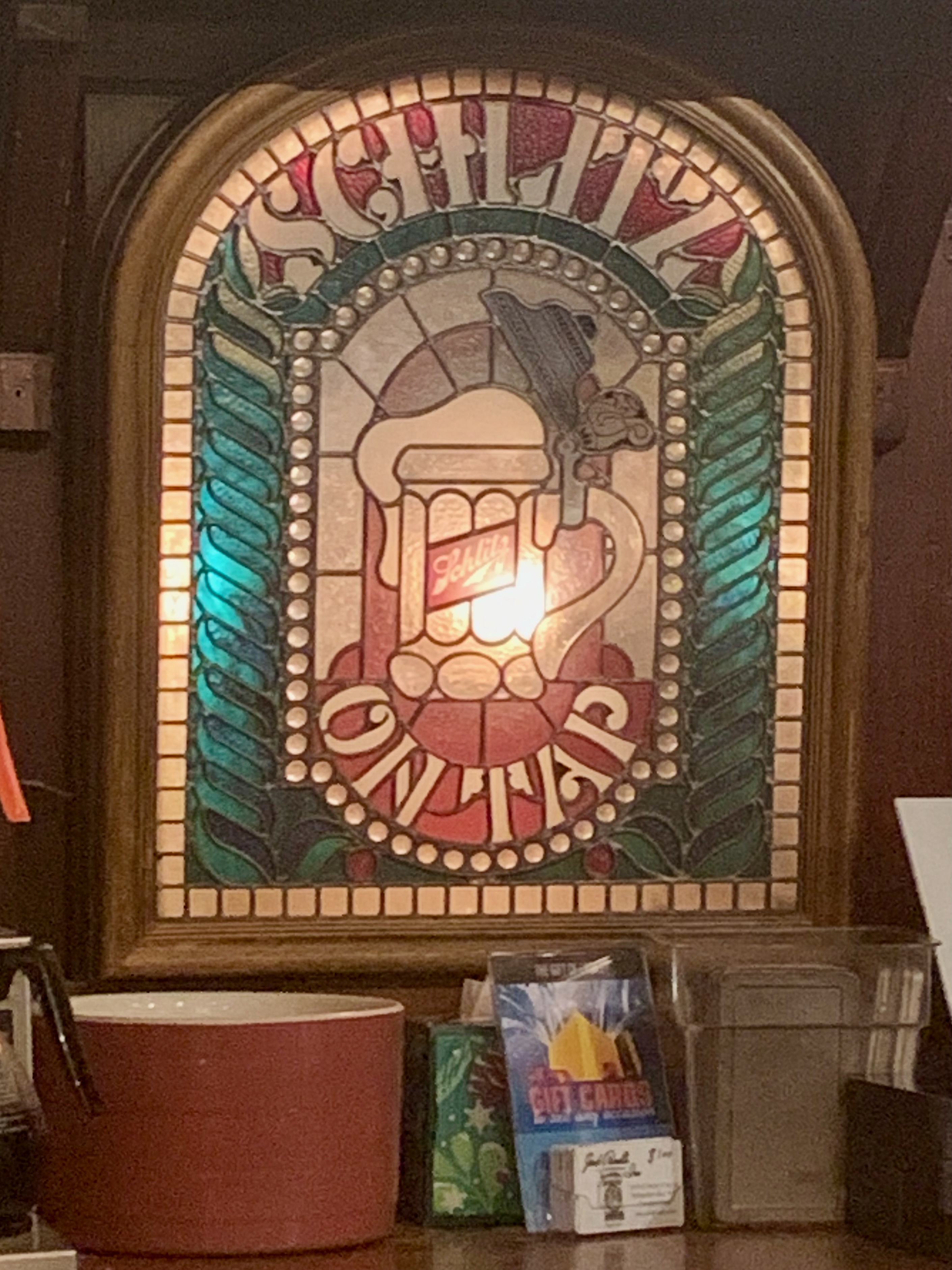
If any classic beer brand screams Wisconsin, it’s not Miller or Pabst, it’s Schlitz!
Recovering from our brandy old-fashioned soaked evening at Jack Pandl’s, we took it easy on Sunday: a stop at Kopp’s Frozen Custard, then an early evening walk at Grant Park on Lake Michigan in South Milwaukee. I hadn’t been there in nearly two decades. This gingerbread house-like bridge has always been one of my favorite places in the area (even if someone drew a dick on it, as partially shown above.)
After crossing the bridge, one is led through a series of paths, stairways and other bridges along a ravine.
The end point is a small beach on the Lake. This was my “ocean” growing up and it was a thrill to return.
On our last day, I made a run to Irving Place Records and then down to Colectivo on Lincoln Memorial Drive for a smoothie and rest and relaxation on their massive patio. Although I’ve now lived in Boston for most of my life, Milwaukee will always remain a part of me. It’s nice to know that I can always go back for a few days, even if my heart’s now fully in another city.
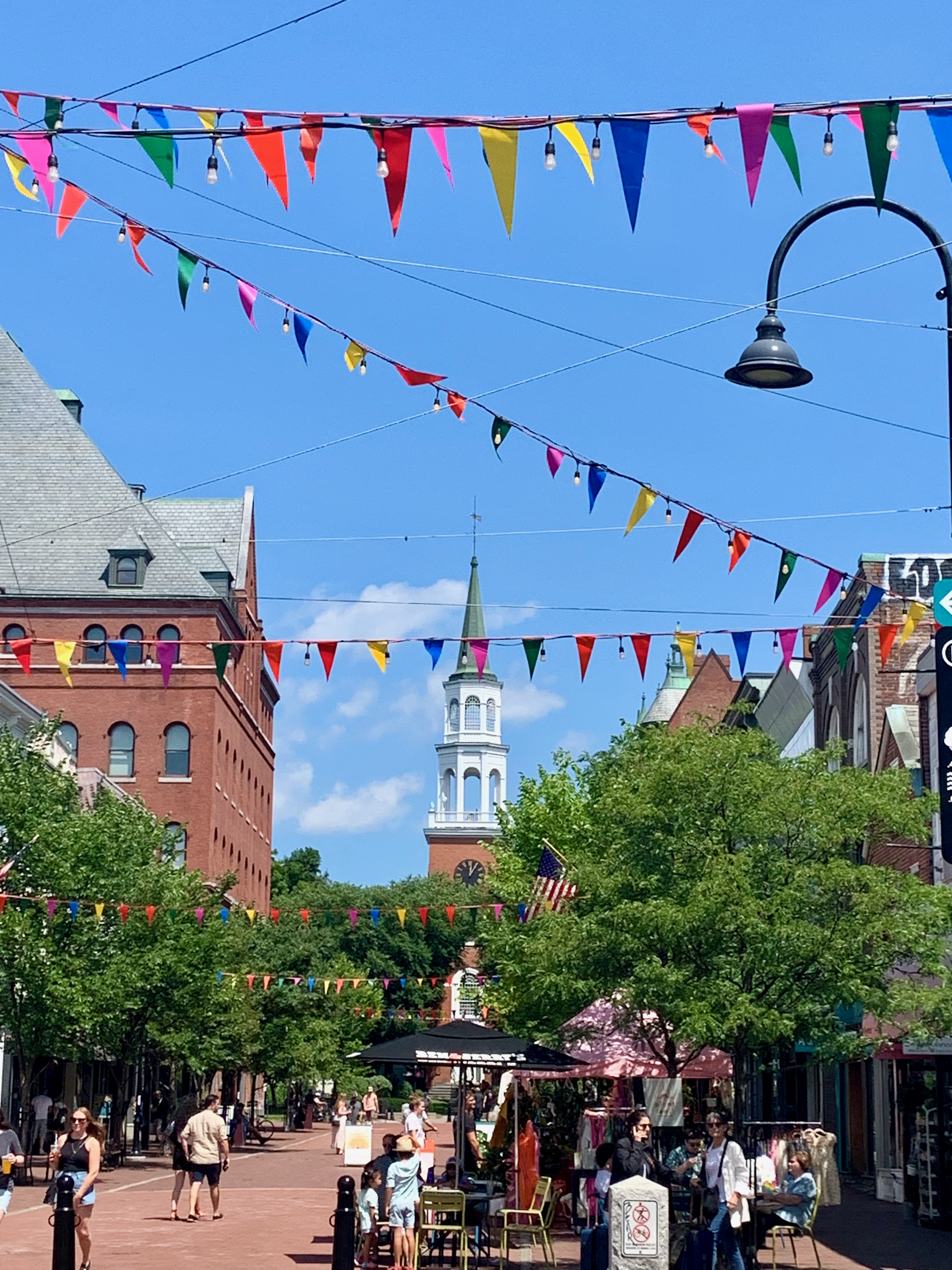
I’ve spent less time in Vermont than any other New England state, and had never traveled north of The Vermont Country Store in Weston. To rectify that, Steve and I recently visited Burlington over a long weekend. The city’s Church Street Marketplace (above) was bustling on a near-perfect Saturday afternoon.
At one end of Church Street there’s (naturally) a church: the First Unitarian Universalist Society of Burlington, built in 1816.
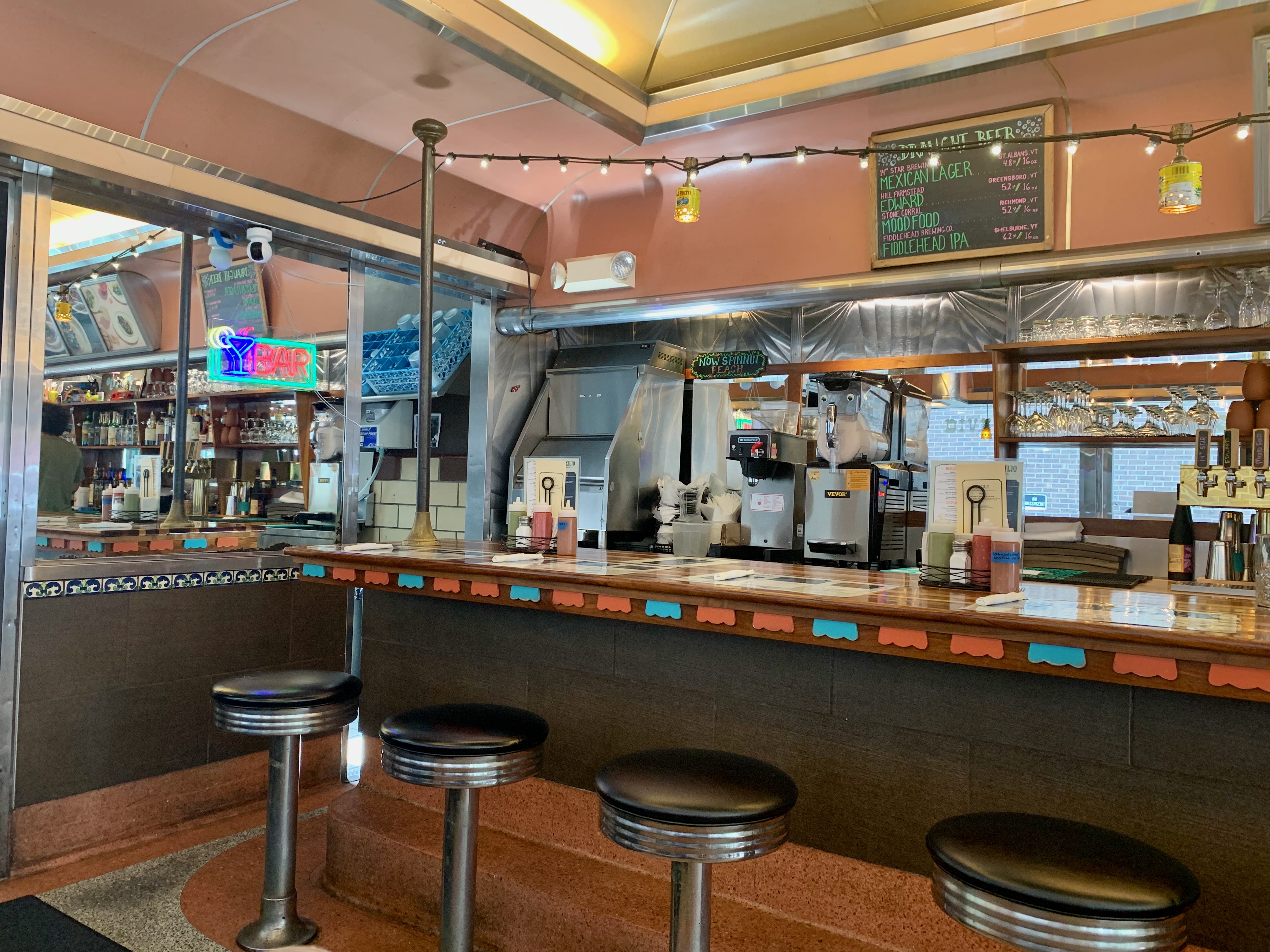
We had an excellent lunch at El Cortijo Taqueria, a Mexican joint housed in a 1950s boxcar diner just off the Marketplace on Bank St. The sort of place one would expect to find in New Mexico rather than Vermont, each table had plastic squeeze bottles of red and green chiles; the side of roasted potatoes are among the best I’ve ever tasted.
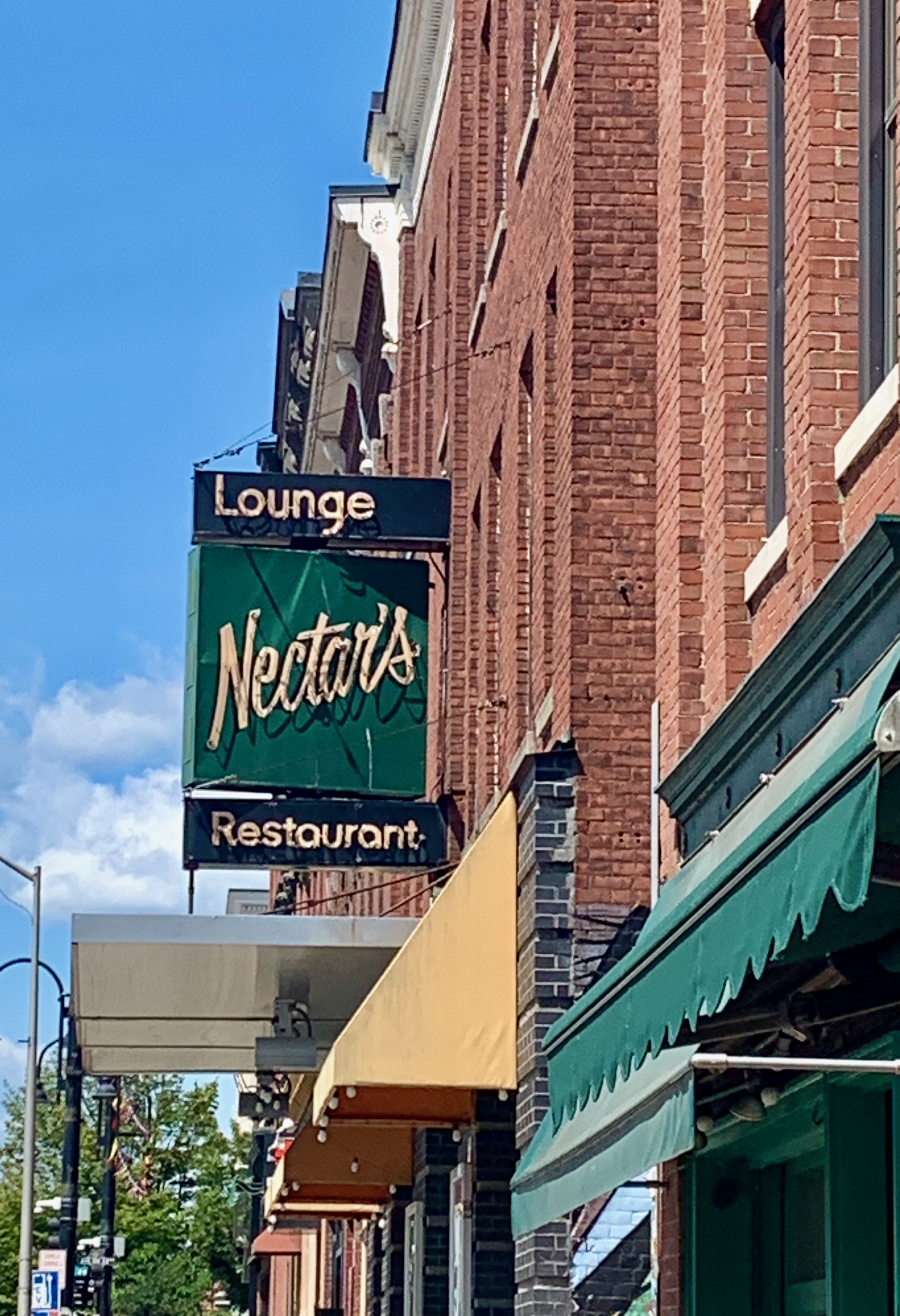
On the other end of the Marketplace (opposite the church), I immediately recognized Nectar’s as the venue Phish played in their early days and later referenced on their 1991 album A Picture of Nectar (yes, I was a fan (if not a full-on Phishhead) briefly in college.)
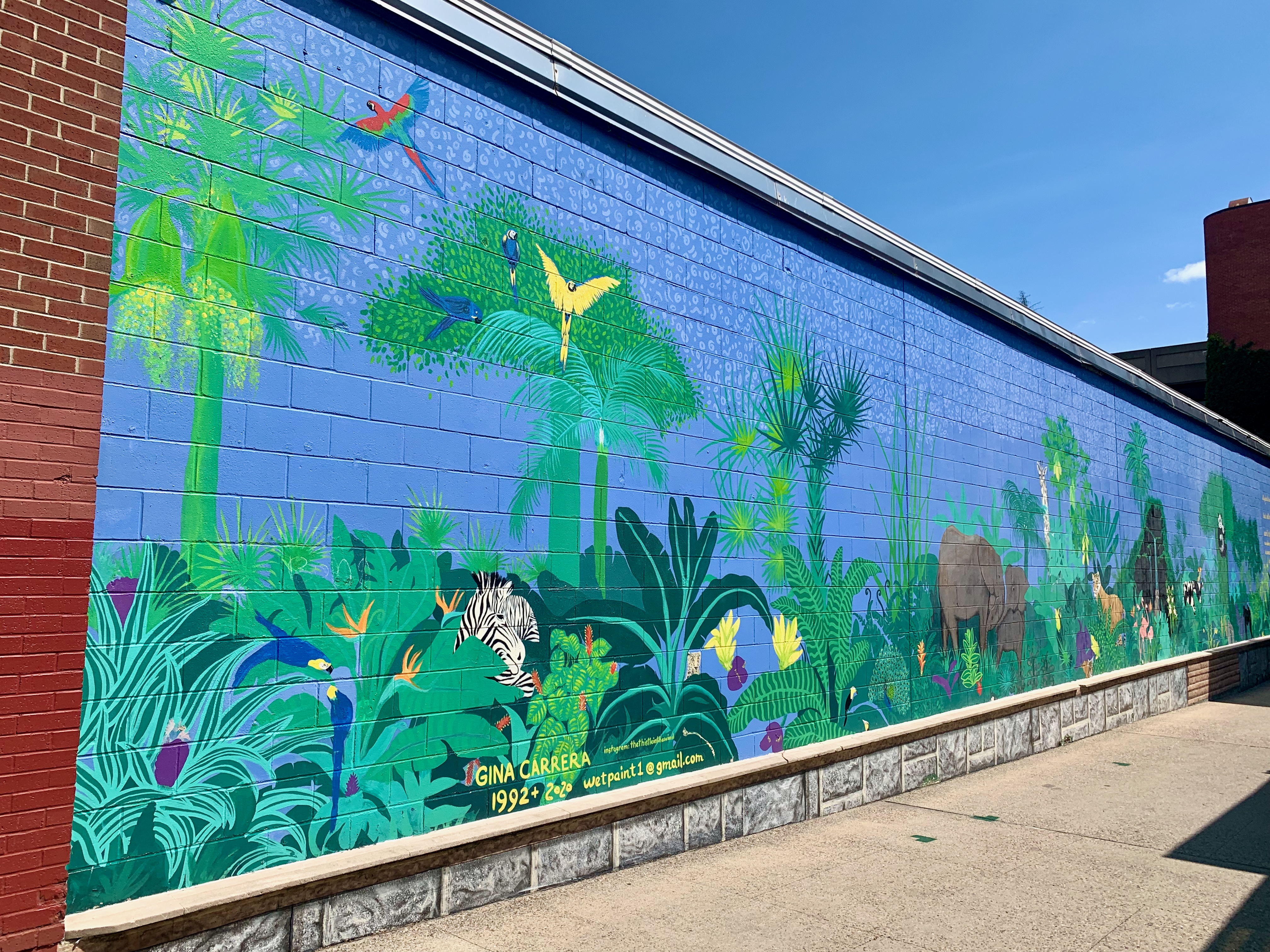
Although it has a few vacancies here and there, the mall on the whole is vibrant, made even more so by the occasional colorful mural (such as this one on Leahy Way) and public artworks.
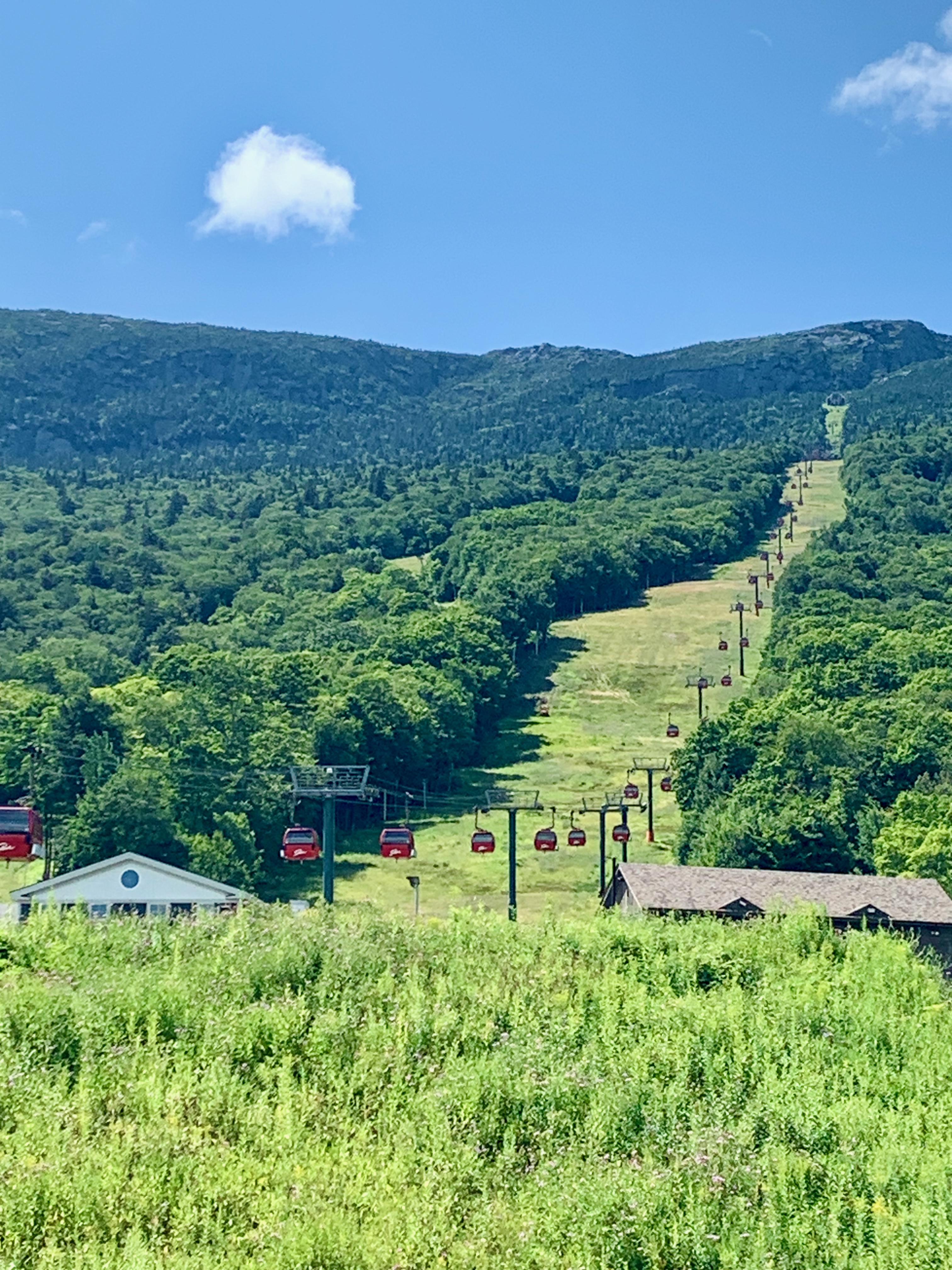
On Sunday, we drove east to Stowe Mountain Resort.
Primarily a ski haven, in the off season, one can still pay to take a gondola ride to the top of Mount Mansfield.
Years have passed since we’ve been at such a high elevation–the last time was nearly a decade ago at Rocky Mountain National Park.
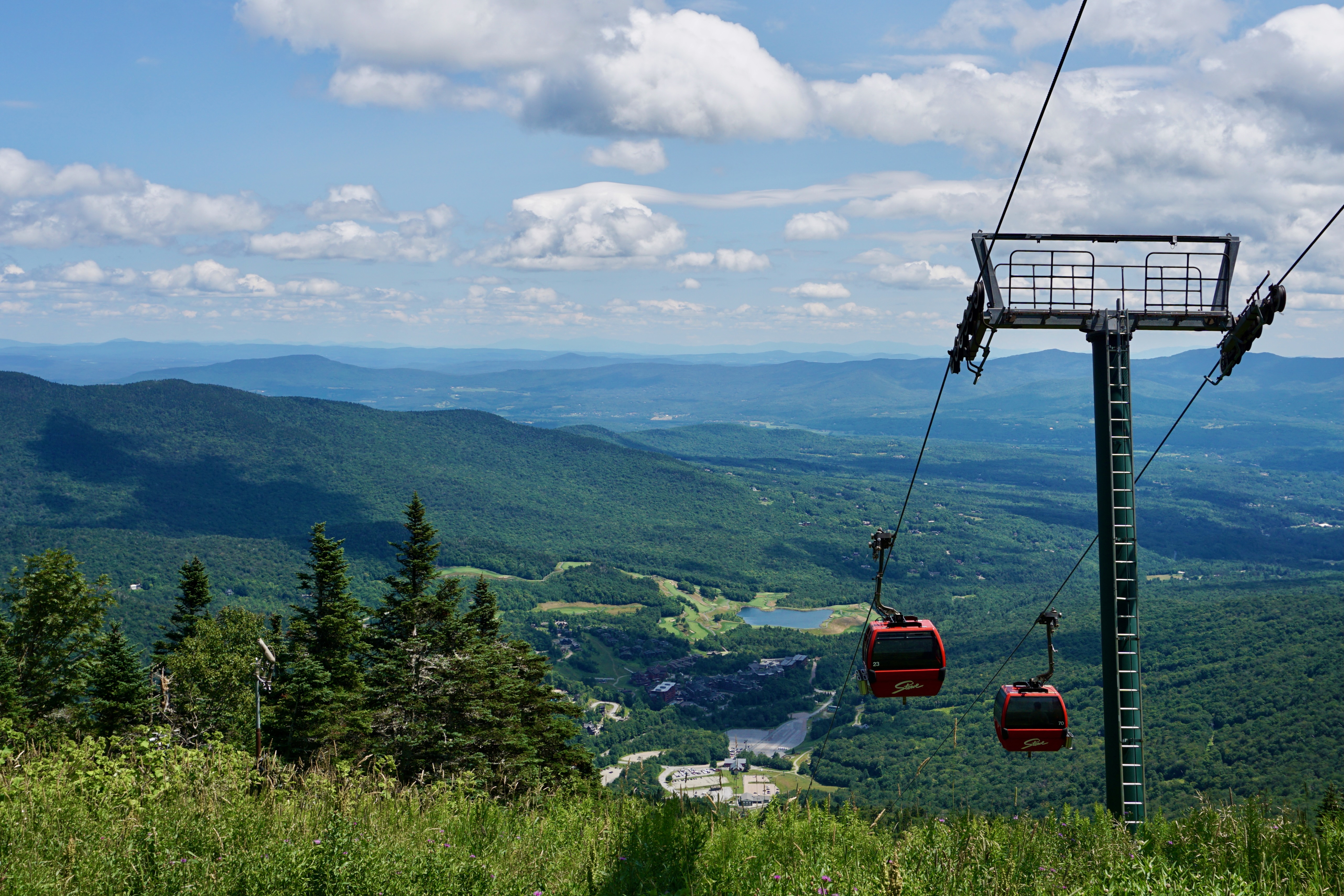
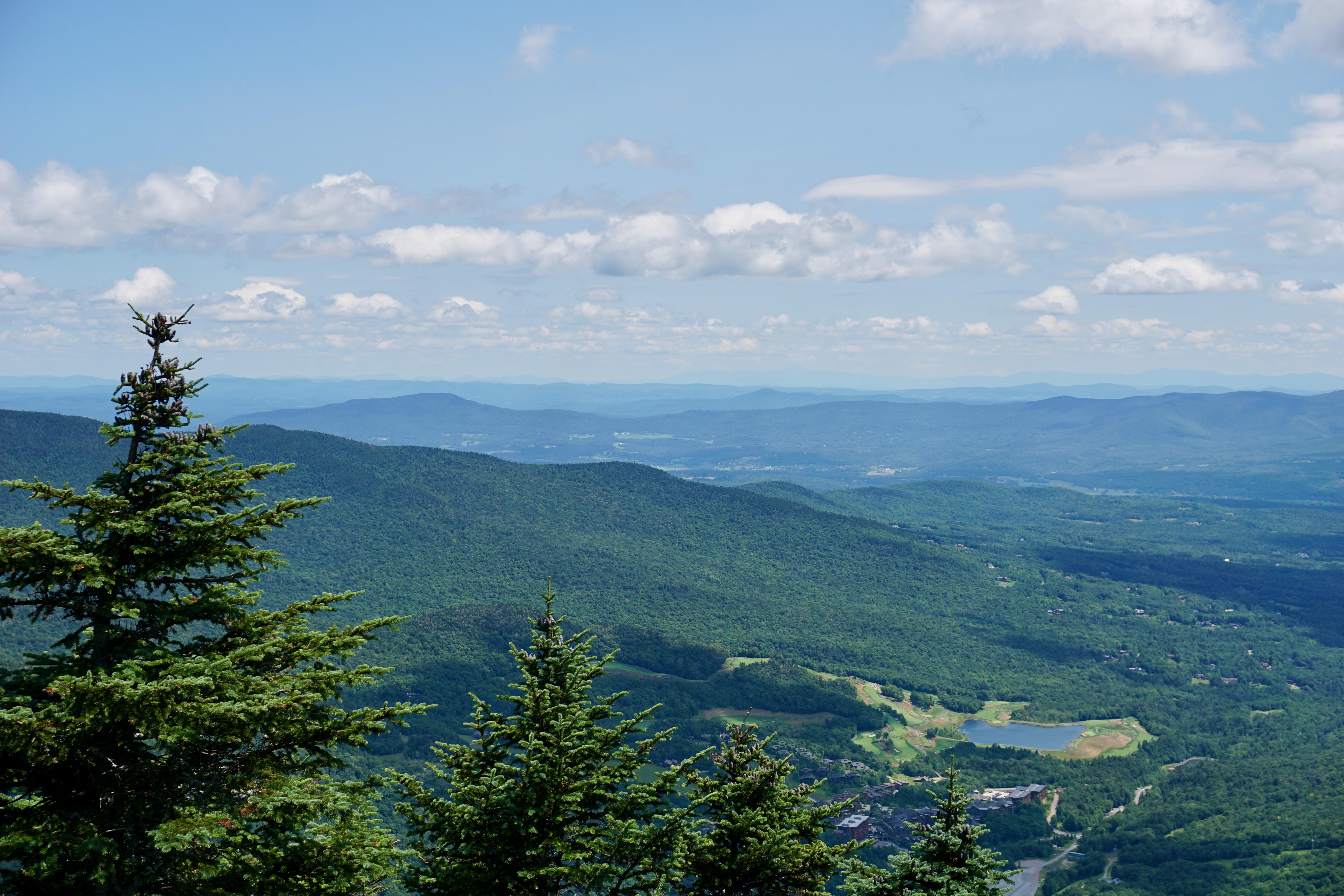
The view from the top – elevation 4,393 feet, according to the location determined by one of my Instagram posts from here.
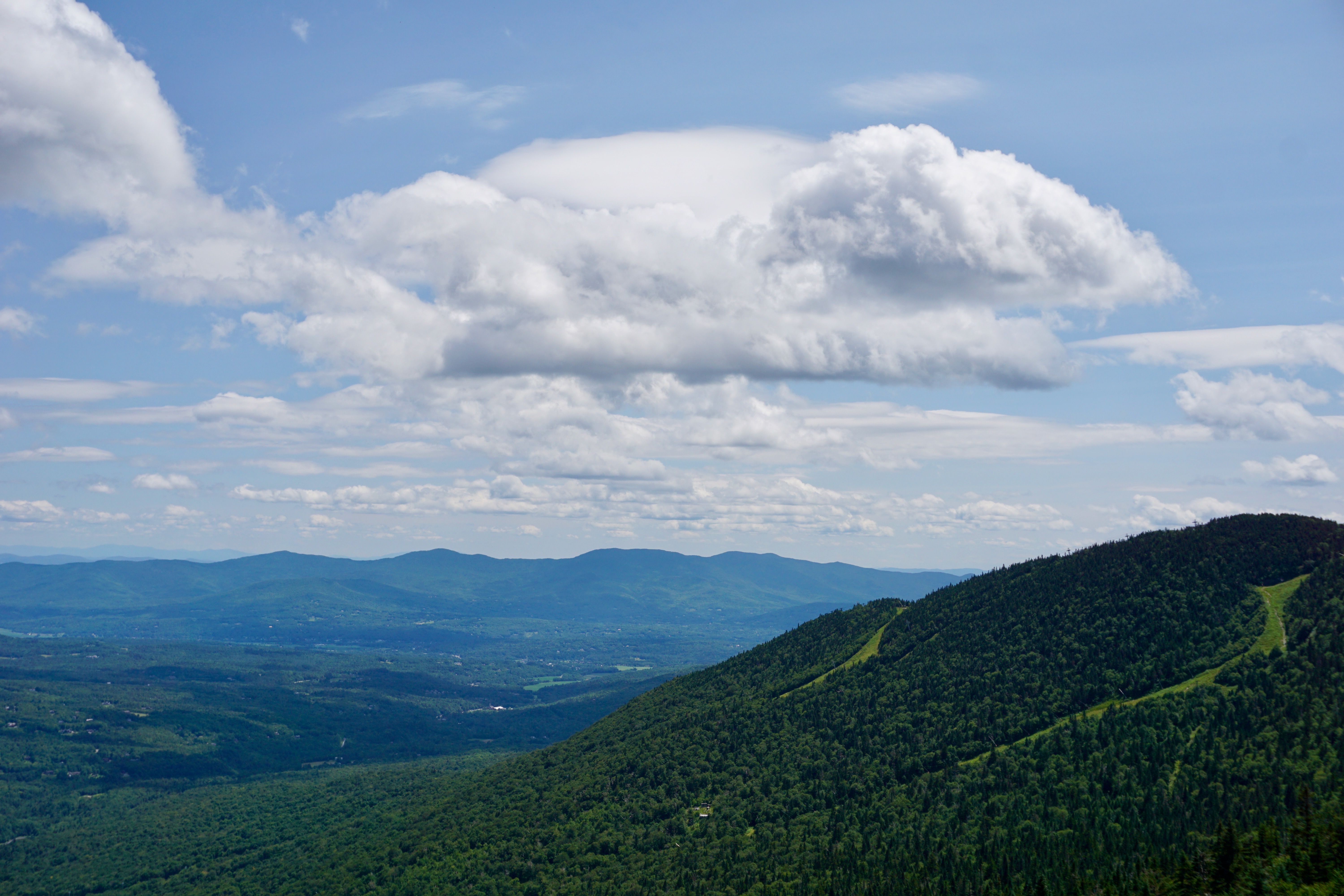
Another view. While not as mighty as the Rocky Mountains, the Green Mountains are spectacular in their own right (and undeniably green.)
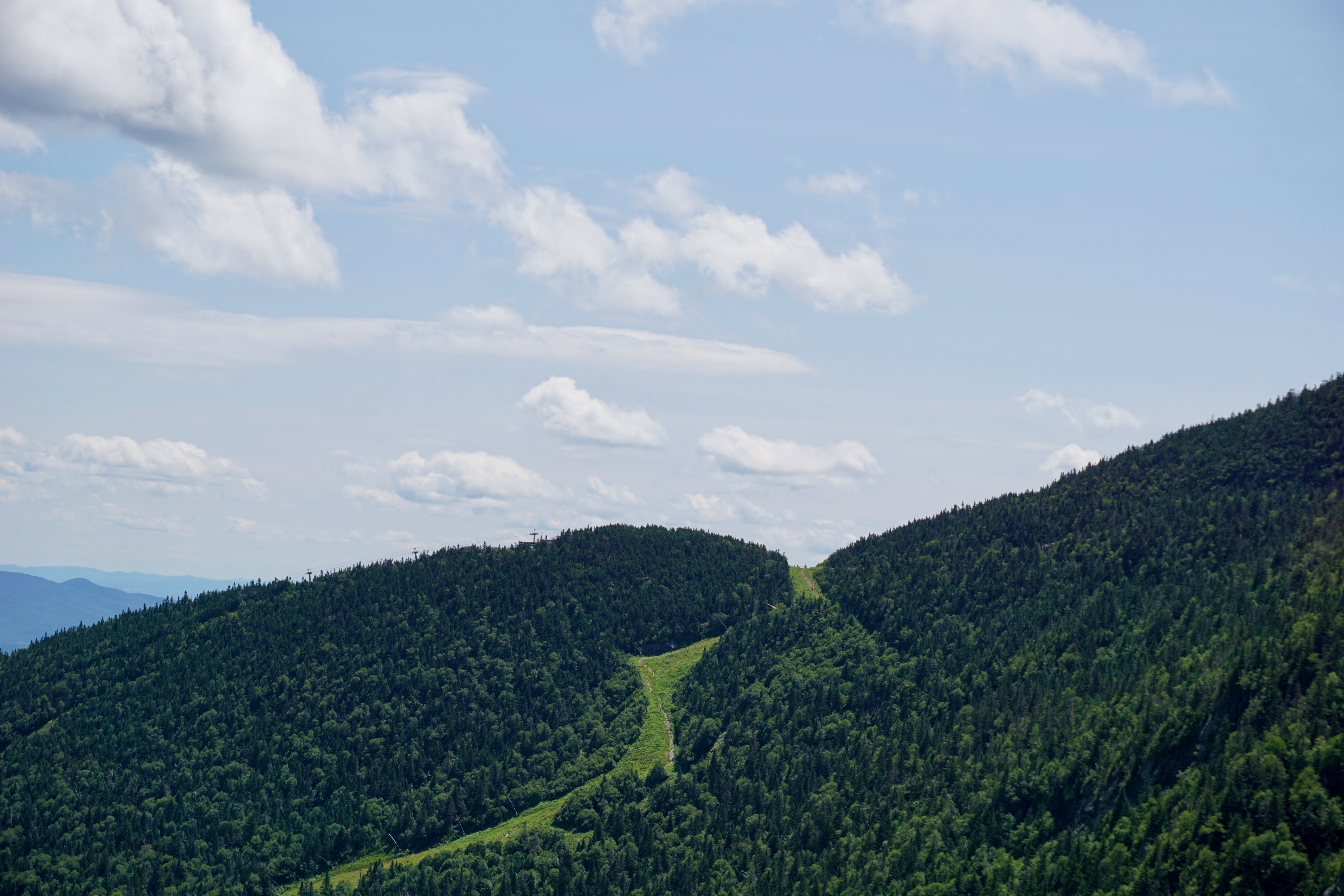
Assuming that this is a ski path–I’ve only gone cross-country skiing before, so I can just imagine the thrill (and terror) of traveling down this at rapid speed.
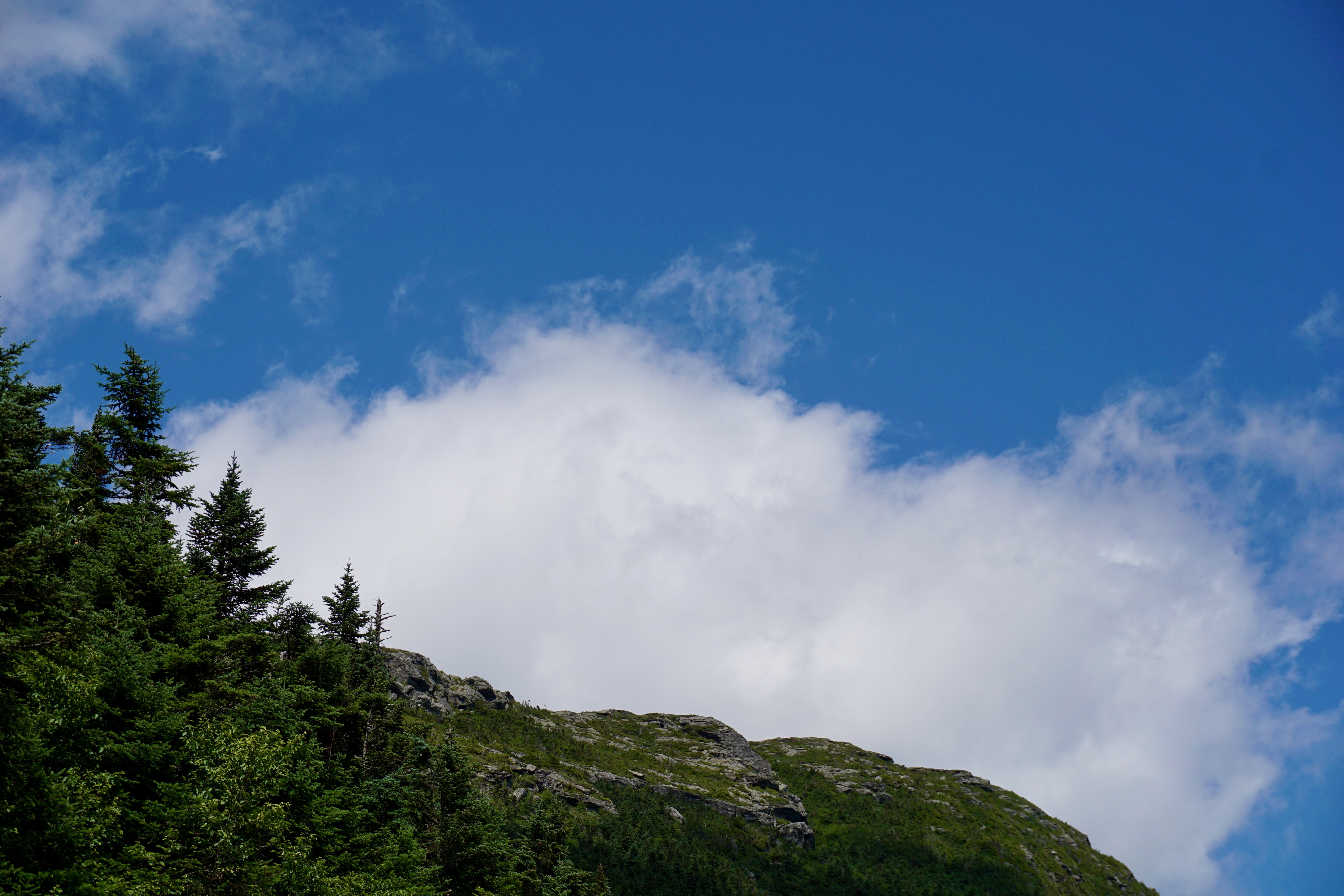
Pine trees, fluffy white clouds and expansive blue skies–what more does one need?
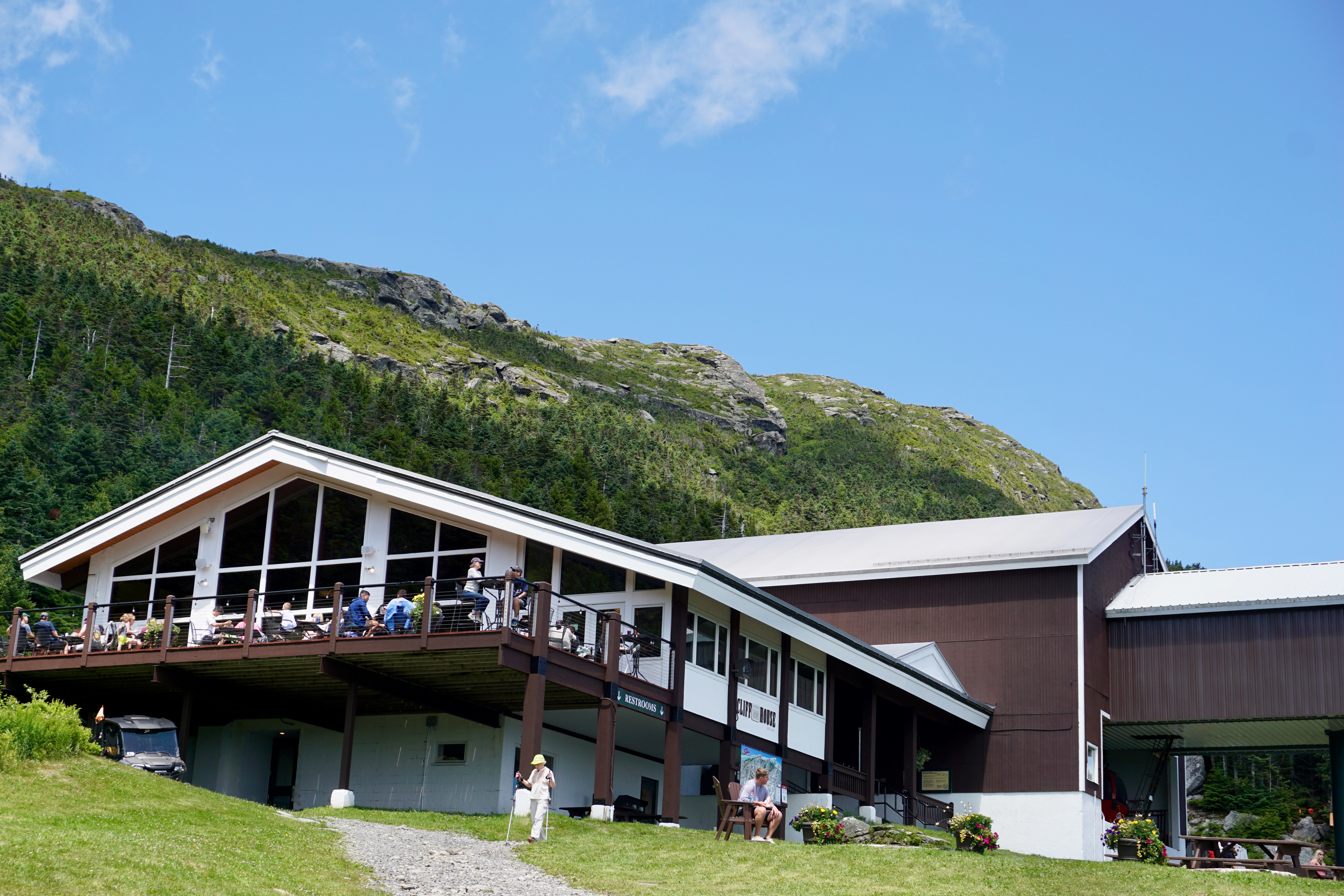
How about the Cliff House restaurant? Currently open only for lunch, we did not partake though I’ll bet it’s cozy in the winter. We could hear an assortment of 70s/80s soft rock standards wafting through the air from its direction, including “You Light Up My Life” which I haven’t encountered in the wild in at least three decades.
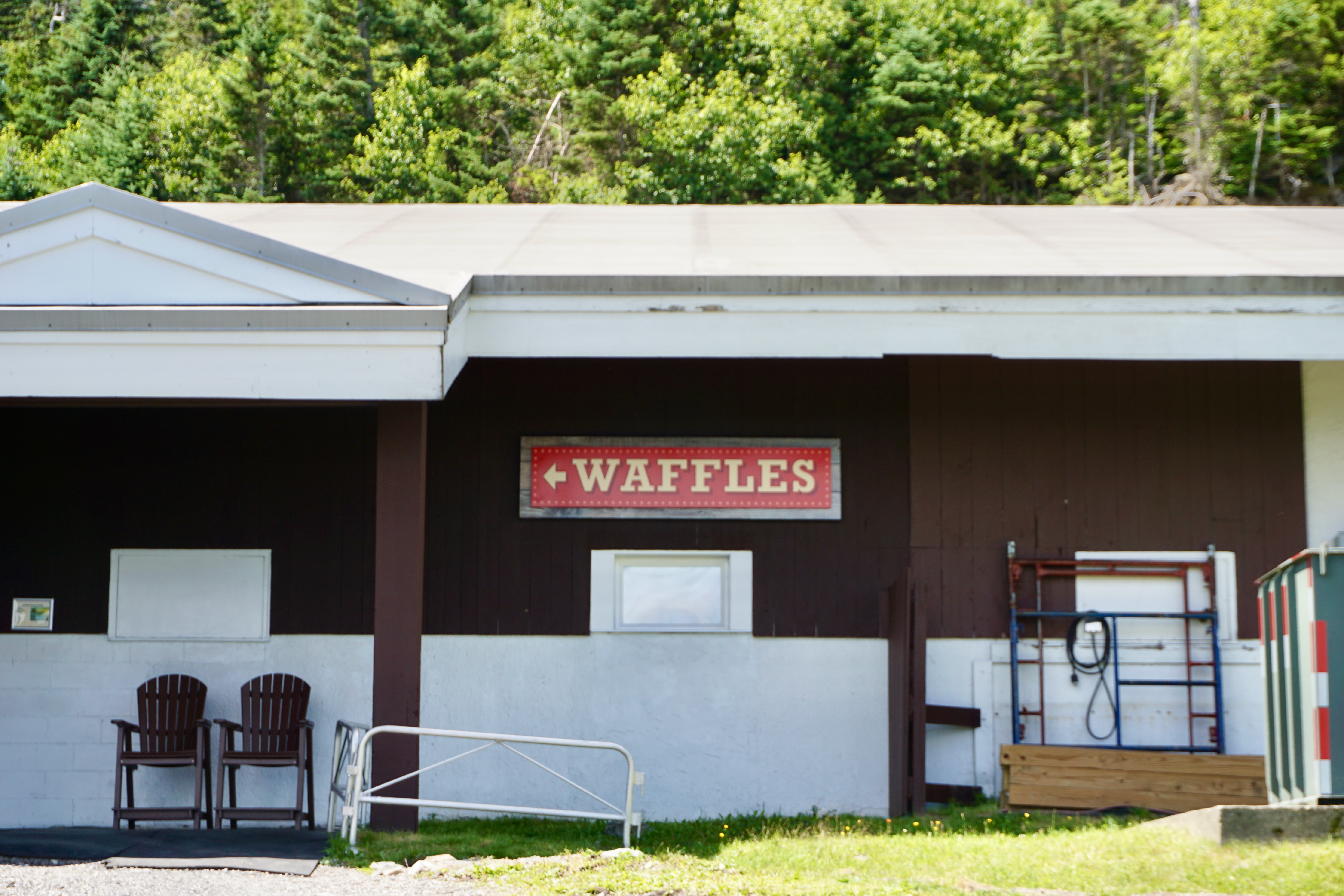
Waffles were also available, albeit without Cliff House-style views.
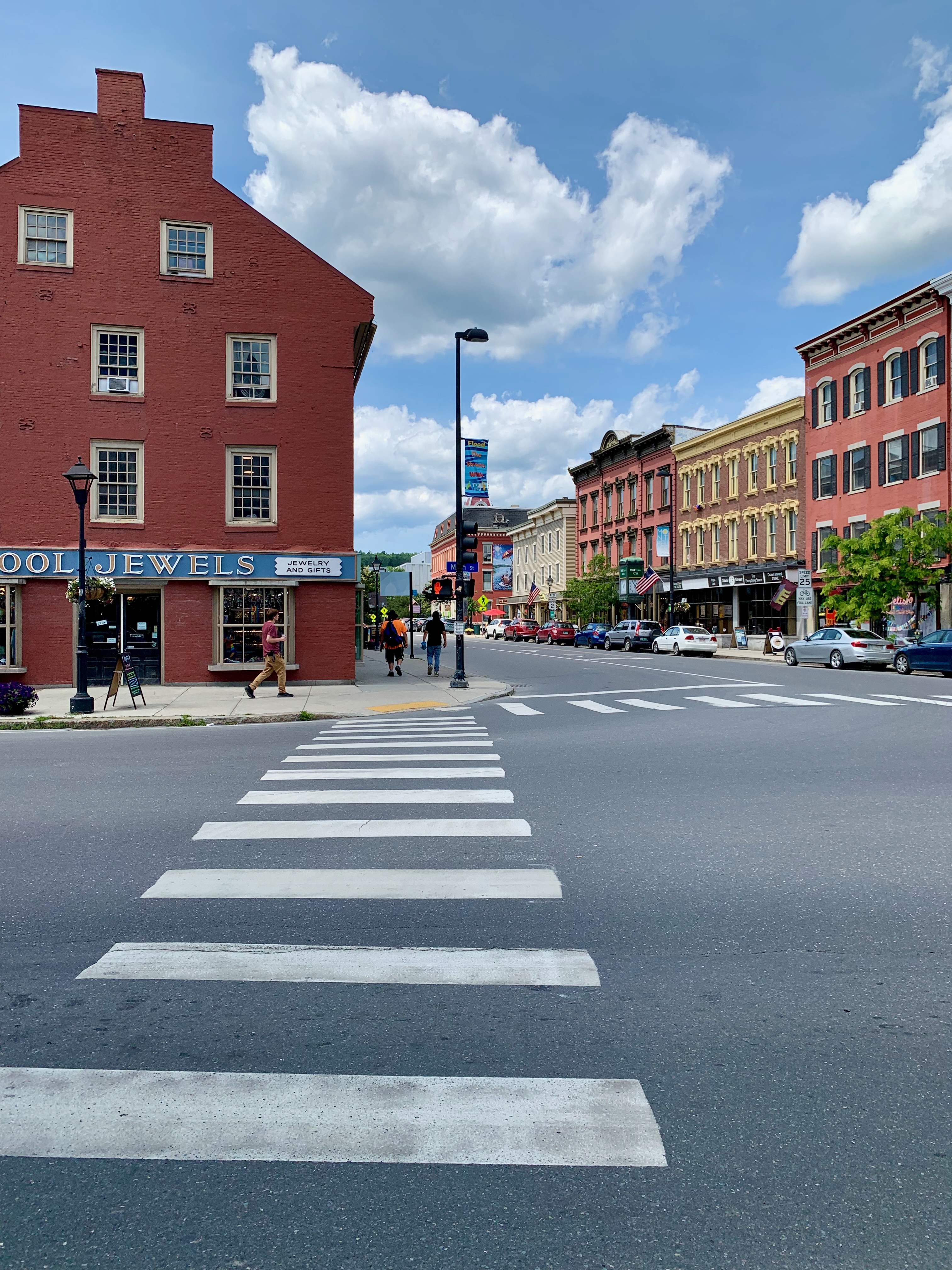
Monday, on our way home, we stopped for lunch in Montpelier, about 40 miles east of Burlington. The smallest state capital in the country, it’s an immensely charming little town.
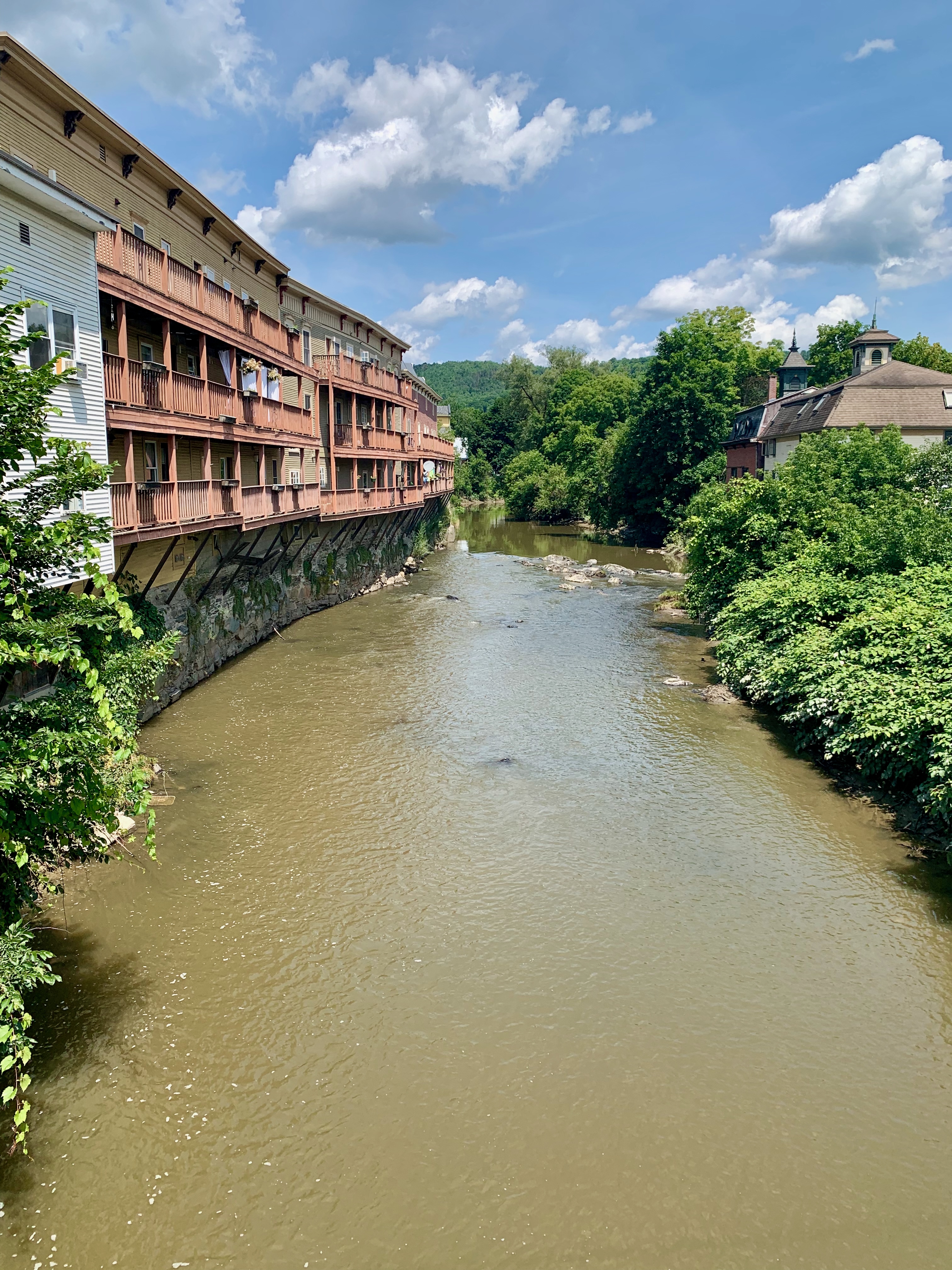
Lunch was at Sarducci’s, a popular Italian place with a covered porch offering views of the Winooski River.
The Winooski runs through Montpelier, affording plenty of opportunities for photographers.
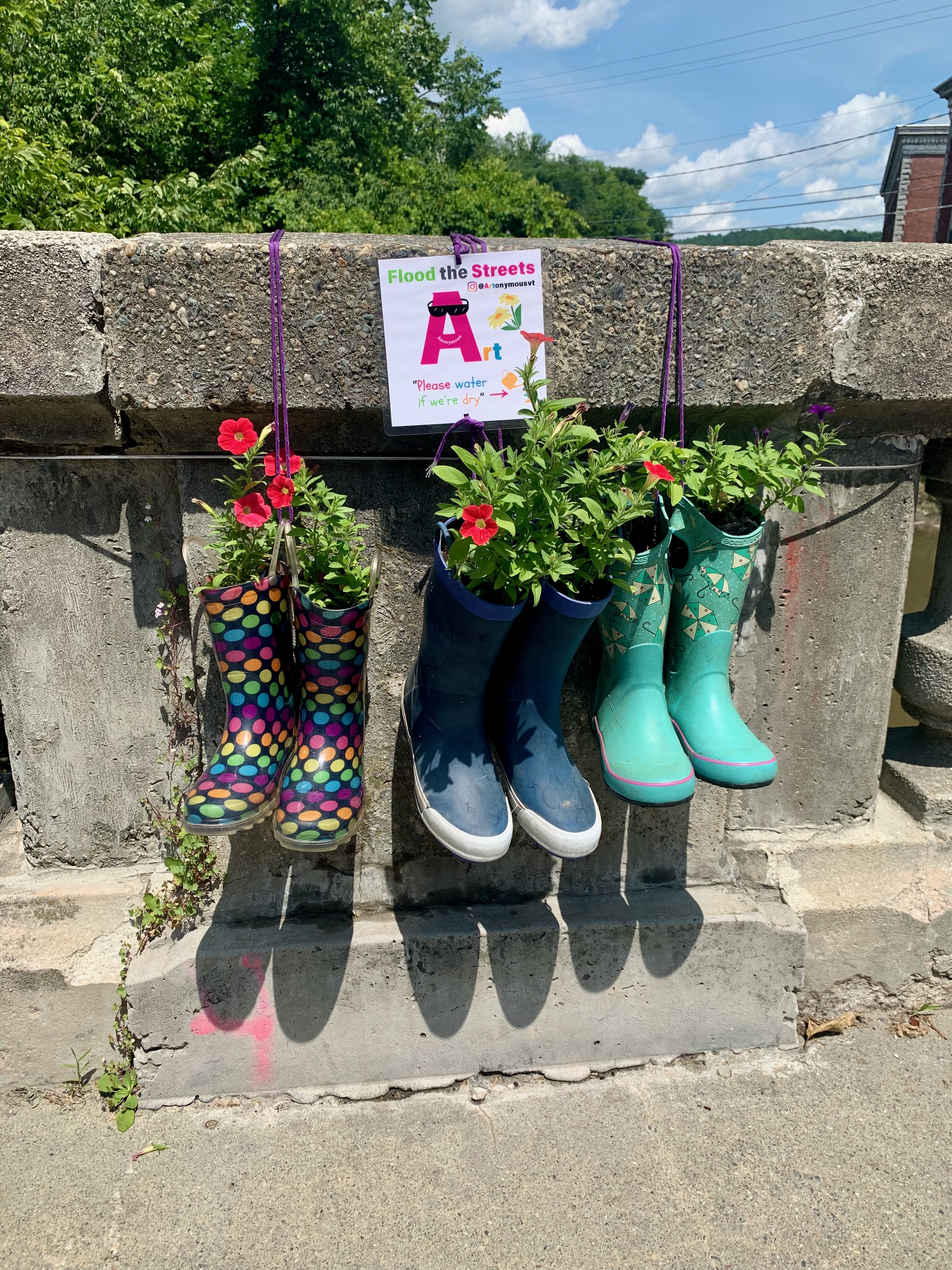
Flood The Streets With Art, an event celebrating the one-year anniversary of the Montpelier Flood, had to be rescheduled due to some additional flooding the week before. It would never occur to me to plant flowers in rubber boots, but it’s kind of an ingenuous idea.
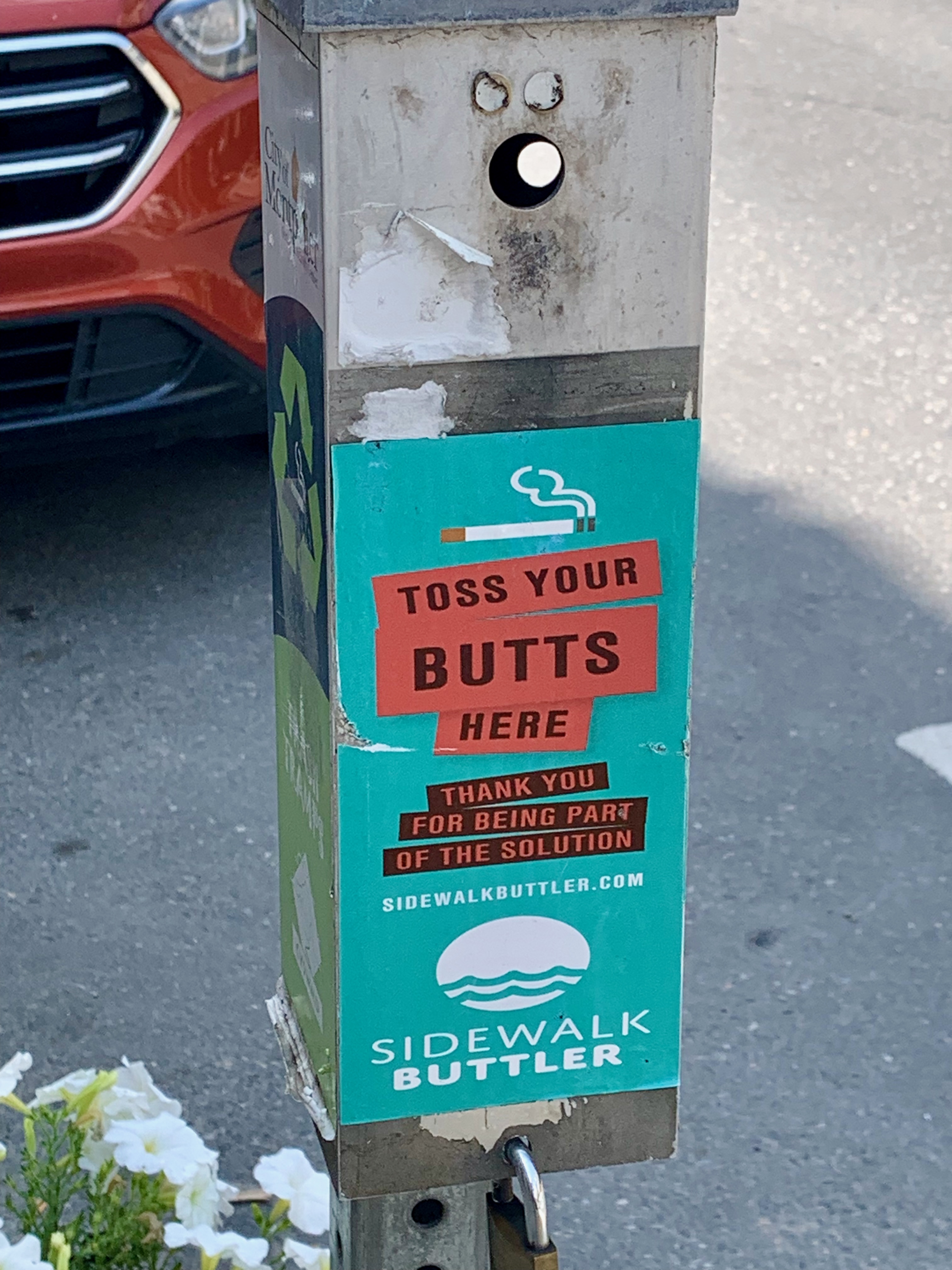
I have no notes or complains about the “Sidewalk Buttlers” present throughout downtown Montpelier.
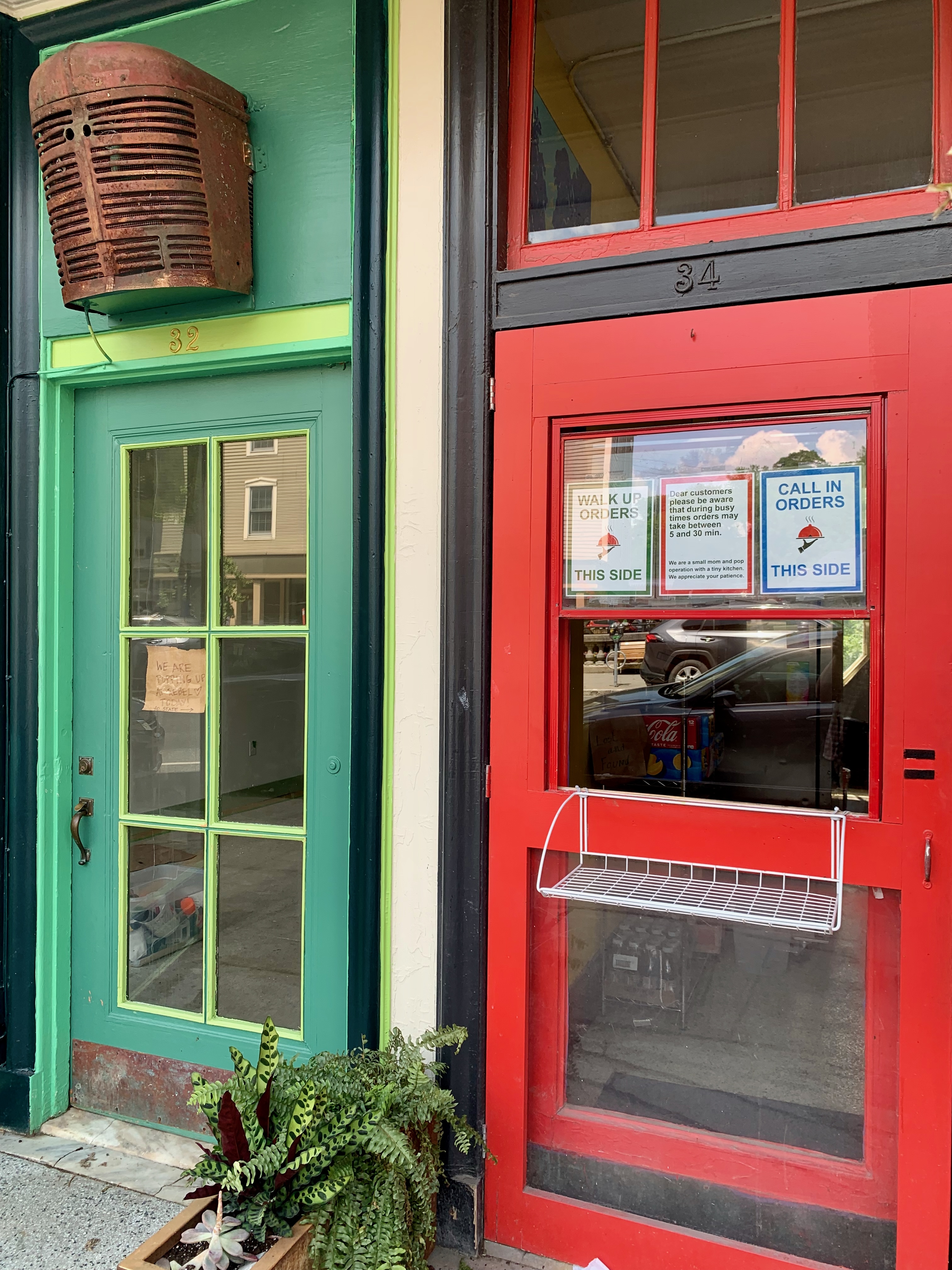
I also always encourage front doors painted in a variety of bright, bold colors.
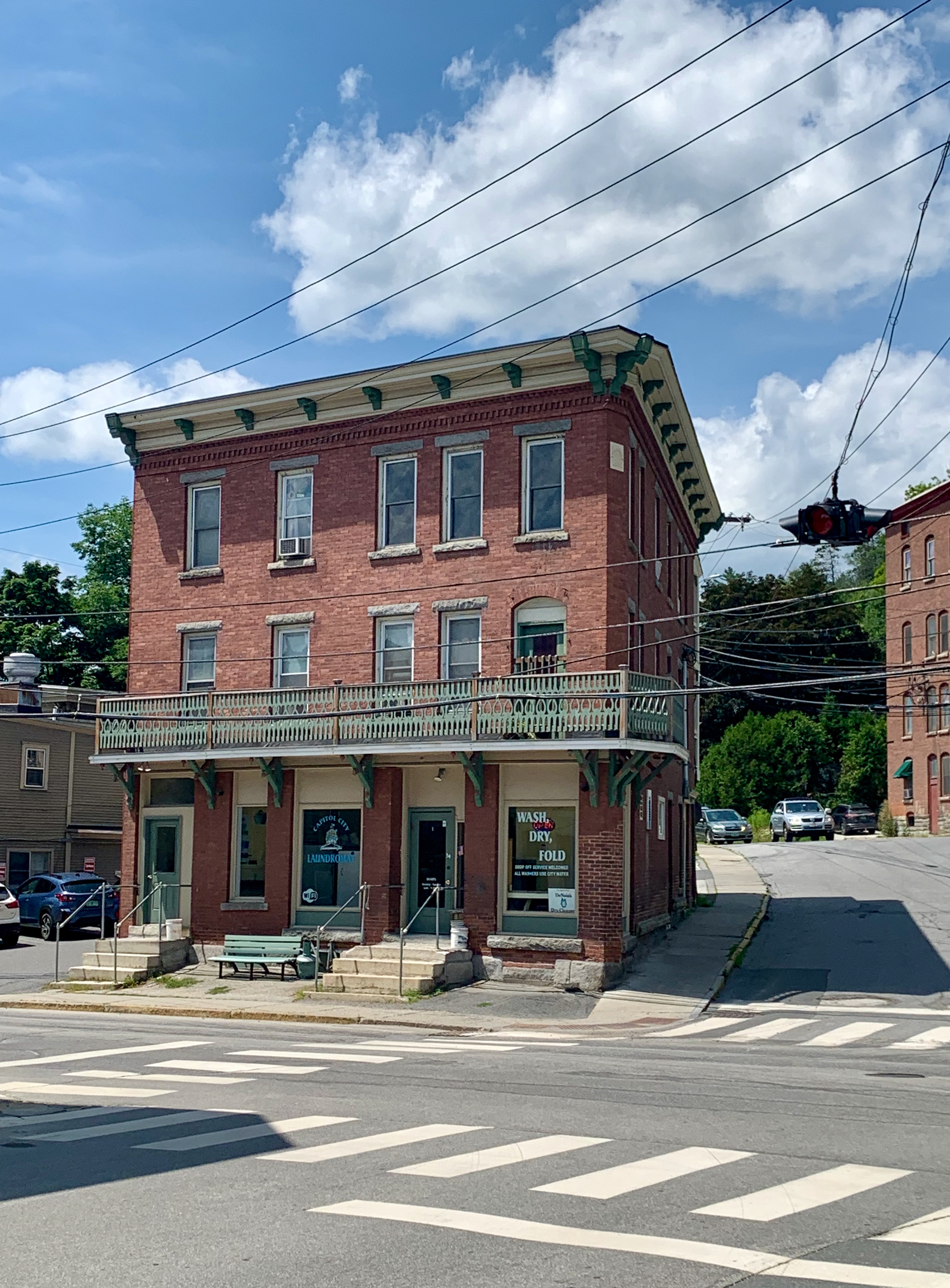
Down the block from the second picture of the Winooski River above, this ancient corner building caught my eye: quintessential small town, working class New England.
Before signing off, let’s go back to this sunset from Friday night, taken at a supermarket parking lot in suburban Williston near our hotel. While in my opinion Vermont doesn’t offer as much variety as Maine or coastal Massachusetts, I knew the longer trip up from Boston was worth it once I saw this tableaux with New York’s Adirondack Mountains in the background.
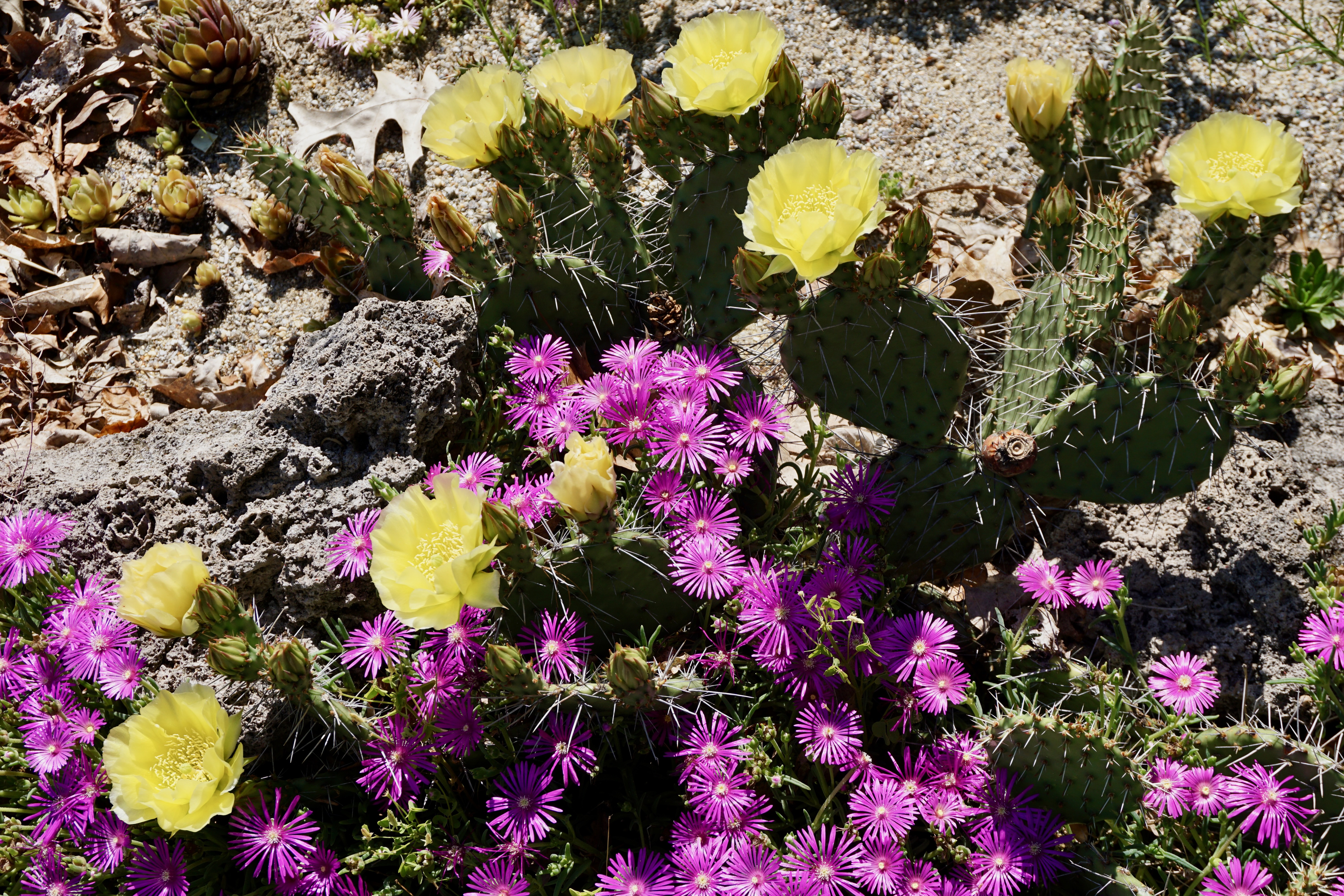
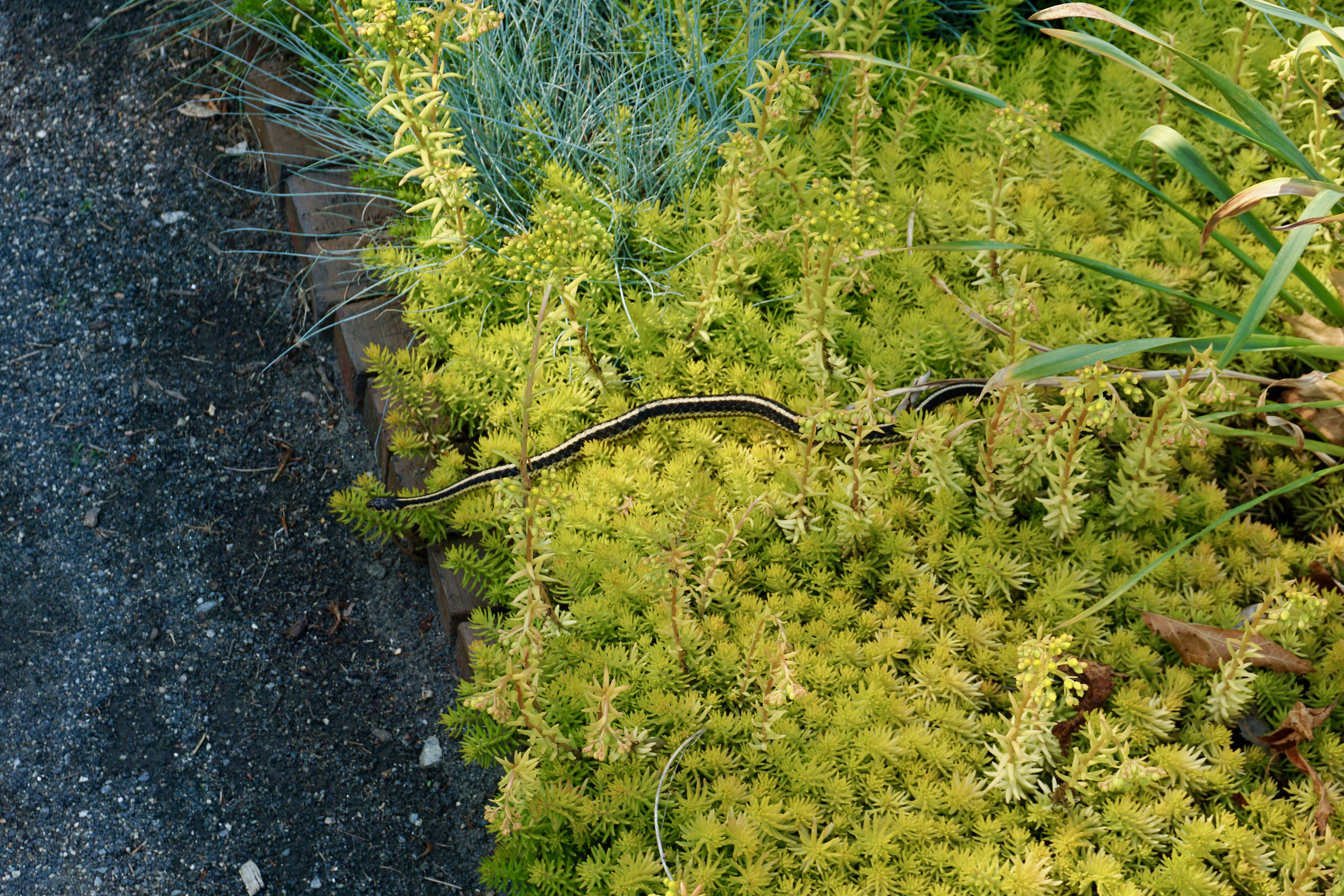
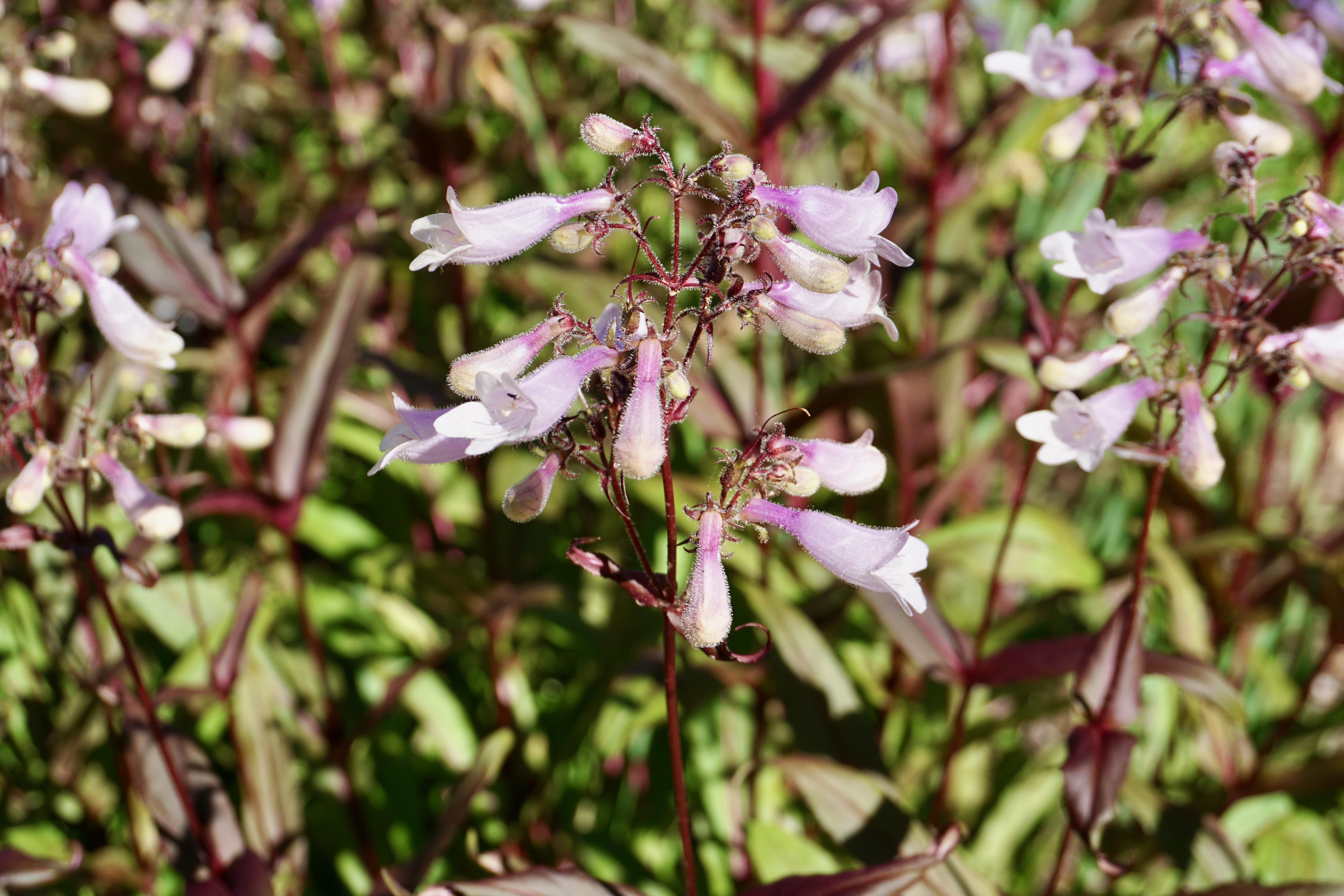
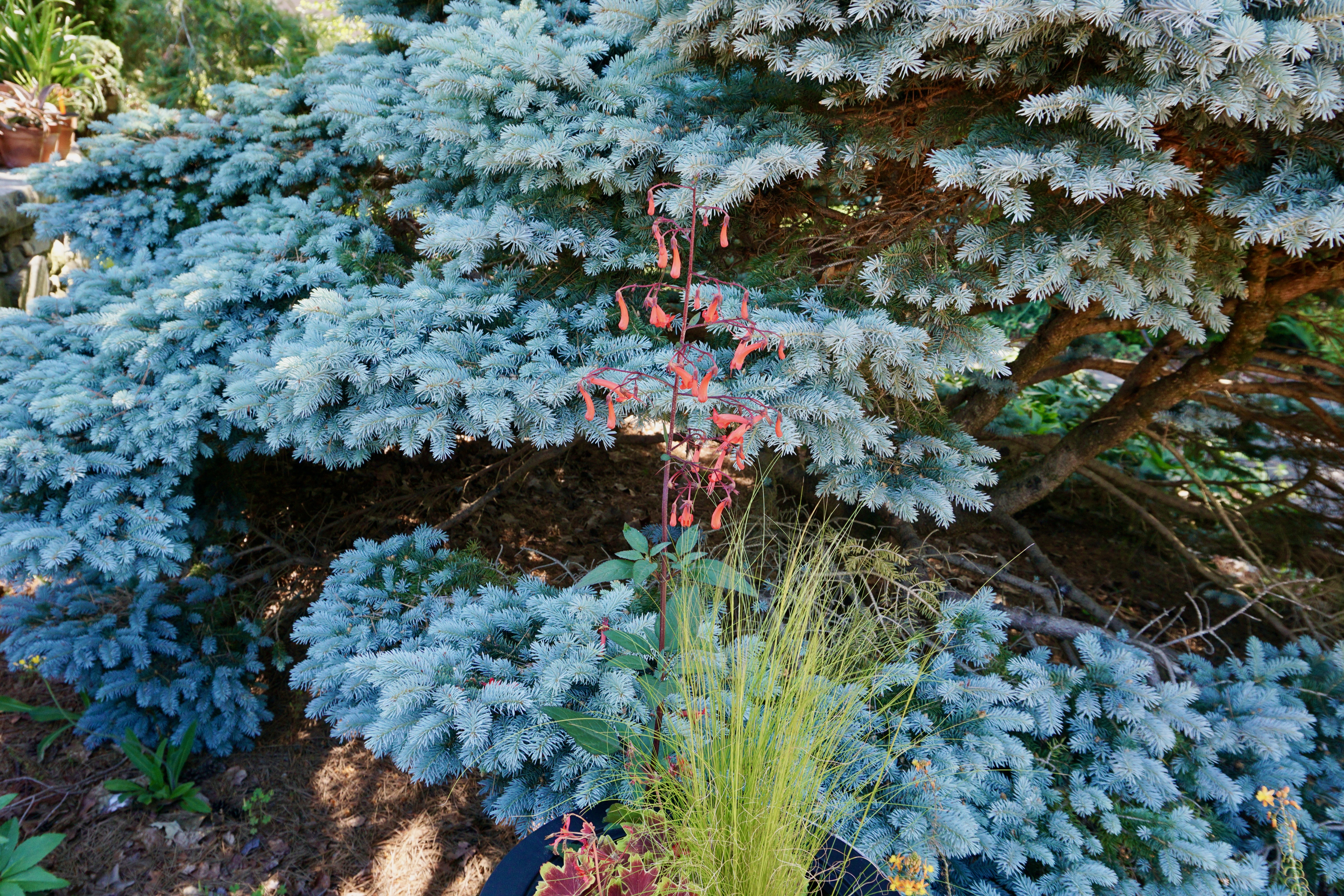
A few Saturdays ago, I broke out my long-dormant Sony camera and made a visit to New England Botanic Garden at Tower Hill for the first time in many years.
Not too much had changed, which was reassuring.
Not that I ever recalled seeing a snake there before. Below are my favorite pix from the trip.
After a four year absence, we returned to the Caribbean earlier this month – Punta Cana, to be specific.
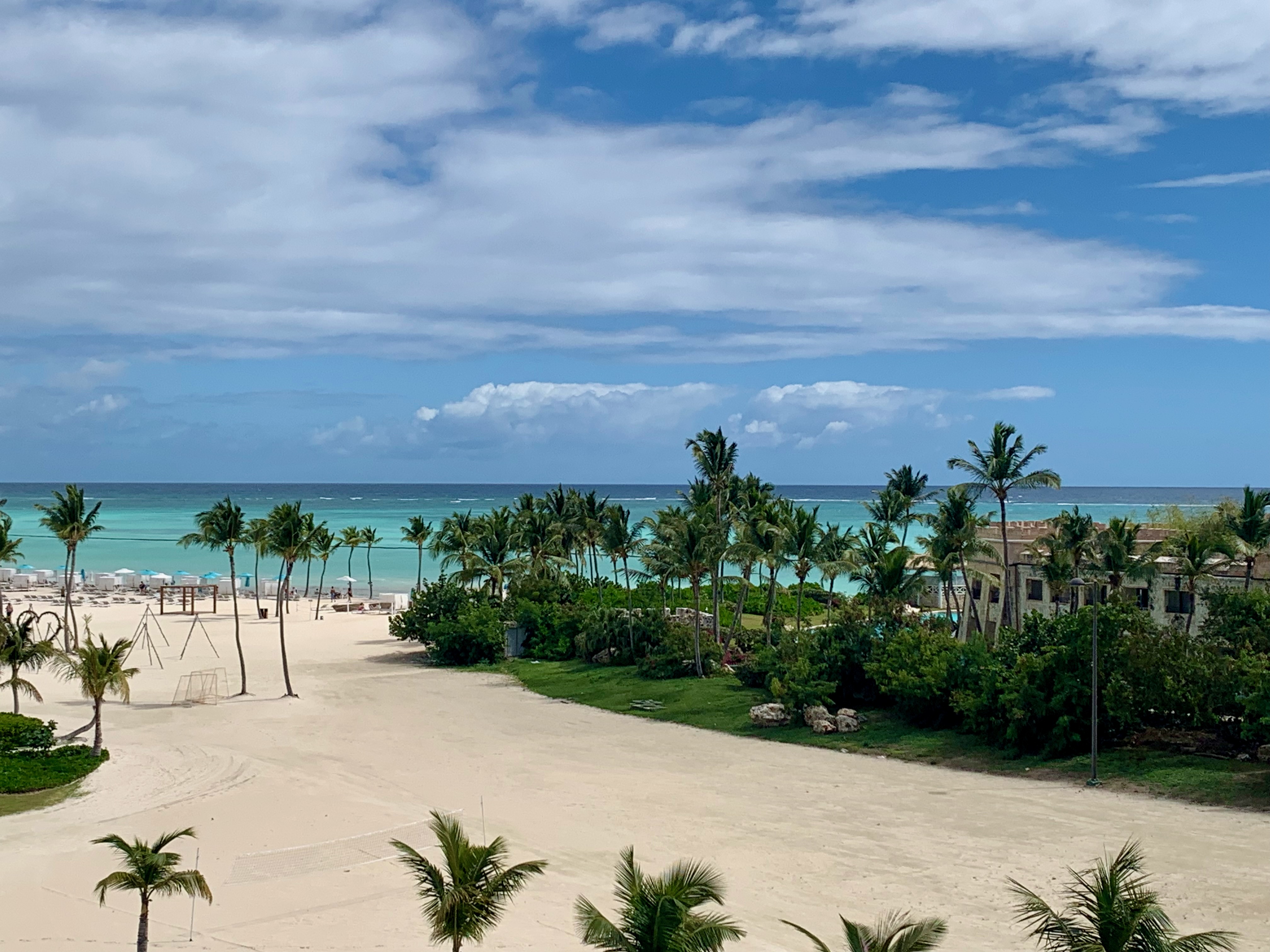
While our location within the area was technically Cap Cana, our resort ended up being a short walk to Juanillo Beach. A day trip there was a highlight of our first visit to the Dominican Republic in 2017.
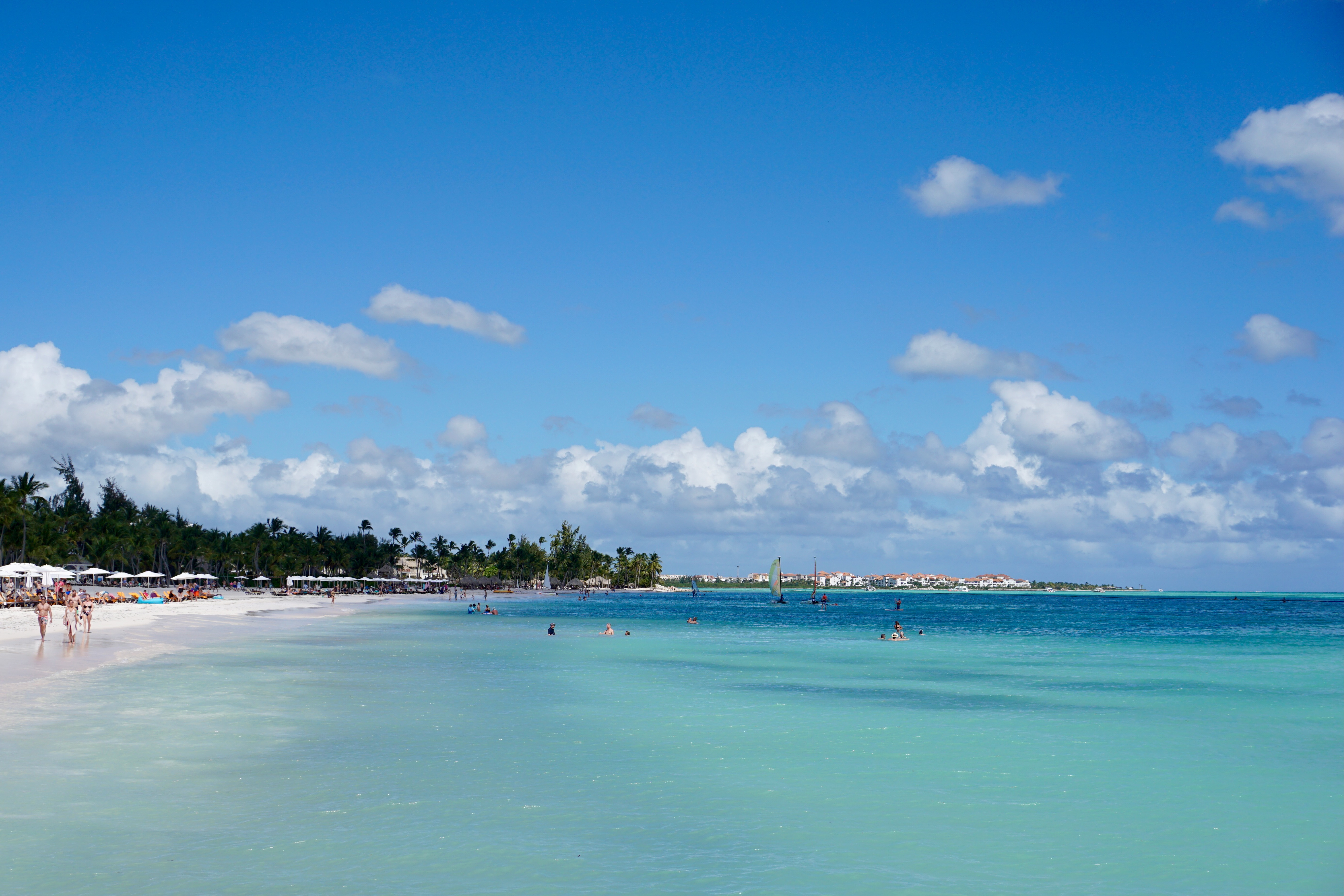
While I’ve seen nicer white-sand beaches (such as Grace Bay in Providenciales, Turks and Caicos), I wasn’t going to turn my nose up at this.
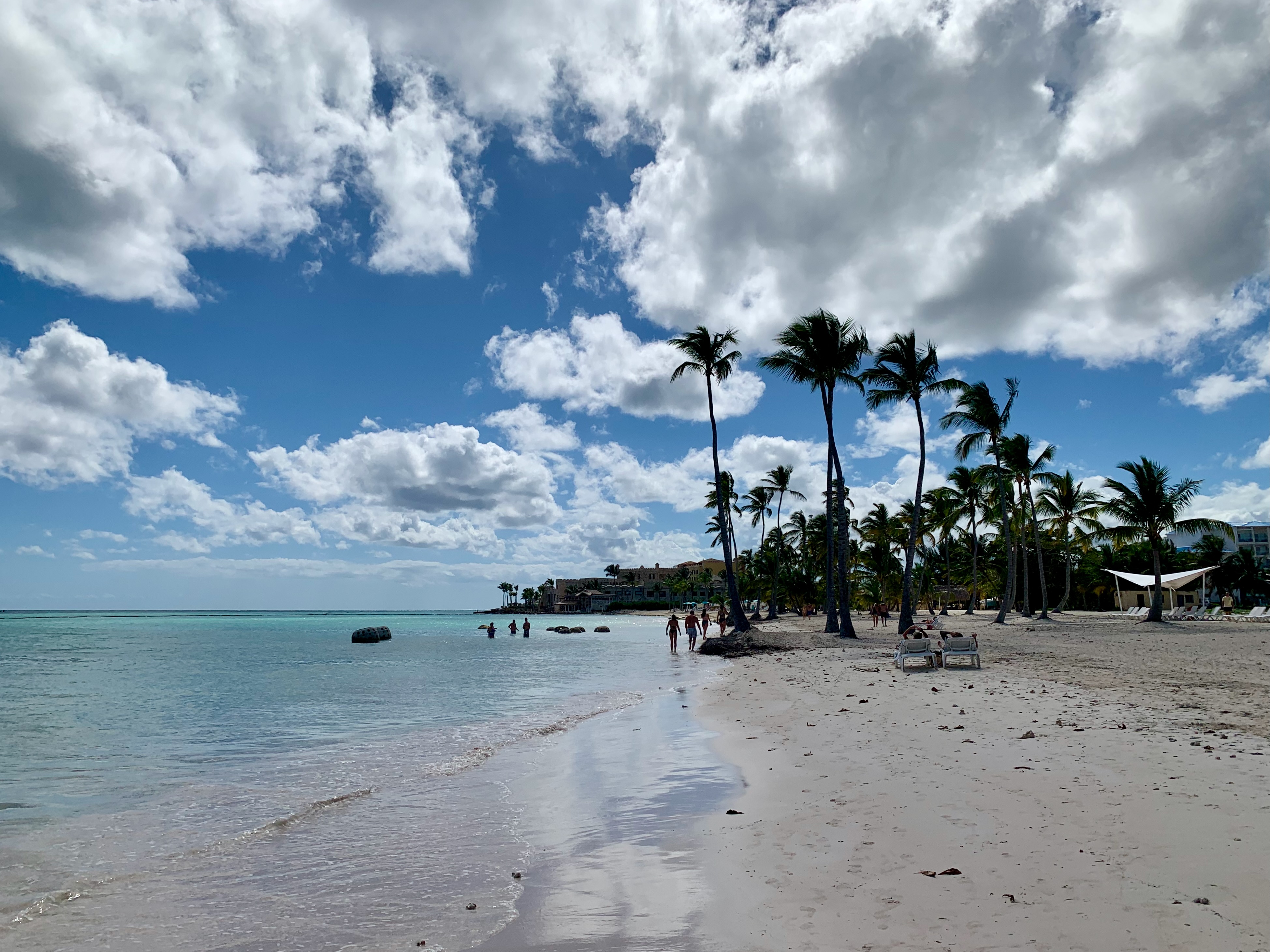
We walked Juanillo to a point where one could see Cap Cana itself off in the distance.
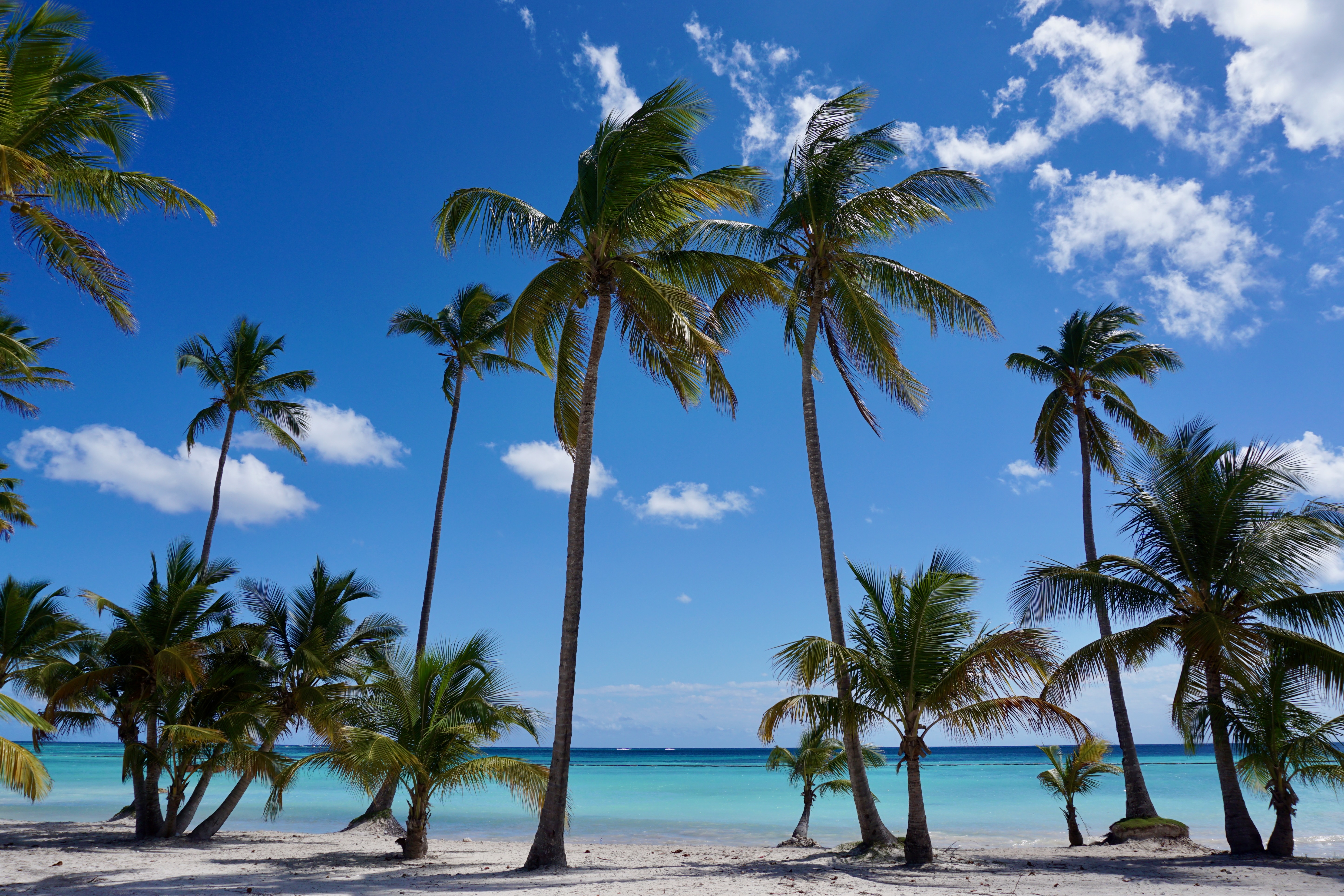
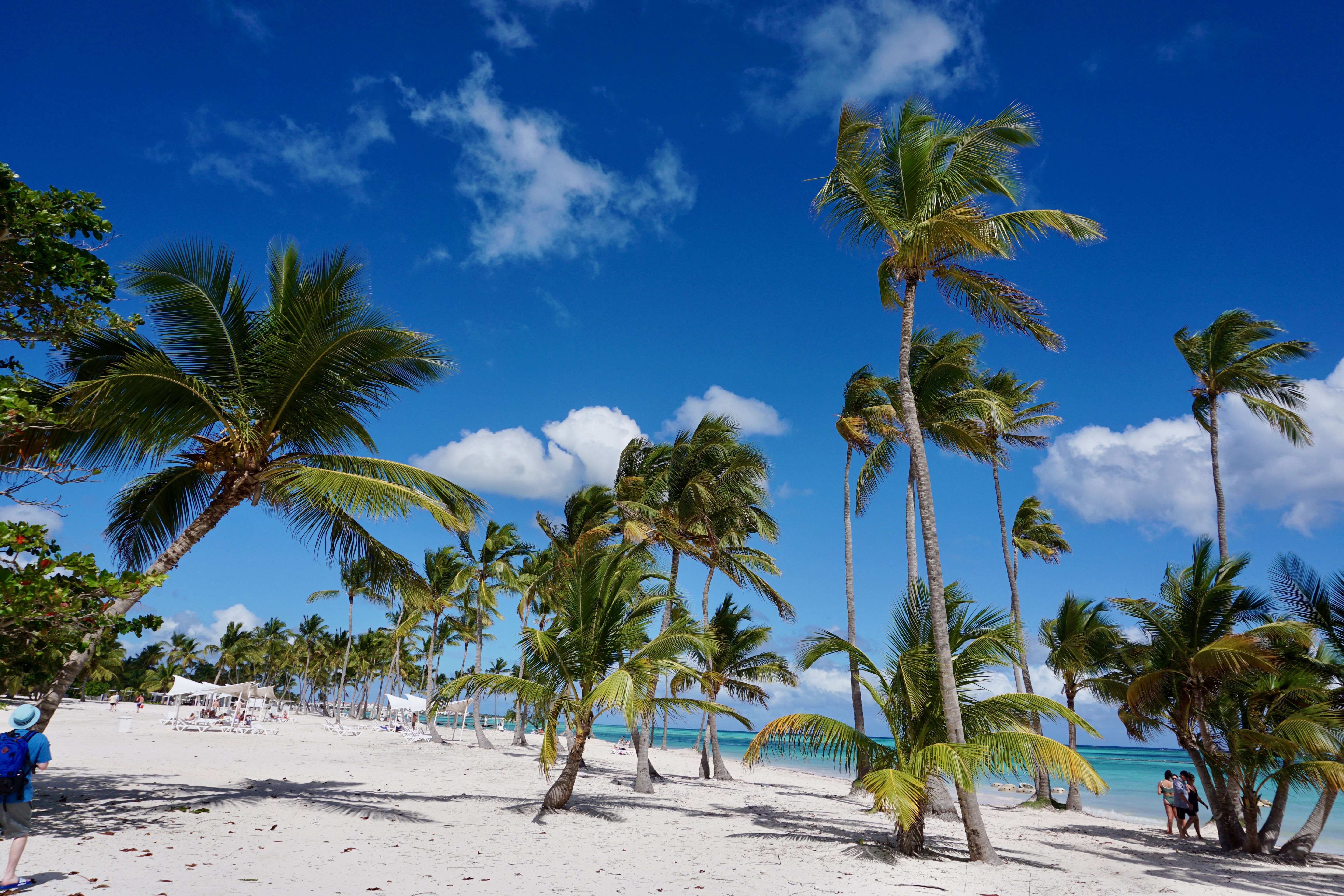
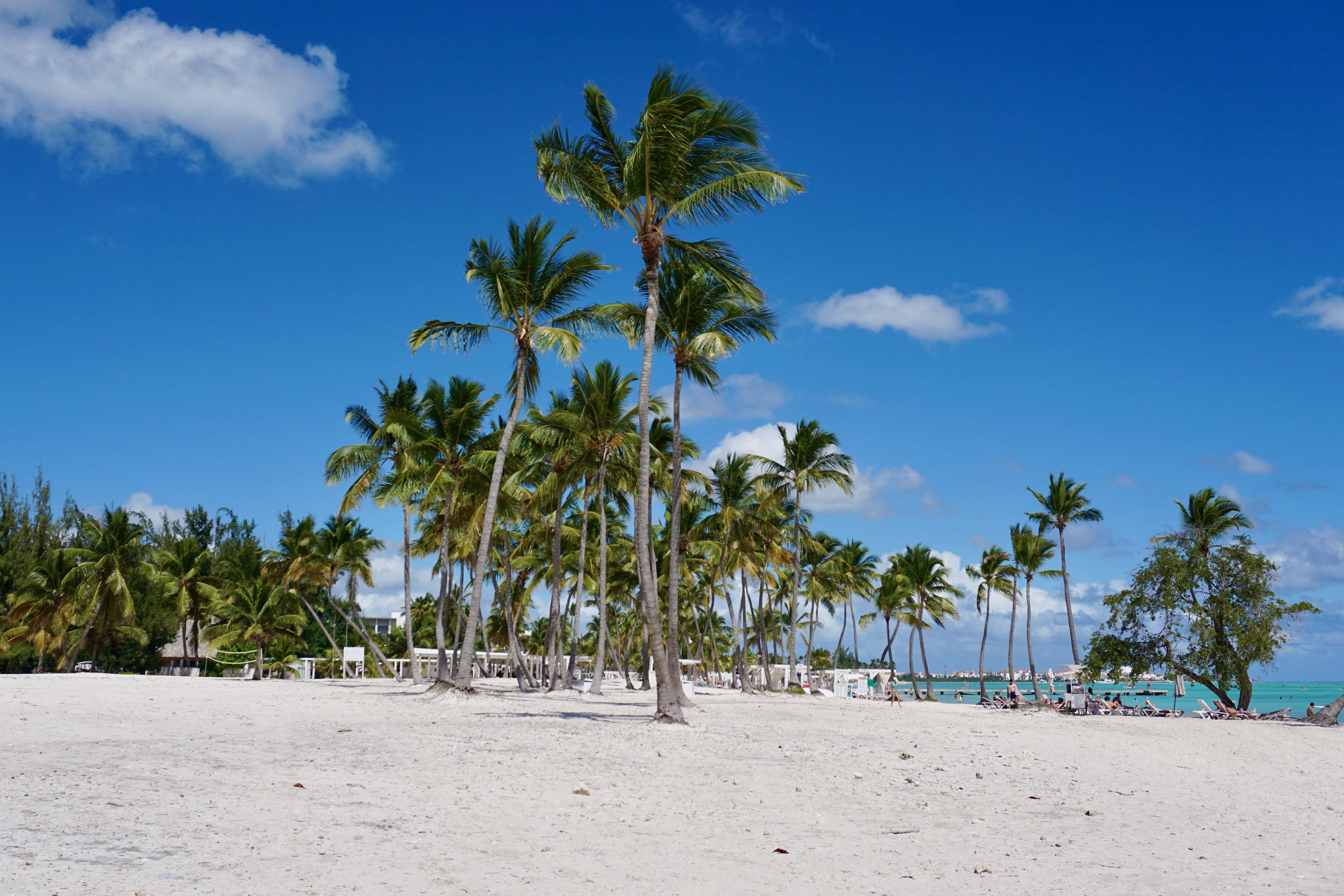
As on that previous trip, tall, lanky palms and piercing aqua blue seas were abundant here.
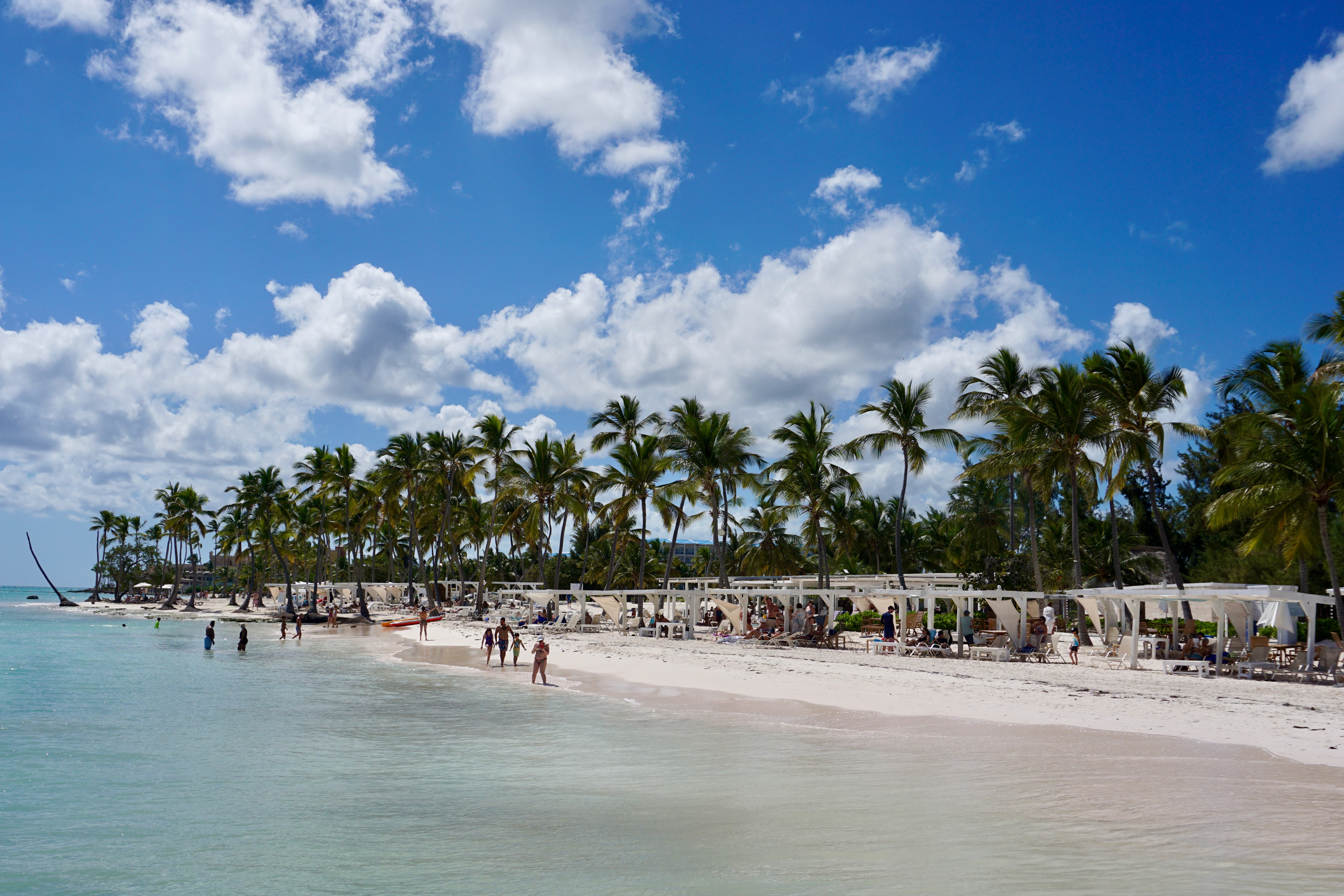
Assuming it’s one of the area’s lovelier public beaches, with plenty of shaded spaces to suntan and relax along with a bar/grill where we dined on lobster, grouper ceviche and frozen cocktails for lunch.
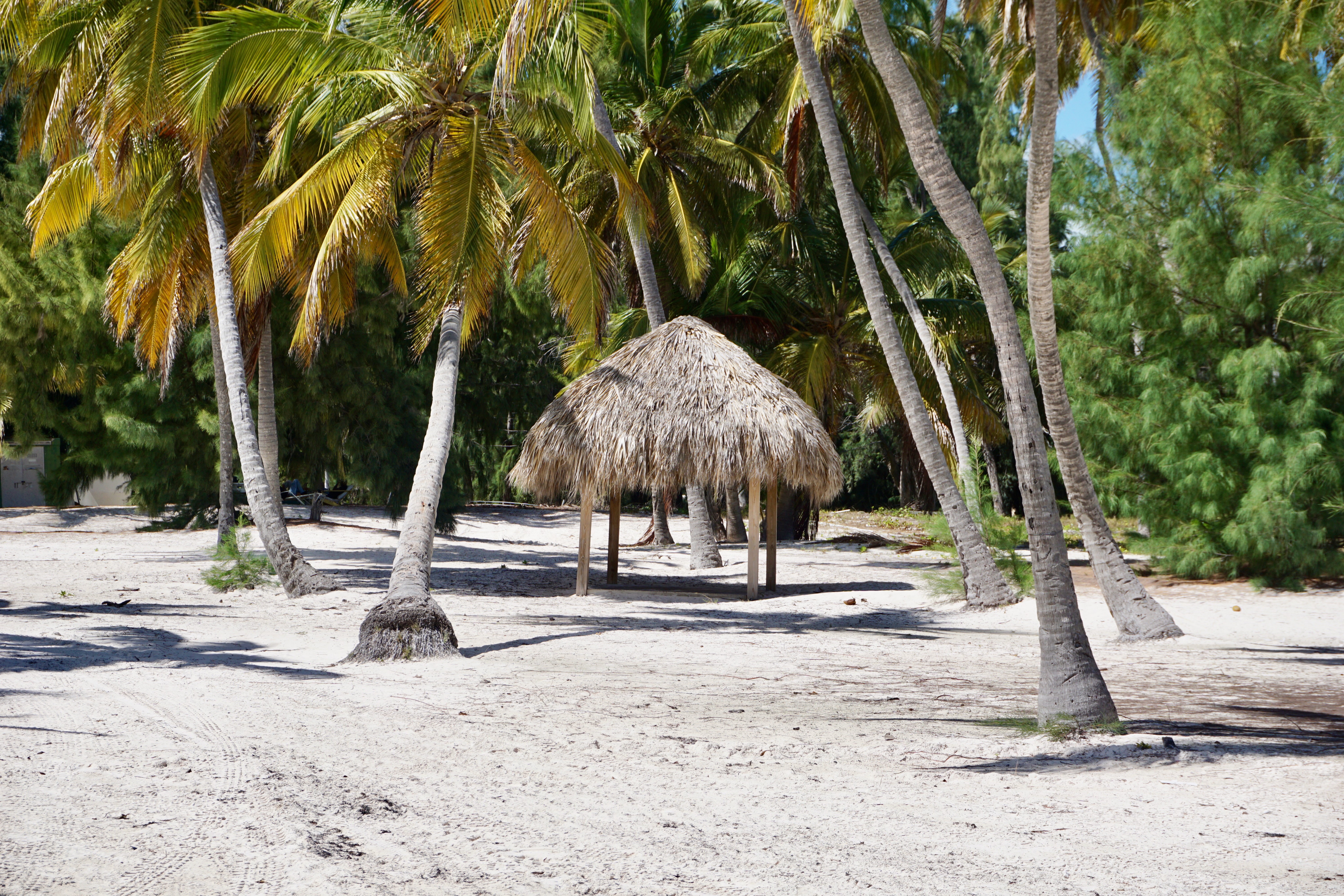
This little hut further away from the shore caught my eye; it reminds me of something from Gilligan’s Island, even though I believe that was set in the “Pacific” rather than the Caribbean.
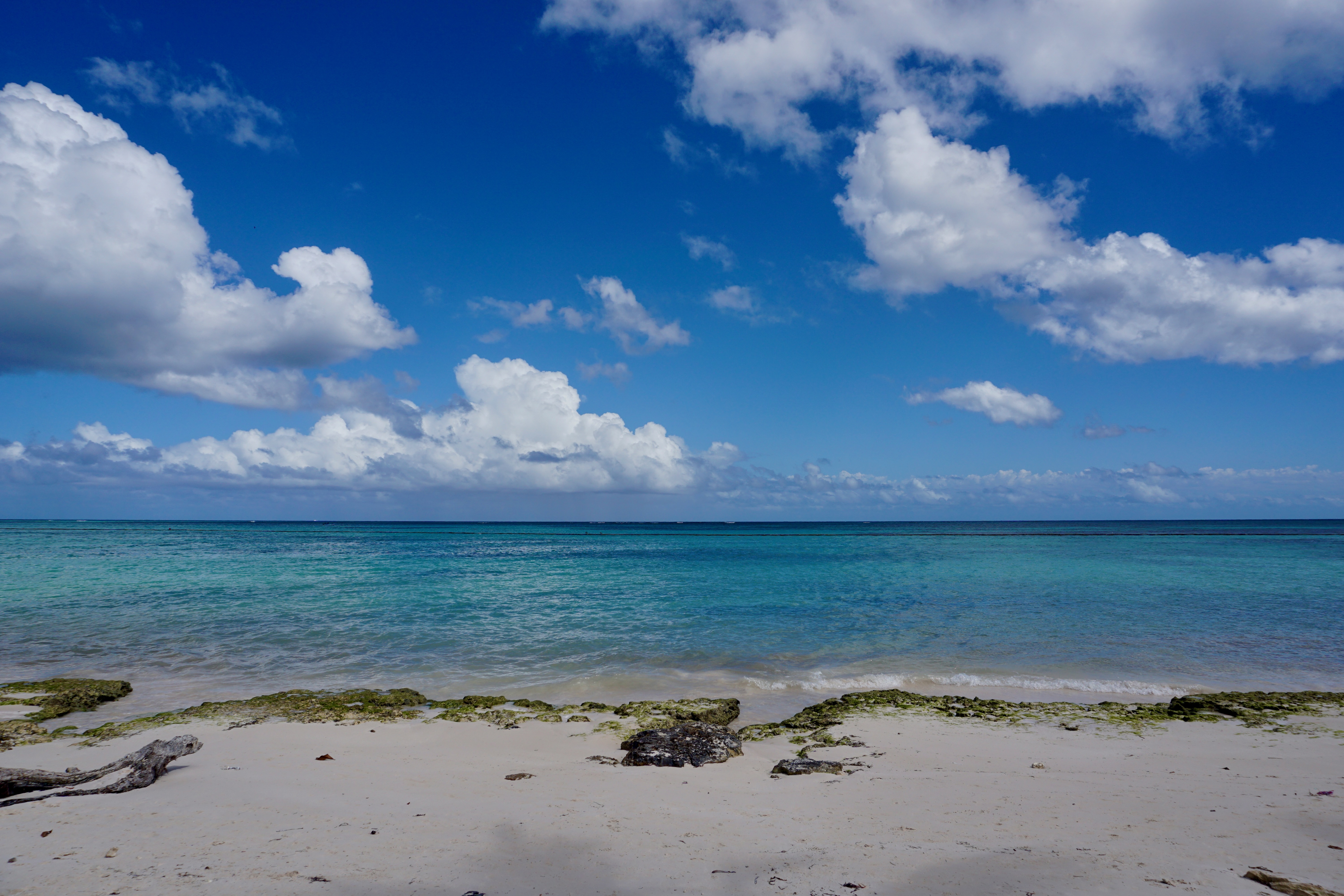
Even when strewn with algae, branches and other detritus, the sparkling blue of the skies and water renders this an idyllic view.
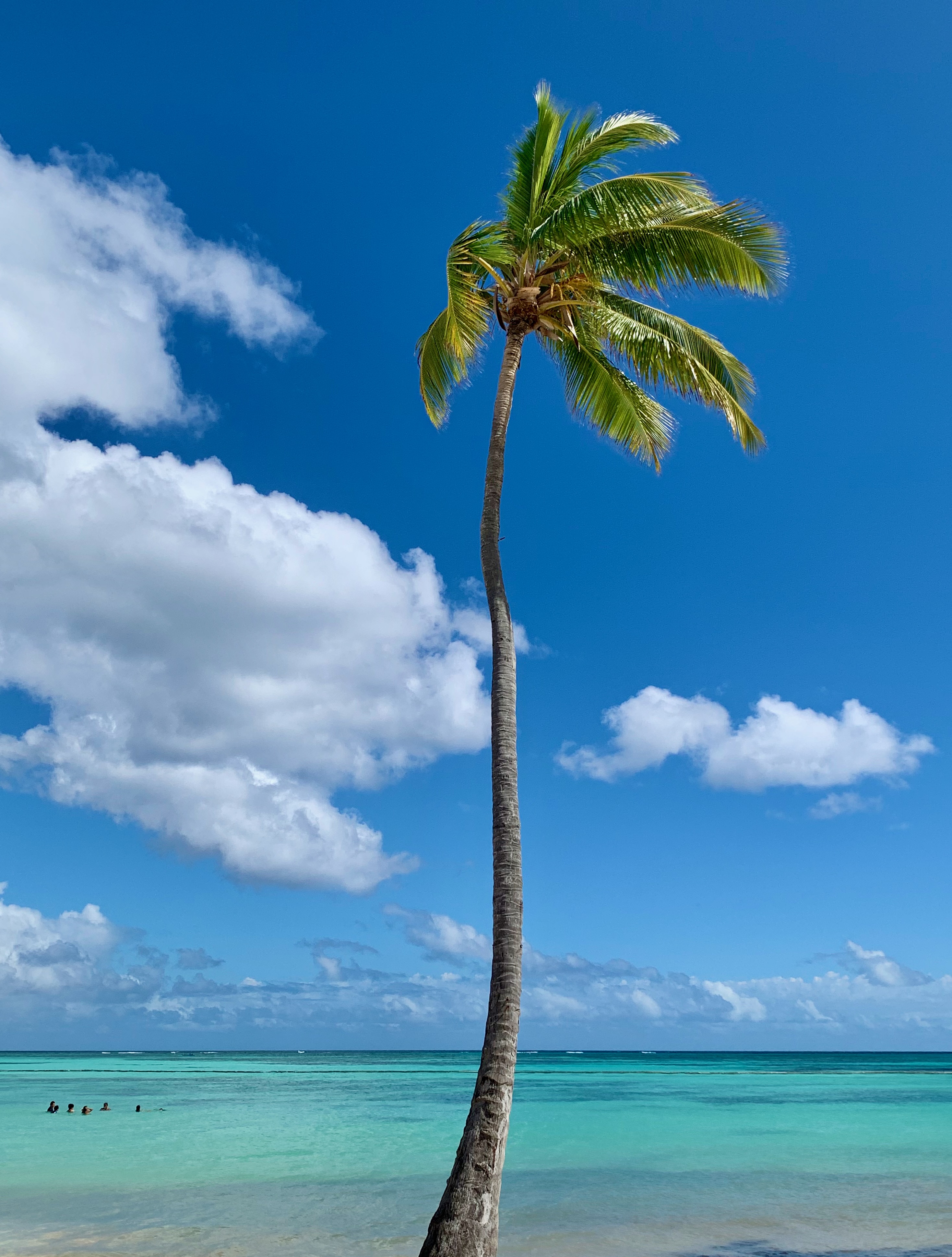
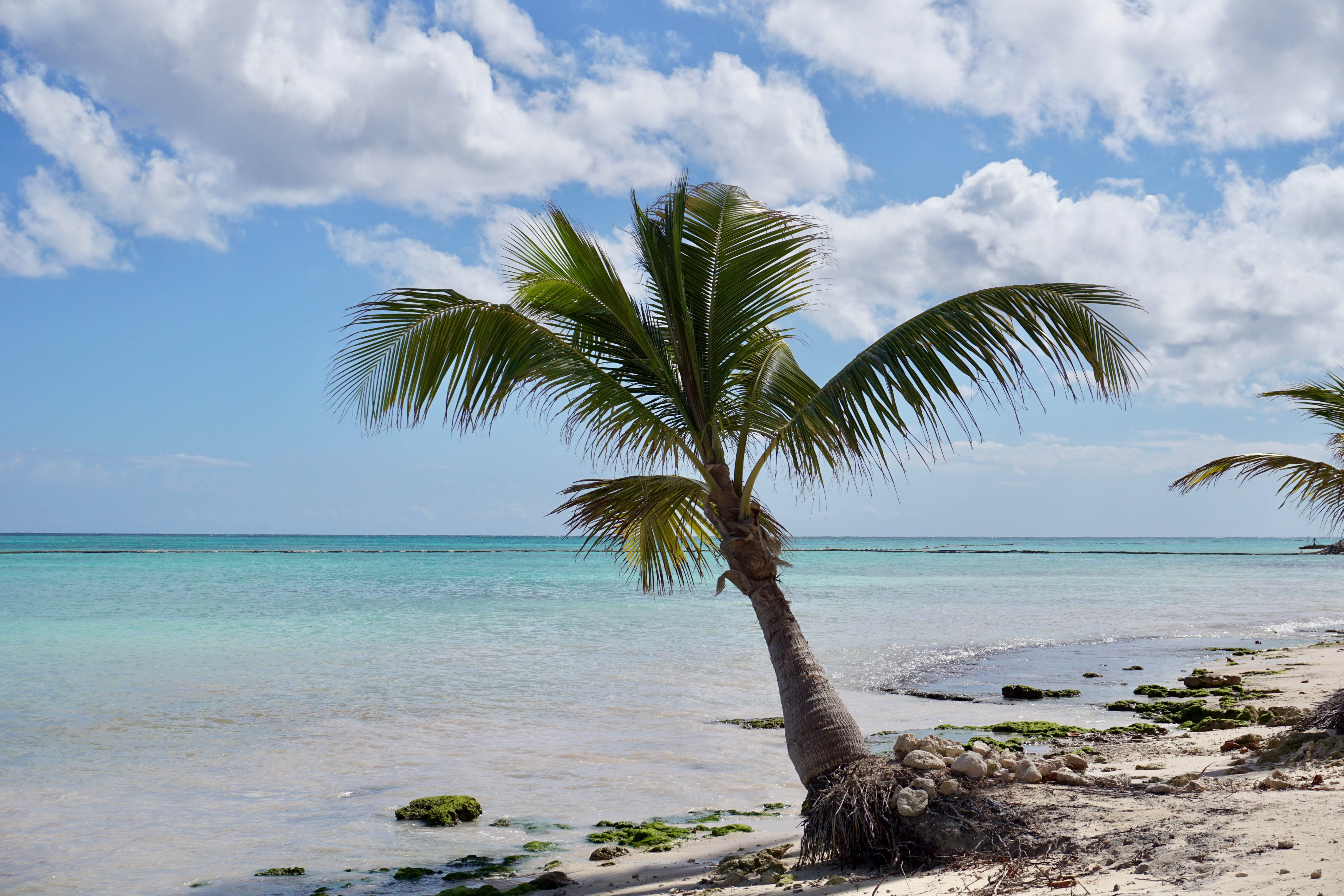
Thrown in some leaning palms and the view is arguably even better.
Walking back towards our resort and another horizon.
One could see what was technically the southern end of Juanillo Beach from our room’s deck (as well as the odd, castle-like structure to the right, part of the adjacent Sanctuary Cap Cana resort.)
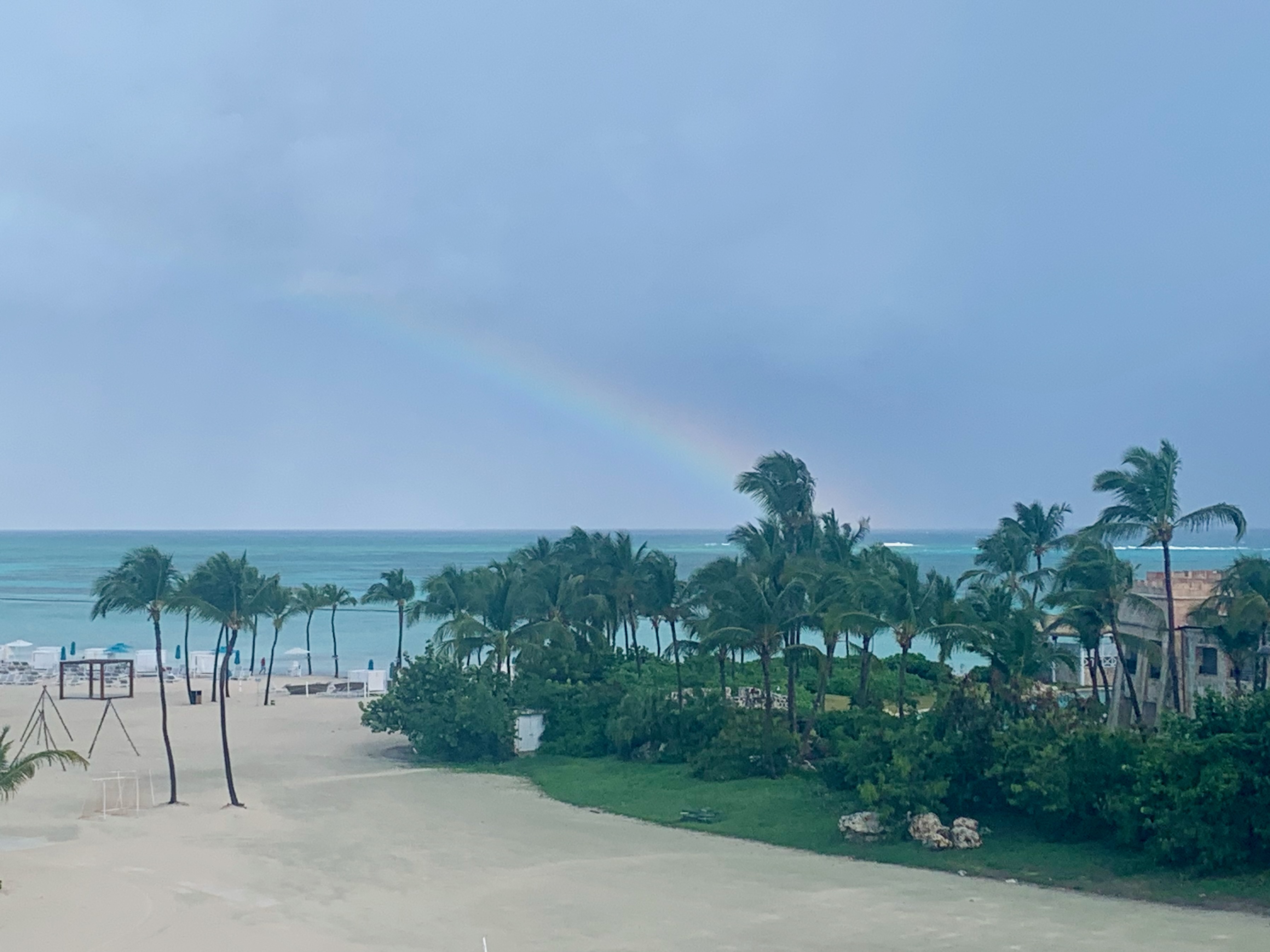
While it’s usually sunny in Punta Cana, there was a passing storm midway through our trip; it was worth it for the brief rainbow afterwards.
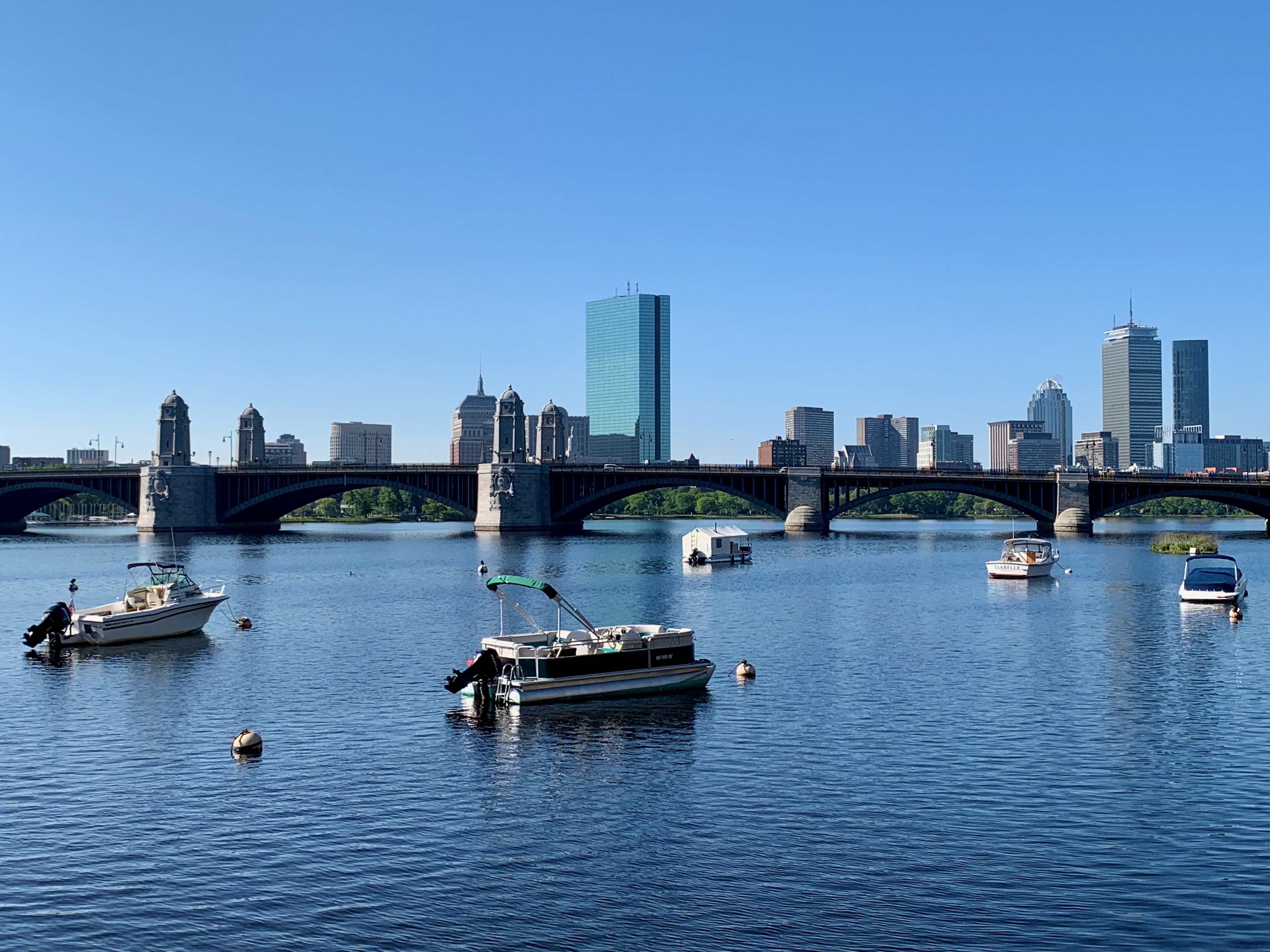
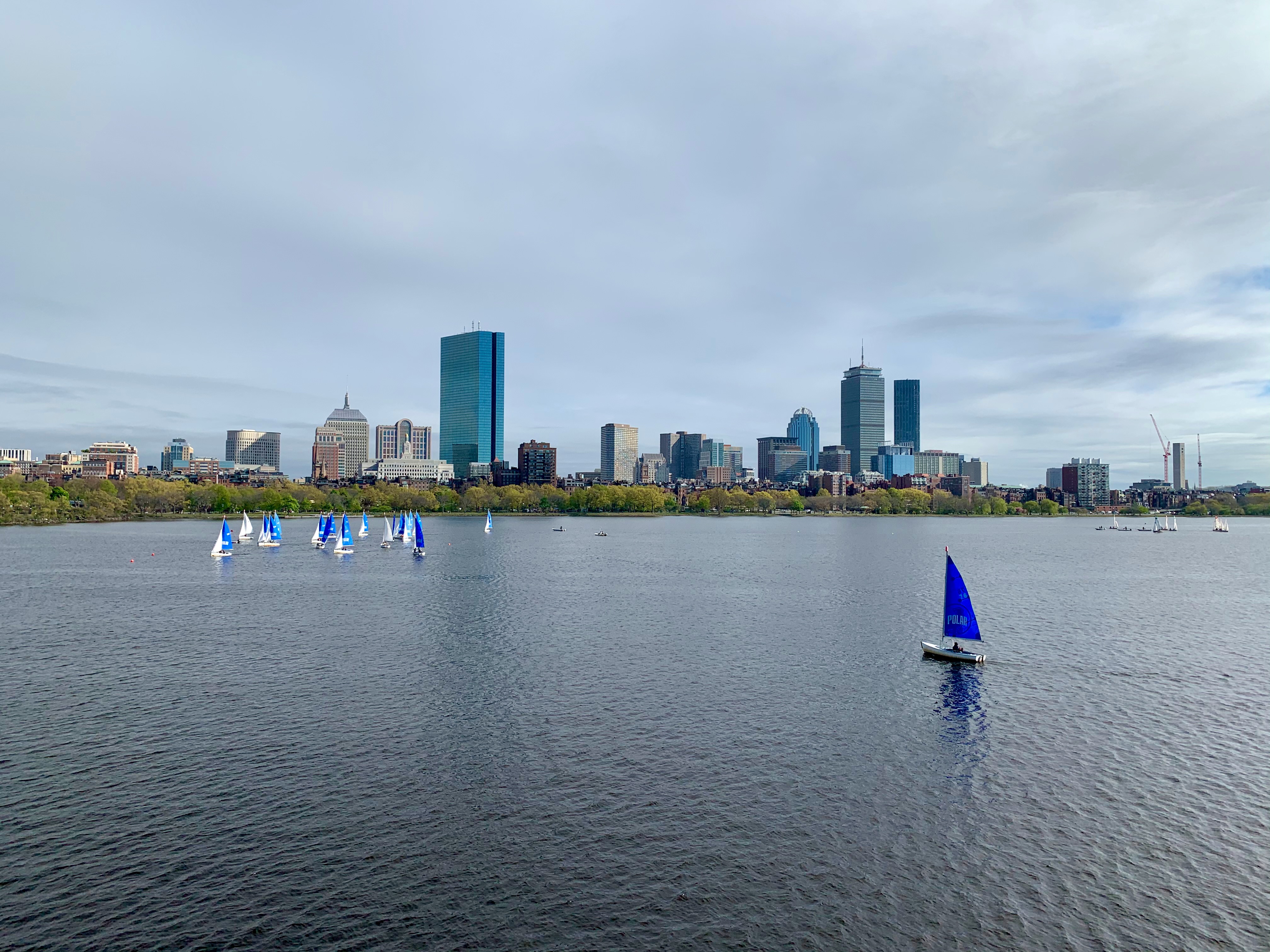
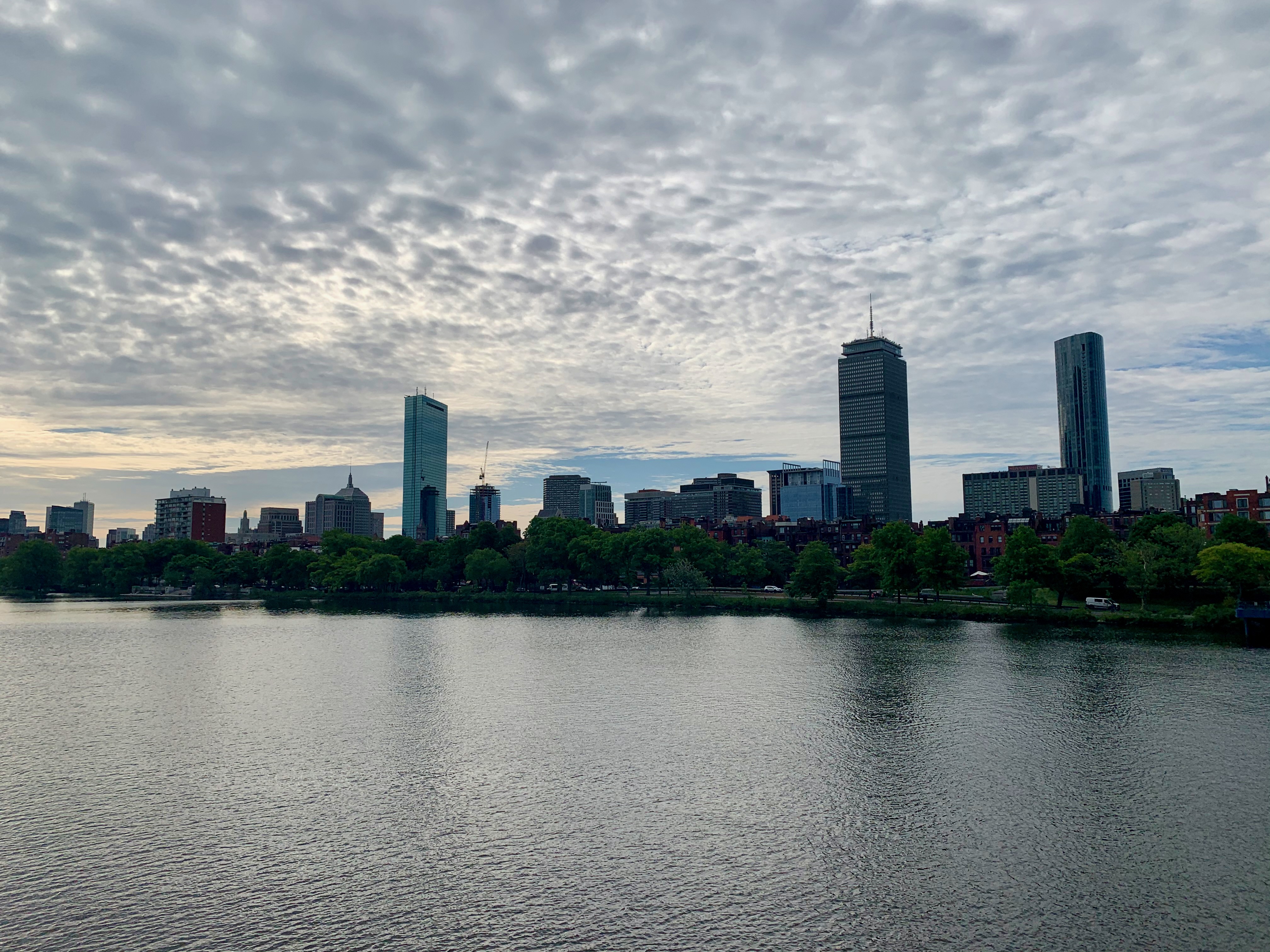
At the start of 2022, a new job gave me a reason to cross the Longfellow Bridge across the Charles River in Boston on a regular basis.
I often prefer walking it to taking the ever-more undependable Red Line T along it, except when it’s too cold, of course.
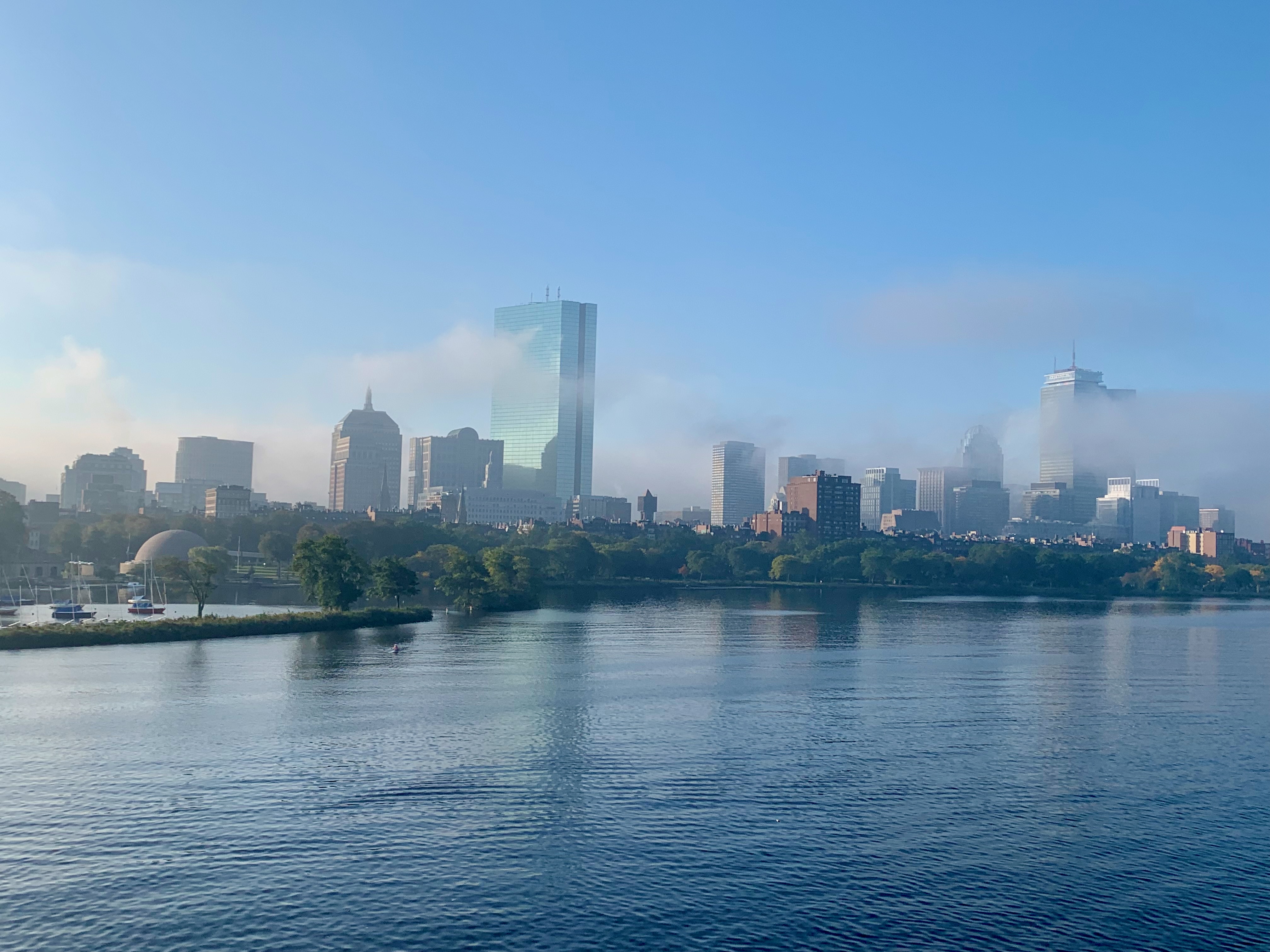
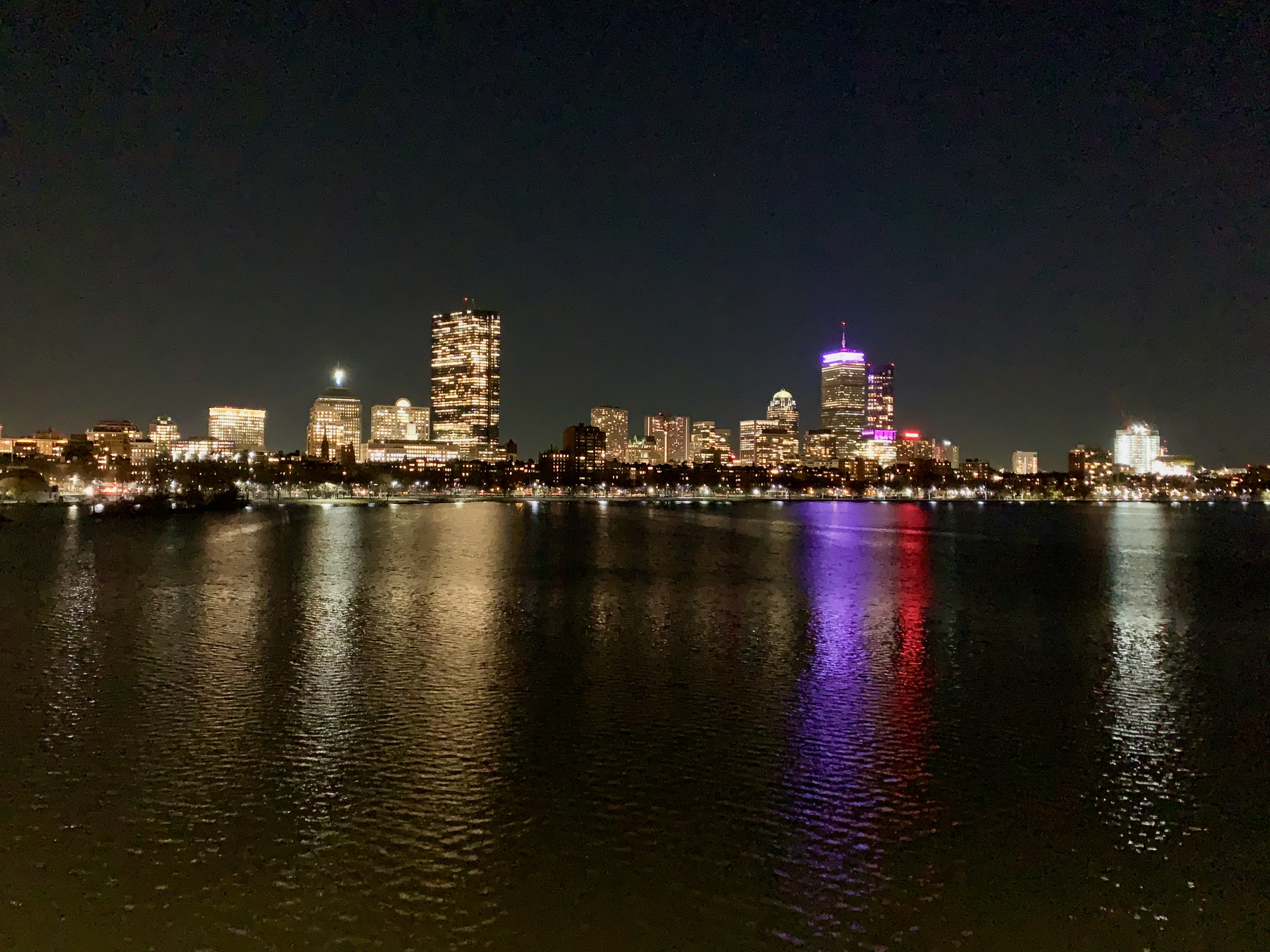
In the warmer months, however, it’s a treat. I often feel moved to take a few shots of the Back Bay skyline.
Granted, I can also see the skyline along Memorial Drive on the Cambridge side of the river.
Still, this angle from the Longfellow Bridge, with its particular composition is one of the city’s best, even in the morning as a rare fog gradually lifts.
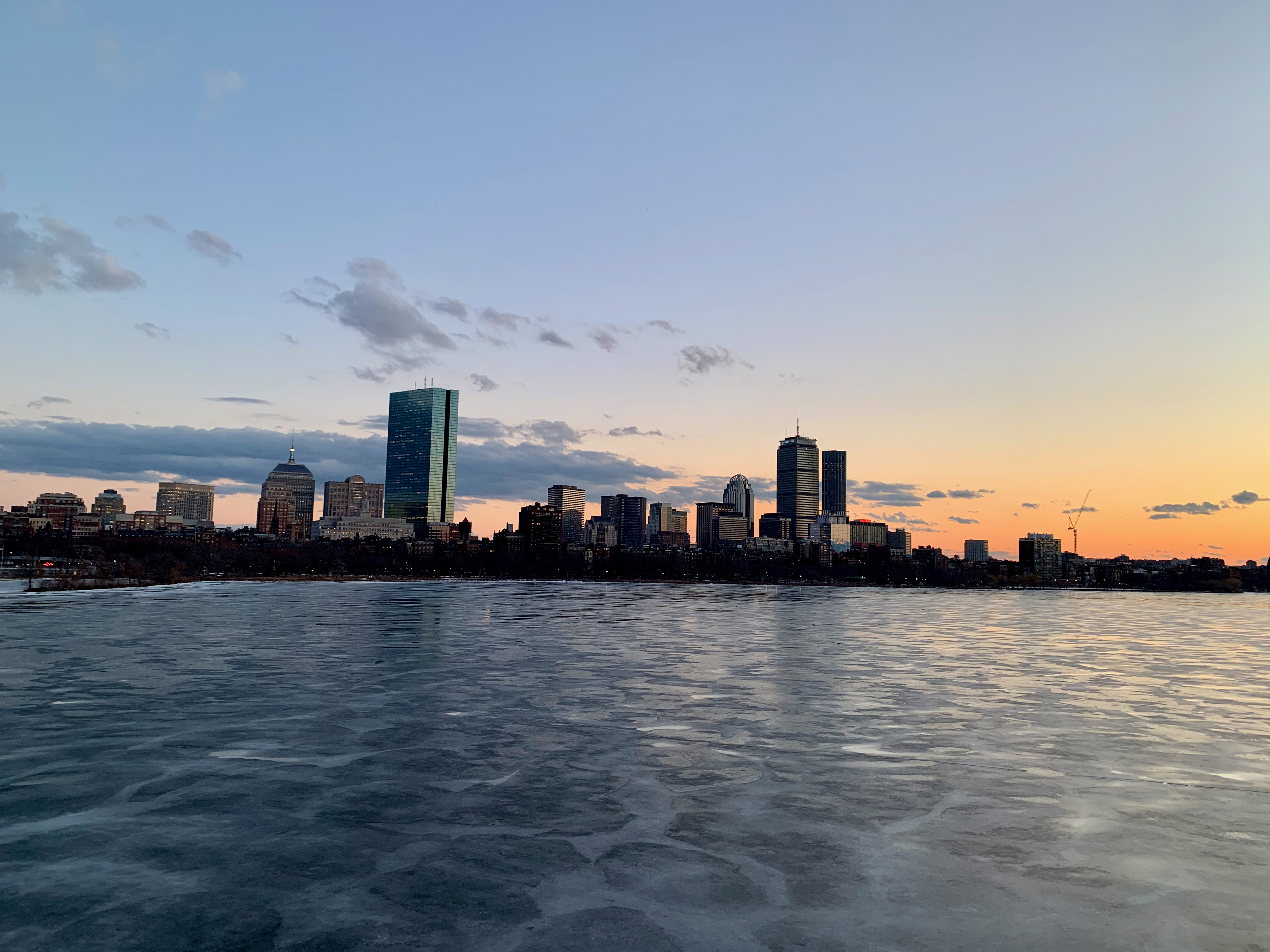
I’ve usually left the area before dark, but on one unseasonably warm evening last December, I found myself impulsively walking across the bridge before catching the T home at Charles/MGH station. Sometimes I grumble about having to cross this bridge; more often, I’m just happy to revel in the beauty of my adopted city.
After a morning in Peggy’s Cove, we drove 100 km along Nova Scotia’s Atlantic coast to the town of Lunenburg.
With a population of 2,200, it’s an idyllic Maritime province village. In 1995, it was designated a UNESCO World Heritage Site; more recently, it was a prominent filming locating for the (ostensibly Massachusetts-set) Netflix series Locke and Key.
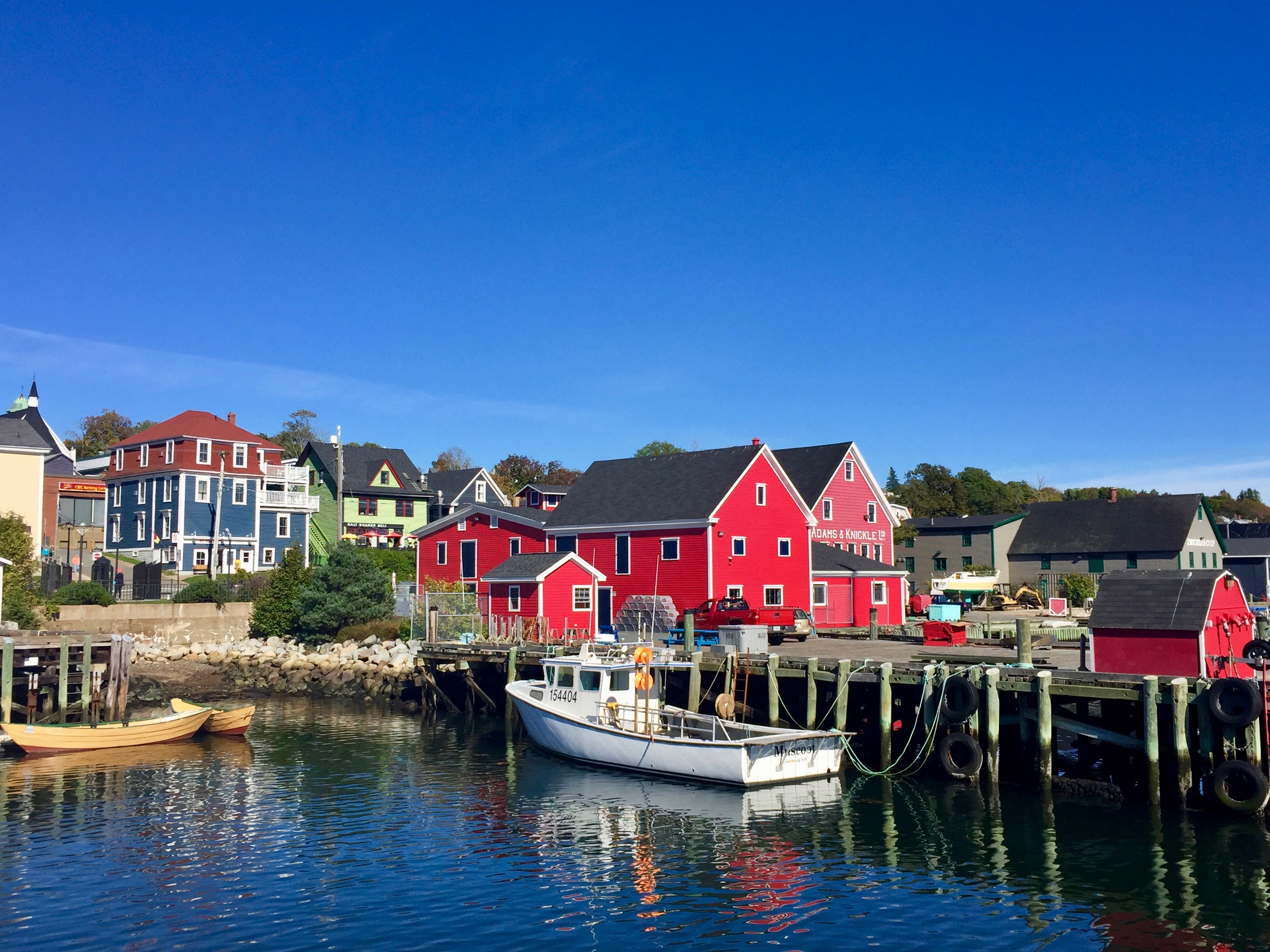
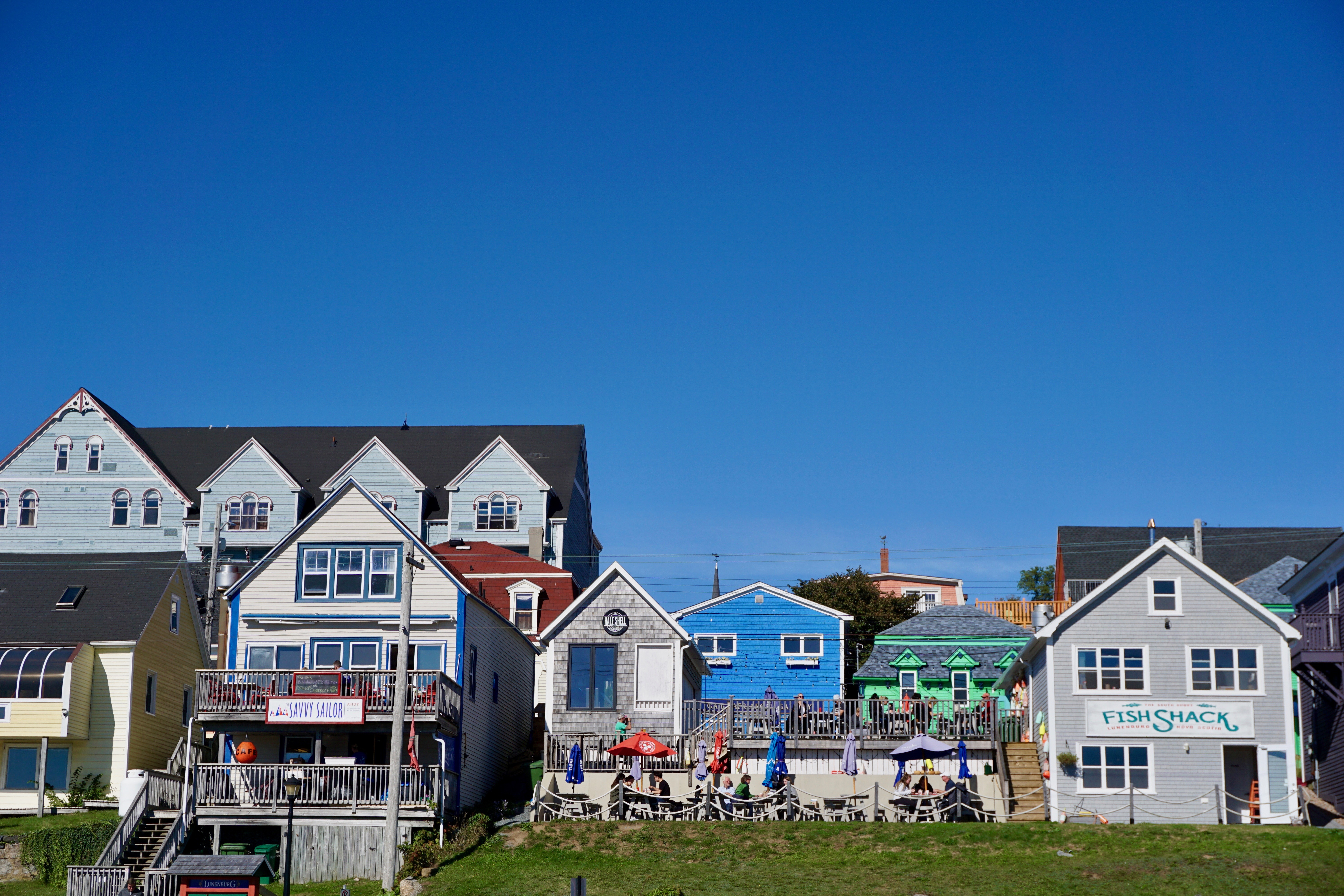
From Lunenburg Harbour, a picture-postcard view of the backs of buildings along main drag Montague Street.
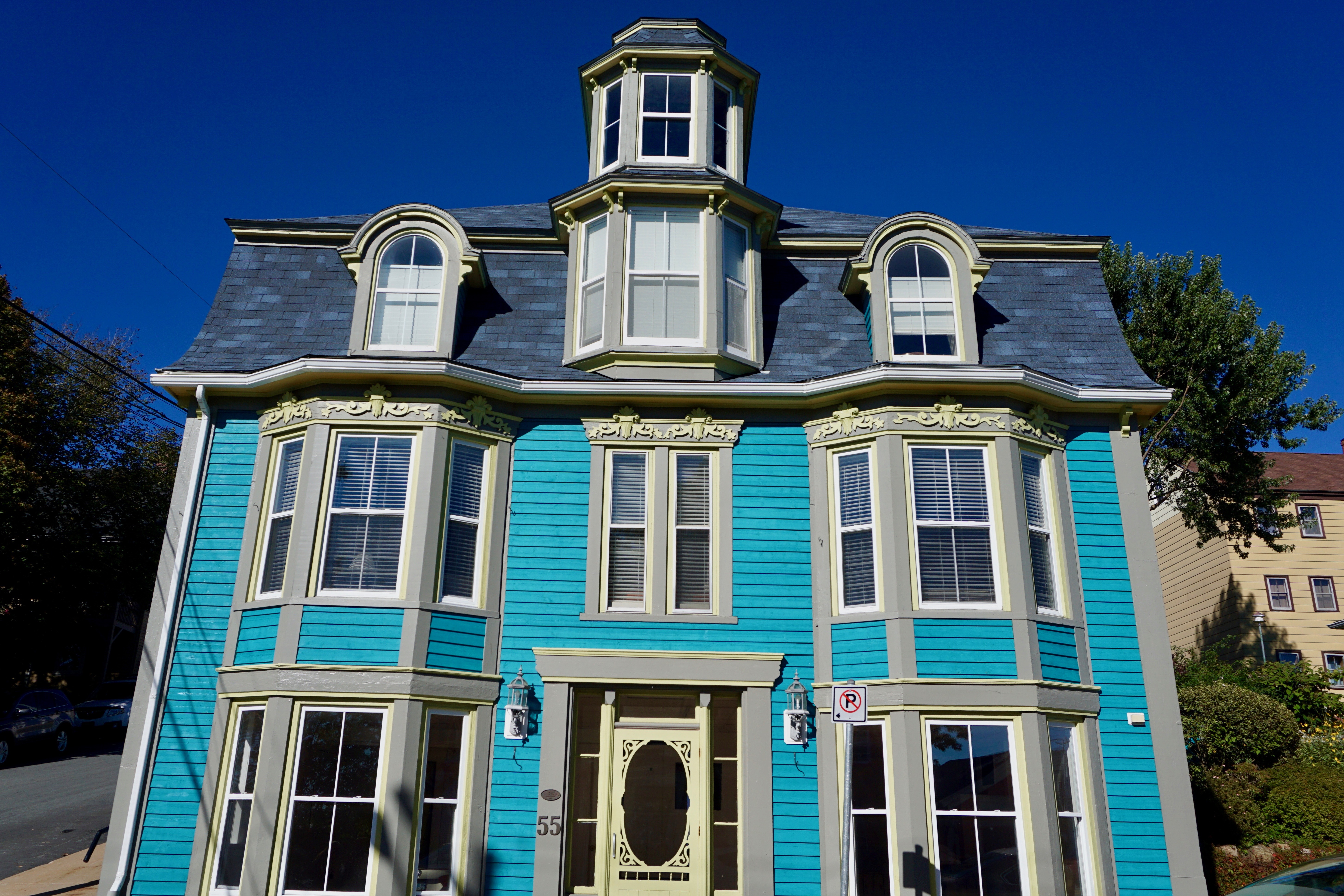
Bright, bold colors distinguish Lunenburg’s historic buildings, like the red one in this essay’s first photo and the aquamarine one directly above.
Occasionally, perhaps a little too bright and bold…
…but not everywhere. This hulking stone fortress of a bank is unlike anything I’ve spotted in all my years as a New England resident.
Walk a little further away from the harbour and you’ll reach the Lunenburg Heritage Bandstand and War Memorial.
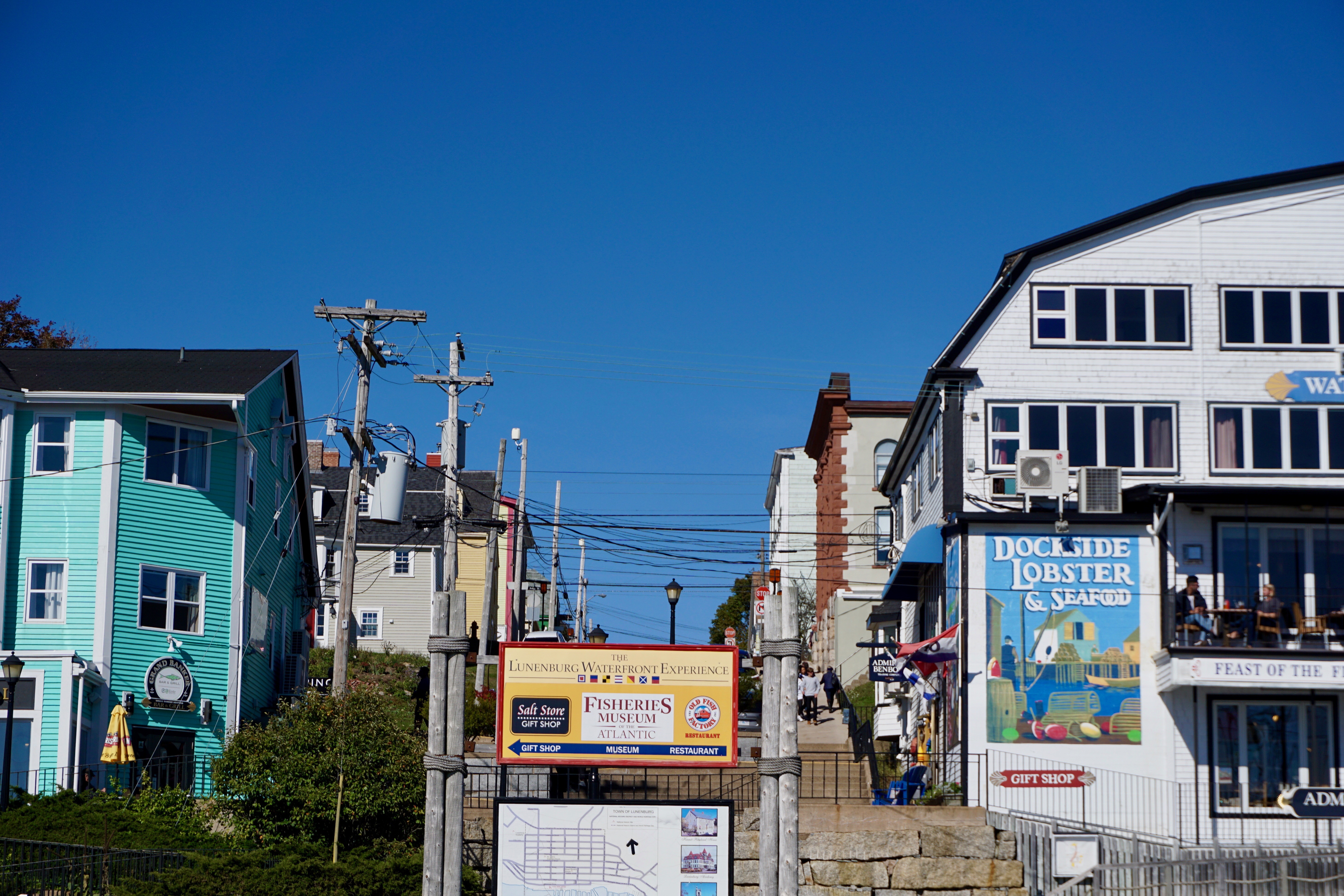
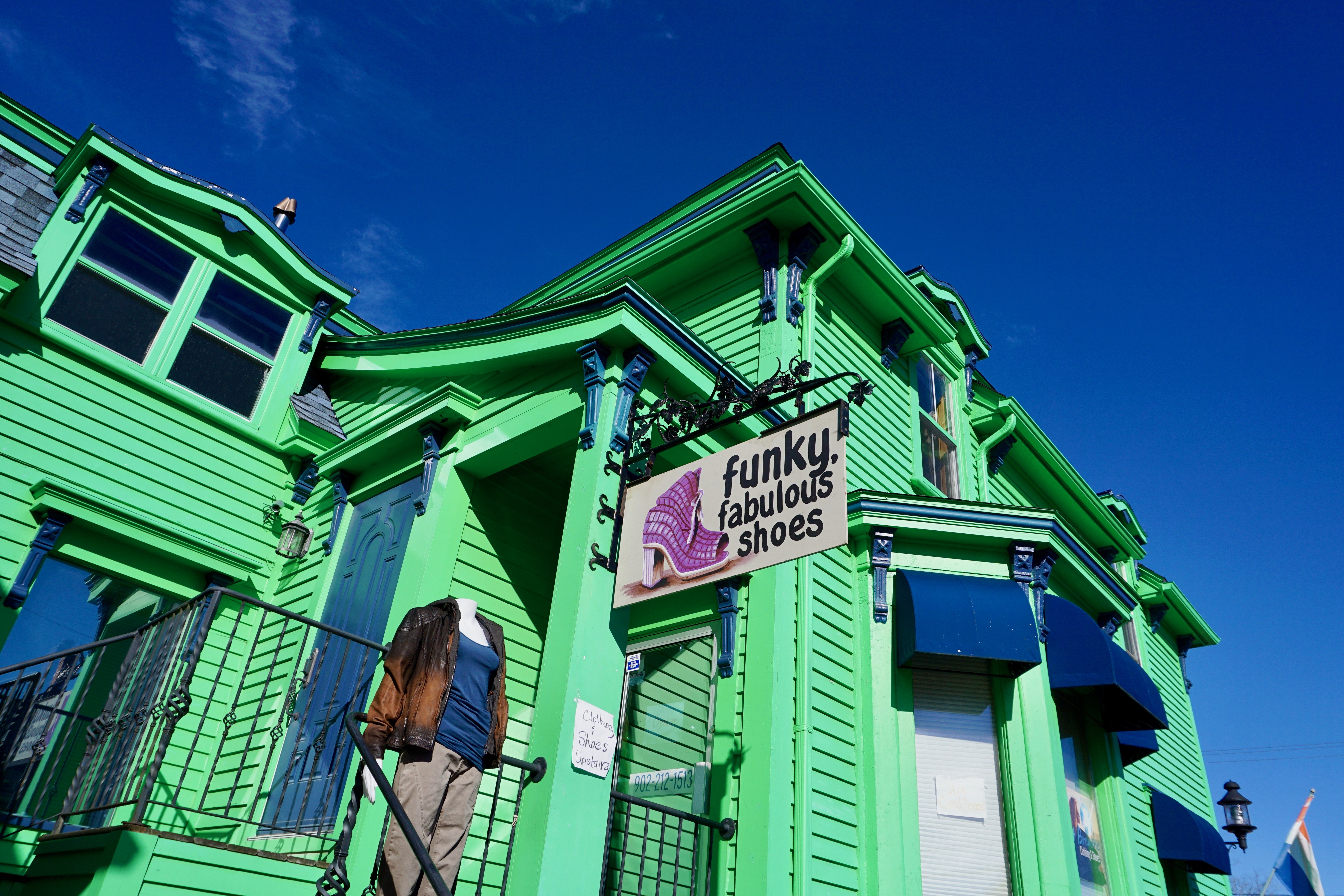
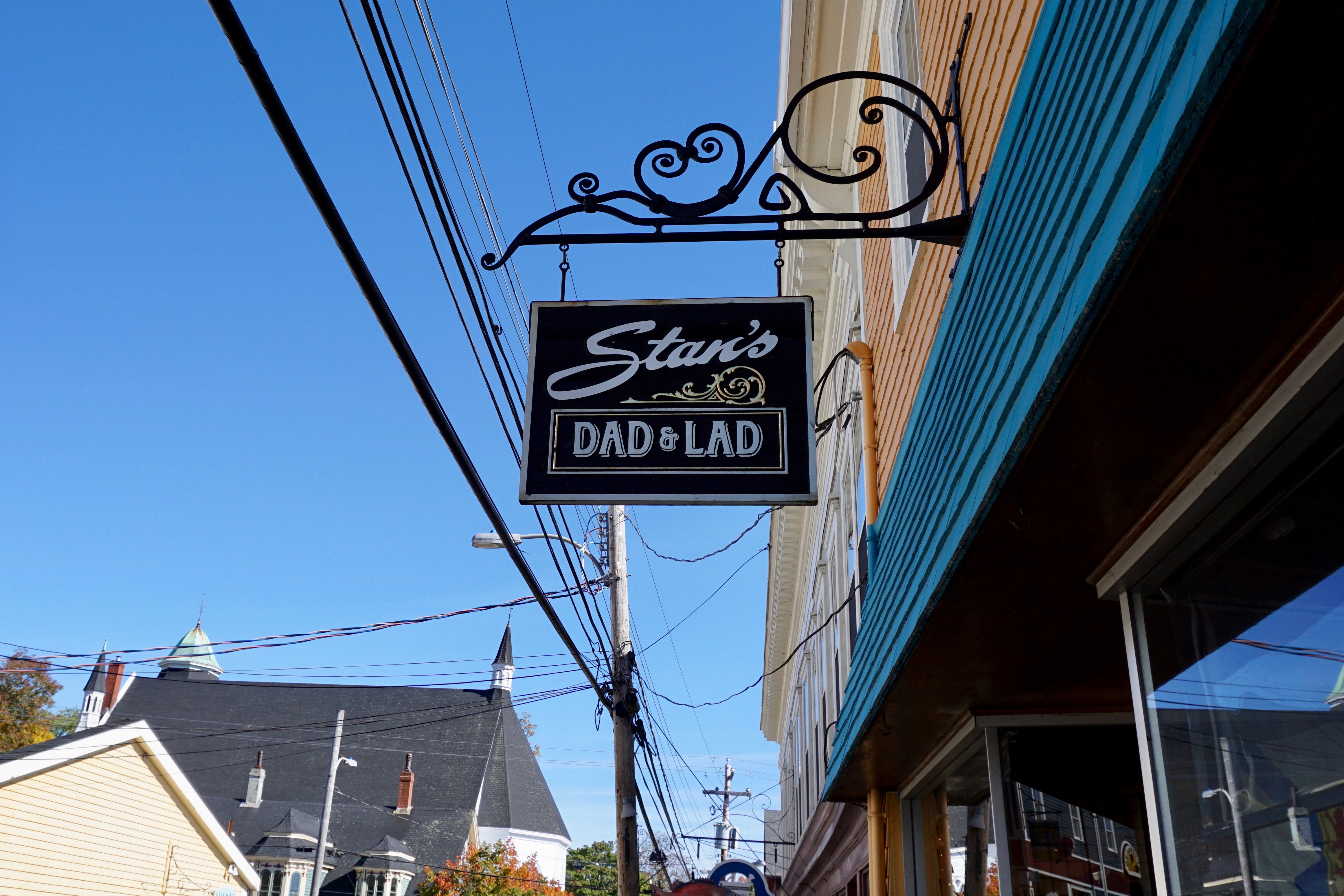
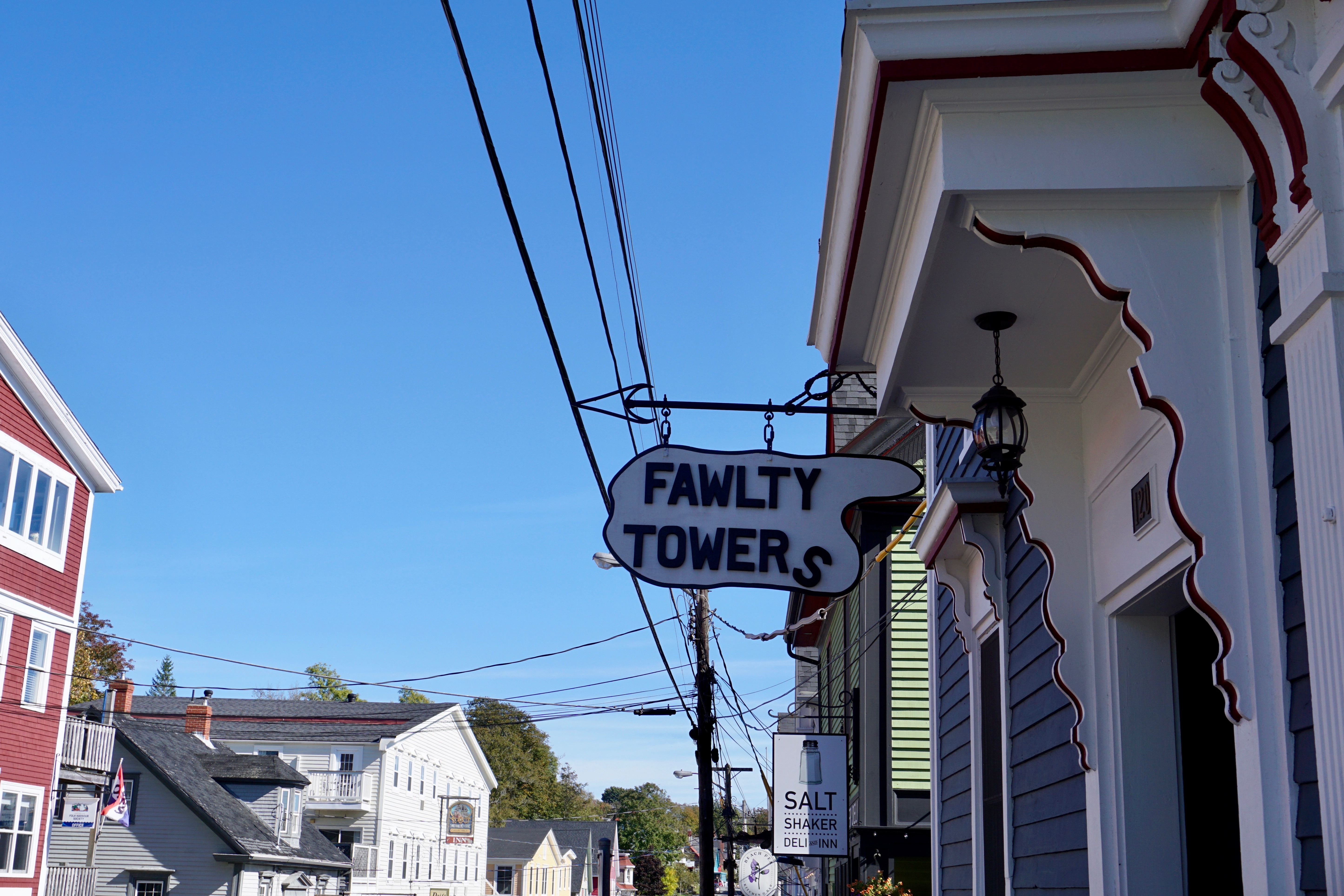
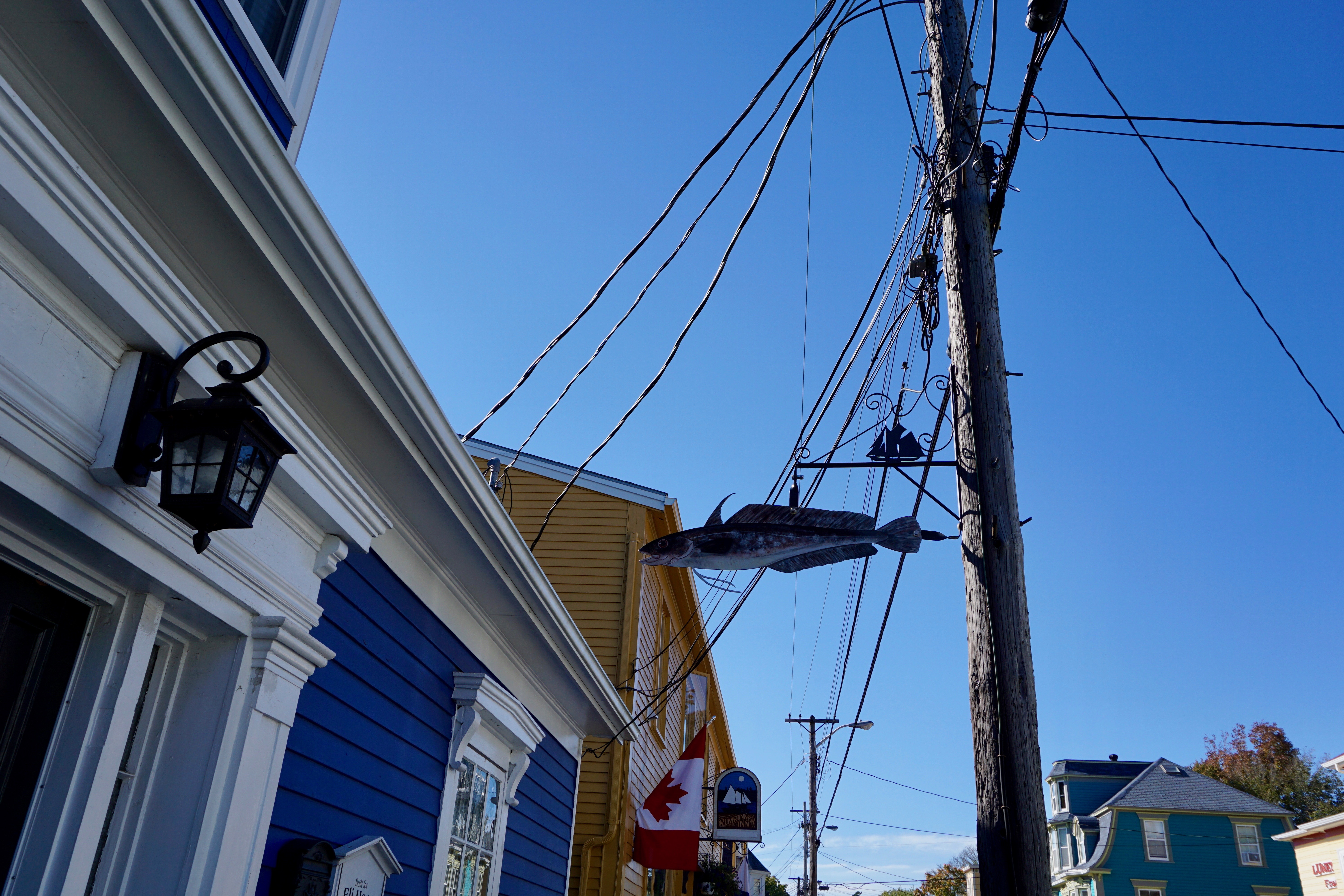
As usual, the town’s cool signage caught my eye.
Five years on, gift shop Dots & Loops is still in business, albeit online only.
Fortunately, Stan’s Dad & Lad (est. 1955) is still physically open for business.
Alas, this homage to a certain British sitcom (whether an actual hotel or not) is permanently closed according to Google. Upon seeing this sign, my first thought was, “Basil! What are you doing in Canada?”
Your requisite Canadian flag and fish hanging from a utility pole.
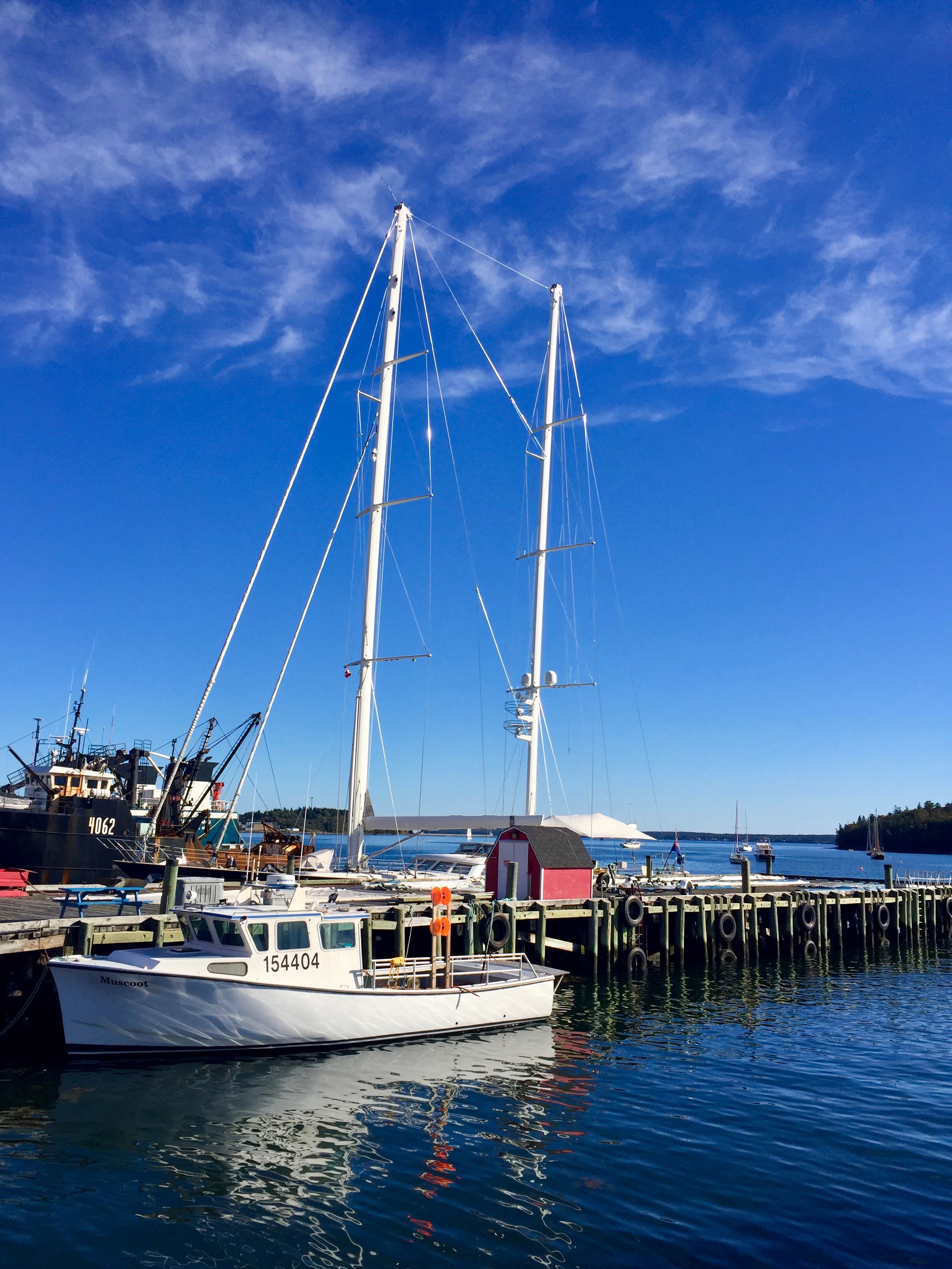
Naturally, Lunenburg Harbour is as beautiful as the town that borders it.
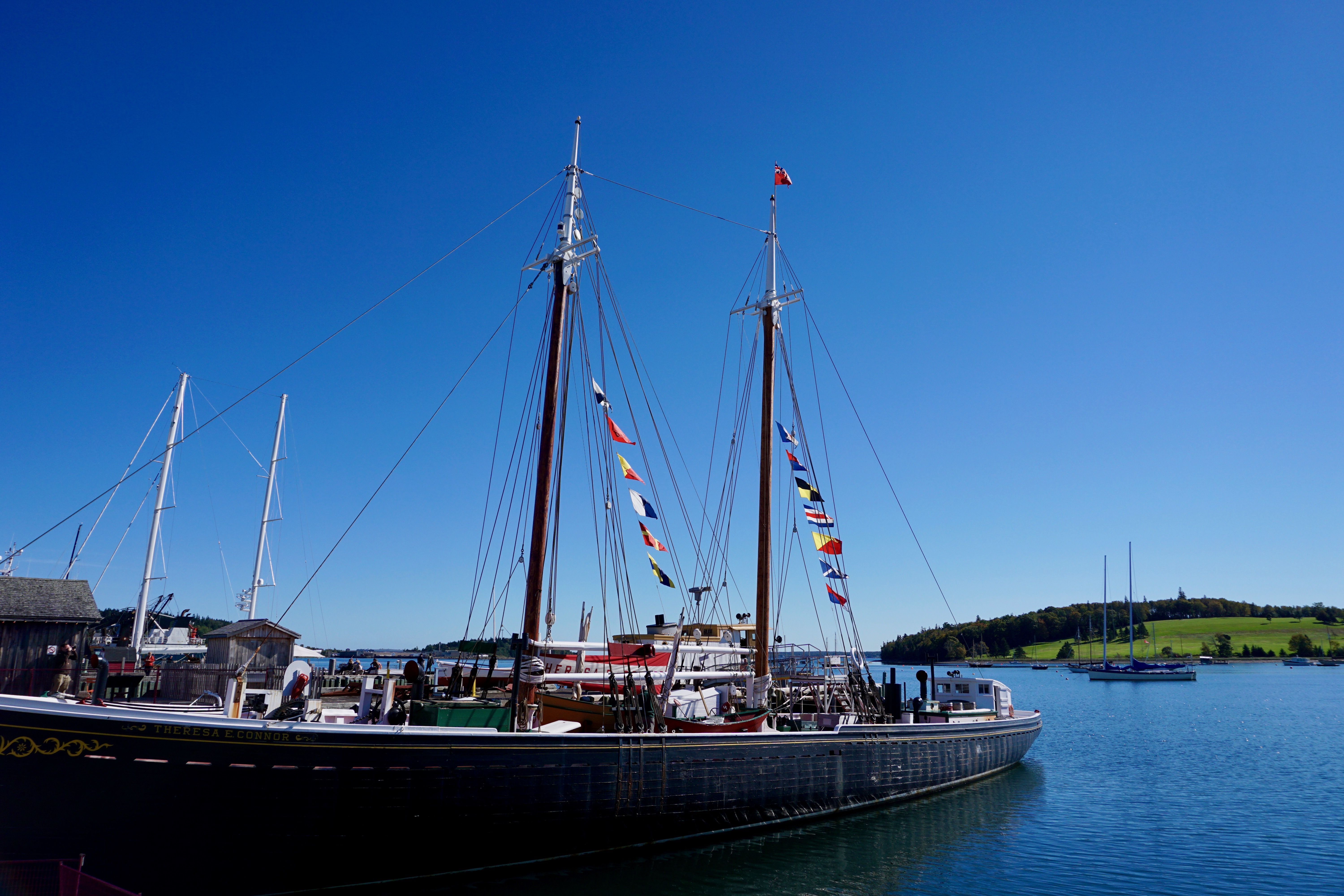
I believe this is the Bluenose II Ship, more information about which can be found here.
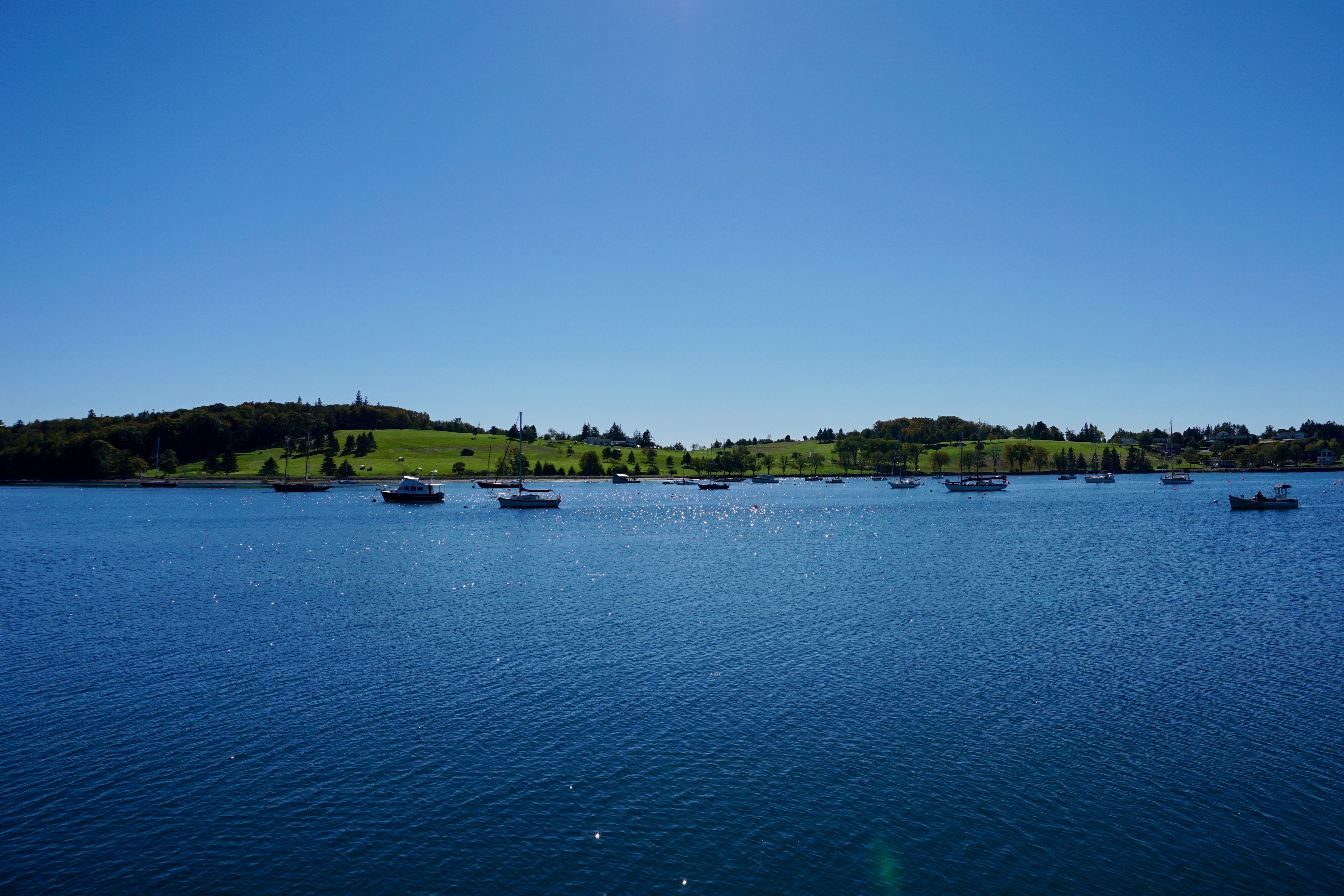
Across the harbour, the green expanse of the Bluenose Golf Club. In retrospect, we could’ve used more time to explore Lunenburg, but we had another coastal town to see on that day’s itinerary…
































 Haunted Jukebox