IFFBoston 2023: 3 Narratives

Afire

Reviews for the three narrative features I saw at IFFBoston 2023. Go here for reviews of the three documentaries I saw there.

AFIRE

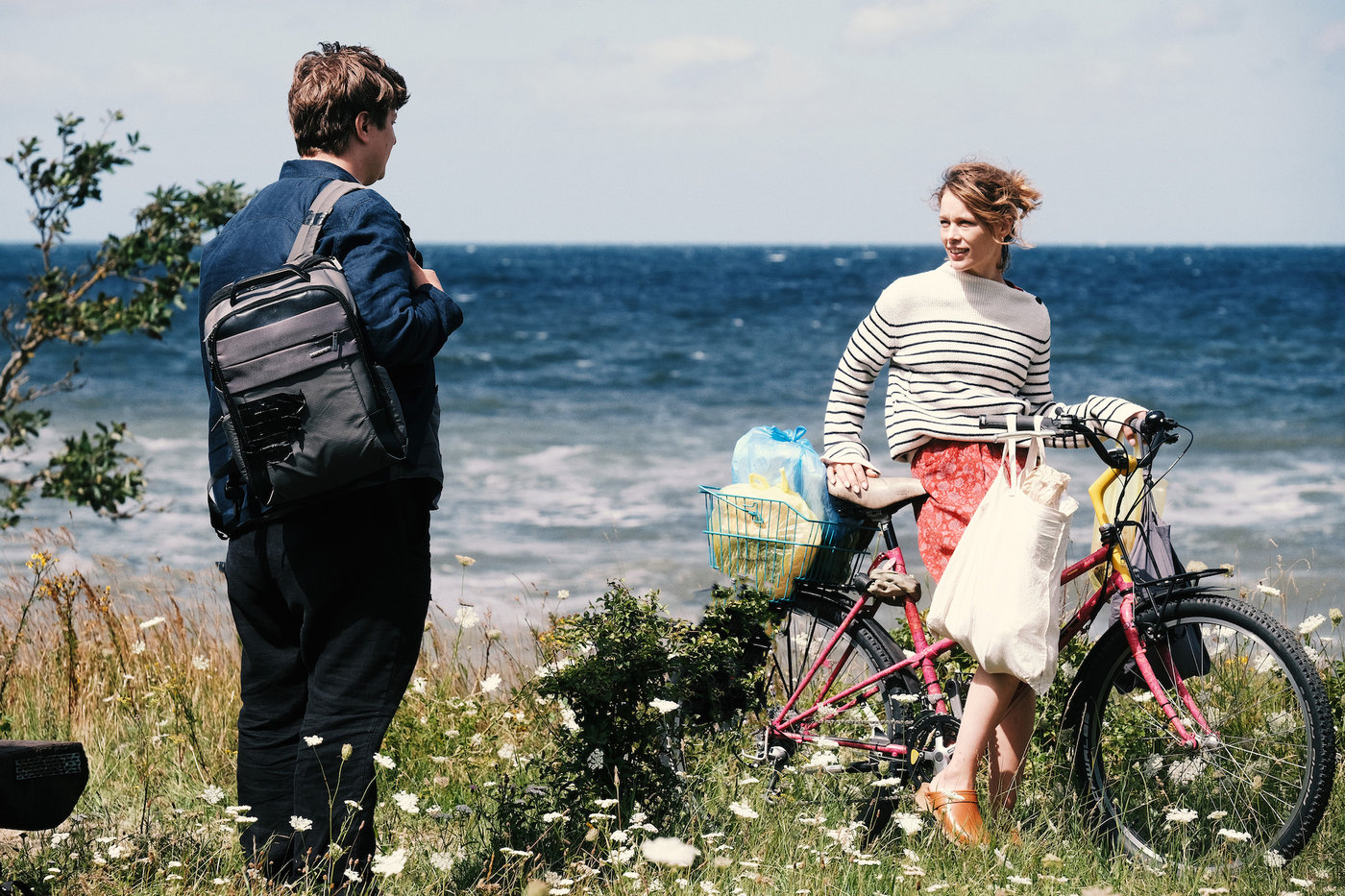
Two young Berliners, Leon (Thomas Schubert), a writer struggling to finish his novel and his friend Felix (Langston Uibel), a photographer, take a trip to a cabin in the woods near the Baltic Sea owned by Felix’s mother. Upon arrival, they discover the cabin’s already been rented to Nadja (Paula Beer), whom they first hear having loud sex in the other bedroom with Devid (Enno Trebs), a hunky lifeguard. As they all get to know each other, Leon’s the only one of the four not having much fun. Easily irritated and often unable to see what’s going on (even when—especially when it’s apparent to everyone else including the viewer), he’s fixated on his book. Meanwhile, persistent wildfires threaten to spread closer to their neck of the woods.

Purportedly the second film in a loose trilogy from writer/director Christian Petzold beginning with 2020’s Undine, this seemingly has little in common with it apart from casting some of the same actors (most notably Beer.) Obviously, this is a “fire” film whereas Undine was a “water” film; however, while the earlier film had some humor threaded throughout its sci-fi/magical realism frame, this one might be Petzold’s most explicitly comedic effort to date. Schubert’s Leon is a bumbling, near-exasperating protagonist, but still a protagonist because he ultimately has a good heart (even if his self-sabotaging behavior often obscures this nature.) His chemistry with Beer is palpable as well, even when it feels like they’re sparring partners. Actually, the whole ensemble is strong, with Uibel and Trebs evolving from second chorus members to the leads in their own story. Matthias Brandt rounds out the cast late in the film as Leon’s older, long-suffering (in multiple senses of the word) editor.

Apart from some ambiguous roughhousing between Leon and Felix, Afire starts off unassumingly, slowly building its relationships and character arcs as the wildfires remain a background threat heard about but only seen via glowing, burnished, distant skies. Like those fires, it’s a slow burn until, all at once, it encompasses everything in its path with dire consequences for some and narrow escapes for others. It’s reminiscent of a Gary Shteyngart novel in that it’s expertly constructed, caustically funny and in the end, tinged with tragedy and the possibility of transformation. Petzold’s built up a noteworthy filmography since 2012’s Barbara and Undine is a dazzling addition to it.

THE EIGHT MOUNTAINS

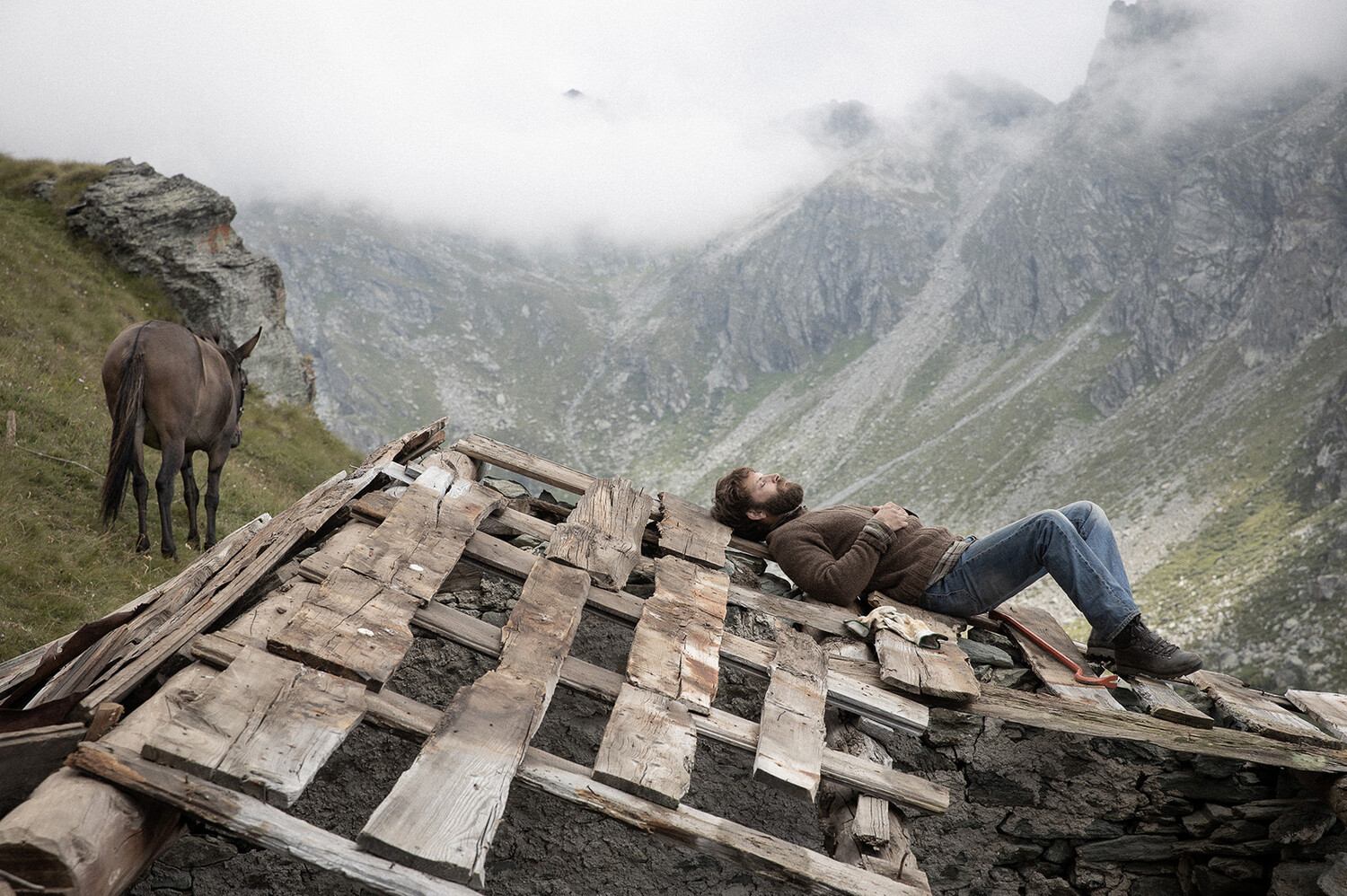
Pietro and Bruno befriend each other as boys in an isolated region of the Italian Alps. For Pietro and his family, it’s a rustic summer vacation spot, a getaway from Turin; for Bruno, it’s the only home he knows. The boys become close but when Pietro’s family attempts (and fails) to provide Bruno with loftier opportunities, they grow apart. Years later, as adults, they meet again following a death, reconnecting over the construction of a home in the mountains. Over time though, it’s increasingly apparent that the two men are on alternate paths. Their class differences and contrasting approaches to overcoming them inevitably leads towards fractures in their relationship.

This Cannes Jury Prize winner, adapted from a novel and co-directed by the filmmaker of The Broken Circle Breakdown benefits greatly from its natural settings, breathtaking cinematography, evocative sound design and as the adult Pietro, Martin Eden star Luca Marinelli (unrecognizable until he shaves off his beard.) Strip all of this away, however, and you’re left with a standard coming-of-age parable. As the adult Bruno, Alessandro Borghi’s performance is far less dynamic than Marinelli’s and the many bluesy rock songs on its soundtrack by Daniel Norgren blur together before long. Still, some of its set pieces are inspired—the nail-biting mountain hike with the boys and Pietro’s father, the change-of-pace Nepal sequences, the sinister splendor of the Alps in the dead of winter. The Eight Mountains is ostensibly about a friendship but its gradually slanted focus on Pietro’s trajectory rather than Bruno’s is what resonates in the end.

MASTER GARDENER

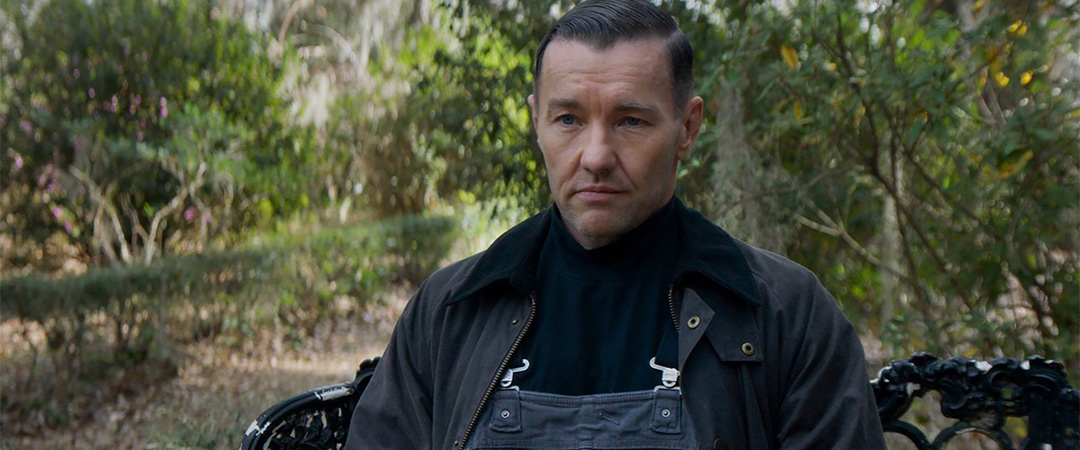
Paul Schrader has long established a reputation for going there, which is a major component of his sensibility and thus his peculiar appeal. Consequently, his movies work best when centered on a performance that understands how nutso the material is and can bring it across convincingly anyway (definitely Ethan Hawke in First Reformed, not so much Willem Dafoe in Light Sleeper.) As impassioned horticulturist Narval Roth, Australian actor Joel Edgerton is a strong choice because he’s so adept at disappearing into a part. As he did in Loving, he convincingly adopts a specific physical appearance and voice (a plebeian, nearly Noo Yawk accent) that immediately defines his character which makes the eventual reveals about him all the more potent and shocking.

Still, Master Gardener can be more than a little silly and calculated. For a while, after the big reveal occurs, there is a jolt in that it could go in a number of directions. The one it chooses is a redemption-for-an-abhorrent-past narrative, which has been done to death although Edgerton’s commitment to the story and the part does some heavy lifting. Quintessa Swindell is adequate as his young mentee, but as her great-aunt and his employer, Sigourney Weaver is something else: a prickly, wealthy matron out of a classic Hollywood picture that might come off as a caricature without Weaver’s authoritative take on and comfort with the role. Ultimately, it’s her and Edgerton’s presence and ease with being a little nuts keeping Schrader afoot on the tightrope he’s walking (if barely.)

IFFBoston 2023: 3 Documentaries

Love To Love You, Donna Summer

I saw three documentaries and three narrative features at the 20th(!) Independent Film Festival Boston; here are reviews of the former; check back here in one week for the latter.

LOVE TO LOVE YOU, DONNA SUMMER

She’s rightly remembered as “The Queen of Disco” but even that royal moniker only hints at Donna Summer’s talent and star-power. Blessed with a stellar voice and physical beauty to match, one could assume her success as a singer was also a case of “right time, right place”, adapting to and then defining a dominant musical genre of her era. This documentary, co-directed by her daughter Brooklyn Sudano celebrates Summer but also works diligently to present her as the multifaceted person she was. Most recall her as the woman who orgiastically moaned “Love to Love You Baby” and belted “Last Dance”, but she was also an innovative artist whose contributions to her hit singles and elaborate concept albums far exceeded that primary impression—cue the footage of her vocally coming up with the mechanical electronic rhythm that would define her seminal synth-pop opus “I Feel Love” or the many transformative live performances which she often approached with the meticulousness of a serious actor.

Constructing the film with an extensive assortment of archival footage (both visual and aural), first-time filmmaker Sudano runs the risk of incoherence; at times, the final product does feel a little scattered, stuffing so much content into a feature-length frame. I suspect her co-director, Roger Ross Williams (an Academy Award winner for Life, Animated) provides crucial support in shaping it into a mostly satisfying trajectory. One of their most distinct and effective decisions is to relegate all modern-day interviews to audio only (similar to the recent docuseries 1971: The Year that Music Changed Everything) which keeps the focus laser-sharp on Summer and also preserves the audience firmly in her own time frame (she passed away from lung cancer in 2012.) The only real glimpses of the present are shots of Sudano sifting through all of her mother’s artifacts—less an indulgence than a loose framing device expressing her personal connection to the material.

In the Q&A after this screening, Sudano mentioned that she didn’t want to make a puff piece or a Behind The Music-style overview; the film certainly doesn’t shy away from darker moments of Summer’s life, nor does it gloss over such controversies as her becoming a born-again Christian at the dawn of the 1980s. Also addressed is the backlash she received from the gay community over homophobic song lyrics that spiraled into rumors distressing not only her fanbase but also herself. But that self was alternately (and often simultaneously) a glitzy, commandeering diva, a campy goofball, a devoted but visibly exhausted mother, an introspective wanderer. Similarly, this ambitious, near-exhaustive portrait is a love letter, a critical assessment, a fanciful but also far-reaching collage. Like its subject, it leaves a mark. (Premieres on HBO May 20.)

HUMMINGBIRDS

Best friends Silva and Estefania (nicknamed “Beba”) are two teenagers in Laredo, Texas. They engage in typical activities for their age: hanging out at the convenience store parking lot, sneaking past the gates of vacant or abandoned homes, sitting at the Rio Grande peering across the border to Mexico. Beba, an aspiring musician, is an illegal immigrant, so the view is bittersweet; if she and Silva were to cross the border it would jeopardize her attempts at getting her work papers. The girls’ pro-abortion activism is also poignant once their personal experience regarding it comes into view.
Co-directed by its subjects, Hummingbirds is purposely casual—lackadaisical, even. Sections of it nearly resemble a video diary, yet the subjects rarely break the fourth wall so it’s closer to cinema verité, albeit a self-reflexive take on that non-narrative subgenre. It took me some time to process how substantial this approach actually was (I wasn’t surprised at this screening when two boomers sitting in front of me walked out early on), but I think I get it—anyone can turn a camera on themselves (now more than ever) and call it “art”, but this approach allows one to observe and absorb specifics of community, camaraderie and causes where the personal and political are deeply linked without getting spoon-fed their implications. With considerable candor and charm (and some open-endedness), Silva and Beba could make a sequel in a few years, potentially turning this into their own take on Michael Apted’s Up series if they so desire.

THE ORDER OF THINGS

Watch repair requires a steady hand and infinitesimal patience; this documentary exudes the latter in spades and also requires it from the viewer. Alexandru, a 90-year-old Romanian clock maker, recalls his time as a political prisoner in forced labor camps of that country’s Soviet and Communist regimes. Scenes of him speaking openly about his harrowing past alternate with nearly meditative footage of him at work, a survivor whose old age is positively bucolic compared to what came before. This mostly plays out in lengthy still shots meant to emphasize a sense of place and the value of time being deeply considered rather than glossed over. It’s a beautiful, admirable documentary, but also a challenging one that I had difficulty fully connecting with. It aims for a sense of the sublime but sometimes (such as when it aspires to Jeanne Dielman-like rigidity), it comes off as pretentious.

24 Frames: What Time Is It There?

Once streaming video overtook physical media as the primary way to watch movies at home (or (god forbid) on your smartphone), it was no longer unreasonable to think that everything could be available at the touch of a button whether via paid subscription services like Netflix and The Criterion Channel, free-with-ads platforms such as Tubi or FreeVee or not-entirely-legal uploads to YouTube, Vimeo and a horde of other websites. While finally sounding the death knell for movie rental and retail stores, streaming didn’t entirely solve that availability problem. Sure, one no longer had to rely on whether your local Blockbuster had a DVD (or if you’re of a certain age, a VHS tape) of a particular title in stock but easy access is not the same as having access to everything. Twenty-odd years ago, I kept a mental running list of movies to see that either weren’t ever released on home video, out of print, unavailable in the US (i.e. on a format other than NTSC such as PAL) or extremely difficult to find, hoping they would become available to rent and/or buy one day. Off the top of my head, it included John Cassavetes’ final feature Love Streams, Abbas Kiarostami’s Where Is My Friend’s House (and the rest of the Koker Trilogy) and most of Theo Angelopoulos’ work prior to 1989’s Landscapes In The Mist; I still recall the glee and satisfaction with which I purchased my newly-released Criterion Blu-ray of Love Streams in 2014.

A little accessibility breeds expectations for its continuation and advancement. We’ve progressed from an age where you couldn’t own any movies to one where you could rent and/or buy some of them to another teeming with available content. This ability to watch an increasing number of titles whenever you wanted threw into relief the relatively minor amount that you couldn’t. If I could see movie A for free, why not movie B? If I had to pay to see movie B, why wasn’t movie C available at all, even for a price? No matter how far we’ve come in the rough half-century since the invention of the VCR, we are nowhere near this idea of utopian unlimited access even if what we do have presents enough content and choices that most viewers could never possibly run out of stuff to watch.

The casual viewer, on the other hand, may take for granted the current streaming unavailability of titles from Academy Award Best Picture winners (Rebecca) to cult films (Gummo, the original Dawn of the Dead) and even beloved box office hits (Cocoon, for christ’s sake!) In this project, I’ve already tackled titles that I had to access via my own DVD copy (All That Jazz) or on YouTube (To Live). As for What Time Is It There? (2001) by Taiwanese director Tsai Ming-liang, I’m thankful I held on to the DVD I purchased at a video store’s going-out-of-business sale fifteen years ago since, in addition to currently being unstreamable, the DVD is also long out of print (a better-than-acceptable used copy sells for at least $50 on Amazon), never released on Blu-ray and not uploaded to YouTube (unlike Head or the original version of The Heartbreak Kid, both of which I’ve recently watched on the platform.)

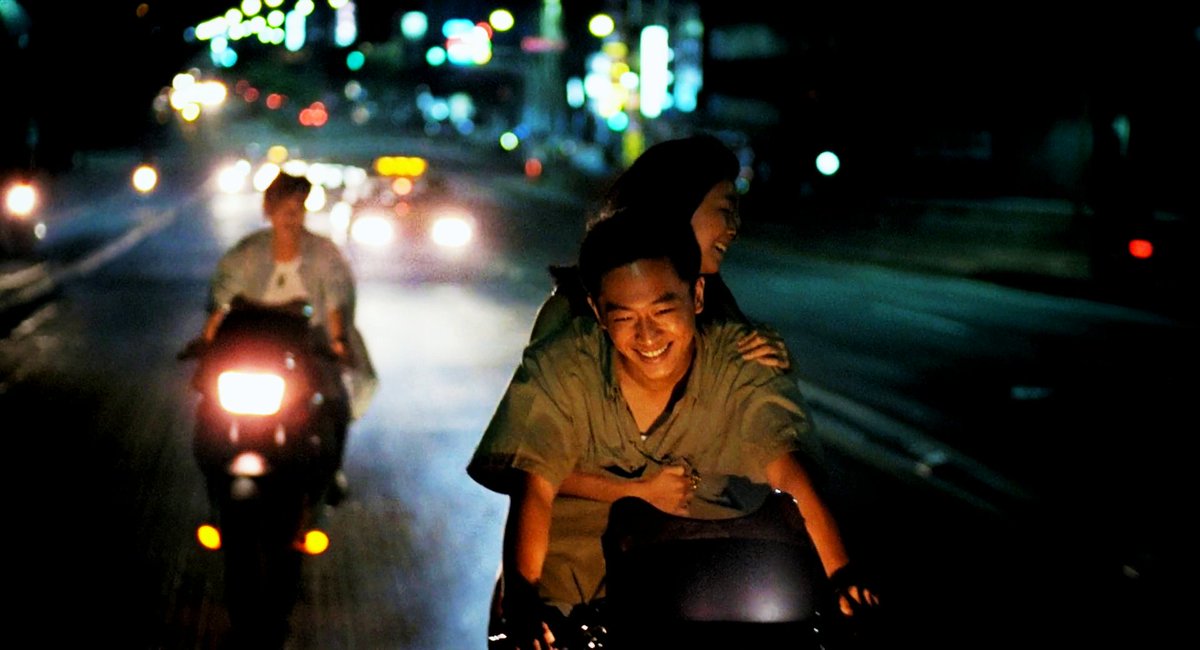
Tsai’s feature debut Rebels Of The Neon God arrived in 1992 but I’d not heard of him (not even in film school) until a decade later. In anticipation of What Time Is It There?, Boston’s Museum of Fine Arts, then under the expertise of programmer Bo Smith, ran a retrospective of his work. Not knowing too much about Tsai apart from rave reviews of the new film, I chose to start at the beginning. Rebels Of The Neon God concerns a young Taipei man (Lee Kang-sheng, who serves as the protagonist/muse in nearly all the director’s work) who falls in with two juvenile delinquents—a setup straight out of early Godard or a contemporary like Gregg Araki. Unlike those two auteurs, Tsai is far less interested in narrative than texture and atmosphere. Actually, this first feature has relatively more plot than most of his subsequent efforts, although specific themes and motifs one would see throughout his oeuvre are already in place: urban life, loneliness, food, sex and, perhaps more so than any other auteur, water in all of its forms (and sounds.)

Rebels Of The Neon God

I detected similarity but also a great advance between Rebels Of The Neon God and What Time Is It There? and viewed his other three features to date within the next few months: Vive L’Amour (1994), an advance over its predecessor while further eschewing such elements as “plot” or having a score, even; The River (1997) of which What Time Is It There? might be loosely interpreted as a sequel; and The Hole (1998), something of an outlier in that it interrupts Tsai’s usual urban ennui with the occasional colorful and deliberately campy (and overtly lip-synched) musical number. I’ve revisited most of these in the past few years (save The River, also unstreamable/out of print) and can detect a developmental through line of Tsai becoming progressively more minimal and sparser (save the occasional musical, like 2005’s The Wayward Cloud) with each film.

As a caveat, Tsai’s movies are not for everyone. I once likened his unique and deliberate approach to that of silent-era slapstick only slooooowed all the way down as much as possible before turning into complete stasis or a freeze-frame. While one of the chief devotees of what could be called “slow” cinema (along with Andrei Tarkovsky and Bela Tarr), things do happen in his films, often recognizable activities that we partake of offscreen: eating, sleeping, fucking, selling wares, watching movies, sitting in a public space, etc. And yet, most other filmmakers do not give these ordinary actions such raptly held attention or focus. Stray Dogs (2013), for instance contains an infamous shot of one of its characters in close-up meticulously eating a chicken dinner for what seems like infinity—an extreme example in Tsai’s filmography for sure, but not an atypical one (especially in his later work.)

Revisiting What Time Is It There? for the first time in nearly two decades, even I took some time to fully adjust to its unusual rhythms. It begins with a seemingly endless single shot of Lee’s aged father (Miao Tien) in his apartment. He slowly sits down at a kitchen table, lights a cigarette, stands up, calls out “Kang!”, sits back down, gets up again and walks down a hallway to a laundry room at the far rear of the frame. As usual with Tsai, the camera remains entirely static. It feels almost as unassuming as a Warhol screen test or a piece of stock footage nearly resembling Ed Wood’s silent B-reel of Bela Lugosi leaving his house that was inserted into Plan 9 From Outer Space to make good on the notion that the now-deceased actor “starred” in the film.

In the next scene, Lee rides in the backseat of a car with a veiled object sitting upright in his lap. He says, “Dad, we’re going through the tunnel; you have to follow us, okay?”, although we see no other passengers. Those familiar with Buddhist customs will recognize the object as his father’s urn and the other things he’s holding onto as traditional implements of bereavement. For those who are not (like me), the following scene at a mausoleum clarifies his dad’s death. From that moment, What Time Is It There? establishes itself as a film partially about grief and the different ways its characters process it. Lee’s mother expresses it forthright: per her faith, she fervently believes her husband will return in another form such as one of her pet fish housed in aquarium that Tsai often places towards the front of the frame. She’s increasingly superstitious about his return, laying out food at the dinner table for him to consume and later obsessively covering up all the windows and cutting the electricity because “he prefers the dark” (even though, as her son argues with her, the fish will die in their tank without power.)

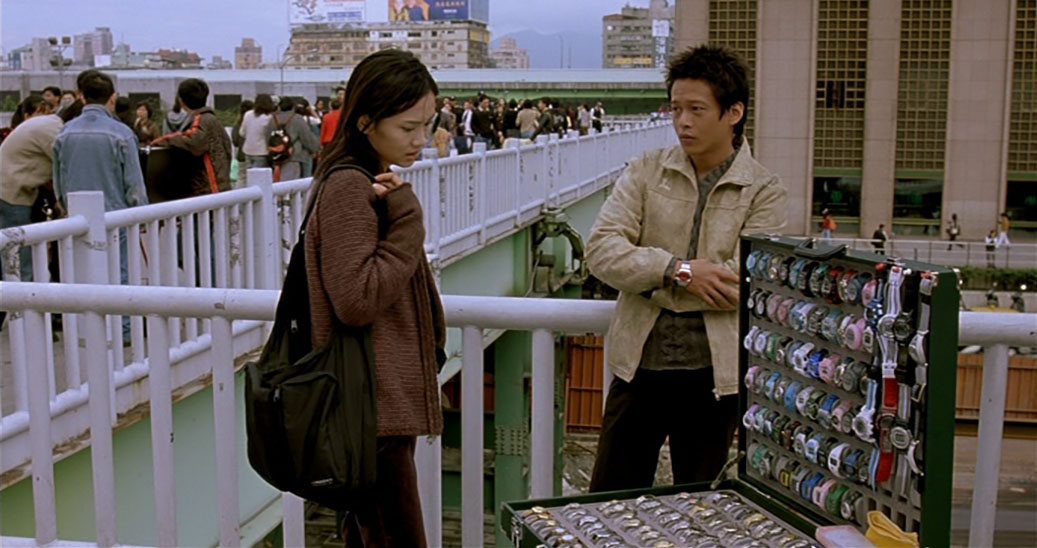
Lee’s approach to mourning is more difficult to parse. The persona Tsai crafts for him throughout the director’s oeuvre is that of a stone-faced onlooker, like a more passive Buster Keaton (perhaps without the acrobatic comic timing.) Initially, his grief doesn’t seem outwardly apparent at all except through quirky acts of behavior such as repeatedly urinating into a plastic bag or a water bottle in his bedroom rather than using the bathroom (no concrete reason is given for this as far as I can determine.) He makes his living selling wristwatches, often standing on the street with a giant open suitcase of his merchandise, repeatedly and almost robotically banging a single watch against the metal railing behind him to draw attention. After much haggling with a young woman (Chen Shiang-chyi) over his personal wristwatch (which belonged to his father), he agrees to sell her it after she discloses she’s about to take a trip to Paris.

From there, the film alternates scenes of Lee in Taipei with those of Chen in Paris with the watch serving as a psychic connection between the two. Lee seems to believe his father’s spirit partially remains within the watch and obsesses over it and the country Chen has taken it to. He calls Information to ask the film’s titular question (re: Paris) and buys and repeatedly views a bootleg copy of The 400 Blows, Francois Truffaut’s landmark 1959 French New Wave film. Meanwhile, Chen wanders around Paris alone, an outsider in a land where she doesn’t speak the language. At one point, Tsai frames her on a busy moving walkway as the only figure standing still. Later, at a cemetery, she sits down a bench next to a middle-aged man who happens to be Jean Pierre-Leaud (the child star of The 400 Blows), though this fact is lost on her.

Jean-Pierre Leaud and Chen Shiang-chyi

Time itself becomes a motif. In addition to Lee’s profession as a street watch salesperson and the brick-and-mortar clock store that employs him, various timepieces appear throughout the film. In one sequence, he steals a clock right off the wall of a cinema’s hallway, placing it on the seat next to him inside a theater (what the stocky, bespectacled young man silently pursuing Lee does with that clock after he steals it from him leads to one of the film’s funniest sight gags.) In another scene, he sits in what appears to be a mall at a fountain which contains a giant water wheel forever unhurriedly revolving like a clock. Later, he ends up in some sort of room (maybe a security booth?) with a menagerie of clocks both analog and digital and later still, on the balcony of a tall building manually trying to adjust (with long tongs) the hands of the clock below him on its façade.

Tsai often sidesteps Taipei’s more traditional, tourism-friendly urban landscapes for liminal spaces such as that security booth packed with clocks or the backseat of a parked, possibly abandoned car. Chen’s Parisian vacation is full of these as well: endless subway corridors and platforms, a phonebooth where with futility she attempts a conversation as a man in the adjacent booth keeps yelling obscenities into his receiver, a miniscule, red-tiled bathroom where she vomits up her dinner. Tsai renders worlds as they are (unglamorous, run-down, often grime-encased) but does so within artful, meticulously composed frames. His lengthy, static shots begin to feel like living paintings—for those receptive to such stillness, it can be like sitting on a bench or standing next to a wall, simply observing life play out before one’s own eyes no matter how little (or how much) action occurs.

Combined with a heightened sound design which doesn’t have a musical score but emphasizes such ambience as traffic noise and trickling water, What Time Is It There? invites one to extensively take in an environment rather than lose oneself in a story—which is not to say it’s all just visual and aural wallpaper. The film slowly reaches its climax as all three of its principal characters engage in some sort of sexual activity. Chen attempts a one-night stand with a female traveler from Hong Kong who walked in on her vomiting in the red-tiled bathroom; Lee fucks a female prostitute who stumbles by him as he’s camped out in the abandoned car drinking wine and eating some sort of meat on a stick; Lee’s mother, meanwhile, puts on a fancy dress at home and, for lack of a better term, “gets intimate” with the urn full of her husband’s ashes.

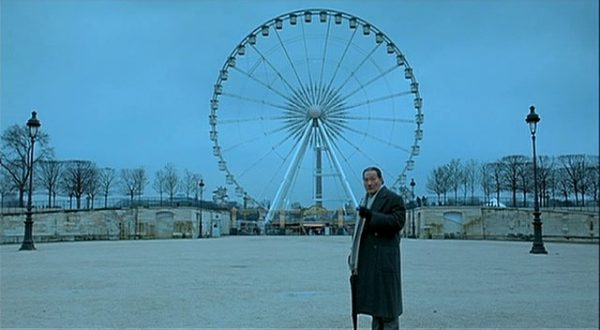
None of these encounters have a particularly happy ending (so to speak.) Chen fails to find much of a connection with the Hong Kong woman and leaves the hotel disappointed. The prostitute absconds with Lee’s suitcase of wristwatches, sneaking away before he awakens. When he arrives home, Lee finds his mother in bed holding the urn, unresponsive. She’s obscured by camera to a degree where it’s indeterminable whether she’s dead or just sleeping—Lee just silently climbs into the bed, embraces her and that’s the last we see of either of them. However, the film concludes in Paris. As Chen falls asleep on a lounge chair in a park next to a lagoon, a familiar suitcase last seen escaping an abandoned vehicle floats by her only to be retrieved from the water with an umbrella handle held by a man whom the camera gradually pans up to reveal as Lee’s father. He walks away from the lagoon with the suitcase in hand; standing and facing the camera, Tsai reveals a giant Ferris wheel behind him: it’s another clock-like figure, perhaps the grandest one so far. Lee’s dad turns around and walks beatifically in its direction. The screen turns to black with the director’s dedication, “To my father and Lee Kang-sheng’s father.”

This is a film not just concerned with time as a concept but also as an experience and how it is fleeting and, for us as individuals, finite. Tidy as its recurring, symmetrical imagery is, its rigor, combined with its minimalist, understated, almost meditative demeanor renders What Time Is It There? one of Tsai’s most accomplished, satisfying and original works. So, twenty years on, why is it difficult to see? One can currently stream his follow-up (and arguably far more challenging) feature Goodbye Dragon Inn (2003), along with later efforts such as Stray Dogs and Days (2020). Quality and critical acclaim, however, are rarely decisive factors in regard to availability. Both the theatrical and home video distributors for What Time Is It There? are long defunct and have been acquired by other corporations. It’s unclear who currently holds the rights to the film which is most likely the reason why one can’t stream, rent or even buy it for a reasonable price. Perhaps in another year or five, a reputable distributor such as Criterion will acquire them (as they did with Love Streams) and audiences will rediscover the film. It happened to What Happened Was… (1994), a long-lost indie hit of its time that received a theatrical re-release a few years ago and eventually made its way to streaming platforms despite never having been released on DVD. For now, What Time Is It There? remains but one of many currently “lost” titles that we can only hope will find a new audience when it can be easily seen again.

Essay #14 of 24 Frames.

Go back to #13: The Royal Tenenbaums.

Go ahead to #15: Before Sunset.

Give Me Pity!

Going straight to your heart on demand!

Cheerfully billed as “A Saturday Night Television Special” starring Sissy St. Claire (Sophie von Haselberg), writer/director Amanda Kramer’s film may feel as if it’s beaming in from another planet to those unfamiliar with 1970s/80s variety shows. Devotees of camp classics such as Donny and Marie, The Lynda Carter Special or the finale of Bob Fosse’s All That Jazz will recognize all the genre tropes being lovingly replicated and satirized but even they might feel bewildered (or perhaps transported) by the dark interior spaces an increasingly taxed and frayed Sissy inhabits.

Kramer understands that if you’re going to make a feature-length pastiche, pinpoint accuracy is required. Not only does she shoot on smeary video in the classic 1:33 analog format, stylistically, she replicates everything of the era from the sequined clothing, elaborate wigs, neon colors and piercing lasers to the requisite hanging mirrorball, vintage-looking graphics and Donna Summer-worthy disco anthems including the title track and “Making It” (not a David Naughton cover.) If she left it at that, it would be nothing more than an elaborate tribute to an ultra-specific type of entertainment from a bygone era. However, as with last year’s Please Baby Please, a 1950s-set mashup of West Side Story-style bohemia and genderqueer studies starring Andrea Riseborough (!), this pushes the viewer much further than that.

Not even a few minutes in, Sissy literally faces her demon(s) while the screen glitches and distorts and continues to do so intermittently. Effervescent and hungry for attention, she seems to shrug it off at first, for the show must go on and she’s made it clear she’s giving it her all. As the special moves from one titled set piece to another (“The America Number” answers the question, “What if Laurie Anderson had been given one of these specials circa ‘O Superman’”?), we see the implications and consequences of this. Touches of surrealism such as a literally faceless psychic and an interpretive death-dance with a nurse that climaxes with Sissy declaring, “You will never, never, ever, ever have your own television special, so don’t even DARE to DREAM!” add to the disorientation, burrowing deeper into madness. But you can’t stop ever-resilient Sissy who is dead set on triumphing, even if it means nearly losing what’s left of her sanity while delivering an epic, climactic monologue about a defining, near-traumatic childhood memory and how it made her who she is today.

Whereas Please Baby Please, while fabulous, occasionally muddles its intentions with its many intellectual diversions, this firmly retains its focus (being just 79 minutes helps.) Von Haselberg’s casting is especially inspired—I didn’t even know who her famous mother (someone who might’ve starred in a special like this back in the day) was until afterwards; it’s the type of role that could make her career if it wasn’t such a genuinely strange little film. Regardless, as we get to know Sissy (who appears in nearly every frame) rather intimately, Give Me Pity! gradually transcends its premise, revealing layer after layer of everything that goes into a performance and the toll it can take on the performer’s psyche.

24 Frames: The Royal Tenenbaums

Pauline Kael rarely saw a movie more than once. Even near the end of her life, long after her tenure as film critic at The New Yorker, she remarked, “I still don’t look at movies twice. It’s funny, I just feel I got it the first time.” While Kael’s quirk is a notorious one, it’s to some extent explicable given that she spent most of her career pre-home video. Apart from theatrical releases or even private screenings, she had limited access to rewatching a title, at least compared to today’s wealth of viewing options. Yet even with them, of the thousands of films I’ve seen over the past three decades, there’s at least half, maybe even two-thirds that I’ll likely never rewatch or want to revisit. After all, if I limited myself to first-time watches, I’d never run out of new things to see.

Still, a world where I never again returned to Mulholland DriveBeau Travail or Young Frankenstein holds little appeal. I acknowledge that films (and, for that matter, books and episodic television series) require a heftier time commitment than a favorite piece of music. I can prepare for an essay on an album by listening to it four or five times over the course of a day; for one on a film like 2001: A Space Odyssey, however, I’d need to put at least 10-15 hours for an equivalent experience. As a visual medium, movies require closer concentration. Unless you literally know one by heart, you arguably can’t put it on in the background and absorb it while attending to other tasks as you could with any piece of music from Abbey Road to ABBA Gold.

I’ll often rewatch a movie for one of three reasons: it’s playing theatrically, available for streaming or just simply one of my favorite films. Accessibility plays a key role here but so do other factors. Is it something I’d love to see on a cinema’s big screen given the opportunity? Do I revisit it because I haven’t watched it in decades and want to see how well it holds up (or not)? Has the film been in my thoughts for whatever reason (for instance, having read a web article or a social media post about it), or is it something I love to rewatch because it gives me joy, no matter how many times I view it? 

Particularly in the pre-streaming age, this last reason was my most common for wanting to see a film again (and in some cases, again and again.) When my family acquired our first VCR in 1985, we soon accumulated a cabinet overflowing with recorded VHS tapes of favorite movies and TV shows I’d watch repeatedly, from childhood favorites like Race For Your Life, Charlie Brown to movies such as Monty Python and The Holy Grail and dozens of episodes of Mystery Science Theater 3000. I replayed some more than others but the novelty and attraction of having a permanent record of something I loved to watch whenever I wanted (often for the price of a blank tape) was considerable. Even later on, when VHS tapes largely became priced-to-own (instead of priced-to-rent), for comparatively little money one could proudly curate a collection of favorite titles akin to having shelves of CDs or stacks of vinyl.

1999, Left to Right: Cassettes, books, videotapes (and a few records…)

Beyond accessibility or convenience, that “it” factor which draws us repeatedly to a particular work of art is harder to pinpoint. I may as well have watched Trainspotting over a dozen times because I owned it on VHS (and later, DVD) but I didn’t just watch it because it was there. Something in it beckoned me to want to see it again and again because I got something out of it (and in most cases, something different) each time. I’ve revisited films that don’t hold up to subsequent viewings—La La Land is a good recent example. While I appreciated its invention  and audacity the first time through, after rewatching it ten days later with my family, my first thought leaving the cinema was, “Well, I never need to see that again.” In this case, the novelty had worn off, enabling me to see the film’s flaws more clearly. Luckily, most rewatches are worth the time and effort, even if they all can’t be as continuously rewarding as Trainspotting which took me a few run-throughs to fully comprehend the deeper, often ironic implications beneath all the flash and fury of its editing, music and performances.

There’s also comfort in returning to favorite works of art. While as a well-rounded film critic I strive to seek out titles I haven’t seen before (both new and old), I return to specific ones because their familiarity provides solace, often for various reasons. I’ll rewatch some films as a tradition in celebrating a particular season like Christmas or Halloween (for years, the latter wasn’t complete without a viewing of Dario Argento’s Suspiria or the Bela Lugosi Dracula.) Others I’ll put on when I’m in a particular mood: Bringing Up Baby for screwball comedy, Back To The Future for 1980s escapism, Beyond The Valley Of The Dolls for psychedelic, counterculture exploitation. What pleasure I find in these films is, like any work of art, entirely subjective; for instance, Katherine Hepburn and Cary Grant together never fail to make me laugh (which is why I also adore Holiday), the Robert Zemeckis film came out when I was 10 and had a formative impact on me at the time and the Russ Meyers-directed, Roger Ebert-scripted film is so gloriously bonkers that watching it is never less than a blast.

Rarer than isolated titles lending themselves to multiple viewings are those entire oeuvres of a particular filmmaker that do so. Naturally, I’ve revisited many works by some of my favorite directors from Robert Altman to Claire Denis. Over time, Wes Anderson has proven something of an ideal in this regard. Most of his films hold up to additional viewings because, so densely are they packed with insane attention-to-detail production design and such complex, shifting tones that I get more out of them each time. I’ve grown accustomed to giving Wes the benefit of the doubt if I’m initially underwhelmed by one of his pictures—The Grand Budapest Hotel, for example, struck me as nothing more than a solid addition to his canon when it came out in 2014 and became his highest-grossing film to date. Revisiting it seven years later, I found it exceptionally moving to a degree I hadn’t previously, marveling at its tenderness for a lost, presumed world rather than just admiring the intricate fantasy world it had presented.

Like most people my age or older, Anderson’s second feature Rushmore was the first one I saw during its early 1999 theatrical run (his first, 1996’s Bottle Rocket got such a limited release that I hadn’t even heard of it.) The first film of his I revisited, however, was his third. Stoked by my love of Rushmore, I prioritized seeing The Royal Tenenbaums like no other new release in December 2001. After that first screening at the AMC Fenway in Boston, I thought it was… fine. I placed it at #7 on my annual top ten list; in my journal, I praised its set design, soundtrack and some of its cast but also thought that “it made little advance” on the “visionary”(!) Rushmore. So, not a failure or outright disappointment but apparently not as impactful as Waking Life (my #1 film of that year at the time), Memento (#2) or In The Mood For Love(#3).

The Young Tenenbaums

Flash forward seven months to a particularly taxing summer. Just about shellshocked by the rough (if necessary) end of a long-term relationship, I sought comfort wherever I could find it. During a week-long “staycation” from work, on a whim, I rented the newly-released Criterion Collection DVD of The Royal Tenenbaums. After this rewatch, I wrote, “I found it more affecting the second time: once you know to expect the sensory overload and stylistic quirks that threaten to turn too brittle or clever, you’re left with a literary jewel of a film that makes the most of Rushmore’s best qualities.” It wasn’t long before I purchased my own copy—while the Criterion Collection was mostly beyond my price-range at that point, Anderson had made a deal with the distributor to issue the film at a lower price point for consumers.

As autumn beckoned, I kept returning to my The Royal Tenenbaums DVD. My 19”, late 1980s-model TV probably didn’t provide as robust a viewing experience as a big cinema screen would have, but in this case, Anderson’s carefully packed mise-en-scène felt reassuring rather than overwhelming. For instance, take the bravura opening sequence. Accompanied by a swelling, then soaring instrumental version of The Beatles’ “Hey Jude” and wistful voiceover narration (from a rarely better Alec Baldwin), it provided succinct but revealing mini-portraits of each member of the Tenenbaum family as it toured 111 Archer Avenue, their enormous, meticulously designed New York brownstone (as much of a character as its inhabitants), informing us of their rise, decline and subsequent fracture, all in the space of a few minutes.

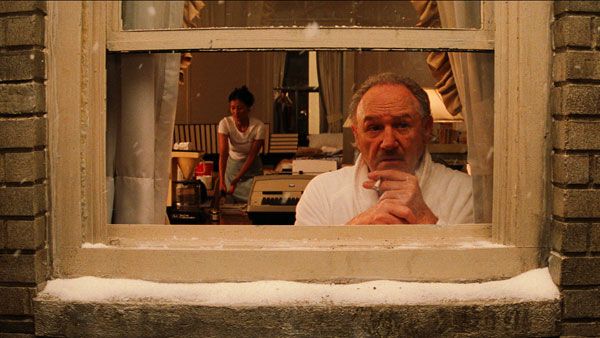
From there, the story picks up twenty-two years later. Banished and broke patriarch Royal Tenenbaum (Gene Hackman) longs to “make up for lost time” with the family he neglected, only to discover how much everyone has changed. His estranged wife, archaeologist Etheline (Anjelica Huston) is now engaged to Henry Sherman (Danny Glover), a respectable accountant—he’s “everything Royal is not,” (as Royal himself notes late in the film.) Uptight, eldest son Chas (Ben Stiller) is an entrepreneur traumatized over the recent death of his wife. Overprotective of his two pint-sized-versions-of-himself sons, Ari and Uzi, he moves them back into the Tenenbaum home. Adopted, eternally disaffected middle child Margot (Gwyneth Paltrow), a failed playwright, and shattered youngest son Richie (Luke Wilson), a former tennis pro, also return. Margot is stuck in a loveless marriage to psychologist Raleigh St. Clair (a somewhat dour Bill Murray) and is cheating on him with Richie’s childhood friend, novelist Eli Cash (Owen Wilson), while Richie is secretly in love with her. With the aid of butler/sidekick Pagoda (Kumar Pallana), Royal schemes to return to 111 Archer Avenue and win back everyone he’s alienated.

The film weaves together a tapestry exploring familial relations made relatable by Anderson’s quirky but ultimately compassionate sensibility. Structured like a novel (the opening shot imagines the film as a well-worn book being checked out of the library) and divided into chapters, it’s also bursting at the seams with literary references and allusions. For instance, most of the characters have either written books (from Margot’s plays to Henry’s Accounting For Everything) or, in Richie’s case, have appeared on a magazine cover. The film’s design also suggests a comic strip come to life (it’s no coincidence that the Peanuts standard “Christmas Time Is Here” plays in a scene having nothing to do with that holiday.) Virtually every character is cloaked a requisite costume of sorts that rarely changes throughout: Richie’s tennis shirt and headband, Henry’s blue blazer and bow tie, Chas’ red Adidas track suit and the identical, miniature versions his sons wear. The immaculately storyboarded interior sets with their deep pink walls and insane attention to detail (the childhood drawings on Richie’s bedroom walls (created by Anderson’s brother Eric), the walk-in closet overflowing with board games) are also obviously exaggerated. Many shots even feature someone tightly framed through a window, peering at the outside world.

Royal ponders his future.

Although it had a relatively large budget (twice that of Rushmore), a high-profile ensemble cast (supposedly, Hackman’s and Huston’s parts were written with them in mind) and a far wider, more ambitious scope, it was, at that time, still instantly recognizable as a Wes Anderson film.  Like the previous two, it featured credits entirely done in Futura Bold typeface, a whimsical musical score from former Devo member Mark Mothersbaugh, Anderson stock players such as Pallana, Seymour Cassel (as Dusty, the elevator operator-cum-doctor) and Andrew Wilson (Luke and Owen’s older brother), a cameo from the director himself (as the tennis announcer) and a final, reflective shot that’s filmed in slow-motion. Viewers could also look out for various motifs and in-jokes: the number of Tenenbaums wearing a piece of pale pink clothing at any given moment, the particular instrument on the soundtrack most prominent during Margot’s scenes, the cameo appearance (as a paramedic) by one Brian Tenenbaum, a real-life college friend of Anderson’s.

For all its self-aware cleverness, off-the-wall sight gags, and excessive stylization, The Royal Tenenbaums is really a sweet, rather poignant film that resonates more profoundly with each viewing. Once you’ve absorbed such showy (but dazzling) moments as a detective’s clipped rundown to Raleigh and Richie of Margot’s past loves (furiously edited to The Ramones’ “Judy is a Punk”), you’re left with essentially a kindhearted (if occasionally side-splitting) tale of redemption. Marvel at the brilliant long take where Royal tells Etheline he’s dying and note how Huston’s reaction continually shifts from disgust and surprise to concern, grief and rage without missing a beat. Observe how Anderson often tempers melancholy with hilarity without obscuring either tone (e.g., the Gypsy Cab that appears just in time as Margot walks out on Raleigh.) Pay attention to subtle details like how Royal finally refers to Margot not as “my adopted daughter”, but simply, “my daughter” in the ice cream parlor. Take in the “Sparkplug Minuet” scene late in the film, where the camera tracks from one group of characters to another along the street outside 111 Archer Avenue and notice the obvious affection and care Anderson has for each of them. At one point, poor, yearning, forever-the-outsider Eli gently says, “I always wanted to be a Tenenbaum.” Royal replies (mostly to himself), “Me, too,” and you just want to join him in unison.

I pause to think what life would be like had I emulated Kael and never bothered to give The Royal Tenenbaums (or anything else) a second viewing. I might remember it fondly the way I do, say, In The Bedroom or The Man Who Wasn’t There (to name two other films from that time I’ve never rewatched.) If I hadn’t seen it again, perhaps I wouldn’t have given subsequent Anderson films like the aforementioned The Grand Budapest Hotel or Tenenbaums’ even more ambitious and widely misunderstood follow-up The Life Aquatic With Steve Zissou (2004) a second chance. With the exception of his most recent work (2020’s The French Dispatch), I’ve seen all of Anderson’s movies more than once and each rewatch has yielded similar results. Tenenbaums remains my favorite, perhaps due to when I saw it and that process of being able to see deeper into it on additional viewings, but he has other works that come close, like Grand Budapest, 2012’s Moonrise Kingdom and of course Rushmore, forever his breakthrough film.

We revisit works for the pleasure they provide. Occasionally, we also have a sixth sense, an inclination that there’s more to glean from them than we can discern from a single viewing. The best films (and books, and albums etc.) are ones that gradually insert themselves into our lives and by extension, our subconsciousness. Their dialogue, visual design, narratives and richly-drawn characters become part of us whether, in this case, we identify more strongly with well-meaning asshole Royal or guilt-ridden, tortured Richie. Revisit them enough and they become touchstones raising the bar for what we expect and hope from every new (and in some cases, old) movie we watch.

Essay #13 of 24 Frames.

Go back to #12: Mulholland Drive.

Go ahead to #14: What Time Is It There?

Favorite Films of 2022

1. AFTERSUN

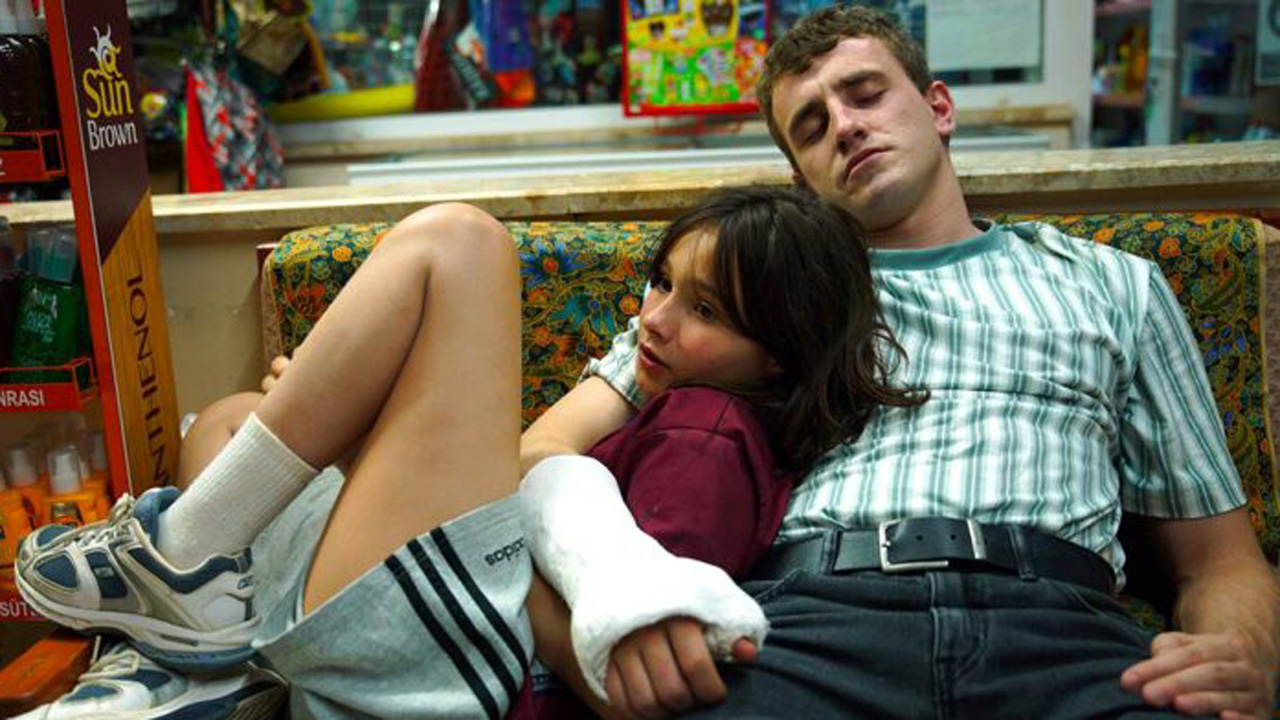
A few nights after viewing this, I was still piecing it together—less in terms of logistics than taking in all the shifting perspectives, recurring images, ambiguous tones and sustained feeling of drifting in and out of consciousness. Then again, I like movies that are somewhat unknowable. I retain and reflect on the experience of watching this more than anything else I’ve seen in some time. Charlotte Wells’ debut feature is less a key for a lock than an open door into another way of seeing. Also, Paul Mescal proves that his breakthrough performance in NORMAL PEOPLE was just an inkling of things to come.

2. TÁR

A great film, and writer/director Todd Field and star Cate Blanchett seem to know it; such air would normally be off-putting, but the fluidity and grace with which the whole thing moves (acrobatic sound design and all) reminds me of something like Kenneth Lonergan’s MARGARET but minus that film’s pretensions towards greatness, or perhaps everything comes together so convincingly that it doesn’t matter. A pitch-black comedy in prestige drama clothing, TÁR is sui generis, nearly as entertaining as Paul Thomas Anderson and as enigmatic as Kubrick. 158 minutes have rarely passed by so swiftly.

3. AFTER YANG

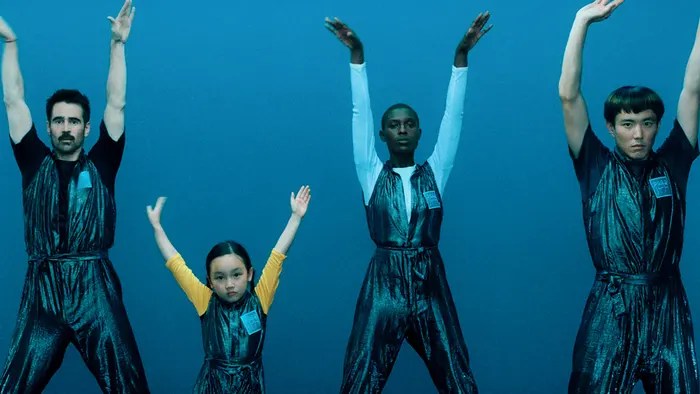
I recently wrote something about falling in love with a film over its opening credits, and I think this one is a contender. A tad more accessible and also genre-defying than director Kogonada’s last film COLUMBUS without lessening the qualities that made it unique, it’s science fiction without walls, exploring artifice and memory and what it could look like if the two would ever intersect. Also, I want to feel as passionate about and satiated by something as Colin Farrell’s character (his best work since THE LOBSTER, though see also #11 below) is with regards to tea. 

4. MEMORIA

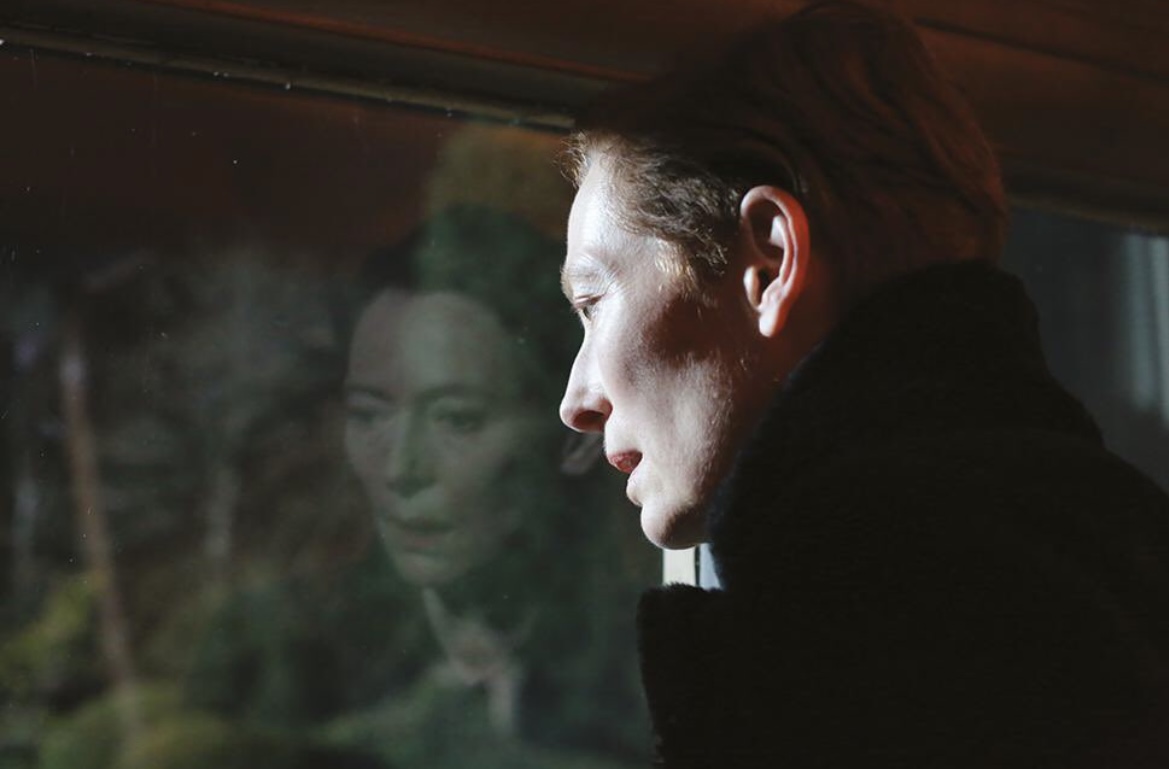
Apichatpong Weerasethakul’s first film outside of Asia (and follow-up to my favorite film of the last decade) is no less experimental than his previous work, thank god. Tilda Swinton’s been an expertly intuitive reactor since her Derek Jarman days, and this might be her most fascinating performance in some time for how she simultaneously commands the screen and also fades into it. I found this fascinating (if equally confounding) after my first viewing; it made somewhat more sense after a second viewing but remained, like everything else the director has done, slow, perplexing, surprising and one-of-a-kind.

5. A LOVE SONG

Her weathered face, Tennessee accent and general moxie has relegated Dale Dickey to smaller, supporting parts (most notably WINTER’S BONE); here, she’s as earthy and tenacious as you’d expect, but this tailor-made leading role allows her to exhibit much more vulnerability and warmth than usual. Furthermore, writer/director Max Walker-Silverman’s gem of a first feature gradually reveals itself as a film about time and loss, the need for connection and the benefit of perseverance and finding strength within. Although Dickey’s character doesn’t stray far from where she’s anchored her trailer, she goes on a considerable journey of the soul.

6. DRIVE MY CAR

Despite all the awards it received last year, I’m counting this as a 2022 film since it didn’t screen or stream here until then. The allure of this bold if leisurely paced Murakami adaptation is that you don’t necessarily know where it’s going, but when it gets there, the impact is staggering without seeming showy or unearned. I first saw it last March and am still looking forward to carving out another three hours to watch it again.

7. THE ETERNAL DAUGHTER

Call it the year of Tilda Swinton, I guess, or call this Joanna Hogg’s THE PARENT TRAP, only Swinton plays mother and daughter instead of twins, the genre’s gothic/psychological horror (set at an equally creepy/charming old British estate/hotel) rather than Disney rom-com, and the dog (Swinton’s own pet!) gets fourth billing. Also the third of a trilogy (which includes THE SOUVENIR, PART II (see below)) and possibly the best of the three.

8. WOMEN TALKING

Mostly meeting my ridiculously high expectations for it, Sarah Polley’s return to filmmaking is both of the moment and seemingly timeless. Though the story occasionally oversteps and the final section drags a bit, those are minor complaints: here, Polley depicts a world contained to the point of being restrictive; with great catharsis and reasoning, the film shows with artful clarity why this is damaging and what future generations can do to avoid succumbing to such a closed-off, incomplete life.

9. BENEDICTION

Terence Davies’ portrait of World War I soldier/poet Siegfried Sassoon is as unique as you’d expect from the director; what I wasn’t expecting was something more akin to his early masterworks like THE LONG DAY CLOSES than anything he’s done since. Along with his other recent poet biopic about Emily Dickinson, Davies is clearly on a late-career high with this, his most deliciously bitchy film to date (and it doesn’t even have Laura Linney in it.) 

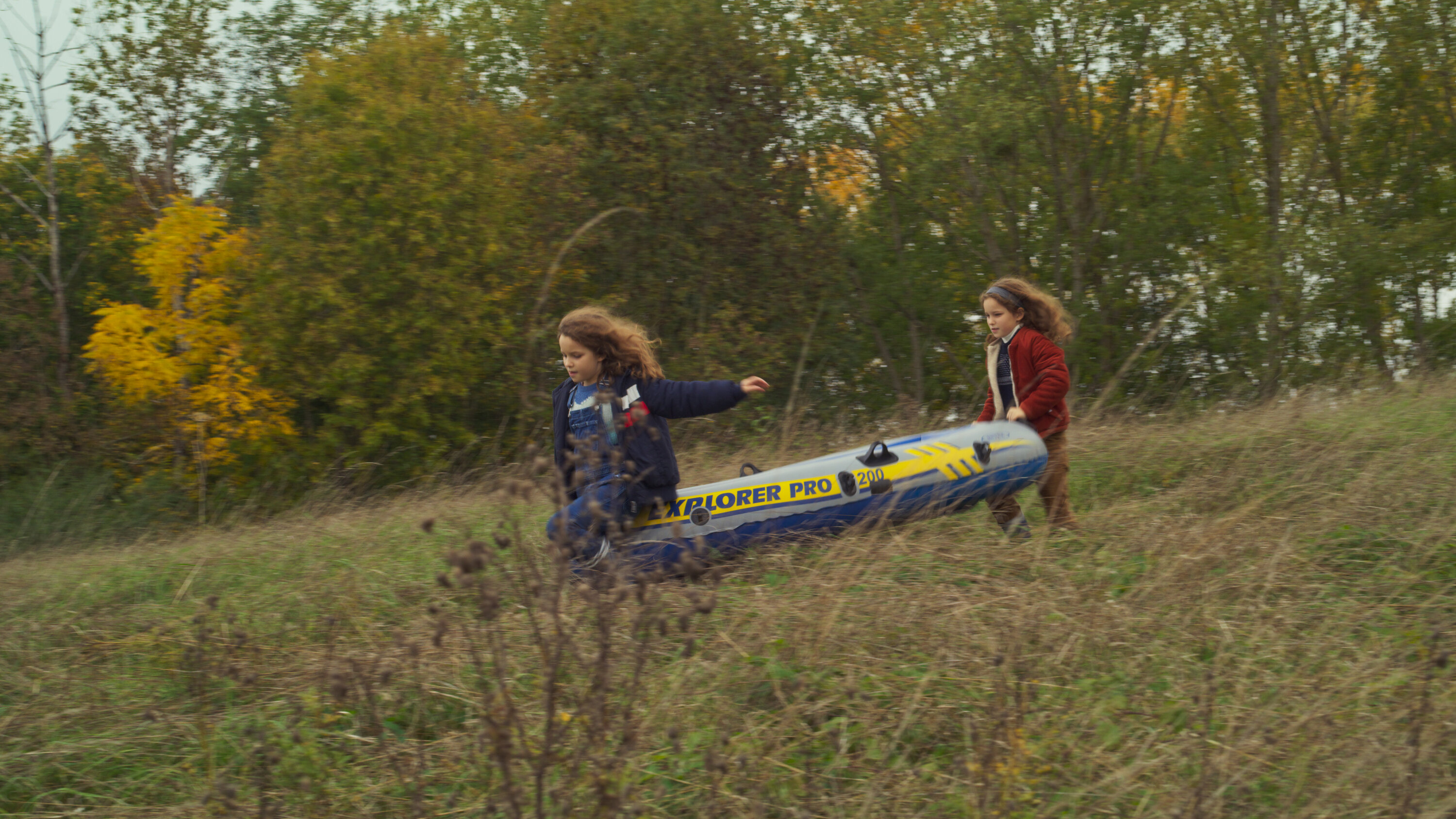
10. PETIT MAMAN

Celine Sciamma follows her most acclaimed work (PORTRAIT OF A LADY ON FIRE, already placing high in this decade’s Sight and Sound poll) with a deceptively simple fantasy about memory and motherhood that ends up one of her more conceptually ambitious films. As usual, she builds a fully realized world built out of a few essential components, only this time with a playfulness-bordering-on-whimsy that’s difficult to pull off (but rest assured, she does.)

11. THE BANSHEES OF INISHERIN

Makes a lasting impact for the striking, evocative landscapes, the performances and the confirmation that an isolated place, no matter how striking or evocative can be heaven for a few days and deadening for an eternity.

12. GIRL PICTURE

An immensely likable Finnish indie dramedy which portrays female teen relationships with a genuineness that’s instantly winning—up there with the likes of OUR SONG and GHOST WORLD (though far sweeter and less acerbic.) 

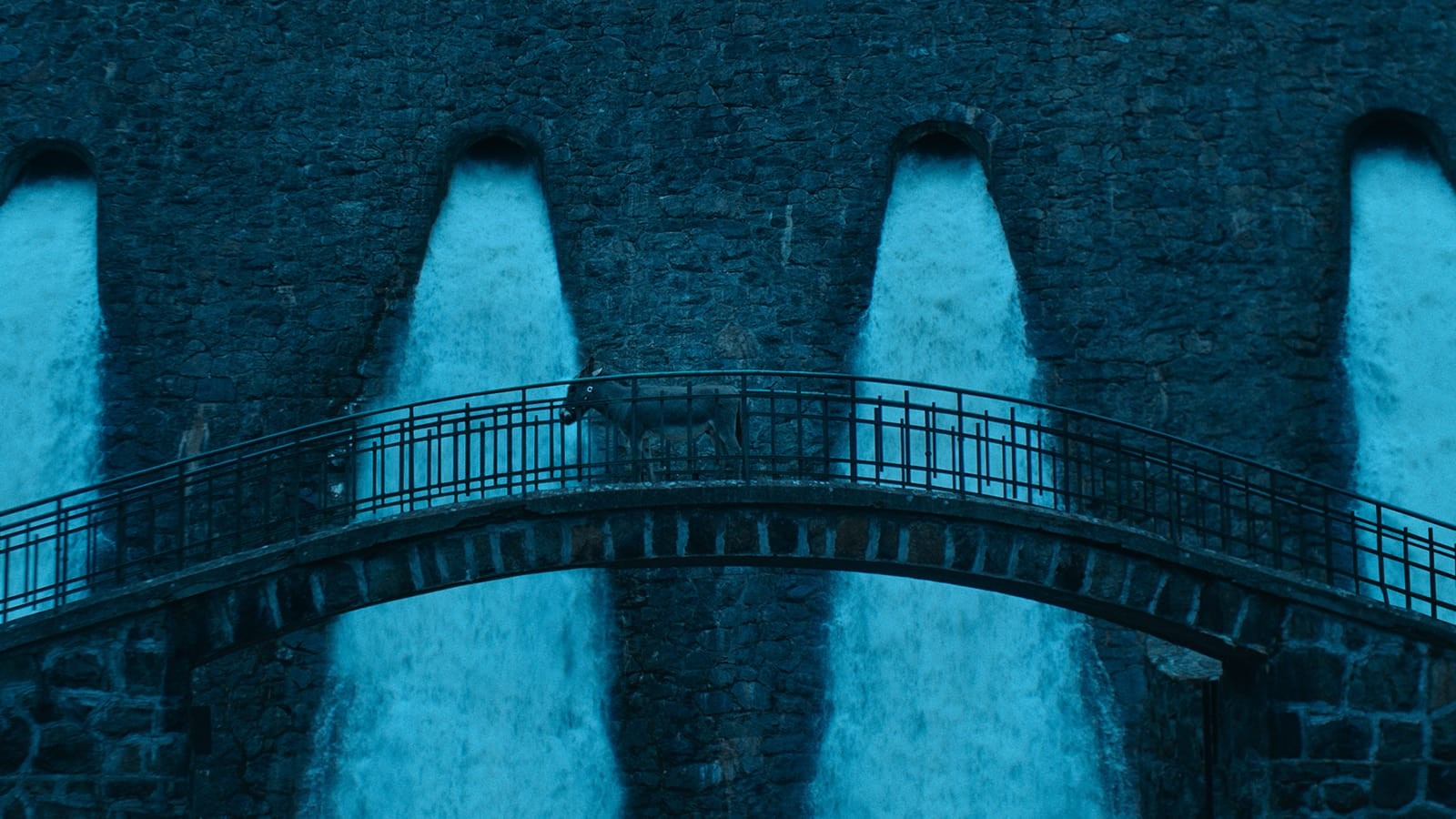
13. THE DOG WHO WOULDN’T BE QUIET

“You’ll be fine, it will pass, you’ll get used it,” our protagonist is dutifully told in this purposely disorienting but intriguing, unclassifiable reverie from Argentinian director Ana Katz.

14. STRAWBERRY MANSION

Set in a near-future where dreams are taxed by the government, I knew I adored this film about ten minutes in when the title card appeared (let’s just say it involves an ice cream cone.) 

15. ALI & AVA

From the director of THE ARBOR, it has a good beat and you can dance to it (to quote American Bandstand.) Also gratifying to see Adeel Akhtar and Claire Rushbrook cast as unconventional romantic leads.

16. THE CATHEDRAL

A sort of autobiography relayed in carefully chosen fragments, it plays like BOYHOOD condensed to ninety minutes but with four different actors instead of one (because it wasn’t shot over a dozen years.)

17. GLASS ONION: A KNIVES OUT MYSTERY

Rian Johnson can make as many of these as he likes as long as he keeps assembling dynamite casts and giving Daniel Craig-as-Benoit Blanc phrases to drawl like “Jared Leto’s Hard Kombucha.”

18. THE WORST PERSON IN THE WORLD

Divided into a very Godard-ian twelve chapters with a prologue and epilogue, Joachim Trier’s latest plays with form and genre; it also verges on precious at times only to always snap back into sharp focus.

19. PETER VON KANT

This is how you remake Fassbinder: cast a boisterous lead (Denis Menochet) who could play him in a biopic and include a glorious running sight gag like poor, dear, silent slave-twink Karl (Stefan Crepon).

20. EVERYTHING EVERYWHERE ALL AT ONCE

Unlike SWISS ARMY MAN, this is silliness I can fully abide, thanks to Michelle Yeoh and the rest of its glorious weirdo ensemble. Nearly a BEING JOHN MALKOVICH for the internet age of info-overload.

EO

ALSO RECOMMENDED:

AHED’S KNEE

ANNE AT 13,000 FEET

BROKER

COMPARTMENT NO. 6

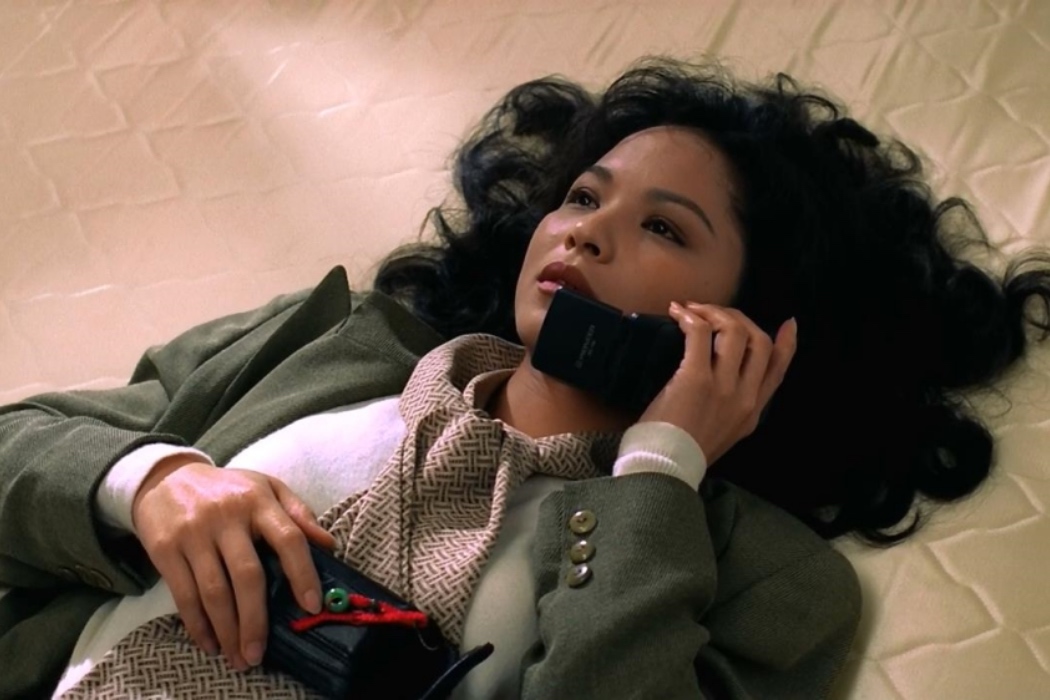
DECISION TO LEAVE

DESCENDANT

EO

FIRE OF LOVE

GIRL TALK

GREAT FREEDOM

HIT THE ROAD

LAST FLIGHT HOME

OFFICIAL COMPETITION

PLAYGROUND

THE SOUVENIR, PART II

SR.

ZERO FUCKS GIVEN

Favorite First Viewings of Older Films in 2022

My movie watching decreased by 30% in 2022—completely expected since between the pandemic and unemployment, 2021 was an anomaly of a year. If I learned anything from such circumstances, they helped me acclimate to watching more movies at home, as Letterboxd (now five years after I began using it) ended up a motivator to watch more movies, period. Here are the best older (pre-2021) films I saw for the first time this year.

1. KES

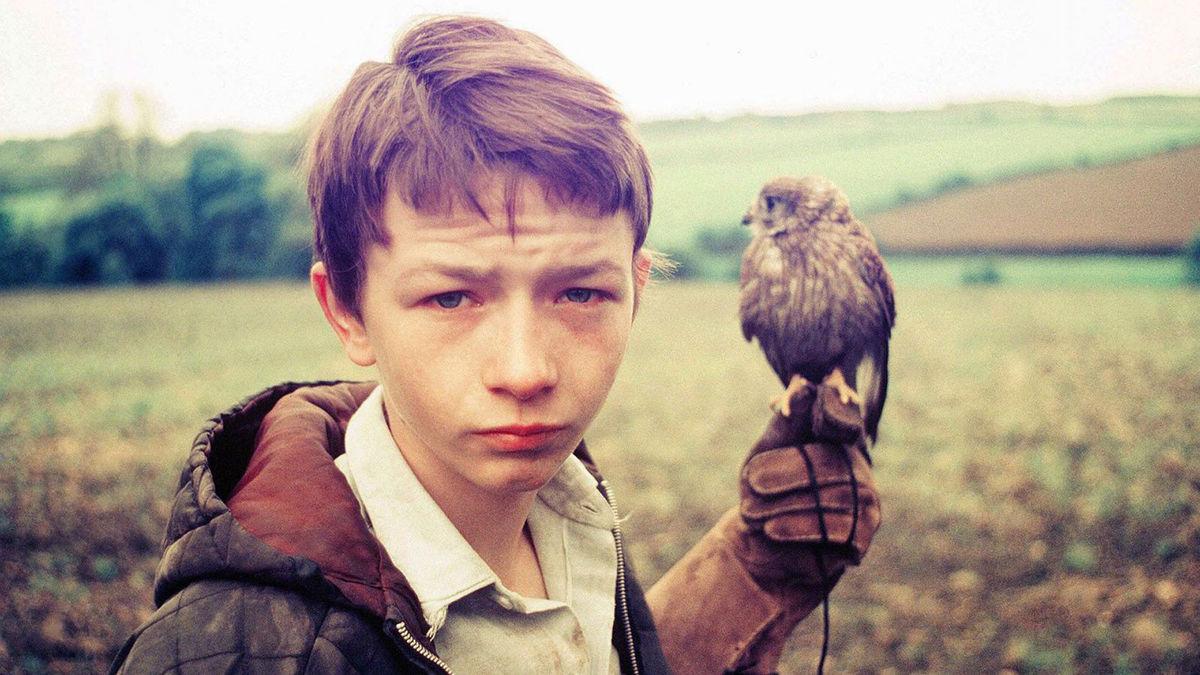
I’d seen a handful of Ken Loach pictures from this century but nothing earlier (unless you count the Poor Cow footage inserted into Soderbergh’s The Limey); I want to see more in 2023 as his second feature (from 1969) is simply masterful. An initially straightforward but increasingly resonant story about a boy and his bird, it captures something about the British working class arguably not even Loach contemporary Mike Leigh has ever replicated. Looking beyond archetypes, it subtly indicts an entire social structure while also locating a speck of transcendent beauty within it.

2. RUNNING ON EMPTY

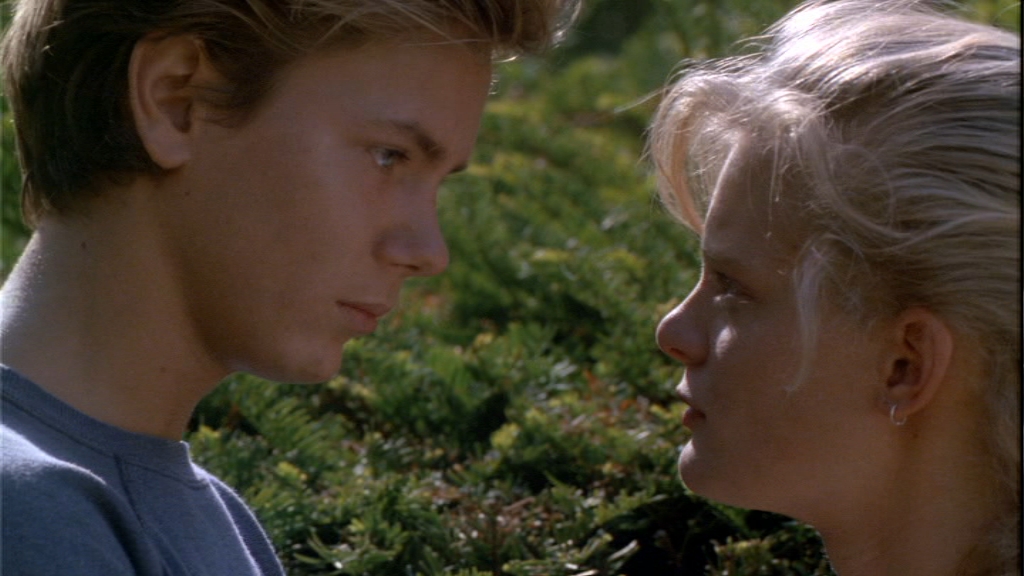
A teenager (River Phoenix) born into family forever on the run (due to a crime committed by his former hippie-activist parents) struggles to forge his own identity. While Phoenix’s death five years later makes it too easy to overrate his work, here (along with My Own Private Idaho) it’s sublime, as is Sidney Lumet’s direction—for that matter, so is the family sing-along to (of all things) a James Taylor song (too earnest to probably get away with in a movie today.)

3. GRAND HOTEL

In 2022, I kicked off an attempt to watch all the Best Picture Oscar winners I haven’t seen (about 40 or so) over the next few years; this is the best of the five I’ve made it through so far. Viewing this pre-code film was like trying on a vintage coat that fits beautifully: you’ve experienced such level of comfort before (via all the ensembles that followed from Robert Altman to Wes Anderson) but its age, finery and grace render it all the more satisfying.

4. SHERLOCK, JR.

I admired Slate film critic Dana Stevens’ new book about Buster Keaton—not enough to make my top ten this year, but at least it encouraged me to seek out the major works of his I’ve missed. This one in particular also landed dead-center on my radar after it cracked the latest Sight and Sound poll’s top 100. It’s 45 minutes long, just at that breaking point to distinguish a feature from a short, and it would be peak Keaton even if it didn’t have the best chase scene of all time.

5. DEAD RINGERS

David Cronenberg came back with the good-enough Crimes of The Future this year; if you liked it, chances are you’ll love this. Building on the body horror/tech-nerdery of Videodrome, it’s a feat of camera trickery but also a deep dive into all of the unsavory obsessions that makes his characters (and for all we know, the director himself) tick. Also, watching Jeremy Irons perform mouth-to-mouth on himself (or at least his body double) is a very Special Moment.

6. ONE SINGS, THE OTHER DOESN’T

Alternate title: Women’s Lib Rules. Agnes Varda was a treasure for many reasons, not least of which was that she made narrative films (Cleo From 5 To 7) as genuine and engaging as her documentaries (The Gleaners And I). This hails from a somewhat undervalued period between those two peaks; however, its dissection and celebration of feminism and abortion rights is obviously as relevant as ever and that she fashions it with whimsy and humor doesn’t make it any less powerful than a more outwardly darker work like Never Rarely Sometimes Always.

7. THE CROWD

This came as a recommendation from former Boston Globe critic Ty Burr when it aired on TCM (it’s not streaming anywhere); I want to rewatch it in a cinema when I next have a chance. Although King Vidor’s film about society, peer-pressure and collectivism looks and feels the near-century old that it is, it doesn’t matter: great art endures when it retains a strong resemblance to the present moment in premise and concept if not in its physical aesthetic.

8. CORPUS CHRISTI

The idea of a criminal posing as a member of the clergy isn’t new; to frame it as an identity crisis and a genuine attempt at redemption rather than just for laughs, however, sets up a tightrope walk for this Polish film’s protagonist, who lives out his selfish fantasies while also becoming a more active presence for good in the world. And yet, there are no easy resolutions and the film zags when you expect it to zig without losing focus or purpose.

9. MIDNIGHT RUN

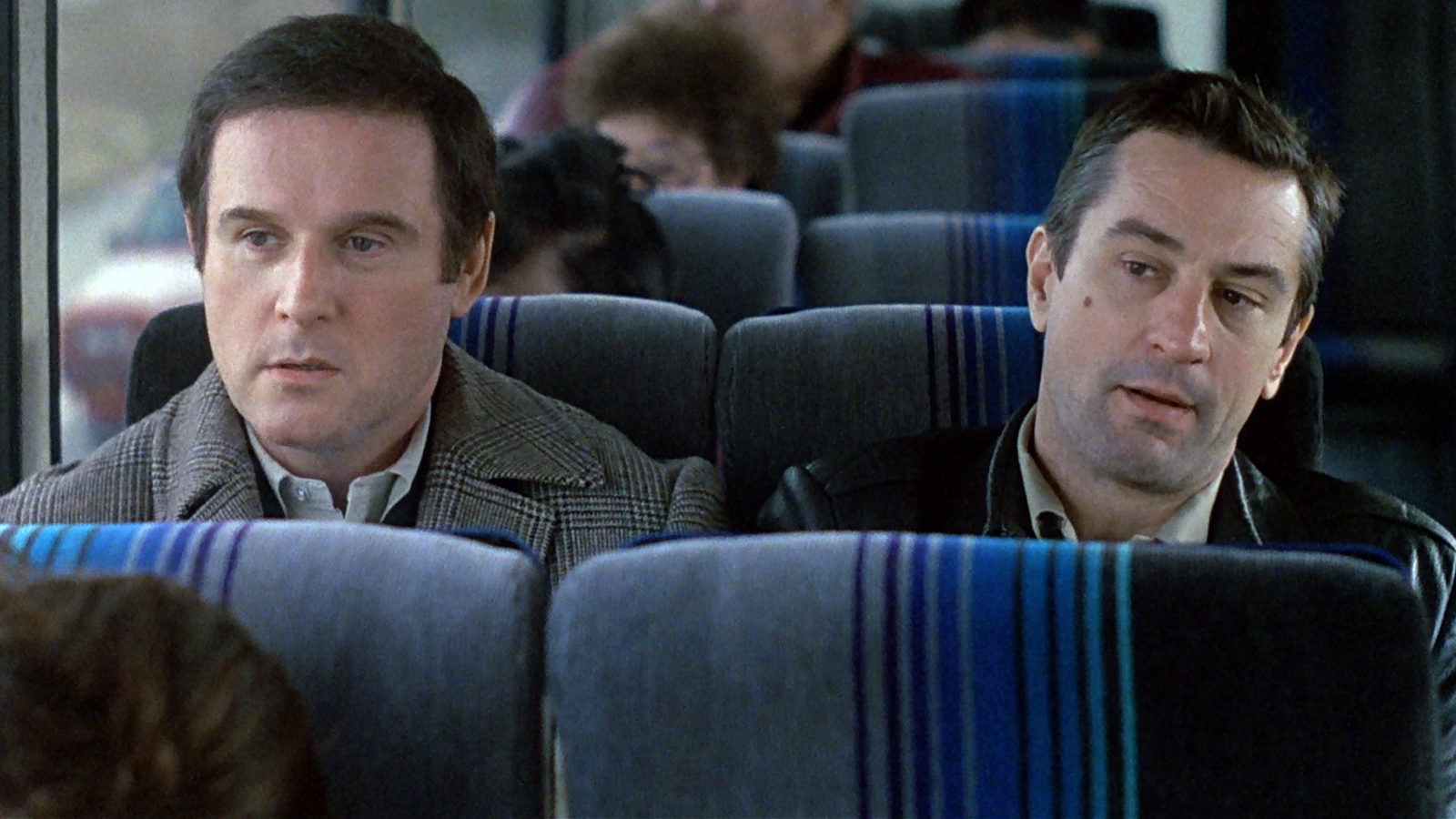
I often think of the late 1980s as a particularly fallow period for cinema, but this is the third 1988 film in this top ten and it’s a glorious action-comedy, like Lethal Weapon but with brains and far more nuanced dialogue and character development. Also, it greatly helps that Robert De Niro (so good at comedy when given a good screenplay!) and Charles Grodin are as inspired and sublime a pairing as Lemmon and Matthau, Pryor and Wilder, Tracy and Hepburn.

10. SIGN O’ THE TIMES

Long available for whatever reasons I suspect are firmly kept locked up in the Paisley Park vault, this concert film to complement Prince’s landmark 1987 double album of the same name has, like so much since his untimely death, reemerged. As a “director”, the Purple One was obviously no Jonathan Demme, but this, made at his absolute fucking peak (at least artistically), should be as well-known as Stop Making Sense. The choreography is almost as amazing as the outfits, which are almost as wonderful as the music.

HONORABLE MENTIONS:

Birth, Blue Collar, Chocolat (1988), Darling, Fort Tilden, The Godfather Part II (!), The Heartbreak Kid (1972), Jaws(!!), Once Upon A Time In America, ‘Round Midnight, The Secret of Roan Inish, The Sisters Brothers, Splendor In The Grass, Time Piece*, Titicut Follies, A White, White Day

(*A short presently streaming on Mubi and a must-watch for any Jim Henson fan.)

Vive L’Amour

BEST RE-WATCHES (not including anything for 24 Frames):

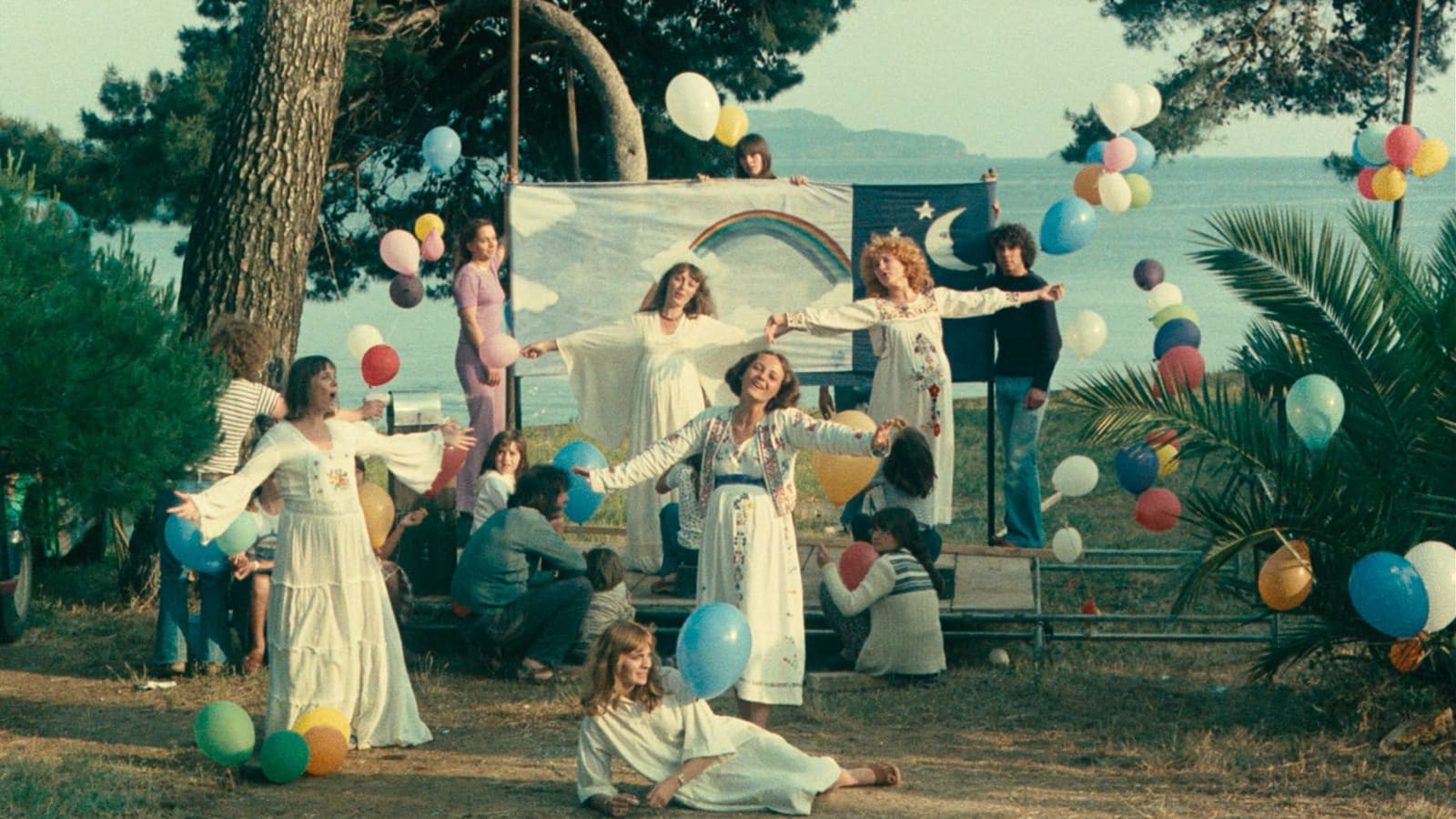
Appropriate Behavior, The Boy Friend, Delicatessen, Dick, Ed Wood, Hairspray (1988), Knives Out, The Last Days of Disco, Nosferatu The Vampyre (1979), Out Of The Past, Phantom Thread, The Shop Around The Corner, Something Wild, The Sweet Smell Of Success, Vive L’Amour, Written On The Wind

Favorite Directors

Most years, my film group conducts a poll amongst its members. In the past, we’ve determined our all-time favorite films of a particular genre (horror, documentary, animation) or other categorical distinction (remakes and sequels, foreign language, black-and-white.) For the first time, this year’s list is centered on people rather than films. One would think it a breeze to curate a list of just 25 or 50 directors; my original long list ended up past the 150-mark. We were allowed to include up to 100, which is what my ballot below has. The first 30 or so are the most important; the placement of almost anyone beneath is a little more arbitrary.

In curating my list, I thought about whom I’d most like to see on the group’s list which is chiefly why Agnes Varda ended up at #3 – French, female, equally adept at documentary and fiction, she’s the sort of revered talent (that might not necessarily be a household name) that the group was created to promote and highlight. I also wanted to talk up my favorite LGBT directors which accounts for half of my top ten. My first draft placed the ever-dependable, ever-unique Tsai Ming-liang at top but in the end, I couldn’t deny giving it to the artist I wrote my Master’s thesis in Film Studies on.

The thing with all-time-best-of lists is that they could credibly go on for days. What favorite filmmakers of yours missing from the 100 below would you have included?

  1. Derek Jarman
  2. Tsai Ming-liang
  3. Agnes Varda
  4. Paul Thomas Anderson
  5. Wes Anderson
  6. Robert Altman
  7. Apichatpong Weerasethakul
  8. David Lynch
  9. Todd Haynes
  10. Pedro Almodovar
  11. Michael Powell
  12. Guy Maddin
  13. Mike Leigh
  14. Atom Egoyan
  15. Claire Denis
  16. Hirokazu Kore-eda
  17. Sarah Polley
  18. Yasujiro Ozu
  19. Terence Davies
  20. Celine Sciamma
  21. Wong Kar-wai
  22. Rainer Werner Fassbinder
  23. Alfonso Cuaron
  24. Richard Linklater
  25. John Cassavetes
  26. Jane Campion
  27. Martin Scorsese
  28. Chris Marker
  29. Kelly Reichardt
  30. Zhang Yimou
  31. Joanna Hogg
  32. Andrey Zvyagintsev
  33. Jonathan Demme
  34. Werner Herzog
  35. Bob Fosse
  36. Abbas Kiarostami
  37. Andrea Arnold
  38. Spike Lee
  39. Jacques Tati
  40. Bong Joon-ho
  41. Edward Yang
  42. Joel Coen
  43. Andrei Tarkovsky
  44. Douglas Sirk
  45. Jean-Pierre Melville
  46. Hou Hsaio-hsien
  47. Michael Haneke
  48. Maya Deren
  49. Hayao Miyazaki
  50. Orson Welles
  51. Albert Maysles
  52. Jean-Luc Godard
  53. Michelangelo Antonioni
  54. Jim Jarmusch
  55. Kogonada
  56. Andrew Haigh
  57. Lee Chang-dong
  58. John Waters
  59. Jafar Panahi
  60. Buster Keaton
  61. Frederick Wiseman
  62. F.W. Murnau
  63. Nicholas Ray
  64. Sofia Coppola
  65. Joachim Trier
  66. Alfred Hitchcock
  67. Jean Renoir
  68. Ingmar Bergman
  69. Yorgos Lanthimos
  70. Krzysztof Kieslowski
  71. Whit Stillman
  72. Wiebke von Carolsfeld
  73. Xavier Dolan
  74. Fernando Eimbcke
  75. Marielle Heller
  76. Olivier Assayas
  77. Jia Zhangke
  78. Andrew Bujalski
  79. Josh and Benny Safdie
  80. Peter Strickland
  81. Lynne Ramsay
  82. Miranda July
  83. Roy Andersson
  84. Woody Allen
  85. Francis Ford Coppola
  86. Alexander Payne
  87. Leos Carax
  88. Robert Bresson
  89. Francois Truffaut
  90. Debra Granik
  91. Satoshi Kon
  92. Greta Gerwig
  93. Billy Wilder
  94. Preston Sturges
  95. David Cronenberg
  96. Ernst Lubitsch
  97. Stanley Kubrick
  98. Nicole Holofcener
  99. Howard Hawks
  100. Nuri Bilge Ceylan

Sight and Sound 2022: The Results

A rumor spread like wildfire across social media last week that this decade’s Sight and Sound critics poll of The Greatest Films of All Time would crown a new winner. Citizen Kane had won every ten-year iteration of the poll from 1962 until 2012 when Vertigo finally knocked it off the top—an upset for sure but supposedly not as shocking as 2022’s victor. Some speculated it would be 2001: A Space Odyssey, which placed sixth in 2012—a reasonable guess but not a particularly game-changing one; although somewhat divisive among viewers, Kubrick’s sci-fi head trip feels firmly ensconced in the canon as much as the Welles or Hitchcock films. I wouldn’t mind it topping the poll nor would I have felt too strongly about it.

One can imagine the collective gasp on Film Twitter when the actual winner was announced: Chantal Akerman’s Jeanne Dielman, 23 Quai du Commerce, 1080 Bruxelles, all the way up from #36 in 2012. For the unfamiliar (i.e. mostly everyone who is not a film critic or a considerable cineaste), it is a 1975 drama about three days in the life of the titular housewife (Delphine Seyrig) and her mundane routines. She peels potatoes, cleans the dishes, brushes her hair, etc. Nothing else happens, except for one crucial thing each day—revealing it here would be a major spoiler. The film is over three hours long and so exceedingly methodical that it can feel like thirty. This deliberateness is crucial for, as the film continues, the slightest deviations in Dielman’s routines (like when she drops a just-washed spoon) seem all the more noticeable though even they do not prepare one for the alarming finale.

I first watched this in a graduate-level film studies class; at the time, few of us knew what to make of it. Completely unprepared for the sluggish pace and rigorous formalism, many of us sat in our seats talking back to the screen, giving it the Mystery Science Theater 3000 treatment (our professor was not present for the screening, though he heard about our reaction to it and later scolded us at length.) Whenever one describes a movie as unlike anything one has seen before it often comes off as hyperbole, but Jeanne Dielman (few casually refer to it by the full laborious title) wholly lives up to this aphorism. It is an experimental, structurally radical film and also one of the key works of feminist cinema (made by a 25-year-old Belgian lesbian director, no less.)

How could something so extreme top even a critics poll of the best films of all time? For one thing, nearly doubling the number of participants (1639, up from 846 in 2012) allows for more inclusivity and diversity. It could reflect the current era, serving as a course-corrective to decades of white male critics dominating this and other likeminded polls. It might also be a way to honor Akerman’s legacy (sadly, she committed suicide in 2015.) The film is also more accessible than ever before: one can easily stream it on Criterion Channel (or, a few years ago, purchase it on Blu-ray or DVD; it’s currently out of print. At the time of my first viewing, I don’t think one could even find it on VHS.) I remember watching it again a year or two later, perhaps at the Harvard Film Archive; I haven’t revisited it since though I’ve seen a good chunk of Akerman’s filmography, which contains everything from audio-visual diaries (News From Home) to a glossy musical (!) (Golden Eighties, also starring Seyrig.) Undeniably a great work, it is a film to endure, maybe even admire rather than enjoy in the conventional sense. That it topped Sight and Sound in 2022 will delight some and infuriate many. Still, it’s altogether preferable to seeing Citizen Kane (a worthy film whose continued dominance of such polls pushed it to seem overrated) at number one again.

As for where films on my (fake) 2022 ballot placed, the highest was In The Mood For Love (#5, up from #24), followed by The Passion of Joan of Arc (#21, down from #9), The Apartment (#54, did not crack the top 100 in 2012), A Matter of Life and Death (#78, up from #90) and Parasite (#90)—the latter the newest entry to make the top 100 along with Portrait of A Lady on Fire (#30). I didn’t expect most of my other five entries to chart except for maybe The Shop Around The Corner35 Shots of Rum isn’t as nearly as beloved as Claire Denis consensus choice Beau Travail (#7, up from #78!) and I suppose the others are too obscure, though at least Love Streams and The Long Day Closes are part of The Criterion Collection—not so Bring Me The Head of Alfredo Garcia, which I just bought a Kino Lorber Blu-ray of since it remains unstreamable.

Regarding my entirely different 2012 ballot (which included Beau Travail), four other titles placed in 2022: Vertigo (still a very respectable #2), Mulholland Drive (#8, up from #28), Sunrise: A Song of Two Humans (#11, down from #5) and Playtime (#23, up from #43 (tied)). As for titles I’ve covered so far in my 24 Frames project, in addition to the Denis and Lynch films, there’s Close-Up (#17, up from #43 (tied)),  Meshes of the Afternoon (#16) and The Piano (#50) (the last two did not crack the top 100 in 2012.)

Akerman’s triumph was not the only surprise among the results. I certainly didn’t predict Barbara Loden’s Wanda (#48), Daughters of the Dust (#60), The Gleaners and I (#67), My Neighbor Totoro (#72 – over Spirited Away at #75!) or Tropical Malady (#95) to place. That The Godfather Part II dropped out of the top 100 entirely after placing at #31 in 2012 was also unexpected. 2001: A Space Odyssey did top the adjacent directors poll where Jeanne Dielman reached #4 (tied with Tokyo Story.) I’ve seen all but ten of the critics poll’s top 100; of those, I’m most eager to watch Sherlock Jr. (I know!), The Spirit of the BeehiveMadame De…Once Upon a Time in the West and Black Girl.

Is it too soon to speculate what will top the 2032 poll? Given that I wouldn’t have bet my life on this year’s number one back in 2012, who knows? I’m more curious about where the most recent titles (Portrait of A Lady On FireParasiteGet Out) will place, for it’s always intriguing to see how a newish movie endures (or not) in real time.

Sight and Sound 2022: My (fake) Ballot

The Long Day Closes

It’s nearly time for British film magazine Sight and Sound to publish their once-every-decade critic’s poll of all-time greatest films. Ten years ago, I presented my own hypothetical ballot; for this latest edition, here’s another one with ten different films. My only criteria was to not repeat anything from my 24 Frames project—a relatively easy task because there is an almost overwhelming amount of movies to pick from for a list like this.

In chronological order:

THE PASSION OF JOAN OF ARC (Director: Carl Dreyer, France, 1928)

My silent-era pick. Wholly radical when it was made, it still feels as such today—I can’t name another film that utilizes faces and close-ups with such candor. As with SUNRISE: A SONG OF TWO HUMANS, I remain uncertain whether an alternate universe where the invention of sync sound was decades away would’ve been a good thing, but this film’s rare achievement makes me wonder.

THE SHOP AROUND THE CORNER (Ernst Lubitsch, USA, 1940)

This is the oft-described “Lubitsch Touch” at its most graceful and lithe. The epiphanous, empathetic last twenty minutes or so is what all romances, comedies and rom-coms should aspire to; Stewart (in arguably his most complex performance until VERTIGO) puts it best: “You know, people seldom go to the trouble of scratching the surface of things to find the inner truth.”

A MATTER OF LIFE AND DEATH (Michael Powell and Emeric Pressburger, UK, 1946)

I could’ve gone with any one of this duo’s efforts from this period; this has the most innovative use of switching back and forth between black-and-white and glorious color (even more so than THE WIZARD OF OZ). Still, as with the best of Powell and Pressburger, the technical spectacle is always in service of a fable full of heart and substance.

THE APARTMENT (Billy Wilder, USA, 1960)

I didn’t appreciate this when I first tried watching it in my twenties, but I fully get it now (being a major influence on MAD MEN helps.) No other filmmaker besides Billy Wilder ever achieved such a tricky balance of humor and melancholia as he did here. Also, how in the world did a rarely-better Shirley MacLaine lose the Academy Award for Lead Actress to Liz Taylor???

BRING ME THE HEAD OF ALFREDO GARCIA (Sam Peckinpah, Mexico/USA, 1974)

I first saw this neglected classic five years ago at a screening in conjunction with Charles Taylor’s indispensable book on ‘70s genre cinema, OPENING WEDNESDAY AT A THEATER OR DRIVE-IN NEAR YOU and fell for it instantly: Peckinpah’s scabrous take on the human condition feels entirely undiluted and yet so… humane. Warren Oates very well may also be the original anti-hero (or at least the template for those of modern prestige-TV.)

LOVE STREAMS (John Cassavetes, USA, 1984)

Cassavetes’ final film is almost a beautiful mess, and one by design. Knowing he had not much longer left to live, he made something people might’ve deemed elegiac if his philosophy would’ve allowed for such sentimentality (it mostly did not.) To put so much of oneself onscreen warts and all was his specialty whether in the guise of his ensemble players (including wife Gena Rowlands) or, in this case, himself; arguably, no one did so with more blistering honesty.

THE LONG DAY CLOSES (Terence Davies, UK, 1992)

Davies’ personal, idiosyncratic style refashions memories as a stream-of-consciousness rush, although perhaps rush is the wrong word for a film that lovingly takes its time. The rare period piece to revel in nostalgia without letting it obscure the mundaneness of everyday life, it’s also pure poetry in how it orchestrates all of its cinematic elements, especially its bold use of light and darkness.

IN THE MOOD FOR LOVE (Wong Kar-wai, Hong Kong, 2000)

Last year, I rewatched all of Wong’s films included in the new Criterion Collection box set and this one’s still his best. A deceptively simple tale of a romance that’s never acted upon, it sounds like the stuff of a prime Douglas Sirk melodrama. Instead, it plays out with such nuance and restraint that it achieves an almost unbearable intimacy, leaving the viewer both swooned and devastated.

35 SHOTS OF RUM (Claire Denis, France, 2008)

I included another Denis film on my 2012 ballot; here’s one nearly its equal. Less formally adventurous, this account of a single father and his adult daughter communicates less through words than glances and evocative stylistic choices such as hypnotic point-of-view shots taken from commuter trains in motion. Also, what a sublime soundtrack, not only for the Tindersticks score but also its unexpected use of a certain Commodores song.

PARASITE (Bong Joon-ho, South Korea, 2019)

Haven’t rewatched this since right before the pandemic, but I imagine it holds up brilliantly—so well-constructed, you believe every facet of it even as it threatens to spiral out of control. As usual with Bong, it’s tough to classify or define: is it a class-conscious satire, a race-against-the-clock thriller or a revenge-driven horror film? Bong seems to be asking, “Why not all of these things, and simultaneously at that?”