Four Fall Focus Gems

IFF Boston’s annual Fall Focus is always a good bet: this year, I got to see four movies I couldn’t get tickets to at TIFF, and all of them were good-to-great (and three were filmed in Japan, coincidentally.)

FALLEN LEAVES

From its opening shot, there’s no mistaking this for the work of anyone other than veteran Finnish auteur Aki Kaurismaki. A purveyor of humor so deadpan, less attentive viewers might not even detect it on occasion, he’s influenced many kindred spirits and followers from Roy Andersson to Jim Jarmusch (whom he pays a somewhat twisted yet hilarious tribute to here.) His first film in six years is one of his most deceptively straightforward: a burgeoning middle-aged romance between supermarket worker Ansa (Alma Pöysti) and alcoholic laborer Holappa (Jussi Vatanen). The Helsinki settings look like they’ve been etched in time over the past fifty years, although occasional radio broadcasts reporting the current Russia/Ukraine war are scattered throughout. Happily, this fully plays to Kaurismaki’s strengths: of the handful of his films I’ve viewed, this is easily the funniest, especially the karaoke bar scenes featuring Holappa’s self-assured (if only to a point) co-worker/pal Huotari (Janne Hyytiäinen). As usual with this director, what would often come off as affectations for most filmmakers are in his hands fully realized and seamlessly essential to the entire fabric. (Grade: 8/10)

EVIL DOES NOT EXIST

So, Ryusuke Hamaguchi, what are you doing now after all that acclaim (including the Cannes Palme d’Or and an Oscar) for DRIVE MY CAR? A study of an environmental threat towards a remote community where a corporation wants to open a glamping (ie-glamourous camping) site, you say? Far more Tarkovsky than Ozu, EVIL DOES NOT EXIST is leisurely paced, visually stunning and and in the end, near-impenetrable–not entirely a deficit depending on one’s expectations. Arguably no other filmmaker would so totally depict the utter futility of “information meetings” where the concerns of said community are both heard and blithely dismissed, or take two characters who initially seem buffoonish and unexpectedly flesh them out until they’re nearly as sympathetic as the two protagonists. Those looking for another cathartic wonder like DRIVE MY CAR won’t find it here, but it offers a lot to unpack and ponder; at a mere 106 minutes, it also more conveniently lends itself to a rewatch or two. (8/10)
MONSTER

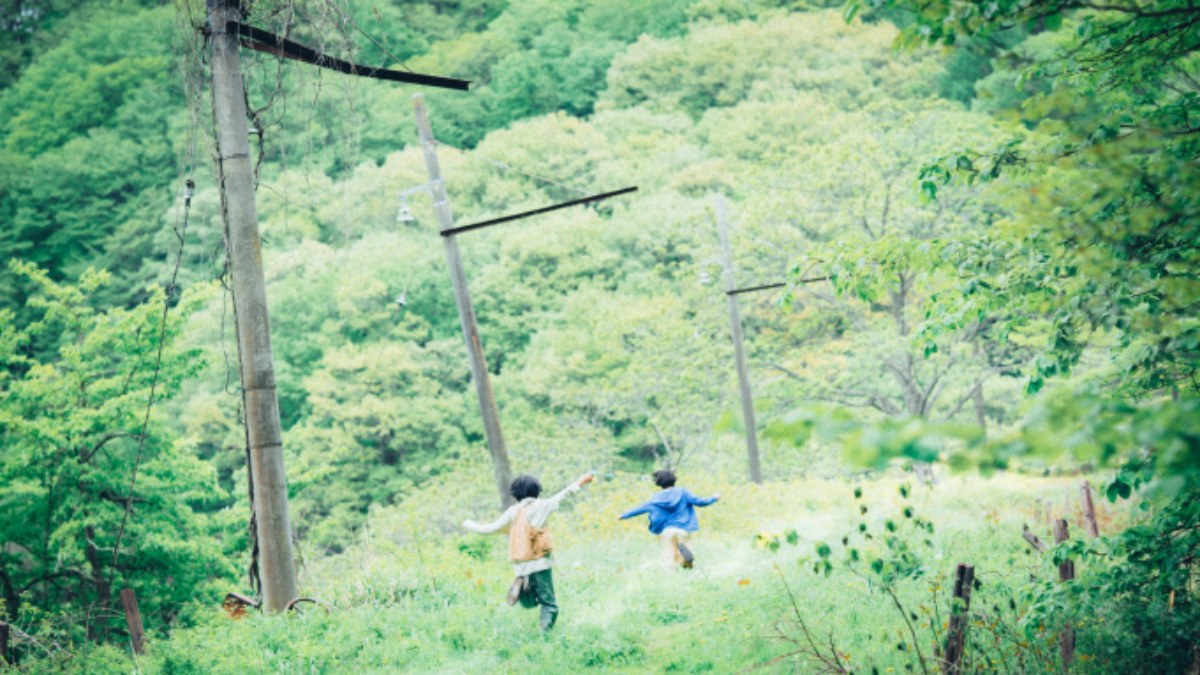
This is Hirokazu Kore-eda’s first film set in his native Japan since SHOPLIFTERS and also his first that he hasn’t written himself since MABOROSI, his 1995 feature debut. Rest assured, MONSTER is completely in the director’s wheelhouse of domestic dramas, although screenwriter Yuji Sakamoto’s ambitious, RASHOMON-esque structure is something new for the director. The first third or so comes off as a darkly comic fable about a fifth-grader being bullied by his teacher; what happens next sets the momentum for a narrative only fully revealed one all of its pieces gradually fall into place–one that also makes it tough to write about without any spoilers. I’ll just note that the end result is one of Kore-eda’s most accessible works in part due to its swift pace where the rhythms are enhanced by its unique structure, but also one of his warmest and most resonant. You can sense his humanist approach towards nearly every character as the story unfolds. In some ways, it’s a good companion to Alexander Payne’s THE HOLDOVERS as it similarly clinches one’s attention with humor and a tricky premise but then extends an invitation to learn the full story and witness how we can instill change in one another. (10/10)

PERFECT DAYS

Well, this was an unexpected late-career triumph from Wim Wenders, who arguably hasn’t made a good narrative film in over three decades; that it’s simply a character study about Hirayama, an aging man who cleans Tokyo public toilets for a living only adds to its allure. Featuring a powerful lead turn from SHALL WE DANCE star Kōji Yakusho (appearing in nearly every scene), this might be the closest Wenders has come to successfully making “slow cinema”. Scene after scene unfolds of Hirayama methodically cleaning a wide array of the city’s public toilets (many of them built for the delayed 2020 Summer Olympics) with pauses for how he spends his leisure time by bicycling, picking up paperbacks from his favorite book store, reading them as he has lunch in a leafy, secluded spot and listening to music on cassette tapes (!) while driving through greater Tokyo. It’s this last activity that’s most significant–not only does it give an outsider a vivid sense of what the city is really like, the music (mostly English-language rock from the 1960s and 70s) and its curation almost tells a parallel story. I’ve rarely seen such an extensive depiction of a character’s relationship to music and how it informs and fortifies his well being. While overall this could’ve been perhaps 20-30 minutes shorter, it almost feels hypnotic if you stick with it. The last shot, which returns to Hirayama and his music is a great one and also confirmation that this gentle, beatific but wonderfully human and flawed man embodied by Yakusho is a career-best performance. (9/10)

Until The End Of The Film

I spent a recent holiday watching the 287-minute director’s cut of Wim Wenders’ 1991 techno/sci-fi extravaganza Until The End Of The World (streaming on Criterion Channel.) The 158-minute theatrical cut infamously bombed and the film, a follow-up to the still-beloved Wings of Desire seemed to languish in memory until this longer version surfaced–first in Europe, then in the US in 2014 and finally as part of the Criterion Collection a few years later.

Rather than attempt a traditional review, I present a journal of my viewing experience, done pretty much in one sitting—possibly the longest film I’ve ever conceived this way. (Times are in hours:minutes.) SPOILERS AHEAD, obv.

***

0:04 – Protagonist Claire (Solveig Dommartin) wakes up and wearily strolls through a lingering party in a bohemian but upscale Venice apartment like she’s Natasha Lyonne in Russian Doll 25+ years early.

0:10 – Set in “1999”: MP3s do not yet exist, although music comes on ultra-thin rectangular discs that resemble playing cards instead of CDs. More prescient (to the COVID age, anyway): the boat driver wearing a face mask.

0:14 – I was thinking I could spend the entire film blissfully watching Claire driving through pre-apocalyptic landscapes and whoops, her car just crashed.

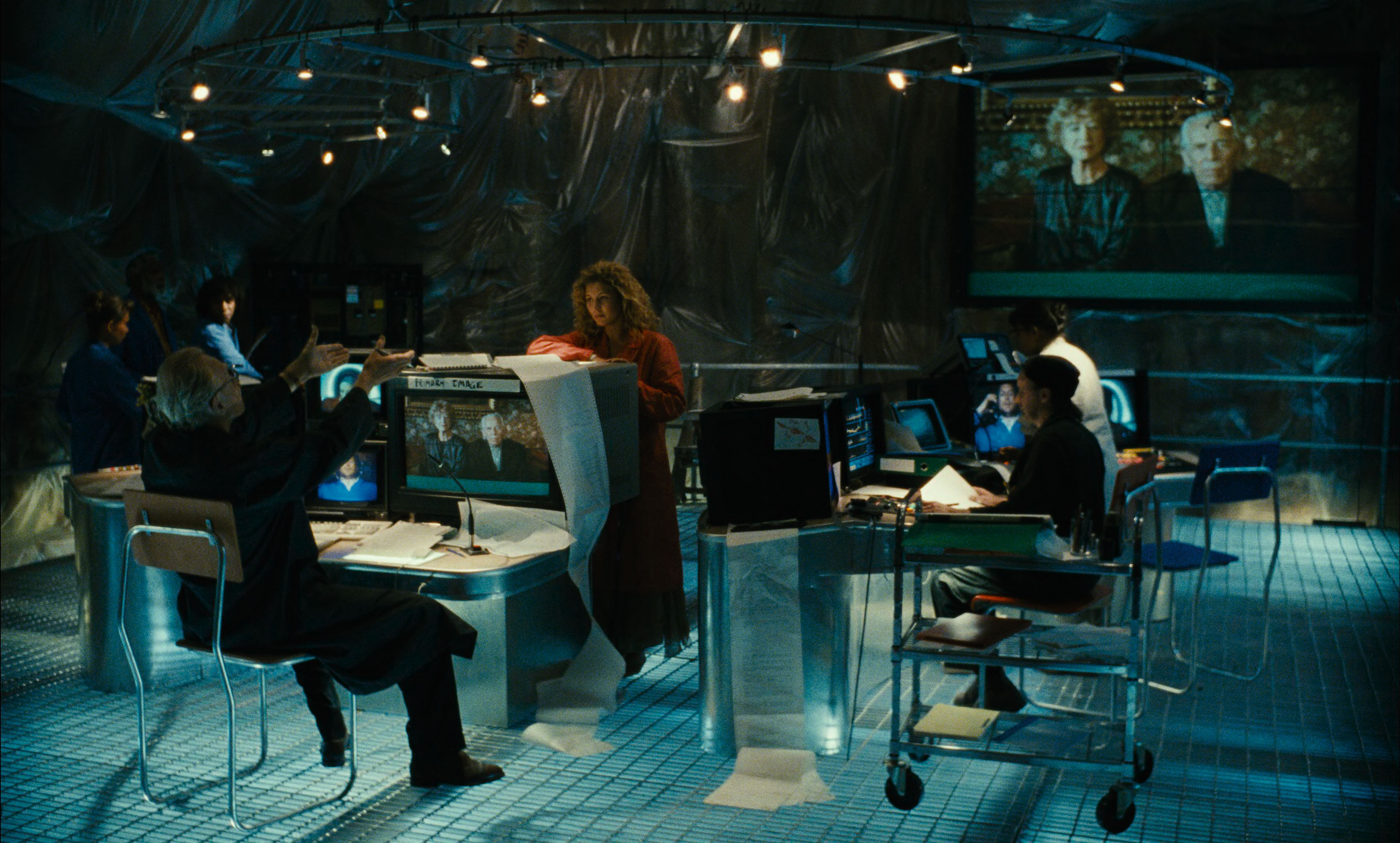
0:24 – The problem with sci-fi, particularly films set less than a decade in the future is that the imagined technology often resembles a slightly warped take on what is readily available in the present. Hence, the bank of VIDEOPHONES Claire calls her friend Makiko from (and runs into Sam (William Hurt) at for the first time.)

0:24 We have the U2 title song! I remember seeing/hearing this soundtrack everywhere but have no memory of the film playing theatrically in Milwaukee, though I was 16 and not yet aware of the ins and outs of arthouse cinema.

0:30 – At least some of the imagined tech is seriously warped, like the police cars that resemble Lego Duplo figures.

0:37 –  Well, Claire and Gene’s (Sam Neill) Parisian flat is the most 90s apartment ever; Elvis Costello’s slooow version of The Kinks’ “Days” is the worst version I’ve heard (def. inferior to Kirsty MacColl’s from two years before.)

0:44 – Someone actually says, “Don’t be stupid; this is 1999.”

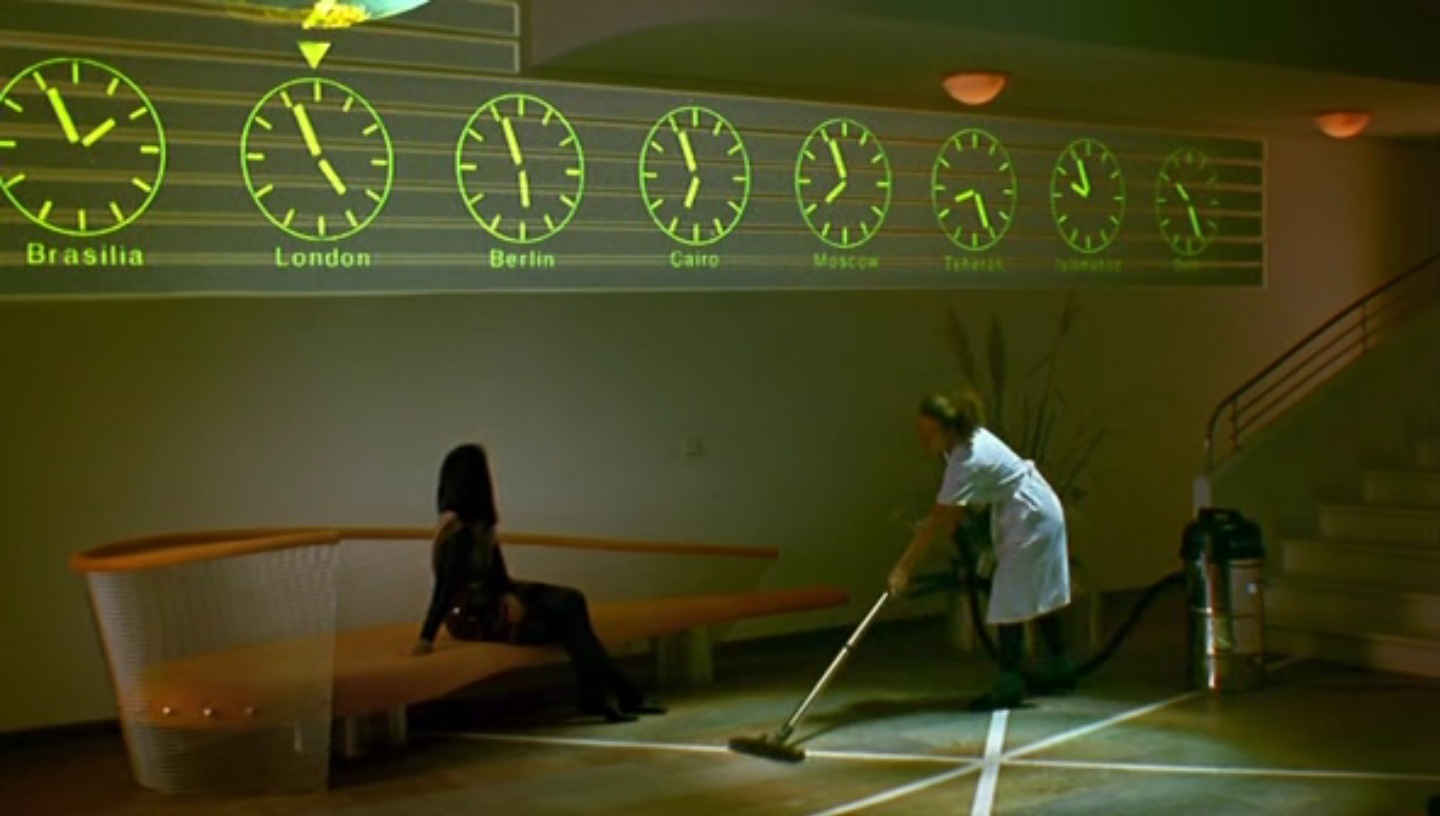
0:53 – Nearly 20% (!) through the film, and I’m suitably entertained. When not overtly wacky, the production design’s sublime (e.g. the giant, rotating world globe illuminating one time-zone clock after another.)

1:03 – Between this and The Piano, early 90’s Neill really was your go-to guy for playing strait-laced, uptight cucks.

1:14 – “Bounty Bear” WTF.

1:29 – I might’ve done without so much narration from Gene. “She spent a fortune video-faxing the tape to me in Paris,” he notes, presumably straight-faced.

1:33 – Oh Claire, I hate Gene’s suit too.

1:35 – Guessing the Tokyo hotel chase scene, where the film briefly turns into an episode of Scooby-Doo (with spazzy, incidental music straight out of an ancient Merrie Melodies cartoon) was cut out of the shorter theatrical release.

1:44 – Regarding the rural Japan sequence, as Wenders proved in his earlier doc Tokyo-ga, Ozu he is not; it’s still touching to see octogenarian (and Ozu regular) Chishū Ryū onscreen though.

1:52 – Here we get to the premise/MacGuffin/whatever: “A camera that takes pictures blind people can see !” (o rilly?) To which Claire silently responds, Can you see my naked body?

2:01 – After the unexpected thrill of seeing Claire and Sam to do “The Twist” on a cruise ship, the U2 theme appears for the third time. Feeling overwhelmed that we’re not even halfway through this thing, so I’m taking a 15-minute break.

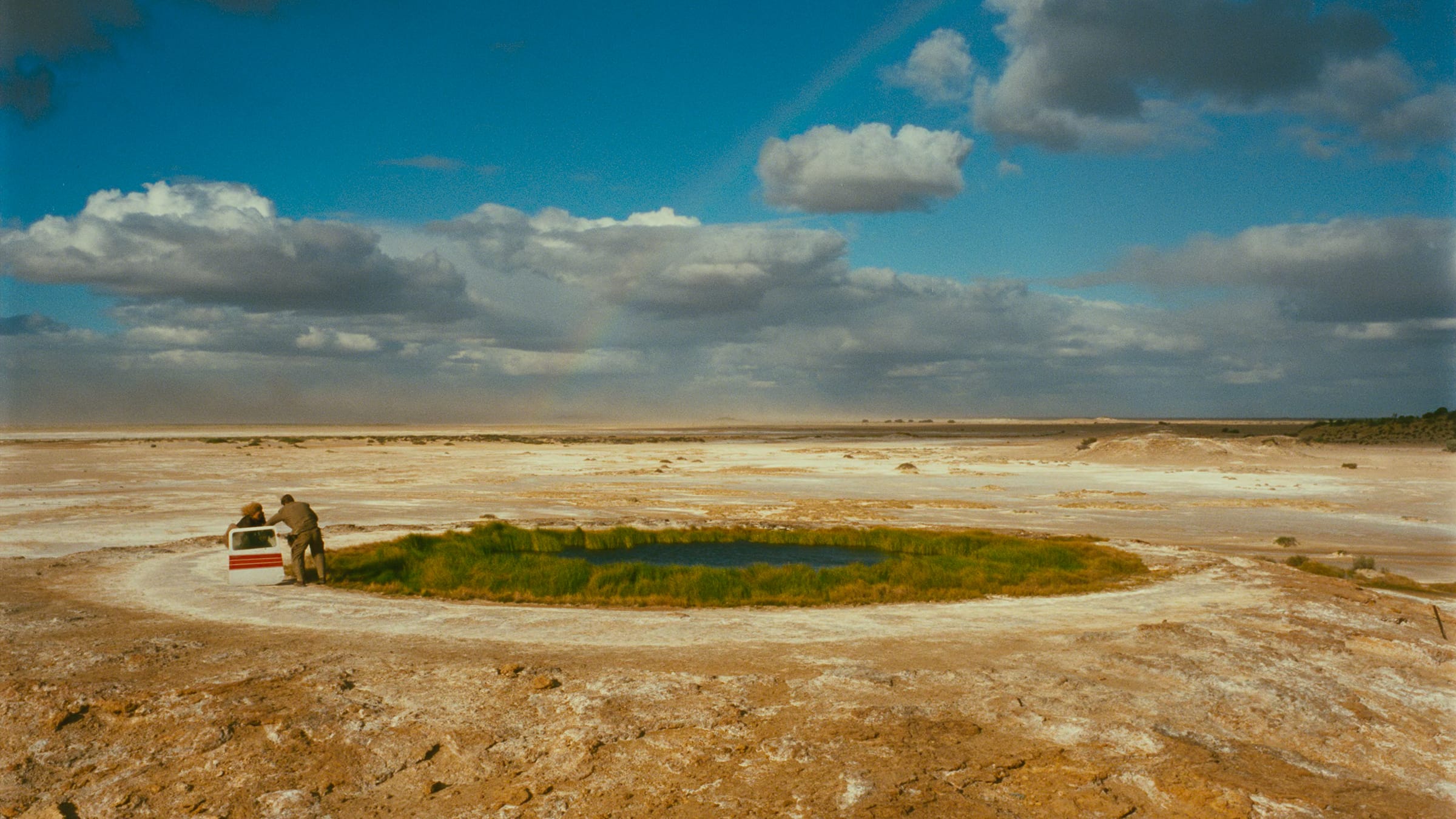
2:19 – The bright blue and orange of the Australian outback landscape is truly breathtaking; not even late-period Lou Reed can destroy it, although Gene doesn’t throw the most convincing punch at Sam. I had to look up and confirm that the South Australia town of “Coober Pedy” actually exists.

2:31 – “They shot down the satellite” – man, it really is Y2K; also, “It’s the end of the world” (but certainly not the film.)

2:42 – “These are bloody dangerous times, mate.” Believe the guy with the hook (not only for a hand, but his entire arm.)

2:51 – So happy Jeanne Moreau is here. And Max von Sydow as a weird doctor? What novel casting!

3:22 – Around here is where I start to drift. The theatrical cut apparently contains less than an hour of the Australia stuff while this has more than two. I miss the “on the road” part of this road movie—it builds more momentum than waiting to see if blind Moreau can see the images taken by the special camera. I imagine the actress lying down in the simulator thinking to herself, “Merde, what did I get myself into?” The “simulations” themselves have a flash video quality and sound not far off from the early days of dial-up internet (so that’s prescient of ’99.)

3:27 – We have a digeridoo, and of course the guy with the hook is playing it.

3:43 – Gene’s narration includes a dippy speech about music being the purpose for their journey – what a dopey writer, ain’t he?

3:49 – On 12/31/99, we find out the nuclear crisis is averted for the missiles conveniently blew up in space. Von Sydow exclaims, “The world is still alive!,” while sourpuss Moreau dissents: “The world is not okay.”

3:51 – At least Solveig’s Nico-esque version of “Days” is charming (and much better than Costello’s.)

4:03 – That darn Dr. Von Sydow! Now he wants to record pictures of dreams, the dope. I begin waiting for Harvey B. Dunn from Bride Of The Monster to show up and say, “He tampered in god’s domain.”

4:12 – The dream imagery is not pretentious, exactly, but unquestionably weird. Turn off the sound and it might make for good ASMR. This is getting vaguely psychedelic, like end of 2001: A Space Odyssey but less portentous.

4:19 – Someone named Karl: “There’s a line that should never be crossed, and we passed it a long time ago.”

4:32 – “Split… from myself”; “Impossible to rescue a man lost in the labyrinth of his own soul”… now the film’s getting a little pretentious.

4:38 – Gene’s still wearing that awful suit!

4:41 – Gene wrote his book, and Claire read the whole thing! It all ends with perhaps the worst rendition of ‘Happy Birthday” ever, then that damn U2 song returns over the closing credits.

***

Rating: 3.5 out of 5. Not the resurrected masterpiece I was hoping for and not Wenders’ best by a long shot (I’ll stump for Paris, Texas though I haven’t seen it in a quarter-century.) Maybe his last good non-documentary*, however, though it may have had a sharper impact had it been split into two a la Kill Bill or The Souvenir

*Buena Vista Social Club, while imperfect, belongs on a shortlist of essential Wenders.