On Christmas Movies

Growing up, my parents and I revisited a canon of classic Christmas movies every year: The Bishop’s Wife featuring Cary Grant at the peak of his ineffable charm; Miracle on 34th Street with Edmund Gwenn’s archetypical Santa Claus and nine-year-old Natalie Wood giving her contemporary child actors a run for their money; Going My Way and The Bells of St. Mary’s, both starring Bing Crosby as a cool priest and in the latter sequel, Ingrid Bergman as his nun counterpart; It’s A Wonderful Life, its first three-quarters seemingly interminable to a child until George Bailey wishes he’d never been born and the rest is pure magic that director Frank Capra, James Stewart and Henry Travers (as Clarence the Angel) all sell the heck out of.

The three of us found a new holiday classic via A Christmas Story during its original 1983 theatrical run. In witnessing little Ralphie’s exhaustive efforts to ask for a Red Ryder BB Gun in 1940s Indiana (including the frozen pole licking, copious Bumpus hounds, an alarming department store Santa and his cranky helper elves, etc.), I don’t think my parents or I had ever laughed so much at the movies. An adaptation of humorist Jean Shepherd’s book In God We Trust, All Others Pay Cash, the film was only a minor box office hit (although I recall many commercials for it airing at the time.) The following year, we saw it again at the second-run Times Cinema on Vliet St. It was as riotously funny to us as the first time. A year later, after cable TV finally came to Milwaukee, seemingly everyone had seen the film. At a holiday party that year, numerous kids remarked to bespectacled me, “You look just like that kid from A Christmas Story!”

I can credit Ralphie and company for a newfound desire to find more holiday films to love. When I was 9, my mom and I attempted to watch every version of Charles Dickens’ A Christmas Carol we could see, from the 1938 edition with Reginald Owen to the then-new, made-for-TV one starring George C. Scott (I wonder if I could watch it today without thinking of his performances in Dr. Strangelove or Hardcore.) At the time, I enjoyed the novelty of 1970’s Scrooge, a musical adaptation with Albert Finney; revisiting it last year, it’s still a fizzy take on the oft-told legend with a terrific score, even if the Christmas Future sequence where Scrooge essentially goes to Hell is trippy, cheesy and very much of its time. The 1951 version still has the best Ebenezer, Alistair Sim even if his partial resemblance to Klaus Kinski makes me long for the Werner Herzog version of this story that never was.

Of all of my parents’ beloved holiday perennials, their favorite, 1942’s Holiday Inn, pairs Crosby with Fred Astaire. The former plays a New York City entertainer who retreats to the Connecticut countryside, opening a hotel/nightclub that only operates on holidays; it primarily exists as a vehicle for a selection of seasonally themed Irving Berlin compositions including the debut of what is often cited as the best-selling single of all time, “White Christmas”. My folks usually waited to watch it on Christmas Eve after I had gone to bed. By my teenage years, I began accompanying them, first viewing it on a VHS tape recorded from an airing on local independent WVTV Channel 18, then on a store-bought cassette and eventually on DVD. It soon became one of my favorites, seen so many times that I could probably recite all of its dialogue today. It hasn’t aged entirely well (gratuitous blackface number alert!) and some of the holidays celebrated are a stretch (George Washington’s Birthday?) but those Christmas (and New Year’s Eve) scenes are evergreens. The 1954 sequel titled White Christmas (duh) substitutes an absent Astaire with Danny Kaye; it’s fine but not nearly as affecting as its predecessor.

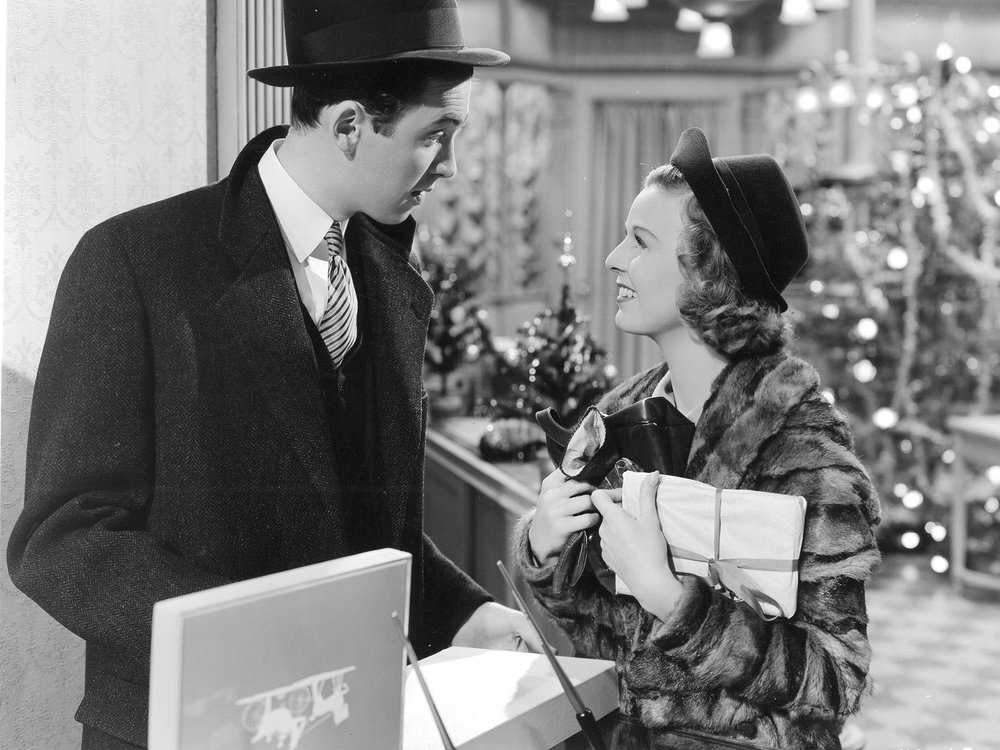
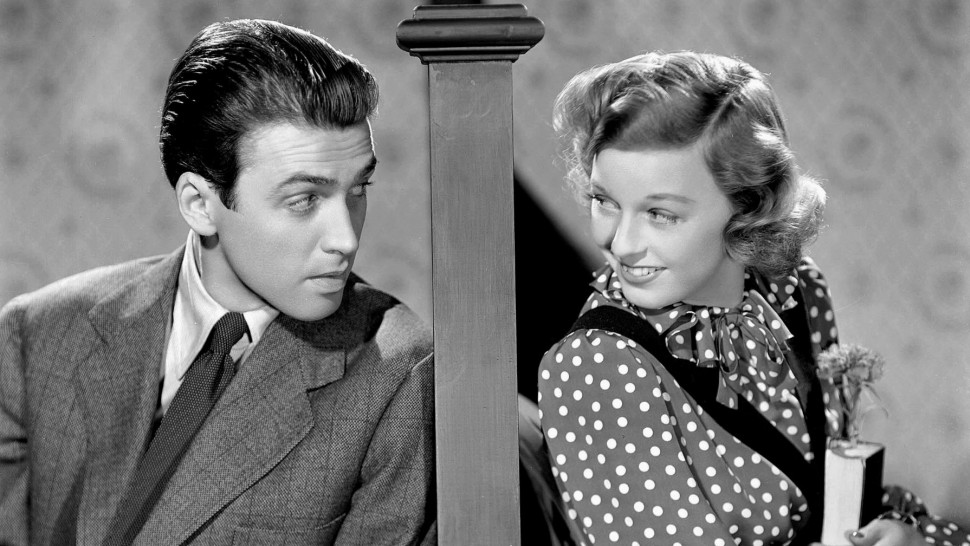
Apart from National Lampoon’s Christmas Vacation (one of my husband’s favorites), Tim Burton’s and Henry Selick’s The Nightmare Before Christmas (not a Halloween film!) and It Happened On Fifth Avenue (a hidden gem from 1947 about a benevolent bum and the kindness of strangers), as an adult I didn’t much seek out other holiday classics (despite no shortage of new ones via The Hallmark Channel) until the pandemic hit three years ago. With time on our hands and the world of streaming at our fingertips, we found a few worthy new candidates for the canon: Remember The Night, written by Preston Sturges and teaming up Fred MacMurray and Barbara Stanwyck (a few years before Double Indemnity) and Holiday Affair, a sort-of-comic noir with Robert Mitchum and a young Janet Leigh. However, the Christmas film I’ve grown to love most in the past decade is Ernst Lubitsch’s The Shop Around The Corner from 1940 with Stewart and Margaret Sullavan as two employees in a Budapest gift shop. Sharp and tender in equal measures, its stellar last twenty minutes is what all romances, comedies and romantic comedies should aspire to be.

In putting together the list below, I considered some excellent Christmas-adjacent titles like The ApartmentCarolHolidayTangerine and Catch Me If You Can. In the end, I selected only films that I felt compelled to actually watch at Christmas and not any other time of year. I did make room for this year’s The Holdovers, which doesn’t entirely comply to these rules (I first saw it in September at TIFF and the time of year did not alter my enjoyment of it); still, it already exudes enough of that elemental seasonal spirit to earn its place here.

15 Favorite Christmas Films:

  1. The Shop Around The Corner
  2. A Christmas Story
  3. The Bishop’s Wife
  4. Holiday Inn
  5. It Happened On Fifth Avenue
  6. It’s A Wonderful Life
  7. Remember The Night
  8. Miracle On 34th Street
  9. National Lampoon’s Christmas Vacation
  10. A Christmas Carol (1951 version)
  11. The Bells of St. Mary’s
  12. The Holdovers
  13. White Christmas
  14. The Nightmare Before Christmas
  15. Holiday Affair

Sight and Sound 2022: My (fake) Ballot

The Long Day Closes

It’s nearly time for British film magazine Sight and Sound to publish their once-every-decade critic’s poll of all-time greatest films. Ten years ago, I presented my own hypothetical ballot; for this latest edition, here’s another one with ten different films. My only criteria was to not repeat anything from my 24 Frames project—a relatively easy task because there is an almost overwhelming amount of movies to pick from for a list like this.

In chronological order:

THE PASSION OF JOAN OF ARC (Director: Carl Dreyer, France, 1928)

My silent-era pick. Wholly radical when it was made, it still feels as such today—I can’t name another film that utilizes faces and close-ups with such candor. As with SUNRISE: A SONG OF TWO HUMANS, I remain uncertain whether an alternate universe where the invention of sync sound was decades away would’ve been a good thing, but this film’s rare achievement makes me wonder.

THE SHOP AROUND THE CORNER (Ernst Lubitsch, USA, 1940)

This is the oft-described “Lubitsch Touch” at its most graceful and lithe. The epiphanous, empathetic last twenty minutes or so is what all romances, comedies and rom-coms should aspire to; Stewart (in arguably his most complex performance until VERTIGO) puts it best: “You know, people seldom go to the trouble of scratching the surface of things to find the inner truth.”

A MATTER OF LIFE AND DEATH (Michael Powell and Emeric Pressburger, UK, 1946)

I could’ve gone with any one of this duo’s efforts from this period; this has the most innovative use of switching back and forth between black-and-white and glorious color (even more so than THE WIZARD OF OZ). Still, as with the best of Powell and Pressburger, the technical spectacle is always in service of a fable full of heart and substance.

THE APARTMENT (Billy Wilder, USA, 1960)

I didn’t appreciate this when I first tried watching it in my twenties, but I fully get it now (being a major influence on MAD MEN helps.) No other filmmaker besides Billy Wilder ever achieved such a tricky balance of humor and melancholia as he did here. Also, how in the world did a rarely-better Shirley MacLaine lose the Academy Award for Lead Actress to Liz Taylor???

BRING ME THE HEAD OF ALFREDO GARCIA (Sam Peckinpah, Mexico/USA, 1974)

I first saw this neglected classic five years ago at a screening in conjunction with Charles Taylor’s indispensable book on ‘70s genre cinema, OPENING WEDNESDAY AT A THEATER OR DRIVE-IN NEAR YOU and fell for it instantly: Peckinpah’s scabrous take on the human condition feels entirely undiluted and yet so… humane. Warren Oates very well may also be the original anti-hero (or at least the template for those of modern prestige-TV.)

LOVE STREAMS (John Cassavetes, USA, 1984)

Cassavetes’ final film is almost a beautiful mess, and one by design. Knowing he had not much longer left to live, he made something people might’ve deemed elegiac if his philosophy would’ve allowed for such sentimentality (it mostly did not.) To put so much of oneself onscreen warts and all was his specialty whether in the guise of his ensemble players (including wife Gena Rowlands) or, in this case, himself; arguably, no one did so with more blistering honesty.

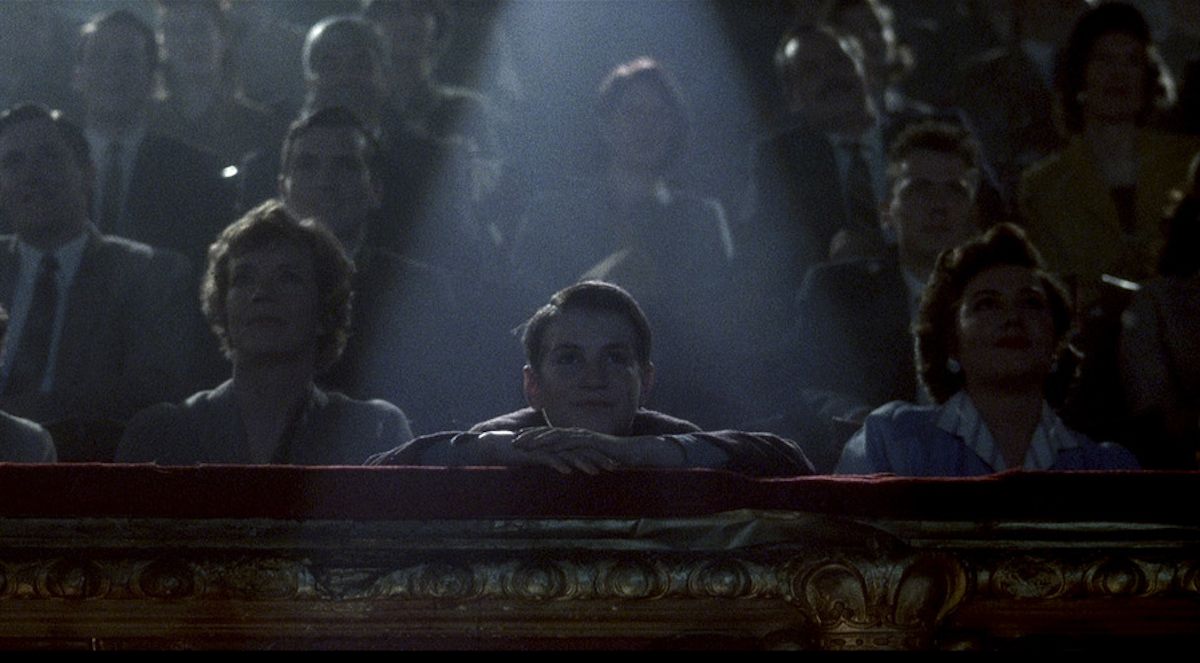
THE LONG DAY CLOSES (Terence Davies, UK, 1992)

Davies’ personal, idiosyncratic style refashions memories as a stream-of-consciousness rush, although perhaps rush is the wrong word for a film that lovingly takes its time. The rare period piece to revel in nostalgia without letting it obscure the mundaneness of everyday life, it’s also pure poetry in how it orchestrates all of its cinematic elements, especially its bold use of light and darkness.

IN THE MOOD FOR LOVE (Wong Kar-wai, Hong Kong, 2000)

Last year, I rewatched all of Wong’s films included in the new Criterion Collection box set and this one’s still his best. A deceptively simple tale of a romance that’s never acted upon, it sounds like the stuff of a prime Douglas Sirk melodrama. Instead, it plays out with such nuance and restraint that it achieves an almost unbearable intimacy, leaving the viewer both swooned and devastated.

35 SHOTS OF RUM (Claire Denis, France, 2008)

I included another Denis film on my 2012 ballot; here’s one nearly its equal. Less formally adventurous, this account of a single father and his adult daughter communicates less through words than glances and evocative stylistic choices such as hypnotic point-of-view shots taken from commuter trains in motion. Also, what a sublime soundtrack, not only for the Tindersticks score but also its unexpected use of a certain Commodores song.

PARASITE (Bong Joon-ho, South Korea, 2019)

Haven’t rewatched this since right before the pandemic, but I imagine it holds up brilliantly—so well-constructed, you believe every facet of it even as it threatens to spiral out of control. As usual with Bong, it’s tough to classify or define: is it a class-conscious satire, a race-against-the-clock thriller or a revenge-driven horror film? Bong seems to be asking, “Why not all of these things, and simultaneously at that?”

Film Journal: December 2018

More rewatches (starred titles) this month than usual–chalk it up to the Holidays, and also an unusually abysmal Oscar season at the multiplex (the indieplex, too.)

The Bitter Tears of Petra Von Kant
Somehow missed this one when I was going through Fassbinder’s filmography in grad school (easy to do, given the quantity.) Not quite up there with ALI: FEAR EATS THE SOUL, but gets exponentially more entertaining as it goes along. Would love to see Trixie and Katya in a remake (though I don’t know which RuPaul alum would play Marlene.) Also, best wallpaper ever? B+

One Flew Over The Cuckoo’s Nest*
Not saying Jack’s not iconic, but he does occasionally suck all the air out of the room. It’s really the ensemble that makes the film: Louise Fletcher (casting a relative unknown in that part was key), baby Danny DeVito, shaved-head Christopher Lloyd, Will Sampson (perfect as Chief) and all the rest. Lovably meandering like most of ’70s New Hollywood Cinema, but those last twenty minutes just destroy me, more so now than when I first saw this at age 16. B+

Maria By Callas
As an opera singer, Maria Callas had an undeniably great voice, but in her time she was also unmatched as to how she embodied her roles onstage (and offstage as well.) Tom Volf’s documentary is a lovingly assembled treasure trove of archival performance and interview footage; I suspect there’s no better introduction for those such as myself who know next to nothing about Callas or opera in general. My only complaint is that it left me wanting even more, like actual footage of her only film, Pasolini’s MEDEA, instead of just an interview conducted during the filming of it, or some of her practicing/perfecting her craft through rehearsals or recording. Still, this is easily a deeper, classier “intimate portrait” than what you’d see on Lifetime TV. B

Dawson City: Frozen Time
Liked the concept far more than the execution, which felt endless and repetitive. Loved the musical score, even if I kept dozing off to it. B-

The Shop Around the Corner*
The last twenty minutes or so of this is what all romances, comedies and rom-coms should aspire to. “You know, people seldom go to the trouble of scratching the surface of things to find the inner truth.” A+

Bombshell (1933)
My, that was a large baked potato. But seriously, Harlow is terrific, as is Frank Morgan and, in an uncredited minor role, Ethel Griffies, best known for her salty amateur ornithologist in THE BIRDS nearly three decades later. B

My Man Godfrey*
To me, William Powell will always be Nick Charles, but this is a genuinely eccentric but not unpleasant alternative that might’ve sustained another five-or-six-film series. A-

The Bells of St. Mary’s*
Schmaltzy but effective. About fifty minutes in, it features the best Christmas pageant ever, and I’d like to think Bergman won the Oscar for her boxing technique more than her tearjerking scenes. B

Holiday Inn*
So effusively charming and fun: edit out the regrettable number in blackface and you have the perfect classic Hollywood Christmas movie. A

Roma
It would’ve been great to see this in a theatre, but don’t let that deter you from streaming it at home. I could list all of its imperfections, but the cumulative effect is transformative. In terms of directorial vision, no one else comes close at present. Planning on catching this again in 70mm in a few weeks. A-

I Know Where I’m Going!*
A fine companion to THE EDGE OF THE WORLD, with added Pressburger to flesh out the narrative. Also, who could possibly resist Roger Livesey? A-

The Ballad of Buster Scruggs
Pretty consistent for what amounts to six separate stories only related by genre; also solid for a Coen Brothers film, given how scattershot the last one was. Not as fully realized as NO COUNTRY FOR OLD MEN (or FARGO, for that matter), but it has a lot of beautifully shot, misanthropic fun. I appreciated how much deeper and bleaker it got with each chapter (christ, “Meal Ticket” could be a Bergman film), with the stagecoach ride at the end a brutally funny/eerie one-act play. Also, Tom Waits was born to portray an old, grizzled prospector. B+

Mon Oncle
Plays like a dry run for Tati’s next (and best) film, PLAYTIME; still hilarious, however, and he’s wise to let Daki the dachshund repeatedly steal the show. B+

If Beale Street Could Talk
Barry Jenkins’ follow-up to MOONLIGHT is nearly that film’s equal in how it further showcases his considerably humane approach to character and story even as he adapts someone else’s text (in this case, a James Baldwin novel.) The leads (Stephan James and Kiki Layne) are both good, but so is the ensemble, especially Regina King, Colman Domingo, Brian Tyree Henry–even Diego Luna (though maybe not Dave Franco.) Jenkins’ mastery of tone and pacing makes palatable what could too easily be a miserable, anguished narrative; if it ends up lacking that singular, personal touch that made its predecessor so special, it doesn’t detract from an effective, emotionally satisfying whole. A

Happy as Lazzaro
File this under “What the heck did I just watch?”, but in a mostly good way. The break occurring near the halfway mark is thrilling and really this film’s purpose for being; the ending’s also well-orchestrated. Less convinced about some of the second half’s logistics, but I was often so delighted by other absurdities (like the gas station scene) that they ended up not mattering so much. B+

The Thin Man*
Nick and Nora (and Asta) Forever. A