Favorite Older Films Seen In 2024

Seconds

Of the hundred-plus older films I watched last year, the two standouts were titles I hadn’t viewed in over two decades. Seconds, John Frankenheimer’s 1966 oddity about a middle-aged businessman who undergoes mysterious reconstructive surgery and wakes up in the younger, glamorous body of Rock Hudson now scans like something Charlie Kaufman might’ve written had he been a member of that generation (and an early partaker of LSD.) Rewatched on The Criterion Channel, I’d clearly forgotten how INSANE it was, as much a middle-finger to middle-class conformity as The Swimmer two years later only zanier regarding the genres it attempted to deconstruct (horror and absurdism in contrast to the later film’s melodrama.) Featuring dialogue-free sections as expressive and engrossing as the best silents, Seconds is also notable for Hudson’s out-on-a-limb turn—there’s a reason why nearly every clip reel for the man includes the incredible final scene of this.

The year’s other eye-opening rewatch was a 35mm print of the 1955 film Pather Panchali at the Harvard Film Archive (my first visit there since pre-pandemic.) I previously saw it in a film class in the late 1990s, but it made little of an impression, blurring together with all the other cinema I was consuming then. Now, I can appreciate how special and genuine it is. While rural India in the early-20th century remains as foreign a place imaginable to me, director Satyajit Ray’s humanism marks such barriers as irrelevant. Anyone tuned into what it means to be alive should relate to his depiction and understanding of family dynamics, community and how we all contain multitudes—Ray even allows the petty, antagonistic neighbor woman to later exude a hidden depth and empathy for others.
Happy Hour

Ten Favorite First Time Watches:

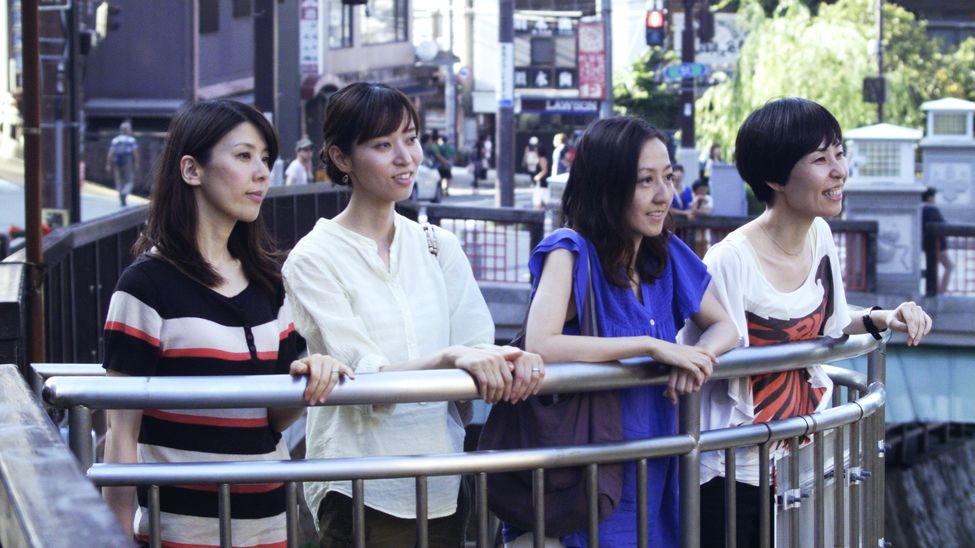
1. HAPPY HOUR – This 2015 feature from Ryusuke Hamaguchi (Drive My Car) about a quartet of thirtysomething female friends stood out—not just for being over five hours long (I watched it over three nights) although that length is key, for the amount of time spent with the characters is crucial as we witness their mundane lives and gradually comprehend how much they are like our own.

2. VENGEANCE IS MINE – An unearthed 1984 made-for-television production from Michael Roemer (Nothing But a Man) was particularly notable for how its messiness nearly felt like a Cassavetes film in spots, with Brooke Adams’ lead performance as complex and iconic as any she ever gave.

3. AMADEUS – In my attempt to watch every Academy Award winner for Best Picture, this is possibly the best one of the 1980s; rarely has the opulence and spectacle of it all had such a solid, nay, sobering philosophical foundation: What makes art great is that not everyone is capable of such greatness.

4. MAHLER – My recent Ken Russell kick led to his typically bonkers and visually beautiful revisionist biopic of the composer which, as an added bonus portrays the wackiest conversion to Catholicism ever.

5. WERCKMEISTER HARMONIES – I still may never watch Satantango, but I finally saw my first Bela Tarr film, which lived up to its hype of this director rewriting the language of cinema and also provided this takeaway: It’s the end of the world as we know it, and János is decidedly not fine.

6. POSSESSION – This inexplicable psychological horror still invades my thoughts three months on. That subway corridor scene is like a Cassavetes joint if Gena Rowlands (RIP) had literally gone stark raving mad and John decided to film it.

7. THE PHENIX CITY STORY – Surely a seedier and more believable view of small town 1950s Americana than anything else I’ve encountered. Also, it felt far less like a time capsule than it should have.

8. THE GO-BETWEEN – I admittedly watched this to see if I recognized the score pilfered from it for May December (and boy did I ever); however, talk about a slow burn that absolutely sears once it reaches its boiling point (Margaret Leighton’s determined frenzy here makes for one of the most visceral scenes, ever.)

9. TWO LOVERS – Flush with lyricism in constructing a realistic love story, this is the first James Gray picture I’ve unreservedly loved. Perhaps he was at his best when not-so-high-concept, or maybe just Joaquin Phoenix and Gwyneth Paltrow were unexpectedly, perfectly cast together.

10. SHOCK TREATMENT – Thrillingly anticipates this century’s escalation of consumerism and access-to-instant-stardom, not to mention Richard O’Brien’s songs which nearly rival the more iconic ones of its predecessor The Rocky Horror Picture Show.
Sunday Bloody Sunday

Honorable Mentions:

Crossing Delancey, Fear of Fear, A Master Builder, My Life As A Zucchini, The Plot Against Harry, The Selfish Giant, Starship Troopers, Sunday Bloody Sunday, The Tales of Hoffman, Twentieth Century (1934), The Verdict, Young Soul Rebels

Favorite Re-Watches*:

All of Me, The Devils, The Lady Eve, The Last Detail, The Life Aquatic With Steve Zissou, Opening Night, Pather Panchali, Ratcatcher, Seconds, Still Walking, Times Square, The Virgin Suicides

(*not counting anything for 24 Frames)

Four Fall Focus Gems

IFF Boston’s annual Fall Focus is always a good bet: this year, I got to see four movies I couldn’t get tickets to at TIFF, and all of them were good-to-great (and three were filmed in Japan, coincidentally.)

FALLEN LEAVES

From its opening shot, there’s no mistaking this for the work of anyone other than veteran Finnish auteur Aki Kaurismaki. A purveyor of humor so deadpan, less attentive viewers might not even detect it on occasion, he’s influenced many kindred spirits and followers from Roy Andersson to Jim Jarmusch (whom he pays a somewhat twisted yet hilarious tribute to here.) His first film in six years is one of his most deceptively straightforward: a burgeoning middle-aged romance between supermarket worker Ansa (Alma Pöysti) and alcoholic laborer Holappa (Jussi Vatanen). The Helsinki settings look like they’ve been etched in time over the past fifty years, although occasional radio broadcasts reporting the current Russia/Ukraine war are scattered throughout. Happily, this fully plays to Kaurismaki’s strengths: of the handful of his films I’ve viewed, this is easily the funniest, especially the karaoke bar scenes featuring Holappa’s self-assured (if only to a point) co-worker/pal Huotari (Janne Hyytiäinen). As usual with this director, what would often come off as affectations for most filmmakers are in his hands fully realized and seamlessly essential to the entire fabric. (Grade: 8/10)

EVIL DOES NOT EXIST

So, Ryusuke Hamaguchi, what are you doing now after all that acclaim (including the Cannes Palme d’Or and an Oscar) for DRIVE MY CAR? A study of an environmental threat towards a remote community where a corporation wants to open a glamping (ie-glamourous camping) site, you say? Far more Tarkovsky than Ozu, EVIL DOES NOT EXIST is leisurely paced, visually stunning and and in the end, near-impenetrable–not entirely a deficit depending on one’s expectations. Arguably no other filmmaker would so totally depict the utter futility of “information meetings” where the concerns of said community are both heard and blithely dismissed, or take two characters who initially seem buffoonish and unexpectedly flesh them out until they’re nearly as sympathetic as the two protagonists. Those looking for another cathartic wonder like DRIVE MY CAR won’t find it here, but it offers a lot to unpack and ponder; at a mere 106 minutes, it also more conveniently lends itself to a rewatch or two. (8/10)

MONSTER

This is Hirokazu Kore-eda’s first film set in his native Japan since SHOPLIFTERS and also his first that he hasn’t written himself since MABOROSI, his 1995 feature debut. Rest assured, MONSTER is completely in the director’s wheelhouse of domestic dramas, although screenwriter Yuji Sakamoto’s ambitious, RASHOMON-esque structure is something new for the director. The first third or so comes off as a darkly comic fable about a fifth-grader being bullied by his teacher; what happens next sets the momentum for a narrative only fully revealed one all of its pieces gradually fall into place–one that also makes it tough to write about without any spoilers. I’ll just note that the end result is one of Kore-eda’s most accessible works in part due to its swift pace where the rhythms are enhanced by its unique structure, but also one of his warmest and most resonant. You can sense his humanist approach towards nearly every character as the story unfolds. In some ways, it’s a good companion to Alexander Payne’s THE HOLDOVERS as it similarly clinches one’s attention with humor and a tricky premise but then extends an invitation to learn the full story and witness how we can instill change in one another. (10/10)

PERFECT DAYS

Well, this was an unexpected late-career triumph from Wim Wenders, who arguably hasn’t made a good narrative film in over three decades; that it’s simply a character study about Hirayama, an aging man who cleans Tokyo public toilets for a living only adds to its allure. Featuring a powerful lead turn from SHALL WE DANCE star Kōji Yakusho (appearing in nearly every scene), this might be the closest Wenders has come to successfully making “slow cinema”. Scene after scene unfolds of Hirayama methodically cleaning a wide array of the city’s public toilets (many of them built for the delayed 2020 Summer Olympics) with pauses for how he spends his leisure time by bicycling, picking up paperbacks from his favorite book store, reading them as he has lunch in a leafy, secluded spot and listening to music on cassette tapes (!) while driving through greater Tokyo. It’s this last activity that’s most significant–not only does it give an outsider a vivid sense of what the city is really like, the music (mostly English-language rock from the 1960s and 70s) and its curation almost tells a parallel story. I’ve rarely seen such an extensive depiction of a character’s relationship to music and how it informs and fortifies his well being. While overall this could’ve been perhaps 20-30 minutes shorter, it almost feels hypnotic if you stick with it. The last shot, which returns to Hirayama and his music is a great one and also confirmation that this gentle, beatific but wonderfully human and flawed man embodied by Yakusho is a career-best performance. (9/10)