Top Ten Films: 1955

My Top Ten Films of 1955:

  1. The Night Of The Hunter
  2. Pather Panchali
  3. All That Heaven Allows
  4. It’s Always Fair Weather
  5. Rebel Without a Cause
  6. The Phenix City Story
  7. Les Diaboliques
  8. The Trouble With Harry
  9. Kiss Me Deadly
  10. Lola Montes

Honorable Mentions: Bad Day At Black Rock, The Desperate Hours, Marty, Ordet, Rififi

For My Watchlist: Floating Clouds, Mr. Arkadin, Picnic, The Seven Year Itch, To Catch A Thief

*

Going back to the year of Back To The Future and it feels as transitional a time as it was for music, with cinema from all corners of the globe increasingly giving Hollywood product a run for its money. I’ve previously written about recent discoveries of the former (a revelatory 35mm screening of Pather Panchali late last year) and the latter (a viewing of It’s Always Fair Weather at home during peak lockdown when a scheduled screening was supposed to have occurred in normal times.)

Still, masterpiece that Satyajit Ray’s film is, the pole position goes to actor Charles Laughton’s sole directorial effort, a gothic thriller that flopped upon release but is now rightfully revered. Robert Mitchum’s “Preacher” (note quotation marks) is a delectably sinister and chilling character and performance. One could easily imagine a version of this made by Alfred Hitchcock, but Laughton imbues a tenderness that often seems beyond the former’s grasp (though his mordant comedy from the same year, The Trouble With Harry has faint traces of it); the film’s expressionistic style (particularly the high contrast black-and-white cinematography) also sets it apart from Hitch’s contemporaneous efforts (though I can’t say why To Catch A Thief is one of the few peak-period Hitchcocks I have yet to see.)

All That Heaven Allows is my second-favorite Sirk (my number one will likely top its year’s list) and perhaps his most quintessential Rock Hudson melodrama. The Phenix City Story is a startling obscurity that feels all too relevant seventy years on. It’s been too long since I revisited Rebel Without a Cause or Kiss Me Deadly but I firmly recall how iconic they are as, respectively, a teen angst character study and the hardest boiled of film noirs. Les Diaboliques could also use a revisit given my renewed appreciation of Henri-Georges Clouzot since seeing The Wages of Fear for the first time in 2023.

Given what it was competing with, I’m not mad at Marty winning the Best Picture Oscar, though it feels decidedly minor now. Not sure how high my hopes are for Picnic, though it has the enticing prospect of Kim Novak and William Holden as anchors. The Seven Year Itch is one of the few major Marilyn Monroe films I have yet to see, Mr. Arkadin one of the few minor Orson Welles ones. As for Floating Clouds, the only Naruse I’ve watched is Ugetsu which I should rewatch as well—unlike Ozu or Kurosawa, I don’t have a strong impression of him yet.

Favorite Older Films Seen In 2024

Seconds

Of the hundred-plus older films I watched last year, the two standouts were titles I hadn’t viewed in over two decades. Seconds, John Frankenheimer’s 1966 oddity about a middle-aged businessman who undergoes mysterious reconstructive surgery and wakes up in the younger, glamorous body of Rock Hudson now scans like something Charlie Kaufman might’ve written had he been a member of that generation (and an early partaker of LSD.) Rewatched on The Criterion Channel, I’d clearly forgotten how INSANE it was, as much a middle-finger to middle-class conformity as The Swimmer two years later only zanier regarding the genres it attempted to deconstruct (horror and absurdism in contrast to the later film’s melodrama.) Featuring dialogue-free sections as expressive and engrossing as the best silents, Seconds is also notable for Hudson’s out-on-a-limb turn—there’s a reason why nearly every clip reel for the man includes the incredible final scene of this.

The year’s other eye-opening rewatch was a 35mm print of the 1955 film Pather Panchali at the Harvard Film Archive (my first visit there since pre-pandemic.) I previously saw it in a film class in the late 1990s, but it made little of an impression, blurring together with all the other cinema I was consuming then. Now, I can appreciate how special and genuine it is. While rural India in the early-20th century remains as foreign a place imaginable to me, director Satyajit Ray’s humanism marks such barriers as irrelevant. Anyone tuned into what it means to be alive should relate to his depiction and understanding of family dynamics, community and how we all contain multitudes—Ray even allows the petty, antagonistic neighbor woman to later exude a hidden depth and empathy for others.

Happy Hour

Ten Favorite First Time Watches:

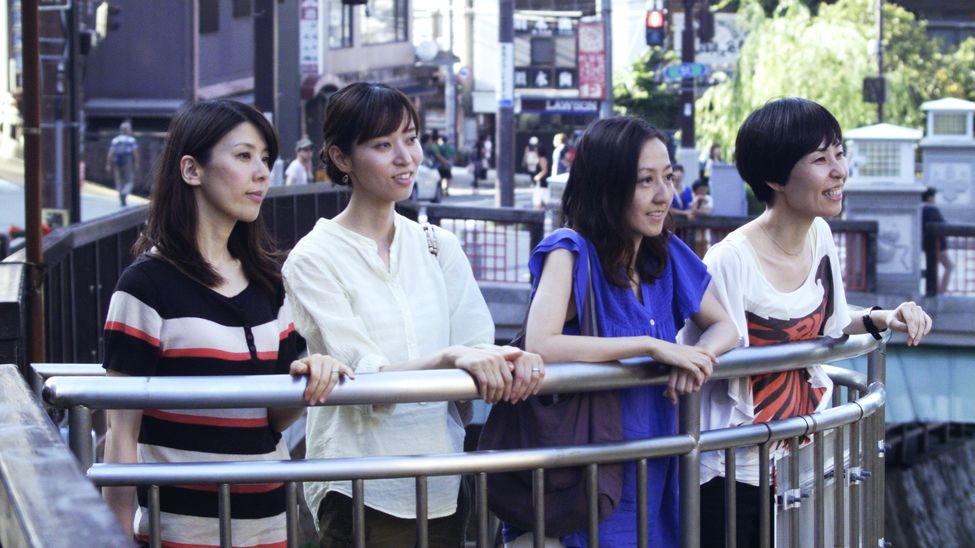
1. HAPPY HOUR – This 2015 feature from Ryusuke Hamaguchi (Drive My Car) about a quartet of thirtysomething female friends stood out—not just for being over five hours long (I watched it over three nights) although that length is key, for the amount of time spent with the characters is crucial as we witness their mundane lives and gradually comprehend how much they are like our own.

2. VENGEANCE IS MINE – An unearthed 1984 made-for-television production from Michael Roemer (Nothing But a Man) was particularly notable for how its messiness nearly felt like a Cassavetes film in spots, with Brooke Adams’ lead performance as complex and iconic as any she ever gave.

3. AMADEUS – In my attempt to watch every Academy Award winner for Best Picture, this is possibly the best one of the 1980s; rarely has the opulence and spectacle of it all had such a solid, nay, sobering philosophical foundation: What makes art great is that not everyone is capable of such greatness.

4. MAHLER – My recent Ken Russell kick led to his typically bonkers and visually beautiful revisionist biopic of the composer which, as an added bonus portrays the wackiest conversion to Catholicism ever.

5. WERCKMEISTER HARMONIES – I still may never watch Satantango, but I finally saw my first Bela Tarr film, which lived up to its hype of this director rewriting the language of cinema and also provided this takeaway: It’s the end of the world as we know it, and János is decidedly not fine.

6. POSSESSION – This inexplicable psychological horror still invades my thoughts three months on. That subway corridor scene is like a Cassavetes joint if Gena Rowlands (RIP) had literally gone stark raving mad and John decided to film it.

7. THE PHENIX CITY STORY – Surely a seedier and more believable view of small town 1950s Americana than anything else I’ve encountered. Also, it felt far less like a time capsule than it should have.

8. THE GO-BETWEEN – I admittedly watched this to see if I recognized the score pilfered from it for May December (and boy did I ever); however, talk about a slow burn that absolutely sears once it reaches its boiling point (Margaret Leighton’s determined frenzy here makes for one of the most visceral scenes, ever.)

9. TWO LOVERS – Flush with lyricism in constructing a realistic love story, this is the first James Gray picture I’ve unreservedly loved. Perhaps he was at his best when not-so-high-concept, or maybe just Joaquin Phoenix and Gwyneth Paltrow were unexpectedly, perfectly cast together.

10. SHOCK TREATMENT – Thrillingly anticipates this century’s escalation of consumerism and access-to-instant-stardom, not to mention Richard O’Brien’s songs which nearly rival the more iconic ones of its predecessor The Rocky Horror Picture Show.

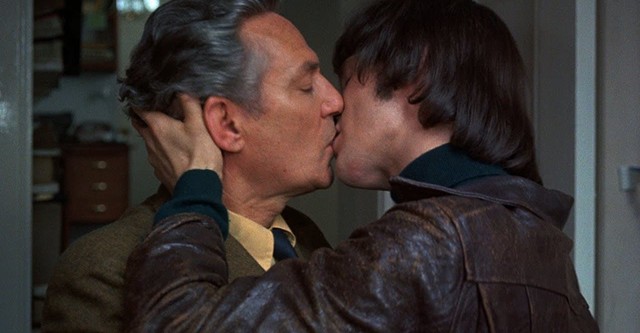
Sunday Bloody Sunday

Honorable Mentions:

Crossing Delancey, Fear of Fear, A Master Builder, My Life As A Zucchini, The Plot Against Harry, The Selfish Giant, Starship Troopers, Sunday Bloody Sunday, The Tales of Hoffman, Twentieth Century (1934), The Verdict, Young Soul Rebels

Favorite Re-Watches*:

All of Me, The Devils, The Lady Eve, The Last Detail, The Life Aquatic With Steve Zissou, Opening Night, Pather Panchali, Ratcatcher, Seconds, Still Walking, Times Square, The Virgin Suicides

(*not counting anything for 24 Frames)