1. I had to go beyond the local multiplexes or, in fact, any theater to stumble across a movie that, for the first time, expanded my idea of what one could be and also feel like it was somehow made just for me.
2. A glimpse into another world: a bridge between what I liked in my youth and what I would love as a grownup when I eventually worked at a cinema myself.
3. I left the movie feeling blown away by the story, thinking I had never seen anything like it before; now I understand that it was the depiction of a foreign culture that was new to me.
4. Itmade a seismic impact on my taste and notion of what the world had to offer to someone my age. I was getting closer to leaving those suburban multiplexes and my heretofore provincial worldview (mostly) behind.
5. This notion of a fine line separating life and art was on my mind as I prepared for a major change in my own life and the role art would play in it.
6. It was a film asking its viewers to consider whether the desire to be “safe” was to simply crave comfort or inevitably give oneself over to fear.
7. The thrill of discovery, of opening those new doors encouraging me to pursue Film Studies, vindicating that leap of faith I took in making film central in my life.
8. No matter who or what we are, we look for representation in popular art, to see people onscreen who are recognizable, even similar to us, finding someone we can relate to and that the rest of the culture can also see.
9. I still fondly recall how I got to see itfor the first time, but what’s important is not how I saw it, but that I saw it and can still watch it again and again, no matter where I can find it.
10. What if, like real life with all of its nuances and contradictions, a work of art subsisted somewhere in between fiction and nonfiction? What about those filmmakers whose work tends to fall into such margins?
11. How nearly overstimulated yet satiated I felt while piecing together images and sounds, the ways they informed and occasionally contrasted against each other and how tension accumulated throughout, reaching a breaking point only to find an unlikely release at the end.
12. A panorama to fearlessly explore connections between dreams, reality and the movies, not to mention all of the wicked, sublime and terrifying possibilities that surface as they overlap.
13. We revisit films for the pleasure they provide. Occasionally, we also have a sixth sense, an inclination that there’s more to glean from them than what we can discern after a single viewing.
14. For those receptive to such stillness, it can be like sitting on a bench or standing next to a wall, simply observing life play out before one’s own eyes no matter how little action occurs.
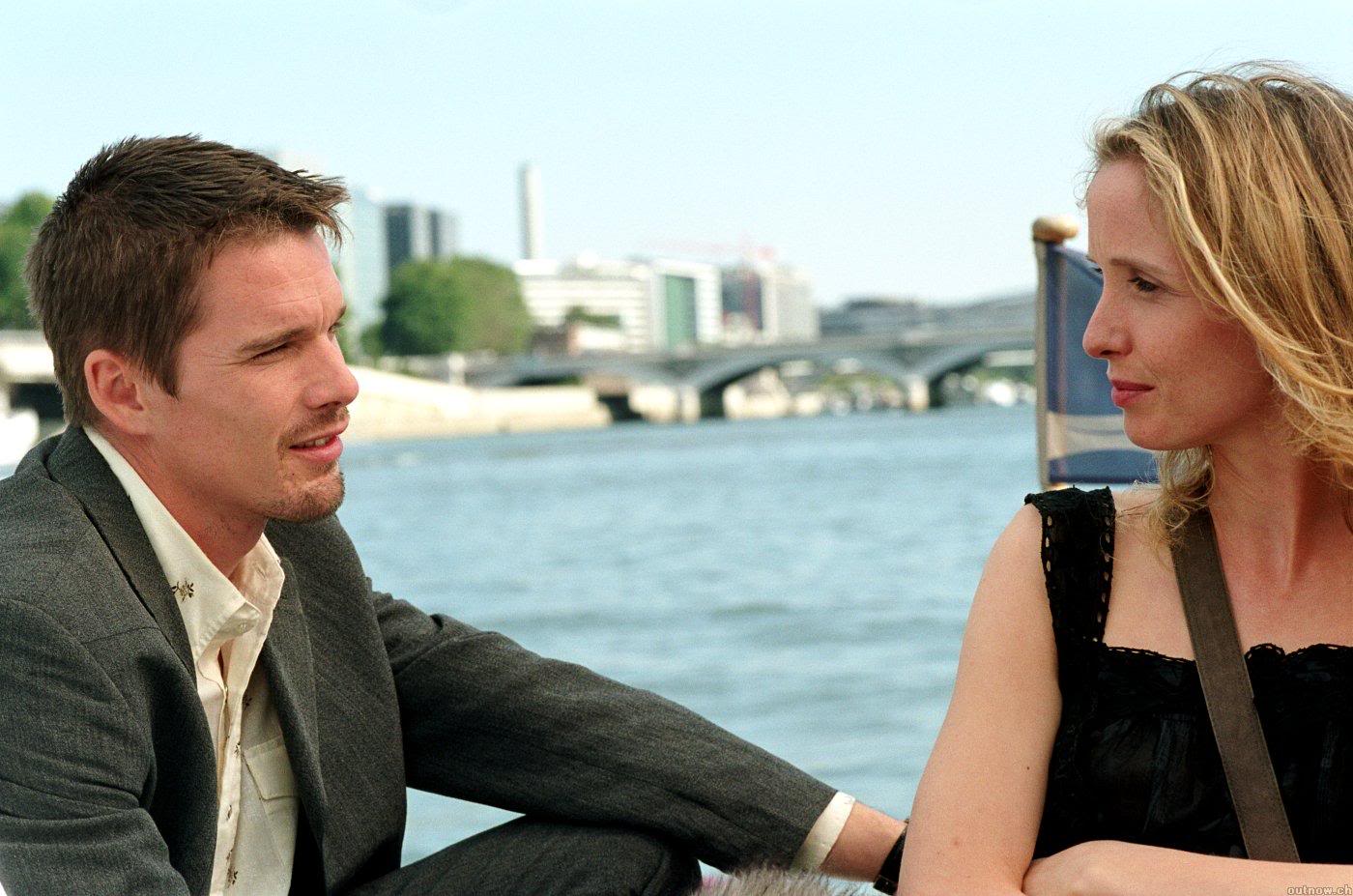
15. The question “Does anyone change?” lingers in their pauses between conservation; as much as either one would like to deny it, their body language often says otherwise.
16. That sense of camaraderie and support is really what the film is all about; it’s also what I craved and then experienced once I found my people at the movies—on both sides of the screen.
17. This past as remembered from adulthood is so colorful, vibrant and real one could almost step into the frame and feel what’s it like to be an active part of it.
18. “What is a city without its ghosts?” the director’s narration asks and it’s the film’s central thesis, lending weight to what simply could have been a kooky look at a quirky childhood.
19. Whenever I watch a film for the first time, I keep in mind how it makes me feel; the best films, however, also form a deeper connection, one that not only changes our literal view of the world but also challenges it.
20. It’s deeply affecting for it reminds us not what the story is or necessarily how it was relayed, but why it was told.
21. Whatever our aspirations may be, humans as individuals are subject to a continual evolution without end; as couples, an end only arrives when one participant or in some cases, both are no longer willing to evolve.
22. Have you ever left a movie in a daze, almost as if your entire world has shifted? Often, when the lead character has been through something over the course of the film, so have we.
23. Through all of this previously unfathomable change, films remained my refuge, my constant, my church. None of us had any idea when or even if theatres would ever reopen; streaming and physical media would have to suffice until they did.
24. Some of the best films tend to recognize this sense of a world in flux no matter how contained the narrative; the very best of them also offer new ways of viewing and comprehending it.
Have you ever left a movie in a daze, almost as if your entire world has shifted? Skyway Cinemas, one of many 1970s-built multiplexes I frequented in my childhood was unremarkable apart from its spacious lobby framed by large glass windows directly across from its three (and later, six) auditoriums. My parents and I often saw matinees there: Who Framed Roger Rabbit, Arachnophobia and the Back To The Future movies, among others. Often, stumbling out of the darkened rooms meant emerging into a phalanx of blinding sunlight, as if to say, “Welcome back to the real world.” We’d pass through the lobby and out the front entrance, blinking our eyes, left to reconcile such an abrupt change in our surroundings.
I rarely experience this exact sensation anymore as neither the classic art-deco cinemas and funky non-profit arthouses nor the multistory, contemporary multiplexes offer this walking transition between subterranean dark and invasive light. However, that’s not to say I don’t ever feel utterly transformed after watching a film. We all see movies we like to varying degrees, but once in a great while, this feeling goes so far beyond a matter of simply enjoying it. Whenever recounting my decision to study film, I used to claim that this pursuit did nothing less than change the way I perceive the world; as I’ve aged, I’ve also added that watching films critically has at times also fundamentally altered the way I see myself. Naturally, there’s no substitute for real life experience, but at its best, cinema (like all arts) can serve as a way of learning, an act of discovery and a tool for both empathy and self-growth.
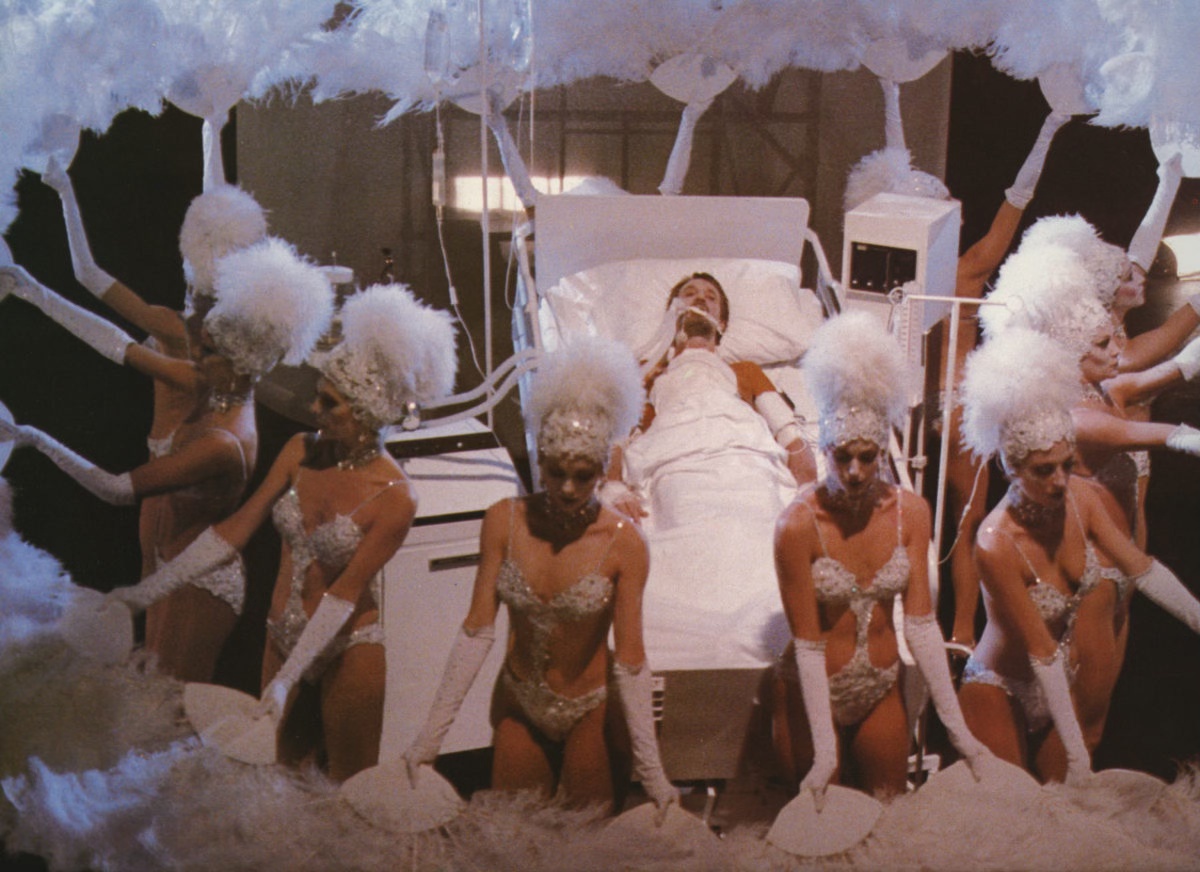
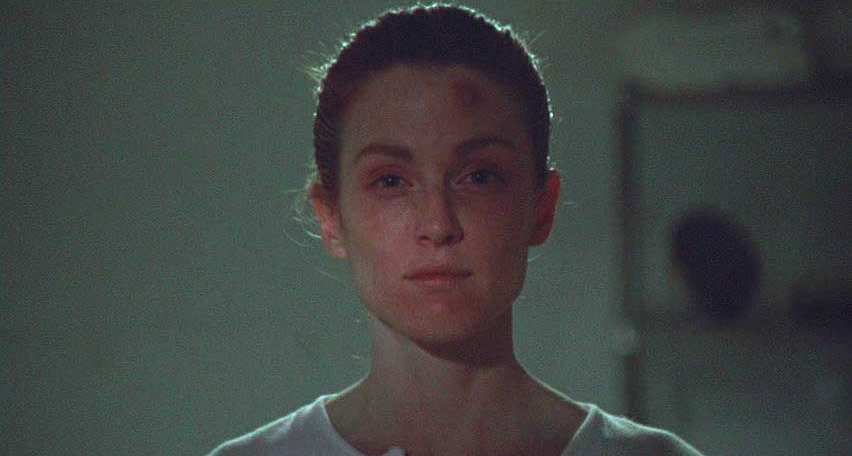
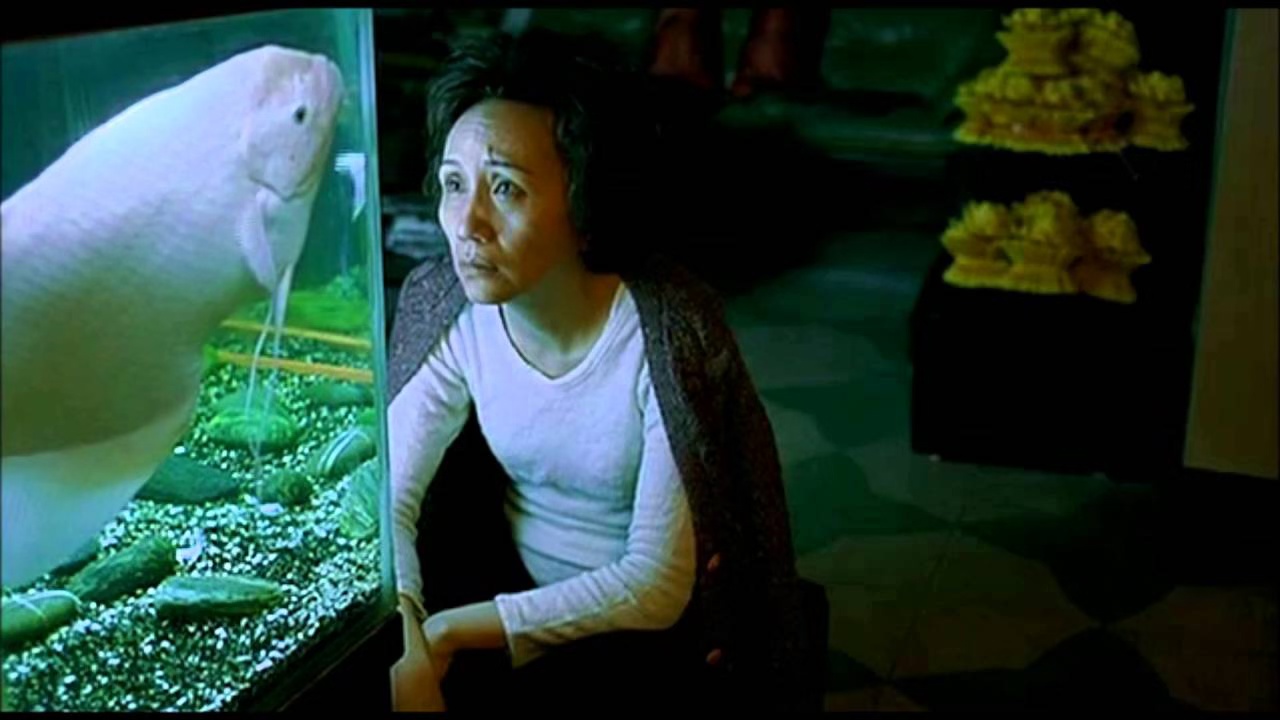
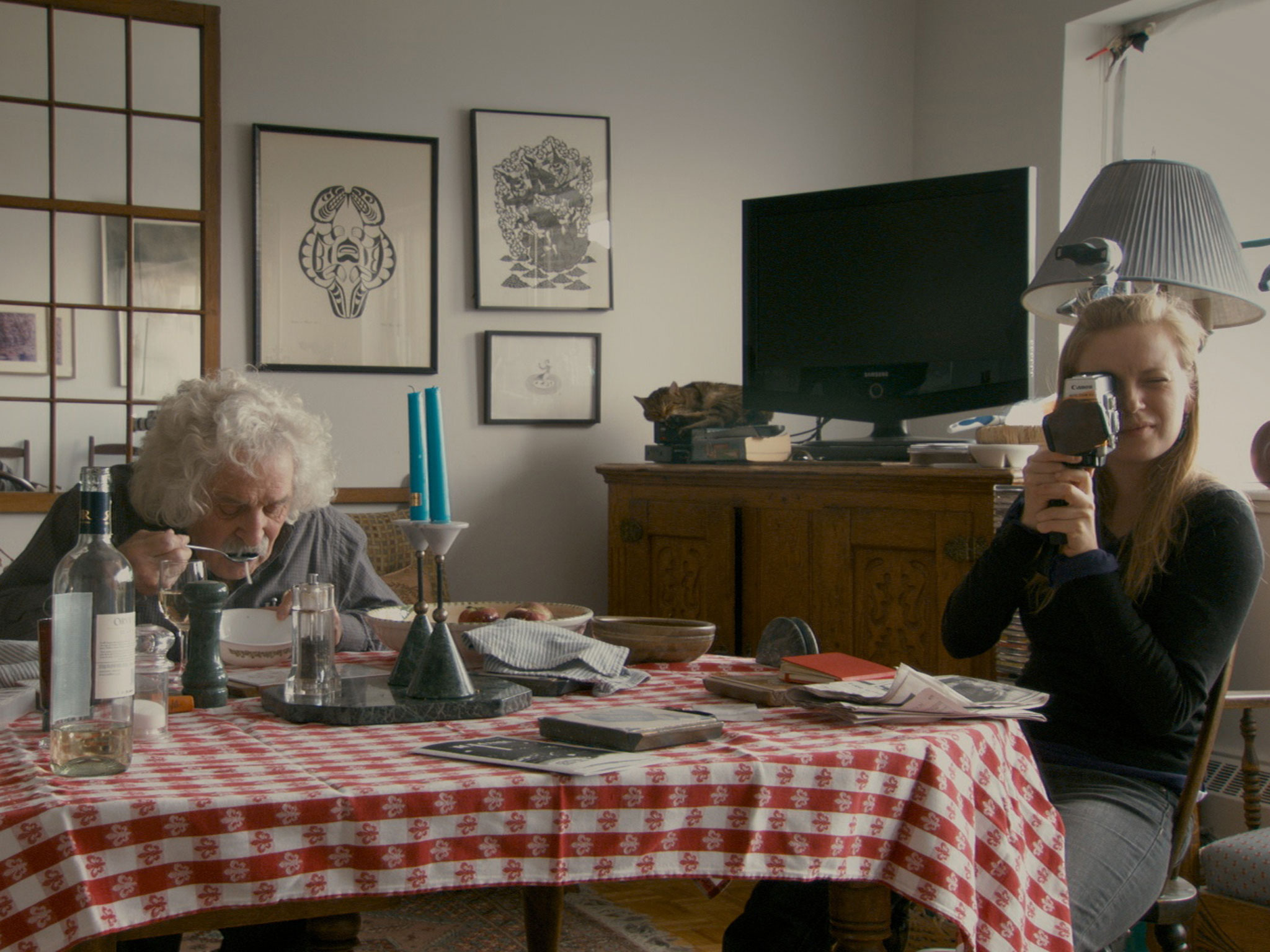
In one sense or another, each entry in this project zeroes in on a film that achieved at least one and often all three of those ideals, albeit to varying degrees. I’ve written about how the radical, stark ending of Safe shook me to the core and the epiphany of ongoing connections and circularity concluding What Time Is It There?, but other titles had subtler impacts: the blink-and-you’ll-miss-it reveal of what’s really going on in Stories We Tell, the matter-of-fact imagery All That Jazz dutifully, almost brutally goes out on, the haunting, frozen-in-time tableaux providing Edward II with its final grace note. All of these are resolutions I had to take time to absorb and ponder, not so much jump cuts from black to white as sifting through thousands of shades of gray, acknowledging and gradually feeling something incisive and lingering about what I had seen.
Somewhere between those two reactions is one of what I can best describe as a sort of transfiguration. Deeper and less defined than a purely emotional or intellectual response, it veers towards the spiritual, as if witnessing something has placed one in an altered, previously inconceivable state of mind. It’s awfully tricky to describe, for signifiers such as “hypnotic”, “trancelike” and “otherworldly” come off as too subjective or abstract to adequately communicate what it’s actually like to another person. A particular film may affect me so strongly while leaving another viewer cold and unmoved. The critic’s role is to make a case (or not) for how and why a film has this power; naturally, it’s a hell of a thing to fully articulate. Take Andrei Tarkovsky’s metaphysical sci-fi feature Stalker, which I first saw at age 22 in film school. It left me baffled, not comprehending what story it was trying to tell or why it even attempted it in the first place. I soon watched the Russian director’s other works (there’s only seven features in all) and responded to them all differently (some gut-quick assessments: liked Andrei Rublev, hated Nostalghia, kept dozing off during Mirror.)
Stalker
Twenty years later, I revisited Stalker, this time at the Brattle Theatre in Harvard Square on a hot summer’s afternoon. Sometime before that I had read Zona, Geoff Dyer’s unconventional book about the film (written from an average viewer’s perspective rather than a film critic’s), encouraging me to give it another shot. Perhaps because I was watching it for pleasure instead of coursework or simply two decades older and more receptive to its idiosyncrasies, Stalker confounded less and intrigued more on this viewing. Although I surely moved around in my seat often during the last half-hour of its 163-minute running time, as I arose and made my way to exit, I felt woozy but satiated as if emerging from a deep sleep. I thought this is possibly what the concept of enlightenment is supposed to be like, even if Stalker asks far more questions than it even pretends to answer. The brightness of late afternoon brought me back into the real world, but only partially—I walked around the neighborhood in a slight trance, retaining what I had just experienced in ways that only this particular film’s moods and ideas could influence and shape.
This particular reaction I had with my rewatch of Stalker is not limited to that film alone but it is uncommon (imagine if every movie one watched left one so off-kilter!) In this category, I’d place 21st century titles as disparate as Jim Jarmusch’s Paterson and Celine Sciamma’s Portrait Of A Lady On Fire, Wong Kar-wai’s In The Mood For Love and Charlie Kaufman’s Synecdoche, New York, Jonathan Glazer’s Under The Skin and many of Paul Thomas Anderson’s later works (There Will Be Blood, The Master, Phantom Thread.) The common signifier among all of them? I exited each film indisputably changed as if allowed a peek into how another person views the world and makes it their own whether through its ultra-specific rhythms and visual or narrative choices or via something recognizable that nonetheless contains other facets rendering it both somewhat familiar and fresh.
I often experience this sensation with the films of Thai New Wave director Apichatpong Weerasethakul, who often goes by the simple nickname “Joe” (which, no matter how silly or reductive it sounds, I will use going forward for brevity’s sake.) As with Tarkovsky, I admire his features to varying degrees. His 2000 debut, Mysterious Object at Noon has a fascinating premise—unscripted, it travels across Thailand, interviewing people and imploring them to add their own words to an ongoing story, “exquisite corpse” style in which each new person is only allowed to see the ending of what the previous one had written. However, it’s less effective in practice as the momentum lags rather than builds, more or less petering out midway through. Thankfully, this doesn’t occur on subsequent efforts Blissfully Yours (2003), Tropical Malady (2004) and Syndromes and a Century (2006) even as each one utilizes a nontraditional diptych structure to different ends. The best of them, Tropical Malady radically transforms at its exact midpoint from a slice-of-life, near-romantic comedy into an experimental, spiritual folk tale. I first saw it with a friend (at the same place I rewatched Stalker) and the ending left us somewhat like that of Cache, fumbling for words to describe and elaborate upon what we had just seen.
I feel similarly about most of Joe’s endings but it’s a credit to his growth as a filmmaker that with each subsequent work, it’s more of an attribute than a negative. While Syndromes and a Century, a near-essay on his parents’ profession as doctors has one of the more incongruous endings I’ve encountered, his breakthrough, 2010 Cannes Palme d’Or winner Uncle Boonmee Who Can Recall His Past Lives signs off with a deftly deployed twist that begs one to reconsider everything they’ve just seen. It’s in line with the film’s entire tone, a playful, poetic rumination on death and how life itself isn’t necessarily so linear, mixing fantasy and reality together so fluidly that one comes to view both as interchangeable while still recognizing the former’s otherworldliness. It’s not so much more accessible than it is a masterful culmination of a singular aesthetic developed and fine-honed—the perfect place to start with Joe’s filmography, perhaps.
Uncle Boonmee Who Can Recall His Past Lives
His next major work, 2015’s Cemetery of Splendour is more suited to advanced Joe scholars/admirers (as is 2012’s Mekong Hotel, a 61-minute piece that played festivals and was mostly seen as a bonus feature on the Uncle Boonmee DVD release.) First watching it in its 2016 American theatrical release at Boston’s Museum of Fine Arts, it affected me in a way similar to how Stalker would a year later, only this feeling emerged about three-quarters of the way through the film. It was on extended shot of sun piercing through fluffy white clouds in the sky—or so I thought, until what resembled a leaf (or maybe some sort of organism?) floated into the frame, revealing that this image might actually reflect the sky on a body of water. Out of context, such imagery is unremarkable but appearing as it does within the meditative, meandering rhythms established within the preceding 90 minutes, it connected with me in a profound, if inexplicable way. Again, I don’t know if this was Joe’s intention, or whether it had a similar effect on most other viewers but I felt a rush of emotions—excitement at the reveal, peace from the soothing tone, an epiphany that life may be more than it initially appears. As the film continued, I applied these feelings both to what I was witnessing unfold and also to all that had come before.
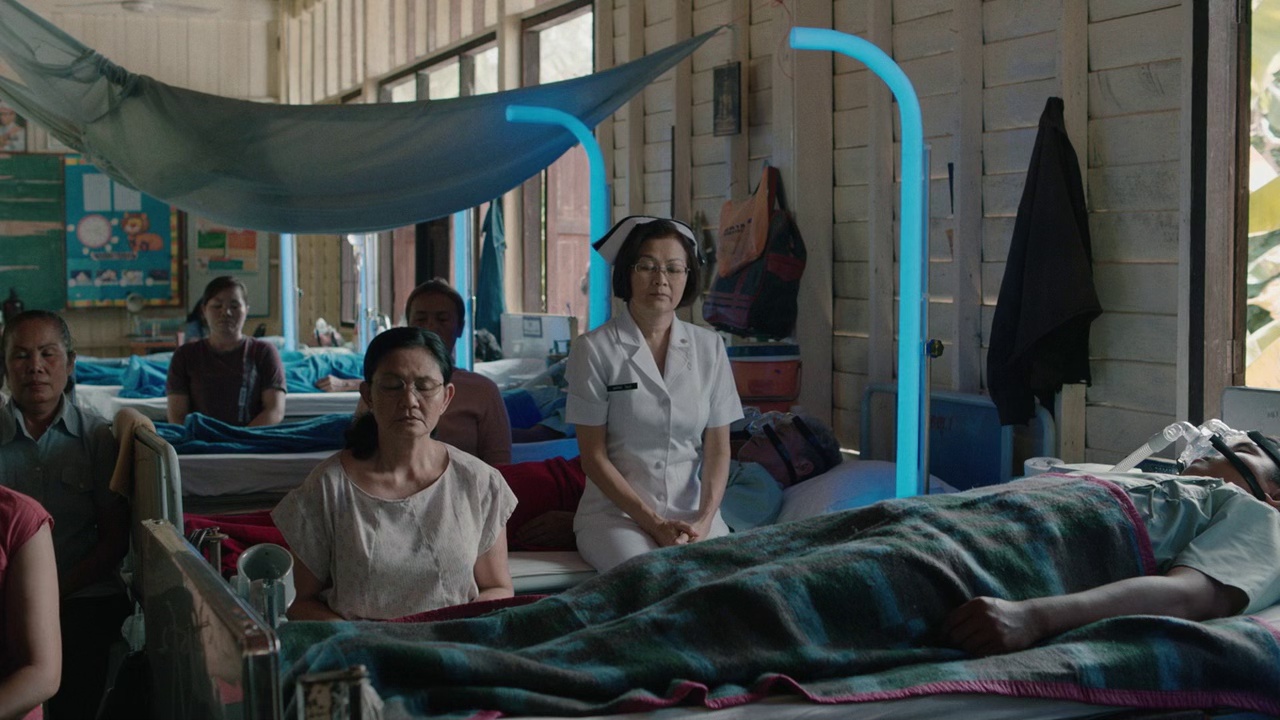
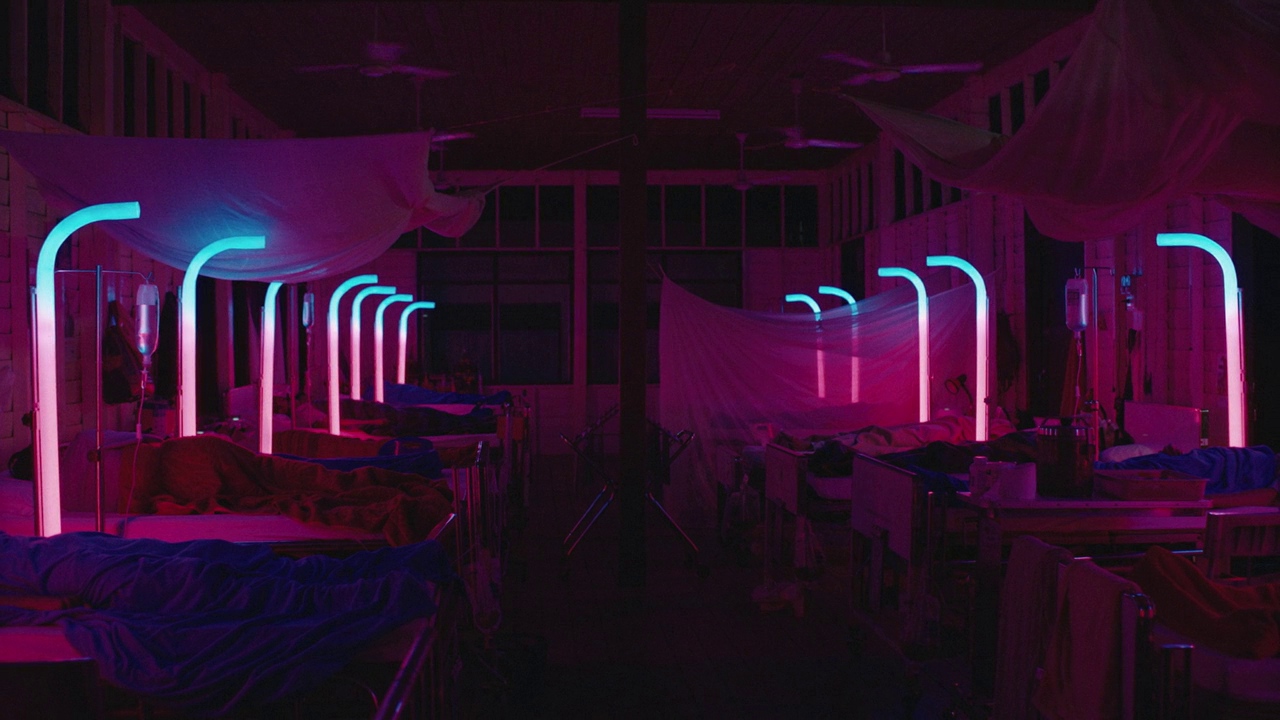
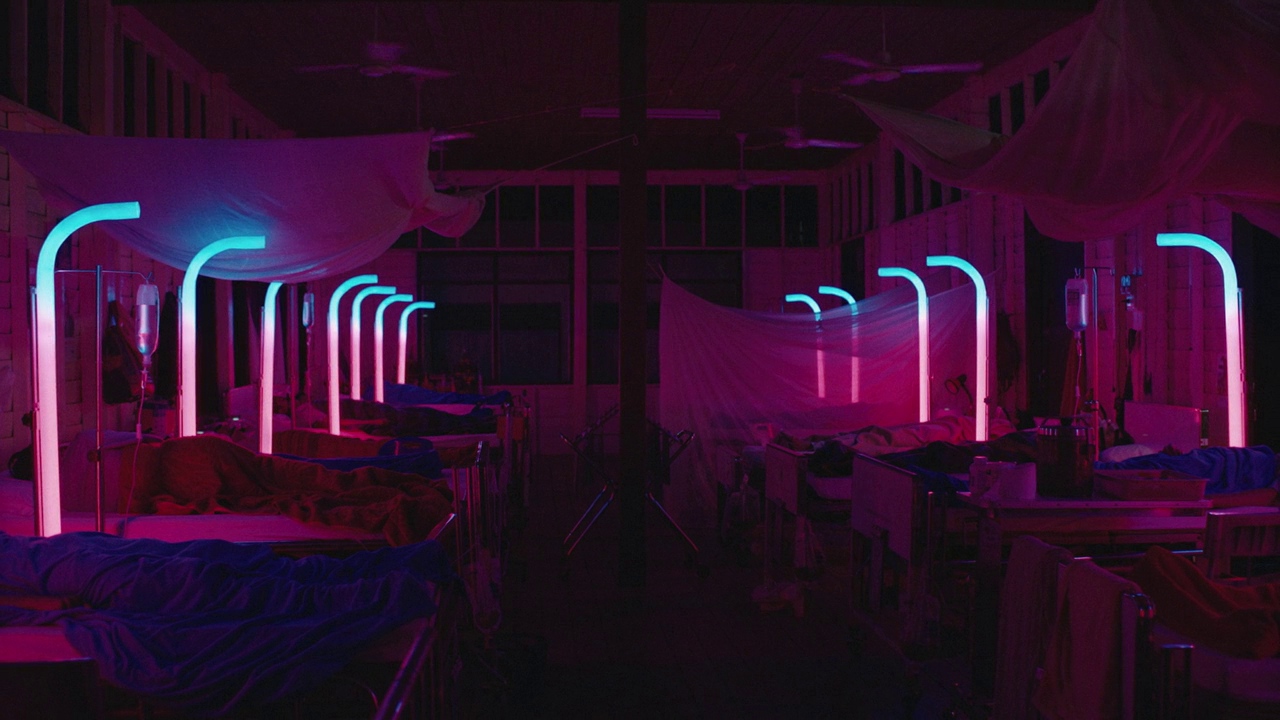
Filmed in Khon Kaen, Joe’s hometown in the northeast Thai region of Isan, Cemetery of Splendour is mostly set at a defunct elementary school turned makeshift hospital for convalescing soldiers. Middle-aged Jen (Joe regular Jenjira Pongpas) is visiting a friend who works there as a nurse. Jen now lives in Bangkok with her American husband Richard but grew up in this rural enclave and even attended this very school. Jen herself is disabled, one of her legs significantly shorter than the other (she walks with a cane.) The patients, however, are all afflicted by what is only referred to as a “sleeping sickness”. Much of the film occurs in a former classroom with a dozen of them laid out in beds, two rows of six on each side, all the windows open wide to let in the tropical air and nature sounds. The men are not exactly comatose, but not all that far off—they sleep day and night and on the rare occasion when awake, we see more than one of them overcome by narcolepsy, abruptly dozing off in mid-sentence or mid-bite in the dining hall. No explanation is given for this malady, only that it’s happening exclusively to the country’s servicemen.
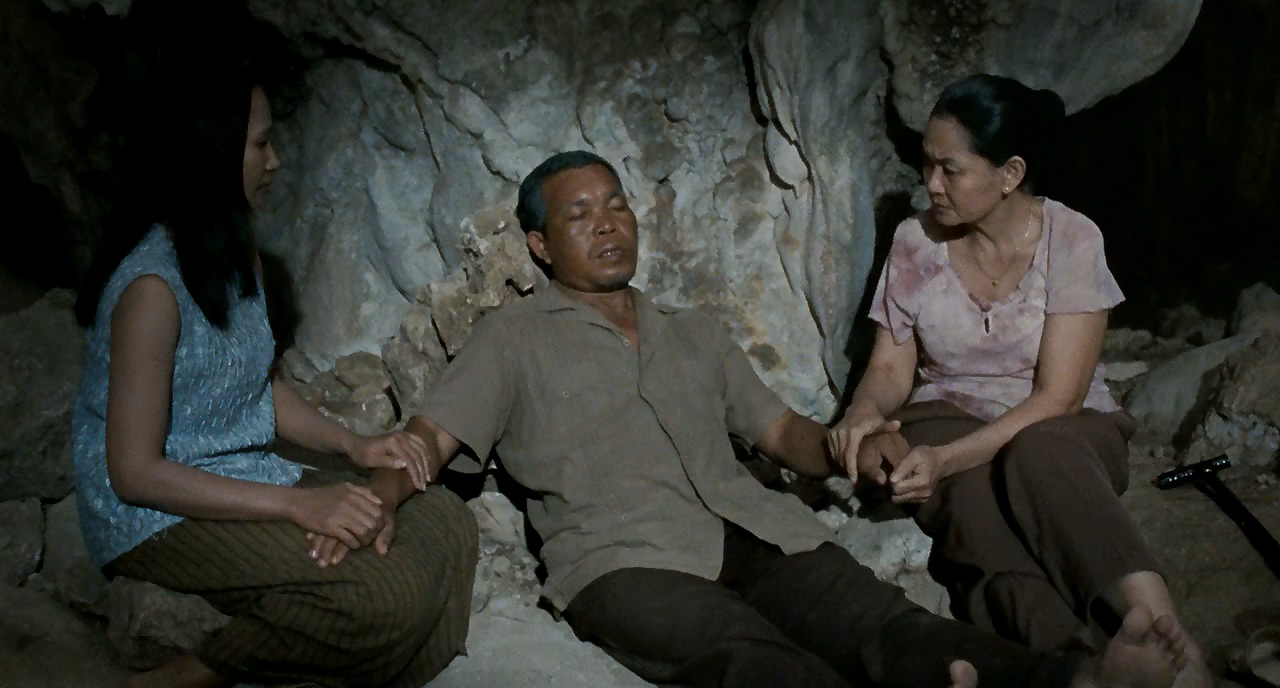
Enter Keng (Jarinpattra Rueangram), a young medium who works for the FBI. Known for her ability to contact the spirits of murder victims and missing persons, she’s at the hospital to sit with the sleeping soldiers (and occasionally, their wives) and perform psychic readings in order to understand their thoughts and dreams while in their unconscious states. Jen befriends both Keng as well as Itt (Banlop Lomnoi, another Joe regular), one of the younger, handsomer patients. Her burgeoning connection with the latter is motherly rather than sensual, but soon transcends such parameters: “It’s as if I’m synchronizing with that soldier, or he’s sleeping through me,” she says aloud at one point. As Jen spends more time bonding with both the psychic and this soldier, she herself enters altered, supernatural states of mind, rendered by Joe matter-of-factly, stressing both halves of the term “magical realism” as he tends to do in his work. One such example: not long after visiting a Buddhist shrine with Richard, Jen herself is visited in the nearby park by two women who casually reveal themselves as living embodiments of the princesses the shrine saluted in statue form. “Both of us are dead as well,” they tell Jen before leaving her with this wisdom: “Those soldiers will never recover.”
Jen watches over Itt, overcome by sleep.
Cemetery of Splendour gently tempers such fantasy elements with a naturalism informed by an immersive sense of place. The elaborate sound design favors environmental ambience over anything that’s produced although music occasionally surfaces—most notably during two sequences of people performing aerobics (an odd but insistent motif in Joe’s work along with hospital settings, for that matter.) Images such as a water wheel irrigation apparatus in the neighboring lake or the hospital room’s ceiling fans reappear throughout, adding texture rather than concrete meaning. Dialogue, however, is just as central an element in stressing the film’s realism. It often sounds unrehearsed, conversational, banal, even, but it grounds one in the moment, and the moment is key for it prevents Joe’s fascination with ghost stories and all that is unknowable from drifting out of focus—in other words, the fantastical becomes relatable.
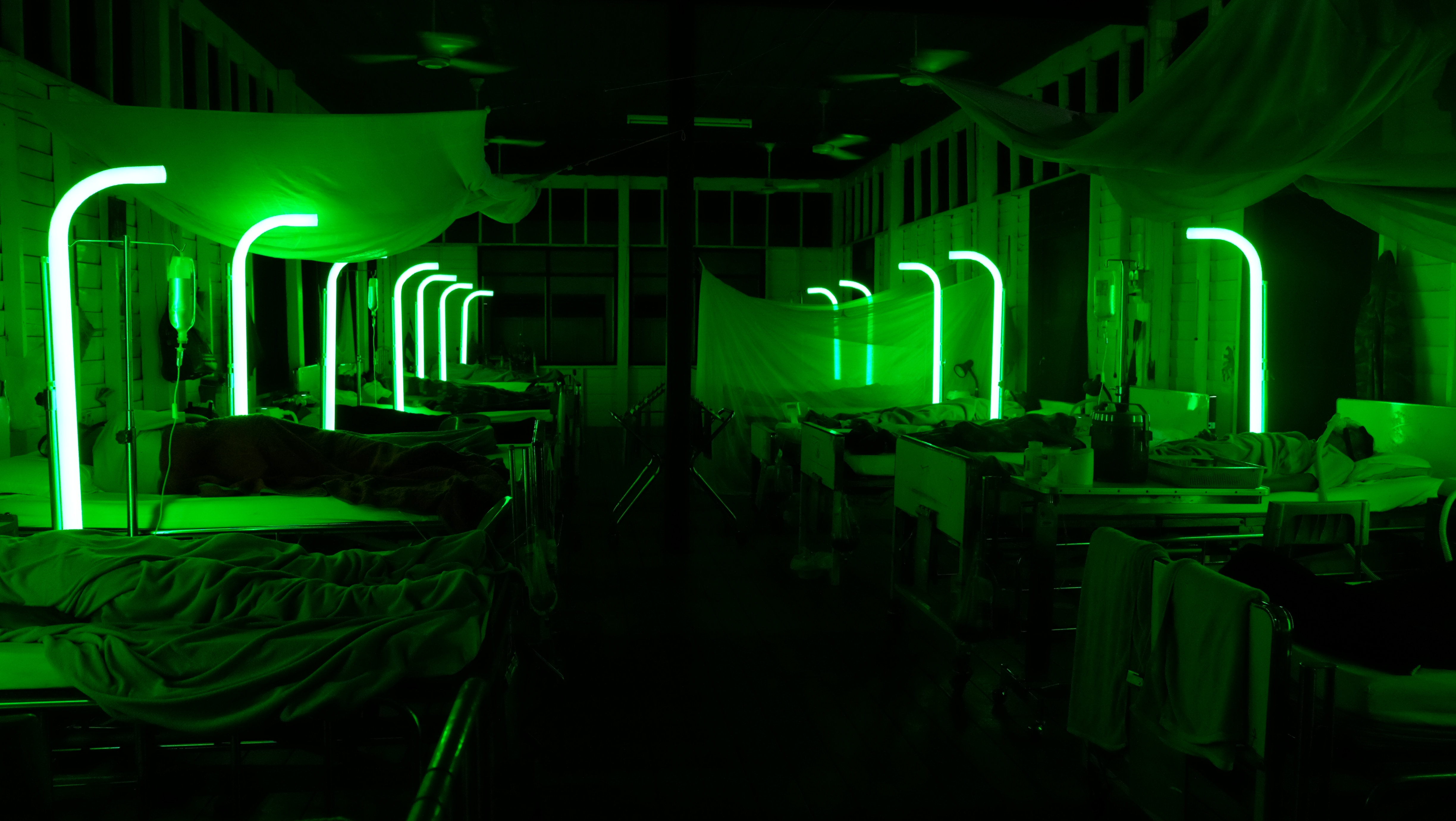
Still, an unknowable awe retains presence. Arguably the film’s most striking visual construct appears about a half-hour in with the installation a series of tall, narrow, curving neon light tubes at the head of each patient’s bed. Connected to each man by a face breathing mask, they’re meant to serve as a form of therapy, aiding with nightmares and snoring (“Americans used them in Afghanistan”, a doctor notes.) Occasionally, the light in these tubes is a pure, neutral hue; other times, it changes colors, from red to blue to green to white, the light gradually, almost lethargically surging vertically from bottom to top. No further scientific explanation is offered for these tubes, but it’s an image Joe returns to throughout the film, often after dark when the alternately cool and warm colors are exclusively illuminating the room. It’s hypnotic, presumably for the patients but also the viewer—beautifully meditative and a respite from all the conversation transpiring during the day.
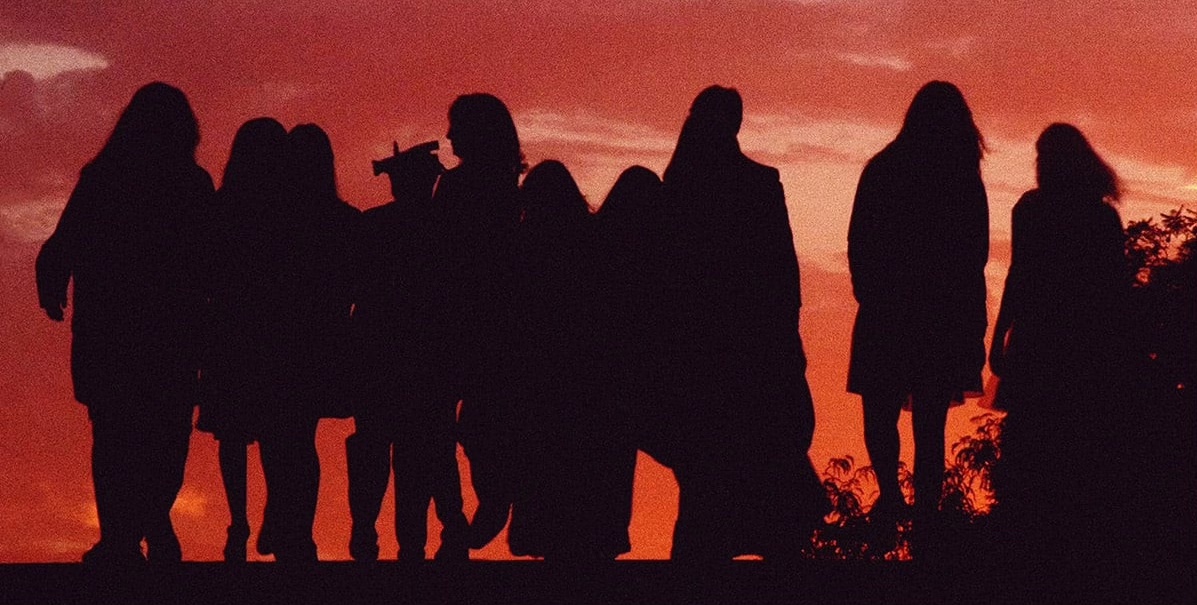
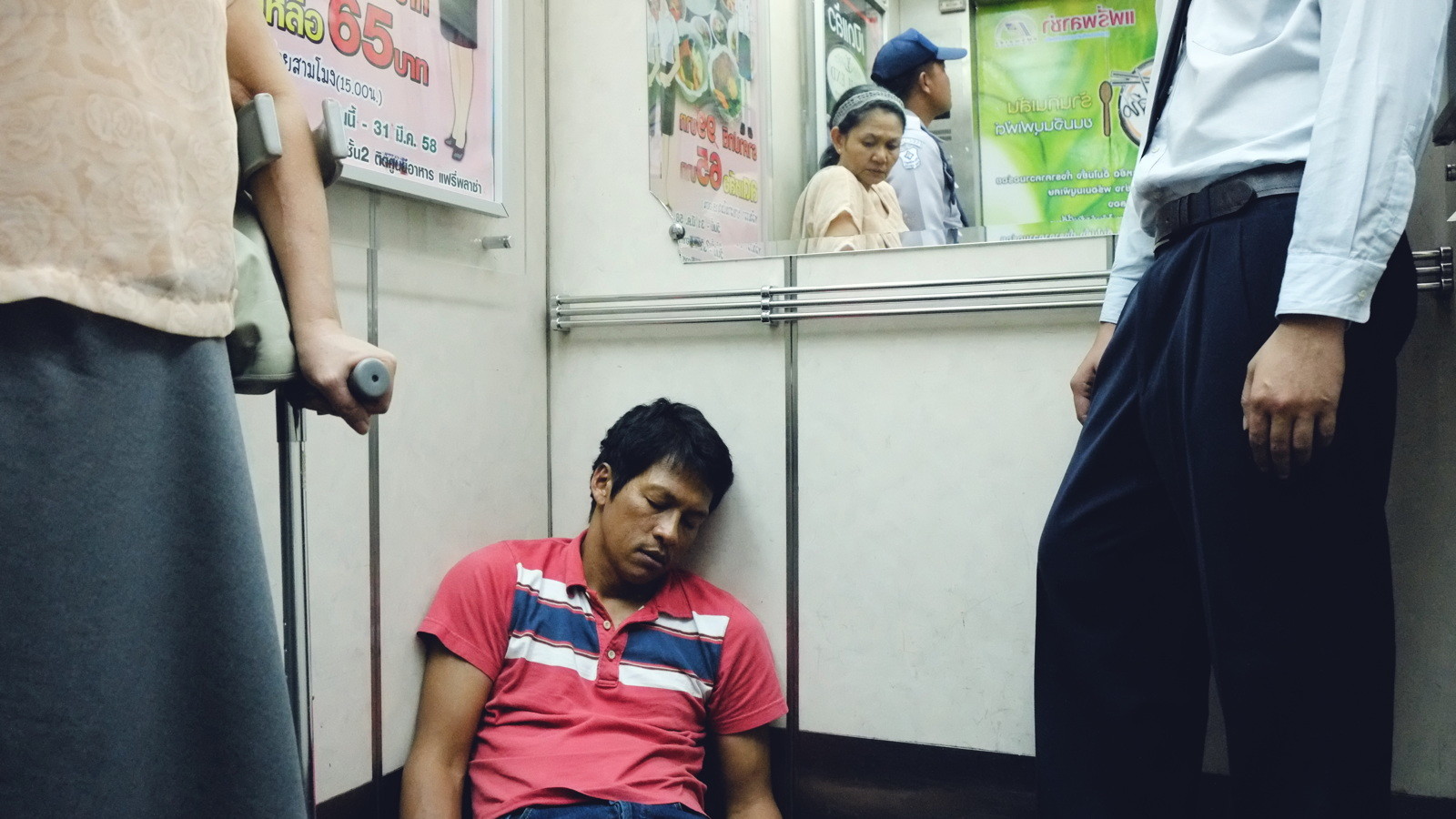
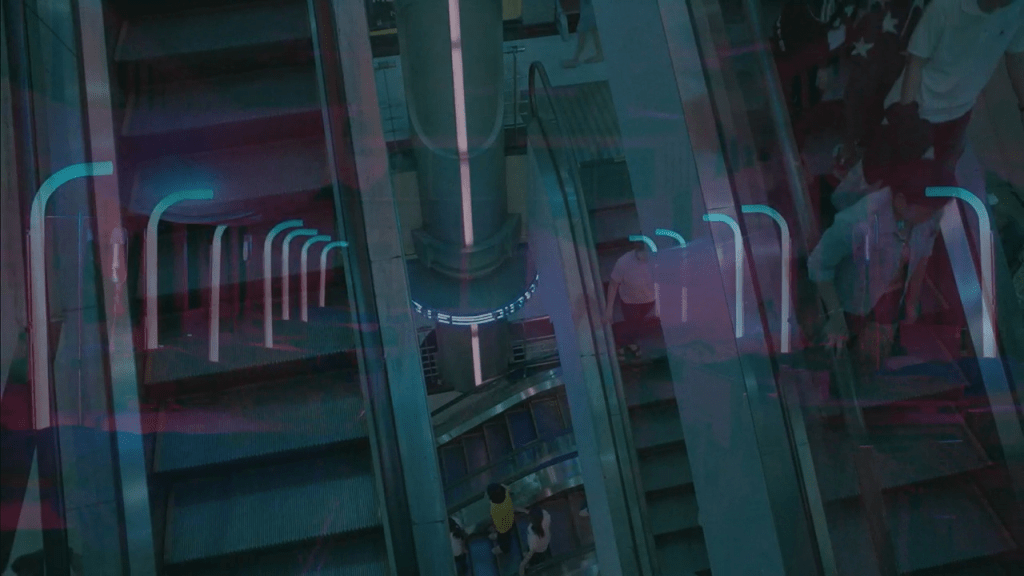
The tubes also play a role in one of the film’s key sequences. In a rare instance where Itt is fully awake, he and Jen leave the hospital for an evening trip into the city: dinner at a street market and a movie (we only see them watching a trailer for an over-the-top, CGI-heavy action/horror epic—the antithesis of Joe’s style.) After the trailer ends, as seen in silhouette, Jen, Itt and the rest of the audience stand up in the dark, silent, still staring at the screen as if in a trance (much like the viewer of one of Joe’s films, perhaps.) Everyone then leaves the theater in what appears to be a modern multiplex, walking towards a sea of escalators that will take them back to the outside world. There’s no score, only diegetic sound but as patrons get on the escalators, some familiar, slowly changing colors appear. They’re from neon lights in the building’s interior design. Soon, we also see a recognizable ceiling fan as part of an exceedingly slow crossfade. The escalator riders are still visible, but the hospital room with the glowing neon tubes also comes into focus.
The crossfade.
This crossfade endures for at least a minute; it’s like nothing else I’ve ever seen in a film. In trying to determine why Joe included it here, I have no definite answers apart from him suggesting this idea of worlds coalescing: the awake cinema patrons and the sleeping soldiers co-exist, after all, with the former arguably in just as much of a fugue state as the latter. Like many sequences in Stalker, it goes on longer than it needs to (personally, I never wanted it to end), but long enough for it resonate by inviting the viewer into this combined fugue state—the mundaneness of everyday life (leaving a movie theater) with the world of the subconscious. Jen herself latter experiences her own fugue state as a sleeping Itt communicates with her through the medium Keng. Jen tells him, “I think I’m dreaming, Itt; I just want to wake up.” This occurs right before the reflection-of-sky-on-water-reveal, itself perhaps encouraging viewers to arrive at the same conclusion.
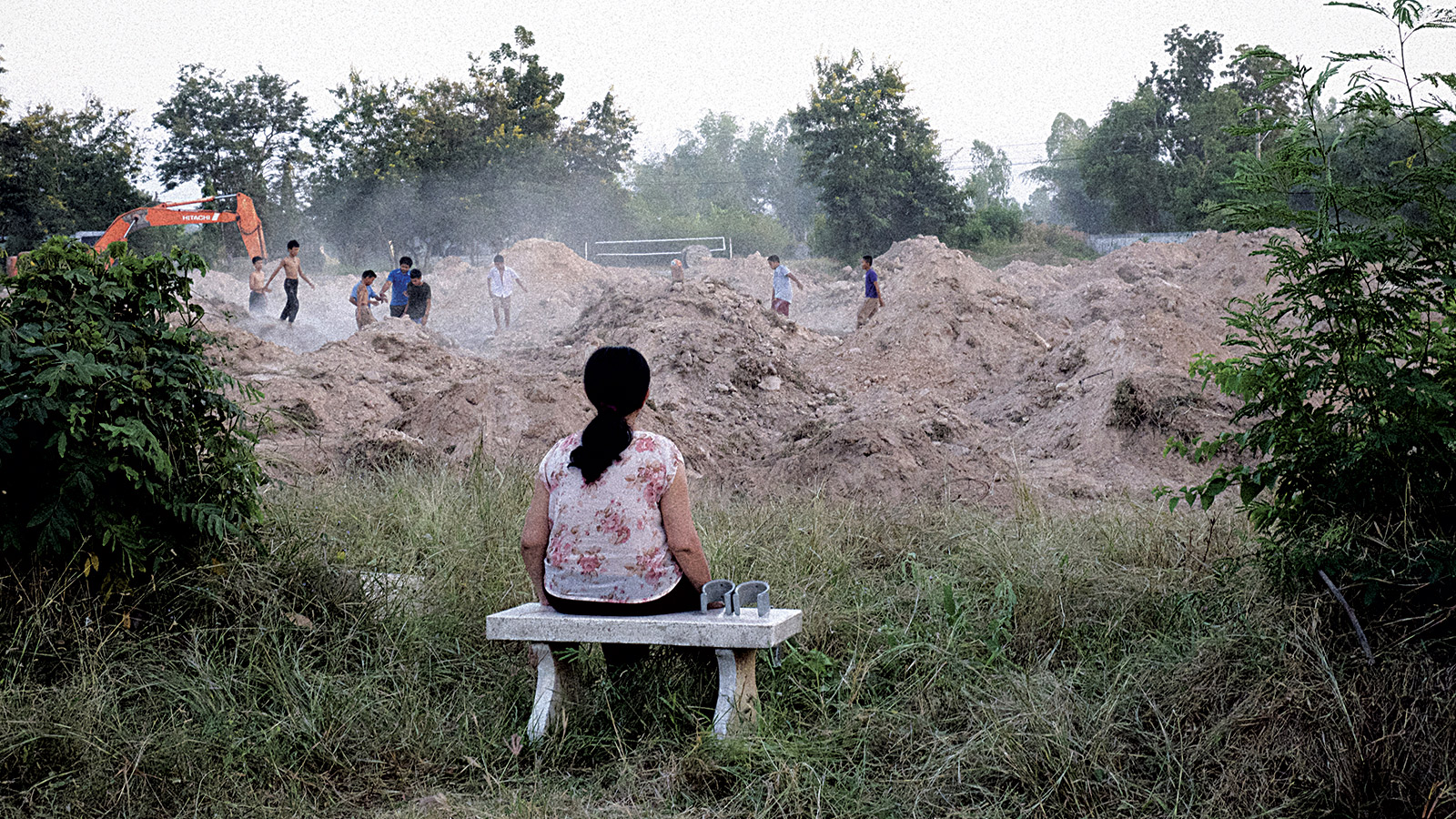
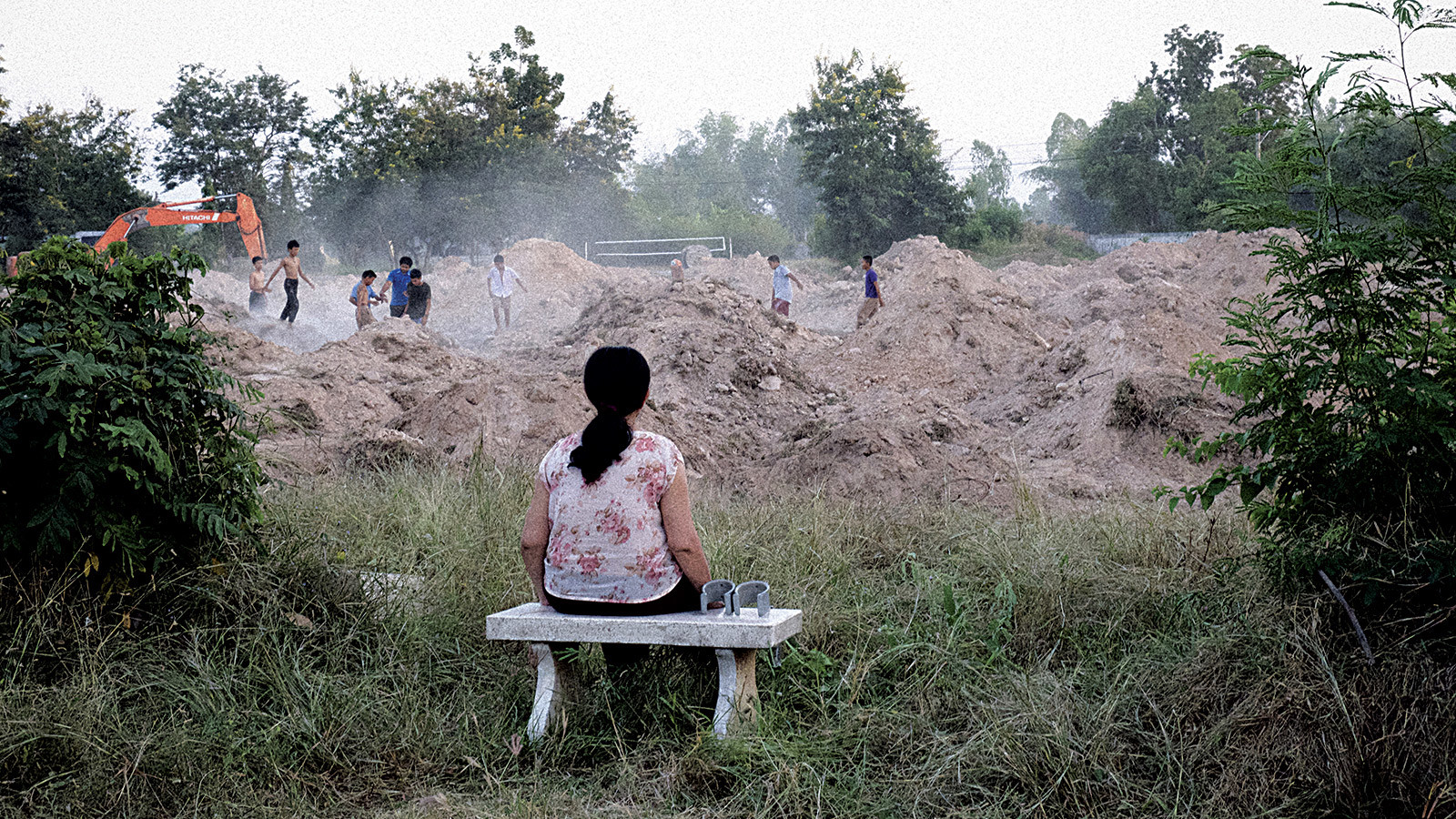
Later, Jen is back in the makeshift hospital room besides Itt as he lies in bed. She says to him, “Suddenly, I can read your mind. I have seen your dream.” “And I can see yours,” Itt responds. Some kind of transfiguration has occurred between them. Cemetery of Splendour doesn’t offer any logical explanation for this act because none exists (something similar occurs in his next feature, 2021’s Memoria, filmed in Colombia (!) and starring Tilda Swinton (!!)). The closest cinema can do is put the viewer in a mind state attempting to express what the experience of transfiguration might be like. The final scene is of Jen sitting on a park bench outside the hospital, watching a large dump truck digging a massive hole in the ground (the image of which opened the film.) We’re never told exactly why the truck is there (it’s speculated they’re digging to install fiber optic cables) but its presence and purpose is related to talk of the makeshift hospital’s imminent closure and tearing down. In the distance, an outdoor aerobics class performs to a jaunty instrumental slightly tinged with melancholy. In the last shot, we see only Jen, eyes wide open, still watching the truck but now framed as if she was staring directly at us. She’s been through something over the course of the film, and so have we.
10. BOYHOOD
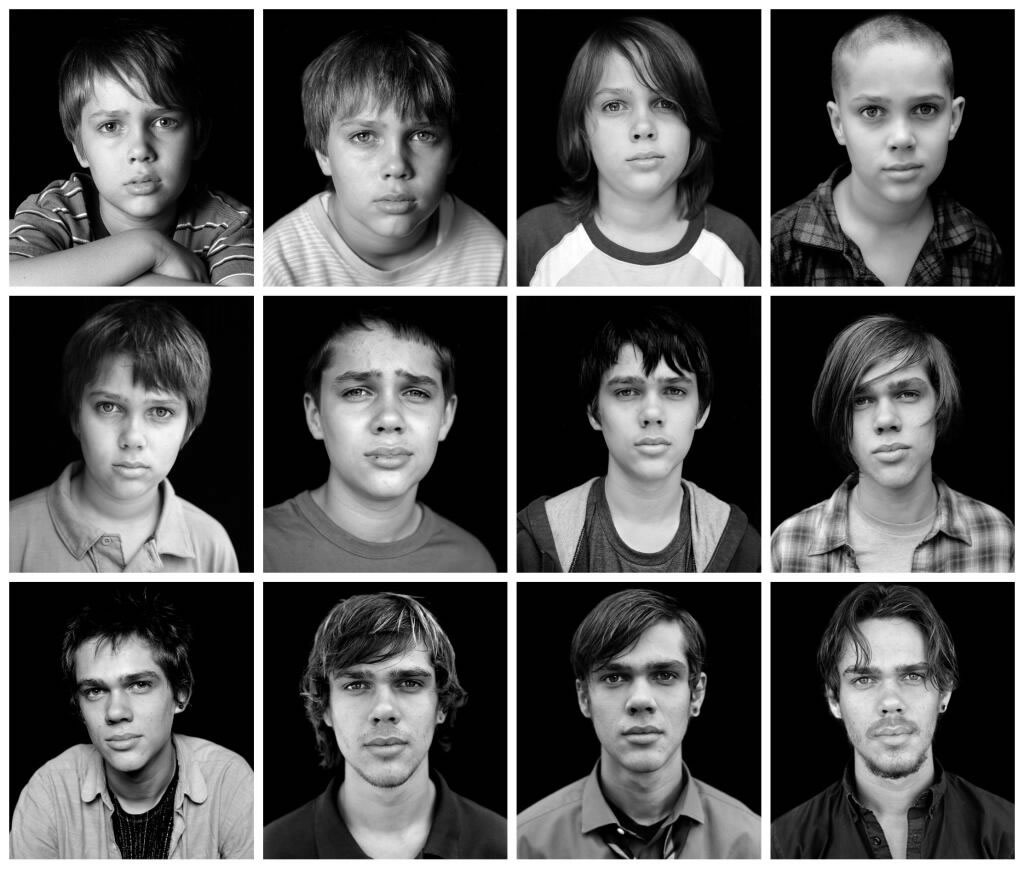
Richard Linklater’s best films dissect how the passage of time shapes our perception of narrative (Dazed and Confused,The Before Trilogy, Slacker); this is arguably more ambitious than all of them, and even more blatantly driven by a gimmick. But the cumulative effect of Boyhood is unprecedented, realizing a new way of seeing and storytelling only possible via the moving image; through his deft use of this structure, Linklater enables us to witness something both so singular and universal.
9. THE MASTER
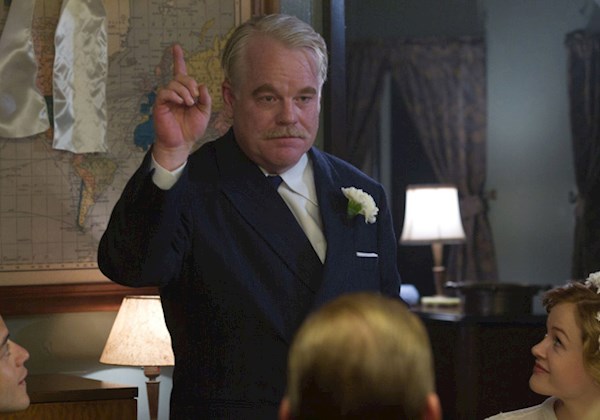
As innovative as Kubrick and enigmatic as Malick, The Master builds on the sharp turn Paul Thomas Anderson took with There Will Be Blood, scrutinizing post-World War II America while often playing like a fever dream come down to earth. Joaquin Phoenix’s meticulous, intriguing performance is but one of many he gave this decade, so look to one of the last great ones from the late Philip Seymour Hoffman—his L. Ron Hubbard-esque figure perhaps the key to this film’s slippery, near-unknowable soul.
8. SHOPLIFTERS
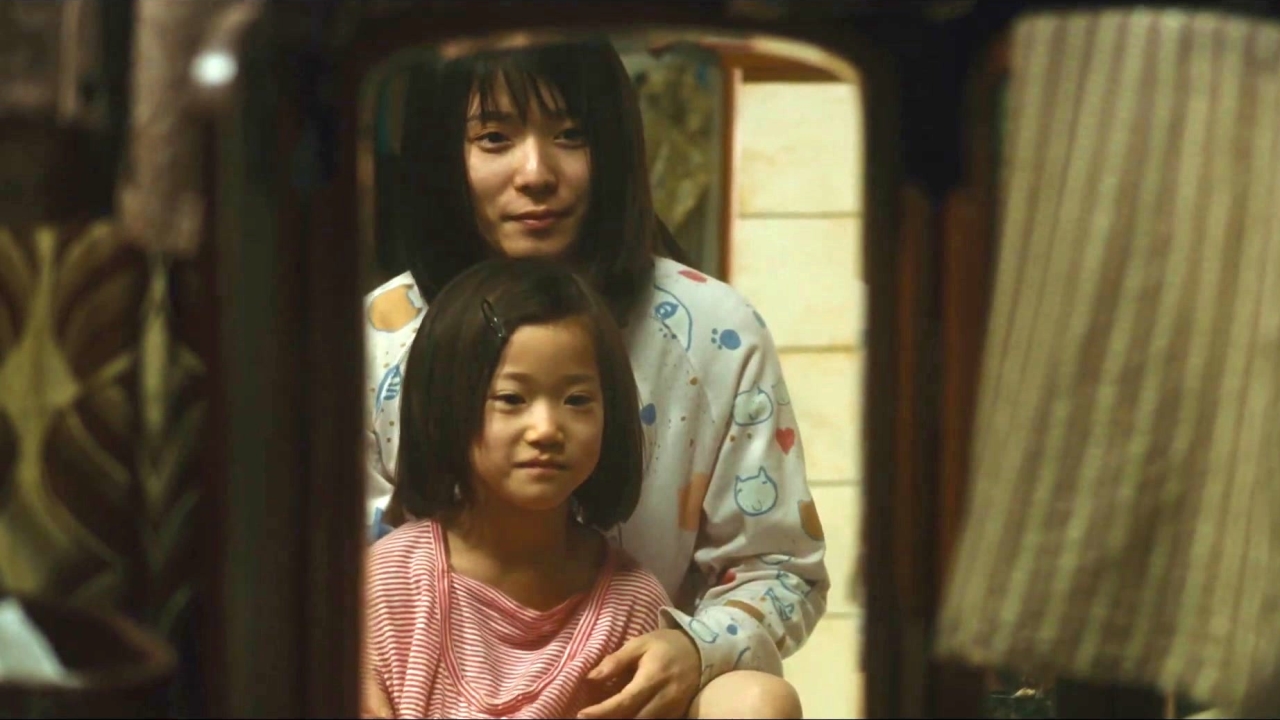
As with his great forebear Yasujiro Ozu, Hirokazu Kore-eda returns to familiar, familial themes across his discography with a rare consistency. So, place this well-deserved Cannes Palme D’or winner about a family of sorts up there with Nobody Knows and Still Walking and admire his ever-present humanism and kindhearted but fair depiction of what ordinary, flawed people do in order to survive while also seeking solace in each other (whether they’re able or even willing to reciprocate.)
7. THE DUKE OF BURGUNDY
Peter Strickland’s strange, arresting film is not just a kinky parade of verbal abuse, face-sitting, being tied and locked up and other unmentionables alluded to behind closed doors; it’s also a profound, intriguing, complicated love story. Come for the dizzying homage to Italian horror and soft-core erotica and stay for a fascinating, eloquent exploration of what it means to play a role in a loving, sexual relationship—and how not fulfilling your partner’s expectations throws everything out of whack.
6. OSLO, AUGUST 31
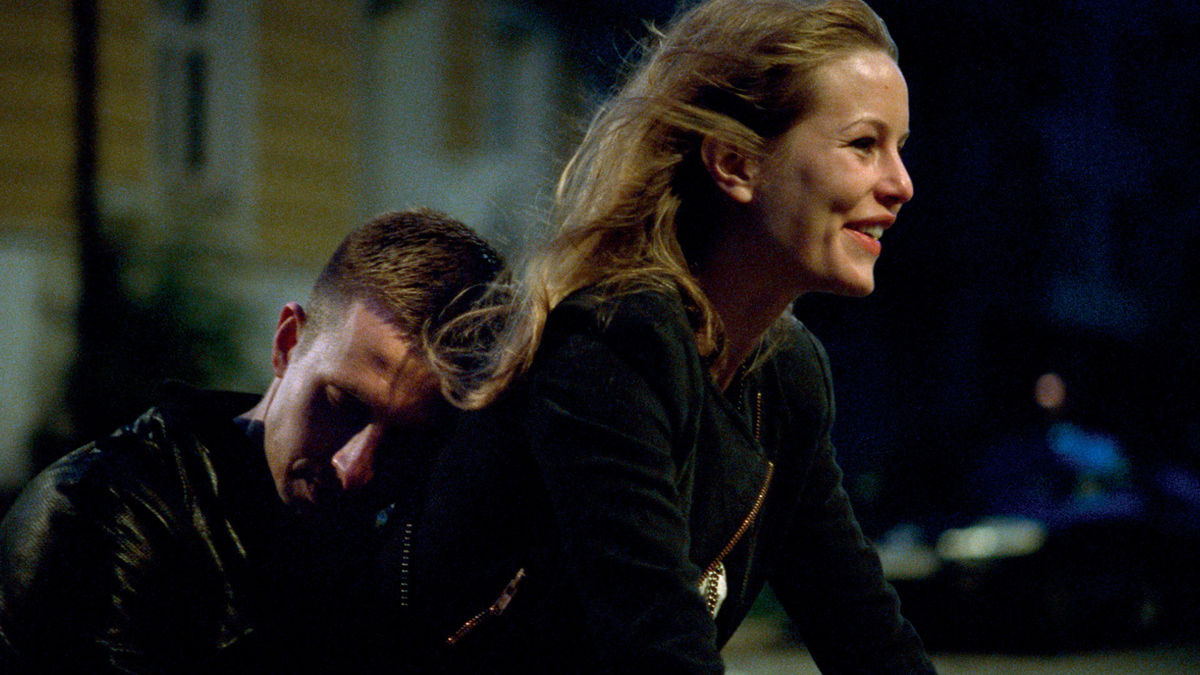
This film follows a man on a one-day leave from rehab. We see him drift through a city (and traces of a former existence) teeming with life and pleasures running the gamut from the mundane to the sublime. And yet, director Joachim Trier never makes light of the conundrum of addiction and how effusively it colors both one’s surroundings and perceptions. Cold and unsentimental, yet affirmative and at times unexpectedly buoyant, Oslo, August 31 is a one-of-a-kind meditation on life itself.
5. STORIES WE TELL
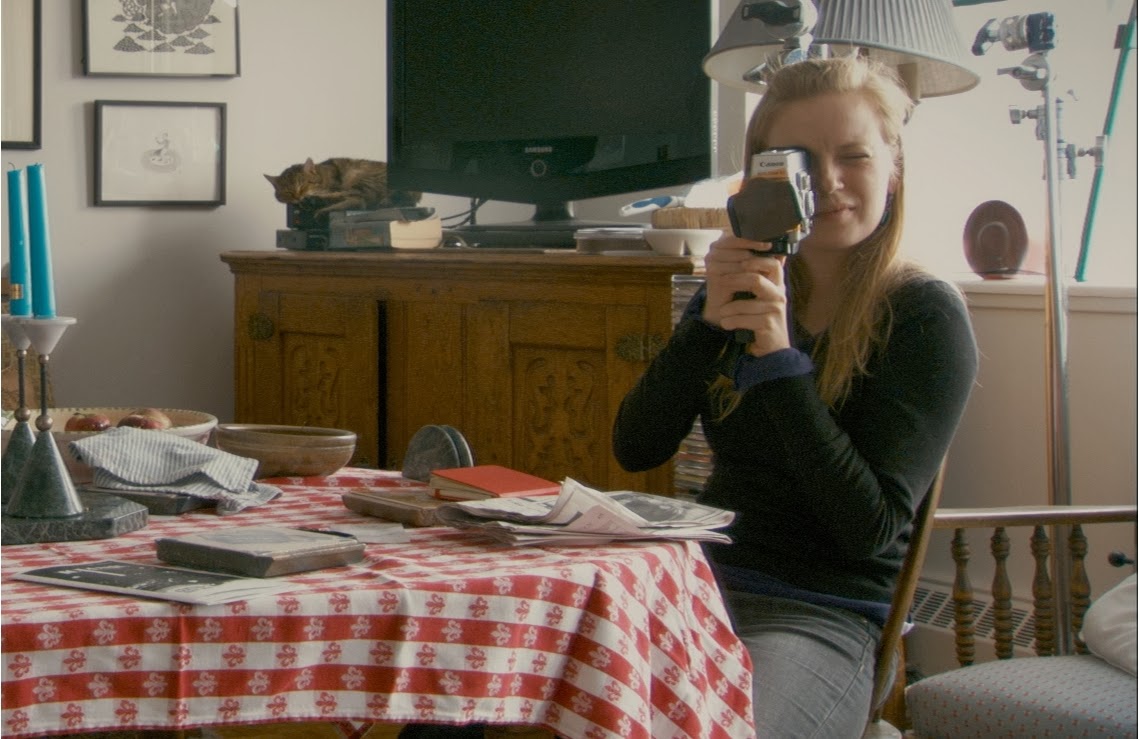
Anyone can make a documentary about one’s own family; for her first nonfiction feature, actress/filmmaker Sarah Polley does just that, but she also explores how such a story can be told, considering differing points of view from each family member, the abundance (or absence) of found documentation available and how all that information is shaped into a narrative (what’s emphasized, what’s left out). As these details accumulate and overlap, Polley crafts a hybrid that does nothing less than open up and redefine what the genre’s capable of.
4. PARASITE
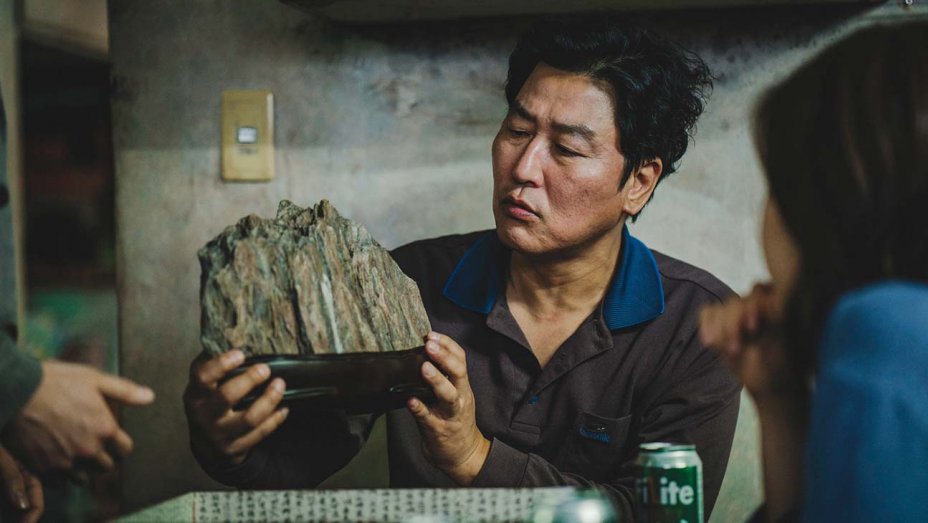
What more is there to say about Parasite? That it genuinely lives up to all the hype and then some? That it’s so well-constructed, you believe every facet of it even as it threatens to spiral out of control? Is it a class-conscious satire, a race-against-the-clock thriller or a revenge-driven horror story? Why not all of these things, and simultaneously at that? I won’t be surprised when I revisit this in another five or ten years if it feels more like a definitive record of its time than any documentary.
3. FRANCES HA
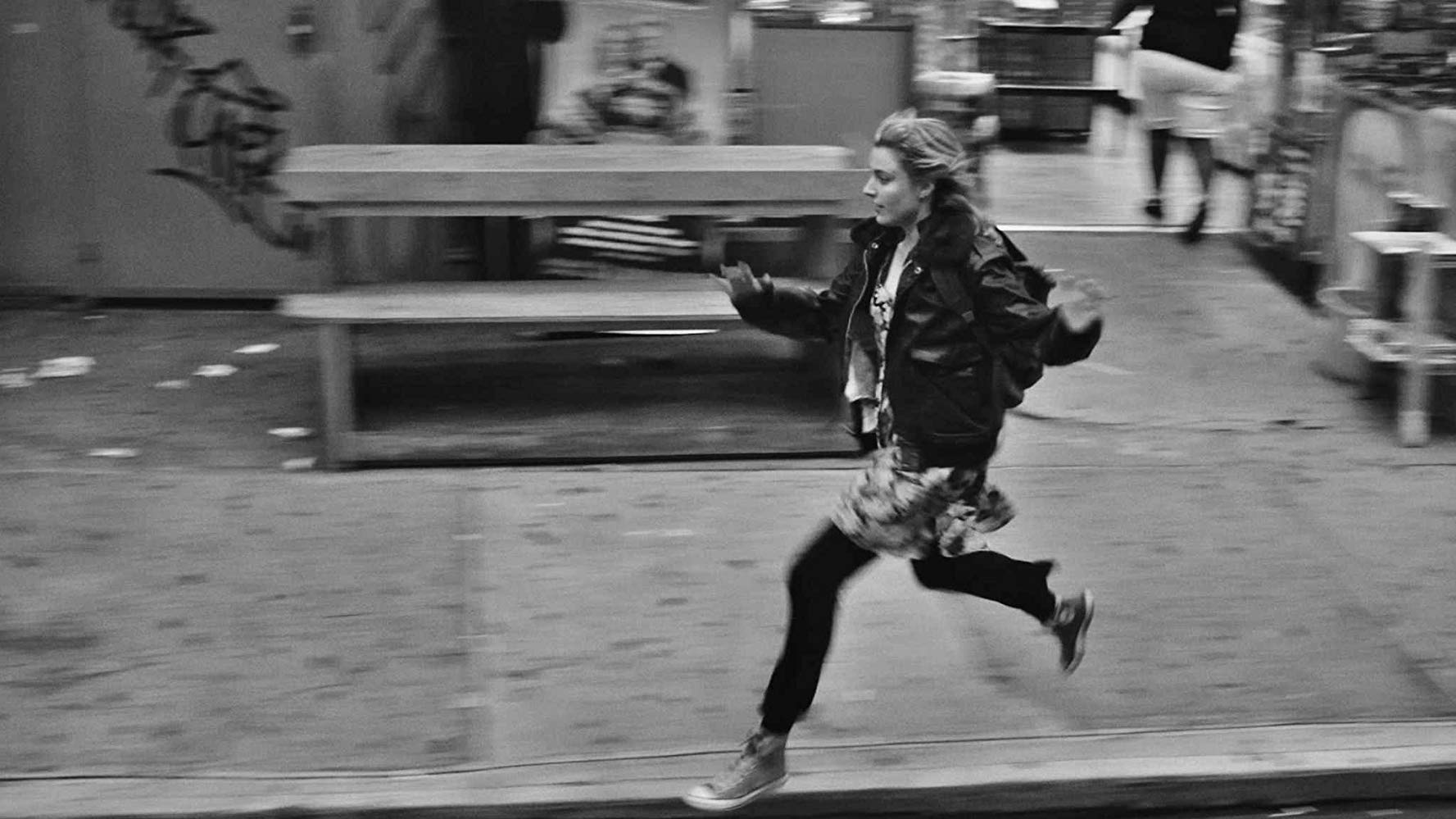
At first glance, Frances Ha shouldn’t work. It’s full of precious anachronisms like black-and-white cinematography, deliberately old-fashioned opening titles and a jarring soundtrack. Besides, the world did not need another tale of a single 27-year-old white woman in New York. And yet, for all of its quirks, actor Greta Gerwig (prefiguring her subsequent work as a filmmaker) and director Noah Baumbach’s collaboration is an utter delight—especially whenever Frances/Gerwig is paired with Sophie (Mickey Sumner), transforming the film into a closely observed study of female friendship.
2. CALL ME BY YOUR NAME
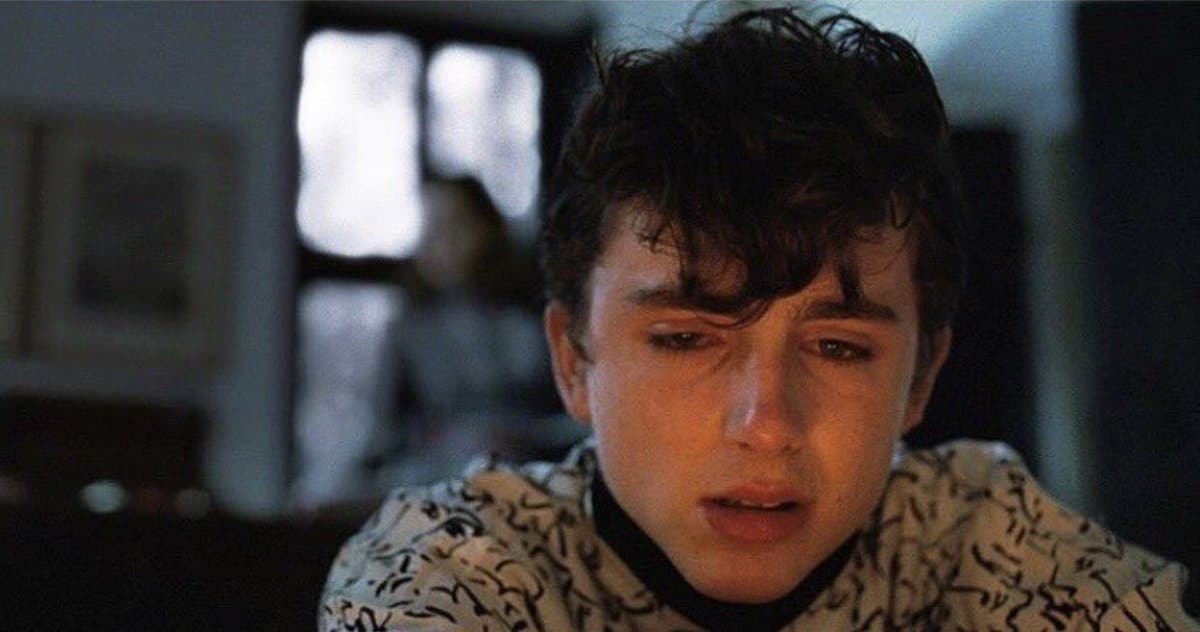
Reining in the excess that sometimes cheapened his earlier work while retaining his passion and drive, director Luca Guadagnino crafts almost an embarrassment of riches, from a monologue for the ages for the great character actor Michael Stuhlbarg to the exquisite modern classical/Sufjan Stevens score to Armie Hammer’s solid presence to Timothée Chalamet, whose breakthrough here is iconic as, if nothing at all like Dustin Hoffman’s in The Graduate. Beyond that, however, this film locates something vital and deeply affecting at the core of giving yourself completely over to love, and also loss.
1. CEMETERY OF SPLENDOUR
I’ve loved all of Apichatpong Weerasethakul’s films since Tropical Malady, but none have stayed with me like this one. Set in a military hospital in the director’s rural hometown, which he positions as a sort of purgatorial waystation for sleep-prone soldiers, it’s another magical realist mood piece. He draws connections between psychic mediums, ghosts, mythic sites and dreams, feeling both familiar and otherworldly. The film practically glides from scene to scene, concerned with such ephemera as the light in the sky or the unusual therapy provided by symmetrical rows of glowing neon tubes at the foot of the soldiers’ beds. Seductive and inscrutable in equal measure, it’s like nothing else I saw this decade.
1. CEMETERY OF SPLENDOR
I’ve loved all of Apichatpong Weerasethakul’s films since Tropical Malady from over a decade ago, but none have stayed with me like this one has since first seeing it last spring. Set in a military hospital in the director’s rural hometown, which he positions as a sort of purgatorial waystation for sleep-prone soldiers, it’s another magical realist mood piece. This time, he draws connections between psychic mediums, ghosts, mythic sites and dreams, feeling both familiar and otherworldly. The film practically glides from scene to scene, concerned with such ephemera as the light in the sky or the unusual therapy provided by symmetrical rows of glowing neon tubes at the foot of the soldier’s beds. Seductive and inscrutable in equal measure, it’s like nothing else I saw this year.
2. AQUARIUS
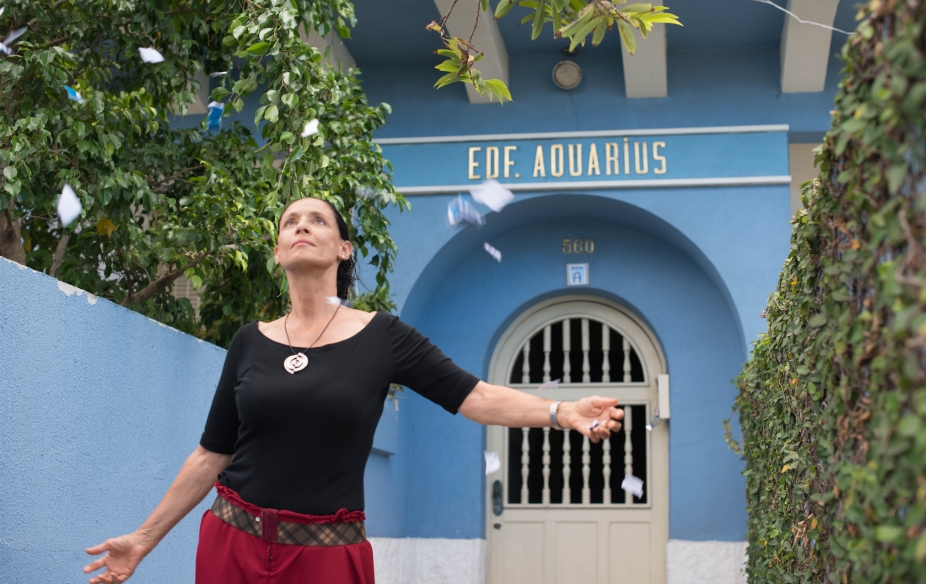
Retired music critic Clara (Sonia Braga) has lived in the two-story Recife, Brazil apartment building that gives this film its title for most of her life after inheriting it from her aunt; currently its sole tenant, she’s pressured by developers trying to force her out so they can replace it with a commercial high rise structure. While Aquarius is yet another story of one person determinedly holding on to a way of life in the face of change and gentrification, it’s more elegiac than nostalgic and driven by mystique instead of melodrama. It’s no overstatement to say Braga delivers a monumental, career-best performance, but the rest of the film is very much up to her level, from its diverse, playful soundtrack to how masterfully it builds up to its shocking, gloriously cathartic finale.
3. OUR LITTLE SISTER
The latest from longtime favorite director Hirokazu Kore-eda (Still Walking, Nobody Knows) is a Japanese manga adaptation about three grown sisters who take in their teenage half-sister after meeting her at their shared father’s funeral. One of the most admirable things about the film is how naturally compassionate the women are towards their newly discovered sibling, not seeing her as a rival or an unwanted surprise, but simply as family. Like all of Kore-eda’s best work, it focuses on our capacity to be humane, on how well we treat each other. The charming, unfussy narrative that unfolds rises to the same level as Yasujiro Ozu’s great mid-century domestic dramas; it’s all enough to make one wish a major American filmmaker could achieve something both so simple and profound (leading us to…)
4. MOONLIGHT
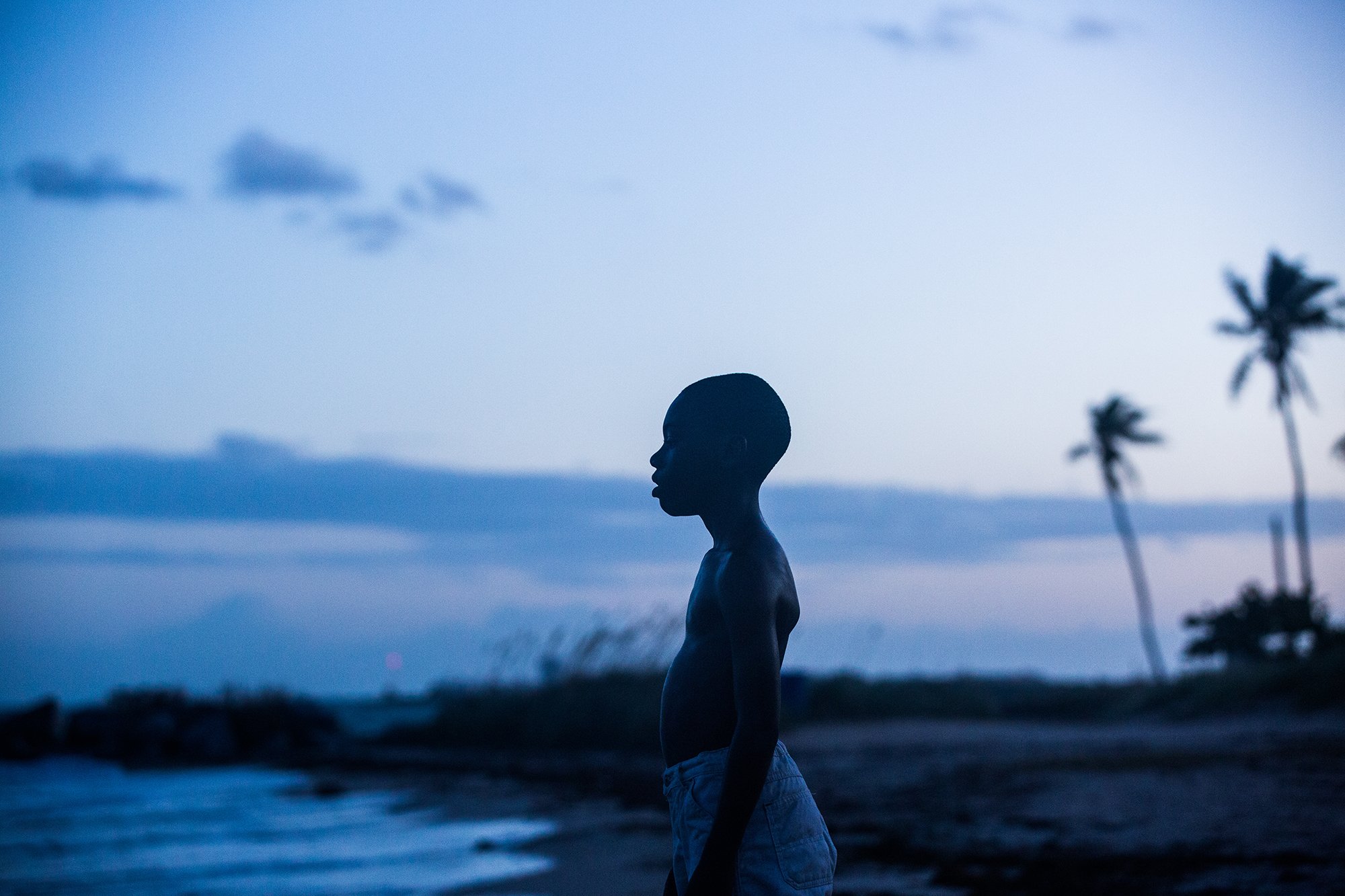
Barry Jenkins’ (Medicine for Melancholy) almost wholly unexpected second feature has garnered the acclaim and the audience you wish most films of its ilk could achieve. In following three life stages (child, teen and adult) of a black man from a rough Miami neighborhood, Moonlight could have easily succumbed to its potentially gimmicky structure or turned out an Issue Picture about how an outsider never truly escapes his confining environment. Instead, the end result is uncommonly lyrical in its fluid pace (and camera movement), often gorgeous imagery and narrative/structural leaps. However, what’s most admirable is the rare intimacy it achieves—particularly in those wonderfully observed and executed scenes at the neighborhood park, the beach at night, and the diner.
5. THE LOBSTER
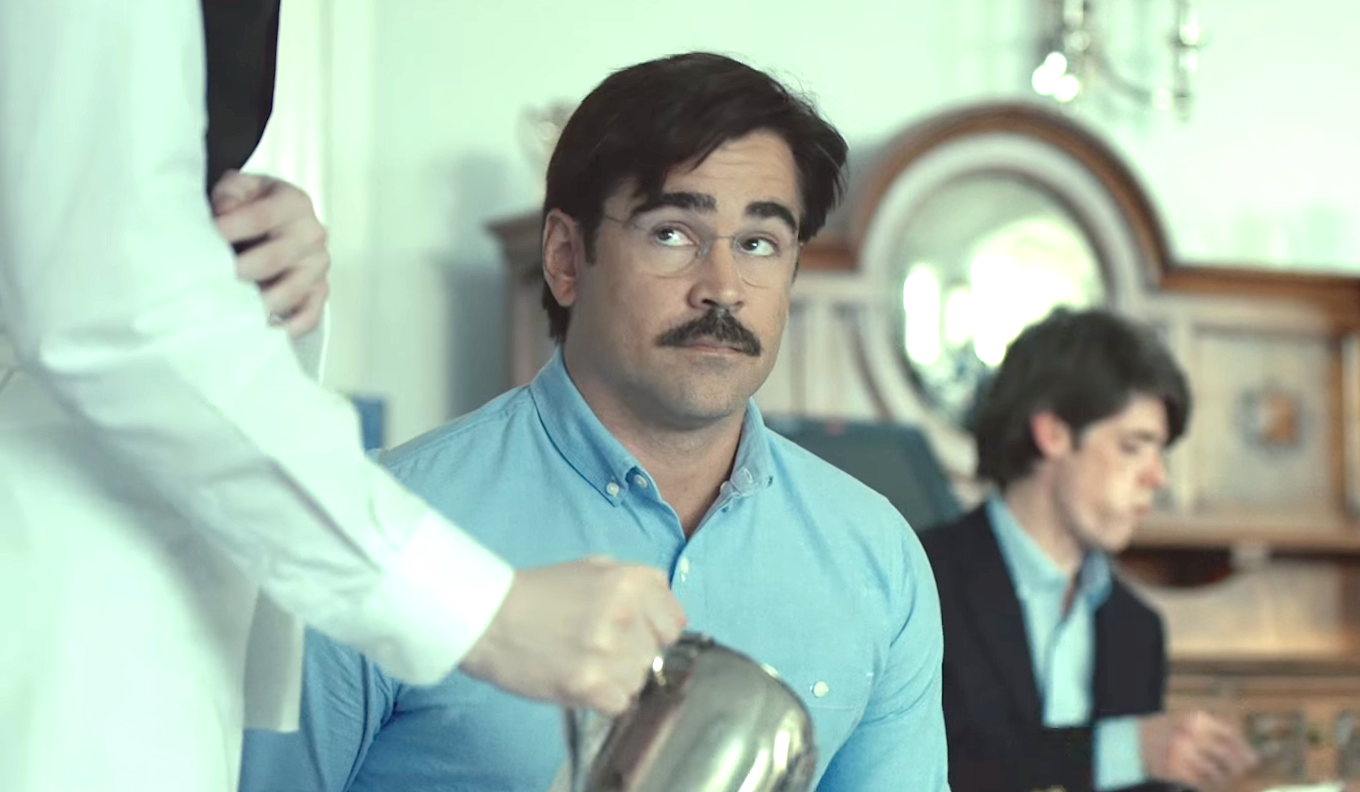
When news surfaced of the premise of Yorgos Lanthimos’ (Dogtooth) first English language film, I thought it sounded nothing less absolutely crazy and thank god, he didn’t disappoint. In fact, as English language debuts go, nothing about The Lobster feels compromised or diluted. A pitch-dark satire about the necessity to find one’s “soulmate” (or be turned into the animal of your choosing), it features an unrecognizable Colin Farrell (playing a schlub so convincingly that it’s revelatory) and a typically terrific Rachel Weisz, plus an inspired cast of weirdoes populating a narrative that sharply critiques two worlds that would seem to be wildly at odds but actually end up mirroring each other in their enforcement of conformity. And that ending is more brilliant (if not more grotesque) than anything Kubrick could’ve come up with.
6. FREE IN DEED
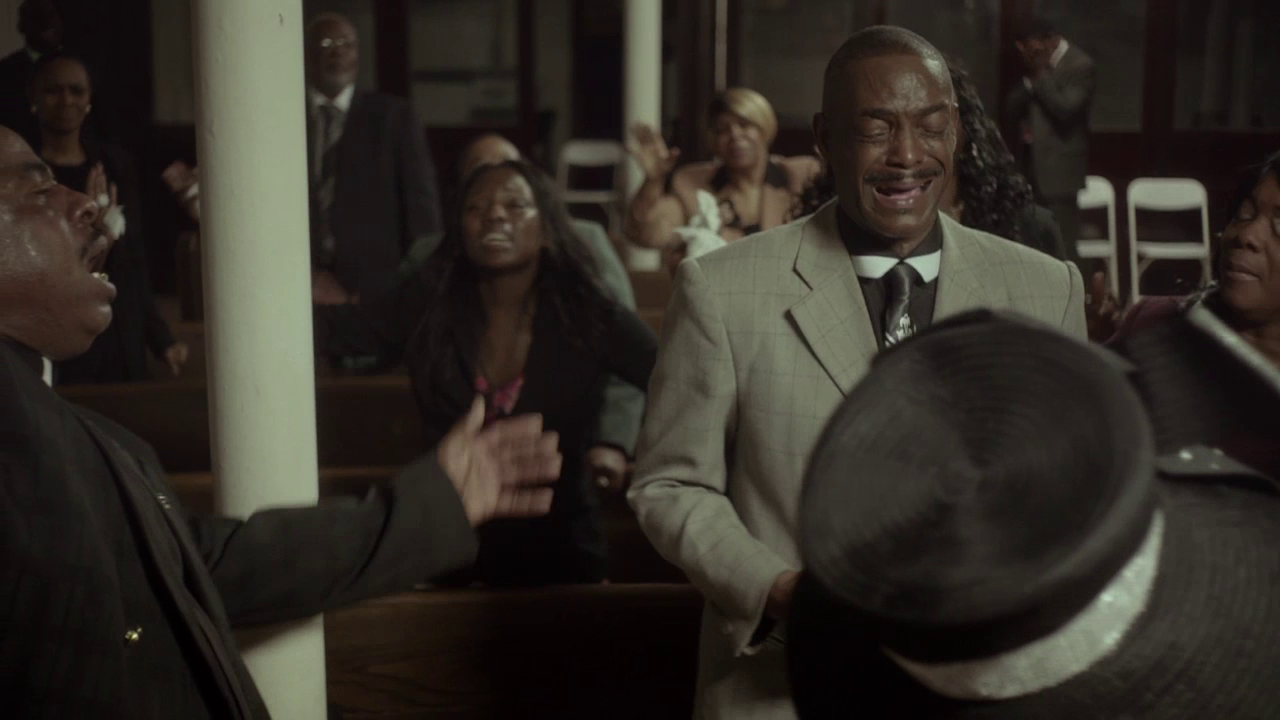
Abe, a minister at a storefront Pentecostal church in Memphis attempts to help out recent convert and single mother Melva, whose mentally ill young child Benny is subject to terrifying fits of rage. It doesn’t go all that well as his attempts to spiritually heal the child test not only the mother’s faith but also his own. Exploring the controversial subject of faith healing without judgement, Jake Mahaffay’s film enables the worshippers’ actions and their consequences to speak for themselves. Featuring a trio of excellent performances (David Harewood, Edwina Findley and RaJay Chandler (a real find as Benny), Free In Deed is intense and unforgettable—it shook me to the core. Here’s hoping that it finds distribution beyond the festival circuit.
7. MOUNTAINS MAY DEPART
Unless I missed something by not seeing A Touch of Sin, this feels like a considerable leap forward for Chinese filmmaker Jia Zhangke. Set over three time periods (the third one is too good to give away), it follows Shen Tao (his longtime muse Zhao Tao in perhaps her best role to date), a woman coming of age at the end of the 20th century whose choices create consequences both good and bad for those closest to her. A character-driven epic that’s more confident and efficient than Zhangke’s earlier work, it recalls the Zhang Yimou of To Live, while also coming off as more subtle and poignant; it also makes inspired use of a certain Pet Shop Boys song, of all things.
8. MANCHESTER BY THE SEA
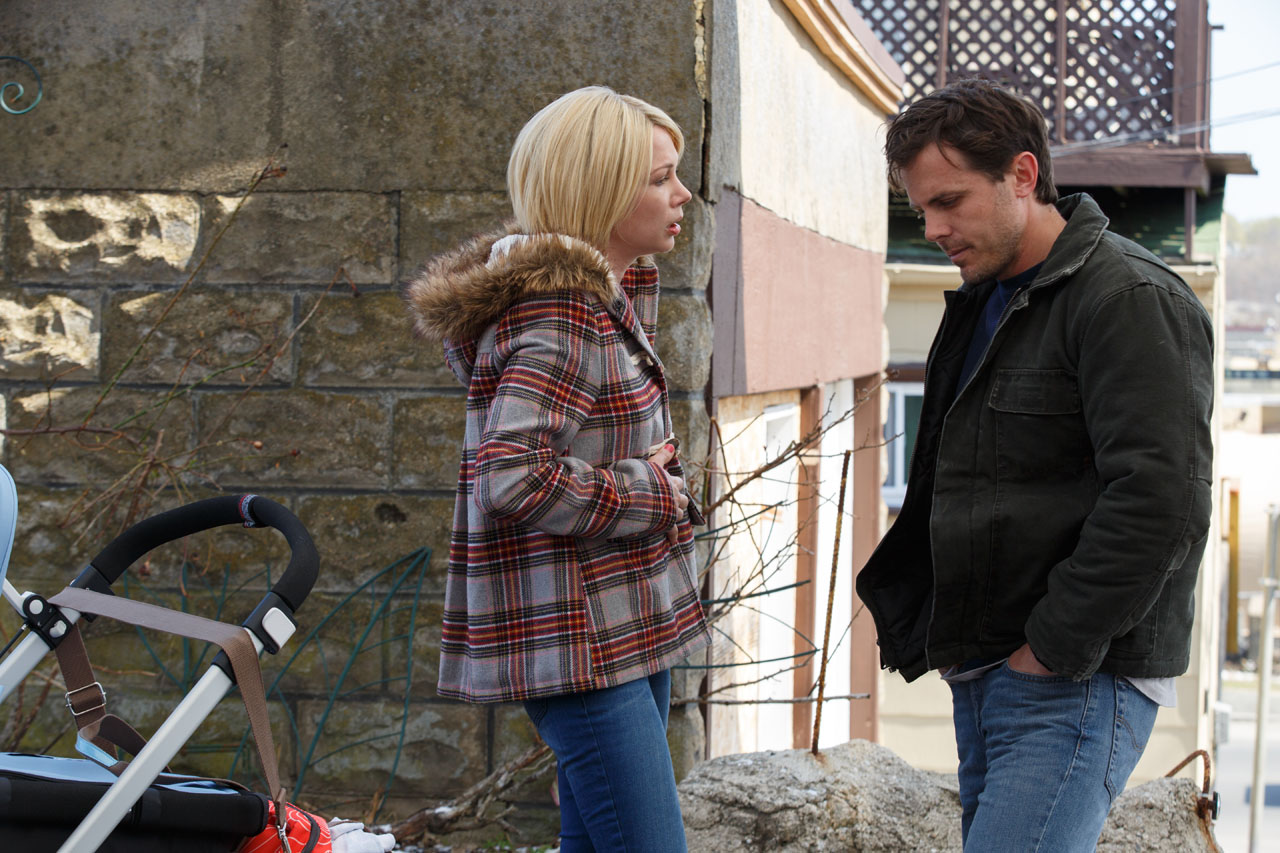
Writer/director Kenneth Lonergan is one of the more honest filmmakers working today, both in the natural dialogue he writes and in his tendency not to sugarcoat absolutely anything. I’ve been telling people that this coastal Massachusetts-set drama is a tough watch, because it doesn’t shy away from the horrible thing that forever alters his protagonist’s (a never-better Casey Affleck) life, and even worse, reveals what happened when you least expect it. But I’m just as comfortable relaying how funny parts of this film are. Mournful, sweet, a little acerbic and moving without being outwardly manipulative, Manchester By The Sea both soothes and stings because it is so close to life as we recognize it. All I could ask for from this near-perfect picture is a less bombastic musical score.
9. AMERICAN HONEY
A two-and-a-half-hour-plus road movie about teenagers selling magazine subscriptions door-to-door (in 2016?), with a first-time actress (Sasha Lane, another real find) expected to carry almost every scene and a rat-tailed Shia LaBeouf (of all people) credibly playing the romantic lead? Only Andrea Arnold, the great British director behind Red Road and Fish Tank could have pulled this off. That she did gives American Honey some novelty, but its continuous momentum lends it its spirit and spark. You watch this film just waiting for it to take a wrong turn and go off the rails, but it doesn’t and you’re left with a rare, illuminating view about what a huge mid-section of this country really looks and feels like at the present moment.
10. DEMON
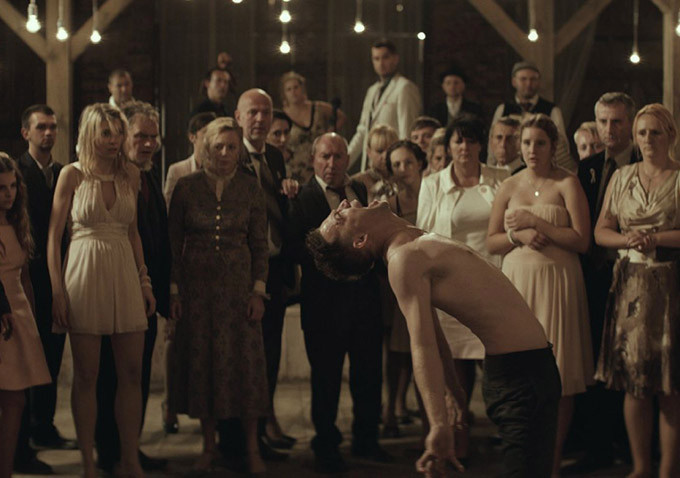
It seems the simplest way to describe this film is “unclassifiable”, but let me try a little harder. Demon is about a wedding between a Polish woman and an Israeli man in the former’s home village; it is also about ghosts and an exorcism, with ties to Catholicism, World War II and the Jewish dybbuk legend. The tone wavers between kitchen sink realism, slapstick-like hilarity and all-out horror. It’s close to the best-looking film I’ve seen this year, but it’s not like anything else I’ve ever seen, or possibly ever will see again—its director, 32-year-old Marcin Wrona committed suicide days after the film’s Toronto International Film Festival premiere.
11. WEINER
Immensely entertained by this, Schadenfreude!: The Motion Picture when I saw it last summer; would probably have a more complicated, possibly chilling response revisiting it post-election. Either way, fascinating for its very New York political point-of-view and unfiltered access, even in the social media age.
12. LOVE & FRIENDSHIP
Whit Stillman was made to adapt Jane Austen. Sticking to one her less overly familiar works was a smart choice, as was realizing Tom Bennett’s comic potential by casting him as Sir James Martin (Kate, Chloe, Stephen, etc. are also very welcome); it’s all much to do about nothing, of course, but splendidly executed.
13. MISS SHARON JONES!
As essential as director Barbara Kopple’s Dixie Chicks doc from a decade ago. With a personality as massive as her talent, charismatic soul singer Jones and her struggle with pancreatic cancer was genuinely inspirational when this premiered at TIFF over a year ago. Now, following her death last November, it’s also a joyous tribute to an exceptional life.
14. BEING 17
Just when you thought the gay coming-of-age genre was dead, Andre Techine, whom arguably perfected it two decades ago with Wild Reeds, breathes new life into it by relegating it to the film’s subtext for its first half, all the while establishing a lived-in environment full of equally compelling stories to tell.
15. KRISHA
It goes somewhat bonkers at the end, but Trey Edward Shults’ film is still one of the year’s best and most original debuts—especially in its claustrophobic sound and production design, but also for the great lead performance from his own aunt, Krisha Fairchild, who has the unhinged yet oddly relatable intensity of a boomer Gena Rowlands.
16. THE SAVER
Wiebke von Carolsfeld’s Montreal microindie is nearly the gem her earlier picture, Marion Bridge was, with good work from Imajyn Cardinal as its teen protagonist, an indigent orphan forced to crafty measures in order to care for herself. While it scrapes away at the miserablism of a Dardennes Brothers picture, it ultimately comes off as more hopeful than that.
17. CAMERAPERSON
Kirsten Johnson has worked as a cinematographer on documentaries for 25 years; in this experimental essay piece, she assembles footage she’s shot for these works along with that of her family and friends. More stream of consciousness than linear, it nonetheless sings due to her eye as a photographer and, almost more importantly, as an editor.
18. CERTAIN WOMEN
Not all parts of Kelly Reichardt’s Montana triptych work as beautifully as say, Meek’s Cutoff does as a whole (I thought the midsection with Michele Williams was a little slight). But the first third with Laura Dern and Jared Harris scans like a nifty true crime short story, and the last part soars thanks to Lily Gladstone’s unadorned and eventually heartbreaking sincerity.
19. 20TH CENTURY WOMEN
If anything, Mike Mills honors his mother more fruitfully here than Beginners did his dad. Anchored by another expansive Annette Bening performance, this is an affable character study set in 1979 whose structure and purpose resembles an indie film from 1999 but feels thrillingly relevant. I haven’t liked Greta Gerwig so much since Frances Ha, or Billy Crudup since… 1999?
20. LOVING
Jeff Nichols’ film proves too subtle for awards-bait as it focuses on the character’s ordinariness just as much as the social issues. However, there’s often beauty in subtlety and Joel Edgerton’s underrated work here clinches it—as do the conclusions one comes to draw between interracial marriage in the ‘60s and same-sex marriage in the past decade.
ALSO RECOMMENDED:
Chevalier, Chicken People, City of Gold, The Club, The Dying of the Light, The Handmaiden, Hell or High Water, Hunt For the Wilderpeople, The Innocents, Life Animated, Little Men, Morris From America, Neon Bull, Nuts!, Rams, Sing Street, Tickled
In direct contrast to a rather wishy-washy list of albums, at mid-year, there’s a clear candidate for my favorite movie of 2016 (so far). Like all other Apichatpong Weerasethakul* films, Cemetery of Splendour is a one-of-a-kind, meditative, polarizing fever dream that flew under the radars of all but the most stalwart art-film geeks (of which I am one). It centers on a military hospital in the director’s rural hometown, which he positions as a sort of purgatorial waystation for sleep-prone soldiers. While a good chunk of it unfolds as dialogue-heavy traditional narrative, more often than not, the film practically glides from scene to scene, making time for lengthy passages full of such ephemera as the shifting light in the sky or the unusual therapy provided by symmetrical rows of glowing neon tubes at the foot of the soldier’s beds. Seductive and inscrutable in equal measure, it’s a film I can’t wait to watch a second and possibly third (or fourth) time.
As for the rest, four are festival titles, at least two of which (Little Men, Morris From America) will hit theaters before summer’s end. The Lobster may be the unlikeliest indieplex hit since Winter’s Bone (which it has already outgrossed at the cinema I work at), while Love and Friendship suggests Whit Stillman was born to adapt Austen.
My favorite 2016 films so far, in alphabetical order:
Being 17 Cemetery of Splendour The Dying of the Light Free In Deed Little Men The Lobster Love and Friendship Morris From America Rams Weiner
*I still can’t bring myself to refer to Weerasethakul by his preferred nickname of “Joe”.













 Haunted Jukebox