24 Frames: C.R.A.Z.Y.

Film festivals are worlds unto themselves. Whether a weekend’s worth of programming at a local cinema or a multi-venue, week(s)-long event in another state or country, they vary substantially in size and commitment. Given time and proximity, anyone can attend a single screening at, say, the New York Film Festival but it takes a particularly devoted cineaste to spend a week-plus at Sundance or Cannes. In addition to transportation and lodging, one’s left with a spectrum of choices: If a festival’s offering 100+ titles to peruse, which ones do you see, and how many each day? Are you there entirely to watch movies or do you make time for other activities? When (and what) do you eat if you’re attending films from morning until Midnight? How will you adjust to this curious, particular mode of being often dubbed “film festival brain”?

I didn’t have a good reason or the funds to attend an out-of-town film festival until, for a few unseasonably wintry days in early November 2003, I ended up at one in Rochester, New York with a few friends from my film group Chlotrudis. The High Falls Film Festival honored and mostly focused on female directors and screenwriters. We made the six-hour trek west of Boston because one of our members lived there. This was in the days before I kept meticulous records of my viewing activity, but I probably saw seven or eight films at High Falls including the Isabel Coixet-directed, Sarah Polley-starring My Life Without Me, a limpid adaptation of the novel Balzac and the Little Chinese Seamstress, the Pilobolus/Maurice Sendak documentary Last Dance and, on closing night, a preview screening of Robert Altman’s penultimate film The Company (at the time, a letdown following Gosford Park though in retrospect, weird and gutsy enough that I keep meaning to revisit it.)

Apart from adhering to a schedule and standing in waitlist lines, High Falls felt a somewhat atypical film festival in retrospect, with lots of downtime to do all the other things a metropolis as grand as Rochester had to offer (well, at least we toured the George Eastman Museum and its film archive.) I’d come closer to experiencing “film festival brain” the following year by attending the Provincetown International Film Festival and volunteering for the Independent Film Festival of Boston. The former, concentrated in the titular coastal resort town provided the desirable closeness between hotel and cinema venues that enhances a festival while the latter lent insight regarding how much of a multi-plate-spinning, three-ring circus such an operation can be.

By 2005, I was ready to tackle the Toronto International Film Festival (TIFF for short.) One of the largest and buzziest film fests in the world, TIFF usually runs for eleven days starting on the Thursday after Labor Day. It hosts many North American premieres (at least those not earmarked for Telluride or New York) as well as some world premieres. After bowing at TIFF, the likes of Silver Linings Playbook, If Beale Street Could Talk and The Fabelmans have all instantly become serious awards contenders. Though often feted for its big-ticket gala premieres, TIFF has such a breadth of programming that there’s always something for everyone, whether it’s world cinema by directors as renowned as Werner Herzog or as obscure as Pen-Ek Ratanarung, four-hour-long Frederick Wiseman documentaries and experimental, far-under-the-radar shorts, midnight movies and independent Canadian cinema that rarely makes its way south of the border.
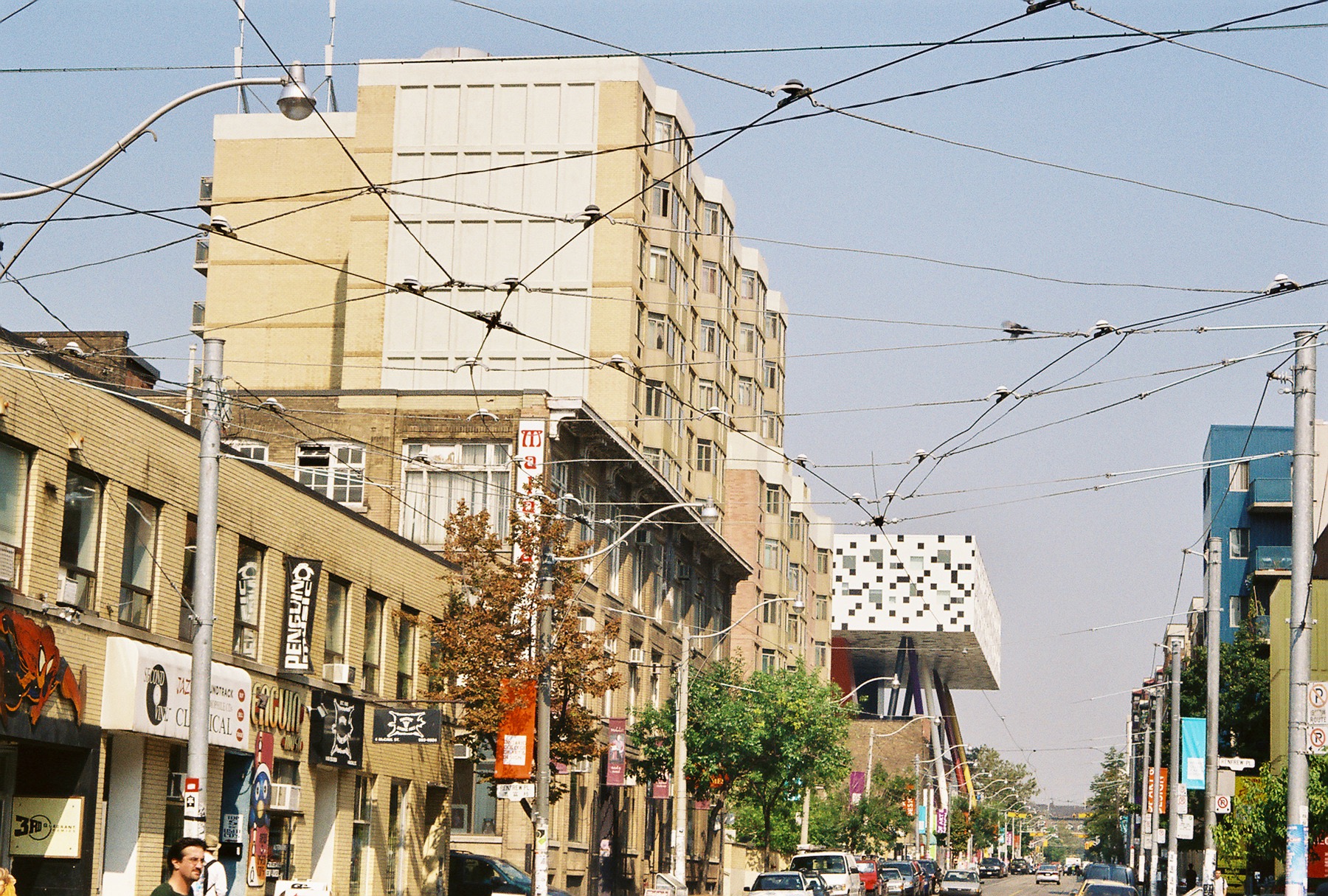
McCaul Street, Toronto, 2005.

My first TIFF (also my first visit to Canada) was a whirlwind of sixteen films over five days and nights. Once again, I was lucky to attend with my Chlotrudis friends, some of whom were TIFF veterans by that point. Without them, navigating the fest, which then sprawled from the prestigious venues along King Street West all the way up to Bloor and over to the University of Toronto might’ve overwhelmed a newbie like me (presently, the festival is concentrated in a six-block radius near the Bell Lightbox cinema.) Actually, my own experience was still perilously close to a sensory overload, particularly concerning ticket buying. With many screenings sold out well in advance, we’d awaken near the crack of dawn every day to wait in line at the Manulife Centre lobby to see what tickets had been released for that day’s showtimes. I often didn’t know what I’d be seeing in advance and had to make snap decisions based on this same-day availability.

For me, TIFF 2005 began uncommonly strong with Wang Xiaoshuai’s coming-of-age Cannes Jury Prize winner Shanghai Dreams (which would never receive North American distribution) and ended with Terry Gilliam’s woefully bizarre Tideland. In between, some of my most-anticipated titles were disappointments: AIDS triptych 3 Needles from The Hanging Garden director Thom Fitzgerald and The Quiet, Jamie Babbit’s leaden follow-up to But I’m A Cheerleader. Other buzzed-about films such as The Squid and The Whale, Hou Hsiao-hsien’s Three Times and the documentary The Devil and Daniel Johnston fared better. Still, the act of seeing something in a full theater for the first time often enhanced the whole experience more than viewing it at a local cinema (or worse, at home) ever could. I’ll never forget watching Michael Haneke’s Cache at a sold-out 2000+ seat Elgin Theatre and loudly gasping along with everyone else at one particularly shocking moment; I walked down Yonge Street with the two friends I’d seen it with afterwards, all three of us baffled and left near-speechless by its cryptic ending.

Earlier, I mentioned that TIFF is an ideal place to discover Canadian indie films since a good portion of them never get a theatrical release (or more likely these days, streaming distribution) in the US. In 2005, at least one-third of what I watched was Canadian content (i.e. “CanCon”.) Unless you’re a Canadaphile, it’s likely you haven’t seen the delightful Eve and The Fire Horse (a Sundance Special Jury Prize winner!), the aforementioned 3 Needles or the tedious thriller Lucid, not to mention Whole New Thing (a quirky queer Rushmore), These Girls (a trifle starring David Boreanaz and Caroline Dhavernas (Wonderfalls forever!)) or the Douglas Coupland doc Souvenir of Canada (probably as CanCon as it gets.)

You likely haven’t seen C.R.A.Z.Y. either, even though its director, Jean-Marc Vallée, would go on to make Dallas Buyer’s Club, Wild and the HBO miniseries Big Little Lies and Sharp Objects. When I arrived at the festival, the curiously-titled film wasn’t on my radar at all as I was neither familiar with the Quebecois director nor the cast; collective buzz (one of my friends might’ve attended an earlier screening) and intriguing subject matter (gay coming-of-age in 1970s suburban Montreal) eventually netted my attention. On the morning of my second-last day in Toronto, I purchased a ticket for it at the now long-gone Cumberland 4. I walked out of the screening thoroughly entertained and also transformed—I declared it my favorite film of the fest (with Cache in second place and, to be seen later that day, The Squid and The Whale in third.)

The Beaulieu Family, 1967

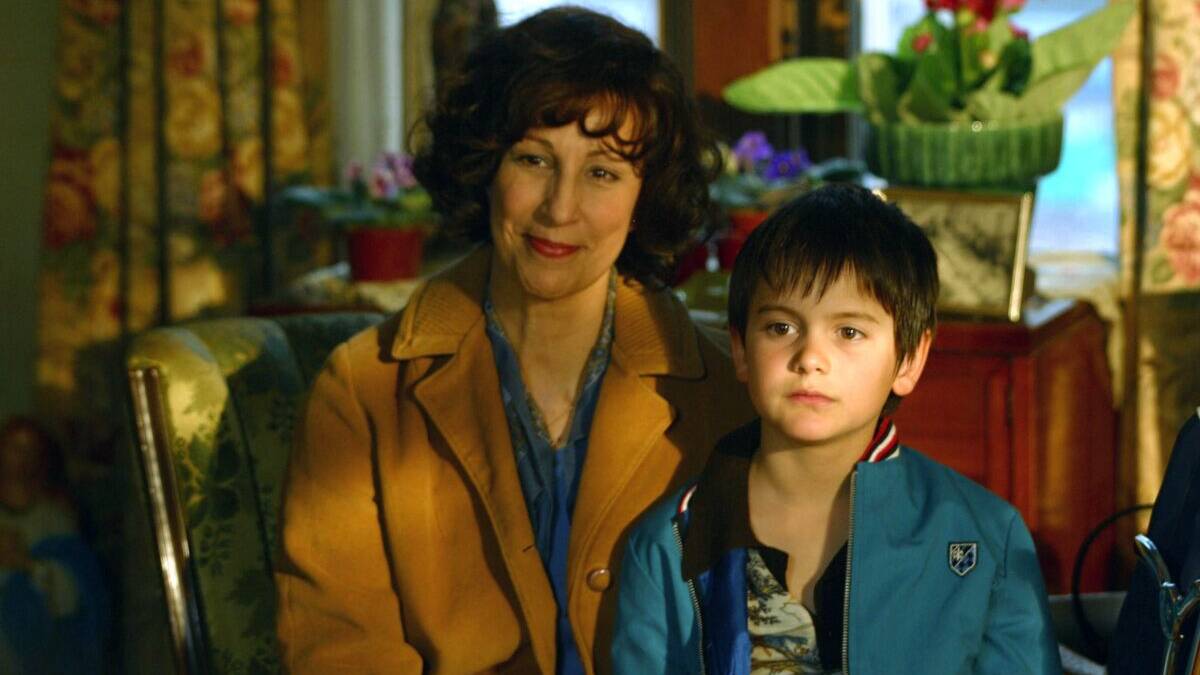
C.R.A.Z.Y. is about Zac Beaulieu, the fourth child of a middle-class family of five boys. Opening with his birth on Christmas, 1960, the film spans the first twenty-odd years of his life, often jumping ahead in time to arrive at another birthday (and by default, Christmas.) Accidentally dropped on his head as a newborn, Zac is believed by his devout Catholic mother Laurianne (Danielle Proulx) to not be only “special” but also “gifted” an ability to heal the sick and afflicted with his mind. This is dubiously confirmed by the middle-aged psychic she takes him to at age six who is only referred to as “Mrs. What’s-Her-Name” (“The good Lord gave it to him!,” she declares.) At that age, Zac idolizes his dad, Gervais (Michel Côté), a masculine, blue collar semi-hipster who takes him out for french fries, blows smoke rings, listens to Patsy Cline (whose signature tune “Crazy” appears throughout) and sings karaoke along with Charles Azvanour’s “Emmenez-moi” at every family gathering. Cool Dad Gervais also obviously sees Zac as his favorite compared to his older brothers Antoine (a jock), Christian (an egghead) and Raymond (a hoodlum.)

The only problem? Zac is perceived as “different” by all the men in his family. His father gives him a table-top hockey game for his birthday/Christmas but what he really desires is a baby stroller he can use to push dolls around in. After Zac’s caught attending to baby brother Yvan in his mom’s housecoat and pearls, Gervais shouts at Laurianne, “What in heaven’s name did you do to him?” When the film jumps ahead to Christmas 1975, teenaged Zac’s (played by Marc-André Grondin from here on) bedroom is now decked out in Pink Floyd and David Bowie insignia. He intensely, loudly sings along to “Space Oddity” in his room, only to attract a crowd of snickering onlookers outside his window. At the annual extended family Christmas gathering, his cousin Brigitte brings along her handsome boyfriend Paul who catches Zac’s eye as the couple tears up the dancefloor to a Pérez Prado mambo. After the three toke up together in Paul’s car, at Paul’s insistence, the two boys share a “shotgun”—Paul puts the lit joint his mouth backwards and blow’s smoke into Zac’s. The next time we see Zac, his formerly longish hair is restyled and glammed up exactly like Paul’s.

Like many teens of his era (and beyond), Zac’s emerging awareness of his homosexuality is a gradual, gestating process rather than a sudden epiphany. In bed at night, he prays to himself, “Please, anything but that,” not even able to name what “that” is. He tries dating his friend Michelle while rejecting the advances of and then beating up Toto, a male classmate somewhat further along in decoding his own sexuality whom is bullied and regarded by Zac’s peers as a “weirdo”. Later, after Gervais witnesses him and Toto suspiciously exiting a car together, he gets sent to see a therapist. Whenever Zac takes a step forward, he ends up two steps back, telling the therapist, “I’m not a faggot” or abruptly leaving a record store when he sees Paul nonchalantly browsing the bins a few feet away. Even when the film jumps ahead to Zac’s 20th birthday, he’s still half-heartedly dating Michelle while shot-gunning another joint in the car with cousin Brigitte’s latest flame at Christian’s wedding reception.
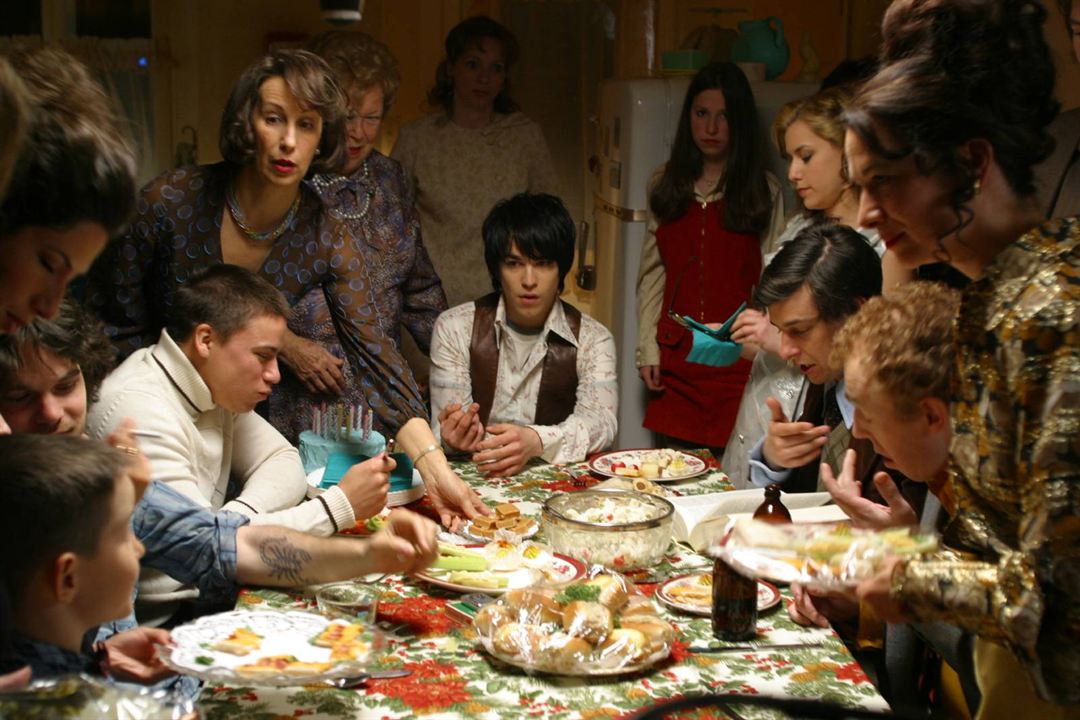
Christmas, 1975.

Given his conservative, suburban and religious environment, it’s no wonder Zac struggles with this; as a gay man raised Catholic, I found it all too relatable despite being some 15 years younger and from the Upper Midwest instead of Montreal. In popular culture and general perception, Catholicism is synonymous with the concept of guilt, with all the atoning for one’s own sins, impure thoughts and so on. As an adult long since lapsed, however, it’s the preponderance of mystery and superstition that has left a lasting impact on my psyche. One of the things C.R.A.Z.Y. gets exactly right about growing up Catholic and queer is this continual push and pull between fulfilling desire and facing consequences. Just as Zac continually reinvents himself through his clothing, his hair, the music he likes and how he decorates his bedroom, there remain little reminders everywhere that God Is Watching via the excess of prominently-placed crucifixes in the Beaulieu home (not to mention the one often hanging around Zac’s neck) or other religious iconography that suffuses the film (a disapproving Gervais appearing in frame next to a painting of Christ on the wall; the mesmerizing male chorale music sung in Latin that often surfaces on the soundtrack whenever Zac is at his most conflicted.)

And if all of that wasn’t enough, he’s being asked repeatedly from a young age to pray for a sick family member or friend, placing an even heavier burden on him. Multiple times, he’s shown to even have a sort of psychic connection to his mother that’s somehow related to this “gift”: as a young boy, he furiously prays at sleepaway camp that no one discovers he wet his bed while Vallée cuts between this and Laurianne, in bed at home, violently awakening and responding to his cry for help—perhaps the one time C.R.A.Z.Y. oversteps a bit unless his mother’s actions are all in Zac’s mind (a real possibility since he daydreams more than any other movie kid since A Christmas Story’s Ralphie.) When shit gets too real (i.e. seeing Paul at the record store), Zac not only goes into panic mode but relies on the superstition informed by his religious upbringing: attempting to walk all the way home in a blizzard, he rationalizes, “I would be cured if I could simply make it through the storm.” He does arrive at home intact (if close to hypothermic), but still hasn’t entirely accepted the notion that one can’t pray the gay away.

Zac eventually gets to a place of self-acceptance, albeit one that’s not without consequences. In possibly the film’s most brutal and honest exchange, his father point-blank states that his sexuality is not something he’ll ever accept. It’s consistent with his attitude throughout: “This shouldn’t be happening to us; it’s all in his head,” Gervais tells Laurianne earlier and it’s revealing, and in a religious background all too common that what prevents Zac from fully coming out is an importance placed on how it affects others in his life rather than himself. Into my early twenties, I denied my own sexuality, being overly concerned with what my family and friends would think of me if they knew the truth. Like Zac, I conformed to a version of myself that was what I perceived the world expected of me, while also often subconsciously making decisions that brought me closer to my true self without giving the game away (in my case, growing out my hair, getting my ears pierced, covertly flirting with other men I secretly found attractive.)

Christmas, 1980.

Interestingly, Vallée himself identified as straight. He co-wrote the screenplay with François Boulay, who based it in part on his own experience growing up gay. I remember reading at the time that what attracted Vallée and informed his own contributions to the story was its focus on a teenage misfit, a boy whom for any number of reasons simply doesn’t fit into his narrowly defined world. While applying homosexuality to this premise sharpens the conflict and heightens the urgency of Zac’s plight, what’s remarkable about C.R.A.Z.Y. is that, in spite of this, it still eloquently brings to life an ultra-specific world one can identify and comprehend. Look past the music, the clothes and the interior design and revel in such rituals as a full-capacity church at Christmas Midnight Mass or family parties brimming with finger foods and the chaotic overlapping interactions between all the relatives. Marvel at such specifically mid-century Quebecois slices-of-life like the Beaulieu boys’ delight for their mother’s ironed toast. For all of Zac’s struggling, this world as remembered from adulthood is so colorful, vibrant and real one could almost step into the frame and feel what’s it like to be an active part of it.

Regardless, C.R.A.Z.Y. indicates that no matter what fondness or nostalgia one retains for their childhood, the most effective way into adulthood is to strike out on one’s own. After Christian’s wedding, Zac has to escape Montreal and travel all the way to Jerusalem, the Holy Land (a trip that would be at the top of Laurianne’s bucket list) to fully confront and accept his sexuality (he ends up finally sleeping with another man who naturally looks a lot like Jesus!) When he returns home, it’s clear he has changed but Montreal hasn’t. Laurianne asks him to pray for Raymond, now a junkie and near death, in order to “heal” him, but of course it doesn’t work. And while Gervais makes his nonacceptance of Zac clear after he returns, he still tears up and hugs him at Raymond’s funeral. In the final scene, we see a present-day Zac and Gervais getting fries together like they did back in the day; Zac’s voiceover mentions that they still don’t discuss his sexuality but in a decade’s time after the funeral, Gervais became more tolerant of it, even allowing one of Zac’s boyfriends into his home.

I haven’t even gone into entire subplots about Zac’s temperamental relationship with Raymond, or the saga of the broken Patsy Cline record, or his Midnight Mass daydreams (the entire congregation woohoo-ing along to “Sympathy For The Devil”) or how little Yvan’s most identifiable trait is his incessant eating. At just over two hours, the film packs in ample plot and character development but rather than feeling overstuffed, it resembles an invitation full of goodwill, all the way to its clever reveal at the end of what the title’s initials mean (think about it.) Winner of Best Canadian Film at TIFF 2005, it became a massive hit in Quebec, earning $6.2 million there (the equivalent of a film grossing over $300 million in the United States today) and won 10 Genie awards (the Canadian Oscars.) I ended my initial review by noting, “It would be crazy if it never received US distribution,” but that’s exactly what happened, mostly due to music rights (in such a large market, Pink Floyd wasn’t going to give away “Shine On You Crazy Diamond”, one of the film’s most essential needle drops, for a pittance.) It did receive a domestic DVD release in 2007 and is streaming on Max at this writing. I screened it for the first time in nearly 15 years after Vallée suddenly died of heart failure in late 2021; for all his subsequent work and acclaim, it remains his best film perhaps because it’s his most personal. As much of it is a feast for the eyes and ears, one simple exchange between Zac at 15 and Mrs. What’s-Her-Name (of all people) gets at the heart of how beautifully C.R.A.Z.Y. acts as (what Roger Ebert once said of film in general) an “empathy machine”:

Zac: “I want to be like everybody else.”

Mrs. What’s-Her-Name: “Thank God, you never will.”
Essay #17 of 24 Frames.

Go back to #16: Me And You And Everyone We Know.

Go ahead to #18: My Winnipeg
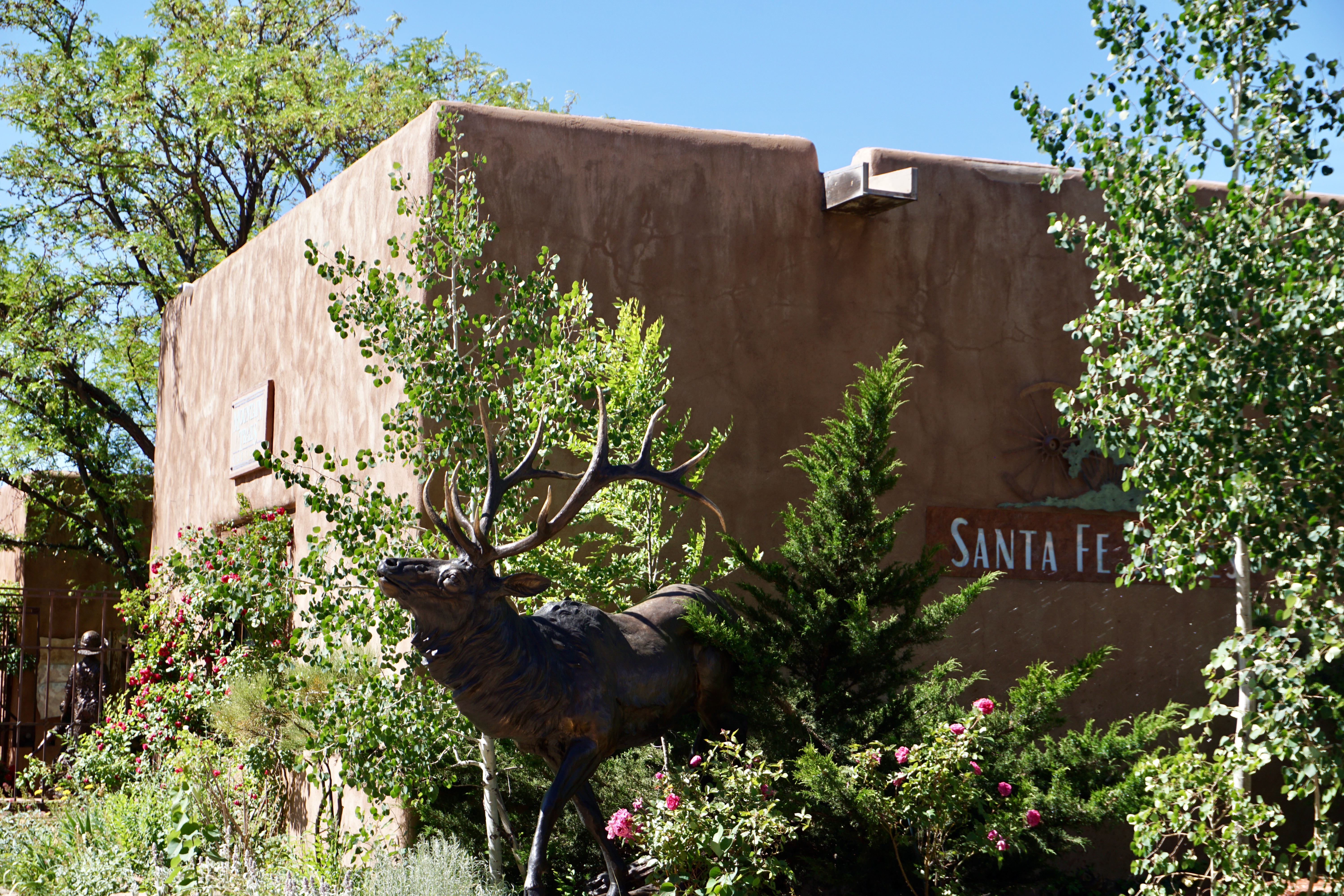
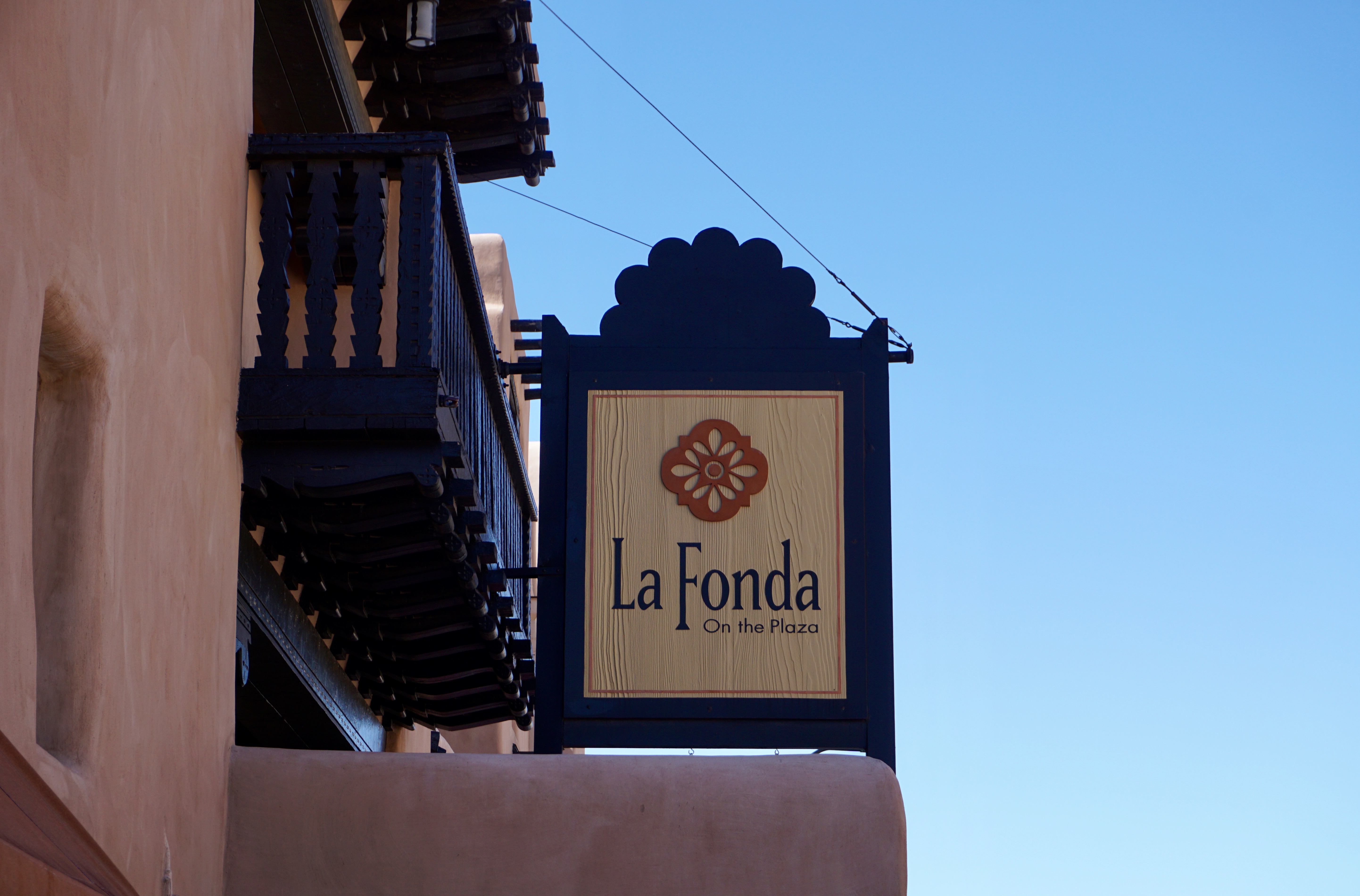
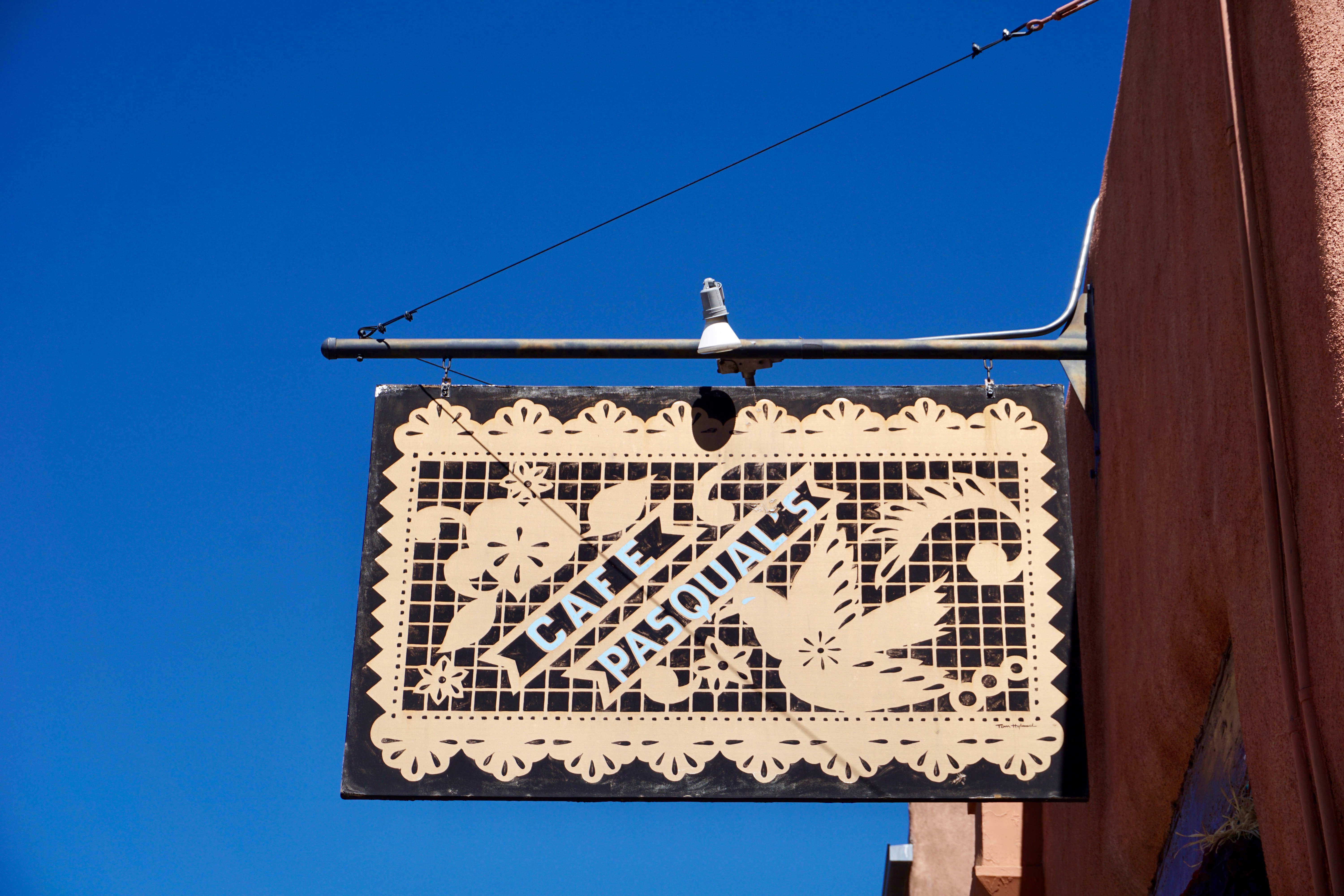
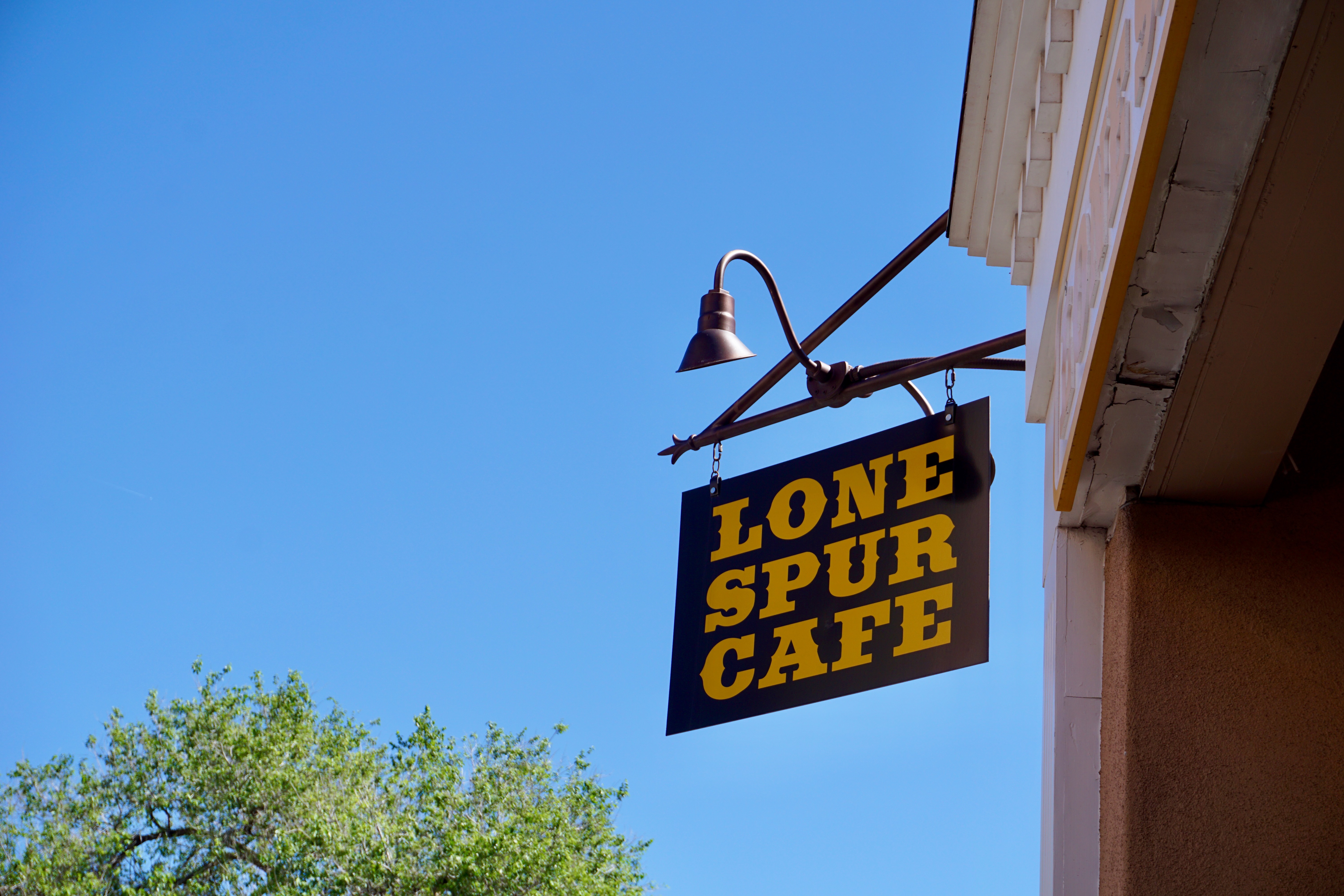
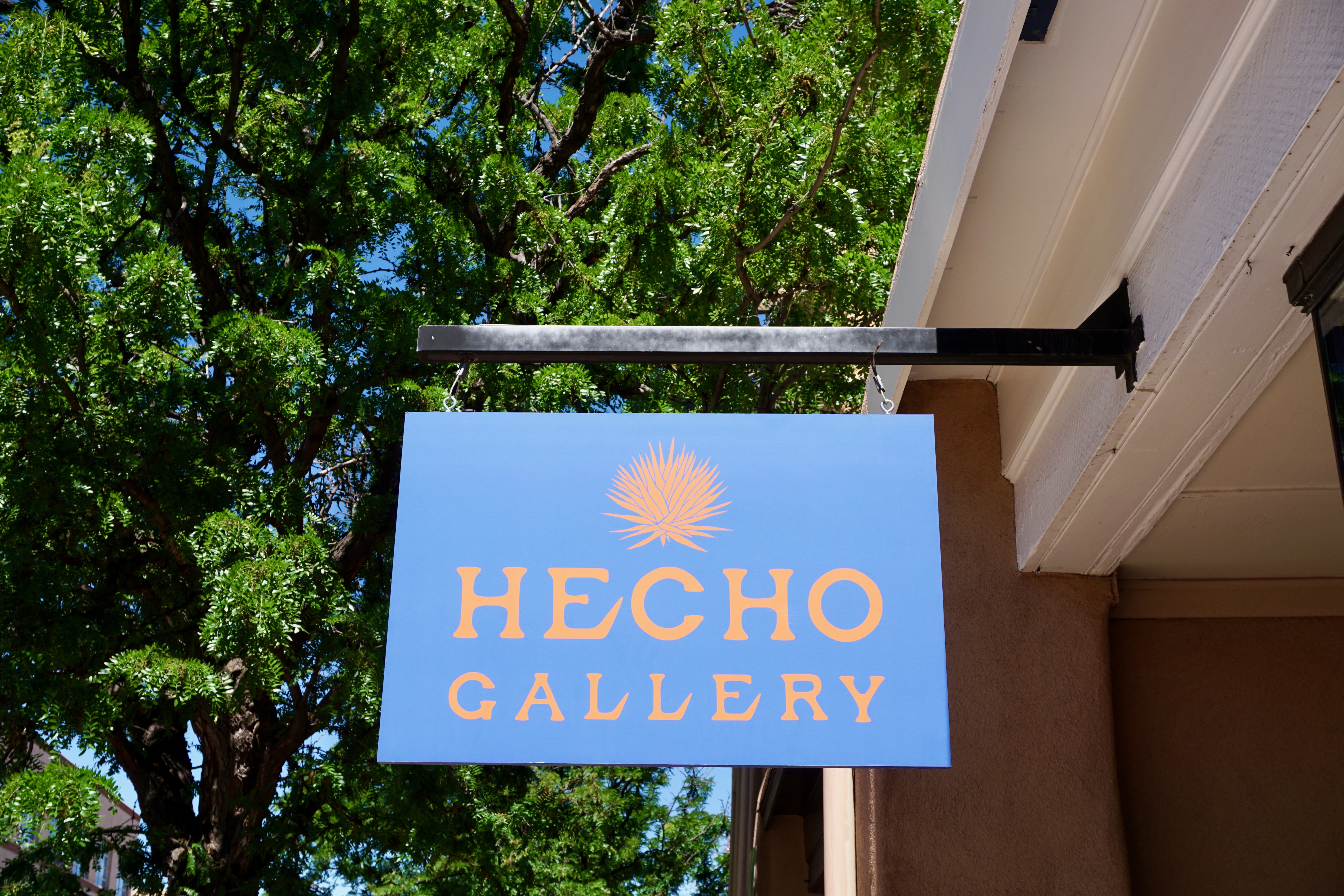
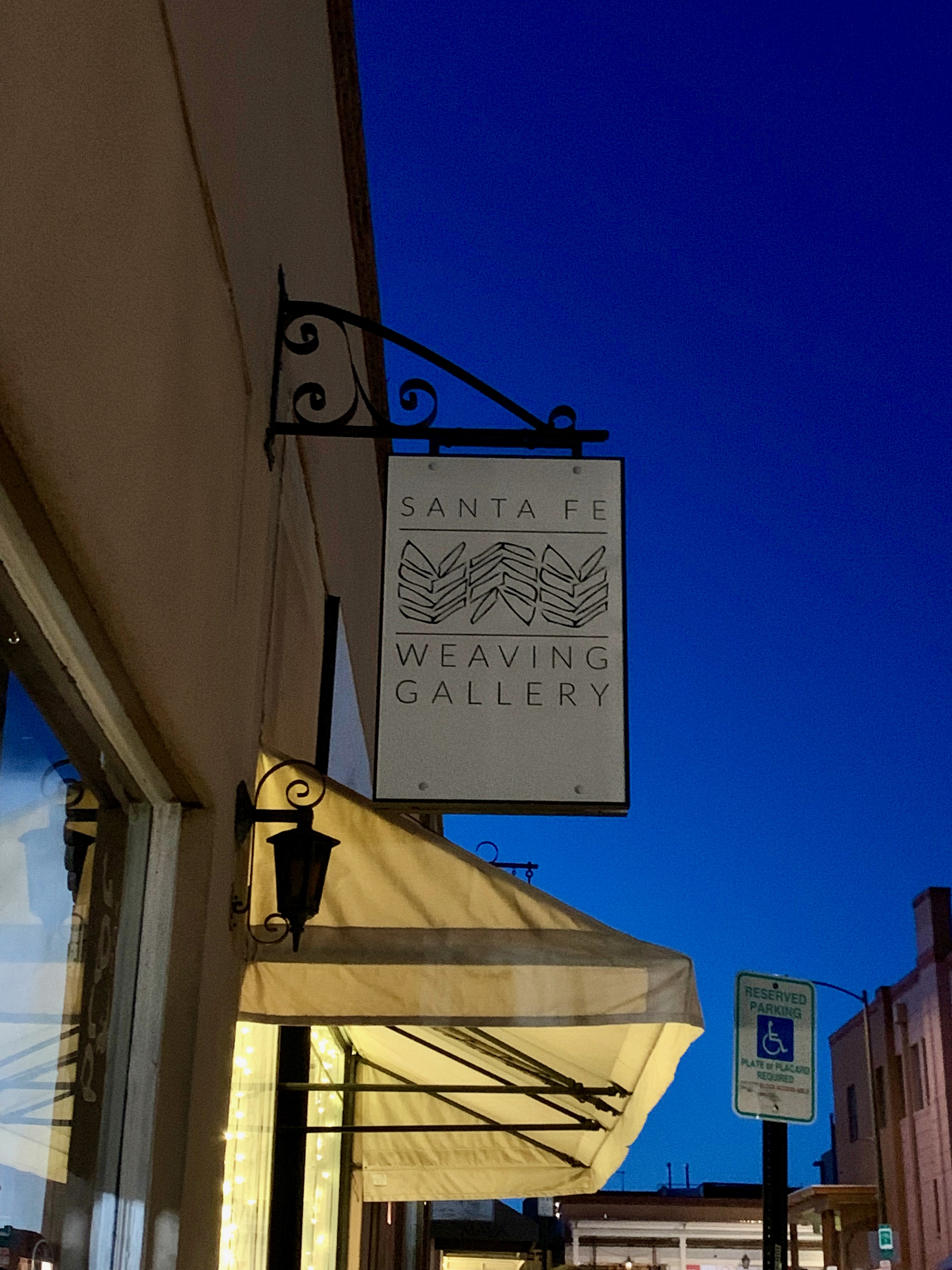
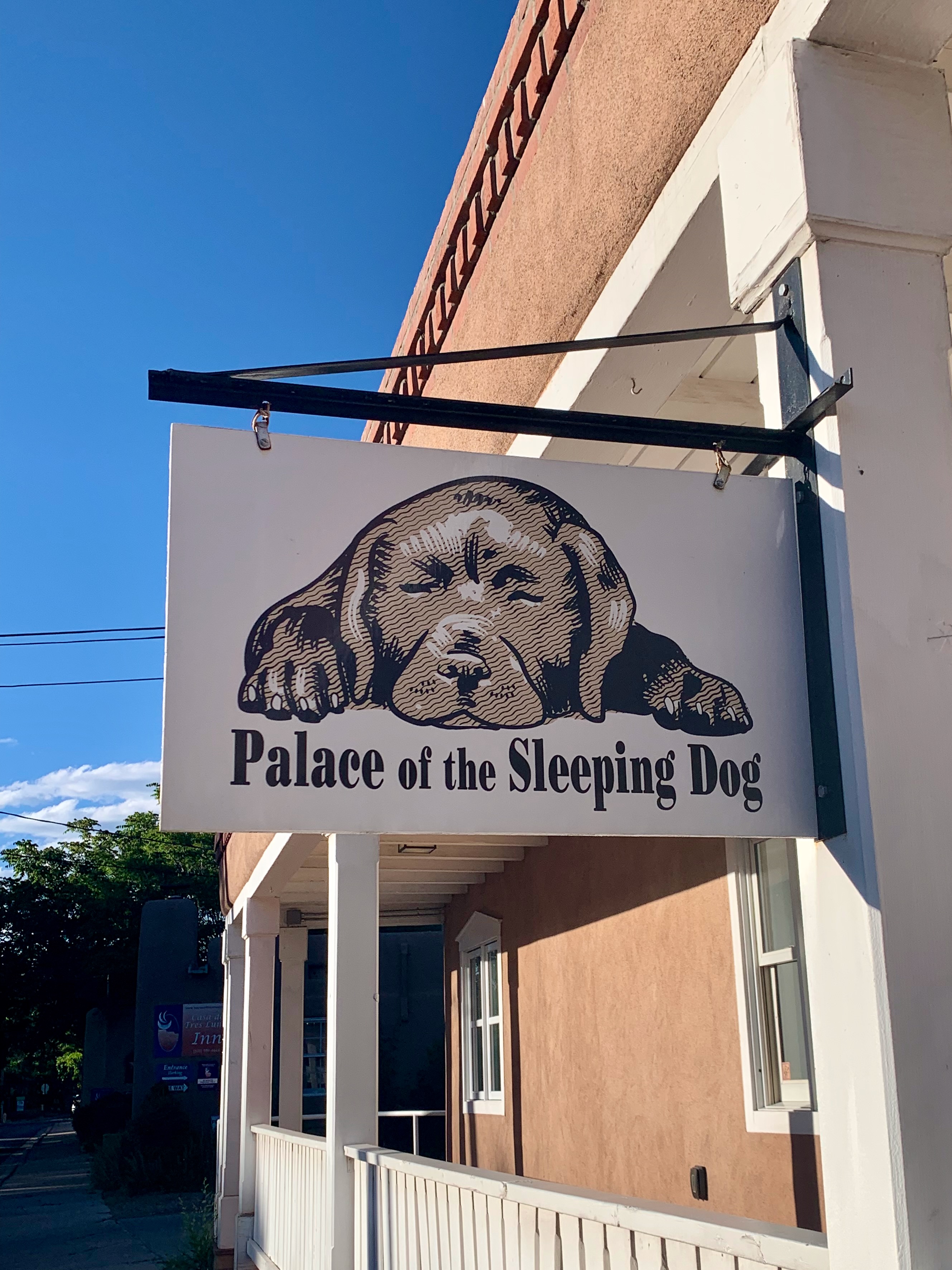
Santa Fe Signs

Wrapping up my 2023 Santa Fe photo dump with a cavalcade of signage.
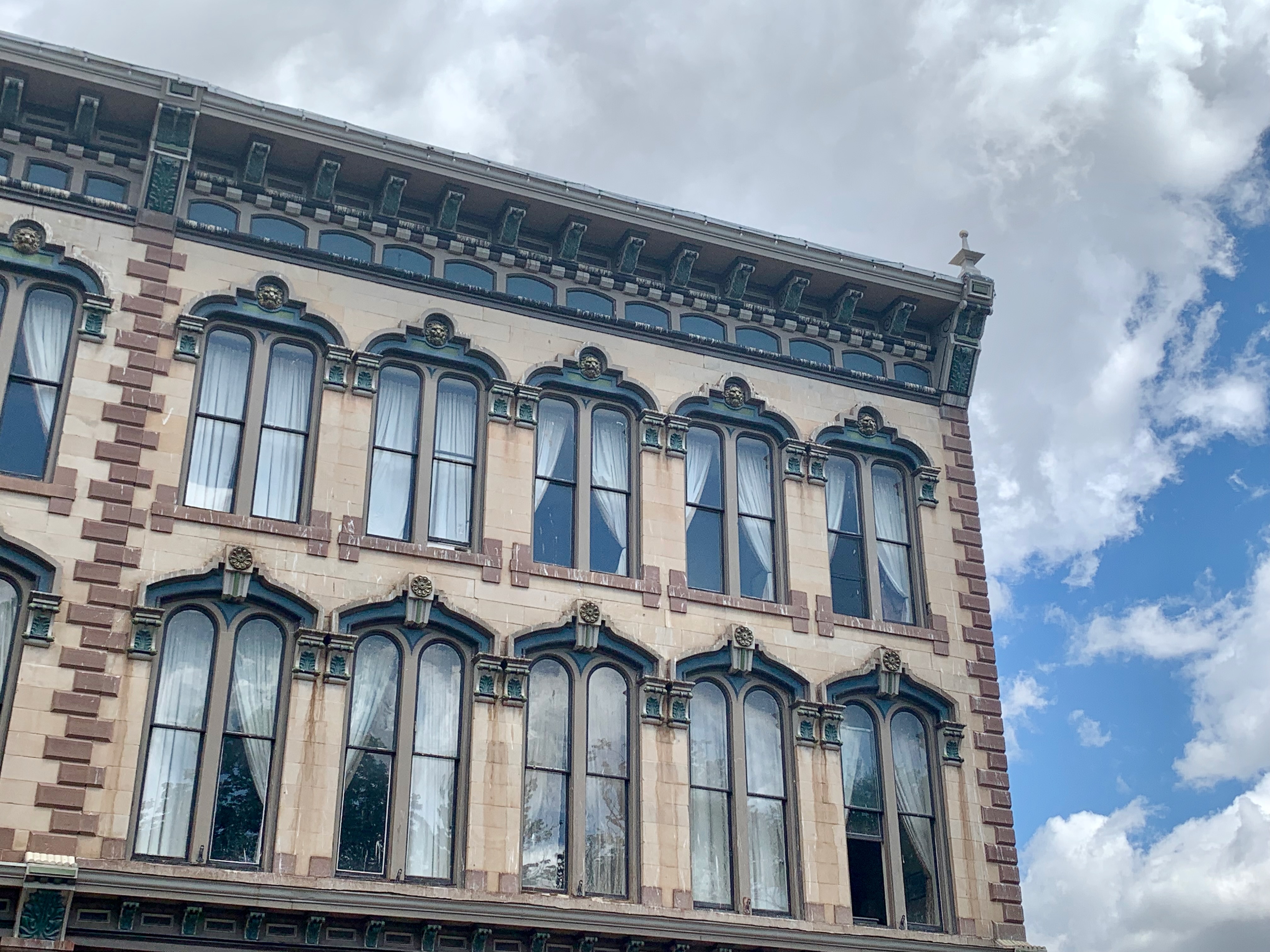
We had drinks at sunset on La Fonda’s rooftop cantina one evening, including some of the most delicious–and dangerous margaritas I’ve ever sipped.

Again, the blue New Mexico skies make everything appear brighter.

I suppose this could just as easily be Texas, but it works.

Not the estate of Charles Foster Kane nor a roller disco. Alas, it’s a home goods store.

Why name your gallery when bright red against adobe easily draws one in?

So many galleries in Santa Fe.

Some of them take on an otherworldly glow at night.

Dog-friendly vacation rentals just outside the Plaza.

Cafe Sonder did not survive the pandemic but at least its retro-cool sign remains (for now.)

Kudos to this curious but compelling signage.

“Ladies and Gentlemen, we have a really big shoe for you today…”

Rather than use boring old letter grades, restaurant cleanliness in New Mexico is simply APPROVED (or not.)

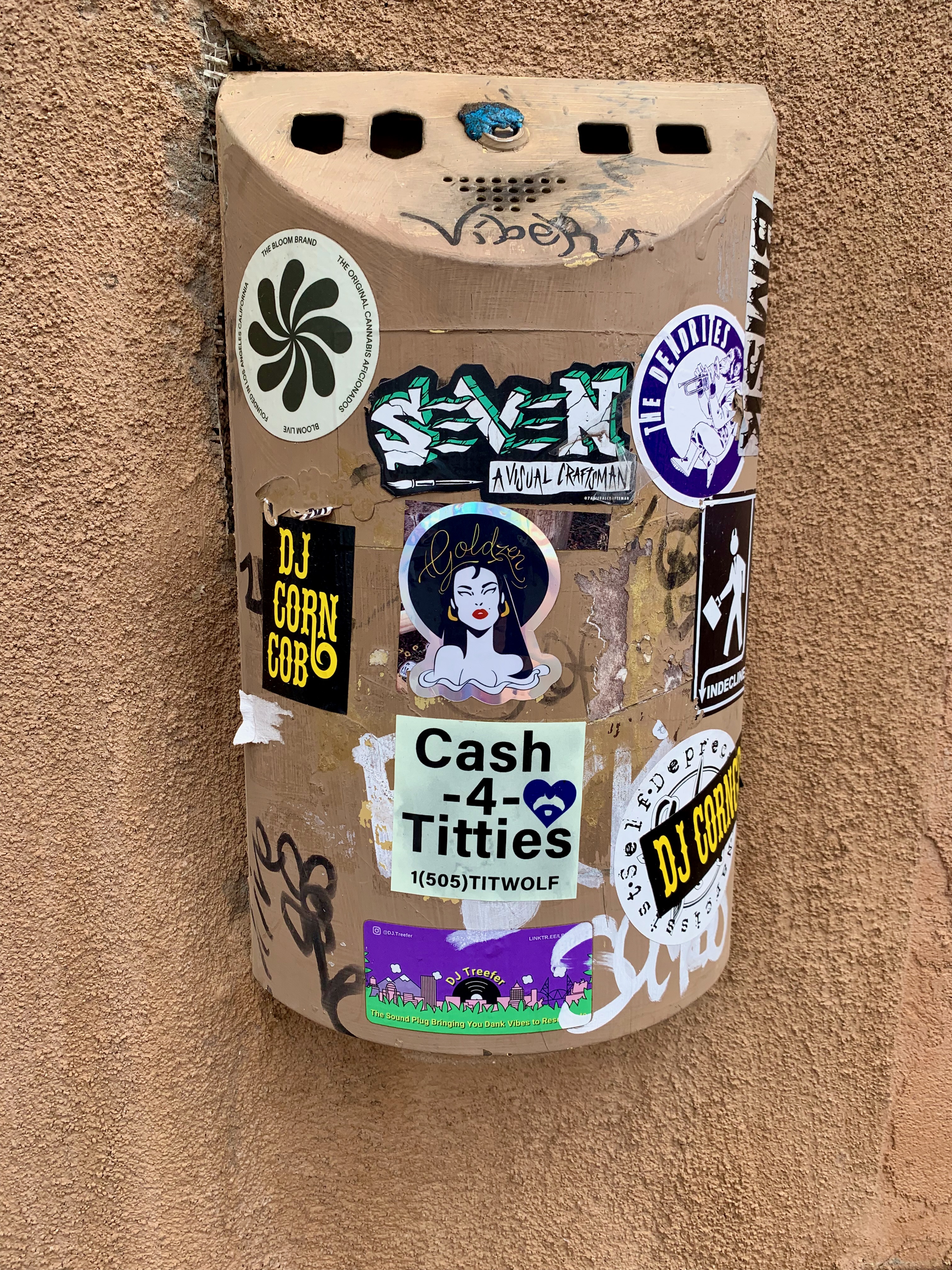
I’ve saved the worst (best?) for last: DJ Corncob sounds like an alias Jason Mendoza might’ve used if he was from the Midwest instead of Jacksonville, but one can’t deny how, ahem, Cash-4-Titties really draws one in.

Mix: Feels Like Summer (2003)

Twenty summers ago, I made my last ever mixtape—that is, a music mix on a C-90 cassette as opposed to a blank compact disc. A few months earlier, I had acquired my very first laptop computer (dude, I got a Dell) which allowed me to make the move from analog to digital.

By late July 2003, I had a few mix CDs under my belt but circumstance gave me an excuse to make one more mixtape. In my hometown of Milwaukee, I met up with my parents (who then lived in Iowa) for three nights; then, I spent another six nights with my friend Laura, a Chicago native whom I met as a student at Marquette University some years before. I’d moved to Boston shortly after graduation but she stayed on. Between her job at a nursery and other family commitments, I was left alone roughly half of that time to apartment-sit, see other old friends and explore the city I’d left behind. Laura lived on the East Side just off Oakland Ave and I had a blast visiting all the old haunts, from the Oriental and Downer Theatres to Bradford Beach, Atomic Records and even Klode Park out in Whitefish Bay.

With ample time on my hands, I curated a mixtape for Laura as a thankful gesture for putting me up. I had brought an entire Case Logic 128-capacity CD wallet with me stuffed with all-time faves, recent purchases and a few discs I had to review for Splendid!, a music website I wrote for at the time; I may have also schlepped a blank tape with me purposely for this task. Laura was (and continues to be) a friend I make mixes for on an annual basis, going all the way back to our senior year at MU when we first bonded as friends and I crafted her a tape she dubbed the “Kriofske Mix” (a moniker I lent to two of my (now former) blogs.)

Revisiting this mix two decades on, I feel transported back to my late 20’s, an primordial era where I apparently thought nothing of including two songs by Ani DiFranco, two tracks from the Punch-Drunk Love soundtrack, an album cut from The White Stripes’ then-new Elephant (my #2 album of that year, I haven’t listened to it in at least 15) and the gauzy opener from Blur’s then-new Think Thank (also not heard in full in a long, long time.) I had also recently gotten into The Go-Betweens, The New Pornographers and Mary Lou Lord—hearing what I selected from each again reminds me what it was like to discover an artist one connected with so instantly you’d rush out and devour their back catalog piece by piece depending on what you could find in (for me, mostly used) record stores.

Among these twenty tracks, six are from albums I reviewed for Splendid! Required to write about everything from obnoxious prog-rock to near-ambient mood music, they’re scattered across that range: Paul Brill’s genre-expanding take on Americana, Natacha Atlas doing the same for world music (and sounding entirely different), Northern State (a clever and disarmingly low-fi distaff Beastie Boys), two cuts from a compilation for a record label helmed by a member of the Cocteau Twins (including the title track above) and an a capella cover of a Pixies song on TV On The Radio’s debut EP, so new-sounding and exceptional I wasn’t surprised by the mass-acclaim their second LP Return To Cookie Mountain received three years later.

True to titular form, there’s a loose and fairly obvious summer theme going on here. My favorite section is the last five songs—“You Had Time” sets the pensive, reflective mood (much better than the other DiFranco selection, anyway) and Jeff Buckley’s dreamy, ethereal cover of Leonard Cohen’s “Hallelujah” (which I listened to about 100 times that summer) runs with it, sustained by another old-school Stuart Murdoch reverie. Somehow, the contrasting tones of Shelley Duvall and Tunde Adebimpe just fit right in. I often cringe at mixes I made decades ago, but at least the last quarter of this one hit nicely when I revisited it a few weeks back, walking under the overgrow trees of the Commonwealth Mall on an idyllic mid-summer late afternoon.

Haunted Jukebox Mix #6: Feels Like Summer (2003)

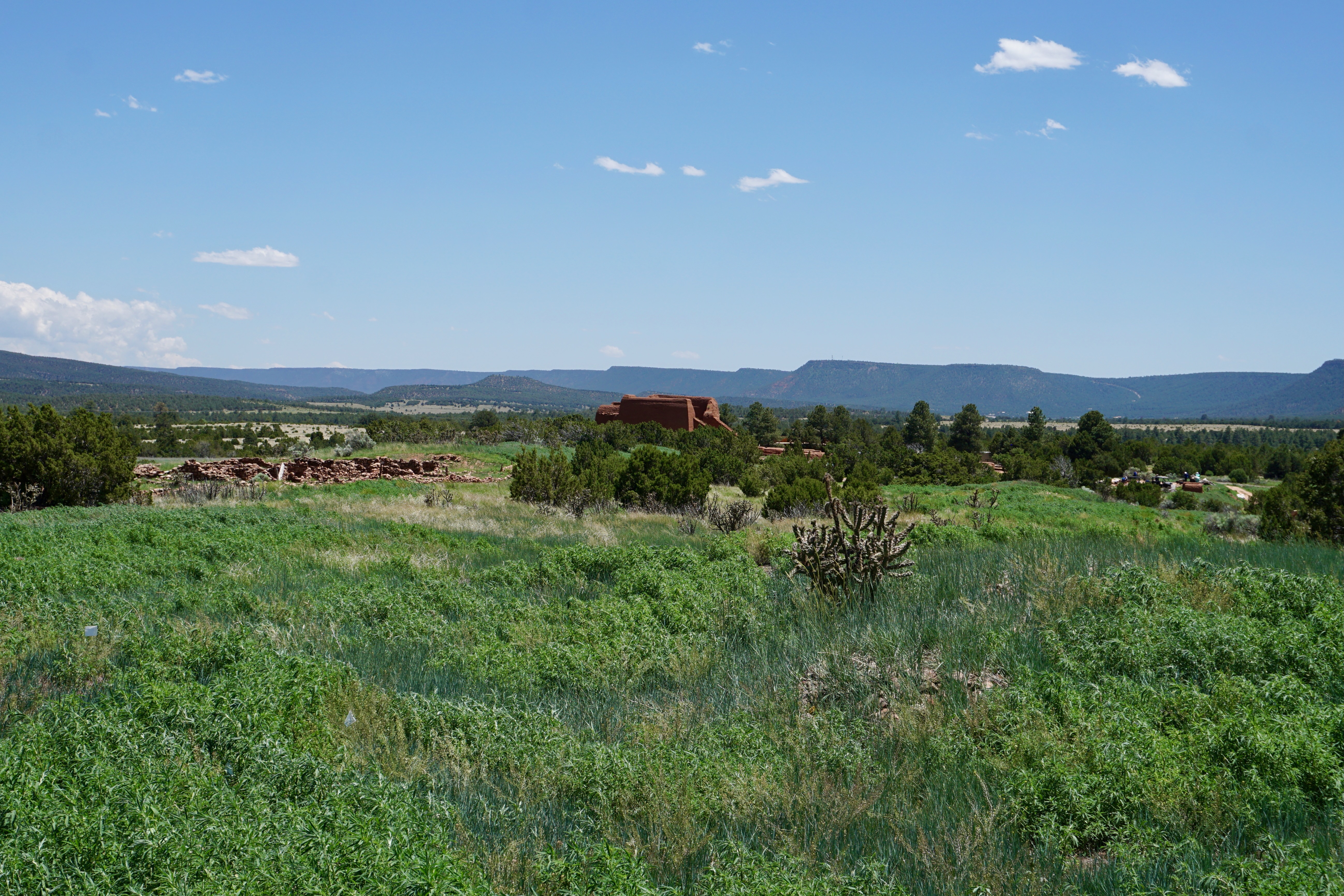
Pecos National Historical Park

On the way back from Las Vegas to Santa Fe, we stopped at Pecos National Historical Park.

Located roughly halfway between the two cities, the park covers thousands of acres. 

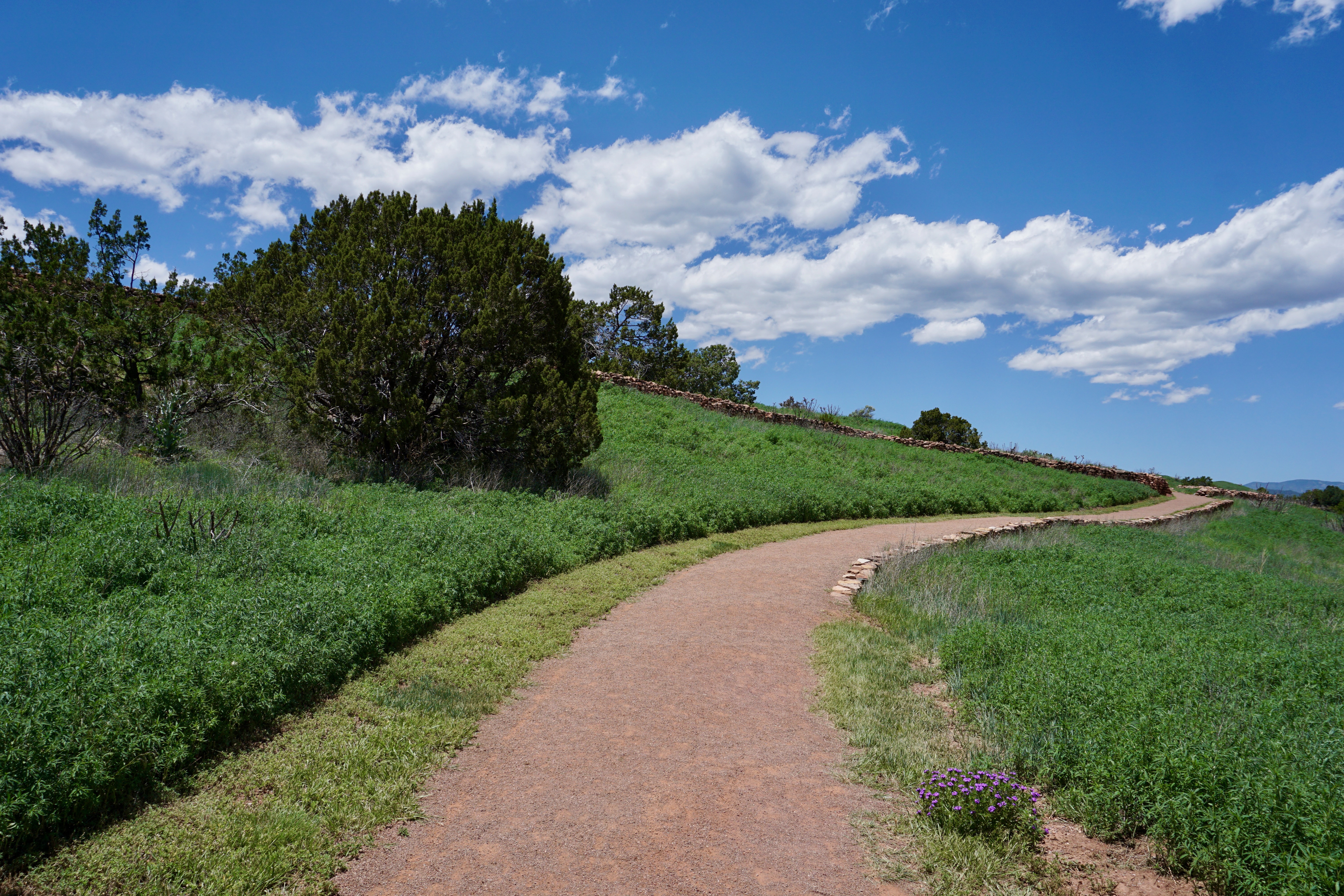
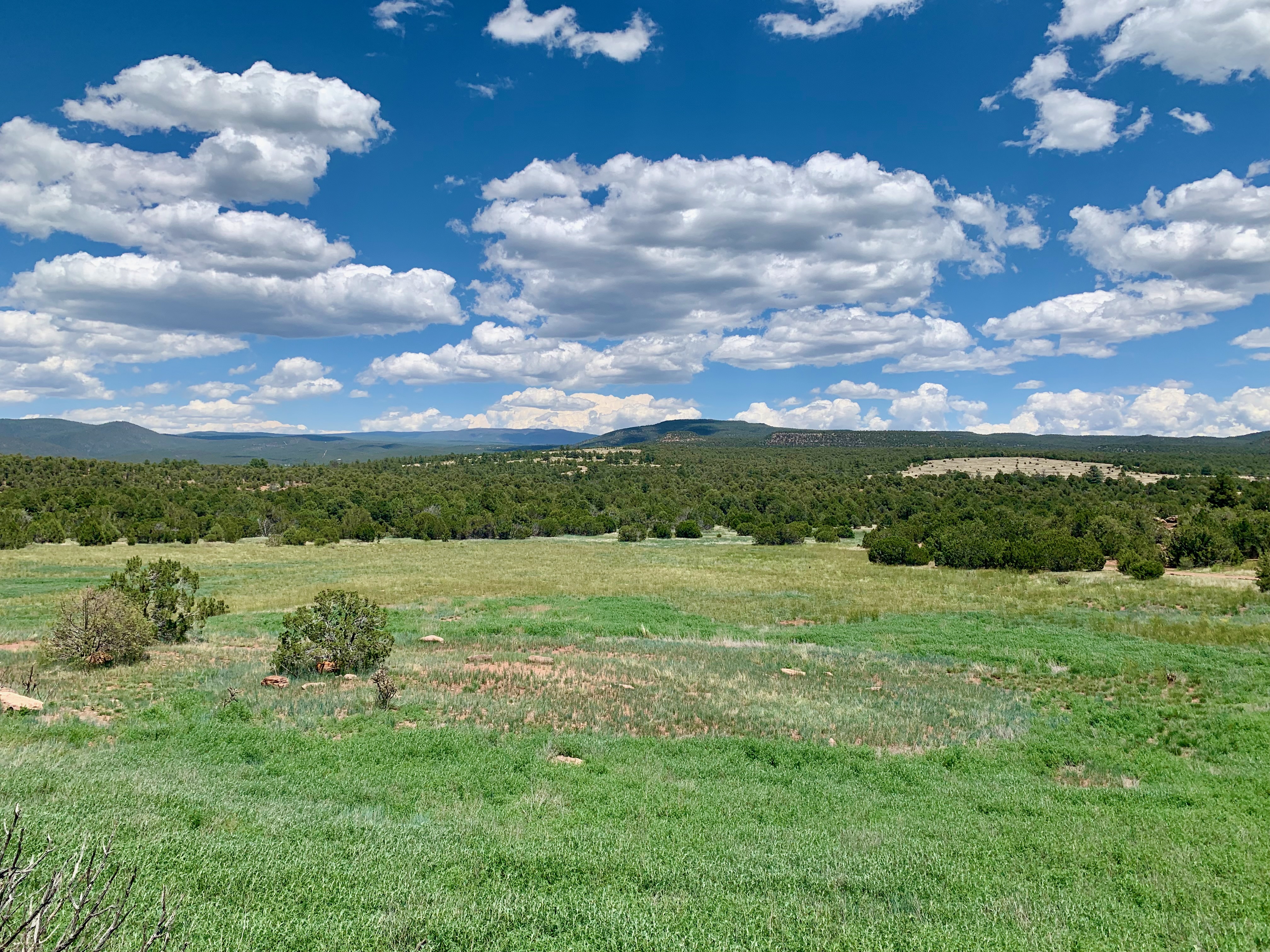
We walked the Ancestral Sites Trail, a 1.25 mile hiking loop with lush greenery and beautiful mountain vistas.

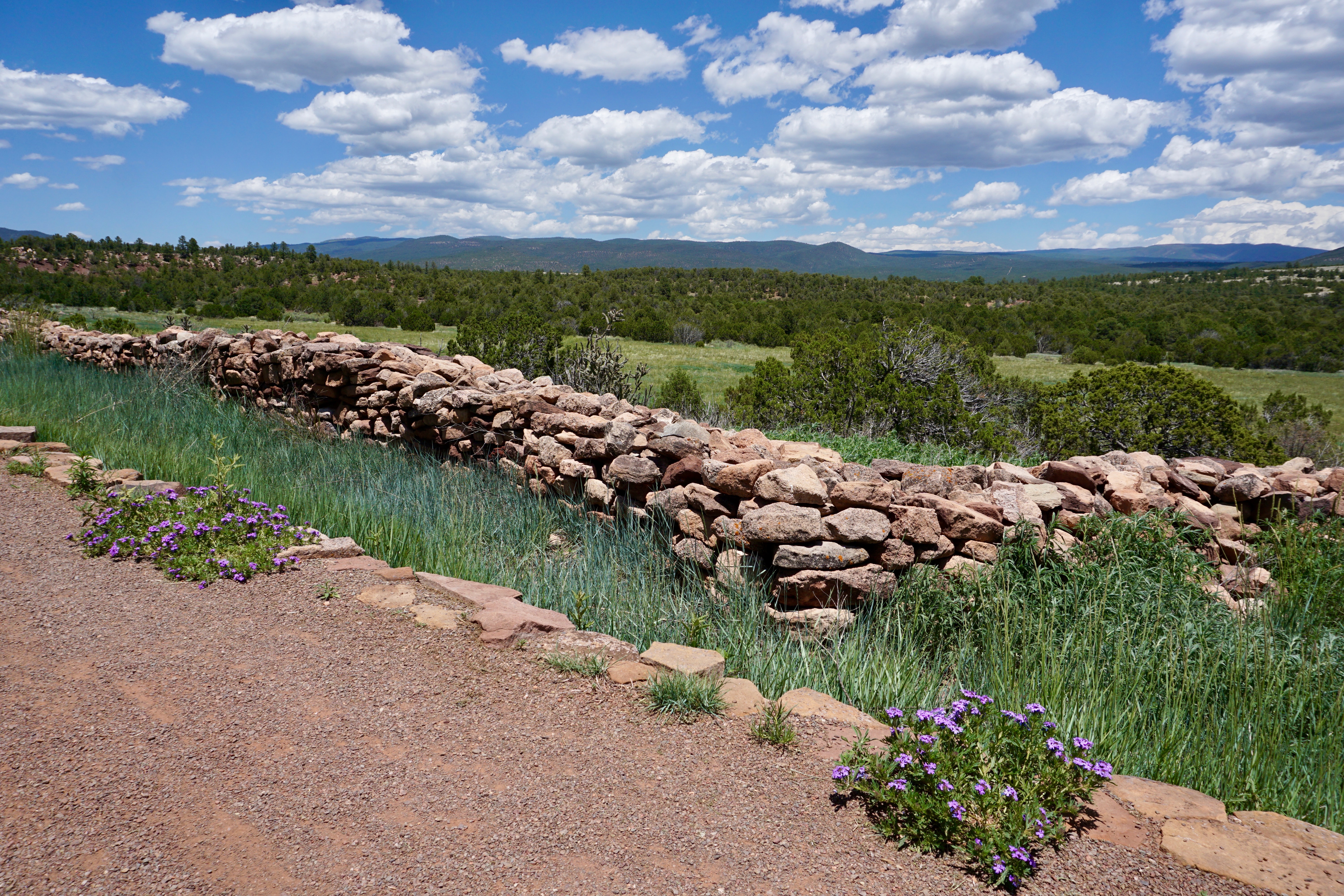
Purple flowers dotted along the trail add a muted but effective splash of color.

The juxtaposition of cactus trees and green grass is not something you’ll find in every corner of desert-heavy New Mexico.

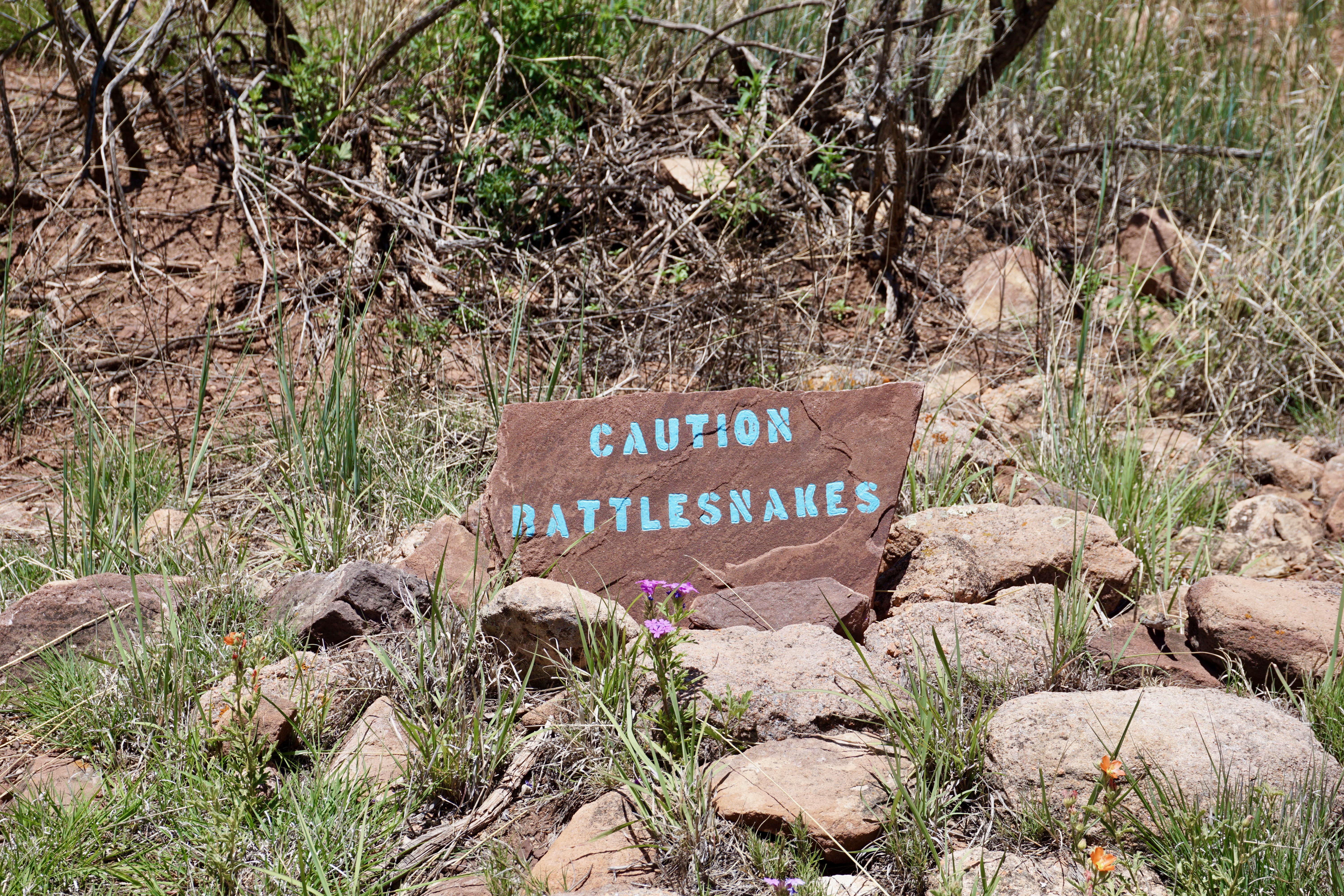
I honestly first read this as “Enter With Carl” (Sandburg? Sagan?), but most made-made holes in the ground do require a certain amount of mindful navigation.

It’s best to stay on the path.

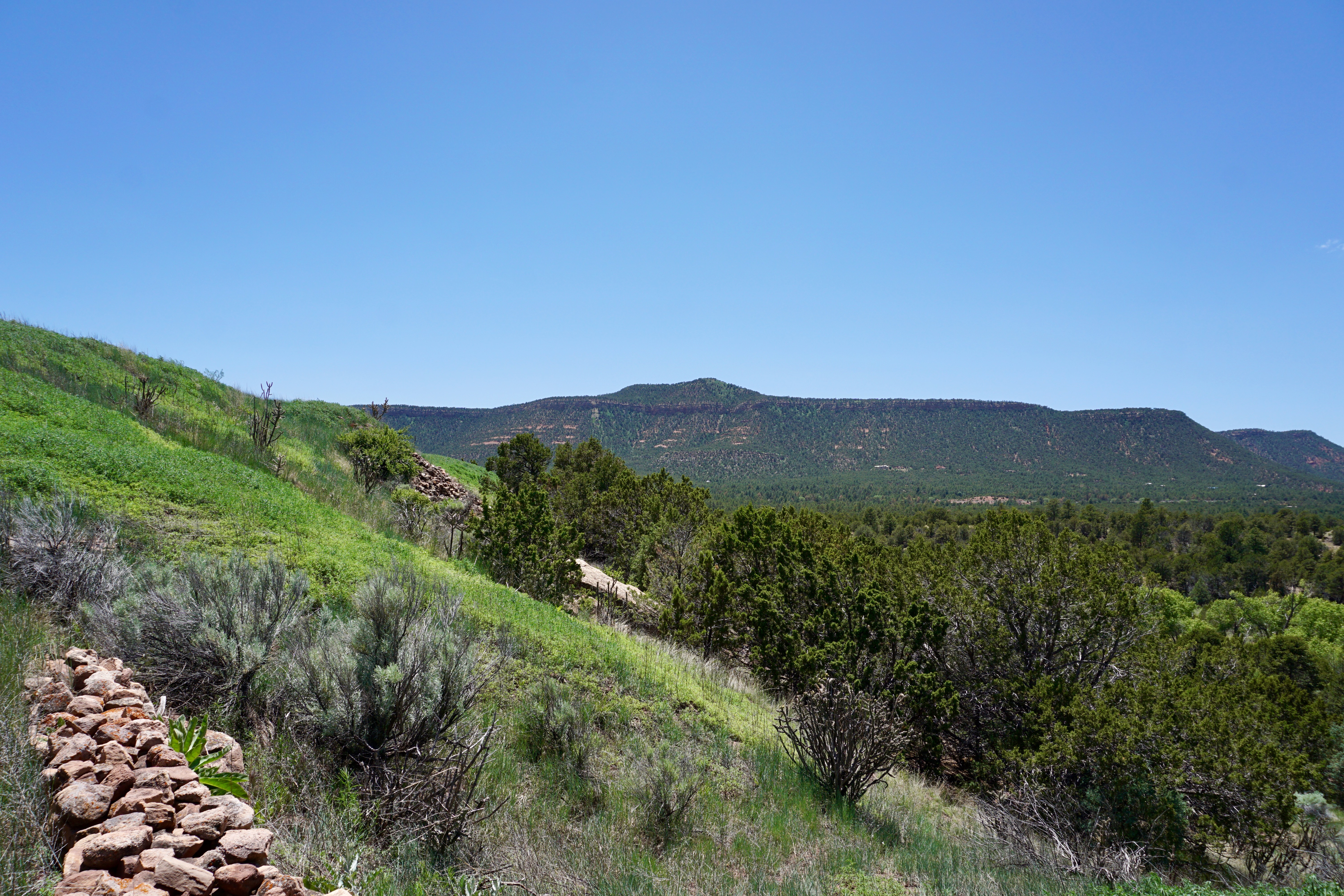
Walking along the trail, I had no shortage of opportunities for taking landscape shots.

However, Pecos is not just limited to scenic nature.

This trail’s centerpiece is the ruins of Pecos Pueblo and the Mission of Our Lady of the Angels of Porciúncula.

What remains of the Mission itself is relatively substantial.

It cuts a striking figure against New Mexico’s bold, blue, endless skies.

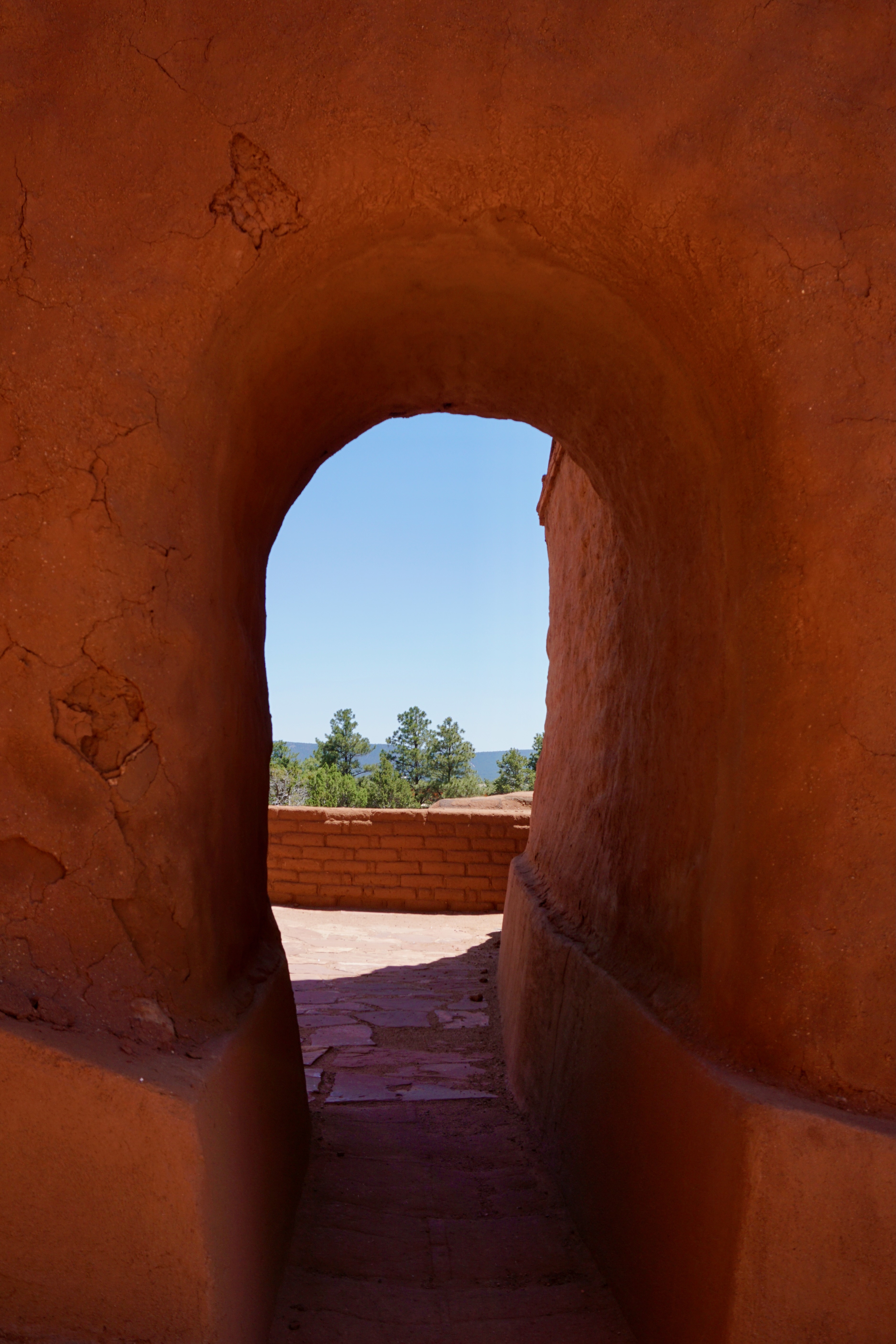
A patch of sky within a fortress of adobe.

A man-made hallway onto a world of tall trees and mountains.

What’s left of the Pueblo, built sometime around 1619.

Although one of the sites of the 1680 Pueblo Revolt against Spanish colonizers, today, Pecos is a somber, peaceful place. A half-hour drive from Santa Fe, it’s one of the more convenient ways to take in the simple, lovely essence of New Mexico.

24 Frames: Me And You And Everyone We Know

In your twenties, you tend to find your people, especially if it’s in a place other than where you grew up or came of age. In my twenties, life beyond higher education was inconceivable to me until I had no other choice but to confront it. As my grad school colleagues dispersed to other cities and states, I met people through roommates, co-workers and before long, my first serious boyfriend. Most of these connections, however, proved fleeting, born of circumstance and destined to end once irrelevant. With a few exceptions (I met the boyfriend at a club on a night when I was determined to meet someone), I was drifting, waiting for things to happen rather than actively seeking them out.

Literally days before that boyfriend and I broke up two years later, I had (coincidentally or not) taken a crucial first step towards a new, more satisfying chapter of my life when I inquired about volunteering for the Brattle Theatre, a single-screen (with a balcony!), freshly non-for-profit arthouse and repertory cinema in Harvard Square. My first activity was assisting with the folding, labelling and stamping of their film calendar mailers at Ned and Ivy’s (the organization’s co-directors) apartment on a Saturday afternoon. The sort of tedious but necessary grassroots support work not uncommon to struggling non-profits, it was also a kind of social gathering—a dozen volunteers of various ages casually sprawled out around an open concept living/family room on the second floor of a Cambridge triple decker, cooperating to get the task done while a Miyazaki film or an episode of Fishing With John played on TV.

Soon a regular at this every-other-month activity, I also began volunteering a two-hour shift at the Brattle’s shoebox-sized administrative office Monday evenings after work. I assisted Ned and Ivy with any task they had for me, from stuffing envelopes to data entry of old paper box office reports. Eighteen months later, when I mentioned in passing that I had gotten abruptly laid off from my day job, Ivy notified me of an open Office Manager position at the Coolidge Corner Theatre across town in Brookline. A somewhat larger operation than the Brattle (with three screens at time), the Coolidge was/is the Boston area’s other preeminent arthouse non-profit. I got the Coolidge job but likely would not have without the inside information and encouragement I received via my Brattle volunteering. I ended up working at the Coolidge for over sixteen years until Covid put an abrupt end to that (as it did for so many other things.)

Brattle Theatre

Still, my career in film exhibition is not the only opportunity I have to thank the Brattle for. At that first calendar-folding session, one of the other participants, an enthusiastic man named Michael introduced himself, asking me, “Do you see at least twenty-five indie films a year?” I certainly did, so he handed me a business card for the Chlotrudis Society For Independent Film, a local non-profit (of which he is president and co-founder) that holds an annual awards ceremony—sort of an alternative Oscars, like the Independent Spirit Awards—and also met up for weekly screenings at the Brattle, the Coolidge and other nearby cinemas. I had actually heard of the group: two years earlier when I worked part-time for a local film industry magazine, I spotted the Chlotrudis Awards as I copy-edited event listings, having to carefully scan it multiple times to comprehend/correctly spell such an unusual moniker (it’s a portmanteau of the co-founders’ two cats, Chloe and Gertrudis.) I placed the card in my wallet and promptly forgot about it.

After a full year of Brattle volunteering (and a fair amount of personal healing and growth), I finally signed up for a Chlotrudis membership online: “Why not at least check it out?,” I thought to myself. The first meet-up I attended was Catherine Hardwicke’s intense teens-gone-wild drama Thirteen at the Coolidge, followed by a group cocktail party at a member’s apartment weeks later. Within two months, I went to the High Falls Film Festival in Rochester, New York with Michael and a few other members; before long, I joined the organization’s Board of Directors. Chlotrudis provided opportunities to view with other people the independent and foreign films I more often than not had been seeing on my own; in time, I also had a new circle of friends—not only to see movies with but also engage in sometimes feisty, often engrossing discussions with via the group’s email list. Although cinema was the one thing we all had in common, we naturally discovered other shared interests such as books, music, television etc. In time, thanks to all three of these film-centered organizations, I felt part of a community in ways that I really hadn’t previously, at least not as an adult. Just a few years earlier, I was seriously considering moving back to the Midwest, at the time a place I still knew more comfortably (and which had a lower cost of living to boot.) Now, I felt firmly entrenched in Boston with a real support system I wouldn’t have had if I’d made another move and started all over again.

Along with these social benefits, actively participating in Chlotrudis also exposed me to films I might have never otherwise seen or thought to check out. While the organization honored well-known indie hits of the day such as Lost in Translation, The Station Agent and American Splendor, it would just as likely name Lucas Belvaux’s The Trilogy as Best Picture or award Sarah Polley Best Actress for her work in the little-seen My Life Without Me. While Chlotrudis Awards’ categories generally mirror those of other ceremonies, its signature prize, the Buried Treasure, is their centerpiece: bestowed upon a film with a US gross under $250K that also never played wide (i.e., above 1,000 screens), it was purposely created to make people aware of an excellent movie that might’ve flown under the radar for most. At my first Chlotrudis Awards in 2004, this prize was given to Marion Bridge, an adaptation of a Canadian play starring Molly Parker and featuring a teenaged Elliot Page (a big fan of Canadian cinema, Michael’s championing of it over the years has exposed me to far more of it than most people south of the border ever get to see); the following year, it went to Nosey Parker, a whimsical, micro-budgeted Vermont feature. While I would’ve heard of other concurrent Buried Treasure nominees such as Infernal Affairs (later remade as The Departed) or Abbas Kiarostami’s Ten outside of Chlotrudis, it’s unlikely I would’ve thought to watch the documentary Love & Diane or the charming, low-key Uruguayan film Whiskey.

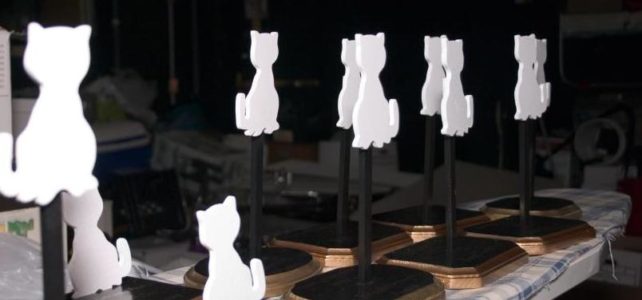
Chlotrudis Awards = cats on sticks!

Me And You And Everyone We Know is not one of those discovered-through-Chlotrudis obscurities—after premiering at the 2005 Sundance Film and winning the Camera d’Or (best first feature) at Cannes, IFC Films released it in June of that year. With a US gross of $8 million on a budget of $800,000, it was unquestionably an indie hit and a critical darling. Writer/director/star Miranda July was already well-known in performance art circles, but this feature debut reestablished her as a filmmaker first and foremost. Chances are I still would’ve seen it had I never joined the group. However, watching it with my Chlotrudis friends at the Coolidge in their 45-seat screening room was a blast. July’s gently quirky demeanor, the handmade feel of its relatively low-budget aesthetics (especially Michael Andrews’ vintage PBS-inspired electronic score), the sharp yet humane screenplay, the presence of a beloved (if unknown to most American audiences) Canadian character actor like Tracy Wright—all of it cinematic catnip as far as Chlotrudis’ sensibilities were concerned. I don’t remember if everyone in our group loved the film that evening but I can’t deny that we bonded over the shared experience which is at least one thing that fortified (and still enhances) the act of moviegoing for me.

The film is essentially a romantic comedy where one hopes the two leads will get together in the end after their meet-cute. They are Christine Jesperson (July), a video performance artist/July alter-ego whose day job is driving for an elder cab service and Richard Swersey (John Hawkes), a department store shoe salesman and recently divorced father of two. The odd (and unusually specific) surnames provide a peek into July’s trademark whimsy while the ways in which she introduces these characters (Christine in the midst of creating one of her let’s-just-say-unique art pieces, Richard when he lights his hand on fire as a desperate gesture to hold on to his marriage) feel too genuine and fully thought out to come off as just quirky for quirk’s sake. After their initial meeting at Richard’s workplace (where Christine takes a client shopping), she returns by herself to purchase a pair of shoes from him that he had previously recommended to her (“You think you deserve this pain, but you don’t,” he says of her current, inferior footwear.) They end up walking to their parked cars together where one can instantly detect their chemistry but also some hesitation. Christine likens the length of their stroll to an entire relationship (speaking of the distance from the store to the cars, “This is our whole life together”) but pushes it too far when, after they separate, she shows up again at Richard’s car and invites herself in for a ride over to her vehicle. Still sore from his recent divorce, Richard reacts negatively, instantly disintegrating Christine’s impulsively constructed rom-com facade.

While Christine and Richard’s will-they-or-won’t-they trajectory is the film’s key narrative thread, it is far from the only one pushing it forward. Me and You… is more of an ensemble piece, almost a micro-scale version of, say, Magnolia where numerous characters intersect in alternately predictable and unexpected ways. Richard’s somewhat oafish co-worker Andrew (Brad William Henke) develops a playful, if caustic relationship with two 14-year-old girls, Heather (Natasha Slayton) and Rebecca (Najarra Townsend). The girls go to school with Richard’s older son Peter (Miles Thompson) who is often seen taking care of his six-year-old brother Robby (Brandon Ratcliff). Both Peter (and, to a lesser extent Robby) befriend Sylvie (Carlie Westerman), a thoughtful, precocious neighbor girl somewhere in age between the brothers. Also figuring in are Richard’s estranged wife (and Peter and Robby’s mom) Pam (JoNell Kennedy), Christine’s elder-cab client Michael (Hector Elias) and Nancy Herrington (Tracy Wright), a stoic gallery curator whom Christine submits her artwork to.

Your average indie ensemble comedy-drama would emphasize and gather momentum on the strength and timing of its connections (and disconnections); Me and You… instead fixates on more personal, idiosyncratic motifs. Set in an unglamorous-verging-on-seedy Los Angeles residential neighborhood, it takes what could be ordinary, everyday situations and swiftly turns them inside out: a father and his young daughter buy a goldfish in a plastic bag filled with water from a pet store, but he accidentally leaves the bag on top of his car and drives off with only Christine and Michael initially witnessing it. Robby hears a mysterious tapping noise every day outside his mom’s house; she dismisses it as the sound the streetlights make when they turn on, but he remains unconvinced and obsessed. Sylvie plays with neighborhood kids Robby’s age as if she were their mother but takes this tendency to obsessive heights when she shows Peter her secret hope chest, lovingly layered with items she’ll use as a wife and mom one day (“It’s my dowry,” she states matter-of-factly.)

As in Magnolia, nearly every character here is lonely to some degree. While depiction of such an emotional state could lead to inertia (or alternately, desperation), July utilizes loneliness as an impetus for a myriad of activities people of varying ages pursue in order to combat it. Often, the impulse is sexually charged: Heather and Rebecca flirt with Andrew but keep their distance (particularly once their playacting threatens to have real consequences); they also attempt to work out their frustration and curiosity by first tormenting, then fooling around with Peter. When someone is too young to fully understand sex, they seek release in less conventional ways, such as Sylvie’s very-real-to-her fantasy world of monogrammed towel sets and fresh crisp shower curtains—itself  momentarily derailed in her mind when she watches Heather and Rebecca’s rendezvous with Peter through her bedroom window.

Meanwhile, Robby regularly spends time in an online chatroom that Peter showed him how to use; the two of them begin chatting with an anonymous, presumed adult engaging in sex talk. Peter laughs it away but young Robby is intrigued and returns to the chat room on his own, his six-year-old ideas of what sex might be both hilariously off-the-mark and touchingly innocent (and scatological!) Conceived in an era directly before smartphones, the film, with its desktop setup and the clunky chime of messages received back-and-forth (forever!) might now feel tame and nostalgic. As with the girls and Andrew, however, Robby’s playing a potentially dangerous game, one whose implications are still years ahead of him. When he eventually meets in real life the other cast member he’s been chatting with, the reveal is both ridiculous and sublime: lovingly scored to Spiritualized’s slow-building, in due course rousing “Any Way That You Want Me”, it’s poignant and bittersweet rather than embarrassed or full of shame. Credit July’s direction of her ensemble and in particular, her child actors: not everyone could coax such an uncommonly natural and believable performance out of someone as young as Ratcliff.

I get that July’s sensibility is not for everyone—the sudden callback of Christine receiving a phone call where the person on the other end of the line says a single word (“Macaroni”) and hangs up, Robby casually drawing on a piece of art on the wall as Richard and Peter sit on the couch in front of it, numbly ignoring him, Pam’s “self-affirming” nightgown, Nancy’s “I’ve Got Cat-itude!” mug—such quirks will easily delight or repulse a viewer depending on one’s taste (though this letter-perfect Onion article from 2012 gets it.) It may be tempting to regard Me and You… as a stereotypically navel-gazing indie, but one shouldn’t ignore the considerable feeling July suffuses her work with. Watch for how Nancy’s face slowly transforms when she’s watching the video Christine has submitted to her gallery at the moment Christine begins talking directly to her. Look at Richard’s growth throughout the film: “I am prepared for amazing things to happen; I can handle it,” he tells Andrew early on only to show how unprepared he is when Christine gets into his car. Midway through, he realizes that when he lit his hand on fire, “I was trying to save my life and it didn’t work.” By the end, he quietly, willingly gives himself over to chance as July illustrates, via him and Christine tenderly embracing the beauty of being open and receptive to making things up as one goes along.

That goldfish-left-on-top-of-a-car scene from earlier plays no crucial part from a narrative perspective but Me and You…wouldn’t be the same without it. As Christine and Michael drive along the highway, following the car as the goldfish unceremoniously slides off its roof, over its windshield and onto the trunk of another car ahead of it, Michael reassures a distraught Christine, perhaps indirectly evoking the film’s title, “At least we’re all together in this.” That sense of camaraderie and support is really what the film is all about; it’s also what I craved and then experienced once I found my people at the movies—on both sides of the screen.

Essay #16 of 24 Frames.

Go back to #15: Before Sunset.

Go ahead to #17: C.R.A.Z.Y.

Las Vegas, New Mexico

Welcome to Las Vegas… New Mexico!

An hour east of Santa Fe, it’s the county seat of San Miguel County, with a population of 13,166.

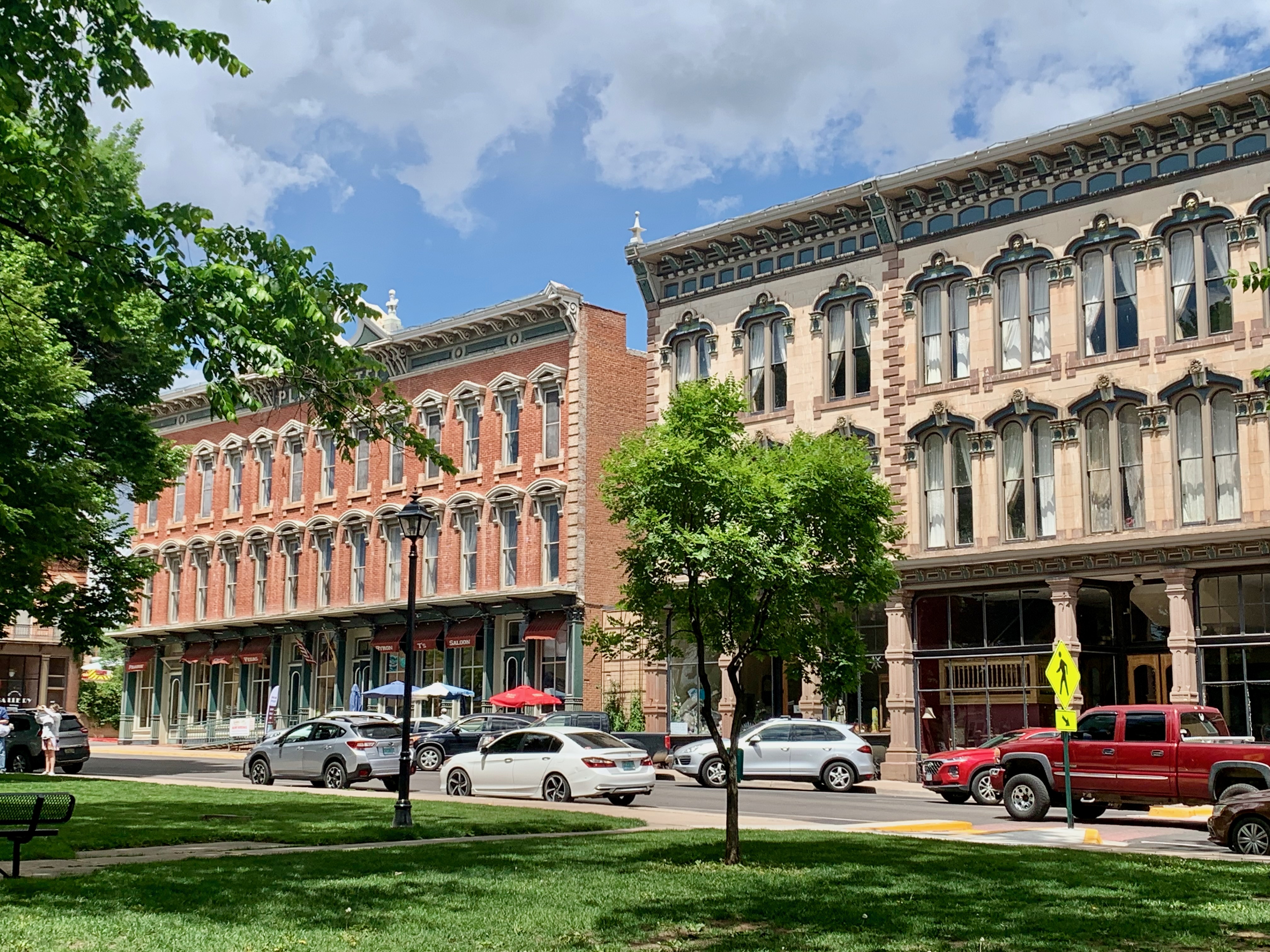
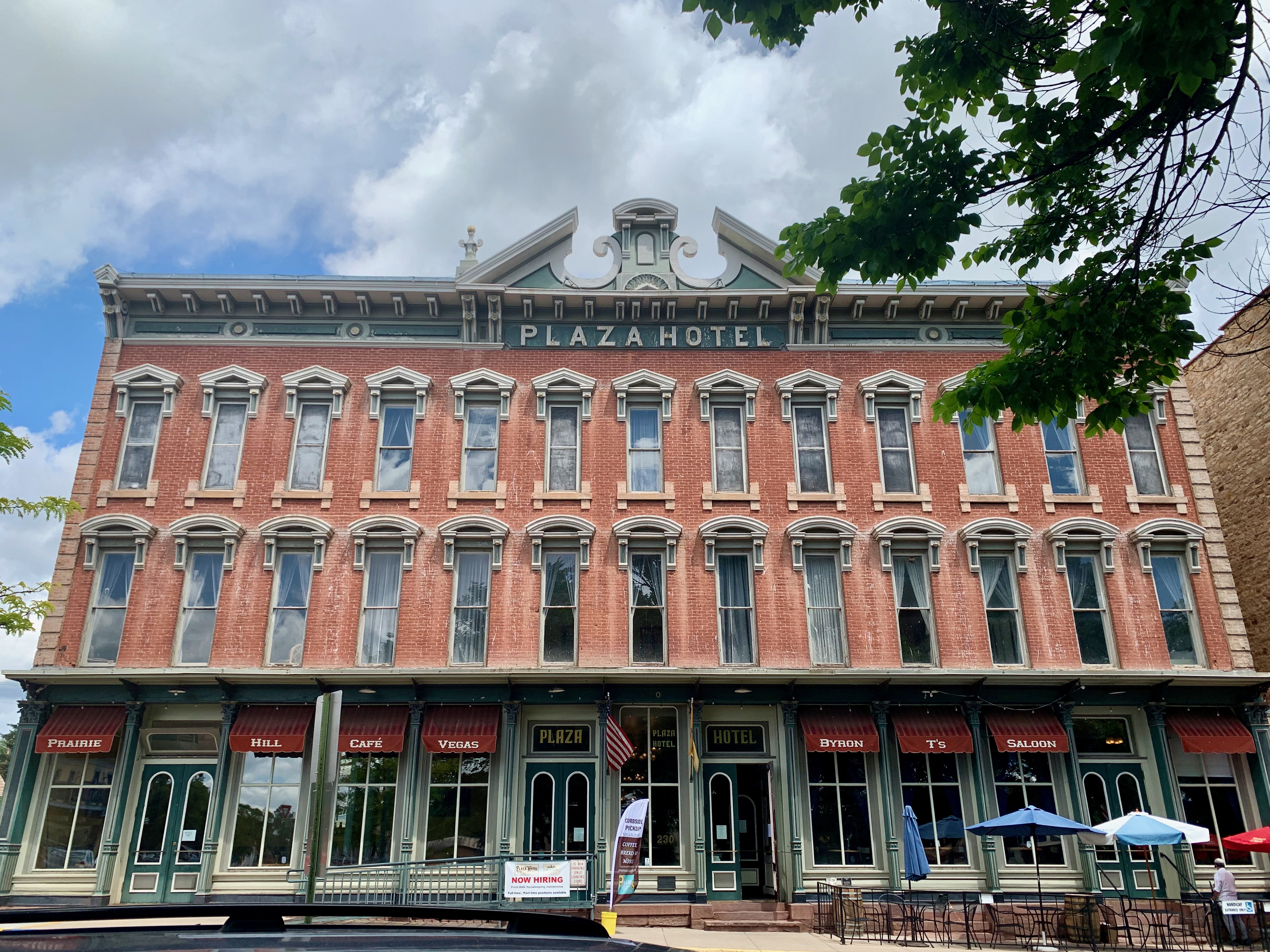
Looking for a day trip locale other than Taos, Las Vegas seemed a good bet due to its downtown Plaza with its share of beautiful, historic buildings…

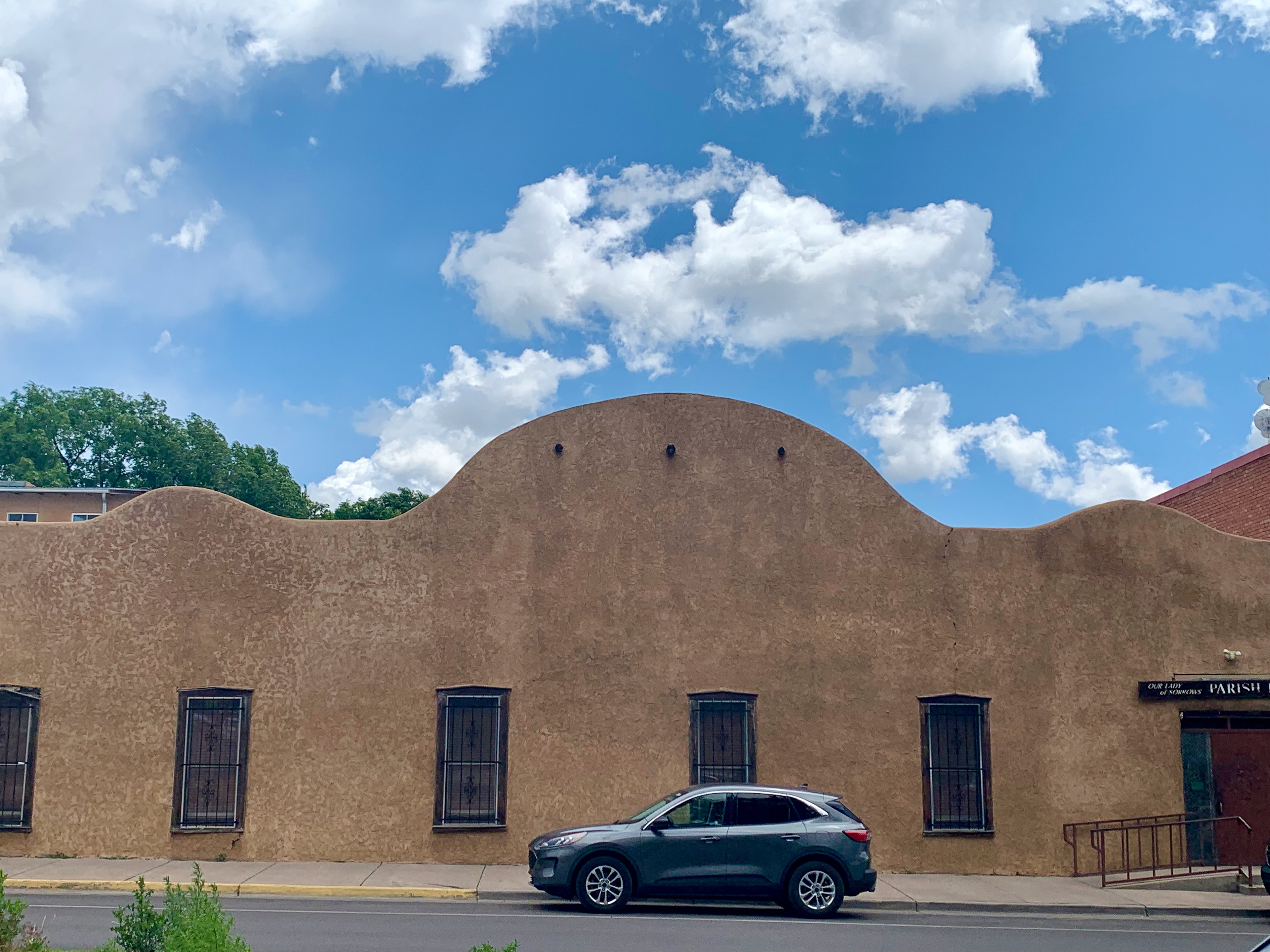
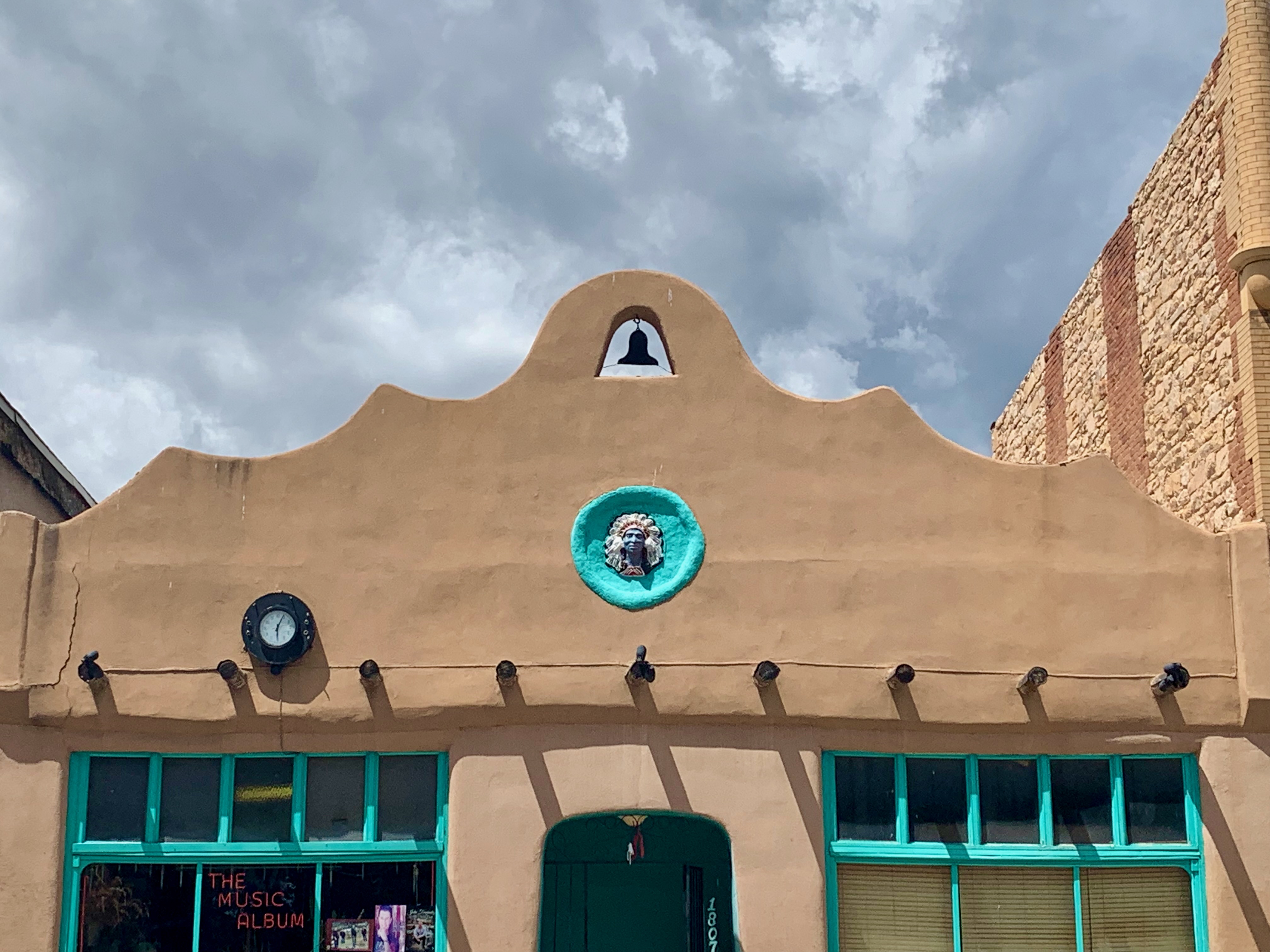
…but not as many as the tourism brochures would have you believe. As with most of New Mexico, there’s a considerable amount of adobe.

Some of the abode buildings are more aesthetically pleasing than others, particularly when flanked with turquoise paint.

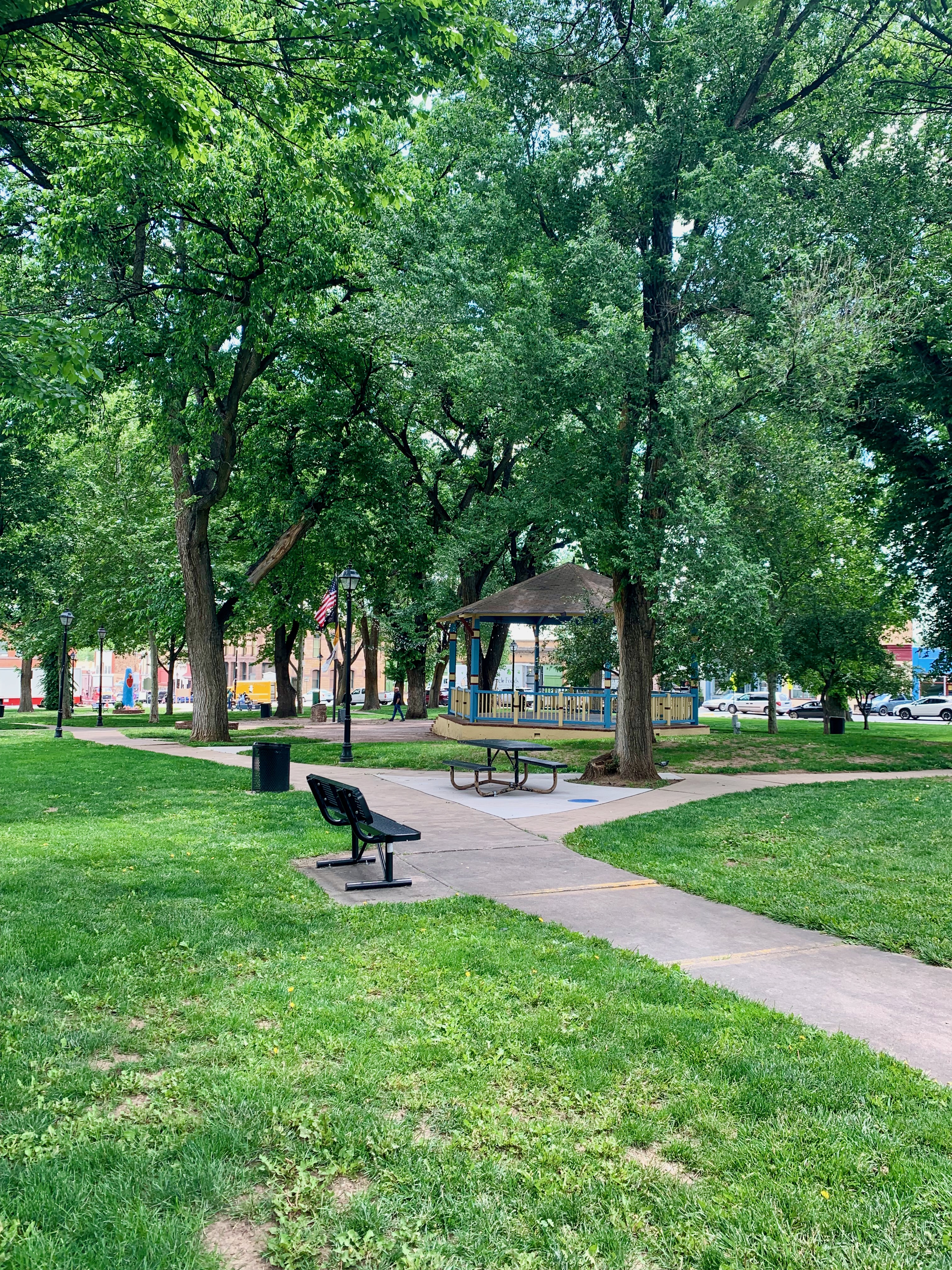
Still, the leafy Plaza is pleasant, if not as bustling as Santa Fe’s (on a cloudy Monday afternoon, anyway.)

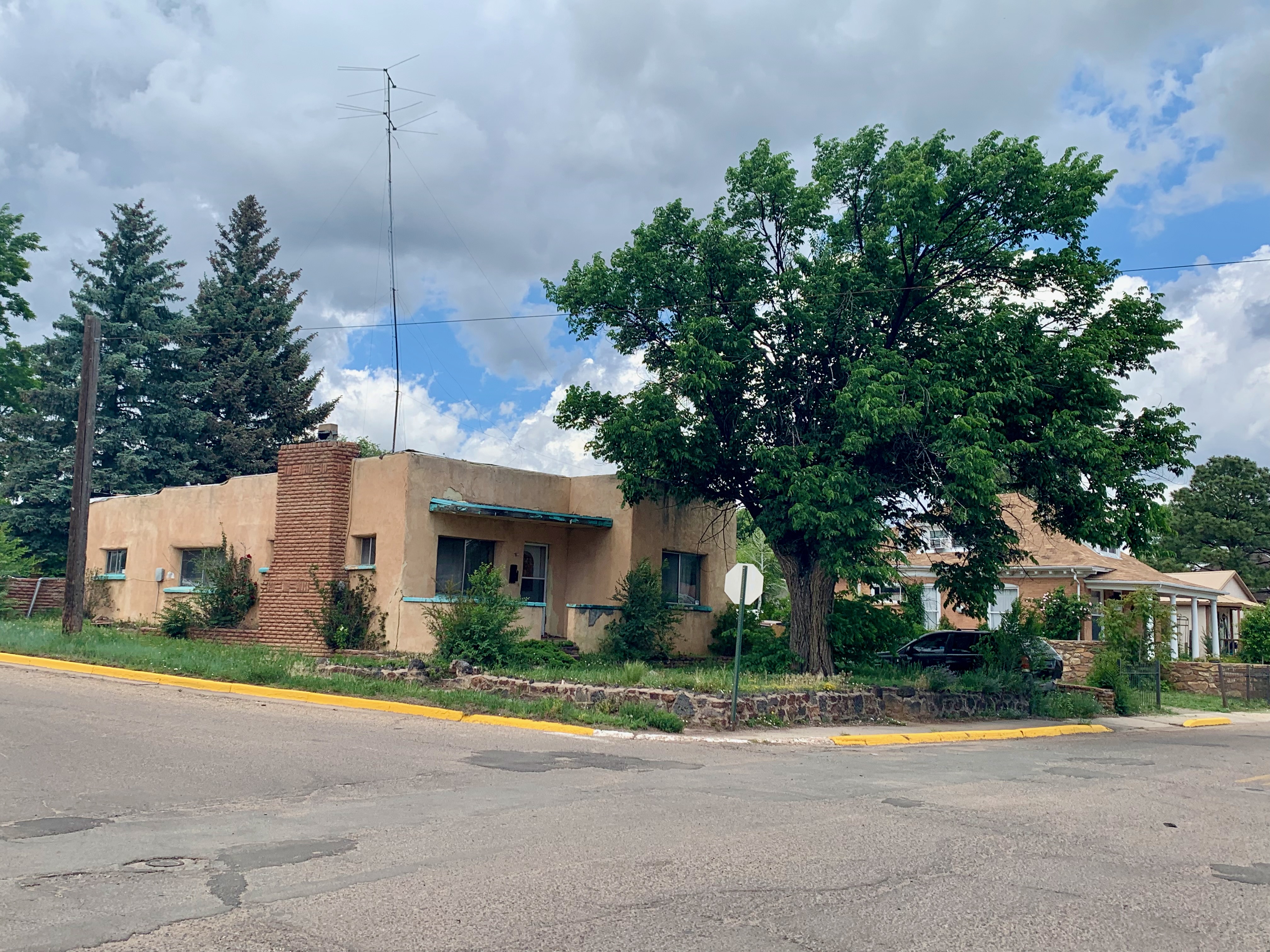
We explored beyond the Plaza a bit into this residential neighborhood…

…and directly behind the Plaza Hotel (seen in the first two pix above), I spotted this whimsical van for a local business.

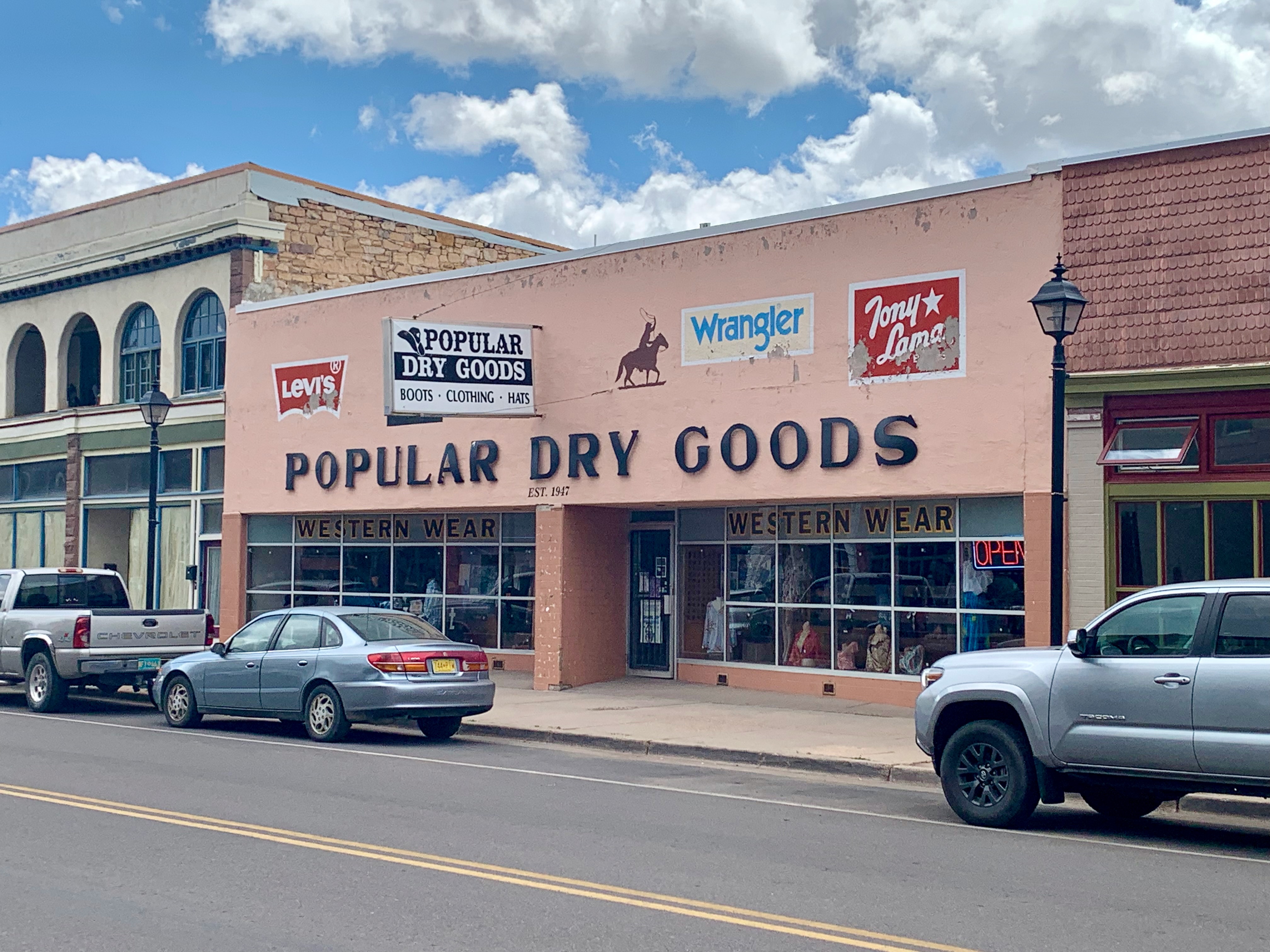
Fortunately, one only had to look towards Bridge Street east of the Plaza to find some small town, Main Street charm.

I mean, would you rather have a boring ol’ Family Dollar in your small town or this vintage beauty (no matter how dilapidated the front signage?)

Erected when the railroad first came through in 1879, Stern and Nahm is one of the oldest buildings in town.

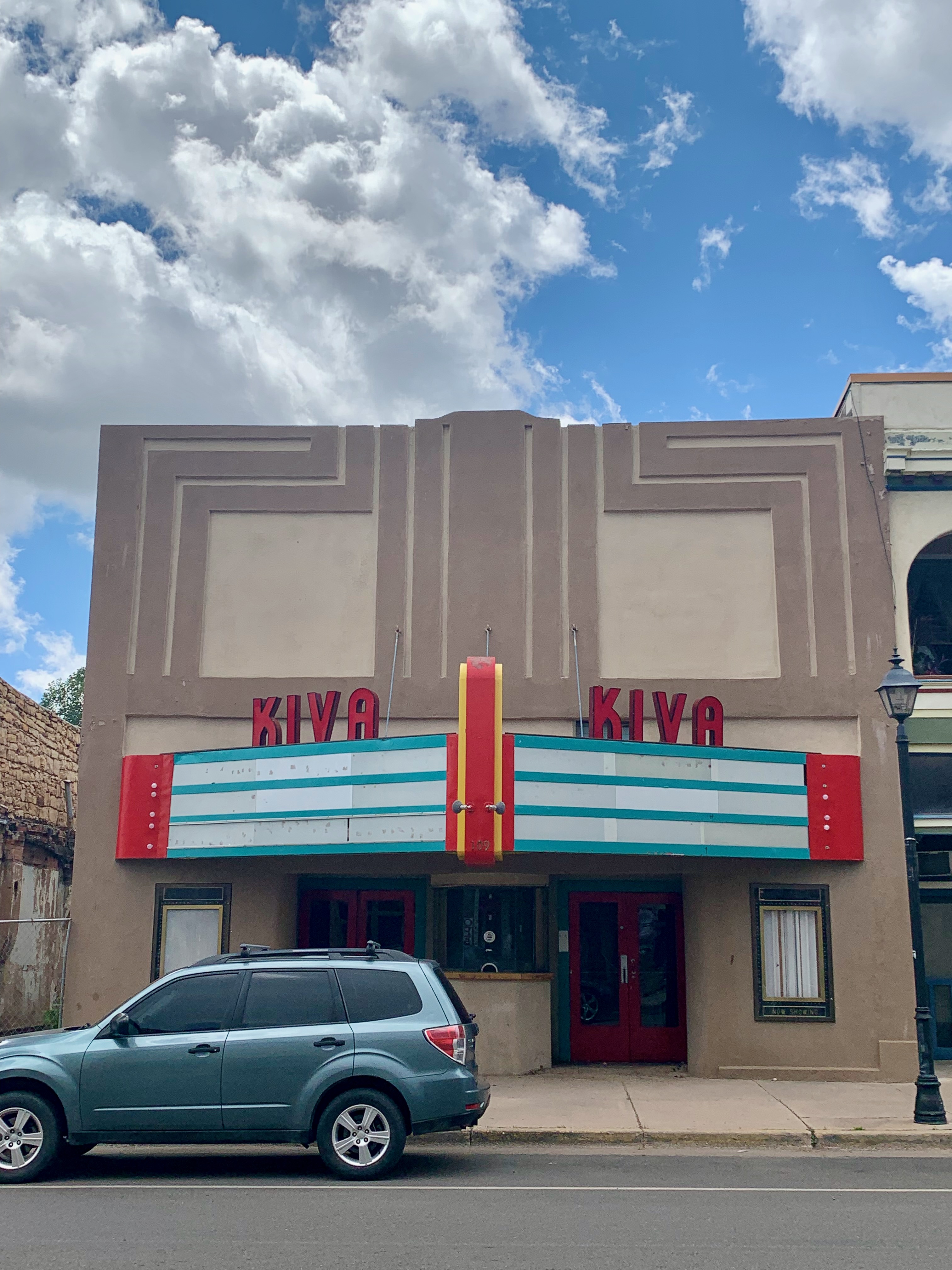
Opened as the Mutual Theater in 1912, the Kiva sadly closed in 2013.

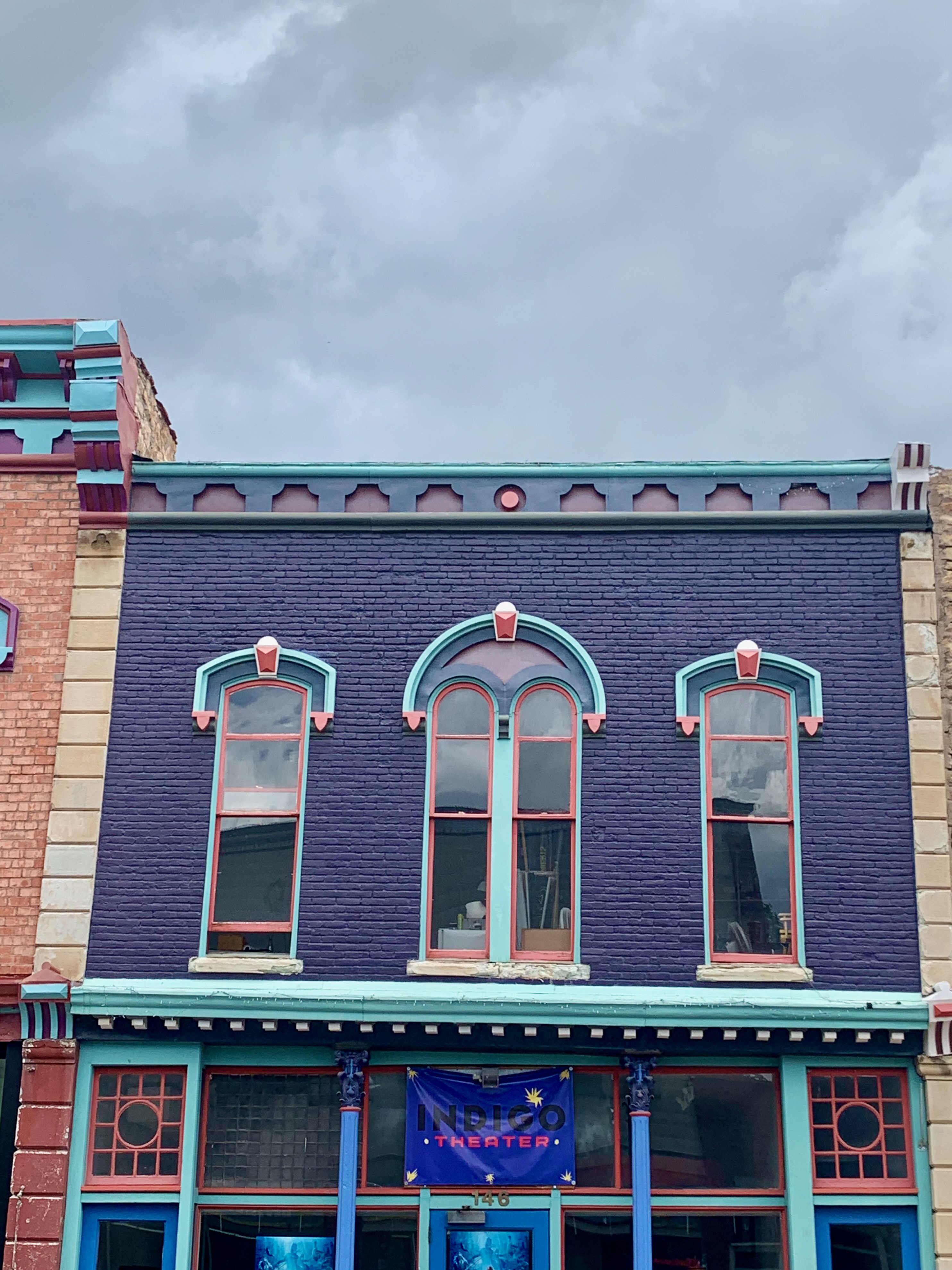
Fortunately, there’s the Indigo Theatre across the street, currently playing Oppenheimer as of this post’s date.

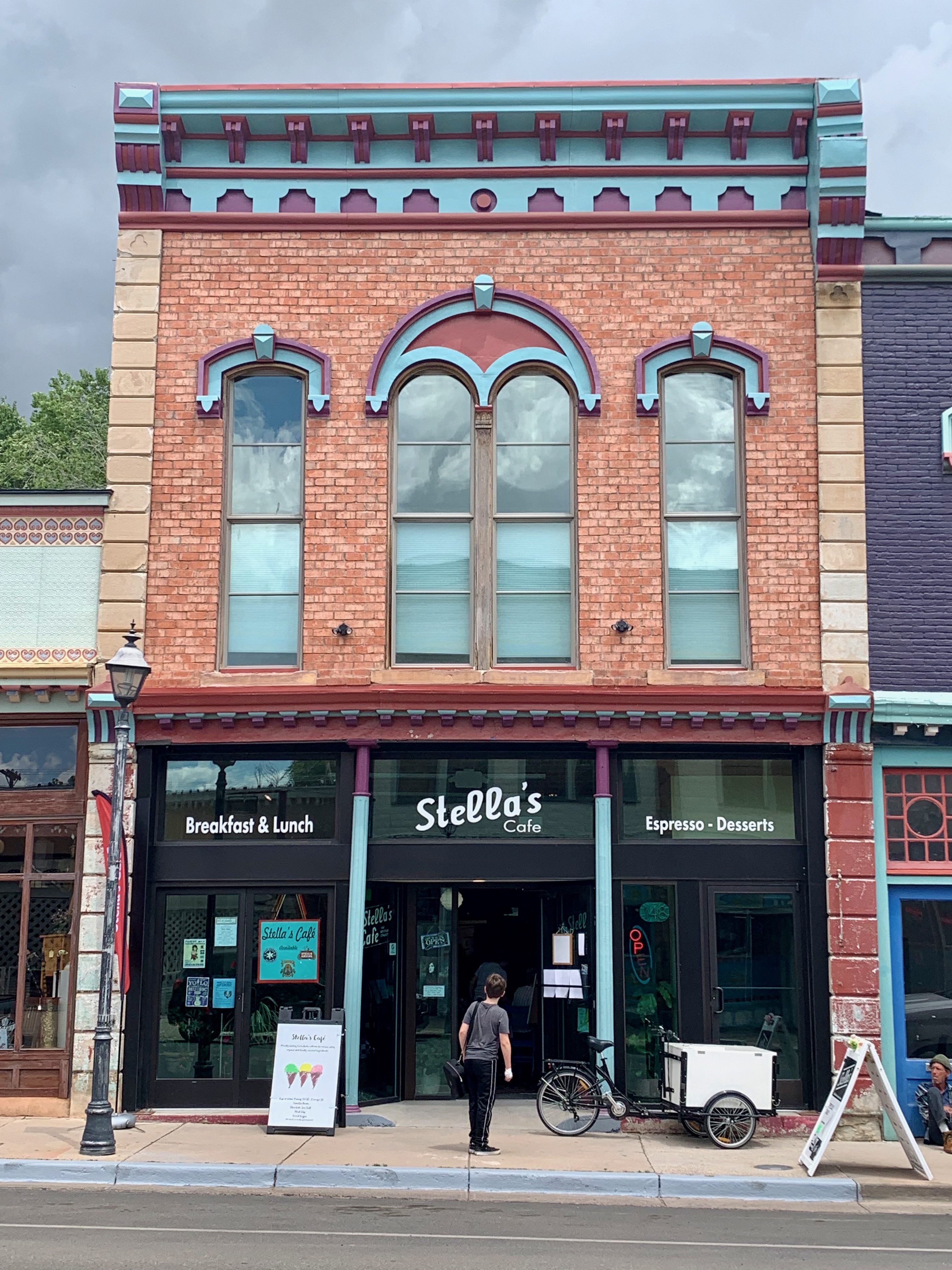
A vibrant-looking cafe is always a good sign of activity in a small town, though as I was taking pix, an elderly local came up to me and asked, “What brought you to Las Vegas? There’s nothing going on here!”

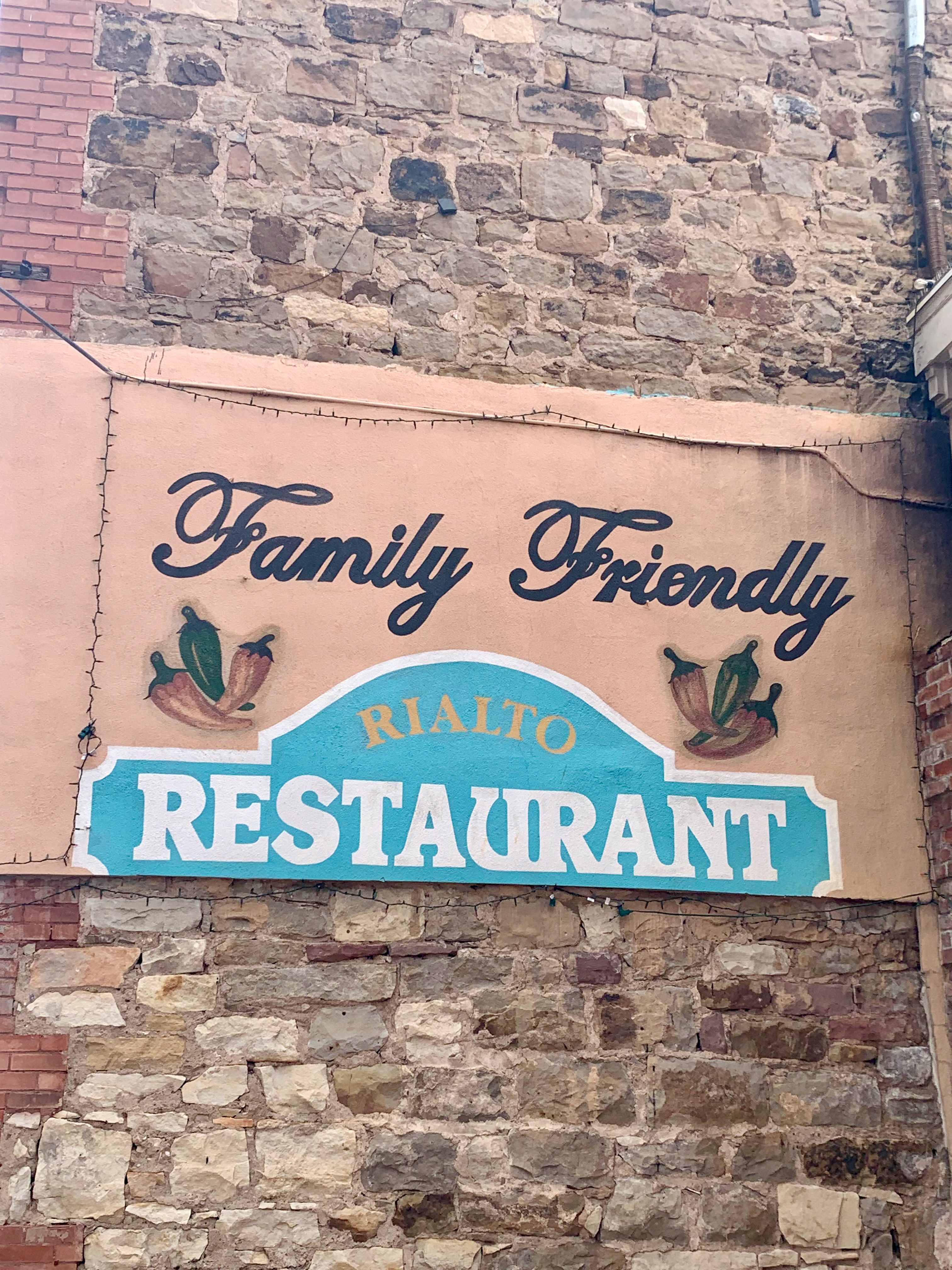
I would argue these pix are evidence of signs of life; it’s too bad the ultra-cool, stuck-in-time El Rialto was closed on Mondays.

Quintessential New Mexico for sure.

Paper Trail, a book and gift store is another vital sign. I was instantly drawn to this color-coded display.

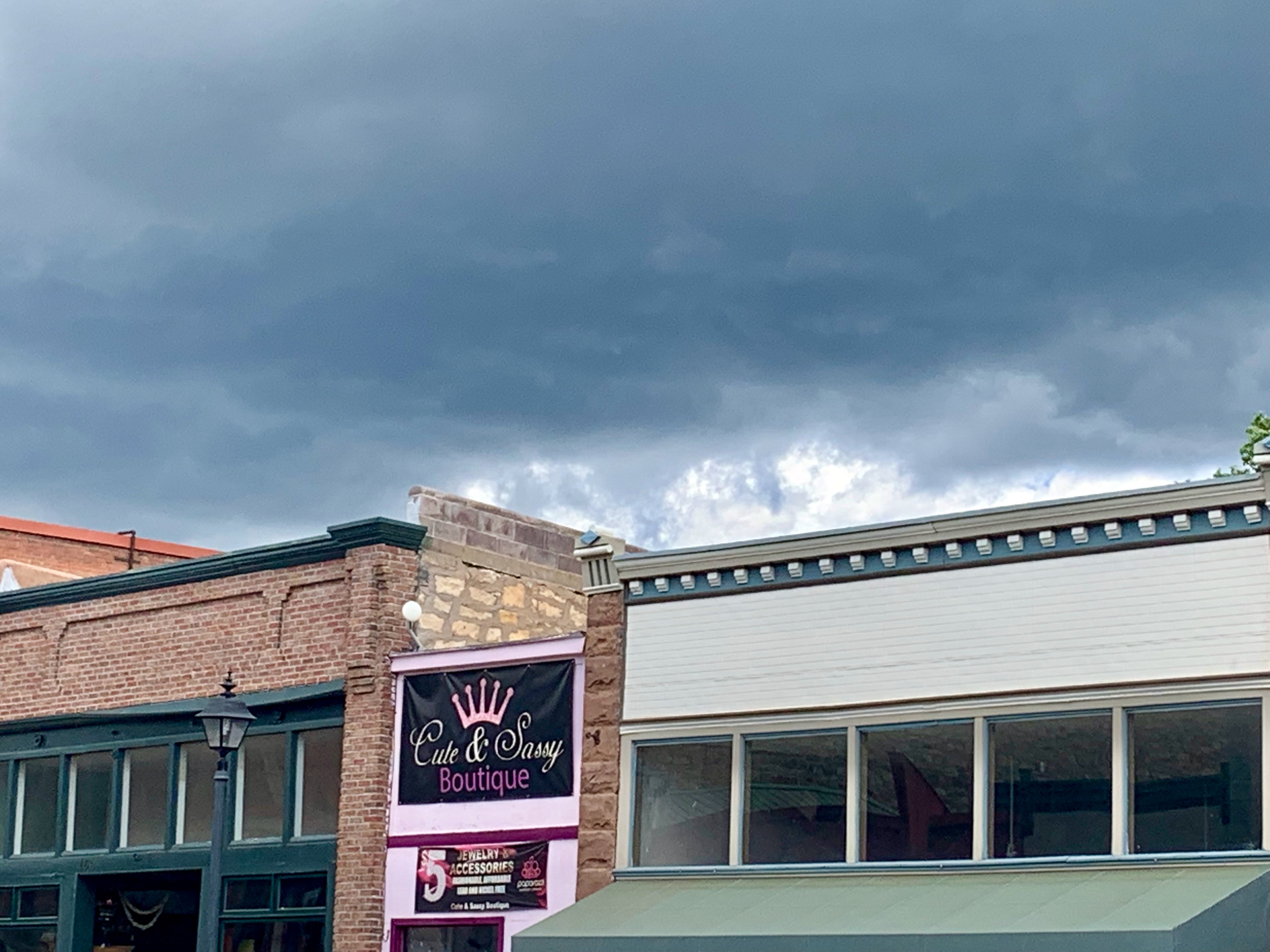
Ominous storm clouds surrounded Las Vegas during our visit but thankfully only produced a smattering of raindrops. Despite not much going on there, the town exhibited ample personality.

Mix: Suffocated Love

In midsummer, as the humidity surfaces like a dense soup infiltrating all in its wake, I turn to music that’s languorous and laid back but not prosaic or aural wallpaper. In the mid-90’s, a genre dubbed “Trip-Hop” pleasantly attained this sweet spot: bands such as Massive Attack, Morcheeba, Portishead and the lesser-known-but-just-as-worthy Mono all blended loping beats and samples with chill female vocals into tunes like intoxicating smoothies that at best transcended the “mood/bedroom music for stoners” tag that was often bestowed upon them.

This is not entirely a trip-hop mix despite its title coming from a track off of what remains arguably the genre’s furthest-reaching masterpiece, Tricky’s Maxinquaye (1995). Actually, it began as an overview of modern-day songs in the same spirit (if not quite sound): Lana Del Rey’s groove earworm “Peppers”, The Clientele’s incorporation of breakbeats into their ever-distinct chamber pop, vibrant new songs from artists who were there in the 90’s (an evocative highlight of Everything But The Girl’s reunion album Fuse; Slowdive’s first single from their forthcoming release.) Then, Christine and the Queens’ “Tears Can Be So Soft” ended up successfully emulating/updating that sound, so it was no short leap to include stuff from both eras (among others.)

Since trip-hop could be such a nebulous genre, some songs that don’t really fit there still find their place here. “Love Nobody”, indie singer Jenn Champion’s collab with electropop artist Oyster Kids is a track I rediscovered after saving it to an ongoing folder of new music heard on my Spotify-curated “Discover Weekly” playlist two years ago—more 21st century 80’s (an accidental genre that could warrant its own mix) but an affable entry point into what follows. Speaking of the 80’s, Yacht Rock could be trip-hop’s sideway equivalent of that era, and U.S. Girls’ “Only Daedalus” and Emm Gryner’s “Loose Wig” are nothing if not 21st century yacht rock (and so Steely Dan-influenced I couldn’t help but place one of their old songs in between.) As usual, a vibe mix is more a journey than a destination (Del Rey next to Bill Withers next to Air!) even if it concludes with Stars’ Amy Millan blissfully considering the value of being here now.

Haunted Jukebox Mix #5: Suffocated Love

Santa Fe Roses

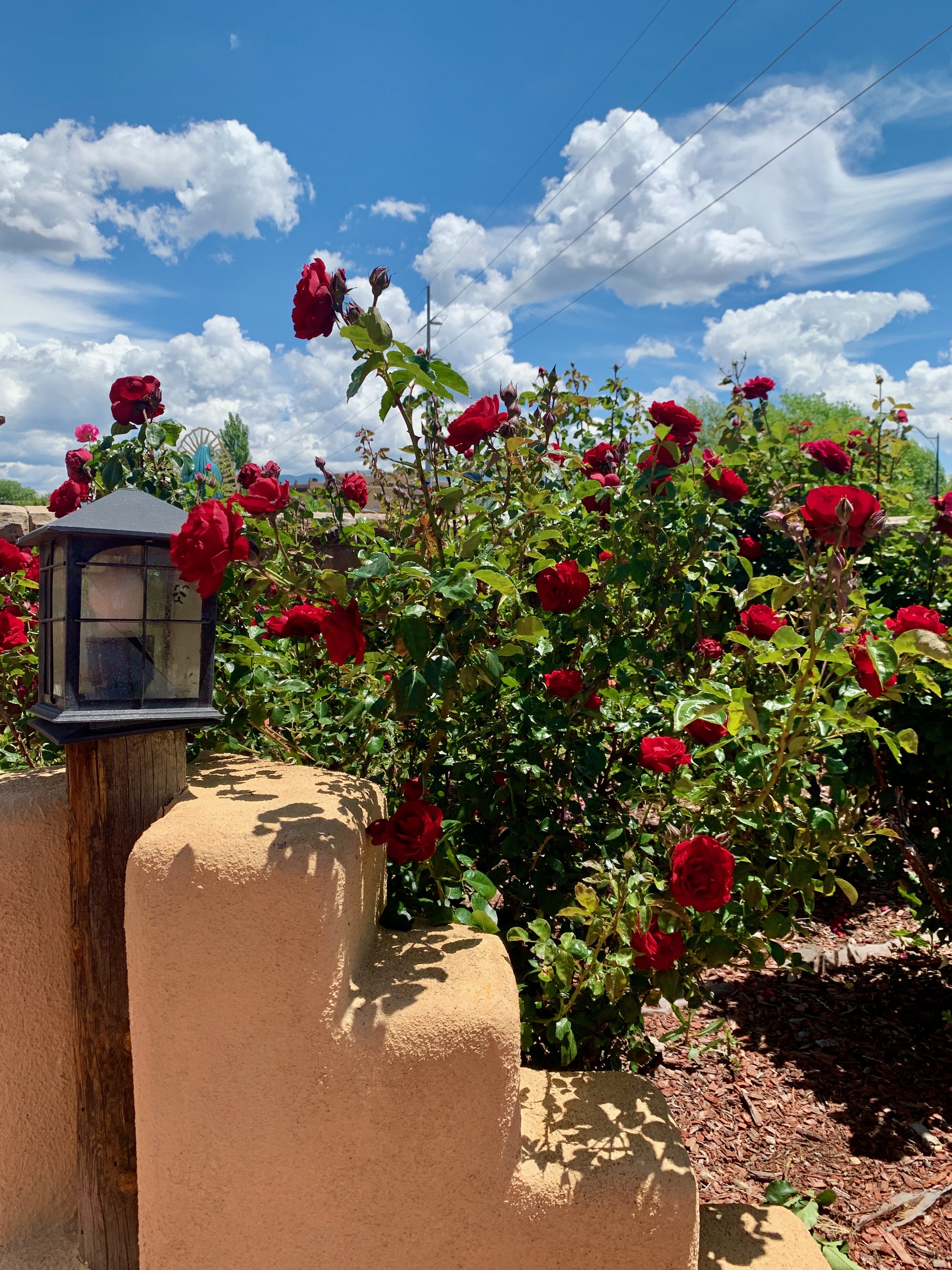
Until I saw so many of them in person last month, it didn’t even occur to me that I was visiting Santa Fe at the height of rose season.

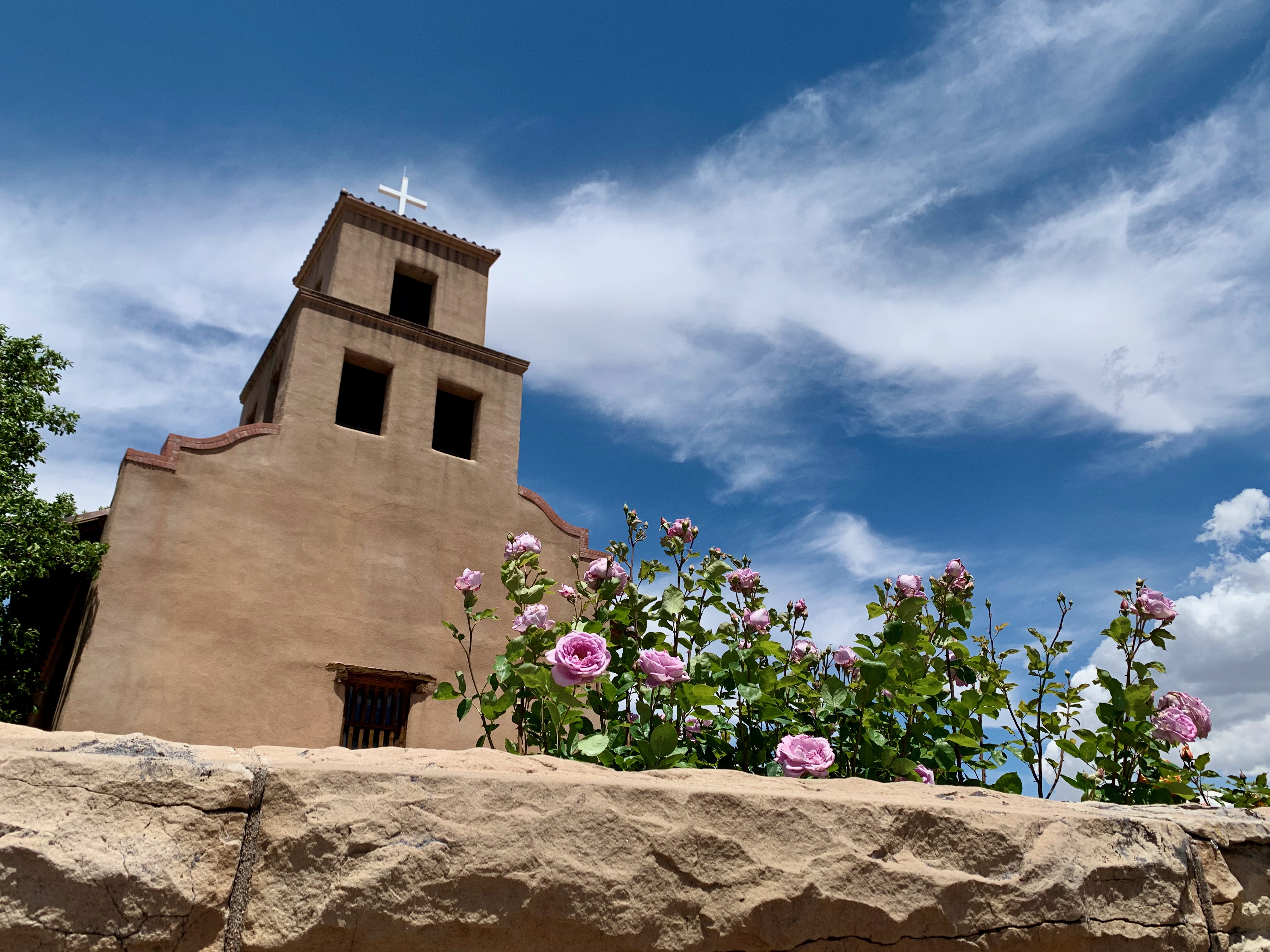
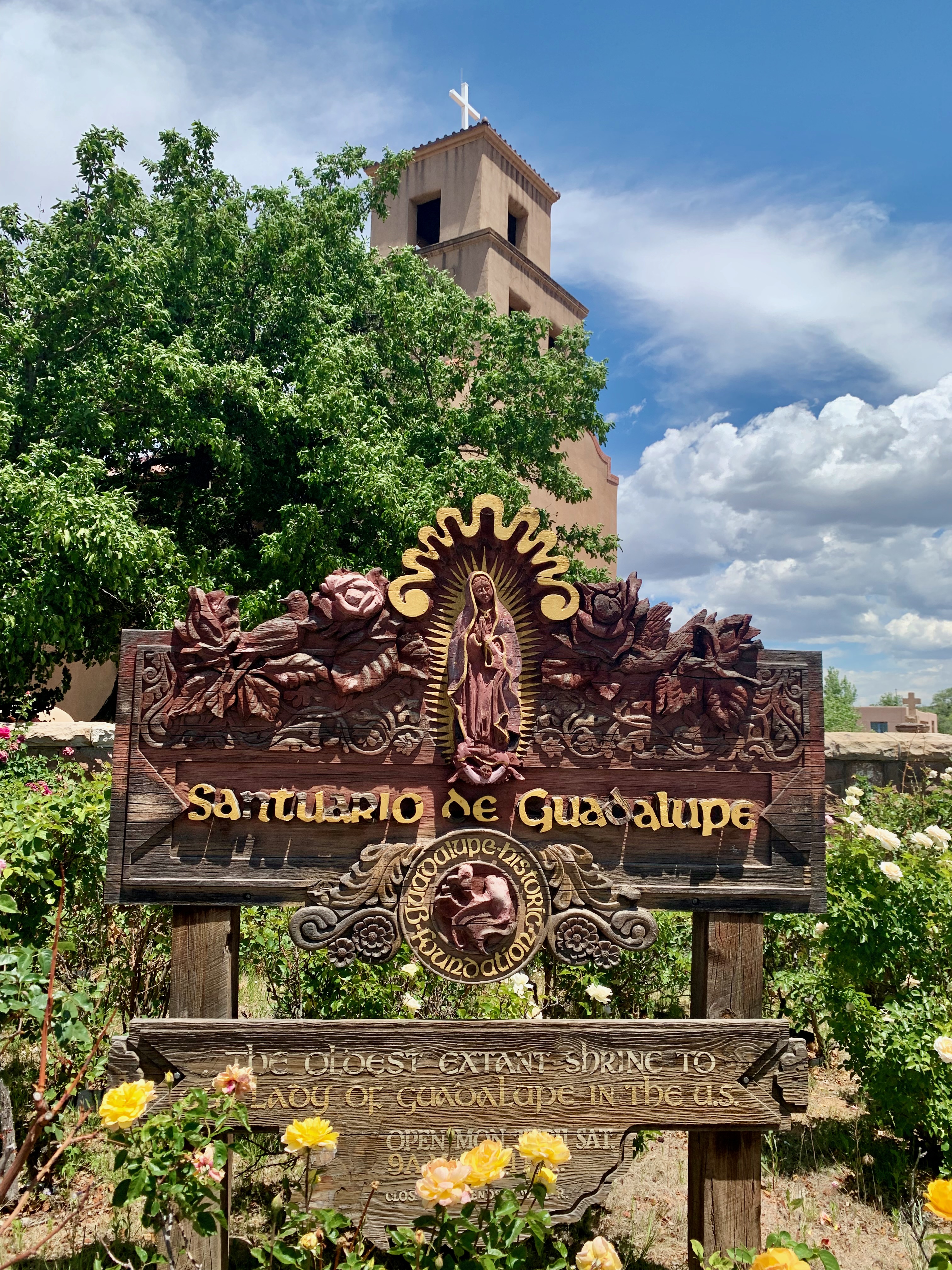
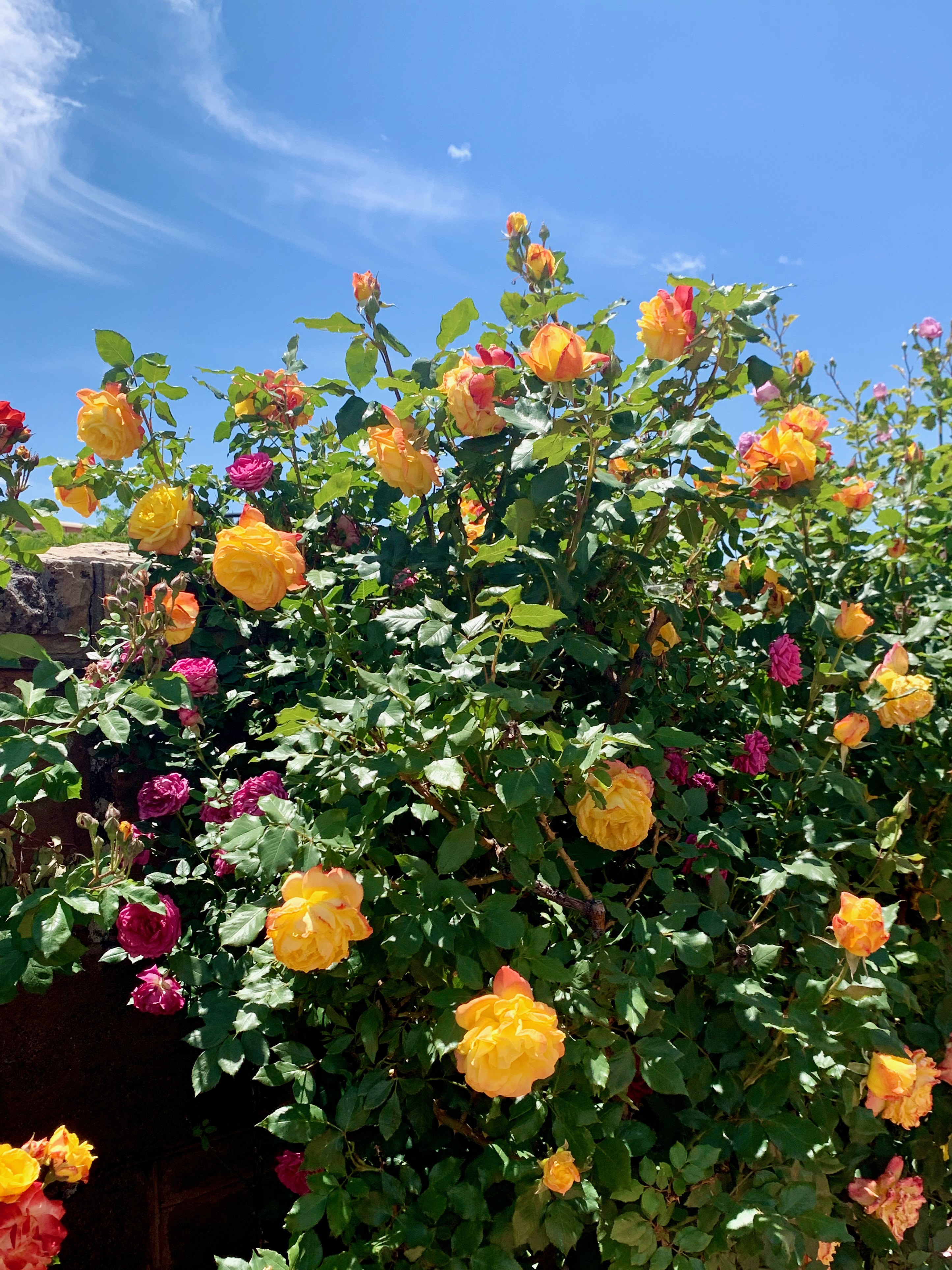
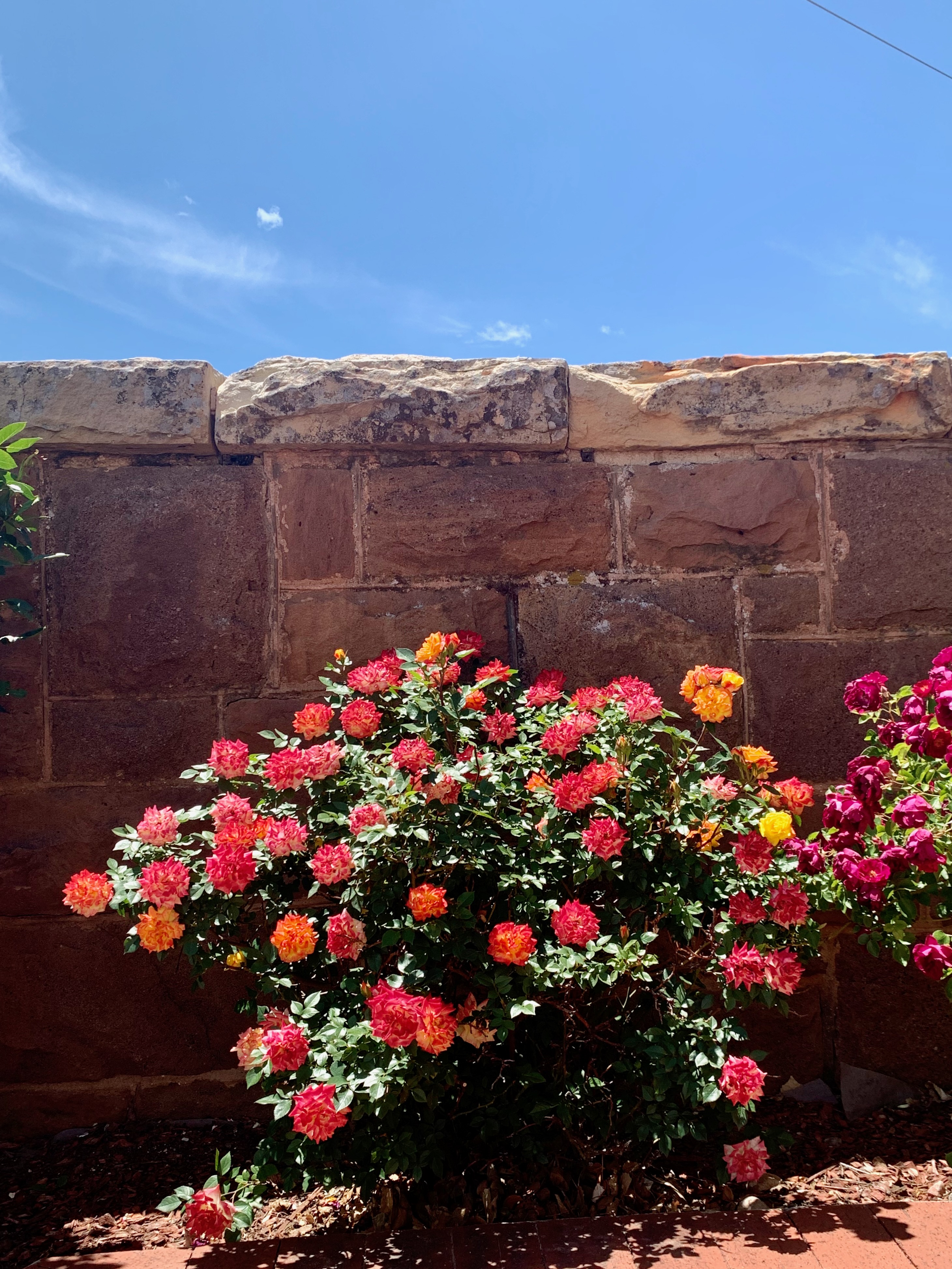
I’d visited Our Lady of Guadalupe church and shrine on past visits (both in September) and was delighted to see the grounds decked out in roses this time. What a vivd array of color:

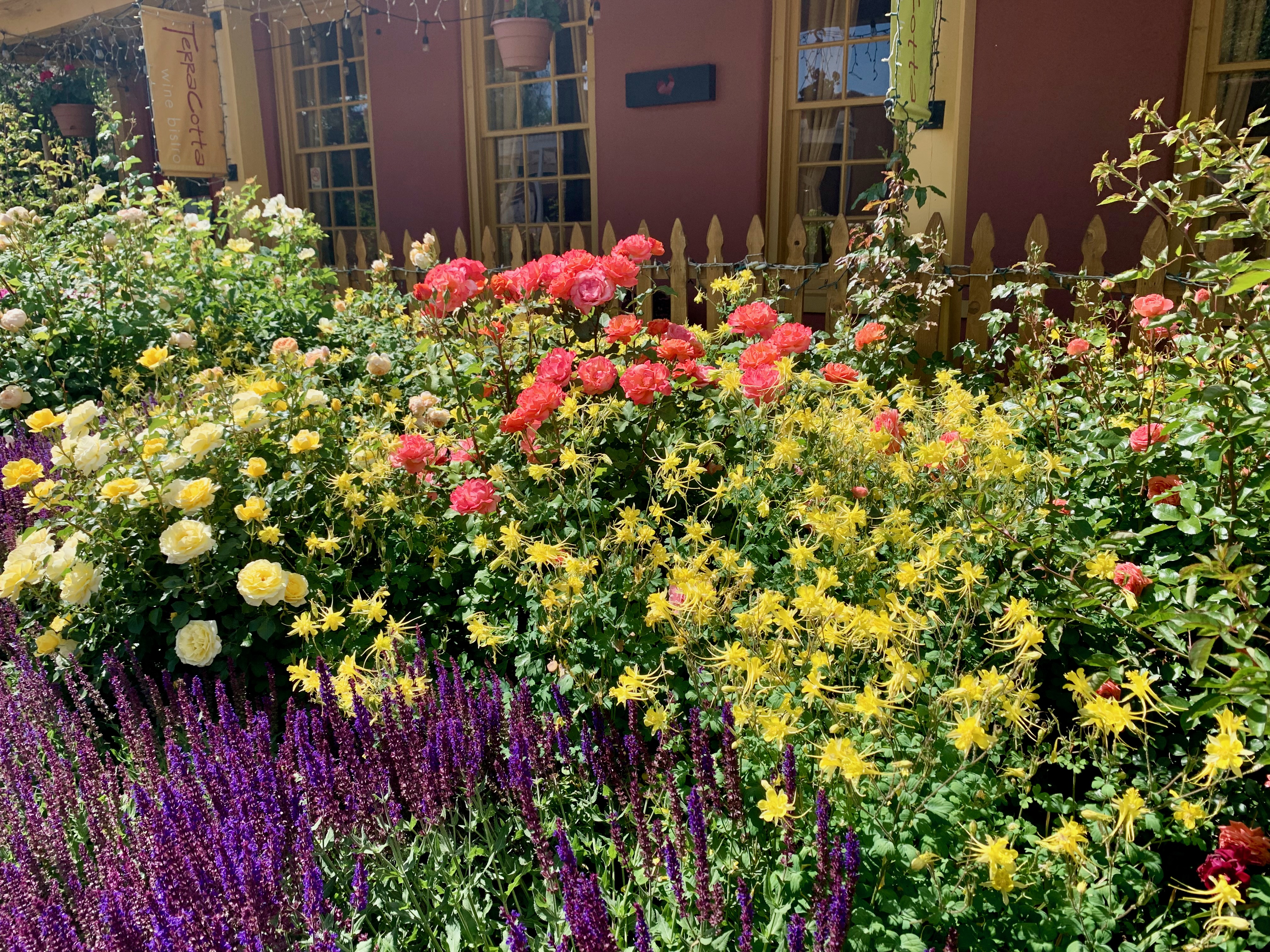
A few days later, I came across more roses in this sun-kissed residential garden a few blocks from the Plaza.

When I retire one day, I wouldn’t mind tending to my own bountiful front yard garden.

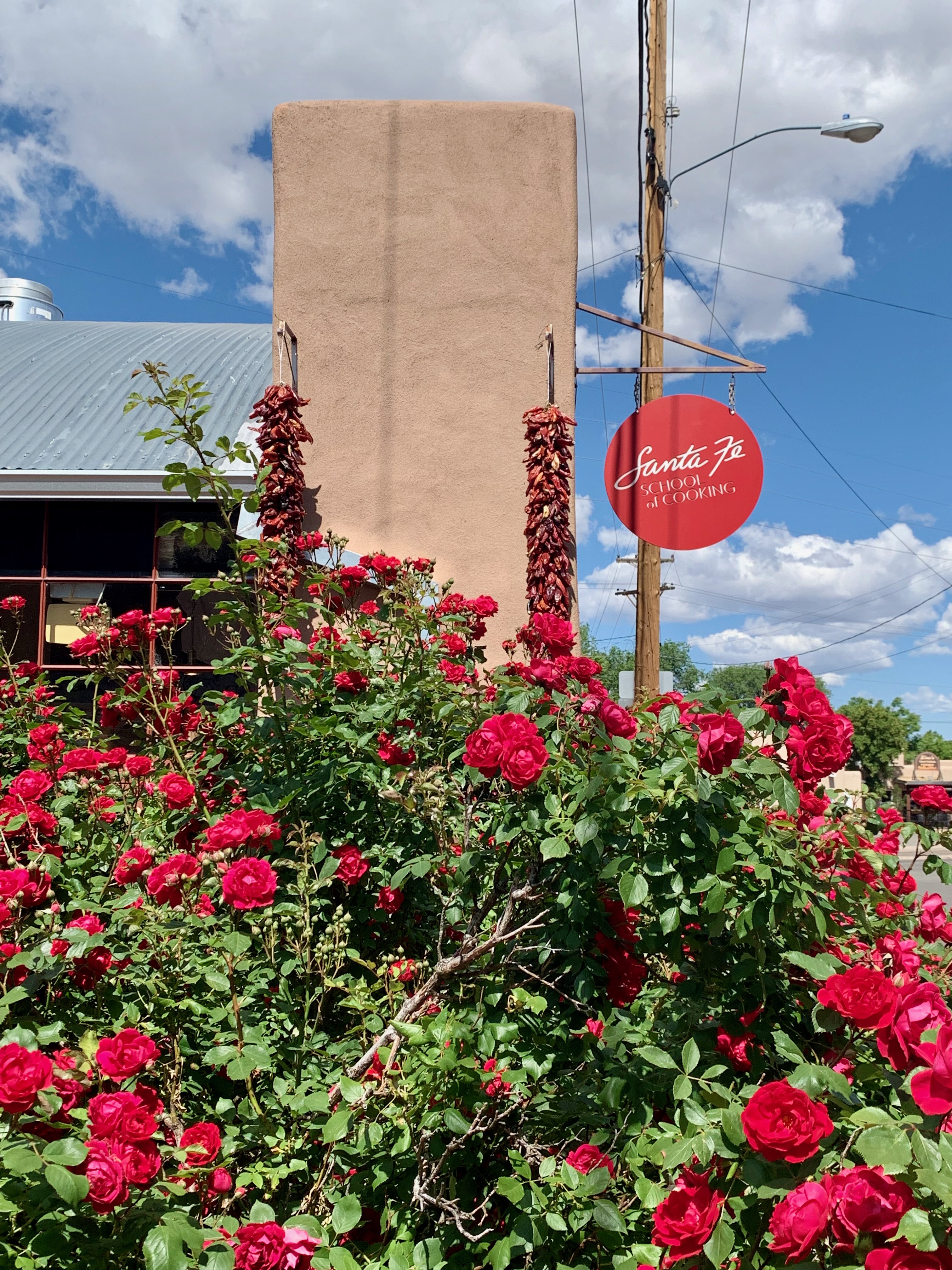
On the same block, bushes and bushes of red roses (along with strings of the ubiquitous-in-NM red chiles) flanked the Santa Fe School of Cooking.

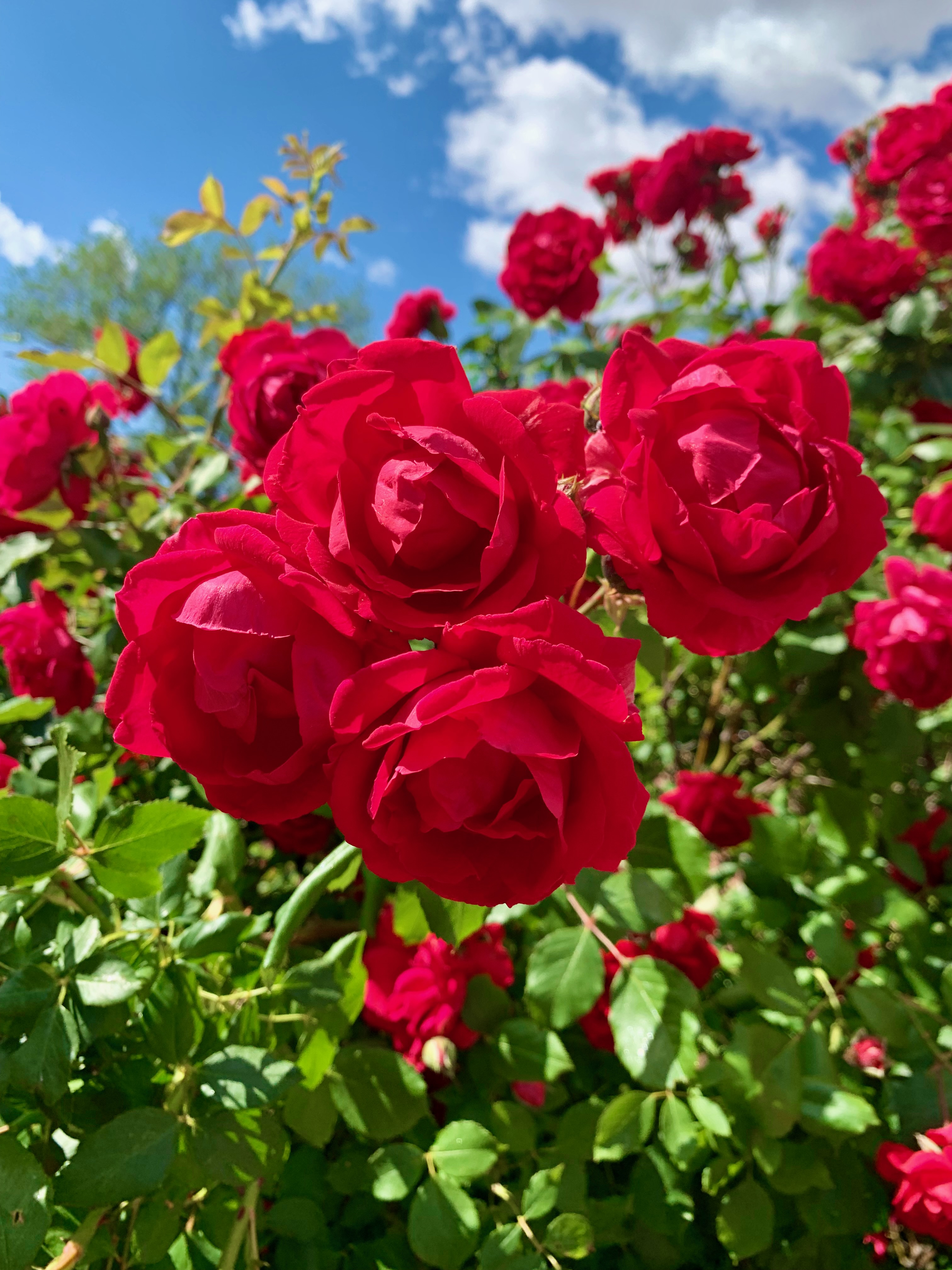
To quote the great Madeline Kahn in Blazing Saddles, “A Wed Wose… How Wovewy.”

24 Frames: Before Sunset

Despite their ubiquity, movies sequels rarely match their predecessors and almost never better them. Critics and fans alike may go to bat for The Godfather, Part II as the superior entry in that trilogy (I finally saw it last year—surely the gold standard for what a sequel should be, but I still prefer The Godfather) and The Empire Strikes Back arguably refines and deepens the universe introduced in Star Wars, as does Sam Raimi’s Spider-Man 2 for its previous entry. Still, most sequels fall short if just by a hair (Austin Powers: The Spy That Shagged Me) or more often, a country mile (City Slickers 2: The Legend of Curly’s Gold, anyone?)

Even arthouse cinema is not immune, though its filmmakers may try dressing up their sequels in other guises. Francois Truffaut’s Antoine Doinel series revisits the same character (played by Jean-Pierre Leaud) five times over two decades though The 400 Blows, which introduces him is so widely revered (deservedly so, since it’s more or less ground zero for the French New Wave) one can imagine only the most contrarian critic wasting the effort to extol Stolen Kisses or Love On The Run in favor of it. The most successful sequels are often stumbled upon for artistic rather than commercial reasons, like Abbas Kiarostami’s Life, and Nothing More… where he dramatizes seeking out the child actors from his earlier film Where Is My Friend’s Home following an earthquake ravaging the remote village where it was shot. Rather than feeling forced, it’s a meta-commentary on how life and art intersect more than a continuation of its story.

After The Godfather Part II won six Academy Awards (three more than The Godfather) and Airport 1975 became the seventh highest grossing film of its year, the floodgates opened: now, multiple sequels to such blockbusters as Jaws and Rocky were not only inevitable but also practically expected. If anything, sequel-itis has spread exponentially in the 21stcentury (see the Marvel Cinematic Universe among other mega-franchises) to the point where it’s hardly worth getting worked up at a multiplex sign where a majority of the films screening have a “2”, “3” or an “X” after their titles. Artful or not, they’re here to stay which is why in 2004, that year of Spider-Man 2, Shrek 2 and the more creatively titled Meet The Fockers (the only creative thing about it, really), I was skeptical when I first heard of Before Sunset, a sequel to Before Sunrise from nine years before reuniting director Richard Linklater with actors Ethan Hawke and Julie Delpy. In the earlier film, American Jesse (Hawke) and French Celine (Delpy) meet on a train travelling across Austria and impulsively spend 24 hours together walking around Vienna before each of them must return to their native countries. A wistful, short-term romance with the loquaciousness of an Eric Rohmer film (perhaps crossed with one of Billy Wilder’s less satirical efforts), it did what it set out to do fully and enchantingly thanks to its stars’ innate chemistry and Linklater’s characteristic humaneness and nimble, attentive camerawork. With such a perfectly executed film, why try to recapture that seemingly once-in-a-lifetime magic again?

Before Sunrise

What immediately sets Before Sunset apart from other sequels is that it never resembles a cash-grab or a product its creators felt obligated to make, even if Before Sunrise was widely beloved and a modest hit. Linklater, Delpy and Hawke (all of them contributing to the screenplay) began working on a larger-budgeted sequel (with locations in four countries!) shortly after the first film came out but failed to secure funding. They only resumed work on it in 2003 albeit at a much smaller scale. One can easily comprehend the desire to revisit Jesse and Celine a decade (or even a year or two) after their passing meet-cute but to actually make good on that challenge and create something that recaptures the essence and insight of the original is a tall order. Happily, if nearly improbably, Before Sunset not only accomplishes this but ends up one of the rare sequels that arguably improves upon its predecessor, retaining its spirit while also extending its narrative in ways that feel less like a rehash than a reunion gradually revealing itself as a reassessment: what would it be like for Jesse and Celine to meet again and more importantly, what would that mean for them?

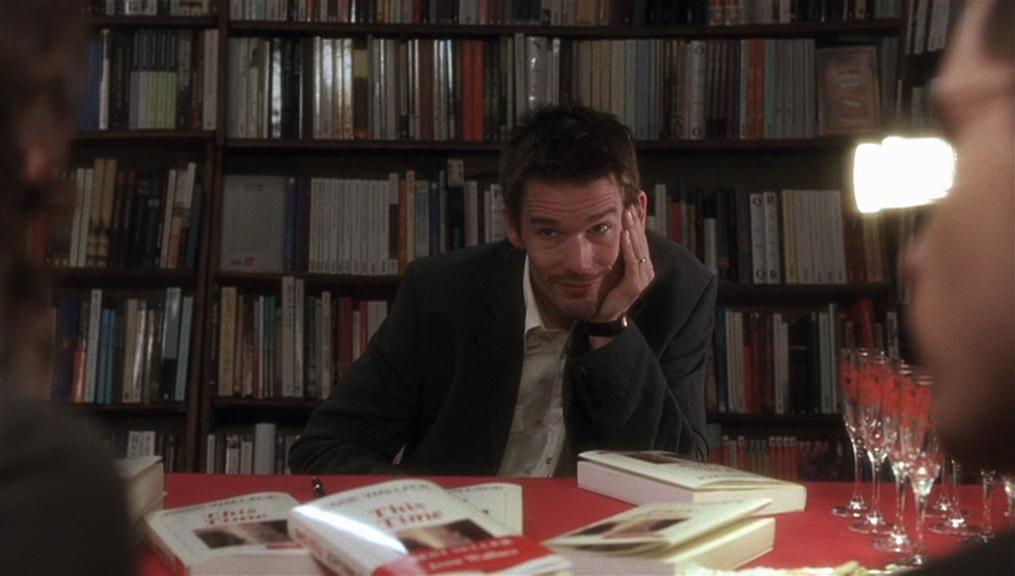
As previously noted, Before Sunset picks up nine years after that chance meeting on a train in Austria. The new setting is Paris and Jesse is on the last stop of a European tour for his first novel, This Time, a roman à clef inspired by his whirlwind romance with Celine. During the Q&A portion after his reading at famed English language bookstore Shakespeare and Company, he spots Celine herself standing near the back of the audience. Unlike the earlier film, her presence here is not random; she’s there (in the city where she resides) to purposely see Jesse read from his book about their fling. The moment he and the audience become aware of her presence carries a jolt of recognition which Hawke, often a more subtle actor than he’s given credit for conveys beautifully. As they say hello and embrace, one can detect an instant spark but also the hesitancy one would expect from a situation orchestrated by one participant and unexpected by the other.

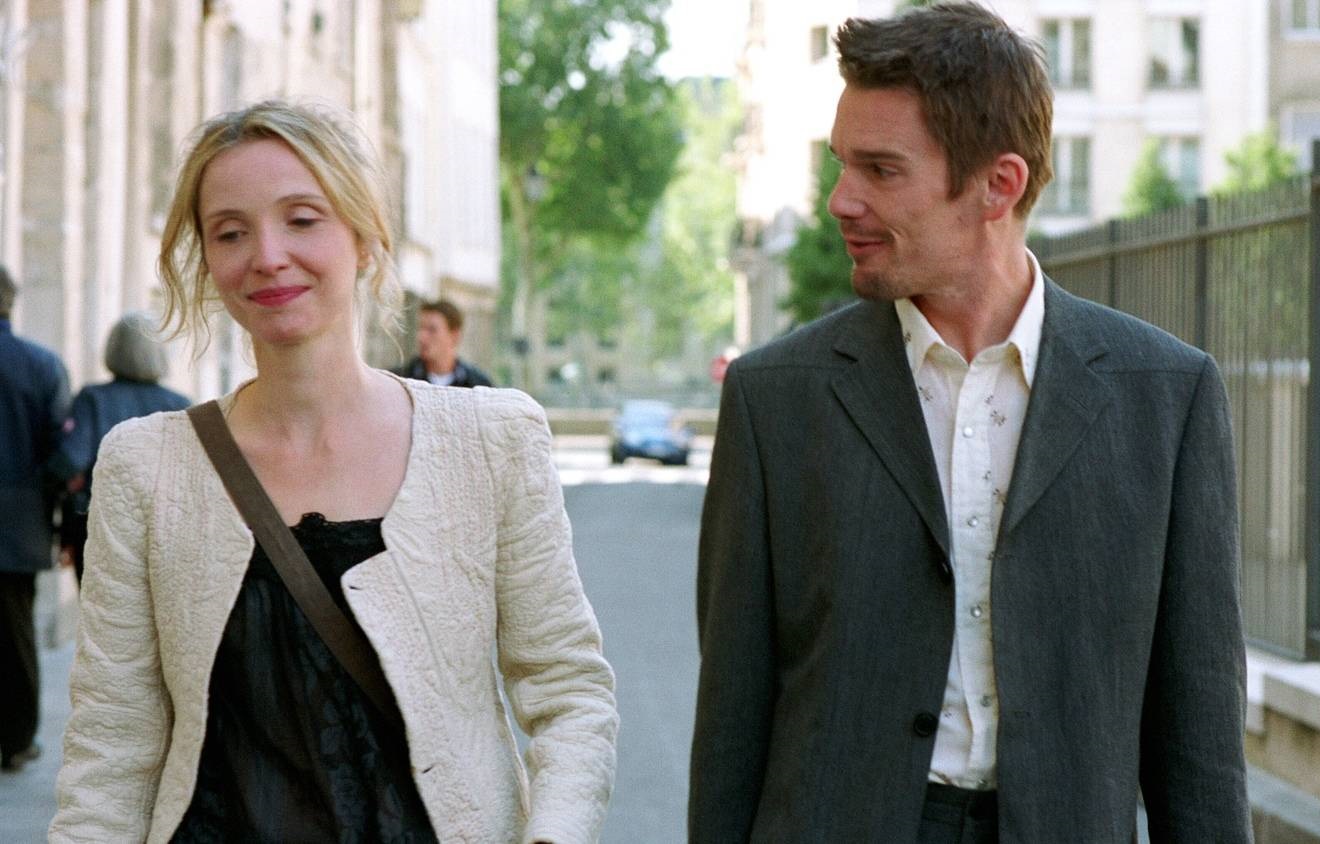
Jesse has a plane to catch, leaving him and Celine with barely an hour to spend together. As they did in Before Sunrise’s Vienna, they walk through the streets of Paris, stopping in a café here, a park there, getting caught up and getting to know each other (again) as their dynamic and particular rhythms gradually fall back into place. Celine, however, now has a hometown advantage, directing where the two them will go. As they catch up, they each reveal more about themselves than they might initially mean to. They answer whether either of them made good on their parting pact of showing up at the Vienna train platform six months after their first meeting (Jesse did, Celine didn’t—she was at her grandmother’s funeral.) They also debate on whether they had sex (off camera) in the Vienna park (Jesse argues that they did twice; Celine doesn’t recall it, positing, “Memory is a wonderful thing if you don’t have to deal with the past.”)

All the while, the question “Does anyone change?” lingers in their pauses between conservation; as much as either one would like to deny it, their body language often says otherwise: at different times, one of them tentatively reaches out to touch or comfort the other, only to pull away, sensing the recuperations of such a gesture. They may be recognizable as the Jesse and Celine of the first film, but they’re also noticeably older (especially early on when Linklater silently cuts back to brief shots from the first film) and also perhaps… wiser? Now an environmental activist, Celine’s as impassioned as her younger self, but more caustic, a little angrier and maybe a bit jaded. Jesse, who is married and has a young child is still something of a wanderer/dreamer but he carries with him a newfound pragmatism and stronger sense of maturity compared to his younger self.

Eventually, catching up and small talk gives way to abrupt, messy emotional disclosures. Midway through, Jesse can’t help but moan in resentment and regret at Celine not showing up again in Vienna while she later snaps at him, “I was fine until I read your fucking book!” They each muse on what might have been, realizing that for a small period they both lived in New York City at the same time but never ran into each other (or even sought each other out.) Jesse confesses that his marriage is falling apart (perhaps inspired by Hawke’s then-recent divorce from Uma Thurman) while Celine considers their past, referring to it as “That moment in time that is forever gone.” All the while, tension mounts for the clock is running out—Jesse still has that plane to catch, a fact both of them repeatedly acknowledge, recalculating what diminishing amount of time they have left while also figuring out ways to prolong it. After they hug each other for a presumably final time, Jesse asks his car service to the airport to instead drive him and Celine to her apartment. He then walks her through the building’s vast courtyard to her front door. She invites him inside for a cup of tea; he accepts.

Before Sunset might be one of the most suspenseful romances ever made because it plays out in real time: its eighty minutes covers that exact, unbroken period in the lives of these characters. As much a narrative-driver as the single day was in Before Sunrise, this duration almost feels as if time itself has collapsed since we’re not used to seeing it play out so meticulously. Even more so than the earlier film, this one is composed of long takes as the camera follows and tracks Jesse and Celine’s journey (the late-in-the-day sun-kissed cityscapes add to the overall allure.) Their temporal space, by being fully synced up with our own creates an intense, almost unbearable sense of intimacy, like we’re right there with them accompanying their every move. By the time Jesse and Celine are slowly walking up the stairs to her apartment, the tension is off the charts—it’s exhilarating to watch them take each step wondering how much further they will go together. Actually, how much further can they take this? Jesse still has a plane to catch! (Not to mention a family waiting for him back in America.)

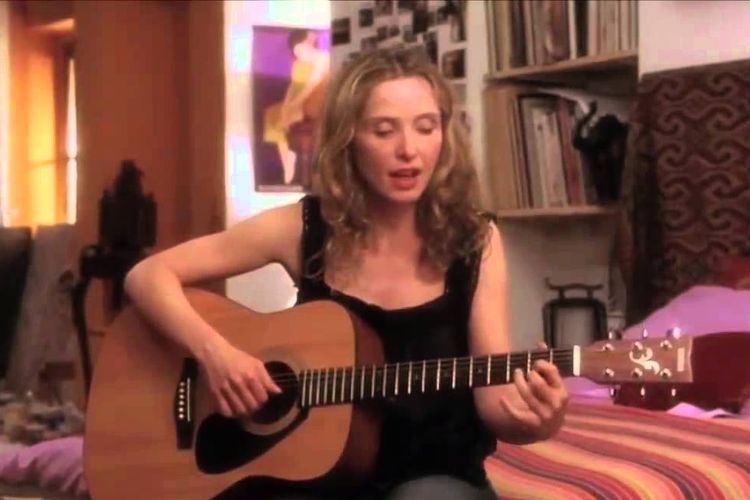
Once inside Celine’s exquisitely bohemian apartment, he asks her to play one tune for him on acoustic guitar (she earlier mentioned that she had been writing songs as a hobby.) She chooses “A Waltz For A Night” which is her side of their story, a three-minute folk/pop song equivalent to Jesse’s novel. Breathily, lovingly, she sings, “I just want another try, I just want another night” before almost coyly adding, “One single night with you, little Jesse / is worth a thousand with anybody,” (the cut to Hawke’s face when she sings “Jesse” is as startled and ebullient as his first view of her at the bookstore.) She makes tea, he puts on a Nina Simone CD. She tells him of when she saw Simone in concert before her death, swaying like her to the music. She says to him, “Baby, you’re going to miss that plane.” He responds, “I know.” No reasonable viewer can wait to see what happens next but wait they must, for the screen fades to black and the end credits roll. When I first saw the film in a theater, the audience let out a reaction that was equal parts relief, bemusement and slight frustration at this ending, but it’s perfection in how it exhibits grace and restraint after all that wish fulfillment tempered by built-up and sustained stimulation and uncertainty. Sure, it could’ve been satisfying to see Jesse and Celine kiss or embrace but here, just the process of their reconnection and how witnessing it playing out in real time makes it feel earned provides what’s needed for their arc to resonate.

I rewatched Before Sunset a year later in a theater as part of a double feature with Before Sunrise but didn’t view it again for another nine years (coincidentally, the same period of time separating the two films.) Now past the age of Celine and Jesse in Before Sunset, the film hit me even harder: that slooow walk up the stairs proved more effective, even when knowing what would happen next. The intimacy established between the two leads was rare in that it seemed to come from a real place rather than a storybook construction. I wanted Jesse and Celine to be together, I saw that they wanted it too but I didn’t know if it would be just for a night or longer than that or even at all. This notion remained true to the spirit of Before Sunrise while enticingly pushing it further—I was offered another mere glimpse into the lives of these two people but this time, the possibilities seemed limitless as the spark was reignited.

Nearly two decades on, as sequels go, Before Sunset remains an anomaly more than a precedent. Some recent film sequels are perfectly respectable: The Incredibles 2, Paddington 2, the John Wick films (haven’t seen any but I suspect many would argue for them.) Once in a blue moon, one will emerge that’s arguably stronger as its predecessor (Cedric Klapisch’s Russian Dolls, which I remember liking more than L’Auberge Espagnole.) However, most sequels still suck or are at the very least an inferior product.

Thus, Linklater, Delpy and Hawke faced a unique challenge when they decided to revisit Jesse and Celine another nine years on in Before Midnight. Without spoiling too much, the film drops in on another specific and brief period of time in the characters’ lives, gradually revealing all that has happened since the ambiguous ending of Before Sunset. It is a thornier film by design, going deep into how time influences perception of self and others and what consequences such familiarity portends. The tone is much different from the first two films without losing sight of who the characters are or obscuring their spirit—there are still lengthy conversations and an exotic setting but also an acknowledgement of early middle-age as a period fully distinct from one’s early thirties or twenties. It also ends on an ambiguous note that could easily serve as an invitation for another sequel or a conclusion.

Although Delpy nixed the idea of a fourth film in 2021 (nine years after the production of Before Midnight), a year later Hawke suggested the potential is still there for the three principals to come together and continue the story. I liked Before Midnight but wouldn’t rate it as highly as Before Sunset—something about the latter’s unexpectedness added so much to its appeal. For a fourth film (maybe After Sunrise?) to work, Linklater, Delpy and Hawke would need to be in sync with an inspired idea that builds on the previous entries, favoring a deepening of the story and not serving as mere fan service. Before Sunset did that brilliantly and as long as sequels aren’t going away, more filmmakers should study it.

Essay #15 of 24 Frames.

Go back to #14: What Time Is It There?

Go ahead to #16: Me And You And Everyone We Know.

Return to Santa Fe

Three weeks ago, I returned to Santa Fe for my first visit in nearly seven years.

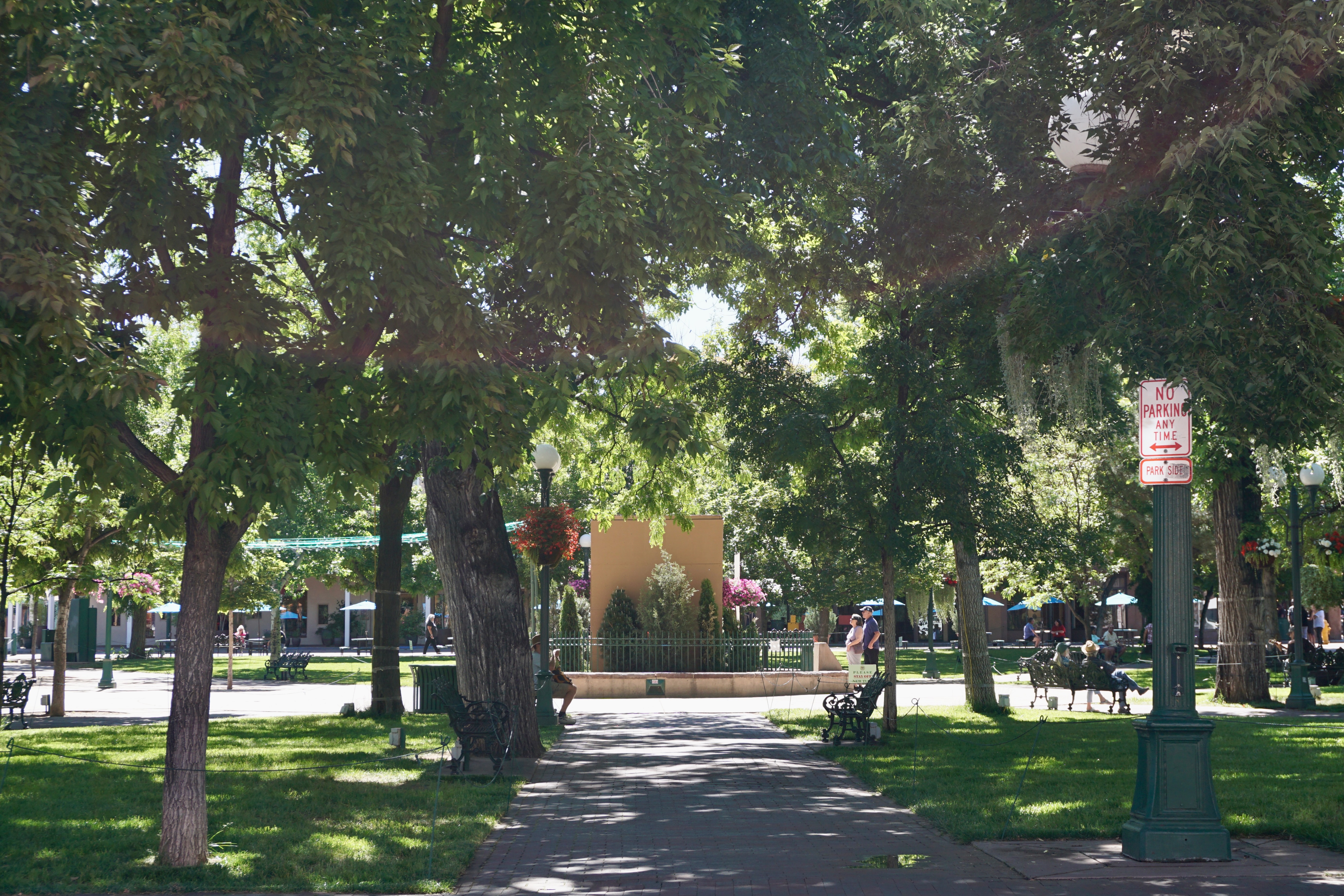
I took enough pix for at least five or six essays; this first one is set in and around the famed Santa Fe Plaza.

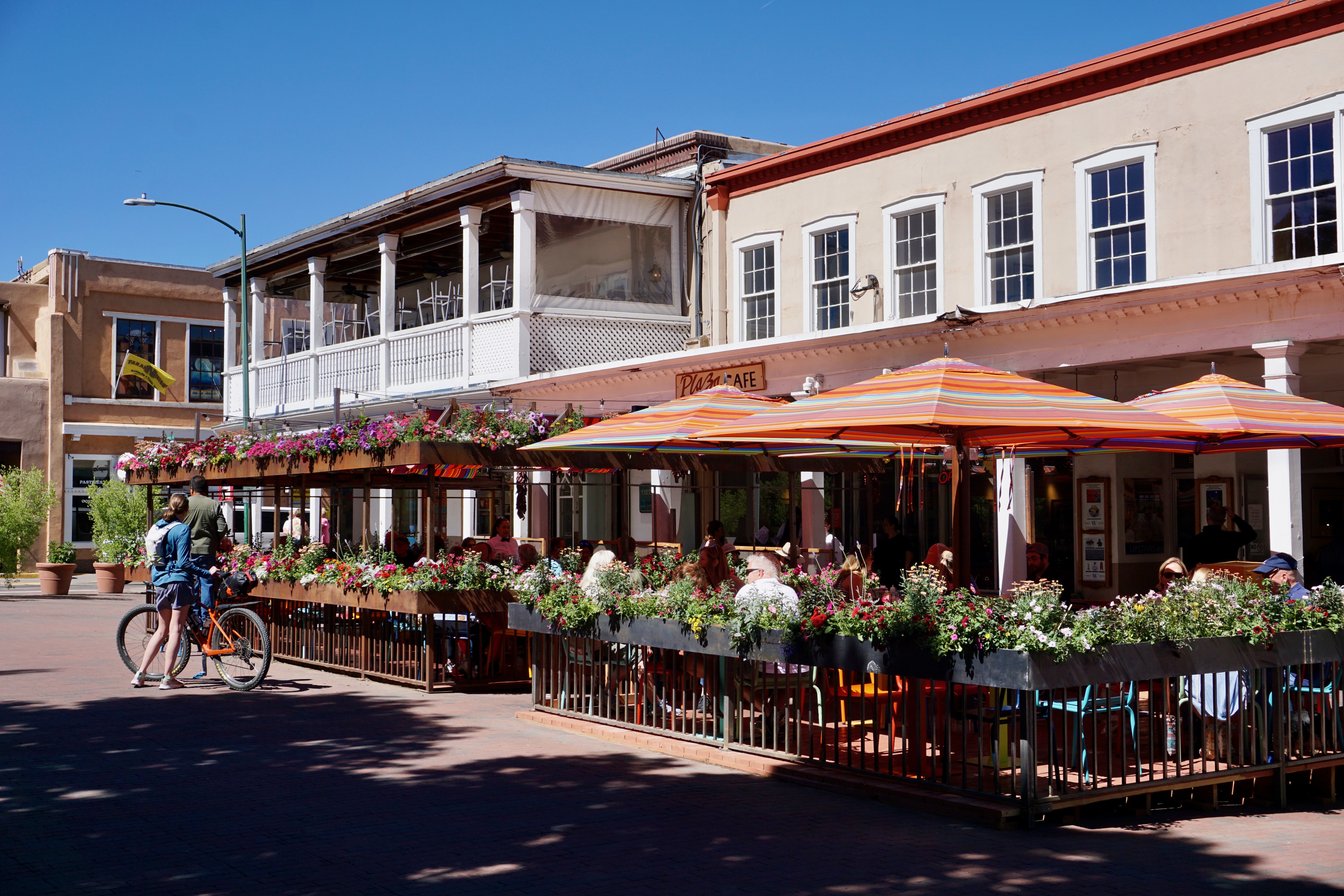
On past visits, the Plaza Cafe did not have outdoor seating; like many other businesses, it has adapted, although far more beautifully than most.

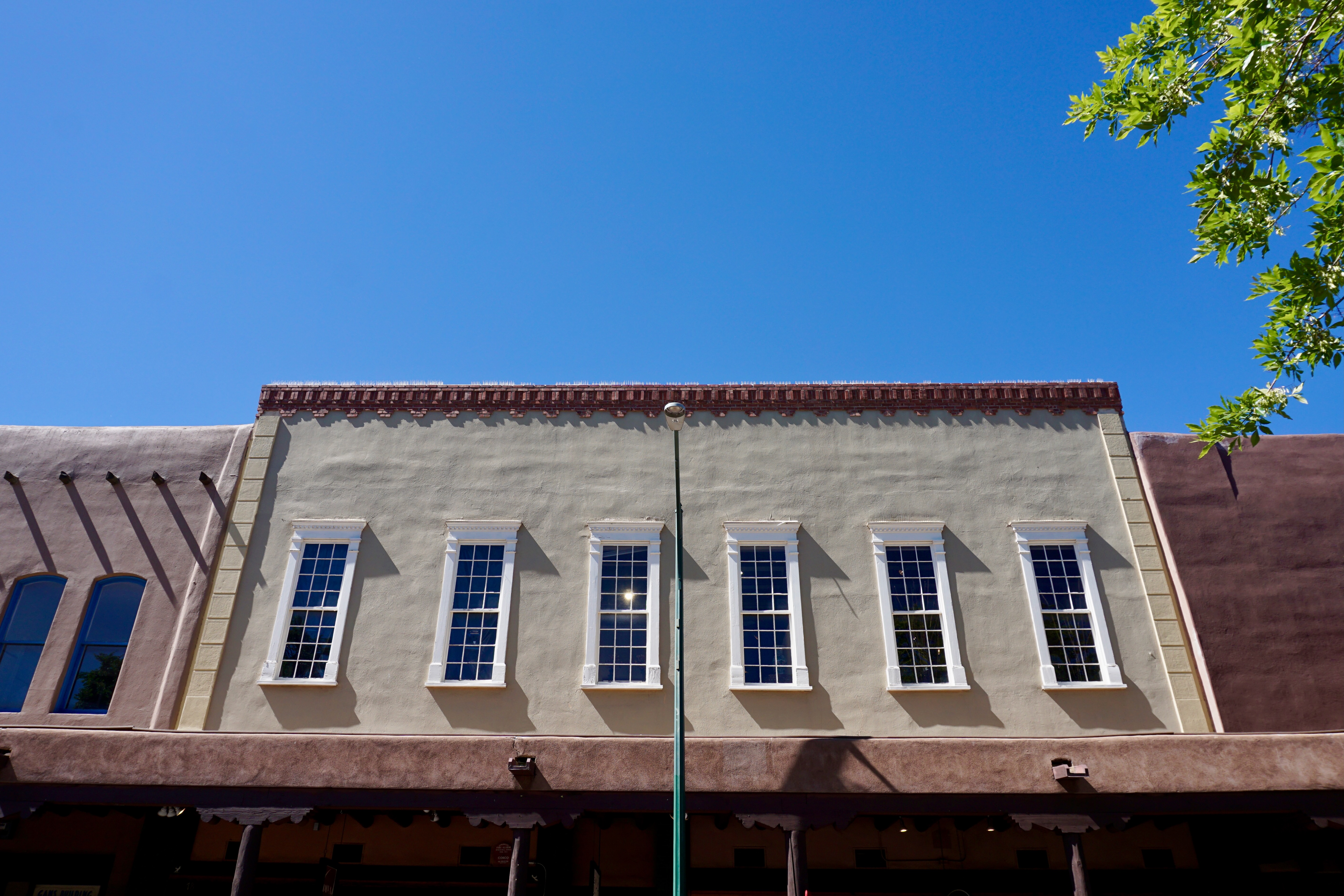
Santa Fe’s distinct desert/adobe/Spanish-style architecture is reason alone to visit.

Adobe and turquoise paint almost always go well together.

Some buildings near the Plaza are more baroque and elaborate than others.

When there, I occasionally feel like I’ve stepped into a different country.

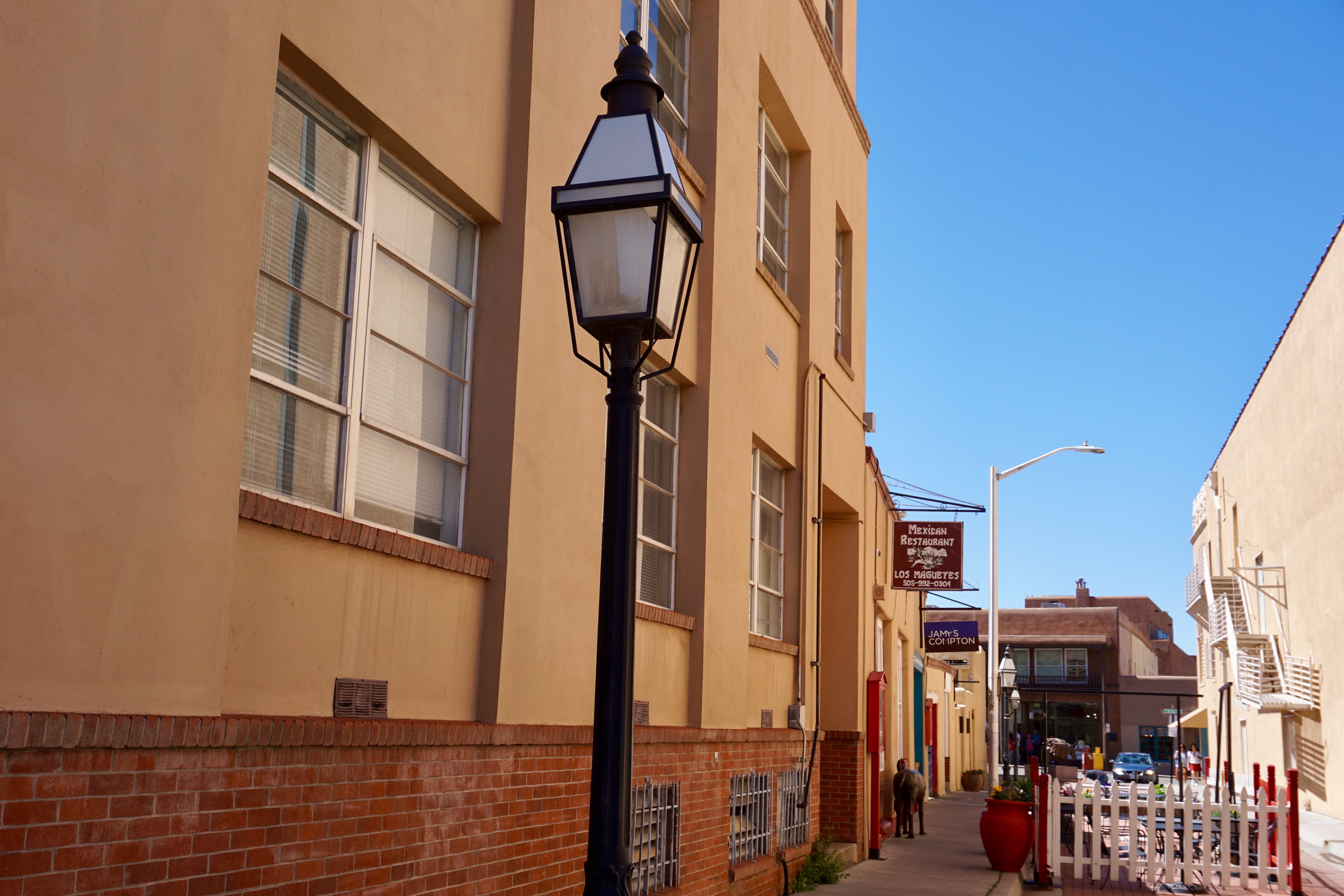
Charming little roads such as Burro Alley further enhance this idea of not being in Kansas anymore.

A few blocks from the Plaza, this elaborate garden was like something out of a storybook.

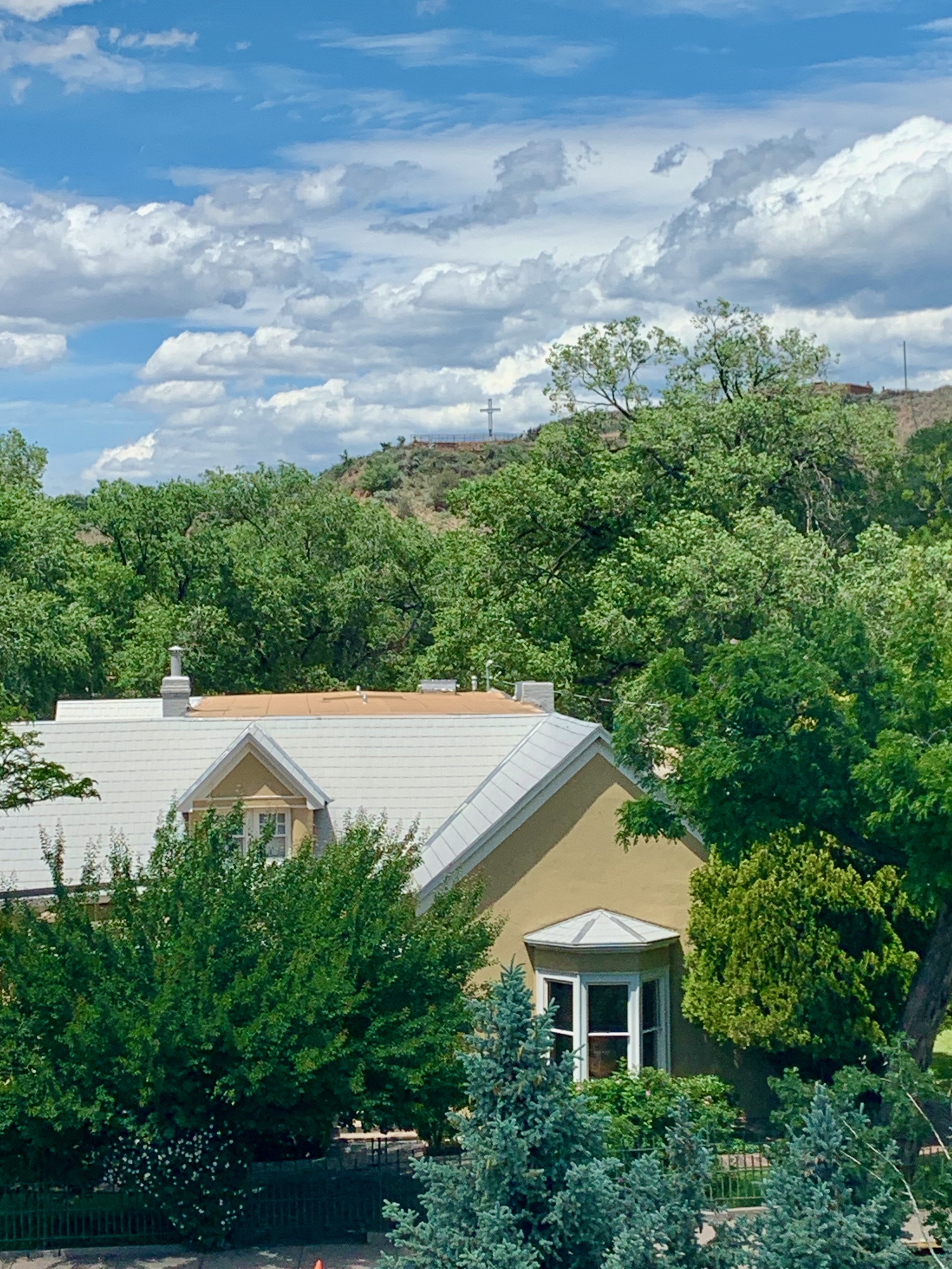
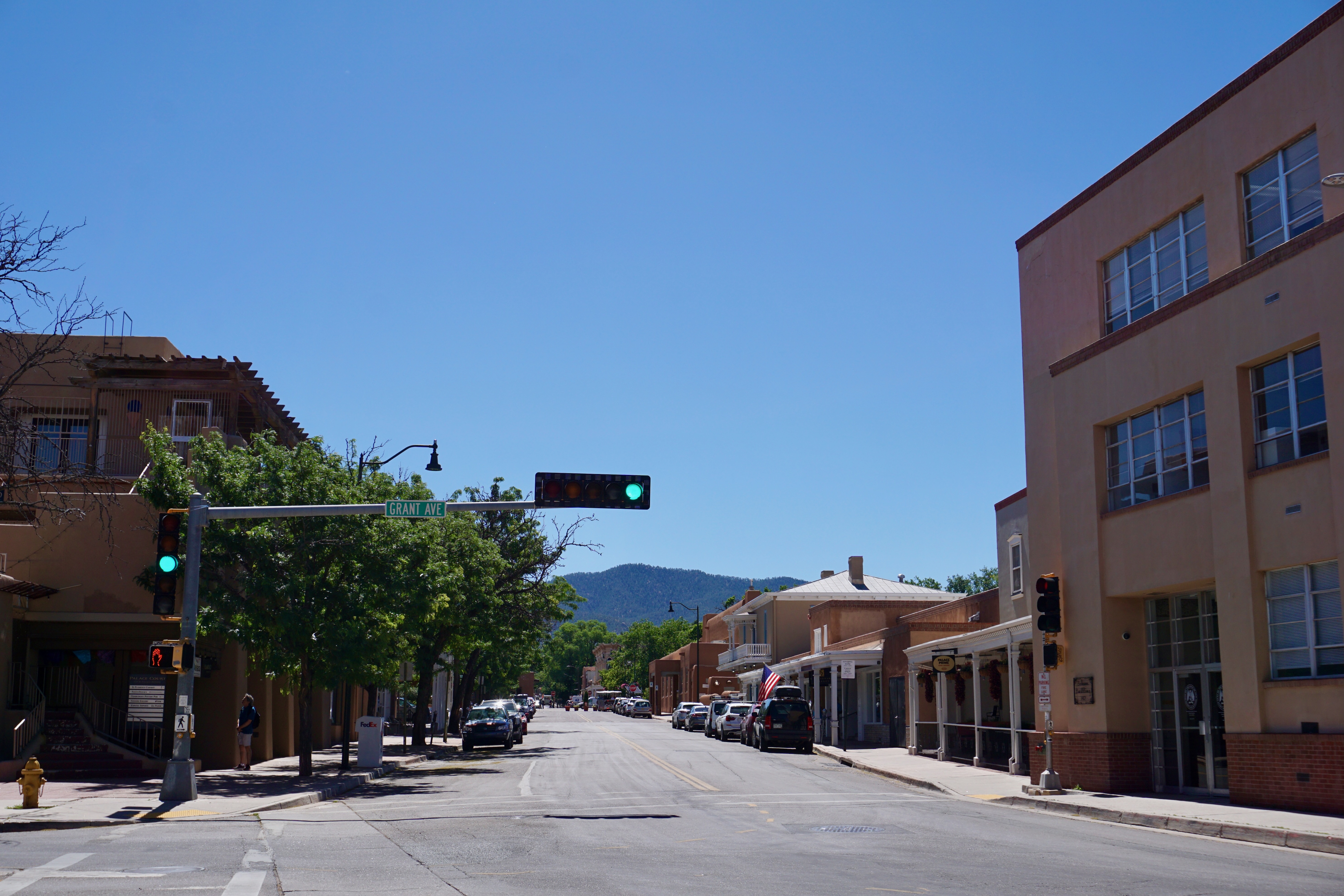
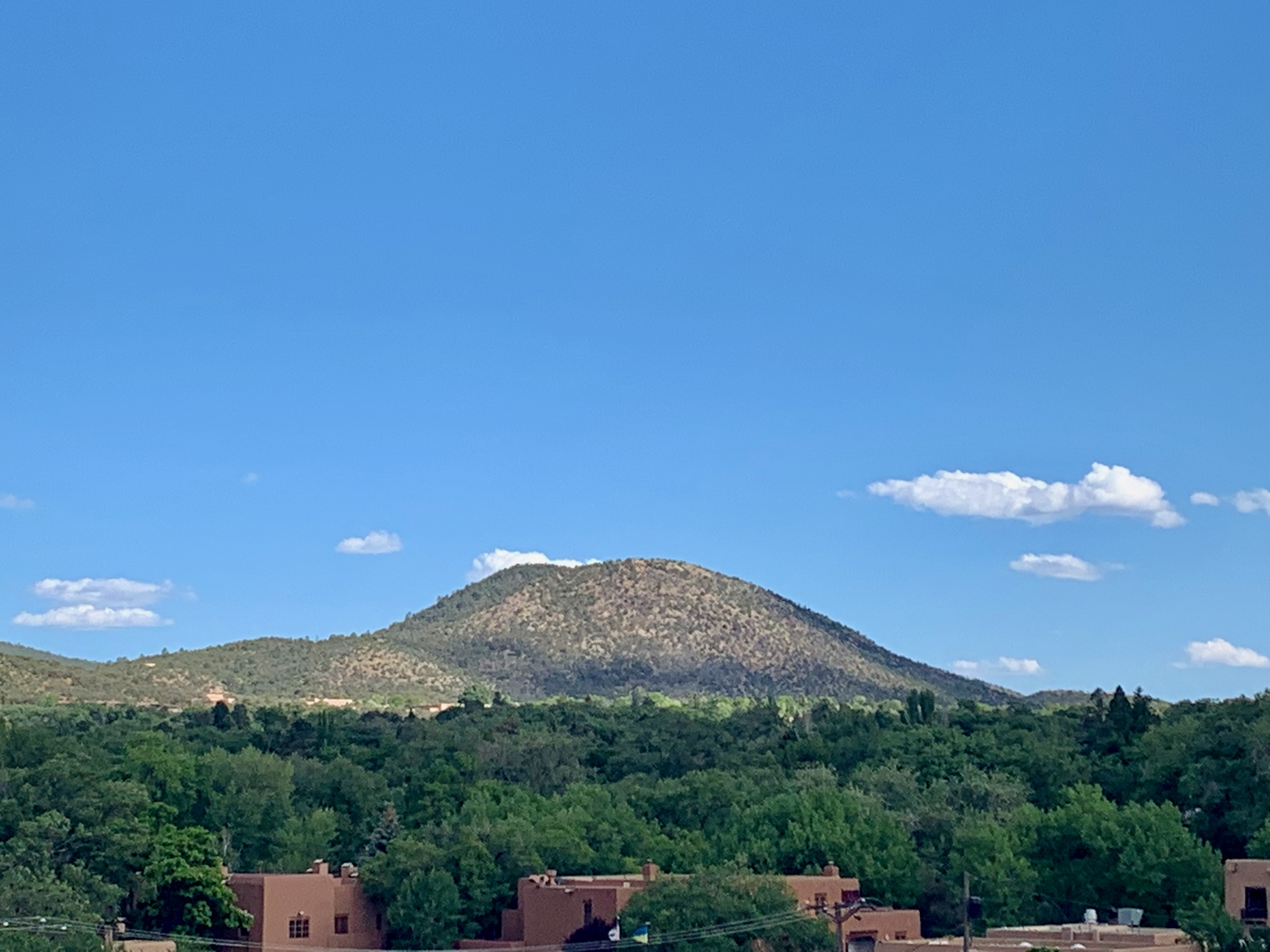
There are no shortage of scenic views from Downtown Santa Fe, like this one from my hotel room of Cross of the Martyrs.

Or this one from Sandoval Street of the mountain range east of town.

Stay tuned for more photos from Santa Fe and beyond.