On the last full day of our Palm Springs trip in April, we visited Sunnylands.
Located in nearby Rancho Mirage, the property houses the former Annenberg Estate. While we didn’t buy tickets to tour the entire estate (including a historic house), we did spend an hour or so walking around the gardens which are free to the public.
As a longtime fan and supporter of botanical gardens, I hadn’t seen one quite like this.
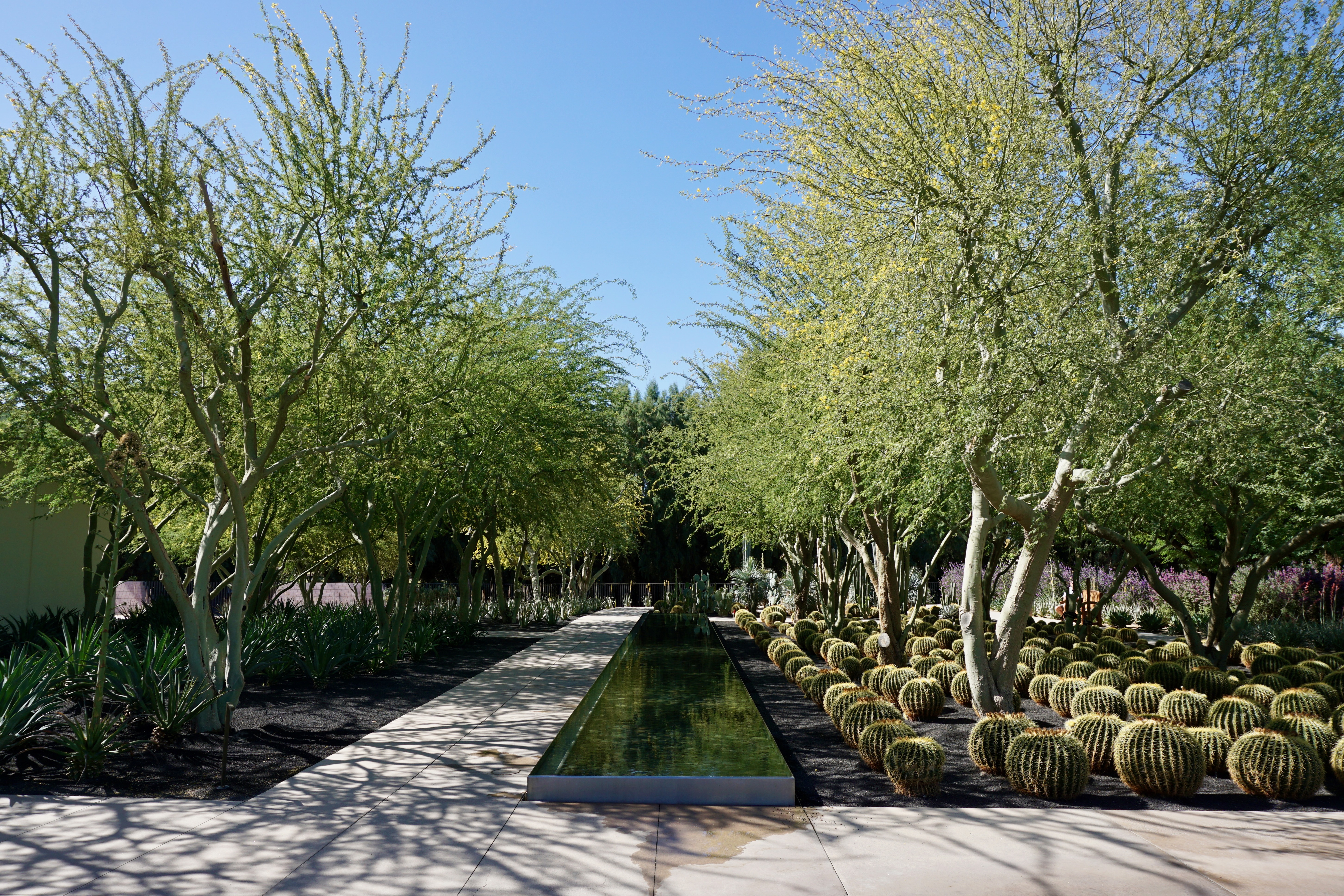
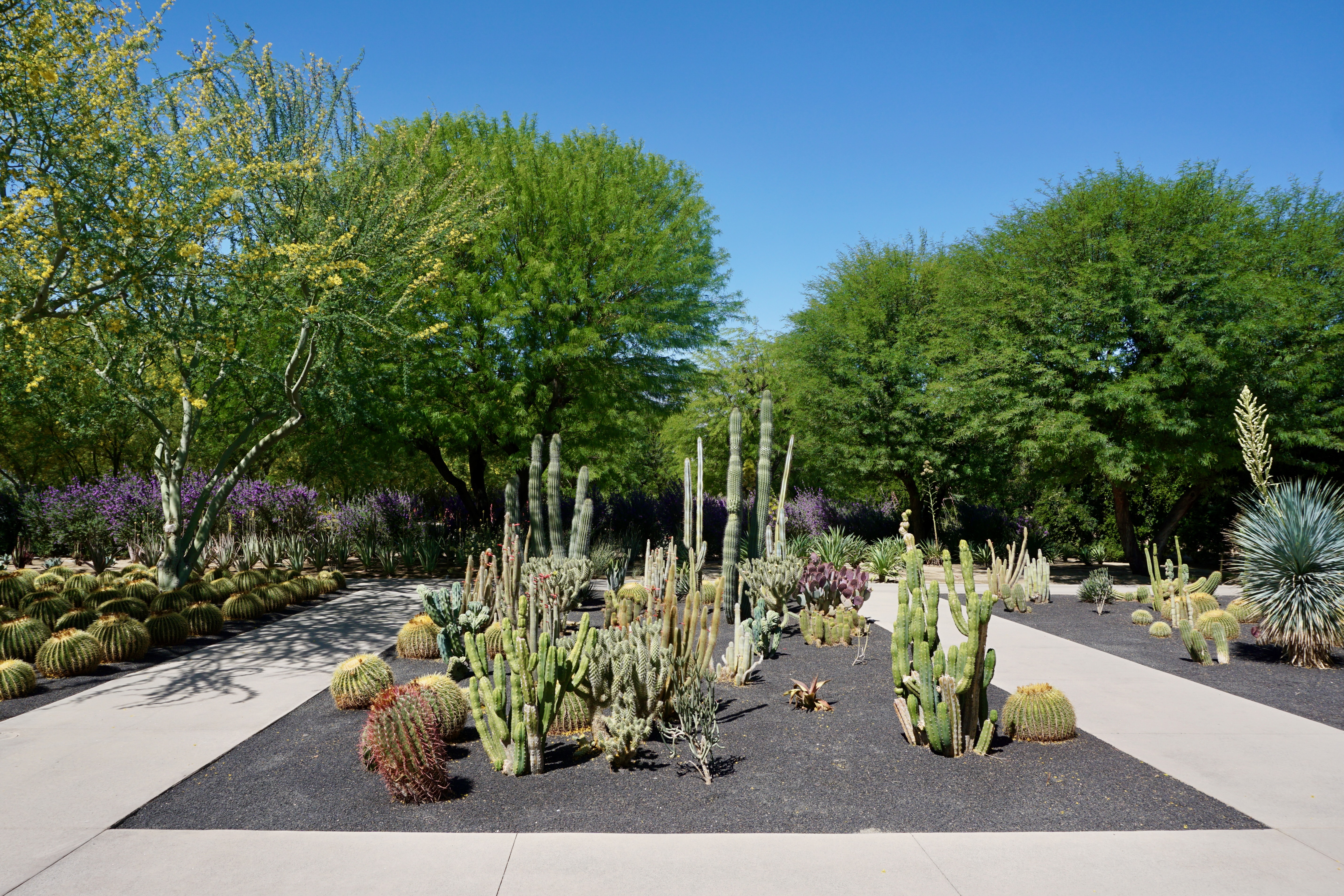
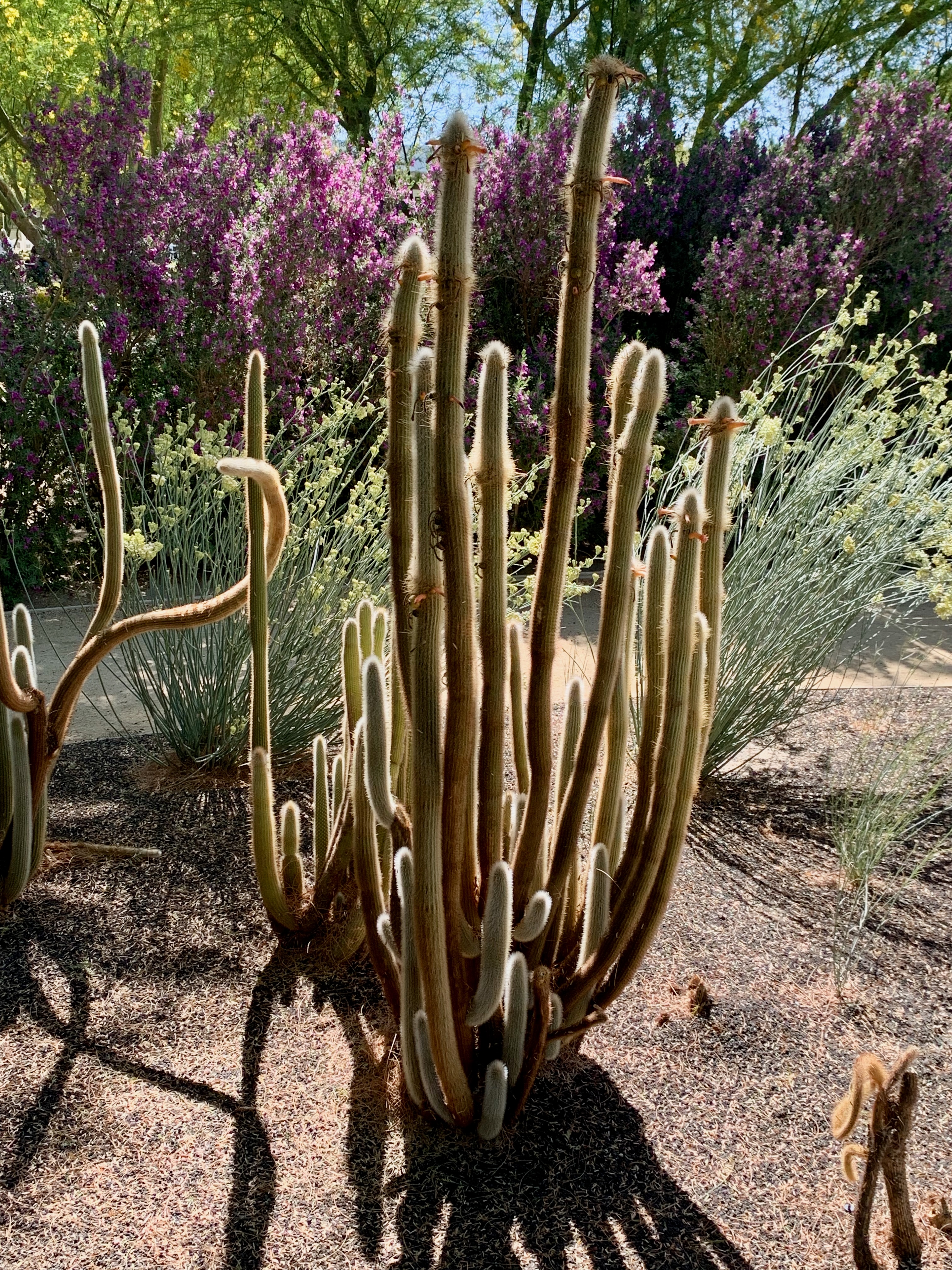
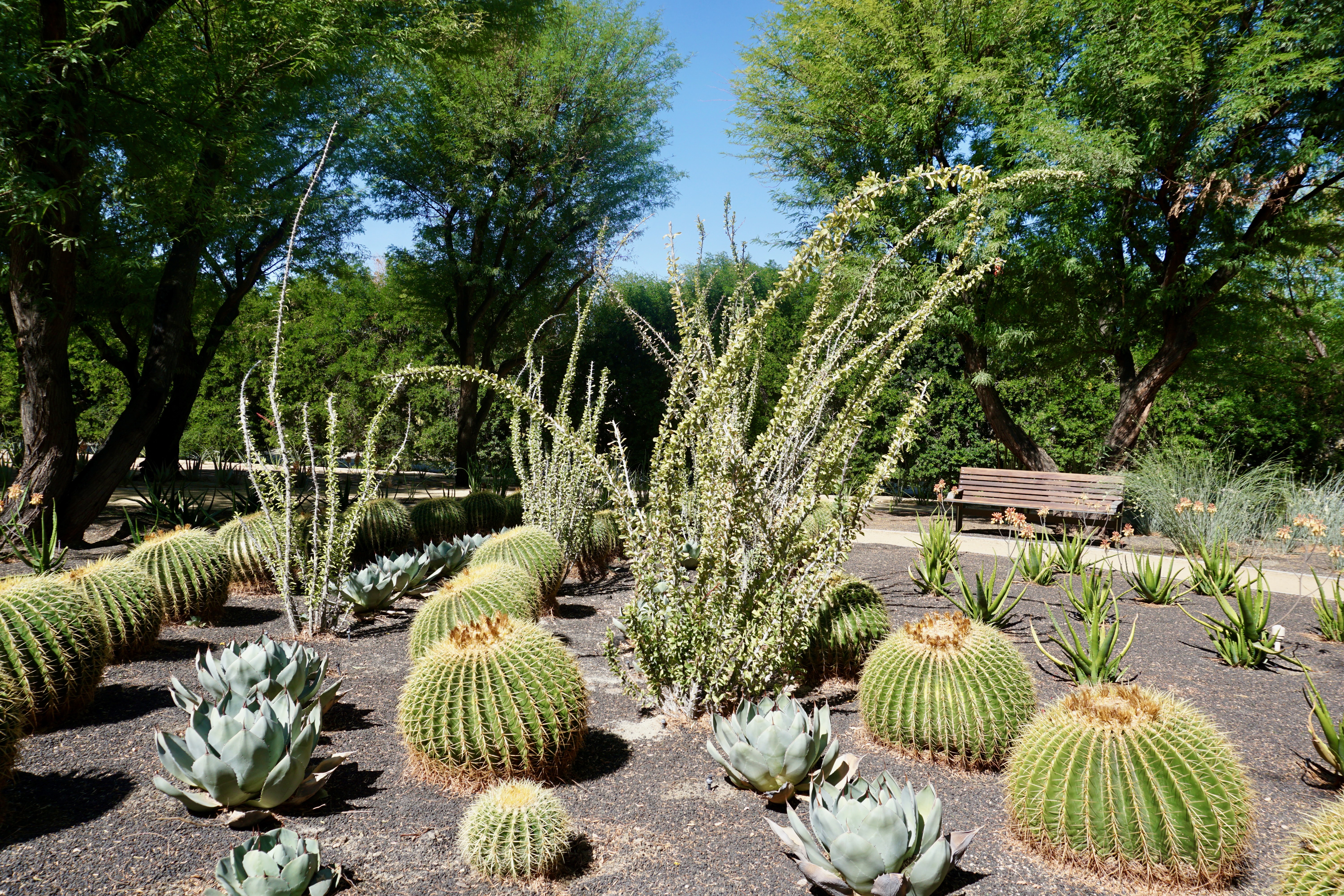
Given the Southern California desert climate, these gardens are heavily succulent-oriented. Here are an array of cacti:
Good Morning!
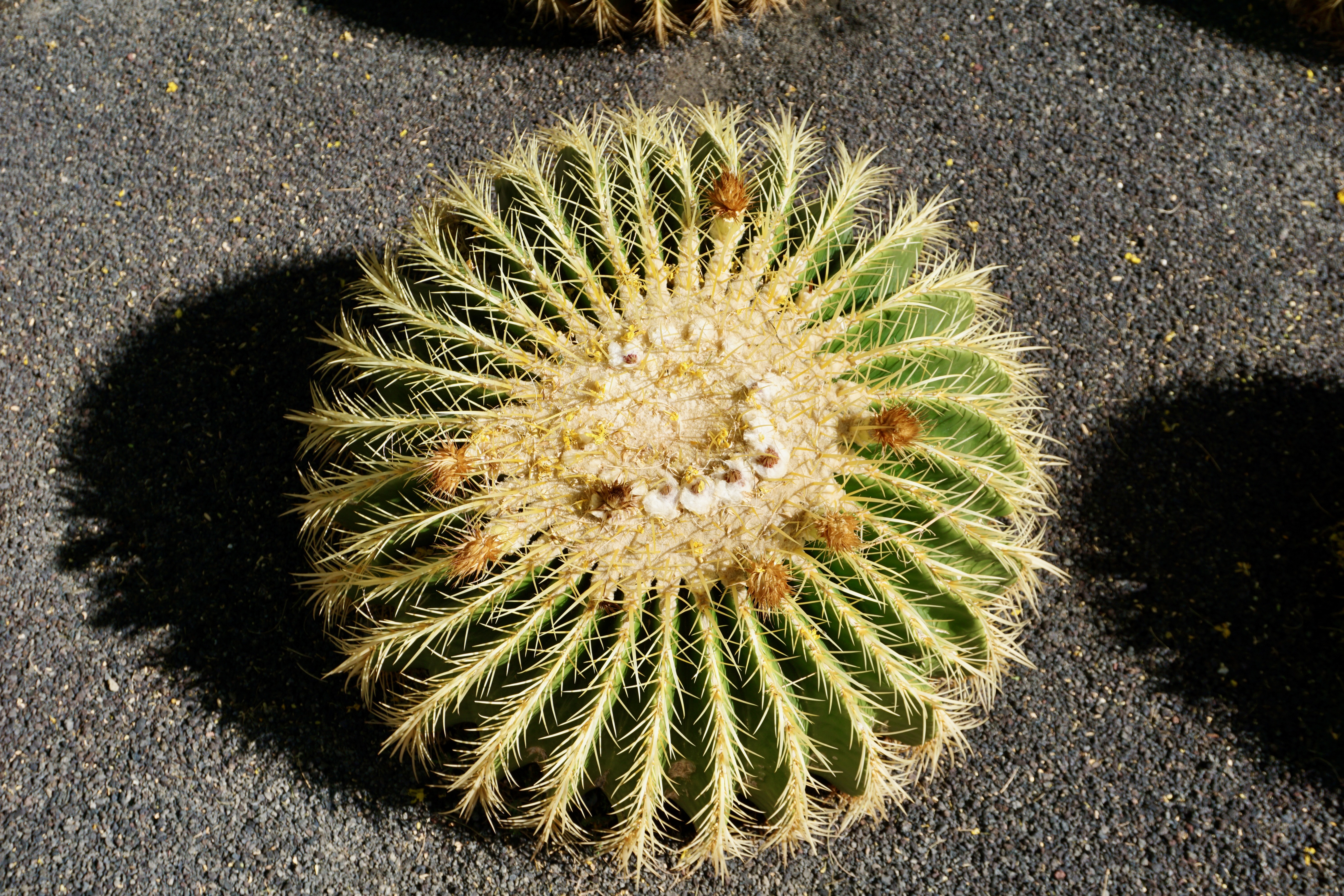
Watch where you sit.
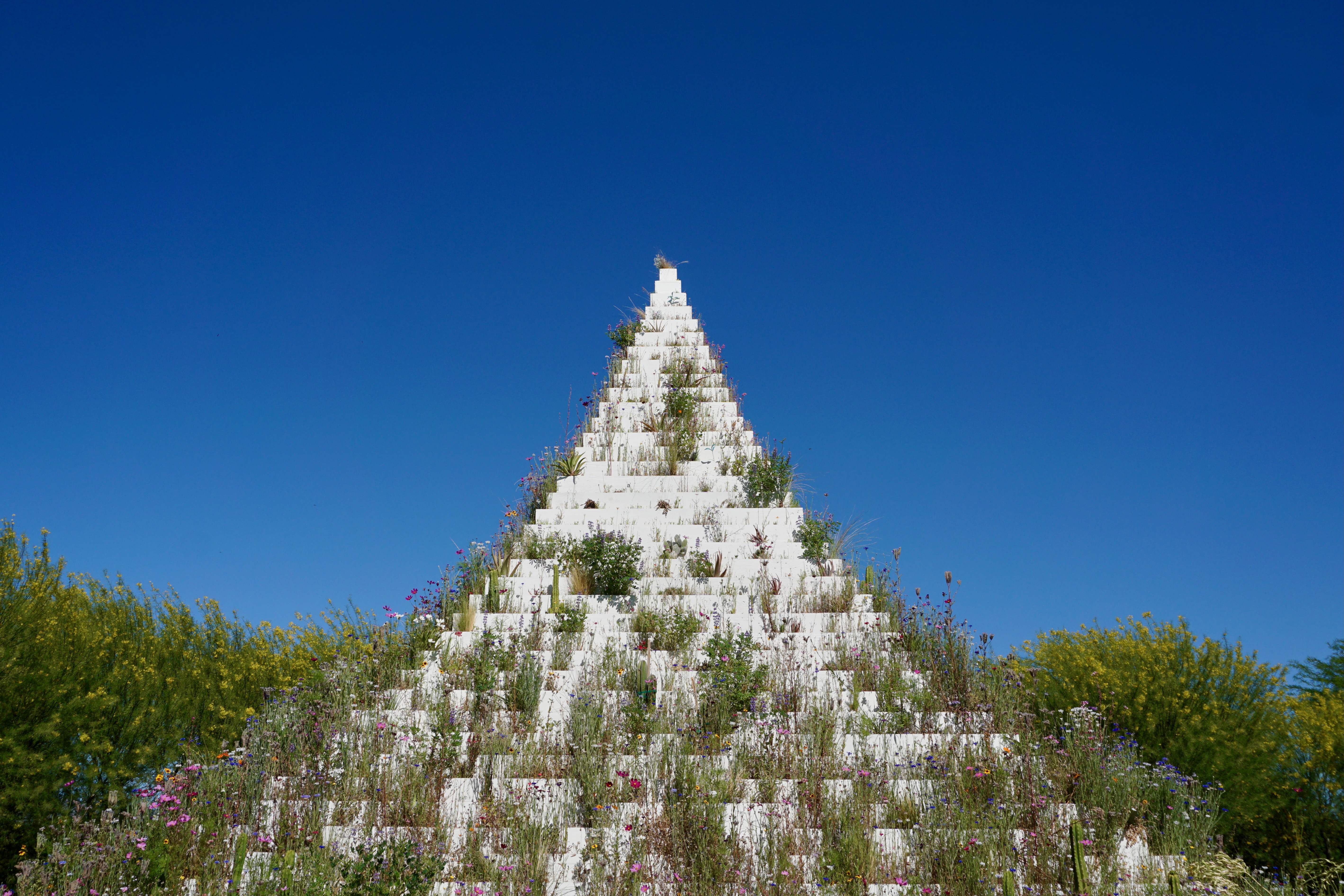
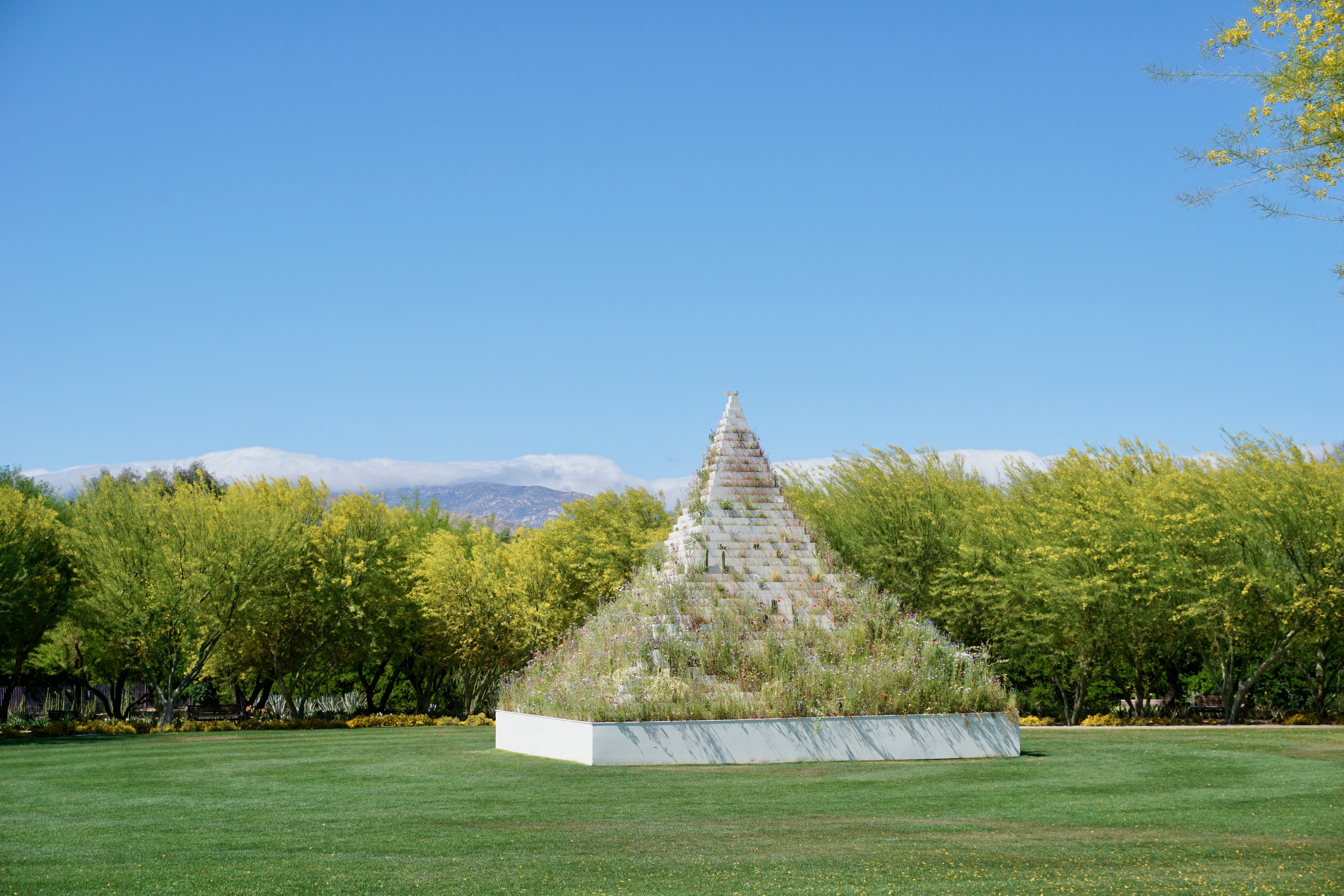
At the time of our visit, as part of Desert X, the gardens housed an outdoor art commission, Agnes Denes’ The Living Pyramid.
“A monumental step pyramid planted with rows of vegetation native to the region,” it cut a striking figure against the mountains to the east.
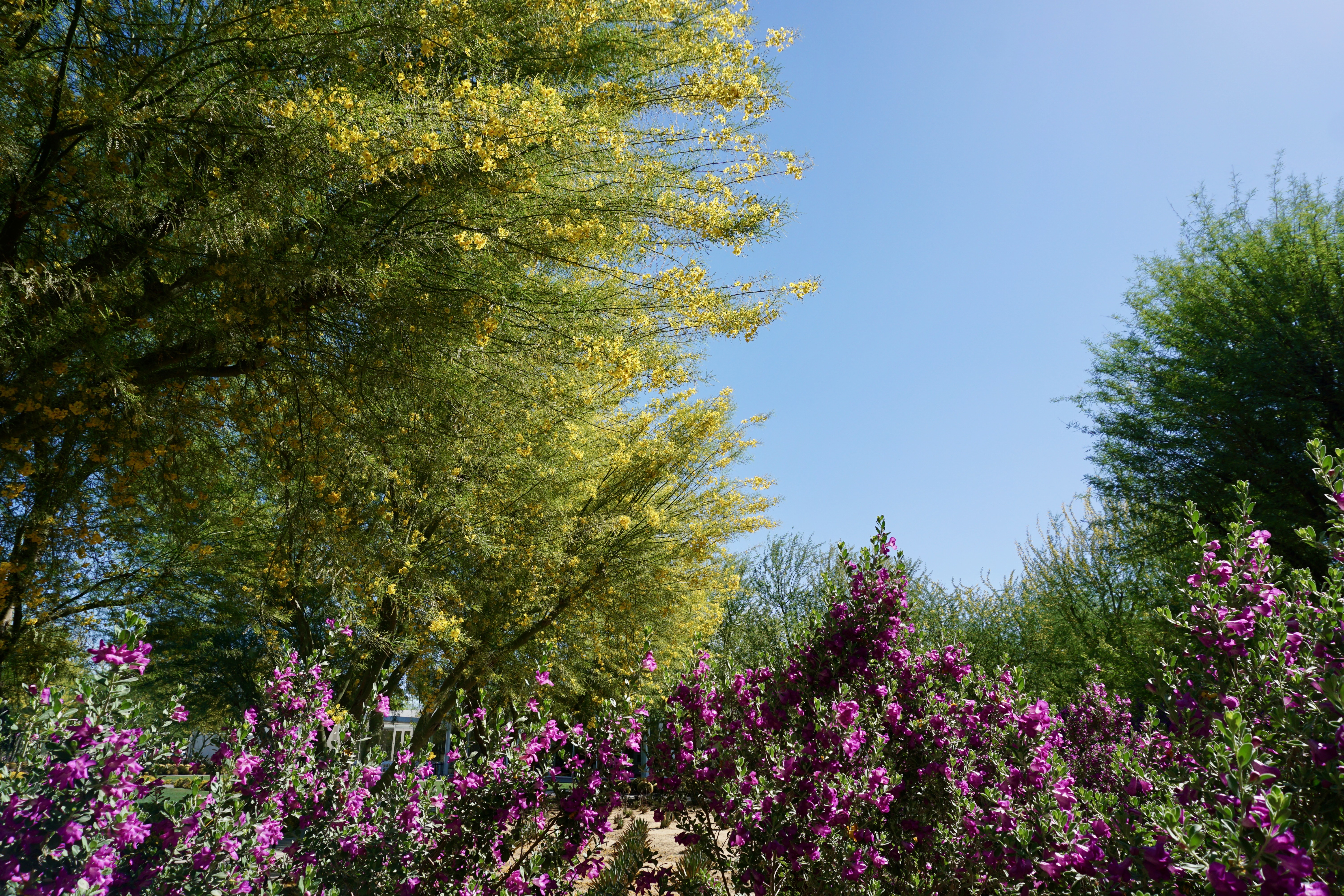
In this arid environment, purple flowers practically glow against all of the surrounding earth tones.
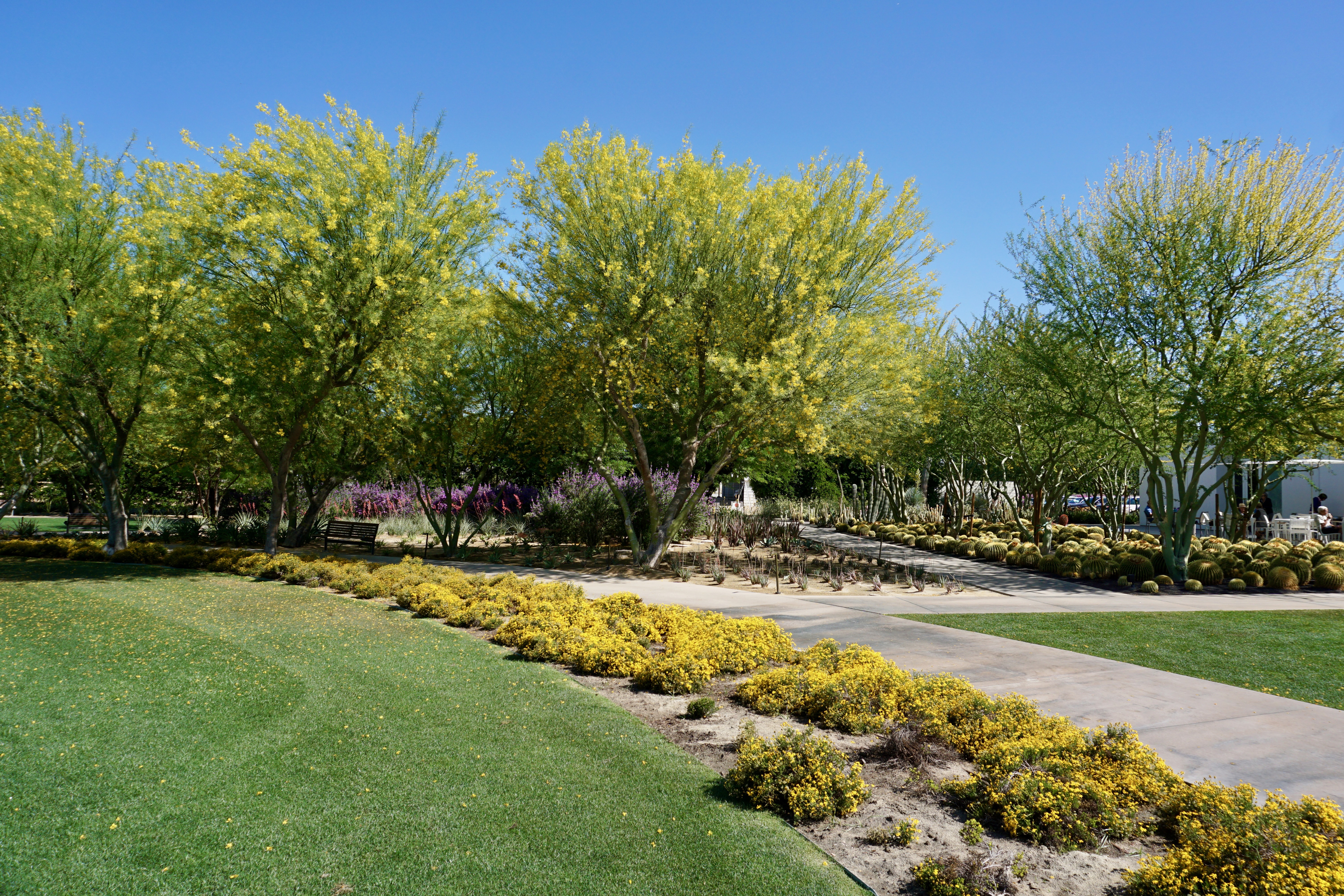
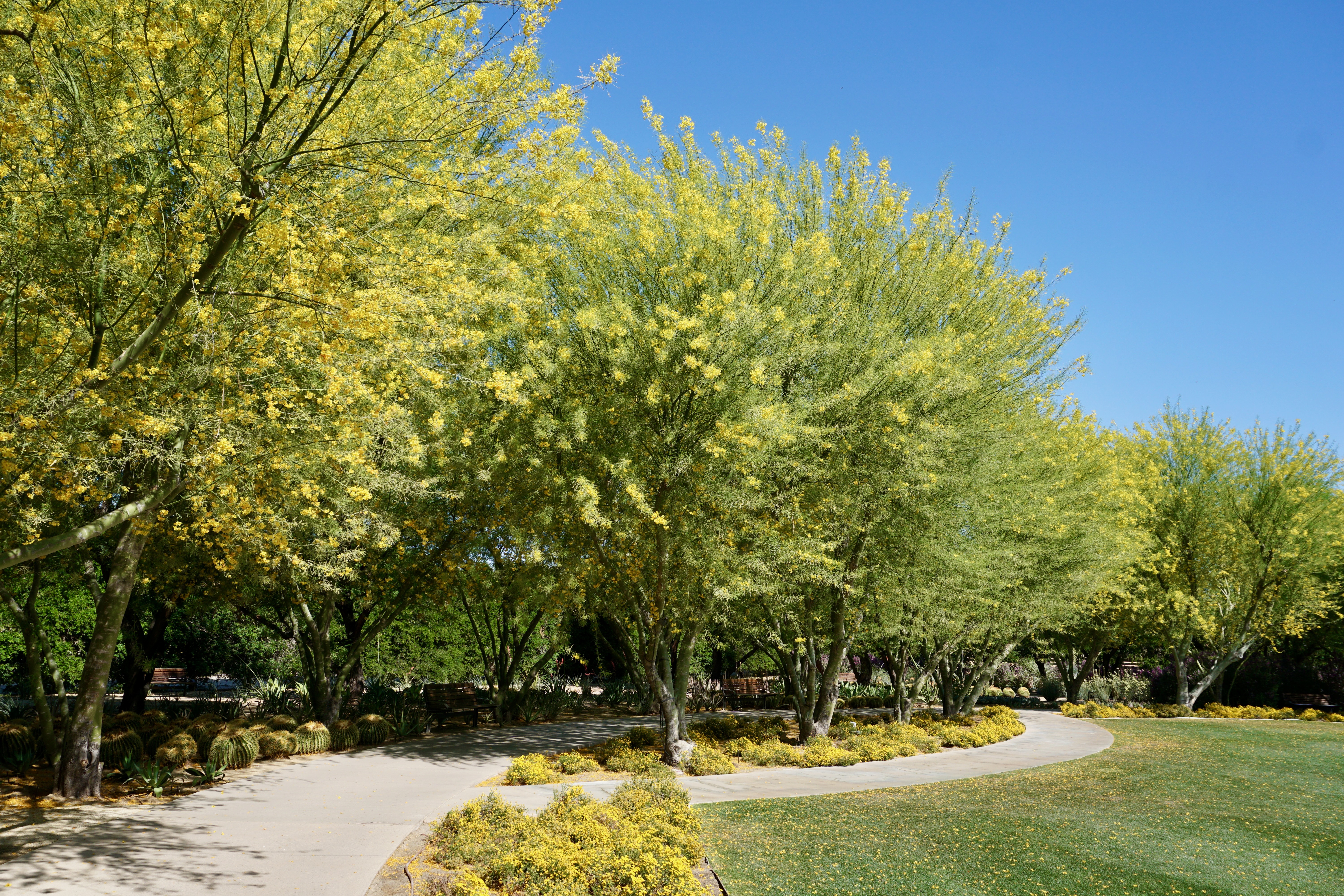
After a week of copious palms, it was almost a palette cleanser to see these trees, the yellows popping next to the greens and the clear blue skies. As much as I loved Palm Springs for its architecture, it was sublime to see some of the area’s natural beauty as well.
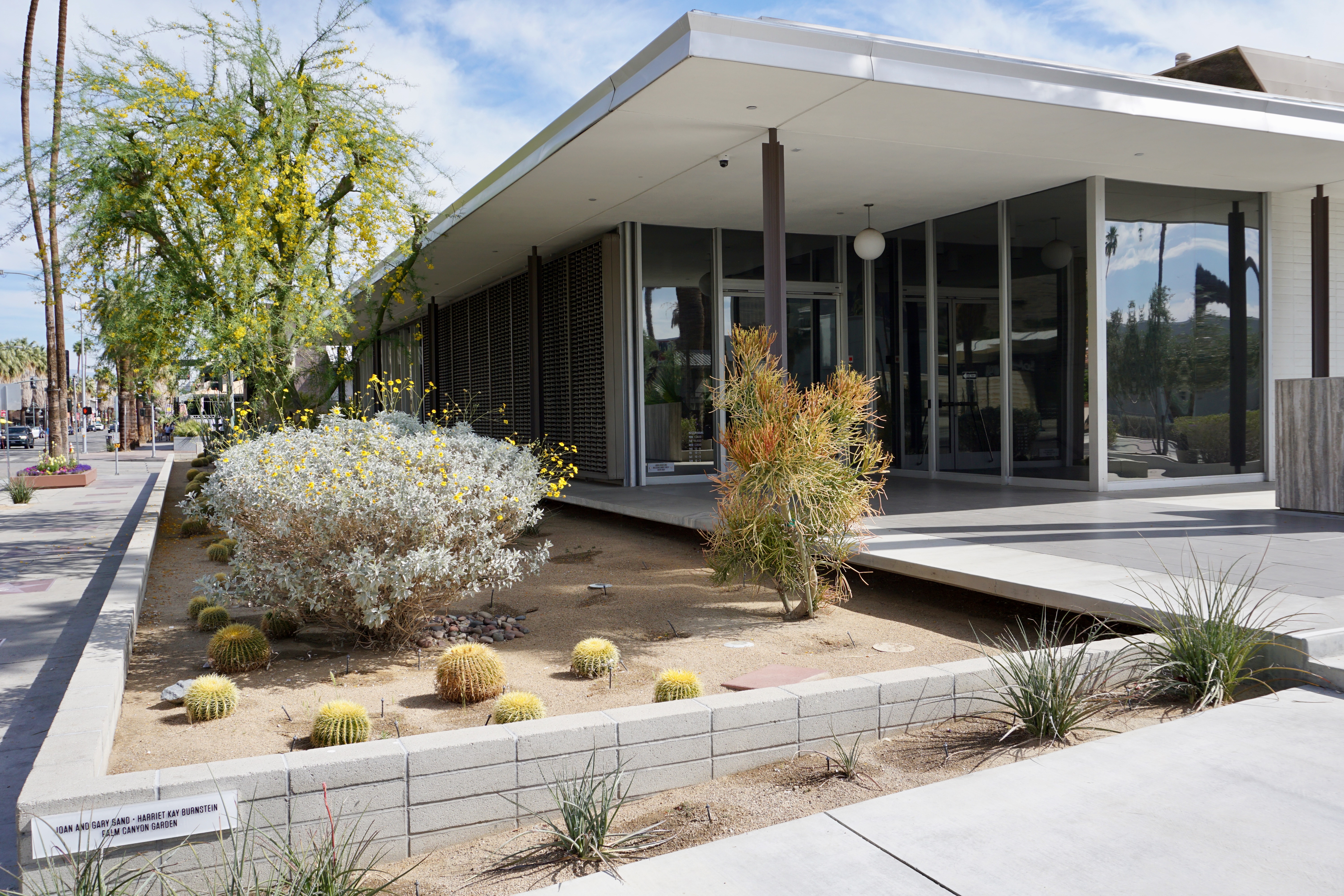
One motivation for visiting Palms Springs was its famous Mid-Century Modern architecture.
It’s as essential to the landscape as palm trees and mountain ranges.
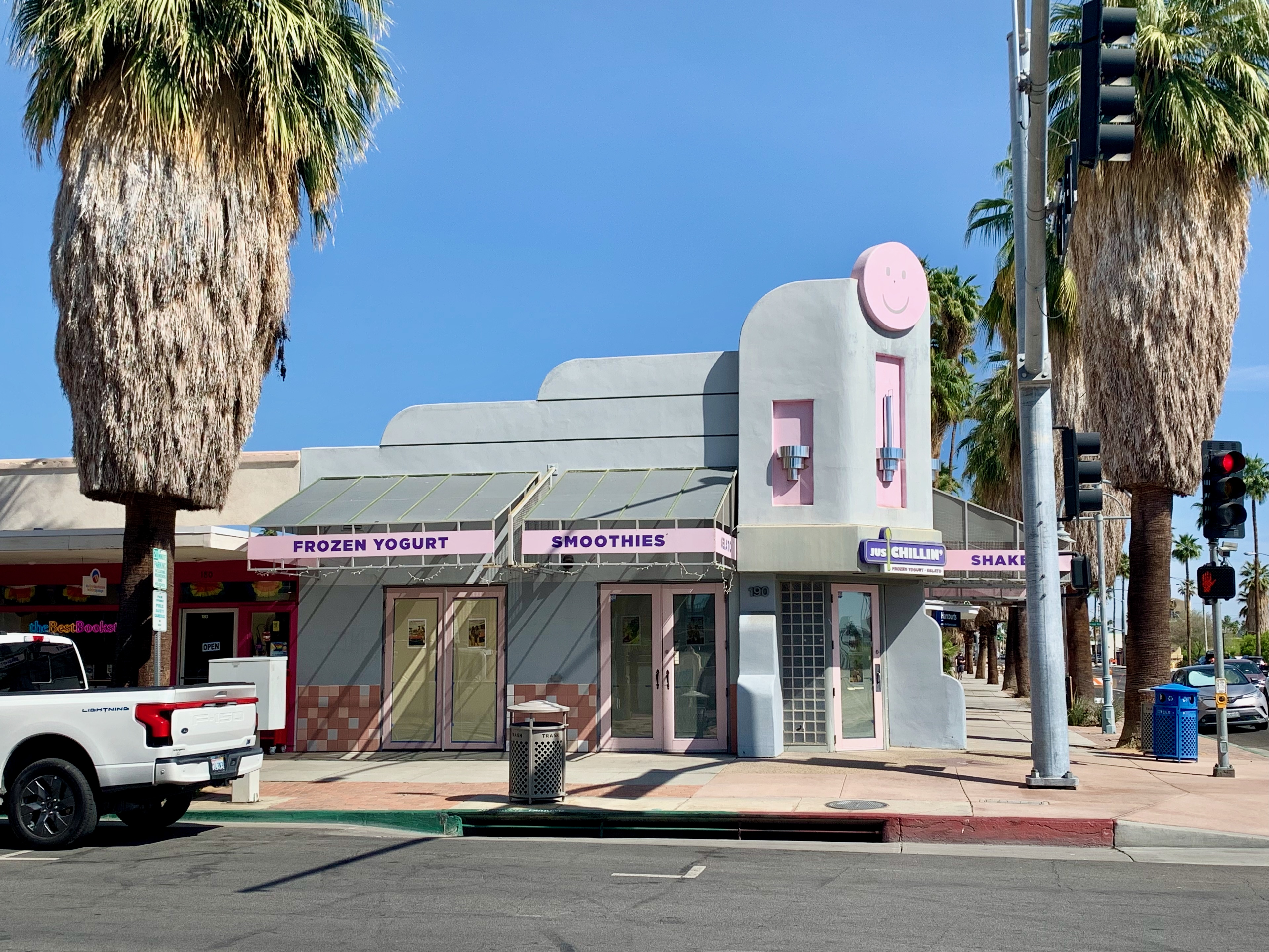
The only other place I’ve seen buildings like this defunct ice cream parlor is Miami Beach.
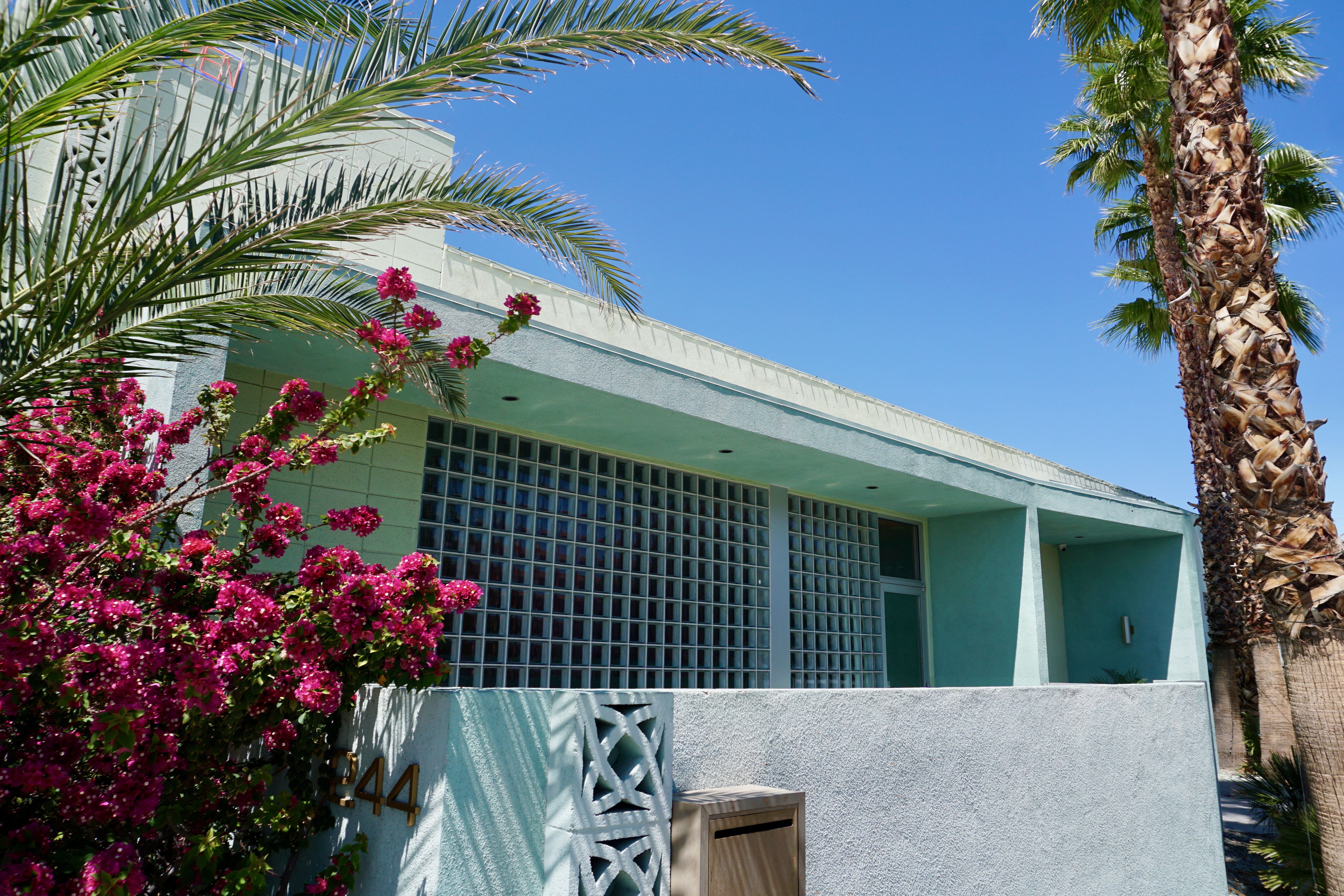
The pastel colors and block glass also remind me of Southeastern Florida.
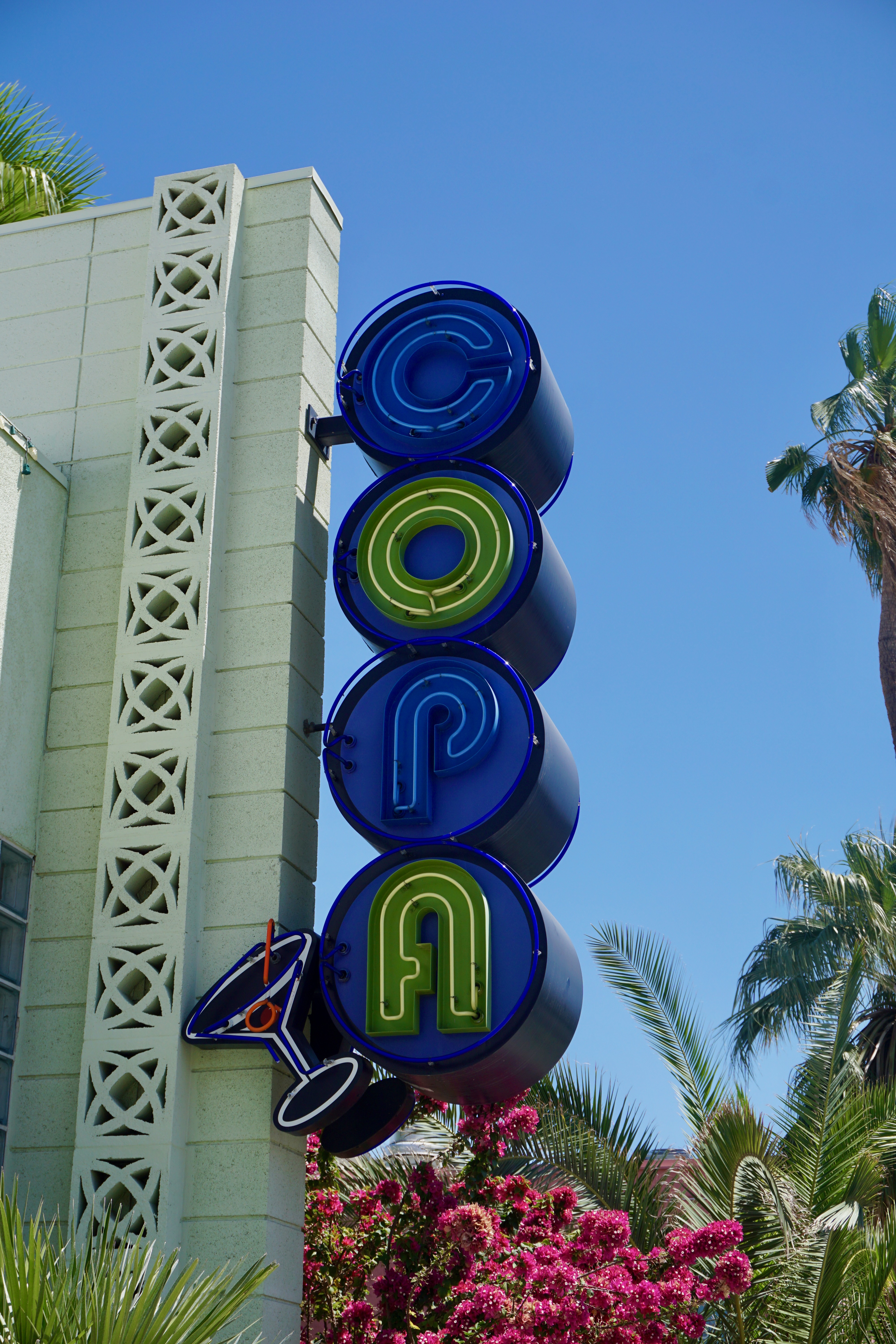
We stopped in a residential neighborhood to get some photos of the mountains; if we hadn’t, I never would have spotted this cool vintage-looking neon sign.
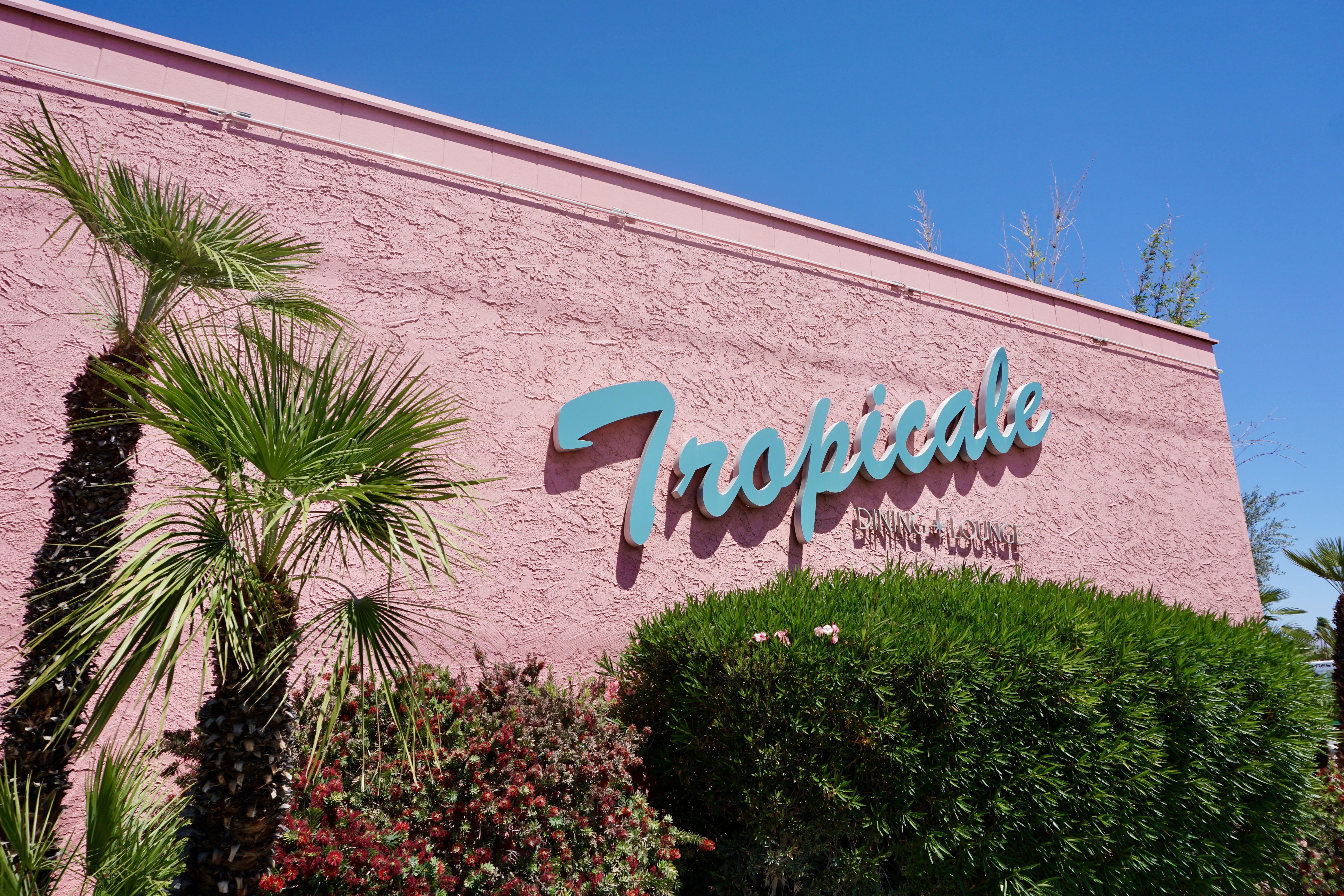
On the same block as the Copa above–another essential Mod-style pastel.
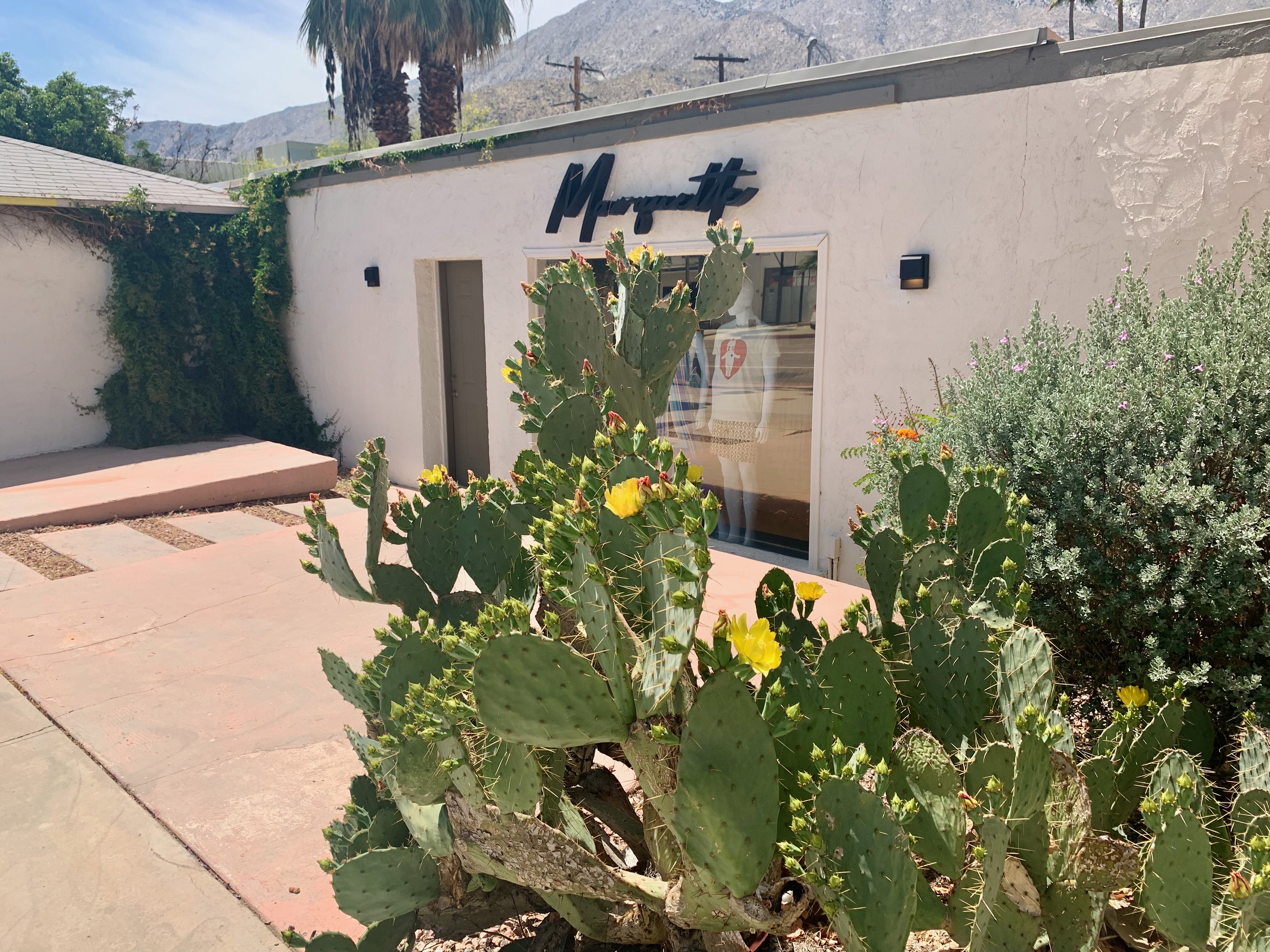
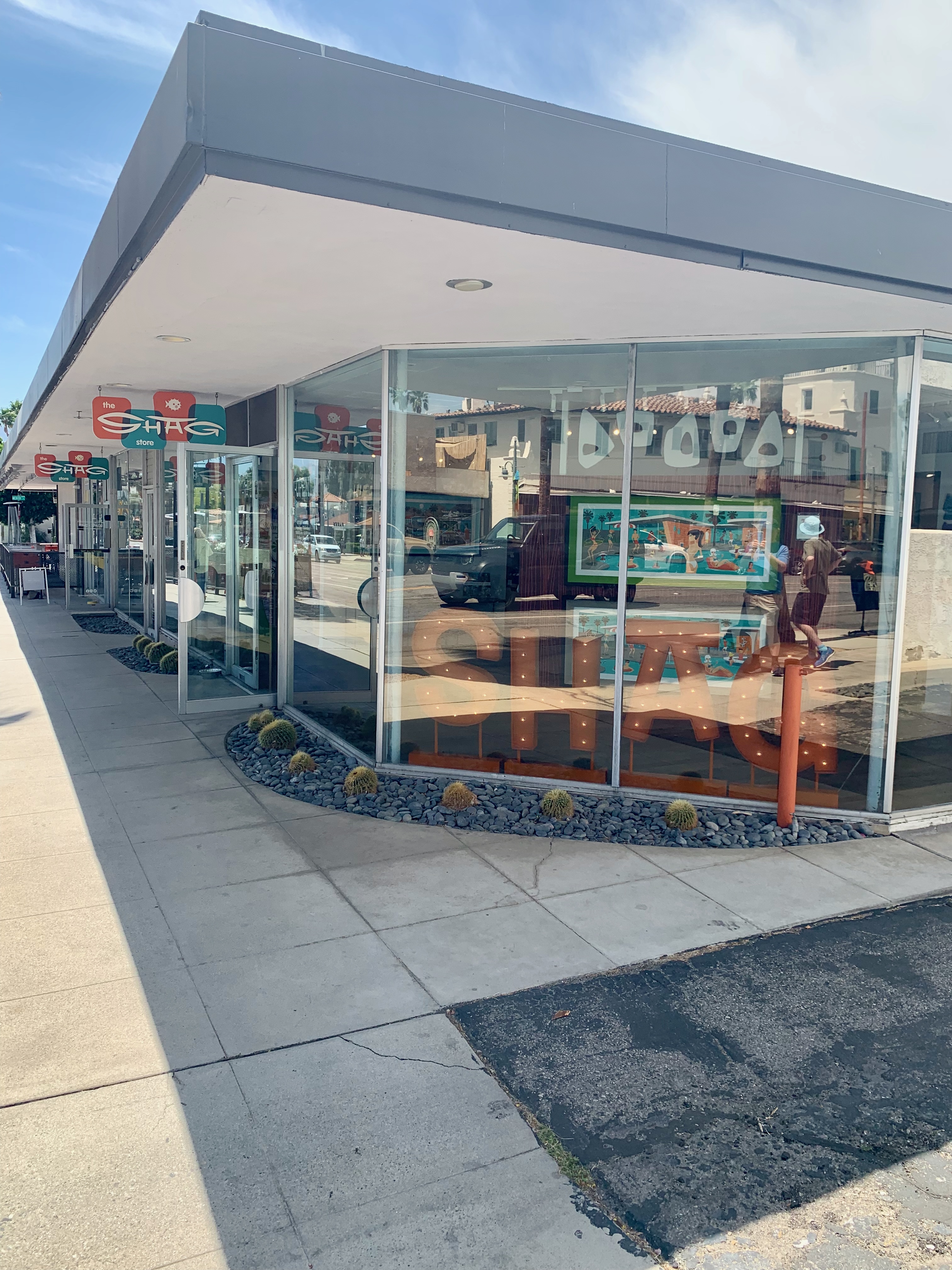
Although Downtown Palm Springs has its share of Mod buildings, the Uptown Design District feels more like totally stepping into a groovy past era.
When I think of “Shag” it’s the Carolina-style partner dance; on this coast, it refers to an artist.
Facing North on Palm Canyon Drive in the Design District, which would not be complete without an art deco florist (or a row of cacti.)
Down the block from the florist–I should’ve just led the essay with this photo which is Palm Springs Mod in a nutshell.
Though not as aesthetically pleasing, this fulfills the same criteria as the above picture.
We bought a map to seek out Mod residences. Predictably, most where further away from the roads or camouflaged for privacy, but we did spot a few striking homes; check out the oversized front doors on this one.
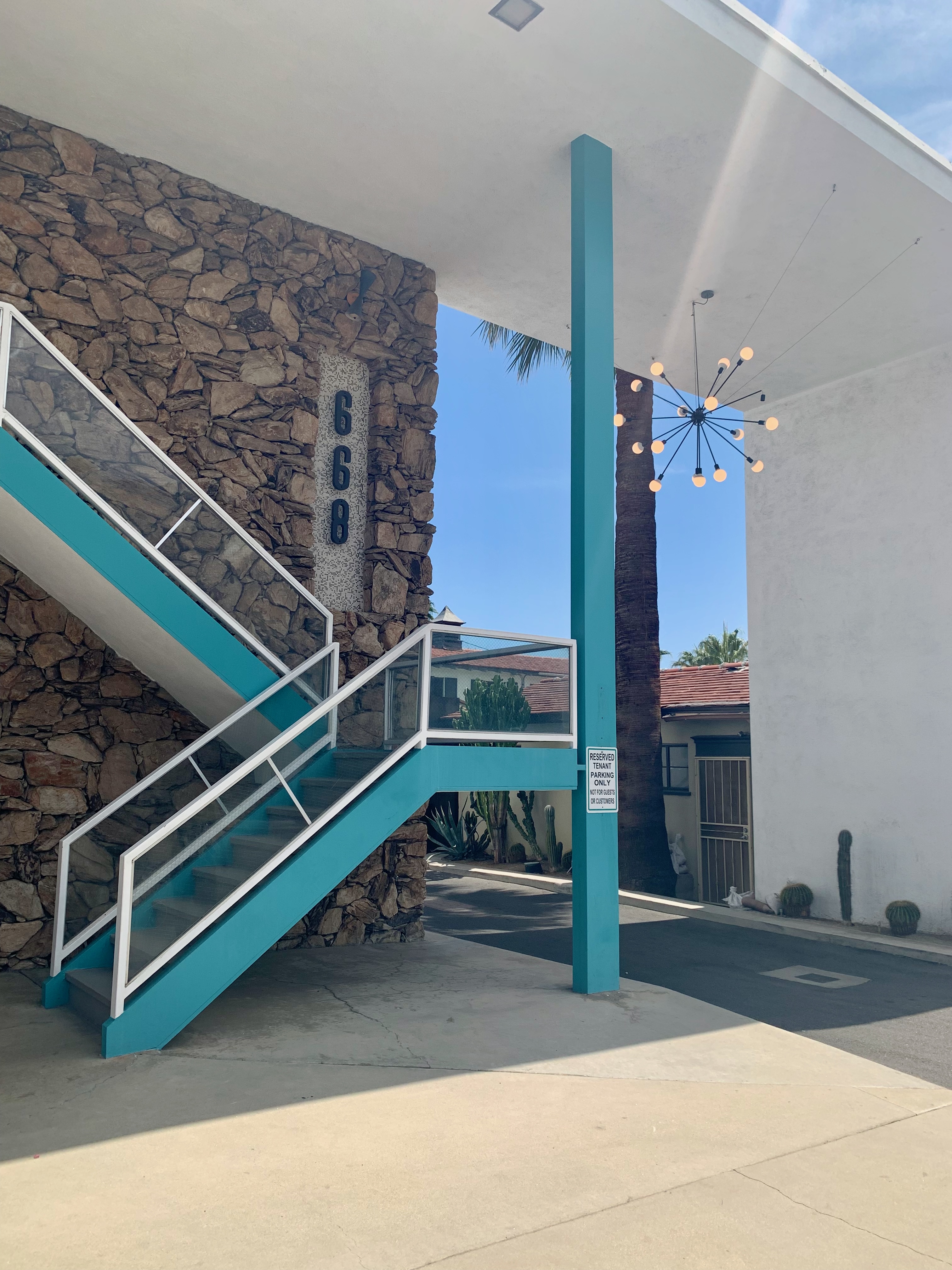
The southern part of town tends to specialize in a more suburban kitsch take on the architectural style. While this shopping plaza isn’t strictly Mod, it did remind us of a kind of tableau one would see on the 1970s Wonder Woman TV series.
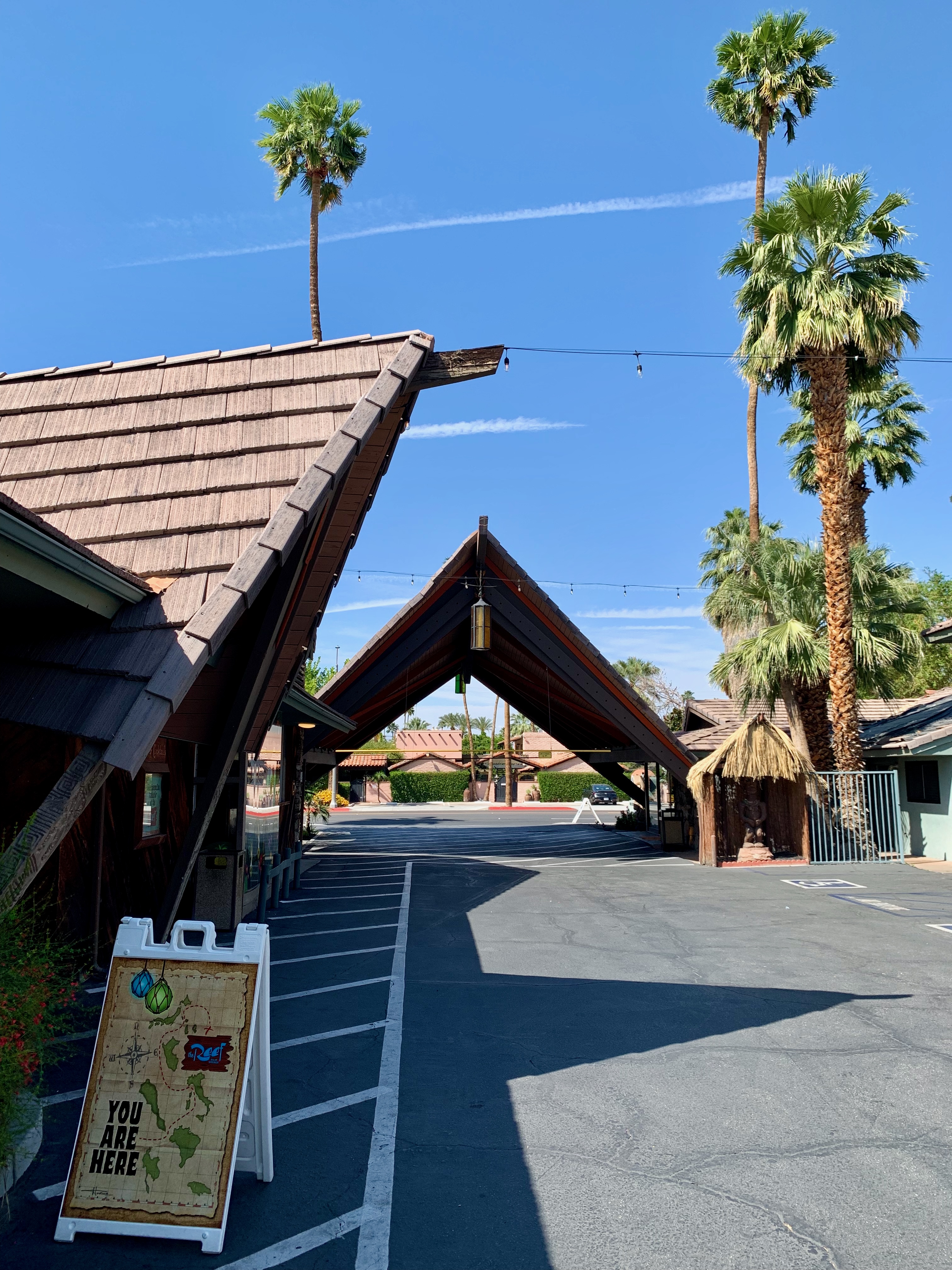
However, this resort complex is more the real Mod deal brimming with faux exotic splendor.
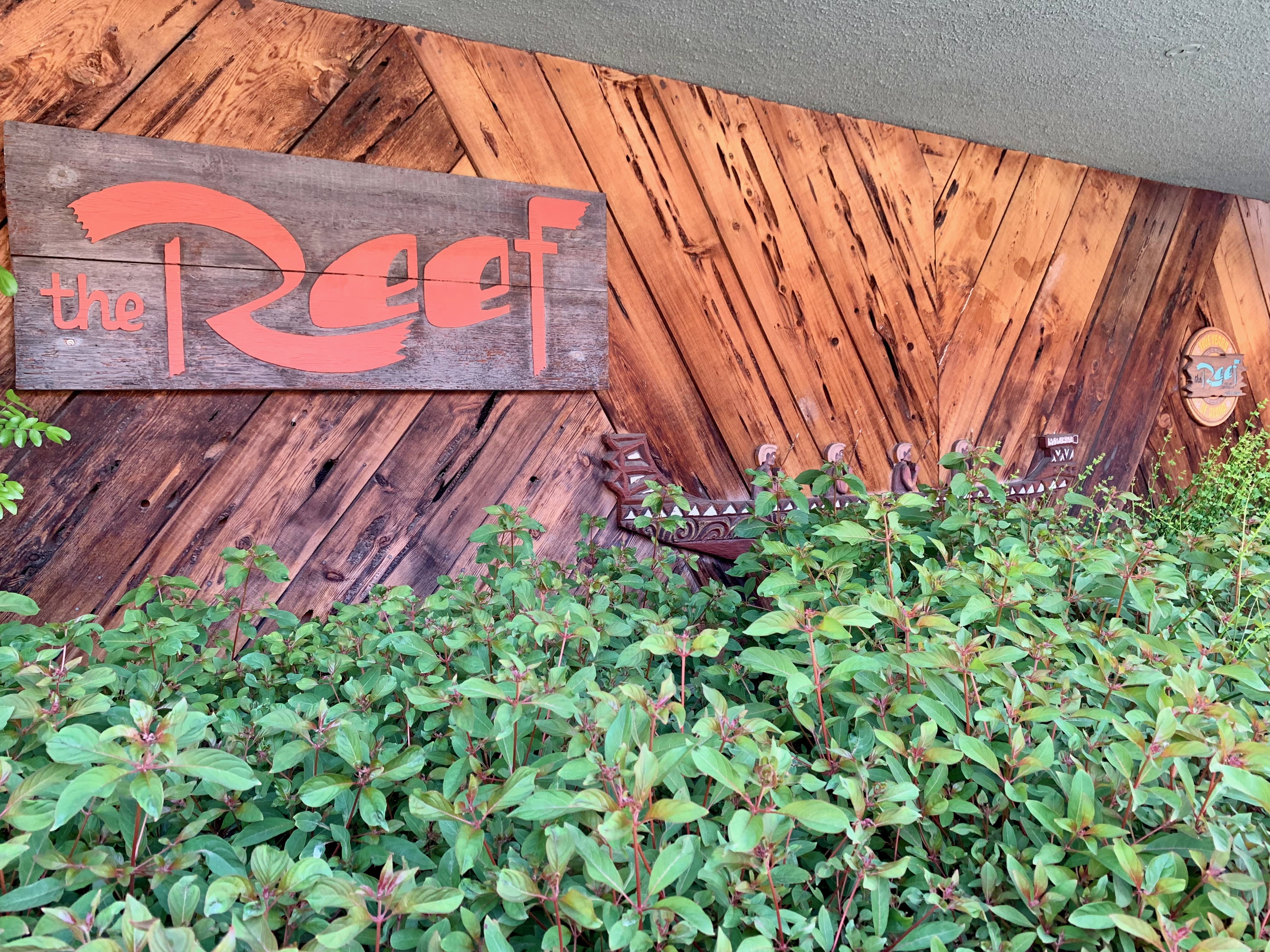
The Reef was one of two tiki bars we checked out. The other, Tonga Hut, is in Downtown and most notable for its neon sign.
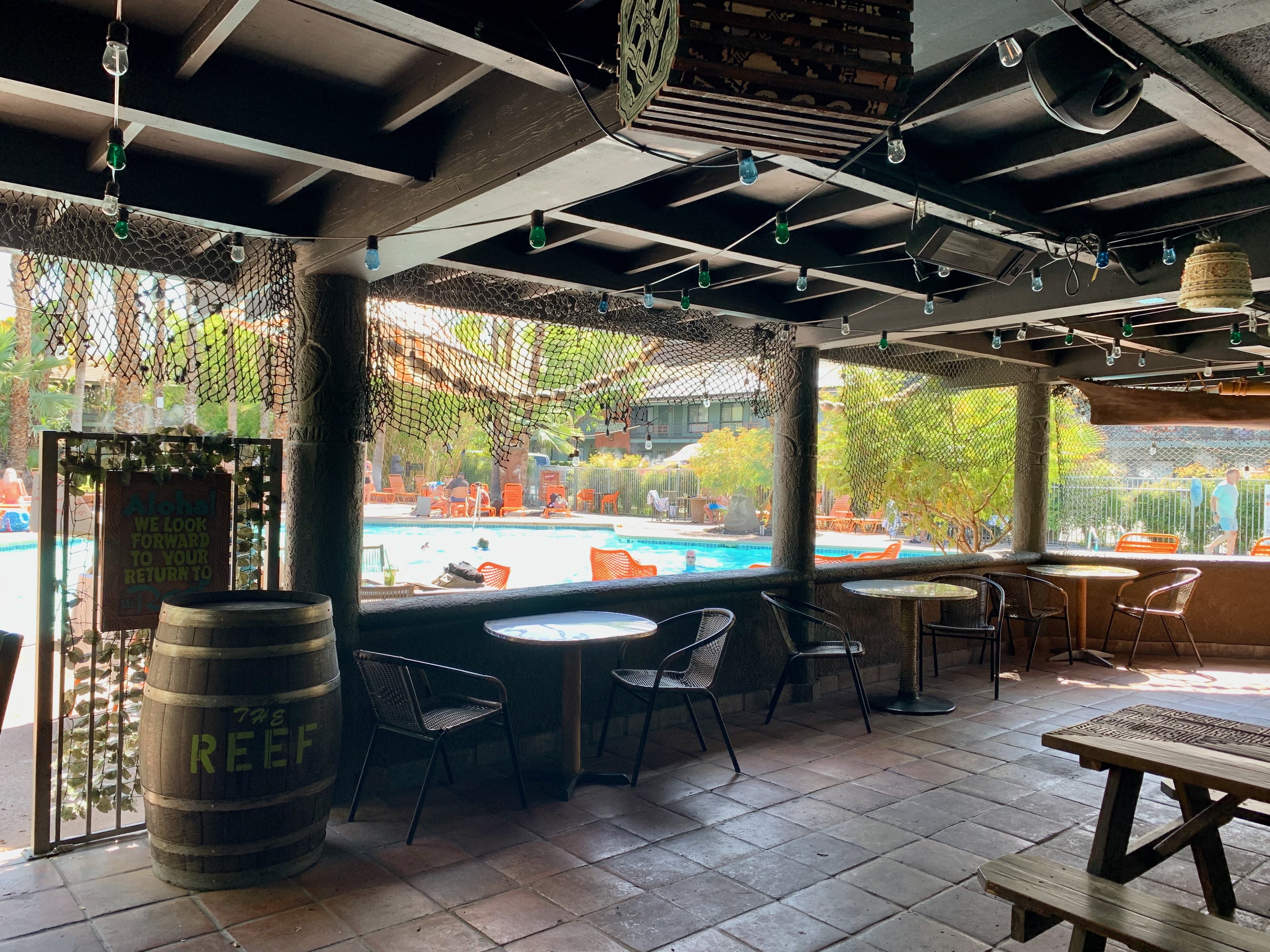
The Reef’s patio which faces the adjacent resort’s pool. Lots of reggae on the soundsystem here.
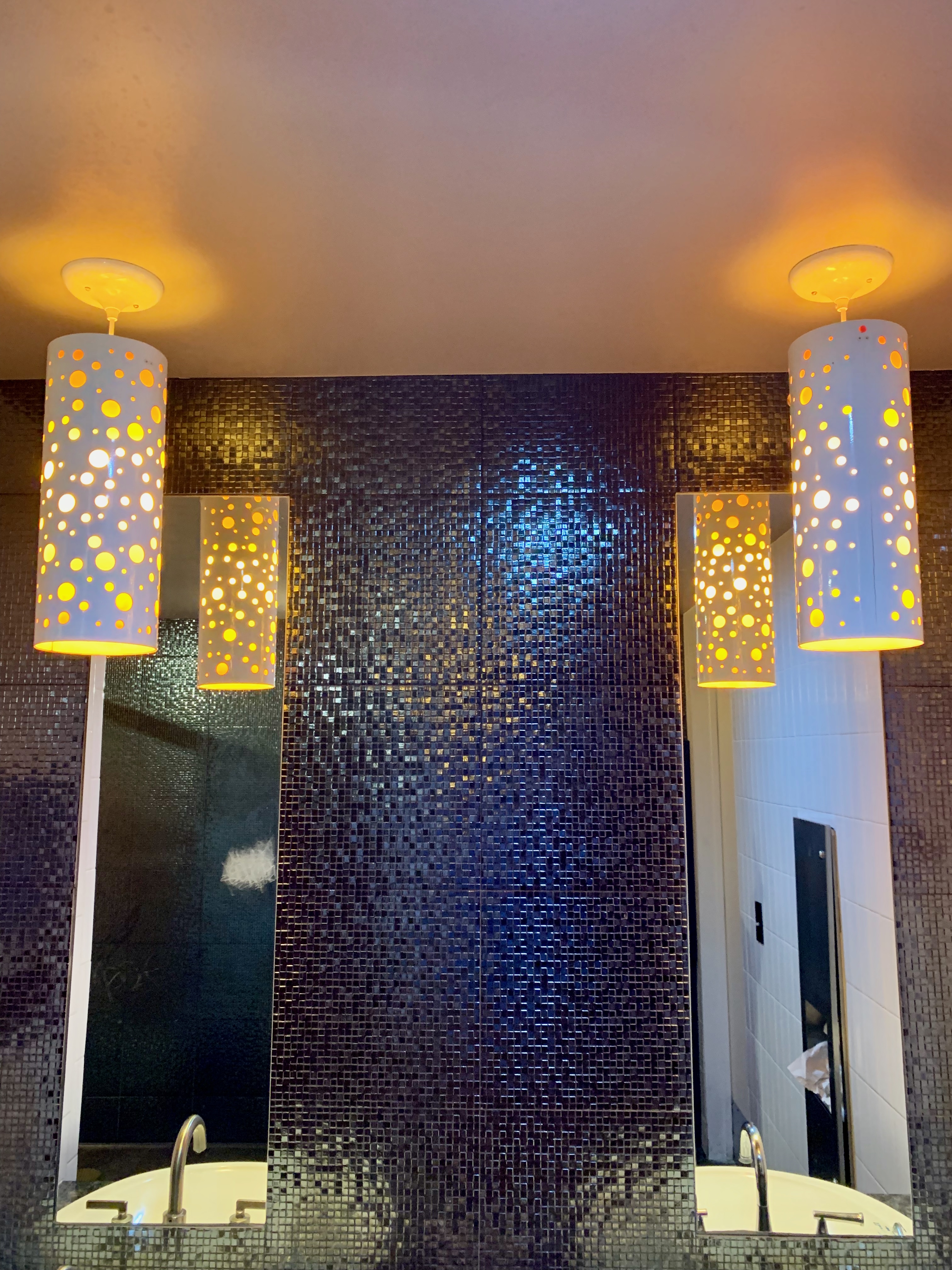
I couldn’t resist of shot of The Reef’s delectably retro (no matter how faux) bathroom lighting fixtures.
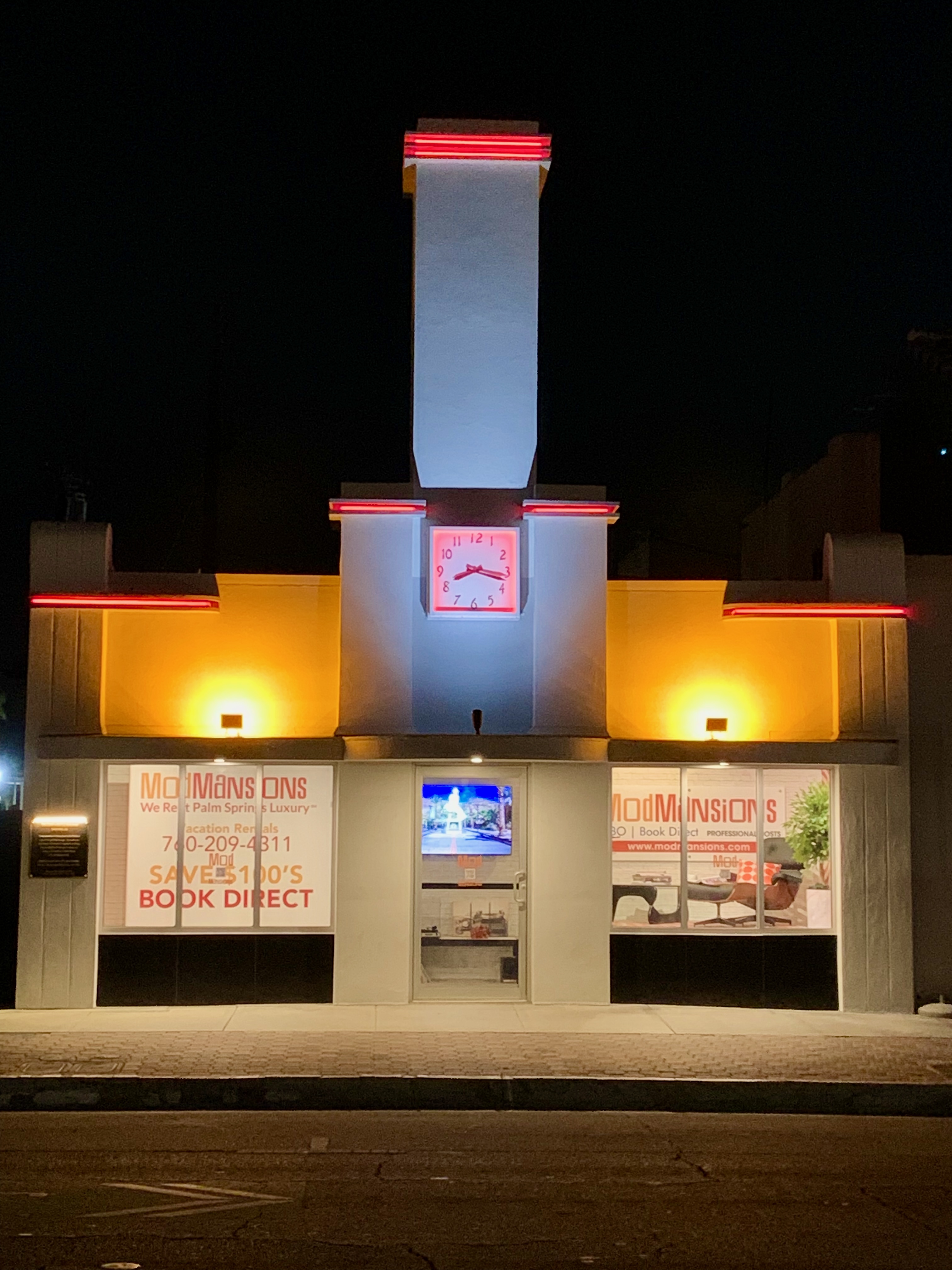
Back to Downtown after dark. If you’re looking for a “ModMansion”, what better place to find one than at this art deco wonder that almost could’ve been a vintage White Castle (or maybe a White Tower)?
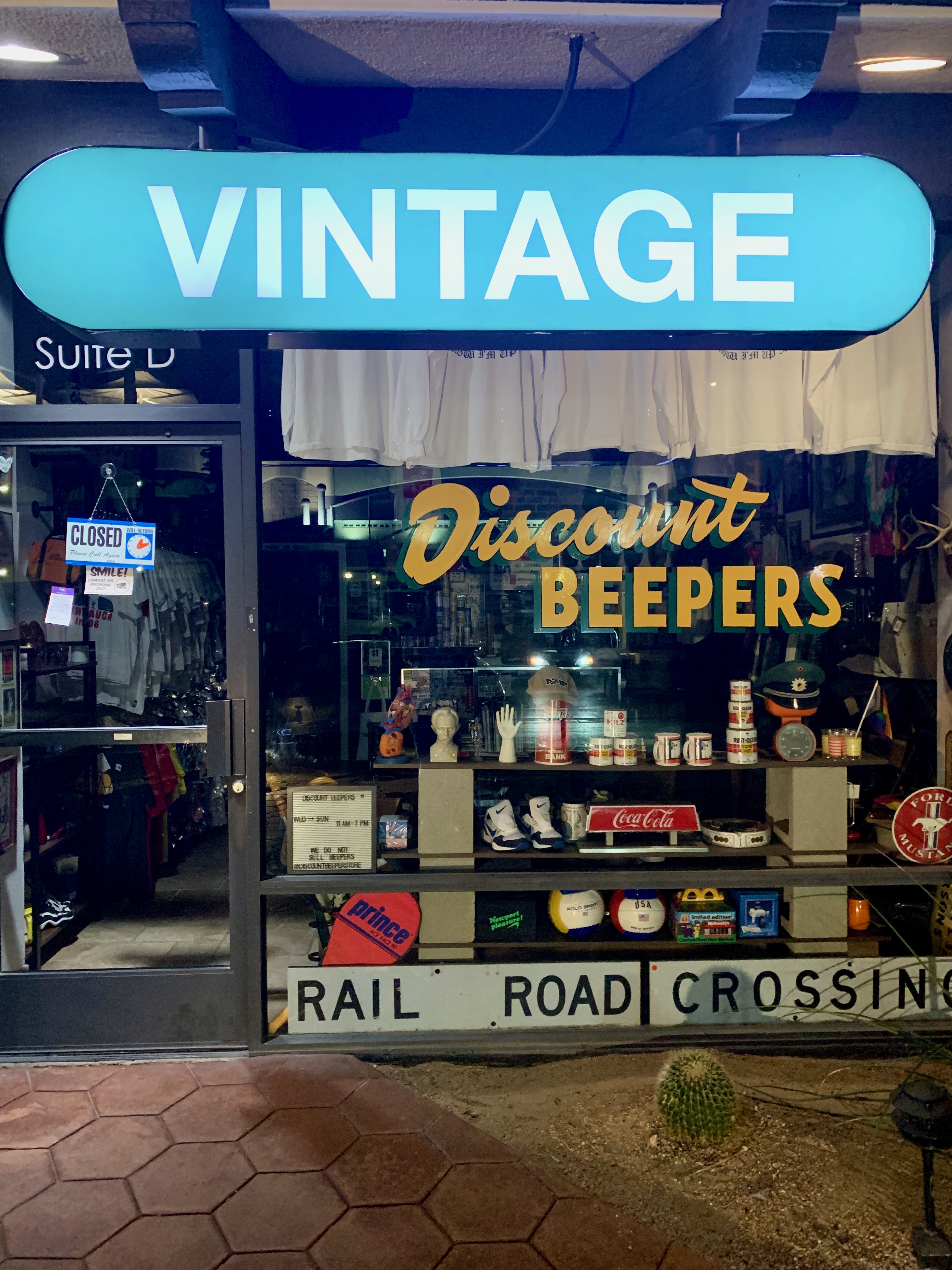
Not entirely Mod, but come on, I wasn’t not going to take a shot of this unusual establishment. Do people still want beepers (even at a discount price?)
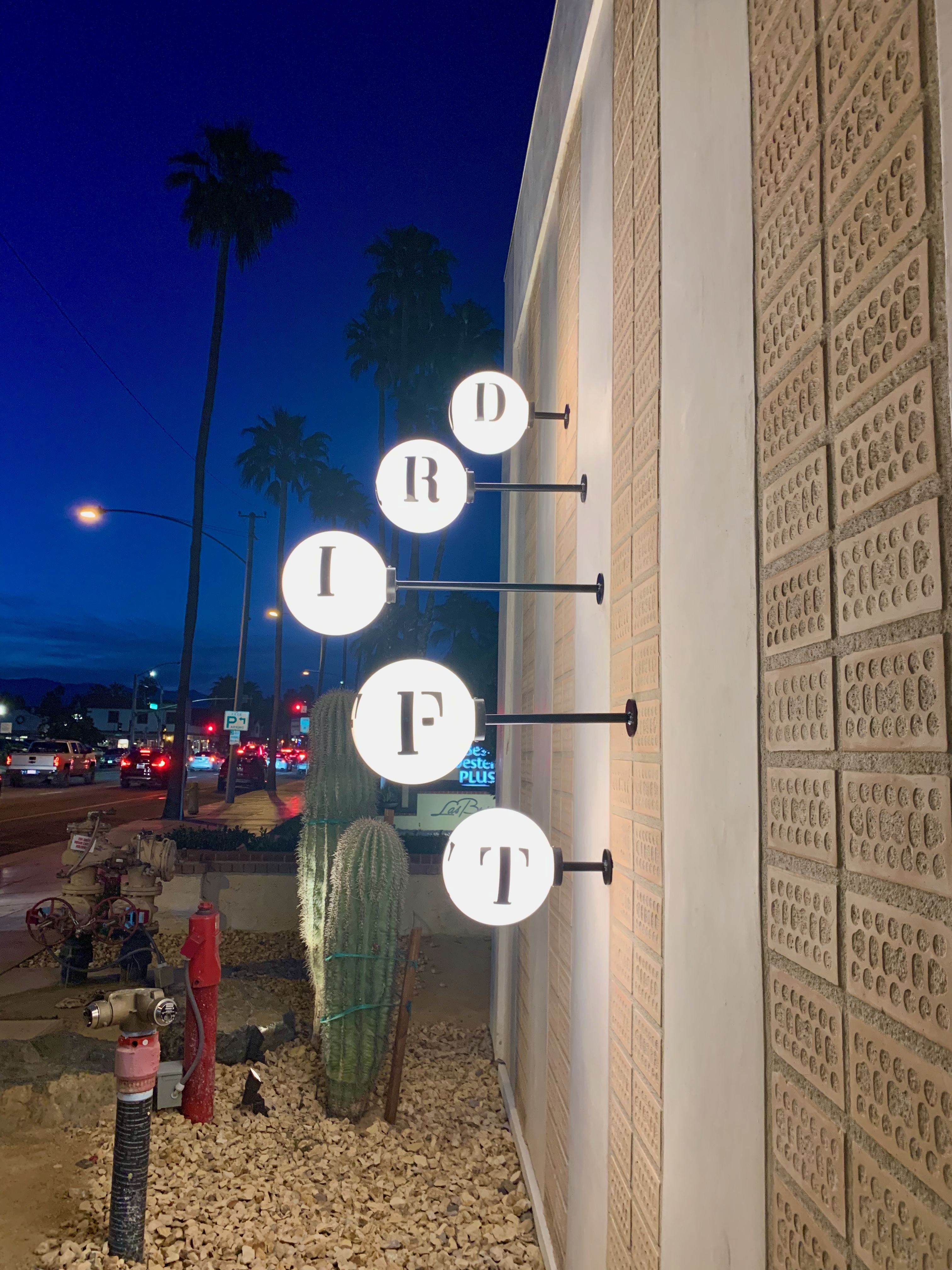
We end with this lovely hotel sign on Indian Canyon Road just after sunset. The globe lights, their whimsical placement, the font, the brick-like wall textures, the cacti–together, they practically sum up what I love about Palm Springs Mod (and the town in general.)
In my last photo essay, I alluded to the unexpected passageways one tends to find in Palm Springs.
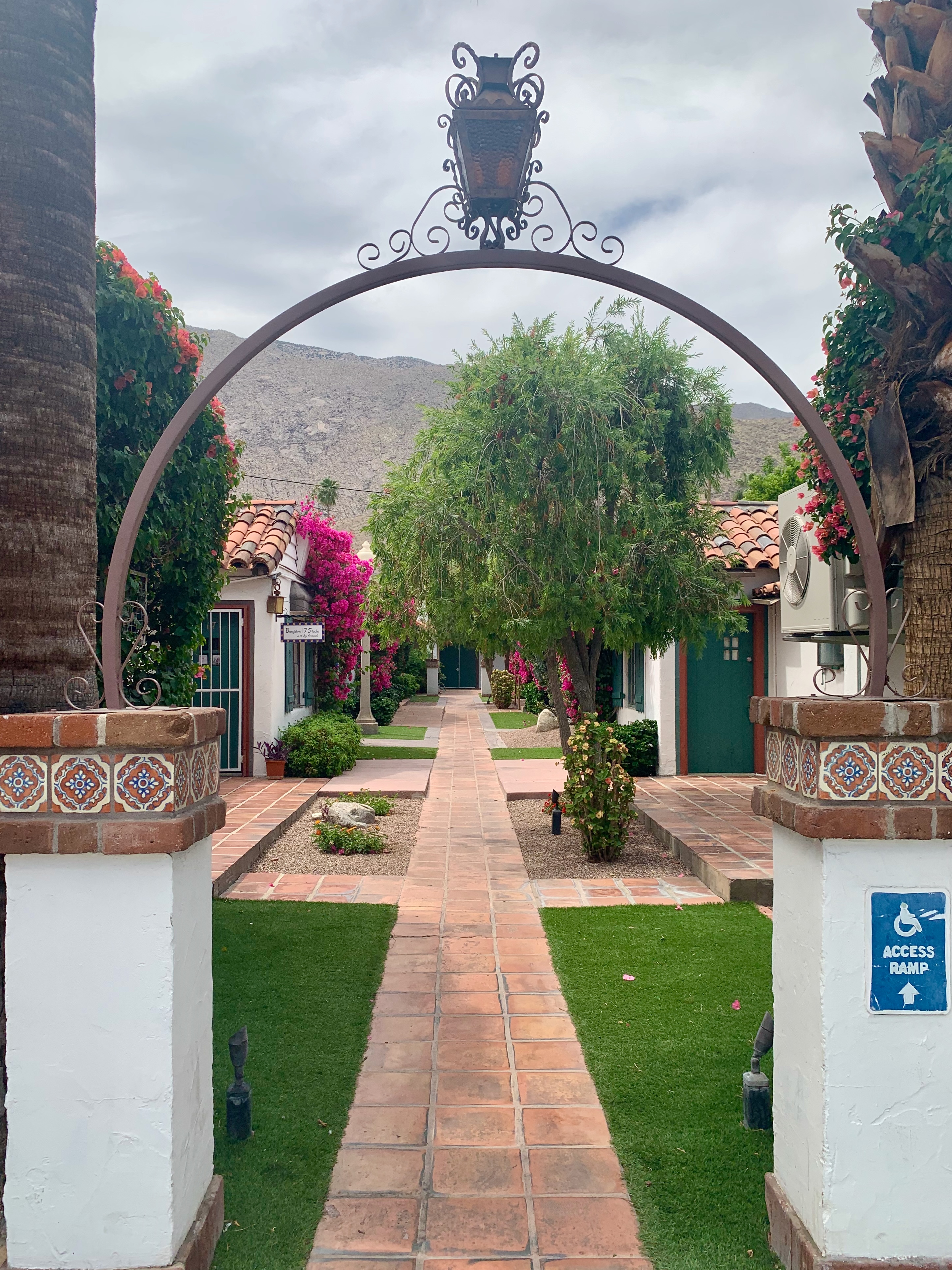
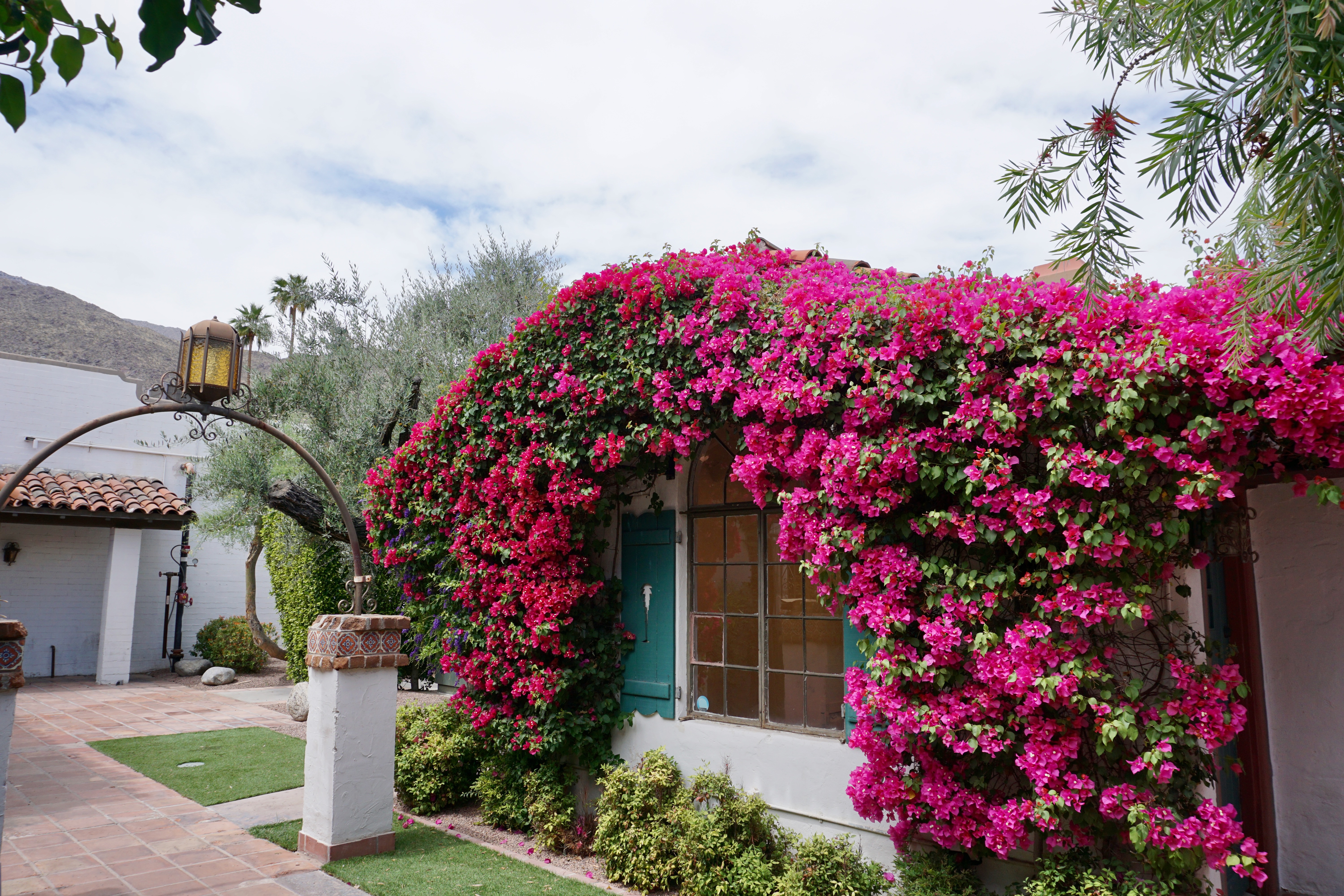
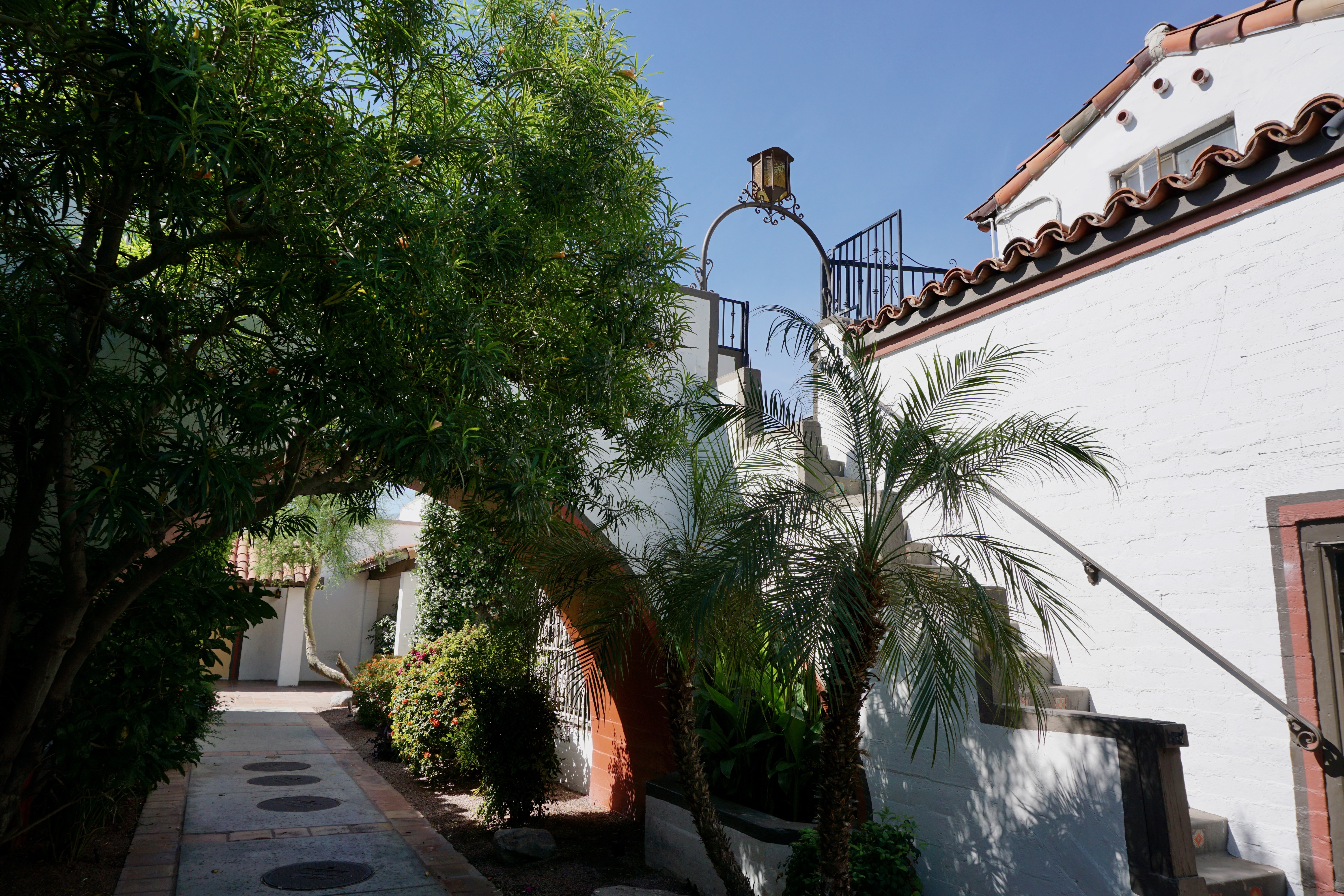
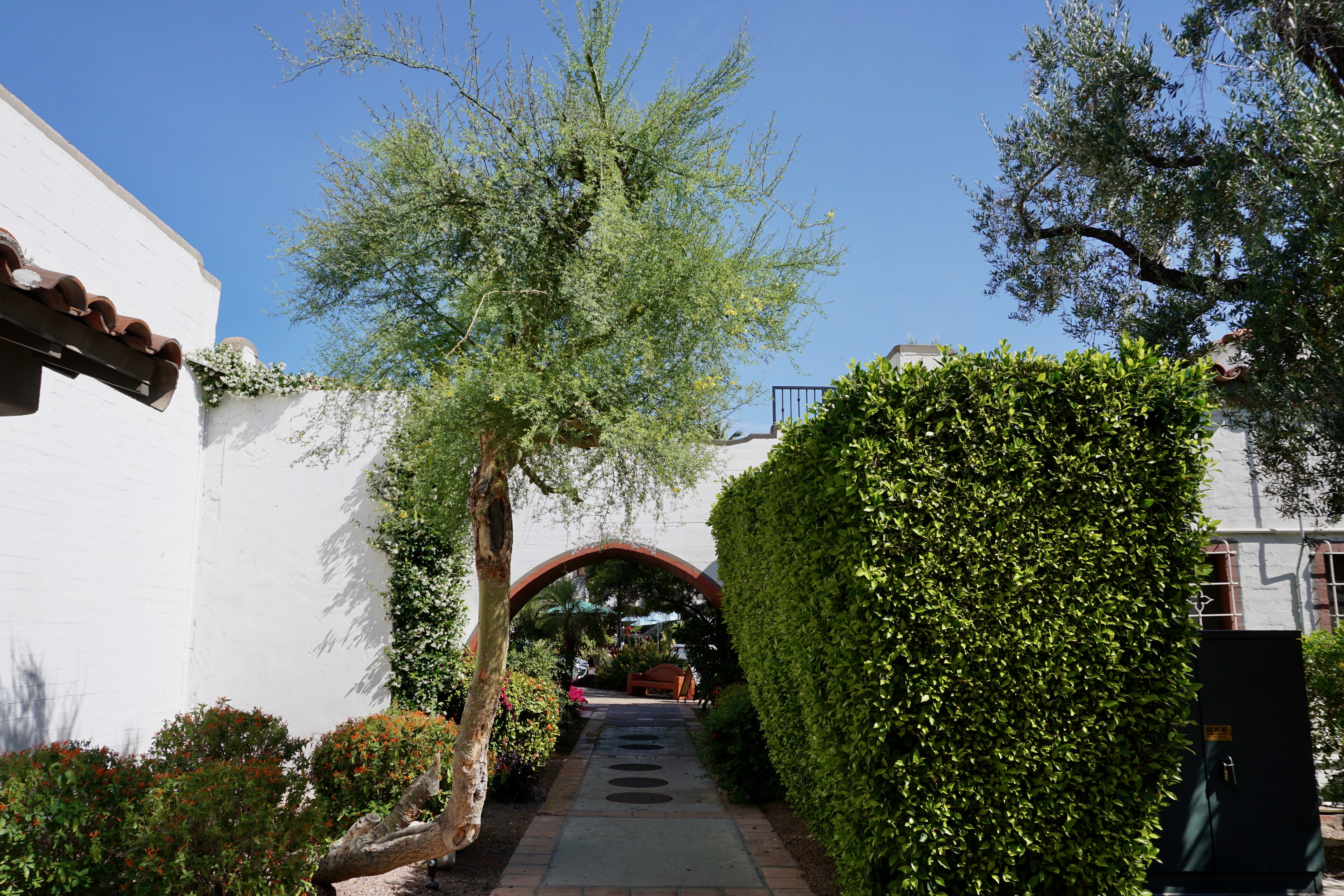
While not fully “hidden”, this courtyard in La Plaza is the kind of place one is more likely to stumble upon than actively seek out (or at least this was the case for me.)
Built in 1936, La Plaza was one of the earliest outdoor shopping centers although it doesn’t really resemble what we think of when hearing that term today.
While some of La Plaza is street-facing (particularly the titular block linking Palm Canyon and Indian Canyon Drives), I was more fascinated by the interior section of its southern half.
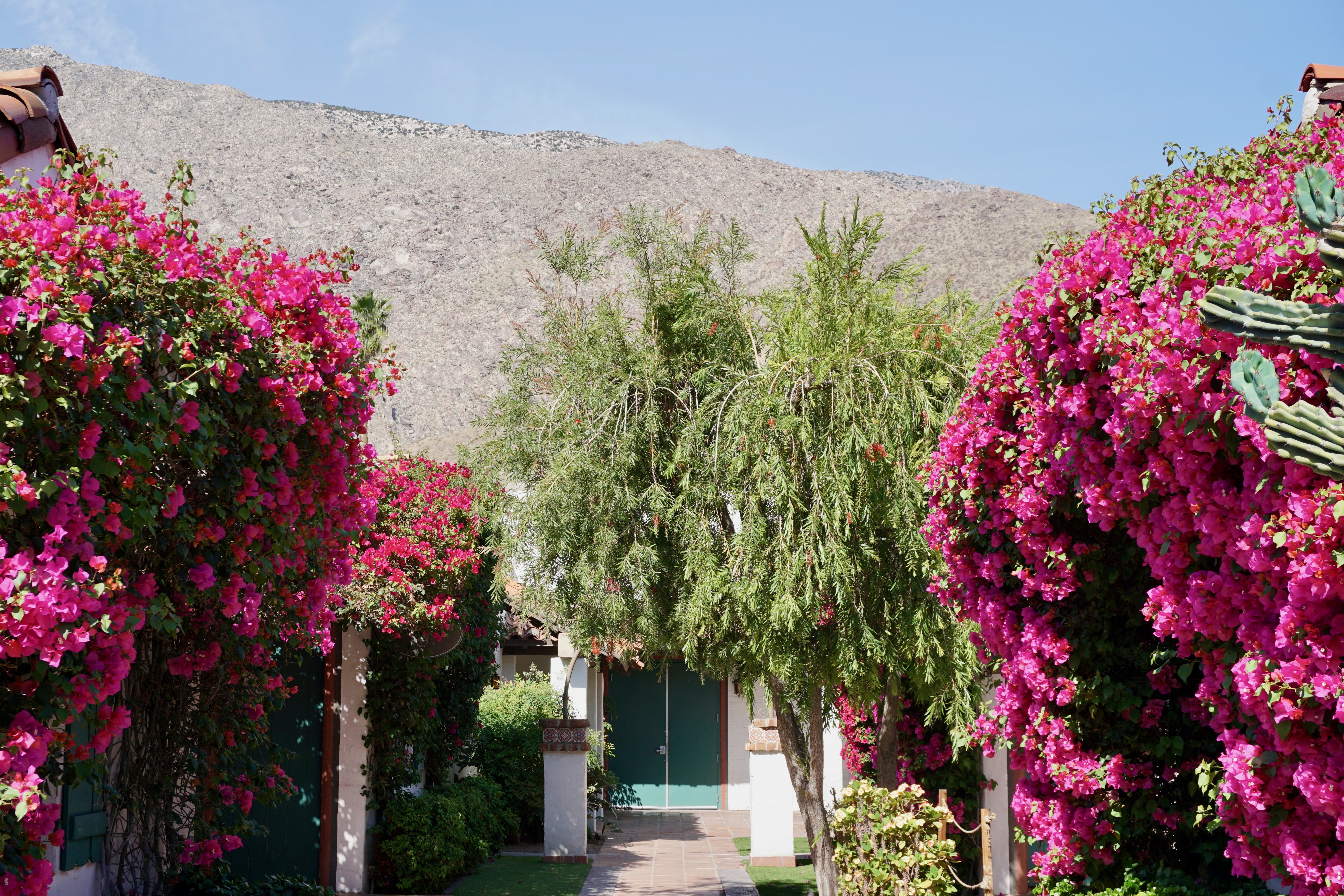
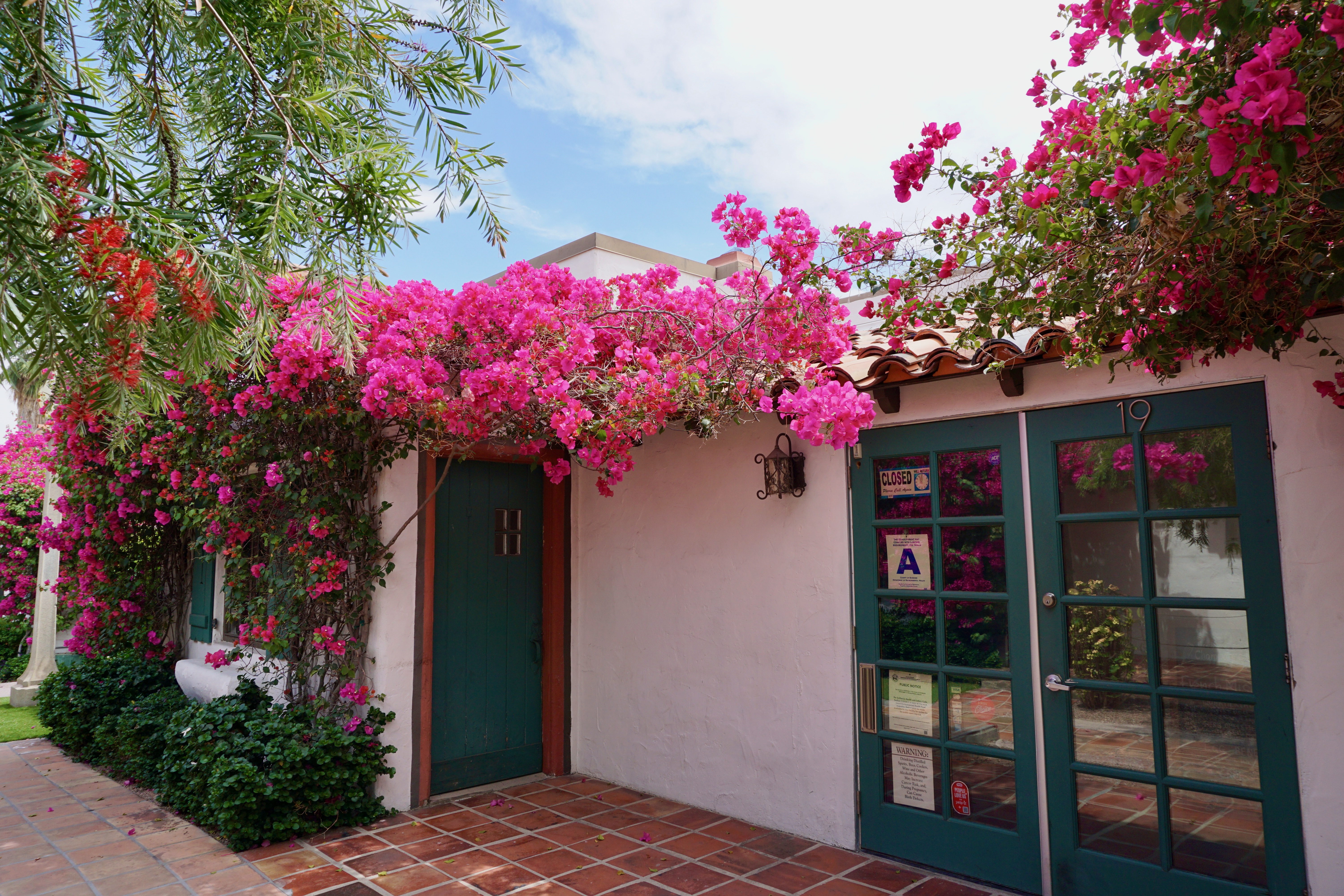
Along this corridor sits both commercial businesses and residences housed in white stucco buildings flanked by cascading pink flowers.
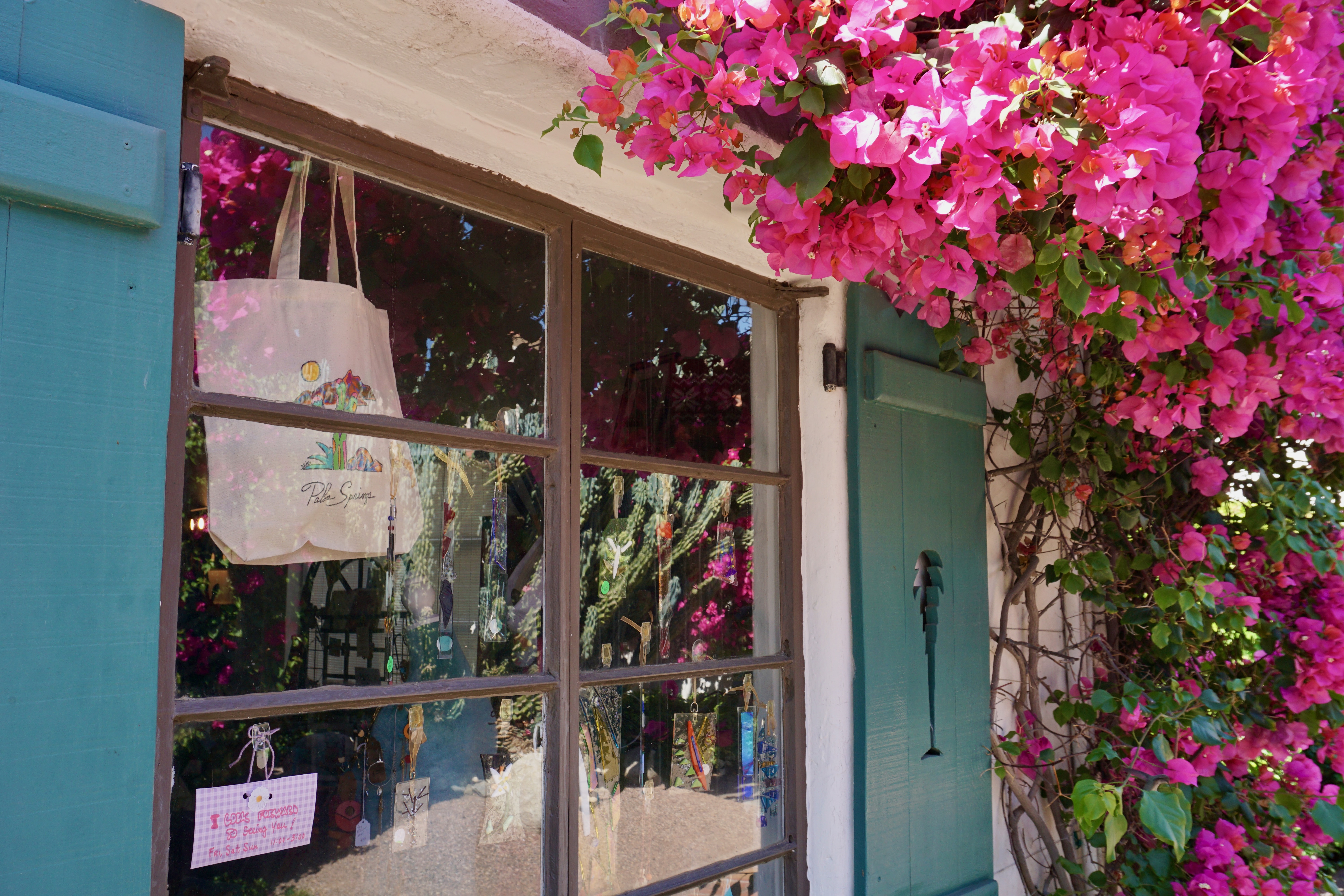
No chains at La Plaza; only homespun establishments.
Perhaps its most distinctive architectural features are these pine green, cut-out palm shutters.
Walking through here is like traveling back in time to a set from a classic Hollywood film or at least Ann Miller’s art-deco apartment complex in Mulholland Drive.
The L-shaped corridor as seen from its entrance opposite from the one in this essay’s first photo.
Walking along the street-facing section of La Plaza itself one can’t help but notice this giant rooster parked near L’Atelier Café.
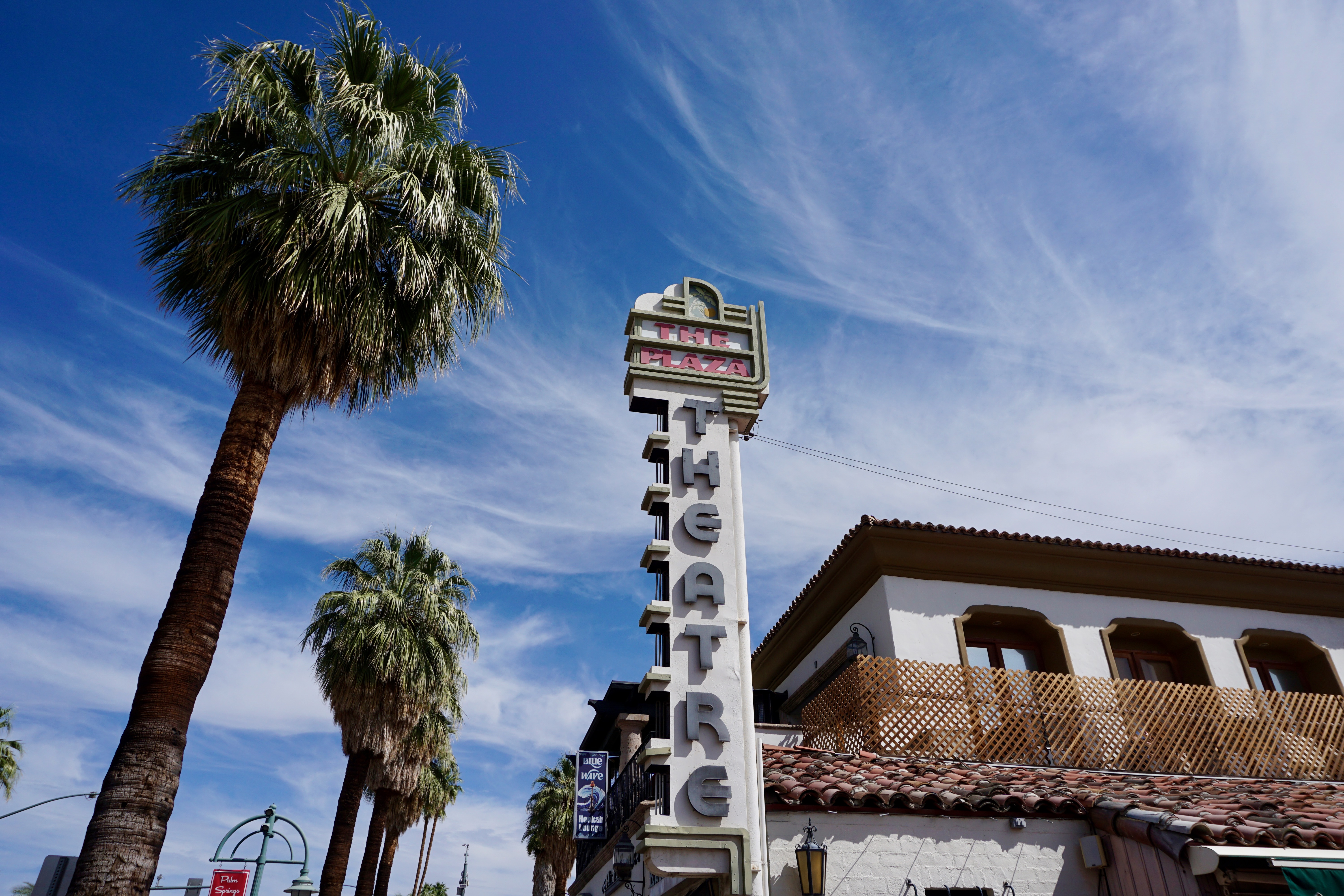
Near the northern half of La Plaza sits The Plaza Theatre, which is currently closed for renovations.
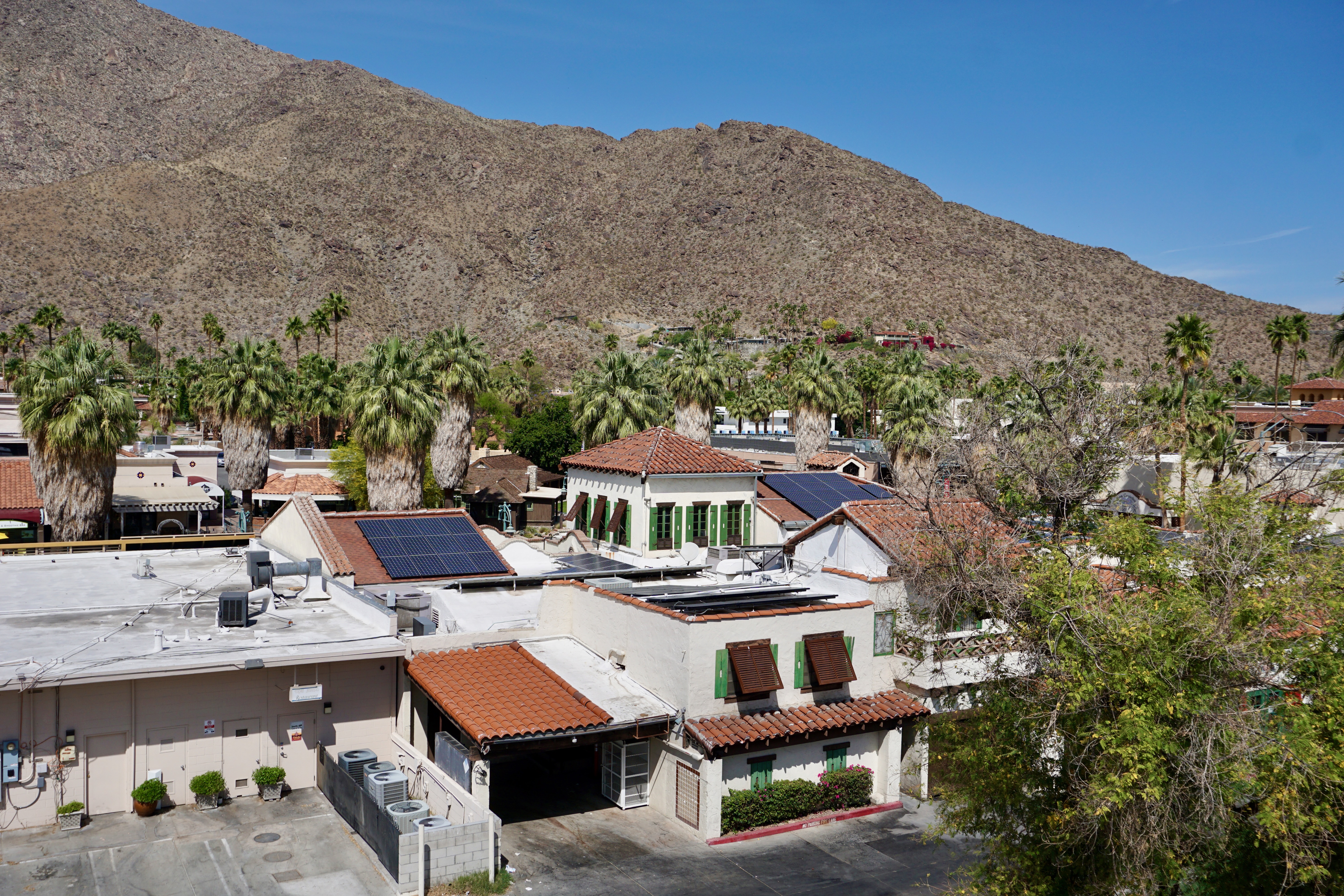
A partial birds-eye view of La Plaza from the top of an adjacent parking garage–those shutters are a dead giveaway.
Last month, I took my first ever trip to Palm Springs, California; it was also my first visit to the state in over 20 years.
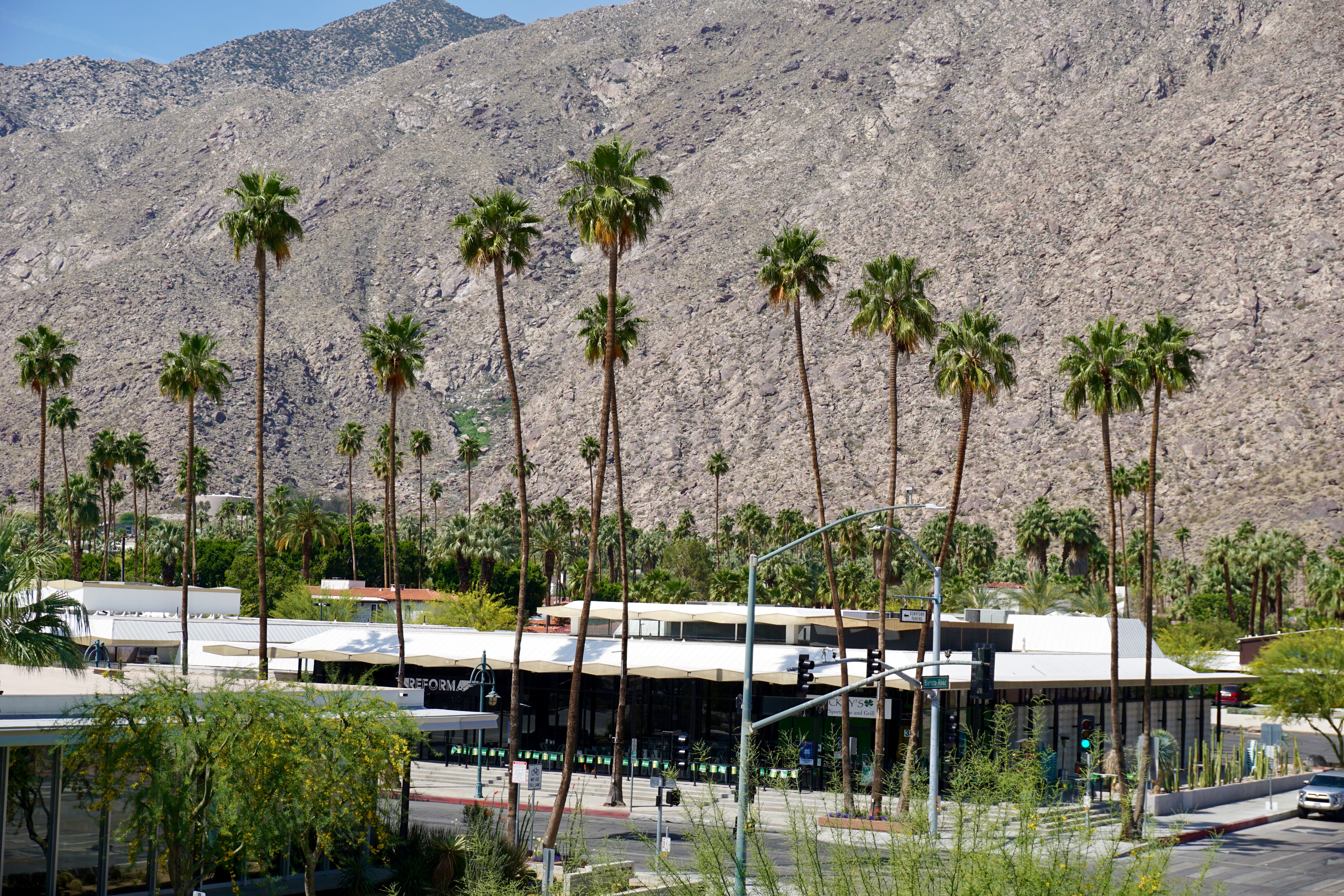
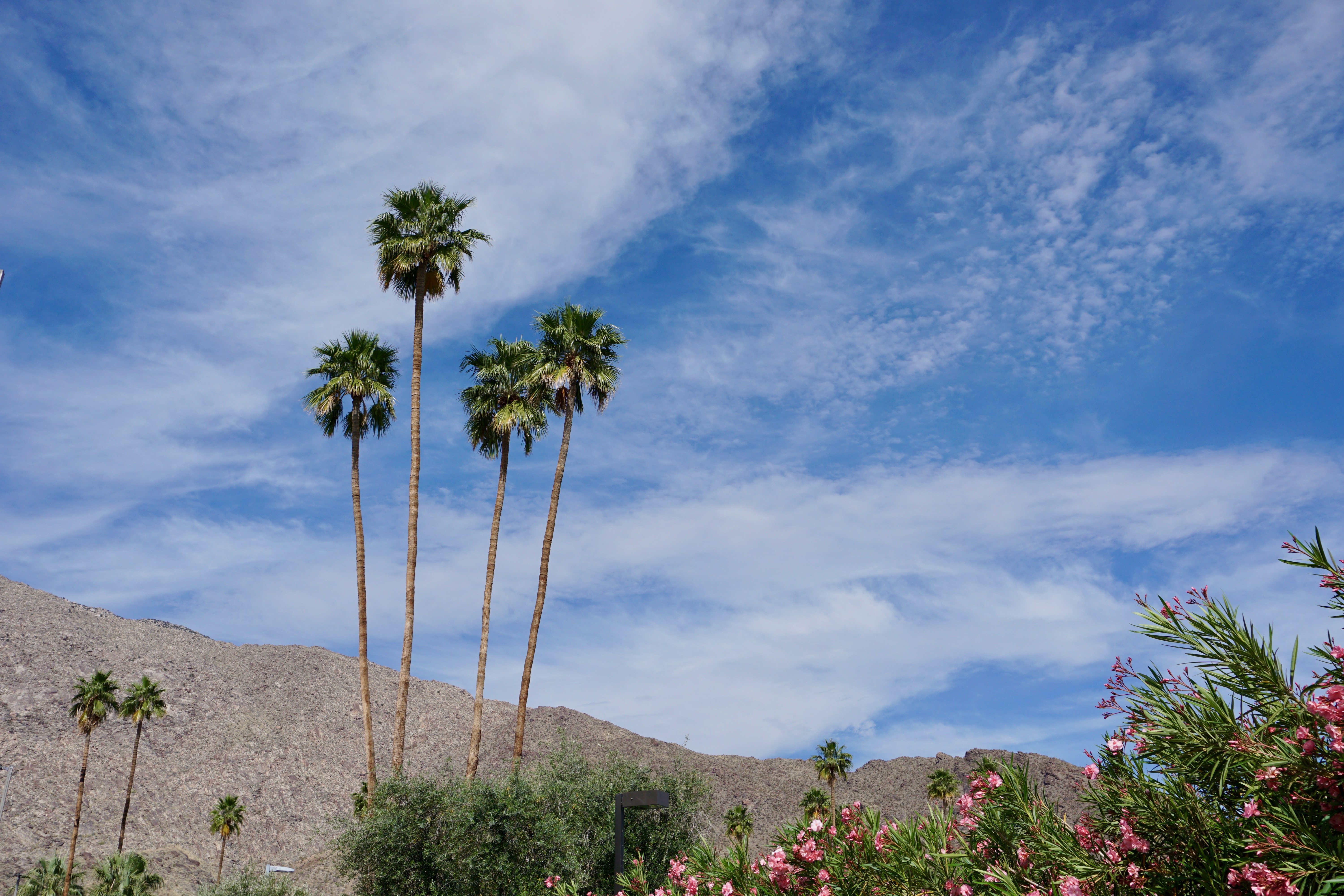
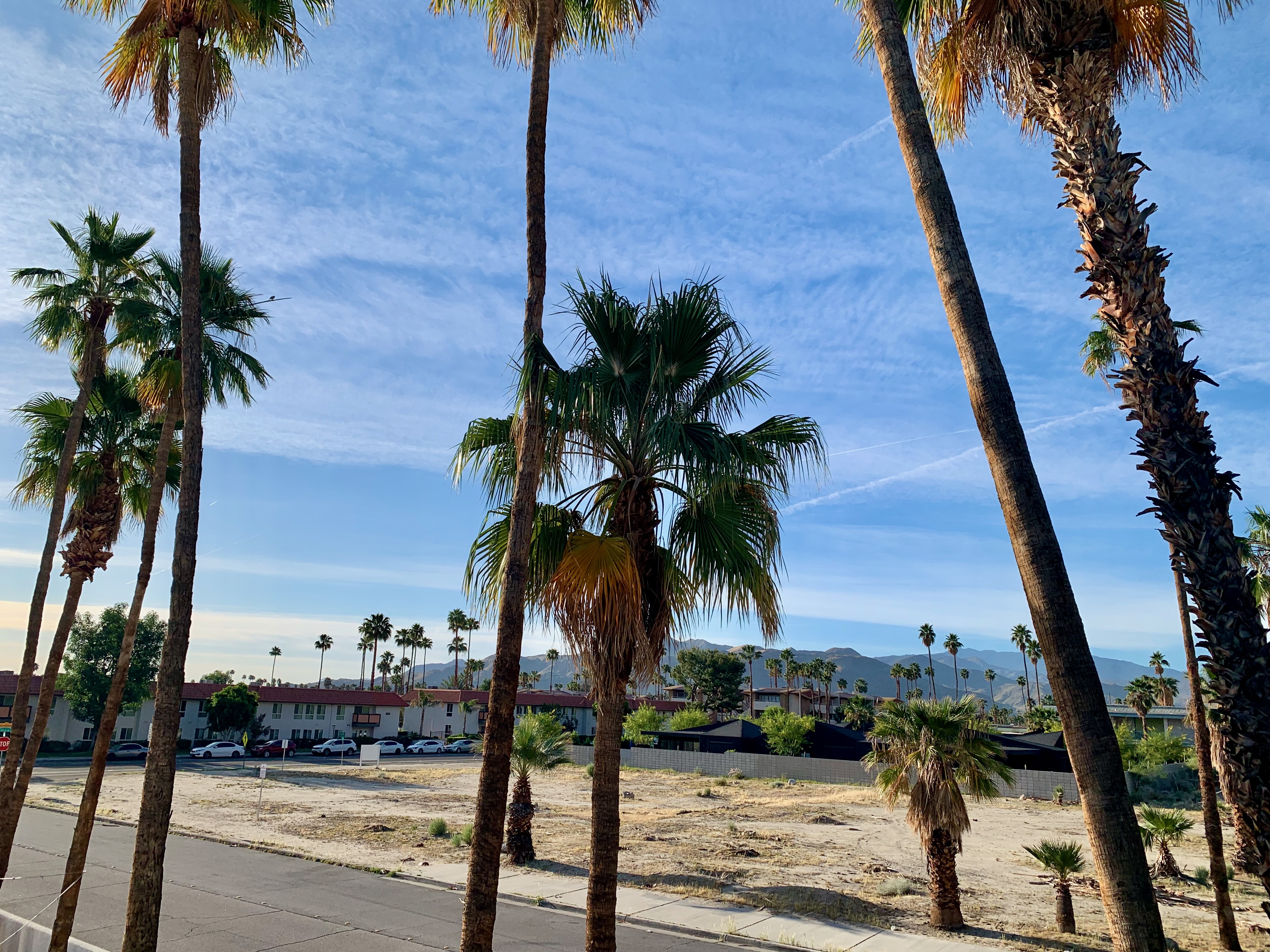
The city lives up to its name, although I wasn’t entirely expecting the mountain range right up against its Western border.
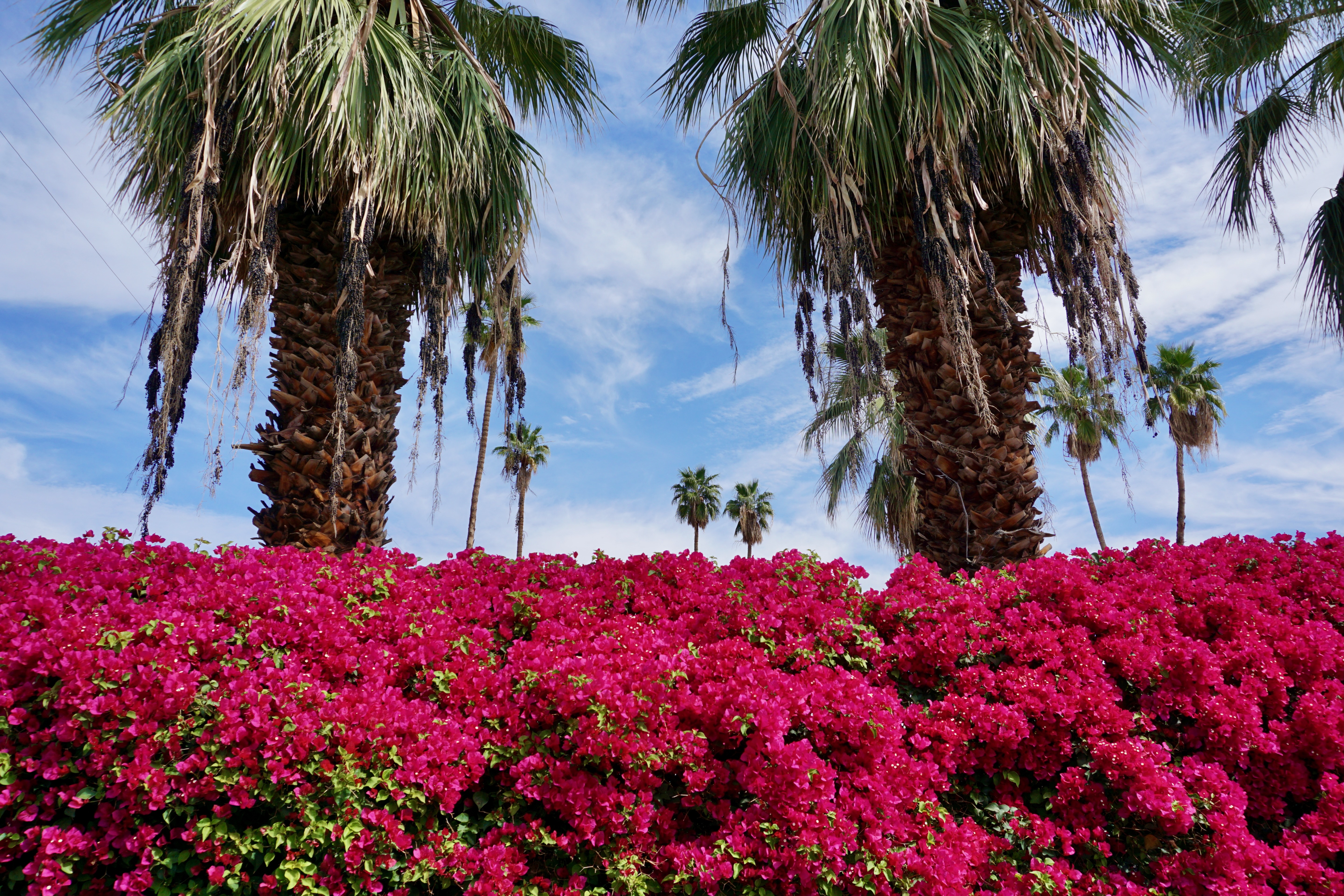
I was delighted to see bright pink bougainvillea of the type I’ve only previously encountered in Caribbean locales such as Turks and Caicos.
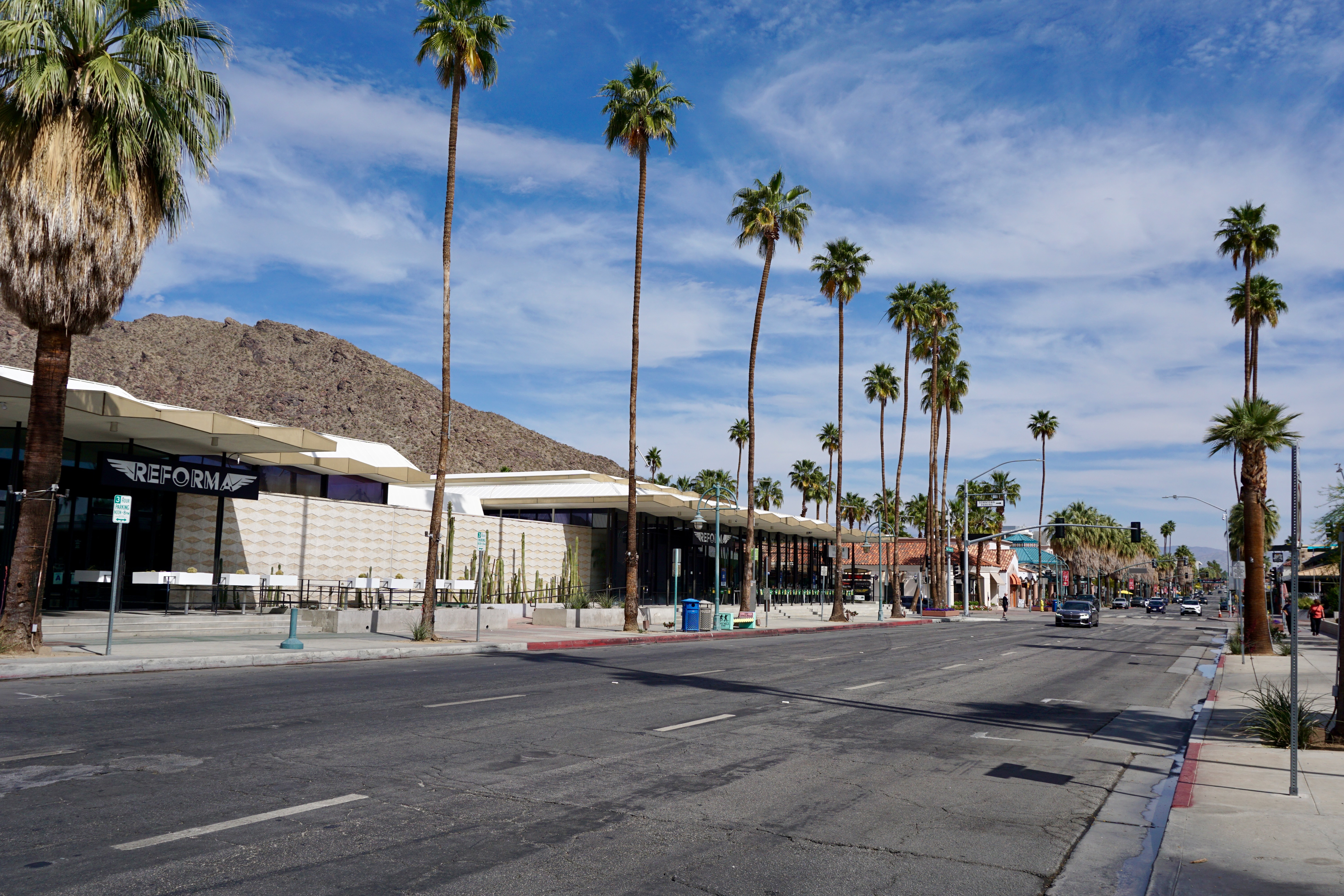
The city’s downtown has two main streets running parallel; this one is Palm Canyon Drive where a majority of the shops and restaurants are.
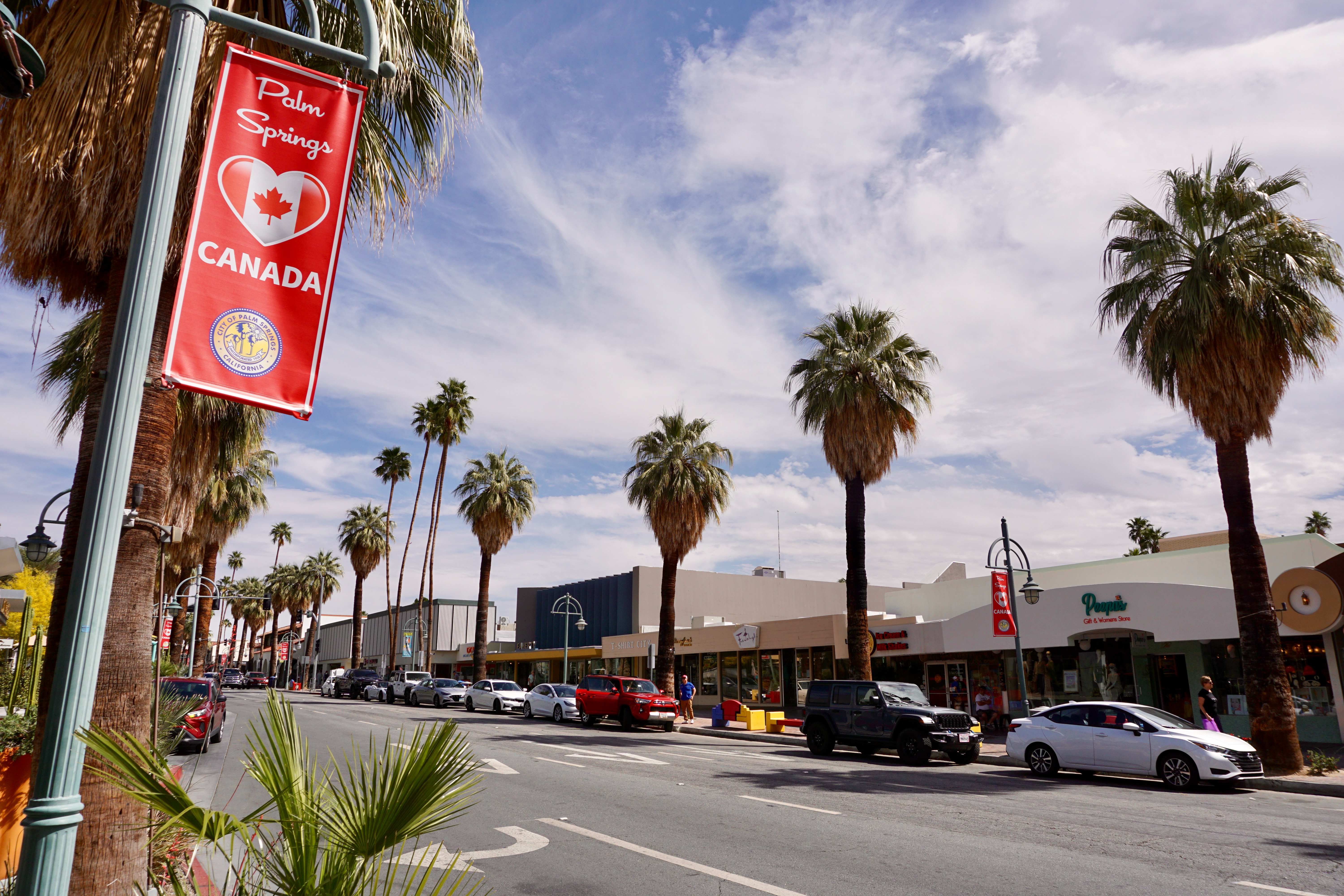
The central part of Palm Canyon Drive is dotted with giant, skirted palms.
I was happy to see the city’s support for our Northern neighbors.
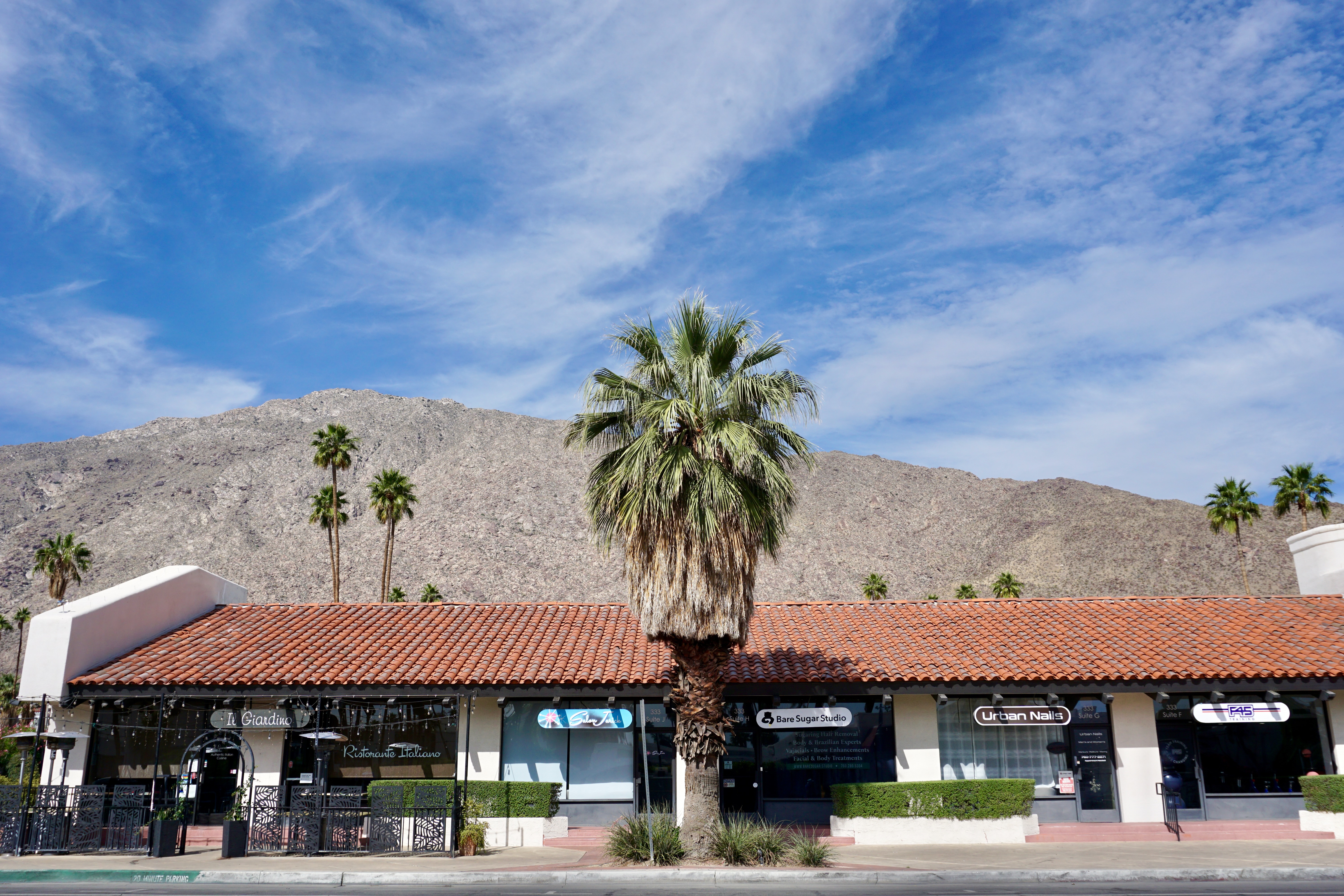
The main drag features plenty of mid-century modern architecture along with just as many pricey chain boutiques.
It also has its share of public art; I did not get a picture of the Sonny Bono statue (the city’s mayor from 1988 to 1992) but I did snap one of this pride-themed tribute to former resident Lucille Ball (there’s also a statue of her and at least it’s not an abomination like the one that used to be in her hometown.)
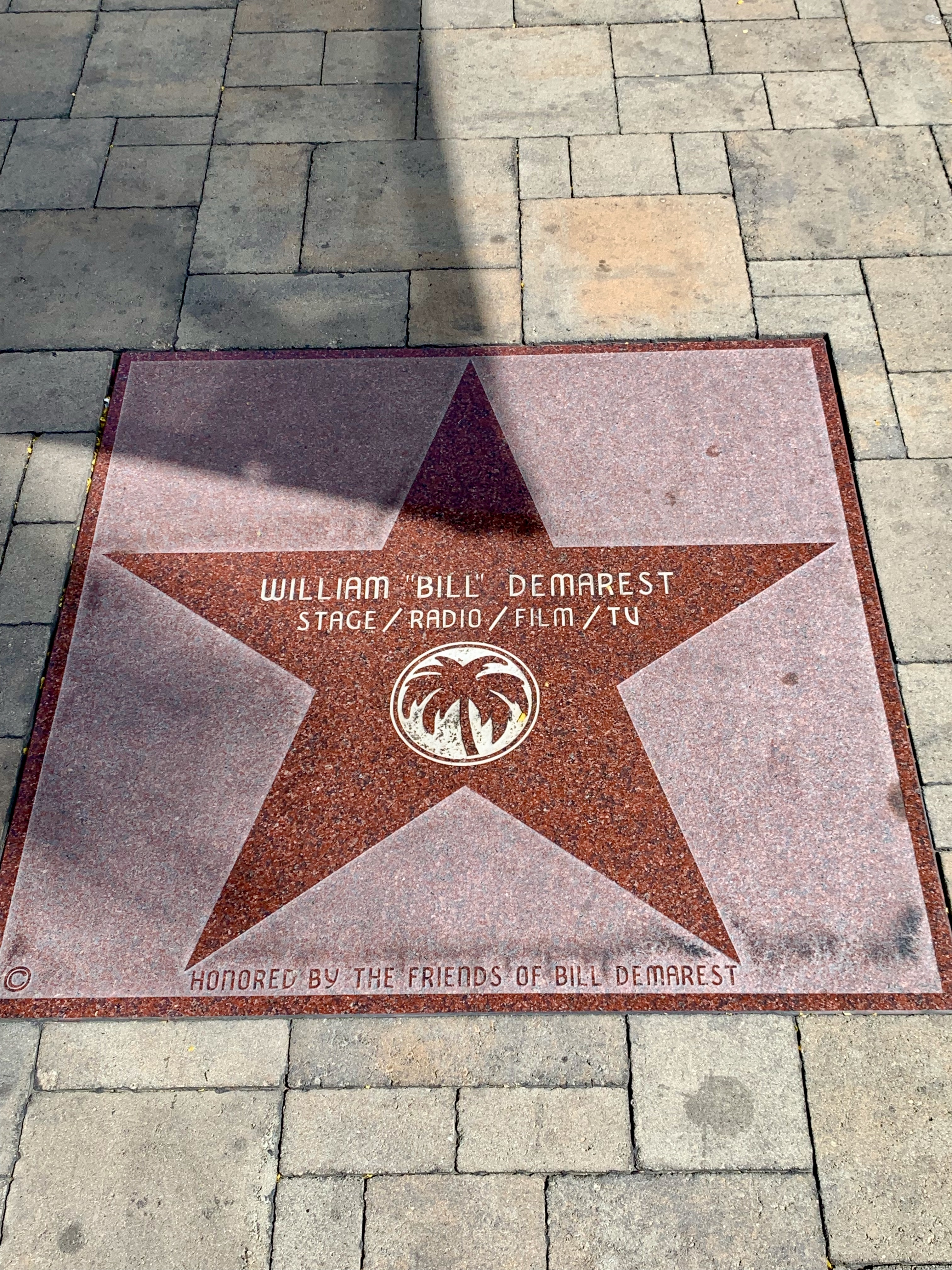
Downtown has its own walk of fame; one that reserves a space for this beloved character actor best known for work in 1940s Preston Sturges comedies (and also for playing “Uncle Charley” on My Three Sons) is my kind of walk of fame.
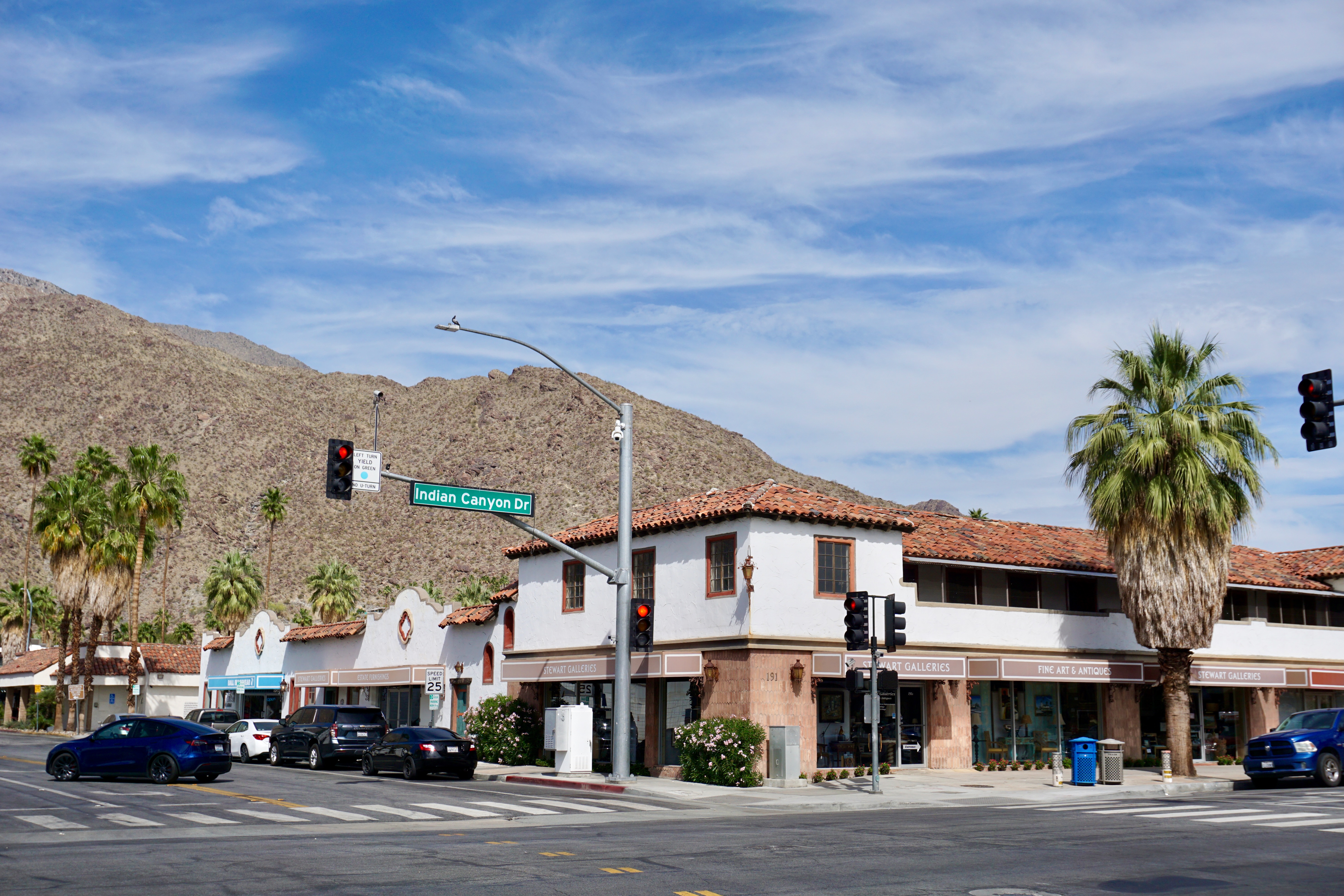
The other main thoroughfare running parallel to Palm Canyon Drive through the city is Indian Canyon Drive.
It’s less flashy than Palm Canyon Drive, consisting of scattered businesses and hotels but still offering expansive mountain views to the West.
We stayed at a hotel near Downtown off of Indian Canyon Drive and even had great views to the East from there.
Downtown after dark is often as gorgeous as it is by day. Built in 1941, the Welwood Murray Memorial Library is currently a research library for the Palm Springs Historical Society and I couldn’t imagine a more appropriate building physically.
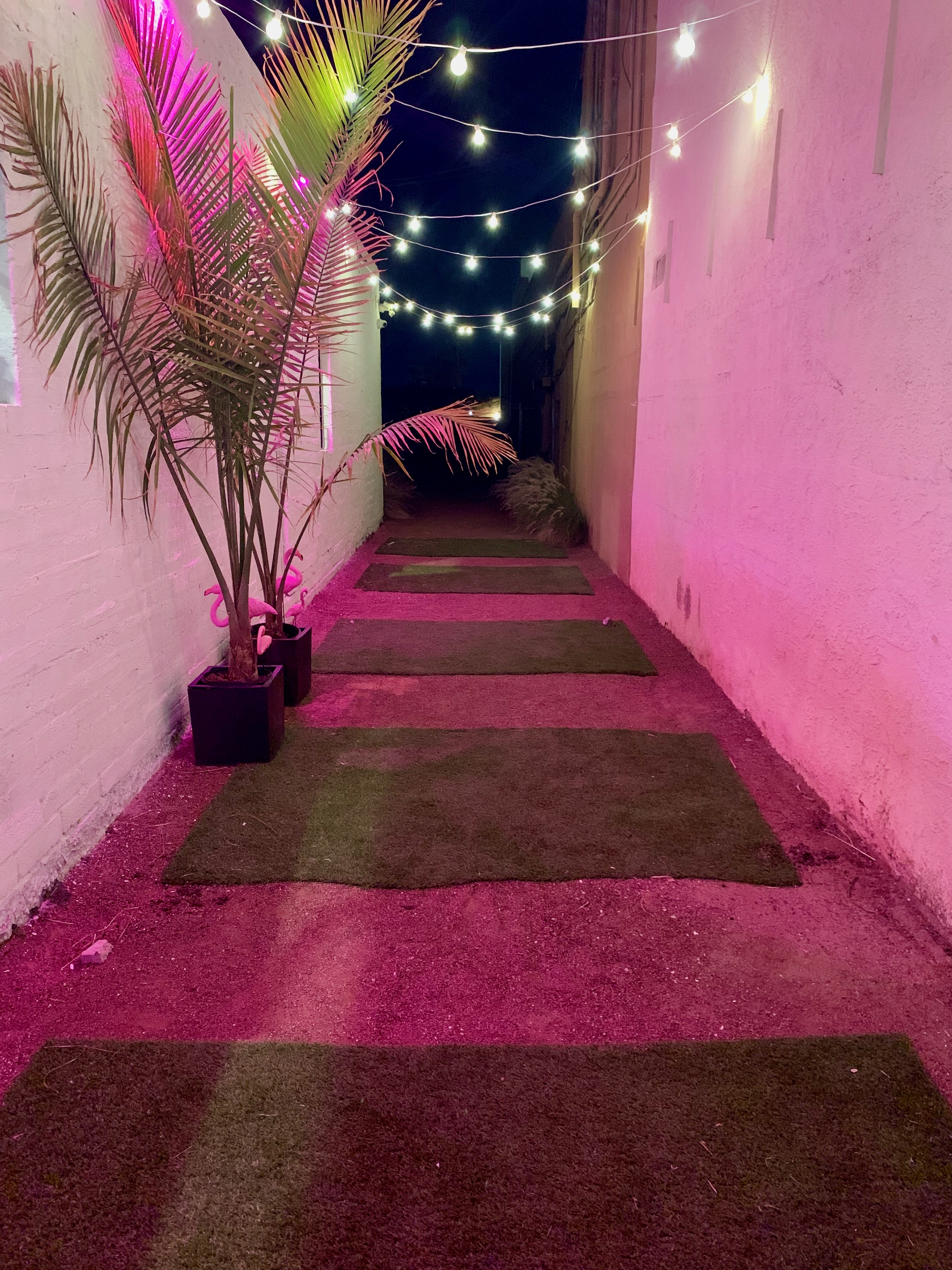
One evening, we walked through this public corridor behind Palm Canyon Drive and stumbled across some more striking public art.
One can stroll down Palm Canyon Drive itself and spot the most unexpected passageways between buildings.
Palm Springs at twilight. Stay tuned for more photos focusing on architecture and other hidden delights around the city.















 Haunted Jukebox