Glenwood Springs

One has to pass through Glenwood Springs, Colorado to reach points south like Aspen and Maroon Bells.
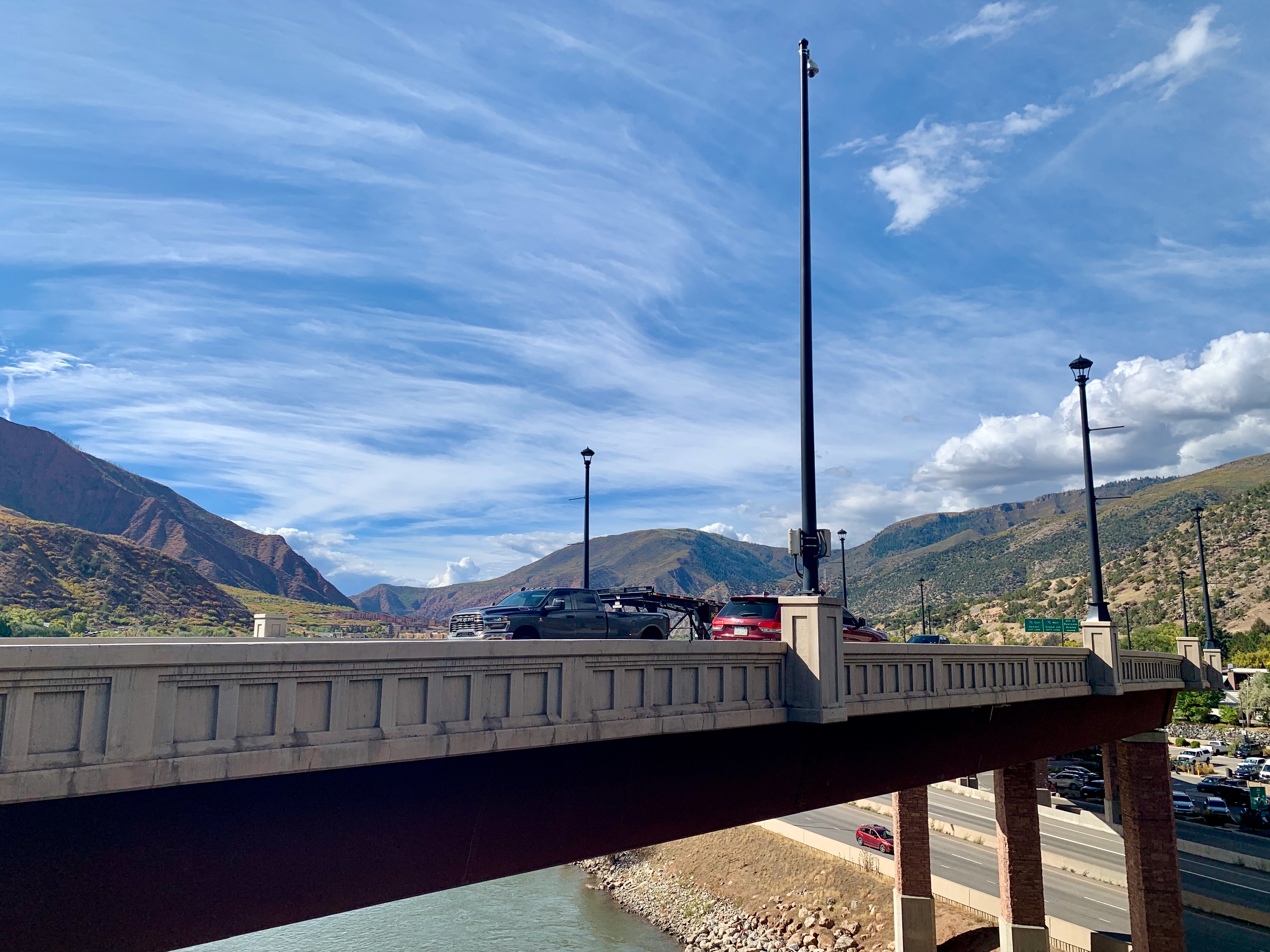
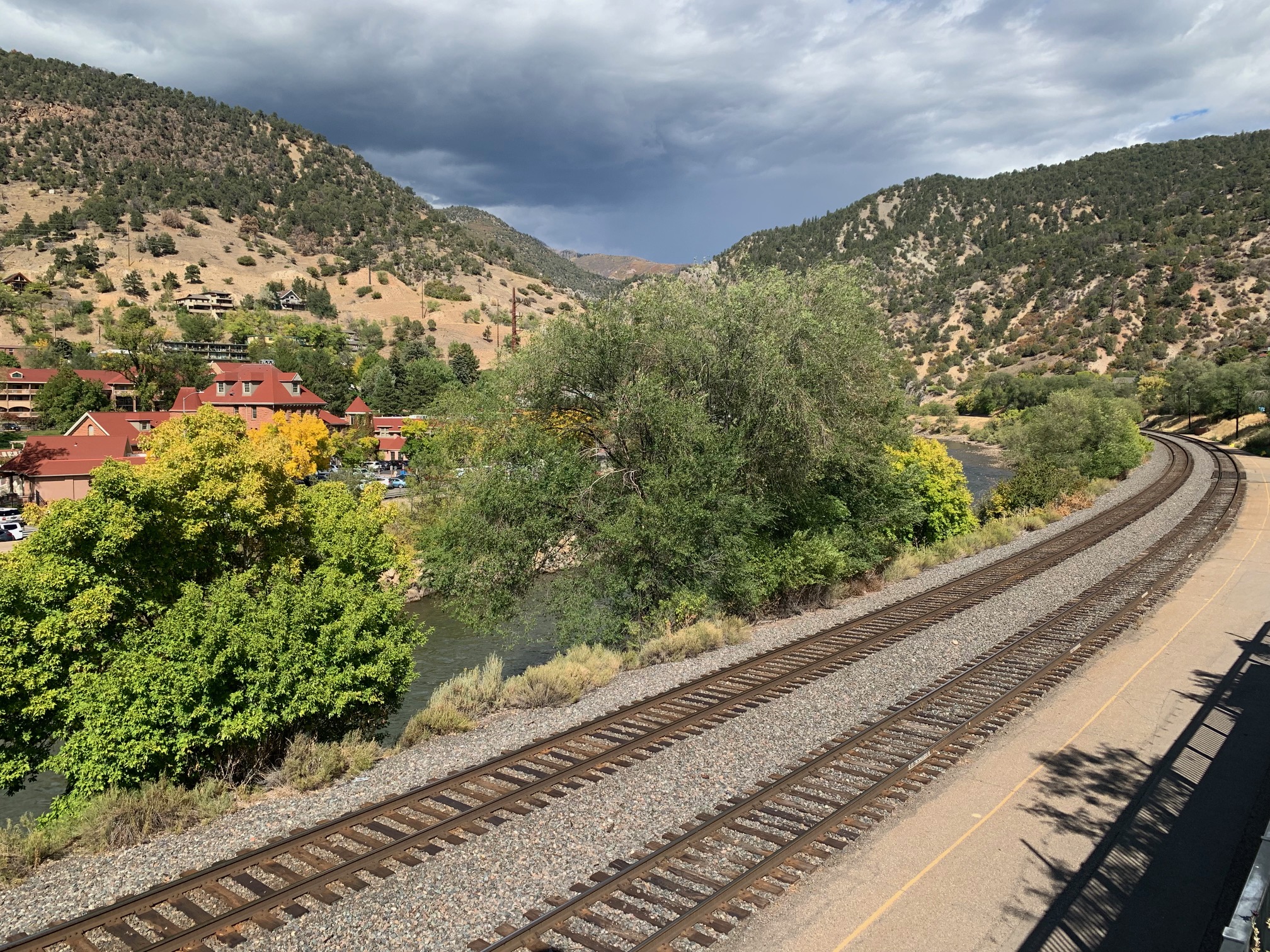
A city of just under 10,000 people, Glenwood Springs sits at a crossroads. The Colorado River and I-70 cut through it from east to west, while Highway 82 South leads one into its downtown via an overpass bridge. This was taken from an adjacent pedestrian bridge.
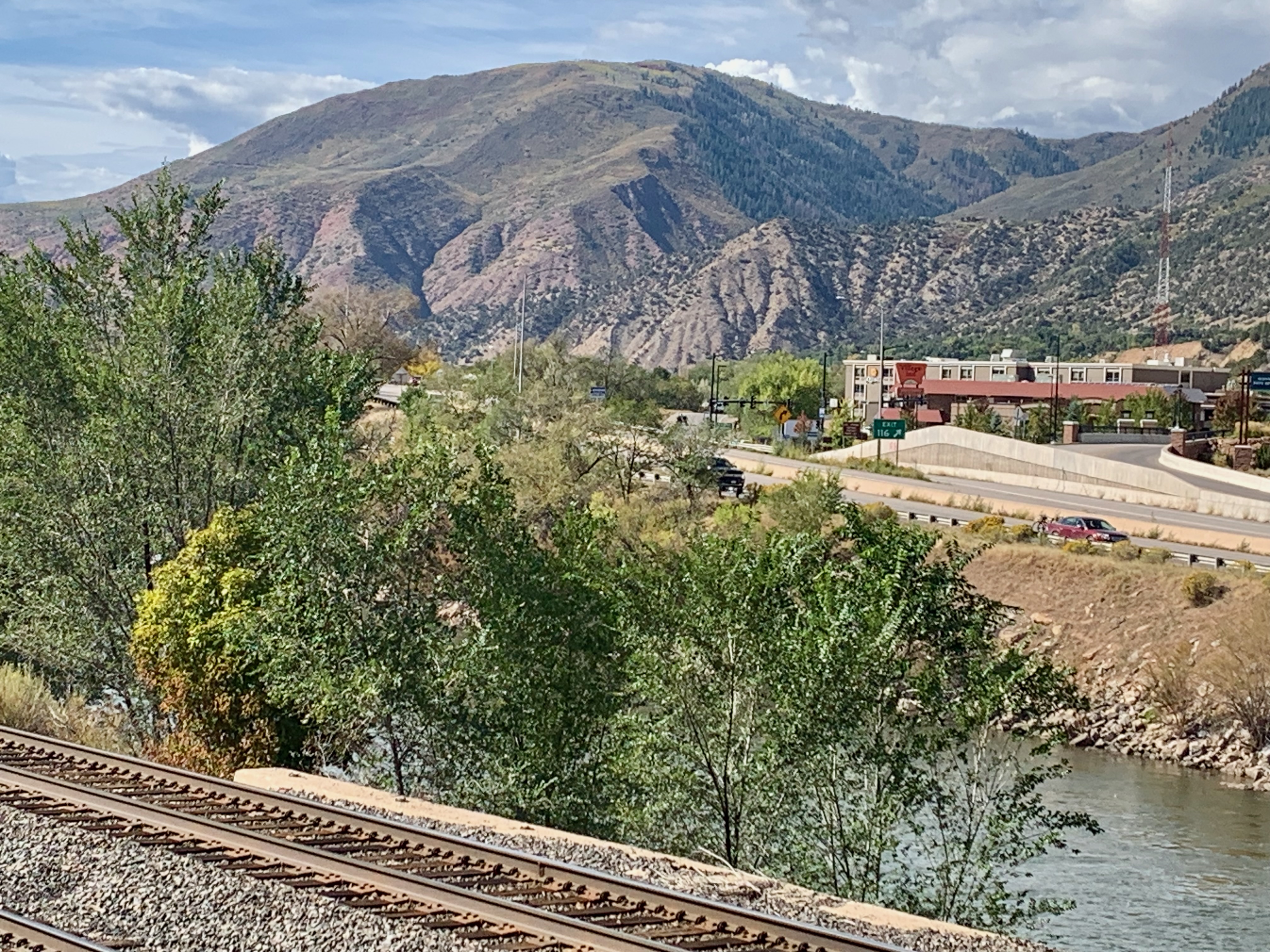
To the west, an expanse of motels, radio towers and nearly monochrome mountainous terrain.

To the east, comparatively much more color and texture. On I-70, one must pass through the thrilling, precarious Glenwood Canyon to arrive here.

The town is mostly renown for the Glenwood Hot Springs which sprawl to the north of the river and interstate. We briefly considered checking them out but they were a little expensive for our taste.
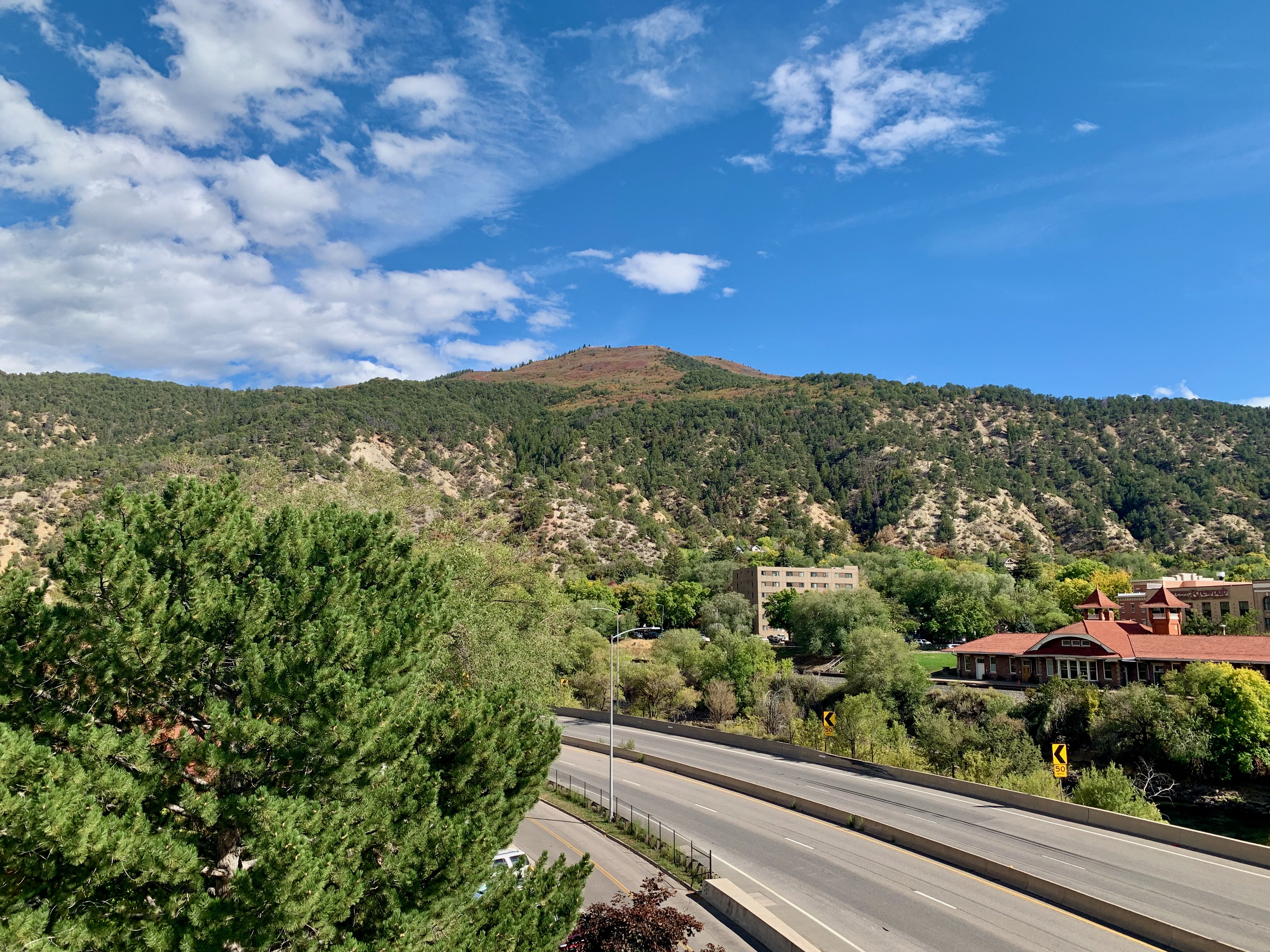
More lush greenery to the east along I-70, but something red stands out to the right.
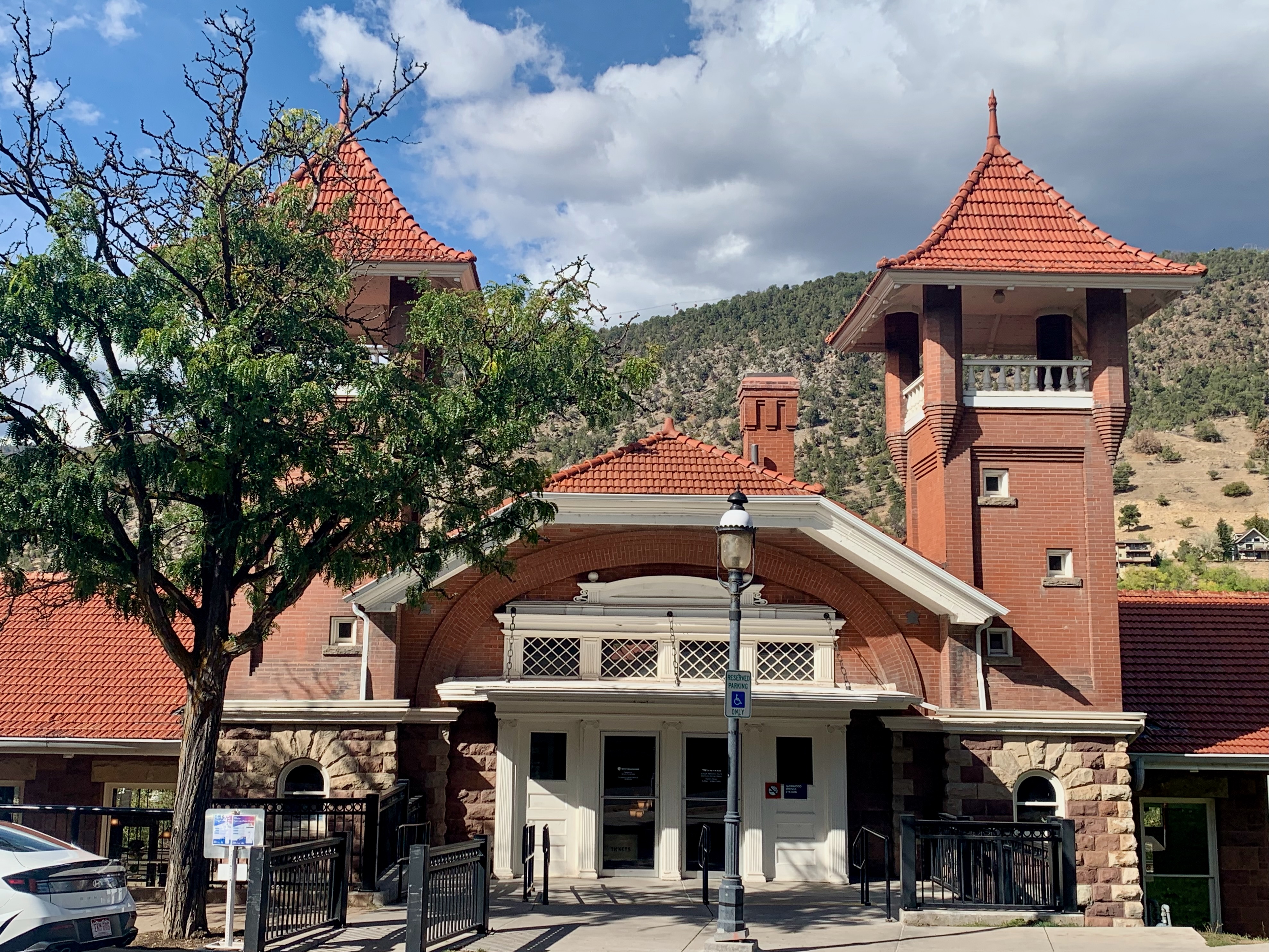
The town’s historic train station where Amtrak’s California Zephyr line still stops.
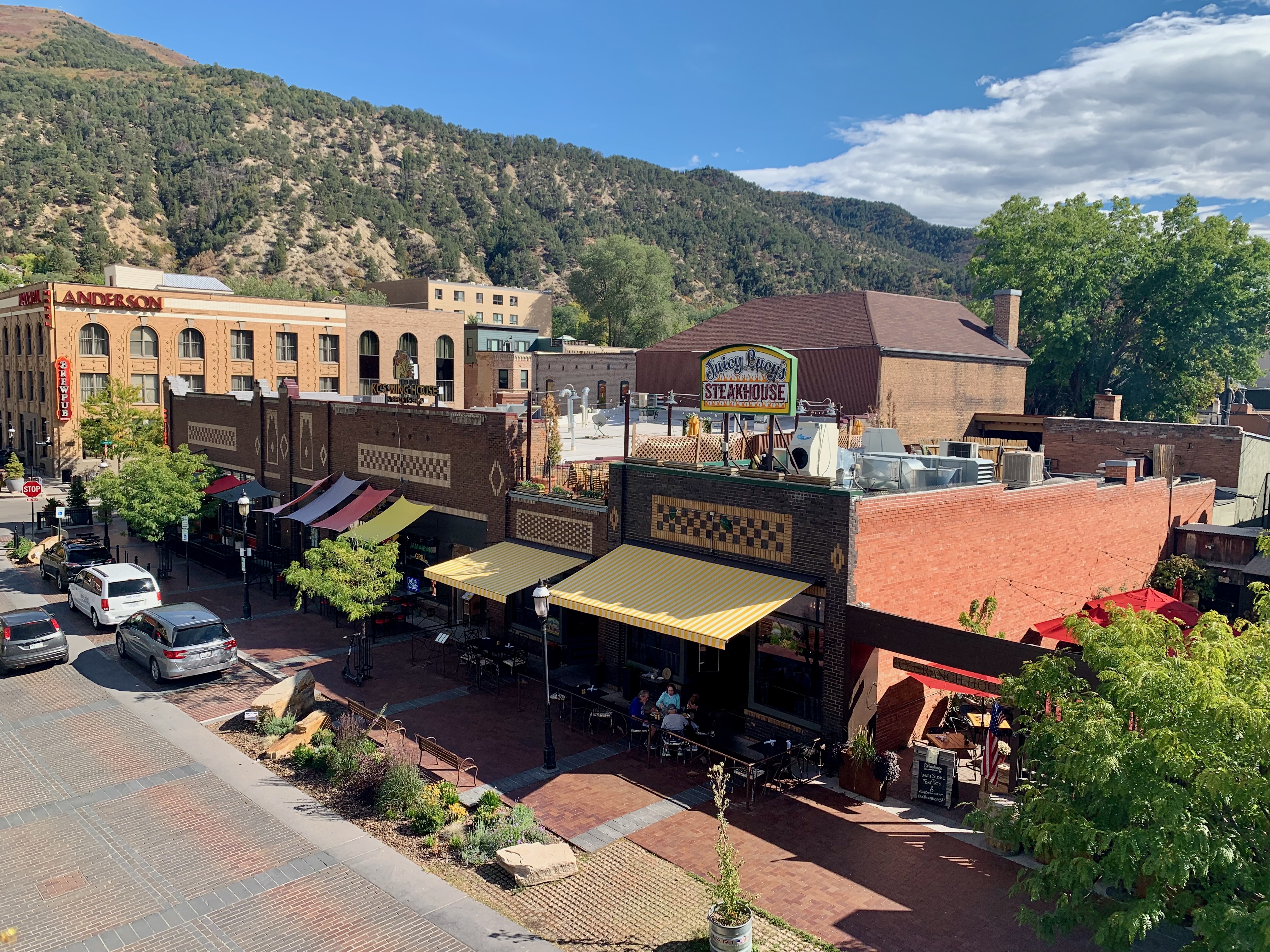
Initially, we feared the town itself was nothing more than a tourist trap given its proximity to the Hot Springs.
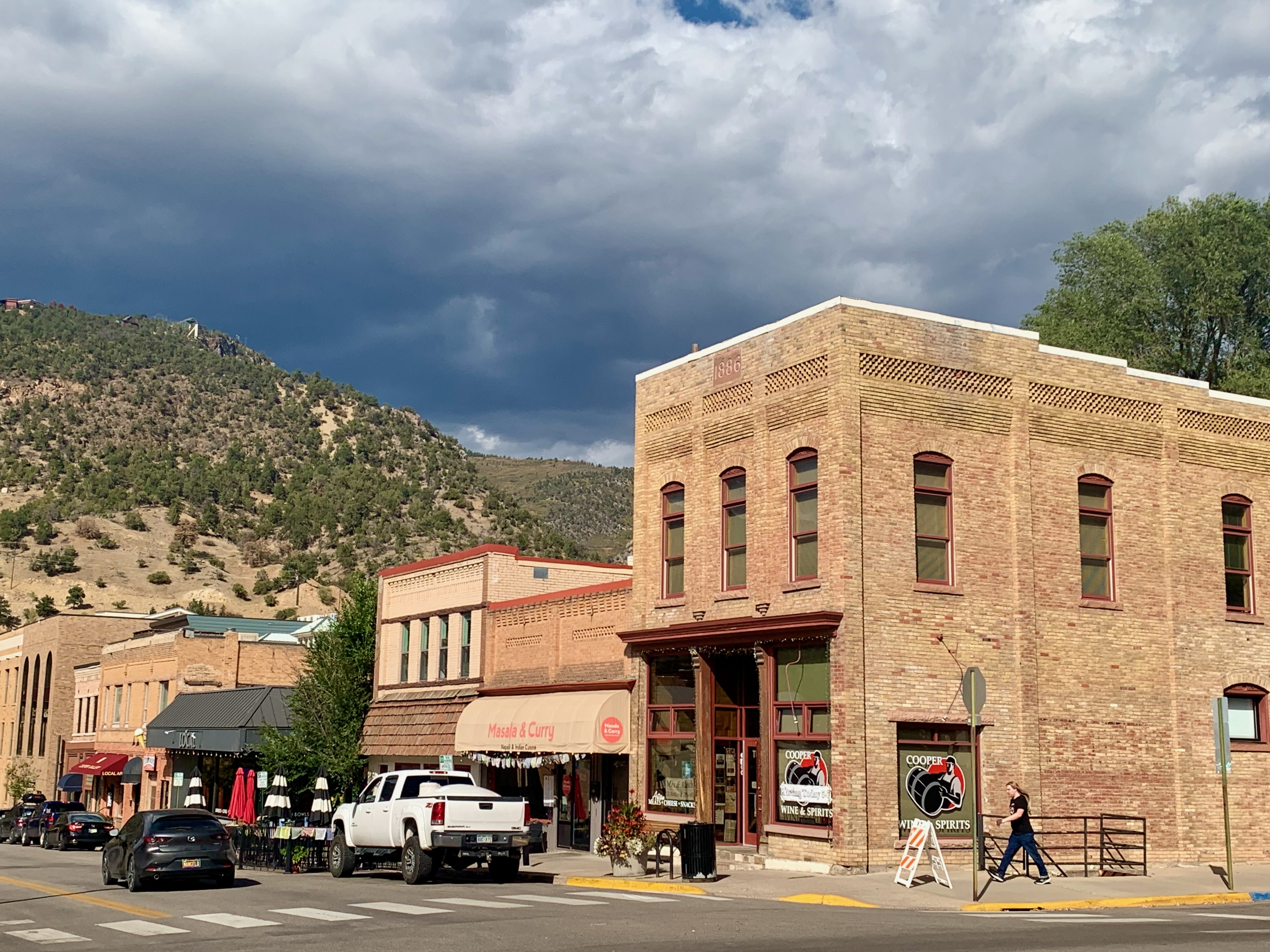
While ideally positioned to attract out-of-towners like us, the town also has an agreeable laid-back homey vibe nestled within all of its scenic beauty.
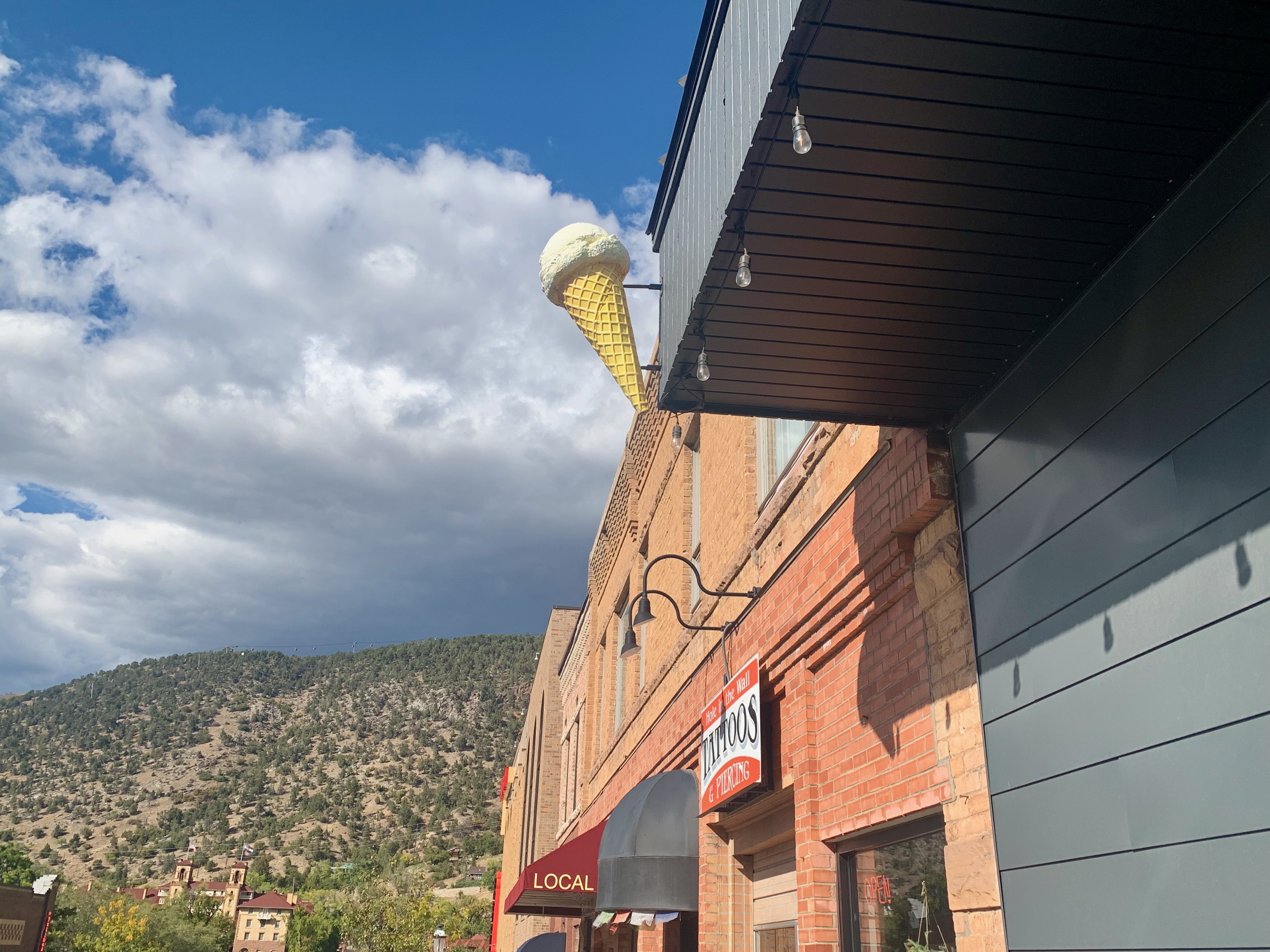
Not to mention a little whimsy here and there like this oversized ice cream cone.

Downtown has an excess of vintage architecture; I could’ve spend an entire day walking around taking photos.
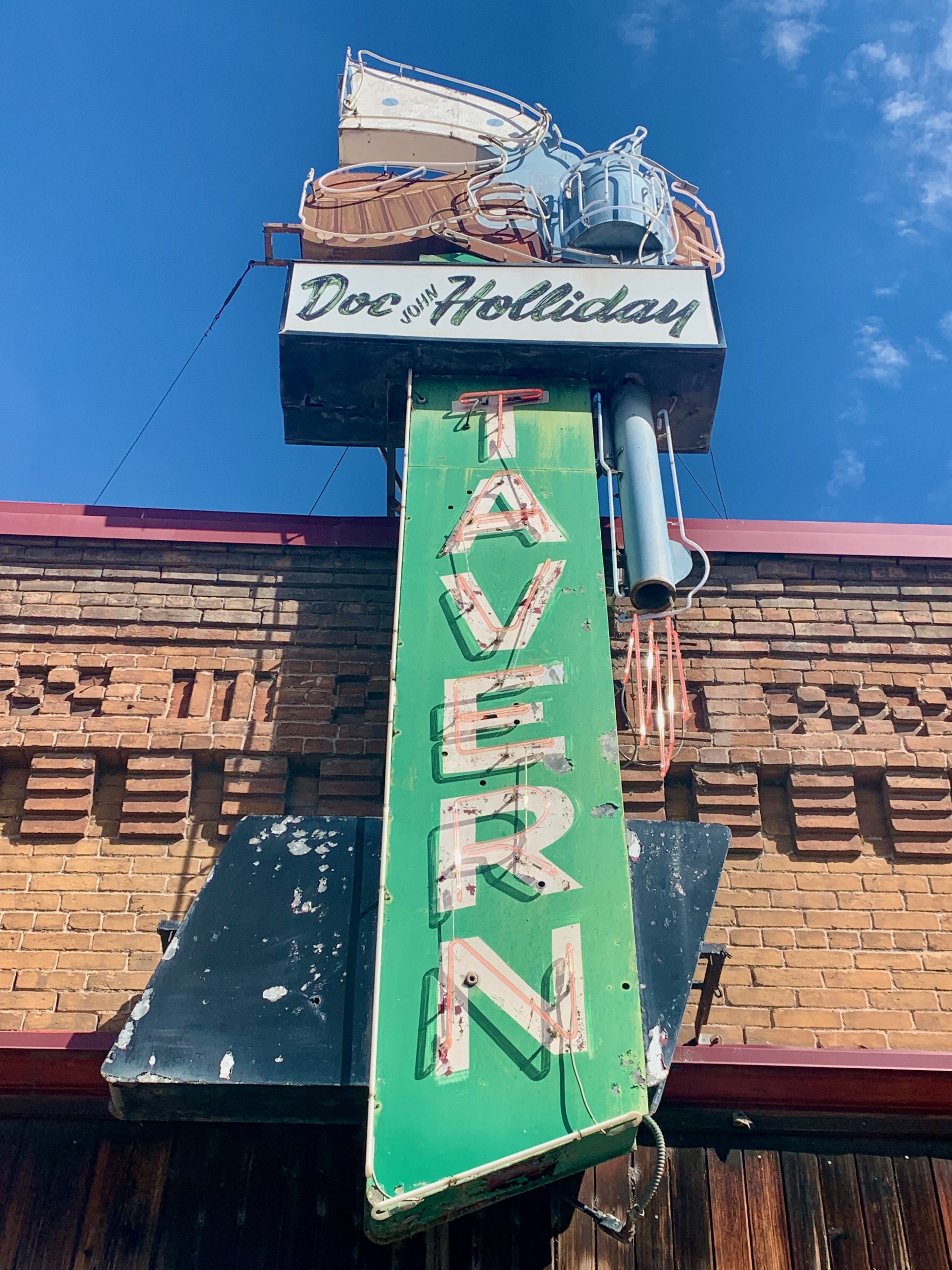
Perhaps its other claim to fame (besides the Hot Springs) is that it’s where Doc Holliday died. I’d recently watched Tombstone (featuring Val Kilmer’s justly celebrated performance as Holliday) without knowing I’d end up here just a few months later.
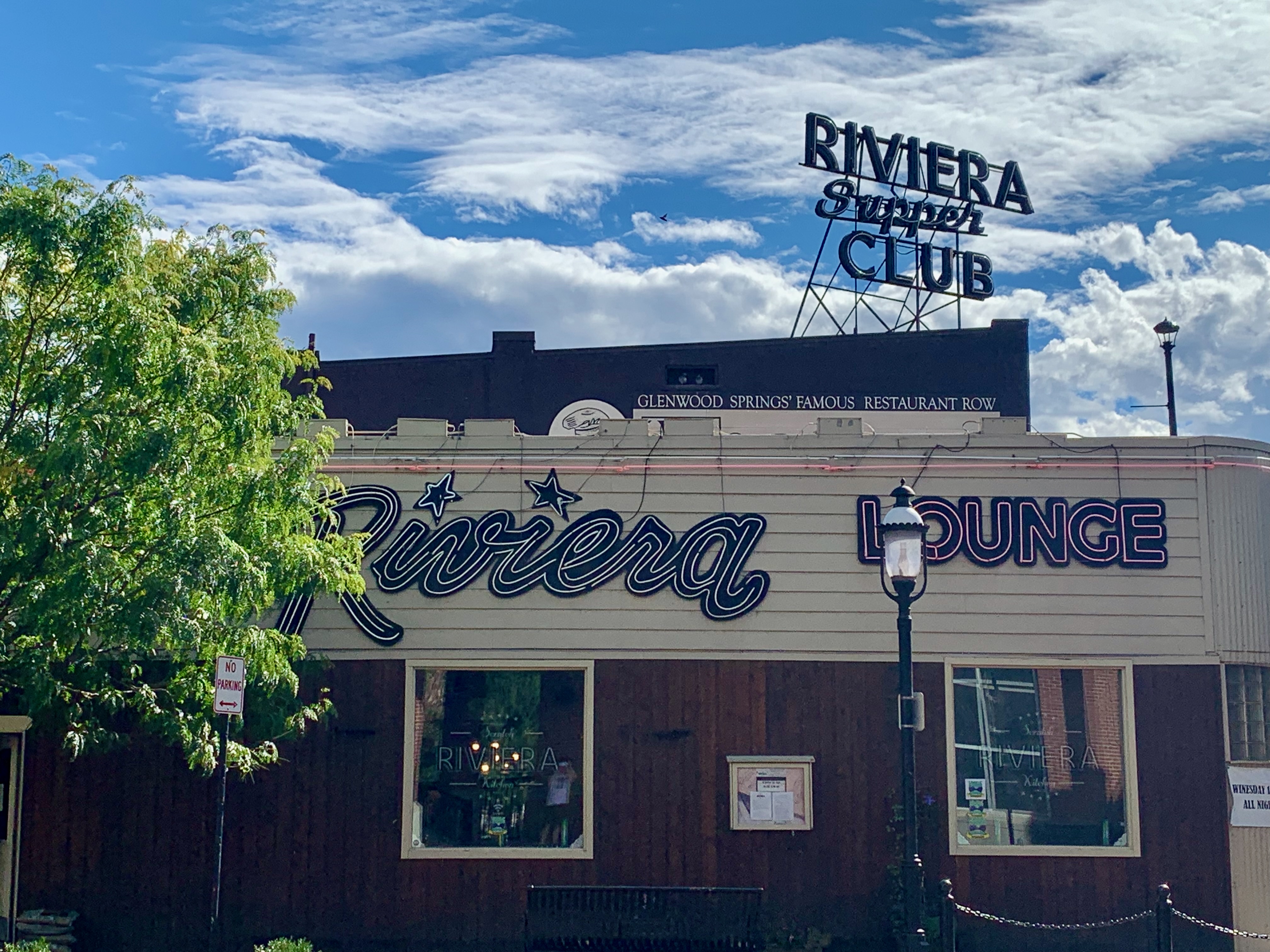
I’m not sure how vintage this Riviera Lounge signage actually is, but I love it regardless.

A few blocks from downtown, I walked through a residential neighborhood on a lovely, warm September afternoon. The sign (and architectural design) of Gene’s Lock & Key immediately caught my eye.
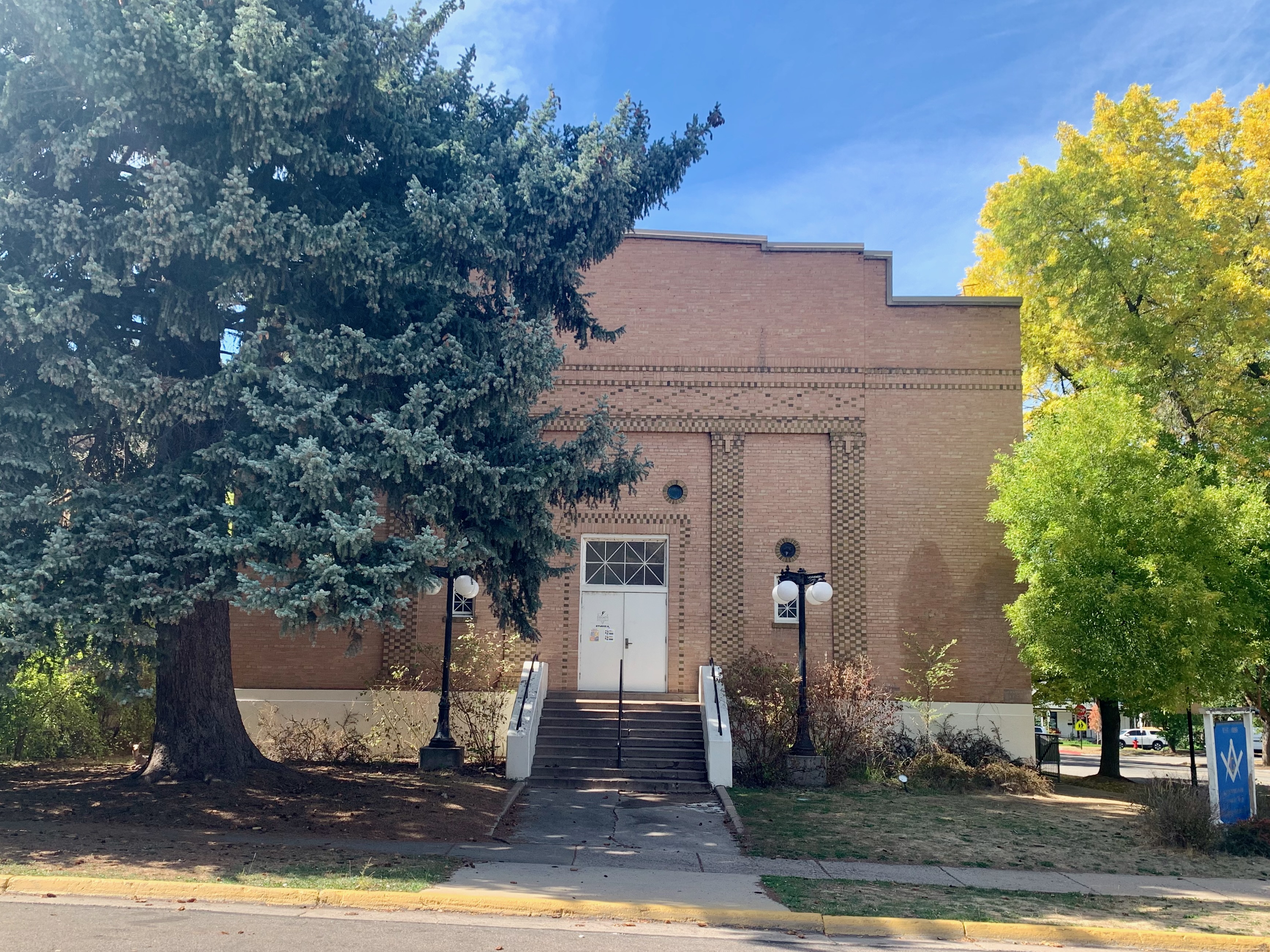
As did this Masonic Lodge down the block, likely appearing exactly as it did 50 or 70 years ago.
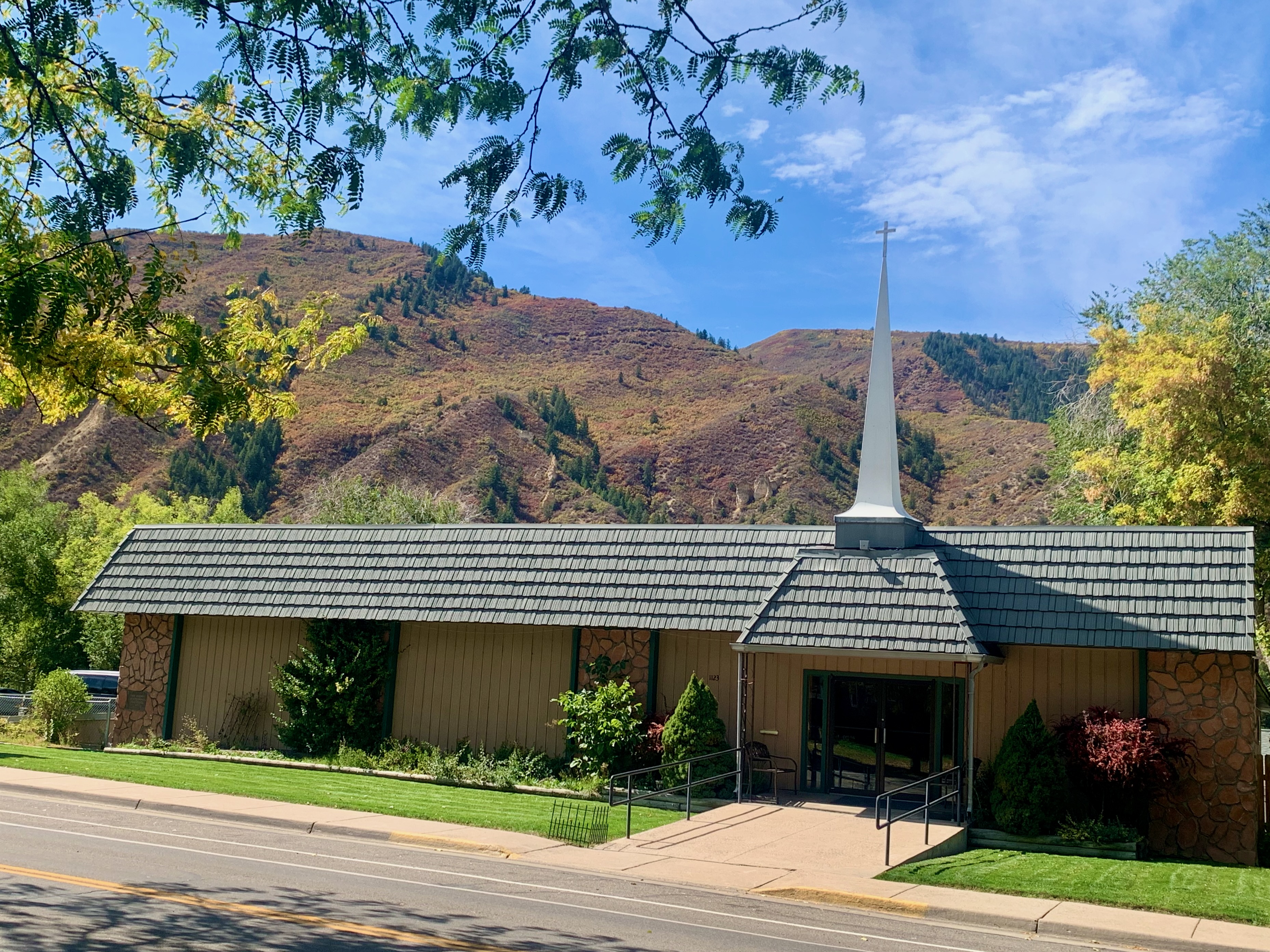
One doesn’t see many mid-century structures anymore where I live like this church. Here, it looks picture-postcard perfect against the mountains to the west.

As I strolled through this neighborhood, I increasingly thought what a nice place it would be to live in if I ever grow weary of being in a big city.
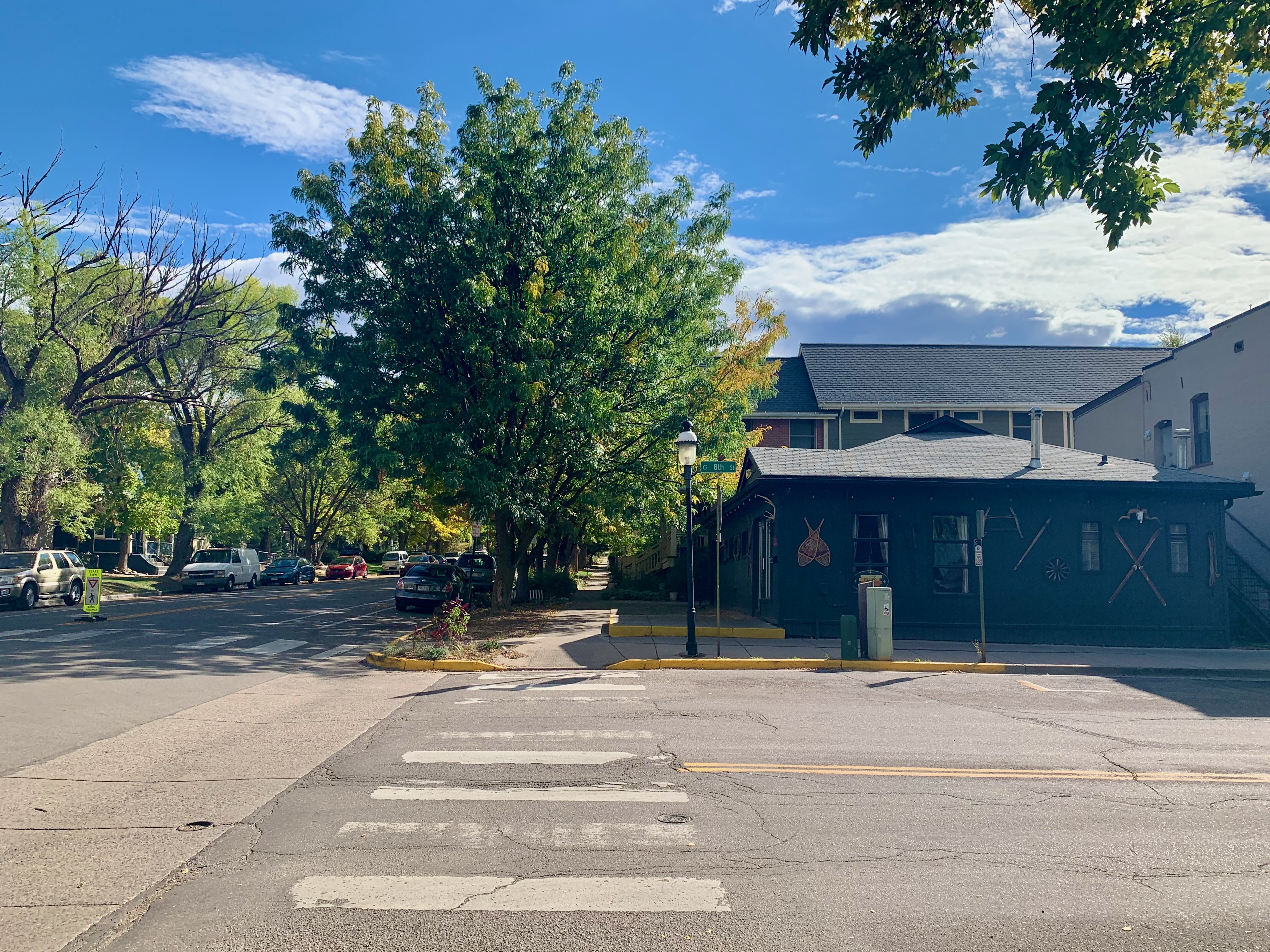
There’s something odd but also charming about coming across a house displaying skis and snowshoes along its side exterior.
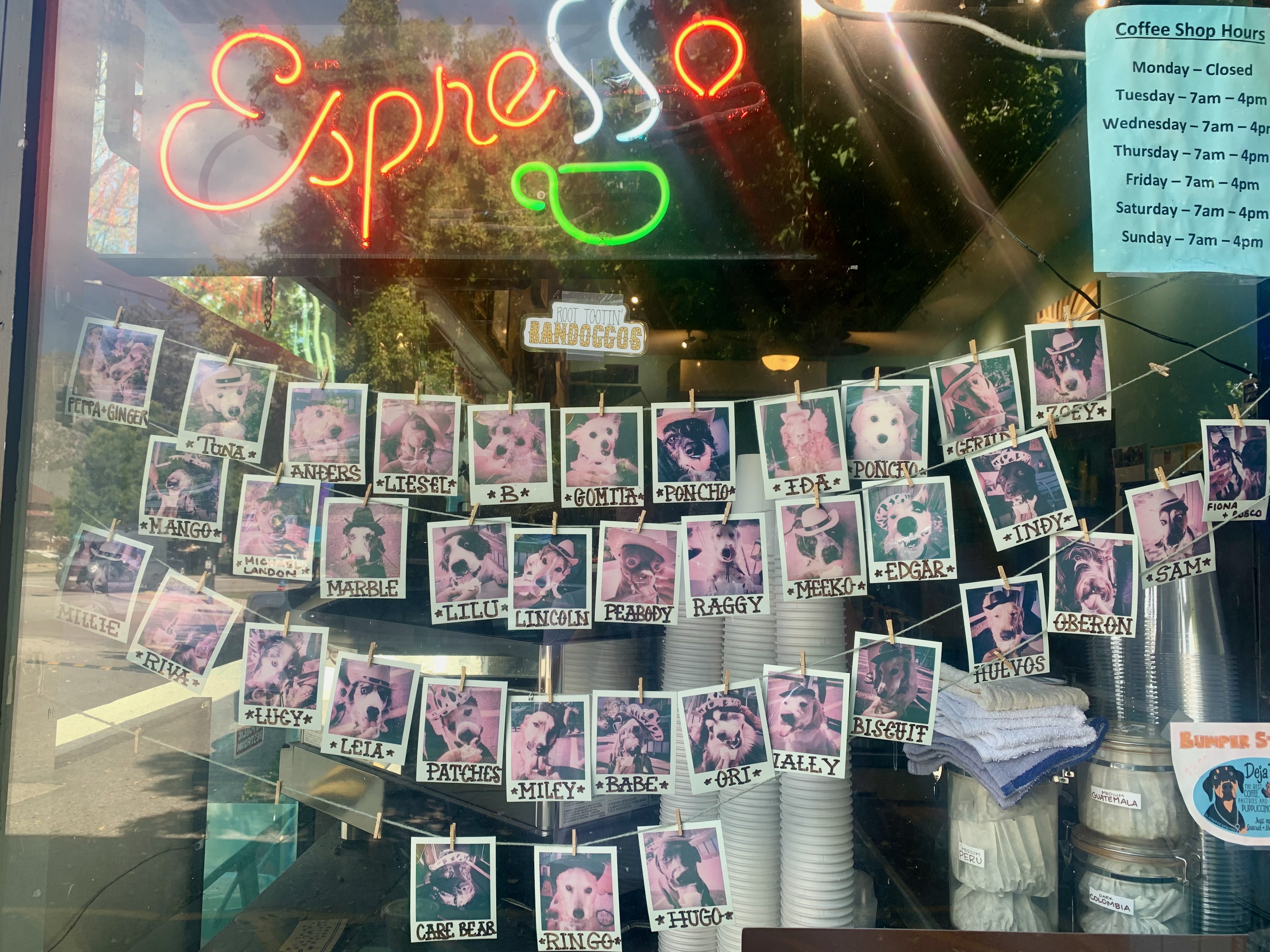
These strings of dog polaroids in the window at Deja Brew coffeehouse on Highway 82 are nothing but charming.

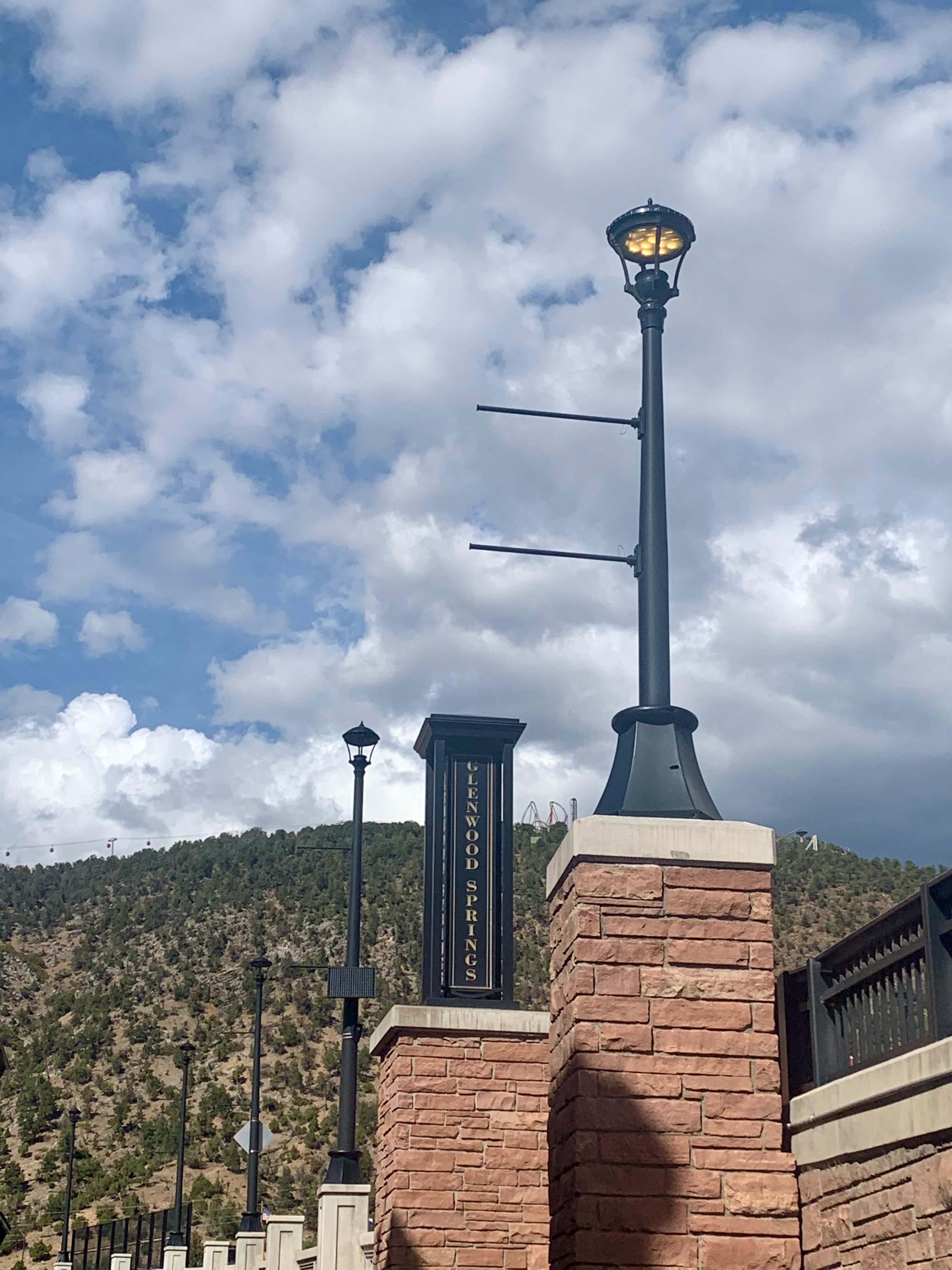
Downtown sports colorful signs with this slogan all over the place. Between stuff like this, the unexpected number of rainbow flags I saw in assorted businesses and the natural beauty surrounding it all, Glenwood Springs was a gem of a place to spend an afternoon.
Aspen Afternoon

Aspen, Colorado has a reputation as a wealthy ski resort town and it’s not unearned.

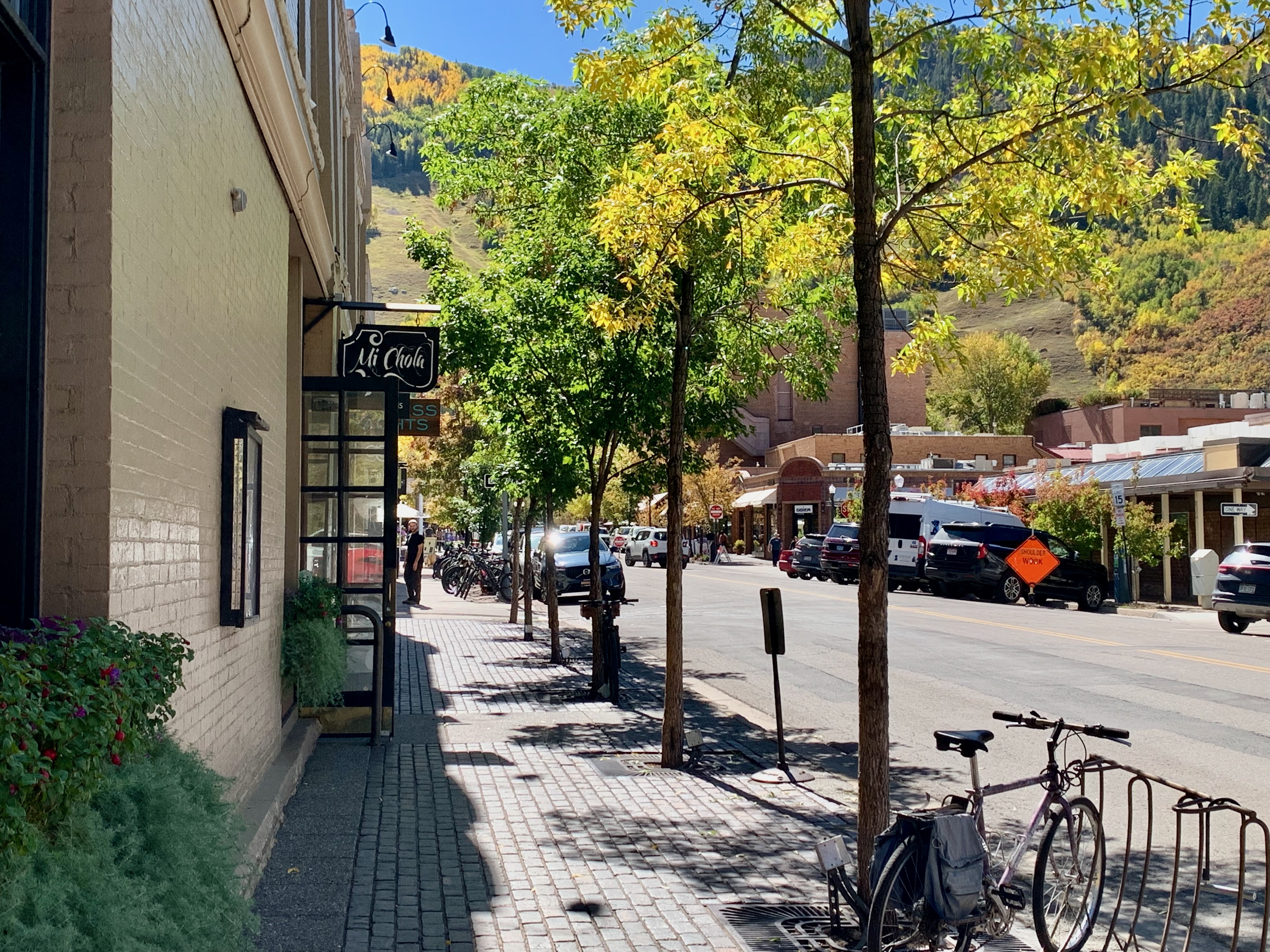
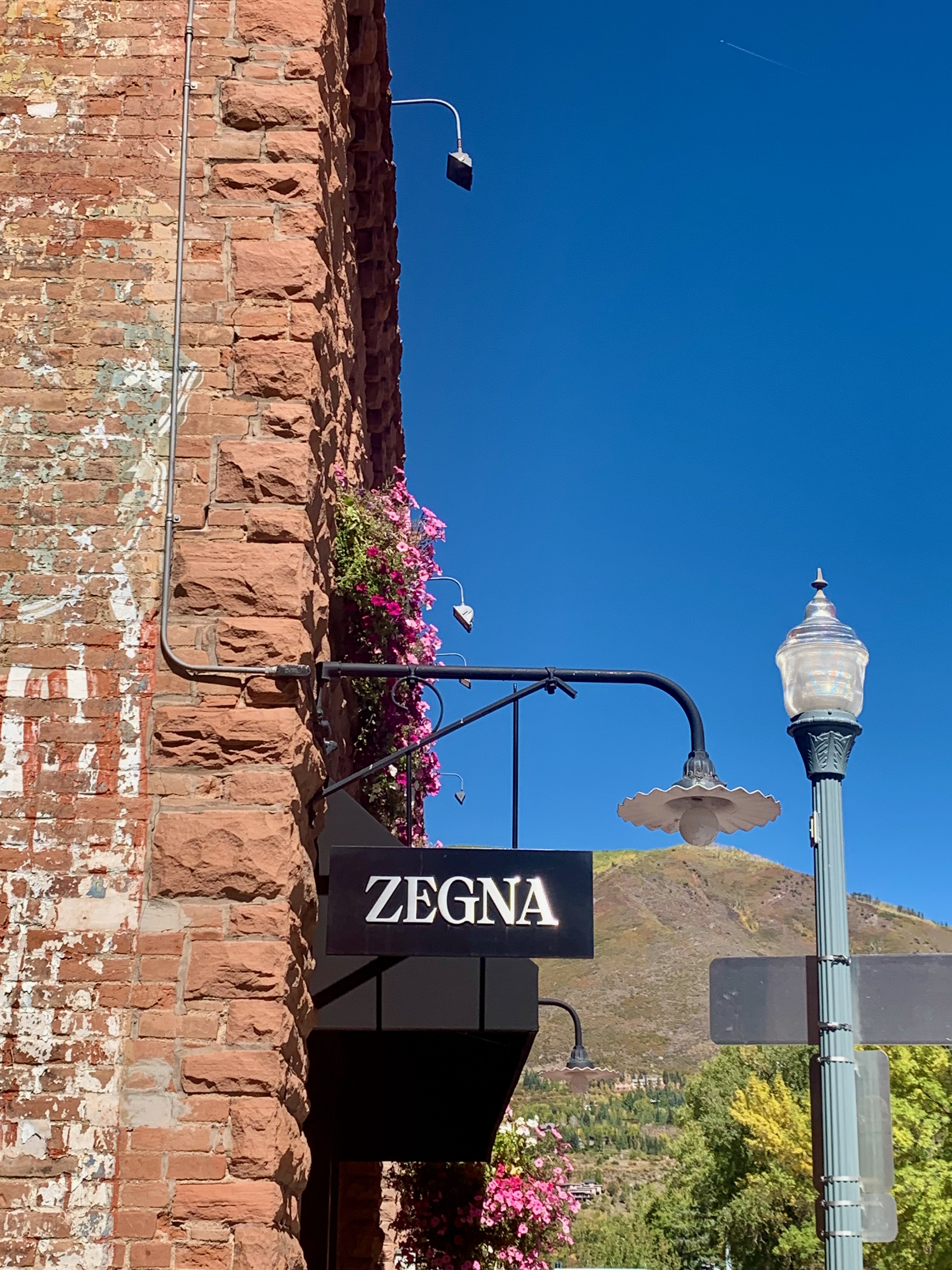
The high-end boutique count on most blocks is likely close to that of Boston’s Newbury Street.

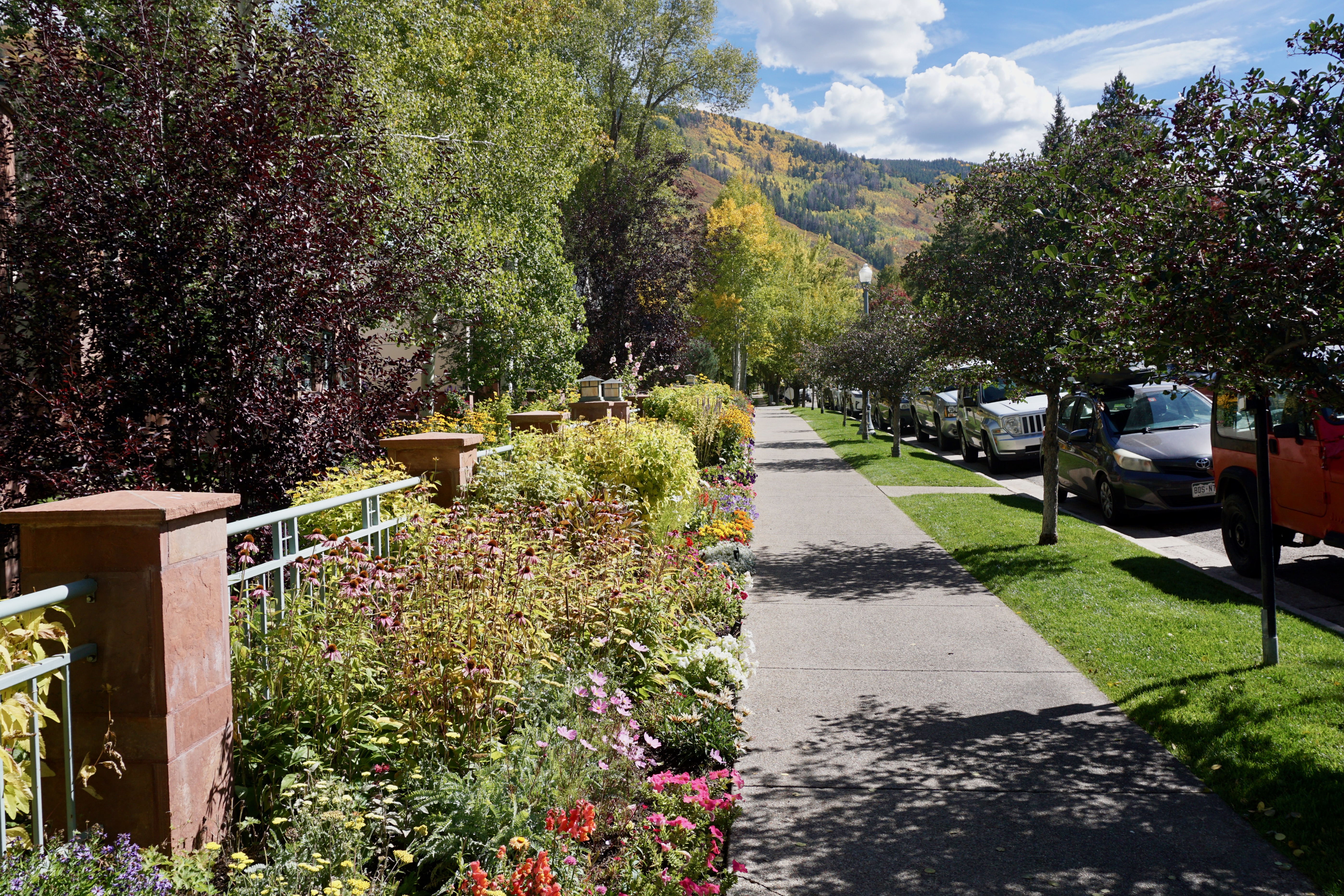
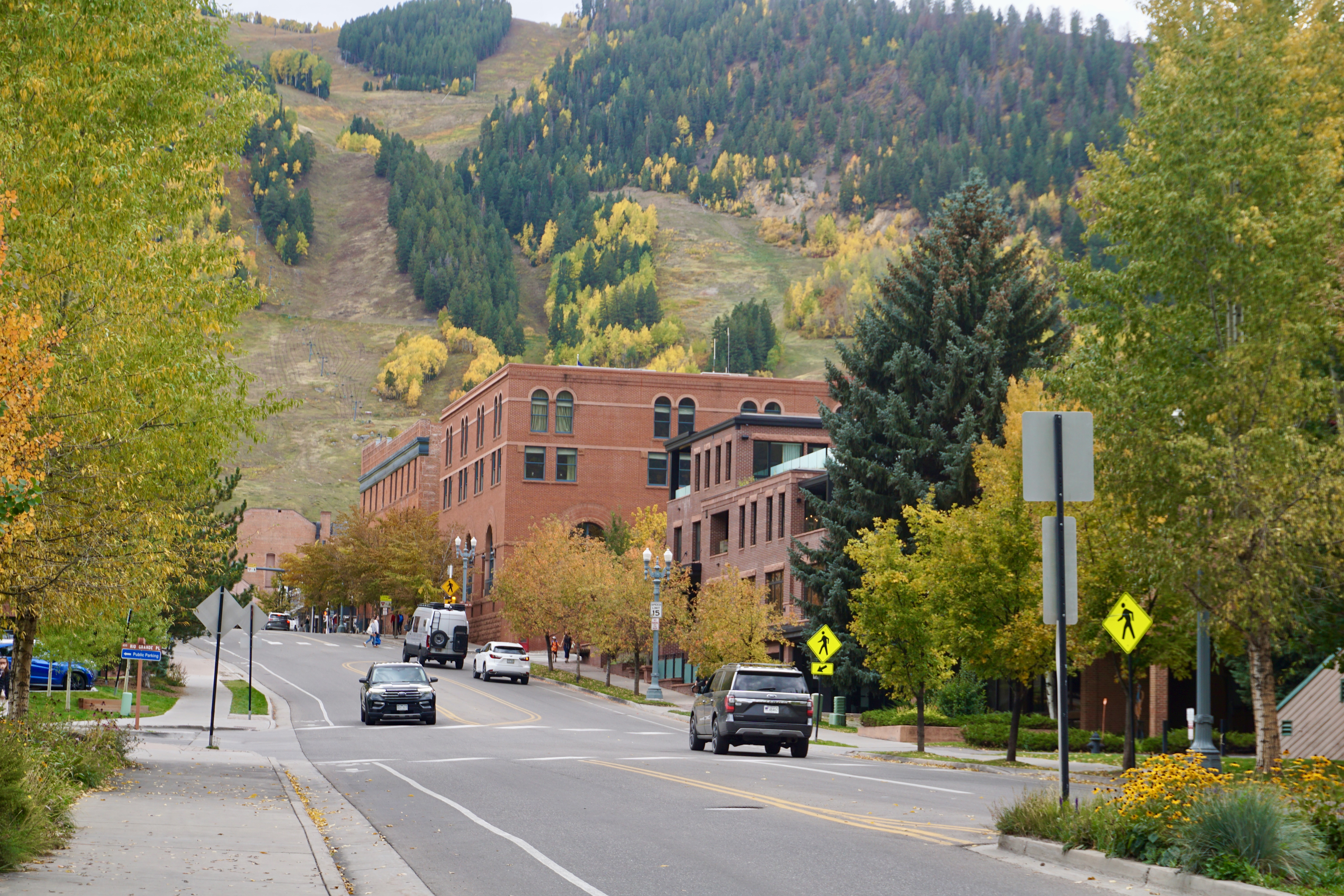
However, if you walk away from the town center through flower-lined residential blocks, there remains a constant in the landscape.

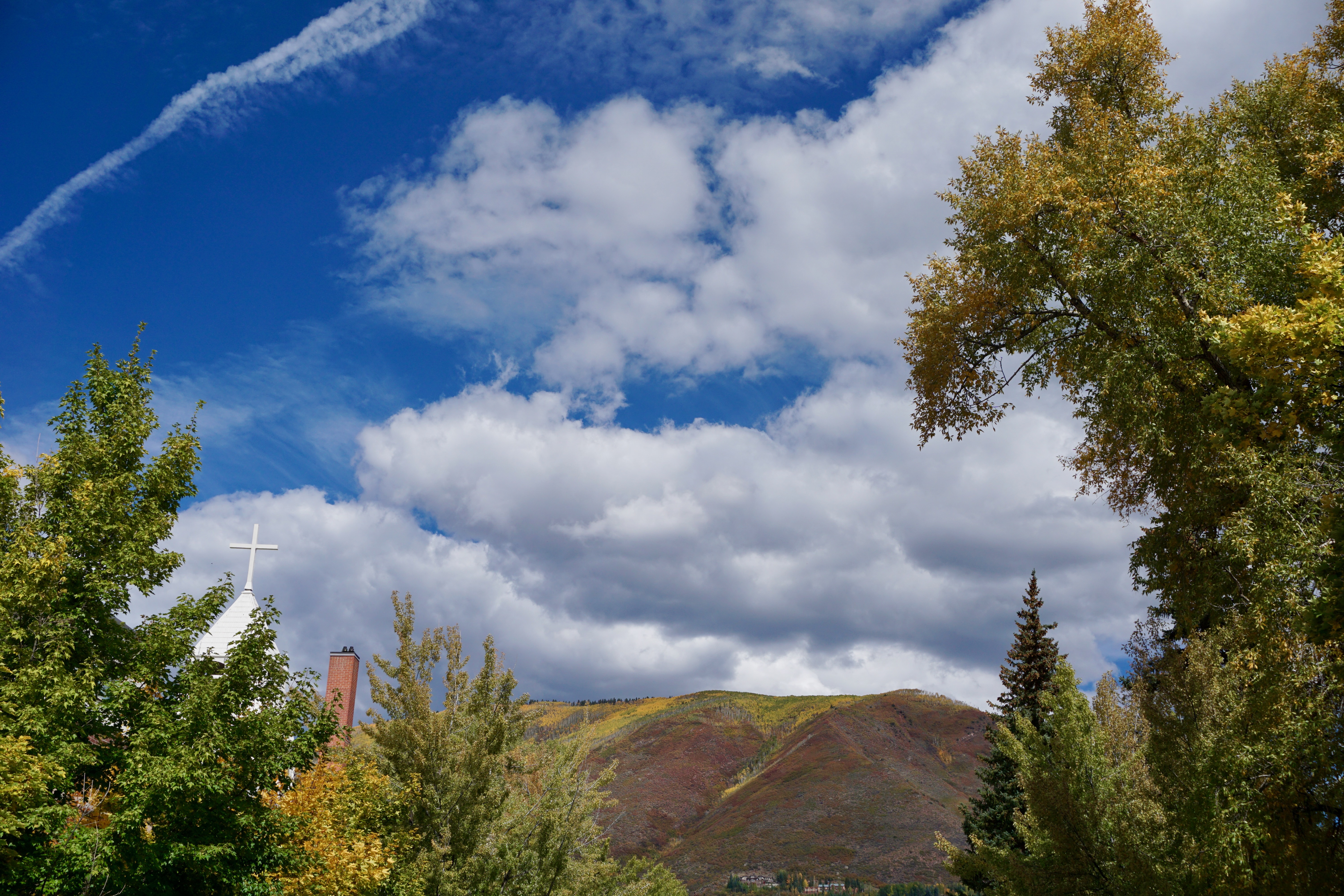
Beyond steeples, chimneys and treetops, Aspen is surrounded (engulfed, even) by mountains.

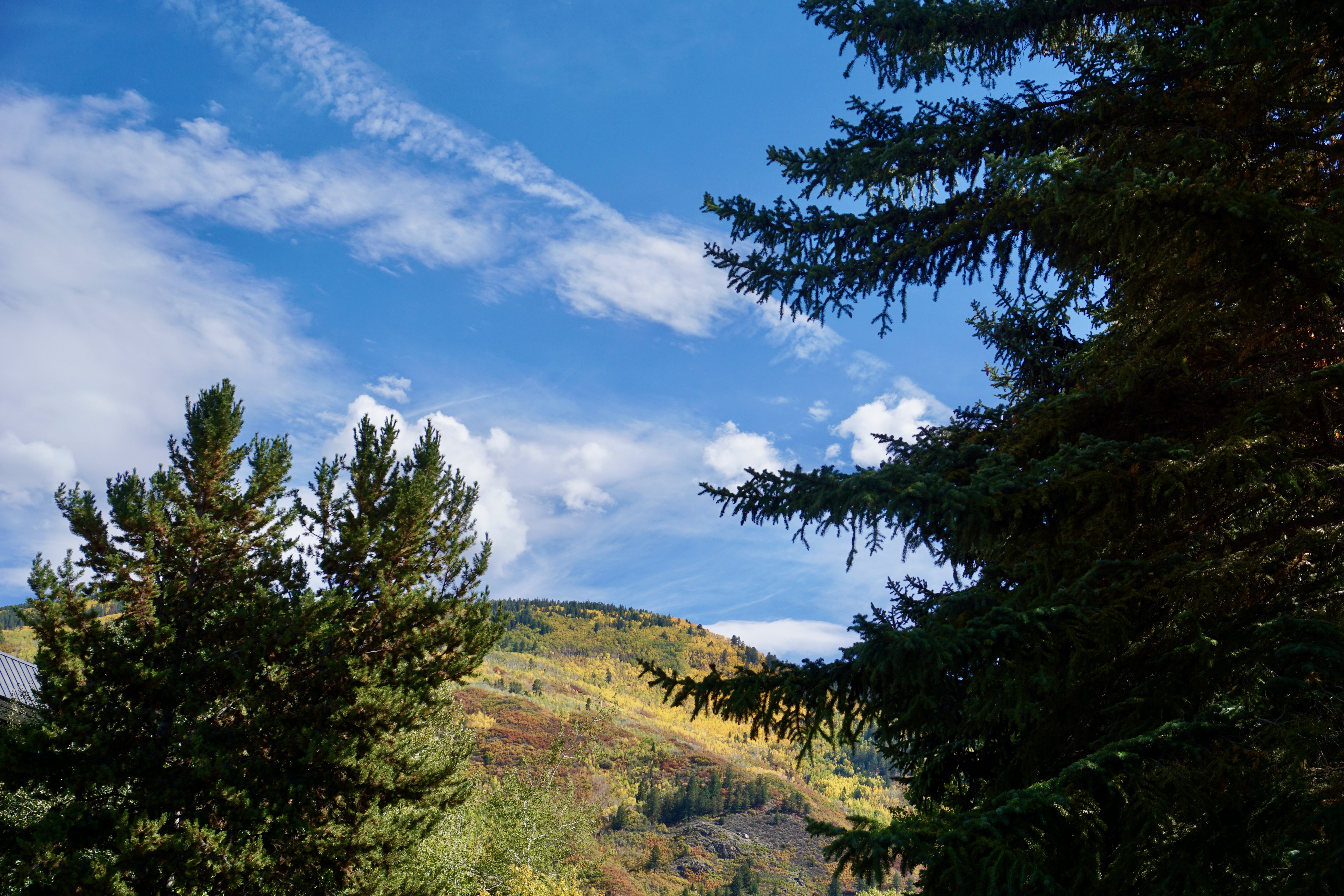
It’s especially striking in late September near peak Autumn foliage.

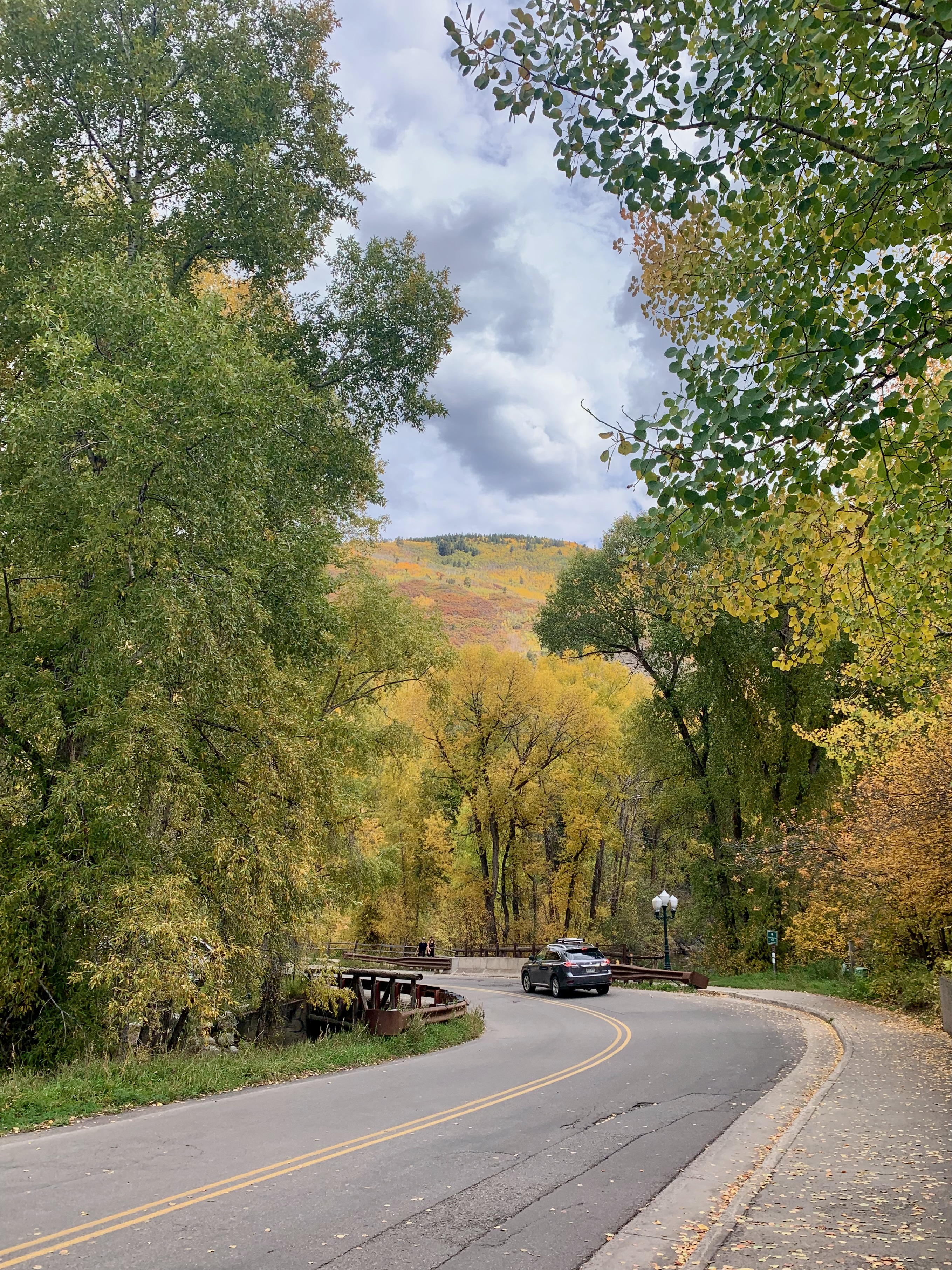
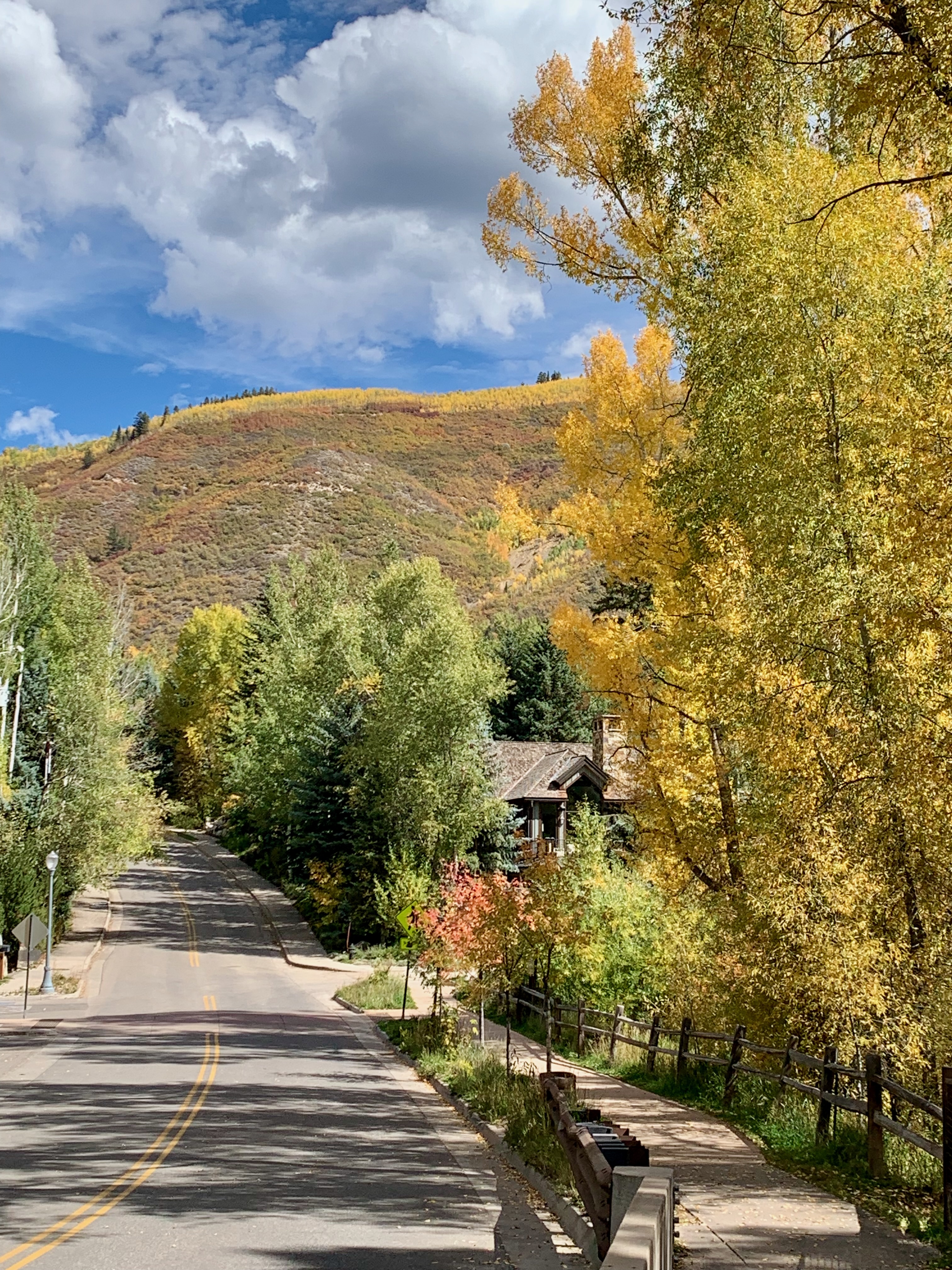
Looking down Neale Avenue as it crosses the Roaring Fork River is almost akin to witnessing a real-life painting.

Walking further north on Neale crossing the river, one sees nothing but blue skies (and mountains) ahead.

Steve and I could have taken the “No Problem Joe”, a short dirt connector path that runs along the river and seems more notable for its quirky name than anything else.

Instead, we opted for the well-travelled Rio Grande Trail, which begins at Herron Park off Neale and runs for 19 miles all the way to the town of Emma (not far from Basalt, which is where we stayed.)

We didn’t take the trail nearly that far but did have one destination in mind, which we located from its unofficial back entrance near the river.

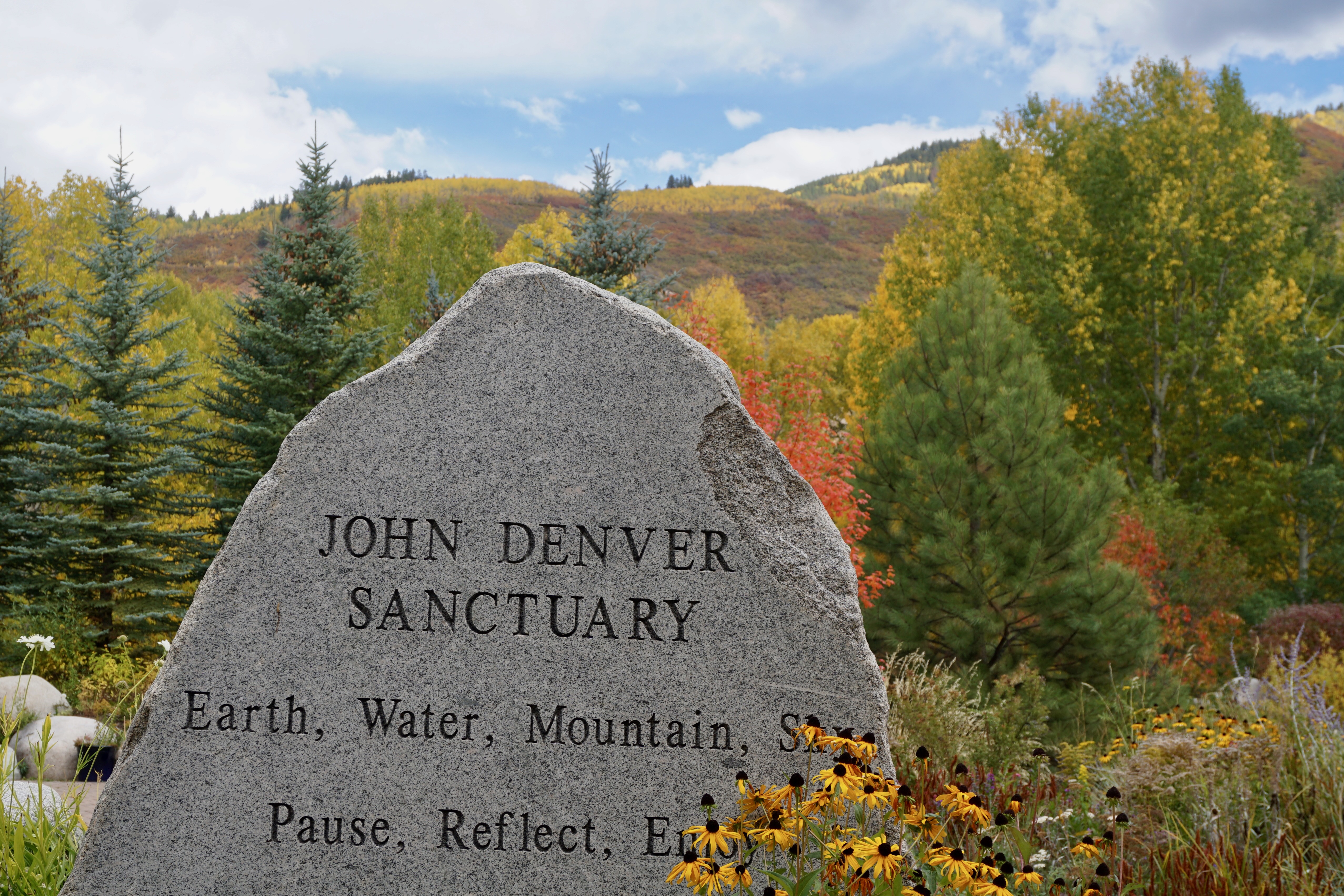
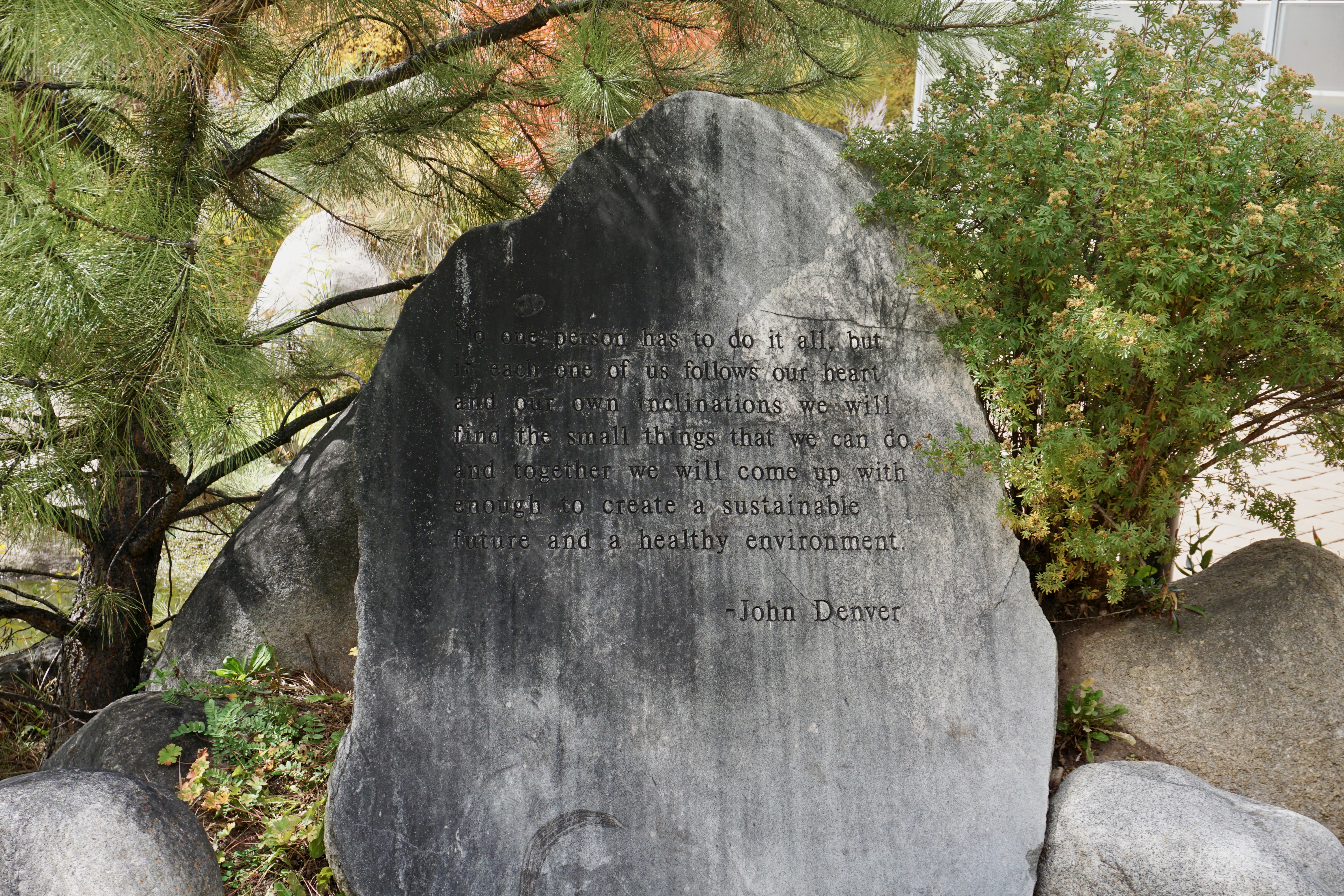
If Maroon Bells was the most beautiful place we visited in Colorado, the John Denver Sanctuary in Aspen was a close second. I don’t know how well Denver is now remembered by Millennials and generations younger than that, but he was a big presence in my early childhood, especially through his collaborations with Jim Henson (I’ve barely forgiven my parents for not hanging onto my vinyl copy of 1979’s immortal John Denver and The Muppets: A Christmas Together.)

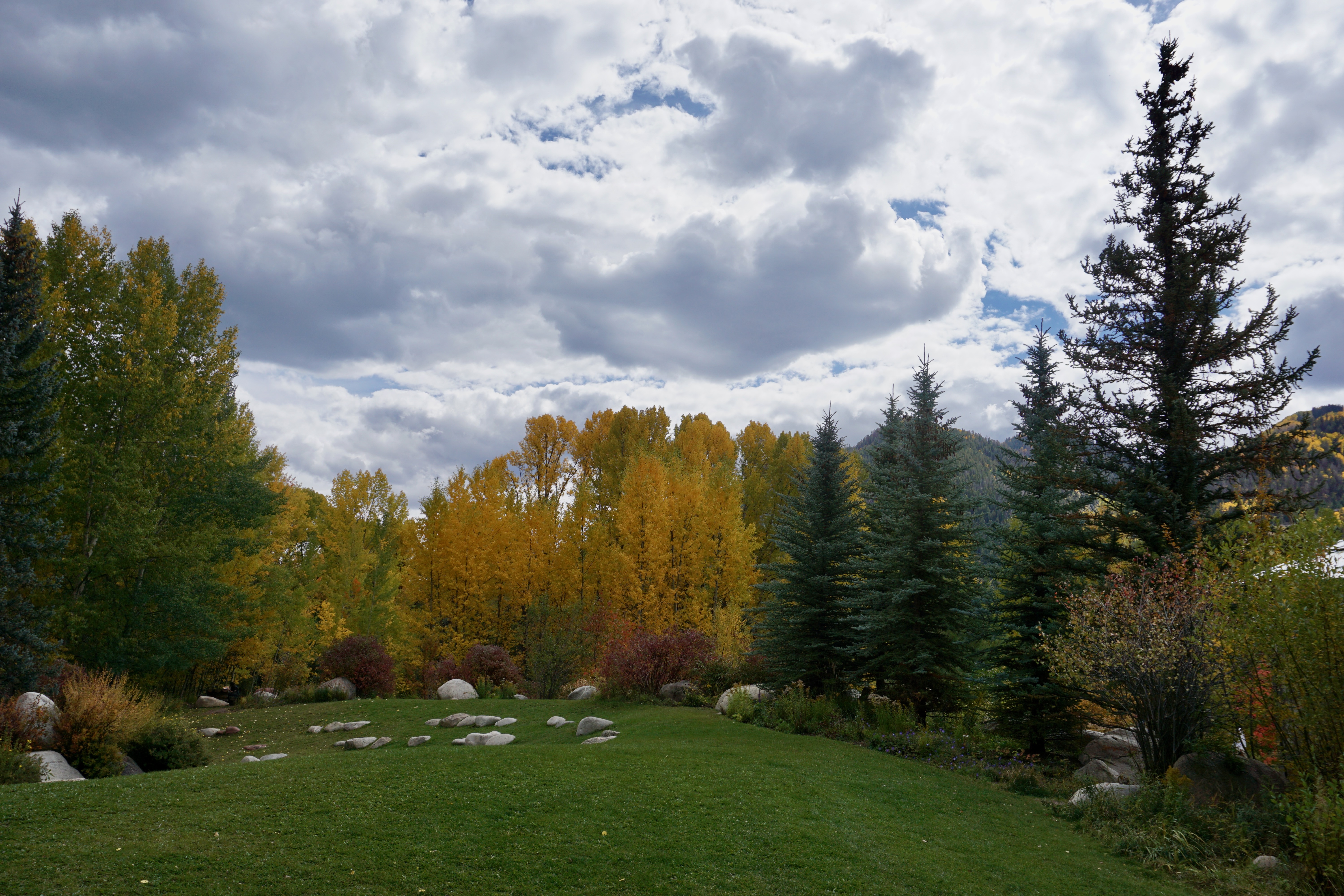
Officially dedicated a year after Denver’s 1997 death, it features a “song garden” full of small boulders inscribed with his lyrics.

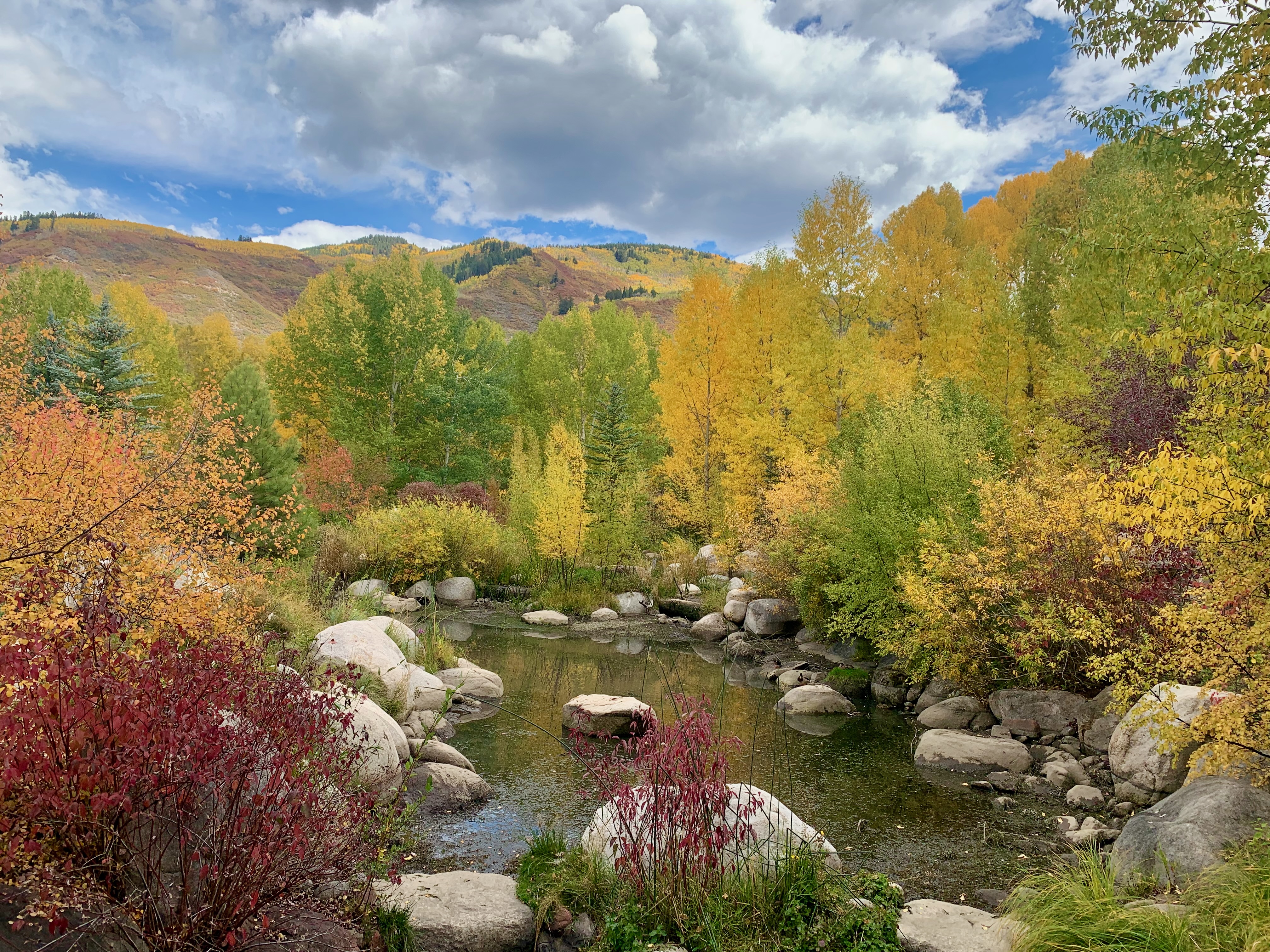
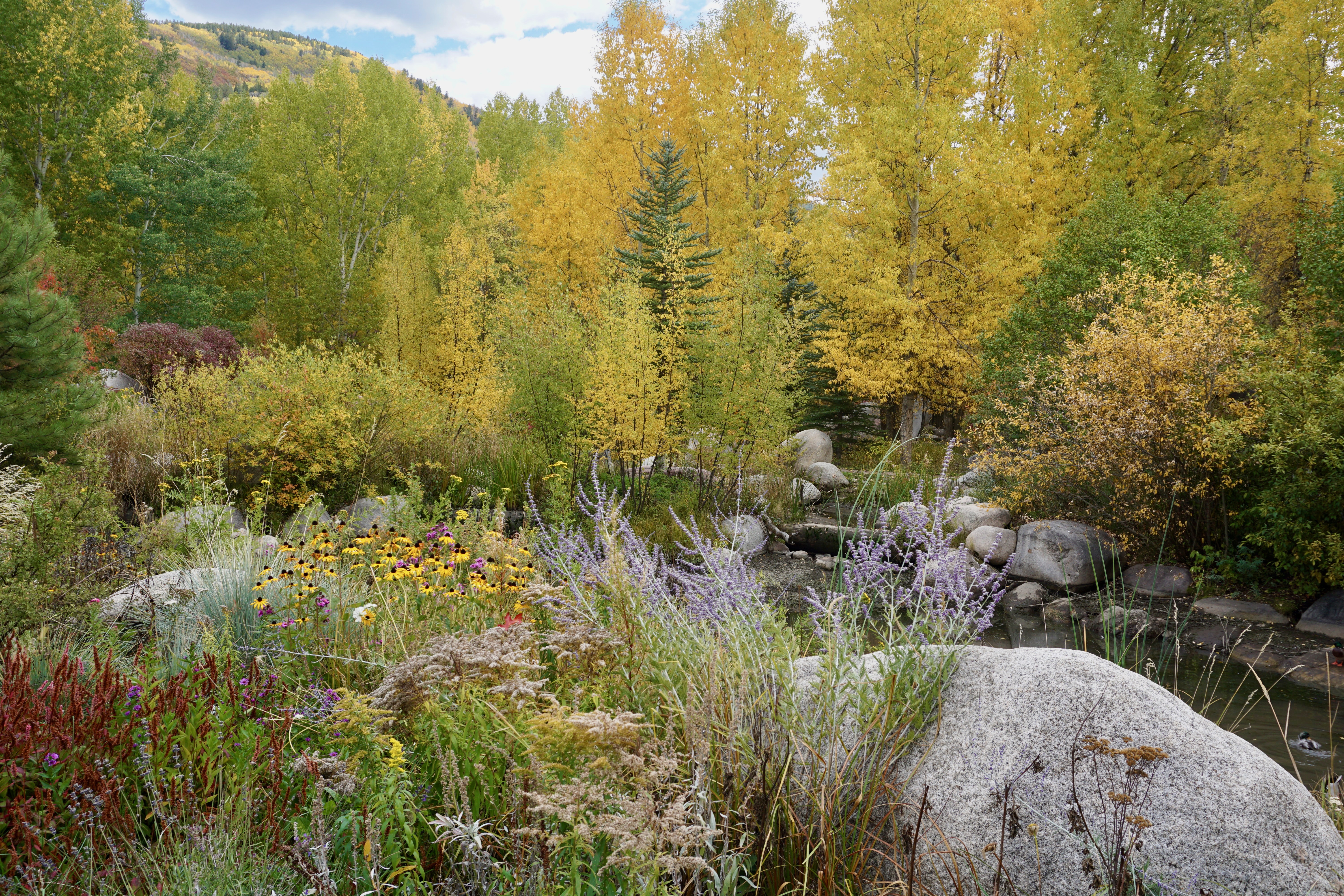
My favorite part of the sanctuary was this wetland area–as gorgeous and serene as anything I’ve ever seen.

You don’t even need to bring along a recording of “Rocky Mountain High” or “Annie’s Song”: you’ll likely end up humming them to yourself.

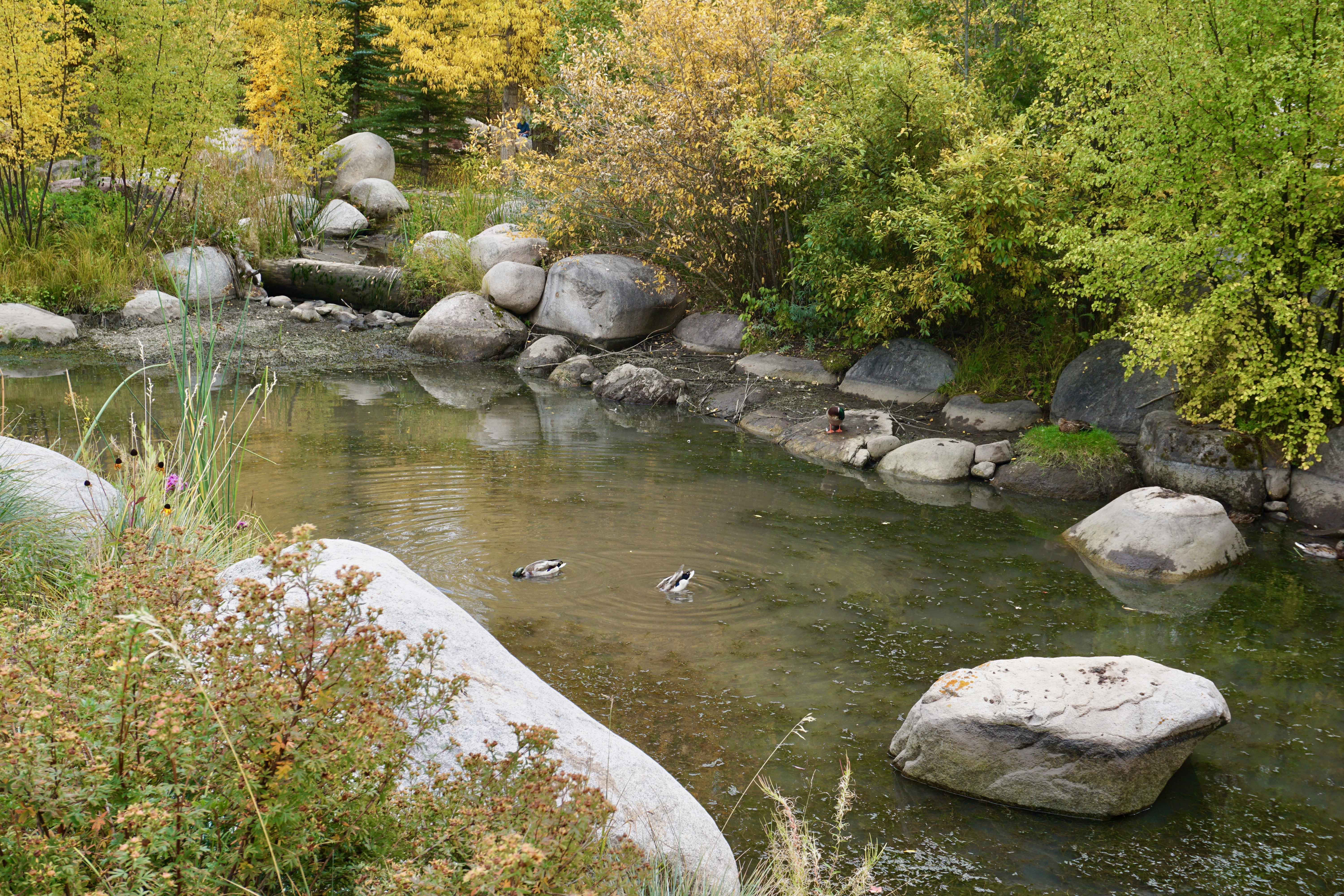
One of the best features of any sanctuary is the wildlife drawn to it like these drinking ducks.

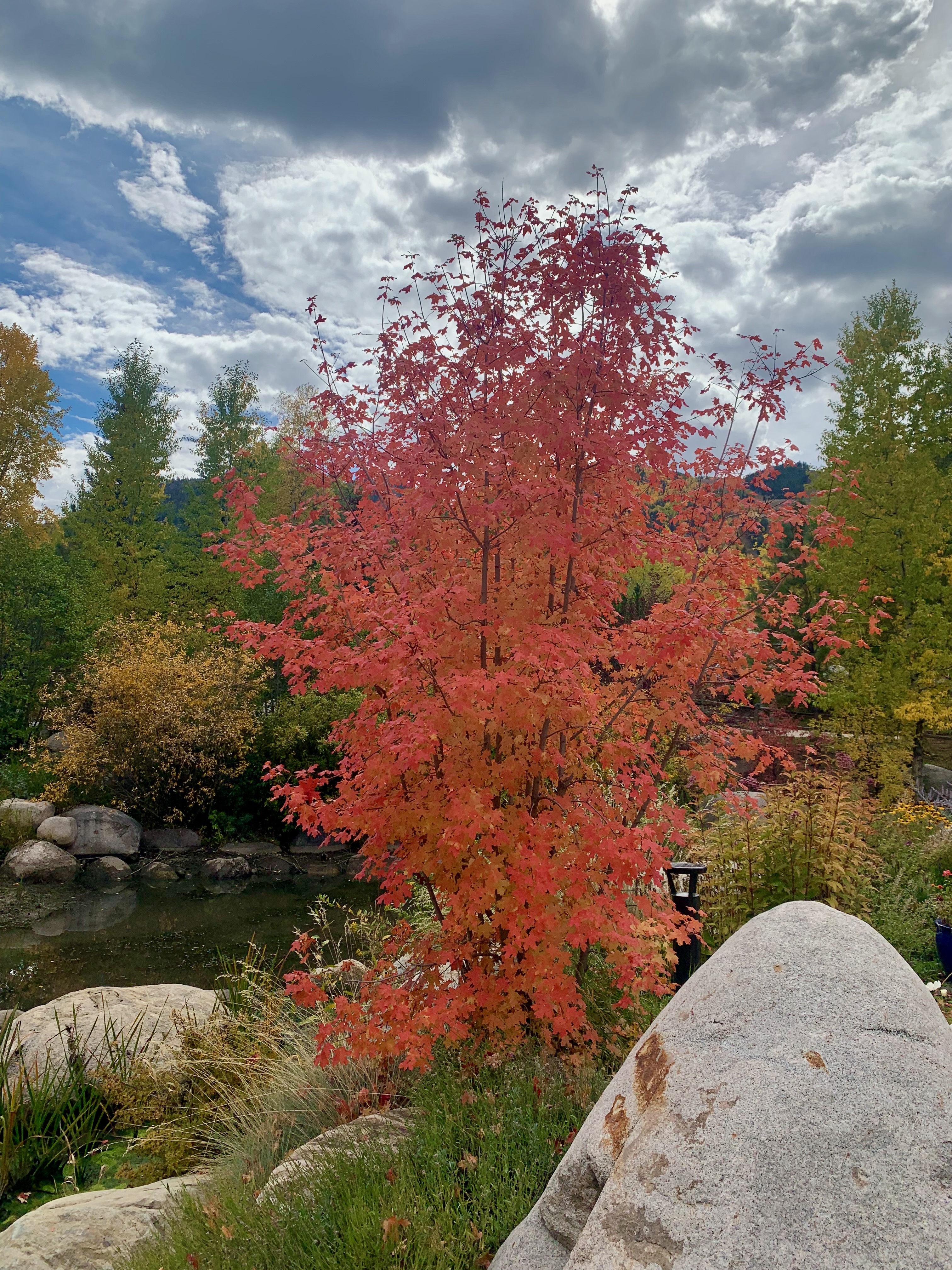
We didn’t see a ton of bright reds like this amongst the Colorado foliage, so it appeared more vividly whenever we spotted some.

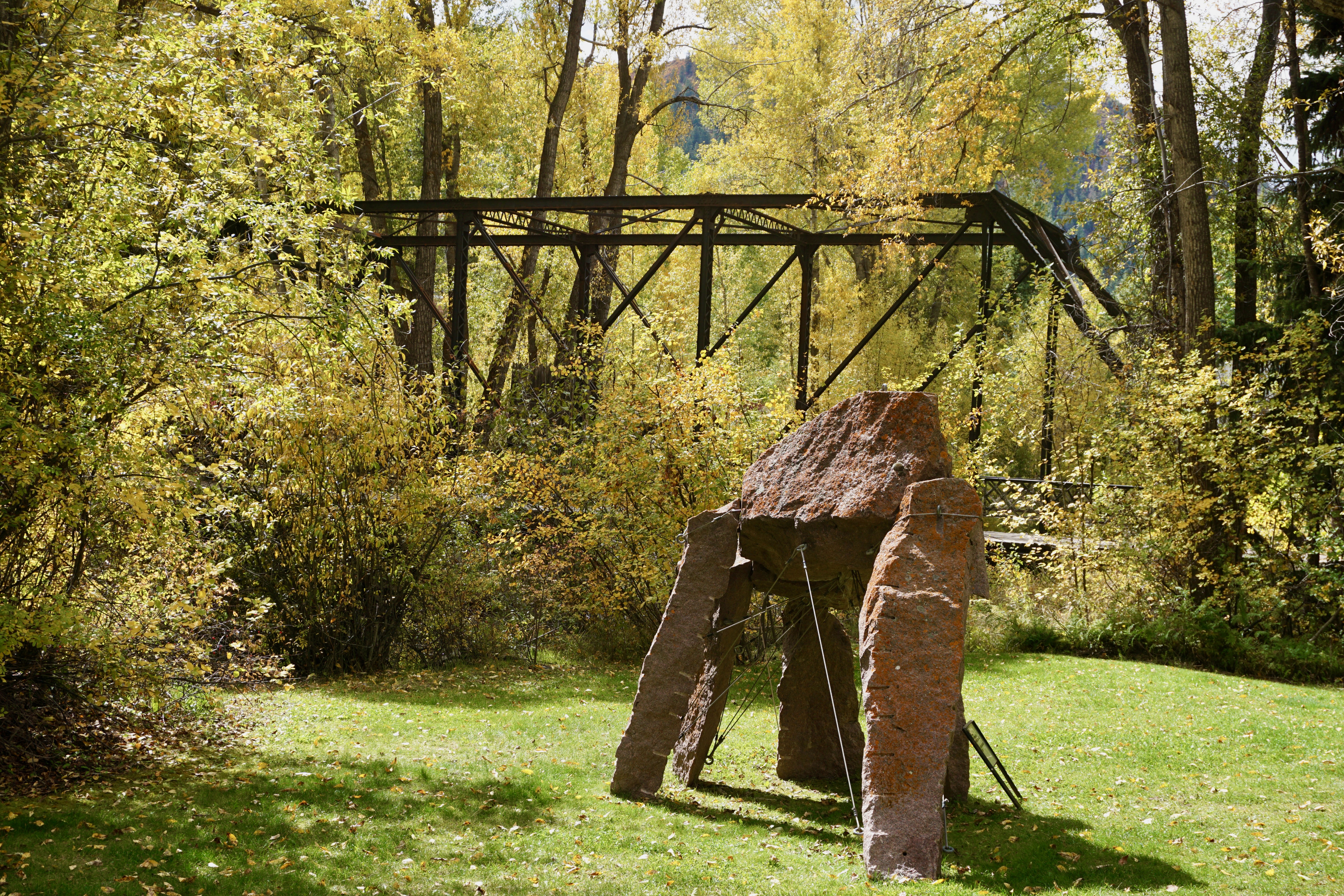
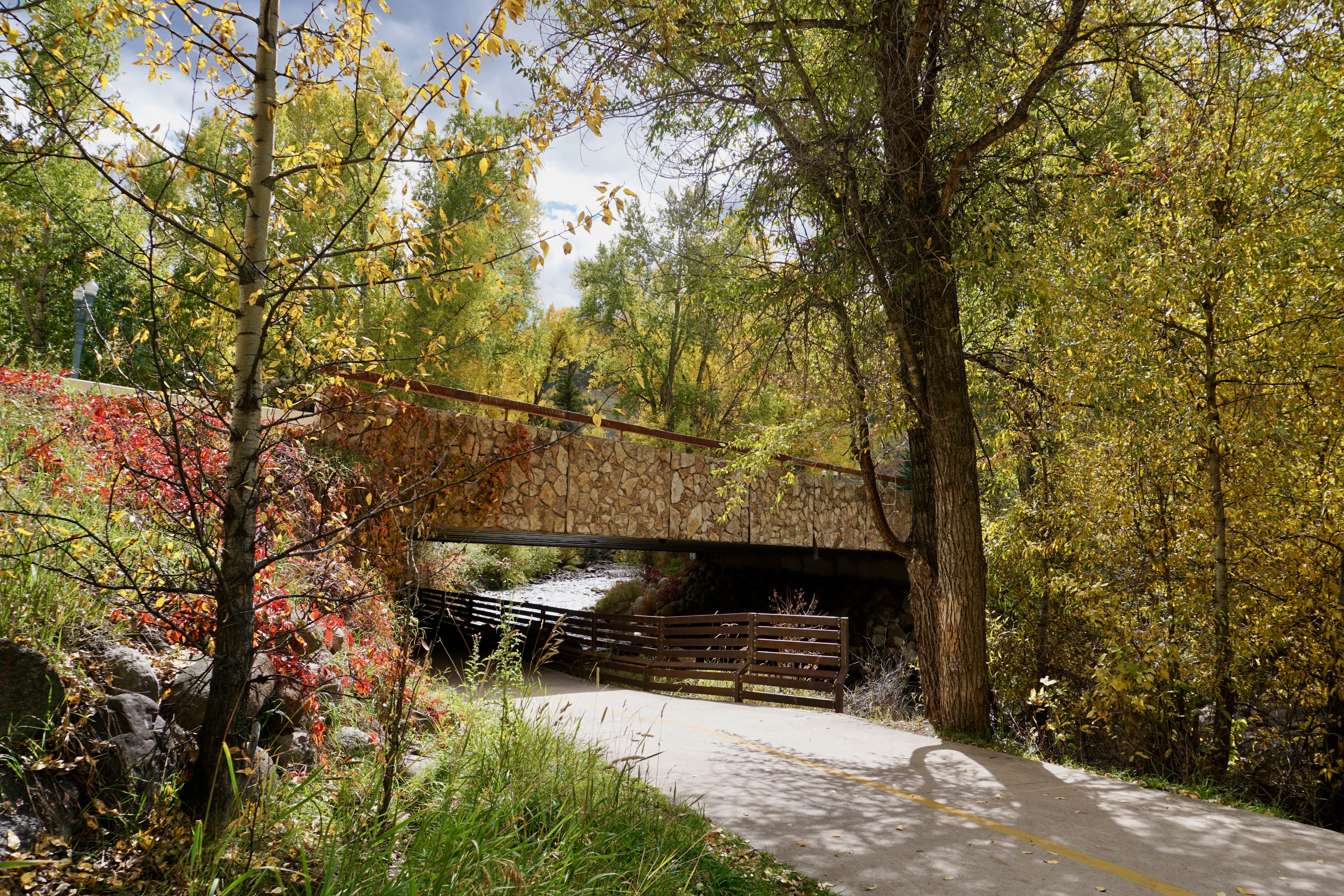
Walking further down the Rio Grande Trail, we came across many bridges and some public art.

Many bikers use this path and if I had access to one in Aspen, I surely would’ve ridden along it.

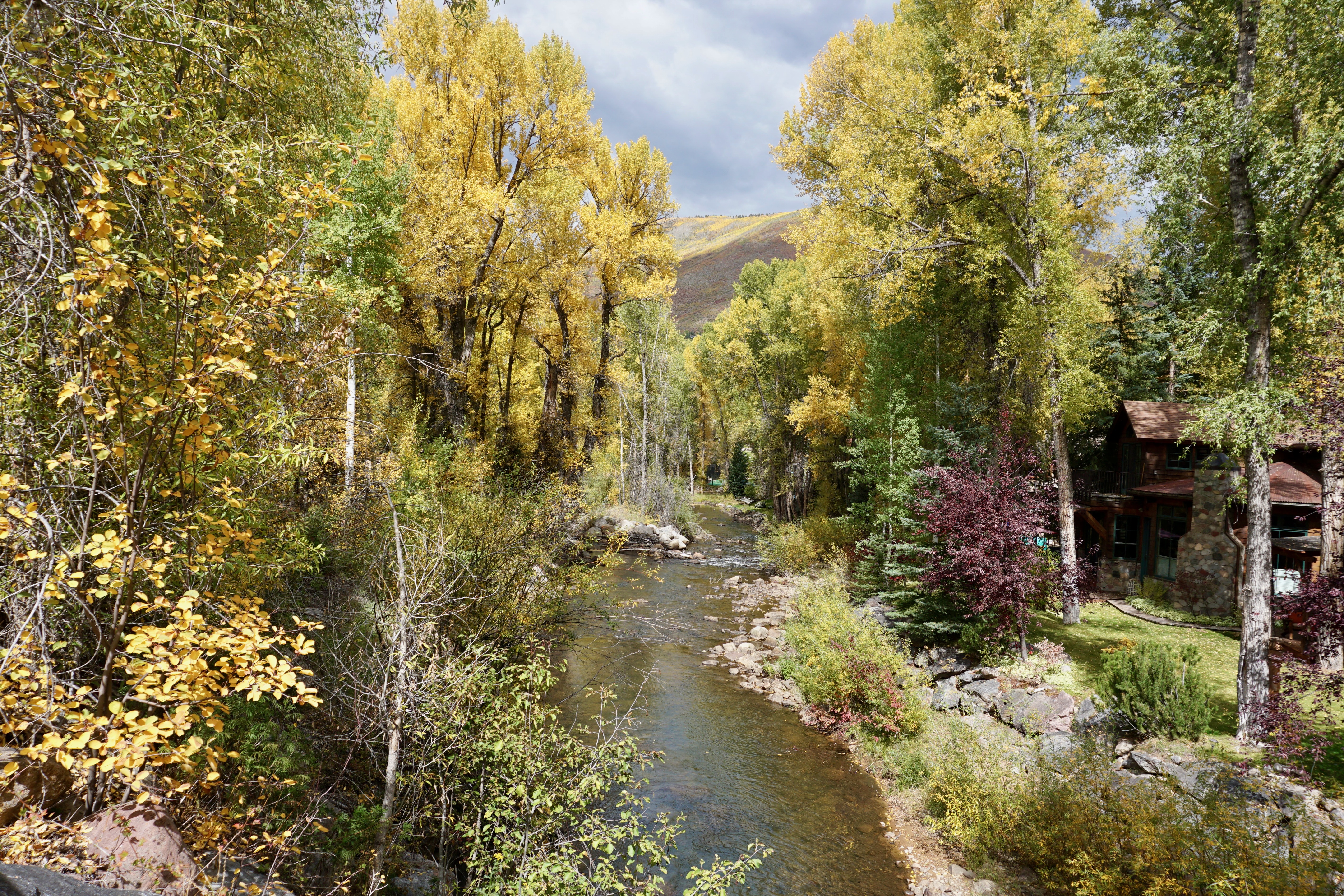
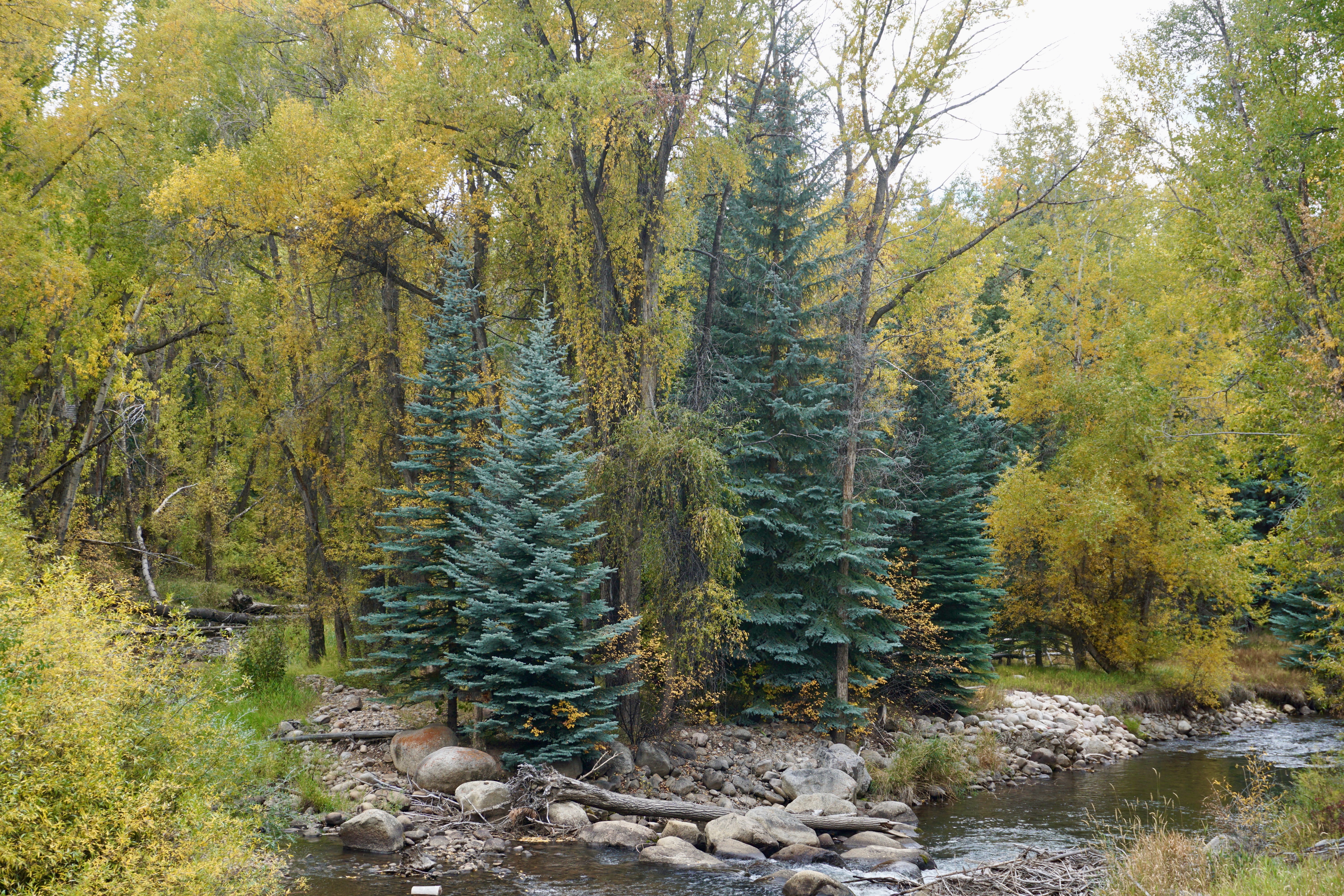
The trail is full of beautiful scenes such as this family of blue spruces among the river and rocks.

We could have taken the trail further to Hallam Lake and Aspen Institute but were ready for rest. We ended up back on North Mill Street towards the town center where we parked. I suspect Aspen can be pretty in the Winter but I’m grateful we were able to see it in early Autumn.

Maroon Bells

We returned to Colorado for the first time in a decade. One highlight of our trip was a visit to Maroon Bells-Snowmass Wilderness, which is located in the White River National Forest.

It’s easiest to get to this remote locale by a shuttle bus near Aspen; we booked our tickets for the bus two months in advance given that we’d be there close to peak fall foliage.

For near-optimal viewing conditions (and to avoid large crowds), our bus was at 7:30 on a Thursday morning. Even for late September, it was so cold that there was some frost on our rental car; I’d also wished I brought mittens along for my freezing fingers.

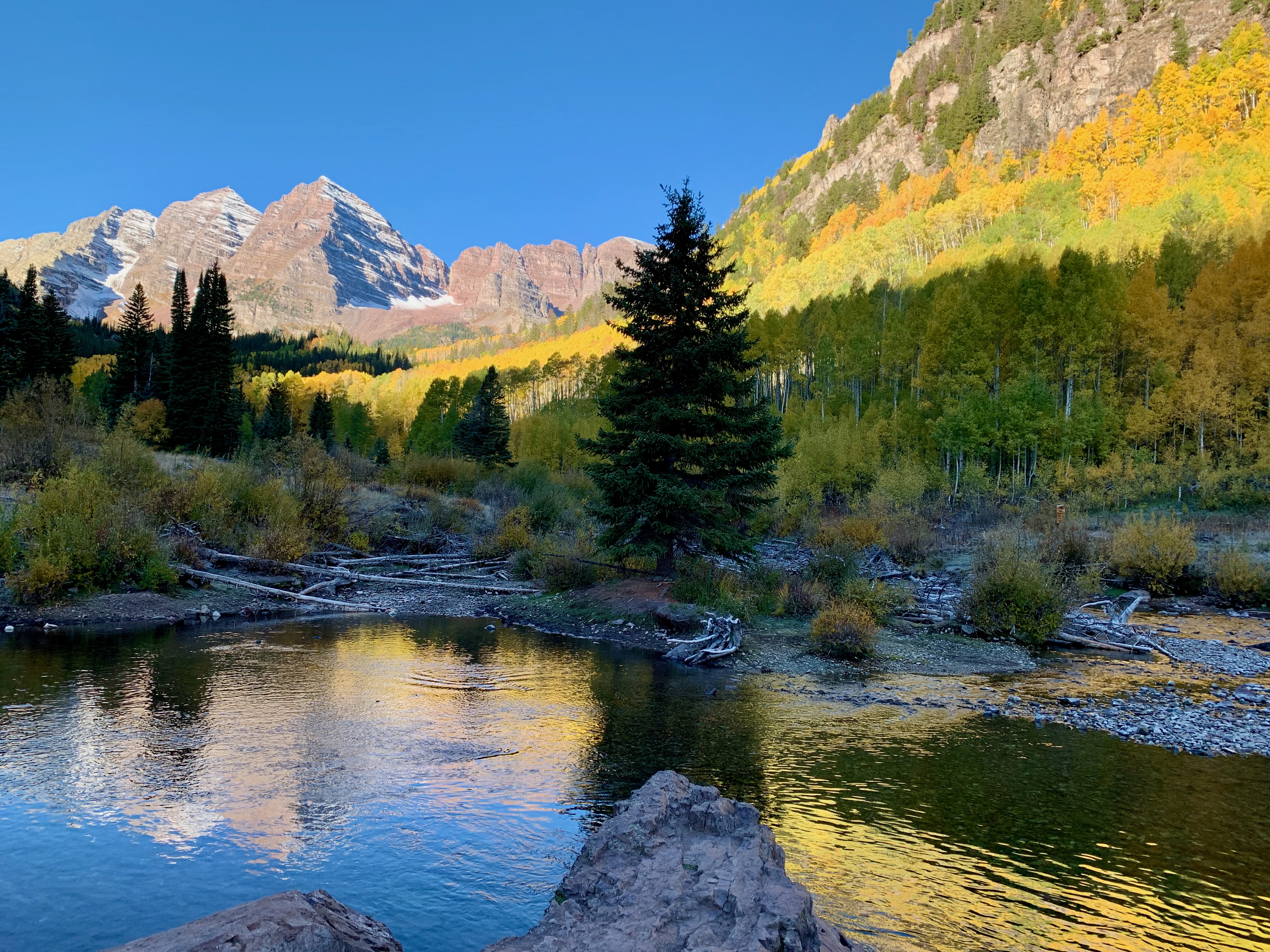
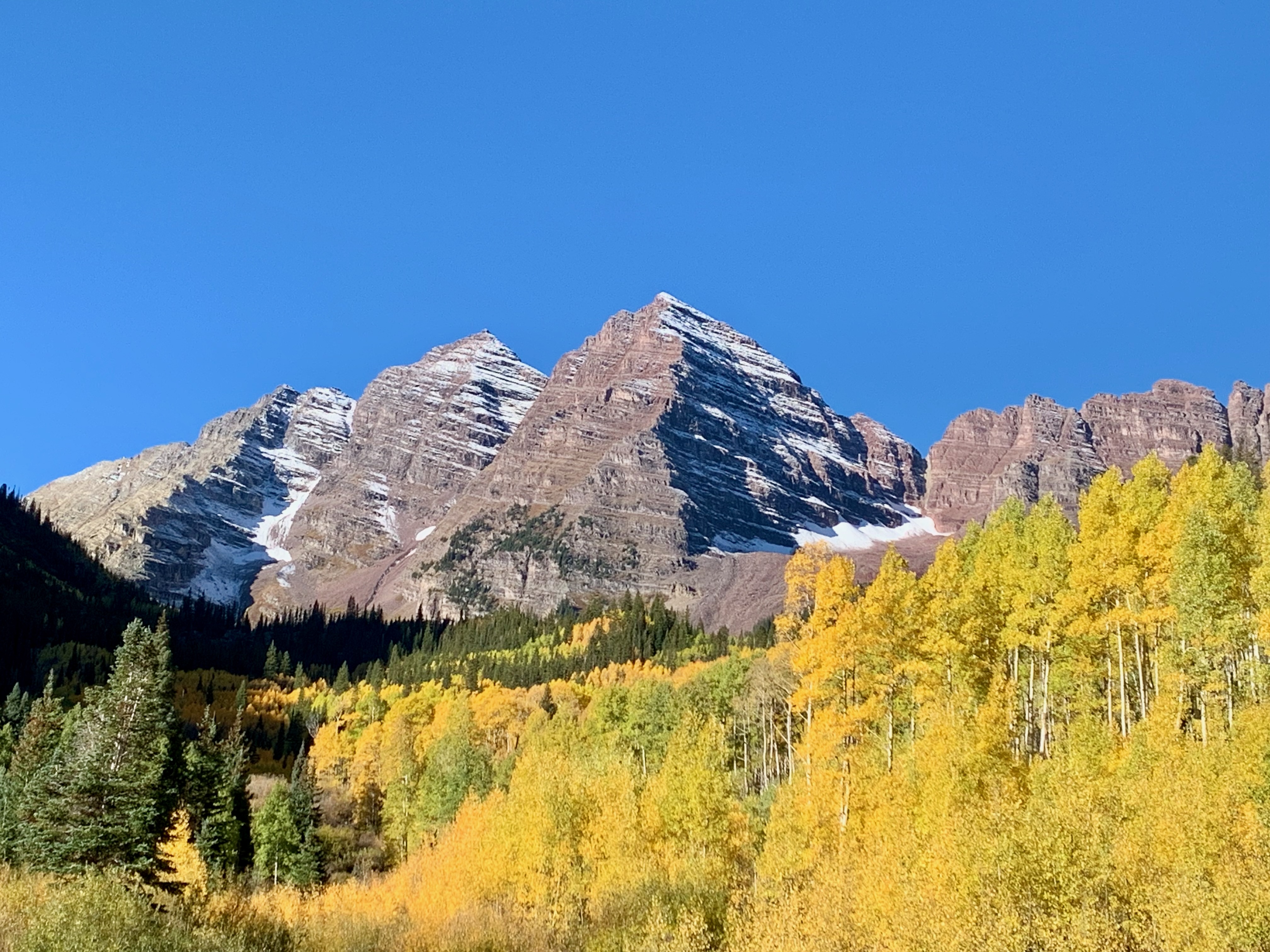
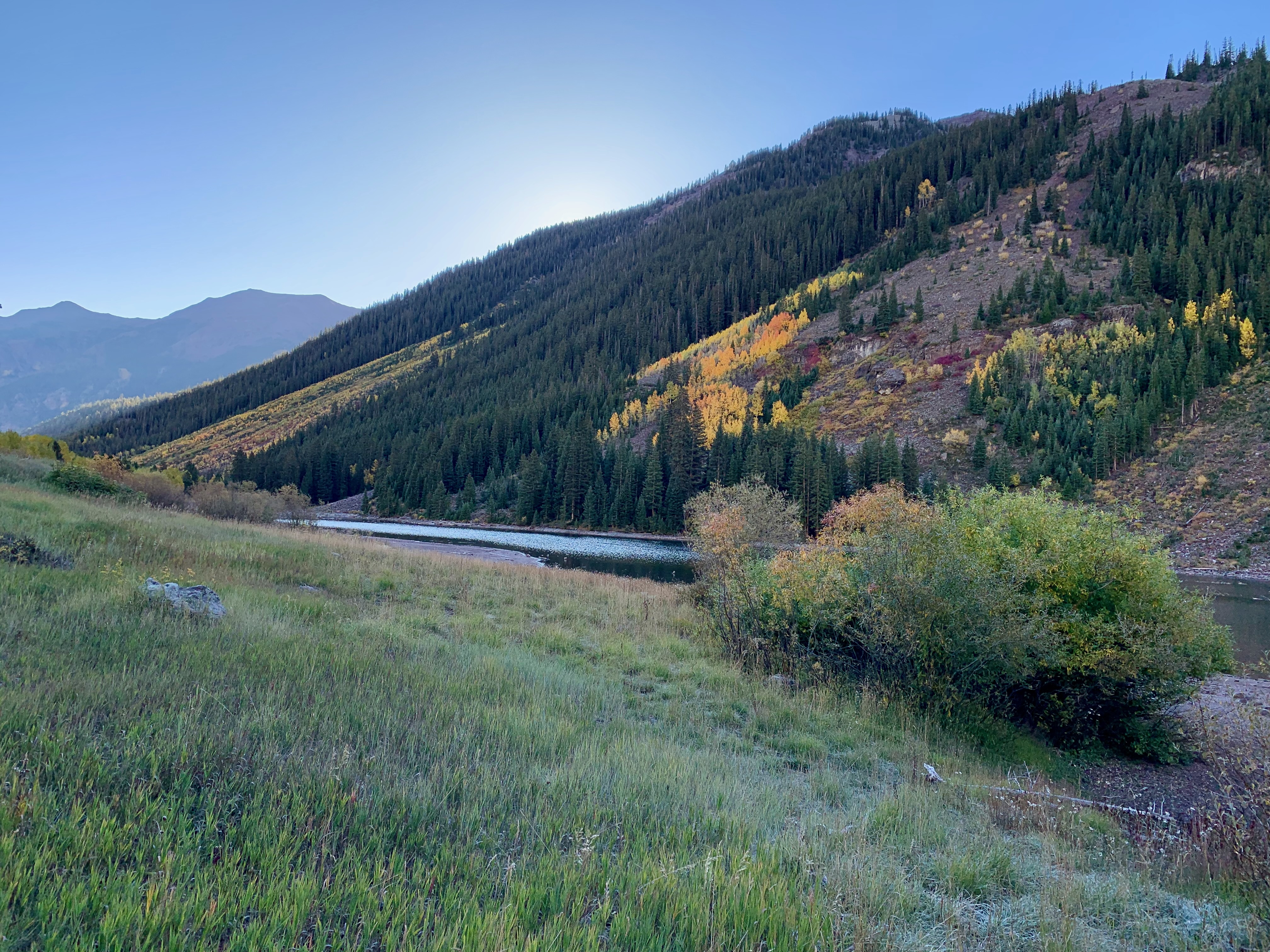
It was all worth it. So named for their shape, the two peaks that make up Maroon Bells were gorgeous, especially against all the yellows of the surrounding aspen trees.

Rather than attempt a more strenuous hike deeper into the woods, we stuck to the basic “scenic” path, a loop whose furthest point is the bridge pictured above.

Viewed from that bridge, the tableau is straight out of a painting.

I could stare at this view in person all day (and luckily, the temperatures rose considerably throughout the morning.)

I’m sure this would’ve looked perfectly lovely without the changing leaf colors, but still–this was a treat to see.

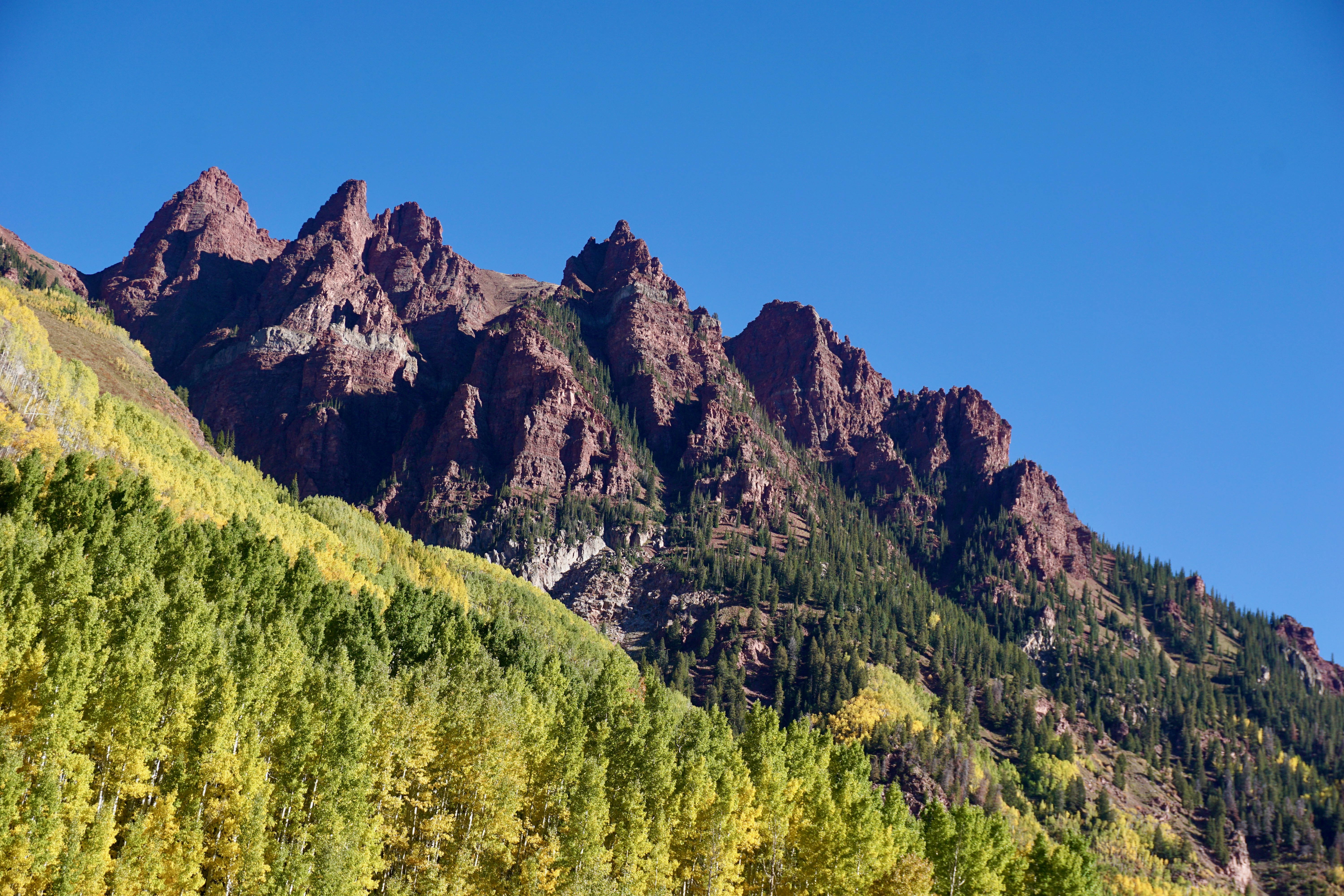
The two peaks are the park’s main attraction, but other mountain ranges are visible in most directions.

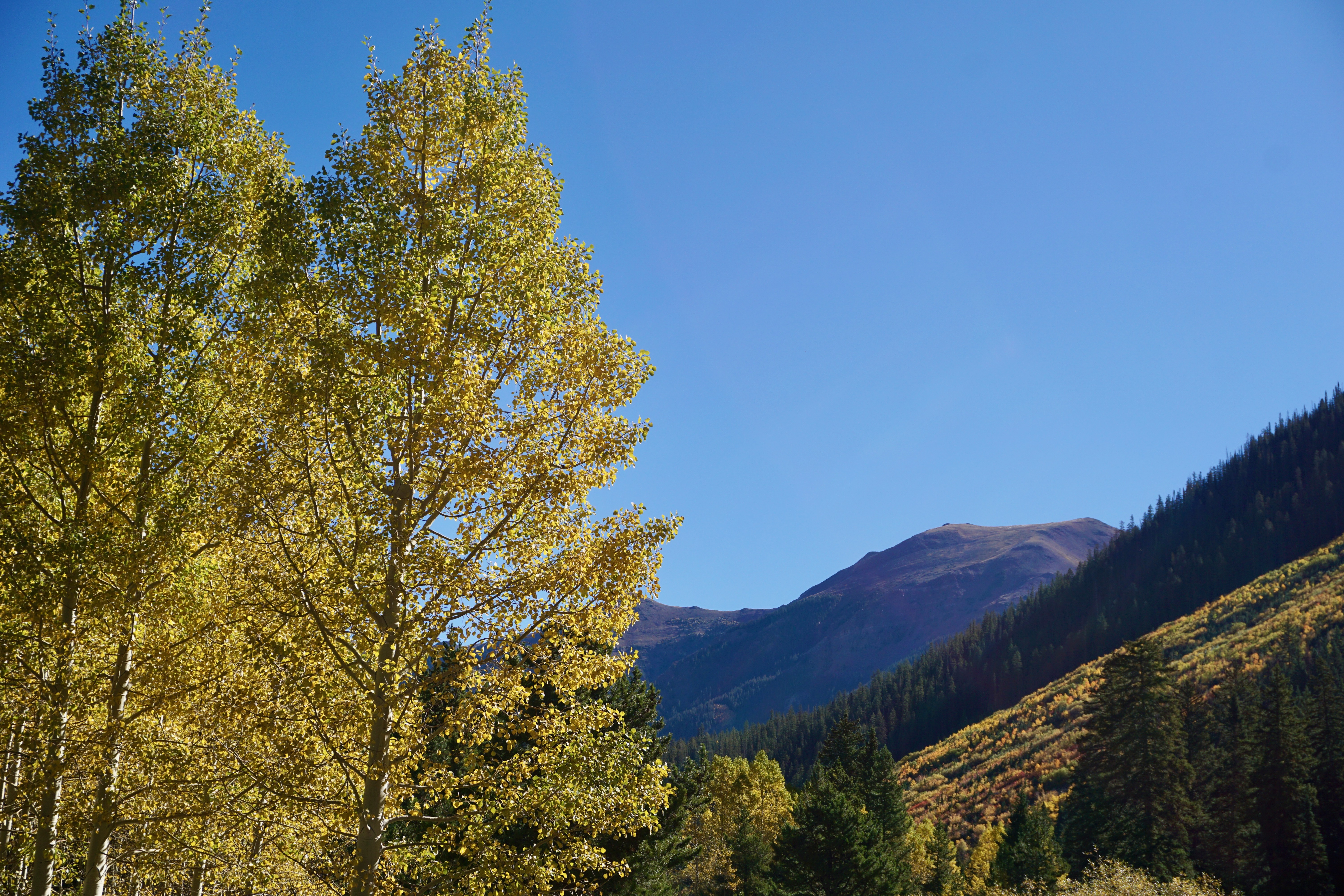
We lucked out with such bold, blue skies.

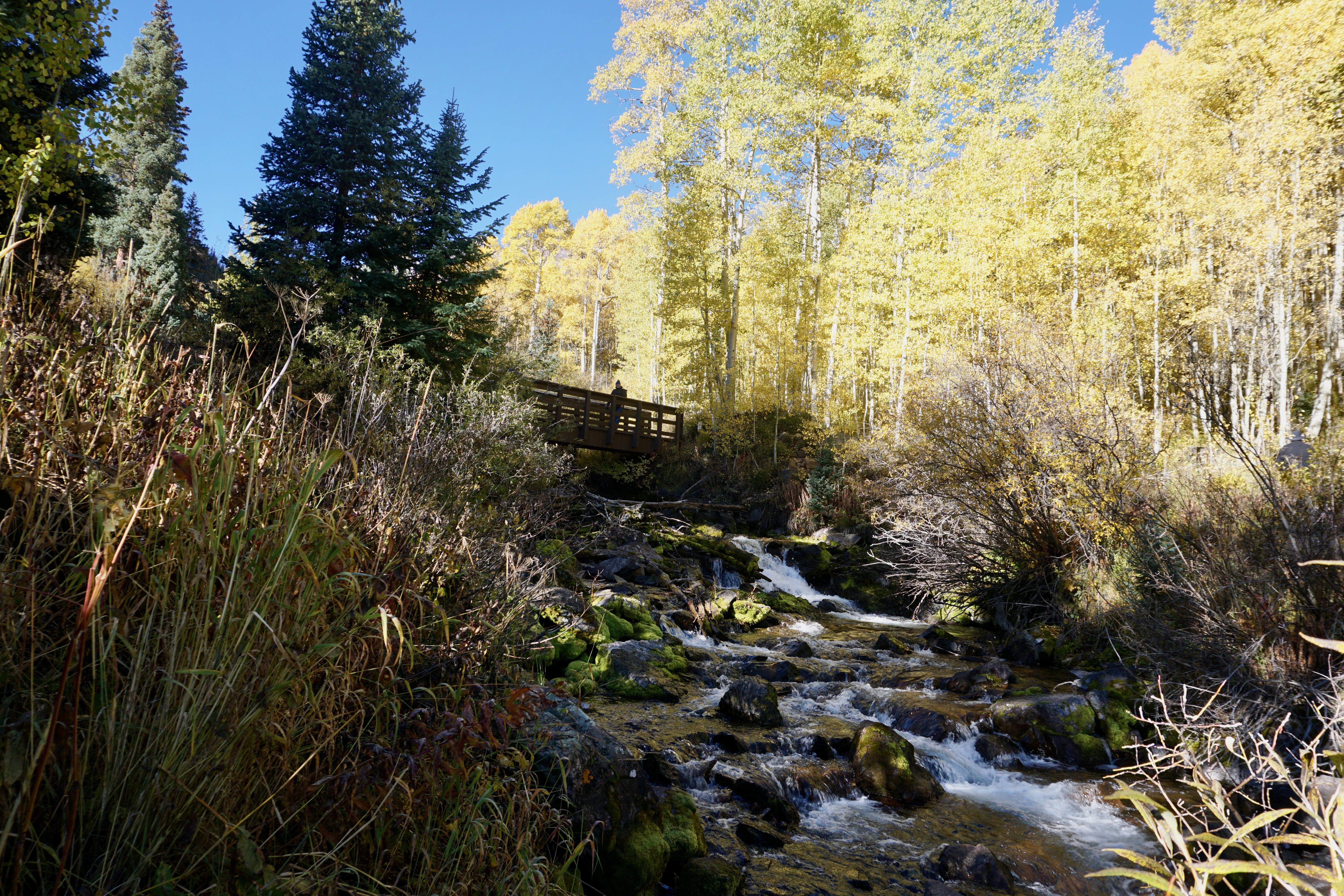
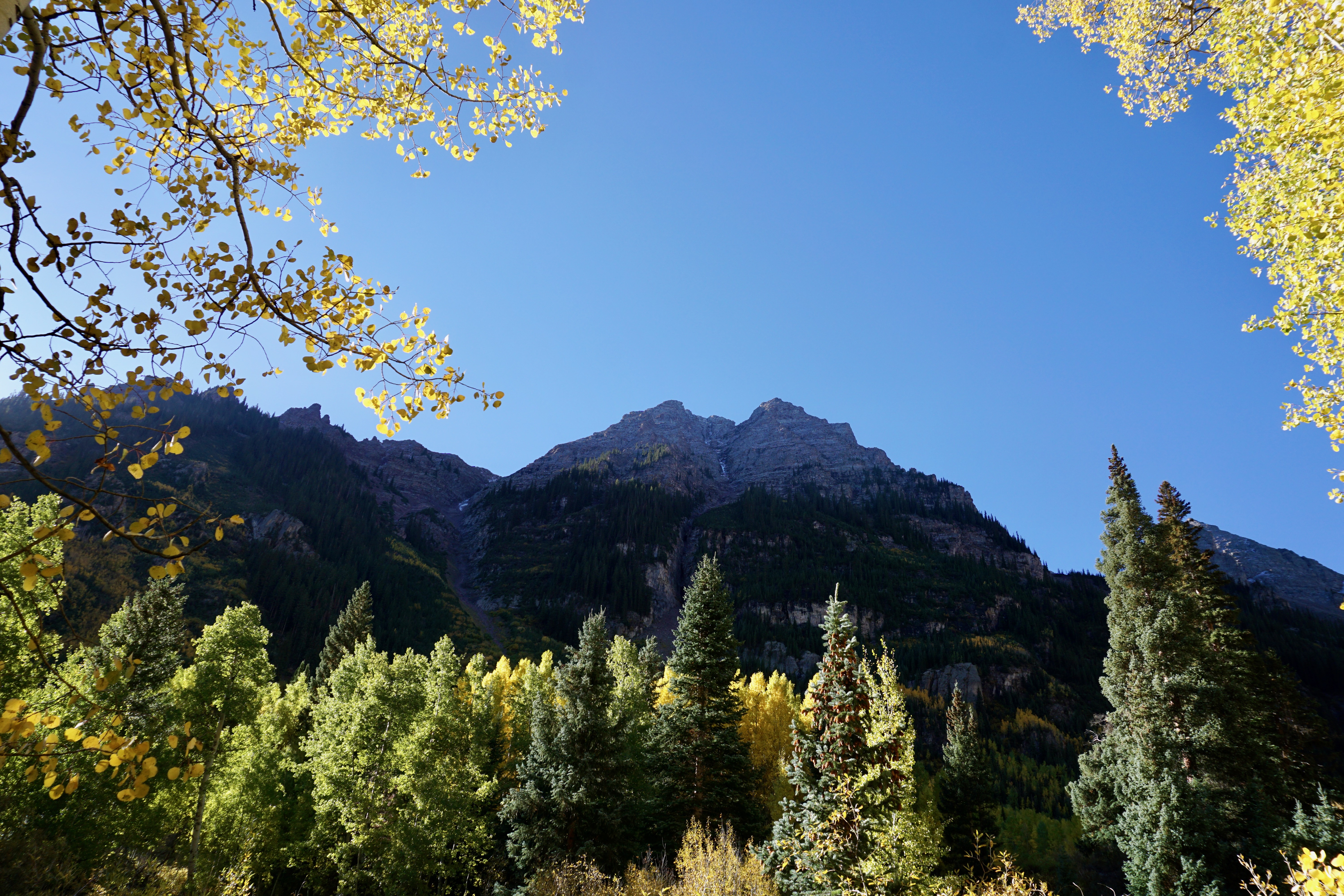
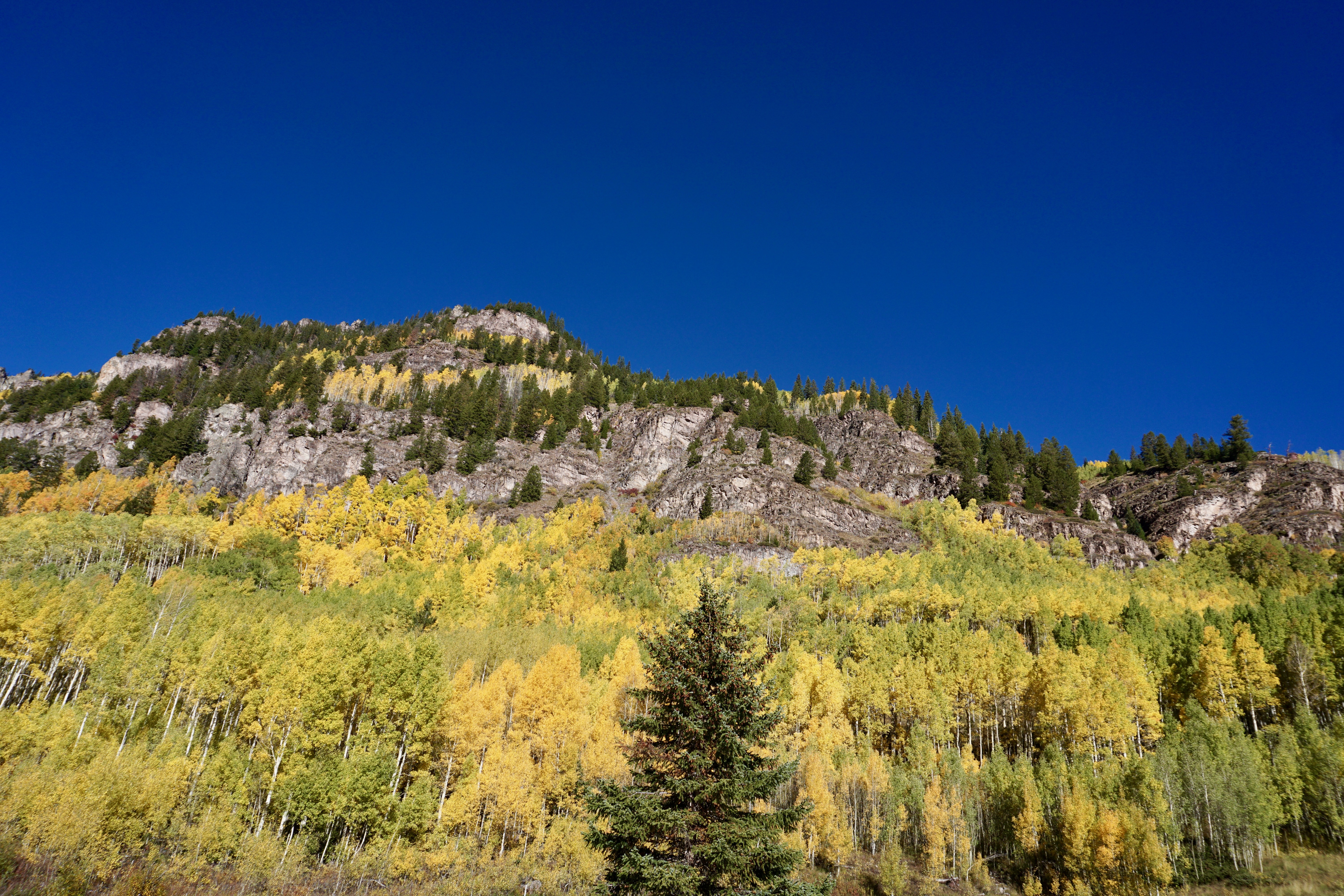
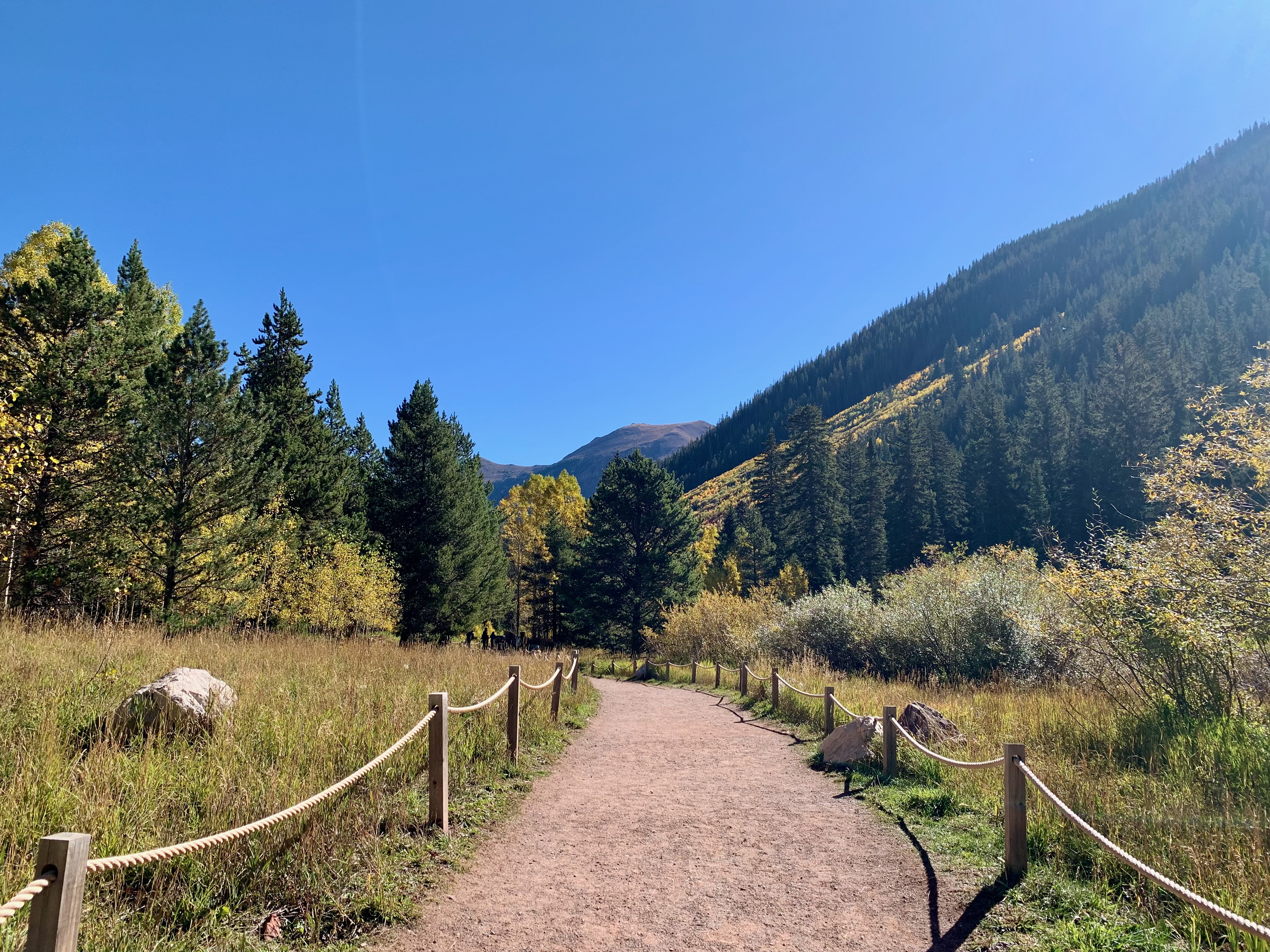
Back towards the loop’s beginning later in the morning, the foliage practically popped against the tall pines and the rocks and dirt of the mountains.

The trail back to the starting point, around 10 AM. A full day of possibilities awaited us.