1. I had to go beyond the local multiplexes or, in fact, any theater to stumble across a movie that, for the first time, expanded my idea of what one could be and also feel like it was somehow made just for me.
2. A glimpse into another world: a bridge between what I liked in my youth and what I would love as a grownup when I eventually worked at a cinema myself.
3. I left the movie feeling blown away by the story, thinking I had never seen anything like it before; now I understand that it was the depiction of a foreign culture that was new to me.
4. Itmade a seismic impact on my taste and notion of what the world had to offer to someone my age. I was getting closer to leaving those suburban multiplexes and my heretofore provincial worldview (mostly) behind.
5. This notion of a fine line separating life and art was on my mind as I prepared for a major change in my own life and the role art would play in it.
6. It was a film asking its viewers to consider whether the desire to be “safe” was to simply crave comfort or inevitably give oneself over to fear.
7. The thrill of discovery, of opening those new doors encouraging me to pursue Film Studies, vindicating that leap of faith I took in making film central in my life.
8. No matter who or what we are, we look for representation in popular art, to see people onscreen who are recognizable, even similar to us, finding someone we can relate to and that the rest of the culture can also see.
9. I still fondly recall how I got to see itfor the first time, but what’s important is not how I saw it, but that I saw it and can still watch it again and again, no matter where I can find it.
10. What if, like real life with all of its nuances and contradictions, a work of art subsisted somewhere in between fiction and nonfiction? What about those filmmakers whose work tends to fall into such margins?
11. How nearly overstimulated yet satiated I felt while piecing together images and sounds, the ways they informed and occasionally contrasted against each other and how tension accumulated throughout, reaching a breaking point only to find an unlikely release at the end.
12. A panorama to fearlessly explore connections between dreams, reality and the movies, not to mention all of the wicked, sublime and terrifying possibilities that surface as they overlap.
13. We revisit films for the pleasure they provide. Occasionally, we also have a sixth sense, an inclination that there’s more to glean from them than what we can discern after a single viewing.
14. For those receptive to such stillness, it can be like sitting on a bench or standing next to a wall, simply observing life play out before one’s own eyes no matter how little action occurs.
15. The question “Does anyone change?” lingers in their pauses between conservation; as much as either one would like to deny it, their body language often says otherwise.
16. That sense of camaraderie and support is really what the film is all about; it’s also what I craved and then experienced once I found my people at the movies—on both sides of the screen.
17. This past as remembered from adulthood is so colorful, vibrant and real one could almost step into the frame and feel what’s it like to be an active part of it.
18. “What is a city without its ghosts?” the director’s narration asks and it’s the film’s central thesis, lending weight to what simply could have been a kooky look at a quirky childhood.
19. Whenever I watch a film for the first time, I keep in mind how it makes me feel; the best films, however, also form a deeper connection, one that not only changes our literal view of the world but also challenges it.
20. It’s deeply affecting for it reminds us not what the story is or necessarily how it was relayed, but why it was told.
21. Whatever our aspirations may be, humans as individuals are subject to a continual evolution without end; as couples, an end only arrives when one participant or in some cases, both are no longer willing to evolve.
22. Have you ever left a movie in a daze, almost as if your entire world has shifted? Often, when the lead character has been through something over the course of the film, so have we.
23. Through all of this previously unfathomable change, films remained my refuge, my constant, my church. None of us had any idea when or even if theatres would ever reopen; streaming and physical media would have to suffice until they did.
24. Some of the best films tend to recognize this sense of a world in flux no matter how contained the narrative; the very best of them also offer new ways of viewing and comprehending it.
On September 11, 2021, walking up the stairs from the Brattle Theater’s lobby to its auditorium, I felt cautious, perhaps also a spark of excitement. I knew these stairs intimately, having walked them hundreds of times since moving to Boston nearly a quarter-century before. It was my first visit to this single-screen (with balcony seating!) Harvard Square institution since Varda By Agnes on December 11, 2019 (exactly twenty-one months!) and my first movie in a theatre since Covid shut them down eighteen months before. I was there with a good friend and fellow film enthusiast to watch Eyimofe (This is My Desire), a new Nigerian drama and the directorial debut from twin brothers Arie and Chuko Esiri. Today, I don’t remember much about its particulars, only that the Brattle screened it on 35mm film, certainly an incentive for my return to the movies.
Theaters started reopening months earlier as Covid vaccines became widely available. Around the time I was inoculated, the Coolidge Corner Theatre (until the previous December my longtime employer) resumed business; the Brattle soon followed suit, as did The Somerville, Landmark Kendall Square, AMC Boston Common and most suburban multiplexes. I did not yet feel comfortable returning to the Coolidge; despite being vaccinated and masked, the notion of sitting in packed interior space also intimidated me. I eased back into the world gradually, flying to South Carolina that June to see my parents (for the first time in nearly two years), staying at a Maine hotel over an August weekend, going out to favorite restaurants more and ordering takeout less.
Viewing Eyimofe (This is My Desire) marked both a homecoming and a new phase. Altered circumstances meant I would not go back to the movies as often or conveniently as I had for most of my adult life. Potentially large crowds deterred me from seeing anything at IFFBoston’s Fall Focus that October, but that month I did buy a Brattle membership (and have maintained one ever since.) The friend I saw Eyimofe with once again became a consistent moviegoing companion; together, we returned to the Brattle for Tsai Ming-liang’s Days, then met up at the Legacy Place Showcase Cinemas in Dedham for Denis Villeneuve’s Dune. Weeks later, we even saw a limited run of The Power of The Dog at the Coolidge—I could’ve waited another two weeks to watch it on Netflix but Jane Campion’s best film since possibly The Piano on the Coolidge’s glorious, giant main screen was worth the trip.
Eyimofe (This is My Desire)
My theater visits might have trickled to one or two films per month (still higher-than-average than the public at large) but it didn’t feel like much of a loss. I did appreciate each movie I saw outside the house far more now, whether it was a brand-new flick from a favorite director (Paul Thomas Anderson’s Licorice Pizza in 70mm at the Coolidge) or a beloved classic I hadn’t seen on the big screen before (a scratchy 35mm print of Stranger Than Paradise at the Brattle.) I made time to see Memoria (Apichatpong Weerasethakul’sfollow-up to Cemetery of Splendour) because I knew it was only screening theatrically—to this date, it has not been available to stream; I also set aside an evening to catch Terence Davies’ ambitious, ingenuously shot and edited Benediction at the Kendall Square, grateful that I did after it ended up the director’s final film. The following April, I attended IFFBoston’s first in-person festival in three years, catching six movies over four nights including A Love Song (starring singular character actress Dale Dickey), charming Finnish coming-of-age feature Girl Picture and the Hawaiian indie Every Day In Kaimuki.
My viewing at home, however, only flagged slightly from the amount I consumed during lockdown. A new job with a hybrid schedule (two days/week onsite, three days at home) allowed more time to stream everything from Elia Kazan’s Splendor In The Grass to Pier Paolo Pasolini’s Pigsty than when I had been commuting to the Coolidge Monday through Friday. While ideally I would have seen such titles on the largest screen available, I had acclimated to a sort of hybrid schedule for movie watching in general. I’ll always recommend seeing a movie in a theater with an audience when possible or feasible but it’s also advantageous to consider any alternative. Streaming schedules are as fleeting and variable as theatrical release windows: titles come and go all the time and while how one sees a film can enhance the experience, what’s more important is just seeing the film, period (often by any means necessary.)
Where I saw movies had shifted as did how I approached them. Writing from a distance of not even five years, I believe we’re all still processing a world radically transformed by the pandemic and lockdown via enormous and obvious changes (such as those hybrid work schedules), but also more infinitesimal ones. I’ve mentioned that studying film had an effect on how I see both the world and my own self but this did not end when I finished school. Since then, I’ve watched movies that continually expand and sometimes challenge such perceptions. When considering something as global and consequential as Covid, one is reminded that the world is always changing. Some of the best films tend to recognize this sense of a world forever being in flux no matter how contained the narrative; the very best of them also offer new ways of viewing and comprehending it.
In Aftersun, the debut feature from writer/director Charlotte Wells, a father, Calum (Paul Mescal) and his 11-year-old daughter, Sophie (Frankie Corio) are on holiday at a Turkish resort. Both hail from Scotland but Calum (who had Sophie when he was barely 20) no longer lives with her and her mom but in another unidentified country. On the surface, this is a fairly unremarkable vacation with the two mostly passing the time lounging by the pool, swimming in the Mediterranean Sea and partaking in other tourist-friendly activities; the application of suntan lotion before and after such endeavors is the most literal reference to the film’s title. Throughout, audio clues such as a late 90’s-heavy soundtrack (Blur, The Lightning Seeds, even that once-ubiquitous dance craze “Macarena”!) and subtler visual ones (clothing styles and the absence of smartphones) reveal the time period—not coincidentally, it’s when Wells herself would’ve roughly been Sophie’s age.
Gradually, one sees Calum and Sophie’s relationship as not necessarily estranged but certainly influenced by the time they’ve spent living in separate countries. There’s a longing from each of them towards the other that also seems tentative due to how they’re placed in frame—often at opposing angles, they come off as abstractions as the camera focuses on their backsides or close-ups of body parts (like the cast Calum wears on his right hand for the film’s first half.) It’s not as reductive as telegraphing distance by placing them poles apart in the mise en scene, but the sense persists that something’s left unsaid. The closest Sophie gets occurs when she says to Calum, “I think it’s nice that we share the same sky.” He asks her what she means, and she adds, “I think that the fact that we can both see the sun, so even though we’re not actually in the same place and we’re not actually together… we kind of are in a way, you know?”
Wells organizes this story not merely as a period piece or even fully a memory piece but almost as the act of someone sifting through their own memories (themselves fleeting things that one doesn’t always recall accurately) and reconciling them with actual remnants of the past—in this case, footage shot by Sophie and Calum of this trip on their camcorder. The film opens with Sophie (heard but not seen) recording Calum standing on their hotel room’s balcony; his back is to the camera through sliding glass doors as he smokes a cigarette and sways a bit, as if casually dancing or perhaps practicing Tai Chi (which he does throughout the film.) The act of recording someone is a motif many other films have utilized (increasingly so given that anyone can now record a video on their phone); in Aftersun, it’s enhanced by scenes of characters watching said footage. Both Calum and Sophie take time to view what they’ve recently recorded of each other; Wells occasionally introduces an additional layer by showing both what’s filmed and who’s watching it simultaneously in the frame. In one instance, Calum turns the video off and we’re left with his reflection in the TV screen. Gradually, one notices reflections of both characters, together but mostly separately in numerous surfaces ranging from the obvious (mirrors all over the place) to the more subtle (the polished surface of a dining table.) The effect jars a little but it also intrigues as both video and reflections sometimes reveal facial expressions and other body language Calum and Sophie might not be consciously aware of coming from themselves.
After that opening camcorder footage, Wells briefly and abruptly cuts to an adult woman in a darkened club, staccato flashes of white light momentarily illuminating her, as if at a rave. She then rewinds back to the beginning of the vacation with Calum and Sophie on their bus from the airport to the resort. Subsequently, the film unspools in more or less linear time but Wells occasionally returns to the rave where we can begin to make out Calum dancing in the crowd. The next time arrives not long after Calum casually confides to another man at the resort who assumes Sophie is Calum’s sibling, “I can’t see myself at 40; surprised I made it to 30.” Later, following an intimate conversation between Calum and Sophie partially about why the former no longer lives in Scotland, the music slows down like a cassette player running out of battery power as Wells returns to the rave. She soon edits in a curious, never before and never again seen image of Calum’s backside as he stands on a railing, possibly the one on their hotel room’s balcony.
Like so much else in this film, it’s purposely abstract and not entirely knowable. Is it a flash-forward to a later scene or perhaps a flashback to a memory? The next time it happens offers some clarity. One evening at the resort, Sophie signs the two of them up for karaoke but Calum flat-out refuses to participate and she performs a charmingly tuneless version of R.E.M.’s “Losing My Religion” by herself. Afterwards, they argue a bit; Calum announces he’s going back to their room. Rather than join him, Sophie stays behind and pals around with some older teens plus one boy her age, Michael with whom she shares her first kiss. Meanwhile, in their room, expressionless, Calum watches one of their videos and then goes back out, gets drunk and walks towards the sea. In a chilling, static long shot, he literally walks right into the sea until he disappears (one could say Calum himself becomes an abstraction.) Locked out of the room, Sophie asks a receptionist to let her in. Upon her return we see Calum, no longer in the sea but lying naked, face down on the bed. His heavy breathing fills the soundtrack and then we’re back at the rave. One begins noticing that these rave scenes seem to arrive at moments of Calum’s heightened anxiety. This time, however, there’s a cut from the rave to black and then a slow rising pan revealing the adult woman we saw in that first brief rave scene. She’s in bed with another woman and one can hear a baby (presumably her daughter) crying in the distance. The other woman says to her, “Happy Birthday, Sophie.”
All at once, one understands Aftersun as adult Sophie looking back on this holiday with her dad when she was 11. The viewer doesn’t know where Calum is now, only that he’s not present, just someone we see in Sophie’s past. When the film returns to the morning after Calum’s walk-into-the-sea (or did he?), the holiday continues. Calum apologizes for accidentally locking Sophie out; they visit some mud baths and practice Tai Chi together over a scenic view. It’s also Calum’s 31st birthday and Sophie cajoles the rest of their tour group to surprise-sing “He’s a jolly good fellow” to him. He watches them, caught off guard, positively bewildered while Wells slowly cross fades to him from presumably the night before, sitting on the hotel room bed, head bent over, deeply sobbing. It’s the closest she comes to revealing that there’s something going on with him. Maybe he suffers from depression although she leaves things open enough that it’s possible he’s just having a bad day, just as it’s possible he could still be part of adult Sophie’s life or still alive, even. However, the film’s somewhat wistful, mostly melancholic tone portends otherwise.
The rave is a space where adult Sophie can coexist with the Calum of twenty-odd years before. At the film’s climax, the actual “rave” is shown to be a brightly lit outdoor space at the resort. Calum leaps onto the dancefloor, boogieing to Queen and David Bowie’s “Under Pressure” while a bashful but amused young Sophie watches him in wonder. As the scene continues, it shifts back and forth between the actual space and the rave with adult Sophie, the latter as usual rendered in darkness with flashes of white light. The song, one that could potentially suffer from forty years of overexposure is not a random choice. As Bowie and Freddie Mercury fervently sing “This is our last dance” repeatedly, the music becomes isolated, the rhythm section dropping out from this particular mix, the words and vocals urgent, echoing and taking on almost a spectral presence.
As the song climaxes, young Sophie and Calum hold each other on the resort’s dancefloor in one moment, while adult Sophie and Calum do the same at the rave. Then, there’s a cut to camcorder footage of young Sophie waving goodbye to Calum at the airport. A slow pan to the right ends with adult Sophie sitting on her couch, watching this footage on her TV. Another pan shifts the action back to the airport, only from Sophie’s point of view as Calum films her. In this final shot, he stops his camera and stares into Wells’. He then slowly walks away from us down a long corridor. He exits through doors at the corridor’s end into the rave, briefly visible until the doors close and he disappears from Sophie’s life perhaps temporarily, possibly permanently.
I watched Aftersun in a theater on the basis of glowing reviews and also Mescal’s presence. His breakthrough role arrived two years prior with the television miniseries Normal People. Over a dozen half-hour episodes, one witnessed him transform from everyone’s favorite new internet boyfriend into potentially one of the better actors of his generation. Following roles in God’s Creatures and The Lost Daughter, Aftersun gave him ample space to build upon this promise and depth and it earned him an Oscar nomination for Best Lead Actor. However, it also announced a significant new talent in Wells. She could have chosen to tell this story rather conventionally with a more explicit flashback structure, voiceover narration, title cards to place us where and when, etc. Instead, she forged her own cinematic language of sorts, not necessarily telling the whole story of Calum and Sophie but a story nonetheless utilizing different means of disseminating information through words left unsaid, glances and movements, shaping of time and place and presenting images from multiple and often simultaneous perspectives. By the film’s end, one could sense in her a vision as deeply felt as Miranda July’s, a direction of actors as masterful as Wes Anderson’s and as innovate a storyteller as Todd Haynes or Abbas Kiarostami.
Years ago in film school, attending the now-defunct Fine Arts Theatre in downtown Chicago (for a screening of the Jane Horrocks vehicle Little Voice), I saw inscribed on the venue’s lobby wall a quote from French writer Theophile Gautier which I think of often: “All Passes; Art Alone Endures”. Industry strikes and shortfalls in funding aside, people continue making movies and sorting out ways for others to see them. Like all art, cinema will never “die”, just as we haven’t run out of stories to tell or paintings to draw or music to make, etc. Multiple times in this project, I’ve mentioned the notion (possibly now a cliché) or never possibly running out of movies to watch. The thought provides deep solace and stimulation for me, not to mention a sense of fulfillment whenever I see a new film as original, compelling and resonant as Aftersun.
On March 13, 2020, the new film First Cow both opened and closed in Boston, where I worked at a non-profit arthouse theatre that screened it. As was my custom on Friday afternoons, I snuck away from my desk to catch the 2:00 show. I suspected it might be my last chance to see it for a while (at least in a cinema); my fears were affirmed directly afterwards when, over a conference call with other staff and a few board members, we decided to shut down operations as of 6:00 that evening with the intent of possibly reopening by month’s end. This meant First Cow would receive one more screening, the last of three overall—the shortest theatrical “run” I can ever recall at this theatre. What was an anticipated and buzzed-about release of the latest feature from acclaimed independent director Kelly Reichardt ended up almost entirely derailed by COVID-19.
Over the next few weeks, then months, I was increasingly grateful for seeing First Cow when I did—not only for the opportunity to do so theatrically but also in that it was the last cinema screening I would attend for another eighteen months. At the time, I didn’t know that one of my favorite leisure activities would be involuntarily put on hold for so long. In the past two decades, I had watched an average of 75-100 movies in cinemas per year (working at one made this convenient), sometimes more (126 in 2005!). The only time I went more than a week or two without going to the movies was the month I got married and honeymooned in Santa Fe in 2013. Filmgoing was but one of many things the pandemic abruptly changed.
Upon lockdown, I was initially thrilled with all that extra time to catch up on movies at home (along with the privilege of working my mostly administrative job remotely.) With streaming more dominant than ever, I had no (and four+ years later, still have no) shortage of films to pick from. I made a watchlist that I’ve added to and checked off from ever since and used the two+ extra hours in my day (reclaimed from my back-and-forth commute) to begin a valiant but ultimately impossible task in whittling it down.
During those first weeks, I caught up on classics I hadn’t seen (Atlantic City, A Place In The Sun, Czech surrealist piece Daisies) and revisited other ones for the first time in decades (The Swimmer, now resonating more with me after having absorbed seven seasons of Mad Men.) I watched a few relatively recent titles (Mississippi Grind, which I dug and Hale County This Morning This Evening, which I found a slog) and others that I’d been meaning to check out such as The Myth of The American Sleepover (David Robert Mitchell’s pre-It Follows feature), The Last Waltz (I can still picture Van Morrison’s sparkly outfit!), Le Bonheur (an early Agnes Varda narrative that’s nearly as essential as Cleo From 5 To 7) and Day For Night, whose making-of-a-movie narrative struck a deep chord and encouraged me to check out other Francois Truffaut films I had missed (including, eventually, the entire Antoine Doinel cycle post-The 400 Blows.)
Day For Night
By mid-April, it was obvious lockdown wasn’t going away anytime soon. I began anticipating the first of each month mostly to see what new titles had been added to The Criterion Channel (along with what would expire at the end of said month, prioritizing my watchlist so as not to miss anything.) I’d leap from genre to era depending on what was available and what struck my fancy on a particular day. I fell in love with first-time watches like It’s Always Fair Weather, Private Life, High and Low and The Best Years of Our Lives. I revisited comfort food favorites such as Waiting For Guffman, Moonrise Kingdom and The Out-of-Towners (original Lemmon/Dennis recipe) and headier stuff such as My Own Private Idaho, Derek Jarman’s The Garden and Scenes From a Marriage (Bergman version, naturally.) I’d devour curated series on Criterion such as early Martin Scorsese shorts (Italianamerican a must-see for anyone who adored him mom in Goodfellas), Abbas Kiarostami’s “Koker Trilogy” and Atom Egoyan’s pre-The Sweet Hereafter oeuvre, which I hadn’t watched since the late 90s.
Hopes of my theatre reopening to the public came and went after Christopher Nolan’s Tenet was indefinitely delayed. Gradually, titles that would’ve normally received theatrical releases began showing up directly on streaming services. I watched Josephine Decker’s Shirley the Friday in June it premiered trying to convince myself it was like one of those long-missed opening day shows I’d often attend at work. Spike Lee’s Da 5 Bloods and Charlie Kaufman’s I’m Thinking of Ending Things followed (even if both were on Netflix where a theatrical release would’ve been limited anyway.) Theatres like mine learned to pivot, providing content for viewers to rent online as did film festivals such as PIFF, where I watched Black Bear (still Aubrey Plaza’s greatest film performance to date) and TIFF, which I was able to procure an industry pass for from work, seeing over 20 titles, Nomadland, Shiva Baby and Another Round among them.
Near summer’s end, a good friend from my film group emailed our discussion list; planning on watching one of these new video-on-demand titles, she asked if we wanted to do the same and then discuss it on Zoom. The movie in question, paranormal love story Burning Ghost was laughingly bad but it did kick off a weekly tradition that endures to this day. Happily, subsequent film picks were far better: South Korean coming-of-age drama House of Hummingbird, low-budget but visionary sci-fi The Vast of Night, ultra-indie gambling thriller Major Arcana and Bas Devos’ lovely work of slow cinema, Ghost Tropic (which could not have been further from Burning Ghost, aesthetically or quality-wise.)
About a month-and-a-half in, we saw a film that has stuck with me arguably longer than any other titles mentioned in the last paragraph. Ham On Rye, the debut feature from writer/director Tyler Taormina was now available to stream through the Brattle Theatre’s VOD service (dubbed “The Brattlite”.) Despite having played the festival circuit in the months leading up to lockdown, it was unfamiliar to me (perhaps IFFBoston might’ve screened it that April.) It had a unique title and intriguing promotional art, however, along with some comparisons to Richard Linklater and David Lynch.
Although filmed in the San Fernando Valley section of Los Angeles, the first half-hour could take place in any sun-drenched idyllic suburb. After a pre-credits sequence of abstract close-ups occurring at some sort of family picnic in a park (such as a handheld sparkler’s fuse burning out right after ignition), Ham On Rye resembles an ongoing, somewhat rambling montage of various teenagers doing ordinary things: painting their nails, pulling up their socks, lifting weights and cruising through neighborhoods blasting music (from classic soul to headbanging power-pop) from their car stereos.
Gradually, it shifts into focus that these kids are all in one way or another preparing for some kind of event that evening: a ritual not yet clearly defined for the viewer. Taormina inserts potential clues into nearly every scene: a group of girls gather together in long white dresses straight out of The Virgin Suicides while a gang of their male counterparts walk the streets decked out in mostly ill-fitting suits probably borrowed from their fathers. Maybe they’re all headed to a formal dance, like Prom? Whatever they’re anticipating, it’s still shrouded in mystery but also a Big Deal—when one kid gets picked up, heading off for the event, his dad fervently yells as the car pulls away, “Don’t mess it up! DON’T MESS IT UP!!!”
The grand destination in question for all these youth is soon revealed as Monty’s Deli (“relishing the moment since 1952” reads a sign on its front window.) Suddenly, the film’s title seems slightly less incongruous, although I’ll leave possible allusions to the Charles Bukowski tome of the same name to those more familiar with that literary work. Early on at Monty’s, there’s a jump cut of one of the boys signing some sort of official-looking contract to close-ups of various sandwiches, followed by a dining room exclusively populated by dressed up teens eating silently. Once the food is polished off, music appears (to my ears resembling a pastiche of The Association’s 1960s sunshine pop classic “Cherish”) and the kids get up to dance, again rather casually as if at a house party than anything like a formal event.
All of a sudden, the dramatic 1960s girl group sound of The Teardrops’ “Tonight I’m Going To Fall Again” (note the title) loudly begins and all the kids line up in a circle. Each person takes their turn stepping out of the circle and choosing someone by pointing at them. If the recipient offers them an upturned thumb, they go off and dance together. An array of rapidly edited up-turned and down-turned thumbs follows, heightening the tension. It’s all too much for Haley (one of the girls featured in the lead-up to this sequence), who abruptly breaks from the circle and runs out of the deli. Those not given an up-turned thumb are no longer allowed to participate. The chosen ones, however, remain as couples in the shared circle and begin a procession of sorts, clapping incessantly as a short kid wearing a fez and a modified matador-like costume leads the charge.
The mood turns joyful verging on manic, even as the couples fall into a slow dance and the deli becomes suffused with atmospheric lighting and colors that were nowhere to be seen when everyone was simply munching on their sandwiches. Then, a circle of gleaming, bright light appears above the chosen kids. Each couple kisses and the mood grows practically euphoric. The happy couples all leave the deli and blissfully walk down the middle of the street in the direction of the suburban enclaves from which they came. Gorgeously backlit in silhouette as twilight nears, one by one they begin vanishing into thin air! Hold on a minute—is this the rapture? What was in those sandwiches? (Also, is this similar to what happens to Mormons?)
This entire deli sequence is unquestionably the film’s climax, but it arrives at its exact midpoint—there’s another half-hour to go. Everything that follows is a comedown but by design as we spend time with all those left behind, like Haley, who can no longer reach her presumably raptured best friend by phone. Or the boy in the too-small suit whom we next see sharing a glum dinner with his mom at a fast-food joint. Or another kid who didn’t even make it to the deli because he accidentally fell into a pothole on the way there. A floppy-haired runt of a kid asks his fellow rejects, “Do I get a second chance?” and no one says a word as if to explain how numbingly obvious the answer is to such a question.
Even after the film reveals its “purpose”, it remains not entirely knowable. With an eye drawn towards liminal spaces and ambiguous imagery, Taormina not only relays a strange tale but does so rather unconventionally, favoring mood and texture over logic or any sense of narrative fulfillment. The film’s first half is one of anticipation but also dreamy reverie such as the sun-kissed lighting in nearly every shot and stylized touches like the folky, pan flute-heavy score accompanying the white-sheathed girls as they ride their scooters all around their verdant community. What comes after the deli sequence is relentlessly drab, a bit melancholy and often cloaked in darkness. We see the activities the unchosen partake in for what they are: simply unremarkable, such as a “rager” which consists of burnouts lounging around a campfire, swigging beer and dispassionately playing a hand of Uno.
Between these two poles, the deli sequence itself is a marvel. First encountering it six-plus months into lockdown, I got caught up in its sense of awe and mounting excitement unlike anything else I had recently seen. I didn’t really know exactly what I was watching as the couples vanished into nothing but I didn’t care, feeling nearly as blissed out as they appeared to be. The sobering aftermath for those who remained also resonated—it’s not much of a stretch to say it mirrored my own disappointment with no longer being able to do previously taken-for-granted activities such as, um, going out to the movies. I related all too well to this restlessness brought on by the despair of being stuck in limbo, unable to participate in life outside my house. Taormina could not have had any pandemic-specific ideas in mind when devising this film since it entirely preceded the whole shebang, but this hit differently for me than it might have had I seen it a year earlier.
Following Ham On Rye, our discussion group continued Zooming every week, coming together to dissect and debate more new-ish films like Kirsten Johnson’s meta-doc about her ailing father Dick Johnson is Dead, Miranda July’s typically, delightfully odd third feature Kajillionaire, and the meticulously edited and effective documentary Time. Outside the group, I found even more films to love both new (Bloody Nose, Empty Pockets; David Byrne’s American Utopia) and old (Claudia Weil’s pioneering indie Girlfriends; early Laura Dern vehicle Smooth Talk.) Taormina would follow Ham On Rye with a real pandemic project, the Long Island-shot, 62-minute tone poem Happer’s Comet and eventually, a second narrative feature, the forthcoming Christmas Eve in Miller’s Point.
As for me, at the end of 2020 I abruptly found myself unemployed for the first time in over 15 years. Naturally, I spent the first 90 days of 2021 watching (at least) 90 movies at home—through all of this previously unfathomable change, films remained my refuge, my constant, my church. None of us had any idea when or even if theatres would ever reopen; streaming and physical media would have to suffice until they did.
Have you ever left a movie in a daze, almost as if your entire world has shifted? Skyway Cinemas, one of many 1970s-built multiplexes I frequented in my childhood was unremarkable apart from its spacious lobby framed by large glass windows directly across from its three (and later, six) auditoriums. My parents and I often saw matinees there: Who Framed Roger Rabbit, Arachnophobia and the Back To The Future movies, among others. Often, stumbling out of the darkened rooms meant emerging into a phalanx of blinding sunlight, as if to say, “Welcome back to the real world.” We’d pass through the lobby and out the front entrance, blinking our eyes, left to reconcile such an abrupt change in our surroundings.
I rarely experience this exact sensation anymore as neither the classic art-deco cinemas and funky non-profit arthouses nor the multistory, contemporary multiplexes offer this walking transition between subterranean dark and invasive light. However, that’s not to say I don’t ever feel utterly transformed after watching a film. We all see movies we like to varying degrees, but once in a great while, this feeling goes so far beyond a matter of simply enjoying it. Whenever recounting my decision to study film, I used to claim that this pursuit did nothing less than change the way I perceive the world; as I’ve aged, I’ve also added that watching films critically has at times also fundamentally altered the way I see myself. Naturally, there’s no substitute for real life experience, but at its best, cinema (like all arts) can serve as a way of learning, an act of discovery and a tool for both empathy and self-growth.
In one sense or another, each entry in this project zeroes in on a film that achieved at least one and often all three of those ideals, albeit to varying degrees. I’ve written about how the radical, stark ending of Safe shook me to the core and the epiphany of ongoing connections and circularity concluding What Time Is It There?, but other titles had subtler impacts: the blink-and-you’ll-miss-it reveal of what’s really going on in Stories We Tell, the matter-of-fact imagery All That Jazz dutifully, almost brutally goes out on, the haunting, frozen-in-time tableaux providing Edward II with its final grace note. All of these are resolutions I had to take time to absorb and ponder, not so much jump cuts from black to white as sifting through thousands of shades of gray, acknowledging and gradually feeling something incisive and lingering about what I had seen.
Somewhere between those two reactions is one of what I can best describe as a sort of transfiguration. Deeper and less defined than a purely emotional or intellectual response, it veers towards the spiritual, as if witnessing something has placed one in an altered, previously inconceivable state of mind. It’s awfully tricky to describe, for signifiers such as “hypnotic”, “trancelike” and “otherworldly” come off as too subjective or abstract to adequately communicate what it’s actually like to another person. A particular film may affect me so strongly while leaving another viewer cold and unmoved. The critic’s role is to make a case (or not) for how and why a film has this power; naturally, it’s a hell of a thing to fully articulate. Take Andrei Tarkovsky’s metaphysical sci-fi feature Stalker, which I first saw at age 22 in film school. It left me baffled, not comprehending what story it was trying to tell or why it even attempted it in the first place. I soon watched the Russian director’s other works (there’s only seven features in all) and responded to them all differently (some gut-quick assessments: liked Andrei Rublev, hated Nostalghia, kept dozing off during Mirror.)
Stalker
Twenty years later, I revisited Stalker, this time at the Brattle Theatre in Harvard Square on a hot summer’s afternoon. Sometime before that I had read Zona, Geoff Dyer’s unconventional book about the film (written from an average viewer’s perspective rather than a film critic’s), encouraging me to give it another shot. Perhaps because I was watching it for pleasure instead of coursework or simply two decades older and more receptive to its idiosyncrasies, Stalker confounded less and intrigued more on this viewing. Although I surely moved around in my seat often during the last half-hour of its 163-minute running time, as I arose and made my way to exit, I felt woozy but satiated as if emerging from a deep sleep. I thought this is possibly what the concept of enlightenment is supposed to be like, even if Stalker asks far more questions than it even pretends to answer. The brightness of late afternoon brought me back into the real world, but only partially—I walked around the neighborhood in a slight trance, retaining what I had just experienced in ways that only this particular film’s moods and ideas could influence and shape.
This particular reaction I had with my rewatch of Stalker is not limited to that film alone but it is uncommon (imagine if every movie one watched left one so off-kilter!) In this category, I’d place 21st century titles as disparate as Jim Jarmusch’s Paterson and Celine Sciamma’s Portrait Of A Lady On Fire, Wong Kar-wai’s In The Mood For Love and Charlie Kaufman’s Synecdoche, New York, Jonathan Glazer’s Under The Skin and many of Paul Thomas Anderson’s later works (There Will Be Blood, The Master, Phantom Thread.) The common signifier among all of them? I exited each film indisputably changed as if allowed a peek into how another person views the world and makes it their own whether through its ultra-specific rhythms and visual or narrative choices or via something recognizable that nonetheless contains other facets rendering it both somewhat familiar and fresh.
I often experience this sensation with the films of Thai New Wave director Apichatpong Weerasethakul, who often goes by the simple nickname “Joe” (which, no matter how silly or reductive it sounds, I will use going forward for brevity’s sake.) As with Tarkovsky, I admire his features to varying degrees. His 2000 debut, Mysterious Object at Noon has a fascinating premise—unscripted, it travels across Thailand, interviewing people and imploring them to add their own words to an ongoing story, “exquisite corpse” style in which each new person is only allowed to see the ending of what the previous one had written. However, it’s less effective in practice as the momentum lags rather than builds, more or less petering out midway through. Thankfully, this doesn’t occur on subsequent efforts Blissfully Yours (2003), Tropical Malady (2004) and Syndromes and a Century (2006) even as each one utilizes a nontraditional diptych structure to different ends. The best of them, Tropical Malady radically transforms at its exact midpoint from a slice-of-life, near-romantic comedy into an experimental, spiritual folk tale. I first saw it with a friend (at the same place I rewatched Stalker) and the ending left us somewhat like that of Cache, fumbling for words to describe and elaborate upon what we had just seen.
I feel similarly about most of Joe’s endings but it’s a credit to his growth as a filmmaker that with each subsequent work, it’s more of an attribute than a negative. While Syndromes and a Century, a near-essay on his parents’ profession as doctors has one of the more incongruous endings I’ve encountered, his breakthrough, 2010 Cannes Palme d’Or winner Uncle Boonmee Who Can Recall His Past Lives signs off with a deftly deployed twist that begs one to reconsider everything they’ve just seen. It’s in line with the film’s entire tone, a playful, poetic rumination on death and how life itself isn’t necessarily so linear, mixing fantasy and reality together so fluidly that one comes to view both as interchangeable while still recognizing the former’s otherworldliness. It’s not so much more accessible than it is a masterful culmination of a singular aesthetic developed and fine-honed—the perfect place to start with Joe’s filmography, perhaps.
Uncle Boonmee Who Can Recall His Past Lives
His next major work, 2015’s Cemetery of Splendour is more suited to advanced Joe scholars/admirers (as is 2012’s Mekong Hotel, a 61-minute piece that played festivals and was mostly seen as a bonus feature on the Uncle Boonmee DVD release.) First watching it in its 2016 American theatrical release at Boston’s Museum of Fine Arts, it affected me in a way similar to how Stalker would a year later, only this feeling emerged about three-quarters of the way through the film. It was on extended shot of sun piercing through fluffy white clouds in the sky—or so I thought, until what resembled a leaf (or maybe some sort of organism?) floated into the frame, revealing that this image might actually reflect the sky on a body of water. Out of context, such imagery is unremarkable but appearing as it does within the meditative, meandering rhythms established within the preceding 90 minutes, it connected with me in a profound, if inexplicable way. Again, I don’t know if this was Joe’s intention, or whether it had a similar effect on most other viewers but I felt a rush of emotions—excitement at the reveal, peace from the soothing tone, an epiphany that life may be more than it initially appears. As the film continued, I applied these feelings both to what I was witnessing unfold and also to all that had come before.
Filmed in Khon Kaen, Joe’s hometown in the northeast Thai region of Isan, Cemetery of Splendour is mostly set at a defunct elementary school turned makeshift hospital for convalescing soldiers. Middle-aged Jen (Joe regular Jenjira Pongpas) is visiting a friend who works there as a nurse. Jen now lives in Bangkok with her American husband Richard but grew up in this rural enclave and even attended this very school. Jen herself is disabled, one of her legs significantly shorter than the other (she walks with a cane.) The patients, however, are all afflicted by what is only referred to as a “sleeping sickness”. Much of the film occurs in a former classroom with a dozen of them laid out in beds, two rows of six on each side, all the windows open wide to let in the tropical air and nature sounds. The men are not exactly comatose, but not all that far off—they sleep day and night and on the rare occasion when awake, we see more than one of them overcome by narcolepsy, abruptly dozing off in mid-sentence or mid-bite in the dining hall. No explanation is given for this malady, only that it’s happening exclusively to the country’s servicemen.
Enter Keng (Jarinpattra Rueangram), a young medium who works for the FBI. Known for her ability to contact the spirits of murder victims and missing persons, she’s at the hospital to sit with the sleeping soldiers (and occasionally, their wives) and perform psychic readings in order to understand their thoughts and dreams while in their unconscious states. Jen befriends both Keng as well as Itt (Banlop Lomnoi, another Joe regular), one of the younger, handsomer patients. Her burgeoning connection with the latter is motherly rather than sensual, but soon transcends such parameters: “It’s as if I’m synchronizing with that soldier, or he’s sleeping through me,” she says aloud at one point. As Jen spends more time bonding with both the psychic and this soldier, she herself enters altered, supernatural states of mind, rendered by Joe matter-of-factly, stressing both halves of the term “magical realism” as he tends to do in his work. One such example: not long after visiting a Buddhist shrine with Richard, Jen herself is visited in the nearby park by two women who casually reveal themselves as living embodiments of the princesses the shrine saluted in statue form. “Both of us are dead as well,” they tell Jen before leaving her with this wisdom: “Those soldiers will never recover.”
Jen watches over Itt, overcome by sleep.
Cemetery of Splendour gently tempers such fantasy elements with a naturalism informed by an immersive sense of place. The elaborate sound design favors environmental ambience over anything that’s produced although music occasionally surfaces—most notably during two sequences of people performing aerobics (an odd but insistent motif in Joe’s work along with hospital settings, for that matter.) Images such as a water wheel irrigation apparatus in the neighboring lake or the hospital room’s ceiling fans reappear throughout, adding texture rather than concrete meaning. Dialogue, however, is just as central an element in stressing the film’s realism. It often sounds unrehearsed, conversational, banal, even, but it grounds one in the moment, and the moment is key for it prevents Joe’s fascination with ghost stories and all that is unknowable from drifting out of focus—in other words, the fantastical becomes relatable.
Still, an unknowable awe retains presence. Arguably the film’s most striking visual construct appears about a half-hour in with the installation a series of tall, narrow, curving neon light tubes at the head of each patient’s bed. Connected to each man by a face breathing mask, they’re meant to serve as a form of therapy, aiding with nightmares and snoring (“Americans used them in Afghanistan”, a doctor notes.) Occasionally, the light in these tubes is a pure, neutral hue; other times, it changes colors, from red to blue to green to white, the light gradually, almost lethargically surging vertically from bottom to top. No further scientific explanation is offered for these tubes, but it’s an image Joe returns to throughout the film, often after dark when the alternately cool and warm colors are exclusively illuminating the room. It’s hypnotic, presumably for the patients but also the viewer—beautifully meditative and a respite from all the conversation transpiring during the day.
The tubes also play a role in one of the film’s key sequences. In a rare instance where Itt is fully awake, he and Jen leave the hospital for an evening trip into the city: dinner at a street market and a movie (we only see them watching a trailer for an over-the-top, CGI-heavy action/horror epic—the antithesis of Joe’s style.) After the trailer ends, as seen in silhouette, Jen, Itt and the rest of the audience stand up in the dark, silent, still staring at the screen as if in a trance (much like the viewer of one of Joe’s films, perhaps.) Everyone then leaves the theater in what appears to be a modern multiplex, walking towards a sea of escalators that will take them back to the outside world. There’s no score, only diegetic sound but as patrons get on the escalators, some familiar, slowly changing colors appear. They’re from neon lights in the building’s interior design. Soon, we also see a recognizable ceiling fan as part of an exceedingly slow crossfade. The escalator riders are still visible, but the hospital room with the glowing neon tubes also comes into focus.
The crossfade.
This crossfade endures for at least a minute; it’s like nothing else I’ve ever seen in a film. In trying to determine why Joe included it here, I have no definite answers apart from him suggesting this idea of worlds coalescing: the awake cinema patrons and the sleeping soldiers co-exist, after all, with the former arguably in just as much of a fugue state as the latter. Like many sequences in Stalker, it goes on longer than it needs to (personally, I never wanted it to end), but long enough for it resonate by inviting the viewer into this combined fugue state—the mundaneness of everyday life (leaving a movie theater) with the world of the subconscious. Jen herself latter experiences her own fugue state as a sleeping Itt communicates with her through the medium Keng. Jen tells him, “I think I’m dreaming, Itt; I just want to wake up.” This occurs right before the reflection-of-sky-on-water-reveal, itself perhaps encouraging viewers to arrive at the same conclusion.
Later, Jen is back in the makeshift hospital room besides Itt as he lies in bed. She says to him, “Suddenly, I can read your mind. I have seen your dream.” “And I can see yours,” Itt responds. Some kind of transfiguration has occurred between them. Cemetery of Splendour doesn’t offer any logical explanation for this act because none exists (something similar occurs in his next feature, 2021’s Memoria, filmed in Colombia (!) and starring Tilda Swinton (!!)). The closest cinema can do is put the viewer in a mind state attempting to express what the experience of transfiguration might be like. The final scene is of Jen sitting on a park bench outside the hospital, watching a large dump truck digging a massive hole in the ground (the image of which opened the film.) We’re never told exactly why the truck is there (it’s speculated they’re digging to install fiber optic cables) but its presence and purpose is related to talk of the makeshift hospital’s imminent closure and tearing down. In the distance, an outdoor aerobics class performs to a jaunty instrumental slightly tinged with melancholy. In the last shot, we see only Jen, eyes wide open, still watching the truck but now framed as if she was staring directly at us. She’s been through something over the course of the film, and so have we.
In the last entry, I stressed how content and form can both complement and enhance each other in a film. One of my more important takeaways from studying the art in grad school was the importance of good writing (content) and acting (form)—the absence of either one often an automatic blemish on the final product. Obviously, not only performances determine form, even if they’re the most crucial component of it. However, one should not value a film’s style any less in establishing its overall worth. In particular, a sense of place via its production and sound design can be just as crucial in making a great film as its screenplay or actors (as long as they don’t overshadow either one.)
Roughly a decade after grad school, entering my mid-late 30s, I had by then seen literally thousands of movies (probably closer to around 2,000, but that qualifies.) As with any medium, the more one absorbs, the better one can critically assess. I reached a point where I began responding more strongly to qualities I hadn’t seen before, as opposed to those which had become tropes or rendered stale through repetition. Woody Allen, for instance, grew less interesting to me (controversy/cancellation aside): his 21st Century work offered little variation on what had come before (give or take a Match Point), rendering him irrelevant and mechanical (I took to dubbing him the “Wood-bot”.) Why waste time on someone obviously past their prime with so much new (and unseen old) stuff attempting something different or at least advancing a fresh perspective?
Naturally, I praised unique, innovative performances: Daniel Day-Lewis’ ultra-specific persona and accent in Paul Thomas Anderson’s There Will Be Blood, Lesley Manville burrowing deep as an unglamorous but sympathetic lush in Mike Leigh’s Another Year; Nicolas Cage going for broke and director Werner Herzog expertly guiding him in Bad Lieutenant: Port of Call New Orleans. I also valued screenplays that either told stories I hadn’t heard before (Charlie Kaufman’s Synecdoche, New York pushing his trademark meta-ness to an extreme in exploring mortality vs. the permanence of art) or told in a way I hadn’t seen before (Leos Carax’s Holy Motors orchestrating an extended metaphor for what it entails to partake in a performance and inhabit many roles.)
Just as often, the look and/or sound of a film got my attention. I fell head over heels for Nicolas Winding Refn’s Driveand its deep dive into a Los Angeles milieu by way of its opening, splashy pink-font credits scored to Kavinsky and Lovefoxx’s seductive, retro-electropop “Nightcall”; I also found the throwback, low-budget, black-and-white New York of Noah Baumbach’s Frances Ha incessantly charming. I instantly loved the near-magical conjuring of 1965 coastal Rhode Island Wes Anderson crafted for Moonrise Kingdom and the melancholy, concrete greys of Greenwich Village set just a few years before in Joel and Ethan Coens’ Inside Llewyn Davis. Of course, each of these titles also had exceptional screenplays and performances (Frances Ha is unimaginable with anyone other than Greta Gerwig as the titular character) but their visual tableaux and soundtracks were beautifully in sync with them, creating multi-dimensional experiences one couldn’t replicate solely on the page.
Frances Ha
Of the new filmmakers to emerge in the 2010s, Peter Strickland was one of the most driven by an uber-particular sense of style. Born in Britain in 1973, he broke through with his second feature, Berberian Sound Studio (2012). Toby Jones (then best known for starring in the Truman Capote film that was not Capote) plays a meek sound engineer working on a 1970s Italian horror film (the subgenre, giallo, is best exemplified by Dario Argento’s 1977 masterpiece Suspiria.) Strickland’s work is more of a psychological horror film, with Jones’ character’s sanity gradually ebbing as his personality fractures and real life becomes indistinguishable from the movie he’s working on. Rather than keeping tabs on an ever-more-convoluted plot, the film is most striking for its style, heavily drawing on giallo tropes (bold colors, intrusive music, graphic violence, an enveloping feeling of dread and the macabre) and also painstakingly recreating the look and feel of a period long since passed.
Berberian Sound Studio makes a formidable impression but its obtuseness doesn’t fully satisfy—by the end, while dazzled by its style and impressed by Jones (a gifted and consistently great character actor), I didn’t feel much of an emotional connection to what had transpired. Thankfully, Strickland avoids this trap with his next feature, The Duke of Burgundy (2014). Ostensibly set in what appears to be a small European village (it was shot on location in Hungary but its location is never explicitly identified onscreen), it has a style and sense of place as richly textured, realized and dominant as its predecessor; it’s also a big step forward in how he expertly utilizes these facets in service of his narrative, which is nearly as complex but far more resonant in how it invites the viewer to respond to its characters within this environment.
The film opens with Evelyn (Chiara D’Anna), a younger, pixie-like woman kneeling at a bucolic stream in what resembles an enchanted forest out of a fairy tale. She looks up longingly at the sky and then takes to her bicycle, riding through the woods as the opening credits commence. Scored, like the rest of the film to the baroque chamber pop of duo Cat’s Eyes (with breathy, Francoise Hardy-esque vocalist Rachel Zeffira), the credits resemble a picture book or perhaps a procession of twee, self-knowing The Smiths or Belle and Sebastian album covers, employing freeze frames, matte effects and various animation techniques (including fluttering butterflies—remember them.) It concludes once Evelyn reaches her destination: the posh home of Cynthia (Sidse Babett Knudsen).
A single, middle-aged lepidopterist (one who studies butterflies and moths), Cynthia greets Evelyn with a curt, “You’re late” before letting her into the house. One immediately detects how curated the place is, as eloquently considered and conceived as anything out of Architectural Digest. Between the furnishings and the characters’ hairstyles and clothing, it also easily looks like it could be the 1970s, yet there’s something not-quite-restricted to that period suggesting this could be reasonably set during any time since that decade (it’s also devoid of devices such as cell phones or computers that would render the palette a deliberate anachronism.) Certainly, such an environment feels like a deliberate provocation, meant to invoke something retro without placing it in a concrete context. It fascinates not because it necessarily begs us to ask when is this actually taking place but more like why does it look like the past frozen in amber?
It’s a question that surfaces in nearly all of Strickland’s work, especially his next feature In Fabric (2018), which delves deep into home furnishings, fashions and department store interiors straight out of the 1970s and 1980s while not necessarily tied to either of those decades beyond their looks (really, the tale of a dress that murders people can be set anytime, anyplace!) In The Duke of Burgundy, however, it’s a tad more subtle. One could simply chalk it up to the director’s preference for era-specific stylistic choices—a love for visual motifs from the years constituting his own childhood. It surely distinguishes itself from an alternate universe version of the film explicitly set in the present where Cynthia and Evelyn post on social media and include slick PowerPoint presentations in the former’s lepidoptery lectures.
While unignorable, however, Strickland’s stylistic choices primarily help to set an overall tone—an off-kilter one, for sure, as The Duke of Burgundy occasionally shifts into experimental, dreamlike sequences that do not so much move the narrative forward as offer peeks into Evelyn’s and especially Cynthia’s subconsciouses. In direct contrast to heightening this overall sense that something’s just a tad awry, these visuals also end up exuding a sense of coziness, maybe even some warmth. Cynthia has obviously put a lot of thought and care into designing her home and every consideration from its mood lighting to the textures of its furniture and knickknacks feels welcoming: a real, lived-in home rather than a sterile museum. The idyllic, heavily forested and sun-kissed (even when perpetually rainy, somehow) village settings are similarly pastoral and inviting.
This blend of peculiarity and familiarity is also palpable after Evelyn enters Cynthia’s home and the later commands of her, “You can start by cleaning the study.” It initially appears that Evelyn is Cynthia’s cleaning lady, and not a sterling one at that. Cynthia comes off as a stuffy taskmaster, sitting in her chair and reading while ignoring Evelyn as she scrubs the floor beneath on her hands and knees. Cynthia remains unsatisfied, ordering Evelyn to rub her feet and then wash her underwear by hand in the bathroom sink. Still disappointed by Evelyn’s work, Cynthia announces that it’s time for “A little punishment.” She takes her by the hand, dragging her into the bedroom where, behind a closed door, we hear what sounds like Evelyn being repeatedly spanked, or perhaps whipped.
Evelyn scrubs, Cynthia ignores.
However, the next shot reveals what’s really going on: as the two women lie in bed together, lovingly caressing each other, we see that Evelyn is more than just Cynthia’s maid (or perhaps not one at all.) The whole thing is a charade, an act, a BDSM relationship between the two women with defined dom and sub roles. Suddenly, Cynthia’s brusque demeanor makes perfect sense, as does much of her odd behavior—for instance, exactly why she drinks copious amounts of water before one of Evelyn’s subsequent visits is never shown but discreetly implied that it has something to do with urination as a sexual act. That it’s all a performance is a clever twist; had this been a short rather than a feature, it would’ve been a neat place to end on.
Fortunately, Strickland takes this further by gradually revealing another turn: while Cynthia plays the part of the dom, it’s clearly Evelyn calling the shots in their relationship, making suggestions and writing down what Cynthia should be doing and saying when playacting with her. Increasingly, Cynthia can’t help but relay her discomfort with her role, which as an actress Knudsen expresses beautifully to the point where it’s heartbreaking to view her growing distress. At one point, a platinum blonde and potential femme-fatale only known as The Carpenter (Strickland regular Fatma Mohamed) visits them to provide measurements for a coffin-like container which Evelyn could sleep in under Cynthia’s bed. Once determined this object could not possibly be completed in time for Evelyn’s birthday (it’s a gift!), the carpenter suggests an alternative present called a ”human toilet”: note the childlike glee on Evelyn’s face at this mention and, in contrast, the utter bewilderment on Cynthia’s, who abruptly leaves the room, citing another appointment as an excuse for her brash departure.
Real, unignorable emotions increasingly invade the performative aspects of Cynthia and Evelyn’s relationship. Cynthia finds herself unable to recite her lines with conviction while Evelyn, tempted by The Carpenter, becomes impatient, telling her love, “It would be nice if you did it without having to be asked.” If it sounds like pure soap opera, rest assured stylistically it is far removed from that genre. As the relationship becomes strained, the score is less melodic with electronic droning noises threatening to completely smother the strings, harpsichord and cor anglais from before. Similarly, the lighting gets darker and opaquer while the camera moves ever-more-deliberately with copious slow-as-molasses vertical pans nearly rendering both interiors and bodies as abstractions.
Evelyn and The Carpenter
The film’s title refers not to European royalty but the English term for a species of butterfly, Hamearis Lucina. Why Strickland chose this particular species is best left to lepidopterists, but his use of butterflies as a motif is more relevant. When considering this insect, one can’t help but think of the notion of transformation—how a caterpillar passes through multiple stages to become something radically different (from a ground dweller to a flier with colorful wings.) In that sense, both Cynthia and Evelyn struggle (to varying degrees) in transforming themselves and each other. A stark reminder of this is omnipresent in Cynthia’s home: cases and cabinets teeming with pinned butterflies, all of them transformations that eventually hit a dead end, preserved as memories but not ongoing entities like our heroines. The two women reach a cathartic moment, Evelyn consoling Cynthia about their playacting, “If this is what it does to you, I can change.” Rather than evolving like a successful transformation, however, this relationship more resembles a Mobius strip—following this confrontation, the film ends as it begins with Cynthia once again drinking her water and reviewing her notecards as Evelyn shows up at her front door.
Still, the butterfly motif is not just there for the benefit of the film’s central relationship. In the lecture scenes, one learns that Evelyn herself is a budding lepidopterist, her desire to dominate made flesh as she asks a lecturer pointed questions seemingly to bring attention to herself while a vaguely embarrassed Cynthia looks on. As the camera slowly pans across the lecture’s audience, not one man is present, only women. Further heightening the film’s off-kilter sensibility, some of the women are so extensively made-up they resemble men in drag (much like a Roxy Music album cover); the gleeful presence of the occasional mannequin in the background of said audience pushes this off-ness even further. Gradually, one realizes there are no actual men in the entire film! The Duke of Burgundy is itself a transformative realm, a society of women playing all parts. The butterflies themselves are remnants of a completed evolution; its central love story conveys that whatever our aspirations may be, humans as individuals are subject to a continual evolution without end; as couples, an end only arrives when one participant or in some cases, both are no longer willing to evolve.
We leave Cynthia and Evelyn at an impasse—their relationship is intact, for now, but who is to say what potential it has when it appears to be stuck in a cocoon? Similarly, one can appreciate new films for their familiarity, but when do they start seeming stale? Like The Duke of Burgundy, the remaining titles in this project will emphasize new ways of seeing and storytelling as recent examples of the medium’s continued evolution.
Like songs, poems, books and the live stage, films are another medium for storytelling. Even the most simplistic (Arrival of a Train at La Ciotat, The Lumiere Brothers, 1896) or experimental (Wavelength, Michael Snow, 1967) cinema communicates something to its audience, no matter how straightforward (the former a 50-second shot of exactly what its title promises) or abstract (the latter a 45-minute zoom shot directed towards a window in a room.) Arguably the best films either relay a story like none other or do so in ways few (if any) other films have tried. One might regard this as a challenge given the sheer amount of work this relatively young medium has already produced; even accounting for the small fraction of it that’s truly great (on Letterboxd, for example, I’ve given only about 250 out of 4500 movies (6%) a five-star rating), it’s easy to be critical/skeptical of finding new films that surpass or at least measure up to one’s favorites.
Still, I’d argue the notion that “it’s all been done” actually sustains an interest in filmgoing: one rarely knows when you will find something new to enter into your own canon of great movies. To develop a critical eye is to recognize when something is a rare gem, a work presenting a world clearly distinguishing itself from others while also meaningful in how it accomplishes this. Consider the titles I’ve included in this project so far: An irreverent, satirical take on the Arthurian legend that resolves itself via anarchy? A transgressive, phantasmagorical autobiographical sketch that contains as much razzle-dazzle as it does sober self-actualization? A revisionist Western, an idiosyncratic, kinetic extrapolation of a Herman Melville novel, a near tone-poem sculpted from the textures of an urban environment, even a war-tinged romance turned fantasy pondering the afterlife—all of these have singular narratives presented in equally original ways, even if they occasionally allow one to spot allusions to other works. All That Jazz, for instance, might not have existed without the influence of Fellini’s 8 ½, though most viewers would likely find more differences than similarities between the two; casual ones might not even pick up on them at all.
Through the years, I’ve shifted stances between whether form or content carries more weight in determining a film’s greatness. In film school, after taking a class on Avant Garde cinema and another called “Ways of Seeing”, I edged towards valuing the shape of a film rather than its story (no matter how conventional or nonlinear.) I’d chalk that up to my exposure to many different ways of making a film over a short period of time. When asked by family or friends if I ever thought I’d direct any films of my own, my stock response was usually, “If I do, they’ll be experimental ones”; obviously, I perceived myself as somehow beneath becoming a more conventional filmmaker, not realizing how difficult it is to craft anything on either side of the commercial spectrum (at least in this time before anyone could make a movie with their smartphone.)
Of course, while studying film, I was exposed to just as wide a variety of narratives as I were stylistic approaches. It’s easy to focus on the plot but also let it dictate how you feel about the imagery, sound, editing, production design, etc. For instance, I was so sickened by some of the content in Darren Aronofsky’s bold, numbing Hubert Selby Jr. adaptation Requiem For A Dream that I couldn’t appreciate its style one whit. In turn, the deliberately unpleasant way it often presented said content (my god, the unflattering lighting!) altered my perception of the material and may have influenced why I had such a negative reaction to it. For better and worse, form and content are equally crucial for a film to register and connect with me—as one should expect of all great art, it constitutes a delicate balance, a confluence of all of its parts coming together to somehow form a satisfying whole.
At one point in this project, I was going to include an entry on The Sweet Hereafter, Atom Egoyan’s 1997 adaptation of a Russell Banks novel about a remote community ravaged by the aftermath of a fatal school bus accident. Seen when it was first released during the holiday break between my first two semesters of film school, it had a substantial impact in how it played with time and perspective, its narrative generally nonlinear, certain information intentionally missing until strategically revealed as if sifting through puzzle pieces and attempting to piece them all together. It was the Toronto-based Egoyan’s seventh feature; I’d end up renting the previous six from various video stores over the next six months.
Sarah Polley in The Sweet Hereafter
Perhaps I’ll will write more about The Sweet Hereafter one day (it’s far from the only title I considered for this project but ultimately passed over); I mention it here because of its central performance from then 18-year-old Sarah Polley, a Canadian child actress who had appeared in such projects as The Adventures of Baron Munchausen, TV series Ramona (based on Beverly Cleary’s beloved children’s novels) and Road to Avonlea and Egoyan’s sixth feature Exotica. Nicole, her character in The Sweet Hereafter, however, was a turning point. With a naturalness and steel-eyed reserve, Polley had undeniable presence—magnetic without coming off as showy, thoughtful but not opaque. As the lone survivor of the crash, she’s thrust into a situation where she holds a rare power. As her backstory comes to light, she mesmerizes in how she wields such power while not letting us forget, heroine or anti-heroine, she’s still just a teenager, flaws and all.
The film raised Polley’s profile considerably outside her home country. Over the next few years she starred in a number of pictures from big Hollywood productions (Go, The Weight of Water, Zack Snyder’s Dawn of The Dead remake) to indieplex staples (Guinevere, David Cronenberg’s eXistenZ) and smaller, more intimate pictures like My Life Without Me and Hal Hartley’s No Such Thing. During this period, Polley began writing and directing her own short films, which led to an impressive feature debut with 2006’s Away From Her, an Alice Munro adaptation that earned its star, Julie Christie an Academy Award nomination. Along with its follow-up Take This Waltz (2011), Polley suggested that her skills as a filmmaker were up there with her acting, approaching material with a tangible point of view and a nuanced understanding of human behavior.
One can apply the same attributes to her third feature and first documentary, 2012’s Stories We Tell. It’s a personal essay film about her family and although accurate, such a simplistic description doesn’t do it justice. At least on the surface, it’s a template for Polley to interview her father, Michael, her older siblings and stepsiblings and an extended network of people who all knew her mother, Diane, who died of cancer in 1990 when Sarah was eleven. She accompanies these interviews with silent home movie footage and Michael (himself an actor) reading his account of the family’s story; in doing so, she explores in-depth the various ways of telling a story, considering multiple points of view, the abundance or absence of found documentation, and how all that information is shaped into a narrative, bearing in mind what’s emphasized and also what’s left out.
Polley commences by asking her subjects variations of the following directive: “Tell me the whole story (of our family) as if I don’t know the whole story.” To pose this instruction is a neutral way of building a story drawing from various perspectives, to see what details reoccur in each person’s version of the story and, more significantly, which ones conflict and contrast with each other. From there, the viewer can piece together a throughline narrative: Diane (also a Toronto-based actor) met Michael in 1965. They married, had kids and both mostly left their chosen professions behind to raise their family. In 1978, craving a return to acting, Diane relocated to Montreal for a few weeks to be in a stage play (called Toronto (!)); not long after her return, she found out she was pregnant with Sarah. After Diane’s early death, child actress Sarah, significantly younger than her siblings would become even closer to her father.
It seems a fairly straightforward trajectory until one hears numerous people talk about how, leading up to her time in Montreal, Diane and Michael had grown apart—she was frustrated with having given up her career to become a housewife and not fully getting the love and attention she needed from him. However, it’s not the whole story. 45 minutes in, the viewer learns that before meeting Michael, Diane was previously married to another man. Two of Sarah’s four siblings are actually step-siblings from that marriage; one of them describes their birth father as “controlling”. Deeply unhappy, Diane leaves him for Michael and as a result, loses custody of her two children.
Michael Polley
In the course of their interviews, multiple siblings and friends of the family remind Sarah that they used to tease her as a child because she didn’t much resemble her father, physically, stoking speculation that Diane might have slept with another man during her time in Montreal. After some detective work as an adult, Sarah discovers her biological father is actually Harry, a filmmaker Diane met while acting in Montreal. A DNA test proves it, enabling Sarah to forge a relationship with Harry while also figuring out how to break the news to the rest of the family, and in particular, Michael. Us knowing that Diane lost custody of her two eldest children also illuminates why she didn’t leave Michael and her two kids with him after meeting, falling for and becoming pregnant by Harry.
In unspooling this ever-more complex trajectory and keeping it afloat, Stories We Tell is a marvel of editing. Often, the film stitches together phrases from numerous interviewees with a swift fluidity where one could almost believe they came about as a mass conversation, like all the subjects were sitting together in the same room. Even if this were the case, however, it would sound more disjointed, like a Robert Altman film where words overlap due to the natural messiness of most conversations. Again, deciding what to include and where to put it is a conscious decision made by Sarah and her editor, Mike Munn. That it doesn’t come off as stilted but remains engrossing is the key to effective storytelling.
Regarding home movie footage of Diane and Michael, much of it is concentrated from their first few years together and the time immediately before and after Sarah’s birth; we also see scenes from Diane’s funeral and the years following it when young Sarah most closely bonded with Michael. They’re meant to accompany the story told by all the narrators and they often correspond neatly with what’s being said. It’s a seemingly excessive amount of footage and all reasonably convincing until, more than three-quarters of the way through, there’s some vintage footage of Diane and Michael where the camera tracks to the left to reveal a modern-day Sarah filming and directing them (as played by actors Rebecca Jenkins and Peter Evans.) At that moment, her voiceover notes, “I’m interested in the way we tell stories about our lives; the past is often ephemeral and hard to pin down.”
This late-in-the game reveal to exactly how Sarah’s been telling the story audaciously transforms the film. Suddenly, we’re encouraged to question whether any of the non-interview footage is real or a reenactment. Sarah’s initial correspondence and meetings with Harry, shot in the same fuzzy, silent, super-8 grain are surely the latter as are the Montreal rehearsal scenes of Toronto or the footage Diane’s funeral (who shoots home movies of those?), about which one sibling reminisces, “It was some kind of production; I felt like I was at a big play.” The stuff of Michael as a young child or time he spent with Sarah after Diane’s death, however, are more likely the genuine articles. Then again, we now no longer know for sure, and here’s the thing—it doesn’t entirely matter. Even beyond the “home movies”, Sarah infuses the film with deliberate artifice, whether it’s still shots and scenes of her acting (in caveperson garb!) in the film Mr. Nobody at the time of her first contact with Harry, or footage from the 1964 Sophia Loren film Marriage, Italian Style whose plot about questionable paternity provides an analogue to this film’s narrative or, most notably, all the scenes of Sarah directing her father in a studio as he records his own written narration/side of the story (multiple times we see her ask him, “Dad, could you go back over that one line?”, looking for the best “take” of his performance.) As Michael notes earlier in the film, “It’s all done with mirrors, mate,” a seemingly tossed-off comment suddenly more resonant after the reveal.
Rebecca Jenkins as “Diane” (or is it?)
Stories We Tell is the third film in this project that blurs fiction and non-fiction to a fine point. The other two, Close-Up and My Winnipeg arguably do so as narrative films exceedingly resembling documentaries to different ends: the former is a feature-length recreation of real-life events, while the latter is ostensibly a documentary suffused with fantastical elements to the point where the “My” in its title is crucial to understanding its idiosyncratic approach. Polley’s film is more explicitly a documentary in that it relays events that all purportedly happened, even if its subjects have varying accounts of such (for instance, Harry remembers attending Diane’s funeral, but Michael is nearly adamant that his wife’s lover was not there.) It’s no docu-fantasia such as My Winnipeg, but it does feature a slew of recreations that, like the events of Close-Up are presented as apparently factual (if in the end, unprovable.)
Films muddling this real/fake line fascinate me. After all, how can art connect if it doesn’t draw from some semblance of real-life experience? In my master’s thesis on Derek Jarman, I concluded that his art’s greatness depended on its inseparableness from his own life; such ambiguity has provided fodder for many films, from the deliberate, recontexualized performances in The Act of Killing and the more subtle, intentionally convincing ones of Bloody Nose, Empty Pockets to a prankster delving deep into the meta-ness of constructing what may (or may not) be one resounding prank in the guise of an entire documentary in Banksy’s Exit Through The Gift Shop. Reenactments often get a bad rap for their failure to convince or the level of artifice their mere presence suggests. Still, are they less pure than any other decisions Polley makes in telling this story? What’s left out or kept in or de-emphasized or brought to the fore can be just as calculating and indicative, documentary or not.
Midway through the film, Sarah recalls an argument with Harry where he wanted to write his own version of this story but she did not want him to publish it, hoping to give “equal weight to everyone’s version” (a lodestar for many documentarians.) Harry counters this by saying, “The crucial function of art is… to find out the truth of a situation.” Despite the facetiousness inherently unavoidable in any documentary (no matter how intentionally applied, like the “home movies”), to Sarah’s credit, Stories We Tell arrives at an unerring truth about the situation—one of its main participants, the long-deceased Diane, is unable to tell her version of this story. After Harry notes this, a montage follows of nearly all of the film’s interviewees one by one, each person silent, their faces consumed with grief, presumably thinking of Diane as a wistful, melancholic folk-pop song plays on the soundtrack. It’s deeply affecting for it reminds us not what the story is or necessarily how it was relayed, but why it was told.
Stories We Tell would end up Sarah’s last film for a decade as she struggled with a brain injury, eloquently outlined in her 2022 memoir Run Towards The Danger. She’d recuperate and make a triumphant return that year with Women Talking, an adaptation of a Miriam Toews novel that won her an Academy Award for Best Adapted Screenplay. It retains some of the thoughtfulness and innovation of her past work; hopefully, its success will enable Sarah to continuing making exactly the projects she wants to; preferably, they will look back to her third feature for a sense of inspiration and purpose.
Since finishing my Film Studies graduate degree, I’ve tried to keep up with current cinema, averaging about 100 brand new movies seen each year. I’ve cultivated spreadsheets of upcoming release dates, attended film festivals both local and international and in the past decade, habituated myself to what’s available for streaming on various platforms from The Criterion Channel to Kanopy. When I prepare annual lists of my favorite films of each year, I feel I’ve seen enough to do so with a particular authority and thorough knowledge (even if it’s impossible to see everything that comes out.)
Keeping current, however, does not mean I shy away from seeking out older titles I haven’t seen before. When I began studying film in my early 20s, what struck me most about the medium was that for being a relatively young one, the sheer volume of great, important movies to see was remarkably vast. Books, reviews, articles and recommendations from friends frequently revealed another title to add to my watchlist; when I discovered a new old film that I loved, I often wanted to see other work from its director or actors or even in some cases its screenwriter or cinematographer. Upon its 1996 release, Fargo made an immediate impact— over the next few years, I felt moved to consume everything else Joel and Ethan Coen made including past titles I’d missed (Blood Simple, Barton Fink) while keeping up with their subsequent work. I recall seeing the trailer for The Big Lebowski a few months ahead of that film’s release and thinking, a bit dumbfounded, “Well, it appears to be about bowling.”
Settling into a lengthy tenure working for a movie theater, I’d stay and watch the occasional repertory screening of something I hadn’t seen before. For instance, Billy Wilder’s The Apartment, the VHS of which I turned off after twenty minutes at home years earlier. Now, it either proved revelatory on a big screen, or perhaps I was just at a better age to grasp its unique blend of melodrama and dark humor. Likewise, I loved revisiting titles previously seen at home on the big screen, from A Thousand Clowns (with Click and Clack, the Car Talk guys introducing one of their favorite films in person!) to a front-row nosebleed seat to take in Persona at a much larger and more frightening scale than ever before (star Liv Ullman was present for that one, too.) With such an awesome resource (alongside a few other Boston-area cinemas with dazzling repertory offerings), I was watching less films at home (which would change radically during the pandemic, but that’s for a later entry.)
Reviewing a record of my movie viewing for 2009, my trusty spreadsheet reveals I watched 146 films that year including three titles seen twice (500 Days of Summer, Precious and Still Walking.) 84 were cinema screenings (all but seven of them brand new films); 32 of the remaining 62 watched at home were also relatively new titles (from XXY to Scott Walker: 30th Century Man) with twelve rewatches and eighteen older films seen for the first time. (Incidentally, I also saw Michael Clayton around this time but recently determined that I failed to record exactly when, so maybe these numbers aren’t entirely exact.) This list of older titles is unquestionably eclectic: Samuel Fuller’s art/exploitation hybrid White Dog; Chris Marker’s three-hour dissection of Marxism, A Grin Without a Cat; two unconventional comedies from the late 80s (Whitnail and I, Bagdad Café). There are efforts to fill in gaps by some of my favorite directors (Robert Altman’s Buffalo Bill and The Indians, Michelangelo Antonioni’s Zabriskie Point), a documentary about another beloved auteur (Waiting For Twilight: Guy Maddin), a pair of Douglas Sirk melodramas (Magnificent Obsession, Imitation of Life) and random stuff like, um, Troll 2 (more entertaining than The Room, also seen for the first time that year.)
Also on this list are another pair of films from the British team of Michael Powell and Emeric Pressburger. Powell generally directed while Pressburger mostly wrote the screenplays but they always insisted on a dual directorial credit (similar to Joel and Ethan Coen, come to think of it.) Also referred to as “The Archers” (their production company), Powell and Pressburger and their nineteen features together were generally forgotten by the public at large decades after their 1940s heyday. Not by Martin Scorsese, however, who cited them as a major influence and fervently worked to rehabilitate their reputations and restore their work once he himself became a renowned filmmaker in the 1970s. Thelma Schoonmaker, Scorsese’s longtime editor, even married Powell in 1984; they stayed together until his death in 1990 at age 84.
I don’t believe I saw anything by the Archers in film school; I was likely first aware of them when, gathering research for my master’s thesis on Derek Jarman, I saw that the writer Michael O’Pray cited Powell and Pressburger as primary influences on Jarman’s work (along with more obvious antecedents such as Kenneth Anger and Ken Russell.) I may have first watched The Red Shoes around this time, probably the most seen and discussed of their works among cineastes and classic film lovers. A Technicolor take on the Hans Christian Andersen fairy tale of the same name, it’s both the Archers’ biggest hit and innovative for how it incorporates a lengthy, impressionistic ballet sequence in the middle of its 134-minute running time, a clear influence on what Best Picture Academy Award Winner An American In Paris would attempt (albeit at that film’s end) three years later.
The Red Shoes
I appreciated The Red Shoes but did not rush out to consume the rest of the Archers’ oeuvre. A few years on, I caught Black Narcissus, a gloriously deranged picture about repressed nuns in the Himalayas that culminates in a shocking-for-its-era depiction of raw female desire when a troubled sister defrocks and removes her makeup. Later came I Know Where I’m Going!, set on a remote, otherworldly Scottish isle, its black-and-white cinematography and heavily-layered fog rather hallucinatory for what was essentially a screwball comedy rather than any sort of dreamlike fantasy. Thanks to Criterion Collection reissues, these films became much easier to see. In early 2009, I watched A Canterbury Tale, a work from the Archers’ peak period but also one of their odder efforts. Set in contemporary (i.e. World War II-era) Britain, it’s structured around an American soldier (played somewhat awkwardly by actual American solider, Sgt. John Sweet.) Less romantic and starker than the other Archers films I’d seen, it seemed an anomaly in their catalogue (albeit one I mean to revisit.)
Much later that same year, I saw A Matter of Life and Death. Arriving between I Know Where I’m Going! and Black Narcissus, it would initially seem to have more in common with A Canterbury Tale given its setting: on May 2, 1945, less than a week before Germany’s surrender of World War II (filming took place a mere six months later), Peter Carter (David Niven), a Royal Air Force pilot, is shot down over the English channel while on a bombing raid. He jumps from the burning aircraft, but his parachute malfunctions; he should be dead and when he wakes up near the shore, he assumes this is the afterlife. However, he is very much still alive, for Conductor 71 (Marius Goring), a guide in guise of an 18thCentury French dandy sent to escort him to what the film refers to as the “Other World”, misses him in the fog. In no time, Peter runs into June (Kim Hunter), a US Air Force radio operator whom he initially communicated with from his plane after it was hit. They immediately fall in love (this is the movies, after all), which creates a problem for Conductor 71 who is tasked to rectify his mistake and bring Peter to his rightful place for “it was his time”. Peter refuses to abide, matter-of-factly telling the guide, “I’ve fallen in love because of your mistake.”
David Niven as Peter
It’s not that simple, of course. Through the observation of June’s friend Dr. Frank Reeves (Roger Livesey, an Archers regular), we learn that Peter is likely experiencing hallucinations and that his fall may have caused some brain damage. Whenever Conductor 71 visits him, time and space seem to suddenly stop. For instance, while convalescing at Dr Reeves’ home, Peter calls out for help when this occurs, but June and Dr. Reeves, playing ping pong in an adjacent room, can’t hear him—they’re perfectly still, the ball in mid-bounce over the table between them. As the hallucinations become more frequent, is it determined only brain surgery can help Peter live fully in the Real World; for him, however, this plays out as a court trial in the Other World where he must make a sound case to a jury to go on living because he’s found true love. His defense lawyer ends up being good old Dr. Reeves, who is suddenly killed in the motorcycle accident and finds himself in the Other World (or at least Peter’s hallucination.)
The contrast between the two worlds is the film’s most striking construct. Set up as sort of a reverse The Wizard of Oz, the Real World scenes are in eye-popping Technicolor while the Other World is shot in black-and-white. It was the first of three consecutive Archers films to be helmed by cinematographer Jack Cardiff; he’d win an Oscar for Black Narcissus the following year and go on to film The African Queen and The Barefoot Contessa, among others. The Real World is as scintillating and rich-hued as any film of the period, often highlighting fiery reds, feather-soft pinks and infinite blues along with dramatic close-up shots and ornately-detailed frames (Dr. Reeves’ home gives off a convincing illusion of an actual, lived-in space rather than a set.) The Other World draws more heavily on abstraction and German Expressionism: cathedral-sized sets (the court sort of resembles the Roman Coliseum), severely tilted angles and fantasy set pieces such as the ginormous escalator serving as a conduit between the two realms (in America, the film was originally released with the title Stairway to Heaven.) Although each world is clearly delineated from the other, they still give off the impression of existing simultaneously (hallucination or not)—one motif occurring in both realms is the appearance of oval-like shapes: giant, ceiling spheres peering into a seemingly endless Department of Records in the Other World are later recalled by Dr. Reeves’ unusual, mirrored telescope, its oval-shaped lens gifting him a view of his entire village in the Real World (along with the near-oval of the mirror above an operating table later in the film.)
The Real World
Although occasionally rendered via a simple cut, transitions between the two realms are often slow dissolves. They effectively personify the off-kilter, damaged mind state Peter experiences—at one point, while moving from the Other World back into the real one, the color literally returns to his face via a gradual dissolve. While succumbing to anesthesia for his surgery not long after, his eyes slowly close and the camera pans down (rather than up!) to the Other World. From there, the surrealness of his situation is made more explicit. During surgery, he has a literal out-of-body experience, his persona splitting in two as one version of him sits up awake in his own body, the other version of which lies still in freeze-frame courtesy of a visit from Conductor 71 and the now-deceased Dr. Reeves, rendered with a playfulness Bob Fosse would later reference inAll That Jazz.
For all of its technical spectacle and far-seeking invention, however, A Matter Of Life and Death is, like most of the Archers films, a fable full of substance and heart. As much a good old-fashioned romance as it is a fantasy, its ambitions never obscure the humanism continually evident at the picture’s core. Sure, Peter and June meet over a mayday call (one of the more dramatic of circumstances) but it still comes off as a meet-cute (“I’ll be a ghost and come and see you,” he drolly tells her amidst the flaming wreckage), further confirmed upon their unexpected, near-magical reunion on the ground. When Conductor 71 first materializes in the Real World, he notes, referring to where he has come from, “One is starved for Technicolor up there”; he also picks a pink rose which later becomes an item meant to prove Peter’s love for June (via his tears of joy for her collected on the flower) in his trial. Speaking of which, that whole sequence dominates the film’s third act. It may be a huge set piece with a cast of seemingly thousands of the deceased (from presumably every nation and culture in the Real World) and shot as if it were a heightened version of the political rally from Citizen Kane but it’s also laced with an approachable, knowing humor—when the prosecutor, Abraham Farlan (Raymond Massey), an American alive during the Revolutionary War biased against all Brits argues that his culture is more worth preserving and celebrating than Peter’s, Reeves plays a recording that approximates a then-contemporary American swing tune with mostly nonsense lyrics (to which Farlan scoffs, “I don’t understand a word!”)
The Other World – Peter’s trial
The film concludes with the two worlds finally, briefly converging (if only in Peter’s head.) Key members of the trial have literally descended into the Real World via the giant staircase, arriving at Peter on the operating table (who again wakes up as time and space stops.) The tears on the flower are not enough concrete proof for the judge and prosecution. They ask Peter if he would die for June. He says he would, though he’d rather live a life with her. They then call June to the witness stand, awakening her from a Conductor 71-assisted slumber. Dr Reeves asks June if she would take Peter’s place in the Other World to prove her love for him. She would, and as she steps onto the stairway as it begins to move away from the Real World, that clinches it—proof not only that Peter is in love but also loved in return. He’s allowed to live on in the Real World with June; the film ends with him awakening from surgery in his hospital bed to the sight of June’s smiling face. “We won,” he says; “I know, darling,” she responds. It’s a sentimental ending, for sure, but as usual for the Archers, it’s an earned one, with Peter’s words particularly affecting coming just one year after the end of a Real World War.
Although products of a time long past, the Archers’ work endures because their narratives, while often highly fantastical were always built on solid emotional foundations. Powell and Pressburger may have viewed the world a little differently than their homegrown colleagues or Hollywood counterparts, but they usually sought to say something concrete and resonant about the human condition. So much of today’s studio filmmaking values technical innovation over anything relatable from our own Real World. Whenever I watch a film for the first time, I keep in mind how it makes me feel, which can come from its cinematography, special effects, musical score, the brilliance of a performance, etc. In the best films, however, there’s also a deeper connection, one that not only changes our literal view of the world but also our perception of it. A Matter of Life and Death accomplishes this by recognizing the act of love as the driving force its title refers to; what better reason does one need to live?
“Write what you know” is the most basic and profound advice I’ve received as a would-be author. For some, it’s essentially a jumping-off point, an ability to create entirely fictional worlds still informed and inspired by one’s own sensibility and lived experience. For others, the implication is less abstract—an invitation to write directly about yourself and what you’ve experienced without the pretense of hiding behind a pseudonym or a composite. As evidenced by this project and my blog’s pull towards critical writing and memoir, I tend to fall into the latter camp. Nonfiction has just come easier to me even as I’m often influenced by novels as much as autobiographies and books about film and music (among other arts.)
A preference for fiction or nonfiction can also apply to filmmaking. A director may choose to create new worlds aided by an original (or sometimes adapted) screenplay or relay a true story via a documentary or essay film. Some possess the talent or at least the interest and appetite to do both: Jonathan Demme following his iconic Talking Heads concert film Stop Making Sense with the near live-action cartoon fantasy of Something Wild, or Werner Herzog mostly pivoting to documentary in his later career while still making time for the occasional fiction feature such as Bad Lieutenant: Port of Call New Orleans or Rescue Dawn (the latter a fiction remake of his own doc, Little Dieter Needs To Fly.) As regarding anything offering a binary as recognizable as fiction vs nonfiction, one doesn’t necessarily have to choose sides.
Where this becomes tricky and often more fascinating occurs when one blurs the line between these two approaches. Abbas Kiarostami’s Close-Up, for instance, recounts a true-life story by enabling its participants to reenact the events. The end result was by no means a documentary—technically, it was a work of fiction, for a viewer simply couldn’t know if the film’s events all actually happened, whether Kiarostami says they did or not. Some actual documentaries such as Man On Wire and The Act of Killing take a near-opposite approach by including explicit reenactments that are not fully meant to stand in for the real thing; the latter’s assemblage of former members of Indonesian death squads are asked to recreate their genocidal 1960s murders of the country’s communist citizens as if they were scenes in a movie. Also consider mockumentaries like This Is Spinal Tap, which clearly read as fiction… except to those who don’t know that they are and get swept up in their convincing, deadpan approach.
Guy Maddin is not what one would deem a documentarian in the traditional sense. Nearly all of his output is explicitly fantasy—even his works one could describe most as “realistic” and traditionally narrative-driven such as Keyhole (2011) or The Saddest Music In The World (2004) are not too far off from fever dreams (the latter features Isabella Rossellini as a beer baroness whose prosthetic leg is literally a glass boot full of her product!) Emerging from the ultra-indie Winnipeg film scene with his 1988 debut feature Tales From the Gimli Hospital, he had his peculiar, specific style already in place. Heavily influenced by silent film aesthetics (black-and-white cinematography, intertitles, archaic techniques such as iris-in, iris-out transitions between scenes), Gimli would appear to be a silent cinema pastiche except that there is sound (some occasional dialogue, even!) and an overarching surrealist sensibility that, while not at all modern, is something one would rarely mistake for being just from the silent era—contrarily, it’s more out of time and very much its own thing.
Maddin made three more features and a smattering of shorts over the next decade, but I did not even hear of him until 1998. He was in Boston for a career-to-date retrospective at the Museum of Fine Arts and visited my Avant-Garde Cinema class at Boston University for a Q&A after a screening of Careful (1992), his first color feature and most dialogue-heavy effort to date. Naturally, it was shot in two-strip technicolor (limiting the palette to two hues (and an occasional smidge of yellow) at all times) and the stilted dialogue had been translated from English to Icelandic and back to English again. In the classroom, Maddin came off as an affable (if somewhat bewildered) Canadian, just as my classmates and I festooned him with questions about his bewildering film. The premise? An isolated town that’s continually threatened by avalanches triggered by either loud noises or outwardly expressed emotions!
Careful
Like much of what I saw in that class, I didn’t fully know what to make of Careful, though it was unique without being obscure or off-putting; I duly rented the rest of Maddin’s features from my local VideoSmith. Two years later, his produced-for-TIFF short The Heart of The World won ample acclaim including the Genie Award (Canadian Oscars-equivalent) for Best Live Action Short Film plus accolades at film festivals from San Francisco to Brussels. Relaying a love triangle/end times/cinema-as-savior chronicle in the style of early 20th Century art movement Russian Constructivism (a precursor to Dziga Vertov’s Man With A Movie Camera and the films of Sergei Eisenstein), the short’s exhilarating, rapid-fire editing encompasses a dizzying amount of plot in just six minutes.
From there, Maddin was on a roll. With Dracula: Pages From A Virgin’s Diary (2002) he transformed a filmed ballet adaptation of Bram Stoker’s iconic novel into an experimental tone poem in his phantasmagorical style, while the aforementioned The Saddest Music In The World, featuring such marquee names as Rossellini and Mark McKinney not only received widespread acclaim but became something of an indie “hit”. These features were interspersed with a slew of shorts ranging from My Dad Is 100 Years Old (made with Rossellini about her famous filmmaker father Roberto) to Sissy Boy Slap Party (everything the title says it is and somehow more.) Cowards Bend The Knee (2005) and Brand Upon The Brain! (2006) kept the momentum going while also finding Maddin, perhaps influenced by his short with Rossellini turning inward and ostensibly autobiographical: both films had characters named after himself and took inspiration from his own memories (no matter how distorted.)
My Winnipeg felt like a natural progression from those self-referential works. Commissioned by the Documentary Channel (a now-defunct cable network), Maddin was given one directive for the project from his producer: “Don’t give me the frozen hellhole everyone knows that Winnipeg is.” Maddin gleefully obliged, crafting an unusual hybrid of an essay film that he described as a “docu-fantasia”. Filmed almost entirely in black-and-white, the final product is a mélange of archival footage, re-creations and new material shot to appear like it’s from the past (or some unspecified limbo) continually shepherded by Maddin’s voiceover narration. In other words, he made a Maddin film—a bittersweet love letter to his hometown like past cine-essayists such as Chris Marker or Agnes Varda might’ve conceived but full of potential tall tales and a liberal dose of magical realism. Did “Man Pageants” actually occur at the Paddlewheel Room in The Bay department store? Did “If Day”—a World War II-era demonstration involving a simulated Nazi invasion of the city (covertly serving as a cover to buy Canadian war bonds) really happen? “What if, what if…” ponders Maddin’s narration as a reoccurring refrain throughout; like Kiarostami in Close-Up, he leaves it to the viewer to decide what to believe and/or dismiss.
Brand Upon The Brain! implemented voiceover narration from Rossellini in its theatrical release, though alternate audio tracks featured other narrators, among them oddballs like Crispin Glover, Laurie Anderson, Eli Wallach, Louis Negin (a member of Maddin’s stock players who appears in My Winnipeg as Mayor Cornish) and Maddin himself. For this immediate follow-up, however, Maddin was pretty much the only narrator (even if some screenings purportedly substituted him with live readings from British “Scream Queen” Barbara Steele and the inimitable cult legend Udo Kier(!)) I was lucky to first see the film at one of its premiere screenings at TIFF in 2007 with Maddin himself narrating live on stage at the Winter Garden Theatre. While not as distinct a vocal performer as Rossellini or Glover, it only seemed right to hear these intensely personal words spoken by the man who wrote them, no matter how much “truth” they contained.
Guy/Darcy
“Guy Maddin” also appears onscreen in the guise of actor Darcy Fehr (who played another version of the director in Cowards Bend The Knee.) In the world of My Winnipeg, as a throughline narrative, a drowsy Guy/Darcy, slumped in this seat on a moving train looks to escape his hometown (“What if I film my way out of here?,” asks Maddin’s narrator at one point.) The city as blurred imagery through the train windows emerges as a dreamscape of memories that do not fully coalesce; the whole thing is made further bizarre by a few sausages inexplicably hanging from the train car’s ceiling on strings, gently bobbing back and forth over Guy’s/Darcy’s head. Maddin’s fragmented phrasing provides unsentimental but near-lyrical reverie acknowledging “The Forks (of intersecting rivers)… The Lap (of the land)… The Heart of the Heart of the Continent” that establish geographically-centrally-located-but-still-isolated Manitoba capital Winnipeg, a place where it’s “Always winter, always sleepy.”
Whereas some other filmmakers might confine themselves to Winnipeg lore and landmarks constituting a shared experience (The 1919 General Strike, Happyland amusement park, the saga of the doomed effort to save the Wolseley Elm), for Maddin, his own personal experience is inextricable from the whole (hence the declarative “My” in the film’s title.) Not only does he delve deep into places and events that had a formative effect on his psyche (such as the three-story Sherbrook Pool, one public pool stacked upon another and another with the bottom, subterranean level restricted to boys), he goes so far as to sublet his childhood home, a “white block house” connected to what was once his Aunt Lil’s beauty parlor. As part of a drive to “properly recreate the archetypal episodes” of his family history, he casts actors to portray his three older siblings, circa-1963 (when he would’ve been seven years old); his father is excluded, but not Mother.
For her, Maddin travels further down the rabbit hole in clouding the real with the imagined. The Mother we see on screen is to all intents and purposes for Maddin his mother. However, she’s actually octogenarian Ann Savage, an actress best known for portraying arguably the most frightening film femme fatale of all time in Edgar G. Ulmer’s 1945 poverty row classic Detour. Maddin actually gives the game away at the onset: My Winnipeg opens with footage of an off-camera Maddin directing Savage as she rehearses some dialogue. That he drops the pretense of filming his actual mother vs. casting a professional actress to play her sets an expectation that what follows is a fusion of facts and legends. It’s in line with Maddin’s long-running tendency to present modern day films as if they were remnants from the past or for that matter, casting other people to play versions of himself and his siblings (though he notes of the latter, they do “bear uncanny resemblances to the originals.”)
Ann Savage in Maddin’s homage to Ed Wood.
In Maddin’s accompanying book of the film, he says of Savage, “I knew there was only one person alive, who had ever lived, who could play the role of my mother.” He was fortunate to get her, as she’d retired from acting in the 1950s. The idea of casting the terrifying succubus from Detour as your mom is a twisted, brilliant joke viewers familiar with that film will immediately get, but Maddin doesn’t relegate her to a punchline. In one of the film’s more outrageous and entertaining fabrications, we do see how Mother made a living starring in Ledgeman, “the only TV drama ever produced in Winnipeg,” on the air since 1956 (Maddin’s birth year.) Every day at noon, viewers could watch Mother talking her son out of threatening to jump off a window ledge he had just climbed out on, driven by some sensitive fear or malady (usually instigated by Mother, naturally.) It neatly sums up a perceived dynamic between Maddin and his mother as depicted by an actress playing a mother who is also an actress.
However, the set piece that places Savage’s performance in nearly the same league as her Detour work arrives later with the scene she rehearsed at the beginning—a re-creation of the time after Maddin’s older sister Janet hit a deer on the highway coming back from a trip. As Janet confesses her accident to Mother, the old woman is not buying any of it. She suspects her daughter’s tardiness was due to something more sinister, more sexual. To watch Savage-as-Mother snarl accusations at Janet (“Where did it happen? In the back seat?… Did he pin you down, or did you just lie back and let nature take its course?”) is to see her young, dangerous Detour spirit flicker back to life. No matter how outrageous the exchange may seem, one immediately detects why Maddin cast Savage for the part and how her spitfire and dominance vividly embody his own idea of his mother (if not how the actual person might’ve appeared to us strangers.)
Citizen Girl!
As with many essay films about one’s own past, My Winnipeg is a pining for the way things used to be and what’s been lost. Nostalgia is perhaps unavoidable in such explorations, even if the ambiguity with which Maddin presents what’s real and what’s fabricated is a tonic revealing how layered and complex such thoughts can be. He spends the whole of the film thinking about release and moving on, but he has good reasons as to why he continues to live and work in Winnipeg to this day. One is a modicum of hopefulness, even if it means conjuring up a figure called “Citizen Girl”, a bold, beautiful warrior who with the touch of her wand could triumphantly restore the city to its former glory (including turning on the neon sign at Clifford’s, a defunct ladies’ apparel store that is a well-beloved piece of iconicity for certain generations of Winnipeggers.)
Still, one senses Maddin knows such conceits are just wishful thinking. Some things can never come back, like his teenaged brother Cameron whom we’re told died of some undisclosed cause not long after the period re-created with Savage. My Winnipeg ends rather wistfully with Savage and the actor playing Cameron in a surprisingly intimate, tender mother/son embrace. “What is a city without its ghosts?” Maddin’s narration asks and it’s the film’s central thesis. It lends weight to what simply could have been a kooky look at a quirky childhood. Indeed, the fluidity of ghosts and shifting, occasionally unreliable memories in this “docu-fantasia” hybrid seem to contain (as Maddin notes Sherlock Holmes creator Sir Arthur Conan Doyle once said of Winnipeg) the “greatest psychic possibilities.”
Film festivals are worlds unto themselves. Whether a weekend’s worth of programming at a local cinema or a multi-venue, week(s)-long event in another state or country, they vary substantially in size and commitment. Given time and proximity, anyone can attend a single screening at, say, the New York Film Festival but it takes a particularly devoted cineaste to spend a week-plus at Sundance or Cannes. In addition to transportation and lodging, one’s left with a spectrum of choices: If a festival’s offering 100+ titles to peruse, which ones do you see, and how many each day? Are you there entirely to watch movies or do you make time for other activities? When (and what) do you eat if you’re attending films from morning until Midnight? How will you adjust to this curious, particular mode of being often dubbed “film festival brain”?
I didn’t have a good reason or the funds to attend an out-of-town film festival until, for a few unseasonably wintry days in early November 2003, I ended up at one in Rochester, New York with a few friends from my film group Chlotrudis. The High Falls Film Festival honored and mostly focused on female directors and screenwriters. We made the six-hour trek west of Boston because one of our members lived there. This was in the days before I kept meticulous records of my viewing activity, but I probably saw seven or eight films at High Falls including the Isabel Coixet-directed, Sarah Polley-starring My Life Without Me, a limpid adaptation of the novel Balzac and the Little Chinese Seamstress, the Pilobolus/Maurice Sendak documentary Last Dance and, on closing night, a preview screening of Robert Altman’s penultimate film The Company (at the time, a letdown following Gosford Park though in retrospect, weird and gutsy enough that I keep meaning to revisit it.)
Apart from adhering to a schedule and standing in waitlist lines, High Falls felt a somewhat atypical film festival in retrospect, with lots of downtime to do all the other things a metropolis as grand as Rochester had to offer (well, at least we toured the George Eastman Museum and its film archive.) I’d come closer to experiencing “film festival brain” the following year by attending the Provincetown International Film Festival and volunteering for the Independent Film Festival of Boston. The former, concentrated in the titular coastal resort town provided the desirable closeness between hotel and cinema venues that enhances a festival while the latter lent insight regarding how much of a multi-plate-spinning, three-ring circus such an operation can be.
By 2005, I was ready to tackle the Toronto International Film Festival (TIFF for short.) One of the largest and buzziest film fests in the world, TIFF usually runs for eleven days starting on the Thursday after Labor Day. It hosts many North American premieres (at least those not earmarked for Telluride or New York) as well as some world premieres. After bowing at TIFF, the likes of Silver Linings Playbook, If Beale Street Could Talk and The Fabelmans have all instantly become serious awards contenders. Though often feted for its big-ticket gala premieres, TIFF has such a breadth of programming that there’s always something for everyone, whether it’s world cinema by directors as renowned as Werner Herzog or as obscure as Pen-Ek Ratanarung, four-hour-long Frederick Wiseman documentaries and experimental, far-under-the-radar shorts, midnight movies and independent Canadian cinema that rarely makes its way south of the border.
McCaul Street, Toronto, 2005.
My first TIFF (also my first visit to Canada) was a whirlwind of sixteen films over five days and nights. Once again, I was lucky to attend with my Chlotrudis friends, some of whom were TIFF veterans by that point. Without them, navigating the fest, which then sprawled from the prestigious venues along King Street West all the way up to Bloor and over to the University of Toronto might’ve overwhelmed a newbie like me (presently, the festival is concentrated in a six-block radius near the Bell Lightbox cinema.) Actually, my own experience was still perilously close to a sensory overload, particularly concerning ticket buying. With many screenings sold out well in advance, we’d awaken near the crack of dawn every day to wait in line at the Manulife Centre lobby to see what tickets had been released for that day’s showtimes. I often didn’t know what I’d be seeing in advance and had to make snap decisions based on this same-day availability.
For me, TIFF 2005 began uncommonly strong with Wang Xiaoshuai’s coming-of-age Cannes Jury Prize winner Shanghai Dreams (which would never receive North American distribution) and ended with Terry Gilliam’s woefully bizarre Tideland. In between, some of my most-anticipated titles were disappointments: AIDS triptych 3 Needles from The Hanging Garden director Thom Fitzgerald and The Quiet, Jamie Babbit’s leaden follow-up to But I’m A Cheerleader. Other buzzed-about films such as The Squid and The Whale, Hou Hsiao-hsien’s Three Times and the documentary The Devil and Daniel Johnston fared better. Still, the act of seeing something in a full theater for the first time often enhanced the whole experience more than viewing it at a local cinema (or worse, at home) ever could. I’ll never forget watching Michael Haneke’s Cache at a sold-out 2000+ seat Elgin Theatre and loudly gasping along with everyone else at one particularly shocking moment; I walked down Yonge Street with the two friends I’d seen it with afterwards, all three of us baffled and left near-speechless by its cryptic ending.
Earlier, I mentioned that TIFF is an ideal place to discover Canadian indie films since a good portion of them never get a theatrical release (or more likely these days, streaming distribution) in the US. In 2005, at least one-third of what I watched was Canadian content (i.e. “CanCon”.) Unless you’re a Canadaphile, it’s likely you haven’t seen the delightful Eve and The Fire Horse (a Sundance Special Jury Prize winner!), the aforementioned 3 Needles or the tedious thriller Lucid, not to mention Whole New Thing (a quirky queer Rushmore), These Girls (a trifle starring David Boreanaz and Caroline Dhavernas (Wonderfalls forever!)) or the Douglas Coupland doc Souvenir of Canada (probably as CanCon as it gets.)
You likely haven’t seen C.R.A.Z.Y. either, even though its director, Jean-Marc Vallée, would go on to make Dallas Buyer’s Club, Wild and the HBO miniseries Big Little Lies and Sharp Objects. When I arrived at the festival, the curiously-titled film wasn’t on my radar at all as I was neither familiar with the Quebecois director nor the cast; collective buzz (one of my friends might’ve attended an earlier screening) and intriguing subject matter (gay coming-of-age in 1970s suburban Montreal) eventually netted my attention. On the morning of my second-last day in Toronto, I purchased a ticket for it at the now long-gone Cumberland 4. I walked out of the screening thoroughly entertained and also transformed—I declared it my favorite film of the fest (with Cache in second place and, to be seen later that day, The Squid and The Whale in third.)
The Beaulieu Family, 1967
C.R.A.Z.Y. is about Zac Beaulieu, the fourth child of a middle-class family of five boys. Opening with his birth on Christmas, 1960, the film spans the first twenty-odd years of his life, often jumping ahead in time to arrive at another birthday (and by default, Christmas.) Accidentally dropped on his head as a newborn, Zac is believed by his devout Catholic mother Laurianne (Danielle Proulx) to not be only “special” but also “gifted” an ability to heal the sick and afflicted with his mind. This is dubiously confirmed by the middle-aged psychic she takes him to at age six who is only referred to as “Mrs. What’s-Her-Name” (“The good Lord gave it to him!,” she declares.) At that age, Zac idolizes his dad, Gervais (Michel Côté), a masculine, blue collar semi-hipster who takes him out for french fries, blows smoke rings, listens to Patsy Cline (whose signature tune “Crazy” appears throughout) and sings karaoke along with Charles Azvanour’s “Emmenez-moi” at every family gathering. Cool Dad Gervais also obviously sees Zac as his favorite compared to his older brothers Antoine (a jock), Christian (an egghead) and Raymond (a hoodlum.)
The only problem? Zac is perceived as “different” by all the men in his family. His father gives him a table-top hockey game for his birthday/Christmas but what he really desires is a baby stroller he can use to push dolls around in. After Zac’s caught attending to baby brother Yvan in his mom’s housecoat and pearls, Gervais shouts at Laurianne, “What in heaven’s name did you do to him?” When the film jumps ahead to Christmas 1975, teenaged Zac’s (played by Marc-André Grondin from here on) bedroom is now decked out in Pink Floyd and David Bowie insignia. He intensely, loudly sings along to “Space Oddity” in his room, only to attract a crowd of snickering onlookers outside his window. At the annual extended family Christmas gathering, his cousin Brigitte brings along her handsome boyfriend Paul who catches Zac’s eye as the couple tears up the dancefloor to a Pérez Prado mambo. After the three toke up together in Paul’s car, at Paul’s insistence, the two boys share a “shotgun”—Paul puts the lit joint his mouth backwards and blow’s smoke into Zac’s. The next time we see Zac, his formerly longish hair is restyled and glammed up exactly like Paul’s.
Like many teens of his era (and beyond), Zac’s emerging awareness of his homosexuality is a gradual, gestating process rather than a sudden epiphany. In bed at night, he prays to himself, “Please, anything but that,” not even able to name what “that” is. He tries dating his friend Michelle while rejecting the advances of and then beating up Toto, a male classmate somewhat further along in decoding his own sexuality whom is bullied and regarded by Zac’s peers as a “weirdo”. Later, after Gervais witnesses him and Toto suspiciously exiting a car together, he gets sent to see a therapist. Whenever Zac takes a step forward, he ends up two steps back, telling the therapist, “I’m not a faggot” or abruptly leaving a record store when he sees Paul nonchalantly browsing the bins a few feet away. Even when the film jumps ahead to Zac’s 20th birthday, he’s still half-heartedly dating Michelle while shot-gunning another joint in the car with cousin Brigitte’s latest flame at Christian’s wedding reception.
Christmas, 1975.
Given his conservative, suburban and religious environment, it’s no wonder Zac struggles with this; as a gay man raised Catholic, I found it all too relatable despite being some 15 years younger and from the Upper Midwest instead of Montreal. In popular culture and general perception, Catholicism is synonymous with the concept of guilt, with all the atoning for one’s own sins, impure thoughts and so on. As an adult long since lapsed, however, it’s the preponderance of mystery and superstition that has left a lasting impact on my psyche. One of the things C.R.A.Z.Y. gets exactly right about growing up Catholic and queer is this continual push and pull between fulfilling desire and facing consequences. Just as Zac continually reinvents himself through his clothing, his hair, the music he likes and how he decorates his bedroom, there remain little reminders everywhere that God Is Watching via the excess of prominently-placed crucifixes in the Beaulieu home (not to mention the one often hanging around Zac’s neck) or other religious iconography that suffuses the film (a disapproving Gervais appearing in frame next to a painting of Christ on the wall; the mesmerizing male chorale music sung in Latin that often surfaces on the soundtrack whenever Zac is at his most conflicted.)
And if all of that wasn’t enough, he’s being asked repeatedly from a young age to pray for a sick family member or friend, placing an even heavier burden on him. Multiple times, he’s shown to even have a sort of psychic connection to his mother that’s somehow related to this “gift”: as a young boy, he furiously prays at sleepaway camp that no one discovers he wet his bed while Vallée cuts between this and Laurianne, in bed at home, violently awakening and responding to his cry for help—perhaps the one time C.R.A.Z.Y. oversteps a bit unless his mother’s actions are all in Zac’s mind (a real possibility since he daydreams more than any other movie kid since A Christmas Story’s Ralphie.) When shit gets too real (i.e. seeing Paul at the record store), Zac not only goes into panic mode but relies on the superstition informed by his religious upbringing: attempting to walk all the way home in a blizzard, he rationalizes, “I would be cured if I could simply make it through the storm.” He does arrive at home intact (if close to hypothermic), but still hasn’t entirely accepted the notion that one can’t pray the gay away.
Zac eventually gets to a place of self-acceptance, albeit one that’s not without consequences. In possibly the film’s most brutal and honest exchange, his father point-blank states that his sexuality is not something he’ll ever accept. It’s consistent with his attitude throughout: “This shouldn’t be happening to us; it’s all in his head,” Gervais tells Laurianne earlier and it’s revealing, and in a religious background all too common that what prevents Zac from fully coming out is an importance placed on how it affects others in his life rather than himself. Into my early twenties, I denied my own sexuality, being overly concerned with what my family and friends would think of me if they knew the truth. Like Zac, I conformed to a version of myself that was what I perceived the world expected of me, while also often subconsciously making decisions that brought me closer to my true self without giving the game away (in my case, growing out my hair, getting my ears pierced, covertly flirting with other men I secretly found attractive.)
Christmas, 1980.
Interestingly, Vallée himself identified as straight. He co-wrote the screenplay with François Boulay, who based it in part on his own experience growing up gay. I remember reading at the time that what attracted Vallée and informed his own contributions to the story was its focus on a teenage misfit, a boy whom for any number of reasons simply doesn’t fit into his narrowly defined world. While applying homosexuality to this premise sharpens the conflict and heightens the urgency of Zac’s plight, what’s remarkable about C.R.A.Z.Y. is that, in spite of this, it still eloquently brings to life an ultra-specific world one can identify and comprehend. Look past the music, the clothes and the interior design and revel in such rituals as a full-capacity church at Christmas Midnight Mass or family parties brimming with finger foods and the chaotic overlapping interactions between all the relatives. Marvel at such specifically mid-century Quebecois slices-of-life like the Beaulieu boys’ delight for their mother’s ironed toast. For all of Zac’s struggling, this world as remembered from adulthood is so colorful, vibrant and real one could almost step into the frame and feel what’s it like to be an active part of it.
Regardless, C.R.A.Z.Y. indicates that no matter what fondness or nostalgia one retains for their childhood, the most effective way into adulthood is to strike out on one’s own. After Christian’s wedding, Zac has to escape Montreal and travel all the way to Jerusalem, the Holy Land (a trip that would be at the top of Laurianne’s bucket list) to fully confront and accept his sexuality (he ends up finally sleeping with another man who naturally looks a lot like Jesus!) When he returns home, it’s clear he has changed but Montreal hasn’t. Laurianne asks him to pray for Raymond, now a junkie and near death, in order to “heal” him, but of course it doesn’t work. And while Gervais makes his nonacceptance of Zac clear after he returns, he still tears up and hugs him at Raymond’s funeral. In the final scene, we see a present-day Zac and Gervais getting fries together like they did back in the day; Zac’s voiceover mentions that they still don’t discuss his sexuality but in a decade’s time after the funeral, Gervais became more tolerant of it, even allowing one of Zac’s boyfriends into his home.
I haven’t even gone into entire subplots about Zac’s temperamental relationship with Raymond, or the saga of the broken Patsy Cline record, or his Midnight Mass daydreams (the entire congregation woohoo-ing along to “Sympathy For The Devil”) or how little Yvan’s most identifiable trait is his incessant eating. At just over two hours, the film packs in ample plot and character development but rather than feeling overstuffed, it resembles an invitation full of goodwill, all the way to its clever reveal at the end of what the title’s initials mean (think about it.) Winner of Best Canadian Film at TIFF 2005, it became a massive hit in Quebec, earning $6.2 million there (the equivalent of a film grossing over $300 million in the United States today) and won 10 Genie awards (the Canadian Oscars.) I ended my initial review by noting, “It would be crazy if it never received US distribution,” but that’s exactly what happened, mostly due to music rights (in such a large market, Pink Floyd wasn’t going to give away “Shine On You Crazy Diamond”, one of the film’s most essential needle drops, for a pittance.) It did receive a domestic DVD release in 2007 and is streaming on Max at this writing. I screened it for the first time in nearly 15 years after Vallée suddenly died of heart failure in late 2021; for all his subsequent work and acclaim, it remains his best film perhaps because it’s his most personal. As much of it is a feast for the eyes and ears, one simple exchange between Zac at 15 and Mrs. What’s-Her-Name (of all people) gets at the heart of how beautifully C.R.A.Z.Y. acts as (what Roger Ebert once said of film in general) an “empathy machine”:
Zac: “I want to be like everybody else.”
Mrs. What’s-Her-Name: “Thank God, you never will.”
In your twenties, you tend to find your people, especially if it’s in a place other than where you grew up or came of age. In my twenties, life beyond higher education was inconceivable to me until I had no other choice but to confront it. As my grad school colleagues dispersed to other cities and states, I met people through roommates, co-workers and before long, my first serious boyfriend. Most of these connections, however, proved fleeting, born of circumstance and destined to end once irrelevant. With a few exceptions (I met the boyfriend at a club on a night when I was determined to meet someone), I was drifting, waiting for things to happen rather than actively seeking them out.
Literally days before that boyfriend and I broke up two years later, I had (coincidentally or not) taken a crucial first step towards a new, more satisfying chapter of my life when I inquired about volunteering for the Brattle Theatre, a single-screen (with a balcony!), freshly non-for-profit arthouse and repertory cinema in Harvard Square. My first activity was assisting with the folding, labelling and stamping of their film calendar mailers at Ned and Ivy’s (the organization’s co-directors) apartment on a Saturday afternoon. The sort of tedious but necessary grassroots support work not uncommon to struggling non-profits, it was also a kind of social gathering—a dozen volunteers of various ages casually sprawled out around an open concept living/family room on the second floor of a Cambridge triple decker, cooperating to get the task done while a Miyazaki film or an episode of Fishing With John played on TV.
Soon a regular at this every-other-month activity, I also began volunteering a two-hour shift at the Brattle’s shoebox-sized administrative office Monday evenings after work. I assisted Ned and Ivy with any task they had for me, from stuffing envelopes to data entry of old paper box office reports. Eighteen months later, when I mentioned in passing that I had gotten abruptly laid off from my day job, Ivy notified me of an open Office Manager position at the Coolidge Corner Theatre across town in Brookline. A somewhat larger operation than the Brattle (with three screens at time), the Coolidge was/is the Boston area’s other preeminent arthouse non-profit. I got the Coolidge job but likely would not have without the inside information and encouragement I received via my Brattle volunteering. I ended up working at the Coolidge for over sixteen years until Covid put an abrupt end to that (as it did for so many other things.)
Brattle Theatre
Still, my career in film exhibition is not the only opportunity I have to thank the Brattle for. At that first calendar-folding session, one of the other participants, an enthusiastic man named Michael introduced himself, asking me, “Do you see at least twenty-five indie films a year?” I certainly did, so he handed me a business card for the Chlotrudis Society For Independent Film, a local non-profit (of which he is president and co-founder) that holds an annual awards ceremony—sort of an alternative Oscars, like the Independent Spirit Awards—and also met up for weekly screenings at the Brattle, the Coolidge and other nearby cinemas. I had actually heard of the group: two years earlier when I worked part-time for a local film industry magazine, I spotted the Chlotrudis Awards as I copy-edited event listings, having to carefully scan it multiple times to comprehend/correctly spell such an unusual moniker (it’s a portmanteau of the co-founders’ two cats, Chloe and Gertrudis.) I placed the card in my wallet and promptly forgot about it.
After a full year of Brattle volunteering (and a fair amount of personal healing and growth), I finally signed up for a Chlotrudis membership online: “Why not at least check it out?,” I thought to myself. The first meet-up I attended was Catherine Hardwicke’s intense teens-gone-wild drama Thirteen at the Coolidge, followed by a group cocktail party at a member’s apartment weeks later. Within two months, I went to the High Falls Film Festival in Rochester, New York with Michael and a few other members; before long, I joined the organization’s Board of Directors. Chlotrudis provided opportunities to view with other people the independent and foreign films I more often than not had been seeing on my own; in time, I also had a new circle of friends—not only to see movies with but also engage in sometimes feisty, often engrossing discussions with via the group’s email list. Although cinema was the one thing we all had in common, we naturally discovered other shared interests such as books, music, television etc. In time, thanks to all three of these film-centered organizations, I felt part of a community in ways that I really hadn’t previously, at least not as an adult. Just a few years earlier, I was seriously considering moving back to the Midwest, at the time a place I still knew more comfortably (and which had a lower cost of living to boot.) Now, I felt firmly entrenched in Boston with a real support system I wouldn’t have had if I’d made another move and started all over again.
Along with these social benefits, actively participating in Chlotrudis also exposed me to films I might have never otherwise seen or thought to check out. While the organization honored well-known indie hits of the day such as Lost in Translation, The Station Agent and American Splendor, it would just as likely name Lucas Belvaux’s The Trilogy as Best Picture or award Sarah Polley Best Actress for her work in the little-seen My Life Without Me. While Chlotrudis Awards’ categories generally mirror those of other ceremonies, its signature prize, the Buried Treasure, is their centerpiece: bestowed upon a film with a US gross under $250K that also never played wide (i.e., above 1,000 screens), it was purposely created to make people aware of an excellent movie that might’ve flown under the radar for most. At my first Chlotrudis Awards in 2004, this prize was given to Marion Bridge, an adaptation of a Canadian play starring Molly Parker and featuring a teenaged Elliot Page (a big fan of Canadian cinema, Michael’s championing of it over the years has exposed me to far more of it than most people south of the border ever get to see); the following year, it went to Nosey Parker, a whimsical, micro-budgeted Vermont feature. While I would’ve heard of other concurrent Buried Treasure nominees such as Infernal Affairs (later remade as The Departed) or Abbas Kiarostami’s Ten outside of Chlotrudis, it’s unlikely I would’ve thought to watch the documentary Love & Diane or the charming, low-key Uruguayan film Whiskey.
Chlotrudis Awards = cats on sticks!
Me And You And Everyone We Know is not one of those discovered-through-Chlotrudis obscurities—after premiering at the 2005 Sundance Film and winning the Camera d’Or (best first feature) at Cannes, IFC Films released it in June of that year. With a US gross of $8 million on a budget of $800,000, it was unquestionably an indie hit and a critical darling. Writer/director/star Miranda July was already well-known in performance art circles, but this feature debut reestablished her as a filmmaker first and foremost. Chances are I still would’ve seen it had I never joined the group. However, watching it with my Chlotrudis friends at the Coolidge in their 45-seat screening room was a blast. July’s gently quirky demeanor, the handmade feel of its relatively low-budget aesthetics (especially Michael Andrews’ vintage PBS-inspired electronic score), the sharp yet humane screenplay, the presence of a beloved (if unknown to most American audiences) Canadian character actor like Tracy Wright—all of it cinematic catnip as far as Chlotrudis’ sensibilities were concerned. I don’t remember if everyone in our group loved the film that evening but I can’t deny that we bonded over the shared experience which is at least one thing that fortified (and still enhances) the act of moviegoing for me.
The film is essentially a romantic comedy where one hopes the two leads will get together in the end after their meet-cute. They are Christine Jesperson (July), a video performance artist/July alter-ego whose day job is driving for an elder cab service and Richard Swersey (John Hawkes), a department store shoe salesman and recently divorced father of two. The odd (and unusually specific) surnames provide a peek into July’s trademark whimsy while the ways in which she introduces these characters (Christine in the midst of creating one of her let’s-just-say-unique art pieces, Richard when he lights his hand on fire as a desperate gesture to hold on to his marriage) feel too genuine and fully thought out to come off as just quirky for quirk’s sake. After their initial meeting at Richard’s workplace (where Christine takes a client shopping), she returns by herself to purchase a pair of shoes from him that he had previously recommended to her (“You think you deserve this pain, but you don’t,” he says of her current, inferior footwear.) They end up walking to their parked cars together where one can instantly detect their chemistry but also some hesitation. Christine likens the length of their stroll to an entire relationship (speaking of the distance from the store to the cars, “This is our whole life together”) but pushes it too far when, after they separate, she shows up again at Richard’s car and invites herself in for a ride over to her vehicle. Still sore from his recent divorce, Richard reacts negatively, instantly disintegrating Christine’s impulsively constructed rom-com facade.
While Christine and Richard’s will-they-or-won’t-they trajectory is the film’s key narrative thread, it is far from the only one pushing it forward. Me and You… is more of an ensemble piece, almost a micro-scale version of, say, Magnolia where numerous characters intersect in alternately predictable and unexpected ways. Richard’s somewhat oafish co-worker Andrew (Brad William Henke) develops a playful, if caustic relationship with two 14-year-old girls, Heather (Natasha Slayton) and Rebecca (Najarra Townsend). The girls go to school with Richard’s older son Peter (Miles Thompson) who is often seen taking care of his six-year-old brother Robby (Brandon Ratcliff). Both Peter (and, to a lesser extent Robby) befriend Sylvie (Carlie Westerman), a thoughtful, precocious neighbor girl somewhere in age between the brothers. Also figuring in are Richard’s estranged wife (and Peter and Robby’s mom) Pam (JoNell Kennedy), Christine’s elder-cab client Michael (Hector Elias) and Nancy Herrington (Tracy Wright), a stoic gallery curator whom Christine submits her artwork to.
Your average indie ensemble comedy-drama would emphasize and gather momentum on the strength and timing of its connections (and disconnections); Me and You… instead fixates on more personal, idiosyncratic motifs. Set in an unglamorous-verging-on-seedy Los Angeles residential neighborhood, it takes what could be ordinary, everyday situations and swiftly turns them inside out: a father and his young daughter buy a goldfish in a plastic bag filled with water from a pet store, but he accidentally leaves the bag on top of his car and drives off with only Christine and Michael initially witnessing it. Robby hears a mysterious tapping noise every day outside his mom’s house; she dismisses it as the sound the streetlights make when they turn on, but he remains unconvinced and obsessed. Sylvie plays with neighborhood kids Robby’s age as if she were their mother but takes this tendency to obsessive heights when she shows Peter her secret hope chest, lovingly layered with items she’ll use as a wife and mom one day (“It’s my dowry,” she states matter-of-factly.)
As in Magnolia, nearly every character here is lonely to some degree. While depiction of such an emotional state could lead to inertia (or alternately, desperation), July utilizes loneliness as an impetus for a myriad of activities people of varying ages pursue in order to combat it. Often, the impulse is sexually charged: Heather and Rebecca flirt with Andrew but keep their distance (particularly once their playacting threatens to have real consequences); they also attempt to work out their frustration and curiosity by first tormenting, then fooling around with Peter. When someone is too young to fully understand sex, they seek release in less conventional ways, such as Sylvie’s very-real-to-her fantasy world of monogrammed towel sets and fresh crisp shower curtains—itself momentarily derailed in her mind when she watches Heather and Rebecca’s rendezvous with Peter through her bedroom window.
Meanwhile, Robby regularly spends time in an online chatroom that Peter showed him how to use; the two of them begin chatting with an anonymous, presumed adult engaging in sex talk. Peter laughs it away but young Robby is intrigued and returns to the chat room on his own, his six-year-old ideas of what sex might be both hilariously off-the-mark and touchingly innocent (and scatological!) Conceived in an era directly before smartphones, the film, with its desktop setup and the clunky chime of messages received back-and-forth (forever!) might now feel tame and nostalgic. As with the girls and Andrew, however, Robby’s playing a potentially dangerous game, one whose implications are still years ahead of him. When he eventually meets in real life the other cast member he’s been chatting with, the reveal is both ridiculous and sublime: lovingly scored to Spiritualized’s slow-building, in due course rousing “Any Way That You Want Me”, it’s poignant and bittersweet rather than embarrassed or full of shame. Credit July’s direction of her ensemble and in particular, her child actors: not everyone could coax such an uncommonly natural and believable performance out of someone as young as Ratcliff.
I get that July’s sensibility is not for everyone—the sudden callback of Christine receiving a phone call where the person on the other end of the line says a single word (“Macaroni”) and hangs up, Robby casually drawing on a piece of art on the wall as Richard and Peter sit on the couch in front of it, numbly ignoring him, Pam’s “self-affirming” nightgown, Nancy’s “I’ve Got Cat-itude!” mug—such quirks will easily delight or repulse a viewer depending on one’s taste (though this letter-perfect Onion article from 2012 gets it.) It may be tempting to regard Me and You… as a stereotypically navel-gazing indie, but one shouldn’t ignore the considerable feeling July suffuses her work with. Watch for how Nancy’s face slowly transforms when she’s watching the video Christine has submitted to her gallery at the moment Christine begins talking directly to her. Look at Richard’s growth throughout the film: “I am prepared for amazing things to happen; I can handle it,” he tells Andrew early on only to show how unprepared he is when Christine gets into his car. Midway through, he realizes that when he lit his hand on fire, “I was trying to save my life and it didn’t work.” By the end, he quietly, willingly gives himself over to chance as July illustrates, via him and Christine tenderly embracing the beauty of being open and receptive to making things up as one goes along.
That goldfish-left-on-top-of-a-car scene from earlier plays no crucial part from a narrative perspective but Me and You…wouldn’t be the same without it. As Christine and Michael drive along the highway, following the car as the goldfish unceremoniously slides off its roof, over its windshield and onto the trunk of another car ahead of it, Michael reassures a distraught Christine, perhaps indirectly evoking the film’s title, “At least we’re all together in this.” That sense of camaraderie and support is really what the film is all about; it’s also what I craved and then experienced once I found my people at the movies—on both sides of the screen.

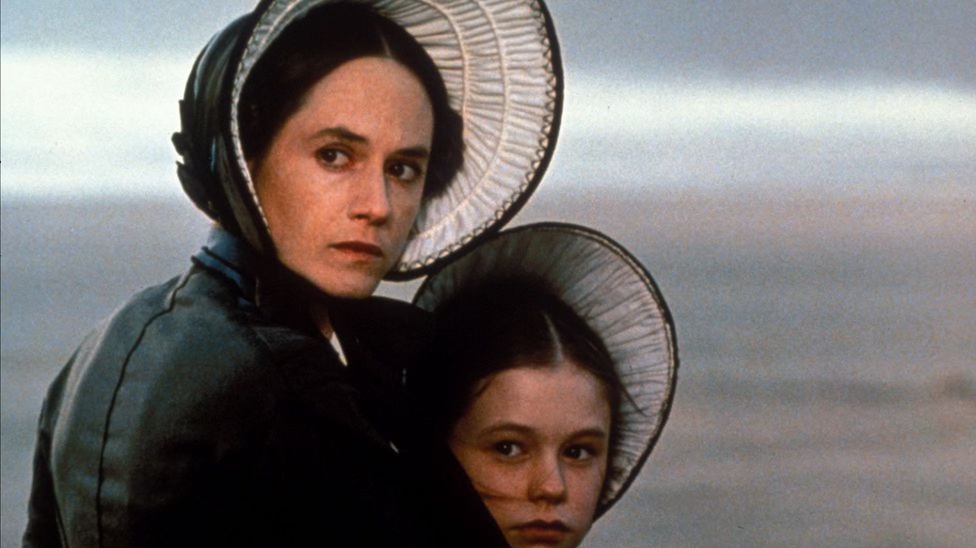

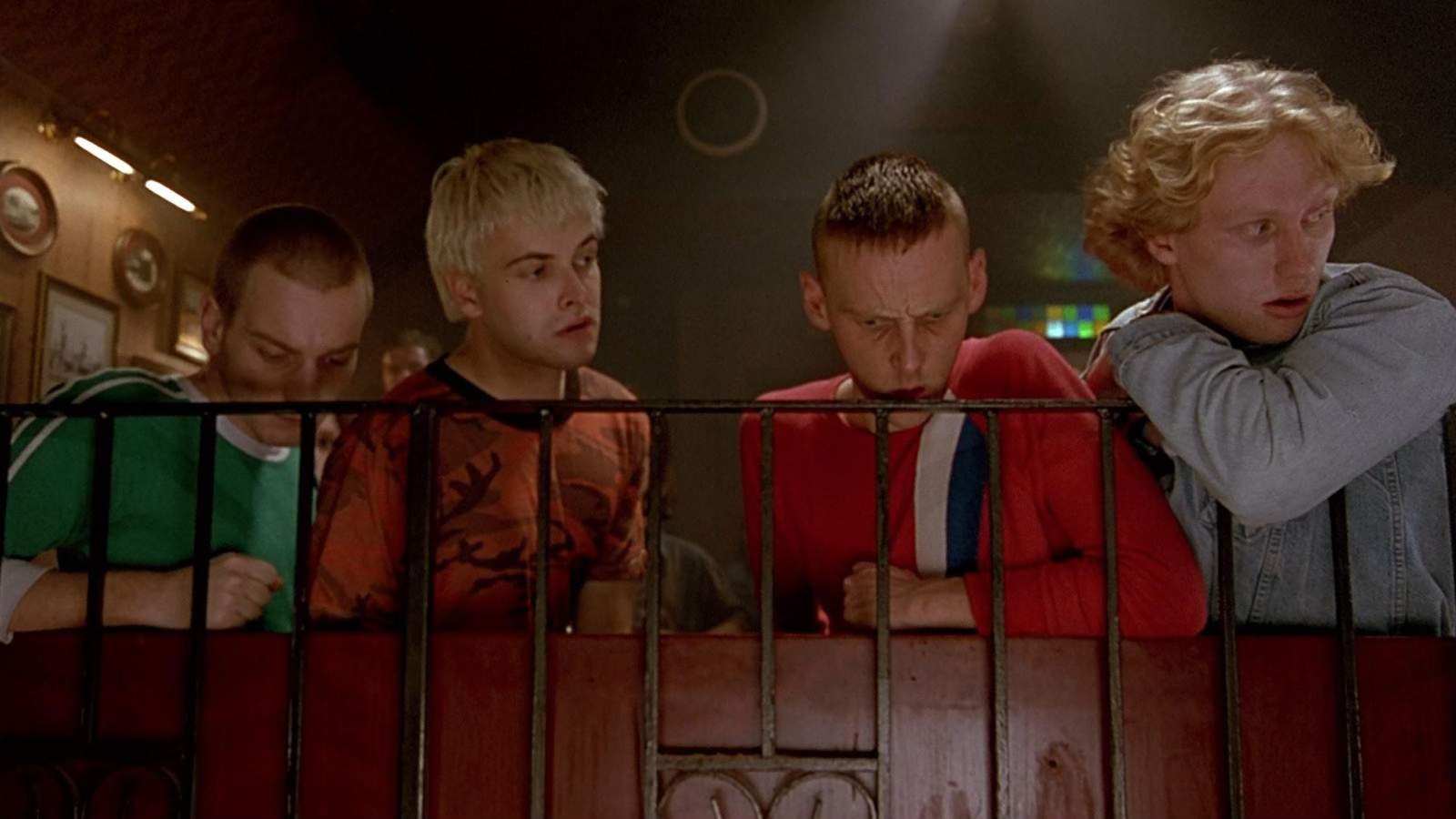
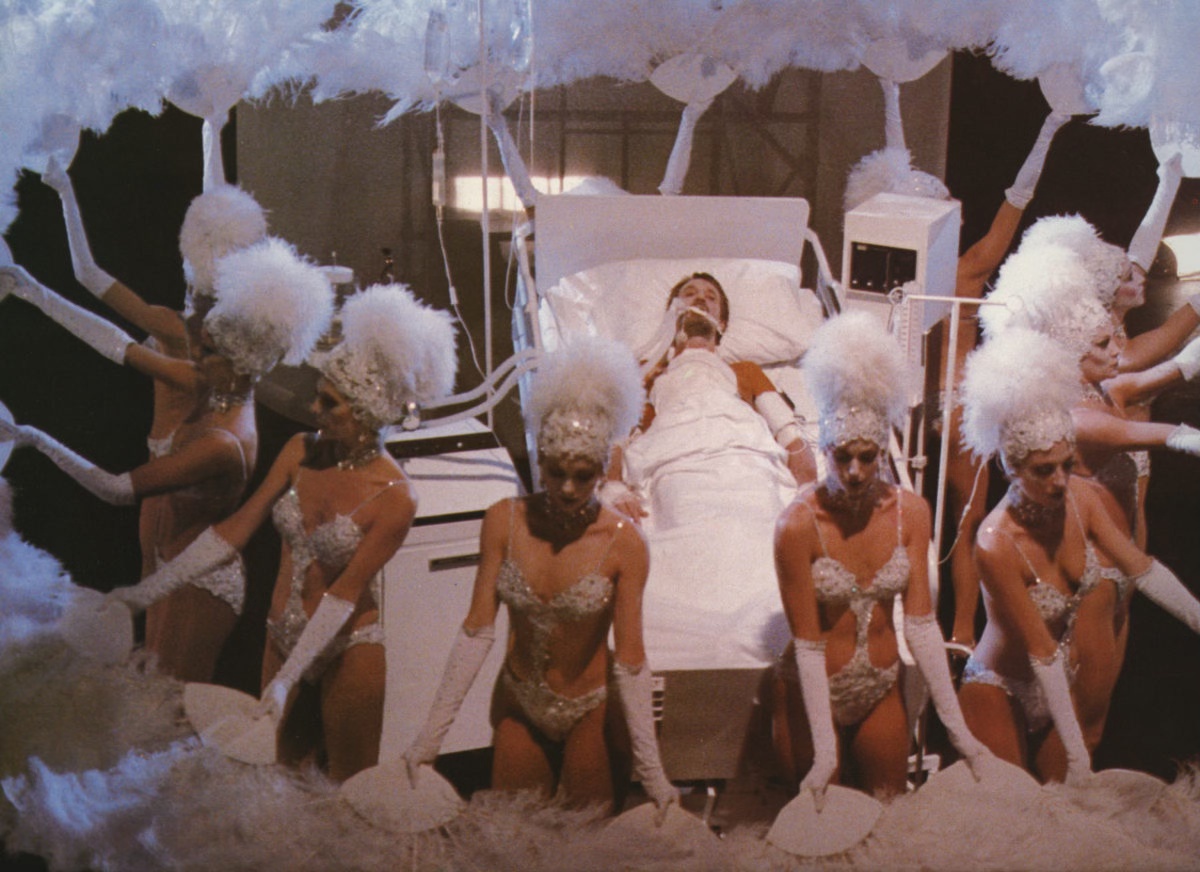
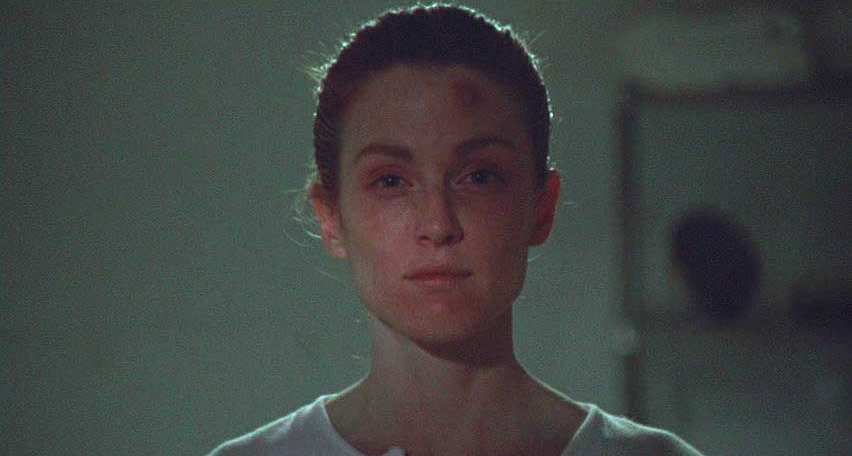


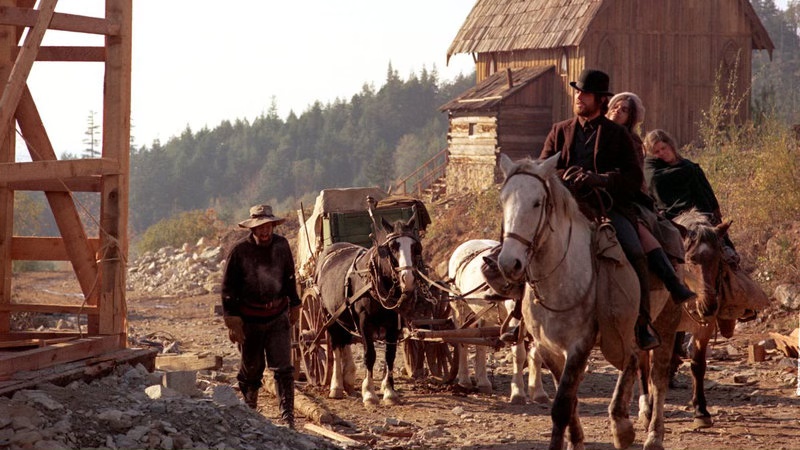


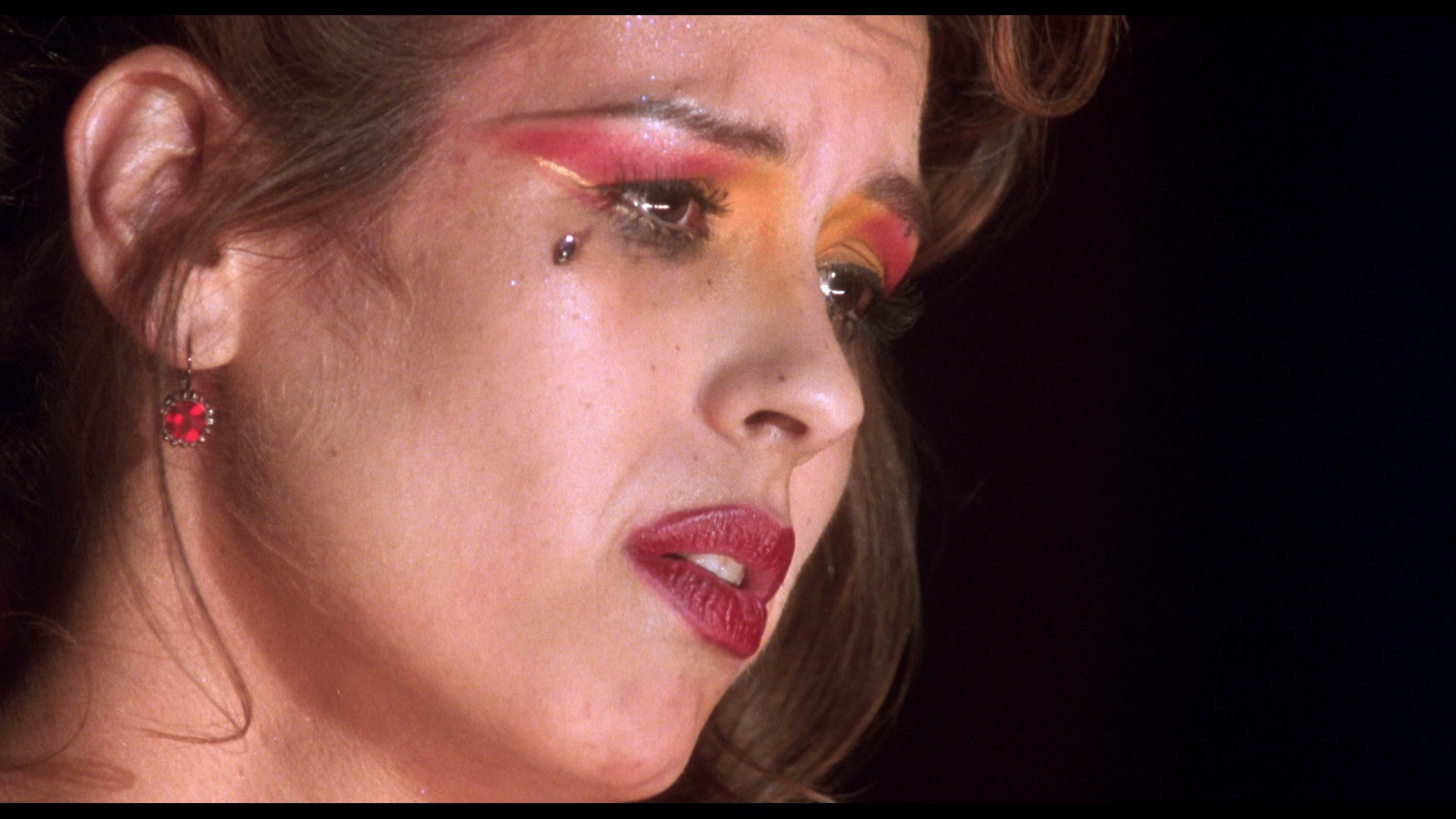
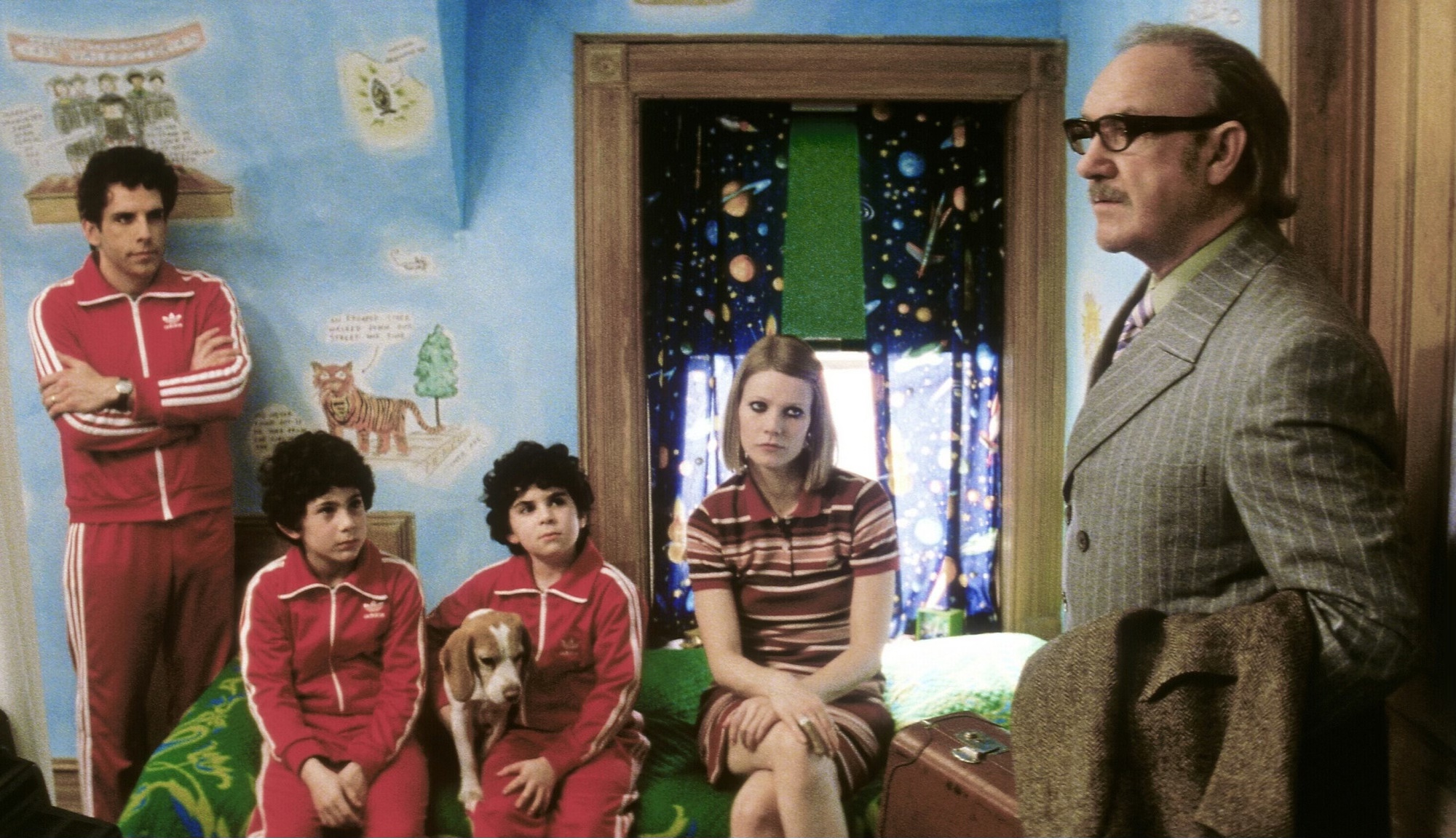
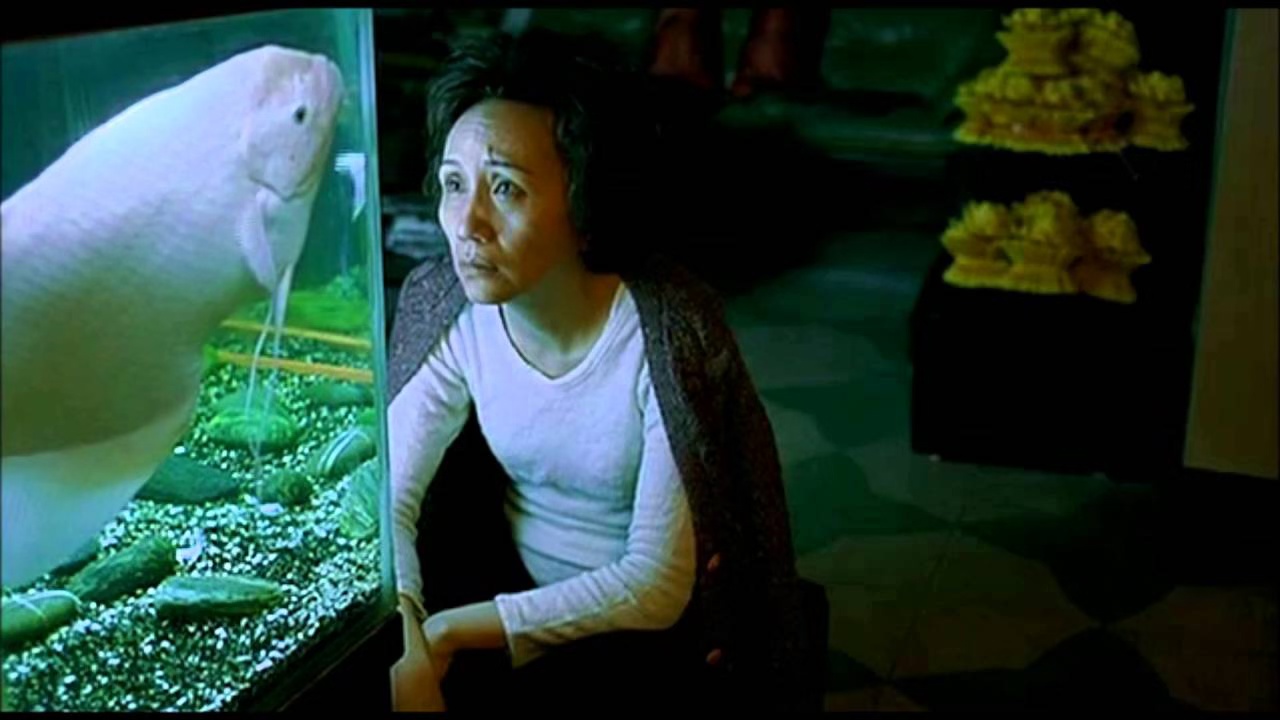
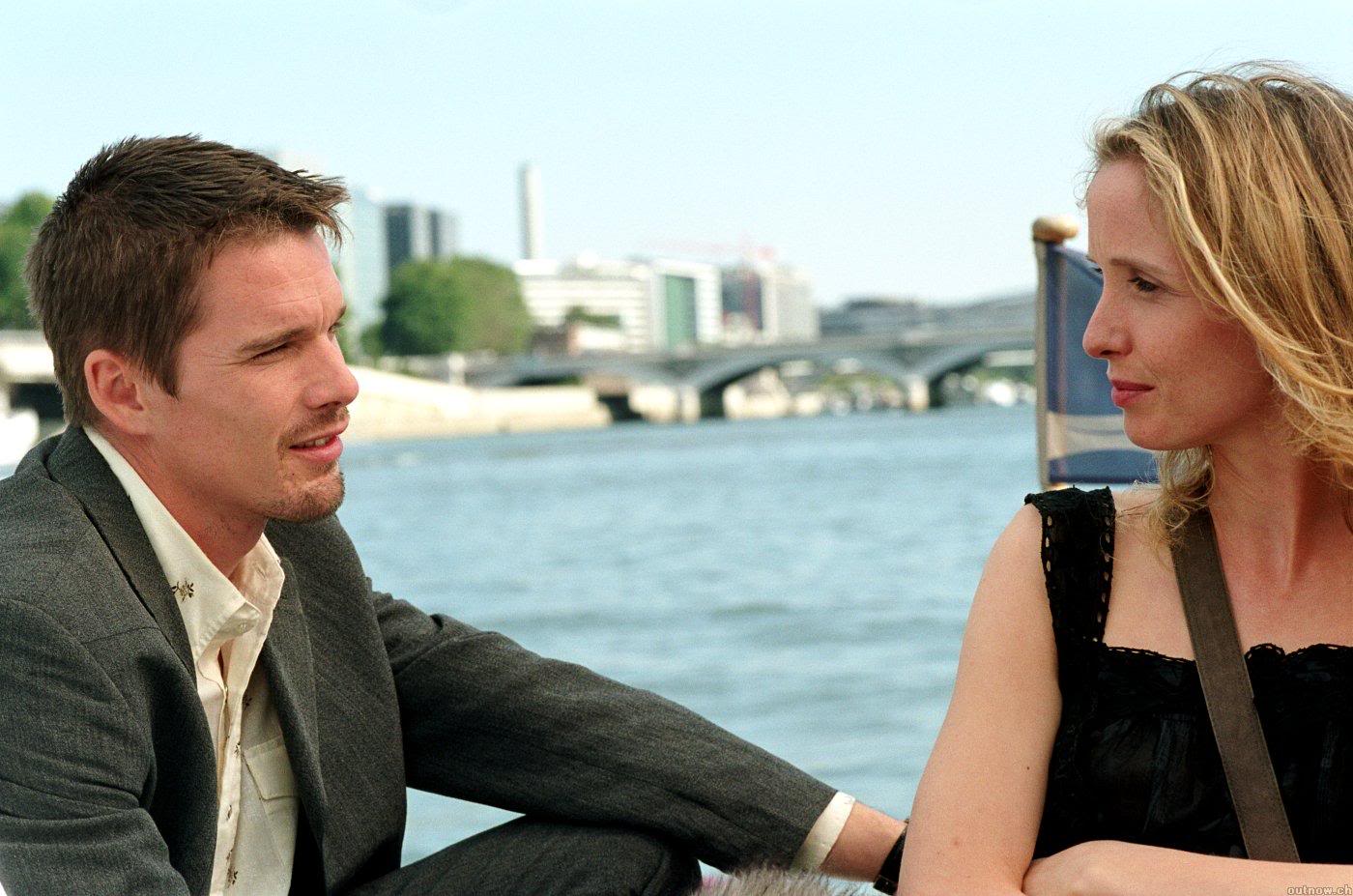
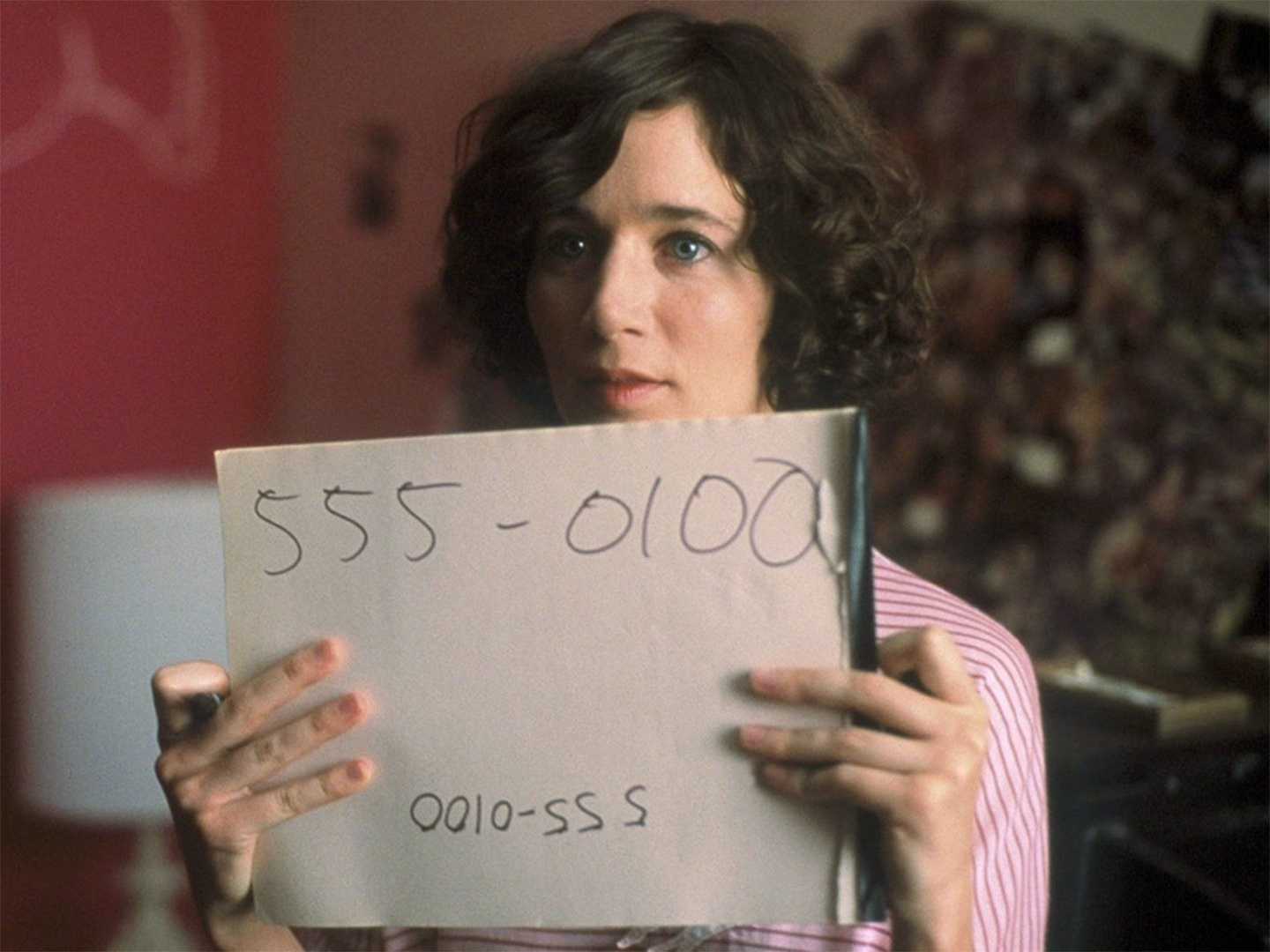


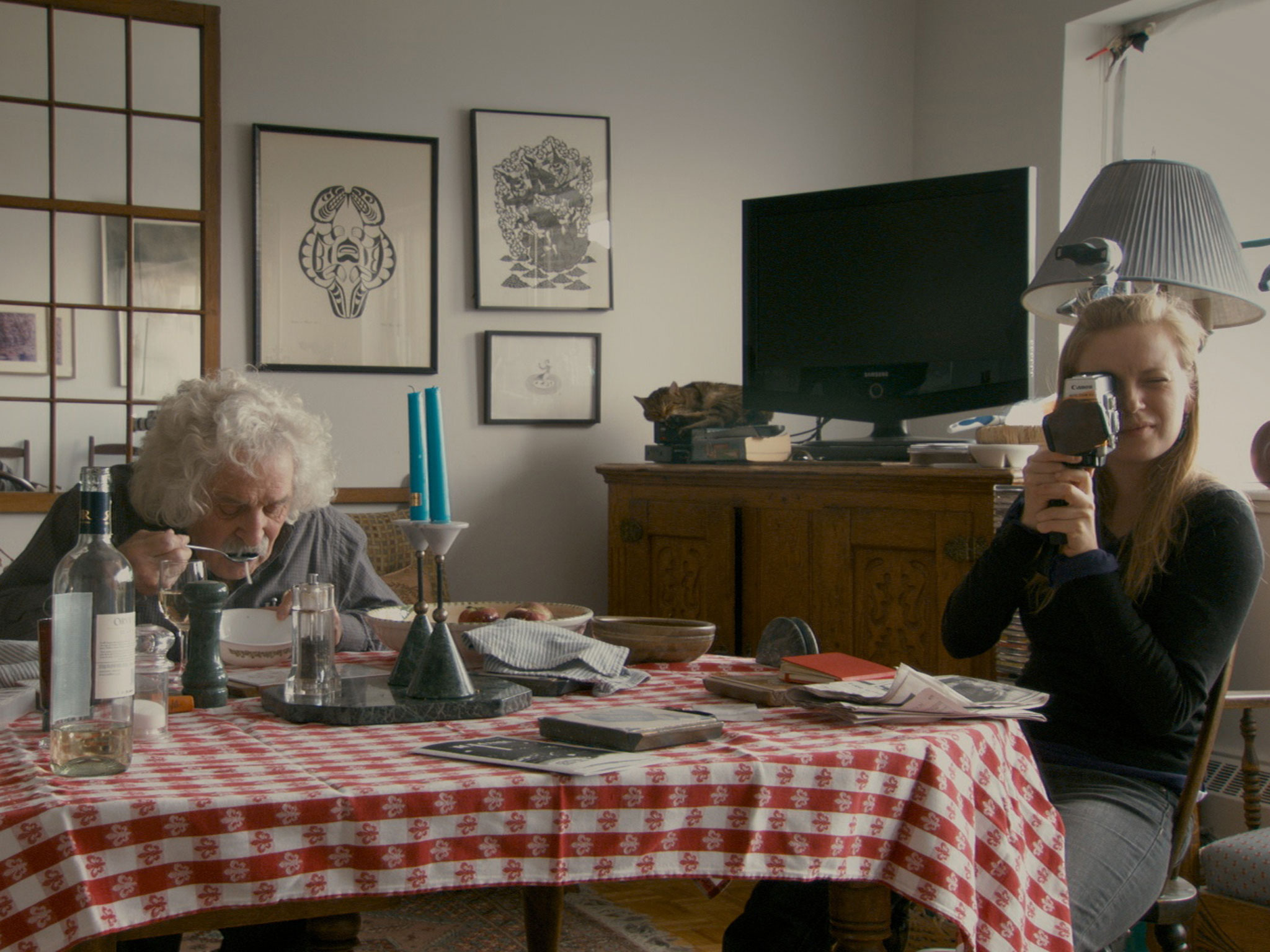
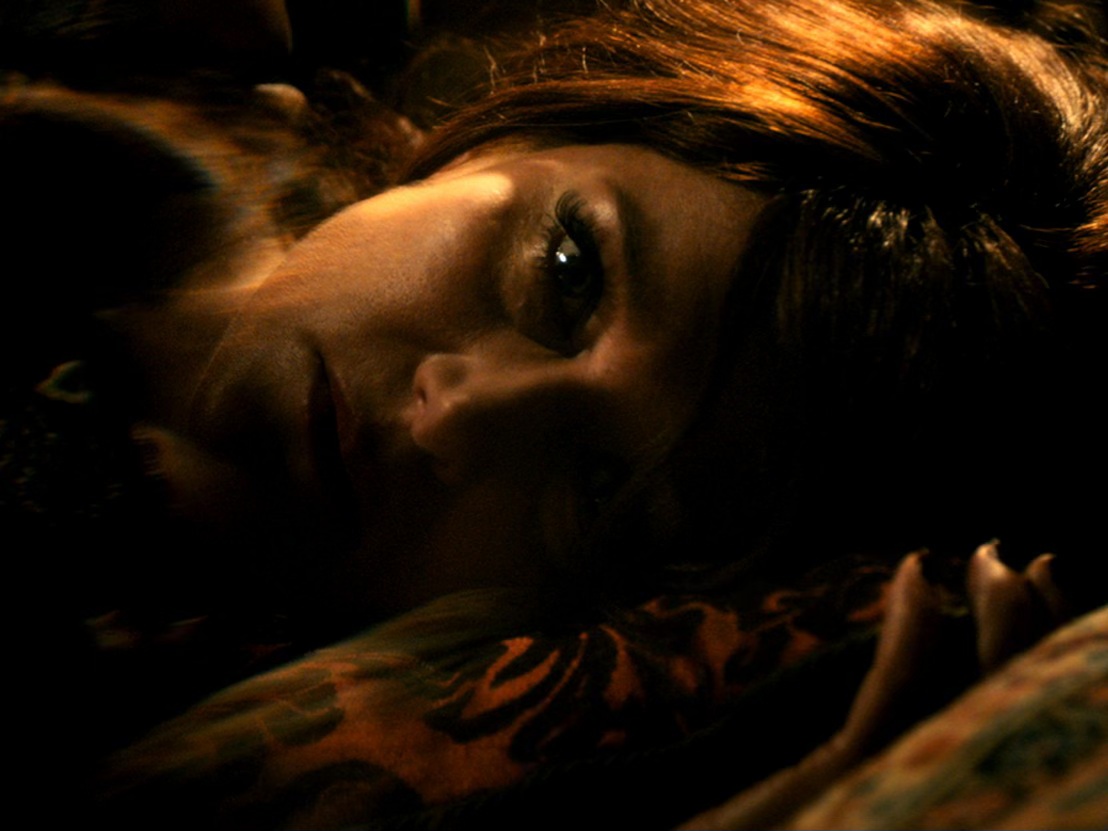
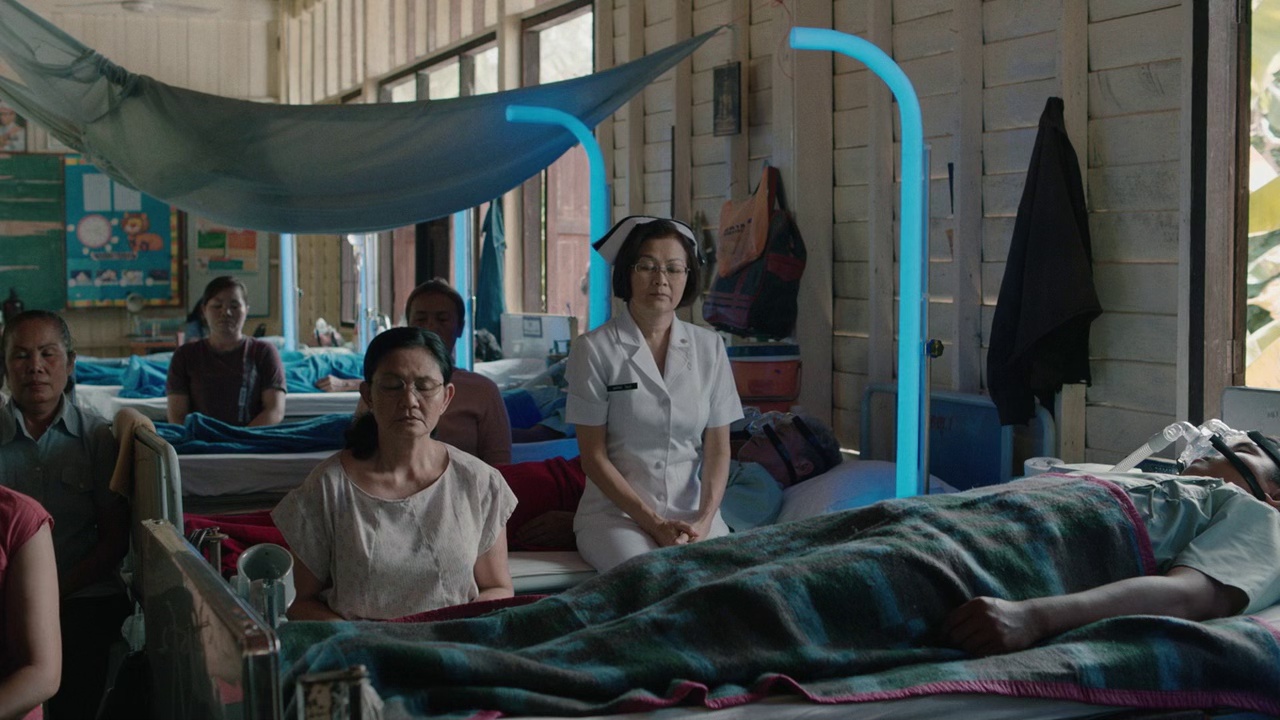
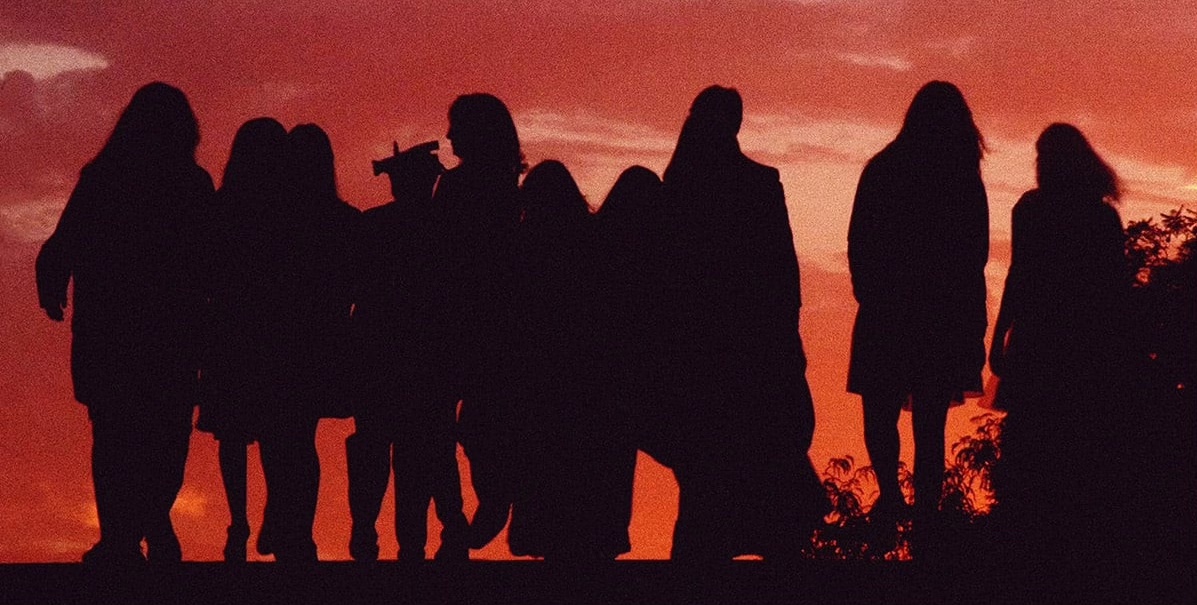
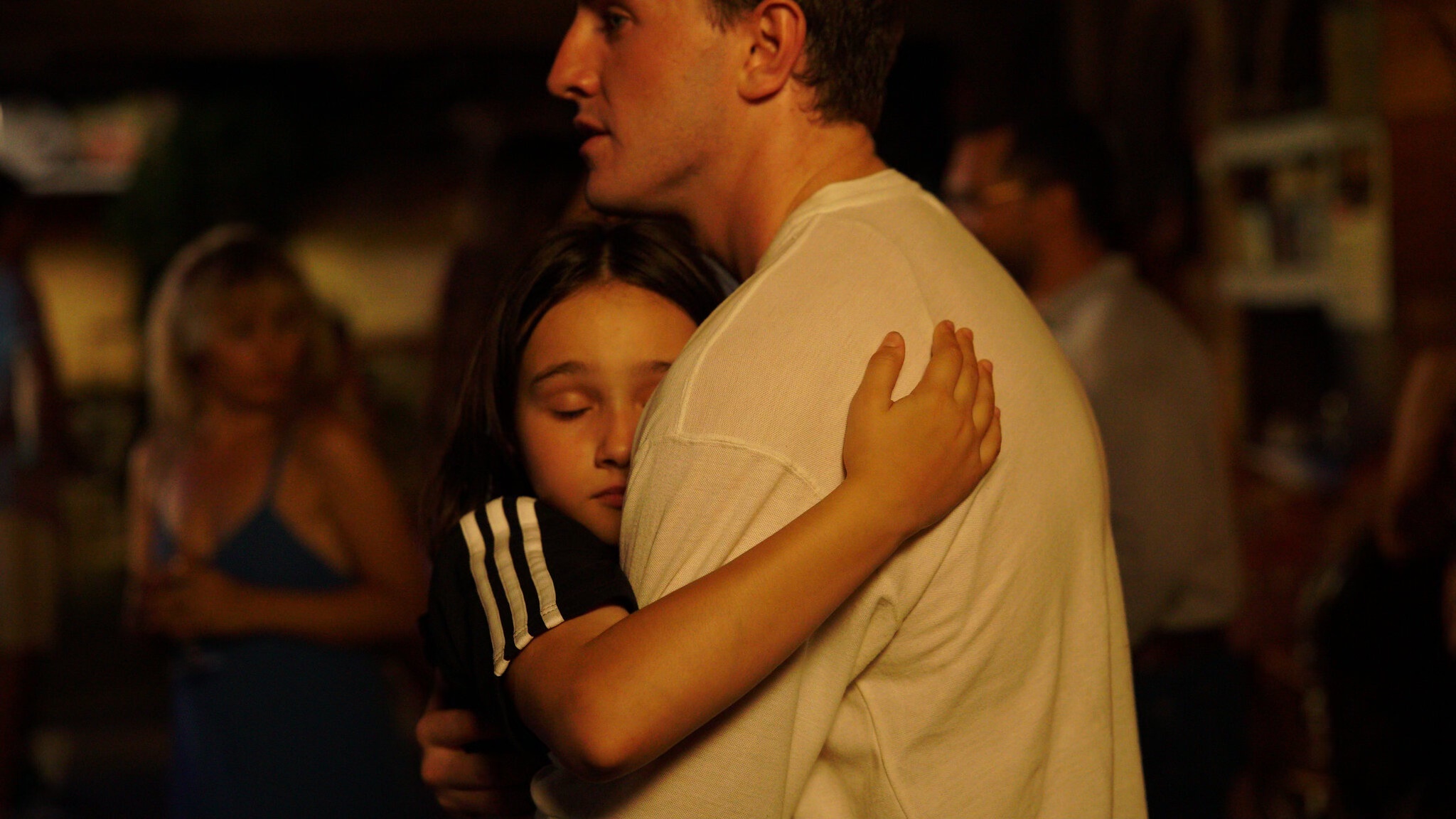
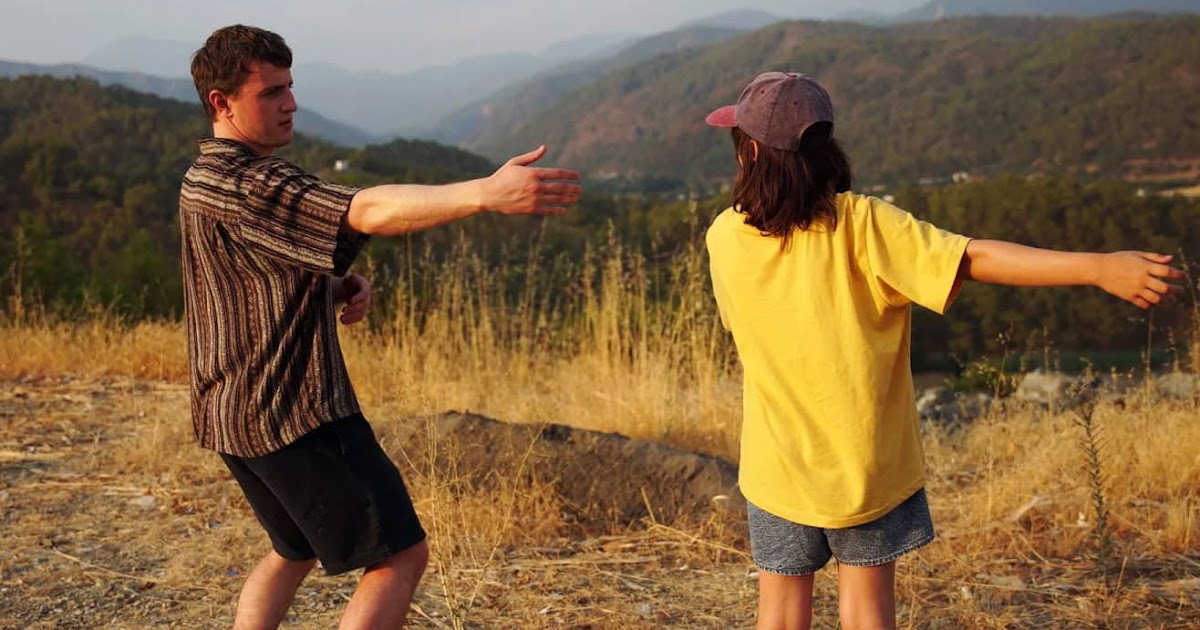
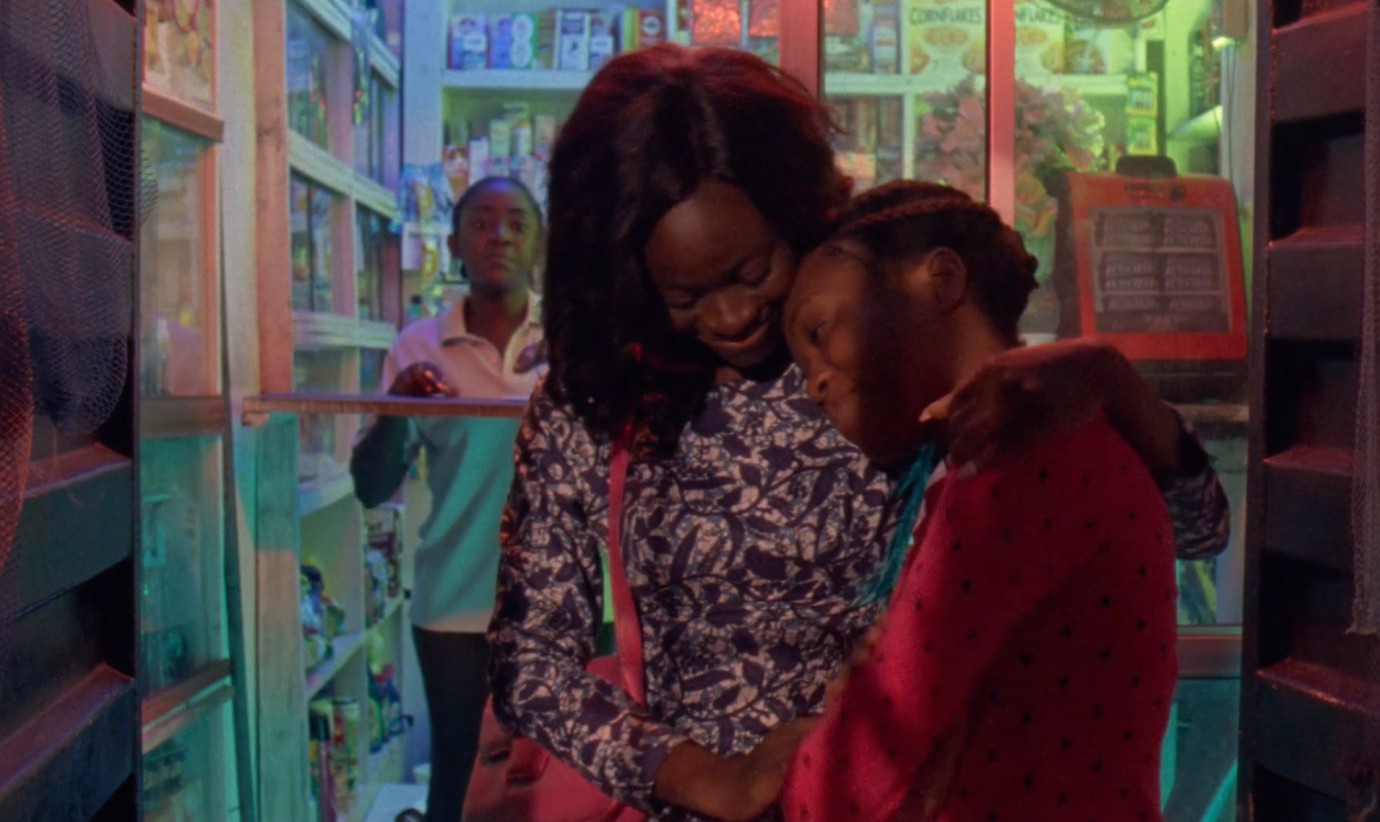

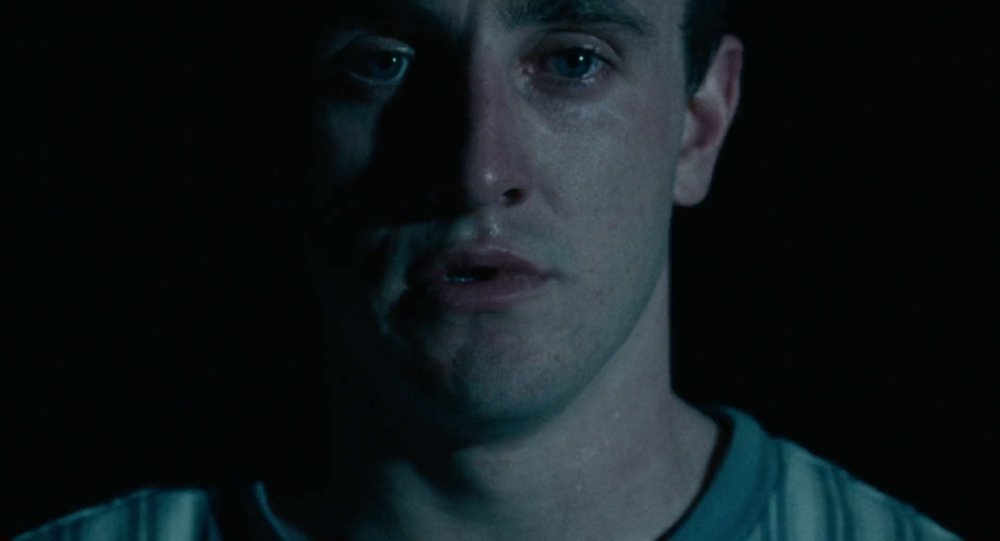
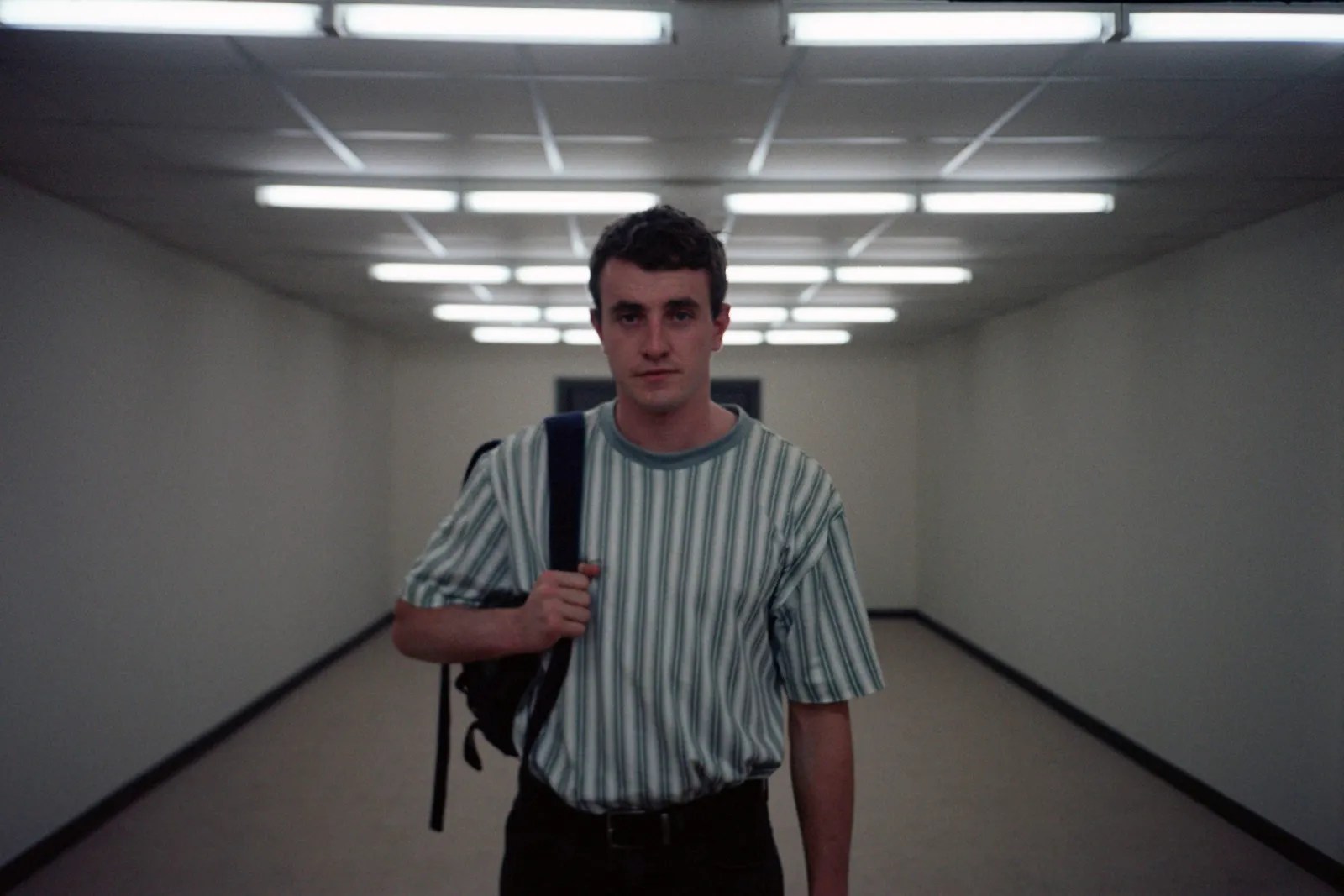
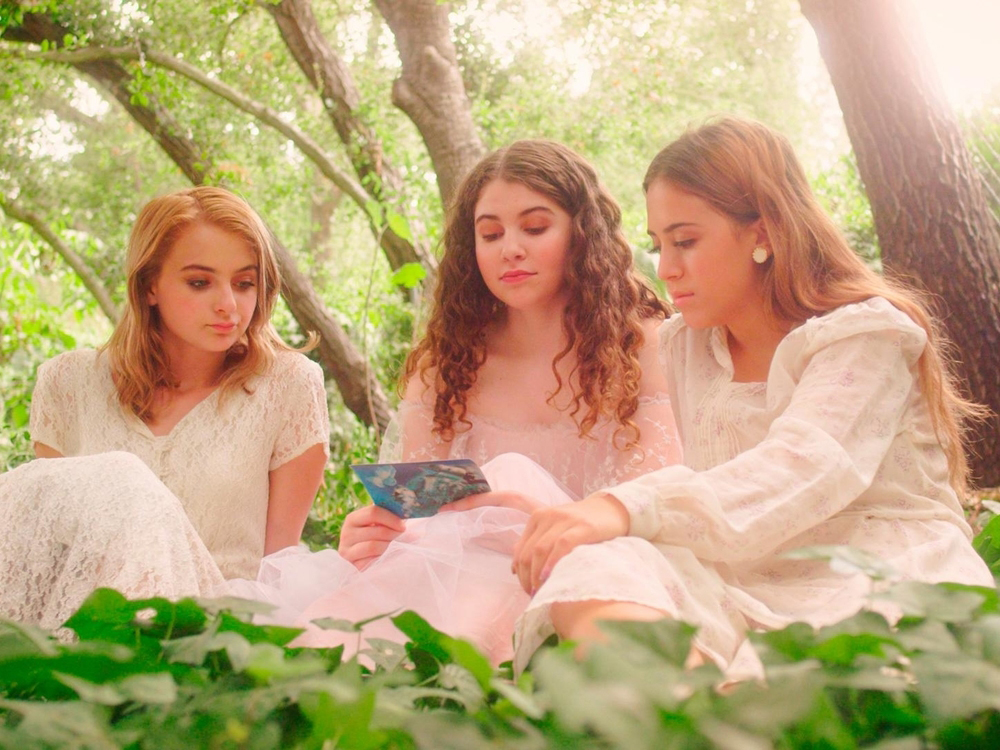

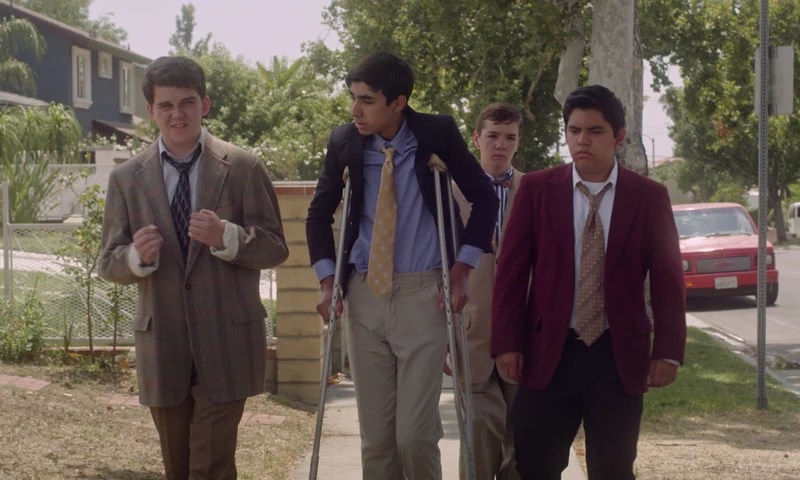
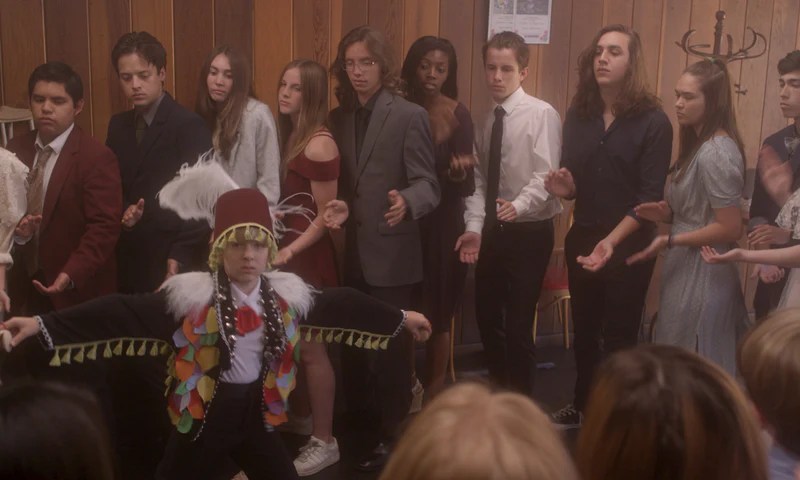
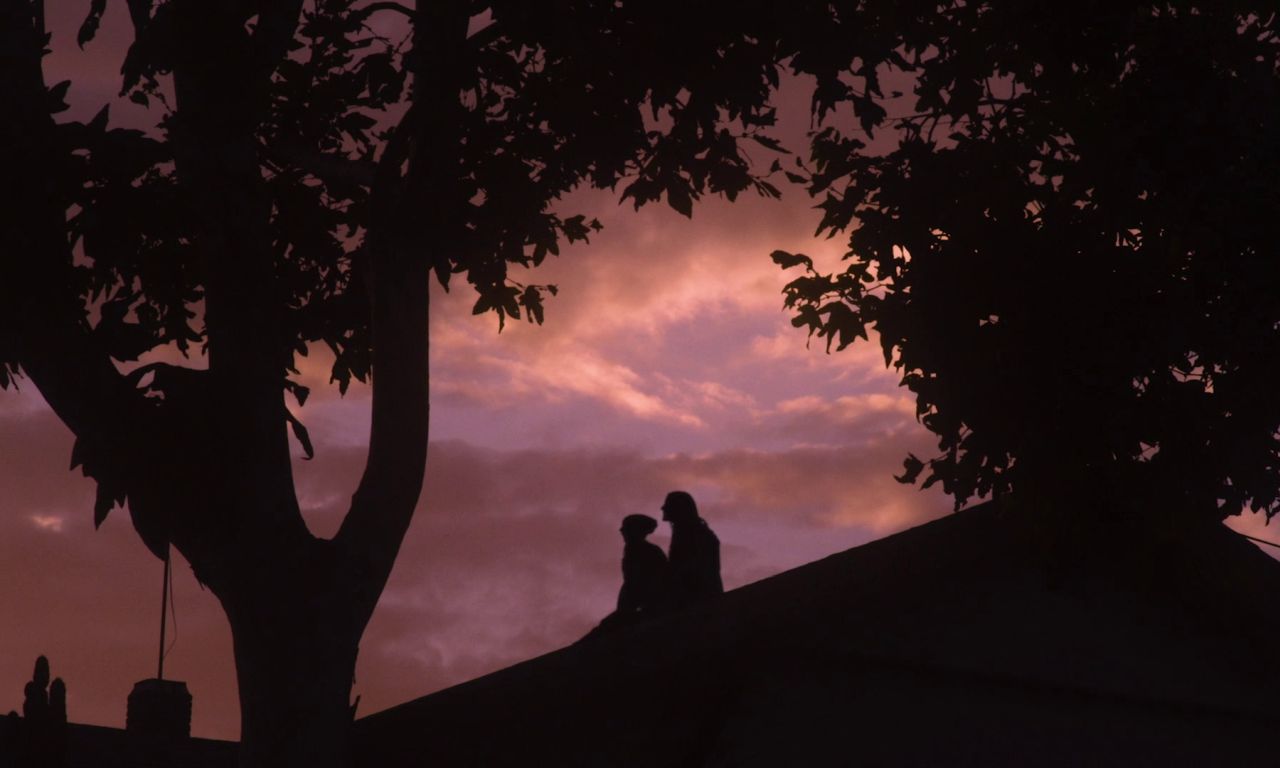
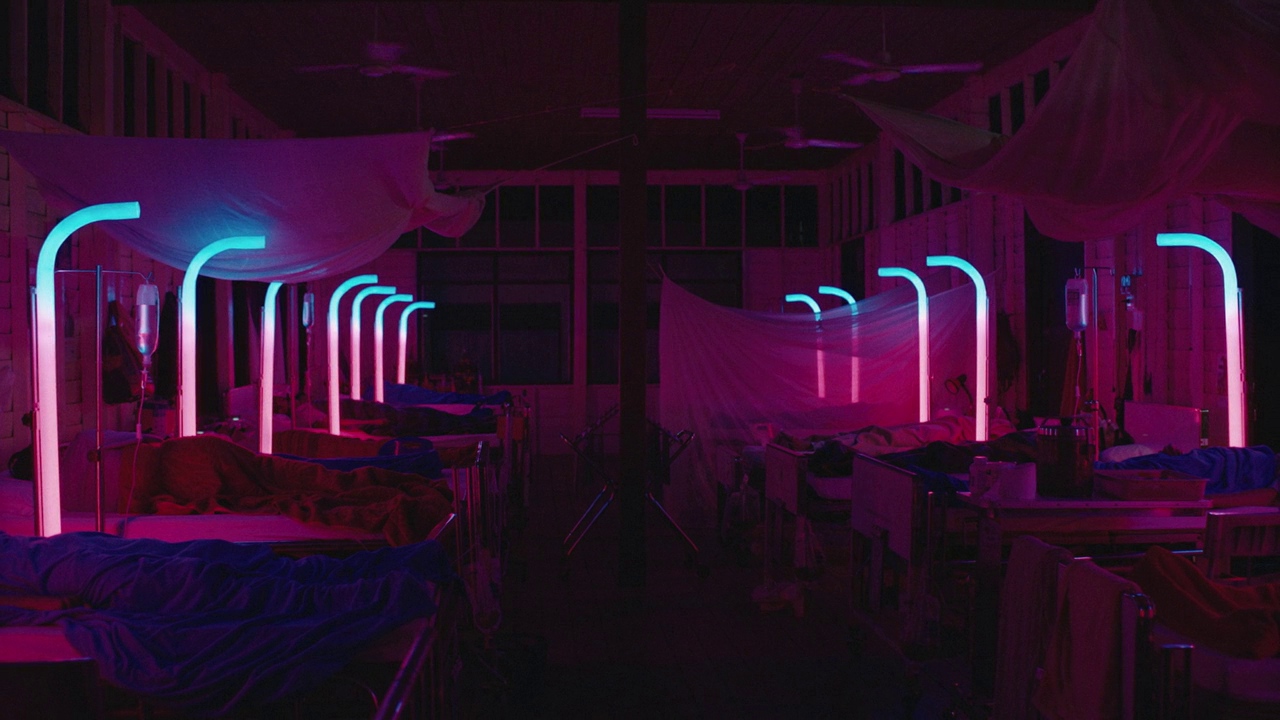

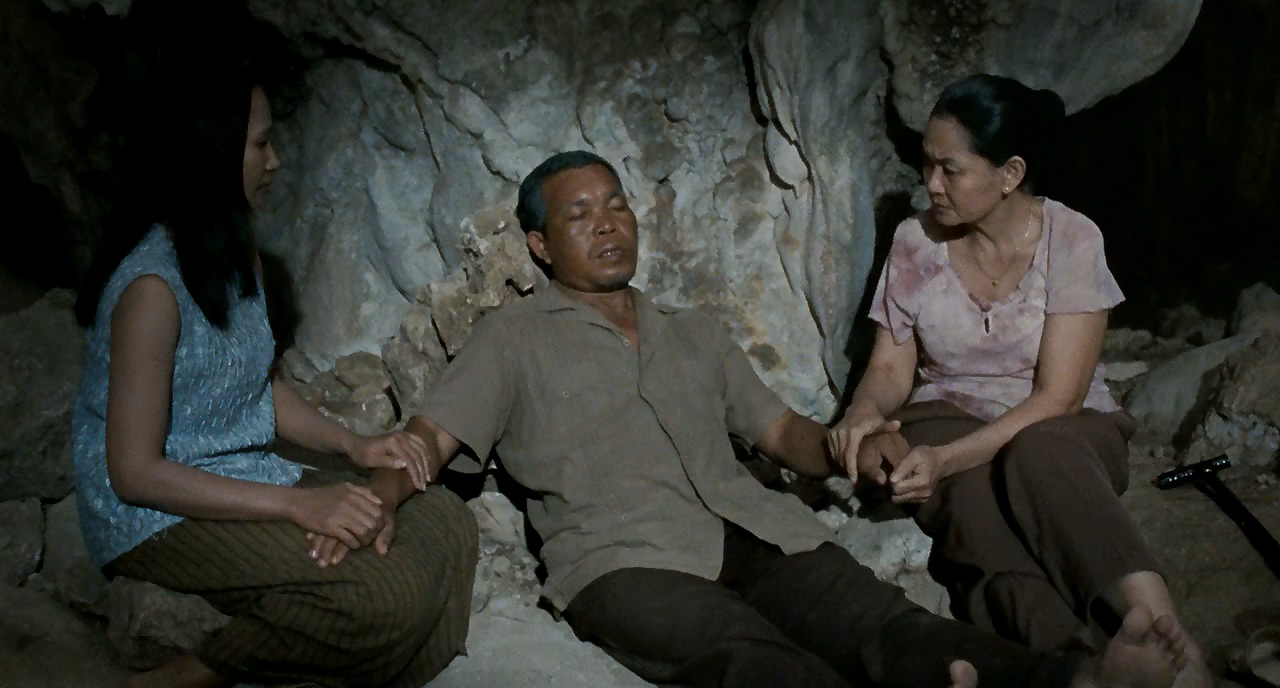
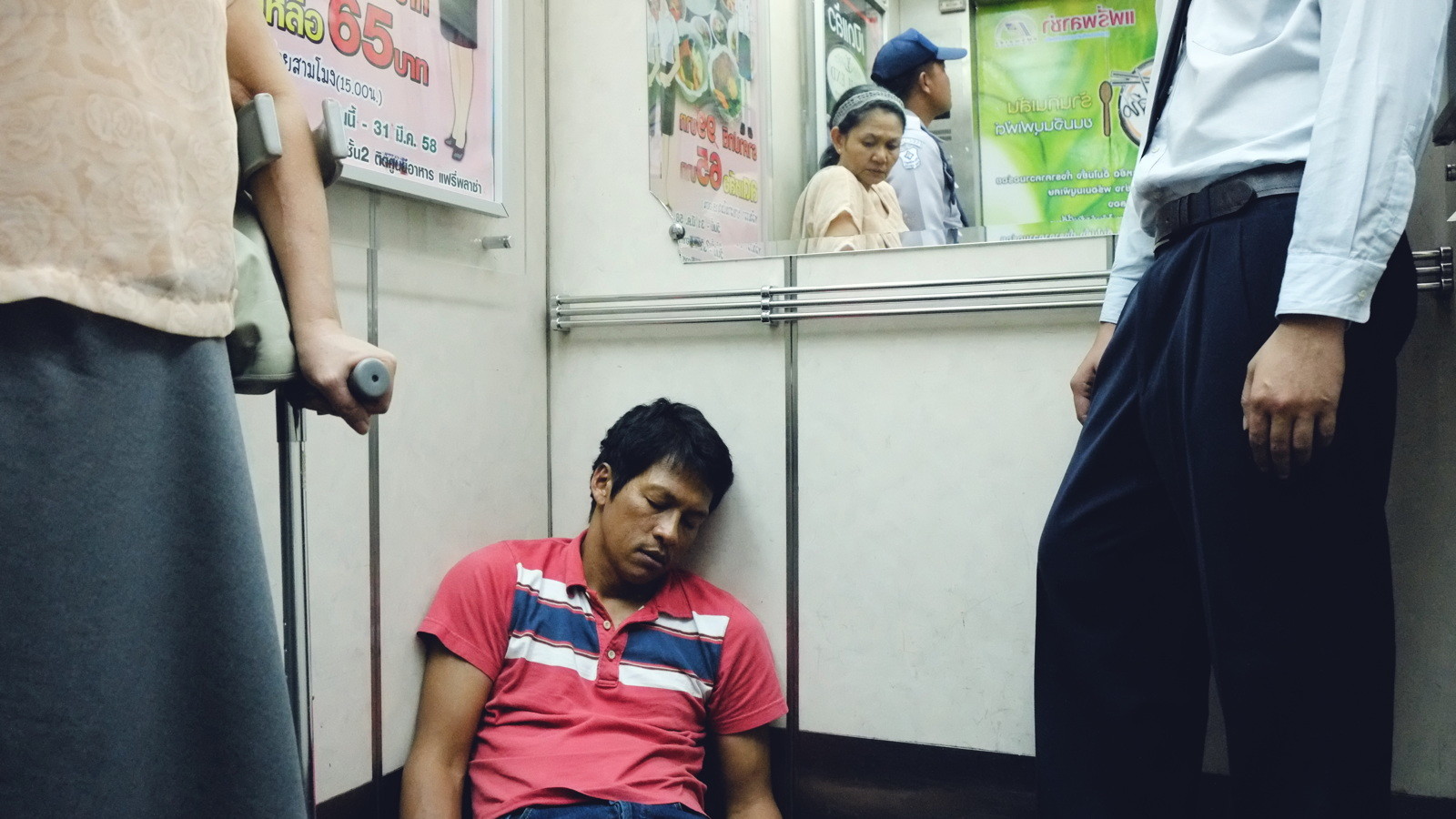
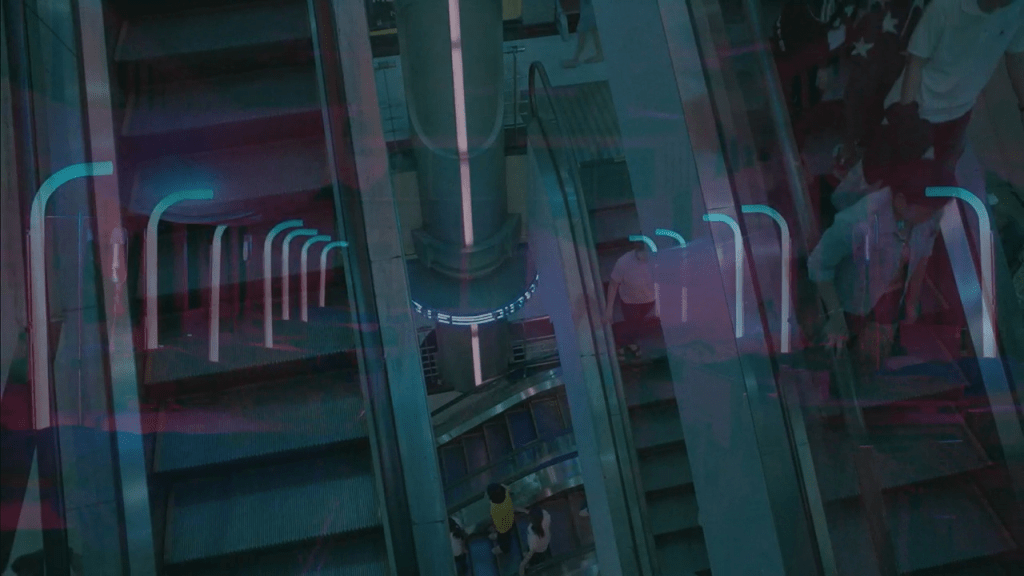
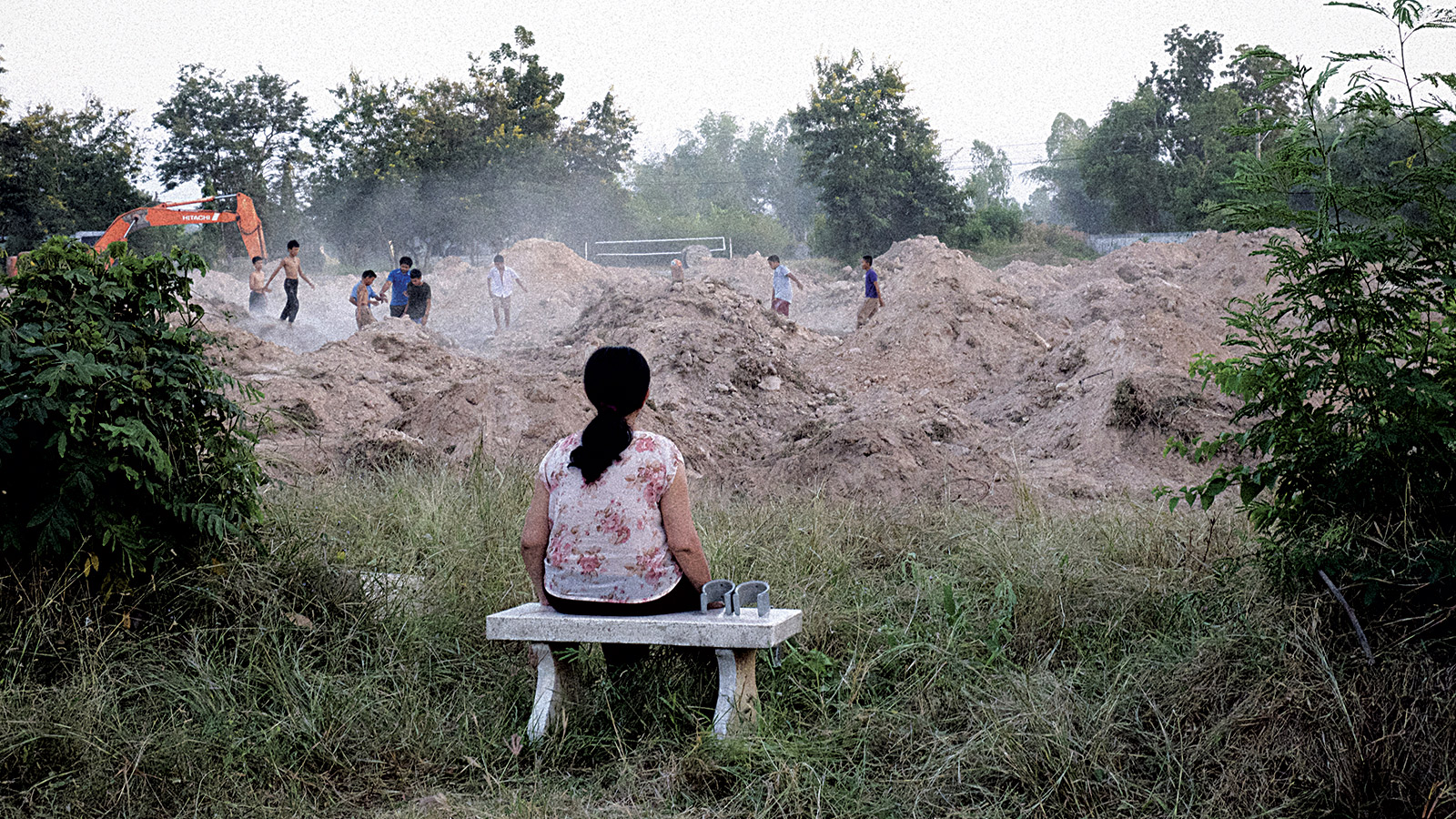
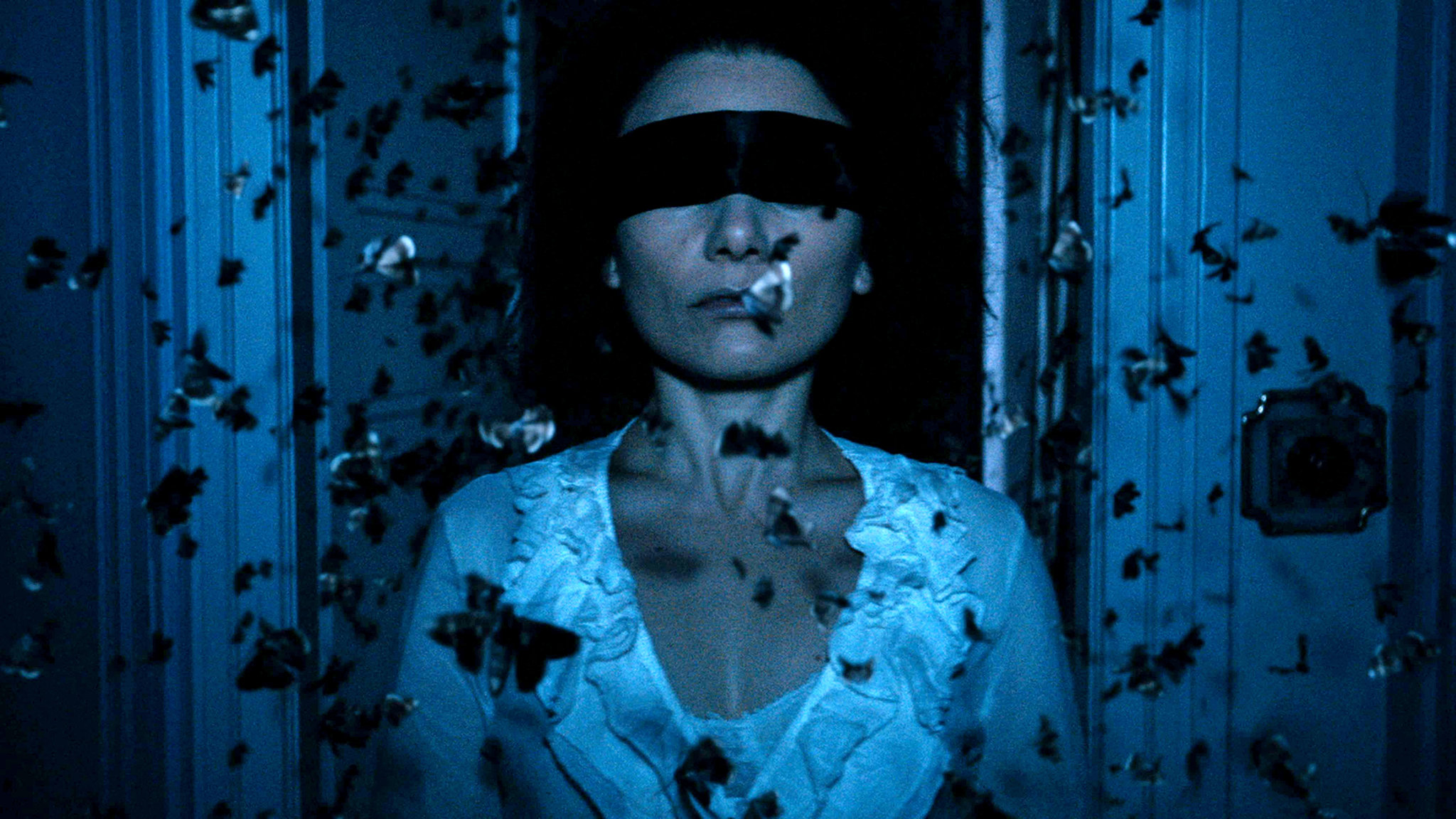
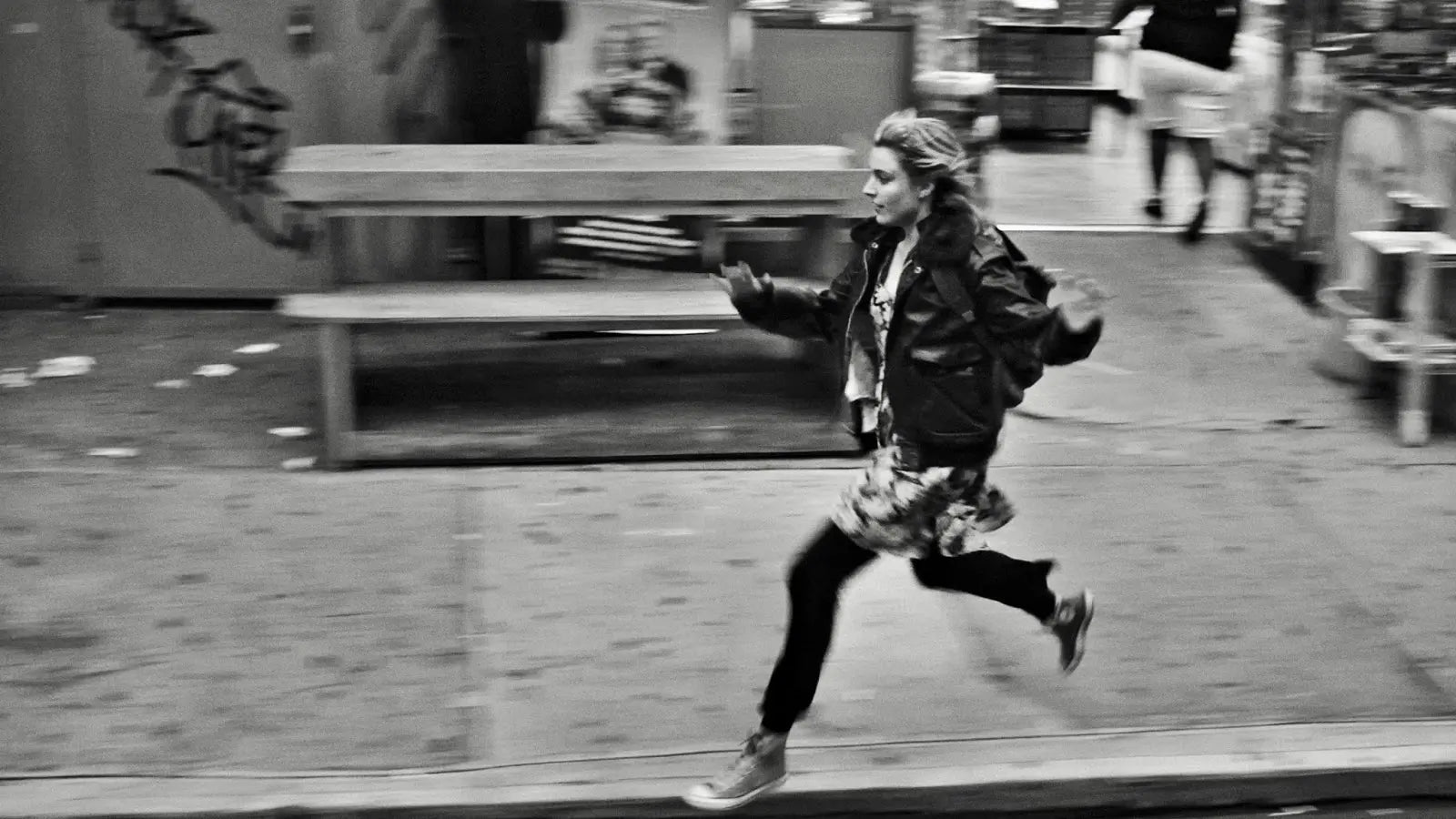
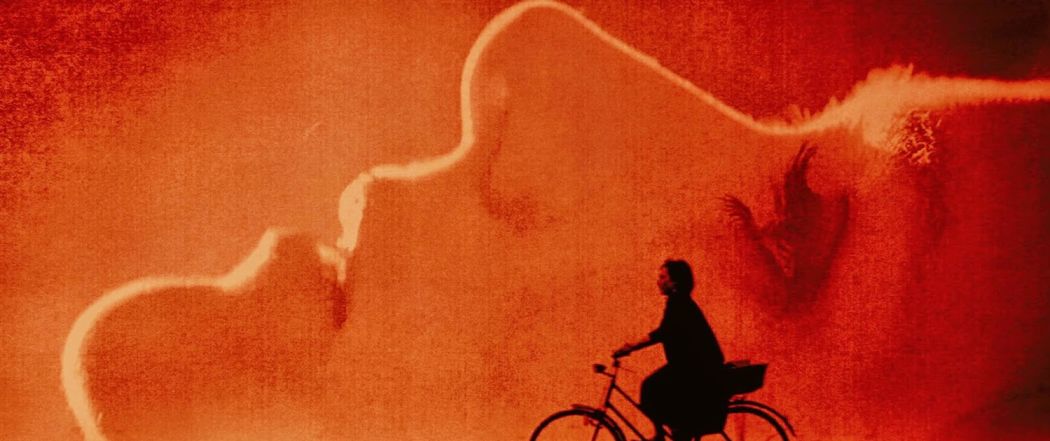
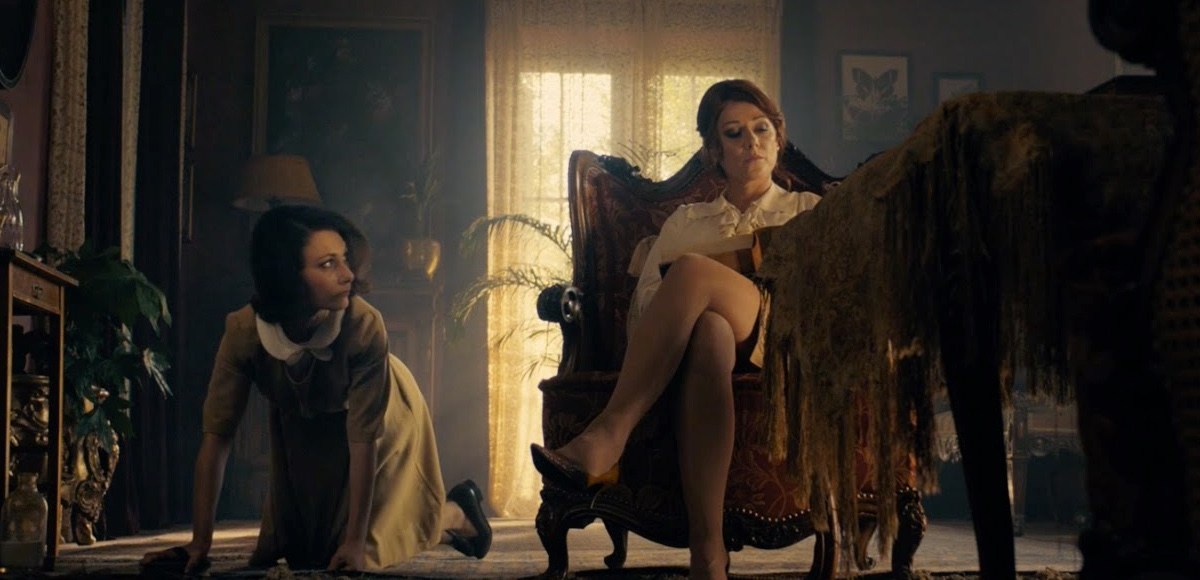
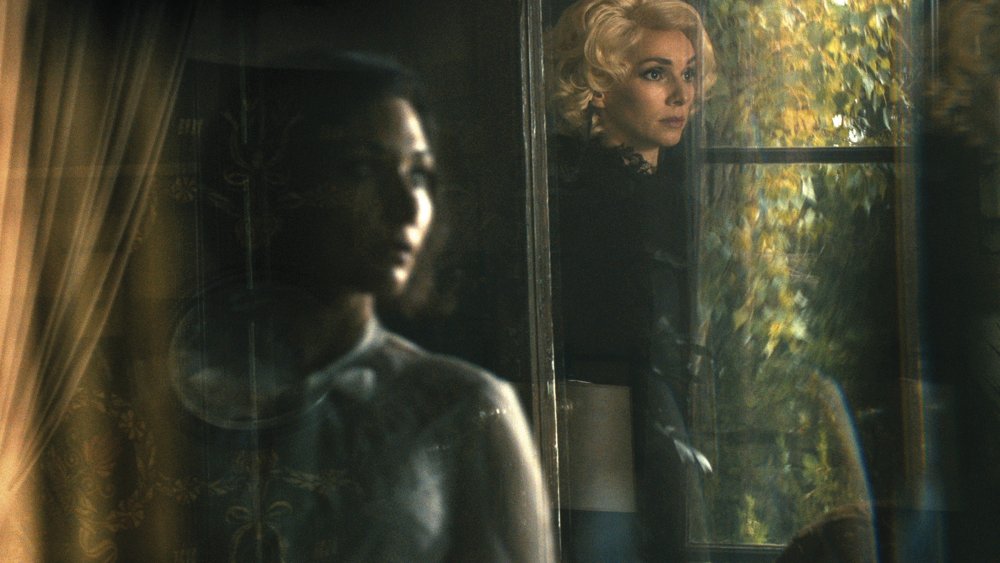
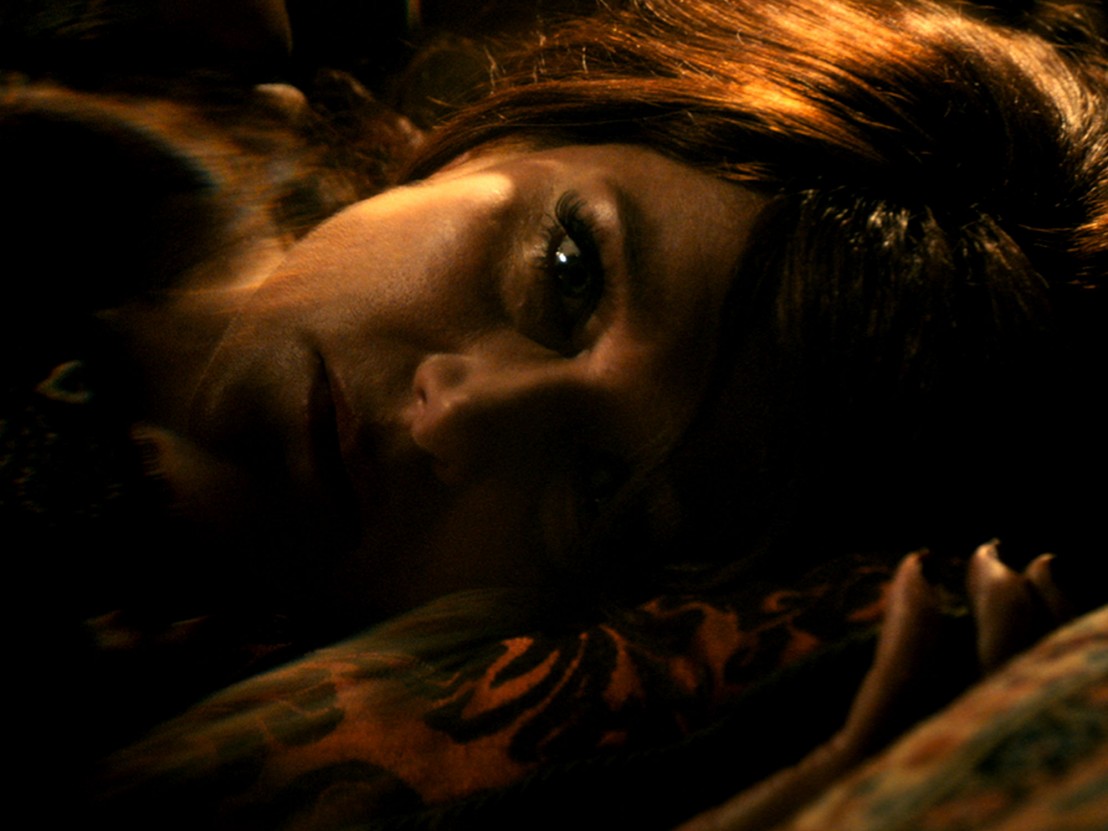
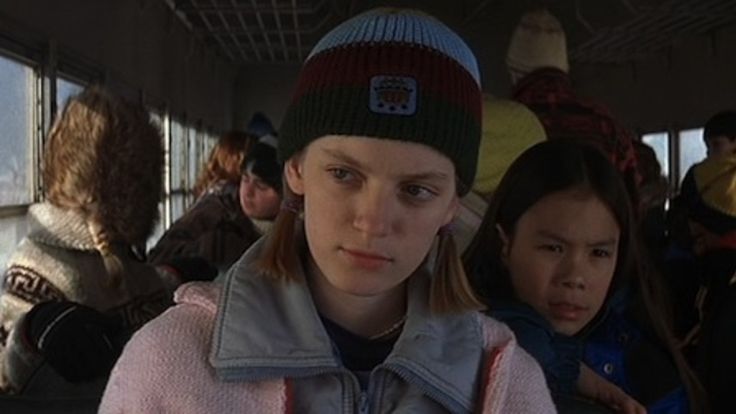
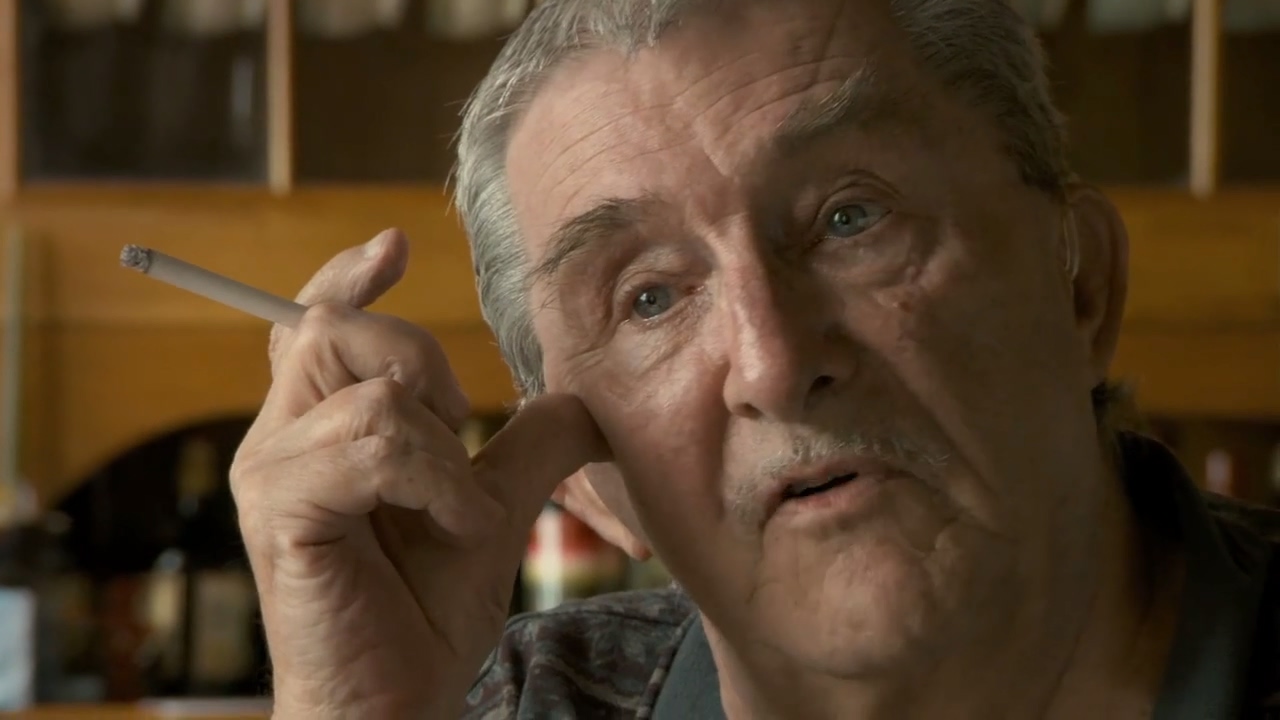
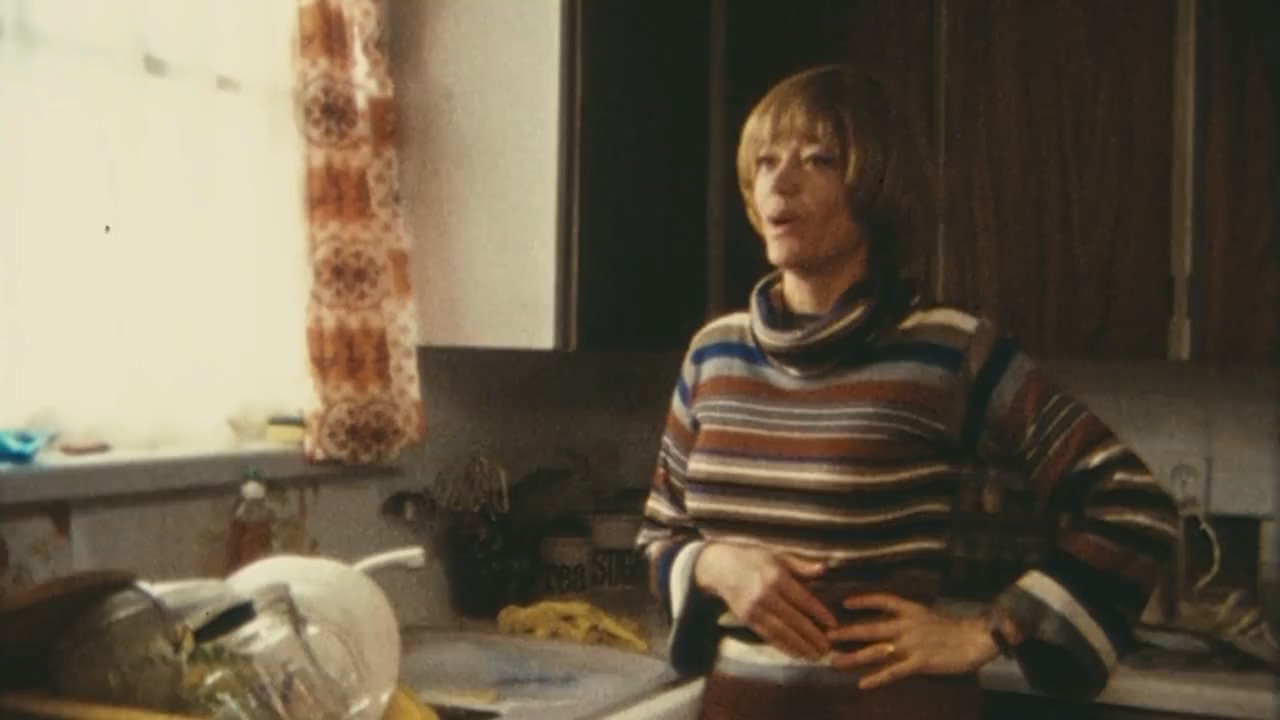
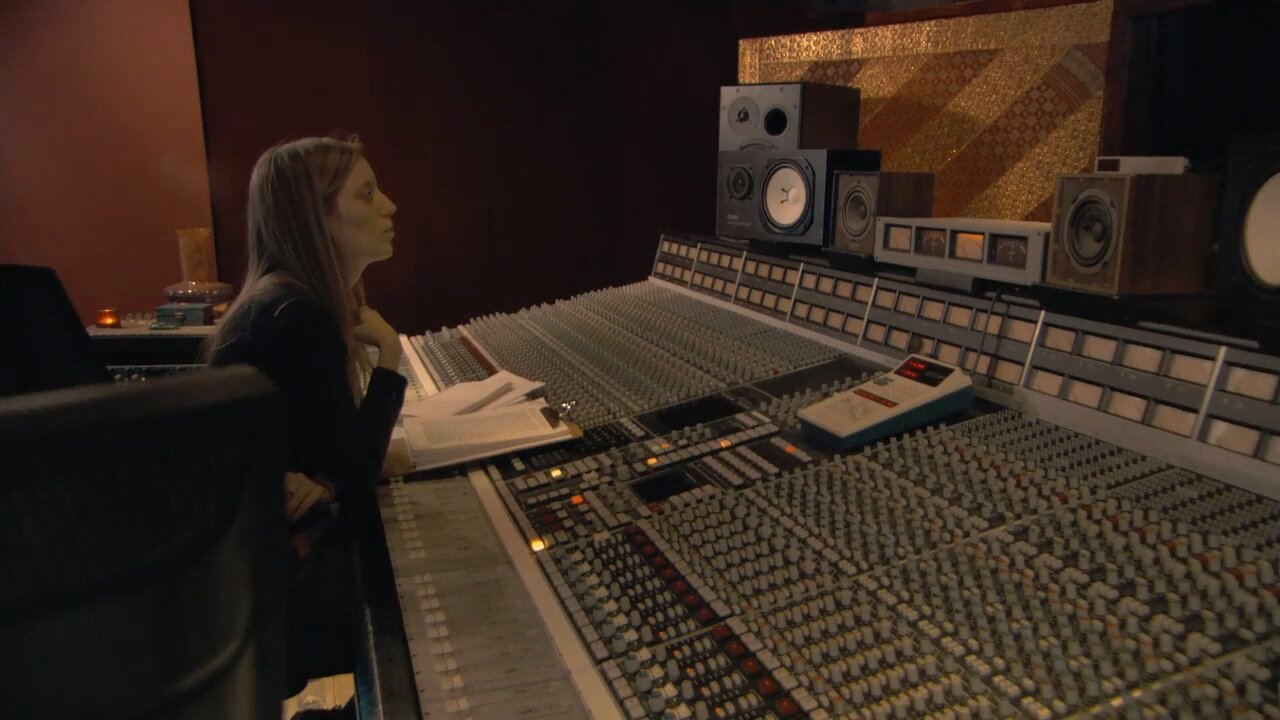
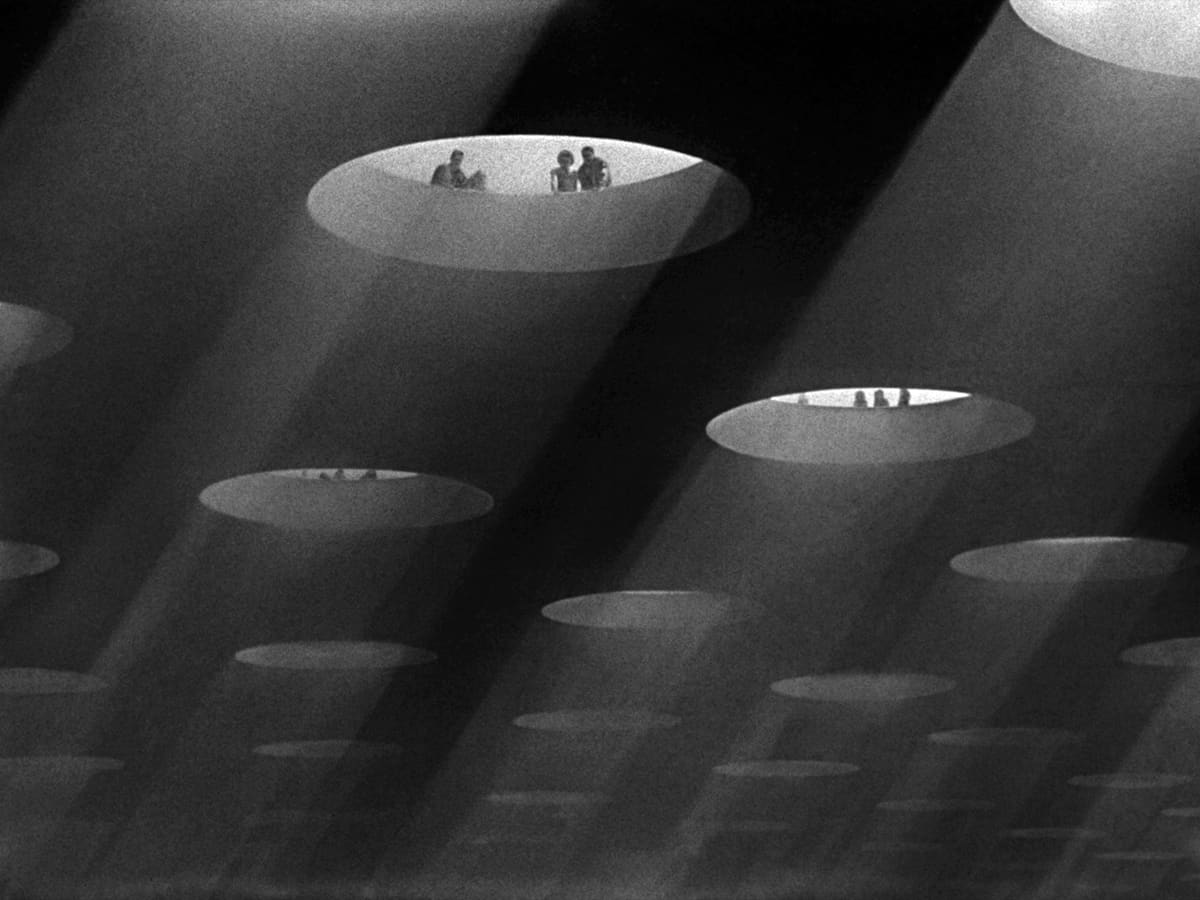
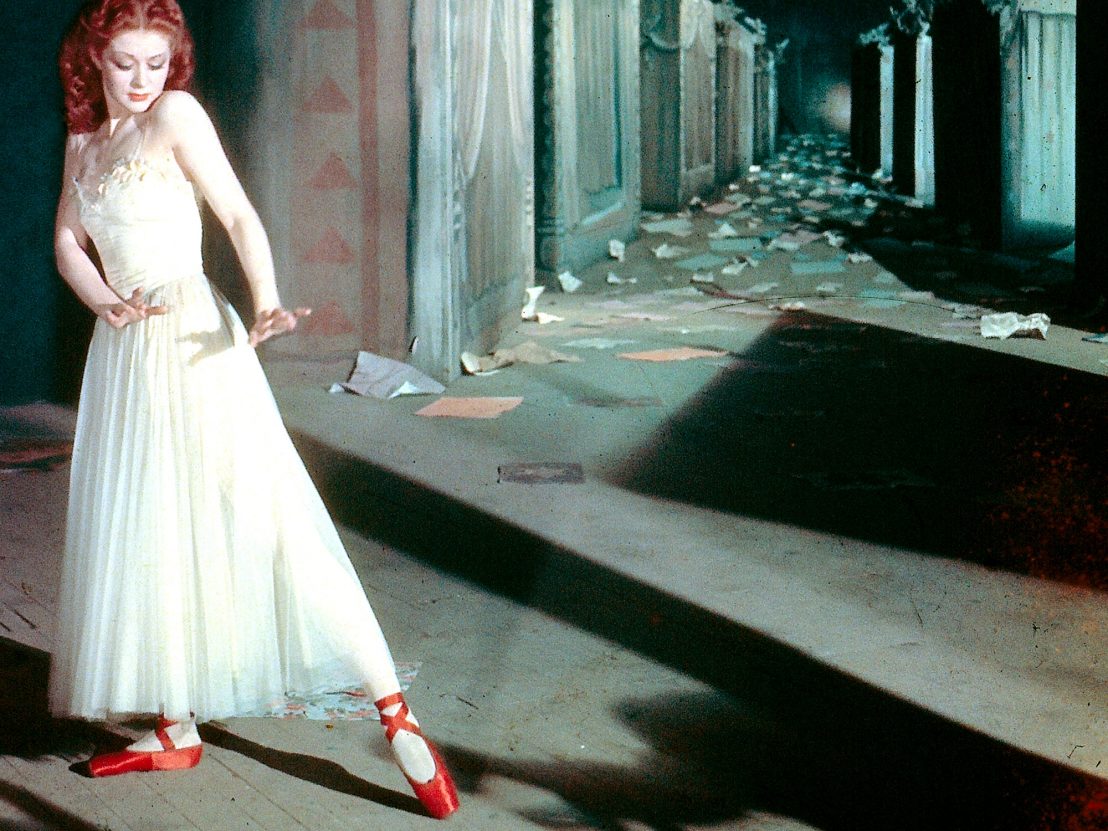


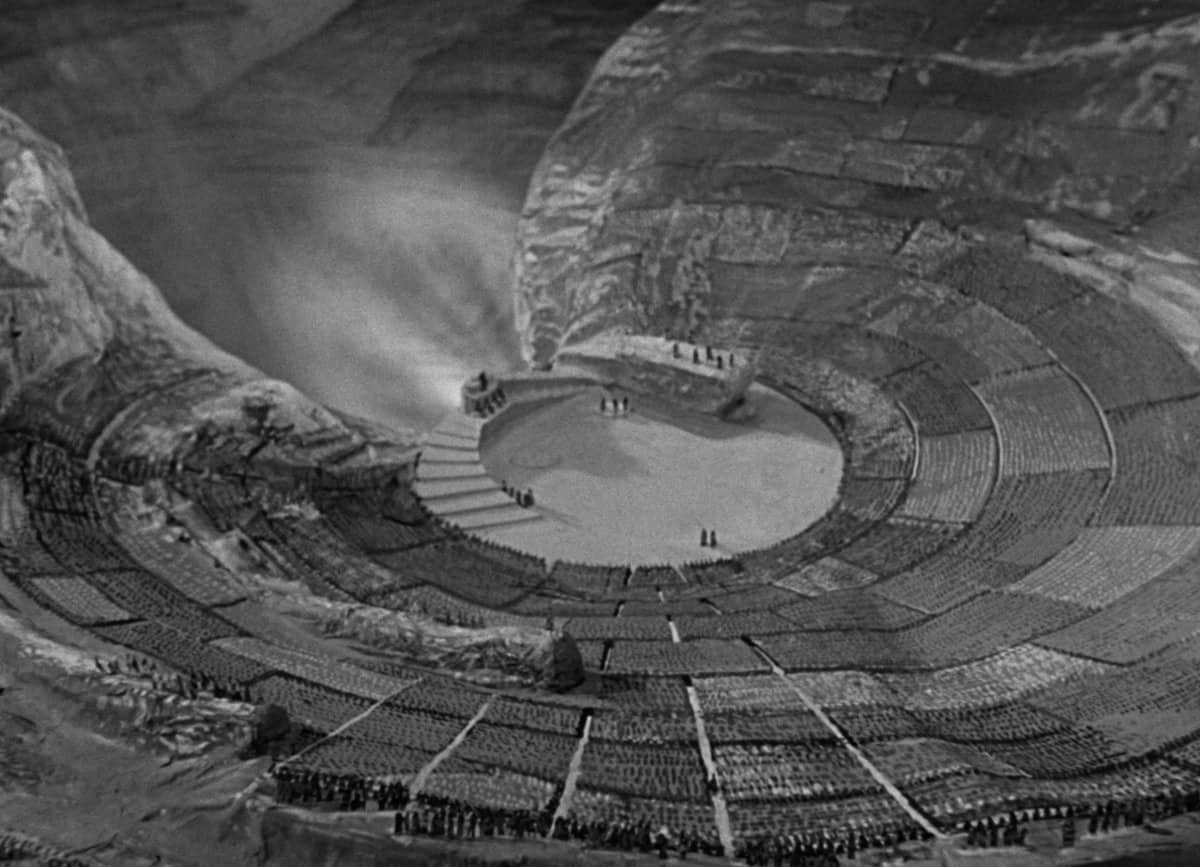
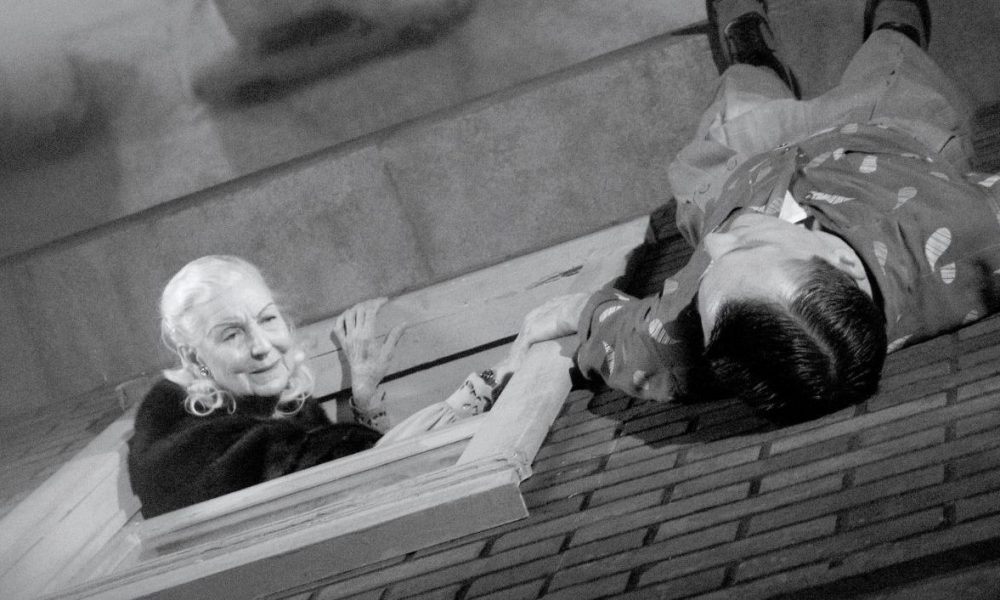
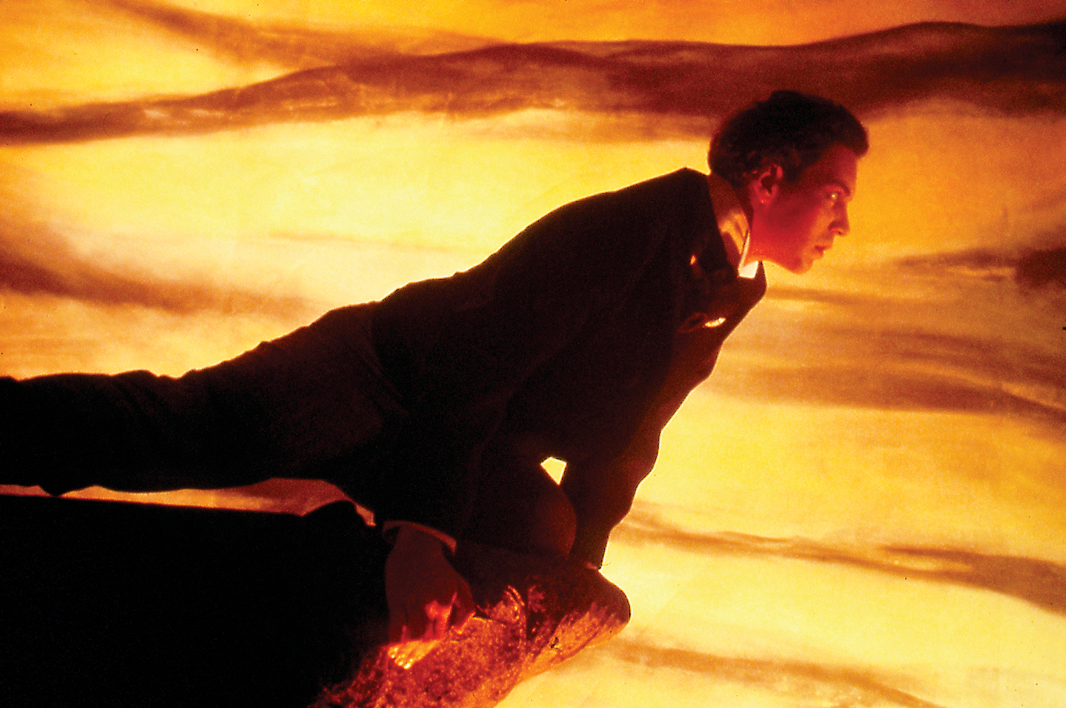
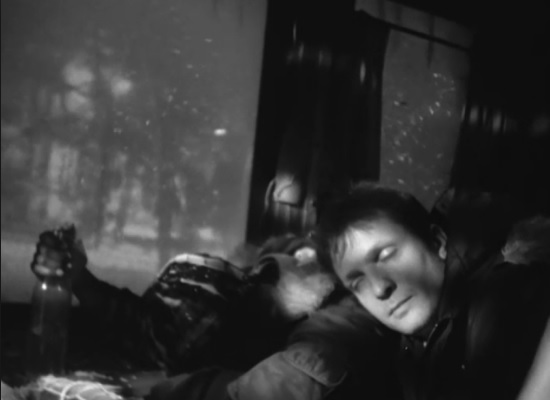
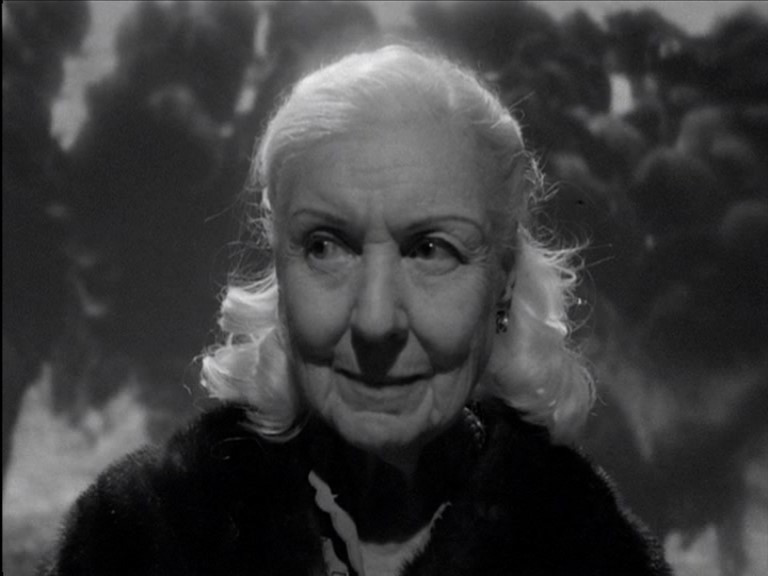

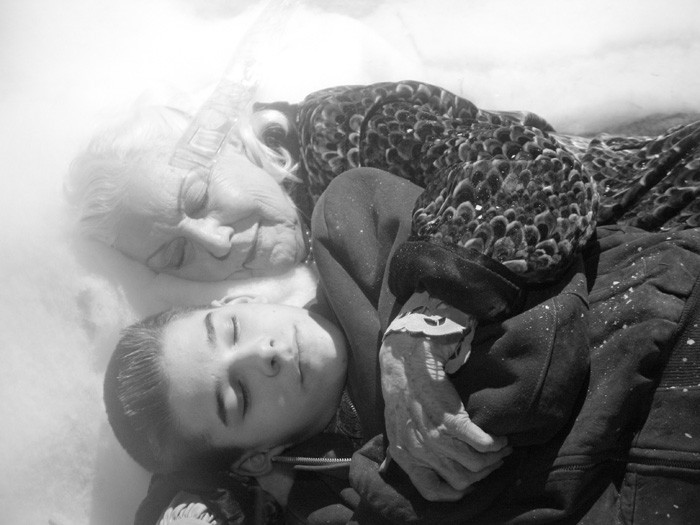

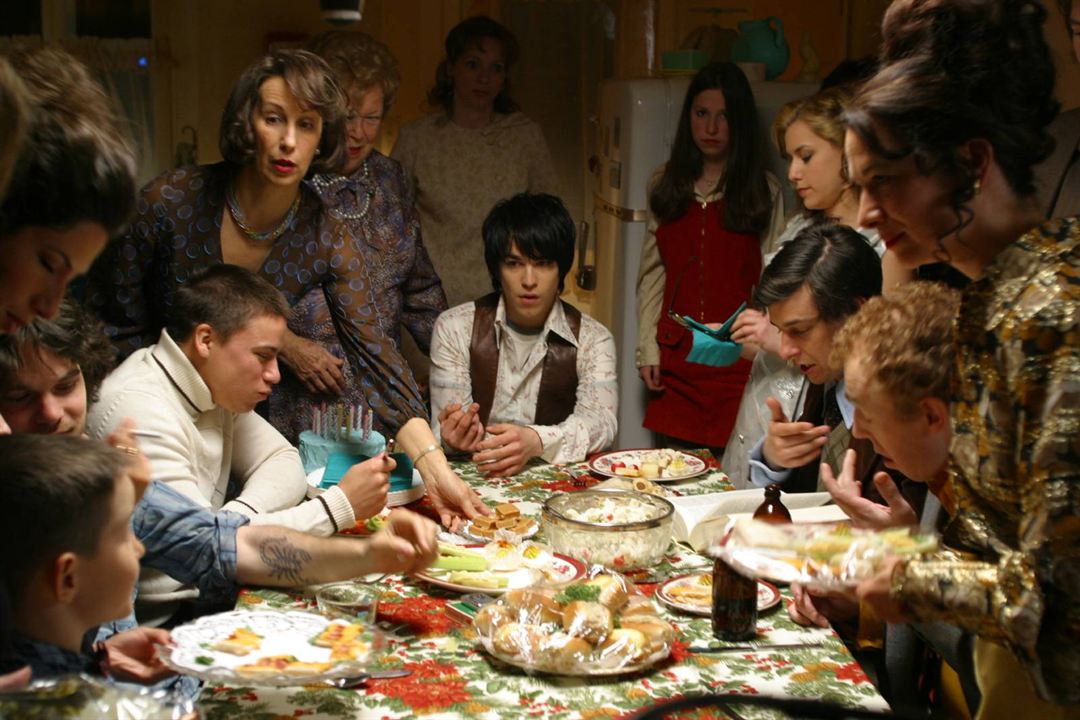

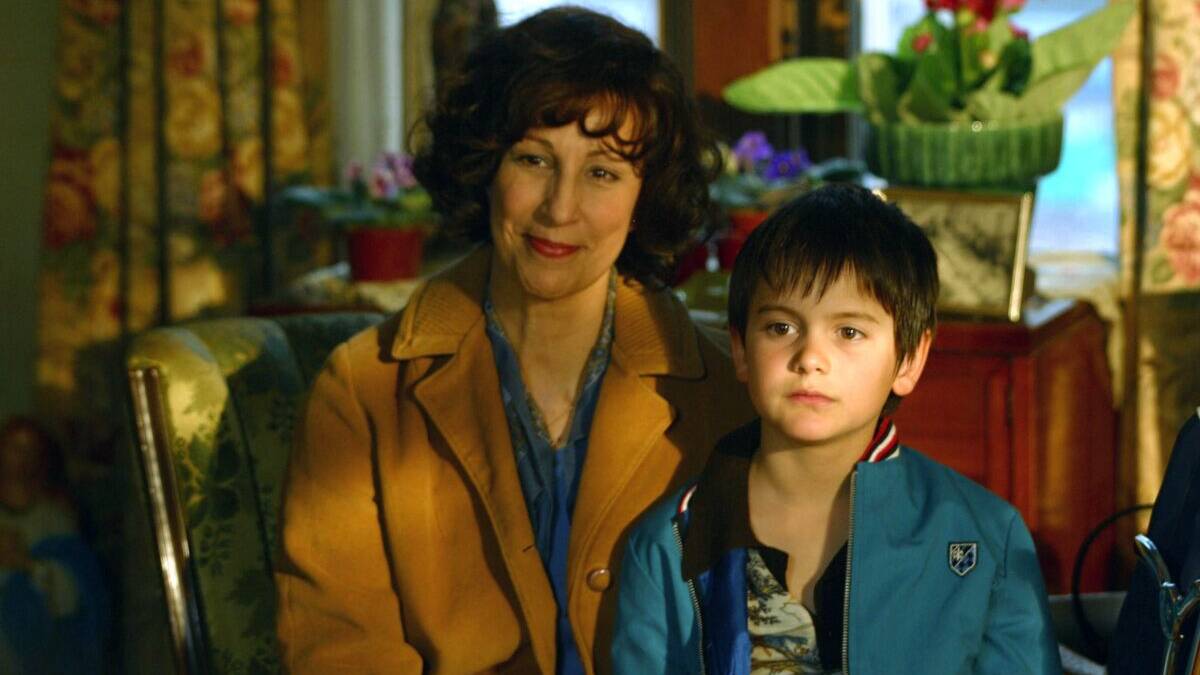
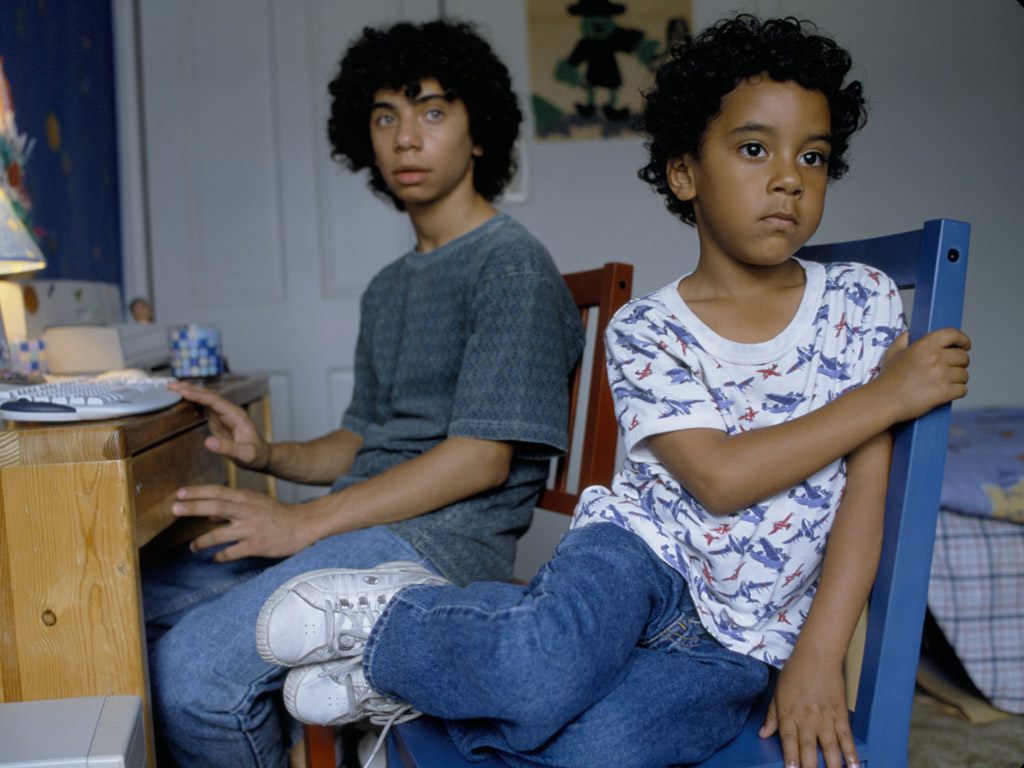



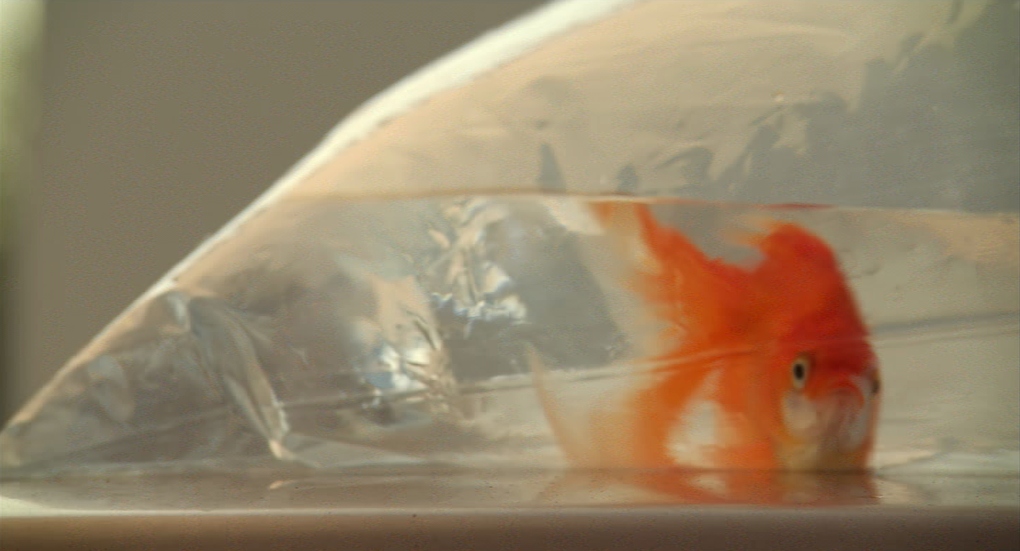
 Haunted Jukebox