Another IFFBoston, another eight movies seen. My reviews of the first four.
CAUGHT BY THE TIDES
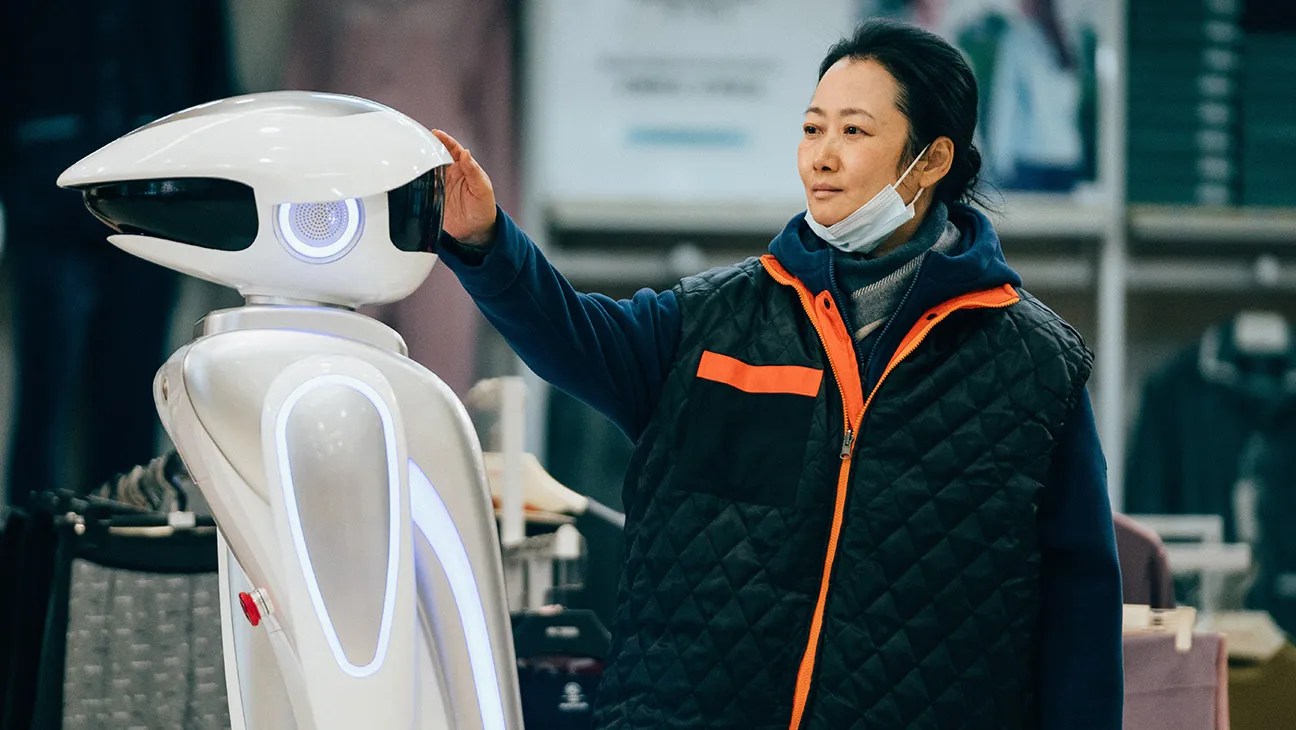
Jia Zhangke (MOUNTAINS MAY DEPART) will never run out of ways to explore rapid change in 21st Century China or roles for his muse Zhao Tao to excel in, thank god. His latest partially distinguishes itself from previous efforts by literally going back to them, incorporating scenes and outtakes from UNKNOWN PLEASURES (2002) and STILL LIFE (2006) along with newly-shot footage to track how much China and, in particular, the Northern city of Datong has reconstructed itself between then and now in part due to the Three Gorges Dam project that the 2006 film centered on.
Using the same actors (Tao and Zhublin Li) and reediting the earlier footage (with help of some intertitles that refashion the earlier stories to relate to the current one), CAUGHT BY THE TIDES is stitched together in a way that often brings attention to its manipulation of time and space for those familiar with the earlier work, although those new to the director’s oeuvre may not even pick up on this. It’s an approach that risks confusion, but that actually might have been Zhangke’s intention. After all, time rarely travels in a straight line; the immersive, collage-like soundtrack which spans copious genres and traditions (East and West) amplifies this sense of impermanence and might be the director’s most ambitious and striking use of music to date. I now want to go back to revisit his strange, rich filmography to see how he arrived here and ponder where he might go next in detailing this world forever in flux. Rating: 4.5/5
PAVEMENTS
Where to begin with PAVEMENTS? Is it a vehicle meant to document the famed 1990s indie-rock quintet Pavement as they reunite and rehearse for a 2022 tour? A biopic of the band casting the likes of Joe Keery and Nat Wolff to play lead singer/songwriter Stephen “S.M.” Malkmus and guitarist Scott “Spiral Stairs” Kannberg, respectively? A behind-the-scenes account of the making of said biopic? A look at a stage musical about the group from its conception to its premiere? Footage of the opening of a halfway-reverent museum exhibit of copious artifacts/detritus related to the band?
Of course, the resultant ambitious collage is all of these things and many more. Supposedly, when director Alex Ross Perry (with his first feature since 2018’s HER SMELL) signed on to make a movie about the band, he was given carte blanche to do what he wanted and encouraged not to make anything resembling a traditional overview. He certainly understood the assignment as the final product is equal parts THIS IS SPINAL TAP and SYNECDOCHE, NEW YORK, but that dual-comparison only scratches the surface of everything going on here.
This isn’t an approach one could use for every musical act but it is the exact right one for Pavement, who arguably never became household names because they were just too sardonic, too drenched in irony, too much willing to be a shambles rather than a dependable, accessible outfit (all of this in the long run benefiting them artistically if not commercially.) There’s footage of Malkmus referring to the band as “the slacker Rolling Stones of the ’90s” at that time, which ends up more apt a description than I could ever come up with. Appropriately, as a genre-bend, PAVEMENTS is a bit of a shambles and ideally for those-in-the-know. Still, there’s so much that’s inventive and exciting about it (especially in how it captures the band’s time and more importantly, how it shows their impact reverberating over time) that it at least gives off the impression it’s willing to reach for the unconverted in spite of itself. 4/5
COME SEE ME IN THE GOOD LIGHT
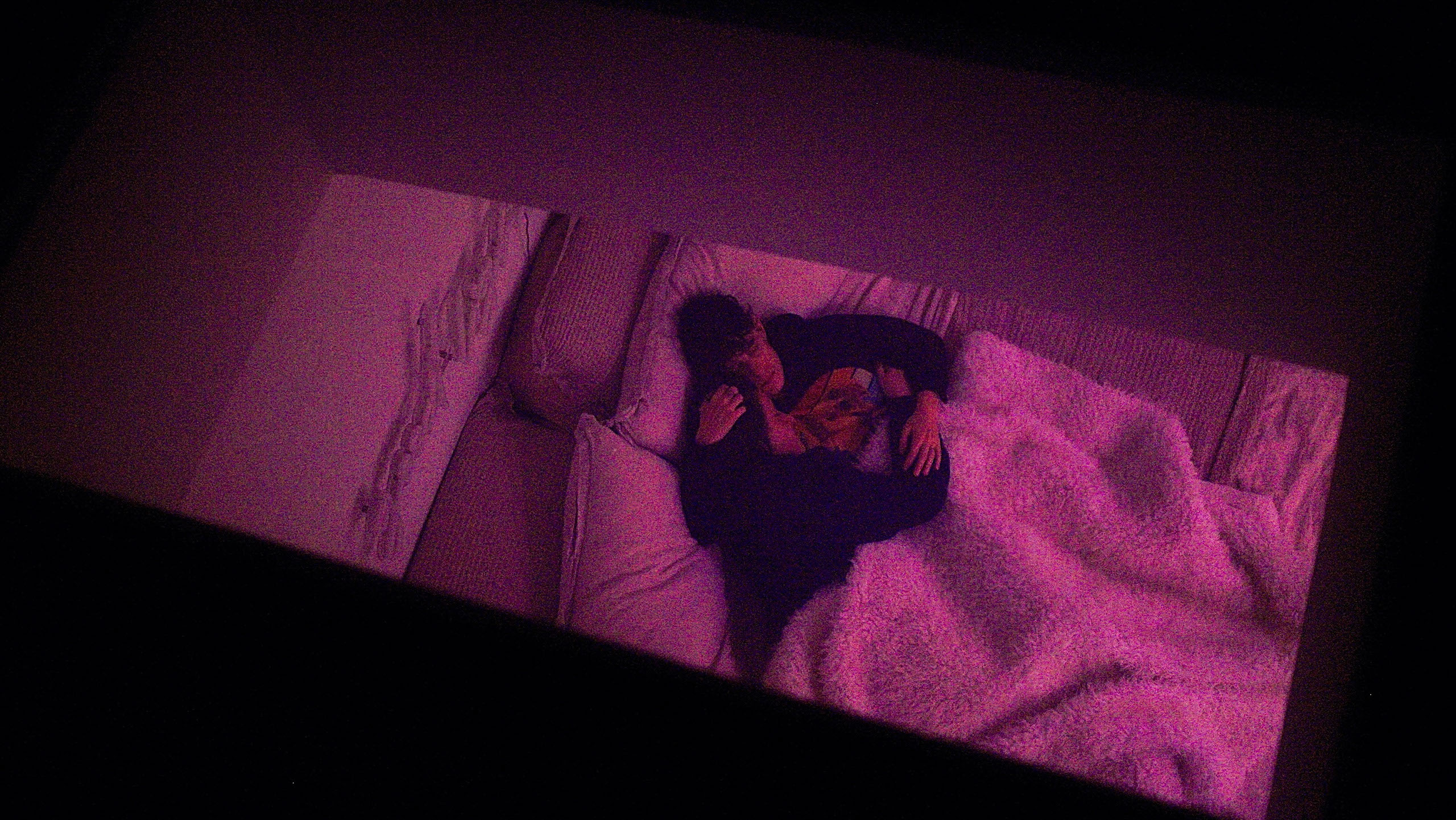
Documentaries where the subject is terminally ill are always a tough sell; the people behind this one, chiefly director Ryan White (ASK DR. RUTH) seemingly go out of their way to dispel this impression, highlighting the film’s humor in the face of impending tragedy. Of course, with a subject like poet/activist Andrea Gibson, it would be disingenuous to oversee or even ignore how funny they are in day-to-day life, an intriguing counterpart to archival footage of them intensely performing in poetry slams and one-person shows onstage. It’s not a disconnect but more of a revelation as to how our public and private personae inevitably contrast with and also complement each other.
Gibson’s ovarian cancer diagnosis in their late 40s provides the premise for White following them and their partner, Megan Falley, mostly in and around their cozy Colorado home. Laugh-out-loud conversations about such not-profound activities as fingering and obscure word choices (“octopoidal”?) are given the same weight as the spectre of death that can’t help but color everything; to do so with such intimacy and candidness endears Andrea and Megan to us considerably. Their portrait is one of life not as a series of big moments but as something given inspiration and meaning by all the random, casual ones that naturally occur in the act of simply living. While a little slick for my taste at times (particularly the score and some editing choices), I can’t deny how genuinely effective and moving this is as a whole. 4/5
THE KINGDOM
Opening with a scene so shocking and visceral that you’re best off not expecting the filmmakers to even try topping it (and they don’t), this story of a Corsican crime family set in 1995 is business-as-usual as these things go–lotsa scenes of attacks, retaliation and hiding out from both the enemy and the police. At the center is 15-year-old Lesia (Ghjuvanna Benedetti) who has mostly been shielded from the action until she’s reunited with her crime boss father, Pierre-Paul (Santucci). This relationship is the only interesting facet here and the film’s second half is better for devoting more focus to it (particularly in some tender, nuanced exchanges between Benedetti and Santucci.) Alas, the rest is mostly unmemorable, though I did note that when Benedetti cut and bleached her hair to disguise herself, she suddenly, uncannily resembled a young Aimee Mann (but without the braid.) 3/5
 Haunted Jukebox