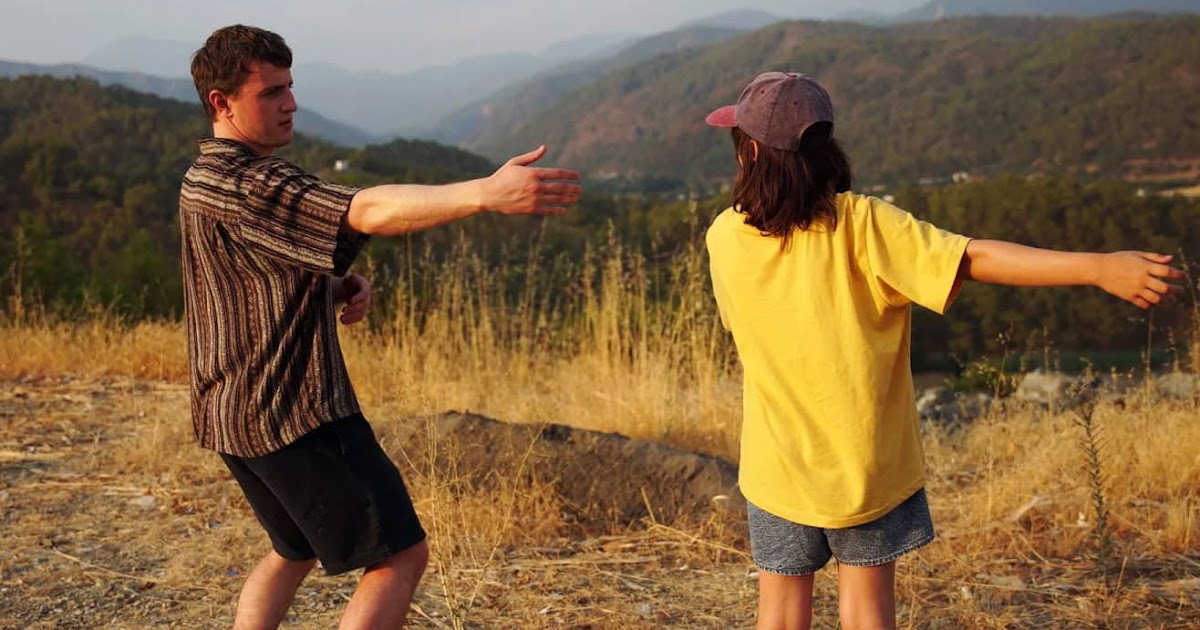
On September 11, 2021, walking up the stairs from the Brattle Theater’s lobby to its auditorium, I felt cautious, perhaps also a spark of excitement. I knew these stairs intimately, having walked them hundreds of times since moving to Boston nearly a quarter-century before. It was my first visit to this single-screen (with balcony seating!) Harvard Square institution since Varda By Agnes on December 11, 2019 (exactly twenty-one months!) and my first movie in a theatre since Covid shut them down eighteen months before. I was there with a good friend and fellow film enthusiast to watch Eyimofe (This is My Desire), a new Nigerian drama and the directorial debut from twin brothers Arie and Chuko Esiri. Today, I don’t remember much about its particulars, only that the Brattle screened it on 35mm film, certainly an incentive for my return to the movies.
Theaters started reopening months earlier as Covid vaccines became widely available. Around the time I was inoculated, the Coolidge Corner Theatre (until the previous December my longtime employer) resumed business; the Brattle soon followed suit, as did The Somerville, Landmark Kendall Square, AMC Boston Common and most suburban multiplexes. I did not yet feel comfortable returning to the Coolidge; despite being vaccinated and masked, the notion of sitting in packed interior space also intimidated me. I eased back into the world gradually, flying to South Carolina that June to see my parents (for the first time in nearly two years), staying at a Maine hotel over an August weekend, going out to favorite restaurants more and ordering takeout less.
Viewing Eyimofe (This is My Desire) marked both a homecoming and a new phase. Altered circumstances meant I would not go back to the movies as often or conveniently as I had for most of my adult life. Potentially large crowds deterred me from seeing anything at IFFBoston’s Fall Focus that October, but that month I did buy a Brattle membership (and have maintained one ever since.) The friend I saw Eyimofe with once again became a consistent moviegoing companion; together, we returned to the Brattle for Tsai Ming-liang’s Days, then met up at the Legacy Place Showcase Cinemas in Dedham for Denis Villeneuve’s Dune. Weeks later, we even saw a limited run of The Power of The Dog at the Coolidge—I could’ve waited another two weeks to watch it on Netflix but Jane Campion’s best film since possibly The Piano on the Coolidge’s glorious, giant main screen was worth the trip.
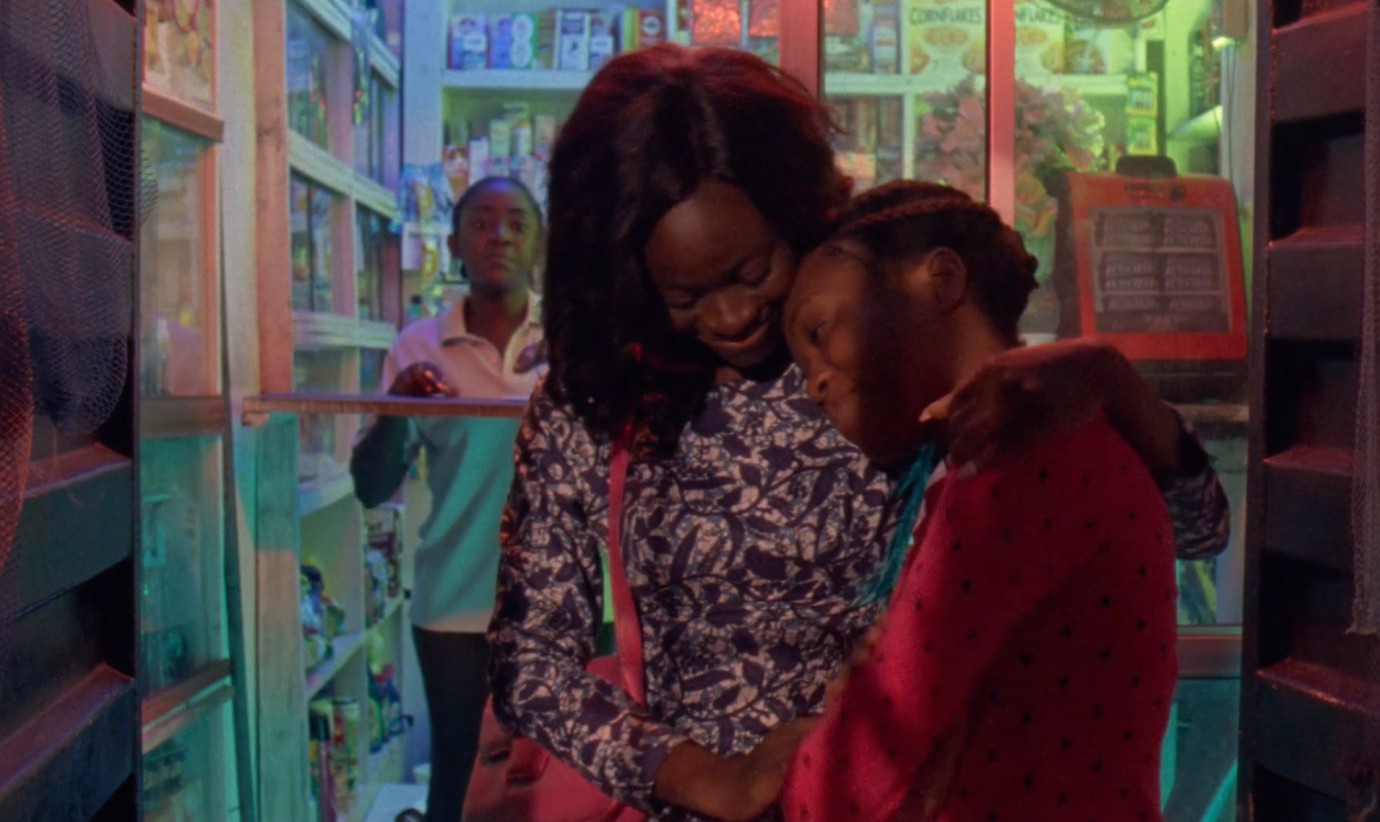
My theater visits might have trickled to one or two films per month (still higher-than-average than the public at large) but it didn’t feel like much of a loss. I did appreciate each movie I saw outside the house far more now, whether it was a brand-new flick from a favorite director (Paul Thomas Anderson’s Licorice Pizza in 70mm at the Coolidge) or a beloved classic I hadn’t seen on the big screen before (a scratchy 35mm print of Stranger Than Paradise at the Brattle.) I made time to see Memoria (Apichatpong Weerasethakul’s follow-up to Cemetery of Splendour) because I knew it was only screening theatrically—to this date, it has not been available to stream; I also set aside an evening to catch Terence Davies’ ambitious, ingenuously shot and edited Benediction at the Kendall Square, grateful that I did after it ended up the director’s final film. The following April, I attended IFFBoston’s first in-person festival in three years, catching six movies over four nights including A Love Song (starring singular character actress Dale Dickey), charming Finnish coming-of-age feature Girl Picture and the Hawaiian indie Every Day In Kaimuki.
My viewing at home, however, only flagged slightly from the amount I consumed during lockdown. A new job with a hybrid schedule (two days/week onsite, three days at home) allowed more time to stream everything from Elia Kazan’s Splendor In The Grass to Pier Paolo Pasolini’s Pigsty than when I had been commuting to the Coolidge Monday through Friday. While ideally I would have seen such titles on the largest screen available, I had acclimated to a sort of hybrid schedule for movie watching in general. I’ll always recommend seeing a movie in a theater with an audience when possible or feasible but it’s also advantageous to consider any alternative. Streaming schedules are as fleeting and variable as theatrical release windows: titles come and go all the time and while how one sees a film can enhance the experience, what’s more important is just seeing the film, period (often by any means necessary.)
Where I saw movies had shifted as did how I approached them. Writing from a distance of not even five years, I believe we’re all still processing a world radically transformed by the pandemic and lockdown via enormous and obvious changes (such as those hybrid work schedules), but also more infinitesimal ones. I’ve mentioned that studying film had an effect on how I see both the world and my own self but this did not end when I finished school. Since then, I’ve watched movies that continually expand and sometimes challenge such perceptions. When considering something as global and consequential as Covid, one is reminded that the world is always changing. Some of the best films tend to recognize this sense of a world forever being in flux no matter how contained the narrative; the very best of them also offer new ways of viewing and comprehending it.
In Aftersun, the debut feature from writer/director Charlotte Wells, a father, Calum (Paul Mescal) and his 11-year-old daughter, Sophie (Frankie Corio) are on holiday at a Turkish resort. Both hail from Scotland but Calum (who had Sophie when he was barely 20) no longer lives with her and her mom but in another unidentified country. On the surface, this is a fairly unremarkable vacation with the two mostly passing the time lounging by the pool, swimming in the Mediterranean Sea and partaking in other tourist-friendly activities; the application of suntan lotion before and after such endeavors is the most literal reference to the film’s title. Throughout, audio clues such as a late 90’s-heavy soundtrack (Blur, The Lightning Seeds, even that once-ubiquitous dance craze “Macarena”!) and subtler visual ones (clothing styles and the absence of smartphones) reveal the time period—not coincidentally, it’s when Wells herself would’ve roughly been Sophie’s age.
Gradually, one sees Calum and Sophie’s relationship as not necessarily estranged but certainly influenced by the time they’ve spent living in separate countries. There’s a longing from each of them towards the other that also seems tentative due to how they’re placed in frame—often at opposing angles, they come off as abstractions as the camera focuses on their backsides or close-ups of body parts (like the cast Calum wears on his right hand for the film’s first half.) It’s not as reductive as telegraphing distance by placing them poles apart in the mise en scene, but the sense persists that something’s left unsaid. The closest Sophie gets occurs when she says to Calum, “I think it’s nice that we share the same sky.” He asks her what she means, and she adds, “I think that the fact that we can both see the sun, so even though we’re not actually in the same place and we’re not actually together… we kind of are in a way, you know?”

Wells organizes this story not merely as a period piece or even fully a memory piece but almost as the act of someone sifting through their own memories (themselves fleeting things that one doesn’t always recall accurately) and reconciling them with actual remnants of the past—in this case, footage shot by Sophie and Calum of this trip on their camcorder. The film opens with Sophie (heard but not seen) recording Calum standing on their hotel room’s balcony; his back is to the camera through sliding glass doors as he smokes a cigarette and sways a bit, as if casually dancing or perhaps practicing Tai Chi (which he does throughout the film.) The act of recording someone is a motif many other films have utilized (increasingly so given that anyone can now record a video on their phone); in Aftersun, it’s enhanced by scenes of characters watching said footage. Both Calum and Sophie take time to view what they’ve recently recorded of each other; Wells occasionally introduces an additional layer by showing both what’s filmed and who’s watching it simultaneously in the frame. In one instance, Calum turns the video off and we’re left with his reflection in the TV screen. Gradually, one notices reflections of both characters, together but mostly separately in numerous surfaces ranging from the obvious (mirrors all over the place) to the more subtle (the polished surface of a dining table.) The effect jars a little but it also intrigues as both video and reflections sometimes reveal facial expressions and other body language Calum and Sophie might not be consciously aware of coming from themselves.
After that opening camcorder footage, Wells briefly and abruptly cuts to an adult woman in a darkened club, staccato flashes of white light momentarily illuminating her, as if at a rave. She then rewinds back to the beginning of the vacation with Calum and Sophie on their bus from the airport to the resort. Subsequently, the film unspools in more or less linear time but Wells occasionally returns to the rave where we can begin to make out Calum dancing in the crowd. The next time arrives not long after Calum casually confides to another man at the resort who assumes Sophie is Calum’s sibling, “I can’t see myself at 40; surprised I made it to 30.” Later, following an intimate conversation between Calum and Sophie partially about why the former no longer lives in Scotland, the music slows down like a cassette player running out of battery power as Wells returns to the rave. She soon edits in a curious, never before and never again seen image of Calum’s backside as he stands on a railing, possibly the one on their hotel room’s balcony.
Like so much else in this film, it’s purposely abstract and not entirely knowable. Is it a flash-forward to a later scene or perhaps a flashback to a memory? The next time it happens offers some clarity. One evening at the resort, Sophie signs the two of them up for karaoke but Calum flat-out refuses to participate and she performs a charmingly tuneless version of R.E.M.’s “Losing My Religion” by herself. Afterwards, they argue a bit; Calum announces he’s going back to their room. Rather than join him, Sophie stays behind and pals around with some older teens plus one boy her age, Michael with whom she shares her first kiss. Meanwhile, in their room, expressionless, Calum watches one of their videos and then goes back out, gets drunk and walks towards the sea. In a chilling, static long shot, he literally walks right into the sea until he disappears (one could say Calum himself becomes an abstraction.) Locked out of the room, Sophie asks a receptionist to let her in. Upon her return we see Calum, no longer in the sea but lying naked, face down on the bed. His heavy breathing fills the soundtrack and then we’re back at the rave. One begins noticing that these rave scenes seem to arrive at moments of Calum’s heightened anxiety. This time, however, there’s a cut from the rave to black and then a slow rising pan revealing the adult woman we saw in that first brief rave scene. She’s in bed with another woman and one can hear a baby (presumably her daughter) crying in the distance. The other woman says to her, “Happy Birthday, Sophie.”
All at once, one understands Aftersun as adult Sophie looking back on this holiday with her dad when she was 11. The viewer doesn’t know where Calum is now, only that he’s not present, just someone we see in Sophie’s past. When the film returns to the morning after Calum’s walk-into-the-sea (or did he?), the holiday continues. Calum apologizes for accidentally locking Sophie out; they visit some mud baths and practice Tai Chi together over a scenic view. It’s also Calum’s 31st birthday and Sophie cajoles the rest of their tour group to surprise-sing “He’s a jolly good fellow” to him. He watches them, caught off guard, positively bewildered while Wells slowly cross fades to him from presumably the night before, sitting on the hotel room bed, head bent over, deeply sobbing. It’s the closest she comes to revealing that there’s something going on with him. Maybe he suffers from depression although she leaves things open enough that it’s possible he’s just having a bad day, just as it’s possible he could still be part of adult Sophie’s life or still alive, even. However, the film’s somewhat wistful, mostly melancholic tone portends otherwise.
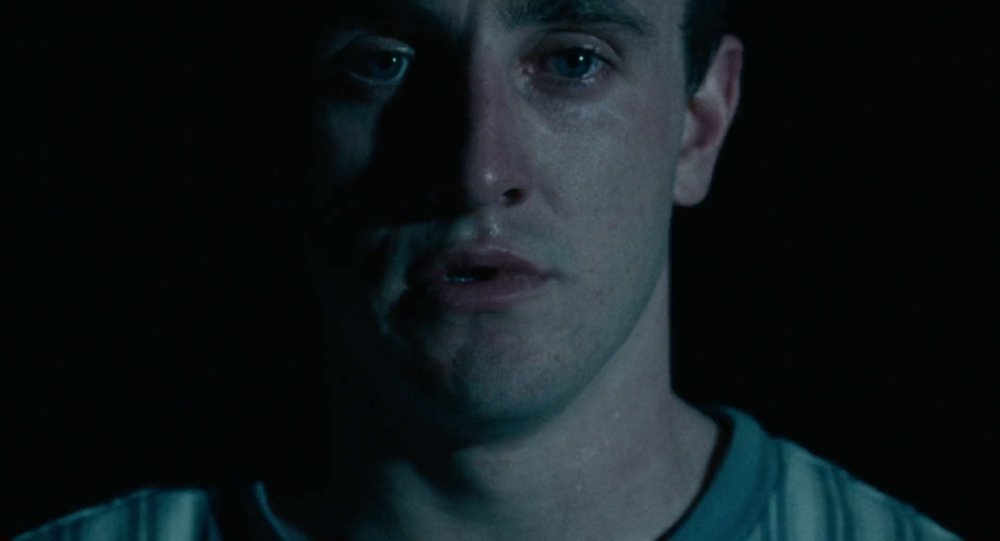
The rave is a space where adult Sophie can coexist with the Calum of twenty-odd years before. At the film’s climax, the actual “rave” is shown to be a brightly lit outdoor space at the resort. Calum leaps onto the dancefloor, boogieing to Queen and David Bowie’s “Under Pressure” while a bashful but amused young Sophie watches him in wonder. As the scene continues, it shifts back and forth between the actual space and the rave with adult Sophie, the latter as usual rendered in darkness with flashes of white light. The song, one that could potentially suffer from forty years of overexposure is not a random choice. As Bowie and Freddie Mercury fervently sing “This is our last dance” repeatedly, the music becomes isolated, the rhythm section dropping out from this particular mix, the words and vocals urgent, echoing and taking on almost a spectral presence.
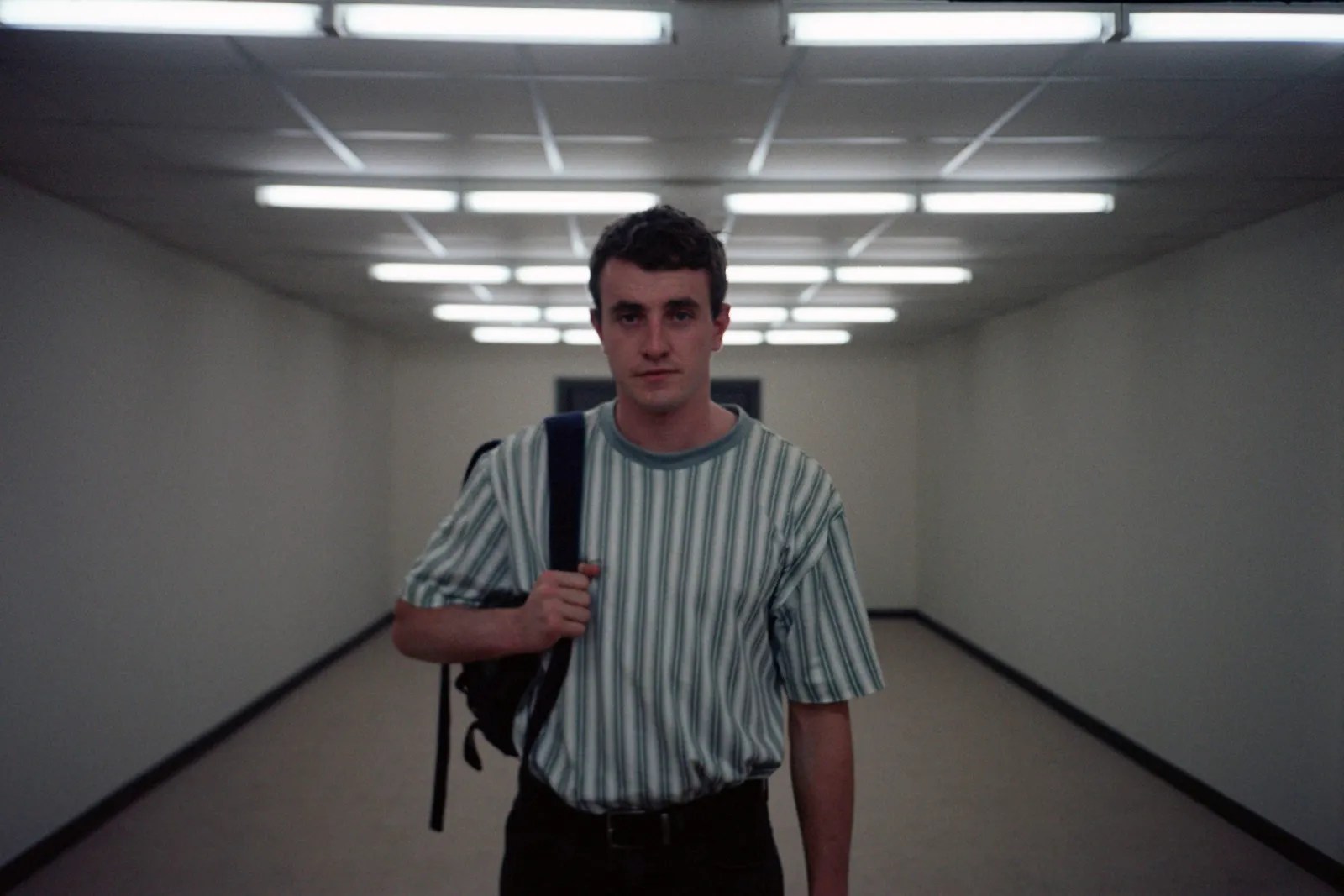
As the song climaxes, young Sophie and Calum hold each other on the resort’s dancefloor in one moment, while adult Sophie and Calum do the same at the rave. Then, there’s a cut to camcorder footage of young Sophie waving goodbye to Calum at the airport. A slow pan to the right ends with adult Sophie sitting on her couch, watching this footage on her TV. Another pan shifts the action back to the airport, only from Sophie’s point of view as Calum films her. In this final shot, he stops his camera and stares into Wells’. He then slowly walks away from us down a long corridor. He exits through doors at the corridor’s end into the rave, briefly visible until the doors close and he disappears from Sophie’s life perhaps temporarily, possibly permanently.
I watched Aftersun in a theater on the basis of glowing reviews and also Mescal’s presence. His breakthrough role arrived two years prior with the television miniseries Normal People. Over a dozen half-hour episodes, one witnessed him transform from everyone’s favorite new internet boyfriend into potentially one of the better actors of his generation. Following roles in God’s Creatures and The Lost Daughter, Aftersun gave him ample space to build upon this promise and depth and it earned him an Oscar nomination for Best Lead Actor. However, it also announced a significant new talent in Wells. She could have chosen to tell this story rather conventionally with a more explicit flashback structure, voiceover narration, title cards to place us where and when, etc. Instead, she forged her own cinematic language of sorts, not necessarily telling the whole story of Calum and Sophie but a story nonetheless utilizing different means of disseminating information through words left unsaid, glances and movements, shaping of time and place and presenting images from multiple and often simultaneous perspectives. By the film’s end, one could sense in her a vision as deeply felt as Miranda July’s, a direction of actors as masterful as Wes Anderson’s and as innovate a storyteller as Todd Haynes or Abbas Kiarostami.
Years ago in film school, attending the now-defunct Fine Arts Theatre in downtown Chicago (for a screening of the Jane Horrocks vehicle Little Voice), I saw inscribed on the venue’s lobby wall a quote from French writer Theophile Gautier which I think of often: “All Passes; Art Alone Endures”. Industry strikes and shortfalls in funding aside, people continue making movies and sorting out ways for others to see them. Like all art, cinema will never “die”, just as we haven’t run out of stories to tell or paintings to draw or music to make, etc. Multiple times in this project, I’ve mentioned the notion (possibly now a cliché) or never possibly running out of movies to watch. The thought provides deep solace and stimulation for me, not to mention a sense of fulfillment whenever I see a new film as original, compelling and resonant as Aftersun.
Essay #24 of 24 Frames.
Go back to #23: Ham On Rye
 Haunted Jukebox