Growing up, my parents and I revisited a canon of classic Christmas movies every year: The Bishop’s Wife featuring Cary Grant at the peak of his ineffable charm; Miracle on 34th Street with Edmund Gwenn’s archetypical Santa Claus and nine-year-old Natalie Wood giving her contemporary child actors a run for their money; Going My Way and The Bells of St. Mary’s, both starring Bing Crosby as a cool priest and in the latter sequel, Ingrid Bergman as his nun counterpart; It’s A Wonderful Life, its first three-quarters seemingly interminable to a child until George Bailey wishes he’d never been born and the rest is pure magic that director Frank Capra, James Stewart and Henry Travers (as Clarence the Angel) all sell the heck out of.
The three of us found a new holiday classic via A Christmas Story during its original 1983 theatrical run. In witnessing little Ralphie’s exhaustive efforts to ask for a Red Ryder BB Gun in 1940s Indiana (including the frozen pole licking, copious Bumpus hounds, an alarming department store Santa and his cranky helper elves, etc.), I don’t think my parents or I had ever laughed so much at the movies. An adaptation of humorist Jean Shepherd’s book In God We Trust, All Others Pay Cash, the film was only a minor box office hit (although I recall many commercials for it airing at the time.) The following year, we saw it again at the second-run Times Cinema on Vliet St. It was as riotously funny to us as the first time. A year later, after cable TV finally came to Milwaukee, seemingly everyone had seen the film. At a holiday party that year, numerous kids remarked to bespectacled me, “You look just like that kid from A Christmas Story!”
I can credit Ralphie and company for a newfound desire to find more holiday films to love. When I was 9, my mom and I attempted to watch every version of Charles Dickens’ A Christmas Carol we could see, from the 1938 edition with Reginald Owen to the then-new, made-for-TV one starring George C. Scott (I wonder if I could watch it today without thinking of his performances in Dr. Strangelove or Hardcore.) At the time, I enjoyed the novelty of 1970’s Scrooge, a musical adaptation with Albert Finney; revisiting it last year, it’s still a fizzy take on the oft-told legend with a terrific score, even if the Christmas Future sequence where Scrooge essentially goes to Hell is trippy, cheesy and very much of its time. The 1951 version still has the best Ebenezer, Alistair Sim even if his partial resemblance to Klaus Kinski makes me long for the Werner Herzog version of this story that never was.
Of all of my parents’ beloved holiday perennials, their favorite, 1942’s Holiday Inn, pairs Crosby with Fred Astaire. The former plays a New York City entertainer who retreats to the Connecticut countryside, opening a hotel/nightclub that only operates on holidays; it primarily exists as a vehicle for a selection of seasonally themed Irving Berlin compositions including the debut of what is often cited as the best-selling single of all time, “White Christmas”. My folks usually waited to watch it on Christmas Eve after I had gone to bed. By my teenage years, I began accompanying them, first viewing it on a VHS tape recorded from an airing on local independent WVTV Channel 18, then on a store-bought cassette and eventually on DVD. It soon became one of my favorites, seen so many times that I could probably recite all of its dialogue today. It hasn’t aged entirely well (gratuitous blackface number alert!) and some of the holidays celebrated are a stretch (George Washington’s Birthday?) but those Christmas (and New Year’s Eve) scenes are evergreens. The 1954 sequel titled White Christmas (duh) substitutes an absent Astaire with Danny Kaye; it’s fine but not nearly as affecting as its predecessor.
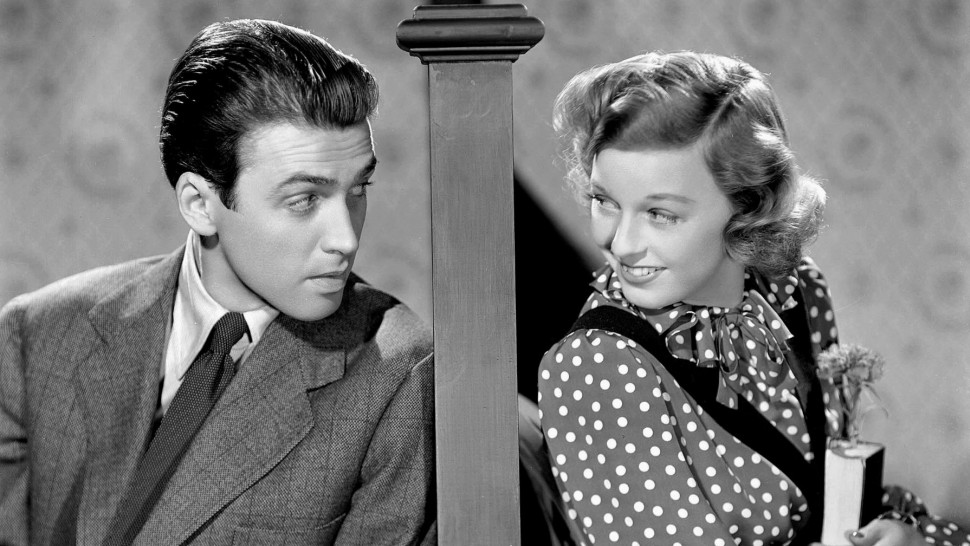
Apart from National Lampoon’s Christmas Vacation (one of my husband’s favorites), Tim Burton’s and Henry Selick’s The Nightmare Before Christmas (not a Halloween film!) and It Happened On Fifth Avenue (a hidden gem from 1947 about a benevolent bum and the kindness of strangers), as an adult I didn’t much seek out other holiday classics (despite no shortage of new ones via The Hallmark Channel) until the pandemic hit three years ago. With time on our hands and the world of streaming at our fingertips, we found a few worthy new candidates for the canon: Remember The Night, written by Preston Sturges and teaming up Fred MacMurray and Barbara Stanwyck (a few years before Double Indemnity) and Holiday Affair, a sort-of-comic noir with Robert Mitchum and a young Janet Leigh. However, the Christmas film I’ve grown to love most in the past decade is Ernst Lubitsch’s The Shop Around The Corner from 1940 with Stewart and Margaret Sullavan as two employees in a Budapest gift shop. Sharp and tender in equal measures, its stellar last twenty minutes is what all romances, comedies and romantic comedies should aspire to be.
In putting together the list below, I considered some excellent Christmas-adjacent titles like The Apartment, Carol, Holiday, Tangerine and Catch Me If You Can. In the end, I selected only films that I felt compelled to actually watch at Christmas and not any other time of year. I did make room for this year’s The Holdovers, which doesn’t entirely comply to these rules (I first saw it in September at TIFF and the time of year did not alter my enjoyment of it); still, it already exudes enough of that elemental seasonal spirit to earn its place here.
15 Favorite Christmas Films:
- The Shop Around The Corner
- A Christmas Story
- The Bishop’s Wife
- Holiday Inn
- It Happened On Fifth Avenue
- It’s A Wonderful Life
- Remember The Night
- Miracle On 34th Street
- National Lampoon’s Christmas Vacation
- A Christmas Carol (1951 version)
- The Bells of St. Mary’s
- The Holdovers
- White Christmas
- The Nightmare Before Christmas
- Holiday Affair
 Haunted Jukebox