I was a little concerned that everything I saw at this year’s TIFF would fall somewhere between good and meh, until I saw the first film reviewed below–the last thing I watched on Day 4.
THE FEELING THAT THE TIME FOR DOING SOMETHING HAS PASSED
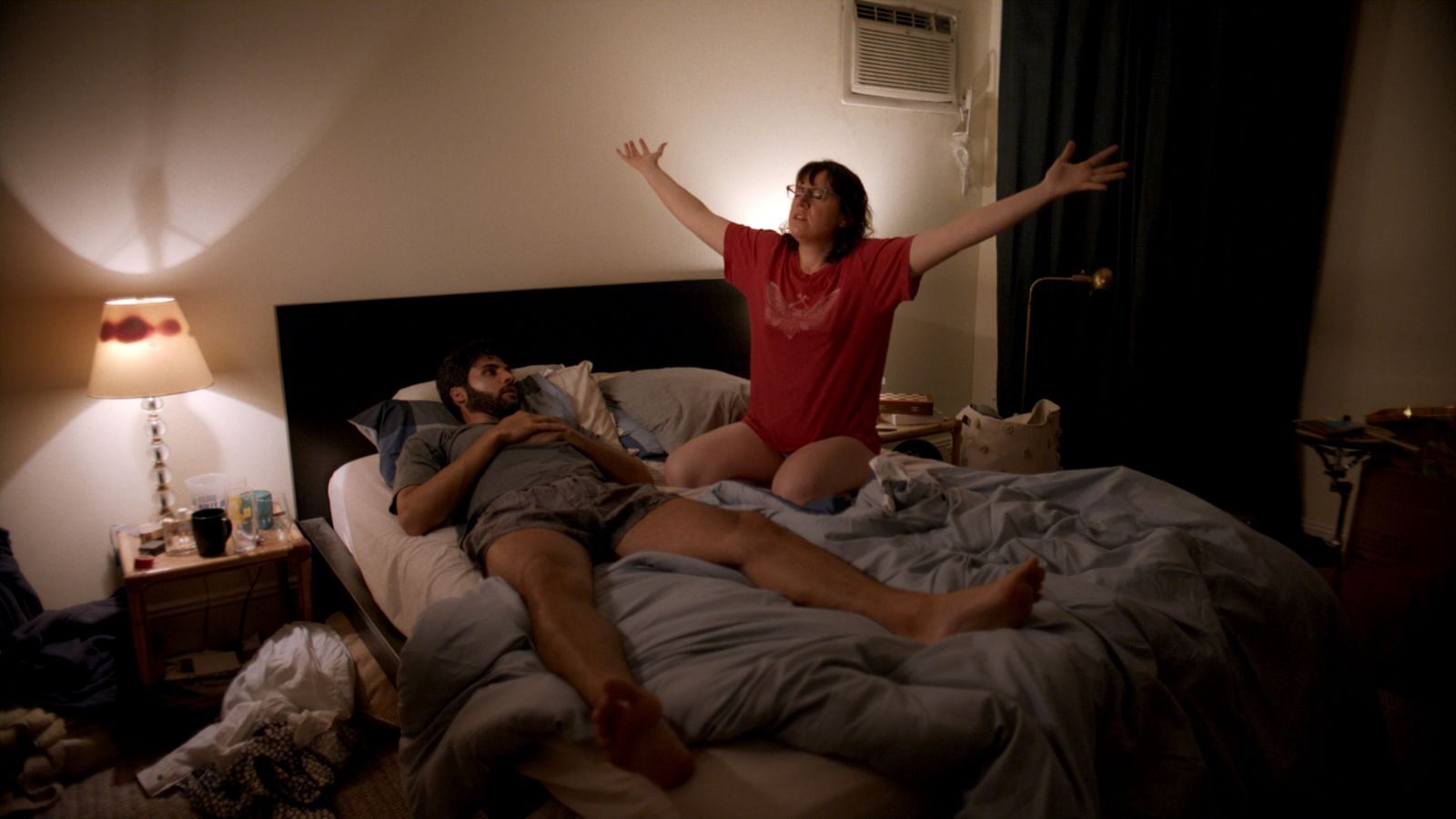
It’s not wrong detecting allusions to other directors in Joanna Arnow’s feature debut: Roy Andersson’s static camera and deadpan humor, Miranda July’s gentle, slightly off-kilter whimsy, even Woody Allen’s simple white serif-font title on a black background. One can acknowledge such influences as it’s near-impossible to create something entirely new, even in an art form that’s relatively not so old. Still, it’s tempting to deem Arnow an original talent because she brings something highly distinct to the medium both as a writer-director and as a performer.
Arnow stars as Ann, an office worker in her early 30s whose sex life consists of a series of BDSM relationships where she is the submissive participant. In the very first scene, she’s naked in bed with a fully clothed Allen (Scott Cohen), an older divorcee who is her most prominent dominant. With her very average body type and vulnerable, direct (if near-bored) demeanor, Ann immediately reads as an unconventional protagonist—plain yet with a specific point of view, a little mousy but determined, choosing her words carefully though never in a hurry to stop talking. Absurd humor is laced throughout the film’s brief vignettes which occasionally expand beyond the bedroom to Ann’s corporate workplace (a supervisor chides her for not making good on her promise not to outlast her there as an employee) and her elderly parents. Seamlessly played by Arnow’s own parents, she has arguments and other interactions with them that are simultaneously mundane, nagging and hilarious primarily for being so true-to-life: Who can’t relate to the mounting pressure of being asked to bring an unwanted piece of fruit home with them?
Divided into five chapters, the film tracks Ann as she moves from Allen to a variety of other doms, eventually meeting a guy who might be a candidate for her first “normal” relationship. What Arnow never forgets is that no matter how funny or relatable a situation may come across, “normal” is itself an abstract, almost meaningless concept. The peculiar way she views the world will inevitably seem off-putting to some (that lengthy title!) but enchanting to others for how she finds the humor in these absurdities and indignities without taking herself too seriously or losing focus of what makes them seem so real. (Score: 9/10)
FLIPSIDE
Chris Wilcha, who worked on the TV-version of THIS AMERICAN LIFE has many unfinished projects scattered throughout his career. This documentary, ostensibly about the still-hanging-on small town New Jersey record store he worked in as a teen thirty-odd years ago, nearly ended up as another one, until he noticed a thread running through many of these partially-completed works: the passage of time and what it means to hold on to sentimental talismans from one’s past. Thus, FLIPSIDE resembles a tapestry of sorts, jumping from the record store’s proudly old-fashioned owner to Wilcha’s old boss Ira Glass, jazz-great photographer Herman Leonard, DEADWOOD creator David Milch and even cult kiddie-show host Uncle Floyd.
As a fellow white, middle-aged, NPR listening music obsessive, I am clearly the target audience for this personal essay film and I can imagine some critics older and younger resisting the urge to yell at Wilcha, “Get over it!” And yet, I have to applaud Wilcha for this film’s continually expanding narrative—once you get past the self-indulgence of him examining his own life, you see the interwoven connections between all these subjects and also how each one suggests an alternate but equally viable path to growing older and staying both motivated and stimulated. To retain a fondness for the past but not let it determine (nor hinder) the future is a philosophy he puts in the work to arrive at, and the effort often proves as edifying as the destination. (8/10)
SEAGRASS
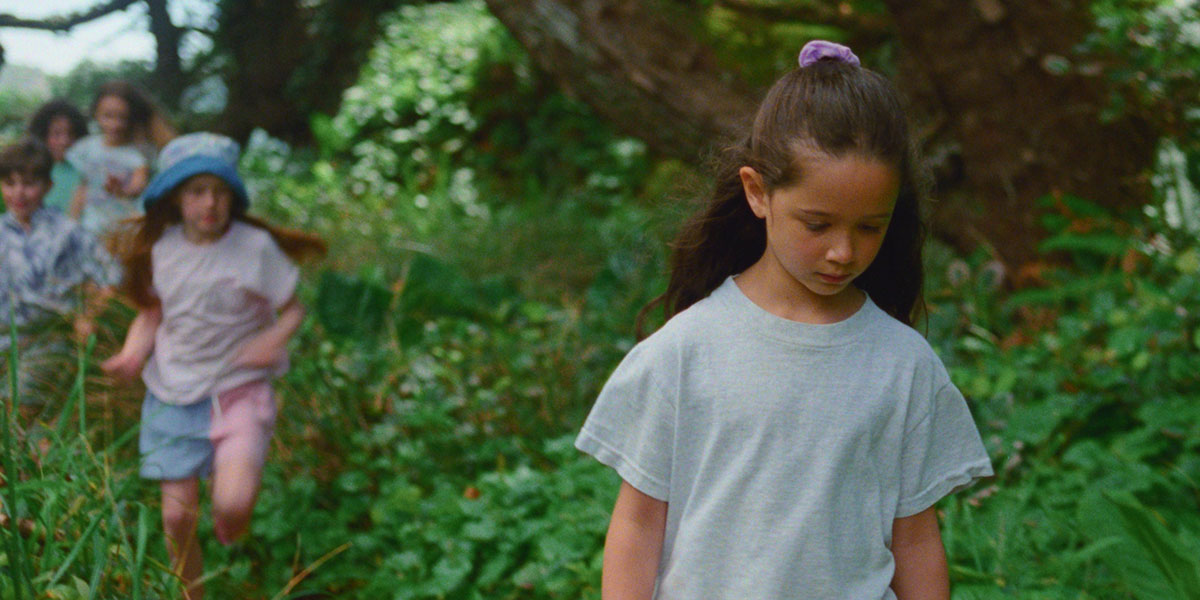
A touchy-feely couples retreat with activities that allow you to bring the kids along? What could possibly go wrong? In Meredith Hama-Brown’s mid-90s-set indie drama, husband and wife Judith (Ally Maki) and Steve (Luke Roberts) and their two young girls travel to the British Columbia coast for this vacation of sorts and no one seems very happy about it. As the parents confront their drifting, gradually fractured relationship with opposing tactics that do not prove especially helpful for either of them, 11-year-old Stephanie ((Nyha Breitkreuz) and 6-year-old Emmy (Remy Marthaller) both deal with their own issues: perhaps due to Judith’s mom having passed away six months before, Stephanie exhibits antisocial behavior while Emmy believes her grandmother’s ghost is omnipresent, observing and also haunting them at their resort and the nearby jagged, voluminous ocean caves.
While often a fount of amusing material, new age-y couples therapy is a rather easy and familiar target for satire and this hits all the expected notes: props, trustfall-like exercises, screaming and the like. It’s fortunate, then, that not only is the cast game for it, they all function together as a deeply believable dysfunctional unit, one with a shared, extensive history that’s palpable even before specifics are revealed. What pushes the film even further away from its simple premise is its expansive sound design and sense and manipulation of space. The sequences where Emmy is left to her own devices, letting her imagination and superstition take precedence are gorgeous and eerie, opening up the film to consider the ambience of a world that can seem mysterious and unfamiliar to any six-year-old. Building to a maelstrom of a final act, SEAGRASS evolves from predictable to nearly extraordinary. (8/10)
GREAT ABSENCE
Shot by Yutaka Yamazaki, who has worked on Hirokazu Kore-eda films from AFTER LIFE to AFTER THE SUN, this second feature from Kei Chika-ura is often Kore-eda Lite, although what’s missing is the supple touch the veteran filmmaker usually suffuses his work with. It doesn’t lack for ambition, though—this is a puzzle film of sorts, utilizing flashbacks and abrupt temporal shifts in piecing together the dramatic, present-day action occurring in the film’s first scene. The structure requires active viewing and ample patience from the viewer, but the reveals often end up not resonating in relation to the amount of effort built into them. Fortunately, the acting just about saves it: Tatsuya Fuji, whom some might remember from IN THE REALM OF THE SENSES gives a tremendous and sincere portrait of someone afflicted by Alzheimer’s Disease without ever showing off while Mirai Moriyama (primarily known as a dancer rather than an actor) and Hideko Hara (SHALL WE DANCE) both hold their own as his son and wife, respectively. Although dense and overlong, Chika-ura exhibits enough skill and inspiration that I wouldn’t mind revisiting this to see if I missed anything. (6/10)
VALENTINA OR THE SERENITY
A big draw of TIFF for me is an opportunity to see films from remote corners of the world that might not otherwise be available or on my radar. Sometimes they’re excellent and occasionally they’re atrocious, but this one, from an Indigenous Mixtec village in Oaxaca, Mexico, is neither—just a pleasant little film about a young girl who refuses to believe her father has died in a freak drowning accident, going so far to claim that he has spoken to her from the river where he met his maker. As Valentina, Danae Ahuja Aparicio is the best thing about it—she has a naturalness that can’t be faked or learned. Her optimism is as deeply felt as her stubbornness and through her, the film is a window onto a culture’s distinct rituals and sensibilities. Having said that, Ángeles Cruz’s direction is rarely more than capable and even at a slim 86 minutes, the premise would have been better suited to a short. At the very least, you’ll come away from it knowing the Mixtec body language to summon thunder and lightning at will. (5/10)
 Haunted Jukebox